
Submitted:
29 July 2024
Posted:
30 July 2024
You are already at the latest version
Abstract
Cancer remains a leading cause of death despite advancements in research and treatment, with traditional therapies often causing significant side effects and resistance. Oxyhydrogen gas, a mixture of 66% molecular hydrogen (H₂) and 33% molecular oxygen (O₂) has shown exceptional promise as a novel therapeutic agent due to its ability to modulate oxidative stress, inflammation, and apoptosis. H2, a key component of oxy-hydrogen gas, neutralises reactive oxygen and nitrogen species, enhancing existing treatments and reducing harmful oxidative states in cancer cells. H₂ also lowers pro-inflammatory mediators including chemokines, cytokines and interleukins, inhibiting cancer cell proliferation and boosting the effectiveness of conventional therapies. Additionally, hydrogen can induce apoptosis in cancer cells by modulating pathways such as MAPK and inhibiting the PI3K/Akt phosphorylation cascade. Preclinical and clinical evidence supports oxyhydrogen gas's potential in treating various cancers. In lung cancer models, it inhibits cell proliferation, induces apoptosis, and enhances chemotherapy sensitivity. Similar results have been observed in breast cancer, where patients reported improved quality of life. In colorectal cancer, oxyhydrogen gas suppresses tumour growth, induces apoptosis and improves intestinal microflora dysbiosis. The unique properties of oxyhydrogen gas make it a promising adjunctive or standalone cancer treatment. However, further research is needed to understand H₂'s mechanisms, optimise treatment protocols, and evaluate long-term safety and efficacy in human patients.
Keywords:
Oxyhydrogen
; Cancer
; Hydrogen Gas
; Oxygen Gas
; Apoptosis
; Inflammation
; Antioxidant
Graphical Abstract:
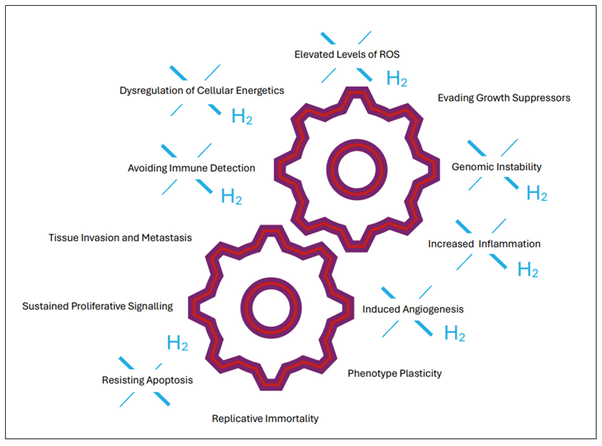
1. Introduction
Cancer is a complex and multifaceted disease characterised by uncontrolled cell growth, invasion of surrounding tissues, and metastasis to distant organs. Despite significant advancements in cancer research and treatment modalities, the burden of cancer continues to increase globally [1]. Conventional cancer therapies such as chemotherapy, radiation therapy, and surgery have limitations, including toxic side effects, drug resistance, and damage to healthy tissues [2]. Therefore, there is a critical need for the development of novel and more effective treatment strategies for cancer.
Oxyhydrogen gas, a mixture of molecular hydrogen (66% H₂) and molecular oxygen (33% O₂) gases, has recently emerged as a promising therapeutic agent in the field of oncology. This novel approach leverages the unique chemical properties of molecular hydrogen and its potential to modulate cellular oxidative stress, inflammation, and apoptosis [3], all of which are critical processes in carcinogenesis, progression and resistance to cancer treatments [4]. The therapeutic potential of oxyhydrogen gas can be attributed to the antioxidant properties which enable it to reduce the damage caused by reactive oxygen species (ROS) and reactive nitrogen species (RNS) [5]. Other, protective, cellular signaling pathways, including the upregulation of the antioxidant response element (ARE), a key regulator of endogenous antioxidant expression, are enhanced by H2 administration [6].
Cancer cells are characterised by an elevated oxidative state and an overproduction of ROS, which contribute to their proliferative and metastatic capabilities [7]. Excessive ROS levels not only promote DNA mutations and genomic instability but also activate pro-survival signaling pathways, the antioxidant action of hydrogen gas is noted to mitigate these deleterious effects, thereby enhancing the efficacy of existing cancer treatments [8,9,10].
Generated through the electrolysis of water, oxyhydrogen has shown potential as an effective anti-inflammatory and antioxidant gas. For example, the therapeutic potential of oxyhydrogen gas has been explored in the context of Epstein–Barr Virus (EBV)-immortalised B-lymphoblastoid cells [11]. These cells are key to the adaptive immune response and are essential for presenting tumour-associated antigens to various types of T-cells. Briefly, the study aimed to assess the effects of direct infusion of oxyhydrogen gas on the replicative capacity of malignant immune cells, the results indicating a trend of replicative inhibition of these cells with a single oxyhydrogen treatment [11]. Furthermore, research has demonstrated physiological tolerance and effectiveness of oxyhydrogen therapies in a range of clinical trials [12,13,14,15]. These promising results strongly indicate that oxyhydrogen gas may provide a novel and effective therapeutic approach for the treatment of multiple forms of cancer.
2. Oxyhydrogen Therapies:
Oxyhydrogen gas (also known as Brown’s gas) has unique properties that make it an attractive candidate for cancer therapy. Oxyhydrogen gas can be sustainably produced through the electrolysis of water. This stoichiometric mixture of gases has been shown to exhibit antioxidant, anti-inflammatory, and anti-tumour effects, making it a promising approach for cancer management [11,16,17,18,19].
The antioxidant properties of oxyhydrogen gas are of particular interest in the context of cancer therapy. ROS, such as superoxide radicals (O2•-) and hydrogen peroxide (H2O2), are generated as byproducts of cellular metabolism and play a crucial role in cancer development and progression [20]. Excessive ROS production can lead to oxidative stress, DNA damage, and activation of pro-inflammatory pathways, contributing to tumour growth, invasion, and metastasis.
The anti-tumour effects of oxyhydrogen gas extend beyond its antioxidant and anti-inflammatory properties. Studies have demonstrated that oxyhydrogen gas can directly inhibit cancer cell proliferation, induce apoptosis, and suppress tumour growth in various cancer models. For example, research conducted by Iio et al. (2013) investigated the effect of molecular hydrogen on human liver hepatocellular carcinoma cell lines and found that oxygen/hydrogen treatment (75% H2, 20% O2 and 5% CO2) reduced lipid accumulation in vitro [21]. Similarly, studies in animal models have shown that oxyhydrogen gas administration can suppress tumour growth and improve survival rates in models with breast cancer [22], lung cancer [23], and colorectal cancer [24].
The potential of oxyhydrogen gas as a therapeutic agent for cancer treatment has also been explored in clinical settings. Clinical trials evaluating the safety and efficacy of oxyhydrogen gas therapy in cancer patients have shown promising results. For example, a study conducted by Ohno et al. (2015) investigated the use of inhaled hydrogen gas therapy for the prevention of testicular ischemia/reperfusion injury in rats. The study demonstrated that hydrogen gas inhalation reduced oxidative stress and mitigated tissue damage, suggesting its potential as a cytoprotective agent in cancer patients undergoing radiation therapy or chemotherapy [25].
Overall, the unique properties of oxyhydrogen gas make it a promising therapeutic approach for cancer treatment. Its antioxidant, anti-inflammatory, and anti-tumour effects have been demonstrated in preclinical studies [16,17,18,19,26] and clinical trials [12,13,14,15,27], suggesting its potential as an adjunctive therapy or standalone treatment for various types of cancer. However, further research is needed to elucidate the underlying mechanisms of action, optimise treatment protocols, and evaluate long-term safety and efficacy in human cancer patients. The following sections explore the current research on hydrogen and oxyhydrogen gases as a treatment for the three most prominent types of cancer, highlighting its potential benefits and possible mechanisms of action.
3. Mechanisms of Action: Oxygen
Oxygen plays a complex role in cancer growth and progression, and its effects can vary depending on the carcinogenic microenvironment [28]. Generally, oxygen is essential for normal cellular function and is involved in various cellular processes, including energy production (via oxidative phosphorylation) and subsequently, DNA repair mechanisms [29,30]. However, in the context of cancer, the relationship between oxygen and tumour growth is multifaceted. The tumour microenvironment is dynamic and heterogeneous, with varying levels of oxygenation occurring within different regions of the tumour. This heterogeneity influences the response of cancer cells to oxygen and contributes to tumour progression and treatment resistance [31]. On one hand, oxygen is crucial for the growth and survival of most cells, including cancer cells. On the other, the detrimental effects of oxygen in malignant cells and tissues include the increased ROS, promotion of angiogenesis, a phenomenon essential for delivering nutrients and oxygen to cells and tissue structures including tumours, and supporting tumour growth and progression by providing necessary resources to cancer cells [32]. Furthermore, solid tumours often develop regions of low oxygen concentration, or hypoxia, due to inadequate blood supply.
Hypoxic conditions can lead to the activation of survival mechanisms in cancer cells, including altered metabolism and resistance to therapy [33]. Hypoxia has been associated with aggressive tumour behaviour and poor treatment outcomes, as hypoxic regions of tumours are often resistant to conventional cancer therapies, such as chemotherapy and radiation therapy, leading to treatment failure and disease recurrence [34]. Alternatively, normoxia, can promote the proliferation and metabolism of cancer cells, enabling tumour growth and progression [35], as can hyperoxia, an excess of oxygen [36]. In such cases hyperoxia induces oxidative stress, leading to DNA damage, mitochondrial dysfunction, and ultimately, apoptosis, a regulated form of cell death, in cancer cells.
Oxidative stress acts as a potent catalyst in transforming normal cells into cancerous phenotypes, primarily by compromising genomic integrity. Elevated levels of ROS interact with cellular macromolecules like DNA, RNA, and proteins [37]. For example, ROS generated during normal cellular metabolism can directly damage DNA by causing mutations and lesions, with oxygen radicals adhering to nucleotide bases, an action that can lead to genetic alterations which may initiate carcinogenesis [32]. Moreover, ROS modulate intracellular signalling pathways, affecting central cellular parameters such as the redox status, apoptosis, DNA repair mechanisms, and cellular proliferation [38]. Dysregulation of these pathways can lead to uncontrolled cell growth and evasion of cell death, hallmark features of cancer development.
Oxygen is essential for life, but its reactivity necessitates a delicate balance. Understanding the dichotomy of oxygen in cancer is essential for developing effective therapeutic strategies. While oxygen is necessary for normal cell function and can induce cell death in cancer cells under certain conditions, hypoxia and oxidative stress contribute to tumour progression and therapy resistance [31]. Targeting the oxygen-dependent pathways in cancer cells represents a promising approach for improving treatment outcomes and overcoming resistance. However, the role of oxygen in the anti-tumour effects of oxyhydrogen administration are unclear, and as yet, no direct comparable studies between the effects of pure H2 and oxyhydrogen have been established.
4. Mechanisms of Action: Hydrogen
Atomic hydrogen (H) is the first element of the periodic table and constitutes approximately 75% of the universe’s elemental mass. It is the lightest (Weight: 1.00784g/mol). Under natural conditions, however, hydrogen gas is found consisting of two atoms, formulating the diatomic molecule H2 (Molecular weight: 2.016g/mol) [39]. As the Earth’s early atmosphere was likely suffused with such reducing gases as carbon monoxide (CO), hydrogen (H2) and methane (CH4), it has been surmised that the ability to utilise iron- (Fe) induced catalysis of H2, as a means of supplying electrons and protons used for energy production, evolved billions of years ago [40]. From an evolutionary standpoint, it is likely that H2 may have been one of the first reducing agents exploited in early forms of microbial energy metabolism [41,42], which may explain the ubiquity of hydrogenase enzymes across the domains of life. In humans and mammals, H2 is produced by solely by the metabolism of carbohydrate nutriments by intestinal microorganisms (e.g., Clostridia and Coliform), where H2 formation results primarily through oxidation of pyruvate, formate, or reduced pyridine nucleotides (i.e., nicotinamide adenine dinucleotide/flavin adenine dinucleotide (NAD+/FAD), accordingly) [43]. Consequently, H2 is demonstrated to influence acid-based, redox, chemistry within cells.
Molecular hydrogen serves not only as an antioxidant by directly inhibiting ROS/RNS oxidation but also plays a documented role in activating the nuclear factor erythroid 2-related factor 2 (Nrf2) pathway. Nrf2, a transcription factor associated with the antioxidant response element, that promotes the expression of antioxidant genes [44]. Consequently, hydrogen can enhance the expression of endogenous antioxidant enzymes, including catalase (CAT), glutathione peroxidase (GPx), haem oxygenase (e.g., HO-1), and superoxide dismutase (SOD) [45]. Importantly, such enzymes are responsible for neutralising such harmful substances as hydrogen peroxide and reducing the physiological damage caused by such ROS as the hydroxyl radical and peroxynitrite [46].
Aside from its antioxidant properties, hydrogen is recognised for its anti-inflammatory effects, reducing the expression of proinflammatory mediators such as chemokines (e.g., CXCL15), cytokines (e.g., TNF-α), interleukins (e.g., IL-4, IL-6) and transcription factors (e.g., NF-κB) [47]. This is particularly significant in the context of cancer development, where the immune system can either destroy nascent cancer cells or promote their growth into tumours. Thus, therapies targeting immune responses and enhancing immunity show promise in treating various malignancies.
As a result of its neutral charge, non-polarity and low molecular weight, H2 gas is highly diffusible in biological systems, negotiating passage through the blood/brain, placental and testes barriers, lipid membranes, cytosolic fluid and into cellular compartments, including organelles, relatively unobstructed [48]. This property of H2 is deemed profoundly favourable as conventional antioxidants lack these abilities and are therefore likely to be therapeutically less effective [49]. Moreover, H2 has been shown to exhibit anti-inflammatory properties by modulating key transcription factors such as NF-κB, which play a significant role in the chronic inflammation associated with tumorigenesis [50,51]. To elucidate, hydrogen-enriched fluid has been found to inhibit NFκB, a key transcription factor involved in immune and inflammatory responses [52], and this inhibition may have significant implications for cancer therapy. NFκB plays a crucial role in cancer development and progression by regulating genes involved in cell proliferation, survival, angiogenesis, and metastasis [53]. Chronic inflammation, often mediated by NFκB, creates a tumour-promoting environment by enhancing the proliferation of malignant cells and suppressing apoptosis [54].
In cancer cells, NFκB is frequently constitutively activated, leading to increased expression of anti-apoptotic proteins and cytokines that support tumour growth and resistance to chemotherapy [55]. The inhibition of NFκB by hydrogen could therefore reduce the inflammatory milieu that supports tumour growth and sensitise cancer cells to apoptosis. By suppressing NFκB activity, hydrogen-enriched treatments such as oxyhydrogen may impair the cancer cells’ ability to resist apoptosis and proliferate, potentially slowing tumour growth [23,24,56] and enhancing the effectiveness of existing therapies [57,58]. Additionally, the reduction of systemic inflammation could improve the overall health and immune function of cancer patients, contributing to better clinical outcomes.
Numerous studies confirm hydrogen’s anti-inflammatory activity, demonstrating reductions in proinflammatory mediators’ post-administration [3,17]. Moreover, hydrogen has been shown to restore levels of CD8+ cytotoxic T-cells, which destroy dysfunctional cells, thereby improving outcomes in colorectal cancer patients [17]. By dampening the inflammatory response within the tumour microenvironment, oxyhydrogen is shown to inhibit cancer cell proliferation and enhance conventional cancer therapies’ effectiveness. Recent research has also highlighted hydrogen’s pro-apoptotic effects in various cancer cell lines [59], inducing apoptosis by modulating such pathways as MAPK [60]. These findings underscore hydrogen’s multifaceted role in cancer therapy, encompassing antioxidant, anti-inflammatory, and pro-apoptotic mechanisms.
5. Hydrogen Therapies and Lung Cancer
Lung cancer is the leading cause of cancer-related deaths worldwide (12.4% of all cancers globally) and was responsible for almost 2.5 million new cases in 2022 [1]. Preliminary studies suggest that 60% hydrogen gas may have therapeutic potential in lung cancer treatment [23]. The results showed that oxyhydrogen treatment inhibited cell proliferation, induced apoptosis, and suppressed tumour growth in mouse xenograft models of lung cancer. Additionally, further research demonstrates that oxyhydrogen gas enhanced the sensitivity of lung cancer cells to chemotherapy drugs, suggesting its potential as an adjuvant therapy [61].
In oncological contexts, H2 demonstrates anti-tumour effects by modulating MAPK-associated pathways, which either promote or inhibit apoptosis [19,23,62]. MAPK pathways are of interest, having critical roles in the development and progression of lung cancer through regulation of various cellular processes including cell proliferation, differentiation, survival, and apoptosis, all of which are dysregulated in cancer cells [63]. To illustrate, You et al. (2021) observed increased MAPK protein production in malignant airway epithelial cells (A549 and NCI-H292) after mitogen stimulation, which was reduced by H2 [64]. Further studies by Chu et al. (2019) and Zhu, Cui, and Xu (2021) [65,66], showed that exposing cervical and gastric cancer cell lines (HeLa and MGC-803) to oxyhydrogen gas significantly enhanced apoptosis. These findings suggest H2 is a crucial regulator of apoptosis, though the precise mechanisms of its action remain to be fully understood.
Recent studies have further elucidated the therapeutic potential of oxyhydrogen, suggesting that H₂ modulates MAPK signaling by inhibiting the PI3K/Akt phosphorylation cascade. You et al. (2021) demonstrated that exposing malignant airway epithelial cells (A549 and NCI-H292) to 2% H₂ gas for 30 to 60 minutes significantly reduced MAPK protein production [64]. These findings are corroborated by studies on non-small cell lung carcinoma (NSCLC) cells, specifically A549 and H1975, where in vitro exposure to high concentrations of H₂ gas (60%) markedly decreased malignant cell viability [67].
Similarly, Yang et al. (2020) reported that H₂-enriched Dulbecco’s Modified Eagle Medium (DMEM) containing 0.7 mg/L of H₂ activated ROS-stimulated pyroptotic pathways, specifically the ROS/Nod-like receptor family pyrin domain containing 3 (NLRP3)/caspase-1/Gasdermin D pathway, which led to NFκB-regulated apoptosis [18]. Further investigations into endometrial cancer have also identified the pro-apoptotic effects of H₂ gas at varying concentrations (20%, 40%, and 60% H₂ with 5% CO₂), showing a decrease in the cell surface receptor CD47 and reduced expression of the anti-apoptotic B-cell lymphoma-2 (Bcl-2) protein [24].
These studies underscore the multifaceted role of molecular hydrogen in lung cancer therapy, highlighting its potential to influence critical signaling pathways and induce apoptosis in cancer cells. The ongoing research supports the promising application of H₂ in oncological treatments, warranting further exploration to fully understand its mechanisms and optimise its clinical use.
6. Hydrogen Therapies and Breast Cancer
Breast cancer is the second most common cancer and although it can affect both women and men, the global incidence is much higher in women [68]. In 2020, an estimated 2.3 million cases of female breast cancer were diagnosed globally, whilst approximately 685,000 women died from the disease [69]. However, in high income countries the prognosis of this condition is generally regarded as favourable, with up to 80% of non-metastatic breast cancers responding to current medical treatments [68]. Nevertheless, treatment of breast cancer can involve a range of medical interventions including chemotherapeutics, radiotherapy and surgery, that often have incommodious and debilitating consequences for the individual. Frequently reported side effects of treatments include, but are not limited to; chronic fatigue, cognitive and emotional imbalances, nausea and menopausal-type symptoms such as dermal degradation, hair loss and hot flushes [70].
Breast cancer can be broadly classified into several types based on the presence or absence of certain receptors and other molecular characteristics. For example, invasive ductal carcinoma (IDC), where cancer cells invade the surrounding breast tissue outside the ducts, is a common type of breast cancer [71]. Invasive lobular carcinoma (ILC), however, originates in the glands, or lobules, of the breast and is often associated with metastasis [72]. Factors other than the site of tumorigenesis also have a role in the classification of breast cancer with epidermal growth factor receptor positive (HER2+) breast cancer being characterised by overexpression of the HER2 protein, known to promote the growth of cancer cells [73]. Contrariwise, triple-negative breast cancer (TNBC) lacks oestrogen, progesterone, and HER2/neu receptors, thus, making it more challenging to treat with targeted therapies [74]. Laboratory studies using hydrogen-enriched water have demonstrated the ability of H2 to inhibit breast cancer cell viability by alleviating oxidative distress and inhibiting inflammatory responses. For instance, in vitro models of HER2 mammary tumours in BALB-neuT mice showed that hydrogen-rich water suppressed breast cancer cell survival by targeting vascular endothelial growth factor (VEGF)-induced angiogenesis [22].
From a clinical perspective, a real-world survey involving 82 Stage III and Stage IV cancer patients (including 10 breast cancer patients) explored the effects of inhaled oxyhydrogen gas over a minimum of 3 months. The results indicated substantial improvements in appetite, cognition, fatigue, pain, and sleeplessness after just four weeks of daily inhalation. Notably, 60% of breast cancer patients who received oxyhydrogen therapy reported stabilised physical fitness after three months of treatment [75].
7. Hydrogen Therapies and Colorectal Cancer
Colorectal cancer (CRC), which includes cancers of the colon and rectum, is a common malignancy with significant morbidity and mortality rates and is the third leading cause of cancer-related deaths, worldwide [9]. CRC is a major global health problem, with 1.9 million new cases and almost 1 million deaths each year [76]. CRC is a malignant neoplasm arising from the colorectal mucosa, typically developing along the adenoma–carcinoma sequence as a result of genetic aberrations in oncogenes, tumour suppressor genes, and mismatch repair (MMR) genes [76]. Studies have shown oxyhydrogen gas to have anti-cancer effects in CRC cells including HT116, RKO and SW480 cell lines [24]. In xenograft models of CRC where rodents were exposed to oxyhydrogen for 2 hours per day for 21 days, oxyhydrogen was shown to reduce the size and weight of tumours (control tumour size 1500 mm3: oxyhydrogen tumour size 800 mm3) via inhibition of protein kinase B (AKT) phosphorylation and subsequent reduction in stearoyl-CoA 9-desaturase (SCD1) expression and activity [24]. As the rate-limiting step in the conversion of saturated fatty acids (SFAs) to Δ9- monounsaturated fatty acids (MUFAs), elevation of SCD1 is positively correlated with cancer progression and poor patient prognosis in numerous malignancies including breast [77], gastric [78], and lung cancers [79,80]. As SCD1 is an iron (Fe)-containing enzyme, it has been postulated that H2 diatoms may affect protein function in either of two ways. 1) through direct interactions with the Fe molecule [81,82,83], or, 2) affecting protein function through occupying cavities (pockets) in the protein configuration [84]. Thereby, it can be assumed, protecting such redox sensitive moieties as serine 473, the phosphorylation site of protein kinase B, from oxidative-related activation. Albeit, research would benefit from further proteomic and transcriptomic analyses that could help to identify the targets of H2 action.
In addition to the direct effects hydrogen has on cell signalling, increasing H2 is demonstrated to improve intestinal microflora dysbiosis, often cited as a contributing factor to CRC [59,85,86]. In a state of dysbiosis, the gut’s protective microflora decreases while harmful and cancer-promoting microbiota increase. Increased partial pressure of H2 (pH2) is noted to increase short-chain fatty acid (SCFA) production by H2 metabolising microflora, whilst concomitantly restricting fermentation by pathogenic Escherichia coli known to promote conditions conducive to cancer, including enhanced angiogenesis, reduced apoptosis, and heightened cell proliferation [87]. The increased production of SCFAs with H2 is intriguing as SCFAs are integral to gut health, acting as energy substrates for gut epithelium, and immune cells. SCFAs also have a substantial role as extracellular signalling molecules in gut-brain communications which may contribute to the improved quality of life reported in patient-reported data [17].
8. Future Perspectives
Although current empirical and clinical research into the effects of hydrogen-containing therapies for various forms of cancer is promising, further research is needed to elucidate the precise mechanisms of action underlying the anti-cancer effects of hydrogen and oxyhydrogen gases. This includes understanding the interactions of such gases with tumour cells, the tumour microenvironment, and the immune system. Advances in molecular and cellular biology techniques, as well as imaging technologies, will facilitate a deeper understanding of such mechanisms and help optimise their therapeutic applications.
Another important direction for future research is the development of novel delivery methods for hydrogen and oxyhydrogen gases. While inhalation therapy is currently the most common route of administration, other delivery methods such as intravenous infusion, topical application, and targeted delivery systems are being explored [88]. These approaches aim to improve the bioavailability and tissue-specific targeting of hydrogen and oxyhydrogen gases, potentially enhancing their therapeutic efficacy while minimising side effects.
Continued efforts to understand their mechanisms of action, develop innovative delivery methods, and explore combination therapies will pave the way for more effective and personalised cancer treatments. With ongoing research and clinical trials, hydrogen and oxyhydrogen therapies have the potential to revolutionise cancer care and improve the lives of patients worldwide. The integration of hydrogen and oxyhydrogen therapies into multimodal cancer treatment strategies holds promise for improving patient outcomes. Additionally, combination therapies that utilise hydrogen/oxyhydrogen gas alongside conventional chemotherapy, radiotherapy, immunotherapy, or targeted therapies [9,10,89,90] may also offer synergistic benefits may lead to better response rates and prolonged survival for cancer patients.
9. Summary and Conclusion
In summary, oxyhydrogen gas shows promising potential as a therapeutic agent for the treatment of various types of cancer, including breast, lung, and colorectal cancer. Research studies have demonstrated its anti-cancer effects in preclinical and clinical settings, highlighting its ability to inhibit tumour growth, induce apoptosis, and enhance the efficacy of conventional cancer therapies. Through enhancing regulatory activities on redox chemistry, and modulating both adaptive and innate immune responses, H2 therapeutics have been shown to protect and restore homeostatic cellular function in both in vitro [11,21,22,23,24] and in vivo [12,13,14,15], research. As molecular hydrogen and oxygen are both well tolerated and non-toxic in analeptic doses, excesses do not accumulate in the body and are facilely eliminated in the breath. This reduces the risk of adverse reactions to treatment and, to-date, no unresolvable side-effects to oxyhydrogen therapies have been recorded.
In conclusion, the integration of oxyhydrogen gas into cancer treatment regimens represents a promising avenue for enhancing therapeutic outcomes. Ongoing research is essential to fully elucidate the molecular mechanisms underlying its effects and to optimise its application in clinical settings. The growing body of evidence supports the potential of oxyhydrogen gas as a valuable adjunct in the fight against cancer, warranting further investigation and development.
Author Contributions
Conceptualization, G.R. and A.N.; writing—original draft preparation, G.R.; writing—review and editing, A.N. All authors have read and agreed to the published version of the manuscript.
Funding
This research was funded by Water Fuel Engineering, Wakefield, U.K. Company number: 08466023
Conflicts of Interest
A. Nenov is a board member of Water Fuel Engineering. Grace Russell is sub-contracted to Water Fuel Engineering as an R&D consultant.
References
- Bray, F. , Laversanne, M., Sung, H., Ferlay, J., Siegel, R.L., Soerjomataram, I. and Jemal, A. Global cancer statistics 2022: GLOBOCAN estimates of incidence and mortality worldwide for 36 cancers in 185 countries. CA: a cancer journal for clinicians, 2024, 74, 229–263. [Google Scholar] [PubMed]
- Labrie, M. , Brugge, J.S., Mills, G.B. and Zervantonakis, I.K. Therapy resistance: opportunities created by adaptive responses to targeted therapies in cancer. Nat. revs. Cancer 2022, 22, 323–339. [Google Scholar] [CrossRef] [PubMed]
- Tian, Y. , Zhang, Y., Wang, Y., Chen, Y., Fan, W., Zhou, J., Qiao, J. and Wei, Y. Hydrogen, a novel therapeutic molecule, regulates oxidative stress, inflammation, and apoptosis. Frontiers in physiology 2021, 12, 789507. [Google Scholar] [CrossRef] [PubMed]
- Schulz, W.A. Cell Death and Replicative Senescence in Cancer. In Mol. Bio. of Human Cancers; Springer International Publishing: Cham, 2023; pp. 153–175. [Google Scholar]
- Ohta, S. Molecular hydrogen as a novel antioxidant: overview of the advantages of hydrogen for medical applications. Methods in enzymology 2015, 555, 289–317. [Google Scholar] [PubMed]
- Kura, B. , Bagchi, A.K., Singal, P.K., Barancik, M., LeBaron, T.W., Valachova, K., Šoltés, L. and Slezák, J. Molecular hydrogen: Potential in mitigating oxidative-stress-induced radiation injury. Canadian Jrnl of Phys. and Pharm. 2019, 97, 287–292. [Google Scholar] [CrossRef] [PubMed]
- Moloney, J.N. and Cotter, T.G. ROS signalling in the biology of cancer. In Seminars in cell & developmental biology; Academic Press: Cambridge, MA, USA, 2018; Volume 80, pp. 50–64. [Google Scholar]
- Chen, P. , Ni, W., Xie, T. and Sui, X., 2019. Meta-Analysis of 5-Fluorouracil-Based Chemotherapy Combined With Traditional Chinese Medicines for Colorectal Cancer Treatment. Integrative cancer therapies 2019, 18, 1534735419828824. [Google Scholar] [CrossRef]
- Asgharzadeh, F. , Tarnava, A., Mostafapour, A., Khazaei, M. and LeBaron, T.W. (2022) Hydrogen-rich water exerts anti-tumor effects comparable to 5-fluorouracil in a colorectal cancer xenograft model. World Jrnl of Gastro Onc. 2022, 14, 242. [Google Scholar] [CrossRef]
- Nakashima-Kamimura, N. , Mori, T., Ohsawa, I., Asoh, S. and Ohta, S. Molecular hydrogen alleviates nephrotoxicity induced by an anti-cancer drug cisplatin without compromising anti-tumor activity in mice. Cancer Chemo. and Pharm. 2009, 64, 753–761. [Google Scholar] [CrossRef] [PubMed]
- Russell, G. , Thomas, A.D., Nenov, A., Mannings, G. and Hancock, J.T. The therapeutic potential of oxyhydrogen gas in oncology: A study on Epstein–Barr Virus-immortalised B-Lymphoblastoid (TK6) cells. Hydrogen, 2023; 4, 746–759. [Google Scholar]
- Chen, J.B. , Kong, X.F., Qian, W., Mu, F., Lu, T.Y., Lu, Y.Y. and Xu, K.C. Two weeks of hydrogen inhalation can significantly reverse adaptive and innate immune system senescence patients with advanced non-small cell lung cancer: a self-controlled study. Med. Gas Res. 2020, 10, 149. [Google Scholar]
- Tamura, T. , Suzuki, M., Hayashida, K., Kobayashi, Y., Yoshizawa, J., Shibusawa, T., Sano, M., Hori, S. and Sasaki, J. Hydrogen gas inhalation alleviates oxidative stress in patients with post-cardiac arrest syndrome. Jrnl of Clin. Biochem and Nut. 2020, 67, 214–221. [Google Scholar] [CrossRef]
- Liu, B. , Jiang, X., Xie, Y., Jia, X., Zhang, J., Xue, Y. and Qin, S. The effect of a low dose hydrogen-oxygen mixture inhalation in midlife/older adults with hypertension: A randomized, placebo-controlled trial. Front. in Pharm. 2022, 13, 1025487. [Google Scholar]
- Zheng, Z.G. , Sun, W.Z., Hu, J.Y., Jie, Z.J., Xu, J.F., Cao, J., Song, Y.L., Wang, C.H., Wang, J., Zhao, H. and Guo, Z.L. Hydrogen/oxygen therapy for the treatment of an acute exacerbation of chronic obstructive pulmonary disease: results of a multicenter, randomized, double-blind, parallel-group controlled trial. Resp. Res. 2021, 22, 1–12. [Google Scholar]
- Shang, L. , Xie, F., Li, J., Zhang, Y., Liu, M., Zhao, P., Ma, X. and Lebaron, T.W. Therapeutic potential of molecular hydrogen in ovarian cancer. Trans. Cancer Res. 2018, 7. [Google Scholar] [CrossRef]
- Akagi, J. and Baba, H. Hydrogen gas restores exhausted CD8+ T cells in patients with advanced colorectal cancer to improve prognosis. Onc. Reps. 2019, 41, 301–311. [Google Scholar]
- Yang, Y. , Liu, P.Y., Bao, W., Chen, S.J., Wu, F.S. and Zhu, P.Y. Hydrogen inhibits endometrial cancer growth via a ROS/NLRP3/caspase-1/GSDMD-mediated pyroptotic pathway. BMC cancer 2020, 20, 1–19. [Google Scholar]
- Zan, R. , Wang, H., Cai, W., Ni, J., Luthringer-Feyerabend, B.J., Wang, W., Peng, H., Ji, W., Yan, J., Xia, J. and Song, Y. Controlled release of hydrogen by implantation of magnesium induces P53-mediated tumor cells apoptosis. Bioact. Materials, 2022; 9, 385–396. [Google Scholar]
- Singh, R. and Manna, P.P. Reactive oxygen species in cancer progression and its role in therapeutics. Explo. of Med. 2022, 3, 43–57. [Google Scholar] [CrossRef]
- Iio, A. , Ito, M., Itoh, T., Terazawa, R., Fujita, Y., Nozawa, Y., Ohsawa, I., Ohno, K. and Ito, M. Molecular hydrogen attenuates fatty acid uptake and lipid accumulation through downregulating CD36 expression in HepG2 cells. Med. Gas Res 2013, 3, 1–7. [Google Scholar] [CrossRef] [PubMed]
- Frajese, G.V. , Benvenuto, M., Mattera, R., Giampaoli, S., Ambrosin, E., Bernardini, R., Giganti, M.G., Albonici, L., Dus, I., Manzari, V. and Modesti, A. Electrochemically reduced water delays mammary tumors growth in mice and inhibits breast cancer cells survival in vitro. Evi.-Based Compl. and Alt. Med. 2018; 4753507. [Google Scholar]
- Wang, D. , Wang, L., Zhang, Y., Zhao, Y. and Chen, G. Hydrogen gas inhibits lung cancer progression through targeting SMC3. Biomed. & Pharma. 2018, 104, 788–797. [Google Scholar]
- Zhang, X. , Tao, G., Zhao, Y.N., Xing, S., Jiang, J., Liu, B. and Qin, S. Molecular hydrogen inhibits colorectal cancer growth via the AKT/SCD1 signaling pathway. BioMed Res. Int. 2024; 8024452. [Google Scholar]
- Lee, J.W. , Kim, J.I., Lee, Y.A., Lee, D.H., Song, C.S., Cho, Y.J. and Han, J.S., Inhaled hydrogen gas therapy for prevention of testicular ischemia/reperfusion injury in rats. Jrnl. of Ped. Surg. 2012, 47, 736–742. [Google Scholar] [CrossRef]
- Runtuwene, J. , Amitani, H., Amitani, M., Asakawa, A., Cheng, K.C. and Inui, A. Hydrogen–water enhances 5-fluorouracil-induced inhibition of colon cancer. PeerJ, 2015, 3, 859. [Google Scholar] [CrossRef]
- Yang, W.C. , Zhang, Y.R., Yu, J.X., Yang, Y., Liu, X.N., Zhang, X., Zhai, J.Y., Lai, P.C. and Wang, Q.S. Hydrogen-oxygen therapy improves postoperative pulmonary functions and accelerates recovery through attenuating inflammatory reactions and oxidative stress in patients undergoing lung surgery. [Preprint] Researchsquare 2022. [CrossRef]
- Sarmiento-Salinas, F.L. , Perez-Gonzalez, A., Acosta-Casique, A., Ix-Ballote, A., Diaz, A., Treviño, S., Rosas-Murrieta, N.H., Millán-Perez-Peña, L. and Maycotte, P. Reactive oxygen species: Role in carcinogenesis, cancer cell signaling and tumor progression. Life Sci. 2021, 284, 119942. [Google Scholar] [CrossRef] [PubMed]
- Cucchi, D. , Gibson, A. and Martin, S.A., 2021. The emerging relationship between metabolism and DNA repair. Cell Cycle 2021, 20, 943–959. [Google Scholar] [CrossRef] [PubMed]
- Juan, C.A. , Pérez de la Lastra, J.M., Plou, F.J. and Pérez-Lebeña, E., 2021. The chemistry of reactive oxygen species (ROS) revisited: outlining their role in biological macromolecules (DNA, lipids and proteins) and induced pathologies. Int. Jrnl of Mol Sci. 2021, 22, 4642. [Google Scholar] [CrossRef] [PubMed]
- Hanley, R. , Pagliari, F., Garcia-Calderón, D., Fernandes Guerreiro, J., Genard, G., Jansen, J., Nisticò, C., Marafioti, M.G., Tirinato, L. and Seco, J. Radio-resistance of hypoxic tumors: exploring the effects of oxygen and X-ray radiation on non-small lung cancer cell lines. Radiation Onc. 2023, 18, 81. [Google Scholar]
- Kirtonia, A. , Sethi, G. and Garg, M. The multifaceted role of reactive oxygen species in tumorigenesis. Cellular and Mol. Life Sci. 2020, 77, 4459–4483. [Google Scholar] [CrossRef] [PubMed]
- Emami Nejad, A. , Najafgholian, S., Rostami, A., Sistani, A., Shojaeifar, S., Esparvarinha, M., Nedaeinia, R., Haghjooy Javanmard, S., Taherian, M., Ahmadlou, M. and Salehi, R., 2021. The role of hypoxia in the tumor microenvironment and development of cancer stem cell: a novel approach to developing treatment. Cancer Cell Int. 2021, 21, 1–26. [Google Scholar]
- Kopecka, J. , Salaroglio, I.C., Perez-Ruiz, E., Sarmento-Ribeiro, A.B., Saponara, S., De Las Rivas, J. and Riganti, C. Hypoxia as a driver of resistance to immunotherapy. Drug Resistance Updates, 2021, 59, 100787. [Google Scholar] [CrossRef] [PubMed]
- Vallée, A. , Lecarpentier, Y. and Vallée, J.N. The key role of the WNT/β-catenin pathway in metabolic reprogramming in cancers under normoxic conditions. Cancers 2021, 13, 5557. [Google Scholar] [CrossRef] [PubMed]
- Herrera-Campos, A.B. , Zamudio-Martinez, E., Delgado-Bellido, D., Fernández-Cortés, M., Montuenga, L.M., Oliver, F.J. and Garcia-Diaz, A. Implications of hyperoxia over the tumor microenvironment: an overview highlighting the importance of the immune system. Cancers 2022, 14, 2740. [Google Scholar] [CrossRef] [PubMed]
- Renaudin, X. and Venkitaraman, A.R. A mitochondrial response to oxidative stress mediated by unscheduled RNA-DNA hybrids (R-loops). Mol. & Cell. Onc. 2021, 8, 2007028. [Google Scholar]
- Nakamura, H. and Takada, K. Reactive oxygen species in cancer: Current findings and future directions. Cancer Sci. 2021, 112, 3945–3952. [Google Scholar] [CrossRef] [PubMed]
- Di Lullo, G. , Oni, A.O. and Kumar, A. Blending blue hydrogen with natural gas for direct consumption: Examining the effect of hydrogen concentration on transportation and well-to-combustion greenhouse gas emissions. Int. Jrnl of Hydrogen Energy 2021, 46, 19202–19216. [Google Scholar] [CrossRef]
- Piché-Choquette, S. and Constant, P. Molecular hydrogen, a neglected key driver of soil biogeochemical processes. A and Env. Micro. 2019, 85, 2418. [Google Scholar]
- Martin, W. and Müller, M. The hydrogen hypothesis for the first eukaryote. Nature 1998, 392, 37–41. [Google Scholar] [CrossRef]
- Sousa, F.L. , Neukirchen, S., Allen, J.F., Lane, N. and Martin, W.F. Lokiarchaeon is hydrogen dependent. Nature Micro. 2016, 1, 1–3. [Google Scholar] [CrossRef] [PubMed]
- McKay, L.F. , Holbrook, W.P. and Eastwood, M.A. Methane and hydrogen production by human intestinal anaerobic bacteria. Acta Patho. Micro. Scandi. Series B: Micro. 1982, 90, 257–260. [Google Scholar]
- Xue, D. , Zhou, X. and Qiu, J., 2020. Emerging role of NRF2 in ROS-mediated tumor chemoresistance. Biomed. & Pharmaco. 2020, 131, 110676. [Google Scholar]
- Slezak, J. , Kura, B., LeBaron, T.W., Singal, P.K., Buday, J. and Barancik, M. Oxidative stress and pathways of molecular hydrogen effects in medicine. Curr. Pharma. Des. 2021, 27, 610–625. [Google Scholar] [CrossRef]
- Roy, Z. , Bansal, R., Siddiqui, L. and Chaudhary, N. Understanding the role of free radicals and antioxidant enzymes in human diseases. Curr. Pharma. Biotech. 2023, 24, 1265–1276. [Google Scholar]
- Ahmad, A. , Baig, A.A., Hussain, M., Saeed, M.U., Bilal, M., Ahmed, N., Chopra, H., Hassan, M., Rachamalla, M., Putnala, S.K. and Khaliq, M. Narrative on Hydrogen Therapy and its Clinical Applications: Safety and Efficacy. Curr. Pharma. Des. 2022, 28, 2519–2537. [Google Scholar] [CrossRef]
- Barancik, M. , Kura, B., LeBaron, T.W., Bolli, R., Buday, J. and Slezak, J. Molecular and cellular mechanisms associated with effects of molecular hydrogen in cardiovascular and central nervous systems. Antioxidants 2020, 9, 1281. [Google Scholar] [CrossRef] [PubMed]
- Ichihara, M. , Sobue, S., Ito, M., Ito, M., Hirayama, M. and Ohno, K. Beneficial biological effects and the underlying mechanisms of molecular hydrogen-comprehensive review of 321 original articles. Med. Gas Res. 2015, 5, 1–21. [Google Scholar] [CrossRef] [PubMed]
- Gharib, B. , Hanna, S., Abdallahi, O.M., Lepidi, H., Gardette, B. and De Reggi, M. Anti-inflammatory properties of molecular hydrogen: investigation on parasite-induced liver inflammation. Comptes Rendus de l’Académie des Sciences-Series III-Sciences de la Vie. 2001, 324, 719–724. [Google Scholar]
- Huang, L. Molecular hydrogen: a therapeutic antioxidant and beyond. Med. Gas Res. 2016, 6, 219. [Google Scholar] [CrossRef] [PubMed]
- Satta, H. , Iwamoto, T., Kawai, Y., Koguchi, N., Shibata, K., Kobayashi, N., Yoshida, M. and Nakayama, M. Amelioration of hemodialysis-induced oxidative stress and fatigue with a hemodialysis system employing electrolyzed water containing molecular hydrogen. Renal Replacement Ther. 2021, 7, 1–9. [Google Scholar] [CrossRef]
- Zinatizadeh, M.R. , Schock, B., Chalbatani, G.M., Zarandi, P.K., Jalali, S.A. and Miri, S.R. The Nuclear Factor Kappa B (NF-kB) signaling in cancer development and immune diseases. Genes & diseases 2021, 8, 287–297. [Google Scholar]
- DiDonato, J.A. , Mercurio, F. and Karin, M., 2012. NF-κB and the link between inflammation and cancer. Immuno. Revs. 2012, 246, 379–400. [Google Scholar] [CrossRef] [PubMed]
- Verzella, D. , Pescatore, A., Capece, D., Vecchiotti, D., Ursini, M.V., Franzoso, G., Alesse, E. and Zazzeroni, F. Life, death, and autophagy in cancer: NF-κB turns up everywhere. Cell Death & Dis. 2020, 11, 210. [Google Scholar]
- Liu, M.Y. , Xie, F., Zhang, Y., Wang, T.T., Ma, S.N., Zhao, P.X., Zhang, X., Lebaron, T.W., Yan, X.L. and Ma, X.M. Molecular hydrogen suppresses glioblastoma growth via inducing the glioma stem-like cell differentiation. Stem Cell Res. & Ther. 2019; 10, 145. [Google Scholar]
- Yang, Q. , Ji, G., Pan, R., Zhao, Y. and Yan, P., 2017. Protective effect of hydrogen-rich water on liver function of colorectal cancer patients treated with mFOLFOX6 chemotherapy. Mol. and Clin. Onco. 2017, 7, 891–896. [Google Scholar] [CrossRef]
- Hirano, S.I. , Ichikawa, Y., Sato, B., Yamamoto, H., Takefuji, Y. and Satoh, F., 2021. Molecular hydrogen as a potential clinically applicable radioprotective agent. Int. Jrnl. Of Mol. Sci. 2021; 22, 4566. [Google Scholar]
- Zhou, W. , Zhang, J., Chen, W. and Miao, C. Prospects of molecular hydrogen in cancer prevention and treatment. Jrnl of Cancer Res. and Clin. Onco. 2024, 150, 170. [Google Scholar] [CrossRef]
- Begum, R. , Kim, C.S., Fadriquela, A., Bajgai, J., Jing, X., Kim, D.H., Kim, S.K. and Lee, K.J. Molecular hydrogen protects against oxidative stress-induced RAW 264.7 macrophage cells through the activation of Nrf2 and inhibition of MAPK signaling pathway. Mol. & Cell. Tox. 2020; 16, 103–118. [Google Scholar]
- Liu, K. , Ou, J., Wang, S., Gao, J., Liu, L., Ye, Y., Wilson, D.A., Hu, Y., Peng, F. and Tu, Y. Magnesium-based micromotors for enhanced active and synergistic hydrogen chemotherapy. Appl. Mat. Tdy. 2020, 20, 100694. [Google Scholar]
- Artamonov, M.Y. , Martusevich, A.K., Pyatakovich, F.A., Minenko, I.A., Dlin, S.V. and LeBaron, T.W. Molecular hydrogen: from molecular effects to stem cells management and tissue regeneration. Antioxidants 2023, 12, 636. [Google Scholar] [CrossRef] [PubMed]
- Braicu, C. , Buse, M., Busuioc, C., Drula, R., Gulei, D., Raduly, L., Rusu, A., Irimie, A., Atanasov, A.G., Slaby, O. and Ionescu, C. A comprehensive review on MAPK: a promising therapeutic target in cancer. Cancers 2019, 11, 1618. [Google Scholar] [CrossRef] [PubMed]
- You, I.S.; Sharma, S.; Fadriquela, A.; Bajgai, J.; Thi, T.T.; Rahman, M.H.; Sung, J.; Kwon, H.U.; Lee, S.Y.; Kim, C.S.; et al. Antioxidant properties of hydrogen gas attenuates oxidative stress in airway epithelial cells. Molecules 2021, 26, 6375. [Google Scholar] [CrossRef] [PubMed]
- Chu, J. , Gao, J., Wang, J., Li, L., Chen, G., Dang, J., Wang, Z., Jin, Z. and Liu, X. Mechanism of hydrogen on cervical cancer suppression revealed by high-throughput RNA sequencing. Onco. Rpts. 2021, 46, 1–11. [Google Scholar]
- Zhu, B. , Cui, H. and Xu, W. Hydrogen inhibits the proliferation and migration of gastric cancer cells by modulating lncRNA MALAT1/miR-124-3p/EZH2 axis. Cancer Cell Int. 2021, 21, 1–10. [Google Scholar] [CrossRef] [PubMed]
- Meng, J. , Liu, L., Wang, D., Yan, Z. and Chen, G. Hydrogen gas represses the progression of lung cancer via down-regulating CD47. Biosci. Rpts. 2020, 40, 20192761. [Google Scholar]
- Wang, F. , Shu, X., Meszoely, I., Pal, T., Mayer, I.A., Yu, Z., Zheng, W., Bailey, C.E. and Shu, X.O. Overall mortality after diagnosis of breast cancer in men vs women. JAMA onco. 2019, 5, 1589–1596. [Google Scholar] [CrossRef]
- Arnold, M. , Morgan, E., Rumgay, H., Mafra, A., Singh, D., Laversanne, M., Vignat, J., Gralow, J.R., Cardoso, F., Siesling, S. and Soerjomataram, I. Current and future burden of breast cancer: Global statistics for 2020 and 2040. The Breast 2022, 66, 15–23. [Google Scholar] [CrossRef]
- Tchen, N. , Juffs, H.G., Downie, F.P., Yi, Q.L., Hu, H., Chemerynsky, I., Clemons, M., Crump, M., Goss, P.E., Warr, D. and Tweedale, M.E. Cognitive function, fatigue, and menopausal symptoms in women receiving adjuvant chemotherapy for breast cancer. Jrnl. of Clin. Onco. 2003, 21, 4175–4183. [Google Scholar] [CrossRef]
- Smolarz, B. , Nowak, A.Z. and Romanowicz, H. Breast cancer—epidemiology, classification, pathogenesis and treatment (review of literature). Cancers 2022, 14, 2569. [Google Scholar] [CrossRef]
- McCart Reed, A.E. , Kalinowski, L., Simpson, P.T. and Lakhani, S.R. Invasive lobular carcinoma of the breast: the increasing importance of this special subtype. Breast Cancer Res. 2021, 23, 1–16. [Google Scholar] [CrossRef]
- Magno, E. and Bussard, K.M. A Representative Clinical Course of Progression, with Molecular Insights, of Hormone Receptor-Positive, HER2-Negative Bone Metastatic Breast Cancer. Int. Jrnl. of Mol. Sci. 2014, 25, 3407. [Google Scholar] [CrossRef]
- Derakhshan, F. and Reis-Filho, J.S. Pathogenesis of triple-negative breast cancer. Ann. Rev. of Path.: Mechs. of Dis. 2022, 17, 181–204. [Google Scholar] [CrossRef]
- Chen, J.B. , Kong, X.F., Lv, Y.Y., Qin, S.C., Sun, X.J., Mu, F., Lu, T.Y. and Xu, K.C. “Real world survey” of hydrogen-controlled cancer: a follow-up report of 82 advanced cancer patients. Med. Gas Res. 2019, 9, 115–121. [Google Scholar]
- Dohrn, N. and Klein, M.F. Colorectal cancer: current management and future perspectives. Brit. Jrnl of Surg. 2023, 110, 1256–1259. [Google Scholar] [CrossRef]
- Luo, H. , Chen, C.Y., Li, X., Zhang, X., Su, C.W., Liu, Y., Cao, T., Hao, L., Wang, M. and Kang, J.X. Increased lipogenesis is critical for self-renewal and growth of breast cancer stem cells: Impact of omega-3 fatty acids. Stem Cells, 2021, 39, 1660–1670. [Google Scholar] [CrossRef]
- Addeo, M. , Di Paola, G., Verma, H.K., Laurino, S., Russi, S., Zoppoli, P., Falco, G. and Mazzone, P. Gastric cancer stem cells: a glimpse on metabolic reprogramming. Front. in Onco. 2021, 11, 698394. [Google Scholar]
- Katoh, Y. , Yaguchi, T., Kubo, A., Iwata, T., Morii, K., Kato, D., Ohta, S., Satomi, R., Yamamoto, Y., Oyamada, Y. and Ouchi, K. Inhibition of stearoyl-CoA desaturase 1 (SCD1) enhances the antitumor T cell response through regulating β-catenin signaling in cancer cells and ER stress in T cells and synergizes with anti-PD-1 antibody. Jrnl for Immuno. of Cancer 2022, 10. [Google Scholar]
- Chen, J. , Wang, Y., Meng, W., Zhao, R., Lin, W., Xiao, H. and Liao, Y. Stearoyl-CoA Desaturases1 accelerates non-small cell lung cancer metastasis by promoting aromatase expression to improve estrogen synthesis. Int. Jrnl of Mol. Sci. 2023, 24, 6826. [Google Scholar] [CrossRef]
- Kim, S.A. , Jong, Y.C., Kang, M.S. and Yu, C.J., 2022. Antioxidation activity of molecular hydrogen via protoheme catalysis in vivo: an insight from ab initio calculations. Jrnl. of Mol. Modeling 2022, 28, 287. [Google Scholar] [CrossRef] [PubMed]
- Ohta, S. Molecular hydrogen may activate the transcription factor Nrf2 to alleviate oxidative stress through the hydrogen-targeted porphyrin. Aging Pathobio. and Therapeutics 2023, 25–32. [Google Scholar] [CrossRef]
- Russell, G. , May, J. and Hancock, J.T. An interplay of gases: Oxygen and hydrogen in biological systems. Oxygen 2024, 4, 37–52. [Google Scholar] [CrossRef]
- Hancock, J.T. , Russell, G., Craig, T.J., May, J., Morse, H.R. and Stamler, J.S. Understanding hydrogen: Lessons to be learned from physical interactions between the inert gases and the globin superfamily. Oxygen 2022, 2, 578–590. [Google Scholar] [CrossRef]
- Fan, X. , Jin, Y., Chen, G., Ma, X. and Zhang, L. Gut microbiota dysbiosis drives the development of colorectal cancer. Digestion 1964, 102, 508–515. [Google Scholar] [CrossRef] [PubMed]
- Artemev, A. , Naik, S., Pougno, A., Honnavar, P. and Shanbhag, N.M. The association of microbiome dysbiosis with colorectal cancer. Cureus 2022, 14. [Google Scholar]
- Gagnière, J. , Raisch, J., Veziant, J., Barnich, N., Bonnet, R., Buc, E., Bringer, M.A., Pezet, D. and Bonnet, M., 2016. Gut microbiota imbalance and colorectal cancer. World Jrnl. of Gastroentero. 2016, 22, 501. [Google Scholar] [CrossRef]
- Russell, G. , Nenov, A., Kisher, H. and Hancock, J.T. Molecular hydrogen as medicine: An assessment of administration methods. Hydrogen, 2021, 2, 444–460. [Google Scholar] [CrossRef]
- Yang, Y. , Zhu, Y. and Xi, X. Antiinflammatory- and antitumor action of hydrogen via reactive oxygen species. Onco. Letters 2018, 16, 2771–2776. [Google Scholar]
- Wu, Y. , Yuan, M., Song, J., Chen, X. and Yang, H. Hydrogen gas from inflammation treatment to cancer therapy. ACS nano 2019, 13, 8505–8511. [Google Scholar] [CrossRef]
Disclaimer/Publisher’s Note: The statements, opinions and data contained in all publications are solely those of the individual author(s) and contributor(s) and not of MDPI and/or the editor(s). MDPI and/or the editor(s) disclaim responsibility for any injury to people or property resulting from any ideas, methods, instructions or products referred to in the content. |
© 2024 by the authors. Licensee MDPI, Basel, Switzerland. This article is an open access article distributed under the terms and conditions of the Creative Commons Attribution (CC BY) license (https://creativecommons.org/licenses/by/4.0/).
Copyright: This open access article is published under a Creative Commons CC BY 4.0 license, which permit the free download, distribution, and reuse, provided that the author and preprint are cited in any reuse.