

Submitted:
24 July 2024
Posted:
25 July 2024
You are already at the latest version
Abstract
Attention deficit hyperactivity disorder (ADHD) is the most common childhood-onset neurodevelopmental disorder characterized by difficulty maintaining attention, impulsivity and hyperactivity. Although the cause of this disorder is still unclear, recent studies state that heredity is important in the development of ADHD. This is linked to a few comorbidities: depression, criminal behavior and anxiety. Although genetic factors play a major role in the pathogenesis of ADHD, there are also non-genetic factors, one of which would be oxidative stress (OS) that are associated with ADHD. OS is implicated in the pathogenesis of ADHD, through lower levels of antioxidant enzymes such as glutathione peroxidase (GPx), catalase (CAT), and superoxide dismutase (SOD), as well as a lower total antioxidant status (TOS) compared to control groups. Moreover, there is a close bidirectional connection between the nervous system and the intestinal microbiota, and the communication between the two systems is carried out through the gut-brain axis (GBA). A thorough review of diet, OS implications, mechanism of action, pharmacokinetics, and drug-drug interactions are reviewed here, with a special focus on treatment in adults with comorbid conditions.
Keywords:
ADHD
; oxidative stress
; diet
; gut-brain axis
; gut microbiota
1. Introduction
Attention deficit hyperactivity disorder is one of the most common neuropsychiatric disorders affecting up to 4% of adults. ADHD presents symptoms that are often severe during childhood, evolving in direct proportion with advancing age [1]. Being responsible for increasing the risk of other psychiatric disorders, addictions, and accidents [2], some researchers analyzed the risk factors involved in the pathogenesis of ADHD [3]. Psychostimulant and non-psychostimulant drugs are used to treat this condition. Although both are effective, psychostimulant drugs have greater efficacy over a shorter period [4].
Recently, researchers have focused on the contribution of OS to the pathophysiology of ADHD [5,6]. OS is a biological condition that can produce considerable amounts of oxidants or low levels of antioxidants [7]. OS can damage lipids, proteins, and DNA, altering the signal and gene expression, inhibiting protein activity, and causing apoptosis [8]. Moreover, reactive oxygen species (ROS) are molecules derived from oxygen, including free radicals and non-radical compounds, which act as oxidants or can be easily transformed into free radicals [8]. These reactive molecules can degrade carbohydrates, proteins, lipids, and nucleic acids [9]. Low levels of ROS are necessary for normal cellular function, while excess ROS can damage cells [10].
However, different types of antioxidants protect the body's cells, some of them having the property of crossing the blood-brain barrier, which allows them to protect nerve cells [10]. CAT, SOD and GPx are some examples of antioxidant enzymes, along with vitamins C, E and A [10].
Recent research places particular importance on the diet, specifically on micronutrients such as vitamin (B, D), minerals: zinc (Zn), magnesium (Mg), copper (Cu), selenium (Se), iron (Fe) and polyunsaturated fatty acids (PUFA) due to the role of attention deficit hyperactivity disorder [11,12]. Micronutrient deficiency plays a role in the pathophysiology of ADHD, an example can be Fe deficiency, because in the brain, Fe acts as an essential cofactor of tyrosine hydroxylase in the synthesis but also the metabolism of catecholamines, being involved in oxygen transport and myelination [13]. Although supplementation with certain micronutrients has been shown to be significant in reducing ADHD symptoms, taking them in very high doses can lead to the risk of adverse effects. Thus, in 2020, Lange, investigated the side effects that vitamin E supplementation has, showing an increased risk of prostate carcinoma, and long-term supplementation with ω-3 PUFAs (Omega-3 polyunsaturated fatty acids) can be associated with serious adverse effects [11].
On the other hand, the gut microbiome plays an important role in ADHD, its composition and function being also associated with other mental disorders. Communication between the gut microbiome and the brain is bidirectional and is achieved through the gut-brain axis [11,14]. The brain and gut function as interdependent units, the gut microbiota produces metabolites (serotonin), having a function in neuronal function, and the brain sends signals (dopamine) to the gut that directly or indirectly affect the gut microbiota [15]. Disturbances of the intestinal microbiome are correlated with several conditions such as: irritable bowel syndrome, cardiovascular diseases, immune disorders, obesity, inflammatory bowel disease [15,16,17]. In the absence of a healthy microbiome, some bacteria such as Clostridium difficile proliferate, leading to gastrointestinal disorders such as diarrhea [18]. In this review, we will focus on the function of OS as a factor in the pathophysiology of ADHD, the influence of diet on treatment, and their connection to the gut microbiome.
2. ADHD
Attention deficit hyperactivity disorder is a prevalent neuropsychiatric disorder that is diagnosed based on persistent developmental levels of hyperactivity, inattention, and impulsivity [19,20]. ADHD occurs together with other psychiatric disorders such as depression, anxiety, bipolar disorder, autism spectrum disorders, conduct disorder, eating disorders, but also substance use disorders [21]. Although it is a hereditary disorder (76%), some environmental factors such as severe institutional deprivation, prenatal risk factors, play a role in the pathogenesis of ADHD [3]. Moreover, maternal stress but also the administration of acetaminophen during pregnancy are environmental factors that can trigger changes in the maternal gut microbiota, potentially affecting fetal brain development [22].
This disorder has a prevalence of 5% in children between the ages of 4 and 17 years, and many diagnosed children go on to have problems with education or other mental illnesses in adolescence [23]. In 2022, a prevalence of approximately 7% was reported in children and adolescents [12].
Children with ADHD show a higher frequency of learning, language, motor, cognitive and mental health disorders, however, the symptoms and signs of ADHD differ in different periods of childhood [24]. Children with ADHD who do not follow treatment are at greater risk of dropping out of school and abusing drugs and alcohol [25]. Also, lack of treatment in childhood can result in a much higher risk of experiencing additional mental health difficulties in adulthood [25].
Even if ADHD is diagnosed in childhood, it persists into adulthood [26], with a prevalence of 3.2% in adult women. Usually, women with ADHD who did not show symptoms in childhood, discover their disorder after one of their children is diagnosed with the disorder. Women are twice as likely to have ADHD as men [27].
Although the causes of ADHD are not completely known, the treatment of this disorder includes psychostimulants [20,27], such as methylphenidate (MPH), dexmethylphenidate, dextroamphetamine, mixed amphetamine salts, pemoline and modafinil [27], but also other non-psychostimulant drugs such as atomoxetine and bupropion [27,28]. The most well-known psychostimulant drugs used for ADHD are MPH and amphetamine (Figure 1), which improve symptoms by blocking the presynaptic dopamine and norepinephrine transporters and increasing catecholaminergic transmission in the striatum, prefrontal cortex, and hippocampus. In the case of non-psychostimulant treatment, this includes atomoxetine which inhibits the transport of norepinephrine [5].
In adults, ADHD treatment aims to improve symptoms but also manage comorbidity. Compared to the treatment of children, the treatment of adults differs, for example, in France, MPH is the only stimulant that treats this disorder, but unfortunately there is no authorization for its use in adults [1,29]. Although the treatment is associated with short-term side effects, such as decreased appetite, anxiety [12,30], sleep problems [31] at the same time, there are long-term effects such as affecting bone health [32]. MPH can induce OS by increasing reactive nitrogen and oxygen species that can alter antioxidant defense mechanisms that may or may not involve enzymes [33,34].
Recent studies confirm the use of probiotics and prebiotics as a therapeutic method in psychiatric disorders, including ADHD [12,35]. Probiotics are live microorganisms found in fermented foods or nutritional supplements [36]. Various research on the brains of animal models of depression and stress show that probiotic treatment could regulate the composition of the gut microbiota and enhance the peripheral levels of the precursor serotonin and tryptophan [36,37]. Moreover, probiotics act by regulating the immune system, restoring intestinal balance and supporting the integrity of the intestinal barrier [35].
3. Oxidative Stress in ADHD
In recent years, more and more studies have reported the influence that OS has on neuropsychiatric disorders, but its mode of action is still unclear [9]. OS shows higher levels in people with ADHD, thus, in children with this disorder, higher levels of malondialdehyde MDA were recorded compared to controls [5]. In numerous randomized, double-blind, placebo-controlled trials, participants with ADHD were found to have lower total oxidant status (TOS) [38,39].
Thus, among the main antioxidants that have been associated with ADHD are glutathione peroxidase [40], catalase [41], superoxide dismutase [42], antioxidant glutathione (GSH) [8], γ-linolenic acid (GLA) [43], melatonin [44], total antioxidant capacity (TAC) [45], glutathione-S-transferase (GST) [46]. There are also other antioxidants known as markers of OS: lipid peroxidation products (LPO) [41], plasma levels of advanced oxidation protein product (AOPP) [41], nitrites + nitrates (Nox) [41], glutathione reductase activity (GRd) [41], total thiols [7], MDA [47], TOS [39] and total antioxidant status (TAS) [39].
GPx is an antioxidant enzyme with a role in combating OS and maintaining redox balance [48]. In a study conducted on 35 ADHD patients from Gazi University Faculty of Medicine, Child and Adolescent Psychiatry Clinic and 35 healthy control patients, a lower level of plasma GPx was reported in ADHD patients compared to the group healthy. Another important enzyme is CAT having a role in the metabolism of H2O2 and reactive nitrogen species [49]. In this case, the activity of the CAT enzyme in plasma was higher than in the case of controls [40,41], and in saliva and serum it showed lower values [45,50]. Also, another study reported a low level of GPx and CAT [46], however, there are also studies in which its values were not significant [41].
4. Food Diet in ADHD
Dietary interventions can influence behavior but also mental health because supplementing or restricting some nutrients or some foods result in positive effects in improving ADHD symptoms [59]. Nutrition has an essential role in neuropsychiatric disorders, thus demonstrating that children with ADHD present micronutrient deficiencies [60]. For the normal development of the brain, a ratio of vitamins and minerals is necessary because their deficiencies can lead to the dysfunction of some brain regions that have a role in the pathogenesis of ADHD [61]. Following a diagnosis of ADHD, the National Institute for Health and Care Excellence in the United Kingdom recommends a balanced diet and nutrition along with regular exercise as drug treatment is not recommended for preschoolers [62]. Also, to reduce ADHD symptoms, the Mediterranean diet is recommended [63], which involves high consumption of saturated and monounsaturated fats and a high consumption of vegetables, fruits, legumes, cereals. Another diet model is the elimination diet which involves the elimination of food additives or food products that have a high degree of allergy. Their concept is based on the link between adverse reactions to certain foods and ADHD disorder [64].
More precisely, there are numerous studies demonstrating the potential role in neurodevelopmental disorders of micronutrients (Table 2) [65,66,67]. Mg is the most common cation with great physiological importance [68], being involved in the development and functioning of the brain [69]. It is prevalent mainly in plant foods (vegetables, legumes, grains, seeds and nuts), the consumption of which is recommended to reduce ADHD symptoms [70]. Mg deficiency can have common symptoms such as: aggression, fatigue, nervousness and attention deficit [71]. Magnesium supplementation also reduces ADHD symptoms in children [68]. Thus, in a study involving 148 boys aged 4 to 9 years, 44 of them with ADHD, 40 with autism spectrum disorder, and 32 patients with both ADHD and autism spectrum disorder, the authors observed that Mg levels depended on samples studied. Blood serum, urine and hair samples were analyzed and hair Mg is significantly reduced in children with ADHD compared to controls [60].
Zn is also associated with ADHD [87], having a role in the production of melatonin, which is necessary for dopamine metabolism [88]. The main food sources of Zn are: poultry, red meat, seafood, nuts, seeds. Consumption is recommended because Zn has antioxidant properties and can protect against OS [70,72,73]. Children with ADHD have a much lower serum Zn level [89]. In 2020, Robberecht, et al. observed lower Zn levels in hair and nails in children with ADHD [68]. Another study demonstrated that 6 to 10 weeks of Zn and Fe supplementation improved ADHD symptoms [90].
Another important micronutrient is Fe known for its role in basic brain function [91]. As a cofactor of tyrosine hydroxylase, its deficiency leads to lower dopamine production, resulting in increased ADHD symptoms, affecting behavior [68]. Fe supplementation shows clinical utility in patients with ADHD [92]. In the etiology of ADHD, Fe deficiency is one of the basic nutritional factors, with a role in the basic functions of the brain, myelination, the development of oligodendrocytes and the synthesis of neurotransmitters [93]. However, there are other micronutrients with a role in reducing ADHD symptoms, among them are Se, Cu, the latter, having. Se is found in foods such as: vegetables, fish and meat. It functions as a cofactor of GPx enzymes that have a role in protecting against OS [77,78], and the high Cu/Zn ratio may contribute to the risk of ADHD [68].
Vitamins are organic compounds obtained through diet, with the exception of vitamin D which is synthesized by exposing the skin to the sun [94]. Thus, in addition to exposing the skin to the sun, there are also some foods, such as: fish, dairy products, cereals, orange juice and eggs [34,83]. Vitamin D deficiency has been associated with neurodevelopmental disorders, including attention deficit hyperactivity disorder, and its deficiency affects the expression of synaptic proteins [95]. On the other hand, vitamin B6 is found in meat, dairy products, nuts, fruits and vegetables [80], and vitamin B12 in meat, milk, eggs and fish [79]. Lower levels of B vitamins: B2, B6, B9, B12 were significantly associated with ADHD. Vitamin B12 is involved in catalyzing the conversion of homocysteine into methionine, through methionine synthase, an essential reaction in the nucleotide synthesis process [94]. Both vitamin B6, B12 and vitamin D have a role in reducing OS [34,79,80,81,82,83].
At the same time, deficiencies of some unsaturated fatty acids may contribute to ADHD [96]. PUFA are essential for normal neurotransmitter function [97]. ω-3 PUFAs are found in fish, microalgae and some microorganisms and have the role of reducing the ratio of SOD/CAT enzymes [84,85,86]. Supplementation with Omega-3 fatty acids can improve ADHD symptoms [63] and the ratio of ω-3 to ω-6 PUFA can be much more effective [98]. More specifically, fish oil supplementation is the most promising dietary intervention
Regarding diet as an option for ADHD, it mainly consists of dietary supplements with minerals, vitamins and PUFA (Table 3) [12]. Because sugar, sweets, artificial food colors, and preservatives are associated with ADHD symptoms [99,100], some authors recommend eating fruits, vegetables, fish, and other foods high in PUFA and other micronutrients to protect against OS and reduce the risk of ADHD [12]. Mg is mainly found in plant foods (vegetables, legumes, grains, seeds and nuts), their consumption is recommended to reduce ADHD symptoms. Also, Zn is found in food sources such as: poultry, red meat, seafood, nuts, seeds [70].
However, there are numerous studies (Table 3) confirming that micronutrient supplementation can improve symptoms of attention deficit hyperactivity disorder. In addition, supplementation with 150 mg Zn for 12 weeks had a positive result [46], while administration of a smaller amount (15 mg) for 13 weeks did not have a positive effect, and the researchers does not recommend this dose [46]. In another study involving 52 patients aged 7–14 years, 0.5–1 mg/kg/day of Zn was administered for 6 weeks alongside MPH treatment, this study, confirming the positive effect of Zn [89].
Another study of 23 participants aged 5–8 years confirmed that 80 mg/day of ferrous sulfate for 12 weeks improved ADHD symptoms in children with low serum ferritin [103]. Furthermore, supplementation with 200 mg/day of Mg for 6 months showed a positive effect on ADHD symptoms [104].
In another study, 74 participants were supplemented for 8 weeks with 50,000 IU/week of vitamin D and 6 mg/kg/day of magnesium supplements, the study, having a positive result, because vitamin D and magnesium supplementation at children with ADHD reduced behavioral problems, social problems and anxiety [107].
Vitamin D supplementation also improved ADHD symptoms [106,107], this fact being observed both in the study in which 96 patients were given 50,000 IU /week 25-hydroxy-vitamin D3 for 6 weeks [105], as well as in the study in which 35 patients aged between 7 and 14 participated who were administered 3000 IU/day 25 -hydroxy-vitamin D3 over a period of 12 weeks [106].
The effect of supplementation with ω-3 PUFA was tested on 40 patients aged between 8-14 years, who were given 10 g daily of margarine enriched with either 650 mg of eicosapentaenoic acid/ docosahexaenoic acid, for 16 weeks, and the result was positive [108].
5. ADHD vs Gut-Brain Axis
In the last decade, researchers have paid special attention to the link between gut microbiota and neurodevelopmental disorders, highlighting some potential correlations [37]. Communication between the gastrointestinal tract and the brain is achieved through the gut-brain axis. This bidirectional communication includes the brain, central nervous system, spinal cord, enteric nervous system, autonomic nervous system, and hypothalamic-pituitary-adrenal (HPA) axis. [109]. Thus, HPA plays a crucial role in maintaining body homeostasis and its regulation occurs mainly by changing cytokine secretion [35]. With the GBA, diet can exert its activity on ADHD, this communication system between the enteric nervous system and the central nervous system includes emotional and cognitive centers of the brain [110]. DNA sequencing can investigate the microbial composition and what role it plays in the pathogenesis of ADHD [110].
The gut microbiota consists of six major phyla: Firmicutes, Bacteroides, Actinobacteria, Proteobacteria, Verrucobacteria and Fusobacteria [22] that perform complex functions, including food and drug metabolism [37]. The gut microbiota has been linked to human metabolism, gut homeostasis, brain behavior and immune development [37]. Gut microbiota has been found to play a particular role in health and neuropsychiatric disorders, as it can affect mental health and brain activity. [111]. Gut microorganisms can influence central nervous system processes by regulating the immune system and via the vagus nerve [37]. The vagus nerve is considered a vital channel for two-way communication between the brain and gut, which can differentiate between pathogenic and non-pathogenic bacteria [64]. Microorganisms that are part of the intestinal microbiota participate in the food digestion process by secreting digestive enzymes and transforming complex nutrients into simple organic compounds. Another role that the gut microbiota fulfills is the synthesis of vitamins, especially those of the B complex [35].
Gut microorganisms produce various metabolites, such as short-chain fatty acids (SCFA). SCFA are considered the main class of biological products of the intestinal microbiota that can be obtained by fermentation of dietary fibers. Although the fermentation process of dietary fiber is essential in regulating the composition of the gut microbiota, SCFA can influence the health of the host from the cellular, tissue to organ level. Abnormalities in the production of these metabolites have been associated with ADHD symptoms [112].
The imbalance of intestinal microbiota, also known as dysbiosis, is caused by the growth of inflammatory microorganisms that can affect intestinal permeability, causing systemic inflammation through microbial translocation. In addition, dysbiosis can cause OS that affects neuronal cells and neurotransmitters related to ADHD [109]. In numerous investigations, researchers highlight the difference between the gut microbiome of ADHD patients and that of controls [110,113]. In a study evaluating the differences between the gut microbiome in ADHD patients and healthy controls, stool samples from 209 patients were analyzed, and it was found that there was a significant difference in the composition of the faecal microbiome in adult ADHD patients. compared to controls [113].
In another study in which the composition of the gut microbiota was analyzed, the authors found that drugs taken to treat ADHD can affect the gut microbiota. The most numerous genus of bacteria associated with ADHD symptoms is the genus Coproccocus [110]. On the other hand, in the study conducted by Aarts and colleagues in 2017, 96 participants were considered, 19 of them with ADHD and 77 healthy. The microbiome of people with ADHD was compared to the microbiome of humans by analyzing the 16S microbiome, and the result showed that the genus Bifidobacterium is much higher. [114]. In addition, in the study conducted by Sukmajaya et al. in 2021, a total of 49 bacterial taxa were differentiated between individuals with ADHD and healthy people, therefore, it is difficult to say which taxa differ the most in ADHD [109].
6. Conclusions
According to our analysis, further research is needed on the diagnosis of ADHD in adults. Although most studies focus on micronutrient supplementation in children and adolescents, a healthy diet is necessary to reduce ADHD symptoms. A healthy diet means eating fruits, vegetables, legumes and other foods rich in dietary fiber that play a role in maintaining a balanced microbiota.
Other diets, such as the Mediterranean diet and the diet to eliminate certain foods that can cause side effects, have also been shown to improve ADHD symptoms. It is especially important to maintain a healthy microbiota to prevent the onset of neuropsychiatric disorders.
Author Contributions
Conceptualization, M.V. and V.R.; validation, V.B. and A.C.; formal analysis, G.H.; investigation, M.V., V.R., A.M.S. and R.D.; resources, M.V. and V.R.; data curation, M.V. and V.R.; writing—original draft preparation, M.V. and V.R.; writing—review and editing, M.V., V.R., V.B., G.H., A.C., A.M.S., R.D., A.T.; visualization, A.C. and R.D.; supervision, A.C. and R.D. All authors have read and agreed to the published version of the manuscript.
Funding
This research received no external funding.
Institutional Review Board Statement
Not applicable.
Data Availability Statement
No new data were created or analyzed in this study. Data sharing is not applicable to this article.
Conflicts of Interest
The authors declare no conflicts of interest.
References
- Weibel, S.; Menard, O.; Ionita, A.; Boumendjel, M.; Cabelguen, C.; Kraemer, C.; Micoulaud-Franchi, J.A.; Bioulac, S.; Perroud, N.; Sauvaget, A.; et al. Practical Considerations for the Evaluation and Management of Attention Deficit Hyperactivity Disorder (ADHD) in Adults. Encephale 2020, 46. [Google Scholar] [CrossRef] [PubMed]
- Faraone, S.V.; Asherson, P.; Banaschewski, T.; Biederman, J.; Buitelaar, J.K.; Ramos-Quiroga, J.A.; Rohde, L.A.; Sonuga-Barke, E.J.S.; Tannock, R.; Franke, B. Attention-Deficit/Hyperactivity Disorder. Nat. Rev. Dis. Prim. 2015, 1. [Google Scholar] [CrossRef] [PubMed]
- Kooij, J.J.S.; Bijlenga, D.; Salerno, L.; Jaeschke, R.; Bitter, I.; Balázs, J.; Thome, J.; Dom, G.; Kasper, S.; Nunes Filipe, C.; et al. Updated European Consensus Statement on Diagnosis and Treatment of Adult ADHD. Eur. Psychiatry 2019, 56. [Google Scholar] [CrossRef] [PubMed]
- Faraone, S.V.; Glatt, S.J. A Comparison of the Efficacy of Medications for Adult Attention-Deficit/ Hyperactivity Disorder Using Meta-Analysis of Effect Sizes. J. Clin. Psychiatry 2010, 71. [Google Scholar] [CrossRef] [PubMed]
- Corona, J.C. Role of Oxidative Stress and Neuroinflammation in Attention-Deficit/Hyperactivity Disorder. Antioxidants 2020, 9. [Google Scholar] [CrossRef] [PubMed]
- Lopresti, A.L. Oxidative and Nitrosative Stress in ADHD: Possible Causes and the Potential of Antioxidant-Targeted Therapies. ADHD Atten. Deficit Hyperact. Disord. 2015, 7. [Google Scholar] [CrossRef] [PubMed]
- Guney, E.; Cetin, F.H.; Alisik, M.; Tunca, H.; Tas Torun, Y.; Iseri, E.; Isik Taner, Y.; Cayci, B.; Erel, O. Attention Deficit Hyperactivity Disorder and Oxidative Stress: A Short Term Follow up Study. Psychiatry Res. 2015, 229. [Google Scholar] [CrossRef] [PubMed]
- Verlaet, A.A.J.; Breynaert, A.; Ceulemans, B.; De Bruyne, T.; Fransen, E.; Pieters, L.; Savelkoul, H.F.J.; Hermans, N. Oxidative Stress and Immune Aberrancies in Attention-Deficit/Hyperactivity Disorder (ADHD): A Case–Control Comparison. Eur. Child Adolesc. Psychiatry 2019, 28. [Google Scholar] [CrossRef]
- Ng, F.; Berk, M.; Dean, O.; Bush, A.I. Oxidative Stress in Psychiatric Disorders: Evidence Base and Therapeutic Implications. Int. J. Neuropsychopharmacol. 2008, 11. [Google Scholar] [CrossRef]
- Verlaet, A.A.J.; Maasakkers, C.M.; Hermans, N.; Savelkoul, H.F.J. Rationale for Dietary Antioxidant Treatment of ADHD. Nutrients 2018, 10. [Google Scholar] [CrossRef]
- Lange, K.W. Omega-3 Fatty Acids and Mental Health. Glob. Heal. J. 2020, 4. [Google Scholar] [CrossRef]
- Pinto, S.; Correia-de-Sá, T.; Sampaio-Maia, B.; Vasconcelos, C.; Moreira, P.; Ferreira-Gomes, J. Eating Patterns and Dietary Interventions in ADHD: A Narrative Review. Nutrients 2022, 14. [Google Scholar] [CrossRef] [PubMed]
- Morandini, H.A.E.; Watson, P.A.; Barbaro, P.; Rao, P. Brain Iron Concentration in Childhood ADHD: A Systematic Review of Neuroimaging Studies. J. Psychiatr. Res. 2024, 173. [Google Scholar] [CrossRef] [PubMed]
- Shirvani-Rad, S.; Ejtahed, H.S.; Ettehad Marvasti, F.; Taghavi, M.S.; Sharifi, F.; Arzaghi, S.M.; Larijani, B. The Role of Gut Microbiota-Brain Axis in Pathophysiology of ADHD: A Systematic Review. J. Atten. Disord. 2022. [CrossRef]
- Mathee, K.; Cickovski, T.; Deoraj, A.; Stollstorff, M.; Narasimhan, G. The Gut Microbiome and Neuropsychiatric Disorders: Implications for Attention Deficit Hyperactivity Disorder (ADHD). J. Med. Microbiol. 2020, 69. [Google Scholar] [CrossRef] [PubMed]
- Altomare, A.; Di Rosa, C.; Imperia, E.; Emerenziani, S.; Cicala, M.; Guarino, M.P.L. Diarrhea Predominant-Irritable Bowel Syndrome (Ibs-d): Effects of Different Nutritional Patterns on Intestinal Dysbiosis and Symptoms. Nutrients 2021, 13. [Google Scholar] [CrossRef]
- Aron-Wisnewsky, J.; Warmbrunn, M.V.; Nieuwdorp, M.; Clément, K. Metabolism and Metabolic Disorders and the Microbiome: The Intestinal Microbiota Associated With Obesity, Lipid Metabolism, and Metabolic Health—Pathophysiology and Therapeutic Strategies. Gastroenterology 2021, 160. [Google Scholar] [CrossRef]
- Larcombe, S.; Hutton, M.L.; Lyras, D. Involvement of Bacteria Other Than Clostridium Difficile in Antibiotic-Associated Diarrhoea. Trends Microbiol. 2016, 24. [Google Scholar] [CrossRef]
- Tripp, G.; Wickens, J.R. Neurobiology of ADHD. Neuropharmacology 2009, 57. [Google Scholar] [CrossRef]
- Breda, V.; Cerqueira, R.O.; Ceolin, G.; Koning, E.; Fabe, J.; McDonald, A.; Gomes, F.A.; Brietzke, E. Is There a Place for Dietetic Interventions in Adult ADHD? Prog. Neuro-Psychopharmacology Biol. Psychiatry, 2022; 119. [Google Scholar]
- Esperón, C.A.S.; Babatope, T.T. Attention Deficit Hyperactivity Disorder and Eating Disorders: An Overlooked Comorbidity? An. Sist. Sanit. Navar. 2022, 45. [Google Scholar]
- Boonchooduang, N.; Louthrenoo, O.; Chattipakorn, N.; Chattipakorn, S.C. Possible Links between Gut–Microbiota and Attention-Deficit/Hyperactivity Disorders in Children and Adolescents. Eur. J. Nutr. 2020, 59. [Google Scholar] [CrossRef] [PubMed]
- Matthews, M.; Nigg, J.T.; Fair, D.A. Attention Deficit Hyperactivity Disorder. Curr. Top. Behav. Neurosci. 2013, 16. [Google Scholar] [CrossRef]
- Diamond, A. Attention Deficit Disorder (Attention/Hyperactivity Deficit Disorder Without the Hyperactivity). Dev. Psychopathol. 2005, 17. [Google Scholar]
- Gavin, B.; McNicholas, F. ADHD: Science, Stigma and Service Implications. Ir. J. Psychol. Med. 2018, 35. [Google Scholar] [CrossRef]
- Wolraich, M.L.; Chan, E.; Froehlich, T.; Lynch, R.L.; Bax, A.; Redwine, S.T.; Ihyembe, D.; Hagan, J.F. ADHD Diagnosis and Treatment Guidelines: A Historical Perspective. Pediatrics 2019, 144. [Google Scholar] [CrossRef]
- Fraticelli, S.; Caratelli, G.; de Berardis, D.; Ducci, G.; Pettorruso, M.; Martinotti, G.; Di Cesare, G.; Di Giannantonio, M. Gender Differences in Attention Deficit Hyperactivity Disorder: An Update of the Current Evidence. Riv. Psichiatr. 2022, 57. [Google Scholar]
- Enriquez-Geppert, S.; Smit, D.; Pimenta, M.G.; Arns, M. Neurofeedback as a Treatment Intervention in ADHD: Current Evidence and Practice. Curr. Psychiatry Rep. 2019, 21. [Google Scholar] [CrossRef]
- Coelho, L.; Chaves, E.; Vasconcelos, S.; Fonteles, M.; De Sousa, F.; Viana, G. Transtorno Do Déficit de Atenção e Hiperatividade (TDAH) Na Criança: Aspectos Neurobiológicos, Diagnóstico e Conduta Terapêutica. Acta Med. Port. 2010, 23. [Google Scholar]
- Pelsser, L.M.; Frankena, K.; Toorman, J.; Pereira, R.R. Diet and ADHD, Reviewing the Evidence: A Systematic Review of Meta-Analyses of Double-Blind Placebo-Controlled Trials Evaluating the Efficacy of Diet Interventions on the Behavior of Children with ADHD. PLoS One 2017, 12. [Google Scholar] [CrossRef]
- Sonuga-Barke, E.J.; Koerting, J.; Smith, E.; Mccann, D.C.; Thompson, M. Early Detection and Intervention for Attention-Deficit/Hyperactivity Disorder. Expert Rev. Neurother. 2011, 11. [Google Scholar] [CrossRef]
- Howard, J.T.; Walick, K.S.; Rivera, J.C. Preliminary Evidence of an Association between ADHD Medications and Diminished Bone Health in Children and Adolescents. J. Pediatr. Orthop. 2017, 37, 348–354. [Google Scholar] [CrossRef] [PubMed]
- Foschiera, L.N.; Schmitz, F.; Wyse, A.T.S. Evidence of Methylphenidate Effect on Mitochondria, Redox Homeostasis, and Inflammatory Aspects: Insights from Animal Studies. Prog. Neuro-Psychopharmacology Biol. Psychiatry, 2022; 116. [Google Scholar]
- Mohammadzadeh Honarvar, N.; Samadi, M.; Seyedi Chimeh, M.; Gholami, F.; Bahrampour, N.; Jalali, M.; Effatpanah, M.; Yekaninejad, M.S.; Abdolahi, M.; Chamari, M. Effect of Vitamin D on Paraxonase-1, Total Antioxidant Capacity, and 8-Isoprostan in Children with Attention Deficit Hyperactivity Disorder. Int. J. Clin. Pract. 2022, 2022. [Google Scholar] [CrossRef] [PubMed]
- Góralczyk-Bińkowska, A.; Szmajda-Krygier, D.; Kozłowska, E. The Microbiota–Gut–Brain Axis in Psychiatric Disorders. Int. J. Mol. Sci. 2022, 23. [Google Scholar] [CrossRef] [PubMed]
- Williams, N.T. Probiotics. Am. J. Heal. Pharm. 2010, 67. [Google Scholar] [CrossRef] [PubMed]
- Barrio, C.; Arias-Sánchez, S.; Martín-Monzón, I. The Gut Microbiota-Brain Axis, Psychobiotics and Its Influence on Brain and Behaviour: A Systematic Review. Psychoneuroendocrinology 2022, 137. [Google Scholar] [CrossRef] [PubMed]
- Kul, M.; Unal, F.; Kandemir, H.; Sarkarati, B.; Kilinc, K.; Kandemir, S.B. Evaluation of Oxidative Metabolism in Child and Adolescent Patients with Attention Deficit Hyperactivity Disorder. Psychiatry Investig. 2015, 12. [Google Scholar] [CrossRef]
- Koç, S.; Güler, E.M.; Derin, S.; Gültekin, F.; Aktaş, S. Oxidative and Inflammatory Parameters in Children and Adolescents With ADHD. J. Atten. Disord. 2023, 27. [Google Scholar] [CrossRef]
- Ceylan, M.; Sener, S.; Bayraktar, A.C.; Kavutcu, M. Oxidative Imbalance in Child and Adolescent Patients with Attention-Deficit/Hyperactivity Disorder. Prog. Neuro-Psychopharmacology Biol. Psychiatry, 2010; 34. [Google Scholar] [CrossRef]
- Garre-Morata, L.; de Haro, T.; Villén, R.G.; Fernández-López, M.L.; Escames, G.; Molina-Carballo, A.; Acuña-Castroviejo, D. Changes in Cortisol and in Oxidative/Nitrosative Stress Indicators after ADHD Treatment. Antioxidants 2024, 13. [Google Scholar] [CrossRef]
- Selek, S.; Savas, H.A.; Gergerlioglu, H.S.; Bulut, M.; Yilmaz, H.R. Oxidative Imbalance in Adult Attention Deficit/Hyperactivity Disorder. Biol. Psychol. 2008, 79. [Google Scholar] [CrossRef]
- Chen, J.R.; Hsu, S.F.; Hsu, C.D.; Hwang, L.H.; Yang, S.C. Dietary Patterns and Blood Fatty Acid Composition in Children with Attention-Deficit Hyperactivity Disorder in Taiwan. J. Nutr. Biochem. 2004, 15. [Google Scholar] [CrossRef]
- Avcil, S.; Uysal, P.; Yenisey, Ç.; Abas, B.I. Elevated Melatonin Levels in Children With Attention Deficit Hyperactivity Disorder: Relationship to Oxidative and Nitrosative Stress. J. Atten. Disord. 2021, 25. [Google Scholar] [CrossRef]
- Nasim, S.; Najafi, M.; Ghazvini, M.; Hassanzadeh, A.; Naeini, A.A. Relationship between Antioxidant Status and Attention Deficit Hyperactivity Disorder among Children. Int. J. Prev. Med. 2019, 10. [Google Scholar] [CrossRef]
- Hassan, A.; Karim, E.; Adham, E.; Hassan, A.I.; El, A.A.; El-Mahdy, A. ORIGINAL ARTICLES Nutiritional and Metabolic Disturbances in Attention Deficit Hyperactivity Disease; 2011; Vol. 6;
- Elhady, M.; Youness, E.R.; Mostafa, R.S.I.; Abdel Aziz, A.; Hussein, R. Oxidative Stress Contribution to Attention Deficit Hyperactivity Disorder in Children with Epilepsy. Appl. Neuropsychol. Child 2019, 8. [Google Scholar] [CrossRef]
- Pei, J.; Pan, X.; Wei, G.; Hua, Y. Research Progress of Glutathione Peroxidase Family (GPX) in Redoxidation. Front. Pharmacol. 2023, 14. [Google Scholar] [CrossRef] [PubMed]
- Glorieux, C.; Calderon, P.B. Catalase, a Remarkable Enzyme: Targeting the Oldest Antioxidant Enzyme to Find a New Cancer Treatment Approach. Biol. Chem. 2017, 398. [Google Scholar] [CrossRef]
- Ruchi, K.; Kumar, A.S.; Sunil, G.; Bashir, A.; Prabhat, S. Antioxidant Activity in Children with ADHD-a Comparison in Untreated and Treated Subjects with Normal Children. Int. Med. J. Malaysia 2011, 10. [Google Scholar] [CrossRef]
- Comim, C.M.; Gomes, K.M.; Réus, G.Z.; Petronilho, F.; Ferreira, G.K.; Streck, E.L.; Dal-Pizzol, F.; Quevedo, J. Methylphenidate Treatment Causes Oxidative Stress and Alters Energetic Metabolism in an Animal Model of Attention-Deficit Hyperactivity Disorder. Acta Neuropsychiatr. 2014, 26. [Google Scholar] [CrossRef]
- Motaghinejad, M.; Motevalian, M.; Fatima, S.; Faraji, F.; Mozaffari, S. The Neuroprotective Effect of Curcumin Against Nicotine-Induced Neurotoxicity Is Mediated by CREB–BDNF Signaling Pathway. Neurochem. Res. 2017, 42. [Google Scholar] [CrossRef] [PubMed]
- Leffa, D.T.; Bellaver, B.; de Oliveira, C.; de Macedo, I.C.; de Freitas, J.S.; Grevet, E.H.; Caumo, W.; Rohde, L.A.; Quincozes-Santos, A.; Torres, I.L.S. Increased Oxidative Parameters and Decreased Cytokine Levels in an Animal Model of Attention-Deficit/Hyperactivity Disorder. Neurochem. Res. 2017, 42. [Google Scholar] [CrossRef]
- Chovanová, Z.; Muchová, J.; Sivoňová, M.; Dvořáková, M.; Žitňanová, I.; Waczulíková, I.; Trebatická, J.; Škodáček, I.; Ďurančková, Z. Effect of Polyphenolic Extract, Pycnogenol®, on the Level of 8-Oxoguanine in Children Suffering from Attention Deficit/Hyperactivity Disorder. Free Radic. Free Radic. Res. 2006, 40. [Google Scholar] [CrossRef]
- Dvořáková, M.; Sivoňová, M.; Trebatická, J.; Škodáček, I.; Waczuliková, I.; Muchová, J.; Duracková, Z. The Effect of Polyphenolic Extract from Pine Bark, Pycnogenol®, on the Level of Glutathione in Children Suffering from Attention Deficit Hyperactivity Disorder (ADHD). Redox Rep. 2006, 11. [Google Scholar] [CrossRef] [PubMed]
- Russo, A.J. Decreased Serum Cu/Zn SOD Associated with High Copper in Children with Attention Deficit Hyperactivity Disorder (ADHD). J. Cent. Nerv. Syst. Dis. 2010, 2. [Google Scholar] [CrossRef] [PubMed]
- Oztop, D.; Altun, H.; Baskol, G.; Ozsoy, S. Oxidative Stress in Children with Attention Deficit Hyperactivity Disorder. Clin. Biochem. 2012, 45. [Google Scholar] [CrossRef] [PubMed]
- Motaghinejad, M.; Motevalian, M.; Shabab, B.; Fatima, S. Effects of Acute Doses of Methylphenidate on Inflammation and Oxidative Stress in Isolated Hippocampus and Cerebral Cortex of Adult Rats. J. Neural Transm. 2017, 124. [Google Scholar] [CrossRef] [PubMed]
- Hontelez, S.; Stobernack, T.; Pelsser, L.M.; van Baarlen, P.; Frankena, K.; Groefsema, M.M.; Kleerebezem, M.; Rodrigues Pereira, R.; Postma, E.M.; Smeets, P.A.M.; et al. Correlation between Brain Function and ADHD Symptom Changes in Children with ADHD Following a Few-Foods Diet: An Open-Label Intervention Trial. Sci. Rep. 2021, 11. [Google Scholar] [CrossRef] [PubMed]
- Skalny, A.V.; Mazaletskaya, A.L.; Ajsuvakova, O.P.; Bjørklund, G.; Skalnaya, M.G.; Chernova, L.N.; Skalny, A.A.; Tinkov, A.A. Magnesium Status in Children with Attention-Deficit/Hyperactivity Disorder and/or Autism Spectrum Disorder. J. Korean Acad. Child Adolesc. Psychiatry 2020, 31. [Google Scholar] [CrossRef]
- Wankerl, B.; Hauser, J.; Makulska-Gertruda, E.; Reißmann, A.; Sontag, T.A.; Tucha, O.; Lange, K.W. Neurobiologische Grundlagen Der Aufmerksamkeitsdefizit-/Hyperaktivitätsstörung. TT - [Neurobiology of Attention Deficit Hyperactivity Disorder]. Fortschr. Neurol. Psychiatr. 2014; 82. [Google Scholar]
- Kelly, B.D. Attention-Deficit Hyperactivity Disorder: A Clinical Review of the Concept, Diagnosis and Management. Ir. J. Psychol. Med. 2018, 35. [Google Scholar] [CrossRef] [PubMed]
- San Mauro Martin, I.; Sanz Rojo, S.; González Cosano, L.; Conty de la Campa, R.; Garicano Vilar, E.; Blumenfeld Olivares, J.A. Impulsiveness in Children with Attention-Deficit/Hyperactivity Disorder after an 8-Week Intervention with the Mediterranean Diet and/or Omega-3 Fatty Acids: A Randomised Clinical Trial. Neurologia 2022, 37. [Google Scholar] [CrossRef]
- Ly, V.; Bottelier, M.; Hoekstra, P.J.; Arias Vasquez, A.; Buitelaar, J.K.; Rommelse, N.N. Elimination Diets’ Efficacy and Mechanisms in Attention Deficit Hyperactivity Disorder and Autism Spectrum Disorder. Eur. Child Adolesc. Psychiatry 2017, 26. [Google Scholar] [CrossRef]
- González, H.F.; Visentin, S. Micronutrients and Neurodevelopment: An Update. Arch. Argent. Pediatr. 2016, 114. [Google Scholar]
- Norris, S.A.; Frongillo, E.A.; Black, M.M.; Dong, Y.; Fall, C.; Lampl, M.; Liese, A.D.; Naguib, M.; Prentice, A.; Rochat, T.; et al. Nutrition in Adolescent Growth and Development. Lancet 2022, 399. [Google Scholar] [CrossRef] [PubMed]
- Skalny, A.V.; Mazaletskaya, A.L.; Ajsuvakova, O.P.; Bjørklund, G.; Skalnaya, M.G.; Chao, J.C.J.; Chernova, L.N.; Shakieva, R.A.; Kopylov, P.Y.; Skalny, A.A.; et al. Serum Zinc, Copper, Zinc-to-Copper Ratio, and Other Essential Elements and Minerals in Children with Attention Deficit/Hyperactivity Disorder (ADHD). J. Trace Elem. Med. Biol. 2020, 58. [Google Scholar] [CrossRef] [PubMed]
- Robberecht, H.; Verlaet, A.A.J.; Breynaert, A.; de Bruyne, T.; Hermans, N. Magnesium, Iron, Zinc, Copper and Selenium Status in Attention-Deficit/Hyperactivity Disorder (ADHD). Molecules 2020, 25. [Google Scholar] [CrossRef] [PubMed]
- Yamanaka, R.; Shindo, Y.; Oka, K. Magnesium Is a Key Player in Neuronal Maturation and Neuropathology. Int. J. Mol. Sci. 2019, 20. [Google Scholar] [CrossRef] [PubMed]
- Black, L.J.; Allen, K.L.; Jacoby, P.; Trapp, G.S.; Gallagher, C.M.; Byrne, S.M.; Oddy, W.H. Low Dietary Intake of Magnesium Is Associated with Increased Externalising Behaviours in Adolescents. Public Health Nutr. 2015, 18. [Google Scholar] [CrossRef]
- Huss, M.; Völp, A.; Stauss-Grabo, M. Supplementation of Polyunsaturated Fatty Acids, Magnesium and Zinc in Children Seeking Medical Advice for Attention-Deficit/Hyperactivity Problems - An Observational Cohort Study. Lipids Health Dis. 2010, 9. [Google Scholar] [CrossRef] [PubMed]
- Saper, R.B.; Rash, R. Zinc: An Essential Micronutrient. Am. Fam. Physician 2009, 79. [Google Scholar]
- Maret, W.; Sandstead, H.H. Zinc Requirements and the Risks and Benefits of Zinc Supplementation. J. Trace Elem. Med. Biol. 2006, 20. [Google Scholar] [CrossRef] [PubMed]
- Zimmermann, M.B.; Hurrell, R.F. Nutritional Iron Deficiency. Lancet 2007, 370. [Google Scholar] [CrossRef]
- Chen, F.; Wang, J.; Cheng, Y.; Li, R.; Wang, Y.; Chen, Y.; Scott, T.; Tucker, K.L. Magnesium and Cognitive Health in Adults: A Systematic Review and Meta-Analysis. Int. J. Biol. Macromol. 2024, 125944. [Google Scholar] [CrossRef]
- Volpe, S.L. Magnesium in Disease Prevention and Overall Health. Adv. Nutr. 2013, 4. [Google Scholar] [CrossRef] [PubMed]
- Navarro-Alarcon, M.; Cabrera-Vique, C. Selenium in Food and the Human Body: A Review. Sci. Total Environ. 2008, 400. [Google Scholar] [CrossRef]
- Sager, M. Selenium in Agriculture, Food, and Nutrition. In Proceedings of the Pure and Applied Chemistry; 2006; Vol. 78. [Google Scholar]
- Noah, L.; Dye, L.; Bois De Fer, B.; Mazur, A.; Pickering, G.; Pouteau, E. Effect of Magnesium and Vitamin B6 Supplementation on Mental Health and Quality of Life in Stressed Healthy Adults: Post-Hoc Analysis of a Randomised Controlled Trial. Stress Heal. 2021, 37. [Google Scholar] [CrossRef] [PubMed]
- Ueland, P.M.; McCann, A.; Midttun, Ø.; Ulvik, A. Inflammation, Vitamin B6 and Related Pathways. Mol. Aspects Med. 2017, 53. [Google Scholar] [CrossRef] [PubMed]
- Temova Rakuša, Ž.; Roškar, R.; Hickey, N.; Geremia, S. Vitamin B12 in Foods, Food Supplements, and Medicines—A Review of Its Role and Properties with a Focus on Its Stability. Molecules 2023, 28. [Google Scholar] [CrossRef]
- Halczuk, K.; Kaźmierczak-Barańska, J.; Karwowski, B.T.; Karmańska, A.; Cieślak, M. Vitamin B12—Multifaceted In Vivo Functions and In Vitro Applications. Nutrients 2023, 15. [Google Scholar] [CrossRef] [PubMed]
- Benedik, E. Sources of Vitamin D for Humans. Int. J. Vitam. Nutr. Res. 2022, 92. [Google Scholar] [CrossRef] [PubMed]
- Bischoff-Ferrari, H.A.; Vellas, B.; Rizzoli, R.; Kressig, R.W.; Da Silva, J.A.P.; Blauth, M.; Felson, D.T.; McCloskey, E.V.; Watzl, B.; Hofbauer, L.C.; et al. Effect of Vitamin D Supplementation, Omega-3 Fatty Acid Supplementation, or a Strength-Training Exercise Program on Clinical Outcomes in Older Adults: The DO-HEALTH Randomized Clinical Trial. JAMA - J. Am. Med. Assoc. 2020; 324. [Google Scholar] [CrossRef]
- Giordano, E.; Visioli, F. Long-Chain Omega 3 Fatty Acids: Molecular Bases of Potential Antioxidant Actions. Prostaglandins Leukot. Essent. Fat. Acids 2014, 90. [Google Scholar] [CrossRef]
- Shahidi, F.; Ambigaipalan, P. Omega-3 Polyunsaturated Fatty Acids and Their Health Benefits. Annu. Rev. Food Sci. Technol. 2018, 9. [Google Scholar] [CrossRef]
- Ghoreishy, S.M.; Ebrahimi Mousavi, S.; Asoudeh, F.; Mohammadi, H. Zinc Status in Attention-Deficit/Hyperactivity Disorder: A Systematic Review and Meta-Analysis of Observational Studies. Sci. Rep. 2021, 11. [Google Scholar] [CrossRef]
- Sinn, N. Nutritional and Dietary Influences on Attention Deficit Hyperactivity Disorder. Nutr. Rev. 2008, 66. [Google Scholar] [CrossRef] [PubMed]
- Noorazar, S.G.; Malek, A.; Aghaei, S.M.; Yasamineh, N.; Kalejahi, P. The Efficacy of Zinc Augmentation in Children with Attention Deficit Hyperactivity Disorder under Treatment with Methylphenidate: A Randomized Controlled Trial. Asian J. Psychiatr. 2020, 48. [Google Scholar] [CrossRef] [PubMed]
- Granero, R.; Pardo-Garrido, A.; Carpio-Toro, I.L.; Ramírez-Coronel, A.A.; Martínez-Suárez, P.C.; Reivan-Ortiz, G.G. The Role of Iron and Zinc in the Treatment of Adhd among Children and Adolescents: A Systematic Review of Randomized Clinical Trials. Nutrients 2021, 13. [Google Scholar] [CrossRef] [PubMed]
- Andrews, N. Dietary Iron of Metabolism. N Engl J Med 1999, 341. [Google Scholar]
- Bloch, M.H.; Mulqueen, J. Nutritional Supplements for the Treatment of ADHD. Child Adolesc. Psychiatr. Clin. N. Am. 2014, 23. [Google Scholar] [CrossRef]
- Unal, D.; Çelebi, F.; Bildik, H.N.; Koyuncu, A.; Karahan, S. Vitamin B12 and Haemoglobin Levels May Be Related with ADHD Symptoms: A Study in Turkish Children with ADHD. Psychiatry Clin. Psychopharmacol. 2019, 29. [Google Scholar] [CrossRef]
- Landaas, E.T.; Aarsland, T.I.M.; Ulvik, A.; Halmøy, A.; Ueland, P.M.; Haavik, J. Vitamin Levels in Adults with ADHD. BJPsych Open 2016, 2. [Google Scholar] [CrossRef]
- Ye, X.; Zhou, Q.; Ren, P.; Xiang, W.; Xiao, L. The Synaptic and Circuit Functions of Vitamin D in Neurodevelopment Disorders. Neuropsychiatr. Dis. Treat. 2023, 19. [Google Scholar] [CrossRef] [PubMed]
- Joshi, K.; Lad, S.; Kale, M.; Patwardhan, B.; Mahadik, S.P.; Patni, B.; Chaudhary, A.; Bhave, S.; Pandit, A. Supplementation with Flax Oil and Vitamin C Improves the Outcome of Attention Deficit Hyperactivity Disorder (ADHD). Prostaglandins Leukot. Essent. Fat. Acids 2006, 74. [Google Scholar] [CrossRef]
- Chang, J.P.C.; Su, K.P.; Mondelli, V.; Pariante, C.M. Omega-3 Polyunsaturated Fatty Acids in Youths with Attention Deficit Hyperactivity Disorder: A Systematic Review and Meta-Analysis of Clinical Trials and Biological Studies. Neuropsychopharmacology 2018, 43. [Google Scholar] [CrossRef]
- Gillies, D.; Leach, M.J.; Perez Algorta, G. Polyunsaturated Fatty Acids (PUFA) for Attention Deficit Hyperactivity Disorder (ADHD) in Children and Adolescents. Cochrane Database Syst. Rev. 2023, 2023. [Google Scholar] [CrossRef] [PubMed]
- Ghanizadeh, A.; Haddad, B. The Effect of Dietary Education on ADHD, a Randomized Controlled Clinical Trial. Ann. Gen. Psychiatry 2015, 14. [Google Scholar] [CrossRef] [PubMed]
- Woo, H.D.; Kim, D.W.; Hong, Y.S.; Kim, Y.M.; Seo, J.H.; Choe, B.M.; Park, J.H.; Kang, J.W.; Yoo, J.H.; Chueh, H.W.; et al. Dietary Patterns in Children with Attention Deficit/Hyperactivity Disorder (ADHD). Nutrients 2014, 6. [Google Scholar] [CrossRef] [PubMed]
- Bilici, M.; Yildirim, F.; Kandil, S.; Bekaroǧlu, M.; Yildirmiş, S.; Deǧer, O.; Ülgen, M.; Yildiran, A.; Aksu, H. Double-Blind, Placebo-Controlled Study of Zinc Sulfate in the Treatment of Attention Deficit Hyperactivity Disorder. Prog. Neuro-Psychopharmacology Biol. Psychiatry, 2004; 28. [Google Scholar] [CrossRef]
- Arnold, L.E.; Disilvestro, R.A.; Bozzolo, D.; Bozzolo, H.; Crowl, L.; Fernandez, S.; Ramadan, Y.; Thompson, S.; Mo, X.; Abdel-Rasoul, M.; et al. Zinc for Attention-Deficit/Hyperactivity Disorder: Placebo-Controlled Double-Blind Pilot Trial Alone and Combined with Amphetamine. J. Child Adolesc. Psychopharmacol. 2011, 21. [Google Scholar] [CrossRef] [PubMed]
- Konofal, E.; Lecendreux, M.; Deron, J.; Marchand, M.; Cortese, S.; Zaïm, M.; Mouren, M.C.; Arnulf, I. Effects of Iron Supplementation on Attention Deficit Hyperactivity Disorder in Children. Pediatr. Neurol. 2008, 38, 20–26. [Google Scholar] [CrossRef] [PubMed]
- Starobrat-Hermelin, B.; Kozielec, T. The Effects of Magnesium Physiological Supplementation on Hyperactivity in Children with Attention Deficit Hyperactivity Disorder (ADHD). Positive Response to Magnesium Oral Loading Test. Magnes. Res. 1997, 10. [Google Scholar]
- Dehbokri, N.; Noorazar, G.; Ghaffari, A.; Mehdizadeh, G.; Sarbakhsh, P.; Ghaffary, S. Effect of Vitamin D Treatment in Children with Attention-Deficit Hyperactivity Disorder. World J. Pediatr. 2019, 15. [Google Scholar] [CrossRef] [PubMed]
- Elshorbagy, H.H.; Barseem, N.F.; Abdelghani, W.E.; Suliman, H.A.I.; Al-shokary, A.H.; Abdulsamea, S.E.; Elsadek, A.E.; Abdel Maksoud, Y.H.; Nour El Din, D.M.A.E.H. Impact of Vitamin D Supplementation on Attention-Deficit Hyperactivity Disorder in Children. Ann. Pharmacother. 2018, 52. [Google Scholar] [CrossRef]
- Hemamy, M.; Pahlavani, N.; Amanollahi, A.; Islam, S.M.S.; McVicar, J.; Askari, G.; Malekahmadi, M. The Effect of Vitamin D and Magnesium Supplementation on the Mental Health Status of Attention-Deficit Hyperactive Children: A Randomized Controlled Trial. BMC Pediatr. 2021, 21. [Google Scholar] [CrossRef]
- Bos, D.J.; Oranje, B.; Veerhoek, E.S.; Van Diepen, R.M.; Weusten, J.M.H.; Demmelmair, H.; Koletzko, B.; De Sain-Van Der Velden, M.G.M.; Eilander, A.; Hoeksma, M.; et al. Reduced Symptoms of Inattention after Dietary Omega-3 Fatty Acid Supplementation in Boys with and without Attention Deficit/Hyperactivity Disorder. Neuropsychopharmacology 2015, 40. [Google Scholar] [CrossRef]
- Sukmajaya, A.C.; Lusida, M.I. ; Soetjipto; Setiawati, Y. Systematic Review of Gut Microbiota and Attention-Deficit Hyperactivity Disorder (ADHD). Ann. Gen. Psychiatry, 2021; 20. [Google Scholar]
- Szopinska-Tokov, J.; Dam, S.; Naaijen, J.; Konstanti, P.; Rommelse, N.; Belzer, C.; Buitelaar, J.; Franke, B.; Aarts, E.; Vasquez, A.A. Investigating the Gut Microbiota Composition of Individuals with Attention-Deficit/Hyperactivity Disorder and Association with Symptoms. Microorganisms 2020, 8. [Google Scholar] [CrossRef] [PubMed]
- Lange, K.W.; Lange, K.M.; Nakamura, Y.; Reissmann, A. Nutrition in the Management of ADHD: A Review of Recent Research. Curr. Nutr. Rep. 2023, 12. [Google Scholar] [CrossRef] [PubMed]
- Portincasa, P.; Bonfrate, L.; Vacca, M.; De Angelis, M.; Farella, I.; Lanza, E.; Khalil, M.; Wang, D.Q.H.; Sperandio, M.; Di Ciaula, A. Gut Microbiota and Short Chain Fatty Acids: Implications in Glucose Homeostasis. Int. J. Mol. Sci. 2022, 23. [Google Scholar] [CrossRef]
- Stiernborg, M.; Debelius, J.W.; Yang, L.L.; Skott, E.; Millischer, V.; Giacobini, M.B.; Melas, P.A.; Boulund, F.; Lavebratt, C. Bacterial Gut Microbiome Differences in Adults with ADHD and in Children with ADHD on Psychostimulant Medication. Brain. Behav. Immun. 2023, 110. [Google Scholar] [CrossRef] [PubMed]
- Aarts, E.; Ederveen, T.H.A.; Naaijen, J.; Zwiers, M.P.; Boekhorst, J.; Timmerman, H.M.; Smeekens, S.P.; Netea, M.G.; Buitelaar, J.K.; Franke, B.; et al. Gut Microbiome in ADHD and Its Relation to Neural Reward Anticipation. PLoS One 2017, 12. [Google Scholar] [CrossRef] [PubMed]
Figure 1.
Treatment used for ADHD.
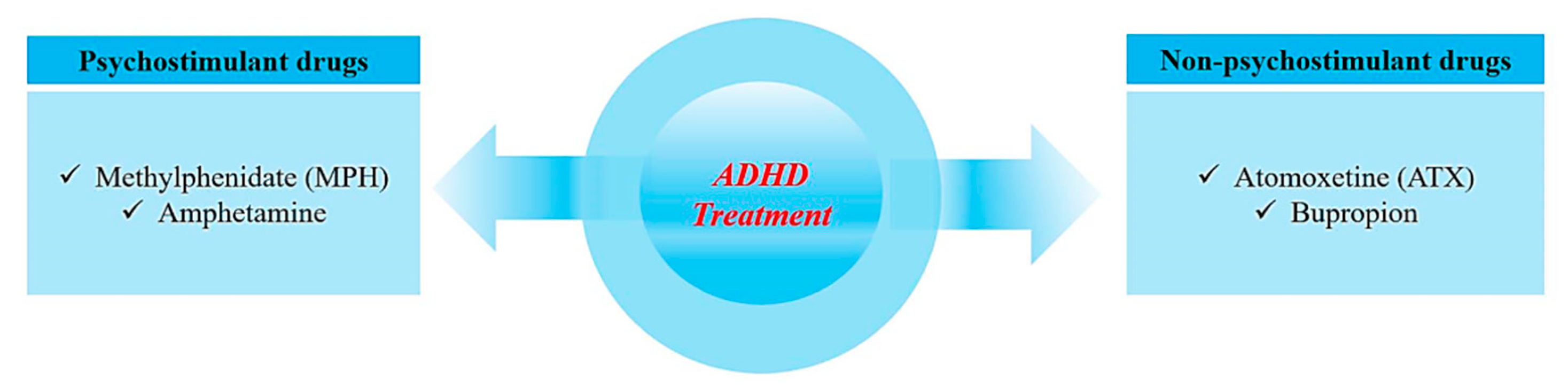

Table 1.
Oxidative stress biomarkers from different biological samples and the levels compared to the control.
Table 1.
Oxidative stress biomarkers from different biological samples and the levels compared to the control.
| Sample | Antioxidants | Level compared to control/treatment | Reference |
|---|---|---|---|
| Plasma | GPx | lower | [40] |
| [46] | |||
| activity did not change | [41] | ||
| CAT | activity was higher | [40,41] | |
| lower | [46] | ||
| SOD | not significantly | [42,46] | |
| lower | [42,46] | ||
| TAS | lower | [38,54,55] | |
| GSH | high | [8] | |
| GLA | high | [43] | |
| LPO | lower | [41] | |
| AOPP | |||
| NOx | |||
| GRd | high | ||
| total thiols | lower | [7] | |
| GST | lower | [46] | |
| Serum | SOD1 | significantly lower | [56] |
| Melatonin | high | [44] | |
| TAC | lower | [45] | |
| CAT | |||
| GSH | |||
| MDA | |||
| MDA | high | [47] | |
| lower | [57] | ||
| Saliva | CAT | lower | [50] |
| Rat brain homogenates-Tx MPH | SOD | lower | [51,58] |
| CAT | lower | [51] | |
| GSH | lower | [58] | |
| GPx | |||
| Rat brain homogenates | GSH | lower | [53] |
| SOD | |||
| CAT | |||
| GPx | |||
| not specified | TOS | significantly higher | [39] |
| TAS | lower than in the control group |
AOPP - advanced oxidation protein product plasma levels; CAT - catalase; GLA - acid γ-linolenic; GPx - glutathione peroxidase; GRd - glutathione reductase activity; GSH - antioxidant glutathione; GST - glutathione-S-transferase; LPO - products of lipid peroxidation; MDA - malondialdehyde; NOx - nitrite + nitrate levels; SOD - superoxide dismutase; TAS - total antioxidant status; SOD1 – superoxide dismutase 1; TAC - total antioxidant capacity; TOS - total oxidant status.
Table 2.
Types of micronutrients and possible effects: focusing on oxidative stress and effects on the brain.
Table 2.
Types of micronutrients and possible effects: focusing on oxidative stress and effects on the brain.
| Microutrients | Types | Effects | Food | References |
|---|---|---|---|---|
| Minerals | Zn | It helps regulate gene expression, has antioxidant properties and can protect against macular degeneration caused by OS | Meat, seafood, fruits and vegetables, cereals, dairy, legumes, nuts | [72,73] |
| Fe | An insufficient iron level can be a risk factor for death | It is found in two forms: heme iron, from meat and non-heme iron present in vegetables, legumes, cereals, nuts | [74] | |
| Mg | It crosses the blood-brain barrier and plays a key role in neuronal maturation and central nervous system function | Vegetables (spinach), pulses, cereals, fruits, nuts | [75,76] | |
| Se | It functions as a cofactor of GPx enzymes that have a role in protecting against OS. It reduces lipid oxidation by catalyzing the reduction of peroxides | Vegetables, nuts, fish, grains, meat | [77,78] | |
| Vitamins | B6 | Role in neurotransmitter synthesis (gamma-aminobutyric acid, serotonin and dopamine) and stress reduction | Meat, dairy products, beans, nuts, potatoes and more fruits and vegetables | [79,80] |
| B12 | Essential for DNA function and metabolism. Vitamin B12 deficiency leads to an increase in the pro-inflammatory cytokine IL-6. Proinflammatory cytokines produce inflammation that increases ROS levels and can lead to OS | Meat, milk, eggs and fish | [81,82] | |
| D | Role in bone metabolism, brain function and regulates Ca. It can stimulate the activity and expression of GGT, which participates in the glutathione cycle between neurons and astrocytes. It increases the level of glutathione to protect neurons, so it can lead to the decrease of ROS | Sun exposure,fatty fish, dairy products, cereals, orange juice, eggs | [34,83] | |
| Polyunsaturated fatty acids | ω-3 PUFAs | They can prevent chronic diseases, reduce lipoperoxidation levels, reduce the ratio of SOD/CAT enzymes.High doses of omega 3 fatty acids can trigger OS | Fish (mackerel, salmon), microalgae and some microorganisms | [84,85,86] |
Ca – calcium; CAT - catalase; Fe – iron; GGT - gamma-glutamyl transpeptidase; GPx - glutathione peroxidase; IL-6 - interleukin-6; Mg – magnesium; OS – oxidative stress; ROS - reactive oxygen species; Se – selenium; SOD - superoxide dismutase; Zn – zinc; ω-3 PUFAs - Omega-3 polyunsaturated fatty acids.
Table 3.
Micronutrients supplementation in people with ADHD.
| Supplements | Number of participants (n=) |
Age (years) |
Dose | Time | Result | References |
|---|---|---|---|---|---|---|
| Zn | 400 | 9.61 ± 1.7 | 150 mg zinc sulfate | 12 weeks | Positive effects on the symptoms of ADHD | [101] |
| 52 | 6 – 14 | 15 mg every morning or two times per day+ amphetamine | 13 weeks | it had no effect | [102] | |
| 60 | 9.6 ± 1.70 | 0,5–1mg/kg/day methylphenidate + 10 mg Zn | 6 weeks | Significantly improved attention | [89] | |
| Fe | 23 | 5 – 8 | 80 mg/day ferrous sulfate | 12 weeks | Improves ADHD symptoms in children with low serum ferritin levels | [103] |
| Mg | 50 | 7 – 12 | 200 mg/day | 6 months | Positive response to Mg supplementation | [104] |
| Vitamin D | 96 | 9.76 ± 2.38 | 50,000 UI/week 25-hydroxy-vitamin D3 | 6 weeks | A positive effect on ADHD symptoms | [105] |
| 35 | 7 – 14 | 3000 IU/day 25-hydroxy-vitamin D3 | 12 weeks | may improve cognitive functions related to ADHD | [106] | |
| Mg + Vitamin D | 74 | 6 – 12 | vitamin D (50.000 UI/week) + Mg supplements (6 mg/kg/day) | 8 weeks | Reduced social problems and anxiety in children with ADHD | [107] |
| ω-3 PUFAs | 40 | 8 – 14 | 10 g of full fat (80%) margarine daily enriched with either 650 mg of EPA/DHA | 16 weeks | ω-3 PUFA supplementation may increase the performance of pharmacological treatments of ADHD | [108] |
DHA - docosahexaenoic acid; EPA - eicosapentaenoic acid; Fe – iron; Mg – magnesium; n - number of participants; IU - International Units; Zn – zinc; ω-3 PUFAs - Omega-3 polyunsaturated fatty acids.
Disclaimer/Publisher’s Note: The statements, opinions and data contained in all publications are solely those of the individual author(s) and contributor(s) and not of MDPI and/or the editor(s). MDPI and/or the editor(s) disclaim responsibility for any injury to people or property resulting from any ideas, methods, instructions or products referred to in the content. |
© 2024 by the authors. Licensee MDPI, Basel, Switzerland. This article is an open access article distributed under the terms and conditions of the Creative Commons Attribution (CC BY) license (http://creativecommons.org/licenses/by/4.0/).
Copyright: This open access article is published under a Creative Commons CC BY 4.0 license, which permit the free download, distribution, and reuse, provided that the author and preprint are cited in any reuse.


