

Submitted:
23 July 2024
Posted:
24 July 2024
You are already at the latest version
Abstract
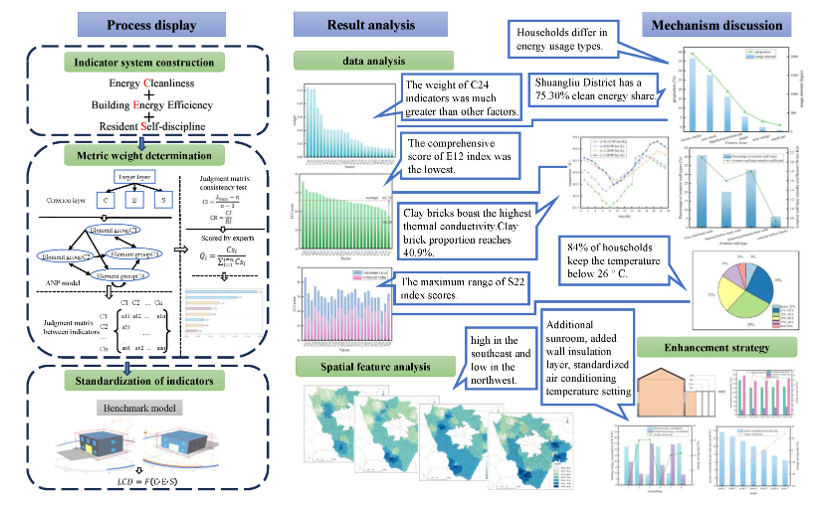
A comprehensive evaluation system of rural building energy consumption from the innovative composite perspective was established, which was suitable for southwest of China. The index system was established by Brainstorming method and Delphi method, the weights of the comprehensive evaluation model were calculated by Network Process (ANP) method, the scoring criteria of all evaluation indexes were leveld based on fuzzy evaluation theory. The system model was verified by case analysis, at the countryside around Chengdu Second Circle. With the highest weight, lowest comprehensive score, and broadest range of comprehensive scores taken into consideration, three key factors affecting the target layer, namely "Percentage of Clean Energy Use", "Thermal Performance of Exterior Walls", and "Implementation Rate of Energy saving Measures". The distribution of comprehensive indicators and evaluation factors has certain spatial distribution characteristics, and the overall spatial distribution shows a characteristic of "high in the southeast and low in the northwest". Finally, Based on key factors and regional distribution characteristics, energy-saving measures have been proposed from three aspects: increasing sunrooms, adding wall insulation layers, and standardizing air conditioning temperature settings.
Keywords:
Rural Building
; Energy Consumption
; Low-Carbon Intensity (LCI)
; Analytic Network Process(ANP) Method
1. Introduction
Environmental problems such as global warming, pollution, and extreme weather caused by energy consumption have attracted widespread attention from scholars. The whole life cycle of a building consumes a large amount of energy, making it one of the largest components of energy consumption in today’s society. In the United States and Europe (Han et al., 2021) [1], the construction sector accounts for 39% and 40% of energy consumption, 38% and 36% of carbon dioxide emissions, respectively. At the same time, it accounts for a quarter of China’s total emissions from energy consumption (Zhang et al., 2020) [2].
The most recent edition of the China Energy Statistics Yearbook (2022) reveals that per capita domestic energy consumption in rural areas has increased by over threefold, from 132 kilograms of standard coal (kgce) in 2000 to 529 kilograms of standard coal (kgce) in 2021. As rural energy consumption continues to rise, China has placed a significant focus on addressing the issue of rural energy consumption and carbon emissions. This is evidenced by their proposal to promote the energy-saving renovation of rural housing, the construction of green rural housing and the use of clean energy sources (Liu et al., 2023) [3].
In order to identify the causes of high energy consumption in buildings, scholars have conducted research into a number of factors that affect energy consumption in buildings (Tso and Guan, 2014; Baker, Rylatt, 2008) [4,5]. These studies aim to identify factors that significantly impact energy consumption. They propose alternative building designs, such as window design or choice of roofing materials (Saadatian et al., 2021; Mano and Thongtha, 2021) [6,7], and characterise the impact of single factors such as wall thickness, external windows, solar chimneys, etc., on the building’s energy consumption in the context of building characterisation (Wang, 2017; Marincu et al., 2024; Wang et al., 2024; Bosu et al., 2023) [8,9,10,11]. Some scholars have studied the impact of environmental changes on building energy consumption (Li et al., 2021) [12]. This encompasses the impact of temperature fluctuations (Omer, 2007; Yuan et al.,2024) [13,14] and solar radiation (Callegas et al., 2021) [15]. Furthermore, they examined the impact of facade geometry on visual comfort and energy consumption across four distinct climatic conditions in Iran (Mahdavinejad et al., 2024) [16]. Scholars have also explored the impact of energy consumption behaviors and the building energy sector (Wei et al., 2022) [17]. For instance, a statistical analysis of factors such as occupant behaviour and awareness of energy efficiency identified three distinct behavioural types: proactive, intermediate and careless. Subsequently, these behaviours are subjected to analysis in order to ascertain their influence on the consumption of energy by buildings. (Duan et al., 2023; Hax et al., 2022; Xu et al., 2023) [18,19,20].
The previous description only focuses on a single factor that affects energy consumption, such as buildings, the environment, or energy usage behavior. Nevertheless, they frequently fail to acknowledge that the phenomenon of building energy consumption is a complex dynamic system. A systematic analysis of energy consumption from a composite perspective was necessitated (Lee, Cheng, 2015) [21], with the aim of elucidating the interactions among various influencing factors. The operational energy consumption of buildings was recognized as a significant contributor to overall energy consumption. To attain the goals of low energy consumption and reduced carbon emissions in rural housing, an evaluation of building energy consumption from the integrated “energy-building-behavior” perspective was deemed necessary.
Meanwhile, the regional characteristics of the evaluation model should also be taken into consideration. In the past, the comprehensive evaluation of the rural human settlements and green buildings in China was mostly applied to the eastern coastal areas and the northern plains, while the comprehensive evaluation system for rural areas under mountainous conditions was quite inadequate. Scientific research in this respect should be further carried out to provide theoretical and data support for the comprehensive construction of a moderately prosperous society.
Based on this, a comprehensive evaluation model of rural building energy consumption in Southwest China was constructed based on the composite perspective of “energy-building- behaviour”. The level of building energy consumption was quantified, key factors were identified, energy-saving renovation schemes were explored, and twenty villages surrounding Chengdu were selected as case. The evaluation system can serve as an operational tool that is both simple and effective in promoting the development of low-carbon energy in rural areas.
2. Research Process
2.1. Research Framework
Figure 1 illustrates the research framework. The influencing factors were sorted through the application of both brainstorming and Delphi methods. An evaluation index system for rural building energy consumption was established, and the weights of each index were determined using expert consultation and the Analytic Network Process (ANP). The scoring criteria for each index were determined through energy consumption simulation, linear interpolation, and fuzzy theory. Case selection was conducted for data collection. ArcGIS software was employed to analyze the evaluation results and survey data using spatial interpolation analysis, thereby deriving the spatial distribution pattern of the Low Carbon Intensity (LCI) of building energy consumption. Based on the evaluation outcomes, targeted building energy efficiency renovation schemes were proposed.
2.2. Construction of Evaluation Models
The construction of the evaluation model is divided into six stages, as follows:
2.2.1. Indicator Factor Sorting
Given the diverse factors influencing rural building energy consumption, which necessitated a comprehensive analysis of multiple indicators, an evaluation index system framework was established through literature analysis.This framework comprised four levels: the target level, the criterion level, the sub-criterion level, and the factor level. An innovative comprehensive evaluation metric, Low Carbon Intensity (LCI), is proposed to be utilized for quantifying the level of energy consumption in buildings. Consequently, the target level was defined as LCI, and the criterion level was summarized into three aspects: Cleanliness of Energy (C), Energy Efficiency of Buildings (E), and Self-Discipline of Residents (S), based on the energy’s inherent attributes, the spatial carrier of energy usage, and the energy implementer. This led to the CES model being defined. The framework of the index system is illustrated in Figure 2.
The preliminary evaluation index system was derived by the research team through two rounds of brainstorming sessions for selecting indicator factors. Subsequently, the indicator factors underwent optimization through two rounds of Delphi methodology. In the first round, focused primarily on open-ended consultations, the experts were presented with the preliminarily drafted indicators and their corresponding explanations. A total of 12 experts from relevant fields were invited to provide feedback on the evaluation system. The recognition rate for the criterion level and sub-criterion level of the evaluation index system achieved 100% among the experts.
The second round of expert consultations utilized the Likert scale method to assign scores to each indicator. Initially, the Kendall’s W coefficient was employed to evaluate the degree of coordination among experts’ judgments across all indicators. Subsequently, the weighted average score, weighted standard deviation, and weighted coefficient of variation for each indicator were calculated, serving as the basis for indicator screening. The calculation results consistently indicated a high degree of coordination and consensus among experts’ judgments, with the consistency test being successfully passed. Through these two rounds of expert consultation methods, a final evaluation index system comprising 8 sub-criterion levels and 26 factor levels was established, with a distinction made between objective and subjective indicators for each. The evaluation index system is presented in the corresponding columns of Table 2.
2.2.2. Construction of a Model for the Mutual Influence Relationship between Indicators
The ANP (Analytic Network Process) methodology primarily categorizes system elements into two hierarchical levels: the control layer and the network layer. The control layer encompasses indicators of the target level and the criterion level, whereas the network layer comprises indicators of the sub-criterion level and the factor level. The interdependent relationships among these indicators were determined through expert consultations and questionnaire surveys. A total of 12 experts were consulted via questionnaires, and when the number of experts who perceived a correlation between two indicators was equal to or greater than one, it was determined that there existed an influence relationship between those two indicators; otherwise, no influence relationship was assumed. Based on the dependencies and feedback relationships among the indicators, a network structure model diagram (Figure 3) was constructed using the Super Decisions (yaanp) software.
2.2.3. Construction of Judgment Matrix
Based on the indicator network hierarchy diagram, judgment matrices were formulated to evaluate the superiority and inferiority of indicators at both the control layer and the network layer. With considerations given to feasibility and representativeness, six experts were selected from the previously mentioned twelve, who were highly relevant to the field of human settlements environment, to ensure their corresponding professional competence and credibility. These experts were then tasked with conducting pairwise comparisons of factor importance using Saaty’s 1-9 scale. Among them, four experts self-assessed their familiarity with the indicators as 1 (fully familiar), while the remaining two assessed their familiarity as 0.75 (moderately familiar). Subsequently, the judgments on superiority/inferiority were weighted and averaged according to Formula (2.1), where Qi represents the weighted average superiority/inferiority value, Csi denotes the expert’s self-assessed familiarity with the study, and n refers to the total number of experts consulted. This process was completed in the past.
The criteria-level indicators, being independent of each other, had their judgment matrixes established based on a direct superiority/inferiority degree. In contrast, the interplay among the sub-criteria levels necessitated the adoption of a combined approach of direct and indirect superiority/inferiority degrees for establishing their judgment matrixes. As a result, 8 cluster judgment matrixes and 87 node judgment matrixes were ultimately derived. Table 1 presents solely the judgment matrix for the sub-criteria level under the energy supply and demand criteria level, with additional relationship tables provided in the appendix.
2.2.4. Consistency Check of Judgment Matrix
The logical coherence of the decision-makers’ inputs within the judgment matrix was validated through the consistency check. The degree of consistency among the pairwise comparison matrices, known as the consistency ratio (CR), was utilized as a form of feedback for the experts to have their judgment matrixes revised. The derivation of CR involved the calculation of the maximum eigenvalue (λmax), the consistency index (CI), and the random consistency index (RI). λmax was computed by utilizing the linear algebra library functions in programming software, while the formulas for CI and CR, as presented in Equations (2.2) and (2.3) respectively, where n represented the order of the matrix, were applied. When CR ≤ 0.1, it was determined that the judgment matrix had passed the consistency check. According to the calculations that were performed, the consistency ratio for the judgment matrix presented in Table 1 was found to be 0.0276, which was less than 0.1 (similarly, all judgment matrixes had their consistency ratios determined to be less than 0.1).

Table 1.
Energy Supply and Demand cluster judgement matrix under the criterion layer.
| Energy Supply and Demand | Architectural Design | Envelope Structure | Energy Use | Energy Sustainable | Awareness Management | Behavior Management |
|---|---|---|---|---|---|---|
| Architectural Design | 1 | 2 | 1/2 | 1/2 | 3 | 2 |
| Envelope Structure | 1/2 | 1 | 1/2 | 1/2 | 2 | 2 |
| Energy Use | 2 | 2 | 1 | 1 | 2 | 2 |
| Energy Sustainable | 2 | 2 | 1 | 1 | 3 | 2 |
| Awareness Management | 1/3 | 1/2 | 1/2 | 1/3 | 1 | 1 |
| Behavior Management | 1/2 | 1/2 | 1/2 | 1/2 | 1 | 1 |
| consistency test: λmax: 6.174113;CR=0.0276<0.1 | ||||||
2.2.5. Calculation of Indicator Weights
After the expert scoring results for the judgment matrices were obtained and their consistency was verified, the data for the matrices was entered into yannp program. The input was facilitated through a “questionnaire format,” which captured the individual experts’ scoring results for the judgment matrices. Subsequently, the judgment outcomes of the superiority and inferiority for 8 cluster judgment matrices and 87 node judgment matrices were derived. By selecting the appropriate options within YAAHP, the unweighted supermatrix, weighted supermatrix, and limit supermatrix were calculated. The final determined weight results were then presented in the corresponding weight columns of Table 2.
Table 2.
Comprehensive evaluation index system of energy consumption of rural residential buildings.
Table 2.
Comprehensive evaluation index system of energy consumption of rural residential buildings.
| Criterion layer | weight | Sub-canonical layer | weight | Factor layer | weight | Normalized values | ||||
| q∈[80,100] | q∈[60,80) | q∈[40,60) | q∈[20,40) | q<20 | ||||||
| Energy Cleanliness (C) | 0.559 | Energy Supply and Demand C1 | 0.071 | Clean Energy Demand Satisfaction C11 (subjective) | 0.041 | Satisfaction with clean energy demand is high | Satisfaction with clean energy demand is relatively high | Satisfaction with clean energy demand is average | Satisfaction with clean energy demand is relatively low | Satisfaction with clean energy demand is low |
| Energy Price Stability C12 (subjective) | 0.016 | Energy prices are stable | Energy prices are relatively stable | Energy prices vary in general | Energy prices are relatively highly volatile | Energy prices are highly volatile | ||||
| Energy Subsidies and Satisfaction C13 (subjective) | 0.013 | Residents are highly satisfied with energy subsidies | Residents are more satisfied with energy subsidies | Residents’ satisfaction with energy subsidies is average | Residents’ satisfaction with energy subsidies is relatively low | Residents’ satisfaction with energy subsidies is low | ||||
| Energy Use C2 | 0.285 | Electricity Consumption per capita C21 | 0.064 | Electricity consumption Q∈ [646,727] | Electricity consumption Q∈ (727,808] | Electricity consumption Q∈ (808,889] | Electricity consumption Q∈ (889,970] | Electricity consumption Q∈ (970,1051] | ||
| Gas Consumption per capita C22 | 0.041 | Gas consumptionG∈[72,81] | Gas consumption G∈ (81,90] | Gas consumption G∈ (90,99] | Gas consumption G∈ (99,108] | Gas consumption G∈ (108,117] | ||||
| Proportion of Energy Use from Commodities C23 | 0.074 | commodity energy use/total energy ×100per cent | ||||||||
| Percentage of Clean Energy Use C24 | 0.105 | Total clean energy usage/total energy usage×100per cent | ||||||||
| Energy Sustainable C3 | 0.204 | Biomass Energy Utilisation C31 | 0.102 | It meets the requirements of biogas digester on-site use and has a high frequency of use | It meets the requirements of biogas digester on-site use and the frequency of use is average | It meets the requirements of biogas digester on-site use and is used less frequently | Does not meet the requirements for use or does not use modern biomass energy | Conventional biomass energy is used | ||
| Solar Energy Systems C32 | 0.102 | 30 points for solar thermal equipment, 30 points for solar photovoltaic equipment, and 20 points for setting up a sunshine room, and the cumulative score is calculated | ||||||||
| Building Energy Efficiency (E) | 0.297 | Architectural Design E1 | 0.098 | Building Site Selection E11 | 0.043 | According to the definition of the rationality of building site selection in relevant specifications, five main conditions are established to determine the evaluation criteria for building site selection based on the number of buildings | ||||
| 5 conditions are met | 4 conditions are met | 3 conditions are met | 2 conditions are met | 0-1 conditions are met | ||||||
| Building Orientation E12 | 0.016 | The growth rate of energy consumption is 0per cent-3per cent, corresponding to the direction | The growth rate of energy consumption is 3per cent-6per cent, corresponding to the direction | The growth rate of energy consumption is 6per cent-9per cent, corresponding to the direction | The energy consumption growth rate of 9per cent-12per cent corresponds to the direction | The energy consumption growth rate is greater than 12per cent, corresponding to the direction | ||||
| Architectural Space Layout E13 | 0.025 | Floor height 2.7≤h≤3.0 | Floor height 3.0<h≤3.3 | loor height 3.0<h≤3.3 | Floor height 3.6<h≤3.9 | Floor height 3.9<h≤4.2 | ||||
| Building form Factor E14 | 0.013 | 0.35≤Tx≤0.45 | 0.45<Tx≤0.55 | 0.55<Tx≤0.75 | 0.75<Tx≤0.95 | 0.95<Tx≤1.2 | ||||
| Envelope Structure E2 | 0.131 | Thermal Performance of Exterior Walls E21 | 0.041 | 0.6≤Km≤1.0 | 1.0<Km≤1.4 | 1.4<Km≤1.8 | 1.8<Km≤2.2 | 2.2<Km≤2.6 | ||
| Thermal Performance of Exterior Windows E22 | 0.041 | 1.4≤Kw≤2.4 | 2.4<Kw≤3.4 | 3.4<Kw≤4.4 | 4.4<Kw≤5.4 | 5.4<Kw≤6.4 | ||||
| Thermal Performance of Roofing E23 | 0.022 | 0.8≤Kr≤1.4 | 1.4<Kr≤2.0 | 2.0<Kr≤2.6 | 2.6<Kr≤3.2 | 3.2<Kr≤4.0 | ||||
| External Shading Measures E24 | 0.027 | 2.0≤L≤2.7 | 1.5<L≤2.0 | 1.0<L≤1.5 | 0.5<L≤1.0 | 0<L≤0.5 | ||||
| Building Material E3 | 0.068 | Building Materials Localization Ratio E31 | 0.026 | City-wide use of building materials/total use of building materials×100per cent | ||||||
| Utilization Rate of Environmentally Friendly Construction Materials E32 | 0.042 | Green building materials used/total building materials used×100per cent | ||||||||
| Resident Self-discipline (S) | 0.144 | Awareness Management S1 | 0.042 | Widespread Awareness of Low Carbon S11 (subjective) | 0.016 | Residents have a high level of low-carbon knowledge | Residents have a relatively high level of low-carbon knowledge | Residents’ low-carbon knowledge is average | Residents’ understanding of low-carbon knowledge is relatively low | Residents’ low-carbon knowledge is low |
| Acceptance of Low-Carbon Living S12 (subjective) | 0.011 | The main low-carbon lifestyles are green consumption, food conservation, residential energy-saving renovation, energy-saving household appliances, garbage classification, and clean travel | ||||||||
| Meet 5-6 items | Meet 4 items | Meet 3 items | Meet 2 items | Meet 0-1 items | ||||||
| Responsiveness to Low-carbon Construction S13 (subjective) | 0.015 | The village residents are supportive of infrastructure construction | Residents are in favour of the development of rural infrastructure and hardware | Residents generally support the construction of rural infrastructure and hardware | The construction of rural infrastructure is less supported by residents | Residents do not support the construction of rural infrastructure | ||||
| Behavior Management S2 | 0.101 | Proportion of Equipment Designed to Save Energy S21 | 0.036 | Number of energy-saving devices in the dwelling/Total number of devices in the dwelling×100per cent | ||||||
| Implementation Rate of Energy-saving Measures S22 | 0.037 | The number of energy-saving behaviors achieved by residents/10×100per cent | ||||||||
| Waste Recycling S23 (subjective) | 0.015 | Utilise household waste to its full potential | A significant proportion of household waste is utilised. | Household waste is partly utilised | A small quantity of domestic waste is utilised | Household waste is not utilised | ||||
| Indoor Air Quality Discipline S24 | 0.013 | The cumulative score is calculated by assigning 30 points for indoor planting of green plants, 30 points for indoor air purifiers, and 20 points for window ventilation. | ||||||||
2.2.6. Index Classification Criteria and Determination of LCI
The scoring of objective indicators was conducted using the linear interpolation method based on national or local standards, prevailing regulations, and statistical yearbooks. Data sources encompassed field measurements and observations, while questionnaires were utilized to gather information and document the subjective perceptions of respondents. Subsequently, the subjective indicators were quantified through the application of fuzzy mathematics theory. The standardized values corresponding to the scoring criteria for specific indicators are presented in Table 2.
LCI was used to measure energy consumption levels and has a certain functional relationship with the indicators of the three criteria layers from a composite perspective:
The correlation between the three criterion levels of C, E, and S and the sub-criterion levels was described by Equation (2.1). Formula (2.1) can be written as , where Ci, Ei, and Si represent the indicators of the subcriteria layer, and i represents the number of indicators of the subcriteria layer. The process of pushing secondary functions is as follows:
The weight coefficients of each indicator are represented by “w”. “j” represents the number of factor levels, while “m”, “n”, and “l” represent the number of indicators in the subcriteria level. Formula (2.8) shows the functional relationship between LCI and the criterion layer, where 0.559, 0.297, and 0.144 are the indicator weight coefficients of the criterion layer, obtained from the weight calculation method described earlier.
2.3. Application of Evaluation Model
As the center of the southwestern region, Chengdu had invested more in energy infrastructure than villages in other areas, showcasing the achievements in rural development in recent years. The second-tier districts within a 30-kilometer radius to the east, south, west, and north of Chengdu’s main urban area, including Pidu District, Xindu District, Longquanyi District, Shuangliu District, and Wenjiang District, were selected through a multi-stage stratified sampling method, ensuring the objectivity of the research subjects. A total of 20 villages, 6 designated as demonstration villages and 14 as ordinary villages, were selected as samples. The specific locations of the households that were sampled are depicted in Figure 4. A total of 550 households were surveyed, yielding 521 valid samples, with an effective questionnaire rate of 94.73%.
The data was collected through on-site observation, measurement, and questionnaire survey. On site observation and collection of data on indicators such as Envelope Structure (E2) and Building Material (E3) (materials and structures of walls, doors and windows, shading, roofs, etc.); On site measurements were conducted to collect data on the indicators of Architectural Design (E1), such as building orientation, building depth, and floor height. The questionnaire survey collected data on indicators such as Energy Supply and Demand (C1), Energy Use (C2), Energy Sustainable (C3), Awareness Management (S1), and Behavior Management (S2) (household energy consumption structure, energy supply and demand satisfaction, various types of energy consumption, etc.). Figure 5 shows the specific research process and the tools used for on-site measurement.
3. Results
By integrating research data with indicator grading standards, factor scores were obtained, and the comprehensive evaluation values for the indicators of both the criterion layer and the target layer were calculated using formulas (2.5), (2.6), (2.7), and (2.8). The results were subsequently derived as follows.
3.1. Energy Cleanliness (C) Sub-Evaluation Results
Energy cleanliness (C) encompassed nine factors, including satisfaction with clean energy demand (C11) and several others. The weight ranking of each factor was presented in Figure 6 at that time. Among them, the weight of the C24 indicator was the most prominent. Although C31 and C32 indicators also play a prominent role in weight ranking, their actual scores were significantly lower than C24 (Figure 9). While C31 and C32 hold theoretical importance, their practical application encounters obstacles in attaining significant results, primarily due to the combination of high implementation costs and insufficient technological maturity. Therefore, when considering the overall cleanliness and efficiency of building energy use, the C24 indicator was more critical due to its relatively high score when considering the weight and score.
In this case, the types of energy utilized by households were ranked in percentage, with electricity, firewood, liquefied petroleum gas, natural gas, solar energy, and biogas accounting for 39.29%, 30.30%, 18.77%, 8.13%, 2.53%, and 0.98% respectively, as depicted in Figure 7. Research data has revealed that the natural gas penetration rate in the Shuangliu area was high, achieving a clean energy proportion of up to 75.30%. The C24 index was assigned an LCI score of 80.99. Conversely, in the Pidu area, the natural gas infrastructure was relatively underdeveloped, leading to a lower proportion of clean energy usage at 62.30%, which in turn resulted in the C24 index being awarded a lower LCI score of 64.96.
The rural residents exhibited a lower utilization rate of solar energy and biogas. The reason for the non-utilization of solar energy was due to the fact that the intensity of solar radiation failed to meet the requirement for hot water supply, specifically, it was incapable of effectively boiling water. An analysis was conducted to identify the reasons behind the rural residents’ avoidance of biogas. Some held the belief that there was a shortage of raw materials for biogas production, whereas others argued that the availability of liquefied petroleum gas, natural gas, and other alternatives rendered the use of biogas unnecessary.
The spatial distribution characteristics of LCI scores were comprehensively analyzed utilizing the advanced spatial interpolation capabilities of ArcGIS software. The aim was to gain an in-depth understanding of the geographical variations in energy consumption patterns that existed in rural areas surrounding Chengdu. Figure 8, a detailed map produced from the analysis, vividly depicted the spatial distribution of LCI scores correlated with the C index. The map exhibited a pronounced downward trend in LCI scores from the southeast to the northwest regions, indicating varying levels of environmental impact stemming from energy utilization.
Huaguo Village, located in Longquanyi District, stood out with an LCI score of 77.14, which could be attributed to several factors. Among them, the strategic location of the village within the Longquan Mountain Range, where abundant solar radiation is received, played a part. Additionally, the household energy structure in Longquanyi District was highly diversified and environmentally friendly, with natural gas being accounted for a significant proportion (up to 80%) of energy consumption. This reduction in dependence on fossil fuels, in turn, contributed to a cleaner environment.
On the other hand, Jinbai Village in Pidu District received an LCI score of merely 56.37, the lowest recorded in the analysis. This relatively low score stemmed from the challenges faced by the area in developing natural gas infrastructure. Households in Pidu District heavily rely on firewood to meet their energy needs, a traditional fuel source that, despite its abundance, has significant impacts on air pollution and deforestation. Consequently, the C index for the region reflects a lower energy-environmental performance, with an LCI score of 66.56.
3.2. Building Energy Efficiency (E) Sub-Svaluation Results
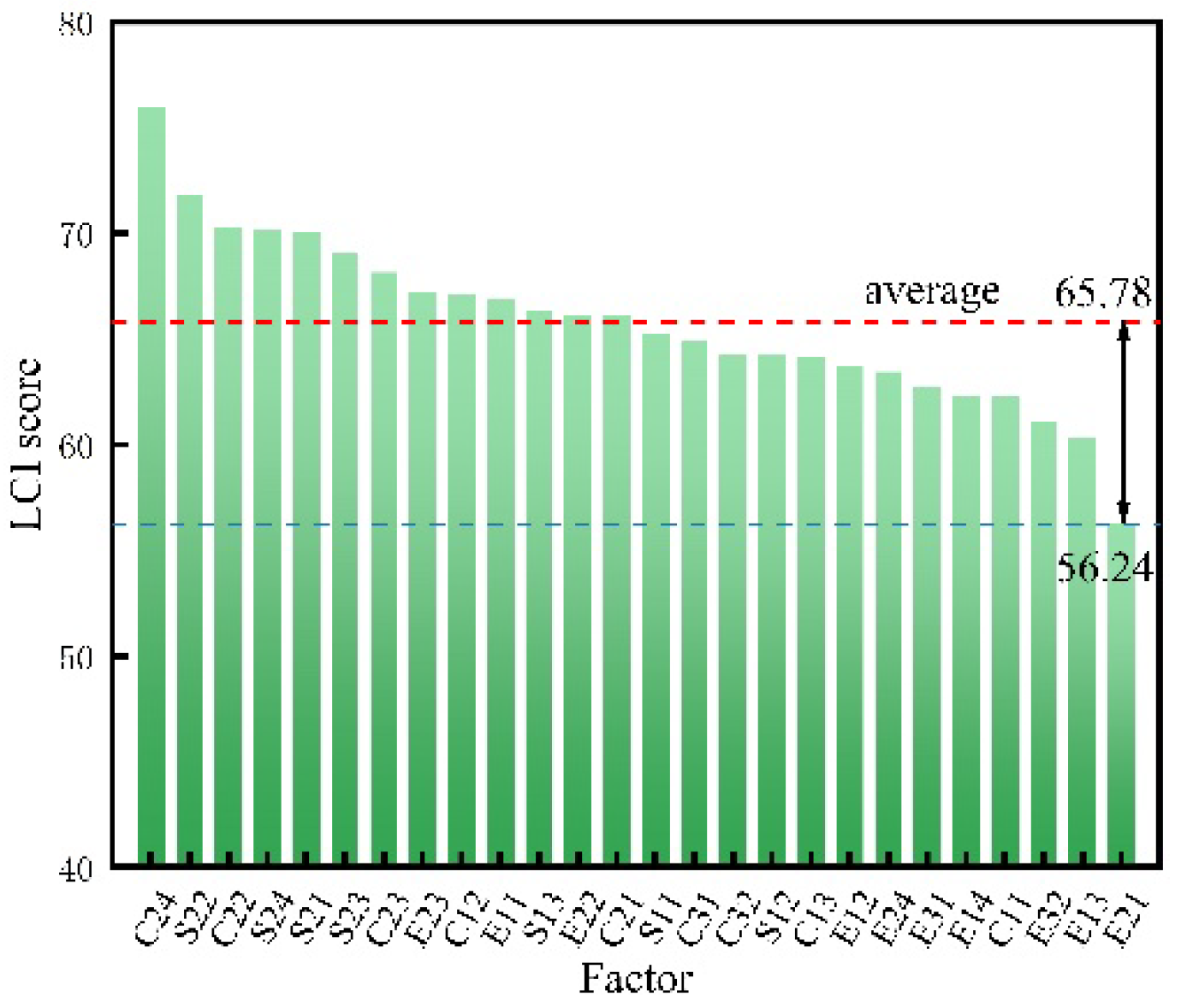
The Building Energy Efficiency (E) index includes multiple factors. Differences were present in the overall LCI scores, with each factor having been assigned a unique score. Figure 9 showed the LCI scores for each factor, with the scores exhibiting marked diversity, spanning from 56.24 to 75.97, and averaging 65.78. As had been analyzed earlier, the score of the C24 indicator was notably high. Notably, the LCI score of Thermal Performance of Exterior Walls (E21) index was particularly singled out, having been ranked last among all factors with a score of 56.24, significantly falling below the 14.5% average level of the overall score when considered as a percentage. This low scoring not only underscored the shortcomings of external wall thermal performance under the prevailing evaluation framework but also pointed to the obstacles it confronted in terms of energy conservation, emission reduction, and enhancing building energy efficiency.
Figure 9.
LCI scores for each factor.
The exterior walls of rural buildings surrounding Chengdu encompassed clay solid brick walls, sintered hollow brick walls, sintered porous brick walls, and concrete hollow blocks, each having distinct thermal conductivity coefficients of 1.89W/(m•K), 0.63W/(m•K), 1.26W/(m•K), and 0.315W/(m•K), respectively. Figure 10 illustrated the periodic temperature fluctuations within the wall surface, contingent upon these varying thermal conductivity coefficients, revealing notable differences. Notably, concrete hollow blocks, due to their minimal thermal conductivity, restricted indoor air heat dissipation, resulting in a more pronounced decrease in room temperature. In contrast, solid clay bricks, possessing the highest thermal conductivity, facilitated greater heat dissipation from indoor air.
Figure 11 shows the proportion of exterior wall types in rural buildings around Chengdu. The findings had revealed that only 6.3% of those rural buildings had employed concrete hollow blocks for their exterior walls, whereas the proportion of clay solid brick walls had stood as high as 40.9%. Consequently, the overall LCI score of the E21 indicator in rural Chengdu had been merely 56.24. Pidu District had stood out as a notable example, where the majority of buildings in Jinbai Village had been self-constructed by villagers over an extended period. As a result of the high thermal conductivity of these exterior walls and their tendency to have absorbed more internal heat, the LCI score of the E21 index in this area had been low, reaching only 42.19.
As depicted in Figure 12, the spatial distribution of LCI scores for the E indicator had shown a notable decline from the southwestern regions towards the northeast by then. Specifically, the pinnacle of 81.35 for the E indicator’s LCI score had been achieved in Liyuan Demonstration Village, located within Shuangliu District. In stark contrast, the lowest point of 51.79 had been recorded in Yituan Village, situated in Xindu District. This disparity had primarily stemmed from the fact that some villages in Xindu had endured protracted construction periods, coupled with a severe degradation of their overall architectural integrity. Notably, the prevalence of solid brick walls, known for their inferior insulation properties, and outer windows constructed from either single-layer plastic steel or wooden materials, both of which had contributed significantly to heat loss, had been found in these villages. Consequently, the average LCI score for the E index in Xindu District had hovered at a mere 59.00 by that time, underscoring the urgency that had arisen to enhance energy efficiency.
In stark juxtaposition, Liyuan Village in Shuangliu District had stood as a beacon of sustainability. The local government had embraced a proactive approach, having integrated greening and comfort considerations into every facet of building design, construction, and operation. This holistic methodology had yielded a commendable LCI score of 68.89 for the E index within the region, attesting to the potential that had been realized for sustainable development and improved energy performance in rural areas.
3.3. Resident Self-Discipline (S) Sub-Evaluation Results
The Resident Self-discipline (S) index, which pertains to residents’ implementation behavior, encompasses factors related to their awareness and attitude towards energy conservation. The maximum and minimum LCI scores for each factor, as were shown in Figure 13, exhibited a marked difference. This disparity manifested not only in the span of scores but also in the varying effectiveness of factors, with factors exhibiting differing capabilities in carrying out energy-saving and emission reduction measures and advancing environmental sustainability. Overall, the broad range between the maximum and minimum values underscored that while some households had attained remarkable achievements in energy conservation and emission reduction, others presented considerable opportunities for improvement.
Subsequently, specific attention was turned to the Implementation Rate of Energy-saving Measures (S22) indicator, whose extreme value difference was highlighted as the most notable and pronounced among all factors. The S22 index attained its maximum score of 83.43 points in Liyuan Village, Shuangliu District, which not only significantly surpassed the average by 16.10 percentage points but also underscored the outstanding performance of energy-saving practices in the village. Conversely, the minimum score of 55.02 points for the S22 index, recorded in Renyi Village, Pidu District, fell considerably below the average by 23.43 percentage points, thereby revealing a clear deficit in the village’s energy-saving awareness at that time.
To delve deeper into the execution of energy-saving practices, a meticulous record was kept of residents’ air conditioning temperature preferences during the scorching summer months. As illustrated in Figure 14, a significant 77% of residents opt to maintain their air conditioning settings within the range of 21°C to 26°C, while an even higher percentage of 84% of households keep the temperature below 26°C. However, with 7% of households having set their air conditioners to a frigid temperature below 20°C, which indicated a potential disregard for energy efficiency, this aspect was noteworthy. The fact that a modest increase of 1°C in the set temperature of household air conditioners can lead to energy savings of 8% to 12% underscores the importance of mindful temperature settings.
Evidently, rural residents surrounding Chengdu tended to set their air conditioning temperatures too low, reflecting a lack of energy-saving awareness. The LCI score for the implementation rate of energy-saving measures (S22) indicator in Jinbai Village, Pidu District, stood at 58.34. This figure served as a stark reminder that significant energy-saving potential could have been unlocked through optimizing air conditioning temperature settings. It underscored the need for targeted interventions and promotional activities aimed at fostering a stronger energy-saving mindset within the local community.
Figure 15 intuitively revealed that regional differences and spatial distribution trends of LCI scores under the indicator of Residents Self-discipline (S) index had been displayed. Specifically, a decreasing trend in the LCI score of this indicator had been observed from southwest to northeast. A high LCI score of 84.67 had been attained in Gaoshan Village, Wenjiang District, which demonstrated the region’s outstanding performance in energy conservation, emission reduction, and the promotion of low-carbon living at that time. Conversely, in Jinbai Village, Pidu District, a sharp drop to 59.59 in this value had been seen, reflecting the apparent shortcomings in the adoption of low-carbon living practices within the region in the past.
Further analysis had been conducted, revealing that the aging of equipment and the prolonged use of traditional wood stoves in areas like Jinbai Village and Pidu had been phenomena that directly contributed to a low proportion of energy-saving equipment being utilized. Additionally, as a result of many residents in the area having relocated from other places in the past, the concept of low-carbon living may not have been fully embraced and internalized during their adaptation to the new environment. Consequently, in their daily routines, particularly for cooking and hot water supply, there had remained a strong reliance on traditional energy sources such as firewood, which undoubtedly led to increased carbon emissions and underscored the weakness in the low-carbon awareness of the residents at that time.
3.4. Results of the Comprehensive LCI Evaluation of Energy Consumption in Rural Buildings
Figure 16 presented the comprehensive evaluation results of LCI scores for energy consumption in rural buildings surrounding Chengdu, which had been completed in the past. The average variation among the LCI scores of different districts had been found to be minor, yet the extreme disparities in scores among individual buildings within each district had been significantly pronounced. Longquanyi District had been noted as having the highest average LCI score, at 75.19, with scores ranging from a low of 56.62 for a building in Lianhe Village to a high of 86.92 for a building in Baosheng Village. Conversely, Pidu District had been observed to have the lowest average LCI score, at 66.54, where scores had varied from 44.63 for a building in Jinbai Village, the lowest within the district, to 87.66 for a building in Qinjiamiao Village, the highest.
From a spatial distribution perspective, the overall pattern had been characterized by high scores being concentrated in the southeast, lower scores in the northwest, and moderate scores averaging out in the central region. This distribution had been found to have been significantly influenced by key indicators such as C24, E21, and S22, which had played pivotal roles in shaping the LCI scores and their spatial distribution across rural buildings in the vicinity of Chengdu in the past.
Table 3 provided an insightful overview, having categorized 20 sample villages based on their respective LCI scores, which had spanned from low-carbon to medium-high carbon, with no villages having been categorized as high-carbon. This trend underscored the remarkable progress that had been achieved in promoting low-carbon construction initiatives in rural communities surrounding Chengdu.
In low-carbon villages, four out of five villages have been designated as demonstration villages, highlighting their exemplary status. These demonstration villages had exhibited superior building performance and a diversified energy consumption portfolio, characterized by a heavy reliance on clean energy sources for daily consumption. Consequently, their LCI levels had surpassed those of the non-demonstration villages. However, an exception to this pattern was Huaguo Village, whose elevated LCI level stemmed from factors distinct from those of the demonstration villages. Specifically, Huaguo Village had benefited from its tourism-driven development, government-led infrastructural renovations, and a unique environmental context characterized by high altitudes, intense solar radiation, and widespread adoption of renewable energy sources.
When considering the medium-to-high carbon villages, a pattern emerged in the form of three recurring challenges: firstly, the suboptimal utilization of clean energy resources; secondly, the inadequacy of thermal insulation and performance of building envelope structures; and thirdly, the general lack of awareness and adoption of low-carbon behaviors among residents. Addressing these issues had held the key to further advancing low-carbon development in these villages and fostering a more sustainable future for rural communities in the Chengdu region.
4. Recommendations
Based on the actual situation in the southwest region, solutions for the energy-saving renovation of buildings in rural areas surrounding Chengdu had been explored. Following an evaluation of building energy consumption that had been conducted, the energy consumption issues present in certain buildings had been identified. Adhering to the principles of open sourcing and cost savings, renovation plans for building energy use had been investigated, integrating considerations of economic applicability, environmental friendliness, and social sustainability. The specific content of these plans had been outlined as follows:
4.1. Transformation of Energy Efficiency
In terms of the factor of the C index, the rural areas surrounding Chengdu had a diverse energy structure, yet the utilization rate of clean energy in these areas was not high. To facilitate the comprehensive exploitation of renewable resources like solar energy within the Chengdu region, the adoption of additional installation of solar houses was employed to realize the application of passive solar energy technology, with the aim of being harnessed.
Taking the example of a building in Jinbai Village, Pidu District, its low clean energy utilization rate had led to a suboptimal LCI score for the C24 indicator in the past. Upon the addition of solar rooms with varying depths, an energy consumption simulation was performed on the building, as depicted in Figure 17. The results indicated that, as the depth of the solar room was increased, the cumulative heat and cooling loads of the building were also found to increase. When the depth of the solar room was optimized at 1m, the building was found to have achieved the highest overall energy efficiency, with a cumulative total load of 151.43kW · h/㎡ throughout the year and an energy efficiency rate of 14%.
Based on the prevailing conditions in the rural areas surrounding Chengdu at that time, the recommendation was made to set the depth of solar rooms, also known as sun houses, between 1m and 1.5m.When the depth of the solar room in the building was set to 1.2m, the standardized score of the C24 index was observed to have increased, resulting in an elevation of the LCI score from 55.58 to 70.21, marking a significant improvement in energy efficiency.
4.2. Transformation of Energy Carriers
The factor of E index was most notably plagued by the poor thermal performance of the exterior wall. As previously mentioned, the exterior wall of a building in Jinbai Village, Pidu District, which was constructed of solid clay bricks, underwent a change in its construction method. This change, along with the simulation of energy consumption per unit area utilizing the DeST-h software in the past, resulted in findings that are presented in Figure 18.
For a 240mm clay solid brick wall, the addition of a 20mm thick extruded polystyrene board resulted in an energy saving rate of 15.14% being achieved. Similarly, the addition of a 15mm extruded polystyrene board to sintered porous bricks led to an energy saving rate of 10.1%. However, for two different types of exterior walls, increasing the thickness of the insulation layer to 30mm only marginally improved energy efficiency by 0.22% and 0.69%, respectively. Consequently, the thermal performance of the building’s exterior wall was improved upon by the passive addition of 20mm thick extruded polystyrene board insulation material, which in turn, elevated the standardized value of the E21 index. This enhancement subsequently raised the LCI score of its E21 indicator from 42.19 to 61.24.
4.3. Implement Behavioral Guidance
Regarding the factor of the S index, residents were found to possess weak low-carbon awareness. To enhance the LCI score of the S22 indicator and steer residents towards setting appropriate air conditioning temperatures, DeST-h software was utilized to simulate and analyze the impact of varying air conditioning usage behaviors on building energy consumption. The outcomes of this simulation were subsequently presented in Figure 19.
The energy consumption was found to be positively correlated with the set temperature of air conditioning, with a 10% increase in energy-saving rate for every 1℃ decrease in the air conditioning temperature. Survey data revealed that 70% of residents had set their air conditioning temperatures below 26℃, indicating a lack of standardization in air conditioning temperature settings. The optimal temperature setting for air conditioning in Chengdu, being 26℃, was identified. Subsequently, the energy consumption habits of a household in Jinbai Village, Pidu District, were standardized, resulting in an increase in the standardized score of the S22 index. Consequently, the LCI score was elevated from 58.34 to 72.36, significantly reducing the total energy consumption of rural buildings in the vicinity of Chengdu, a milestone achievement with profound implications for energy conservation.
Conclusions
Theoretical endeavors and subsequent case validations have demonstrated the feasibility of considering the rural building energy consumption LCI evaluation model from a composite energy-buildings-behavior perspective. This evaluation model has been proven to provide a straightforward and efficacious tool for fostering advancements in rural low-carbon energy practices. Consequently, the aforementioned considerations have led to the following key conclusions being drawn:
(1) The LCI of rural building energy consumption has been found to be influenced by a multitude of key factors. The Percentage of Clean Energy Use (C24), the Thermal Performance of Exterior Walls (E21), and the Implementation Rate of Energy-saving Measures (S22) have been identified as the primary factors affecting the energy consumption of rural buildings in the Chengdu area, where significant potential for improvement has been uncovered.
(2) Both the LCI and the impact factor exhibiting distinct regional distribution characteristics is evident. The spatial distribution of the LCI of building energy consumption in the case area has been shown to adhere to a pattern characterized by “high in the southeast, low in the northwest, and average in the center.” Deficiencies in the utilization of clean energy, the thermal performance of external walls, and the awareness of energy-saving behaviors among residents have been observed in certain villages within the case area. A more detailed accounting of these patterns would contribute to a more comprehensive understanding of the salient features of rural building energy consumption.
(3) The established evaluation model has been theoretically proven feasible, grounded on the composite perspective of energy-buildings-behaviour. Validated through the use of illustrative examples, the model has been proven effective. Apart from its applicability in evaluating rural buildings in Southwest China, the evaluation model has been demonstrated to be adaptable for areas with difficult transportation access by adjusting the factors and evaluation criteria. Facilitating the provision of more comprehensive and accurate support, along with relevant data, for the construction and renovation of rural green buildings, this approach has proven beneficial.
Author Contributions
All authors have accepted responsibility for the entire content of this manuscript and approved its submission.
Date availability
Data will be made available on request.
Acknowledgements
The authors would like to thank the project team members for their help. This study was funded by the Philosophy and Social Science Research Fund Project of Chengdu University of Technology (YJ2021-ZD002), Project of Western Ecological Civilization Research Center (XBST2021-YB002), Chengdu University of Technology Development Funding Program for Young and Middle-aged Key Teachers (10912-JXGG2021-01003). These supports are greatly appreciated.
Declaration of Competing Interest
The authors declare that they have no known competing financial interests or personal relationships that could have appeared to influence the work reported in this paper.
References
- Jiashi Han, Lei Zhang,Yang Li. Hotspots. flaws and deficiencies of research on rural energy upgrading:A review. Energy Strategy Reviews 38 (2021) 100766. [CrossRef]
- Donglin Zhang, Yong Ding, Lingxiao Fan, Xiangting Jiang. New index for a comprehensive evaluation of building energy performance through spatial and temporal dimensions.Energy & Buildings. [CrossRef]
- Zhengxuan Liu,Chenxi Yu, Queena K Qian, Ruopeng Huang, Kairui You,Henk Visscher , Guoqiang Zhang. Incentive initiatives on energy-efficient renovation of existing buildings towards carbon–neutral blueprints in China: Advancements, challenges and prospects. Energy & Buildings 296 (2023) 113343. [CrossRef]
- Geoffrey.K.F. Tso, JingJing Guan. A multilevel regression approach to understand effects of environment indexs and household features on residential energy consumption, Energy 66 (2014) 722–731, . [CrossRef]
- Keith J. Baker, R.Mark Rylatt. Improving the prediction of UK domestic energy-demand using annual consumption-data, Appl. Energy 85 (6) (2008) 475–482. [CrossRef]
- Shva.Saadatian, Nuno.Simoes, Fausto Freire. Integrated environmental, energy and cost lifecycle analysis of windows: optimal selection of components, Build. Environ. 188 (2021) 107516. [CrossRef]
- Chanita. Mano, Atthakorn Thongtha. Enhanced thermal performance of roofing materials by integrating phase change materials to reduce energy consumption in buildings, J. Renew. Mater. 9 (3) (2021). [CrossRef]
- Yanling Wang, Fang Wanga, Haiyan Wanga. Influencing factors regression analysis of heating energy consumption of rural buildings in China. Procedia Engineering 205 (2017) 3585–3592. [CrossRef]
- Cristina Marincu, Daniel Dan, Ligia Moga. Investigating the influence of building shape and insulation thickness on energy efficiency of buildings. Energy for Sustainable Development 79 (2024) 101384. [CrossRef]
- Xiaoliang Wang, Yi Wu, Xinyi Dong, Manshu Liu, Bo Lei, Xianmin Mai. Optimization of global energy consumption of buildings based on photothermal coupling effect of exterior windows in Qinghai-Tibet plateau. Journal of Building Engineering 85 (2024) 108710. [CrossRef]
- Issa Bosu, Hatem Mahmoud, Shinichi Ookawara, Hamdy Hassan. Applied single and hybrid solar energy techniques for building energy consumption and thermal comfort: A comprehensive review. Solar Energy 259 (2023) 188–228. [CrossRef]
- Lingyan Li, Wangming Sun, Wei Hu, Yongkai. Sun. Impact of natural and social environmental factors on building energy consumption: based on bibliometrics, J. Build. Eng. 37 (2021) 102136, . [CrossRef]
- Abdeen Mustafa Omer. Energy, environment and sustainable development, Renew. Sustain. Energy Rev. 12 (9) (2008) 2265–2300, . [CrossRef]
- Jihui Yuan, Zhichao Jiao, Xiong Xiao, Kazuo Emura, Craig Farnham. Impact of future climate change on energy consumption in residential buildings: A case study for representative cities in Japan. Energy Reports 11 (2024) 1675–1692. [CrossRef]
- Ivan Julio Apolonion Callegas, Raquel Moussalem Apolonio, Emeli Lalesca Aparecida da Guarda, Luciane Cleonice Durante, Karyna de Andrade Carvalho Rosseti, Filipa Roseta and Leticia Mendes do Amarante. Bermed earth-sheltered wall for low-income house: thermal and energy measure to face climate change in tropical region, Appl. Sci. 11 (1) (2021), . [CrossRef]
- Mohammadjavad Mahdavinejad, Hassan Bazazzadeh, Fatemeh Mehrvarz,Umberto Berardi, Tahereh Nasr, Somayeh Pourbagher, Siamak Hoseinzadeh. The impact of facade geometry on visual comfort and energy consumption in an office building in different climates. Energy Reports 11 (2024) 1–17. [CrossRef]
- Qiaoni Wei, Qifen Li, Yongwen Yang, Liting Zhang, Wanying Xie. A summary of the research on building load forecasting model of colleges and universities in North China based on energy consumption behavior: A case in North China. Energy Reports 8 (2022) 1446–1462. [CrossRef]
- Jiaojiao Duan, Nianping Li, Jinqing Peng, Qingqing Liu, Ting Peng,Sheng Wang. Clustering and prediction of space cooling and heating energy consumption in high-rise residential buildings with the influence of occupant behavior: Evidence from a survey in Changsha, China. Journal of Building Engineering 76 (2023) 107418. [CrossRef]
- Douglas Roschildt Hax, Rodrigo Karini Leitzke, Antonio César Silveira Baptista da Silva ,Eduardo Grala da Cunha. Influence of user behavior on energy consumption in a university building versus automation costs. Energy & Buildings 256 (2022) 111730. [CrossRef]
- Xiaoxiao Xu, Hao Yu, Qiuwen Sun, Vivian W.Y. Tam. A critical review of occupant energy consumption behavior in buildings:How we got here, where we are, and where we are headed. Renewable and Sustainable Energy Reviews 182 (2023) 113396. [CrossRef]
- Dasheng Lee, Chin-Chi Cheng. Energy savings by energy management systems: a review, Renew. Sustain. Energy Rev. 56 (2016) 760–777, . [CrossRef]
Figure 1.
Research Flow Chart.
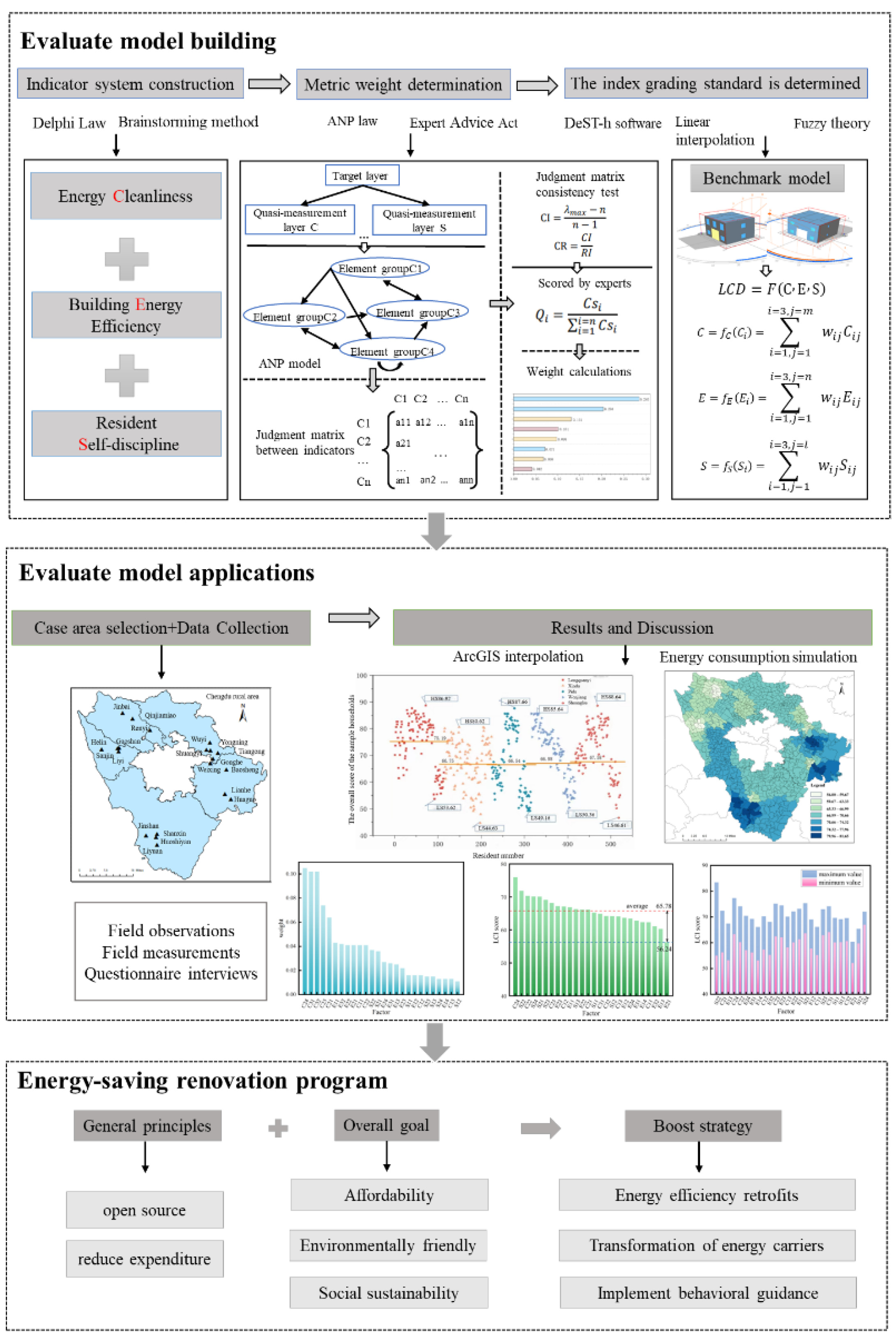
Figure 2.
Index Framework.
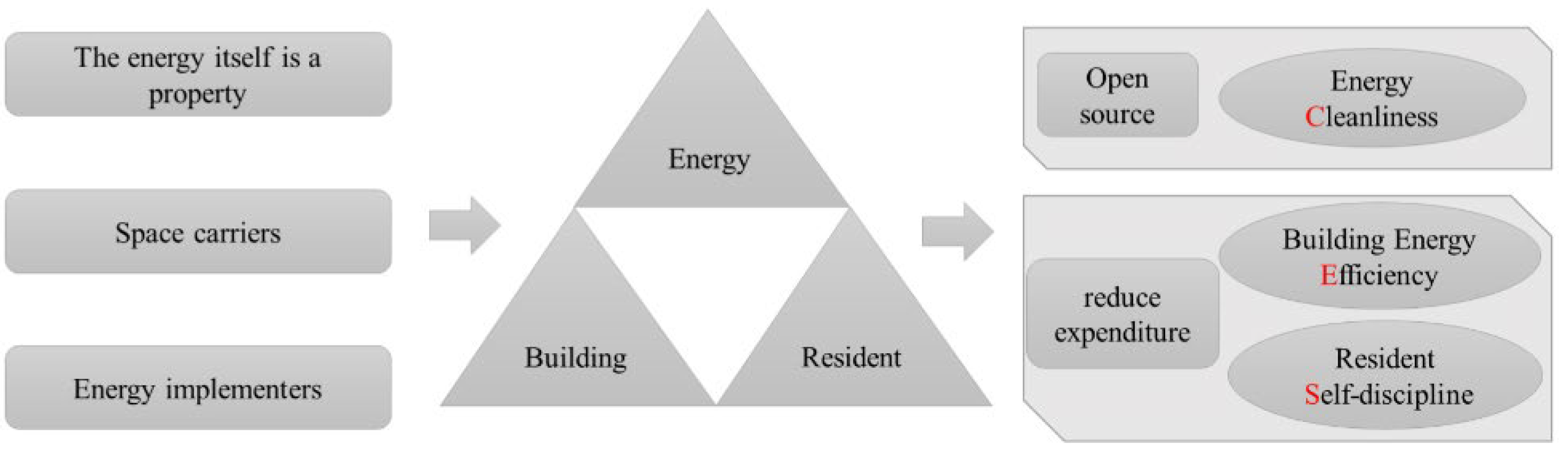
Figure 3.
Index architecture model based on the Analytic Network Process (ANP) method.
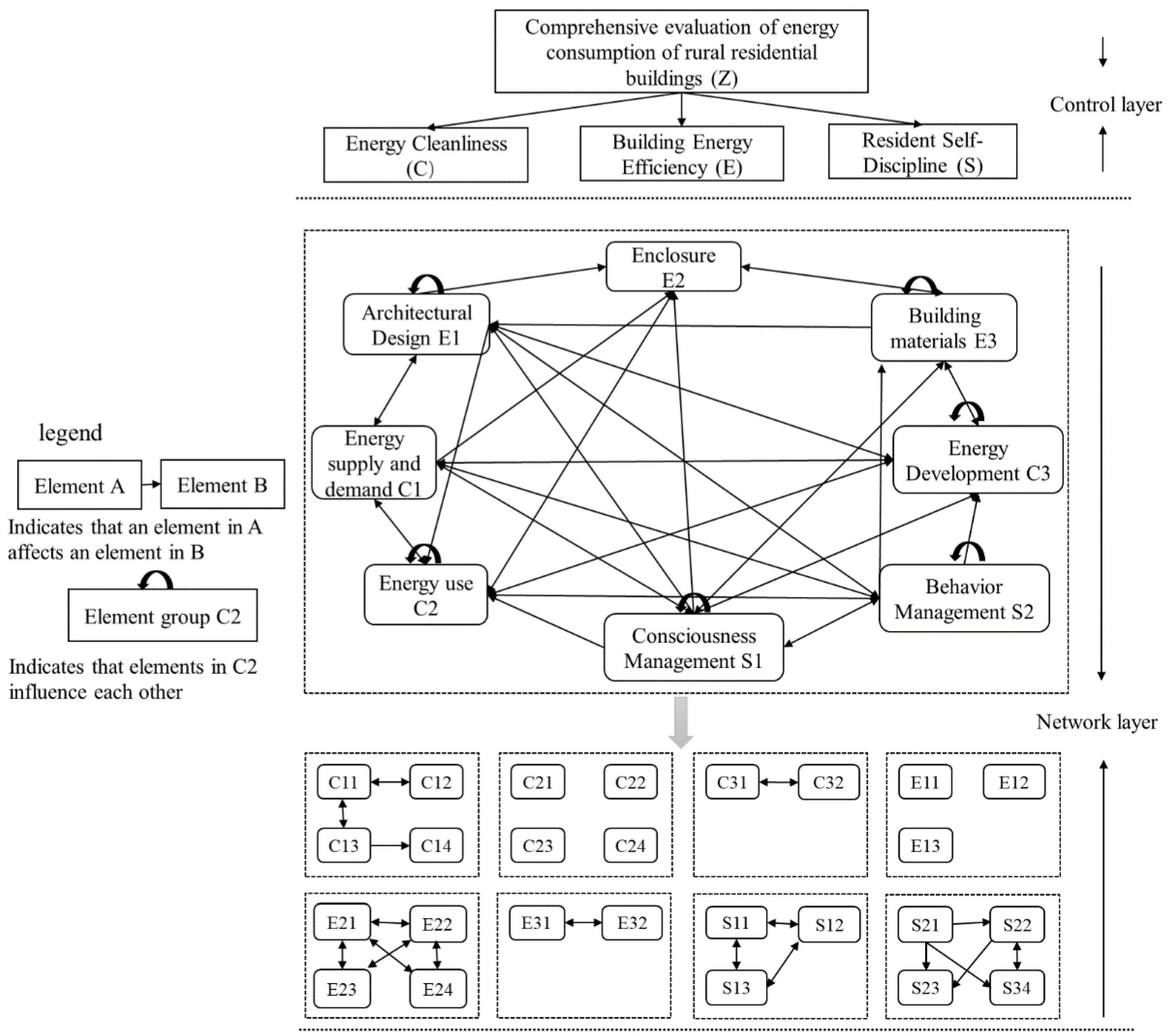
Figure 4.
Study Area Location.
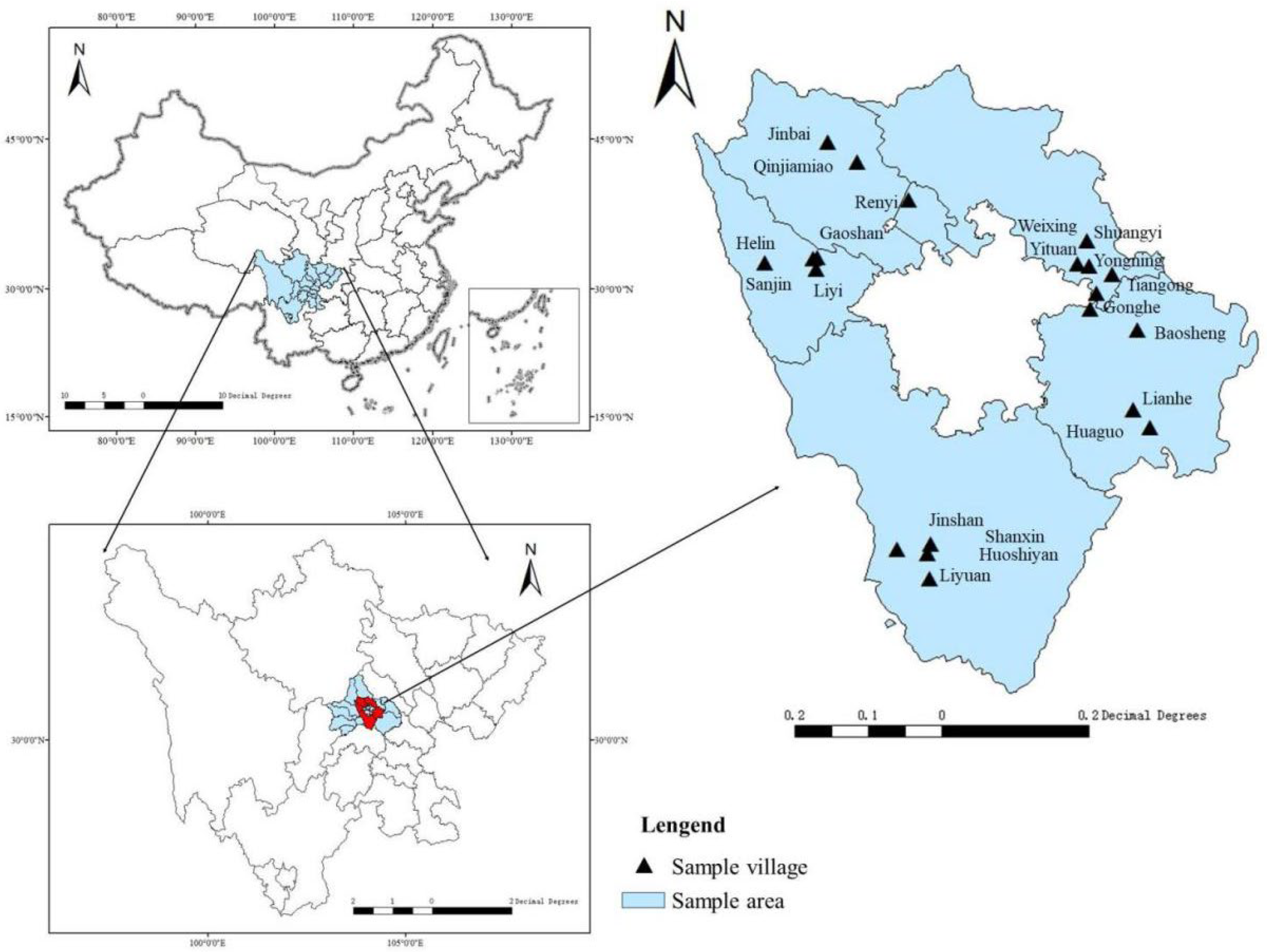
Figure 5.
The survey process of the sample residential buildings.
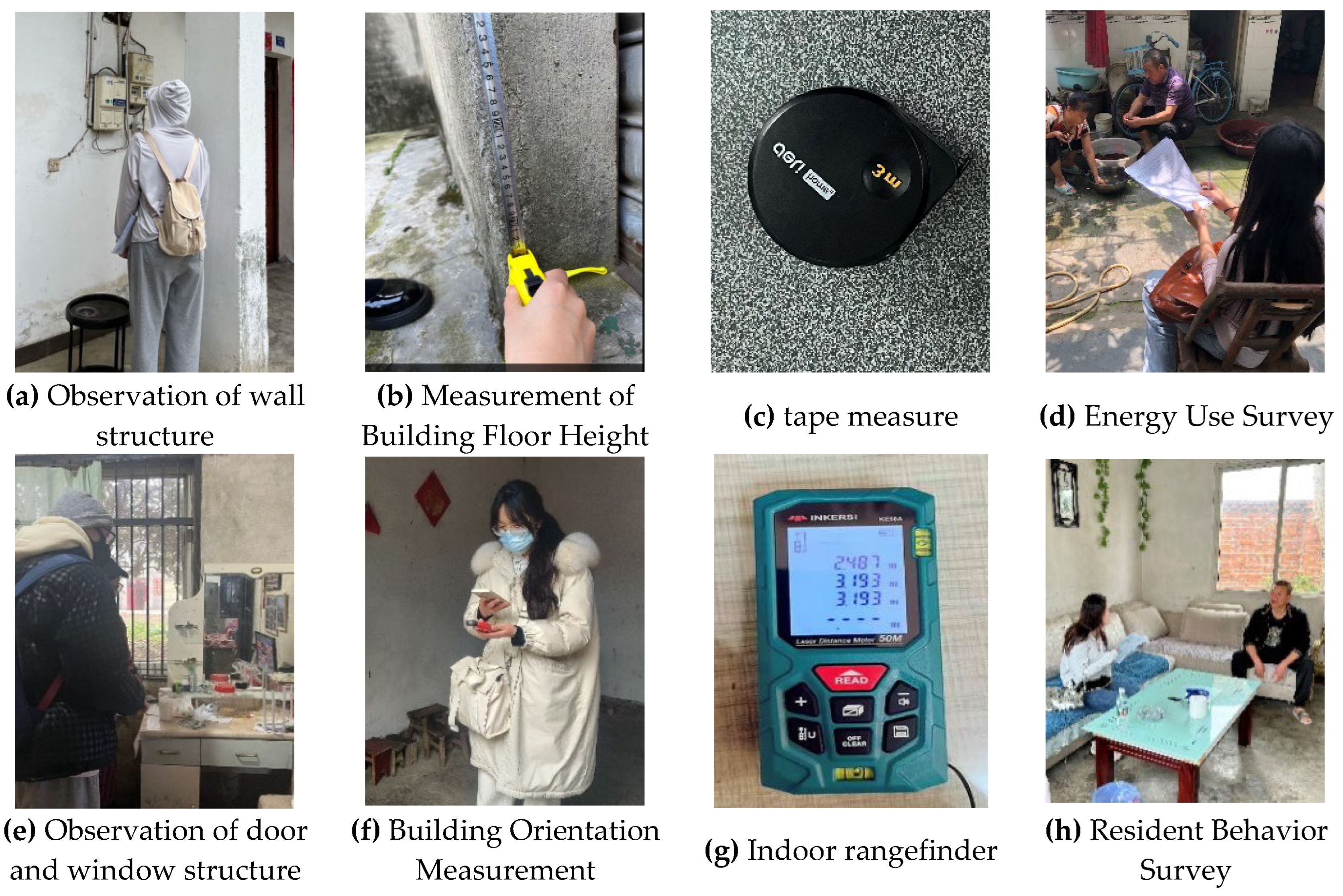
Figure 6.
Factor layer weight sorting.
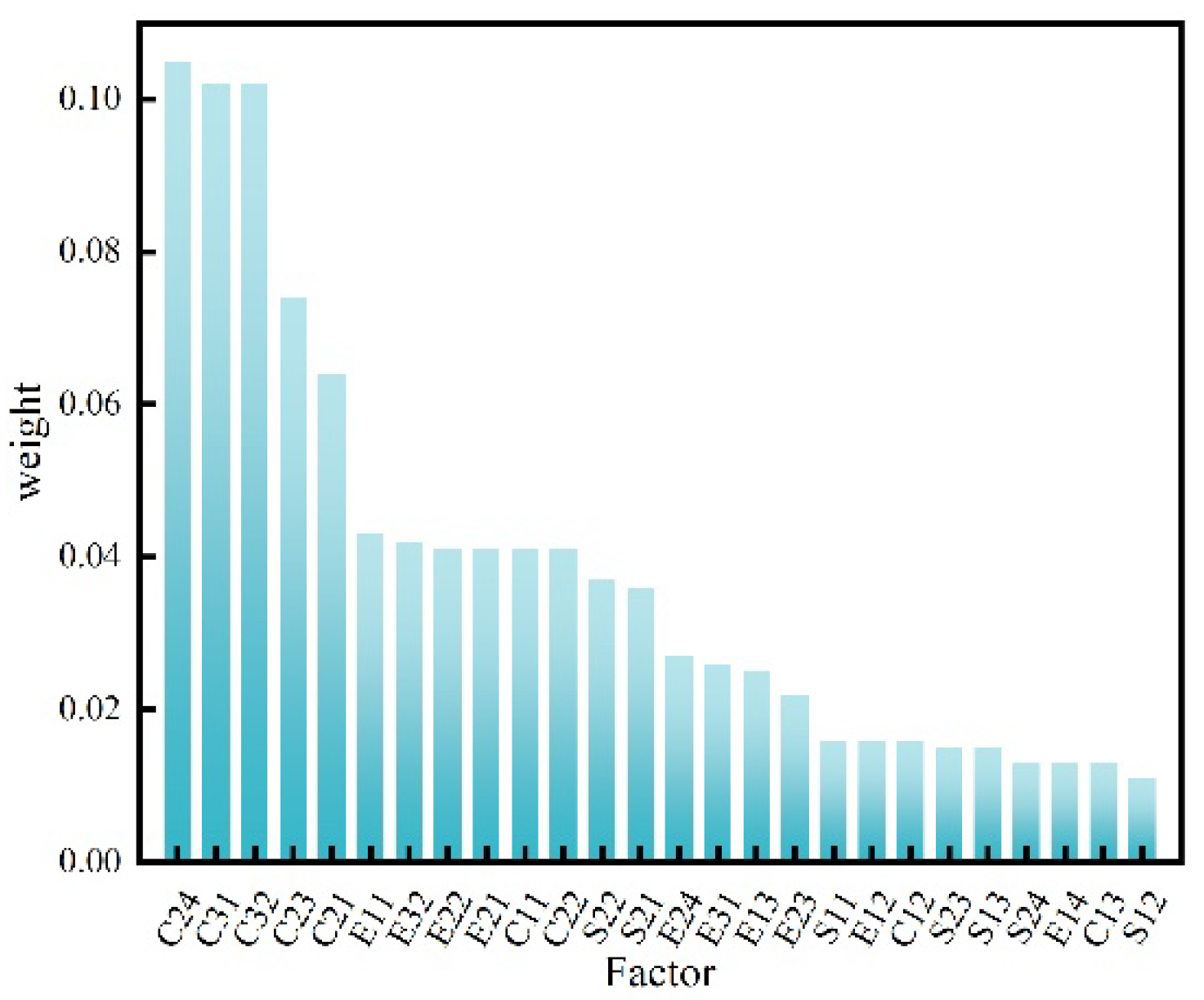
Figure 7.
The annual consumption and proportion of different types of energy in the area under consideration.
Figure 7.
The annual consumption and proportion of different types of energy in the area under consideration.
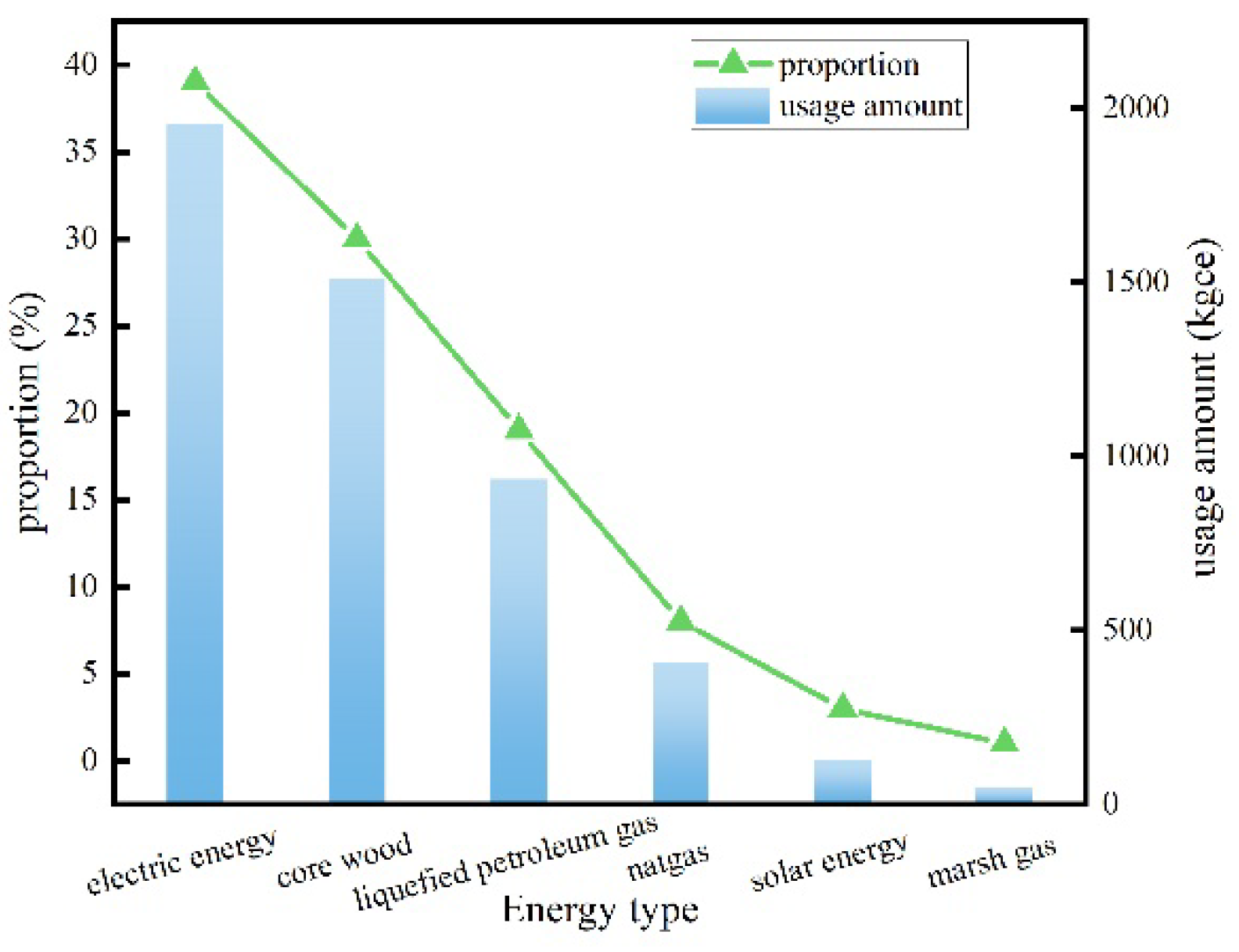
Figure 8.
Spatial Distribution of ‘Energy Cleanliness’ in Rural Buildings around Chengdu.
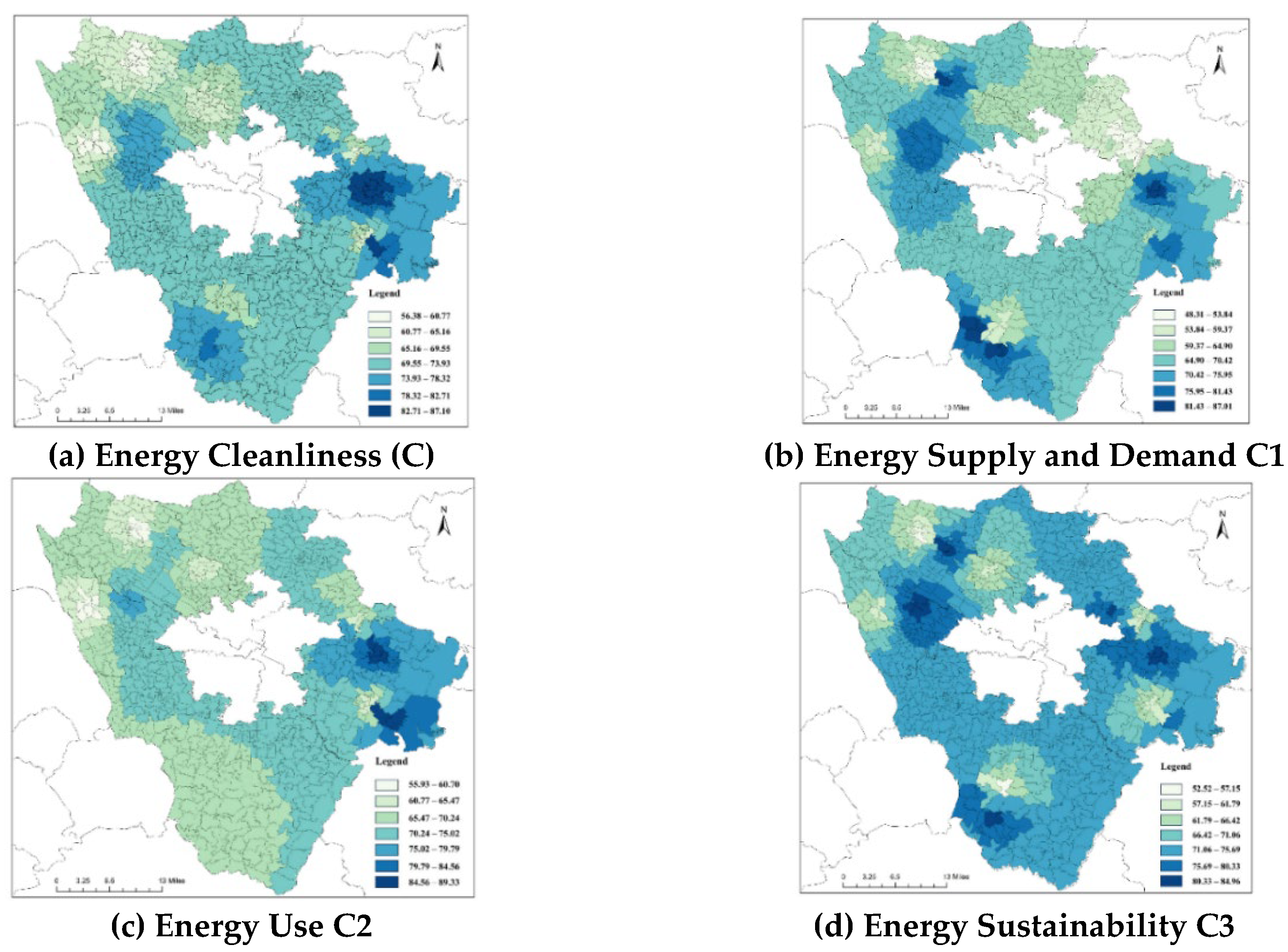
Figure 10.
Periodic variation curves of wall temperature were analysed for walls with different thermal conductivity.
Figure 10.
Periodic variation curves of wall temperature were analysed for walls with different thermal conductivity.
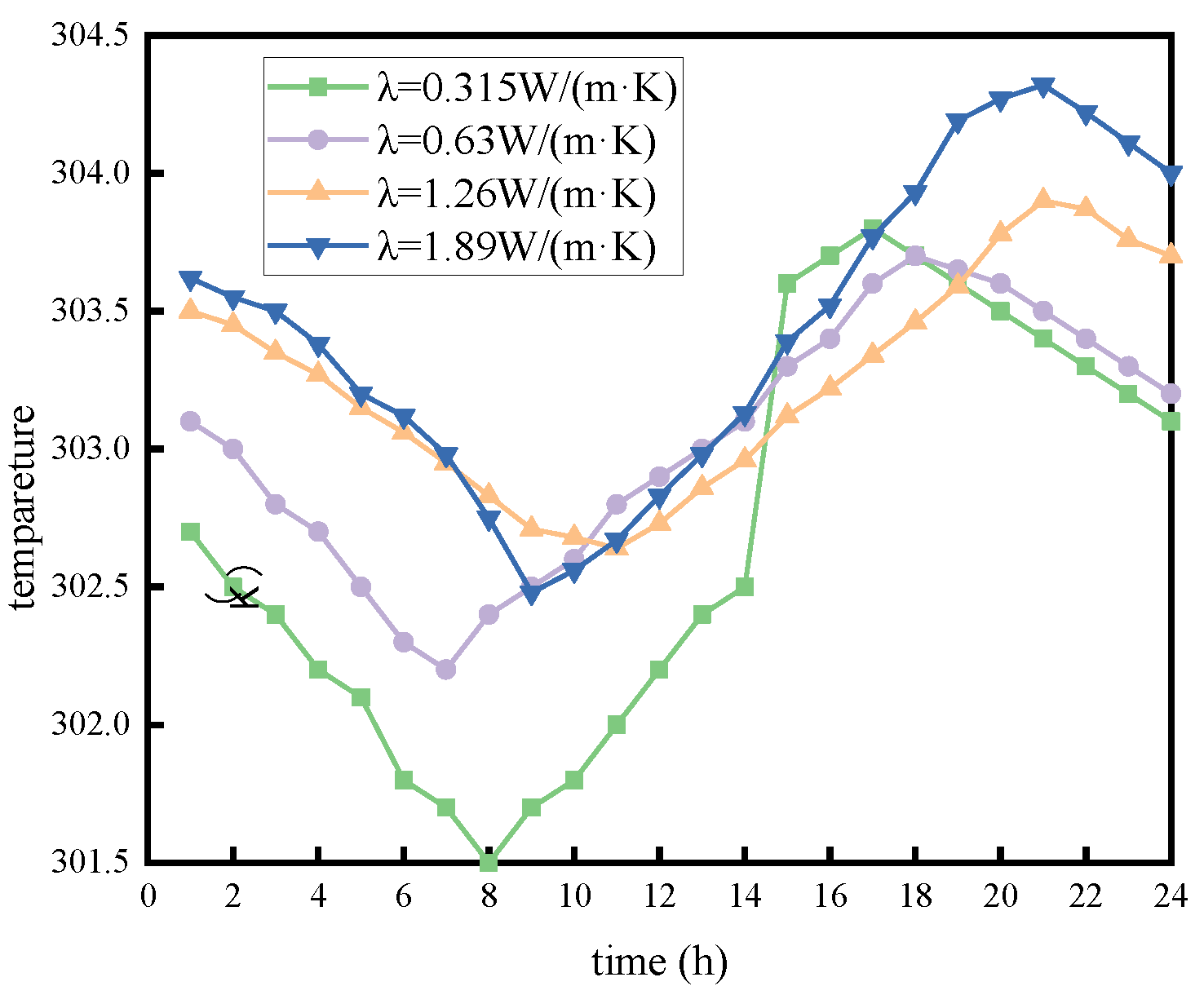
Figure 11.
Proportions of exterior wall types in the sample villages.
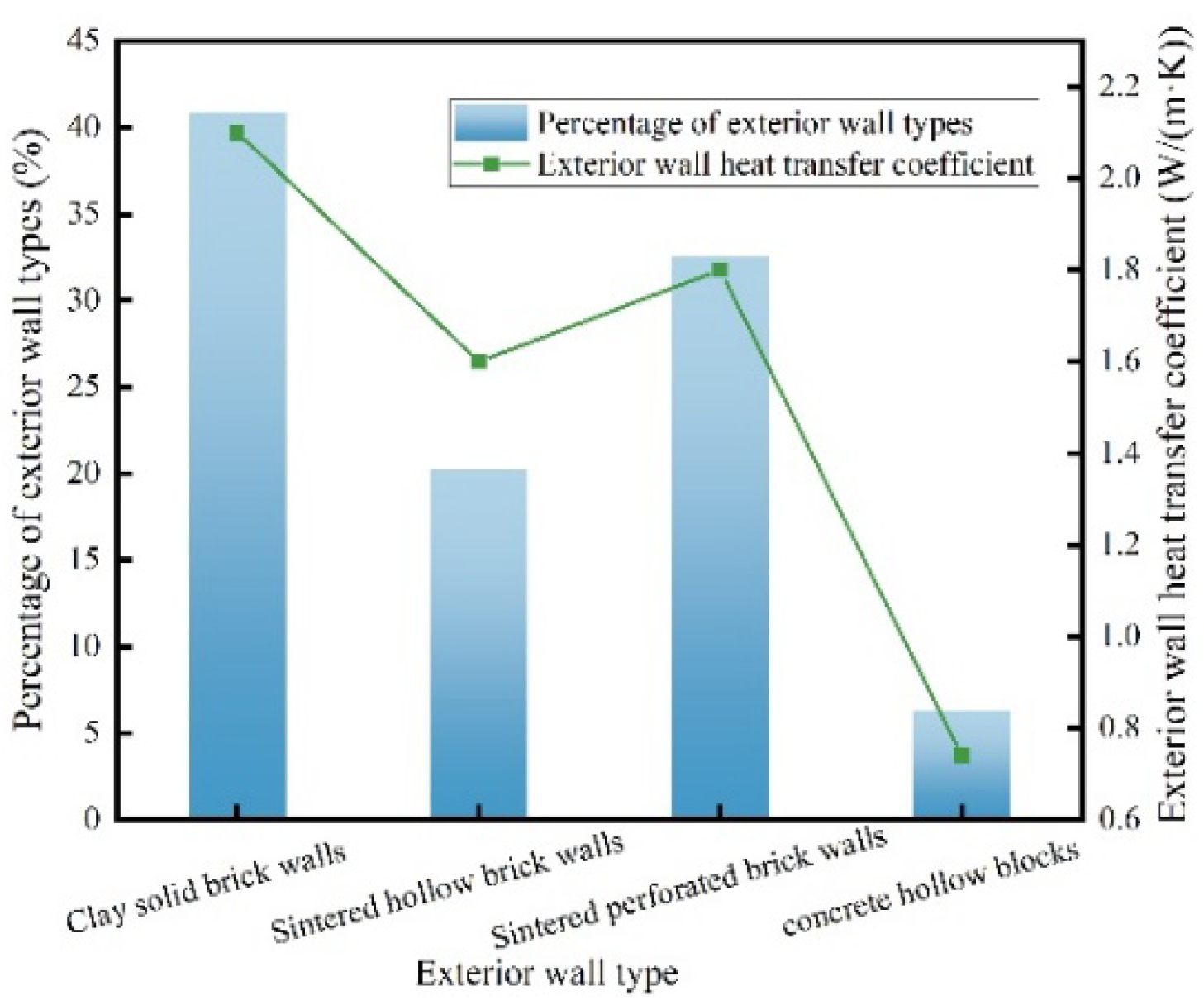
Figure 12.
Spatial Distribution of ‘Building Energy Efficiency’ in Rural Areas around Chengdu.
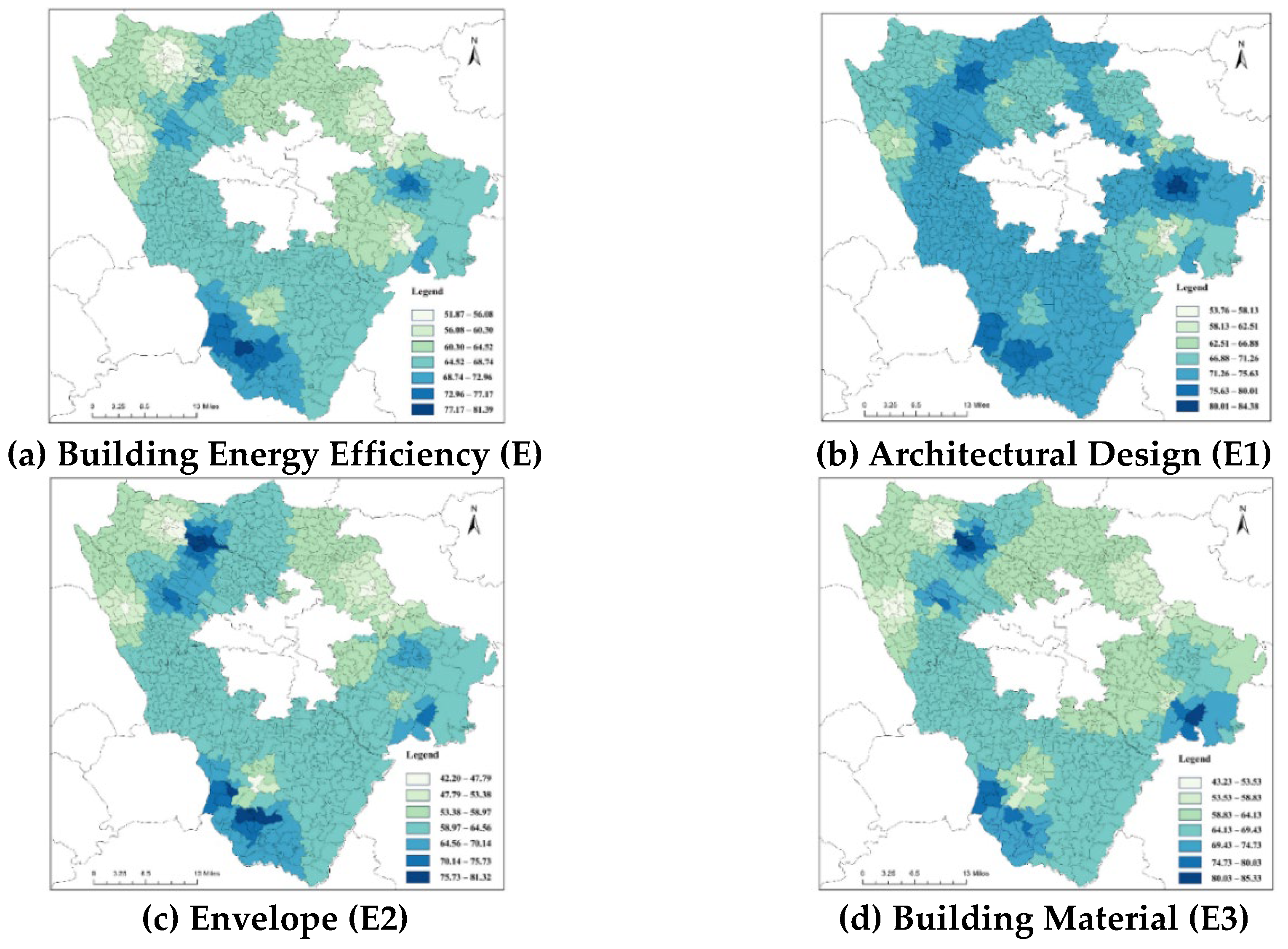
Figure 13.
The maximum and minimum values of LCI scores for each factor.
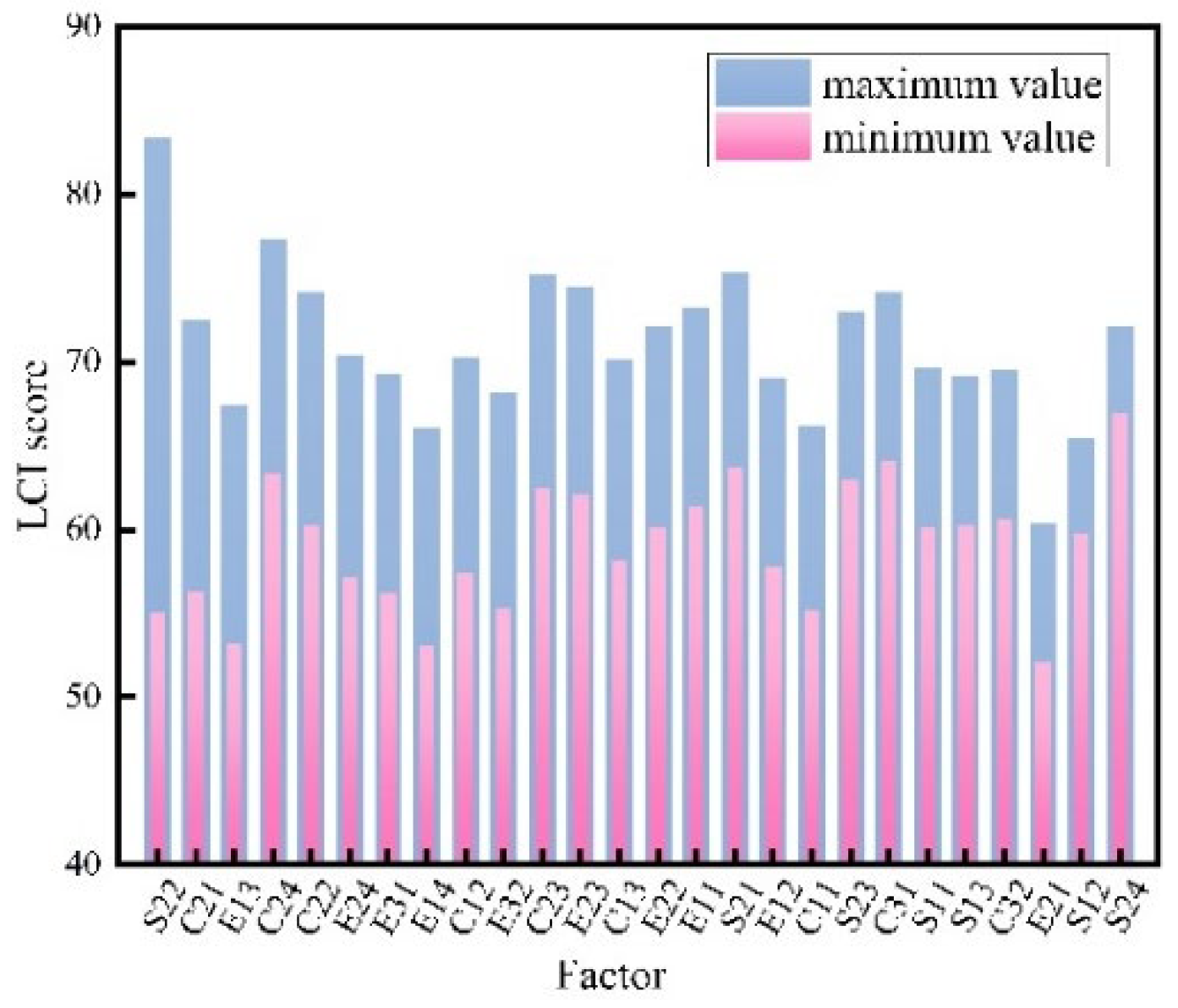
Figure 14.
Air conditioner set temperature percentage.
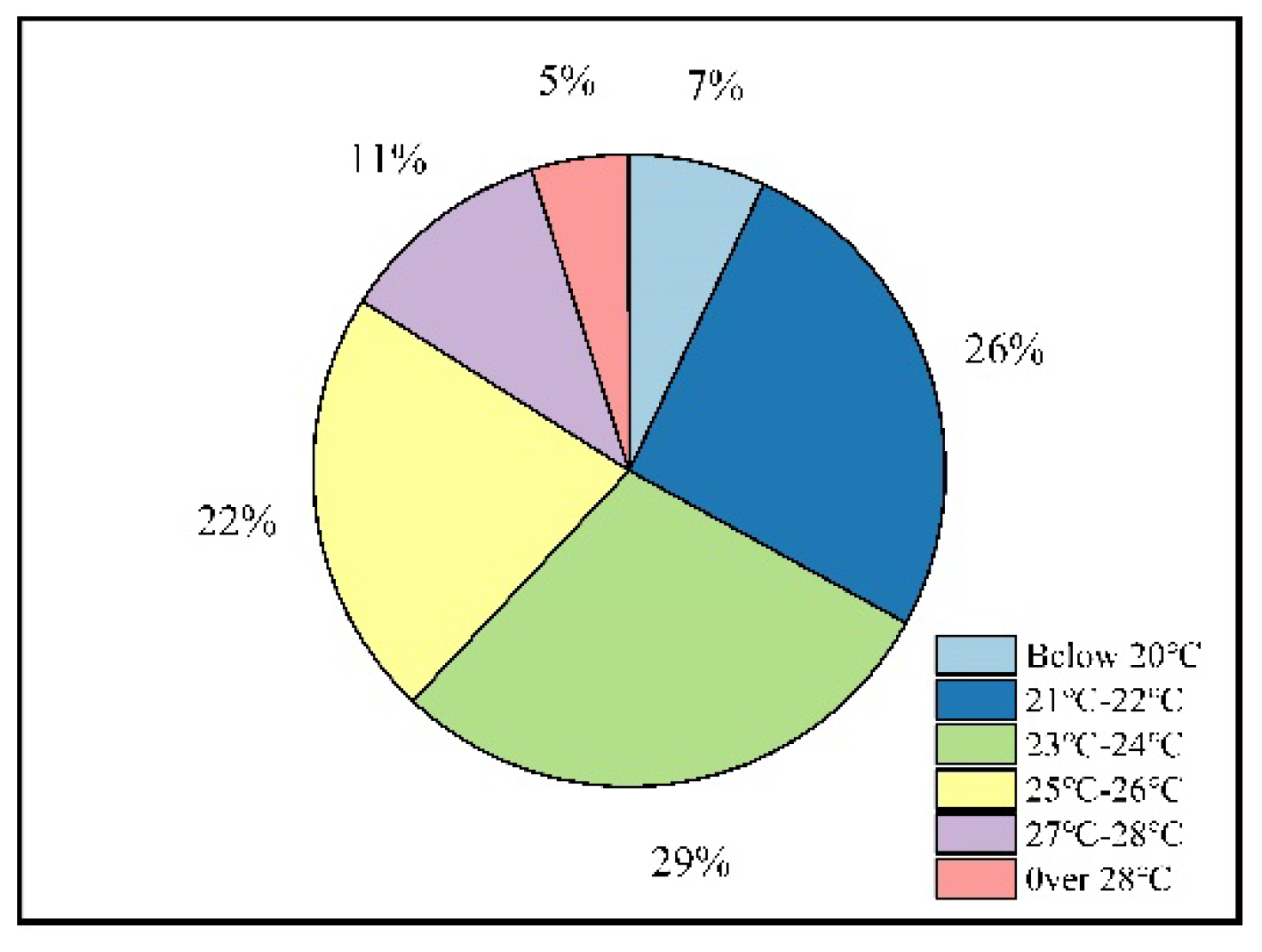
Figure 15.
Spatial Distribution of ‘Residents Self-Discipline’ in Rural Areas around Chengdu.
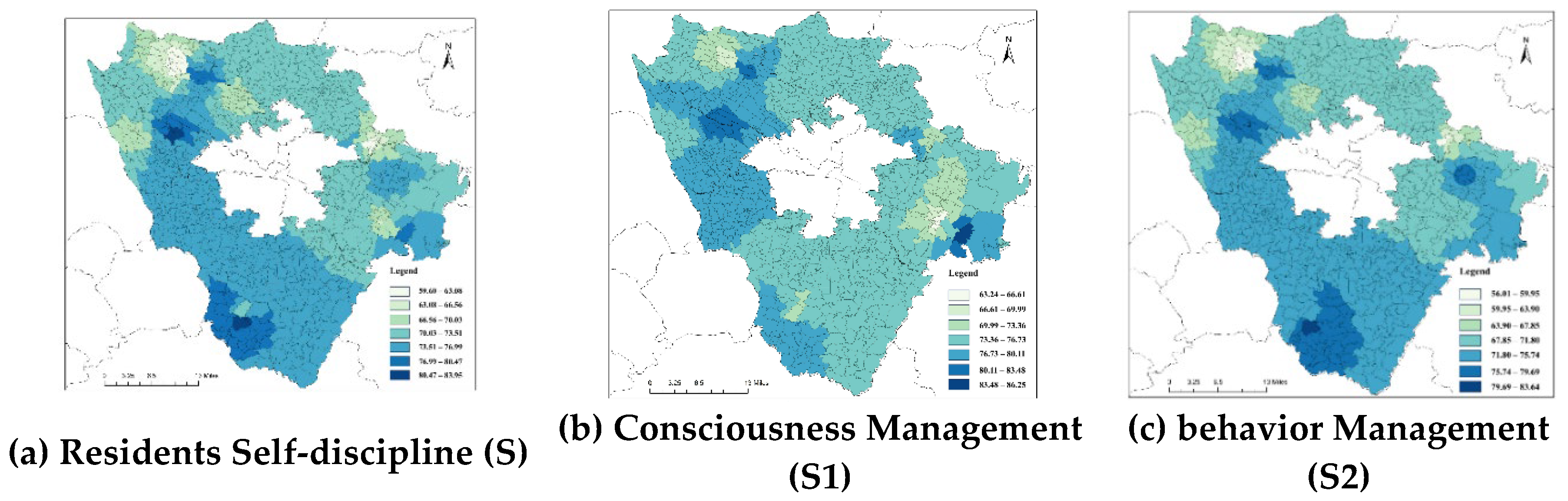
Figure 16.
Combined results of LCI scores for rural building energy consumption.
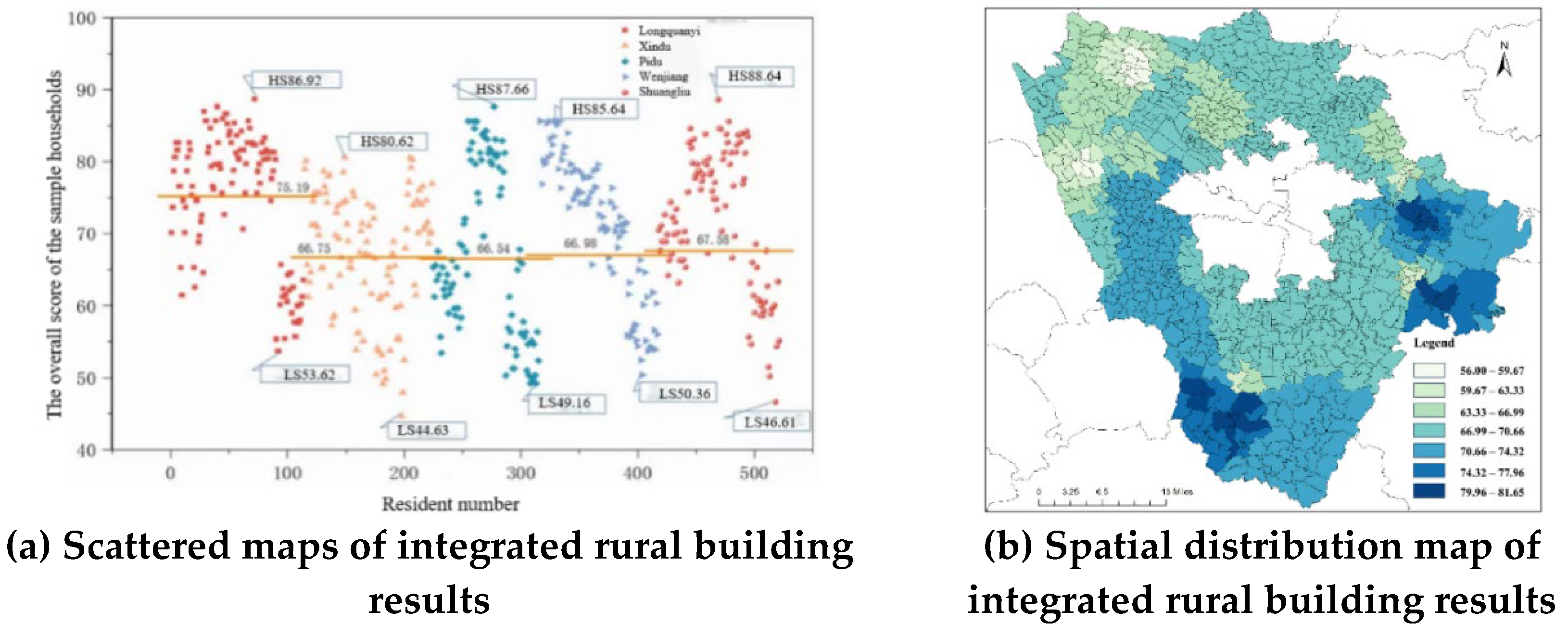
Figure 17.
Energy-saving benefits of solar houses at varying depths.
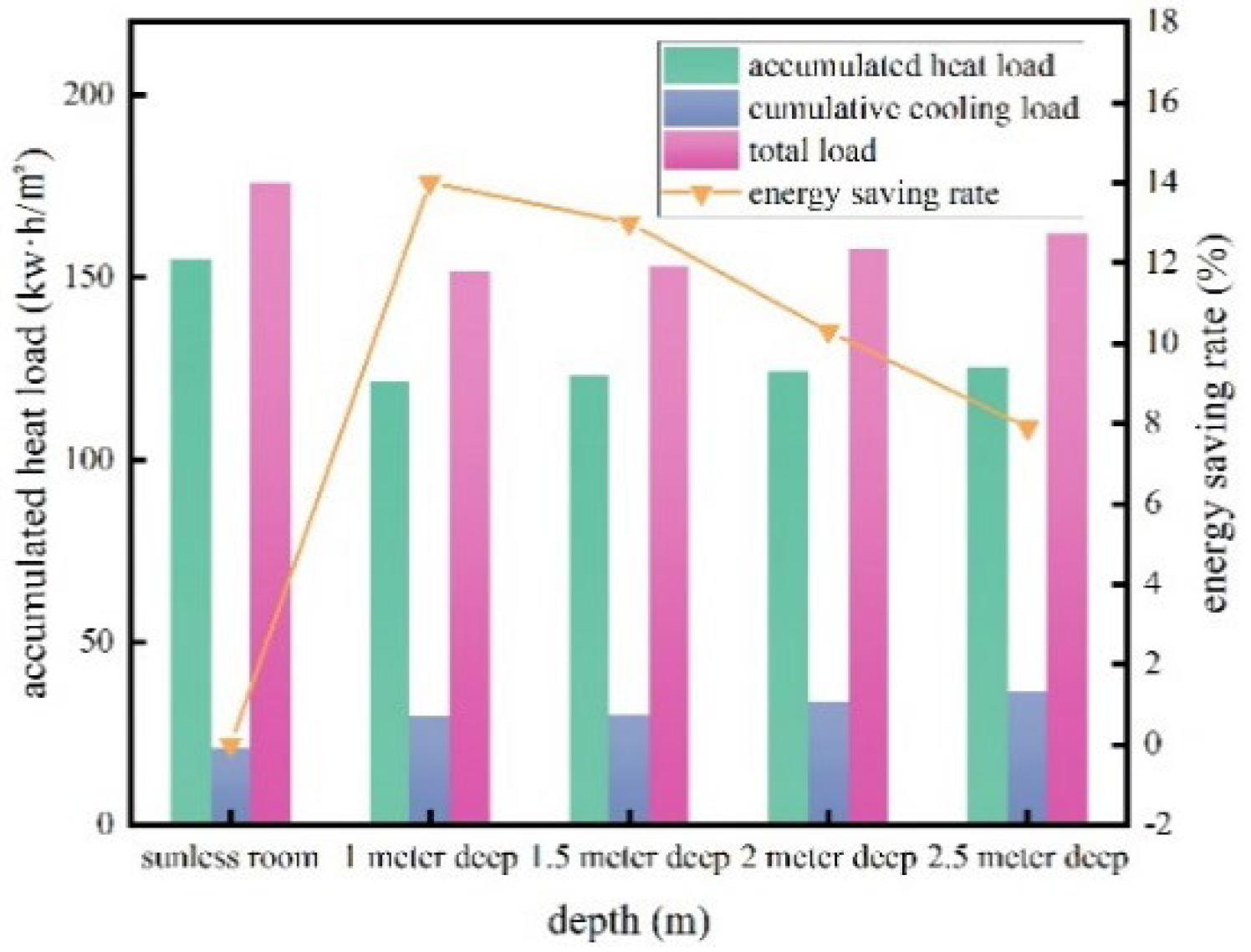
Figure 18.
The benefits of energy-saving renovation of external walls under different schemes.
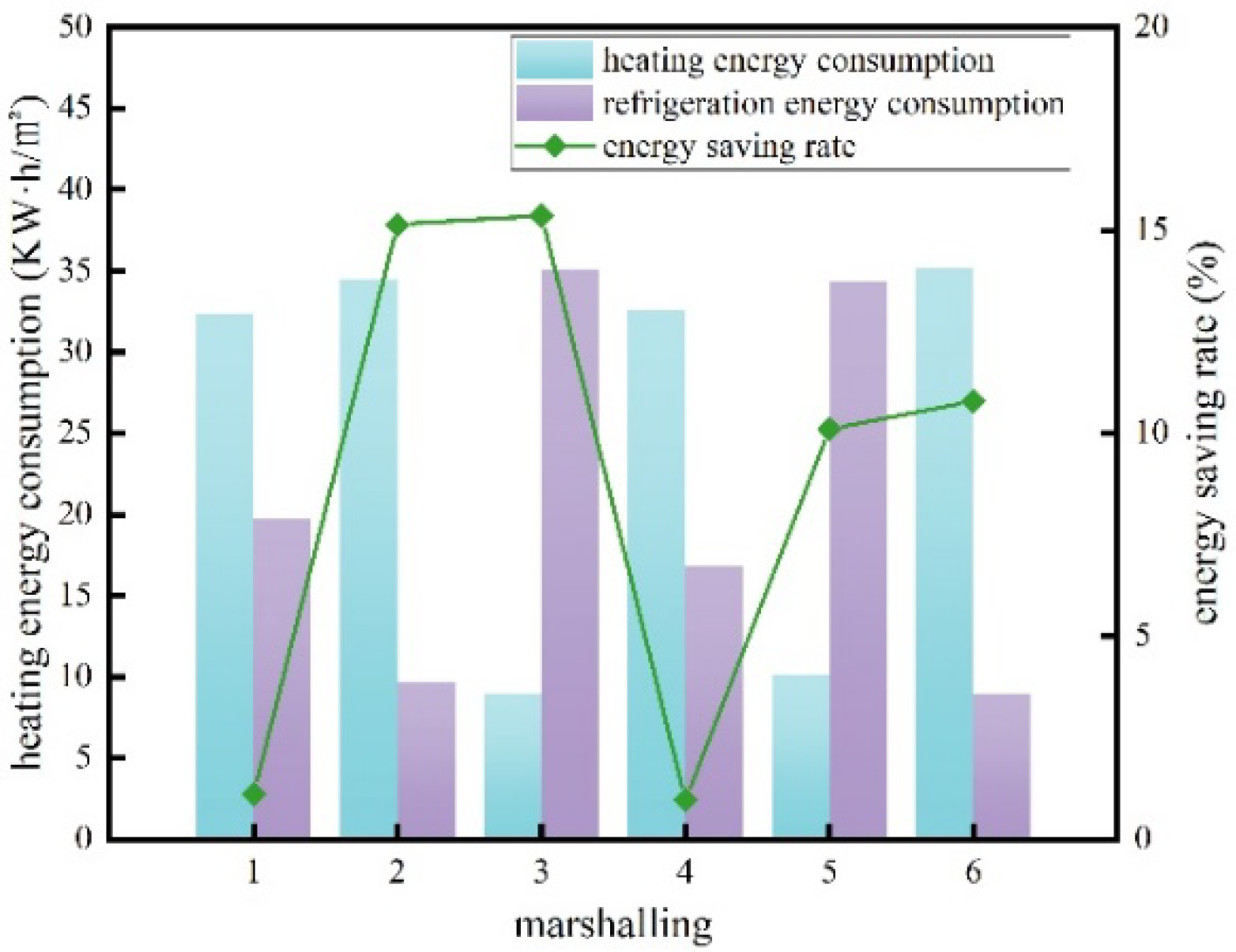
Figure 19.
Power consumption and energy efficiency per unit area in various modes.
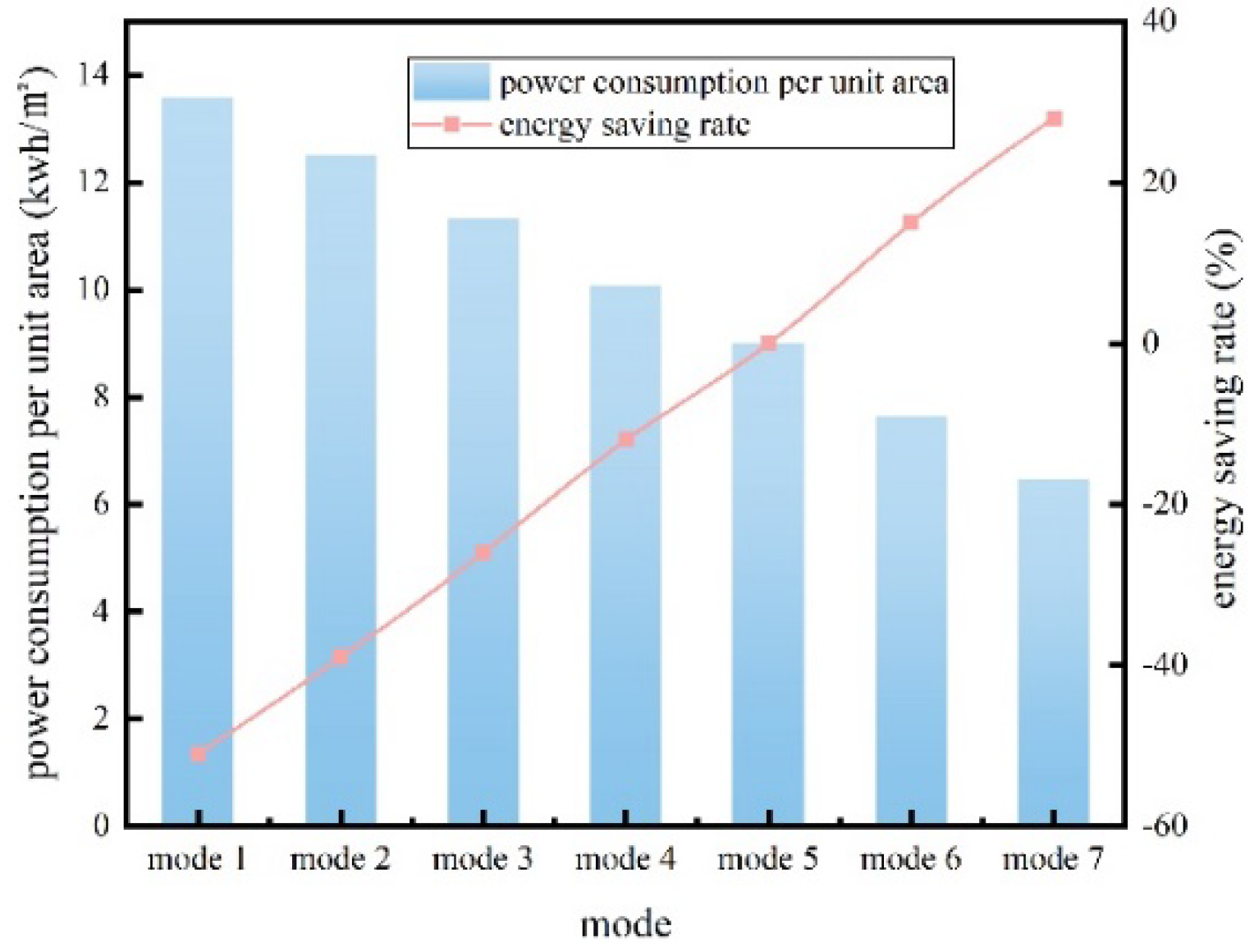
Table 3.
The low carbon level of each sample village was comprehensively assessed.
| Low carbon level | The name of the village | |
|---|---|---|
| Low-carbon | [80,100] | Baosheng Village, Huaguo Village, Qinjiamiao Village, Gaoshan Village, Liyuan New Village |
| Medium- low carbon | [70,80) | Satellite Village, Gonghe Village, Shuangyi Village, Helin Village, Mitsui Village, Sanxin Village |
| Medium carbon | [60,70) | Tiangong Village, Yongning Village, Renyi Village, Jingshan Village |
| Medium- high carbon | [50,60) | Lianhe Village, Wuyi Village, Jinbai Village, Liyi Village, Huoshiyan Village |
| High-carbon | [0,50) | without |
Disclaimer/Publisher’s Note: The statements, opinions and data contained in all publications are solely those of the individual author(s) and contributor(s) and not of MDPI and/or the editor(s). MDPI and/or the editor(s) disclaim responsibility for any injury to people or property resulting from any ideas, methods, instructions or products referred to in the content. |
© 2024 by the authors. Licensee MDPI, Basel, Switzerland. This article is an open access article distributed under the terms and conditions of the Creative Commons Attribution (CC BY) license (http://creativecommons.org/licenses/by/4.0/).
Copyright: This open access article is published under a Creative Commons CC BY 4.0 license, which permit the free download, distribution, and reuse, provided that the author and preprint are cited in any reuse.


