

Submitted:
16 July 2024
Posted:
16 July 2024
You are already at the latest version
Abstract
This study investigates the compliance level with Regional Regulations (PERDA) on building construction in Banjarmasin, focusing on urban areas and riverbanks. The motivation behind this research is the observed low adherence to PERDA, which aims to ensure orderly and safe development. Key issues include unauthorized building modifications, inadequate drainage systems, and poor sanitation, resulting in environmental damage and reduced quality of life. The study employs both qualitative and quantitative methods, including surveys and interviews, to gather data from 100 building samples and various stakeholders. Findings reveal significant non-compliance with land use regulations, building coefficients (KDB, KLB), and green space requirements (KDH), with 27% of buildings lacking necessary permits (IMB, PBG, SLF). Main causes include lack of awareness, high costs, and administrative hurdles. Recommendations for improvement include enhanced public education, streamlined administrative processes, stronger enforcement of regulations, and increased community involvement in planning. Effective inter-agency coordination is also crucial. These measures aim to foster a more organized, safe, and sustainable urban development in Banjarmasin. Enhanced compliance with PERDA will mitigate negative impacts such as flooding and environmental degradation, contributing to the overall welfare of the community.
Keywords:
building regulations
; compliance
; banjarmasin
; environmental impact
; urban development
The novelty derived from the analysis and findings in the study:
- Comprehensive Analysis of Non-Compliance: The study provides a detailed examination of the specific aspects of building regulations (land use, KDB, KLB, KDH) that are frequently violated in Banjarmasin, offering a nuanced understanding of compliance issues.
- Identification of Key Factors Influencing Non-Compliance: The research identifies the primary reasons for non-compliance, including lack of awareness, perceived high costs, and administrative difficulties, providing a clear direction for targeted interventions.
- Mixed-Method Approach: By employing both qualitative and quantitative methods, the study offers a comprehensive view of compliance issues, combining statistical data with in-depth stakeholder perspectives.
- Community Involvement in Regulatory Compliance: The research emphasizes the potential of a participatory approach to improve compliance, highlighting the importance of involving the community in the planning and decision-making processes.
- Economic and Social Impact Analysis: The study links building regulation compliance with broader socio-economic factors, such as public health, poverty, and education, showcasing the far-reaching impacts of non-compliance.
- Practical Recommendations for Policy Improvement: The study offers actionable recommendations, including enhancing public education, simplifying administrative procedures, strengthening enforcement, and improving inter-agency coordination, aimed at increasing compliance and promoting sustainable development.
- Focus on Urban and Riverbank Areas: By specifically focusing on urban and riverbank areas, the research addresses the unique challenges faced in these regions, which are often prone to environmental issues like flooding.
- Highlighting Infrastructure Deficiencies: The study points out specific infrastructural deficiencies, such as inadequate drainage systems, that contribute to non-compliance, providing a basis for targeted infrastructure improvements.
Background
This research is motivated by the low level of compliance with Regional Regulations (PERDA) regarding buildings in Banjarmasin, especially in urban areas and around rivers. This condition is a major concern because the regulations are designed to ensure orderly and safe development in accordance with established technical and aesthetic standards. PERDA functions not only as a tool for controlling spatial and environmental planning but also as an effort to protect public safety. However, in practice, the implementation and supervision of these regulations often do not run effectively. Many buildings are erected without appropriate permits or do not comply with technical requirements such as the distance from the river boundary, building height, and green space usage. This phenomenon causes various problems such as flooding, traffic congestion, and environmental damage that ultimately harm the community. Therefore, this study aims to explore in depth the level of public compliance with PERDA building regulations, the factors influencing non-compliance, and the efforts that can be made to increase compliance.
Poorly planned development that does not comply with regulations can have wide-ranging negative impacts. Some key issues related to development include climate change, poverty, education, health, and economic growth. For instance, climate change is significantly influenced by how we plan and manage development. Uncontrolled land use and environmentally destructive development can exacerbate the effects of climate change, such as rising temperatures and increased intensity of natural disasters. Poverty is also closely linked to development. Non-inclusive development can worsen social and economic disparities, while sustainable development can create job opportunities and improve community welfare. In the field of education, adequate infrastructure development, such as schools and learning facilities, is crucial to creating an educated generation ready to compete in the era of globalization. Public health is also affected by the quality of development, especially concerning the availability of health facilities and a clean and healthy environment. All of these show that sustainable development in accordance with regulations is key to a better and more prosperous future for all parties.
The Regional Regulation (PERDA) on building construction aims to ensure that every development carried out is in accordance with the mandate of the 1945 Constitution, which is to promote the general welfare. PERDA regulates various technical and administrative aspects of building construction, including building permits, construction standards, and environmental requirements. The main goal of PERDA is to ensure that every development not only meets the needs of individuals or specific groups but also considers the interests of the broader community and the surrounding environment. Compliance with this PERDA is crucial to achieving these goals. However, in practice, the level of compliance with PERDA is often still low. Many people do not understand or even ignore the importance of complying with these regulations. This could be due to a lack of socialization and education about PERDA, high administrative costs, and weak enforcement by authorities. As a result, many buildings are erected without permits or do not meet the technical standards set, which can ultimately cause various problems such as environmental damage, reduced quality of life, and even safety risks.
……
Inadequate planning and control mechanisms in construction projects often lead to failures and significant losses. This issue is particularly concerning in the city of Banjarmasin, where several instances of building collapses have been recorded in recent years. For example, from 2018 to 2023, 47 house buildings collapsed, primarily due to structural issues with the cerucuk galam foundation, a common local construction method (Yulianus, 2024).
The cerucuk galam foundation, made from local wood, is widely used in Banjarmasin’s swampy areas. However, its effectiveness is limited by the structural weaknesses that arise due to weathering and high bending and shear stresses on columns with heavy loads (Hira et al., 2023). Such deficiencies highlight the need for improved construction practices and materials to ensure the safety and longevity of buildings in the region.
Common causes of building failures in Banjarmasin include imperfect planning, poor use of materials, and implementation of untechnical work. Other contributing factors are the incorrect use of space functionality and improper maintenance, which can lead to significant structural deficiencies such as broken sunduk on columns and weathering of the galam heads (International Journal of Research and Innovation in Social Science, 2020).
To mitigate these risks, it is essential to adhere to building codes and prioritize soil testing and analysis before construction. Regular maintenance and inspections are also crucial to identify and address potential structural issues early on (Muhammad et al., 2022). Additionally, collaboration between architects, engineers, and local authorities can help ensure that buildings in Banjarmasin are designed and constructed to withstand the unique environmental challenges of the area.
By integrating modern construction techniques and materials, and adhering to industry standards and regulations, stakeholders in Banjarmasin can create a more resilient built environment. Sustainable design principles can also contribute to the overall environmental sustainability of the city while improving the resilience of buildings (Coker et al., 2013).
…
The geographical condition of Banjarmasin, which consists of swamp land, requires special attention in planning and building construction. The cerucuk galam foundation, made from local wood, is the most widely used foundation for house buildings in this area. However, from 2018 to 2023, the collapse of 47 house buildings using this type of foundation raised concerns about the structural integrity of the cerucuk galam foundation. “Building failures in Banjarmasin are often attributed to the collapse of house buildings due to structural issues with the cerucuk galam foundation which is commonly used in the area. The collapse of 47 house buildings from 2018 to 2023 has raised concerns about the structural integrity of this foundation type” (https://kalsel.antaranews.com/berita/390927/trees-collapse-roofs-fly-power-out-due-to-strong-wind-hits-banjarmasin; https://ideas.repec.org/a/bcp/journl/v7y2023i11p1790-1803.html; Yulianus). The collapse of these buildings is often due to structural weaknesses such as broken sunduk on columns with heavy loads and weathering, which reduces the load capacity of the galam heads.
Problems and Impacts
Non-compliance with PERDA and construction failures in Banjarmasin have widespread impacts. Unplanned and unregulated development can lead to worsening climate change, increased poverty, low-quality education, and health problems. Inclusive development can exacerbate social and economic disparities, while sustainable development can create job opportunities and improve community welfare.
Importance of Compliance with PERDA
PERDA aims to ensure that every development is carried out in accordance with the mandate of the 1945 Constitution, which is to promote general welfare. PERDA regulates various technical and administrative aspects of building construction, including building permits (IMB), construction standards, and environmental requirements. Compliance with PERDA is crucial to achieving these goals. However, in practice, compliance levels are often still low. Many people do not understand or even ignore the importance of adhering to these regulations, which may be due to a lack of socialization and education about PERDA, high administrative costs, and weak law enforcement by the authorities.
Causes of Building Failures
Common causes of building failures in Banjarmasin include imperfect planning, poor use of materials, untechnical work implementation, incorrect use of space functionality, and improper maintenance. “Common causes of building failure in Banjarmasin include imperfect planning, poor use of materials, implementation of untechnical work, incorrect use of space functionality, and improper maintenance. Structural deficiencies in buildings such as broken sunduk on columns with heavy loads and weathering of galam heads are also significant factors contributing to building failure in the area” (https://ideas.repec.org/a/bcp/journl/v7y2023i11p1790-1803.html). Specific structural weaknesses such as broken sunduk on columns with heavy loads and weathering of galam heads are significant factors contributing to construction failures in this area.
Collaboration and Improvement Efforts
Collaboration between the government, community, and private sector is essential to address building failure issues in Banjarmasin. With the involvement of various stakeholders, holistic and sustainable solutions can be achieved. “Building Failure Banjarmasin has become a serious concern for all related parties. Therefore, collaboration and collective efforts are needed to address this issue. The involvement of various stakeholders in addressing Building Failure Banjarmasin can provide holistic and sustainable solutions” (https://ideas.repec.org/a/bcp/journl/v7y2023i11p1790-1803.html). The steps taken must be more effective and positively impact the city’s development. This collaboration can also expedite problem resolution and prevent similar risks in the future.
Recommendations and Solutions
To improve construction and prevent building collapses, steps such as proper design considering soil characteristics, geological conditions, spacing schemes, and installation depth are crucial. “To improve construction in Banjarmasin and prevent collapses, steps such as proper design considering soil characteristics, geological conditions, cement content scheme, spacing, and depth of installation are crucial” (Hira et al., 2023). It is also essential to conduct soil testing and analysis before starting construction projects. Additionally, ongoing maintenance and building inspections are vital to identify potential structural problems early. By prioritizing these measures, developers and contractors can ensure the safety and longevity of buildings in Banjarmasin.
Research Objectives
The main objective of this research is to identify the level of public compliance with PERDA building regulations in Banjarmasin. Specifically, this research aims to find out which building requirements are often ignored or not complied with by the public. Additionally, this research seeks to uncover the main issues causing non-compliance with PERDA, both from the internal side of the community, such as ignorance and lack of awareness, and from the external side, such as lack of supervision and weak enforcement of sanctions. Through this identification and analysis, the research is expected to provide useful inputs for the local government in formulating more effective policies and strategies to increase public compliance with PERDA. Moreover, the recommendations resulting from this research are expected to serve as a guide for relevant parties in conducting socialization, education, and improving regulations and administrative procedures. Thus, the ultimate goal of this research is to support the creation of a more orderly, safe, and comfortable environment for the people of Banjarmasin.
Research Methodology
This research uses both qualitative and quantitative methods to obtain a comprehensive picture of the level of compliance with PERDA building regulations in Banjarmasin. The qualitative method is used to understand the perceptions, motivations, and obstacles experienced by the community in complying with PERDA. Qualitative data is obtained through in-depth interviews with various stakeholders, including the community, developers, and government officials. Meanwhile, the quantitative method is used to statistically measure the level of compliance. Quantitative data is collected through surveys of 100 building samples in five districts in Banjarmasin.
The sampling method used is probability sampling, including random sampling, stratified sampling, cluster/area sampling, and systematic sampling. The research variables include:
- Independent variable: Buildings in urban areas and around rivers.
- Dependent variable: Compliance with PERDA building regulations.
- Control variable: Regulations and technical building requirements.
The data collected includes various technical aspects of buildings, such as compliance with land use, building coefficient (KDB), building floor coefficient (KLB), green space coefficient (KDH), and other technical requirements set by PERDA and the Mayor’s Regulation. Additionally, this research collects qualitative data through interviews and questionnaires to understand the perspectives and attitudes of the community towards building regulations. Data analysis is conducted to identify the level of compliance, uncover the causes of non-compliance, and evaluate the effectiveness of supervision and enforcement of sanctions. With this comprehensive methodological approach, this research is expected to provide deep insights and practical solutions for improving compliance with PERDA building regulations in Banjarmasin.
Results
The research results show that many buildings in Banjarmasin do not comply with land use, KDB (Building Coefficient), KLB (Building Floor Coefficient), and KDH (Green Space Coefficient). From 100 building samples examined, most were found to violate one or more technical requirements set. Common violations include renovations without considering building boundaries, inadequate drainage systems, and poor sanitation. Data shows that 27% of buildings do not have IMB (Building Permit), PBG (Building Approval), or SLF (Certificate of Proper Function). The most common reasons given by building owners for not having permits are ignorance of procedures and requirements, perceived high costs, and administrative difficulties. Additionally, many building owners feel that there is no need to process permits because the buildings are inherited or existed before the regulations were enacted. Another interesting finding is that although most buildings have permits, many do not fully comply with the applicable provisions. These inconsistencies often occur because owners carry out renovations and house developments without considering boundary rules and other technical requirements. This shows the need for improvement in socialization, education, and enforcement of regulations to ensure better compliance with PERDA building regulations.
The research results show that many buildings in Banjarmasin do not comply with land use, KDB (Building Coefficient), KLB (Building Floor Coefficient), and KDH (Green Space Coefficient). From 100 building samples examined, most were found to violate one or more technical requirements set. Common violations include renovations without considering building boundaries, inadequate drainage systems, and poor sanitation. Data shows that 27% of buildings do not have IMB (Building Permit), PBG (Building Approval), or SLF (Certificate of Proper Function). The most common reasons given by building owners for not having permits are ignorance of procedures and requirements, perceived high costs, and administrative difficulties. Additionally, many building owners feel that there is no need to process permits because the buildings are inherited or existed before the regulations were enacted.
Research findings also show that although most buildings have permits, many do not fully comply with applicable provisions (Figure 1). These inconsistencies often occur because owners carry out renovations and house developments without considering boundary rules and other technical requirements. This indicates weaknesses in the supervision and enforcement of sanctions by local authorities. Some building owners admit that supervision conducted by authorities is not intensive and often only formalities. The inequity in the enforcement of sanctions is also a problem where some building owners with certain connections or influence can escape the sanctions that should be applied.
Furthermore, this research reveals a communication gap between the government and the community regarding the importance of complying with PERDA. Many people do not know the benefits of complying with building regulations, such as long-term safety and comfort and increased property values. Lack of socialization and education from the government is one of the main causes of this non-compliance. Some respondents revealed that they never received information or counseling about procedures and the benefits of having complete and compliant building permits.
The research also finds that economic factors play a significant role in compliance with PERDA. Many building owners consider the costs for obtaining IMB, PBG, and SLF to be too high and burdensome. Some even feel that obtaining permits is a waste of time and money, especially if the buildings are not for commercial purposes. This factor is exacerbated by the economic conditions of the community, which are mostly in the lower middle class, so their priorities are more towards meeting daily needs rather than obtaining building permits.
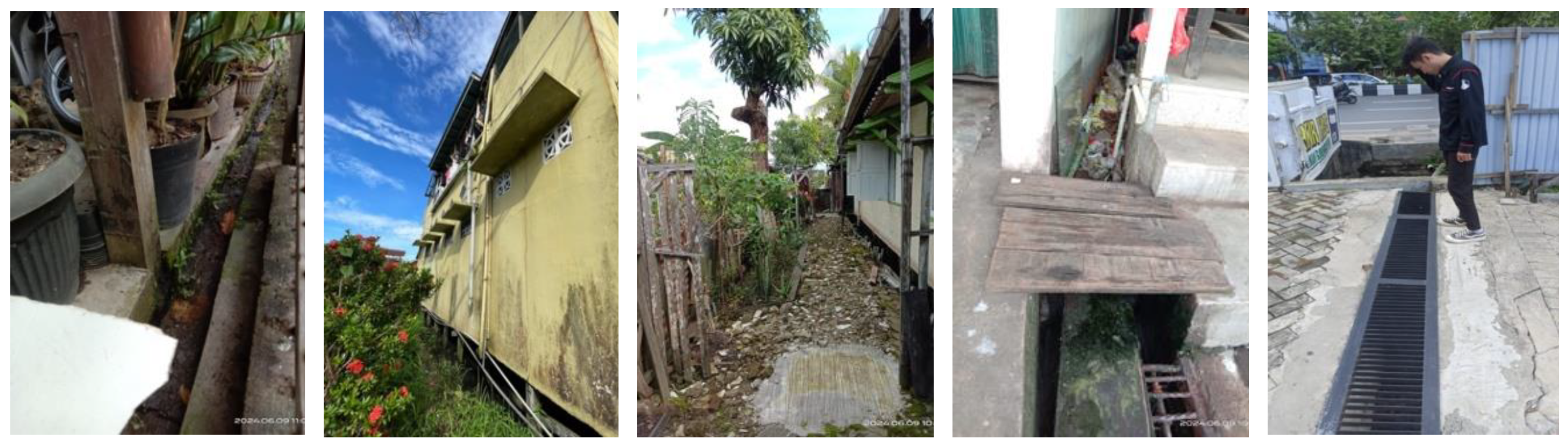
In terms of infrastructure, the research finds that many buildings lack adequate drainage systems (Figure 2 and 3), which can cause flooding and sanitation problems. This is especially true in areas close to riverbanks, where development is often carried out without considering environmental impacts. This infrastructure shortage also reflects the lack of coordination between local government and the community in planning development.
The research also finds that there is great potential to improve compliance with PERDA through a participatory and inclusive approach. Involving the community in the planning and decision-making process can increase awareness and a sense of ownership of existing regulations. This approach can also help identify and address the obstacles faced by the community in complying with building regulations. Some respondents revealed that they would be more motivated to comply with regulations if they felt that their voices were heard and considered in the planning process.
Recommendations
To improve compliance with PERDA building regulations in Banjarmasin, several recommendations can be made based on the research findings. First, it is important for the local government to increase socialization and education regarding building regulations and their benefits. This can be done through various channels such as public counseling, distribution of informative materials, and campaigns through mass media and social media. Second, simplification and transparency of procedures for obtaining building permits can help reduce the perceived burden on the community. This includes reducing administrative costs, shortening processing times, and providing easy-to-understand guidelines. Third, supervision and enforcement of sanctions must be strengthened and conducted consistently to prevent non-compliance. This includes routine inspections, strict enforcement of sanctions for violations, and closing opportunities for bribery and corruption.
Furthermore, the involvement of the community in the planning and decision-making process must be increased to ensure that development is inclusive and participatory. This can be done through public consultations, development of community forums, and providing space for the community to express their opinions and needs. Finally, coordination between local government agencies must be improved to ensure that building permits and supervision are well integrated and effective. This includes coordination between agencies responsible for spatial planning, environmental protection, and public works.
Based on the research findings, several recommendations have been identified to improve compliance with the PERDA on building regulations in Banjarmasin City. Firstly, there needs to be increased public awareness and education regarding the importance of adhering to PERDA. This can be achieved through various media, including public campaigns, community-level outreach, and formal education. Secondly, the local government needs to improve monitoring and enforcement systems. Stricter supervision and firm penalties are expected to encourage compliance with existing regulations. Thirdly, administrative procedures for obtaining IMB, PBG, and SLF should be simplified. Easier processes and more affordable fees will help reduce barriers for the community in handling building permits. Fourthly, incentives or subsidies should be provided to law-abiding citizens, especially those living in slum areas and riverbanks. These incentives could include technical assistance, permit fee subsidies, or building renovation programs. Lastly, it is recommended to revise and adjust existing regulations to be more in line with the times and community needs. With the implementation of these recommendations, it is hoped that public compliance with PERDA building regulations will increase, resulting in a more orderly, safe, and comfortable environment in Banjarmasin City.
Public Awareness and Education
One of the main findings of this research is that many building owners do not have IMB (Building Construction Permit), PBG (Building Approval), or SLF (Certificate of Proper Function) due to a lack of awareness. To address this issue, relevant agencies need to be more proactive in promoting the importance of possessing IMB, PBG, and SLF. This can be done through various media, including public campaigns, community-level outreach, and formal education. Additionally, the government can collaborate with local officials such as RT (neighborhood unit) and Kelurahan (sub-district) to disseminate information. This information can also be distributed through easily understood pamphlets. Special assistance for the community in handling permits can help reduce administrative barriers and increase compliance with regulations. One key step to improving compliance with Regional Regulations (PERDA) is through intensive public awareness and education. The local government needs to intensify campaigns explaining the importance of adhering to building regulations such as IMB (Building Construction Permit), PBG (Building Approval), and SLF (Certificate of Proper Function). This can be done through various media such as pamphlets, posters, social media, and local radio broadcasts. Additionally, involving village officials such as RT and RW (neighborhood unit leaders) to deliver information directly to residents can enhance the effectiveness of the outreach. This way, the community will better understand the importance of obtaining building permits and the positive impacts they will receive if they comply with PERDA.
Active and Comprehensive Outreach
Relevant agencies must be more active in disseminating information regarding regional regulations related to building construction such as IMB, PBG, and SLF. This outreach should cover all segments of the community, including those living in remote or hard-to-reach areas. The involvement of government officials closer to the community, such as RT and Kelurahan, is crucial to ensure the message is well-received. Additionally, using digital media, pamphlets, and door-to-door campaigns can raise awareness and understanding of the importance of complying with building regulations.
Assistance in Permit Processing
The complicated and time-consuming process of obtaining building permits often becomes a barrier for the community to comply. Therefore, the local government should provide assistance services to help the community in processing IMB, PBG, and SLF. These services could include information centers offering free consultations or even special teams providing direct assistance on the ground. This assistance will not only ease the community in processing permits but also ensure that all requirements are correctly fulfilled.
Technical Assistance and Support
The community needs to receive assistance in obtaining IMB, PBG, and SLF. The local government can form special teams tasked with providing technical and administrative assistance to the community in need. These teams can also help in the application and processing of documents, which are often considered complex and time-consuming.
Enhanced Monitoring and Enforcement
The research also found many discrepancies in buildings that already have IMB, PBG, or SLF. To address this issue, stricter monitoring needs to be carried out by relevant agencies during the construction process. The government must ensure that every construction complies with Building Line Setbacks (GSB), Green Base Coefficient (KDH), and other technical standards. Additionally, strict penalties must be applied for violations. The forms of violations and types of penalties should be clearly explained in Regional Regulations. Outreach regarding these rules should also be conducted, for example through pamphlets explaining the GSB, KDH, KDB (Building Base Coefficient), and KLB (Building Floor Coefficient) regulations.
Strict Monitoring and Law Enforcement
To ensure compliance with PERDA, strict monitoring of building constructions in the city area is necessary. The local government needs to form monitoring teams that routinely conduct field inspections to check if buildings have the necessary permits and comply with prevailing regulations. Furthermore, law enforcement must be firmly applied against any violations found. Implementing clear and firm penalties, such as fines or building demolition, will create a deterrent effect and encourage the community to comply.
Strict Penalty Enforcement
Non-compliance with building regulations such as building line setbacks (GSB), green base coefficients (KDH), and building function changes must be addressed with strict penalty enforcement. The local government needs to clearly define and communicate the types of violations and applicable penalties in regional regulations. Consistent and transparent law enforcement will enhance community compliance.
Drainage System Evaluation and Improvement
The issue of poor drainage systems is also a concern in this research. To address this, the government needs to evaluate and improve the existing drainage network system. This includes ensuring that drainage channels are not clogged with waste and have sufficient dimensions to accommodate rainwater. The drainage channel material must also be durable and not easily damaged. Yards or gardens should not be covered with impermeable materials so that rainwater can be absorbed into the ground, reducing waterlogging.
Drainage System Improvement
Drainage problems that often cause flooding or waterlogging in urban areas need serious attention. The local government must evaluate and improve the existing drainage system. Constructing new drainage channels that meet minimum standards and routine maintenance of existing channels are crucial to prevent these issues. Additionally, the government needs to educate the community to avoid littering, which can clog drainage channels.
Drainage System Evaluation and Improvement
Inadequate drainage systems, such as damaged, clogged, or undersized channels, need to be evaluated and improved. The government must ensure that there are minimum standards for the dimensions and materials of drainage channels to effectively accommodate rainwater. Additionally, the community should be encouraged not to cover their yards with impermeable materials to prevent waterlogging during heavy rains or high tides.
Better Waste Management
The research found that many communities still manage waste traditionally by piling and burning it, which can cause fire hazards and smoke pollution. The government needs to raise awareness about the dangers of fires and smoke pollution from burning waste. Additionally, the waste management system must be improved, for example by building more efficient Integrated Waste Processing Sites (TPS). Education on organic and non-organic waste management is also important so that the community can properly separate waste and recycle it.
Improved Waste Management
Traditional waste management methods, such as burning, must be changed. The government needs to raise awareness about the dangers of fires and smoke pollution from burning waste. Moreover, a more modern waste management system, such as Integrated Waste Processing Sites (TPS), should be implemented, and the community should be educated on organic and non-organic waste management to reduce environmental impact.
Improved Sanitation
Poor sanitation is also one of the main findings of this research. Many houses on riverbanks still use unhealthy traditional sanitation systems. Public awareness and education about the importance of good sanitation must be increased. The government can create pamphlets providing information about the link between good sanitation and public health. Additionally, there should be assistance programs to build proper sanitation systems for people living in slum areas or riverbanks.
Sanitation System Improvement
Many houses still use inadequate sanitation systems, such as cesspits and open defecation in riverbank houses. The government must provide better access to proper and safe sanitation facilities. Health and sanitation campaigns also need to be intensified to raise public awareness of the importance of good sanitation systems.
Rewards and Penalties for PERDA Compliance
To improve compliance with PERDA and PERWALI, the government can provide rewards to those who comply with regulations. These rewards could be in the form of certificates or other incentives that can increase community motivation to comply with regulations. Conversely, strict penalties must be applied to those who violate regulations. Government officials and related agency personnel should also set an example of compliance to be a role model for the community.
Community Education and Training
To increase compliance, there should be educational and training programs for the community about the importance of building regulations. These training programs can cover topics such as safe building techniques, the benefits of having official building documents, and ways to comply with environmental regulations. This way, the community will better understand and appreciate the importance of adhering to building regulations.
Collaboration with the Private Sector
Partnerships between the government and the private sector can be a solution to address funding and infrastructure issues. The government can utilize resources and expertise from the private sector to improve infrastructure and enhance compliance with PERDA. For instance, Corporate Social Responsibility (CSR) programs from large companies can be directed to support the construction of infrastructure that complies with regulations. These partnerships can also help develop training and outreach programs for the community.
Inter-Agency Collaboration
Collaboration between government agencies, such as the housing agency, environmental agency, and health agency, is essential to ensure holistic and integrated implementation of building regulations. Synergy between agencies will facilitate coordination in enforcing regulations and resolving issues related to building compliance. With an integrated approach, challenges in improving compliance with regional regulations can be addressed more effectively.
Easier and Affordable Administrative Procedures
Many building owners feel that the costs for obtaining IMB, PBG, and SLF are high and the administrative processes are complicated. To overcome these obstacles, the local government should simplify the administrative procedures and reduce the costs associated with these permits. This can be done by digitizing the application process, providing a one-stop service, and reducing unnecessary bureaucratic steps. Easier and more affordable processes will encourage more building owners to obtain the necessary permits and comply with regulations.
Simplifying Administrative Procedures
The complicated and lengthy process of obtaining IMB, PBG, and SLF is one of the reasons why many people do not comply with regulations. Therefore, the local government must simplify administrative procedures to make it easier for the community to handle building permits. Digitizing the application process, providing a one-stop service, and reducing unnecessary bureaucratic steps can help achieve this goal. Additionally, reducing permit fees can also encourage compliance.
Community Assistance Programs
To assist low-income communities in complying with building regulations, the local government can provide subsidies or incentives. These incentives can be in the form of technical assistance, financial aid, or building materials. Special programs targeting slum areas and riverbanks can help improve living conditions and ensure that buildings in these areas meet regulatory standards.
Assistance and Incentives for Low-Income Communities
To help low-income communities comply with PERDA, the government can provide subsidies or incentives. These incentives can include technical assistance, financial aid, or building materials to encourage compliance. Special attention should be given to those living in slum areas and riverbanks, as they are often the most vulnerable and in need of support.
Revisions and Adjustments to Regulations
The findings indicate that existing regulations need to be revised and adjusted to better suit current conditions and community needs. Outdated regulations must be updated to align with technological advancements, environmental challenges, and urban development trends. Periodic evaluations and consultations with stakeholders are necessary to ensure that regulations remain relevant and effective.
Revision of Outdated Regulations
Outdated regulations need to be revised to suit current conditions. The government should regularly review and update regional regulations to align with technological advancements, environmental challenges, and community needs. This revision process should involve public consultation to ensure that the updated regulations address the real needs of the community.
Conclusion
This research highlights several important aspects that need to be addressed to improve compliance with PERDA and PERWALI in Banjarmasin City. By increasing public awareness, simplifying administrative processes, providing assistance and incentives, and enhancing monitoring and enforcement, it is hoped that public compliance with building regulations will increase. The goal is to create a more orderly, safe, and comfortable urban environment in Banjarmasin City.
The research findings underscore the need for an integrated approach to improve compliance with PERDA in Banjarmasin. By enhancing public awareness, simplifying administrative processes, providing incentives, and implementing strict monitoring and enforcement, it is hoped that public compliance with building regulations will increase. This will ultimately lead to a more orderly, safe, and comfortable urban environment in Banjarmasin.
Compliance with PERDA building regulations in Banjarmasin is still low, which causes various problems such as environmental damage, reduced quality of life, and safety risks. This research identifies the factors causing non-compliance and provides recommendations for improvement. By increasing socialization, simplifying procedures, strengthening supervision and sanctions, involving the community, and improving inter-agency coordination, it is hoped that compliance with building regulations can be improved. Thus, orderly, safe, and sustainable development can be achieved for the welfare of the people of Banjarmasin.
In an effort to improve building conditions in Banjarmasin, it is important to pay attention to regulatory aspects, good planning, and construction execution. Compliance with PERDA, collaboration among various stakeholders, and continuous improvement efforts are key to creating a safer, more organized, and sustainable environment. Thus, it is hoped that development in Banjarmasin can proceed better and avoid the risk of building failures in the future.
References
- Coker, M. A., Obo, U. B., & Ugwu, U. (2013, September 29). Managing Sustainable Development in Our Modern Cities: Issues and Challenges of Implementing Calabar Urban Renewal Programmes 1999-2011. Canadian Center of Science and Education, 9(13). [CrossRef]
- Hira, A. , et al. (2023). Analysis of Structural Failure of Cerucuk Galam Foundation (Galam Wood Pile Foundation) in Banjarmasin Swamp Land in Indonesia. International Journal of Research and Innovation in Social Science, Retrieved from https://www.rsisinternational.org/journals/ijriss/articles/analysis-of-structural-failure-of-cerucuk-galam-foundation-galam-wood-pile-foundation-in-banjarmasin-swamp-land-in-indonesia.
- International Journal of Research and Innovation in Social Science. (2020, January 15). Analysis of Deficiencies in Building Structure as a Contributing Factor to Building Failure. International Journal of Sciences: Basic and Applied Research (IJSBAR), Retrieved from https://www.gssrr.org/index.php/JournalOfBasicAndApplied/article/view/10644.
- Muhammad, F. , et al. (2022). Effectiveness of Applying BIM-Based Cost Estimation in Development of the Syamsudin Noor Airport Project Banjarmasin. ASTONJADRO, 10, Retrieved from https://ejournal.uika-bogor.ac.id/index.php/astonjadro/article/view/4200.
- Yulianus, J. (2024, April 25). Banjarmasin City Builds Disabled Inclusive Disaster Preparedness. Kompas, Retrieved from https://www.kompas.id/baca/english/2024/04/25/en-kota-banjarmasin-bangun-kesiapan-bencana-inklusif-difabel.
- Yulianus. (n.d.). Trees Collapse, Roofs Fly, Power Out Due to Strong Wind Hits Banjarmasin. Retrieved from https://kalsel.antaranews.com/berita/390927/trees-collapse-roofs-fly-power-out-due-to-strong-wind-hits-banjarmasin.
Figure 1.
sample of existing building.
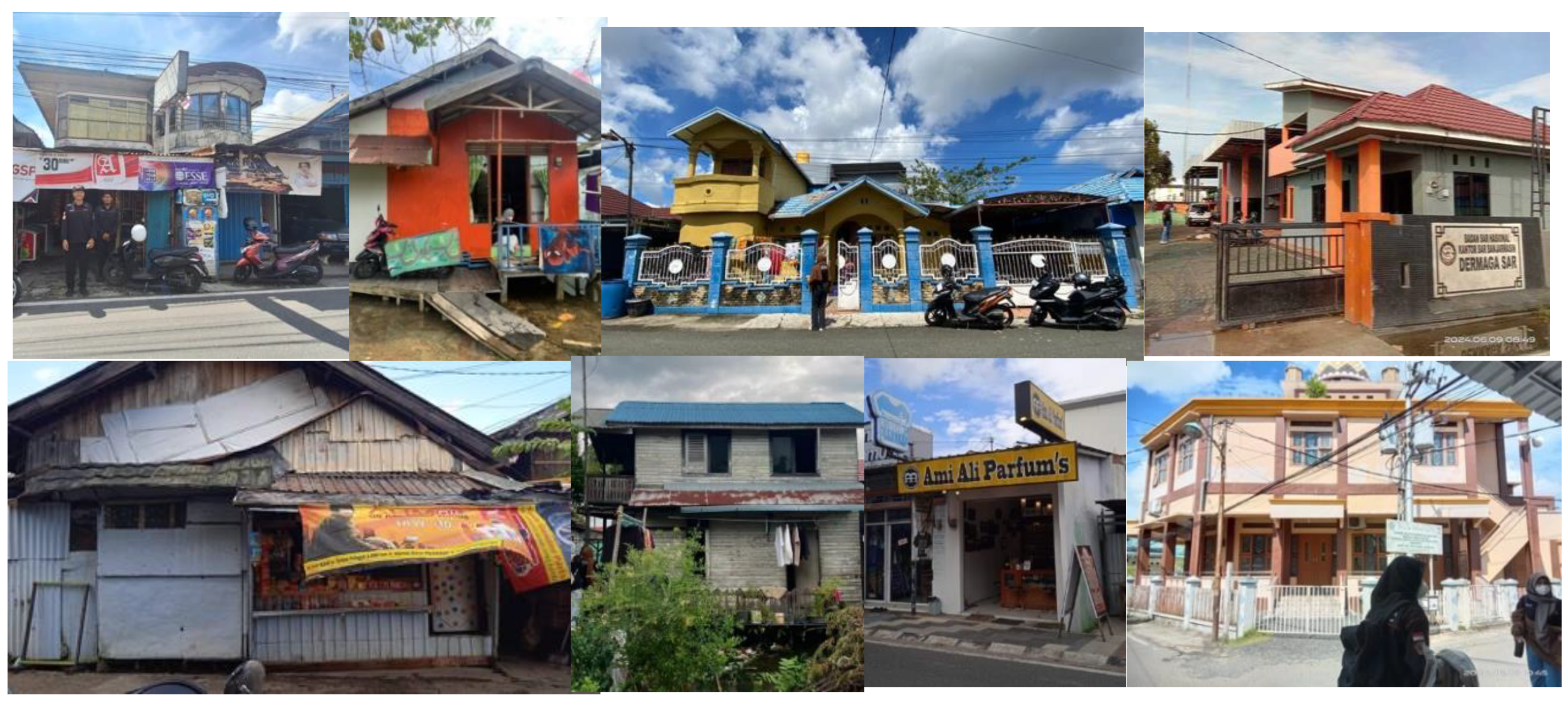
Figure 2.
Environmental Drainage Condition.
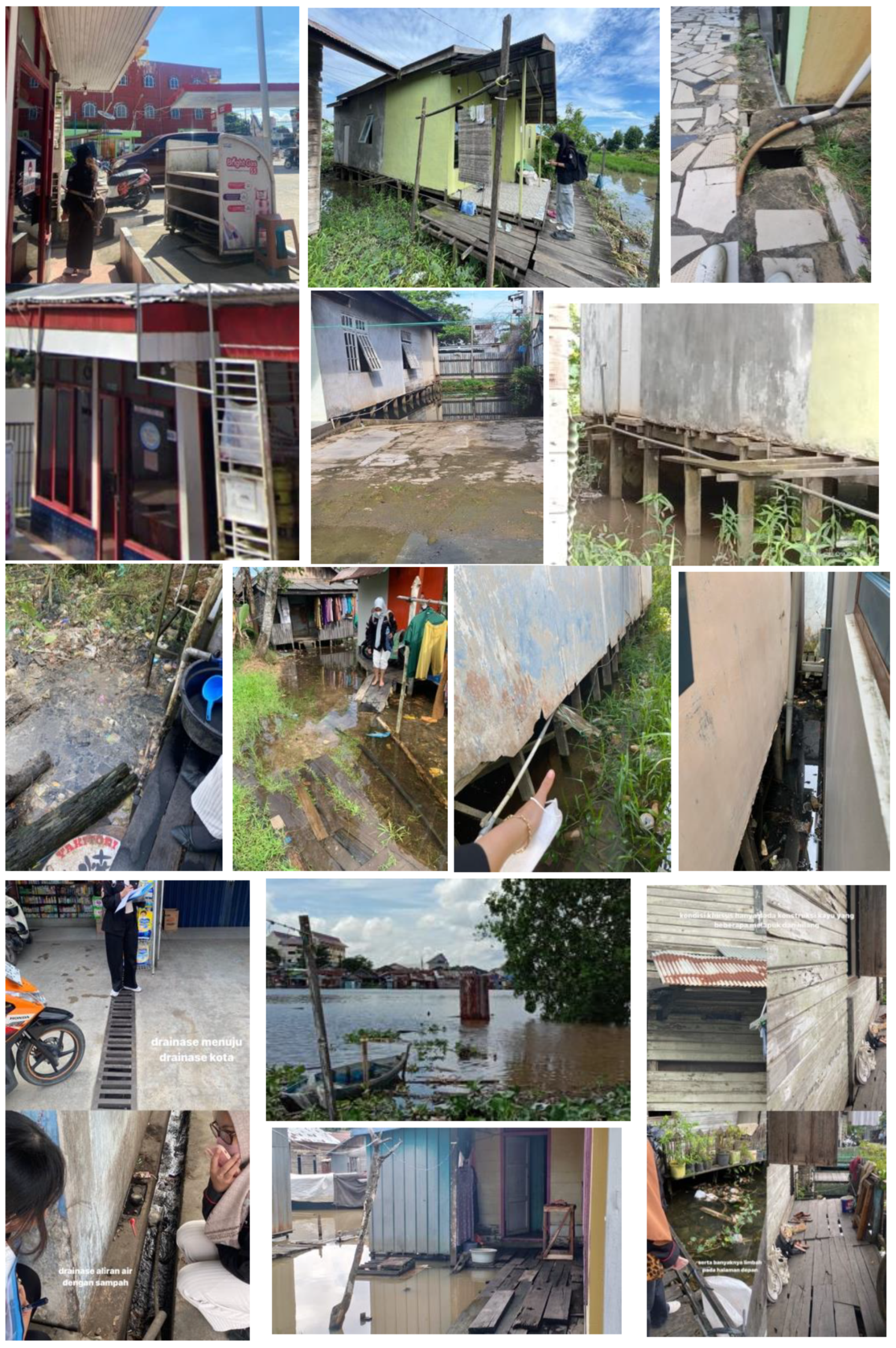
Figure 3.
Environmental Drainage Condition.
Disclaimer/Publisher’s Note: The statements, opinions and data contained in all publications are solely those of the individual author(s) and contributor(s) and not of MDPI and/or the editor(s). MDPI and/or the editor(s) disclaim responsibility for any injury to people or property resulting from any ideas, methods, instructions or products referred to in the content. |
© 2024 by the authors. Licensee MDPI, Basel, Switzerland. This article is an open access article distributed under the terms and conditions of the Creative Commons Attribution (CC BY) license (https://creativecommons.org/licenses/by/4.0/).
Copyright: This open access article is published under a Creative Commons CC BY 4.0 license, which permit the free download, distribution, and reuse, provided that the author and preprint are cited in any reuse.