

Submitted:
16 December 2025
Posted:
17 December 2025
You are already at the latest version
Abstract
Background Emerging and re-emerging infectious diseases that infect wildlife have highlighted the necessity for wildlife health surveillance (WHS) due to the interconnectedness of wildlife in maintaining the health of natural resources, agriculture, and humans. While global policies and guidelines exist, a critical gap remains in local-to-national implementation of WHS systems. A group of local, national, and global actors in WHS have formed a working group to address this gap. Methods and Findings The working group reports on a theory of change (ToC) developed to implement WHS from local to global scales. Using proven methods for developing a collaborative ToC, we leveraged the expertise of working group members and identified six transformative pathways to be implemented via collaborations across scales and contexts: mindset change, policy and investment, evidence-based practice, user-driven technologies, capacity enhancement, and mobilization of a global community of practice. Interpretation This ToC serves as a roadmap to develop effective WHS systems that support adaptive management and implementation. WHS is fundamental to understanding the impacts of health threats to biodiversity, domestic animals, and humans. This ToC presents an approach to operationalize the integration of wildlife health into collaborative One Health surveillance.
Keywords:
One Health
; wildlife health surveillance
; WHIN
; community of practice
Research in Context
Evidence Before This Study
Wildlife health has direct and indirect impacts on animal, human, and ecosystem health. Wildlife health surveillance is essential to support prevention, early detection, and response to disease, economic, and conservation threats. While some global policies and guidelines are in place, a critical gap has remained in the local-to-national implementation of wildlife health surveillance systems. Key global actors in wildlife health have formed a working group to address this gap.
Added Value of This Study
This work presents an approach to sustainably operationalize local-to-national wildlife health surveillance and grow environmental sector contributions to collaborative One Health surveillance.
Implications of All the Available Evidence
By investing in the identified pathways (mindset change, policy and investment, evidence-based practice, user-driven technologies, capacity enhancement, and mobilization of a global community of practice), we can develop effective wildlife health surveillance systems and better address global health threats.
Introduction
Healthy wildlife populations are the foundation for wildlife conservation, ecosystem services maintenance, income generation (e.g., ecotourism, hunting), food security (e.g. subsistence harvest), and the achievement of One Health (OH) objectives [1]. OH is a collaborative approach that links the health of people, animals, and ecosystems, recognizing that shared environments and interactions drive health outcomes across species. This approach is critical to the management of endemic or (re-)emerging infectious diseases with wildlife reservoirs that affect people and animals. For example, the recent emergence and global spread of the high pathogenicity avian influenza H5N1 (clade 2.3.4.4b) has greatly impacted the poultry sector, wild birds, and mammals globally [2]. Large-scale amplification and circulation of this virus within and between poultry and wildlife has increased spillovers to mammalian hosts, including humans, resulting in complex One Health challenges spanning conservation, domestic animal health, and public health [3]. Recurring outbreaks of Yellow fever in Brazil, Crimean-Congo Hemorrhagic fever in Europe, and Ebola virus disease in central Africa are other examples [4,5,6,7]. Human activities and continued encroachment into natural areas affect climate, landscape structures and connectivity, habitat availability, water and soil quality, and patterns of species interactions, challenging the existence of wildlife species [8]. The loss of ecological integrity poses risks to human and animal health, with wildlife often serving as early indicators or sentinels. However, there is a large knowledge gap regarding the biotic, abiotic, and anthropogenic factors influencing both wildlife and human health. In fact, a proposed “continuum of care” socio-ecological model of public health includes ecosystem integrity as a key upstream determinant, and nature protection as an essential intervention point for public health [9].
A fuller understanding and appropriate management of these complex OH issues require integrated wildlife health (WH) intelligence, especially across political borders [10]. However, coordinated and systematic wildlife health surveillance (WHS) is globally lacking. Countries have significant disparities in the development of their WHS systems. Among 107 countries surveyed, 58% demonstrated no evidence of a functional WHS program [11]. Generally, funding for WHS fluctuates in response to successive livestock or public health crises with the base level of funding rarely meeting the need. Even high-income countries that conduct established, nationwide, and centralized programs report operational challenges to program development, cross-sectoral collaboration, funding sustainability, and data management [12,13]. LMICs face significant limitations in conducting comprehensive surveillance, often relying on sporadic approaches. These efforts, often under foreign funding, are restricted in scope and duration, hindering institutional capacity building, local ownership, and long-term sustainability. However, local solutions and success stories of implementation of WHS in LMICs that overcome these challenges are growing [14].
Since 2011, the World Organisation for Animal Health (WOAH) and its WOAH Working Group on Wildlife has shepherded the global standardization and coordination of WHS, through the designation of national wildlife focal points who report wildlife disease events that are not listed in international standards to WOAH’s ‘WAHIS Wild’ database via national delegates [1,15]. In 2021, WOAH released a WH framework that reinforced its commitment to supporting WHS globally, to enhance national capacity and to further integrate WHS into OH strategies. Moreover, WHS further supports WHO's Pandemic Agreement that identifies actions for pre-epidemic preparedness, alert, outbreak response, and post-epidemic evaluation (see appendix pp 7-10). Despite this global leadership role (appendix p 3), gaps in WHS field implementation at sub-national to national scales remain, due to the lack of field-level networks to facilitate implementation of WHS. Most countries have not allocated human and financial resources for WH, and institutional mandates for WHS either do not exist or fail to maximize intelligence across institutions. This represents a major gap in the ability to generate WH intelligence globally [16]. Therefore, current top-down approaches should be complemented with bottom-up processes and other grounded approaches (side-to-side and inside-out approaches) to enhance national coordinated initiatives and mainstream WHS systems [17].
The Science for Nature and People Partnership (SNAPP) funded the creation of a working group (WG), to strengthen WHS globally through a collaborative and evidence-based approach [18] This WG comprises representatives of international, national, and local organizations with the goal of addressing the gap between global coordination and local implementation and identifying ways to encourage consistent and effective WHS practices at the national and sub-national levels. This WG was founded on the premise that implementation of sustainable WHS at national and sub-national scales exceeds the capacity of any single institution, and that a consortium approach would better address this challenge by promoting cross-sectoral relationships that can be leveraged for capacity building and implementation. Here, we present a Theory of Change (ToC) to address the gaps between global policy and local-to-national implementation of WHS. A ToC is a structured, participatory, and adaptive framework in which stakeholders and rightsholders articulate their collective aims, identify the outcomes they seek, and map the actions and conditions required to achieve them (appendix p 10).
Methods
A WG was convened to address the WHS implementation gap (appendix p 3). Membership of the WG was by invitation from the project leaders, with the aim of a diverse mix of relevant technical expertise, lived experience, organizational structures, geography, and economic contexts. The WG developed a ToC as a roadmap to illustrate how a set of interventions could lead to specific changes. The ToC approach provides a systematic process to explore the range of drivers and levers to create a change, an approach that is consistent with holistic system analysis that support trans-disciplinary and cross-sectoral approaches. The WG developed a ToC following six steps (Figure 1).
The WG developed the final ToC (Figure 2) over two virtual workshops (4-hours each), a 3-day in-person workshop facilitated by a professional and experienced facilitator (CK), additional online debriefing sessions, and multiple rounds of drafting. Each step involved various activities including individual reflection, group discussions, or plenary exercises (appendix p 4).
- Results
- 2.
- Adaptive Challenge.
Adaptive challenges are issues resulting from complex dynamics that require a collaborative learning process, a whole-system adaptation, and often a mindset shift, rather than a narrow expertise-guided technical solution. The group collectively identified the adaptive challenge of bridging the WHS implementation gap (Figure 3) as “enhancing capacity for coordinated and effective WHS systems to support adaptive management across scales and sectors.”
- 3.
- Barriers to Implementation
Barriers to implementation are well documented and are often a result of conflicting stakeholder priorities and values, resource limitation, and system complexity (Figure 4) [13]. The ability of government entities to lead WHS may be limited because of legal or funding restrictions, or the absence of an underlying mandate for WHS or appropriate expertise or any combination of these factors. Animal health mandates are usually within veterinary services, whose main priorities are determined by a limited number of economically important species. This results in low WHS prioritization compared to other animal health priorities. Moreover, it reduces incentives to transparently report WH intelligence because of perceived negative economic consequences and trade impacts. In this context, wildlife is perceived as a threat (source of diseases), rather than a resource to be conserved for the greater good. Traditionally, the environmental sector has had limited awareness of and influence on animal and public health decisions. As a result, WHS priorities have mainly been defined from a human and agriculture-centered standpoint without considering the inherent value of wildlife, biodiversity, and ecosystems, even when deliberate efforts are made to implement a One Health approach. The lack of institutional support has caused poor prioritization of sustained WHS efforts despite its critical importance to operationalizing One Health.
As single institutions rarely hold the sole mandate for WHS, multi-institution and multi-sectoral collaborative approaches are needed for implementation, which requires adequate communication, coordination, and collaboration mechanisms [14]. This can be further complicated when national and subnational levels of government operate under different regulations and policies. The complexity of WHS data and the lack of standards result in inconsistent systems that hinder the sharing of information, and coordination across sectors and scales. As a result, significant barriers prevent the generation of coordinated WHS intelligence that supports One Health action.
- 4.
- Pathways of change
Six pathways were identified: mindset change, policy and investment, evidence-based practice, user-driven technologies, and capacity enhancement, all supported by the mobilization of a global community of practice (Figure 2). The activities identified for each pathway are shown in Table 1.
Mindset Change
Mindset change is a pathway that enables other pathways of the ToC. Three strategies of mindset change were highlighted. First, there is a need to understand and communicate the value of WHS as a benefit and not just as a cost (e.g. cost of trade impacts). Economic analyses should be a core activity of this pathway (e.g., Natural Capital Project), making a business case for WHS, including the non-market value of wildlife, such as willingness to pay for WH or ecosystem services that incorporate the intrinsic value of wildlife. Second, there is a need to move beyond the utilitarian and human-centered perception of wildlife and WHS, and fully integrate the intrinsic value of wildlife in decisions and prioritization of WHS. In this nature-centered paradigm, WHS incorporates drivers of disease and their effects on wildlife populations and encourages the connection of WHS systems with ecological monitoring programs for comprehensive discernment of environmental changes [10]. Third, the WG reflected on decolonizing our approach to global cooperation on WHS, and the requirement for cultural humility in addressing questions of wildlife value and WHS [10,21]. Creating relationships among diverse groups, peoples, and Nations is critical to create the ethical space where multiple worldviews can be represented, heard, and respected. This is essential as national governments engage with Indigenous Nations on the co-design and co-management of WHS programs, under the guiding principles of the United Nations Declaration on the Rights of Indigenous Peoples (UNDRIP).
Policy and Investment
This pathway focuses on growing political will for WHS by fostering policy changes, allocating adequate funding and investment, and incentivizing health hazard detection. Political support for sustainable WHS can benefit from both top-down and bottom-up approaches. At the global scale, the wildlife health framework developed by WOAH and other tools (e.g. Joint External Evaluation [JEE], the WOAH Performance of Veterinary Service [PVS] – appendix p 1) encourage and guide countries to implement WHS but are not legally binding and do not provide a clear pathway to national and local implementation. The WOAH guidelines on wildlife surveillance offer practical recommendations for national implementation, albeit without an enforcement mechanism. Opportunities exist (e.g., the WHO Pandemic Agreement, the pending 2005 WHO International Health Regulation [IHR] updates) to more strongly mandate the development and maintenance of WHS as part of coordinated multisectoral surveillance, such as those in place for livestock and human health [11,22,23]. At the national scale, the adoption of standard operating procedures is essential to provide bottom-up policy incentives to sustainably implement such surveillance. WHS policy templates that clearly define roles, expectations, and readiness, and that can be adapted to local realities are essential to support effective implantation and operationalizing One Health.
Locally relevant prioritization of WHS objectives (i.e. engaging local stakeholders and rightsholders to identify surveillance priorities) along with stronger assessment of the value of functional WHS systems would further incentivize local implementation and investments. However, the global nature of drivers of WH (e.g., environmental degradation, pathogen spread, climate change, trade, and pollution) warrants a strong role for global cooperation in the funding of country-level WHS systems. While short-term project funding is valuable for responding to immediate, localized threats, such efforts often lead to repurposing of resources towards the next emergency, resulting in unintended infrastructure development and capacity building [24]. Applying a mindset shift that seizes these short-term opportunities for long-term development is critical for building institutional resilience.
A challenge is ensuring that the spatial and temporal scales of investments – such as funding for infrastructure, training, data management, and policy development – align with the operational needs of WHS systems, enabling the generation of WH intelligence that benefits local and global communities.
Evidence-Based Practice
Data synthesis, research, and knowledge sharing activities are fundamental to supporting science-based decisions and tools for WHS (appendix p 5). A concerted focus on developing evidence and sharing scientific resources for WHS is needed, particularly in the following subject areas: economics or cost-benefit analyses, prioritization of surveillance efforts, assessment of existing WHS resources, development of performance metrics, and political science research for policy gaps and governance. There is also a need for science to facilitate the building of useful public data collection tools to better incorporate local knowledge sourced from community, citizen, or student-based networks, which can enhance data from government-led efforts [25].
User-Driven Technologies
This pathway addresses flexible and scalable technologies needed to improve WHS implementation. The need for standardized and open-source data collection and management tools has been a strong force driving collaboration among WG members. WH information sharing remains hindered by institutions largely operating data systems in isolation and constrained by sensitivities related to data sharing. Reducing data siloes will help operationalize WHS and One Health. Here, appropriate technology developed through participatory and collaborative approaches can provide reliable standard open-source data management solutions that enable information sharing and greater interoperability of existing systems. Advancements in artificial intelligence could also contribute to making WHS information more accessible by automating the extraction and synthesis of data from diverse sources (field reports, laboratory diagnostics, remote sensing, etc.), enabling real-time alerts, and supporting multilingual dashboards for diverse stakeholders. The ultimate goal is for user-driven technology to provide richer information and intelligence about WH for decision makers and managers of wildlife.
Capacity Enhancement
This pathway explores how to mobilize existing workforces and enhance the skills, knowledge, and capacity for WHS with a goal to empower instead of acting on behalf of those concerned. Developing and consolidating training materials that are locally relevant and tailored to the different roles within the WHS system are critical to implementation. Delivery of training requires institutions and actors that are firmly embedded in the local context. As such, connecting international and local WHS actors and organizations will be instrumental in the development of sustainable capacity-building models. Facilitating access to training materials through e-learning platforms in multiple languages would benefit WHS implementation. Finally, even with adequate training, responding to large-scale wildlife health emergencies can be a challenge for newly formed WHS systems, and this capacity can be enhanced by the support and mentoring of a global network.
Mobilizing a Global Community of Practice (CoP) – a Wildlife Health Intelligence Network (WHIN)
The expansion of this WG into a larger CoP, the WHIN (www.wildlifehealthintelligence.net), provides the main pathway to implementing this ToC. It addresses a fundamental gap in the current implementation of national WHS by leveraging multiple organizations and actors operating at different scales, and with different expertise. WHIN aims to act as a support system, linking expertise and addressing gaps to design, guide, and support the implementation of comprehensive, coherent, and sustainable WHS by individual countries (appendix p 6). WHIN will mobilize organizations and individuals from multiple sectors and levels, including intergovernmental organizations (e.g., WOAH, FAO, WHO, UNEP, IUCN), key global implementation actors (e.g., WCS), regional networks, national WHS coordinators and actors, field practitioners, educators, and researchers (e.g., protected area managers, citizen science groups, scientists, Indigenous communities, local conservation organizations, universities), and laboratories. A WHIN charter and governance structure is currently being developed. The network will promote collaborations, lateral and South-South (LMIC) cooperation, and bottom-up processes to develop new norms and policies. This model will support a decolonized approach to global cooperation, by recognizing and facilitating input from different contexts and worldviews, such as actors in LMIC, and Indigenous communities.
By working together as a WHS CoP we can synergistically address implementation challenges more effectively.
For example, the establishment of minimum requirements and standards for WHS systems, practical step-by-step guides on operationalizing WHS, standard operating procedures for network and laboratory activities, and evaluation and assessment tools can be strengthened if co-developed by the CoP. Variation in levels of resourcing and capacity results in diverse WHS strengths, from methodological refinement in a few well-established systems to foundational system development in settings where WHS is still being formed. By bringing people together, the CoP's collective knowledge and experience, such as local successes and solutions, can be harnessed and replicated to achieve a more efficient and effective rollout of WHS.
- 5.
- Aims and expected impacts
The mission of WHIN is to establish a CoP that works collaboratively on WHS so that it is implemented everywhere, at all times, particularly where it matters most, such as vulnerable populations, and threatened biodiversity. WHIN seeks to grow the CoP to collectively help reduce WHS barriers (Figure 4). This involves capturing shared outcomes and the pathways to achieve them; aligning stakeholders on a common vision and purpose, building trust and buy-in, and proactively identifying the barriers so that solutions can be developed in advance. Over the longer-term WHIN aims for the majority of countries to have effective WHS systems, supported by comprehensive guidance and standards, open access to WH data management tools, and broad support for OH and conservation driven WHS. The impact of enhanced capacity for WHS at national scales, combined with effective coordination between global and local-national organizations and institutions, will be facilitated by WHIN’s CoP. A CoP can effectively share existing solutions tailored to local contexts – whether addressing capacity enhancement, policy improvements, data and technology, or evidence-based surveillance planning – and amplify them across a global community of implementers. The collaborative structure also facilitates the collective mindset shift towards nature-centered WHS. The ultimate impact seeks sustainable and healthy ecosystems supporting diverse wildlife and sustainable human societies.
Discussion
The ToC developed by the WHIN WG articulates practical steps to support implementation of WHS across scales, bridging the gap between global frameworks (e.g., WOAH’s Wildlife Health Framework [25]) and local realities. It builds on promising local and regional successes in LMICs, such as WildHealthNet in Southeast Asia and Thailand's WOAH Twinning Program. WildHealthNet's locally-driven approach successfully achieved event-based and targeted surveillance across Cambodia, Lao PDR, and Vietnam, with parallel implementation and policy development resulting in national surveillance plans signed into legislation [14,26]. Similarly, Thailand's system-wide capacity enhancement through needs assessment and participatory planning established a formal Thailand Wildlife Health Network as well as a WOAH Collaborating Center on Wildlife Health with government support [26]. Both initiatives validate this ToC's emphasis on stakeholder engagement at all levels, iterative approaches, trust-building through collaboration, and context-specific solutions that integrate field implementation with policy development aiming to connect and scale these efforts into coherent, sustainable WHS systems.
Establishing WHIN as a CoP provides the central mechanism to implement this ToC by bringing together multiple organizations, governments, and local communities at sub-national, national, and regional levels. Such diverse institutions working alongside each other are best positioned to enhance WHS adoption through bottom-up, side-to-side, and inside-out approaches. For example, creation of WH intelligence requires structured systems with universal language for complex data that are developed through collaboration with stake and rightsholders. One early WHIN product, HAWK, starts to address this urgent need in the area of data and knowledge sharing, following best practices (i.e., FAIR and CARE principles, DataOne) [27]. Realities on the ground can change quickly, so regular evaluation and adaptation of this ToC will be crucial for WHIN to remain on task.
This ToC and WHIN face important limitations. Despite efforts to diversify perspectives, our WG lacked diversity, representation, and transdisciplinary involvement. This reflects broader challenges in terms of implementation of WHS, with most established systems and practical expertise located in high-income countries [28]. WHIN’s CoP approach aims to address these gaps through greater inclusion, cultural pluralism and support for Indigenous and LMIC leadership. For instance, the creation of an Indigenous- and Community-led surveillance task force aims to identify local expertise in the development of such initiatives to organize around questions of best practices and priorities for community-led surveillance.
WHIN’s consortium approach requires members to prioritize the collective benefit despite potentially competing mandates. Tensions created from competing mandates likely influenced the early development of WHIN and will continue to challenge the implementation of the ToC. Yet collaborative approaches can promote more efficient and concerted use of limited resources, encouraging innovation with, rather than competition between key actors. Furthermore, current funding mechanisms are temporally and spatially fragmented, offering few opportunities for long-term investments that lead to sustainable WHS impact.
This ToC supports broader OH strategies outlined in OHHLEP’s One Health Theory of Change, the Quadripartite’s One Health Joint Plan of Action, the Global Health Security Agenda (GHSA), the Pandemic Agreement, and the Convention on Biological Diversity Global Action Plan on Biodiversity and Health [29,30] Stronger WHS helps countries achieve multi-sectoral surveillance indicators across the IHR Joint External Evaluation (JEE) and WOAH’s Performance of Veterinary Service (PVS) evaluation tool. While most wildlife health initiatives remain focused on zoonotic diseases, operationalizing OH requires attention towards understanding the environmental drivers affecting biodiversity, agriculture, and public health [11].
Embracing a new model of international cooperation for WHS depends on our collective will. Global WHS needs greater trust and collaboration among actors that engage and support countries in enhancing their WHS systems. With focused effort in capacity enhancement, standards development, research, data sharing, and advocating for wildlife, this ToC paves the way for tangible action. WHIN can link and leverage these efforts to scale WHS efficiently on a global scale. This proposal’s success relies on a collaborative and decolonized model of international cooperation for WHS.
Funding
Funding was provided by the Science for Nature and People Partnership (SNAPP). SNAPP had no role in study design; in the collection, analysis, or interpretation of data; in the writing of the report; and in the decision to submit the paper for publication.
Acknowledgments
We thank Amelie Arnecke, Keith Hamilton, Thierry Work, Susan Kutz, and Sophie Muset for their contributions.
Declaration of generative AI and AI-assisted technologies in the manuscript preparation process
During the preparation of this work the author(s) used ChatGPT 5.1 to enhance grammar, improve conciseness, and refine overall clarity and flow of the text. After using this tool/service, the author(s) reviewed and edited the content as needed and take(s) full responsibility for the content of the published article.
Disclosure/ Declaration of Interests
The findings and conclusions in this manuscript are those of the authors and should not be construed to represent any official USDA or U.S. Government determination or policy.
References
- Buttke DE, Decker DJ, Wild MA. The role of One Health in wildlife conservation: a challenge and opportunity. J Wildl Dis 2015; 51: 1–8. [CrossRef]
- Charostad J, Rezaei Zadeh Rukerd M, Mahmoudvand S, et al. A comprehensive review of highly pathogenic avian influenza (HPAI) H5N1: An imminent threat at doorstep. Travel Med Infect Dis 2023; 55: 102638. [CrossRef]
- Puryear WB, Runstadler JA. High-pathogenicity avian influenza in wildlife: a changing disease dynamic that is expanding in wild birds and having an increasing impact on a growing number of mammals. 2024; published online May 1. [CrossRef]
- Crimean–Congo Haemorrhagic Fever (CCHF) in animals: Global characterization and evolution from 2006 to 2019 - Fanelli - 2022 - Transboundary and Emerging Diseases - Wiley Online Library. https://onlinelibrary.wiley.com/doi/full/10.1111/tbed.14120 (accessed Oct 28, 2025).
- Jones BA, Mahapatra M, Mdetele D, et al. Peste des Petits Ruminants Virus Infection at the Wildlife–Livestock Interface in the Greater Serengeti Ecosystem, 2015–2019. Viruses 2021; 13: 838. [CrossRef]
- Bicca-Marques JC, de Freitas DS. The Role of Monkeys, Mosquitoes, and Humans in the Occurrence of a Yellow Fever Outbreak in a Fragmented Landscape in South Brazil: Protecting Howler Monkeys is a Matter of Public Health. Trop Conserv Sci 2010; 3: 78–89.
- Paul D, Mohanty A, Shah A, Kumar Padhi B, Sah R. Outbreak of an emerging zoonotic Nipah virus: An emerging concern. J Biosaf Biosecurity 2023; 5: 57–9. [CrossRef]
- World Health Organization, Convention on Biological Diversity. Connecting global priorities: biodiversity and human health: a state of knowledge review. Geneva: World Health Organization, 2015 https://iris.who.int/handle/10665/174012 (accessed March 1, 2024).
- Stephen C, Walzer C. The continuum of care as a unifying framework for intergenerational and interspecies health equity. Front Public Health 2023; 11. https://www.frontiersin.org/articles/10.3389/fpubh.2023.1236569 (accessed Jan 16, 2024).
- Barroso P, Relimpio D, Zearra JA, et al. Using integrated wildlife monitoring to prevent future pandemics through one health approach. One Health 2023; 16: 100479. [CrossRef]
- Machalaba C, Uhart M, Ryser-Degiorgis M-P, Karesh WB. Gaps in health security related to wildlife and environment affecting pandemic prevention and preparedness, 2007–2020. Bull World Health Organ 2021; 99: 342-350B. [CrossRef]
- Heiderich E, Keller S, Pewsner M, et al. Analysis of a European general wildlife health surveillance program: Chances, challenges and recommendations. PloS One 2024; 19: e0301438. [CrossRef]
- Lawson B, Neimanis A, Lavazza A, et al. How to Start Up a National Wildlife Health Surveillance Programme. Animals 2021; 11: 2543. [CrossRef]
- Pruvot M, Denstedt E, Latinne A, et al. WildHealthNet: Supporting the development of sustainable wildlife health surveillance networks in Southeast Asia. Sci Total Environ 2023; 863: 160748–160748. [CrossRef]
- Lin S-Y, Beltran-Alcrudo D, Awada L, et al. Analysing WAHIS Animal Health Immediate Notifications to Understand Global Reporting Trends and Measure Early Warning Capacities (2005–2021). Transbound Emerg Dis 2023; 2023: 6666672. [CrossRef]
- Delgado M, Ferrari N, Fanelli A, et al. Wildlife health surveillance: gaps, needs and opportunities. . [CrossRef]
- Noguera Z. LPN, Kappel C, Uhart MM, et al. Theory of Change for Building Stronger Wildlife Health Surveillance Systems Globally. 2024; published online July 16. [CrossRef]
- Lefrançois T, Malvy D, Atlani-Duault L, et al. After 2 years of the COVID-19 pandemic, translating One Health into action is urgent. The Lancet 2023; 401: 789–94. [CrossRef]
- Theory of Change. https://www.structural-learning.com/post/theory-of-change (accessed Jan 17, 2024).
- Liz Paola NZ, Torgerson PR, Hartnack S. Alternative Paradigms in Animal Health Decisions: A Framework for Treating Animals Not Only as Commodities. Animals 2022; 12: 1845–1845. [CrossRef]
- Redvers N, Celidwen Y, Schultz C, et al. The determinants of planetary health: an Indigenous consensus perspective. Lancet Planet Health 2022; 6: e156–63. [CrossRef]
- Morner T, Obendorf DL, Artois M, Woodford MH. Surveillance and monitoring of wildlife diseases: -EN- -FR- -ES-. Rev Sci Tech OIE 2002; 21: 67–76.
- dos S. Ribeiro C, van de Burgwal LHM, Regeer BJ. Overcoming challenges for designing and implementing the One Health approach: A systematic review of the literature. One Health 2019; 7: 100085. [CrossRef]
- Pepin KM, Carlisle K, Anderson D, et al. Steps towards operationalizing One Health approaches. One Health 2024; 18: 100740. [CrossRef]
- Stephen C, Duff JP, Gavier-Widen D, et al. Proposed attributes of national wildlife health programmes: -EN- -FR- Attributs proposés pour des programmes nationaux de santé de la faune sauvage -ES- Características propuestas de los programas nacionales de sanidad de la fauna silvestre. Rev Sci Tech OIE 2018; 37: 925–36.
- Suwanpakdee S, Sangkachai N, Wiratsudakul A, et al. Wildlife health capacity enhancement in Thailand through the World Organisation for Animal Health Twinning Program. Front Vet Sci 2024; 11. [CrossRef]
- Montecino-Latorre D, Pruvot M, Shimabukuro PHF, et al. A community-of-practice-built database to support the implementation and operation of national and subnational wildlife health surveillance systems. One Health 2025; 21: 101227. [CrossRef]
- Gallo-Cajiao E, Lieberman S, Dolšak N, et al. Global governance for pandemic prevention and the wildlife trade. Lancet Planet Health 2023; 7: e336–45. [CrossRef]
- Biggs D, Cooney R, Roe D, et al. Developing a theory of change for a community-based response to illegal wildlife trade. Conserv Biol 2017; 31: 5–12. [CrossRef]
- Skinner D, Dublin H, Niskanen L, Roe D, Vishwanath A. Chapter 24 - Exploring community beliefs to reduce illegal wildlife trade using a theory of change approach. In: Challender DWS, Nash HC, Waterman C, eds. Pangolins. Academic Press, 2020: 385–93.
Figure 1.
Steps to develop a Theory of Change for WHS implementation.
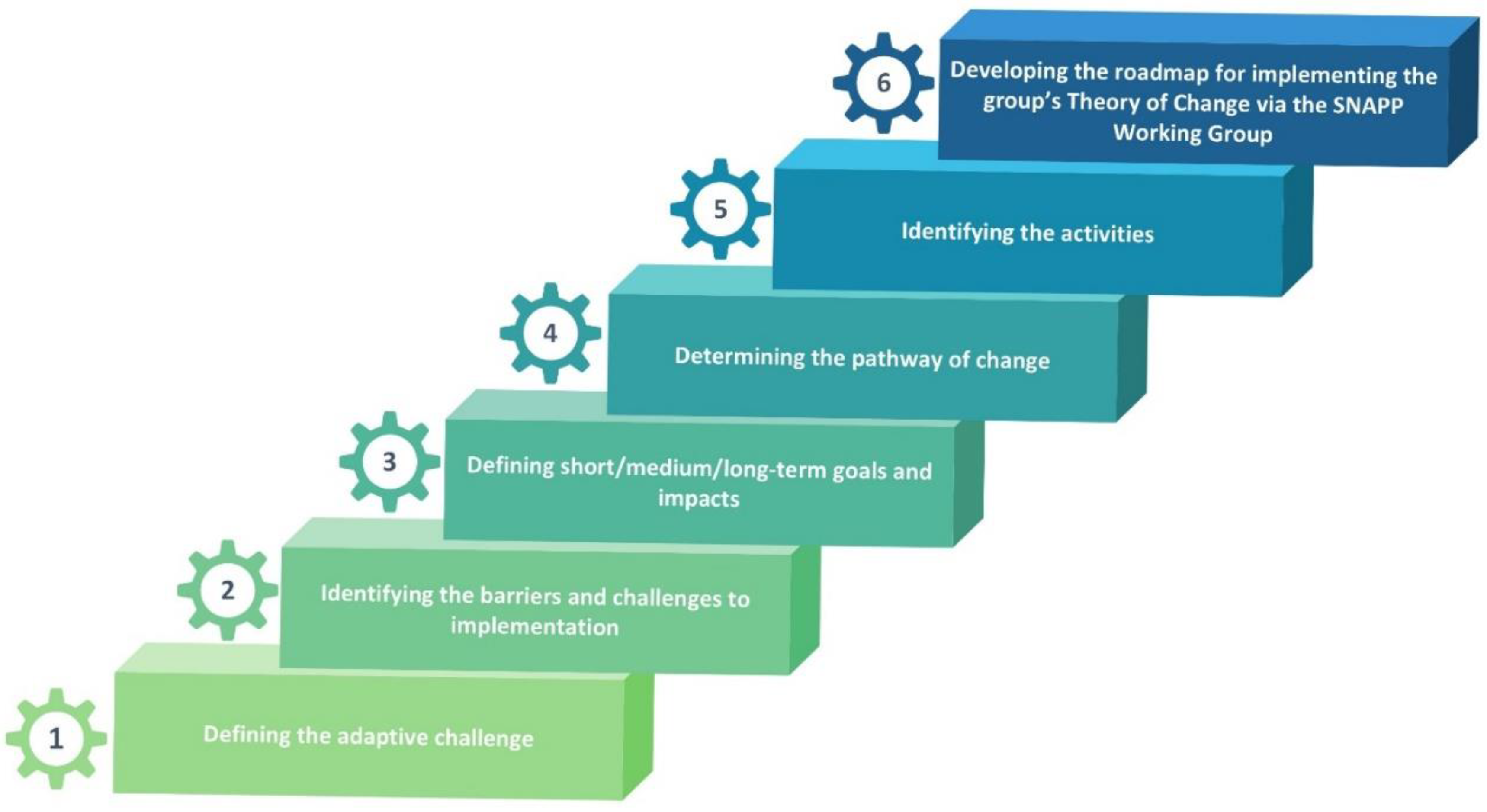
Figure 2.
Theory of Change for implementing global wildlife health surveillance (CoP: community of practice, WH: wildlife health, WHS: wildlife health surveillance, OH: One Health; FAIR: Findable, Accessible, Interoperable and Reusable; CARE: Collective benefit, Authority to control, Responsibility and Ethics). See Table 3 and the ‘Pathways of Change’ section to learn more.
Figure 2.
Theory of Change for implementing global wildlife health surveillance (CoP: community of practice, WH: wildlife health, WHS: wildlife health surveillance, OH: One Health; FAIR: Findable, Accessible, Interoperable and Reusable; CARE: Collective benefit, Authority to control, Responsibility and Ethics). See Table 3 and the ‘Pathways of Change’ section to learn more.
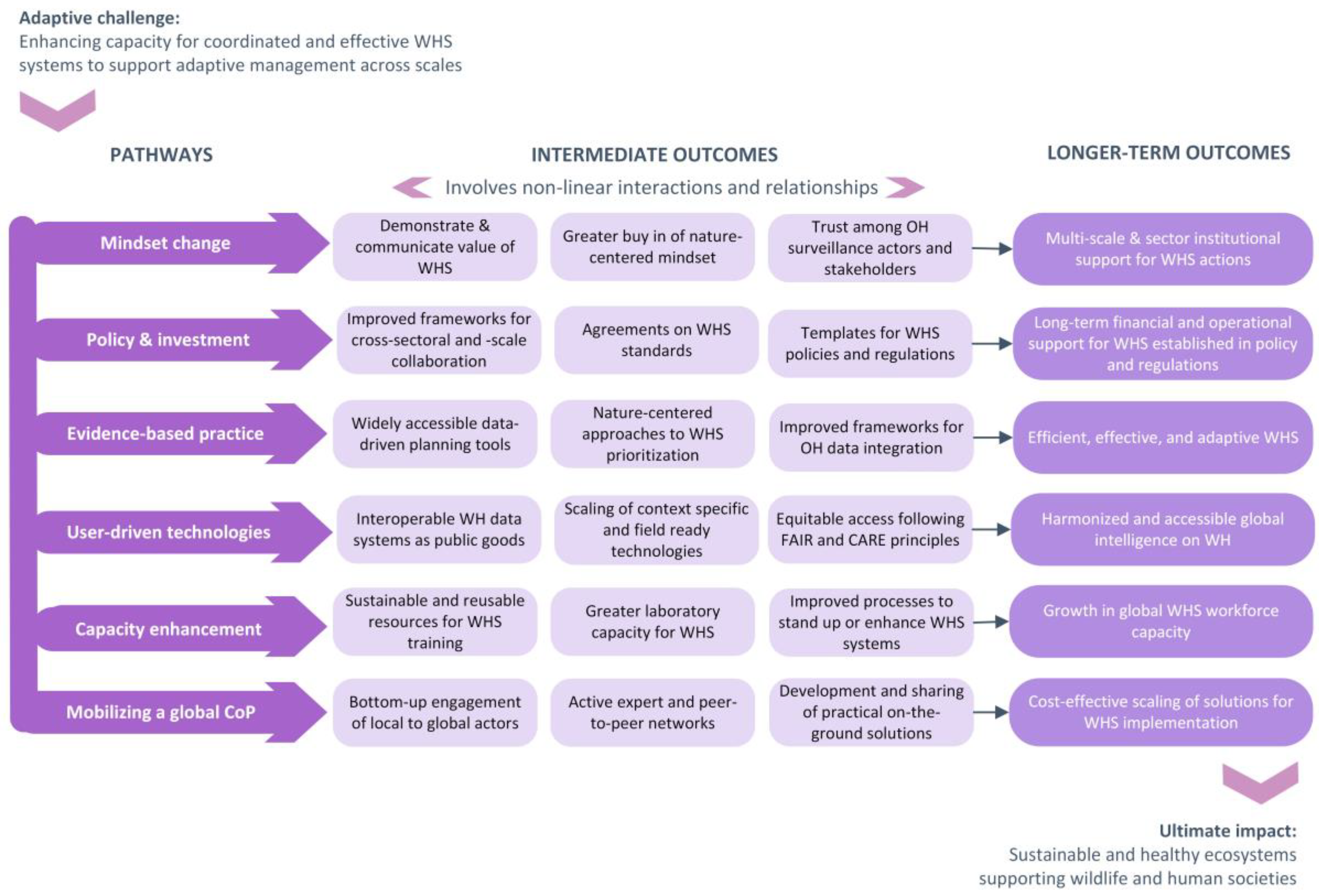
Figure 3.
How the group defined the adaptive challenge to implement wildlife health surveillance.
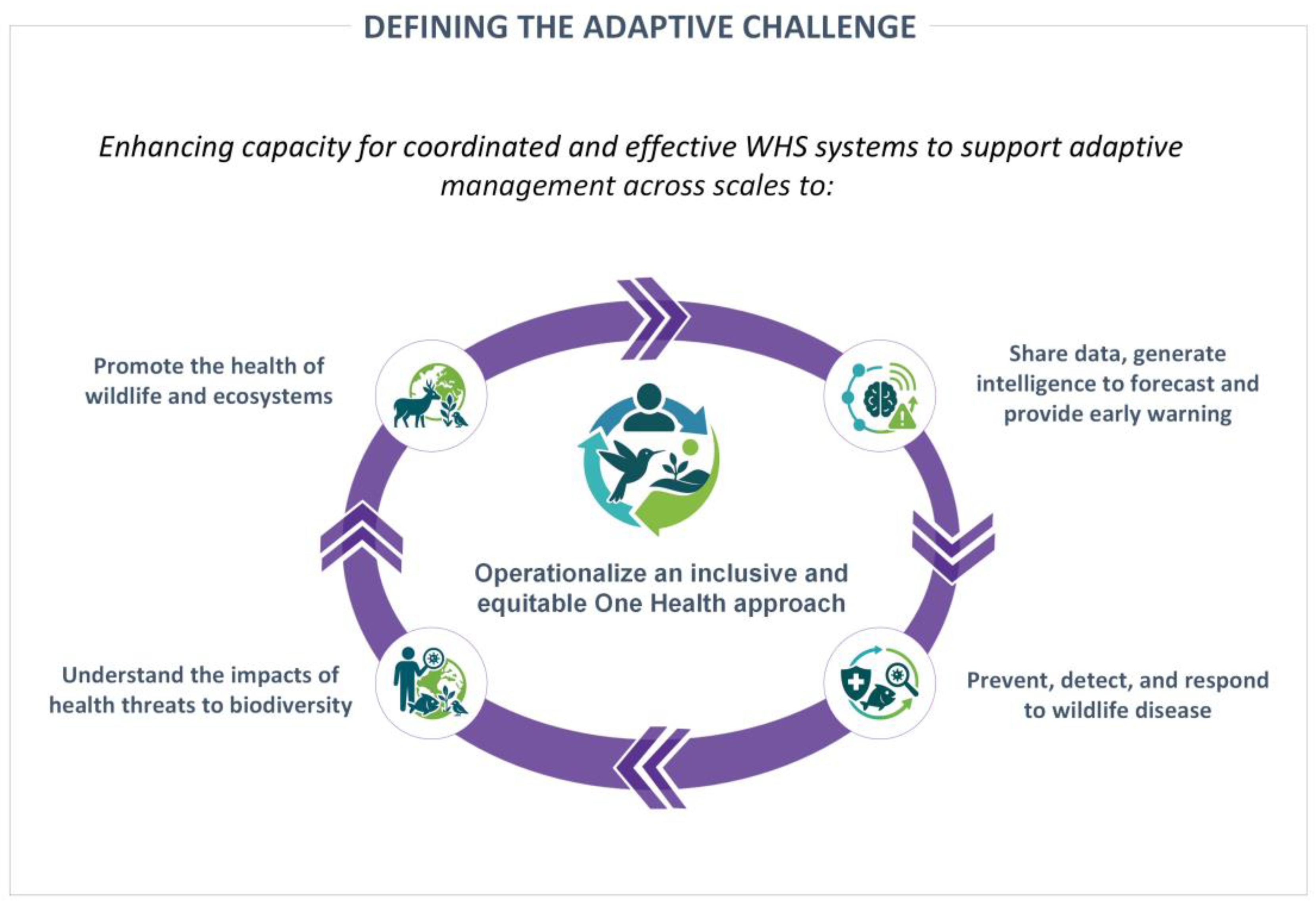
Figure 4.
Barriers to implementation of WHS.
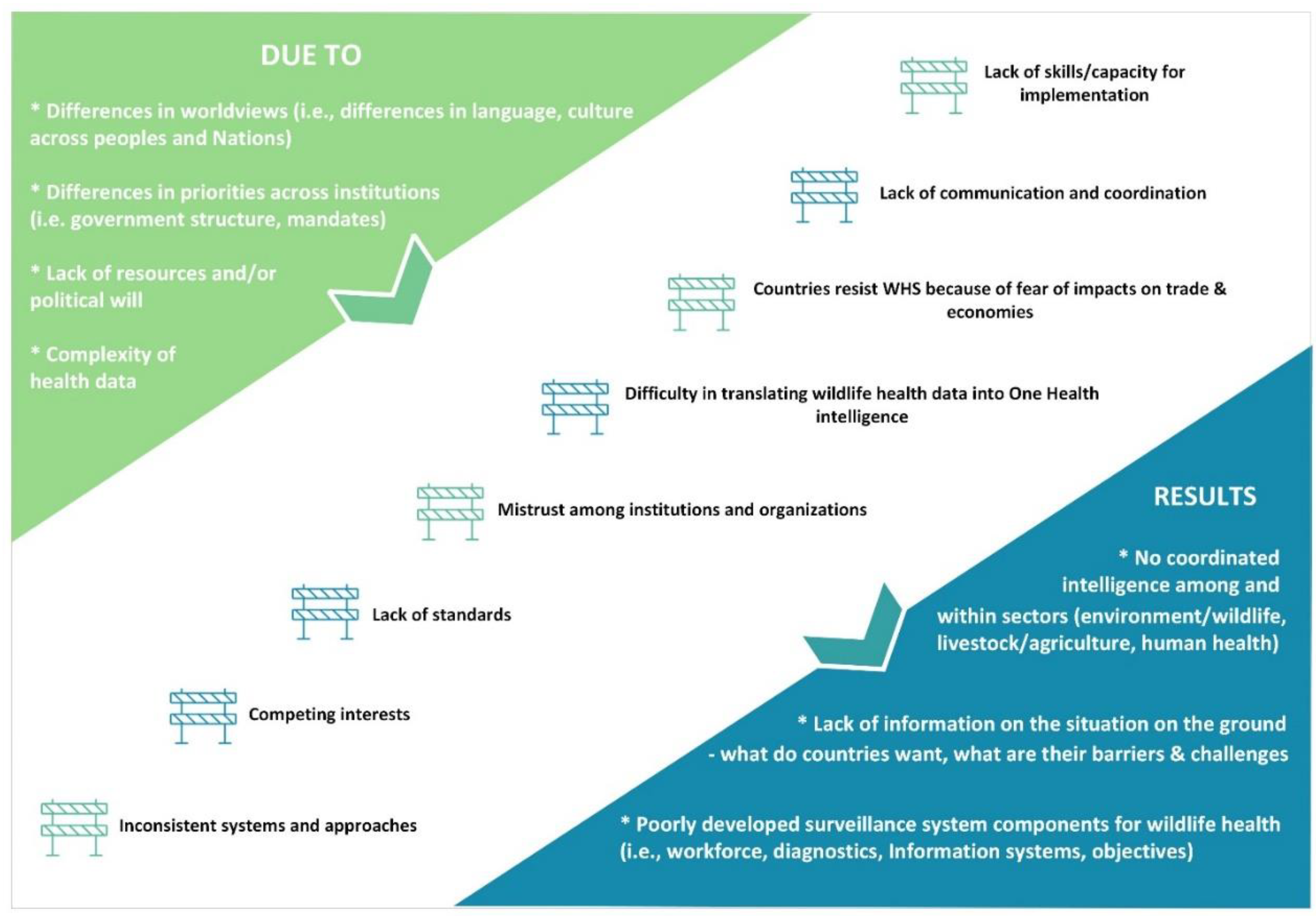

Table 1.
Activities identified for each pathway of Theory of Change.
| Pathways | Activities |
|
Mobilizing a global community of practice |
|
| Mindset change |
|
| Policy & investment |
|
| Evidence-based practice |
|
| User-driven technologies |
|
| Capacity enhancement |
|
Disclaimer/Publisher’s Note: The statements, opinions and data contained in all publications are solely those of the individual author(s) and contributor(s) and not of MDPI and/or the editor(s). MDPI and/or the editor(s) disclaim responsibility for any injury to people or property resulting from any ideas, methods, instructions or products referred to in the content. |
© 2025 by the authors. Licensee MDPI, Basel, Switzerland. This article is an open access article distributed under the terms and conditions of the Creative Commons Attribution (CC BY) license (http://creativecommons.org/licenses/by/4.0/).
Copyright: This open access article is published under a Creative Commons CC BY 4.0 license, which permit the free download, distribution, and reuse, provided that the author and preprint are cited in any reuse.


