

Submitted:
02 July 2024
Posted:
03 July 2024
You are already at the latest version
Abstract
Peanut hulls (PH) are an edible food waste that is an underutilized food source for human consumption. While edible and palatable, they are mainly diverted to livestock feed or building materials. Here, we describe existing literature on human food valorization of PHs and propose methods to optimize recapturing nutrients (e.g. protein, fiber, polyphenols) lost by treating PHs as waste. Incorporated into common foods, PHs can be processed into functional ingredients to improve nutrient-density and the corresponding positive health outcomes associated with increases in plant foods. PH valorization can also address additional priorities of the UN Sustainable Development Goals using a Food Systems Approach (FSA) including food waste, increasing economic opportunities for farmers, and increasing the availability of healthy shelf-stable foodstuffs to address food security. Recent advances in sustainable food processing technologies can be utilized to safely incorporate peanut hulls into human food streams. We propose future applications that could make meaningful impacts to food availability and the nutritional composition of common foods. While the limited literature on this topic spans several decades, no global operations exist to incorporate peanut hulls and most publications precede the technological ‘green revolution’. The approaches outlined in this review may help bolster commercialization of this underutilized and nutritious food potentially improving opportunities for multiple global stakeholders.
Keywords:
food waste
; sustainable food systems
; peanuts
; valorization
; food systems approach
; plant food
; food manufacturing
; sustainable technology
Background
The global production of peanuts annually is approximately 46.4 million metric tons, of which nearly 22% (>10 million tons) is waste from the hulls (also known as peanut shells). [1] Peanuts are grown and consumed in high volumes on every continent, and except for the U.S. (the fifth largest grower) and China (first) peanut farming is mostly concentrated in lower- and middle-income countries (LMIC), including world growing leaders India, Nigeria, and Sudan, as well as Senegal and Argentina. [1]
Given the high percentage of waste from hulls, many approaches to upcycle them have been discussed. The most common uses of PH are animal feed and as a dry composite material for packaging and industrial fillers; emerging industries also seek to use PH for biofuel and filtration systems.[1,2,3,4] However, PHs are edible to humans, and diverting them to feed, fillers, and filters is a missed opportunity to efficiently utilize these nutrients s produced by human food systems for actual human consumption. As food systems struggle to keep up with increasing global food demand, more efficient systems are needed.
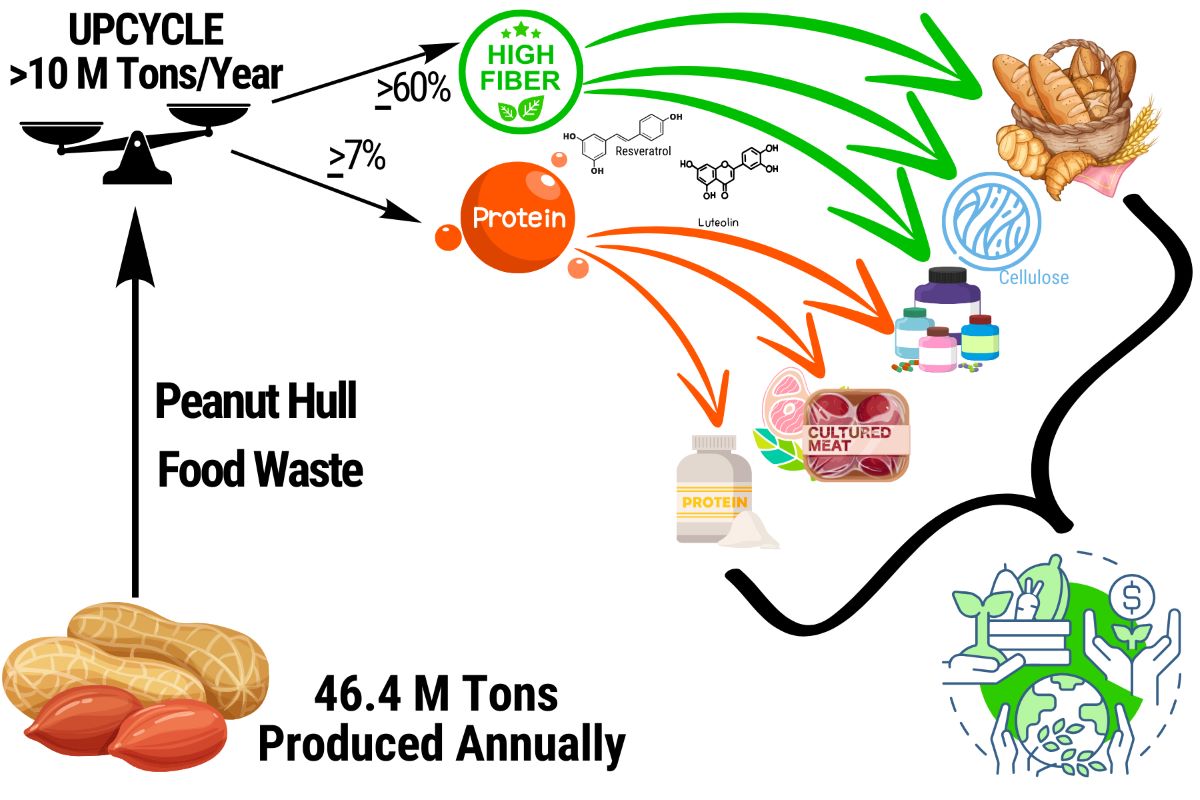
Human food valorization of PHs also offers unique benefits for human nutritional health; it could increase the supply of shelf-stable and nutritious foodstuffs supporting better food and nutrition security; present economic opportunities for smallholder farmers by increasing the market value of peanuts; and reduce the environmental impacts of such a large waste stream.[1,5,6,7] Figure 1 depicts the logical framework of this Perspective.
Our objective is to summarize prior uses and known benefits, outline safe processing methods, and propose new applications of PHs for human consumption. Our aim is not to provide an exhaustive review but rather to discuss how to overcome the common obstacles for PH valorization and present the benefits of doing so, with practical information for implementation. Below, we include a narrative review of the current uses, nutritional composition, processing and manufacturing needs, and some opportunities for future use.
Current Uses and Comparable Products
PHs are rich sources of dietary fiber, >60% of the dry weight. PHs can thus be used to enrich the fiber content of foods.[6] Additionally, PH has a protein concentration of approximately 7% of the total weight, representing nearly 20% calories from protein. [8,9] PH is also a rich source of beneficial polyphenols, flavonoids, and procyanidins including luteolin and resveratrol which are bioactives commonly used in pharmaceuticals and nutritional supplements. [1,8,10,11] Some promising literature discusses the pharmaceutical application of PH extract as an adjuvant treatment of cancer [12,13], as a treatment for high blood pressure and hyperlipidemia [7,11,14], and as an anti-inflammatory for pain management [11,15]. PH extracts are available for purchase and are frequently prepared for use in pharmaceuticals in most global regions. [7,12,13] PH extracts of the polyphenol luteolin have also been shown to have anti-diabetic properties in animal models, and in vitro to demonstrate anti-allergic activity and to inhibit pre-adipocyte differentiation into adipocytes.[16] In addition to the potential pharmacokinetics of PH, PH extracts have also been demonstrated to reduce total pathogen activity when used as a food additive, adding specific benefits for preservation when incorporated into foods.[17] This may explain why foodborne pathogens, such as mycotoxins, are markedly reduced in the shells even among peanut lots with detected aflatoxin. [18]
Peanut by-products, including PH, are currently legally recognized foods in the United States. While their use as culinary flour is described, PH flour (PHF) is not operationalized for human consumption anywhere in the world, presenting an opportunity for producers, public health researchers, and global ingredients manufacturers. If acceptable to consumers, PHF amendment to baking flour used in common baked goods could increase the total availability of foodstuffs for human consumption and improve their healthfulness, due to its abundance of health-promoting nutrients.[1,5,6,11,17] Peanut is a highly palatable food in high demand globally, and thus PHF is likely to be a desirable and acceptable ingredient enabling increased fiber and protein in food commonly consisting of refined starches, like white bread. Increasing the intake of fiber and reducing proportions of refined starches in common foods are known pathways to improve the healthfulness of foods, especially relevant to mitigating obesity and related cardiometabolic conditions [19]. The concentrated sources of dietary fiber and protein widely available in high-income countries (HIC) are scarce to non-existent in LMIC, but PHs are readily available, making them potentially a practical and low-cost option. PHF could thus serve as a familiar, natural, whole-food ingredient to lower the cost of food and help address nutrition security while addressing the double burdens of weight management and cardiometabolic diseases at elevated risk in many peanut-producing regions.[7,9,11,12,13,14,15]
The valorization of other nut hulls and nut by-products is well-established for coconut, hazelnut, almond, and walnut.[7,17,20] Some of these, like coconut fiber flour, are readily available in supermarkets of HIC; when used for culinary purposes they reduce net carbohydrates through the addition of dietary fiber, increase the proportion of calories from protein, and add beneficial bioactives. [7,17,20] Other nut hulls, such as from hazelnuts have been incorporated into snack foods[21] and from almonds into bread, with favorable enjoyment and palatability by raters.[22] While not all nut hull products are for edible goods, growth in demand for hazelnut hull flour, for all uses including culinary, is expected to rise from USD 2.43 billion in 2022 to USD 5.48 billion by 2031, for one example.[23] Prior reports on human food valorization of nut by-products demonstrate likely safety, feasibility, and economic interest in PH-derived ingredients.
Processing and Manufacturing Requirements
The opportunity for culinary use of PHF has been described in the literature for over 45 years.[5,6] In 2007, a U.S. patent describing basic oxidation-based (hydrogen peroxide) and alkaline-based methods (deionized water) followed by simple drying and grinding, and limited toxin remediation for the processing of PHF was submitted and subsequently abandoned.[24] Despite these early descriptions, and many recent advances in processing technology, no active patents exist for producing PHF, PH protein isolates, PH protein-polysaccharide concentrates (akin to pea protein), or PH-derived methylcellulose and other common plant-based additives and ingredients. Below, we outline key recommendations to safely process PH for human food, describing methods suitable for small on-farm operations and major industrial commercial processors, sensitive to 1) safety; 2) texture; 3) nutrient extraction and concentration; and 4) potential future uses.
Safety
A major consideration for preparing and processing peanut foods is food safety. Peanuts and all peanut by-products require similar food safety considerations to grains and other culinary nuts.[17,25,26,27,28,29] The most commonly discussed foodborne pathogen for peanuts is aflatoxin, a prevalent soil-dwelling mycotoxin that is common among nuts, seeds, and grains, and of particular concern for peanut production because peanuts mature underground.[18,30] Aflatoxin is highly toxic and carcinogenic to humans, and unlike most foodborne pathogens is not readily killed through cooking or standard dry processing. Accordingly, most countries have regulations that require aflatoxins in food and in animal feed to be <20 µg/kg,[25,31] and most outline routine testing of in-shell, peanut kernel, raw, and roasted products and preventive control measures from field-to-fork. In the U.S., as much as 24% of peanut crops may be discarded annually due to aflatoxin.[32]
Despite direct contact with the soil, aflatoxin concentration in the hull is typically far lower than in the peanut kernels themselves [18], owing in part to hull anti-microbial properties, and to the relatively lower moisture level which mycotoxins need to colonize. Indeed, early separation of the hull from the kernel, and manual rather than mechanical separation is also associated with reduced or absent aflatoxin detected in tested samples because it lowers overall moisture [33], allows for more accurate visual inspection, and reduces early-stage processing-related transfer.[18] Overall, visual inspection, sorting, drying, dry storage, roasting, and blanching are the preferred methods for reducing aflatoxin in nuts and grains and are commonly employed in the treatment of peanuts, including hulls. [29]
Another major pathogen of concern for peanuts is salmonella.[34] Unlike aflatoxin, salmonella survives well in dried foodstuffs like hulls and flour but is readily killed through standard cooking and processing, including baking and roasting. The primary source of salmonella in peanuts comes from nearby cultivation of chicken livestock, which can deposit salmonella-infected feces on fields, or contaminate the water used to irrigate peanut crops. [34]
The best method to prevent aflatoxin and salmonella infection in peanut crops is routine testing of soil, water, and raw products as well as the frequent sanitization of harvesting and processing machinery. In the case of aflatoxin, additional field methods to reduce infection include the use of resistant strains (e.g., FloRun™‘107’ and Tifguard™20), calcium and lime soil amendments[35], proper irrigation[36], pest control[36], earlier harvest[35,36], thorough drying before combined processing[33], manual selection and sorting[18,26,36], early separation of shells for dry processing, and representative testing requirements which are already the norm in peanut production protocols.[36] For salmonella, guidance is to restrict possible chicken farm contamination and to use heat processing; however, additional elimination of salmonella can be accomplished through storage at ambient temperatures above 82 degrees Fahrenheit with durations over 270 days. [34] Preventing contamination and cross-contamination from equipment can limit pathogen activity, and some processing methods can remove pathogens allowing exposed yields to return to human consumption (with duly required documentation).[18,37] Safety measures would precede grinding PH into flour for baking, or undergoing further processing like protein or dietary fiber extraction. (For an overview of processing steps, see Table 1 for Preparing Peanut Hull for Flour and Table 2 for Preparing Peanut Hull for Extraction.)
Methods to salvage peanut crops are important given the high percentage of loss. In the case of aflatoxin, the persistence of the mycotoxin in soil can negatively impact farmer livelihood for years, and increase the risk of exposure for local and global populations.[36] Extensive industrial chemical methods to control mycotoxins are well-described [36,37,38,39,40]. Additionally, some simple and readily available methods exist that are accessible to small-scale and on-farm processors, are compatible with organic farming, and are recognized as acceptable to consumers: 1) five-minute exposure to medium power in a microwave oven has been shown to reduce aflatoxin in peanut kernels by as much as 50% [39]; 2) sodium bicarbonate (baking soda) baths have been demonstrated to reduce aflatoxin by as much as 51% [38,39]; and 3) common household sanitizing solutions such as sodium hypochlorite (bleach) diluted in water at concentrations of 1-2% effectively eliminate aflatoxin in food and on equipment [41]; bleach concentrations of <3% are considered safe and are commonly used to sanitize foods and food equipment, but should be followed by a solute rinse.[42]
In addition to the methods described above, the use of atoxigenic strains of aflatoxin (e.g., isolates of A.flavus) is a form of biocontrol increasingly used to mitigate toxigenic aflatoxin in foods.[31,38,39] These biocontrol agents can be applied in the field to prevent infection, spread, and control outbreaks in previously exposed soil, and are an inexpensive means of safeguarding harvests, livelihoods, and bolstering nutrition security.
While the allergenicity of nuts is often discussed, peanut allergies impact <2% of the global West, and with significantly lower prevalence of allergies in Africa, Asia/Oceania, and Central/South America where lifelong immunity is entrained by routine peanut consumption during pregnancy and lactation.[43] Additionally, nut hulls are typically less allergenic than nut kernels and some processing may further decrease allergenicity.[44]
Texture
Thorough drying, oxidizing, and many processing methods such as freezing, ultrasonic pulsation, and the use of strong burr grinders and multiple-pass grinding can help achieve fine textures of milled PHF. In particular, combinations of weak acids (e.g., citric acid), electrolyzed water, and reducing agents (e.g., sodium bisulfate and sodium bicarbonate) at various stages in wet processing can serve dual functions for safety and texture conditioning suitable for small operations.[45] Additionally, UV irradiation, a common sanitization method in the food industry, is a very effective maturing agent for grain and seed which can be employed with PH to develop flavor, accelerate drying, and reduce milled particle size to achieve a finer texture. [46] On the other hand, ozonation has been shown to increase particle size when seeds are exposed before milling, so to enhance texture it is best to reserve ozone methods for milled flour rather than whole PH.
Extraction
Different extraction methods influence the target nutrient yield (e.g., protein) and the retention of other nutrients (e.g., polyphenols).[47] Methods like critical fluid-, enzymatic-, ultrasound-, microwave-, and pulsed-electric-field-assisted extraction have received recent attention due to the improvements in food safety, yield, environmental sustainability, and retention of functional properties of materials they boast compared to standard methods. [47] These methods can help to suppress microbial and pathogen activity, have demonstrated protein extraction yields between 86–95% that can retain antioxidant polyphenols, and can create complex protein-polysaccharide concentrates or use a single-step processing method to produce protein isolates and functional cellulose ingredients for other functional food purposes (e.g., dietary fiber supplementation, or as emulsifiers and thickeners used in processed foods).
Other Uses
Proposing the use of PHF as a baking flour amendment in breads, crackers, and biscuits has been previously described.[6,24] Increasing dietary fiber in common foods, from bread to stews and gravies can serve to lower the total calories consumed, increase intake of dietary fiber which is often too low, bind bile acids and dietary fats to reduce circulating cholesterol and dietary fat absorption, and feed gut microflora.[1] Additionally, dietary fibers can enhance baking textures thanks to their strong binding capacity and higher water absorption.[1] These same properties make PH a rich source for other fiber-based food ingredients owing to large concentrations of cellulose, hemicellulose, pectin, and lignan in proportions similar to other plant materials recaptured for these purposes.[1] PHF could be used whole as a baking flour amendment, or hydrolyzed to create an extract concentration of lignans for nutraceutical use, leaving the remaining cellulose for applications such as methylation into methylcellulose (a common fiber supplement, and a surfactant used in the food industry as an emulsifier, thickener, and binding agent).[48] However, partial processing or activation of the protein could enable more nutritious protein-polysaccharide blends that retain more of the total volume of PH with greater culinary versatility and fewer processing demands. Through various titrations of fiber content, through enzymatic or oxidative processing, or the extraction methods mentioned above, PHs can be manipulated to create nutrient-rich and natural emulsifiers similar to one of its earliest described uses—added back into high-fat foods like peanut butter to serve as a stabilizer.[5]
The amino acid composition of PHs makes them favorable for athletic uses, and applications where flavorful amino acids are desired, such as alternative and plant-based protein foods. Arginine, leucine, and aspartic and glutamic acid are among the most abundant amino acids in PHs, are associated with muscle synthesis and neuro-protective benefits, and are associated with umami flavors in foods, especially cooked and aged meats.[8] The protein content of PH has many possible applications, including some retaining large fractions of dietary fiber, and some without. Popular plant-based proteins, like pea protein, are complex polysaccharide-protein concentrates with approximately 70-77% protein, with most of the remaining components fiber and digestible carbohydrates. These healthy plant proteins have multiple functional applications, including as protein supplements, and are also commonly used in the development of plant-based and cultivated animal foods. Pea protein is a premium product, with large volumes of commodity legumes grown specifically to meet the demand. A conservative estimate of the yield possible from PH would produce 595,000 tons of protein,[1,47] a production volume comparable to the market demand of two small countries with public data available on the tonnage of pea protein used (Saudi Arabia and UAE)[49]. PH protein concentrates could be used as a mildly peanut-flavored protein supplement, for use in sports drinks and powders; as part of the protein base for plant-based alternative meat; and potentially as a replacement for other plant proteins used as structural components of cultivated meat.[50]
Conclusion
As the global population increases, so does the prevalence of cardiometabolic disease, and the need for innovative strategies to feed record numbers of people. A major strategy to address food production needs is to optimize food supply streams to increase the efficiency of agricultural outputs, retain more foods grown for human consumption, and reduce food waste. Resource efficiency thereby can reduce the impact of food systems on the planet by drawing less resources per ton produced, and by creating fewer greenhouse gases emitted from food waste. Reducing food waste and improving food system efficiency also offer the benefit of creating additional revenue streams for farmers who are often the most disadvantaged agents in food systems and who often experience nutrition insecurity. In this perspective, we have outlined several methods that could be used to convert peanut hulls (PH) into safe, high-value commercial products for human consumption. The combination of the above methods along with standard Good Manufacturing Practices (GMPs) can be implemented safely and inexpensively using materials available to farmers and processors of all sizes.
Edible PHF has been explored for over 45 years, but human food use is sparse, with only nutraceutical products routinely produced commercially. Nonetheless, our review shows that PHF could be processed safely for use as a readily available foodstuff that may offer substantive benefits for multiple stakeholders in the food supply chain, especially for the >99% of the global population who can safely consume it. PHF can be used to rebalance the composition of common foods, which is an underutilized approach to help address the obesity pandemic and potentially aid ongoing efforts to reduce the global burden of cardiometabolic disease. PHF can also be used to recapture a large amount of healthful and pleasant-tasting plant protein. Overall, developing human consumption uses for PHF is consistent with a transition to more efficient food systems that are more sustainable for the people who grow the food, the planet it grows on, and the people who eat the food.
Acknowledgments
Funding for open access was provided by Tufts University Hirsh Health Sciences Library’s Open Access Fund. S.G. is supported by the USDA-NIFA National Needs Fellowship (#2020-38420-30724). No funders initiated or participated in the research or decision to publish.
References
- Zhao, X., J. Chen, and F. Du, Potential use of peanut by-products in food processing: a review. J Food Sci Technol, 2012. 49(5): p. 521-9. [CrossRef] [PubMed]
- Perea-Moreno, M.-A., et al. Peanut Shell for Energy: Properties and Its Potential to Respect the Environment. Sustainability, 2018. 10. [CrossRef]
- Pączkowski, P., A. Puszka, and B. Gawdzik Effect of Eco-Friendly Peanut Shell Powder on the Chemical Resistance, Physical, Thermal, and Thermomechanical Properties of Unsaturated Polyester Resin Composites. Polymers, 2021. 13. [CrossRef]
- Chatterjee, A. and H. Singh, Development and Characterization of Peanut Shell Flour–Polypropylene Composite. Journal of The Institution of Engineers (India): Series D, 2019. 100(2): p. 147-153. [CrossRef]
- Collins, J.L. and J.F. Sanchez, EFFECTS OF PEANUT SHELL FLOUR ON, FIRMNESS, COLOR AND ACCEPTANCE OF PEANUT BUTTER. Journal of Food Science, 1979. 44(3): p. 944-945. [CrossRef]
- Collins, J.L., S.M. Kalantari, and A.R. Post, Peanut Hull Flour as Dietary Fiber in Wheat Bread. Journal of Food Science, 1982. 47(6): p. 1899-1902. [CrossRef]
- Salem, M.A., et al., Potential Valorization of Edible Nuts By-Products: Exploring the Immune-Modulatory and Antioxidants Effects of Selected Nut Shells Extracts in Relation to Their Metabolic Profiles. Antioxidants (Basel), 2022. 11(3). [CrossRef]
- Adhikari, B., et al., Antioxidant activities, polyphenol, flavonoid, and amino acid contents in peanut shell. Journal of the Saudi Society of Agricultural Sciences, 2019. 18(4): p. 437-442. [CrossRef]
- Wang, Q., et al., Chapter 5 - Peanut By-Products Utilization Technology, in Peanuts: Processing Technology and Product Development, Q. Wang, Editor. 2016, Academic Press. p. 211-325.
- Win, M.M., et al., Phenolic Compounds and Antioxidant Activity of Peanut Skin, Hull, Raw Kernel, and Roasted Kernel Flour. Pakistani Journal of Botany, 2011. 43: p. 1635-1642.
- Gao, A.X., et al., The extract of peanut shell enhances neurite outgrowth of neuronal cells: Recycling of agricultural waste for development of nutraceutical products. Journal of Functional Foods, 2022. 91: p. 105023. [CrossRef]
- Lin, Y., et al., Luteolin, a flavonoid with potential for cancer prevention and therapy. Curr Cancer Drug Targets, 2008. 8(7): p. 634-46. [CrossRef]
- Prasher, P., et al., Luteolin: a flavonoid with a multifaceted anticancer potential. Cancer Cell International, 2022. 22(1): p. 386. [CrossRef]
- Wang, L., et al., Characterization of the structural, physicochemical, and functional properties of soluble dietary fibers obtained from the peanut shell using different extraction methods. Frontiers in Nutrition, 2023. 9. [CrossRef]
- Ntalouka, F. and A. Tsirivakou, Luteolin: A promising natural agent in management of pain in chronic conditions. Front Pain Res (Lausanne), 2023. 4: p. 1114428. [CrossRef]
- Liu, W., L. Wang, and J. Zhang, Peanut Shell Extract and Luteolin Regulate Lipid Metabolism and Induce Browning in 3T3-L1 Adipocytes. Foods, 2022. 11(17). [CrossRef]
- Prakash, A., P. Nithyanand, and V. Vadivel, In vitro antibacterial activity of nut by-products against foodborne pathogens and their application in fresh-cut fruit model. J Food Sci Technol, 2018. 55(10): p. 4304-4310. [CrossRef]
- Sanders, T.H., J.L. McMeans, and J.I. Davidson, Aflatoxin content of peanut hulls. Journal of the American Oil Chemists’ Society, 1984. 61(12): p. 1839-1841. [CrossRef]
- McRae, M.P., Dietary fiber intake and type 2 diabetes mellitus: an umbrella review of meta-analyses. Journal of Chiropractic Medicine, 2018. 17(1): p. 44-53. [CrossRef] [PubMed]
- Raczyk, M., B. Kruszewski, and D. Michałowska, Effect of Coconut and Chestnut Flour Supplementations on Texture, Nutritional and Sensory Properties of Baked Wheat Based Bread. Molecules, 2021. 26(15). [CrossRef]
- Konak, Ü.İ., et al., Quality characteristics of functional snack foods prepared from hazelnut shell and teff flour. Journal of Food Measurement and Characterization, 2023. 17(6): p. 5721-5729. [CrossRef]
- Kahlaoui, M., et al., Almond Hull as a Functional Ingredient of Bread: Effects on Physico-Chemical, Nutritional, and Consumer Acceptability Properties. Foods, 2022. 11(6). [CrossRef]
- GMR., Global Hazelnut Shell Powders Market. 2022, Growth Market Reports.
- Houston, B.E., Method and system for producing peanut hull flour, in Google. 2007, Individual: USA.
- CPG Sec 570.350 Peanuts, Shelled and Unshelled - Adulteration with Filth and Reject Nuts, FDA, Editor. 2005, Center for Food Safety and Applied Nutrition, Office of Regulatory Affairs.
- Galvez, F.C.F., et al., Manual Sorting To Eliminate Aflatoxin from Peanuts. Journal of Food Protection, 2003. 66(10): p. 1879-1884. [CrossRef] [PubMed]
- Darko, C., et al., Effects of packaging and pre-storage treatments on aflatoxin production in peanut storage under controlled conditions. J Food Sci Technol, 2018. 55(4): p. 1366-1375. [CrossRef]
- Milled Peanuts-- Inspection Instructions, USDA, Editor. 2023, USDA.
- APSA, Industry Handbook for the Safe Shelling of Peanuts. APSA Committe on Regulatory Compliance, 2020.
- Anco, D.J. and S. Rustgi, Mangement of Aflatoxins in Peanut. Land-Grant Press, 2020.
- Dorner, J.W., Management and prevention of mycotoxins in peanuts. Food Additives & Contaminants: Part A, 2008. 25(2): p. 203-208. [CrossRef]
- Lameiras, M.M. Field to Jar. College of Agricultural and Environmental Sciences; Available from: https://discover.caes.uga.edu/peanut-protectors/index.html.
- EPA, Peanut Processing, EPA, Editor.
- Rossbach, J.D., et al., Factors influencing the Salmonella internalization into seedpods and whole plants of Arachis hypogaea (L.). Food Microbiology, 2017. 66: p. 184-189. [CrossRef]
- Uppala, S.S., Factors Affecting Pre-Harvest Aflatoxin Contamination of Peanut (Arachis Hypogaea L.). Auburn University, 2011. Dissertation.
- Waliyar, F., et al., Mycotoxins: detection methods, management, public health and agricultural trade Pre-and post-harvest management of aflatoxin contamination in peanuts., ed. R.B.a.A.V. J.F. Leslie. 2008: Wallingford: CAB International.
- Shen, M.-H. and R.K. Singh, Detoxifying aflatoxin contaminated peanuts by high concentration of H2O2 at moderate temperature and catalase inactivation. Food Control, 2022. 142: p. 109218. [CrossRef]
- Shabeer, S., et al. Aflatoxin Contamination, Its Impact and Management Strategies: An Updated Review. Toxins, 2022. 14. [CrossRef]
- Sipos, P., et al., Physical and Chemical Methods for Reduction in Aflatoxin Content of Feed and Food. Toxins (Basel), 2021. 13(3). [CrossRef]
- Dhanshetty, M., C.T. Elliott, and K. Banerjee, Decontamination of aflatoxin B1 in peanuts using various cooking methods. J Food Sci Technol, 2021. 58(7): p. 2547-2554. [CrossRef] [PubMed]
- FDA, Field Science - Laboratory Manual, FDA, Editor. 2023.
- McGlynn, W., Guidelines for the Use of Chlorine Bleach as a Sanitizer in Food Processing Operations, in Food and Agricultural Products Research and Technology Center, O.S. University, Editor.
- Lieberman, J.A., et al., The global burden of illness of peanut allergy: A comprehensive literature review. Allergy, 2021. 76(5): p. 1367-1384. [CrossRef]
- Cuadrado, C., Á. Sanchiz, and R. Linacero Nut Allergenicity: Effect of Food Processing. Allergies, 2021. 1, 150-162. [CrossRef]
- Chen, Y.-X., et al., Effects of wheat tempering with slightly acidic electrolyzed water on the microbial, biological, and chemical characteristics of different flour streams. LWT, 2020. 118: p. 108790. [CrossRef]
- Kumar, A., et al., Effect of ultraviolet irradiation on wheat (Triticum aestivum) flour: Study on protein modification and changes in quality attributes. Journal of Cereal Science, 2020. 96: p. 103094. [CrossRef]
- Rashwan, A.K. and e. al., Plant-based proteins: advanced extraction technologies, interactions, physicochemical and functional properties, food and related applications, and health benefits. Critical Reviews in Food Science and Nutrition.
- Biswas, A., et al., Conversion of agricultural by-products to methyl cellulose. Industrial Crops and Products, 2013. 46: p. 297-300. [CrossRef]
- Statista, Market size of plant-based protein ingredients. 2023.
- Yen, F.-C., et al., Cultured meat platform developed through the structuring of edible microcarrier-derived microtissues with oleogel-based fat substitute. NATURE COMMUNICATIONS, 2023. 14(1). [CrossRef]
Figure 1.
Conceptual Model of Peanut Hull Valorization for Human Food. NOTE: Approximately 46.4 million tons of peanuts are grown annually around the world, of which 22% is waste from the hulls (>10 million tons). Peanut hull waste results in an annual loss of >6.5 million tons of health-promoting dietary fiber and >595,000 tons of healthful plant protein. Recapturing PH for human foods has applications that could improve the healthfulness of common foods, such as breads and other baked goods by using it to amend traditional baking flour. PHs also provide an abundant source of functional ingredients, that could join or be used in place of popular ingredients like pea protein for use in foods and nutritional supplements. Above, peanut hull waste in tons is shown being upcycled in order to recapture major nutrients (protein and fiber) along with beneficial polyphenols (luteolin and resveratrol) for use in high-feasibility examples of bread (and baked goods), cellulose commonly used in food production, in nutritional supplements, in alternative proteins such as plant-based and cultivated meat, and as protein powders for direct consumption. Together, these value-added uses increase the market value of peanuts with significant economic benefits for farmers, represent a more efficient use of food system resources, and reduce food waste and the corresponding environmental impacts. These benefits join the benefits of their specific applications which range from improving nutrient profiles of foods to help offset the burden of cardiometabolic disease, and increasing food and nutrition availability as a means to addressing food and nutrition insecurity.
Figure 1.
Conceptual Model of Peanut Hull Valorization for Human Food. NOTE: Approximately 46.4 million tons of peanuts are grown annually around the world, of which 22% is waste from the hulls (>10 million tons). Peanut hull waste results in an annual loss of >6.5 million tons of health-promoting dietary fiber and >595,000 tons of healthful plant protein. Recapturing PH for human foods has applications that could improve the healthfulness of common foods, such as breads and other baked goods by using it to amend traditional baking flour. PHs also provide an abundant source of functional ingredients, that could join or be used in place of popular ingredients like pea protein for use in foods and nutritional supplements. Above, peanut hull waste in tons is shown being upcycled in order to recapture major nutrients (protein and fiber) along with beneficial polyphenols (luteolin and resveratrol) for use in high-feasibility examples of bread (and baked goods), cellulose commonly used in food production, in nutritional supplements, in alternative proteins such as plant-based and cultivated meat, and as protein powders for direct consumption. Together, these value-added uses increase the market value of peanuts with significant economic benefits for farmers, represent a more efficient use of food system resources, and reduce food waste and the corresponding environmental impacts. These benefits join the benefits of their specific applications which range from improving nutrient profiles of foods to help offset the burden of cardiometabolic disease, and increasing food and nutrition availability as a means to addressing food and nutrition insecurity.
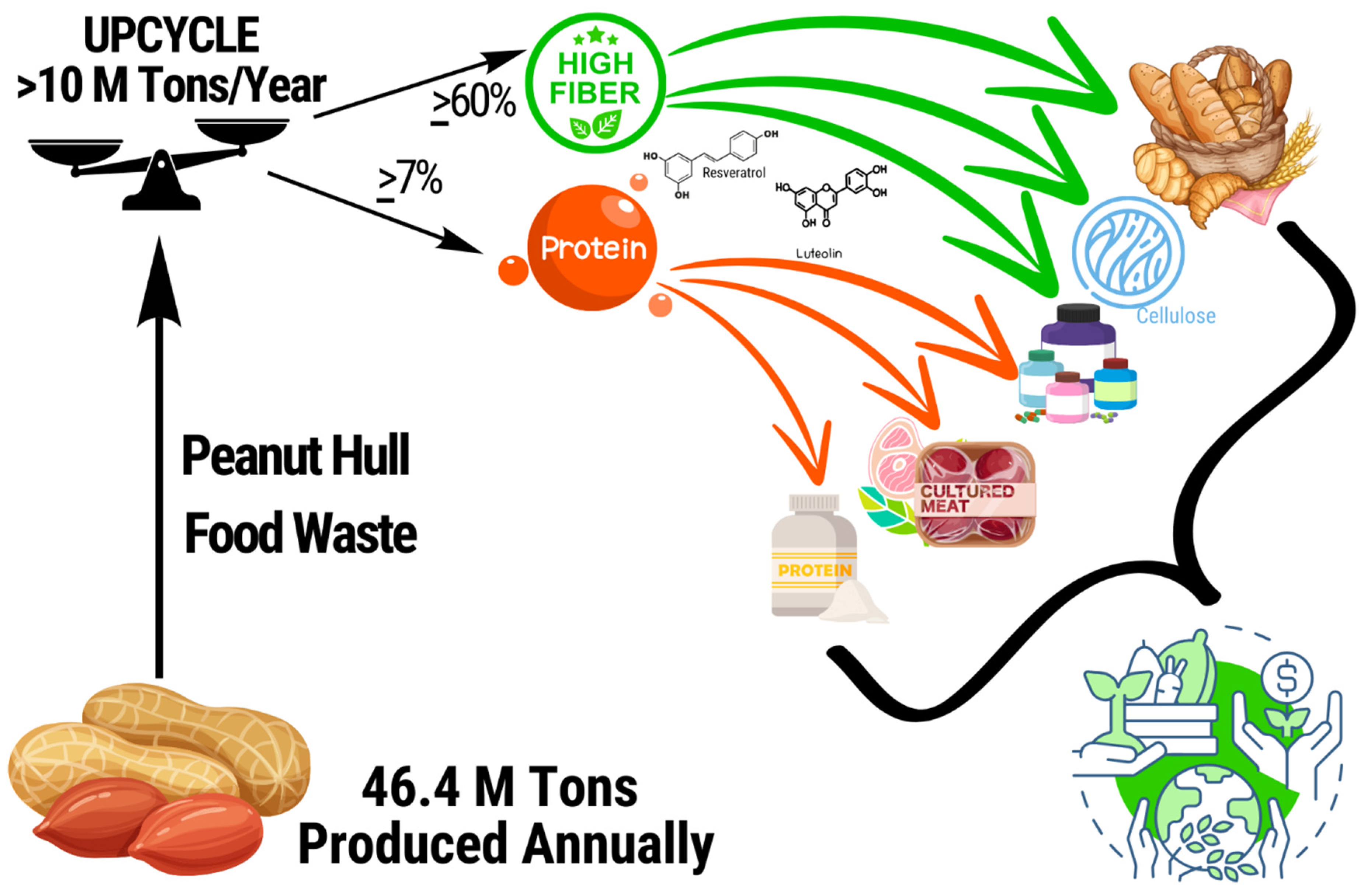

Table 1.
Preparation Steps to Produce Peanut Hull Flour for Baking.
| Processing for Flour | |||
| Chemical or Bioactive Reagent | Damage control | Moisture Reduction | |
| Field Methods to Reduce Pathogen Activity | Lime and calcium soil amendment; A.flavus or other resistant strain competition | ||
| Harvest Methods to Reduce Pathogen Activity | Manual Inspection | Rapid Shelling | |
| Systematic Sampling | Pathogen testing to initiate effective quarantining and discarding, as well as soil amelioration. | Moisture testing to ensure low water activity inhospitable to microbial growth. | |
| Wet Sanitization | Hydrogen peroxide, hypochlorite, electrolyzed water, and others may kill and in some cases remove mycotoxins. | ||
| Texture Maturing and Conditioning | UV irradiation to mature flavor and enhance milling texture; sodium bicarbonate and sodium bisulfate to reduce mixtures and produce finer flour. | ||
| Rapid Drying | Baking, roasting, fan, and sun drying. UV irradiation for rapid drying, producing finer and more consistent milling textures while controlling toxigenic species; Ozone gas may also be used, but is best applied after milling to support finer textures. | ||
| Milling and Equipment Sanitization | Burr grinders should be sanitized with food-safe dilutions of hypochlorite, or equivalent, in between each processing lot and at the end of working periods to reduce equipment-related pathogen transfer. | ||
| Bagging and Storage | Fully dried, milled flour should be tested for water activity, and stored as flour in rooms without the threat of flood or high humidity. | ||
Table 2.
Preparation Steps to Produce Peanut Hull Flour for Nutrient Extraction.
| Processing for Nutrient Extraction | |||
| Chemical or Bioactive Reagent | Damage control | Moisture Reduction | |
| Field Methods to Reduce Pathogen Activity | Lime and calcium soil amendment; A.flavus or other resistant strain competition | ||
| Harvest Methods to Reduce Pathogen Activity | Manual Inspection | Rapid Shelling | |
| Systematic Sampling | Pathogen testing to initiate effective quarantining and discarding, as well as soil amelioration. | Moisture testing to ensure low water activity inhospitable to microbial growth. | |
| Texture Maturing and Conditioning | UV irradiation to mature flavor and enhance milling texture; sodium bicarbonate and sodium bisulfate to reduce mixtures and produce finer flour. | UV irradiation also assists drying, producing finer and more consistent milling textures while controlling toxigenic species; Ozone gas may also be used but is best applied after milling to support finer textures which may improve protein yield. | |
| Milling and Equipment Sanitization | Burr grinders should be sanitized with food-safe dilutions of hypochlorite, or equivalent, in between each processing lot and at the end of working periods to reduce equipment-related pathogen transfer. | ||
| Preparation for Extraction (by method) | Dissolved in water or other solvents, specific to each method. Additional use of food-safe acids and enzymes may also be applied to extract one or more nutritional compounds. | Dry methods may include ultrasound- and microwave-assisted extraction, or high-pressure extractions without direct water contact, enabling less need for drying final substrates. | |
| Nutrient Retention and Single-step production of multiple ingredients | Different heat, enzymes and multiple pass methods may be used to obtain the maximum recycled yield from materials with single processing. | ||
| Bagging and Storage | Fully dried, powdered extracts should be tested for water activity, and stored in sealed, air-tight containers impervious to moisture infiltration. | ||
Disclaimer/Publisher’s Note: The statements, opinions and data contained in all publications are solely those of the individual author(s) and contributor(s) and not of MDPI and/or the editor(s). MDPI and/or the editor(s) disclaim responsibility for any injury to people or property resulting from any ideas, methods, instructions or products referred to in the content. |
© 2024 by the authors. Licensee MDPI, Basel, Switzerland. This article is an open access article distributed under the terms and conditions of the Creative Commons Attribution (CC BY) license (http://creativecommons.org/licenses/by/4.0/).
Copyright: This open access article is published under a Creative Commons CC BY 4.0 license, which permit the free download, distribution, and reuse, provided that the author and preprint are cited in any reuse.


