
Submitted:
02 July 2024
Posted:
02 July 2024
You are already at the latest version
Abstract
Point of Sales (POS) systems are an important component of sales and inventory management for many businesses. This article discusses the development of a POS application designed to simplify the process of selling products in stores. The application uses PHP for the server, JavaScript for the client, Bootstrap for responsive design, and MySQL as the database. Its main features include a dashboard with daily sales summary, visual graphs, product category management, product addition and editing, admin and access rights management, ease of sales transaction processing, access to sales reports and analyses by leaders, and provision of sales reports in various formats. The clean and easy-to-use interface is expected to improve the efficiency of sales and inventory management, and assist businesses in making data-driven decisions.
Keywords:
Point of sales
; PHP
; MySQL
; JavaScript
1. Introduction
A thorough understanding of inventory management becomes crucial when developing Point of Sale (POS) applications. Items kept in a warehouse or showcased in a display case can be considered inventory. Insufficient inventory might result in unfulfilled consumer demands, which can cause dissatisfaction and possibly discourage customers from making more purchases. However, an excess of inventory can also result in losses for the shop because it means more room needs to be provided for storage, there’s a chance that the value of the goods will decrease, and there are extra expenses like accounting and maintenance.
Management must carry out a number of research in order to ascertain the appropriate level of inventory and comprehend client wants. This covers conducting market research, analyzing sales statistics, and tracking consumer behavior. and examination of the connections between the products that customers have bought. Analyzing sales transactions and handling sales data is one technique to comprehend market dynamics. Sales data helps management decide when to place a reorder, how many items need to be readied in the warehouse, how much stock each item should have, and how to handle products that move slowly or aren’t in high demand by customers.
In this globalized era, the advancement of information technology has had both beneficial and harmful effects on business. Companies are vying for business contracts by using information technology to enhance customer service and performance, establish a favorable company image, and get business. One instrument that is frequently utilized in the commercial services sector to improve transaction efficiency is point of sale systems. In order to accomplish shared objectives within a networked work setting, these systems must be implemented using suitable development approaches, including Agile Development.
In the current fast-paced business environment, efficient inventory and sales management is essential for a company’s success, particularly for small and medium-sized enterprises (SMEs). To address issues brought on by, developing a dependable and user-friendly Point of Sale (POS) application is crucial.
"An information system used in the process sales, which involves the use of machines" is the Point of Sale (POS) system, cashier as well as purchases and sales transactions”. One method that can assist sellers in handling customer payments or transactions is the point of sale (POS). "A system that allows the transaction process to be carried out sales in companies including shops, hotels, restaurants, supermarkets and retail outlets" is another definition of point of sale [1].
Creating a POS system that works is essential for companies looking to streamline their processes. It deals with important problems such inconsistencies in inventories, time wastage, and transaction errors. Through the automation of sales data recording and reporting, point-of-sale (POS) systems lessen the dependency on labor-intensive and error-prone manual data entry. Businesses have always struggled with processing transactions manually, which has a negative impact on accuracy and productivity.
Many functionalities that assist many facets of business operations are available in modern point-of-sale (POS) systems. They offer thorough inventory management, real-time sales tracking, and extensive reporting capabilities. Businesses can monitor performance, keep accurate records, and make data-driven choices thanks to these features. POS systems are crucial for many firms, particularly those with large transaction volumes, to sustain both effectiveness and competitiveness.
The usability and functionality of point-of-sale (POS) systems are improved by the incorporation of cutting-edge technologies. Systems built with PHP, JavaScript, Bootstrap, and MySQL are more resilient, responsive, and secure. These innovations guarantee that POS systems can manage intricate transactions, offer intuitive user interfaces, and shield private information from online dangers.
In addition to having the essential features, contemporary point-of-sale systems are made to be flexible and expandable. They can offer further features and integrations as needed to meet the expanding needs of enterprises. For companies trying to grow and continue processing transactions effectively, this scalability is crucial.
Moreover, point-of-sale (POS) systems can be linked with other business software, including customer relationship management (CRM) programs and accounting software. The workflow is made seamless by this integration, offering a comprehensive understanding of corporate performance and improving overall operational efficiency.
These issues require the development of a design. Information system for the point of sale, which is anticipated to help the owner address current issues occurs in terms of efficiency in terms of time, energy, and money; it also involves overcoming mistakes and losses, and it is anticipated that disinformation will exist. This system can facilitate the advancement of transaction process and report recording activities [1]
Point of sales (POS), sometimes known as a cashier system, is a specialized software used by restaurants and retail establishments to streamline sales transactions. In addition, the point of sale (POS) offers additional advantages, such as an easy-to-use approach for controlling all transactions because of all the reports. Fast transaction delivery makes it simpler for businesses to view sales figures and make decisions when necessary. The role and contribution of business actors in the Indonesian economy vary depending on their size; small and medium-sized enterprises can have a significant impact. Cooperatives and MSMEs account for 99.99 percent of all businesses in Indonesia. MSME business actors account for 14.17% of the country’s exports, 97 percent of energy work, and at least 60% of the GDP of the country." Before information systems, practically all work was done manually online and took a long time, so there’s a chance anything could go wrong that may be fatal [2].
Inventory is one of the operational challenges that stores often face. Inventory can be in the form of goods displayed in the storefront or stored in the warehouse. When there is too little inventory, customer demand may not be met, leading to disappointment and the possibility that customers will not return. Conversely, if there is too much inventory, the store may incur losses due to having to provide larger storage space, the risk of depreciation in the value of goods, as well as additional costs such as maintenance and accounting. Therefore, management must determine the right amount of goods to stock in the store. Management also needs to be careful in understanding the needs of customers so that they are satisfied and get what they are looking for.
To determine the right amount of inventory and understand customer needs, the management needs to conduct various studies. These include market surveys, analyses of sales data, observations of buying patterns, and analyses of the interrelationships of items that customers buy. One way to understand market conditions is to analyse sales transactions and process the sales data. With sales data, management can determine the number of items that need to be prepared in the warehouse, set minimum and maximum stocks for each item, decide when to place reorders, and determine strategies for slow-moving items and items that consumers are not interested in. Information on the relevance of purchased items can be used for marketing strategies and improving customer service.
The growth of information technology in this age of globalization has affected business in both positive and negative ways. Businesses are vying with each other to use information technology in an effort to improve customer service and performance, build a positive company reputation, and win contracts. The point of sale system is one piece of equipment that’s frequently utilized in the commercial services industry to improve transaction efficiency. In order to accomplish shared objectives in a networked work environment, this system’s implementation calls for suitable development methodologies, such as Agile Development[3].
Effective inventory and sales management is essential to a company’s success in today’s fast-paced business environment, especially for small and medium-sized organizations (SMEs). Building a reliable and user-friendly Point of Sales (POS) application is essential to addressing the problems caused by antiquated software solutions and manual procedures. This proposal describes the ideation and development strategy for a point-of-sale (POS) application that aims to improve inventory control and expedite the sales process for companies.
With the help of modern technologies like PHP, JavaScript, Bootstrap, and MySQL, the suggested point-of-sale application is made to ensure a smooth and effective user experience. It attempts to address important problems that companies experience, such as feature restrictions, user complexity, and accessibility challenges with current point-of-sale systems.
The main objective of this project is to create a POS application that is simple to use and intuitive so that employees and business owners can handle inventory and sales transactions effectively without needing a lot of technical training. By offering a cost-effective solution that is customized to meet the demands of small and medium-sized businesses, the application also seeks to improve accessibility and operational efficiency.
In addition, a host of features including personnel management, sales analysis, real-time inventory tracking, and platform connection are planned for the POS application, which will help firms run their operations more efficiently. A comprehensive approach to application development is ensured by the development team, which is made up of committed personnel with a variety of jobs, including database administration, frontend and backend development, and project management.
This document provides a thorough summary of the project proposal, including the problem statement, project goals, project description, makeup of the development team, and project timeline. It is predicted that the proposed POS application will produce a strong and responsive solution to satisfy the sales and inventory management needs of businesses efficiently by following the specified development timeline and utilizing the development team’s experience.
PHP is a server-side scripting language that was purposefully created to be more. The server side application logic for Point of Sales (POS) apps will be developed using PHP (Hypertext Preprocessor), a programming language. PHP is a well-liked and versatile server-side programming language that gives programmers the ability to handle user identification, process user data, manipulate databases, and carry out several other tasks required for POS programs to run smoothly [4].
Structured Query Language is the acronym for the SQL language that is processed by the program known as MySQL. Put differently, MySQL is an open-source tool utilized in the system implementation of relational database management systems (RDBMS). The relational database management system MySQL will be utilized in point-of-sale (POS) applications to store and manage data. One of the most popular RDBMS, MySQL offers dependability, speed, and flexibility in handling transaction data, product data, user data, and other types of data needed for POS apps to function on a regular basis. MySQL enables POS applications to store and retrieve data effectively while offering users quick performance [5].
One language similar to this is JavaScript specifically, client-side programming, such as HTML and CSS. Words JavaScript can be added to the actual webpage of the website or make use of a JavaScript file that you have written. Language You can partially disable JavaScript in your web browser. The POS application’s client user interface will be created using JavaScript. JavaScript is a computer language that allows interactive features on web pages and operates on the client side (in the browser). JavaScript enables direct user interaction with point-of-sale (POS) programs. Examples of this interaction include adding products to a shopping cart, searching products, and reading transaction summaries prior to payment [6].
In certain particular situations, the Javascript programming language offers advantages over other programming languages. The language has the following benefits with JavaScript is a programming language that is easier to understand than other languages, Unlike other programming languages, JavaScript does not necessarily require a compiler. We use a web browser to complete the task and view the results. Your produced HTML script will be automatically interpreted by the web browser, When an issue occurs in the JavaScript script, it becomes simpler to identify the error code, JavaScript is compatible with a number of browsers, A website built using JavaScript will look better and be more interactive in addition to having a more appealing design [6].
Drawbacks with Javascript In addition to its benefits, the JavaScript language has drawbacks. The programming language Javascript changes every year. Expanding annually. On the other hand, others claim that hackers and con artists abuse the language in an effort to find security holes. The subsequent items are JavaScript programming language has a number of drawbacks There is a very high danger of exploitation using Javascript, hackers can use the JavaScript language in order to activate potentially harmful code on computers, The language can be presented on various devices, which might result in inconsistent results [6]
A front-end framework called Bootstrap will be utilized to create responsive designs for point-of-sale systems. Developers can easily construct responsive and consistent user interfaces for a variety of desktop and mobile platforms with Bootstrap’s ready-to-use UI elements and components. Developers may enhance the POS application user experience across multiple platforms by utilizing Bootstrap.
In this study, we suggest developing a Point of Sale (POS) application to address current issues and guarantee seamless retail operations. Systems that continue to rely on human recording may result in data loss and make it harder to locate stock and sales records. As a result, the waterfall technique of application development is used to guarantee that ordering, calculating, and recording may be done more effectively and efficiently [7].
2. Related Work
Point of Sale (POS) systems are critical in modern retail and service environments, enabling efficient handling of transactions and improving overall operational management. Mulyana (2023) defines a POS system as an information system used in the sales process, involving machines that manage cashier operations and transactions in various businesses such as shops, hotels, restaurants, supermarkets, and retail outlets . The adoption of POS systems is prevalent due to their ability to streamline transaction processes and enhance the management of sales activities.
Maydianto (2021) discusses the transition from manual to automated systems, highlighting that prior to the introduction of information systems, most tasks were performed manually, which was time-consuming and prone to errors that could be detrimental . The implementation of POS systems addresses these issues by providing an efficient means of transaction processing, reducing the likelihood of mistakes, and saving time and resources [8].
One significant advantage of POS systems is their capability to generate comprehensive reports that facilitate better decision-making. By providing fast transaction processing, POS systems enable businesses to quickly access sales figures and make informed decisions when necessary. This feature is particularly beneficial for small and medium-sized enterprises (SMEs), which play a crucial role in the Indonesian economy. According to data, SMEs and cooperatives constitute 99.99% of businesses in Indonesia, contribute 14.17% to exports, provide 97 of employment, and account for at least 60% of the country’s GDP .
Inventory management is another operational challenge that POS systems help to address. Effective inventory management involves maintaining the right balance of stock to meet customer demand without incurring unnecessary costs. POS systems assist management in determining optimal stock levels by analyzing sales data, observing buying patterns, and conducting market surveys. This analysis helps in setting minimum and maximum stock levels, deciding on reorder points, and devising strategies for slow-moving items.
Leveraging POS data for predictive analytics offers various benefits for businesses beyond inventory optimization. POS data can reveal patterns in customer purchases throughout the year, such as increased demand for certain products during holidays or special events. This knowledge enables businesses to anticipate demand fluctuations, optimize inventory levels, and plan marketing campaigns accordingly. Overall, the ability to understand customer preferences, trends, and behaviors based on demographics is a valuable asset for businesses. By utilizing these insights, businesses can make data-driven decisions that enhance customer satisfaction, drive sales growth, and achieve a competitive advantage in the marketplace.
POS (Point-of-Sale) data is a valuable source of information that can be used to track individual employee performance, identify high-performing employees, and provide targeted training programs. This can help improve overall sales effectiveness and customer service, as demonstrated by the research of Li et al. (2017). Here are some specific ways in which POS data can be used to enhance employee performance: POS data can be used to track the number of sales made by each employee, the average transaction value, and the products or services they sell most frequently. By analyzing POS data, companies can identify employees who consistently exceed sales targets, provide exceptional customer service, or have low return rates. POS data can be used to identify areas where employees need additional training. For example, if the data shows that an employee has a high return rate, they may need training on how to handle returns more effectively. Companies can develop targeted training programs to address the specific needs of different employees. This training can be delivered in-person, online, or through a blended format. By tracking individual performance and identifying high-performing employees, companies can enhance overall sales effectiveness. Better trained and motivated employees can generate more sales and increase company revenue. By improving customer service, companies can increase customer satisfaction and encourage loyalty. Satisfied customers are more likely to return to the store and recommend it to others.
Data encryption is one of the essential elements in securing POS systems, but there are many other aspects to consider for building a truly secure system. A POS system should have strong access controls to limit data and functionality access only to authorized users. This can be achieved through the use of strong passwords, two-factor authentication, and different user roles with appropriate access levels. Employees should be trained on best security practices, such as creating strong passwords, not opening suspicious email attachments, and reporting any suspicious activity to a supervisor. Additionally, having a clear and comprehensive written security policy that outlines security procedures for the POS system is crucial. This policy should include protocols for handling data breaches, disaster recovery, and secure data disposal. Lastly, by implementing strong and comprehensive security measures, businesses can protect their POS systems from security threats and keep their customer data safe.
Modern POS systems are not only tools for processing transactions but also powerful instruments for collecting real-time customer feedback. Through brief surveys embedded in digital receipts and POS screen pop-ups, businesses can easily gain valuable insights into customer experiences and identify opportunities for improvement. Real-time feedback allows businesses to quickly identify customer service issues and address them promptly. For example, if many customers complain about long wait times, the company can take steps to hire more staff or improve the checkout process. Customer feedback can be used to identify popular and unpopular products and services. Companies can use this information to adjust their offerings and enhance the overall quality of their products and services. Additionally, feedback can be used to identify new features and services that customers desire. Companies can use this information to develop new products and services that better meet customer needs. Companies that actively collect and act on customer feedback have a competitive advantage over those that do not. Lastly, real-time feedback in POS systems is a valuable tool that businesses can use to improve customer satisfaction, enhance product and service quality, and strengthen their competitive edge. By proactively collecting and responding to customer feedback, companies can create positive customer experiences and foster customer loyalty.
Streamlining transactions and inventory management remain core functions, but the role of POS systems is evolving to encompass a more customer-centric approach. Modern POS systems integrate with various tools and technologies to personalize the shopping experience and foster customer loyalty in an omnichannel integration. POS systems bring significant transformation in how customers shop, creating a smoother and more connected experience across platforms. Customers can browse products online through websites or e-commerce apps, get complete product information, compare prices, and read reviews from other buyers. This easy access allows customers to conduct preliminary research and find products that meet their needs before visiting physical stores. Additionally, POS systems integrated with e-commerce platforms enable customers to check the real-time availability of products in physical stores. This helps customers save time and avoid disappointment when visiting stores and finding that desired products are unavailable. Customers can initiate product purchases online and choose either in-store pickup (click-and-collect) or home delivery options. Click-and-collect allows customers to conveniently and quickly pick up purchased products in physical stores, while home delivery provides convenience for customers who prefer to receive products directly at their homes. Furthermore, POS systems integrated with customer data from e-commerce platforms can offer personalized product recommendations based on previous purchases, browsing history, and customer interests. This increases the likelihood of customers finding products they like and boosts conversion rates. Omnichannel integration helps businesses manage inventory better by providing real-time visibility of product stock across all sales platforms. This allows businesses to avoid overstocking and understocking, ensuring the right products are available at the right time and enhancing operational efficiency. Finally, a smooth and integrated omnichannel experience can increase customer satisfaction and loyalty. The ease of shopping, flexible purchasing options, and personalization offered by integrated POS systems encourage customers to shop again and build long-term relationships with the business.
Integrating Internet of Things (IoT) devices with Point of Sale (POS) systems opens up exciting new opportunities for optimizing inventory management and enhancing operational efficiency. First, install IoT sensors on products and shelves to monitor inventory levels in real-time. This data can be integrated into your POS system, providing an accurate view of your product stock at all times. This eliminates the need for routine, time-consuming, and error-prone manual inventory counts. Automation ensures that businesses never run out of essential products, minimizing potential sales losses and keeping customers happy. This integration saves storage space, reduces holding costs, and minimizes the risk of product damage or expiration. It improves overall supply chain efficiency and helps reduce logistics costs. By adopting these advancements, POS systems continue to play a transformative role in retail and hospitality environments, helping businesses operate more efficiently, deliver superior customer experiences, and achieve sustainable growth. In conclusion, the development and implementation of POS systems have significantly transformed business operations by enhancing transaction efficiency, improving inventory management, and providing valuable insights for decision-making. These systems are essential for modern businesses to remain competitive and effectively meet customer needs. Ongoing advancements in POS technology are likely to bring further improvements in business processes and operational efficiency.
In summary, the development and implementation of POS systems have significantly transformed business operations by enhancing transaction efficiency, improving inventory management, and providing valuable insights for decision-making. These systems are essential for modern businesses to remain competitive and meet customer needs effectively. The continuous advancement of POS technology will likely bring further improvements in business processes and operational efficiency [9].
3. Methodology
3.1. Place and Time
This research was conducted with a group consisting of 5 people and will start from march 4 2024 to june 23 2024. Then spread into 16 weeks
3.2. Tools and Materials
Tools :
-
ComputerA computer is an electronic device capable of performing a wide range of tasks through programmed instructions. It processes data according to predefined algorithms and can store, retrieve, and manipulate information. Computers come in various forms, from personal laptops and desktops to servers and supercomputers, and they play a crucial role in modern society by enabling communication, computation, and automation across different domains.
-
Visual Studio CodeVisual Studio Code (VS Code) is a free source-code editor developed by Microsoft for Windows, macOS, and Linux. It provides developers with a customizable environment for writing, editing, and debugging code across a variety of programming languages. VS Code supports features such as syntax highlighting, intelligent code completion, debugging capabilities, and extensions that enhance its functionality for different development workflows.
-
PHPPHP (Hypertext Preprocessor) is a server-side scripting language designed primarily for web development. It is used to create dynamic web pages and can be embedded into HTML. PHP scripts are executed on the server, generating HTML that is sent to the client’s web browser. PHP is known for its simplicity, flexibility, and extensive support for databases, making it a popular choice for building websites and web applications. Server-side scripting languages such as PHP were developed especially for more. PHP (Hypertext Preprocessor) will be used to construct server-side application logic for Point of Sale (POS) applications. PHP is a widely used and flexible server-side programming language that enables programmers to manage user identity, process user data, work with databases, and carry out a number of other functions essential to the proper operation of a point-of-sale (POS) program.
-
MySQL Database ServerMySQL is an open-source relational database management system (RDBMS) that uses Structured Query Language (SQL). It is widely used for managing and manipulating structured data, offering features such as multi-user access, data security, and scalability. MySQL is commonly used in web applications to store and retrieve data efficiently, providing a reliable foundation for dynamic content management and e-commerce platforms. Structured Query Language is an extension for SQL that is supported by the application known as MySQL. In other words, MySQL is a publicly available database that is used in the implementation of the relational database management system (RDBMS). The MySQL relational database management system will be used in point-of-sale (POS) applications to store and manage data. One of the most popular RDBMSs, MySQL, offers flexibility, speed, and assurance in managing transactional, product, user, and other types of data that are required so that point-of-sale applications can function properly. MySQL enables point-of-sale applications to efficiently record and manage data while providing users with fast work.
-
XAMPPXAMPP is a free and open-source cross-platform web server solution stack package developed by Apache Friends. The acronym XAMPP stands for Cross-platform (X), Apache (A), MySQL (M), PHP (P), and Perl (P). It includes Apache HTTP Server, MySQL database, PHP interpreter, and Perl programming language interpreter, providing developers with a convenient way to set up a local web server environment for testing and development purposes.
-
LaravelLaravel is a popular open-source PHP web framework designed for the development of web applications following the Model-View-Controller (MVC) architectural pattern. It offers a robust set of tools and features, including a modular packaging system with a dedicated dependency manager, expressive syntax for defining database schemas and queries, and built-in support for authentication and authorization. Laravel simplifies common tasks such as routing, sessions, caching, and more, making it an efficient choice for building scalable and maintainable web applications.
Material :
- Data of finished products
- Data of products for selling
- Sales data
- Questionnaire data from visitors
3.3. Research Procedure
-
Defining Project GoalsPoint of Sales (POS) systems have become a component crucial in sales and inventory management for various types of business. In order to fulfill these needs, we intend to develop a POS application that can facilitate the process of selling products in stores or businesses. This application will be designed with an interface clean and easy to use, and provides features features that help in managing sales and inventory tracking.
-
Technical RequirementsThe Point of Sales application will use PHP for server, JavaScript for the client, Bootstrap for responsive design, and MySQL as the database. design, and MySQL as the database. Key features includes a dashboard with sales summary and graphs, product category management, adding and managing products, user management and admin access rights, transaction processing by cashiers, report access and analysis by sales leaders, and report generation that can be sales leaders, as well as report generation that can be downloadable reports. The system must be responsive with less than 2 seconds, capable of handling 500 simultaneous transactions, utilise two-factor authentication and encryption.
-
Project SchedulingThe web-based Point Of Sale application development project will start from 4/3/2024 and will be completed on 23/6/2024, here are the details of each task:Project Manager : Rifky Zaini FarojBackend Developer : Arif Rahman SopianBackend Developer : Risyad Addiva HadidFrontend Developer : Salma KhoirunnisaDatabase Administrator : Sigit JuliantoIn a Point of Sales application development team, the Project Manager is responsible for planning the project, coordinating the team, monitoring progress, managing risks, and communicating with stakeholders to ensure the project is on track. planned. The Backend Developer develops server-side logic, integrates MySQL databases, ensures application security, and communicates with stakeholders to ensure the project is on track. MySQL database, ensuring application security, and optimising server performance. Frontend Developer writes JavaScript code for user interaction, uses Bootstrap for responsive design, implements UI/UX. responsive design, implement intuitive UI/UX, and integrate the frontend with APIs. Database Administrator (DBA) designs database schemas, manages and secures MySQL, organises backup and recovery. MySQL, set up backup and recovery, and optimise database performance. All these roles work together to ensure the Point of Sales application is well developed, fit for purpose, and reliable.
-
Designing and Prototyping Creating an early version or model of a software product to demonstrate and test key concepts or features before full development.Figure 1. Flowchart for point of sales applications.
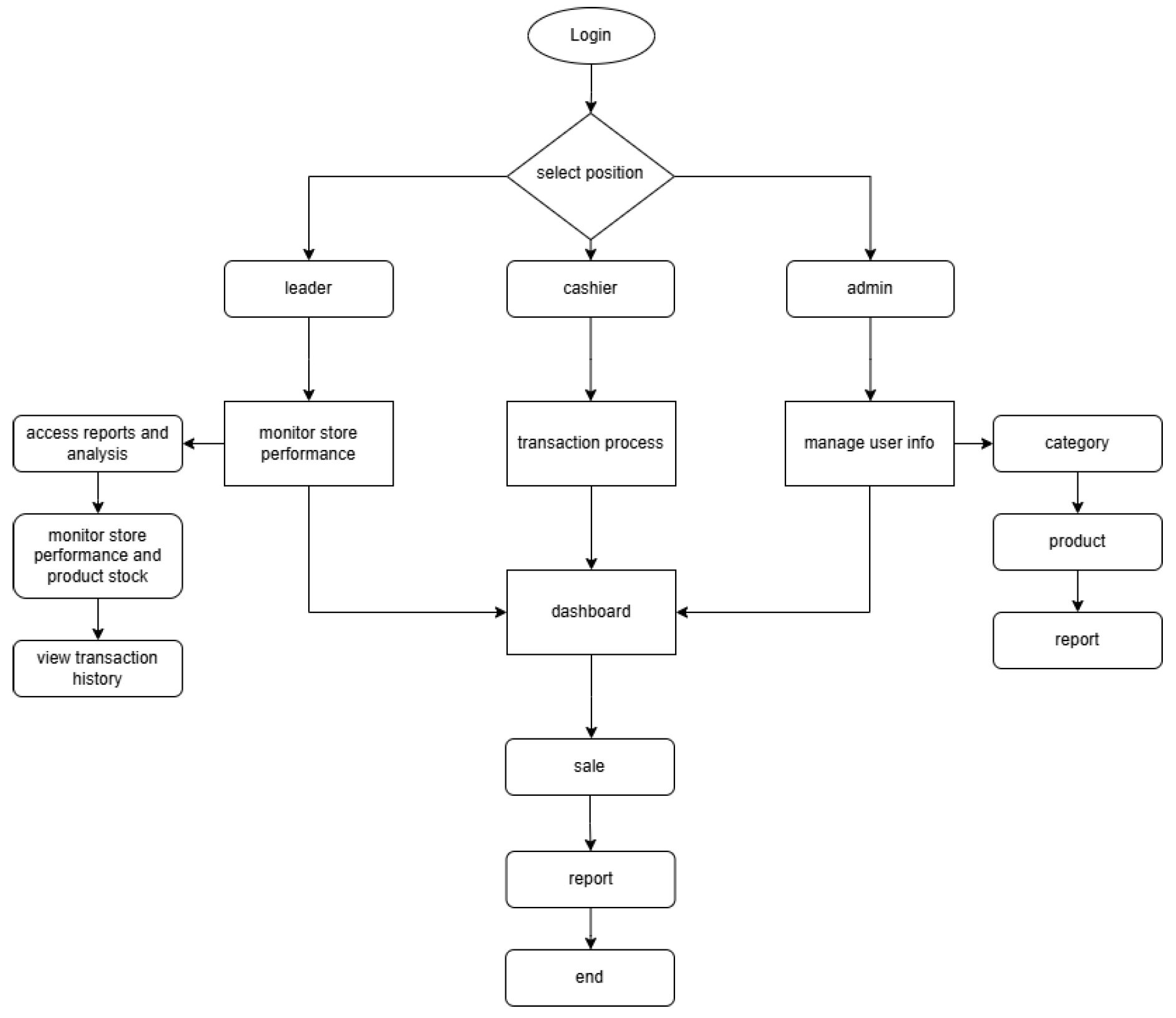 Continue work on user interface design and prototyping. Pay attention to alignment, ease of use, and aesthetics of the interface, and start refining the prototype based on feedback received from users or stakeholders. Ensure that each interface element is well-organised and easily accessible to create an intuitive and enjoyable user experience. Use consistent design principles, such as grid alignment and clear typography, to improve readability and navigation. Also, don’t forget to consider the responsiveness of the display so that it can be accessed properly on various devices. By paying attention to these details, you will be able to produce an interface that is not only functional but also visually appealing, increasing user satisfaction and engagement. Continue to evaluate and iterate the design based on the feedback received to ensure an optimised end result that meets the user’s needs.Figure 2. Interface design for the application.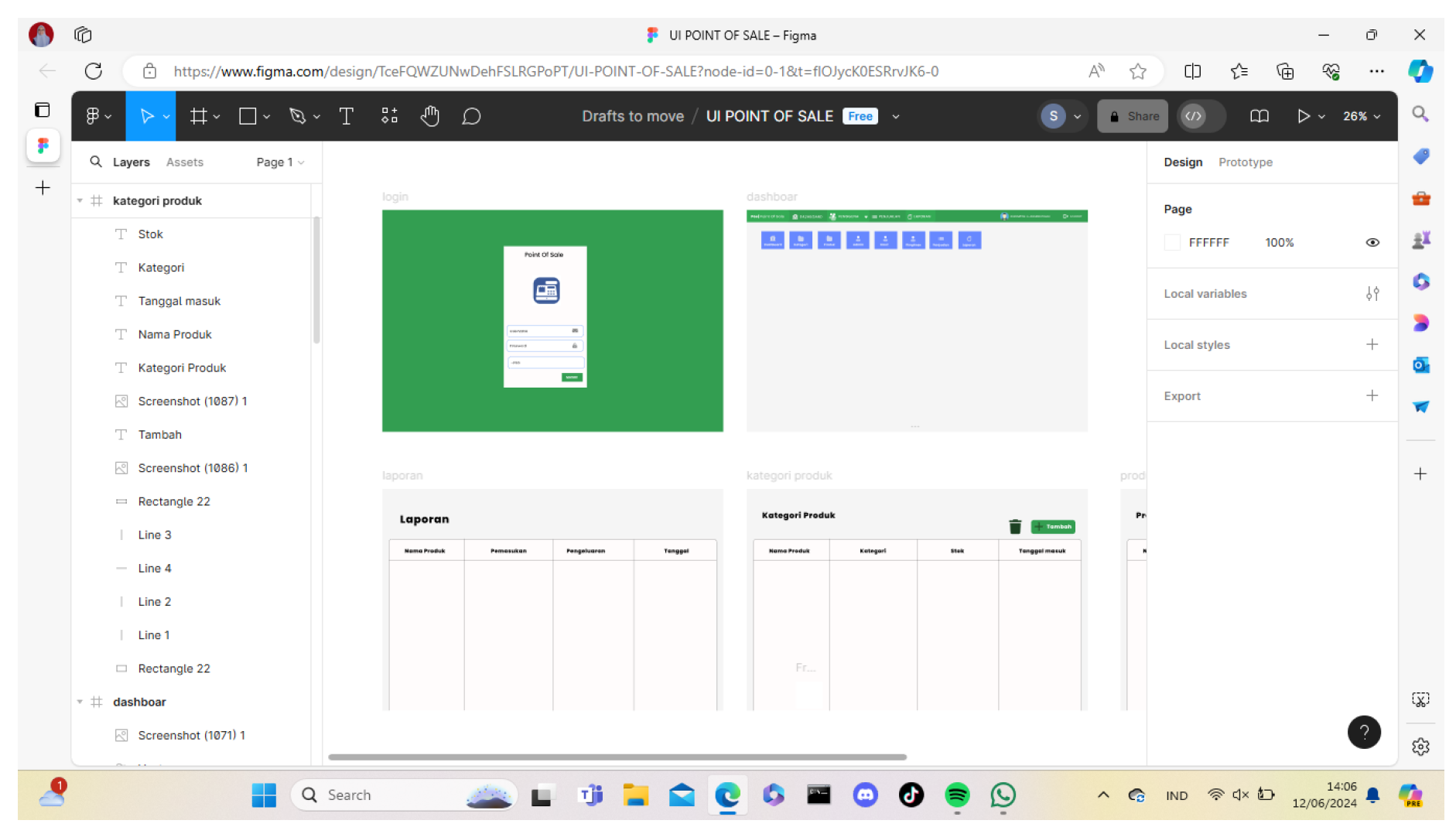
-
DevelopmentThe development team will start translating the user interface design into working code. It will build the core features of the application or product and ensure that it conforms to the predefined specifications. Throughout this process, the team will conduct regular testing and debugging to identify and resolve any issues, ensuring a smooth and efficient development cycle. Additionally, they will collaborate closely with designers and stakeholders to incorporate feedback and make necessary adjustments, aiming to deliver a high-quality, user-friendly final product that meets or exceeds expectations.Figure 3. App code on github.
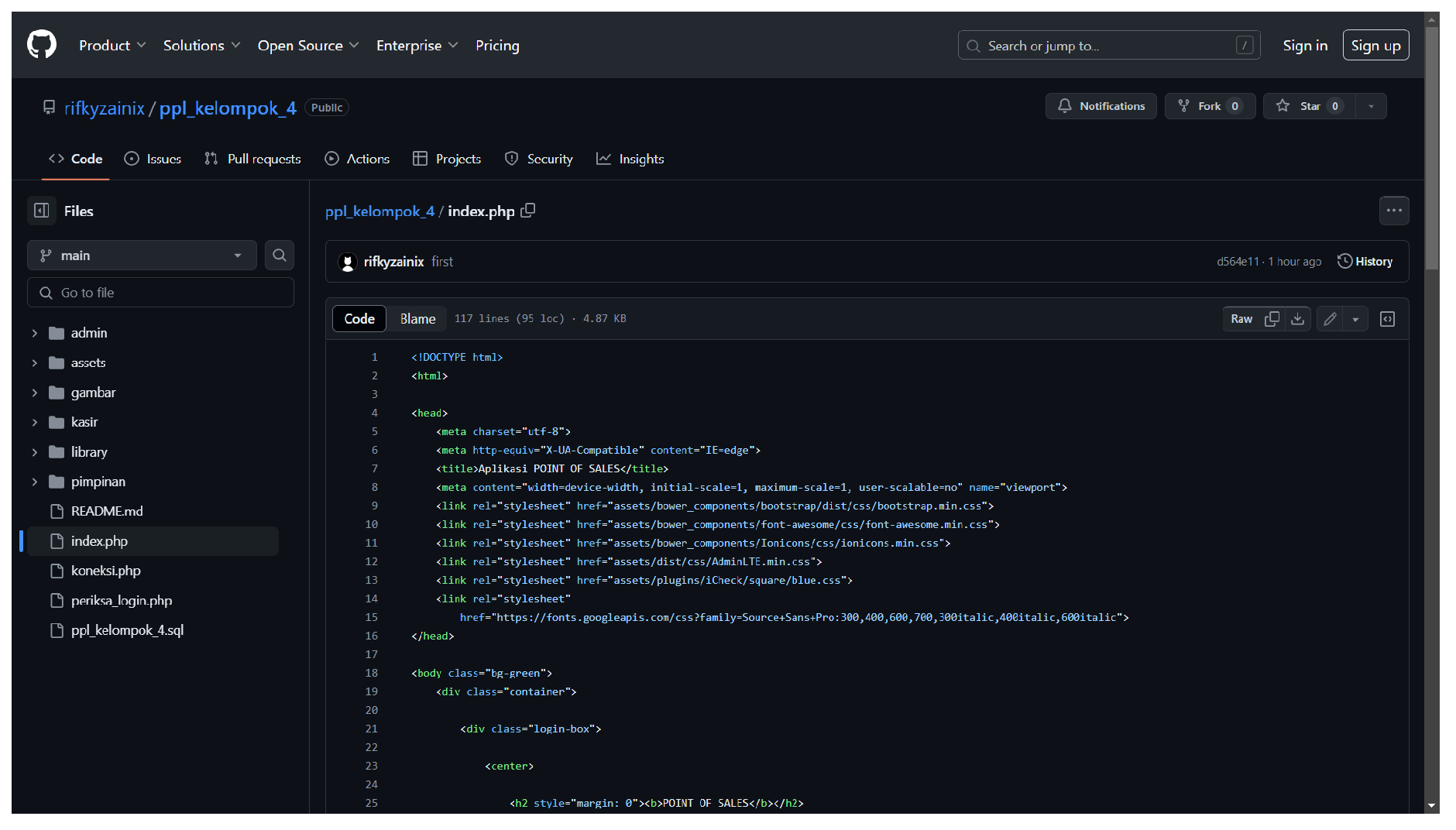
-
Quality TestingThe development team will start translating the user interface design into working code. This team will build the core features of the application or product and ensure it conforms to the predefined specifications. During this process, the team will perform regular testing and debugging to identify and resolve any issues, ensuring a smooth and efficient development cycle. In addition, they will collaborate closely with designers and stakeholders to incorporate feedback and make necessary adjustments, aiming to deliver a high-quality, user-friendly final product that meets or exceeds expectations. Testing will be conducted at the unit level, focusing on the smallest components of the software, such as individual functions or methods, to ensure each unit operates correctly and fulfils its intended purpose.Figure 4. Testing performs a blackbox.
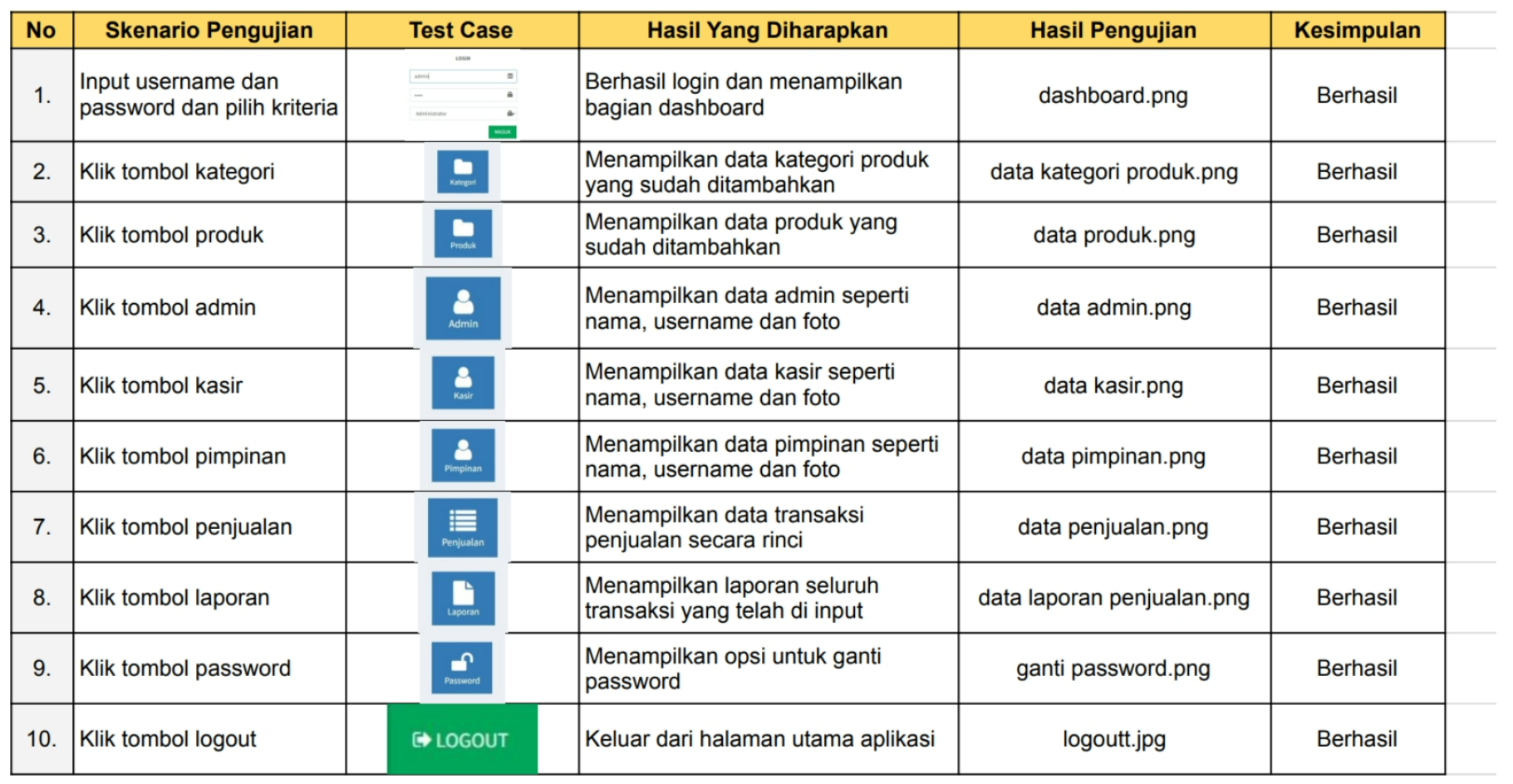
-
DeploymentDeployment is the process of making an application available for use, which involves several important steps to ensure proper installation, configuration, and operation in the intended environment. It starts with preparation, where the code is thoroughly tested and configuration files are customised for the deployment environment. The deployment stage includes building and packaging the application, setting up the environment, and running the deployment scripts. Post-deployment involves verification through testing, implementing monitoring tools, and rolling out the application in phases. Maintenance includes tracking and resolving issues, and regularly updating the application with new features and security patches, ensuring the application remains stable, accessible, and performs well in production.
-
MaintenanceMaintenance for web-based point of sales (POS) applications involves a comprehensive set of tasks that aim to ensure the system remains reliable, secure and optimally performing. Regular updates are essential, as they integrate new features and security patches that enhance functionality and protect against vulnerabilities. Continuous monitoring of system performance helps identify and quickly resolve any issues that may arise, ensuring smooth operation for users. Data backup procedures are implemented to prevent losses in the event of unforeseen events, providing protection for critical information. Troubleshooting and bug fixes are an integral part of maintenance, addressing software glitches promptly to minimise disruptions in service. Database optimisation is also prioritised to streamline transactions, improving overall efficiency. Compatibility testing across different devices and browsers ensures a consistent user experience, regardless of platform. In addition to the technical aspects, ongoing user support and training is also important. This helps users navigate system updates, new features, and troubleshooting procedures effectively, empowering them to make the most of the POS system while maintaining operational efficiency. Overall, proactive and thorough maintenance is key to maintaining a robust web-based POS application that meets users’ expectations for reliability, security, and usability.
4. Result and Discussion
4.1. Result
The interface and discussion of this inventory management application for point of sale using Laravel is designed to make it easier for business owners to understand and manage the flow of incoming, outgoing, and transactions effectively. This interface is created to simplify the understanding and administration of stock movements and sales transactions, ensuring owners can easily track and manage their inventory operations.
-
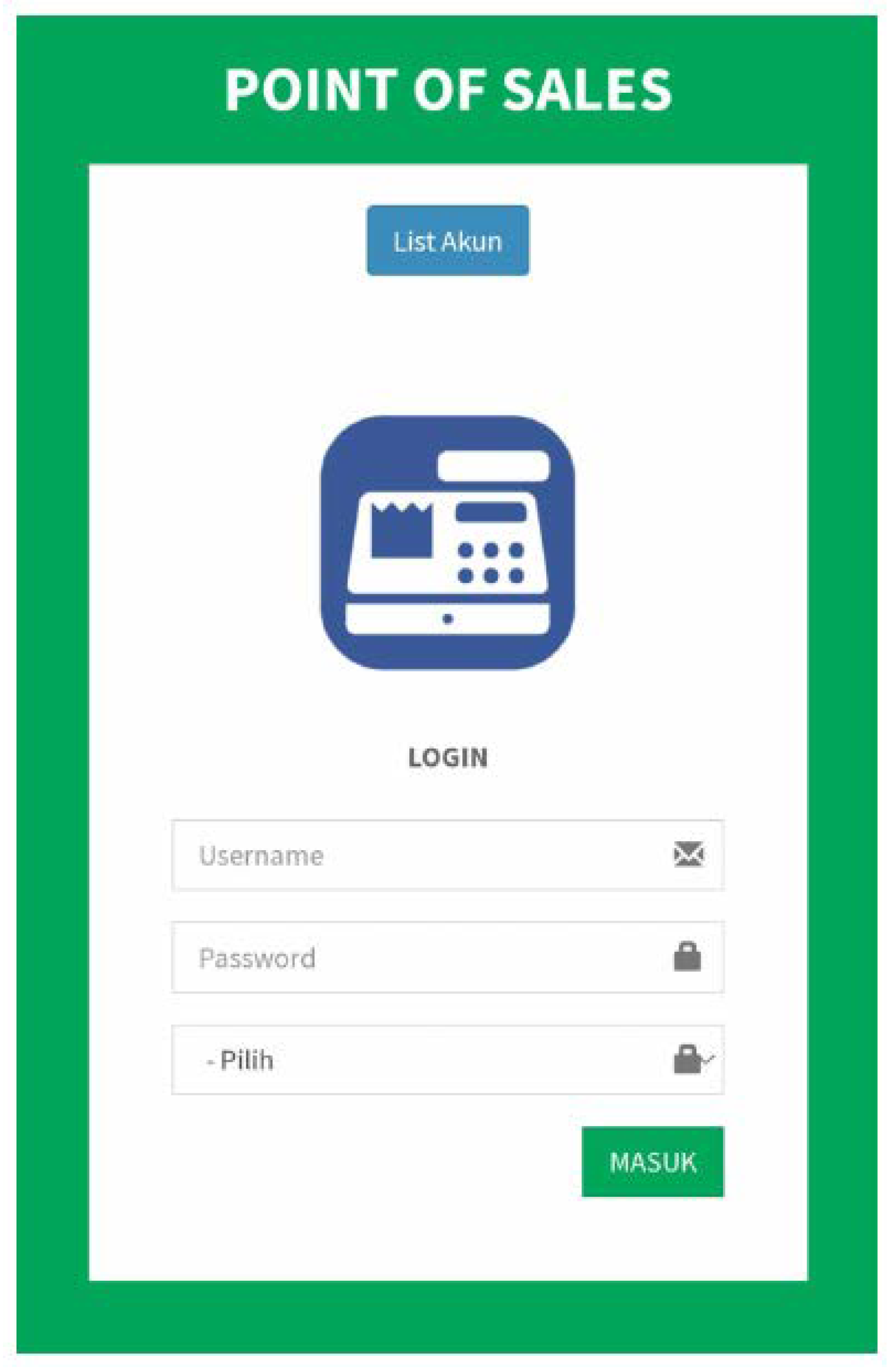
Display results loginThe application can be accessed through the login page. To access the system, users must first authenticate themselves by inputting their login credentials. The layout makes sure that logging in is safe and simple, allowing access without compromising security.Figure 5. login page.
-
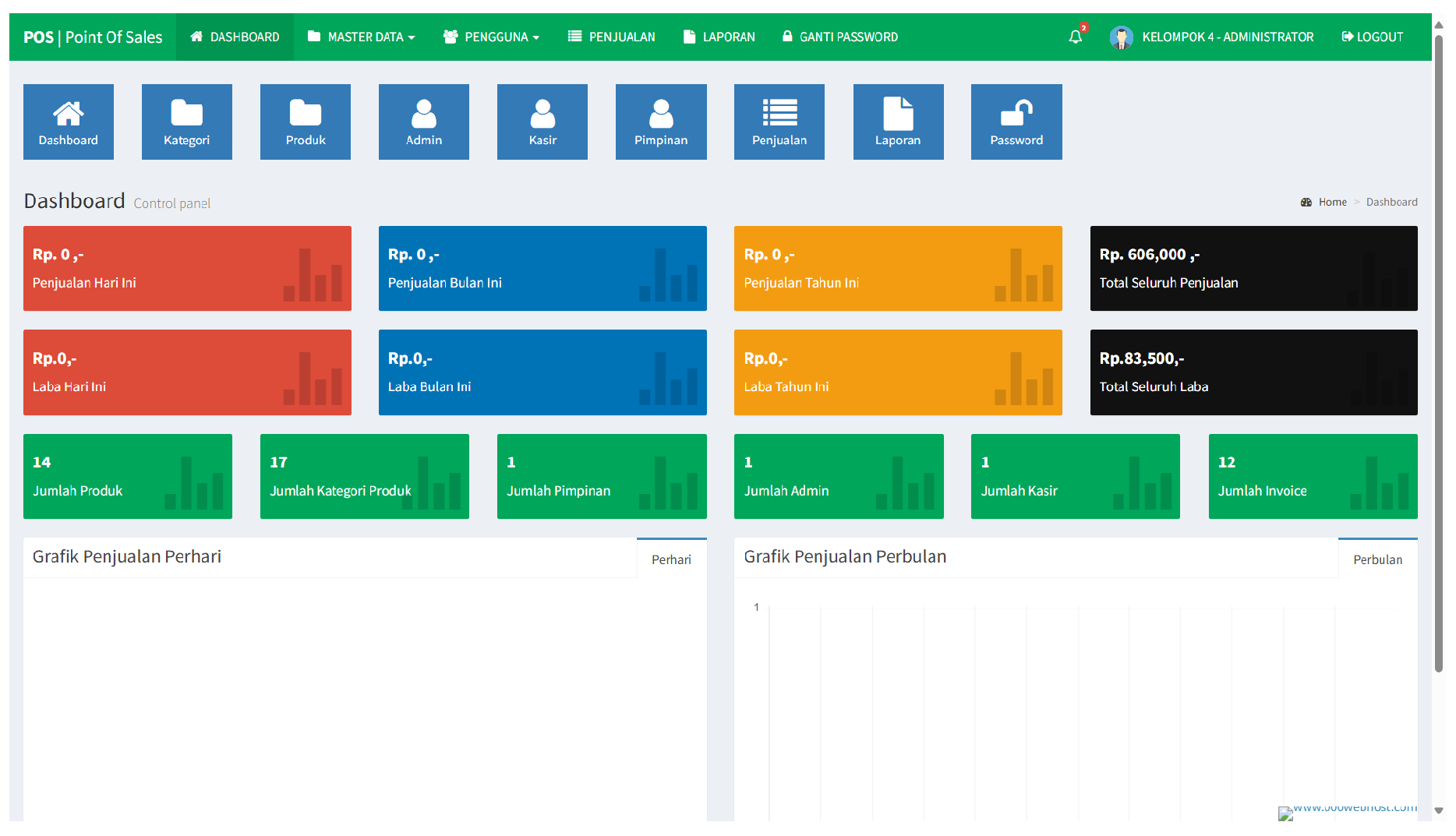
The dashboard offers a thorough rundown of all the features available in the system. Product categories, products, sales, users, and reports are among its input features. Quick access to crucial data and features is made possible by the dashboard’s architecture, which provides a summary of critical metrics and operations.Product Categories: Managing several product categories is possible in this section, which makes inventory management easier. Products: To keep the inventory current, users can add, update, or remove products. Sales: Sales transactions are tracked by this feature, which offers performance data on sales. Users: The ability to add, edit, or remove user accounts is made possible by user management features. Reports: To assist in the analysis of sales data and inventory status, the reporting tool provides a number of reports.
-
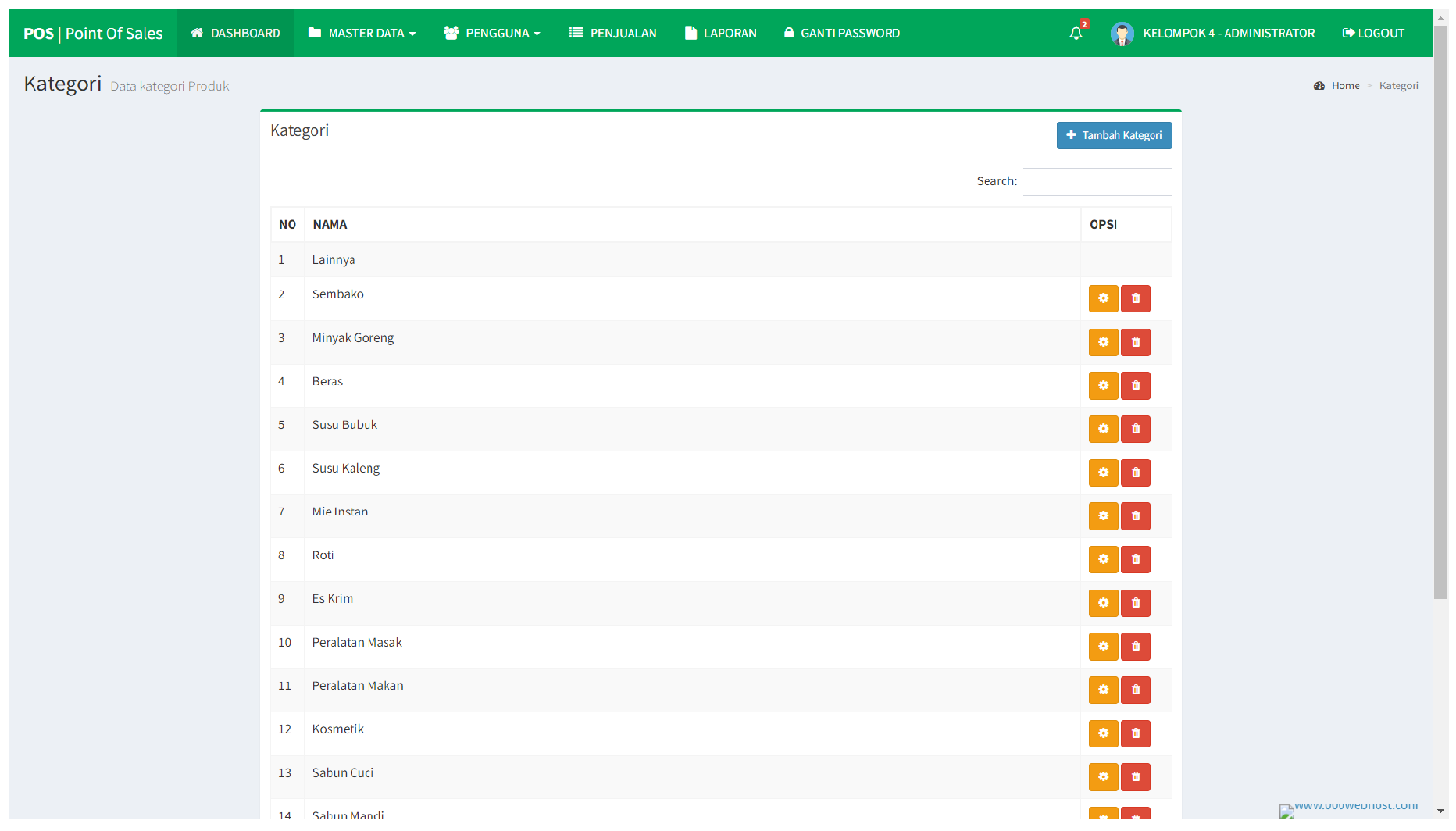
Display product categories resultsA list of product categories that have been added using the add product function is shown on the product category page. Product organization under pertinent categories is facilitated by this view, which facilitates item management and search.Figure 7. product categories.
-
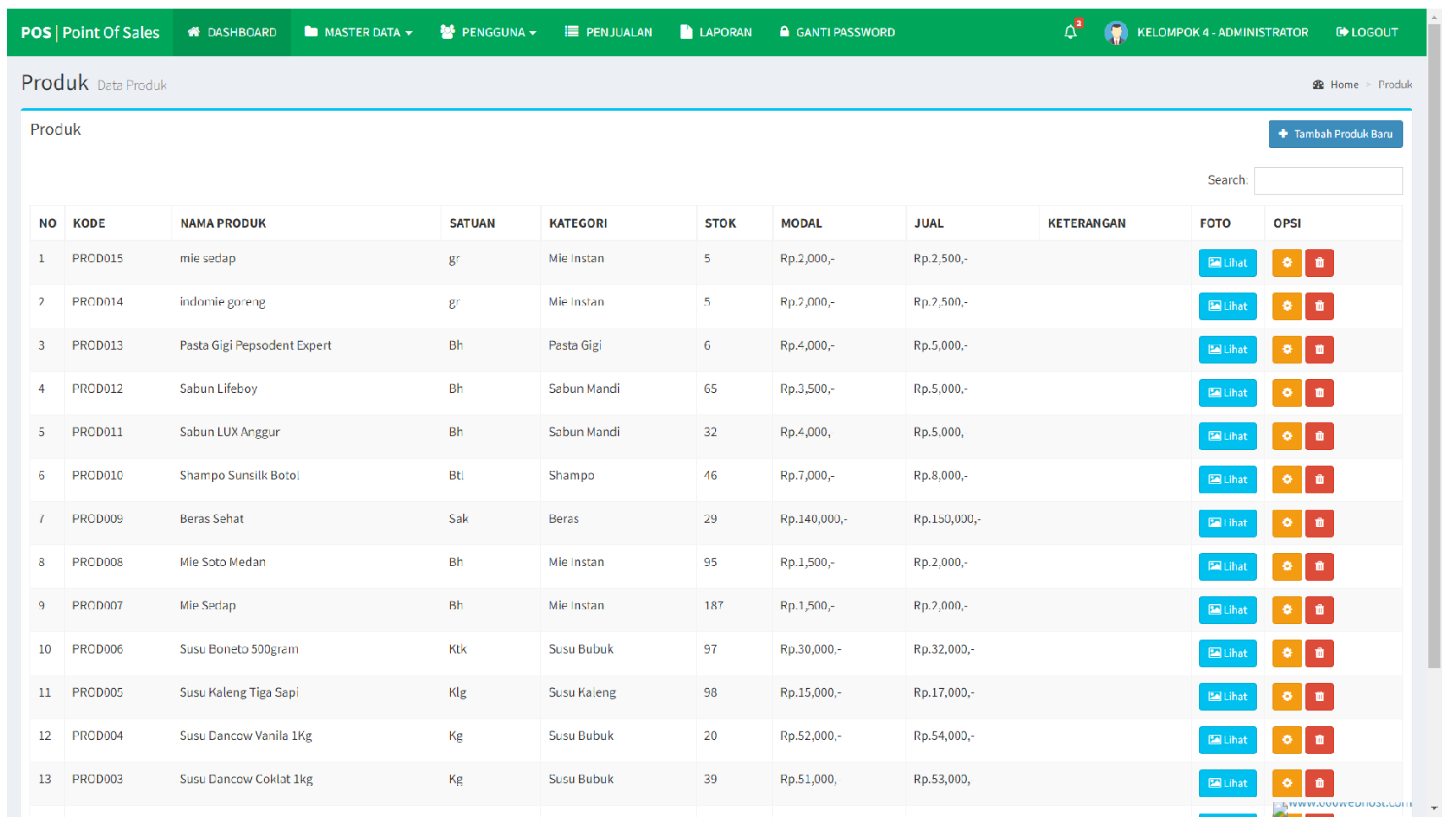
Then on the product page display contains a list of products that have been added previously and can see the product image and can delete the product if it is no longer needed or not sold.
-
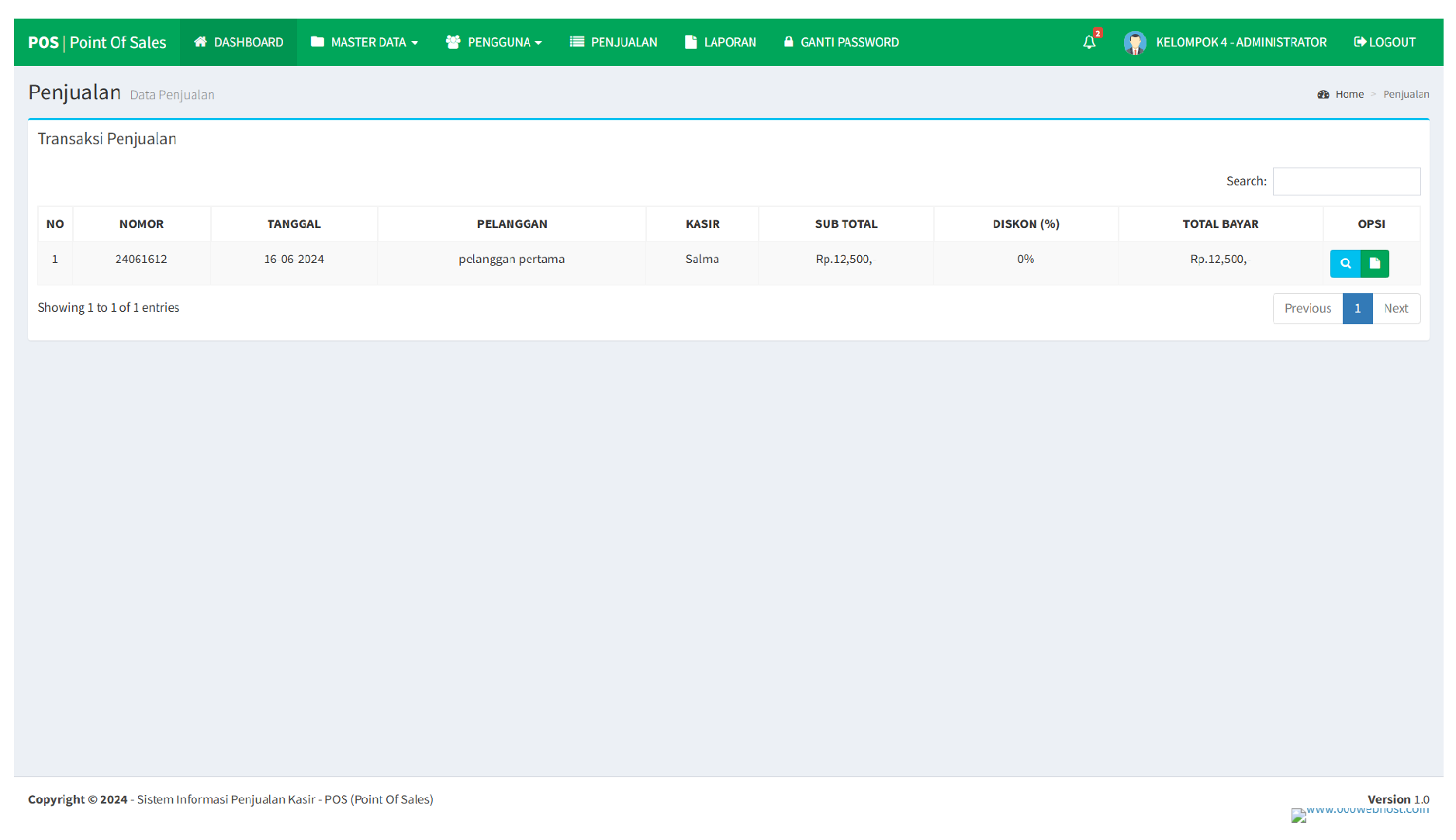
Display sales results
-
Display user resultsAll users with system access are listed on the user management page. It has features for adding new users, editing user information, and deleting users. This guarantees that the system can only be accessed by authorized personnel.Figure 10. users.
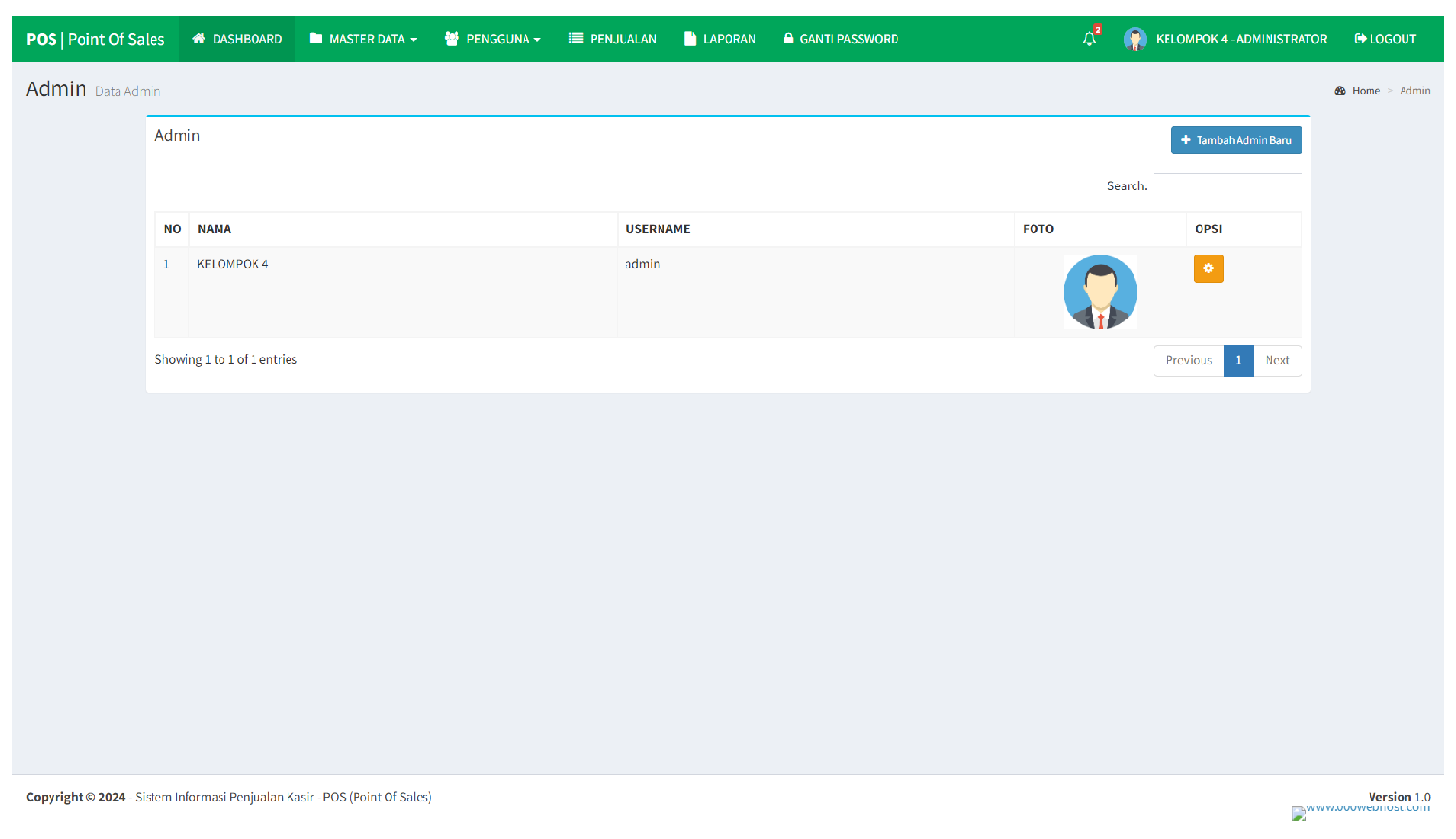 Figure 11. users 2.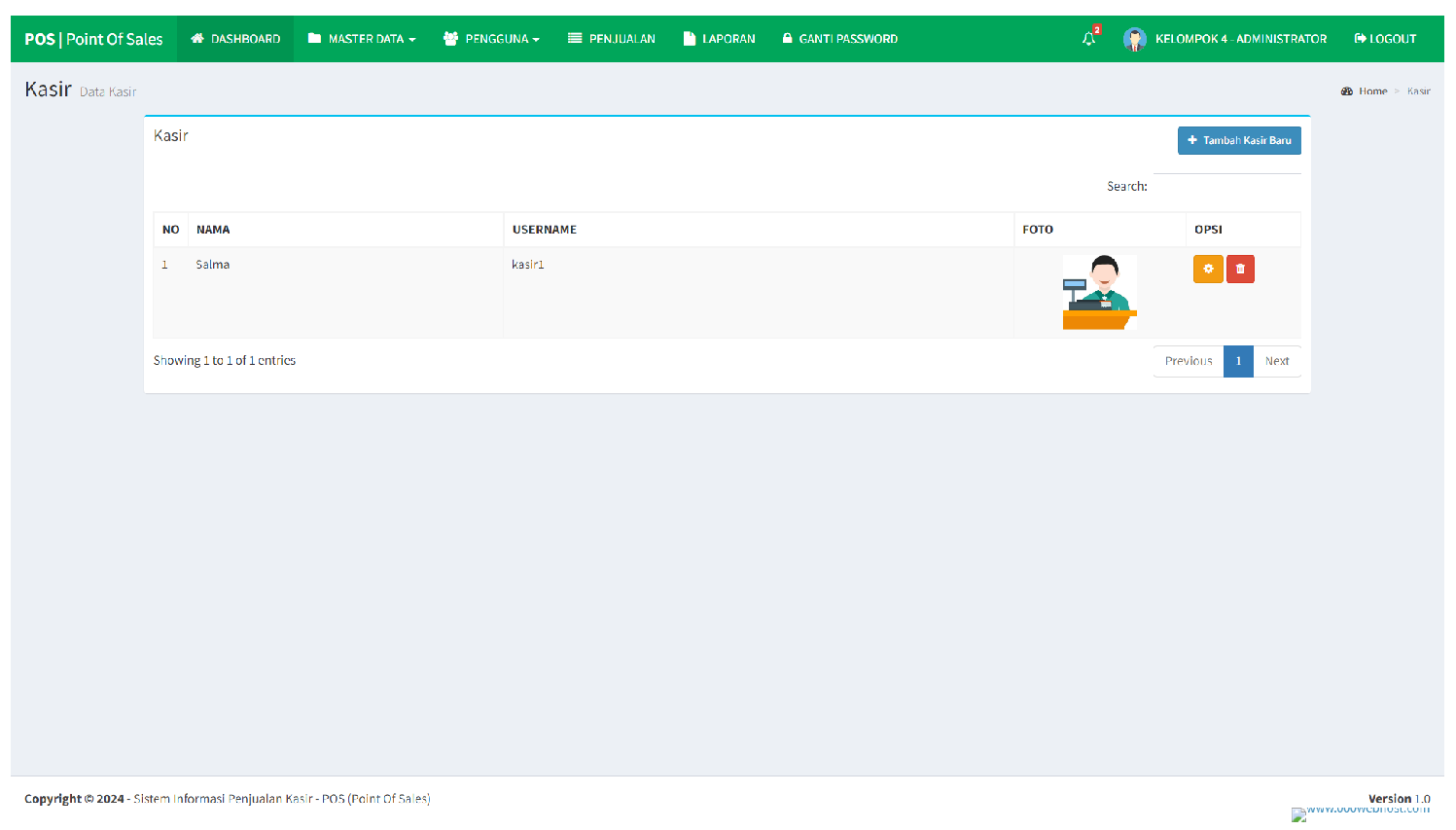
-
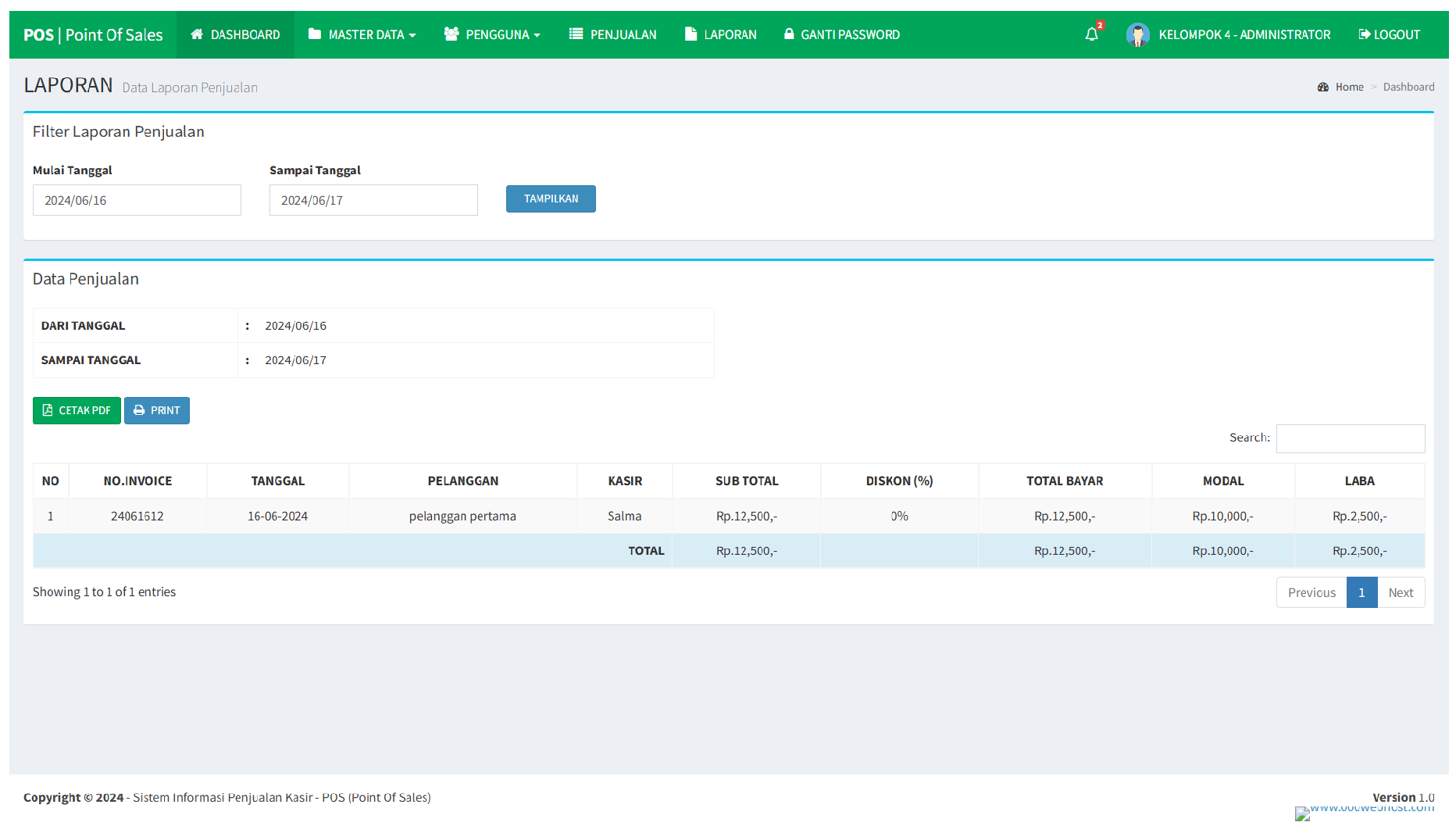
Display reports results
4.2. Discussion
The outcomes of utilizing Laravel to construct the inventory management application for the point of sale are examined in the discussion section. The usability, efficacy, and efficiency of the system in enhancing business processes are the main topics of this analysis.
The application’s straightforward design and user-friendly interface greatly improve usage. The dashboard facilitates the management of several inventory and sales process components by offering a consolidated view of essential features. While the product and sales pages help with effective inventory and transaction management, the login page guarantees safe access.
Through the automation of inventory and sales transaction tracking and management, the application increases operational efficiency. Features include detailed reporting, real-time sales tracking, and product categorization lessen human mistake and workload. The system is kept current and useful by having the ability to add, amend, and remove products and people fast.
The system’s ability to deliver precise and timely information for decision-making makes it clear how effective it is. The system generates reports that are helpful in assisting business owners in making decisions by providing insightful information about sales performance and inventory status. The system’s capacity to increase accuracy and streamline processes adds to the general productivity and efficiency of the company.
In summary, the Laravel-powered inventory management application for the point of sale shows to be a reliable and approachable way to handle both sales transactions and inventory. Because of its many features and user-friendly design, which improve usability, effectiveness, and efficiency, it is a useful tool for business owners to manage their operations.
The Result and Discussion section offers a comprehensive study of the system’s performance and its effect on business operations by concentrating on these specific details.
5. Conclusions
Innovatively designed Point of Sale (POS) applications play a crucial role in improving business efficiency and productivity. It enables more effective management of sales transactions, reduces potential errors, and minimizes losses. Based on the latest technologies such as PHP, JavaScript, Bootstrap, and MySQL, this planned POS application aims to provide a seamless and efficient user experience.
The main goal of this project is to create an easy-to-use and intuitive POS application, allowing employees as well as business owners to manage inventory and sales transactions easily without requiring much technical training. The app will be equipped with various advanced features, including personnel management, sales analysis, real-time inventory tracking, and integration with various other platforms.
In the development process, this POS application will utilize PHP as the programming language for server-side application logic, MySQL as the database management system, and JavaScript and Bootstrap to create a responsive and attractive user interface.
By following the established development plan and utilizing the expertise of the development team, it is expected that the resulting POS application will be a robust and responsive solution, capable of meeting the sales and inventory management needs of the business in an efficient and effective manner.
In conclusion, companies looking to enhance sales and inventory management should consider making the strategic investment of developing a cutting-edge point-of-sale system. With its construction based on PHP, JavaScript, Bootstrap, and MySQL, the suggested point-of-sale application provides a complete answer to typical business problems. Its vast feature set, intuitive interface, and real-time data capabilities are intended to boost productivity and facilitate well-informed decision-making.
Because of the system’s scalability and flexibility, firms may fulfill their evolving needs with it, and it offers a long-term, sustainable growth option. Its ability to integrate with other business tools improves operational effectiveness even more, resulting in a unified environment for corporate management. By placing a strong emphasis on security, users’ trust is increased and industry requirements are complied with, protecting sensitive data.
By putting regular chores under automation The POS system gives organizations the ability to concentrate on key growth objectives by giving them actionable insights. Businesses may react quickly to the demands and preferences of their customers thanks to the real-time feedback mechanism, which improves the customer experience. Being able to do this is essential to being competitive in a changing industry.
This POS website has the following functionalities.
1. The Main Dashboard Real-time sales data visualization on the primary dashboard helps business owners get daily performance information and make well-informed decisions.
2. Management of Products and Categories Inventory storage is made simple by tools for managing products and categories, which enable quick addition, modification, and deletion of products as well as category-based item organization.
3. Integration Barcode Scanner: The ability to integrate barcode scanners into systems expedites and improves data input accuracy while lowering the possibility of human error.
4. Access Rights and User Management In order to maintain transparency and identify suspicious activity, the user management system logs user activity and assigns varying access levels based on roles.
5. Effective Procedure for Transactions The quick and easy transaction process minimizes customer wait times by accepting a variety of payment options, such as cash, credit/debit cards, and e-wallets.
6.In-depth Sales Reports With a variety of report kinds (daily, weekly, and monthly) and the ability to export data in Excel or PDF, comprehensive sales reports enable in-depth examination.
7. Combining with Different Systems By integrating with inventory management, CRM, and accounting tools, the app can streamline processes and lower data inaccuracies.
8. High-Tech Security Elements Sensitive data is protected with data security mechanisms that include automatic data backup, disaster recovery, two-factor authentication, and encryption. 9. Multiple Location Assistance** Businesses with many branches can manage their operations with the help of the multi-location feature, which facilitates stock transfers and real-time monitoring between sites.
10. Help and Training for Users To guarantee that customers can maximize all functions and maintain uninterrupted company operations, the app offers training materials and round-the-clock customer support.
11. Discount and Promotional Features Businesses may design efficient marketing campaigns, boost sales, and improve customer happiness by utilizing features for managing promotions and discounts.
All things considered, the suggested point-of-sale (POS) application is a major development in the field of inventory and sales management. It provides a strong, safe, and easy-to-use solution that caters to the unique requirements of contemporary enterprises. This system’s creation and execution could have a big impact on company success and productivity, helping companies meet their operational and strategic objectives.
Acknowledgment
Without the help and direction of many people and organizations, this research project would not have been able to be completed successfully. We sincerely thank them for their contributions, which we acknowledge with great pleasure.
First and foremost, we would like to sincerely thank UIN Sunan Gunung Djati Bandung’s Informatics Department. The department has been a steadfast source of assistance, giving us the tools and spaces we need to carry out our research. This initiative would not have been possible without the department’s partial sponsorship.
We extend our sincere gratitude to Dr. Wisnu Uriawan, our academic advisor, for his tremendous leadership, perceptive recommendations, and unwavering support during this endeavor. His extensive expertise and background in information systems were essential to the accomplishment of this study. Dr. Wisnu Uriawan’s tolerance and readiness to offer input at every turn considerably improved the caliber of our work.
We extend our sincere gratitude to the following members of our study team: Arif Rahman Sopian, Salma Khoirunnisa, Sigit Julianto, Rifky Zaini Faroj, and Risyad Addiva Hadid. The progress and successful completion of this project were greatly dependent on the commitment, diligence, and cooperative nature of each individual. It has been difficult and time-consuming to spend endless hours debating, coding, testing, and improving our POS program.
We also thank UIN Sunan Gunung Djati Bandung’s academics and administrative staff for their assistance and collaboration. Their help with administrative procedures and logistical planning made our study trip easier to navigate and more bearable.
We would especially like to express our gratitude to our family and friends, whose moral support and understanding were invaluable. Even in the most trying circumstances, their tolerance and support kept us inspired and concentrated.
We express our gratitude to the business owners and participants for their invaluable input and data. We were able to ground our research in real-world situations thanks to their willingness to share their experiences and insights, which made our POS application both functional and user-friendly.
We also want to express our gratitude to the creators and maintainers of the open-source frameworks and tools that we used for our project. XAMPP, Laravel, PHP, MySQL, Visual Studio Code, and other tools were crucial to the creation and execution of our system. These tools’ robustness and versatility greatly accelerated our development process.
We also acknowledge the writers of the references that helped to shape and motivate our work. The academic journals and technical records gave our investigation a strong basis and pointed us in the proper path.
Lastly, we would want to express our gratitude to the larger professional and academic community in the information systems and technology sector. This community has produced information and innovations that have inspired us and raised the bar for our work.
This acknowledgement is only a tiny way for us to show our appreciation to everyone who helped with this initiative. It is our aim that our work benefits the information systems sector and reflects the combined effort and support we have received. References
References
- Mulyana, A.; Rusmawan, U. Rancang Bangun Sistem Informasi Point Of Sale (POS) Berbasis Web (Studi Kasus Toko Andorio). Majalah Ilmiah UNIKOM 2023, 21, 43–50. [Google Scholar] [CrossRef]
- Maydianto, M. Rancang Bangun Sistem Informasi Point of Sale Dengan Framework Codeigniter Pada Cv Powershop. PhD thesis, Prodi Sistem Informasi, 2021.
- lutfi Irawan, A.; Triayudi, A.; Iskandar, A. Implementasi Sistem Point of Sales Menggunakan Metode Agile Development. KLIK: Kajian Ilmiah Informatika dan Komputer 2023, 3, 1326–1333. [Google Scholar]
- Mare, B.S.; others. Perancangan Sistem Informasi Berbasis Web Pada Koperasi Simpan Pinjam Sejahtera Bersama. Indonesian Journal of Networking and Security (IJNS) 2022, 11.
- Firmansyah, M.D.; Herman, H. Perancangan web e-commerce berbasis website pada Toko Ida Shoes. Journal of Information System and Technology (JOINT) 2023, 4, 361–372. [Google Scholar] [CrossRef]
- Darmawan, D.A.; Mashuri, C.; Permadi, G.S. Membuat Game Berbasis Website Menggunakan Bahasa Javascript dan PHP. 2022. [Google Scholar]
- Mulyani, T.; Ausath, H.Z.S.; Saigon, S.P.; Saifudin, A.; others. Pengujian Sistem Informasi Point Of Sale Berbasis Website Menggunakan Metode Waterfall pada CV Tray Store. OKTAL: Jurnal Ilmu Komputer dan Sains 2023, 2, 2116–2121.
- Faqih, A.S.; Wahyudi, A.D. Rancang Bangun Sistem Informasi Penjualan Berbasis Web (Studi Kasus: Matchmaker). Jurnal Teknologi dan Sistem Informasi 2022, 3. [Google Scholar]
- Ramadhan, R.A.; others. SISTEM INFORMASI PENJUALAN POINT OF SALE MENGGUNAKAN FRAMEWORK REACT NATIVE PADA TOKO IBNU ALI KECAMATAN BAWANG BANJARNEGARA: FRAMEWORK REACT NATIVE. JURNAL SIGN IN: Jurnal Ilmiah Sistem Informasi dan Informatika 2023, 2, 42–57.
Disclaimer/Publisher’s Note: The statements, opinions and data contained in all publications are solely those of the individual author(s) and contributor(s) and not of MDPI and/or the editor(s). MDPI and/or the editor(s) disclaim responsibility for any injury to people or property resulting from any ideas, methods, instructions or products referred to in the content. |
© 2024 by the authors. Licensee MDPI, Basel, Switzerland. This article is an open access article distributed under the terms and conditions of the Creative Commons Attribution (CC BY) license (http://creativecommons.org/licenses/by/4.0/).
Copyright: This open access article is published under a Creative Commons CC BY 4.0 license, which permit the free download, distribution, and reuse, provided that the author and preprint are cited in any reuse.


