

Submitted:
25 June 2024
Posted:
26 June 2024
You are already at the latest version
Abstract
The purpose of this research article was to study the physicochemical characteristics of semi-wild Jhar honey grown in Western Georgia. Jara honey is produced in the alpine and sub-alpine forest zone of high mountain Adjara, which is distinguished by the variety of honey plants [1]. The physicochemical characteristics were examined concerning the Alimemtarius Code and EU regulations: moisture content, total carbohydrate, free acidity, pH , electrical conductivity, microelements (Li, Na, K, Mg, Ca), color, total phenols, total phenolic acids, total flavonoids, proline, diastase activity, protein and microscopic study of pollens. Using the UPLC-MSB method, grayanotoxin-III was identified in the semi-wild Jara honey samples. The findings demonstrated that honey has significant concentrations of phenols, phenolic acids, and flavonoids. A directly proportional relationship was established between the quantitative content of phenolic compounds and the antioxidant activity of honey. This article is the first study of the characteristics of Jara honey produced in Western Georgia.
Keywords:
honey
; antioxidant activity
; Physicochemical
; Melissopalynology
; Grayanotoxin
1. Introduction
Honey is the most recognized and famous natural food produced by bees (Apis mellifera) from nectar and honeydew [2]. The predominance of one of these sources leads classification of honey as either blossom honey or honeydew honey [2]. Its historical, cultural, and economic significance makes it the major beekeeping product [3]. Honey is an aromatic, sweet natural product with high nutritional value that has been used by humans since time immemorial. [4].
Due to its taste and nutritional value, honey has been commonly consumed as a food for thousands of years [5]. It is used as a component in the food industry [6] and also serves as a food preservative [5,7]. Moreover, honey is also used in medicine [9] and in the production of cosmetics [10] due to the numerous positive properties that can be attributed to the various bioactive molecules it contains [3].
Honey has a very complex composition [2]. It contains more than 200 compounds [6]. It is mainly composed of sugars (70–80%) [11], namely 38% fructose, 31% glucose, 10% other sugar types [12], and water (10–20%) [12]. The uniqueness of this food product resides in the rich spectrum of compounds that do not make up the bulk of the mass. For instance, honey also contains proteins, organic acids (such as acetic acid and gluconic acid, etc.) [6], lipids, carotenoids, minerals [13], and enzymes [11,14]. More importantly, bioactive components that are crucial in determining specific and individual characteristics of honey, such as flavonoids, phenolic acids, and vitamins (ascorbic acid, niacin, etc.), are also present in minor quantities [13,15,16,17]. Honey can originate from single or multiple plant species [18]. Accordingly, many different types of honey are available on the global market. Following its origin, honey is divided into blossom, honeydew, monofloral, and multifloral varieties based on the source of the honey [18,19,20,21].
Although Georgia is a small country, it is a very important region for the development of beekeeping, where it is possible to produce high-quality honey of various origins [22]. In this regard, the uniqueness of Georgia is determined by its geographical location, climatic conditions, and rich and varied vegetation [23,24]. Georgia mainly produces five types of honey in large quantities. These are acacia honey, blossom honey, alpine honey, linden honey, and chestnut honey [25]. In Georgia, we also have traditional Georgian semi-wild jara beekeeping. Jara honey is produced in the alpine and sub-alpine forest zones of the high mountains of Adjara, which are distinguished by the variety of honey plants [23]. A Jara is a hollowed log cut in two. It is mainly carved from the Linden tree (Tilia begoniifolia Steven), which is chosen for its lightweight and lack of specific smell to avoid disturbing the bees [17,23,26]. Jara is positioned on trees in the forest, and beekeepers no longer interfere in the development of the bee colony, allowing for the completely natural and unmanaged production of Jara honey. There is also no resource management for honey bees. The use of pesticides and antibiotics [27]. The obtained honey is matured in natural pine. Jara honey is collected once a year, at the beginning of autumn [23,24].
It is also worth noting that the flowering of honey plants in the highlands of Adjara is preceded by the flowering of Rhododendron, which contains a toxin, in cold and late spring conditions. Accordingly, there is a high probability that bees collect Rhododendron nectar and the toxin gets into the Jara honey, eventually reaching the human body [20,28,29,30].
Our research aimed to study the physical and chemical characteristics of jara honey, as a virtually "unknown" product. Content of Biologically Active Compounds and Antioxidant Activity. We also determined the content of pollens, and based on the obtained results, we created a natural and distinctive product - Jara honey.
2. Materials and Methods
2.1. Materials
2.1.1. Samples – Honey samples were provided by beekeepers and collected from three different municipalities - Adjara, in particular, Keda - Jara Honey 1-9), Shuaxevi - Jara Honey 10-13), Khulo - Jara Honey 14-18 (Figure 1. Jara Map).
Honey samples were provided by private beekeepers. The harvest took place in the fall of 2018 (in September) (Table 1).
We stored honey samples in hermetic containers (4-5 ° C). In the case of impurities, we passed the honey through a grid with a diameter of 0.5 mm.
2.1.2. Chemicals and Instruments
Measurements of absorbance were performed using a Mettler Toledo UV-5 model UV-VIS spectrophotometer. The chemicals and reagents used were of analytical grade and were sourced from Sigma and Merck Chemical Company. A Waters HPLC (Water 2414 Refractive Index and Waters 2489 UV/Visible detector) and Waters Acquity UPLC/H Class (PDA Detector) were used for identifying compounds. A UKA Technic professional light microscope was used for melissopalynological analysis.
2.2. Methods
The research examined the quantitative and qualitative content of carbohydrates, total phenols, flavonoids, phenolic acids, and cations using modern instrumental research methods such as HPLC, UPLC-MS Acquity H Class, pH/Ion meter S220 and S230 Conductivity, Mettler Toledo UV5, UV/Visible Scanning Spectrophotometer and the characteristics provided by the Regulations on Honey Codex Alimentarius (Codex Standard for Honey, 2001): determination of moisture, electrical conductivity, dry content, pH, free acidity, diastase activity, proline, pollen content, and antioxidant activity.
The honey samples were analyzed for physicochemical characteristics. According to the EU Regulation (Council EU, 2001) and Codex Alimentarius (2001):
The refractometric method was used to determine the moisture, or conversely the soluble solids in honey [31,32].
pH/Ion and free acidity meter S220 and S230 Conductivity (Seven Compact, Mettler Toledo) [33].
Determination of electrical conductivity - Electrical conductivity was using a conductometer Mettler Toledo [34,35].
2.2.1. Color intensity - was determined using the Pfund scale ( Lovibond 2000 & 1000 comparator), using the following equation[38,39].
Pfund = - 38.70 + 371.39 Abs
2.2.2. Bioactive compounds and antioxidant activity
2.2.2.1. Total content of phenolic compounds (TCPC), Determination to the Folin-Ciocalteu method (in terms of gallic acid); [40,41].
2.2.2.2. Total content of flavonoids (TCF), by the spectral method (AlCl3 reagent in terms of rutin) [42,43].
2.2.2.3. Total content of phenolic acids (TCPA), Phenolic acids were determined according to the method of Mazza, Fukumoto, Delaquis, Girard, and Ewert with some modifications[44,45].
2.2.3. Antioxidant activity assay with DPPH- 2,2-Diphenyl-1-picrylhydrazyl - DPPH 0.1 N 50% inhibition mg, with a sample [32,40].
2.2.4. Carbohydrates - the sugar content is determined by Waters HPLC (High Pressure Liquid Chromatography) with RI-detection [34,35].
2.2.5. Cations - the minerals are determined by the Waters 1515 isocratic HPLC Pump (High-Pressure Liquid Chromatography) with Waters 432 Conductivity detection. Column - IC-Pak C M/D; Mobile phase: 0.1 mM EDTA/3 mM HNO3 [35,46].
2.2.6. Protein – Based on the Kjeldahl method, determining the nitrogen and the conversion factor yields the result of the crude protein.[18,46].
2.2.7. Pollen Analysis - The pollen analysis was made according to the method of
Louveaux et al. slides were prepared from each sample and photographed under a light microscope. The identification of the pollen grains is based on their size and shape [8,34,35].
2.2.8. - Grayanotoxin-III Analysis - Liquid chromatography-tandem mass spectrometry (Waters, UPLC Acquity, QDa Detector) was used for the identification of grayanotoxin-III. The analytical column was an Acquity UPLC BEN C18. GTX-III was eluted using a mobile phase consisting of a 50:50 water/methanol solution containing 1% acetic acid at a flow rate of 0.3 mL/min over 8 minutes [30,32].
3. Results
3.1. Moisture content (%)- One of honey's most crucial properties is its water content because it affects the substance's viscosity, specific gravity, maturity, crystallization, flavor, preservation, shelf life, and palatability [47]. It is a crucial element in determining the quality of honey [48]. It depends on several variables, including bee species, floral supply, honey harvesting season, honey maturation level (total dehydration), and meteorological factors [18,29].
Excessive water content in honey can lead to the growth of microbiological reactions and the development of the fermentation process, which negatively affects the qualitative characteristics of honey [4]. The moisture level in this inquiry ranged from 14.3% to 18.6%. (Figure 2), Specifically, the average rate in the Keda samples is 17.78%, in the samples of Shuakhevi it is 16.47%, and in the samples of Khulo, it is 15.9%. The water content in the honey samples taken for analysis is less than 20%, which is within the norm stipulated by the standard (International Honey Commission). This also indicates the maturity of the analyzed honey samples.
3.2. Sugars - Sugar is a crucial component of honey [49], primarily existing in the form of monosaccharides and disaccharides. The total content of monosaccharides (fructose and glucose) is about 75%, and 10-15% consists of disaccharides [50,51].
The qualitative and quantitative content of sugars in honey is primarily determined by its botanical and geographical origin. However, the amount of sugars can also be slightly influenced by factors such as weather, processing, and storage conditions (13, 52). One of the important characteristics when evaluating the quality of honey is the ratio of fructose and glucose, as well as glucose and water. When the fructose-to-glucose ratio is less than 1.0, crystallization occurs more quickly, and it decreases when the ratio is greater than 1.0 [53,54,56].
When confirming the naturalness of honey, the concentration of sucrose is also important because a higher-than-permissible content serves as an indicator of adulteration [57].
The high-pressure liquid chromatography method was used to identify and quantify the individual components of sugars in Jara honey. Based on standard calibration, the quantitative results for each honey sample are shown in Figure 2. Among the compounds identified (fructose, glucose, sucrose, and maltose), the dominant compounds were fructose and glucose. Based on standard calibration, the quantitative results for each honey sample are shown in Figure 3.
Comparing the obtained results, the concentration of fructose was 44.5% - 56.4% and that of glucose was 27.18% - 37.8% (Figure 4). In particular, the fructose content of Keda's honey samples ranges from 45.175% to 52.58%, with an average of 48.79%. Glucose concentrations ranged from 37.8% to 34.97%, with an average of 32.67% glucose. In the samples from Shuakhevi and Khulo, the fructose content is higher compared to the honey from Keda, at about 51% (average value), the average glucose concentration in Shuakhevi honey is 31.32%, while it is 32.21% in Khulo samples.
In the samples taken for analysis, considering the average value, fructose is the dominant sugar (Mass share of fructose in total sugars (average of 23 indicators): in Keda samples - 52.58%, in Shuakhevi samples - 60.37%, in Khulo 2 samples - 61.42%) and it is followed by glucose: in Keda samples - 37.06%, in 23 samples of Shuakhevi - 37.64%, in samples of Khulo - 38.33% (23 of the mass share of total sugars average rate). (Figure 4).
Sucrose identified in identified in samples: JH-2, JH-3, JH-10, JH-13, JH-16, and JH-17, and the contents of the honey samples ranged from 0.065% to 0.403%. Maltose was identified only in 2 samples: JH-12 and JH-15. The maltose content was 2.006% and 1.8%. The sucrose and maltose contents are significantly lower than the fructose content as well as the glucose content (Figure 4) (Figure 3). According to international standards, the sucrose content should not be higher than 5% [58,63]. Figure 5.
Carbohydrates, especially glucose and fructose, are the main components of honey and are essential for crystallization. Glucose is considered the crystallizing sugar because of its reduced solubility. Certain monofloral honey (such as citrus) naturally crystallizes neatly and uniformly, but most commercial honey is considered to be of low quality.
The G/F ratios of the Jara honey samples in the present study varied between 1.2 and 2.08. The glucose-fructose ratio in Jara honey samples is greater than 1, and the average value is 1.6 in the Keda samples, 1.63 in the Shuakhevi samples, and 1.58 in the Khulo samples
As for the glucose/water ratio in honey samples, it ranges from 158 to 2.22 in the Keda samples, from 1.75 to 2.24 in the Shuakhevi samples, and from 176 to 2.21 in the Khulo samples. Jara honey is characterized by a high ratio of F/G and G/W (more than 1.2) 3.3. Free acidity meq/kg - The acid content of honey is relatively low, but it is crucial for the taste of honey. The acidity of honey is determined by titration and is expressed in milliequivalents per kg [59]. Less than 0.5% of the solids in honey are organic acids; however, these acids have a significant impact on flavor [18], since free acidity is a key indicator of microbial deterioration of honey [60]. According to the EU Regulation (Council EU, 2001) and Codex Alimentarius (2001), the maximum amount of free acidity that can be present in honey is 50 meq/kg [47]. The results of the examination of free acidity are shown in Figure 2. The free acidity content ranged from 20.96 to 28.5 meq/kg in Jara honey varieties, with a mean value of free acidity lower than the permitted threshold.
From the analysis results, the average acidity rate in Jara honey ridge samples is 24.23 units, while the average rates in Shuakhevi and Khulo samples are almost similar to 26.06 and 26.08 meg/kg.
Hence, the low free acid values obtained in the current work are a good indicator of conservation. These results showed that there was no unwanted fermentation.
3.4. pH - The pH is one of the most important characteristics of honey [61], as it may influence honey texture, stability, and shelf life [62]. In particular, it prevents the development of microbiological processes. [63].
The pH values between 3.4 and 6.1 indicate the freshness of honey samples [64]. All of the investigated Jara honey samples were acidic and were within the limit (pH 4.23 to 5.63) (Figure 2) and within the standard limit (pH 3.40–6.10) [65], ensuring the freshness of the honey samples. In particular, the average value of pit in Honey Ridge samples is 5.214, in Shuakhevi samples - 4.96, and in Khulo samples -5.02.
3.5. Electrical conductivity (mS/cm) - Electrical conductivity is a very important property of honey [66]. It is greatly influenced by the concentration of organic acids and proteins, as well as by the ash content and active acidity [50]. Electrical conductivity generally falls within the range of 0.39-0.76 mS/cm [94], Accordingly, the electrical conductivity index, along with other parameters, serves as the main marker for confirming the botanical origin of honey [67].
The bright color of honey usually points to a lower conductivity compared to dark-colored honey [68].
Values of electrical conductivity in the investigated honey samples ranged from 1.071 to 1.706 µs/sm (Table 2). The EC values in the investigated honey samples were not within the recommended range (below 0.8 mS/cm) [50].
The conductivity values of Jara Honey Ridge samples range from 1,071 to 1,706, with the highest values observed in 4 samples: JH 5 - 1,706, JH 6 - 1,552, JH 7 - 1,606, and JH 9 - 1,447 μS/cm. In Shuakhevi, the electrical conductivity ranges from 1.1008 to 1.3119 μS/cm, while in Khulo samples, the indicator is almost similar, ranging from 1.122 to 1.66.
3.6. Cations - Honey contains a variety of macro and micro minerals that are minor constituents of honey, presented in the range of 0.02–1.03% [69]. These elements mainly include K, Na, Mg, Ca, P, Mn, Fe, Li, Co, etc. [13,24]. The ash content of honey is the principal source of trace elements [70].
The qualitative and quantitative content of ash is an important feature of honey, influenced by both botanical and geographical origin [13,70]. A high degree of ash content in honey is a confirmation of a high concentration of pollen. [100,101]. Minerals affect the color of honey and are found in greater quantities in dark honey compared to light honey [60].
Also, it is possible to detect falsification based on ash content. When bees are fed sugar syrup, the ash content is also low.
In the Jara Honey, there were identified microelements such as Li, Na, K, Mg, and Ca (Figure 6), with concentrations ranging from 2613.5 to 5568.4 ppm. Analysis of the results is presented in Table 4. Based on the obtained results, it can be concluded that K is the dominant element, with its content ranging from 2174.86 to 5074.36 ppm.
This mineral is the most quantitatively important in honey, accounting for around 89% of the total mineral content.
The average potassium ion concentrations in the honey samples from Keda (3546.72 ppm) and Shuakhevi (3501.46 ppm) are similar. However, the concentration of potassium ions in the ridge samples varies significantly. For instance, in the first, second, third, and sixth samples, the concentration ranges from 2239.88 ppm to 2998.04 ppm, while in the fourth, fifth, and eighth honey, it ranges from 4702.58 ppm to 48603 ppm, with a difference of up to 36 ppm. In Shuakhevi honey samples, there is no significant variation in the indicators (3259.64 ppm to 3856.74 ppm). Similar to the ridge samples, the potassium content in Khulo honey varies. For instance, JH 16 (2356.68 ppm) and JH 18 (2395.72 ppm) have almost identical concentrations. However, compared to these samples, the potassium content is twice as high in the fourteenth sample of Khulo honey, reaching 5074.36 ppm.
The second most abundant mineral in all samples was Ca, ranging from 141.28 – 795.06 ppm. The average content of Mg and Na varied significantly among samples. The concentrations found in the samples ranged from 41.6 to 262.34 ppm for Mg and from 2.4 to 33.58 ppm for Na. The concentration of Li was the lowest (8.22 – 19.44 ppm).
3.7. Color intensity– Honey color is an important sensory characteristic ranging from colorless to dark brown [71]. The honey color completely depends on the honey plants from which the nectar is taken. The color range can also vary depending on the geographical origin [17,71]. There are often cases when there is a difference in the order of honey color in the international market, for example, in the European market, there is a higher demand for honey with a dark color and strong aroma, whereas in America, they prefer light-colored honey with a light aroma [38]. The color intensity of honey also determines the concentration of biologically active secondary metabolites in nectar [72], and it is directly correlated with the antioxidant activity of honey [73].
Only one of the possible seven color classes (Pfund scale) was found in the Jara honeys (Figure 7), dark amber. The color of the samples taken for analysis is in the range of 122.44 - 294.81 mm, according to the scale, it exceeds 144 mm. That is a dark amber. Figure 8, Figure 9, Figure 10
3.9. Phenolic compounds - Phenolic compounds are one of the most significant chemicals in honey [22]. They are powerful natural antioxidants that are biologically active secondary metabolites from plants that operate at the molecular level [74]. Phenolic compounds, as secondary plant metabolites and natural antioxidants, significantly determine the biological activity of honey [8,22]. In particular, these compounds are responsible for the antioxidant activity of honey [8,75], as they can bind or neutralize free radicals. [76]. The content of phenolic compounds, both qualitatively and quantitatively, depends entirely on the type of honey plants [38,76,77].
The main indicators of honey's botanical origin are polyphenols, which also have a strong medicinal and dietary value (113,16). Honey is utilized as an essential source of phenolic compounds in the human diet due to its abundance of phenolic compounds [22,78].
The total amount of phenols in the honey samples taken for analysis ranges from 622.34 to 1105.56 mg/kg: According to the phenol content, the samples from Keda (788.31 mg/kg) and Khulo (817.51 mg/kg) have similar phenol levels. However, in Keda honey, there is a noticeable difference between the samples. In particular, the phenol content, including JH 6-9, averages 643.73 mg/kg, with a relatively high content observed in the third sample (987.19 mg/kg) and the second sample (1105.56 mg/kg). A similar difference is observed in the samples of Khulo Jara honey. The average total phenols content in Shuakhevi honey is relatively high at 930.72 mg/kg.
3.10. Flavonoids are low molecular weight phenolic compounds based on the flavan nucleus [79], responsible for the aroma and antioxidant potential of honey [48]. Their biological effects span a wide range, including antibacterial, anti-inflammatory, anti-allergic, and antithrombotic actions [80]. According to the floral and geographic sources of the honey, flavonoid profiles typically vary greatly [38,79,81]: JH 2 (321.9 mg/kg), JH 3 (307.9 mg/kg), JH-11 (299.7 mg/kg), and JH-10 (291.4 mg/kg). They were relatively lower in JH-18 (267.1 mg/kg), JH-4 (265.8 mg/kg), and JH-17 (255.3 mg/kg).
3.11. Phenolic acids (aromatic carbonic acids) are a subclass of the most numerous and ubiquitous groups of secondary plant metabolites [79]. Phenolic acids are classified as derivatives of cinnamic and benzoic acids [71]. Their chemical structure is simple C6-C [58]. Honey contains a wide range of phenolic acids [28) Phenolic acids are not only present in honey, but they also might designate some kinds of honey [79,82].
The phenolic acids content in the Jara honey samples ranged from 359.8 to 682.4 mg/kg and accounted for around 45 - 65 % of the total phenolic content. The amount of phenolic acids (according to the average indicator) is much higher in Shuakhevi samples, amounting to 573.40 units, while it is almost equal in Keda (455.25 mg/kg) and Khulo (488.42 mg/kg) samples, similar to the content of total phenols.
Phenolic acids content was highest in honey samples: JH-2 (682.4 mg/kg), JH-13 (612.4 mg/kg), and JHHHHHH-14 (648 mg/kg), whereas samples JH1 had the lowest content (453,3 mg/kg).
3.12. Antioxidant activity by the DPPH method – Honey is a well-known abundant source of both enzymatic (glucose oxidase and catalase) and non-enzymatic (L-ascorbic acid, flavonoids, and phenolic acids) antioxidants, which have been shown to have health-promoting anti-oxidative properties [12]. Consuming honey is a successful strategy for boosting total plasma antioxidants and reducing capacity in people [22,83]. The determination of antioxidant activity in food products by the free radical - DPPH method is a highly adapted method. The method is simple and completed in a short time [84]. 2,2-Diphenyl-1-picrylhydrazyl is a stable compound at room temperature and rapidly recovers in solution in the presence of antioxidants. The violet color of the radical disappears or turns yellow, so the absorption index also decreases at 517 nm. [85]. The antioxidant activity of the analyzed sample is calculated by the difference in absorbance values. In particular, the lower the difference index, the higher the antioxidant activity of the analyzed sample. The smaller mass sample achieves 50% inhibition of the DPPH radical [86]. This method is also actively used to determine the antioxidant activity of honey because honey is rich in secondary metabolites - phenolic compounds [32,63].
Among Jara's honey samples, those with a total phenol content of 801.61 to 1105.56 mg/kg have a relatively high antioxidant activity, so less of the honey mass is required to inhibit 50% of the radical, namely 75.1 to 90, 68 mg, While 622.34 - 752.95 mg/kg of total phenols are inhibited by 94.75 - 128.08 mg of honey. In the presented samples the relatively high activity (75.1 mg, 50% inhibition of honey 0.1 mm DPPH) stands out among the honey grown in Keda municipality - JH–2, which contains a large amount of total phenols (1105.56 mg/kg), total phenolic acids (682.4 mg/kg), and total flavonoids (321.4 mg/kg) (Figure 8).
A decrease in the amount of phenolic compounds (total phenols, total phenolic acids, and total flavonoids) in honey also leads to a decrease in antioxidant activity. The amount of phenolic compounds in Jara honey 7 is the lowest (total phenols 622.34 mg/kg, total phenolic acids 388.7 mg/kg, and total flavonoids 151.0 mg/kg), and more honey is required for 50% inhibition of 0.1 mm DPPH (128.08 mg) (Figure 8).
A directly proportional relationship was established between the quantitative content of phenolic compounds, color, and the antioxidant activity of honey (Figure 8).
3.13. Proline - The amino acid composition of honey is completely dependent on the botanical origin of honey [8], and therefore its qualitative and quantitative content is successfully used as an indicator of the naturalness and quality of honey. The mass share of amino acids in honey is about 1%. Its composition includes glutamic acid, aspartic acid, glycine, threonine, histidine, glutamine, proline, and others. But among them, there is more proline, which is mainly formed when the nectar is processed. Its content depends on the time of nectar processing by the bees and, accordingly, on the origin of the honey. It is about 50-85% of the total mass of amino acids, and its concentration is different in different honeys [8]. The regulation defines the content of proline in honey, and it should not be less than 180 mg/kg [37]. The proline content of Jara honey samples is presented in Figure 10.
The proline content of Jara honey samples ranged from 761.28 to 1372.29 mg/kg (Figure 10). According to the average values of the obtained results, the proline content is almost similar: in Keda samples, it is 1019.40 mg/kg, in Shuakhevi honey, it is 1086.43 mg/kg, and in Khulo samples, it is 1123.37 mg/kg. The lowest proline concentration was measured in JH-2 (761.28 mg/kg) and JH-3 (790.62 mg/kg) in the honey samples from Keda. In the other honey, the proline content is higher than 800 mg/kg. The highest proline concentration was in JH-18 (1372.9 mg/kg). The highest amount was observed in five samples: JH-5 (12498.39 mg/kg), JH-7 (1311,06 mg/kg), JH-12 (1234.9 mg/kg), JH-13 (1208.16 mg/kg), and JH-18 (1372.29 mg/kg). Table 10 shows that all proline values for honey were well above the 180 mg of proline per kilo of honey standard.
3.15. The activities of enzymes - The activities of enzymes are the basis for evaluating the quality of honey [88]. The enzymatic composition of honey includes glucosidases, α and β amylases, α and β glucosidases, as well as proteases. Honey differs from each other in the composition and quantity of enzymes, as their content is completely dependent on both the nectar collection period and the physiological age of the bee colony.
α and β amylases, or diastases, are the enzymes that occur in relatively large quantities in honey, and their content depends on their botanical and geographical origin. [88]. A diastase catalyzes the breakdown of starch into maltose [36,37,44].
Diastases are sensitive to heating, and their activity decreases at high temperatures. Therefore, its value is used as a marker of age and an indicator of high-temperature treatment in storage conditions [36].
Diastase activity is a honey quality parameter used to determine if honey has been extensively heated during processing [86,89,90]. According to the Honey Quality and International Regulatory Standards, the diastase activity must not be less than or equal to 8 [65].
Active enzymes are very sensitive to high temperatures and will lose their activity when they exceed a certain temperature [36,37].
In all 18 samples of Jara honey, the characteristic diastase activity is much higher than 8, from 9.56 to 27.0 (Figure 10).
3.16. Protein – Proteins are one of the main constituents that perform critical functions in food systems [91], and therefore they are the most important marker for confirming the origin and naturalness of honey [92].
Protein in honey can come from either plants or animals. Animal protein is produced by the bee itself and is composed of salivary gland secretions as well as by-products gathered during nectar collection or honey maturation, whereas plant origins are derived from nectar and pollen gathered in the field [18]. Floral honey has a protein value of between 1.0 and 1.5%, whereas honeydew honey has a protein content of around 3.0% [87].
The nitrogen content of Jara honey samples ranged from 0.31 to 0.91% (Figure 9).
3.17. Melissopalynology, or pollen analysis – Honey color, aroma, taste, and therapeutic-prophylactic properties depend on the flower's nectar, and the composition of the latter depends on those entomophilic plants that blossom during the period of honey collection [93]. The biologically active compounds of the plant (flower) are present first in nectar and then in honey, which determines flower biological activity. [81,94,95].
Several markers are used to determine the botanical origin of honey, among which it is important to determine the morphological structure and concentration of honey pollen. If the honey is obtained entirely or mainly from the nectar of a specific plant or plant flower, it must have physico-chemical, organoleptic, and morphological characteristics that are characteristic only of honey obtained from the nectar of a specific plant (monofloral honey) or plant flower (polyfloral honey) [96].
Honey consists of pollen grains collected by honeybees; hence, pollen taxonomy is the prerequisite to compare the pollen present in honey samples with special reference to melissopalynological. The taste, smell, and color of honey change according to the nectar of the flowers [97].
The flower origin of Jara honey was determined by melissopalynological analysis. Pollen types were identified by comparison with reference slides of pollen collected directly from the plants in the study and reference images of pollen and apicultural plants in the literature [98,99].
Pollen types were identified by comparison with reference slides of pollen. Pollen grains were identified and quantified by applying microscopy to preparations taken from the honey samples (Appendix A). About 500 pollen grains were counted from each sample. All measurements have been repeated to ensure significant precision.
The proportion of each type of pollen was calculated as a percentage of total pollen. The pollen concentration in honey is regulated according to European and international standards. according to the pollen content, pollen is divided into 4 groups: dominant pollen (more than 45%), secondary pollen (16-45%), significant minor pollen (3–15%), and minor pollen (less than 3%). In general, honey is considered monofloral if the dominant pollen content exceeds 45%, and if there is no dominant pollen content, the honey is considered polyfloral. However, the number of dominant pollens is different for different kinds of honey; the average rate of dominant pollens is 94.5% for chestnut honey, 38.6% for rhododendron honey, 28.1% for acacia honey, and 22.9% for lime honey, etc. [100,101,102].
For identification of Jara honey's botanic origin, beekeepers used information about Jara`s location. Figure 11
The results of qualitative pollen analysis indicate the diversity of resources utilized by honeybees in the region of investigation. Pollen analysis of Jara Honey showed that out of 18 analyzed samples, the following were identified: Chestnut, Tilia, Acacia, Juglans regia, Prunus laurocerasus, Malus domestica, Pyrus communis L., Prunus domestica, Trifolium pratense, Taraxacum, Solidago virgaurea, Rubus idaeus, Rhododendron, and another pollen (Figure 10).
In 15 samples of honey, the consistent amount of chestnut pollen was more than 45%; for example, in Qeda`s sample, it was 47.5–96.89%, 53.28–96.6 in Shuakhevi, and 46.19–80.47% in Khulo.
Interestingly, in 3 samples (JH 1, JH 6, and JH 15), chestnut pollen doesn’t show up as dominant. However, their consistency in a secondary pollen group is higher than that of Tilia, Acacia, and Trifolium pratense (Figure 10).
Depending on the melissopalynology analysis result, we can conclude that Jara`s honey can be classified as multi-floral honey because of its botanic origin. Depending on melissopalynology analysis results, we can conclude that Jara`s honey can be classified as multi-floral honey, but in 7, 8, 9, 10, 12, and 16 samples of honey, the concentration of chestnut flower pollen is high (73.36% to 96.89%).
Grayanotoxin III consistency enhances the treatment function of honey. It`s identified in samples (JH 1, JH 6, JH9, JH10, JH11, JH13, JH14, JH15, JH16, and JH17) from three different municipalities (Keda, Shuaxevi, and Khulo). The consistency of rhododendron pollen is higher in 9, 13, and 16 samples. These samples belong to the important minor pollen group (JH9 – 4.45%, JH13 – 4.88 %, and JH9 – 4.26%), in other cases, their consistency is lower than 3% (Figure 10).
3.18. The identification of grayanotoxin-III – for grayanotoxin-III identification, ultra-performance liquid chromatography (UPLC) mass (MS), and a photodiode array (PDA) detector were used in the Jara honey samples.
The molecular weight of GTX-III is 370 g/mol, appearing at m/z 369 in negative ion mode.
A compound 1 (Figure 12) has a retention time of 8.359 min, m/z 369 [M-H]+, ʎ max 289 nm; according to the obtained results and compounds mass database METLIN (https://metlin.scripps.edu) substance 1 is grayanotoxin-III. - C20H36O6 Negative FABMS: m/z = 369.26 [M-H+], Molecular Weight: 370 g/mol.
For comparing chromatography analyses, Rhododendron`s flower and mad honey samples (Figure 12 and Figure 13) were used, where the consistency of tocsin was much higher than in Jara honey's samples. An almost equal quantity of grayanotoxin-III was in the 9th, 13th, and 19th samples (Figure 14, Figure 15 and Figure 16). It`s proportional to rhododendron pollen. In other samples of Jara honey, grayanotoxin-III is left as a small portion, and the consistency of pollen is much lower (minor pollen (<3 %) (Figure 11).
4. Discussion
All 18 samples of Jara honey taken for the analysis are dark in color, have a bitter-sweet taste, and have an extremely strong and pleasant aroma. This is the first survey about Jara honey`s physicochemical and biochemical characteristics. West Georgia’s Jara honey is high quality and rich in bioactive compounds. The physical and chemical characteristics of honey are according to European standards. Honey’s moisture levels varied and were compatible with honey codices. The average value between total free acidity content, pH, and conductivity (Figure 8) showed a positive linear correlation. Jara`s honey has the highest pH and conductivity values of 4.23 and 1.706 (µs/sm), respectively.
By comparing the result obtained in the determination of diastatic activity as one of the important characteristics (the activity index is higher than 8 units), it can be concluded that all samples of Jara honey are natural. Dominant sugars in the form of fructose and glucose were identified in Jara honey samples by the high-pressure liquid chromatography method. A strong correlation was found between phenolic compounds, phenolic acids, and flavonoids. Color intensity increases with the increase of phenolic compounds (0.9547), phenolic acids (0.9637), and flavonoids (0.7672) (Figure 8). A stable positive correlation was observed between color intensity and phenolic compounds (0.954745808). In addition, there is a strong correlation between antioxidant activity and biologically active compounds, so there is a linear association.
The obtained results showed that protein and proline content as well as enzyme activities were within the limit that ensures the freshness of Jara honey samples. Potassium is the most abundant element in all the samples analyzed. This mineral is the most quantitatively important in honey, accounting for around 89% of the total mineral content. Depending on the melissopalynology analysis result, we can conclude that Jara`s honey can be classified as multi-floral honey because of its botanic origin.
5. Conclusions
This study encompasses the characterization of semi-wild Jara honey, a unique product distinguished by its origin and extraction method. The results of this study show that all honey samples indicate a good level of quality, maturity, and freshness. Physicochemical and chemical analyses of Jara honey are in agreement with European and Georgian legislation. Considering the pollen profile and physicochemical characteristics, the samples were classified as multifloral honey. Because of Grayatoxin 3's consistency, it is inevitable to take precautions when using Jara Honey. The uniqueness of Jara is due to its production and harvesting methods. This study will allow us to obtain the results of the first targeted study on semi-wild jara honey.
The designated project has been fulfilled by the financial support of the Georgia National Science Foundation (Grant AP/96/13, “Research of bioactive compounds and biological activity of pollens of honey for authentication of botanical origins of honey extracted in west Georgia,” PHDF-22-3218). Any idea in this publication is possessed by the author and may not represent the opinion of the Georgia National Science Foundation.
References
- www.jarahoney.com.
- Escuredo Olga and Seijo, M. Carmen. ,, Honey: Chemical Composition, Stability and Authenticity”. Foods 2019, 8, 577; 15 November 2019. [Google Scholar] [CrossRef]
- Buba, Abubakar Gidado and Aliyu Shugaba,,Analysis of Biochemical Composition of Honey Samples from North-East Nigeria” Biochem Anal Biochem 2013, 2. [CrossRef]
- Biochemical Profiling and Physicochemical and Biological Valorization of Iraqi Honey: A Comprehensive Analysis-Omar Mohammed Hameed,Ohood Mzahim Shaker,Ahlem Ben Slima,Mohamed Makni. Molecules, 2024; 29, 671. [CrossRef]
- ,,Review of chemistry associated with honey” by Jamie Ayton, Paul Prenzler, Harsh Raman, Amanda Warren-Smith and Richard Meyer June 2019, Publication No. 19-031, Project No. PRJ-011685.
- Hüsne Akalın, Mustafa Bayram and Rahmi Ertan Anlı,, Determination of some individual phenolic compounds and antioxidant capacity of mead produced from different types of honey” Institute of Brewing & Distilling 15 March 2017, DOI 10.1002/jib.396.
- Semih Otles Editors, Kristbergsson Kristberg,,Functional Properties of Traditional Foods” Springer ISBN 978-1-4899-7662-8 DOI 10.1007/978-1-4899-7662-8.
- Ya-Qin Wen, Jinzhen Zhang, Yi Li, Lanzhen Chen, Wen Zhao, Jinhui Zhou and Yue Jin ,,Characterization of Chinese Unifloral Honeys Based on Proline and Phenolic Content as Markers of Botanical Origin, Using Multivariate Analysis”, Molecules 2017, 22, 735. [CrossRef]
- Shi Shen, Jingbo Wang, Qin Zhuo, Xi Chen, Tingting Liu and Shuang-Qing Zhang ,, Quantitative and Discriminative Evaluation of Contents of Phenolic and Flavonoid and Antioxidant Competence for Chinese Honeys from Different Botanical Origins”, Molecules 2018, 23, 1110. [CrossRef]
- Ewa Makowicz, Izabela Jasicka-Misiak,*, Dariusz Teper and Paweł Kafarski. ,, HPTLC Fingerprinting—Rapid Method for the Differentiation of Honeys of Different Botanical Origin Based on the Composition of the Lipophilic Fractions”, Molecules 2018, 23, 1811; [CrossRef]
- Anguebes-Franseschi, F. , Abatal M., Pat Lucio, Flores A., Córdova Quiroz A. V., Ramírez-Elias M. A., San Pedro L., May Tzuc O. and Bassam A. ,, Raman Spectroscopy and Chemometric Modeling to Predict Physical-Chemical Honey Properties from Campeche, Mexico.
- Almasaudi, Saad B. Al-Nahari, Alaa A.M. Abd El-Ghany, El Sayed M. Barbour, Elie Al Muhayawi, Saad M Al-Jaouni, Soad Azhar, Esam Qari, Mohamad Qari, Yousef A. Harakeh, Steve,,Antimicrobial effect of different types of honey on Staphylococcus aureus” Saudi Journal of Biological Sciences, 2017-09, Crossref DOI link, 2017; -09. [CrossRef]
- Trautvetter Sophie, Koelling-Speer Isabelle, Speer Karl, Confirmation of phenolic acids and flavonoids in honeys by UPLC-MS”, Apidologie, Springer Verlag, 2009, 40 (2), pp.140-150. <hal-00892006>HAL Id: hal-00892006 https://hal.archives-ouvertes.fr/hal-00892006.
- Missio da Silva Priscila, Gauche, Cony Gonzaga, Luciano Valdemiro Costa, Ana Carolina Oliveira Fett, Roseane,, Honey: Chemical composition, stability and authenticity” Journal Food Chemistry, 2015 Elsevier Ltd. All rights reserve DOI link to publisher maintained version. [CrossRef]
- Mouhoubi-Tafinine, Zina, Ouchemoukh, Salim, Tamendjari, Abderezak. ,, Antioxydant activity of some algerian honey and propolis” Journal Title: Industrial Crops and Products, 2016-10, Crossref DOI link: https://doi.org/10.1016/J.INDCROP.2016.02.033, Update policy: https://doi.org/10.1016/ELSEVIER_CM_POLICY.
- Martos Isabel, Ferreres Federicoand Tomas-Barberan Francisco A.,, Identification of Flavonoid Markers for the Botanical Origin of Eucalyptus Honey” J. Agric. Food Chem. No. 5 2000, Vol 48, 1498−1502.
- Sónia Soares, Diana Pinto, Francisca Rodrigues, Rita C. Alves and M. Beatriz P. P. Oliveira,, Portuguese Honeys from Different Geographical and Botanical Origins: A 4-Year Stability Study Regarding Quality Parameters and Antioxidant Activity”, Molecules 2017, 22, 1338; 11 August 2017. [CrossRef]
- Kadri, Samir Moura, Zaluski, Rodrigo, Pereira Lima, Giuseppina Pace, Mazzafera, Paulo, de Oliveira Orsi, Ricardo,, Characterization of Coffea arabica monofloral honey from Espírito Santo, Brazil” Journal Food Chemistry, 2016. CrossRef DOI link to publisher maintained version. [CrossRef]
- Nyuk Ling Chin and Kandhasamy Sowndhararajan ,,A Review on Analytical Methods for Honey Classification, Identification and Authentication” DOI: http://dx.doi.org/10.5772/intechopen.90232. [CrossRef]
- Franciane Marquele-Oliveira, Daniel Blascke Carrão, Rebeca Oliveira de Souza, Nathalia Ursoli Baptista, Andresa Piacezzi Nascimento, Elina Cássia Torres, Gabriela de Padua Moreno, Andrei Felipe Moreira Buszinski, Felipe Galeti Miguel, Gustavo Luis Cuba, Thaila Fernanda dos Reis, Joelma Lambertucci, Carlos Redher and Andresa A. Berretta.,,Fundamentals of Brazilian Honey Analysis: An Overview”. DOI.org/10.5772/67279.
- Samsonova, I. , Gryazkin A. Smirnov A. MannapovA. BeljaevV.,, Bioresource potential of forest lands as the source of honey yield in steppe area of the river Don”. I Samsonova et al 2019 IOP Conf. Ser.: Earth Environ. Sci. 316 012057. [CrossRef]
- Lowore Janet. Meaton Julia. Wood Adrian.,, African Forest Honey: an Overlooked NTFP with Potential to Support Livelihoods and Forests”. 8 March 2018 Environmental Management (2018) 62:15–28, Doi.org/10.1007/s00267-018-1015-8.
- www.jarahoney.com.
- Alliances Caucasus Programme (ALCP), Prospects for the export of Georgian Honey, November 2017.
- Abashdze, N. Vanidze M. Kharadze M.Djafaridze I. Kalandia A.,,WEST GEORGIAN HONEY CATIONS" 2018.
- Abashidze N, Jafaridze I.Chikovani D. Kalandia A. Vanidze M. ,,Antibiotics and heavy metals in Georgian honey" 2019.
- Noori Al-Waili, Khelod Salom, Ahmed Al-Ghamdi, and Mohammad Javed Ansari, ,,Antibiotic, Pesticide, and Microbial Contaminantsof Honey: Human Health Hazards” The Scientific World Journal Volume 2012, Article ID 930849, 9 pages , 10.1100/2012/930849. [CrossRef]
- Gökalp Dilek Fulya, Rasgele Pınar Goc, Kekecoglu Meral Salih Tunç Kaya ,,Rhododendron honey and active substance Grayanotoxin III induced chromosome abnormalities in mice bone marrow cells” Abstracts / Toxicology Letters 258S (2016) S62–S324.
- http://dx.doi.org/10.1016/j.toxlet.2016.06.1704.
- Shen Chongyu, Guo Siyan, Ding Tao, Liu Yun, Chen Lei, Fei Xiaoqing, Zhang Rui, Wu Bin, Shen Weijian, Chen Lei, Zhang Feng, Feng Feng, Deng Xiaojun, Yi Xionghai, Yang Gongjun, CHEN Guoqiang,, Determination of characteristic compound in Manuka honey by automatic on-line solid phase extraction-liquid chromatography-high resolution mass spectrometry” Chinese Journal of Chromatography Vol. 35 No. 10 1068-1072, October 2017. [CrossRef]
- Silici Sibel , Sahin Hüseyinc, Atayoğlu Ali Timucind, Enis Yonar Muhammet ,,Analysis of grayanatoxin in Rhododendron honey and effect on antioxidant parameters in rats” September 2014. [CrossRef]
- Harmonized Methods of the international Honey Commission, https://www.bee-hexagon.net/en/network.htm.
- A: Profiling and Physicochemical and Biological Valorization of Iraqi Honey: A Comprehensive Analysis-Omar Mohammed Hameed,Ohood Mzahim Shaker,Ahlem Ben Slima,Mohamed Makni,Molecules 2024, 29(3), 671; https://doi.org/10.3390/molecules29030671. [CrossRef]
- Sarmento Silva Tania Maria, Santos dos Francyana Pereira, Evangelista-rodrigues Adriana, Sarmento da Silva Eva Monica, Sarmento da Silva Gerlania, de Novais Jailson Santos, de Assis Ribeiro dos Santos Francisco, Camara Amorim Celso.,,Phenolic compounds, melissopalynological, physicochemical analysis and antioxidant aCtivity of jandaira( Melipona subnitida) honey 0889-1575, 2012 Elsevier Inc. [CrossRef]
- Organic Honey from the Middle Atlas of Morocco: Physicochemical Parameters, Antioxidant Properties, Pollen Spectra, and Sugar Profiles- Toufik Bouddine,Hassan Laaroussi,Meryem Bakour,Ibtissame Guirrou,Farid Khallouki,Hamid Mazouz,Hassan Hajjaj,Lhoussain Hajji,, Foods 2022, 11, 3362. [CrossRef]
- Advanced Characterization of Monofloral Honeys from Romania- Daniela Pauliuc,Florina Dranca,Sorina Ropciuc,Mircea Oroian. Agriculture, 2022; 12, 526. [CrossRef]
- Geană, Elisabeta-Irina Ciucure, Corina Teodora Costinel, Diana Ionete, Roxana Elena ,, Evaluation of honey in terms of quality and authenticity based on the general physicochemical pattern, major sugar composition and δ13C signature” Journal Food Control, 2020-03-01, Cross Ref DOI link to publisher maintained version. [CrossRef]
- Sunflower Honey—Evaluation of Quality and Stability during Storage-Milica, Živkov Baloš,Nenad Popov,Sandra Jakšić,Željko Mihaljev,Miloš Pelić,Radomir Ratajac,Dragana Ljubojević Pelić. Foods 2023, 12, 2585. [CrossRef]
- Sakac Nikola, Sak-Bosnar Milan.,, A rapid method for the determination of honey diastase activity” 2012, Elsevier B.V. All rights reserved. [CrossRef]
- Al-Farsi, Mohamed, Al-Amri, Abeer, Al-Hadhrami, Ahlam, Al-Belushi, Sharifa,, Color, flavonoids, phenolics and antioxidants of Omani honey” Journal Heliyon, 2018 The Authors. CrossRef DOI link to publisher maintained version. [CrossRef]
- Marshall Sara, M. ,,Identipication and concentration of phenolic and carbonyl compounds in Florida honey” Universiti of Florida 2013.
- Quality Assessment of Raw Honey Issued from Eastern Romania- Aida Albu,Cristina-Gabriela Radu-Rusu,Ioan Mircea Pop,Gabriela Frunza,Gherasim Nacu. Agriculture 2021, 11, 247. [CrossRef]
- Norul Liza A-Rahaman, Lee Suan Chua, Mohamad Roji Sarmidi, Ramlan Aziz ,, Physicochemical and radical scavenging activities of honey samples from Malaysia” Vol.4, No.5B, 46-51 (2013). [CrossRef]
- Boussaid Amel, Chouaibi Moncef, Rezig Leila, Hellal Raoudha, Donsı` Francesco, Ferrari Giovanna, Hamdi Salem ,, Physicochemical and bioactive properties of six honey samples from various floral origins from Tunisia” Arabian Journal of Chemistry, 2018-02. [CrossRef]
- . A Preliminary Investigation of Special Types of Honey Marketed in Morocco- Rania Mehdi, Saadia Zrira, Rossella Vadalà,Vincenzo Nava,Concetta Condurso,Nicola Cicero,Rosaria Costa, J. Exp. Theor. Anal. 2023; 1, 1–20. [CrossRef]
- ,,Review of chemistry associated with honey” by Jamie Ayton, Paul Prenzler, Harsh Raman, Amanda Warren-Smith and Richard Meyer June 2019, Publication No. 19-031 , Project No. PRJ-011685.
- Chemical Composition, Antioxidant and Antimicrobial Activity of Some Types of Honey from Banat Region, Romania - Silvia Pătruică, Ersilia Alexa, Diana Obiștioiu, Ileana Cocan, Isidora Radulov, Adina Berbecea, Roxana Nicoleta Lazăr, Eliza Simiz, Nicoleta Maria Vicar, Anca Hulea, Dragoș Moraru. Molecules 2022, 27, 4179. [CrossRef]
- Suze, A. Jansen,Iris Kleerekooper, Zonne L. M. Hofman, Isabelle F. P. M. Kappen, Anna Stary-Weinzinger, Marcel A. G. van der Heyden,, Grayanotoxin Poisoning: ‘Mad Honey Disease’ and Beyond Cardiovascular toxicology, April 2012. DOI 10.1007/s12012-012-9162-2.
- . [CrossRef]
- Ewa Majewska, Beata Dru_zyn ´ska, Rafał Wołosiak ,,Determination of the botanical origin of honeybee honeys based on the analysis of their selected physicochemical parameters coupled with chemometric assays” Food Sci Biotechnol. 2019. [CrossRef]
- Mohammed Moniruzzaman, Chua Yung An, Pasupuleti Visweswara Rao, Mohammad Nurul Islam Hawlader, Siti Amirah Binti Mohd Azlan, Siti Amrah Sulaiman, and Siew Hua Gan ,,Identification of Phenolic Acids and Flavonoids in Monofloral Honey from Bangladesh by High Performance Liquid Chromatography: Determination of Antioxidant Capacity” Hindawi Publishing Corporation Bio Med Research International Volume 2014, Article ID 737490, 11 pages. [CrossRef]
- Fechner, Diana C., Hidalgo, Melisa J., Ruiz Díaz, Juan D., Gil, Raúl A., Pellerano, Roberto G.,, Geographical origin authentication of honey produced in Argentina” Journal Food Bioscience, 2019 Elsevier Ltd. All rights reserved, DOI link to publisher maintained version. [CrossRef]
- Sultan Ayoub Meoa, Saleh Ahmad Al-Asirib, Abdul Latief Mahesarc, Mohammad Javed Ansarid ,,Role of honey in modern medicine” Volume 24, Issue 5, July 2017, Pages 975-978, 24 December 2016.
- Khalil Ibrahim, Md. , Mahaneem Mohamed, Jamalullail Syed Mohsin Sahil, Alam Nadia and Sulaiman Siti Amrah,, Evaluation of Radical Scavenging Activity and Colour Intensity of Nine Malaysian Honeys of Different Origin” Journal of ApiProduct and ApiMedical Science 3 (1): 04 - 11 (2011), IBRA 2011 DOI 10.3896/IBRA.4.03.1.02.
- Elisabetta Schievano, Marco Sbrizza, Valentina Zuccato, Lucia Piana, Marco Tessari,,NMR carbohydrate profile in tracing acacia honey authenticity” Food Chemistry. www.elsevier.
- Pasias Ioannis, Proestos Charalampos, ,,HMF and diastase activity in honeys: A fully validated approach and a Chemometric analvsis for identification of honey freshness and adulteration” Food Chemistry · August 2017. [CrossRef]
- Özkök Duran, Silici Sibel,, Effects of crystallization on antioxidant property of honey”, 2018 VOL 3, NO. 2, PAGE 24–30 10.5455/ja.20180607113134.
- Stefan Bogdanov, Honey Composition” The Honey Book, Chapter 5, 16 June 2016.
- Kaspar Ruoff, Werner Luginbühl, Verena Kilchenmann, Jacques Olivier Bosset, Katharina Von Der Ohe, Werner Von Der Ohe, Renato Amadò,, Authentication of the botanical origin of honey using profiles of classical measurands and discriminant analysis” HAL Id: hal-00892278, Submitted on 1 Jan 2007,https://hal.archives-ouvertes.fr/hal-00892278.
- Yun Ma, Bing Zhang, Hongyan Li, Yulu Li, Jiangning Hu, Jing Li, Hongming Wang & Zeyuan Deng,, Chemical and molecular dynamics analysis of crystallization properties of honey” 2017, VOL. 20, NO. 4, 725–733. [CrossRef]
- Hagr, T.E. , Mirghani, M.E.S., Elnour, A.A.H.M. and Bkharsa, B.E. ,, Antioxidant capacity and sugar content of honey from Blue Nile State, Sudan” , International Food Research Journal 24(Suppl): S452-S456 (December 2017).
- François Ezin Azonwade, Armand Paraso, Cokou P.A gbangnanDossa, Victorien T.Dougnon , ChristineNtcha, WassiyathMousse, andLamineBaba-Moussa ,,Physicochemical Characteristics and Microbiological Quality of Honey Produced in Benin” Journal of Food Quality Volume 2018, Article ID 1896057, 13 pages. [CrossRef]
- Kharadze Maia, Abashidze Nona, Djaparidze Indira, Vanidze Maia, Kalandia Aleko,,Antioxidant Activity of Chestnut Honey Produced in Western Georgia” Bulletin of the Deorgian Nationel Academy of Sciences, vol. 12, no.2, 2018.
- Elisabeta-Irina Ciucure, Corina Teodora Costinel, Diana Ionete, Roxana Elena,, Evaluation of honey in terms of quality and authenticity based on the general physicochemical pattern, major sugar composition and δ13C signature” Journal Food Control, 2020-03-01, Cross Ref DOI link to publisher maintained version. [CrossRef]
- Karabagiasa Ioannis, K. , Karabourniotib Sofia, Karabagiasa Vassilios K., Badekaa Anastasia V.,,Palynological, physico-chemical and bioactivity parameters determination, of a less common Greek honeydew honey: “dryomelo” Journal Food Control, 2019 Elsevier Ltd. All rights reserved.2020-03. [CrossRef]
- Khalil Ibrahim, Md. , Mohammed Moniruzzaman, Ladï Boukraâ, Mokhtar Benhanifia, Md. Asiful Islam, Md. Nazmul Islam, Siti Amrah Sulaiman and Siew Hua Gan,, Physicochemical and Antioxidant Properties of Algerian Honey” Molecules 2012, 17, 11199–11215; [Google Scholar] [CrossRef]
- Antonio Iglesias, Xesus Feás, Sandra Rodrigues, Julio A. Seijas, M. Pilar Vázquez-Tato, Luís G. Dias and Leticia M. Estevinho,,Comprehensive Study of Honey with Protected Denomination of Origin and Contribution to the Enhancement of Legal Specifications” Molecules 2012, 17, ISSN 1420–3049; [CrossRef]
- Everaldo Attard and Adrian Bugeja Douglas. Physicochemical Characterization of Maltese Honey, IntechOpen, 2017. [CrossRef]
- Moniruzzaman Mohammed, Sulaiman Siti Amrah, Khalil Md Ibrahim and Gan Siew Hua,,Evaluation of physicochemical and antioxidant properties of sourwood and other Malaysian honeys: a comparison with manuka honey” Moniruzzaman et al. Chemistry Central Journal 2013, 7:138 http://journal.chemistrycentral.com/content/7/1/138.
- Pavlova Tatjana, Stamatovska Viktorija, Kalevska Tatjana.,, Q uality Characteriteristy of Honey: A Review”, PROCEEDINGS OF UNIVERSITY OF RUSE - 2018, volume 57, book 10.2.
- Baloš Milica Živkov, Popov Nenad, Vidaković Suzana, Pelić Dragana Ljubojević, Pelić Miloš, Mihaljev Željko, Jakšić Sandra,, Electrcal conductivity and acidity of honey” Arhiv veterinarske medicine, Vol. 11, No. 1, 91 - 101, 2018, UDK: 638.162:577.1.
- Wieczorek Jolanta, Pietrzak Monika, Pomianowski Janusz, Wieczorek Zbigniew,,Honey as a source of bioactive compounds”, Abbrev.: Pol. J. Natur. Sc., Vol 29(3): 275–285, Y. 2014.
- Sabo Mirjana, POTOČNJAK Mirjana, BANJARI Ines, PETROVIĆ Danijela,, Pollen analysis of honeys from Varaždin County, Croatia”, Turk J Bot 35 (2011) 581-587 © TÜBİTAK, 08.05.2011. [CrossRef]
- Lorena Salvador, Michelle Guijarro, Daniela Rubio, Bolívar Aucatoma, Tanya Guillén, Paul Vargas Jentzsch, Valerian Ciobotă, Linda Stolker, Sonia Ulic, Luis Vásquez, Patricia Garrido, Juan Bravo and Luis Ramos Guerrero,,Exploratory Monitoring of the Quality and Authenticity of Commercial Honey in Ecuador”. J Food MDPL, 2019, 8, 105; [CrossRef]
- Siok Peng Keka, Nyuk Ling China, Yus Aniza Yusofa, Sheau Wei Tanb, Lee Suan Chua,, Total Phenolic Contents and Colour Intensity of Malaysian Honeys from the Apis spp. and Trigona spp. Bees” Agriculture and Agricultural Science Procedia 2 ( 2014 ) 150 – 155. [CrossRef]
- Jaromír Lachman, Nková alena heJtmá, Sýkora Jan, karban Jindřich, orSák matyáš and rygerová barbora,, Contents of Major Phenolic and Flavonoid Antioxidants in Selected Czech Honey” Vol. 28, 2010, No. 5: 412–426.
- Suzan zein Alabdeen Makawi, Elrasheed Ahmed Gadkriem and Saad Mohamed Hussein Ayoub,, Determination of Antioxidant Flavonoids in Sudanese Honey Samples by Solid Phase Extraction and High Performance Liquid Chromatography” E-Journal of Chemistry ISSN: 0973-4945; CODEN ECJHAO 2009, 6(S1), S429-S437.
- Trautvetter Sophie, Koelling-Speer Isabelle, Speer Karl, Confirmation of phenolic acids and flavonoids in honeys by UPLC-MS”, Apidologie, Springer Verlag, 2009, 40 (2), pp.140-150. <hal-00892006>HAL Id: hal-00892006 https://hal.archives-ouvertes.fr/hal-00892006.
- 1: thibaut, Jacquet nicolas, Berchem thomas, haubruge eric, Nguyen Bach Kim and Richel Aurore,,,Extraction of Honey Polyphenols: Method Development and Evidence of Cis Isomerization”, Analytical Chemistry Insights 2016:11 49–57. [CrossRef]
- Tu, J.-Q. , Zhang Z.-Y., Cui C.-X., ang M. Li Y, Y. and Zhang Y.-P. ,, Fast Separation and Determination of Flavonoids in Honey Samples by Capillary Zone Electrophoresis” KUI-10/2017, February 17, 2017. [CrossRef]
- Jibril Fatima Ibrahim, Hilmi Abu Bakar Mohd and Manivannan Lavaniya,,Isolation and characterization of polyphenols in natural honey for the treatment of human diseases”, ibril et al. Bulletin of the National Research Centre (2019) 43:4.
- . [CrossRef]
- Predescu Corina, Papuc Camelia, N icorscu Valentin.,, Aantioxidant activity of Sanflower and Meadow Honey” Scientific Works. Series C. Veterinary Medicine. Vol. LXI (1) ISSN 2065-1295; ISSN 2343-9394 (CD-ROM); ISSN 2067-3663 (Online); ISSN-L 2065-1295.
- Ozkoki Asli, Ozenirler Cigdem , Canli Deniz, Mayda Nazlı,Sorkun Kadriye ,, Monofloral Features of Turkish Honeys According to Melissopalynologic, Total Phenolic and Total Flavonoid Content “ GU J Sci 31(3): 713-723.
- Uroš, M. Gašić, DUšanka M. Milojković-opsenica, and Živoslav lj. Tešić, Polyphenols as Possible Markers of Botanical Origin of Honey” Journal of AoAC International Vol. 100, No. 4, 2017.
- Mohammed Moniruzzaman, Md Ibrahim Khalil, Siti Amrah Sulaiman and Siew Hua Gan,,Physicochemical and antioxidant properties of Malaysian honeys produced by Apis cerana, Apis dorsata and Apis mellifera” Moniruzzaman et al. BMC Complementary and Alternative Medicine 2013, 13:43 http://www.biomedcentral.com/1472-6882/13/43.
- Rosane Gomes de Dliveira, Sona Jain, Alexandre Cândido Luna, Lisiane dos Santos Freitas, Edilson Divino de Araujd,, Screening for quality indicators and phenolic compounds of biotechnological interest in honey samples from six species of stingless bees (Hymenoptera: Apidae)” Food Science and Technology, ISSN 0101-2061, Doi httpI://dx.doi.org/10.1590/1678-457X.25716.
- Aziz end Pehlivan, Tuba,, Antioxidant activities of some monofloral honey types produced across Turkey” Saudi Journal of Biological Sciences, Crossref DOI link. [CrossRef]
- . [CrossRef]
- Lee Suan Chua, Norul Liza A. Rahaman, Nur Ardawati Adnan, and Ti Tjih Eddie Tan ,,Antioxidant Activity of Three Honey Samples in relation with Their Biochemical Components” JournalofAnalyticalMethodsinChemistry Volume2013, ArticleID313798, 8 pages. [CrossRef]
- Czipa, N. , BorBély M. and Győri Z.,, Proteine content of different Honey types” Acta Alimentaria, Vol. 41 (1), pp. 26–32 (2012) published online 4 August 2011. [CrossRef]
- Zhenxiong Huang, Lang Liu, Guojian Li, Hong Li, Dapeng Ye and Xiaoli Li ,, Nondestructive Determination of Diastase Activity of Honey Based on Visible and Near-Infrared Spectroscopy” Molecules 2019, 24, 1244. [CrossRef]
- Bogdanow Stefan, D’Arcy Bruce Robert, Mossel Brenda, Marcazzan Glan Luigi.,, Honey quality and international regulatory standards:review by the International Honey Commission”, Jacob Kerkvliet on 12 May 2014, Bee World 80(2):61–69.
- Tosi, E. , Martinet R., Ortega M, Lucero H. Re E. ,, Honey diastase activity modified by heating” Food Chemistry 106 (2008) 883–887. [CrossRef]
- Sudhanshu Saxena and Satyendra Gautam. ,, A Preliminary Cost Effective Qualitative Assay for Diastase Analysis in Honey” Insights in Enzyme Research ISSN 2573-4466, March 09, 2017. [CrossRef]
- Murtaja Reza Linkon Khan, Md. , Prodhan Utpal Kumar, Hakim Md. Abdul, Alim Md. Abdul ,, Study on the Physicochemical and Antioxidant Properties of Nigella Honey” International Journal of Nutrition and Food Sciences 2015; 4(2): 137-140. [CrossRef]
- Uršulin-Trstenjak Natalija, Puntaric Dinko, Levanic Davor, Gvozdic Vlatka, Pavlek Celjka, Puntaric Ada, Puntaric Eda, Puntaric Ida, Vidosavljevic Domagoj, Lasic Dario and Vidosavljevic Marina ,, Pollen, Physicochemical, and Mineral Analysis of Croatian Acacia Honey Samples: Applicability for Identification of Botanical and Geographical Origin” Journal of Food Quality Volume 2017, Article ID 8538693, 11 pages. [CrossRef]
- Sniderman J., M. Kale, Matley Kia A., Haberle Simon G., Cantrill David J.,, Pollen analysis of Australian honey“, PLoS ONE 13(5):e0197545, May 16, 2018. [CrossRef]
- Ponnuchamy Raja, Bonhomme Vincent Prasad Srinivasan, Das Lipi, Patel Prakas, Gaucherel Cédric, Pragasam Arunachalam ,Anupama Krishnamurthy ,, Honey Pollen: Using Melissopalynology to Understand Foraging Preferences of Bees in Tropical South India” PLOS ONE, July 2014 ,Volume 9 ,Issue 7 , e101618. [CrossRef]
- Selvaraju, Kirthiga, Vikram, Paritala, Soon, Jan Mei ORCID: 0000 0003 0488 1434, Krishnan, Kumara Thevan and Mohammed, Arifullah (2019) Melissopalynologica, physicochemica and antioxidant properties of honey from West Coast of Malaysia. Journal of Food Science and Technology, 56 (5). pp. 2508 2521. [CrossRef]
- Ruoff, K.; Luginbühl, W.; Künzli, R.; Iglesias, M. T.; Bogdanov, S.; Bosset, J. O.; von der Ohe, K.; von der Ohe, W.; Amadò, R. Authentication of the Botanical and Geographical Origin of Honey by Mid-Infrared Spectroscopy. J. Agric. Food Chem. 2006, 54, 6873–6880 Copyright 2006 American Chemical Society. [Google Scholar] [CrossRef] [PubMed]
- Ana Paula Conceição Silva & Francisco de Assis Ribeiro Dos Santos (2014) Pollen diversity in honey from Sergipe, Brazil, Grana, 53:2, 159-170. [CrossRef]
- Danielsen Randi and Mendes Patrícia, M. ,,Pollen Atlas of Portugal” Laboratório de Arqueociências, LARC/CIBIO/InBIO, Direção Geral do Património Cultural (DGPC) http://www.patrimoniocultural.gov.pt/static/data/patrimonio_arqueologico/larc/pollenatlasofportugal.pdf.
- Ashwini S Dhawan, Kulbhushan W Pawar and Ashwini A Lokhande,, Analysis of pollen grains in different honey samples from the region of Newasa tehsil in Maharashtra” Journal of Pharmacognosy and Phytochemistry 2018; 7(3): 3438-3442.
- Kıvrak Şeyda & Kıvrak İbrahim (2017),, Assessment of phenolic profile of Turkish honeys”, International Journal of Food Properties, 20:4, 864-876. [CrossRef]
- Goran saric, Ksenija Markovic, Nikola Major, Marina Krpan, Natalija Ur{ulin-Trstenjak, Mirjana Hruckar1 and Nada Vahcic,, Changes of Antioxidant Activity and Phenolic Content in Acacia and Multifloral Honey During Storage”, Food Technol. Biotechnol. 50 (4) 434–441 (2012), ISSN 1330-9862.
Figure 1.
Location of sample origins on the regional map ( https://www.jarahoney.com/ ).
Figure 1.
Location of sample origins on the regional map ( https://www.jarahoney.com/ ).
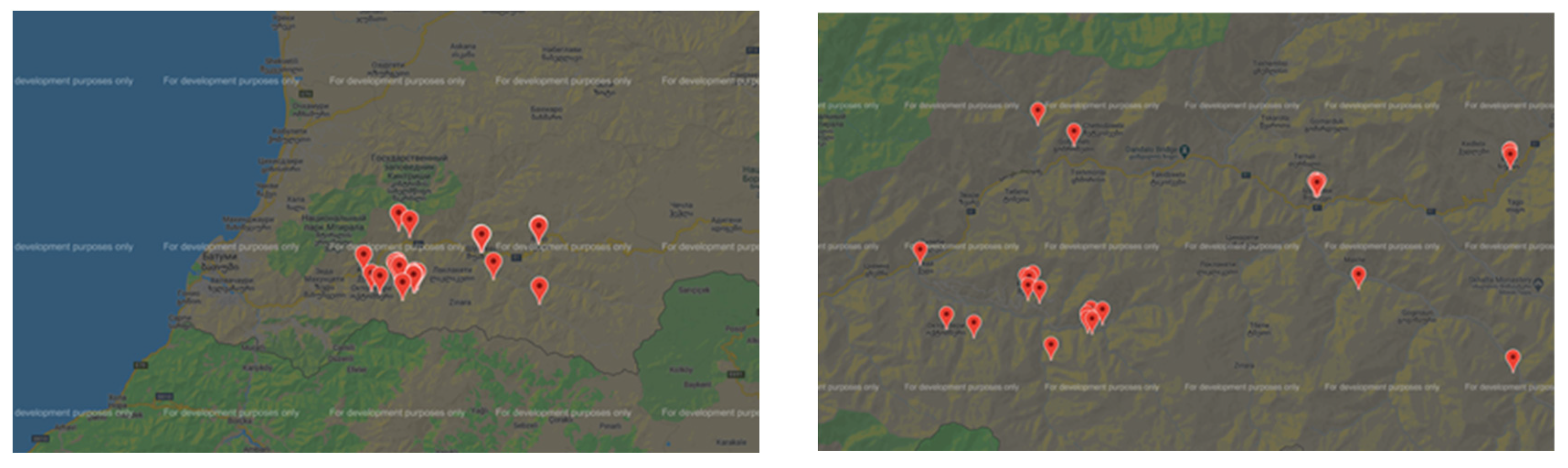
Figure 2.
Jara honey characteristics of water, dry substances, free acids, pH, and Electrical conductivity in western Georgia.
Figure 2.
Jara honey characteristics of water, dry substances, free acids, pH, and Electrical conductivity in western Georgia.
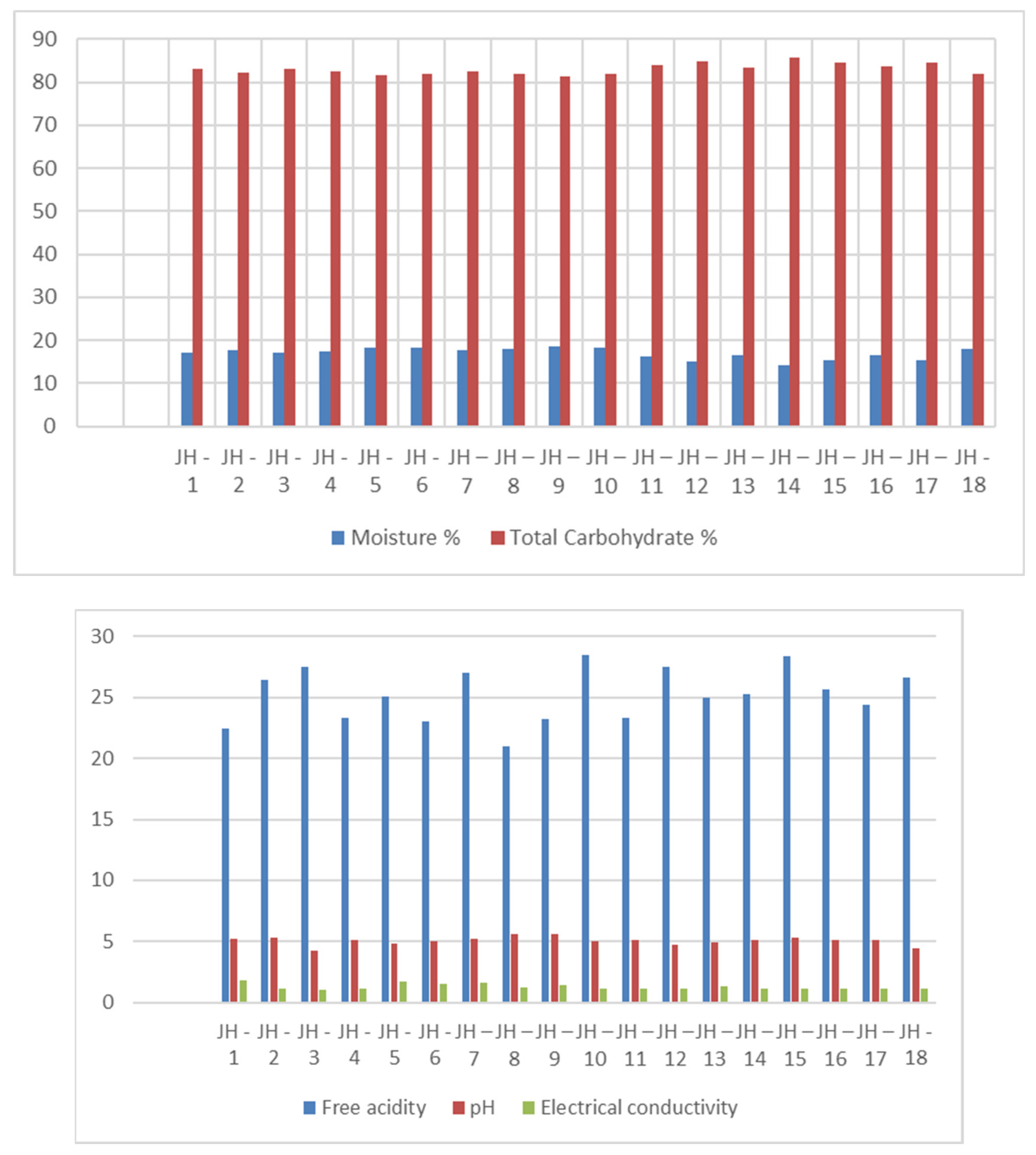
Figure 3.
Chromatograms of a sugar Jara honey samples.
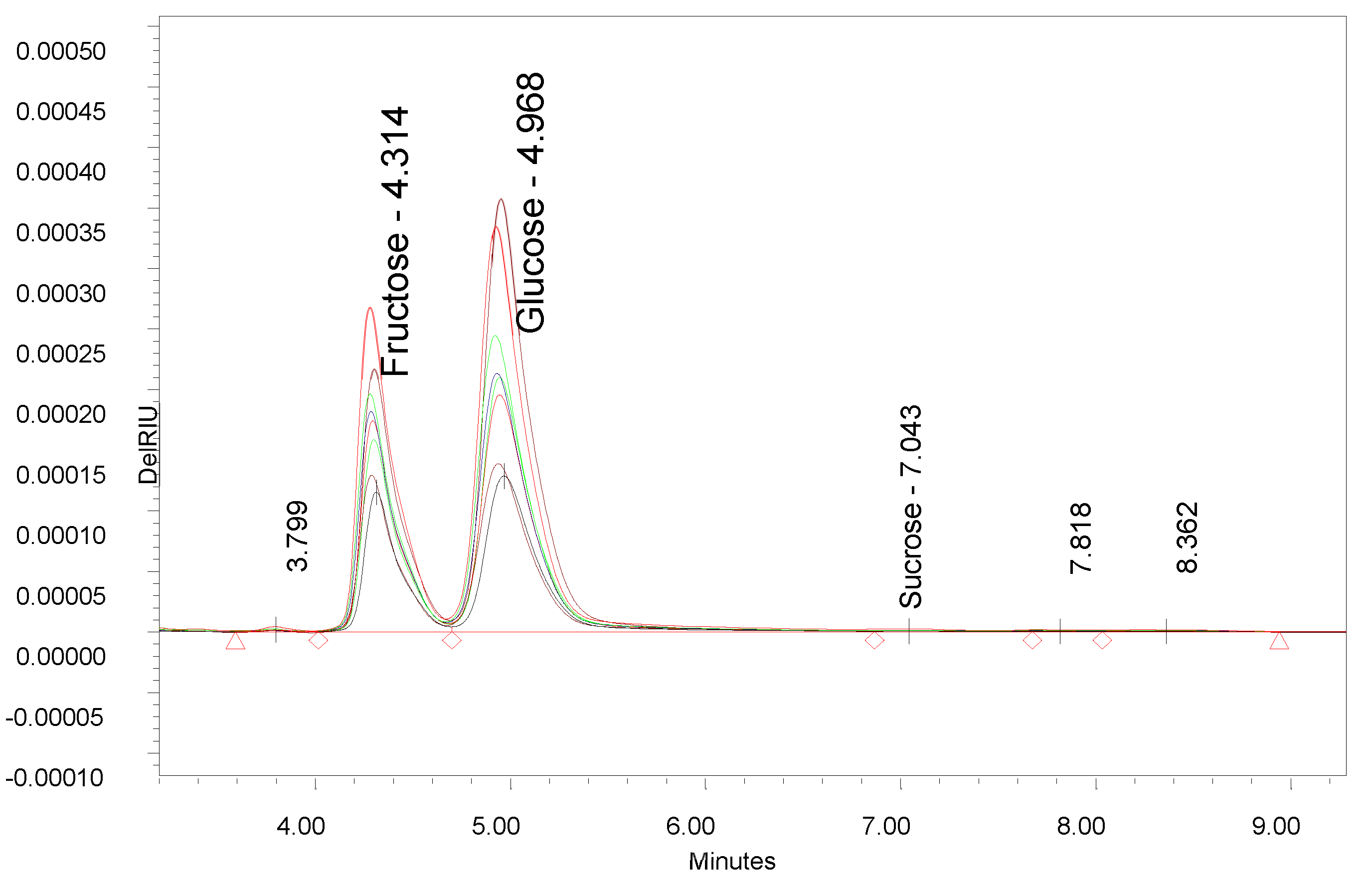
Figure 4.
Quality and quantity of Jara honey carbohydrates in Western Georgia.
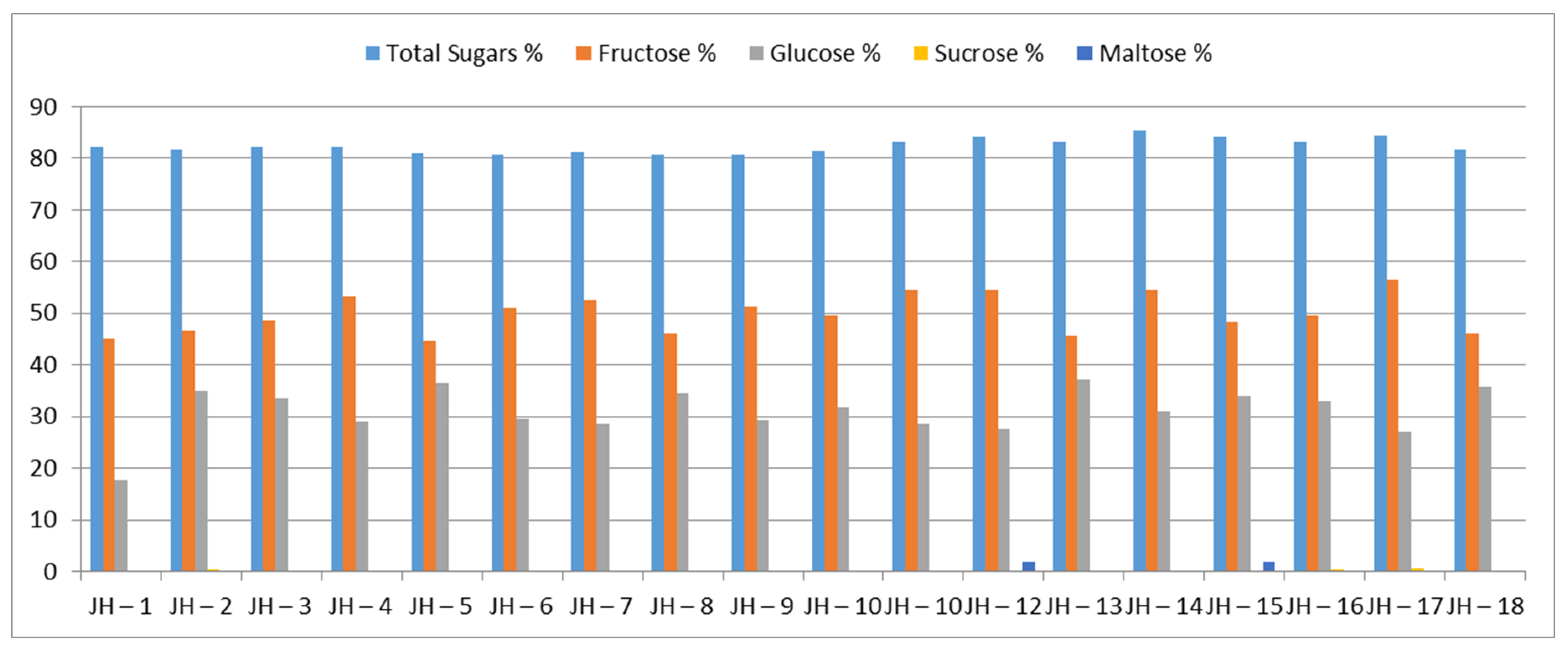
Figure 5.
Fructose/glucose and glucose/water ratio in jara honey.
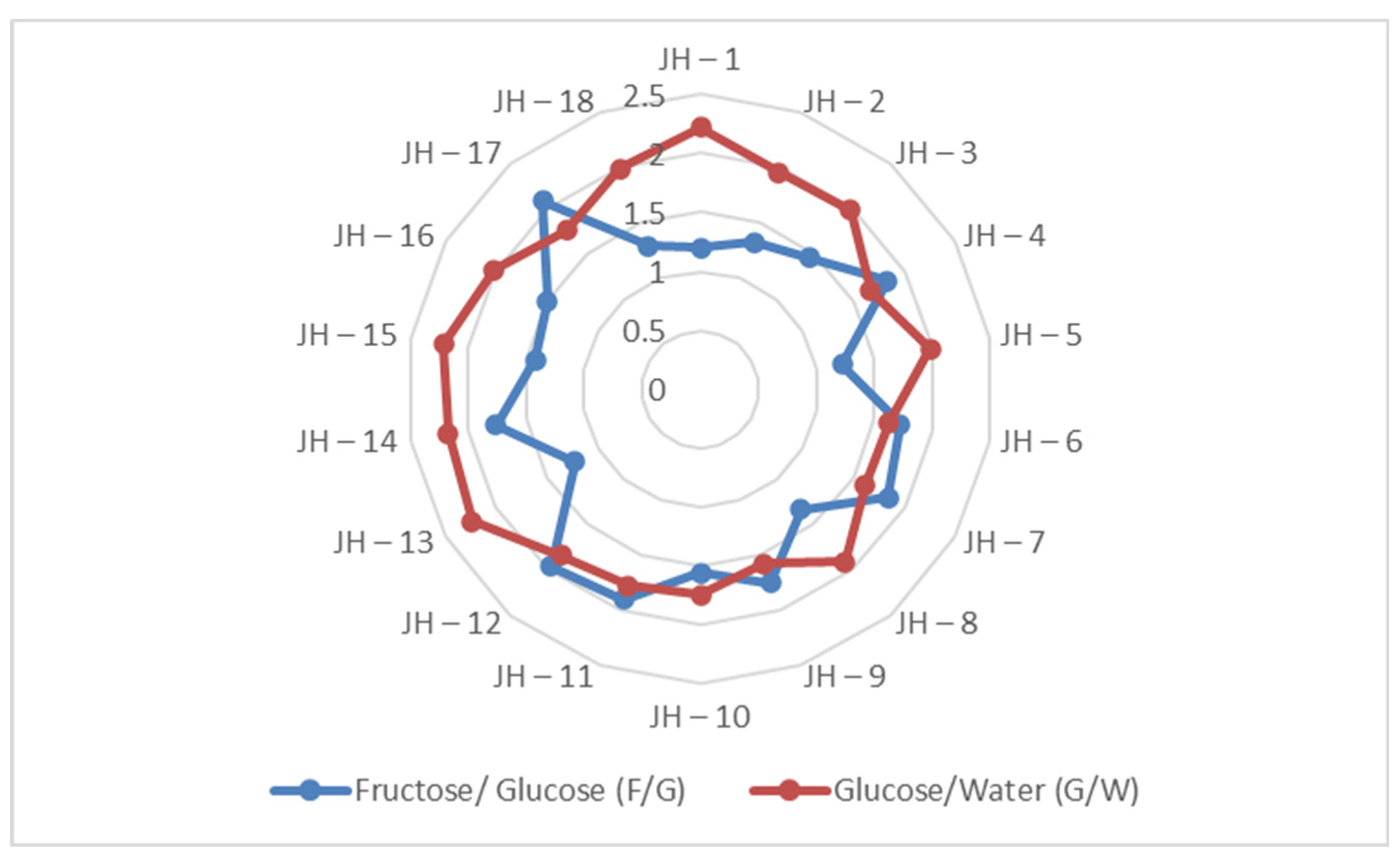
Figure 6.
Chromatograms of the Cations Jara honey samples.
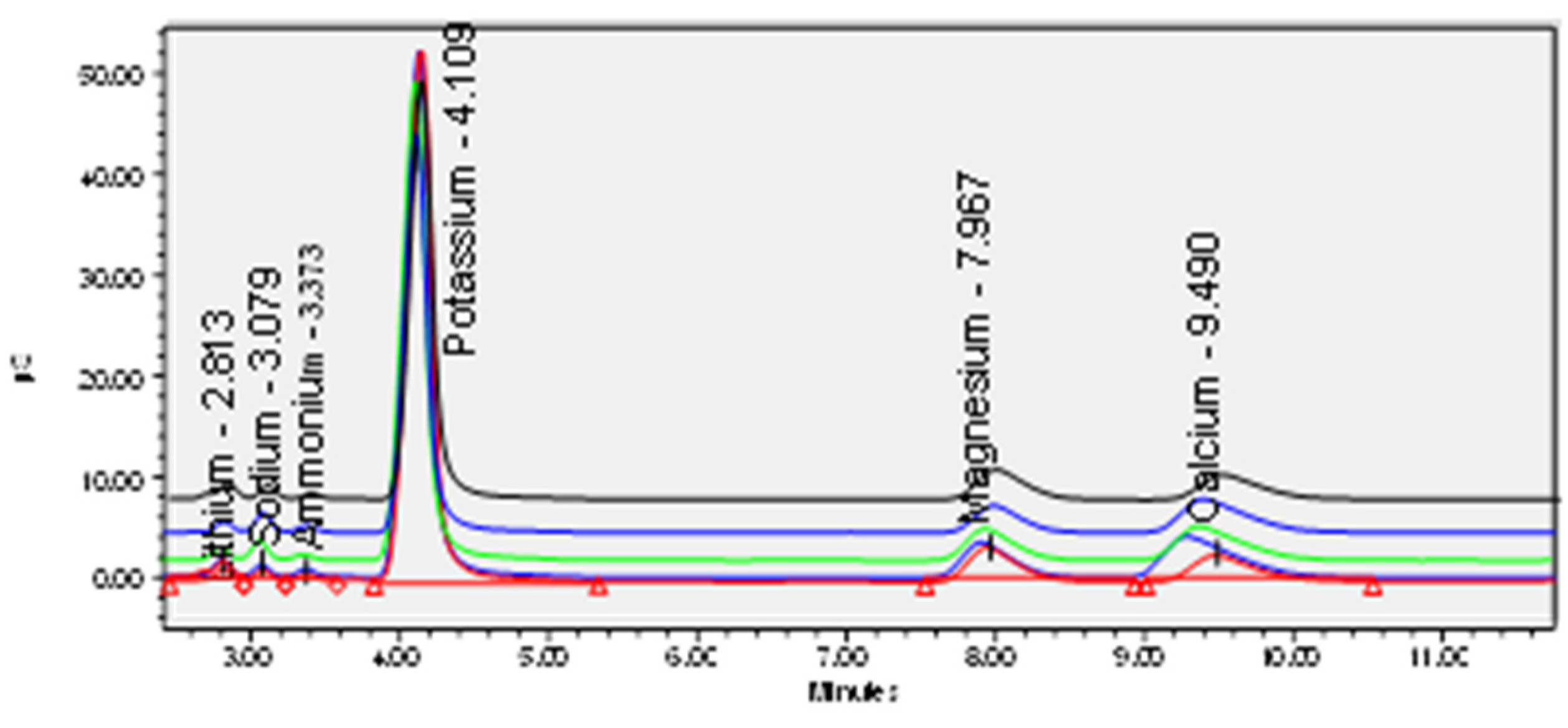
Figure 7.
The Cations of Jara Honey in Western Georgia.
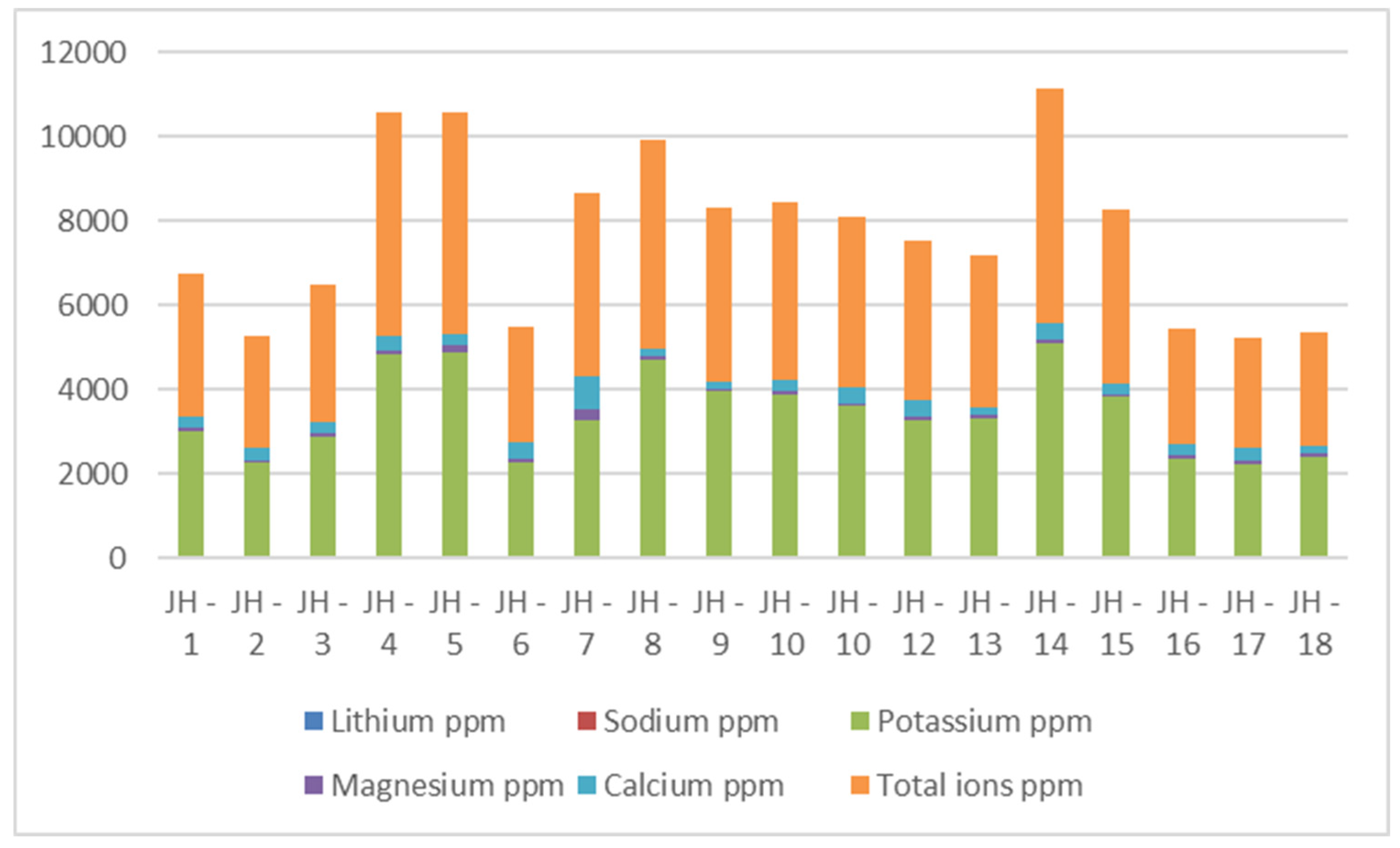
Figure 8.
Total phenols. phenolic acids, flavonoids, color, and antioxidant activity of Jara honey.
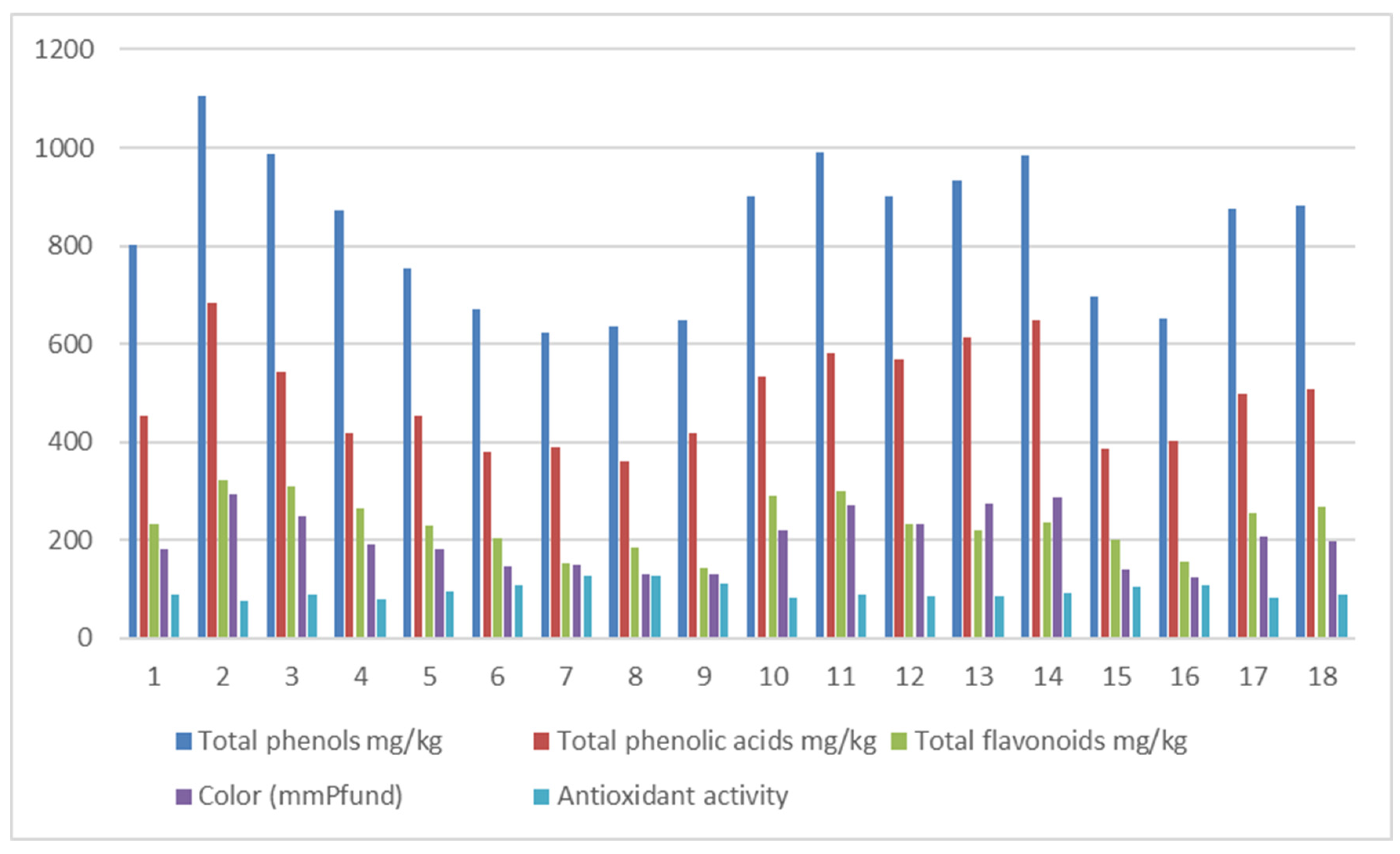
Figure 9.
Correlation between the color intensity of honey samples and biochemical parameters.
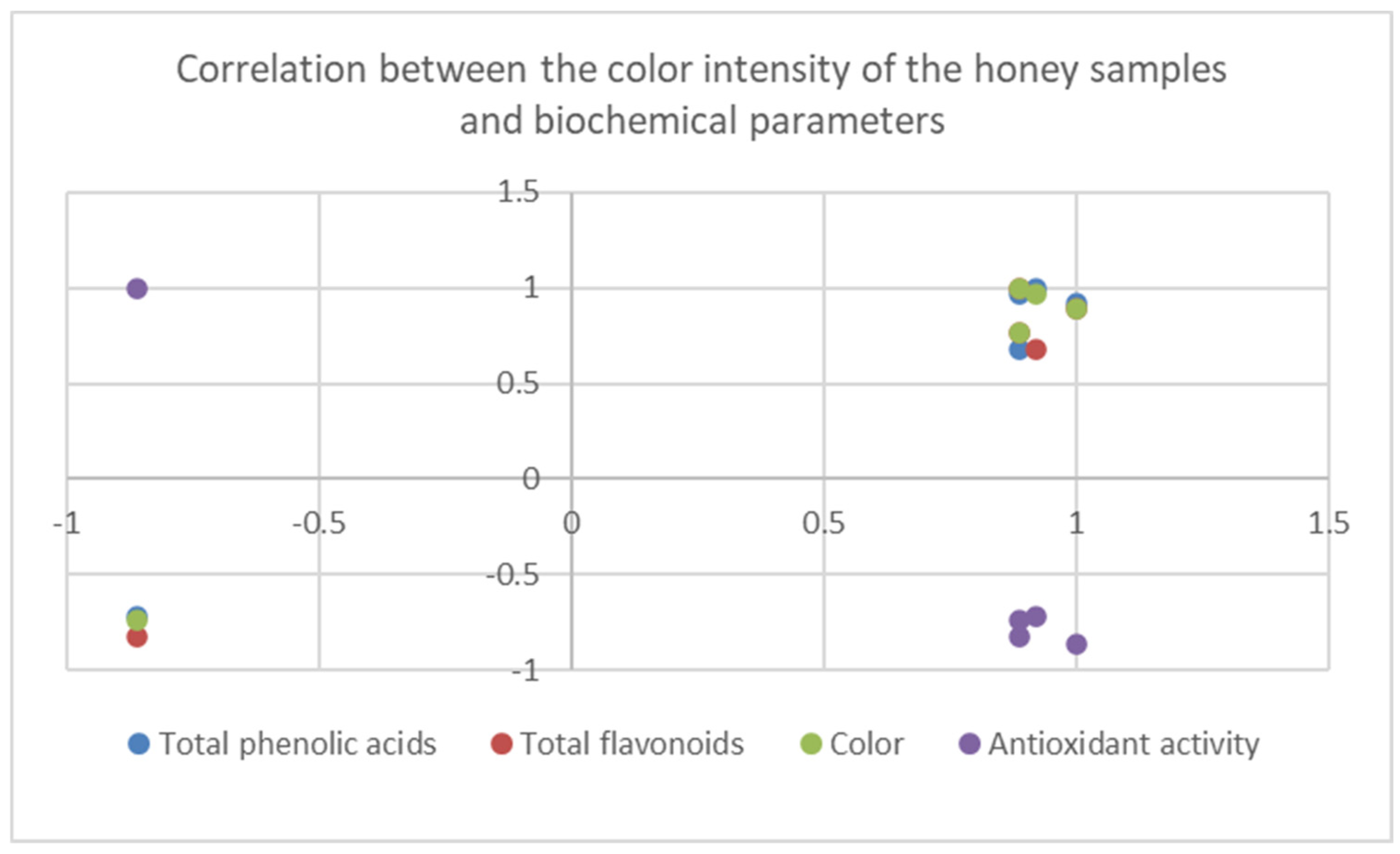
Figure 10.
Proline content, Diastase activity, and Protein content of Jara Honey.
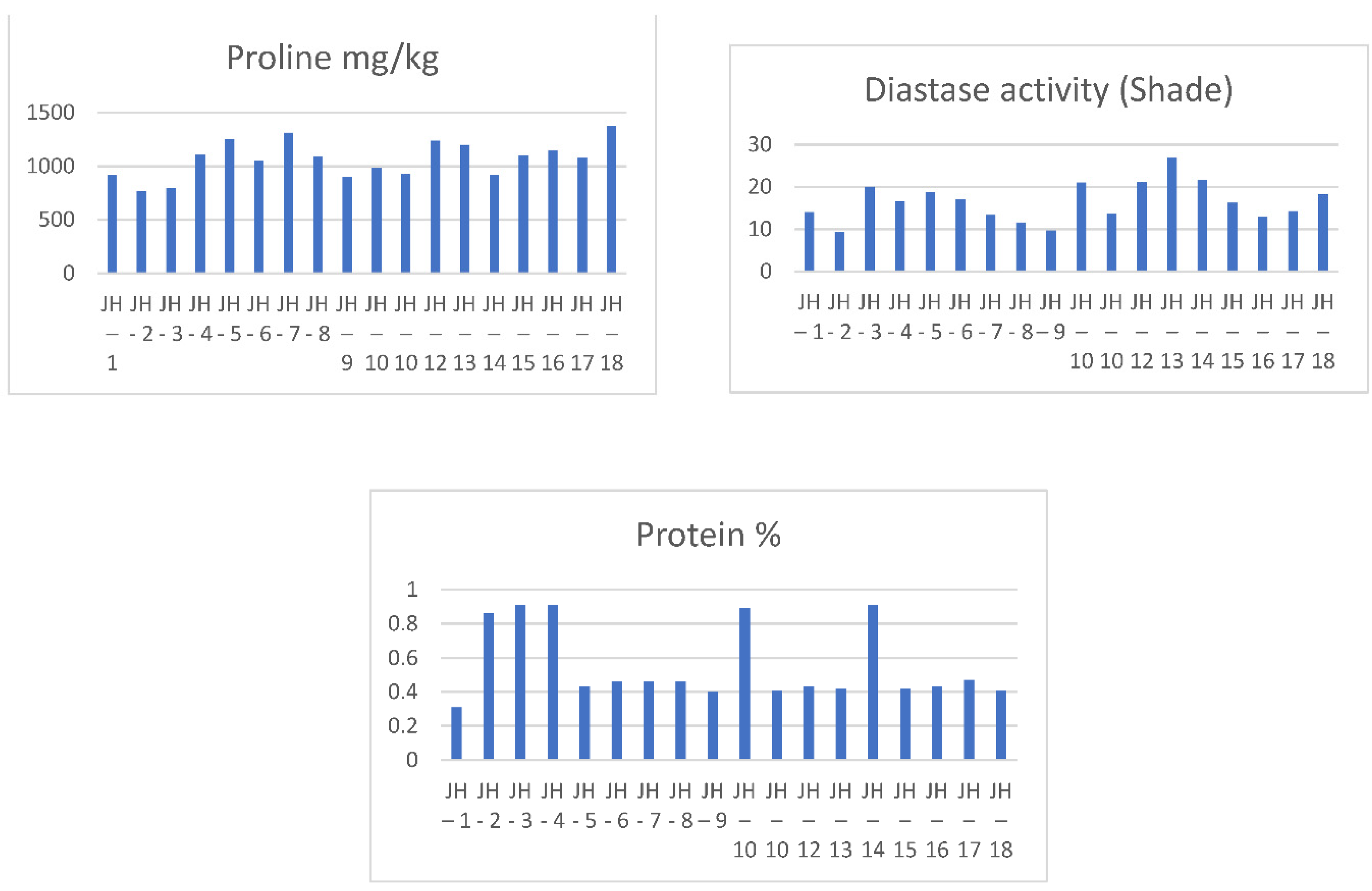
Figure 11.
Pollen types in the Jara honey.
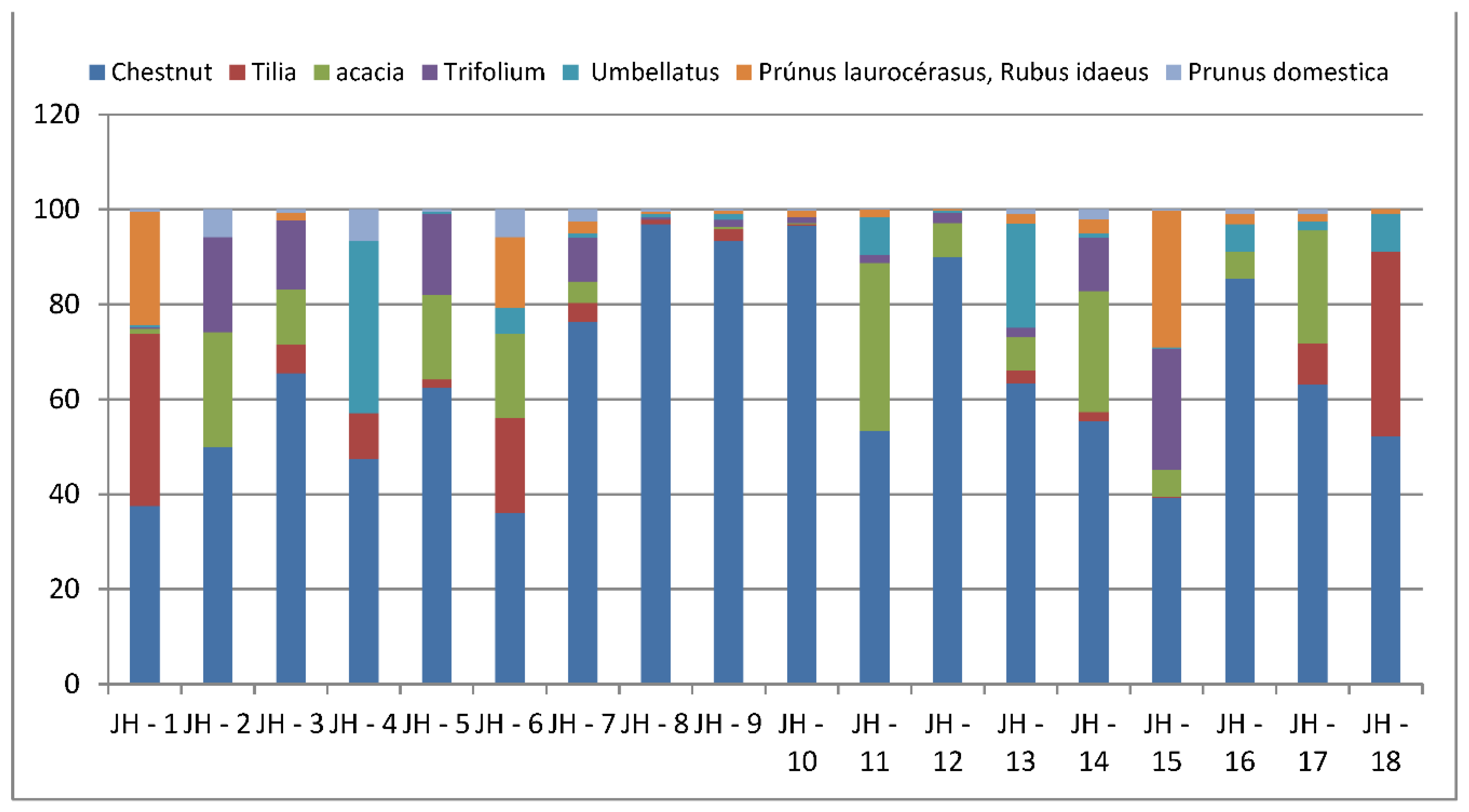
Figure 12.
Chromatograms of a Flower of Rhododendron, scan ESI-MS m/z: 369 [M-H+].
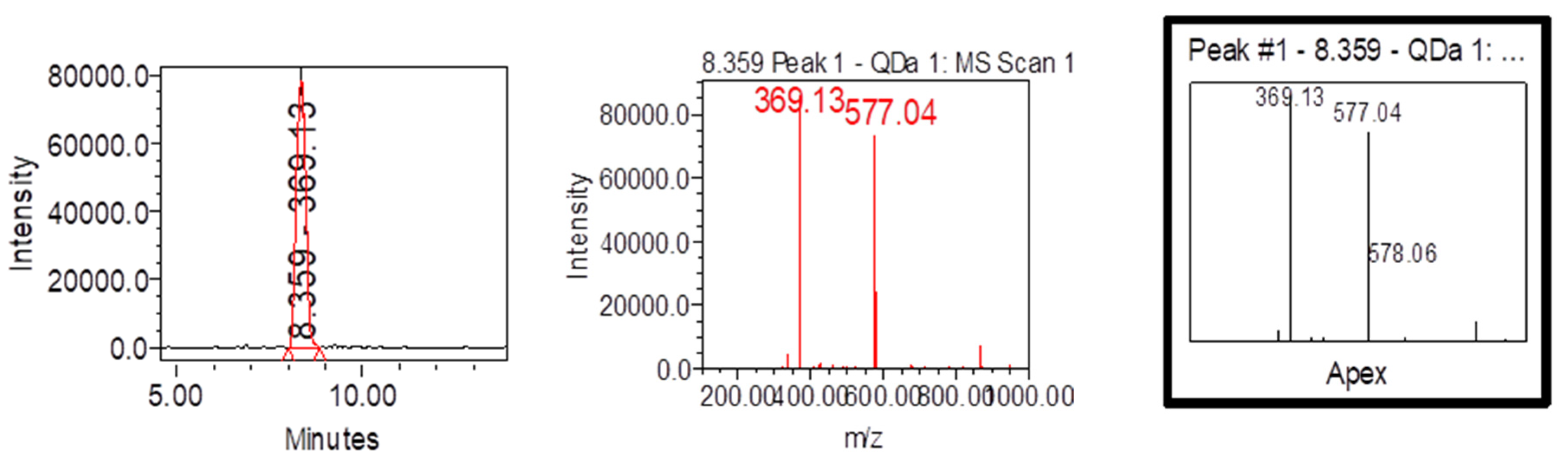
Figure 13.
Chromatograms of a Mad honey, scan ESI-MS m/z: 369 [M-H+].
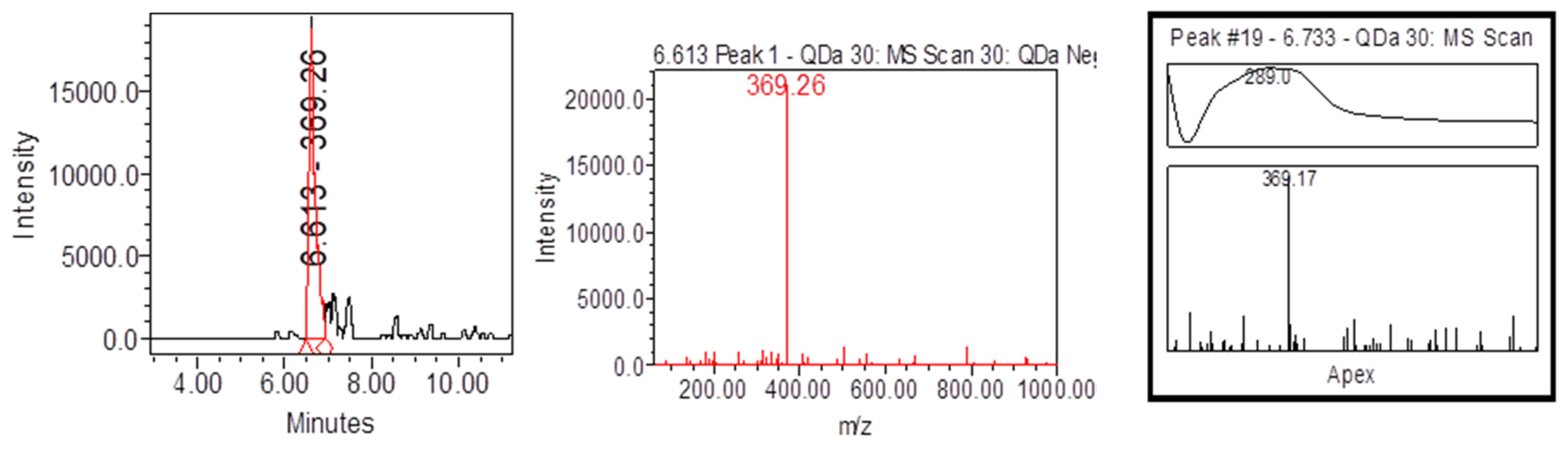
Figure 14.
Chromatograms of a Jara honey 13, scan ESI-MS m/z: 369 [M-H+].
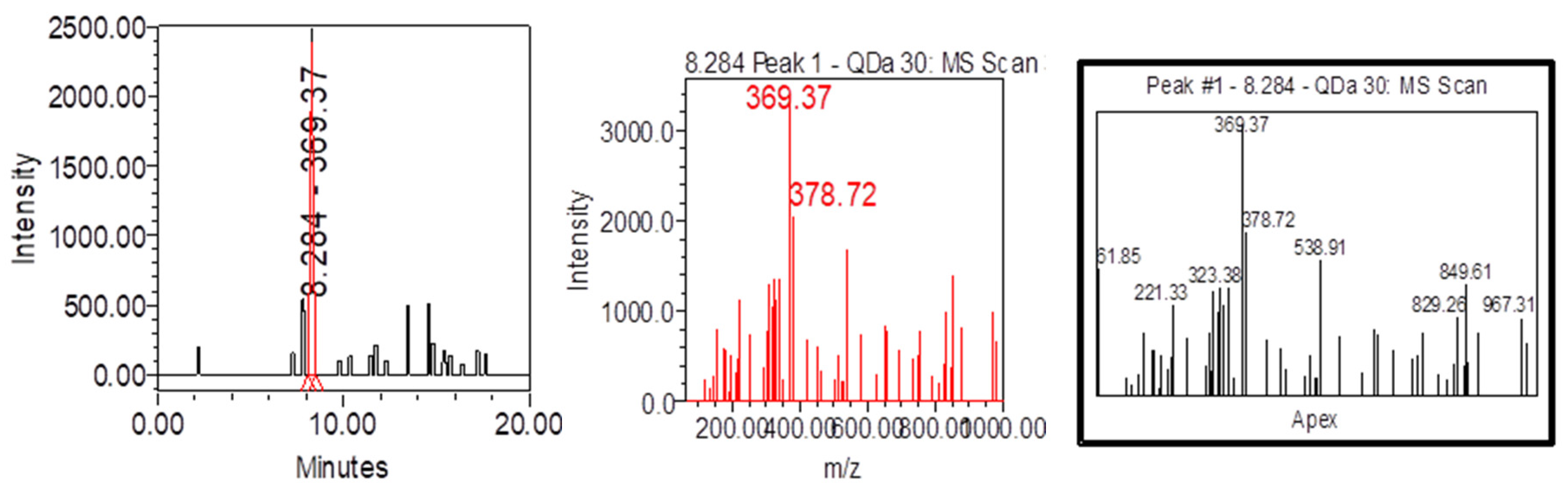
Figure 15.
Chromatograms of a Jara honey 9, scan ESI-MS m/z: 369 [M-H+].
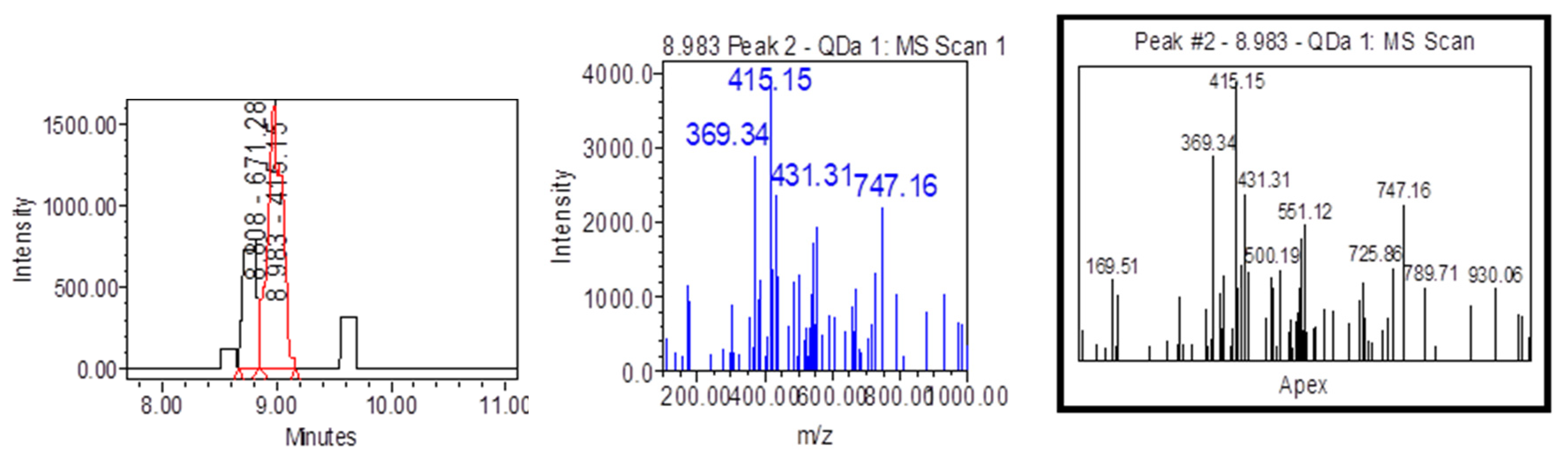
Figure 16.
Chromatograms of a Jara honey 16, scan ESI-MS m/z: 369 [M-H+].
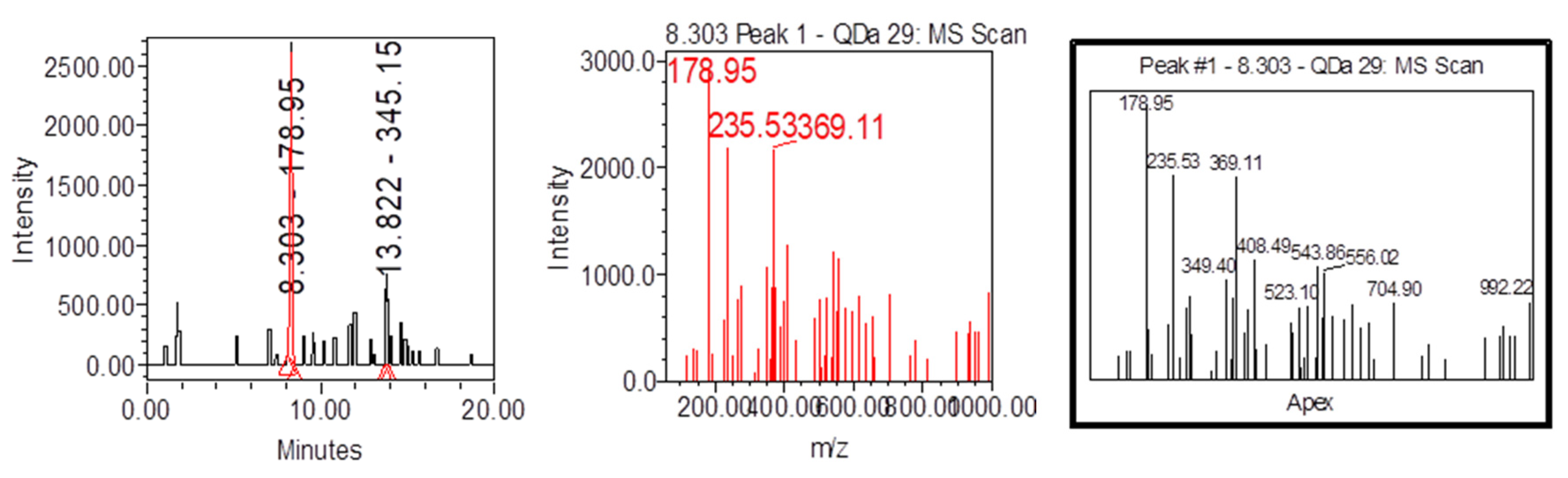

Table 1.
A sample of Jara honey taken for analysis.
| Samples | Samplers code | Sampling Place (municipality) | Height above mean sea level, m | Coordinates |
|---|---|---|---|---|
| Jara Honey 1 | JH - 1 | Keda - Gobroneti | 607 | 41° 39′ 8.5″ N, 42° 2′ 18.6″ E |
| Jara Honey 2 | JH - 2 | Keda - Zesopeli | 536 | 41° 37′ 14.2″ N, 41° 57′ 44.6″ E |
| Jara Honey 3 | JH - 3 | Keda - Tskhmorisi | 523 | 41° 38′ 22″ N, 42° 2′ 50″ E |
| Jara Honey 4 | JH - 4 | Keda - Zendidi | 336 | 41° 36′ 10″ N, 41° 55′ 55″ E |
| Jara Honey 5 | JH - 5 | Keda - Zundaga | 400 | 41° 34′ 42.4″ N, 41° 49′ 32.9″ E |
| Jara Honey 6 | JH - 6 | Keda – Namonastrevi | 820 | 41° 34′ 13″ N, 42° 3′ 10″ E |
| Jara Honey 7 | JH - 7 | Keda - Silibauri | 490 | 41° 34′ 46.3″ N, 42° 0′ 47.1″ E |
| Jara Honey 8 | JH - 8 | Keda - Medzibna | 640 | 41° 33′ 51.9″ N, 41° 58′ 29″ E |
| Jara Honey 9 | JH - 9 | Keda – Merisi | 700 | 41° 34′ 54″ N, 42° 0′ 18″ E |
| Jara Honey 10 | JH – 10 | Shuakhevi - Instkirveli | 1385 | 41° 42′ 57.4″ N, 42° 14′ 9.3″ E |
| Jara Honey 11 | JH - 11 | Shuakhevi - Khabelashvilebi | 766 | 41° 42′ 28″ N, 42° 10′ 45.7″ E |
| Jara Honey 12 | JH - 12 | Shuakhevi - Kidzinidzeebi | 1040 | 41° 35′ 6.1″ N, 42° 11′ 37.4″ E |
| Jara Honey 13 | JH - 13 | Shuakhevi - Karapeti | 1334 | 41° 33′ 8.1″ N, 42° 15′ 24.5″ E |
| Jara Honey 14 | JH - 14 | Khulo - Skhalta | 800 | 41° 35′ 4.84″ N, 42° 19′ 46.21″ E |
| Jara Honey 15 | JH - 15 | Khulo – Kvatia | 1090 | 41° 34′ 40″ N, 42° 24′ 17″ E |
| Jara Honey 16 | JH - 16 | Khulo - Pushrukauli | 1180 | 41° 33′ 41″ N, 42° 27′ 0″ E |
| Jara Honey 17 | JH - 17 | Khulo - Rakvta | 1350 | 41° 34′ 11″ N, 42° 28′ 58″ E |
| Jara Honey 18 | JH - 18 | Khulo - Bardnali | 570 | 42° 36′ 22″ N, 42° 42′ 50″ E |
Disclaimer/Publisher’s Note: The statements, opinions and data contained in all publications are solely those of the individual author(s) and contributor(s) and not of MDPI and/or the editor(s). MDPI and/or the editor(s) disclaim responsibility for any injury to people or property resulting from any ideas, methods, instructions or products referred to in the content. |
© 2024 by the authors. Licensee MDPI, Basel, Switzerland. This article is an open access article distributed under the terms and conditions of the Creative Commons Attribution (CC BY) license (http://creativecommons.org/licenses/by/4.0/).
Copyright: This open access article is published under a Creative Commons CC BY 4.0 license, which permit the free download, distribution, and reuse, provided that the author and preprint are cited in any reuse.


