

Submitted:
23 June 2024
Posted:
25 June 2024
You are already at the latest version
Abstract
This study focuses on the use of gamification, specifically the UrbanGame activity, to enhance heritage education related to the Spanish Civil War bombings in Alicante. The research aims to evaluate the effectiveness of active methodologies in raising cultural heritage awareness among university students. By employing a combination of collaborative work, meaningful learning, problem-based learning, discovery learning, concentration, and motivational strategies, the study involved 122 students from primary and secondary education programs. The methods included the design and implementation of the UrbanGame, followed by surveys to collect quantitative and qualitative data on students' perceptions, satisfaction, and learning outcomes. The results indicated that while collaborative work did not have a significant impact on content comprehension, skill acquisition, or value acquisition, meaningful learning showed a positive trend towards content comprehension. Problem-based learning had a weak but notable relationship with content comprehension, while motivation and concentration significantly influenced learning outcomes. Additionally, the UrbanGame activity promoted memory and cultural heritage by emotionally connecting students with local history. The findings suggest that an integrated approach that combines various active methodologies is essential for maximizing educational effectiveness and cultural promotion.
Keywords:
Heritage education
; Gamification
; Spanish Civil War Air-raid Shelters
1. Introduction
This research falls within the field of heritage education, specifically focusing on the use of active methodologies in the teaching-learning process. It particularly examines the UrbanGame activity related to the bombings of the Spanish Civil War in the city of Alicante (Spain).
Currently, there is a growing interest among educators in implementing pedagogical approaches in classrooms that promote active student participation, foster their autonomy, and enhance meaningful learning, while raising awareness about the importance of cultural heritage. In our case, the connection between the air raids on civilian populations and the construction of air-raid shelters between 1937 and 1938, primarily to save thousands of people who fled daily from these attacks, is evident. This is precisely what we aim to highlight through the implementation of the UrbanGame.
The subsequent visit to the network of preserved air-raid shelters in the city (eight of which are open to the public), with sound recreations of the bombings in some of them, along with explanations at the War Interpretation Center in Alicante, the involvement of students in conducting their own activities in the air-raid shelters, and the creation of a comic related to one of the most terrible bombings on the city, complete this program of activities promoting the cultural heritage of war memory.
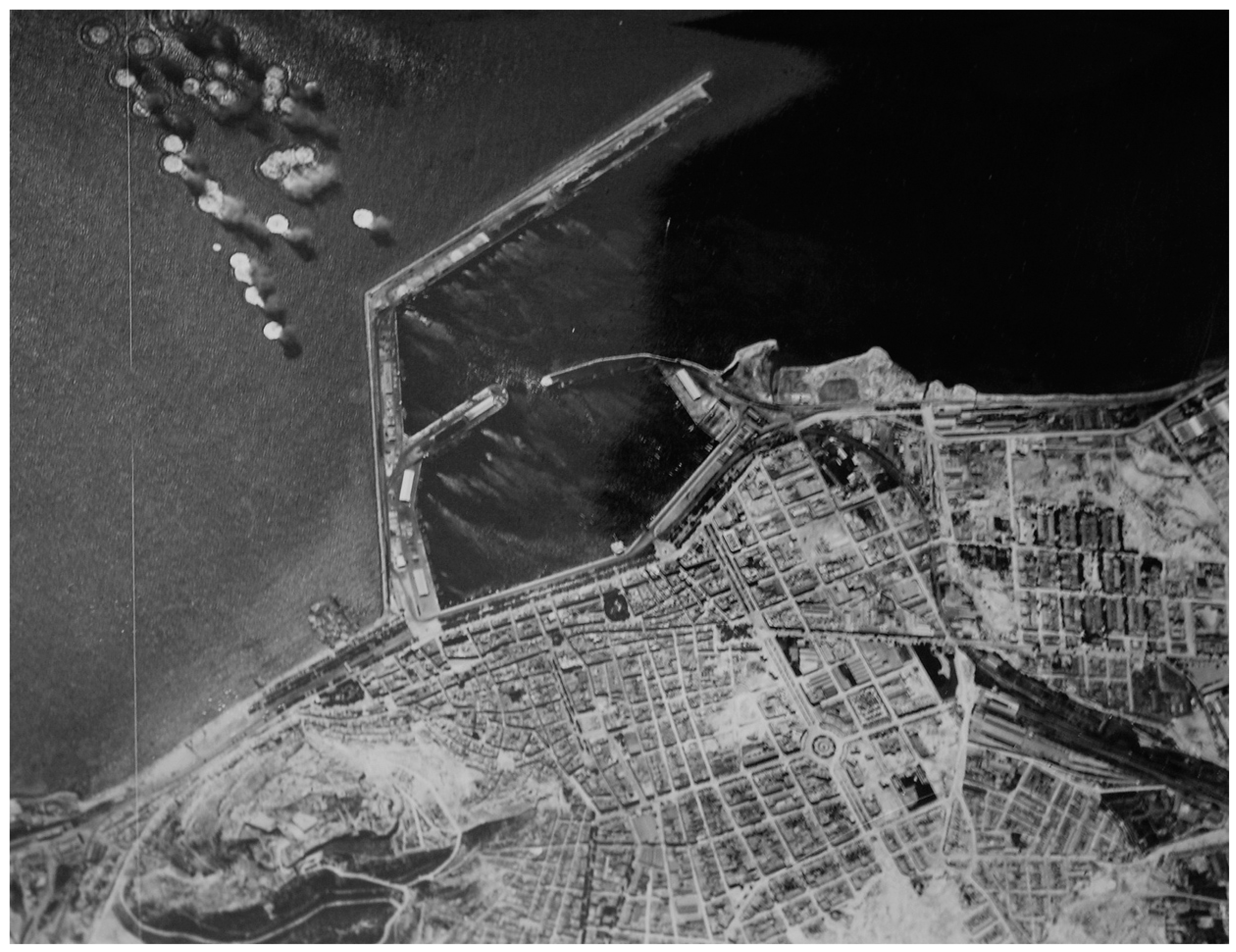
Figure 1.
Bombing of May 17, 1938. In Ufficio Storico dell’Aeronautica Militare. Fondo Operazione Militare Spagna., Rome (USAM). Fons Operazione Militare Spagna (OMS), Series 2, Subseries 7, Folder 30. “Obiettivi vari”.
Figure 1.
Bombing of May 17, 1938. In Ufficio Storico dell’Aeronautica Militare. Fondo Operazione Militare Spagna., Rome (USAM). Fons Operazione Militare Spagna (OMS), Series 2, Subseries 7, Folder 30. “Obiettivi vari”.
The teaching of history in primary education and the innovation in the teaching of economics in the secondary teacher training master's program are two critical areas for the education of future teachers. Therefore, we selected students from these programs to analyze the experience (122 students in total). It is also crucial to investigate the effectiveness of active methodologies in these subjects and explore how variables such as gender and age may influence students' perception, appreciation, execution, and motivation towards these activities.
Nevertheless, it is essential to investigate the effectiveness of active methodologies in these subjects and to explore how variables such as gender and age may influence students' perception, appreciation, execution, and motivation towards these activities.
1.1. Gamification
Gamification is defined as the integration of game design elements into non-game contexts [1]. According to Zichermann and Cunningham [2], this approach focuses on leveraging game mechanics, aesthetics, and strategies to engage people, encourage action, promote learning, and solve problems [3]. Currently, educational gamification is conceptualized as the application of game-like dynamics and mechanics in the educational sphere.
Extensive literature addresses the advantages of games and simulation programs. Shannon [4] defined simulation as the process of designing a model of a real system and conducting experiments with it to understand its behavior or evaluate various strategies for its operation. In the educational context, Wright-Maley [5] describes simulations as pedagogically mediated activities that reflect the dynamics of real-life events, processes, or phenomena, where students act as active agents whose actions influence the outcomes of the activity.
This proposal is considered a simulation rather than a game, based on Wright-Maley’s [5] reflection. Scholars identify three characteristics of games that do not apply to simulations: (1) games contain defined or quantifiable outcomes that determine winning and losing, or success and failure [6,7,8,9], whereas simulations do not have clearly delineated outcomes; (2) games are designed to provide objectives and challenges, along with feedback on progress, such as points or levels [10,11,12], a feature that, while present in certain simulations, is not their primary function; (3) games emphasize entertainment over realism, as noted by Squire [12] and Lin and Sun [13], whereas simulations prioritize realism.
Regarding historical learning simulations, Williams, Dickinson, and Hulme [14] classify them into three types: those that dramatize events, those that place students before specific facts, and those that explore alternatives to historical events by recreating situations for archaeologists or historians [15,16,17]. This proposal fits into the second type, situating students in the city of Alicante during the bombings of the Spanish Civil War and analyzing the response of citizens and institutions.
This idea connects with Valverde's [17] proposal on the three ways in which historicization can be used in learning: by knowing history, constructing it, or participating in it. The third use is particularly relevant, where historical narrative becomes active participation, motivating students and fostering empathetic and active learning [18].
Games are increasingly recognized as fruitful narrative learning environments that go beyond fragmented information [19]. In this proposal, a manual activity is chosen over a technological one, based on various arguments.
Aware of studies on secondary school students, it is recognized that young people develop their identities in flexible communities where new technologies play a crucial role: they enjoy connectivity, require immediate responses, seek social interaction, and prefer experiential learning [20].
Qian and Clark [21] describe game-based learning as "an environment where game content and gameplay enhance the acquisition of knowledge and skills, and where game activities involve problem-solving spaces and challenges that provide players/students with a sense of achievement" (p. 51). In history classes, it is essential to go beyond a superficial examination of facts and figures, maps, and names [22].
History represents humanity's journey through time, and students must understand the motives, perspectives, and agendas behind the actions and events of the past. This involves combining the recall and comprehension of facts (didactic practice) with analytical reflection (based on reason) and affective reflection (based on values and emotions) [23]. This simulation proposal aims to analyze the experiences of minorities (men, women, children, and refugees) in times of war, interweaving daily life with military strategies.
1.2. Serious Games
Serious games, also known as educational or purposeful games, are those designed with objectives that extend beyond mere entertainment. These games are employed to teach, train, simulate real-life situations, or convey information interactively [24].
Serious games encompass a wide range of topics and can be utilized in various fields. Michael and Chen [25] consider serious games as educational and training tools. They analyze how games can be used to convey information, teach skills, and simulate real-life scenarios interactively across diverse domains such as education, healthcare, defense, and industry.
Some types of games that can be categorized as serious games include:
- Educational Games: These games are created with the purpose of teaching specific skills or knowledge. They can cover areas such as mathematics, science, history, languages, and many other subjects. For instance, Annetta [26] presents a theoretical framework for the design of serious educational games, analyzing the importance of games as teaching tools and proposing a learner-centered approach. Annetta emphasizes how educational games can be effectively designed to teach specific skills and knowledge in areas like mathematics, science, history, and languages. The framework also addresses the importance of feedback, challenge, and motivation in the successful design of educational games.
- Training Games: These games are used to train individuals in technical or professional skills. They can simulate work situations or practical scenarios to enhance learning and decision-making. Sitzmann [27] has studied the instructional effectiveness of computer-based simulation games, including those used for professional training. The research focuses on how these games can improve learning and the acquisition of technical skills, reviewing a wide range of studies and empirical evidence to evaluate the effectiveness of simulation games compared to other training approaches. The study addresses aspects such as skill transfer, motivation, and learning satisfaction.
- Simulation Games: These games are used to recreate real-life situations and allow users to practice skills in a safe environment. Examples include flight simulators, medical simulators, or business management simulators. Aldrich [28] discusses how simulation games can recreate real-life scenarios, providing users with practical experience to safely practice skills. The analysis includes the benefits and challenges associated with using simulation games in learning environments [29].
- Health Games: These games focus on promoting health and well-being. They may address topics such as nutrition, physical exercise, stress management, or disease prevention. Primack et al. [30] conducted a systematic review of the literature to explore the role of video games in improving health-related outcomes. The study examines health games that address issues like nutrition, physical exercise, stress management, and disease prevention. The review analyzes various research studies and empirical evidence to evaluate the benefits of health games in promoting healthy behaviors and improving health outcomes, discussing aspects such as motivation, engagement, and effectiveness.
- Social Awareness Games: These games aim to raise awareness and understanding of social issues such as poverty, discrimination, climate change, or human rights. Arnab et al. [31] investigated the relationship between learning elements and game mechanics in serious games, focusing on social awareness games. The study examined how learning elements such as social awareness and understanding of social issues can be mapped through game mechanics in this type of game. The authors present a theoretical and analytical framework for analyzing serious games, specifically those addressing social issues. Examples and case studies are discussed to illustrate how games can raise awareness and foster understanding of relevant social issues.
- Safety Games: These games focus on teaching safety measures and procedures in various environments such as workplaces, industries, homes, or transportation [32].
- Problem-Solving Games: These games encourage critical thinking and problem-solving skills. They may present logical challenges, puzzles, or scenarios where players must find effective solutions. Pellegrini [33] examines research and evidence on the use of computer games for learning, including problem-solving games. The study addresses topics such as critical thinking, problem-solving, and skill transfer in the context of learning games.
These examples illustrate the diverse types of games that can be considered serious games. The versatility of serious games allows their application in a wide variety of fields and areas of knowledge, promoting learning, skill development, and awareness in different contexts.
1.3. UrbanGame as Serious Games
The so-called UrbanGame can be considered a type of serious game. UrbanGames are designed to be played in urban environments such as cities or communities, but they can also be conducted in classrooms, on paper, or with electronic devices, as is the case in our study. Their primary goal is to engage players in educational, social, or cultural activities while they explore and interact with the urban environment or its representations on maps [34,35,36,37].
These games typically combine playful elements with the acquisition of knowledge, the promotion of collaboration, the enhancement of social skills, and awareness of specific issues related to inhabited spaces. They may address topics such as the evolution of human populations over territories, urban challenges like sustainability, urban planning, local history, architecture, street art, or the resolution of community problems.
The UrbanGame uses game structures to motivate and engage participants while providing them with an interactive and meaningful experience in the urban environment. They often employ digital technologies, such as mobile applications or geolocation systems, to guide players and provide relevant information during the game. Larissa et al. [38], for instance, discuss mobile media, art, games, and social movements. In this context, they analyze how mobile games, including UrbanGames, utilize digital technologies to guide players and offer relevant information during gameplay, enhancing the interactive experience of participants in the urban environment.
By integrating educational and social elements into the gaming experience, the UrbanGame aligns with the definition of a serious game, as it serves a purpose beyond pure entertainment, aiming to promote learning, awareness, or active participation in issues related to the urban environment.
2. Materials and Methods
2.1. Design and Preparation of the Simulation
The design and preparation of the simulation are based on several crucial components: a map of the city of Alicante, narratives and rounds, the identification of targets, the placement of anti-aircraft defenses, the localization of bombings, and the creation of air-raid shelters. Each of these elements is essential to ensure an effective and realistic simulation that enables students to explore various historical aspects and reflect on their contemporary relevance.
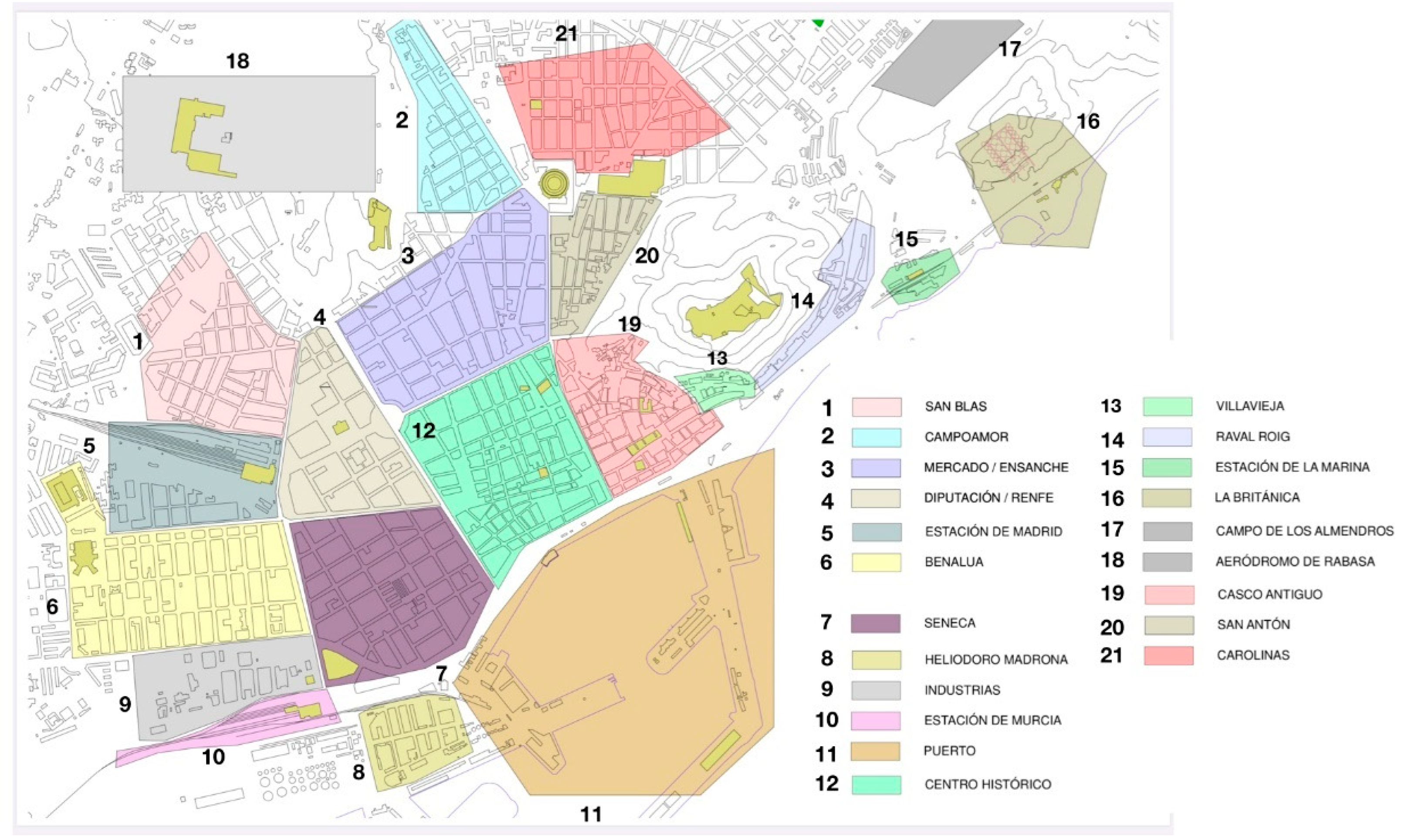
A size A0 map of the city of Alicante will be used as the game board for the simulation activity. Students will be organized into pairs or trios and assigned a map divided into neighborhoods identified by different colors. This division aims to facilitate localization and exploration of various areas of the city, helping students to better understand the historical events that took place during the Spanish Civil War. The color-coded division also allows for easy identification and orientation within the map.
Figure 2.
Map divided into neighborhoods of the city of Alicante (own creation).
A narrative has been designed based on the historical events experienced in Alicante during the Civil War, grounded in historical documentation and reference literature [39,40,41]. From this historical narrative, 21 rounds were established for the simulation. Each round presents a historical context introduced through an explanatory video, including maps of the era, archival photos, and other resources. The video is paused at each round to allow students to perform a series of actions on the map using a timer.
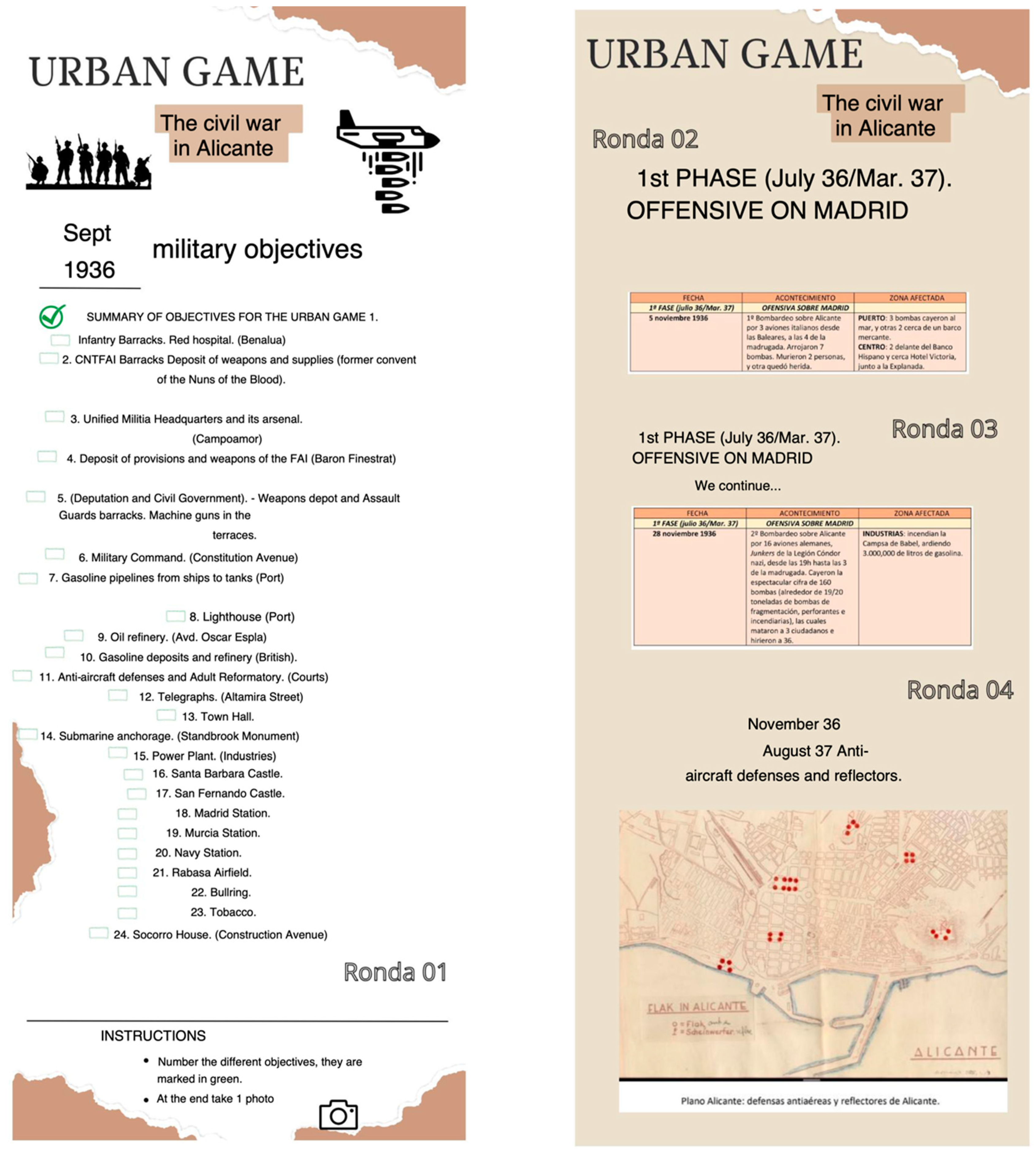
The simulation is structured into four phases: Nazi spies studied the area to establish targets, Republican institutions organized anti-aircraft defenses and spotlights, bombings were carried out on military and civilian targets, and air-raid shelters were created by passive defense.
Figure 3.
Explanatory brochures for students when conducting the UrbanGame. Own creation.
Historical documentation indicates that the city of Alicante was studied by Nazi spies to identify targets. A series of maps preserved in the General Military Archive of Ávila (AGMAV C 2126,2/13) [40] have been used to establish a list of elements that students must identify and mark on the map. The goal is for them to become aware of the elements considered vulnerable by enemy forces to weaken the city.
Students are required to identify on the map the locations of anti-aircraft defenses and Republican spotlights using a red marker, imitating the original map.
Figure 4.
Documents and maps of supposed military targets in Alicante, drawn by Nazi spies in 1936. Archivo General Militar de Ávila (AGMAV) C 2126,2/13).
Figure 4.
Documents and maps of supposed military targets in Alicante, drawn by Nazi spies in 1936. Archivo General Militar de Ávila (AGMAV) C 2126,2/13).

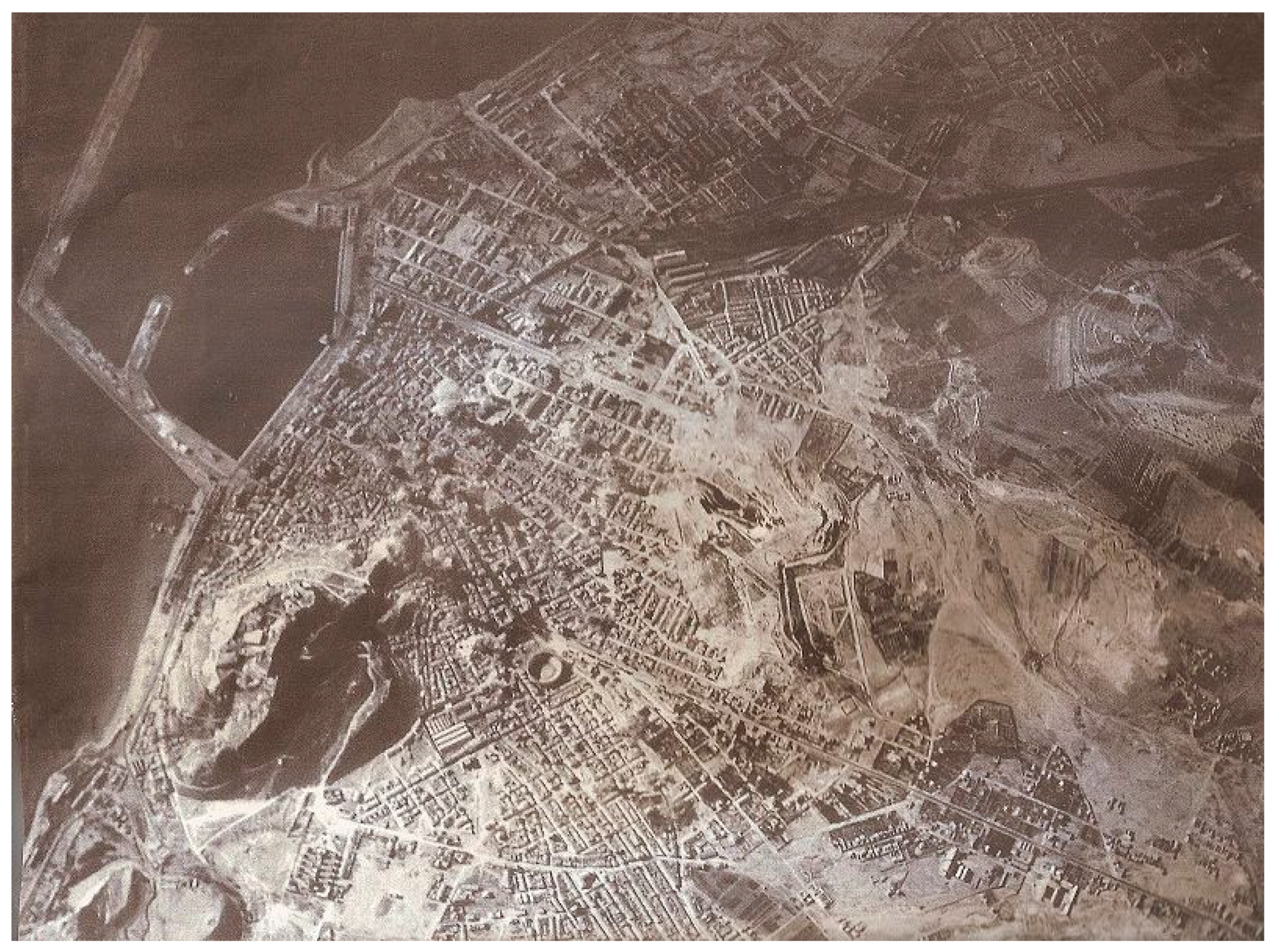
During the Civil War, Alicante suffered numerous bombings that caused significant damage to military and civilian targets [40,41,42]. Bombings that impacted military elements and civilian buildings were selected, with special attention to the bombing of the central market, as it was the most severe among those suffered. This approach helps students better understand the scale and impact of the bombings on the city.
Figure 5.
Aerial photograph of the devastating bombing on February 12, 1939. In USAM. OMS. Busta 32: "Obiettivi vari. Raccolta n. 3".
Figure 5.
Aerial photograph of the devastating bombing on February 12, 1939. In USAM. OMS. Busta 32: "Obiettivi vari. Raccolta n. 3".
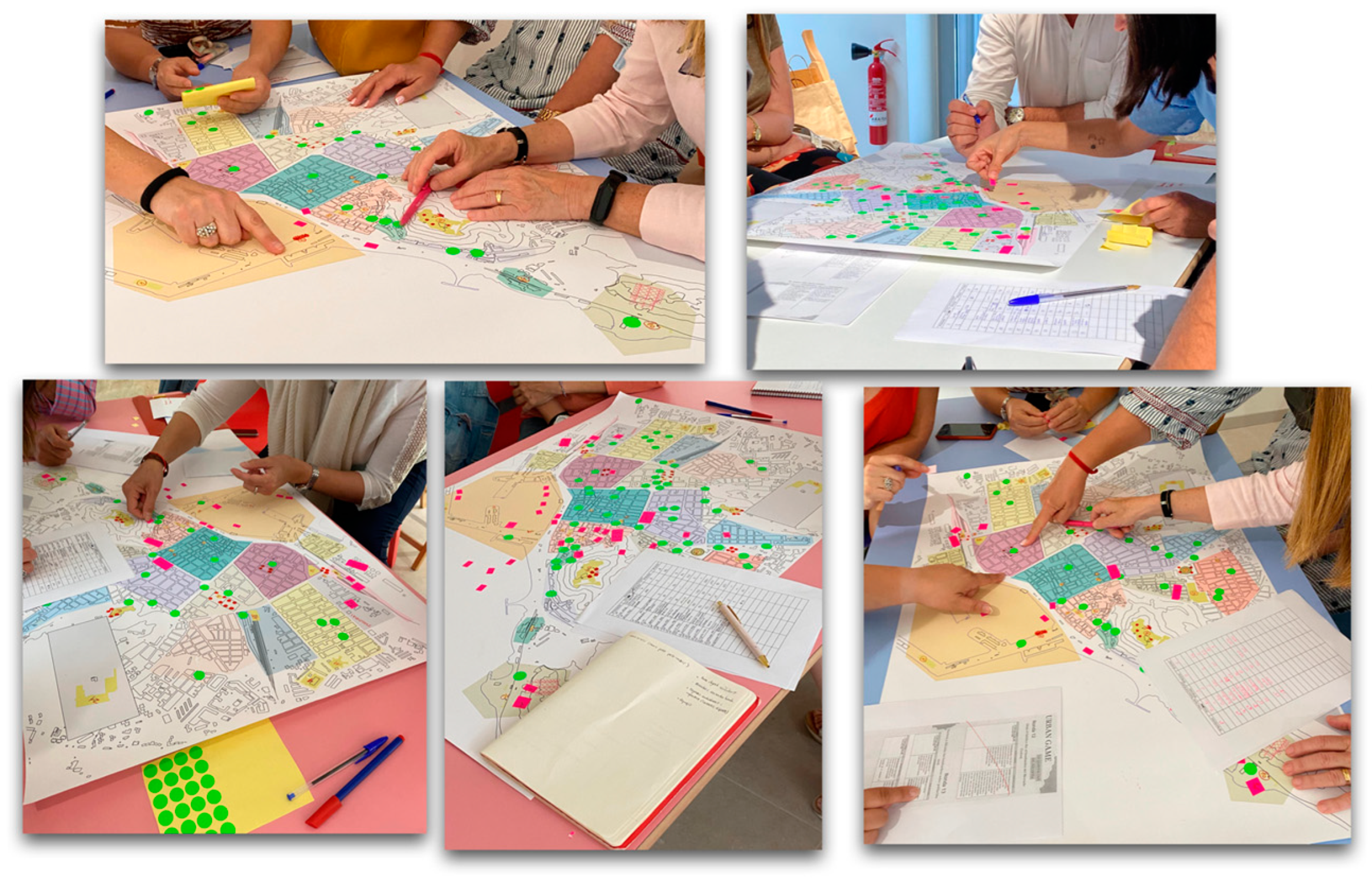
Rectangular stickers will be used to identify air-raid shelters. Students will utilize a dossier that outlines the data for each round and a supplementary sheet where they will record the number of bombs, casualties, and injuries. This method allows them to maintain a detailed record of the bombing consequences and comprehend the importance of having air-raid shelters during the Civil War.
Figure 6.
Map with stickers, notepad, and game sheet of the UrbanGame during the validation sessions.
Figure 6.
Map with stickers, notepad, and game sheet of the UrbanGame during the validation sessions.
2.2. Validation with Faculty and Activity Design for Students
Currently, educators have the opportunity to implement active methodologies in the classroom, especially when educational regulations require it. In a training course for primary and secondary school teachers and its effectiveness was evaluated through a satisfaction survey and a dialogue among participants. The positive feedback from the attending teachers regarding the content acquisition process was essential for identifying improvements in the activity [43].
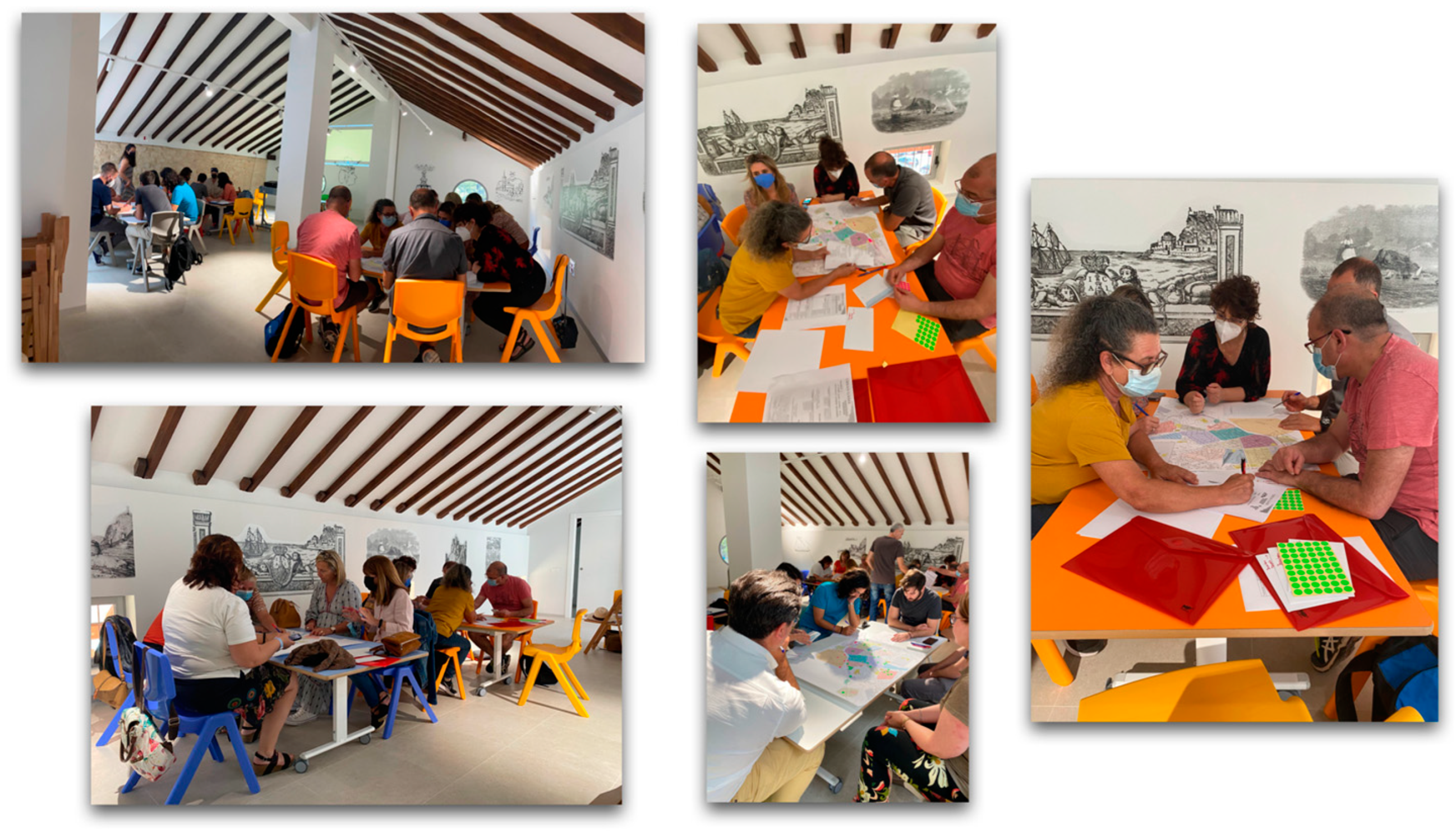
Figure 7.
Faculty conducting the game during the validation sessions of the UrbanGame.
Based on the results obtained from the training course, a methodological proposal was developed to gather detailed information on student performance in the proposed simulation and their perception of it. This proposal includes a specific design for data collection and student evaluation, with the aim of academic improvement and adaptation of the activity to the needs and preferences of the students.
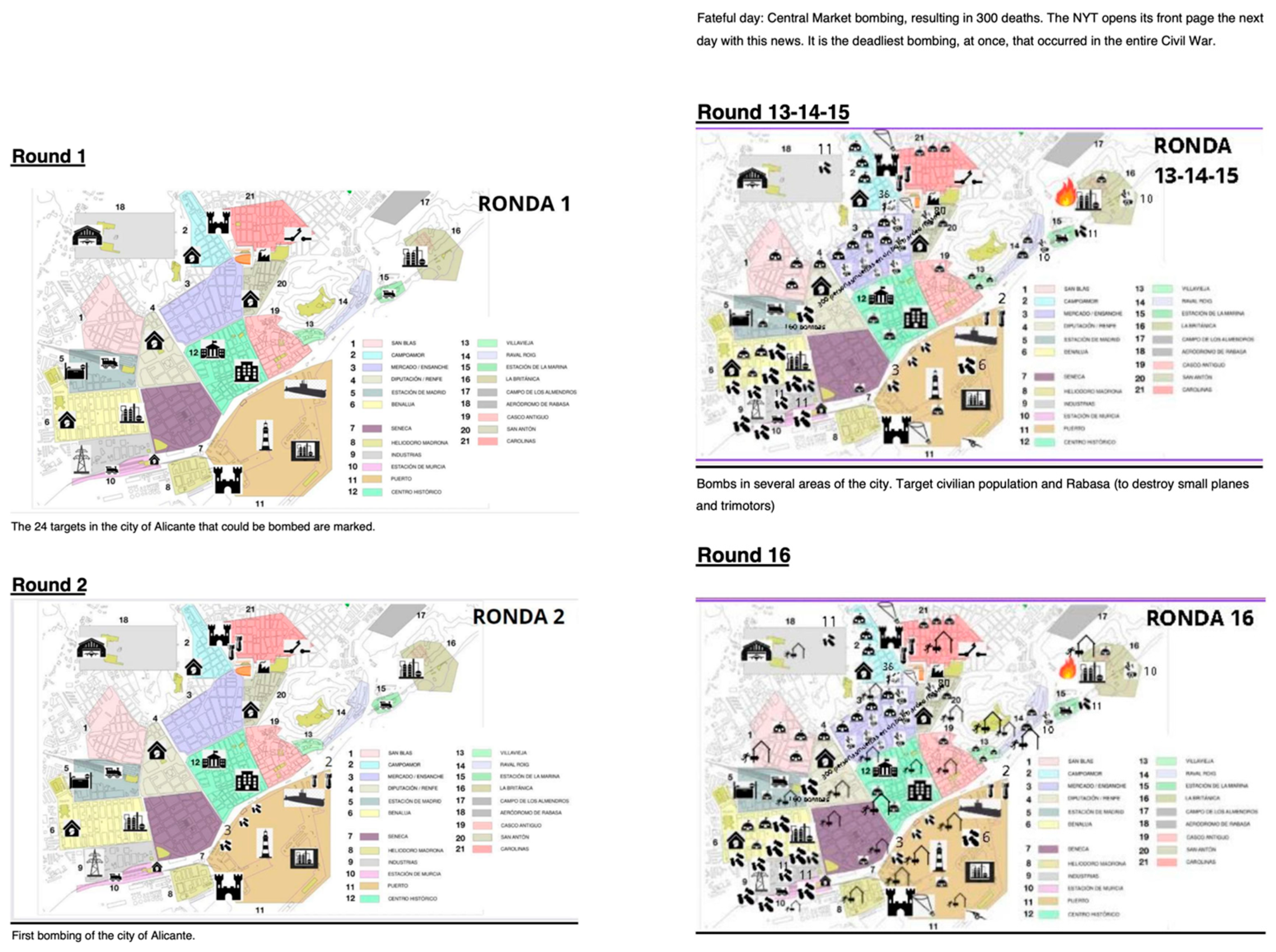
Figure 8.
Evolution, focusing on the first and last rounds, of the UrbanGame on the bombings during the Spanish Civil War in Alicante, conducted by some university students. In this case, stickers have been replaced by icons referring to military targets, bombings, and the construction of air-raid shelters.
Figure 8.
Evolution, focusing on the first and last rounds, of the UrbanGame on the bombings during the Spanish Civil War in Alicante, conducted by some university students. In this case, stickers have been replaced by icons referring to military targets, bombings, and the construction of air-raid shelters.
For data recording in the simulation, the approach by Franciose and Mehrieng [44] was followed, adapting it to the specific needs of this research. Additionally, the questionnaire was developed following the six-phase procedure described by Thiagaraja [45] and the themes proposed by Kriz and Nöbauer [46]. Data recording was carried out in three phases: game recording, theoretical test, and Google Form questionnaire.
This phase aims to evaluate the activities and performance during the game. Students will take photographs of the urban map after each round to document its evolution and destruction. Subsequently, a video will be created to visualize the evolution and destruction of the urban layout.
- Students will be asked to express their emotions, which may vary from empathy, anxiety, anguish, or calm during different moments of the activity, such as bombings, passive defense, construction or absence of shelters, and the threat of espionage.
- The dynamics and roles that have emerged will be evaluated, such as the emergence of a natural leader, the adoption of different roles, the prevalence of certain actions over others, reading documents, moments of dialogue and confrontation of ideas, competitiveness, or passivity.
- The activity also helps students better understand the reality around them, including situations involving women, children, the elderly, or refugees. It will be evaluated whether students empathize more from everyday or institutional perspectives and how they apply what they have learned to real life by learning more about the neighborhoods and urban layout of their city.
- During the simulation, students should identify several learning elements, such as the phases of the war, the massive arrival of refugees, escape by boats, food shortages, and bombings of civilian buildings.
- Students will speculate about different hypothetical scenarios to consolidate historical causality processes. For example, they might be asked what would have happened if the sirens had sounded during the bombing of Alicante's central market or if the ship Stambrook had not arrived at Alicante's port to save the last citizens of the Spanish Republic.
- It is crucial that students understand that situations similar to those simulated can recur in real life. This is the moment to empathize and reflect on behaviors in comparable real-life situations, allowing them to make informed decisions in the future.
The theoretical test is designed to evaluate knowledge acquisition through five multiple-choice questions and two open-ended questions.
2.3. Participants
The study included students of both genders from two different groups. On the one hand, there were third-year primary education students taking the history/geography didactics course. On the other hand, secondary teacher training master's students enrolled in the innovation in economics teaching course were included. Diversity in terms of age was considered, covering different developmental stages.
The sample consisted of 122 students, with 48 enrolled in geography didactics, 50 in history didactics, and 24 in the master's course. Participant selection was comprehensive, including all students enrolled in these subjects (Table 1).
2.4. Data Collection Instruments
To collect information on students' perception, appreciation, performance, motivation, cognition, emotion, and satisfaction surveys adapted specifically for this study were used. These surveys included questions designed to obtain quantitative responses on various aspects of the implemented activities, such as the perception of usefulness, level of participation, degree of satisfaction, and experienced motivation. Additionally, relevant sociodemographic data such as participants' gender and age were collected.
Additionally, questions were asked about Learning Objectives and Learning Strategies in relation to the experience of conducting the UrbanGame. These aspects will be addressed, at least in part, in this study.
2.5. Procedure
Initially, an exhaustive literature review was conducted to support the selection and design of the active methodologies to be implemented in history didactics and innovation in economics teaching classes. Once the activities were designed and implemented, surveys were applied to the participating students. As mentioned, the surveys were conducted immediately after the activities to collect immediate and relevant information about the students' experience.
2.6. Data Analysis
The collected data were analyzed qualitatively and statistically using appropriate techniques for qualitative and quantitative data analysis. Specific analyses were conducted to evaluate differences in perception, appreciation, performance, and motivation according to participants' gender and age. Additionally, possible relationships between these variables were explored, and relevant patterns or trends in the obtained results were identified.
2.7. Ethical Considerations
Confidentiality and anonymity of the participants were guaranteed by assigning numerical identifiers instead of their real names. All data were treated confidentially and used exclusively for research purposes. Additionally, informed consent was obtained from the participants, and ethical protocols were followed.
2.8. Data Collection Procedure
The data collection procedure was conducted in several stages to ensure the quality and validity of the results. First, students in each course where activities were conducted were asked for informed consent. Next, activities with active methodologies were designed and implemented in history didactics classes in primary education and the innovation in economics teaching course in the secondary teacher training master's program. These activities were tailored to the study's objectives and the students' needs and characteristics. After completing the activities, cognition, emotion, and satisfaction surveys were administered electronically through Google Forms, ensuring confidentiality. Once data were collected, qualitative and statistical analyses were conducted. The results were then interpreted to identify patterns, trends, and significant relationships between the studied variables. Comparisons were made by gender and age to identify possible differences in students' perception, appreciation, performance, and motivation.
3. Results
3.1. Student Opinions on the Relationship Between Learning Strategies and the UrbanGame Activity
To analyze student opinions regarding the relationship between learning strategies in the UrbanGame activity, it is essential to understand the collected data and the provided descriptive statistics.
The evaluated learning strategies included: Collaborative Work, Meaningful Learning, Problem-Based Learning, Discovery Learning, Concentration, and Motivation. In the descriptive statistics, the mean indicates the average responses for each strategy. In this context, the highest means are observed in "Motivation" (5.06) and "Concentration" (5.58), suggesting that these are the most valued or effective strategies according to the students.

Table 2.
Mean and Standard Deviation of Learning Strategies Evaluated in the UrbanGame Activity.
| Strategy | Mean | Std. Deviation |
|---|---|---|
| Collaborative Work | 4.1042 | 2.61940 |
| Meaningful Learning | 4.7083 | 2.46644 |
| Problem-Based Learning | 4.1875 | 2.25649 |
| Discovery Learning | 4.3958 | 2.40336 |
| Oral Expression | 3.0625 | 2.83148 |
| Motivation | 5.0625 | 2.55498 |
| Concentration | 5.5833 | 1.91115 |
In our research context, the median and variance provide valuable perspectives on the distribution and dispersion of scores across different learning strategies evaluated using UrbanGame. The median indicates the central value of each data set, showing that the strategies of Collaborative Work, Meaningful Learning, Problem-Based Learning, and Discovery Learning have medians of 4. This suggests that, in general, scores tend to cluster around this value, reflecting a positive but not outstanding perception in these areas. In contrast, the strategies of Concentration and Motivation have medians of 7, indicating they are highly valued.
Variance measures the dispersion of scores around the mean. Concentration presents the lowest variance (3.652), indicating that scores are more consistent and less dispersed around the mean. This reinforces the idea that UrbanGame is particularly effective in uniformly improving concentration among students. Collaborative Work shows the highest variance (6.861), suggesting significant variability in responses, indicating notable differences in how students perceive the collaborative work facilitated by UrbanGame. The variances of the other strategies range between 5.092 and 6.528, reflecting moderate dispersion of scores, suggesting variability in student perceptions but not as extreme as in the case of Collaborative Work.
In summary, these results show that UrbanGame is particularly effective and consistently perceived as beneficial for concentration, while effectiveness in other areas such as Collaborative Work, Meaningful Learning, and Problem-Based Learning is perceived more variably among students.
Table 3.
Median, Standard Deviation, and Variance of Learning Strategies Evaluated in the UrbanGame Activity.
Table 3.
Median, Standard Deviation, and Variance of Learning Strategies Evaluated in the UrbanGame Activity.
| Strategy | Median | Std. Deviation | Variance |
|---|---|---|---|
| Collaborative Work | 4.0000 | 2.61940 | 6.861 |
| Meaningful Learning | 4.5000 | 2.46644 | 6.083 |
| Problem-Based Learning | 4.0000 | 2.25649 | 5.092 |
| Discovery Learning | 4.0000 | 2.40336 | 5.776 |
| Motivation | 7.0000 | 2.55498 | 6.528 |
| Concentration | 7.0000 | 1.91115 | 3.652 |
Standard deviation, as a measure of data dispersion around the mean, provides an understanding of how student scores vary for each learning strategy evaluated with UrbanGame.
The lowest standard deviation is observed in Concentration, with a value of 1.91115. This low standard deviation indicates that student scores in Concentration are tightly clustered around the mean. This reinforces the idea that UrbanGame is uniformly perceived as effective in improving concentration, as student responses do not vary significantly.
Conversely, the highest standard deviation is found in Collaborative Work, with a value of 2.61940. This high standard deviation suggests significant variability in student responses regarding the effectiveness of UrbanGame in enhancing collaborative work. Some students may find UrbanGame very useful for improving collaborative work, while others may not perceive the same level of effectiveness.
The strategies of Meaningful Learning, Problem-Based Learning, and Discovery Learning have intermediate standard deviations, ranging from 2.25649 to 2.55498. These values indicate moderate dispersion of scores around the mean, suggesting mixed student perceptions of the effectiveness of UrbanGame in these areas, with notable but not extreme variability.
The table of frequency percentages for UrbanGame regarding learning strategies reflects the relative effectiveness of different strategies in relation to the UrbanGame activity. The Concentration strategy has the highest frequency at 27.1%, suggesting that UrbanGame significantly promotes students' ability to maintain attention and focus on assigned tasks.
Collaborative Work and Meaningful Learning have a frequency of 22.9%, indicating that UrbanGame also fosters student cooperation and facilitates the connection of new knowledge with prior experiences, which is essential for deep and lasting learning. The 20.8% frequency in Problem-Based Learning highlights UrbanGame's ability to encourage critical thinking and problem-solving, indispensable skills in modern education.
On the other hand, Discovery Learning has a frequency of 10.4%, showing that although this strategy is less frequent, it is still relevant in the UrbanGame context, supporting exploration and self-learning. Motivation, with 6.3%, although less prominent, suggests that UrbanGame contributes to maintaining student interest and willingness to learn.
Overall, the data suggest that UrbanGame is a versatile tool that supports various learning strategies, being especially effective in enhancing concentration and promoting collaborative and meaningful methods.
Table 4.
Percentage Distribution of Learning Strategies in the UrbanGame Activity.
| Learning Strategy | Percentage |
|---|---|
| Collaborative Work | 22.9% |
| Meaningful Learning | 22.9% |
| Problem-Based Learning | 20.8% |
| Discovery Learning | 10.4% |
| Motivation | 6.3% |
| Concentration | 27.1% |
3.2. Non-Parametric Correlations in Strategies and Their Relationship to Learning Objectives
The data analysis is based on the Kruskal-Wallis Test, a non-parametric test that evaluates whether there are statistically significant differences between multiple groups of an independent variable with respect to an ordinal or continuous dependent variable that is not normally distributed. In this context, three key areas in the UrbanGame are examined: content comprehension, skill acquisition, and value acquisition, in relation to different learning strategies.
3.2.1. Analysis of Content Comprehension
The following groups were analyzed: Collaborative Work, Meaningful Learning, Problem-Based Learning, Discovery Learning, Oral Expression, Motivation, and Concentration. The learning strategies of Meaningful Learning and Problem-Based Learning show significant differences among the levels of comprehension, suggesting that students with higher content comprehension value these strategies more. The other strategies do not show significant differences.
Table 5.
Kruskal-Wallis Test Results for Content Comprehension Levels.
| Strategy | H | p-value | Significance |
|---|---|---|---|
| Collaborative Work | 3.076 | 0.079 | No significant differences |
| Meaningful Learning | 3.893 | 0.048 | Significant difference, favors level 5 |
| Problem-Based Learning | 5.574 | 0.018 | Significant difference, favors level 5 |
| Discovery Learning | 1.778 | 0.182 | No significant differences |
| Oral Expression | 0.976 | 0.323 | No significant differences |
| Motivation | 0.575 | 0.448 | No significant differences |
| Concentration | 1.451 | 0.228 | No significant differences |
Figure 9.
Kruskal-Wallis H by Group (Understanding Content).

3.2.2. Other Key Areas
However, in the analysis of Skill Acquisition, none of the learning strategies show significant differences in skill acquisition across different levels. Similarly, there are no significant differences in the analysis of Value Acquisition.
3.2.3. Practical Relevance of Significant Differences in Content Comprehension
In the analysis of Meaningful Learning, an H statistic of 3.893 and a p-value of 0.048 were obtained, indicating a significant difference in content comprehension. This strategy favored students who valued meaningful learning more, achieving greater content comprehension, which is a positive indicator for its implementation in the educational process. The practical relevance of these strategies suggests that their implementation can have a positive impact on content comprehension, leading to better information retention and a deeper application of knowledge in practical contexts.
Figure 10.
Practical Relevance of Problem-based and Meaningful Learning Strategies in Content Understanding and Skill Development.
Figure 10.
Practical Relevance of Problem-based and Meaningful Learning Strategies in Content Understanding and Skill Development.
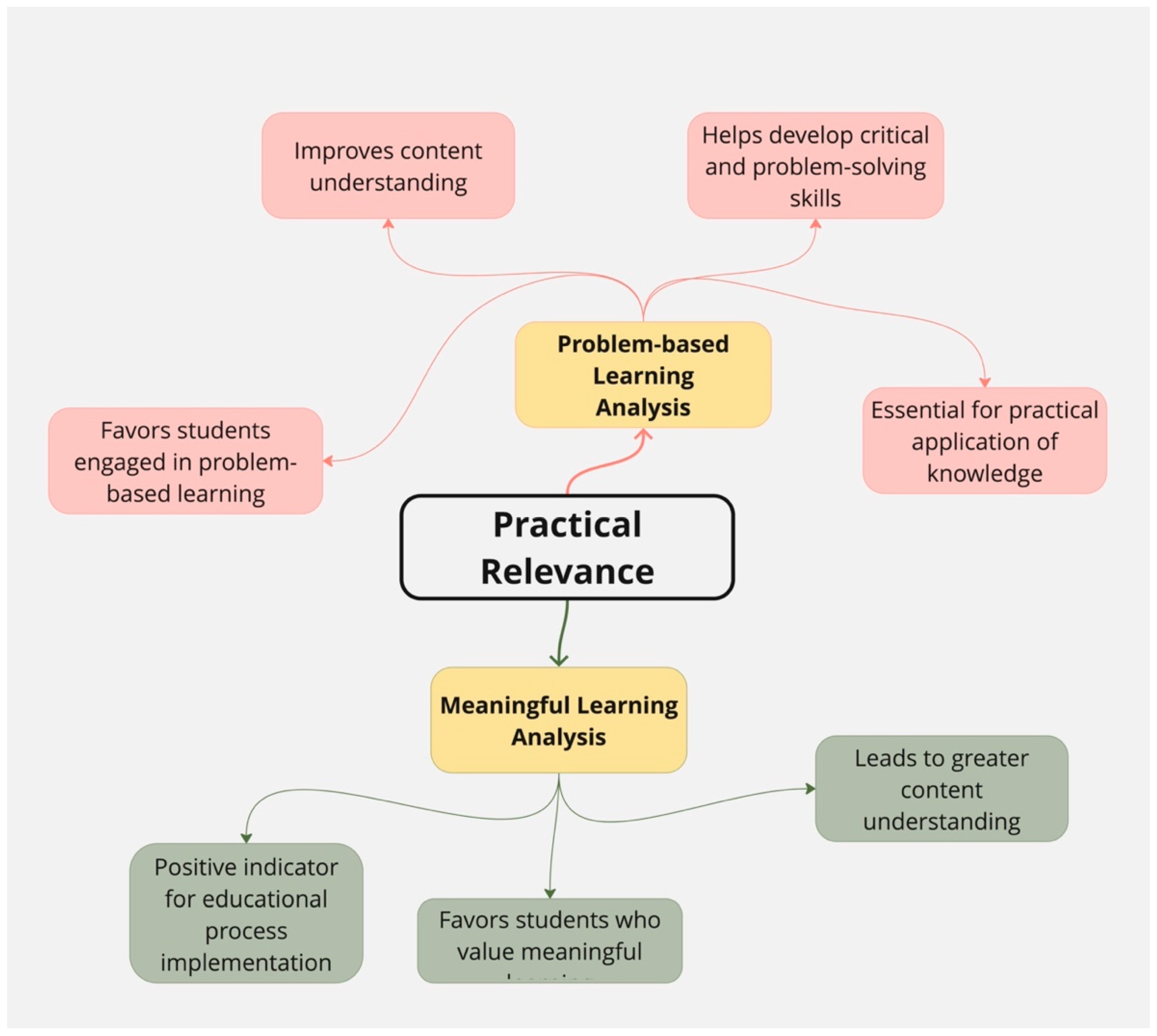
On the other hand, Problem-Based Learning showed an H statistic of 5.574 and a p-value of 0.018, also significant. This strategy favored students engaged in problem-based learning, enhancing their content comprehension. The practical relevance of this methodology suggests that its adoption can help students develop critical and problem-solving skills essential for the practical application of knowledge in real-world situations.
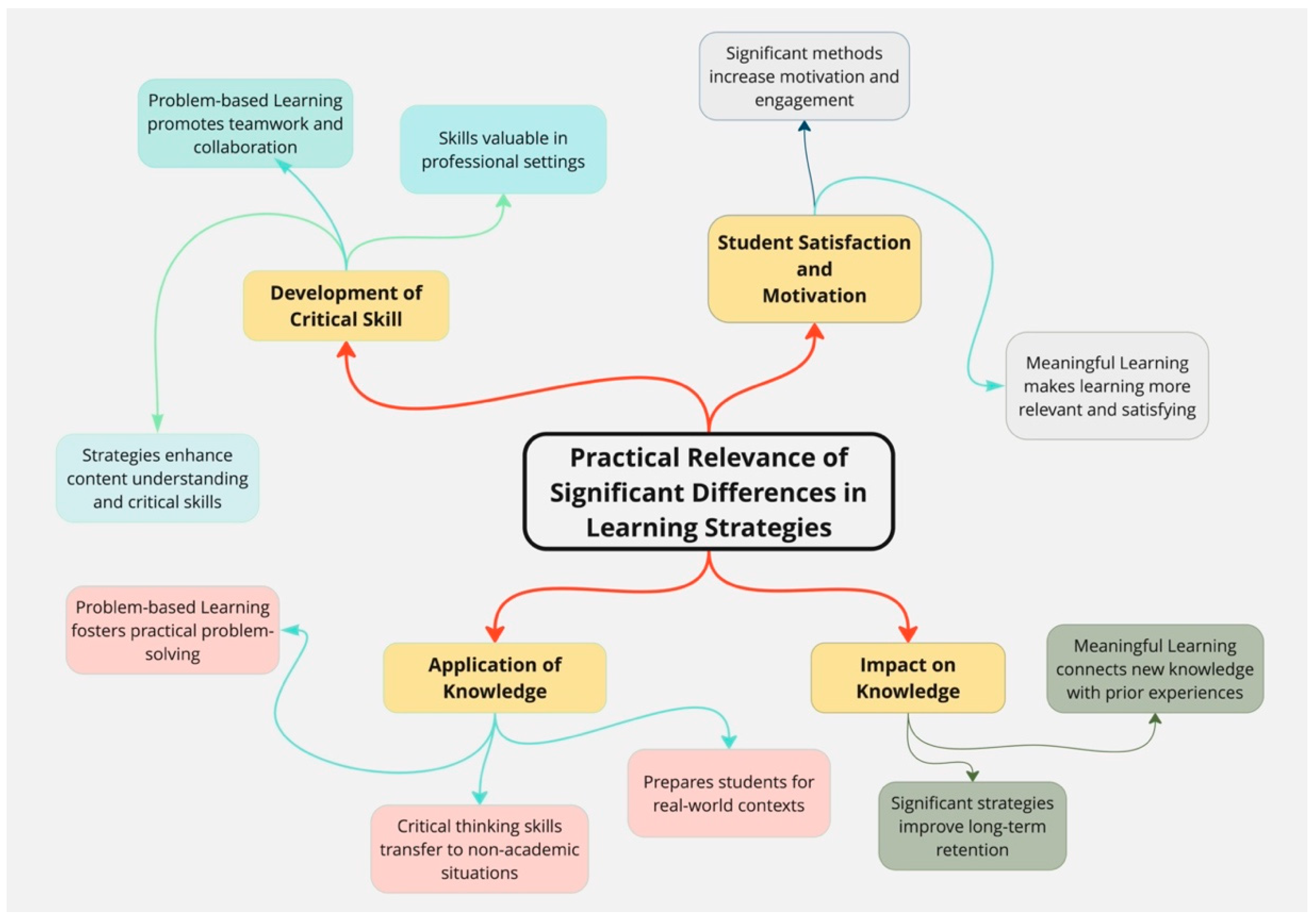
The practical relevance of the significant differences found in the strategies of Meaningful Learning and Problem-Based Learning during the UrbanGame of the Spanish Civil War (Bombings in Alicante) can be evaluated in terms of several factors.
Regarding knowledge retention, strategies that resulted in significant differences can improve long-term knowledge retention. The application of Meaningful Learning helps students connect new knowledge with previous experiences, facilitating better retention.
The application of knowledge is another important factor. Problem-Based Learning encourages a practical approach to problem-solving, preparing students to apply knowledge in real contexts. Students who learn through problem-solving can transfer their critical thinking skills to situations outside the academic environment.
Additionally, the development of critical skills benefits from these strategies. Meaningful strategies not only improve content comprehension but also develop critical skills such as analysis, synthesis, and evaluation. Problem-Based Learning fosters teamwork and collaboration, valuable skills in the professional environment.
Finally, student satisfaction and motivation are crucial. Methods showing significant results can increase student motivation and engagement in the learning process. Meaningful Learning can make students find learning more relevant and satisfying.
Figure 11.
Practical Relevance of Significant Differences in Learning Strategies.
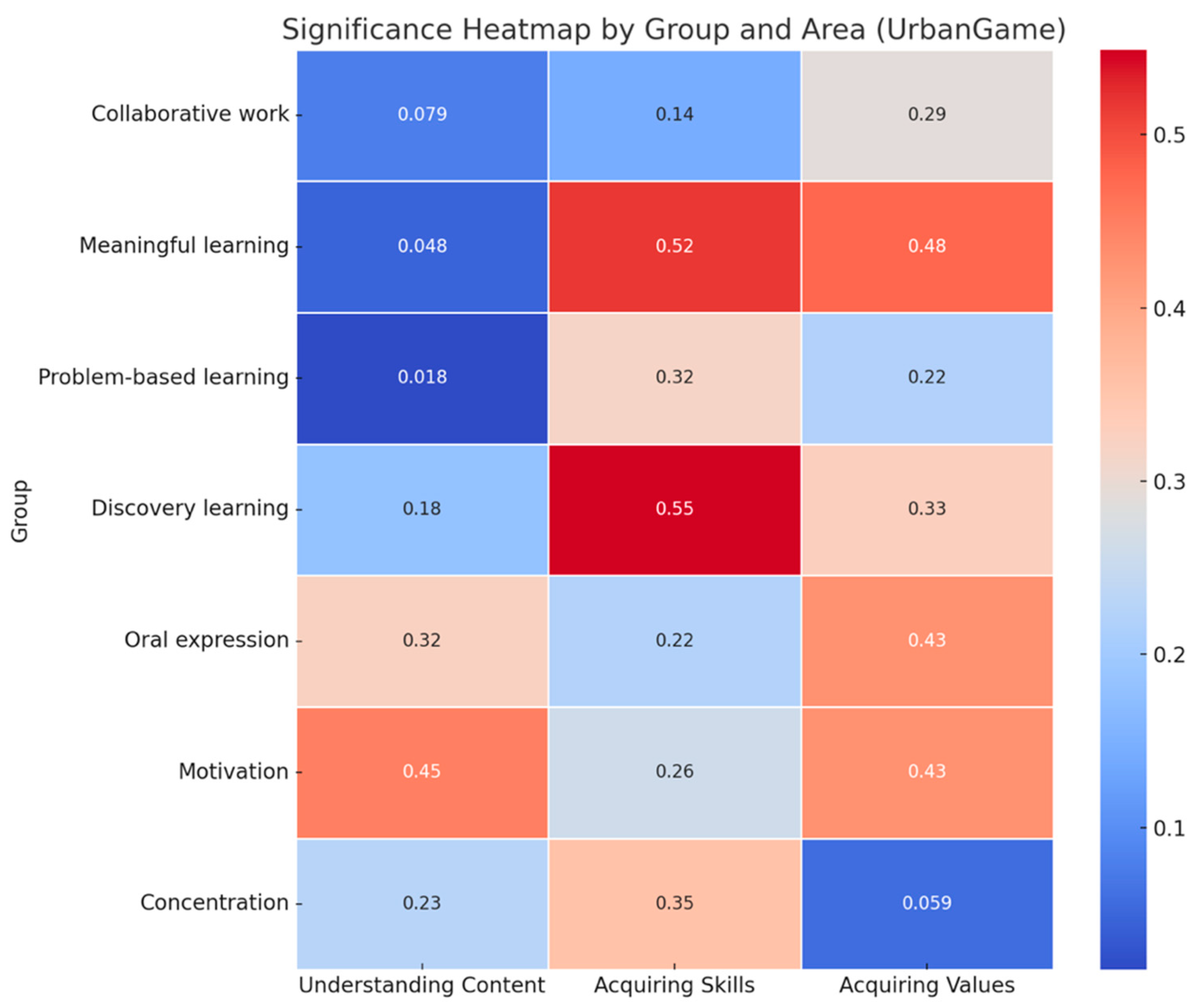
The heatmap shows the significance values (p-values) for different learning strategies in three key areas: Understanding Content, Acquiring Skills, and Acquiring Values. The colors in the heatmap represent the magnitude of the p-values, ranging from blue to red, where darker colors indicate higher statistical significance (lower p-values).
In the Understanding Content category, the strategies of "Meaningful Learning" and "Problem-Based Learning" show significant differences in content comprehension. This suggests that these strategies may be more effective in enhancing student understanding.
In contrast, in the areas of Acquiring Skills and Acquiring Values, none of the evaluated strategies show significant differences. This indicates that, according to the available data, there is no clear effect of these strategies on skill or value acquisition.
Figure 12.
Heatmap showing significant values (p-values) for different learning strategies in three key areas: content comprehension, skill acquisition, and value acquisition.
Figure 12.
Heatmap showing significant values (p-values) for different learning strategies in three key areas: content comprehension, skill acquisition, and value acquisition.
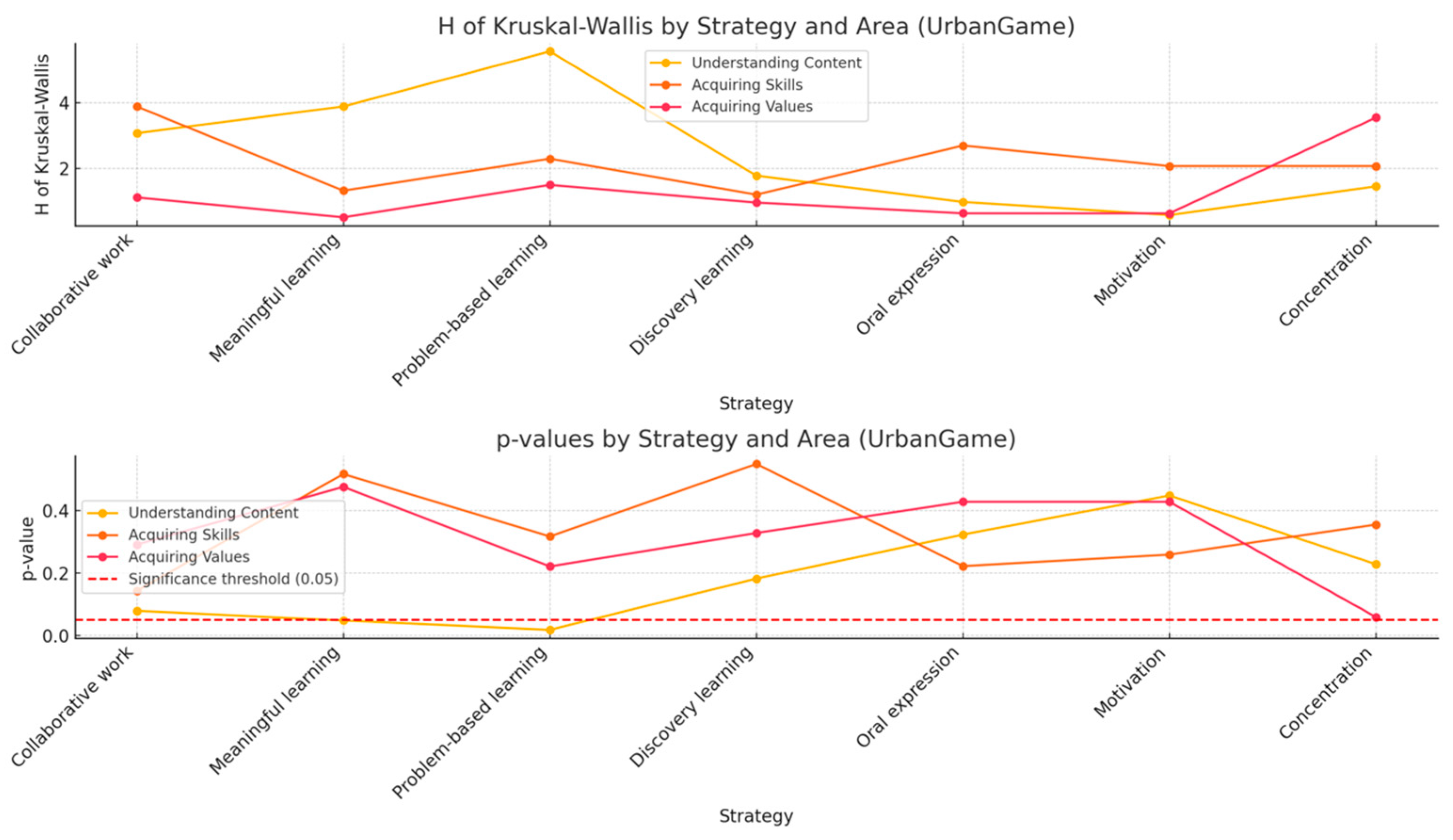
The following line graph shows the Kruskal-Wallis H values and p-values for different learning strategies in the same three areas.
In the upper panel (Figure _a), the Kruskal-Wallis H values by strategy and area are presented. The Kruskal-Wallis H value measures the difference between groups, where higher values indicate a greater difference between group distributions. Each line in the graph represents one of the analyzed areas. It is observed that the strategies of "Meaningful Learning" and "Problem-Based Learning" indeed have the highest H values in Content Comprehension. In contrast, in Acquiring Skills and Acquiring Values, the H values are generally lower, indicating less significant differences among learning strategies.
In the lower panel (Figure _b), the p-values by strategy and area are shown. The p-values indicate the statistical significance of the results, where a p-value less than 0.05 is considered statistically significant. The red horizontal line at 0.05 represents the significance threshold. In Understanding Content, "Meaningful Learning" (p = 0.048) and "Problem-Based Learning" (p = 0.018) are statistically significant, showing differences in content comprehension. "Collaborative Work" is close to the threshold (p = 0.079) but does not reach statistical significance.
In terms of Acquiring Skills, none of the strategies have p-values less than 0.05, indicating no significant differences in skill acquisition. For Acquiring Values, "Concentration" (p = 0.059) is close to being significant but does not reach the threshold. None of the other strategies show significant differences in this area.
Figure 13.
Line graph showing the Kruskal-Wallis H values and p-values for different learning strategies in three areas: content comprehension, skill acquisition, and value acquisition.
Figure 13.
Line graph showing the Kruskal-Wallis H values and p-values for different learning strategies in three areas: content comprehension, skill acquisition, and value acquisition.
3.3. Qualitative Analysis of Preferences for Learning Strategies
3.3.1. Students of the Innovation and Research in Economics Course, Master's in Secondary Education
After conducting the previous quantitative analysis, we wanted to compare it with the qualitative analysis derived from the open-ended questions of the questionnaire completed by the students and designed for this purpose.
To perform a textual analysis using the QDA method, we assigned codes and subcodes to the various themes or categories identified in the data, primarily focusing on Learning Strategies:
- Code 1: Enhancing Collaborative Work
- Code 2: Enhancing Meaningful Learning
- Code 3: Enhancing Problem-Based Learning
- Code 4: Enhancing Discovery Learning
- Code 5: Enhancing Oral Expression
- Code 6: Enhancing Motivation
- Code 7: Enhancing Concentration
These codes and subcodes facilitated the classification and organization of data in a computer-assisted qualitative analysis using QDA technique in Atlas.ti software. Each case in the dataset was tagged with the corresponding codes and subcodes to reflect its specific characteristics.
Upon analyzing the provided data, several conclusions can be drawn. In general, students of all ages and genders show a tendency towards using collaborative work as a learning strategy, indicating a preference to enhance this methodology in their teaching methods. It is interesting to note that this trend does not appear in the quantitative analysis, where it ranks significantly lower than other more highly valued strategies.
There is also a widespread preference for meaningful learning, which allows students to connect new concepts with their prior knowledge, aiding in better comprehension and retention of information. In this case, it aligns with the results of the quantitative analysis.
Most categories and age groups also show interest in problem-based learning, which involves students in solving real and challenging situations, fostering critical thinking and practical application of knowledge. Although discovery learning is not mentioned as frequently as the previous strategies, some individuals express interest in this approach, which focuses on allowing students to discover concepts through exploration and experimentation.
Figure 14.
Qualitative Analysis of Preferences for Learning Strategies among Students of the Innovation and Research in Economics Course, Master's in Secondary Education.
Figure 14.
Qualitative Analysis of Preferences for Learning Strategies among Students of the Innovation and Research in Economics Course, Master's in Secondary Education.
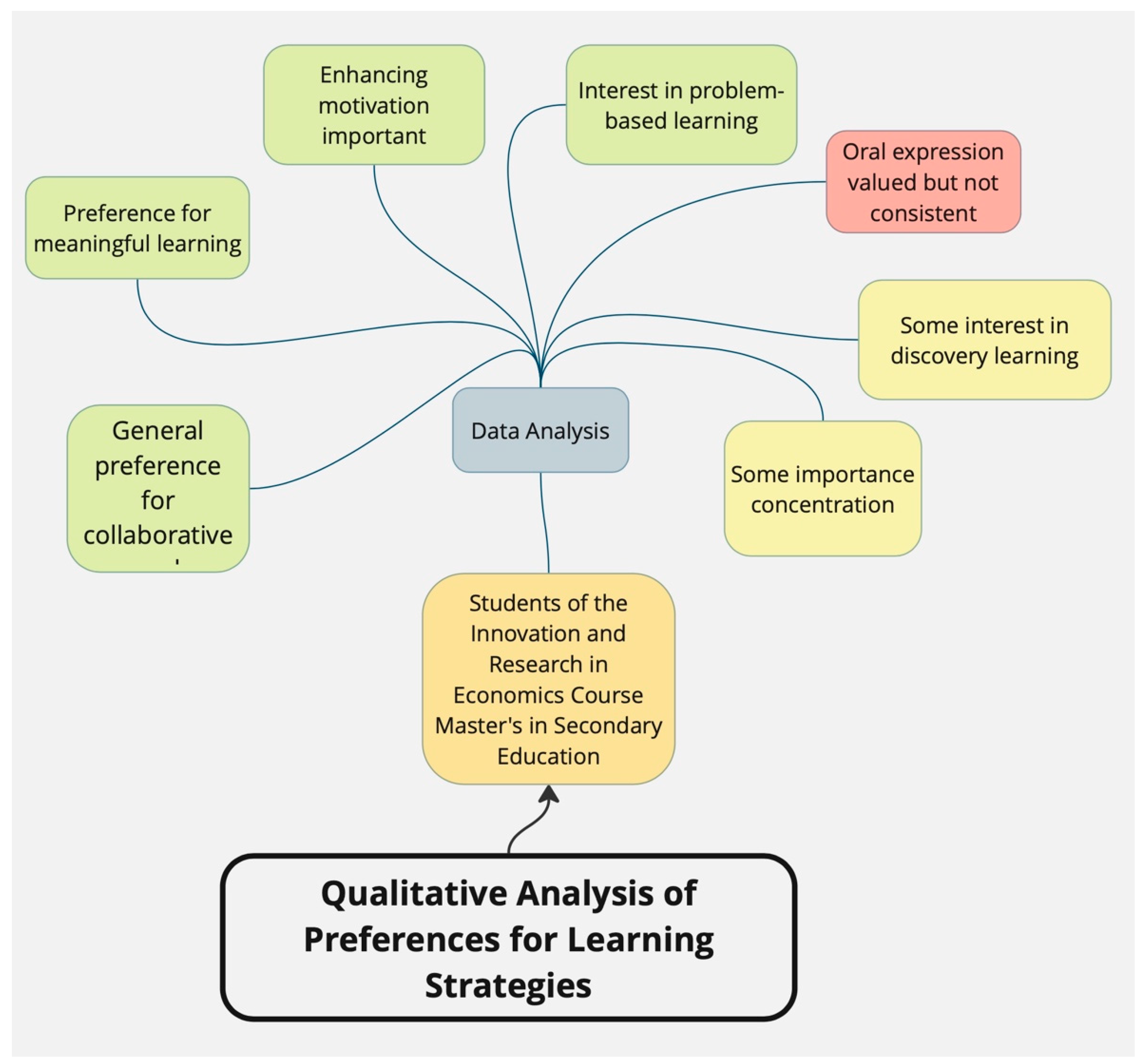
Regarding enhancing concentration, not all categories mention this aspect consistently. Nonetheless, some individuals consider it important to foster concentration in teaching methods. In the quantitative analysis, on the other hand, it does appear as a prominent element.
Analyzing the data by age reveals some differences in preferences for learning strategies. The 18 to 25 age group shows a general preference for various learning strategies in the use of urban games (UrbanGame), primarily highlighting meaningful learning. They also mention problem-based learning and discovery learning, although concentration are not emphasized.
The 26 to 35 age group, similar to the previous group, shows interest in a wide range of learning strategies. They relate urban games (UrbanGame) with meaningful learning and discovery learning, additionally emphasizing motivation.
The 36 to 45 age group seems to prefer encompassing all mentioned learning strategies, indicating they would enhance all of them. They do not show specific preferences based on age and appear open to using different methods to promote learning.
The 46 to 55 age group, like the previous group, also mentions that they would generally enhance all learning strategies.
Analyzing the data by gender reveals some differences in preferences for learning strategies. In general, women show an interest in a variety of learning strategies, mentioning meaningful learning, problem-based learning, and discovery learning as strategies to enhance. They also highlight motivation.
On the other hand, men, like women, show interest in meaningful learning and discovery learning. However, oral expression and motivation are not consistently mentioned in this category.
In summary, both men and women show a preference for similar learning strategies. However, women tend to emphasize motivation more in their preferences, whereas men do not mention these aspects as consistently.
3.3.2. Students of the Didactics of History Course, Bachelor's in Primary Education
From the analysis of the provided data, several conclusions can be drawn. In the 18 to 25 age group, women seem to have a broader preference for different teaching methods, such as collaborative work, meaningful learning, problem-based learning, and discovery learning. On the other hand, men in this age group do not consistently mention a preference for specific methods.
No clear differences are observed in the preference for enhancing concentration in any age or gender group.
Figure 15.
Differences in Learning Strategy Preferences by Gender and Age among Students of the Didactics of History Course, Bachelor's in Primary Education.
Figure 15.
Differences in Learning Strategy Preferences by Gender and Age among Students of the Didactics of History Course, Bachelor's in Primary Education.

Analyzing the data by age identifies some differences in preferences for learning strategies. In the 18 to 25 age group, a general preference for all mentioned learning strategies is observed, without significant differences between men and women.
In the 26 to 35 age group, there is a consistent preference for enhancing collaborative work and meaningful learning, as indicated by the quantitative analysis. In particular, men mention motivation as an important strategy.
In the 36 to 45 age group, no differences in preferences for learning strategies are mentioned. Both men and women in this group indicate that all mentioned strategies are important.
Analyzing the data by gender identifies some differences in preferences for learning strategies. Women mention a variety of learning strategies, highlighting collaborative work, meaningful learning, problem-based learning, discovery learning, and the use of simulations. Additionally, they show a notable preference for discovery learning as an important strategy. In general, women exhibit an inclination towards a wide range of learning strategies.
Figure 16.
Qualitative Analysis of Preferences for Learning Strategies by Gender and Age.
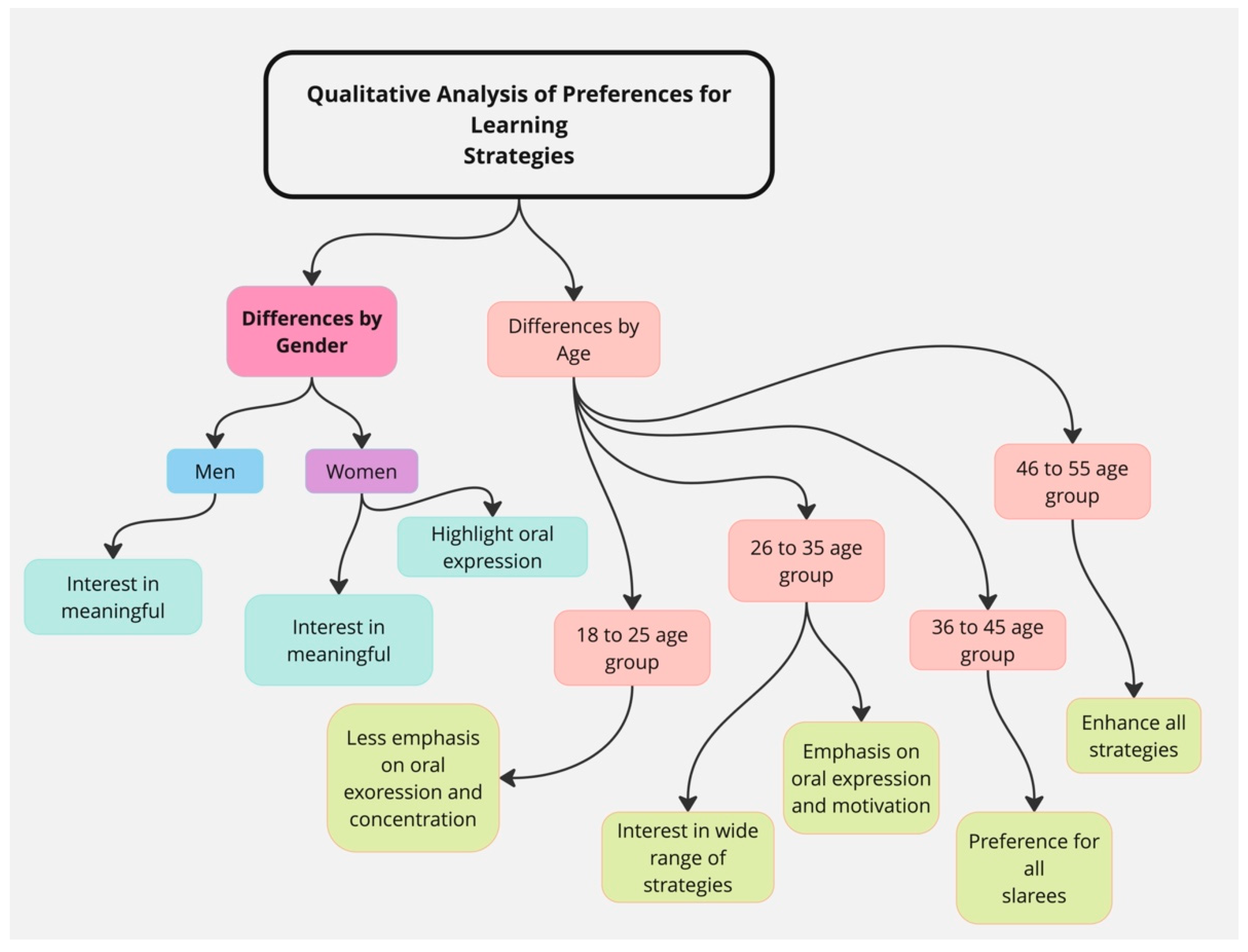
Men also mention various preferences in learning strategies, including collaborative work, meaningful learning, problem-based learning, and the use of simulations. They also emphasize motivation as a relevant strategy. Like women, men show a preference for a variety of learning strategies.
In summary, both women and men have similar preferences regarding learning strategies, highlighting the importance of collaborative work, meaningful learning, and problem-based learning.
3.3.3. General Analysis for the Student Body
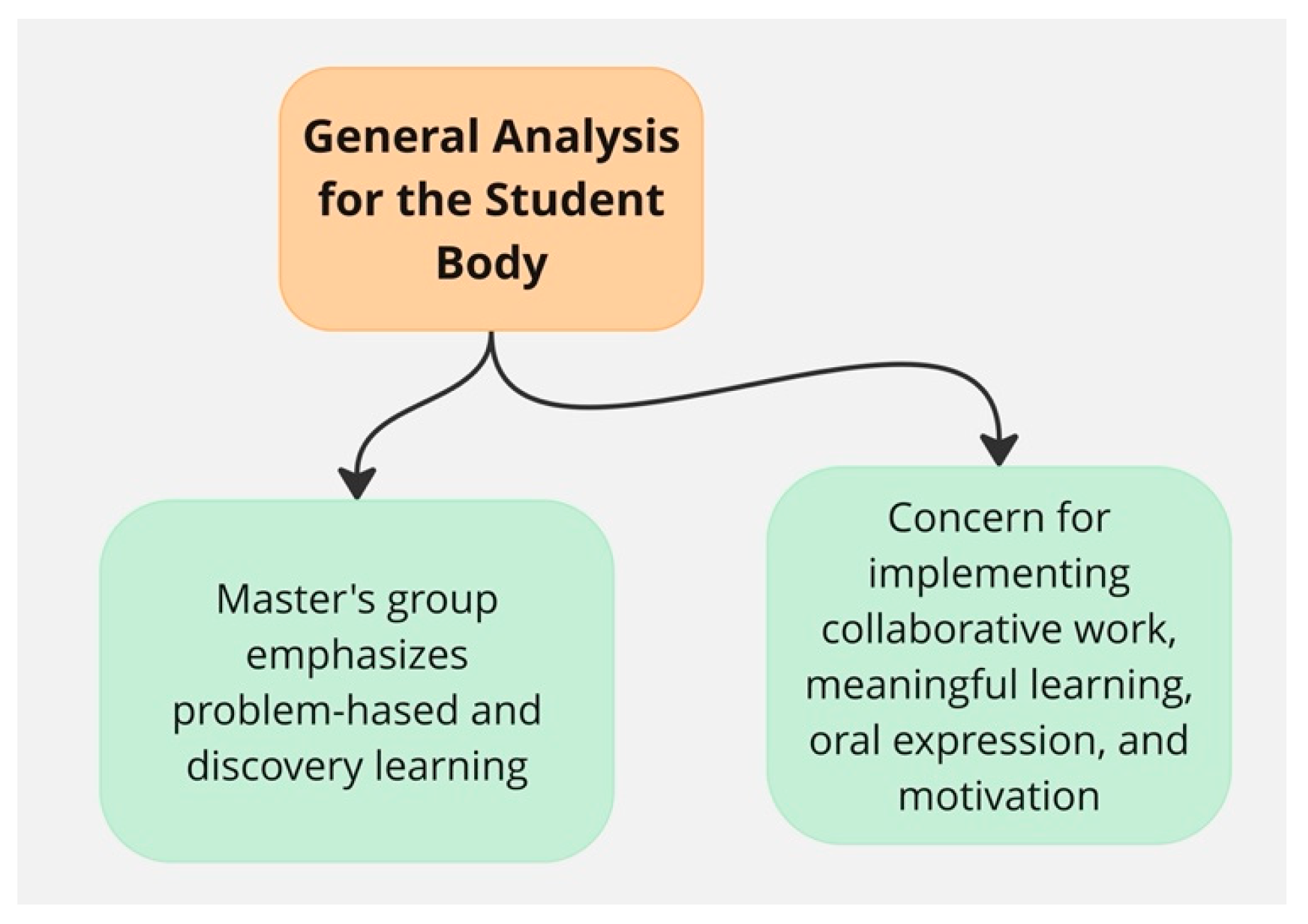
Overall, both groups show a concern for implementing strategies that promote collaborative work, meaningful learning and student motivation. Additionally, the Master's in Secondary Education student group places greater emphasis on problem-based learning and discovery learning.
Figure 17.
General Analysis for the Student Body.
3.4. Cultural Promotion of Memory Heritage Following the UrbanGame Activity
After conducting the activity in the classrooms, understanding the preferences for Learning Strategies and Objectives, and with knowledge of the real events that occurred in the city of Alicante during the Spanish Civil War, a series of street activities were organized to deepen not only knowledge but also awareness of the cultural heritage of memory (the air-raid shelters). These activities aim to empathize with the suffering experienced by women, children, and men during those terrible bombings over three hard years (a little more than seventy).
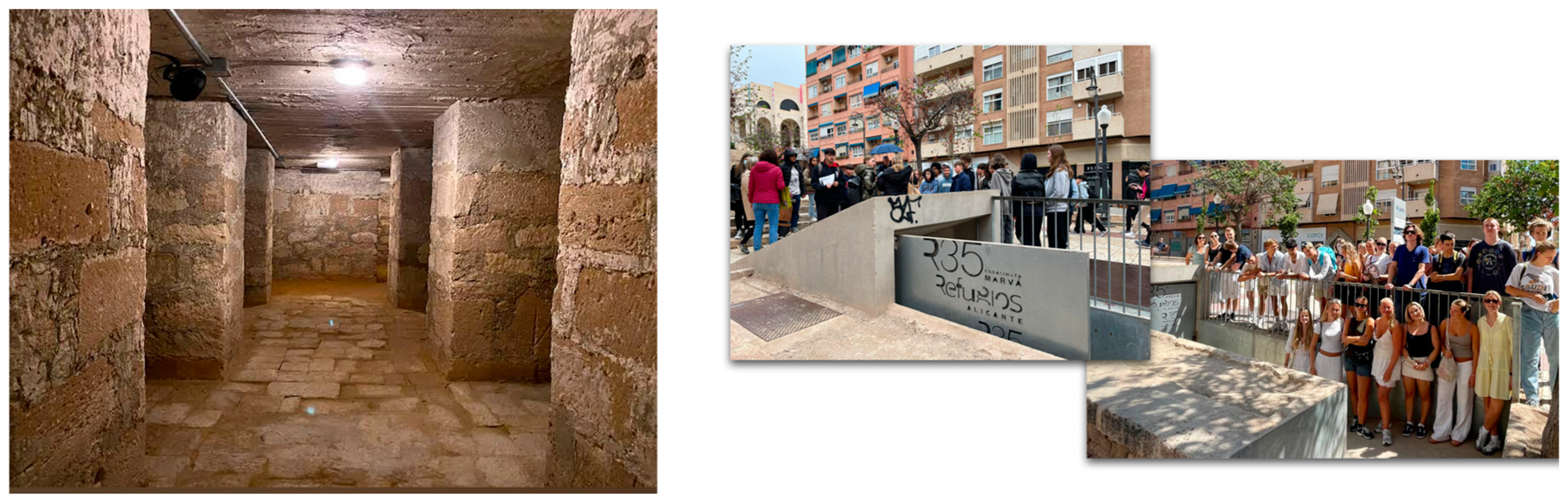
To achieve this, guided tours for students (beyond those scheduled for the general public) were organized and continue to be organized. These tours allow visits to up to nine shelters throughout the city, as well as the War Interpretation Center in Alicante.
Figure 18.
Marvá Air-Raid Shelter, and Spanish and Foreign Students Accessing the Shelter Before the Visit.
Figure 18.
Marvá Air-Raid Shelter, and Spanish and Foreign Students Accessing the Shelter Before the Visit.
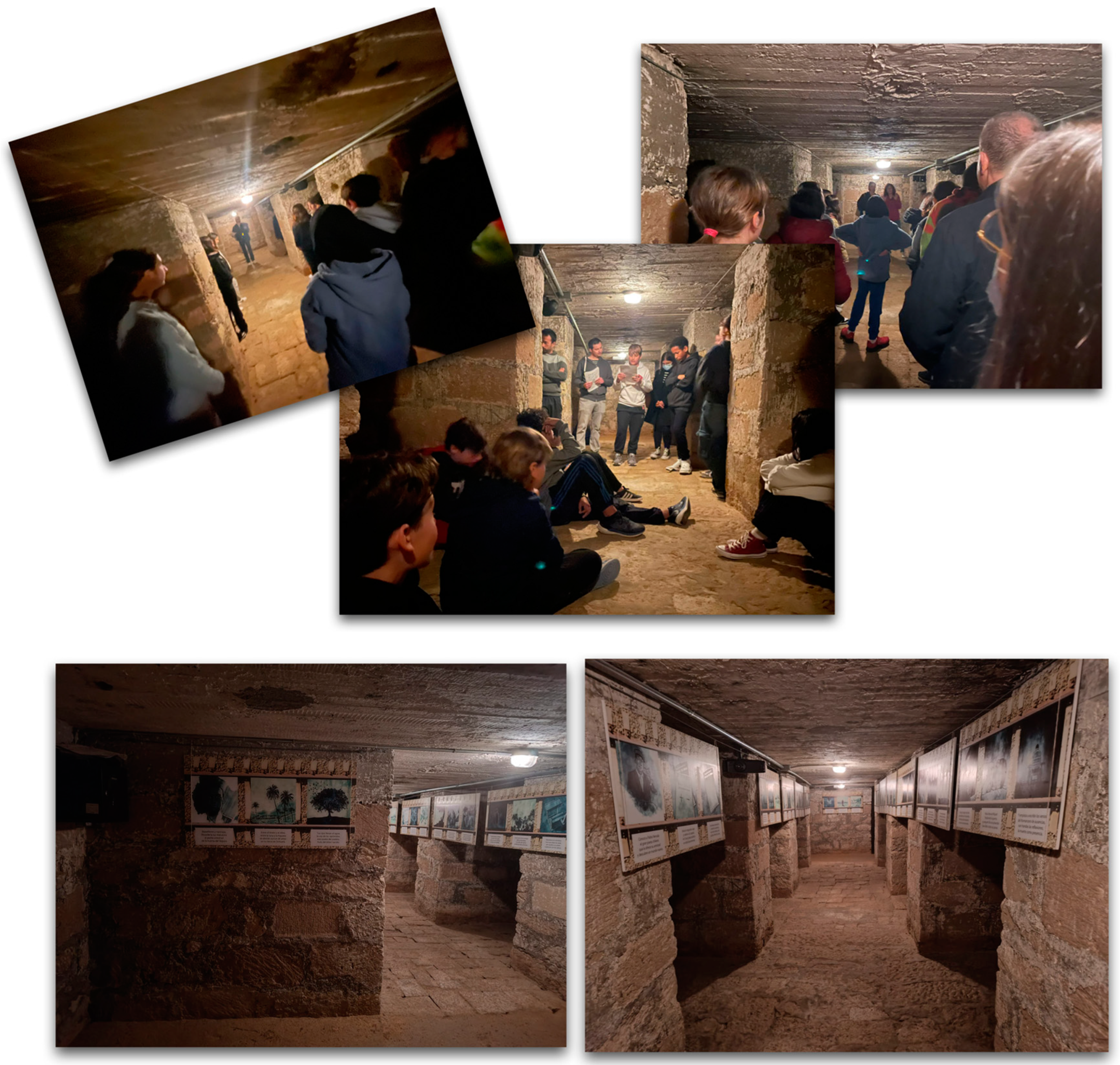
Similarly, the aim has been for student involvement to go beyond merely visiting the air-raid shelters. One of the shelters (Marvá) has been temporarily allocated to nearby Public Secondary Education Institutes for various activities related to Memory: poetry recitals, debates, etc. Additionally, students studying tourism modules at IES Miguel Hernández have been authorized to design and conduct guided tours as part of their practical training. Furthermore, these students have organized several exhibitions inside the air-raid shelter on themes related to the Spanish Civil War, World War II, the Jewish Holocaust, etc.
Figure 19.
Educational Activities and Exhibition by Students of IES Miguel Hernández at the Marvá Shelter.
Figure 19.
Educational Activities and Exhibition by Students of IES Miguel Hernández at the Marvá Shelter.
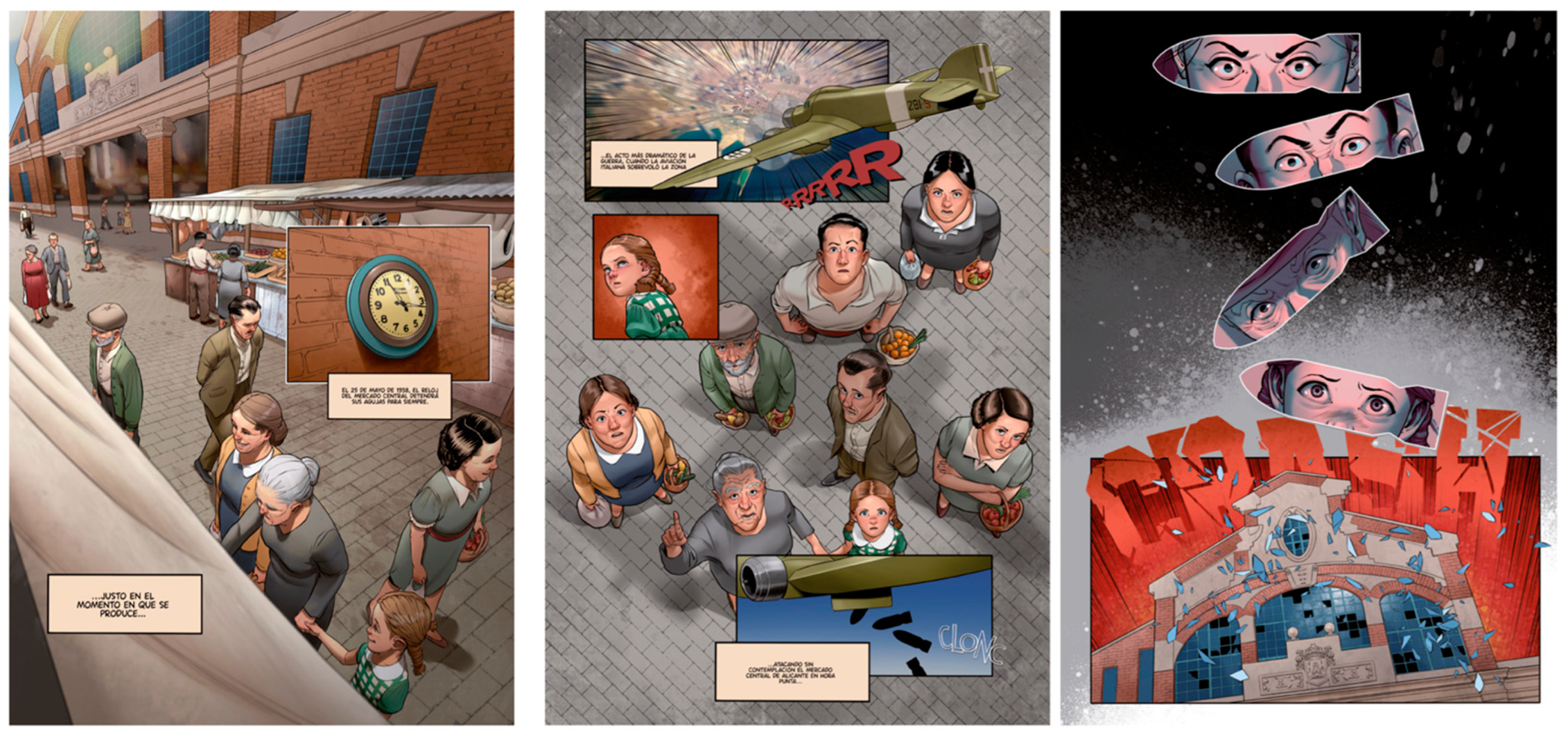
To deepen this knowledge and raise awareness among young people, and as a powerful educational didactic tool, a comic has been created and disseminated. It narrates the events of one of the worst bombings against civilian populations in contemporary European history before World War II: the bombing of the Central Market of Alicante on May 25, 1938, by Italian fascist planes. This attack instantly killed more than 300 people, primarily women and children who were shopping for food. The death toll rose to over a thousand in the following weeks due to the severe injuries inflicted on numerous victims of that terrible bombing. This comic is supplemented by a model of the bombing, which is permanently installed at the aforementioned Interpretation Center.
Figure 20.
Comic Panels Created with Script by Pablo Rosser and Drawings by Nain Sousa. Own Creation.
Figure 20.
Comic Panels Created with Script by Pablo Rosser and Drawings by Nain Sousa. Own Creation.
4. Discussion
The findings from the mixed-method analysis (qualitative and quantitative) based on surveys conducted with university students after participating in the UrbanGame activity aimed to assess the educational efficacy of this tool both for general education and for heritage education in terms of Learning Strategies and Objectives. The results suggest that while collaborative work did not have a significant impact on content comprehension, skills acquisition, or values acquisition, meaningful learning showed a positive trend towards content comprehension. Problem-based learning exhibited a weak but notable relationship with content comprehension. It was found that motivation and concentration significantly influence learning outcomes. These results align with previous research highlighting the benefits of active learning methodologies.
A study employing a mixed-methods design to investigate the association between problem-based learning (PBL) and student motivation found that PBL can enhance student motivation and engagement, although its impact on content comprehension varies [47]. Another article analyzed the effectiveness of problem-based learning and team-based learning in health services education, indicating that these methodologies promote deeper learning and better knowledge retention compared to traditional methods [48].
Similarly, a study using mixed methods to evaluate the impact of activity-based learning on student motivation and academic performance showed that active learning significantly improves student motivation and concentration, leading to better academic results [49]. Additionally, another article examined how active learning tools, including problem-based learning, enhance learning outcomes, scientific reasoning, and engagement among accounting students. The findings highlighted that these methodologies are effective in increasing content comprehension and practical skills [50].
Therefore, in the context of heritage education, integrating the UrbanGame activity was particularly effective in emotionally connecting students with local history, enhancing memory and awareness of cultural heritage. This approach is crucial as it allows students not only to acquire knowledge but also to develop an emotional connection and a deeper appreciation for cultural heritage. The objectives of the UrbanGame, which include promoting the cultural heritage of the Civil War air-raid shelters in Alicante, were achieved by actively engaging students in exploring and understanding local history through an immersive experience.
A study on the use of immersive storytelling in social virtual reality for historical education showed that these experiences can create a deeper emotional connection with historical events, enhancing students' understanding and memory [51]. Another article emphasizes how game design can preserve and promote cultural heritage by creating immersive experiences that not only educate but also entertain and strengthen individuals' connection with heritage and history [52].
Additionally, a study on emotional exhibitions in museums highlights that these can increase visitors' empathy and improve their heritage and history education by creating affective experiences that connect more deeply with audiences [53].
Finally, another article analyzes how interactive virtual environments that present local culture and history can help users better understand local culture and establish an emotional connection with it, which is crucial for heritage education [54].
The development of a set of complementary activities, where in many cases the students were the protagonists in promoting this memorial heritage (the shelters), reinforced the initial goal set for the UrbanGame. Regarding heritage education for young people, the measures and activities carried out highlight the importance of a multidimensional approach. This approach includes not only immersive activities like the UrbanGame but also strategies that foster meaningful learning, collaborative work, and intrinsic motivation.
A study on gamification in educational projects highlights how interactive activities and educational challenges can foster students' intrinsic motivation and active participation in cultural heritage learning. The integration of educational games has proven effective in promoting collaboration and student engagement with their cultural heritage [55]. Another article on the benefits of an immersive curriculum emphasizes that immersive activities help develop intrinsic motivation, discipline, and lifelong learning habits, resulting in a deeper and more lasting understanding of educational content [56].
Additionally, a study on educational technology explores the convergence of collaborative and game-based learning activities. The results indicate that these activities not only improve academic performance but also foster students' intrinsic motivation, promoting meaningful and effective learning [57]. Another article describes how a gamified educational project can foster collaborative learning and intrinsic motivation, highlighting the importance of integrating immersive experiences into the educational curriculum to maximize the impact on students [58].
Finally, research on the tangible gamification of cultural heritage demonstrates that these methodologies are more collaborative, attract more visitors, and persuade participants to explore more deeply. This approach has proven effective for cultural learning about heritage artifacts, promoting a deeper understanding and appreciation of heritage [59].
Additionally, cultural heritage education has proven to be a valuable tool for engaging young people in the preservation and appreciation of their cultural heritage. Various initiatives and programs have implemented specific activities to foster this commitment. For example, the Youth Cultural Heritage Grant Program by the Alaska State Council on the Arts emphasizes teaching through cultural activities specifically designed for youth, aiming to preserve and promote Alaska's cultural heritage. This program highlights the importance of connecting young people with their cultural roots through practical and educational experiences[60].
Similarly, the Heritage Education Tool Kit developed by the Cross-Cultural Foundation of Uganda is designed to engage young people in interactive discussions about the value of cultural heritage today. This kit includes a series of activities that aim to increase young people's understanding and appreciation of cultural heritage, promoting an educational approach that integrates both theory and practice [61].
The UNESCO World Heritage Centre has also created community events that encourage young people to deepen their knowledge about cultural heritage and propose ideas for its conservation. Through workshops and other cultural activities, these events aim not only to educate but also to inspire young people to become active advocates for cultural heritage [62].
In Africa, the African World Heritage Fund has organized the event Celebrating African World Heritage Day, which includes heritage education activities designed to promote understanding and appreciation of cultural and natural heritage. These activities, including guided tours and educational events, aim to create a deeper connection between young people and their cultural heritage [63]
Moreover, the joint project of the European Commission and UNESCO, Cultural Heritage and Education, helps schools map the existing intangible cultural heritage within their school communities. This project involves young people in the preservation and valorization of their cultural heritage, highlighting the importance of integrating these practices into the school curriculum to foster greater appreciation and respect for heritage [64].
Finally, programs like the A Place-Based Youth Cultural Heritage Education Program, available on JSTOR, and the Youth on the Trail of World Heritage School twinning program by the Organization of World Heritage Cities, have demonstrated how heritage education can engage young people in educational activities supported by grants and school projects. These programs allow young people to explore and conserve world heritage through practical and collaborative experiences, strengthening their connection with cultural heritage [65,66].
In any case, future research should explore the long-term effects of these methodologies on student engagement and learning outcomes. Additionally, it would be valuable to investigate how these strategies can be optimized and combined to maximize their educational impact. Understanding the nuances of how different demographic factors influence the effectiveness of these active methodologies could further refine educational practices.
Author Contributions
Conceptualization, PR and SS; methodology, SS; software, PR and SS; validation, PR and SS; formal analysis, PR; investigation, PR and SS; resources, PR; data curation, PR; writing—original draft preparation, PR; writing—review and editing, PR and SS; visualization, SS; supervision, PR; project administration, PR and SS. All authors have read and agreed to the published version of the manuscript.
Funding
This research received no external funding.
Conflicts of Interest
The authors declare no conflict of interest.
References
- Deterding, S.; Dixon, D.; Khaled, R.; Nacke, L. From Game Design Elements to Gamefulness: Defining" Gamification". In Proceedings of the 15th international academic MindTrek conference: Envisioning future media environments; Lugmayr, A., Franssila, H., Safran, C., Hammouda, I., Eds.; ACM: Brighton, England, 2011; pp. 9–15.
- Zichermann, G., & Cunningham, C. (). " ". Gamification by Design: Implementing Game Mechanics in Web and Mobile Apps; O’Reilly Media: Sebastopol, CA, 2011.
- Doney, I. Research into Effective Gamification Features to Inform E-Learning Design. Research in Learning Technology 2019, 27. [CrossRef]
- Shannon, R.E. Systems Simulation : The Art and Science; Prentice-Hall: Englewood Cliffs, N.J., 1975.
- Wright-Maley, C. Beyond the “Babel Problem”: Defining Simulations for the Social Studies. The Journal of Social Studies Research, 2015, 39, 63–77. [CrossRef]
- Abt, C. Serious Games; Viking Press: New York, NY, 1970.
- Klopfer, E.; Osterweil, S.; Salen, K. Moving Learning Games Forward; MA: The Education Arcade: Cambridge, 2009.
- Salen, K.; Zimmerman, E. Regras Do Jogo: Fundamentos Do Design de Jogos; Blucher: São Paulo, 2012; ISBN 9788521206279.
- Steinkuehler, C.; Squire, K.; Barab, S. Games, Learning, and Society: Learning and Meaning in the Digital Age; Cambridge University Press, 2012; ISBN 9780521196239.
- Gee, J.P.; Hayes, E. Nurturing Affinity Spaces and Game-Based Learning. Games, learning, and society: Learning and meaning in the digital age 2012, 123, 1–40.
- McGonigal, J. Reality Is Broken; Penguin Press: New York, 2011.
- Squire, K. Video Games and Learning Teaching and Participatory Culture in the Digital Age; Teachers’ College Press: New York, NY, 2011.
- Lin, H.; Sun, C.-T. Problems in Simulating Social Reality: Observations on a MUD Construction. Simul. Gaming 2003, 34, 69–88. [CrossRef]
- Williams, R., Dickinson, A., & Hulme, R. (). . London. New Technology in the Classroom. New History and New Technology Present into Future. The Historical Association/Council for Educational Technology 1986, 8–27.
- Martín-Antón, J.; Valdés-Gonzaléz, A.; Rodríguez, D.J. Elección, análisis y uso de herramientas didácticas para la enseñanza de las Ciencias Sociales. La importancia de la detección de anacronismos y falta de rigor histórico en un videojuego. RIAICES 2021, 3, 17–26. [CrossRef]
- Romero, J. ¿Herramientas o Cacharros?. Los Ordenadores y La Enseñanza de La Historia En La ESO; Servicio de Publicaciones de la Universidad de Cantabria, 1997.
- Valverde, J. Aprendizaje de La Historia y Simulación Educativa. Tejuelo 2010, 9, 83–99.
- Garris, R.; Ahlers, R.; Driskell, J.E. Games, Motivation, and Learning: A Research and Practice Model. Simul. Gaming 2002, 33, 441–467. [CrossRef]
- Huizenga, J.; Admiraal, W.; Akkerman, S.; ten Dam, G. Mobile Game-Based Learning in Secondary Education: Engagement, Motivation and Learning in a Mobile City Game. Journal of Computer Assisted Learning 2009, 25, 332–344.
- Educating the Net Generation; Oblinger, D.G., Oblinger, J.L., Eds.; EDUCAUSE, 2005.
- Qian, M.; Clark, K.R. Game-Based Learning and 21st Century Skills: A Review of Recent Research. Comput. Human Behav. 2016, 63, 50–58. [CrossRef]
- Kilgour, P.; Reynaud, D.; Northcote, M.; Shields, M. Role-Playing as a Tool to Facilitate Learning, Self Reflection and Social Awareness in Teacher Education. 2015.
- Zevin, J. Social Studies for the Twenty-First Century: Methods and Materials for Teaching in Middle and Secondary Schools; 5th ed.; Routledge, 2023; ISBN 9780367459567.
- Castro, S.S.; Sevillano, M.Á.P. Personalización del proceso de adquisición de la competencia en comunicación lingüística mediante el empleo de los serious games. Diferencias en función del género. Edutec 2022, 149–165. [CrossRef]
- Michael, D.R.; Chen, S. Serious Games: Games That Educate, Train and Inform; Thomson Course Technology, 2006; ISBN 9781592006229.
- Annetta, L.A. The “I’s” Have It: A Framework for Serious Educational Game Design. Rev. Gen. Psychol. 2010, 14, 105–113. [CrossRef]
- Sitzmann, T. A Meta-Analytic Examination of the Instructional Effectiveness of Computer-Based Simulation Games. Pers. Psychol. 2011, 64, 489–528. [CrossRef]
- Aldrich, C. Simulations and the Future of Learning: An Innovative (and Perhaps Revolutionary) Approach to e-Learning; John Wiley & Sons: Milton, QLD, Australia, 2003.
- Nafukho, F.M. Simulations and the Future of Learning: An Innovative and Perhaps Revolutionary Approach to E-Learning. Human Resource Development Quarterly 2004, 15, 253–257.
- Primack, B.A.; Carroll, M.V.; McNamara, M.; Klem, M.L.; King, B.; Rich, M.; Chan, C.W.; Nayak, S. Role of Video Games in Improving Health-Related Outcomes: A Systematic Review. Am. J. Prev. Med. 2012, 42, 630–638. [CrossRef]
- Arnab, S.; Lim, T.; Carvalho, M.B.; Bellotti, F.; de Freitas, S.; Louchart, S.; Suttie, N.; Berta, R.; De Gloria, A. Mapping Learning and Game Mechanics for Serious Games Analysis. Br. J. Educ. Technol. 2015, 46, 391–411. [CrossRef]
- Martínez, C.; Montero, R.; Arias, G.; Salcedo, M.A. Los Juegos Serios, Su Aplicación En La Seguridad y Salud de Los Trabajadores. Med. Segur. Trab. 2019, 65, 87–100. [CrossRef]
- Pellegrini, M. Richard E. Mayer, Computer Games for Learning. An Evidence-Based Approach. Cambridge & London: The MIT Press (2014). Form@re 2014, 14, 96–97. [CrossRef]
- Belkin, J. Urban Dynamics: Applications as a Teaching Tool and as an Urban Game. IEEE Transactions on Systems, Man, and Cybernetics 1972, 2, 166–169. [CrossRef]
- Flanagan, M. Critical Play: Radical Game Design; The MIT Press, 2009; ISBN 9780262258760.
- Innocent, T.; Leorke, D. (De)Coding the City Analyzing Urban Play through Wayfinder Live. American Journal of Play 2020, 12, 270–304.
- Pramaputri, N.I.; Gamal, A. Urban Planning Simulation Game and the Development of Spatial Competence. IOP Conference Series. Earth and Environmental Science 2019, 396, 12016-. [CrossRef]
- Larissa, H.; Adriana, de S. e.; Klare, L. The Routledge Companion to Mobile Media Art; 1st ed.; Routledge, 2022; ISBN 9781032399959.
- Olmo, M.; Rosser, P.; Soler, S.; Poveda, C.; Oña, J.J.; Candela, V.F. Guerra Civil y Memoria Histórica En Alicante; Archivo Histórico Provincial de Alicante., 2016.
- Rosser, P. Bombas Sobre Alicante. Los Diarios de La Guerra y Las Comisiones Internacionales de No Intervención e Inspección de Bombardeos; Universidad de Alicante, 2023; ISBN 9788413022215.
- Rosser, P.; Soriano, R. Alicante En Guerra; Ayuntamiento de Alicante: Alicante, 2018; Vol. 1 y 2;.
- Moreno, R.M.; Viñas, Á.; López, P.P.; Rosser, P. La Aviación Fascista y El Bombardeo Del 25 de Mayo de Alicante; Colección Alacant, ciutat de la memòria; Universidad de Alicante-Ajuntament d’Alacant, 2018.
- Soler, S.; Rosser, P. Empatizar Con Los Conflictos Bélicos Para Trabajar El ODS 16. Creación de Una Situación de Aprendizaje a Partir de La Simulación Urbana. In Hacia una Educación con basada en las evidencias de la investigación y el desarrollo sostenible; DYKINSON, 2023 ISBN 9788411704274.
- Franciosi, S.J.; Mehring, J. What Do Students Learn by Playing an Online Simulation Game? In Critical CALL–Proceedings of the 2015 EUROCALL Conference, Padova, Italy; Research-publishing.net, 2015; pp. 170–176.
- Thiagarajan, S. How to Maximize Transfer from Simulation Games through Systematic Debriefing. In The Simulation and Gaming Yearbook; Percival, F., Lodge, F., Saunders, D., Eds.; Kogan Page Science: London, England, 1993; pp. 45–52.
- Kriz, W.C.; Nöbauer, B. Teamkompetenz. Konzepte, Trainingsmethoden, Praxis; Vandenhoeck & Ruprecht: Göttingen, Germany, 2002; Vol. 2.
- Wijnia, L.; Smeets, G.; Kroeze, M.J.; Van der Molen, H.T. Is Problem-Based Learning Associated with Students’ Motivation? A Quantitative and Qualitative Study. Learning Environments Research 2018, 21, 173–193. [CrossRef]
- Alexander, E. S., White, A. A., Varol, A., Appel, K., & Lieneck, C. Team- and Problem-Based Learning in Health Services Education. Literature Review of Recent Initiatives in the United States. Education Sciences 2024, 14, 515.
- Albadi, A.; David, S.A. The Impact of Activity Based Learning on Students’ Motivation and Academic Achievement: A Study among 12th Grade Science and Environment Students in a Public School in Oman. Specialty Journal of Knowledge Management 2019, 4, 44–53.
- Rossi, I.V.; de Lima, J.D.; Sabatke, B.; Nunes, M.A.F.; Ramirez, G.E.; Ramirez, M.I. Active Learning Tools Improve the Learning Outcomes, Scientific Attitude, and Critical Thinking in Higher Education: Experiences in an Online Course during the COVID-19 Pandemic. Biochemistry and Molecular Biology Education 2021, 49, 888–903.
- Papadopoulou, A.; Mystakidis, S.; Tsinakos, A. Immersive Storytelling in Social Virtual Reality for Human-Centered Learning about Sensitive Historical Events. Information 2024, 15, 244. [CrossRef]
- The Role of Game Design in Cultural Preservation: Promoting Heritage through Gaming 2024.
- Kang, S.J. Emotional Exhibition, Visitors’ Empathy, and History Education and Heritage Education in the Museum. The Korean History Education Review 2022, 161, 181–214. [CrossRef]
- Wu, P.; Fan, K.; Chiang, H.; Ye, A. Exploring the Relationship of User ’ s Emotions and Immersive Experience in a Virtual Environment of Local Culture. 2016.
- Archeu gamification euprojects erasmusplus activity Available online: https://www.linkedin.com/posts/archeu_gamification-euprojects-erasmusplus-activity-7170712183977316354-dLd2/ (accessed on 23 June 2024).
- Exploring the Benefits of an Immersive Curriculum Available online: https://www.talespin.com/reading/exploring-the-benefits-of-an-immersive-curriculum (accessed on 23 June 2024).
- Alam, A.; Mohanty, A. Educational Technology: Exploring the Convergence of Technology and Pedagogy through Mobility, Interactivity, AI, and Learning Tools. Cogent Engineering 2023, 10, 2283282. [CrossRef]
- Announcing the OpenExO Experience Available online: https://fox40.com/business/press-releases/ein-presswire/651735212/announcing-the-openexo-experience-nurturing-exponential-mindsets-through-engagement/ (accessed on 23 June 2024).
- Nofal, E.; Panagiotidou, G.; Reffat, R.M.; Hameeuw, H.; Boschloos, V.; Vande Moere, A. Situated Tangible Gamification of Heritage for Supporting Collaborative Learning of Young Museum Visitors. J. Comput. Cult. Herit. 2020, 13, 1–24. [CrossRef]
- Youth Cultural Heritage Grant Program - Alaska State Council on the Arts Available online: https://arts.alaska.gov/Youth-Cultural-Heritage-Grant-Program (accessed on 23 June 2024).
- Anonymous Heritage Education Programme Toolkit. For Heritage Clubs in Uganda’s Secondary Schools and Other Young Ugandans; CCFU (The Cross-Cultural Foundation of Uganda), 2019.
- UNESCO World Heritage Centre Activities Available online: https://whc.unesco.org/en/activities/id_keywords=484&action=list (accessed on 23 June 2024).
- Celebrating African World Heritage Day Available online: https://awhf.net/2371-2/ (accessed on 23 June 2024).
- Cultural Heritage and Education Available online: https://culture.ec.europa.eu/cultural-heritage/cultural-heritage-in-eu-policies/cultural-heritage-and-education (accessed on 23 June 2024).
- MacDowell, M.; Kozma, L.G. Folkpatterns: A Place-Based Youth Cultural Heritage Education Program. The Journal of Museum Education 2007, 32, 263–273. [CrossRef]
- Youth on the Trail of World Heritage Available online: https://www.ovpm.org/program/youth-on-the-trail-of-world-heritage/ (accessed on 23 June 2024).
Table 1.
Distribution of participants by subject, gender, and age range.
| Subject | Total Frequency | Men | Women | Age Range 18-25 | Age Range 26-35 | Age Range 36-45 | Age Range 46-55 |
|---|---|---|---|---|---|---|---|
| Master Secondary-Innovation in Economy | 24 | 6 | 18 | 8 | 11 | 4 | 1 |
| Didactics of Social Sciences-History | 48 | 7 | 41 | 47 | 1 | 0 | 0 |
| Didactics of Social Sciences-Geography | 50 | 11 | 39 | 49 | 0 | 1 | 0 |
| Totals | 122 | 24 | 98 | 104 | 12 | 5 | 1 |
Disclaimer/Publisher’s Note: The statements, opinions and data contained in all publications are solely those of the individual author(s) and contributor(s) and not of MDPI and/or the editor(s). MDPI and/or the editor(s) disclaim responsibility for any injury to people or property resulting from any ideas, methods, instructions or products referred to in the content. |
© 2024 by the authors. Licensee MDPI, Basel, Switzerland. This article is an open access article distributed under the terms and conditions of the Creative Commons Attribution (CC BY) license (http://creativecommons.org/licenses/by/4.0/).
Copyright: This open access article is published under a Creative Commons CC BY 4.0 license, which permit the free download, distribution, and reuse, provided that the author and preprint are cited in any reuse.


