

Submitted:
22 June 2024
Posted:
25 June 2024
You are already at the latest version
Abstract
Global wastes accumulate at an accelerating rate especially food and slaughterhouse waste constituting a major proportion owing to inefficient management. The high protein concentration of fish waste and keratinaceous byproducts is hazardous, harbouring pathogens, and emitting toxins. Transforming proteinaceous waste into amino acids (AAs) reduces waste bulk and offers a smarter nutrient approach for agriculture. However, this resource remains underutilized triggering eco-system pollution, diseases spreading, and climate change. Currently, small quantities of proteinaceous waste are valorized as animal feed, fertilizer, and in medical, and biotechnological sectors, which cannot solve bulk waste accumulation further, natural AA sources in agriculture are less recognized meanwhile researchers focus on synthetic AAs. Introducing various plant-nutrient formulas enriching fish AA with keratinaceous waste hydrolysate has not been broadly discussed. With this novel approach, using proteinaceous waste resources in agriculture would solve environmental pollution while minimizing land degradation by synthetic fertilizer. In this review, we illustrate the potential and benefits of valorizing proteinaceous waste in bulk through bioconversion. More importantly, we spotlight the biocompatibility of natural AAs and propose an enrichment, to use the ultimate product as catalysts for crops. Consequently, this approach reduces hazardous waste while paving a paradigm change in agriculture.
Keywords:
amino acids
; fish processing waste
; sustainable agriculture
; waste management
; waste valorization
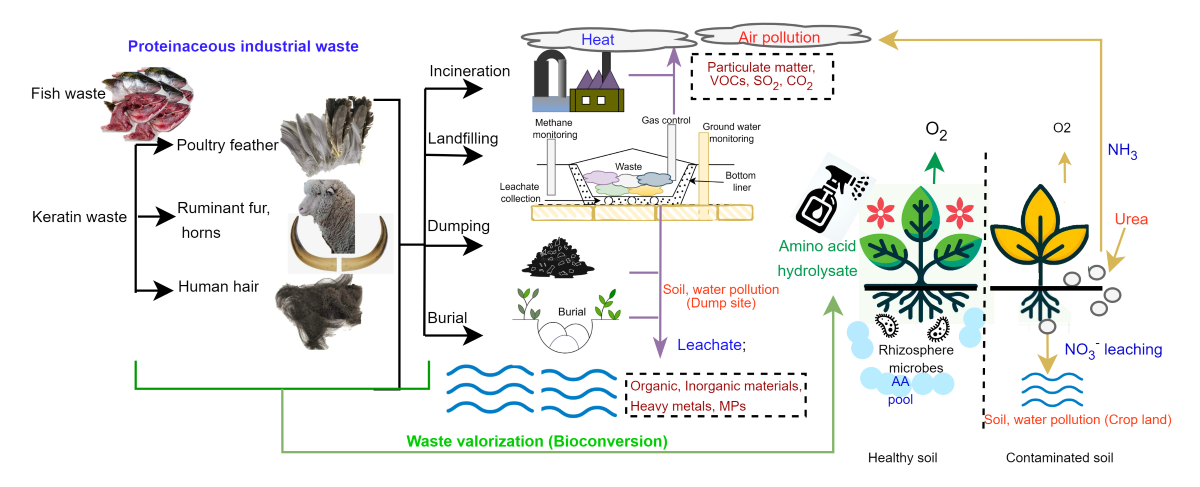
Graphical Abstract
1. Introduction
Rapid globalization generates a massive quantity of waste from every sector and their inappropriate management creates environmental menace. Industrial and municipal solid waste [1] mainly account for 7.6 billion tons, and 2.01 billion tons respectively, and agricultural wastes are composed of food and greens; 2.5 billion tons, and animal and livestock; 17 billion tons. When considering the components of waste, food and greens constitute the highest proportion, contributing 44 percent to the global waste stream [2].
Food and greens, animal, and livestock production expand owing to higher demand and technological advancements, thus accumulation of bulky waste is unavoidable. Fish Processing Wastes (FPW) generated in various stages of production contributed to 50–125 million tons in the world in 2018 [3] with 3.3 percent annual growth rate reported from 1950-2018 [4]. FPWs are mainly nonedible, nutrient-rich discards such as heads, viscera, bones, skins and fins, scales, and other fish trimmings [5]. Moreover, keratinaceous wastes [6] are generated exceeding 40 million tons annually which include human hair from personal care industries [7,8] avian feathers from poultry [9], animal fur from textiles [10] bovine hoof and horns from livestock industry [11].
To date, these proteinaceous wastes are managed to some extent through disposal or valorization however not sufficient to fully address the issue of high waste accumulation. FPW is used for advanced high-tech uses in biotechnological and engineering sectors, for the animal, aquaculture feed industry, and plant nutrient or fertilizer productions [12]. However, a major portion is sea or open land dumped or landfilled. Keratinaceous wastes, e.g., human hair are utilized for cosmetics, pest control, and hair care products, however, poultry feathers and animal wool byproducts, horns, and hooves are not valorized to a considerable extent. These are ultimately either open-dumped, landfilled with other municipal wastes, or incinerated [13] in bulk amounts aiming at waste disposal or power generation.
There are many adverse effects of the accumulation and unsafe disposal of proteinaceous wastes. Open dumping and incineration emit heat and other greenhouse gases (GHG), Volatile organic compounds (VOC), and particulate matter causing global warming and public chaos through health issues and foul odours due to the decomposition of protein. Open-dump leachate from human hair and animal keratin mixed with unsegregated municipal solid wastes increases nitrogen concentration in waterbodies causing eutrophication [8]. The spread of disease pathogens with protein decomposition such as Salmonella, E-coli, and further disease carriers such as rodents, mosquitoes, birds, and flies create a local nuisance [14]. Choking the drainage systems with the bulky waste clogging and emission of toxic gases such as ammonia, carbonyl sulphides, hydrogen sulphides, sulphur dioxide, phenols, nitriles, pyrroles, and pyridines with burning and posing respiratory disorders such as tuberculosis from dust hair and fur are further negative impacts [8].
Therefore, a better solution for managing waste is of pinnacle importance. When considering these wastes at the monomer level, the common feature of all these industrial wastes is the availability of plant-biocompatible amino acids in optimum qualities and quantities. This composition is potent to foster plants supplying all 9 plants’ essential amino acids (EAA) directly, other macro and micronutrients alongside other benefits of organic fertilizers [9] and conditions the rhizosphere assisting soil micro and macrofauna. Therefore, the best method for effective disposal is valorization to hydrolysate which appears with many secondary benefits. In this study, we propose a novel Fortified Amino Acid Fertilizer (FAAF) that can meet the full nutritional demand of crops with a potential substitute for Urea which exhibits detrimental effects on the environment in production and application.
In this review, we propose the most promising approach to managing proteinaceous waste with minimal ecological impact that may support attaining Sustainable Development Goals (SDG). Concurrently, the strategy produces a novel nonsynthetic fertilizer that aids in sustainable food crop production representing a paradigm step forward in the agriculture sector aligned with principles of circular bioeconomy.
2. Global waste generation
With ongoing industrialization, the technological improvements in the production sector have led to a significant increase in waste generation across various scales, including Industrial, municipal, Agricultural, and animal livestock, construction demolition, medical, radioactive, and other hazardous waste [15]. However, continuous waste buildup results due to technological limitations and inefficiency in waste handling consequently creating sustainability challenges as well as financial constraints worldwide. The authorities have failed to properly manage waste with economic growth showing waste accumulation does not appear to follow The Environmental Kuznets Curve (EKC). United Nations Sustainable Development Goals (UNSDG) aims at the environmentally sound management of waste despite the current progress pattern related to waste prevention, reduction, and recycling are insufficient to meet the goals in 2030.
High-income countries currently contribute 34 percent of global waste, amounting to 683 million tons with predicted daily per capita waste generation of 19 percent and middle- or low-income countries 40 percent in 2050. The regions experiencing the highest incremental rates in total waste generation are Sub-Saharan Africa, South Asia, the Middle East, and North Africa. In these regions, over 50 percent of waste is improperly disposed of, directly affecting biodiversity and human health [16] Figure 1 depicts the global waste composition, showing major portion comes from food and greens.
Food waste accounts for the highest proportion of 570 million tons annually [17] from various sources such as domestic, industrial, slaughterhouses, and catering [18] while high-income, middle-income, and low-income countries contribute 32 percent, 53 percent, and 56 percent to waste generation respectively. The percentage of food loss and waste (FLW) varies across different products and stages of the supply chain, including production, post-harvest, packaging distribution, and consumption [19]. Animal and livestock keratinaceous wastes [6] are reported 40 million tons annually with the contribution of USA, Brazil, and China mainly [6,9].
Proteinaceous wastes are disposed of through open dumping 33 percent, landfilling 37 percent, sanitary landfilling 8 percent, and incinerating 11 percent while only 19 percent is recycled for utilization [20]. However, these methods are inefficient in minimizing environmental pollution pressure and thus create a high impact on environmental sustainability and public health.
3. Food and Agricultural wastes as a major portion of waste generation
The proteinaceous food industry expands its production to satisfy the protein demand for a healthy diet, alongside proteinaceous waste and byproducts generation and accumulation is continuously escalating. The fish, poultry, and livestock industries contribute a greater portion to proteinaceous wastes.
Fish processing waste (FPW) is a major form of food waste disposed from the fishery industry accounting for 82.1 million tons of fish production in 2018 while 89 percent of the global total volume supplied from Asia in the last 20 years [4]. Depending on the level of processing or type of fish, 30-70 percent of the original fish is FPW [21] consequently, 35 percent of aquatic foods are disposed of as waste annually [22] and total FPW generation onboard in vessels and inland accounts 62 million tons [4]. FPW may include fish discards such as fish muscle trimmings (15-20%), heads (9-12%), viscera (12-18%), tails, fins, and skins (1-3%), scales (5%), and bones (9-15%) and dead, damaged fish or female fish in ornamental fish culture [5].
Poultry and livestock slaughterhouses collectively generate [11] 8.6 million tons of keratinaceous waste annually including feathers, fur, hooves, and horns [23]. Between 5-7 percent of the total mass of adult chickens comprises feather components, which are disposed of as wastes. Approximately 90 percent of this feather waste consists of protein components that are highly resistant to degradation. Therefore, feathers are typically disposed in landfills or through incineration [15,24]. This practice leads to significant energy consumption and environmental pollution.
Personal care industries generate million tons of human hair globally and it accounts for 1 million in respect to the United States (US) [7]. However, about 1 million kg of generation is used for preparing fashion and cosmetics beauty accessories, and hair care products in relation to India. The majority from urban and rural cut hair and further the byproducts from hair based cosmetic industry are bulk disposed into open dumps or burn. These create further environmental issues [8].
The leading countries for textile production are Australia, China, New Zealand, Iran, and Argentina, Australia contributes to 95 percent of the total wool fibers [25] and the industry extracts 1.15 million tons of wool fiber from sheep and other animals’ fur [10] for the production of outer knitwear and woven attire. Novel emerging soft wool trend in “next to skin” knitwear has surpassed the traditional use of course fibers. However, the industry generates 2.5 million tons of waste during production annually and byproducts along with used woolen apparel collectively end up in disposal sites [26]. These are reused, recycled for the same value or lower value products, incinerated, or landfilled [27]. The protein-containing waste environmental impact and potential impact on waste management can be assessed through Ecological Footprint (EF) and Lifecycle assessment (LCA) [28].
4. Challenges in proteinaceous waste management
Due to high protein content, these wastes degrade releasing unpleasant odour and providing a nutrient harbour for pathogen growth in turn leading to many human diseases and therefore considered hazardous [29]. Global accumulation of these wastes occurs due to the generation rate exceeding the disposal rate.
FPW ends up in either open land or sea dumps [22] about 54 percent of total FPW accounting for 27 million tons is sea-dumped during onboard processing [12], and 35 percent of FPW is landfilled or abandoned. Effluents from fish processing contain high levels of biological oxygen demand (BOD), Chemical oxygen demand (COD), Total suspended solids (TSS), Fat-oil-grease (FOG), pathogens, microflora, organic matter, and nutrients. These can harm coastal and marine environments [30] with less dissolved O2 in coasts. The accumulation of organic matter beneath cage fish farms and the subsequent alterations in sediment conditions is another impact of marine fish farming [31,32] FPW load in a broader coastal area affects various levels of ecosystems, leading to a decrease in biomass, density, and diversity of benthos, plankton, and nekton, while also altering natural food webs [33].
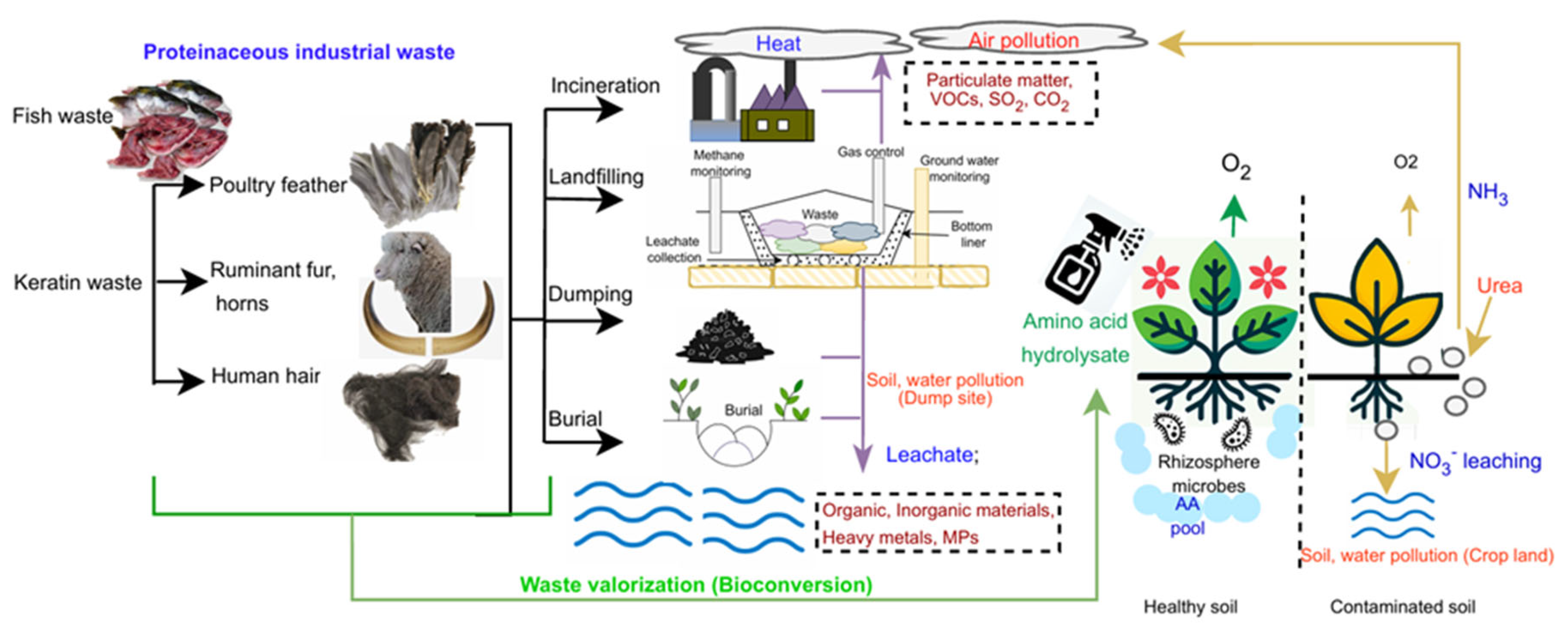
Land dumping of keratinaceous waste pollutes fields and drinking water resources disseminating pollutants with runoff, and leachate [34]. High NO3-content is transferred to water bodies and causes eutrophication thus the effect on aquatic fauna. In turn, this leads to the spread of pathogens; Salmonella, E-coli pose a direct risk to human health, intensification increases the risk of pathogens [32] and the spread of rodents, and flies carry diseases and creates local nuisance. Open dumping also releases greenhouse gases such as CO2, NOx, CO, and persistent organic pollutants (dioxins), heavy metals such as lead (Pb), copper (Cu), cadmium (Cd), chromium (Cr), nickel (Ni) and mercury (Hg), and ammonia (NH3) and unpleasant odours creating public chaos. Open-burning of fur and hair emits toxic gases such as ammonia, carbonyl sulphides, hydrogen sulphides, sulphur dioxide, phenols, nitriles, pyrroles, and pyridines. Hair dust can be inhaled through the respiratory tract causing tuberculosis [35]. Incineration releases toxic emissions; GHG [34], VOCs, particulate matter along with heavy metals, and heat. Dioxin releases 30-56 percent of total gas emissions from feather incineration and bioaccumulates in food chains. These impacts on climate change and overall aesthetic aspects as depicted in Figure 2. More importantly, animal byproducts are not segregated under their risk Category recognized by the EU Animal By-Products Regulation (ABPR) in most countries thus these wastes possess an extra vulnerability.
5. Current management of proteinaceous waste
The management needs control, regulatory, and monitoring procedures to safeguard the environment [31]. Waste management legislation ensures that waste is handled and disposed of, responsibly to protect public health, resources, and the environment thus covering management of all hazardous and non-hazardous waste types. Waste producers must make sure they follow the law by getting permits, filling out paperwork, and keeping records and prohibit engaging in activities that lead to penalties.
The Environmental Protection Act (EPA) 1990 aims to control waste disposal and pollution to safeguard the environment and public health thus minimizing businesses' environmental impact. The waste duty of care, outlined in section 34(7) of the Act, establishes guidelines for waste management, emphasizing handling, storage, transportation, disposal, pollution prevention, and sustainable development.
The Department for Environment, Food & Rural Affairs oversees the handling and disposal of animal by-products, including bones, fat, meat, and eggs. Guidelines are in place to ensure proper handling, processing, storage, and disposal of these products to safeguard both health and the environment. Animal by-products are categorized into three groups, which dictate their management approach; Category 1 (Animal by-product) ABPs are at high risk, Category 2 are intermediate and Category 3 are classed as low risk. Category 1 includes body parts liable to carry diseases, animals that contain high veterinary drug content, and wild animals, Category 2; digestive tract organs and Category 3; hides, skins, hooves, feathers, wool, horns, and hair that had no signs of infectious disease at death, aquatic animals, and aquatic and terrestrial invertebrates. A mixture of the above wastes may be treated as Category 1.
The EU Animal By-Products Regulation (ABPR) (1774/2002); regulation put forward by European Commission directives, several acts including an intra-species recycling ban for fur animals, fish, and specified methods for the burial, incineration, and burning of certain animal by-products. The disposal of untreated fish waste in landfills is forbidden, and retailers must implement ABPR-compliant methods, such as rendering, controlling collection, proper transporting, storing, handling, and processing during the disposal of animal carcasses or parts of animal carcasses. Deep ocean dumping of fish waste is allowed as effluent discharged into deeper waters or areas with strong currents will typically disperse over a wide area [31].
The UK Food Hygiene (Fishery Products & Live Shellfish) (Hygiene) Regulations 1998; Regulations related to the fishery industry in terms of importation, production, storage, since marketing further, hygienic waste handling, separation of offal/viscera from products for human consumption, regular removal of waste from on-shore processing facilities.
The Alaska Solid Waste Program; Solid waste regulations initiated in 1973 under the Department of Environmental Conservation (Register 47, October 1973, Title 18, Environmental Conservation, Chapter 60, Solid Waste Management, State of Alaska); (a) incineration is considered as a viable process (b) the disposal of decayable waste in areas subject to permafrost or leachate generation is restricted (c) violation of the regulations is subjected to penalties with fine or imprisonment for not more than one year or both [36]. Regulations on landfill disposal of fish waste and land application (effectively utilizing fish waste as fertilizer to agricultural lands and composting).
Apart from these, there are no government regulations or nongovernmental actions that have been imposed on waste management all over the world. And with the current practices and less management attention, the world cannot reach the SDG in the predicted period. Currently, management related to proteinaceous wastes is conducted through both disposal and valorization to utilizable products. Due to the benefits in a broad range, valorization is identified as the most sustainable waste reduction method compared to disposal (Figure 3).
FPW can be composted to obtain bulky fertilizer which exhibits non-phytotoxicity and increased contents of nitrogen, phosphorus, potassium, sodium, calcium, magnesium, and dry matter content to facilitate plants and soil despite exhibiting a reduced Ca:P ratio [37]. The process is an aerobic and biological method that yields a final stabilized humus-like product. Sawdust, wood shavings, crop residues, and wheat bran are often used bulking agents, and pH, moisture, bulk density, and C: N ratio are maintained to facilitate microbial activity. Fish compost shows poor consistency of nutritional values, time consumption for production, and bulkiness in fertilizer as major drawbacks.
Fish silage is produced by ensiling of FPW with organic acids or inorganic acids (sulphuric/ formic) and used as feed for pigs, poultry, and mink with a lower operating cost than fish meal. Utilizing organic acids is simpler since there is no requirement for neutralization and less corrosivity. When lactic acid bacteria are employed in fermentation, the culture density increases, cutting down the investment upon renewing the culture [38].
FPW has the potential to serve as a viable and environmentally friendly source for fish oil processing with desirable chemical, physical, and sensory characteristics [32,39]. Fish oil extraction can be conducted by hydraulic pressing, heat extraction, solvent extraction, acid fermentation, wet/ physical methods, and green extraction using supercritical CO2, which are cost-effective and easy methods. Further novel eco-friendly techniques such as supercritical fluid extraction, enzyme extraction, microwave-assisted extraction, and ultrasound-assisted extraction, have been identified. The traditional methods exhibit drawbacks in terms of product quality, through degrading natural compounds under high heat, remaining toxic residues in the final product, creating environmental impacts due to the heat, and leaking organic solvents into the environment [40]. Fish oil can also be converted to non-toxic, biodegradable, environment-friendly biodiesel using chemical or enzymatic methods.
Fishmeal production from the fisheries by-products has increased drastically and around 6 million tons of fish waste have been used for fishmeal production [41]. It is estimated that 25 percent (1.23 million tons in 2008) of the total fishmeal produced is from fish by-products. Currently, 63 percent of the fishmeal is being consumed by the aquaculture industry, 25 percent by pigs, 8 percent by poultry, and 4 percent by other animals. Although fish meal is used as a feed ingredient, it contains a considerable quantity of microplastics (MPs). Many recent studies reported the availability of large MPs (> 1 mm), and viscera parts have exhibited 0.72 MPs/fish. Therefore, this method has limitations in the quality of the final product of valorization although practiced in waste management [42]. “Compact Fishmeal Plants” implemented on, on-board fishing vessels typically handle between 15 to 700 tons of raw materials per day [43].
Fish hydrolysate is produced from hydrolysis FPW through enzymatic; microorganisms or plant-extracted enzymes and chemical processes. Enzyme refining cost is reduced by employing anaerobic microorganisms producing proteases. In chemical hydrolysis, strong acids or bases together with heat are necessary. The disadvantages of fish hydrolysate are inefficient hydrolysis or uneven mechanical breakdown causing sedimentation, the difficulty of handling [44] unpleasant odour, and micronutrient loss such as Molybdenum (Mo).
To date, novel innovative applications using high-tech valorization approaches are developing to utilize these waste resources in various fields including medical, biotechnological, engineering, etc. Table 1 summarizes recently published literature about valorization methods of proteinaceous wastes in different fields.
Fish emulsion is processed by heat treating FPW at a temperature of at least 800C [21] to destroy pathogens, subsequently pressing the solid material yields the liquid fish emulsion rich in essential amino acids (EAA) and other nutrients [71,72]. Then stabilizes through acidification, using sulphuric, phosphoric, and organic acids [21]. According to literature, fish emulsion is successfully used to suppress Streptomyces spp. in potato scab and Verticillium dahlia in verticillium wilt reducing severity by 44-53 percent while increasing the tuber yield by 7-20 percent [73]. High heat used in the process decomposes protein creating an unpleasant odour and depleting micro and macronutrients making it disadvantageous.
Chitosan is prepared through FPW chemically treated by acids, alkaline or biologically treated by protease, and chitin deacetylase. Chitosan exhibits biodegradable and biocompatible properties, thus applied in the pharmaceutical, cosmetic, food, biomedical, chemical, and textile industries for water purification, and tissue engineering, further acting as antimicrobial agents to ease metal ion penetration [74].
There are chemical, biological, and physical methods of keratin waste valorization, to yield end products of keratin fiber, keratin scaffold, keratin films, and keratin hydrogels, fertilizers [61]. Chemical methods [75] are reduction, oxidation, ionic liquids, and hydrolysis, heating is commonly applied during chemical hydrolysis to promote a high yield, yet elevated temperatures can lead to the degradation of amino acids. The primary technique utilized for extracting keratin from hair and wool is the oxidation method. These employ a chemical cost for Peracetic acid, Ammonia, Hydrochloric acid, Hydrogen Peroxide, Sodium Metabisulfite, etc. In the reduction method, about 47 percent of protein content can be extracted, however, the formation of lanthionine reduces protein and (essential amino acids) EAA even causing toxicities. In the Alkali method, protein yield recovery is comparatively less and further impacts the (amino acids) AA content.
In microbial and enzymatic pathways, numerous fungi, actinomycetes, and bacteria species contribute to keratin extraction by producing keratinolytic and proteolytic enzymes such as keratinases, and Savinases (extract keratin from wool and feathers) [76] enzymatic hydrolysis involves minimal energy consumption and cost.
As physical methods, the steam explosion is eco-friendly despite the heat destroys AA e.g., 50 percent cysteine (Cys), reducing the initial wool mass by about 18 percent, even though inefficient in cleaving the sulfide bond in protein degrading. Microwave irradiation can extract, 72 percent of feathers and 30-60 percent of wool [24]. The process of keratin degradation and extraction is highly efficient, with homogeneous heating within seconds. Around 71 percent of feather extraction can only be achieved through a temperature of 160 to 200 °C, thus disadvantageous due to high power consumption [77].
Although there are various currently practicing and potential strategies for proteinaceous waste management, through an impact analysis, we can decide that the most efficient cost-effective, and eco-friendly method is microbial fermentation. Moreover, this method yields a nutrient-dense liquid hydrolysate that can be used as a substitute nitrogen fertilizer for crops indirectly assisting in protecting and recovering soil from pollution through Urea. Consequently, this solves rising problems in two major sectors satisfying the circular bioeconomy.
Protein degradation in the biological conversion of FPW is carried out by acids and enzymes of fermenting microorganisms such as Lactobacillus spp. e.g., Lactobacillus plantarum. The culture is inoculated into molasses to obtain carbohydrates and incubated until a population of about 107 microbes/ gram of molasses is established and added to the minced fish [41]. Fermentation is more readily accomplished in areas characterized by consistently high ambient temperatures. The small-scale production is carried out more similarly to the above hydrolysate procedure with minor adjustments.
Keratin fermentation is the most promising approach and the genera include Bacillus; Bacillus subtilis, Bacillus pumilus, Bacillus lichenifomis, and Bacillus cereus [78], staphylococcus, enterococcus [79,80] belonging to 14 protease families [81]. As a popular bacterium, Streptomyces sp. SCUT-3 is used on an industrial scale which yields 8.1mg L-1 AA [57] fungi such as Chrysosporium [82,83] are further able to degrade keratin [57]. To isolate keratinase-producing microorganisms, the steps including sample collection, assay development, strain identification, and characterization are usually applied.
6. Potential for valorization and fertilizer formulation
All the proteinaceous wastes contain different amounts of crude proteins and degradation yields similar monomers. Therefore, the aforementioned biological conversion protocols can be employed to hydrolyze the wastes separately and mix together owing to their compatibility, so that the resultant nonsynthetic fertilizer is fortified with the highest quality and quantity of AA (Figure 4).
This would be a paradigm change in modern agriculture which is targeting at sustainable solutions over conventional practices for crop nutrition. Around 50 percent of global farmers use Urea to satisfy crop nitrogen requirements [84] owing to various benefits [85]. However, Urea exhibits lower nitrogen use efficiency (NUE) and creates environmental pollution [86] due to leaching NO3-, volatilize as NH3 and N2O [87] even toxicities to microbes affecting soil-free amino acid (FAA) pool [88]. Crop NH4+ toxicity can occur due to overdosage causing plant growth arrest or death [89].
Nonetheless, the enriched fertilizer enriches all micro and macronutrients for plant growth and development, especially from FPW, and essential and conditional amino acids from all the proteinaceous wastes. These are absorbed through root hairs (soil drench) or leaf stomata (foliar) and improve soil biological and physicochemical characteristics [34]. (Table 2) illustrates the nutrients contained in FPW hydrolysate demonstrating the potential to use as fertilizer.
6.1. Composition of FPW fertilizer
Over several years FPW fertilizers have been tested through a range of crop plants in the world; lettuce [21] radish, sorghum, sweet corn, peas, and soybean [91]. In India, a similar fertilizer with the trade name “Gunapaselum” has been tested on tomato plants with Bacillus sublitis starter culture [92] revealing a reduction in pH, enhanced CEC, OM, OC in soil, and major nutrients in the plant. In Africa and Ethiopia, a study demonstrated FPW fertilizers from Nile thilapiya can be used as an alternative for diammonium phosphate for tomato plants [93] and [91] found that FPW fertilizer reports better xylem and phloem functions in Solanum melongena, better yield in Capsicum annuum, and better stem girth, leaf sugar and vitamin C concentrations in Centella asiatica, compared to synthetic fertilizers (SF) [94].
6.2. Composition of keratin waste
Keratin is a polypeptide strand containing different EAA, such as Glycine (Gly), Alanine (Ala), Serine (Ser), Valine (Val), Phenylalanine (Phe), threonine (the), tryptophan (Try), Isoleucine (Lle) together with Methionine (Met), Lysine (Lys), Leucine (Leu), Histidine [95]. Conditional AA contains Aspartic, Serine, Proline, Glutamic, Glycine, Alanine, Tyrosine, Arginine, and Hydroxyproline in significant quantities and further contains minerals [96] cross-linked by disulfide bonds and H bonds. These AA perform numerous physiological functions and structural makeup of crops such as cell formation, disease resistance, chlorophyll formation [97] phytohormone precursors, pollen growth, and protection [98] etc.
6.3. Introduce amino acid formulations from proteinaceous wastes
The plant nutrient requirement depends on the plant, soil, and environmental conditions, commonly, macronutrients, micronutrients (or trace minerals), and AAs are absorbed in varying quantities for overall growth and productivity. The enriched fertilizer is composed of nutrients in sufficient levels according to the reported literature that has measured plant performance with keratin and FPW fertilizer application separately. Therefore, the combination is predicted to enhance plant performance profusely. Different formulas altering the dosages of proteinaceous waste hydrolysates involved in the final fertilizer are suggested to be conducted in future directions.
7. Conclusions
According to the literature, in recent years continuous accumulation of wastes has occurred due to the rate of generation over valorization and disposal threatening environmental, public, and social stability. Food and green waste contribute to the highest proportion of these waste streams while the proteinaceous concentrated animal-based waste accumulation is hazardous as they supply nutrient-rich harbour for pathogens and social unrest. Further, the existing policy framework exhibits gaps in design and implementation thus insufficient to address all these wastes, Therefore, Sustainable Development Goals (SDGs) worldwide may be unattainable, and upon analysis using Life Cycle Assessment (LCA) and Ecological Footprint (EF), it becomes evident that many waste treatment options fail to reach sustainability standards.
Even though inedible protein substances are so far considered as wastes, recent scientific evidence proves that such proteinaceous wastes contain a high amount of amino acids which can be utilized through valorization to fulfill plant nutrient demand. Waste effluent is an undervalued resource due to the yielding of the common monomer/ nutrient upon hydrolysis that plants can easily assimilate. Microbial fermentation is considered a sophisticated valorization method however, it can be utilized to hydrolyze all types of proteinaceous wastes even though, no policies or regulations are imposed herewith.
Therefore, we highlight the following in terms of improving waste management with a systematic approach to extract nutrients from proteinaceous wastes. A broad legal framework should be imposed to address specific waste in each industry and attention should be drawn to improve valorization through bio-conversion techniques to optimize AA synthesis from proteinaceous wastes, formulate regulations for the collection and sorting of proteinaceous wastes, immediate transport, and storage of waste materials to delay spoilage, and implement compact hydrolysate plants for on-board fishing vessels.
Moreover, it is ideal to calculate the qualities of bioavailable AA of enriched hydrolysate and formulate recommendations to meet the AA demand of various crops based on their physiological and morphological differences in various growth stages. This method can be employed to minimize pollution from excessive urea usage in crop production, paving for sustainability leading to a paradigm change in modern agriculture while satisfying the concept of circular bioeconomy.
Author Contributions
Writing—original draft preparation, MT K., HX; writing—review and editing, WW K.; visualization, WW K.; supervision, H G., BM B; funding acquisition, TKh F. All authors have read and agreed to the published version of the manuscript.
Funding
This research was funded by Researchers Supporting Project at King Saud University, Riyadh, Saudi Arabia, for funding this review project, (Fund no. RSP2024R487).
Conflicts of Interest
The authors declare no conflicts of interest.
References
- Reznikova, N., et al., Global circular e-chain in overcoming the global waste. Procedia Environmental Science, Engineering and Management, 2019. 6(4): p. 641-647.
- Quested, T.E., et al., Spaghetti soup: The complex world of food waste behaviours. Resources, Conservation and Recycling, 2013. 79: p. 43-51. [CrossRef]
- Zhang, J., Ç. Akyol, and E. Meers, Nutrient recovery and recycling from fishery waste and by-products. Journal of Environmental Management, 2023. 348: p. 119266. [CrossRef]
- FAO, Agriculture Organization of the United Nations The state of world fisheries and aquaculture 2020: Sustainability in action. Rome: Food and Agriculture Organization of the United Nations, , 2020: p. pp.1-244.
- Martínez-Alvarez, O., S. Chamorro, and A. Brenes, Protein hydrolysates from animal processing by-products as a source of bioactive molecules with interest in animal feeding: A review. Food Research International, 2015. 73: p. 204-212. [CrossRef]
- Timorshina, S., E. Popova, and A. Osmolovskiy, Sustainable applications of animal waste proteins. Polymers, 2022. 14(8): p. 1601. [CrossRef]
- Zheljazkov, V.D., et al., Human hair as a nutrient source for horticultural crops. HortTechnology, 2008. 18(4): p. 592-596. [CrossRef]
- Gupta, A., Human hair “waste” and its utilization: gaps and possibilities. Journal of waste management, 2014. 2014(1): p. 498018.
- Polmann, G., et al., Non-conventional nuts: An overview of reported composition and bioactivity and new approaches for its consumption and valorization of co-products. Future Foods, 2021. 4: p. 100099. [CrossRef]
- Zarkadas, I., et al., Exploring the potential of fur farming wastes and byproducts as substrates to anaerobic digestion process. Renewable Energy, 2016. 96: p. 1063-1070. [CrossRef]
- Xia, Y., et al., Anaerobic digestibility of beef hooves with swine manure or slaughterhouse sludge. Waste Management, 2015. 38: p. 443-448. [CrossRef]
- Coppola, D., et al., Fish waste: From problem to valuable resource. Marine drugs, 2021. 19(2): p. 116. [CrossRef]
- Tesfaye, T., B. Sithole, and D. Ramjugernath, Valorisation of chicken feathers: a review on recycling and recovery route—current status and future prospects. Clean Technologies and Environmental Policy, 2017. 19: p. 2363-2378. [CrossRef]
- Olgunoğlu, İ.A., Salmonella in fish and fishery products. Salmonella: a dangerous foodborne pathogen, 2012: p. 91-105.
- Said, M. Potential development of poultry feather waste resources as raw material in industry: A review. in IOP Conference Series: Earth and Environmental Science. 2020. IOP Publishing. [CrossRef]
- Kaza, S., et al., What a waste 2.0: a global snapshot of solid waste management to 2050. 2018: World Bank Publications.
- FAO, Food and Agriculture Organization of the UN FAO, Case study, . 2023.
- Hasan, Z. and M. Lateef, Transforming food waste into animal feeds: an in-depth overview of conversion technologies and environmental benefits. Environmental Science and Pollution Research, 2024. 31(12): p. 17951-17963. [CrossRef]
- Ahmed, A.E. and F. Alzahrani, Food Loss and Waste in Saudi Arabia: Analysis, Causes, and Interventions, in Food and Nutrition Security in the Kingdom of Saudi Arabia, Vol. 2: Macroeconomic Policy and Its Implication on Food and Nutrition Security. 2024, Springer. p. 241-274.
- Ebuete, A.W., P.-E.D. Wodu, and E. Ebuete, Dumping on Waters: The Lacunae in Waste Management in the Niger Delta, Nigeria. American Journal of Environment and Climate, 2022. 1(2): p. 100-109. [CrossRef]
- Ahuja, I., et al., Fish and fish waste-based fertilizers in organic farming–With status in Norway: A review. Waste Management, 2020. 115: p. 95-112. [CrossRef]
- Love, D.C., et al., Aquatic food loss and waste rate in the United States is half of earlier estimates. Nature Food, 2023. 4(12): p. 1058-1069. [CrossRef]
- Mi, X., et al., Transferring feather wastes to ductile keratin filaments towards a sustainable poultry industry. Waste Management, 2020. 115: p. 65-73. [CrossRef]
- Shavandi, A., et al., Keratin: dissolution, extraction and biomedical application. Biomaterials science, 2017. 5(9): p. 1699-1735. [CrossRef]
- Cottle, D., World sheep and wool production. 2010: Nottingham University Press, Nottingham, UK.
- Doyle, E.K., et al., The science behind the wool industry. The importance and value of wool production from sheep. Animal Frontiers, 2021. 11(2): p. 15-23.
- Russell, S., et al. Review of wool recycling and reuse. in Natural Fibres: advances in science and technology towards industrial applications: from science to market. 2016. Springer.
- Tian, H., X. Wang, and Y.W. Tong, Sustainability assessment: focusing on different technologies recovering energy from waste. Waste-to-Energy, 2020: p. 235-264.
- Mrajji, O., et al., Feather waste as a thermal insulation solution: Treatment, elaboration and characterization. Journal of Industrial Textiles, 2021. 50(10): p. 1674-1697.
- Islam, M.S., S. Khan, and M. Tanaka, Waste loading in shrimp and fish processing effluents: potential source of hazards to the coastal and nearshore environments. Marine pollution bulletin, 2004. 49(1-2): p. 103-110.
- Read, P. and T. Fernandes, Management of environmental impacts of marine aquaculture in Europe. Aquaculture, 2003. 226(1-4): p. 139-163. [CrossRef]
- Naylor, R.L., et al., Effect of aquaculture on world fish supplies. Nature, 2000. 405(6790): p. 1017-1024.
- Arvanitoyannis, I.S. and A. Kassaveti, Fish industry waste: treatments, environmental impacts, current and potential uses. International journal of food science & technology, 2008. 43(4): p. 726-745.
- Joardar, J. and M. Rahman, Poultry feather waste management and effects on plant growth. International Journal of Recycling of Organic Waste in Agriculture, 2018. 7: p. 183-188.
- Vijayalakshmi, E., Hair pollution hits Karnataka. Down to Earth. 2003.
- Grundwaldt, J.J., T. Tilsworth, and S.E. Clark, Solid waste disposal in Alaska. F. Carlson, 1974: p. 331.
- Radziemska, M., et al., Valorization of fish waste compost as a fertilizer for agricultural use. Waste and Biomass Valorization, 2019. 10: p. 2537-2545. [CrossRef]
- Pagarkar, A., et al., Preparation of bio-fermented and acid silage from fish waste and its biochemical characteristic. Asian Journal of Microbiology Biotechnology and Environmental Sciences, 2006. 8(2): p. 381.
- Salih, A.W., S.M. Najim, and J.M. Al-Noor, Some physical, chemical and sensory properties of fish oil extracted from fish wastes by physical and chemical methods. Biological and applied environmental research, 2021. 5(1): p. 152-162.
- Ivanovs, K. and D. Blumberga, Extraction of fish oil using green extraction methods: A short review. Energy Procedia, 2017. 128: p. 477-483. [CrossRef]
- Ghaly, A., et al., Fish processing wastes as a potential source of proteins. Amino acids and oils: A critical review. J. Microb. Biochem. Technol, 2013. 5(4): p. 107-129.
- Thiele, C.J., et al., Microplastics in fish and fishmeal: an emerging environmental challenge? Scientific reports, 2021. 11(1): p. 2045.
- Hall, G.M., Fishmeal production and sustainability. Fish Processing: Sustainability and New Opportunities, 2010: p. 207-235.
- al., B.e., U.S. Patents, Editor. 2010: United States.
- Farhad ALI, M., et al., BIODEGRADABLE RETANNING MATERIAL FROM TANNERY TRIMMING WASTE: EXTRACTION, PREPARATION AND APPLICATION. Leather & Footwear Journal/Revista de Pielarie Incaltaminte, 2023. 23(4).
- Choudhary, B.L., et al., Replacement of synthetic nitrogenous fertilizer by human hair hydrolysates in cultivation of mung bean (Vigna radiata L.). Waste and Biomass Valorization, 2022. 13(7): p. 3147-3159. [CrossRef]
- Bindal, S., et al., In-Situ and Cell-Free Goat Hair Hydrolysis by a Consortium of Proteases from Bacillus licheniformis Strain ER-15: Hair Hydrolysate Valorization by Melanin Extraction. Waste and Biomass Valorization, 2022. 13(7): p. 3265-3282. [CrossRef]
- Anbesaw, M.S., Bioconversion of Keratin Wastes Using Keratinolytic Microorganisms to Generate Value-Added Products. International Journal of Biomaterials, 2022. 2022(1): p. 2048031.
- Maity, T.K., et al., Efficient isolation of keratin from protein-rich waste biomass: a practical approach to minimize environmental impact and valorize waste biomass. Sustainable Environment Research, 2022. 32(1): p. 42. [CrossRef]
- Qin, X., et al., A sustainable and efficient recycling strategy of feather waste into keratin peptides with antimicrobial activity. Waste Management, 2022. 144: p. 421-430.
- Yan, R.-R., et al., Preparation and applications of keratin biomaterials from natural keratin wastes. Applied Microbiology and Biotechnology, 2022. 106(7): p. 2349-2366.
- Lebedytė, M. and D. Sun, A review: can waste wool keratin be regenerated as a novel textile fibre via the reduction method? The Journal of The Textile Institute, 2022. 113(8): p. 1750-1766.
- Araujo, J., et al., Enzymatic hydrolysis of fish waste as an alternative to produce high value-added products. Waste and Biomass Valorization, 2021. 12: p. 847-855.
- Lv, S., et al., Recycling fish scale powder in improving the performance of asphalt: A sustainable utilization of fish scale waste in asphalt. Journal of Cleaner Production, 2021. 288: p. 125682.
- Petek, B. and R. Marinšek Logar, Management of waste sheep wool as valuable organic substrate in European Union countries. Journal of Material Cycles and Waste Management, 2021. 23: p. 44-54. [CrossRef]
- Choe, U., et al., Anaerobic co-digestion of fish processing waste with a liquid fraction of hydrothermal carbonization of bamboo residue. Bioresource technology, 2020. 297: p. 122542.
- Li, Z.-W., et al., The feather degradation mechanisms of a new Streptomyces sp. isolate SCUT-3. Communications biology, 2020. 3(1): p. 191.
- Rajabinejad, H., I.-I. Bucişcanu, and S.S. Maier, Current approaches for raw wool waste management and unconventional valorization: A review. Environmental Engineering & Management Journal (EEMJ), 2019. 18(7).
- Peng, Z., et al., Keratin waste recycling based on microbial degradation: mechanisms and prospects. ACS sustainable chemistry & engineering, 2019. 7(11): p. 9727-9736.
- Łaba, W., et al., New keratinolytic bacteria in valorization of chicken feather waste. AMB Express, 2018. 8: p. 1-14.
- Holkar, C.R., et al., Valorization of keratin based waste. Process Safety and Environmental Protection, 2018. 115: p. 85-98.
- Lakhal, D., et al., Mixture experimental design in the development of a bio fertilizer from fish waste, molasses and scum. International Journal of Engineering Research & Technology, 2017. 6(6): p. 588-594.
- Sharma, S. and A. Gupta, Sustainable management of keratin waste biomass: applications and future perspectives. Brazilian Archives of Biology and Technology, 2016. 59: p. e16150684. [CrossRef]
- Jin, X., et al., Extraction, characterization, and NO release potential of keratin from human hair. Materials Letters, 2016. 175: p. 188-190. [CrossRef]
- Lee, H., et al., Human hair keratin and its-based biomaterials for biomedical applications. Tissue Engineering and Regenerative Medicine, 2014. 11: p. 255-265.
- Kakkar, P., B. Madhan, and G. Shanmugam, Extraction and characterization of keratin from bovine hoof: A potential material for biomedical applications. SpringerPlus, 2014. 3: p. 1-9.
- Fakhfakh, N., et al., Wool-waste valorization: production of protein hydrolysate with high antioxidative potential by fermentation with a new keratinolytic bacterium, Bacillus pumilus A1. Journal of applied microbiology, 2013. 115(2): p. 424-433. [CrossRef]
- Chalamaiah, M., R. Hemalatha, and T. Jyothirmayi, Fish protein hydrolysates: proximate composition, amino acid composition, antioxidant activities and applications: a review. Food chemistry, 2012. 135(4): p. 3020-3038.
- Gupta, A., et al., Extraction of keratin protein from chicken feather. Journal of Chemistry and Chemical Engineering, 2012. 6(8): p. 732.
- Stingone, J.A. and S. Wing, Poultry litter incineration as a source of energy: reviewing the potential for impacts on environmental health and justice. New Solutions: A Journal of Environmental and Occupational Health Policy, 2011. 21(1): p. 27-42.
- Beckley, L., S. Fennessy, and B. Everett, Few fish but many fishers: a case study of shore-based recreational angling in a major South African estuarine port. African Journal of Marine Science, 2008. 30(1): p. 11-24.
- El-Tarabily, K.A., et al., Fish emulsion as a food base for rhizobacteria promoting growth of radish (Raphanus sativus L. var. sativus) in a sandy soil. Plant and soil, 2003. 252: p. 397-411.
- Abbasi, P.A., Establishing suppressive conditions against soilborne potato diseases with low rates of fish emulsion applied serially as a pre-plant soil amendment. Canadian journal of plant pathology, 2013. 35(1): p. 10-19. [CrossRef]
- Santos, V.P., et al., Seafood waste as attractive source of chitin and chitosan production and their applications. International journal of molecular sciences, 2020. 21(12): p. 4290.
- Chilakamarry, C.R., et al., Extraction and application of keratin from natural resources: a review. 3 Biotech, 2021. 11: p. 1-12. [CrossRef]
- Srivastava, B., et al., Microbial keratinases: an overview of biochemical characterization and its eco-friendly approach for industrial applications. Journal of Cleaner Production, 2020. 252: p. 119847.
- Feroz, S., et al., Keratin-Based materials for biomedical applications. Bioactive materials, 2020. 5(3): p. 496-509.
- Bhari, R., et al., Bioconversion of chicken feathers by Bacillus aerius NSMk2: a potential approach in poultry waste management. Bioresource Technology Reports, 2018. 3: p. 224-230. [CrossRef]
- de Menezes, C.L.A., et al., Industrial sustainability of microbial keratinases: production and potential applications. World Journal of Microbiology and Biotechnology, 2021. 37(5): p. 86.
- Nnolim, N.E. and U.U. Nwodo, Microbial keratinase and the bio-economy: a three-decade meta-analysis of research exploit. AMB Express, 2021. 11: p. 1-16.
- Qiu, J., et al., Bioinformatics based discovery of new keratinases in protease family M36. New Biotechnology, 2022. 68: p. 19-27. [CrossRef]
- Bohacz, J., Biodegradation of feather waste keratin by a keratinolytic soil fungus of the genus Chrysosporium and statistical optimization of feather mass loss. World Journal of Microbiology and Biotechnology, 2017. 33: p. 1-16.
- Gurung, S.K., et al., Discovery of two chrysosporium species with keratinolytic activity from field soil in Korea. Mycobiology, 2018. 46(3): p. 260-268.
- Dari, B., C.W. Rogers, and O.S. Walsh, Understanding factors controlling ammonia volatilization from fertilizer nitrogen applications. Univ. Ida. Ext. Bul, 2019. 926: p. 1-4.
- Liyanage, L., A. Jayakody, and G. Gunaratne, Ammonia volatilization from frequently applied fertilizers for the low-country tea growing soils of Sri Lanka. 2014. [CrossRef]
- Elliott, M., et al., “And DPSIR begat DAPSI (W) R (M)!”-a unifying framework for marine environmental management. Marine Pollution Bulletin, 2017. 118(1-2): p. 27-40.
- Coskun, D., et al., Nitrogen transformations in modern agriculture and the role of biological nitrification inhibition. Nature Plants, 2017. 3(6): p. 1-10.
- Gonzalez Perez, P., et al., Characterization of the amino acid composition of soils under organic and conventional management after addition of different fertilizers. Journal of Soils and Sediments, 2015. 15: p. 890-901. [CrossRef]
- Wang, X., et al., The fate of 15 N-labelled urea in an alkaline calcareous soil under different N application rates and N splits. Nutrient Cycling in Agroecosystems, 2016. 106: p. 311-324.
- Ajmal Siddique S, I., N., Reshma, J., and Harish, N., , Fish Amino Acid – A Review. International Journal of Advanced Research in Science, Communication and Technology (IJARSCT), 2023. 3 (1): p. pp 235-240.
- Balraj, T.H., S. Palani, and G. Arumugam, Influence of Gunapaselam, a liquid fermented fish waste on the growth characteristics of Solanum melongena. Journal of Chemical and Pharmaceutical Research, 2014. 6(12): p. 58-66.
- Hepsibha, B.T. and A. Geetha, Physicochemical characterization of traditionally fermented liquid manure from fish waste (Gunapaselam). 2019.
- Ihemanma, A. and C. Ebutex, A contrast between fish offal's fertilizer, chemical fertilizer and manure applied to tomato and onion. Advances in Aquaculture and Fisheries Management, 2013. 1(9): p. i+ 90-93.
- Xu, H.L., et al. Yield and quality of leafy vegetables grown with organic fertilizations. in XXVI International Horticultural Congress: Toward Ecologically Sound Fertilization Strategies for Field Vegetable Production 627. 2002.
- Barone, J.R., W.F. Schmidt, and C.F. Liebner, Thermally processed keratin films. Journal of applied polymer science, 2005. 97(4): p. 1644-1651.
- Strnad, P., et al., Unique amino acid signatures that are evolutionarily conserved distinguish simple-type, epidermal and hair keratins. Journal of Cell Science, 2011. 124(24): p. 4221-4232.
- Baqir, H., N. Zeboon, and A. Al-Behadili, The role and importance of amino acids within plants: A review. Plant Archives, 2019. 19(2): p. 1402-1410.
- Gauthankar, M., et al., Comparative assessment of amino acids composition in two types of marine fish silage. Scientific Reports, 2021. 11(1): p. 15235. [CrossRef]
Figure 1.
(a) Waste generation by region of the world (b) Global waste composition [17].
Figure 1.
(a) Waste generation by region of the world (b) Global waste composition [17].
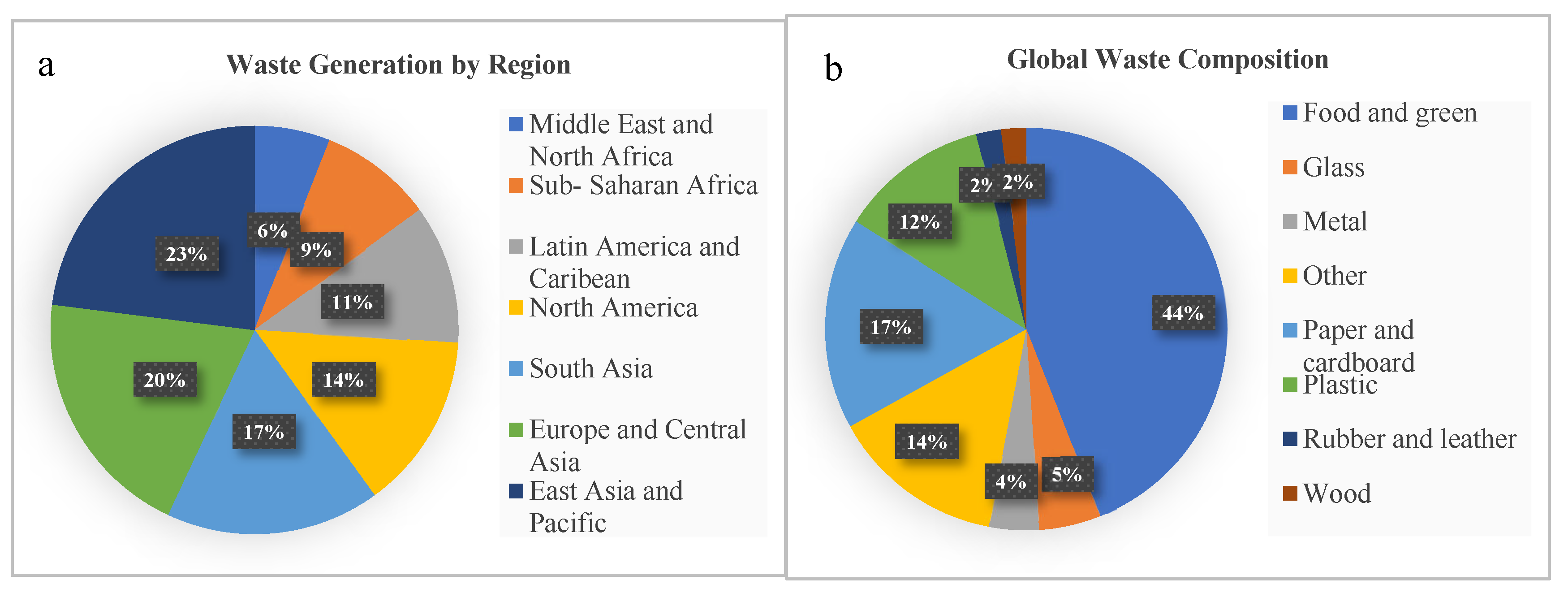
Figure 2.
Negative impacts of Proteinaceous wastes on ecosystem.
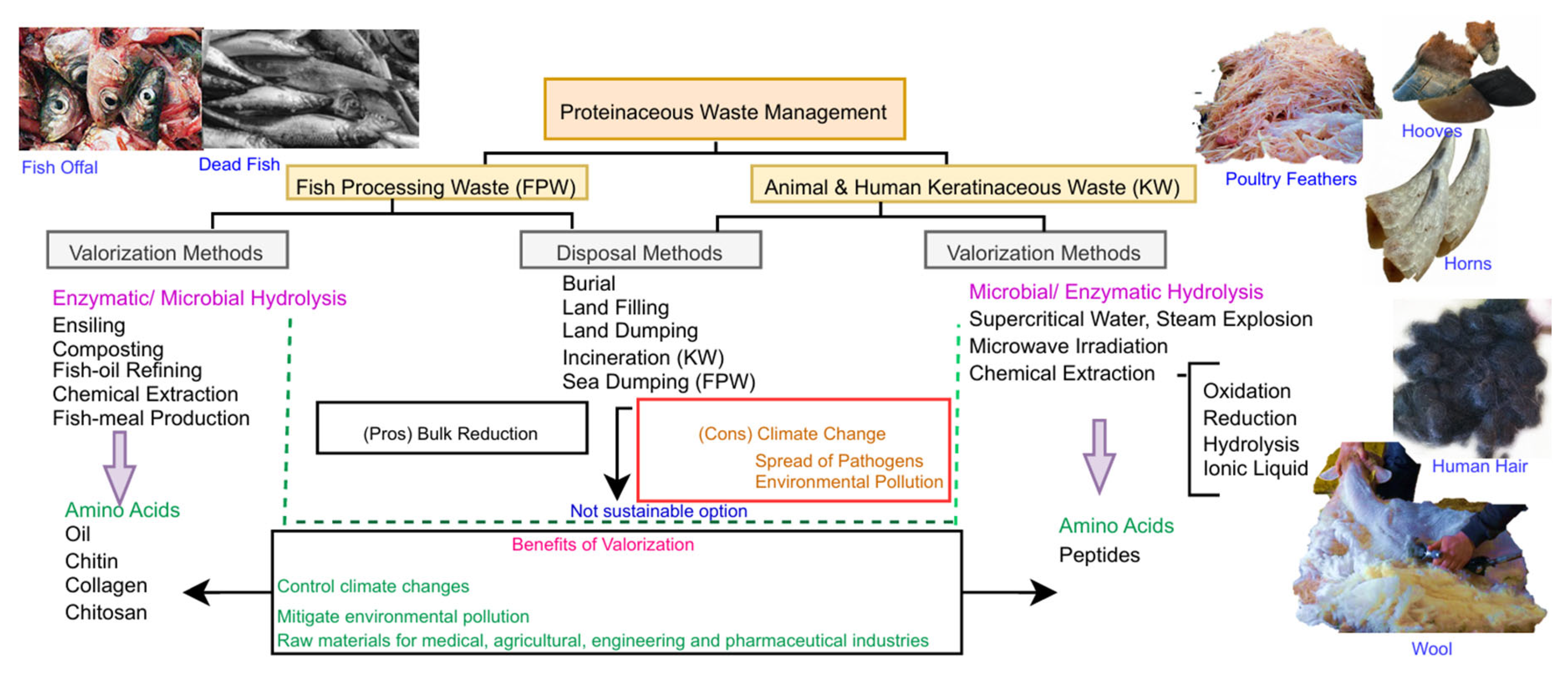
Figure 3.
Proteinaceous waste management options.
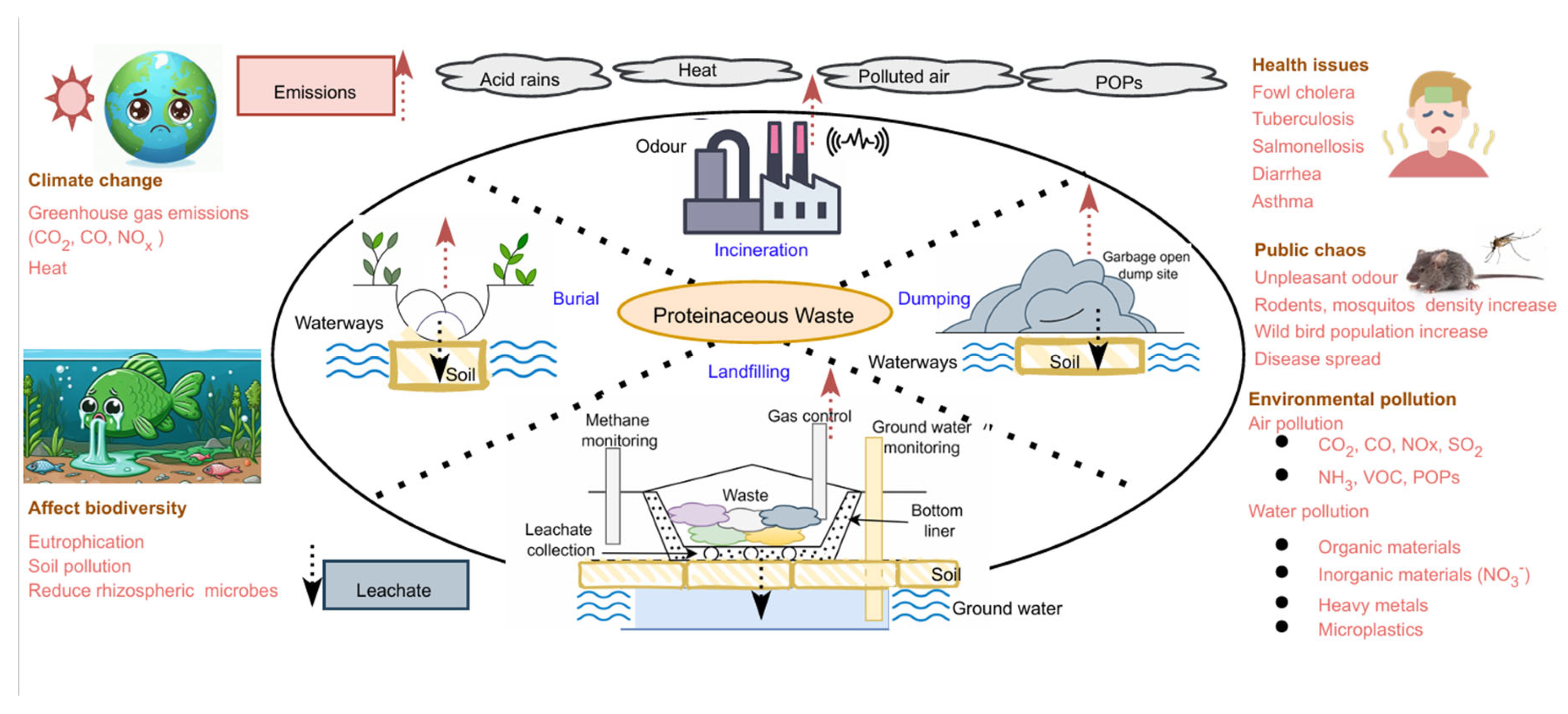
Figure 4.
Diagram of the fortified hydrolysate production.
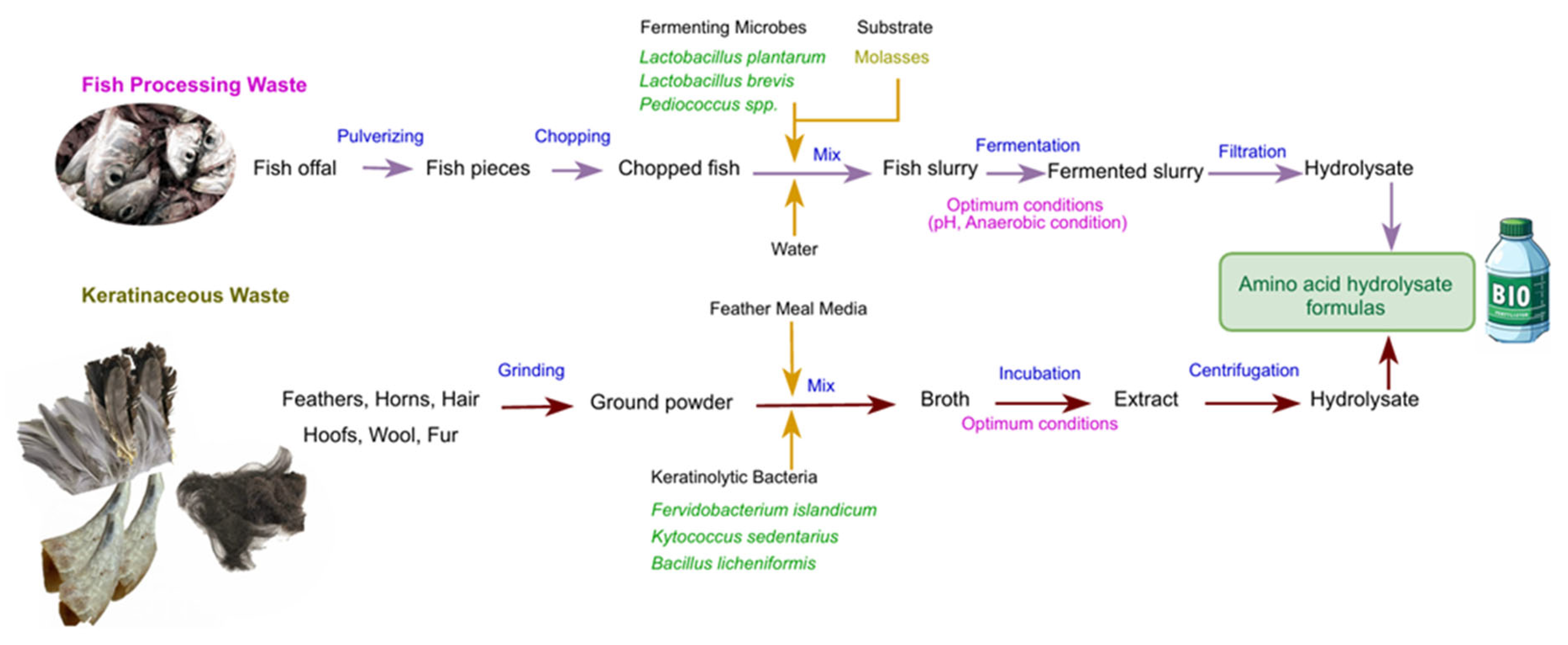

Table 1.
Summary of literature for valorization of Proteinaceous wastes.
| Proteinaceous Waste | Valorization method | References |
|---|---|---|
| Keratin Waste | Keratin from human and animal sources; Chemical hydrolysis | [45] |
| Human Hair | Chemical hydrolysis using alkalis | [46] |
| Goat Hair | Biological hydrolysis (Bacillus licheniformis Strain ER-15) | [47] |
| Keratin Waste | Bioconversion (Vibrio sp.), hydrothermal and chemical hydrolysis | [48] |
| Keratin Waste | Chemical hydrolysis (tetramethyl ammonium hydroxide (TMAOH) | [49] |
| Feather Waste | Physical method-catapult steam explosion (ICSE), ICSE-keratinolysis process | [50] |
| Keratin Waste | Summarizes physical, chemical, enzymatic methods | [51] |
| Wool | Physical method (reduction method) | [52] |
| FPW | Enzymatic hydrolysis | [53] |
| FPW | Physical, chemical, and biological extraction methods | [12] |
| FPW | Specific methodology to use fish scale powder in improving the performance of asphalt | [54] |
| Wool | Biotechnological approaches, such as microbial or enzymatic pretreatment, and composting | [55] |
| FPW | Composting, hydrolysis, anaerobic digestion | [21] |
| FPW | Anaerobic co-digestion with a liquid fraction of hydrothermal carbonization | [56] |
| Feather Waste | Biological hydrolysis (Streptomyces sp. isolate SCUT-3) | [57] |
| Wool | Current approaches for raw wool waste management and unconventional valorization | [58] |
| Keratin Waste | Biological hydrolysis | [59] |
| Feather Waste | Biological hydrolysis | [60] |
| Keratin Waste | Summarizes valorization of keratin-based (wools, feathers, hair) waste | [61] |
| FPW | Biological hydrolysis (early 68% of fish waste, 13% of molasses and 19% of scum) to produce biofertilizer | [62] |
| Keratin Waste | Different extraction methods to produce value-added products | [24] |
| Feather Waste | Different technologies to obtain high-value products | [13] |
| Keratin Waste | Different strategies for extraction and use in pharmaceutical and cosmetics industries | [63] |
| Human Hair | Specific method for extraction and use in biomedical and biotechnological applications | [64] |
| Human Hair | Extraction for biomedical applications | [65] |
| Horns, Hooves | Extraction for biomedical applications | [66] |
| Wool | Biological hydrolysis (Bacillus pumilus A1) | [67] |
| FPW | Fish protein hydrolysates | [68] |
| Feather Waste | Specific valorization methods to extract keratin for cosmetics | [69] |
| Feather Waste | Incineration to produce energy | [70] |
Table 2.
Composition and characteristics [90].
Table 2.
Composition and characteristics [90].
| Composition | Percentage (%) |
|---|---|
| 1. Macro Nutrients | |
| Total organic carbon | 25% |
| Nitrogen (N) | 6.5% |
| Phosphorous (P) | 1% |
| Potassium (K) | 1.5% |
| Sulphur(S) | 0.8% |
| Calcium (Ca) | 15ppm |
| Magnesium (Mg) | 15ppm |
| 2. Micronutrients | |
| Sodium (Na) | 1% |
| Manganese (Mn) | 5ppm |
| Zinc (Zn) | 17ppm |
| Copper | 5ppm |
| Boron | 7ppm |
| Molybdenum | 0.5ppm |
| 3. Parameters | |
| pH | 6.5% |
| C:N ratio | 4:1 |
Disclaimer/Publisher’s Note: The statements, opinions and data contained in all publications are solely those of the individual author(s) and contributor(s) and not of MDPI and/or the editor(s). MDPI and/or the editor(s) disclaim responsibility for any injury to people or property resulting from any ideas, methods, instructions or products referred to in the content. |
© 2024 by the authors. Licensee MDPI, Basel, Switzerland. This article is an open access article distributed under the terms and conditions of the Creative Commons Attribution (CC BY) license (http://creativecommons.org/licenses/by/4.0/).
Copyright: This open access article is published under a Creative Commons CC BY 4.0 license, which permit the free download, distribution, and reuse, provided that the author and preprint are cited in any reuse.


