

Submitted:
21 June 2024
Posted:
25 June 2024
You are already at the latest version
Abstract
Depressive disorders represent the leading contributors to mental health-related global burden, and they are often diagnosed in the context of many comorbid disorders, such as cardiovascular disorders, Stroke, Parkinson’s Disease, Major Neurocognitive Disorders and Headache, thus worsening their outcomes. Depression is a challenge for “real-world” clinicians, due to the low rates of remission despite the increasing number of antidepressant strategies currently available. Indeed, current antidepressant strategies often fail to achieve acceptable rates of remission. One of the main challenges of “real-world” management of depression is represented by geriatric depression, which is common and under diagnosed. The challenge of diagnosis and treatment of geriatric depression in real world calls for the need of a deeper exploration of its management in clinical practice. This is the purpose of the present cross-sectional survey, aimed at evaluating the clinical approach to late-life depression in a sample of expert physicians working in geriatric settings in Italy, thus trying to provide useful insights on geriatric depression care.
Keywords:
antidepressants
; comorbidity
; trazodone
; psychiatry
; neurology
; geriatrics
; elderly
Introduction
Depressive disorders represent the leading contributor to mental health-related global burden; globally, they have been calculated to lead to 5 million years lived with disability (YLD), thus being ranked as the major cause of non-fatal health loss (7.5% of all YLD) [1], with a suicide rate of 700.000 people per year [2]. In Italy, patients diagnosed with depressive disorders represent the most prevalent population in charge to mental health services (34.6/10.000 people), with females almost doubly affected than males (43.2 vs 25.4/10.000 people) [3]. Depressive symptoms have been reported in one out of ten primary care patients [4], and they often arise in the context of many other comorbid disorders, such as endocrine dysfunctions, cardiovascular disorders, stroke, Parkinson’s Disease, Major Neurocognitive Disorders (e.g., Alzheimer’s Disease) and headache, thus complicating their progress and treatment, as well as increasing their burden and affecting the outcomes [5,6]. Moreover, since depression is significantly associated with chronic medical disorders, this frequent comorbidity, whenever misdiagnosed, may considerably impair the patient’s perception of medical care as well as increase the economic burden [7]. Consolidated evidence, indeed, supports the view of envisioning depression as a mind-body disorder, trying as much as possible to tailor the antidepressant treatments on the individual features of the patient, such as physical characteristics, psychological fragilities, comorbidities, pharmacological treatments, and combining pharmacological and psychotherapeutic treatments to maximize their effectiveness [8,9].
One of the main challenges of “real-world” management of depression is represented by geriatric depression. Indeed, world population is increasingly growing old, and the proportion of elderly people has been estimated to increase to 1.4 billions by 2030 and to 2.1 billions by 2050 [10]. Recent studies reported a 35.1% global prevalence of depression in older people [11]. Several unmet needs have been associated to the management of geriatric depression: misdiagnosis, underdiagnosis, management of comorbidities, difficulties in choosing safe and effective treatments. All of them may potentially determine a poor prognosis. Depression in older age, indeed, has been associated to worsening of physical and cognitive functions [12], as well as to adverse outcomes due to chronic diseases multimorbidity [13]. When approaching depression in elderly patients, physicians often find themselves dealing with a complex condition characterized by suffering, abandonment, and generally compromised functioning. Late-life depression is often diagnosed in the context of multiple comorbidities, both medical and neurological. In fact, cardiovascular and cerebrovascular diseases, thyroid dysfunctions, adrenocortical disorders, diabetes, vitamin B12 and folic acid deficiency, as well as malnutrition, represent the most common medical conditions associated with geriatric depression [14]. Also, multiple treatments, which are often used to manage these conditions in elderly people (e.g., antihypertensive medications) may contribute to exacerbate, or to develop, depressive symptoms [15]. Last, but not least in importance, poor psychosocial conditions, such as low economic status, abandonment, isolation and relocation, and senile decrepitude (i.e., the loss of abilities and pleasure), which often come with people in the late stages of their lives, may trigger depressive symptoms or worsen pre-existing depression [15]. Moreover, depression has been reported in 30% of people diagnosed with vascular dementia or Alzheimer’s Disease, and in 40% of patients diagnosed with dementia associated to Parkinson’s or Huntington’s diseases [16]. Thus, finding the appropriate treatment combination for elderly people with depression, trying to avoid as much as possible pharmacological interactions, side effects, and to maximize the effectiveness, may represent a hard task for physicians [17,18].
The challenge of diagnosis and treatment of geriatric depression in real world calls for the need of a deeper exploration of its management in clinical practice. This is the purpose of the present cross-sectional survey, aimed at evaluating the clinical approach to late-life depression in a sample of expert physicians working in geriatric settings in Italy, thus trying to provide useful insights on geriatric depression care.
Methods
The present cross-sectional survey-based study follows the STROBE (Strengthening the Reporting of Observational studies in Epidemiology) guidelines, matching the appropriate checklist [19]. Geriatrics-working physicians were recruited to participate in this survey through the Italian Society of Geriatrics and Gerontology (SIGG) and were only eligible if they had active membership. SIGG has 868 active members, and a total of 175 physicians responded to the survey (confidence level = 95%, confidence interval = 6.62%). Participant recruitment and data collection occurred between September and November 2023, with individual emails containing the survey link at launch, and a reminder after four weeks. A 20-items questionnaire was developed based both on literature review [20,21,22,23] and on the a priori knowledge of the subject by the developing team. The team was composed by seven expert physicians in the fields of Psychiatry, Neurology and Geriatrics, which firstly debated the issue of unmet needs in the treatment of geriatric depression based on their own experience, and then reviewed the literature to generate ideas in order to develop and implement the questionnaire. The survey assessed demographic, employment and clinical practice characteristics, as well as the basic knowledge in the field of geriatric depression diagnosis and treatment. Then, it delved into the possible unmet needs in the management of geriatric depression according to the sample of physicians surveyed. The 20-item questionnaire is entirely shown in Supplementary Material. Questionnaire responses were analyzed in terms of simple distribution (percentage) of the answers, with a descriptive analysis, and reported in figures.
Results
As above mentioned, a total of 175 geriatrics-working physicians responded to the survey, with an approximate response rate of 20%, as compared to the total amount of SIGG registered physicians. Demographic data of the sample have been summarized in Table 1. 42.3% of respondents were under 40 years old, and the majority (64%) were females. Mostly, they declared a clinical experience between 6 and 25 years in the field of geriatrics, and, indeed, the majority were specialized in Geriatrics (94.28%). The most part was working in the Public National Health System (59.4%), preferentially in acute cases-dealing wards (38.85%). The geographic distribution favored North Italian regions (65%). Forty percent of physicians declared that they dealt often, or very often, with elderly patients diagnosed with depression showing unsatisfied care needs (Figure 1). Indeed, the main challenges regarding those needs were represented by medical comorbidities (44.6%) and by scarceness of patients’ or caregivers’ support (39.4%). The respondents agreed at 37.71% that the main obstacle to care was the stigma associated to depression in elderly, followed by physical barriers making it difficult to access health services (26.3%). Indeed, due to multiple comorbidities and difficulties, most part of physicians declared to take advantage of a multidisciplinary approach to depression treatment in geriatric patients (Figure 1). However, non-compliance to treatments (32.6%), followed by lack of effective treatments (27.4%) and difficulties in managing pharmacological interactions (24%) were considered the main causes of therapeutic failure (Figure 2). Physicians agreed that the main consequences of geriatric depression may be represented by a worsening in cognitive functioning (35.4%), social withdrawal (33.7%) and daily autonomies limitations (29.7%). Thus, patients might benefit from domestic support services (36%), individualized cognitive and physical rehabilitation programs (35.4%), as well as psychoeducational intervention for both patients and caregivers (28.6%) (Figure 2).
Almost all respondents declared to systematically screen geriatric patients for depressive symptoms, mostly by using the Geriatric Depression Scale (GDS) as a standardized tool [24]. However, respondents declared to avail themselves of a psychiatric consultation mainly in the event of suicidal ideation shown by patients (33.14%), or when patients need a complex undertaking by mental health services (26.3%) (Figure 3).
When choosing a therapeutic strategy, most of surveyed physicians (45.14%) agreed that non-pharmacological treatments should be proposed as a completion of pharmacological treatments, due to their well-known combined efficacy, comparable to that in adult population (46.85%). Regarding the use of pharmacological treatments, the responders agreed on the use of specific guidelines of treatment, such as the Beers’s criteria, the Screening Tool of Older Person’s Prescriptions (STOPP) criteria, the Screening Tool to Alert doctors to the Right Treatment (START) criteria, and the Fit fOR The Aged (FORTA) list [25] (Figure 3). Antidepressant drugs could be used cautiously to treat behavioral disorders in geriatric patients (98.85%), but surveyed physicians agreed that the so-called anticholinergic drug load [26] should be considered when prescribing antidepressants in poly-treated elderly patients (66.3%). Indeed, the responders also agreed (76.6%) that elderly patients with depression preferentially manifest cognitive symptoms, as compared to depressed adult patients (Figure 4).
The most part of physicians (42.85%) believed that, in case of treatment-resistant geriatric depression, a switch to a different antidepressant drug should be considered, and then a combined psychotherapeutic (cognitive-behavioral therapy) approach should be initiated (21.7%). The duration of antidepressant pharmacological treatment should be prolonged, due to the higher risk of relapses in older patients as compared to adults (55.4%) (Figure 5).
Discussion
To the best of our knowledge, this is the first survey on an Italian sample to specifically analyze the opinion of expert physicians on geriatric depression. The experts of SIGG were asked to give their opinion on diverse clinical problems and unmet needs regarding their experience with patients suffering from geriatric depression. According to the results, Italian geriatrics-working physicians very often deal with older patients diagnosed with depression, which show unsatisfied care needs. Principally, physicians agreed that the main challenge in elderly depressed patients is the high prevalence of medical comorbidities, often chronic diseases. As abovementioned, several studies, indeed, demonstrated that depression is often associated to comorbid medical illnesses in elderly patients, these comorbidities increasing synergistically the odds of disability in basic and instrumental activities of daily living, as well as interactively worsening the quality of life of affected patients [27]. Therefore, a combined treatment taking into account the multimorbidity may be helpful to increase effectiveness of treatments in elderly depressed patients [28] Moreover, recently some authors have envisioned the possibility of review “old” psychopharmacotherapies, such as trazodone, in the light of their safe and effective use in older multimorbid patients, based on the scarce pharmacodynamic and pharmacokinetic interactions, the rapidity of actions, and the efficacy in complex cotreatment contexts [29]. According to this view, a multidisciplinary approach to treat depression in elderly population has been increasingly considered a better strategy as compared to non-integrated protocols, since it emphasizes the collaboration amongst different professionals (i.e., general practitioners, psychiatrists, psychologists, neurologists, geriatricians, nurses, and others) and provides a more feasible success against the multiple challenges of older people depression [30]. This vision is completely embraced by physicians that responded to this survey, which agreed that a multidisciplinary approach to the treatment of depression in older people may represent and advantage in overcoming difficulties such as the lack of compliance to therapy, the choice of effective and safe pharmacological treatments, as well as the management of polypharmacy-related interactions.
Responders also agreed that stigma may represent a main obstacle to a correct treatment approach to older people depression. Indeed, negative attitudes toward older people, such as prejudices, ageism, stereotypes, underestimation, may significantly impair the right complex vision of depression in the elderly, thus discriminating the provision of combined physical and mental health services to these patients [31]. Specific multidisciplinary programs, as well as aimed research about the issue, may help to avoid the stigmatization of care for older people with comorbid physical problems [32]. Home support and psychoeducational programs for both patients and caregivers may also help to avoid stigmatic attributions by caregivers, which impair the effectiveness of treatments and, in turn, favor the onset of caregivers’ stress-related burden [33].
A large percentage of responders of this survey agreed on the use of validated tool, such as the GDS to correctly diagnose depression in older people. Indeed, several studies have demonstrated the high sensitivity and specificity of GDS for detecting depression in the elderly [34]. Standardized evaluation scales represent useful tools also to avoid misdiagnosis of depression in older people, which are often underdiagnosed (and then undertreated) due to the multiple comorbidities which may mask depressive symptoms, or even to stigmatic attribution such as that depression may be part of growing old [35]. Moreover, consultation with specialized physicians, such as psychiatrists, may improve the effectiveness of diagnosis and treatment management, particularly in case of complex situations which should be taken in charge by mental health services, such as the emerging of suicidal thoughts or intentions [36]. Indeed, untreated depression, due to misdiagnosis or underestimation, has been demonstrated to worsen the quality of life of older patients, as well as to increase the odds of developing a neurocognitive disorder [37]. To meet these increasing needs in geriatric depression, in some countries a specialized figure of Geriatric Psychiatrist is emerging [38].
The majority of surveyed physicians claimed that pharmacological treatments are essential to avoid the progression of depressive symptoms in older people, and to prevent cognitive decline in these patients. However, pharmacological treatments should be combined with non-pharmacological interventions to maximize the effectiveness. This is in agreement with consistent evidence on the favorable effect of non-pharmacological interventions in support of pharmacological treatments in elderly depressed patients to improve the outcomes, to reduce the progression of cognitive deterioration, and also to reduce dosages of the drugs used, as well as to avoid multiple psychopharmacological combinations (with a heightened risk of side effects) [39,40,41]. Although antidepressants are essential for the treatment, most of the responders agreed that these drugs should be prescribed to older people following validated criteria to reduce over-prescription, side effects, and to optimize the effectiveness of treatment. Beers, START, STOPP, FORTA criteria have been all developed to improve pharmacotherapy in older patients, and have been demonstrated to be useful to maximize treatments efficacy and minimize unwanted side effects [17,18,42,43,44,45]. Moreover, when prescribing antidepressant drugs to older people, their anticholinergic properties should be considered. Indeed, many drugs used by older people to treat common conditions (i.e., allergy, overactive bladder, anxiety) have anticholinergic properties, which have been directly correlated to worsening in cognition, drowsiness, falls and constipation [46]. The so-called anticholinergic burden has been demonstrated to worsen the daily abilities of elderly depressed patients, as well as to promote their cognitive deterioration [47,48,49,50]. Thus, when prescribed, antidepressants possibly lacking anticholinergic properties should be preferred. According to this view, some antidepressant drugs with anxiolytic/antidepressant properties, such as trazodone, have been envisioned as first-choice treatment in behavioral manifestations of older depressed patients [51], due to the lack of anticholinergic effects, the primary effects on sleep architecture [52], and the important pro-cognitive and anti-deteriorative effects [53] Supported by literature data, the surveyed physicians agreed on a long-lasting duration of antidepressant treatment in older people, in order to avoid relapses [54], as well as on the support of cognitive-behavioral therapy in partially effective treatments, in order to maximize the efficacy [55].
Conclusions and Limitations
Geriatric depression may represent a hard challenge for physicians, due to the high rates of misdiagnosis and undertreatment, to the difficult management of comorbidities, as well as to the development of an effective treatment strategy. The present survey represents a first attempt to collect the experiences of geriatrics-expert physicians in order to provide useful insights on the unmet needs in the treatment of late-life depression. The small sample may represent a limitation, but the results may serve as stimulus to further research and debate on the treatment of elderly depression, to develop better and better strategies which may avoid underdiagnosis and help to bypass stigmatization and to improve the outcomes of older patients.
Authors contribution
UA and GM developed the original idea; RAI, AC, AP and MZ developed the questionnaire, which was discussed and revised by all the authors; CT wrote the first and the last draft of the manuscript; all the authors equally contributed to the conception, the writing, and the revisions of the paper.
Conflict of interest:
The authors declare no conflict of interest.
Funding
This publication was supported by an unrestricted grant from Angelini Pharma.
References
- Depression and Other Common Mental Disorders Available online: https://www.who.int/publications/i/item/depression-global-health-estimates.
- Global Burden of Disease Study 2019 (GBD 2019) Data Resources | GHDx Available online: https://ghdx.healthdata.org/gbd-2019.
- Di Cesare, M.; Magliocchietti, N.; Romanelli, M.; Santori, E. Rapporto Salute Mentale. Analisi Dei Dati Del Sistema Informativo per La Salute Mentale (SISM). Anno 2022. Available online: https://www.salute.gov.it/portale/documentazione/p6_2_2_1.jsp?lingua=italiano&id=3369 (accessed on 17 December 2023).
- Mahli, G.S.; Mann JJ, G.S. Depression. The Lancet 2018, 392, 2299–2312. [Google Scholar] [CrossRef]
- Sengupta, S. Diagnosis of Depression in General Practice. Indian J Med Sci 2005, 59, 217–225. [Google Scholar] [CrossRef] [PubMed]
- Hellmann-Regen, J.; Piber, D.; Hinkelmann, K.; Gold, S.M.; Heesen, C.; Spitzer, C.; Endres, M.; Otte, C. Depressive Syndromes in Neurological Disorders. Eur Arch Psychiatry Clin Neurosci 2013, 263, 123–136. [Google Scholar] [CrossRef] [PubMed]
- Wang, J.; Wu, X.; Lai, W.; Long, E.; Zhang, X.; Li, W.; Zhu, Y.; Chen, C.; Zhong, X.; Liu, Z.; et al. Prevalence of Depression and Depressive Symptoms among Outpatients: A Systematic Review and Meta-Analysis. BMJ Open 2017, 7. [Google Scholar] [CrossRef] [PubMed]
- Maj, M. Understanding Depression beyond the “Mind-Body” Dichotomy. World Psychiatry 2023, 22, 349–350. [Google Scholar] [CrossRef] [PubMed]
- Maj, M.; Stein, D.J.; Parker, G.; Zimmerman, M.; Fava, G.A.; De Hert, M.; Demyttenaere, K.; McIntyre, R.S.; Widiger, T.; Wittchen, H.U. The Clinical Characterization of the Adult Patient with Depression Aimed at Personalization of Management. World Psychiatry 2020, 19, 269. [Google Scholar] [CrossRef]
- World Health Organization UN Decade of Healthy Ageing: Plan of Action 2021-2030. World Health Organization 2020, 1–26.
- Cai, H.; Jin, Y.; Liu, R.; Zhang, Q.; Su, Z.; Ungvari, G.S.; Tang, Y.L.; Ng, C.H.; Li, X.H.; Xiang, Y.T. Global Prevalence of Depression in Older Adults: A Systematic Review and Meta-Analysis of Epidemiological Surveys. Asian J Psychiatr 2023, 80, 103417. [Google Scholar] [CrossRef] [PubMed]
- Clouston, S.A.P.; Brewster, P.; Kuh, D.; Richards, M.; Cooper, R.; Hardy, R.; Rubin, M.S.; Hofer, S.M. The Dynamic Relationship Between Physical Function and Cognition in Longitudinal Aging Cohorts. Epidemiol Rev 2013, 35, 33–50. [Google Scholar] [CrossRef]
- Birk, J.L.; Kronish, I.M.; Moise, N.; Falzon, L.; Yoon, S.; Davidson, K.W. Depression and Multimorbidity: Considering Temporal Characteristics of the Associations between Depression and Multiple Chronic Diseases. Health Psychology 2019, 38, 802–811. [Google Scholar] [CrossRef]
- Alexopoulos, G.S.; Buckwalter, K.; Olin, J.; Martinez, R.; Wainscott, C.; Krishnan, K.R.R. Comorbidity of Late Life Depression: An Opportunity for Research on Mechanisms and Treatment. Biol Psychiatry 2002, 52, 543–558. [Google Scholar] [CrossRef] [PubMed]
- Alexopoulos, G.S. Depression in the Elderly. The Lancet 2005, 365, 1961–1970. [Google Scholar] [CrossRef] [PubMed]
- Enache, D.; Winblad, B.; Aarsland, D. Depression in Dementia: Epidemiology, Mechanisms, and Treatment. Curr Opin Psychiatry 2011, 24, 461–472. [Google Scholar] [CrossRef]
- Bradley, B.; Backus, D.; Gray, E. Depression in the Older Adult: What Should Be Considered? Ment Health Clin 2016, 6, 222. [Google Scholar] [CrossRef] [PubMed]
- Avasthi, A.; Grover, S. Clinical Practice Guidelines for Management of Depression in Elderly. Indian J Psychiatry 2018, 60, S341. [Google Scholar] [CrossRef] [PubMed]
- Cuschieri, S. The STROBE Guidelines. Saudi J Anaesth 2019, 13, S31–S34. [Google Scholar] [CrossRef] [PubMed]
- Albert, U.; Tomasetti, C.; Marra, C.; Neviani, F.; Pirani, A.; Taddeo, D.; Zanetti, O.; Maina, G. Treating Depression in Clinical Practice: New Insights on the Multidisciplinary Use of Trazodone. Front Psychiatry 2023, 14. [Google Scholar] [CrossRef] [PubMed]
- Srifuengfung, M.; Pennington, B.R.T.; Lenze, E.J. Optimizing Treatment for Older Adults with Depression. Ther Adv Psychopharmacol 2023, 13. [Google Scholar] [CrossRef]
- Stecher, C.; Cloonan, S.; Domino, M.E. The Economics of Treatment for Depression. Annu Rev Public Health 2023, 45. [Google Scholar] [CrossRef] [PubMed]
- Masnoon, N.; George, C.; Lo, S.; Tan, E.; Bordia, A.; Hilmer, S. The Outcomes of Considering Goals of Care in Medication Reviews for Older Adults: A Systematic Review. Expert Rev Clin Pharmacol 2023, 1–24. [Google Scholar] [CrossRef]
- Montorio, I.; Izal, M. The Geriatric Depression Scale: A Review of Its Development and Utility. Int Psychogeriatr 1996, 8, 103–112. [Google Scholar] [CrossRef] [PubMed]
- Halli-Tierney, A.D.; Scarbrough, C.; Carroll, D. Polypharmacy: Evaluating Risks and Deprescribing. Am Fam Physician 2019, 100, 32–38. [Google Scholar] [PubMed]
- Mayer, T.; Haefeli, W.E.; Seidling, H.M. Different Methods, Different Results - How Do Available Methods Link a Patient’s Anticholinergic Load with Adverse Outcomes? Eur J Clin Pharmacol 2015, 71, 1299–1314. [Google Scholar] [CrossRef] [PubMed]
- Ho, C.S.; Feng, L.; Fam, J.; Mahendran, R.; Kua, E.H.; Ng, T.P. Coexisting Medical Comorbidity and Depression: Multiplicative Effects on Health Outcomes in Older Adults. Int Psychogeriatr 2014, 26, 1221–1229. [Google Scholar] [CrossRef] [PubMed]
- Harpole, L.H.; Williams, J.W.; Olsen, M.K.; Stechuchak, K.M.; Oddone, E.; Callahan, C.M.; Katon, W.J.; Lin, E.H.; Grypma, L.M.; Unützer, J. Improving Depression Outcomes in Older Adults with Comorbid Medical Illness. Gen Hosp Psychiatry 2005, 27, 4–12. [Google Scholar] [CrossRef] [PubMed]
- Albert, U.; Tomasetti, C.; Marra, C.; Neviani, F.; Pirani, A.; Taddeo, D.; Zanetti, O.; Maina, G. Treating Depression in Clinical Practice: New Insights on the Multidisciplinary Use of Trazodone. Front Psychiatry 2023, 14. [Google Scholar] [CrossRef]
- Bruce, M.L.; Sirey, J.A. Integrated Care for Depression in Older Primary Care Patients. Can J Psychiatry 2018, 63, 439. [Google Scholar] [CrossRef] [PubMed]
- Sartorius, N. Introduction: Stigma and Discrimination against Older People with Mental Disorders. Int J Geriatr Psychiatry 2003, 18, 669. [Google Scholar] [CrossRef] [PubMed]
- Holm, A.L.; Lyberg, A.; Severinsson, E. Living with Stigma: Depressed Elderly Persons’ Experiences of Physical Health Problems. Nurs Res Pract 2014, 2014, 1–8. [Google Scholar] [CrossRef]
- Polenick, C.A.; Martire, L.M. Caregiver Attributions for Late-Life Depression and Their Associations with Caregiver Burden. Fam Process 2013, 52, 709. [Google Scholar] [CrossRef]
- Krishnamoorthy, Y.; Rajaa, S.; Rehman, T. Diagnostic Accuracy of Various Forms of Geriatric Depression Scale for Screening of Depression among Older Adults: Systematic Review and Meta-Analysis. Arch Gerontol Geriatr 2020, 87. [Google Scholar] [CrossRef] [PubMed]
- Crowther, G.; Ninan, S. Managing Depression in Frail Older People; Too Little Too Late or Pathologising Loss? Future Healthc J 2023, 10, 107–111. [Google Scholar] [CrossRef] [PubMed]
- Karp, J.F.; Hamm, M.; Cameron, F.; Lightfoot, M.; Maher, R.; Kincman, J.; Reynolds, C. Improving Effective Mental Health Consultation for Rural Older Adults Living With Depression and Pain: Learning From the Experiences of Rural Primary Care Physicians. Prim Care Companion CNS Disord 2021, 23, 29380. [Google Scholar] [CrossRef]
- Voros, V.; Fekete, S.; Tenyi, T.; Rihmer, Z.; Szili, I.; Osvath, P. Untreated Depressive Symptoms Significantly Worsen Quality of Life in Old Age and May Lead to the Misdiagnosis of Dementia: A Cross-Sectional Study. Ann Gen Psychiatry 2020, 19, 1–6. [Google Scholar] [CrossRef] [PubMed]
- Grossberg, G.T.; Fordyce, S.W. Geriatric Psychiatry- An Emerging Specialty. Mo Med 2010, 107, 401. [Google Scholar]
- Chen, Y. jing; Li, X. xia; Pan, B.; Wang, B.; Jing, G. zhuang; Liu, Q. qian; Li, Y. fei; Bing, Z. tong; Yang, K. hu; Han, X. mei; et al. Non-Pharmacological Interventions for Older Adults with Depressive Symptoms: A Network Meta-Analysis of 35 Randomized Controlled Trials. Aging Ment Health 2021, 25, 773–786. [Google Scholar] [CrossRef] [PubMed]
- Gramaglia, C.; Gattoni, E.; Marangon, D.; Concina, D.; Grossini, E.; Rinaldi, C.; Panella, M.; Zeppegno, P. Non-Pharmacological Approaches to Depressed Elderly With No or Mild Cognitive Impairment in Long-Term Care Facilities. A Systematic Review of the Literature. Front Public Health 2021, 9, 685860. [Google Scholar] [CrossRef]
- Shang, W.; Guo, L.; Liu, Y.; Li, Y.; Wei, Q.; Guo, K.; Yang, M.; Wei, L.; Xu, Z.; Niu, J.; et al. PROTOCOL: Non-Pharmacological Interventions for Older People with a Diagnosis of Depression: An Evidence and Gap Map. Campbell Systematic Reviews 2023, 19, e1354. [Google Scholar] [CrossRef]
- Srifuengfung, M.; Pennington, B.R.T.; Lenze, E.J. Optimizing Treatment for Older Adults with Depression. 2023; 13. [Google Scholar] [CrossRef]
- O’mahony, D.; O’sullivan, D.; Byrne, S.; O’connor, M.N.; Ryan, C.; Gallagher, P. STOPP/START Criteria for Potentially Inappropriate Prescribing in Older People: Version 2. Age Ageing 2015, 44, 213–218. [Google Scholar] [CrossRef]
- Gers, L.; Petrovic, M.; Perkisas, S.; Vandewoude, M. Antidepressant Use in Older Inpatients: Current Situation and application of the Revised STOPP Criteria. Ther Adv Drug Saf 2018, 9, 373. [Google Scholar] [CrossRef]
- Pazan, F.; Weiss, C.; Wehling, M. The FORTA (Fit fOR The Aged) List 2021: Fourth Version of a Validated Clinical Aid for Improved Pharmacotherapy in Older Adults. Drugs Aging 2022, 39, 245–247. [Google Scholar] [CrossRef]
- Richardson, K.; Bennett, K.; Maidment, I.D.; Fox, C.; Smithard, D.; Kenny, R.A. Use of Medications with Anticholinergic Activity and Self-Reported Injurious Falls in Older Community-Dwelling Adults. J Am Geriatr Soc 2015, 63, 1561–1569. [Google Scholar] [CrossRef] [PubMed]
- Novella, A.; Elli, C.; Ianes, A.; Pasina, L. Anticholinergic Burden and Cognitive Impairment in Nursing Homes: A Comparison of Four Anticholinergic Scales. Drugs Aging 2023, 40, 1017–1026. [Google Scholar] [CrossRef]
- Grossi, C.M.; Richardson, K.; Savva, G.M.; Fox, C.; Arthur, A.; Loke, Y.K.; Steel, N.; Brayne, C.; Matthews, F.E.; Robinson, L.; et al. Increasing Prevalence of Anticholinergic Medication Use in Older People in England over 20 Years: Cognitive Function and Ageing Study I and II. BMC Geriatr 2020, 20. [Google Scholar] [CrossRef]
- Herrero-Zazo, M.; Berry, R.; Bines, E.; Bhattacharya, D.; Myint, P.K.; Keevil, V.L. Anticholinergic Burden in Older Adult Inpatients: Patterns from Admission to Discharge and Associations with Hospital Outcomes. Ther Adv Drug Saf 2021, 12. [Google Scholar] [CrossRef] [PubMed]
- Kayahan Satış, N.; Naharcı, M.İ. Investigating the Association of Anticholinergic Burden with Depression in Older Adults: A Cross-Sectional Study. Psychogeriatrics 2024. [Google Scholar] [CrossRef] [PubMed]
- Cuomo, A.; Bianchetti, A.; Cagnin, A.; De Berardis, D.; Di Fazio, I.; Incalzi, R.A.; Marra, C.; Neviani, F.; Laurenzi, P.F.; Nicoletti, F. Trazodone: A Multifunctional Antidepressant. Evaluation of Its Properties and Real-World Use. JOURNAL OF GERONTOLOGY AND GERIATRICS 2021, 69, 120–129. [Google Scholar] [CrossRef]
- Zheng, Y.; Lv, T.; Wu, J.; Lyu, Y. Trazodone Changed the Polysomnographic Sleep Architecture in Insomnia Disorder: A Systematic Review and Meta-Analysis. Scientific Reports 2022 12:1 2022, 12, 1–11. [Google Scholar] [CrossRef]
- Gonçalo, A.M.G.; Vieira-Coelho, M.A. The Effects of Trazodone on Human Cognition: A Systematic Review. Eur J Clin Pharmacol 2021, 77, 1623. [Google Scholar] [CrossRef]
- Srifuengfung, M.; Pennington, B.R.T.; Lenze, E.J. Optimizing Treatment for Older Adults with Depression. Ther Adv Psychopharmacol 2023, 13. [Google Scholar] [CrossRef]
- Jayasekara, R.; Procter, N.; Harrison, J.; Skelton, K.; Hampel, S.; Draper, R.; Deuter, K. Cognitive Behavioural Therapy for Older Adults with Depression: A Review. J Ment Health 2015, 24, 168–171. [Google Scholar] [CrossRef] [PubMed]
Figure 1.
Answers to queries 1, 2, 3 and 4 of the questionnaire submitted to SIGG members, relative to results described. Raw data are reported (tot. surveyed physicians =175).
Figure 1.
Answers to queries 1, 2, 3 and 4 of the questionnaire submitted to SIGG members, relative to results described. Raw data are reported (tot. surveyed physicians =175).
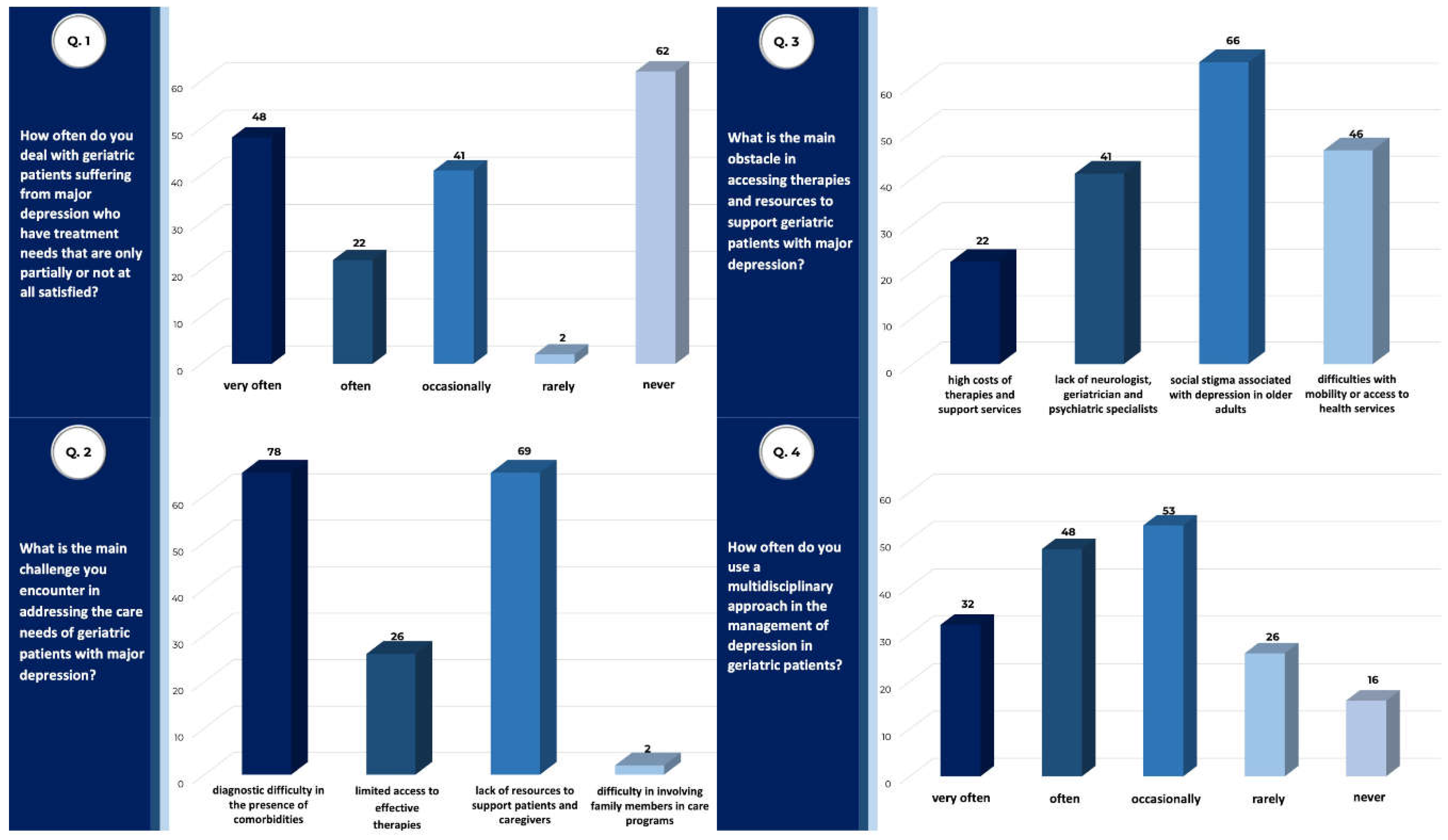
Figure 2.
Answers to queries 5, 6, 7 and 8 of the questionnaire submitted to SIGG members, relative to results described. Raw data are reported (tot. surveyed physicians =175).
Figure 2.
Answers to queries 5, 6, 7 and 8 of the questionnaire submitted to SIGG members, relative to results described. Raw data are reported (tot. surveyed physicians =175).
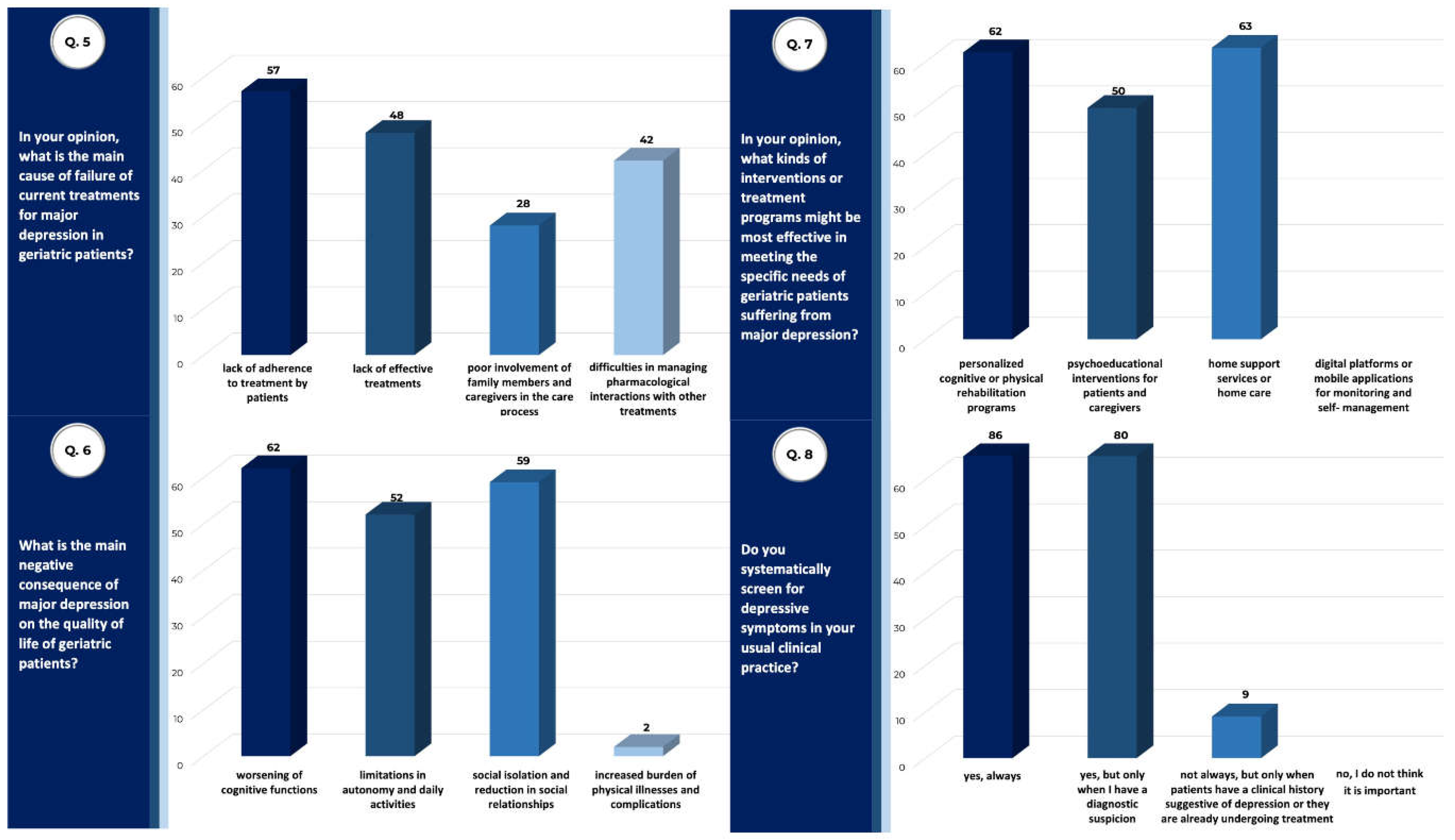
Figure 3.
Answers to queries 9, 10, 12 and 13 of the questionnaire submitted to SIGG members, relative to results described. Raw data are reported (tot. surveyed physicians =175).
Figure 3.
Answers to queries 9, 10, 12 and 13 of the questionnaire submitted to SIGG members, relative to results described. Raw data are reported (tot. surveyed physicians =175).
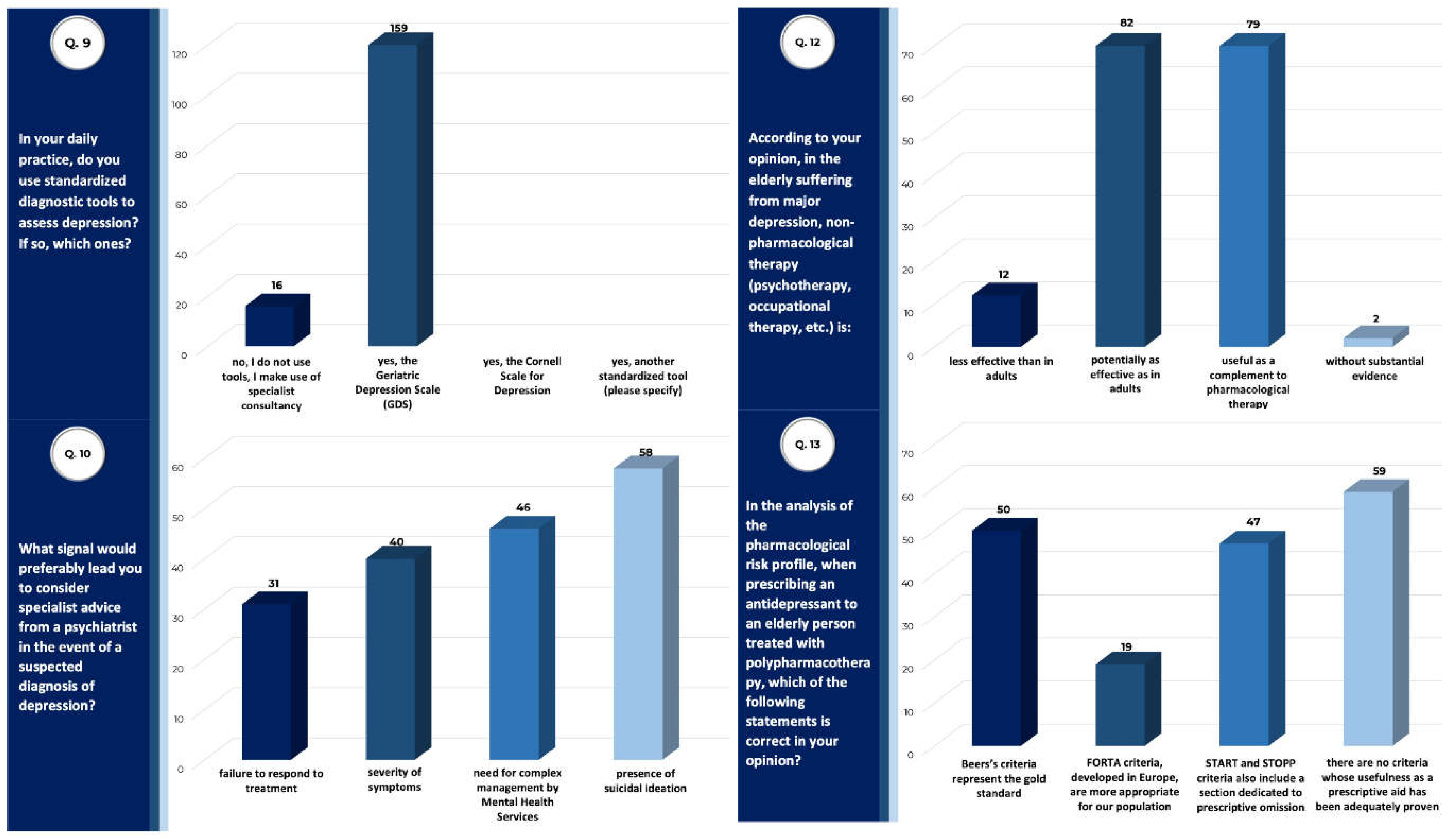
Figure 4.
Answers to queries 14, 15 and 16 of the questionnaire submitted to SIGG members, relative to results described. Raw data are reported (tot. surveyed physicians =175).
Figure 4.
Answers to queries 14, 15 and 16 of the questionnaire submitted to SIGG members, relative to results described. Raw data are reported (tot. surveyed physicians =175).
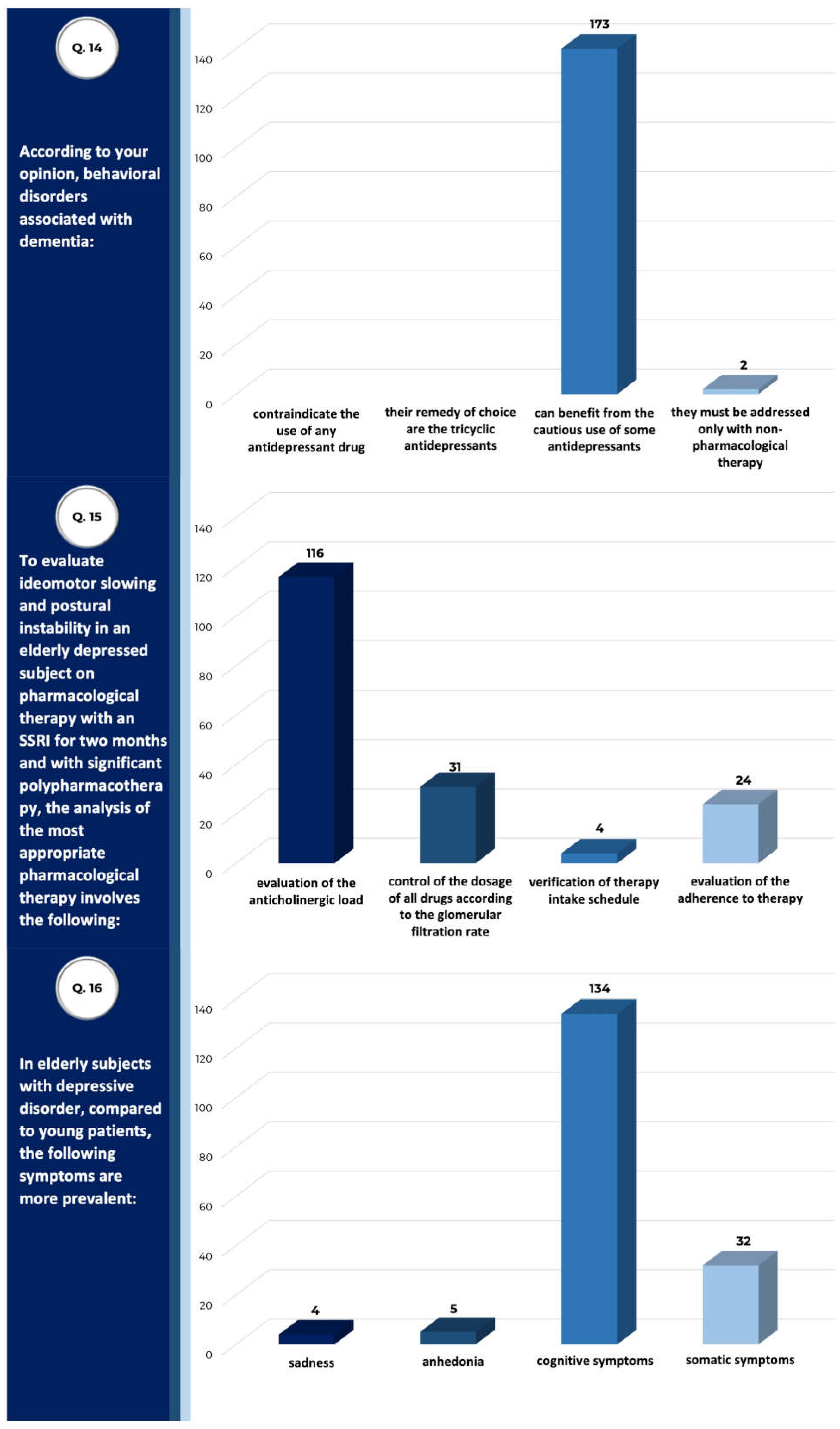
Figure 5.
Answers to queries 19 and 20 of the questionnaire submitted to SIGG members, relative to results described. Raw data are reported (tot. surveyed physicians =175).
Figure 5.
Answers to queries 19 and 20 of the questionnaire submitted to SIGG members, relative to results described. Raw data are reported (tot. surveyed physicians =175).
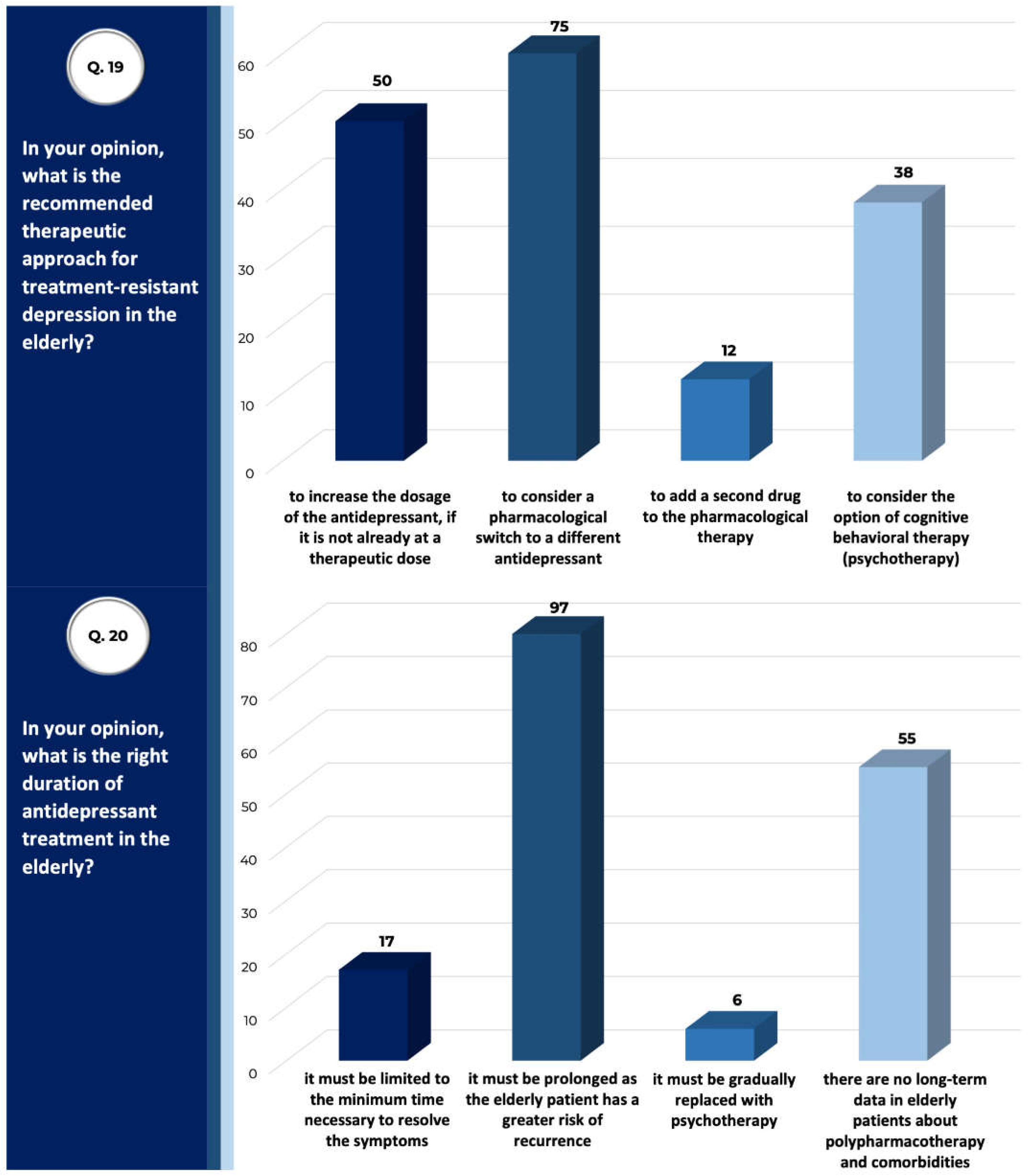

Table 1.
Demographic characteristics of the sample of SIGG surveyed physicians.
| Total Sample (n) | 175 |
|---|---|
| Age | |
| 30-35 | 50 (28.6%) |
| 36-40 | 24 (13.7%) |
| 41-45 | 14 (8%) |
| 46-50 | 16 (9.1%) |
| 51-55 | 25 (14.3%) |
| 56-60 | 12 (6.9%) |
| 61-65 | 20 (11.4%) |
| 66-70 | 10 (5.7%) |
| >70 | 4 (2.3%) |
| Gender | |
| Male | 63 (36%) |
| Female | 112 (64%) |
| Years of experience | |
| 1-5 | 47 (26.9%) |
| 6-10 | 19 (10.9%) |
| 11-15 | 20 (11.4%) |
| 16-20 | 23 (13%) |
| 21-25 | 24 (13.7%) |
| 26-30 | 8 (4.6%) |
| 31-35 | 12 (6.9%) |
| 36-40 | 10 (5.7%) |
| 41-45 | 8 (4.6%) |
| 46-50 | 4 (2.3%) |
| Specialization | |
| Geriatrics | 165 (94.3%) |
| Internal medicine | 8 (4.6%) |
| General medicine | 2 (1.1%) |
| Work structure | |
| Public structure | 104 (59.4%) |
| Private structure | 26 (14.9%) |
| University hospital | 40 (22.9%) |
| Third sector organisation | 2 (1.1%) |
| Freelancer | 3 (1.7%) |
| Working environment | |
| RSA | 25 (14.3%) |
| Acute care unit | 68 (38.8%) |
| Rehabilitation ward | 18 (10.3%) |
| Long-term care | 6 (3.4%) |
| Home care | 19 (10.9%) |
| Outpatient clinic | 33 (18.9%) |
| Emergency room | 4 (2.3%) |
| Research institute | 2 (1.1%) |
| Geographical distribution | |
| Northern Italy | 114 (65.1%) |
| Central Italy | 33 (18.9%) |
| Southern Italy | 28 (16%) |
Disclaimer/Publisher’s Note: The statements, opinions and data contained in all publications are solely those of the individual author(s) and contributor(s) and not of MDPI and/or the editor(s). MDPI and/or the editor(s) disclaim responsibility for any injury to people or property resulting from any ideas, methods, instructions or products referred to in the content. |
© 2024 by the authors. Licensee MDPI, Basel, Switzerland. This article is an open access article distributed under the terms and conditions of the Creative Commons Attribution (CC BY) license (http://creativecommons.org/licenses/by/4.0/).
Copyright: This open access article is published under a Creative Commons CC BY 4.0 license, which permit the free download, distribution, and reuse, provided that the author and preprint are cited in any reuse.


