
Submitted:
22 June 2024
Posted:
24 June 2024
You are already at the latest version
Abstract
In the following article, we analyzed a variable present in the ISTAT-BES dataset, namely "People You Can Count On"-PYCC for the Italian regions. Following an analysis of the time series aimed at highlighting the trends of the regions, we created a clustering with a k-Means algorithm optimized with the Silhouette coefficient. The data shows the presence of two clusters. We then present an econometric model aimed at estimating the value of PYCC based on a set of socio-economic variables. The results are also discussed in light of the economic policy implications.
Keywords:
Welfare Economics
; Altruism
; Role and Effects of Psychological
; Emotional
; Social
; and Cognitive Factors on Decision Making
; Labor Force and Employment
; Size
; Structure
; Inequality
1. Introduction
The analysis of solidarity and altruism within Italian regions is driven by a confluence of political, economic, and social motivations, each intertwined with the nation’s rich historical and cultural tapestry. Politically, this analysis can enhance governance and policy-making by leveraging regional autonomy to tailor policies that resonate with local values of cooperation and mutual aid, crucial for addressing crises and enhancing public trust. Economically, understanding the dynamics of solidarity and altruism offers insights into tackling regional disparities, promoting sustainable and inclusive growth, and informing labor market strategies that are equitable and supportive of marginalized groups. Socially, these values are integral to Italy’s cultural identity and heritage, playing a pivotal role in promoting social cohesion, facilitating integration in the face of demographic shifts and migration, and underpinning public health strategies, especially evident in the collective response to the COVID-19 pandemic. Together, these motivations underscore the importance of solidarity and altruism in forging resilient, cohesive, and prosperous communities across Italy, highlighting the need for policies and initiatives that nurture these foundational social bonds.
The article continues as follows: in the second section the analysis of the literature is presented, in the third section the trends of the phenomenon at regional and macro-regional level are indicated, the fourth section shows the clustering with k-Means algorithm optimized with the Silhouette coefficient, the fifth section presents the econometric model, the sixth section presents the political implications, the seventh section concludes.
2. Literature Review
In contemporary society, the concepts of altruism, solidarity, responsibility, and the solidarity economy are increasingly recognized for their vital roles in fostering societal cohesion and well-being. The discourse surrounding these concepts is rich and multifaceted, with scholars contributing diverse perspectives and insights. Gualda, E. (2022) explores the potential of a committed sociology to enhance our understanding of altruism, solidarity, and responsibility. By advocating for a sociology that is actively engaged with societal issues, Gualda highlights the importance of these concepts in building a more cohesive and equitable society (Gualda, 2022). Salustri, A. (2021) delves into the social and solidarity economy (SSE) and its relationship with the concept of social and solidarity commons. Through a reexamination of the common good ethic within the SSE framework, Salustri suggests that adopting such an ethic could lead to economic models that prioritize mutual benefits, cooperation, and solidarity (Salustri, 2021). Pearlman, S. (2023) offers a critical perspective on the limitations of charity and effective altruism, presenting mutual aid as a morally superior alternative. This work argues that mutual aid, with its emphasis on solidarity and community-driven solutions, provides a more equitable approach to addressing social issues (Pearlman, 2023). Aksoy, C. G., Cabrales, A., Dolls, M., Durante, R., & Windsteiger, L. (2021) contribute to the understanding of what influences altruism and reciprocity through their investigation of calamities, common interests, and shared identity. Their empirical analysis sheds light on the complex dynamics that underpin altruistic and reciprocal behaviors (Aksoy et al., 2021). Lastly, Benner, C., & Pastor, M. (2021) introduce the concept of solidarity economics as a means to challenge the prevailing economic models that favor individual gain over community well-being. Their work emphasizes the significance of mutuality and social movements in creating a more just and sustainable economic system (Benner & Pastor, 2021).
Cappelen, Falch, Sørensen, and Tungodden (2021) examined the economic behaviors reflecting solidarity and fairness, suggesting crises can evoke a strong sense of collective support among people. Similarly, Bertogg and Koos (2021) identified the impact of socio-economic positions on the capacity for local solidarity in Germany, highlighting the emergence of informal support systems. Furthermore, Fernández GG, Lahusen, and Kousis (2021) discussed the role of organizational structures in facilitating solidarity efforts across Europe, underlining the importance of how organizations are designed to support such initiatives. Johnson (2020) provided a theoretical perspective on the socialization of economic behaviors through greed, need, and solidarity, arguing that economic actions are deeply embedded in social forces. Costa (2021) further challenged traditional views by differentiating solidarity from reciprocal altruism, proposing a concept rooted in mutual aid and anarchism. This body of work collectively emphasizes the complexity of solidarity as both a response to immediate crises and a fundamental principle capable of guiding societal transformation towards more equitable cooperation. The synthesis of these articles underscores the critical role of socio-economic, organizational, and theoretical dimensions in understanding and fostering solidarity in challenging times.
Mangone, E. (2022) introduces a discussion on the necessity of altruistic relationships in building a solidarity-based society. The author argues that the reorientation of social interactions towards altruism can lay the groundwork for more cohesive and supportive communities. Benner, C., & Pastor, M. (2021) expand on this by exploring the principles of solidarity economics. They advocate for a shift in economic practices that prioritizes mutuality and the mobilization of social movements, challenging the prevailing focus on individual gain. Kawano, E. (2020) offers a perspective on the solidarity economy as a viable framework for achieving economic activities that are harmonious with both social equity and environmental sustainability. This approach is presented as a crucial response to the contemporary economic and ecological crises. Albanese, M. (2021) provides a critical examination of the concept of Homo Economicus, questioning the foundational economic assumptions of rational self-interest. The author suggests that a reevaluation of these assumptions is essential for the development of economic theories that encompass a broader range of human motivations and interactions. Travlou, P., & Bernát, A. (2022) focus on the application of solidarity and care economies within the specific contexts of Greece and Hungary during times of crisis. Their research highlights how alternative economic models can offer resilient solutions to social and economic challenges.
The exploration of altruistic versus egoistic motivations within organizational and societal contexts reveals a nuanced landscape of human behavior and its implications for both individual and collective outcomes. Volosevici and Grigorescu (2021) delve into the dynamics between individual actions and organizational expectations, highlighting the significant role of organizational citizenship behavior in fostering a cohesive work environment. This notion is complemented by Mangone’s (2020) analysis, which transcends the binary opposition of altruism and egoism to propose a more integrated understanding of societal relations and responsibilities. Similarly, Choquette-Levy et al. (2024) illustrate the practical implications of prosocial preferences in enhancing climate risk management among subsistence farming communities, thus emphasizing the beneficial outcomes of altruistic behavior in critical real-world scenarios. In contrast, Siemoneit (2023) offers a perspective that prioritizes merit in the distribution of justice, potentially challenging the unqualified elevation of altruistic principles. Cimagalli (2020) further enriches this discourse by questioning the incorporation of altruism within sociological thought, thereby inviting a reevaluation of fundamental assumptions about human motivation and societal organization. Collectively, these studies underscore the complexity of navigating between altruistic and egoistic orientations, suggesting that a more holistic approach may be necessary to fully understand and leverage the diverse motivations that drive human behavior within and beyond organizational settings.
Salem (2020) explores how Ennahda’s economic policy in Tunisia blends liberalism with social solidarity, suggesting that religious values can inform policies that support both economic freedom and social welfare. Spaulonci Chiachia Matos de Oliveira (2022) introduces the concept of “Homo Colaboratus” within complex consumption patterns, arguing for the emergence of collaborative behaviors that can address social issues. Eriawaty, Widjaja, and Wahyono (2022) examine the integration of rationality, morality, lifestyle, and altruism in the economic activities of Nyatu Sap artisans, showcasing how local wisdom contributes to sustainable and ethical economic practices. Ventura (2023) discusses the rise of social enterprises and hybrid organizational forms as responses to the demand for firm altruism, highlighting a shift towards models that combine profitability with social impact. Finally, Matthaei (2020) critiques the limitations of capitalism and advocates for a solidarity economy fueled by social movements and revolutionary ideas, pointing towards alternatives that prioritize community and collective well-being over individual gain. Collectively, these studies underscore the need for innovative approaches to economic and social policies that embrace collaboration, altruism, and a critical reassessment of capitalism in addressing contemporary global challenges.
Akhtar (2023) explores how Austrian economics addresses the nuances of altruistic behavior, challenging traditional economic assumptions about self-interest and rationality. Similarly, Baldassarri and Abascal (2020) provide empirical evidence on the positive impact of diversity on prosocial behavior, suggesting that diverse groups may exhibit stronger cooperative tendencies. Konarik and Melecky (2022) delve into the influence of religiosity on altruistic economic preferences, proposing that religious beliefs significantly shape economic decision-making towards more altruistic outcomes. Silvestri and Kesting (2021) interrogate the role of institutional economics in understanding the economics of gift-giving, extending economic analysis to include non-reciprocal transfers. Furthermore, Van Geest (2021) argues for the critical role of theological insights in enriching economic concepts, highlighting the interplay between economic theory and moral philosophy. Collectively, these studies contribute to a growing body of literature that seeks to integrate behavioral insights, diversity considerations, and ethical dimensions into economic theory and practice.
3. Rankings of Regions and Macro-Regions in the Sense of PYCC
There is a certain geographical variability in the level of PYCC. This could suggest differences in social structure, cultural values, or community support systems across the regions. The Valle d’Aosta (86.3%), Sardinia (84.7%), and the Marche (84.9%) stand out as the regions with the highest percentages. These data could indicate a strong social support network or a high sense of community in these regions. Puglia (77.8%) and Basilicata (77%) show the lowest percentages. This could reflect greater challenges in social cohesion or the presence of support networks in these regions. There does not appear to be a clear North-South pattern in the percentages of “People to Rely On,” with regions from both the North and the South present at the extremes of the distribution. This suggests that social cohesion and community support are not necessarily related to geography. Large metropolitan areas such as Lombardy and Lazio (which include Milan and Rome, respectively) do not have the highest percentages, which might suggest that in large cities, it is more difficult to build close social support networks, compared to smaller regions or those with a strong cultural and community identity. These data offer a point of reflection on how various socio-cultural, economic, and geographical factors can influence social support networks and the individual perception of available support within communities. It is important to note that these numbers represent only one aspect of social well-being and that interpreting the data may require a deeper and contextualized analysis (Figure 1).
The analysis of data on PYCC across Italian regions between 2013 and 2022 reveals significant trends in the perception of social cohesion and community support. The percentage and absolute variations in these values offer insights into how social dynamics have evolved over the decade in question. Some regions have shown an improvement in community sentiment and social support. Specifically, Valle d’Aosta, Liguria, Friuli-Venezia Giulia, Umbria, Marche, Abruzzo, Calabria, Sicily, and notably, Campania, all registered an increase in the percentages of people to rely on. Campania, with a 9.2% increase in percentage variation and a 12.5 point increase in absolute variation, stands out, suggesting a significant strengthening of social cohesion. On the other hand, other regions have witnessed a decrease in these values, which could indicate a perceived reduction in social support and community cohesion. Piedmont, Lombardy, Trentino-Alto Adige, Veneto, Tuscany, Lazio, Puglia, and most markedly, Basilicata, have all experienced a decline. Basilicata recorded the most significant decrease, with a -7.1% percentage variation and -8.44 points in absolute variation, suggesting growing challenges in building or maintaining social support networks. Some regions have shown minimal changes, like Emilia-Romagna and Puglia, suggesting a relative stability in the perception of available support networks. Regions that had relatively low values in 2013, such as Molise and Campania, have seen the most significant increases. This could reflect effective interventions or significant cultural shifts that have strengthened the social fabric. Some regions that started from a position of strength in 2013, like Trentino-Alto Adige and Basilicata, have seen the most significant declines. These data could suggest that maintaining high levels of social cohesion over time is a complex challenge. The evolution of the perception of social support in Italian regions between 2013 and 2022 shows a wide variety of regional dynamics. While some areas have strengthened their community support networks, others have faced increasing challenges. These trends offer valuable insights into how various factors, including economic, cultural, and political ones, can influence social cohesion. It is essential that such insights guide public policies and community initiatives to promote social resilience and collective well-being across the diverse Italian regional realities (Figure 2).
Analysing the provided data about PYCC across Italian macro-regions from 2013 to 2022, we observe changes in both absolute and percentage terms. North experienced a slight decrease in the percentage of people one can count on, moving from 82.9% in 2013 to 81.3% in 2022, marking an absolute decrease of 1.6 percentage points and a -1.930% change. This indicates a small reduction in social trust or availability of support networks in the North. North-West saw a more pronounced decrease, from 82.9% to 81%, resulting in a -1.9 percentage points change and a -2.292% variation. This is the largest percentage decrease among all regions, suggesting a significant decline in support networks. North-East and Center both also experienced decreases in the percentages of people one can count on, with North-East seeing a smaller decrease of 1 percentage point (-1.208%) and Center a decrease of 1.4 percentage points (-1.701%). These changes indicate a general trend of declining social support or trust across these regions. Mezzogiorno, South, and Islands, on the other hand, showed improvements. Notably, South had a 4.1 percentage point increase, the largest absolute increase, translating to a 5.339% rise. Mezzogiorno’s PYCC improved by 3.1 percentage points (4.000%), and Islands saw a modest increase of 1.2 percentage points (1.523%). These improvements suggest an increasing availability of support networks or growing social trust in the southern parts of Italy and the islands. At a national level, there was a marginal increase of 0.1 percentage points, representing a 0.124% rise. This indicates that while some regions experienced declines in social support, the increases in others were enough to slightly uplift the national average. The data reflects a regional divergence in social trust and support networks within Italy over the considered period. The northern and central parts of Italy experienced decreases, while the southern regions and islands saw increases. The overall stability at the national level masks significant regional disparities, suggesting targeted policies or social initiatives might be necessary to address these differences. The improvement in the South and islands could be attributed to various factors, including possibly increased community engagement or effectiveness of social policies aimed at bolstering social cohesion and support (Figure 3).
4. Clusterization with k-Means Algorithm Optimized with the Silhouette Coefficient
The optimal number of clusters for the data concerning people you can count on across Italian regions, as determined by the Silhouette Coefficient, is 2 with a Silhouette Score of 0.359. This suggests that the dataset can be meaningfully grouped into two clusters, indicating two distinct patterns or groups within the regions based on the provided yearly data. The optimal clustering resulted in two distinct clusters among the Italian regions based on the data concerning people you can count on from 2013 to 2022:
- Cluster 1 includes: Piemonte, Valle d’Aosta, Liguria, Lombardia, Trentino-Alto Adige, Veneto, Friuli-Venezia Giulia, Emilia-Romagna, Toscana, Umbria, Marche, Lazio, Abruzzo, Molise, Basilicata, Calabria, and Sardegna.
- Cluster 2 includes: Campania, Puglia, and Sicilia.
The graph visualizes the distribution of the first two years as features, highlighting how regions are grouped into clusters. This division reflect underlying social, economic, or cultural similarities and differences affecting the extent to which people feel they can count on others within these regions. Results are showed in the Figure 4.
5. Econometric Model
In the following analysis, we have taken into consideration the people you can count on in the Italian regions. This variable is defined by Istat-BES as indicated below, i.e.,: “Percentage of people aged 14 and over who have non-cohabiting relatives (in addition to parents, children, brothers, sisters, grandparents, grandchildren), friends or neighbours on whom to rely out of the total number of people aged 14 and over”. This variable was estimated using additional variables present in the ISTAT-BES database and indicated in Table 1.
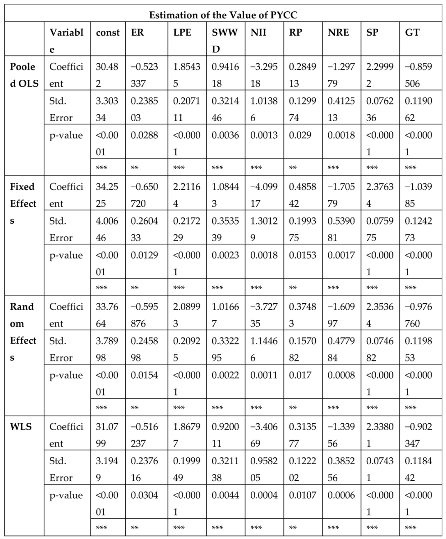
Specifically we estimated the following econometric equation through the use of Panel Data with Random Effects, Panel Data with Fixed Effects, Pooled Ordinary Least Squares-OLS and Weighted Least Squares-WLS, i.e.,:
where i=20 and t=[2004;2020]. The results are synthetized in the Table 2.
There is a positive relationship between PYCC and the following variables namely:
- LPE: the positive relationship between PYCC and LPE can be explored through the lens of social support networks and solidarity that often form in work contexts characterized by less favourable economic conditions. This positive link suggests that, despite economic challenges, there are positive social and relational dynamics emerging in work environments with a prevalence of low wages. In work contexts where employees face similar economic conditions, often characterized by low wages, a strong sense of solidarity can develop. Sharing common challenges can foster a supportive environment, where workers tend to help each other both professionally and personally. People working under conditions of low pay may be more inclined to build social support networks at the workplace and beyond. These networks can provide practical assistance, such as sharing caregiving responsibilities or support in financial emergencies, as well as offering emotional support. Working in low-wage contexts can also lead to shared values and a sense of belonging. This collective identity can strengthen interpersonal relationships and promote a culture of mutual support. People experiencing similar economic conditions tend to have higher levels of empathy and mutual understanding. This can translate into closer and more meaningful relationships, where there is a greater inclination to offer and receive support. In low-wage contexts, support can extend beyond the workplace, involving families and local communities. Communities may organize shared resources or mutual aid initiatives to help those facing economic difficulties. Despite economic challenges, LPE can benefit from robust and meaningful social support networks, highlighting how shared difficulties can act as a catalyst for forming strong interpersonal bonds and support networks. This demonstrates the importance of social and relational dimensions in mitigating the negative impacts of economic hardships and in promoting individual and collective well-being.
- SWWD: the positive relationship between PYCC and SWWD highlights how having a supportive network at work can significantly enhance an individual’s satisfaction with their job. This connection suggests that when employees feel supported by their colleagues and superiors, they are more likely to experience higher levels of job satisfaction. The presence of supportive colleagues and managers can provide a buffer against workplace stress and challenges. Emotional support from co-workers can foster a sense of belonging and well-being, contributing to overall job satisfaction. A work environment where employees can rely on each other encourages collaboration and effective teamwork. When people feel they are part of a cohesive team, working towards common goals, their engagement and satisfaction with their job increase. Having mentors and supportive peers can facilitate opportunities for learning and professional growth. Employees who feel supported in their career development are more likely to be satisfied with their job, as they see a path for progression and improvement. A supportive network contributes to a positive work culture, where individuals feel valued and recognized. This positive environment can significantly boost job satisfaction, as employees feel their contributions are appreciated and that they are an integral part of the organization. When employees have a reliable support system at work, they are less likely to consider leaving their job. High job satisfaction, fostered by supportive relationships, contributes to higher retention rates within organizations. Support from co-workers and supervisors can enhance job performance. Employees who feel supported are more motivated and engaged, leading to better outcomes and further increasing job satisfaction. In essence, the positive correlation between having PYYC and experiencing SWWD underscores the importance of fostering supportive relationships in the workplace. Organizations that prioritize building a collaborative and supportive culture can enhance employee satisfaction, which in turn can lead to improved performance, reduced turnover, and a more positive work environment.
- RP: a positive relationship between PYYC and RP might seem counterintuitive at first glance, as it suggests that having a supportive network is associated with a higher risk of poverty. However, this interpretation might need clarification or a different perspective to fully understand the underlying dynamics. Typically, one would expect that having a strong network of support would decrease the risk of poverty by providing individuals with resources, emotional support, and opportunities that could help them avoid or escape poor economic conditions. In communities or groups where the risk of poverty is high, strong social support networks might develop as a necessary means of survival and mutual aid. In these contexts, the presence of PYYC is crucial and more prevalent because of the shared challenges. Therefore, the positive relationship does not imply that support networks cause poverty but rather that in environments where poverty risk is high, supportive networks are essential and become more visible or necessary. Individuals facing economic hardships often rely on extended family, friends, and community networks for support. This could include financial assistance, sharing of resources, or providing care services for each other. The strong presence of these support networks among those at risk of poverty highlights how essential they are for mitigating the immediate impacts of economic challenges. In areas with high poverty risks, the development of social capital—reflected in networks of mutual support and solidarity—can be particularly strong. People in these communities may often rely on one another to navigate economic difficulties, leading to a positive correlation between having people to rely on and experiencing a higher risk of poverty. It is important to clarify that the positive relationship here does not suggest that supportive networks increase the risk of poverty; rather, it reflects the importance and prevalence of support networks within communities where the risk of poverty is already high. These networks play a critical role in providing emotional, financial, and practical support, helping individuals and families cope with economic challenges and potentially aiding in poverty alleviation efforts.
- SP: A positive relationship between PYCC and SP indicates that individuals who have a strong support network are more likely to be involved in social activities and community engagement. This correlation highlights the significant role that interpersonal relationships and social support play in encouraging active participation in social, cultural, and community events. Having supportive people in one’s life can boost confidence and motivation to engage in social activities. Knowing that they have others to rely on for encouragement or companionship can make individuals more inclined to participate in social events and community activities. Social networks often serve as a valuable source of information about social activities, volunteer opportunities, and community events. People embedded in a network of supportive relationships are more likely to be informed about and encouraged to take part in these activities. Supportive networks frequently consist of individuals with shared interests and values. This common ground can foster group participation in social and community activities, leading to higher levels of social participation among the network’s members. For some, participating in social activities can be challenging due to logistical, financial, or emotional barriers. Having people to rely on can provide the necessary support to overcome these obstacles, whether it is through sharing transportation, helping with costs, or offering emotional encouragement. Participation in community and social activities often leads to the strengthening of community ties and the building of new supportive relationships. This, in turn, creates a positive feedback loop where increased social participation enhances community cohesion, which further supports individual engagement. Engaging in social participation contributes to personal resilience and well-being, aspects that are supported and reinforced by having a reliable social network. The sense of belonging and purpose gained through active participation can improve mental health and overall life satisfaction. In summary, the positive correlation between having PYCC and SP underscores the importance of social support networks in fostering an active, engaged lifestyle. Supportive relationships not only encourage individuals to partake in social and community activities but also enhance the collective vibrancy and cohesiveness of communities as a whole.
- There is a negative relationship between PYCC and the following variables namely:
- GT: A negative relationship between PYCC and GT suggests that in environments where individuals have strong, reliable support networks, there might be a lower level of trust towards society. When people have close-knit support networks, they may develop strong in-group bonds that inadvertently lead to reduced trust outside of their immediate circle. This “us vs. them” mentality strengthens ties within the group but can erode generalized trust in broader society. Individuals who rely heavily on a tight support network might feel less need to trust or engage with those outside their immediate circle. This self-sufficiency can reduce the perceived necessity to build trust with others in the wider community, leading to lower levels of generalized trust. In some cultures or communities, the emphasis on strong familial or community ties may come with an inherent wariness of external entities or individuals. This cultural norm can foster deep trust within specific groups while simultaneously lowering trust in broader society. Support networks often function as protective entities. When such networks are strong, individuals within them may become more risk-averse, viewing external interactions as unnecessary or potentially threatening, thereby reducing their level of generalized trust. In situations where individuals have experienced betrayal or exploitation by those outside their immediate support network, there may be a tendency to retreat into more trusted inner circles. Such experiences can significantly diminish one’s propensity to trust people in general. Strong reliance on personal networks might be more pronounced in communities facing economic or social challenges, where trust in institutions and societal structures is low. In these contexts, the reliance on PYCC becomes a necessity rather than a choice, reflecting broader issues of systemic distrust. To address this negative relationship and promote generalized trust, interventions might focus on building bridges between different social groups, fostering inclusivity, and encouraging positive interactions across community divides. Efforts to strengthen social cohesion and trust in institutions, alongside promoting the benefits of diverse and open social networks, could also help counteract the tendency towards insularity and enhance generalized trust within the broader society.
- ER: a negative relationship between PYCC and the ER might initially seem counterintuitive, as strong social networks are often thought to contribute positively to job opportunities through connections and information sharing. However, this correlation could highlight underlying social and economic dynamics that merit closer examination. In communities with robust support systems, individuals might rely more on their network for financial and material support, possibly reducing the immediate necessity or urgency to seek employment. This could be particularly true in cultures or contexts where family or community support is expected and normalized over individual economic independence. Individuals with strong support networks might be more inclined to withdraw from the job market, especially after prolonged periods of unsuccessful job searching. The emotional and sometimes financial support they receive can afford them the luxury of not participating in the labour force, inadvertently affecting the employment rate. In some cases, strong support networks facilitate engagement in informal or non-traditional employment sectors not captured by standard employment statistics. For instance, individuals might participate in family businesses, informal caregiving, or community-based work, which may not be reflected in the official employment rate for ages 20-64. The relationship could also reflect regional economic conditions where strong community bonds are essential for survival due to a lack of formal employment opportunities. In such areas, the employment rate might be lower, not because social networks directly discourage work, but because the economy offers fewer formal job opportunities, and people rely more on each other for support. Areas with lower employment rates might see a higher out-migration of individuals seeking work elsewhere, leaving behind a population with stronger ties to the local community. These individuals may have a greater reliance on their social networks due to reduced economic opportunities in their locality. In societies with generous social welfare systems, individuals might not feel as compelled to find employment due to the availability of social support. This could lead to a situation where strong social networks exist alongside a lower employment rate, as the pressure to seek employment is mitigated by the welfare support. Addressing this negative relationship requires a multifaceted approach, focusing on enhancing economic opportunities, providing targeted employment services, and encouraging the positive aspects of social networks in facilitating job search and employment. Policies aimed at economic development, education, and training programs, as well as incentives for entrepreneurship, could help transform the potential of social networks into a driving force for increasing employment rates among the 20-64 age group.
- NII: a negative relationship between PYCC and NII suggests that in communities or societies where individuals have strong support networks, there tends to be lower income inequality. In societies with strong support networks, there is often a culture of sharing resources and providing mutual aid. This can help mitigate financial disparities by ensuring that those who are less well off receive support from their community, thereby reducing the gap between the highest and lowest earners. Strong social networks foster social cohesion, which can lead to more collective action aimed at addressing issues of inequality. Communities that are tightly knit are more likely to advocate for policies and practices that benefit the broader society, including welfare programs, progressive taxation, and other redistributive measures. Individuals with reliable support networks have better resilience in the face of economic downturns. The ability to rely on others for temporary financial assistance, job leads, or even entrepreneurial opportunities can prevent people from falling into poverty, which, on a larger scale, can contribute to reducing overall income inequality. Social networks increase an individual’s social capital, providing access to information, resources, and opportunities that can lead to better employment and income prospects. When widespread across a society, this can lead to a more equitable distribution of economic resources, as more people can improve their socioeconomic status. Support networks often play a crucial role in educational achievement and occupational success by providing mentorship, advice, and connections. This support can level the playing field, especially for individuals from less privileged backgrounds, contributing to reduced income inequality. Societies with strong social bonds may also show higher levels of engagement in political and policy-making processes. This engagement can lead to the support and implementation of policies that aim to reduce income inequality, as there is a collective understanding of the importance of supporting every member of the community. In summary, the negative relationship between PYCC and NII highlights the role of social support networks in fostering economic equity. By sharing resources, advocating for fair policies, and providing individual support, these networks can help reduce the disparities in income distribution, contributing to a more balanced and cohesive society.
- NRE: A negative relationship between PYCC and NRE suggests that in contexts where individuals have strong and reliable support networks, there tends to be a lower presence of irregular employment. Having a solid network can facilitate access to more stable and regular job opportunities through recommendations and information sharing. People with extensive social supports might be better positioned to find jobs with long-term contracts or full-time positions thanks to the shared information and opportunities within their networks. Support networks provide not just practical assistance in job searching but also emotional support throughout the process. This can reduce the level of stress associated with job precarity and increase individual resilience, making people less inclined to accept irregular jobs out of desperation or immediate necessity. Individuals supported by a robust network of contacts might have greater opportunities to access educational and training resources that enhance their employability in more stable and higher-quality jobs. Family or community support can facilitate investment in education and ongoing training, key elements for accessing more stable job opportunities. People with strong support networks might have a lower tolerance for precarious and irregular working conditions, feeling more secure in rejecting unsatisfactory job offers. The economic and emotional security provided by their social support could allow them to actively seek jobs that offer greater stability and satisfaction. In some cultures or social contexts, there is a strong expectation towards job stability as a social norm and a sign of success. Support networks in these contexts can, therefore, encourage and facilitate the pursuit of regular employment as the desirable path. However, it is important to note that this relationship can vary significantly depending on the socio-economic context, local labour market dynamics, and prevailing social policies. Interventions aimed at strengthening social support networks, along with inclusive labour policies that promote regular and quality employment, can help mitigate the negative effects of irregular employment on social cohesion and individual well-being.
6. Policy Implications
Implementing targeted economic and social policies to increase the number of “people to rely on” in Italian regions is not just beneficial but essential for fostering resilient, cohesive communities. The foundation of such policies rests on the premise that social cohesion and economic development are deeply intertwined, with each reinforcing the other. Firstly, education and lifelong learning initiatives play a pivotal role in building social capital. By embedding citizenship education into curricula, societies can nurture generations that are empathetic, socially aware, and equipped with the skills to contribute positively to their communities. Lifelong learning opportunities, especially those focusing on soft skills and community leadership, enable adults to adapt to changing social and economic landscapes, ensuring that individuals of all ages can contribute to and benefit from a supportive community network. Supporting SMEs and encouraging social entrepreneurship directly link economic prosperity with social well-being. SMEs often provide the backbone of local economies, offering employment and fostering a sense of community identity. Social enterprises go a step further by addressing social challenges through innovative business models, creating jobs while solving critical community issues. Such economic policies not only stimulate local economies but also build stronger, more interconnected communities where individuals can rely on one another. Moreover, the emphasis on welfare policies, including strengthening social services and promoting social housing, ensures that all members of society have access to the support they need. This is particularly important in reducing inequalities and ensuring that everyone, regardless of their socioeconomic status, has someone to rely on. Accessible mental health services and community activities further enhance this support network, promoting well-being and a sense of belonging among community members. Community participation and volunteering are crucial for fostering a culture of mutual support and solidarity. Policies that facilitate these activities can transform societal norms, making it more commonplace for individuals to reach out and support one another. Such an environment not only benefits those in immediate need but also strengthens the social fabric, making communities more resilient to future challenges. However, the success of these policies hinges on their implementation being a collaborative, participatory process that involves local communities in their design and execution. This ensures that the policies are well-suited to meet the specific needs of each community, thereby maximizing their effectiveness and sustainability. In conclusion, through a comprehensive approach that combines education, economic support, welfare policies, and the promotion of community participation, it’s possible to significantly increase the number of “people to rely on” across Italian regions. Such policies not only address immediate social and economic challenges but also lay the groundwork for more supportive, cohesive communities in the long term.
7. Conclusions
The value of people you can count on grew especially in the South, in the South and in the Islands between 2013 and 2022. In the regions of the Center and North this value substantially decreased in the same period with a negative peak of -2.3% in Northwest. It is very likely that the economic crisis that hit Piedmont due to the de-industrialization resulting from the internationalization of the automotive sector has played a role in reducing the number of people to rely on in the North-West. Similar results, however, also occurred in the North-East and the Centre. The Italian regions that have medium-high per capita incomes are characterized by a reduction in the number of people one can count on outside the narrow family circle. These trends suggest changes in the behavior of the Italian population. In fact, Italians are generally considered a sociable and supportive people even if the data highlights a reversal of trend especially in the regions of central-northern Italy. If we look at the individual regions we can note that the region with the greatest social altruism is Campania which recorded a +12.5% between 2013 and 2022. In the last places of the ranking we find Piedmont with -5.05%, Trentino Alto Adige with -5.46%, and Basilicata with -8.44%. However, it is very likely that a significant role was also played by Covid-19 which may have reduced the population’s ability to socialize and form solidarity. To increase trust in others it is necessary to increase the availability of public goods and common goods to increase that level of intrapersonal trust which alone can support economic and social development. To be able to look at the other again and say “you are my brother”.
References
- Akhtar, S. (2023). Behavioral economics and the problem of altruism: The review of Austrian economics. The Review of Austrian Economics, 1-20. [CrossRef]
- Aksoy, C. G., Cabrales, A., Dolls, M., Durante, R., & Windsteiger, L. (2021). Calamities, common interests, shared identity: what shapes altruism and reciprocity?
- Albanese, M. (2021). Some epistemological reflections on the concept of Homo Economicus. Specialized discourses of well-being and human development, 32.
- Baldassarri, D.; Abascal, M. Diversity and prosocial behavior. Science 2020, 369, 1183–1187. [CrossRef]
- Benner, C., & Pastor, M. (2021). Solidarity economics: Why mutuality and movements matter. John Wiley & Sons.
- Benner, C., & Pastor, M. (2021). Solidarity economics: Why mutuality and movements matter. John Wiley & Sons.
- Bertogg, A.; Koos, S. Socio-economic position and local solidarity in times of crisis. The COVID-19 pandemic and the emergence of informal helping arrangements in Germany. Res. Soc. Strat. Mobil. 2021, 74, 100612–100612. [CrossRef]
- Cappelen, A. W., Falch, R., Sørensen, E. Ø., & Tungodden, B. (2021). Solidarity and fairness in times of crisis. Journal of Economic Behavior & Organization, 186, 1-11. [CrossRef]
- Choquette-Levy, N.; Wildemeersch, M.; Santos, F.P.; Levin, S.A.; Oppenheimer, M.; Weber, E.U. Prosocial preferences improve climate risk management in subsistence farming communities. Nat. Sustain. 2024, 7, 1–12. [CrossRef]
- Cimagalli, F. Is There a Place for Altruism in Sociological Thought?. Hum. Arenas 2020, 3, 52–66. [CrossRef]
- Costa, J. F. (2021). Solidarity Is Not Reciprocal Altruism. In Unchaining Solidarity: On Mutual Aid and Anarchism with Catherine Malabou (pp. 163-178). Rowman & Littlefield International.
- Eriawaty, E. T. D., Widjaja, S. U. M., & Wahyono, H. (2022). Rationality, Morality, Lifestyle And Altruism In Local Wisdom Economic Activities Of Nyatu Sap Artisans. Journal of Positive School Psychology, 5781-5797.
- Fernández GG, E., Lahusen, C., & Kousis, M. (2021). Does organisation matter? Solidarity approaches among organisations and sectors in Europe. Sociological Research Online, 26(3), 649-671. [CrossRef]
- Gualda, E. Altruism, Solidarity and Responsibility from a Committed Sociology: Contributions to Society. Am. Sociol. 2021, 53, 29–43. [CrossRef]
- Johnson, R. D. (2020). Greed, need, and solidarity: The socialization of Homo economicus. In How Social Forces Impact the Economy (pp. 40-58). Routledge.
- Kawano, E. (2020). Solidarity economy: Building an economy for people and planet. In The New Systems Reader (pp. 285-302). Routledge.
- Konarik, V.; Melecky, A. Religiosity as a Driving Force of Altruistic Economic Preferences. Int. J. Bus. Appl. Soc. Sci. 2022, 10–29. [CrossRef]
- Mangone, E. (2020). Beyond the dichotomy between altruism and egoism: Society, relationship, and responsibility. IAP.
- Mangone, E. A new sociality for a solidarity-based society : the altruistic relationships. Derecho y Real. 2022, 20, 15–32. [CrossRef]
- Matthaei, J. (2020). Thinking beyond capitalism: social movements, revolution, and the solidarity economy. In A Research Agenda for Critical Political Economy (pp. 209-224). Edward Elgar Publishing.
- Pearlman, S. Solidarity Over Charity: Mutual Aid as a Moral Alternative to Effective Altruism. Kennedy Inst. Ethic- J. 2023, 33, 167–199. [CrossRef]
- Salem, M. B. (2020). “God loves the rich.” The economic policy of Ennahda: liberalism in the service of social solidarity. Politics and Religion, 13(4), 695-718.
- Salustri, A. Social and solidarity economy and social and solidarity commons: Towards the (re)discovery of an ethic of the common good?. Ann. Public Cooperative Econ. 2021, 92, 13–32. [CrossRef]
- Siemoneit, A. Merit first, need and equality second: hierarchies of justice. Int. Rev. Econ. 2023, 70, 537–567. [CrossRef]
- Silvestri, P.; Kesting, S. An Institutional Economics of Gift?. J. Econ. Issues 2021, 55, 954–976. [CrossRef]
- Spaulonci Chiachia Matos de Oliveira, B. C. (2022). Homo Colaboratus Birth Within Complex Consumption. In The Palgrave Handbook of Global Social Problems (pp. 1-10). Cham: Springer International Publishing. [CrossRef]
- Travlou, P., & Bernát, A. (2022). Solidarity and care economy in times of ‘crisis’: A view from Greece and Hungary between 2015 and 2020. In The Sharing Economy in Europe: Developments, Practices, and Contradictions (pp. 207-237). Cham: Springer International Publishing. [CrossRef]
- van Geest, P. (2021). The Indispensability of Theology for Enriching Economic Concepts. In Morality in the Marketplace (pp. 68-88). Brill.
- Ventura, L. (2023). The Social Enterprise Movement and the Birth of Hybrid Organisational Forms as Policy Response to the Growing Demand for Firm Altruism. The international handbook of Social Enterprise Law. Cham: Springer, 9-26. [CrossRef]
- Volosevici, D.; Grigorescu, D. Individual, employers and organizational citizenship behaviour. Jus et Civ. – A J. Soc. Leg. Stud. 2021, 8(62), 43–50. [CrossRef]
Figure 1.
People you can count on across Italian regions in 2022. Source: Istat-Bes. Elaboration by the authors.
Figure 1.
People you can count on across Italian regions in 2022. Source: Istat-Bes. Elaboration by the authors.
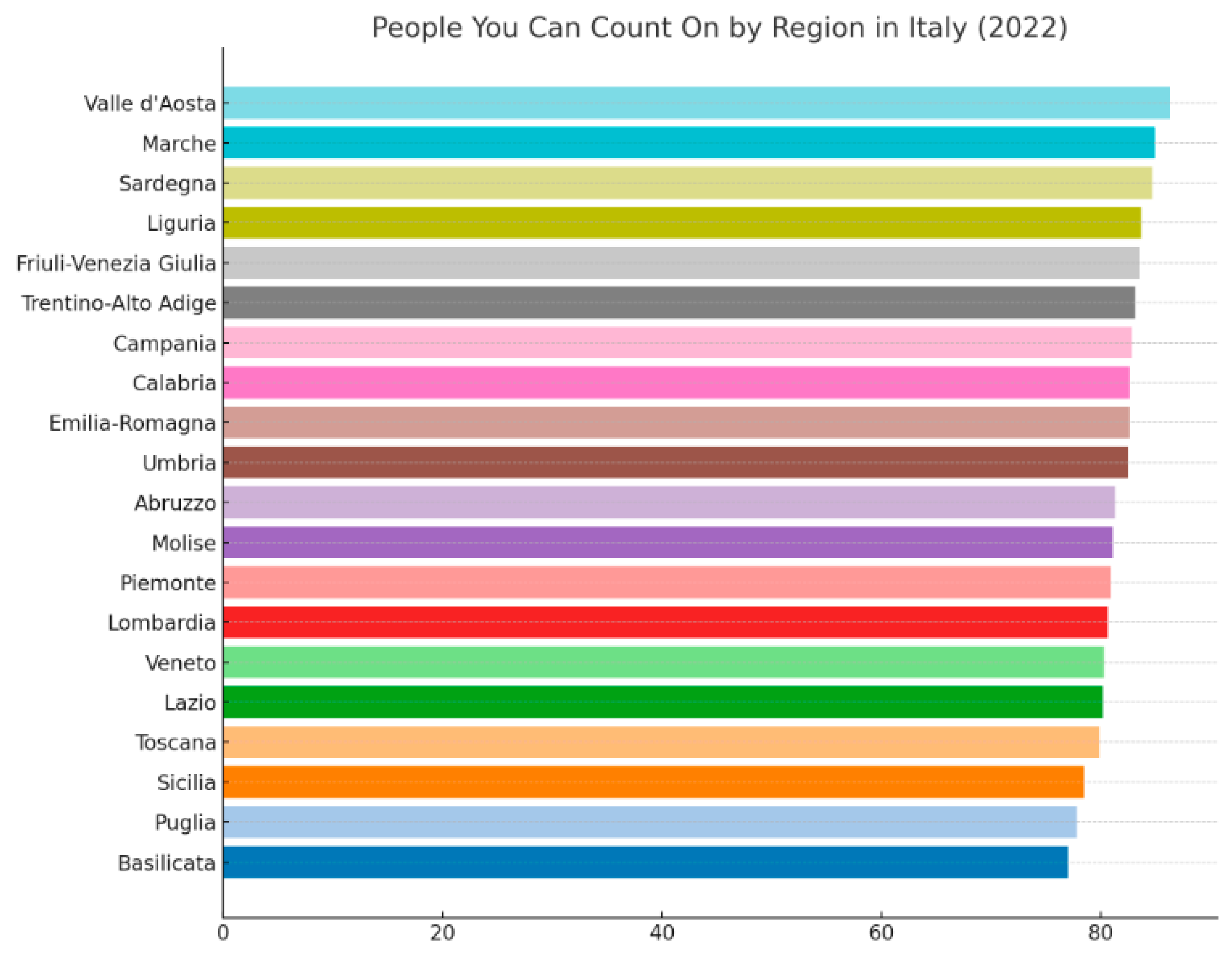
Figure 2.
Change in the level of people you can count on in the Italian regions between 2013 and 2022. Source: Istat-Bes. Elaboration by the authors.
Figure 2.
Change in the level of people you can count on in the Italian regions between 2013 and 2022. Source: Istat-Bes. Elaboration by the authors.
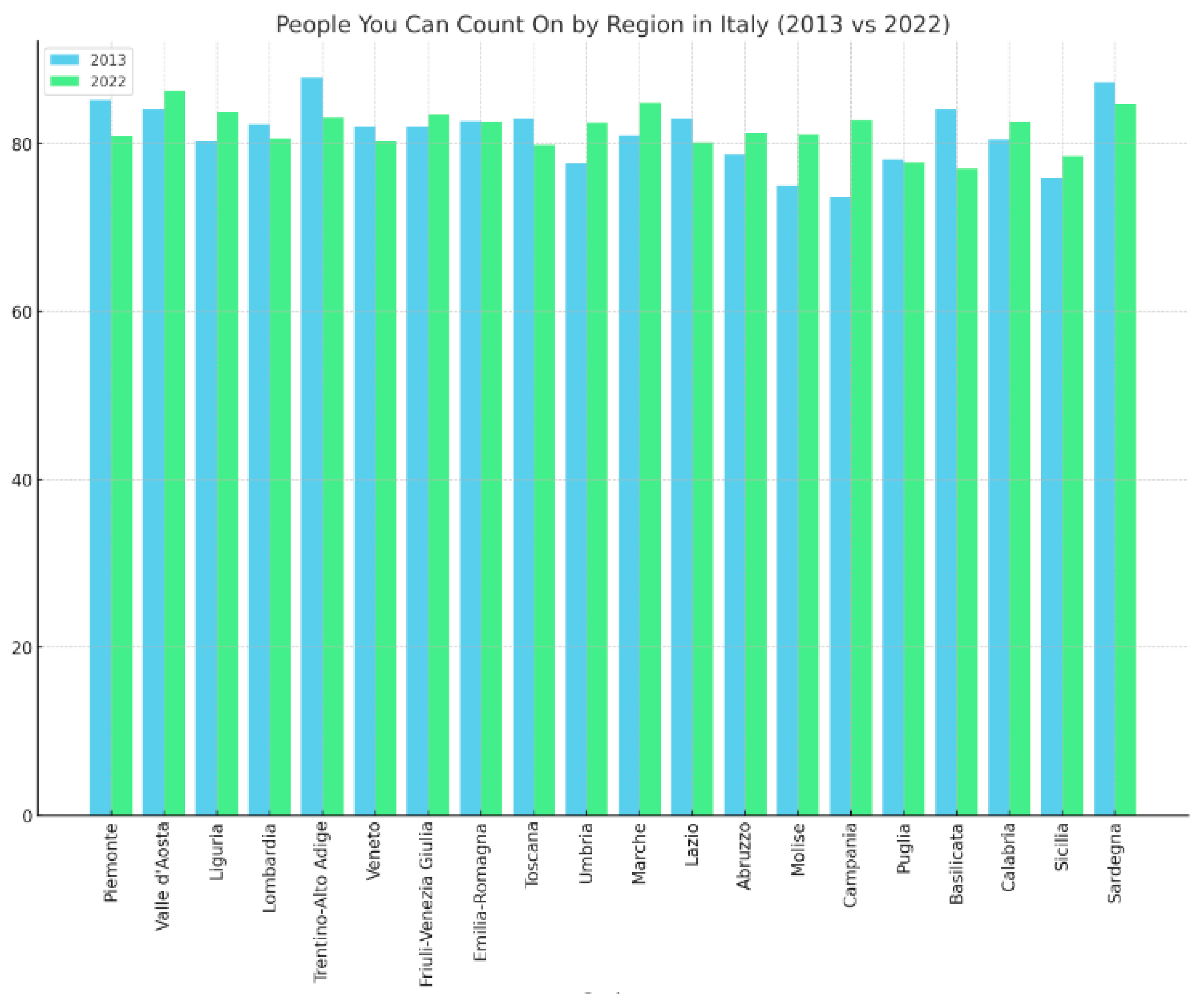
Figure 3.
PYCC across Italian macro-regions during the period 2013-2022. Source: Istat-Bes. Elaboration by the authors.
Figure 3.
PYCC across Italian macro-regions during the period 2013-2022. Source: Istat-Bes. Elaboration by the authors.
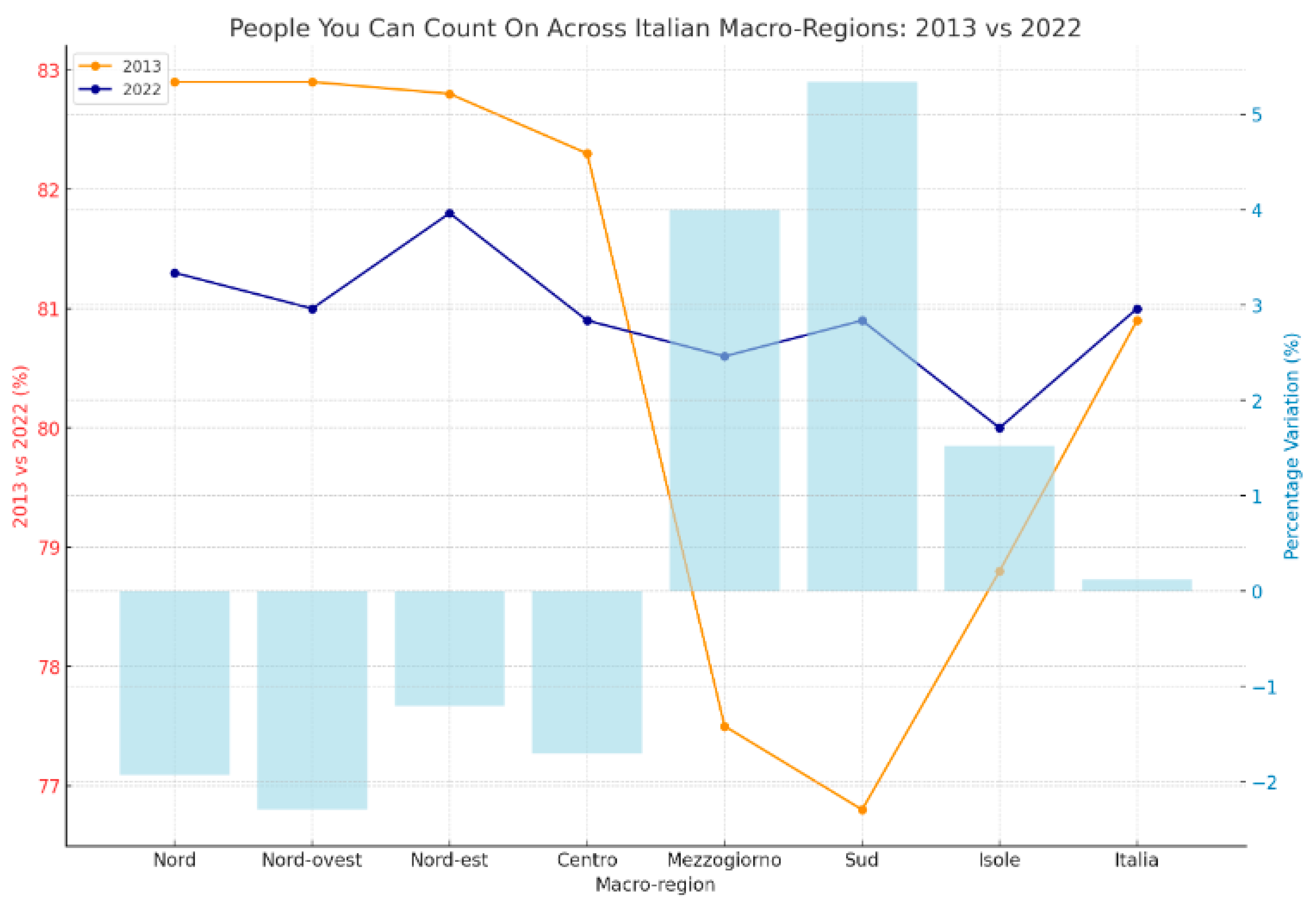
Figure 4.
Clusterization with k-Means algorithm optimized with the Silhouette Coefficient. Source: Istat-Bes. Elaboration by the authors.
Figure 4.
Clusterization with k-Means algorithm optimized with the Silhouette Coefficient. Source: Istat-Bes. Elaboration by the authors.
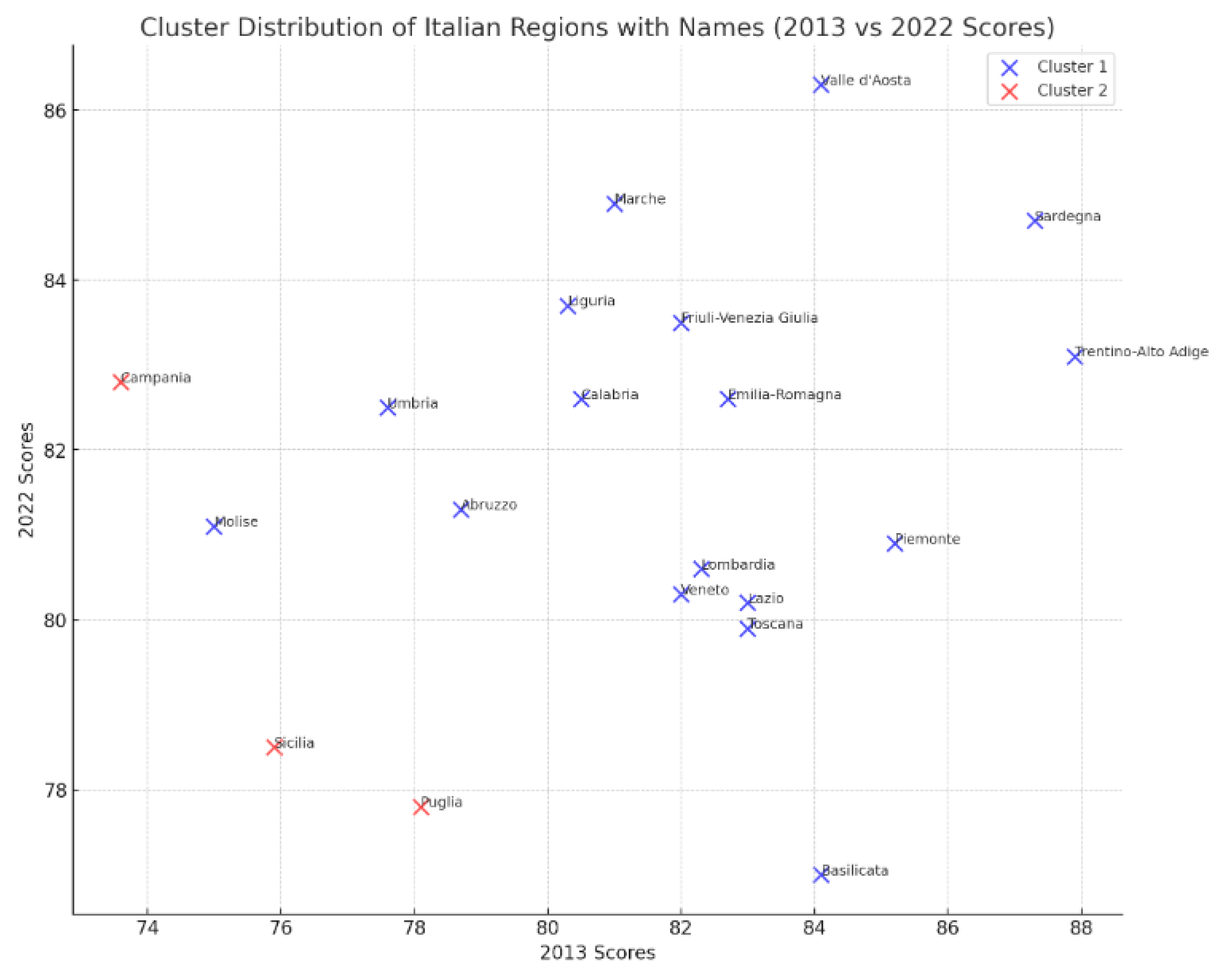

Table 1.
List of Variables for the Estimation of PYCC across Italian regions.
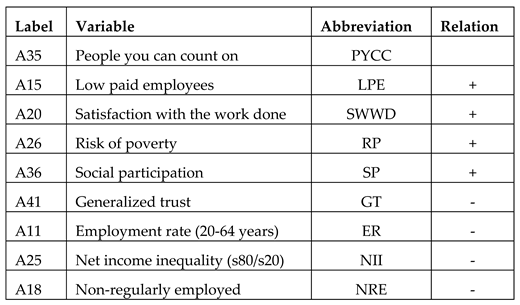
Table 2.
Estimation of the Value of PYCC with Panel Data with Fixed Effects, Panel Data with Random Effects, Pooled OLS and WLS.
Table 2.
Estimation of the Value of PYCC with Panel Data with Fixed Effects, Panel Data with Random Effects, Pooled OLS and WLS.
Disclaimer/Publisher’s Note: The statements, opinions and data contained in all publications are solely those of the individual author(s) and contributor(s) and not of MDPI and/or the editor(s). MDPI and/or the editor(s) disclaim responsibility for any injury to people or property resulting from any ideas, methods, instructions or products referred to in the content. |
© 2024 by the authors. Licensee MDPI, Basel, Switzerland. This article is an open access article distributed under the terms and conditions of the Creative Commons Attribution (CC BY) license (http://creativecommons.org/licenses/by/4.0/).
Copyright: This open access article is published under a Creative Commons CC BY 4.0 license, which permit the free download, distribution, and reuse, provided that the author and preprint are cited in any reuse.


