

Submitted:
19 June 2024
Posted:
21 June 2024
You are already at the latest version
Abstract
In the contemporary era, youthful and healthy skin is a pivotal determinant of beauty. Choices pertaining to one's dietary and lifestyle practices wield substantial influence over skin health. Currently, the focal point of attention lies in strategies to delay skin aging and maintain skin quality. Remarkably, the skin, the body's largest organ, serves as the primary defense barrier against external elements. Skin aging encompasses intrinsic and extrinsic categories, both susceptible to genetic, lifestyle, and environmental factors. Given the strides in science and technology, the pursuit of effective and safe interventions for skin aging assumes paramount importance. Thus, this review delves into the intricate relationship between diet, lifestyle, and skin aging, culminating in an exploration of the crucial role played by excess iron in this intricate nexus. Understanding these dynamics holds promise for advancing our knowledge of skincare and the quest for timeless vitality.
Keywords:
iron
; cigarette smoking
; alcohol
; diet
; skin aging
1. Introduction
As the largest organ of the human body, the skin prominently displays signs of aging as shown by wrinkles, fine lines, uneven skin tones, and age spots. With advancements in science, technology, and improvements in living standards, people are increasingly focusing on skin aging and seeking a deeper understanding of the aging process.
Most of us view aging from one lens: chronological aging. Chronological aging refers to the natural process of aging that occurs because of the passage of time. It is the number of years or birthdays that a person has been alive and is typically measured in terms of the person's age in years, months, and days. Chronological aging is an inevitable process that affects all living organisms. This is unchangeable.
However, there’s another aspect of aging called biological aging, where variables like lifestyle and environmental factors alter how we age. Biological aging is modifiable, meaning it can be accelerated or slowed down based on how well we manage our diet and lifestyle. Its impact is as equally important as chronological aging.
Extrinsic aging factors, such as sun exposure, diet, and pollution, influence biological processes in the body, but they are not classified as "biological aging" in the traditional sense. Instead, they are external or environmental factors that accelerate biological aging by influencing the body's internal mechanisms, such as triggering inflammation, altering iron status, and redox balances. So, while extrinsic factors affect biological outcomes (like skin aging), they are distinct from intrinsic biological aging, which is governed primarily by genetics and the natural aging process within the body. Distinguishing between these types of aging factors enriches our understanding of how aging occurs at different levels – from molecular changes due to genetic factors to cellular damage caused by environmental stresses. This comprehensive view is vital for developing holistic anti-aging strategies that address both internal biological processes and external influences.
Skin aging is a continuous process influenced by intrinsic factors (e.g., genetic), extrinsic factors (e.g., sun exposure), and lifestyle factors (e.g., diet and cigarette smoking). Intrinsic factors are directly related to biological aging. Extrinsic factors, such as the harmful effects of chronic sun exposure (photoaging), accelerate premature skin aging and impact biological aging from outside. These effects are widely supported by past literature [1] and are not the focus of this review.
Diet and lifestyle factors are a specific type of extrinsic factor that individuals have control over, which can either mitigate or intensify the effects of biological aging. In the existing literature, oxidative stress induced by diet and lifestyle is widely recognized as a contributing factor to skin aging. Yet, the molecular intermediaries linking oxygen free radicals with these extrinsic factors remain underexplored. This review proposes that variations in iron status may represent a key internal mechanism by which diet, and lifestyle exert their influence on the biological aging of skin. We posit that dietary and lifestyle choices impact iron metabolism, which in turn accelerates oxidative damage and aging processes in skin tissues. The following rationale supports this hypothesis:
- Iron is the most abundant transition metal in the human body: Iron is the most important, and the most abundant transition metal in the human body. It is an essential element for DNA synthesis, transporting oxygen from the lungs to all other organs, and critical in many heme-containing enzymatic activities [2]. The human body contains approximately 4 grams of iron. In comparison, the second most abundant transition metal, copper, has an average body content of around 80 milligrams. Relatively speaking, the iron content in our bodies is 50 times that of copper content [3].
- Iron is the best-known transition metal that catalyzes oxidant formation through Fenton reaction: Transition metals are a group of metals in the middle of the periodic table of elements. They are called this because they form a “transition” between the metals on the left side of the periodic table and the nonmetals on the right. Transition metals are versatile and can change valences very easily. For example, they can transition from ferrous ions to ferric ions and vice versa enabling crucial functions in producing oxygen free radicals known as Fenton reaction [4]. Fe2+ + H2O2 -----→ Fe3+ + OH- + OH•
- Iron proteins are colorful, and they could contribute to skin tone and discoloration: For instance, the red color of hemoglobin, an oxygen-transporting protein in red blood cells, is due to iron. Similarly, ferritin, which stores excess iron, appears brown. Sleep deprivation and UV exposure can exacerbate dark circles under the eyes, often partly due to hemoglobin deposits from leaking micro blood vessels [5]. Additionally, hemosiderin—a complex of hemoglobin and ferritin—contributes to various skin pigmentations [6], such as age spots and sunspots. Bruises represent another form of skin discoloration, resulting from blood pooling under the skin due to vessel damage, which leads to hemoglobin accumulation and visible discoloration [5].
- Iron is excreted through the skin and makes the skin an important target for oxidative damage: In human physiology, the body typically loses approximately 1-2 mg of iron daily. Employing whole-body counting techniques to monitor radioactive Fe59 following intravenous injection, it was discovered that one-third of body iron is excreted via the intestines, while two-thirds are eliminated through the skin [7]. These findings underscore the skin's critical role not only in maintaining iron homeostasis but also as a principal site of oxidative damage due to iron deposition. Consequently, the implications of iron for skin appearance and health necessitate further investigation. This highlights the skin's dual function in iron regulation and its susceptibility to iron-induced oxidative stress, impacting overall skin condition and tone.
- Iron contributes to photoaging: Research has shown that ferritin, an iron storage protein that can bind up to 4,500 iron atoms per molecule, undergoes degradation when exposed to UVA radiation. This exposure releases significant amounts of 'free' iron, which then facilitates the formation of oxidants [8]. Concurrently, the interaction between ferritin and UVA radiation also increases the production of matrix metalloproteinase-1 (MMP-1) [9], an enzyme linked to skin aging. The oxidative damage and enzymatic activity resulting from these processes are crucial in accelerating the aging of the skin, leading to increased wrinkle formation and skin thinning. These findings highlight the significant impact of iron metabolism and UVA exposure on skin health and emphasize the urgent need for targeted research to develop preventive strategies against these detrimental effects.
Based on these known facts, we examined whether skin aging effects of diets and lifestyle are associated with altered iron status in the body. By examining the association between altered iron status and skin aging, we aim to elucidate the molecular mechanisms involved. This understanding could pave the way for potential preventive strategies, focusing on the regulation of iron levels to mitigate their impact on skin condition and appearance. This approach provides a novel perspective on combating skin aging by targeting the specific role of iron in oxidative damage and tissue degradation.
2. Diets and Lifestyle on Skin Aging
Nutritional factors play a key role in normal dermatologic functioning, but little is known about the effects of diet on skin-aging appearance. Several studies have examined associations between daily diet and skin conditions. For example, actinic skin wrinkling on the back of the hand was assessed by grading cutaneous microtopographs of 453 men and women living in Europe and Australia. A diet higher in vegetables, fruit, and olive oil was found to have a protective effect on the skin [10].
In another study, using a non-invasive technique, the hydration and surface pH of the skin on the right arm and the sebum content of the forehead were measured in 302 Dutch men and women [11]. After adjusting for potential confounders, including sex, age, and smoking, statistically significant associations were found between serum vitamin A and skin sebum content and surface pH as well as between the dietary intake of total fat, saturated fat, monounsaturated fat, and skin hydration.
One study examined the associations between nutrient intakes and skin aging in 4025 women between 40–74 years old [12]. The findings revealed that higher intakes of vitamin C and linoleic acid, coupled with lower intakes of fats and carbohydrates, were associated with a better skin-aging appearance, specifically in terms of fewer wrinkles, less senile dryness, and reduced skin atrophy. In another study, the hydration, surface lipids and elasticity of the skin of 716 Japanese women were measured. The results showed that higher intakes of total fat, saturated fat and monounsaturated fat were significantly associated with increased skin elasticity [13]. Additionally, a higher intake of green and yellow vegetables was significantly associated with a decreased Daniell wrinkling score [14]. The study also found that saturated fat intake was significantly inversely associated with the Daniell wrinkling score after adjusting for green and yellow vegetable intake.
The association between digitally quantified facial wrinkling, dietary patterns, and healthy lifestyle parameters was investigated in a large population-based cohort of 2753 elderly participants [15]. The study found that a healthy diet was associated with less facial wrinkling in women. This aligns with previous studies showing that high intake of animal products, fats, and carbohydrates increased skin aging [12,16] while vitamin C and carotenoids decreased winkles [13]. Single food group analysis showed that within the healthy dietary pattern, yellow vegetables and soy were significantly associated with less wrinkling [15]. Interestingly, the impact of diet on facial wrinkles was significant in women but not in men, In women, a diet high in a red meat and snack was associated with more facial wrinkles, whereas a fruit-dominant pattern was associated with fewer wrinkles [15]. These results suggest that: 1) men and women exhibit distinct wrinkling patterns and different dietary habits, potentially explaining the gender differences in wrinkling, similar to the differences observed in osteoporosis [17]; 2) Due to the cross-sectional design of the study, causation could not be proven [15]. However, red meat, which is rich in iron, has been shown to be positively associated with lipid peroxidation [18] and could be a causative factor in facial wrinkles.
Research has shown that a high-fat diet significantly upregulates epidermal fatty acid-binding protein in the skin, leading to the formation of lipid droplets and the activation of nucleotide-binding domain, leucine-rich-containing family, pyrin domain-containing-3 (NLRP3) inflammasome. This activation dramatically increases in the incidence of skin lesions in mice [19]. A systematic review examined the impact of combining high-fat diets and alcohol consumption on skin health using preclinical murine models. The findings indicated that animals subjected to this combination exhibited impaired cutaneous wound closure, delayed skin contraction, chronic inflammation, and incomplete re-epithelialization [16]. The mechanism behind this phenomenon involves high-fat diets promoting oxidative stress and inflammatory responses, hampering protein synthesis, and potentially inducing morphological alterations and damage to matrix remodeling. This suggests that the concurrent consumption of alcohol and a high-fat diet detrimentally affects skin healing processes, highlighting the need for further clinical investigation to validate these findings and explore potential interventions [16,20].
Mice fed a high-fat diet exhibited worsened psoriasis symptoms compared to those on a regular diet, with increased infiltration of neutrophils into the affected skin [21]. In psoriasis patients, a cohort study revealed that serum levels of free fatty acids, rather than other obesity-related parameters, correlated with disease severity [22]. Further research in mice confirmed the pivotal role of free fatty acids in exacerbating psoriasis-like inflammation, as even healthy, lean mice showed increased inflammation when administered elevated levels of these fatty acids [23]. Additionally, a high-fat diet can enhance skin inflammation by increasing the expression of inflammatory factors and tumor necrosis factor in response to UV-B exposure [24]. In summary, the primary effect of a high-fat diet on skin aging is the induction of oxidative stress, which leads to inflammatory damage.
Studies indicate a strong link between sugar, specific food processing methods (such as grilling, frying, and baking), and skin aging due to the formation of advanced glycation end (AGE) products [25,26,27]. A diet high in sugar, exposure to UV radiation, and consumption of barbecued and fried foods contribute to AGE product accumulation, thereby accelerating the aging process of the skin.
Tobacco is one of the greatest public health hazards worldwide, and its use is an undeniable risk factor for wrinkling and premature skin aging. This negative impact on the skin was first identified over 150 years ago. "Smoker's face" is characterized by distinct features such as pronounced wrinkles, heightened visibility of underlying bone structures, and a pallid, atrophic complexion [28]. Smoking can alter the thickness of the skin cuticle and accelerate skin pigmentation. After controlling for age, average sun exposure, and body mass index, the estimated relative risk of moderate to severe wrinkling for current smokers compared to never smokers was 2.3 (95% confidence interval [CI] = 1.2, 4.2) among men and 3.1 (95% CI = 1.6, 5.9) among women [29]. Studies have shown that smoking, both current and former, is associated with a higher risk of facial wrinkling compared to never smokers [29,30]. This relationship underscores the significant impact of smoking on external aging, and facial skin aging.
A pair of twins presents a unique and valuable opportunity to mitigate the influence of genetic predisposition and exposure-related factors, which frequently act as significant confounding variables in population-based research examining the connection between smoking and skin aging [31]. A pair of twins who spent their first two decades of their lives together and later had the same type of job at the same latitude, resulting in similar levels of significant sun exposure, displayed notable differences in skin aging due to smoking history. The twins with an approximately 52.5–pack-year smoking history showed significantly more severe skin aging compared to the nonsmoking twin [31]. Another study showed from 65 pairs of American monozygotic and dizygotic twins that cigarette smoking is associated with higher photodamage [32]. It was further confirmed with 67 pairs of Japanese monozygotic twins, that smoking resulted in significantly more facial wrinkle [33]. Thus, studies involving twins align with much of the existing literature, which identifies smoking, sun exposure, and female sex as independent risk factors for the development of wrinkles [34,35,36,37].
Smoking can affect the reticular dermis by increasing the number of elastic fibers, leading to changes similar to solar elastosis [38]. It can also activate metalloproteinase, which degrade collagen, elastic fibers, and proteoglycans [39,40,41], while inhibiting procollagen synthesis by altering transforming growth factor β [42]. When water-soluble tobacco smoke extract is applied topically to cultured skin fibroblasts, it predominantly induces oxidative stress. This stress impairs collagen biosynthesis and increases the production of tropo-elastin and matrix metalloproteinases (MMPs), resulting in abnormal production of elastosis material [39,43]. Furthermore, elevated MMP levels lead to the breakdown of collagen, elastic fibers, and proteoglycans, indicating a disruption in the equilibrium between biosynthesis and degradation within dermal connective tissue metabolism [40,41]. MMPs are induced by tobacco smoke extracts, either water-soluble or water-insoluble, that trigger the aryl hydrocarbon receptor activation, which could be implicated in the premature skin-aging effects resulting from exposure to tobacco smoke [41].
Linear regression analysis showed that current smokers exhibited more severe signs of aging compared to nonsmokers. Statistically significant associations were found with increased forehead and glabellar lines, under-eye puffiness, nasolabial folds, oral commissures, and reduced lip fullness [44]. Additionally, former smokers showed significantly more severe aging of all facial features compared to nonsmokers, except for midface volume loss and visible blood vessels on the cheeks [44]. When pack-years analyzed smoking history, forehead and glabellar lines, under-eye puffiness, tear troughs, nasolabial folds, and deep oral commissures were significantly more likely to be present than in nonsmokers, even in women with the shortest smoking history. Analyses by smoking pack-years confirmed that the severity of glabellar lines, tear troughs, perioral bars, and reduced lip fullness increased due to smoking duration.
The same global, cross-sectional, Internet-based survey of 3,267 participants found that smoking and heavy alcohol use (defined as consuming 8 or more drinks per week) significantly but differentially impact skin and volume-related facial aging [44]. Heavy alcohol use (eight or more drinks per week) was associated with increased severity in nearly all facial features analyzed. Alcohol abuse has been reported to reduce fat mass, which might underlie the midface volume loss observed in heavy drinkers. The increased under-eye puffiness could be due to the exposure of the suborbital fat pad as the midface volume receded. Among moderate drinkers, only midface volume loss and under-eye puffiness were associated with drinking [44].
However, the effects of alcohol on skin photoaging are inconclusive. For example, the twin studies showed that drinking alcohol was found to be negatively correlated with photodamage [32]. In another study of Danish twins, no significant correlation was found between drinking and photodamage [37]. Since certain alcoholic beverages (e.g., red wine) contain polyphenols such as resveratrol, which is an effective antioxidant, further detail to specify what type of alcohol was consumed could be helpful.
3. Diets and Lifestyle on Iron
High saturated fat diet can induce tissue iron overload, such as liver and potentially skin, through hepcidin-dependent mechanism. Inflammation stimulated by excess body fat can produce more hepcidin, leading to decreased intestinal iron absorption, and increased iron in major storage sites (liver and spleen) [45], or specifically in the mouse spleen rather than the heart or liver [46]. Although skin is not mentioned, the majority of body iron is excreted through the skin [7]. We can assume that there is an increase in iron in the skin. Over the long term, this could cause an iron imbalance with anemia in the blood because of lowered body iron uptake from the diet but an iron overload at the local tissue [47,48].
AGEs are stable compounds formed non-enzymatically when amino groups from large biomolecules react with free carbonyl groups from glucose or other reducing sugars, often found in heat-processed foods. Iron plays a crucial role as a catalyst in the formation of AGEs [49]. In the human body, AGEs can trigger various diseases such as diabetes, atherosclerosis, neurodegeneration, and chronic kidney disease by activating their specific receptors, known as RAGEs. Additionally, AGEs impact the skin by altering its structure and physiological functions. There are two potential molecular mechanisms of aging in skin reveals by AGEs: first, they cross-link with proteins, disrupting protein structures, deforming fibers, and impairing biological functions; second, they initiate signaling pathways through the binding to the receptors of AGEs, influencing gene expression [49].
It was shown that smoking alters iron homeostasis, both in the lung and systemically [50]. Exposure of rats to cigarette smoke resulted in increased lavage concentrations of iron and ferritin, elevated serum ferritin levels, and higher nonheme iron concentrations in the lung and liver tissues. Lavage ascorbate concentrations decreased, indicating an oxidative stress. However, filtering of the cigarette smoke to remove particles reversed most of these changes [50]. Lavage samples in healthy smokers and smokers with chronic obstructive pulmonary disease revealed elevated concentrations of both iron and ferritin compared to healthy nonsmokers. Serum ferritin levels were higher in former and current smokers and increased with the amount of smoking in all participant subgroups categorized by spirometric results [51]. Elevated serum iron and ferritin levels observed in smokers provide evidence of systemic iron accumulation resulting from exposure to cigarette smoke and these increased iron levels may play an important role in skin aging observed in smokers.
Low-level alcohol consumption has been associated with elevated ferritin levels, implying an increase in body iron stores. The impact of this phenomenon can vary from beneficial to detrimental, contingent upon specific circumstances [52]. Mild to moderate alcohol consumption has been shown to increase the prevalence of iron overload [53]. Patients with alcoholic liver disease often exhibited increased body iron stores, as indicated by elevated serum iron indices (transferrin saturation, ferritin) and hepatic iron concentration [53]. Interestingly, chronic alcohol abuse has been correlated with high iron concentrations in the skin [54]. Studies in aldehyde dehydrogenase 2 gene knockout mice or humans with dysfunctional alcohol metabolism have also shown that alcohol can cause increased skin pigmentation, although the downstream mechanisms are unclear [55]. Alcohol disrupts the iron-induced increase in hepatic hepcidin transcription, thereby impeding intestinal iron absorption and the release of iron from macrophages.
4. Limitations and Perspectives
Most studies in this review are correlative and do not establish a cause-effect relationship. Besides the diets and lifestyles discussed, the impact of e-cigarettes on skin aging is not well understood despite their prevalence among smokers. Iron presents a double-edged sword, as both iron deficiency and iron overload can affect overall health. The effect of iron deficiencies on skin aging remains unknown. Another important aspect is dietary supplements, such as those marketed for "beauty from within," which claim to enhance beauty but have not been fully investigated. Beyond improving skin appearance, the effects of these supplements on iron and skin health need careful assessment.
Future studies should examine the variation of iron levels in skin according to diets and lifestyles to better understand their implications for beauty. Investigating whether reducing excess iron in the body, for example, through phlebotomy, can enhance skin beauty and health would also be an interesting avenue for research.
5. Conclusions
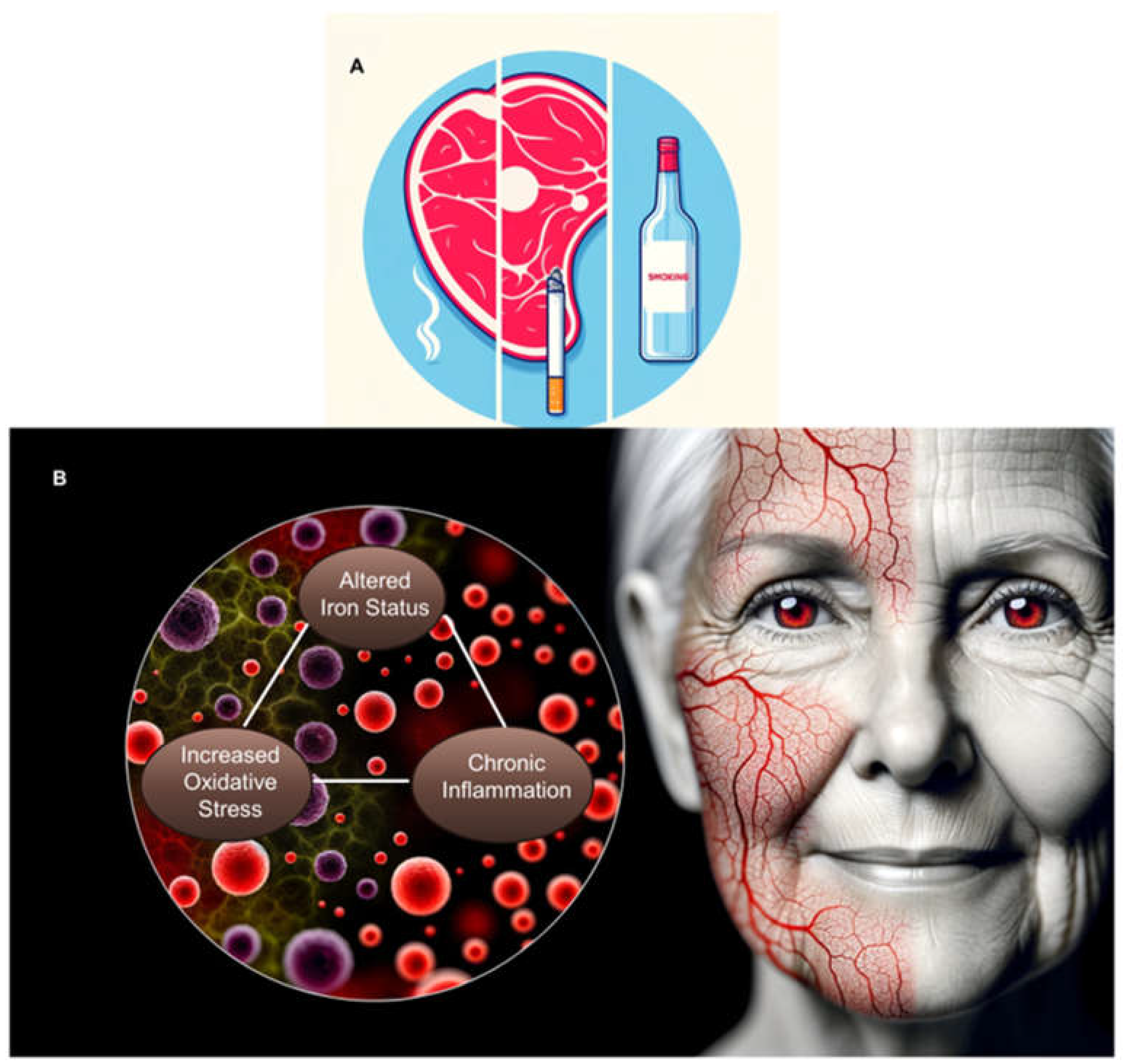
Our review suggests that specific diets and lifestyles can exacerbate iron accumulation in the body, which may subsequently lead to increased iron excretion through the skin (Figure 1). This process is likely to contribute to heightened oxidative stress, which has been shown to induce a pro-inflammatory state, promote the formation of AGE products, disrupt cellular metabolism, and weaken antioxidant defenses [56,57,58]. Conversely, a diet rich in vitamins and flavonoids has been demonstrated to offer protection against photoaging, enhancing collagen production and DNA repair mechanisms[59,60].
The role of iron in skin health is underscored by recent findings that blood donation, by reducing iron stores, can ameliorate skin aging signs through decreased expression of inflammatory genes and boosted collagen re-synthesis in old mice [61]. This evidence strongly supports the need for further exploration into how altering iron homeostasis in humans through diet and lifestyle can affect skin aging, underscoring the potential of targeted dietary interventions as a strategic approach to mitigate aging effects on the skin.
- Abbreviations: AGEs: Advanced glycation end products; MMP: matrix metalloproteinase; TNF-a: tumor necrosis factor-alpha
References
- Tang X, Yang T, Yu D, Xiong H, Zhang S: Current insights and future perspectives of ultraviolet radiation (UV) exposure: Friends and foes to the skin and beyond the skin. Environ Int 2024, 185:108535. [CrossRef]
- Zeidan RS, Martenson M, Tamargo JA, McLaren C, Ezzati A, Lin Y, Yang JJ, Yoon HS, McElroy T, Collins JF et al: Iron homeostasis in older adults: balancing nutritional requirements and health risks. J Nutr Health Aging 2024, 28(5):100212. [CrossRef]
- Podgorska A, Kicman A, Naliwajko S, Wacewicz-Muczynska M, Niczyporuk M: Zinc, Copper, and Iron in Selected Skin Diseases. Int J Mol Sci 2024, 25(7). [CrossRef]
- Muranov KO: Fenton Reaction in vivo and in vitro. Possibilities and Limitations. Biochemistry (Mosc) 2024, 89(Suppl 1):S112-S126. [CrossRef]
- Urakov A, Urakova N, Nikolenko V, Belkharoeva R, Achkasov E, Kochurova E, Gavryushova L, Sinelnikov M: Current and emerging methods for treatment of hemoglobin related cutaneous discoloration: A literature review. Heliyon 2021, 7(1):e05954.
- Runge JS, Nakamura M, Sullivan AN, Harms PW, Chan MP: Pigmented Purpuric Dermatosis of the Hand: Clinicopathologic Analysis of Six Cases With Review of the Literature. Am J Dermatopathol 2022, 44(8):553-558. [CrossRef]
- Weintraub LR, Demis DJ, Conrad ME, Crosby WH: Iron Excretion by the Skin. Selective Localization of Iron-59 in Epithelial Cells. Am J Pathol 1965, 46(1):121-127. [CrossRef]
- Pourzand C, Watkin RD, Brown JE, Tyrrell RM: Ultraviolet A radiation induces immediate release of iron in human primary skin fibroblasts: the role of ferritin. Proc Natl Acad Sci U S A 1999, 96(12):6751-6756. [CrossRef]
- Jian J, Pelle E, Yang Q, Pernodet N, Maes D, Huang X: Iron sensitizes keratinocytes and fibroblasts to UVA-mediated matrix metalloproteinase-1 through TNF-alpha and ERK activation. Exp Dermatol 2011, 20(3):249-254. [CrossRef]
- Purba MB, Kouris-Blazos A, Wattanapenpaiboon N, Lukito W, Rothenberg EM, Steen BC, Wahlqvist ML: Skin wrinkling: can food make a difference? J Am Coll Nutr 2001, 20(1):71-80. [CrossRef]
- Boelsma E, van de Vijver LP, Goldbohm RA, Klopping-Ketelaars IA, Hendriks HF, Roza L: Human skin condition and its associations with nutrient concentrations in serum and diet. Am J Clin Nutr 2003, 77(2):348-355.
- Cosgrove MC, Franco OH, Granger SP, Murray PG, Mayes AE: Dietary nutrient intakes and skin-aging appearance among middle-aged American women. Am J Clin Nutr 2007, 86(4):1225-1231. [CrossRef]
- Nagata C, Nakamura K, Wada K, Oba S, Hayashi M, Takeda N, Yasuda K: Association of dietary fat, vegetables and antioxidant micronutrients with skin ageing in Japanese women. Br J Nutr 2010, 103(10):1493-1498. [CrossRef]
- Daniell HW: Smoker's wrinkles. A study in the epidemiology of "crow's feet". Ann Intern Med 1971, 75(6):873-880.
- Mekic S, Jacobs LC, Hamer MA, Ikram MA, Schoufour JD, Gunn DA, Kiefte-de Jong JC, Nijsten T: A healthy diet in women is associated with less facial wrinkles in a large Dutch population-based cohort. J Am Acad Dermatol 2019, 80(5):1358-1363 e1352.
- Rosa DF, Sarandy MM, Novaes RD, da Matta SLP, Goncalves RV: Effect of a high-fat diet and alcohol on cutaneous repair: A systematic review of murine experimental models. PLoS One 2017, 12(5):e0176240. [CrossRef]
- Huang X, Xu Y, Partridge NC: Dancing with sex hormones, could iron contribute to the gender difference in osteoporosis? Bone 2013, 55(2):458-460. [CrossRef]
- Romeu M, Aranda N, Giralt M, Ribot B, Nogues MR, Arija V: Diet, iron biomarkers and oxidative stress in a representative sample of Mediterranean population. Nutr J 2013, 12:102. [CrossRef]
- Zhang Y, Li Q, Rao E, Sun Y, Grossmann ME, Morris RJ, Cleary MP, Li B: Epidermal Fatty Acid binding protein promotes skin inflammation induced by high-fat diet. Immunity 2015, 42(5):953-964. [CrossRef]
- Rosa DF, Sarandy MM, Novaes RD, Freitas MB, do Carmo Gouveia Peluzio M, Goncalves RV: High-Fat Diet and Alcohol Intake Promotes Inflammation and Impairs Skin Wound Healing in Wistar Rats. Mediators Inflamm 2018, 2018:4658583. [CrossRef]
- Higashi Y, Yamakuchi M, Fukushige T, Ibusuki A, Hashiguchi T, Kanekura T: High-fat diet exacerbates imiquimod-induced psoriasis-like dermatitis in mice. Exp Dermatol 2018, 27(2):178-184. [CrossRef]
- Marino MG, Carboni I, De Felice C, Maurici M, Maccari F, Franco E: Risk factors for psoriasis: a retrospective study on 501 outpatients clinical records. Ann Ig 2004, 16(6):753-758. [CrossRef]
- Herbert D, Franz S, Popkova Y, Anderegg U, Schiller J, Schwede K, Lorz A, Simon JC, Saalbach A: High-Fat Diet Exacerbates Early Psoriatic Skin Inflammation Independent of Obesity: Saturated Fatty Acids as Key Players. J Invest Dermatol 2018, 138(9):1999-2009. [CrossRef]
- Vaid M, Singh T, Prasad R, Katiyar SKFigure 1. Schematic representation of a holistic model of how extrinsic factors such as diet and lifestyle (A) interact with intrinsic factors (B) like altered iron status to influence skin appearance. Collectively, these elements may lead to increased oxidative stress and chronic inflammation, which in turn may impact skin health. The model suggests that the interplay between chronic inflammation and iron imbalance could sustain a cycle of oxidative stress, potentially accelerating skin aging. This holistic perspective underscores that merely targeting oxidative stress with antioxidant therapy may be insufficient. A comprehensive approach that also addresses iron levels and inflammation is likely essential for notably improving skin appearance: Intake of high-fat diet stimulates the risk of ultraviolet radiation-induced skin tumors and malignant progression of papillomas to carcinoma in SKH-1 hairless mice. Toxicol Appl Pharmacol 2014, 274(1):147-155.
- Danby FW: Nutrition and aging skin: sugar and glycation. Clin Dermatol 2010, 28(4):409-411.
- Draelos ZD: Aging skin: the role of diet: facts and controversies. Clin Dermatol 2013, 31(6):701-706. [CrossRef]
- Nguyen HP, Katta R: Sugar Sag: Glycation and the Role of Diet in Aging Skin. Skin Therapy Lett 2015, 20(6):1-5.
- Ortiz A, Grando SA: Smoking and the skin. Int J Dermatol 2012, 51(3):250-262.
- Ernster VL, Grady D, Miike R, Black D, Selby J, Kerlikowske K: Facial wrinkling in men and women, by smoking status. Am J Public Health 1995, 85(1):78-82. [CrossRef]
- Sandby-Moller J, Poulsen T, Wulf HC: Epidermal thickness at different body sites: relationship to age, gender, pigmentation, blood content, skin type and smoking habits. Acta Derm Venereol 2003, 83(6):410-413. [CrossRef]
- Doshi DN, Hanneman KK, Cooper KD: Smoking and skin aging in identical twins. Arch Dermatol 2007, 143(12):1543-1546. [CrossRef]
- Martires KJ, Fu P, Polster AM, Cooper KD, Baron ED: Factors that affect skin aging: a cohort-based survey on twins. Arch Dermatol 2009, 145(12):1375-1379. [CrossRef]
- Ichibori R, Fujiwara T, Tanigawa T, Kanazawa S, Shingaki K, Torii K, Tomita K, Yano K, Osaka Twin Research G, Sakai Y et al: Objective assessment of facial skin aging and the associated environmental factors in Japanese monozygotic twins. J Cosmet Dermatol 2014, 13(2):158-163.
- Chung JH, Lee SH, Youn CS, Park BJ, Kim KH, Park KC, Cho KH, Eun HC: Cutaneous photodamage in Koreans: influence of sex, sun exposure, smoking, and skin color. Arch Dermatol 2001, 137(8):1043-1051.
- Kadunce DP, Burr R, Gress R, Kanner R, Lyon JL, Zone JJ: Cigarette smoking: risk factor for premature facial wrinkling. Ann Intern Med 1991, 114(10):840-844. [CrossRef]
- Leung WC, Harvey I: Is skin ageing in the elderly caused by sun exposure or smoking? Br J Dermatol 2002, 147(6):1187-1191. [CrossRef]
- Rexbye H, Petersen I, Johansens M, Klitkou L, Jeune B, Christensen K: Influence of environmental factors on facial ageing. Age Ageing 2006, 35(2):110-115. [CrossRef]
- Just M, Ribera M, Monso E, Lorenzo JC, Ferrandiz C: Effect of smoking on skin elastic fibres: morphometric and immunohistochemical analysis. Br J Dermatol 2007, 156(1):85-91.
- Lahmann C, Bergemann J, Harrison G, Young AR: Matrix metalloproteinase-1 and skin ageing in smokers. Lancet 2001, 357(9260):935-936. [CrossRef]
- Morita A: Tobacco smoke causes premature skin aging. J Dermatol Sci 2007, 48(3):169-175. [CrossRef]
- Morita A, Torii K, Maeda A, Yamaguchi Y: Molecular basis of tobacco smoke-induced premature skin aging. J Investig Dermatol Symp Proc 2009, 14(1):53-55. [CrossRef]
- Yin L, Morita A, Tsuji T: Tobacco smoke extract induces age-related changes due to modulation of TGF-beta. Exp Dermatol 2003, 12 Suppl 2:51-56. [CrossRef]
- Smith JB, Fenske NA: Cutaneous manifestations and consequences of smoking. J Am Acad Dermatol 1996, 34(5 Pt 1):717-732; quiz 733-714. [CrossRef]
- Goodman GD, Kaufman J, Day D, Weiss R, Kawata AK, Garcia JK, Santangelo S, Gallagher CJ: Impact of Smoking and Alcohol Use on Facial Aging in Women: Results of a Large Multinational, Multiracial, Cross-sectional Survey. J Clin Aesthet Dermatol 2019, 12(8):28-39.
- Lobo AR, Gaievski EHS, de Mesquita CH, De Carli E, Teixeira PDS, Pereira RMR, Borelli P, de Sa LRM, Colli C: Increased adiposity by feeding growing rats a high-fat diet results in iron decompartmentalisation. Br J Nutr 2020, 123(10):1094-1108. [CrossRef]
- Yamano N, Ikeda Y, Sakama M, Izawa-Ishizawa Y, Kihira Y, Ishizawa K, Miyamoto L, Tomita S, Tsuchiya K, Tamaki T: A long-term high-fat diet changes iron distribution in the body, increasing iron accumulation specifically in the mouse spleen. J Nutr Sci Vitaminol (Tokyo) 2015, 61(1):20-27. [CrossRef]
- Basak T, Kanwar RK: Iron imbalance in cancer: Intersection of deficiency and overload. Cancer Med 2022, 11(20):3837-3853. [CrossRef]
- Petzer V, Theurl I, Weiss G: Established and Emerging Concepts to Treat Imbalances of Iron Homeostasis in Inflammatory Diseases. Pharmaceuticals (Basel) 2018, 11(4). [CrossRef]
- Chen CY, Zhang JQ, Li L, Guo MM, He YF, Dong YM, Meng H, Yi F: Advanced Glycation End Products in the Skin: Molecular Mechanisms, Methods of Measurement, and Inhibitory Pathways. Front Med (Lausanne) 2022, 9:837222. [CrossRef]
- Ghio AJ, Hilborn ED, Stonehuerner JG, Dailey LA, Carter JD, Richards JH, Crissman KM, Foronjy RF, Uyeminami DL, Pinkerton KE: Particulate matter in cigarette smoke alters iron homeostasis to produce a biological effect. Am J Respir Crit Care Med 2008, 178(11):1130-1138. [CrossRef]
- Lee CH, Goag EK, Lee SH, Chung KS, Jung JY, Park MS, Kim YS, Kim SK, Chang J, Song JH: Association of serum ferritin levels with smoking and lung function in the Korean adult population: analysis of the fourth and fifth Korean National Health and Nutrition Examination Survey. Int J Chron Obstruct Pulmon Dis 2016, 11:3001-3006. [CrossRef]
- Whitfield JB, Zhu G, Heath AC, Powell LW, Martin NG: Effects of alcohol consumption on indices of iron stores and of iron stores on alcohol intake markers. Alcohol Clin Exp Res 2001, 25(7):1037-1045. [CrossRef]
- Harrison-Findik DD: Role of alcohol in the regulation of iron metabolism. World J Gastroenterol 2007, 13(37):4925-4930. [CrossRef]
- Paulke A, Sohling N, Held H, Wurglics M, Skopp G, Toennes SW: Chronic alcohol abuse may lead to high skin iron content, but not to hepatic siderosis. Forensic Sci Int 2019, 304:109851. [CrossRef]
- Kuprys PV, Tsukamoto H, Gao B, Jia L, McGowan J, Coopersmith CM, Moreno MC, Hulsebus H, Meena AS, Souza-Smith FM et al: Summary of the 2018 Alcohol and Immunology Research Interest Group (AIRIG) meeting. Alcohol 2019, 77:11-18. [CrossRef]
- Clarke RE, Dordevic AL, Tan SM, Ryan L, Coughlan MT: Dietary Advanced Glycation End Products and Risk Factors for Chronic Disease: A Systematic Review of Randomised Controlled Trials. Nutrients 2016, 8(3):125. [CrossRef]
- Baylis D, Bartlett DB, Patel HP, Roberts HC: Understanding how we age: insights into inflammaging. Longev Healthspan 2013, 2(1):8. [CrossRef]
- Rinnerthaler M, Bischof J, Streubel MK, Trost A, Richter K: Oxidative stress in aging human skin. Biomolecules 2015, 5(2):545-589.
- Rahman K: Studies on free radicals, antioxidants, and co-factors. Clin Interv Aging 2007, 2(2):219-236.
- Schagen SK, Zampeli VA, Makrantonaki E, Zouboulis CC: Discovering the link between nutrition and skin aging. Dermatoendocrinol 2012, 4(3):298-307. [CrossRef]
- Liu J, Chen T, Zhao Y, Ding Z, Ge W, Zhang J: Blood donation improves skin aging through the reduction of iron deposits and the increase of TGF-beta1 in elderly skin. Mech Ageing Dev 2022, 205:111687. [CrossRef]
Figure 1.
Schematic representation of a holistic model of how extrinsic factors such as diet and lifestyle (A) interact with intrinsic factors (B) like altered iron status to influence skin appearance. Collectively, these elements may lead to increased oxidative stress and chronic inflammation, which in turn may impact skin health. The model suggests that the interplay between chronic inflammation and iron imbalance could sustain a cycle of oxidative stress, potentially accelerating skin aging. This holistic perspective underscores that merely targeting oxidative stress with antioxidant therapy may be insufficient. A comprehensive approach that also addresses iron levels and inflammation is likely essential for notably improving skin appearance.
Figure 1.
Schematic representation of a holistic model of how extrinsic factors such as diet and lifestyle (A) interact with intrinsic factors (B) like altered iron status to influence skin appearance. Collectively, these elements may lead to increased oxidative stress and chronic inflammation, which in turn may impact skin health. The model suggests that the interplay between chronic inflammation and iron imbalance could sustain a cycle of oxidative stress, potentially accelerating skin aging. This holistic perspective underscores that merely targeting oxidative stress with antioxidant therapy may be insufficient. A comprehensive approach that also addresses iron levels and inflammation is likely essential for notably improving skin appearance.
Disclaimer/Publisher’s Note: The statements, opinions and data contained in all publications are solely those of the individual author(s) and contributor(s) and not of MDPI and/or the editor(s). MDPI and/or the editor(s) disclaim responsibility for any injury to people or property resulting from any ideas, methods, instructions or products referred to in the content. |
© 2024 by the authors. Licensee MDPI, Basel, Switzerland. This article is an open access article distributed under the terms and conditions of the Creative Commons Attribution (CC BY) license (http://creativecommons.org/licenses/by/4.0/).
Copyright: This open access article is published under a Creative Commons CC BY 4.0 license, which permit the free download, distribution, and reuse, provided that the author and preprint are cited in any reuse.


