

Submitted:
11 June 2024
Posted:
12 June 2024
You are already at the latest version
Abstract
Parents play an important role in shaping the eating habits of their children through: appropriate selection of food products, snacking between meals and appropriate exposure to information from television advertisements, the press or the Internet. The level of parents' knowledge about proper nutrition and substances added to food is therefore crucial in promoting appropriate dietary choices in children and adolescents in order to prevent diet-related diseases. Objectives: Assessment of the consumption of snack foods by children and adolescents according to the surveyed parents and analysis of parents' knowledge about additional substances in food. Methods: The study was conducted among 129 parents of students from selected primary schools. The research tool was an original survey questionnaire consisting of 24 questions. Survey interviews were conducted with parents during meetings at schools. Statistical analysis was performed using the Pearson ch2 test, the significance level was set to p<0.05. Results: Parents most often indicated sweets, confectionery products and sweetened drinks (25%) and vegetables or fruit (21%) as the form of snack for their children. 46% of children and adolescents drank sweetened drinks at least once a day. Parents had an average level of knowledge about food additives. Significant correlations were found between the level of knowledge of parents of school-age children about food additives and their level of education. Parents' knowledge and education did not significantly influence the level of snack consumption by their children. Children's eating behavior should be considered unsatisfactory. Conclusions: Research has shown the need for parents to be educated about food additives and to pay more attention to reading food labels so that they can reliably prepare their children to make the right food choices. Measures should be implemented to improve the eating habits of children and adolescents.
Keywords:
knowledge of parents
; snack food
; consumption
; children and adolescents
; food additives.
1. Introduction
Proper nutrition of children and adolescents is one of the most important environmental factors that affects the proper growth and development of the young body, and also prevents the occurrence of many diet-related diseases, m.in. obesity, type 2 diabetes, atherosclerosis [1]. Parents largely determine their children's eating behavior. Shaping eating preferences and behaviors, the ability to make conscious and appropriate food choices, including reading labels, as well as avoiding excess high-energy products that can contribute to an increased risk of developing overweight and obesity or other diseases – should start from the earliest years of a child's life [2,3].
Increasing obesity is a serious threat to the health of children around the world [4]. Excessive energy intake is a major factor in inappropriate weight gain among children, which is often linked to eating between meals. In the literature, snacks are defined as foods eaten between meals and are usually identified as foods with a higher energy density and low in nutrients. Snack foods include: sweets, cookies, chips, sweet drinks [5,6]. Sweet and salty snacks are one of the most popular and favorite products among children [7]. Excessive consumption of sugary foods may be due to the affordability, palatability, and convenience of sugary foods [8]. It is important to note that excessive consumption of sugary/salty snacks replaces the consumption of important foods in the diet, such as fruit and vegetables, fermented dairy products, and thus leads to lower intake of key nutrients and lower diet quality [6,9]. On the other hand, insufficient intake of important nutrients by children and adolescents over a long period of time may result in impaired growth and development, as well as many other long-term health consequences [5,7,8,10].
The latest pyramid and nutritional recommendations for children and school youth (4-18 years old) emphasize the positive role of fruit and vegetables in the daily food ration – as a source of vitamins, minerals and fiber, and limiting highly processed foods and beverages – providing larger amounts of sugar, salt and fat or additional substances, e.g. preservatives, dyes [2,11,12,13]. However, numerous studies conducted in recent years among children and adolescents indicate that the diet of this population group significantly differs from the recommendations [12,13,14].
A current review of the data suggests that in order to promote healthy eating habits among children and adolescents, parents should strike a balance between setting reasonable limits, providing healthy foods [5] and having the knowledge to implement the recommendations/recommendations in their daily practice. For this reason the aim of the study was to assess the consumption of snack foods by children and adolescents and analyse of parents' knowledge about additional substances in food.
2. Materials and Methods
The survey was conducted in 2019 in five selected primary schools located in four towns – in Radom, Łódź, Jedlińsk and Prószków. The parents/guardians were informed about the purpose of the survey, gave a written consent and completed a paper version of the questionnaire during meetings in schools. A total of 131 parents/carers (101 women and 30 men) participated in the study, but in the end 129 questionnaires were qualified for the study (2 surveys were rejected due to incomplete data). The characteristics of the study group are is presented in Table 1. The parents/guardians who completed the survey had children aged 5 to 17 – in several cases, the respondents answered in relation to children who did not attend the classes in which the survey was conducted. The largest group were children aged 9 to 11 (54%), followed by 6-8 years (25%), 12-15 years constituted 19% of the respondents and the remaining two children were aged 5 and 17. The average age of the children was 10±2.3 years (Table 1).
The research tool was the author's questionnaire, which contained 24 questions, including 8 questions verifying the knowledge about food additives, the remaining 16 questions concerned the frequency of snack food consumption by children. The following criteria were used to determine the level of knowledge of parents: high-level knowledge – from 6 to 8 correct answers (75-100%); knowledge at an intermediate level – from 4 to 5 correct answers (50-62.5%); knowledge at a low level – less than 4 correct answers (0-37.5%).
The statistical analysis was conducted in Microsoft Office Excel 2007, and the results were developed using the Pearson ch2 test in the Statistics program; The significance level was p<0.05.
3. Results
The parents were asked what products their children chose as a form of daily snack. The answers provided turned out to be very diverse. 25% of children eat sweets, confectionery products or drinks, then 21% choose a vegetable or fruit. Among the answers given, the parents also indicated that children consume 100% fruit/vegetable juices and salty snacks every day. The response options are presented in Figure 1.
In the survey, the parents were asked how often their children consume sweets, salty snacks or sweetened drinks. The answers are summarized in Table 2.
Many factors determine the choice of a specific food product from the wide range of products available in stores. According to the survey 1/4 of the respondents are guided by the composition (label) of the food product when choosing products. Another factor was the price, especially promotional (19%), every 12th person is guided by habit when shopping, choosing the same products as their family or friends. Detailed answers are presented in Figure 2.
The respondents were also asked how often they paid attention to food product labels. 38% of respondents indicated that they only occasionally pay attention to food product labels, almost 1/3 of the respondents very often check product labels, and nearly 20% of parents always check the ingredients of products by reading their labels (Figure 3).
Knowledge of food additives was verified with 8 single or multiple choice survey questions. The main results obtained are described. In the opinion of almost half of parents, additives are subject to legal regulation and control. However, 36% of respondents do not know about it. According to parents, food additives are mainly used to improve the attractiveness of a food product and reduce its production costs (23% of respondents). When asked if additives could be used in all foods, 43% of the parents said they were not familiar with the subject. Less than one in five respondents (17%) gave a correct answer to the above question.
The average score of the answers given was 4. 15±1. 41 correct indications. Almost half of the parents have a moderate level of knowledge about additives (49% of respondents), while 1/3 of the respondents answered correctly to less than 4 questions, which means they have a low level of knowledge. Only almost every 5 parents answered at least 6 questions correctly (18% of respondents) (Figure 4).
As a result of the analysis of the data presented in Table 3, a statistically significant relationship was found between the level of knowledge of children's parents about food additives and their level of education (p<0. 05). It turned out that the higher the level of education of the parents, the higher the level of their knowledge about food additives.
Only 8.6% of the respondents with primary or vocational education, 13.8% with secondary education and 24.6% of the parents with tertiary education had a high level of knowledge about food additives. On the other hand, 45.7% of the respondents with primary or vocational education and 48.3% with secondary education had a poor level of knowledge about additives, and only 20.0% of the parents with higher education (Table 3).
As a result of further analysis, a statistically significant relationship was found between the behaviour in terms of the frequency of consumption of snack products in the form of sweetened beverages and the level of education of the respondents (p<0. 05). Positive behaviours in this respect were presented by 40% of respondents with higher education, 31% with secondary education and only 14.3% of respondents with primary or vocational education.
There were no statistically significant correlations between education and health-promoting behaviours for other products: fruit/vegetables, sweets and savoury snacks (p>0. 05). Here, the percentage of positive behaviours was similar for different levels of education, although the lowest percentages were always for the respondents with primary or vocational education (Table 4).
The relationship between parents’ knowledge of food additives and the frequency of children’s consumption of snacks such as fruit, vegetables, sweets, sweetened drinks and salty snacks was also analysed. The results are presented in Table 5. There were no statistically significant health-beneficial relationships for children’s consumption of fruit/vegetables, sweets, sweetened beverages and salty snacks (p>0.05). In this case, the percentages of favourable behaviour were similar for different levels of knowledge of the subjects and almost the same for sweets (Table 5).
The relationship between parents’ knowledge of food additives and their choice of food products and reading labels was also assessed. The results of this analysis are presented in the Table 6.
There was no statistically significant correlation between the level of knowledge of the children’s parents about additives and the reading of labels (p>0.05). However, it is worth noting that those who read them are always most likely to have a high level of knowledge (30.5%), while among those with a medium or low level of knowledge, the percentages paying attention to product labels are 15.9% and 16.3%, respectively. In turn, among those who do not pay attention at all, the respondents with low or medium level of knowledge dominate: 11.6% and 11.1%.
4. Discussion
4.1. Snacks – Choice and Frequency of Consumption among Children and Adolescents
The type of food consumed and its appropriate quality are fundamental determinants of proper nutrition and, consequently, improved human health. Eating among children and adolescents is almost common and contributes significantly to increased consumption of energy and other nutrients [e. g. sugars, saturated fatty acids, salt or additives] by children, which is associated with an overall poorer diet [6]. Parents play an important role in shaping children’s eating habits, including eating. These are parents who create the environment in which their children develop, which is why they have the greatest influence on the type and quality of meals that their children eat [5,7]. Paying attention to the whole nutritional environment in the family seems to be particularly important because of the process of building healthy eating habits as the basis of strategies for the prevention of overweight [5,15] or other health problems in the population of children and adolescents [14].
The modern food market is characterized by the high availability of food and a wide variety of products, including snacks. It is therefore worth taking care of the regularity of consumed meals and to shape the correct taste preferences and nutritional choices of children from an early age. Unhealthy snacks [e. g. sweets, crisps] can be replaced by fruit, vegetables or nuts, and carbonated and sweetened drinks can be replaced by water, fresh juices or milk drinks, and can then be classified as beneficial eating behaviours [6,7,12].
Many authors point out that children and adolescents consume too little of the recommended full-fledged meals, but at the same time the pattern of eating between meals is becoming fixed [5,12,16]. In our country, the prevalence of snack consumption is quite high, at least once a day or more 98. 8% of four-year-olds and 70-96% of schoolchildren and adolescents consume them [12,16,17]. Snacks classified as unhealthy, consumed in excess, are primarily sweets (44% of younger children and 35%-65% of adolescents), followed by cakes, cookies, biscuits and then salty snacks (25. 6%). Healthy snacks were consumed most often as fruits/vegetables (50-76%), followed by cereal snacks and dairy products [12,16,17]. The results of our study show that children also consume sweets, confectionery and sweet drinks most often (25%), followed by vegetables or fruit (21%). 41% of children in the self-study consume sweets at least once a day, and 46% of children consume sweet drinks. A review of studies in Poland shows similar trends [12,13,17,18,19].
The dietary habits of young people in Poland do not differ much from those of children and young people from other countries, which is mainly due to the availability of a large range of food products and consumption preferences [13]. Snacking also among young children is almost common in the United States and other parts of the world. In particular approx. 40% of the added sugars consumed by American preschoolers come from snacks [9]. According to Danish data, children’s consumption of sugar-rich products is also well above the recommendations, and on average every Danish receives 20% of their daily energy from sugar-rich foods and drinks [3]. In recent decades, an increase in the number of daily eating opportunities, as well as total energy intake from snacks, has been observed among US teenagers [10]. The latest data from the U. S. National Health and Nutrition Examination Survey (NHANES) from 2017 to 2020 shows that 93% of children ages 2 to 19 consume at least one snack a day, and snacks provide one quarter (25%) of total daily energy. Eating is also common among children in Australia and Canada, where more than 95% of children eat snacks every day. Moreover, even in countries where snacking rates were lower, such as China, Mexico and Brazil, the prevalence of snacking has increased significantly in recent years, underlining the importance of this behaviour for public health [20].
4.2. Selection of Food Products – Labels
Food labels are a valuable source of information for consumers about the food they eat, i. e. they provide information about additives, substances or ingredients, some of which, if too many, may pose a health risk [21]. The offer of commercially available food products is very diverse in terms of their nutritional value, quality and degree of processing. The food products consumers choose form the basis of their daily diet, which is why it is so important that consumers understand the information on labels and make informed and beneficial purchasing decisions [22]. Food labelling has long been recognised as one way of enabling consumers to make healthier dietary choices [23]. A measure is also being taken to add a logo or other type of label to inform consumers about ‘healthier products’, making it easier for them to choose foods with better nutritional and health-promoting properties. [24].
In our study, parents most often reported [38%] that they sometimes read labels; 33% of respondents declared that they do this very often, and 10% do not pay attention to the food label at all. Food labels in our country are read to a varying extent by adult respondents from 27% to 84% [22,25,26]. In some countries, the percentage of people paying attention to the product label is even lower – 11-15% [27]. According to Piekut most Poles read labels at least from time to time. There is also a large group of people who declare that they never read labels. Women and people with higher education and those living in large cities often declare that they read food labels, while men and the youngest (15-24 years) avoid reading labels [26]. In our study, when choosing a food product, parents were most often guided by the composition (25%), then the promotional price (19%) and the habit (12%).
In a study conducted by Kowalska the vast majority of respondents (more than 3/4) asked about the factors influencing their decisions to purchase a given food product considered it to be the freshness of the product, approx. 62% answered the quality of the products purchased, followed by: taste (38.8%), habit (36.1%) or price (24.5%). A small number of responses related to the composition of the product (8.2%) [21]. What information do consumers most often look for on a food label? 92-68% of label readers check the expiration date/best before; in second place (81.6%-47% of respondents) – very general “product composition” [22,26]; content of preservatives (71.4%-25%) [21,26]; whether the product offered is under a well-known brand (46.9%) and whether it was produced in Poland (27.2%) [21]; 39.6% of respondents check the nutritional value of the product [22]; the content of artificial colours (15%); for 14% the content of sugar is important, and for 12% the number of calories or fat content [26]; the manufacturer’s data (3.3%) [22] and quality labels (4.7% of respondents) [22] were also checked.
Many Polish consumers do not pay attention to the composition, markings and symbols placed on products and do not check what harmful substances are contained in the packaging, often consumers are guided by the reading of so-called commercial information when purchasing food products [21,28]. We do not know exactly what impact additives will have on health and functioning of future generations. Current data are worrying [29]. That is why it is so important to read labels and choose products with the shortest composition and least processed [30].
4.3. Food Additives - Impact on Health - Knowledge of Parents
According to the NIK [Supreme Chamber of Control] report on the use of additives in food, an average Pole can provide the body with as much as 2 kg of food additives per year. Children (especially up to 10 years of age) are most at risk of exceeding the ADI (Acceptable Daily Intake) for additives. This is due to the fact that children have a low body weight and have characteristic taste preferences, i. e. they prefer sweets, flavoured drinks, ice cream, sausages, etc. [31]. They show greater susceptibility to the effects of these compounds, which may also be due to immature metabolic system for carrying out detoxification processes, or by altering the intestinal microbiota [14,29].
Parents’ knowledge of snack foods, including food additives, is an important aspect in shaping the eating habits of the family, especially children, as it allows them to choose the best food [snacks] composition. Sweet or salty snacks contain in their composition large amounts of substances harmful to health (sugar, glucose-fructose syrup, additives, palm oil, saturated fatty acids or salt), which improve the taste of the products, making the child much more willing to reach for them than apple or carrot [7]. Sweets are considered treats and enjoyed by children of different age groups, but studies have shown that these sweet products carry a potential health risk from food additives, particularly colours [23]. A large amount of additives in highly processed foods is associated with the possibility of these substances accumulating in the body and exerting negative health effects on it. Therefore, when planning meals or promoting snack foods, particular attention should be paid to young children [14]. Given the specificity of the metabolic system and the significant changes in the body during development, there is a higher risk of adverse effects of additives on the body in children [32].
The most commonly used groups of additives in baby foods are food colours, sweeteners, preservatives and flavour enhancers. The studies have shown that substances in food, as well as materials that come into contact with food as part of packaging, have the potential to adversely affect the health of children [32]. A common feature of most highly processed foods is the high content of additives such as sugars, preservatives, colours, flavourings, stabilisers or substances found in food contact materials. These compounds have been shown to act as endocrine disruptors with adverse health effects [29]. According to Prescott et al. non-nutrient food ingredients (e. g. , emulsifiers, flavor enhancers, and artificial colors) have been linked to non-communicable diseases, including gastrointestinal and psychological disorders. Animal models have shown that various additives, including emulsifiers and sodium glutamate, alter the microbiome of the gastrointestinal tract [33].
As reported by Gketsios et al. [29], the synergistic effect of both sweet/salty snacks and soft drinks on emotional and behavioral problems was demonstrated in a cross-sectional study conducted in children and adolescents. It showed that overall eating behaviours are closely related to emotional health as a result of higher levels of additives in foods consumed. Excessive consumption of sugar or tasty foods can cause neurochemical and neurobiological changes, modifying behaviour by altering emotional processing. The studies have shown that the consumption of ultra-processed foods (compared to the availability/consumption of minimally processed foods) is associated with higher calorie intake and weight gain, leading to obesity or other health problems [6,10,33]. Sweeteners have been shown to contribute to the development of metabolic syndrome and obesity epidemics through changes in the microbiome. The mechanism includes a decrease in satiety, changes in blood glucose levels and an increase in calorie intake, which, as a result, contributes to weight gain [14]. One study has shown a correlation between aspartame intake in artificially sweetened soft drinks and early menarche in girls [34]. In another study [6], the consumption of sugar-sweetened beverages in adolescents, which are a major component of added sugar in this age group, was associated with poor overall diet quality, increasing calorie intake and an increased risk of obesity in this age group.
Dietary excess sugar has become an independent risk factor for many non-communicable diseases and has been linked to depression and other neuropsychiatric disorders. These studies underline that experiments with sugar and ultra-processed foods early in life program later health risks [33].
The pathomechanism of action of food additives is not yet fully understood. It is known that they can cause allergic disease, can exacerbate the course of already existing allergic diseases, cause non-allergic hypersensitivity, act toxic or irritant. Scientific studies show that most hypersensitivity to food additives is caused by: dyes (azo and non-azo), preservatives, flavour enhancers (sodium glutamate) [35].
Food additives are contained in most food products in Europe, Australia and Brazil. Consumption of food and beverages containing additives in the US is also high and continues to grow. The most worrying is the 20% increase in the percentage of purchases of baby food containing additives and the more than 15% increase in the percentage of purchases of three or more dietary supplements [33].
Children and adolescents consume food colouring products more frequently than adults [36]. The main sources of colorants in the diet of children and adolescents are sweets, confectionery and beverages [37]. In their own study, parents indicated that children often consume the above-mentioned snacks. These observations are corroborated by a study carried out in Saudi Arabia among the population of the development age (6-17 years), which shows that the highest percentage of dyes was found in juices and other beverages, as well as ice cream and cakes, which were frequently consumed by the subjects [38]. Children, because they consume colouring products much more frequently than adults, are more susceptible to adverse health effects from the consumption of colouring products, such as: hypersensitivity reactions, disturbances in behaviour and attention, learning difficulties or increased hyperactivity in children [32,36]. Considering also that foods containing food colours are generally less healthy (i.e. highly processed, high in sugar, etc. ), the results support the hypothesis that the consumption of colours may be an indicator of a poorer diet and related health differences [36].
The extent to which dietary additives contained in ultra-processed foods may independently contribute to diseases and disorders and whether pre-clinical work fully includes humans is subject to further, ongoing research [33]. Studies by Lemanowicz [39], Januś et al. [40] and our own show that the respondents have an average level of knowledge about food additives. The test subjects do not know whether substances added to food are subject to legal regulations/controls, whether they can be used in all the products. In the study by Januś et al. [40], as in our study, people with higher education had a higher level of knowledge about additives.
We found a statistically significant correlation between the level of knowledge of children’s parents about food additives and their level of education – the higher the level of education of parents, the higher their level of general knowledge about food additives. There was also a statistically significant correlation between the behaviour regarding the frequency of consumption of snack foods in the form of sweetened beverages and the level of knowledge of the subjects: 40% of the subjects with higher education, 31% with secondary education and 14. 3% with primary and vocational education presented positive behaviours. No similar trend was observed for other snack products.
In the study by Piasecka and Lesi a similar trend was observed regarding certain behaviours among children in terms of higher education of their parents. The vast majority of children with higher education eat fewer snacks compared to children with lower education. Beneficial behaviours were seen in a higher proportion of children who consumed fruit and vegetables in various forms as a snack between main meals, as well as in children whose consumption of high-calorie products was reduced to a greater extent. The vast majority of parents with tertiary education are more effective in implementing nutrition recommendations for their children than parents with secondary or primary education. They are thought to have a better understanding of which foods should be included in their daily diet and which should be restricted [7].
In the analysis by Bradman et al. [36] Trends were observed in higher exposure in lower-income families with lower parental education and higher consumption of snack foods containing many coloring additives. Soft drinks, fruit juice drinks, icings, and ice cream cones were the main food categories contributing to the exposure of children (<16 years of age) to multiple color additives.
According to Christensen et al. among most families, increased knowledge and awareness of sugar-rich foods and drinks (e. g. the recommended maximum number of servings and the fact that tinctures, cookies and muesli bars are sugar-rich products) has facilitated the development of healthier family habits and the consumption of sweet treats in moderation – regardless of weight, for example [3].
According to researchers [8], nutrition education interventions among preschoolers and their parents have been effective in reducing children’s intake of added sugar and increasing the density of important nutrients, including protein, fiber, potassium, and iron. It is therefore very important to provide continuous education to parents, children and young people in order to increase their knowledge of the presence and potential risks of additives present in foods, especially those intended for children. Active monitoring of the emergence of newly registered additives and harmonisation of existing legislation is necessary. Studies are also needed to better determine the impact of additives on children’s health much better, given their widespread prevalence and daily consumption [14,32]. By consuming many products at the same time, it is not possible to unequivocally determine how much of the additives we actually consume and absorb and what will be the long-term effect of accumulation in the body [35].
5. Conclusions
- Children most often chose sweets, confectionery and sweet drinks as a form of snack, followed by vegetables and fruits. Snacks in the form of sweets and sweet drinks were consumed very often during the day, which should be considered as highly unsatisfactory nutritional behaviour.
- Parents of school-age children have shown an average level of knowledge about food additives, most often sometimes read food labels checking the composition, guided by promotional price and habit.
- A correlation between parents’ level of knowledge about additives and their level of education has been demonstrated. The higher the level of education, the greater the parents’ knowledge of food additives was and associated with lower consumption of sweetened beverages by their children. The knowledge and education of the parents did not significantly affect the level of consumption of other snacks.
- The nutritional behavior of children and adolescents should be monitored, as they exhibit unfavorable eating habits, often eating foods of low nutritional value between meals, increasing the risk of developing obesity and other health problems.
- There is a clear need for preventive action and nutritional education of the public, especially children and parents, on proper nutrition, reading product labels for the content of additives and the harmfulness of excessive consumption.
Author Contributions
Conceptualization, A.K.; methodology, A.K.; software, A.K.; validation, A.K. and A.GP.; formal analysis, A.K.; investigation, A.K.; resources, A.K. and A.GP.; data curation, A.K.; writing—original draft preparation, A.K. and A.GP.; writing—review and editing, A.K. and A.GP.; visualization and supervision, A.K. and A.GP. All authors have read and agreed to the published version of the manuscript.
Funding
Not applicable.
Institutional Review Board Statement
Not applicable.
Informed Consent Statement
Informed consent was obtained from all subjects involved in the study.
Acknowledgments
We thank to the graduate of Dietetics UM in Łódź – Karolina Wachowska for the contribution to the research.
Conflicts of Interest
The authors declare no conflicts of interest.
References
- Kolmaga, A.; Trafalska, E.; Szatko, F. Risk factors of excessive body mass in children and adolescents in Łódź. Rocz Panstw Zakl Hig 2019, 70, 369–375. [Google Scholar] [CrossRef] [PubMed]
- Rachtan-Janicka, J. The Pyramid of Healthy Eating and Lifestyle. Medical Standards. Pediatrics 2019, 16, 743–750. [Google Scholar]
- Christensen, B.J.; Bestle, S.M.S.; Trolle, E.; Biltoft-Jensen, A.P.; Matthiessen, J.; Lassen, A.D. A Qualitative Evaluation of Social Aspects of Sugar-Rich Food and Drink Intake and Parental Strategies for Reductions. Int. J. Environ. Res. Public Health 2022, 19, 11647. [Google Scholar] [CrossRef] [PubMed]
- Gierlak, M.; Jarzyna, S.; Brzeziński, M. Growing problem, ineffective action. Access to prevention and treatment of obesity in children and adolescents. Control and audit 2022, 3, 462–477. [Google Scholar] [CrossRef]
- Blaine, R.E.; Kachurak, A.; Davison, K.K.; Klabunde, R.; Fisher, J.O. Food parenting and child snacking: a systematic review. Int J Behav Nutr Phys Act 2017, 14, 146. [Google Scholar] [CrossRef] [PubMed]
- Tripicchio, L.G.; Bailey, L.R.; Davey, A.; Croce, M.Ch.; Fisher, O.J. Snack frequency, size, and energy density are associated with diet quality among US adolescents. Public Health Nutr 2023, 26, 2374–2382. [Google Scholar] [CrossRef] [PubMed]
- Piasecka, A.; Lesiów, T. Snacks and eating habits among preschool children. Engineering Sciences and Technologies 2019, 3(34), 32–43. [Google Scholar] [CrossRef]
- Mumena, W.A. Maternal Knowledge, Attitude and Practices toward Free Sugar and the Associations with Free Sugar Intake in Children. Nutrients 2021, 13, 4403. [Google Scholar] [CrossRef]
- Blake, C.E.; Davison, K.K.; Blaine, R.E.; Fisher, J.O. Occasions, purposes, and contexts for offering snacks to preschool-aged children: schemas of caregivers with low-income backgrounds. Appetite 2021, 167, 105627. [Google Scholar] [CrossRef]
- Croce, M.Ch.; Fisher, J.O.; Coffman, L.D.; Bailey, L.R.; Davey, A.; Tripicchio, L.G. Association of weight status with the types of foods consumed at snacking occasions among US adolescents. Obesity 2022, 30, 2459–2467. [Google Scholar] [CrossRef]
- Jarosz, M. Pyramid of Healthy Nutrition and Physical Activity for children and adolescents. Human Nutrition and Metabolism 2016, 43, 145–151. [Google Scholar]
- Kolmaga, A.; Godala, M.; Trafalska, E.; Kaleta, D.; Szatko, F. Organization of nutritional education at school. Part I – structure of food consumption. Entrepreneurship and Management 2016, 17, 195–210. [Google Scholar]
- Kolmaga, A.; Godala, M.; Rzeźnicki, A.; Trafalska, E.; Szatko, F. Organization of nutritional education at school. Part II – Selection of food products. Entrepreneurship and Management, 2016; 17, 211–229. [Google Scholar]
- Kapczuk, P.; Komorniak, M.; Rogulska, K.; Bosiacki, M.; Chlubek, D. Highly processed foods and their impact on the health of children and adults. Advances in Biochemistry 2020, 66, 23–29. [Google Scholar]
- Wojciechowska, J. Family nutrition as an important factor in shaping eating habits in children and adolescents. Polish Nursing 2014, 1, 34–40. [Google Scholar]
- Charzewska, J.; Chwojnowska, Z.; Wajszczyk, B. Snacks: type and frequency of consumption by children and adolescents. Human Nutrition and Metabolism 2016, 43. [Google Scholar]
- Sosnowska-Bielicz, E.; Wrótniak, J. Nutritional habits and obesity in preschool and school children, Lublin Pedagogical Yearbook, 2013, 32, 147–165. 32.
- Jonczyk, P.; Potempa, M.; Kajdaniuk, D. Characteristics of eating habits and physical activity among school children aged 11 to 13 in the city of Piekary Śląskie. Metabolic Medicine 2015, 19, 42–53. [Google Scholar]
- Mendyk, K.; Antos-Latek, K.; Kowalik, M.; Pagacz, K.; Lewicki, M.; Obel, E. Health-promoting behaviours related to nutrition and physical activity in school children and adolescents up to 18 years of age. Piel Zdr Publ. 2017, 26, 13–17. [Google Scholar] [CrossRef]
- Tripicchio, L.G.; Croce, M.Ch.; Coffman, L.D.; Pettinato, C.; Fisher, O. J. Age-related differences in eating location, food source location, and timing of snack intake among U.S. children 1–19 years. Int J Behav Nutr Phys Act 2023, 20, 90. [Google Scholar] [CrossRef]
- Kowalska, A. Consumer awareness of food safety and how they can mitigate risk. Domestic Trade 2018, 2, 246–260. [Google Scholar]
- Rakuła, M.; Kiciak, A. Consumer knowledge of food labeling. Journal of Education. Health and Sport 2022, 12, 270–282. [Google Scholar] [CrossRef]
- AbuKhader, M.; Nazmi, A.; Lekshmi, U.M. Identification and Prevalence of Food Colors in Candies Commonly Consumed by Children in Muscat, Oman. Int J Nutr Pharmacol Neurol Dis 2021, 11, 128–136. [Google Scholar] [CrossRef]
- Pereira, A.R.; Oliveira, A. Dietary Interventions to Prevent Childhood Obesity: A Literature Review. Nutrients 2021, 13, 3447. [Google Scholar] [CrossRef] [PubMed]
- Salejda, A.M.; Krasnowska, G.; Buska, K. Consumer on the Food Market – Their Knowledge and Behaviour, Food for the Conscious Consumer, Faculty of Food and Nutrition Sciences, University of Life Sciences in Poznań 2016, 1, 15-24. 1.
- Piekut, M. Clean label very desirable. Dairy Trade Forum 2023, 1, 115. [Google Scholar]
- Cheah, Y.; Moy, F.; Loh, D. Socio-demographic and lifestyle factors associated with nutrition label use among Malaysian adults. British Food Journal 2015, 117, 2777–2787. [Google Scholar] [CrossRef]
- Antonowicz, K.; Osmala-Kurpiewska, W.; Piekut, A. Parents are aware of the risks to children’s health resulting from exposure to selected chemicals passing from plastic packaging into food. Med Og Nauk Zdr 2021, 27, 297–305. [Google Scholar] [CrossRef]
- Gketsios, I.; Tsiampalis, T.; Kanellopoulou, A.; Vassilakou, T.; Notara, V.; Antonogeorgos, G.; Rojas-Gil, A.P.; Kornilaki, E.N.; Lagiou, A.; Panagiotakos, D.B.; et al. The Synergetic Effect of Soft Drinks and Sweet/Salty Snacks Consumption and the Moderating Role of Obesity on Preadolescents’ Emotions and Behavior: A School-Based Epidemiological Study. Life 2023, 13, 633. [Google Scholar] [CrossRef] [PubMed]
- Stachowicz, J. Chemistry in the kitchen – history, necessity and dangers. Food Processing Engineering 2016, 4/4, 24. [Google Scholar]
- Supreme Audit Office. Supervision of the use of food additives LLO.430.003.2018 Nr ewid. 173/2018/P/18/082/LLO, Available online:. Available online: www.nik.gov.pl (accessed on 25 April 2024).
- Savin, M.; Vrkati´c, A.; Dedi´c, D.; Vlaški, T.; Vorguˇcin, I.; Bjelanovi´c, J.; Jevtic, M. Additives in Children’s Nutrition-A Review of Current Events. Int. J. Environ. Res. Public Health 2022, 19, 13452. [Google Scholar] [CrossRef] [PubMed]
- Prescott, S.L.; D’Adamo, C.R.; Holton, K.F.; Ortiz, S.; Overby, N.; Logan, A.C. Beyond Plants: The Ultra-Processing of Global Diets Is Harming the Health of People, Places, and Planet. Int. J. Environ. Res. Public Health 2023, 20, 6461. [Google Scholar] [CrossRef]
- Mueller, N.T.; Jacobs, D.R.; MacLehose, R.F.; Demerath, E.W.; Kelly, S.P.; Dreyfus, J.G.; Pereira, M.A. Consumption of Caffeinated and Artificially Sweetened Soft Drinks Is Associated with Risk of Early Menarche. Am. J. Clin. Nutr. 2015, 102, 648–654. [Google Scholar] [CrossRef]
- Wasilewska, E.; Małgorzewicz, S. Adverse food reactions to food additives. Metabolic Disorders Forum 2015, 6, 8–13. [Google Scholar]
- Bradman, A.; Castorina, R.; Thilakaratne, R.; Gillan, M.; Pattabhiraman, T.; Nirula, A.; Marty, M.; Miller, M.D. Dietary Exposure to United States Food and Drug Administration-Approved Synthetic Food Colors in Children, Pregnant Women, and Women of Childbearing Age Living in the United States. Int. J. Environ. Res. Public Health 2022, 19, 9661. [Google Scholar] [CrossRef] [PubMed]
- Stoś, K.; Jarosz, M.; Wojda, B.; Ołtarzewski, M. Research on the intake of selected dyes from the diet among children and adolescents in Poland. Human nutrition and metabolism 2019, 46, 140–142. [Google Scholar]
- Asif, A.M.; Al-Khalifa, A.S.; Al-Nouri, D.M.; El-Din, M.F.S. Dietary intake of artificial food color additives containing food products by school-going children. Saudi J Biol Sci 2021, 28, 27–34. [Google Scholar] [CrossRef] [PubMed]
- Lemanowicz, M. Consumer awareness of additives used on the food market in Poland. Marketing and Market 2015, 8, 332. [Google Scholar]
- Januś, E.; Sablik, P.; Grzechnik, M. Consumer awareness of additives used on the food market. Acta Sci. Pol. Zootechnica 2023, 22, 41–52. [Google Scholar] [CrossRef]
Figure 1.
The type of product as a snack - chosen by children in the opinion of parents.
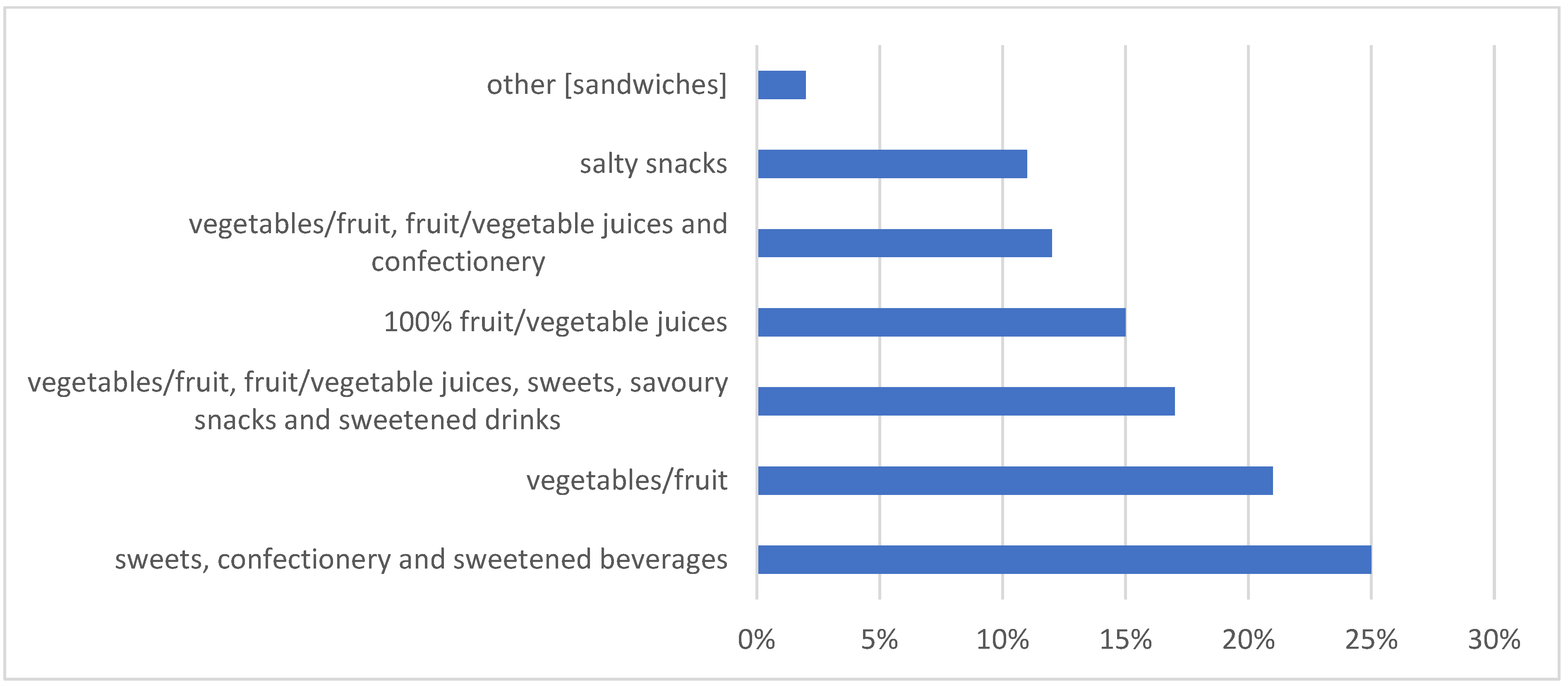
Figure 2.
Factors determining the choice of food among parents.
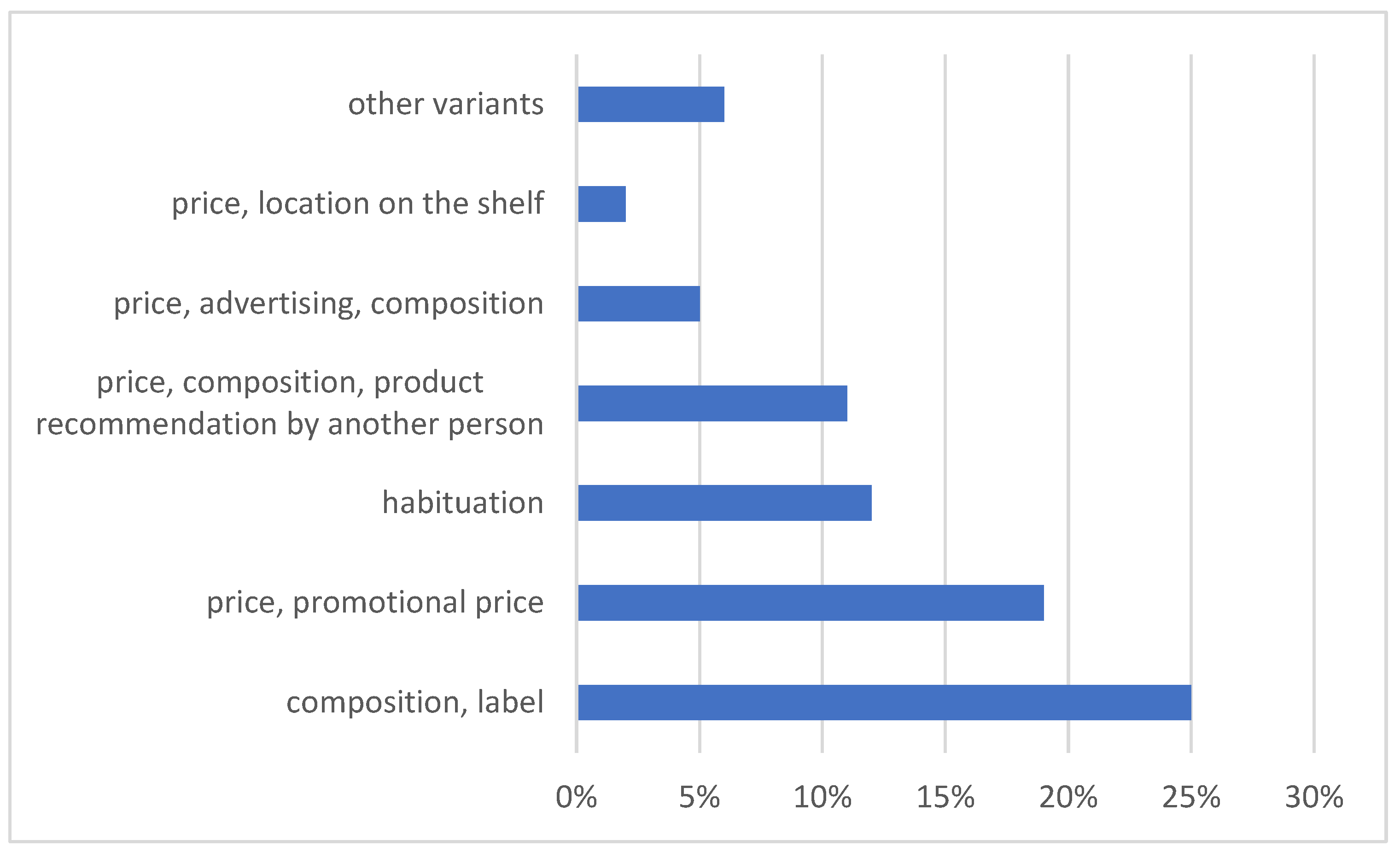
Figure 3.
Frequency of reading food labels by parents.
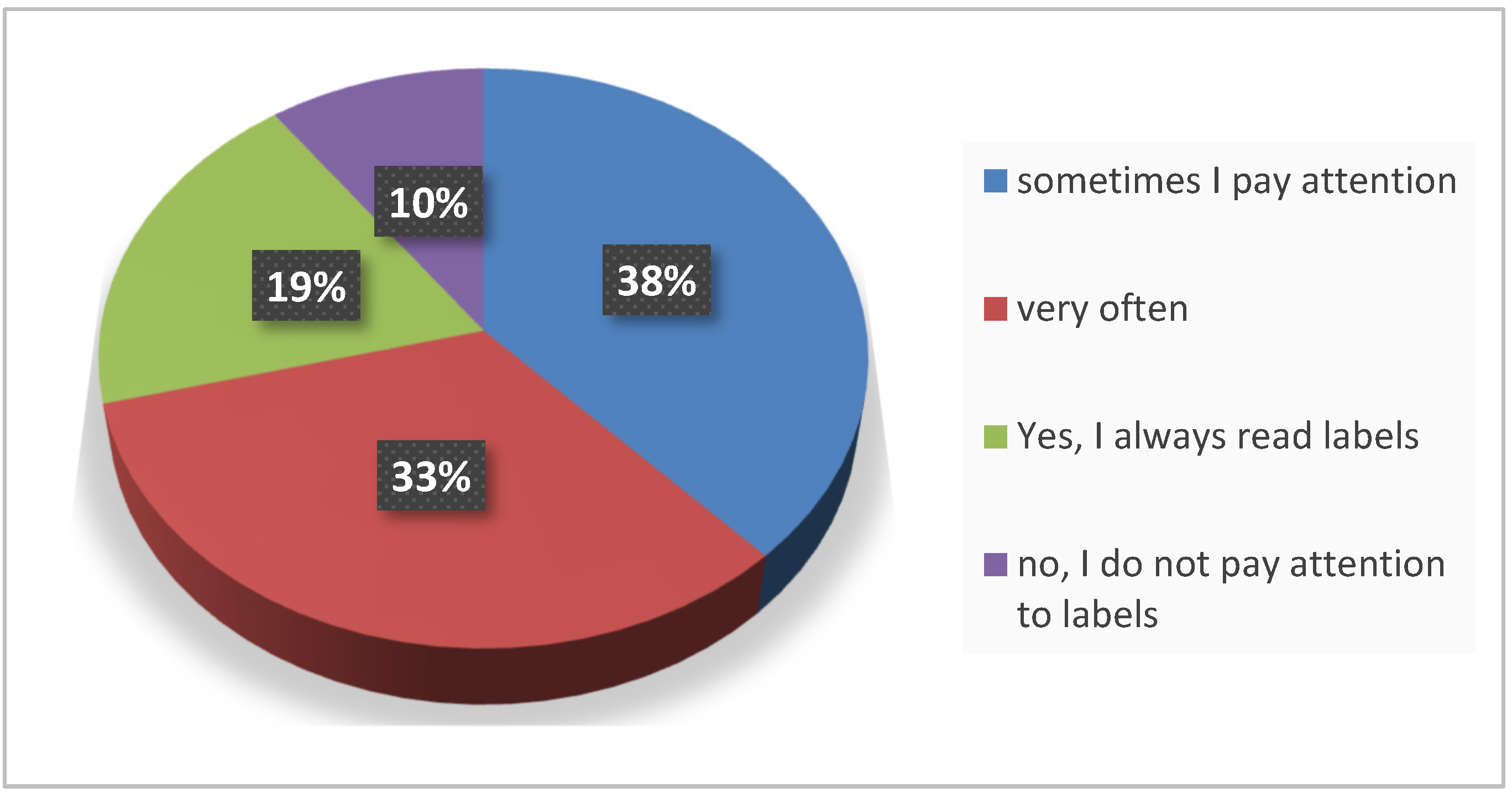
Figure 4.
Parents' level of knowledge about food additives.
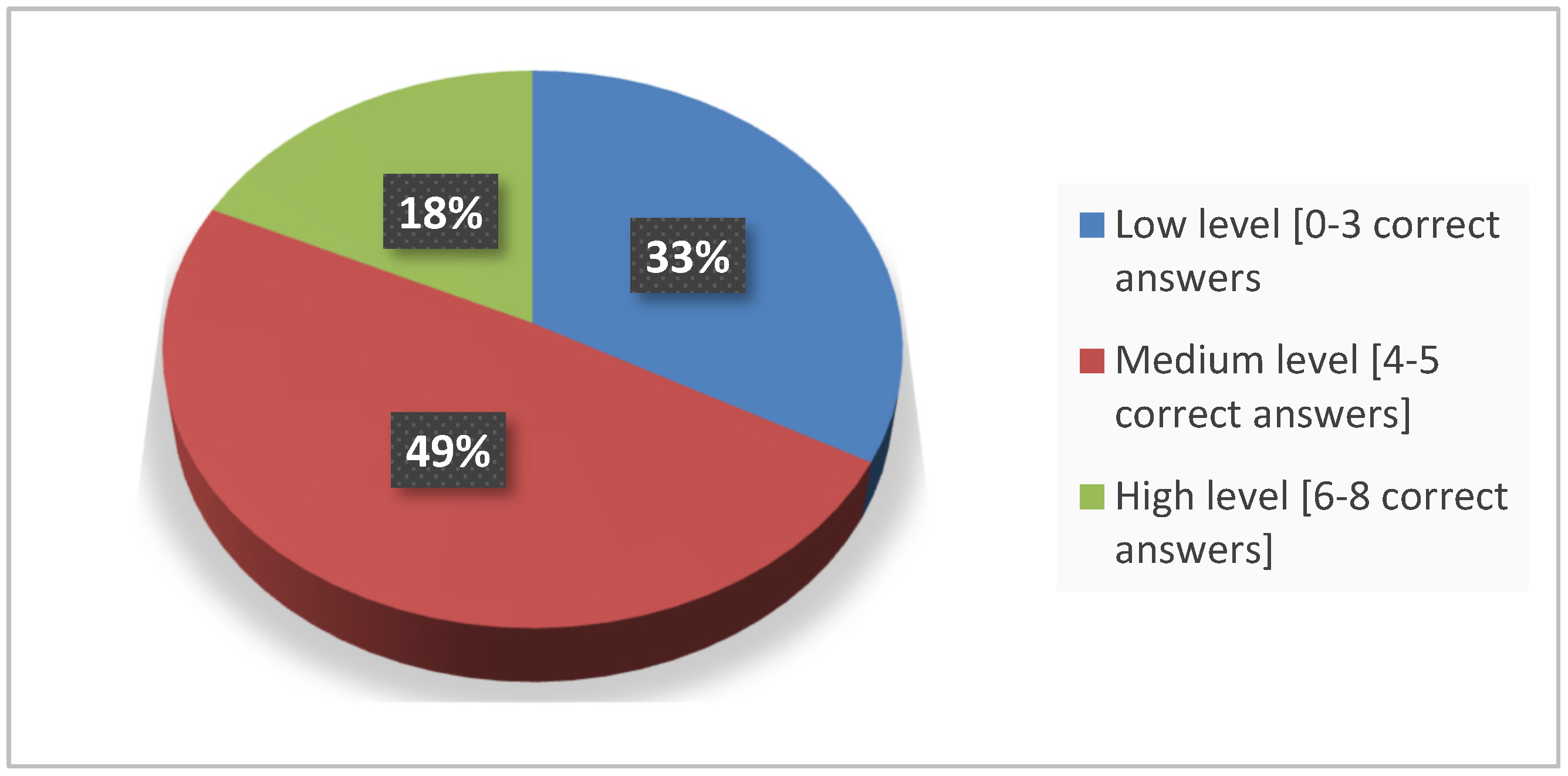

Table 1.
Characteristics of the studied group of parents.
| Key data | n | % |
|---|---|---|
| Gender | ||
| woman | 101 | 78.3 |
| man | 28 | 21.7 |
| Level of education | ||
| basic | 14 | 10.9 |
| professional | 21 | 16.3 |
| average | 29 | 22.4 |
| higher | 65 | 50.4 |
Table 2.
Frequency of consumption of sweets, salty snacks and sweet drinks by children (%).
| Frequency of intake | Sweets (%) | Salty snacks (%) | Sweet drinks (%) | |||
|---|---|---|---|---|---|---|
| n | % | n | % | n | % | |
| several times a day | 12 | 9.3 | 4 | 3.1 | 35 | 27.1 |
| once a day | 43 | 33.3 | 19 | 14.7 | 25 | 19.4 |
| several times a week | 49 | 38.0 | 47 | 36.4 | 30 | 23.3 |
| once a week | 15 | 11.6 | 0 | 0 | 0 | 0 |
| several times a month | 10 | 7.8 | 54 | 41.9 | 30 | 23.3 |
| Not at all | 0 | 0 | 5 | 3.9 | 9 | 6.9 |
Table 3.
Assessment of the relationship between parents’ knowledge of food additives and their education.
Table 3.
Assessment of the relationship between parents’ knowledge of food additives and their education.
| Parents' level of knowledge | Level of education | Total | |||||
|---|---|---|---|---|---|---|---|
| Higher | Average | Basic and professional | |||||
| n | % | n | % | n | % | ||
| High | 16 | 24.6 | 4 | 13.8 | 3 | 8.6 | 23 |
| Average | 36 | 55.4 | 11 | 37.9 | 16 | 45.7 | 63 |
| Weak | 13 | 20.0 | 14 | 48.3 | 16 | 45.7 | 43 |
| Total | 65 | 100.0 | 29 | 100.0 | 35 | 100.0 | 129 |
chi2=11,992; p=0,0174.
Table 4.
Assessment of the relationship between level of education of parents and the frequency of snack consumption by children (vegetables/fruit sweets, sweetened drinks, salty snacks).
Table 4.
Assessment of the relationship between level of education of parents and the frequency of snack consumption by children (vegetables/fruit sweets, sweetened drinks, salty snacks).
| Consumption of snacks (behaviour) | Level of education of parents | Total | |||||
|---|---|---|---|---|---|---|---|
| Higher | Average | Basic and professional | |||||
| n | % | n | % | n | % | ||
| Vegetables/fruit | |||||||
| Beneficial | 18 | 27.7 | 7 | 24.1 | 6 | 17.1 | 31 |
| Negative | 47 | 73.3 | 22 | 75.9 | 29 | 82.7 | 98 |
| Comparison | chi2=1.387; p=0.501 | ||||||
| Sweets | |||||||
| Beneficial | 12 | 18.5 | 6 | 20.7 | 5 | 14.3 | 23 |
| Negative | 53 | 81.5 | 23 | 79.3 | 30 | 85.7 | 106 |
| Comparison | chi2=0.480; p=0.787 | ||||||
| Sweet drinks | |||||||
| Beneficial | 26 | 40.0 | 9 | 31.0 | 5 | 14.3 | 40 |
| Negative | 39 | 60.0 | 20 | 69.0 | 30 | 85.7 | 89 |
| Comparison | chi2=7.032; p=0.0297 | ||||||
| Salty snacks | |||||||
| Beneficial | 29 | 44.6 | 13 | 44.8 | 16 | 45.7 | 58 |
| Negative | 36 | 55.4 | 16 | 55.2 | 19 | 54.3 | 71 |
| Comparison | chi2=0.011; p=0.994 | ||||||
Table 5.
Assessment of the relationship between level of knowledge of parents and the frequency of snack consumption by children (vegetables/fruit, sweets, sweetened drinks, salty snacks).
Table 5.
Assessment of the relationship between level of knowledge of parents and the frequency of snack consumption by children (vegetables/fruit, sweets, sweetened drinks, salty snacks).
| Consumption of snacks (behaviour) | Level of knowledge of parents | Total | |||||
|---|---|---|---|---|---|---|---|
| High | Average | Low | |||||
| n | % | n | % | n | % | ||
| Vegetables/fruit | |||||||
| Beneficial | 8 | 34.8 | 16 | 25.4 | 7 | 16.3 | 31 |
| Negative | 15 | 65.2 | 47 | 74.6 | 36 | 83.7 | 98 |
| Comparison | chi2=2.936; p=0.230 | ||||||
| Sweets | |||||||
| Beneficial | 4 | 17.4 | 11 | 17.5 | 8 | 18.6 | 23 |
| Negative | 19 | 82.6 | 52 | 82.5 | 35 | 81.4 | 106 |
| Comparison | chi2=0.027; p=0.987 | ||||||
| Sweet drinks | |||||||
| Beneficial | 9 | 39.1 | 20 | 31.8 | 11 | 25.6 | 40 |
| Negative | 14 | 60.9 | 43 | 68.2 | 32 | 74.4 | 89 |
| Comparison | chi2=1.317; p=0.518 | ||||||
| Salty snacks | |||||||
| Beneficial | 11 | 47.8 | 32 | 50.8 | 15 | 34.9 | 58 |
| Negative | 12 | 52.2 | 31 | 49.2 | 28 | 65.1 | 71 |
| Comparison | chi2=2.707; p=0.258 | ||||||
Table 6.
Assessment of the relationship between parents’ level of knowledge of food additives and choice of food products, reading of labels.
Table 6.
Assessment of the relationship between parents’ level of knowledge of food additives and choice of food products, reading of labels.
| Pay attention to labels before buying | Level of knowledge | Total | |||||
|---|---|---|---|---|---|---|---|
| High | Average | Low | |||||
| n | % | n | % | n | % | ||
| Always | 7 | 30.5 | 10 | 15.9 | 7 | 16.3 | 24 |
| Very often | 8 | 34.8 | 23 | 36.5 | 12 | 27.9 | 43 |
| Sometimes they pay attention | 7 | 30.4 | 23 | 36.5 | 19 | 44.2 | 49 |
| Does not pay attention | 1 | 4.3 | 7 | 11.1 | 5 | 11.6 | 13 |
| Total | 23 | 100.0 | 63 | 100.0 | 43 | 100.0 | 129 |
chi2=4.428; p=0.619.
Disclaimer/Publisher’s Note: The statements, opinions and data contained in all publications are solely those of the individual author(s) and contributor(s) and not of MDPI and/or the editor(s). MDPI and/or the editor(s) disclaim responsibility for any injury to people or property resulting from any ideas, methods, instructions or products referred to in the content. |
© 2024 by the authors. Licensee MDPI, Basel, Switzerland. This article is an open access article distributed under the terms and conditions of the Creative Commons Attribution (CC BY) license (https://creativecommons.org/licenses/by/4.0/).
Copyright: This open access article is published under a Creative Commons CC BY 4.0 license, which permit the free download, distribution, and reuse, provided that the author and preprint are cited in any reuse.


