

Submitted:
11 June 2024
Posted:
12 June 2024
Read the latest preprint version here
Abstract
The article delves into the landscape of the plant-based food industry, exploring innovative market entry strategies and their interplay with the evolving food market and shifting consumer preferences and lifestyles. Adopting a multidimensional approach, the study reflects diverse perspectives at play.
Through a comparative analysis of strategic promotion and growth strategies employed by both innovative startups and established industry giants in the plant-based meat alternatives sector in Germany, the study aims to capture the challenges faced by the 'newer' wave of plant-based alternatives. This examination is particularly relevant for navigating the complexities of entering a competitive market. Striving to penetrate evolving consumer lifestyles, the study draws insightful comparisons with their "older" counterparts. In addition, through in-depth interviews with selected companies, the study investigates the entry methods of startups venturing into the German market, aiming to identify parallels and contrasts in market strategies with established brands. This provides valuable insights into innovation within the alternative food market.
Furthermore, the study explores the process of brand "platformization" by scrutinizing the websites of the selected companies and analyzing customers' online reviews of their brand experience. This comprehensive analysis unveils distinctive patterns in communication strategies, brand positioning, and consumer engagement, offering insights into plant-based innovation shaping new, caring lifestyles.
Keywords:
Plant-Based Food Industry
; Innovative Market Entry Strategies
; Growth Strategies
; Brand "Platformization"
; Multidimensional Approach
; Caring Lifestyles
; Alternative Diets
1. Introduction
This study aims to explore the diverse ways online platforms shape and transform the interactions between brands and consumers. Platforms play a vital role in business operations by engaging consumers in online activities, and consumers actively contribute to shaping brands by using these platforms (Hein et al., 2019; Rohn et al., 2021). In this unique this looped-like exchange, increasing significance and importance is attributed to platforms themselves, acting as prime agents of development. Involvement and co-creation process carried out by these expanding digital environments enhance perceived value and innovation, deepening the connection between brand and consumers (Martin and Todorov, 2010; Casidy et al., 2022). Various research findings (Powers et al., 2012; Hedin, B et al. 2019) provide evidence of digital platforms’ critical role in shaping food choices, particularly in promoting sustainability and health.
The interest in this study within the specific field of plant-based business stemmed from the recognition that alternative proteins may serve as indicators of innovation in consumption, appealing to both meat-eaters and non-meat eaters. Therefore, the authors focused their research on the platformization strategies of businesses operating in the plant-based industry, particularly in Berlin, reknown as the European vegan capital.
The study analysed the impact of brands’ platformisation strategies on consumer perceptions and sentiments, by examining the extent to which consumers’ online feedback reflects the brand’s digitised discourses. Conversely, attention is drawn to the commitment of companies to respond to and integrate consumer input into their brand management strategies.
To this end, the research selected a number of plant-based companies in Berlin, Germany, following a sampling scheme based on their size, presence in the plant-based market, and customer reviews found online on popular consumer feedback platforms. These companies have been reached out through qualitative surveys submitted to their executive figures, where the nexus between their business and platforms has been focused. Parallelly, data mining has been led on consumer feedback of plant-based products some of the considered brands including some of those reached out through the surveys.
This is done to gain a nuanced understanding of a growing market, one that is by definition more open than others to innovation from both brands and consumers.
The article is structured as follows: After this Introduction, the first section provides an Overview of the plant-based industry within the EU context, Research State of the Art in the field, and the Study objectives. The second section outlines the research Methodology, detailing Data Collection Methods, Criteria for Selection, and Ethical Considerations. The third section presents Results and Discussion, with a focus on Sample Characteristics, Brand “Platformization” Patterns, and Analysis of Online Reviews. Finally, a conclusion summarizes the study, identifying areas for future research, critically analyzing the study’s limitations, and providing final Recommendations.
1.1. Brief Industry Overview
Veganism has grown exponentially in Europe during the last decade (Anthony, 2021), finding its way into the mainstream and ultimately being considered a trend. Different markets have responded positively to the growing demand for vegan ingredients (Kenton, 2024), and the food sector has introduced new vegan products into brands and restaurant’s offers (Veganuary, 2023).
The ITD (International Trade Centre) found that the sustainable good market in Europe has also increased. According to the European Commission (2021) 85% of retailers reported higher sales of sustainable products within the past 5 years, making the EU the second-largest market after the USA for products made with organic standards. In terms of demographics, generation Z and millennials (people from the ages of 21 to 40), are 75% more likely than baby boomers (ages ranging from 57 to 75 years) in shaping their lifestyles to became environment friendly (Gelsky, 2019).
Within the European Market, Germany boats the highest per-capita spending on plant-based food, second only to the Netherlands (Williams, 2023). In 2020, the sector in the country experienced a 53% growth, nearly reaching a 1 billion euros turnover (GTAI—Invest in Germany, 2023). The best-selling products are vegetarian meat, and milk alternatives (Statista, 2024).
Berlin, in particular, is witnessing a relevant rise in vegan eateries. According to reports from Happy Cow1, Germany has over 556 vegan restaurants and food establishments, the highest number in Europe, Berlin leading with 122, surpassing all other European capitals (Ricardo, 2023; Kavi, 2023). Recognized on the platform as Europe’s vegan capital, Berlin plays a vital role in shaping Germany’s plant-based sector.
In 2022, approximately 8 million individuals adhered to a vegetarian diet, while 1.58 million identified as vegan (Rehder, 2023). The trend of reducing meat consumption is also a relevant aspect of consumption, with 55% of Germans identifying as “part-time vegetarians” and “flexitarians” (Rehder, 2023). Furthermore, in 2016 it was estimated than more than 80,000 vegans were living in Berlin (Osborne, 2016). The significance of Berlin within the EU and German plant-based business context justifies the focus of this study on the city and its businesses.
1.1.1. Big versus Small: Size Dynamics in the EU Plant-Based Industry
The European Union offers many programs and facilitation initiatives in support of plant-based companies. These initiatives focus primarily on promoting innovation and growth in the alternative protein sector. Some of these programs include the EIT Food established under Horizon Europe, and the European Innovation Council (EIC) Accelerator, play an important role in supporting the creation and expansion of startups and established companies working in the plant-based sector.
In 2024, the European Innovation Council (EIC) allocated €50 million in support of startups and small business venturing in alternative protein production. This investment proved the EU’s recent commitment to improving innovative approaches within the food industry (Isbrecht, 2023).
The EIT Food ‘Fast Track to Market funding’ offers opportunities to a number of companies, particularly start-ups and SMEs, looking to accelerate their time to market. This is especially relevant for companies producing plant-based alternatives, in accordance with the EIT Food’s mission2. Accordingly, both startups and established companies operating in the sector are granted an accelerated selection process with the EIC panel.
These facilitations highlight the European Commission’s efforts in the creation of a diverse and dynamic plant-based industry, benefiting companies regardless of their scale3.
1.1.2. Research State of the Art
Online platforms act as invisible environments where brands and consumers meet and connect (Gielens and Steenkamp, 2019), granting both actors access to numerous services, allowing brands to gather feedback and facilitate engagement with the consumers. The concept of “platformization” is used in this context to describe the evolving relevance that these non-material spaces hold on the way brands and consumers enter, navigate an engage with the services provided. This signify an important shift in the way interactions are carried out online (Wichmann et al., 2022, Cochoy et al., 2019).
The literature emphasizes the importance of such platforms, bettering service personalization, customer satisfaction, and brand loyalty, also facilitated by the nuanced use of user data and integration within a diverse ecosystem (Juteau, 2023; Chan et al., 2019). This helps business create tailor-made services that are able to meet the ever-changing consumer preferences (Nambisan et al., 2018; Wichmann et al., 2022).
The concept of platformization extends on food culture, where digital platforms have revolutionized the interaction with food. Rosseau (2012) reasons that digital spaces facilitate active engagement, inclusivity, and diversification of tastes (see Figure 1). Social media in particular enabled millions of people to actively participate in food culture by sharing and interacting with recipes, photos, and experiences, thereby shaping food trends. This system allows for the creation of a global community of food lovers, connecting on the premises of passion and emotions inspired by food, and dismantling geographical and socio-economical barriers. The exposure to different cuisines, cultures, and food content found online, encourages innovation in culinary habits (Rousseau, 2012).
Research confirms that these platforms have deeply changed how people interact with food, mutating their preferences, encouraging culinary experimentation and promoting a diverse food landscape (Rutsaert et al., 2013; Satwani, Singh, & Pandya, 2020; Onorati & Giardullo, 2020; Valiño & Rodríguez, 2020).
Consumer choices in this sector are especially influenced by sustainability, quality, and health attributes (Fehér et al., 2020; Guiné et al., 2020; Pashchenko et al., 2022). These trends push brands to align their marketing strategies (Martinho, 2020; Nunes et al., 2021), and pose a great opportunity for plant-based business.
Understanding consumer preferences becomes fundamental in this industry (Nasution et al., 2022), where factors such as taste and texture represents significant barriers to mainstream consumption (Alcorta et al., 2021; Giacalone et al., 2022; Moreira et al., 2021).
1.1.3. Study Objectives
This article aims to explore the relationship between the market strategies of plant-food brands and the ever-changing preferences and lifestyle of consumers. In order to tackle convergences and divergences within such relationships, a part of this study conducts the analysis of online reviews found on dedicated platforms, which we have gathered from actual brands, offering a unique lens through which we can explore this growing sector.
Our research methodology involves interviewing representatives from over 12 different plant-based business operating in Berlin and adjacent areas, and analyzing more than 800 online reviews based on a portion of their products and services. The interviews reveal entry market strategies and marketing methods employed by the businesses, including a comparative analysis of startups and established entities in Germany’s prominent plant-based sector. The qualitative and quantitative analysis performed uncovers patterns in communication strategies, brand perceptions and customer engagement influences by platformization. This approach also acts as a thread trying to connect the companies strategies and consumer opinions, fundamental for business and marketers looking to improve their competitive edge in the industry.
The research scope also highlights how online spaces, along with the consumer feedback they generate, reshape the way businesses enter the market. This dynamic process resembles a loop of shaping and reshaping business strategies that respond to consumer choices.
We will try to answer to the following questions:
Is it possible to recognize observable patterns in brand communication strategies, consumer perception, and customer engagement in the plant-based meat sector that reflect a loop dynamics enhanced by platformization?
Can this dynamic interaction, promoted by platforms, become a useful intermediary between consumer behavior and decision-making processes, particularly regarding plant-based meat products, within a dynamic context like Germany?
2. Methodology
2.1. Data Collection Methods
This study utilized a mixed-methods approach for data collection, integrating qualitative and quantitative analysis as described by Johnson et al. (2007) and Venkatesh (2013). It started with collecting insights from plant-based businesses through a questionnaire, which helped understanding market entry tactics and platformization strategies used by startups and industry leaders. Additionally, the research directed a thorough reviews of over 800 online customer feedback to understand their main interests and concerns.
These reviews underwent a detailed analysis, where they were assigned semantic values to identify underlying sentiments and perceptions. This approach, modeled after the Grounded Theory (Glaser & Strauss, 1967), exercised a bottom-up, post-hoc coding and classification method to understand trends in product experience and brand impression. The QDA Miner Provalis software was utilized in this study to create categorical trees and perform a qualitative codification of the texts found on the reviews. The software found reoccurring themes within the extracted corpus, which were manually categorized and defined within a coding system for particular subjects. The main sentiments, terms, and subjects in the text were found by analyzing these codes.
The mixed use of qualitative insights and quantitative data allowed the study to gain a better understanding of the complexities and looped connections between market strategies, consumer feedback, and brand position.
2.1.1. Criteria for Selection
We selected German-based companies focusing solely on producing plant-based food and beverages, with products suitable as standalone meals. Our selection included meat alternatives, vegan beverages (including barista-specific options), seafood alternatives, and cheese substitutes, covering various segments of Germany’s plant-based industry. Out of the 12 chosen companies, four are international giants based in Germany, with two other major players, while the rest are startups or very small businesses. Our research delved into market strategies and consumer analysis, spotlighting innovative companies like one utilizing 3D printing for meat replication, another revolutionizing seafood alternatives with seaweed and beans, and a company offering poultry-like products as a tasty alternative to conventional meat.
2.1.2. Ethical Considerations
We maintained strict ethical standards throughout our data collection process. We did not create any searchable consumer profile databases, nor extracted personal information such as names, gender, IP addresses. We did not and don’t intend to profit in any way by the information obtained. Our dedication to ethical research ensured confidentiality and protected the identities of all actor involved in this study. Additionally, our research received approval from the appointed ethical committee at the University of Gastronomic Sciences of Pollenzo.
3. Results and Discussion
3.1. Sample Characteristics
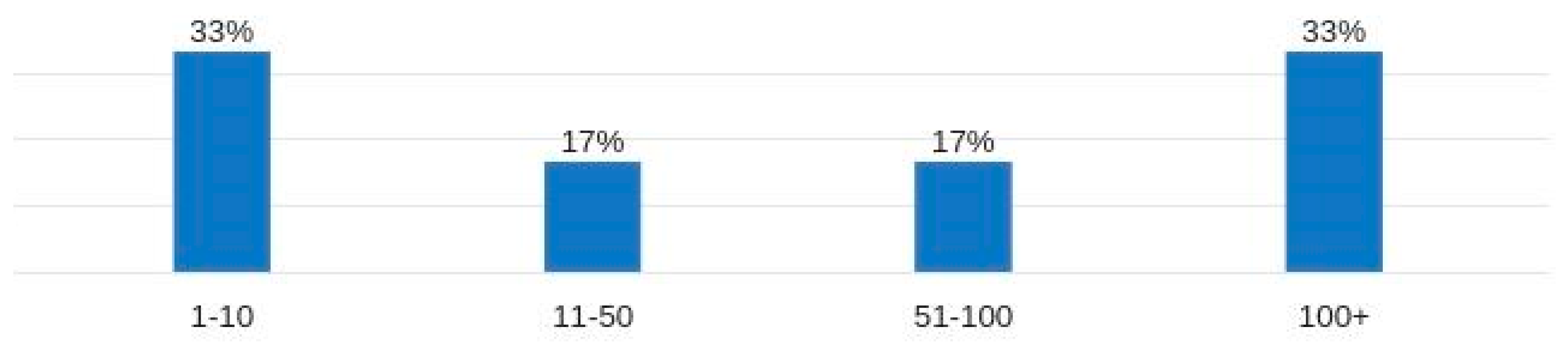
The sample is evenly split, with half of the companies having fewer than 50 people and the other half having 50 or more, according to the analysis of the company interviews. Specifically, 33% of the businesses have one to ten workers, 17% have eleven to fifty, 17% have fifty to one hundred, and 33% have one hundred or more.
Figure 2.
Distribution of Employee Count in Sample.
In examining the composition of these companies, several aspects were taken into consideration, including the ways they were founded, duration of operation, and their structural organization.
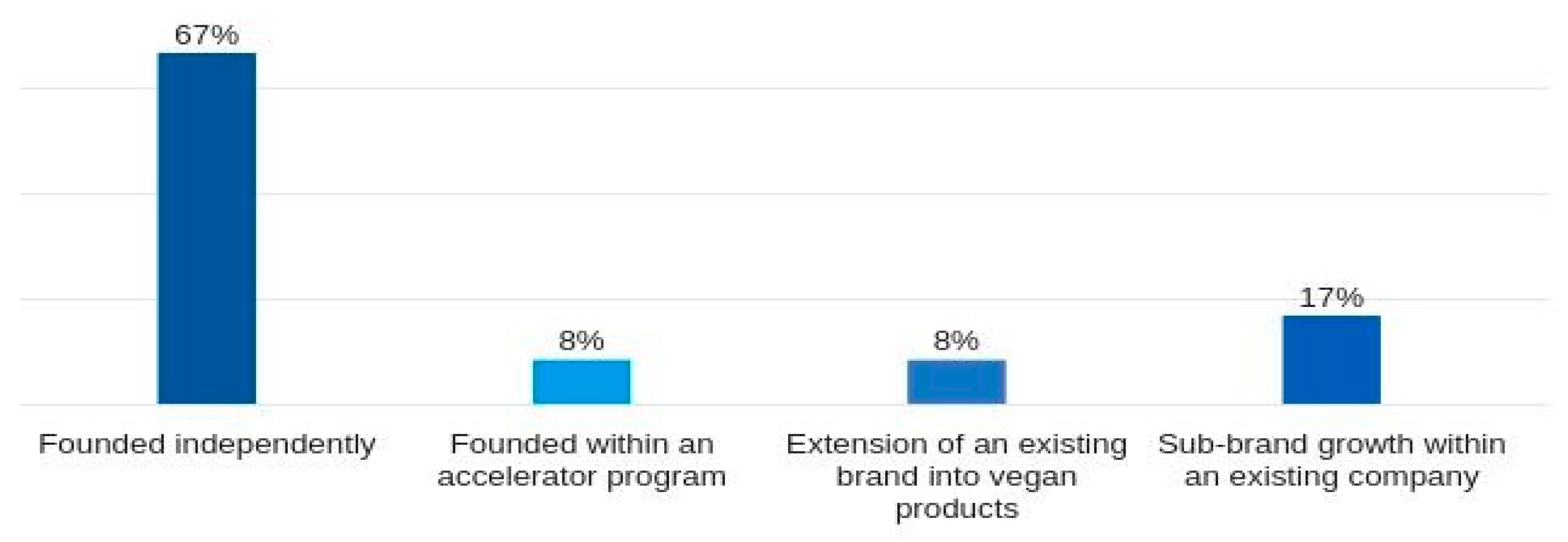
67% were founded independently, 17% formed from the expansion of a sub-brand of an existing company, and 8% each originated from accelerator programs or as brand extensions into vegan products.
Figure 3.
company origin.
When correlating company size with founding methods, it was observed that all startups employing between 1 and 10 individuals were founded independently. However, as companies expanded, the variety in founding methods increased, with only 50% of companies employing more than ten individuals having been founded independently.
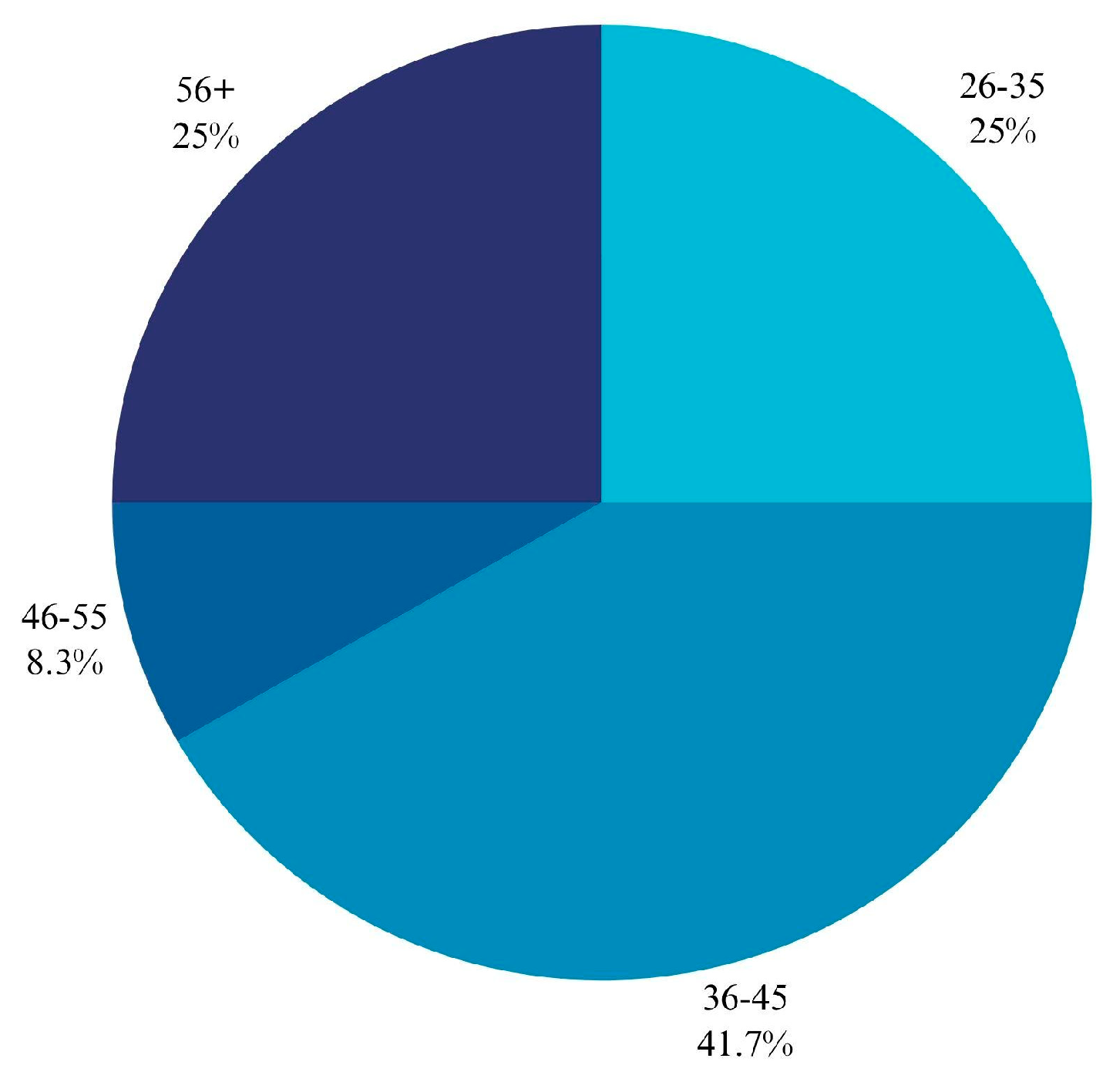
Regarding the founders’ age, 41.7% fall within the range of 36 to 50 years old, while 25% are aged between 26 and 36. Additionally, 8.3% fall within the 46 to 55 age bracket, leaving the remaining quarter above 56 years old. There were no founders between the ages of 18-25.
Figure 4.
founder age range.
As for age distribution by company size, 75% of startups with 1-10 employees have founders aged between 26 and 45, while half of the companies with a larger number of employees have founders aged over 56. All founders of the smaller companies are younger than 45.
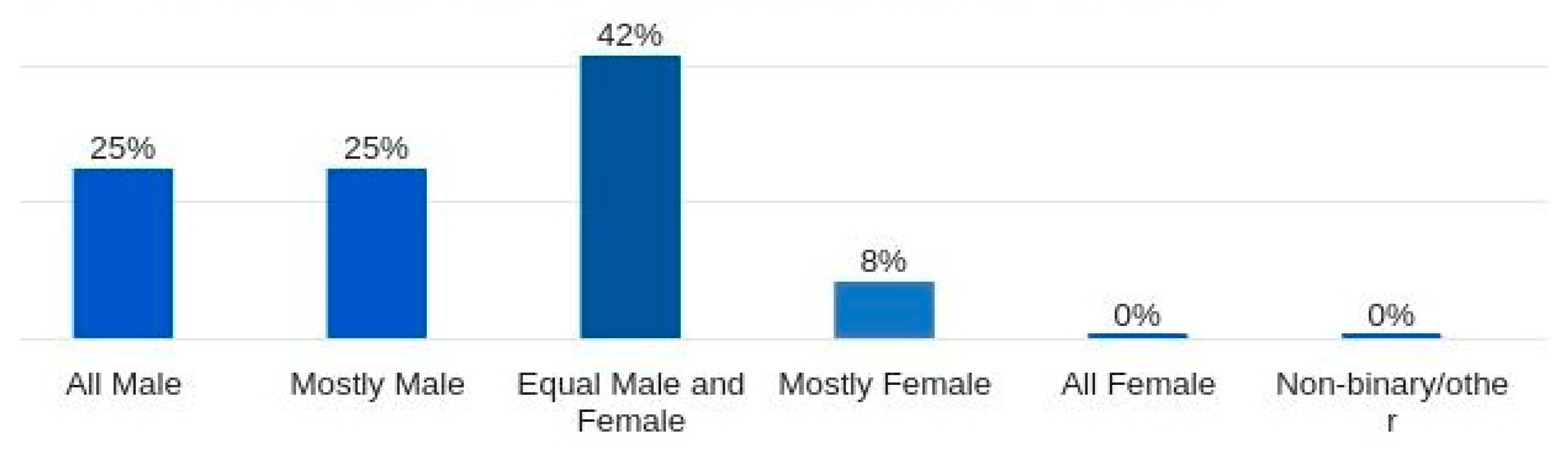
As per for the gender composition, 25% of founders are only male, another 25% are mostly male, 42% have an equal distribution of male and female founders, and 8% are mostly female. There were no exclusively female or non-binary founding teams.
Figure 5.
founders by gender identity.
This finding aligns somewhat with Germany’s gender equality index, especially in the power dimension. This dimension refers in particular to the “Share of members of boards in largest quoted companies, supervisory board or board of directors (%)” (European Institute for Gender Equality, 2024). Specifically, men score an average of 63%, while women score 37%, indicating a slight deviation from the European average.
Interestingly, among startups with fewer than 10 employees, 25% have predominantly female founders, exponentially higher than any other category.
The following section will tackle the market entry strategies from the platformization perspective, focusing on the way the businesses analyzed communicated and connected with the public, and the way they incorporate consumer feedback into their operations.
3.1.1. Brand “Platformization” Patterns
In this section, we will analyze the segments of the questionnaire related to the platformization spectrum. Specifically, we will examine the online business tactics utilized by our sample, as well as how the brands attempt to connect with their consumers.
Within our company sample, 50% of the businesses utilize social media platforms to enhance costumer engagement, 25% utilize CRM, 8% utilize E-commerce platforms, while 17% favors a mixed approach, employing digital newspaper and answering to online reviews.
Figure 6.
main digital platforms utilized to enhance customer engagement.
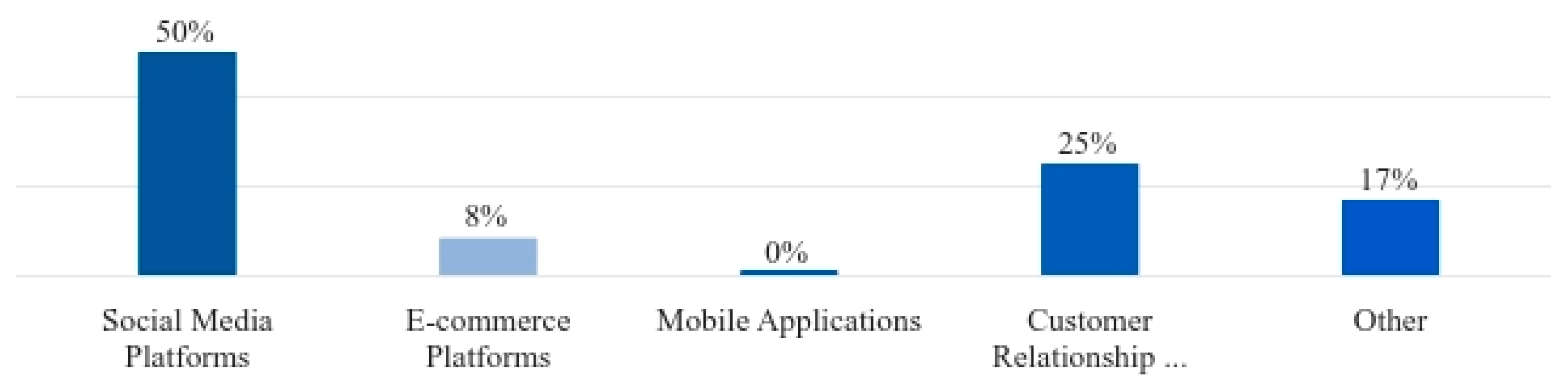
Literature shows that about 75% of businesses with less than 50 employees use social media as a fundamental means to engage and sell (Wong, 2023). Our small sample confirms this trend, showing exactly 75% of the reached startups using platforms precisely for this reason.
The rest of the stratification between small and big companies is rather balanced when considering the approach to customer engagement. 50% of the businesses with more than 100 employees in our sample have registered a mixed approach to customer engagement, with a special focus on digital newspapers.
Furthermore, CRM systems are widely accredited to enhance customer satisfaction and operational efficiency, proving the importance of data management and automation in the platoformization process (Hashemi-Pour and Chai, 2023; M. Volik, M. Kovaleva, E. Khachaturova, 2021). These systems help businesses understand consumers behaviors, ultimately facilitating personalized marketing and improved customer service – key elements in building a well-rounded platformized brand.
Despite the wide use of social media and CRM systems, our findings revealed a less prominent use of e-commerce and newer technologies like AI among small business, pointing to potential innovation areas within this framework. This tells us that while business select digital tools aligning with their needs and customer engagement preferences, there is room for further and rounder integration of digital platforms to fully realize the benefits of platformization.
The survey also indicates that business update their social media strategies quite frequently, with 42% of businesses doing so quarterly, highlighting the intrinsically dynamic nature of social media. This contrasts to the annual adjustment of CRM systems adoption, suggesting that the allocation of resources in social media communication leads to more dynamic and engaging strategies.
Figure 7.
adaption frequency of the business-owned digital platforms.
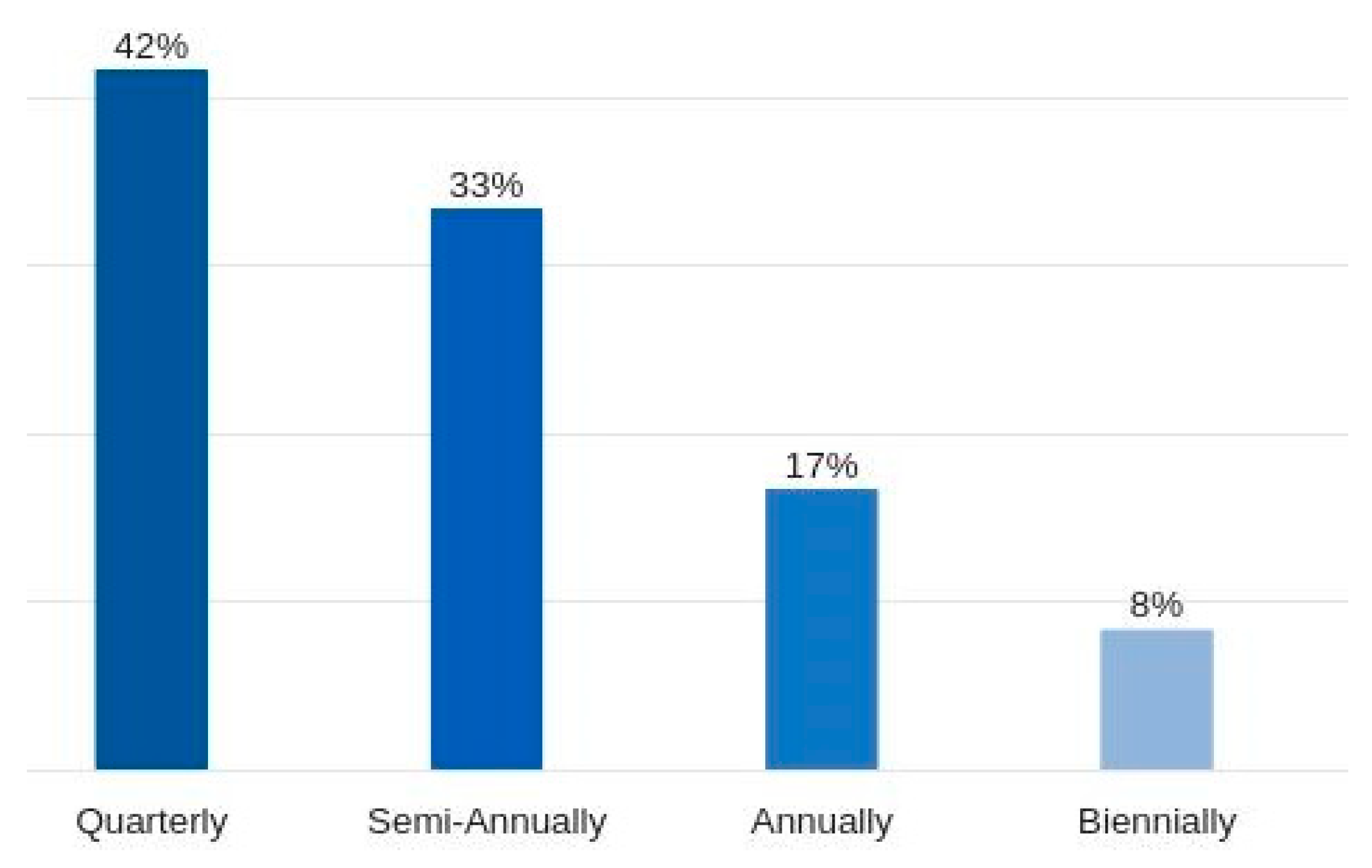
Notably, 75% of our surveyed start-ups with less than 10 employees tend to update their platform on a quarterly basis, proving a higher use of social media in smaller and younger companies. In fact, social media plans and strategies have to be constantly changed and retaught (Li et al., 2020) online, where the trends change at the fastest pace ever (The Aggie, 2021).
Expanding on the dynamic nature of online marketing strategies, we explored how businesses increased engagement. Overall, our sample drove up engagement with their company through open website access (50%), closely followed by active participation on active blogs or feedback spaces (33%), and finally, through mobile application usage (17%).
25% of small businesses found their consumers to primarily engage with them through active participation in different digital environments, such as blogs or feedback spaces. These tools represent the primary method of customer engagement only for 2% of big companies. When larger businesses invest in digital engagement, this is mainly addressed to apps developed by their brand, and this happens for more than 50% of big brands in our sample. The limited or different investment in platformization by big brands can be attributed to various reasons. Bigger businesses tend to have larger budgets for online advertising, which could place their site at the top of Google search results (see Open website access in Figure 8), making it easier for consumers to find and interact with them. Secondly, the development of an app might be an expense and requires an amount of effort that only big business are able to justify. For a small start-up all of this would be hard to implement, as well as keeping these tools updated and marketed correctly. This also explains why, especially for small businesses, blogs and feedback platforms represent essential tools, not only to gather feedback on their products but also to observe how their consumers interact with each other and their main interests. In synthesis, small businesses appeared to prioritize interactive content creation, investment in events and tradeshows, and collaboration with professional chefs. In contrast, larger organizations seemed to focus on community development programs, often requiring substantial budget allocations and dedicated teams.
Our research also provides detailed insights into the wide range of methods employed for feedback gathering, with 33% utilizing online channels, 17% relying on social media interactions, and another 17% utilizing focus groups. Interestingly, 17% of businesses employed a combination of methods, including direct human interactions.
Figure 9.
modalities employed by businesses for feedback acquisition.
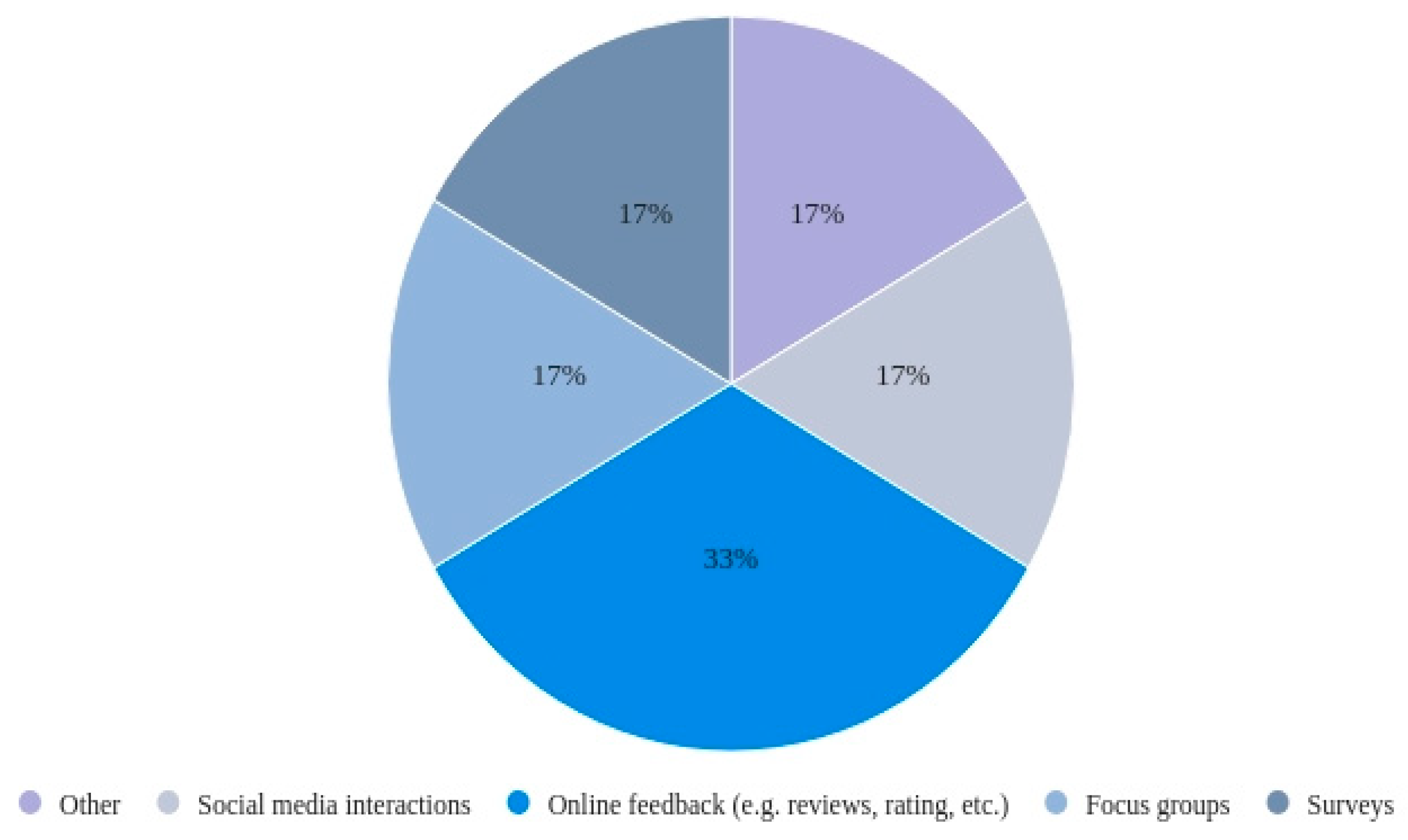
This diversity in feedback collection methods underlines the importance of a multi-faceted approach to understanding customer preferences and improving product offerings. It also highlights the role of digital tools and platforms in modern feedback mechanisms, aligning with the broader trend of platformization and digital engagement strategies for business growth and customer relationship management. Nonetheless, the most used technique is the online feedback. Examples like the restaurant booking platform TheFork4 exemplify how digital platforms can integrate various services (e.g., online booking, review management, and payment processing) into one environment to create a unified brand ecosystem. This case illustrates how platformization enables businesses to gather critical feedback through digital channels, enhancing customer satisfaction and refining product offerings, akin to the diverse methods small businesses use for feedback collection as mentioned in our query (Juteau, 2023). In the discourse surrounding the dichotomy of ‘big vs small’ in feedback gathering modalities, our data reveals a balanced distribution of modalities across various businesses.
Ultimately, platformization requires a strategic amplified approach to the digital environment, as highlighted by Jamali et al. (2016), Ukpere et al. (2014), Essa & Yahia (2019), and Sheikh (2018). The successful platformization of a brand not only demands an online presence but requires strategic planning and integration of various digital tools to create a synergistic ecosystem that supports business growth and sustainability. This approach underscores the transformative potential of this process in aligning brand strategy with digital innovation, ensuring that businesses can effectively engage with their customers and remain competitive in the digital age.
Primarily, our research indicates that online reviews emerge as a critical instrument for feedback collection, particularly beneficial for smaller brands that typically operate with limited marketing budgets. These reviews offer a direct avenue for customer engagement, leveraging the platforms consumers utilize to evaluate business offerings. With this foundation, our objective is to conduct a thorough analysis of online reviews. By identifying and analyzing prevalent themes within consumer feedback, we aim to extract relevant implications and insights. This will allow us to make informed recommendations tailored to our sample’s approach towards engaging with their consumer base.
3.1.2. Focus on Online Review
In this section, we will examine online reviews of two specific businesses, denoted as “A” and “B,” carefully chosen based on several criteria. Given the prevalence of plant-based milks and meat alternatives as the most popular vegan products in Germany (Statista, 2024), we have selected one company specializing in plant-based milk products and another offering a diverse range of meat alternatives. These businesses were chosen due to their substantial volume of available reviews and notable similarities, which will be further discussed later on.
Initially, we will conduct an analysis of their respective websites to identify primary themes featured on their web pages. Subsequently, we will provide an overview of the more than 800 reviews that were analyzed from these two businesses. Finally, we will employ a topic-based system discussed above to categorize and assess the significance of the main discussion points derived from these reviews.
The purpose of the following content is not to compare the two businesses and their reviews, but rather to justify our decision for selecting them for unified analysis based on their similarities.
Initially, we have identified the primary themes present on the websites of Business A and Business B by segmenting their content and organizing it into clusters that highlight the most prevalent topics. Each business was associated with three main themes.
Both business A and B prioritize sustainability, but with nuanced differences. A focuses on “healthy and sustainable food,” highlighting personal health benefits, while B emphasizes “organic and sustainable food,” indicating both health and environmental consciousness. This distinction reflects varied consumer perceptions; vegan consumers see these aspects as inseparable, unlike omnivores who view them as distinct (Kilian and Hamm, 2021). Additionally, A emphasizes ‘Plant-based nutrition,’ focusing on the reasons behind consuming plant-based foods for their intrinsic benefits, whereas B highlights ‘Plant-based diet,’ concentrating on the specific choices and composition of meals that are plant-based (Zohoori, 2019), and that evoke the idea of a lifestyle. Lastly, A champions “sustainable practices,” showing a deep commitment to eco-friendliness, whereas B values “Convenient delivery,” emphasizing customer convenience, highlighting their distinct priorities.

Table 1.
Main Topics of Website Content for Business A and Business B.
| Topic | Business A | Business B |
| 1 | Healthy and sustainable food | Organic and sustainable food |
| 2 | Plant-based nutrition | Plant-based diet |
| 3 | Sustainable practices | Convenient delivery |
A glance at the online review statistics for both businesses reveals the following findings.
A’s Overview:
- ❖
- Average Rating: 4.6 Stars
- ❖
- Total Reviews: 1894
- ❖
-
Rating Distribution:
- ➢
- 5 Stars: 78%
- ➢
- 4 Stars: 15%
- ➢
- 3 Stars: 4%
- ➢
- 2 Stars: 1%
- ➢
- 1 Star: 2%
B’s Overview:
- ❖
- Average Rating: 4.5 Stars
- ❖
- Total Reviews: 2879
- ❖
-
Rating Distribution:
- ➢
- 5 Stars: 75%
- ➢
- 4 Stars: 12%
- ➢
- 3 Stars: 7%
- ➢
- 2 Stars: 3%
- ➢
- 1 Star: 3%
Business A has a slightly higher customer satisfaction than Business B, with 78% vs. 75% in 5-star reviews, despite Business B’s wider range of ratings. Adjusting for the same number of reviews, Business A still leads in 5-star ratings. This suggests that while review quantity indicates popularity, rating distribution better reflects customer satisfaction, with Business A potentially seen more favorably due to its higher concentration of top ratings. This ultimate similarity in their outcomes enabled the analysis of the two businesses as a single corpus.
After completing the initial phases, we proceeded to extract the actual reviews.
Our analysis encompassed a total of 27,709 words across 832 reviews. Among the most frequently occurring words, ‘Good’ emerged as the most prevalent, appearing in 29.6% of the reviews, followed by ‘taste’ (25.3%), ‘great’ (24%), and ‘product’ (23.6%). The predominant words are depicted in Figure 10.
The subsequent step involved examining the associations among the most frequently used words. This was a crucial step in setting up the basis for groping words together with similar meaning later on. To achieve this, we employed the Provalis Wordstat Software, with Figure 11 illustrating link analysis where lines show the strongest connections between the words.
For each of the main words displayed above, we found other similar words within the review corpus. For example, the main word ‘Good’ was very similar to adjectives like ‘Great’ or ‘Bad,’ used to describe food or experiences. Thus, we manually included these similarities and grouped them with the most frequently used words, organizing them within a coding system.
The classification scheme was divided into two main categories: “Food” and “Service,” depending on the focus of each review. The “Food” category was further delineated into four sub-categories. The first sub-category, “Food Use,” encompassed parts of reviews describing or suggesting methods for cooking, consuming, or storing food. For instance, a review stating, “To make an oat drink from this powder, I needed three times the specified amount...,” exemplifies this “Food-use” sub-category. Notably, within a single review, multiple codes could intersect, as observed in the review: “300 grams of powder (vanilla) - yields just 2.5 liters of vanilla - tastes too bland and very watery to me - good in a pinch but otherwise I’ll stick to my soy milk.” This review is informative, providing both practical information and personal taste preferences, thereby warranting coding under both the “Food Use” and “Food Taste” sub-categories.
The “Food Taste” sub-category encapsulated reviews expressing personal opinions on the taste of the product. The third sub-category, “Food Quality,” specifically included references to the product’s actual quality, beyond mere taste descriptions, e.g., “...the product is sustainable, practical and super tasty. The berry shake is also delicious and both products are really easy to mix.” Lastly, the “Food Packaging” sub-category pertained to comments on the packaging, such as “...has arrived super packaged. I think the products themselves are really innovative, high quality and simply great.”
In terms of service-related feedback, codes were divided into “Service Communication,” referring to the business’s responses to customers. The “Service Speed” code addressed delivery times, such as in the feedback: “Delivery to Switzerland took a long 2 weeks.” Subsequently, this analysis will quantify the prevalence of these codes within the entirety of the review corpus, providing insights into their significance across the collected reviews.
Table 2.
Percentage Distribution of Codes within the Review Corpus.
| Code | % Cases |
| Food Use | 62,9% |
| Food Taste | 41,3% |
| Food Quality | 34% |
| Food Packaging | 13,8% |
| Service Speed | 34,9% |
Finally, we aimed to explore the correlations among these codes. As previously discussed, these codes may intricately interact with each other, encouraging an investigation into their co-occurrences. Co-occurrence in this context means that two codes are mentioned together within the same or adjacent sentences in a review. This kind of analysis is useful for understanding the relationship between different aspects of customer feedback. To achieve this, we utilized Jaccard’s coefficient5 of occurrences. The “Response” code will be analyzed separately since it was not included in the primary review corpus.
As depicted in Figure 12, the primary findings are as follows.
Food Use and Food Taste:
- The strong link between Food Use and Food Taste suggests that discussions about how to use a product often coincide with comments on its taste. This relationship indicates that, within the context of online reviews, the practical use of the plant-based food product is intrinsically tied to its sensory evaluation. Consumers not only want to know how to use the product but also what sensory experience to expect when following these suggestions.
Food Use and Food Quality:
- Food Use and Food Quality are also closely linked, potentially because when consumers discuss the use of a plant-based product, they are also considering the inherent quality of the product in that usage. High-quality ingredients often yield a better culinary experience, so users discussing one are likely to mention the other.
Food Quality, Food Use, Food Taste:
- The fact that Food Quality and Food Use have a stronger relationship to each other than to Food Taste may be indicative of a trend where the perceived quality of the food is not just about taste but about the entire experience of using the product, including preparation and consumption.
Service Speed and Food Packaging:
- Service speed and food packaging being outliers suggests they aren’t commonly discussed alongside other factors. This denotates a separation from the food’s quality itself. Speed of service likely relates to the purchasing experience, while packaging is often about logistics and the environment. These outliers hint at how consumers compartmentalize their considerations. While product quality dominates, logistical and service aspects form a separate evaluation.
This is particularly relevant for plant-based food companies operating in innovative sectors, where environmental preservation stands as one of the core values embraced by vegans and consumers adopting a mindful lifestyle. This highlights the need to not only innovate products but also enhance the purchasing experience and adopt sustainable packaging. This dual focus could set them apart in a competitive market, especially as consumers increasingly prioritize caring and sustainable lifestyles.
- Response: In our analysis, we found that 89.4% of the time, businesses engaged with customer reviews, and notably, over 9% of these responses were directed towards negative feedback. This pattern predominantly comprised acknowledgments and expressions of gratitude towards consumers, thereby fostering a sense of connection and demonstrating sincere appreciation for their input. Such interactions significantly enhance the likelihood of repeat patronage. According to a survey involving more than 1,000 participants, 89% expressed a high or moderate inclination to support businesses that consistently address online reviews. Conversely, 57% indicated a low or nonexistent propensity to frequent establishments that neglect to respond to customer feedback (Paget, 2024). This behavior underscores the commitment of our sample businesses to maintaining a strong consumer relationship, signifying an exceptional level of consumer care. This trend is particularly pronounced within plant-based business sectors, suggesting these enterprises are more attuned to customer concerns compared to traditional brands. This might stem from the core values of care and universalism that are prevalent among vegans and those adhering to vegan diets (Nunes et al., 2021). Given this context, plant-based businesses may benefit from aligning their consumer engagement strategies with these fundamental values, thereby deepening their connection with customers.
Overall, the closed correlation between Product Use, Taste, and Quality highlights the holistic approach consumers have towards plant-based food products (Fiorentini et al., 2020). These insights align with our study preference, suggesting that the modern consumer values an encompassing sensory experience (Wæhrens et al., 2023). Consumer feedback is not solely related to the product taste, but rather to the quality and applicability in their daily lives that matter (Hansen, 2005; María et al., 2015; Petrescu et al., 2019). As consumer expectations grow beyond taste and hedonistic values, companies should also empathize with their consumers and market the quality and versatility of their products. This approach could also resonate well with the shifting consumer preferences towards healthier and more sustainable lifestyles.
Our survey also addressed the eco-commitment and sustainability of the businesses under three distinct domains:
- Selection of Organic Ingredients
- Selection of Local and Sustainable Ingredients
- Use of Eco-Friendly Packaging
Participants rated their practices on a scale ranging from 1, indicating “no commitment,” to 5, denoting “high commitment.”
Selection of Organic Ingredients
The data revealed a spectrum of commitment levels towards organic ingredient sourcing. Notably, 58.3% of businesses exhibited moderate dedication, with the remaining participants dispersed between minimal and full commitment. This distribution suggests diverse approaches and varying prioritization levels of organic practices within the business community.
Selection of Local Ingredients
Our findings indicate a significant inclination towards embracing local and sustainable ingredients, with the majority of businesses (41.7% at level 4 commitment) demonstrating a strong preference for these practices. This trend reflects an increasing awareness of the environmental and social benefits of local sourcing, which aligns with consumer preferences for sustainability and supports regional economies.
Use of Eco-Friendly Packaging
The trends in eco-friendly packaging mirror those observed in the selection of organic ingredients. The convergence of these trends could be attributed to the shared values that underpin both practices. The pursuit of eco-friendly packaging often goes hand-in-hand with organic sourcing as businesses strive to present a coherent sustainability narrative. This alignment may also be driven by market forces, with consumer demand for sustainability extending beyond the product itself to its packaging. The literature supports this, suggesting that consumers increasingly consider the environmental impact of packaging in their purchasing decisions (Lindh et al., 2016).
The encapsulated data (Figure 13) demonstrates the varied levels of commitment to these sustainability practices among businesses. The observed commitment pattern underscores the need for a more unified approach to sustainability, potentially through policy interventions or consumer-driven market pressures.
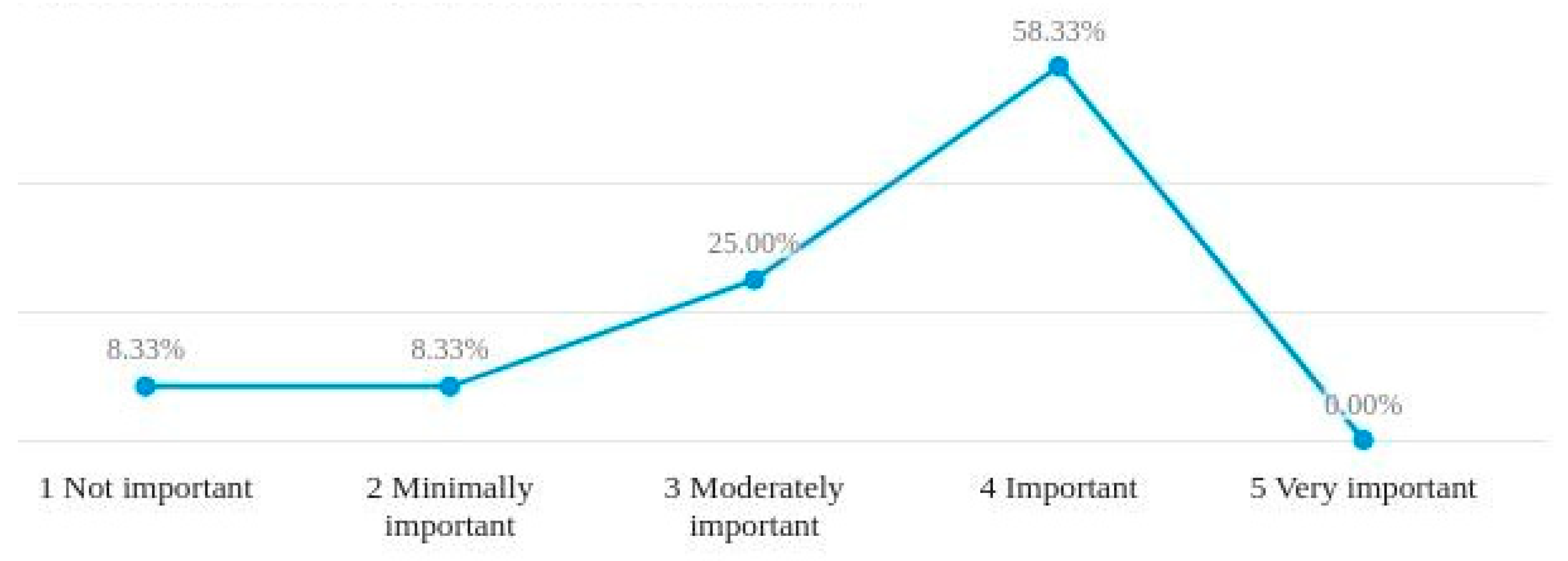
Ultimately, more than 58% of brands recognized the importance of their products being perceived as natural and healthy, showcasing a profound grasp of consumer preferences. Figure 14 underscores the significance of this attribute within our study.
However, this dynamic shift when examining small versus large brands. Interestingly, we observed that companies with fewer than 50 employees exhibited greater dedication across all three dimensions. Moreover, 25% of smaller companies prioritized this perception, compared to 33% of larger corporations.
In conclusion, while the commitment to sustainability is evident across several domains, the degree of integration into business practices varies considerably. This highlights an opportunity for businesses to further align their operations with the growing global mandate for environmental stewardship.
4. Conclusions
4.1. Summary of Findings
This research offers insights into the dynamics between brands and consumers within the plant-based food sector. German-founded plant-based brands, ranging from startups to established industry players, demonstrated a strong commitment to engaging with consumer feedback on online platforms, incorporating it into various aspects of their operations. Analysis of over 800 product reviews revealed a strong correlation among dimensions related to food quality, use, and taste, indicating a holistic approach to food consumption facilitated by online platforms. This looped-like relationship between brands and consumers provides valuable insights into an evolving industry, with the potential to redefine standards in brand-consumer interactions. Consumers, seen as community contributors, provide feedback on lifestyle-aligned products. Brands, in turn, affirm consumer identity through value-aligned offerings, positioning themselves as community stakeholders and offering growth incentives for the community.
The strategic utilization of digital platforms is indispensable for businesses aiming to thrive in sustainable innovation during the digital age. By fostering a robust brand ecosystem, brands promoting sustainable eating styles, such as the plant-based food companies analyzed in this study, can utilize digital environments to boost engagement and drive innovation among consumers inherently drawn to alternative lifestyles and open to embracing innovation. This curated use of platforms extends far beyond mere alignment with consumer expectations typically pursued by marketing for customer satisfaction. It paves the way for a new form of brand value co-creation.Top of Form
4.1.1. Study Limitations
First, it’s essential to thoroughly examine consumer behavior using a detailed profiling method. Understanding factors like gender, interests, age, and location can provide valuable insights. Researchers like Gretzel and Yoo (2008) and Ravula et al. (2023) have pointed out that age can greatly affect reviews. While we may not have this data now, it could be important for future studies to consider.
Expanding the distribution of the questionnaire to a broader range of businesses would enhance the statistical relevance of the data collected.
Additionally, conducting a comparative analysis between traditional companies and those in the plant-based sector would offer valuable insights into the differing strategies and consumer preferences within these industries.
Furthermore, undertaking a cross-cultural study that compares various markets and cities across different dimensions would provide a comprehensive understanding of how consumer behavior varies across diverse cultural contexts.
References
- Alcorta, A.; Porta, A.; Tárrega, A.; Alvarez, M.D.; Vaquero, M.P. Foods for Plant-Based Diets: Challenges and Innovations. Foods 2021, 10, 293. [Google Scholar] [CrossRef]
- Anthony, A. (2021, October 12). From fringe to mainstream: how millions got a taste for going vegan. The Guardian. https://www.theguardian.com/lifeandstyle/2021/oct/10/from-fringe-to-mainstream-how-millions-got-a-taste-for-going-vegan.
- Casidy, R.; Leckie, C.; Nyadzayo, M.W.; Johnson, L.W. Customer brand engagement and co-production: an examination of key boundary conditions in the sharing economy. Eur. J. Mark. 2022, 56, 2594–2621. [Google Scholar] [CrossRef]
- Chan, D. , Voortman, F., Rogers, S., & Deloitte. (2019, January). The rise of the platform economy. Deloitte. https://www2.deloitte.com/content/dam/Deloitte/nl/Documents/humancapital/deloitte-nl-hc-the-rise-of-the-platform-economy-report.pdf.
- Cochoy, F.; Licoppe, C.; McIntyre, M.P.; Sörum, N. Digitalizing consumer society: equipment and devices of digital consumption. J. Cult. Econ. 2020, 13, 1–11. [Google Scholar] [CrossRef]
- EIT Food Fast track to market 2024 - EIT Food. (n.d.). EIT Food. https://www.eitfood.eu/open-calls/fast-track-to-market-2024.
- Al Essa, M.; Ben Yahia, I. Success and failure factors of social media integration - insights from business experience. Int. J. Electron. Mark. Retail. 2019, 10, 118. [Google Scholar] [CrossRef]
- Fehér, A.; Gazdecki, M.; Véha, M.; Szakály, M.; Szakály, Z. A Comprehensive Review of the Benefits of and the Barriers to the Switch to a Plant-Based Diet. Sustainability 2020, 12, 4136. [Google Scholar] [CrossRef]
- Fiorentini, M.; Kinchla, A.J.; Nolden, A.A. Role of Sensory Evaluation in Consumer Acceptance of Plant-Based Meat Analogs and Meat Extenders: A Scoping Review. Foods 2020, 9, 1334. [Google Scholar] [CrossRef] [PubMed]
- Gelsky, J. (2019, October 1). Sustainable product market could hit $150 billion in U.S. by 2021. Food Business News. Retrieved May 13, 2021, from https://www.foodbusinessnews.net/articles/13133-sustainable-product-market-could-hit-150-billion-in-us-by-2021.
- Gender Equality Index | 2022 | European Institute for Gender Equality. (2024, February 9). European Institute for Gender Equality. https://eige.europa.eu/gender-equality-index/2022/domain/power/DE.
- Giacalone, D.; Clausen, M.P.; Jaeger, S.R. Understanding barriers to consumption of plant-based foods and beverages: insights from sensory and consumer science. Curr. Opin. Food Sci. 2022, 48. [Google Scholar] [CrossRef]
- Gielens, K.; Steenkamp, J.-B.E. Branding in the era of digital (dis)intermediation. Int. J. Res. Mark. 2019, 36, 367–384. [Google Scholar] [CrossRef]
- Glaser, B. G. , & Strauss, A. L. (1967). The discovery of grounded theory: strategies for qualitative research. London: Wiedenfeld and Nicholson. (n.d.). https://www.sciepub.com/reference/58253.
- Glaser, B.G.; Strauss, A.L.; Strutzel, E. The discovery of grounded theory; strategies for qualitative research. Nurs. Res. 1968, 17, 364. [Google Scholar] [CrossRef]
- Gretzel, U.; Yoo, K.H. Use and Impact of Online Travel Reviews. Inf. Commun. Technol. Tour. 2008, 35–46. [Google Scholar]
- Gretzel, U.; Yoo, K.H. Use and Impact of Online Travel Reviews. Inf. Commun. Technol. Tour. 2008, 35–46. [Google Scholar]
- GTAI - Invest in Germany. (2023). Germany: Europe’s food & beverage market leader. Retrieved February 28, 2024, from https://www.gtai.de/resource/blob/64004/e80f4dd7ccd691158b0ee2bc10f8cd6c/industry-overview-food-beverage-industry-en-data.pdf.
- Guiné, R.P.F.; Florença, S.G.; Barroca, M.J.; Anjos, O. The Link between the Consumer and the Innovations in Food Product Development. Foods 2020, 9, 1317. [Google Scholar] [CrossRef]
- Hansen, T. Rethinking Consumer Perception of Food Quality. J. Food Prod. Mark. 2005, 11, 75–93. [Google Scholar] [CrossRef]
- Hashemi-Pour, C. , & Chai, W. (2023, October 19). CRM (customer relationship management). Customer Experience. https://www.techtarget.com/searchcustomerexperience/definition/CRM-customer-relationship-management.
- Hedin, B.; Katzeff, C.; Eriksson, E.; Pargman, D. A Systematic Review of Digital Behaviour Change Interventions for More Sustainable Food Consumption. Sustainability 2019, 11, 2638. [Google Scholar] [CrossRef]
- Hein, A.; Schreieck, M.; Riasanow, T.; Setzke, D.S.; Wiesche, M.; Böhm, M.; Krcmar, H. Digital platform ecosystems. Electron. Mark. 2019, 30, 87–98. [Google Scholar] [CrossRef]
- Isbrecht, S. (2023, December 15). Die EU stellt 50 Millionen Euro für Startups und kleine Unternehmen im Bereich der Präzisionsfermentation. Vegconomist. https://vegconomist.de/investments-finance/investitionen-akquisitionen/eu-50-millionen-euro-fuer-praezisionsfermentation/.
- Johnson, R.B.; Onwuegbuzie, A.J.; Turner, L.A. Toward a Definition of Mixed Methods Research. J. Mix. Methods Res. 2007, 1, 112–133. [Google Scholar] [CrossRef]
- Juteau, S. TheFork by TripAdvisor: A French success story. J. Inf. Technol. Teach. Cases 2023. [Google Scholar] [CrossRef]
- Kavi, A. (2023, December 10). Berlin’s Vegan Food Scene Is Flourishing. The New York Times. https://www.nytimes.com/2023/12/10/world/europe/vegan-food-berlin.html.
- Kenton, W. (2024, February 6). Fast-Moving Consumer Goods (FMCG) Industry: Definition, Types, and Profitability. Investopedia. https://www.investopedia.com/terms/f/fastmoving-consumer-goods-fmcg.asp.
- Kilian, D.; Hamm, U. Perceptions of Vegan Food among Organic Food Consumers Following Different Diets. Sustainability 2021, 13, 9794. [Google Scholar] [CrossRef]
- Krishen, A.S.; Dwivedi, Y.K.; Bindu, N.; Kumar, K.S. A broad overview of interactive digital marketing: A bibliometric network analysis. J. Bus. Res. 2021, 131, 183–195. [Google Scholar] [CrossRef]
- Maehle, N.; Iversen, N.; Hem, L.; Otnes, C. Exploring consumer preferences for hedonic and utilitarian food attributes. Br. Food J. 2015, 117, 3039–3063. [Google Scholar] [CrossRef]
- Martin, K.; Todorov, I. How Will Digital Platforms be Harnessed in 2010, and How Will They Change the Way People Interact with Brands? J. Interact. Advert. 2010, 10, 61–66. [Google Scholar] [CrossRef]
- Martinho, V.J.P.D. Food Marketing as a Special Ingredient in Consumer Choices: The Main Insights from Existing Literature. Foods 2020, 9, 1651. [Google Scholar] [CrossRef] [PubMed]
- Moreira, M.N.B.; da Veiga, C.R.P.; Su, Z.; Reis, G.G.; Pascuci, L.M.; da Veiga, C.P. Social Media Analysis to Understand the Expected Benefits by Plant-Based Meat Alternatives Consumers. Foods 2021, 10, 3144. [Google Scholar] [CrossRef] [PubMed]
- Nambisan, S.; Siegel, D.S.; Kenney, M. On Open Innovation, Platforms, and Entrepreneurship. Strateg. Entrep. J. 2018, 12, 354–368. [Google Scholar] [CrossRef]
- Nasution, M.D.T.P.; Rini, E.S.; Absah, Y.; Sembiring, B.K.F. Social network ties, proactive entrepreneurial behavior and successful retail business: a study on Indonesia small enterprises. J. Res. Mark. Entrep. 2022, 24, 141–160. [Google Scholar] [CrossRef]
- Nunes, J.C.; Ordanini, A.; Giambastiani, G. The Concept of Authenticity: What It Means to Consumers. J. Mark. 2021, 85, 1–20. [Google Scholar] [CrossRef]
- Onorati, M.G.; Giardullo, P. Social media as taste re-mediators: emerging patterns of food taste on TripAdvisor. Food, Cult. Soc. 2020, 23, 347–365. [Google Scholar] [CrossRef]
- Osborne, L. (2016, October 20). Vegan haven Berlin. dw.com. https://www.dw.com/en/berlin-vegan-capital-of-the-world/a-35951064.
- Paget, S. (2024, March 6). Local Consumer Review Survey 2024: Trends, Behaviors, and Platforms Explored. BrightLocal. https://www.brightlocal.com/research/local-consumer-review-survey/#.
- Pashchenko, Y.; Rahman, M.F.; Hossain, S.; Uddin, K.; Islam, T. Emotional and the normative aspects of customers? reviews. J. Retail. Consum. Serv. 2022, 68. [Google Scholar] [CrossRef]
- Petrescu, D.C.; Vermeir, I.; Petrescu-Mag, R.M. Consumer Understanding of Food Quality, Healthiness, and Environmental Impact: A Cross-National Perspective. Int. J. Environ. Res. Public Heal. 2019, 17, 169. [Google Scholar] [CrossRef]
- Powers, T.; Advincula, D.; Austin, M.S.; Graiko, S.; Snyder, J. Digital and Social Media In the Purchase Decision Process. J. Advert. Res. 2012, 52. [Google Scholar] [CrossRef]
- Ravula, P.; Bhatnagar, A.; Gauri, D.K. Role of gender in the creation and persuasiveness of online reviews. J. Bus. Res. 2023, 154. [Google Scholar] [CrossRef]
- Rehder, L. (2023). Plant-Based food goes mainstream in Germany (K. Luxbacher, Ed.; No. GM2023-0002). United State Department of Agricolture. Foreign Agricultural Service. Retrieved February 28, 2024, from https://fas.usda.gov/.
- Ricardo. (2023, January 17). The Growth of Vegan Restaurants in Europe, 2022. HappyCow. https://www.happycow.net/blog/the-growth-of-vegan-restaurants-in-europe-2022/.
- Rohn, D.; Bican, P.M.; Brem, A.; Kraus, S.; Clauss, T. Digital platform-based business models – An exploration of critical success factors. J. Eng. Technol. Manag. 2021, 60, 101625. [Google Scholar] [CrossRef]
- Rousseau, S. (2012). Food and social media: You are what You Tweet. Rowman & Littlefield Studies in Food and Gastronomy.
- Rutsaert, P.; Regan. ; Pieniak, Z.; McConnon,.; Moss, A.; Wall, P.; Verbeke, W. The use of social media in food risk and benefit communication. Trends Food Sci. Technol. 2013, 30, 84–91. [Google Scholar] [CrossRef]
- Satwani, U. , Singh, J., & Pandya, N. (2020). Using Sentiment Analysis to Obtain Plant-Based Ingredient Combinations that Mimic Dairy Cheese. springerprofessional.de. https://www.springerprofessional.de/en/using-sentiment-analysis-to-obtain-plant-based-ingredient-combin/18227058.
- Sheikh, S. (2018). Why should the business community and organizations leverage social media to demonstrate their corporate social responsibility (CSR) commitment? In Advances in marketing, customer relationship management, and e-services book series (pp. 86–116). [CrossRef]
- Statista. (2024, February 26). Revenue from vegan products Germany 2023, by category. https://www.statista.com/statistics/1451893/vegan-products-revenue-by-category-germany/.
- Survarachakan, S.; Prasad, P.J.R.; Naseem, R.; de Frutos, J.P.; Kumar, R.P.; Langø, T.; Cheikh, F.A.; Elle, O.J.; Lindseth, F. Deep learning for image-based liver analysis — A comprehensive review focusing on malignant lesions. Artif. Intell. Med. 2022, 130, 102331. [Google Scholar] [CrossRef]
- The Aggie. (2021, May 18). Fast fashion’s increasingly rapid trend cycles are driving major overconsumption. https://theaggie.org/2021/05/18/fast-fashions-increasingly-rapid-trend-cycles-are-driving-major-overconsumption/.
- Ukpere, C.L.; Slabbert, A.D.; Ukpere, W.I. Rising Trend in Social Media Usage by Women Entrepreneurs across the Globe to Unlock Their Potentials for Business Success. Mediterr. J. Soc. Sci. 2014, 5, 551. [Google Scholar] [CrossRef]
- Cuesta-Valiño, P.; Rodríguez, P.G. Perception of Advertisements for Healthy Food on Social Media: Effect of Attitude on Consumers’ Response. Int. J. Environ. Res. Public Heal. 2020, 17, 6463. [Google Scholar] [CrossRef]
- Cuesta-Valiño, P.; Rodríguez, P.G. Perception of Advertisements for Healthy Food on Social Media: Effect of Attitude on Consumers’ Response. Int. J. Environ. Res. Public Heal. 2020, 17, 6463. [Google Scholar] [CrossRef] [PubMed]
- Venkatesh, V. (2013, March 1). Bridging the Qualitative-Quantitative Divide: Guidelines for Conducting Mixed Methods Research in Information Systems. https://misq.umn.edu/bridging-the-qualitative-quantitative-divide-guidelines-for-conducting-mixed-methods-research-in-information-systems.html.
- Waehrens, S.S.; Faber, I.; Gunn, L.; Buldo, P.; Frøst, M.B.; Perez-Cueto, F.J. Consumers' sensory-based cognitions of currently available and ideal plant-based food alternatives: A survey in Western, Central and Northern Europe. Food Qual. Preference 2023, 108. [Google Scholar] [CrossRef]
- Wagner, H.R.; Glaser, B.G.; Strauss, A.L. The Discovery of Grounded Theory: Strategies for Qualitative Research. Soc. Forces 1968, 46, 555. [Google Scholar] [CrossRef]
- Wichmann, J.R.K.; Wiegand, N.; Reinartz, W.J. The Platformization of Brands. J. Mark. 2021, 86, 109–131. [Google Scholar] [CrossRef]
- Williams, A. (2023, September 26). Market insights on European plant-based sales 2020-2022 - GFI Europe. GFI Europe. https://gfieurope.org/market-insights-on-european-plant-based-sales-2020-2022/.
- Wong, B. (2023, May 18). Top Social Media Statistics And Trends Of 2024. Forbes Advisor. https://www.forbes.com/advisor/business/social-media-statistics/#source.
- Zohoori, F. (2019). Chapter 1: Nutrition and Diet. In Monographs in oral science (pp. 1–13). [CrossRef]
- Волик, М.В.; Kovaleva, M.A.; Khachaturova, E. The concept of implementing a customer interaction system based on CRM Bitrix24. SHS Web Conf. 2021, 94, 01022. [Google Scholar] [CrossRef]
1 HappyCow is a user-driven platform aimed at helping individuals discover, review, and share information about vegan, vegetarian, and vegan-friendly restaurants and health food stores globally. https://www.happycow.net/ |
5 “Jaccard's coefficient is a statistical measure used in this context to quantify the similarity and diversity of sample sets. It is calculated by dividing the number of observations where both codes occur by the union of the number of times each code occurs separately and together. The coefficient ranges from 0 to 1, where 0 indicates no co-occurrence and 1 indicates that the codes always occur together” (Survarachakan et al., 2022). |
Figure 1.
Adapted from Rousseau’s (2012) key insights into the integration of platform dynamics within food studies.
Figure 1.
Adapted from Rousseau’s (2012) key insights into the integration of platform dynamics within food studies.
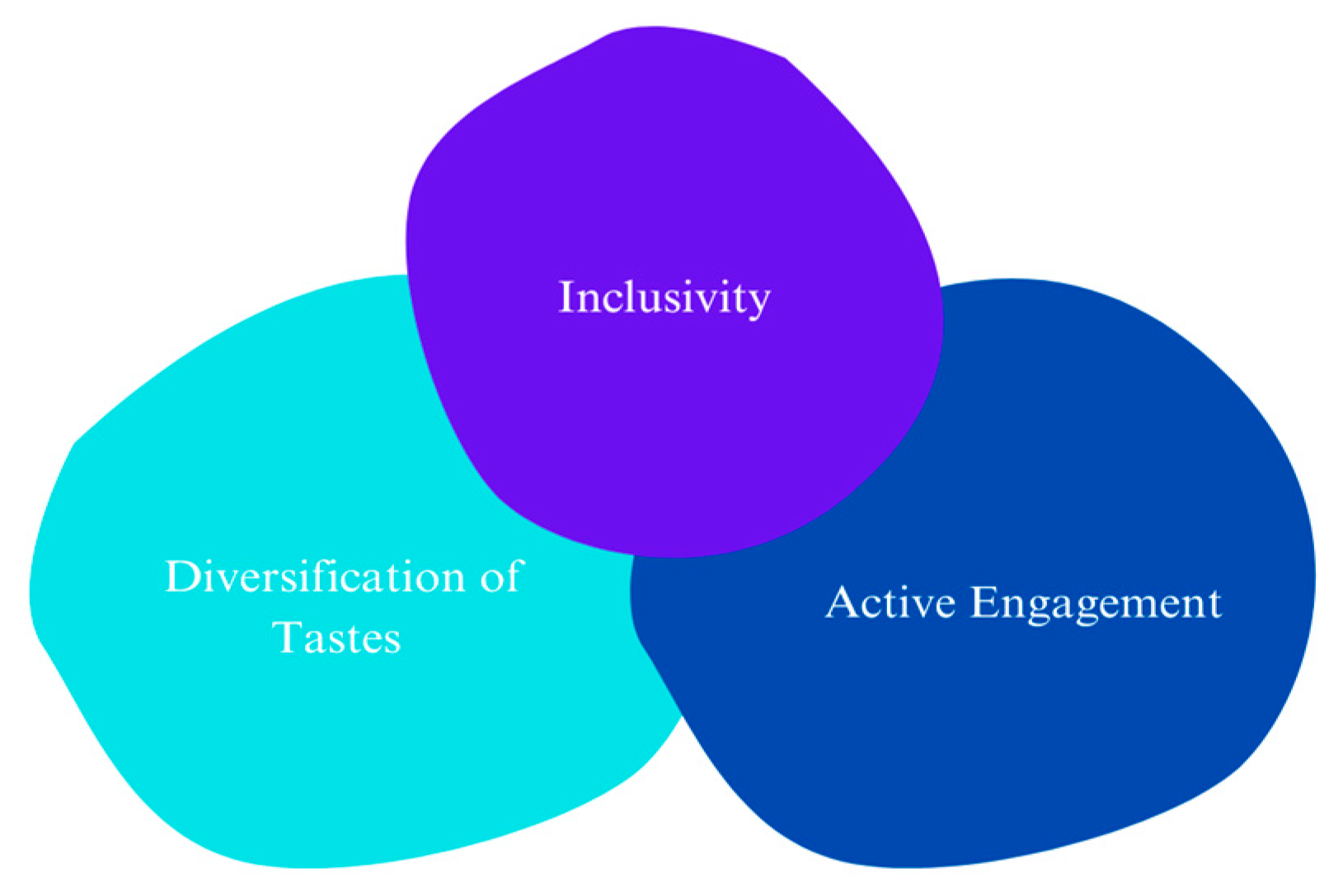
Figure 8.
consumer interaction with our sample.
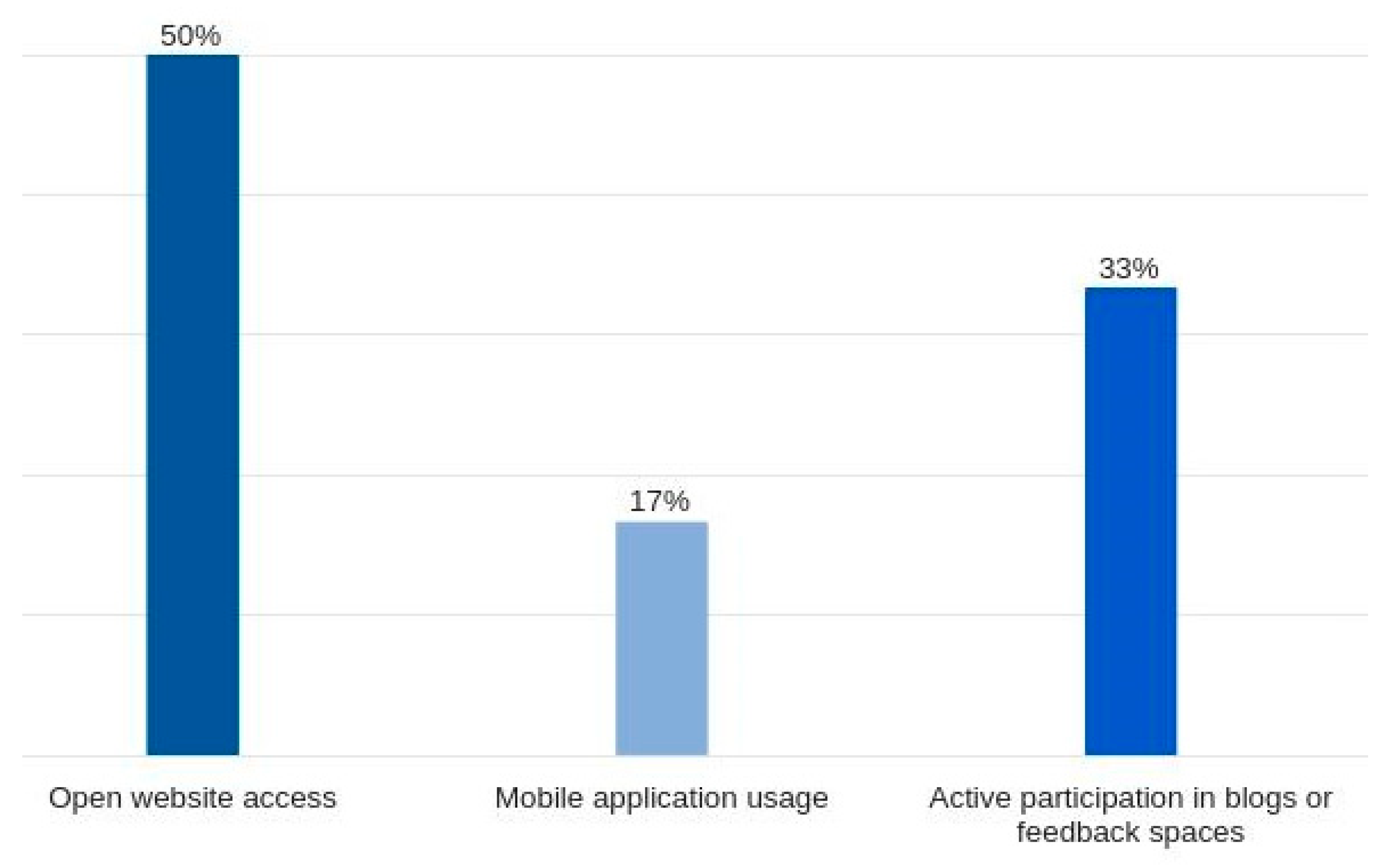
Figure 10.
illustration of word cloud derived from the analyzed data.
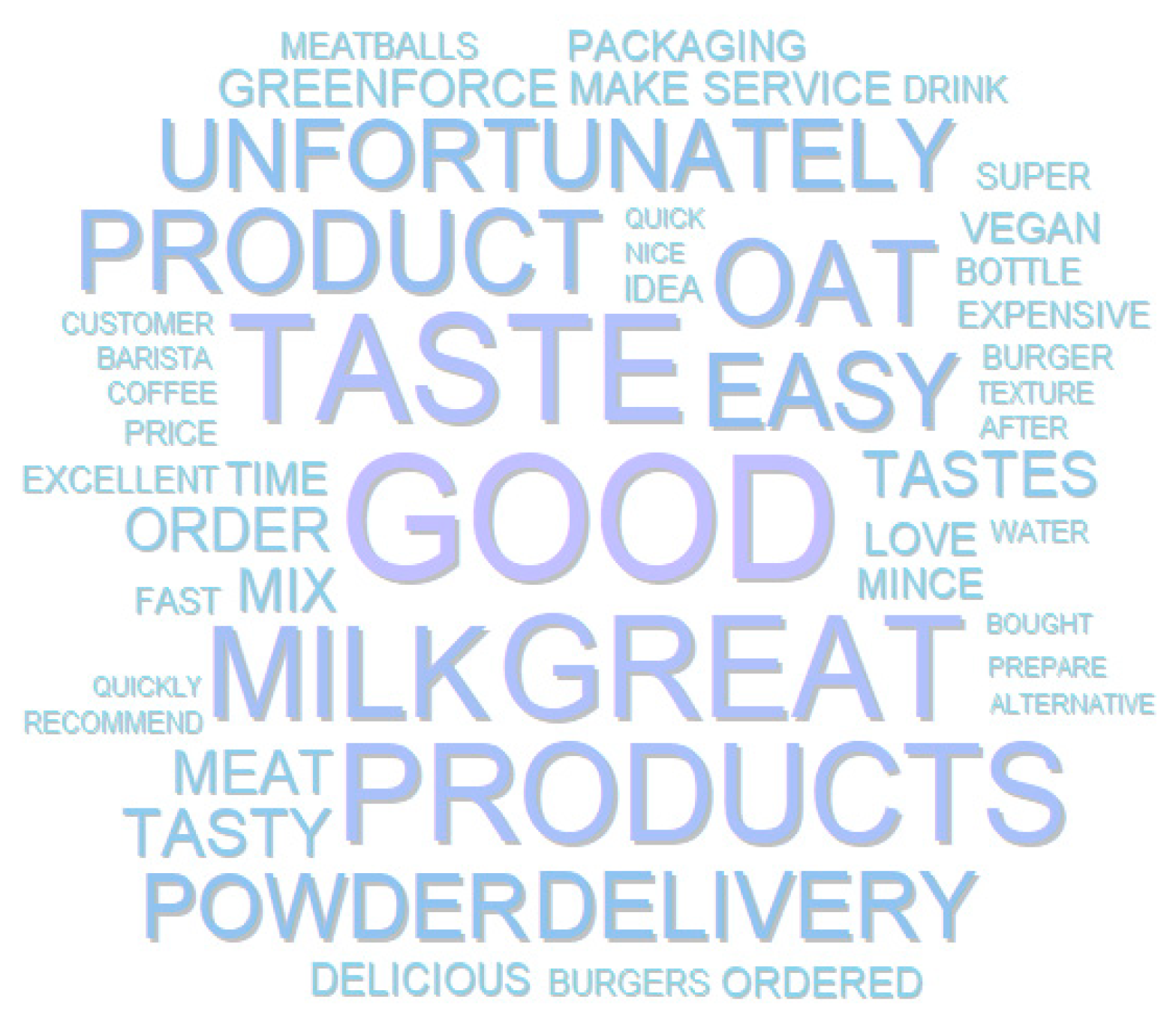
Figure 11.
Interconnections among the most frequently used words.
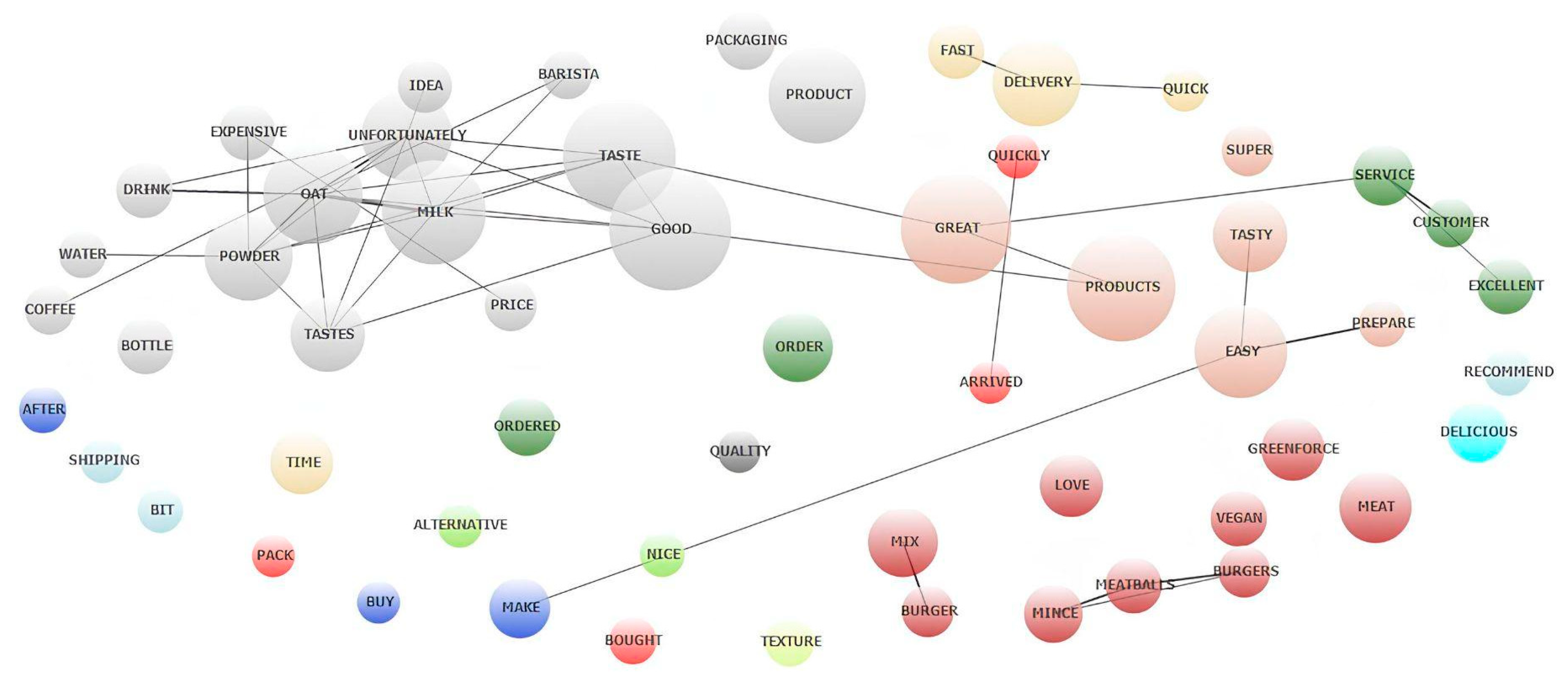
Figure 12.
Co-occurrence Analysis.
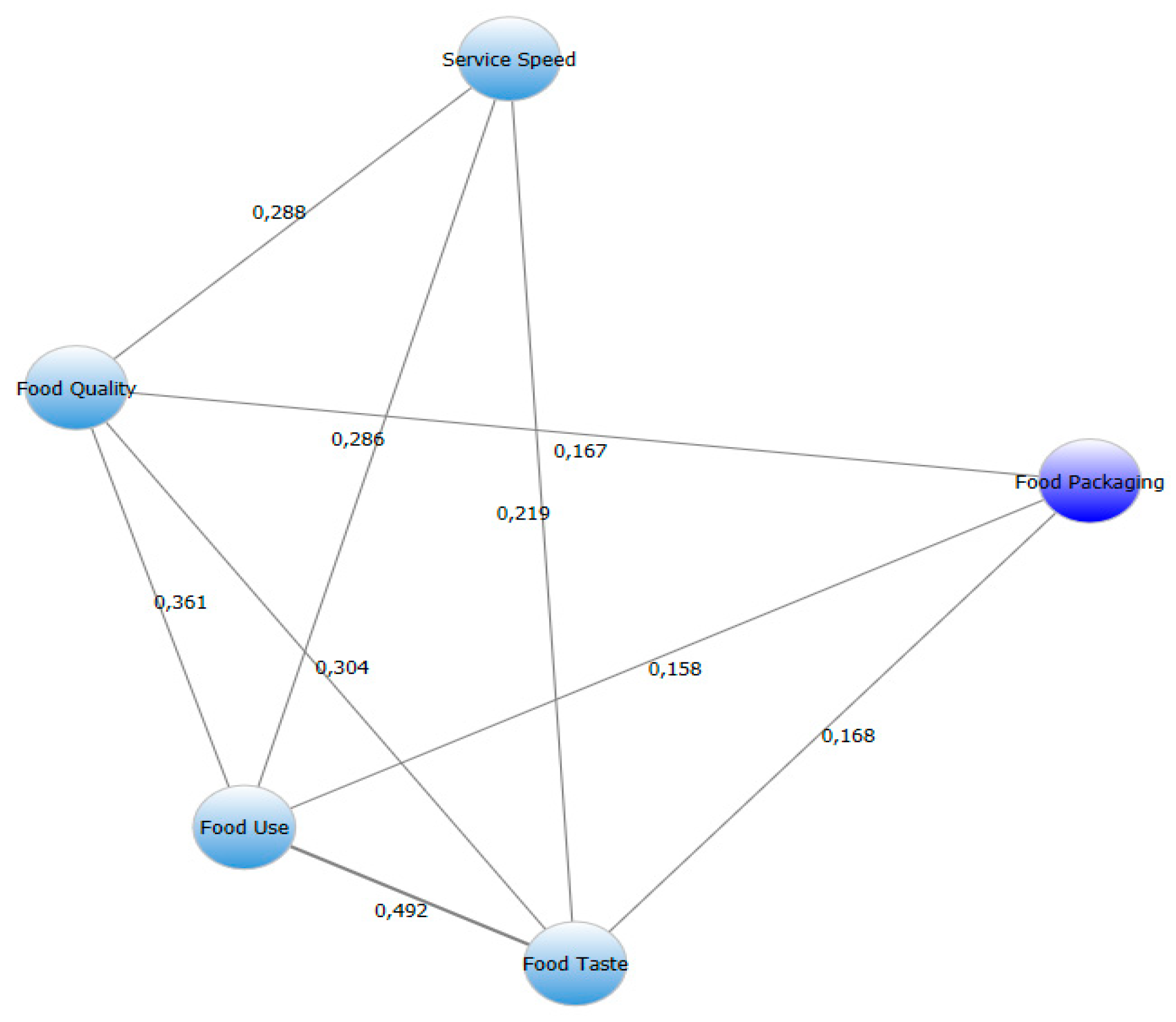
Figure 13.
Brand Commitment Across Various Practices.
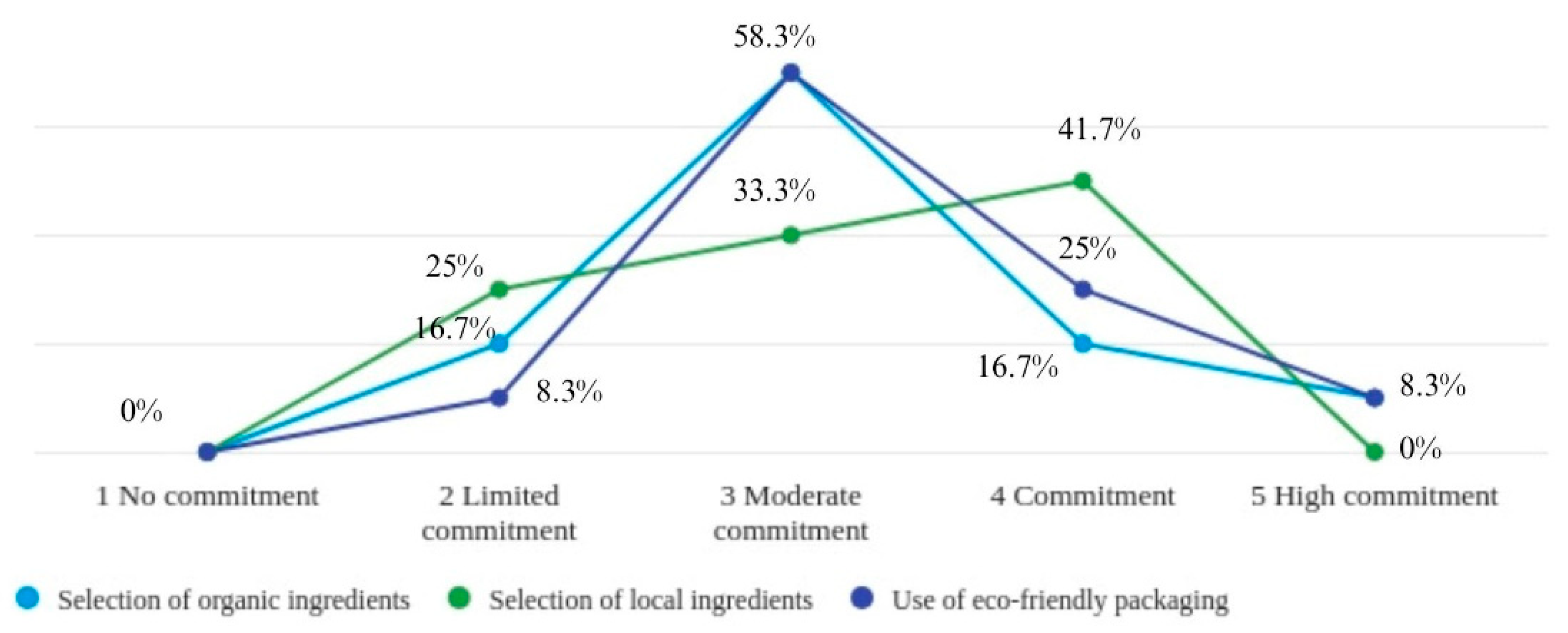
Figure 14.
Importance of Brand Perception in Regards to Natural and Healthy Attributes.
Disclaimer/Publisher’s Note: The statements, opinions and data contained in all publications are solely those of the individual author(s) and contributor(s) and not of MDPI and/or the editor(s). MDPI and/or the editor(s) disclaim responsibility for any injury to people or property resulting from any ideas, methods, instructions or products referred to in the content. |
© 2024 by the authors. Licensee MDPI, Basel, Switzerland. This article is an open access article distributed under the terms and conditions of the Creative Commons Attribution (CC BY) license (https://creativecommons.org/licenses/by/4.0/).
Copyright: This open access article is published under a Creative Commons CC BY 4.0 license, which permit the free download, distribution, and reuse, provided that the author and preprint are cited in any reuse.


