

Submitted:
09 June 2024
Posted:
11 June 2024
You are already at the latest version
Abstract
Remote work as a new working pattern is considered of high importance in determining the competitiveness of the institutions that adopt this form of work. This trend toward remote working has benefited workers greatly in terms of flexibility and work-life balance and has had unanticipatedly positive effects on sustainability. The issue has grown in importance considering recent development of digitalization and high concern of countries to achieve the sustainable goals. This study attempts to examine the effect of three explanatory variables: remote work, institutional efficiency, and work management on the competitiveness of finance institutions in Saudi Arabia. To collect the primary data, a survey was conducted on a stratified random sample that comprised 1270 respondents. The sample covers the three finance sector segments: banks, insurance, and finance companies. Correlation analyses, one-sample t-tests, and multi-regression analyses are applied to analyze the data. The results of the study showed that there is a positive significant relationship between the three explanatory variables of the study and institutional competitiveness. Besides, the regression model revealed that the two explanatory variables; remote work and institution efficiency are statistically significant at 95% confidence intervals, while work management is not statistically significant. The study recommends promoting remote work to increase the finance institution's competitiveness by restructuring the work policies, designing work strategies, and introducing a new management system compatible with remote work.
Keywords:
Remote work
; Efficiency
; Competitiveness
; Finance Institutions
1. Introduction
Considering the fast developments in finance operations due to digital transitions that yielded and flourished remote work, finance institutions are exposed to high levels of competition. Competition in the finance sector needs to be maintained compared to other industries for many reasons. This is because competition entitles efficiency in the production of finance services, ensures the quality of finance products, and stimulates innovation within the sector.
Remote working when examined within a sustainability context, provides several benefits from an economic, environmental, and social perspective, mainly due to the elimination of the need to commute to the workplace, or the reduced time and distance traveled to a co-working space [1,2], look at productivity gains, cost reductions, and economic growth. In addition, remote working is preferred by project owners and employees since it offers flexibility in terms of working hours, time savings, comfort at work, safety, and savings. Employers and employees alike have benefited from remote work in several ways, including increased flexibility, lower expenses, better work-life balance, and higher job satisfaction. Similarly, remote work has been connected to the social dimension of sustainability, which is the advancement and defense of equity, diversity, and human rights ([3,4,5,6]). highlight the importance of social isolation and collaboration, technological infrastructure and connectivity, inclusivity and diversity, and work-life balance and well-being. This may be in line with [7] findings, which show that more remote work offers a significant chance to enhance sustainability results.
Therefore, remote working contributes to tack-ling alarming environmental issues and the transition to smart cities and communities. In a smart city, digital and telecommunication technologies are used to make traditional networks and services more efficient for the benefit of its inhabitants and businesses [8]. Due to the lack of empirical studies regarding remote work and the competitiveness of finance institutions in Arab countries, and Saudi Arabia in particular, this study fills a gap in this field. The key objective of this study is to examine the effect of remote work full and partial, institutional efficiency due to remote work, and remote work management on the competitiveness of finance institutions (banks, finance, and insurance companies) in Saudi Arabia. Moreover, this study aims to analyze the association between the competitiveness of finance institutions and remote work, the efficiency of the institutions, and work management. To pursue these objectives, a primary hypothesis was formulated that states “Remote work increases the competitiveness of finance institutions in Saudi Arabia”. The next hypothesis concerns “The positive impact of the Saudi finance institution’s efficiency on its competitiveness.” The final hypothesis states that “work management of remote workers has a positive effect on the finance institution’s competitiveness in Saudi Arabia”.
To pursue these objectives, the following hypothesis were formulated:
H1. Remote work contributes positively to the competitiveness of finance institutions in Saudi Arabia.
H2. Finance institutions’ efficiency have a positive impact on its competitiveness in Saudi Arabia.
H3. There is a positive impact of work management on the finance institution’s competitiveness in Saudi Arabia.
This paper consists of six sections; the first section is the introduction, second section is the literature review. Section three is data collection and methods, results, and findings in section four. Discussion of the study results is in section five; the conclusion and policy implication are in section six.
2. Literature Review
Nowadays, one of the major challenges that businesses are facing is how to promote remote work, while maintaining the desired level of competitiveness and productivity. Competitive activities can help maintain employee motivation. A certain level of competition between employees is needed. Finance companies have three pathways to thrive in their competition. First by continuously upgrading finance services and second by improving employees’ competence and the efficiency of their operating models. The third alternative is to develop a corporate culture that makes sure that the expectations of the customer are fulfilled. This means that everything that can be digitized should be digitized. Working from home is driven by innovation that provides a smooth working experience. The innovations introduced in response to the pandemic have improved interactivity within remote work, which has resulted in incentives for adopting technologies that help WFH [9], investigated whether COVID-19 has invigorated innovations that support WFH. They identified advancements in technologies that provide video conferencing, telecommuting, remote inter-activity, and working from home. They concluded that these technological changes would reinforce the transition toward remote work. At the individual level and sustainability of work [10], mention the main benefits of remote working were increased flexibility, autonomy, work-life balance, and individual performance, while major challenges were social aspects such as lost colleagues and isolation. This can be consistent with the results of [7], who indicate that increased remote working presents an important opportunity to improve sustainability outcomes [11], documented that faster declines in prices for information and communication technologies (ICT) are associated with larger increases in the share of remote work and that the effect is stronger for industries that rely more heavily on ICT. The benefits of competition are expected to grow further considering factors like globalization, technological improvements, and continuous deregulation. However, it appears that it will become more challenging to formulate policies that ensure competition across finance sectors and balance the trade-offs between competition and other factors [12]. The evolution of finance services entitles more complexity since finance markets and products are becoming more complex and packed with issues like new regulations. According to the Organization for Economic Cooperation and Development [13]. Remote working impacts firm performance in two main ways. The first is by increasing the productivity, motivation, and knowledge creation of the workforce. Secondarily, by facilitating cost savings, resources can be allocated. The OECD has highlighted areas where cooperation between policymakers and partners will be crucial for maximizing potential gains from productivity through remote work. This will be crucial for countering the negative effects in the long run so that the global economy can profit from remote work. The OECD emphasized that these policies need to focus on providing sufficient levels of training for those employing skills. They also need skills. They should also have digital skills and propose remote working to help workers in finding their optimum level of work based on their circumstances and job characteristics. In addition, they should facilitate arrangements that provide workers with the appropriate remote working environment and robust ICT infrastructure across different regions.
COVID-19 will be recognized for redefining norms of how people work; the adoption of virtual work will expand because of advantages such as cost-savings from reorganizing labor bases with fewer full-time employees and more contractors connected technologically [14,15]. Also, it provides access to a broader talent pool in the finance sector that has emerged due to remote work. Reduction in needless meetings, office politics, and general office socializing can be beneficial in improving efficiency and job satisfaction. By removing distractions that are often present in the office, remote workers can accomplish more in less time. Other office variables can cause stress for employees, like commuting, which is both time-consuming, costly, and energy-zapping. It is no wonder remote working is recognized for improving well-being. Happier employees tend to be more motivated, which in turn can promote efficiency and strategic advantage. Remote work removes the need for commuting, thereby reducing the carbon emissions that could have been produced by the commuter ([16,17,18]). The pandemic resulted in an exponential increase in the number of remote workers who did not have prior experience working remotely in their institutions worldwide. Many of them were not prepared for such a change [19]. The fact that most of these workers were forced into remote work by the pandemic has contributed to creating social problems like loneliness, feeling felt out, lack of energy and enthusiasm, and having trouble balancing their work-life style [20]. This shift towards remote work will enable rigorous testing of the trade-offs of remote work when it comes to productivity against socialization and isolation [21], assessed the effectiveness of leaders during and after the pandemic based on different metrics.
This was based on the extent to which these leaders were convincing if they: (a) clearly expressed the values that will govern their institutional actions; (b) understand and openly discuss the travails and hopes of their collectives; (c) demonstrated an ambitious vision of the direction that their unit will be steered towards, and (d) showed extreme confidence that their strategic goals can be achieved. These skills can be attributed to their charisma and require a combination of experience, training, and investment. Cascio (2019) stated that it would be helpful to investigate the effects of COVID-19 on the nature of training programs (i.e., by shifting towards online training) in terms of effectiveness and accessibility. Recent research hinted that there would be a very low chance of learning opportunities for subordinates associated with lower organizational commitment and a higher risk of turnover [22]. This entitles the need to examine how trust can be maintained while interacting online [23]. Ref. [24] extensively studied remote leadership and was able to identify similar concerns shared between employees and their leaders. The concerns are trust, collaboration, and social isolation.
Leaders must trust their teams to perform the assigned tasks, while teams must trust the rewards of their leaders. In addition, the author discussed other related issues like social isolation. This is because teams working in different time zones and not having synchronized communication will likely experience loneliness, while local teams will not have to. It takes time to build trust, and this can be complicated further by a lack of in-person communication, as in remote work [25] stated that there are two kinds of trust, relational- and competence-based trust. The process of establishing trust in a virtual relationship can indeed be easier if remote workers decide to incorporate friendly small talk. This is done by showing enthusiasm and having a voice while keeping professionalism at a certain level. According to the authors of this document, competence-based trust is straightforward, as it depends on effectively communicating the expertise of remote workers and how they can contribute [25], outlined the critical issues to address when establishing engagement rules are; how, when to communicate, and how to collaborate most effectively.
3. Data Collection and Methods
To fulfill the objectives of this study, primary and secondary data are employed. The primary data is collected by execution survey, while secondary data is obtained from previous scientific studies. The survey targeted both public and private finance institutions in Saudi Arabia. It covered both males and females of different occupations. The survey investigated the effects of years of experience, level of education, and pattern of working remotely and from the office on productivity. The sampling methodology of this survey is a stratified random sample, which covered workers in the three segments of the finance sector in Saudi Arabia namely: banks, insurance companies, and finance companies, and it is proportional to the segment size. It consisted of 12 banks, 43 finance companies, and 30 insurance and reinsurance companies. The survey sample comprised 1270 respondents who answered all the survey questions with no missing values. The questionnaire consisted of two parts; the first part was about the basic information of the respondents, and the second part comprised 27 questions that covered institution competitiveness 8 questions, institution efficiency 8 questions, and remote work management 11 questions. Five Likert Scale is applied to the statements of the questionnaire, starting from “strongly agree” to “strongly disagree”.
Before data analysis, the validity and reliability of the scales are evaluated. Two types of validity tests were used; face validity and content validity, while internal consistency was used to measure the reliability of the survey questions. The research used two types of analysis: descriptive and inferential analysis. In addition, correlation analyses, one-sample t-tests, and multi-regression analyses were conducted.
The null hypothesis (H0) and (two-tailed) alternative hypothesis (H1) of the one-sample t-test are expressed as:
- H0: µ = µ0 (“the calculated mean is equal to 3.4).
- H1: µ ≠ µ0 (“the calculated mean is not equal to 3.4). where µ is the calculated mean and µ0 is the proposed mean (3.4).
The regression model constructed in this study consisted of dependent variable institution competitiveness (Y) and three explanatory variables: remote work (X1), institution efficiency (X2), and remote work management (X3). To conduct the linear regression analysis, the data of the three
variables: institution competitiveness, institution efficiency, and remote work management transformed from ordinary data to continuous data, by calculating the sum of each one of the variables clusters’ values using the SPSS statistical program. The remote workers variable is used as a proxy for the remote work variable. Dummy variables given for remote workers are (permanent and partial) =1, and 0= for ordinary workers.
Regression model:
Y = α + β1 X1 + β2 X2 + β3 X3 + µ
Where:
Y = institution competitiveness (Dependent variable). Independent variables:
X1 = Remote work
X2 = Institution efficiency due to remote work
X3 = Remote work management.
µ = error term.
4. Results
Table 1 shows the reliability test using Cronbach Alpha coefficients for the three sections of the survey questionnaire that measure institution competitiveness, institution efficiency, and remote work management. Cronbach Alpha coefficients varied among survey sections, with the highest coefficient for job institution competitiveness. Cronbach Alpha coefficient for the twenty-seven questions of the survey is about 89%. These results revealed that the reliability of the overall questionnaire is high, compared to the acceptable level of 70%.
Figure 1 displays the demographic characteristics of the survey sample corresponding to the patterns of work (full remote work, partially remote work, and no remote work). Results showed that the workers with full remote work represented 15%, while those who have partial remote work and no remote work are 37% and 48% respectively. The total number of workers who practice remote work (full and partial) constitutes more than 50% of the sample. Accordingly, gender distribution revealed that about 50% of the female participants have full and partial remote work. The age distribution of the survey sample and pattern of work implied that the participants with age categories (30-49) are the highest of full remote work and partial remote work (42%), whilst the workers aged more than 50 are the least (5.1%). The marital status of the survey participants and pattern of work revealed that the lowest percentage of participants with full remote work and partial remote work are those who are single about 10%, and the highest who are married and married with children about 41.7%. The participants who have no remote work of all marital status categories are the highest compared to other work patterns. The highest percentage who have full and partial remote work are those with bachelor’s degrees followed by those with master’s degrees, and the lowest who have Ph.D. Participants who have administrative and executive occupations have the highest percentage of full and partial remote work, followed by those who have supervisory occupations. Full and partial remote workers in the bank and the insurance companies are the highest, representing 23.5% and 15.8% respectively. The highest percentage of participants who have full and partial remote work is in the private sector, about 50% of the whole participants. The participants with more than 15 years in the highest category of full and partial remote work, followed by those who have 11-15 years of experience.
Figure 2 illustrates the mean, standard deviation, and one sample t-test analysis of the study section measures (The institution’s competitiveness due to remote work). The calculated mean of all the section’s statements ranges between (3.6 - 4.1) and the overall mean is (3.8) which is of score level Agree, according to the Likert scale length of this study; (3:41 - 4:20). One sample t-test analysis showed that there is a significant statistical difference of all section’s statements at 95% confidence interval form the comparable mean of this study. However, for all the section’s statements, the difference between the upper and lower mean is less than one digit and the p-value is less than (0.05). Based on these results, the competitiveness of the finance sector in Saudi Arabia is affected positively by the adoption of remote work as a new pattern of work besides the traditional work systems.
Figure 3 illustrates the mean, standard deviation, and One sample t-test for the statements of the section (The institution’s efficiency due to remote work). The calculated overall mean of the section’s statements is (4.1), which is of Likert scale score Agree, according to the scale length of this study (3:41 - 4:20). This result revealed that survey participants believe that remote work enhances the institution’s efficiency. Similarly, one sample t-test analysis of this section denoted that there are significant statistical differences between the statement mean and the hypothesized mean, however, the difference between the upper and lower mean at a 95% confidence interval is less than one digit and the p-value is less than (0.05) for all the section’s statements. The results revealed that survey participants (1270) agree that remote work contributes significantly to efficiency improvement of the finance institutions in Saudi Arabia, based on cost reduction and allocation of resources and budget to implement remote work as a new pattern of work parallel to the presenteeism work system.
The analysis displayed in Figure 4 addresses management aspects due to remote work; the survey questions of this section are directed to participants who have managerial occupations. The total number of respondents to the questions in this section is about (1170). Mean analysis, standard deviation, and one sample t-test are applied to test the hypothesis that (Remote work requires higher levels of management). The mean analysis showed that the overall mean of the section’s statements is (3.9) is of level (Agree), based on the Likert scale length undertaken in this study (3:41 - 4:20). This result indicated that the participants strongly agree that remote work requires higher levels of management compared to presenteeism work. Likely, one sample t-test results revealed that there is a significant statistical difference between the mean of the section’s statements measures. However, the difference between the upper and lower mean on a 95% confidence interval is less than one digit for all the section’s statements. This result is also reflected by the p-value which is less than (0.05) on (2- 2-tailed) 95% significance level for the statements of the section except two statements which state (Remote work leads to reduce the number of workers in the institution) and (remote work makes evaluation of workers’ performance more difficult) whose p-value is (0.736) and (0.298) respectively.
Using Pearson correlation analysis, Table 2 illustrates that there is a positive significant relationship between the variable institution competitiveness, and the three variables “remote work, institution efficiency, and remote work management”. The highest correlation is with institution efficiency (0.69), while there is a weak positive correlation with the other two variables remote work and remote work management.
A multiple regression model was generated to explain the effect of the study’s explanatory variables; remote worker (X1) institution efficiency (X2), and remote work management (X3) on the dependent variable, institution competitiveness (Y). Analysis of the regression model is illustrated in Table 3. The estimated multiple regression model is:
Y = 4.494 + 0.641 X1 + 0.735 X2 + 0.036 X3

Table 3.
Model Summary (ANOVA)& Regression Coefficients.
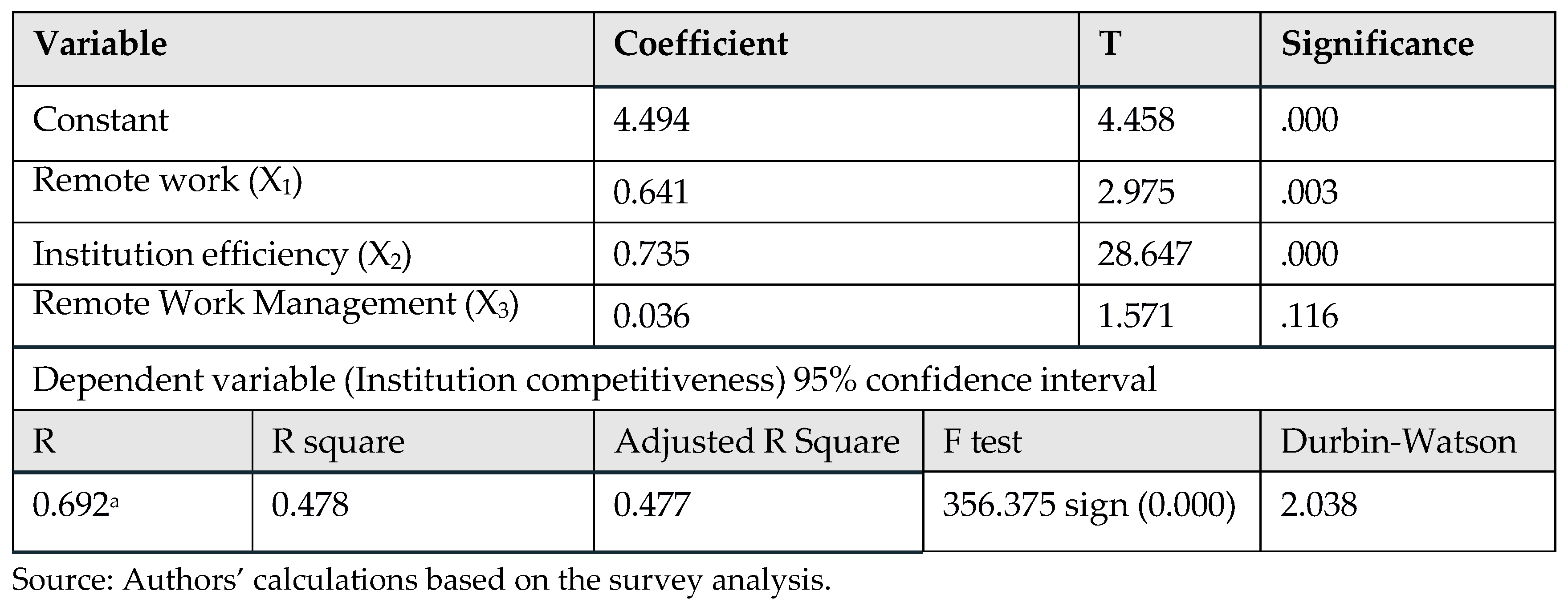
The regression analysis showed that the model’s two explanatory variables, remote work and institution efficiency are statistically significant at a 95% significant level, thus the p-value of the two variables is less than 0.05. The third explanatory variable, work management is not statistically significant at 95%, thus the p-value is more than 0.05. This statistical result indicates that a unit increase in remote work and institution efficiency will cause increases in the institution’s competitiveness by 64% and 74% respectively. Based on this result, we can reject the null hypothesis (H0) and accept the alternative hypothesis (H1) which states that institution competitiveness is positively affected by remote work and institutional efficiency. We can accept the null hypothesis (H0) and reject the alternative hypothesis (H1) which states that institution competitiveness is not affected by remote work management.
The correlation coefficient (r) of 0.69 showed a high positive association between the model variables, indicating that there is no multicollinearity between the study predictors or independent variables of the model. The determination coefficient R square means that 48% of the change in workers’ productivity is explained by remote work, job satisfaction, and remote work management. F-test analysis which tells whether a group of variables is jointly significant and whether the overall regression model is a good fit for the data, the results showed that the model is statistically significant, since the p-value of F statistic is less than the Alpha level (0.05), concluding that the overall parameters (β1, β2, β3) are statistically significant. Durbin-Watson (DW) test, which is a measure of Autocorrelation (also called serial correlation) in residuals from regression analysis, the results indicated that there is no autocorrelation among the residuals in the model since the value of DW is 2.038 is close to 2.
5. Discussion
Using Pearson correlation analysis illustrates that there is a positive significant relationship between institution competitiveness, and the three variables “remote work, institution efficiency, and remote work management.” The highest correlation is with institution efficiency, while there is a weak positive correlation with the other two variables, remote work, and remote work management. Institutions’ competitiveness in the finance sector will lead to a higher level of efficiency. This result is supported by the findings of [26,27], and [28] who pointed out the strong relationship between worker productivity and an institution’s effectiveness. The weak correlation of remote work and remote work management with institution competitiveness points out the importance of introducing management systems for remote work. This will contribute to better improvement of the institution’s competitiveness and efficiency. The findings of [28,29], advocate this result.
According to the mean and one-sample t-test analysis of the research hypothesis, all statements of the construct scored “agree” with two respondents scoring only strongly agree”. An evaluation of the hypothesis that remote work enhances the competitiveness of the institution found that workers in the finance sector agree that innovation of modern systems and technical programs will enhance the development of services and increase the use of advanced technical and digital marketing methods. Digital developments are driven by innovations and the introduction of various tools, technologies, and programs that help facilitate successful remote work tasks. The findings of [9] and [30] support this research result, indicating that innovation and information and communication technologies (ICT) are associated with larger increases in remote work. According to the analysis, workers at finance institutions agree that remote work enables the employment of highly skilled and efficient workers from outside the region or country. This is considered one of the most significant consequences of remote work and improves an institution’s competitiveness. This is endorsed by the findings of [13] which suggest that governments should formulate policies that help employees and employers make a smooth transition into the virtual workspace.
The second hypothesis argues that institutional efficiency is positively correlated with Saudi finance institutions’ competitiveness. Remote work, globalization, and innovation have significantly impacted Saudi finance institutions to minimize costs, maximize revenues, and align across efficiency frontiers, which has resulted in improved productivity and efficiency. These findings contrast with [31], who investigated the efficiency and productivity of Saudi banks. The results indicate that Saudi banks are less efficient in their drive to convert costs into revenues. One of the causes for this phenomenon could be the higher levels of initial costs on technology and other infrastructure by banks during these years.
The third hypothesis evaluated that “work management of remote workers has a positive effect on finance institutions’ competitiveness in Saudi Arabia”. Remote management requires special monitoring and evaluation. However, for the monitoring of remote work, the mean analysis showed that there is strong agreement that remote work requires special methods for supervision of workers like periodic reports, effective communication of workers through email and technical programs, electronic documentation of all job activities, and procedures, and adequate support of workers. Similarly, the evaluation of remote workers depends on different criteria, most importantly productivity and achievement of job tasks, not work hours. Holding meetings remotely enables workers to attend and participate in discussions from anywhere. The development of technical systems facilitates the supervision of remote workers; consequently, evaluation systems are adjusted to suit the new pattern of work. On the other hand, the mean analysis of the challenges confronting remote work revealed that there is agreement that challenges hinder remote work. Performance evaluations must be based on performance, skills, knowledge, and abilities. The survey results record that managers in Saudi finance institutions reported that the most critical factors that affect the monitoring and evaluation of remote work employees’ needs are effective communication of workers, special methods for monitoring and supervision of workers, electronic documentation of all job activities and procedures, and clear work goals and tasks for workers.
As a result of the regression analysis, an increase in remote workers, institution efficiency, and remote work management will positively impact the competitiveness of an institution by 64%, 74%, and 0.04. These explanatory variables explain 69 percent of the changes in institutional competitiveness. The F-statistic value indicates that the overall model is significant. These results are not surprising since Saudi Arabia has achieved advanced positions in some global competitiveness indicators related to the finance market. Saudi Arabia ranked 24 for the year 2020 compared to 26 in 2019 in the global competitiveness of the International Institute for Administration Development (IMD) among the most competitive 63 countries in the world. Moreover, Saudi finance institutions jumped from 33rd to 20th place in the easy access to the finance market index, and from 36 to 4th place in the IPO index. It is a result of efforts made to develop the finance market, invest in innovation to strengthen its digital strategies and expand its digital offerings. In addition, the application of successful international practices.
6. Conclusions
The present study is designed to explore the effect of remote work, institutional efficiency, and work management on the finance institution’s competitiveness in Saudi Arabia. Multiple regression analysis revealed that remote work and institutional efficiency affect the competitiveness of the three segments of the finance sector: Banks, finance, and insurance companies. The study has gone some way toward enhancing our understanding of how institutional competitiveness is determined by adopting a remote work system in the finance sector. However, as a limitation, the scope of this study is limited to the finance sector, so, further research should be undertaken to cover the other services institutions, such as education, health, and communication. Finally, the findings of this study have several practical implications, one of which is to set new work strategies and management systems that introduce remote work besides traditional work.
Author Contributions
Conceptualization H.A., G.Y., and H.N. (Hind Alnafisah); methodology software, H.A., and G.Y.; validation, G.Y., H.A. and H.N. (Hind Alnafisah); formal analysis, G.Y. and H.A.; investigation, G.Y., H.A., and H.N.; resources, writing—original draft preparation, G.Y. and H.A.; writing—review and editing, and G.Y.; funding acquisition, All authors have read and agreed to the published version of the manuscript.
Funding
Princess Nourah bint Abdulrahman University Researchers Supporting Project number (PNURSP2024R549), Princess Nourah bint Abdulrahman University, Riyadh, Saudi Arabia.
Institutional Review Board Statement
Not applicable.
Informed Consent Statement
Not applicable.
Data Availability Statement
The data that support the findings of this study are openly available in the World Bank database.
Acknowledgments
Princess Nourah bint Abdulrahman University Researchers Supporting Project number (PNURSP2024R549), Princess Nourah bint Abdulrahman University, Riyadh, Saudi Arabia.
Conflicts of Interest
The authors declare no conflict of interest.
References
- Smith, P., & Johnson, A. (2023). The Economic Benefits of Remote Work: A Comparative Analysis. Harvard Business Review.
- Wilkins, T., & Patel, R. (2022). Remote Work and Rural Economies: A Case Study of Economic Development in Remote Areas. Journal of Economic Geography, 33(4), 312-328.
- Carter, S., & Thompson, L. (2023). The Impact of Remote Work on Employee Well-being: A Longitudinal Study. Journal of Occupational Health Psychology, 39(1).
- Brown, K., & Green, D. (2021). Bridging the Digital Divide: Ensuring Equality in Remote Work Access. Journal of Information Technology and Development, 29(3).
- Turner, M., & Collins, S. (2023). Building Social Connections in Remote Work: Strategies for Collaboration and Team Cohesion. Journal of Organizational Behavior, 40(2), 189-206.
- Garcia, R., & Lee, J. (2022). Remote Work and Diversity: Exploring the Impacts on Inclusion and Representation. Journal of Business Ethics, 17(4).
- Moglia, M., Hopkins, J., & Bardoel, A. (2021). Telework, hybrid work, and the United Nation’s Sustainable Development Goals: Towards policy coherence. Sustainability, 13(16), 9222.
- EC (2020). Telework in the EU Before and After the COVID-19: Where We Were, Where We Head To. Available online at: https://ec.europa.eu/jrc/sites/jrcsh/files/jrc120945_policy_brief_-_covid_and_telework_final.pdf (accessed November 25, 2020).Eur Heart J. 39. 3021-3104.
- Bloom, N., Davis, S J., and Zhestkova, Y. (2021). COVID-19 Shifted Patent Applications Toward Technologies that Support Working from Home. University of Chicago, Becker Friedman Institute for Economics Working Paper 133. [CrossRef]
- Babapour Chafi, M., Hultberg, A., & Bozic Yams, N. (2021). Post-pandemic office work: Perceived challenges and opportunities for a sustainable work environment. Sustainability, 14(1), 294.
- Soenanto, T. W., Hamzah, D., Muis, M., & Brasit, N. (2016). The influence of telecommuting systems, self-efficacy, and the quality of management on work productivity and the competitiveness of organizational perspectives in multinational companies in Jakarta, Indonesia. Scientific Research Journal, 4(3), 43-52.
- Claessens, Stijn, Competition in the Finance Sector: Overview of Competition Policies (March 2009). IMF Working Paper No. 09/45, Available at SSRN: https://ssrn.com/abstract=1366175.
- OECD, (2020). Productivity. Available online at https:// www.oecd- ilibraray.org/economics/productivity/indicator-group/english_0bb009ec-en.
- Pejtersen JH, Feveile H, Christensen KB, Burr H. (2011) Sickness absence associated with shared and open-plan offices – a national cross-sectional questionnaire survey. Sc and J Work Environ Health. 37:376–382. [CrossRef]
- Spreitzer, G.M., Cameron, L. Garrett. L., (2017) Alternative work arrangements: Two images of the new world of work. Annual Review of Organizational Psychology and Organizational Behavior, 4: 473-499.
- Bloom, A. N., Liang, J., Roberts, J., and Ying, Z. J. (2015). Does working from home work? Evidence from a Chinese Experiment. Q J Econ. 130, 165–218. [CrossRef]
- Choudhury, P., Foroughi, C., and Larson, B. (2019). Work-From-Anywhere: the productivity effects of geographic flexibility. Strateg. Manag. J. 43, 655–683. [CrossRef]
- Chatterjee et al., (2020). Impact of COVID-19 pandemic on pre-existing mental health problems. Asian Journal of Psychiatry 51(February (21)). [CrossRef]
- Neeley, T. (2020). 15 Questions About Remote Work, Answered. [Online] Harvard Business Review. www.hbr.org/2020/03/15-questions-about-remote-work-answered.
- Grant, C., Wallace, L. and Spurgeon, P. (2013). An exploration of the psychological factors affecting remote e-worker’s job effectiveness, well-being and work-life balance, Employee Relations. 35: 527-546. [CrossRef]
- Antonakis, J., Bastardoz, N., Jacquart, P., Shamir, B. (2016). Charisma: An ill-defined and ill-measured gift.
- Vandenberghe C, Landry G, Bentein K, Anseel F, Mignonac K, Roussel P. (2021). A Dynamic Model of the Effects of Feedback-Seeking Behavior and Organizational Commitment on Newcomer Turnover. Journal of Management 47:519-544. [CrossRef]
- Dunbar RIM. The Anatomy of Friendship. Trends Cogn Sci. 2018 Jan;22(1):32-51. [CrossRef] [PubMed]
- Murphy PE. (2017). Research in marketing ethics: Continuing and emerging themes. Recherche et Applications in Marketing (English Edition). 32:84-89.
- Larson, B., and Makarius, E. (2017). CHANGING THE PERSPECTIVE OF VIRTUAL WORK: BUILDING VIRTUAL INTELLIGENCE AT THE INDIVIDUAL LEVEL. Academy of Management.
- Golden, T. D. (2006a). The role of relationships in understanding telecommuter satisfaction. Journal of Organizational Behavior, 27, 319-40.
- Kazekami, S, (2020). “Mechanisms to improve labor productivity by performing telework,” Telecommunications Policy, Elsevier. 44.
- Beauregard, T. A., Basile, K.A., & Canónico, E. (2019). Telework: Outcomes and facilitators for employees. In: Landers, R.N. (ed.). The Cambridge Handbook of Technology and Employee Behavior. Cambridge, UK: Cambridge University Press, pp. 511-543.
- O’Neill, T. A., Hambley, L. A., Greidanus, N. S., MacDonnell, R., & Kline, T. J. (2009). Predicting teleworker success: An exploration of personality, motivational, situational, and job characteristics. New Technology, Work and Employment, 24, 144-62.
- Jerbashian,V and Vilalta-Bufi, M (2020). The Impact of ICT on Working from Home: Evidence from EU Countries, No 404, UB Economics Working Papers, Universitat de Barcelona, Facultat d’Economia i Empresa, UB School of Economics.
- Akhtar, M. H. (2010). Technical efficiency and productivity growth of Saudi banks: A data envelopment analysis approach. Global Business Review, 11(2), 119-133.
Figure 1.
Work Pattern and Demographic Characteristics. Source: Authors’ calculations based on the survey analysis.
Figure 1.
Work Pattern and Demographic Characteristics. Source: Authors’ calculations based on the survey analysis.
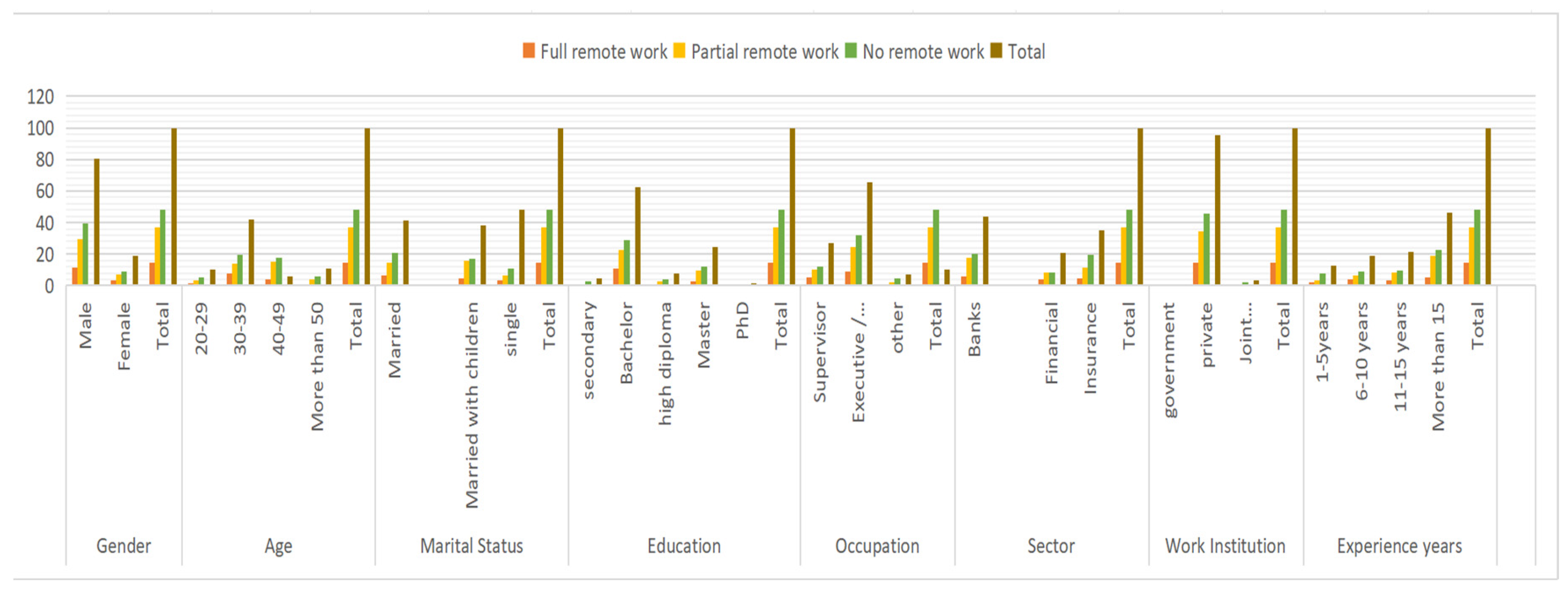
Figure 2.
Mean and One sample t-test for Institution competitiveness. Source: Authors’ calculations based on the survey analysis.
Figure 2.
Mean and One sample t-test for Institution competitiveness. Source: Authors’ calculations based on the survey analysis.
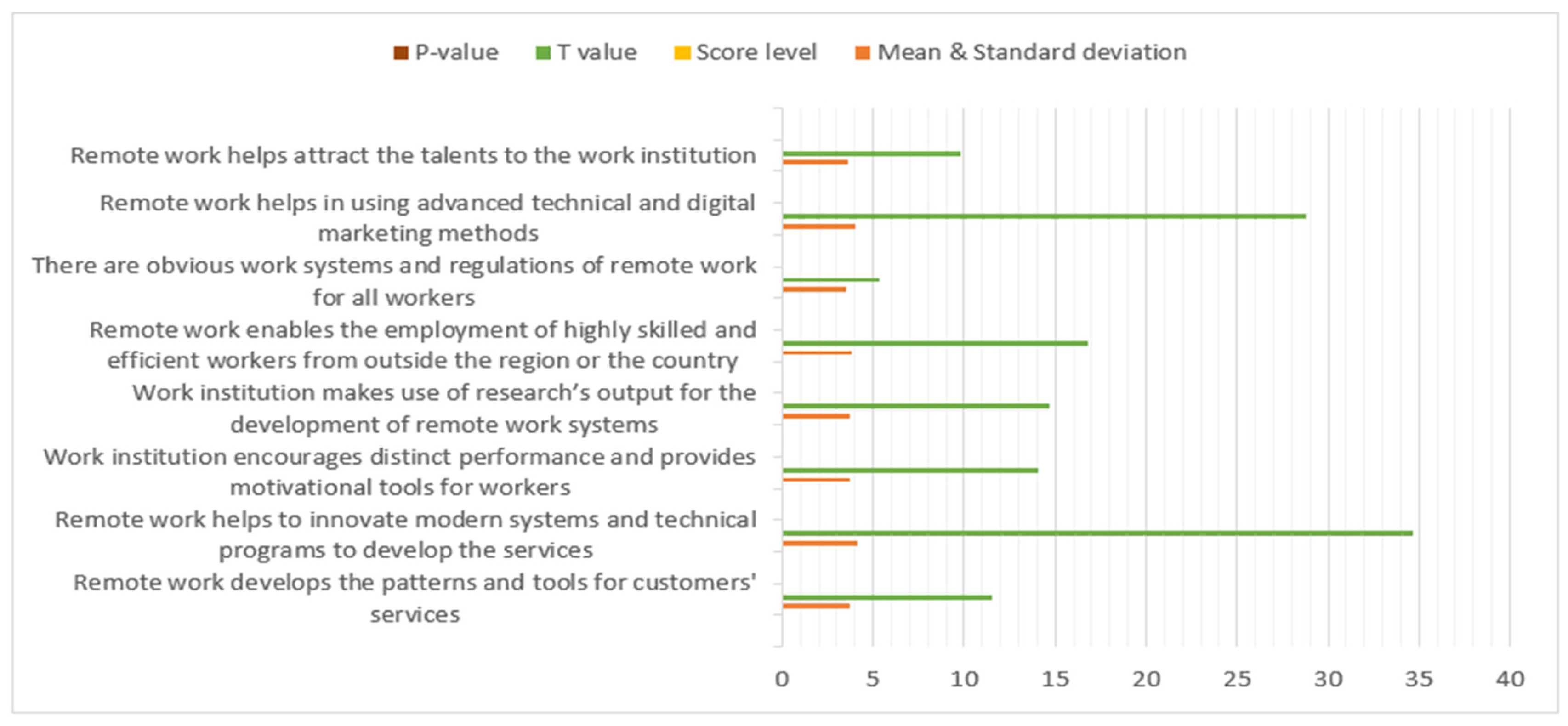
Figure 3.
Mean & One sample T-test for Institution efficiency. Source: Authors’ calculations based on the survey analysis.
Figure 3.
Mean & One sample T-test for Institution efficiency. Source: Authors’ calculations based on the survey analysis.
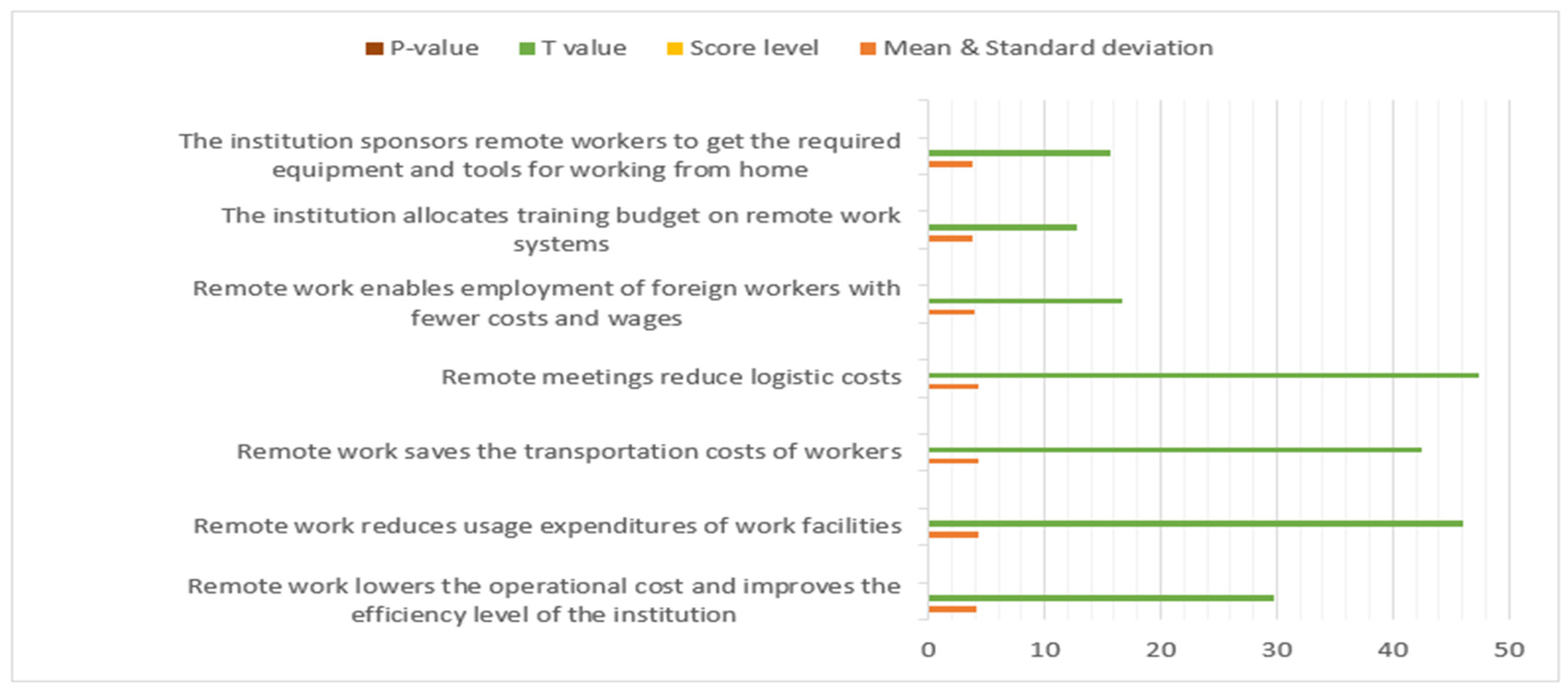
Figure 4.
Mean & One sample t-test Remote work management. Source: Authors’ calculations based on the survey analysis.
Figure 4.
Mean & One sample t-test Remote work management. Source: Authors’ calculations based on the survey analysis.
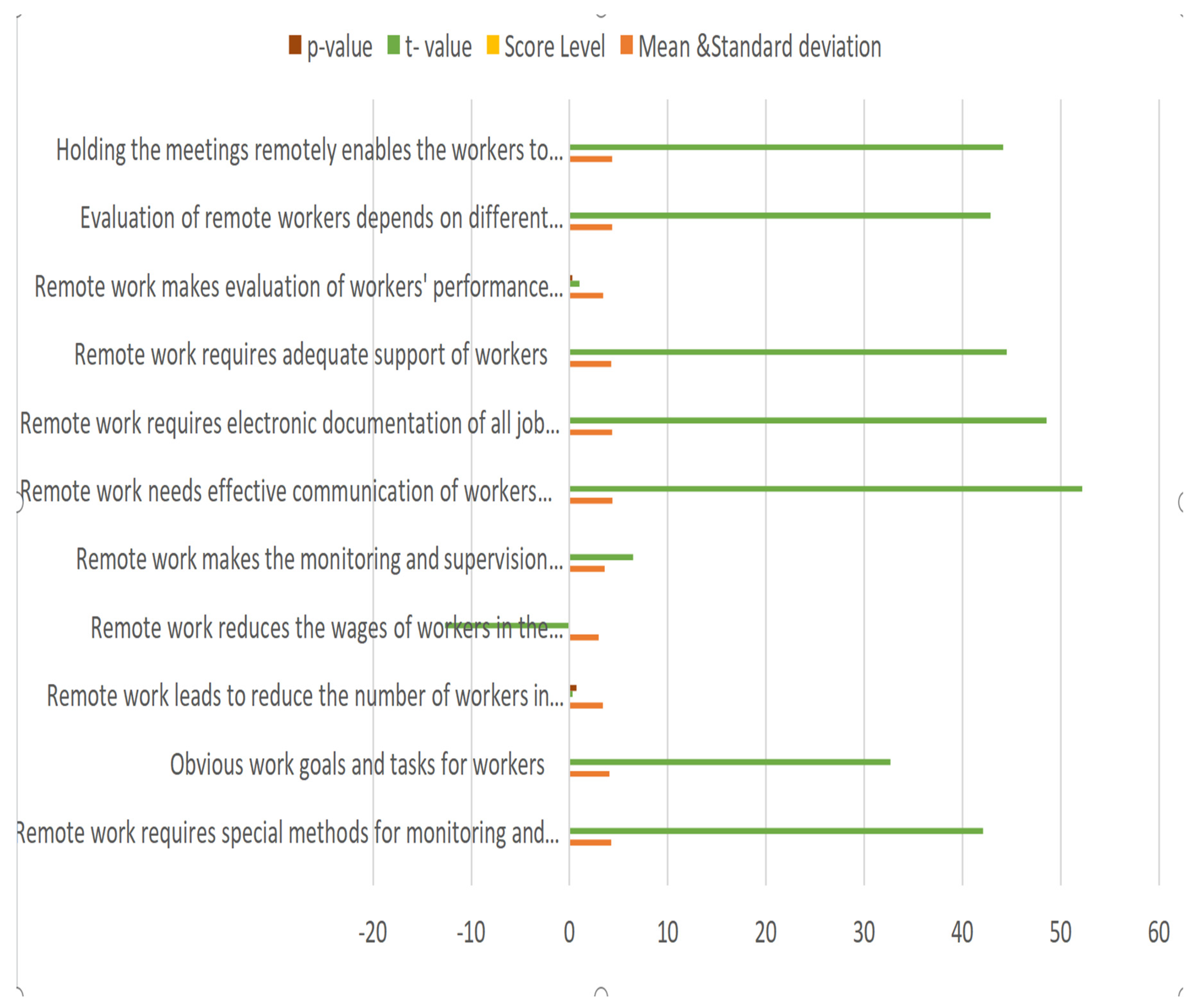
Table 1.
Validity and reliability.
| No. | Section | Cronbach Alpha Coefficient | Number of items |
| 1 | Institution competitiveness | 0.844 | 8 |
| 2 | Institution efficiency | 0.829 | 8 |
| 3 | Remote work management. | 0.742 | 11 |
| 4 | All sections | 0.885 | 27 |
Source: Authors’ calculations based on the survey analysis.
Table 2.
Correlation Coefficients.
| Institution Competitiveness |
Remote work | Institution Efficiency |
Remote work management |
||
| Institution Competitiveness |
Pearson Correlation |
1 | 0.102** | 0.694** | 0.317** |
| Sig. (2-tailed) | 0.000 | 0.000 | 0.000 | ||
| N | 1270 | 1270 | 1270 | 1170 |
Source: Authors’ calculations based on the survey analysis. **. Correlation is significant at the 0.01 level (2-tailed). *. Correlation is significant at the 0.05 level (2-tailed).
Disclaimer/Publisher’s Note: The statements, opinions and data contained in all publications are solely those of the individual author(s) and contributor(s) and not of MDPI and/or the editor(s). MDPI and/or the editor(s) disclaim responsibility for any injury to people or property resulting from any ideas, methods, instructions or products referred to in the content. |
© 2024 by the authors. Licensee MDPI, Basel, Switzerland. This article is an open access article distributed under the terms and conditions of the Creative Commons Attribution (CC BY) license (http://creativecommons.org/licenses/by/4.0/).
Copyright: This open access article is published under a Creative Commons CC BY 4.0 license, which permit the free download, distribution, and reuse, provided that the author and preprint are cited in any reuse.


