

Submitted:
01 June 2024
Posted:
04 June 2024
You are already at the latest version
Abstract
In this article, we analyze the relationships that connect graduates from high school, the training system and employment rates and conditions in the Italian regions between 2004 and 2022. The data used refer to the Istat Bes database. The results show that the growth in the number of high school graduates is positively associated with higher university education and employment with the exception of job satisfaction. Subsequently we also present a clusterization with k-Means algorithm confronting the Silhouette Coefficient with the Elbow Method. Finally, we confront seven different machine-learning algorithms for the prediction of the level of graduated from high school. We also present economic policy suggestions to increase schooling in the Italian regions. The results are critically discussed.
Keywords:
labor force and employment
; human capital
; occupational choice
; job satisfaction
; wage differentials
; public policy
1. Introduction
Understanding the role of a high school diploma and its subsequent impact on employment across Italian regions requires a deep dive into the interconnections between educational attainment, economic development, and labor market outcomes. In the context of modern economies, a high school diploma is often considered the minimum threshold for accessing stable employment opportunities. It represents a fundamental level of education necessary for individuals to engage effectively with more specialized training or higher education and serves as a basic qualifier in the labor market. For many, it marks the transition from compulsory schooling to higher education or direct entry into the workforce. Italy, with its regional disparities in economic development and educational outcomes, presents a unique case study. The northern regions, which are more industrialized and economically developed, typically show higher rates of high school completion and post-secondary enrollment than the southern regions, where economic challenges are more pronounced. These differences in educational attainment are mirrored in the labor market, where the north enjoys lower unemployment rates and higher average incomes compared to the south. The role of a high school diploma in securing employment cannot be understated. Across various regions in Italy, the possession of a diploma significantly enhances an individual's employability. Employers often regard it as a basic indicator of a candidate’s ability to commit to tasks, perform complex duties, and possess basic literacy and numerical skills. For many sectors, especially in service and technology-driven industries, a high school diploma is increasingly seen as indispensable. Beyond individual employment prospects, the educational level embodied in high school completion has broader socio-economic implications. Regions with higher rates of high school graduates tend to exhibit stronger economic performance, lower crime rates, and higher civic participation. Education equips individuals not only with job-related skills but also fosters a sense of community and civic responsibility. Statistically, individuals with a high school diploma earn significantly more over their lifetimes compared to those without. This earning potential is even greater for those who pursue further education. Thus, the economic incentive to complete high school is clear, both for individuals and for society at large, as higher earnings translate into greater consumer spending and tax revenues, which fuel regional economies. However, the journey towards obtaining a high school diploma is fraught with challenges, particularly in economically disadvantaged areas. Issues such as school dropout rates, educational disengagement, and lack of resources disproportionately affect poorer regions and demand targeted policy interventions. Addressing these challenges is crucial for ensuring that the benefits of high school education are universally accessible across all Italian regions. Recognizing the pivotal role of high school education, Italian policymakers have been tasked with devising strategies that can mitigate regional disparities. These strategies include investing in educational infrastructure, enhancing teacher training, providing student scholarships, and fostering partnerships between schools and local businesses to align educational outcomes with labor market needs. The advent of digital technologies and online learning platforms also presents an opportunity to revolutionize the traditional educational model. By leveraging these tools, educational institutions can offer more flexible learning opportunities that can reach a wider audience, including those in remote or underserved areas. In conclusion, the high school diploma is more than just a certificate; it is a critical asset that opens up opportunities not only for individual advancement but also for regional economic development. The correlation between high school education and employment across Italian regions illustrates the need for continued investment in education as a fundamental policy priority. Addressing educational disparities and enhancing the quality of high school education can lead to more equitable social and economic outcomes throughout Italy, ensuring that all citizens have the opportunity to contribute to and benefit from the nation’s economic growth.
The article continues as follows: the second section represents a critical analysis of the literature, the third section presents the static analysis of the data exploring the differences between the Italian regions, the fourth section contains the clustering with the k-Means algorithm, the fifth section contains the econometric model, the sixth section shows the predictive results of the machine learning algorithms, the seventh section presents the economic policy suggestions, the eighth section concludes.
2. Literature Review
Flowers et al. (2020) discuss the impacts of the Nurse–Family Partnership on the education and employment outcomes for clients, indicating positive influences on their career paths and educational achievements. This study underscores the importance of supportive programs in helping individuals reach their potential in both educational and professional arenas. Similarly, Nichols et al. (2020) explore the education-employment nexus as experienced by Canadian immigrant youth, shedding light on the unique challenges and barriers these individuals face in navigating educational and employment systems in Canada. Their research provides critical insights into the needs of immigrant youth, suggesting areas where policy and support structures could be enhanced to better assist this population in achieving successful educational and employment outcomes. On another front, McDonnall and Tatch (2021) delve into the educational attainment and employment status of individuals with visual impairments. Their findings reveal significant disparities in employment rates compared to the general population, highlighting the need for targeted interventions and support systems to improve accessibility and opportunities for visually impaired individuals in both education and the workforce. Staff et al. (2020) question the traditional views that adolescent employment might lead to higher dropout rates from high school. Their investigation provides a nuanced perspective on how employment during adolescence could potentially support rather than hinder academic success, suggesting a reevaluation of policies and perspectives regarding youth employment. Berrigan et al. (2023) focus on Canadians with developmental disabilities, analyzing data from the 2017 Canadian Survey on Disability to evaluate their status in terms of employment, education, and income. Their study highlights significant gaps in employment and income levels compared to the general population, advocating for more inclusive policies and support mechanisms to ensure equitable opportunities for individuals with developmental disabilities.
Avellone (2021) delves into the employment outcomes for students with intellectual disabilities who have participated in postsecondary education programs, highlighting the crucial role such educational settings play in enhancing job opportunities for this demographic. The scoping review suggests that tailored postsecondary programs can significantly influence positive employment outcomes, emphasizing the need for structured support and tailored educational frameworks to facilitate better integration into the workforce. Robroek et al. (2020) examine the educational differences in the duration of working life and the risk of losing paid employment, providing valuable insights into how educational attainment can affect employment longevity and stability. Their study reveals that lower educational levels often correlate with shorter working lives and earlier exits from paid employment, underlining the critical importance of educational policies aimed at extending work life and improving job security across all educational levels. Roux et al. (2021) focus on the utilization of vocational rehabilitation services and their impact on employment outcomes for secondary students on the autism spectrum. Their findings indicate that engagement with vocational services significantly enhances employment prospects for these individuals, suggesting that increased accessibility and support through such programs could lead to improved employment rates within this community. In the context of South Africa, Booyens (2020) addresses the implications of education and skills in tourism for youth employment. This study underscores the sector-specific need for skill development and educational attainment to meet the demands of the tourism industry, which is critical for boosting youth employment and supporting economic growth in regions heavily reliant on tourism. Clemens (2021) investigates how firms react to increases in the minimum wage by focusing on non-employment margins, such as changes in hiring practices or hours offered to workers. The research provides a nuanced understanding of the economic dynamics at play when wage policies are altered, illustrating the complex interplay between wage legislation and employment practices within the labour market.
Landivar et al. (2022) examine how high childcare costs and limited access to programs like Head Start and childcare subsidies can restrict mothers' employment opportunities. Their state-level analysis highlights significant barriers that many women face in the workforce, suggesting that more accessible and affordable childcare options could help enhance employment rates among mothers, potentially leading to broader economic benefits and gender equity in the labor market. Schall, Brooke, Rounds, and Lynch (2021) explore the resilience of employees with intellectual and developmental disabilities during the COVID-19 pandemic and the accompanying economic shutdown. Their retrospective review of employment files shows that despite facing substantial challenges, many individuals with disabilities maintained their employment, underscoring the importance of workplace adaptability and support systems in safeguarding employment for vulnerable populations during crises. Lee et al. (2020) discuss the role of state vocational rehabilitation services in aiding employment outcomes for Asian Americans with psychiatric disabilities. Their study indicates that tailored vocational services can significantly improve employment prospects for this group, emphasizing the need for culturally competent and disability-aware employment supports that cater to the unique needs of diverse populations. Barry (2021) assesses the progress and challenges of equal opportunity in education and employment in Saudi Arabia. While noting advancements towards more inclusivity, the study points out that substantial challenges remain, particularly in fully integrating women and minority groups into educational and professional environments. This critique calls for ongoing reforms and targeted initiatives to overcome structural barriers and promote true equality. Geiger and Okpych (2022) investigate factors associated with positive postsecondary education and employment outcomes for youth with foster care histories. Their research identifies key characteristics and policies that support success in these areas, suggesting that well-designed aftercare programs can make a significant difference in the lives of these young people by providing the necessary resources and support to transition successfully into adulthood and the workforce.
Walk et al. (2021) delve into the impact of correctional education on reducing recidivism, focusing specifically on the mediating role of employment. Their quasi-experimental study across multiple programs establishes that employment can significantly mediate the relationship between educational interventions in prison settings and lowered rates of recidivism. This underscores the importance of providing educational opportunities that lead to viable employment for incarcerated individuals, highlighting the potential of such programs to facilitate successful reintegration into society. Heslina and Syahruni (2021) explore how information technology, human resources competency, and employee engagement collectively influence the performance of employees. Their findings reveal that these factors are critically interconnected, suggesting that improvements in technology and HR competencies can enhance employee engagement and thereby boost overall performance. This study reflects the dynamic nature of workplace environments and the need for ongoing development in human resource practices to keep pace with technological advancements. Bridekirk, et al. (2021) examine the effects of education and employment quality on the mental health of Syrian refugees in Canada. Their research indicates that higher education and employment quality significantly contribute to better self-rated mental health among this group, pointing to the critical role of socio-economic stability in the mental health outcomes of refugees. This study provides valuable insights into how societal integration and quality of employment can impact well-being, suggesting a need for policies that support educational and employment opportunities for refugees to enhance their mental health. Wong et al. (2021) focus on identifying school-based factors that predict employment outcomes for transition-age youth with autism spectrum disorder. The study highlights specific school-based interventions and supports that can improve employment outcomes for this population, emphasizing the importance of tailored educational programs that directly address the challenges faced by youth with autism in transitioning to the workforce. Goyette et al. (2021) investigate the role of placement instability in affecting employment and educational outcomes among adolescents leaving care. Their findings show that instability in foster care placements can have detrimental effects on educational achievement and employment stability, underscoring the need for stable care environments to support the educational and occupational aspirations of these youths.
Girouard and Kovacs (2020) focus on the specific challenges faced by individuals with congenital heart disease, discussing how educational and employment considerations for this group are affected by their health condition. Their study underscores the importance of developing specialized educational programs that accommodate the unique needs of these individuals, which can lead to improved employment outcomes and a better quality of life. Schwartz et al. (2021) shift the focus to the impact of summer employment programs on academic performance among youth. Their research demonstrates that engagement in summer employment not only provides immediate financial benefits but also enhances academic outcomes. This suggests that practical work experiences can complement traditional education systems and foster better academic achievements, preparing youth for future employment. McDonnall and Tatch (2021) examine the relationship between educational attainment and employment among individuals with visual impairments. Their findings reveal that higher educational levels correlate with improved employment rates among the visually impaired, highlighting the critical need for accessible educational opportunities that can equip these individuals with the skills necessary to succeed in the job market. Conway et al. (2022) analyze the interplay between cognition, education, and employment in patients with multiple sclerosis. Their study indicates that cognitive function has a significant impact on educational and employment outcomes in this population, emphasizing the need for cognitive assessments and supportive educational strategies to help manage the impacts of multiple sclerosis on professional life. Laberge et al. (2023) explore predictors of employment in early adolescence through a longitudinal study. Their research identifies key factors that influence employment outcomes from a young age, including educational achievements, social skills, and early work experiences. This study suggests that early interventions aimed at enhancing these factors can lead to more successful employment outcomes later in life.
Thomas et al. (2021) examine the interaction between racial discrimination, educational attainment, and employment status in their study of telomere length among midlife African American women. This study not only discusses the biological impact of chronic stress induced by discrimination but also highlights how socio-economic factors like education and employment can mitigate or exacerbate health outcomes. Their findings suggest that higher educational attainment and stable employment may buffer the detrimental health effects of discrimination, thereby underscoring the critical role of socio-economic stability in improving health outcomes for marginalized communities.
LaForest (2023) explores the effects of high school career and technical education (CTE) on employment, wages, and educational attainment. By demonstrating that CTE programs can significantly enhance employment and wage prospects for students, the study advocates for the integration of vocational training within traditional educational settings. This approach not only prepares students more effectively for the workforce but also boosts their educational achievements, illustrating the dual benefits of practical, skills-based education. Berrigan et al. (2023) provide an analysis of employment, education, and income among Canadians with developmental disabilities, based on the 2017 Canadian Survey on Disability. Their study highlights the disparities faced by this demographic in accessing employment and achieving income equity. By documenting these challenges, the research underscores the need for targeted educational and employment policies that are inclusive of individuals with disabilities, aiming to reduce systemic barriers and enhance economic independence. Johnson (2024) discusses the impact of educational initiatives and pathway programs on employment, particularly focusing on returning citizens (formerly incarcerated individuals). His analysis within the broader context of reintegration emphasizes the importance of education as a transformative tool that can significantly improve employment outcomes and facilitate smoother transitions back into society. This perspective reinforces the value of structured support and education programs in addressing the unique challenges faced by returning citizens. Carruthers et al. (2022) examine graduation, college, and employment outcomes for CTE students with identified disabilities. Their study delves into how specialized educational tracks influence long-term outcomes for students with disabilities, offering evidence that such programs can lead to improved educational and employment success. The findings contribute to a broader understanding of how tailored educational approaches can support the specific needs of disabled students, enhancing their potential for successful societal and economic integration.
Anderson and Avegno (2021) discuss the critical link between education and employment in the realm of social emergency medicine, emphasizing the importance of these factors in public health interventions. Their work highlights how educational attainment and employment status can influence health outcomes, suggesting that improving access to education and job opportunities should be integral components of emergency medicine and broader public health strategies. DiGuiseppi et al. (2021) delve into the social network correlates of education and employment service use among youth experiencing homelessness. Through their longitudinal study, they illustrate how social connections impact the utilization of educational and employment services, indicating that stronger social networks can significantly enhance the accessibility and effectiveness of these services for homeless youth. This research points to the potential of community-based approaches in supporting vulnerable groups through education and employment initiatives. Ringbom et al. (2022) explore the long-term impacts of psychiatric disorders diagnosed in adolescence on exclusion from education, employment, or training. Their findings highlight the severe long-term consequences of adolescent psychiatric conditions on life trajectories, emphasizing the need for early mental health interventions and support systems that can help prevent prolonged exclusion from educational and employment opportunities. Mubeen et al. (2022) focus on the role of education and employment in women's empowerment within an agrarian economy, using a case study approach. Their research underscores the transformative power of educational and employment opportunities in enhancing women's socioeconomic status and empowerment in primarily rural economies, advocating for increased investments in women's education as a strategy for economic development and gender equality. Cieslik et al. (2022) address the issue of young people not in employment, education, or training (NEET) in Sub-Saharan Africa. They critically assess the missed sustainable development target related to youth employment and education, suggesting that without substantial changes in policy and practice, many young people in this region will continue to face significant barriers to entering the workforce and educational systems. Their study calls for a reset in approaches to meet the needs of NEET youths, proposing more integrated and inclusive strategies that consider the unique challenges faced by young people in Sub-Saharan Africa.
Harris et al. (2023) focus on the interplay between mental health, education, employment, and pain management in individuals with sickle cell disease. This research underscores the complex challenges faced by those with chronic health conditions, revealing how these factors can significantly impact life outcomes. The study suggests that better integration of health and educational support can improve employment prospects and overall quality of life for individuals with sickle cell disease, indicating a need for holistic approaches that consider health status in educational and employment policies. Oswald-Egg and Renold (2021) examine the impact of vocational education and training (VET) work experience on labor market outcomes post-higher education. Their findings emphasize the critical role of practical work experience in enhancing employment opportunities for graduates. The study illustrates that VET programs, which combine theoretical education with practical experience, can significantly boost employability, suggesting that experiential learning should be a key component of educational curricula to better prepare students for the workforce. Adejumo et al. (2021) discuss the relationship between education enrollment rates and employment rates in Nigeria, exploring implications for sustainable human capital development. Their study highlights the disconnect that can exist between educational attainment and job market needs, pointing to the necessity for educational reforms that align more closely with labor market demands to ensure that education leads to employable skills and sustainable employment. Parker et al. (2022) link the concept of school belonging to the likelihood of emerging adults being classified as not in education, employment, or training (NEET) post-school. This research identifies school belonging as a significant predictor of positive educational and employment outcomes, indicating that fostering a sense of belonging within educational settings can play a crucial role in preventing disengagement and supporting continuous advancement in education or the workforce. Matli and Ngoepe (2021) provide a qualitative insight into the life situations and lived experiences of young people who are NEET in South Africa. Their study offers a nuanced understanding of the barriers these individuals face, including educational, economic, and social challenges. It calls for targeted interventions that address these barriers and support the reintegration of NEET youths into educational or employment pathways.
Van Tol (2024) explores the relationship between education and full employment within the broader context of the Capitalocene, emphasizing the political and ecological imperatives that shape these discussions. The study argues for a rethinking of educational and employment policies to address the ecological crises of our times, suggesting that education systems should integrate principles of sustainability and environmental stewardship to prepare individuals not only for employment but also for active participation in addressing global environmental challenges. Somani (2021) analyzes the returns on investment in higher education and its impact on public employment, highlighting how advanced education significantly increases the likelihood of securing better public sector jobs, which are often associated with greater job security and benefits. This study underlines the value of higher education in enhancing individual economic prospects and contributing to broader public service. Fusaro and Scandurra (2023) assess the impact of the European Social Fund on youth education and employment, evaluating its effectiveness in improving educational access and job prospects for young people across Europe. Their findings emphasize the crucial role of targeted financial and policy interventions in supporting youth, particularly in overcoming educational and employment barriers, which are vital for fostering economically stable and inclusive societies. Erdogan et al. (2021) discuss the dynamics of rural-urban ecosystems, focusing on how urban social innovation can facilitate sustainable rural pathways to education, employment, and training. The study presents urban innovation as a key driver for rural development, suggesting that the diffusion of innovative educational and employment strategies from urban to rural areas can enhance opportunities and sustainability in rural regions, thereby reducing the rural-urban divide. Sperandei et al. (2023) link low education levels with mental health outcomes among older adults, investigating the mediating effects of employment and income. Their research highlights the long-term impacts of educational attainment on life satisfaction and mental health in later life, emphasizing the importance of maintaining employment and stable income as mediators that can alleviate some of the mental health risks associated with lower educational levels.
Yassine and Bakass (2022) examine the roles of education and employment in alleviating youth poverty in Morocco. Their research underscores the critical importance of these factors in reducing poverty levels among young people, suggesting that enhanced educational and employment opportunities can directly contribute to sustainable economic development and poverty reduction. This study highlights the potential of education and employment as powerful tools for social change, particularly in developing countries. Ayoola et al. (2023) delve into the socio-economic impacts of ChatGPT, an AI language model, on aspects such as access-efficiency, employment, education, and ethics. Their analysis provides a broader perspective on how emerging technologies like AI can transform educational access and employment landscapes while also raising ethical considerations. This study points to the need for careful integration of AI technologies in educational and professional settings to harness their benefits while mitigating potential drawbacks. Jia et al. (2021) focus on the influence of entrepreneurship education on employment quality and willingness among students. Their findings suggest that entrepreneurship education significantly enhances students' readiness and quality of engagement in the workforce, advocating for the inclusion of entrepreneurship-focused curricula in higher education to better prepare students for dynamic employment environments. Adelaja et al. (2023) investigate the impact of different types of entrepreneurial education on students’ intentions towards self-employment, applying Experiential Learning Theory (ELT). Their research demonstrates that practical, experience-based entrepreneurial education can significantly increase students' propensity towards starting their own businesses, thereby promoting self-employment as a viable career path. Sharif et al. (2024) provide a comparative analysis of gender equality in STEM education and employment in Jordan. Their study emphasizes the importance of sustainable gender equality initiatives, highlighting that equitable access to STEM education leads to better employment outcomes for women and contributes to broader economic and social equity. This comparative perspective sheds light on the crucial role of educational policies in advancing gender equality and empowering women through high-quality STEM education.
A summary of the literature is shown in the table below:

Table 1.
Synthesis of the literature by macro-themes.
| Macro-Theme | Key Studies |
|---|---|
| Education and Employment Outcomes | Flowers et al. (2020), Nichols et al. (2020), McDonnall & Tatch (2021), Staff et al. (2020), Robroek et al. (2020), Booyens (2020), Lee et al. (2020), LaForest (2023) |
| Education and Socio-Economic Development | Adejumo et al. (2021), Somani (2021), Fusaro & Scandurra (2023) |
| Disability, Inclusion, and Educational Outcomes | Berrigan et al. (2023), Avellone (2021), Roux et al. (2021), Carruthers et al. (2022), Wong et al. (2021) |
| Impact of Family and Social Factors | Girouard & Kovacs (2020), Geiger & Okpych (2022), Goyette et al. (2021) |
| Technological Impact on Employment and Education | Heslina & Syahruni (2021), Ayoola et al. (2023) |
| Health and Education | Harris et al. (2023), Conway et al. (2022), Sperandei et al. (2023) |
| Employment and Mental Health | Bridekirk et al. (2021), Schwartz et al. (2021), Schall et al. (2021) |
| Vocational and Technical Education | Oswald-Egg & Renold (2021), Parker et al. (2022), Jia et al. (2021), Adelaja et al. (2023) |
| Employment Challenges and Policy | Walk et al. (2021), Barry (2021), Landivar et al. (2022), Clemens (2021) |
| Youth and Employment Dynamics | Yassine & Bakass (2022), Erdogan et al. (2021), Cieslik et al. (2022), Matli & Ngoepe (2021), Laberge et al. (2023) |
| Gender Equality in STEM and Employment | Sharif et al. (2024) |
| Entrepreneurial Education and Self-Employment | Jia et al. (2021), Adelaja et al. (2023) |
| Social and Cultural Factors in Education | Ringbom et al. (2022), Mubeen et al. (2022) |
3. Trend and Static and Comparative Analysis of the Presence of People with at Least a Diploma in the Italian Regions
In the following paragraph we take into consideration the distribution of people with a high school diploma in the Italian regions.
Trend of people who have at least a diploma in the Italian regions in 2023. The data shows significant regional variation in high school completion rates, ranging from a high of 74% in Lazio to a low of 54.9% in Sicilia. Such disparities underscore the uneven landscape of educational attainment in Italy, which could be reflective of varying economic conditions, access to educational resources, and historical educational policies across regions. Regions such as Lazio, Umbria, and Trentino-Alto Adige exhibit the highest percentages, surpassing 72%. These regions, particularly Lazio, benefit from better funding, infrastructure, and educational programs that are often more abundant in urban and economically robust areas. The strong educational outcomes in Trentino-Alto Adige may also be influenced by its unique bilingual education system, catering to both Italian and German-speaking populations, which could contribute to higher engagement and educational achievement. On the other hand, regions like Sicilia, Sardegna, and Puglia report the lowest percentages, all falling below 56%. These areas, often characterized by higher rates of poverty and unemployment, face significant challenges that impede educational attainment. Economic hardships can limit access to quality education as schools in poorer regions may struggle with underfunding, teacher shortages, and lower educational resources. Additionally, cultural factors and the rural landscape of regions like Sardegna may contribute to lower educational prioritization, where immediate economic contributions from younger populations can be valued over prolonged education. The disparities might also be influenced by the migratory patterns, with northern regions experiencing an influx of domestic and international migrants seeking better job opportunities and educational prospects for their children, thereby boosting the educational metrics. In contrast, the southern regions, with their higher emigration rates, might see a drain in young, potentially more academically inclined demographics, which further challenges their educational systems. Considering these regional disparities, there is a critical need for tailored educational policies. For regions with lower educational attainment, targeted interventions such as increased funding, enhancement of educational infrastructure, and programs aimed at reducing school dropout rates could be beneficial. Additionally, initiatives to engage communities in these areas, perhaps by incorporating more vocational training that aligns with local economic needs, could help improve educational outcomes and ensure that education remains a viable pathway for economic improvement. Moreover, fostering partnerships between successful educational institutions in higher-performing regions and those in regions with lower attainment might spread effective teaching methods and curricular innovations. Implementing more inclusive education policies that address the needs of diverse linguistic and cultural communities, particularly in highly multicultural urban areas or unique regions like Trentino-Alto Adige, could also enhance engagement and academic success. In summary, while the overall picture of high school educational attainment in Italy shows a majority of regions with more than two-thirds of their population achieving this level of education, the stark contrast with the lower-performing regions highlights an urgent call for policy attention. By understanding and addressing the root causes of these disparities, whether they be economic, cultural, or infrastructural, stakeholders can implement more effective educational strategies. These strategies not only aim to elevate the lowest performers but also to sustain and enhance the educational achievements across all regions, thereby fostering a more equitable and prosperous societal landscape (Figure 1).
Trend of people who have at least a diploma in the Italian regions between 2018 and 2023. The data reflecting the change in the percentage of individuals with at least a high school diploma across various Italian regions from 2018 to 2023 provides a fascinating snapshot into the educational progression within the country. These figures not only show an overall positive trend in educational attainment but also highlight significant regional disparities that warrant a deeper analysis. Across the board, every region has seen an increase in the percentage of its population achieving at least a high school education. The most notable improvements are seen in Calabria, with an astonishing 12.7% absolute increase, and Puglia, with a 10.7% increase. These southern regions, traditionally lagging behind their northern counterparts in various socio-economic indicators including education, have shown substantial progress, which might be indicative of targeted educational policies, increased investment in school infrastructure, or improved socio-economic conditions leading to greater educational participation. However, while the percentage increase is significant, it's crucial to note that these regions started from a considerably lower base. For example, Puglia's improvement of 10.7% brings it to a 55.7% high school completion rate, which is still below the national average, suggesting that while the rate of improvement is commendable, there is still much work to be done. In contrast, regions with traditionally higher educational attainment such as Lombardy, Trentino-Alto Adige, and Emilia-Romagna have seen more modest improvements. This could be due to a "ceiling effect," where it becomes increasingly difficult to achieve large percentage increases due to already high levels of educational attainment. Nonetheless, these modest increases are still significant as they contribute to pushing the boundaries of educational excellence further. Umbria deserves a special mention with a 7.9% increase, the highest among regions that were already performing above average in 2018. This could be reflective of effective local education policies, including curriculum improvements, teacher training, and student support systems that collectively enhance educational outcomes. The variations in percentage increase also reflect differing regional priorities, capacities, and perhaps the effectiveness of educational strategies implemented at the regional level. For example, the substantial improvement in Calabria might be the result of concerted efforts to revitalize education as a key to economic and social development, which could include tackling early school leaving, enhancing vocational training, and improving higher education links. Additionally, the data underscores the ongoing challenge of enhancing educational attainment in a way that reduces regional disparities. While the improvements in southern regions are promising, the persistent gap between these and more affluent northern regions highlights the need for a sustained focus on education as a driver of regional development. From a policy perspective, these trends should inform future educational strategies. Policymakers need to focus not only on continuing the positive trends but also on addressing the underlying issues that lead to regional educational disparities. This could involve more customized educational programs that take into account regional socio-economic contexts, increased funding for regions where increases are still below the national average, and initiatives aimed at sustaining the engagement of older students in education. In conclusion, the positive trend across Italy in terms of high school educational attainment from 2018 to 2023 is a testament to the country’s commitment to improving education. However, the significant regional variations call for a more nuanced approach to education policy, one that considers both the successes and the ongoing challenges. By strategically addressing these issues, Italy can continue to build on these improvements and work towards a more equitable educational landscape across all its regions (Figure 2).
Trend of people who have at least a diploma in the Italian macro-regions between 2018 and 2023. The analysis of the educational data from various macro-regions of Italy, spanning from 2018 to 2023, provides a rich narrative about the ongoing evolution in the attainment of high school diplomas. This period marked distinct improvements across all regions, with some disparities in the rate of change that illustrate broader socio-economic trends and the impact of localized educational policies. Starting in the north of Italy, both the North and North West regions exhibited a solid increase in the percentage of individuals achieving at least a high school diploma, with the North West showing a slightly higher percentage increase. This might be attributed to the concentrated efforts in urban and industrial hubs like Milan and Turin, where educational resources, including funding, access to technology, and quality teaching staff, are typically more abundant. The North-East, while showing the least percentage increase among the northern regions, still maintains a strong educational performance, potentially due to its robust economy and stable social infrastructure which consistently support educational attainment. Moving to the Center, which includes regions like Tuscany, Umbria, and Lazio, a moderate increase reflects ongoing success in maintaining above-average educational standards. The central regions of Italy have a blend of urban centers and rural areas, and the educational strategies here might be more varied, aiming to cater to diverse populations with different educational needs. The most significant insights come from the Midday, South, and Islands regions—areas historically lagging behind the northern and central parts of Italy in terms of educational and economic development. These regions showed the highest relative improvements, with the South and Midday witnessing substantial percentage increases. Such improvements suggest that recent educational reforms, possibly including increased investment in school facilities, targeted programs to reduce school dropout rates, and enhanced vocational education options, are beginning to bear fruit. Moreover, these changes might also reflect broader socio-economic improvements, including better job prospects for graduates, which in turn encourage higher school completion rates. The Islands, encompassing Sicily and Sardinia, though showing the smallest absolute increase, still noted a significant percentage rise. The challenges in these regions are unique, often including issues like higher rates of poverty, rural school access, and fewer higher education institutions, which can impact educational attainment. The observed increase might be the result of focused initiatives to address these specific barriers, such as through the deployment of digital education tools, which have been increasingly used to reach isolated communities. These trends are promising but also highlight the uneven pace of educational progress across different parts of Italy. The persistence of a north-south divide in educational attainment is a critical issue that Italian policymakers need to continue addressing. While the progress in southern regions and the islands is commendable and suggests that targeted interventions can be effective, the gap remains significant and calls for sustained efforts. Strategies might include further enhancing the quality of education in underperforming areas, increasing the attractiveness of staying in school through scholarships and financial incentives, and fostering partnerships between schools in high and low-performing areas to share resources and best practices. Overall, the data from 2018 to 2023 paints a picture of a nation steadily pushing the boundaries of educational attainment (Figure 3).
The North-South gap in the presence of people who have at least a diploma. The analysis of educational attainment across Italian regions from 2018 to 2023 provides a vivid illustration of the entrenched North-South divide that characterizes much of Italy’s socio-economic landscape. This divide is particularly evident in the levels of high school diploma attainment, which serve as a critical measure of educational success and, by extension, potential economic opportunity. The data reveals a striking disparity: while the northern and central parts of Italy exhibit higher baseline levels of educational attainment, the southern regions and the islands start from a markedly lower base, though they show significant relative improvements over the observed period. In 2018, the North, including both the North West and North East, alongside the Center, reported percentages of individuals with at least a high school diploma ranging from 64.7% to 67.7%. By 2023, these figures rose modestly to between 68.3% and 70.8%. The growth, although steady, reflects a lower percentage increase (from 4.34% to 5.56%), indicative of a scenario where higher initial educational attainment levels leave less room for dramatic increases. Conversely, the South, Midday, and Islands regions, which initially recorded significantly lower levels of diploma attainment (from 51.5% to 54.3% in 2018), experienced more robust growth by 2023, reaching percentages between 55% and 59%. These regions saw the highest percentage increases, ranging from 6.80% to 8.66%, signaling a vigorous catch-up trend. This pattern is reflective of several underlying factors. Historically, the North of Italy has benefited from more substantial industrialization, a more robust economic infrastructure, and greater access to quality educational resources. These advantages have translated into higher educational outcomes and broader economic opportunities. In contrast, the South and the islands have struggled with a range of challenges, including lower levels of industrialization, higher rates of unemployment, and less investment in public education. The significant educational gains in these regions over the five years could be attributed to targeted governmental and EU-funded initiatives aimed at improving educational infrastructure, increasing the availability of quality teachers, and enhancing vocational training opportunities to retain students and provide them with tangible career pathways. However, despite these gains, the absolute percentages of high school diploma attainment in the South and Islands in 2023 remain below those observed in the North and Center, underscoring a persistent gap that continues to influence the socio-economic divides within the country. This gap has profound implications not only for the economic prospects of individuals in the lower-performing regions but also for the broader socio-economic stability and cohesion of Italy as a nation. It affects migration patterns within Italy, with younger people often moving northward in search of better educational and job opportunities, further depleting the South of its human capital and exacerbating the divide. The North-South educational disparity also poses significant challenges for policymakers. It underscores the need for a sustained focus on educational reform and investment in the South and Islands. Policies need to be nuanced and region-specific, addressing unique local challenges while fostering an environment that can elevate educational standards and outcomes. This could include further investments in digital education to overcome geographical and infrastructural barriers, partnerships between higher-performing schools in the North and schools in the South to facilitate knowledge and resource sharing, and enhanced support for students who may face socio-economic barriers to completing their education. In conclusion, the data from 2018 to 2023 on high school diploma attainment across Italian regions is a microcosm of the larger socio-economic challenges facing Italy. The encouraging growth in educational attainment in the South and Islands highlights the potential for change and improvement but also serves as a reminder of the considerable work that remains to be done (Figure 4).
4. Clusterization with k-Means Algorithms: Silhouette Coefficient Vs Elbow Method
In the following analysis we take into consideration the clustering with the k-Means algorithm optimized with both the Silhouette coefficient and the Elbow method. The results are compared with each other.
Clusterization with k-Means algorithm optimized with the Silhouette Coefficient. Here are the Silhouette scores for each number of clusters (k) from 2 to 10:
- k=2: 0.7205
- k=3: 0.7002
- k=4: 0.6245
- k=5: 0.5420
- k=6: 0.5341
- k=7: 0.5157
- k=8: 0.4869
- k=9: 0.4524
- k=10: 0.3630
The highest Silhouette score is for k=2, suggesting that two clusters provide the best balance of within-cluster similarity and between-cluster difference for this dataset (Figure 5).
With k = 2 clusters, the regions are grouped as follows:
- Cluster 0: Piedmont, Aosta Valley, Liguria, Lombardy, Trentino-Alto Adige, Veneto, Friuli-Venezia Giulia, Emilia-Romagna, Tuscany, Umbria, Marches, Lazio, Abruzzo, Molise, Basilicata;
- Cluster 1: Campania, Puglia, Calabria, Sicily, Sardinia.
This clustering suggests that Cluster 0 contains regions with generally higher education levels (higher percentage of people with at least a diploma), while Cluster 1 includes regions with relatively lower education levels based on the provided data.
The clustering results for k=2 reveal more than just educational statistics; they underscore a profound socio-economic divide that permeates various aspects of Italian society. This segmentation aligns well with historical, economic, and social patterns observed between northern and southern Italy. Northern Italy, represented predominantly in Cluster 0, is renowned for its robust economy. It houses a significant portion of the country's manufacturing and financial industries, contributing to a higher GDP per capita compared to the south. This economic advantage facilitates better educational infrastructure, more funding for schools, and greater opportunities for residents. In contrast, the regions in Cluster 1, mostly from southern Italy, struggle with weaker economic structures and higher rates of poverty, which directly impacts educational opportunities and outcomes. Regions in Cluster 0 typically have a higher density of educational institutions, including universities and vocational training centers. This accessibility not only provides residents with better educational opportunities but also attracts students from other regions and countries. On the other hand, southern Italy suffers from a relative scarcity of schools and education institutions, which can limit local residents' educational achievements unless they relocate, which itself can be a barrier due to economic constraints. The disparity in economic and educational opportunities has historically driven internal migration from south to north. This movement tends to drain the south of young, educated individuals who seek better opportunities in the northern cities, exacerbating the educational divide. The brain drain can have long-term detrimental effects on the southern regions, stalling efforts to improve local economies and educational systems. Understanding the clustering of educational attainment can assist policymakers in designing more targeted educational reforms. For regions in Cluster 1, there may be a need for increased investment in educational infrastructure, including the establishment of new schools, to retain local talent and improve educational outcomes. Additionally, policies aimed at economic stimulation in these regions could indirectly boost educational attainment by enhancing the overall quality of life and reducing the need for migration. The clustering also hints at potential long-term social consequences if these disparities remain unaddressed. Regions with lower educational attainment might face challenges such as lower life expectancy, poorer health outcomes, and reduced civic engagement. Conversely, regions with higher educational attainment can experience a virtuous cycle of growth, attracting businesses and investments that further enhance the local education system and economic opportunities.
Clusterization with the k-Means Algorithm Optimized with the Elbow Method. Below we present the clustering through the k-Means algorithm optimized using the Elbow method (Figure 6).
Using k=3 clusters, the regions of Italy are grouped as follows:
- Cluster 0: includes regions with generally very high educational attainment. This cluster consists of Liguria, Trentino-Alto Adige, Friuli-Venezia Giulia, Emilia-Romagna, Umbria, Lazio, Abruzzo.
- Cluster 1: comprises regions with the lowest educational attainment among the groups. This cluster includes Campania, Puglia, Calabria, Sicily, and Sardinia.
- Cluster 2: represents regions with moderate to high educational attainment, but not as high as those in Cluster 0. This cluster contains Piedmont, Aosta Valley, Lombardy, Veneto, Tuscany, Marches, Molise, Basilicata.
This clustering reinforces the general geographic and socio-economic trends observed in Italy, with Cluster 0 likely representing the northern and central regions known for better educational facilities and higher socioeconomic status. Cluster 1 includes the southern regions and major islands, often characterized by economic challenges and lower educational attainment rates. Cluster 2 mixes some of the central and northern regions, which may have diverse educational outcomes.
The k-Means clustering analysis with k = 3 of educational attainment data in Italy reveals distinct patterns that align closely with the well-documented socio-economic and regional disparities within the country. The three clusters identified through this analysis offer insights into the geographical distribution of educational outcomes among Italian regions, highlighting deeper underlying economic, social, and infrastructural factors. Cluster 0, which includes regions like Liguria, Trentino-Alto Adige, Friuli-Venezia Giulia, Emilia-Romagna, Umbria, Lazio, and Abruzzo, represents areas with the highest levels of educational attainment. These regions are predominantly located in the northern and central parts of Italy, areas known for their robust economies, advanced infrastructure, and higher living standards. The presence of multiple higher education institutions, alongside extensive secondary education facilities, boosts these regions' educational profiles. Additionally, these areas benefit from greater investments in educational programs and continuous development initiatives aimed at enhancing educational access and quality. This cluster underscores the advantages accruing to regions with strong economic bases, where education serves both as a driver and beneficiary of socio-economic prosperity. In stark contrast, Cluster 1, comprising Campania, Puglia, Calabria, Sicily, and Sardinia, highlights regions with the lowest educational attainment. This cluster includes southern regions and major islands, which have historically faced numerous challenges. These areas suffer from higher unemployment rates, economic stagnation, and limited access to quality education. The educational institutions in these regions are often under-resourced, struggling with lack of funding and inadequate educational materials and facilities. Moreover, the socio-economic conditions in these areas can impede educational achievement, where issues like poverty, social instability, and lower academic expectations prevail. The clustering of these regions highlights the critical need for targeted educational reforms and investments to uplift these disadvantaged areas, emphasizing the necessity of addressing broader socio-economic issues to improve educational outcomes. Cluster 2 contains a mix of regions such as Piedmont, Aosta Valley, Lombardy, Veneto, Tuscany, Marches, Molise, and Basilicata. This group represents a diverse collection of regions with moderate to high educational attainment, reflecting a transitional character between the highly affluent northern and central areas and the less prosperous southern regions. These regions, while benefiting from better economic conditions than those in Cluster 1, do not match the educational heights seen in Cluster 0. The reasons could be varied, including less concentration of educational resources compared to Cluster 0 or subtle socio-economic factors that might affect educational attainment. This cluster highlights the variability within the Italian educational landscape, where regional disparities can exist not just at the extremes but also in more nuanced ways among moderately prosperous areas. The clustering results are emblematic of Italy's broader regional disparities, not only in education but also in economic and social dimensions. The clear demarcation between the north and south in terms of educational outcomes mirrors economic disparities, where the northern regions are more industrialized and economically dynamic, whereas the southern regions often grapple with structural economic issues. These educational clusters thus serve as a reflection of the larger challenges facing Italy, suggesting that any comprehensive approach to improving educational outcomes must also address the underlying economic and social inequalities. Moreover, the insights gained from this clustering analysis could be instrumental for policymakers and educational planners. By understanding the specific educational landscapes of different clusters, policies can be tailored to meet the distinct needs of each cluster. For Cluster 0, policies might focus on maintaining excellence and pushing the boundaries of educational and technological integration. For Cluster 1, a comprehensive suite of interventions ranging from increased funding, infrastructural improvements, teacher training, and community involvement might be necessary to catalyze significant changes. For Cluster 2, strategies might involve balancing resource distribution and focusing on addressing specific regional challenges that prevent these areas from achieving the highest educational standards.
Choose between the two clustering methods. From the comparison between the two clustering models with the k-Means algorithm, two different possibilities emerge. Clustering with the k-Means algorithm with the Silhouette coefficient shows the presence of an optimal level of clustering with k=2, while clustering with the Elbow method shows an optimal level of clustering with k=3. Analyzing the two solutions, it is necessary to highlight the fact that the clustering with k=3 should be preferred to the clustering with k=2 as it is more representative of the complexity and diversity of the Italian regions. However, there remains a dominance of the central-northern regions which present levels of the observed variable higher than the corresponding values of the southern regions. However, the clustering with k=3 allows us to capture particular nuances of the phenomenon in the Italian regions. For example, Lazio, a central region, has levels comparable with the more advanced regions of the North. Molise and Basilicata are the only two southern regions to have a level of people with at least a medium-level high school diploma.
5. Econometric Model for Estimating the Value of People with at Least a Diploma in the Italian Regions
Below we present an econometric analysis carried out using the following models: Dynamic Panel, Panel Data with Fixed Effects, Panel Data with Random Effects, Pooled OLS. Specifically, we estimated the following expression:
Where i=20 and t=[2004;2022]. The list of variables used in the model are indicated in the table below (Table 1).
Table 1.
List of Variable of the Econometric Model.
| List of Variables of the Econometric Model | ||
|---|---|---|
| Label | Variable | Acronym |
| A1 | People with at least a high school diploma (25-64 years) | PHS |
| A2 | Graduates and other tertiary qualifications (30-34 years) | G |
| A5 | Young people who do not work or study (NEET) | NEET |
| A11 | Employment rate (20-64 years) | ER |
| A17 | Rate of fatal accidents and permanent disability | RFAPD |
| A20 | Satisfaction with the work done | SWWD |
| A23 | Employed people working from home | EPWH |
The econometric results are in the Appendix A.
We found a positive relationship between people who have a diploma and the following variables:
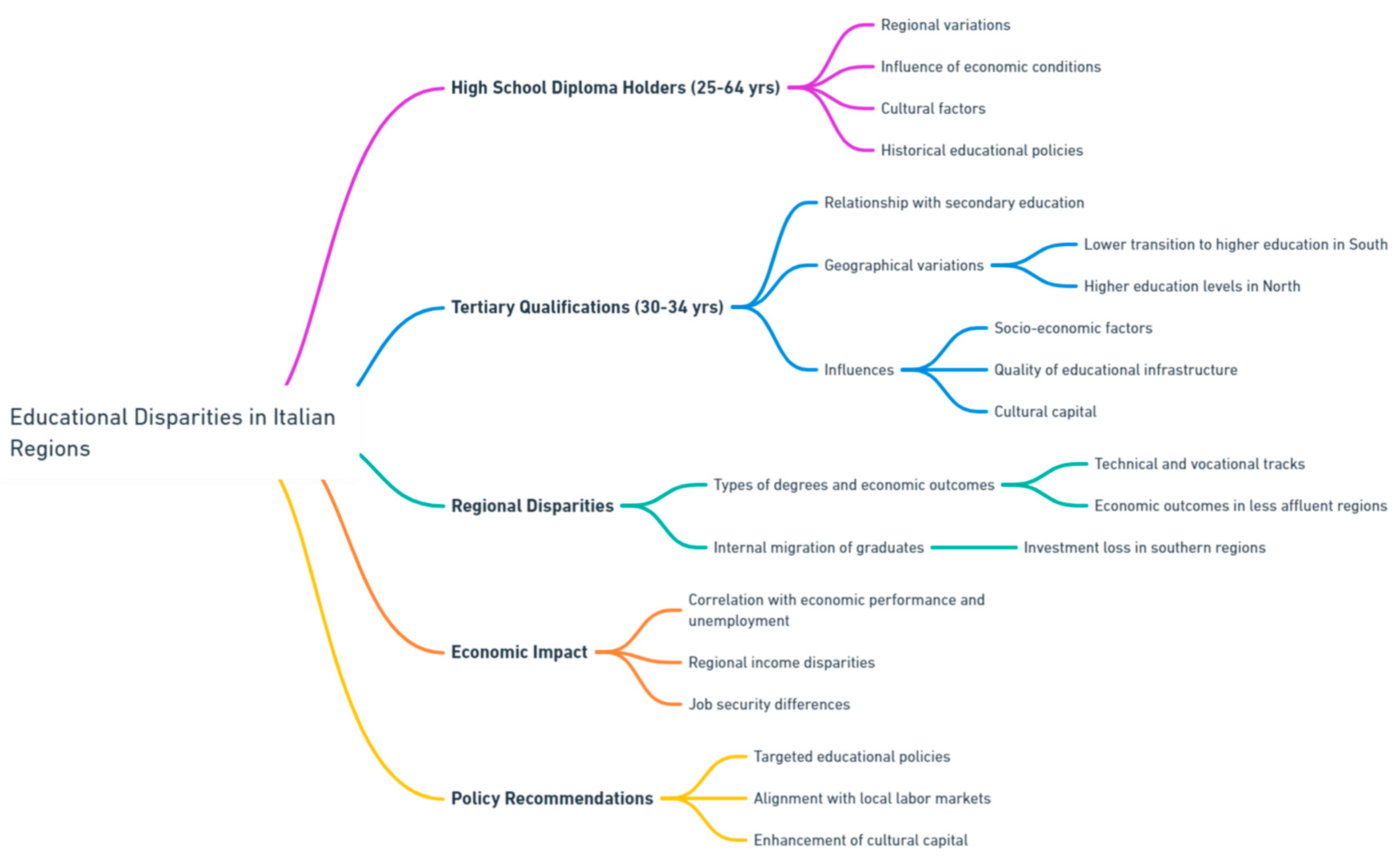
- G: analyzing the relationship between people with at least a high school diploma (aged 25-64) and those with tertiary qualifications (aged 30-34) across Italian regions requires an understanding of the broader educational landscape and its regional disparities. Italy exhibits significant geographical variations in educational attainment, influenced by economic conditions, cultural factors, and historical educational policies. Research indicates a nuanced relationship between secondary education completion and subsequent tertiary educational attainment. In Southern Italy, despite increases in general education levels, the transition to higher education remains relatively low compared to the north. This is partly due to socio-economic factors and the quality of educational infrastructure (Contini & Salza, 2020). The influence of cultural capital is also critical, as it impacts both the propensity to pursue higher education and the perceived value of such education in different regions (Crociata et al., 2020). In terms of tertiary education, there is a marked distinction between the types of degrees pursued and the outcomes they lead to in various regions. Technical and vocational tracks, often seen as less prestigious, are nonetheless linked to positive economic outcomes, especially in less affluent regions, suggesting a mismatch between educational paths and labor market needs (Vergolini & Eleonora Vlach, 2017). This mismatch is further complicated by the internal migration of university graduates, who often move from the south to the north, which absorbs much of the educational investment made in southern regions (Iammarino & Marinelli, 2015). Economically, regions with higher rates of tertiary education show better overall economic performance and lower unemployment rates. However, the benefits of higher education are not uniformly distributed across the country. In wealthier northern regions, higher educational attainment correlates strongly with higher incomes and better job security. In contrast, in the poorer southern regions, even high levels of education do not necessarily translate into comparable economic benefits, highlighting the importance of addressing regional disparities (Iovino, 2021). Ultimately, the relationship between secondary and tertiary education across Italian regions underscores the need for targeted educational policies that consider regional socio-economic contexts, the alignment of educational programs with local labor markets, and the enhancement of cultural capital to foster a more equitable educational landscape. By focusing on these areas, Italy can better ensure that investments in education lead to tangible benefits across all regions, thereby enhancing the overall educational and economic wellbeing of its citizens (Figure 8).
Figure 8.
Relationship between people with at least high school diploma and tertiary education.
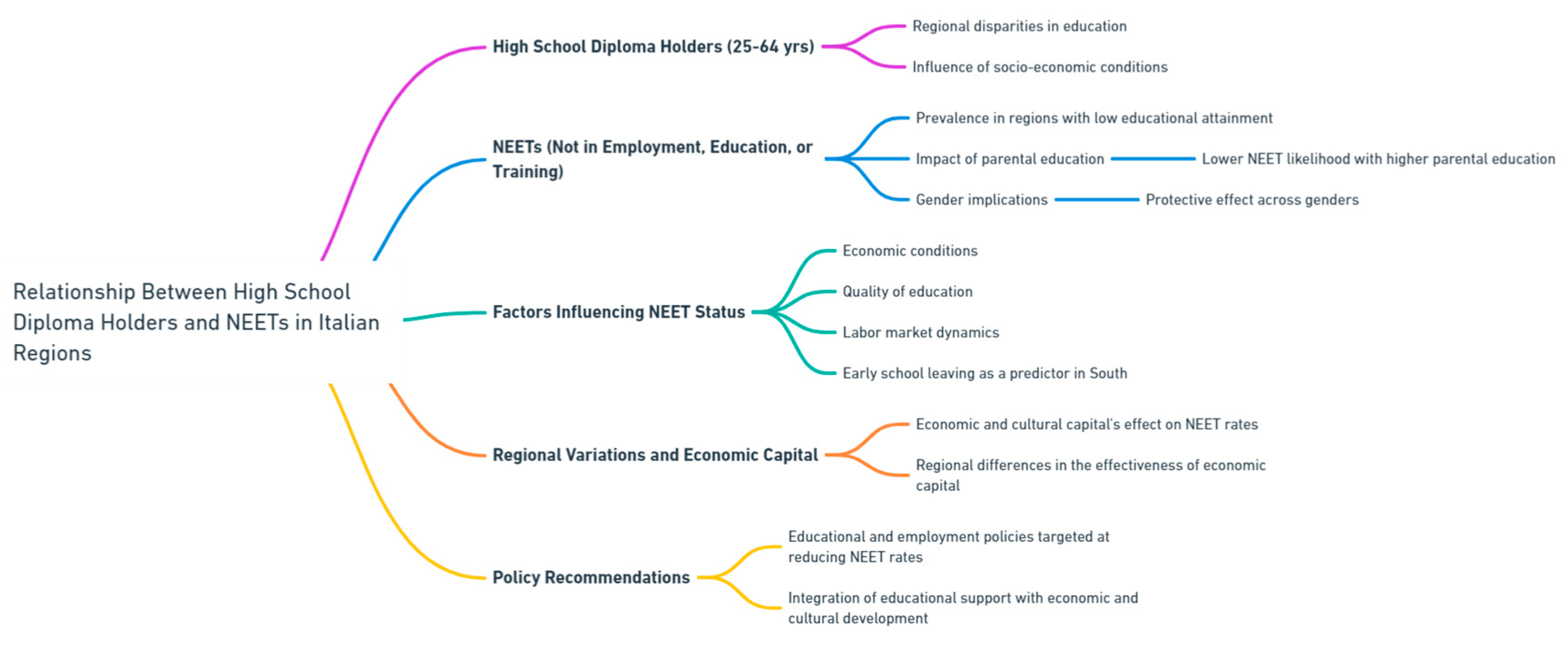
- NEET: analyzing the relationship between individuals with at least a high school diploma (aged 25-64) and young people classified as NEET (Not in Employment, Education, or Training) across Italian regions reveals significant regional disparities and socio-economic implications. The prevalence of NEETs, especially in regions with lower educational attainment, underscores the critical need for targeted educational and employment policies. Research indicates that higher educational attainment can serve as a protective factor against becoming NEET. For instance, parents’ educational levels have a notable influence, with higher parental education correlating with lower likelihoods of their children becoming NEETs. This protective effect is seen across both genders, suggesting that educational environment and family support play crucial roles in determining NEET status (Alfieri et al., 2015). However, the connection between high school completion and NEET status is complex and influenced by a variety of factors including regional economic conditions, the quality of education, and labor market dynamics. In Italy, early school leaving is a significant predictor of becoming NEET, particularly in regions like the South where educational and economic opportunities are more limited compared to the North (Luca et al., 2020). These findings emphasize the need for policies that not only promote continued education but also create pathways for youth to transition smoothly into the labor market. Moreover, the relationship between economic and cultural capital and the NEET rate shows that regions with higher economic development and cultural engagement tend to have lower NEET rates. This relationship, however, varies by region, with some areas showing stronger correlations than others. For instance, in central and southern provinces, economic capital appears to protect against NEET status more significantly over time, suggesting that both short-term interventions and long-term developmental strategies are crucial (Ripamonti & Barberis, 2021). These insights highlight the importance of an integrated approach that combines educational support with economic and cultural development to effectively reduce the NEET population. Such strategies must be regionally tailored to address the specific needs and challenges faced by young people in different parts of Italy, aiming to create a more inclusive and equitable society where educational attainment directly contributes to reduced vulnerabilities in the labor market (Figure 9).
Figure 9.
Relationship between High School Diploma and NEETs across Italian Regions.
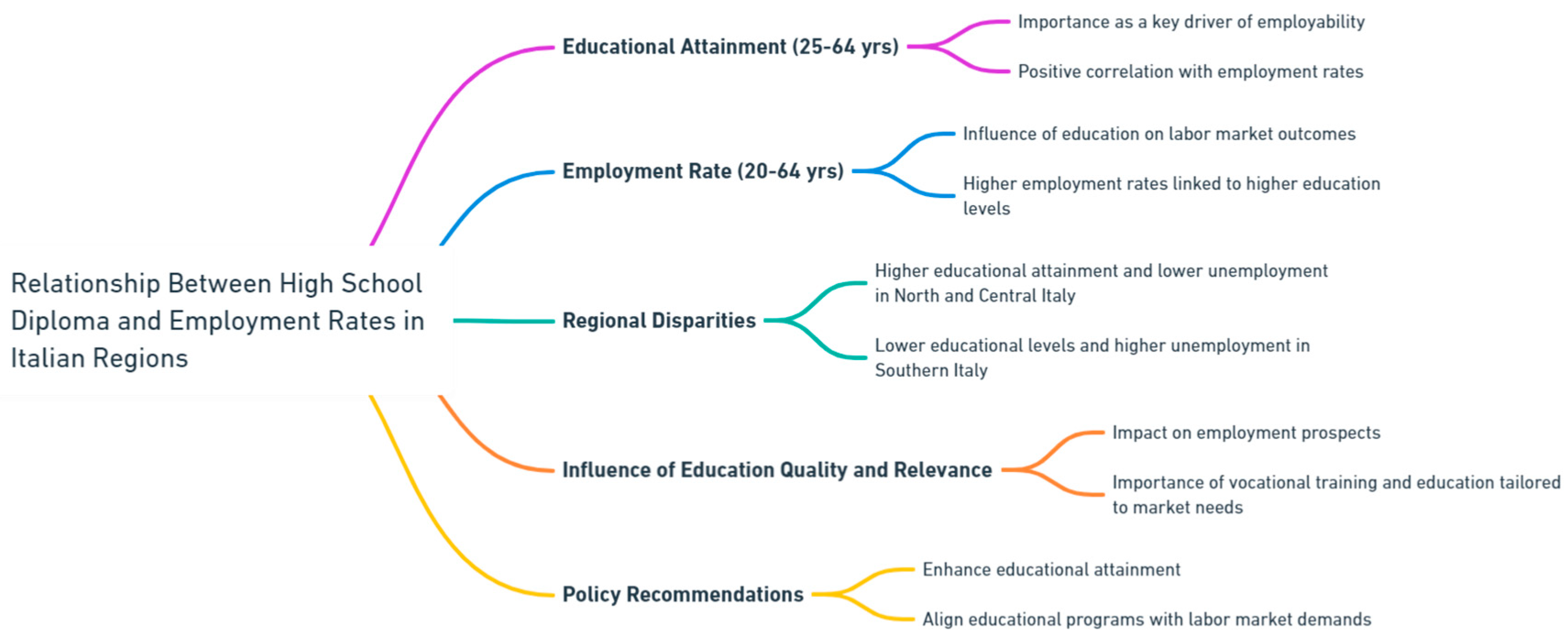
- ER: analyzing the relationship between individuals with at least a high school diploma (aged 25-64) and the employment rate (aged 20-64) across Italian regions, it's evident that educational attainment is a significant factor influencing labor market outcomes. Educational attainment, especially having at least a high school diploma, generally correlates positively with higher employment rates. This relationship underscores the importance of education as a key driver of employability. Research shows that higher levels of education typically lead to better job opportunities, lower unemployment rates, and greater economic stability across various regions in Italy (Caricati et al., 2016). However, the impact of education on employment is not uniform across all Italian regions. Northern and Central Italy, with higher average educational attainment, often enjoy lower unemployment rates compared to the Southern regions, where lower educational levels coincide with higher unemployment rates (Brunello et al., 2001).This disparity highlights the role of regional economic conditions and educational opportunities in shaping labor market outcomes. Furthermore, studies suggest that improving the quality and relevance of education can enhance employment prospects. For instance, regions that invest in vocational training and higher education tailored to market needs tend to show better employment figures (Perugini, 2008).This indicates that not just the level of education, but also its relevance to the labor market, is crucial for improving employment rates. In conclusion, while a high school diploma is a positive indicator of employability across Italian regions, regional disparities in education and economic conditions play a significant role in influencing the employment landscape. Policies aimed at enhancing educational attainment and aligning educational programs with labor market demands are essential for improving employment outcomes throughout Italy (Figure 10).
Figure 10.
Relationship between high school diploma and employment rates across italian regions.
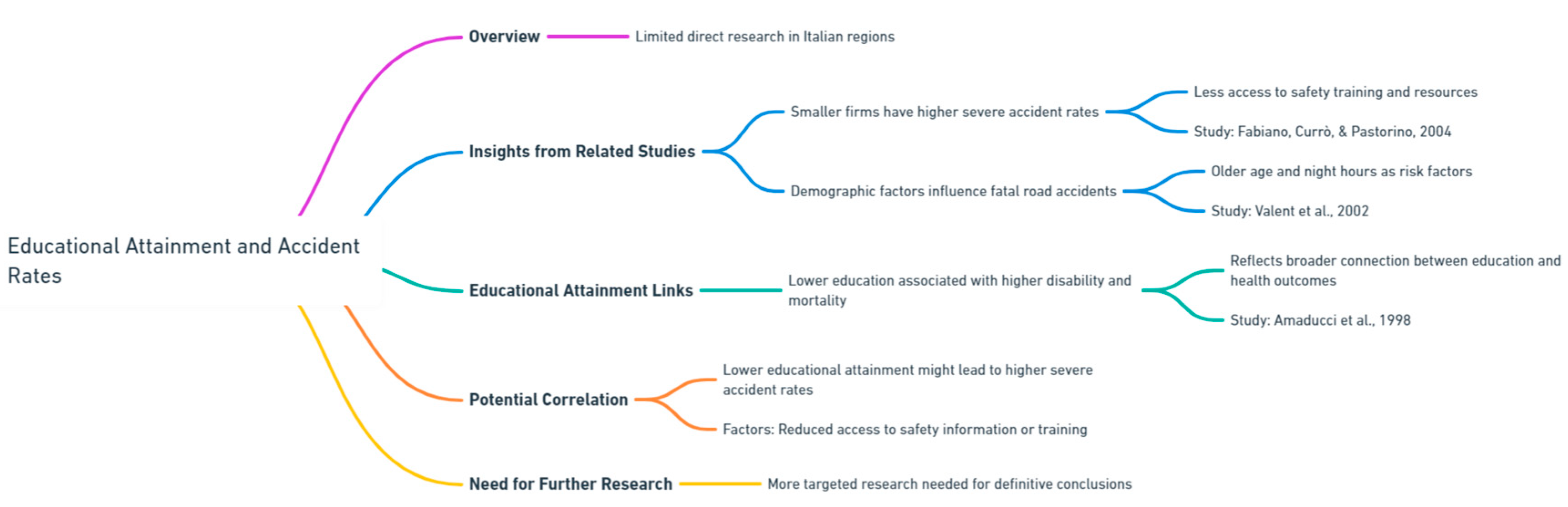
- RFAPD: the relationship between educational attainment and rates of fatal accidents and permanent disability across Italian regions is a topic with limited direct research, but some insights can be gleaned from broader studies on related subjects. A study examining the frequency of accidents in the Italian industry found that smaller firms, which might have less access to safety training and resources, experienced higher rates of severe accidents, including those causing permanent disability and fatalities (Fabiano et al. 2004). Research focused on Udine highlighted that older age and certain times (night hours) increased the risk of fatal road accidents. This suggests that demographic factors, potentially including educational attainment, could influence accident rates (Valent et al., 2002). A study linking educational attainment with mortality found that lower education levels are associated with higher rates of physical disability and premature mortality, which may reflect a broader connection between education and health outcomes, including outcomes related to accidents (Amaducci et al., 1998). These studies indicate a potential correlation where lower educational attainment might be associated with higher rates of severe workplace accidents and road traffic fatalities, perhaps due to factors like reduced access to safety information or training. However, more targeted research specifically exploring the direct relationship between educational attainment and accident rates in Italian regions would be required for definitive conclusions (Figure 11).
Figure 11.
Relationships between educational attainment and accidental rates across Italian regions.
Figure 11.
Relationships between educational attainment and accidental rates across Italian regions.
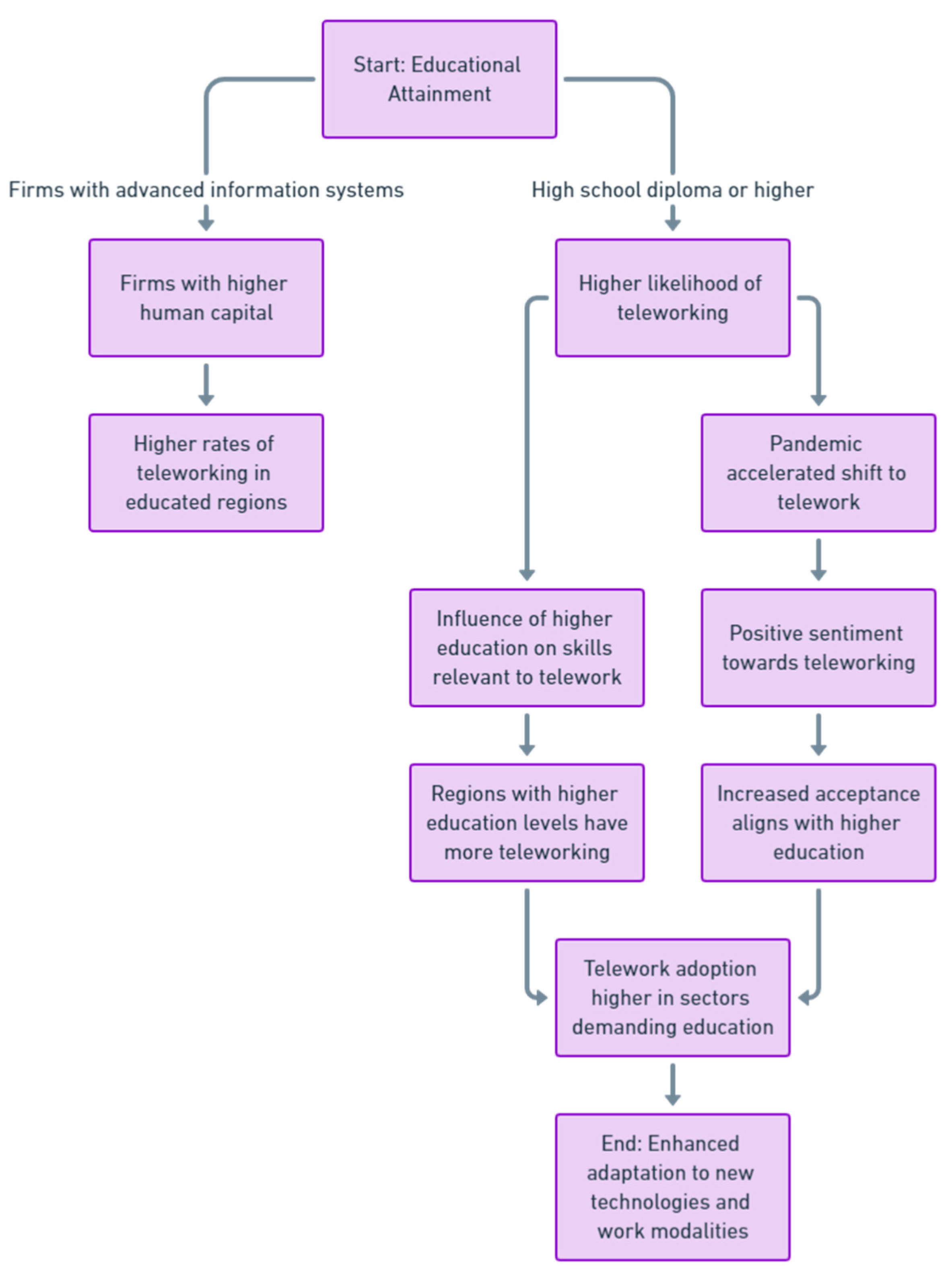
- EPWH: the relationship between educational attainment and the likelihood of being employed in teleworking roles across Italian regions has been explored in several studies. Higher educational attainment is a significant determinant for teleworking, as it often requires skills that are more likely to be acquired through higher education. This correlation suggests that individuals with at least a high school diploma are more likely to engage in teleworking roles, especially in regions with higher education levels (Pigini & Staffolani, 2019). Firms in Italy that have adopted telework are generally those that have already implemented advanced information systems and have higher levels of human capital. This suggests that regions with more educated populations might see higher rates of teleworking due to these firms being more prevalent (Neirotti et al., 2013). The pandemic accelerated the shift to telework in Italy, with a study noting the psychopathological impacts of this transition. However, the overall sentiment towards teleworking was positive, suggesting an increased acceptance that could align with higher educational attainment levels across different regions (Bertino et al., 2021). There is a positive relationship between higher educational attainment and the likelihood of engaging in telework across Italian regions. This relationship is supported by the higher adoption rates of telework in sectors and firms that demand higher educational qualifications, as well as the broader acceptance of teleworking facilitated by higher education levels that enable adaptation to new technologies and work modalities (Figure 12).
Figure 12.
The relationships between educational attainment and Employed people working from home.
Furthermore, we verified that the variable is negatively associated with:
- SWWD: higher educational attainment often results in increased expectations for job conditions. When these expectations are not met, particularly in terms of job complexity or rewards, it can lead to decreased job satisfaction. This effect appears to be more pronounced among individuals with higher education, as they might feel underutilized in positions that do not fully leverage their skills or offer advancement opportunities (Solomon et al. 2021). There is evidence from Italy showing that education-job mismatches, where educational attainment does not align with job requirements, are relatively common. Such mismatches often result in job dissatisfaction, as highly educated individuals may find themselves in roles that do not match their skill levels or career aspirations (Terraneo, 2010). Differences in job satisfaction linked to educational attainment also vary regionally across Italy. Northern regions, which generally offer more jobs that align with higher educational qualifications, might see less of a negative impact on job satisfaction compared to the southern regions, where mismatches are more pronounced due to limited job opportunities that fully utilize high educational qualifications (Iammarino & Marinelli, 2015). While higher educational attainment in Italy often leads to better job prospects, it also raises expectations that, if unmet, can result in lower job satisfaction. This issue is exacerbated by mismatches between education and job roles, particularly noticeable in differing regional job markets across Italy (Figure 13).
6. Machine Learning and Predictions
In the following analysis we compare 7 machine learning algorithms namely Linear Regression, Decision Trees, Random Forest, Gradient Boosting Machines, Support Vector Machines, k-Nearest Neighbors, Artificial Neural Networks. The algorithms are evaluated based on their ability to maximize the R-squared and minimize statistical errors i.e. Mean Absolute Error-MAE, Mean Squared Error-MSE, and Root Mean Squared Error-RMSE. The results are shown in the following table:
| Performance of the algorithms of machine learning used for predictions | ||||
| Model | R-Squared | MAE | MSE | RMSE |
| Linear Regression | 0.88 | 0.92 | 1.35 | 1.16 |
| Decision Trees | 0.84 | 1.08 | 1.78 | 1.33 |
| Random Forest | 0.90 | 0.84 | 1.20 | 1.09 |
| Gradient Boosting Machines | 0.93 | 0.77 | 1.01 | 1.00 |
| Support Vector Machines | 0.75 | 1.65 | 2.90 | 1.70 |
| k-Nearest Neighbors | 0.81 | 1.24 | 2.15 | 1.47 |
| Artificial Neural Network | 0.87 | 0.95 | 1.45 | 1.20 |
Gradient Boosting Machines (GBM) emerges as the standout model, excelling across all metrics. With an R-Squared value of 0.93, GBM demonstrates an ability to explain 93% of the variance in the diploma rates, suggesting a high degree of correlation between the predicted and actual values. This model's strength lies in its iterative approach, where subsequent models correct the errors made by earlier ones, honing its accuracy through successive refinements. The MAE of 0.77 and MSE of 1.01 are the lowest among the compared models, indicating minimal deviation from the actual diploma rates, and its RMSE of 1.00 further confirms the model's effective error management in the same units as the output, making it highly reliable for making precise predictions. Random Forest, another ensemble method, follows closely with an R-Squared of 0.90, proving its robustness in handling diverse datasets by constructing multiple decision trees and aggregating their predictions to improve accuracy and control over-fitting. Its performance is slightly lower than GBM but still remarkable, with MAE, MSE, and RMSE values of 0.84, 1.20, and 1.09 respectively, which underscore its capability to produce reliable and consistent predictions. Linear Regression and Artificial Neural Network (ANN) models also show commendable performance, with R-Squared values of 0.88 and 0.87 respectively. Linear Regression, being one of the simplest models, offers significant insights with decent accuracy, making it a valuable model when ease of interpretation is required. The ANN, with its capacity to model complex nonlinear relationships through multiple layers and neurons, demonstrates its potential in handling varied and intricate patterns in data, although it requires careful tuning to prevent overfitting. The Decision Trees model shows a moderate fit with an R-Squared of 0.84, which might indicate some variance in the data that it fails to capture. Despite being straightforward and easy to interpret, decision trees are prone to overfitting, particularly if the tree depth is not adequately controlled during training. k-Nearest Neighbors (KNN) and Support Vector Machines (SVM) show lower performance compared to the other models. With R-Squared values of 0.81 and 0.75 respectively, these models indicate a weaker predictive performance in this context. KNN, being a lazy learner and highly sensitive to the local data structure, might not generalize well over larger or diverse datasets without optimal tuning of parameters like the number of neighbors. SVM, typically robust in high-dimensional spaces, might struggle with noisy data or require significant adjustments to its kernel and regularization parameters to improve its efficacy. While Gradient Boosting Machines lead in predictive accuracy for this dataset, the choice of the model can still depend on specific needs such as interpretability, computational efficiency, and the nature of data available.
Therefore by applying the Gradient Boosting Machines we can obtain the results showed in the following table:
Table 3.
Prediction with Gradient Boosting Machines Algorithm.
| Prediction with Gradient Boosting Machines Algorithm | ||||
|---|---|---|---|---|
| Regions | 2023 | Predicted | Abs Var | Per Var |
| Piemonte | 66,6 | 66,4 | -0,20 | -0,30 |
| Valle d'Aosta | 63 | 62,8 | -0,20 | -0,32 |
| Liguria | 71,5 | 71,2 | -0,30 | -0,42 |
| Lombardia | 68,6 | 68,3 | -0,30 | -0,44 |
| Trentino-Alto Adige | 72,9 | 72,7 | -0,20 | -0,27 |
| Veneto | 68,1 | 68 | -0,10 | -0,15 |
| Friuli-Venezia Giulia | 72,7 | 72,5 | -0,20 | -0,28 |
| Emilia-Romagna | 69,9 | 69,8 | -0,10 | -0,14 |
| Toscana | 66,4 | 66,3 | -0,10 | -0,15 |
| Umbria | 73,7 | 73,4 | -0,30 | -0,41 |
| Marche | 67,2 | 67,1 | -0,10 | -0,15 |
| Lazio | 74 | 73,8 | -0,20 | -0,27 |
| Abruzzo | 71,2 | 70,9 | -0,30 | -0,42 |
| Molise | 65,9 | 65,7 | -0,20 | -0,30 |
| Campania | 56,8 | 56,5 | -0,30 | -0,53 |
| Puglia | 55,7 | 55,4 | -0,30 | -0,54 |
| Basilicata | 65,3 | 64,9 | -0,40 | -0,61 |
| Calabria | 61,1 | 60,9 | -0,20 | -0,33 |
| Sicilia | 54,9 | 54,7 | -0,20 | -0,36 |
| Sardegna | 55 | 54,8 | -0,20 | -0,36 |
The Gradient Boosting Machines (GBM) algorithm has demonstrated remarkable precision in predicting the high school diploma rates for 2023 across various Italian regions, as evident from the dataset provided. This precision is highlighted by the minimal variances between the predicted and actual values, with absolute differences rarely exceeding 0.4 percentage points and percentage differences generally staying well under 1%. Such accuracy not only validates the effectiveness of the GBM model in handling educational data but also underscores its potential as a strategic tool for policymakers and educational planners. The predictions show that GBM can adapt well across diverse geographic and socio-economic contexts within Italy, from economically robust northern regions like Lombardy and Trentino-Alto Adige to more challenged southern areas like Campania and Puglia. This adaptability is crucial, as it allows for reliable predictions irrespective of regional disparities in economic conditions or educational infrastructure. For instance, the model’s ability to predict with similar accuracy for regions with traditionally higher educational attainment (such as Trentino-Alto Adige with a predicted rate of 72.7 against an actual rate of 72.9) and for those with lower attainment (like Puglia, predicted at 55.4 versus an actual 55.7) provides a robust foundation for tailored educational policies. Moreover, the consistency in prediction across regions enables a comprehensive analysis of the educational landscape across Italy, facilitating a deeper understanding of regional needs and capacities. This, in turn, can inform more nuanced and effective policy interventions, resource allocations, and program implementations. For example, the slight underestimations in regions like Basilicata and Molise, which have higher percentage differences, might prompt investigations into specific local challenges or opportunities for educational improvement. The GBM model’s precision also implies high levels of reliability, making it a dependable tool for educational forecasting. Such reliability is crucial for long-term planning and immediate decision-making, providing a data-driven basis for initiatives aimed at improving or maintaining educational standards. By accurately forecasting diploma rates, regions can pre-emptively address potential declines in educational attainment or capitalize on upward trends to further enhance their educational outcomes. Furthermore, the model’s application extends beyond mere prediction; it can serve as a benchmarking tool that allows regions to set realistic and achievable goals based on predicted standards of similar regions. This benchmarking can foster a competitive yet collaborative approach among regions, driving them towards shared educational goals. The minimal discrepancies between predicted and actual rates reinforce the model’s value in educational forecasting. They suggest that the GBM model has effectively captured the significant predictors of high school diploma rates and can be used to simulate the impact of various educational strategies or changes.
7. Economic Policies to Increase the Number of People with a High School Diploma in the Italian Regions
Italy, with its varied economic and educational landscapes, faces significant challenges in ensuring uniform high school graduation rates across its regions. Economic policies aimed at bolstering graduation rates must, therefore, be region-specific, addressing unique local needs while promoting overarching national educational standards. An effective strategy would begin with substantial investments in educational infrastructure. This encompasses not only physical improvements to school facilities but also an enhancement of technological resources. In regions where schools suffer from outdated equipment and poor facilities, targeted funding can rejuvenate learning environments, thus helping to retain students until graduation. However, infrastructure alone cannot solve the issue of dropout rates. Financial constraints significantly impact students’ decisions to continue their education. Implementing comprehensive scholarship and financial aid programs specifically targeting students from economically disadvantaged backgrounds can make a substantial difference. These programs would need to be highly accessible and well-publicized, ensuring that families are aware of the opportunities available to them. Moreover, creating incentives for students to not only begin but also complete their high school education is crucial. This could be effectively managed through career and technical education (CTE) programs that align closely with local industry needs, providing students with clear, immediate pathways to employment and further education, thereby increasing the perceived value of completing high school. Teacher support and training represent another critical area of focus. High-quality education is invariably linked to the quality of teaching. Therefore, policies aimed at enhancing professional development for teachers, especially in regions with low graduation rates, could improve educational outcomes. Such initiatives might include higher salaries for teachers in underserved areas, additional resources for classroom management and inclusive teaching practices, and opportunities for career advancement within the educational sector. Community and parental engagement also plays a vital role in educational achievement. By implementing policies that foster greater involvement of parents and local communities in the educational process, regions can improve student motivation and academic performance. This might involve community-led after-school programs, parent-teacher associations, and local education forums that encourage a collaborative approach to education. The role of data and technology in modern education cannot be overstressed. Adopting policies that integrate advanced data analytics into the educational system can help identify at-risk students early and tailor interventions to keep them on track towards graduation. Systems that monitor student progress in real time and alert educators to potential issues before they become insurmountable can significantly reduce dropout rates. Finally, regional collaboration offers a reservoir of potential that can be tapped into to equalize educational opportunities across Italy. Regions with higher graduation rates can serve as models and mentors for those struggling to improve. This could take the form of shared educational programs, teacher exchange initiatives, and collaborative policy-making efforts that allow less successful regions to learn from the successes and challenges of their more prosperous counterparts (Figure 14).
8. Conclusions
In this article we have taken into consideration the analysis of the relationship between people with at least a diploma and the employment and training system in the Italian regions. The data analysis shows the presence of a significant gap between North and South in terms of the presence of people with a high school diploma. This North-South gap is also confirmed by the clustering with the k-Means algorithm both in the optimization through the Silhouette coefficient and in the optimization with the Elbow method. The econometric analysis shows the positive relationship between the value of people who have at least a high school diploma and the number of people with tertiary education, NEETs, the employment rate, the rate of accidents at work and people employed in forms of teleworking. However, the growth in the number of people with at least a high school diploma is negatively associated with job satisfaction. Machine learning analysis shows the possibility of effectively predicting data trends through the application of the Gradient Boosting Machines algorithm. Furthermore, it is also necessary to consider the qualitative aspects of training in Italy. In fact, Italian students show very poor results in the international Programme for International Student Assessment PISA tests in comparison both with other countries and with the traditional orientation of Italian public school education. In fact, current high school students demonstrate significant cognitive delays which show the presence of a training and pedagogical model that is absolutely insufficient to allow the preparation of the workforce for the capitalism of knowledge work based on technological innovation.
Appendix A
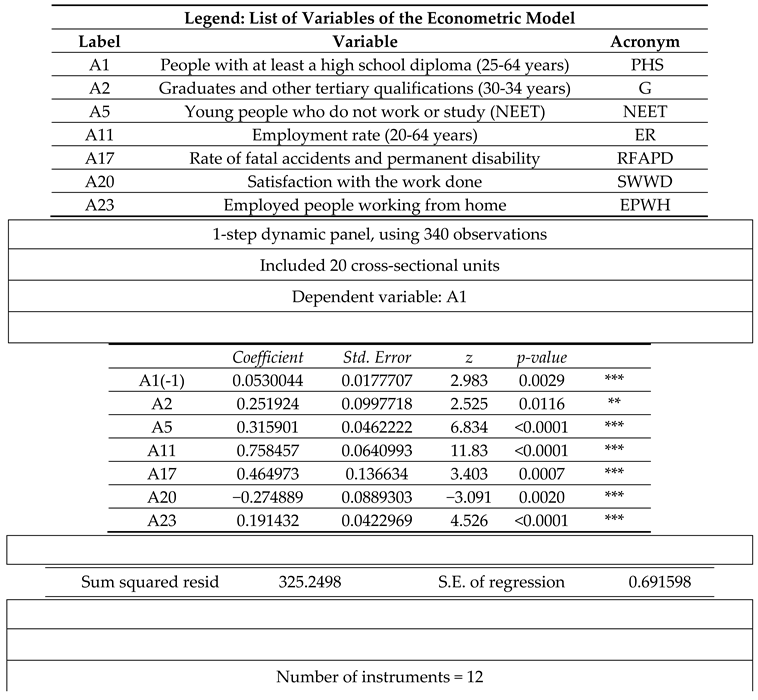
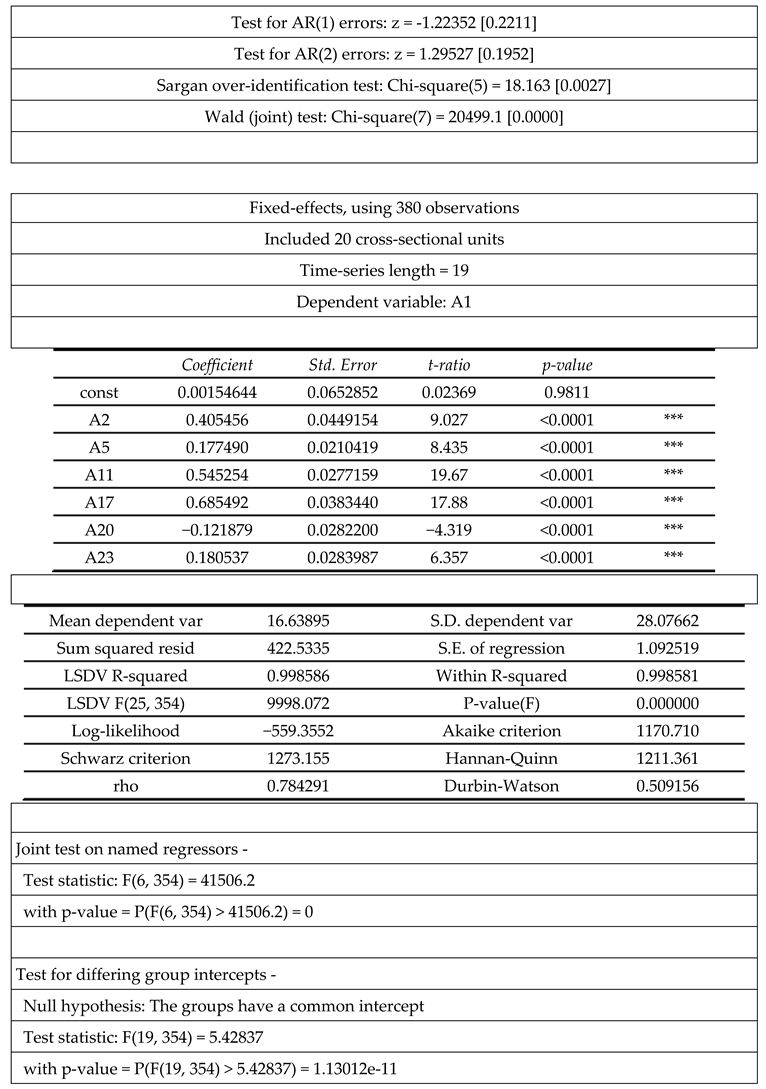
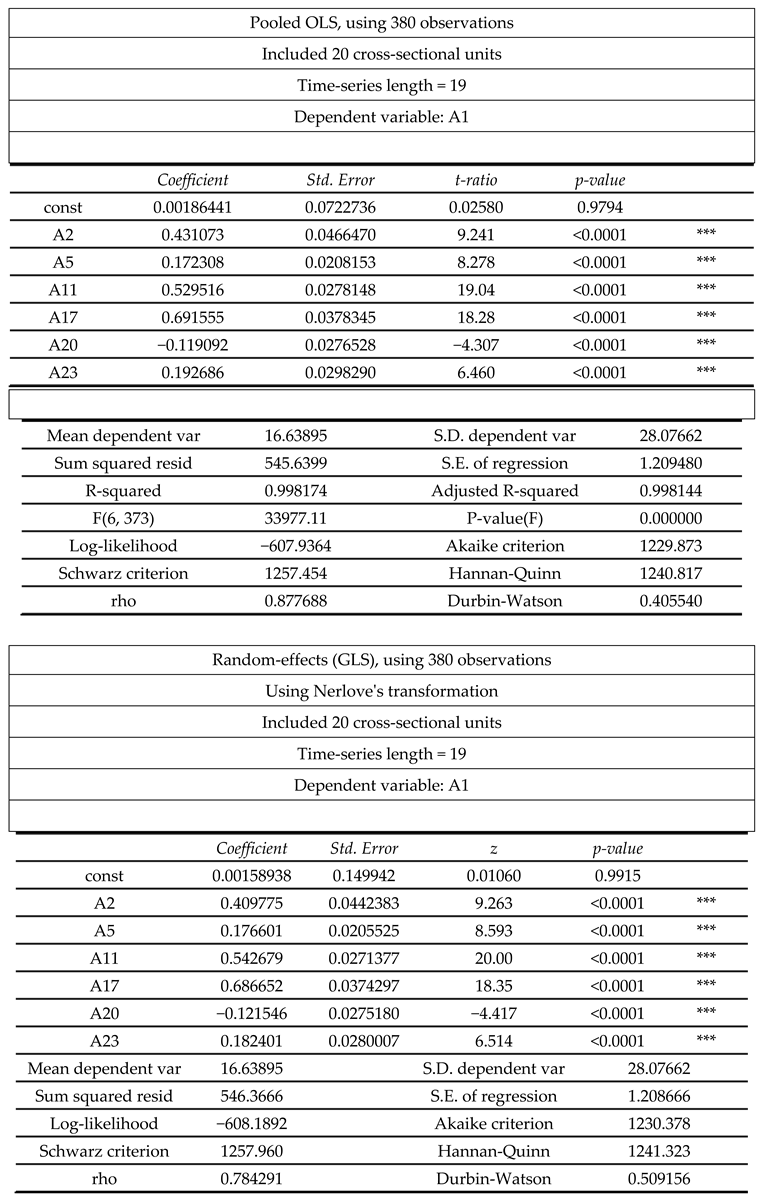
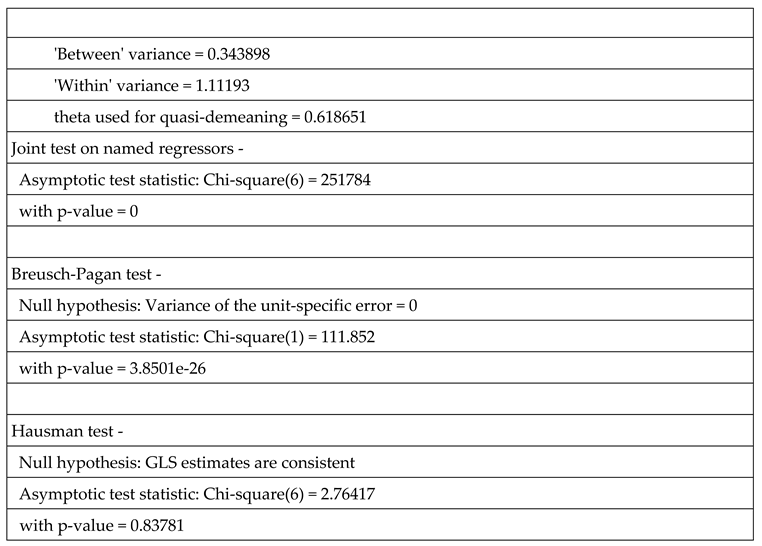
References
- Adejumo, O.O.; Asongu, S.A.; Adejumo, A.V. Education enrolment rate vs employment rate: Implications for sustainable human capital development in Nigeria. Int. J. Educ. Dev. 2021, 83, 102385. [Google Scholar] [CrossRef]
- Adelaja, A.A.; Akinbami, C.A.O.; Jiboye, T.; Ogbolu, G. Students’ intention towards self-employment: An application of ELT theory on the effectiveness of entrepreneurial education types. Int. J. Manag. Educ. 2023, 21. [Google Scholar] [CrossRef]
- Alfieri, S.; Sironi, E.; Marta, E.; Rosina, A.; Marzana, D. Young Italian NEETs (Not in Employment, Education, or Training) and the Influence of Their Family Background. Eur. J. Psychol. 2015, 11, 311–322. [Google Scholar] [CrossRef] [PubMed]
- Amaducci, L.; Maggi, S.; Langlois, J.; Minicuci, N.; Baldereschi, M.; Di Carlo, A.; Grigoletto, F.; Italian Longitudinal Study on Aging Group Education and the risk of physical disability and mortality among men and women aged 65 to 84: the Italian Longitudinal Study on Aging. Journals Gerontol. Ser. A 1998, 53, M484–M490. [CrossRef] [PubMed]
- Anderson, E. S., & Avegno, J. (2021). Education and employment. Social Emergency Medicine: Principles and Practice, 187-197.
- Avellone, Lauren. "Employment Outcomes for Students with Intellectual Disabilities in Postsecondary Education Programs: A Scoping Review." Journal of Postsecondary Education and Disability 34.3 (2021): 223-238.
- Ayoola, O. O., Alenoghena, R., & Adeniji, S. (2023). ChatGPT impacts on access-efficiency, employment, education and ethics: The socio-economics of an AI language model. BizEcons Quarterly, 16, 1-17.
- Barry, A. (2021). Equal Opportunity in Education and Employment in Saudi Arabia: Heading in the Right Direction but Challenges Remain. Educational Planning, 28(1), 7-21.
- Berrigan, P.; Scott, C.W.M.; Zwicker, J.D. Employment, Education, and Income for Canadians with Developmental Disability: Analysis from the 2017 Canadian Survey on Disability. J. Autism Dev. Disord. 2020, 53, 580–592. [Google Scholar] [CrossRef] [PubMed]
- Bertino, V.; Nisticò, V.; D’agostino, A.; Gambini, O.; Demartini, B. Telework during COVID-19 outbreak: Impact on mental health among Italian workers. Eur. Psychiatry 2021, 64, S678–S678. [Google Scholar] [CrossRef]
- Booyens, I. Education and skills in tourism: Implications for youth employment in South Africa. Dev. South. Afr. 2020, 37, 825–839. [Google Scholar] [CrossRef]
- Bridekirk, J.; Hynie, M.; I, A. Lth, S.R. The Impact of Education and Employment Quality on Self-rated Mental Health Among Syrian Refugees in Canada. J. Immigr. Minor. Heal. 2020, 23, 290–297. [Google Scholar] [CrossRef] [PubMed]
- Brunello, G.; Lupi, C.; Ordine, P. Widening differences in Italian regional unemployment. Labour Econ. 2001, 8, 103–129. [Google Scholar] [CrossRef]
- Caricati, L.; Chiesa, R.; Guglielmi, D.; Mariani, M.G. Real and perceived employability: a comparison among Italian graduates. J. High. Educ. Policy Manag. 2016, 38, 490–502. [Google Scholar] [CrossRef]
- Carruthers, C., Dougherty, S., McGuinness, S., Payne, S., & Theobald, R. (2022). Graduation, college, and employment outcomes for CTE students with an identified disability.
- Cieslik, K., Barford, A., & Vira, B. (2022). Young people not in employment, education or training (NEET) in Sub-Saharan Africa: Sustainable development target 8.6 missed and reset. Journal of Youth Studies, 25(8), 1126-1147.
- Clemens, J. How Do Firms Respond to Minimum Wage Increases? Understanding the Relevance of Non-Employment Margins. J. Econ. Perspect. 2021, 35, 51–72. [Google Scholar] [CrossRef]
- Contini, D.; Salza, G. Too few university graduates. Inclusiveness and effectiveness of the Italian higher education system. Socio-Economic Plan. Sci. 2020, 71. [Google Scholar] [CrossRef]
- Conway, D.S.; A Bermel, R.; Planchon, S.M. The relationship between cognition, education, and employment in multiple sclerosis patients. Mult. Scler. J. - Exp. Transl. Clin. 2022, 8. [Google Scholar] [CrossRef] [PubMed]
- Crociata, A.; Odoardi, I.; Agovino, M.; Sacco, P.L. A missing link? Cultural capital as a source of human capital: evidence from Italian regional data. Ann. Reg. Sci. 2019, 64, 79–109. [Google Scholar] [CrossRef]
- DiGuiseppi, G.; Clomax, A.; Dodge, J.R.; Rice, E. Social network correlates of education and employment service use among youth experiencing homelessness: A longitudinal study. Child. Youth Serv. Rev. 2021, 129. [Google Scholar] [CrossRef]
- Erdogan, E.; Flynn, P.; Nasya, B.; Paabort, H.; Lendzhova, V. NEET Rural–Urban Ecosystems: The Role of Urban Social Innovation Diffusion in Supporting Sustainable Rural Pathways to Education, Employment, and Training. Sustainability 2021, 13, 12053. [Google Scholar] [CrossRef]
- Fabiano, B.; Currò, F.; Pastorino, R. A study of the relationship between occupational injuries and firm size and type in the Italian industry. Saf. Sci. 2004, 42, 587–600. [Google Scholar] [CrossRef]
- Flowers, M.; Sainer, S.; Stoneburner, A.; Thorland, W. Education and employment outcomes in clients of the Nurse–Family Partnership. Public Heal. Nurs. 2020, 37, 206–214. [Google Scholar] [CrossRef] [PubMed]
- Fusaro, S.; Scandurra, R. The impact of the European social fund on youth education and employment. Socio-Economic Plan. Sci. 2023, 88. [Google Scholar] [CrossRef]
- Geiger, J.M.; Okpych, N.J. Connected After Care: Youth Characteristics, Policy, and Programs Associated With Postsecondary Education and Employment for Youth With Foster Care Histories. Child Maltreatment 2021, 27, 658–670. [Google Scholar] [CrossRef]
- Girouard, H.S.; Kovacs, A.H. Congenital heart disease: Education and employment considerations and outcomes. Int. J. Cardiol. Congenit. Hear. Dis. 2020, 1, 100005. [Google Scholar] [CrossRef]
- Goyette, M.; Blanchet, A.; Esposito, T.; Delaye, A. The role of placement instability on employment and educational outcomes among adolescents leaving care. Child. Youth Serv. Rev. 2021, 131. [Google Scholar] [CrossRef]
- Harris, K. M., Preiss, L., Varughese, T., Bauer, A., Calhoun, C. L., Treadwell, M., ... & Sickle Cell Disease Implementation Consortium. Examining mental health, education, employment, and pain in sickle cell disease. JAMA network open 2023, 6, e2314070–e2314070.
- Heslina, H.; Syahruni, A. The Influence of Information Technology, Human Resources Competency and Employee Engagement on Performance of Employees. Gold. Ratio Hum. Resour. Manag. 2021, 1, 01–12. [Google Scholar] [CrossRef]
- Iammarino, S.; Marinelli, E. Education–Job (Mis)Match and Interregional Migration: Italian University Graduates' Transition to Work. Reg. Stud. 2014, 49, 866–882. [Google Scholar] [CrossRef]
- Iovino, G. Unequal geographies of the Italian tertiary education system. Mapping the disparities at regional scale. Adv. Cartogr. GIScience ICA 2021, 3, 1–8. [Google Scholar] [CrossRef]
- Jia, C.; Zuo, J.; Lu, W. Influence of Entrepreneurship Education on Employment Quality and Employment Willingness. Int. J. Emerg. Technol. Learn. (iJET) 2021, 16, 65–78. [Google Scholar] [CrossRef]
- Johnson, C. (2024). Impact of Educational Initiatives and Pathway Programs on Employment. In Employing Our Returning Citizens: An Employer-Centric View (pp. 257-280). Cham: Springer International Publishing.
- Laberge, L.; Auclair, J.; Busque, M.-A.; Maltais, A.; Ledoux, É. Predictors of Employment in Early Adolescence: Results of a Longitudinal Study. J. Early Adolesc. 2022, 43, 965–985. [Google Scholar] [CrossRef]
- LaForest, M. The Effects of High School Career and Technical Education on Employment, Wages, and Educational Attainment. J. Hum. Cap. 2023, 17, 39–71. [Google Scholar] [CrossRef]
- Landivar, L.C.; Scarborough, W.J.; Collins, C.; Ruppanner, L. Do high childcare costs and low access to Head Start and childcare subsidies limit mothers’ employment? A state-level analysis. Soc. Sci. Res. 2022, 102, 102627. [Google Scholar] [CrossRef]
- Lee, E.-J.; Park, J.; Chun, J.; Pi, S. State Vocational Rehabilitation Services and Employment Outcomes for Asian Americans with Psychiatric Disabilities. Community Ment. Heal. J. 2020, 56, 854–866. [Google Scholar] [CrossRef] [PubMed]
- De Luca, G.; Mazzocchi, P.; Quintano, C.; Rocca, A. Going Behind the High Rates of NEETs in Italy and Spain: The Role of Early School Leavers. Soc. Indic. Res. 2020, 151, 345–363. [Google Scholar] [CrossRef]
- Matli, W.; Ngoepe, M. Life situations and lived experiences of young people who are not in education, employment, or training in South Africa. Educ. + Train. 2021, 63, 1242–1257. [Google Scholar] [CrossRef]
- McDonnall, M.C.; Tatch, A. Educational Attainment and Employment for Individuals with Visual Impairments. J. Vis. Impair. Blind. 2021, 115, 152–159. [Google Scholar] [CrossRef]
- Mubeen, S., Shahid, M. H., Sahawneh, N., Al-Kassem, A. H., Ahmad, A., & Naseer, I. (2022, February). Education, Employment and Women Empowerment in an Agrarian Economy: A Case Study. In 2022 International Conference on Business Analytics for Technology and Security (ICBATS) (pp. 1-9). IEEE.
- Neirotti, P., Paolucci, E., & Raguseo, E. (2013). Mapping the antecedents of telework diffusion: firm-level evidence from I taly. New Technology, Work and Employment, 28(1), 16-36.
- Nichols, L., Ha, B., & Tyyskä, V. (2020). Canadian immigrant youth and the education-employment nexus. Canadian Journal of Family and Youth/Le Journal Canadien de Famille et de la Jeunesse, 12(1), 178-199.
- Oswald-Egg, M. E. , & Renold, U. (2021). No experience, no employment: The effect of vocational education and training work experience on labour market outcomes after higher education. Economics of Education Review, 80, 102065.
- Parker, P.; Allen, K.-A.; Parker, R.; Guo, J.; Marsh, H.W.; Basarkod, G.; Dicke, T. School belonging predicts whether an emerging adult will be not in education, employment, or training (NEET) after school. J. Educ. Psychol. 2022, 114, 1881–1894. [Google Scholar] [CrossRef]
- Perugini, C. (2008). Employment Intensity of Growth in Italy. A Note Using Regional Data Regional and Sectoral Economic Studies, 9, 59-92.
- Pigini, C.; Staffolani, S. Teleworkers in Italy: who are they? Do they make more? Int. J. Manpow. 2019, 40, 265–285. [Google Scholar] [CrossRef]
- Ringbom, I.; Suvisaari, J.; Kääriälä, A.; Sourander, A.; Gissler, M.; Ristikari, T.; Gyllenberg, D. Psychiatric disorders diagnosed in adolescence and subsequent long-term exclusion from education, employment or training: longitudinal national birth cohort study. Br. J. Psychiatry 2021, 220, 148–153. [Google Scholar] [CrossRef] [PubMed]
- Ripamonti, E.; Barberis, S. The association of economic and cultural capital with the NEET rate: differential geographical and temporal patterns. J. Labour Mark. Res. 2021, 55, 1–17. [Google Scholar] [CrossRef]
- Robroek, S.J.; Nieboer, D.; Järvholm, B.; Burdorf, A. Educational differences in duration of working life and loss of paid employment: working life expectancy in The Netherlands. Scand. J. Work. Environ. Heal. 2020, 46, 77–84. [Google Scholar] [CrossRef]
- Roux, A.M.; Rast, J.E.; Anderson, K.A.; Garfield, T.; Shattuck, P.T. Vocational Rehabilitation Service Utilization and Employment Outcomes Among Secondary Students on the Autism Spectrum. J. Autism Dev. Disord. 2020, 51, 212–226. [Google Scholar] [CrossRef]
- Schall, C.; Brooke, V.; Rounds, R.; Lynch, A. The resiliency of employees with intellectual and developmental disabilities during the COVID-19 pandemic and economic shutdown: A retrospective review of employment files. J. Vocat. Rehabilitation 2021, 54, 15–24. [Google Scholar] [CrossRef]
- Schwartz, A.E.; Leos-Urbel, J.; McMurry, J.; Wiswall, M. Making summer matter: The impact of youth employment on academic performance. Quant. Econ. 2021, 12, 477–504. [Google Scholar] [CrossRef]
- Sharif, A.A.; Lee, A.; Alshdiefat, A.S.; Rana, M.Q.; Abu Ghunmi, N.-A. Sustainable Gender Equality: A Comparative Perspective on STEM Education and Employment in Jordan. Sustainability 2024, 16, 2273. [Google Scholar] [CrossRef]
- Solomon, B.C.; Nikolaev, B.N.; Shepherd, D.A. Does educational attainment promote job satisfaction? The bittersweet trade-offs between job resources, demands, and stress. J. Appl. Psychol. 2022, 107, 1227–1241. [Google Scholar] [CrossRef] [PubMed]
- Somani, R. The returns to higher education and public employment. World Dev. 2021, 144, 105471. [Google Scholar] [CrossRef]
- Sperandei, S.; Page, A.; Spittal, M.J.; Pirkis, J. Low education and mental health among older adults: the mediating role of employment and income. Chest 2021, 58, 823–831. [Google Scholar] [CrossRef] [PubMed]
- Staff, J.; Yetter, A.M.; Cundiff, K.; Ramirez, N.; Vuolo, M.; Mortimer, J.T. Is Adolescent Employment Still a Risk Factor for High School Dropout? J. Res. Adolesc. 2019, 30, 406–422. [Google Scholar] [CrossRef] [PubMed]
- Terraneo, M. (2010). Education and work: the condition of graduates., 90, 425-470. [CrossRef]
- Thomas, M.D.; Sohail, S.; Mendez, R.M.; Márquez-Magaña, L.; Allen, A.M. Racial Discrimination and Telomere Length in Midlife African American Women: Interactions of Educational Attainment and Employment Status. Ann. Behav. Med. 2020, 55, 601–611. [Google Scholar] [CrossRef] [PubMed]
- Valent, F.; Schiava, F.; Savonitto, C.; Gallo, T.; Brusaferro, S.; Barbone, F. Risk factors for fatal road traffic accidents in Udine, Italy. Accid. Anal. Prev. 2001, 34, 71–84. [Google Scholar] [CrossRef]
- van Tol, J. (2024). Education and full employment in the Capitalocene: Political possibilities, ecological imperatives. The Journal of Environmental Education, 55(2), 180-190.
- Vergolini, L.; Vlach, E. Family background and educational path of Italian graduates. High. Educ. 2016, 73, 245–259. [Google Scholar] [CrossRef]
- Walk, D., Haviv, N., Hasisi, B., & Weisburd, D. (2021). The role of employment as a mediator in correctional education's impact on recidivism: A quasi-experimental study of multiple programs. Journal of Criminal Justice, 74, 101815.
- Wong, J.; Coster, W.J.; Cohn, E.S.; Orsmond, G.I. Identifying School-Based Factors that Predict Employment Outcomes for Transition-Age Youth with Autism Spectrum Disorder. J. Autism Dev. Disord. 2020, 51, 60–74. [Google Scholar] [CrossRef] [PubMed]
- Yassine, A.; Bakass, F. Do Education and Employment Play a Role in Youth’s Poverty Alleviation? Evidence from Morocco. Sustainability 2022, 14, 11750. [Google Scholar] [CrossRef]
Figure 1.
People with at least a high school diploma in the Italian regions in 2023.
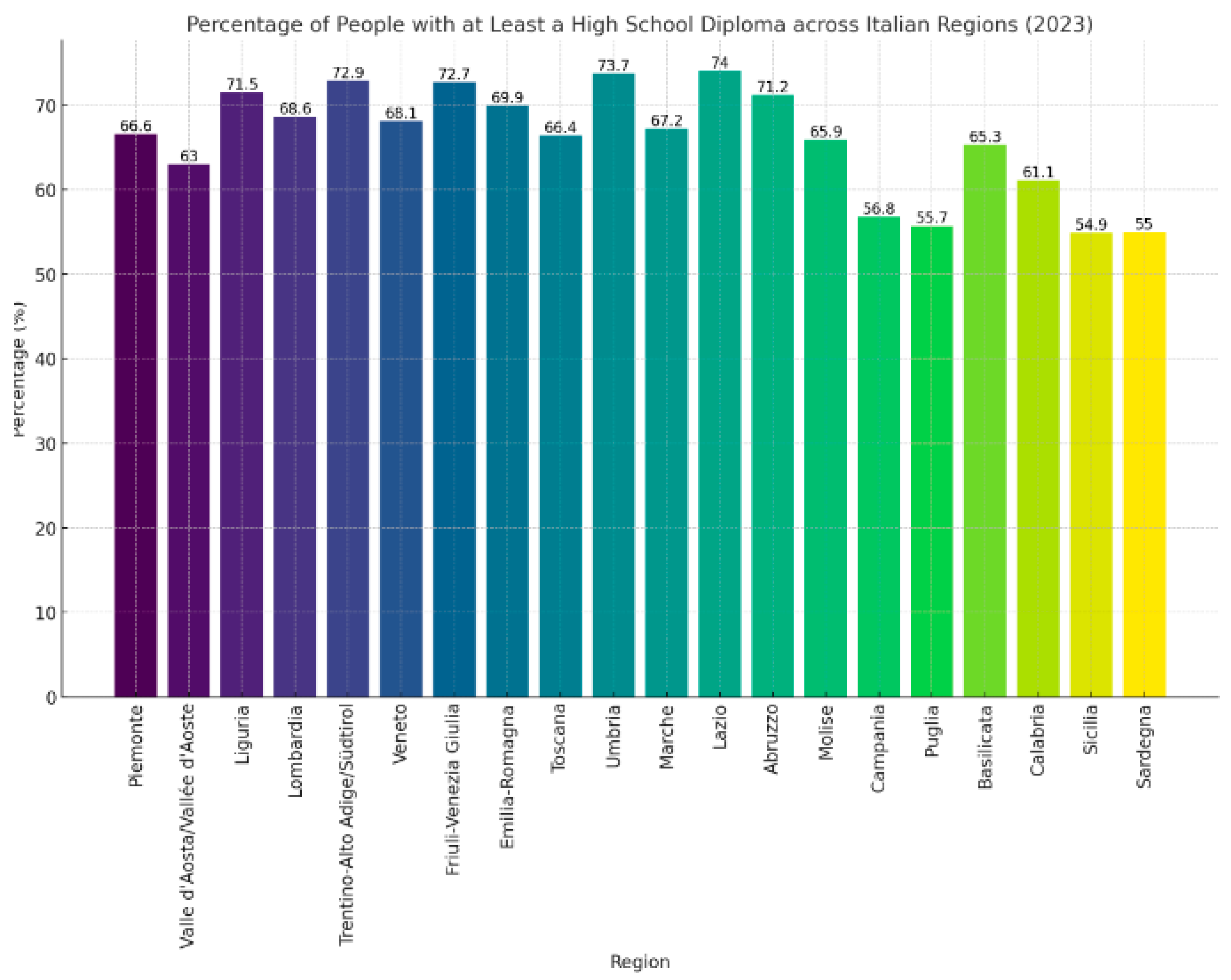
Figure 2.
People with at least a high school diploma in the Italian regions between 2018 and 2023.
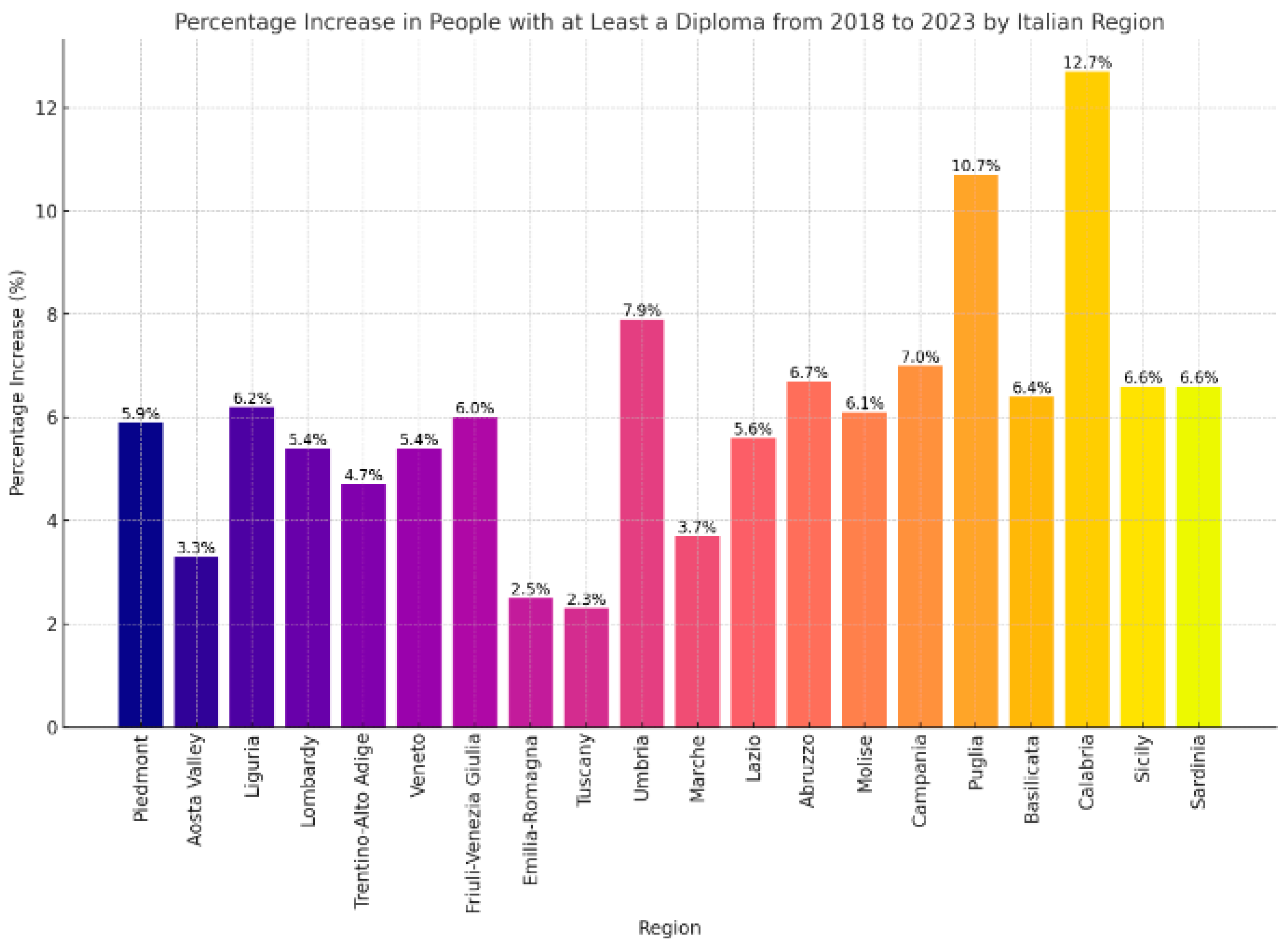
Figure 3.
People with at least a high school diploma in the Italian macro-regions between 2018 and 2023.
Figure 3.
People with at least a high school diploma in the Italian macro-regions between 2018 and 2023.
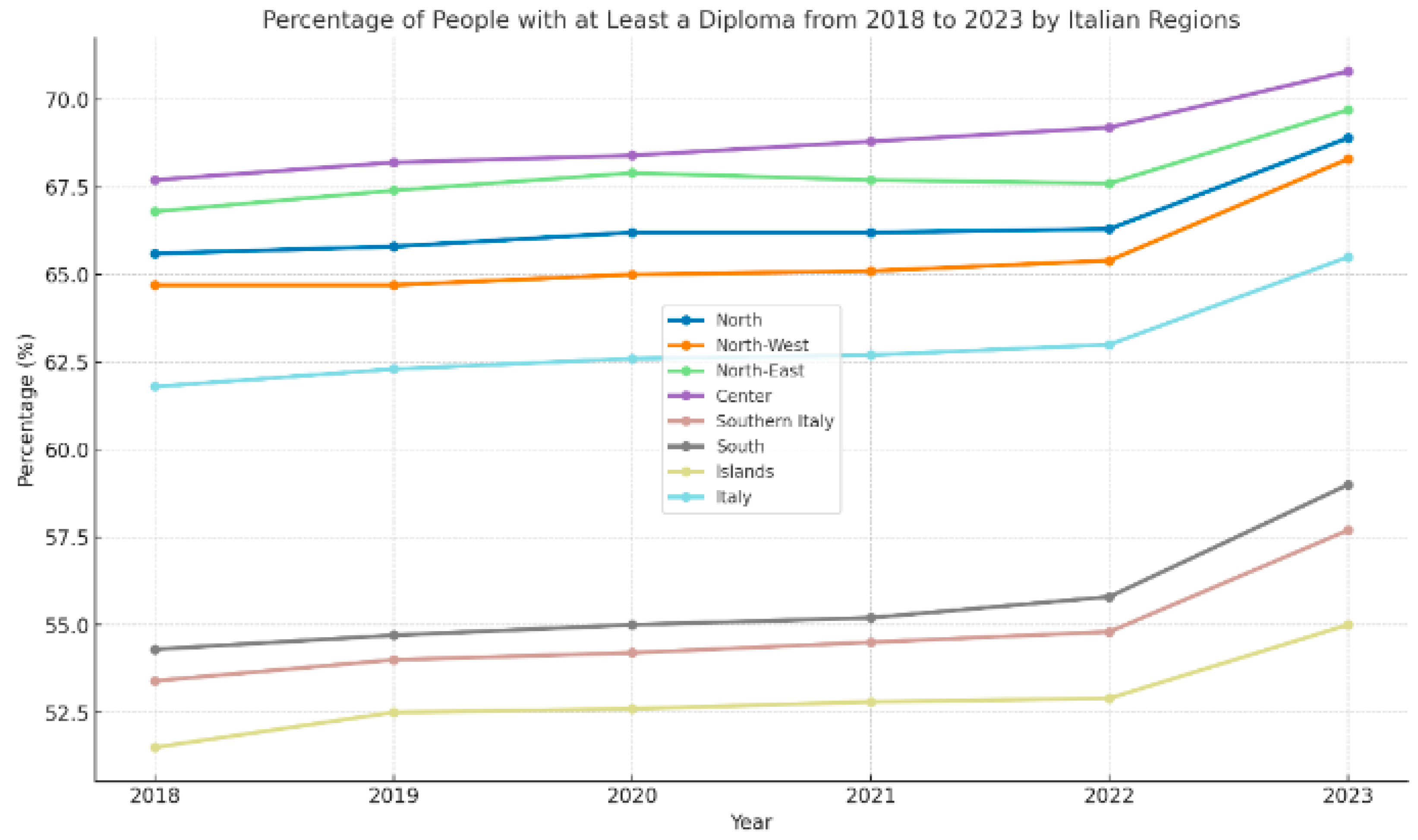
Figure 4.
The North-South divide in the sense of people with at least a high school diploma in the macro-regions.
Figure 4.
The North-South divide in the sense of people with at least a high school diploma in the macro-regions.
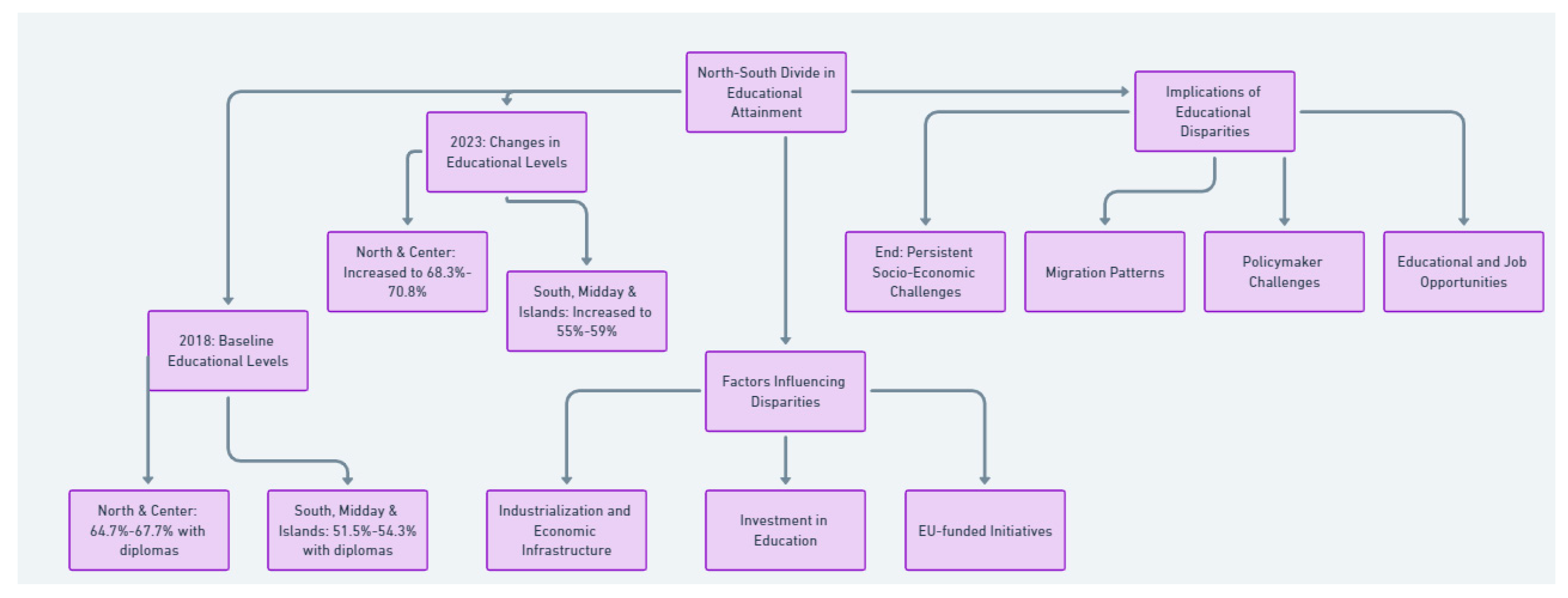
Figure 5.
Silhouette coefficient levels per cluster number k.
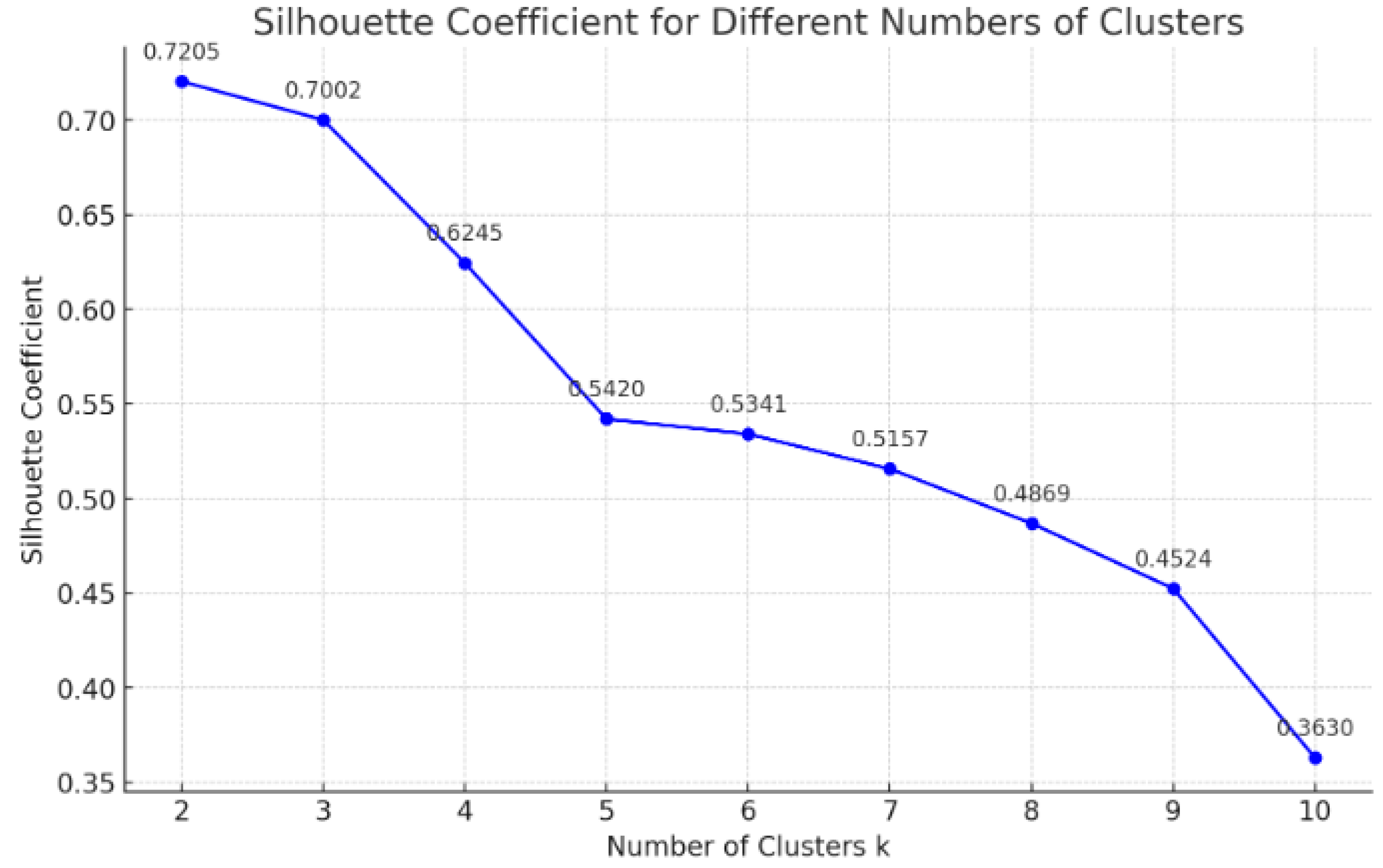
Figure 6.
Clusterization with k-Means algorithm optimized with the Elbow method.
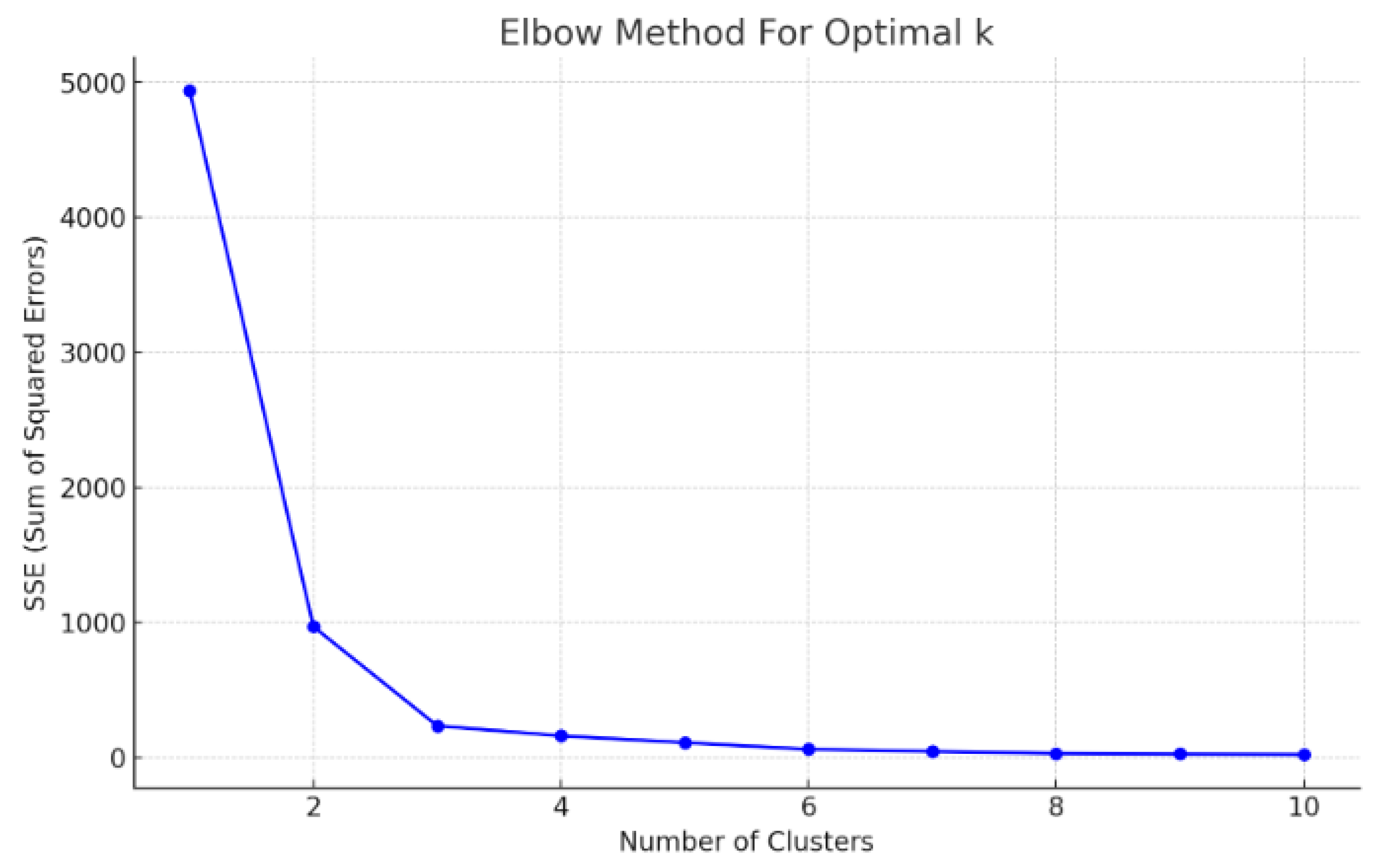
Figure 7.
Cluster 0 (Cyan): High attainment regions, mostly in North/Central Italy. Cluster 1 (Magenta): Low attainment regions, primarily in the South and the Islands. Cluster 2 (Lime): Moderate attainment regions, encompassing a mix of areas.
Figure 7.
Cluster 0 (Cyan): High attainment regions, mostly in North/Central Italy. Cluster 1 (Magenta): Low attainment regions, primarily in the South and the Islands. Cluster 2 (Lime): Moderate attainment regions, encompassing a mix of areas.
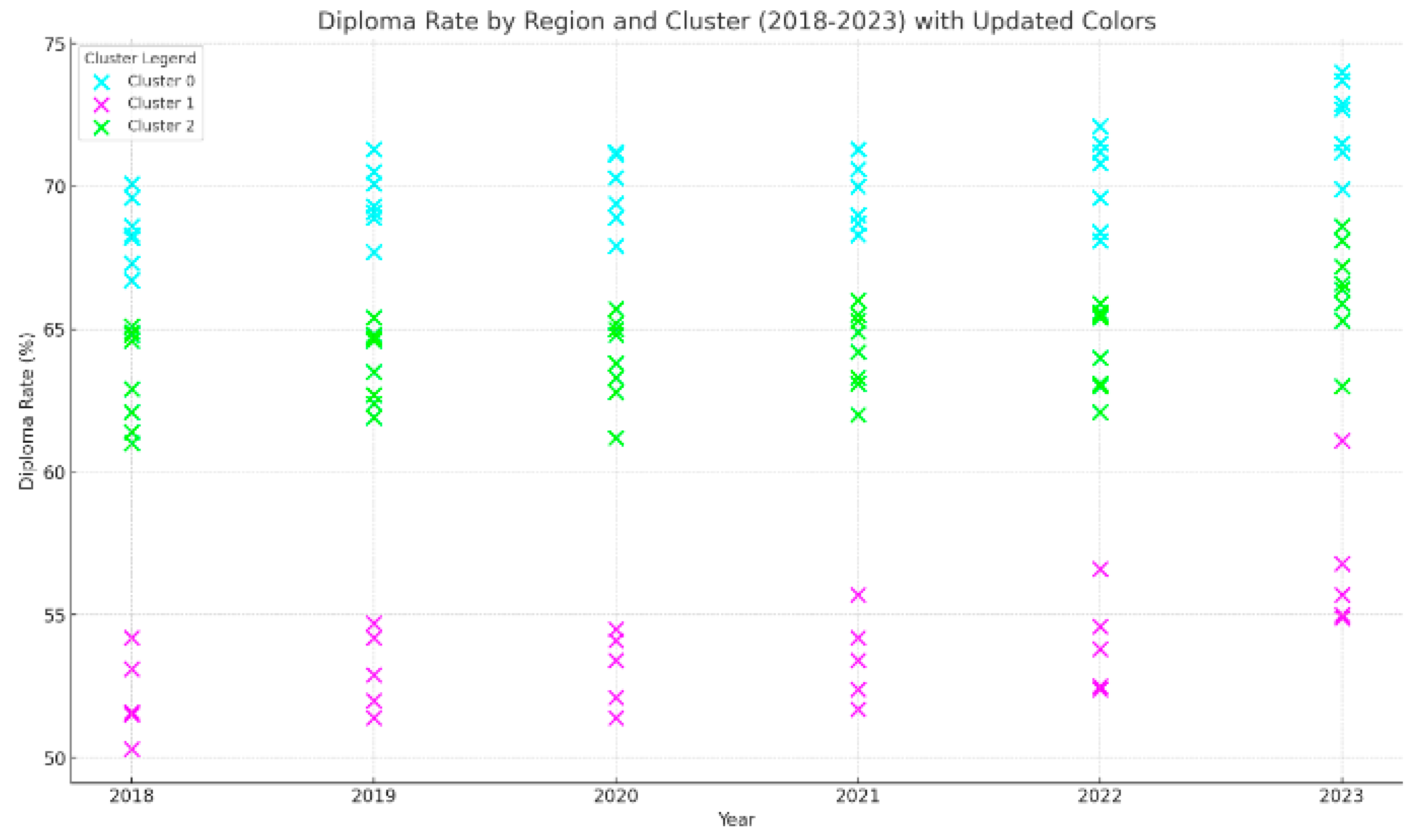
Figure 13.
The relationships between educational attainment and job satisfaction across italian regions.
Figure 13.
The relationships between educational attainment and job satisfaction across italian regions.
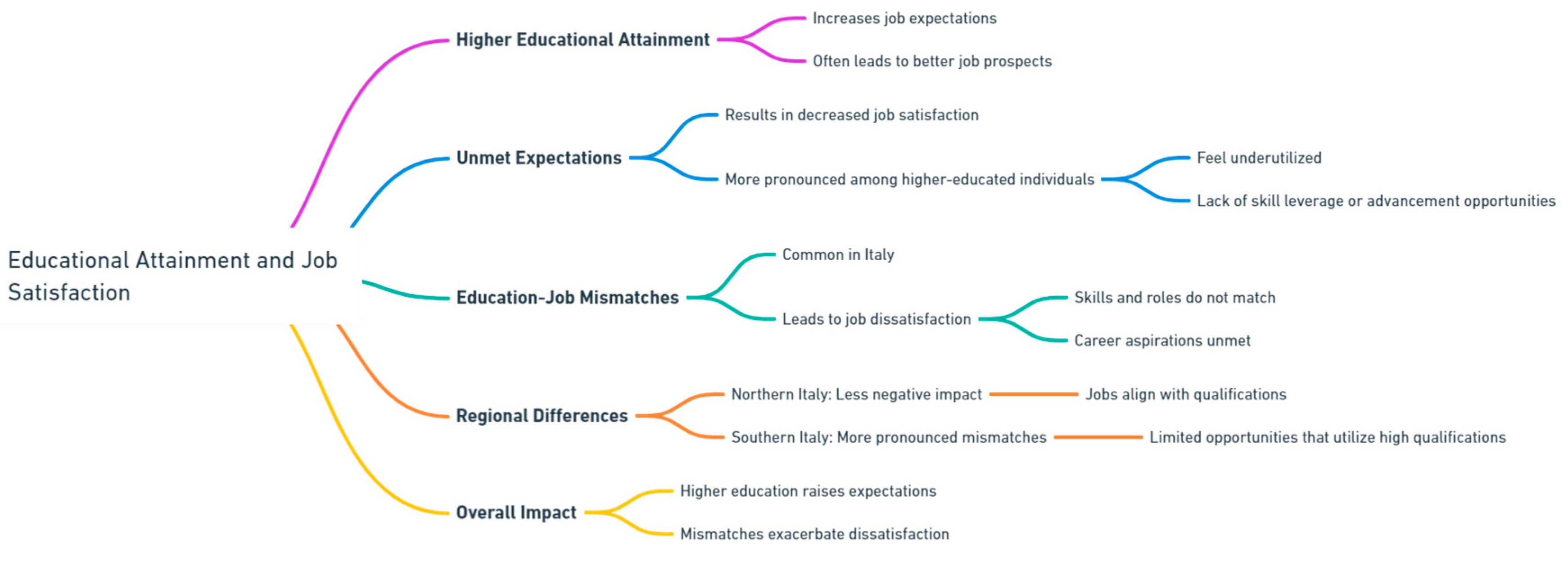
Figure 14.
Regional Educational Policies to Improve Graduation Rates in Italy.
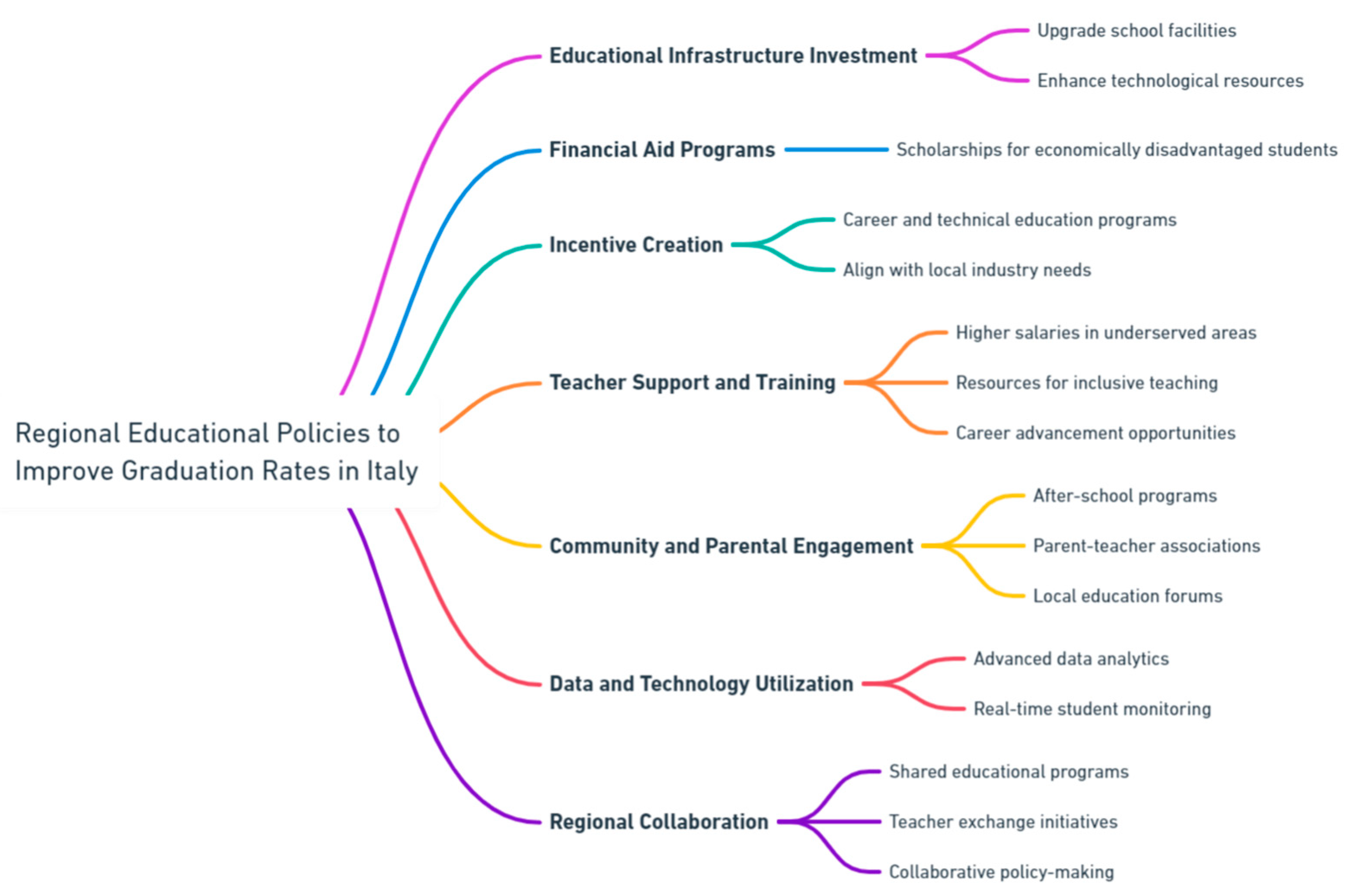
Disclaimer/Publisher’s Note: The statements, opinions and data contained in all publications are solely those of the individual author(s) and contributor(s) and not of MDPI and/or the editor(s). MDPI and/or the editor(s) disclaim responsibility for any injury to people or property resulting from any ideas, methods, instructions or products referred to in the content. |
© 2024 by the authors. Licensee MDPI, Basel, Switzerland. This article is an open access article distributed under the terms and conditions of the Creative Commons Attribution (CC BY) license (http://creativecommons.org/licenses/by/4.0/).
Copyright: This open access article is published under a Creative Commons CC BY 4.0 license, which permit the free download, distribution, and reuse, provided that the author and preprint are cited in any reuse.


