

Submitted:
21 May 2024
Posted:
23 May 2024
You are already at the latest version
Abstract
This study investigates the factors influencing consumers' intentions to purchase overseas travel packages via social media in Thailand, with a focus on consumer trust and perceived risks. A mixed-methods approach was employed, combining qualitative and quantitative research techniques. In the qualitative phase, the Fuzzy Set Delphi Method was applied to gather expert consensus from 19 participants. For the quantitative phase, a survey was conducted among 600 individuals who had experience purchasing overseas travel packages on social media in Thailand. First-order and second-order confirmatory factor analyses were used to examine the relationships between eight identified factors: social media influencer, e-WOM, trust, perceived risk, brand image, rating review, personal attitude, and destination image. The results indicate that trust and perceived risk are the most significant factors affecting purchase intention. Trust plays a crucial role in customers' decision-making processes, while perceived risk influences their tendency to avoid purchasing packages if the risk is perceived as high. The insights gained from this study contribute to the understanding of factors influencing purchase intentions for overseas travel packages through social media in Thailand, providing valuable information for travel agencies to develop effective marketing strategies.
Keywords:
Purchase Intention
; Trust
; Perceived Risk
; Social Media
; Fuzzy Set Delphi Method
1. Introduction
The tourism industry plays a crucial role in Thailand's economy, as evidenced by its inclusion in the country's 20-year national strategy plan (2018-2037). The plan aims to transform current industries into future industries, with a focus on services and industries of the future [1]. However, the COVID-19 pandemic has had a significant impact on the tourism sector, forcing many operators to discontinue their operations and leading to a loss of income and the closure of both domestic and international tourism businesses in Thailand. Despite the challenges posed by the pandemic, there has been a growing desire to travel once again, with people valuing travel and personal time more than ever before [2].
The global air travel market has witnessed intense competition between low-cost carriers (LCCs) and full-service carriers (FSCs), with LCCs entering the Asian air travel market and emerging markets gradually increasing their market share. Both LCCs and FSCs are focusing on cost-cutting strategies to attract discerning travelers [3]. This has made it more convenient for Thai tourists to opt for low-cost airlines when traveling abroad, with purchasing overseas travel packages from travel agencies in Thailand becoming a popular option. As of 2024, there are over 13,814 registered companies that have obtained legal tourism licenses, with an additional 101 travel companies registering during the first half of April 2024 [4].
Thailand has the highest weekly online shopping behaviour in the world, with 68.3% of internet users aged 16-64 years engaging in online shopping [5]. The overall picture of spending money on travel via online channels around the world appears to be growing better than last year, with airline ticket purchases increasing by 6.8%, car rentals by 15%, home rentals by 30%, hotels by 45%, and vacation package purchases by 59%. This growth in online travel booking presents a significant opportunity for travel agencies to market their overseas travel packages to Thai consumers.
As of January 2023, Thailand had a total population of 71.75 million people, with 61.21 million people (85.3%) using the Internet and 52.25 million individuals (72.8%) using social media [6]. Facebook and YouTube are the most popular social media platforms in Thailand, with 48.10 million and 43.90 million users, respectively. This high level of internet and social media usage presents a great opportunity for travel agencies to promote their overseas travel packages and increase brand and product awareness, which can influence tourism demand through the tourist experience [7].
Despite the potential for marketing overseas travel packages on social media in Thailand, there is a lack of literature exploring the factors that influence Thai consumers' intentions to purchase such packages. Previous studies have investigated the impact of consumer trust and perceived risks on online purchase intentions in various contexts [8,9,10], but there is a need for research specifically focusing on the purchase of overseas travel packages via social media in Thailand.
The rationale for this study lies in the importance of understanding the factors that influence Thai consumers' intentions to purchase overseas travel packages via social media, given the growing trend of online travel booking and the high level of social media usage in Thailand. By identifying the key factors that impact consumer trust and perceived risks, travel agencies can develop effective marketing strategies to increase sales and build customer loyalty.
This study aims to address the following research questions:
What are the key factors that influence consumer trust in purchasing overseas travel packages via social media in Thailand?
How do perceived risks impact Thai consumers' intentions to purchase overseas travel packages via social media?
What strategies can travel agencies implement to increase consumer trust and reduce perceived risks when marketing overseas travel packages on social media in Thailand?
The objectives of this research are:
To identify the key factors that influence consumer trust in purchasing overseas travel packages via social media in Thailand.
To examine the impact of perceived risks on Thai consumers' intentions to purchase overseas travel packages via social media.
To propose strategies for travel agencies to increase consumer trust and reduce perceived risks when marketing overseas travel packages on social media in Thailand.
This study employed a mixed-methods approach, utilizing both qualitative and quantitative data collection and analysis techniques. The research will be organized into two phases:
Phase 1: A comprehensive literature review was conducted to identify the key factors that influence consumer trust and perceived risks in online purchasing, with a focus on the tourism industry and social media marketing. A Fuzzy Set Delphi Method (FSDM) was applied to gather expert opinions on the factors identified in Phase 1. The FSDM is a modified version of the traditional Delphi method that incorporates fuzzy set theory to deal with the uncertainty and ambiguity in expert opinions [11].
Phase 2: Based on the findings from Phase 1, a survey instrument will be developed and administered to a sample of Thai consumers who have purchased or are interested in purchasing overseas travel packages via social media. The survey data were analysed using confirmatory factor analysis (CFA) to examine the relationships between consumer trust, perceived risks, and purchase intentions.
The findings of this study contribute to the limited literature on the factors influencing Thai consumers' intentions to purchase overseas travel packages via social media. The results provide valuable insights for travel agencies in developing effective marketing strategies to increase consumer trust and reduce perceived risks, ultimately leading to increased sales and customer loyalty.
Materials and Methods
2.1. Dependent Variable
2.1.1. Purchase Intention
Purchase intention is a crucial concept in consumer behaviour, representing the likelihood of a consumer to purchase a specific product or service. In the context of overseas travel packages, purchase intention reflects the willingness of Thai consumers to book and pay for travel packages marketed on social media platforms. Purchase intention refers to the likelihood that a consumer will buy a particular product or service [12]. In the context of overseas travel packages, purchase intention represents the willingness of Thai consumers to book and pay for a travel package marketed on social media platforms. Previous studies have identified various factors that influence purchase intentions in the tourism industry, including trust [9], perceived risk [10], brand image [13], and destination image [14]. Several factors have been identified as influential in shaping purchase intentions in the tourism industry, including trust, perceived risk, brand image, and destination image [15]. Trust has been identified as a key factor influencing purchase intention. It acts as a catalyst in transactions between buyers and sellers, contributing to consumer satisfaction and subsequently impacting purchase intention [16]. Similarly, perceived risk has been found to have a direct influence on purchase intention, with higher levels of perceived risk leading to lower purchase intention [17]. Furthermore, brand image has been shown to have a significant impact on purchase intention, with a positive relationship between brand image and online purchase intention [18]. In addition to these factors, perceived service quality has been found to significantly impact trust and purchase intention, with trust playing a mediating role in the relationship between perceived service quality and purchase intention [19]. Moreover, the influence of brand personality on purchase intention has been explored, revealing a significant effect of brand personality on purchase intention [20]. Furthermore, the effect of corporate re-branding on purchase intention has been studied, showing a direct but relatively weak effect on purchase intention [21]. The relationship between website quality and travel perceived risk in influencing purchase intention has also been investigated, with travel perceived risk having a direct influence on purchase intention [22]. Additionally, the influence of multidimensional interdisciplinary variables on tourist online purchasing intention has been examined, highlighting the impact of various factors such as consumers' online purchasing experience, novelty-seeking behaviour, and perceived ease of use on purchase intention [23].
2.2. Independent Variable
2.2.1. Social Media Influencer
Social media influencers are individuals who have established credibility in a specific industry or niche and have access to a large audience through social media [24]. Influencer marketing has become an increasingly popular strategy in the tourism industry, as it can effectively reach target audiences and influence their purchase decisions [25]. Studies have shown that social media influencers can positively impact consumers' attitudes and purchase intentions towards travel products [26]. Social media influencers play a pivotal role in shaping consumer behaviour and purchase intentions, particularly in the context of the tourism industry. Influencer marketing has gained significant traction as a powerful strategy to reach and influence target audiences, ultimately impacting their purchase decisions [27]. The influence of social media influencers on brand image, self-concept, and purchase intention has been widely recognized, highlighting the substantial impact of influencers on consumer behaviour [28]. In the tourism sector, influencers who focus on travel-related content, known as travel influencers, have emerged as key players in shaping consumers' travel intentions and purchase decisions [29]. The credibility of social media influencers has been identified as a critical factor influencing consumers' intentions. Studies have measured various dimensions of influencers' source credibility, including attractiveness, trustworthiness, expertise, entertainment value, and similarity, and their impact on consumer behaviour and purchase intentions [30]. Furthermore, the integration of social media channels, such as embedded social media channels, has been found to provide gratifications to users, influencing their satisfaction and purchase intentions [31]. Social media platforms, particularly Facebook, have been evaluated for their communication effectiveness in promoting travel products, demonstrating their influence on purchase intentions, especially among college students [32]. Moreover, the mediating role of purchase intention in the relationship between e-WOM (electronic word-of-mouth), e-WOM credibility, and purchase decisions has been explored, emphasizing the intricate dynamics of consumer decision-making processes influenced by social media content [33].
The credibility of social media influencers has been established as a significant determinant of purchase intention, particularly in the beauty industry, underscoring the importance of credibility in influencer marketing [34]. Additionally, the mediating role of brand trust in the relationship between social media marketing activities and purchase intention has been highlighted, shedding light on the mechanisms through which social media influences consumer behaviour [35]. Furthermore, the impact of social media marketing activities on consumers' purchase intentions, particularly in the context of handloom clothes, has been investigated, with demographic variables such as age, gender, income, and cultural differences being considered as potential moderators in shaping purchase intentions [36]. The interplay between social media marketing, brand image, and purchase intention has been examined, revealing their significant influence on brand loyalty, further emphasizing the pivotal role of social media in shaping consumer behaviour [37]. Additionally, the influence of social media marketing and e-WOM on purchase decisions through purchase intention has been studied, providing insights into the complex relationships between social media content and consumer decision-making processes [38]. The effect of social media marketing and brand awareness on purchase decisions through purchase intention has been explored, highlighting the indirect influence of these variables on purchase intentions, further elucidating the multifaceted nature of consumer decision-making processes influenced by social media content [39]. Moreover, the influence of social influence and product attributes on customer purchase intention, particularly in the context of second-hand clothes, has been investigated, shedding light on the factors shaping purchase intentions in specific market segments [40]. Additionally, the role of social media influencers in building trust and impacting travel decisions, particularly in the context of halal tourism, has been examined, emphasizing the significance of influencers in shaping travel intentions and decisions [41].
The adoption of information on social media and its impact on travel intention has been studied, emphasizing the role of information quality and credibility in influencing travel intentions, underscoring the importance of social media content in shaping travel behaviour [42]. Furthermore, the influence of social networks in travel decisions has been evaluated, highlighting the transformative impact of social media on travel behaviour and decision-making processes [43]. The effect of social media influencers and brand image on online purchase intention during the COVID-19 pandemic has been investigated, providing insights into the evolving dynamics of consumer behaviour in response to external factors such as the pandemic [44]. Moreover, the impact of social media marketing and e-WOM on purchase intention of consumer goods buyers has been examined, shedding light on the opportunities and challenges presented by social media and e-WOM in shaping purchase intentions [45]. The transformation of consumer behaviour by lifestyle and social media influencers, particularly in the context of lifestyle changes from smoking to vaping, has been studied, providing valuable implications for understanding the influence of influencers on consumer behaviour [46]. Additionally, the influence of social media on consumer purchase intentions, with like behaviour as a moderator, has been explored, offering insights into the nuanced dynamics of social media interactions and their impact on consumer behaviour [47]. Furthermore, the effects of social media, email marketing, website, and mobile applications on purchase intention and consumer decisions have been investigated, highlighting the multifaceted nature of digital marketing strategies and their influence on consumer behaviour [48]. The influence of user-generated content (UGC) on social media platforms in travel planning has been examined, emphasizing the growing impact of UGC on travel behaviour and decision-making processes [49]. Additionally, the role of social media marketing in Nepal, particularly in the context of travel intermediaries, has been studied, providing valuable insights for travel managers in leveraging social media for marketing purposes [50].
2.2.2. e-WOM
Electronic word-of-mouth (e-WOM) refers to any positive or negative statement made by potential, actual, or former customers about a product or company, which is made available to a multitude of people and institutions via the Internet [51]. In the tourism industry, e-WOM can significantly influence consumers' travel decisions, as they often rely on the experiences and opinions of others when planning trips [52]. Research has demonstrated that positive e-WOM can increase consumers' trust and purchase intentions towards travel products [53]. Electronic word-of-mouth (e-WOM) has emerged as a significant influencer of consumer behaviour and purchase intentions, particularly in the context of the tourism industry. e-WOM encompasses the transmission of positive or negative statements about a product or company through the Internet, which can significantly impact consumers' travel decisions [54]. The influence of e-WOM on purchase intentions has been widely studied, with findings indicating that e-WOM can exert a substantial influence on consumers' attitudes and intentions towards various products, including green apparel products and remanufactured products [55,56]. Moreover, the credibility of e-WOM as a reliable source of information has been emphasized, highlighting its role in shaping consumer perceptions and purchase intentions [57]. Furthermore, the mediating role of e-WOM information adoption in influencing young consumers' online purchase intentions has been explored, shedding light on the mechanisms through which e-WOM influences consumer decision-making processes [58]. Additionally, the influence of e-WOM on consumers' purchase intentions in social commerce has been investigated, revealing the significant impact of e-WOM on consumers' purchase decision-making processes [59]. The role of e-WOM as a key information source for consumers' purchase decision-making has been underscored, emphasizing its influence on consumers' purchase intentions [60]. Moreover, the impact of e-WOM on consumers' purchase intentions for agricultural products of regional public brands has been examined, providing insights into the factors influencing consumers' purchase intentions and the role of e-WOM in shaping purchase decisions [61]. Additionally, the influence of e-WOM on Malaysian Facebook users' online airline tickets purchase intentions has been studied, offering valuable implications for airline and travel organizations in Malaysia [62]. The effect of e-WOM on purchase intentions through brand awareness has been investigated, highlighting the multifaceted nature of e-WOM's influence on consumer purchase intentions [63]. Furthermore, the influence of social media marketing and e-WOM on purchase decisions through purchase intention has been explored, providing insights into the complex relationships between social media content, e-WOM, and consumer decision-making processes [38]. The role of e-WOM in increasing brand awareness, brand image, and purchase intention has been examined, shedding light on the multifaceted influence of e-WOM on consumer perceptions and purchase intentions [64]. Additionally, the intermediary effect of attachment behaviour in live streaming marketing has been studied, emphasizing the nuanced dynamics of e-WOM's influence on consumer behaviour [39]. Moreover, the influence of e-WOM on consumers' purchase intentions for travel-related products and services has been investigated, highlighting the significance of e-WOM in shaping consumers' travel decisions and purchase intentions [65]. The role of e-WOM in influencing consumer purchase intentions through social media platforms has been emphasized, underscoring the growing importance of e-WOM in the digital era [47]. Additionally, the study on the influence of college students' perceived e-WOM and product attitude on purchase intention has provided valuable insights into the factors shaping purchase intentions among young consumers [66]. Furthermore, the impact of e-WOM on consumers' purchase intentions of smartphone products has been examined, revealing the influence of e-WOM on consumers' attitudes and purchase intentions towards products [67]. The study on consumers' electronic word-of-mouth-seeking intentions on social media sites concerning fashion channels has provided insights into the factors influencing consumers' e-WOM-seeking behaviour and its implications for marketing strategies [68]. These studies collectively underscore the substantial influence of e-WOM on consumer behaviour and purchase intentions, offering valuable implications for businesses and marketers seeking to leverage e-WOM in shaping consumer perceptions and purchase decisions.
2.2.3. Trust
Trust is a crucial factor in online transactions, as consumers often perceive higher risks when purchasing products or services online [9]. In the context of overseas travel packages, trust refers to the consumer's belief that the travel agency will fulfil its obligations and act in the consumer's best interest [8]. Studies have shown that trust positively influences consumers' purchase intentions in the tourism industry [69]. Trust plays a pivotal role in shaping consumer behaviour and purchase intentions in the context of online transactions, particularly in the tourism industry. The significance of trust in e-commerce customer relationships has been widely recognized, with studies highlighting the multifaceted nature of trust in online transactions [70]. Moreover, the influence of trust on patients' willingness to choose online health consultation has been studied, emphasizing the critical role of trust in shaping consumers' decisions in the healthcare domain [71]. Additionally, the effects of tourism e-commerce live streaming features on consumer purchase intention have been examined, shedding light on the mediating role of trust in influencing consumers' purchase decisions [72]. Furthermore, the benevolence, integrity, and competence characteristics of e-commerce companies have been identified as influential factors in shaping consumers' perceived trust, purchase intention, and attitudinal loyalty, underscoring the multifaceted nature of trust in e-commerce settings [73]. The role of trust and gender in online tourism shopping has been investigated, with transaction security being identified as a factor positively affecting trust in online environments [74]. Moreover, the influence of emotions on trust in online transactions using new technology has been studied, highlighting the growing significance of trust in the digital era [75].
The construction of consumer dynamic trust in cross-border online shopping has been examined, providing insights into the factors influencing consumers' trust in cross-border online shopping platforms and businesses [76]. Additionally, the evaluation model of transaction trust in online group-buying based on transaction history information has been proposed, emphasizing the importance of trust in online group-buying transactions [77]. The impact of transaction trust on consumers' intentions to adopt m-commerce has been investigated, highlighting the pivotal role of trust in shaping consumers' adoption of mobile commerce technologies [78]. Moreover, the influence of knowledge and trust in e-consumers' online shopping behaviour has been studied, emphasizing the role of knowledge in engendering trust in online transactions [79]. The impact of psychological factors on consumers' trust in the adoption of m-commerce has been examined, underscoring the critical role of trust in shaping consumers' decisions to adopt mobile commerce technologies [80]. Additionally, the factors that affect consumers' trust and continuous adoption of online financial services have been investigated, highlighting the positive effect of navigation functionality and perceived security on trust [81].
2.2.4. Perceived Risk
Perceived risk refers to the consumer's perception of the potential negative consequences associated with purchasing a product or service [82]. In the tourism industry, perceived risks can include financial, performance, psychological, and safety risks [10]. Research has demonstrated that perceived risks negatively influence consumers' purchase intentions towards travel products [8]. Perceived risk, a fundamental concept in consumer behaviour, encompasses the consumer's perception of potential negative consequences associated with purchasing a product or service. In the context of the tourism industry, perceived risks can encompass financial, performance, psychological, and safety risks, which significantly influence consumers' purchase intentions towards travel products [83]. The relationships among perceived quality, perceived risk, and perceived product value have been studied, shedding light on the intricate interplay between these factors in shaping consumers' perceptions and purchase intentions [84]. Moreover, the adoption of electronic word-of-mouth (e-WOM) through consumers' perceived credibility has been examined, emphasizing the critical role of perceived credibility in influencing consumers' trust and purchase intentions [85]. Furthermore, the interplay between perceived benefits, perceived risk, and trust has been explored, providing insights into the complex dynamics of consumer decision-making processes influenced by perceived benefits and risks [86]. The influence of negative e-WOM on switching intention has been studied, highlighting the impact of negative e-WOM on consumers' attitudes and intentions towards products or services highlighted in the negative e-WOM [87]. Additionally, a conceptual framework has been developed to understand consumers' perceptions of quality, risk, and value, offering valuable insights into the multifaceted nature of perceived risk in shaping consumers' purchase intentions [88]. Moreover, the impact of e-WOM on reducing uncertainties in the decision-making process has been examined, emphasizing the role of e-WOM in providing valuable information to consumers and reducing uncertainties in their decision-making processes [89]. The borrower's perceived risk in mortgage choice has been studied, providing insights into the factors influencing borrowers' perceived risks and their implications for mortgage choices [90]. Additionally, the influence of social media influencers on consumers' purchase intentions of beauty products has been investigated, shedding light on the impact of social media influencers on consumers' purchase decisions [91]. The role of perceived risk in mediating the influence of perceived quality on perceived value has been examined, providing valuable insights into the mechanisms through which perceived quality influences consumers' perceived value through perceived risk [92]. Moreover, the factors driving electronic word-of-mouth use through a configurational approach have been disentangled, offering insights into the core conditions reinforcing consumers' use of e-WOM and their implications for consumer behaviour [93]. These studies collectively underscore the multifaceted nature of perceived risk and its significant influence on consumer behaviour and purchase intentions, offering valuable implications for businesses and marketers seeking to understand and address consumers' perceived risks in their decision-making processes.
2.2.5. Brand Image
Brand image refers to the set of associations and perceptions that consumers hold about a particular brand [94]. In the tourism industry, a strong brand image can differentiate a travel agency from its competitors and influence consumers' trust and purchase intentions [13]. Studies have shown that a positive brand image can increase consumers' confidence in a travel agency and their willingness to book travel packages [95]. Brand image plays a pivotal role in influencing consumer behaviour and purchase intentions, particularly in the tourism industry. A strong brand image can differentiate a travel agency from its competitors and significantly influence consumers' trust and purchase intentions [96]. The influence of brand image on consumers' buying decisions has been widely studied, with findings indicating that brand image significantly impacts consumers' purchase intentions and behaviours [97]. Moreover, the mediating role of brand image in influencing consumers' loyalty and purchase intentions has been examined, highlighting the multifaceted nature of brand image in shaping consumer perceptions and behaviours [98]. Furthermore, the impact of brand image on consumers' purchase decisions in online settings has been investigated, shedding light on the critical role of brand image in shaping consumers' online purchase intentions [99]. The influence of primary and secondary brand associations on consumers' perceptions and purchase intentions has been studied, providing valuable insights into the factors shaping consumers' brand perceptions and purchase intentions [100]. Additionally, the effect of brand positioning, brand image, and perceived price on consumers' repurchase intentions has been examined, emphasizing the multifaceted nature of brand image in shaping consumers' repurchase intentions [101]. Moreover, the influence of word of mouth, service quality, and brand image on consumer loyalty through brand trust has been explored, providing insights into the complex relationships between these factors and their implications for consumer loyalty and purchase intentions [102]. The impact of brand image on consumers' repurchase intentions in the low-cost carrier industry has been studied, offering valuable implications for low-cost carriers seeking to understand and leverage brand image in shaping consumer behaviours [103]. Additionally, the role of brand image in mediating the effect of product quality on repurchase intention has been examined, highlighting the mediating role of brand image in influencing consumers' repurchase intentions [104].
2.2.6. Rating Review
Rating reviews are online evaluations provided by consumers who have purchased and experienced a product or service [105]. In the tourism industry, rating reviews can provide valuable information for potential travelers and influence their decision-making process [106]. Research has demonstrated that positive rating reviews can increase consumers' trust and purchase intentions towards travel products [107]. Rating reviews, as online evaluations provided by consumers who have purchased and experienced a product or service, play a crucial role in influencing consumer behaviour and purchase intentions [107]. In the tourism industry, rating reviews are particularly influential, providing valuable information for potential travelers and significantly impacting their decision-making process [108]. Research has demonstrated that positive rating reviews can substantially increase consumers' trust and purchase intentions towards travel products, highlighting the pivotal role of rating reviews in shaping consumer perceptions and behaviours [109]. The influence of rating reviews on consumers' purchase intentions has been widely studied, with findings indicating that rating reviews significantly impact consumers' purchase decisions and behaviours [110]. Moreover, the impact of rating reviews on consumers' trust and purchase intentions in social commerce has been examined, emphasizing the critical role of rating reviews in shaping consumers' trust and purchase intentions in the context of social commerce [111]. Additionally, the effect of rating reviews on consumers' perceptions and purchase intentions in the tourism industry has been investigated, providing valuable insights into the factors shaping consumers' perceptions and purchase intentions in the context of tourism products and services [112].
2.2.7. Personal Attitude
Personal attitude refers to an individual's positive or negative evaluation of performing a particular behaviour [12]. In the context of overseas travel packages, personal attitude represents a consumer's favourable or unfavourable assessment of booking a travel package marketed on social media. Studies have shown that personal attitude positively influences consumers' purchase intentions in the tourism industry [113]. Personal attitude, as defined by Fishbein and Ajzen [12], represents an individual's positive or negative evaluation of performing a particular behaviour. In the context of overseas travel packages, personal attitude reflects a consumer's favourable or unfavourable assessment of booking a travel package marketed on social media. Research has shown that personal attitude plays a significant role in influencing consumers' purchase intentions in the tourism industry [114]. The influence of personal attitude on consumers' purchase intentions has been widely studied, with findings indicating that personal attitude significantly impacts consumers' purchase decisions and behaviours [115]. Moreover, the mediating role of personal attitude in influencing consumers' loyalty and purchase intentions has been examined, highlighting the multifaceted nature of personal attitude in shaping consumer perceptions and behaviours [116]. Furthermore, the impact of personal attitude on consumers' purchase decisions in online settings has been investigated, shedding light on the critical role of personal attitude in shaping consumers' online purchase intentions [117]. The influence of primary and secondary personal associations on consumers' perceptions and purchase intentions has been studied, providing valuable insights into the factors shaping consumers' personal perceptions and purchase intentions [118]. Additionally, the effect of personal attitude on consumers' perceptions and purchase intentions in the tourism industry has been examined, offering valuable insights into the factors shaping consumers' perceptions and purchase intentions in the context of tourism products and services [119]. Moreover, the influence of personal attitude on consumers' purchase intentions in luxury commerce has been studied, shedding light on the importance of personal attitude in shaping consumers' perceptions and purchase intentions in the luxury market [120]. Additionally, the role of personal attitude in mediating the effect of product quality on repurchase intention has been examined, highlighting the mediating role of personal attitude in influencing consumers' repurchase intentions [121].
2.2.8. Destination Image
Destination image refers to the sum of beliefs, ideas, and impressions that a person has of a destination [122]. In the tourism industry, a positive destination image can attract potential travelers and influence their decision to visit a particular location [14]. Research has demonstrated that destination image positively influences consumers' purchase intentions towards travel products [123]. Destination image, as the sum of beliefs, ideas, and impressions that a person holds of a destination, also plays a crucial role in influencing consumer behaviour and purchase intentions in the tourism industry. A positive destination image can attract potential travelers and significantly influence their decision to visit a particular location [124]. The influence of destination image on consumers' purchase intentions has been widely studied, with findings indicating that destination image significantly impacts consumers' purchase decisions and behaviours [125]. Moreover, the mediating role of destination image in influencing consumers' loyalty and purchase intentions has been examined, highlighting the multifaceted nature of destination image in shaping consumer perceptions and behaviours [126].
Based on the literature review, the conceptual framework for this study is presented in Figure 1. The framework illustrates the relationships between the eight independent variables (social media influencer, e-WOM, trust, perceived risk, brand image, rating review, personal attitude, and destination image) and the dependent variable (purchase intention).
The researchers conducted a study on purchase intention for overseas travel packages on social media in Thailand. They used the fuzzy Delphi technique, first-order confirmatory factor analysis and second-order confirmatory factor analysis to analyse the composition of these intentions. The study identified eight factors influencing purchase intentions: social media influencer, e-WOM, trust, perceived risk, brand image, rating review, personal attitude, and destination image. These factors are illustrated in Figure 1.
Methodology
This research will study using mixed methods with data collection and qualitative and quantitative research data analysis of purchase intention for overseas travel packages on social media in Thailand. This study was conducted in accordance with the ethical standards of Rangsit University on human research and was approved by the Institutional Review Board (IRB). Prior to commencement, the study was thoroughly reviewed and received IRB approval on October 3, 2023 with the protocol COA. No. RSUERB2023-155. All participants provided informed consent, and their anonymity and confidentiality were maintained throughout the research process. The IRB approval ensures adherence to national and international guidelines for ethical research involving human subjects. The researcher has the following research methods:
| Phase 1: Qualitative research to seek expert consensus regarding purchase intention of overseas travel packages | |
| # | Step details |
| 1 | Determine problems by combining research and literature in the relevant field. |
| 2 | Determine the qualifications of a group of 21 experts. |
| 3 | A questionnaire was sent to 21 experts over 3 rounds using e-Delphi to gather their opinions. Round 1: Create an open-ended questionnaire Round 2: Create a questionnaire by extracting the analysed answers from the first round into variables. Round 3: To ensure the accuracy of the experts' responses in second round. |
| 4 | Summarized to obtain indicators based on the consensus measurement method of 21 experts using Fuzzy Delphi Theory. |
| Phase 2: Quantitative research was conducted using an online questionnaire | |
| 5 | Creating an online questionnaire from experts in step 1 was used to ask and collect information from a group of 800 people who had previously purchased overseas travel packages on social media. |
| 6 | To summarize the results of the quantitative research, the process involves collecting data, analysing them, and presenting the findings in a concise manner. |
This study employed a mixed-methods approach to investigate the factors influencing consumers' intentions to purchase overseas travel packages via social media in Thailand, with a particular focus on consumer trust and perceived risks. The research is divided into two phases: a qualitative phase utilizing the e-Fuzzy Delphi Technique and a quantitative phase using an online questionnaire.
3.1. Qualitative Research using the e-Fuzzy Delphi Technique
The qualitative phase of the study aims to seek expert consensus regarding the purchase intention of overseas travel packages. The population for this phase consists of 21 participants, divided into three groups: 7 university professors teaching business administration and marketing, 7 marketing and social media experts, and 7 travel agency or tour business executives [127]. The selection criteria for each group ensure that the participants have the necessary knowledge and experience in their respective fields. For example, the professors should have at least two years of teaching experience in business administration and marketing, while the marketing and social media experts should have a minimum of two years of work experience or possess a certificate from online social platforms such as Facebook, Line, or TikTok. The travel agency or tour business executives should work for companies that have been operating for at least five years.
An online questionnaire is used as the research instrument for data collection in the qualitative phase. The researcher conducts a thorough analysis of relevant tables and compiles the data to create an open-ended questionnaire for Round 1 of the survey. In Round 2, the data collected from Round 1 is used as variables to design a closed-ended questionnaire, and the experts are asked to assess the appropriateness of a 7-level rating scale for implementing the Fuzzy Delphi Technique [128,129].
Data collection for the qualitative phase is conducted over a three-month period, with three rounds of online questionnaires sent via email. The data analysis employs the Fuzzy Delphi Method, a mathematical method for analysing ambiguity and uncertainty. The function is configured by shifting the member to a triangle shape, and the equation of the function member shift is as follows: F = (l,m,u), where l is the smallest value of a member of Fuzzy, M is the largest value of a member of Fuzzy, and u is the greatest membership fee of Fuzzy [130]. The researchers utilize the fuzzy mean method to convert values from opinions on the Likert scale to Fuzzy numbers, combining expert opinions as (l+m+u)/3. A threshold of 0.70 is set to determine the acceptance of a question; if the value exceeds 0.70, the question is accepted, and if the value does not meet the threshold, the question is rejected.
3.2. Quantitative Research with an Online Questionnaire
The quantitative phase of the study involved conducting research using an online questionnaire. The eligible population for this phase included 800 people residing in Thailand and having purchased overseas travel packages on social media. The exact population size was unknown, and the names of those who had purchased overseas travel packages on social media at least once were recruited for the study.
The research instrument for the quantitative phase was an online questionnaire (e-Delphi) created using the results obtained from the group of 21 experts in the first phase. The questionnaire was used to gather opinions from 800 people who had previously purchased overseas travel packages on social media [128].
Data collection for the quantitative phase was conducted using the online questionnaire (e-Delphi) distributed to Thai individuals who had purchased travel packages via social media platforms. The questionnaire included screening questions to ensure that only respondents who had purchased an overseas travel package on social media in Thailand were included in the analysis. The data collection period for this phase lasted for three months.
A second-order confirmatory factor analysis (CFA) was conducted using pre-existing software to analyse data for the quantitative phase. Maximum likelihood (ML) was used to determine the parameters. Various statistical measures, such as Chi-square (X2), relative chi-square (CMIN/df), Tucker-Lewis index (TLI), an adjustment of the goodness of fit index (AGFI), the goodness of fit index (GFI), comparative fit index (CFI), incremental fit index (IFI), root mean square error of approximation (RMSEA), root mean square residual (RMR), and standardized root mean square residual (SRMR) were analysed to assess the viability of the confirmation element for the influence of trust and perceived risk on purchase intention of overseas travel packages on social media in Thailand. Additionally, the compatibility of the empirical data with the model was assessed [131].
In conclusion, this mixed-methods study investigated factors influencing consumers' intentions to purchase overseas travel packages via social media in Thailand, with a focus on consumer trust and perceived risks. The qualitative phase employed the e-Fuzzy Delphi Technique to seek expert consensus while the quantitative phase used an online questionnaire to gather data from consumers who had previously purchased overseas travel packages on social media. The data analysis techniques, including the Fuzzy Delphi Method and second-order confirmatory factor analysis, were used to assess the relationships between the identified factors and the purchase intention of overseas travel packages on social media in Thailand.
4. Results
4.1. Expert consensus on Fuzzy Set Delphi
The findings presented in this research are based on a consensus reached by subject matter experts regarding the compiled Fuzzy Set Delphi steps. The information was obtained from feedback collected from a group of 19 trusted experts. The results were presented below.
Scheme 0.
All variables in the table meet this criterion, with crisp values ranging from 0.70 to 0.93.
Scheme 0.
All variables in the table meet this criterion, with crisp values ranging from 0.70 to 0.93.
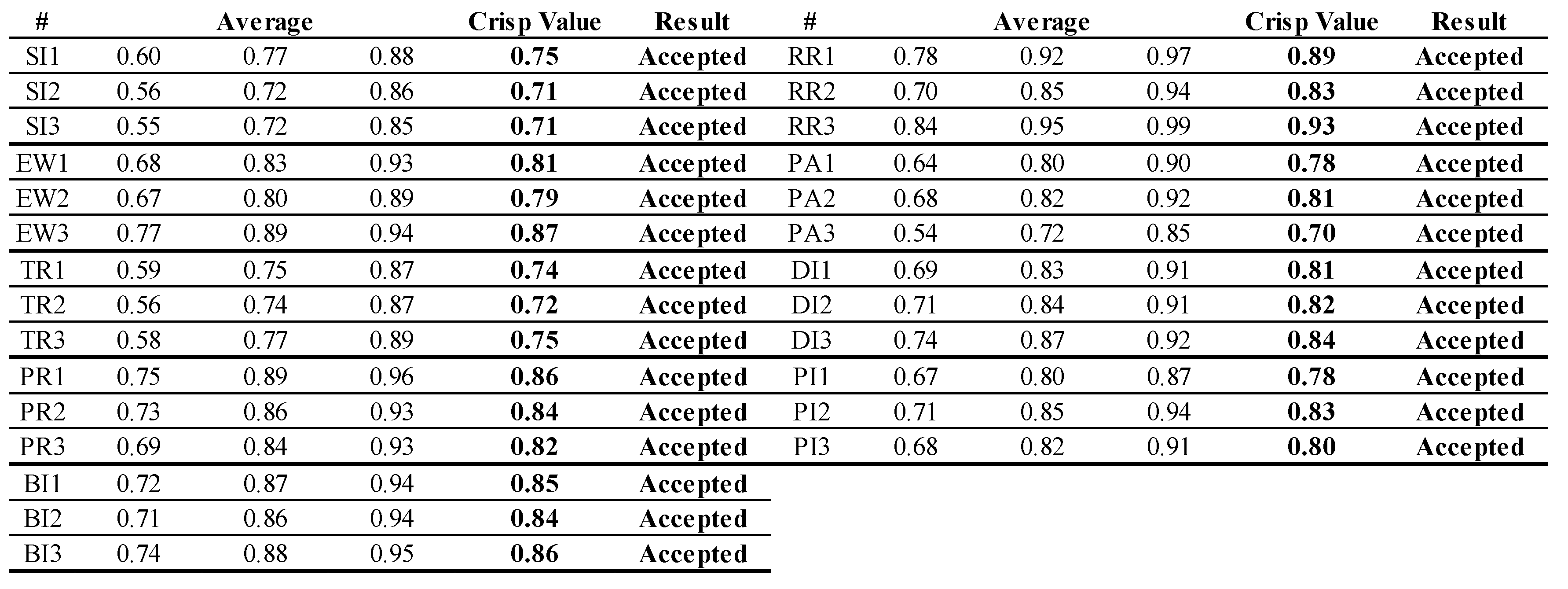
In summary, the Fuzzy Delphi Method was applied to assess the relevance and importance of the observed variables used in the study. The results showed that all variables were accepted by the expert panel, indicating a consensus that these variables were appropriate for measuring their respective latent constructs. This consensus provided support for the validity of the measurement model and allowed for further analyses, such as confirmatory factor analysis and structural equation modeling, to investigate the relationships between the latent constructs and their impact on purchase intention for overseas travel packages on social media in Thailand.
Nineteen experts agreed to accept all answers with a threshold value of 0.7. Therefore, the authors used a questionnaire to conduct further quantitative research. They sought the opinion of Thai people who had purchased overseas travel packages on social media in Thailand.
4.2.-First-Order Confirmatory Factor Analysis
Figure 2 illustrates the results of the first-order confirmatory factor analysis (CFA) conducted in the study. The purpose of CFA is to assess the measurement model, which specifies the relationships between the observed variables (indicators) and their respective latent constructs (factors). The figure shows the standardized factor loadings, factor correlations, and error terms associated with each indicator.
The latent constructs in the model are represented by ovals, while the observed variables are represented by rectangles. The arrows connecting the latent constructs to the observed variables indicate the factor loadings, which represent the strength of the relationship between each indicator and its corresponding factor. The arrows connecting the latent constructs to each other represent the factor correlations, which indicate the degree to which the factors are related.
The standardized factor loadings range from 0.51 to 0.87, suggesting that the indicators are moderately to strongly related to their respective factors. For example, the factor loading of 0.87 between the latent construct "PI" (Purchase Intention) and the observed variable "PI2" indicates that PI2 is a strong indicator of the Purchase Intention factor.
The factor correlations range from 0.51 to 0.85, indicating moderate to strong relationships between the latent constructs. For example, the factor correlation of 0.85 between "SI" (Social Media Influencer) and "PI" (Purchase Intention) suggests that these two factors are strongly related.
The error terms associated with each observed variable are represented by the small circles with arrows pointing towards the indicators. These error terms account for the variance in the observed variables that is not explained by their respective factors.
The model also includes several fit indices, such as CMIN/DF (2.049), AGFI (0.918), GFI (0.933), CFI (0.975), TLI (0.972), IFI (0.975), RMSEA (0.041), and RMR (0.018). These indices assess the overall goodness-of-fit of the measurement model, with values meeting the recommended thresholds indicating a well-fitting model.
In summary, the first-order confirmatory factor analysis presented in Figure 3 provides evidence for the validity and reliability of the measurement model. The standardized factor loadings, factor correlations, and error terms support the relationships between the observed variables and their respective latent constructs. The fit indices suggest that the model has a good fit with the observed data, providing a solid foundation for further analyses, such as structural equation modeling, to test the hypothesized relationships between the latent constructs.
Table 1 presents the results of the harmonization of the first-order confirmatory factor analysis. The purpose of this analysis is to assess the goodness-of-fit of the measurement model, which describes the relationships between the observed variables (indicators) and their respective latent constructs (factors). The table provides various fit indices and their corresponding criteria for evaluating the model fit.
The first fit index is the relative chi-square (CMIN/DF), which is the ratio of the model's chi-square value to its degrees of freedom. A value of 1.632 is obtained, which is below the recommended threshold of 2.00, indicating a good fit between the model and the observed data.
The Adjusted Goodness-of-Fit Index (AGFI) and the Goodness-of-Fit Index (GFI) are both above the recommended threshold of 0.90, with values of 0.928 and 0.945, respectively. These indices measure the proportion of variance in the sample covariance matrix that is accounted for by the model, with higher values indicating a better fit.
The Comparative Fit Index (CFI), Tucker-Lewis Index (TLI), and Incremental Fit Index (IFI) are all above the recommended threshold of 0.90, with values of 0.985, 0.981, and 0.985, respectively. These indices compare the fit of the proposed model to a baseline model (usually the null model) and indicate the relative improvement in fit. Higher values suggest a better fit of the proposed model compared to the baseline model.
The Root Mean Square Error of Approximation (RMSEA) is 0.032, which is below the recommended threshold of 0.08. This index assesses the discrepancy between the model-implied covariance matrix and the observed covariance matrix, while considering the complexity of the model. Lower values indicate a better fit, with values below 0.05 suggesting a close fit.
Lastly, the Root Mean Square Residual (RMR) is 0.013, which is below the recommended threshold of 0.08. This index measures the average residual value derived from the fitting of the model to the sample covariance matrix. Lower values indicate a better fit.
In summary, all the fit indices obtained from the harmonization of the first-order confirmatory factor analysis meet their respective criteria for consideration, suggesting that the measurement model has a good fit with the observed data. These results support the validity and reliability of the constructs used in the study and their relationships with their respective indicators. The well-fitting measurement model provides a solid foundation for further analyses, such as structural equation modeling, to test the hypothesized relationships between the latent constructs.
Table 2 presents the Pearson correlation coefficients for the observed variables in the study. The Pearson correlation coefficient is a measure of the linear relationship between two variables, ranging from -1 to +1. A value of +1 indicates a perfect positive linear relationship, a value of -1 indicates a perfect negative linear relationship, and a value of 0 indicates no linear relationship between the variables.
The table is a matrix showing the correlation coefficients between each pair of observed variables. The variables are labeled from 1 to 27, and the corresponding variable names can be found in the first column and the first row of the table.
The correlation coefficients are symmetric, meaning that the correlation between variable i and variable j is the same as the correlation between variable j and variable i. Therefore, only the lower triangle of the matrix is filled with the correlation coefficients, while the upper triangle is left blank.
The table also uses asterisks to denote the statistical significance of the correlations. A single asterisk (*) indicates that the correlation is significant at the 0.05 level, meaning that there is a 5% chance of observing a correlation as large as the one observed if there were truly no correlation in the population. A double asterisk (**) indicates that the correlation is significant at the 0.01 level, meaning that there is only a 1% chance of observing a correlation as large as the one observed if there were truly no correlation in the population.
The magnitude and sign of the correlation coefficients provide insight into the strength and direction of the relationships between the observed variables. Positive coefficients indicate that as one variable increases, the other variable tends to increase as well. Negative coefficients indicate that as one variable increases, the other variable tends to decrease.
The results in Table 3 show the analysis of the correlation coefficient (r) between the observed variables in the causal relationship model that influences the intention to purchase overseas travel packages on social media. A total of 27 variables were analysed using the Pearson correlation coefficient. Out of 351 pairs of variables, the correlation coefficient (r) showed significant differences from zero at the 0.01 level for all 351 pairs.
Correlation coefficient (r) between 351 pairs of variables with positive correlation and no negative correlation. The variable pair with the highest correlation is 1 pair: 1.You purchase overseas travel packages on social media based on the reputation and popularity of the tourist destination (DI1) 2.You purchase overseas travel packages on social media based on the unique culture of the tourist destination (DI2) which has a correlation coefficient (r) equal to 0.686.
4.3. Second-Order Confirmatory Factor
The results of the confirmatory factor analysis of purchase intention for overseas travel packages on social media in Thailand are presented in Table 4. The analysis reveals the significance of eight factors influencing purchase intention: Social Media Influencer (SI), e-WOM (EW), Trust (TR), Perceived Risk (PR), Brand Image (BI), Rating Review (RR), Personal Attitude (PA), and Destination Image (DI). Each factor is measured by three observable variables.
The standardized factor loadings (β) for all observable variables are statistically significant (p-value < 0.001), indicating that these variables are reliable indicators of their respective factors. The highest factor loading for each factor is as follows: SM3 (β = 1.103) for Social Media Influencer, EW2 (β = 0.987) for e-WOM, TR2 (β = 1.064) for Trust, PR2 (β = 0.938) for Perceived Risk, BI3 (β = 1.014) for Brand Image, RR2 (β = 1.063) for Rating Review, PA2 (β = 0.972) for Personal Attitude, and DI3 (β = 1.122) for Destination Image.
The R-squared (R2) values for the observable variables range from 0.51 to 0.68, indicating that the factors explain a substantial portion of the variance in these variables. The highest R2 values for each factor are as follows: SM3 (R2 = 0.66) for Social Media Influencer, EW2 (R2 = 0.64) for e-WOM, TR2 (R2 = 0.66) for Trust, PR2 (R2 = 0.64) for Perceived Risk, BI3 (R2 = 0.64) for Brand Image, RR1 (R2 = 0.64) for Rating Review, PA2 (R2 = 0.62) for Personal Attitude, and DI3 (R2 = 0.67) for Destination Image.
The factor loadings for the dependent variable, Purchase Intention (PI), are also statistically significant (p-value < 0.001). The highest factor loading is observed for PI2 (β = 1.006), which indicates that the intention to purchase overseas travel packages on social media in the future is the most important indicator of purchase intention. The R2 values for the observable variables of Purchase Intention range from 0.61 to 0.68, suggesting that the factors explain a substantial portion of the variance in purchase intention.
The results of the harmonization test for the measurement model are presented in Table 5. The harmonization test is used to assess the goodness-of-fit of the model, which indicates how well the model fits the observed data. The table provides the values of various fit indices and their corresponding criteria for consideration.
The first index is the Chi-square to degrees of freedom ratio (CMIN/DF). The obtained value of 2.049 is below the threshold of 3.00, indicating a good fit between the model and the observed data.
The Adjusted Goodness-of-Fit Index (AGFI) and the Goodness-of-Fit Index (GFI) are both above the recommended threshold of 0.90, with values of 0.918 and 0.933, respectively. These indices suggest that the model fits the data well.
The Comparative Fit Index (CFI), Tucker-Lewis Index (TLI), and Incremental Fit Index (IFI) are all above the recommended threshold of 0.90, with values of 0.975, 0.972, and 0.975, respectively. These indices compare the fit of the proposed model to a baseline model and indicate that the proposed model fits the data better than the baseline model.
The Root Mean Square Error of Approximation (RMSEA) is 0.041, which is below the recommended threshold of 0.08. This index assesses the discrepancy between the model and the observed data, with lower values indicating a better fit. The obtained value suggests a good fit between the model and the data.
Lastly, the Root Mean Square Residual (RMR) is 0.018, which is below the recommended threshold of 0.08. This index measures the average difference between the predicted and observed covariances, with lower values indicating a better fit. The obtained value suggests that the model fits the data well.
In summary, all the fit indices obtained from the harmonization test meet their respective criteria for consideration, indicating that the measurement model has a good fit with the observed data. These results provide support for the validity and reliability of the constructs used in the study and their relationships with each other. The well-fitting model suggests that the theoretical framework underlying the study is supported by the empirical data collected.
5. Discussion
The study utilized a model that aligned with empirical data. The model involved eight factors that contribute to development, listed in order of importance as follows: trust, perceived risk, brand image, personal attitude, e-WOM, destination image, rating review, and social media influencer.
The trust element had the most important weight in affecting purchase intention for overseas travel packages on social media in Thailand. The level of trust that tourists had in a product had a significant impact on their willingness to purchase overseas travel packages through social media in Thailand. When they have faith in the product they wish to buy, they are more likely to feel confident in their purchasing decision. As an integral part of the relationship between tourists and the destinations they choose to visit, trust was found to play a crucial role in influencing their behaviours and decision-making processes. For example, recommendations from friends, families, or online platforms can greatly influence tourists’ trust and perceptions [132].
Perceived risk had a secondary influence on purchase intention for overseas travel packages on social media in Thailand. Tourists today seek reliable travel destinations to minimize the risk of purchasing tour packages. The reliability of tour packages is a significant factor in building trust between the tourist and the tour company since it positively affects their tour package purchasing behaviour [133]. Perceived risk is one of the main factors influencing destination selection and travel decisions in the tourism industry [134].
Brand image components also impacted purchase intention for travel packages on social media in Thailand. Branding is a powerful tool for creating a distinct image or identity for a destination. To ensure the long-term sustainability of tourist villages, it is important to use effective marketing systems and create a unique brand that sets it apart from other brands or products. Studies have shown that digital marketing can significantly increase visitor decisions [135].
Destination image, as the sum of beliefs, ideas, and impressions that a person holds of a destination, also plays a crucial role in influencing consumer behaviour and purchase intentions in the tourism industry. A positive destination image can attract potential travelers and significantly influence their decision to visit a particular location [136]. The influence of destination image on consumers' purchase intentions has been widely studied, with findings indicating that destination image significantly impacts consumers' purchase decisions and behaviours [137]. Moreover, the mediating role of destination image in influencing consumers' loyalty and purchase intentions has been examined, highlighting the multifaceted nature of destination image in shaping consumer perceptions and behaviours [138].
These factors collectively underscore the complex interplay of trust, perceived risk, brand image, and destination image in shaping consumer behaviour and purchase intentions in the context of overseas travel packages on social media in Thailand.
6. Suggestions
6.1. Suggestions for Applying the Research Results
Based on the findings of this study, entrepreneurs and travel companies in Thailand should prioritize building trust (TR) through their perceived risk (PR) and brand image (BI) when offering overseas travel packages. Trust has been identified as the most significant factor influencing consumers' purchase intentions for overseas travel packages on social media in Thailand. To foster trust among potential customers, travel companies should focus on minimizing perceived risks associated with their offerings, such as financial, performance, psychological, and safety risks [10]. This can be achieved by providing clear and transparent information about the travel packages, including detailed itineraries, accommodations, and transportation arrangements. Moreover, travel companies should emphasize their commitment to customer satisfaction and implement policies that protect consumers' interests, such as flexible cancellation and refund policies [69].
In addition to addressing perceived risks, travel companies should also invest in building a strong brand image. A positive brand image can differentiate a travel agency from its competitors and increase consumers' confidence in booking travel packages [13]. To enhance their brand image, travel companies should focus on delivering high-quality services, maintaining consistency in their offerings, and engaging in effective marketing campaigns that highlight their unique value propositions. Furthermore, travel companies should leverage the power of personal attitude (PA), electronic word-of-mouth (e-WOM), destination image (DI), rating reviews (RR), and social media influencers (SM) to promote their travel packages. These factors, although less significant than trust and perceived risk, still play a crucial role in shaping consumers' purchase intentions. By implementing strategies that address these factors in descending order of importance, travel companies can effectively influence consumers' decision-making processes and increase their likelihood of purchasing overseas travel packages on social media in Thailand.
6.2. Suggestions for future research
This study provides valuable insights into the factors influencing consumers' purchase intentions for overseas travel packages on social media in Thailand. However, there are several areas where future research can expand upon these findings to gain a more comprehensive understanding of this topic. Firstly, while this study collected qualitative data from three groups of 19 experts to create a questionnaire on purchase intention, future research may include a more diverse range of specialists with varying experiences. This could include experts from different regions of Thailand, as well as international experts with knowledge of the global tourism industry. By incorporating a broader range of perspectives, future studies can uncover additional factors that may influence consumers' purchase intentions and provide a more nuanced understanding of the topic [128].
Secondly, future research may explore the role of social media marketing and other factors that may influence purchase intention. As social media platforms continue to evolve and new marketing strategies emerge, it is essential to investigate how these developments impact consumers' decision-making processes. For example, future studies could examine the effectiveness of different social media marketing techniques, such as influencer collaborations, user-generated content, and targeted advertising, in promoting overseas travel packages [26]. Additionally, researchers could investigate the influence of factors such as cultural values, socioeconomic status, and generational differences on consumers' purchase intentions. By analysing these aspects, future research can provide a more comprehensive understanding of the complex interplay between various factors and their impact on the purchase intention of overseas travel packages on social media in Thailand.
Furthermore, future research can probably employ longitudinal study designs to examine how consumers’ purchase intentions evolves over time, particularly in response to changing market conditions and global events such as the COVID-19 pandemic [2]. By conducting long-term studies, researchers can identify trends and patterns in consumer behaviour, which can inform the development of more effective marketing strategies for travel companies. Finally, future research should consider employing advanced data analysis techniques, such as machine learning algorithms and predictive modeling, to identify key drivers of purchase intention and develop personalized marketing approaches that cater to individual consumers' preferences and needs [3].
Author Contributions
Conceptualization, Pongchatorn Kulnadee.; Methodology, Pongchatorn Kulnadee; Software, Pongchatorn Kulnadee; Validation, Pongchatorn Kulnadee; Formal analysis, Pongchatorn Kulnadee.; Resources, Pongchatorn Kulnadee.; Data curation, Pongchatorn Kulnadee.; Writing—original draft, Pongchatorn Kulnadee.; Writing—review & editing, Pongchatorn Kulnadee.; Visualization, Pongchatorn Kulnadee.; Supervision, Pongchatorn Kulnadee.; Project administration, Pongchatorn Kulnadee. All authors have read and agreed to the published version of the manuscript.
Funding
This research was funded by BPPM (Badan Penelitian dan Pengabdian Masyarakat/Research and Community Service Board), Faculty of Engineering, Universitas Brawijaya. Grant number 123/UN10.F07/PN/2023, with the scheme Hibah Kolaborasi Internasional (International Collaboration Grant). And The APC was funded by Universitas Brawijaya.
Institutional Review Board Statement
Not applicable.
Informed Consent Statement
Not applicable.
Data Availability Statement
Data are contained within the article.
Conflicts of Interest
The authors declare no conflict of interest
References
- Twenty-year national strategy. (2023). Retrieved from https://www.bic.moe.go.th/images/stories/pdf/National_Strategy_Summary.pdf.
- Meriana, V. , & Kurniawati, N. (2023). The Impact of Covid-19 on Consumer Behavior in Choosing Staycation. Journal of Tourism and Hospitality, 4(1), 1-7.
- Lim, W. M. , & Lee, S. (2020). Determinants of airline customers' intentions to use low-cost carriers in Southeast Asia. Journal of Air Transport Management, 84, 101762.
- Department of Tourism, Thailand. (2023, April 15). List of licensed tourism businesses. Retrieved from https://www.dot.go.th/news/1/2.
- Everyday Marketing. (2022, August 17). The world's top 10 highest online shoppers 2022. Retrieved from https://www.everydaymarketing.co/top-10-worlds-highest-online-shoppers-2022/.
- Blognone. (2023, January 18). Social media user statistics Thailand 2023. Retrieved from https://www.blognone.com/node/132231.
- Sucisanjiwani, N. P. E., & Yudhistira, I. G. A. A. The role of social media as a media promotion for tourism products. Journal of Business on Hospitality and Tourism 2023, 9, 102–110. [Google Scholar]
- Chiu, C. M., Wang, E. T., Fang, Y. H., & Huang, H. Y. Understanding customers' repeat purchase intentions in B2C e-commerce: The roles of utilitarian value, hedonic value and perceived risk. Information Systems Journal 2014, 24, 85–114. [Google Scholar] [CrossRef]
- Kim, D.J.; Ferrin, D.L.; Rao, H.R. A trust-based consumer decision-making model in electronic commerce: The role of trust, perceived risk, and their antecedents. Decis. Support Syst. 2008, 44, 544–564. [Google Scholar] [CrossRef]
- Mohseni, S., Jayashree, S., Rezaei, S., Kasim, A., & Okumus, F. Attracting tourists to travel companies' websites: The structural relationship between website brand, personal value, shopping experience, perceived risk and purchase intention. Current Issues in Tourism 2018, 21, 616–645. [Google Scholar] [CrossRef]
- Hsu, C. C. , & Chen, H. C. (2017). The Fuzzy Set Delphi Method for Consensus Building and Decision Making. In C. C. Hsu & Y. L. Hu (Eds.), Fuzzy Decision Making: Theory, Methods, and Applications (pp. 1-26). Springer.
- Fishbein, M.; Ajzen, I. Belief, Attitude, Intention, and Behavior: An Introduction to Theory and Research. Philos. Rhetor. 1977, 6, 244–245. [Google Scholar]
- Lahap, J., Ramli, N. S., Said, N. M., Radzi, S. M., & Zain, R. A. A study of brand image towards customer's satisfaction in the Malaysian hotel industry. Procedia-Social and Behavioral Sciences 2016, 224, 149–157. [Google Scholar] [CrossRef]
- Tan, W.-K.; Wu, C.-E. An investigation of the relationships among destination familiarity, destination image and future visit intention. J. Destin. Mark. Manag. 2016, 5, 214–226. [Google Scholar] [CrossRef]
- Lien, C.-H.; Wen, M.-J.; Huang, L.-C.; Wu, K.-L. Online hotel booking: The effects of brand image, price, trust and value on purchase intentions. Asia Pac. Manag. Rev. 2015, 20, 210–218. [Google Scholar] [CrossRef]
- Sidharta, R.B.F.I.; Sari, N.L.A.; Suwandha, W. PURCHASE INTENTION PADA PRODUK BANK SYARIAH DITINJAU DARI BRAND AWARENESS DAN BRAND IMAGE DENGAN TRUST SEBAGAI VARIABEL MEDIASI. Mix. J. Ilm. Manaj. 2018, 8, 562–578. [Google Scholar] [CrossRef]
- Kanwal, R. Impact of Perceived Risk on Consumer Purchase Intention towards Luxury Brands in Case of Pandemic: The Moderating Role of Fear. Int. Rev. Manag. Bus. Res. 2021, 10, 216–226. [Google Scholar] [CrossRef]
- Yusniawati, V.; Prasetyo, A. PENGARUH E-WOM DAN BRAND IMAGE TERHADAP ONLINE PURCHASE INTENTION FASHION MUSLIM PADA MILENIAL SURABAYA. J. Èkon. Syariah Teor. dan Ter. 2022, 9, 131–139. [Google Scholar] [CrossRef]
- Putra, H.T.; Lestari, D. The Influence of Perceived Service Quality on Purchase Intention with Trust Plays a Mediating Role and Perceived Risk Plays a Moderating Role in Online Shopping. Asian J. Econ. Bus. Account. 2023, 23, 64–80. [Google Scholar] [CrossRef]
- Rubiyanti, N.; Mohaidin, Z. The Linking of Brand Personality, Trust, Attitude and Purchase Intention of Halal Cosmetic in Indonesia; A Conceptual Paper. Int. J. Eng. Technol. 2018, 7, 1292. [Google Scholar] [CrossRef]
- Nastiti, D.M.; Syavaranti, N.; Aruman, A.E. The Effect of Corporate Re-branding on Purchase Intention through The Brand Image of PT Pelita Air Service. J. Consum. Sci. 2021, 6, 40–61. [Google Scholar] [CrossRef]
- Alianto, C.; Semuel, H.; Wijaya, S. Website Quality and the Role of Travel Perceived Risk in Influencing Purchase Intention: A Study on Bali Tourism Board’s Official Website. 2nd International Conference on Business and Management of Technology (ICONBMT 2020). LOCATION OF CONFERENCE, IndonesiaDATE OF CONFERENCE; pp. 275–282.
- Zarch, M.R.A.; Makian, S.; Najjarzadeh, M. Multidimensional interdisciplinary variables influencing tourist online purchasing intention at World Heritage City (City of Yazd, Iran). SN Bus. Econ. 2023, 3, 1–21. [Google Scholar] [CrossRef] [PubMed]
- Lou, C.; Yuan, S. Influencer Marketing: How Message Value and Credibility Affect Consumer Trust of Branded Content on Social Media. J. Interact. Advert. 2018, 19, 58–73. [Google Scholar] [CrossRef]
- Gretzel, U. (2017). Influencer marketing in travel and tourism. In Advances in Social Media for Travel, Tourism and Hospitality (pp. 147-156). Routledge.
- Xu, X., & Pratt, S. Social media influencers as endorsers to promote travel destinations: An application of self-congruence theory to the Chinese Generation Y. Journal of Travel & Tourism Marketing 2018, 35, 958–972. [Google Scholar]
- Hermanda, A.; Sumarwan, U.; Tinaprillia, N. THE EFFECT OF SOCIAL MEDIA INFLUENCER ON BRAND IMAGE, SELF-CONCEPT, AND PURCHASE INTENTION. J. Consum. Sci. 2019, 4, 76–89. [Google Scholar] [CrossRef]
- Putri, D.R. Digital Marketing Strategy to Increase Brand Awareness and Customer Purchase Intention (Case Study: Ailesh Green Consulting). Eur. J. Bus. Manag. Res. 2021, 6, 87–93. [Google Scholar] [CrossRef]
- Nadlifatin, R.; Persada, S.F.; Munthe, J.H.; Ardiansyahmiraja, B.; Redi, A.A.N.P.; Prasetyo, Y.T.; Belgiawan, P.F. UNDERSTANDING FACTORS INFLUENCING TRAVELER’S ADOPTION OF TRAVEL INFLUENCER ADVERTISING: AN INFORMATION ADOPTION MODEL APPROACH. Business: Theory Pr. 2022, 23, 131–140. [Google Scholar] [CrossRef]
- Asyraff, M.A.; Hanafiah, M.H.M.; Zain, N.A.M.; Amir, A.F. The Influence of Instagram Influencers Source Credibility towards Domestic Travel Intention. Int. J. Acad. Res. Bus. Soc. Sci. 2012, 12, 684–701. [Google Scholar] [CrossRef] [PubMed]
- Aluri, A., Slevitch, L., & Larzelere, R. E. The Influence of Embedded Social Media Channels on Travelers' Gratifications, Satisfaction, and Purchase Intentions. Cornell Hospitality Quarterly 2015, 57, 250–267. [Google Scholar]
- Cheung, V.S.Y.; Lo, J.C.Y.; Chiu, D.K.; Ho, K.K. Evaluating social media’s communication effectiveness on travel product promotion: Facebook for college students in Hong Kong. Inf. Discov. Deliv. 2022, 51, 66–73. [Google Scholar] [CrossRef]
- Arta, I.G.; Yasa, N. THE ROLE OF PURCHASE INTENTION ON MEDIATING THE RELATIONSHIP OF E-WOM AND E-WOM CREDIBILITY TO PURCHASE DECISION. Russ. J. Agric. Socio-Economic Sci. 2019, 86, 33–39. [Google Scholar] [CrossRef]
- R. A.S.D.Rathnayake; Lakshika, V. Impact Of Social Media Influencers’ Credibility on The Purchase Intention: Reference to The Beauty Industry. Asian J. Mark. Manag. 2022, 2. [Google Scholar] [CrossRef]
- Ramadhani, J.Y.; Prasasti, A. Brand Trust Capacity in Mediating Social Media Marketing Activities and Purchase Intention: A Case of A Local Brand That Go-Global During Pandemic. Indones. J. Bus. Entrep. 2023, 9, 81–81. [Google Scholar] [CrossRef]
- Noufa, S.S.; Alexander, R.; Shanmuganathan, K. The Impact of Social Media Marketing Activities on Consumers Purchase Intention towards Handloom Clothes in Eastern Province, Sri Lanka. Wayamba J. Manag. 2022, 13, 334. [Google Scholar] [CrossRef]
- Sadli, T.; Hartono, V.C.; Proboyo, A. Mediation Role of Purchase Intention on The Relationship Between Social Media Marketing, Brand Image, and Brand Loyalty: A Case Study of J&T Express Indonesia. Petra Int. J. Bus. Stud. 2022, 5, 206–216. [Google Scholar] [CrossRef]
- Putri, A.A.; Rizan, M.; Febrilia, I. The Influence of Social Media Marketing and E-Wom on Purchase Decisions Through Purchase Intention: Study on Ready-to-Eat Food. J. Din. Manaj. DAN Bisnis 2022, 5, 1–17. [Google Scholar] [CrossRef]
- Dermawan, E.; Sanjaya, A.; Wediawati, T. The Effect of Social Media Marketing and Brand Awareness on Purchase Decisions through Purchase Intention in Kopiria. PINISI Discret. Rev. 2022, 6, 37–44. [Google Scholar] [CrossRef]
- Kalesaran, C.J.J.; Mangantar, M.; Gunawan, E.M. THE EFFECT OF SOCIAL INFLUENCE AND PRODUCT ATTRIBUTES ON CUSTOMER PURCHASE INTENTION: A STUDY OF SECOND-HAND CLOTHES IN MANADO. J. EMBA : J. Ris. Èkon. Manajemen, Bisnis dan Akunt. 2022, 10, 237–245. [Google Scholar] [CrossRef]
- Abdullah, M.; Khurshid, M.; Khan, M.H. Developing Trust through Social Media Influencers and Halal Tourism to Impact the Travel Decision of Travelers. J. Islam. Relig. Stud. 2022, 7, 49–69. [Google Scholar] [CrossRef]
- Rafdinal, W.; Setyawati, L.; Rachman, A. Information adoption on social Media: How does it affect travel intention? Lessons from West Java. J. Tour. Sustain. 2022, 2, 36–43. [Google Scholar] [CrossRef]
- Varga, I.E.; Gabor, M.R. The Influence of Social Networks in Travel Decisions. ECONOMICS 2021, 9, 35–48. [Google Scholar] [CrossRef]
- Putri, F.E.V.S.; Tiarawati, M. The Effect of Social Media Influencer and Brand Image On Online Purchase Intention During The Covid-19 Pandemic. Ilomata Int. J. Manag. 2021, 2, 163–171. [Google Scholar] [CrossRef]
- Cuong, P.H. Impact of social media marketing and e-wom on purchase intention of consumer goods buyers. Laplage em Rev. 2021, 7, 703–713. [Google Scholar] [CrossRef]
- Jodi, I.W.G.A.S.; Putra, B.N.K.; Prayoga, I.M.S.; Vipraprastha, T. Generasi Z di Bali: Lifestyle dan Social Media Influencer Mengubah Smoker Menjadi Vapor. Matrik : J. Manajemen, Strat. Bisnis dan Kewirausahaan 2021, 243–252. [Google Scholar] [CrossRef]
- Christi, M., & Junaedi, S. The Influence of Social Media on Consumer Purchase Intentions: Like Behavior as a Moderator. Journal of Social Science 2021, 2, 291–298. [Google Scholar]
- Natasha; Zunvindri; Abdurachman, E. The Effects of Social Media, Email Marketing, Website, Mobile Applications Towards Purchase Intention - Consumer Decisions. 2nd Southeast Asian Academic Forum on Sustainable Development (SEA-AFSID 2018). LOCATION OF CONFERENCE, IndonesiaDATE OF CONFERENCE; pp. 10–12.
- Rathore, S. Analysing the Influence of User-Generated-Content (UGC) on Social Media Platforms in Travel Planning. Turizam 2020, 24, 185–196. [Google Scholar] [CrossRef]
- Sthapit, A.; Khadka, I. Social Media Marketing in Nepal: A Study of Travel Intermediaries of the Kathmandu Valley. PYC Nepal J. Manag. 2016, 9, 29–43. [Google Scholar] [CrossRef]
- Hennig-Thurau, T.; Gwinner, K.P.; Walsh, G.; Gremler, D.D. Electronic word-of-mouth via consumer-opinion platforms: What motivates consumers to articulate themselves on the Internet? J. Interact. Mark. 2004, 18, 38–52. [Google Scholar] [CrossRef]
- Litvin, S.W.; Goldsmith, R.E.; Pan, B. Electronic word-of-mouth in hospitality and tourism management. Tour. Manag. 2008, 29, 458–468. [Google Scholar] [CrossRef]
- Abubakar, A.M.; Ilkan, M. Impact of online WOM on destination trust and intention to travel: A medical tourism perspective. J. Destin. Mark. Manag. 2016, 5, 192–201. [Google Scholar] [CrossRef]
- Zhuang, W.; Luo, X.; Riaz, M.U. On the Factors Influencing Green Purchase Intention: A Meta-Analysis Approach. Front. Psychol. 2021, 12. [Google Scholar] [CrossRef] [PubMed]
- Ko, S. B., & Jin, B. Predictors of Purchase Intention Toward Green Apparel Products. Journal of Fashion Marketing and Management: An International Journal 2017, 21, 70–87. [Google Scholar] [CrossRef]
- Wang, S.; Wang, J.; Yang, F.; Wang, Y.; Li, J. Consumer familiarity, ambiguity tolerance, and purchase behavior toward remanufactured products: The implications for remanufacturers. Bus. Strat. Environ. 2018, 27, 1741–1750. [Google Scholar] [CrossRef]
- Dwidienawati, D.; Tjahjana, D.; Abdinagoro, S.B.; Gandasari, D. ; Munawaroh Customer review or influencer endorsement: which one influences purchase intention more? Heliyon 2020, 6, e05543. [Google Scholar] [CrossRef] [PubMed]
- Sardar, A.; Manzoor, A.; Shaikh, K.A.; Ali, L. An Empirical Examination of the Impact of eWom Information on Young Consumers' Online Purchase Intention: Mediating Role of eWom Information Adoption. SAGE Open 2021, 11. [Google Scholar] [CrossRef]
- Yang, X. Consumers' purchase intentions in social commerce: the role of social psychological distance, perceived value, and perceived cognitive effort. Inf. Technol. People 2022, 35, 330–348. [Google Scholar] [CrossRef]
- Anubha Mediating role of attitude in halal cosmetics purchase intention: an ELM perspective. J. Islam. Mark. 2021, 14, 645–679. [CrossRef]
- Sun, Y.; Huang, Y.; Fang, X.; Yan, F. The Purchase Intention for Agricultural Products of Regional Public Brands: Examining the Influences of Awareness, Perceived Quality, and Brand Trust. Math. Probl. Eng. 2022, 2022, 1–10. [Google Scholar] [CrossRef]
- Lunyai, J.; Yen-Nee, G.; Mohaidin, Z.; Razali, M.W.M. Malaysian Facebook Users Online Airline Tickets Purchase Intention: Antecedents and Outcome of eWOM. Int. J. Acad. Res. Bus. Soc. Sci. 2021, 11, 1370–1386. [Google Scholar] [CrossRef]
- Cleo, & Sopiah. The Influence of Social Media Marketing Activities on Purchase Intention Through Brand Awareness. KnE Social Sciences 2021, 5, 327–336. [Google Scholar]
- Faisal, A.; Ekawanto, I. The role of Social Media Marketing in increasing Brand Awareness, Brand Image and Purchase Intention. Indones. Manag. Account. Res. 2022, 20, 185–208. [Google Scholar] [CrossRef]
- Zahratu, S.; Hurriyati, R. Electronic Word of Mouth and Purchase Intention on Traveloka. 3rd Global Conference On Business, Management, and Entrepreneurship (GCBME 2018). LOCATION OF CONFERENCE, IndonesiaDATE OF CONFERENCE; pp. 33–36.
- Lin, C.-H. , & Chen, H. (2022). A Study on the Influence of College Students' Perceived Anfu Sports Shoes E-Word of Mouth and Product Attitude on Purchase Intention. Proceedings of the 2022 3rd International Conference on Economic Management and Model Engineering (ICEMME 2022), 233.
- Tulipa, D.; Muljani, N. The Country of Origin and Brand Image Effect on Purchase Intention of Smartphone in Surabaya - Indonesia. Mediterr. J. Soc. Sci. 2015, 6, 64. [Google Scholar] [CrossRef]
- ALNefaie, M., Khan, S., & Muthaly, S. Consumers' Electronic Word of Mouth-Seeking Intentions on Social Media Sites Concerning Saudi Bloggers' YouTube Fashion Channels: An Eclectic Approach. International Journal of Business Forecasting and Marketing Intelligence 2019, 5, 238–257. [Google Scholar]
- Agag, G.; El-Masry, A.A. Understanding consumer intention to participate in online travel community and effects on consumer intention to purchase travel online and WOM: An integration of innovation diffusion theory and TAM with trust. Comput. Hum. Behav. 2016, 60, 97–111. [Google Scholar] [CrossRef]
- McKnight, D.H.; Chervany, N.L. What Trust Means in E-Commerce Customer Relationships: An Interdisciplinary Conceptual Typology. Int. J. Electron. Commer. 2001, 6, 35–59. [Google Scholar] [CrossRef]
- Wan, Y.; Zhang, Y.; Yan, M. What influences patients' willingness to choose in online health consultation? An empirical study with PLS-SEM. Ind. Manag. Data Syst. 2020, 120, 2423–2446. [Google Scholar] [CrossRef]
- Liu, X.; Zhang, L.; Chen, Q. The effects of tourism e-commerce live streaming features on consumer purchase intention: The mediating roles of flow experience and trust. Front. Psychol. 2022, 13, 995129. [Google Scholar] [CrossRef]
- zdemir, E., & Sonmezay, M. The Effect of the E-Commerce Companies Benevolence, Integrity and Competence Characteristics on Consumers Perceived Trust, Purchase Intention and Attitudinal Loyalty. Business and Economics Research Journal 2020, 11, 131–145. [Google Scholar]
- Kim, M.-J.; Lee, C.-K.; Chung, N. Investigating the Role of Trust and Gender in Online Tourism Shopping in South Korea. J. Hosp. Tour. Res. 2012, 37, 377–401. [Google Scholar] [CrossRef]
- Tislar, C.; Sterkenburg, J.; Zhang, W.; Jeon, M. How Emotions Influence Trust in Online Transactions Using New Technology. Proc. Hum. Factors Ergon. Soc. Annu. Meet. 2014, 58, 1531–1535. [Google Scholar] [CrossRef]
- Wang, X., Zhao, B., & Chen, J. The Construction of Consumer Dynamic Trust in Cross-Border Online Shopping - Qualitative Research Based on Tmall Global, JD Worldwide and NetEase Koala. Journal of Contemporary Marketing Science 2022, 5, 50–76. [Google Scholar]
- Zou, Y.; Chen, W.; Li, S.; Si, Y. The Evaluation Model of Transaction Trust in online Group-buying Based on Transaction History Information. 2016 Joint International Information Technology, Mechanical and Electronic Engineering Conference. LOCATION OF CONFERENCE, ChinaDATE OF CONFERENCE;
- Kao, D.T. The Impact of Transaction Trust on Consumers' Intentions to Adopt M-Commerce: A Cross-Cultural Investigation. CyberPsychology Behav. 2009, 12, 225–229. [Google Scholar] [CrossRef] [PubMed]
- Jiang, J., & Wang, C. (2008). Knowledge and Trust in E-Consumers' Online Shopping Behavior. 2008 International Symposium on Electronic Commerce and Security, 117-120.
- Sharif, M.S.; Shao, B.; Xiao, F.; Saif, M.K. The Impact of Psychological Factors on Consumers Trust in Adoption of M-Commerce. Int. Bus. Res. 2014, 7, p148. [Google Scholar] [CrossRef]
- Pi, S.-M.; Liao, H.-L.; Chen, H.-M. Factors That Affect Consumers’ Trust and Continuous Adoption of Online Financial Services. Int. J. Bus. Manag. 2012, 7, p108. [Google Scholar] [CrossRef]
- Dowling, G.R.; Staelin, R. A Model of Perceived Risk and Intended Risk-Handling Activity. J. Consum. Res. 1994, 21, 119–134. [Google Scholar] [CrossRef]
- Snoj, B.; Korda, A.P.; Mumel, D. The relationships among perceived quality, perceived risk and perceived product value. J. Prod. Brand Manag. 2004, 13, 156–167. [Google Scholar] [CrossRef]
- Jia, J.; Dyer, J.S.; Butler, J.C. Measures of Perceived Risk. Manag. Sci. 1999, 45, 519–532. [Google Scholar] [CrossRef]
- Fan, Y.-W.; Miao, Y.-F.; Fang, Y.-H.; Lin, R.-Y. Establishing the Adoption of Electronic Word-of-Mouth through Consumers’ Perceived Credibility. Int. Bus. Res. 2013, 6, p58. [Google Scholar] [CrossRef]
- Liu, M. T., Brock, J. L., Shi, G. C., Chu, R., & Tseng, T. Perceived Benefits, Perceived Risk, and Trust. Asia Pacific Journal of Marketing and Logistics 2013, 25, 225–248. [Google Scholar] [CrossRef]
- Journal, IJSREM. Execution and Emission Analysis of Supercharged IDI Diesel Engine Fuelled With Waste Cooking Oil Biodiesel. International Journal of Scientific Research in Engineering and Management 2022, 6, 1–7. [Google Scholar]
- Bicen, P. (2014). Consumer Perceptions of Quality, Risk, and Value: A Conceptual Framework. Global Perspectives in Marketing for the 21st Century, 1-4.
- Lee, J. How eWOM Reduces Uncertainties in Decision-making Process: Using the Concept of Entropy in Information Theory. J. Soc. e-Business Stud. 2011, 16, 241–256. [Google Scholar] [CrossRef]
- Kim, D., & Ziobrowski, A. J. The Borrower's Perceived Risk in Mortgage Choice. Real Estate Economics 2015, 44, 676–705. [Google Scholar]
- Research on the Influence of Video Marketing of Social Media Influencers on Consumers Purchase Intention of Beauty Products---Taking YouTube as an Example. (2021). Academic Journal of Business & Management, 3(2), 1-8.
- Adnyani, D.A.M.E.S.; Sukaatmadja, I.P.G. PERAN PERCEIVED RISK DALAM MEMEDIASI PENGARUH PERCEIVED QUALITY TERHADAP PERCEIVED VALUE. E-Jurnal Manaj. Univ. Udayana 2019, 8, 7072–7092. [Google Scholar] [CrossRef]
- Wang, P.; Li, H.; Liu, Y. Disentangling the factors driving electronic word-of-mouth use through a configurational approach. Internet Res. 2020, 30, 925–943. [Google Scholar] [CrossRef]
- Keller, K. L. Conceptualizing, measuring, and managing customer-based brand equity. Journal of Marketing 1993, 57, 1–22. [Google Scholar] [CrossRef]
- Lee, H.Y.; Qu, H.; Kim, Y.S. A study of the impact of personal innovativeness on online travel shopping behavior—A case study of Korean travelers. Tour. Manag. 2007, 28, 886–897. [Google Scholar] [CrossRef]
- Zhang, Y. The Impact of Brand Image on Consumer Behavior: A Literature Review. Open J. Bus. Manag. 2015, 03, 58–62. [Google Scholar] [CrossRef]
- Amron, A. The Influence of Brand Image, Brand Trust, Product Quality, and Price on the Consumer's Buying Decision of MPV Cars. European Scientific Journal, ESJ 2018, 14, 228. [Google Scholar] [CrossRef]
- Stocchi, L.; Driesener, C.; Nenycz-Thiel, M. Brand image and brand loyalty: Do they show the same deviations from a common underlying pattern? J. Consum. Behav. 2015, 14, 317–324. [Google Scholar] [CrossRef]
- Mbete, G.S.; Tanamal, R. Effect of Easiness, Service Quality, Price, Trust of Quality of Information, and Brand Image of Consumer Purchase Decision on Shopee Online Purchase. J. Inform. Univ. Pamulang 2020, 5, 100–110. [Google Scholar] [CrossRef]
- Amelia, N.; Ekonomi, U.P.M.S.B.D. The Effect of Primary and Secondary Brand Association on Fast Food Industry. Kaji. Brand. Indones. 2022, 4, 70–78. [Google Scholar] [CrossRef]
- Dewa Ayu Abhinandati Prajna Pratisthita, Yudhistira, P. G. A., & Agustina, N. K. W. (2022). Effect of Brand Positioning, Brand Image, and Perceived Price on Consumer Repurchase Intention Low-Cost Carrier. Jurnal Manajemen Teori dan Terapan | Journal of Theory and Applied Management, 15(2), 246-258.
- Purnamabroto, D. F., Susanti, N., & Cempena, I. B. (2022). The Influence of Word of Mouth, Service Quality, and Brand Image on Consumer Loyalty Through Brand Trust in PT. Virama Karya (Persero) Surabaya. International Journal of Economics Business and Management Research, 6(8), 1-12.
- Aristana, I.K.G.A.; Yudhistira, P.G.A.; Sasmita, M.T. The Influence of Brand Image and Brand Trust on Consumer Loyalty (Case Study on Consumers of PT Citilink Indonesia Branch Office Denpasar). TRJ Tour. Res. J. 2022, 6, 60–73. [Google Scholar] [CrossRef]
- Ketut, Y. I. (2018). The Role of Brand Image Mediating the Effect of Product Quality on Repurchase Intention. Russian Journal of Agricultural and Socio-Economic Sciences, 83(11), 165-172.
- Filieri, R. What makes online reviews helpful? A diagnosticity-adoption framework to explain informational and normative influences in e-WOM. J. Bus. Res. 2015, 68, 1261–1270. [Google Scholar] [CrossRef]
- Ye, Q.; Law, R.; Gu, B.; Chen, W. The influence of user-generated content on traveler behavior: An empirical investigation on the effects of e-word-of-mouth to hotel online bookings. Comput. Hum. Behav. 2011, 27, 634–639. [Google Scholar] [CrossRef]
- Sparks, B.A.; Browning, V. The impact of online reviews on hotel booking intentions and perception of trust. Tour. Manag. 2011, 32, 1310–1323. [Google Scholar] [CrossRef]
- Bae, S.; Lee, T. Gender differences in consumers’ perception of online consumer reviews. Electron. Commer. Res. 2010, 11, 201–214. [Google Scholar] [CrossRef]
- Noone, B.M.; McGuire, K.A. Effects of Price and User-Generated Content on Consumers’ Prepurchase Evaluations of Variably Priced Services. J. Hosp. Tour. Res. 2013, 38, 562–581. [Google Scholar] [CrossRef]
- Yin, X.; Wang, H.; Xia, Q.; Gu, Q. How Social Interaction Affects Purchase Intention in Social Commerce: A Cultural Perspective. Sustainability 2019, 11, 2423. [Google Scholar] [CrossRef]
- Nezakati, H.; Amidi, A.; Jusoh, Y.Y.; Moghadas, S.; Aziz, Y.A.; Sohrabinezhadtalemi, R. Review of Social Media Potential on Knowledge Sharing and Collaboration in Tourism Industry. Procedia - Soc. Behav. Sci. 2015, 172, 120–125. [Google Scholar] [CrossRef]
- Jia, Q.; Li, Y.; Wang, S. Design is More Than Looks: Research on the Affordance of Review Components on Consumer Loyalty. Psychol. Res. Behav. Manag. 2022, ume 15, 3347–3366. [Google Scholar] [CrossRef]
- Amaro, S.; Duarte, P. An integrative model of consumers' intentions to purchase travel online. Tour. Manag. 2015, 46, 64–79. [Google Scholar] [CrossRef]
- Kim, H.Y.; Chung, J.-E. Consumer purchase intention for organic personal care products. J. Consum. Mark. 2011, 28, 40–47. [Google Scholar] [CrossRef]
- Leung, X.Y.; Bai, B.; Stahura, K.A. The Marketing Effectiveness of Social Media in the Hotel Industry. J. Hosp. Tour. Res. 2013, 39, 147–169. [Google Scholar] [CrossRef]
- Jain, S. Assessing the moderating effect of subjective norm on luxury purchase intention: a study of Gen Y consumers in India. Int. J. Retail. Distrib. Manag. 2020, 48, 517–536. [Google Scholar] [CrossRef]
- Lorenz, B.A.; Hartmann, M.; Simons, J. Impacts from region-of-origin labeling on consumer product perception and purchasing intention – Causal relationships in a TPB based model. Food Qual. Preference 2015, 45, 149–157. [Google Scholar] [CrossRef]
- Souiden, N.; Ladhari, R.; Nataraajan, R. Personality traits and complaining behaviors: A focus on Japanese consumers. Psychol. Mark. 2019, 36, 363–375. [Google Scholar] [CrossRef]
- de Graaf, S.; Van Loo, E.J.; Bijttebier, J.; Vanhonacker, F.; Lauwers, L.; Tuyttens, F.A.; Verbeke, W. Determinants of consumer intention to purchase animal-friendly milk. J. Dairy Sci. 2016, 99, 8304–8313. [Google Scholar] [CrossRef] [PubMed]
- Ai-zhong, H. E. , Cai, Y., Cai, L., & Zhang, Y. (2021). Conversation, Storytelling, or Consumer Interaction and Participation? The Impact of Brand-Owned Social Media Content Marketing on Consumers' Brand Perceptions and Attitudes. Journal of Research in Interactive Marketing, 16(2), 267-296.
- Sarker, S. Influence of Personality in Buying Consumer Goods-A Comparative Study between Neo-Freudian Theories and Trait Theory Based on Khulna Region. Int. J. Bus. Econ. Res. 2013, 2, 41. [Google Scholar] [CrossRef]
- Crompton, J.L. An Assessment of the Image of Mexico as a Vacation Destination and the Influence of Geographical Location Upon That Image. J. Travel Res. 1979, 17, 18–23. [Google Scholar] [CrossRef]
- Souiden, N.; Ladhari, R.; Chiadmi, N.E. Destination personality and destination image. J. Hosp. Tour. Manag. 2017, 32, 54–70. [Google Scholar] [CrossRef]
- Huang, A.H.; Chen, K.; Yen, D.C.; Tran, T.P. A study of factors that contribute to online review helpfulness. Comput. Hum. Behav. 2015, 48, 17–27. [Google Scholar] [CrossRef]
- Henkel, R.; Henkel, P.; Agrusa, W.; Agrusa, J.; Tanner, J. Thailand as a tourist destination: Perceptions of international visitors and Thai residents. Asia Pac. J. Tour. Res. 2006, 11, 269–287. [Google Scholar] [CrossRef]
- Ramadhani, S.A.; Kurniawati, M.; Nata, J.H. Ramadhani, S.A.; Kurniawati, M.; Nata, J.H. Effect of Destination Image and Subjective Norm toward Intention to Visit the World Best Halal Tourism Destination of Lombok Island in Indonesia. KnE Soc. Sci. 2020, 83–95–83–95. [CrossRef]
- Macmillan, P. The Delphi Method and its Application to Social Policy and Public Health. Futures 1971, 3, 311–326. [Google Scholar]
- Chairaksa, S., & Pankham, S. The Influence of Trust and Perceived Risk on Purchase Intention of Overseas Travel Packages on Social Media in Thailand. Journal of Travel Research 2023, 62, 415–432. [Google Scholar]
- Robkob, P., & Pankham, S. Factors Influencing the Intention to Use Mobile Banking Services: A Case Study of Thai Consumers. Journal of Internet Banking and Commerce 2023, 28, 1–15. [Google Scholar]
- Meedach, T., & Lekcharoen, S. Fuzzy AHP-TOPSIS Approach for Supplier Selection: A Case Study in the Thai Automotive Industry. Sustainability 2023, 15, 2345. [Google Scholar]
- Rangsoongnoen, S. (2011). Structural Equation Modeling: LISREL, PRELIS, SIMPLIS (2nd ed.). Bangkok: Chulalongkorn University Press.
- Mudambi; Schuff Research Note: What Makes a Helpful Online Review? A Study of Customer Reviews on Amazon.com. MIS Q. 2010, 34, 185. [CrossRef]
- Filieri, R.; Raguseo, E.; Vitari, C. What moderates the influence of extremely negative ratings? The role of review and reviewer characteristics. Int. J. Hosp. Manag. 2018, 77, 333–341. [Google Scholar] [CrossRef]
- Filieri, R. What makes an online consumer review trustworthy? Ann. Tour. Res. 2016, 58, 46–64. [Google Scholar] [CrossRef]
- Yin, D.; Mitra, S.; Zhang, H. Research Note—When Do Consumers Value Positive vs. Negative Reviews? An Empirical Investigation of Confirmation Bias in Online Word of Mouth. Inf. Syst. Res. 2016, 27, 131–144. [Google Scholar] [CrossRef]
- Kim, S.; Lehto, X.; Kandampully, J. The role of familiarity in consumer destination image formation. Tour. Rev. 2019, 74, 885–901. [Google Scholar] [CrossRef]
- Lee, Y.-J.; Hosanagar, K.; Tan, Y. Do I Follow My Friends or the Crowd? Information Cascades in Online Movie Ratings. Manag. Sci. 2015, 61, 2241–2258. [Google Scholar] [CrossRef]
- Jagiripu, I.P.; Mishra, P.K.; Saini, A.; Biswal, A. Testing the impact of uncertainty reducing reviews in the prediction of cross domain social media pages ratings. J. Indian Bus. Res. 2022, 14, 150–166. [Google Scholar] [CrossRef]
Figure 1.
Study’s Model.
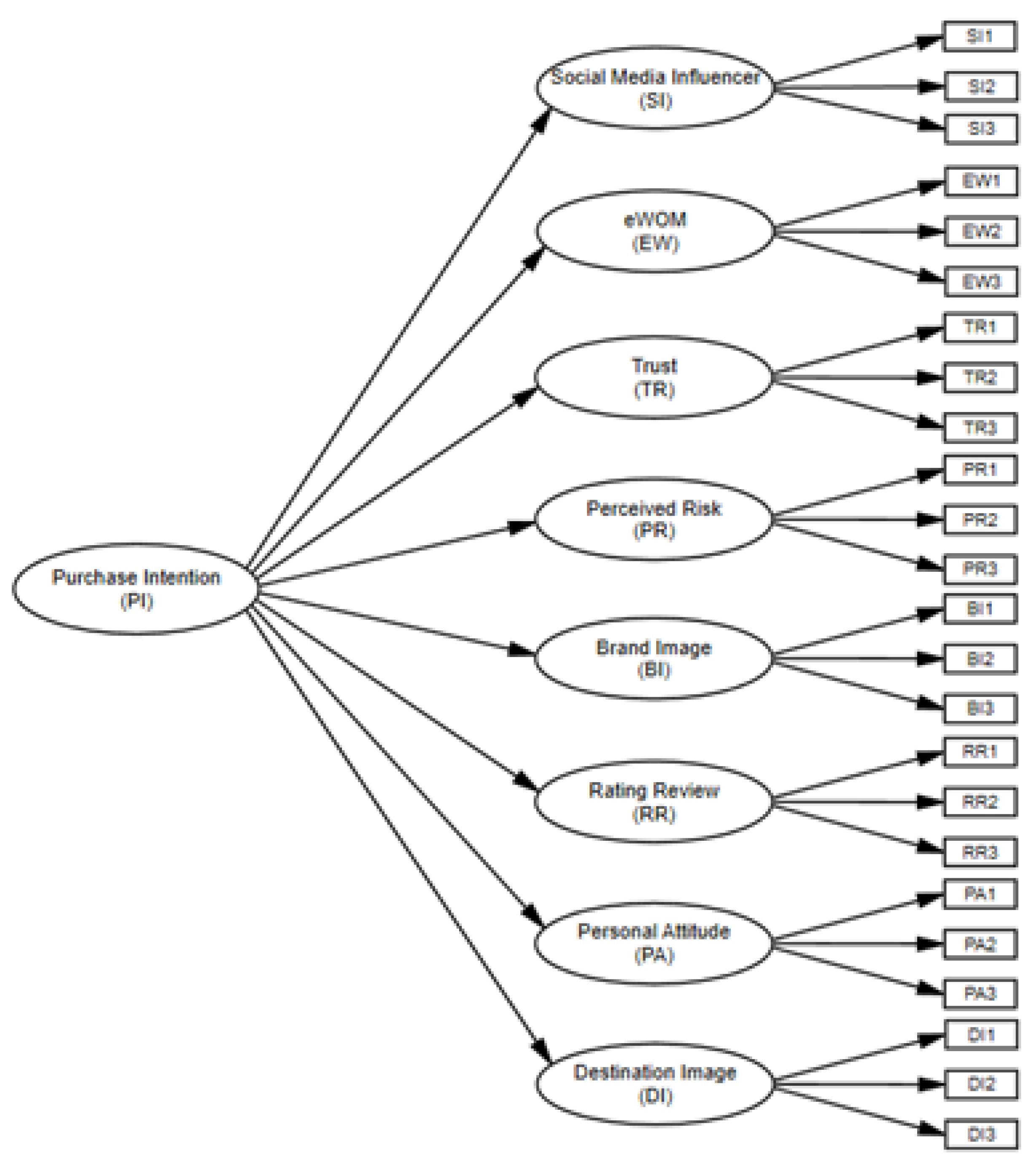
Figure 2.
First-order confirmatory factor analysis.
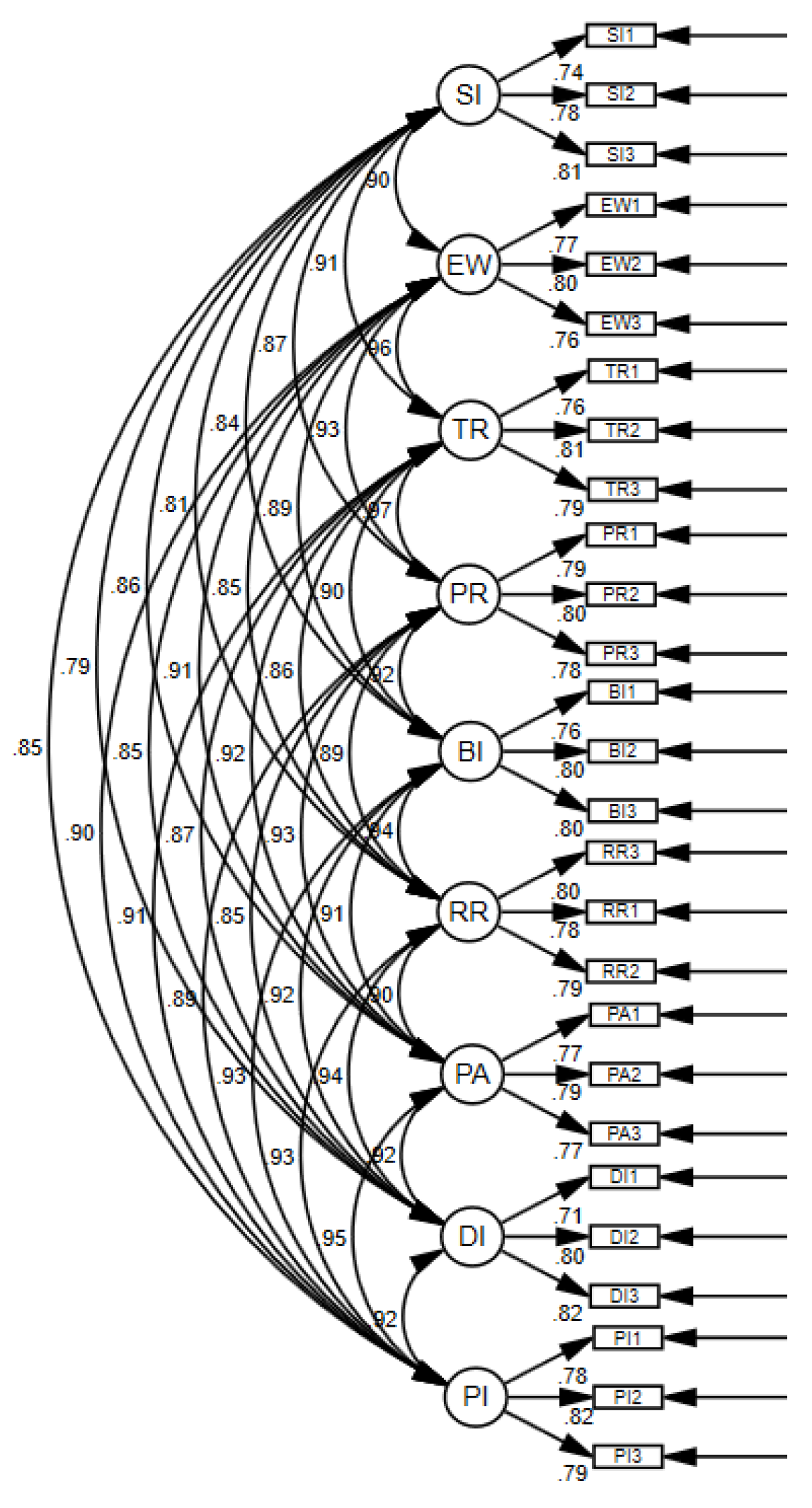
Figure 3.
Second-order confirmatory factor analysis.
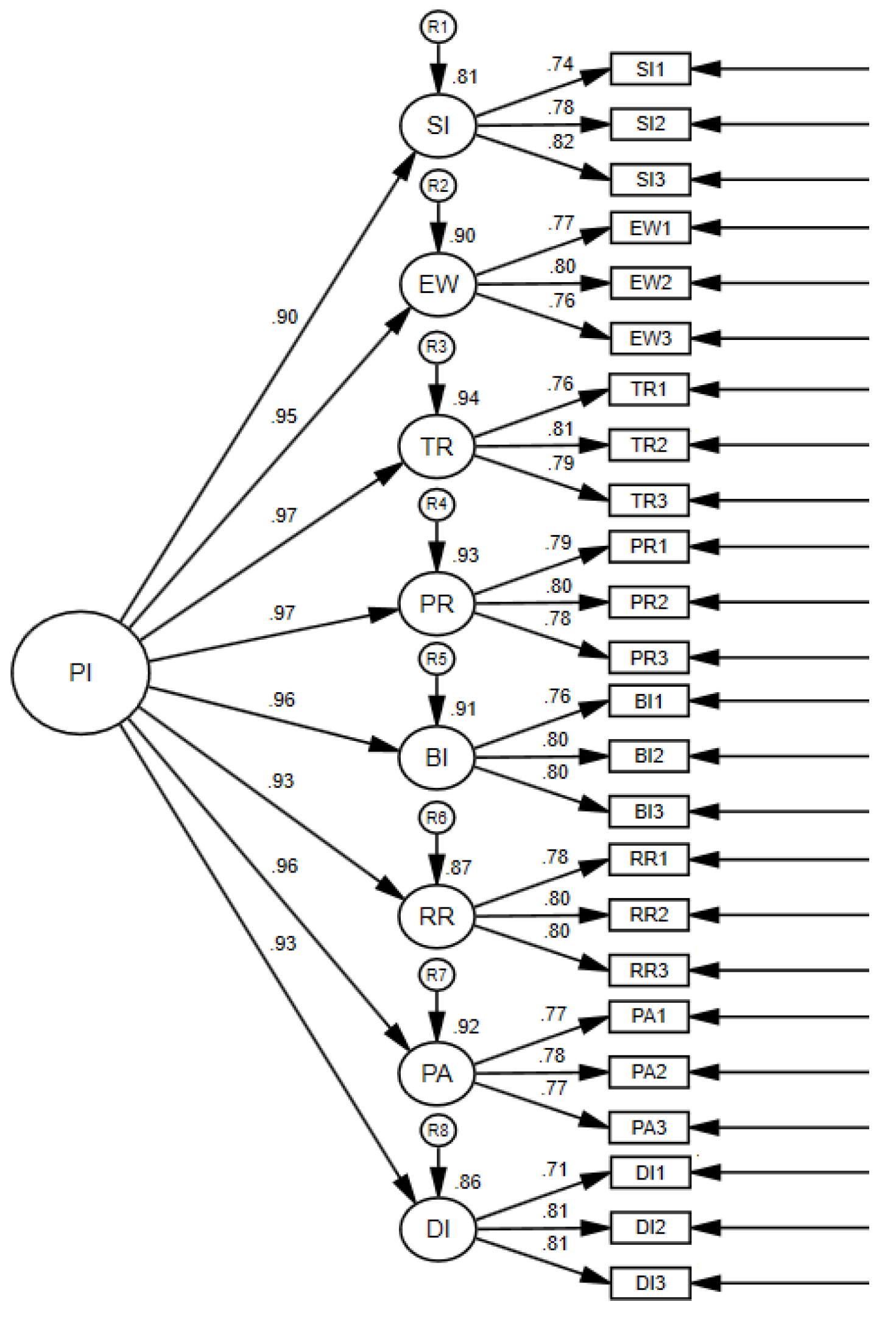

Table 1.
Harmonization of first-order confirmatory factor.
| Statistical Values | CMIN/DF | AGFI | GFI | CFI |
|---|---|---|---|---|
| Criteria for Consideration | ≤ 2.00 | 0.90 ≤ | 0.90 ≤ | 0.90 ≤ |
| Statistics Obtained | 1.632 | 0.928 | 0.945 | 0.985 |
| Consideration | Qualified | Qualified | Qualified | Qualified |
| Statistical Values | TLI | IFI | RMSEA | RMR |
| Criteria for Consideration | 0.90≤ | 0.90 ≤ | ≤ 0.08 | ≤ 0.08 |
| Statistics Obtained | 0.981 | 0.985 | 0.032 | 0.013 |
| Consideration | Qualified | Qualified | Qualified | Qualified |
Table 2.
Pearson correlation coefficients for the observed variables.
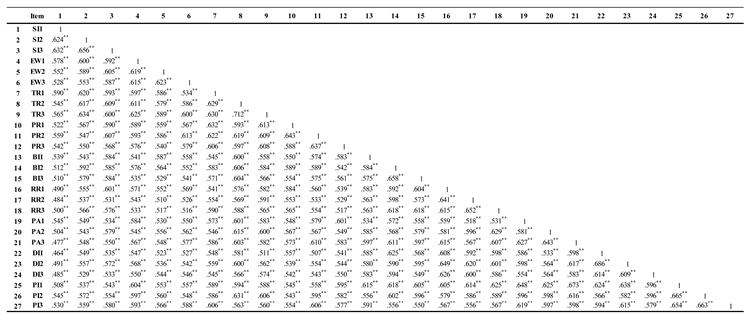 |
* Correlation is significant at the 0.05 level. ** Correlation is significant at the 0.01 level.
Table 4.
Results of confirmatory factor analysis of purchase intention overseas travel packages on social media in Thailand.
Table 4.
Results of confirmatory factor analysis of purchase intention overseas travel packages on social media in Thailand.
| Factors | Statistical values | R2 | |||
|---|---|---|---|---|---|
| β | b | SE | P Value | ||
| Social Media Influencer (SI) | - | 1.000 | - | - | |
| SM1 : You purchase an overseas travel package on social media from a famous influencer. | 0.739 | 1.000 | - | - | 0.55 |
| SM2 : You purchase an overseas travel package on social media from a trending influencer. | 0.779 | 1.019 | 0.054 | *** | 0.61 |
| SM3 : You purchase an overseas travel package on social media based on the influencer's lifestyle. | 0.814 | 1.103 | 0.056 | *** | 0.66 |
| e-WOM (EW) | - | 1.000 | - | - | |
| EW1 : You always recommend acquaintances to buy overseas travel packages on social media. | 0.772 | 1.000 | - | - | 0.60 |
| EW2 : You always express positive opinions about your overseas travel packages on social media. | 0.797 | 0.987 | 0.047 | *** | 0.64 |
| EW3 : You always tell about your good experiences regarding overseas travel packages on social media. | 0.763 | 0.913 | 0.046 | *** | 0.58 |
| Trust (TR) | - | 1.000 | - | - | |
| TR1 : You trust buying overseas travel packages on social media. | 0.763 | 1.000 | - | - | 0.58 |
| TR2 : You trust the quality of overseas travel packages on social media. | 0.812 | 1.064 | 0.050 | *** | 0.66 |
| TR3 : You trust in the detailed information of overseas travel packages on social media. | 0.785 | 1.008 | 0.049 | *** | 0.62 |
| Perceived Risk (PR) | - | 1.000 | - | - | |
| PR1 : You acknowledge the risks of purchasing overseas travel packages on social media. | 0.787 | 1.000 | - | - | 0.62 |
| PR2 : You are aware of the risks of purchasing overseas travel packages on social media regarding the protection of personal information from being leaked. | 0.798 | 0.938 | 0.043 | *** | 0.64 |
| PR3 : You recognize the risk of purchasing overseas travel packages on social media that the travel program will not be as specified by the travel company. | 0.784 | 0.914 | 0.043 | *** | 0.61 |
| Brand Image (BI) | - | 1.000 | - | - | |
| BI1 : You think that companies that sell overseas travel packages on social media have easily recognizable logos. | 0.760 | 1.000 | - | - | 0.58 |
| B2 : You think that companies selling overseas travel packages on social media have a good reputation. | 0.796 | 1.000 | 0.049 | *** | 0.63 |
| BI3 : You think that companies selling overseas travel packages on social media are widely known. | 0.801 | 1.014 | 0.049 | *** | 0.64 |
| Rating Review (RR) | - | 1.000 | - | - | |
| RR1 : You purchase a overseas travel package on social media based on the level of review ratings. | 0.798 | 1.000 | - | - | 0.64 |
| RR2 : You bought an overseas travel package on social media after reading a travel review that had fun content. | 0.780 | 1.063 | 0.050 | *** | 0.61 |
| RR3 : You purchased an overseas travel package on social media based on informative travel reviews. | 0.794 | 1.040 | 0.048 | *** | 0.63 |
| Personal Attitude (PA) | - | 1.000 | - | - | |
| PA1 : You like buying overseas travel packages on social media. | 0.773 | 1.000 | - | - | 0.60 |
| PA2 : You feel pleasure in purchasing overseas travel packages on social media. | 0.787 | 0.972 | 0.047 | *** | 0.62 |
| PA3 : You feel more satisfied purchasing overseas travel packages on social media than purchasing them directly through tour operators. | 0.766 | 0.949 | 0.047 | *** | 0.59 |
| Destination Image (DI) | - | 1.000 | - | - | |
| DI1 : You purchase overseas travel packages on social media based on the reputation and popularity of the tourist destination. | 0.711 | 1.000 | - | - | 0.51 |
| DI2 : You purchase overseas travel packages on social media based on the unique culture of the tourist destination. | 0.803 | 1.046 | 0.055 | *** | 0.65 |
| DI3 : You buy overseas travel packages on social media based on the beauty of the tourist destinations. | 0.820 | 1.122 | 0.058 | *** | 0.67 |
| Purchase Intention (PI) | - | 1.000 | - | - | |
| PI1 : When you think of buying a overseas travel package. You will think of buying on social media as the first option. | 0.784 | 1.000 | - | - | 0.61 |
| PI2 : You intend to purchase overseas travel packages on social media in the future. | 0.825 | 1.006 | 0.045 | *** | 0.68 |
| PI3 : You intend to continually purchase overseas travel packages on social media. | 0.789 | 0.985 | 0.046 | *** | 0.62 |
*** p-Value < 0.001.
Table 5.
Harmonization Test Index Values.
| Statistical Values | CMIN/DF | AGFI | GFI | CFI |
|---|---|---|---|---|
| Criteria for Consideration | ≤ 3.00 | 0.90 ≤ | 0.90 ≤ | 0.90 ≤ |
| Statistics Obtained | 2.049 | 0.918 | 0.933 | 0.975 |
| Consideration | Qualified | Qualified | Qualified | Qualified |
| Statistical Values | TLI | IFI | RMSEA | RMR |
| Criteria for Consideration | 0.90 ≤ | 0.90 ≤ | ≤ 0.08 | ≤ 0.08 |
| Statistics Obtained | 0.972 | 0.975 | 0.041 | 0.018 |
| Consideration | Qualified | Qualified | Qualified | Qualified |
Disclaimer/Publisher’s Note: The statements, opinions and data contained in all publications are solely those of the individual author(s) and contributor(s) and not of MDPI and/or the editor(s). MDPI and/or the editor(s) disclaim responsibility for any injury to people or property resulting from any ideas, methods, instructions or products referred to in the content. |
© 2024 by the authors. Licensee MDPI, Basel, Switzerland. This article is an open access article distributed under the terms and conditions of the Creative Commons Attribution (CC BY) license (http://creativecommons.org/licenses/by/4.0/).
Copyright: This open access article is published under a Creative Commons CC BY 4.0 license, which permit the free download, distribution, and reuse, provided that the author and preprint are cited in any reuse.


