

Submitted:
17 May 2024
Posted:
21 May 2024
You are already at the latest version
Abstract
The circular economy is one of the main strategies for mitigating the environmental impacts of civil construction, due to the generation of construction and demolition waste (CDW). In this transition, evaluating alternatives for using buildings as material banks is a way to make the process of reusing construction components more efficient. Thus, the article aimed to evaluate the state of the art of publications on the relationship between the circular economy in civil construction and the conceptual model of buildings as material banks, to mitigate the environmental impacts of CDW. The authors chose the methodological design of Systematic Literature Review, using the Scopus and Web of Science databases for research, with the following search strings: ("construction" or "civil construction" or "built environment" or "construction industry" ) and ("circular economy" or "circular construction") and ("material banks" or "BAMB" or "buildings as material banks" or "building stocks" or "building materials") and ("construction waste" or "demolition waste" or "CDW" or "construction and demolition waste" or "environmental impacts"). After a screening in which only articles published in journals were selected, from 2013 to 2023, inclusion and exclusion criteria were applied, to evaluate only those that had a direct relationship with CDW management through circular economy strategies and buildings such as banks of material. As a result, 93 articles remained, which were analyzed using quantitative and qualitative approach. The quantitative results showed an increase in publications since 2020, which are concentrated in European countries and China. The predominance of applied studies was also noted, through case studies that evaluate the management of materials and waste in the urban environment. The qualitative analysis, carried out using a SWOT Matrix, highlighted the strengths of the buildings, such as material banks, the potential reduction of resource extraction and urban mining, promoting the circulation of construction products. However, the recycling of waste, such as aggregates, still stands out as the main end-of-life strategy adopted, even without occupying the top of the waste hierarchy.
Keywords:
circular construction
; urban mining
; construction and demolition waste
; buildings as material banks
; SWOT matrix
1. Introduction
Civil construction is responsible for high rates of consumption of natural resources and generation of waste, which negatively affect the environment and society. Regarding waste generation, according to [1], in 2018, the global average of construction and demolition waste (CDW) generation was 604 kg/inhabitant/year, with a projection of this number increasing by up to 60%, until 2050. In the Brazilian context, the Annual Panorama of the Brazilian Association of Public Cleaning and Special Waste Companies [2] points out that, in 2021, 227 kg/inhabitant were collected from construction and demolition waste, representing an increase of 2.9% compared to the previous year.
Facing this problem, research that addresses the circular economy (CE) in the construction sector can help to make it more sustainable, in addition to adding value to waste, through its reinsertion into the production chain. CE has gained strength as a strategy to achieve sustainability in many industrial segments, because, if population growth rates are maintained at the current level of consumption, the planet will not be able to provide resources for human activities. As a result, there will be a scarcity of resources and greater market volatility, in terms of prices and supply capacity. To contain this reality, the circular economy proposes strategies based on new business models and maximizing the life cycle of products, through recovery, reuse or recycling [3].
Despite these potential benefits of CE, [4] it has been noticed, through a systematic review, the need to develop research on circular construction in countries in America, Asia and Africa, in order to adapt their construction models to circular trends. With this, the need for research in this area is assessed, especially in the regions mentioned in the research, which can use this possibility for better environmental indicators, but also to improve the quality and efficiency of constructions in their urban centers [4].
As for the construction sector, some restraints are observed for a more efficient and circular management of waste generated by its activities. This is because there is a tendency for waste, especially concrete and ceramics, to be recycled through crushing, which reduces added value and incorporates more energy into the system [5]. Seeking this valorization of the materials that make up the building, projects that plan Buildings as Material Banks (BAMB) began to be developed [6].
The assessment of buildings as material banks can occur in two different ways, considering new constructions or the existing building stock. As for new buildings, the use of technologies can support the creation and management of a complete model of the building, which allows greater control of components throughout their life cycle [7]. On the other hand, for the stock of buildings already constructed, [8] a report that the studies that evaluate them are not recent, with research from the 2000s being carried out in Europe, North America and Asia, at municipal level. However, there are still gaps to be developed on issues such as: the accuracy of the available databases, regarding the component materials of different construction categories, for example [8].
In view of the above, the research aims to evaluate the state of the art of scientific literature on the relationship of the circular economy in civil construction with the conceptual model of buildings as material banks, to mitigate environmental impacts of construction and demolition waste. To achieve this, a systematic literature review was used as a methodology, which evaluated 93 scientific articles, published between 2013 and 2023, with the themes of Circular Economy and Buildings as Material Banks, with the following research questions: 1) Which are the themes and methods covered in the literature for implementing buildings as material banks, considering design, construction, and waste management techniques? 2) What are the potential applications of buildings as material banks in mitigating the environmental impacts of construction and demolition waste, from a circular economy perspective in construction?
Based on the analyzes carried out, the topics covered in the research were identified, as well as the methodologies used to manage buildings such as material banks, in addition to a quantitative classification of articles by year, periodical and country of publication. Finally, a SWOT matrix was created to evaluate material banks from the perspective of the circular economy, aiming to mitigate environmental impacts arising from construction and demolition waste.
The article is structured into six chapters. Following the introduction, a theoretical review on the topics of mitigating the environmental impacts of construction and demolition waste, circular economy and buildings as material banks is presented. The third chapter presents the methodological procedures adopted, and then the results and discussions. Finally, the conclusions of the article are described in the last chapter.
2. Theoretical Review
2.1. Mitigation of Environmental Impacts of Construction and Demolition Waste
The environmental impacts of civil construction are perceived worldwide, due to the need for resources to supply its entire production chain. Among some data, it can be highlighted that energy used in the operation of buildings and construction accounts for approximately a third of global consumption, and is also responsible for a quarter of greenhouse gas emissions worldwide, with the prospect of the built area doubling by 2050 [9]. Just for the production of cement, the main construction input, it is estimated that around 8% of annual CO2 emissions [10]. Furthermore, the construction industry accounts for up to 60% of the extraction of raw materials to meet its production needs [11]. As for mineral materials, the demand for sand and aggregates is 40 to 50 billion tons annually, and could reach 60 million in 2030, according to data from the United Nations [12].
Regarding waste generation, according to Brazil's National Solid Waste Policy (PNRS), established by Law 12,305/2010, civil construction waste is all waste generated in the “constructions, renovations, repairs and demolitions of civil construction works, included those resulting from the preparation and excavation of land for civil works”, with companies in the sector being subject to the preparation of a solid waste management plan [13]. However, even 13 years after the publication of the aforementioned Law, construction and demolition waste does not have adequate management in the country, with the majority being discarded clandestinely and without the possibility of recycling [14].
The CDW generation is concentrated in large urban conglomerates, which occupy small territorial areas, due to factors such as the human development index (HDI), or Gross Domestic Product (GDP) of the region, which influence their economic activities [15]. For waste that is not sent to landfills, or is discarded illegally, the most used option in Brazil is recycling. In 2018, recycling plants operating in Brazil had the capacity to recycle only 45% of the volume of CDW generated in the country. Furthermore, these units have not been yet well distributed across the national territory, being mainly concentrated in the Southeast region [16].
Although recycling is a more sustainable way of disposing of CDW, it is not the priority in the waste hierarchy, currently characterized by five stages: prevention, reuse, recycling (high added value, or upcycling), downcycling, and disposal in landfill [17]. This is because reuse minimizes the extraction of a new resource, saving new product processing and saving up to 60% of the energy incorporated in construction elements. On the contrary, recycling causes more energy incorporated into the system, which is not desirable [18].
In this sense, another concept presented in the literature is that of urban mining, which consists of the “reactivation of materials accumulated in the urban environment, which were not specifically designed for reuse or recycling (therefore, mining)” [19]. The concept already had its first principles in 1969, and today it is characterized by the “recovery of materials from anthropogenic resources”, being one of the main strategies for circular economy in cities [20].
For these reasons, making the sector more sustainable and mitigating its environmental impacts have been the justification for formulating research and public policies around the world [9].A culture of planning must be established in construction processes, using materials with a low carbon footprint, projects with greater architectural technology and valuing existing buildings as material banks [10]. In this context, the application of circular economy principles in construction has been one of the most discussed strategies to counter the current market model, based on consumption [21].
2.2. Circular Economy in Construction
The circular economy can be conceptualized as “a regenerative system in which resource input and waste, energy emission and leakage are minimized by slowing, closing and narrowing material and energy circuits” [22]. Considering the construction industry, circular construction can be described as “a multidimensional and dynamic economic system for construction, based on the application of circular economy principles” [4]. However, what differentiates it from other strategies is its value proposition, which goes beyond environmental issues, generating commercial value and promoting business competitiveness [3].
[4], who carried out a systematic review on the circular economy in the built environment, based on 316 publications, assess that research in the area revolves around five main clusters: “R” strategies or structures; construction and demolition waste management; design approaches to buildings; business models or networks; and Life Cycle Assessment (LCA). As for the “R” strategies, [23] listed ten possibilities, from R0 to R9, in which the refusal to produce new materials must be prioritized as the first alternative, with energy recovery being the last possible destination for the waste.
Therefore, when it comes to planning the end-of-life phase alongside the design phase, the “design for” or “Design for "design for adaptability" or "design for flexibility". These approaches enable the reuse of building components, reducing their disposal in landfills or the need for recycling [24]. However, when analyzing these methodologies, it is necessary to address the needs of the community, predict future uses, so that it is possible to balance the costs of deconstruction [25].
Regarding this, LCA is applied in methodologies to estimate and evaluate the impacts of deconstruction on the life cycles of materials [5]. As much attention in recent years has been given to the energy expended in operating buildings, LCA is a useful tool for demonstrating the environmental impacts of cradle-to-grave construction components for both new and existing buildings [10]. With this, the method evaluates whether the technologies used to reduce impacts throughout the operation reduce the overall impacts of the building, even though data from the construction, maintenance and end-of-life phases are currently limited [26].
From an economic point of view, it is analyzed that the results are still strongly dependent on factors such as type of material, location, availability of markets for recoverable materials, and the economic and political context of the region. Therefore, the rehabilitation of buildings can be an economically viable alternative compared to demolition and reuse [27]. Therefore, feasibility studies must consider the maintenance or re-functionalization of a building before planning a new construction, using tools such as LCA and economic viability analyzes for this purpose [10].
Based on these considerations, some barriers are presented as hindering the application of circular construction concepts, such as: selective demolition methods that imply high operational costs; the need for investment to adopt CE; the lack of regulations that encourage the adoption of CE; and the difficulty in estimating the residual value of building components over various life cycles [28]. Given these factors, evaluating buildings globally for functional reuse or as a bank of material resources for new construction is necessary to achieve circular construction.
2.3. Buildings as Material Banks
Due to the need for greater efficiency in the use of construction material resources, considering economic and environmental issues, there is growing interest in buildings as material banks [7]. However, this perspective changes the way resources should be managed [19], which currently has limited exploration due to the lack of information about the materials available in the existing building stock [29].
Seeking to value the materials that make up the building, the European Union developed the BAMB (Buildings as Material Banks) project, aiming at circularity in the built environment. The initiative envisaged a systemic change in the sector, mainly through Material Passport (MP) tools and reversible building projects [6]. Material passports are digital documentation that provides a detailed inventory of all elements available in buildings, including quantity, quality, dimensions and location in the structure [19].
The material passport is a key element for optimizing the tracking and indication of parts with the greatest potential for reuse. Thus, buildings will not only be valued for their current use, but seen as a source of material resources. Furthermore, buildings have also been seen in a more dynamic way, due to the ease of transforming their layout [30]. However, material passports must be combined with geo referencing technologies (such as GIS), and with platforms or digital markets for selling reused products. This is because these tools help locate components and promote the concept of industrial symbiosis, evaluating the flow of materials on an urban scale [31].
Considering a macro policy structure for circular construction, the initial step is to analyze the construction stock, to think about strategic planning from an economic, social and environmental point of view. End-of-life buildings and their possibilities for adaptation or deconstruction to reuse materials can be identified [32]. This step is essential, because if only new buildings are mapped in the databases, we will not have materials for reuse in the short and medium term. Therefore, the digitalization of cities is necessary [33]. Furthermore, it is necessary to monitor the flow of materials, documenting and managing these assets, to identify when in the future they will be available for reuse [19].
The application of these techniques is necessary to make the use of buildings' material stocks economically viable, since knowing their location can shorten up transport distances, at the same time making it possible to assess whether the waste generated can meet the demand for new constructions [12]. However, research reports difficulties in replicability to other regions, in the accuracy of data on building materials and in the predictability of the flow of materials (dependent on the source of data input), presenting considerable levels of uncertainty [34].
Furthermore, it appears that research on buildings as material banks is still focusing on a regional level, and geographically located on the European and Asian continents [8]. From this perspective, it is possible to state that it is necessary to carry out more studies that relate the methodologies used to create a conceptual model of material banks that can be applied in other regions, as aimed at with this research.
3. Materials and Methods
The methodology used in this article was the systematic literature review (SLR). For the procedures adopted in the research, the PRISMA checklist (Preferred Reporting Items for Systematic Reviews and Meta-Analyses) [35] was used as a reference, as well as [36], with the steps divided into: scope definition; search for evidence; selection of studies and analysis structure. RSL was adopted because it provides an auditable and reliable search method, based on already published evidence, to achieve the proposed objectives and answer the research questions [4].
The first stage consisted in defining the research questions, which were listed as: 1) What themes and methods are covered in the literature for implementing buildings as material banks, considering design, construction, and waste management techniques? What are the potential applications of buildings as material banks in mitigating the environmental impacts of construction and demolition waste, based on a circular economy in construction?
After defining the research questions and objective, the keywords and databases in which the search would be carried out were defined. The following terms were used as keywords: ("construction" or "civil construction" or "built environment" or "construction industry") and ("circular economy" or "circular construction") and ("material banks" or " BAMB" or "buildings as material banks" or "building stocks" or "building materials") and ("construction waste" or "demolition waste" or "CDW" or "construction and demolition waste" or "environmental impacts").
The keywords were written in English to incorporate a greater number of publications, and they were divided in such a way that articles that related the three main themes of the research could be reached. The Scopus and Web of Science databases were selected as data sources, given their relevance for publications in the area of engineering and the global scope of studies. The databases returned a total of 202 and 110 results each, respectively. After the initial search, filters were carried out by year of publication, restricted to works published between 2013 and November 2023. At this stage, only one publication was excluded from the Scopus database.
To guarantee the quality criteria of the studies, considering peer review, only journal articles were selected as the type of publication, with works published in annals, books and chapters being excluded. After this filter, 256 publications were pre-selected, 150 from the Scopus database and 106 from the Web of Science. Finally, after excluding duplicate titles, 205 articles remained that were screened considering the eligibility criteria.
The fourth stage consisted of the selection of articles, by reading the titles and abstracts, considering the inclusion (IC) and exclusion (EC) criteria, described in Table 1.
After this initial reading, 93 articles were selected. Figure 1 shows the methodological procedures adopted in the research.
Based on the selected studies, as seen in Figure 1, the data were arranged considering quantitative and qualitative analyses. From a quantitative point of view, publications were stratified according to the year of publication, country in which the research was carried out (or the main author, if the location could not be identified) and journal.
For the qualitative analysis, the answer to the first research question was given by analyzing the theme and methodology applied in the studies, dividing them according to their nature, whether basic or applied, and the methods applied. For the second question, the main research results and gaps observed for future studies were compiled. Based on this, a SWOT matrix was created (strengths (S), weaknesses (W), opportunities (O) and threats (T)), used as a management tool and strategic planning for projects and processes, to evaluate the scenarios and propose action plans. According to [37], this tool has been used in many places around the world, to promote ways of implementing an adequate waste management process or demonstrate the relevance of this matter for reducing environmental impacts.
According to [38], strengths are internal factors that characterize a good competitive position, while weaknesses are internal agents that can be improved or strengthened. Opportunities and threats are external factors that can benefit or hinder the process in question. Thus, internal factors can be changed, while external factors can only be monitored to prevent threats or enhance opportunities. Given this, the assessment was carried out from the perspective of the circular economy, aiming to mitigate environmental impacts arising from construction and demolition waste. Evidence from each of the studies was collected and classified by relevance, according to its recurrence.
4. Results
4.1. Quantitative Analysis of Articles
The quantitative analysis began by stratifying the articles based on the year of publication, with the results presented in Figure 2.
Even though the studies were selected from 2013 to 2023, after screening, only articles from 2017 onwards remained. The results demonstrate a marked growth in research throughout 2019 and 2021, with a slight decrease since then. This may be related to the BAMB project, developed by European Union countries between 2015 and 2019, which promoted various research on the topic [6]. However, the relevant number of studies published in recent years demonstrates the current and relevance of the topic. Next, the countries of origin of the research were evaluated. Figure 3 presents the results.
It was observed that the majority of studies are concentrated in Europe, 55 in total, followed by Asia, America, Oceania and Africa, with only 2. One of the studies was published in Turkey, for this reason classified as Europe and Asia. The country with the most publications on the topic is Italy (9 articles), with a considerable number of articles from countries such as China and the United Kingdom, with 8 and 6, respectively.
In the case of China, [39] assess that its rapid urbanization led the government to encourage waste management policies in order to maximize reuse and recycling processes, in order to also obtain financial benefits from these processes. As a result, research in the country also developed, presenting a greater number of studies and citations, compared to other countries with a strong economy, such as the United States, for example, an aspect also observed in this research. Brazil also stands out in the number of publications, despite not having well-defined policies yet to encourage the circular economy and studies of buildings as material banks, as observed in Europe.
Furthermore, despite the concentration of research in developed countries in Europe and Asia, the origin in 37 different countries located on all continents demonstrates that the topic is already widely studied throughout the world, given the environmental problems observed at the level global.
As for the publication journal, results were observed in 38 different magazines, the main ones being Journal of Cleaner Production, with 13, Sustainability, with 12, in addition to Resources, Conservation and Recycling, with 11 articles published on the topic of this research. Figure 4 presents the data.
4.2. Qualitative Analysis
Subsequently, the studies were classified according to the topic. After reading the works, they were classified into 10 different themes, identified as the main areas of research relating the circular economy and buildings as material banks: Analysis of the sustainability of projects and materials; Understanding circular construction; Design for "x"; Pre-deconstructive audit tools/methodologies; Management of construction and demolition waste; Urban mining; Business models for circular economy; Quantification of material stock; Systematization of material databases; Use of technologies to support circular construction. Figure 5 shows the distribution of themes over the years.
It is observed that the first studies had as their theme the management of construction and demolition waste and the quantification of the stock of materials. However, over time other areas of research emerged, such as the use of technologies to support circular construction, analysis of the sustainability of projects and materials, and urban mining. Current and future trends include design for “x”, systematization of material databases and studies on business models for the circular economy.
In the research by [40], who carried out a systematic review of research on circular economy in the construction sector, the most discussed topics were the reuse of resources, waste management and circular economy models. Regarding the management of construction and demolition waste, research was not only focused on the end of the production chain, but aimed at source reduction, and closed cycles for the product, just like the principles of the circular economy. However, it was observed in this research that many articles evaluate the use of recycled aggregates as the main method of alternative waste disposal in relation to landfill, with these aggregates being applied as road substrates or reincorporated into concrete [41,42].
To evaluate the second qualitative question, the methodology applied in the work was analyzed; the results obtained are presented in Figure 6.
It can be seen, from Figure 6, that the majority of studies are of an applied nature (56 in total), while 37 of them are theoretical research that generates knowledge that can base new studies that can create products and processes applied to a specific reality. As for the methods applied, case studies, literature/documentary review, statistical analysis, material flow analysis, questionnaires and interviews, life cycle assessment, input-product analysis and virtual platform development, were, in sequence, the methodologies used.
[40] identified in articles from 2007 to 2020 that literature review, case study, experimental methods and interviews were the most used procedures, in descending order. It is observed that a more current sample of research has undergone modifications, with most studies being applied to specific contexts, using real data from neighborhoods, cities or even countries to apply case studies that evaluate the management of material stock and waste construction and demolition, using material flow analysis techniques and statistical analysis together.
Still referring to the methodology, it is observed that in studies on the subject of systematization of material databases and quantification of material stock (22 in total), there is a standard for classifying buildings, with the vast majority being evaluated residential buildings, divided between single-family houses, multi-family houses and apartment blocks. Non-residential buildings are also evaluated, generally together, divided between commercial, industrial and public service buildings, but only one of them evaluated infrastructure networks. Furthermore, most material quantification studies evaluate the existing stock, with 5 of them also combining forecasts for new construction to analyze the flow of materials over time. The data is presented in Figure 7.
This data is also categorized according to the construction period, which determines which construction techniques and materials were used at the time, forming the so-called archetype. Based on this, a materials intensity, which is usually a unit of kg/m² or kg/m³, and is based on literature or field observations, is multiplied by the number of residences in the study region, or by the built area and volume, according to each classification, totaling the volume or mass of materials available in each location [43].
Based on the description of the methodologies applied, the sequence of qualitative analysis of the articles was carried out using a matrix that evaluated the strengths, weaknesses, opportunities and threats of buildings as a material bank as a circular economy tool. The results are described in Table 2.
The following section presents discussions of the results.
5. Discussion
5.1. Methodologies Adopted in the Literature to Implement Buildings as Material banks
Based on the results presented in the previous section, several qualitative and quantitative methodologies were adopted in the literature for research involving DRC management through the evaluation of buildings as material banks, which vary according to the topic addressed.
Along these lines, 34% of the articles addressed the topic of Construction and Demolition Waste Management, with many of these proposing methodologies for quantifying the generation of construction and demolition waste in cities, as well as the amounts recycled, destined for landfills or discarded from irregularly, through case studies and statistical analyses. According to [44], knowledge of these data can support public policies to encourage more sustainable initiatives, such as applying sanctions for polluting practices, as well as supporting the population's awareness of this environmental problem. However, limited data in many regions still makes it difficult to accurately estimate the waste generated.
For [27,45], studies on CDW management based on the circular economy still address recycling processes much more than reuse or reducing resource consumption. In the articles evaluated in this research, this behavior was also observed, in which many studies evaluate the use of recycled aggregate as the most sustainable alternative for CDW. Also according to [27], to make the evaluation of alternatives more robust, LCA, which is applied in many cases, must predict credits due to reuse and other life cycles, as well as incorporate life cycle cost assessments.
Regarding material quantification studies in urban regions, most of the studies evaluate the intensity of materials such as concrete, wood, steel, plaster and glass, and their geographic distribution. Among the studies that go beyond these analyses, [43] also evaluate environmental indicators of greenhouse gas emissions and water use, in addition to land use for each type and height of building, for the city of Melbourne, Australia. Approaches like this are relevant to relate the materials available in cities with their environmental impact, in addition to waste management, promoting better urban mining strategies [43]. Furthermore, it is possible to establish a relationship between the spatiality of stocks and population density, checking obsolete buildings that can be immediate sources of resources [46].
As the only global assessment initiative, [47] proposed a method for quantifying the stock of materials present in rural and urbanized areas, of residential buildings, based on information from databases on population, energy consumption demand, built area per captures, and literature on material intensity. Although the research results have great uncertainties about the accuracy of the data, due to the specificities of each region and data limitations in some locations, it can be a starting point for a global analysis of the stock of available materials and future flows of materials and waste, which can be predicted based on different scenarios of climate and socioeconomic changes.
Many of these researches are based on a Material Flow Analysis (MFA), which considers the inputs, stocks and outputs of the system to estimate the expected amount of waste, and can use top-down or bottom-up approaches. However, these are still very specific studies and difficult to replicate, as they depend on the availability of data in the region evaluated [48]. Given these difficulties, some studies combine the use of tools such as the Geographic Information System (GIS), BIM, statistical analyses, among others. [34] also suggest the use of sensitivity analyzes to validate material flow analyses.
Among the studies that propose these methodologies, [49] carried out a statistical analysis, using machine learning algorithms, to estimate a linear regression that could estimate the amount of demolition waste in the city of Hong Kong. Using waste data from 71 demolished buildings, the authors obtained a regression that described the amount of waste through six variables: year of construction, total number of floors, building height, total area, building perimeter and type of use of the building. These variables are the most used in studies on this topic.
Regarding the type of building, of the studies that applied methods that required this classification, 36.4% evaluated residential buildings, 45.5% residential and non-residential, and 4.5% only non-residential, data that are similar to the results obtained by [50] in which 50% of the articles evaluated residential constructions. However, the authors highlight the importance of evaluating data for non-residential buildings, since they have a shorter useful life and, consequently, end up generating a greater amount of waste. As for systematization, BIM and statistical analysis are used as support technologies.
In order to summarize the material flow process proposed in the research, Figure 8 presents the urban mining process scheme proposed by [51].
Regarding research categorized as pre-deconstructive audit tools or methodologies, they include both studies on the evaluation of deconstruction or demolition alternatives, as well as the disposal of waste and components after this stage. According to [52], defining the ideal rates of reused components in a new project is a multidisciplinary task, which must involve environmental, economic, technical and logistical criteria. For [53], the main factors that affect the economic decision between demolition and deconstruction with recovery of components are the operational costs for deconstruction, environmental impact costs, recovery potential and market value of secondary materials, in addition to the rates of landfill. In this way, these studies present tools that can facilitate the process for decision makers.
Another topic covered was the use of technologies to support circular construction. Among the most relevant studies is that of [54], who developed a unified virtual platform for managing the process of construction, demolition and marketing of recycled products. The initiative was applied in Italy, for public works, and is a possibility to be replicated for any other location or company, as long as interested parties are willing to get involved in the process of developing and providing data. An alternative to facilitate the process may be the use of block chain technologies, which decentralizes data management processes.
Business models for the circular economy were also a topic covered by only 4 articles. Among them, [55] and [56] applied the life cycle assessment and case study methodology to validate the proposals. However, [56] assess that only environmental indicators are not enough to promote the circular product chain, therefore, in their study they proposed material flow analysis and input-output analysis, with the aim of monetizing the indicators and verifying the sectors and companies that have the most influence on the purchasing process of secondary products.
It can be seen from the evaluation of the methodologies used that the gaps observed by [40], in the development of innovative circular construction models so that the industry adopts these principles in their activities, has not yet been resolved, as only 4 studies have addressed the topic of business models for circular economy. Therefore, more research on the topic is needed. To achieve this, it is also necessary to carry out a strategic analysis of the processes, and the SWOT Matrix is then proposed, which is discussed below.
5.2. Potential Applications of Buildings as Material Banks in Mitigating the Environmental Impacts of Construction and Demolition Waste
Through the analysis of the SWOT matrix, referring to strengths, it is observed that designing buildings as future material banks reduces the environmental impact by incorporating reused and recycled materials in new projects, mainly reducing the carbon embodied in the production of new materials. This is because reuse avoids or postpones new construction, and its embedded impacts [57]. Therefore, project design and execution practices must be valued, even though the construction industry is focused on profit and is resistant to change [58].
To enable this, design alternatives for disassembly and adaptability (designing layers of different useful life independently), and a more judicious selection of materials, which extends their useful life, are potential to be applied [57,59]. In this case, the greater the durability and life cycles of the component, the lower its environmental impact will be, by postponing the extraction of materials for new production. For this analysis, criteria for LCA of multiple cycles must also be established, as well as the environmental impact resulting from each material alternative must be considered [60].
As for the project for disassembly and adaptability, it is a tool to be used in new buildings, in order to promote the future reuse of the building, whether through the removal of its components or through adaptive reuse. In this case, disassembly avoids the extraction of resources for the production of new products [61], and adaptive reuse (ST14) promotes a new function for the existing park, optimizing land use and ensuring the updating of the building for new energy and energy requirements [62].
According to [63], these techniques must be combined with Eco design, standardization, modularization and prefabrication (ST7) methods, which rationalize the construction process, reducing waste generated at the stage. In addition to these, the design for manufacturing and assembly also makes construction more efficient, since in the case studies evaluated by [64] the reduction was between 60% and 90% of the waste generated. 3D concrete printing was also mentioned as an option by the authors, an example being Dubai, which plans to build 25% of concrete components for construction with 3D printing by 2030, although the methodology still requires technological developments.
For [65], the use of prefabricated construction systems with threaded connections are the most efficient for disassembly and subsequent reuse. Furthermore, steel and wood structures are preferable due to their reuse possibilities, compared to concrete, which can generally only be recycled [66]. However, it is important to relate these studies to the energy consumption of buildings throughout their life cycle [59], as with the greater energy efficiency of buildings, a large part of the impacts remain in the production and construction phase [67]. Considering the possibilities of building rehabilitation, methodologies must combine indicators of energy consumption, water and materials and waste management [68].
Furthermore, attention must be paid to the carbon incorporated in the processing and transportation of the material for reuse, as well as the source of data for LCA, as these are factors that directly impact the positive result of carbon savings [55]. Regarding the risk of the existence of dangerous materials in the built stock, there are impacts from the point of view of the threat of contamination due to the use in older constructions of materials that are now prohibited, such as asbestos, in addition to the costs necessary for their safe removal [69].
Two other benefits of better material stock management are the reduction in land use due to waste being sent to landfills, as this will be an increasingly scarce resource. Furthermore, when it comes to mineral resources, the reduction of extractive activities can provide the recovery of large areas that currently serve as quarries to supply materials for civil construction [70].
Regarding the management of built stock, most of the studies focus on quantifying waste available in cities, which has as one of the benefits of enabling better urban planning, optimizing resource and waste management, mitigating the environmental impacts of urbanization and being able to strengthen businesses places for reusing components, as long as they are encouraged by public authorities [71].
Even so, several authors point to the unavailability of accurate data on construction materials and components as one of the major challenges for research [48,71]. Other obstacles are the lack of standardized methodologies for quantifying and evaluating the environmental impact of CDW, the costs and environmental impacts of transporting materials, which have a high density [72], and the short reuse gap, due to construction deadlines from commercial partners and storage difficulties.
To mitigate these negative impacts, information systematization tools to speed up the purchasing process, as well as mechanisms for displaying and marketing secondary materials can be applied [63]. Regulated databases must be created, to establish a standard of information, and open, so that interested parties can supply them [73]. Furthermore, these platforms can provide for the commercialization of materials, using Industry 4.0 technologies to support them, bringing the construction industry closer to the manufacturing industries, although studies on this need to be developed [74].
[75] performed a material flow forecast, based on data from the building stock and proposing future resource optimization scenarios through stakeholder perspectives and German resource management policies. For the authors, stakeholder involvement is fundamental for formulating policies and estimating future use of resources. Research like this allows better management of urban planning and building renovation, for greater energy efficiency and for promoting the circularity of materials in public or private works. This is because, once mapped, it is possible to predict when their replacement will take place, the volume of waste in a given location and the future demand for new materials [76].
For [77], this makes it possible to evaluate urban mining alternatives, being able to establish policies to encourage the circular economy more effectively. [51] assesses that urban mining processes are essential to achieving sustainable development objectives in cities. However, to achieve the circular economy, it is necessary to assess the demand for reapplication of these components, strengthening recycling with high added value.
To operationalize this process, according to [50] the use of GIS software allows companies to manage demolitions, logistics and commercialization of these materials. In a future scenario, manufacturers themselves could track, monitor and perform reverse logistics for these construction products. Thus, a more regional mapping of materials is possible, enabling the commercialization of resources with less transport impact over long distances. However, the existence of fragmented and uncertain databases on the existing stock of materials remains a barrier to this [75].
When evaluating the stock of materials, distinguishing according to function (structural or non-structural) is relevant to better manage whether the resource will be available throughout the useful life of the building, or only at the end [50]. Regarding structural systems, [33] proposed a management system for reuse, in which the structural engineer can consult the elements available for reuse when designing a new building, based on the required resistance parameters. The idea is to reduce physical stock, promoting a just-in-time flow of materials. The authors highlight the need to make these structural elements traceable, in order to monitor their performance throughout the operation, and predict residual performance for new use. To operationalize this system, the authors propose using BIM, BigData, and RFID sensors technologies.
These tools, as well as artificial intelligence technology, are a key piece in implementing systematic circularity in construction [78]. For the authors, simulation tools, learning algorithms, 3D printing, among others, can support the systematization of circular solutions at all stages of a building's life cycle. According to [79], these technologies, which make up the fourth industrial revolution, called Industry 4.0, are essential for the transformation from a linear model to a circular economy in manufacturing industries.
According to the authors, smart cities align EC principles for government and society, around an urban context with low environmental impact [79]. When dealing with these technologies, BIM is also presented as a tool to be combined with LCA, in order to evaluate the environmental impacts of the entire life cycle of the building through a digital tool [80].
Material passports are another concept that integrates digital technologies with the management of construction resources, serving as a digital document that follows and tracks construction materials and components throughout their life cycle, having their information on performance [81]. They serve as an inventory of the building's elements, their composition and possibilities for reuse and recycling, and can be a key piece for urban mining processes. Thus, it can be used in the initial phases of the project, to verify the most sustainable alternatives [82].
For countries that already have a robust methodology for environmental audits of existing buildings, the methodology proposed by [69] can be applied as a way to systematize and validate a limited set of environmental inventory data. These can be compared to the existing stock of buildings to predict waste materials in those buildings.
However, for countries that do not yet have these methodologies, the creation of a standardized digital database is an alternative for greater efficiency in analyzing this information. In this sense, [83] apply a methodology in a case study of the construction of popular housing in Mexico, with which it is possible to estimate the amount of waste generated throughout the construction and its impact in terms of embodied energy, carbon emissions and disposal of waste.
Evaluating buildings individually, [84] highlight the need for evaluation protocols that are more accessible to professionals to encourage selective deconstruction and reuse of components in the initial phases of the project. The authors developed a simplified assessment method, with five parameters covering environmental, economic and social aspects. However, it is worth highlighting that very generic protocols can mask results by generalizing the possibilities of reuse according to the type of material, disregarding how the construction techniques used can impact the instruments needed for disassembly and transport equipment. This has consequences both for the time spent on disassembly, as well as for carbon emissions and estimated reuse of components [84].
Other difficulties highlighted in the literature are the additional costs for deconstruction (even though the greater demand for labor can have a positive social impact); the difficulty in reusing elements of the existing park due to technical, structural and performance problems, and consequently; the need to incorporate other materials to ensure safe reuse [84].
To contain these barriers, it is necessary to create guidelines to standardize and optimize these processes, as well as regulations and certifications for reused materials. Furthermore, in the case of demolition, the high cost and low availability of landfills for CDW disposal must be considered, which can encourage reuse [85]. In contrast to the additional costs, in a case study applied to a bridge built in London, [86] evaluated that replacing the original materials with more circular solutions would reduce construction costs by up to 62%. The type of concrete was replaced, from traditional to another with a higher residue content, granite to limestone and asphalt with reduced binder content.
Regarding CDW management processes, [83] warn that in less developed countries, such as Mexico, the laws are not strict, and there is no supervision over the disposal of this waste, which ends up in irregular landfills. [87] assess that there is an underreporting of the generation of construction and demolition waste, which in addition to irregular disposal, can be reused in the informal market. In their study, the estimated waste generated annually reached almost 4 times the amount of waste formally notified in Cape Town. Likewise, in Bolivia, [41] their study reached an amount of waste generation twice as high as that estimated by the government.
In order to produce revenues that encourage the correct disposal of waste, recycled aggregates (AR) plants can be a proposal. To this end, it is important to focus on sorting waste directly at the source, in order to ensure higher product quality [41]. Another possibility to contain this threat is the creation of local business models, which promote a closed cycle of products, strengthening the local economy and reducing the environmental impacts of irregular disposal [83]. It is noteworthy that of the studies evaluated, recycling of aggregates was the main strategy to promote the circularity of construction waste, despite not being at the top of the waste hierarchy.
For underdeveloped regions, [72] assess that expected revenues may not be sufficient to cover the investments required for recycling facilities, requiring political incentives. Furthermore, the management of recycled waste must take transport distance into account, and it is recommended to shorten distances by creating small-scale recycling plants, closer to large urban centers [88]. From a technical point of view, [42] also analyze that there is a high rate of mass loss for the AR to meet the resistance requirements. For reuse in structural elements in Germany, the loss would reach 52%, and it is only possible to incorporate 35% to 45% of recycled masonry and concrete aggregates, respectively.
As for business models for the circular economy, [55] warn of two threats to the material reuse process: restricted access to secondary materials and market restrictions on the use of secondary materials. [89] found in The Netherlands that secondary materials would not yet have the capacity to meet the demand for new construction within the limits of the evaluated municipality. To contain these threats, opportunities include the formation of partner networks to supply secondary materials and the identification of customer segments that value products with a lower environmental impact. However, to make these partnerships effective, companies need to actively act in the sector, sometimes having to get involved in deconstruction processes [55].
From an organizational point of view, an alternative to enable better waste management can be public-private partnerships (PPP), although the bureaucracy of these contracts can be a challenge. It is necessary for governments to be involved in the formulation of public policies that encourage connections between different stakeholders, in order to promote a multidisciplinary environment that assesses the environmental, economic and social impacts of the process, and can even finance circular business models [90].
[91] defend the need for integration between municipal management and micro and small businesses, through strategies that facilitate better waste management. The first is the creation of municipal CDW storage spaces, which the City Hall makes available for local companies to use, training them in the correct separation of waste. In addition, the municipal management must intensify construction site inspections to monitor CDW management, making companies aware of this, as well as the importance of keeping documentation relating to these processes up to date. Despite this proposal, in Brazil, most City Halls do not link small construction licenses to responsibility for correct waste management.
Public policies to encourage reused materials can also enhance urban mining [55]. An existing example is a decree from Italy, which determines that at least 50% of the mass of construction components, excluding installations, must be subject to selective demolition at the end of their useful life and be recyclable or reusable, being at least 15% made up of non-structural materials [65].
According to [92], greater awareness of the correct disposal of construction waste comes from government initiatives such as tax incentives for recycling and greater supervision of irregular waste dumping, since professionals still do not perceive political control over this. [72] assess that public pressure can generate more satisfactory results, on the other hand, [64] found that charging fees from contractors on generated waste was the greatest incentive for the application of CE practices. According to [70], an alternative may be the application of clauses for the incorporation of recycled content in public works.
In addition to this, [93] assess that professionals are more willing to pay for more efficient CDW management processes when they are aware of the importance of these practices and the circular economy. Therefore, it is important to invest in actions to expand professionals' knowledge on the subject, as well as in strategies to improve transport, management and productivity of CDW management processes.
The low cost of primary materials is another threat that differs depending on each country's natural resource reserves. Countries like Brazil, for example, still have a substantial reserve of natural resources to subsidize construction activities, meaning the market is not concerned with initiatives to make the sector more sustainable [80]. For [94], Brazil, which has low-cost natural inputs for construction, is unable to make recycled or reused resources competitive, unlike Europe, which has greater recycling efficiency and more expensive raw materials.
To contain the problem, [17] suggest targets to be imposed for value-added reduction, reuse and recycling (upcycling), together with tax incentives for companies that meet the targets. In the case of Brazil, [80], they also warn of the market's concern with the accumulation of taxes on the product with each sale, which would make the different life cycles of a product unfeasible. Therefore, tax benefits for projects based on EC and using construction and demolition waste are essential and can be complemented with facilitated financing and reduced interest rates for this audience.
Innovations can also be applied at an organizational level, with the application of product-service systems, promoting a change in the construction production chain through the rental or sharing of reusable components, which would extend the useful life of these products and avoid the consumption of new materials. Or, alternatively, actions for urban industrial symbiosis are solutions that can be applied by the industry to better plan the reverse logistics of products, adding value in the process [95]. However, they need understanding and acceptance from society to be successful.
[11] see urban social mining as a new business model, which enables the creation of jobs, bringing economic and social benefits. Second, [96] the application of these models must be considered in regional contexts, since imports or exports can cause transfer of impacts. For [97] it is necessary to verify the available markets for secondary resources in the local context, as they depend on consumer acceptance for the circulation of products.
In view of these analyses, it appears that despite advances in research, little progress has been made towards forming and testing business models aimed at circular construction through buildings as material banks, still being in the theoretical field. However, indications from the literature can serve as guidelines for future work.
6. Conclusions
The present work aimed to investigate the state of the art of scientific literature on the relationship of the circular economy in civil construction with the conceptual model of buildings as material banks, to mitigate environmental impacts of construction and demolition waste. For this, qualitative and quantitative analyzes were applied, through a systematic review of 93 articles published in scientific journals, between 2013 and 2023.
From a quantitative point of view, the year with the most publications was 2021, and the countries that stood out were Italy and China, with 60% of publications being in Europe. The journals with the most articles published were the Journal of Cleaner Production and Sustainability, and the research topics that stood out the most were the management of construction and demolition waste, and the quantification of material stocks in cities.
The qualitative assessment was carried out using two research questions. It was identified that the methodologies adopted in the research were case studies and literature or documentary reviews. For the case studies, material flow analyzes were applied by several works in order to facilitate CDW management through a forecast of material inputs and outputs, which can assist in more sustainable urban planning, through reinsertion of these products into the production chain. Furthermore, statistical modeling also supports this process, with some studies already using BIM and Industry 4.0 tools together to systematize the process.
There are also gaps in the development of databases that support these studies. It is observed that, in European countries, there are a large number of databases available and systematized by public and private initiatives, in order to establish control over the energy consumption of buildings. However, in other countries such as Bolivia, Mexico and Brazil, which were evaluated, there is still a great underreporting and lack of control over the materials and waste present in cities.
From the analysis of the SWOT matrix, it is observed that the process of buildings as material banks must be evaluated in a holistic and comprehensive way, through technical aspects, which mainly involve design techniques for disassembly, adaptability and deconstruction. Furthermore, evaluating stocks and flows of materials in order to obtain better urban planning for the management of material resources present in the built environment. Economic aspects, aiming to make the processes of deconstruction, logistics, transportation, storage and marketing of secondary products viable. In this sense, involving organizational strategies and new business models that support these initiatives.
Although many proposals foresee these processes, from a practical point of view, the case studies still evaluate the use of recycled aggregates as the main waste disposal strategy, even though this is not the first in the waste hierarchy. Therefore, future research should also focus on proposals for reduction, reuse and recycling with high added value.
Finally, but just as important as the others, public policies that encourage the rational use of resources, promoting the reuse and recycling of waste, reducing as much as possible the environmental impact of extracting raw materials and disposing of materials in landfills or illegally. These policies may involve tax incentives for more sustainable proposals, or charging more severe fees and taxes for illegal waste disposal or even landfilling.
The proposals still depend on the degree of development of the region under analysis, as the reality assessed by most of the studies, which are from developed countries in Europe, does not compare to the case of countries like Brazil, which do not yet have national incentive policies to the circular economy in construction, and has only 8% of CDW recycled [94], and 45% recycling capacity with available plants [16].
Research limitations: For a more comprehensive analysis of studies, articles published in conference proceedings and book chapters could also be evaluated, for example, which could present more complete results on the geographic distribution of publications. In relation to the SWOT matrix, validation through interviews with experts who work in the region where the work was developed can help to contextualize the analyzes based on the local scenario of the construction industry.
Author Contributions
Conceptualization, J.O., D.S. and V.D.J.; methodology, J.O., D.S. and V.D.J.; validation, J.O., D.S. and V.D.J.; formal analysis, J.O., D.S. and V.D.J.; investigation, J.O.; resources, J.O., D.S. and V.D.J.; writing—original draft preparation, J.O.; writing—review and editing, J.O., D.S. and V.D.J.; visualization, J.O., D.S. and V.D.J.; supervision, D.S. and V.D.J.; project administration, J.O.; funding acquisition, J.O.
Funding
This research was funded by CNPq, Conselho Nacional de Desenvolvimento Científico e Tecnológico - Brasil, grant number 166962/2023-6.
Institutional Review Board Statement
Not applicable.
Informed Consent Statement
Not applicable.
Data Availability Statement
No new data were created or analyzed in this study. Data sharing is not applicable to this article.
Conflicts of Interest
The authors declare no conflicts of interest.
References
- Kaza, S.; Yao, L.; Bhada-Tata, P.; Woerden, F. Van. What a waste 2.0: A Global Snapshot of Solid Waste Management to 2050, 1st ed.; World Bank: Washington, DC, United States; 2018; pp. 1-38. Available online: http://hdl.handle.net/10986/30317 (accessed on 14 May 2024).
- Associação Brasileira de Empresas de Limpeza Pública e Resíduos Especiais. Panorama Dos Resíduos Sólidos no Brasil, 1st ed.; ABRELPE: São Paulo, Brazil; 2022; pp. 1-64. Available online: https://abrelpe.org.br/download-panorama-2022/ (accessed on 14 May 2024).
- Cairns, S.; Ogden, M.; Scott McFatridge. Getting to a circular economy: a primer for Canadian policymakers, 1st ed.; Smart Prosperity Institute: Ottawa, Canada; 2018; pp. 1-34. Available online: https://institute.smartprosperity.ca/sites/default/files/spipolicybrief-circulareconomy.pdf (accessed on 14 May 2024). Ottawa.
- Ossio, F.; Salinas, C.; Hernández, H. Circular Economy in the Built Environment: A Systematic Literature Review and Definition of the Circular Construction Concept. J Clean Prod 2023, 414, 1–19. [Google Scholar] [CrossRef]
- Akanbi, L.A.; Oyedele, L.O.; Omoteso, K.; Bilal, M.; Akinade, O.O.; Ajayi, A.O.; Davila Delgado, J.M.; Owolabi, H.A. Disassembly and Deconstruction Analytics System (D-DAS) for Construction in a Circular Economy. J Clean Prod 2019, 223, 386–396. [Google Scholar] [CrossRef]
- About BAMB. Available online: https://www.bamb2020.eu/about-bamb/ (accessed on 14 May 2024).
- Gepts, B.; Meex, E.; Nuyts, E.; Knapen, E.; Verbeeck, G. Existing Databases as Means to Explore the Potential of the Building Stock as Material Bank. In Proceedings of the IOP Conference Series: Earth and Environmental Science; Institute of Physics Publishing, Brussels, Belgium, 25 February 2019. [CrossRef]
- Kleemann, F.; Lederer, J.; Rechberger, H.; Fellner, J. GIS-Based Analysis of Vienna’s Material Stock in Buildings. J Ind Ecol 2017, 21, 368–380. [Google Scholar] [CrossRef]
- Bean, F.; De, M.; Tsakiris, A.; Farrell, T.; Morgado, D.; Abergel, T.; Staniszewski, A.; Evans, M.; Yu -Pacific, S.; Lemmet, S.; et al. Global Status Report 2016: Towards Zero-Emission and Resilient Buildings, 1st ed.; UNEP: Nairobi, Kenya; 2016; pp. 1-32. Available online: https://wedocs.unep.org/handle/20.500.11822/10618 (accessed on 14 May 2024).
- Elbers, U. Ressourcenschonendes Bauen – Wege Und Strategien Der Tragwerksplanung. Bautechnik 2022, 99, 57–64. [Google Scholar] [CrossRef]
- Schützenhofer, S.; Kovacic, I.; Rechberger, H.; Mack, S. Improvement of Environmental Sustainability and Circular Economy through Construction Waste Management for Material Reuse. Sustainability (Switzerland) 2022, 14, 1–19. [Google Scholar] [CrossRef]
- Bogoviku, L.; Waldmann, D. Modelling of Mineral Construction and Demolition Waste Dynamics through a Combination of Geospatial and Image Analysis. J Environ Manage 2021, 1, 14. [Google Scholar] [CrossRef] [PubMed]
- Política Nacional de Resíduos Sólidos. Available online: https://www.planalto.gov.br/ccivil_03/_ato2007-2010/2010/lei/l12305.htm(accessed on 14 May 2024).
- Cunha, K. da S.; Roberto, J.C.A.; Souto, S.P.; Lima, S.C. Resíduos Sólidos na Construção Civil no Brasil. Revista de Gestão e Secretariado (Management and Administrative Professional Review) 2023, 14, 8671–8692. [CrossRef]
- Angulo, S.C.; Oliveira, L.S.; Machado, L. Pesquisa Setorial ABRECON 2020: A Reciclagem de Resíduos de Construção e Demolição no Brasil, 1st ed.; Epusp: São Paulo, Brazil; 2022; pp. 1-102. Available online: https://doi.org/10.11606/9786589190103 (accessed on 14 May 2024). [CrossRef]
- Paulino, R.S.; Lazari, C.H.; Miranda, L.F.R.; Vogt, V. Atualização do Cenário Da Reciclagem de Resíduos de Construção e Demolição No Brasil: 2008-2020. Ambiente Construído 2023, 23, 83–97. [CrossRef]
- Zhang, C.; Hu, M.; Di Maio, F.; Sprecher, B.; Yang, X.; Tukker, A. An Overview of the Waste Hierarchy Framework for Analyzing the Circularity in Construction and Demolition Waste Management in Europe. Science of the Total Environment 2022, 803, 1–13. [Google Scholar] [CrossRef]
- Gálvez-Martos, J.L.; Styles, D.; Schoenberger, H.; Zeschmar-Lahl, B. Construction and Demolition Waste Best Management Practice in Europe. Resour Conserv Recycl 2018, 136, 166–178. [Google Scholar] [CrossRef]
- Heisel, F.; Rau-Oberhuber, S. Calculation and Evaluation of Circularity Indicators for the Built Environment Using the Case Studies of UMAR and Madaster. J Clean Prod 2020, 243, 1–10. [Google Scholar] [CrossRef]
- Aldebei, F.; Dombi, M. Mining the Built Environment: Telling the Story of Urban Mining. Buildings 2021, 11, 1–18. [Google Scholar] [CrossRef]
- Shojaei, A.; Ketabi, R.; Razkenari, M.; Hakim, H.; Wang, J. Enabling a Circular Economy in the Built Environment Sector through Blockchain Technology. J Clean Prod 2021. 294, 126352, 1–3. [Google Scholar] [CrossRef]
- Geissdoerfer, M.; Savaget, P.; Bocken, N.M.P.; Hultink, E.J. The Circular Economy – A New Sustainability Paradigm? J Clean Prod 2017, 143, 757–768. [Google Scholar] [CrossRef]
- Potting, J.; Hekkert, M.P.; Worrell, E. Circular economy: measuring innovation in the product chain, 1st ed.; PBL Netherlands Environmental Assessment Agency: The Hague, Brazil; 2017; pp. 1-47. Available online: https://www.researchgate.net/publication/319314335_Circular_Economy_Measuring_innovation_in_the_product_chain (accessed on 14 May 2024).
- Charef, R. The Use of Building Information Modelling in the Circular Economy Context: Several Models and a New Dimension of BIM (8D). Clean Eng Technol 2022, 7, 1–12. [Google Scholar] [CrossRef]
- Arrigoni, A.; Zucchinelli, M.; Collatina, D.; Dotelli, G. Life Cycle Environmental Benefits of a Forward-Thinking Design Phase for Buildings: The Case Study of a Temporary Pavilion Built for an International Exhibition. J Clean Prod 2018, 187, 974–983. [Google Scholar] [CrossRef]
- Giorgi, S.; Lavagna, M.; Campioli, A. LCA and LCC as Decision-Making Tools for a Sustainable Circular Building Process. In Proceedings of the IOP Conference Series: Earth and Environmental Science; Institute of Physics Publishing, Milan, Italy, 30 July 2019. [CrossRef]
- Ghisellini, P.; Ripa, M.; Ulgiati, S. Exploring Environmental and Economic Costs and Benefits of a Circular Economy Approach to the Construction and Demolition Sector. A Literature Review. J Clean Prod 2018, 178, 618–643. [Google Scholar] [CrossRef]
- Elghaish, F.; Matarneh, S.T.; Edwards, D.J.; Pour Rahimian, F.; El-Gohary, H.; Ejohwomu, O. Applications of Industry 4.0 Digital Technologies towards a Construction Circular Economy: Gap Analysis and Conceptual Framework. Construction Innovation 2022, 22, 647–670. [CrossRef]
- Tudela, A.R.P. de; Rose, C.M.; Stegemann, J.A. Quantification of Material Stocks in Existing Buildings Using Secondary Data—A Case Study for Timber in a London Borough. Resources, Conservation and Recycling X 2020, 5, 1-11. [CrossRef]
- Racine, I.; Christofferson, C.; Sutt-Wiebe, N.; Cairns, S.; Patel, S.C.; Schoemer, M. Circular economy global sector best practices series: background materials for circular economy sectoral roadmaps, 1st ed.; Smart Prosperity Institute: Ottawa, Canada; 2021; pp. 1-20. Available online: https://institute.smartprosperity.ca/BestPractices (accessed on 14 May 2024).
- Çetin, S.; De Wolf, C.; Bocken, N. Circular Digital Built Environment: An Emerging Framework. Sustainability (Switzerland) 2021, 13, 1–34. [Google Scholar] [CrossRef]
- Sanchez, B.; Haas, C. Capital Project Planning for a Circular Economy. Construction Management and Economics 2018, 36, 303–312. [Google Scholar] [CrossRef]
- Bertin, I.; Mesnil, R.; Jaeger, J.M.; Feraille, A.; Le Roy, R. A BIM-Based Framework and Databank for Reusing Load-Bearing Structural Elements. Sustainability (Switzerland) 2020, 12, 1–24. [Google Scholar] [CrossRef]
- Ortlepp, R.; Gruhler, K.; Schiller, G. Materials in Germany’s Domestic Building Stock: Calculation Model and Uncertainties. Building Research and Information 2018, 46, 164–178. [Google Scholar] [CrossRef]
- PRISMA 2020 Checklist. Available online: http://www.prisma-statement.org/documents/PRISMA_2020_checklist.pdf (accessed on 14 May 2024).
- Sampaio, R.F.; Mancini, M. C, E. Estudos de revisão sistemática: um guia para síntese criteriosa da evidência científica. Rev. bras. fisioter 2007, 11, 83–89. [Google Scholar] [CrossRef]
- Hahladakis, J.N.; Purnell, P.; Aljabri, H.M.S.J. Assessing the Role and Use of Recycled Aggregates in the Sustainable Management of Construction and Demolition Waste via a Mini-Review and a Case Study. Waste Management and Research 2020, 38, 460–471. [Google Scholar] [CrossRef] [PubMed]
- Cristiano, S.; Ghisellini, P.; D’Ambrosio, G.; Xue, J.; Nesticò, A.; Gonella, F.; Ulgiati, S. Construction and Demolition Waste in the Metropolitan City of Naples, Italy: State of the Art, Circular Design, and Sustainable Planning Opportunities. J Clean Prod 2021, 293, 1–25. [Google Scholar] [CrossRef]
- Aslam, M.S.; Huang, B.; Cui, L. Review of Construction and Demolition Waste Management in China and USA. J Environ Manage 2020, 264, 1–13. [Google Scholar] [CrossRef] [PubMed]
- Osobajo, O.A.; Oke, A.; Omotayo, T.; Obi, L.I. A Systematic Review of Circular Economy Research in the Construction Industry. Smart and Sustainable Built Environment 2022, 11, 39–64. Available online: https://www.emerald.com/insight/publication/issn/2046-6099 (accessed on 14 May 2024).
- Ferronato, N.; Fuentes Sirpa, R.C.; Guisbert Lizarazu, E.G.; Conti, F.; Torretta, V. Construction and Demolition Waste Recycling in Developing Cities: Management and Cost Analysis. Environmental Science and Pollution Research 2023, 30, 24377–24397. [Google Scholar] [CrossRef] [PubMed]
- Schiller, G.; Gruhler, K.; Ortlepp, R. Continuous Material Flow Analysis Approach for Bulk Nonmetallic Mineral Building Materials Applied to the German Building Sector. J Ind Ecol 2017, 21, 673–688. [Google Scholar] [CrossRef]
- Stephan, A.; Athanassiadis, A. Quantifying and Mapping Embodied Environmental Requirements of Urban Building Stocks. Build Environ 2017, 114, 187–202. [Google Scholar] [CrossRef]
- Lu, W.; Lou, J.; Webster, C.; Xue, F.; Bao, Z.; Chi, B. Estimating Construction Waste Generation in the Greater Bay Area, China Using Machine Learning. Waste Management 2021, 134, 78–88. [Google Scholar] [CrossRef] [PubMed]
- Rahla, K.M.; Mateus, R.; Bragança, L. Selection Criteria for Building Materials and Components in Line with the Circular Economy Principles in the Built Environment—A Review of Current Trends. Infrastructures (Basel) 2021, 6, 1–35. [Google Scholar] [CrossRef]
- Augiseau, V.; Kim, E. Spatial Characterization of Construction Material Stocks: The Case of the Paris Region. Resour Conserv Recycl 2021, 170, 1–11. [Google Scholar] [CrossRef]
- Marinova, S.; Deetman, S.; van der Voet, E.; Daioglou, V. Global Construction Materials Database and Stock Analysis of Residential Buildings between 1970-2050. J Clean Prod 2020, 247, 1–13. [Google Scholar] [CrossRef]
- Gherman, I.-E.; Lakatos, E.-S.; Clinci, S.D.; Lungu, F.; Constandoiu, V.V.; Cioca, L.I.; Rada, E.C. Circularity Outlines in the Construction and Demolition Waste Management: A Literature Review. Recycling 2023, 69. 8, 69, 1–24. [Google Scholar] [CrossRef]
- Yuan, L.; Lu, W.; Xue, F.; Li, M. Building Feature-Based Machine Learning Regression to Quantify Urban Material Stocks: A Hong Kong Study. J Ind Ecol 2023, 27, 336–349. [Google Scholar] [CrossRef]
- Mohammadiziazi, R.; Bilec, M.M. Building Material Stock Analysis Is Critical for Effective Circular Economy Strategies: A Comprehensive Review. Environmental Research: Infrastructure and Sustainability 2022, 2, 032001, 1-16. [CrossRef]
- Arora, M.; Raspall, F.; Cheah, L.; Silva, A. Buildings and the Circular Economy: Estimating Urban Mining, Recovery and Reuse Potential of Building Components. Resour Conserv Recycl 2020, 154, 1–8. [Google Scholar] [CrossRef]
- Küpfer, C.; Bertola, N.; Brütting, J.; Fivet, C. Decision Framework to Balance Environmental, Technical, Logistical, and Economic Criteria When Designing Structures With Reused Components. Frontiers in Sustainability 2021, 2, 1–20. [Google Scholar] [CrossRef]
- Mollaei, A.; Bachmann, C.; Haas, C. Estimating the Recoverable Value of In-Situ Building Materials. Sustain Cities Soc 2023, 91, 1–14. [Google Scholar] [CrossRef]
- Luciano, A.; Cutaia, L.; Cioffi, F.; Sinibaldi, C. Demolition and Construction Recycling Unified Management: The DECORUM Platform for Improvement of Resource Efficiency in the Construction Sector. Environmental Science and Pollution Research 2021, 28, 24558–24569. [Google Scholar] [CrossRef] [PubMed]
- Nußholz, J.L.K.; Nygaard Rasmussen, F.; Milios, L. Circular Building Materials: Carbon Saving Potential and the Role of Business Model Innovation and Public Policy. Resour Conserv Recycl 2019, 141, 308–316. [Google Scholar] [CrossRef]
- Meglin, R.; Kytzia, S.; Habert, G. Regional Circular Economy of Building Materials: Environmental and Economic Assessment Combining Material Flow Analysis, Input-Output Analyses, and Life Cycle Assessment. J Ind Ecol 2022, 26, 562–576. [Google Scholar] [CrossRef]
- Malabi Eberhardt, L.C.; Rønholt, J.; Birkved, M.; Birgisdottir, H. Circular Economy Potential within the Building Stock - Mapping the Embodied Greenhouse Gas Emissions of Four Danish Examples. Journal of Building Engineering 2021, 33, 1–11. [Google Scholar] [CrossRef]
- Çimen, Ö. Construction and Built Environment in Circular Economy: A Comprehensive Literature Review. J Clean Prod 2021, 305, 1–30. [Google Scholar] [CrossRef]
- Honarvar, S.M.H.; Golabchi, M.; Ledari, M.B. Building Circularity as a Measure of Sustainability in the Old and Modern Architecture: A Case Study of Architecture Development in the Hot and Dry Climate. Energy Build 2022, 275, 1–26. [Google Scholar] [CrossRef]
- Eberhardt, L.C.M.; Birgisdóttir, H.; Birkved, M. Life Cycle Assessment of a Danish Office Building Designed for Disassembly. Building Research and Information 2019, 47, 666–680. [Google Scholar] [CrossRef]
- Brambilla, G.; Lavagna, M.; Vasdravellis, G.; Castiglioni, C.A. Environmental Benefits Arising from Demountable Steel-Concrete Composite Floor Systems in Buildings. Resour Conserv Recycl 2019, 141, 133–142. [Google Scholar] [CrossRef]
- Cinquepalmi, F.; Paris, S.; Pennacchia, E.; Tiburcio, V.A. Efficiency and Sustainability: The Role of Digitization in Re-Inhabiting the Existing Building Stock. Energies (Basel) 2023, 16, 1–21. [Google Scholar] [CrossRef]
- Munaro, M.R.; Tavares, S.F. Design for Adaptability and Disassembly: Guidelines for Building Deconstruction. Construction Innovation 2023, 24, 1–23. [Google Scholar] [CrossRef]
- Nie, P.; Dahanayake, K.C.; Sumanarathna, N. Exploring UAE’s Transition towards Circular Economy through Construction and Demolition Waste Management in the Pre-Construction Stage–A Case Study Approach. Smart and Sustainable Built Environment 2023, 1–21. [Google Scholar] [CrossRef]
- Melella, R.; Di Ruocco, G.; Sorvillo, A. Circular Construction Process: Method for Developing a Selective, Low Co2eq Disassembly and Demolition Plan. Sustainability (Switzerland) 2021, 13, 1–34. [Google Scholar] [CrossRef]
- Akanbi, L.A.; Oyedele, L.O.; Akinade, O.O.; Ajayi, A.O.; Davila Delgado, M.; Bilal, M.; Bello, S.A. Salvaging Building Materials in a Circular Economy: A BIM-Based Whole-Life Performance Estimator. Resour Conserv Recycl 2018, 129, 175–186. [Google Scholar] [CrossRef]
- Lausselet, C.; Urrego, J.P.F.; Resch, E.; Brattebø, H. Temporal Analysis of the Material Flows and Embodied Greenhouse Gas Emissions of a Neighborhood Building Stock. J Ind Ecol 2021, 25, 419–434. [Google Scholar] [CrossRef]
- Santos, M.M.; Lanzinha, J.C.G.; Ferreira, A.V. Proposal for a Methodology for Sustainable Rehabilitation Strategies of the Existing Building Stock—the Ponte Gêa Neighborhood. Designs (Basel) 2021, 5, 1–15. [Google Scholar] [CrossRef]
- Wu, P.Y.; Mjörnell, K.; Mangold, M.; Sandels, C.; Johansson, T. A Data-Driven Approach to Assess the Risk of Encountering Hazardous Materials in the Building Stock Based on Environmental Inventories. Sustainability (Switzerland) 2021, 13, 1–23. [Google Scholar] [CrossRef]
- Iodice, S.; Garbarino, E.; Cerreta, M.; Tonini, D. Sustainability Assessment of Construction and Demolition Waste Management Applied to an Italian Case. Waste Management 2021, 128, 83–98. [Google Scholar] [CrossRef] [PubMed]
- Tirado, R.; Aublet, A.; Laurenceau, S.; Thorel, M.; Louërat, M.; Habert, G. Component-Based Model for Building Material Stock and Waste-Flow Characterization: A Case in the Île-de-France Region. Sustainability (Switzerland) 2021, 13, 1–34. [Google Scholar] [CrossRef]
- Peng, Z.; Lu, W.; Webster, C. Identifying the Impacts of Trading Construction Waste across Jurisdictions: A Simulation of the Greater Bay Area, China, Using Non-Linear Optimization. Environmental Science and Pollution Research 2023, 30, 46884–46899. [Google Scholar] [CrossRef] [PubMed]
- Schützenhofer, S.; Kovacic, I.; Rechberger, H. Assessment of Sustainable Use of Material Resources in the Architecture, Engineering and Construction Industry ˗ a Conceptual Framework Proposal for Austria. Journal of Sustainable Development of Energy, Water and Environment Systems 2022, 10, 1-21. [CrossRef]
- Yang, Y.; Guan, J.; Nwaogu, J.M.; Chan, A.P.C.; Chi, H. lin; Luk, C.W.H. Attaining Higher Levels of Circularity in Construction: Scientometric Review and Cross-Industry Exploration. J Clean Prod 2022, 375, 1–14. [Google Scholar] [CrossRef]
- Volk, R.; Müller, R.; Reinhardt, J.; Schultmann, F. An Integrated Material Flows, Stakeholders and Policies Approach to Identify and Exploit Regional Resource Potentials. Ecological Economics 2019, 161, 292–320. [Google Scholar] [CrossRef]
- Li, S.; Rismanchi, B.; Aye, L. A Simulation-Based Bottom-up Approach for Analysing the Evolution of Residential Buildings’ Material Stocks and Environmental Impacts – A Case Study of Inner Melbourne. Appl Energy 2022, 314, 1–16. [Google Scholar] [CrossRef]
- Zandonella Callegher, C.; Grazieschi, G.; Wilczynski, E.; Oberegger, U.F.; Pezzutto, S. Assessment of Building Materials in the European Residential Building Stock: An Analysis at EU27 Level. Sustainability (Switzerland) 2023, 15, 1–19. [Google Scholar] [CrossRef]
- Oluleye, B.I.; Chan, D.W.M.; Antwi-Afari, P. Adopting Artificial Intelligence for Enhancing the Implementation of Systemic Circularity in the Construction Industry: A Critical Review. Sustain Prod Consum 2023, 35, 509–524. [Google Scholar] [CrossRef]
- Norouzi, M.; Chàfer, M.; Cabeza, L.F.; Jiménez, L.; Boer, D. Circular Economy in the Building and Construction Sector: A Scientific Evolution Analysis. Journal of Building Engineering 2021, 44, 1–18. [Google Scholar] [CrossRef]
- Hentges, T.I.; Machado da Motta, E.A.; Valentin de Lima Fantin, T.; Moraes, D.; Fretta, M.A.; Pinto, M.F.; Spiering Böes, J. Circular Economy in Brazilian Construction Industry: Current Scenario, Challenges and Opportunities. Waste Management and Research 2022, 40, 642–653. [Google Scholar] [CrossRef] [PubMed]
- Kovacic, I.; Honic, M.; Sreckovic, M. Digital Platform for Circular Economy in AEC Industry. Engineering Project Organization Journal 2020, 9, 1–16. [Google Scholar] [CrossRef]
- Honic, M.; Kovacic, I.; Rechberger, H. Improving the Recycling Potential of Buildings through Material Passports (MP): An Austrian Case Study. J Clean Prod 2019, 217, 787–797. [Google Scholar] [CrossRef]
- Mercader-Moyano, P.; Camporeale, P.E.; López-López, J. A Construction and Demolition Waste Management Model Applied to Social Housing to Trigger Post-Pandemic Economic Recovery in Mexico. Waste Management and Research 2022, 40, 1027–1038. [Google Scholar] [CrossRef]
- Zatta, E.; Condotta, M. Assessing the Sustainability of Architectural Reclamation Processes: An Evaluation Procedure for the Early Design Phase. Building Research and Information 2023, 51, 21–38. [Google Scholar] [CrossRef]
- Rakhshan, K.; Morel, J.C.; Alaka, H.; Charef, R. Components Reuse in the Building Sector – A Systematic Review. Waste Management and Research 2020, 38, 347–370. [Google Scholar] [CrossRef] [PubMed]
- Medina, E.M.; Fu, F. A New Circular Economy Framework for Construction Projects; Proceedings of the Institution of Civil Engineers: Engineering Sustainability 2021, 174, 304-315. [CrossRef]
- Berge, S.; von Blottnitz, H. An Estimate of Construction and Demolition Waste Quantities and Composition Expected in South Africa. S Afr J Sci 2022, 118. [Google Scholar] [CrossRef] [PubMed]
- Ferronato, N.; Guisbert Lizarazu, G.E.; Gorritty Portillo, M.A.; Moresco, L.; Conti, F.; Torretta, V. Environmental Assessment of Construction and Demolition Waste Recycling in Bolivia: Focus on Transportation Distances and Selective Collection Rates. Waste Management and Research 2022, 40, 793–805. [Google Scholar] [CrossRef] [PubMed]
- Verhagen, T.J.; Sauer, M.L.; Voet, E. van der; Sprecher, B. Matching Demolition and Construction Material Flows, an Urban Mining Case Study. Sustainability (Switzerland) 2021, 13, 1–14. [Google Scholar] [CrossRef]
- Illankoon, C.; Vithanage, S.C. Closing the Loop in the Construction Industry: A Systematic Literature Review on the Development of Circular Economy. Journal of Building Engineering 2023, 76, 1–14. [Google Scholar] [CrossRef]
- Ramos, M.; Martinho, G.; Pina, J. Strategies to Promote Construction and Demolition Waste Management in the Context of Local Dynamics. Waste Management 2023, 162, 102–112. [Google Scholar] [CrossRef]
- Ding, Z.; Wen, X.; Zuo, J.; Chen, Y. Determinants of Contractor’s Construction and Demolition Waste Recycling Intention in China: Integrating Theory of Planned Behavior and Norm Activation Model. Waste Management 2023, 161, 213–224. [Google Scholar] [CrossRef] [PubMed]
- Véliz, K.D.; Ramírez-Rodríguez, G.; Ossio, F. Willingness to Pay for Construction and Demolition Waste from Buildings in Chile. Waste Management 2022, 137, 222–230. [Google Scholar] [CrossRef] [PubMed]
- Nunes, K.R.A.; Mahler, C.F. Comparison of Construction and Demolition Waste Management between Brazil, European Union and USA. Waste Management and Research 2020, 38, 415–422. [Google Scholar] [CrossRef] [PubMed]
- Joensuu, T.; Edelman, H.; Saari, A. Circular Economy Practices in the Built Environment. J Clean Prod 2020, 276, 1–20. [Google Scholar] [CrossRef]
- Meglin, R.; Kytzia, P.S.; Habert, P.G. Regional Environmental-Economic Assessment of Building Materials to Promote Circular Economy: Comparison of Three Swiss Cantons. Resour Conserv Recycl 2022, 181, 1–11. [Google Scholar] [CrossRef]
- Arora, M.; Raspall, F.; Fearnley, L.; Silva, A. Urban Mining in Buildings for a Circular Economy: Planning, Process and Feasibility Prospects. Resour Conserv Recycl 2021, 174, 1–10. [Google Scholar] [CrossRef]
Figure 1.
Methodological procedures.
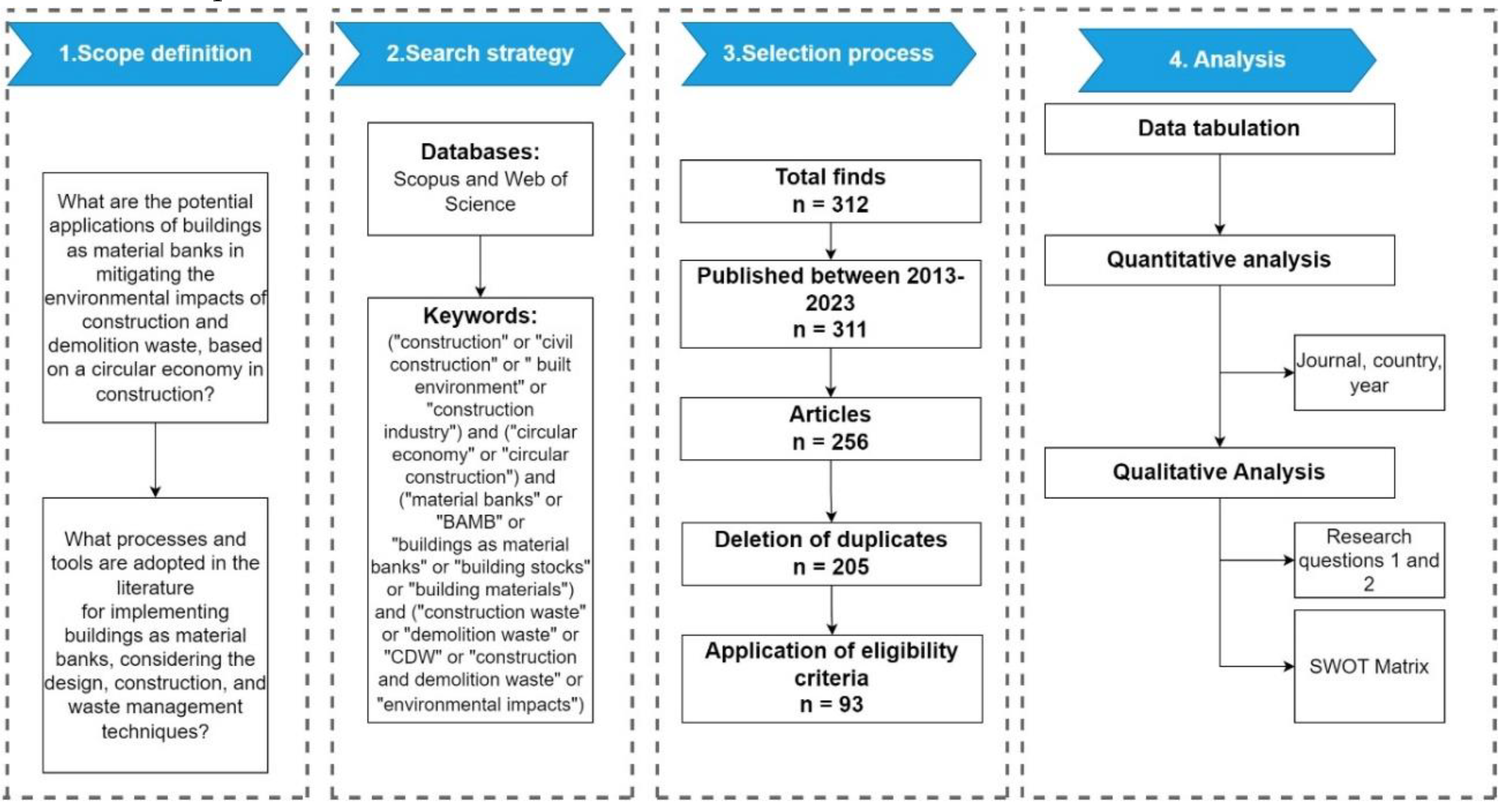
Figure 2.
Publishing Year of the Articles.
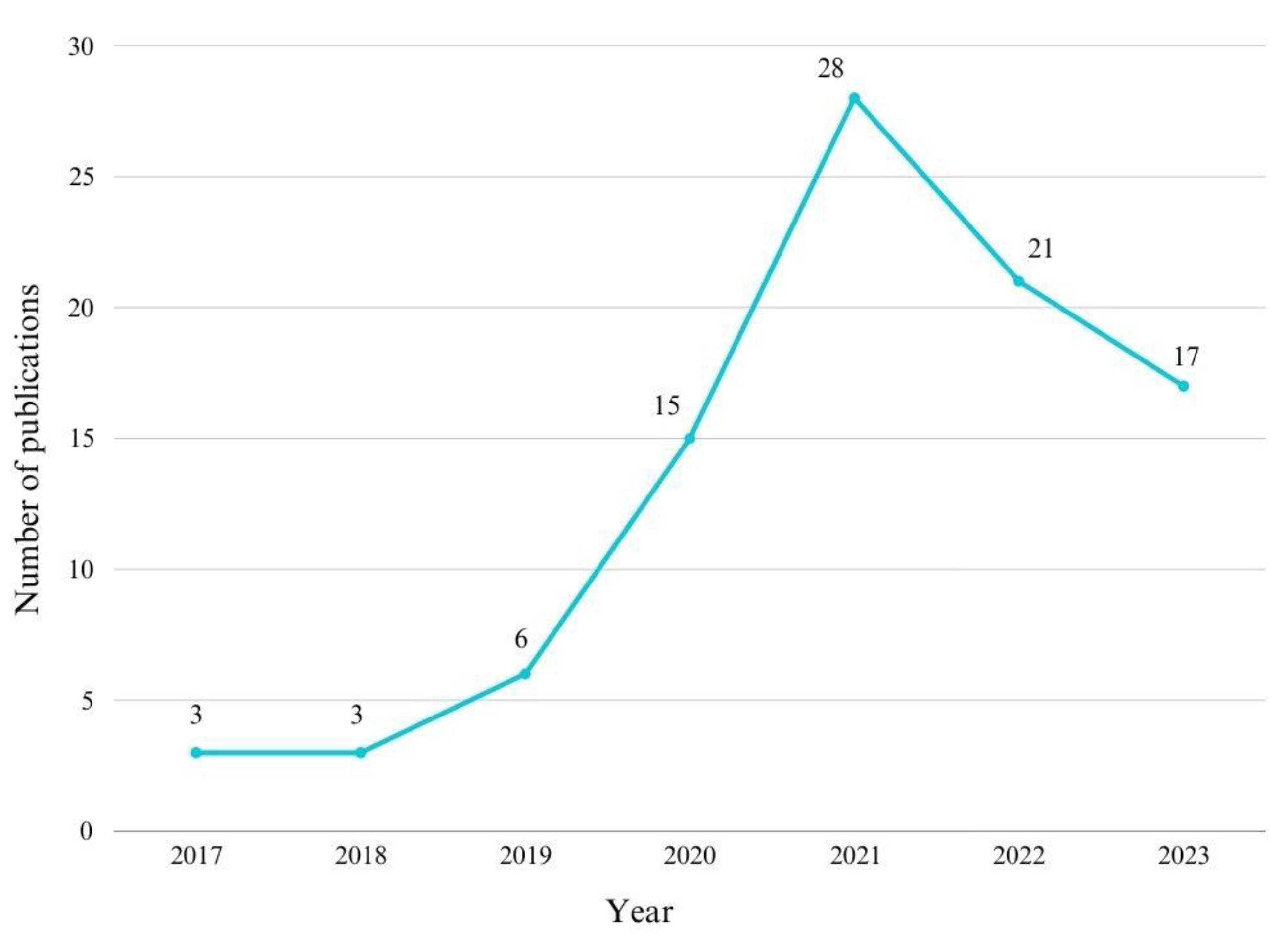
Figure 3.
Country of publication of articles and division between continents.
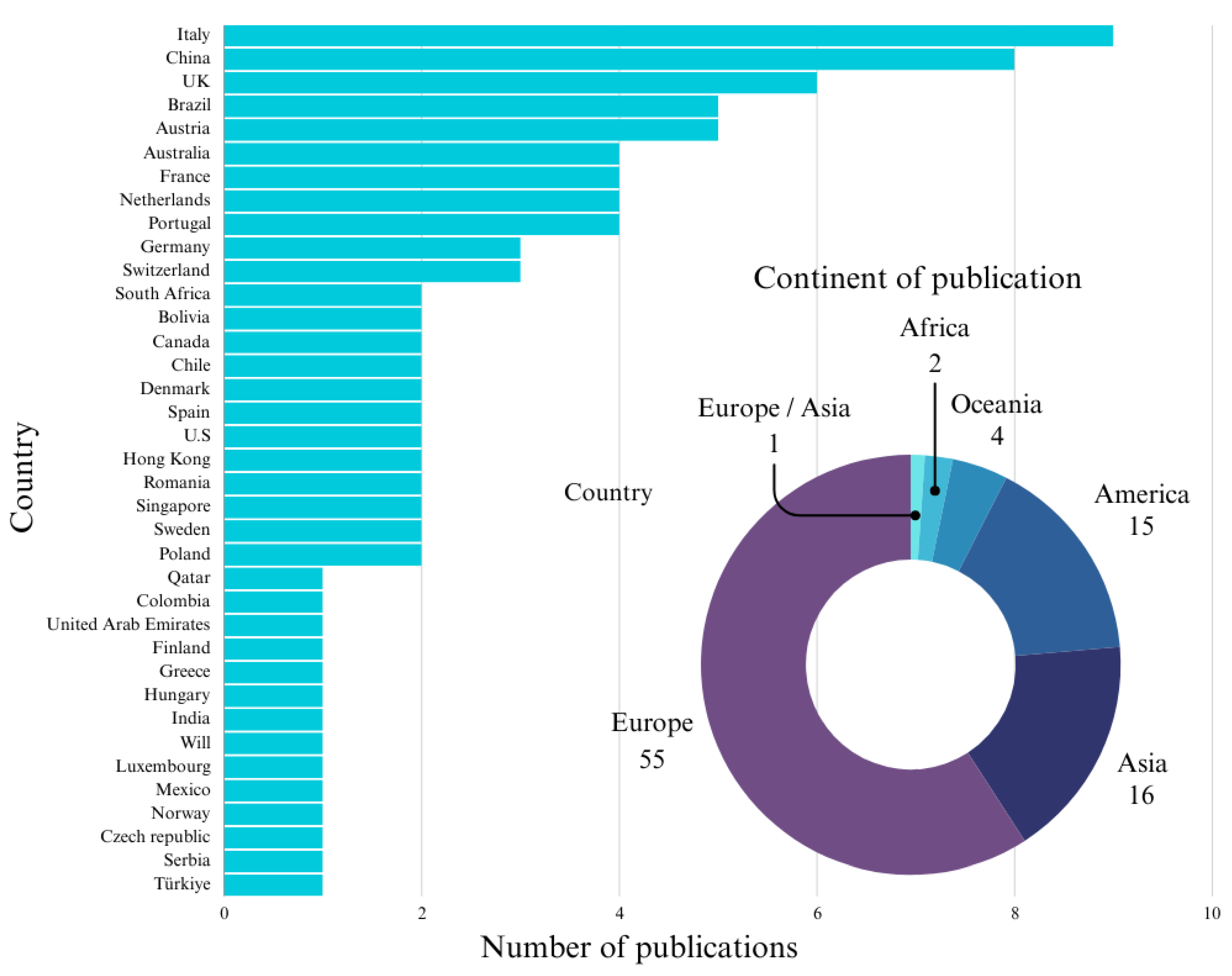
Figure 4.
Article publication journals.
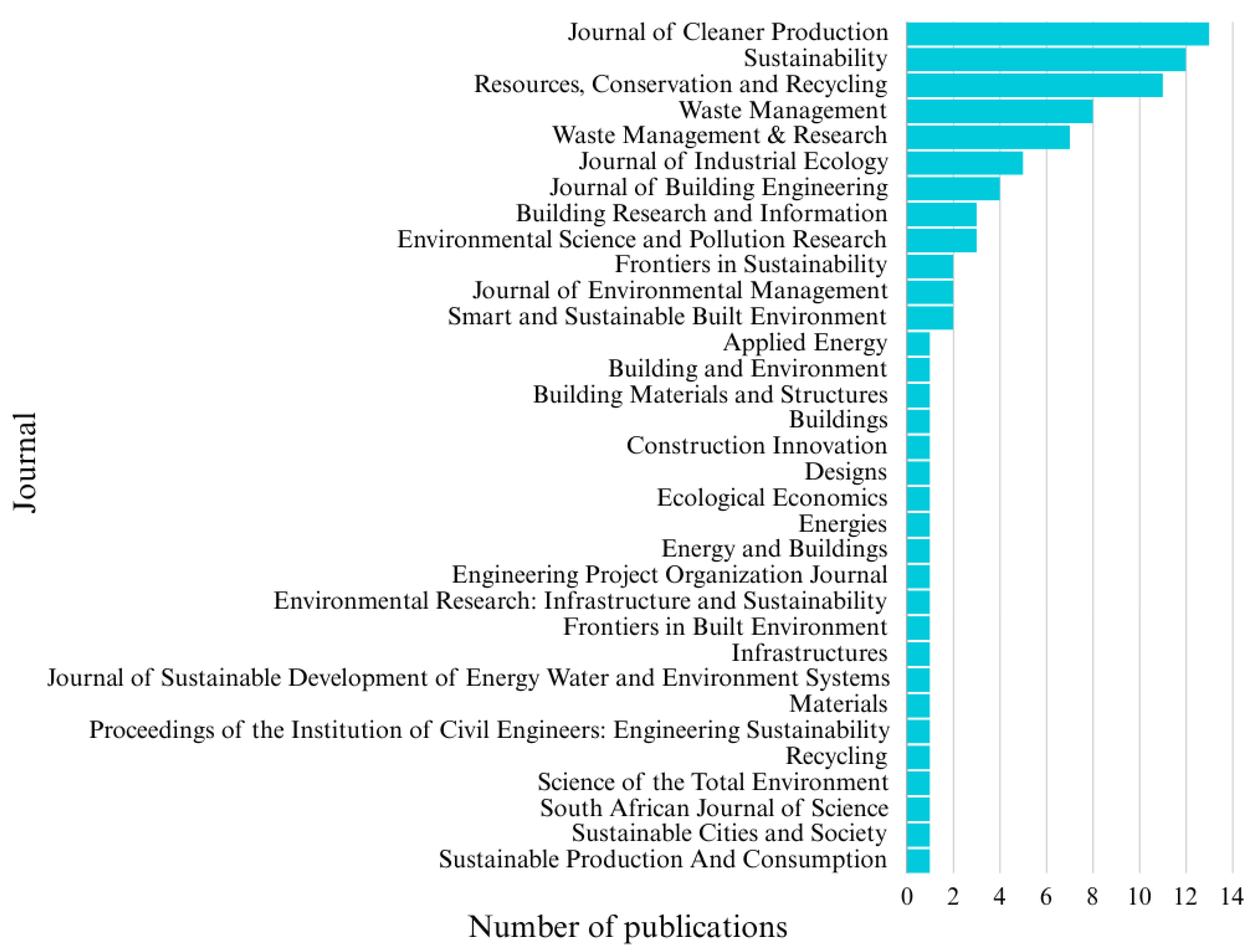
Figure 5.
Theme of publications.
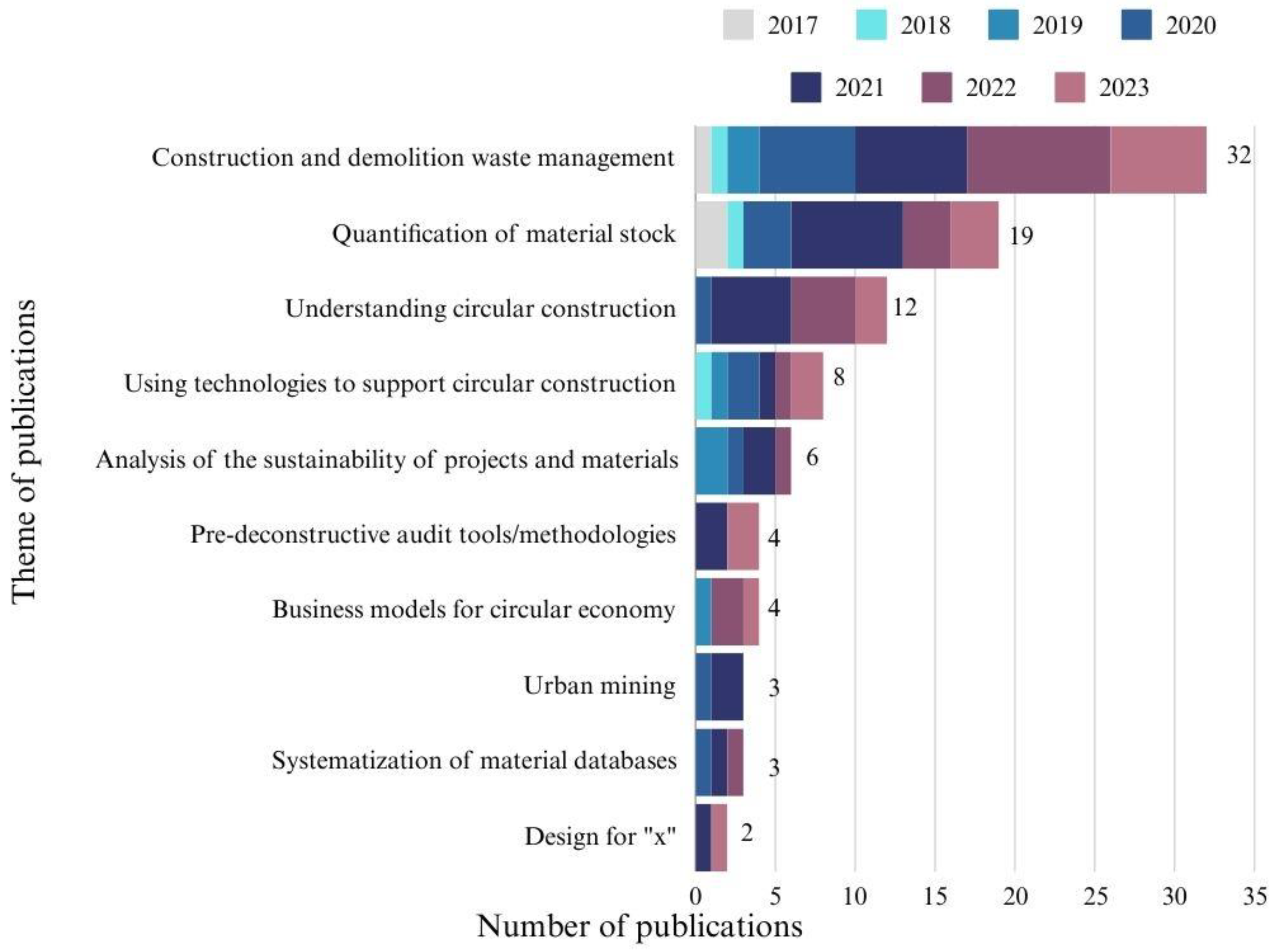
Figure 6.
Nature of research and methods applied.
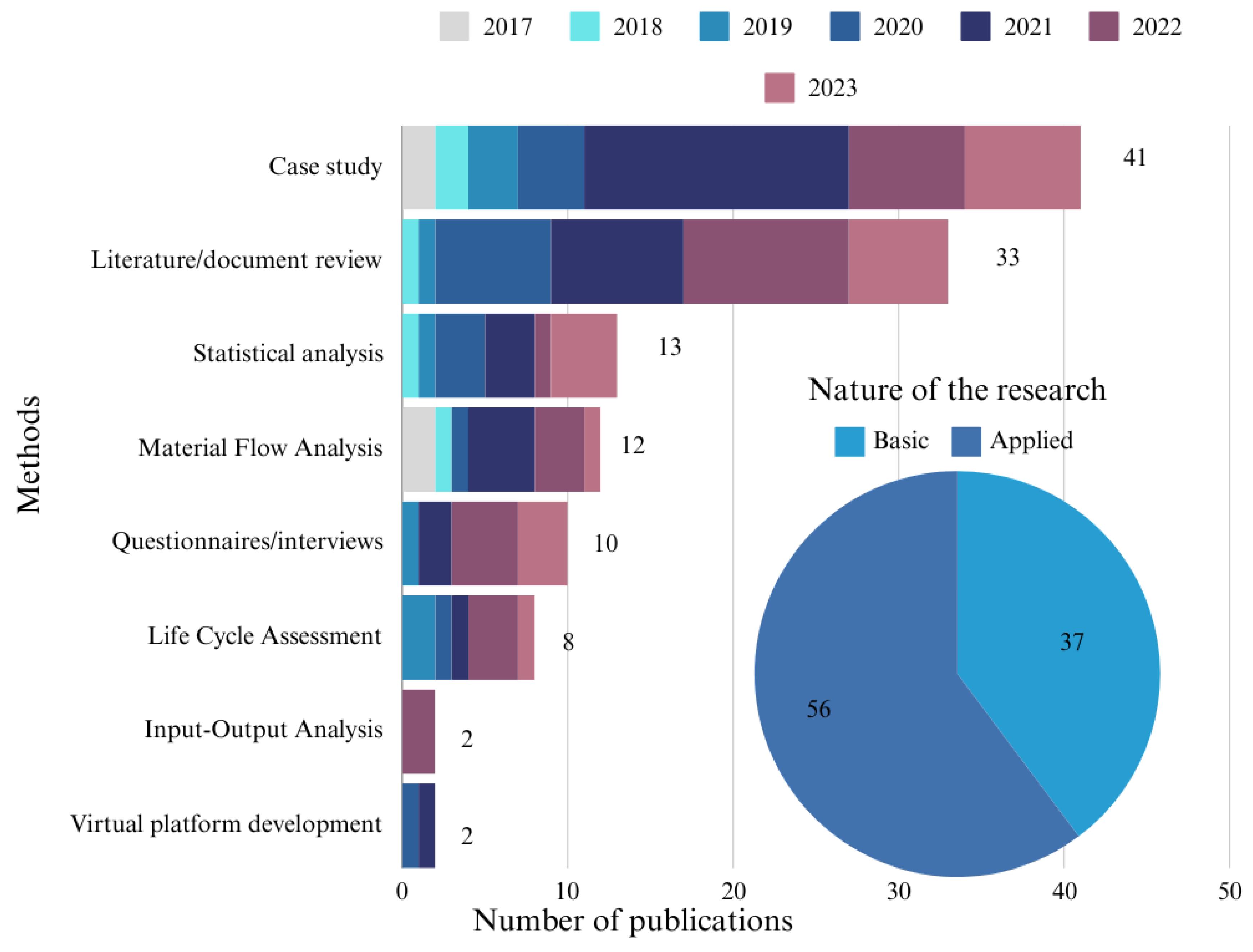
Figure 7.
(a) Type of construction; (b) Evaluated stock.
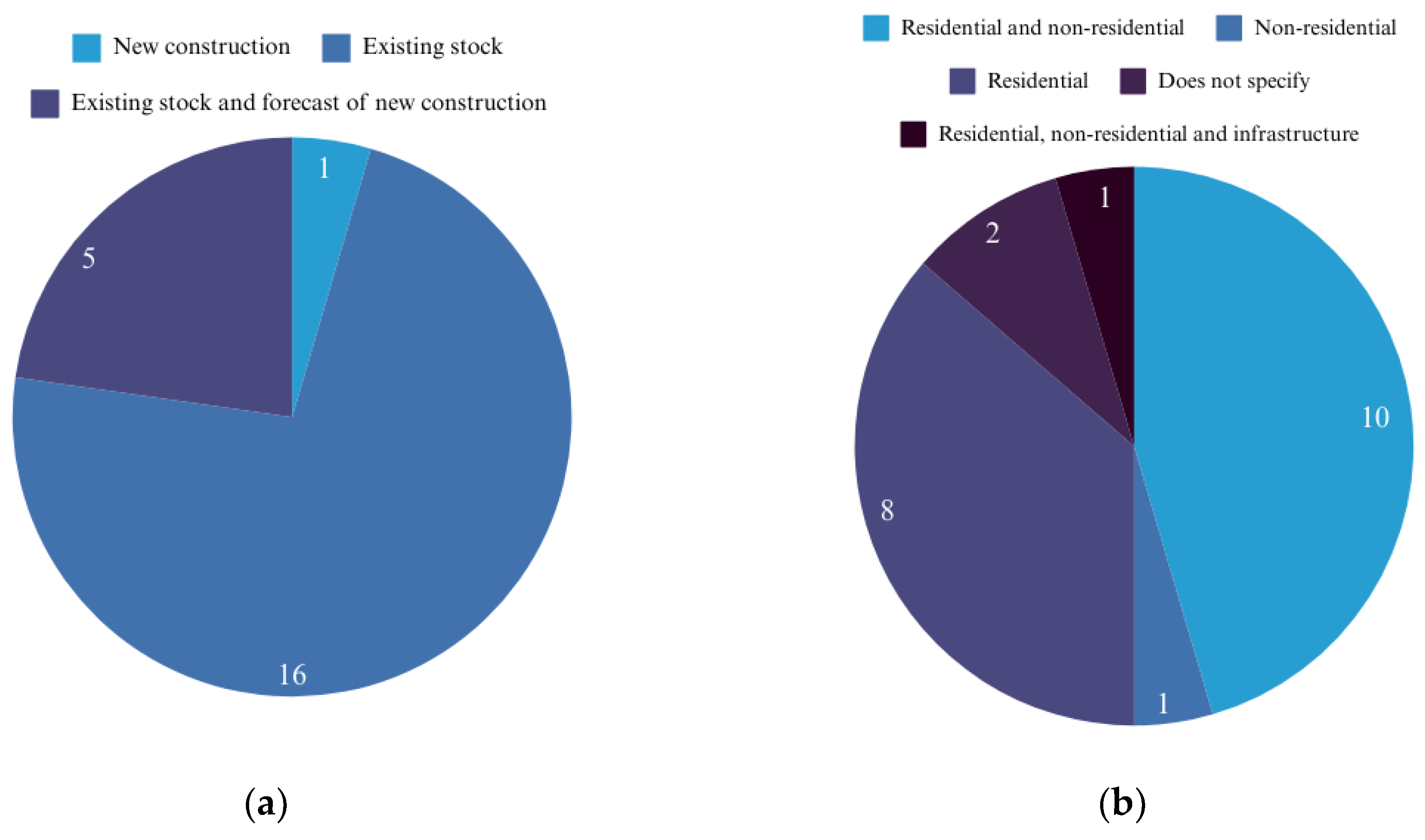
Figure 8.
Material flow for urban mining, adapted from [51].
Figure 8.
Material flow for urban mining, adapted from [51].
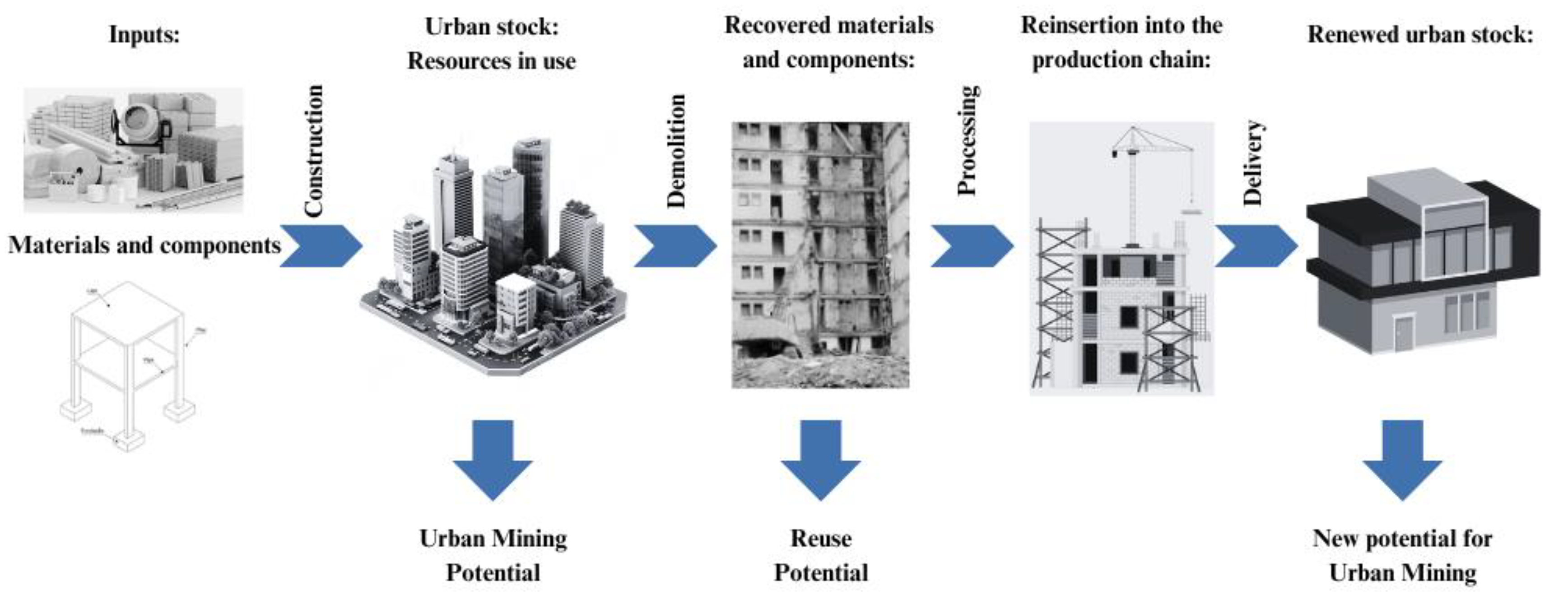

Table 1.
Eligibility Criteria for Articles for the Study.
| Criteria | Description |
| CI1 | Materials for Construction Bank |
| CI2 | Construction Circular Economy |
| CI3 | Management of construction and demolition components and waste |
| CI4 | End-of-life management of building stock |
| CI5 | Studies on design and construction of residential, commercial or industrial buildings |
| CE1 | Does not study the construction industry |
| CE2 | Does not study the management of construction and demolition components and waste |
| CE3 | Studies on energy efficiency and water consumption in buildings and cities |
| CE4 | Performance assessments of specific waste and materials |
Table 2.
SWOT Matrix.
| Strengths |
| ST1: recycled aggregates |
| ST2: Design strategies for "x" |
| ST3: Promotes urban mining and the circulation of construction products |
| ST4: Savings in the extraction of natural resources and carbon emissions |
| ST5: Sustainable urban planning tool |
| ST6: Selection of more efficient materials |
| ST7: Dry, prefabricated and modular constructions, with mechanical connections |
| ST8: Selective deconstruction |
| ST9: Global building sustainability assessment |
| ST10: Promotes industrial symbiosis |
| ST11: Strengthens local businesses to reuse components |
| ST12: Reduced construction costs by using more circular materials |
| ST13: Reduces land use consumption for landfills |
| ST14: Adaptive reuse of buildings |
| Weaknesses |
| WK1: Unavailability of accurate data on construction materials and components |
| WK2: Operating costs for deconstructing and maintaining databases |
| WK3: Difficulty in transportation, logistics and narrow gap of use |
| WK4: Residual Performance Characterization and Hazardous Waste Screening |
| WK5: Waste underreporting |
| WK6: Lack of standardized methodologies for quantifying and evaluating the environmental impact of CDW |
| WK7: High prices and low profitability of using secondary materials |
| WK8: High rates of recycling losses |
| WK9: Low capacity to meet demand for materials with secondary materials |
| WK10: Concrete structures |
| WK11: Lack of regulation for reused materials |
| WK12: Need to incorporate other materials to reuse recovered |
| Opportunities |
| OP1: Material and waste management with support from BIM |
| OP2: Using Industry 4.0 technologies to promote circular construction |
| OP3: Policies and enforcement of targets for value-added reduction, reuse and recycling (upcycling), along with tax incentives for companies that meet targets |
| OP4: Use of GIS systems, automated cadastral information systems and remote sensing |
| OP5: Open and regulated digital platforms for management of construction, demolition, recycling and commercialization of secondary materials |
| OP6: Assessment, creation and investment in local business models for CDW management |
| OP7: Material passport |
| OP8: Use of LCA to evaluate the impacts of production, replacement and final disposal of components |
| OP9: Industrial urban symbiosis |
| OP10: Green public contracts |
| OP11: Creation of new jobs |
| OP12: Development of technologies for collection, transport and processing of CDW |
| OP13: Involvement of interested parties in the formulation of policies and analysis of material flow scenarios |
| OP14: Encouragement of research and training in the areas of waste management and circular economy |
| OP15: Public-Private Partnerships |
| OP16: Pre-deconstructive audit protocols accessible to the initial design phase |
| OP17: Product-service systems (material leasing) |
| OP18: High cost and low availability of landfills for CDW disposal |
| OP19: Identification of customer segments that value products with a lower environmental impact |
| OP20: Smart cities |
| OP21: Use of components in popular housing |
| Threats |
| TH1: Low cost of primary materials |
| TH2: Market restrictions on the use of secondary materials |
| TH3: Lack of regulation and supervision over CDW management |
| TH4: Lack of support for LCA tools for managing the impacts of long-term reuse |
| TH5: Lack of concern about scarcity of resources |
| TH6: Uncertainty about the quality of secondary products |
| TH7: Profit-oriented and change-resistant nature of the construction industry |
| TH8: Uneven waste management policies around the world |
Disclaimer/Publisher’s Note: The statements, opinions and data contained in all publications are solely those of the individual author(s) and contributor(s) and not of MDPI and/or the editor(s). MDPI and/or the editor(s) disclaim responsibility for any injury to people or property resulting from any ideas, methods, instructions or products referred to in the content. |
© 2024 by the authors. Licensee MDPI, Basel, Switzerland. This article is an open access article distributed under the terms and conditions of the Creative Commons Attribution (CC BY) license (http://creativecommons.org/licenses/by/4.0/).
Copyright: This open access article is published under a Creative Commons CC BY 4.0 license, which permit the free download, distribution, and reuse, provided that the author and preprint are cited in any reuse.


