

Submitted:
16 May 2024
Posted:
17 May 2024
You are already at the latest version
Abstract
Background: Generative artificial intelligence (Gen-AI) has emerged as a transformative tool in research and education. However, there is a mixed perception about its use. This study assessed the use, perception, prospect, and challenges of Gen-AI use in higher education. Methods: This is a prospective, cross-sectional survey of university students in the United Kingdom (UK) distributed online between January and April 2024. Demography and perception of Gen-AI and other AI tools were assessed and statistically analysed to assess the difference in perception between various subgroups. Results: A total of 136 students responded to the survey of which 59% (80) were male. The majority were aware of Gen-AI and other AI use in academia (61%) with 52% having personal experience of the tools. Grammar correction and idea generation were the two most common tasks of use, with 37% being regular users. Fifty-six percent of respondents agreed that AI gives an academic edge with 40% holding a positive overall perception about the use in academia. Comparatively, there was a statistically significant difference in overall perception between different age ranges (I2 = 27.39; p = 0.002) and levels of education (I2 = 20.07; p < 0.001). Also, 83% of students believe AI use will increase in academia with over half agreeing it should be integrated into learning. Plagiarism (33%), privacy issues (14%), and lack of clarity by the university (13%) remain the top concerns regarding the use of Gen-AI and other AI tools in academia. Conclusions: Gen-AI and other AI tools are being used and their use will continue to grow in higher education. While current use is challenging due mainly to plagiarism fear and lack of clarity by the university, most users believe AI should be integrated into the university curriculum.
Keywords:
artificial intelligence
; generative AI
; higher education
; machine learning
; pedagogy
Introduction
Generative artificial intelligence (Gen-AI) has emerged as a transformative force in higher education, with its adoption steadily rising, particularly in the United Kingdom [1]. This trend has sparked a range of perceptions and opinions, ranging from optimism regarding its potential to revolutionise the teaching and learning process to concerns about its implications for academic integrity and the traditional roles of educators [2]. The integration of Gen-AI into higher education settings has ignited debates surrounding issues such as authorship and the impact on academic standards [3].
While some view Gen-AI as a promising tool capable of improving educational experiences through the creation of high-quality learning materials, others express concerns about its impact on the autonomy and pedagogical expertise of educators [4]. The rapid advancement of Gen-AI technologies has heightened these discussions, prompting educators, policymakers, and scholars to grapple with its implications for the future of education [5,6].
Lim et al. define Generative Artificial Intelligence as a technology that uses deep learning models to generate human-like content in response to complex and various prompts [3]. This capability has rendered Gen-AI ubiquitous across various domains, including education, law, policymaking, and content creation [7]. Its ability to emulate human-like responses has facilitated its integration into educational practices, offering unique opportunities for personalised learning experiences, content generation, and management [8,9,10].
Understanding the perception of Gen-AI use in UK higher education is crucial for identifying potential challenges and opportunities in the integration of AI technology in educational settings. As Gen-AI continues to evolve at a rapid pace, it holds the promise of driving innovation and enhancing educational outcomes [4]. However, alongside its potential benefits, the widespread adoption of Gen-AI presents a host of challenges that must be addressed through effective policies and measures [2]. Failure to navigate these challenges could undermine the integrity of academic practices and exacerbate existing disparities within higher education [2,8].
In the coming years, the trajectory of Gen-AI in higher education will be shaped by ongoing debates and efforts to harness its potential while mitigating associated risks [11]. Understanding the multifaceted nature of perceptions surrounding Gen-AI is essential for informing strategic decisions and ensuring its responsible integration into educational settings [12].
Previous studies have delved into the application of artificial intelligence (AI) within educational contexts; however, there remains a notable gap in the literature concerning the specific perception and adoption of Gen-AI within the landscape of UK higher education. While some research has explored perceptions of Gen-AI in education settings, such investigations have primarily been conducted in various global contexts such as Hong Kong and India [13], leaving a significant gap in understanding the complex dynamics within the UK higher education system.
To bridge this gap in knowledge, the present study aims to investigate the perception of Gen-AI use among students within a UK higher education institution, with a particular focus on the University of Bolton, Greater Manchester (UK Northwest region). By concentrating on a specific institution within the UK and its unique academic environment, this study aims to provide insights that are both contextually relevant and generalisable which can inform the development of policies and strategies for the effective integration of AI technology in UK higher education
Methods
Study Design, and Ethics
This is a cross-sectional prospective survey aimed to assess the prevalence and perception of gen-AI use among higher education (university) students in the UK. This study was registered, and ethics approval was acquired from the University of Bolton Ethics Committee (AUTOYEHP00207). Data was collected between January and April 2024. The survey was designed electronically using Microsoft Forms and consent was asked following a detailed description of the aim of the survey. Thus, only participants who consented to participate in the survey did so. The response was collected completely anonymously in respect of the GDPR (The General Data Protection Regulation) [14]. The study was conducted strictly following the Declaration of Helsinki regarding human participants [15].
Data Collection
All current students at the University of Bolton with active student email addresses were eligible for this study. Generally, this includes adults of 18 years and above irrespective of country of origin. Generative AI use was defined as the utilization of any form of artificial intelligence tool including large language modelling tools (e.g., ChatGPT), grammar correction tools (e.g., Grammarly), and other AI-based tools in any part of academic activities.
Survey Design and Distribution
The survey design includes 7 different sections. Section 1 provides general information and consent to participate while Section 2 collects demographic information about the participant. Sections 3 and 4 respectively measured the general understanding and perceived impact of gen-AI and AI in an academic context. The perception and challenges faced in the use of AI are covered in section 5, while section 6 surveys [participants’ expectations and projections of AI use in academia. The last section (7) provides participants with the opportunity to give general thoughts and feedback on the subject. A copy of the survey question is provided as supplement material (Table S1). The survey was distributed to the students via various platforms including email, and social platforms.
Power Calculation
We performed a power calculation to estimate the number of participants needed to draw a significant conclusion with a confidence interval of 95% and a margin of error of 8%. Giving the population of students at the University of Bolton is about 6000 in 2024 and considering that the survey reaches approximately 20% of students, the minimum sample size required for this study to be generalisable was calculated to be 134.
Statistical Analysis
Respondents’ characteristics were summarized using descriptive statistics and presented as counts and percentages. To assess the difference in overall perception of Gen-AI across gender, age, and education level, Pearson Chi-square analysis was performed. Statistical analysis was performed using SPSS Statistics 26 (IBM Corp., Armonk, NY). A 2-tailed p-value of <0.05 was defined as significant in all statistical analyses.
Results
Characteristics of Participants
A total of 136 participants consented and responded to this survey out of a total of 140 that confirmed receipt. This is equivalent to a response rate of 97%. Of the 136 responders, 59% (80) identified as male. Further, most responders were between the ages of 18 and 34 (~77%) and studying an undergraduate at the undergraduate level (57%). In general, students in the fields of Engineering and Technology as well as Arts and Design were the most represented ( 42% and 25% respectively; Table 1).
Awareness and Use of Gen-AI
The awareness of participants about the use of gen-AI for academic purposes was measured in this survey. In general, 61% (83/136) of the participants were either highly or moderately familiar with the use of gen-AI for general purposes, with 22% (30/136) and 14% (19/136) being somewhat or slightly familiar with the tools. Also, around 94% (128/136) of the participants were aware of the use of gen-AI for academic purposes, while 52% (71/136) have personally used gen-AI for academic tasks. Specifically, the four most popular tasks for which AI tools have been generally used among respondents who declared using these tools (71/136), were grammar corrections (56%; 40/71), idea generation (55%; 39/71), answering questions (41%; 29/71), paraphrasing and summarising (37%; 26/71; Figure 1). Indeed, 37% (26/71) of the respondents who answered yes to the usage of Gen-AI and other AI tools (71 participants) reported regular (always or often) use of AI tools, while 61% (43/71) sometimes or rarely use the tools (Table 2).
Perception of Gen-AI and Other AI Use for Academic Purposes
Figure 1. shows the respondents’ perception and expectations (prospect) regarding the use of Gen-AI. Overall, 56% (76/136) of the respondents perceived that Gen-AI offers an edge when used for academic purposes with only 15% (20/136) disagreeing with this belief. Also, most respondents (40%) have positive perceptions about the use of Gen-AI and other AI tools in academia with 21% having a negative overall perception of these tools. In terms of overall perception, there was no significant between participants based on gender (I2 = 4.84; p = 0.304). However, there was a significant difference in perceptions of the Gen-AI and other AI tools across different age ranges (I2 = 27.39; p = 0.002; Figure 2) and education level (I2 = 20.07; p < 0.001; Figure 3). Finally, when asked to describe AI in a single word, the overall association was positive (Figure S1).
Prospect and Limitation of Gen-AI and Other AI Use for Academic Purposes
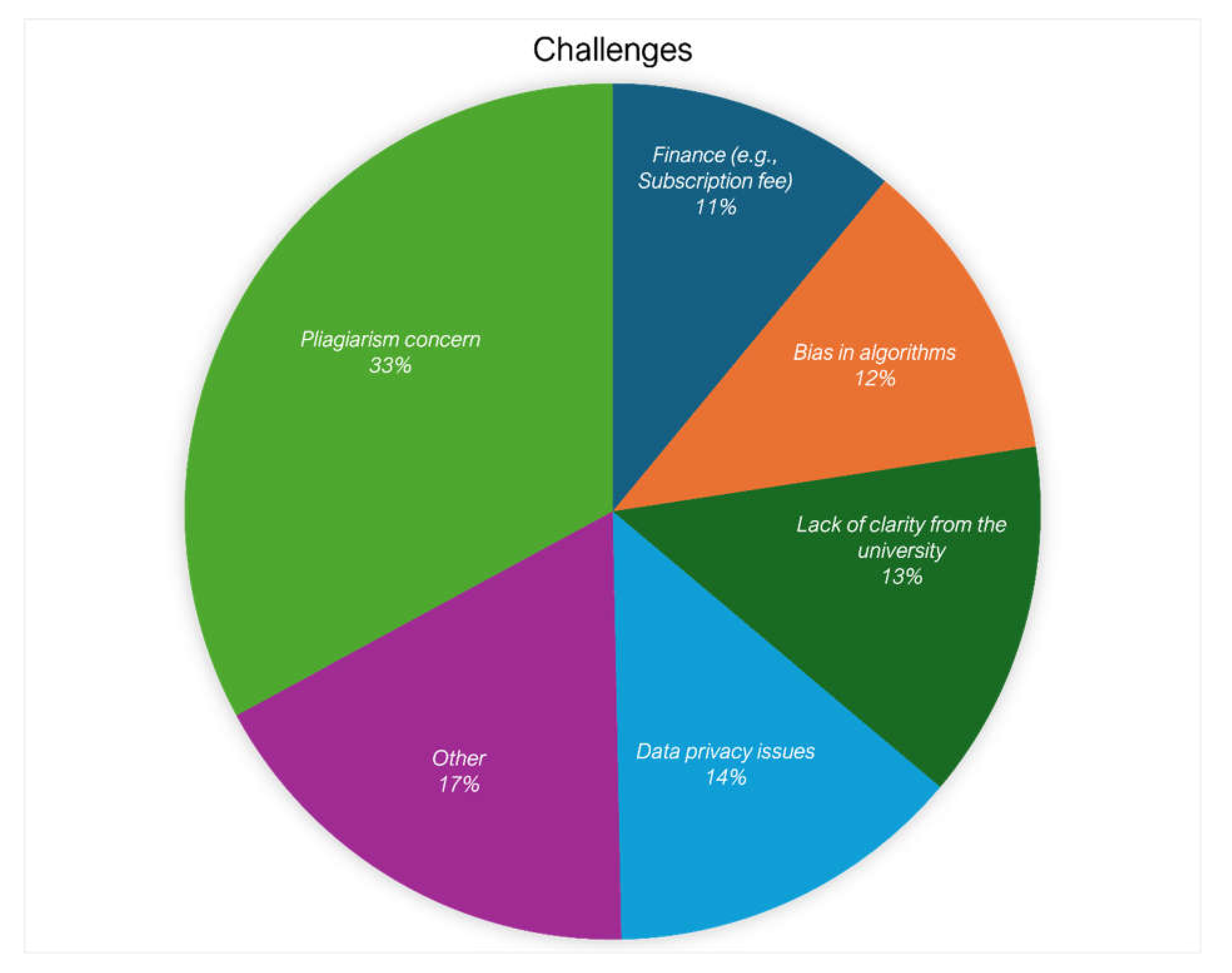
Regarding the use of Gen-AI and other AI tools, most respondents (83%; 112/136) agreed that these tools will be used increasingly for academic purposes in the future. Also, 47% (65/136) of respondents agreed that the use of Gen-AI and other AI tools should be integrated into the university curriculum with 19% disagreeing. In terms of challenges encountered while using AI tools, the most common limitations are linked with plagiarism concerns (33%), followed by data regulatory/privacy issues (14%) and lack of clarity from the university (13%).

Table 4.
The prospect of Gen-AI and other AI tools for academic use.
| The use of Gen-AI and other AI tools for academic purposes will significantly increase in the future. | |
| Strongly agree | 51 (38) |
| Agree | 61 (45) |
| Neutral | 22 (16) |
| Disagree | 1 (1) |
| Strongly disagree | 1 (1) |
| Gen-AI or other AI tools should be integrated into the university’s curriculum. | |
| Strongly agree | 25 (18) |
| Agree | 40 (29) |
| Neutral | 46 (34) |
| Disagree | 13 (10) |
| Strongly disagree | 12 (9) |
Figure 4.
Challenges faced by respondents regarding the use of Gen-AI and AI tools for academic purposes.
Figure 4.
Challenges faced by respondents regarding the use of Gen-AI and AI tools for academic purposes.
Discussion
In this cross-sectional prospective survey of higher education students in the UK, we have assessed the perception, expectations, challenges, and prospects of AI use for academic purposes. Our result shows an overall high awareness of Gen-AI and other AI tools for both general and academic use with over half of the participants having a first-hand experience of the tools for their academic works including mostly grammar correction, idea generation, and answering questions. Of the participants who declared using Gen-AI or other AI tools for academic purposes, a third of them regularly use these tools. Further, our results show that more than half of the respondents believed AI use offers academic advantages with 40% having an overall positive perception of the tools.
In terms of determinants of perception type, we compared the overall perception of AI and Gen-AI across different genders, age ranges, and levels of study. Results show that while there was no difference in perception across genders, perception regarding the use of AI significantly differed across age and study levels. Specifically, this study shows that participants between the ages of 18 and 24 have the highest proportion of negative perceptions while those between the ages of 25 and 34 years have relatively more positive outlooks regarding the use of Gen-AI or any AI tool for academic purposes. Also, students studying postgraduate degrees (Master’s or Doctoral) have relatively more positive perceptions of AI use compared with those studying a first Bachelor) degree. Further, over 80% of respondents believe that AI will grow in popularity as a useful tool in academia with approximately half of participants suggesting the integration into learning curriculum.
These results are similar to previous studies assessing the awareness of AI use in schools (colleges and higher education institutions). For instance, in a survey of 116 educators from a university in the United States, authors reported that “most” of the participants were aware of AI use in higher education (heard of or used) although the proportion of participants that responded being aware of the tools were not given. Also, the authors reported an overall positive perception and sentiment around the use of AI among educators [16]. Also, in a recent, similar study of university students (n = 1,135) in Australia, Kelly et al., reported a high overall awareness (very little knowledge, moderate, or a lot of knowledge) of AI or Gen-AI by students with less than half had used the tools. Further, there was no significant difference in awareness of Gen-AI or AI between different genders or ages although confidence in using these tools differed between the groups (based on gender and age). Intuitively, students ages over 40 were reported to be less likely to use Gen-AI and AI or be confident in using the tools compared with under 25 years old students [17]. While the authors did not assess or report the overall difference in perception between the groups, the difference in use and confidence about the use of Gen-AI and AI provides an interesting context. Specifically, this result may be linked with a relatively lower representation of older students in higher education resulting in a relatively higher and statistically significant difference. Alternatively, it could indeed reflect the age difference in AI and general technology adoption that has been reported in previous studies [18]. Also, students at higher levels of education were more likely to have a positive perception of AI. We hypothesise that this may be due to the increased need for creativity (idea generation) as well as the larger volume of writing required in higher levels of university education compared with lower. This may correspond to an increased need to use Gen-AI or other AI tools for idea generation and grammar correction, two of the main uses that most responders in this study have reported (Figure 1).
The use of AI in higher education has been argued to have the potential to revolutionize various aspects of teaching, learning, and research with specific advantages of increasing access to information, retention of knowledge, and learning outcomes at a relatively lower cost (financial and time) [19]. Indeed, various studies have reported the successful application of AI in higher education institutions. For instance, Hannan and Liu reported the successful use of AI in improving enrolment management, students’ learning experience, and student support in higher education institutions [20]. Also, Jin et al. showed the usefulness of AI in supporting self-regulated online learning in higher education [21]. Thus, AI may serve as a tool for the improvement of higher education practices and services if integrated well based on research and rigorous stakeholder involvement. This integration may also help in various teaching scenario where face-to-face teaching or learning is not possible. For instance, during global pandemics or cases where online teaching is the only option, AI may be used to augment learning experience [22,23,24,25]. However, AI also potentially threatens the traditional approach to teaching especially in higher education institutions which may also be in the best position to harness the benefits of these tools in empowering tutors and learners [26].
Responders also reported various limitations to the efficient use of AI for academic purposes. Expectedly, fear of plagiarism remains the most reported challenge faced by responders followed by data privacy issues and lack of clarity from the institution regarding the use of Gen-AI and other AI tools for academic works. This corroborates some of the concerns raised in a previous study. Specifically, educators’ main concerns surrounding the use of AI were reported to be mainly the potential for cheating (which may manifest in the form of plagiarism), equity and access as well as the potential to restrict creativity [16].
This study has several limitations associated with self-reporting and the design of this study is cross-sectional. Specifically, self-reporting is associated with recall bias [27], while cross-sectional studies do not cater to changes in response that may result, for instance, from increased use of Gen-AI and AI tools by participants [28]. Particularly, perception may become more positive or negative as participants become more aware of the tools. Another limitation is linked with the Hawthorne effect whereby participants’ behaviour (response) is influenced by the fact of being studied whereby, they would have behaved or responded differently were they not involved in a study [29,30]. Finally, the sample size and the single-centred location of the study population limit the generalizability of our results. Given the diverse nature of higher education institutions in the UK and the varied demographics of students [31], it is essential to examine individual perceptions across different fields to attain a comprehensive understanding of this subject. Each UK region may present unique challenges, opportunities, and attitudes toward Gen-AI integration, necessitating multi-regional investigations to capture the full spectrum of student’s perspectives. Irrespective of this, the power calculation showed that the sample size is sufficient, and this study provides the basis for future, potentially larger, multicentre, longitudinal studies.
In sum, there is a high awareness of Gen-AI and other AI tools among university students in the UK some of whom use the tools for academic purposes including grammar correction, idea generation, and answering questions. Also, there is a high awareness of Gen-AI and other AI tools among students with an overall positive perception about the tools which depends on age and level of study. Also, various concerns about AI use were raised including plagiarism, data privacy, and lack of clarity by the institution. However, there is a high expectation that AI will become popular in academia and suggestion that they should be incorporated into the curriculum.
As AI becomes more and more inevitably incorporated into all aspects of society, education institutions must consider its use and provide further guidance that allows educators and learners to harness the positive aspects of these innovative tools while protecting the traditional values that make higher education institutions especially the hub of originality, creativity, and integrity.
Funding statement and conflict of interest disclosure
The authors declare that the research was conducted in the absence of any commercial or financial relationships that could be construed as a potential conflict of interest.
Data availability
Data are available upon request from the corresponding author.
Authors contribution
A.A, and T.O, contributed to the conceptualization. A.A, and T.O, contributed to data collection. A.A, and T.O, contributed to the formal analysis and software. A.A, and T.O, contributed to the supervision. A.A, J.S.A, and T.O, contributed to the writing—review and editing. All authors contributed to the article and approved the submitted version.
References
- Education, D.f. Generative AI in education: Educator and expert views; GOV.UK: 2024.
- Farrelly, T.; Baker, N. Generative artificial intelligence: Implications and considerations for higher education practice. Education Sciences 2023, 13, 1109. [Google Scholar] [CrossRef]
- Lim, W.M.; Gunasekara, A.; Pallant, J.L.; Pallant, J.I.; Pechenkina, E. Generative AI and the future of education: Ragnarök or reformation? A paradoxical perspective from management educators. The international journal of management education 2023, 21, 100790. [Google Scholar] [CrossRef]
- Jain, K.K.; Raghuram, J.N.V. Gen-AI integration in higher education: Predicting intentions using SEM-ANN approach. Education and Information Technologies 2024, 1–41. [Google Scholar] [CrossRef]
- Yusuf, A.; Pervin, N.; Román-González, M. Generative AI and the future of higher education: a threat to academic integrity or reformation? Evidence from multicultural perspectives. International Journal of Educational Technology in Higher Education 2024, 21, 21. [Google Scholar] [CrossRef]
- İpek, Z.H.; Gözüm, A.I.C.; Papadakis, S.; Kallogiannakis, M. Educational Applications of the ChatGPT AI System: A Systematic Review Research. Educational Process: International Journal 2023, 12, 26–55. [Google Scholar] [CrossRef]
- Yusuf, A.; Tambuwal, N.I. Integrating Educational Technology in Teaching: Current Perceptions and Practices in Sokoto State, Nigeri. Arab Journal of Quality in Education 2018, 5. [Google Scholar]
- Mao, J.; Chen, B.; Liu, J.C. Generative Artificial Intelligence in Education and Its Implications for Assessment. TechTrends 2024, 68, 58–66. [Google Scholar] [CrossRef]
- Guan, Y. Student Education Management Strategy Based on Artificial Intelligence Information Model under the Support of 5G Wireless Network. Comput Intell Neurosci 2022, 2022, 4709146. [Google Scholar] [CrossRef] [PubMed]
- Liu, Y.; Chen, L.; Yao, Z. The application of artificial intelligence assistant to deep learning in teachers’ teaching and students’ learning processes. Front Psychol 2022, 13, 929175. [Google Scholar] [CrossRef] [PubMed]
- Banh, L.; Strobel, G. Generative artificial intelligence. Electronic Markets 2023, 33, 63. [Google Scholar] [CrossRef]
- Wu, E.H.-K.; Lin, C.-H.; Ou, Y.-Y.; Liu, C.-Z.; Wang, W.-K.; Chao, C.-Y. Advantages and constraints of a hybrid model K-12 E-Learning assistant chatbot. Ieee Access 2020, 8, 77788–77801. [Google Scholar] [CrossRef]
- Chan, C.K.Y.; Hu, W. Students’ voices on generative AI: Perceptions, benefits, and challenges in higher education. International Journal of Educational Technology in Higher Education 2023, 20, 43. [Google Scholar] [CrossRef]
- Addis, M.C.; Kutar, M. The general data protection regulation (GDPR), emerging technologies and UK organisations: awareness, implementation and readiness. 2018.
- Shrestha, B.; Dunn, L. The declaration of Helsinki on medical research involving human subjects: a review of seventh revision. 2019.
- Ghimire, A.; Prather, J.; Edwards, J. Generative AI in Education: A Study of Educators’ Awareness, Sentiments, and Influencing Factors. arXiv preprint arXiv:2403.15586 2024.
- Kelly, A.; Sullivan, M.; Strampel, K. Generative artificial intelligence: University student awareness, experience, and confidence in use across disciplines. 2023.
- Chan, C.K.Y.; Lee, K.K.W. The AI generation gap: Are Gen Z students more interested in adopting generative AI such as ChatGPT in teaching and learning than their Gen X and millennial generation teachers? Smart Learning Environments 2023, 10, 60. [Google Scholar] [CrossRef]
- Klutka, J.; Ackerly, N.; Magda, A.J. Artificial intelligence in higher education: Current uses and future applications. Louisville: Learning house 2018.
- Hannan, E.; Liu, S. AI: New source of competitiveness in higher education. Competitiveness Review: An International Business Journal 2023, 33, 265–279. [Google Scholar] [CrossRef]
- Jin, S.-H.; Im, K.; Yoo, M.; Roll, I.; Seo, K. Supporting students’ self-regulated learning in online learning using artificial intelligence applications. International Journal of Educational Technology in Higher Education 2023, 20, 37. [Google Scholar] [CrossRef]
- Alqahtani, J.S.; Aldhahir, A.M.; Al Ghamdi, S.S.; Aldakhil, A.M.; Al-Otaibi, H.M.; AlRabeeah, S.M.; Alzahrani, E.M.; Elsafi, S.H.; Alqahtani, A.S.; Al-maqati, T.N. Teaching faculty perceptions, attitudes, challenges, and satisfaction of online teaching during COVID-19 pandemic in Saudi Arabia: A national survey. 2022.
- Kim, J.; Merrill, K.; Xu, K.; Sellnow, D.D. My teacher is a machine: Understanding students’ perceptions of AI teaching assistants in online education. International Journal of Human–Computer Interaction 2020, 36, 1902–1911. [Google Scholar] [CrossRef]
- Holstein, K. Designing real-time teacher augmentation to combine strengths of human and AI instruction. Unpublished doctoral dissertation, Carnegie Mellon University 2019.
- Diwan, C.; Srinivasa, S.; Suri, G.; Agarwal, S.; Ram, P. AI-based learning content generation and learning pathway augmentation to increase learner engagement. Computers and Education: Artificial Intelligence 2023, 4, 100110. [Google Scholar] [CrossRef]
- Bates, T.; Cobo, C.; Mariño, O.; Wheeler, S. Can artificial intelligence transform higher education? Springer: 2020; Vol. 17, pp 1-12.
- Althubaiti, A. Information bias in health research: definition, pitfalls, and adjustment methods. J Multidiscip Healthc 2016, 9, 211–217. [Google Scholar] [CrossRef] [PubMed]
- Solem, R.C. Limitation of a cross-sectional study. American Journal of Orthodontics and Dentofacial Orthopedics 2015, 148, 205. [Google Scholar] [CrossRef] [PubMed]
- Sedgwick, P.; Greenwood, N. Understanding the Hawthorne effect. Bmj 2015, 351. [Google Scholar] [CrossRef] [PubMed]
- Adair, J.G. The Hawthorne effect: a reconsideration of the methodological artifact. Journal of applied psychology 1984, 69, 334. [Google Scholar] [CrossRef]
- Fitzpatrick, F. How can we be inclusive of diverse cultural perspectives in international higher education? exploring interculturality. In Intersectionality and Creative Business Education: Inclusive and Diverse Cultures in Pedagogy, Springer: 2023; pp. 93-108.
Figure 1.
Academic tasks for which Gen-AI (Generative Artificial Intelligence) and AI (Artificial Intelligence) have been used by participants.
Figure 1.
Academic tasks for which Gen-AI (Generative Artificial Intelligence) and AI (Artificial Intelligence) have been used by participants.
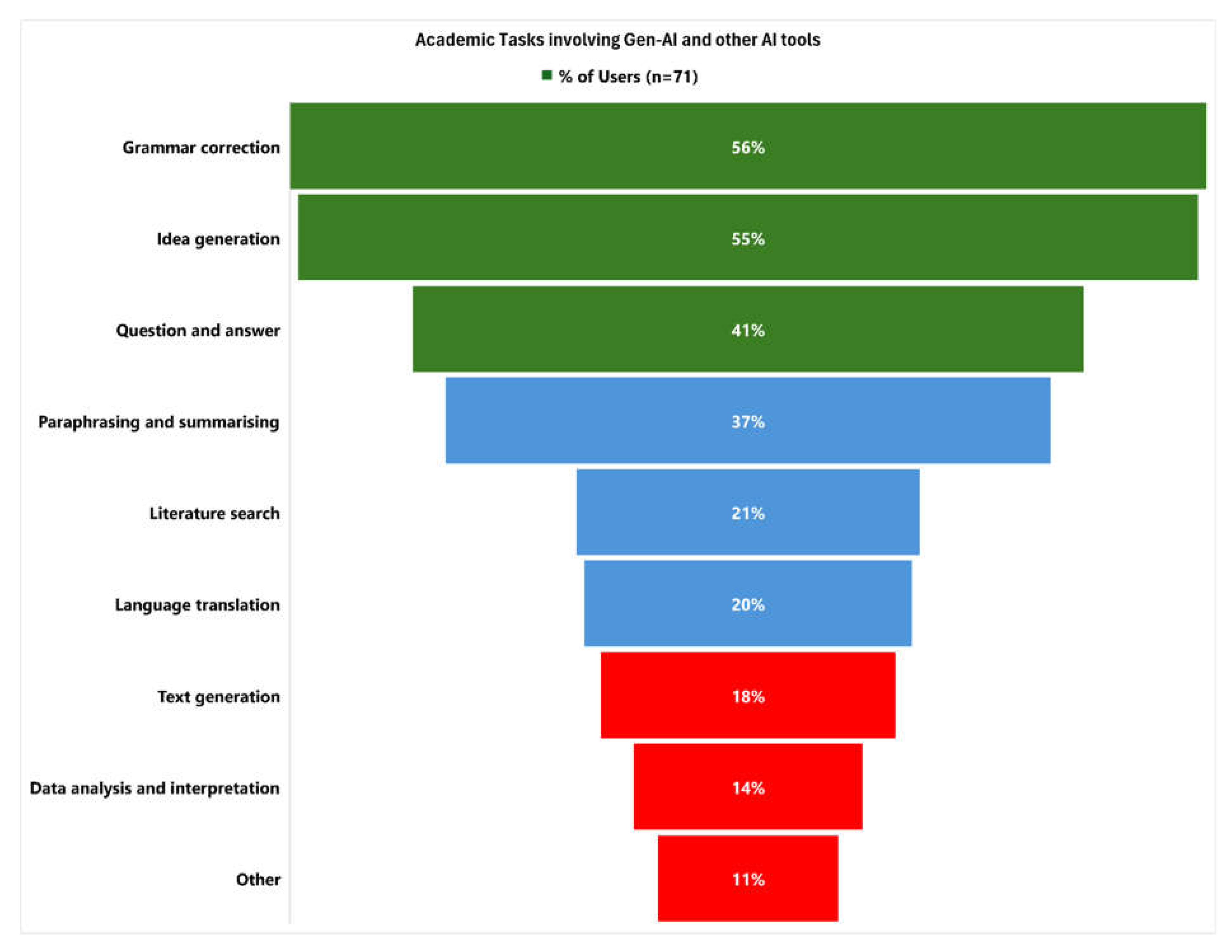
Figure 2.
Overall perception of Gen-AI and other AI tools across different age ranges. Gen-AI, Generative Artificial Intelligence.
Figure 2.
Overall perception of Gen-AI and other AI tools across different age ranges. Gen-AI, Generative Artificial Intelligence.
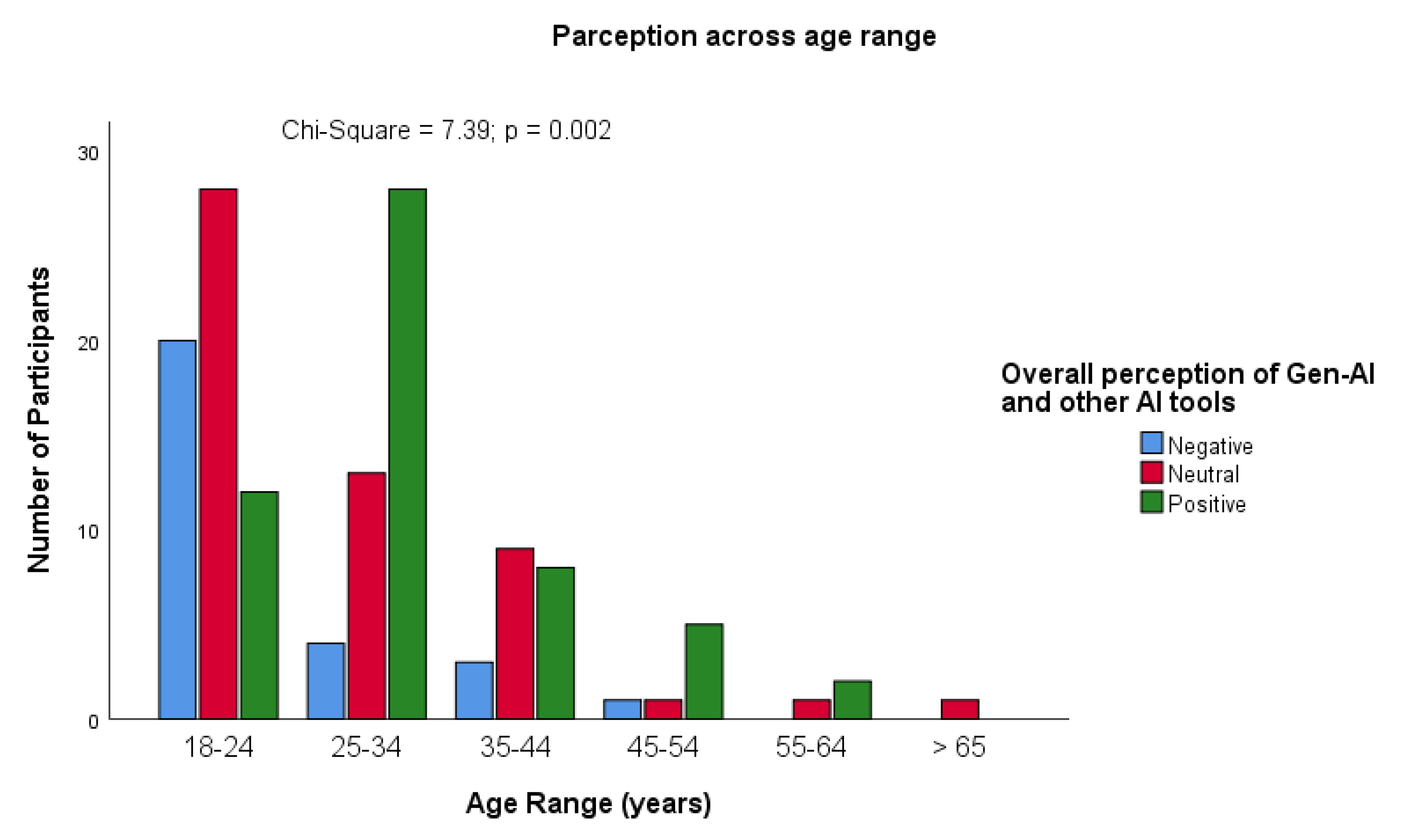
Figure 3.
Overall perception of Gen-AI and other AI tools across different education levels. Gen-AI, Generative Artificial Intelligence.
Figure 3.
Overall perception of Gen-AI and other AI tools across different education levels. Gen-AI, Generative Artificial Intelligence.
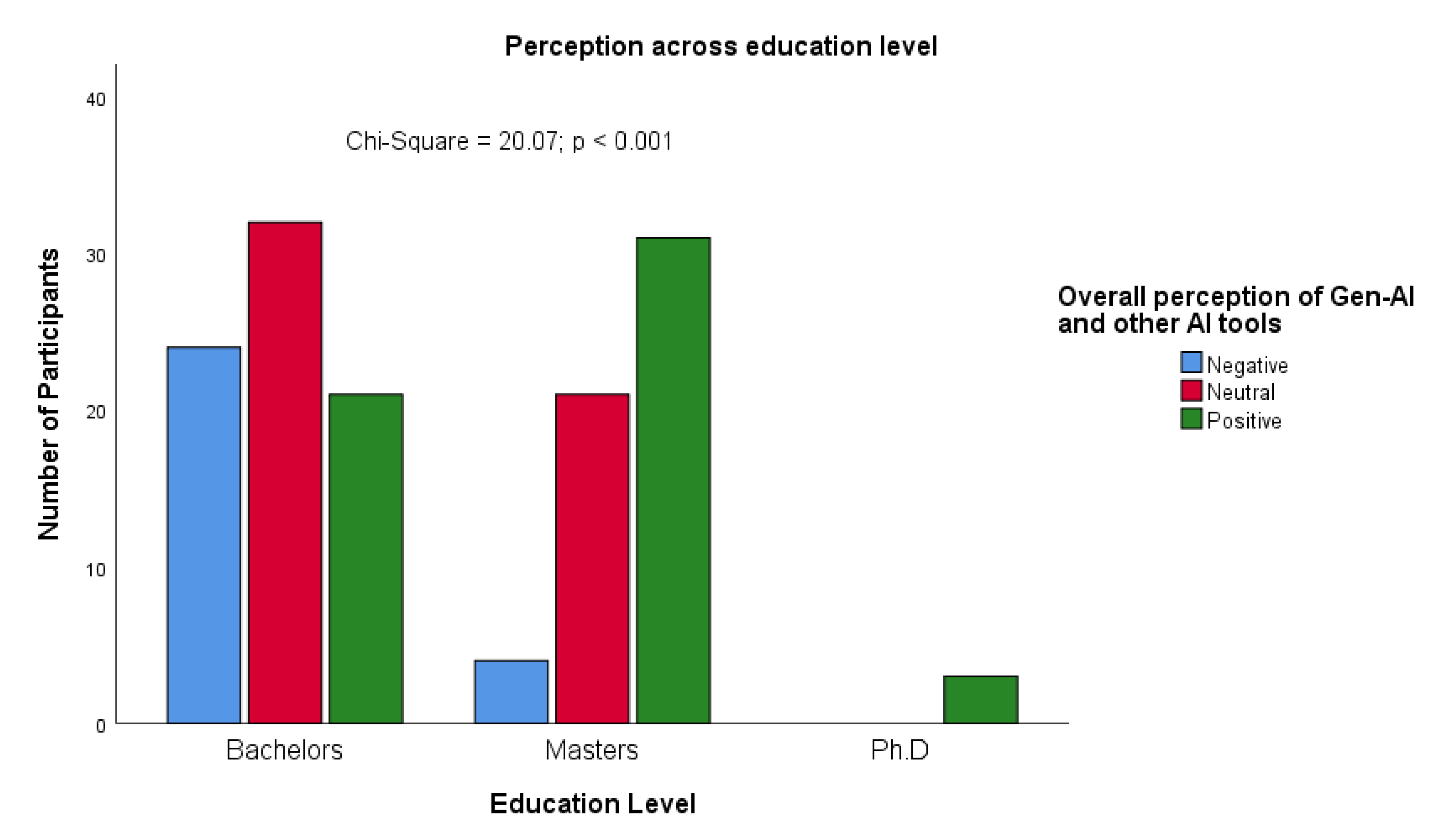
Table 1.
Demographic Information.
| Characteristics | N (%) |
|---|---|
| Age range (years), n (%) | |
| 18 – 24 | 60 (44%) |
| 24 – 34 | 45 (33%) |
| 35 – 44 | 20 (15%) |
| ≥ 45 | 11 (8%) |
| Gender, n (%) | |
| Male | 80 (59%) |
| Female | 47 (35%) |
| Non-Binary | 6 (4%) |
| Level of Study, n (%) | |
| Undergraduate | 77 (57%) |
| Post-graduate | 57 (42%) |
| Doctoral | 2 (1%) |
| Field of Study | |
| Arts and Design | 34 (25%) |
| Education | 3 (2%) |
| Engineering and Technology | 57 (42%) |
| Health and Medicine | 6 (4%) |
| Humanities and Social Sciences | 3 (2%) |
| Physical Sciences | 1 (1%) |
| Others | 32 (24%) |
Table 2.
Awareness and use of Gen-AI.
| Statement | N (%) |
|---|---|
| How familiar are you with Gen-AI? | |
| Extremely familiar | 26 (19) |
| Moderately familiar | 57 (42) |
| Somewhat familiar | 30 (22) |
| Slightly familiar | 19 (14) |
| Not at all familiar | 4 (3) |
| How aware are you of Gen-AI use for academic purposes? | |
| Extremely aware | 27 (20) |
| Moderately aware | 54 (40) |
| Somewhat aware | 26 (19) |
| Slightly aware | 21 (15) |
| Not at all aware | 8 (66) |
| Have you ever used Gen-AI for academic purposes? | |
| Yes | 71 (52%) |
| No | 65 (48%) |
| How frequently do you use Gen-AI and other AI tools for your academic tasks? (71/136) | |
| Always | 4 (6) |
| Often | 22 (31) |
| Sometimes | 24 (34) |
| Rarely | 19 (27) |
| Never | 2 (3) |
Table 3.
Perception of Gen-AI and other AI use for academic purposes.
| Statement | N (%) |
|---|---|
| Gen-AI and other AI tools provide academic advantage. | |
| Strongly agree | 29 (21) |
| Agree | 47 (35) |
| Neutral | (40 (29) |
| Disagree | 17 (13) |
| Strongly disagree | 3 (2) |
| What is your overall perception about the use of Gen-AI and other AI tools? | |
| Positive | 55 (40) |
| Neutral | 53 (39) |
| Negative | 28 (21) |
Disclaimer/Publisher’s Note: The statements, opinions and data contained in all publications are solely those of the individual author(s) and contributor(s) and not of MDPI and/or the editor(s). MDPI and/or the editor(s) disclaim responsibility for any injury to people or property resulting from any ideas, methods, instructions or products referred to in the content. |
© 2024 by the authors. Licensee MDPI, Basel, Switzerland. This article is an open access article distributed under the terms and conditions of the Creative Commons Attribution (CC BY) license (http://creativecommons.org/licenses/by/4.0/).
Copyright: This open access article is published under a Creative Commons CC BY 4.0 license, which permit the free download, distribution, and reuse, provided that the author and preprint are cited in any reuse.


