
Submitted:
10 May 2024
Posted:
13 May 2024
You are already at the latest version
Abstract
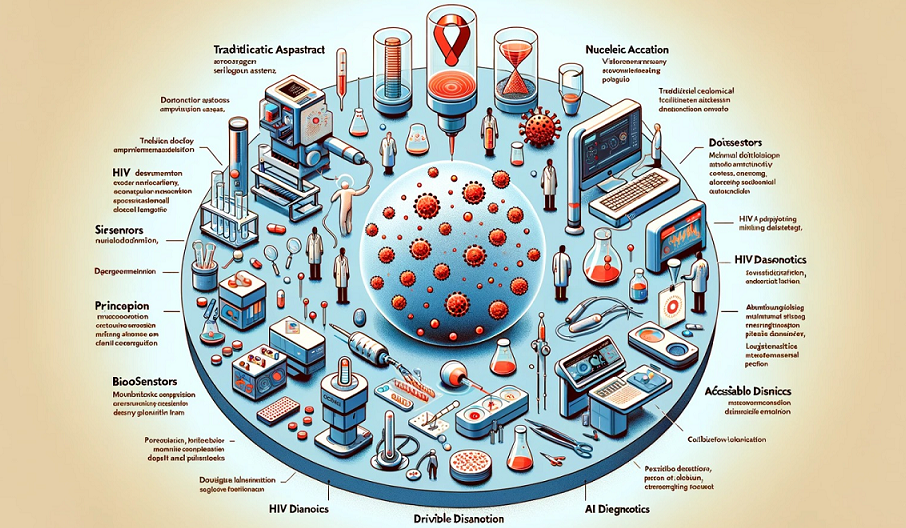
The timely and accurate detection of HIV infection is pivotal in stemming the tide of this global pandemic and facilitating early treatment initiation. This review offers a comprehensive examination of the diverse array of methods employed for HIV detection, spanning traditional serological assays to cutting-edge technologies such as nucleic acid amplification, biosensor innovations, and artificial intelligence-driven diagnostics. Each method is scrutinized in terms of its principles, applications, strengths, and limitations. By integrating these complementary approaches and fostering collaboration across disciplines, researchers and clinicians gain a multifaceted understanding of HIV infection, enabling them to navigate the complexities of the virus with precision and insight. Through a multidisciplinary lens, encompassing immunology, molecular biology, engineering, and public health, this review aims to inform future directions in HIV detection, ultimately guiding efforts towards personalized, precise, and accessible diagnostics for all individuals affected by the HIV/AIDS epidemic.
Keywords:
HIV
; Virus
; AIDS
Introduction
The detection of HIV infection stands as a critical cornerstone in the ongoing battle against the HIV/AIDS pandemic, facilitating early treatment initiation, preventing transmission, and improving clinical outcomes for affected individuals [1,2,3]. Since the emergence of HIV in the early 1980s, significant strides have been made in developing and refining a diverse array of methods for HIV detection [4]. These methods range from traditional serological assays, which detect antibodies produced in response to HIV infection, to cutting-edge technologies such as nucleic acid amplification, biosensor innovations, and artificial intelligence-driven diagnostics [5]. The landscape of HIV detection is characterized by continual innovation and evolution, driven by advances in technology, science, and clinical practice [6]. This comprehensive review explores the spectrum of HIV detection methods, examining the principles, applications, strengths, and limitations of each approach [7]. By providing a nuanced understanding of HIV detection across diverse methodologies, this review aims to inform researchers, clinicians, and policymakers in their efforts to combat HIV/AIDS and improve diagnostic accuracy, accessibility, and efficacy in addressing this global public health challenge [8].
Serological Assays
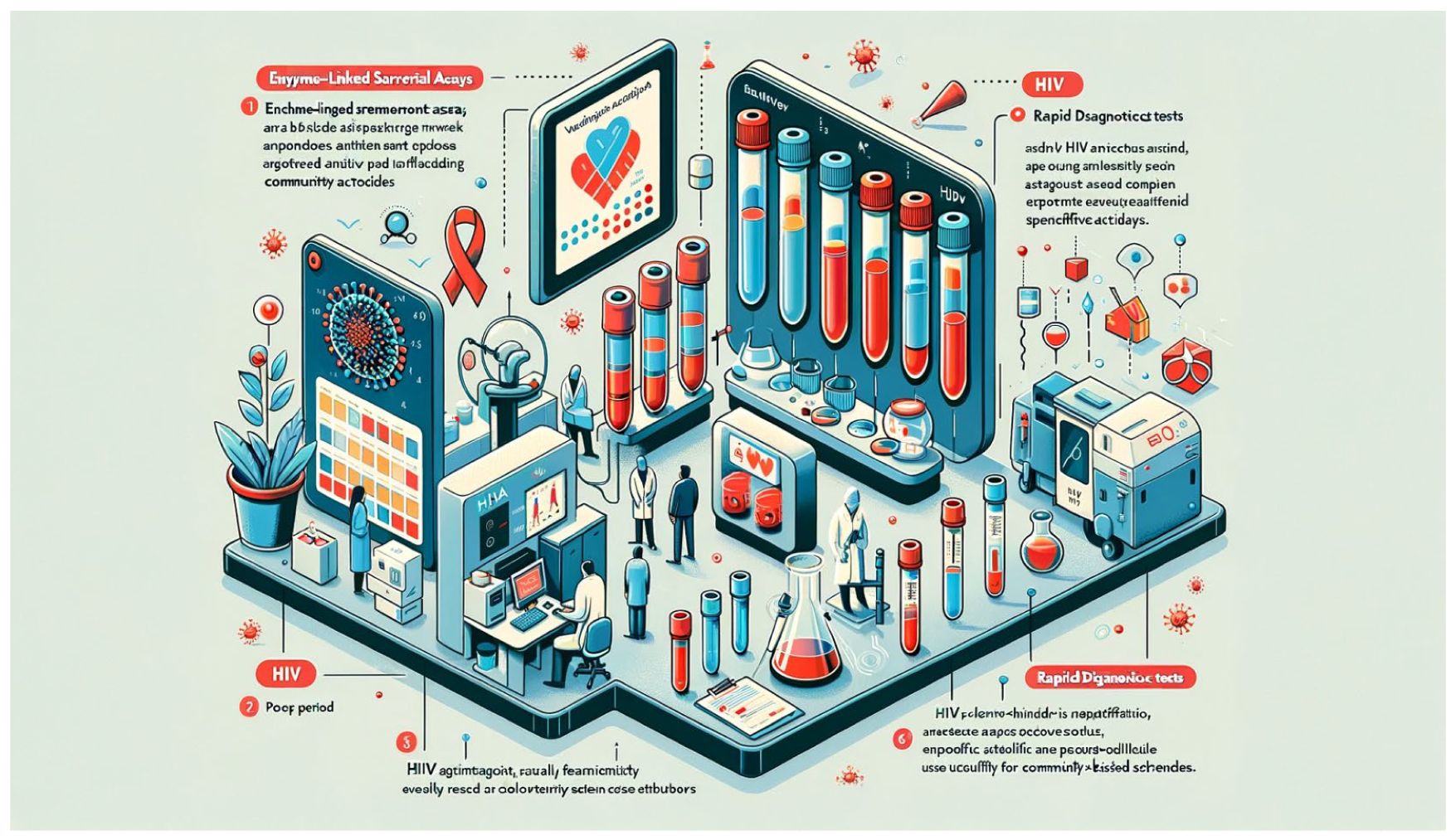
Serological assays represent the cornerstone of HIV detection methodologies, offering a tried-and-tested approach to screening individuals for the presence of HIV antibodies [9]. These assays rely on the immune system's response to HIV infection, detecting the presence of antibodies produced against the virus [10]. Among the most widely utilized serological assays are enzyme-linked immunosorbent assays (ELISA) and rapid diagnostic tests (RDTs). ELISA, a mainstay in laboratory settings, involves the binding of HIV antigens to antibodies in a patient's blood sample [11], which, when coupled with a colorimetric reaction, indicates the presence of HIV-specific antibodies. RDTs, on the other hand, are portable, user-friendly tests that provide rapid results within minutes, making them invaluable tools for point-of-care and community-based screening initiatives [12]. While serological assays have revolutionized HIV diagnosis by enabling widespread screening programs and early identification of infected individuals, they do possess limitations [13]. The window period between HIV infection and antibody production poses a challenge, during which serological assays may yield false-negative results [14]. Additionally, cross-reactivity with non-HIV antibodies or antigens can lead to false-positive results, necessitating confirmatory testing [15]. Despite these challenges, serological assays remain essential components of HIV detection strategies [16], playing a pivotal role in identifying individuals at risk of HIV infection and facilitating timely interventions to mitigate the spread of the virus [17].
Figure 1.
Serological Assays.
Nucleic Acid Amplification
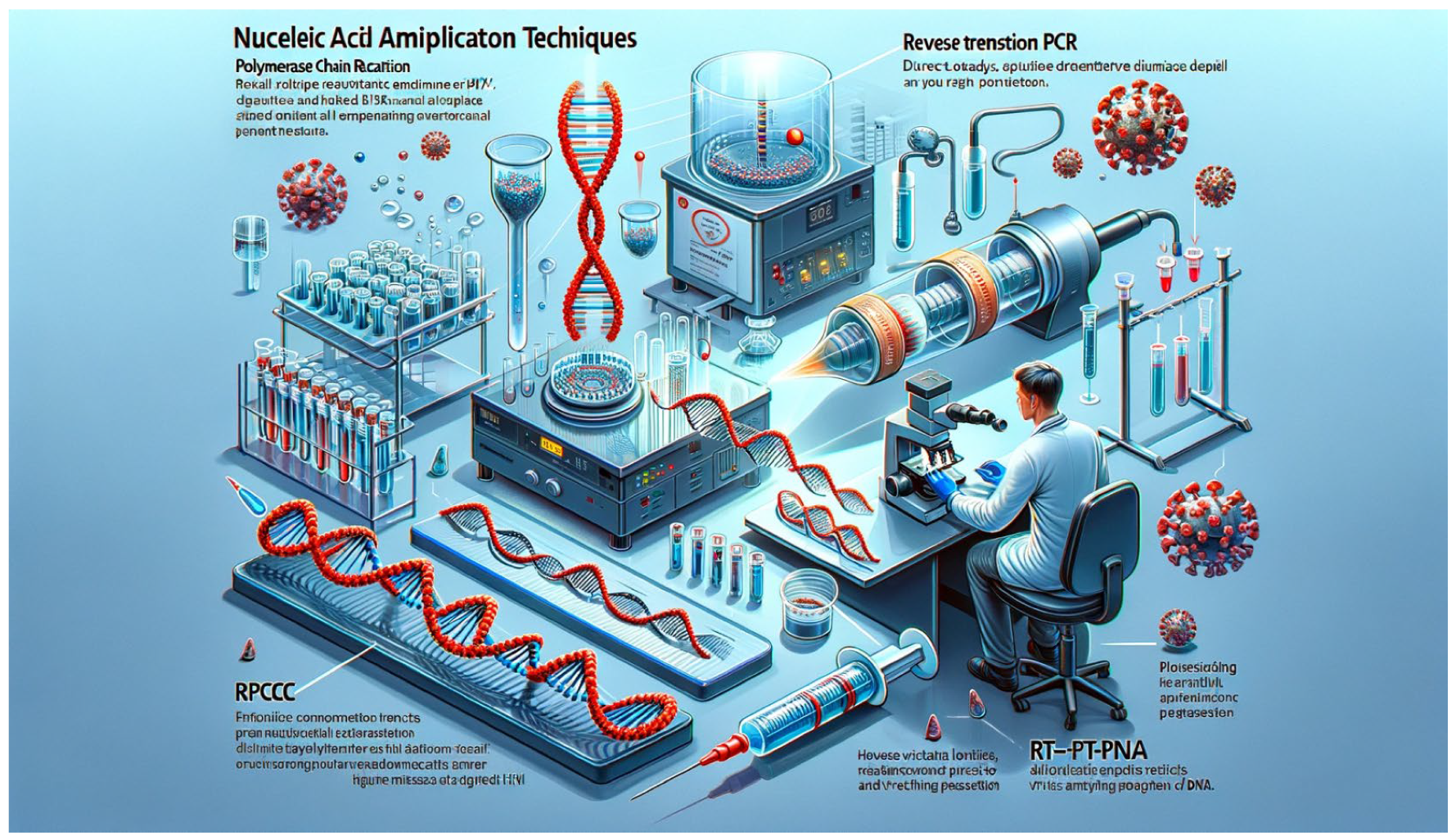
Nucleic acid amplification techniques represent a pivotal advancement in HIV detection, offering a direct and highly sensitive approach to identifying the genetic material of the virus [18,19]. Among the forefront of these techniques is Polymerase Chain Reaction (PCR) and its variants, including real-time PCR (qPCR) and reverse transcription PCR (RT-PCR) [20]. PCR amplifies specific segments of HIV RNA or DNA present in a patient's sample, enabling the detection of the virus even during the early stages of infection [17,21] when viral loads are high and antibodies may not yet be detectable. Real-time PCR further enhances this capability by allowing for the quantification of viral load, providing crucial insights into disease progression and treatment efficacy [22]. Similarly, RT-PCR enables the detection of viral RNA, particularly valuable for diagnosing acute HIV infections [23]. These nucleic acid amplification techniques have revolutionized HIV diagnosis by offering unparalleled sensitivity and specificity, minimizing the risk of false-negative results during the window period and facilitating early intervention. However, the widespread implementation of these techniques may be limited by the requirement for sophisticated laboratory infrastructure, skilled personnel, and stringent quality control measures [24]. Despite these challenges, nucleic acid amplification techniques continue to push the boundaries of HIV detection, guiding clinicians towards more precise and effective management strategies for combating the virus [25].
Figure 2.
Nucleic Acid Amplification.
Biosensor Innovations
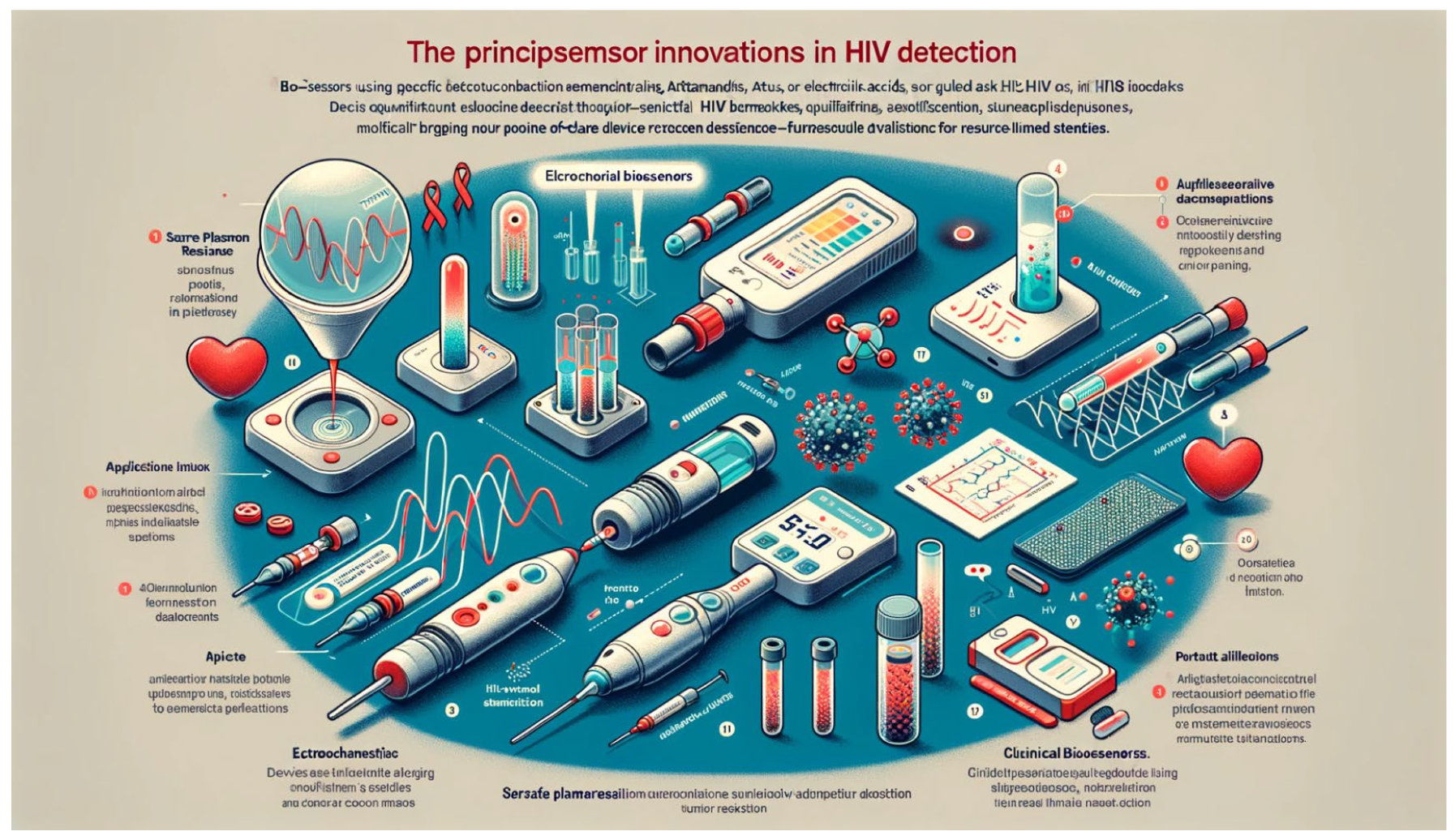
Biosensor innovations have emerged as transformative tools in the realm of HIV detection, harnessing the power of cutting-edge technology and molecular interactions to offer rapid, sensitive, and portable diagnostic solutions [26]. These innovative platforms leverage the unique binding interactions between HIV biomarkers and specific recognition elements, such as antibodies, aptamers, or nucleic acids, to detect the presence of the virus with exceptional precision [27].
Various biosensor technologies have been developed, each offering distinct advantages in terms of sensitivity, specificity, and portability [28]. Electrochemical biosensors, for instance, utilize changes in electrical properties resulting from biomolecular interactions to quantify HIV biomarkers, providing real-time and label-free detection [29]. Similarly, optical biosensors, including surface plasmon resonance (SPR) and fluorescence-based assays, exploit alterations in light properties to achieve ultrasensitive detection of HIV antigens or nucleic acids [30].
What sets biosensors apart is their versatility and potential for integration into point-of-care testing (POCT) devices, enabling decentralized testing and bringing diagnostic capabilities to resource-limited settings [31]. These portable and user-friendly devices empower healthcare workers to perform rapid HIV screening with minimal sample volumes and turnaround times, facilitating timely diagnosis and linkage to care [32].
Moreover, biosensor innovations offer multiplexing capabilities, allowing simultaneous detection of multiple HIV biomarkers in a single assay, thereby enhancing diagnostic accuracy and efficiency [25]. This capability holds promise for comprehensive HIV diagnosis, including the detection of drug resistance mutations and monitoring of disease progression [33].
Despite their immense potential, biosensor technologies face challenges such as optimization of sensitivity and specificity, stability of recognition elements, and validation for clinical use [34]. Furthermore, ensuring affordability and accessibility of biosensor-based diagnostic assays remains crucial for widespread adoption, particularly in resource-limited settings [26].
Nevertheless, biosensor innovations represent a promising frontier in HIV detection, offering rapid, sensitive, and portable solutions for early diagnosis and monitoring of the virus [35]. By continuing to refine these technologies and addressing existing challenges, biosensors have the potential to revolutionize HIV detection and contribute significantly to global efforts to combat the HIV/AIDS pandemic [36].
Figure 3.
Biosensor Innovations.
Artificial Intelligence
Artificial intelligence (AI) has emerged as a transformative force in the field of HIV detection, leveraging advanced algorithms and machine learning techniques to analyze complex datasets and uncover patterns that may elude human observation [37]. In the context of HIV/AIDS, AI-driven diagnostics offer a myriad of applications, from enhancing the accuracy of image analysis in microscopy to predicting disease progression and treatment response based on genomic sequencing data [38].
One of the key areas where AI has made significant strides is in image analysis, particularly in the interpretation of microscopy images for the detection of HIV particles [39]. By training convolutional neural networks (CNNs) on large datasets of HIV-infected samples, researchers have developed AI algorithms capable of accurately identifying and quantifying viral particles in blood samples with unprecedented speed and accuracy [40]. These AI-driven image analysis tools not only streamline the diagnostic process but also enable the detection of HIV at earlier stages of infection when viral loads may be low [41].Issues such as data privacy, bias in algorithms, and the need for validation and regulatory approval present significant hurdles that must be addressed. However, as technology continues to evolve and more data becomes available, AI-driven diagnostics hold tremendous promise for revolutionizing HIV detection and improving patient outcomes in the fight against HIV/AIDS [42]
In addition to image analysis, AI algorithms are also being utilized to analyze genomic sequencing data for the detection of HIV drug resistance mutations and the prediction of treatment outcomes [43]. By mining vast genomic datasets, AI-driven diagnostics can identify genetic variations associated with drug resistance and predict the efficacy of antiretroviral therapies for individual patients [44]. This personalized approach to HIV treatment optimization has the potential to improve patient outcomes and reduce the development of drug resistance [45].
Furthermore, AI-driven predictive modeling techniques are being used to forecast the spread of HIV within communities and inform public health interventions. By analyzing epidemiological data, social networks, and demographic factors [46], AI algorithms can identify high-risk populations and target prevention and testing efforts where they are most needed [47]. This data-driven approach to HIV prevention and control has the potential to significantly impact the trajectory of the HIV/AIDS epidemic [48].
Despite these advancements, challenges remain in the development and implementation of AI-driven diagnostics for HIV detection [13].
Figure 4.
Artificial Intelligence.
Conclusions
In conclusion, the landscape of HIV detection has been profoundly shaped by advancements in artificial intelligence (AI), which have ushered in a new era of precision, efficiency, and accessibility. Through innovative algorithms and machine learning techniques, AI-driven diagnostics offer unparalleled capabilities in image analysis, genomic sequencing, and predictive modeling, revolutionizing the way HIV is detected, monitored, and managed.
AI algorithms have demonstrated remarkable accuracy in interpreting microscopy images for the detection of HIV particles, enabling early diagnosis and intervention, particularly in resource-limited settings where access to traditional laboratory-based testing may be limited. Moreover, AI-driven genomic sequencing analysis has paved the way for personalized treatment optimization by identifying drug resistance mutations and predicting treatment outcomes with precision.
Beyond diagnostics, AI-driven predictive modeling techniques hold promise for guiding public health interventions and targeting prevention efforts where they are most needed. By analyzing epidemiological data and social networks, AI algorithms can identify high-risk populations and inform strategic interventions to curb the spread of HIV/AIDS.
However, challenges remain in the development and implementation of AI-driven diagnostics, including issues of data privacy, bias in algorithms, and the need for validation and regulatory approval. Addressing these challenges will be crucial to realizing the full potential of AI in HIV detection and ensuring equitable access to innovative diagnostic technologies for all individuals affected by the HIV/AIDS epidemic.
Despite these challenges, the transformative potential of AI-driven diagnostics in the fight against HIV/AIDS cannot be overstated. By harnessing the power of AI, researchers and clinicians have the opportunity to revolutionize HIV detection and improve patient outcomes, bringing us one step closer to ending the HIV/AIDS pandemic once and for all.
References
- Dybul, M.; et al., The case for an HIV cure and how to get there. Lancet HIV 2020, 8, e51–e58.
- Caswell, G.; et al., The continuing role of communities affected by HIV in sustained engagement in health and rights. Journal of the International AIDS Society 2021, 24, e25724. [CrossRef] [PubMed]
- Barker, J.L., Effective Public Health Strategies to Optimize HIV Testing Services Among Men Ages 15 Years and Older in Kenya. 2023, The University of North Carolina at Chapel Hill.
- Gavian, S., D. Galaty, and G. Kombe, Multisectoral HIV/AIDS approaches in Africa: How are they evolving? AIDS, poverty, and hunger: Challenges and responses, 2006: P. 221.
- Weerarathna, I.N.; et al., Emerging Applications of Biomedical Science in Pandemic Prevention and Control: A Review. Cureus 2023, 15.
- Chataway, J.; et al., Global health social technologies: Reflections on evolving theories and landscapes. Research Policy 2010, 39, 1277–1288. [CrossRef]
- Zhao, Y., A. Kumar, and Y. Yang, Unveiling practical considerations for reliable and standardized SERS measurements: Lessons from a comprehensive review of oblique angle deposition-fabricated silver nanorod array substrates. Chemical Society Reviews, 2024.
- Napierala Mavedzenge, S., R. Baggaley, and E.L. Corbett, A review of self-testing for HIV: Research and policy priorities in a new era of HIV prevention. Clinical infectious diseases, 2013. 57(1): P. 126-138.
- Pépin, J. and H. Méda, The epidemiology and control of human African trypanosomiasis. 2001.
- McMichael, A.J. and S.L. Rowland-Jones, Cellular immune responses to HIV. Nature 2001, 410, 980–987. [CrossRef] [PubMed]
- Nagalakshmi, R., A Comparative Study of Rapid Immuno Chromatography Test with Elisa For Detection of Dengue Ns1 Antigen, IgM and IgG Antibody. 2015, Tirunelveli Medical College, Tirunelveli.
- Yager, P., G.J. Domingo, and J. Gerdes, Point-of-care diagnostics for global health. Annu. Rev. Biomed. Eng. 2008, 10, 107–144. [CrossRef] [PubMed]
- Kabir, M.A.; et al., Advances in HIV diagnosis and monitoring. Critical reviews in biotechnology, 2020. 40(5): P. 623-638.
- Constantine, N.T. and H. Zink, HIV testing technologies after two decades of evolution. Indian Journal of Medical Research 2005, 121, 519.
- Klarkowski, D.; et al., Causes of false-positive HIV rapid diagnostic test results. Expert review of anti-infective therapy, 2014. 12(1): P. 49-62.
- Wang, S., F. Xu, and U. Demirci, Advances in developing HIV-1 viral load assays for resource-limited settings. Biotechnology advances 2010, 28, 770–781. [CrossRef] [PubMed]
- Smith, M.K.; et al., The detection and management of early HIV infection: A clinical and public health emergency. JAIDS Journal of Acquired Immune Deficiency Syndromes 2013, 63, S187–S199. [CrossRef]
- Chen, Y.; et al., Nucleic acid amplification free biosensors for pathogen detection. Biosensors and Bioelectronics 2020, 153, 112049.
- Smith, S.J., C.R. Nemr, and S.O. Kelley, Chemistry-driven approaches for ultrasensitive nucleic acid detection. Journal of the American Chemical Society 2017, 139, 1020–1028. [CrossRef] [PubMed]
- Kanmogne, G.D., Polymerase chain reaction (PCR) and real-time PCR. Current laboratory methods in neuroscience research, 2014: P. 201-210.
- Louie, M., L. Louie, and A.E. Simor, The role of DNA amplification technology in the diagnosis of infectious diseases. Cmaj, 2000. 163(3): P. 301-309.
- Engstrom-Melnyk, J.; et al., Clinical applications of quantitative real-time PCR in virology, in Methods in Microbiology. 2015, Elsevier. p. 161-197.
- Zhao, J., L. Chang, and L. Wang, Nucleic acid testing and molecular characterization of HIV infections. European Journal of Clinical Microbiology & Infectious Diseases 2019, 38, 829–842.
- Moodley, V.M., Improving point-of-care diagnosis of tuberculosis: Development and evaluation of novel technologies. 2017.
- Pai, N.P.; et al., Modern diagnostic technologies for HIV. Lancet HIV 2020, 7, e574–e581. [CrossRef]
- Bhatia, D.; et al., Biosensors and their widespread impact on human health. Sensors International 2024, 5, 100257. [CrossRef]
- Sande, M.G.; et al., Novel biorecognition elements against pathogens in the design of state-of-the-art diagnostics. Biosensors 2021, 11, 418.
- Luong, J.H., K.B. Male, and J.D. Glennon, Biosensor technology: Technology push versus market pull. Biotechnology advances 2008, 26, 492–500. [CrossRef] [PubMed]
- Sage, A.T.; et al., Ultrasensitive electrochemical biomolecular detection using nanostructured microelectrodes. Accounts of chemical research 2014, 47, 2417–2425. [CrossRef] [PubMed]
- Sharma, A.; et al., Optical biosensors for diagnostics of infectious viral disease: A recent update. Diagnostics 2021, 11, 2083. [CrossRef] [PubMed]
- Biswas, G.C.; et al., A review on potential electrochemical point-of-care tests targeting pandemic infectious disease detection: COVID-19 as a reference. Chemosensors 2022, 10, 269. [CrossRef]
- Guo, T.W., Expanding accessibility of diagnostics through miniaturized technologies. 2016: Columbia University.
- Inzaule, S.C.; et al., The evolving landscape of HIV drug resistance diagnostics for expanding testing in resource-limited settings. AIDS Rev 2017, 19, 219–230.
- Olejnik, B.; et al., Application of selected biosensor techniques in clinical diagnostics. Expert review of molecular diagnostics 2021, 21, 925–937. [CrossRef] [PubMed]
- Farzin, L.; et al., HIV biosensors for early diagnosis of infection: The intertwine of nanotechnology with sensing strategies. Talanta 2020, 206, 120201. [CrossRef] [PubMed]
- Haleyur Giri Setty, M.K. and I.K. Hewlett, Point of care technologies for HIV. AIDS research and treatment, 2014. 2014.
- Dzobo, K.; et al., Integrating artificial and human intelligence: A partnership for responsible innovation in biomedical engineering and medicine. Omics: A journal of integrative biology 2020, 24, 247–263. [CrossRef] [PubMed]
- Padhi, A.; et al., Transforming clinical virology with AI, machine learning and deep learning: A comprehensive review and outlook. VirusDisease 2023, 34, 345–355. [CrossRef] [PubMed]
- Najjar, R., Redefining radiology: A review of artificial intelligence integration in medical imaging. Diagnostics 2023, 13, 2760. [CrossRef] [PubMed]
- Xiao, M.; et al., Virus detection: From state-of-the-art laboratories to smartphone-based point-of-care testing. Advanced Science, 2022. 9(17): P. 2105904.
- Lara, J., AI-Powered Laboratory Diagnostics Technology, in Recent Advancements in the Diagnosis of Human Disease. CRC Press. p. 1-45.
- Ahmadi, A. and N. Ganji, AI-driven medical innovations: Transforming healthcare through data intelligence. 2024.
- Ebulue, C.C.; et al., Developing predictive models for HIV Drug resistance: A genomic and AI approach. International Medical Science Research Journal 2024, 4, 521–543. [CrossRef]
- Pun, F.W., I.V. Ozerov, and A. Zhavoronkov, AI-powered therapeutic target discovery. Trends in Pharmacological Sciences, 2023.
- Bock, C. and T. Lengauer, Managing drug resistance in cancer: Lessons from HIV therapy. Nature Reviews Cancer 2012, 12, 494–501. [CrossRef] [PubMed]
- Zhao, A.P.; et al., AI for science: Predicting infectious diseases. Journal of Safety Science and Resilience, 2024.
- Schwalbe, N. and B. Wahl, Artificial intelligence and the future of global health. Lancet 2020, 395, 1579–1586. [CrossRef]
- Chen, H.; et al., Next generation technology for epidemic prevention and control: Data-driven contact tracking. IEEE Access 2018, 7, 2633–2642.
Disclaimer/Publisher’s Note: The statements, opinions and data contained in all publications are solely those of the individual author(s) and contributor(s) and not of MDPI and/or the editor(s). MDPI and/or the editor(s) disclaim responsibility for any injury to people or property resulting from any ideas, methods, instructions or products referred to in the content. |
© 2024 by the authors. Licensee MDPI, Basel, Switzerland. This article is an open access article distributed under the terms and conditions of the Creative Commons Attribution (CC BY) license (http://creativecommons.org/licenses/by/4.0/).
Copyright: This open access article is published under a Creative Commons CC BY 4.0 license, which permit the free download, distribution, and reuse, provided that the author and preprint are cited in any reuse.