

Submitted:
04 May 2024
Posted:
06 May 2024
You are already at the latest version
Abstract
The adoption of Industry 4.0 technology is essential for achieving energy efficiency, a critical aspect of Sustainable Development Goal (SDG) no. 12 aimed at addressing climate change. Understanding the impact of Sustainable Attitudes, Digital Trust, and Uncertainty Avoidance is crucial in the decision-making process regarding the implementation of Industry 4.0 technology. The slow adoption of Industry 4.0 technology is attributed to non-technological factors or people, while the need to achieve energy efficiency targets necessitates examining the influence of Sustainable Attitudes and Digital Trust as supporting variables, along with Uncertainty Avoidance, on technology adoption. The study employed a quantitative explanatory research approach to investigate the relationships and impacts of variables. It centered on employees of Schneider Electric Indonesia, a global Industry 4.0 technology provider, with a sample of 189 employees selected through random sampling, incorporating a 5% margin error from Slovin formula. The analysis involved the use of Structural Equation Modeling (SEM) with AMOS version 26. Industry 4.0 technology is essential for fostering innovation and business expansion, leading to a sustainable environment by offering principles, guidance, and energy-efficient technologies for companies. The involvement of Sustainable Attitude, moderated by Uncertainty Avoidance, is vital in reaching energy efficiency goals through Industry 4.0 implementation.
Keywords:
Sustainable Attitudes
; Energy Efficiency
; Industry 4.0 adoption
; Digital Trust
; and Uncertainty Avoidance
; Theory Planned Behavior
1. Introduction
As the global population expands, pollution and global warming are on the rise, leading to environmental harm, unexpected climate shifts, and weather changes that disrupt sustainable natural productivity. Furthermore, the swift integration of advanced technology has become imperative in light of increasing public apprehension [1].
Energy Efficiency is the target of Sustainable Development Goals (SDG) no 12 to reduce the impact of climate change, while the adoption of Industry 4.0 is an answer to the goals of reducing carbon emissions and climate change while meeting energy efficiency targets, significant reductions in energy use, also developing a circular economy through collaboration in business process innovation. Governance of energy in accordance with ethical standards, alongside the utilization of renewable energy and digital transformation, are essential factors in implementing Industry 4.0 to address the global challenge of climate change. [2]. Implementing policies that prioritize energy efficiency and the adoption of renewable energy can drive sustainable development. As per Dzwigol et al., [3], countries can move towards a more sustainable economy by revising energy policies to encourage energy-efficient practices and promote investments in renewable energy. Viewed through the lens of environmental sustainability, the advantages of Industry 4.0 surpass its adverse effects on the environment. The capacity to collect precise real-time data and employ analytics greatly boosts the sector’s environmental sustainability, encompassing the achievement of energy efficiency goals [4].
The energy dilemma that occurs is precisely the increase in energy demand when the campaign to reduce energy consumption is carried out with the worsening impact on the environment. Decision-makers are forced to follow the SDGs or Sustainable Development Goals targets to overcome this dilemma with energy efficiency targets by innovating technology as a solution [5]. The relationship between Industry 4.0 solutions and the resulting energy efficiency has been established using quality management variables, where decision-makers and technicians communicate well to manage processes as agreed strategic plans for achieving company performance, including energy efficiency targets [6].
Industry 4.0 is seen as the upcoming technology that will boost operational effectiveness, particularly in terms of energy efficiency. By introducing Internet of Things (IoT) solutions like robots and data analysis in the mining, oil, and gas industries, the goal is to fulfill the operational productivity requirements of energy firms. This highlights how Industry 4.0 can optimize energy consumption and enhance overall operational efficiency [7]. Integrating AI, big data, and IoT in Industry 4.0 is crucial for smart energy management and improved efficiency by optimizing consumption and identifying savings. Utilizing Industry 4.0 with cloud computing empowers organizations to implement proactive energy strategies for achieving energy efficiency goals. [6]. Industry 4.0 boosts energy efficiency by deploying advanced technologies and automation, enabling full automation, enhanced production flexibility, and streamlined data collection and analysis. Additionally, it promotes the establishment of smart factories and economic integration, improving resource management, especially in energy consumption [8]. At the core of Industry 4.0, the industrial IoT platform integrates physical and cyber technologies to elevate the sophistication and precision of real-time monitoring of business operations.
Industry 4.0 capability facilitates effective operational management. Several established industrial IoT platforms cater to smart factories, with standout examples including Schneider EcoStruxure, Siemens MindSphere, and GE Predix [9]. Investigations into 4.0 technology provider firms, particularly analyzing employee behavioral factors using the Theory of Planned Behavior (TPB) framework, have not been undertaken before. The TPB underscores the importance of attitude components in forecasting and elucidating behavior. By utilizing the TPB, researchers can not only assess adoption intention behavior but also observe future sustainability attitude behaviors in environmental studies. Some authors recommend incorporating additional variables based on the research context using the TPB framework, as TPB has limitations in predicting human behavior [10].
Radtke et al. [11] study in a community energy context showed that community influence can lead to changes in individual sustainable attitudes and behaviors, supported by empirical evidence. Participants displayed a positive attitude towards citizen involvement and decentralized energy transition, resulting in adjustments to their energy consumption behavior. The connection between attitudes and behavior is broad and has been utilized across diverse industries and sectors. The significant application of the TPB in the realm of sustainability literature acknowledges that positive sustainable attitudes play a crucial role in fostering positive sustainable behaviors. A lack of understanding of sustainability concepts may restrict an individual’s level of sustainable attitudes and behaviors. Sustainable attitudes exhibit a strong positivity in correlation with sustainable behaviors [12].
Considering internal factors like connectedness to nature and prosocial behavior, along with external factors such as motivation and environmental consciousness, is essential to improve the link between sustainable attitudes and behaviors. Individual attitudes influence the adoption of energy-efficient technologies, with positive views towards such solutions enhancing willingness to embrace them, influenced by environmental consciousness, financial benefits, and social implications [13]. The study highlights a discrepancy between attitudes and behaviors concerning plastic use, showing that despite acknowledging environmental concerns, respondents’ actions do not align with their beliefs. This disconnect underscores the complexity of sustainable consumption behaviors and emphasizes the need for interventions to bridge the gap between sustainable attitudes and actions for promoting sustainable practices [14].
The connection between digital trust and Industry 4.0 is highly significant, as digital trust, enabled by Industry 4.0 technologies, plays a vital role in advancing open innovation. Research highlights that digital trust, incorporating trust and Industry 4.0 technologies, positively influences organizations’ endeavors in open innovation. Furthermore, digital trust is crucial for cultivating trust among stakeholders and promoting collaboration within the framework of Industry 4.0. Furthermore, the integration of Industry 4.0 technologies can accelerate open innovation processes and boost innovation outcomes, emphasizing the collaboration between digital trust and technological progress in driving effective innovation initiatives [15]. This trust encompasses aspects such as reliability, security, privacy, transparency, and accountability of digital systems. Organizations can boost the adoption of Industry 4.0 technologies with increased confidence by establishing robust digital trust in their digital systems [16] and expedites decision-making processes in digital organizations to achieve sustainability objectives [17].
Increasing digital trust can reduce barriers to adopting Industry 4.0 by strengthening employees’ trust and belief in the benefits gained from implementing Industry 4.0. High trust in the technology and systems involved in Industry 4.0 can encourage employees to be more responsive and ready to face the necessary changes. By building digital trust among employees, companies can reduce resistance to change or uncertainty avoidance (UA), increase engagement, and accelerate the adoption of Industry 4.0 [18]. The core components of digital trust include trust entities illustrating connections among individuals, organizations, and physical assets, secure exchange of control data, digital identities, verifiable credentials, and a repository for critical transactions related to trust relationships, smart contracts, and security-related events [19].
The relationship between UA and the intention to adopt new technology is influenced by cultural factors. Nations with high UA exhibit a more pronounced link between social influence and the willingness to adopt new technology than countries with low UA. The fear of ambiguity inherent in UA influences individuals’ responses to emerging technologies [20]. The level of UA has the potential to influence individuals’ attitudes towards Industry 4.0 technology adoption [21] as societies characterized by high levels of UA typically exhibit resistance towards change and innovation [22].
Having a deeper understanding of how UA influences technology adoption decisions can assist organizations in effectively handling uncertainty and risks linked to technology implementation[23]. An individual’s level of UA influences their risk assessment and the requirement for clarity when embracing new technologies. People from high UA cultures typically steer clear of risks and strive for clarity in ambiguous scenarios, displaying increased caution when adopting new technologies that introduce uncertainty, while also demonstrating a stronger preference for clarity and stringent regulations[24]. The moderating function of UA on the intention to adopt technology is to assess how UA culture influences the relationship between other factors affecting users’ intention to adopt a specific technology. While in some cases UA may not moderate this relationship, understanding the role of culture in the context of technology adoption remains crucial for designing strategies that align with users’ cultural preferences and values [25].
Regrettably, while the leading companies have begun the transition to implementing smart factories as a tangible manifestation of Industry 4.0, most companies still lack an understanding of the challenges and resources required to actualize smart factories [9]. Many companies have not yet realized the importance of adopting Industry 4.0, including reasons such as the high cost of investment, concerns about perceived failure risks, and various barriers such as procedural barriers, human resource barriers, usage barriers, and image barriers. Understanding these reasons is crucial for organizations and policymakers [26]. In a comprehensive analysis, Raj et al., [27] identified various obstacles to the adoption of Industry 4.0 technologies, such as inadequate infrastructure, resistance to change, financial constraints, uncertain economic returns, digital skills shortages, high investment demands, absence of a digital strategy, limited resources, cybersecurity issues, and difficulties in data management and quality. On other side, organizational readiness is crucial for the successful adoption of Industry 4.0 technologies in developing countries. It involves the organization’s technological infrastructure readiness to adapt to significant changes when adopting new technologies, including factors such as IT maturity, technological incentives, perceived benefits, top management support, and employee capabilities [28].
Consumers who perceive that consuming sustainable seafood contributes to environmental protection are inclined to buy these products. In contrast, a consumer group with minimal interest in health and seafood displays a reduced intention to consume sustainable seafood [29]. This underscores the connection between sustainable attitudes, consumer behavior, and purchasing intentions, which is crucial for achieving energy efficiency targets through Industry 4.0. Organizations must equip their employees to tackle the challenges and capitalize on the opportunities brought by Industry 4.0. Key strategies such as training, upskilling, and cultivating a culture of innovation and adaptability are essential for navigating the evolving work environment in the Fourth Industrial Revolution [30]. Negative attitudes towards Industry 4.0 adaptation are often influenced by psychological reasons. Inertia pressure within organizations often hinders the adjustment of organizational structures to environmental changes [31].
According to [28] transformational leaders ignite and drive employee motivation through a captivating vision of the organization’s future empowered by Industry 4.0 technologies. By illustrating the advantages of these technologies for both the organization and individual employees, they instill a sense of purpose and clarity of direction. The resistance encountered by decision-makers in embracing Industry 4.0 is mainly attributed to a lack of comprehension regarding its impact on the company. Reluctance to modify existing operational systems and adherence to corporate policies can also fuel resistance. Psychological elements and organizational inertia additionally bolster a pessimistic attitude towards adopting change within the realm of Industry 4.0 [32].
Understanding the recognized decision factors of Industry 4.0 will support manufacturers in deciding to invest in Industry 4.0, as they can help in weighing the pros and cons, comprehending the benefits, and identifying necessary skills and support. Policymakers can use Khin & Kee [33] findings to pinpoint crucial areas in the ecosystem that require enhancement for the adoption of Industry 4.0. The non-technological issues hindering the adoption of Industry 4.0 are primarily discussed regarding human resistance to innovation and change [34]. While Obermayer et al., [35] found that difficulties arising from the compatibility and standardization of diverse technologies present major hurdles in the effective execution of Industry 4.0. The workforce’s skills gap in adopting Industry 4.0 will drive the need for highly skilled individuals proficient in advanced digital competencies. Consequently, employees’ motivation to embrace and use Industry 4.0 technologies can enhance the overall success of adoption [36].
Snow et al.[37] define “actor-oriented organizations” as digital entities that prioritize collaboration, innovation, and self-organization over hierarchical structures, fostering a culture of ownership and information sharing. These organizations leverage digital trust to enhance effectiveness, with positive employee sustainable attitudes driving technology adoption, innovation, and improved processes. Velocity is a defining trait of digital enterprises, and the correlation between human trust and Industry 4.0, which significantly boosts organizational innovation performance, is identified as an alternative interpretation of Digital Trust [38] closely linked to this study. Energy efficiency and sustainability are vital aspects of Industry 4.0, with [39] emphasizing the positive impact of Industry 4.0 adoption on sustainability efforts. Calabrese et al. [40] further underscore the benefits of Industry 4.0 in improving operational efficiency and meeting evolving sustainability requirements. Companies that adopt energy efficiency practices tend to be more innovative and adaptive, which can enhance their competitiveness in the long term [41].
This research is significant because of the slow adoption rate of Industry 4.0 and the scarcity of studies on technology provider companies in the Industry 4.0 sector regarding the reasons behind successful or unsuccessful technology adoption, as perceived by employee behavior according to Khin & Kee [33], and Raj & Jeyaraj [39]. Stentoft et al.,[42] recommend that companies prioritize driver factors over barriers in the context of Industry 4.0 adoption. This approach aims to improve the implementation of Industry 4.0 by leveraging opportunities over constraints, with the potential for driver factors to neutralize barriers. The study of pro-environmental behavior, which pertains to environmental sustainability, has been widely conducted through the social psychology model of TPB [43] due to its ability to explore factors influencing sustainable attitude choices. TPB serves as a valuable tool for forecasting, comprehending, and influencing an individual’s pro-environmental behavior. TPB is a psychological framework used to understand human behavior, including in the context of energy and sustainability. In the context of Franco et al., [44] research, TPB can be used to analyze factors influencing students’ behaviors related to energy conservation and sustainability.
The moderating effect of UA positively influences the behavioral intention towards technology adoption, suggesting that an individual’s degree of UA can shape the strength of their intention to utilize technology, particularly in uncertain circumstances [45]. In the study by Rafiq et al. [46], it was discovered that UA does not act as a moderator in the correlation between TPB variables and the inclination to acquire electric vehicles. This indicates that elements such as technical anxiety, self-assurance, or financial aspects may exert a more significant impact on determining the intention to purchase electric vehicles, thereby reducing the moderating effect of UA. Understanding these factors more comprehensively in the sustainability context can aid in developing more efficient strategies to encourage electric vehicle adoption and reach higher energy efficiency goals. Zaman et al., [47] in their research on big data utilized the TPB theoretical framework to analyse various factors that precede and support real-time and offline decisions. The research findings provide significant evidence of the positive influence of attitude, subjective norm, and behavioral control on their intention to adopt Industry 4.0 technology, namely big data. Other research on attitudes using the TPB framework and employing Intention to Adopt as the final endogenous variable has been conducted by Cordero et al.,[10], Ho et al.,[48], Ikram [49], Toni et al., [50], Shalender & Sharma [51], Perri et al.,[52], Saeedi et al., [53], Sujood et al., [54] and Wang et al., [55].
2. Materials and Methods
- Research Method
The quantitative research in this study is classified as explanatory research, which aims to explain the positions of variables, their relationships, and influences. It involves identifying and formulating problems, studying relevant theories and concepts, developing a conceptual framework for hypotheses, and testing these hypotheses for validation. Additionally, the research analyses relationships, their forms, and provides causal explanations for the variables under study. This research will utilize SEM to analyze the collected data, which includes quantitative descriptive methods for numerical descriptions. SEM is a statistical tool used for hierarchical models and is popular in various scientific fields, combining factor analysis and path analysis to understand relationships between variables, especially when latent variables are involved. Structural Equation Modeling (SEM) is a statistical method that integrates statistical data with qualitative causal assumptions to evaluate and estimate causal relationships. The AMOS 26 application facilitates the easier and quicker solving of this complex statistical technique, enabling the determination, estimation, evaluation, and creation of models or path diagrams to depict hypotheses regarding variable relationships.
Based on the discussion above, it can be summarized that some roles of the key variables in technology adoption are sustainable attitude, digital trust, and the moderation of UA. Cordero et al.,[10] suggest that attitude influences the intention to adopt Industry 4.0 technology positively. Castillo-Vergara et al.,[56] found that technological optimism positively affects the perception of technology’s usefulness and ease of use. Toni et al., [50] and Saeedi et al.,[57] also highlight the significant impact of attitude on the adoption of Industry 4.0 technology. Sánchez-Franco et al. [58] and Astuti et al.,[59] found that a positive attitude significantly impacts the intention to use new technology, Therefore, hypothesis H1 concerning the influence of Sustainable Attitude on the Intention to Adopt Industry 4.0 is stated as follows:
H1:
Sustainable Attitude has an influence on Intention to Adopt.
Apau et al.,[60], Khan et al., [61], and Arfi et al., [62] found that trust has a significant influence on consumers’ intention in using technology. Therefore, Hypotesis H2 concerning The Influence of Digital Trust on the Intention to Adopt Industri 4.0 is stated as follows:
H2:
Digital Trust has an influence on the Intention to Adopt
Chai & Pavlou [63] revealed an inverse relationship between UA and the link between attitude and purchase intention in e-commerce, indicating that the connection weakens for higher UA, which aligns with the findings of Shiu et al. [64]. Moser & Deichmann (2021) studied the impact of national culture on social capital and found a positive moderating effect of UA. Based on these previous studies, also by Sánchez-Franco et al. [58] hypothesis H3 concerning the impact of UA moderation on the relationship between Sustainable Attitude and Intention to Adopt is stated as follows:
H3:
Sustainable Attitude influences Intention to Adopt, moderated by UA.
Mosunmola et al.,[65] revealed that individual culture, specifically UA, plays a significant moderating role in the relationship between trust and intention. Based on the other previous studies by Faqih[66] and Ganguly et al.[67] there is no direct research on the relationship between Digital Trust and Intention to Adopt Industry 4.0 with the moderation of UA. Therefore, hypothesis H4 is formulated as follows:
H4:
Digital Trust influences Intention to Adopt, moderated by UA.
- Population and samples
Population is the entire sample unit, the research object consisting of a group of people, events, or anything with specific characteristics. Population or universe is the total number of units of analysis whose characteristics are to be presumed. The sample unit in this research is individuals, considering that the variables studied include Sustainable Attitudes, Digital Trust, UA, and Intention to Adopt Industry 4.0, which are characteristics of individuals. The research took place at Schneider Electric Indonesia, the only global lighthouse Industry 4.0 manufacturing company in Indonesia since 2019, situated at the head office in Jakarta. This Paris-based company has been included in the global most sustainable company ranking [68] organized by Corporate Knight for the past 12 years. A survey of individual employees’ perceptions in companies that are providers of global Industry 4.0 technology is a rare opportunity, given the limited number of similar companies [9].
The choice of this research site was influenced by the presence of factories in multiple areas, with exclusive customer interaction by employees at the head office, specifically the commercial team. The study was conducted over a duration of two months. The population for this study is the individual employee who interacts with customers outside the factory. The total sample size for this study was 189 employees who met the specified criteria. Random sampling is used as the sampling technique, in which the sample is randomly selected from the population with a margin of error of 5%, determined according to the Slovin formula.
- Instruments
The measurement of Digital Trust is based on the works of Imam & Zaheer[69] and Mubarak & Petraite [38] due to their relevance to innovation to achieve the energy efficiency target within Industry 4.0, and the conventional approach to trust has begun to shift from a human-centred focus to a technology-centred approach. As for the measurement of Sustainable Attitudes, the references used are Chen et al. [70] and Gericke et al. [71], where this measurement method follows the UNESCO guidelines from the United Nations, which have been developed since 2006, 2009 [72], and revised in 2015. The measurement reference for Intention To Adopt is Khoa [73], while UA is measured using Srite & Karahanna [74].
3. Results
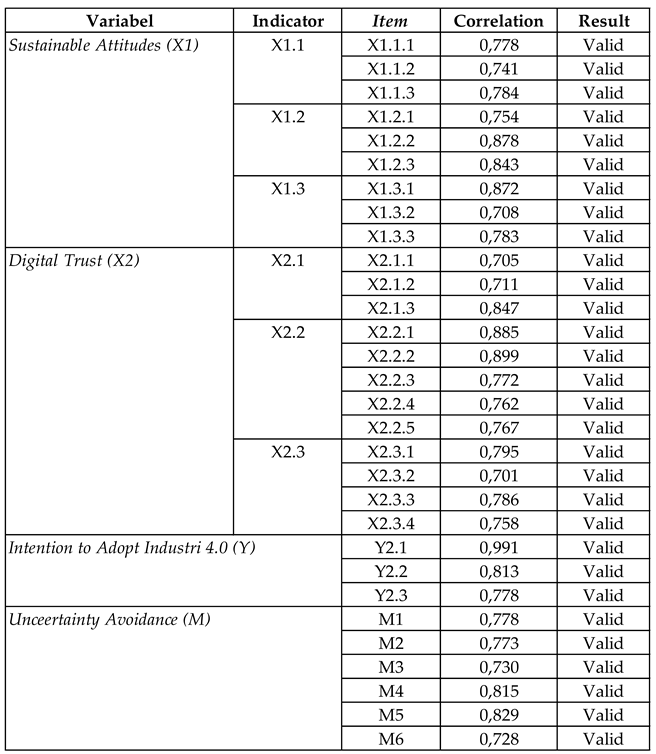
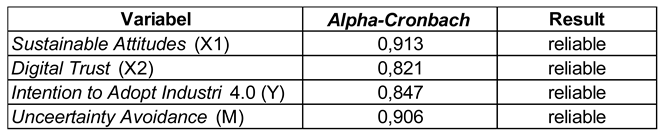
The research data obtained in the pilot test phase were then used to test the validity and reliability of the study. Here are the results of validity and reliability testing in this research in Table 1 and Table 2:
Table 1 shows the corrected item-total correlation values in the questionnaire for all indicators and items above 0.3. Therefore, all items have met the validity criteria.
The stage after validity testing is instrument reliability testing. Table 2 shows that the Alpha-Cronbach value for the research variables is above 0.6. Based on these results, the questionnaire can be considered valid and reliable, allowing the data collected through this questionnaire to be used for further data analysis.
- Descriptive Statistics of Research Respondents
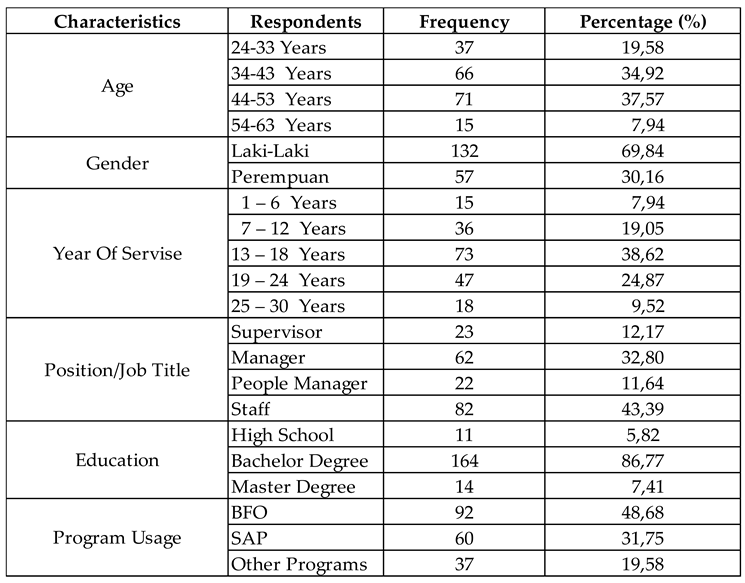
This study involves 4 variables: Sustainable Attitudes (X1), Digital Trust (X2), Uncertainty Avoidance (M), and Intention to Adopt Industry 4.0 (Y), where all 4 variables are measured using a questionnaire as the research instrument. The results of the descriptive analysis of respondents (employees) are presented in Table 3, which includes Age, Gender, Years of Service, Position/Job Title, Education, and Program Usage.
- Results of SEM Analysis with AMOS Approach
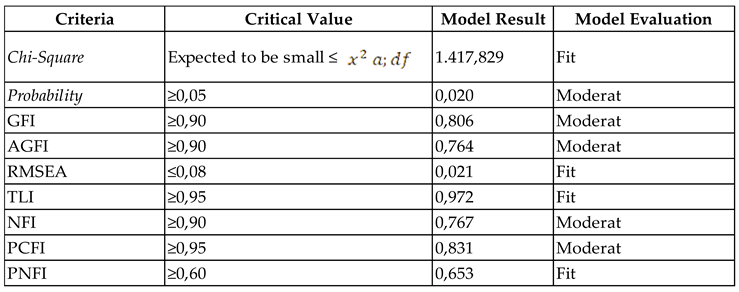
The SEM analysis utilizing the AMOS approach will be elucidated based on the outcomes of both the measurement model and the structural model. The hypothesis evaluation model using the measurement model framework will focus on probability figures. This probability refers to the likelihood of error in rejecting the null hypothesis (H0), with the cutoff point set at 0.05, indicating that the risk of making an error in rejecting H0 is at a 5% level. The data analysis findings from SEM with the measurement model are displayed in Table 4, illustrating the Goodness-of-Fit of the measurement model. This table is derived from the SEM Analysis using AMOS version 26. From the developed model, it can be concluded that almost all data, both in the latent variable indicators and manifest variables, show a good fit. The analysis of the measurement model resulted in a Chi-square value of 1417.829, with a probability of 0.020. Hypothesis testing on the model indicates that this model fits well with the data used in this study, signifying that the model fits the data. GFI measures how well our model fits the observed data, with values ranging from 0 to 1. A value of 0.806 indicates a fairly good fit, although generally values above 0.9 are considered to show good fit. Similar to GFI, AGFI adjusts fit based on the number of parameters in the model, penalizing overly complex models. A value of 0.764 indicates a moderate fit, with room for improvement. RMSEA measures how well the model approximates perfect data in the population. Values below 0.05 indicate good fit, so 0.021 here indicates a very good fit. TLI is a relative fit index comparing the proposed model fit to the null model (independent). Values approaching 1 indicate a very good fit. With 0.972, this model has a very good fit. NFI measures model fit improvement compared to the independent model. Values above 0.9 are considered good, so 0.767 indicates room for improvement in the model. PCFI measures model fit considering parsimony, or model simplicity. Higher values indicate a more efficient model. A value of 0.831 indicates good efficiency in the model. Similar to PCFI, PBFI also assesses model parsimony. Lower values here indicate that the model may be more complex than necessary, suggesting room to make the model simpler.
After the model undergoes testing, the next step is to test the hypotheses. The basis for decision-making in hypothesis testing is by comparing the p-value with a significance level of 5% (alpha = 0.05). If the p-value is smaller than this alpha value, then the null hypothesis (H0) can be rejected. Conversely, if the p-value is greater than this alpha value, then the null hypothesis (H0) can be accepted. The results of hypothesis testing are presented in Table 5 summarizing the analysis results of hypothesis testing in the structural model.
In graphical form, the results of hypothesis testing in the structural model of SEM using the AMOS approach can be seen in Figure 1, where it is visually presented as follows: the red line indicates non-significant influence, while the black and green lines indicate significant influence.
4. Discussion
The study examined the hypothesis H1 that sustainable attitudes (social, economic, and environmental) influence the intention to adopt efficient and sustainable energy solutions, represented by three indicators (Intend to use bFO, Will use bFO, Confident will always use bFO). The results indicated that this hypothesis was rejected, with a path coefficient of 0.791 and a p-value of 0.179 > 0.05, suggesting that the influence of attitudes on intention to adopt was not significant. This implies that attitudes alone may not directly predict or influence adoption intentions, highlighting the need to consider other factors such as subjective norms and perceived behavioral control. The Theory of Reasoned Action (TRA) and the TPB provide insights into individual behavior and intention formation. The non-significant results in the study may indicate that perceived behavioral control, a construct in TPB related to the ease or difficulty of performing a behavior, plays a significant role in shaping adoption intentions alongside attitudes. This suggests that factors like technology accessibility, skills, and resources required for adoption may have a stronger influence on intentions than attitudes alone. Moreover, the study found an indirect influence of attitudes on intention to adopt through perceived value, with a significant path coefficient of 0.341 and a p-value of 0.031 < 0.05. This highlights the role of perceived value as a mediator between attitudes and adoption intentions, indicating that individuals’ perceptions of the benefits and costs associated with adoption play a crucial role in forming intentions. The research results in contrast with previous studies by Cordero et al.,[10], Castillo-Vergara et al.,[56], Wang et al.,[55], Toni et al.[50], and Saeedi et al.,[53], emphasize the variability in the weight of attitudes versus subjective norms in predicting intentions across different behaviors and individuals. Overall, the study underscores the importance of considering factors beyond attitudes in shaping adoption intentions and suggests tailored strategies to enhance the adoption of sustainable energy solutions. Hence, the research results reject hypothesis H1 concerning the influence of Sustainable Attitudes on Intention to Adopt.
The study by Javaid et al.,[7] highlights that Industry 4.0 implementation aims to establish a sustainable environment and enhance comprehension of production, supply chain, delivery chain, and market dynamics. Braun & McEachern [75] underscore that adopting a sustainability mindset can drive individuals towards engaging in pro-environmental behaviors. Reis et al., [76] recommend implementing Industry 4.0 for achieving energy efficiency targets through Energy Performance Monitoring. This approach utilizes dashboards and reporting systems to continuously monitor and analyze energy performance, facilitating the identification of areas in need of improvement.
Hypothesis 2, which states that Digital Trust consisting of 3 (three) indicators (Trust, Internet of Things, and Smart Factory) influences intention to adopt consisting of 3 (three) indicators (Intend to use bFO, Will use bFO, Confident will always use bFO), was accepted with a path coefficient of 0.444 and a p-value ≤0.001 < 0.05, indicating its significant influence. This means that there is a significant influence of digital trust on intention to adopt. The finding that Digital Trust directly and significantly influences Intention to Adopt indicates that employees’ trust in technology, their belief that the technology is safe, reliable, and preserves their privacy, is an important factor motivating them to adopt the technology. This implies that when employees have faith in the integrity and reliability of digital systems, they are more inclined to use them. The research findings are consistent with researchers Apau et al.,[60], Khan et al., [61], and [62] who explain that there is an influence of digital trust on the intention to adopt. The theory of Planned Behavior (TPB) suggests that besides digital trust, perceived behavioral control and subjective norms are crucial in influencing adoption intentions. To improve the intention to adopt technology, interventions should focus on not only boosting digital trust but also improving perceived behavioral control (e.g., through training or technical support) and aligning subjective norms (e.g., through awareness campaigns or support from influential figures). Based on the results of the hypothesis testing analysis of the structural model in this study, it is shown that there is a direct influence of Digital Trust on Intention to Adopt. Therefore, the research findings confirm and accept hypothesis H2 regarding the influence of Digital Trust on Intention to Adopt.
In order to develop a new understanding of how companies utilize digitalization to transform their business models [77], it is crucial to foster digital trust within the workplace, focusing on three fundamental dimensions: technology, people, and processes [78]. Such digital trust plays a critical role in facilitating the successful adoption of Industry 4.0 technologies by both organizations and individuals, thereby supporting the achievement of Energy Efficiency goals. By encouraging employees to effectively utilize real-time data in decision-making and business process improvement, as well as building smart factories the company will be responsive to the changes that occur, as research Hung et al., [79] in similar factories for things needed in the transition process to Industry 4.0. Papadopoulos et al. [80] and Robert et al. [34] provide strategies for handling organizational transitions to Industry 4.0, emphasizing the importance of human factors in sustainable performance management systems. Ghobakhloo [81] highlights the essential role of flexible and adaptive human resources in Industry 4.0 to effectively manage rapid technological advancements, promoting operational efficiency and productivity through collaborative use of advanced technologies. Therefore, competencies such as critical thinking, teamwork, creativity, effective communication, and leadership, are indeed important and need to be considered by companies that will implement Industry 4.0 [82].
Hypothesis 3, which states that attitudes consisting of 3 indicators (Social, economic, and environmental) influence intention to adopt consisting of 3 indicators (Intend to use bFO, Will use bFO, Confident to always use bFO) moderated by Uncertainty Avoidance with 6 items (Rules, Order, Job explanation, Uncertain situations, Innovation opportunities, Making changes) is accepted with a path coefficient of 0.762 and a p-value ≤0.001 < 0.05, indicating its significant influence. This means that there is a significant influence of attitudes on intention to adopt moderated by UA. This study is in line with the research of Sánchez-Franco et al.[58] which explains the significant positive influence of attitudes on intention to adopt moderated by UA. Meanwhile, the study by Chai & Pavlou [63] and Shiu et al.,[64] explains the significant negative influence of attitudes on intention to adopt moderated by UA. The difference in values can occur when the researched objects differ. However, both studies explain that UA can be a moderating variable between attitudes and intention to adopt. Therefore, the research findings confirm and accept hypothesis H3 regarding the influence of Sustainable Attitudes on Intention to Adopt, moderated by UA.
Hypothesis 4, which states that digital trust consisting of 3 indicators (Trust, Internet of Things, and Smart Factory) influences intention to adopt consisting 3 indicators (Intend to use bFO, Will use bFO, Confidence to always use bFO) moderated by UA with 6 items (Rules, Order, Job explanation, Uncertain situations, Innovation opportunities, Making changes) is accepted with a path coefficient of 0.647 and a p-value ≤0.001 < 0.05, indicating its significant influence. This means that there is a significant influence of Digital Trust on the intention to adopt moderated by UA. The findings of this study are consistent with the research conducted by Faqih [66], Mosunmola et al. [65], and Ganguly et al.,[67], indicating that Uncertainty Avoidance (UA) can serve as a moderating factor between digital trust and intention to adopt. Previous studies have demonstrated that this relationship exhibits a notable positive impact when UA is utilized as a moderating variable. The outcomes of this study harmonize with existing research. Consequently, the research results validate and support hypothesis H4 concerning the impact of Digital Trust on Intention to Adopt, moderated by UA.
Future research should be conducted in both types of companies, technology providers in the Industry 4.0 sector, or other different companies because the influence of attitudes towards adoption intentions is not only dependent on the location, time, and different respondents but also on other factors such as direct experience with sustainable initiatives, such as participating in energy-saving campaigns or waste management [83]. Cultural differences resulting in variations in the influence of UA also present an interesting avenue for future research.
5. Conclusions
Sustainable Attitude does not have a significant influence on Intention to Adopt. The results of this study contradict some previous studies cited as references, possibly due to the unit of analysis of a population proficient in technology or the need for a mediating variable for Attitudes to have a significant positive effect on Intention to Adopt. These results can provide input or new ideas for further research.
Digital Trust significantly and positively impacts the Intention to Adopt, aligning with various previous reference studies. These findings elucidate the crucial role of digital trust in the intention to adopt in enhance the development of existing technologies and innovations within the company.
Uncertainty Avoidance plays a significant positive role as a moderator between Sustainable Attitudes and Digital Trust to Intention to Adopt. These findings underscore the significance of UA as a moderating factor in advancing the company’s existing technologies and innovations. This outcome provides new insights for the company that sustainable attitudes alone are not sufficient to enhance adoption intentions; additional procedures and agreed-upon written rules are needed to increase the level of UA. This moderation plays a crucial role in developing the company’s existing technologies and innovations. In summary, Industry 4.0 technology is essential for fostering innovation and business expansion, leading to a sustainable environment by offering principles, guidance, and energy-efficient technologies for companies. The involvement of Sustainable Attitude, moderated by UA, is vital in reaching energy efficiency goals through Industry 4.0 implementation.
Acknowledgment
Thank you to the Faculty of Business Administration at Brawijaya University in Malang for the support that made this article possible.
References
- Jain, M.; Soni, G.; Verma, D.; Baraiya, R.; Ramtiyal, B. Selection of Technology Acceptance Model for Adoption of Industry 4.0 Technologies in Agri-Fresh Supply Chain. Sustainability 2023, 15, 4821. [Google Scholar] [CrossRef]
- Ben Youssef, A.; Zeqiri, A. Hospitality Industry 4.0 and Climate Change. Circ. Econ. Sustain. 2022, 2, 1043–1063. [Google Scholar] [CrossRef]
- Dzwigol, H.; Kwilinski, A.; Lyulyov, O.; Pimonenko, T. The Role of Environmental Regulations, Renewable Energy, and Energy Efficiency in Finding the Path to Green Economic Growth. Energies 2023, 16, 3090. [Google Scholar] [CrossRef]
- Balasubramanian, S.; Shukla, V.; Islam, N.; Manghat, S. Construction Industry 4.0 and Sustainability: An Enabling Framework. IEEE Trans. Eng. Manag. 2021, 71, 1–19. [Google Scholar] [CrossRef]
- Chen, M.; Sinha, A.; Hu, K.; Shah, M.I. Impact of technological innovation on energy efficiency in industry 4.0 era: Moderation of shadow economy in sustainable development. Technol. Forecast. Soc. Chang. 2020, 164, 120521. [Google Scholar] [CrossRef]
- Arana-Landín, G.; Uriarte-Gallastegi, N.; Landeta-Manzano, B.; Laskurain-Iturbe, I. The Contribution of Lean Management—Industry 4.0 Technologies to Improving Energy Efficiency. Energies 2023, 16, 2124. [Google Scholar] [CrossRef]
- Javaid, M.; Haleem, A.; Singh, R.P.; Suman, R.; Gonzalez, E.S. Understanding the adoption of Industry 4.0 technologies in improving environmental sustainability. Sustain. Oper. Comput. 2022, 3, 203–217. [Google Scholar] [CrossRef]
- Wolniak, R.; Saniuk, S.; Grabowska, S.; Gajdzik, B. Identification of Energy Efficiency Trends in the Context of the Development of Industry 4.0 Using the Polish Steel Sector as an Example. Energies 2020, 13, 2867. [Google Scholar] [CrossRef]
- Shi, Z.; Xie, Y.; Xue, W.; Chen, Y.; Fu, L.; Xu, X. Smart factory in Industry 4.0. Syst. Res. Behav. Sci. 2020, 37, 607–617. [Google Scholar] [CrossRef]
- Cordero, D.; Altamirano, K.L.; Parra, J.O.; Espinoza, W.S. Intention to Adopt Industry 4.0 by Organizations in Colombia, Ecuador, Mexico, Panama, and Peru. IEEE Access 2023, 11, 8362–8386. [Google Scholar] [CrossRef]
- Radtke, J.; Yildiz. ; Roth, L. Does Energy Community Membership Change Sustainable Attitudes and Behavioral Patterns? Empirical Evidence from Community Wind Energy in Germany. Energies 2022, 15, 822. [Google Scholar] [CrossRef]
- Walsh, P.R.; Dodds, R.; Priskin, J.; Day, J.; Belozerova, O. The Corporate Responsibility Paradox: A Multi-National Investigation of Business Traveller Attitudes and Their Sustainable Travel Behaviour. Sustainability 2021, 13, 4343. [Google Scholar] [CrossRef]
- Graczyk, A.M.; Kusterka-Jefmańska, M.; Jefmański, B.; Graczyk, A. Pro-Ecological Energy Attitudes towards Renewable Energy Investments before the Pandemic and European Energy Crisis: A Segmentation-Based Approach. Energies 2023, 16, 707. [Google Scholar] [CrossRef]
- Ho, K.T.H.; Kwok, P.W.H.; Chang, S.S.Y.; Chu, A.M.Y. Gaps between Attitudes and Behavior in the Use of Disposable Plastic Tableware (DPT) and Factors Influencing Sustainable DPT Consumption: A Study of Hong Kong Undergraduates. Sustainability 2023, 15, 8958. [Google Scholar] [CrossRef]
- Mubarak, M.F.; Petraite, M. Industry 4.0 technologies, digital trust and technological orientation: What matters in open innovation? Technol. Forecast. Soc. Chang. 2020, 161, 120332. [Google Scholar] [CrossRef]
- Huang, J. Digital engineering transformation with trustworthy AI towards industry 4.0: emerging paradigm shifts. J. Integr. Des. Process. Sci. 2023, 26, 267–290. [Google Scholar] [CrossRef]
- Guo, Y. Digital Trust and the Reconstruction of Trust in the Digital Society: An Integrated Model based on Trust Theory and Expectation Confirmation Theory. Digit. Gov. Res. Pr. 2022, 3, 1–19. [Google Scholar] [CrossRef]
- Elnadi, M.; Abdallah, Y.O. Industry 4.0: critical investigations and synthesis of key findings. Manag. Rev. Q. 2023, 74, 711–744. [Google Scholar] [CrossRef]
- Latvakoski, J.; Kyllönen, V.; Ronkainen, J. Decentralised IOTA-Based Concepts of Digital Trust for Securing Remote Driving in an Urban Environment. IoT 2023, 4, 582–609. [Google Scholar] [CrossRef]
- Migliore, G.; Wagner, R.; Cechella, F.S.; Liébana-Cabanillas, F. Antecedents to the Adoption of Mobile Payment in China and Italy: an Integration of UTAUT2 and Innovation Resistance Theory. Inf. Syst. Front. 2022, 24, 2099–2122. [Google Scholar] [CrossRef]
- Almaiah, M.A.; Alfaisal, R.; Salloum, S.A.; Al-Otaibi, S.; Al Sawafi, O.S.; Al-Maroof, R.S.; Lutfi, A.; Alrawad, M.; Al Mulhem, A.; Awad, A.B. Determinants Influencing the Continuous Intention to Use Digital Technologies in Higher Education. Electronics 2022, 11, 2827. [Google Scholar] [CrossRef]
- Al-Adwan, A.S.; Alrousan, M.K.; Yaseen, H.; Alkufahy, A.M.; Alsoud, M. Boosting Online Purchase Intention in High-Uncertainty-Avoidance Societies: A Signaling Theory Approach. J. Open Innov. Technol. Mark. Complex. 2022, 8, 136. [Google Scholar] [CrossRef]
- Cai, C.; Hao, X.; Wang, K.; Dong, X. The Impact of Perceived Benefits on Blockchain Adoption in Supply Chain Management. Sustainability 2023, 15, 6634. [Google Scholar] [CrossRef]
- Merkin, R.S. Uncertainty avoidance and facework: A test of the Hofstede model. Int. J. Intercult. Relations 2006, 30, 213–228. [Google Scholar] [CrossRef]
- Al-Okaily, M.; Lutfi, A.; Alsaad, A.; Taamneh, A.; Alsyouf, A. The Determinants of Digital Payment Systems’ Acceptance under Cultural Orientation Differences: The Case of Uncertainty Avoidance. Technol. Soc. 2020, 63, 101367. [Google Scholar] [CrossRef]
- Virmani, N.; Sharma, S.; Kumar, A.; Luthra, S. Adoption of industry 4.0 evidence in emerging economy: Behavioral reasoning theory perspective. Technol. Forecast. Soc. Chang. 2023, 188. [Google Scholar] [CrossRef]
- Raj, A.; Dwivedi, G.; Sharma, A.; de Sousa Jabbour, A.B.L.; Rajak, S. Barriers to the adoption of industry 4.0 technologies in the manufacturing sector: An inter-country comparative perspective. Int. J. Prod. Econ. 2020, 224, 107546. [Google Scholar] [CrossRef]
- Hajoary, P.K. Strategic response to Industry 4.0 – an empirical analysis from a developing country perspective. Technol. Anal. Strat. Manag. [CrossRef]
- Sacchettini, G.; Castellini, G.; Graffigna, G.; Hung, Y.; Lambri, M.; Marques, A.; Perrella, F.; Savarese, M.; Verbeke, W.; Capri, E. Assessing consumers' attitudes, expectations and intentions towards health and sustainability regarding seafood consumption in Italy. Sci. Total. Environ. 2021, 789, 148049. [Google Scholar] [CrossRef] [PubMed]
- Sony, M.; Mekoth, N. Employee adaptability skills for Industry 4.0 success: a road map. Prod. Manuf. Res. 2022, 10, 24–41. [Google Scholar] [CrossRef]
- Molino, M.; Cortese, C.G.; Ghislieri, C. The Promotion of Technology Acceptance and Work Engagement in Industry 4.0: From Personal Resources to Information and Training. Int. J. Environ. Res. Public Heal. 2020, 17, 2438. [Google Scholar] [CrossRef]
- T. Hamada, “Determinants of Decision-Makers ’ Attitudes toward,” Soc. Sci., 2019.
- Khin, S.; Kee, D.M.H. Factors influencing Industry 4.0 adoption. J. Manuf. Technol. Manag. 2022, 33, 448–467. [Google Scholar] [CrossRef]
- Robert, M.; Giuliani, P.; Gurau, C. Implementing industry 4.0 real-time performance management systems: the case of Schneider Electric. Prod. Plan. Control. 2020, 33, 244–260. [Google Scholar] [CrossRef]
- Obermayer, N.; Csizmadia, T.; Hargitai, D.M. Influence of Industry 4.0 technologies on corporate operation and performance management from human aspects. Meditari Account. Res. 2022, 30, 1027–1049. [Google Scholar] [CrossRef]
- Soomro, M.A.; Hizam-Hanafiah, M.; Abdullah, N.L.; Ali, M.H.; Jusoh, M.S. Industry 4.0 Readiness of Technology Companies: A Pilot Study from Malaysia. Adm. Sci. 2021, 11, 56. [Google Scholar] [CrossRef]
- Snow, C.C.; Fjeldstad. D.; Langer, A.M. Designing the digital organization. J. Organ. Des. 2017, 6, 7. [Google Scholar] [CrossRef]
- Mubarak, M.F.; Petraite, M. Industry 4.0 technologies, digital trust and technological orientation: What matters in open innovation? Technol. Forecast. Soc. Chang. 2020, 161, 120332. [Google Scholar] [CrossRef]
- Raj and, A. Jeyaraj, “Antecedents and consequents of industry 4. 0 adoption using technology, organization and environment ( TOE ) framework :,” pp. 101–124, 2023.
- Calabrese, A.; Dora, M.; Ghiron, N.L.; Tiburzi, L. Industry's 4.0 transformation process: how to start, where to aim, what to be aware of. Prod. Plan. Control. 2022, 33, 492–512. [Google Scholar] [CrossRef]
- Henriques, J.; Catarino, J. Sustainable value – An energy efficiency indicator in wastewater treatment plants. J. Clean. Prod. 2017, 142, 323–330. [Google Scholar] [CrossRef]
- Stentoft, J.; Wickstrøm, K.A.; Philipsen, K.; Haug, A. Drivers and barriers for Industry 4.0 readiness and practice: empirical evidence from small and medium-sized manufacturers. Prod. Plan. Control. 2020, 32, 811–828. [Google Scholar] [CrossRef]
- Ajzen, I. The theory of planned behavior: Frequently asked questions. Hum. Behav. Emerg. Technol. 2020, 2, 314–324. [Google Scholar] [CrossRef]
- Franco, D.; Macke, J.; Cotton, D.; Paco, A.; Segers, J.-P.; Franco, L. Student energy-saving in higher education tackling the challenge of decarbonisation. Int. J. Sustain. High. Educ. 2022, 23, 1648–1666. [Google Scholar] [CrossRef]
- Chaudhry, N.I.; Rehman, S.U.; Elrehail, H.; Al Masaeid, T.F.; Adaileh, R.; Alzoubi, H.M. Analyzing effect of fear and uncertainty avoidance on use behavior of learning management system: Post COVID-19 era. Int. J. Inf. Manag. Data Insights 2023, 3. [Google Scholar] [CrossRef]
- Rafiq, F.; Parthiban, E.S.; Rajkumari, Y.; Adil, M.; Nasir, M.; Dogra, N. From Thinking Green to Riding Green: A Study on Influencing Factors in Electric Vehicle Adoption. Sustainability 2023, 16, 194. [Google Scholar] [CrossRef]
- Zaman, U.; Zahid, H.; Habibullah, M.S.; Din, B.H. Adoption of Big Data Analytics (BDA) Technologies in Disaster Management: A Decomposed Theory of Planned Behavior (DTPB) Approach. Cogent Bus. Manag. 2021, 8. [Google Scholar] [CrossRef]
- Ho, Y.-H.; Alam, S.S.; Masukujjaman, M.; Lin, C.-Y.; Susmit, S.; Susmit, S. Intention to Adopt AI-Powered Online Service Among Tourism and Hospitality Companies. Int. J. Technol. Hum. Interact. 2022, 18, 1–19. [Google Scholar] [CrossRef]
- M. Ikram, “2022-Yeğin&Ikram-Analysis of consumers’ electric vehicle purchase intentions An expansion of theTPB.pdf,” Sustainability. 2022.
- Toni, M.; Renzi, M.F.; Pasca, M.G.; Mugion, R.G.; di Pietro, L.; Ungaro, V. Industry 4.0 an empirical analysis of users’ intention in the automotive sector. Int. J. Qual. Serv. Sci. 2021, 13, 563–584. [Google Scholar] [CrossRef]
- Shalender, K.; Sharma, N. Using extended theory of planned behaviour (TPB) to predict adoption intention of electric vehicles in India. Environ. Dev. Sustain. 2020, 23, 665–681. [Google Scholar] [CrossRef]
- Perri, C.; Giglio, C.; Corvello, V. Smart users for smart technologies: Investigating the intention to adopt smart energy consumption behaviors. Technol. Forecast. Soc. Chang. 2020, 155, 119991. [Google Scholar] [CrossRef]
- Saeedi, S.; Juwaidah, S.; Kelly, W. Intention to adopt Industry 4.0 technologies among small and medium enterprises in the Malaysian dairy manufacturing industry. Food Res. 2022, 6, 209–218. [Google Scholar] [CrossRef]
- Sujood, *!!! REPLACE !!!*; Bano, N.; Siddiqui, S. 54. Sujood; Bano, N.; Siddiqui, S. Consumers' intention towards the use of smart technologies in tourism and hospitality (T&H) industry: a deeper insight into the integration of TAM, TPB and trust. J. Hosp. Tour. Insights. [CrossRef]
- Wang, S.; Fan, J.; Zhao, D.; Yang, S.; Fu, Y. Predicting consumers’ intention to adopt hybrid electric vehicles: using an extended version of the theory of planned behavior model. Transportation 2016, 43, 123–143. [Google Scholar] [CrossRef]
- Castillo-Vergara, M.; Álvarez-Marín, A.; Pinto, E.V.; Valdez-Juárez, L.E. Technological Acceptance of Industry 4.0 by Students from Rural Areas. Electronics 2022, 11, 2109. [Google Scholar] [CrossRef]
- S. A. W. Saeedi, J. S. A. W. Saeedi, J. Sharifuddin, and K. W. K. Seng, “Intention on adoption of industry 4.0 technology among small and medium enterprises,” Int. J. Sci. Technol. Res., vol. 9, no. 2, pp. 4472–4478, 2020.
- Sánchez-Franco, M.J.; Martínez-López, F.J.; Martín-Velicia, F.A. Exploring the impact of individualism and uncertainty avoidance in Web-based electronic learning: An empirical analysis in European higher education. Comput. Educ. 2009, 52, 588–598. [Google Scholar] [CrossRef]
- Astuti, E.S.; Al Musadieq, M.; Utami, H.N. Trust and Perception of Benefits as the Determinants of Behavior and Intention to Use Internet Banking in Indonesia. Macroecon. Finance Emerg. Mark. Econ. 2021, 1–18. [Google Scholar] [CrossRef]
- R. Apau et al., “Acceptance of free-floating car sharing: A decomposed self-efficacy-based value adoption model,” Transp. Lett., vol. 19, no. 2, pp. 524–534, 2019. [CrossRef]
- Khan, S.; Ab Rahim, N.Z.; Maarop, N. A systematic literature review and a proposed model on antecedents of trust to use social media for e-government services. Int. J. Adv. Appl. Sci. 2020, 7, 44–56. [Google Scholar] [CrossRef]
- Ben Arfi, W.; Ben Nasr, I.; Kondrateva, G.; Hikkerova, L. The role of trust in intention to use the IoT in eHealth: Application of the modified UTAUT in a consumer context. Technol. Forecast. Soc. Chang. 2021, 167, 120688. [Google Scholar] [CrossRef]
- Chai, L.; Pavlou, P.A. From “ancient” to “modern”: a cross-cultural investigation of electronic commerce adoption in Greece and the United States. J. Enterp. Inf. Manag. 2004, 17, 416–423. [Google Scholar] [CrossRef]
- Shiu, E.; Walsh, G.; Hassan, L.M.; Parry, S. The direct and moderating influences of individual-level cultural values within web engagement: A multi-country analysis of a public information website. J. Bus. Res. 2015, 68, 534–541. [Google Scholar] [CrossRef]
- Mosunmola, O. Adegbuyi, O. Kehinde, M. Agboola, and M. Olokundun, “Percieved value dimensions on online shopping intention: The role of trust and culture,” Acad. Strateg. Manag. J., vol. 18, no. 1, pp. 1–20, 2019.
- Faqih, K.M. Internet shopping in the Covid-19 era: Investigating the role of perceived risk, anxiety, gender, culture, and trust in the consumers’ purchasing behavior from a developing country context. Technol. Soc. 2022, 70. [Google Scholar] [CrossRef]
- Ganguly, B.; Dash, S.B.; Cyr, D.; Head, M. The effects of website design on purchase intention in online shopping: the mediating role of trust and the moderating role of culture. Int. J. Electron. Bus. 2010, 8, 302–330. [Google Scholar] [CrossRef]
- Turchina, S.; Turchina, K.; Dashutina, L.; Batsenko, L. A Review of Top Corporate Sustainability Initiatives and Their Resilience during the COVID–19 Pandemic. Comp. Econ. Res. Central East. Eur. 2023, 26, 111–126. [Google Scholar] [CrossRef]
- Imam, H.; Zaheer, M.K. Shared leadership and project success: The roles of knowledge sharing, cohesion and trust in the team. Int. J. Proj. Manag. 2021, 39, 463–473. [Google Scholar] [CrossRef]
- Chen, C.; An, Q.; Zheng, L.; Guan, C. Sustainability Literacy: Assessment of Knowingness, Attitude and Behavior Regarding Sustainable Development among Students in China. Sustainability 2022, 14, 4886. [Google Scholar] [CrossRef]
- Gericke, N.; Pauw, J.B.; Berglund, T.; Olsson, D. The Sustainability Consciousness Questionnaire: The theoretical development and empirical validation of an evaluation instrument for stakeholders working with sustainable development. Sustain. Dev. 2018, 27, 35–49. [Google Scholar] [CrossRef]
- Yu, C.P.; Chancellor, H.C.; Cole, S.T. Measuring Residents’ Attitudes toward Sustainable Tourism: A Reexamination of the Sustainable Tourism Attitude Scale. J. Travel Res. 2011, 50, 57–63. [Google Scholar] [CrossRef]
- Khoa, B.T. The role of self-efficacy and firm size in the online advertising services continuous adoption intention: Theory of planned behavior approach. J. Open Innov. Technol. Mark. Complex. 2023, 9. [Google Scholar] [CrossRef]
- Srite; Karahanna The Role of Espoused National Cultural Values in Technology Acceptance. MIS Q. 2006, 30, 679. [CrossRef]
- P. Braun and S. McEachern, “Climate Change and Regional Communities: Towards Sustainable Community Behaviour in Ballarat.,” Australas. J. Reg. Stud., vol. 16, no. 1, pp. 3–22, 2010, [Online]. Available: http://search.ebscohost.com/login.aspx? 6541.
- Reis, J.S.d.M.; Espuny, M.; Nunhes, T.V.; Sampaio, N.A.d.S.; Isaksson, R.; de Campos, F.C.; de Oliveira, O.J. Striding towards Sustainability: A Framework to Overcome Challenges and Explore Opportunities through Industry 4.0. Sustainability 2021, 13, 5232. [Google Scholar] [CrossRef]
- Gebauer, H.; Paiola, M.; Saccani, N.; Rapaccini, M. Digital servitization: Crossing the perspectives of digitization and servitization. Ind. Mark. Manag. 2021, 93, 382–388. [Google Scholar] [CrossRef]
- D. E. Marcial and M. A. Launer, “Towards the Measurement of Digital Trust in the Workplace: A Proposed Framework,” 2019. [Online]. Available: http://ijses.
- Hung, W.-H.; Wang, T.-H.; Wu, M.-F.; Tong, Y.; Su, S.-H. Analysis of key success factors for Industry 4. 0 development. ACM Int. Conf. Proceeding Ser. 2019, 51–56. [Google Scholar] [CrossRef]
- Papadopoulos, T.; Singh, S.P.; Spanaki, K.; Gunasekaran, A.; Dubey, R. Towards the next generation of manufacturing: implications of big data and digitalization in the context of industry 4.0. Prod. Plan. Control. 2021, 33, 101–104. [Google Scholar] [CrossRef]
- Ghobakhloo, M. Industry 4.0, digitization, and opportunities for sustainability. J. Clean. Prod. 2019, 252, 119869. [Google Scholar] [CrossRef]
- Yunus, E.N. The mark of industry 4.0: how managers respond to key revolutionary changes. Int. J. Prod. Perform. Manag. 2020, 70, 1213–1231. [Google Scholar] [CrossRef]
- G. Trail and B. McCullough, “A Longitudinal Study of Sustainability Attitudes, Intentions, and Behaviors: An Abstract,” Dev. Mark. Sci. Proc. Acad. Mark. Sci., no. 0123456789, pp. 147–148, 2020. [CrossRef]
Figure 1.
Hypothesis Testing Result. Source: Researcher’s analysis (2024).
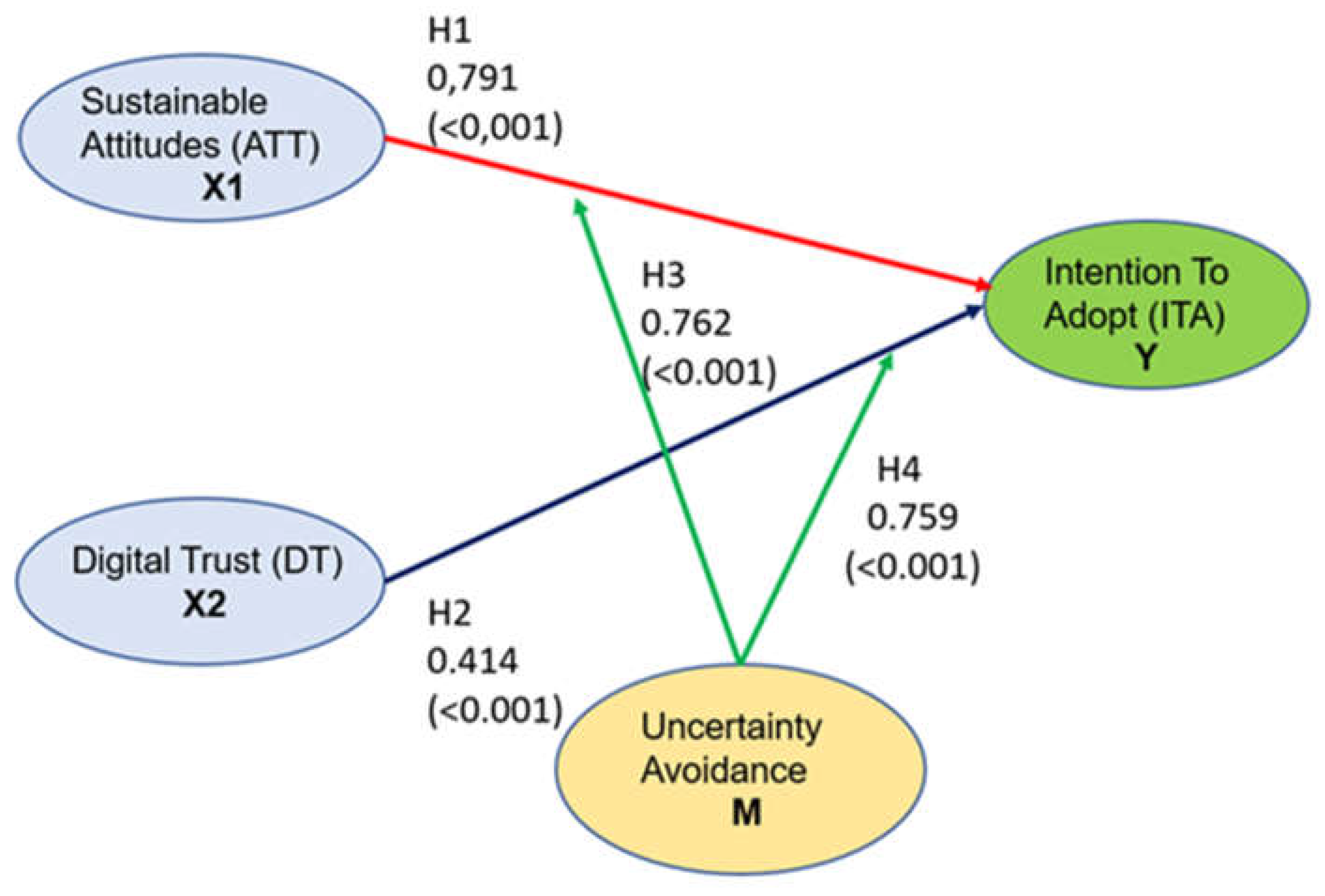

Table 1.
Validity Test.
Source: Research Data (2024).
Table 2.
Reliability Test.
Source: Research Data (2024).
Table 3.
Descriptive of Respondents.
Source: Research Data (2024).
Table 4.
Goodness-of-Fit-Model of the measurement model.
Source: Research Data (2024).
Table 5.
Results of Hypothesis Testing Analysis in the Structural Model.
| Hypotesis | Estimate | P-Value | Decision |
|---|---|---|---|
| H1: | 0,791 | 0,179 | not significant |
| X1 à Y | |||
| H2: | 0,444 | ≤0,001 | significant |
| X2 à Y | |||
| H3: | 0,762 | ≤0,001 | significant |
| X1 à M à Y | |||
| H4: | 0,647 | ≤0,001 | significant |
| X2 à M à Y |
Source: Research Data (2024.)
Disclaimer/Publisher’s Note: The statements, opinions and data contained in all publications are solely those of the individual author(s) and contributor(s) and not of MDPI and/or the editor(s). MDPI and/or the editor(s) disclaim responsibility for any injury to people or property resulting from any ideas, methods, instructions or products referred to in the content. |
© 2024 by the authors. Licensee MDPI, Basel, Switzerland. This article is an open access article distributed under the terms and conditions of the Creative Commons Attribution (CC BY) license (http://creativecommons.org/licenses/by/4.0/).
Copyright: This open access article is published under a Creative Commons CC BY 4.0 license, which permit the free download, distribution, and reuse, provided that the author and preprint are cited in any reuse.


