

Submitted:
01 May 2024
Posted:
03 May 2024
You are already at the latest version
Abstract
The growing urgency for sustainable energy solutions necessitates a deeper understanding of the environmental impacts of renewable technologies. This article aims to synthesize and analyze Life Cycle Assessments (LCA) in this domain, providing a comprehensive perspective. We systematically categorize 2,923 articles into four communities: (1) Photovoltaic systems, (2) Wind energy systems, (3) Materials for auxiliary industry of photovoltaic and wind systems, and (4) Solar thermal systems. A comparative analysis is conducted to identify methodological consistencies and disparities across these communities. The findings reveal diverse methodological approaches and a range of environmental impacts, highlighting the complexities in assessing renewable energy systems. The article underscores the significance of material selection in photovoltaic and wind systems, providing a critical overview of the current state of LCA research in renewable energy and stressing the need for standardized methodologies. It also identifies gaps in recent research, offering insights for future studies focused on integrating environmental, economic, and social considerations in renewable energy assessments.As a case study, an LCA was used to evaluate two energy supply methods for a sensor network: one connected to the public grid and another powered by a photovoltaic panel. The off-grid system, while more environmentally friendly by reducing reliance on non-renewable energy sources, posed challenges due to the high environmental impact of battery production and disposal. Integrating environmental assessments provides a robust framework for making informed decisions on sustainable technologies. The findings are critical for projects that balance technological needs with sustainability goals.
Keywords:
Life Cycle Assessment
; renewable energy
; solar energy
; wind energy
; environmental impact
; material assessment
1. Introduction
In recent years, energy-related issues have grown increasingly significant, encompassing the rational use of resources, the environmental effects of pollutant emissions, and the consumption of non-renewable resources [1]. Consequently, there has been a substantial increase in the literature studying the analysis of the environmental impact of products, technologies, and services since sustainability has transitioned from a theoretical concept to an operational necessity. A deeper understanding of the intricate relationship between environmental sustainability and socio-economic development drives this shift. The growing demand for services and infrastructures today is a crucial factor in driving progress and enhancing the quality of life across nations, but this, in turn, often generates environmental problems, presenting a challenge for current and future generations [2].
Recognizing these complexities, there is a consensus on the urgent need for a paradigm shift toward sustainable practices [3]. Such a transition necessitates a heightened awareness and the deployment of adequate tools for environmental impact assessment. Life Cycle Assessment (LCA) is a crucial instrument [4,5,6]. LCA facilitates a comprehensive evaluation of the environmental repercussions of products and services throughout their entire life cycle, from production to disposal. This is why this type of analysis is also called "cradle to grave" [7,8]. This approach entails analyzing the product from the extraction of raw materials used in manufacturing, through production and use, to the final disposal of waste generated, covering the entire product system.
The application of LCA has expanded rapidly, which is particularly valuable in comparing the environmental footprints of different products or services [9]. Its use supports the selection of better environmental alternatives, fosters principles of green design, and recognizes potentially more harmful environmental impacts [10]. The first application of a partial LCA occurred in 1969 when Coca-Cola evaluated beverage container input consumption and emissions. The company assessed the option of switching from disposable plastic containers to returnable glass bottles. By mapping out and analyzing the entire life cycle of these containers, Coca-Cola provided a quantitative analysis to compare these two options. This early application has been recognized as one of the pioneering LCA studies [11] and underscored LCA's potential in guiding companies toward environmentally responsible decisions.
The transformation of LCA from a tool for basic environmental assessments into a comprehensive instrument for sustainability studies marks a significant evolution in its utility and scope. Its application now extends to more complex goods and systems, influencing decisions that range from local operational choices to broad, strategic policymaking. The spectrum of impact categories analyzed has also seen notable expansion. Initially focused on direct impacts like waste generation and energy consumption, LCA now encompasses various environmental concerns. This includes the assessment of acidification, human toxicity, ozone layer depletion, resource depletion, water use, and other critical environmental parameters [12]. This progression highlights the increasing complexity and refinement of environmental impact assessments and showcases LCA's remarkable adaptability and comprehensive analytical depth.
The article aims to synthesize and analyze LCAs in renewable energy technologies, specifically focusing on solar and wind energy systems. The article aims to provide a comprehensive perspective on the environmental impacts of these technologies by categorizing and comparing a large body of research articles. It discusses methodological consistencies and disparities across different studies and highlights the complexities in assessing renewable energy systems' environmental impacts. Additionally, the article underscores the significance of material selection for these technologies and identifies gaps in current research, offering insights for future studies that integrate environmental, economic, and social considerations.
1.1. Phases of a Life Cycle Assessment
The LCA process unfolds through methodically structured phases, offering a structured and comprehensive framework for environmental decision-making. From establishing clear objectives and scope to collecting critical data, assessing impacts, and recommending improvements, the LCA process enables a holistic view of the environmental aspects and potential impacts associated with a product's or system's life cycle. Four distinct phases are delineated by the standards ISO 14040:2006: "Environmental management. Life cycle assessment. Principles and framework." [13] and ISO 14044:2006 "Environmental management. Life cycle assessments. Requirements and guidelines." [14]. These four phases are as follows:
- Goal and scope: this is the first and most crucial step, serving as the foundation of the LCA. In this phase, the system boundaries and the functional unit of analysis are defined, including the reasons for conducting the study. This method enables researchers to compare two or more products or systems using a consistent measurement approach. As a result, the functional unit needs to be clearly defined and measurable. System boundaries determine which processes, whether directly or indirectly related to the product or device, are included in the study;
- Life cycle inventory (LCI): data are gathered and stored in this phase. LCI analysis collects data on the materials and energy used throughout the project according to the boundaries established in the previous step. This inventory phase is critical for identifying and quantifying the inputs and outputs of the system, laying the groundwork for the subsequent impact assessment;
-
Life cycle impact assessment (LCIA): this phase encompasses several sub-steps:
- Impact assessment: calculation of environmental impacts based on LCI data;
- Classification: data are aggregated into separate impacts;
- Characterization: the relative contributions of materials/emissions in one of the impact categories are quantified;
- Standardization and valuation: these independent steps allow for a detailed analysis of the size of each impact. Both actions are subjective, with valuation considered more subjective than standardization.
- Interpretation and improvement recommendations: the results are interpreted, and some tools for improvement are described. This final phase aims to explain the impact assessment's results and the priorities for improvement.
1.2. Software and Databases for Life Cycle Assessment
The implementation of LCA relies heavily on sophisticated software tools and comprehensive databases. Commercially available LCA software features various components, including well-documented LCI databases that contain datasets describing multiple processes. Each process within these databases is characterized by input flows (such as resources) and output flows (such as emissions) [15].
Among the most widely used software, it can be mentioned:
- OpenLCA [16]: developed by GreenDelta in 2006, OpenLCA is an open-source tool for LCA and sustainability assessment. Its accessibility without license cost makes it a popular choice for conducting comprehensive environmental analyses;
- Building for Environmental and Economic Sustainability (BEES) [17]: created by the National Institute of Standards and Technology (NIST) in the USA, BEES is an online tool for evaluating environmentally preferable building products, integrating both cost and environmental performance considerations;
- GaBi [18]: this software suite offers LCA modeling and reporting capabilities augmented by extensive content databases. It includes intuitive data collection and reporting tools, facilitating detailed environmental impact analyses;
- SimaPro [19]: with a three-decade presence and recognition in industry and academia, spanning over 80 countries, SimaPro is renowned for providing science-based information, ensuring complete transparency, and avoiding black-box processes.
The quality and origin of baseline data are crucial for determining the confidence level in LCA results. Early in the LCA process, substantial information is required [20,21], a stage where data is often scarce and challenging to acquire. Hence, it is vital to include primary data from critical initial suppliers tailored to the study's specific framework. While public and private databases are available for sourcing all necessary data [22], analyzing their representativeness relative to the system under study is essential. The reliability and comparability of results hinge critically on this assessment. The choice of database profoundly affects the environmental impact results obtained, and there still needs to be more detailed exploration into the different methodologies, their interrelationships, and, crucially, strategies for their integration [23].
1.3. Product Environmental Footprint
To enhance the comparability of assessments, the European Commission introduced the Product Environmental Footprint (PEF) method through Rec. 2013/179/EU of the Commission of 9 April 2013 [24]. Its primary goal is to create a uniform set of principles for assessing the environmental performance of a product or service throughout its life cycle [25] and thus increase comparability between products [26]. It is based on the same procedure as the LCA, trying to avoid alterations when normalizing environmental impacts between the distinct stages of the life cycle and considering all inputs' relevant effects throughout the entire life cycle. By setting predefined specifications for certain methodological aspects, an increase in comparability is expected, but this leads to a limitation in flexibility concerning ISO standards. The PEF has 16 defined impact categories to include in the LCA. The guidelines are straightforward, sacrificing flexibility by limiting the choices and decisions required of the user [27]. The European Commission also conducted pilot projects during 2013-2016, including 26 projects spanning diverse products or sectors [28], demonstrating the method’s potential to enhance product sustainability. Since completing the pilot tests, this method has attracted increasing attention [29,30,31]. This growing interest underscores the PEF’s potential to influence product design and consumer choices towards more sustainable options, aligning with broader environmental policy goals and consumer awareness initiatives across Europe.
2. Materials and Methods
Using the Scopus database, this study employed a bibliometric analysis to map out global scientific collaborations worldwide swiftly. This approach allowed for examining scientific publications indexed in Scopus, specifically focusing on those about LCA in solar and wind energy projects. While numerous web-based search engines offer scientometric indicators, they often need to reveal collaborations among authors or form research communities around specific topics [32]. To overcome these limitations, an API called rasNetBot, developed by the research team at the Department of Electrical Engineering, University of Almeria, Spain, was utilized [33]. This tool was instrumental in identifying and analyzing collaboration and community-building patterns within the realm of LCA research related to solar and wind energy, providing a more nuanced understanding of the field's landscape.
The search used "LCA" OR “Life Cycle Assessment” AND (SOLAR OR WIND) as a keyword in the TITLE. It analyzed 9,130 documents utilizing community detection algorithms to study their interconnections and was visually represented through the open-source software Gephi (Figure 1a). A subsequent data-cleaning process eliminated articles irrelevant to the communities identified. In the cleaning process, documents unrelated to the communities are removed. However, this does not mean that other authors do not reference them; there are no collaborative links, so they are removed. Only solar and wind energy publications were retained, deleting categories like desalination, microalgae, and batteries. The cleaning process resulted from a dataset of 2,922 publications (Figure 1b) from 1996 to 2023. 94.6 % of the documents are journal articles, while 3.9 % are publications in scientific conferences. Almost 12 % of the production has been developed in the last four years, which marks the importance of this time in recent years.
This analysis revealed three distinct research communities related to renewable energies: the "Photovoltaic Community” (29.57 %), the "Wind Power Community” (59.03 %), and the "Solar Thermal Community” (5.41 %). The last community, the "Materials Community” (5.99 %), is related to the materials needed for the construction of these technologies (Figure 1c).
3. State-of-the-Art
An analysis of the keyword usage within the literature indicates a rich diversity of terms, identifying 5,592 unique words that appear 14,772 times. The term "Life cycle assessment" is the most prevalent, representing 19.12 % of all mentions. It is followed by "Environmental impact," "Renewable energy," and "Environmental impacts," which account for 1.36 %, 1.11 %, and 1.09 % of the mentions, respectively. Remarkably, a considerable proportion of terms (approximately 76.66 % of all words) appear only once, suggesting high specificity in the discussed topics. Figure 2 visually illustrates the number and frequency of these keywords.
This analysis underscores the focused areas of research and discussion within the field, highlighting the extensive range of vocabulary and thematic concentration in community contributions. Under this section, detailed through subheadings, a concise yet detailed overview of the findings from the community analysis is presented. Each identified community revolves around a central theme, and within these communities, key nodes and their pivotal contributions were scrutinized.
LCA is increasingly integrated into large projects across architecture, engineering, construction, and service sectors [34,35,36]. LCA plays a crucial role in the renewable energy sector, particularly as innovative technologies emerge and seek validation of their environmental benefits over conventional energy sources [37]. As the renewable energy sector continues to evolve, applying LCA will play a pivotal role in ensuring that this evolution is aligned with broader sustainability goals, promoting the adoption of efficient, cost-effective, and environmentally responsible renewable energy technologies.
LCA of renewable energies spans several key stages, each contributing uniquely to the overall environmental footprint [38]. By highlighting areas with significant environmental impacts, LCA guides efforts to minimize these impacts through innovative design, material selection, and operational strategies. The literature indicates that four stages are particularly significant:
- Material cultivation and fabrication: this stage is the most extensive, involving resource extraction and processing, which encompasses the mining, refining, and purifying silicon and other essential metals and minerals for the cells, glass, frame, inverters, and other required electronics. This phase also includes petroleum extraction for plastics and natural gas extraction used in heating, covering every material process needed to create the photovoltaic (PV) module and other electronics up to the point of transportation to the operation site. Wind energy involves extracting and processing metals and petroleum for components like steel, plastics, internal wiring, turbine blades, gears, rotors, nacelle, and tower construction;
- Construction: this phase entails on-site assembly and the transportation of materials. For PV systems, this includes the transport and installation of panels along with the balance-of-system (BOS) components such as mounting structures, cabling, interconnection components, and inverters. During this stage, greenhouse gas (GHG) emissions arise from processing BOS materials and the fossil fuels consumed in transport and assembly. For wind power, this stage also involves significant use of cement and iron rebar for supporting structures and the installation of cabling and substations;
- Operation and maintenance: PV systems' operation involves ongoing maintenance, occasional part replacements, and cleaning of the modules. Wind systems require similar maintenance, regularly replacing parts like blades and gear components and replenishing consumables such as filters and hydraulic oil for turbine lubrication. This direct stage includes the activities necessary to ensure the systems function efficiently over their operational life;
- Decommissioning represents the end-of-life (EoL) cycle, focusing on dismantling, disposal, recycling, and potential land reclamation. This stage is critical for reducing future GHG emissions. In wind energy, for example, while the foundation pads may be left in place or reused, most materials, such as steel towers, plastics, and fiberglass blades, are recyclable, which can significantly offset future emissions.
These stages highlight the complexities in assessing renewable energy technologies' environmental impacts. They emphasize the need to consider the entire lifecycle to understand environmental costs and benefits. Integrating LCA in renewable energy projects underscores the importance of holistic environmental considerations in developing and expanding solar and wind energy.
3.1. Photovoltaic Community
This community focuses on conducting LCA studies specific to PV systems. This technology is crucial for addressing the increasing global electricity demand driven by rising human populations and expanding infrastructure [8]. The deployment of PV panels for electricity generation has surged in recent years. It is anticipated to play a significant role in the electricity market over the long term [39] despite uncertainties surrounding their environmental impacts [40]. Throughout its lifecycle, it entails substantial energy use and emissions during various phases, including manufacturing solar cells, assembly of PV modules, production of the BOS components, transportation of materials, installation and retrofitting of the PV system, and disposal or recycling [41,42]. The most frequently used metrics to assess sustainability and environmental advantages are energy payback time (EPBT), energy yield ratio (EYR), and GHG emissions [43].
Commercial PV systems utilize a variety of materials, including silicon (monocrystalline (mono-Si), polycrystalline (poly-Si), and amorphous forms (a-Si)), thin films (such as cadmium-telluride (CdTe), copper-indium-selenium (CIS), and copper-indium-gallium-selenium (CIGS), among other metal chalcogenides), and various organometallic compounds, primarily used in the development of perovskite solar cells [44].
Researchers have explored a range of PV materials, from traditional silicon-based technologies to innovative thin films. Bhandari et al. [45] analyzed the EPBT of different PV systems, finding that the average harmonized EPBT ranged from 1.0 to 4.1 years, with the types of modules ranked from lowest to highest EPBT as follows: CdTe, CIGS, a-Si, poly-Si, and mono-Si. Sherwani et al. [46] found that LCA results for various mono-Si and multi-Si PV systems showed differing efficiencies, solar irradiation levels, and lifespans. They reported a broad range of GHG emissions from 9.4 to 280 g CO2, eq./kWh, and an EPBT spanning 1.5 to 15.5 years. Raugei et al. [47] studied the environmental efficiency of CdTe and CIS thin-film PV modules utilizing LCA to show that these technologies are competitively favorable compared to poly-Si technology. Santoyo-Castelazo et al. [44] conducted an LCA of a grid-connected PV system, finding that the primary environmental impacts were linked to the production stage, particularly the manufacturing of materials for solar modules, including PV panels, solar cells, and wafers. The multi-Si PV system evaluated was also compared with three conventional PV systems based on different technologies: mono-Si, a-Si, and CIS solar cells. The analysis revealed that the multi-SI system consistently demonstrated lower environmental burdens in most impact categories. It also exhibited the lowest global warming potential (47.156 g CO2, eq./kWh), while the highest was observed in the mono-Si system (69.1 g CO2, eq./kWh). Sumper et al. [48] conducted an LCA of a poly-Si PV system, revealing that the manufacturing stage of the modules had the highest potential for environmental impact, specifically in terms of air emissions, compared to all other phases and components.
Comparative studies have been pivotal in understanding the relative performance of different PV technologies. A promising development in PV technology involves methylammonium lead halide perovskites. These organic-inorganic hybrid materials have advanced swiftly in the last decade, positioning them as one of the most compelling fields of study in PV research [49]. In 2016, Celik et al. [48] conducted an LCA to evaluate the potential of perovskites, focusing on two perovskite device structures designed for low-cost production. The authors acknowledged significant uncertainties in the operation and EoL phases because perovskite technology had yet to reach scalable manufacturing. These stages were omitted from the LCA model due to these uncertainties. However, they discovered that manufacturing perovskite solar modules results in 10–30 % lower environmental impacts than manufacturing mono-Si PV modules. Gong et al. [39] assessed the potential life cycle impacts of perovskite solar modules, considering that the waste modules were landfilled in the disposal stage because of the lack of data on other disposal methods, such as incineration and waste recycling. They also excluded module use, transportation, and BOS components from the system boundary. They found that perovskite solar modules had the shortest EPBT among existing PV technologies. They suggested that perovskite solar modules could become the most environmentally sustainable PV option, provided future developments achieve higher performance ratios and extended lifespans. The primary environmental concerns arise from using gold, ITO glass, organic solvents, and energy-intensive thermal evaporation processes.
China is a significant player in the global PV market and is leading in solar energy production. Many researchers have conducted LCA on PV plants in China, with some relevant articles. Fu et al. [50] conducted a LCA to evaluate the environmental impacts of PV systems in China, aiming to provide a scientific foundation for policy decisions related to the sustainable growth of the Chinese PV sector. Key findings from their study include the determination of a primary energy demand of 12.61 MJ/Wp, equivalent to 0.041 to 0.87 MJ/kWh, and an EPBT ranging from 2.2 to 6.1 years for multi-Si PV systems manufactured and deployed in China areas. The study also found that the transport of PV modules accounted for less than 3 % of the total primary energy demand and had a minimal environmental impact. Peng et al. [41] conducted LCA on a building-integrated PV system in Hong Kong, finding GHG emissions of 53 g CO2, eq./kWh for multi-Si systems and 61 g CO2, eq./kWh for mono-Si systems. Hou et al. [43] conducted LCA on grid-connected PV power systems using multi-Si or mono-Si solar modules in China, showing EPBT ranging from 1.6 to 2.3 years, with GHG emissions between 60.1 and 87.3 g CO2, eq./kWh. They showed that manufacturing PV modules account for approximately 84 % of the total energy consumption and GHG emissions. They claim that to achieve further reductions, efforts should focus on reducing the impacts during manufacturing. Huang et al. [51] evaluated multi-crystalline PV modules incorporating the recycling process in China. Their findings indicated that polysilicon production, cell processing, and module assembly had higher environmental impacts than industrial silicon smelting, ingot casting, and wafer slicing. The most significant environmental impacts identified were related to climate change and human toxicity. The authors also suggested that government agencies and solar PV companies collaborate more closely to enhance manufacturing facility material monitoring and data collection processes.
Studies have linked emissions primarily to infrastructure, especially the manufacturing of solar cells, while often overlooking the impact of maintenance. GHG emissions exhibit significant variability, influenced by local conditions such as the electricity source used during manufacturing, the type of panels, and the climatic conditions at the installation sites [52]. Although numerous studies have been conducted on the LCA of PV panels, several deficiencies due to incomplete research and a lack of detailed publication about the systems and methodologies used have been encountered. Results often vary significantly, making comparisons challenging. It is essential that the performance of the studied system, including BOS components, is thoroughly described. EoL considerations should be explicitly integrated and well-defined.
After its life cycle, PV systems produce a significant quantity of waste [53]. However, this phase is often overlooked, primarily due to the small number of panels that have reached disposal and the need for more data on their EoL. The disposal of PV panels is anticipated to pose a significant environmental challenge in the coming decades. More information needs to be provided in the literature, primarily because the results are typically presented in an aggregated form. Latanussa et al. [54] analyzed a recycling process for silicon PV panels. They found that the primary environmental impacts of the recycling process for PV waste were associated with transporting the waste to the recycling facility, the incineration of plastics, and subsequent treatments. These treatments included sieving, acid leaching, electrolysis, and neutralization processes, crucial for recovering metals like silver from the bottom ash. Huang et al. [45] incorporated the recycling process into multi-crystalline PV modules' LCA. Their analysis demonstrated that, while recycling has environmental implications, opting for recycling over landfilling results in lesser environmental impacts.
New panels should be engineered to minimize or eliminate the use of fluorinated plastics in the sandwich layer and to facilitate the removal of aluminum frames. Additionally, it is advisable to encourage manufacturers to incorporate recycled glass from PV waste treatment into producing new panels. This approach reuses materials and helps recover valuable additives, such as antimony, that would otherwise be lost from glass scraps. Including trace amounts of regulated substances such as silver, lead, and cadmium in PV panels can lead to adverse environmental effects when disposed of in landfills [55].
3.2. Wind Power Community
Wind power is one of the fastest-expanding renewable energy technologies globally. It is characterized by a shift towards large-scale production [56]. It also plays a significant role in many climate change mitigation scenarios generated by large-scale integrated assessment models. Still, it necessitates a balanced alignment with economic, technical, and environmental constraints [57]. Although wind power harnesses renewable energy flux (specifically, the kinetic energy of air currents), a life cycle perspective reveals that it requires non-renewable resources and generates harmful emissions. The impacts of the wind energy industry still need to be fully comprehended and more accurately quantified [58]. These environmental and resource burdens can be quantified and evaluated through an LCA [59].
Research has demonstrated varied environmental impacts across the lifecycle of wind power systems. For example, Asdrubali et al. [6] analyzed different renewable energies through LCA, finding that wind power demonstrated the lowest environmental impact, featuring the smallest impact values and most minor variability. For instance, wind power had the lowest CO2, eq./kWh emissions, and the lowest embodied energy. The study also indicated that the construction phase of wind power systems contributes the most to the overall impact, being an order of magnitude greater than the operation phase. Arvesen and Hertwich [59] also indicated that component manufacturing is the most significant factor, accounting for up to 90 % of total impact indicator values.
Further studies, such as those by Ardente et al. [60], analyzed a wind farm of an Italian electrical company. The study indicated that the most significant environmental impacts arose predominantly from manufacturing wind turbines and construction activities. These impacts primarily involve air emissions, inert solid wastes, and lesser amounts of hazardous exhausted oils and lubricants, with other impacts being less significant. They claimed that incorporating recycled materials in manufacturing could reduce life-cycle environmental impacts. Bonou et al. [61] evaluated through an LCA the environmental effects of generating 1 kWh of electricity from wind power by analyzing four power plants in Europe: two onshore (with turbines of 2.3 and 3.2 MW) and two offshore (with turbines of 4.0 and 6.0 MW). The EPBT time for all technologies was less than one year. GHG emissions were less than 7 g CO2, eq./kWh for onshore and 11 g CO2, eq./kWh for offshore operations. During manufacturing, operations contributed less than 1 % to the total life cycle impacts.
Chipindula et al. [62] evaluated onshore and offshore wind farms in the USA, conducting an LCA using SimaPro [19] and the Impact 2002+ impact assessment method. They compared three different settings—onshore, shallow-water, and deep-water—along the Texas and Gulf Coast, revealing that material extraction and processing were the most impactful stages, accounting for an average of 72 % of impacts onshore, 58 % in shallow-water, and 82 % in deep-water across 15 midpoint impact categories. GHG emissions ranged from 5–7 g CO2, eq./kWh at onshore sites, 6–9 g CO2, eq./kWh at shallow-water sites, and 6–8 g CO2, eq./kWh at deep-water sites.
Tahtah et al. [57] conducted an LCA of Algeria's 10.2 MW wind farm. The results revealed that the manufacturing phase is the most significant contributor. They also analyzed wind power from an economic perspective, noting that economic cost improvements often counter the environmental impacts. The authors also recommended selecting the most suitable power range for wind units to allow optimal electricity production in terms of CO2 emissions and associated financial costs.
China is actively expanding its wind power sector to decrease its dependence on fossil fuels, resulting in the country having the world's largest total installed wind power capacity [63]. Coastal regions in China, with their high population density and economic activity, have a substantial demand for electricity. These areas also offer ideal conditions for offshore wind power development [64]. Offshore wind power contributes to the decarbonization of the power system; however, its green development faces many challenges. In this way, Chen et al. [65] applied an LCA to evaluate the potential environmental impact of a high-power prototype wind farm in China. They found that the environmental impact of the wind farm is more sensitive to steel, copper, and electricity usage and could reduce energy consumption and GHG emissions by 9.23 MJ and 767.9 g CO2, eq./kWh of electricity produced, respectively. Feng and Zhang [66] conducted a comparative LCA of the GHG intensities of 60 wind plant systems in China, including 49 onshore and 11 offshore systems. They evaluated variations across geographical locations, turbine technologies, and management levels. The study found that geographical location and turbine technology have a marginal effect on results. GHG intensities for onshore and offshore wind plants range from 5.84 to 16.71 g CO2, eq./kWh and 13.30 to 29.45 g CO2, eq./kWh, respectively. Xu et al. [67] conducted an LCA of onshore wind power systems in China, resulting in 8.65 g CO2, eq./kWh global warming potential, and 9.34E–02 MJ of abiotic resources (fossil). Comparing these results with other electricity production methods, wind farms account for 0.8 % and 0.6 % of the levels produced by coal power plants and 1.2 % and 0.8 %, respectively, of those produced by gas power plants in China. The study showed a notable reduction in most other environmental impact indicators, such as acidification, eutrophication, human toxicity, and eco-toxicity, compared to those from coal and natural gas power plants. However, these positive outcomes were tempered by increased abiotic depletion (elements) and ozone layer depletion, which warranted attention. Yang et al. [68] utilized a process-based LCA to assess the life-cycle energy use and emissions of offshore wind power in China. The findings revealed that the life-cycle energy for the wind farm analyzed was 0.39 MJ/kWh, with emission intensities of 25.5 g CO2, eq./kWh for GHG emissions, 0.02 g/kWh for PM2.5, 0.06 g/kWh for SO2, and 0.09 g/kWh for NOx. The life-cycle impacts were primarily driven by the manufacturing of wind turbines and the production of foundation materials. Unlike onshore wind farms, offshore wind facilities typically yield more electricity over their lifetime but exhibit less favorable levelized energy and environmental footprints.
Overall, these studies underline the importance of assessing all stages of the wind power lifecycle to understand and fully mitigate its environmental impacts. Recycling at the EoL presents a significant opportunity to reduce the effects, as noted by researchers like Martinez et al. [69] indicated that the tower component contributes most to recovering environmental resources, accounting for 52 % of the total value recovered through all recycling processes. Following the Tower, the Nacelle recovers 31 %, while the rotor and Foundation recover 10 % and 7 %, respectively. Feng and Zhang [66] found that GHG intensities for onshore and offshore wind plants could be reduced by 36.41 % and 41.30 %, respectively, when recycling materials are integrated. Bonou et al. [61] also reaffirmed that EoL treatment, including recycling, could yield significant environmental savings, potentially reducing climate change impacts by 20–30 %. Arvesen and Hertwich [59] found that recycling can reduce a wind turbine's energy or GHG emissions by about half and decrease overall indicator values by 26–27 %. On the other hand, significant uncertainty exists regarding the disposal of fiber-reinforced plastic materials used in rotor blades. Recycling fiber-reinforced plastic composites presents a significant technological hurdle [61], unlike the established processes for recycling essential metals.
3.3. Solar Thermal Community
This community evaluates the LCA of solar thermal concentrators, where the environmental profile is influenced by several factors, including the materials used in the concentrator and the amount of direct solar radiation they receive. These systems are implemented on a small scale, for example, in building integration, or on a large scale as energy generation systems, such as concentrated solar power (CSP) plants. The concentrator type can vary, naming the system (parabolic troughs, parabolic, Fresnel lenses, Fresnel reflectors, among others), and the concentration can vary, either at a single focal point or along a line.
A notable body of literature exists on the sustainability analysis of solar thermal systems through LCA. For instance, two plants were evaluated: a 17 MW central tower solar thermal plant and a 50 MW parabolic trough solar thermal plant in Spain [70]. The results showed that both had an EPBT of 1 year, and emissions were much lower than those of fossil fuel technologies.
Further research by Piemonte et al. [71] evaluated the molten salt CSP plant combined with a biomass backup burner from the Italian research center ENEA. The results showed that it is more sustainable than traditional fossil energy plants. Although it is a young technology compared to conventional power plants, it still has many possibilities for improvement, mainly aimed at improving the efficiency of converting thermal energy to electrical energy.
Lamnatou and Chemisana [72] conducted a life cycle study of distinct types of concentrators based on compiling the results of many previous articles. This paper again emphasized the importance of recycling materials such as copper, aluminum, and glass in solar thermal systems, which can significantly reduce the environmental impact, depending on the materials and specific systems considered. It can influence the calculations of the EPBT. Another issue highlighted is the non-uniformity of environmental methods/indicators (ReCiPe, EI99, embedded energy, EPBT, CO2, eq./kWh emissions, GPBT, etc.), which prevents quick and precise comparisons of published results. In [73], the lack of standardization of tools and methods to avoid discrepancies in LCA results was highlighted again; this time, discrepancies were observed in tools such as SimaPro [19], Gabi [18], System Advisor Model (SAM), Umberto, and Thermoflex + PEACE, giving contradictory results. Additionally, it is essential to note that studies revealed that solar thermal plants emit considerably less GHG than fossil fuel-based power plants. A more sustainable alternative is replacing it with biofuels, which have a lower environmental impact, as natural gas harms environmental performance [74].
Other researchers have focused on the specific components and phases within the lifecycle of solar thermal plants. Ehtiwesh et al. [75] conducted an exergetic analysis with an LCA on a 50 MW cylindrical-parabolic CSP plant. Their study indicated that the solar field is the main contributor to environmental impact, accounting for 79.3 %. Among the materials used in the construction of CSP plants, steel had the most significant impact, followed by synthetic oil and molten salts in the storage system. They highlighted that CSPs have a lower effect than alternative fossil systems.
Hybrid LCA methods have also been applied. Burkhardt et al. [76] analyzed various design alternatives in a 103 MW parabolic trough CSP plant with wet cooling in Daggett, California (USA). Design alternatives such as dry cooling and thermocline thermal energy storage (TES) with synthetic nitrate salt were evaluated. Dry cooling reduced water use by 77 % but increased GHG emissions and CED by 8 %. However, it may be necessary in many locations to minimize water use. Whitaker et al. [77] explored EPBT in a 106 MW solar power tower plant with dry cooling in Arizona, USA. Alternatives of thermocline storage, synthetic salts, and auxiliary natural gas energy were analyzed, concluding that the thermocline design was more advantageous when combined with synthetic salts. Wang et al. [78] conducted a study on a combined heating and cooling energy system. Their research proposed an optimized life cycle system with electrical and thermal load strategies for various objectives. They concluded that the thermal load strategy is superior to the electrical load when considering the environmental offset of surplus products from the hybrid combined heating and cooling energy system.
Meanwhile, [79] analyzed whether the energy savings related to the stored energy of different systems (solid medium, molten salts, and phase change material) were sufficient to balance the environmental impact produced during each storage system's manufacturing and operation phase. Results showed that the solid-based system had a lower environmental impact per kWh stored.
Other works focus heavily on confirming parameters that could influence more informed decision-making and future analyses based on those estimates. Burkhardt et al. [80] reviewed GHG in LCAs of CSP power electricity generation to reduce variability and clarify central trends in the estimates. They identified influential assumptions in the literature, established standardized values, and recalculated GHG emissions. This review improved coherence and facilitated data selection for future decisions.
3.4. Materials Community
This community focuses on managing and organizing new product development, where sustainability considerations have been relegated to a secondary role. This has posed a challenge both in academia and industry for decades. Developing new products offers an invaluable opportunity to integrate sustainability from the initial stages of the life cycle. This community intertwines sustainability with new product development through a conceptual approach highlighting the interrelationships between both aspects.
The choice of materials plays an especially significant role at all stages of the life cycle of a product or service, from the extraction of raw materials to its final disposal. In the extraction of raw materials, the environmental impact of the extraction of natural resources, such as deforestation, soil degradation, water pollution, and the energy required, is considered. Materials production encompasses transforming these raw materials into usable materials, evaluating energy consumption, GHG emissions, waste generated, and the impacts associated with transportation. Energy consumption, water use, GHG emissions, and other environmental impacts are assessed when manufacturing the product. During the use of the product, the consumption of energy, water, and other resources, as well as associated emissions, are considered. Finally, at the EoL, the environmental impact of the final disposal, including recycling, reuse, incineration, or landfilling, is assessed, considering the energy and resources needed for waste treatment and the impacts associated with each disposal option. It is important to consider direct environmental impacts, such as GHG emissions, and indirect impacts, such as the ecological footprint and the depletion of natural resources. Moreover, it is crucial to consider materials' durability, resource use efficiency, and recyclability to make informed decisions about selecting more sustainable materials.
Gmelin and Seuring [81] introduced a conceptual framework to promote the sustainable development of new products, focusing on product life cycle management. Their contribution expanded research on developing eco-friendly products by providing a comprehensive and action-oriented approach. Additionally, it emphasizes the need to adopt a life cycle management perspective to facilitate collaboration among different stakeholders, reduce the complexity of the process, and promote the harmonization of procedures and technology.
Government managers and consumers are encouraged to develop, produce, and offer products that deliver innovative value to customers and uphold sustainability in the fiercely competitive global market. This requires new strategies supporting sustainable new product development [82]. It is complex for companies to meet market demands (sustainable products at reduced costs) and the restrictions of sustainable production with long life cycles, which is why technological support is needed. From this perspective, Karthika et al. [83] studied the genuine problem of electronic waste in developing countries, where inadequate infrastructure leads to highly polluting disposal practices. Strategies such as design for the environment, cleaner production, and producer responsibility were highlighted to address this waste stream. In addition, traditional techniques, primarily based on landfills or incineration, and modern electronic waste management techniques, from landfills to LCA and multicriteria analysis, were analyzed to promote a more ecological and sustainable management of these wastes. LCA showed that, compared to incineration, the electronic waste recycling and return system was undeniably advantageous from an environmental standpoint, encouraging companies to create products with eco-design that use more ecological materials and allow for future recycling, adding value for customers. Material flow analysis (MFA) tools track materials to recycling facilities, establishing relationships between material sources, distribution channels, and final destinations. These tools can detect high-value materials that make recycling profitable [84]. Another valuable tool is multicriteria analysis, which weighs the environmental benefits against the financial gains of managing electronic waste.
Another comparable situation associated with technological advancements is the growing demand for rare earth metals due to costly production processes and the need for a uniform global distribution of primary sources. As a result, there is an effort to identify alternative sources and leverage technological advancements to recover scandium. Technologies such as solid oxide fuel cells and aluminum-scandium alloys have increased with the advancement of renewable energy. However, this has led to a scarcity of scandium and highlights the importance of advancements in various technologies for its efficient recovery to reduce environmental impact, in addition to its future use in aircraft and automobile manufacturing. Scandium, like other scarce metals such as aluminum, tantalum, and other rare metals, is found in the highest concentrations in China, which gives it a monopoly on its global supply. Scandium is primarily recovered from aluminum mining waste, but the presence of similar metals complicates its efficient recovery. Although there are other potential sources, such as municipal waste, they have yet to be fully explored. It is crucial to explore urban mining as an alternative source. Commercial recovery of scandium involves hydrometallurgical processes that generate significant environmental burdens due to high energy consumption and toxic chemicals. Although there have been technological advancements, there is still a significant environmental impact, mainly due to impurities. It is essential to identify sources and processes that minimize this impact. More attention is needed to analyze the environmental implications of scandium production to reduce this burden [85].
In the transition to clean energy, life cycles are analyzed with multi-objective tools to assess the impacts of metals and minerals, where the most used tools are Simapro [19], Gabi [18], and OpenLCA [16]. The review by Ghosh et al. [86] indicates that a more comprehensive LCA of minerals and metals is needed to assist in the future reform of the industry, as in most studies, the management, exploration, and design of waste were excluded, and many studies have neglected the planning and exploration phase for extraction. Others focus on the demand for materials related to the transition to low-carbon technologies, an example analyzed by Seck et al. [84] on the market for copper in the transport and energy sectors, where they indicate a demand of 89.4 % of the known copper resources in 2010 are required between 2010 and 2050, which could lead to a depletion of copper resources and a shift in supply dependence.
The study by Surup et al. [87] indicated that LCA can reduce global warming by 5 % to 10 %. This implies the need to reduce the global warming potential of carbon reducers by 80 to 90 % compared to metallurgical Coke. To integrate charcoal-based reducers into metallurgical industries, it is necessary to establish a legislative framework that facilitates the transition to more sustainable metallurgy. Additionally, a carbon tax could be vital in promoting the use of charcoal. Sommerfeld and Friedrich [88] studied ferroalloys and alloys. Also, they proposed the substitution of fossil carbon with bio-based carbon. However, it presents a technical challenge due to the higher reactivity of CO2, lower density, and diffuse composition of biologically derived carbon sources. This substitution has already been applied to produce silicon and alloys such as manganese at an industrial level, although the alloys have yet to be studied.
4. Case Study
A specific case has been selected to demonstrate the application of the LCA method. The case is to determine the most environmentally favorable energy supply method for a sensor network. The LCA adhered to the ISO 14040/44 standards, supplemented by guidance from the PEF. The software chosen to conduct the study was openLCA [16]. This provides a framework for making decisions toward the sustainable implementation of sensor networks.
4.1. Goal and Scope
The purpose of this case study was to compare the environmental impacts associated with two different energy supply methods for a sensor network: one connected to the grid and the other powered by a PV panel with ten days of autonomy. The focus was on a ten-node network installed in the facilities of the University of Almeria, Spain. We selected just one node for a detailed study since all nodes are identical. The analysis was limited to components that vary between the two scenarios, addressing whether its benefits outweigh the overall environmental impacts of the off-grid option. An LCA was conducted to explore this and identify areas for potential improvement.
The system boundaries outlined the sensor system's life cycle stages and the processes and flows included in the analysis. This case study incorporated four stages: production of raw materials, transportation to the end user, usage of the sensors, and recycling of EoL spare parts. The assembly stage was excluded from detailed analysis as the components only require manual assembly.
A functional unit in LCA provides a quantified description of the performance of product systems, serving as a reference. The reference flow is the quantified number of products needed to deliver the performance described by the functional unit. This ensures that comparisons between product alternatives are equivalent and reflect the actual consequences of a potential substitution. This case study defines the functional unit as the electrical power supply required to operate one node at 7.2 VDC for a year. The reference flow was the material consumption attributable to one year of operation. Scenario 1 examines the reference flow with the node powered from the public grid, while Scenario 2 assumes a PV panel powers the node (Figure 3).
4.2. Life-Cycle Inventory
The inventory of the sensor network was developed from a comprehensive bill of materials for the installation. As previously noted, only components that vary between the two scenarios were analyzed, as the rest of the components are identical across both scenarios and contribute equally to the final environmental impact.
For the node connected to the grid, located on the flat roof of a building, the following materials were considered necessary:
- 20 meters of three-conductor cable, 1.5 mm², 60 g/m;
- 12 cylindrical connectors, 1.5 mm²;
- Two-pole circuit breaker;
- 230 VAC/7.2 VDC power supply unit (PSU).
For the off-grid setup, the following components were utilized:
- PV panel from PowerFilm, model MP7.2-150F, 0.037 m²;
- Two rechargeable Lithium-Ion batteries, 6.7 Ah, 7.2 V.
Service life estimations based on expected wear and tear are as follows:
- 20 years for the PV module and electrical components (cable, circuit breaker, connectors);
- Ten years for electronic components (PSU);
- Eight years for batteries.
The overall system's service life is set at 20 years. Land use was not considered an impact factor since PV modules are mounted on existing flat roofs.
During the distribution phase, two transportation activities were accounted for the electronic components:
- Transoceanic shipment from China to a Spanish seaport (9,000 km);
- Semi-truck transport from Algeciras Port, Spain, to a warehouse in Almeria, Spain (339 km).
For the PV panel:
- Transoceanic shipment from the USA to a Spanish seaport (6,000 km);
- Semi-truck transport from Algeciras Port, Spain, to Almeria, Spain (339 km).
These transportation distances are estimates, and the associated impacts were assessed based on these figures.
In the operational phase, only the electricity consumed by the equipment was considered. The consumption is estimated at 2.33 kWh/year in the grid-connected scenario. Spain's electricity production mix was used to model this consumption. In the off-grid scenario, no electricity consumption from the grid is involved, as the solar panel supplies all power.
The sensor network's dismantling process utilizes data sets and flows from the EF database. The reference flow for the construction phase also applies to the disposal of materials corresponding to one year of operation. Professionals will manage eoL processes for the components, ensuring compliance with Waste Electrical and Electronic Equipment (WEEE) directives.
4.3. Life Cycle Impact Assessment
The methodology used for the impact assessment was the Environmental Footprint (EF) 3.0, specifically utilizing the Mid-point indicator approach. This method, proposed and endorsed by the European Commission, is a standardized way to measure and quantify the environmental performance of EU products, services, and organizations. It facilitates a consistent assessment of environmental burdens across various domains, promoting comparability and transparency in environmental reporting.
In this study, the environmental impacts of the traditional grid-connected scenario were evaluated against those of the solar-powered scenario. The comparative analysis encompassed 16 different impact categories, and the results of this midpoint life cycle impact assessment are detailed in Table 1:
4.4. Interpretation and Improvement Recommendations
In the life cycle impact assessment, the off-grid option showed more favorable results across most impact categories, except for one notable exception: ozone depletion. For this category, the off-grid scenario resulted in significantly higher impacts (8.45 10-10 kg) than the grid-connected scenario (2.89 10-10 kg), showing a 2.9-fold increase.
Further analysis was conducted on the ozone depletion category to detail the contributions of individual components in both scenarios. The batteries in the off-grid option were identified as the primary contributors, accounting for 99.9 % of its impact. Conversely, in the grid-connected scenario, electricity consumption was the primary factor, responsible for 70.3 % of the effect.
A sensitivity analysis was performed to address these findings. This process involved modifying specific input data to see how the outcomes would change, helping to pinpoint critical components and prioritize improvements in product development. Specifically, the analysis focused on reducing the battery size due to its significant environmental impact.
Considering Almeria's average annual sunlight hours from 2011 to 2015 was 3,201 hours, the system's autonomy was adjusted from 10 days to 4 days of low solar irradiation. This adjustment reduced the battery consumption in the most conservative scenario to 4,437 mAh, with the original two 6.7 Ah batteries replaced with two smaller 2.25 Ah commercially rechargeable batteries.
The sensitivity analyses aimed to validate the robustness of the original results. By reducing the battery size, the impact on the ozone depletion category decreased threefold, making it 2 % lower than that of the grid-connected scenario. This demonstrates that the adjusted scenario was more favorable across all impact categories, including ozone depletion. Thus, replacing larger batteries with two smaller 2.25 Ah batteries substantiates an environmental enhancement and validates the findings through sensitivity analysis.
5. Future Perspectives and Challenges
As a society, we need to strengthen our efforts and make strategic decisions that propel human development toward a more sustainable future. Since the start of the 21st century, energy systems based on renewable sources like wind, PV, and CSP have seen significant growth in small- and large-scale implementations [89]. The application of LCA in these projects has transcended the bounds of academic research and industry practice, influencing public policy and procurement. Therefore, governments are key actors in achieving these goals. Today, governments worldwide, including those in the USA, Canada, the European Union, Japan, Korea, Australia, China, and even developing nations like India, actively promote adopting LCA principles [11]. These principles are increasingly becoming integral to environmental policy frameworks. For instance, the German Federal Environment Agency has conducted an LCA that has influenced policies regarding the return and recycling of beverage containers [90].
It is worth noting the interest of LCA in public procurement procedures since the publication of Dir. 2014/24/EU of the European Parliament and of the Council, of 26 February 2014 [91]. This directive allows public bodies to conduct procurements by determining the most economically advantageous offers through the LCA analysis approach. In addition, Dir 2010/31/EU of the European Parliament and of the Council of 19 May 2010 [92] and Dir. 2012/27/EU of the European Parliament and of the Council of 25 October 2012 [93] include much environmental information for energy certificates, particularly CO2 emissions.
Adopting wind, PV and CSP technologies can significantly lower pollution-related environmental impacts of electricity generation [94]. One of the most repeated recommendations in the literature is integrating renewable energies to power various processes to reduce these impacts [86]. However, the variability of specific renewable energy sources, such as wind and solar, presents new challenges for the electricity grid's stability, reliability, and operation [95]. This situation could improve with the future availability of energy storage solutions.
LCA is a pivotal tool for this, offering insights into the environmental impacts of products and services across their life cycle. However, its efficacy and reliability depend on overcoming several significant challenges.
5.1. Photovoltaic
Debate continues around the efficacy of PV power generation. Critics contend that the energy produced over a PV system's lifetime does not make up for the energy used in its manufacture. Some argue that PV power should not be considered clean energy due to substantial energy demands and significant pollutant emissions during construction [43]. LCA studies on PV technology commenced almost fifty years ago, with the initial research on PV systems from a life-cycle perspective beginning in 1976 [96]. Many others have been conducted in the last decades.
Results and conclusions vary widely [9,43] due to differences in manufacturing processes, installation locations and times [97,98], and types of installations, such as rooftop and ground-mounted systems [46,99]. Several studies employ distinct methodologies depending on boundary conditions, utilize various data sources and inventory methods, model varied PV technologies at diverse locations, and account for different lifetimes and analytical periods. LCA is used to assess energy gains and environmental advantages, but many factors influence energy consumption and GHG emissions of PV systems. These include the type of solar cell, local solar irradiation, type of installation, efficiency of BOS components, system capacity, lifespan, module efficiency, and the existing regional power mix, among others. In addition, the scope of analysis varies across reports. Some studies focus solely on PV modules, while others encompass the entire life cycle from raw material extraction to system integration.
Environmental impacts are anticipated to decrease due to advancements like improved cell efficiency, reduced energy use in module production, and panel recycling. Additionally, the integration of renewable energy resources into the grid also helps to reduce environmental impacts. However, shifting PV manufacturing to Asia could increase life cycle impacts [100]. Exploring new materials and technologies in PVs is also suggested to enhance sustainability.
5.2. Wind Power
The benefits of installing and operating wind farms are balanced with the need for ongoing research and enhanced understanding of this technology, especially given the rapid growth and anticipated future expansion of wind power. Despite the variability in results, LCA offers valuable insights and provides a comprehensive understanding of the environmental impacts of wind power.
Differences between studies are likely due to a mix of actual variations in the systems analyzed (e.g., small vs. large wind turbines), key assumptions (e.g., capacity factor and lifespan), data inconsistencies (e.g., emission intensities of materials), and methodological differences across studies. The confusion and uncertainty arising from result variability and the challenges of understanding complex operational networks and numerous assumptions require careful attention. One way to address these issues (consistent with the principle that LCA should be transparent) is to make process-level inventory input data available alongside LCA publications. This step would enhance transparency regarding how results are derived, clarify why results vary across studies, and enable effective meta-analyses of wind power LCAs. Additionally, making inventory data available at the unit process level could help accumulate knowledge and avoid repetitive, labor-intensive data collection efforts.
Practical examples illustrate how LCA results can guide concept and product development and supply chain management decisions. At the systems level, these results can assist energy planners in comparing wind power with alternative energy sources [61]. Notably, in an onshore wind plant, there is no clear correlation between the size of the turbine and the impact indicators. In contrast, the choice of materials and their substitution significantly influenced these indicators [67]. Offshore plants generally have a higher overall impact than onshore plants, primarily due to the greater need for high-impact materials in their capital infrastructure [61] and the complexities of marine conditions [68]. Although offshore wind technology produces a higher life-cycle electricity yield than onshore deployment, the offshore facility's additional energy and emissions costs still need to be recuperated due to more favorable wind conditions.
Wind farms' footprints were primarily driven by the manufacturing of wind turbines and the production of foundation materials [68]. Foundation significantly impacts the environment, with cement being the primary contributor to the impact, which underscores the necessity of advancing research into cement manufacturing processes to lessen its environmental footprint [69].
The steel used in the towers (typically installed in tubular steel structures) is almost entirely recyclable [62], allowing for substantial recovery of the materials employed in its construction. However, the scarcity of data and the absence of recycling technologies for composite materials like turbine blades marks it as a critical area for future research [61]. It is estimated that by 2050, there will be 85,000 tons of EoL wind turbine blades in China. This challenge could pose a significant obstacle to the growth of the wind power industry [101]. This underscores the necessity to explore alternative business models rooted in the principles of the circular economy, which demonstrate the integration of life cycle thinking into the planning of future systems and technologies.
Implementing wind power faces significant challenges, including land requirements, visual intrusion, and noise issues [102]. Emission factors for onshore and offshore turbines may align closely, as their enhanced productivity can offset the more significant emissions associated with the construction phase of offshore turbines [52]. The nacelle, which houses the technology for converting kinetic energy into electricity, is the most complex part of the turbine. It comprises various elements, each with its technology and manufacturing processes, making studying the nacelle more challenging. The primary environmental impact is copper usage, but it offers the advantage of being recyclable.
5.3. Solar Thermal
LCA indicates that CSP plants can provide electricity with significantly lower GHG emission rates than fossil fuel-based sources and operations with renewable energies. Storage affects sustainability, with most studies considering solid media, molten salts, and phase change material systems, where solid media have the lowest environmental impact.
Most studies do not show uniformity in environmental methods/indicators (ReCiPe, EI99, embedded energy, EPBT, CO2, eq./kWh emissions, GPBT, etc.), which hinders the extraction of quick and precise comparisons of the published results [72]. There is also no uniformity in the results. Various environmental assessment tools such as SimaPro [19], Gabi, System Advisor Model (SAM), Umberto, and Thermoflex + PEACE produced contradictory results due to different approaches to managing characterization factors [73].
Additional methods, including midpoint and endpoint approaches, are necessary to complement environmental indicators such as CO2, eq./kWh emissions, embedded energy, and EPBT for a more comprehensive assessment of the environmental impact of solar concentrator systems.
The assumed lifetimes and capacity factors significantly influence GHG emissions from renewable energy generation. Furthermore, the impact of the surrounding terrain on the LCA varies based on the location, which significantly affects the quantity of steel and concrete needed for construction. [103].
Research collectively enhances understanding of the environmental profiles of solar thermal systems and guides more informed decision-making for future technological and operational improvements within the solar thermal industry. It emphasizes the need for a standardized approach in LCAs to ensure consistency and comparability of results, which is crucial for advancing sustainable solar thermal energy production practices.
5.4. Materials
Materials Community advocates for a deep integration of sustainability in product development through comprehensive life cycle assessments, promoting environmental and economic sustainability across product life cycles. Effective management of electronic waste is required, considering the technological demands of many electronic products that are being developed. This management should be based on eco-design of devices, proper collection, material recycling, responsible disposal, prohibition of exports to developing countries, and raising awareness among consumers and manufacturers about pollution. This recommendation is made because while most industrialized countries follow this strategy, emerging and transitioning countries still need to adopt these initiatives, highlighting the need for education for future generations in waste management [104].
Studies incorporating strategic materials such as copper, cobalt, nickel, and rare earth metals (such as neodymium, terbium, and lanthanum) are crucial to the growth of electric vehicles and renewable energy technologies. This shift in the global energy paradigm could be a valuable tool for decision-making, offering a clearer understanding of investments in low-carbon technologies and considering future raw material resource constraints for more accurate sectorial assessment [84].
5.5. Data Quality and Accessibility Challenges
One of the foremost challenges in conducting LCAs is the reliance on high-quality databases. Data availability poses a significant challenge in creating a high-quality inventory, as only a limited number of producers offer reliable and verifiable data [9]. The underlying data quality profoundly influences the accuracy and robustness of LCA results. While database providers continually enhance their offerings, the variability in data quality remains a significant concern. This issue is particularly pronounced when accessing up-to-date and comprehensive data, crucial for accurate environmental impact assessments. Performing an LCA requires precise, current, and complex input information, which can vary significantly across temporal, geographical, or case-specific contexts. This necessity poses a challenge, especially in many developing countries where relevant data may be scarce or unreliable due to unrepresentative sampling and inadequate data collection practices [105,106,107]. Databases are still lacking in mining activities, especially in developing regions. Efforts are needed to reduce uncertainties, as most of their secondary data are adapted from European/global databases. This uncertainty can be mitigated using simulation tools and machine learning to manage a large volume of data and automate life cycle processing. The lack of robust observational and data collection infrastructure contributes to the risk of significant errors [108], affecting the overall reliability of LCA outcomes.
5.6. Methodological Variability and Comparison Difficulties
Given that analysts have the freedom to make their own choices and numerous factors or approaches can influence LCA studies, making direct comparisons between different studies is often quite challenging [6,109]. The life cycle stages and definitions varied significantly, incorporating different assumptions about numerous factors. These included resource inputs, manufacturing and fabrication processes, sizing and capacity, and durability [38]. These perceived complexities and concerns over arbitrary results usually lead to skepticism surrounding the reliability of LCA. For example, to enhance the standardization of LCA studies, Garrett and Ronde [110] suggested that wind turbines be compared only within the same wind classes and that sensitivity analyses be included in LCAs to effectively evaluate primary assumptions and uncertainties.
Barriers to broader implementation include prejudices about the methodological intricacies, the accuracy of findings, and difficulties in interpreting the results. Guidelines permit researchers to apply subjective judgment to key methodological components, such as selecting system boundaries and allocation methods and determining which emissions to account for in the analysis. As a result, more than merely declaring adherence to these guidelines is needed to guarantee the accuracy and reliability of the findings [52]. Such perceptions can deter stakeholders from fully embracing LCA as a decision-support tool, underscoring the need for more transparent communication and education regarding its methodologies and benefits.
5.7. Integrating Life Cycle Assessment with Decision-Making Processes
Recognizing that LCA is neither the sole nor the ultimate step in the decision-making process is crucial. Instead, it is a transparent process that assesses the potential environmental consequences of various input alternatives [111]. LCA aims to provide a solid foundation for making informed decisions by illuminating the environmental implications of different choices. This perspective highlights the importance of integrating LCA findings with broader decision-making frameworks to achieve sustainable outcomes. Integrated LCA that addresses environmental and economic aspects is crucial for making more informed decisions [73]. For new technological products experiencing rapid growth, deciding on materials used is critical to ensuring environmental sustainability.
5.8. Technological and Regulatory Advancements
Technological demand has strongly impacted sustainability, with many technological products needing analysis of their carbon footprint, global warming potential, terrestrial acidification, water depletion, and land use. The massive extraction of minerals has a high impact on these factors. Technology brings excellent advancements and affects the quality of life, but if not used sustainably, it can have severe implications for the near future. For example, the extraction of lithium minerals is growing at a dizzying pace with the demand for renewable energy systems, where this material is essential for batteries, and there are few analyses of its repercussions. Studies of a complete LCA can help understand its impact. Achieving sustainability in the production of technological materials is a challenge. Broader and systematic use of LCA from initial stages, such as exploration and refining, integrated with approaches like metallurgy, is needed. Only with a comprehensive and predictive strategy across the entire value chain, such as the combination of LCA and metallurgy, can we achieve a low-carbon economy with genuinely sustainable technologies at all product lifecycle stages [82].
Many studies show the need for innovative technological transitions that bring innovative proposals from laboratories to industry. For example, the ferroalloy industry could be more sustainable using biological carbon, techniques like solar thermal energy, microwave heating, or a segregation process with biological carbon. However, it still poses a technical challenge [88].
The growth of electronic industries has led to inadequate management of electric and electronic waste [112]. It is crucial to develop eco-friendly devices, improve the collection, recycling, and safe waste disposal, and prohibit the export of used devices to developing countries. The lack of recycling methods, cost recovery, legal restrictions, and civic awareness are obstacles. Collaboration between the community and government is needed, and extended producer responsibility is a valuable option to address this challenge [83]. Many studies are focused on reducing waste generated by the industry, but the goal of a sustainable society would be to develop methods to reduce waste generation.
Regarding other materials, the lack of data and the absence of recycling technologies for composite materials highlight this as a critical area for future research. This emphasizes the need to investigate alternative business models that adhere to circular economy principles, showcasing the incorporation of life cycle thinking into the planning of future systems and technologies [61].
6. Conclusions
This paper has analyzed a vast array of LCA articles focusing on renewable energy technologies, particularly solar and wind energies. We synthesized insights across 2,923 articles, elucidating the environmental implications of these technologies from cradle to grave. The findings reveal that solar and wind energy technologies have nuanced environmental impacts that vary significantly across separate phases of their life cycles, including material extraction, manufacturing, usage, and end-of-life management. Comparing different studies is problematic even when related products are analyzed because LCA analysts may adopt various methodological approaches. Other factors, such as configurations, installation types, and efficiency variations, further complicate the comparison of results. Despite these challenges, it was still feasible to identify typical environmental hotspots related to specific indicators, processes, or life cycle phases.
The review highlights the significant environmental burden of solar energy's production phase, mainly manufacturing photovoltaic cells and modules. Innovations in material efficiency and recycling methods are critical to reducing these impacts. Wind energy, on the other hand, presents its most substantial environmental challenges during the manufacturing and installation phases, with considerable material requirements and associated emissions.
This review provides critical insight into the importance of adopting standardized methodologies for conducting LCAs in the renewable energy sector to enhance the comparability and reliability of results. Furthermore, significant gaps in current research were identified, particularly in the comprehensive assessment of renewable technologies' environmental, economic, and social impacts. These gaps offer opportunities for future research to integrate more holistic sustainability assessments.
In conclusion, while solar and wind energy technologies promise to reduce reliance on fossil fuels and mitigate climate change, their environmental impacts are complex and require rigorous, standardized evaluation to understand and minimize fully. The continued advancement in LCA methodologies and the integration of comprehensive sustainability metrics will be crucial in steering the development of these technologies toward genuinely sustainable outcomes. Future research should also explore the socio-economic impacts of renewable energy deployment to ensure equitable and sustainable energy transitions globally.
Author Contributions
Conceptualization, methodology, formal analysis, resources, and writing—original draft preparation, F.P., N.N; writing—review and editing, F.P., R.M.G., A.A., J.A.G., M.F.-R., and N.N.; software A.A.; visualization, R.M.G., A.A., J.A.G., and M.F.-R.; supervision, N.M. All authors have read and agreed to the published version of the manuscript.
Funding
This research was funded by I+D+I Project UAL18-TIC-A025-A, University of Almeria, the Ministry of Economy, Knowledge, Business and University, and the European Regional Development Fund (FEDER).
Acknowledgments
Andalusian Regional Government through the Electronics, Communications and Telemedicine TIC019 Research Group of the University of Almeria, Spain; and in part by the European Union FEDER Program and CIAMBITAL Group.
Conflicts of Interest
The authors declare no conflicts of interest.
References
- Stoppato, A. Life Cycle Assessment of Photovoltaic Electricity Generation. Energy 2008, 33. [Google Scholar] [CrossRef]
- Nations, U. World Urbanization Prospects. The 2018 Revision. Methodology. Department of Economic and Social Affairs, Population Division 2018.
- Walker, S.; Coleman, N.; Hodgson, P.; Collins, N.; Brimacombe, L. Evaluating the Environmental Dimension of Material Efficiency Strategies Relating to the Circular Economy. Sustainability 2018, 10, 666. [Google Scholar] [CrossRef]
- Hauschild, M.Z.; Rosenbaum, R.K.; Olsen, S.I. Life Cycle Assessment: Theory and Practice; 2017.
- Varun; Bhat, I.K.; Prakash, R. LCA of Renewable Energy for Electricity Generation Systems-A Review. Renewable and Sustainable Energy Reviews 2009, 13.
- Asdrubali, F.; Baldinelli, G.; D’Alessandro, F.; Scrucca, F. Life Cycle Assessment of Electricity Production from Renewable Energies: Review and Results Harmonization. Renewable and Sustainable Energy Reviews 2015, 42. [Google Scholar]
- Cheng, B.; Lu, K.; Li, J.; Chen, H.; Luo, X.; Shafique, M. Comprehensive Assessment of Embodied Environmental Impacts of Buildings Using Normalized Environmental Impact Factors. J Clean Prod 2022, 334, 130083. [Google Scholar] [CrossRef]
- Ludin, N.A.; Mustafa, N.I.; Hanafiah, M.M.; Ibrahim, M.A.; Asri Mat Teridi, M.; Sepeai, S.; Zaharim, A.; Sopian, K. Prospects of Life Cycle Assessment of Renewable Energy from Solar Photovoltaic Technologies: A Review. Renewable and Sustainable Energy Reviews 2018, 96. [Google Scholar]
- Jungbluth, N. Life Cycle Assessment of Crystalline Photovoltaics in the Swiss Ecoinvent Database. Progress in Photovoltaics: Research and Applications 2005, 13.
- Hellweg, S.; Milà i Canals, L. Emerging Approaches, Challenges and Opportunities in Life Cycle Assessment. Science (1979) 2014, 344, 1109–1113. [Google Scholar] [CrossRef]
- Guinée, J.B.; Heijungs, R.; Huppes, G.; Zamagni, A.; Masoni, P.; Buonamici, R.; Ekvall, T.; Rydberg, T. Life Cycle Assessment: Past, Present, and Future. Environ Sci Technol 2011, 45, 90–96. [Google Scholar] [CrossRef]
- Heijungs, R.; Settanni, E.; Guinée, J. Toward a Computational Structure for Life Cycle Sustainability Analysis: Unifying LCA and LCC. Int J Life Cycle Assess 2013, 18, 1722–1733. [Google Scholar] [CrossRef]
- International Organization for Standardization ISO 14040.; Ginebra, Suiza, 2006;
- International Organization for Standardization ISO 14044.; Ginebra, Suiza, 2007;
- de Saxcé, M.; Rabenasolo, B.; Perwuelz, A.; Quesne, A. Development, Documentation of Life Cycle Inventories (LCI) and LCA Databases Organisation. In Proceedings of the International Workshop on Green Supply Chain GSC’ 2012, June 21-22; 2012.
- GreenDelta OpenLCA Software Available online:. Available online: http://openlca.org (accessed on 31 May 2021).
- NIST. BEES Software. Available online: https://www.nist.gov/services-resources/software/bees (accessed on 31 May 2021).
- Sphere Solutions GaBi Software Available online:. Available online: http://gabi-software.com (accessed on 31 May 2021).
- SimaPro SimaPro Software Available online:. Available online: http://simapro.com (accessed on 31 May 2021).
- Millet, D.; Bistagnino, L.; Lanzavecchia, C.; Camous, R.; Poldma, T. Does the Potential of the Use of LCA Match the Design Team Needs? J Clean Prod 2007, 15, 335–346. [Google Scholar] [CrossRef]
- Nakano, K.; Hirao, M. Collaborative Activity with Business Partners for Improvement of Product Environmental Performance Using LCA. J Clean Prod 2011, 19, 1189–1197. [Google Scholar] [CrossRef]
- Hollerud, B.; Bowyer, J.; Howe, J.; Pepke, E.; Fernholz, K. A Review of Life Cycle Assessment Tools. Dovetail Partners, Inc. 2017.
- Miah, J.H.; Koh, S.C.L.; Stone, D. A Hybridised Framework Combining Integrated Methods for Environmental Life Cycle Assessment and Life Cycle Costing. J Clean Prod 2017, 168. [Google Scholar]
- European Commission. 2013/179/EU: Commission Recommendation of 9 April 2013 on the Use of Common Methods to Measure and Communicate the Life Cycle Environmental Performance of Products and Organisations.; Brussels, Belgium, 2013;
- Lehmann, A.; Bach, V.; Finkbeiner, M. EU Product Environmental Footprint—Mid-Term Review of the Pilot Phase. Sustainability 2016, 8, 92. [Google Scholar] [CrossRef]
- Bach, V.; Lehmann, A.; Görmer, M.; Finkbeiner, M. Product Environmental Footprint (PEF) Pilot Phase—Comparability over Flexibility? Sustainability 2018, 10, 2898. [Google Scholar] [CrossRef]
- Manfredi, S.; Allacker, K.; Pelletier, N.; Schau, E.; Chomkhamsri, K.; Pant, R.; Pennington, D. Comparing the European Commission Product Environmental Footprint Method with Other Environmental Accounting Methods. Int J Life Cycle Assess 2015, 20, 389–404. [Google Scholar] [CrossRef]
- Wu, Y.; Su, D. LCA of an Industrial Luminaire Using Product Environmental Footprint Method. J Clean Prod 2021, 305, 127159. [Google Scholar] [CrossRef]
- Pyay, S.; Thanungkano, W.; Mungkalasiri, J.; Musikavong, C. A Life Cycle Assessment of Intermediate Rubber Products in Thailand from the Product Environmental Footprint Perspective. J Clean Prod 2019, 237, 117632. [Google Scholar] [CrossRef]
- Corradini, G.; Pierobon, F.; Zanetti, M. Product Environmental Footprint of a Cross-Laminated Timber System: A Case Study in Italy. Int J Life Cycle Assess 2019, 24, 975–988. [Google Scholar] [CrossRef]
- Kuo, T.; Lee, Y. Using Pareto Optimization to Support Supply Chain Network Design within Environmental Footprint Impact Assessment. Sustainability 2019, 11, 452. [Google Scholar] [CrossRef]
- Novas, N.; Alcayde, A.; Khaled, D. El; Manzano-Agugliaro, F. Coatings in Photovoltaic Solar Energy Worldwide Research. Coatings 2019, 9. [Google Scholar]
- de la Cruz-Lovera, C.; Perea-Moreno, A.-J.; de la Cruz-Fernández, J.L.; G. Montoya, F.; Alcayde, A.; Manzano-Agugliaro, F. Analysis of Research Topics and Scientific Collaborations in Energy Saving Using Bibliometric Techniques and Community Detection. Energies (Basel) 2019, 12, 2030. [CrossRef]
- Wiedemann, S.; McGahan, E.; Murphy, C.; Yan, M.-J.; Henry, B.; Thoma, G.; Ledgard, S. Environmental Impacts and Resource Use of Australian Beef and Lamb Exported to the USA Determined Using Life Cycle Assessment. J Clean Prod 2015, 94, 67–75. [Google Scholar] [CrossRef]
- Portillo, F.; García, R.M.; Alcayde, A.; Gázquez, J.A.; Fernández-Ros, M.; Novas, N. Prospective Environmental and Economic Assessment of a Sensor Network. Sustainability 2021, 13, 10306. [Google Scholar] [CrossRef]
- Muñoz, I.; Portillo, F.; Rosiek, S.; Batlles, F.J.; Martínez-Del-Río, J.; Acasuso, I.; Piergrossi, V.; De Sanctis, M.; Chimienti, S.; Di Iaconi, C. Prospective Environmental and Economic Assessment of Solar-Assisted Thermal Energy Recovery from Wastewater through a Sequencing Batch Biofilter Granular Reactor. J Clean Prod 2019, 212, 1300–1309. [Google Scholar] [CrossRef]
- Pehnt, M. Dynamic Life Cycle Assessment (LCA) of Renewable Energy Technologies. Renew Energy 2006, 31. [Google Scholar] [CrossRef]
- Nugent, D.; Sovacool, B.K. Assessing the Lifecycle Greenhouse Gas Emissions from Solar PV and Wind Energy: A Critical Meta-Survey. Energy Policy 2014, 65. [Google Scholar] [CrossRef]
- Gong, J.; Darling, S.B.; You, F. Perovskite Photovoltaics: Life-Cycle Assessment of Energy and Environmental Impacts. Energy Environ Sci 2015, 8. [Google Scholar] [CrossRef]
- Gerbinet, S.; Belboom, S.; Léonard, A. Life Cycle Analysis (LCA) of Photovoltaic Panels: A Review. Renewable and Sustainable Energy Reviews 2014, 38. [Google Scholar]
- Peng, J.; Lu, L.; Yang, H. Review on Life Cycle Assessment of Energy Payback and Greenhouse Gas Emission of Solar Photovoltaic Systems. Renewable and Sustainable Energy Reviews 2013, 19. [Google Scholar]
- Yu, Z.; Ma, W.; Xie, K.; Lv, G.; Chen, Z.; Wu, J.; Yu, J. Life Cycle Assessment of Grid-Connected Power Generation from Metallurgical Route Multi-Crystalline Silicon Photovoltaic System in China. Appl Energy 2017, 185. [Google Scholar] [CrossRef]
- Hou, G.; Sun, H.; Jiang, Z.; Pan, Z.; Wang, Y.; Zhang, X.; Zhao, Y.; Yao, Q. Life Cycle Assessment of Grid-Connected Photovoltaic Power Generation from Crystalline Silicon Solar Modules in China. Appl Energy 2016, 164. [Google Scholar] [CrossRef]
- Santoyo-Castelazo, E.; Solano-Olivares, K.; Martínez, E.; García, E.O.; Santoyo, E. Life Cycle Assessment for a Grid-Connected Multi-Crystalline Silicon Photovoltaic System of 3 KWp: A Case Study for Mexico. J Clean Prod 2021, 316. [Google Scholar] [CrossRef]
- Bhandari, K.P.; Collier, J.M.; Ellingson, R.J.; Apul, D.S. Energy Payback Time (EPBT) and Energy Return on Energy Invested (EROI) of Solar Photovoltaic Systems: A Systematic Review and Meta-Analysis. Renewable and Sustainable Energy Reviews 2015, 47. [Google Scholar]
- Sherwani, A.F.; Usmani, J.A. ; Varun Life Cycle Assessment of Solar PV Based Electricity Generation Systems: A Review. Renewable and Sustainable Energy Reviews 2010, 14. [Google Scholar]
- Raugei, M.; Bargigli, S.; Ulgiati, S. Life Cycle Assessment and Energy Pay-Back Time of Advanced Photovoltaic Modules: CdTe and CIS Compared to Poly-Si. Energy 2007, 32. [Google Scholar] [CrossRef]
- Sumper, A.; Robledo-García, M.; Villafáfila-Robles, R.; Bergas-Jané, J.; Andrés-Peiró, J. Life-Cycle Assessment of a Photovoltaic System in Catalonia (Spain). Renewable and Sustainable Energy Reviews 2011, 15. [Google Scholar]
- Song, Z.; Watthage, S.C.; Phillips, A.B.; Heben, M.J. Pathways toward High-Performance Perovskite Solar Cells: Review of Recent Advances in Organo-Metal Halide Perovskites for Photovoltaic Applications. J Photonics Energy 2016, 6. [Google Scholar] [CrossRef]
- Fu, Y.; Liu, X.; Yuan, Z. Life-Cycle Assessment of Multi-Crystalline Photovoltaic (PV) Systems in China. J Clean Prod 2015, 86. [Google Scholar] [CrossRef]
- Huang, B.; Zhao, J.; Chai, J.; Xue, B.; Zhao, F.; Wang, X. Environmental Influence Assessment of China’s Multi-Crystalline Silicon (Multi-Si) Photovoltaic Modules Considering Recycling Process. Solar Energy 2017, 143. [Google Scholar] [CrossRef]
- Turconi, R.; Boldrin, A.; Astrup, T. Life Cycle Assessment (LCA) of Electricity Generation Technologies: Overview, Comparability and Limitations. Renewable and Sustainable Energy Reviews 2013, 28. [Google Scholar]
- Kannan, R.; Leong, K.C.; Osman, R.; Ho, H.K.; Tso, C.P. Life Cycle Assessment Study of Solar PV Systems: An Example of a 2.7 KWp Distributed Solar PV System in Singapore. Solar Energy 2006, 80. [Google Scholar] [CrossRef]
- Latunussa, C.E.L.; Ardente, F.; Blengini, G.A.; Mancini, L. Life Cycle Assessment of an Innovative Recycling Process for Crystalline Silicon Photovoltaic Panels. Solar Energy Materials and Solar Cells 2016, 156. [Google Scholar] [CrossRef]
- Fthenakis, V.M. End-of-Life Management and Recycling of PV Modules. Energy Policy 2000, 28. [Google Scholar] [CrossRef]
- Wiedmann, T.O.; Suh, S.; Feng, K.; Lenzen, M.; Acquaye, A.; Scott, K.; Barrett, J.R. Application of Hybrid Life Cycle Approaches to Emerging Energy Technologies - The Case of Wind Power in the UK. Environ Sci Technol 2011, 45. [Google Scholar] [CrossRef]
- Tahtah, A.; Raouti, D.; Meziane, R. Economic and Ecological Evaluation and Optimization of the Life Cycle of a Wind Farm. International Journal of Environmental Science and Technology 2023, 20. [Google Scholar] [CrossRef]
- Mendecka, B.; Lombardi, L. Life Cycle Environmental Impacts of Wind Energy Technologies: A Review of Simplified Models and Harmonization of the Results. Renewable and Sustainable Energy Reviews 2019, 111. [Google Scholar] [CrossRef]
- Arvesen, A.; Hertwich, E.G. Assessing the Life Cycle Environmental Impacts of Wind Power: A Review of Present Knowledge and Research Needs. Renewable and Sustainable Energy Reviews 2012, 16. [Google Scholar]
- Ardente, F.; Beccali, M.; Cellura, M.; Lo Brano, V. Energy Performances and Life Cycle Assessment of an Italian Wind Farm. Renewable and Sustainable Energy Reviews 2008, 12. [Google Scholar]
- Bonou, A.; Laurent, A.; Olsen, S.I. Life Cycle Assessment of Onshore and Offshore Wind Energy-from Theory to Application. Appl Energy 2016, 180. [Google Scholar] [CrossRef]
- Chipindula, J.; Botlaguduru, V.S.V.; Du, H.; Kommalapati, R.R.; Huque, Z. Life Cycle Environmental Impact of Onshore and Offshore Wind Farms in Texas. Sustainability (Switzerland) 2018, 10. [Google Scholar] [CrossRef]
- Liu, L.; Wang, Y.; Wang, Z.; Li, S.; Li, J.; He, G.; Li, Y.; Liu, Y.; Piao, S.; Gao, Z.; et al. Potential Contributions of Wind and Solar Power to China’s Carbon Neutrality. Resour Conserv Recycl 2022, 180. [Google Scholar] [CrossRef]
- Lian, J.; Hou, G.; Cai, O.; Xu, K. Assessing the Life Cycle Risks of Offshore Wind Turbines with Suction Bucket Foundations. J Clean Prod 2022, 362. [Google Scholar] [CrossRef]
- Chen, J.; Mao, B.; Wu, Y.; Zhang, D.; Wei, Y.; Yu, A.; Peng, L. Green Development Strategy of Offshore Wind Farm in China Guided by Life Cycle Assessment. Resour Conserv Recycl 2023, 188. [Google Scholar] [CrossRef]
- Feng, Y.; Zhang, L. The GHG Intensities of Wind Power Plants in China from a Life-Cycle Perspective: The Impacts of Geographical Location, Turbine Technology and Management Level. Sustainability (Switzerland) 2023, 15. [Google Scholar] [CrossRef]
- Xu, L.; Pang, M.; Zhang, L.; Poganietz, W.R.; Marathe, S.D. Life Cycle Assessment of Onshore Wind Power Systems in China. Resour Conserv Recycl 2018, 132. [Google Scholar] [CrossRef]
- Yang, J.; Chang, Y.; Zhang, L.; Hao, Y.; Yan, Q.; Wang, C. The Life-Cycle Energy and Environmental Emissions of a Typical Offshore Wind Farm in China. J Clean Prod 2018, 180. [Google Scholar] [CrossRef]
- Martínez, E.; Sanz, F.; Pellegrini, S.; Jiménez, E.; Blanco, J. Life Cycle Assessment of a Multi-Megawatt Wind Turbine. Renew Energy 2009, 34. [Google Scholar] [CrossRef]
- Lechón, Y.; De La Rúa, C.; Sáez, R. Life Cycle Environmental Impacts of Electricity Production by Solarthermal Power Plants in Spain. Journal of Solar Energy Engineering, Transactions of the ASME 2008, 130. [Google Scholar] [CrossRef]
- Piemonte, V.; Falco, M. De; Tarquini, P.; Giaconia, A. Life Cycle Assessment of a High Temperature Molten Salt Concentrated Solar Power Plant. Solar Energy 2011, 85. [Google Scholar] [CrossRef]
- Lamnatou, C.; Chemisana, D. Concentrating Solar Systems: Life Cycle Assessment (LCA) and Environmental Issues. Renewable and Sustainable Energy Reviews 2017, 78. [Google Scholar]
- Gobio-Thomas, L.B.; Darwish, M.; Stojceska, V. Environmental Impacts of Solar Thermal Power Plants Used in Industrial Supply Chains. Thermal Science and Engineering Progress 2023, 38. [Google Scholar]
- Corona, B.; San Miguel, G.; Cerrajero, E. Life Cycle Assessment of Concentrated Solar Power (CSP) and the Influence of Hybridising with Natural Gas. International Journal of Life Cycle Assessment 2014, 19. [Google Scholar] [CrossRef]
- Ehtiwesh, I.A.S.; Coelho, M.C.; Sousa, A.C.M. Exergetic and Environmental Life Cycle Assessment Analysis of Concentrated Solar Power Plants. Renewable and Sustainable Energy Reviews 2016, 56. [Google Scholar]
- Burkhardt, J.J.; Heath, G.A.; Turchi, C.S. Life Cycle Assessment of a Parabolic Trough Concentrating Solar Power Plant and the Impacts of Key Design Alternatives. Environ Sci Technol 2011, 45. [Google Scholar] [CrossRef]
- Whitaker, M.B.; Heath, G.A.; Burkhardt, J.J.; Turchi, C.S. Life Cycle Assessment of a Power Tower Concentrating Solar Plant and the Impacts of Key Design Alternatives. Environ Sci Technol 2013, 47. [Google Scholar] [CrossRef]
- Wang, J.; Yang, Y.; Mao, T.; Sui, J.; Jin, H. Life Cycle Assessment (LCA) Optimization of Solar-Assisted Hybrid CCHP System. Appl Energy 2015, 146. [Google Scholar] [CrossRef]
- Oró, E.; Gil, A.; de Gracia, A.; Boer, D.; Cabeza, L.F. Comparative Life Cycle Assessment of Thermal Energy Storage Systems for Solar Power Plants. Renew Energy 2012, 44. [Google Scholar] [CrossRef]
- Burkhardt, J.J.; Heath, G.; Cohen, E. Life Cycle Greenhouse Gas Emissions of Trough and Tower Concentrating Solar Power Electricity Generation: Systematic Review and Harmonization. J Ind Ecol 2012, 16. [Google Scholar] [CrossRef]
- Gmelin, H.; Seuring, S. Determinants of a Sustainable New Product Development. J Clean Prod 2014, 69. [Google Scholar] [CrossRef]
- Pell, R.; Tijsseling, L.; Goodenough, K.; Wall, F.; Dehaine, Q.; Grant, A.; Deak, D.; Yan, X.; Whattoff, P. Towards Sustainable Extraction of Technology Materials through Integrated Approaches. Nat Rev Earth Environ 2021, 2. [Google Scholar]
- Karthika, P.; Dinesh, G.K.; Sathya, V.; Karthika, S.; Sinduja, M.; Kiruthiga, S.; Kannojiya, S.; Priya, P.S.; Prasad, S.; Soni, R. Current Scenario on Conventional and Modern Approaches Towards Eco-Friendly Electronic Waste Management. In Microbial Technology for Sustainable E-waste Management; 2023.
- Seck, G.S.; Hache, E.; Bonnet, C.; Simoën, M.; Carcanague, S. Copper at the Crossroads: Assessment of the Interactions between Low-Carbon Energy Transition and Supply Limitations. Resour Conserv Recycl 2020, 163. [Google Scholar] [CrossRef]
- Ghosh, A.; Dhiman, S.; Gupta, A.; Jain, R. Process Evaluation of Scandium Production and Its Environmental Impact. Environments - MDPI 2023, 10.
- RACHID, S.; TAHA, Y.; BENZAAZOUA, M. Environmental Evaluation of Metals and Minerals Production Based on a Life Cycle Assessment Approach: A Systematic Review. Miner Eng 2023, 198. [Google Scholar]
- Surup, G.R.; Kaffash, H.; Ma, Y.; Trubetskaya, A.; Pettersen, J.B.; Tangstad, M. Life Cycle Based Climate Emissions of Charcoal Conditioning Routes for the Use in the Ferro-Alloy Production. Energies (Basel) 2022, 15. [Google Scholar] [CrossRef]
- Sommerfeld, M.; Friedrich, B. Replacing Fossil Carbon in the Production of Ferroalloys with a Focus on Bio-based Carbon: A Review. Minerals 2021, 11. [Google Scholar]
- Novas Castellano, N.; Garcia Salvador, R.M.; Portillo Rodriguez, F.; Fernandez-Ros, M.; Gazquez Parra, J.A. Renewable Energy: The Future of Photovoltaic Energy. In Living With Climate Change; 2024.
- Pauer, E.; Wohner, B.; Tacker, M. The Influence of Database Selection on Environmental Impact Results. Life Cycle Assessment of Packaging Using GaBi, Ecoinvent 3.6, and the Environmental Footprint Database. Sustainability 2020, 12, 9948. [Google Scholar] [CrossRef]
- European Union Directive 2014/24/EU of the European Parliament and of the Council of 26 February 2014 on Public Procurement. Official Journal of the European Union 2014, 94, 65–242.
- European Union Directive 2010/31/EU of the European Parliament and of the Council of 19 May 2010 on the Energy Performance of Buildings. Official Journal of the European Union 2010, L 153, 13–35.
- Directive 2012/27/EU of the European Parliament and of the Council of 25 October 2012 on Energy Efficiency. Official Journal of the European Union 2012, L 315, 1–56.
- Hertwich, E.G.; Gibon, T.; Bouman, E.A.; Arvesen, A.; Suh, S.; Heath, G.A.; Bergesen, J.D.; Ramirez, A.; Vega, M.I.; Shi, L. Integrated Life-Cycle Assessment of Electricity-Supply Scenarios Confirms Global Environmental Benefit of Low-Carbon Technologies. Proc Natl Acad Sci U S A 2015, 112. [Google Scholar] [CrossRef]
- Santoyo-Castelazo, E.; Azapagic, A. Sustainability Assessment of Energy Systems: Integrating Environmental, Economic and Social Aspects. J Clean Prod 2014, 80. [Google Scholar] [CrossRef]
- Hunter, LP. Total Energy Use in the Production of Silicon Solar Cells from Raw Materials to Finished Product. In Proceedings of the 12th IEEE PV Specialists Conference.; New York, November 15 1976; pp. 347–352.
- Fthenakis, V.M.; Kim, H.C. Photovoltaics: Life-Cycle Analyses. Solar Energy 2011, 85. [Google Scholar] [CrossRef]
- Pacca, S.; Sivaraman, D.; Keoleian, G.A. Parameters Affecting the Life Cycle Performance of PV Technologies and Systems. Energy Policy 2007, 35. [Google Scholar] [CrossRef]
- (Mariska) de Wild-Scholten, M.J. Energy Payback Time and Carbon Footprint of Commercial Photovoltaic Systems. Solar Energy Materials and Solar Cells 2013, 119, 296–305. [Google Scholar] [CrossRef]
- Hsu, D.D.; O’Donoughue, P.; Fthenakis, V.; Heath, G.A.; Kim, H.C.; Sawyer, P.; Choi, J.K.; Turney, D.E. Life Cycle Greenhouse Gas Emissions of Crystalline Silicon Photovoltaic Electricity Generation: Systematic Review and Harmonization. J Ind Ecol 2012, 16. [Google Scholar] [CrossRef]
- Cong, N.; Song, Y.; Zhang, M.; Wu, W. Life Cycle Assessment of Carbon Reduction Potential of EoL Wind Turbine Blades Disposal Scenarios in China. Environ Impact Assess Rev 2023, 100. [Google Scholar] [CrossRef]
- Evans, A.; Strezov, V.; Evans, T.J. Assessment of Sustainability Indicators for Renewable Energy Technologies. Renewable and Sustainable Energy Reviews 2009, 13. [Google Scholar]
- Hondo, H. Life Cycle GHG Emission Analysis of Power Generation Systems: Japanese Case. In Proceedings of the Energy; 2005; Vol. 30.
- Maheswari, H.; Yudoko, G.; Adhiutama, A.; Agustina, H. Sustainable Reverse Logistics Scorecards for the Performance Measurement of Informal E-Waste Businesses. Heliyon 2020, 6. [Google Scholar] [CrossRef]
- Onat, N.C.; Kucukvar, M.; Halog, A.; Cloutier, S. Systems Thinking for Life Cycle Sustainability Assessment: A Review of Recent Developments, Applications, and Future Perspectives. Sustainability (Switzerland) 2017, 9. [Google Scholar]
- Reap, J.; Roman, F.; Duncan, S.; Bras, B. A Survey of Unresolved Problems in Life Cycle Assessment. Int J Life Cycle Assess 2008, 13. [Google Scholar] [CrossRef]
- Saadah, Y.; Abuhijleh, B. Decreasing CO2 Emissions and Embodied Energy during the Construction Phase Using Sustainable Building Materials. International Journal of Sustainable Building Technology and Urban Development 2010, 1. [Google Scholar] [CrossRef]
- Pacca, S.; Sivaraman, D.; Keoleian, G.A. Parameters Affecting the Life Cycle Performance of PV Technologies and Systems. Energy Policy 2007, 35. [Google Scholar] [CrossRef]
- Muteri, V.; Cellura, M.; Curto, D.; Franzitta, V.; Longo, S.; Mistretta, M.; Parisi, M.L. Review on Life Cycle Assessment of Solar Photovoltaic Panels. Energies (Basel) 2020, 13, 252. [Google Scholar] [CrossRef]
- Garrett, P.; Rønde, K. Life Cycle Assessment of Wind Power: Comprehensive Results from a State-of-the-Art Approach. International Journal of Life Cycle Assessment 2013, 18. [Google Scholar] [CrossRef]
- Shahabian, A.; Fadai, A.; Peruzzi, T. Future of Life-Cycle Assessment in a Smart and/or Sustainable World. In; 2019.
- Ghisellini, P.; Passaro, R.; Ulgiati, S. Environmental and Social Life Cycle Assessment of Waste Electrical and Electronic Equipment Management in Italy According to EU Directives. Environments - MDPI 2023, 10. [Google Scholar] [CrossRef]
Figure 1.
Documents based on search parameters: (a) Initial search with 9,130 documents; (b) Filtering by renewable energy communities; (c) Communities within renewable energies.
Figure 1.
Documents based on search parameters: (a) Initial search with 9,130 documents; (b) Filtering by renewable energy communities; (c) Communities within renewable energies.
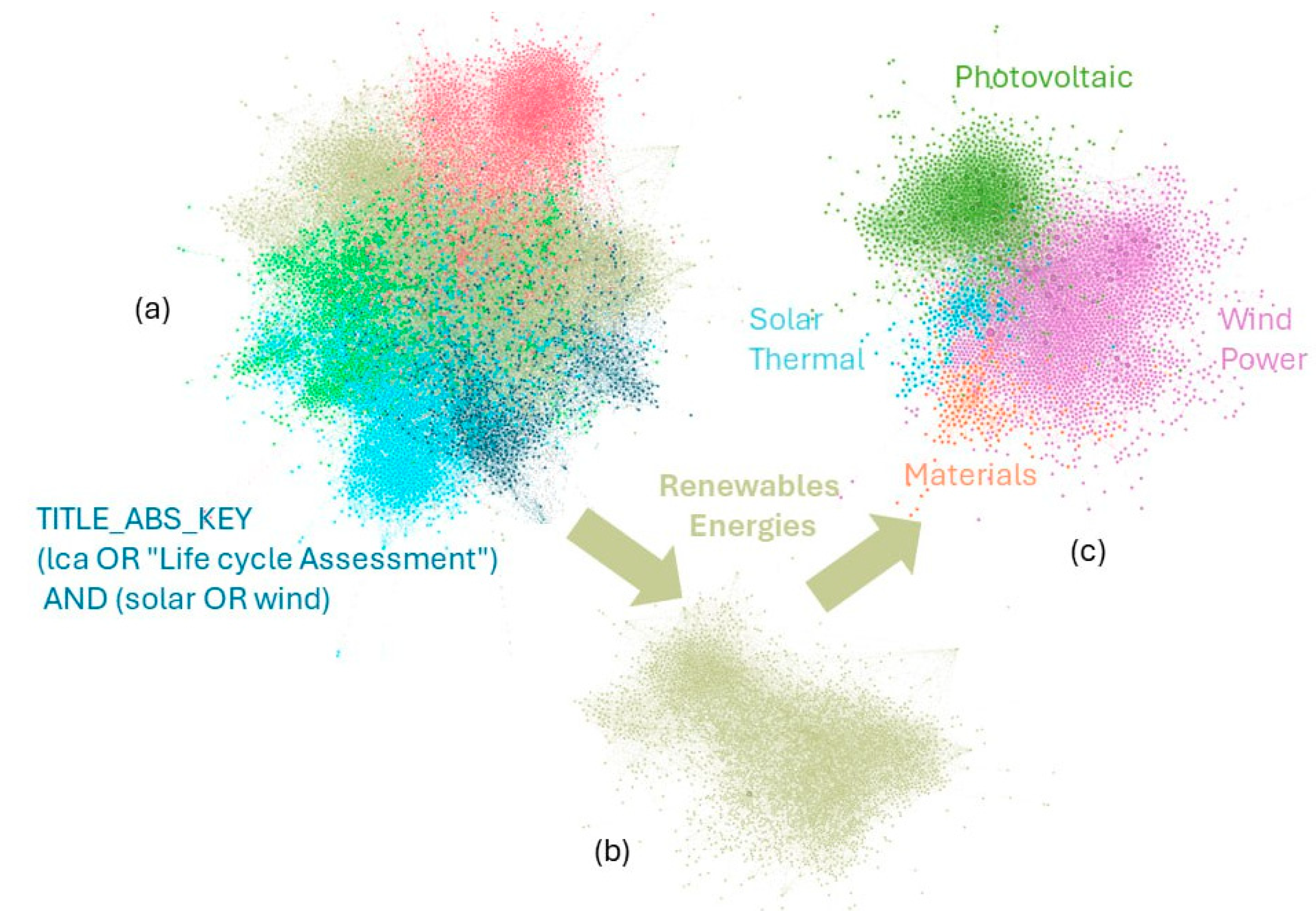
Figure 2.
EKeywords graphical representation.
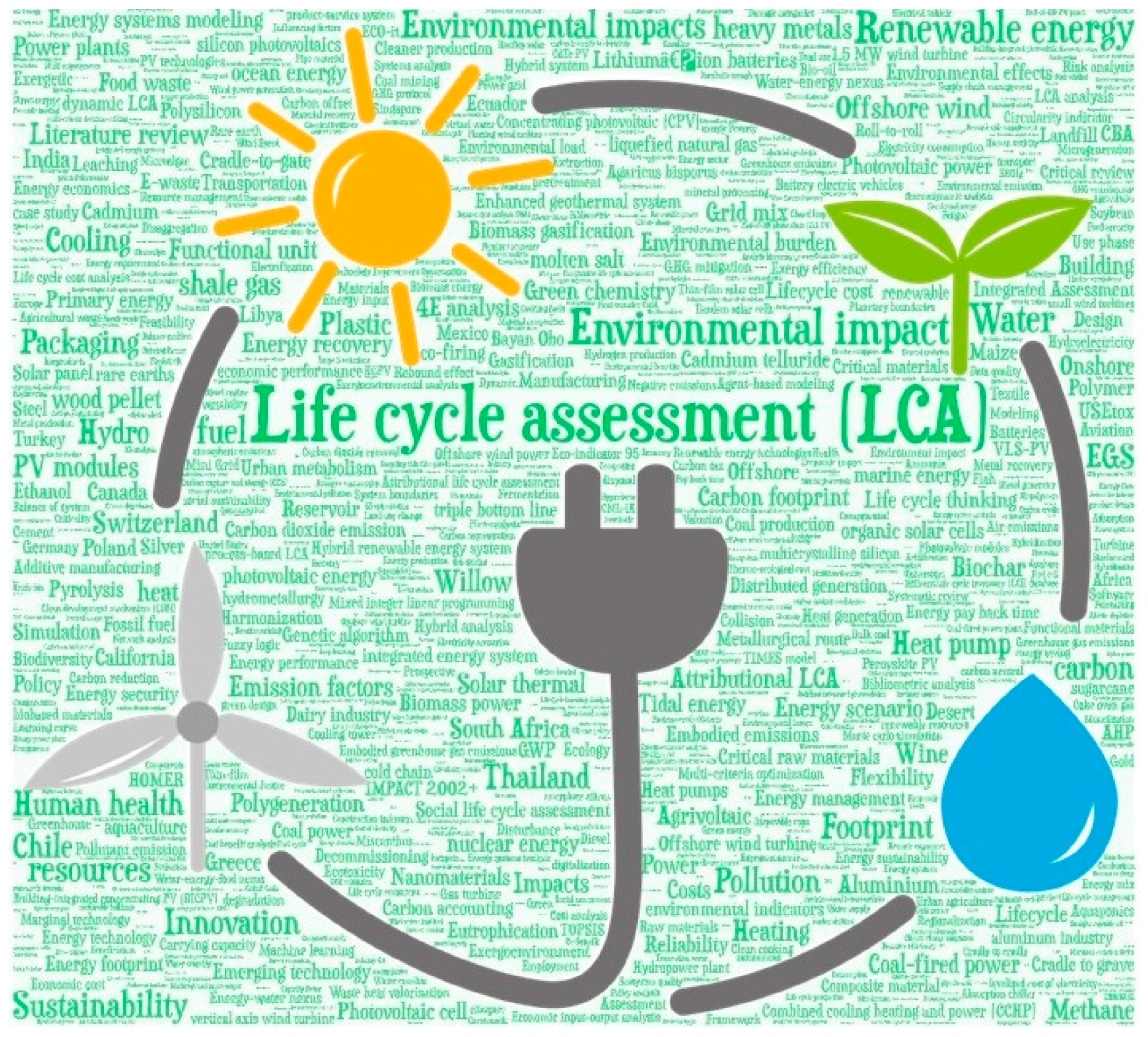
Figure 3.
Different scenarios. (a) Various methods for providing power; (b) 7.2 V DC Node.
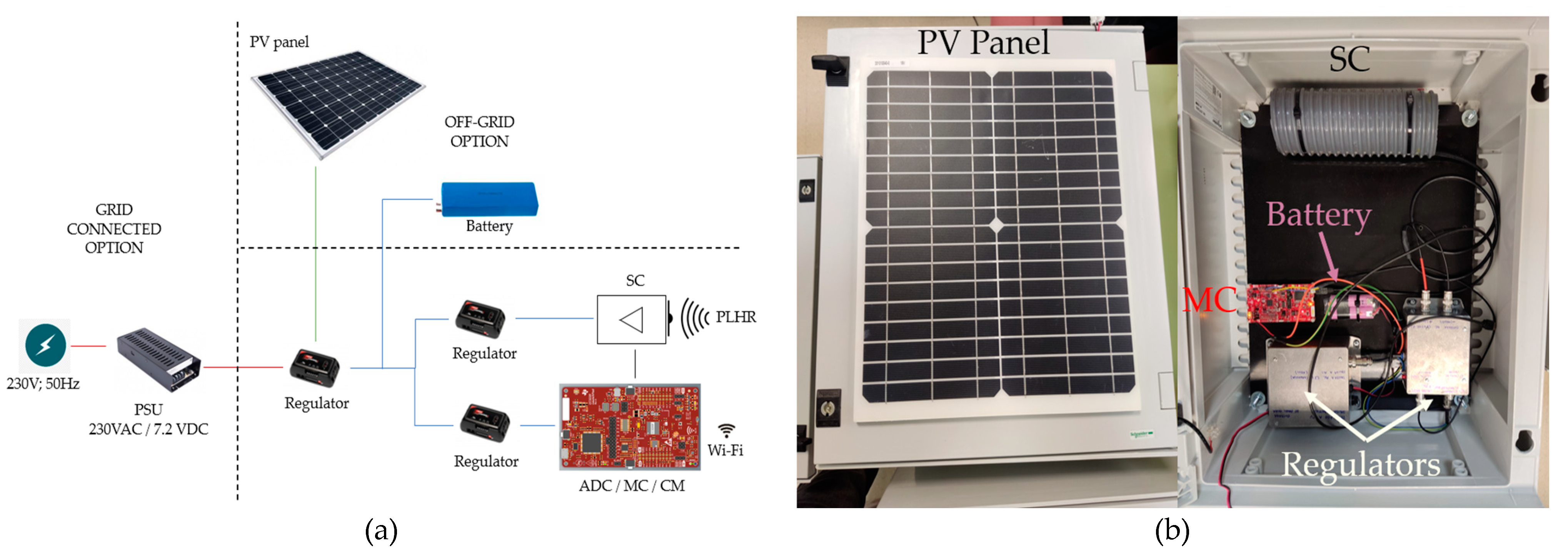

Table 1.
Life cycle impact assessment.
| Impact category and reference unit | Sensor connected to the grid | Sensor connected to a PV panel |
|---|---|---|
| Acidification (mol) | 1.22 E-2 | 1.48 E-3 |
| Climate change (kg CO2 eq.) | 2.09 E0 | 2.71 E-1 |
| Ecotoxicity, freshwater (Items) | 7.47 E-1 | 9.62 E-2 |
| Eutrophication marine (kg) | 1.84 E-3 | 2.97 E-4 |
| Eutrophication, freshwater (kg) | 1.05 E-5 | 5.11 E-6 |
| Eutrophication, terrestrial (kg) | 1.99 E-2 | 3.06 E-3 |
| Human toxicity, cancer (Items) | 1.32 E-8 | 1.94 E-9 |
| Human toxicity, non-cancer (Items) | 3.83 E-7 | 4.21 E-8 |
| Ionizing radiation, human health (kBq) | 2.46 E-1 | 3.35 E-2 |
| Land use (Items) | 7.05 E0 | 8.15 E-1 |
| Ozone depletion (kg) | 2.89 E-10 | 8.45 E-10 |
| Particulate Matter (Items) | 1.29 E-7 | 2.05 E-8 |
| Photochemical ozone formation – human health (kg) | 5.59 E-3 | 8.30 E-4 |
| Resource use, fossils (kg) | 2.99 E1 | 3.87 E0 |
| Resource use, minerals, and metals (kg) | 1.74 E-4 | 8.71 E-6 |
| Water use (m3) | 1.05 E0 | 5.94 E-2 |
Disclaimer/Publisher’s Note: The statements, opinions and data contained in all publications are solely those of the individual author(s) and contributor(s) and not of MDPI and/or the editor(s). MDPI and/or the editor(s) disclaim responsibility for any injury to people or property resulting from any ideas, methods, instructions or products referred to in the content. |
© 2024 by the authors. Licensee MDPI, Basel, Switzerland. This article is an open access article distributed under the terms and conditions of the Creative Commons Attribution (CC BY) license (http://creativecommons.org/licenses/by/4.0/).
Copyright: This open access article is published under a Creative Commons CC BY 4.0 license, which permit the free download, distribution, and reuse, provided that the author and preprint are cited in any reuse.


