

Submitted:
27 April 2024
Posted:
29 April 2024
You are already at the latest version
Abstract
Academics in healthcare grapple with the challenge of efficiently managing time while addressing diverse roles and responsibilities, leading to heightened levels of anxiety and stress within the academic community. The primary objective of this study is to offer a sustainable and systemic solution to the prevalent time-management challenges in healthcare academia, through the development of a predictive model. Employing systemic analysis software and adopting a systemic management approach, we crafted a model to address academic time-management concerns. The dynamics of time allocation for academicians are governed by three fundamental pillars: teaching, research, and administrative tasks. Significantly prioritizing administrative tasks depletes valuable academic time, making time management within academia excessively costly. This occurs as highly skilled individuals find themselves diverted towards administrative duties at the expense of their academic roles diminishing resilience levels. The proposed Timebooster Academic Systemic Model (TASM) advocates for the cultivation of soft skills in academia, en-compassing prioritization, seeking assistance, and addressing tendencies of perfectionism and procrastination. Additionally, TASM recommends the implementation of full automation, delegation of administrative responsibilities, and the mitigation of both overt and covert time-consuming elements. Furthermore, TASM reports on the pivotal role of the academic resilient manager-leaders, who actively contribute to their own satisfaction and academic growth by enhancing collaboration and teamwork. Time-management challenges emerge as a critical determinant of academic well-being and resilience. Systemic models, exemplified by TASM, offer a valuable framework for investigating prioritization concerns, identifying administrative impediments in academic processes, and managing low-value time-consuming elements. The TASM model, along with the systemic philosophy underpinning its design, presents an avenue for advancing the exploration of time-management phenomena within the context of healthcare academia.
Keywords:
Systemic approach
; systems management
; academia
; academicians
; time management
; procrastination
; prioritization
; perfectionism
; timewasters
; systemic tools
1. Introduction
In contemporary academia, the challenge of time management has become particularly acute as individuals grapple with the complexities of multitasking and balancing diverse responsibilities within their professional and personal lives [1]. Unlike conventional business commodities, time cannot be created, stored, or saved for future use, demanding a unique approach to its management [2]. Leo Tolstoy's assertion in War and Peace, "The two most powerful warriors are patience and time," underscores the significance of timely decision-making in avoiding costly business mistakes.
This imperative becomes even more pronounced in the volatile, uncertain, complex, and ambiguous (VUCA) environment, where individuals, especially those in healthcare organizations, must work in a constant state of change [3,4]. The demands placed on professionals in such an environment necessitate effective time management for the sustainability of their endeavors. Job demands, defined as the difficulty or challenge experienced in each role, play a crucial part in determining job satisfaction [5]. However, the manageable nature of these demands, influences individuals' satisfaction and success in their roles [6,7].
The repercussions of taxing job demands extend beyond satisfaction, leading to heightened anxiety, stress, and potential health issues [8,9,10,11]. In response to these challenges, effective time management emerges as a pivotal process, involving strategic planning, realistic objective setting, and efficient allocation of resources [12]. Alan (2009) [13] emphasizes the importance of not only planning but also protecting scheduled time and adjusting others' expectations.
Within the healthcare academic community, predominantly occupied by academic professors responsible for teaching, mentoring, and research, the theoretical freedom to pursue passions may be compromised due to financial constraints and workforce reductions post-pandemic [14,15,16]. Also, mid-career professionals express dissatisfaction with limited opportunities for career development, current positions, and research time (Bass and McPherson, 2019; Woolston, 2022) [17,18]. Healthcare academicians, engaged in academic responsibilities, clinical training, and practice, face intensified time-related challenges [19]. The necessity to balance multiple roles, often extending beyond standard working hours, further exacerbates their time management struggles. Despite recognizing the importance of time management, academic professors, especially women, find it challenging to maintain a balance between professional duties and personal life [10,11,20].
Despite ample literature on time management outside academia, limited information is available for academic professionals, particularly in healthcare [11,12,13,14,15,16,17,18,19,20,21,22,23,24]. The systemic approach, emphasizing the study of systems as cohesive entities rather than mere conglomerations of parts, offers a framework to comprehensively understand the interconnected factors influencing time management in the higher educational system [15,16,17,18,19,20,21,22,23,24,25,26,27].
Constructing interpretable models explicitly enables a holistic view of how these factors interact, guiding decision-making and providing insights into time waste processes within academia [28,29,30,31]. This study aims to review existing time management theories in academia and further develop a systemic model tailored to the unique challenges of time management in academic healthcare environments. Employing a combination of systemic and analytical methods, we report on the identification of obstacles and dysfunctional processes contributing to time waste and decreased productivity among healthcare academicians. The aim is to offer evidence-based recommendations for systemic time management approaches in teaching and research activities and to design a systemic model grounded in educational and word-of-mouth initiatives, with a focus on controlling and diminishing administrative burdens.
2. Background of the Study
Efficient time management is vital for professionals, impacting both productivity and satisfaction [32]. When discerning and eliminating time-consuming tasks, individuals can focus on high-value activities, leading to increased productivity [33,34]. Enhanced productivity not only boosts self-satisfaction but also motivates individuals to work more effectively [35]. Also, job satisfaction is closely linked to time control and organizational skills [32]. Employees valued for their punctuality and organization are highly sought after [36]. Soft skills like these often outweigh technical proficiency in today's job market. Furthermore, effective time management translates to economic success, benefiting individuals and institutions alike [32]. When we reduce time wastage, efficiency increases, potentially leading to greater financial gains [33,34]. In academia, improved productivity enhances resource allocation and financial sustainability [35].
Healthcare academicians face unique time management challenges due to their multifaceted roles [24,36]. Balancing teaching, mentoring, research, and clinical duties, they must work in a complex “ecosystem” where time is finite and critical. The integration of academic and clinical responsibilities introduces further complexity [37]. The unpredictable nature of clinical settings further complicates the planning, requiring adaptability from healthcare academicians [38]. Additionally, staying current with advancements in healthcare adds to their time demands [39].
In this dynamic environment, strategic time management is essential for maintaining academic rigor and quality clinical education [20]. Healthcare academicians must develop adaptive approaches tailored to their unique challenges, ensuring they effectively fulfill their diverse responsibilities while staying abreast of healthcare industry developments [40].
2.1. Time Management Techniques in Academia
Strategic time management in healthcare academia involves empowering individuals to make autonomous decisions regarding their work schedule and task delegation) [41,42]. This approach emphasizes the importance of active participation in meetings to ensure effective time allocation, recognizing the value of periodic breaks for rejuvenation, and prioritizing projects aligned with personal or professional development [43,44,45]. Preemptive planning, list-making, and strategic time ordering are fundamental techniques for enhancing productivity and focus [21,41,46]. List-making provides a systematic approach to task management, allowing individuals to prioritize and delegate tasks effectively, while strategic time ordering enables extended blocks of focused work conducive to rigorous research [36,47].
Furthermore, adopting an insightful approach involves acknowledging the acceptability of taking time off, particularly after completing major projects. This contrasts with the conventional temptation to immediately embark on new endeavors, often of little or no value [43]. Instead, academicians are encouraged to channel their focus toward projects that align with their hierarchical progression or personal spiritual journey [48]. The cultivation of habits exhibited by successful individuals—limited distraction, outcome-focused dedication, ambition, and singularity of purpose—provides a blueprint for effective time management) [44]. Preemptive planning, extending to seminars and educational activities, is a basic yet fundamental approach, emphasizing the utility of a month-long calendar encompassing all activities for informed decision-making [21,41].
Additionally, list-making, a venerable tool in the field of time management, takes on heightened significance in academia. Compiling daily, weekly, or monthly lists serves as a systematic approach to planning, task awareness, sustained focus, and effective delegation [48]. Academicians are advised to tailor their lists to align with their responsibilities, discerning tasks that require their unique abilities and delegating to others [41]. Sequencing activities and assigning urgency codes contribute to enhanced productivity, allowing for a strategic and systematic approach to tasks based on their importance and deadlines [46]. The psychological reward derived from crossing completed tasks off the list reinforces a sense of accomplishment and motivation [49].
Furthermore, strategic time order involves the deliberate allocation of specific periods to designated tasks, providing academicians with extended blocks of focused time conducive to rigorous research endeavors [36]. Research conducted among 500 employees across various industries sheds light on prevalent time management practices, revealing that less than 1 in 5 individuals utilize a proper time management system, with 82% resorting to lists or email inboxes [50]. The majority adopting an approach of addressing whatever arises exhibit the least successful time management technique [51]. Frequent email checking, often every 20 minutes, is identified as a common yet less effective practice, with the potential to undermine productivity, as highlighted by Pareto's law [50].
Lastly, the Eisenhower matrix, derived from President Eisenhower's insightful distinction between urgent and important tasks, offers a structured approach for academicians to optimize their time usage [33]. Tasks are categorized based on urgency and importance into four quadrants: urgent and important, not urgent but important, urgent and not important, and not urgent and not important. This framework, popularized serves as a valuable thinking tool for academicians to explore the complex landscape of competing tasks [33]. Embracing the Eisenhower matrix empowers academicians to strategically prioritize tasks and align them with overarching academic goals, fostering more efficient and purposeful use of time resources. (Figure 1)
In academia, task classification using the Eisenhower matrix provides a strategic approach to time management, allowing academicians to prioritize responsibilities [54]. Urgent tasks, like organizing exams or submitting grades, require immediate attention to avoid consequences [53]. Important tasks, such as preparing for presentations, hold broader significance and demand proactive planning [54]. Academicians can use various tools to organize tasks and determine their urgency and importance, taking decisive actions accordingly [54]. Non-urgent and non-important tasks can be eliminated, while urgent but unimportant ones can be delegated [55]. Non-urgent but important tasks should be scheduled, and urgent and important tasks prioritized for immediate action, with automation tools aiding efficiency [56].
While the Eisenhower matrix is valued for task prioritization, Kamoun (2022) [57] highlights its limitations for academicians, proposing task shuffling as an alternative approach to address critical issues. One challenge identified is the tendency to overload the urgent and important quadrant, leading to heightened stress and diminished well-being [58,59]. Kamoun advocates for reallocating tasks to alleviate this burden and promote a healthier work-life balance. Another limitation lies in the matrix's inability to anticipate the future importance of activities, overlooking transformative opportunities in academia [57]. Kamoun's approach allows for dedicated time allocation while embracing serendipity by categorizing tasks into non-optional responsibilities and optional, academically enriching activities [60]. This paradigm shift encourages adaptability and openness to unpredictability, growing a more holistic approach to academic task management.
Perfectionism, ubiquitous in academia, particularly in healthcare education, poses significant challenges to time management and productivity too [61,62]. Its cognitive, emotional, and behavioral dimensions can lead to excessive self-criticism, procrastination, and reluctance to delegate tasks [63,64]. The pressure to excel in research, teaching, and clinical practice exacerbates perfectionistic tendencies, contributing to burnout and reduced productivity [65,66]. Research indicates that perfectionism can lead to overwork and exhaustion, blurring the boundaries between work and personal life [67,68]. To address these challenges, healthcare academicians must cultivate awareness of perfectionistic tendencies and adopt strategies to control their effects, fostering a healthier approach to achievement and well-being [69]. Further research is needed to develop interventions tailored to healthcare academia, promoting sustainable academic excellence.
2.2. The Timebooster Approach in Academic Time Management
Amidst the global challenges faced by academicians across research, teaching, and administration, personalized time management strategies become pivotal, especially in the mid-career stage, requiring resilience and motivation [70,71]. In academia, the "Timebooster approach" presented in this study, offers a strategic shift towards effective time management, emphasizing strategic delegation to save time and optimize planning [72]. If we assume a manager-leader role, we academicians can orchestrate research activities while delegating non-expertise tasks to others, garnering support and enhancing productivity [10]. Moreover, prioritizing tasks based on career evolution, infusing enjoyable tasks into daily routines, and integrating time management across academic pillars are crucial parameters of time management in our field [1,55,73,74,75]. Cultivating calmness, sustaining motivation, and strategic prioritization further bolster effective time management [76,77,78,79,80]. Also, setting boundaries to minimize interruptions, such as defining standard interaction times, preserves personal energy and improves well-being [81]. If we additionally address common timewasters like perfectionism and procrastination, we give to the approach a spiritual perspective fostering joy in academic pursuits and detachment from results [82]. Integrating time management education within academia can further propagate the Timebooster approach, cultivating a culture of efficiency and holistic well-being among academic professionals. Then academicians could learn to manage tasks efficiently, employ strategies such as delegation, time blocking, efficient documentation tools, prioritization techniques, collaborative research approaches, educational technology utilization, effective communication, continuous professional development, and mindfulness practices [83,84,85,86,87].
Of course, while we delegate administrative tasks to non-academic staff, maintaining educational quality is paramount [83]. Professional development programs, waste reduction initiatives, and gradual implementation of process improvement programs ensure a balanced approach and resilience enhancement [84,85,86,87]. These strategies, when implemented thoughtfully, can enhance education quality and sustain academic performance (Figure 1).
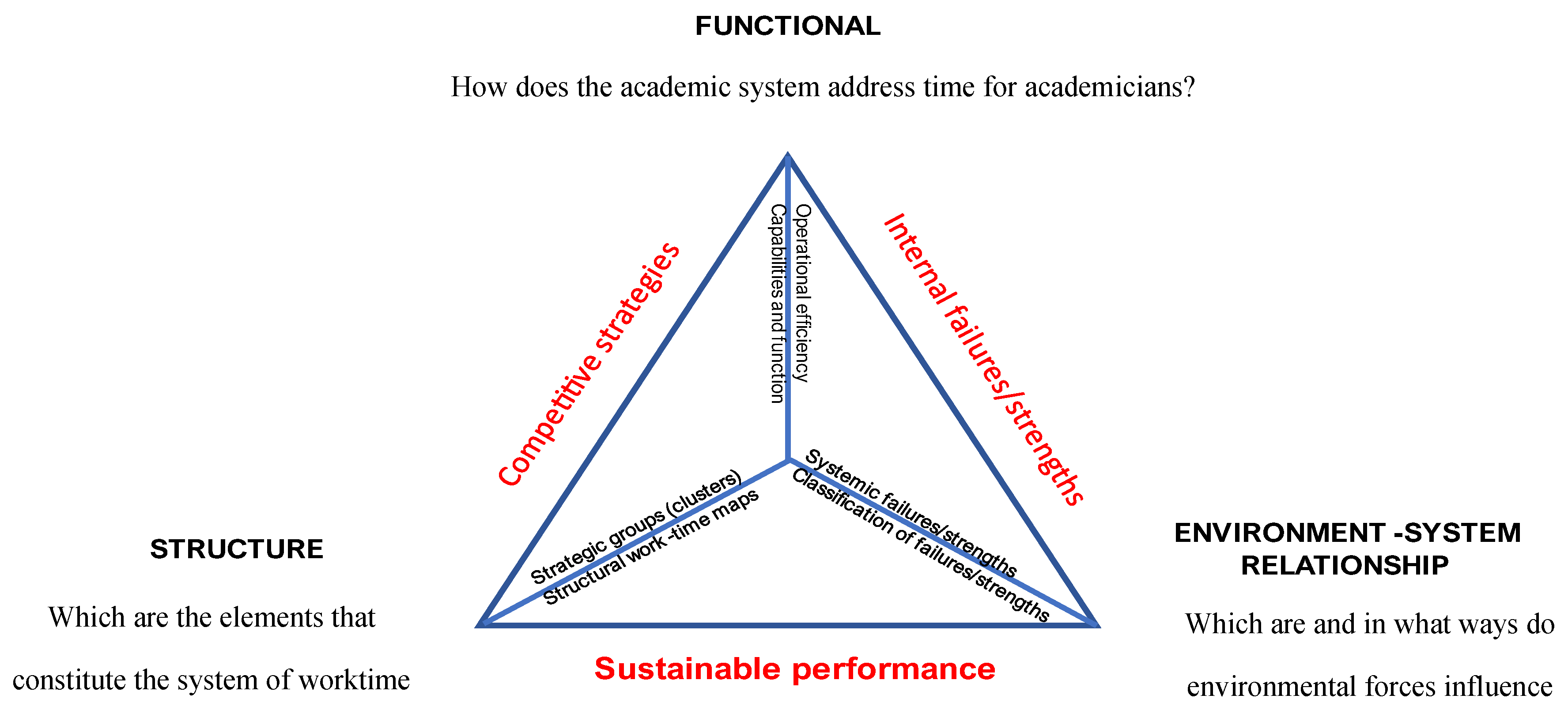
Figure 2.
Diagram illustrating sustainable performance elements for healthcare academicians.
2. Materials and Methods
The Materials and Methods should be described with sufficient details to allow others to replicate and build on the published results. Please note that the publication of your
3. Methodology of the Systemic Designing of the Model
3.1. Modeling and Simulation
The systemic model presented in this study is referred to as the "Timebooster Academic Systemic Model-TASM." Its objective is to conceptualize and simulate the dissemination of time management philosophy within the academic community to enhance productivity and sustainability. The fundamental factors influencing time management, including estimated hours and values, are drawn from the Department of Dentistry, School of Health Sciences, National and Kapodistrian University of Athens, Greece.
Our hypothesis posits that academicians, specifically dentists in this context, embracing the time management philosophy will be influenced by colleagues who recognize its benefits and are either contemplating its implementation or are already practicing it in their academic roles. We anticipate varying responses, with some being informed about time management yet taking no further action, while others adopt basic time management principles outlined in this study. Some may choose to implement a comprehensive time management program, fostering collaboration, prioritization, delegation, and a focus on their evaluation processes. We anticipate that academicians knowledgeable and proficient in time management will serve as influencers to their peers.
Drawing on the Socio-Ecological Model of Communication, which underscores the importance of understanding the intricate system within which the target audience operates [88], our model introduces an interaction factor that influences academic cooperation, providing a dynamic aspect to our system. The Socio-Ecological Communication Model for Social and Behavioral Change emphasizes the role of word-of-mouth (WOM) information transfer [89], which we believe will impact the dynamics of the systemic model. In our approach, we aim to shed light on the complexity, interdependence, and totality of the components within this complex adaptive system, avoiding the isolation of specific components from the larger system in which they are embedded.
In our study, we posit that the novel approach to time management in healthcare academia will be introduced to the faculty of the Department of Dentistry at the National and Kapodistrian University of Athens. The potential user base for this philosophy is equated to the total number of dental academic staff (N=63). Initially, all potential recipients fall into the category of "TimeOFF Academicians," with a small subset designated as "TimeON Academicians" (N=6). We assume that TimeOFF Academicians currently do not employ any fundamental time management principles.
At a given time, any Academician falls in exactly one of the three states (TimeOFF_Academician, Motivated_Academician, TimeON_Academician) of the following state chart. (Figure 3)
Motivation for implementing the time management philosophy among TimeOFF Academicians may arise voluntarily, through training programs such as time management seminars (Time Edu hours), or through influence from colleagues (Word Of Mouth) and other influencing factors, both positive (academic level and support) and negative (Timewasters). The adoption of changes will require both the need and time for these academicians to react (time to react).
Essentially, we posit that TimeON Dentists (TimeON_Academicians) will serve as influencers, motivating TimeOFF Dentists (TimeOFF_Academicians) to become Motivated Denists (Motivated_Academicians) and finally adopt the time management practices and become TimeON Dentists (TimeON_Academicians). The degree of influence hinges on the number of TimeON Dentists relative to the total number of academic dentists and the extent of interaction (contact) with TimeOFF Dentists and other stakeholders, defining the Adoption from WOM. The TimeON Dentists, The Motivated Dentists, and TimeOFF Dentists teams form the accumulation points or levels in the model, while other factors either serve as system parameters ("constant") or play a parameter role in describing the phenomenon of time management in academia.
These parameters serve as indicators for:
- The number of academic dentists embracing time management practices.
- The initial count of dentists integrating time management practices.
- The anticipated progression of dental personnel maturation, representing an increasing percentage of the total potential users of the time management philosophy.
- The average time needed for an academic professional to mature and adopt new time management practices.
The objective is to illustrate the evolving knowledge and practices of academicians over time, providing academia with insights into the dynamic influences on this phenomenon. The resulting benefits encompass:
- -
- Determining the timeframe for the complete dissemination of time management practices in academia.
- -
- Assessing the number of dentists within each subcategory, aiding in the planning of tailored educational support activities.
- -
- Identifying weaknesses in the dissemination of knowledge about time management.
- -
- Identifying and exploring factors influencing the spread of the Timebooster approach to time management.
In our model, the acceptance rate of the time management Timebooster philosophy is contingent upon the elements and the settings described in the following Table 3, Table 4, Table 5, Table 6 and Table 7:
The causality diagram of the hypothesis is referred to in Figure 4.
3.2. Model Simulation
The model of the system that describes the phenomenon of the spread of time management for the Timebooster approach in dental academicians is implemented using AnyLogic simulation software (AnyLogic Model, AnyLogic Model: https://cloud.anylogic.com/model/4b05e7b8-0b4f-4b05-941d-1daf6801ae4b?mode=DASHBOARD). To simulate, the program requires the definition of some initial settings, namely: Administration, Education, Research, Academic support, Time educ hours, Academic_Level, Workload, Timewasters, Adoption fraction, Contact rate.
To change the values of the variables affecting the evolution of the model, a control panel / user interface illustrated in Figure 5.
3.3. Model Execution
The model is first executed for the variables’ values referred to in Table 8.
Figure 8 shows the initial stage of the model execution based on the values of Table 8, while Figure 9 shows the final stage of the model execution for a period of 60 months.
The Academians’ transition from the TimeOFF_Academician state to the Motivated_Academician and the TimeON_Academician states over time, is demonstrated in the Graphs of Figure 10.
The Tasks’ progress over time is depicted in Figure 11.
To demonstrate the importance of the WOM effect in the transition process and the effects in the Tasks’ progress, we execute the model for the values of variables shown in Table 9.
Table 10, contains the values of variables for the model executions mentioned above.
In Figure 14, a comparison is given for the Time OFF Academicians, The Motivated Academicians, the Time ON Academicians and the combination of all three categories.
According to Table S1 (Supplementary material), using Values A of Table 10, all Time OFF Academicians become Time ON Academicians after 51 months, while according to Table 13, using Values B of Table 10, all Time OFF Academicians become Time ON Academicians after 16 months.
One may observe the much faster transition of the Academicians from the TIME OFF to the TIME ON state as well as the larger amount of Motivated Academicians resulting from the contacts and the Word Of Mouth effect.
As a result, a higher peak can be observed in the Original Tasks as well as in the Progress over time as shown in Figure 15.
According to Table S2 (Supplementary material), using Values B of Table 11, all Time OFF Academicians become Time ON Academicians after 16 months, while according to Table S3 (Supplementary material), using Values C of Table 11, all Time OFF Academicians become Time ON Academicians after 12 months. One may now observe the faster transition of the Academicians from the TIME OFF to the TIME ON state as well as the larger number of Motivated Academicians resulting from the motivation effect due to Academic factors. As a result, a higher peak can be observed in the Original Tasks as well as in the Progress over time as shown in Figure 17, while there are fewer Completed tasks due to the lower workload.
With these cost parameters, the pace of transformation for "TIME OFF Dentists" will increase at a gradual rate, failing to complete the phenomenon within the study period of 60 months. This indicates that as administrative work and timewasters reach their maximum values, the transformation rate slows down, aligning with expectations for academicians burdened by extensive non-academic tasks. Various scenarios within the model demonstrate its dynamic nature, performing effectively based on the parameters provided. Overall, the TASM model highlights the progression of time management evaluation in a healthcare academic setting. At this juncture, lacking historical data limits its capacity to fully elucidate specific situations. Nonetheless, applying this systemic model to a small sample of other academic healthcare environments enables the creation of historical data and the definition of coefficients for subsequent analysis of the phenomenon. Consequently, the model can serve as a predictive and strategic decision-making tool for educating and implementing time management principles in healthcare academia.
4. Discussion
Our study addressed the application of behavioral change management, communication principles, and practical methodologies like the Eisenhower matrix and the Timebooster approach within the healthcare academic context, while also exploring the role of academic administrators and the implementation of time management programs. The Timebooster Academic Systemic Model (TASM) offers valuable insights into understanding and addressing the behavioral dynamics inherent in academic time management [24]. Our model shows that incorporating principles such as recognizing and addressing individual perceptions of time, establishing clear communication channels, and promoting collaborative problem-solving in healthcare academia can help academicians coach themselves and others through word-of-mouth practices to effectively address the complexities of time management in the working environment [90].
One key aspect highlighted by TASM is the importance of recognizing the interconnectedness of individual behaviors and systemic factors within the academic environment as mentioned also elsewhere [91]. Effective time management is not solely reliant on individual efforts but also on the organizational culture, support structures, and communication channels in place [24]. Therefore, interventions aimed at improving time management must consider both individual behaviors and systemic influences, such as leadership styles, institutional policies, and communication norms (Restivo et al 2022; Meirinhos, et al 2023) [92,93].
Effective communication stands out as a cornerstone for successful time management in healthcare academia [71] as also shown by our model. Under this approach the researchers emphasize some key time management strategies such as prioritization and focus on high-priority tasks that contribute significantly to research goals, time blocking when we allocate specific time blocks for different research activities, goal setting for guiding research activities and maintaining motivation, with clear short-term and long-term objectives, the delegation of non-essential tasks to free up time for critical research activities and utilizing time management tools such as calendar apps and task management software to organize schedules and track deadlines efficiently [71]. Clear and transparent communication channels are therefore essential for designing time management strategies, that contribute to collaboration, and address challenges as they arise cultivating resilience [10]. Insights from TASM model emphasize the importance of establishing open channels for expressing needs and managing change, which are crucial for staff well-being and program adaptation [11].
Generally, if we enhance a culture of effective communication, healthcare academic institutions can cultivate an environment where academicians feel supported, valued, and empowered to optimize their time management strategies. This emphasis on communication aligns with research indicating that open channels for expressing needs and managing change are crucial for staff well-being and program adaptation [24]. Effective communication stands as a cornerstone for success, aligning employees' goals with organizational purposes [94]. Establishing frequent, friendly, ethical, and consistent workplace communications is essential for building resilience and addressing crises effectively [17,95,96,97]. In academia, such communication practices are pivotal for creating a positive workplace environment and enhancing the well-being of academicians [24].
Moreover, the Timebooster Academic Systemic Model (TASM) demonstrates the efficacy of integrating practical methodologies such as the Eisenhower matrix and the Timebooster approach within healthcare academia to enhance time management skills systematically [98]. When researchers adopt a systemic approach, they can address the complexities of time management more comprehensively, as suggested by previous studies emphasizing the importance of systemic thinking in designing effective time management tools for the workplace [99]. This holistic perspective allows for an in-depth understanding of the interconnections between various aspects of time management, facilitating the development of tailored strategies to improve productivity and well-being in academic settings.
In addition to individual-level interventions, the role of academic administrators in alleviating administrative burdens and promoting effective time management cannot be overlooked [100]. As discussed also by Bozeman et al. (2020) [101], which investigates the impact of computer-automated research grants management systems on universities, these systems, often referred to as robotic bureaucracy, aim to organize administrative processes and alleviate the burden on academic staff. If automating tasks are performed within academia, such as grant application processing, compliance monitoring, and reporting, we may significantly reduce the time and effort required for administrative tasks while at the same time, we may enhance efficiency, reducing errors, and improving overall productivity within academic institutions [101]. Additionally, automation can free up valuable time for academic staff to focus on core activities such as research, teaching, and knowledge dissemination [102]. This not only benefits individual researchers but also contributes to the broader goals of advancing scientific discovery and innovation [103]. Therefore, the adoption of automated systems in administrative academia is crucial for a more efficient, productive, and supportive environment for academic work. Overall, insights from TASM suggest that academic administrators play a crucial role in shaping the organizational culture, establishing support structures, and implementing policies that facilitate efficient time management practices [24]. Academic administrators and automation in administrative tasks can empower healthcare academicians to focus on their core responsibilities and achieve their professional goals, by delegating administrative tasks, providing training and resources, and creating a supportive work environment [104]
The implementation of time management programs in healthcare academia requires meticulous planning, resource allocation, and evaluation to address the multifaceted challenges encountered by healthcare academicians [105]. These initiatives aim to enhance efficiency and productivity across research, teaching, and administrative domains, promising benefits such as heightened job satisfaction and academic performance [1,98]. However, successful execution hinges on a comprehensive understanding of associated costs and challenges, necessitating strategic resource allocation and rigorous evaluation frameworks [20]. Resource allocation emerges as a critical aspect in the deployment of time management programs, requiring institutions to invest in training, technology infrastructure, and administrative support [20,102,103,104] through systems dynamics research [106,107]. If the system dedicates adequate financial and personnel resources, institutions can facilitate the smooth execution of these initiatives while minimizing disruptions to regular academic activities [108]. Furthermore, robust evaluation mechanisms play a pivotal role in assessing the impact of these programs on academic productivity and overall well-being, guiding informed decision-making and future investments in time management strategies [20,105]. Overall, addressing challenges such as resistance to change and technological barriers demands proactive measures, emphasizing stakeholder engagement and ongoing support to ensure the successful adoption and sustainability of time management initiatives.
5. Conclusions
Effective time management in healthcare academia requires a multifaceted approach that integrates behavioral change management, communication principles, practical methodologies, and institutional support structures. Insights from the Timebooster Academic Systemic Model offer valuable guidance for studying the complexities of time management and cultivating a culture of efficiency and well-being within healthcare academic institutions. Embracing these principles and strategies can empower healthcare academicians to elevate their productivity, attain a healthier work-life balance, and flourish in their professional pursuits.
6. Patents
The TASM model represents a patented system-thinking approach to time management in healthcare academia.
Supplementary Materials
The following supporting information can be downloaded at the website of this paper posted on Preprints.org. Table S1, S2, S3.
Author Contributions
Conceptualization, M.A.; methodology, M.A. and R.A; software, M.A. and R.A.; validation, M.A. and R.A.; formal analysis, R.A.; investigation, M.A.; resources, M.A and R.A.; data curation, R.A.; writing—review and editing, M.A. and R.A.; visualization, M.A.; supervision, M.A.; project administration, M.A.; funding acquisition, M.A. All authors have read and agreed to the published version of the manuscript.
Funding
This research received no external funding.
Institutional Review Board Statement
Not applicable.
Informed Consent Statement
Not applicable.
Data Availability Statement
All necessary data are shown in the article and supplementary material.
Conflicts of Interest
The authors declare no conflicts of interest.
References
- Goldsby, E., Goldsby, M., Neck, C.B., Neck, C.P. Under Pressure: Time Management, Self-Leadership, and the Nurse Manager. Administrative Science 2020, 10, 38. [CrossRef]
- Gluck, WF., Kaufman, P.S., Walleck, S. Strategic Management for Competitive Advantage. Harvard Business Review. July 1980. https://hbr.org/1980/07/strategic-management-for-competitive-advantage.
- Peschl M., Matlon M. 2021. What is the Meaning of VUCA World? https://www.thelivingcore.com/en/what-is-themeaning-of-vuca-world/.Posted: 1 February 2021.
- Baldwin, S. Living in a VUCA World. Mar 29 2022. https://www.linkedin.com/pulse/living-vuca-world-scottbaldwin?trk=articles_directory.
- Hambrick DC., Finkelstein S., Mooney A. Executive Job Demands: New Insights for Explaining Strategic Decisions and Leader Behaviors. Academy of Management Review 2005, 30(3):472-491. [CrossRef]
- Gardner JW. The Nature of Leadership. Introductory Considerations. 1986, Leadership Studies Program, Independent Sector Eds.
- Judge TA, Thoresen CJ, Bon JE, Patton GK. The job satisfaction , job performance relationship a qualitative and quantitative review. Psychological Bulletin 2001, 127, 3, 376-407.
- Wall TD, Jackson PR, Mullarkey S, Parker S. The Demand-Control Model Of Job Strain: A More Specific Test. Journal of Occupational and Organizational Psychology 1996, 69(2):153-166. [CrossRef]
- Theorell, T. Karasek, R. A. Current Issues Relating to Psychosocial Job Strain and Cardiovascular Disease. Research. Journal of Occupational Health Psychology 1996, 1: 9–26.
- Antoniadou, M. Leadership and Managerial Skills in Dentistry: Characteristics and Challenges Based on a Preliminary Case Study. Dental Journal 2022a, 10, 146. [CrossRef]
- Antoniadou M. Quality of Life and Satisfaction from Career and Work–Life Integration of Greek Dentists before and during the COVID-19 Pandemic. International Journal of Environmental research and Public Health 2022b, 19, 9865. [CrossRef]
- Daraio, C., Bonaccorsi, A., Simar, L. Rankings and University Performance: A Conditional Multidimensional Approach. European Journal of Operational Research, 2015, 244: 918–30.
- Allam, Z. & Ahmad, S. An Empirical Study of Quality in Higher Education in Relation to Stakeholders’ Perspectives. Journal of American Science, 2013, 9(12), 387-401.
- Condon, W., Iverson, E.R., Manduca, C.A., Rutz, C., Willett, G. Faculty development and student learning: Assessing the connections. Indiana University Press. 2016.
- Brown, J., Kurzweil, M. Instructional quality, student outcomes, and institutional finances. American Council on Education. 2018. Accessed online 20 April 2024 from https://www.acenet.edu/Documents/Instructional-Quality-Student-Outcomes-and-Institu-tionalFinances.pdf.
- Gewin, V. (2022). Has the ‘great resignation’ hit academia? 31 May https://www.nature.com/articles/d41586-022-01512-6.
- Bass R., Eynon B., Gambino L.M. The new learning compact: A framework for professional learning and educational change. Every Learner Everywhere.2019. Accessed online 20 April 2024 from https://www.everylearnersolve.com/asset/YAhR8dclZb0mzn4v2zXh.
- Woolston, C. Nature 606, 211-213 (2022). [CrossRef]
- Gralka, S. (2018) Stochastic Frontier Analysis in Higher Education: A Systematic Review. CEPIE Working Papers 05/18, Technische Universität Dresden, Center of Public and International Economics (CEPIE).
- Aeon B, Faber A, Panaccio A. Does time management work? A meta-analysis. PLoS ONE 2021, 16(1): e0245066. [CrossRef]
- Ailamaki A., Gehrke, J. Time Management for New Faculty. Sigmod Record 2003, 32(2).
- Hillestad, S.G., Berkowitz E.N. Health care market strategy: from planning to action. 2004, Jones and Bartlett Learning.
- Dodd P, Sundheim D. “The 25 Best Time Management Tools and Techniques: How to Get More Done Without Driving Yourself Crazy” John Wiley & Sons, 2011.
- Antoniadou, M.; Mangoulia, P.; Myrianthefs, P. Quality of Life and Wellbeing Parameters of Academic Dental and Nursing Personnel vs. Quality of Services. Healthcare 2023, 11, 2792. [CrossRef]
- Donnadieu G. L’Approche Systémique: De Quoi S’agit-il?. Synthèse Des Trav. Du Groupe AFSCET. “Diffus. La Pensée Systémique’’, 2003, 1–11.
- Ackoff, R.L., Emery, F.E. On Purposeful Systems. London: Tavistock Publications. 1972.
- Arnold E. Evaluating Research and Innovation Policy: A Systems World Needs Systems Evaluations’, Research Evaluation, 2004, 13: 3–17.
- De La Torre E.M., Casani, F., Sagarra, M. Defining Typologies of Universities through a DEA-MDS Analysis: An Institutional Characterization for Formative Evaluation Purposes. Research Evaluation, 2018, 27: 388–403.
- Waldrop MM. Complexity: The Emerging Science at the Edge of Order and Chaos. 1992, New York: Simon and Schuster Paperbacks.
- Jackson, M.C. Fifty Years of Systems Thinking for Management. Journal of the Operational Research Society, 2009, 60: S24–S32.
- Wieczorek, A.J., Hekkert, M.P. Systemic Instruments for Systemic Innovation Problems: A Framework for Policy Makers and Innovation Scholars. Science and Public Policy, 2012, 39: 74–87.
- Fagefors C, Lantz B, Rosén P. Creating Short-Term Volume Flexibility in Healthcare Capacity Management. Int J Environ Res Public Health. 2020 Nov 17;17(22):8514. [CrossRef]
- Covey, S. “The Seven Habits of Highly Effective People” Fireside, 1990.
- Harris, J. Time Management 100 Success Secrets: The 100 Most Asked Questions on Skills, Tips, Training, Tools and Techniques for Effective Time Management. Lulu Publications. 2008.
- Laredo, P. Revisiting the Third Mission of Universities: Toward a Renewed Categorization of University Activities? Higher Education Policy, 2007, 20: 441–56.
- Osterman, R. (2005). Attitudes count “soft skills” top list of what area employer’s desire. Sacramento Bee, May 23.
- Hashemiparast M, Negarandeh R, Theofanidis D. Exploring the barriers of utilizing theoretical knowledge in clinical settings: A qualitative study. Int J Nurs Sci. 2019 Sep 12;6(4):399-405. [CrossRef]
- Vizeshfar F, Rakhshan M, Shirazi F, Dokoohaki R. The effect of time management education on critical care nurses' prioritization: a randomized clinical trial. Acute Crit Care. 2022 May;37(2):202-208. [CrossRef]
- Metty P, Maglaras L, Amine Ferrag M, Almomani I. Digitization of healthcare sector: A study on privacy and security concerns. ICT Express, 2023, 9, (4), 571-588. [CrossRef]
- Mhlongo S., Mbatha K., Ramatsetse B., Dlamini R. Challenges, opportunities, and prospects of adopting and using smart digital technologies in learning environments: An iterative review. Heliyon, 2023, 9 (6), e16348. [CrossRef]
- Begley T. Effective time management. The New Jersey Lawyer, Inc. April 18, 2005, 14, 16, A6.
- Cummings, R., Holmes, L. Business Faculty time management: lessons learned from the trenches. American Journal of business Education 2009 2(1):35-30.
- Tobis, M., Tobis, I. Managing multiple projects. McGraw-Hill Professional. 2002.
- Shaw, D. Who has time for success? Manage Online, 2005, 3, 2.
- Borrás, S., Edquist C. Holistic Innovation Policy: Theoretical Foundations, Policy Problems, and Instrument Choices. Oxford: Oxford University Press. 2019.
- Rigby D, Sutherland S, Takeuchi H. Embracing Agile. Harvard Business Review May 2016. https://hbr.org/2016/05/embracing-agile.
- Buljac-Samardzic M, Doekhie KD, van Wijngaarden JDH. Interventions to improve team effectiveness within health care: a systematic review of the past decade. Hum Resour Health. 2020 Jan 8;18(1):2. [CrossRef]
- Collie R., Holliman A., Martin A. Adaptability, engagement and academic achievement at university. Educational Psycholog 2016. [CrossRef]
- Fleming, I. The Time Management Pocketbook. 6th edition, Management Pocketbooks.2011.
- Acuity training. 2022 (accessed online on 20 April 2024 from https://www.acuitytraining.co.uk/news-tips/time-management-statistics-2022-research/.
- Porta CR, Anderson MR, Steele SR. Effective time management: surgery, research, service, travel, fitness, and family. Clin Colon Rectal Surg. 2013 Dec;26(4):239-43. [CrossRef]
- Asana Team. The Eisenhower Matrix: How to prioritize your to-do list. January 29th, 2024. https://asana.com/resources/eisenhower-matrix.
- Kennedy DR, Porter AL. The Illusion of Urgency. Am J Pharm Educ. 2022, 86(7):8914. [CrossRef]
- Miyake, A., & Kane, M. J. Toward a Holistic Approach to Reducing Academic Procrastination With Classroom Interventions. Current Directions in Psychological Science, 2022, 31(4), 291-304. [CrossRef]
- Thomson T. Management by objectives. The Pfeiffer Library Volume 20, 2nd Edition. 1998, Jossey-Bass/Pfeiffer (accessed 20 April 2024 from chrome-extension://efaidnbmnnnibpcajpcglclefindmkaj/https://home.snu.edu/~jsmith/library/body/v20.pdf).
- Coito, T.; Firme, B.; Martins, M.S.E.; Vieira, S.M.; Figueiredo, J.; Sousa, J.M.C. Intelligent Sensors for Real-Time Decision-Making. Automation 2021, 2, 62-82. [CrossRef]
- Kamoun, S. (2022). Time management for academics- forget about the Eisenhower method. Zenodo( accessed online 20 April 2024 from https://doi.org/10.5281/zenodo.6616905. https://kamounlab.medium.com/time-management-for-academics-forgetabout-the-eisenhower-method-15b380ade0a8.
- Kuh, G.D., O’Donnell K.O., Schneider, C.G. HIPs at ten. Change: The Magazine of Higher Learning, 2017, 49(5), 8–16. Association of American Colleges and Universities.
- Van Vught, F. Mission Diversity and Reputation in Higher Education. Higher Education Policy, 2008, 21: 151–74.
- Paige RD. The relationship between self-directed informal learning and the career development process of technology users. Walden University ScholarWorks (Accessed 20 April from chrome-extension://efaidnbmnnnibpcajpcglclefindmkaj/https://scholarworks.waldenu.edu/cgi/viewcontent.cgi?article=1013&context=hodgkinson.
- Kamushadze T, Martskvishvili K, Mestvirishvili M, Odilavadze M. Does Perfectionism Lead to Well-Being? The Role of Flow and Personality Traits. Eur J Psychol. 2021 May 31;17(2):43-57. [CrossRef]
- Antony, M.M. Swinson, R.P. 2009: When Perfect isn’t good enough. New Harbinger, 2nd ed.
- Frost, R. O., Marten, P., Lahart, C., & Rosenblate, R. 1990: The dimensions of perfectionism. Cognitive Therapy and Research, 14, 449-468.
- Patterson, H. Firebaugh, C., Zolnikov, T. , Wardlow, R. , Morgan, S. and Gordon, B. A Systematic Review on the Psychological Effects of Perfectionism and Accompanying Treatment. Psychology, 2021, 12, 1-24. [CrossRef]
- Levine, I.S. Mind Matters: Too Perfect? Science Magazine: Careers. 28 March, 2008. [CrossRef]
- Hewitt, P. L., & Flett, G. L. Perfectionism in the self and social contexts: Conceptualization, assessment, and association with psychopathology. Journal of Personality and Social Psychology, 1991, 60, 456-470.
- Babaei S, Dehghani M, Lavasani FF, Ashouri A, Mohamadi L. The effectiveness of short-term dynamic/interpersonal group therapy on perfectionism; assessment of anxiety, depression and interpersonal problems. Res Psychother. 2022 Dec 29;25(3):656. [CrossRef]
- Stoeber, J. and Damian, L.E. 2016: Perfectionism in employees: Work engagement, workaholism, and burnout. In: Sirois, Fuschia M. and Molnar, Danielle S., eds. Perfectionism, health, and well-being. Springer, New York, 2016, 265-283. https://kar.kent.ac.uk/43727/.
- Rhaiem M. Measurement and Determinants of Academic Research Efficiency: A Systematic Review of the Evidence. Scientometrics, 2017, 110: 581–615.
- Xue L. Challenges and Resilience-Building: A Narrative Inquiry Study on a Mid-Career Chinese EFL Teacher. Front. Psychol., Sec. Positive Psychology 2021, 12. [CrossRef]
- Chase JA, Topp R, Smith CE, Cohen MZ, Fahrenwald N, Zerwic JJ, Benefield LE, Anderson CM, Conn VS. Time management strategies for research productivity. West J Nurs Res. 2013 Feb;35(2):155-76. [CrossRef]
- Antoniadou, M. Application of the humanities and basic principles of coaching in the Health Sciences; Tsotras: Athens, Greece, 2021.
- Cissna K. Self-actualized leadership: exploring the intersection of inclusive Self-actualized leadership: exploring the intersection of inclusive leadership and workplace spirituality at a faith-based institution of higher education. https://digitalcommons.pepperdine.edu/ 2020 (accessed 20 April from chrome-extension://efaidnbmnnnibpcajpcglclefindmkaj/https://digitalcommons.pepperdine.edu/cgi/viewcontent.cgi?article=2129&context=etd).
- Getman-Eraso, J., Culkin, K. High-impact catalyst for success: ePortfolio integration in the first-year seminar. In B. Eynon & L. M. Gambino (Eds.), Catalyst in action: Case studies of high-impact ePortfolio practice 2018, 32–49. Stylus.
- Doyle A. Important Time Management Skills For Workplace Success. December 16 2021, Accessed online 20 aApril 2024 from https://www.thebalancemoney.com/time-management-skills-2063776.
- Dweck C. What Having a “Growth Mindset” Actually Means. Harvard Business Review. January 13, 2016 (accessed 20 April from https://hbr.org/2016/01/what-having-a-growth-mindset-actually-means).
- Schuman-Olivier Z, Trombka M, Lovas DA, Brewer JA, Vago DR, Gawande R, Dunne JP, Lazar SW, Loucks EB, Fulwiler C. Mindfulness and Behavior Change. Harv Rev Psychiatry. 2020 Nov/Dec;28(6):371-394. [CrossRef]
- Pervaiz S, Li G, He Q. The mechanism of goal-setting participation's impact on employees' proactive behavior, moderated mediation role of power distance. PLoS One. 2021 Dec 15;16(12):e0260625. [CrossRef]
- Radu C. Fostering a Positive Workplace Culture: Impacts on Performance and Agility [Internet]. Human Resource Management - An Update. IntechOpen; 2023. Available from:. [CrossRef]
- Thorgren S, Wincent J, Sirén C. The Influence of Passion and Work–Life Thoughts on Work Satisfaction. Human Resource Development Quarterly 2013, 24(4). [CrossRef]
- Simmons, S. 9 Ways to Handle Interruptions Like a Pro. 2011. Accessed on line 20 April 2024 from http://www.lifehack.org/articles/lifehack/9-ways-to-handle-interruptions-like-a-pro.html.
- Manz, C. C., & Manz, K. P. Taking time to consider time, work life, and spirituality: a case in point. Journal of Management, Spirituality & Religion, 2017, 14(4), 279–280. [CrossRef]
- Folabit NE, Reddy S, Jita LJ. Understanding Delegated Administrative Tasks: Beyond Academics' Professional Identities. African Journal of Inter/Multidisciplinary Studies 2023, 5(1):1-11. [CrossRef]
- James Jacob, W., Xiong, W., Ye, H. Professional development programmes at world-class universities. Palgrave Commun 2015, 1, 15002. [CrossRef]
- Sunder V., Mahalingam S. An empirical investigation of implementing Lean Six Sigma in Higher Education Institutions. International Journal of Quality & Reliability Management 2018, 35(10):2157-2180. [CrossRef]
- Davidson, C., Eversley, S. Practicing the equitable, transformative pedagogy we preach. Inside Higher Ed.2021. Accessed online 20 April 2024 from https://www.insidehighered.com/views/2021/08/16/academe-needs-structural-change-toward-more-equitablepedagogy-opinion.
- Kovačič Lukman R., Glavič P.What are the key elements of a sustainable university? Clean Technologies and Environmental Policy 2007, 9(2):103-114. [CrossRef]
- Kincaid L., Figueroa ME., Storey D., Underwood C.A Socio-Ecological Model of Communication for Social and Behavioral Change. A Brief Summary. Johns Hopkins Bloomberg School of Public Health 2009, (accessed 20 April 2024 from chrome-extension://efaidnbmnnnibpcajpcglclefindmkaj/https://breakthroughactionandresearch.org/wp-content/uploads/2020/12/socio-ecological-model-of-communication-for-sbc.pdf.
- Kincaid, DL., Figueroa, ME. Communication for participatory development: Dialogue, action, and change. In L.R. Frey and K.N. Cissna (Eds.) 2009, Routledge Handbook of Applied Communication Research. New York: Routledge (pp. 506–531). [CrossRef]
- White, K., Habib, R., & Hardisty, D. J. How to SHIFT Consumer Behaviors to be More Sustainable: A Literature Review and Guiding Framework. Journal of Marketing, 2019, 83(3), 22-49. [CrossRef]
- Addis BA, Gelaw YM, Eyowas FA, Bogale TW, Aynalem ZB, Guadie HA. "Time wasted by health professionals is time not invested in patients": time management practice and associated factors among health professionals at public hospitals in Bahir Dar, Ethiopia: a multicenter mixed method study. Front Public Health. 2023, 21, 11:1159275. [CrossRef]
- Restivo V, Minutolo G, Battaglini A, Carli A, Capraro M, Gaeta M, Odone A, Trucchi C, Favaretti C, Vitale F, Casuccio A. Leadership Effectiveness in Healthcare Settings: A Systematic Review and Meta-Analysis of Cross-Sectional and Before-After Studies. Int J Environ Res Public Health. 2022 Sep 2;19(17):10995. [CrossRef]
- Meirinhos, G.; Cardoso, A.; Neves, M.; Silva, R.; Rêgo, R. Leadership Styles, Motivation, Communication and Reward Systems in Business Performance. J. Risk Financial Manag. 2023, 16, 70. [CrossRef]
- Benneworth, P., Pinheiro R., Sánchez-Barrioluengo, M. One Size Does Not Fit All! New Perspectives on the University in the Social Knowledge Economy. Science and Public Policy, 2016, 43: 731–5.
- Becker, H, Mustric F. “Can I Have 5 Minutes of Your Time?” 2008, Morgan James Publishing.
- Macan, T.H. Time management training: Effects on time behaviours, attitudes, and job performance. Journal of Psychology, 1996, 130, 229-236.
- Woolthuis, R.K., Lankhuizen, M., Gilsing, V. A System Failure Framework for Innovation Policy Design. Technovation, 2005, 25: 609–19.
- Moudatsou M, Stavropoulou A, Philalithis A, Koukouli S. The Role of Empathy in Health and Social Care Professionals. Healthcare (Basel). 2020 Jan 30;8(1):26. [CrossRef]
- Yeo KT. Systems thinking and project management — time to reunite. International Journal of Project Management 1993, 11, (2), 111-117. [CrossRef]
- Tamminga SJ, Emal LM, Boschman JS, Levasseur A, Thota A, Ruotsalainen JH, Schelvis RM, Nieuwenhuijsen K, van der Molen HF. Individual-level interventions for reducing occupational stress in healthcare workers. Cochrane Database Syst Rev. 2023 May 12;5(5):CD002892. [CrossRef]
- Bozeman B., Youtie J.,Jung J. Robotic Bureaucracy and Administrative Burden: What Are the Effects of Universities’ Computer Automated Research Grants Management Systems? Research Policy 2020, 49, (6), 103980. [CrossRef]
- Rensfeldt, A.B., Rahm, L. Automating Teacher Work? A History of the Politics of Automation and Artificial Intelligence in Education. Postdigit Sci Educ 2023, 5, 25–43. [CrossRef]
- Egbuchulem KI, Ogundipe HD, Uwajeh K. The future is yesterday: automating the thought process, an impending assault on academic writing. Ann Ib Postgrad Med. 2023 Aug;21(2):5-7. Epub 2023 Nov 1.
- Bornman J, Louw B. Leadership Development Strategies in Interprofessional Healthcare Collaboration: A Rapid Review. J Healthc Leadersh. 2023 Aug 23;15:175-192. [CrossRef]
- Bass R., Eynon B., Gambino L.M. (2019). The new learning compact: A framework for professional learning and educational change. Every Learner Everywhere. https://www.everylearnersolve.com/asset/YAhR8dclZb0mzn4v2zXh.
- Aparicio, J., Yaneth Rodríguez, D., Zabala-Iturriagagoitia, J.M. The systemic approach as an instrument to evaluate higher education systems: Opportunities and challenges. Research Evaluation, 2021, 30: 3, 336–348. [CrossRef]
- Pfeffer, T., Stichweh, R System theoretical perspectives on higher education policy and governance. In Huisman J, de Boer H, Dill D, Souto-Otero M. (eds) The Palgrave International Handbook of Higher Education Policy and Governance, 2015, 152–175. Houndmills, Basingtoke, Hampshire: Palgrave MacMillan.
- Kamalov, F.; Santandreu Calonge, D.; Gurrib, I. New Era of Artificial Intelligence in Education: Towards a Sustainable Multifaceted Revolution. Sustainability 2023, 15, 12451. [CrossRef]
Figure 1.
The Eisenhower matrix for academicians.
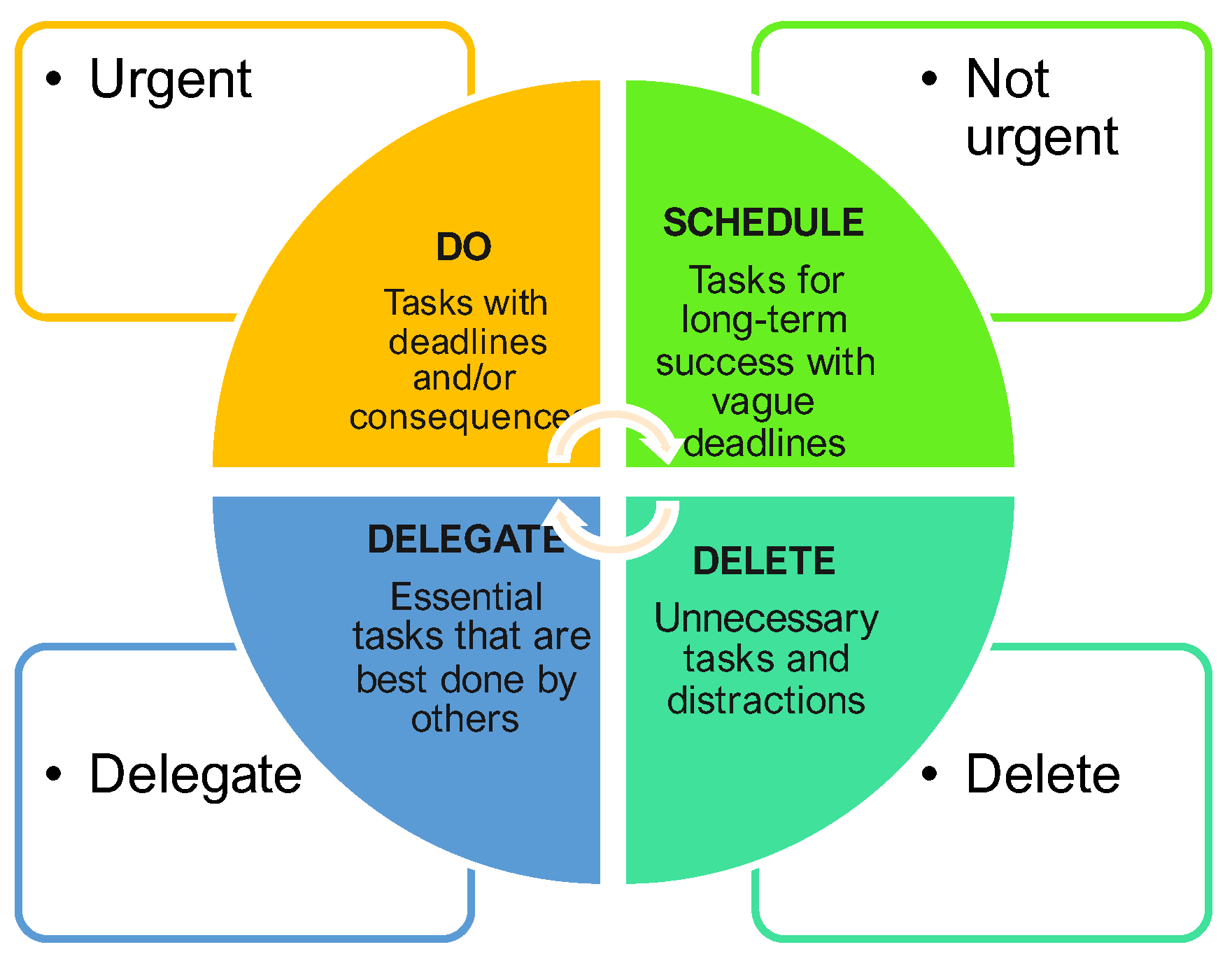
Figure 3.
Academicians’ Statechart.
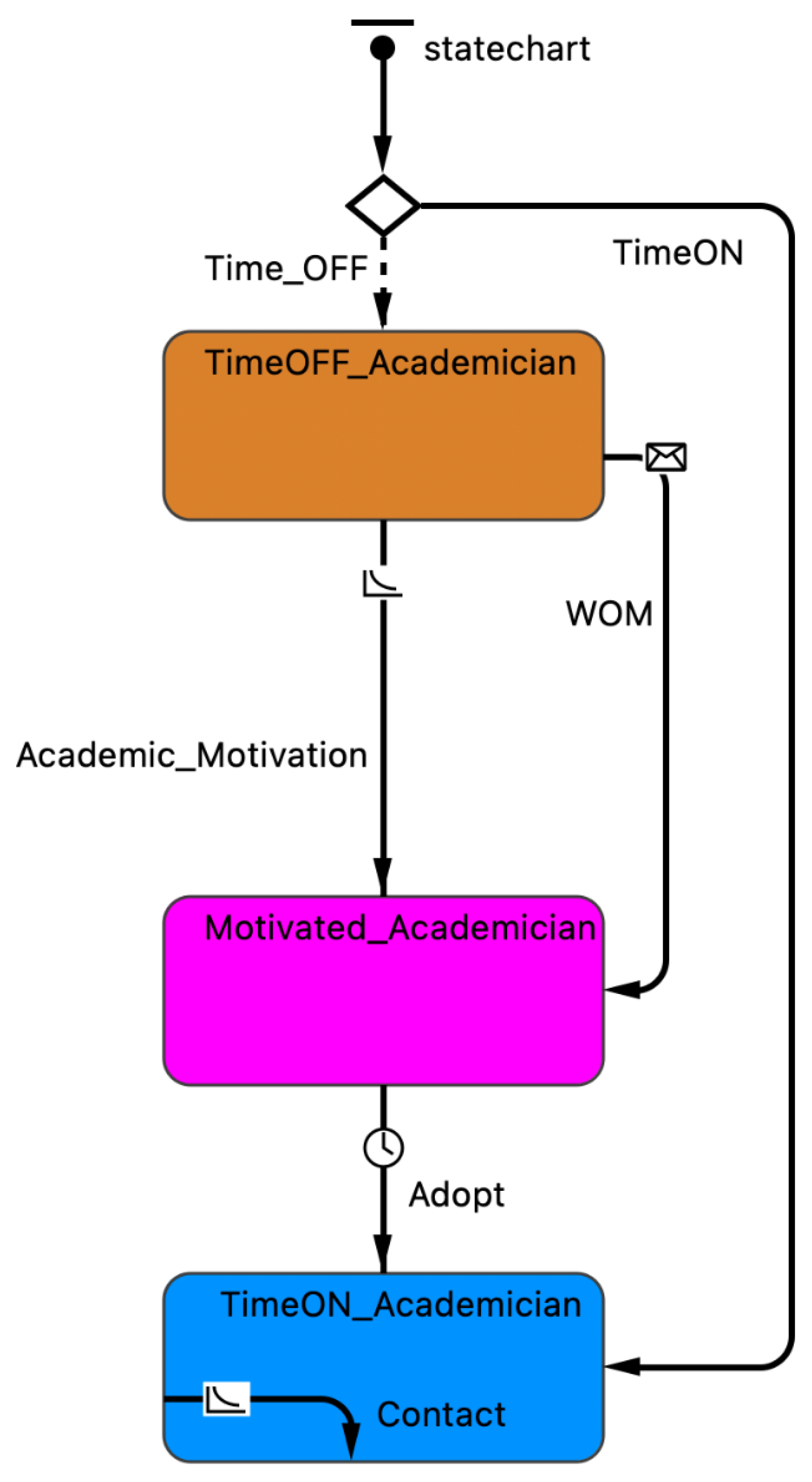
Figure 4.
Causality Diagram of Time Management Practices in the Department of Dentistry.
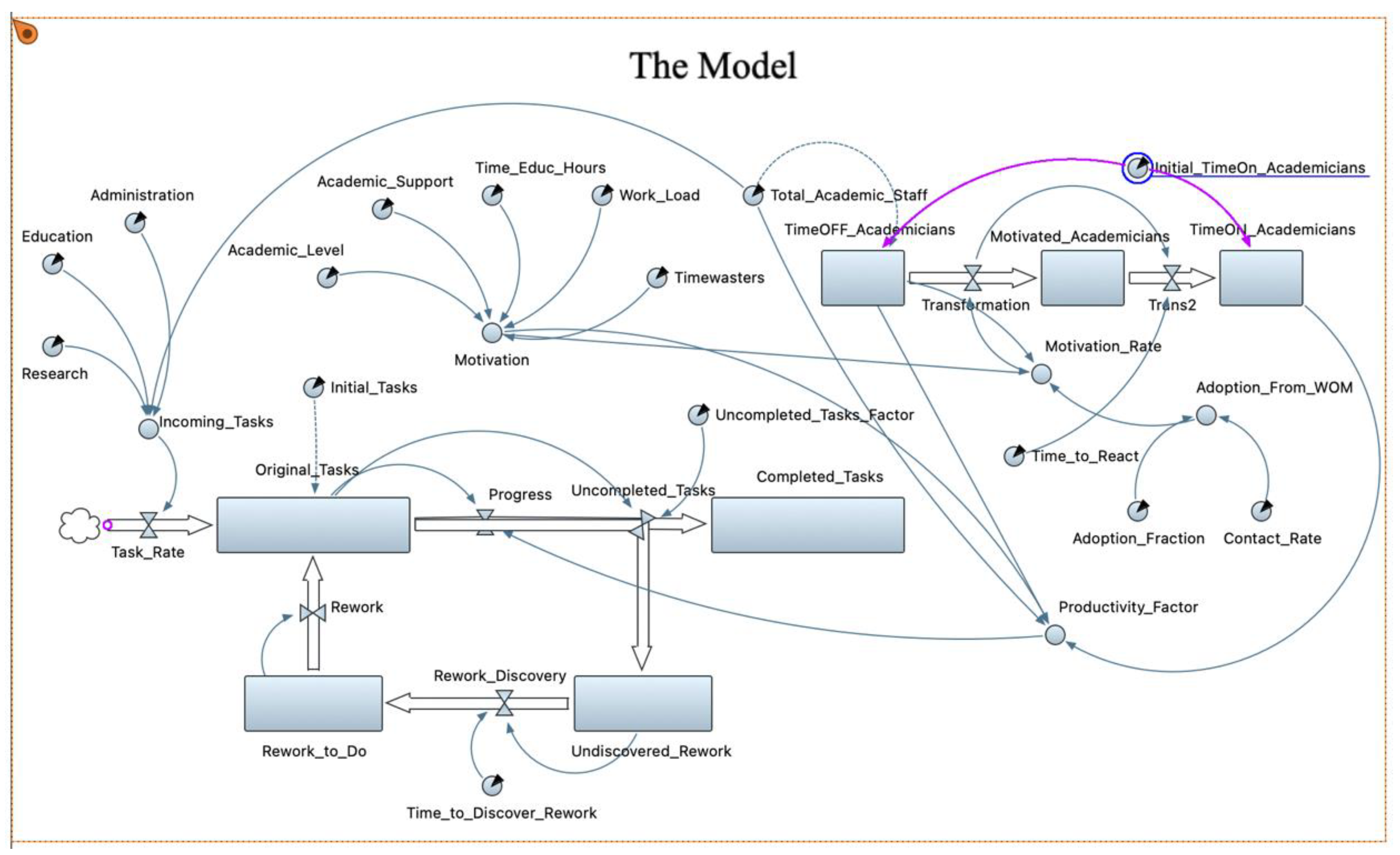
Figure 5.
Control Panel / User Interface.
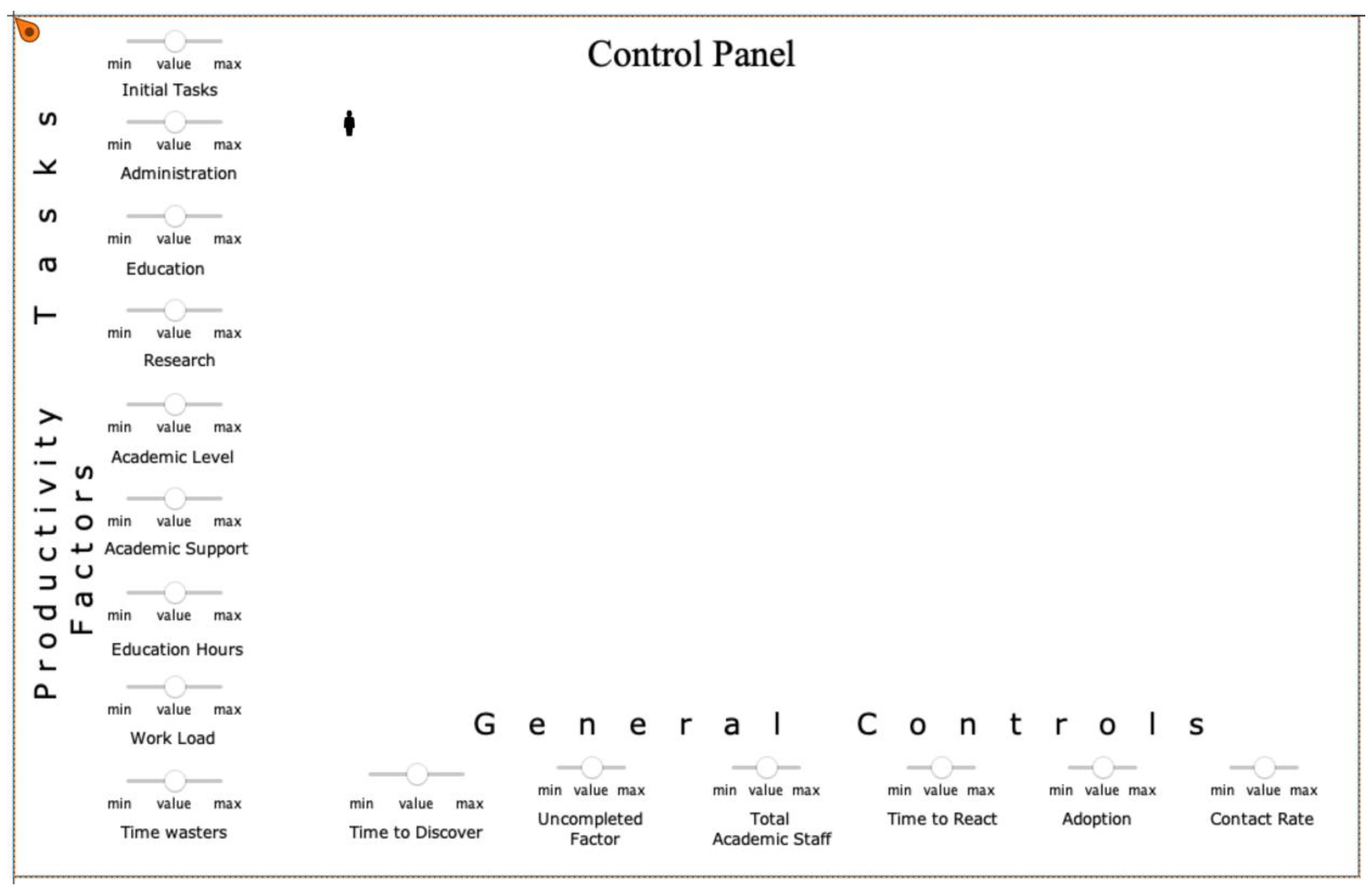
Figure 6.
Graphs1 for the monitoring of the evolution of the model over time.
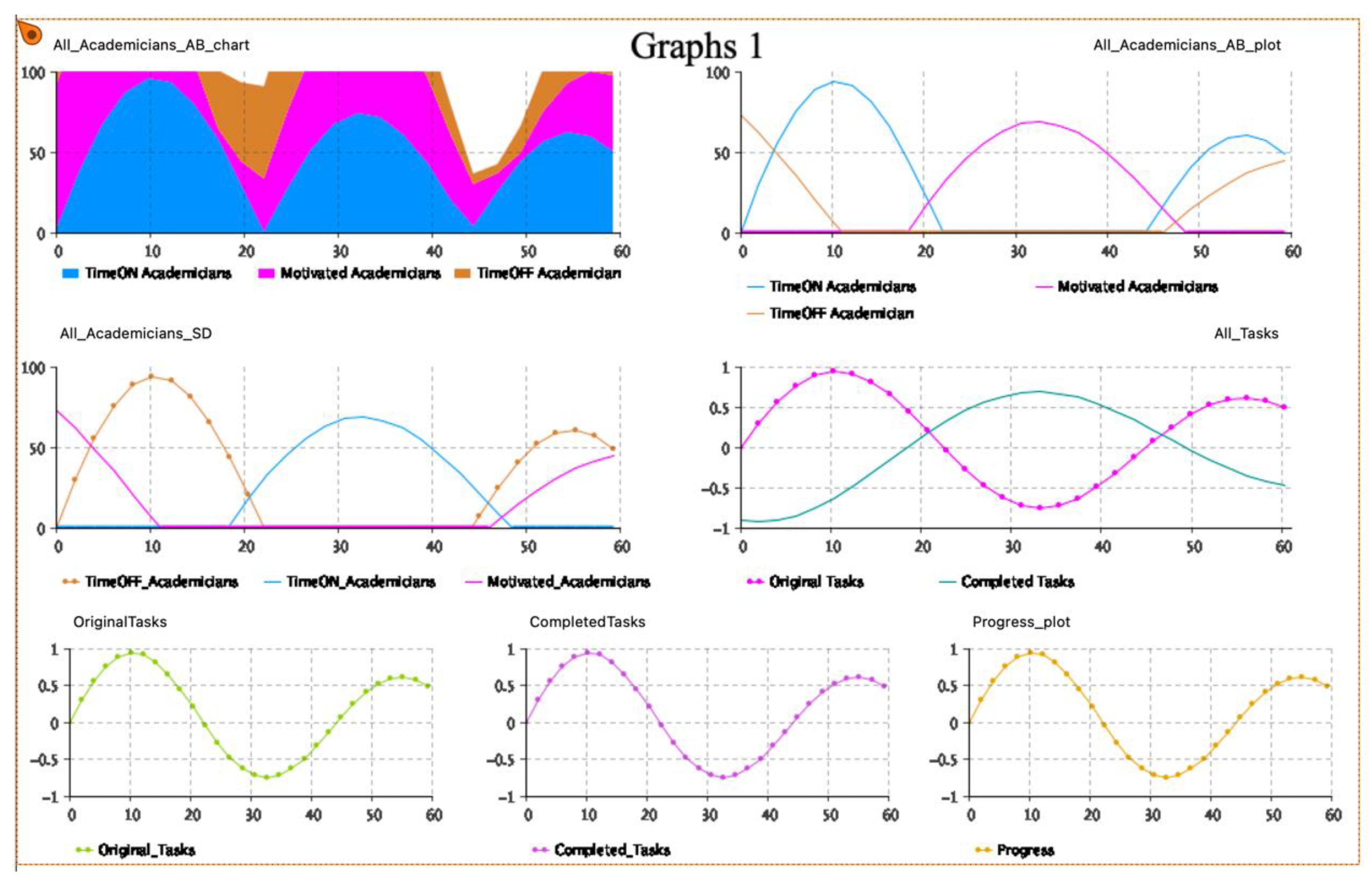
Figure 7.
Graphs2 for monitoring the evolution of the model over time.
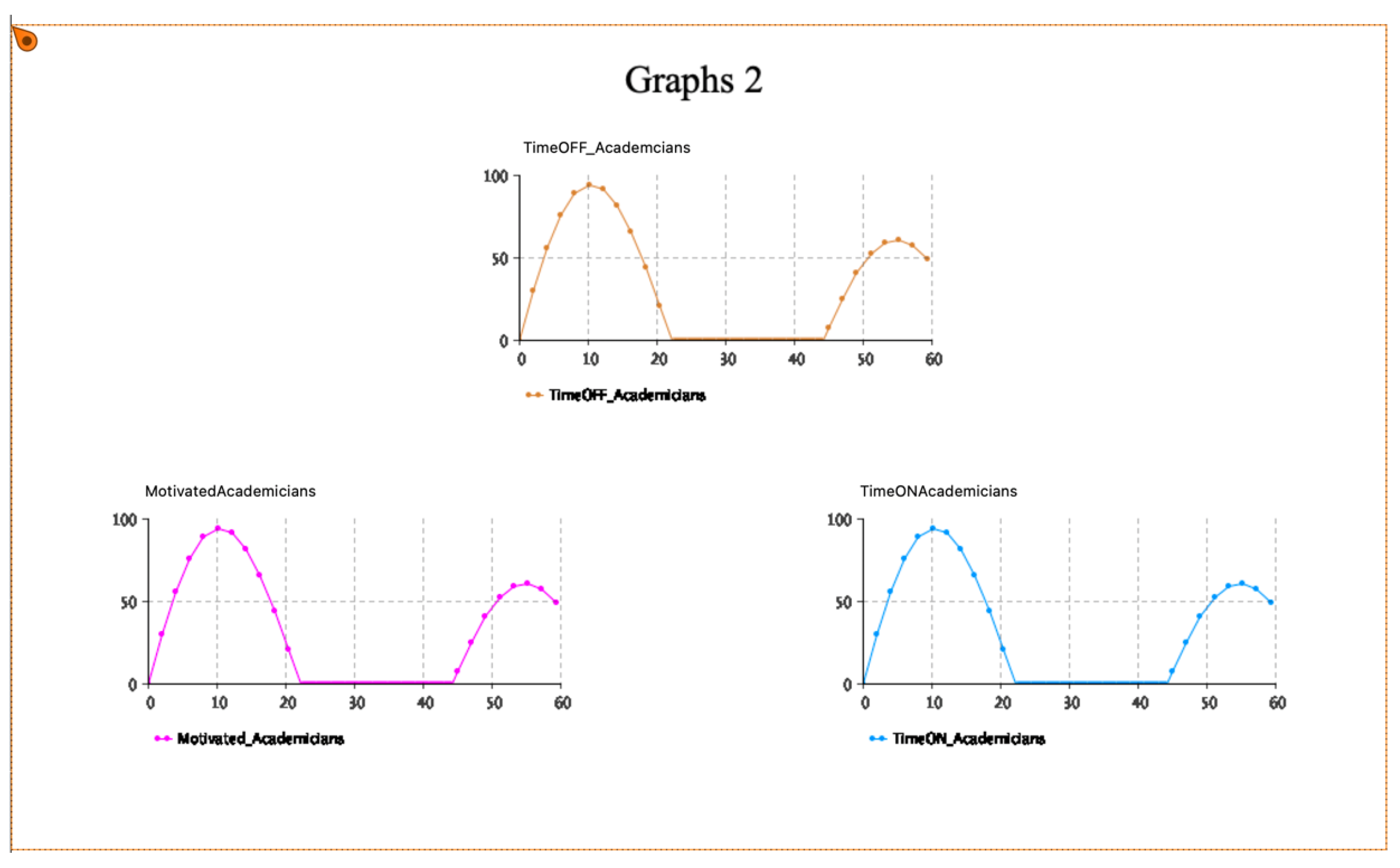
Figure 8.
The initial stage of the model execution based on the values of Table 8.
Figure 8.
The initial stage of the model execution based on the values of Table 8.
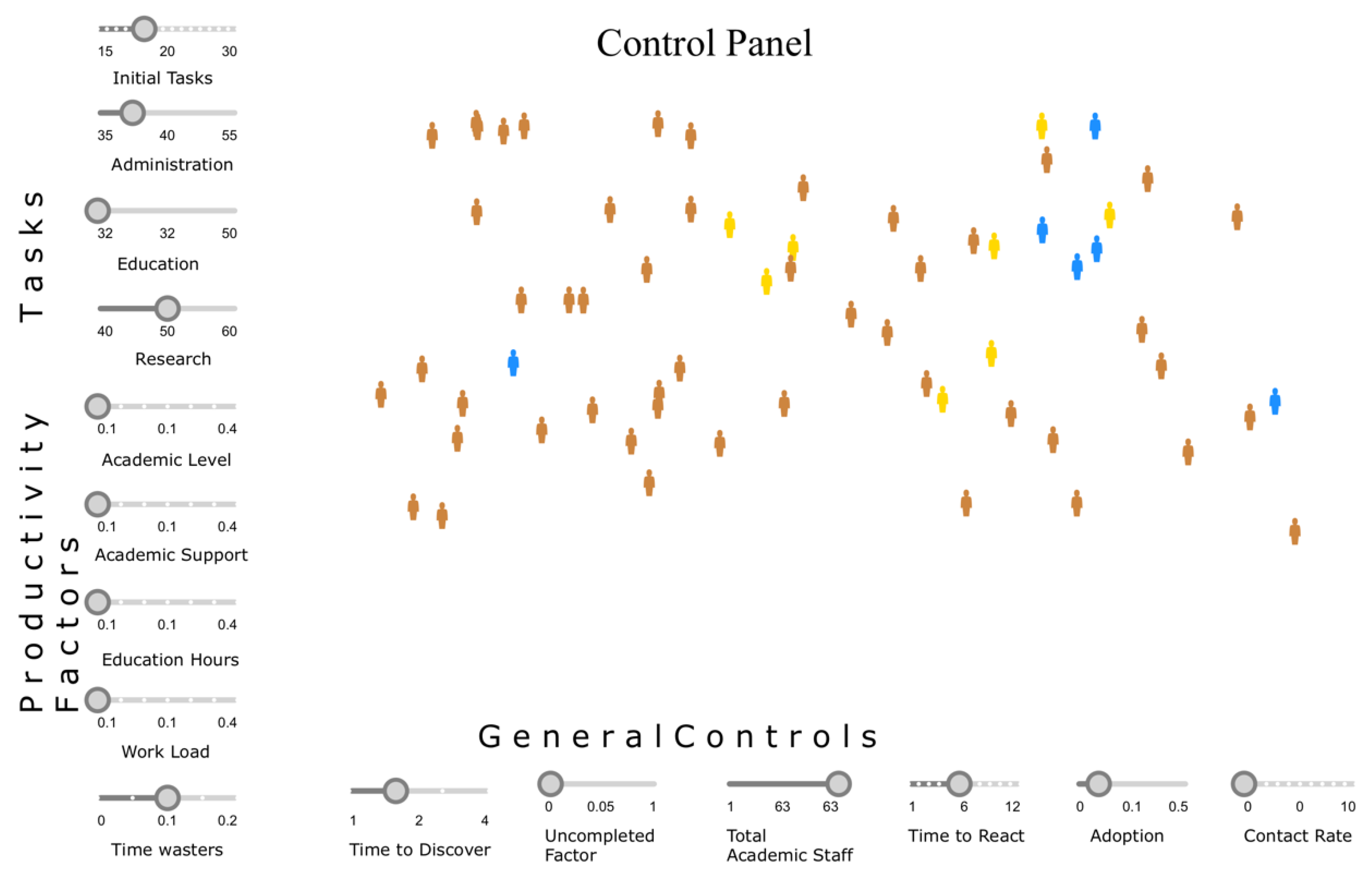
Figure 9.
The final stage of the model execution for a period of 60 months.
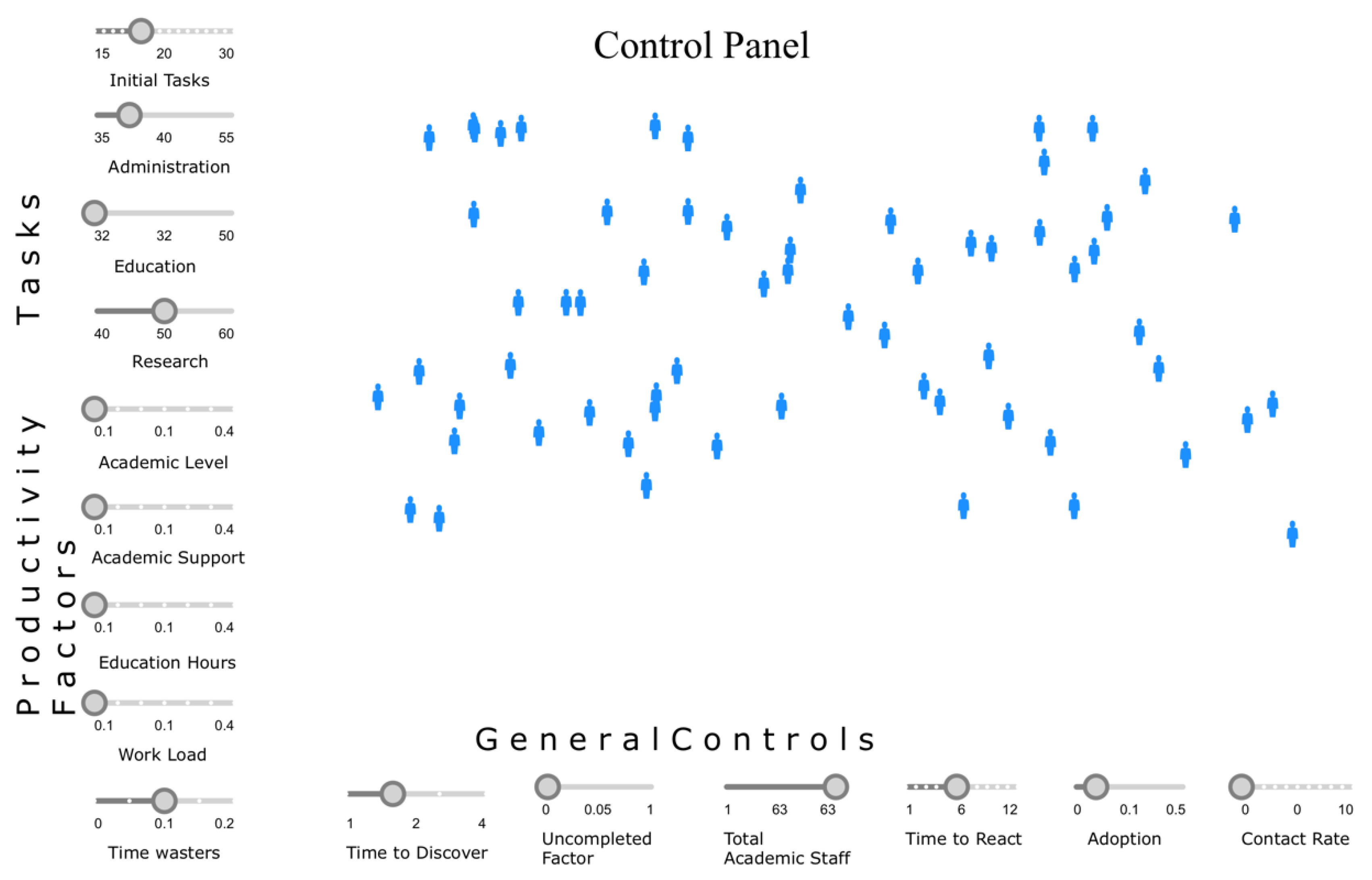
Figure 10.
The Academians’ transition from the TimeOFF_Academician state to the Motivated_Academician and the TimeON_Academician states over time.
Figure 10.
The Academians’ transition from the TimeOFF_Academician state to the Motivated_Academician and the TimeON_Academician states over time.
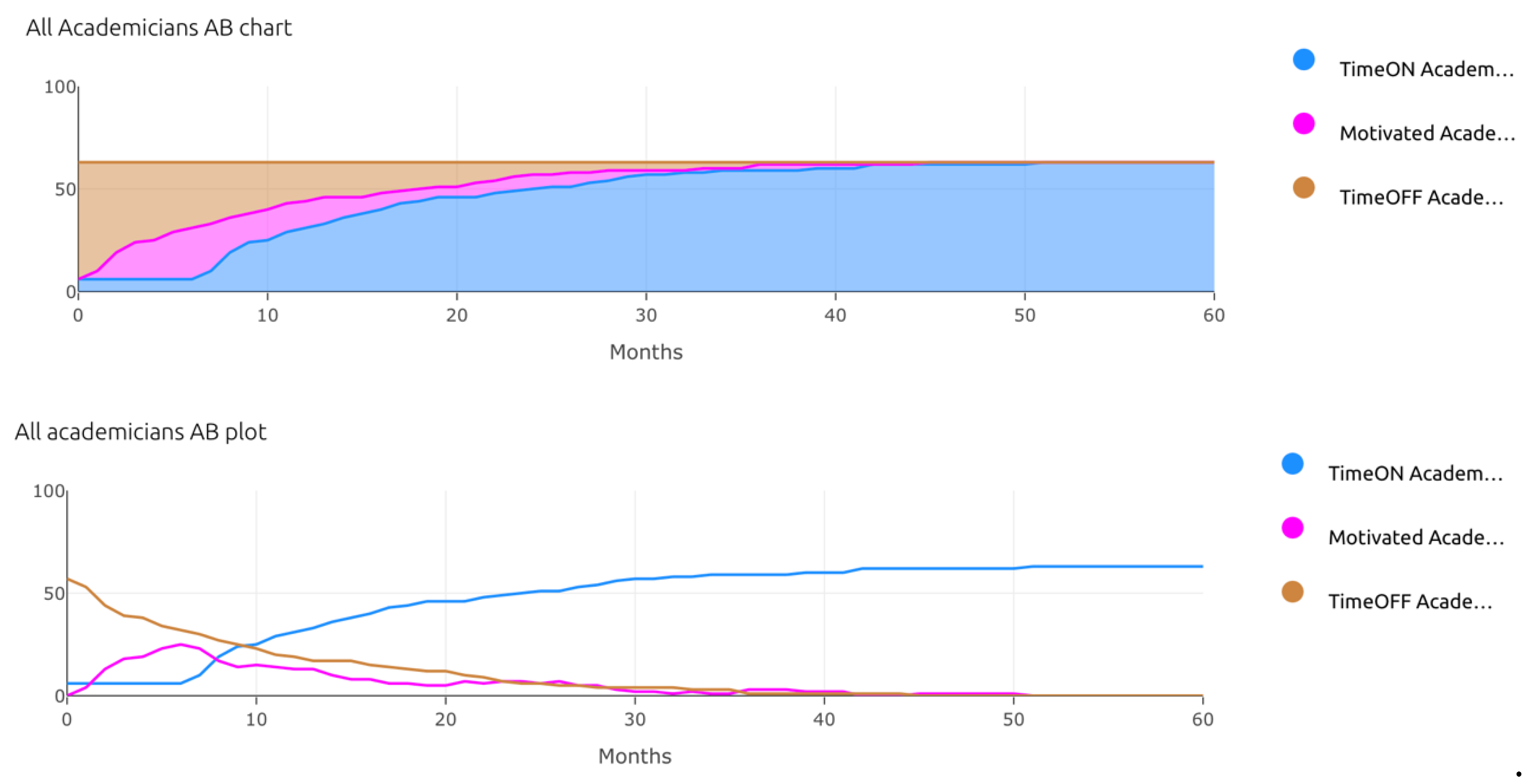
Figure 11.
The Tasks’ progress over time.
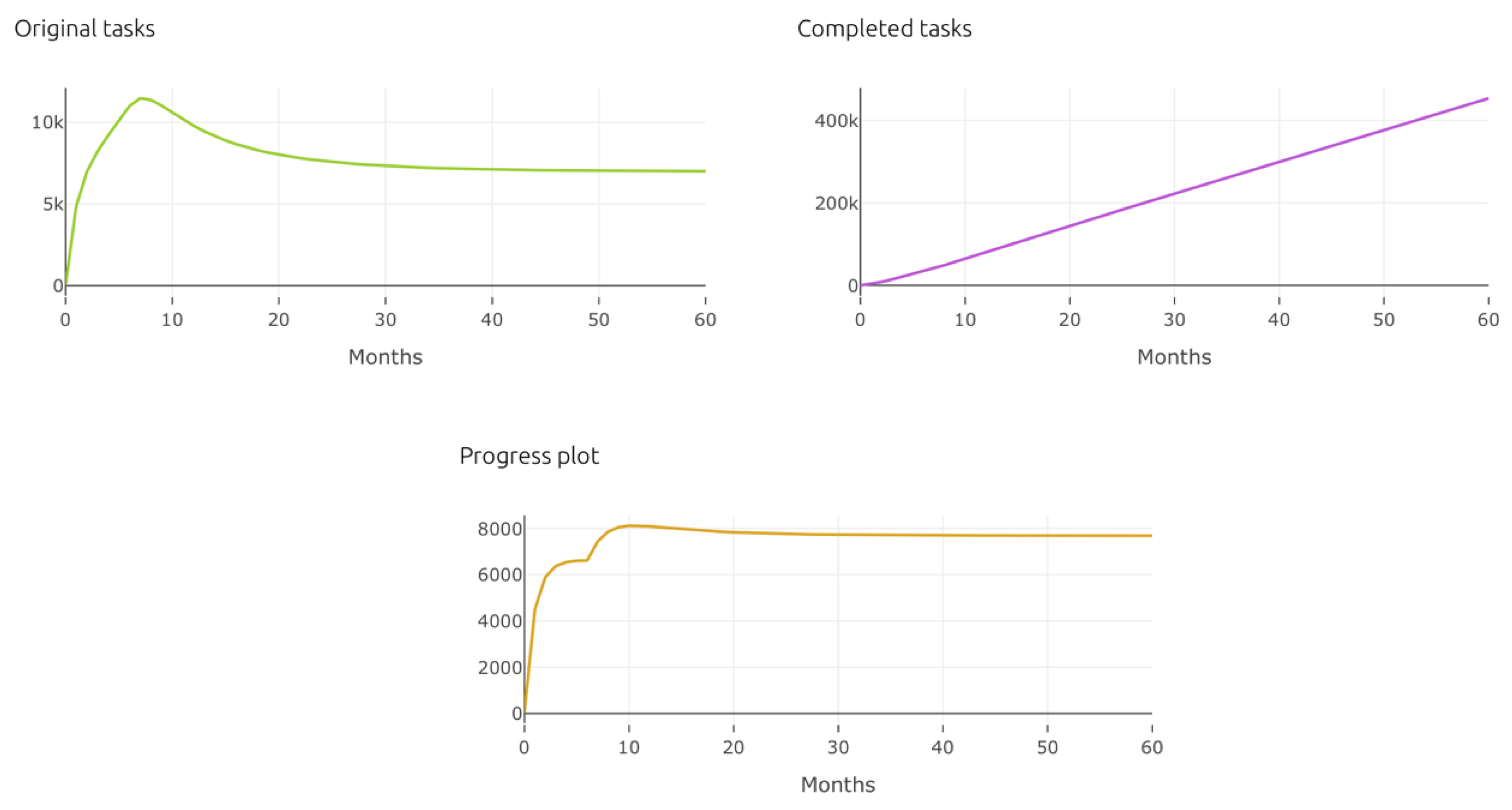
Figure 12.
Graphs showing the execution of the model for the variables in Table 9.
Figure 12.
Graphs showing the execution of the model for the variables in Table 9.
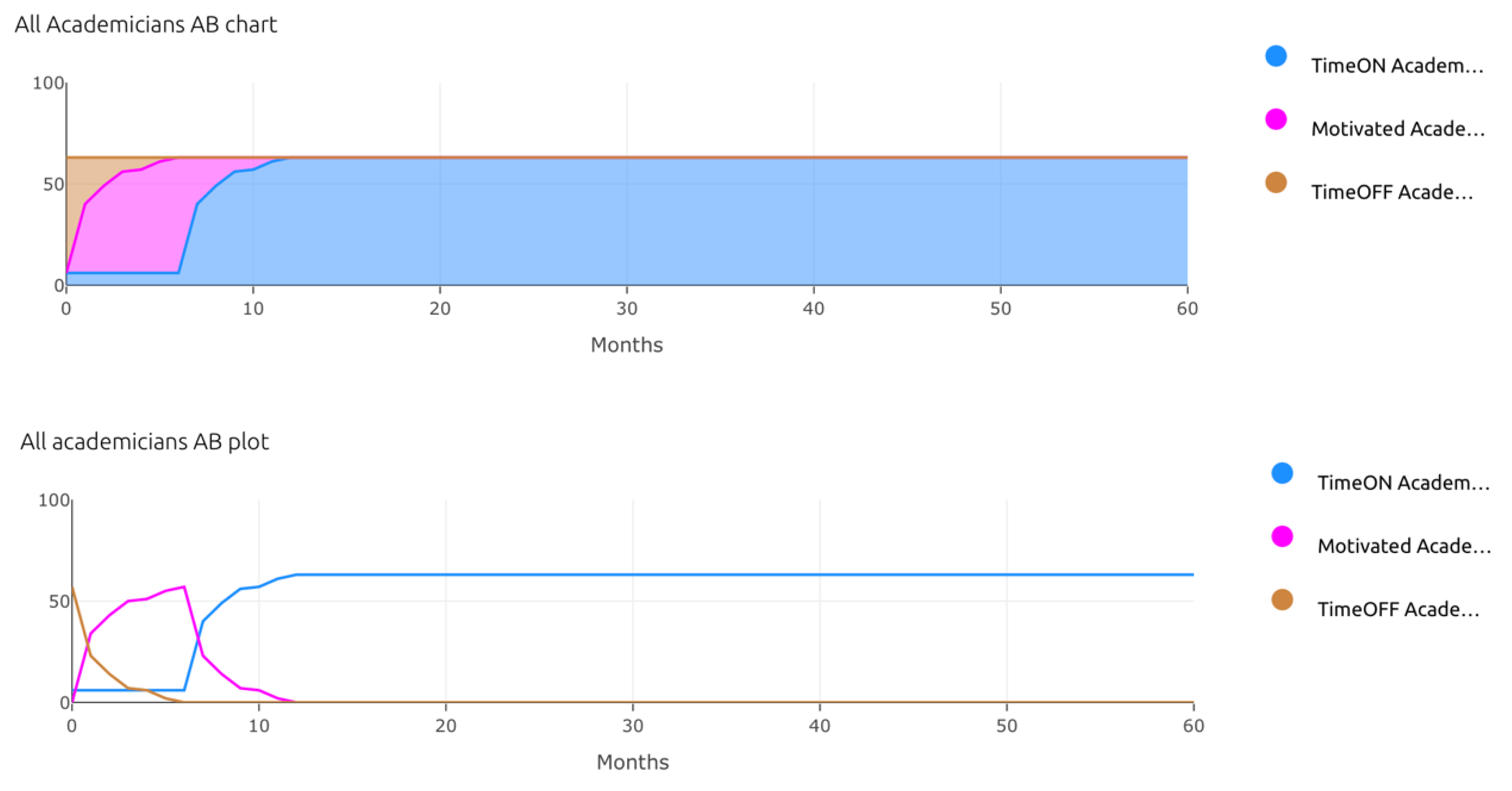
Figure 13.
Graphs showing the tasks over time for the variables in Table 9.
Figure 13.
Graphs showing the tasks over time for the variables in Table 9.
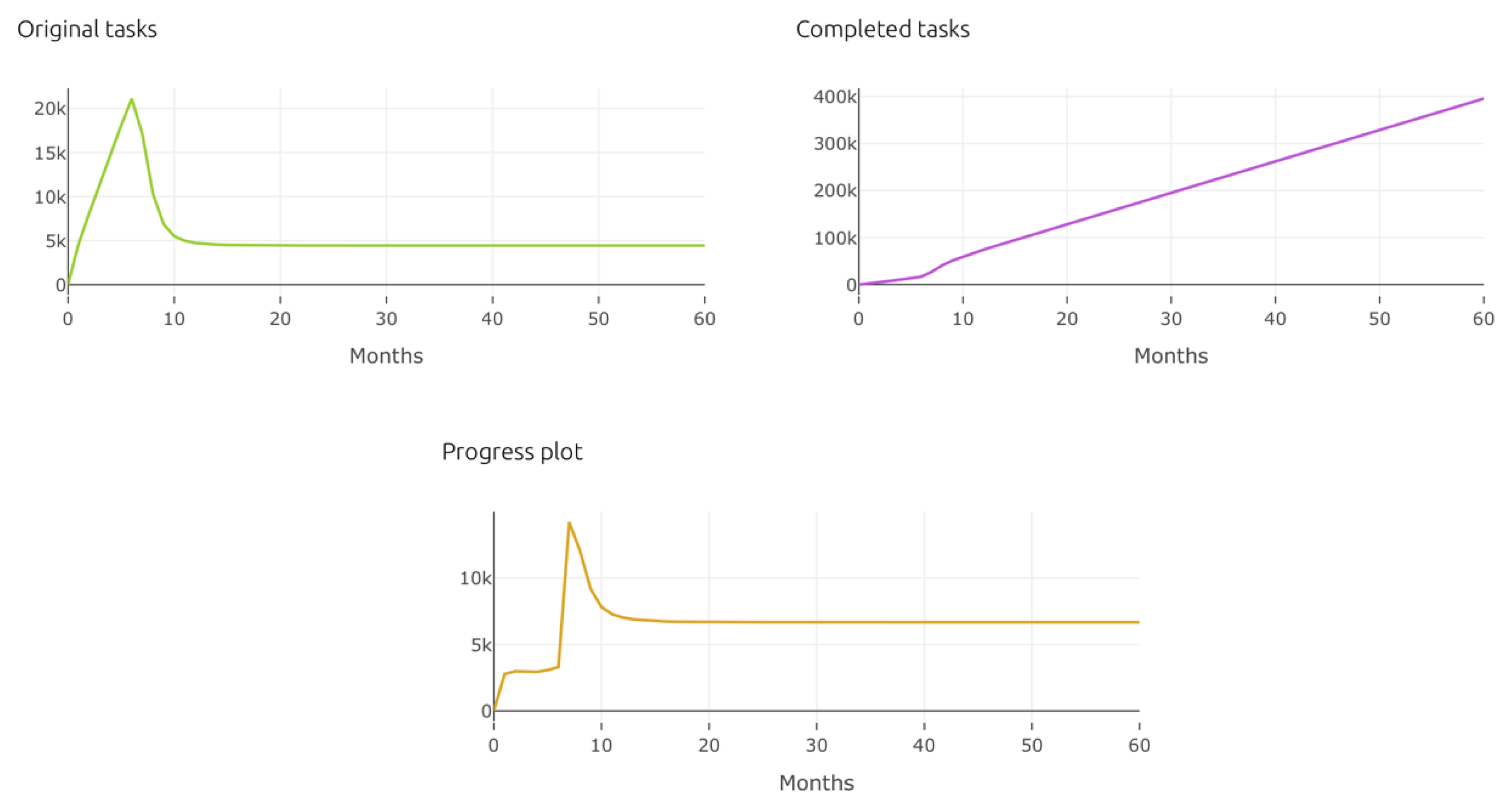
Figure 14.
Graphs for the comparison of the executions for the values of Table 10 for academicians.
Figure 14.
Graphs for the comparison of the executions for the values of Table 10 for academicians.
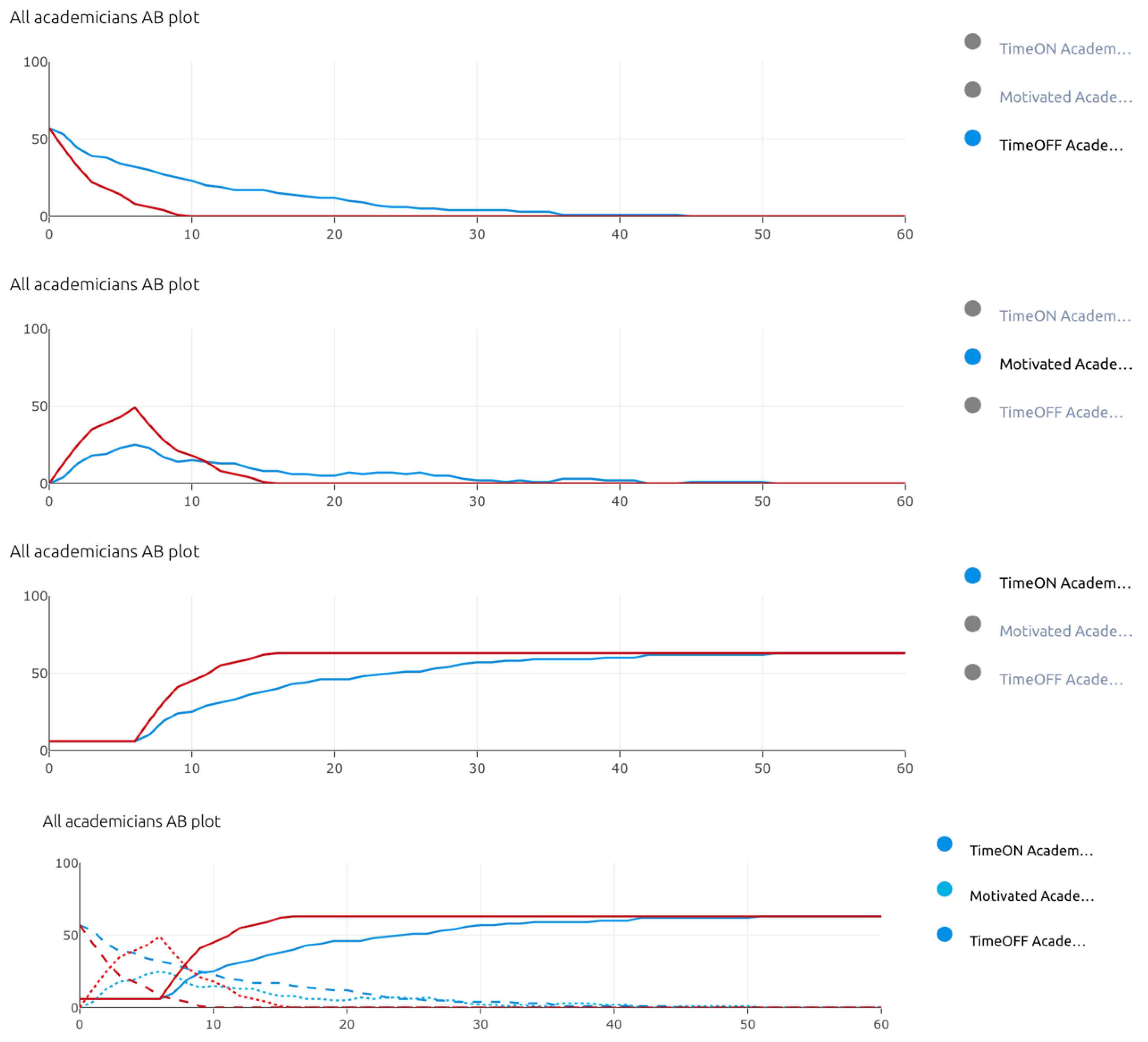
Figure 15.
Graphs for the comparison of the executions for the tasks of Table 10.
Figure 15.
Graphs for the comparison of the executions for the tasks of Table 10.
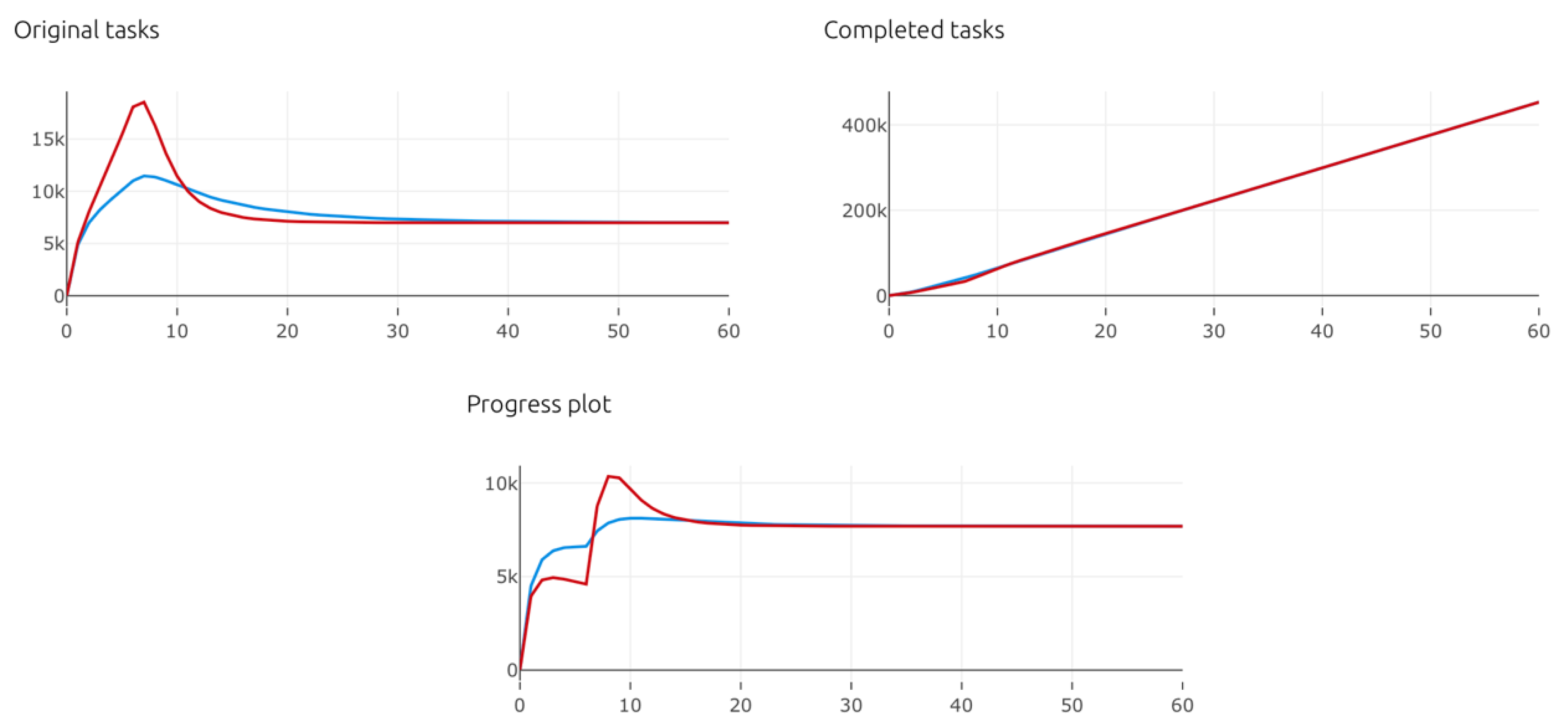
Figure 16.
Graphs for the comparison of the executions for the values of Table 11 for academicians.
Figure 16.
Graphs for the comparison of the executions for the values of Table 11 for academicians.
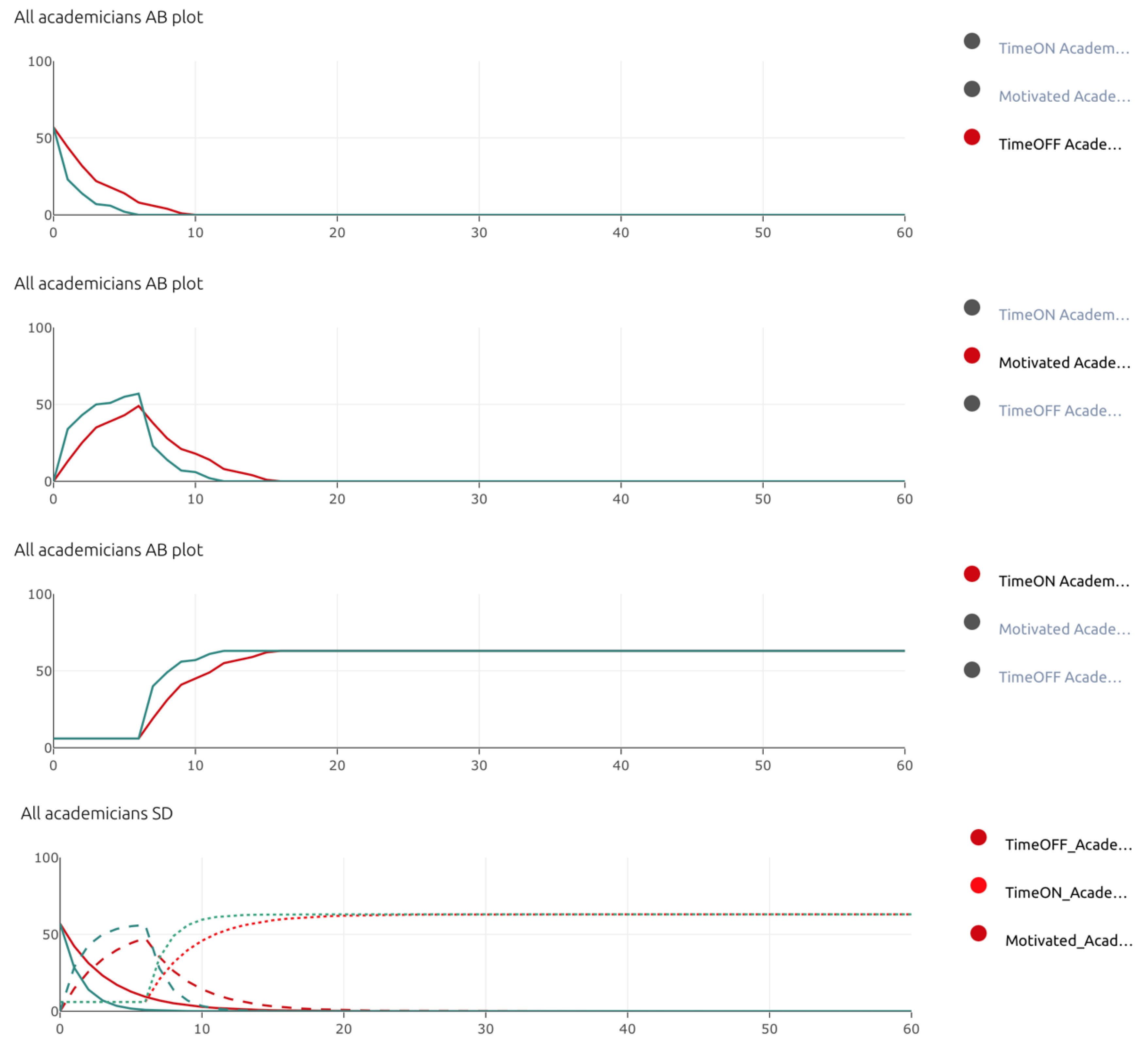
Figure 17.
Graphs for the comparison of the executions for the values of Table 11 for tasks.
Figure 17.
Graphs for the comparison of the executions for the values of Table 11 for tasks.
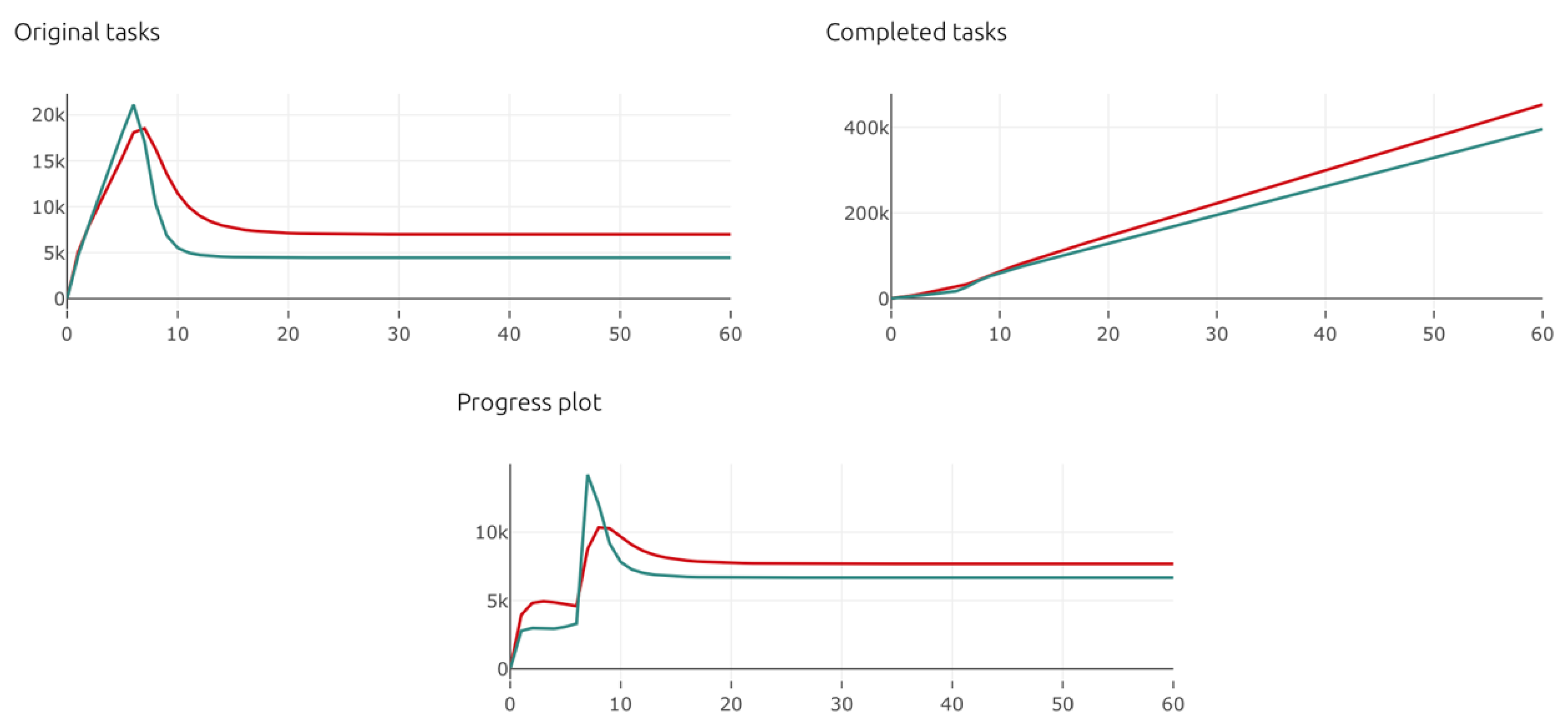

Table 3.
Settings and Values for the TASM model.
| Setting | Value |
| INITIAL TIME | 0 months |
| FINAL TIME | 60 months (simulation time = 5 years) |
| Time Unit | 1 month |
Table 4.
Stocks and Explanations for the TASM model.
| Stocks | Explanation |
| Original_Tasks | The overall tasks created |
| Rework_to_Do | The tasks that have to be redone |
| TimeOFF_Academicians | The number of dentists who do not apply time management |
| TimeON_Academicians | The TIME ON Academic Dentists |
| Completed_Tasks | The Overall Completed Tasks |
| Undiscovered_Rework | The undiscovered tasks to be performed |
| Motivated_Academicians | The Motivated Academic Dentists |
Table 5.
Dynamic variables and explanations for the TASM model.
| Dynamic Variables | Explanation |
| Productivity_Factor | The productivity factor |
| Incoming_Tasks | The tasks to be fulfilled for the total Academic staff per time unit |
| Motivation_Rate | Both Academic and WOM motivation |
| Adoption_From_WOM | The WOM adoption |
| Motivation | The Academic motivation |
Table 6.
Parameters and explanations for the TASM model.
| Parameters | Explanation |
| Administration | The Administration tasks per time unit |
| Education | The Education tasks per time unit |
| Research | The Research tasks per time unit |
| Time_to_Discover_Rework | The delay time to discover rework to be done |
| Academic_Support | The level of Academic support per time unit |
| Time_Educ_Hours | The level of education hours |
| Academic_Level | The Academic level |
| Work_Load | The workload level |
| Timewasters | The time wasters’ level |
| Adoption_Fraction | The percentage of WOM adoption |
| Contact_Rate | The number of contacts per time unit |
| Initial_TimeOn_Academicians | The number of initial TIME ON Academic Dentists |
| Total_Academic_Staff | The total Academic Dentists staff |
| Time_to_React | The time it takes to the Motivated Academic Dentists to become TIME ON Academic Dentists |
| Initial_Tasks | The number of initial tasks |
| Uncompleted_Tasks_Factor | The percentage of uncompleted tasks per time unit |
Table 7.
Flows and explanations for the TASM model.
| Flows | Explanation |
| Progress | The completed tasks per time unit |
| Task_Rate | The tasks to be fulfilled of the total Academic Dentists staff per time unit |
| Rework | The discovered uncompleted tasks to be fulfilled per time unit |
| Uncompleted_Tasks | The uncompleted tasks per time unit |
| Transformation | The TIME OFF Academic Dentists who become Motivated Academic Dentists per time unit |
| Trans2 | The acceptance of time management philosophy and the transformation of Motivated Dentists into TIME ON Dentists |
| Rework_Discovery | The discovered uncompleted tasks per time unit |
Table 8.
Values used for the initial execution of the model.
| Name | Value | Units |
| Administration | 40 | |
| Education | 32 | |
| Research | 50 | |
| Time to discover rework | 2 | Months |
| Academic support | 0,1 | |
| Time educ hours | 0,1 | |
| Academic_Level | 0,1 | |
| Work load | 0,1 | |
| Timewasters | 0,1 | |
| Adoption fraction | 0,1 | |
| Contact rate | 0 | |
| Initial time on academicians | 6 | |
| Total academic staff | 63 | |
| Time_to_React | 6 | Months |
| Initial tasks | 20 | |
| Uncompleted tasks factor | 0,05 |
Table 9.
Values used for demonstrating the importance of WOM in the transition process.
| Name | Value | Units |
| Administration | 40 | |
| Education | 32 | |
| Research | 50 | |
| Time to discover rework | 2 | Months |
| Academic support | 0,1 | |
| Time educ hours | 0,1 | |
| Academic_Level | 0,1 | |
| Work load | 0,1 | |
| Timewasters | 0,1 | |
| Adoption fraction | 0,1 | |
| Contact rate | 2 | |
| Initial time on academicians | 6 | |
| Total academic staff | 63 | |
| Time_to_React | 6 | Months |
| Initial tasks | 20 | |
| Uncompleted tasks factor | 0,05 |
Table 10.
Contact Rate variation.
| Name | Value A | Value B |
| Administration | 40 | 40 |
| Education | 32 | 32 |
| Research | 50 | 50 |
| Time to discover rework | 2 | 2 |
| Academic support | 0,1 | 0,1 |
| Time educ hours | 0,1 | 0,1 |
| Academic_Level | 0,1 | 0,1 |
| Work load | 0,1 | 0,1 |
| Timewasters | 0,1 | 0,1 |
| Adoption fraction | 0,1 | 0,1 |
| Contact rate | 0 | 2 |
| Initial time on academicians | 6 | 6 |
| Total academic staff | 63 | 63 |
| Time_to_React | 6 | 6 |
| Initial tasks | 20 | 20 |
| Uncompleted tasks factor | 0,05 | 0,05 |
Table 11.
Selected variables’ variation.
| Name | Value B | Value C |
| Administration | 40 | 24 |
| Education | 32 | 32 |
| Research | 50 | 50 |
| Time to discover rework | 2 | 2 |
| Academic support | 0,1 | 0,2 |
| Time educ hours | 0,1 | 0,2 |
| Academic_Level | 0,1 | 0,2 |
| Work load | 0,1 | 0,05 |
| Timewasters | 0,1 | 0,05 |
| Adoption fraction | 0,1 | 0,1 |
| Contact rate | 2 | 2 |
| Initial time on academicians | 6 | 6 |
| Total academic staff | 63 | 63 |
| Time_to_React | 6 | 6 |
| Initial tasks | 20 | 20 |
| Uncompleted tasks factor | 0,05 | 0,05 |
Disclaimer/Publisher’s Note: The statements, opinions and data contained in all publications are solely those of the individual author(s) and contributor(s) and not of MDPI and/or the editor(s). MDPI and/or the editor(s) disclaim responsibility for any injury to people or property resulting from any ideas, methods, instructions or products referred to in the content. |
© 2024 by the authors. Licensee MDPI, Basel, Switzerland. This article is an open access article distributed under the terms and conditions of the Creative Commons Attribution (CC BY) license (http://creativecommons.org/licenses/by/4.0/).
Copyright: This open access article is published under a Creative Commons CC BY 4.0 license, which permit the free download, distribution, and reuse, provided that the author and preprint are cited in any reuse.


