

Submitted:
18 April 2024
Posted:
23 April 2024
You are already at the latest version
Abstract
The literature study delves into novel therapeutic strategies in transplantation medicine, highlighting unique approaches that could revolutionize current practices. It emphasizes novel patterns that have the potential to transform the current landscape. Commencing with a thorough examination of the historical environment, it traces crucial advances and changes in transplantation. The focus is on traditional techniques, emphasizing their limitations and challenges. An extensive examination of contemporary transplantation therapies offers valuable insights into the most recent progress in organ, cellular, and tissue transplantation. This analysis examines the immunological obstacles and outlines the current advancements and constraints.
The exploration further navigates into novel models and concepts such as immunomodulation, developments in organ preservation techniques, gene editing, biomaterials, scaffold-based solutions, and the integration of precision medicine, artificial intelligence, and machine learning applications. Each section analyzes the potential for change and current progress in various areas, backed by relevant scientific sources up to 2023.
The subsequent sections delve into innovative cellular therapies, biotechnological progress, current clinical trials, and case studies demonstrating effective applications. This examination delves into the ethical and regulatory considerations of innovative therapeutic procedures, emphasizing ethical implications, regulatory frameworks, and the importance of balancing innovation with patient welfare.
The literature review concludes by offering a forward-looking perspective, emphasizing potential progress, anticipated challenges, and advocating for collaboration and interdisciplinary approaches to overcome limitations in the field of transplantation medicine.
Keywords:
transplantation
; donor
; recipient
; patient survival
; graft
; Precision medicine
; Gene editing
Material and Methods
The literature review utilized a methodical approach, conducting an extensive search across databases such as PubMed, Scopus, and Web of Science. The inclusion criteria were centered around studies that investigated new paradigms and recent advancements in transplantation. These studies were identified using specific keywords such as "transplantation," "donor," "recipient," "patient survival," and "graft."
The process of data extraction entailed the evaluation of articles by examining their titles and abstracts, and subsequently conducting thorough assessments of the full texts to determine their relevance. The scientific references analysis encompassed crucial studies until 2023, offering a historical framework. The study delved into emerging approaches in the field, including immunomodulation, organ preservation, gene editing, biomaterials, scaffold-based strategies, precision medicine, and artificial intelligence. These approaches were backed by relevant references.
1. Introduction
Organ transplantation, a significant advancement in medical science since Murray and Merrill's groundbreaking 1954 study on the "First Successful Kidney Transplant," continues to be crucial in treating severe organ failure [1,2]. Despite notable progress, challenges persist, including rejection, difficulties from immunosuppression, and the growing issue of organ scarcity [3,4]. The literature study comprehensively examines contemporary scientific research in transplantation medicine, focusing on innovative methodology and developing concepts to pinpoint prospective breakthroughs that may transform therapeutic strategies.
A thorough reassessment of treatment approaches is necessary because of the changing circumstances in the historical progression of transplantation. Murray and Merrill's pioneering research in 1954 laid the groundwork, but present obstacles require novel and distinctive approaches. Medawar's 1948 study on "Immunity to Homologous Grafted Skin" underscores the intricate nature of immune responses, prompting additional research.
This exploration delves into recent scientific research, aiming to analyze findings, pinpoint gaps in understanding, and propose directions for future investigations. Halloran et al. stressed the importance of regularly assessing existing frameworks to promote the creation of new therapeutic approaches. [6]
The new therapeutic approaches aim to enhance the effectiveness of transplants and minimize issues related to immunosuppression. The introduction of Cyclosporine A, followed by other calcineurin inhibitors like Tacrolimus, and other powerful immunosuppressive medicines, has led to a growing disparity between the number of individuals awaiting renal transplants and those who actually receive them in many countries.[7]
Recent studies emphasize the analysis of new paradigms in transplant medicine. This highlights the need of addressing existing obstacles in graft rejection and immunosuppression, underscoring the necessity to explore innovative approaches.[8]
In summary, this comprehensive analysis of literature, including credible references, delves into recent scientific research in the field of transplantation medicine. The aim is to identify new techniques and developing frameworks, providing a thorough understanding of the current state and future directions in transplant medicine.
2. Historical Perspective on Transplantation Therapies
The history of organ transplantation is a compelling story marked by important achievements, traditional therapeutic approaches, and inherent challenges. Dr. Joseph Murray's pioneering study in 1954, which led to the first successful kidney transplant, earned him the Nobel Prize in Physiology or Medicine. In the coming years, notable progress was made in the discipline, including the pioneering heart transplantation performed by Dr. Christiaan Barnard in 1967, followed by the breakthroughs in liver and lung transplantation in the 1980s. These achievements not only broadened the possibilities of transplantation but also demonstrated the unwavering dedication to advancing medical innovation.
Traditional treatment approaches in transplantation have evolved to address organ rejection and uphold the recipient's well-being. Cyclosporine, an immunomodulatory drug, is essential in managing immunological reactions post organ donation. Advancements in tissue typing and compatibility testing have significantly improved the success rates of grafts. Nevertheless, challenges persist in ensuring the prolonged survival of grafts, necessitating a comprehensive exploration of novel therapies [7].
Conventional transplantation methods have substantial challenges notwithstanding their efficacy. Continuous need for immunosuppression poses risks of infections and cancers, while the restricted supply of organs is a serious concern. The failure of transplanted tissues, whether sudden or long-lasting, remains a major worry. Hence, it is essential to explore innovative methods to enhance the acceptability of grafts and guarantee their prolonged survival [10].
In summary, the evolution of transplantation therapy has been marked by achievements, challenges, and continuous endeavors to enhance therapeutic techniques. Understanding this history is crucial for grasping the conditions under which new therapeutic strategies in transplantation are always developing. Understanding the historical backdrop is essential as we deal with the intricacies of transplantation. This comprehension aids us in our continuous quest for creative solutions to tackle the enduring issues in this crucial sector of medical science.
3. Overview of Current Transplantation Therapies
In the contemporary landscape of transplantation medicine, a multifaceted approach encompasses organ transplants, cellular and tissue transplantation, immunosuppressive strategies, and the nuanced management of complications such as Graft-Versus-Host Disease (GVHD).
Cellular treatment has promise in enhancing the results of organ transplantation. Cell types with diverse immunoregulatory and regenerative capabilities could be used for particular cases of transplant rejection or injury-related conditions. Preclinical models have indicated that cell treatment in transplantation is possible, early clinical trials have shown the safety of several of these therapies, and initial efficacy investigations in humans have begun. Improvements in organ donation, surgical methods, evaluation of immunological risks, immunosuppressive medications, and monitoring of graft function have significantly boosted the survival rates of recipients [15]. Challenges persist in the field, requiring precise adjustment of immune modulation to prevent graft rejection without causing side effects from excessive immunosuppression. Mixed chimerism is the most effective method for inducing tolerance. However, other treatments including transferring regulatory T cells and using immune suppressive dendritic cells have showed potential in preclinical studies. Recent clinical investigations have shown that achieving operational tolerance in both kidney and liver transplants is possible under specific conditions. In the future, tolerance is expected to greatly influence transplantation due to advancements in clinical trials and a better comprehension of immune regulatory elements.
This section provides a comprehensive overview of the current state of these therapeutic modalities, shedding light on both their successes and limitations.[16,17,18,19,20] Table 1.
Transplantation therapy has achieved significant advances but continues to encounter challenges. Achievements include improved transplant survival rates and advancements in patient quality of life. However, challenges such as the long-lasting impact of immunosuppression, limited availability of organs, and other consequences underscore the ongoing need for progress in transplantation treatment.
4. Emerging Paradigms in Transplantation Therapeutics
The evolving landscape of transplantation therapeutics is marked by the emergence of innovative paradigms, each holding the potential to revolutionize the field. This section explores key advancements in immunomodulation, organ preservation techniques, gene editing, biomaterials, precision medicine, and the application of artificial intelligence (AI) and machine learning (ML) [22]. Table 2.
In conclusion, the exploration of emerging paradigms in transplantation therapeutics represents a pivotal shift towards precision and innovation. From harnessing the power of gene editing to the integration of AI and biomaterials, these advancements hold the promise of addressing longstanding challenges and shaping the future of transplantation medicine.
5. Novel Cellular Therapies
Novel cellular therapies have brought about a new age in transplantation medicine by introducing creative methods to regulate the immune response and enhance the acceptance of transplanted organs. This section explores into specific cellular therapies, including the therapeutic potential of Mesenchymal Stem Cells (MSCs), Regulatory T Cells (Tregs), Natural Killer (NK) cell therapies, and the application of Induced Pluripotent Stem Cells (iPSCs) in transplantation.[32,33,34,35,36,37,38,39] Table 3
6. Biotechnological Innovations in Transplantation
The merging of biotechnology with transplantation has led to revolutionary developments, promoting progress in organ transplantation and post-transplant care. This section delves into important biotechnological advancements such as 3D printing for organ transplantation, nanotechnology for delivering immunosuppressive, bioengineering solutions for tissue engineering, and the incorporation of wearable and implanted technologies for post-transplant monitoring.
6.1. 3D Printing in Organ Transplantation
Despite advancements in organ transplantation technology, various issues hindering its advancement have arisen, with donor shortage being the most critical. Bioprinting is a valuable technique with significant application potential in several life science and biotechnology disciplines, particularly in the medical sector. Bioprinting has led to advancements in medicine by enabling the printing of cells and tissues for tissue regeneration and the creation of functional human organs including the heart, kidneys, and bones. Recently, the advancement of organ transplantation has led to the growing significance of three-dimensional (3D) bioprinting in addressing challenges such as the scarcity of organ donors. Advancements in printing technology are leading to novel solutions for challenges in the medical industry, such as tissue repair, organ reconstruction, and organ transplantation. The ability to create complex structures, including arterial networks, shows possibilities for producing fully operational organs for transplant purposes. [40,41,42,43]
6.2. Nanotechnology in Immunosuppression Delivery
Nanotechnology is powerful tool for improving the accuracy and effectiveness of delivering immunosuppressive in transplantation. Nanoparticles carrying drugs allow for precise distribution of immunosuppressive medications, decreasing general side effects and improving treatment results. This method has the potential to enhance the equilibrium between immunosuppression and transplant acceptability. [44] A diverse range of nanoparticles and nanodevices have been developed from materials such as iron, carbon, gold, silica, and silicon [45]. Nanoparticles have been engineered for several purposes including : drug delivery [46], receptor mediated targeting [47], environmentally-triggered release [48], thermal ablation [49], molecular imaging [50], and magnetism [51]. Nano-fluidic systems and nano-membranes have been created for the selective filtration of fluids [52], diagnoses [53], and sustained delivery of drugs [54]
6.3. Bioengineering Solutions for Tissue Engineering
Bioengineering solutions are crucial for the progress of tissue engineering in transplantation. Using scaffolds, biomimetic materials, and cellular constructions helps in creating functional tissues and organs. Combining biological and synthetic elements in bioengineered tissues shows potential for addressing difficulties related to the scarcity of donor organs. Advancements in organ bioengineering and regeneration have demonstrated that using these technologies to create organs for transplants could be the most efficient path to clinical implementation. Investigators are currently studying the use and control of autologous cells with the goal of creating an end product that mimics an autograft, eliminating the need for the recipient to take any anti-rejection medicine. [55,56]
6.4. Wearable and Implantable Devices in Post-Transplant Monitoring
Wearable and implanted devices have demonstrated potential in post-transplant monitoring. A wearable sensor that is wireless and continuous has been developed to monitor tissue circulation in patients who have had reconstructive surgery. The sensor analyzes pulse waves, skin color, and tissue temperature to replicate physician assessment and has demonstrated a high agreement rate with physician findings. Near-infrared spectroscopy (NIRS) has been utilized with a compact implantable sensor to observe free tissue transfer (FTT) in head and neck surgery. The NIRS sensor offers continuous and non-invasive monitoring of tissue oxygenation parameters, proving to be dependable and well-received by patients. Implantable sensors have been studied for monitoring blood vessels during procedures that include connecting vessels, providing precise and continuous monitoring. Wearable equipment like wrist-mounted accelerometers and pedometers are utilized to evaluate physical activity as an indicator of healing in the initial postoperative period. Additional study is required to prove the safety and cost-effectiveness of these devices. [57,58,59]
Biotechnological advancements in transplantation, such as 3D printing, nanotechnology, bioengineering, and wearable technologies, are revolutionizing transplantation medicine. The breakthroughs have the potential to tackle crucial difficulties in organ availability, immunosuppressive distribution, tissue engineering, and post-transplant monitoring, ultimately enhancing patient outcomes and pushing the boundaries of transplantation science.
7. Clinical Trials and Case Studies
Clinical trials and case studies are essential for progressing transplantation medicine by providing valuable information on the safety, effectiveness, and practical use of new treatment approaches. This section offers a summary of current clinical trials, presents case examples demonstrating effective application of new therapeutics, and examines obstacles and insights gained from clinical applications.
7.1. Overview of Ongoing Clinical Trials
7.1.1. CRISPR-Based Gene Editing in Allogeneic Stem Cell Transplantation
Multiple current clinical trials are investigating the use of CRISPR-based gene editing in allogeneic stem cell transplantation. The trials seek to improve the accuracy of donor cell changes, decrease graft-versus-host disease (GVHD), and boost overall transplant results. Recently, the development and progress of CRISPR/Cas9 gene editing technology have led to successful applications in basic and clinical research for treating genetic disorders such as β-thalassemia. Gene-edited autologous hematopoietic stem cell transplantation (HSCT) targeting specific genes can prevent graft rejection and graft-versus-host disease (GVHD), offering a potential curative treatment for transfusion-dependent β-thalassemia (TDT). Recent developments in practical approaches for utilizing CRISPR/Cas9 to target the three globin genes (HBB, HBG, and HBA) and selecting cells for β-thalassemia treatment are emphasized. Initial studies like NCT04245722 and NCT04773317 are centered on assessing the safety and practicality of this novel method. [60,61]
7.1.2. Mesenchymal Stem Cell (MSC) Therapies in Solid Organ Transplantation
Several cellular therapy methods have been created utilizing mesenchymal stem/stromal cells (MSC). MSCs have been extracted from multiple origins, possess the capacity to transform into significant cell types, exhibit anti-inflammatory and immunomodulatory characteristics, enable reduction of immunosuppressive medication, and promote immunological acceptance of the transplanted organ. Rapid advancements in tissue engineering and regenerative medicine are focused on creating new organs, finding new sources for organs, and increasing the supply of current organs. Many clinical trials are studying the use of mesenchymal stem cell (MSC) therapies in solid organ transplantation. The trials investigate the immunomodulatory characteristics of MSCs with the goal of enhancing transplant acceptability and decreasing rejection rates. Preliminary results indicate that MSCs have the potential to enhance graft tolerance. [62] Figure 1
7.2. Case Studies Highlighting Successful Implementation of Novel Therapies
7.2.1. Successful Transcoronary Infusion of Cardiac Progenitor Cells in Patients with Single Ventricle Physiology” (TICAP)
The case study "Transcoronary Infusion of Cardiac Progenitor Cells in Patients With Single Ventricle Physiology" (TICAP) used cultured cardiac tissue-derived cells. Stem cells were acquired by a right atrial myocardial biopsy performed during a palliation operation, and "cardiospheres" were then cultured and grown. Seven patients were allocated to undergo intracoronary injection of cardiosphere derived cells (CDCs) through cardiac catheterization 4–5 weeks following the palliation surgery, while 7 patients underwent the conventional palliation treatments. The initial effectiveness measures noticed were the right ventricular ejection fraction (RVEF) and heart failure status based on the New York University Pediatric Heart Failure Index (NYUPHFI). The operation was deemed safe as none of the volunteers showed any evidence of ischemia, arrhythmia, or cardiac tumor growth due to the stem cell injection. Recipients of the CDC also showed decreased NYUPHFI scores at the 36-month mark, indicating that the treatment's effects lasted over time. [63] This innovative method showcases the capacity of tissue engineering to improve the results of organ transplantation.
7.2.2. Successful Induction of Tolerance in Renal Transplantation with Regulatory T Cells (Tregs)
Todo et al. (2016) conducted a case study demonstrating the successful establishment of tolerance in kidney transplantation by the use of regulatory T cells (Tregs). The patient, who was administered Tregs in addition to standard immunosuppression, showed consistent graft function with no instances of rejection. This case highlights the capacity of Tregs to enhance immunological tolerance in transplantation. Nevertheless, this method was effective only in transplant recipients without other immunological conditions such autoimmune illnesses. It is important to note that only 3–17% of the cell product in this investigation was classified as Tregs, which complicates the identification of the immunoregulatory mechanisms at play. [64,65]
7.3. Challenges and Lessons Learned from Clinical Implementations
7.3.1. Immune-Related Adverse Events in Cellular Therapies
Implementing cellular therapies, such as chimeric antigen receptor (CAR) T-cell therapy, has uncovered difficulties associated with immune-related adverse events (Neelapu et al., 2017). Cytokine release syndrome and neurotoxicity are major concerns that require careful patient monitoring and the creation of ways to reduce these negative effects. [66]
7.3.2. Hurdles in the Translation of Gene Editing Technologies to Clinical Settings
Transitioning gene editing technologies like CRISPR from preclinical research to clinical use is hindered by challenges associated with off-target effects and the risk of unwanted genetic alterations (Doudna & Charpentier, 2014). Ensuring the accuracy and safety of these technologies is a crucial challenge in the sector. [67]
In conclusion, clinical trials and case studies are essential elements in pushing forward the boundaries of transplantation therapy. Current trials offer insight into future new treatments, while case studies showcase successful applications and identify issues that require more research. As the field progresses, insights gained from clinical applications are important markers for improving treatment methods and enhancing patient results.
8. Ethical and Regulatory Considerations
Ethical and regulatory problems are essential in the dynamic field of transplantation therapies to ensure the appropriate development and use of novel technologies. This section delves into the ethical considerations of these breakthroughs, the existing regulatory frameworks and guidelines, and the delicate balance required to uphold both innovation and patient safety.
8.1. Ethical Implications of Novel Therapeutic Approaches
8.1.1. Patient Autonomy and Informed Consent
As transplantation medicine delves into new areas, the ethical principle of patient autonomy becomes crucial. Utilizing innovative treatments frequently includes untested or unconventional approaches, underscoring the importance of thorough informed consent procedures. It is crucial to make sure that patients completely understand the possible dangers, advantages, and uncertainties in order to uphold the ethical concept of respecting individual autonomy. [68]
8.1.2. Allocation of Limited Resources
The introduction of novel therapies might create ethical challenges on how to distribute limited resources, especially when sophisticated therapies come with increased expenses. Balancing the provision of advanced treatments to specific patients with guaranteeing fair access to transplantation for a wider community presents ethical dilemmas. Transparent and equitable allocation policies must be established based on ethical values. [69,70]
8.2. Regulatory Frameworks and Guidelines
8.2.1. Regulatory Oversight and Approval
Novel therapeutic techniques must undergo strict regulatory scrutiny before being implemented in clinical settings. Regulatory authorities like the Food and Drug Administration (FDA) and the European Medicines Agency (EMA) are crucial in assessing the safety and effectiveness of these treatments. Compliance with regulatory requirements is essential to secure approval for clinical trials and future medicinal uses. [71]
8.2.2. Adaptation of Regulations to Emerging Technologies
The fast development of biotechnology and regenerative medicine techniques requires continuous adjustment of regulatory structures. Policies need to be adaptable to new technology while maintaining a strong evaluation process. Achieving the optimal equilibrium between promoting innovation and ensuring patient well-being necessitates cooperation among researchers, regulatory agencies, and ethicists.
8.3. Balancing Innovation with Patient Safety
8.3.1. Risk-Benefit Assessment
Innovation in transplantation treatments requires a careful evaluation of risks and benefits. Researchers and doctors need to consider the advantages of new medicines compared to the risks they provide to both individual patients and the wider transplant community. This assessment influences decision-making in many phases, ranging from preclinical research to clinical trials and eventual medicinal uses. [72]
8.3.2. Post-Marketing Surveillance and Long-Term Monitoring
Ensuring patient safety goes beyond the initial regulatory clearances. Post-marketing surveillance and long-term monitoring are essential for identifying unexpected adverse events and assessing the long-term effectiveness of treatments. Creating strong systems for ongoing monitoring enables prompt intervention and improvement of treatment methods using data from real-life situations.
Ultimately, the ethical and regulatory factors in transplantation treatments highlight the intricate relationship among scientific advancement, patient well-being, and social principles. Adhering to ethical principles, adjusting rules to new technologies, and doing thorough risk-benefit assessments are essential for ethically navigating the ever-changing field of transplantation medicine. It is crucial to integrate ethical, regulatory, and scientific factors harmoniously for the progress of transplantation treatments when new treatment methods are developed.
9. Future Directions and Challenges
Progress in transplantation treatments has advanced considerably, yet the area is met with promising prospects and daunting obstacles as it moves forward. This section examines possible advancements, expected obstacles, and the necessity of working together across many fields to guide transplantation therapy into new horizons. Table 4
Ultimately, the future of transplantation treatments lies at the crossroads of promising opportunities and significant obstacles. Collaboration and interdisciplinary approaches are essential for researchers and clinicians to achieve discoveries in transplantation medicine, considering the ethical, economical, and scientific challenges. By proactively addressing potential obstacles through ethical examination, guaranteeing accessibility, and integrating patient perspectives, the discipline can lead to a future where transplantation treatments become more efficient, ethical, and available to everyone.
10. Conclusion
This literature review thoroughly analyzes transplantation medicine, focusing on its present condition, significant discoveries, and ethical implications. The text highlights how emerging techniques such as CRISPR-based gene editing and artificial intelligence have the potential to greatly enhance transplantation results. Ethical debates focus on patient self-governance, consent based on full information, and fair allocation of resources, encouraging dialogues on social matters and ensuring fair availability of advanced treatments.
Future trends include a move towards precision medicine and regenerative techniques, including personalized immune system control, artificially generated organs, and enhanced cell-based treatments to address chronic issues. Navigating this changing environment necessitates a careful equilibrium between technology advancement and patient welfare, leading to a demand for ethical and regulatory change.
The study strongly supports the need for more research and development, especially highlighting the importance of thorough, extended studies to evaluate the safety and effectiveness of interventions. This involves in-depth analysis of bioengineered organ performance, investigation of genetic and societal consequences linked to CRISPR-based treatments, and continuous surveillance of new therapies once they are approved. The review suggests creating collaborative research groups to combine different areas of expertise in order to tackle obstacles, share resources, and speed up the process of turning research discoveries into clinical applications.
In summary, the literature review emphasizes the potential impact of innovative therapeutic strategies in transplantation medicine, specifically emphasizing the significance of ethical and regulatory considerations. The future we see is defined by personalized, regenerative, and accurate medicine. An emphasis is placed on the necessity of a cooperative, ethical, and evidence-driven strategy to guarantee the responsible advancement of transplantation therapies. The guidelines emphasize the ongoing need for research, ethical scrutiny, and interdisciplinary collaboration in creating the future of transplantation medicine.
References
- Murray JE, Merrill JP, Harrison JH 1955. Renal homotransplantation in identical twins. Surg Forum 6: 432–436.
- Merrill JP, Murray JE, Harrison JH, Guild WR 1956. Successful homotransplantation of the human kidney between identical twins. JAMA 160: 277–282.
- Hillebrand, G. F., & Land, W. (1996). Renal transplantation: progress and prospects. Artificial Organs, 20(6), 403–407. [CrossRef]
- Toledo-Pereyra, L. H., & Palma-Vargas, J. (1999). Searching for history in transplantation: early modern attempts at surgical kidney grafting. Transplantation Proceedings, 31(7), 2945–2948. [CrossRef]
- Medawar, P. B. (1948). Immunity to homologous grafted skin; the fate of skin homografts transplanted to the brain, to subcutaneous tissue, and to the anterior chamber of the eye. PubMed, 29(1), 58–69.
- Shoskes, D. A., & Halloran, P. F. (1996b). Delayed graft function in renal transplantation: etiology, management and long-term significance. The Journal of Urology, 155(6), 1831–1840. [CrossRef]
- Jp, S. (2011). The History of Kidney Transplantation: Past, Present and Future (with Special References to the Belgian History). In InTech eBooks. [CrossRef]
- Vnucak, M., Granak, K., Beliancinova, M., Gala,et al. (2022). The impact of different induction immunosuppression protocols on patient survival, graft survival and acute graft rejection after kidney transplantation. Bratislava Medical Journal. [CrossRef]
- Swanevelder, J., Gordon, P., Brink, J., Gutsche, J. T., Dyer, R. A., & Augoustides, J. (2018). Fifty years: Reflections since the first successful heart transplant. Journal of Cardiothoracic and Vascular Anesthesia, 32(1), 14–18. [CrossRef]
- Miller CL, O JM, Allan JS, Madsen JC. Novel approaches for long-term lung transplant survival. Front Immunol. 2022 Jul 27;13:931251. doi: 10.3389/fimmu.2022.931251. PMID: 35967365; PMCID: PMC9363671.
- Current status of xenotransplantation research and the strategies for preventing xenograft rejection. Qiao Zhou, Ting-ting Li, Kaiwen Wang, Zhuowen Geng, et al.. 28 Jul 2022-Frontiers in Immunology.
- Contemporary review of heart transplant immunology and immunosuppressive therapy. Kamalesh Anbalakan, Kenneth Michael Yun-Chi Chew et al.- 01 Jun 2022-Proceedings of Singapore healthcare.
- Cellular therapies in organ transplantation. Martin J. Hoogduijn, Fadi Issa, Federica Casiraghi, Marlies E J Reinders - 15 Jan 2021-Transplant International.
- A comprehensive and contemporary review on immunosuppression therapy for heart transplantation. Livia Adams Goldraich, Santiago Alonso Tobar Leitão, Fernando Luís Scolari, et al., 01 Jan 2020-Current Pharmaceutical Design.
- Current state of organ transplant tolerance. Charles G. Rickert, James F. Markmann. 01 Aug 2019-Current Opinion in Organ Transplantation.
- The Fundamental Challenges in Organ Transplantation. Pål Dag Line. 24 Dec 2017-Vol. 1, Iss: 4, pp 1-1.
- Advances in organ preservation for transplantation. Ahmer Hameed, Ahmer Hameed, Wayne J. Hawthorne, Wayne J. Hawthorne. 01 Dec 2017-Anz Journal of Surgery.
- A Comprehensive Data-Driven Characterization of Organ Transplantation. Pinheiro Ferreira Silva, Diego Marconi,01 Jul 2018.
- Recent immunomodulatory strategies in transplantation. Ammar Ebrahimi, Fakher Rahim, 08 Oct 2014-Immunological Investigations.
- Bioengineering for Organ Transplantation: Progress and Challenges. Ted Welman, Sebastian Michel, Nicholas Segaren, Kumaran Shanmugarajah. 26 Aug 2015-Bioengineered bugs.
- Johnstone BH, Messner F, Brandacher G, Woods EJ. A Large-Scale Bank of Organ Donor Bone Marrow and Matched Mesenchymal Stem Cells for Promoting Immunomodulation and Transplant Tolerance. Front Immunol. 2021 Feb 26;12:622604. doi: 10.3389/fimmu.2021.622604. PMID: 33732244; PMCID: PMC7959805.
- Liao J, Shao K, Wang X, Wang X, Liu G. Immunomodulation and Mechanism of Transplantation Immune Tolerance Induced by Glucocorticoids.
- Hameed AM, Hawthorne WJ, Pleass HC. Advances in organ preservation for transplantation. ANZ J Surg. 2017 Dec;87(12):976-980. doi: 10.1111/ans.13713. Epub 2016 Aug 4. PMID: 27490874.
- Berkane Y, Hayau J, Filz von Reiterdank I, Kharga A, Charlès L, Mink van der Molen AB, Coert JH, Bertheuil N, Randolph MA, Cetrulo Jr CL, Longchamp A. Supercooling: a promising technique for prolonged preservation in solid organ transplantation, and early perspectives in vascularized composite allografts. Frontiers in Transplantation. 2023 Oct 23;2:1269706.
- Fung RK, Kerridge IH. Gene editing advance re-ignites debate on the merits and risks of animal to human transplantation. Intern Med J. 2016 Sep;46(9):1017-22. doi: 10.1111/imj.13183. PMID: 27633468.
- Fischer K, Schnieke A. How genome editing changed the world of large animal research. Front Genome Ed. 2023 Oct 11;5:1272687. doi: 10.3389/fgeed.2023.1272687. PMID: 37886655; PMCID: PMC10598601.
- Oberbauer R, Meyer TW. Precision medicine in transplantation and hemodialysis. Nephrol Dial Transplant. 2021 Jun 22;36(Suppl 2):31-36. doi: 10.1093/ndt/gfaa367. Erratum in: Nephrol Dial Transplant. 2021 Dec 31;37(1):199. PMID: 34153984; PMCID: PMC8216726.
- Sirota M, Sarwal MM. Transplantomics: Toward Precision Medicine in Transplantation Research. Transplantation. 2017 Aug;101(8):1777-1782. doi: 10.1097/TP.0000000000001664. PMID: 28121910.
- Girolami I, Pantanowitz L, Marletta S, Hermsen M, van der Laak J, Munari E, Furian L, Vistoli F, Zaza G, Cardillo M, Gesualdo L, Gambaro G, Eccher A. Artificial intelligence applications for pre-implantation kidney biopsy pathology practice: a systematic review. J Nephrol. 2022 Sep;35(7):1801-1808. doi: 10.1007/s40620-022-01327-8. Epub 2022 Apr 19. PMID: 35441256; PMCID: PMC9458558.
- Naruka V, Arjomandi Rad A, Subbiah Ponniah H, Francis J, Vardanyan R, Tasoudis P, Magouliotis DE, Lazopoulos GL, Salmasi MY, Athanasiou T. Machine learning and artificial intelligence in cardiac transplantation: A systematic review. Artif Organs. 2022 Sep;46(9):1741-1753. doi: 10.1111/aor.14334. Epub 2022 Jun 20. PMID: 35719121; PMCID: PMC9545856.
- Alagesan S, Griffin MD. Autologous and allogeneic mesenchymal stem cells in organ transplantation: what do we know about their safety and efficacy? Curr Opin Organ Transplant. 2014 Feb;19(1):65-72. doi: 10.1097/MOT.0000000000000043. PMID: 24370985.
- Deo D, Marchioni M, Rao P. Mesenchymal Stem/Stromal Cells in Organ Transplantation. Pharmaceutics. 2022 Apr 4;14(4):791. doi: 10.3390/pharmaceutics14040791. PMID: 35456625; PMCID: PMC9029865.
- Proics E, David M, Mojibian M, Speck M, Lounnas-Mourey N, Govehovitch A, Baghdadi W, Desnouveaux J, Bastian H, Freschi L, Privat G, Pouzet C, Grossi M, Heimendinger P, Abel T, Fenard D, Levings MK, Meyer F, Dumont C. Preclinical assessment of antigen-specific chimeric antigen receptor regulatory T cells for use in solid organ transplantation. Gene Ther. 2023 Apr;30(3-4):309-322. doi: 10.1038/s41434-022-00358-x. Epub 2022 Aug 5. PMID: 35931871; PMCID: PMC10113151.
- Hippen KL, Merkel SC, Schirm DK, Sieben CM, Sumstad D, Kadidlo DM, McKenna DH, Bromberg JS, Levine BL, Riley JL, June CH, Scheinberg P, Douek DC, Miller JS, Wagner JE, Blazar BR. Massive ex vivo expansion of human natural regulatory T cells (T(regs)) with minimal loss of in vivo functional activity. Sci Transl Med. 2011 May 18;3(83):83ra41. doi: 10.1126/scitranslmed.3001809. PMID: 21593401; PMCID: PMC3551476.
- Bachanova V, Maakaron JE, Cichocki F, McKenna DH, Cao Q, DeFor TE, Janakiram M, Wangen R, Cayci Z, Grzywacz B, Simantov R. Gda-201, a novel metabolically enhanced allogeneic natural killer (NK) cell product yields high remission rates in patients with relapsed/refractory non-hodgkin lymphoma (NHL): 2-year survival and correlation with cytokine IL7. Blood. 2021 Nov 23;138:3854.
- Ma M, Badeti S, Kim JK, Liu D. Natural Killer (NK) and CAR-NK Cell Expansion Method using Membrane Bound-IL-21-Modified B Cell Line. J Vis Exp. 2022 Feb 8;(180):10.3791/62336. doi: 10.3791/62336. PMID: 35225261; PMCID: PMC10858653.
- Hsia GSP, Esposito J, da Rocha LA, Ramos SLG, Okamoto OK. Clinical Application of Human Induced Pluripotent Stem Cell-Derived Organoids as an Alternative to Organ Transplantation. Stem Cells Int. 2021 Feb 24;2021:6632160. doi: 10.1155/2021/6632160. PMID: 33679987; PMCID: PMC7929656.
- Goulart E. Stem Cell Technology in Organ Transplantation: A Novel Method for 3D Bioprinting Functional and Stable Liver Grafts Using Human iPS Cells Derived Cells. Methods Mol Biol. 2023;2575:269-274. doi: 10.1007/978-1-0716-2716-7_13. PMID: 36301480.
- Applications, advancements, and challenges of 3D bioprinting in organ transplantation.
- Guobin Huang, Yuanyuan Zhao, Dong Chen, Lai Wei, Zhiping Hu, Junbo Li, Xi Zhou, Bo Yang, Zhishui Chen Biomaterials Science 2024.
- Lim G, Choi D, Richardson EB. 3-D printing in organ transplantation. Hanyang Medical Reviews. 2014 Nov 1;34(4):158-64.
- Ozbolat IT, Yu Y. Bioprinting toward organ fabrication: challenges and future trends. IEEE Trans Biomed Eng. 2013 Mar;60(3):691-9. doi: 10.1109/TBME.2013.2243912. Epub 2013 Jan 30. PMID: 23372076.
- Tripathi AS, Malakar K, Singh AK, Chaudhary I. 3D organ printing: A future prospect of medical sciences in organ transplantation. Innovare J. Life Sci. 2013 Oct 1;1:10-7.
- Tasciotti E, Cabrera FJ, Evangelopoulos M, Martinez JO, Thekkedath UR, Kloc M, Ghobrial RM, Li XC, Grattoni A, Ferrari M. The Emerging Role of Nanotechnology in Cell and Organ Transplantation. Transplantation. 2016 Aug;100(8):1629-38. doi: 10.1097/TP.0000000000001100. PMID: 27257995; PMCID: PMC4961523.
- Sanvicens N, Marco MP. Multifunctional nanoparticles--properties and prospects for their use in human medicine. Trends in biotechnology. 2008; 26(8):425–433. [PubMed: 18514941].
- Martinez JO, et al. Multistage Nanovectors Enhance the Delivery of Free and Encapsulated Drugs. Curr Drug Targets. 2014.
- Thierry B, et al. Immunotargeting of Functional Nanoparticles for MRI detection of Apoptotic Tumor Cells. Advanced materials. 2009; 21(5):541–545. [PubMed: 21161977].
- Muhammad F, et al. pH-Triggered controlled drug release from mesoporous silica nanoparticles via intracelluar dissolution of ZnO nanolids. Journal of the American Chemical Society. 2011; 133(23):8778–8781. [PubMed: 21574653].
- Letfullin RR, Iversen CB, George TF. Modeling nanophotothermal therapy: kinetics of thermal ablation of healthy and cancerous cell organelles and gold nanoparticles. Nanomedicine : nanotechnology, biology, and medicine. 2011; 7(2):137–145.
- Hedlund A, et al. Gd(2)O(3) nanoparticles in hematopoietic cells for MRI contrast enhancement. International journal of nanomedicine. 2011; 6:3233–3240. [PubMed: 22228991].
- Yigit MV, Moore A, Medarova Z. Magnetic nanoparticles for cancer diagnosis and therapy. Pharmaceutical research. 2012; 29(5):1180–1188. [PubMed: 22274558].
- Han J, Fu J, Schoch RB. Molecular sieving using nanofilters: past, present and future. Lab on a Chip. 2008; 8(1):23–33. [PubMed: 18094759].
- Hu Y, et al. Nanodevices in diagnostics. Wiley Interdisciplinary Reviews: Nanomedicine and Nanobiotechnology. 2011; 3(1):11–32. [PubMed: 20229595].
- Fine D, et al. A robust nanofluidic membrane with tunable zero-order release for implantable dose specific drug delivery. Lab on a Chip. 2010; 10(22):3074–3083. [PubMed: 20697650].
- Orlando G, Soker S, Stratta RJ. Organ bioengineering and regeneration as the new Holy Grail for organ transplantation. Ann Surg. 2013 Aug;258(2):221-32. doi: 10.1097/SLA.0b013e31829c79cf. PMID: 23782908.
- Katari, Ravi S, Kyle P. McNamara, Carmine Gentile, Lauren Edgar, Tyler E. Callese, Daniel A. Igel, Joao P Zambon, Riccardo Tamburrini and Giuseppe Orlando. “Tissue Engineering and Regenerative Medicine Solutions for the Abdominal Organs.” (2017).
- Skowno JJ, Karpelowsky JS. Near-infrared spectroscopy for monitoring renal transplant perfusion. Pediatr Nephrol. 2014 Nov;29(11):2241-2. doi: 10.1007/s00467-014-2912-6. Epub 2014 Aug 15. PMID: 25119681.
- Ghidini F, Parolin M, De Corti F, Amigoni A, Fascetti Leon F, Benetti E, Gamba P. Can real-time near-infrared spectroscopy monitoring detect graft venous thrombosis after pediatric kidney transplantation? Pediatr Transplant. 2022 May;26(3):e14211. doi: 10.1111/petr.14211. Epub 2021 Dec 16. PMID: 34918432.
- Malakasioti G, Marks SD, Watson T, Williams F, Taylor-Allkins M, Mamode N, Morgan J, Hayes WN. Continuous monitoring of kidney transplant perfusion with near-infrared spectroscopy. Nephrol Dial Transplant. 2018 Oct 1;33(10):1863-1869. doi: 10.1093/ndt/gfy116. PMID: 29757424.
- Zeng S, Lei S, Qu C, Wang Y, Teng S, Huang P. CRISPR/Cas-based gene editing in therapeutic strategies for beta-thalassemia. Hum Genet. 2023 Dec;142(12):1677-1703. doi: 10.1007/s00439-023-02610-9. Epub 2023 Oct 25. PMID: 37878144.
- Lanza R, Russell DW, Nagy A. Engineering universal cells that evade immune detection. Nature Reviews Immunology. 2019 Dec;19(12):723-33.
- Deo D, Marchioni M, Rao P. Mesenchymal Stem/Stromal Cells in Organ Transplantation. Pharmaceutics. 2022 Apr 4;14(4):791. doi: 10.3390/pharmaceutics14040791. PMID: 35456625; PMCID: PMC9029865.
- Mohsin, Aisha & Javaid, Saima & Mehwish, Maryam & Imran, Rangraze. (2023). A review of the potential use of mesenchymal stem cell therapy for the management of COVID-19 infection. Bioscience Research. 19. 2250-2255.
- Abraham R, Vricella L, Hibino N. Cardiac tissue engineering for the treatment of hypoplastic left heart syndrome (HLHS). Transl Pediatr. 2023 Aug 30;12(8):1592-1600. doi: 10.21037/tp-23-127. Epub 2023 Aug 2. PMID: 37692536; PMCID: PMC10485645.
- Todo, S. , Yamashita K., Goto R., Zaitsu M., Nagatsu A., Oura T., Watanabe M., Aoyagi T., Suzuki T., Shimamura T., et al. A pilot study of operational tolerance with a regulatory T-cell-based cell therapy in living donor liver transplantation. Hepatology. 2016;64:632–643. doi: 10.1002/hep.28459. [CrossRef].
- Trzonkowski, P. , Bieniaszewska M., Juścińska J., Dobyszuk A., Krzystyniak A., Marek N., Myśliwska J., Hellmann A. First-in-man clinical results of the treatment of patients with graft versus host disease with human ex vivo expanded CD4+CD25+CD127- T regulatory cells. Clin. Immunol. 2009;133:22–26. doi: 10.1016/j.clim.2009.06.001. [CrossRef].
- Neelapu SS, Locke FL, Bartlett NL, Lekakis LJ, et al.CAR T-Cell Therapy in Refractory Large B-Cell Lymphoma. N Engl J Med. 2017 Dec 28;377(26):2531-2544. doi: 10.1056/NEJMoa1707447. Epub 2017 Dec 10. PMID: 29226797; PMCID: PMC5882485.
- Jennifer, A. Doudna, Emmanuelle Charpentier,The new frontier of genome engineering with CRISPR-Cas9.Science346,1258096(2014).DOI:10.1126/science.1258096.
- Gordon EJ, Veatch RM, Abt P, Reese PP. Organ donor intervention research informed consent - Timing and risk. Am J Transplant. 2020 Mar;20(3):906. doi: 10.1111/ajt.15758. Epub 2020 Jan 18. PMID: 31873971.
- Kute VB, Vanikar AV, Shah PR, Gumber MR, Patel HV, Engineer DP, Modi PR, Shah VR, Trivedi HL. Increasing access to kidney transplantation in countries with limited resources: the Indian experience with kidney paired donation. Nephrology (Carlton). 2014 Oct;19(10):599-604. doi: 10.1111/nep.12307. PMID: 24995599.
- Nassar A, Srivastava A, Hashmi SK, Aljurf M. Establishing an HSCT Program with Limited Resources. Establishing a Hematopoietic Stem Cell Transplantation Unit: A Practical Guide. 2018:257-70.
- Batra RK, Mulligan DC. Current status: meeting the regulatory goals of your liver transplant program. Curr Opin Organ Transplant. 2021 Apr 1;26(2):146-151. doi: 10.1097/MOT.0000000000000869. PMID: 33650996.
- Winkler M, Christians U. A risk-benefit assessment of tacrolimus in transplantation. Drug Saf. 1995 May;12(5):348-57. doi: 10.2165/00002018-199512050-00006. PMID: 7545405.
- Omar, M. O. , Abad Ali, Qabillie, Haji, A. I et al. (2024). Beyond Vision: Potential Role of AI-enabled Ocular Scans in the Prediction of Aging and Systemic Disorders: Role of AI-enabled Ocular Scans in the Prediction of Aging and Systemic Disorders. Siriraj Medical Journal, 76(2), 106–115. https://doi.org/10.33192/smj.v76i2.266303.
Figure 1.
shows the role of mesenchymal stem cells in immunomodulation. PBMC- Peripheral Blood Mesenchymal Cells, T Regs – Regulatory T cells, NK cells – Natural Killer cells, DC- Dendritic cells, VEGF- Vascular Endothelial Growth Factor.
Figure 1.
shows the role of mesenchymal stem cells in immunomodulation. PBMC- Peripheral Blood Mesenchymal Cells, T Regs – Regulatory T cells, NK cells – Natural Killer cells, DC- Dendritic cells, VEGF- Vascular Endothelial Growth Factor.
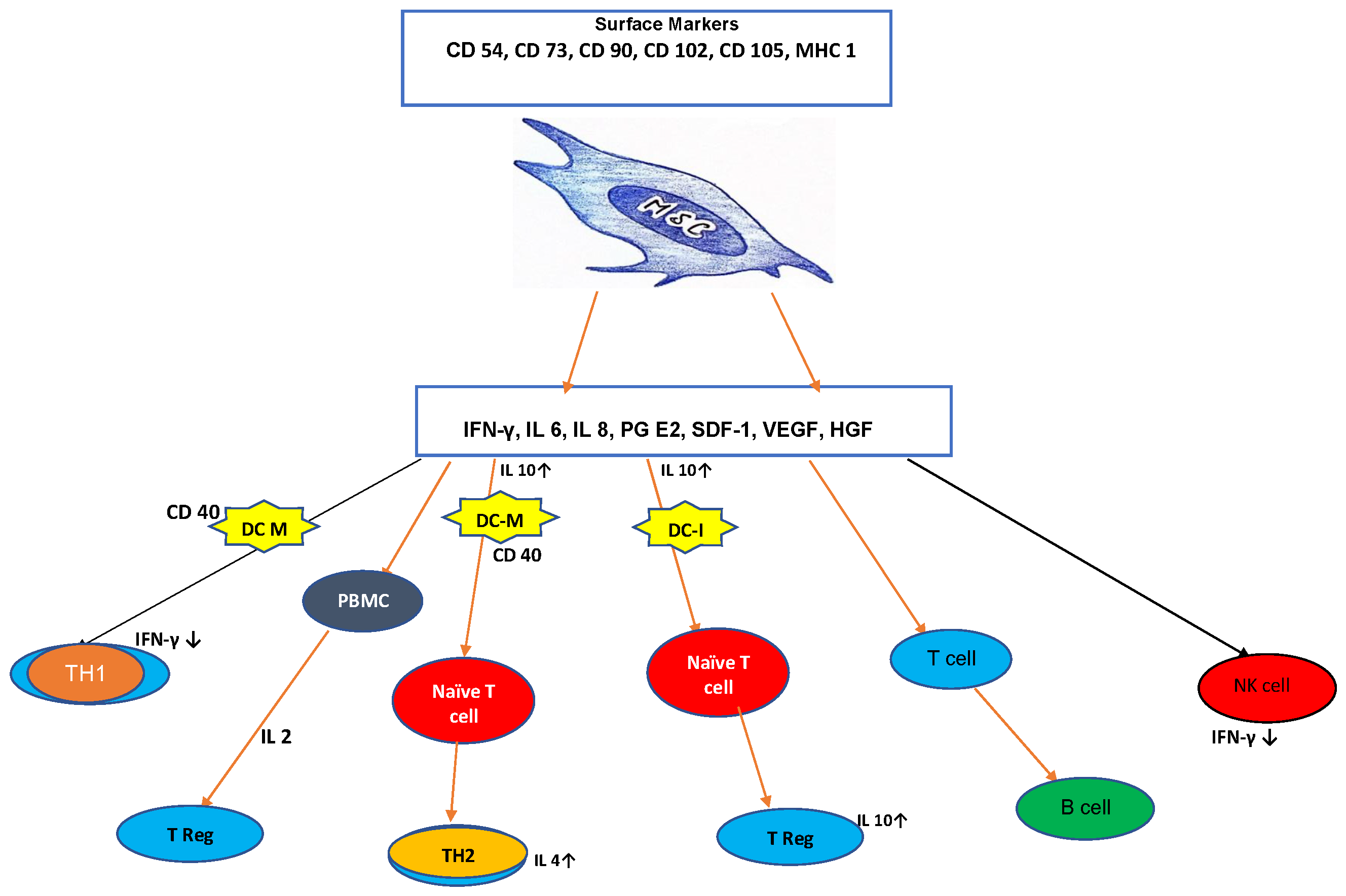

Table 1.
Summarizes the key points from the overview and limitations of current transplantation therapies:.
Table 1.
Summarizes the key points from the overview and limitations of current transplantation therapies:.
| Authors | Title | Summary | Limitations/Future directives |
|---|---|---|---|
| Qiao Zhou, Ting-ting Li, et.al | Current status of xenotransplantation research and the strategies for preventing xenograft rejection [11] 28 Jul 2022 |
The paper discusses xenotransplantation of pig organs as a potential alternative for organ transplantation, focusing on the mechanisms of immunological rejection and strategies for preventing xenograft rejection, such as gene editing and immunosuppressive regimens. | -Delayed xenograft rejection (DXR) and chronic rejection remain urgent issues in xenotransplantation. - Current status of xenotransplantation research and the strategies for preventing xenograft rejection. -Immune rejection is the major challenge. - Concerns about Porcine endogenous retroviruses (PERVs) transmission and ethical issues around xenotransplantation. |
| Kamalesh Anbalakan, Kenneth Michael et.al | Contemporary review of heart transplant immunology and immunosuppressive therapy [12] 01 Jun 2022 |
The paper provides an update on contemporary cardiac transplant medicine, focusing on immunosuppressive therapy and treatment of cardiac rejection. It highlights local practice differences from international counterparts and emphasizes the importance of individualized drug choices and strategies for preventing rejection. | - Heterogeneity in care and treatment protocols. -More studies are needed to improve outcomes and treatment protocols. -Challenges in the modern era of heart transplantation. \ -Side effects from over immunosuppression. |
| Martin J. Hoogduijn, Fadi Issa, et.al | Cellular therapies in organ transplantation [13] 15 Jan 2021 | The paper discusses the current state of cellular therapies in organ transplantation, emphasizing preclinical models and early clinical trials showing the safety and feasibility of cellular therapies. It addresses the challenges and future directions for improving outcomes in clinical transplantation. | -Timing and frequency of MSC injections need to be determined for future clinical trials. |
| Livia Adams Goldraich, Santiago Alonso Tobar Leitão, et.al | A comprehensive and contemporary review on immunosuppression therapy for heart transplantation [14] 01 Jan 2020 |
The paper provides a comprehensive overview of contemporary immunosuppression in heart transplantation, emphasizing individualized drug choices and practical approaches. It discusses clinical evidence for immunosuppressive drugs and highlights challenges in the modern era of heart transplantation. | -Lack of evidence and empirical observations. -Challenges in the modern era of heart transplantation. -Side effects from over immunosuppression. |
| Charles G. Rickert, James F. Markmann | Current state of organ transplant tolerance. [15] 01 Aug 2019 | The paper provides an overview of strategies for coping with the shortage of organ grafts for transplantation, focusing on extended criteria grafts, donation after circulatory death, and ex-vivo perfusion. It discusses their successes and limitations in improving organ quality and reducing graft loss. | -Shortage of organ grafts available for transplantation. -Increased risk of graft loss due to poor function. |
| Pål Dag Line | The Fundamental Challenges in Organ Transplantation [16] 24 Dec 2017 |
The paper proposes a comprehensive data-driven characterization of organ transplantation to uncover patterns of efficiency, equity, and awareness. It discusses the integration of available data sets and the trade-off between efficiency, equity, and awareness in organ transplantation. | -The state-of-the-art in organ transplantation lacks the characterization of awareness. -The trade-off between efficiency, equity, and awareness is not fully understood. |
| Ammar Ebrahimi, Fakher Rahim | Advances in organ preservation for transplantation [19] 08 Oct 2014 |
The paper evaluates recent clinical advances in immunosuppressive therapies for organ transplantation, emphasizing novel stem cell-based therapies and alternative therapeutic choices. It addresses the challenges and treatment-related adverse events associated with immunosuppressive therapies. | -Poor long-term survival and significant mortality in organ transplantation. -Treatment-related adverse events and high risk of chronic graft rejection. |
| Ted Welman, Sebastian Michel, Nicholas Segaren, Kumaran Shanmugarajah | Bioengineering for Organ Transplantation: Progress and Challenges [20] 26 Aug 2015 |
The paper provides a review of recent progress in organ bioengineering for transplantation, highlighting both successes and challenges. It discusses advances in decellularization and recellularization techniques and the future work needed for clinical translation of organ bioengineering. | -Difficulties in assessing cardiac function after circulatory cessation. -Decellularized scaffolds need to be immune system compatible. |
Table 2.
Provides a concise overview of the different emerging paradigms in transplantation therapeutics, their key advancements, and the potential impact they may have on the field.
Table 2.
Provides a concise overview of the different emerging paradigms in transplantation therapeutics, their key advancements, and the potential impact they may have on the field.
| Paradigm | Description | Key Advancements | Potential Impact |
|---|---|---|---|
| Immunomodulation and Tolerance Induction [21,22] |
Techniques to promote acceptance of transplanted tissue while reducing the use of immunosuppressive drugs. Involves Treg treatment and co-stimulation blocking. | Researching ways to achieve immunological tolerance for prolonged transplant survival without impacting general immune function. | Transforming immunosuppressive methods and enhancing long-term results. |
| Advances in Organ Preservation Techniques [23,24] |
Enhancements to prolong the durability of donated organs. Methods such as hypothermic perfusion, normothermic perfusion, and cryopreservation. | Possibility to expand the number of suitable donor organs, decrease ischemia-reperfusion harm, and improve transplant results. | Enhancing organ availability and increasing transplant success rates. |
| Gene Editing and Engineering in Transplantation [25,26] |
Utilizing gene editing technologies (e.g., CRISPR/Cas9) for precision manipulation of donor organs and recipient cells. | Targeting genetic factors in graft rejection and enhancing tolerance-inducing capabilities. | Personalizing transplantation medicine and improving compatibility between donors and recipients. |
| Biomaterials and Scaffold-Based Approaches [27] |
Application of biomaterials and scaffolds in tissue engineering and organ regeneration. | Offering structural support, fostering cell integration, and creating functioning tissues for transplantation. | Addressing issues with organ scarcity and improving the likelihood of successful transplantation. |
| Precision Medicine in Transplantation [28,29] |
Customizing treatment strategies according to specific individual traits. Includes analyzing genetic information, identifying specific biological markers, and utilizing sophisticated diagnostic instruments. | Enhancing immunosuppressive treatments, forecasting individual patient reactions, and enhancing transplant results. |
Customized treatment programs leading to improved patient results. |
| Artificial Intelligence and Machine Learning Applications [30,31] |
Integration of AI and ML for data analysis, risk prediction, and decision support. |
Improving the analysis of intricate datasets, enhancing organ matching algorithms, and forecasting post-transplant results. | Refining clinical decision-making and improving overall transplantation processes. |
Table 3.
This table provides an overview of different novel cellular therapies, their mechanisms of action, therapeutic potential for each cellular therapy in the field of transplantation medicine:.
Table 3.
This table provides an overview of different novel cellular therapies, their mechanisms of action, therapeutic potential for each cellular therapy in the field of transplantation medicine:.
| Cellular Therapy | Description | Mechanism of Action | Therapeutic Potential |
|---|---|---|---|
| Mesenchymal Stem Cells (MSCs) [32,33] |
Adaptable cell instruments with immune system-regulating characteristics. Display anti-inflammatory properties, inhibit immunological reactions against foreign tissue, and enhance tissue healing. |
Improving the success of transplanted tissue, reducing immune-related issues in both self and donor transplant scenarios. |
Current research focuses on enhancing the effectiveness of MSC therapy and its use in different transplantation situations. |
| Regulatory T Cells (Tregs) [34,35] |
Contribute significantly to immunological tolerance by inhibiting exaggerated immune reactions. Has the capacity to promote immunological tolerance, lower the chance of graft rejection, and decrease the necessity for immunosuppressive medications. | Utilizing Tregs for cellular treatment in transplantation. Methods to increase and include Tregs for enhanced therapeutic effectiveness. |
Actively researching Treg-based medicines in transplantation and improving procedures for wider use. |
| Natural Killer (NK) Cell Therapies [36,37] |
Main components of the innate immune system. Strive to utilize cytotoxic powers to target and eliminate alloreactive immune cells, hence minimizing the chance of graft rejection. | Studying methods using ex vivo expanded or genetically engineered NK cells for medicinal effectiveness. | Research is centered on comprehending NK cell activity in transplantation and enhancing strategies for clinical use. |
| Induced Pluripotent Stem Cells (iPSCs) [38,39] |
Revolutionary in the field of regenerative medicine. Convert somatic cells into pluripotent stem cells to create tissues and organs tailored for transplantation in individual patients. |
Possibilities for customized and immunologically compatible organ transplants despite safety and tumor formation issues. |
Current research focuses on improving iPSC-based methods, addressing safety issues, and broadening their use in transplantation. |
Table 4.
provides an overview of the future directions and challenges associated with the organ transplantation.
Table 4.
provides an overview of the future directions and challenges associated with the organ transplantation.
| Future directions and challenges | Modalities | Description |
|---|---|---|
| Potential Future Breakthroughs |
|
The development of CRISPR-based gene editing technologies has the potential to significantly impact transplantation therapies. Researchers want to create individualized immunomodulation by modifying genes linked to graft rejection to overcome immunological obstacles. Continued research on induced pluripotent stem cells (iPSCs) and 3D bioprinting to address the scarcity of organs. Advancements in organ regeneration and bioengineering may lead to the development of personalized organs, offering a long-term solution to the shortage of available organs. AI and ML integration in transplantation medicine for a shift towards precision medicine. AI algorithms can examine large datasets, anticipate individual patient reactions, and improve organ matching, thereby improving therapeutic approaches and outcomes. [74] |
| Anticipated Challenges and Hurdles |
|
The use of genetic engineering, particularly CRISPR-based technology, raises significant ethical issues. Discussions on the ethical considerations of genome manipulation for transplantation, such as unforeseen outcomes and social effects, provide significant problems that demand thorough ethical examination. The adoption of advanced treatments like gene editing and customized medicine poses issues regarding affordability and availability. To achieve fair access, we must tackle financial obstacles, develop efficient reimbursement methods, and reduce healthcare inequalities. Although bioengineered organs show potential, there are still worries about their extended safety and longevity. Challenges in stem cell-derived tissues involve vascularization, immunological compatibility, and the risk of tumorigenicity. Thorough, extended research is essential for evaluating long-lasting effectiveness and safety. |
| Collaboration and Interdisciplinary Approaches for Advancement |
|
Tackling complex issues and achieving advancements in transplantation treatments by working together across many disciplines. The convergence of expertise from several domains such as immunology, genetics, bioengineering, ethics, and data science is crucial for creating holistic solutions. Creating collaborative study groups and worldwide projects to combine resources, knowledge, and data. Collaborative clinical trials and setting worldwide standards can create a united effort to address issues and make advancements in transplantation medicine. It is crucial to include the viewpoints and experiences of patients and the general public for the success of future developments in transplantation treatments. Involving patients in research, incorporating their perspectives into study planning, and maintaining clear communication help create patient-focused solutions and build trust in new technology. |
Disclaimer/Publisher’s Note: The statements, opinions and data contained in all publications are solely those of the individual author(s) and contributor(s) and not of MDPI and/or the editor(s). MDPI and/or the editor(s) disclaim responsibility for any injury to people or property resulting from any ideas, methods, instructions or products referred to in the content. |
© 2024 by the authors. Licensee MDPI, Basel, Switzerland. This article is an open access article distributed under the terms and conditions of the Creative Commons Attribution (CC BY) license (http://creativecommons.org/licenses/by/4.0/).
Copyright: This open access article is published under a Creative Commons CC BY 4.0 license, which permit the free download, distribution, and reuse, provided that the author and preprint are cited in any reuse.


