

Submitted:
15 April 2024
Posted:
16 April 2024
You are already at the latest version
Abstract
Fungal infections caused by Candida spp. are responsible for high hospital morbidity and mortality rates. Therefore, there is a continuous search for new antifungal medicines, particularly ones with anti-Candida activity. This review analyzed articles published between 2002 and 2023 considering the anti-Candida activity of chemical compounds identified or isolated in plants of the Anacardiaceae family. In addition, the in-silico prediction of the isolated compounds described was performed. The analysis of 35 studies showed that extracts, essential oils, and compounds from the anti-Candida activity were frequently determined in vitro using the minimum inhibitory concentration (MIC). The most commonly tested species were Candida albicans, C. tropicalis, C. parapsilosis, C. glabrata, C. krusei, and C. guilliermondii, respectively. Essential oils were the most used form (37% of the studies). The isolated compounds with antifungal effects include cardanol, estragole, trans-anethole, β-caryophyllene, myrcene, catechin-3-o-rhamnoside, β-sitosterol-3-O-glucoside, 24Z-isomasticadienolic acid, oleanolic acid, and oleanolic aldehyde. The in-silico evaluation of those isolated compounds revealed the compounds' drug-likeness and possible antifungal activity. However, some of them showed high toxicity. In conclusion, compounds from the Anacardiaceae family show promise for developing new therapeutic antifungal drugs, especially in combination with conventional antifungals.
Keywords:
Anacardiaceae
; gallic acid
; ADMET
; drug-likeness
; Candida albicans
; antifungal
Significance statement
Fungal infections caused by Candida spp., mainly those caused by Candida albicans, are responsible for high morbidity and mortality. There is scientific evidence that extracts and isolated compounds from species of the Anacardiaceae family exert an antifungal effect. In addition, our in-silico analyses revealed the compounds' drug-likeness and possible antifungal activity. In conclusion, chemical compounds present in extracts from Anacardiaceae species may be used as targets to develop new antifungal drugs.
1. Introduction
Fungal infections have become more widespread and diverse worldwide. They account for the highest mortality rates and hospital-acquired infections [1,2]. According to estimates, Candida sp is responsible for 400, 000 new cases of candidiasis every year. Mortality rates can range from 40% to 60% [3,4].
Candida spp. can colonize various human tissues and is part of the commensal microbiota, a barrier to the innate immune system. However, certain conditions can cause an imbalance in the microbiota, which can alter tissue integrity or lead to host immune response defects, resulting in the development of infections. Once established, these infections may cause disseminated candidiasis of deep organs, which has become a severe public health problem [5].
Candida albicans is the primary cause of candidiasis, even after the increase in infections caused by related species such as non-albicans [6]. The invasive capacity of C. albicans is related to several virulence factors, including the ability to switch from yeast to hyphal forms. Adhesion to synthetic materials or biological substrates favors the growth of more hyphae that are capable of producing extracellular polymers that provide a structural matrix and facilitate adhesion and biofilm formation. This contributes to the process of host tissue invasion [7,8,9].
Virulence factors associated with Candida species impair the treatment of candidiasis and favor resistance to commercial antifungals, including azoles such as fluconazole, echinocandins, and amphotericin B [10]. Despite their frequent application, some drugs are limited because of their high toxicity [10,11]. Efforts are being made to identify new therapeutic strategies, particularly natural compounds, to control fungal infections due to increased resistance to antifungal drugs in 2022 [11,12,13].
In finding treatments for fungal infections, the chemical composition of plant extracts can help identify substances with potential therapeutic effects against species of the Candida genus [14,15]. To discover and develop new drugs, various compounds are evaluated to identify their therapeutic, molecular, and pharmacokinetic properties [16]. In this regard, computational simulations using in silico molecular docking and molecular dynamics approaches can help with the rational design and screening of drugs [17].
This work aimed to study Anacardiaceae species' phytochemical composition and anti-candida properties, focusing on literature published from 2000 to 2023.
The present review aimed to find and compile data on the antifungal activity of chemical compounds identified in the Anacardiaceae family, considering the last ten years and evaluating in silico the prediction of the identified isolated compounds as a new drug candidate, considering their bioavailability and potential toxicity.
2. Material and Methods
2.1. Search Strategy
The analyses comprised the published studies in PubMed, Embase, Science Direct, and Scopus databases without language restrictions. The keywords used were Anacardiaceae and Candida, Anacardiaceae and anti-Candida, Anacardiaceae and antifungal activity, and Anacardiaceae and antifungal agent. The following inclusion criteria were applied to avoid bias: original articles published between March 2012 and December 2023; studies that performed chemical characterization or used compounds isolated from extracts of plants belonging to the family Anacardiaceae; and studies conducted in silico, in vitro or in vivo assays focusing on the anti-Candida activity.
For this review, we selected only studies that performed chemical characterization of the extracts or those using the isolated compounds. Studies performing only phytochemical screening were excluded since those methods have low sensibility and accuracy.
The initial search retrieved 455 articles. Some articles were indexed in two or more databases and removed to avoid duplicates. After an initial screening of titles and abstracts and subsequent full-text reading, 35 articles met the inclusion criteria. Figure 1 illustrates the process of article screening and selection for this review.
2.2. In Silico Pass Prediction
The structure of the isolated compounds identified in the Anacardiaceae family was retrieved from the PubChem database (https://pubchem.ncbi.nlm.nih.gov/ and included:
- 24Z-isomasticadienolic acid (PubChem CID: 15559978),
- cardanol (PubChem CID: 11266523),
- catechin-3-o-rhamnoside (PubChem CID: 21626704),
- estragole (PubChem CID 8815:), myrcene (PubChem CID: 31253),
- oleanolic acid (PubChem CID: 10494),
- Oleanolic aldehyde (PubChem CID: 10321055),
- trans-Anethole (PubChem CID: 637563),
- β-Caryophyllene (PubChem CID: 5281515) and
- β-sitosterol-3-O-glucoside (PubChem CID: 12309057).
The pass prediction of the antifungal potential of the selected compounds was reviewed with PASS online tools (http://way2drug.com/passonline). The Pa (Probable activity) and Pi (Probable inactivity) considering values ranged from 0.000 to 1.000 [18]. The compounds considered drugs with a potential to be biologically active must have Pa values higher than the Pi values. In comparison, Pa < 0.7 suggests high drug activity, 0.5 < Pa < 0.7 shows moderate therapeutic potentials, and Pa < 0.5 shows poor pharmaceutical activity [19].
2.3. Pharmacokinetics and Toxicity Measurement
The SwissADME online method determined the compounds' pharmacokinetic properties, including Absorption, Distribution, Metabolism, Excretion, and Toxicity (ADME/T) [16].
Compounds that obey Lipinski's rule are considered ideal drug Candidates (molecular weight not more than 500 g/mol; Candida-bond donors ≤5; Candida-bond acceptors ≤10; molar refractivity ranging from 40 to 130; and lipophilicity < 5. [20].
In addition, the online tool GUSAR (http://Candida.way2drug.com/gusar/ acutoxpredict.html) In silico prediction of LD50 values for oral administration in rats (LD50 values given in [mg/kg]: Class I: fatal if swallowed (LD50 ≤ 5); Class II: fatal by ingestion (5 < LD50 ≤ 50); Class III: toxic by ingestion (50 < LD50 ≤ 300); Class IV: harmful by ingestion (300 <LD50 ≤ 2000); Class V: may be dangerous if ingested (2000 <LD50 ≤ 5000); Class VI: non-toxic (LD50> 5000) and OSIRIS Property Explores (https://Candida.organic-chemistry.org/prog/peo/) was used to calculate the toxicological properties: mutagenic, tumorigenic, irritant and reproductive effective.
3. Results
3.1. The Anacardiaceae Family
The Anacardiaceae family comprises approximately 81 genera and 800 species worldwide in tropical and subtropical regions. It is economically significant because it provides edible fruits (mango, cashew, pistachio, and others), wood, and ornamental plants [21].
The family comprises woody plants with resiniferous ducts, glabrous or hairy branches, typically alternate leaves, usually simple, composite, or pinnate, mostly imparipinnate, with entire margin or serrated and without stipules. The flowers are bisexual, unisexual, or polygamous, actinomorphic, and are frequently arranged in terminal inflorescences, although they rarely may be solitary; they are usually pentamerous and commonly present with the nectariferous disc; 4-5-mere sepals, with 4-5-mere petals; the gynaeceum is syncarpous, with 1–12 uninoculated carpels and super ovary. It has a white, greenish, or purplish color and free stamens. The fruits are usually of the drupe type. In Brazil, 55 species are distributed in 14 genera, and the most diverse are Schinus (11 species) and Anacardium (9 species) [22].
Some species are used in traditional medicine [23,24,25]. Furthermore, many studies investigated the antifungal activity of plant extracts of species such as Rhus typhina L. [26], Anacardium occidentale L. [27,28,29], and Cottinus coggyria Scop. [30,31] Lannea kestingii Engl and K.Krause [32,33]; Mangifera indica L. [34]; Pistachia sp. [35,36,37,38,39,40,42,43]; Rhus sp.[26,44]; Schinopsis brasiliensis Engl [46]; Schinus sp. [41,47,48,49,50] and Spondias sp. [51,52,53]. Several reports also related to the activity of isolated compounds [29], including cardanol, among others.
3.2. Anacardiaceae Species with Anti-Candida Activity
After analysis of the articles, 35 studies reporting anti-Candida activity of the family Anacardiaceae plant species were identified. Table 1 summarizes the plant species listed in alphabetical order and their respective extracts/fractions and plant parts used, the chemically characterized or isolated compounds, the Candida species or strain used in the studies, the type of assay, and methods used to assess anti-Candida activity. The Latin species names were validated at World Flora Online - WFO [54]. It is vital to clarify that each species' identity of the plant taxonomist(s) is reported only in Table 1.
The results identified 35 studies, 23 species belonging to 9 genera of Anacardiaceae with anti-Candida activity. This family has the most significant number of medicinal plants used in traditional medicine to treat infections [24,25].
The most prevalent genus was Pistacia, with nine studies [35,36,37,38,39,40,41,42,43], and Schinus, four studies [41,47,48,49,50]. Anacardium occidentale was the species more investigated, with three studies [27,28,29], followed by Cotinus coggyria [30,31] and Lannea Kerstingii [32,33], Rhus typhina [26,45], and Spondias tuberosa [51,52,53] with two studies. Other species also showed anti-Candida effects, including Mangifera indica [34], Rhus coriaria [44], Schinopsis brasiliensis [46], and Spondias mombin [51].
Essential oils were the most frequently used form, reported in 37.1% (n=12) of the studies. Extracts and essential oils were obtained from leaves (54.2%), bark (17.1%), seeds (8.6%), fruits (8.6%), hulls (8.6%), flowers (5.7%), roots (2.9%), and nutshells (2.9%).
C. albicans was the most frequently tested strain, corresponding to 74.3% of the studies, followed by C. tropicalis (22.9%), C. parapsilosis (17.1%), C. glabrata (11.4%), C. krusei (11.4%), and C. guilliermondii (2.9%).
The anti-Candida activity of extracts and compounds was frequently determined by halo inhibition on microbiological media (21%), minimum inhibitory concentration (MIC – 89%), and minimum fungicidal concentration (MFC – 21%). Only two studies evaluated the effect on biofilm formation, one study on exoenzymes (proteinase and phospholipase), and one study on the growth curve. It is essential to highlight that only one study conducted in vivo tests in rats to evaluate the anti-Candida activity in a model of vulvovaginal candidiasis, and the remaining studies performed in vitro assays.
3.3. Isolated Compounds with Anti-CANDIDA activity
The anti-Candida activity of the following ten isolated compounds was assessed in vitro: cardanol [29], β-sitosterol-3-O-glucoside [32], catechin-3-o-rhamnoside [33], 24Z-isomasticadienolic acid, Oleanolic acid, and Oleanolic aldehyde [38], estragole, myrcene, Trans-anethole, β-caryophyllene [46]. There was also a wide range of chemically characterized compounds among species whose activity was not directly assessed. The most common substance identified was gallic acid [26,27,28,31,36,43,45,47,52], α-pinene [30,31,37,40,41,42] and limonene [30,42,49,50]. Figure 2 shows the chemical structure of the ten isolated compounds.
3.3.1. In Silico Prediction of Anti-Candida Activity of Isolated Compounds
The in-silico evaluation of isolated compounds showed they all have a higher Potential activity (Pa) than potential inactivity (Pi). Catechin-3-o-rhamnoside (Pa=0.740) and β-sitosterol-3-O-glucoside (Pa=0.722) showed the highest molecular potency, followed by the 24Z-isomasticadienolic acid (Pa=0.687). The other compounds exhibited Pa between 0.590 and 0.425 (Table 2).
3.3.2. Toxicity and Oral Bioavailability of Isolated Compounds
The results showed that all the compounds met Lipinski's rules and showed oral bioavailability. Concerning probable toxicological effects, the oleanolic acid showed reproductive toxicity, trans-anethole may have mutagenic, tumorigenic, and irritant effects, and myrcene may act as a tumorigenic, irritant, and reproductive toxic product. All other compounds did not show mutagenic, tumorigenic, irritant, or reproductive toxicity (Table 3).
The prediction of oral toxicity showed that the oleanolic aldehyde might be toxic by ingestion (Class III estimative). The oleanolic acid, β-sitosterol-3-O-glucoside, estragole, and 24Z-isomasticadienolic acid were considered Class IV compounds, with a probable harmful if swallowed. In addition, cardanol, catechin-3-o-rhamnoside, trans-anethole, β-caryophyllene and myrcene, Class V, may be dangerous if ingested (Table 4).
4. Discussion
The high frequency of C. albicans as the target found in this review may be related to the high frequency with which this fungus is detected in infections, especially in vulvovaginitis [55]. Over the years, in parallel to the advance of medical procedures, the incidence of bloodstream C. albicans is still the most frequent yeast isolated from patient biological samples with severe and fatal clinical conditions in humans [6,55,56], mainly in patients with COVID-19 admitted to intensive care units [57]. The pathogenicity of C. albicans and other Candida species is related to several escape mechanisms, such as adhesion, biofilm formation, secretion of hydrolytic exoenzymes and increased resistance to available medicines [58]. Despite this knowledge, only a few studies have been conducted against the virulence factors.
In the present study, A. occidentale was the most prevalent species investigated for anti-Candida activity, considering the extracts obtained from the leaves, flowers, and stems [27,28] or compounds isolated from the cashew nutshell [29], which was effective against C. albicans. This species' antimicrobial activity is extensively studied, notably its antibacterial properties [27]. However, the anti-Candida activity related to identified or isolated substances is still scarce. Cardanol was found among the isolated compounds with anti-Candida activity [29]. The antifungal effect of cardanol is associated with its ability to bind to chitin on the cell wall [29]. At the same time, the phenolic acids may act against Candida sp. through different biological pathways and cellular targets compared to the existing antifungal agents [59]. Interestingly, anacardic acid, considered a marker of the Anacardium genus, was not included as an antifungal agent nor identified in the studies evaluated in this review.
Several studies have shown the genus Pistacia anti-Candida activity. These species are essential in many communities' nutrition and agricultural economy. This genus has been extensively studied in botany, ethnobotany, phytochemistry, and pharmacological activity [60,61]. Three studies evaluated Pistacia atlantica anti-Candida albicans activity using the oil extracted from the hulls [37], mastic gum [38] and the seeds oil. The anti-C. albicans activity related to three isolated compounds, 24Z-isomasticadienoic acid, oleanonic acid, and oleanonic aldehyde, was detected by Karyginanni et al. [38] evaluating the antifungal effect in vitro.
Pistacia lentiscus exerts antifungal activity against C. albicans and C.glabrata. This property has been attributed to compounds like α-pinene and terpinene-4-ol in the essential oils extracted from the leaves [40]. Similarly, the essential oil extracted from the leaves of Pistacia terebinthus also showed anti-C. albicans activity associated with the presence of α-pinene [41].
The antifungal effect of the essential oil of Pistacia vera was associated with similar compounds identified in the essential oil of P. atlantica [42]. The antifungal activity of P. vera was associated with gallic acid and catechin identified in the leaves' essential oil [13]. In addition, the essential oil was also effective against C. glabrata, C. parapsilosis and C. aurisi [44].
Studies on the susceptibility of Candida spp. have mostly followed the Clinical and Laboratory Standards Institute's (CLSI [62] standard M27-A3 recommendations. Therefore, the most used methods for evaluating extracts and compounds are determining the minimum inhibitory concentration (MIC) and minimum fungicidal concentration (MFC) using broth dilution [62]. However, the standard that establishes these methods was developed to test antimicrobials with already-known parameters, leading us to conclude that there is an urgent need to establish procedures to evaluate plant extracts' antifungal and antimicrobial activity.
Identifying bioactive compounds in plant extracts for experimental purposes comprises a series of essential steps, including determining the quality and quantity of the compounds considering the choice of solvent, extraction method, phytochemical screening procedure, fractionation method, and identification technique [15,16,63].
Our results showed that chemical analysis frequently involved the extraction of essential oils and the investigation of their antifungal activity of essential oils and their components [30,31,33,34,35,37,41,42,44,46,50], and isolated compounds as estragole, trans-anethole, b-caryophyllene, and myrcene [46]. In a study by Donati et al. [46], these compounds were isolated from the essential oil of Schniopsis brasiliensis and showed fungicidal activity against C. parapsilosis.
According to Donadu et al. [64], Ruta graveolens essential oil, which contains as the main component 2-undecanone, showed antifungal activity against fluconazole-resistant C. tropicalis and was also able to remove C. albicans biofilms partially. The time-kill kinetics assay revealed a fungicidal effect against C. tropicalis and a fungistatic activity against C. albicans. They also found a synergistic effect for the essential oil when combined with amphotericin B, a commercial antifungal. These findings suggest that natural products and isolated substances could be used as adjuvants to commercial antifungal treatments.
The compounds α-pyrene, limonene, and gallic acid were the most frequently identified in the Anacardiaceae family. α-Pyrene and limonene are determined mainly in essential oils and are reported as responsible for the anti-Candida activity. Gallic acid and its derivatives are secondary polyphenolic metabolites frequently detected in several Anacardiaceae species. Their salts and esters, called gallates, are widely distributed in plants and found in A. occidentale bark [27,28], Mangifera indica peel and seeds [34], and Rhus typhina leaves and berries [45], for example. There is evidence that liposomes containing quercetin and gallic can inhibit the fungus growth. In addition, the gallic acid anti-C. albicans' activity improved survival in a murine model of systemic infection and showed antioxidant and anti-inflammatory properties [65]. Other studies confirm gallic acid's promising role as an antifungal agent [66].
β-Sitosterol-3-O-glucoside and catechin-3-O-rhamnoside, compounds isolated from the stem bark of Lannea kerstingii, exhibited activity against C. albicans and C. tropicalis [33]. β-sitosterol-3-O-glucoside showed antiapoptotic activity [67], and catechin-3-O-rhamnoside has antioxidant [68], anti-inflammatory and anticancer properties [69] in studies with other plant families. However, we found no other reports of anti-Candida activity among the Anacardiaceae species. According to our in-silico results, β-sitosterol-3-O-glucoside showed high antifungal potential activity and low toxicity. However, the use of this substance as a new drug seems challenging due to its low gastrointestinal absorption.
Estragole, trans-anethole, and myrcene, compounds isolated from essential oils extracted from the leaves of Schinopsis brasiliensis, exerted activity against C. parapsilosis [46]. Synergistic activity between this substance and ketoconazole has been reported against C. tropicalis. In this case, the time-kill curves showed significant synergism between the medicine and the isolated compound. In contrast, the combination with amphotericin B had an antagonistic effect and was ineffective, and the fungus remained alive [70].
In a checkerboard study, Dąbrowska et al. [71] studied the anti-Candida effect of isolated compounds. They showed that the combination of trans-anethole and miconazole affected the cell composition of C. albicans and resulted in fungus death due to increased membrane permeability. Our results in silico showed high intestinal absorption, low toxicity to estragole, and poor potential activity. In contrast, the prediction for trans-anethole indicates that this substance is not a good choice as a target for a new antifungal agent since it presented poor potential activity and high toxicity, besides the high gastrointestinal absorption.
Myrcene is one of the main compounds found in essential oils of plant species such as Cotinus coggyria, exhibiting activity against C. albicans and C. parapsilosis [30]. However, the in-silico prediction showed that myrcene has a moderate potential activity but seems highly toxic, due to its tumorigenic, irritant, and harmful reproductive effects.
Molecular docking studies have been widely used to predict ligand-target interactions and obtain better insights into the biological activity of natural products. We utilized the structure-based biological activity prediction program Prediction of Activity Spectra for Substances (PASS) to predict the pharmacological profile of the identified compounds.
All compounds isolated and cited in this review were further characterized using the online-based prediction program ADME analysis to explore their drug-likeness, pharmacokinetics, and physiochemical characteristics. All compounds exhibited orally active drug-likeness properties, according to Lipinski's rule [20], since they have good bioavailability [16]. However, this analysis was not able to identify the particular pharmacological effect. After OSIRIS evaluation, it was possible to observe that some isolated compounds seem to be not safe as therapeutic drugs for humans, especially compounds such as myrcene (tumorigenic, irritating, and with harmful effects on the reproductive system), oleanolic acid (effects on the reproductive system) and trans-anethole (mutagenic, tumorigenic, and irritating).
5. Conclusions
Considering the drug-likeness characteristic, the Anacardiaceae family plant species and their isolated compounds may be used for bioprospecting new therapeutic agents with anti-Candida activity. Some isolated substances could be used as an adjuvant to commercial antifungal treatments. However, despite advances in improving the current antifungal arsenal and identifying new therapeutic targets, research has been limited to the early stages of infection, without focusing on the fungus virulence factors or the toxicity of the isolated compounds for the mammalian organism. Other questions are related to the urgent need to establish procedures to evaluate plant extracts' antifungal and antimicrobial activity. This is a crucial step in the fight against fungal infections and should be prioritized to identify the Anacardiaceae family's new plant-derived antifungals and compounds.
Taken together, the results of this review indicate that there is still a long road to identify, characterize, isolate, and test the compounds present in plants of the Anacardiaceae family as a sustainable option for new therapeutic agents to prevent or reduce the spread of fungal infections, especially those caused by Candida spp, the most common species in hospitals.
Declaration of Conflict of Interest
All authors declare that there is no conflict of interest.
Abbreviations
NI – not informed in the article; MIC: Minimum Inhibitory Concentration; MFC: Minimum Fungicidal Concentration; MW: Molecular Weight; HBD: hydrogen-bond donor; HBA: hydrogen-bond acceptor; LogP: values of lipophilicity; MF: Molar Refractivity; GA: Gastrointestinal Absorption; MP: Mutagenic Potential; TM: Tumorigenic Potential; IR: Irritant Response; LD 50: Lethal Dose 50.
References
- Bitar, I.; Khalaf, R.A.; Harastani, C.; Tokajian, S. Identification, typing, antifungal resistance profile, and biofilm formation of Candida albicans isolates from Lebanese hospital patients. Biomed Res Int 2014, 1, 1–10. [Google Scholar] [CrossRef]
- Kainz, K.; Bauer, M.A.; Madeo, F.; Carmona-Gutierrez, D. Fungal infections in humans: the silent crisis. Microb Cell 2020, 7, 143–145. [Google Scholar] [CrossRef]
- Pal, M. Morbidity and mortality due to fungal infections. J App Micro Biol 2018, 1, 1–10. [Google Scholar] [CrossRef]
- Tsay, S.V.; Mu, C.; Williams, S.; Epson, E.; Nadle, J.; Bamberg, C.M.; Barter, D.M.; Johnston, C.L.; Farley, M.M.; Harb, S. Burden of candidemia in the United States, 2017. Clin Infect Dis 2020, 71, e449–e453. [Google Scholar] [CrossRef]
- Rai, L.S.; Wijlick, L.V.; Bougnoux, M.E.; Bachellier-Bassi, S.; d'Enfert, C. Regulators of commensal and pathogenic lifestyles of an opportunistic fungus-Candida albicans. Yeast 2021, 38, 243–250. [Google Scholar] [CrossRef]
- Pappas, P.G.; Lionakis, M.S.; Arendrup, M.C.; Ostrosky-Zeichner, L.; Kullberg, B.J. Invasive candidiasis. Nat Rev Dis 2018, 4, 1–20. [Google Scholar] [CrossRef]
- Banu, S.F.; Rubini, D.; Shanmugavelan, P.; Murugan, R.; Gowrishankar, S.; Pandian, S.K.; Nithyanand, P. Effects of patchouli and cinnamon essential oils on biofilm and hyphae formation by Candida species. J Mycol Med 2018, 28, 332–339. [Google Scholar] [CrossRef]
- Talapko, J.; Juzbašić, M.; Matijević, T.; Pustijanac, E.; Bekić, S.; Kotris, I.; Škrlec, I. italic>Candida albicans-The virulence factors and clinical manifestations of infection. J Fungi (Basel) 2021, 7, 79. [Google Scholar] [CrossRef]
- Lopes, J.P.; Lionakis, M.S. Pathogenesis, and virulence of Candida albicans. Virulence 2022, 13, 89–121. [Google Scholar] [CrossRef]
- Cui, X.; Wang, L.; Lü, Y.; Yue, C. Development and research progress of anti-drug resistant fungal drugs. J Infect Public Health 2022, 15, 986–1000. [Google Scholar] [CrossRef]
- Hamill, R.J. Amphotericin B formulations: a comparative review of efficacy and toxicity. Drugs 2013, 73, 919–934. [Google Scholar] [CrossRef]
- Colombo, A.L.; Júnior, J.N.; Guinea, J. Emerging multidrug-resistant Candida species. Curr Opin Infect Dis 2017, 30, 528–538. [Google Scholar] [CrossRef]
- Gonzalez-Lara, M.F.; Ostrosky-Zeichner, L. Invasive candidiasis. Semin Respir Crit Care Med 2020, 41, 3–12. [Google Scholar] [CrossRef]
- Pedroso, R.S.; Balbino, B.L.; Andrade, G.; Dias, M.C.P.S.; Alvarenga, T.A.; Pedroso, R.C.N.; Pimenta, L.P.; Lucarini, R.; Pauletti, P.M.; Januário, A. In vitro and in vivo anti-Candida spp. activity of plant-derived products. Plants, 2019; 8, 494–521. [Google Scholar]
- Zou, X.; Zeng, M.; Huang, F.; Qin, G.; Song, Z.; Liu, F. The potential role of plant secondary metabolites on antifungal and immunomodulatory effect. Appl Miccrobio Biotechnol, 2023; 4471–4492. [Google Scholar] [CrossRef]
- Daina, A.; Michielin, O.; Zoete, V. SwissADME: a free web tool to evaluate pharmacokinetics, drug-likeness, and medicinal chemistry friendliness of small molecules. Sci Rep 2017, 7, 1–13. [Google Scholar] [CrossRef]
- Pinzi, L.; Rastelli, G. Molecular docking: shifting paradigms in drug discovery. Int J Mol Sci 2019, 20, 4331. [Google Scholar] [CrossRef]
- Mojumdar, M.; Kabir, M.S.C.; Hasan, M.S.; Ahmed, T.; Rahman, M.R.; Akter, C.; Rahman, M.M. Molecular docking and pass prediction for the analgesic activity of some isolated compounds from Acalypha idica L. and ADME/T property analysis of the compounds. World J Pharm Res 2016, 5, 1761–1770. [Google Scholar]
- Goel, R.K.; Singh, D.; Lagunin, A.; Poroikov, V. PASS-assisted exploration of new therapeutic potential of natural products. Med Chem Res 2011, 20, 1509–1514. [Google Scholar] [CrossRef]
- Lipinski, C.A.; Lombardo, F.; Dominy, B.C.; Feeney, P.J. Experimental and computational approaches to estimate solubility and permeability in drug discovery and development settings. Adv Drug Deliv Rev 1997, 23, 3–25. [Google Scholar] [CrossRef]
- Pell, S.K.; Mitchell, J.D.; Miller, A.J.; Lobova, T.A. Anacardiaceae. In: KubtzkiI, K., ed. The families and genera of vascular plants. Flower. Plants, Eudicots-Sapindales, Cucurbitales, Myrtaceae 2011, 10, 7–50.
- Hall, C.F.; Bragança, A.S. Flora das cangas da Serra dos Carajás, Pará, Brasil: Anacardiaceae. Rodriguesia, 2017; 68, 911–916. [Google Scholar] [CrossRef]
- Masevhe, N.A.; McGaw, L.J.; Eloff, J.N. The traditional use of plants to manage candidiasis and related infections in Venda, South Africa. J Ethnopharmacol 2015, 168, 364–372. [Google Scholar] [CrossRef]
- Novaryatiin, S.; Indah, I. The medicinal plants used in Anjir Pulang Pisau, Central Kalimantan-Indonesia. Pharmacogn J 2019, 11, 12–32. [Google Scholar] [CrossRef]
- Baldé, M.A.; Tuenter, E.; Traoré, M.S.; Matheeussen, A.; Cos, P.; Maes, L.; Camara, A.; Haba, N.L.; Gomou, K.; Diallo, M.S.T. Antimicrobial investigation of ethnobotanically selected guinean plant species. J Ethnopharmacol 2020, 263, 113–232. [Google Scholar] [CrossRef]
- Arlandini, E.; Gelmini, F.; Testa, C.; Angioletti, S.; Beretta, G. GC-MS analysis and biological activity of hydroalcoholic extracts and essential oils of Rhus typhina L. wood (Anacardiaceae) in comparison with leaves and fruits. Nat Prod Res 2021, 35, 4764–4768. [Google Scholar] [CrossRef]
- Silva, R.A.; Liberio, S.A.; Amaral, F.M.M.; Nascimento, F.R.F.; Torres, L.M.B.; Monteiro-Neto, V.; Guerra, R.N.M. Antimicrobial and antioxidant activity of Anacardium occidentale L. flowers in comparison to bark and leaves extracts. J Biosci Med 2016, 4, 87– 99.
- Costa, A.R.; Almeida-Bezerra, J.C.; Silva, T.G.; Pereira, P.S.; Oliveira Borba, E.F.; Braga, A.L.; Fonseca, V.J.A.; Menezes, S.A.; Silva, F.S.C.; Sousa Fernandes, P.A. Phytochemical profile and anti-Candida and cytotoxic potential of Anacardium occidentale L. (cashew tree). Biocatalisis Agric Biotechnol 2021, 37, 102–192. [Google Scholar] [CrossRef]
- Mahata, D.; Mandal, S.M.; Bharti, R.; Gupta, V.K.; Mandal, M.; Nag, A.; Nando, G.B. Self-assembled cardanol azo derivatives as antifungal agent with chitin-binding ability. Int J Biol Macromol 2014, 69, 5–11. [Google Scholar] [CrossRef]
- Ulukanli, Z.; Karabörklü, S.; Bozok, F.; Çenet, M.; Oztürk, B.; Balcilar, M. Antimicrobial, insecticidal and phytotoxic activities of Cotinus coggyria Scop. essential oil (Anacardiaceae). Nat Prod Res. 2014, 28, 2150–2157. [Google Scholar] [CrossRef]
- Sukhikh, S.; Noskova, S.; Pungin, A.; Ivanova, S.; Skrypnik, L.; Chupakhin, E.; Babich, O. Study of the Biologically Active Properties of Medicinal Plant Cotinus coggygria. Plants (Basel) 2021, 10, 1224. [Google Scholar] [CrossRef]
- Njinga, N.S.; Sule, M.I.; Pateh, U.U.; Hassan, C.S.; Abdullahi, S.T.; Ache, R.N. Isolation and antimicrobial activity of β-sitosterol-3-O-glucoside from Lannea kerstingii Engl. & K. Krause (Anacardiacea). J Heal Allied Sci 2016, 6, 4–8. [Google Scholar]
- Stanislaus, N.N.; Ibrahim, S.M.; Usman, P.U.; Sa'adiya, C.C.; Garba, M.M.; Toyin, A.S.; Moji, B.-O.T.; Ndifor, A.R.; Osas, E.G.; Oyetunji, S.A. Antimicrobial and antioxidant activity of catechin-3-o-rhamnoside isolated from the stem bark of Lannea kerstingii Engl. and K. Krause (Anacardiaceae). Pakistan J Pharm Sci 2021, 34, 1–10. [Google Scholar]
- Dorta, E.; González, M.; Lobo, M.G.; Laich, F. Antifungal activity of mango peel and seed extracts against clinically pathogenic and food spoilage yeasts. Nat Prod Res 2016, 30, 2598–2604. [Google Scholar] [CrossRef]
- Benabdallah, F.Z.; Kouamé, R.O.; El Bentchikou, M.; Zellagui, A.; Gherraf, N. Études ethnobotanique, phytochimique et valorisation de l'activité antimicrobienne des feuilles et de l'oléorésine du pistachier de l'atlas (Pistacia atlantica Desf.). Phytothérapie 2017, 15, 222–229. [Google Scholar] [CrossRef]
- Othman, S.; El-Hashash, M.; Hussein, S.; El-Mesallamy, A.; Rizk, S.; Elabbar, F.A. Phenolic content as antioxidant and antimicrobial activities of Pistacia atlantica Desf. (Anacardiaceae) extract from Libya. Egypt. J Chem 2019, 62, 21–28. [Google Scholar] [CrossRef]
- Hasheminya, S.-M.; Dehghannya, J. Composition, phenolic content, antioxidant, and antimicrobial activity of Pistacia atlantica subsp. Kurdica Hulls' essential oil. Food Biosci 2020, 34, 100–510. [Google Scholar] [CrossRef]
- Karygianni, L.; Cecere, M.; Argyropoulou, A.; Hellwig, E.; Skaltsounis, A.L.; Wittmer, A.; Tchorz, J.P.; Al-Ahmad, A. Compounds from Olea europaea and Pistacia lentiscus inhibit oral microbial growth. BMC Complement Altern Med 2019, 19, 1–10. [Google Scholar] [CrossRef]
- Brahmi F, Haddad S, Bouamara K, Yalaoui-Guellal D, Prost-Camus E, Barros J-PP, Prost M, Atanasov AG, Madani K, Boulekbache-Makhlouf L (2020) Comparison of chemical composition and biological activities of Algerian seed oils of Pistacia lentiscus L., Opuntia ficus indica (L.) Mill. and Argania spinosa L. Skeels. Ind Crops Prod. 151, 112-456.
- Milia E, Usai M, Szotáková B, Elstnerová M, Králová V, D'hallewin G, Spissu C, Barberis A, Marchetti M, Bortone A, Campanella V, Mastandrea G, Langhansová L, Eick S (2020) The pharmaceutical ability of Pistacia lentiscus L. leaves essential oil against periodontal bacteria and Candida sp. and its anti-inflammatory potential. Antibiotics 9, 1-10.
- Piras A, Marzouki C, Falconieri D, Porcedda S, Gonçalves MJ, Cavaleiro C, Salgueiro L (2017) Chemical composition and biological activity of volatile extracts from leaves and fruits of Schinus terebinthifolius Raddi from Tunisia. Rec Nat Prod 11.
- D'Arrigo M, Bisignano C, Irrera P, Smeriglio A, Zagami R, Trombetta D, Romeo O, Mandalari G (2019). In vitro evaluation of the activity of essential oil from Pistacia vera L. variety Bronte hull against Candida sp. BMC Complement Altern Med. 2019, 6. [CrossRef]
- Gharibi, S.; Matkowski, A.; Sarfaraz, D.; Mirhendi, H.; Fakhim, H.; Szumny, A.; Rahimmalek, M. Identification of polyphenolic compounds responsible for antioxidant, anti-Candida activities and nutritional properties in different pistachio (Pistacia vera L.) hull cultivars. Molecules 2020, 28, 4772. [Google Scholar] [CrossRef]
- Yilmaz, G.; Ekşi, G.; Demirci, B.; Demirci, F. Characterization of the fatty acid compositions and antimicrobial activity of sumac (Rhus coriaria L.) fruits, growing naturally in Turkey and sold in herbalist markets. J Fac Pharm Ankara 2020, 44, 61–69. [Google Scholar]
- Vandal, J.; Abou-Zaid, M.M.; Ferroni, G.; Leduc, L. Antimicrobial activity of natural products from the flora of Northern Ontario, Canada. Pharm Biol 2015, 53, 800–806. [Google Scholar] [CrossRef]
- Donati, M.; Mondin, A.; Chen, Z.; Miranda, F.M.; Nascimento, B.B., Jr.; Schirato, G.; Pastore, P.; Froldi, G. Radical scavenging and antimicrobial activities of Croton zehntneri, Pterodon emarginatus, and Schinopsis brasiliensis essential oils and their major constituents: estragole, trans-anethole, β-caryophyllene, and myrcene. Nat Prod Res 2015, 29, 939–946. [Google Scholar] [CrossRef]
- Gehrke IT, Neto AT, Pedroso M, Mostardeiro CP, Da Cruz IB, Silva UF, Ilha V, Dalcol II, Morel AF (2013). Antimicrobial activity of Schinus lentiscifolius (Anacardiaceae). J Ethnopharmacol 2013, 148, 486–491. [CrossRef]
- Turchetti, G.; Garzoli, S.; Laghezza Masci, V.; Sabia, C.; Iseppi, R.; Giacomello, P.; Tiezzi, A.; Ovidi, E. Antimicrobial Testing of Schinus molle (L.) Leaf Extracts and Fractions Followed by GC-MS Investigation of Biological Active Fractions. Molecules 2020, 25, 1977. [Google Scholar] [CrossRef]
- El-Nashar HAS, Mostafa NM, El-Badry MA, Eldahshan OA, Singab ANB. Chemical composition, antimicrobial and cytotoxic activities of essential oils from Schinus polygamus (Cav.) cabrera leaf and bark grown in Egypt. Nat Prod Res 2021, 35, 5369–5372. [CrossRef]
- Hernandes, C.; Taleb-Contini, S.C.; Bartolomeu, A.C.D.; Bertoni, B.C.; Franҫa, S.C.; Pereira, A.M.S. Chemical composition and antifungal activity of the essential oils of Schinus weinmannifolius collected in the spring and winter. Nat Prod Commun 2014, 9, 1383–1386. [Google Scholar] [CrossRef]
- Freitas MA, Cruz RP, Santos ATL, Almeida-Bezerra JC, Machado AJT, Santos JFS, Rocha JE, Boligon AA, Bezerra CF, Freitas TS. HPLC–DAD analysis and antimicrobial activities of Spondias mombin (Anacardiaceae). Biotechnology 2022, 12, 1–15.
- Costa-Cordeiro, B.M.P.; Lima Santos, N.D.; Ferreira, M.R.A.; Araújo, L.C.C.; Junior, A.R.C. Conceição Santos AD, Oliveira AP, Silva AG, Silva Falcão EP, Santos Correia MT. Silva Almeida JRG, Silva LCN, Soares LAL, Napoleão TC, Silva MV, Paiva PMG. Hexane extract from Spondias tuberosa (Anacardiaceae) leaves has antioxidant activity and is an anti-Candida agent by causing mitochondrial and lysosomal damage. BMC Complement Altern Med 2018, 18, 1–10.
- Santos A, Carneiro JNP, Cruz RP, Sales DL, Andrade JC, Almeida CO, Costa JGM, Ribeiro RV, Brito ES, Batista FLA). UPLC-MS-ESI-QTOF analysis and antifungal activity of the Spondias tuberosa - arruda leaf and root hydroalcoholic extracts. Antibiotics 2019, 8, 240.
- WFO – World Flora online, https://www.worldfloraonline.org/ captured in December 2023.
- Hashemi, S.E.; Shokohi, T.; Abastabar, M.; Aslani, N.; Ghadamzadeh, M.; Haghani, I. Species distribution and susceptibility profiles of Candida species isolated from vulvovaginal candidiasis, emergence of C. lusitaniae. Curr Med Mycol 2019, 5, 26–36. [Google Scholar] [CrossRef]
- Gangneux, J.P.; Dannaoui, E.; Fekkar, A.; Luyt, C.E.; Botterel, F.; De Prost, N.; Bougnoux, M.E. Fungal infections in mechanically ventilated patients with COVID-19 during the first wave: the French Multicenter MYCOVID study. Lancet Respirat Med 2022, 10, 180–190. [Google Scholar] [CrossRef]
- Costa-de-Oliveira, S.; Rodrigues, A.G. Candida albicans Antifungal resistance and tolerance in bloodstream infections: the triad yeast-host-antifungal. Microrganisms 2020, 8, 154. [Google Scholar] [CrossRef]
- Teodoro, G.R.; Ellepola, K.; Seneviratne, C.J.; Koga-Ito, C.Y. Potential use of phenolic acids as anti-Candida agents: A Review. Front Microbiol 2015, 6, 1420. [Google Scholar] [CrossRef]
- Ahmed, Z.B.; Yousfi, M.; Viaene, J.; Dejaegher, B.; Demeyer, K.; Vander Heyden, C. Four Pistacia atlantica subspecies (atlantica, cabulica, kurdica, and mutica): A review of their botany, ethnobotany, phytochemistry, and pharmacology. J Ethnopharmacol 2021, 265, 113–329. [Google Scholar]
- Iranshahy M, Javadi B, Sahebkar A. Protective effects of functional foods against Parkinson's disease: A narrative review on pharmacology, phytochemistry, and molecular mechanisms. Phytother Res 2022, 36, 1952– 1989. [CrossRef]
- CLSI - Clinical and Laboratory Standards Institute. Method for broth dilution antifungal susceptibility testing of yeasts: approved M27-A3. CLSI 2012, Wayne, PA, USA.
- Abubakar, A.R.; Haque, M. Preparation of medicinal plants: Basic extraction and fractionation procedures for experimental purposes. J Pharm Bioallied Sci 2020, 12, 1–10. [Google Scholar] [CrossRef]
- Donadu, M.G.; Peralta-Ruiz, C.; Usai, D.; Maggio, F.; Molina-Hernandez, J.B.; Rizzo, D.; Bussu, F.; Rubino, S.; Zanetti, S.; Paparella, A.; Chaves-Lopez, C. Colombian essential oil of Ruta graveolens against nosocomial antifungal resistant Candida strains. J Fungi 2021, 7, 1–17. [Google Scholar] [CrossRef]
- Giordani B, Basnet P, Mishchenko E, Luppi B, Škalko-Basnet N (2019) Utilizing liposomal quercetin and gallic acid in localized treatment of vaginal Candida infections. Pharmaceutics 2019, 12, 9–15.
- Rhimi, C.; Aneke, C.I.; Annoscia, G.; Otranto, D.; Boekhout, T.; Cafarchia, C. Effect of chlorogenic and gallic acids combined with azoles on antifungal susceptibility and virulence of multidrug-resistant Candida spp. and Malassezia furfur isolates. Med Mycol 2020, 58, 1091–1101. [Google Scholar] [CrossRef]
- Maiyoa, F.; Moodley, R.; Singh, M. Phytochemistry, cytotoxicity and apoptosis studies of β-sitosterol-3-glucoside and β-amyrin from Prunus africana. African J Tradit Complement Altern Med 2016, 13, 105–112. [Google Scholar] [CrossRef]
- Kim, J.E.; Kim, S.S.; Hyun, C.-G.; Lee, N.C. Antioxidative chemical constituents from the stems of Cleyera japonica Thunberg. Int J Pharmacol 2012, 8, 410–415. [Google Scholar] [CrossRef]
- El-Alfy, T.S.; Ezzat, S.M.; Hegazy, A.K.; Amer, A.M.; Kamel, G.M. Isolation of biologically active constituents from Moringa peregrina (Forssk.) family: Moringaceae growing in Egypt. Pharmacogn Mag 2011, 7, 109–115. [Google Scholar]
- Shin, S.; Pyun, M. Anti-Candida effects of estragole in combination with ketoconazole or amphotericin B. Phyther Res 2004, 18, 827–830. [Google Scholar] [CrossRef]
- Dąbrowska M, Zielińska-Bliźniewska C, Kwiatkowski P, Łopusiewicz Ł, Pruss A, Kostek M, Kochan E, Sienkiewicz M. Inhibitory effect of eugenol and trans-anethole alone and in combination with antifungal medicines on Candida albicans clinical isolates. Chem Biodivers 2021, 18, 200–223.
Figure 1.
Flow chart of article screening and selection (2012-2023).
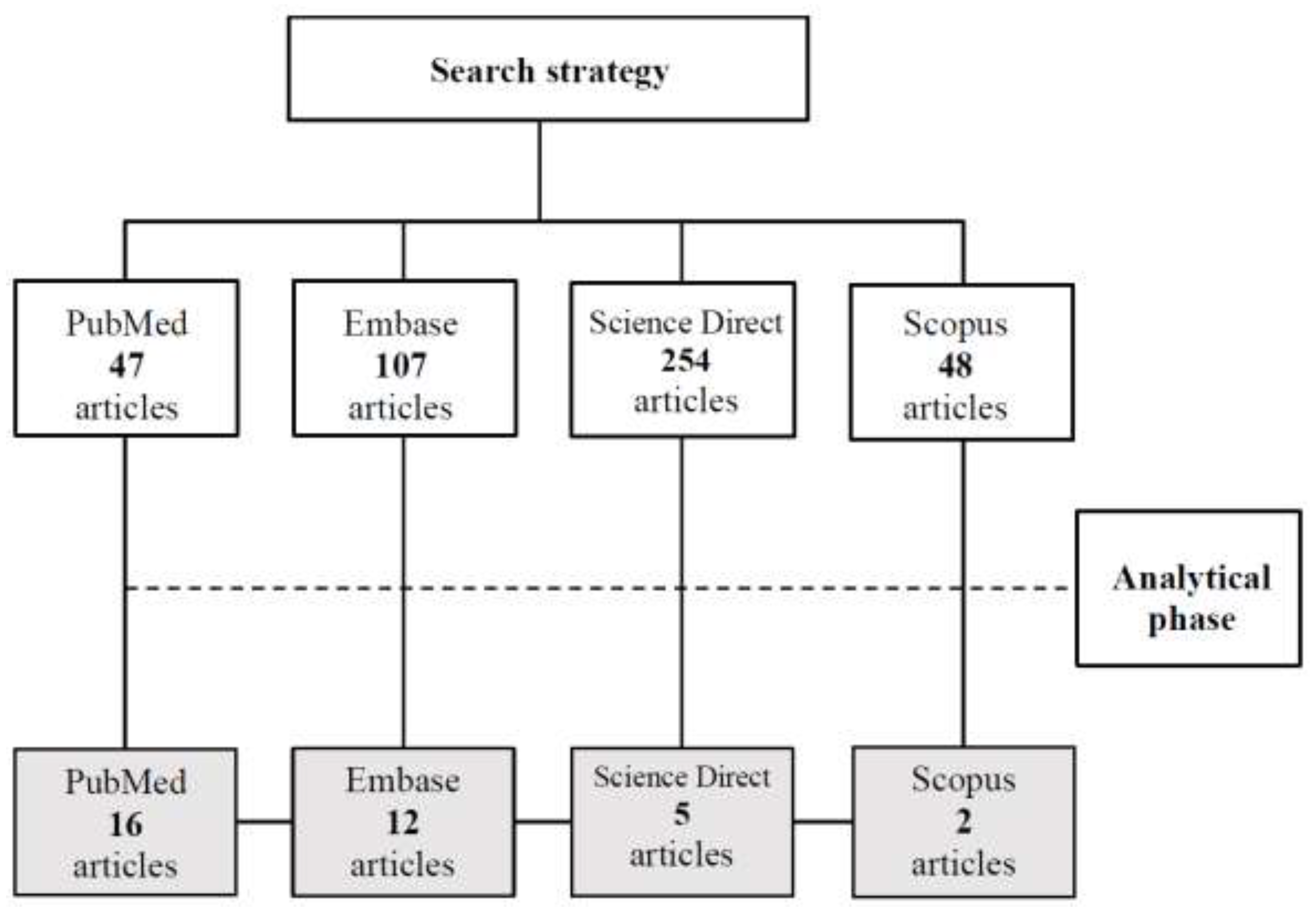
Figure 2.
Chemical structure of the identified and isolated compounds in extracts from plants of the family Anacardiaceae with antifungal activity against Candida ssp.
Figure 2.
Chemical structure of the identified and isolated compounds in extracts from plants of the family Anacardiaceae with antifungal activity against Candida ssp.
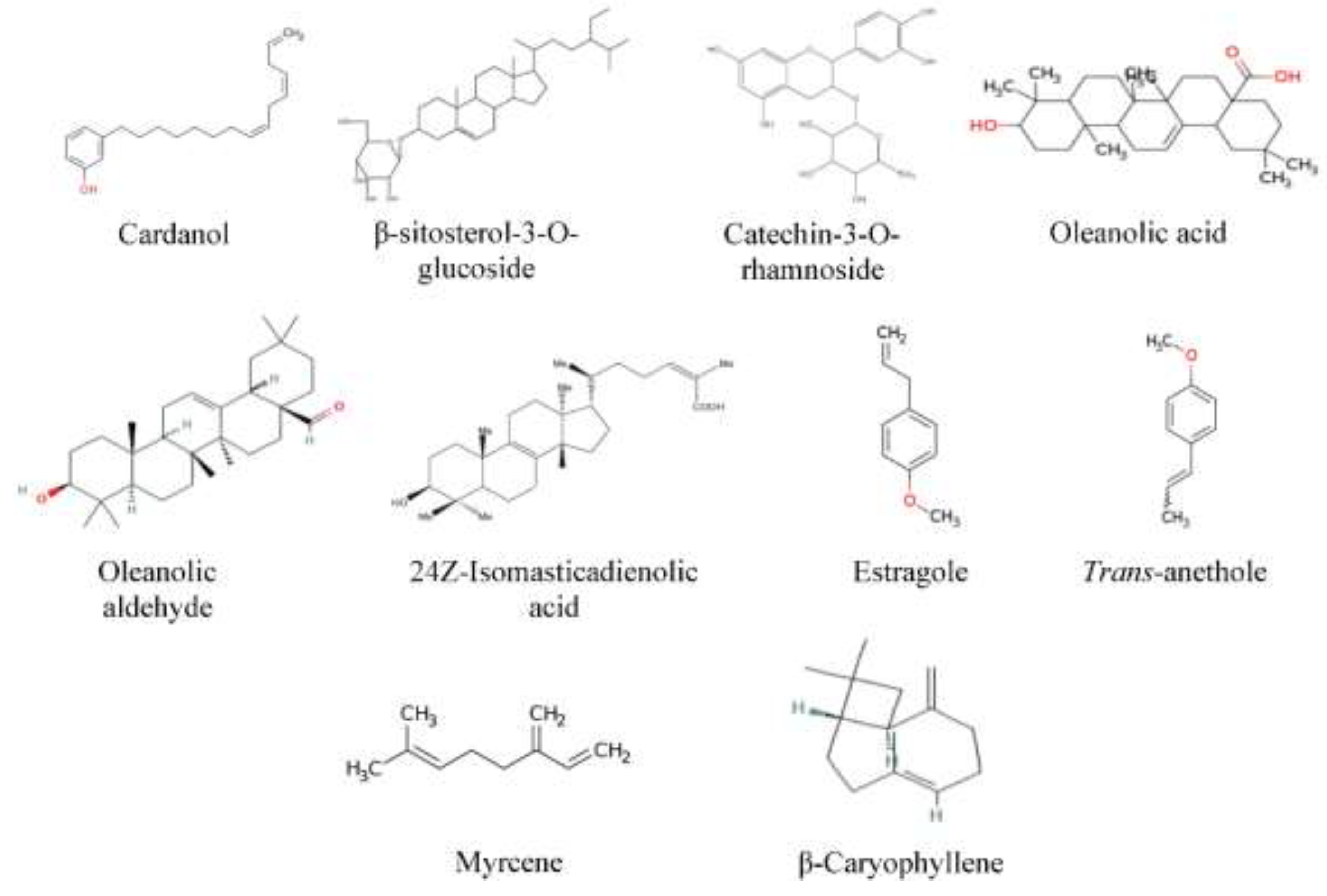

Table 1.
Extracts and active compounds of plants of the family Anacardiaceae with anti-Candida activity (2012 to 2023).’.
Table 1.
Extracts and active compounds of plants of the family Anacardiaceae with anti-Candida activity (2012 to 2023).’.
| Plant Species | Type of extract or fraction (Plant part) | Compounds identified and/or isolated | Candida species tested | Type of assay (methods)* |
Reference |
|---|---|---|---|---|---|
| Anacardium occidentale L. | Ethanolic (Flowers, leaves, stem bark) |
Phosphoric acid, dodecanoic acid, ethylgallic acid, sorbitol, glucose, gallic acid, hexadecanoic acid, octadecanoic acid and 1, 2-benzenedicarboxylic acid |
C. albicans C. tropicalis |
In vitro (Halo diffusion, MIC, MFC) |
[27] |
| Ethanolic (bark) |
Gallic acid, luteolin, epicatechin gallate and flavone |
C. albicans, C. krusei C. tropicalis |
In vitro (MIC) |
[28] | |
| (NI)* Cashew nutshell |
Cardanol (Isolated compound) |
C. albicans |
In vitro (MIC) |
[29] | |
| Cotinus coggyria Scop | Essential oil (leaves) |
α-pinene β-pinene limonene α-terpinolene β-terpinene β-myrcene β-caryophyllene |
C. albicans C. parapsilosis |
In vitro (Halo diffusion) |
[30] |
| Ethyl alcohol (Leaves and flowers) |
Rutin ferulic acid quercetin gallic acid kaempferol sulphurein, 3, 3’4’, 5, 6, 7 -hexahydroxyflavone, 7-O-β-D glucopyranoside |
C. albicans |
In vitro (Halo diffusion) |
[31] | |
| Lannea kerstingii Engl. and K. Krause. | Ethyl acetate (Stem bark) |
β-sitosterol-3-O-glucoside (Isolated compound) |
C. albicans , C. tropicalis C. krusei |
In vitro (Halo diffusion, MIC, MFC) |
[32] |
| Ethyl acetate (Stem bark) |
catechin-3-o-rhamnoside (Isolated compound) |
C. albicans C. tropicalis |
In vitro (MIC, MFC) |
[33] | |
|
Mangifera indica L. |
NI (peel and seed) |
Proanthocyanidins gallates gallotannins |
C. parapsilosis C. glabrata |
In vitro (Halo diffusion MIC) |
[34] |
| Pistacia atlantica Desf. | Essential oil (Leaves, fruits) |
α-pyrene, terpinen-4-ol acid | C. albicans | In vitro (MIC) | [35] |
| Methanolic (leaves) |
gallic acid, ellagic acid, 3, 3’-dimethoxyellagic acid, gallotannins, 2, 3-di-O-galloyl-(α/β)-4 C1 - glucopyranose, nilocitin, 1, 3-di-O-galloyl-β-D-4, C1-glucopyranose and 1, 2, 3, 4, 6- penta-O-galloyl-β-D-4 |
C. albicans |
In vitro (Halo diffusion) |
[36] | |
|
Pistacia atlantica subsp. |
Essential oil (hulls) |
α-Pinene, β-citral, carvone hydrate, myristic acid, p-acetyltoluene, pinocarveol and palustrol |
C. albicans |
In vitro (Halo diffusion, MIC) |
[37] |
| Mastic gum |
24Z-isomasticadienolic acid, oleanolic acid, oleanonic aldehyde (Isolated compounds) |
C. albicans |
In vitro (MIC) |
[38] | |
| Oils (seeds) |
Linoleic acid, oleic acid, fatty acid, β-sitosterol, protocatechuic acid, p-coumaric, t-cinnamic |
C. albicans |
In vitro (halo diffusion) |
[39] | |
| Pistacia lentiscus L. | Essential oil (leaves) |
α-pinene, terpinen-4-ol and other 62 compounds |
C. albicans C. glabrata |
In vitro (MIC) |
[40] |
| Pistacia terebinthus L. | Essential oils (leaves) |
Monoterpene hydrocarbons, α-pinene camphene, β-pinene terpinolene, β-phellandrene |
C. albicans |
In vitro (MIC) |
[41] |
|
Pistacia vera L. |
Essential oil (hulls) |
α-Pinene α-terpineol, camphene D-limonene and 3-carene |
C. albicans, C. parapsilosis C. glabrata |
In vitro (MIC, MFC, growth curve) |
[42] |
| Cyanidin-3- O-galactoside, gallic acid, catechin, eriodictyol-7- O-glucoside |
C. albicans C. glabrata C. parapsilosis C. auris |
In vitro (MIC) |
[43] | ||
| Rhus coriaria L. | Essential oil (seeds) |
Linoleic acid, oleic acid palmitic acid |
C. albicans |
In vitro (Halo diffusion, MIC) |
[44] |
| Rhus typhina L | Hydroalcoholic extract, essential oil (Branches, leaves, and fruits) |
Gallic acid, 1-cyclohexane-3, 4, 5-hydroxy-carboxylic acid, malic acid, d-cadinene, β-pinene, phenylacetaldehyde |
C. albicans |
In vitro (Halo diffusion, MIC) |
[26] |
| Ethanolic (leaves and berries) |
Gallic acid, chlorogenic acid, gentisic acid, sinapic acid, caffeic acid, ethyl gallate |
C. albicans |
In vitro (MIC) |
[45] | |
|
Schinopsis brasiliensis Engl. |
Essential oil (leaves) |
Estragole trans-anethole, β-caryophyllene myrcene (Isolated compounds) |
C. parapsilosis |
In vitro (MIC) |
[46] |
|
Schinus lentiscifolius Marchand. |
Aqueous, n-hexane, ethyl acetate and n-butanol fractions (leaves) |
Nonadecanol moronic acid gallic acid methyl ester, gallic acid quercetin quercitrin |
C. albicans, C. tropicalis |
In vitro (MIC) |
[47] |
| Schinus molle L. | Petroleum ether, diethylether, acetone, aqueous (leaves) |
Sesquiterpenes, sesquiterpenoids and other terpenes | C. albicans |
In vitro (Halo diffusion; MIC) |
[48] |
|
Schinus polygamus Cav. |
Essential oil (Bark and leaves) |
dl -limonene myrtenal caryophyllene oxide (bark). E-caryophyllene dl-limonene β-pinene (leaves) |
C. albicans |
In vitro (MIC) |
[49] |
| Essential oil (Leaves and fruits) |
A-phellandrene, β-phellandrene, α-pinene, and germacrene D |
C. albicans, C. tropicalis, C. krusei, C. guillermondii C. parapsilosis |
In vitro (MIC) |
[41] | |
| Schinus weinmannifolius Engl | Essential oil (leaves) | Bicyclogermacrene, limonene | C. albicans |
In vitro (MIC) |
[50] |
|
Spondias mombin L. |
Aqueous (leaves) hydroethanolic (bark) |
Quercetin caffeic acid catechin kaempferol phenols flavonoids |
C. albicans C. tropicalis |
In vitro (MIC; MFC) |
[51] |
|
Spondias tuberosa Arruda. |
Hexane (leaves) |
Flavonoids, hydrolysable tannins, saponins, terpenes; gallic acid, saturated and unsaturated fatty acids |
C. albicans, C. parapsilosis, C. glabrata, C. krusei |
In vitro (MIC; MFC) |
[52] |
| Hydroalcoholic (Leaves and roots) |
Alkaloids, steroids, phenols, flavonoids, triterpenoids, xanthones; dehydroascorbicacid, quinic acid, and others |
C. albicans, C. tropicalis |
In vitro (MIC, morphological transition) |
[53] |
(*) NI – not informed in the article; MIC – Minimum Inhibitory Concentration; MFC – Minimum Fungicidal Concentration.
Table 2.
PASS prediction of isolated compounds identified in the Anacardiaceae family for antifungal activity.
Table 2.
PASS prediction of isolated compounds identified in the Anacardiaceae family for antifungal activity.
| Isolated compounds | Potential activity (Pa) | Potential inactivity (Pi) |
|---|---|---|
| 24Z-isomasticadienolic acid | 0.687 | 0, 010 |
| Cardanol | 0.543 | 0.024 |
| Catechin-3-o-rhamnoside | 0.740 | 0, 008 |
| Estragole | 0.425 | 0.045 |
| Myrcene | 0.584 | 0.020 |
| Oleanolic acid | 0.575 | 0.021 |
| Oleanolic aldehyde | 0.590 | 0.019 |
| Trans-Anethole | 0.444 | 0.040 |
| β-Caryophyllene | 0.582 | 0.020 |
| β-sitosterol-3-O-glucoside | 0.722 | 0.009 |
Pa (Pa >0;7 – high drug activity; 0.5<Pa<0.7 – moderate drug activity; and Pa < 0.5 – poor drug activity).
Table 3.
Potential oral bioavailability of isolated compounds with anti-Candida activity.
| Compounds | MWa(g/mol) | HBDb | HBAc | LogPd(o/w) | MRe | GAf |
|---|---|---|---|---|---|---|
| 24Z-isomasticadienolic acid | 454.6 | 1 | 3 | 4.09 | 137.8 | Low |
| Cardanol | 298.4 | 1 | 1 | 4.61 | 99.3 | Low |
| Catechin-3-o-rhamnoside | 436.5 | 7 | 10 | 1.58 | 105.5 | Low |
| Estragole | 148.2 | 0 | 1 | 2.47 | 47.0 | High |
| Myrcene | 136.2 | 0 | 0 | 2.89 | 48.7 | Low |
| Oleanolic acid | 456.7 | 2 | 3 | 3.89 | 136.6 | Low |
| Oleanolic aldehyde | 440.7 | 1 | 2 | 4.33 | 135.0 | Low |
| Trans-Anethole | 145.2 | 0 | 1 | 2.55 | 47.8 | High |
| β-Caryophyllene | 204.3 | 0 | 0 | 3.29 | 68.7 | Low |
| β-sitosterol-3-O-glucoside | 576.8 | 4 | 6 | 4.98 | 165.6 | Low |
a: MW = Molecular Weight (acceptance range <500); b: HBD = hydrogen-bond donor (acceptance range ≤5); c: HBA = hydrogen-bond acceptor (acceptance range≤10); d: LogP = lipophilicity (acceptance range <5); e: MF= Molar Refractivity (acceptance range - 40-130); f: GA= Gastrointestinal Absorption.
Table 4.
Toxicity of isolated compounds with antifungal potential identified in Anacardiaceae family.
Table 4.
Toxicity of isolated compounds with antifungal potential identified in Anacardiaceae family.
| Compounds | MPa | TPb | IRc | REd | Oral toxicity(LD50e mg/Kg) |
|---|---|---|---|---|---|
| 24Z-isomasticadienolic acid | No | No | No | No | 1688 |
| Cardanol | No | No | No | No | 3737 |
| Catechin-3-o-rhamnoside | No | No | No | No | 2452 |
| Estragole | No | No | No | No | 1290 |
| Myrcene | No | Yes | Yes | Yes | 2561 |
| Oleanolic acid | No | No | No | Yes | 369.6 |
| Oleanolic aldehyde | No | No | No | No | 260.2 |
| Trans-Anethole | Yes | Yes | Yes | No | 3243 |
| β-Caryophyllene | No | No | No | No | 2331 |
| β-sitosterol-3-O-glucoside | No | No | No | No | 1279 |
a: MP - Mutagenic Potential.; b: TM - Tumorigenic Potential.; c: IR- Irritant Response.; d: Reproductive effects; and e: LD 50 = Lethal Dose 50.
Disclaimer/Publisher’s Note: The statements, opinions and data contained in all publications are solely those of the individual author(s) and contributor(s) and not of MDPI and/or the editor(s). MDPI and/or the editor(s) disclaim responsibility for any injury to people or property resulting from any ideas, methods, instructions or products referred to in the content. |
© 2024 by the authors. Licensee MDPI, Basel, Switzerland. This article is an open access article distributed under the terms and conditions of the Creative Commons Attribution (CC BY) license (http://creativecommons.org/licenses/by/4.0/).
Copyright: This open access article is published under a Creative Commons CC BY 4.0 license, which permit the free download, distribution, and reuse, provided that the author and preprint are cited in any reuse.