

Submitted:
15 April 2024
Posted:
15 April 2024
You are already at the latest version
Abstract
This literature review paper delves into the synergies between Climate-Smart Agriculture (CSA) and the effective management of food losses. With the escalating challenges posed by climate change and the pressing need to address food security concerns, the intersection of these two critical domains becomes paramount for sustainable agricultural practices. The review explores existing research on the implementation of climate-smart agricultural techniques and their impact on mitigating food losses throughout the agricultural value chain. The paper synthesizes findings related to climate-resilient crop varieties, precision farming, water-use efficiency, and sustainable soil management, highlighting their contributions to reducing post-harvest losses and enhancing overall food security. In addition to summarizing current knowledge, this paper identifies gaps in the literature and proposes avenues for future research. This review serves as a foundation for researchers, policymakers, and practitioners seeking to contribute to the advancement of climate-smart agriculture and the reduction of food losses, paving the way for a more sustainable and resilient global food system.
Keywords:
climate-smart agriculture
; food loss management
; sustainable agriculture
; climate resilience
; food security
1. Introduction
Climate change presents unprecedented challenges to global food security, necessitating innovative approaches to agricultural practices and food management systems (El Bilali et al., 2020). In this context, the convergence of Climate-Smart Agriculture (CSA) and effective food loss management emerges as an essential domain for sustainable agricultural development (Morkunas & Balezentis, 2021). CSA encompasses a range of strategies aimed at enhancing agricultural productivity, resilience, and sustainability in the face of climate variability and change (Hussain et al., 2021). Simultaneously, addressing food loss throughout the agricultural value chain is imperative for ensuring food security, reducing waste, and maximizing resource efficiency (Wunderlich & Martinez, 2018). As the global population continues to grow, projected to reach 9.7 billion by 2050 according to the United Nations, the pressure on food systems intensifies, exacerbating the impacts of climate change on agricultural production and food availability (Berners-Lee et al., 2018). Climate-related events such as extreme weather events, shifts in temperature and precipitation patterns, and changing pest and disease dynamics pose significant threats to crop yields and livestock productivity (Subedi et al., 2023; Skendžić et al., 2021; Gomez-Zavaglia et al., 2020). Moreover, these challenges are compounded by socio-economic factors, including poverty, limited access to technology and resources, and inadequate infrastructure, which further hinder the resilience of agricultural systems and exacerbate food insecurity (Neglo et al., 2021; Ngcamu & Chari, 2020).
Against this backdrop, the integration of CSA principles and practices offers promising solutions to enhance the adaptive capacity of agriculture to climate change while simultaneously addressing food loss and waste (Loboguerrero et al., 2019). By employing climate-resilient crop varieties, adopting precision farming techniques, optimizing water use efficiency, and promoting sustainable soil management practices, CSA endeavors to mitigate the adverse impacts of climate change on agricultural production while improving productivity, resource use efficiency, and resilience (Volkov et al., 2022; Ahmad & Dar, 2020). These strategies not only contribute to reducing greenhouse gas emissions and enhancing ecosystem services but also hold potential for minimizing post-harvest losses and improving overall food security (Debebe, 2022; Mezgebe et al., 2016).
This literature review aims to explore the synergies between CSA and food loss management, synthesizing existing research findings and identifying avenues for future research and innovation. By critically examining the current body of knowledge, this review seeks to provide insights into unexplored areas, innovative approaches, and practical implications for advancing sustainable agriculture and food security in a changing climate. Through a multidisciplinary lens, this review contributes to the ongoing discourse on climate-smart agriculture and offers actionable recommendations for researchers, policymakers, and practitioners striving to build resilient and sustainable food systems globally.
For this study, three research questions are listed below:
- What are the implications of the collaborative networks and thematic patterns identified in the analysis for the development and implementation of comprehensive strategies to enhance agricultural sustainability and food security in the face of climate change?
- What are the prevailing themes and emerging trends in interdisciplinary research on CSA and food loss?
- How do the identified clusters in the bibliometric and keyword co-occurrence analyses reflect the evolving interdisciplinary approaches and emerging trends in CSA and food loss research?
The structure of this study follows a systematic approach aimed at comprehensively analyzing the domain of CSA and food loss. In the introduction, the research context and significance of investigating CSA and food loss are elucidated, laying the foundation for the subsequent analysis. The method section outlines the methodological framework employed, including bibliometric and bibliographic techniques such as co-citation analysis, keyword co-occurrence analysis, and bibliographic coupling. The results section presents the findings of the analysis, including insights into research trends, key thematic areas, and the geographic distribution of research efforts. Finally, the conclusion synthesizes the key findings, and offers reflections on the implications of the study for advancing knowledge and informing future research directions in CSA and food loss.
2. Literature Review
Climate change, recognized as an existential global reality, is placing considerable stress on agriculture sectors, leading to an increased uptake of controlled environment agriculture (CEA) to provide climate-resilient and high-quality production (Sandison et al., 2022). Vertical farming (VF) emerges as an alternative to traditional farming methods, allowing primary production in urban locations while reducing seasonality and variability in produce. While life cycle analysis indicates that electricity consumption by VF accounts for the majority of the carbon footprint, the increasing use of renewable electricity can offer a low-carbon production method not subject to seasonality, highlighting its potential as a sustainable alternative, especially under changing climate scenarios (Sandison et al., 2023). Articulating the imperative of mitigating climate change impacts, scholars advocate for proactive investments in adaptation strategies, including the development of climate-resilient germplasm and enhanced management practices (Hanjra & Qureshi, 2010; Cairns et al., 2013). Similarly, the introduction of nanotechnology emerges as a novel avenue toward bolstering agricultural sustainability, particularly in optimizing input efficiency and stress management (Lowry et al., 2019). Moreover, refined modeling methodologies are proposed to attenuate uncertainties in crop yield prognostications amidst climate change dynamics, potentially revolutionizing predictive accuracy (Wang et al., 2017). Amidst these deliberations, the salience of smallholder farmers and their susceptibility to climate change emerges prominently, accentuating the exigency of tailored interventions to augment their adaptive prowess (Harvey et al., 2014). Composting, being a preferred method to convert biodegradable wastes into nutrient-rich soil conditioners, and biochar-complemented compost show promise as synergic soil amendments to improve soil quality, increase crop production, and remediate contaminated soils. Research on mineral-enhanced biochar and biochar-compost to improve rice yield demonstrates its potential benefits for agricultural sustainability (Khan et al., 2023). Advocating for the broader integration of agricultural biodiversity, scholars contend for fortifying productivity and resilience within farming systems (Frison et al., 2011). Furthermore, scholars suggest that cassava could play a crucial role in African agriculture's adaptive strategies due to its potential resilience to future climate shifts when compared to another staple crop (Jarvis et al., 2012). The emergence of climate change as a critical threat to global food security necessitates a concerted effort towards mitigation and adaptation strategies. Proactive investments in adaptation are imperative, encompassing the development of climate-resilient germplasm and enhanced management practices (Navarro-Racines et al., 2020; Arslan et al., 2014). Novel approaches such as nanotechnology offer promising avenues for bolstering agricultural sustainability by optimizing input efficiency and stress management (Wang et al., 2022). Moreover, the refinement of modeling methodologies aims to attenuate uncertainties in crop yield prognostications amidst changing climate dynamics, thereby enhancing predictive accuracy (Purakayastha et al., 2019). Recognizing the vulnerability of smallholder farmers to climate change, tailored interventions are essential to augment their adaptive capacities (Simelton et al., 2009). Furthermore, the integration of agricultural biodiversity is advocated to fortify productivity and resilience within farming systems (Gurung et al., 2014). Collectively, these endeavors contribute to a nuanced understanding of the intricate interplay between climate change and agricultural systems, elucidating diverse pathways for adaptation and mitigation to safeguard global food security amidst mounting environmental challenges. Additionally, advances in digital technologies in agriculture offer opportunities to enhance ecosystem services delivery and foster sustainable land use practices (Lajoie-O'Malley et al., 2020; Martellozzo et al., 2018). However, realizing climate-smart agriculture requires a comprehensive understanding of the links between farming practices, adaptation options, and farm performance, underlining the need for standardized indicators and innovative management approaches (Hammond et al., 2017; Webb et al., 2017). By addressing these challenges, stakeholders can work towards resilient agricultural systems that mitigate climate risks and ensure food security for future generations. Furthermore, agroforestry systems, CSA practices, adaptation strategies for smallholder farmers, crop residue retention, and the impact of global warming on wheat production are highlighted as integral components of climate-resilient agriculture (Waldron et al., 2017; Aggarwal et al., 2018; Douxchamps et al., 2016; Zhao et al., 2020; Liu et al., 2019). These diverse approaches underscore the multifaceted nature of climate change adaptation in agriculture and emphasize the need for tailored interventions across different contexts to ensure sustainable food production and security. Additionally, empirical research in Bangladesh investigates the dynamic impacts of agricultural activities on greenhouse gas emissions, highlighting the need for sustainable and climate-smart agriculture policies (Raihan et al., 2023). Proposing an approach to designing climate-smart production systems, structured in four steps, demonstrates improvements in various performance indicators, indicating the potential of such systems to contribute to agricultural sustainability (Selbonne et al., 2023). Assessing the impact of adopting climate-smart agricultural practices (CAPs) on rice yield in Chinese provinces highlights the positive correlation between CAP adoption and crop yield, with implications for food security (Vatsa et al., 2023). Smart agriculture, incorporating digital technologies, is seen as pivotal in enhancing food security, reducing resource inputs, and increasing farm profitability, although its adoption rate remains low and varies geographically (Cesco et al., 2023). Meanwhile, a study in Southern Europe maps agricultural areas at risk of climate zone shifts due to climate change, emphasizing the need for resilient agriculture and early action (Straffelini & Tarolli, 2023). Similarly, climate-smart agricultural practices are explored in China, with cooperative membership significantly increasing their adoption among banana farmers (Zhou et al., 2023). Finally, the trade-offs and synergies of climate-smart agricultural practices are examined in Western Africa, revealing differences in prioritization between agroecological zones and implications for future CSA action plans in vulnerability hotspots (Antwi-Agyei et al., 2023). Investigating the impact of CSA innovations on building climate resilience capacity in smallholder agriculture systems emphasizes the significant increase in climate resilience capacity among households, suggesting the importance of scaling up CSA innovations to enhance agricultural resilience to climate change (Teklu et al., 2023).
3. Materials and Methods
The utilization of extensive literature review, coupled with various bibliographic coupling techniques, has emerged as a robust scientific methodology for acquiring comprehensive data and charting new research avenues (Volk et al., 2014). This approach is particularly advantageous for analyzing topics that traverse multiple research domains or exhibit interdisciplinary characteristics. Bibliographic coupling proves to be a valuable tool, especially when exploring nascent scientific concepts, aiding in the delineation of methodological boundaries for the subject under investigation (Kleminski et al., 2020; Biscaro & Giupponi, 2014). CSA and food loss management exemplifies these conditions, encompassing economic, agricultural, and environmental dimensions while still occupying a relatively new and undefined position within the scientific landscape (Morkunas & Balezentis, 2021).
3.1. Database and Search Strategy
A comprehensive search was conducted in the Web of Science Core Collection on March 29, 2024, to retrieve relevant literature on the intersection of climate-smart agriculture, food loss management, post-harvest loss, food security, sustainable agriculture, and climate adaptation. The search query employed Boolean operators to combine key terms related to these themes. Specifically, the search query used was "(Climate-Smart Agricult* OR Climate Resilient Agricult*) AND (Food Loss Manag* OR Post-Harvest Loss OR Food Security) AND (Sustainable Agricult* OR Climate Adaptation)". 933 articles were identified.
- i.
- Inclusion and Exclusion Criteria: The search was limited to scholarly articles published in peer-reviewed journals. No temporal restrictions were applied to the search, ensuring the retrieval of relevant literature spanning different publication years. Articles were included if they addressed topics related to climate-smart agriculture, food loss management, post-harvest loss, food security, sustainable agriculture, and climate adaptation. Studies focusing on other topics or not meeting the inclusion criteria were excluded from the review.
- ii.
- Data Extraction: The search results were exported from the Web of Science Core Collection database and imported into reference management software for screening. Duplicate records were removed, and the titles and abstracts of the remaining articles were screened to assess their relevance to the research topic. Full-text articles of potentially relevant studies were then retrieved and further evaluated for eligibility based on the inclusion criteria.
- iii.
- Truncation Method: To ensure a comprehensive retrieval of relevant literature, truncation was applied to certain search terms. Truncation involves using a root of a word and an asterisk (*) to retrieve all variations of that word (Margiana et al., 2022). In this study, truncation was applied to terms such as "Agricult*" to capture variations such as "Agriculture," "Agricultural," and "Agriculturalists," among others. This method enabled a broader search scope and increased the likelihood of capturing relevant articles across different disciplines.
4. Results
This section examines scientific publications in CSA and food loss through bibliometric and bibliographic analysis techniques. By employing bibliometric methods such as co-citation analysis, it uncovers trends, influential authors, and emerging topics, while also mapping intellectual connections among publications through bibliographic coupling analysis.
An examination of scientific publications in the domain of CSA and food loss through bibliometric and bibliographic analysis
The dynamics in the number of relevant publications are depicted in Figure 1. Following this, the bibliometric and bibliographic analysis of scientific publications in the domain of CSA and food loss was undertaken. This analysis involved examining the trends, themes, and patterns evident in the literature, aiming to identify key research areas, influential authors, and emerging topics within the field. By employing bibliometric techniques, such as co-citation analysis and keyword analysis, insights were gained into the structure and evolution of research in CSA and food loss. Additionally, bibliographic coupling was utilized to map the intellectual connections among publications, shedding light on the interdisciplinary nature of CSA and food loss research and its intersections with related fields such as sustainable agriculture, climate adaptation, and food security. The findings of this analysis provide valuable insights for understanding the current state of research in CSA and informing future directions for scholarship in this important area.
Analyzing the notable spikes in the number of publications related to CSA during specific years, such as the substantial increase from 2015 to 2020, several factors may contribute to this trend. Firstly, the years following 2014 witnessed a surge in scientific interest, potentially driven by the release of the FAO memorandum on the promotion of CSA, which provided a framework for research and implementation efforts in this domain (Morkunas & Balezentis, 2021; Canton, 2021; Mekouar, 2013). Additionally, advancements in technology and methodologies for studying agriculture and climate change may have facilitated increased research output during this period. Moreover, growing global awareness of climate change impacts on agricultural systems and food security likely prompted researchers to explore innovative solutions such as CSA, further fueling publication activity (Misra, 2014). Furthermore, funding initiatives and international collaborations aimed at addressing climate-related challenges in agriculture may have incentivized researchers to contribute to the growing body of CSA literature (Peskett et al., 2020; Bowman & Minas, 2018). Overall, the observed fluctuations in publication numbers likely reflect the evolving landscape of scientific inquiry, with varying degrees of emphasis on CSA research in response to changing environmental, social, and policy contexts.
The analysis initiates by delving into individual-level scrutiny of papers within the CSA and food loss domain. To discern which scientific publications have wielded the most influence in propelling research in this field, an exhaustive review of citation metrics was conducted. Specifically, the 20 most cited papers pertaining to CSA were identified and compiled, organizing them based on their average citations per year. This methodology enables pinpointing seminal works that have garnered substantial attention and recognition within the scientific community over time. Scrutinizing the impact and trajectory of these highly cited papers offers valuable insights into the predominant themes, methodologies, and findings that have shaped research in the CSA domain. Table 1 presents the selected papers, providing valuable insights into the seminal contributions driving scholarly discourse and innovation in CSA.
Table 1 offers a revealing snapshot of the top 20 most cited papers in CSA and food loss research. Remarkably, these papers collectively amassed thousands of citations, with the highest achieving over 800 citations, underscoring their profound impact on the scholarly community. Delving into the data, it's intriguing to note that 4 out of the 20 highly cited papers emerged in 2019, suggesting a particularly prolific year for groundbreaking research in the CSA domain. Furthermore, the average citations per year provide valuable insights into the enduring relevance of these publications, with some maintaining an impressive average of over 50 citations annually. This underscores not only the immediate impact but also the sustained influence of these seminal works over time. Additionally, the diverse array of journals represented in the list underscores the interdisciplinary nature of CSA research, spanning disciplines from environmental science to agriculture.
Across various papers spanning from 2009 to 2022, a consistent theme emerges, highlighting the urgent need to address the challenges facing global agriculture amidst climate change. By analyzing the common theme, it was identified that many scholars advocate for proactive measures to bolster food security and resilience in the face of shifting climatic conditions. They stress the importance of investing in climate-resilient agricultural practices, technological innovation, and adaptive strategies to achieve sustainable food production. Notably, emerging theoretical frameworks underscore the critical role of interdisciplinary research, innovative technologies like nanotechnology, and the preservation of agricultural biodiversity in cultivating resilient agricultural systems (Navarro-Racines et al., 2020; Asseng et al., 2018). Moreover, dominant literature emphasizes the necessity of tailored adaptation strategies to mitigate the disproportionate impacts of climate change on vulnerable smallholder farmers, while also emphasizing the need for more accurate climate impact assessments and crop yield projections to guide evidence-based decision-making in agriculture (Lowry et al., 2019; Cairns et al., 2013). The prevailing theoretical sprouts stress the significance of innovative approaches such as conservation farming practices, biochar application, nanopesticides, and crop diversification in enhancing soil quality, boosting crop yields, and building resilience against climate variability (Arslan et al., 2014; Harvey et al., 2014). Additionally, prominent research underscores the importance of precise climate data and modeling techniques for evaluating the potential impacts of climate change on agriculture and biodiversity (Makate et al., 2016; Harvey et al., 2014). Collectively, these findings emphasize the necessity of interdisciplinary research, access to agricultural extension services, and tailored interventions to assist farmers in adopting climate-smart agricultural practices, ultimately contributing to global food security and sustainable agricultural productivity. The current research offers actionable insights and policy recommendations, they underscore the urgency of addressing climate change impacts on agriculture and highlight the interconnectedness of food systems and ecosystem services. Therefore, the adoption of climate-resilient agricultural practices, alongside technological advancements and informed decision-making, emerges as an essential strategy for enhancing adaptive capacity and ensuring food security amid a changing climate (Wang et al., 2022; Purakayastha et al., 2019).
A bibliographic coupling procedure was undertaken to explore the relationships between scientific publications in the field of CSA and food loss, with the findings illustrated in Figure 2. This analysis offers insights into the interrelations and common themes prevalent across the CSA literature. To ensure a focused examination, documents appearing fewer than 50 times have been excluded, leaving a total of 90 documents with frequencies of 50 or more.
Among all the articles included, six clusters were identified, and the highest number of citations is observed for Hanjra (2010) with 854 citations, followed by Liu (2016) with 354 citations, and Harvey (2014) with 349 citations. Notably, despite having fewer citations, some articles exhibit substantial total link strength, indicating strong connections with other publications. For instance, Arslan (2015) has 201 citations but a total link strength of 51, suggesting significant co-citation with other articles. Conversely, while some articles have high citation counts, their total link strength may be relatively lower, indicating less interconnectedness within the literature. This underscores the importance of considering both citation counts and total link strength to assess the influence and interconnectedness of scientific publications in the field of CSA and food loss research. Additionally, articles such as Lowry (2019) and Defries (2016) demonstrate relatively high citation counts despite minimal total link strength, suggesting potential for further exploration of their impact and connections within the literature. The analysis of highly cited articles reveals several noteworthy trends and insights. While some articles, like Hanjra and Qureshi (2010) in "Food Policy," exhibit exceptionally high citation counts, indicating their significant impact and influence over time, others, such as Lowry et al. (2019) in "Nature Nanotechnology," demonstrate a high average citations per year, suggesting sustained relevance and ongoing scholarly interest. Interestingly, diverse publication outlets are represented among the top-cited articles, ranging from prestigious journals like "Nature Climate Change" and "Nature Plants" to specialized publications like "Tropical Plant Biology" and "Chemosphere." Furthermore, the topics covered by these articles span a wide spectrum, from climate change and agricultural sustainability to nanotechnology and ecosystem services, reflecting the interdisciplinary nature of research in the CSA and food loss domain. These findings underscore the multifaceted nature of scholarly contributions to the field and highlight the importance of examining both citation counts and publication outlets to gain a comprehensive understanding of research impact and dissemination in this important area.
Analysis of the most prolific institutions in the field of CSA and food loss through bibliometric and bibliographic methods
The analysis of the most prolific institutions in the field of CSA and food loss through bibliometric and bibliographic methods is imperative for comprehensive scholarly understanding. This examination facilitates the identification of leading contributors and research trends within these domains, thereby informing strategic collaborations and resource allocation (Khan et al., 2020). Moreover, it serves to gauge the efficacy of research investments and supports evidence-based decision-making by funding agencies and policymakers (Blagus et al., 2015). Furthermore, by delineating influential institutions, this analysis aids in fostering scholarly networks and mentorship opportunities for emerging researchers (Yan & Ding, 2012). In essence, such scrutiny plays a pivotal role in advancing scholarly discourse and addressing pertinent challenges in agriculture, food security, and sustainability.
Table 2 provides a comprehensive analysis of institutions contributing to research in CSA and food loss, revealing notable patterns and insights. The International Center for Tropical Agriculture (CIAT) emerges as the most prolific institution with 40 documents and 1552 citations, indicating significant influence in the field, closely followed by the International Maize and Wheat Improvement Center (CIMMYT). Despite variations in document counts, institutions like UNIV LEEDS and INT CROPS RES INST SEMI ARID TROP demonstrate substantial citation impact, emphasizing the importance of quality research output. The presence of renowned international research centers like CGIAR alongside prestigious universities such as Wageningen University highlights the collaborative and interdisciplinary nature of CSA research. The geographic diversity of these institutions underscores the global significance of CSA research in addressing agricultural challenges worldwide. However, the unequal distribution of publications among institutions suggests the need for broader engagement and collaboration to advance CSA research comprehensively.
In exploring the collaborative landscape within CSA and food loss research, the analysis reveals the presence of three distinct clusters, as shown in Figure 3, each indicative of unique institutional collaborations and knowledge exchange dynamics. Among these clusters, the green cluster, anchored by the International Center for Tropical Agriculture (CIAT), emerges as a central hub of scholarly endeavors, boasting 40 documents and a remarkable total link strength of 14,295. This cluster not only underscores CIAT's pivotal role but also signifies a robust network of collaborations and knowledge exchange, indicative of CIAT's proactive engagement with diverse stakeholders in tackling agricultural challenges. Similarly, the red cluster, centered around Addis Ababa University, and the blue cluster, spearheaded by the International Maize and Wheat Improvement Center (CIMMYT), showcase notable collaborative efforts, with 18 and 39 documents respectively. These clusters elucidate the intricate web of partnerships and shared expertise driving innovative research in CSA and food loss mitigation. Further analysis reveals CIAT's dominance in the field, contributing 4.3% of total publications with 1,552 citations, a testament to its significant impact and influence. CIMMYT follows closely with 4.2% and 1,208 citations, highlighting its pivotal role in advancing agricultural technologies and practices. The presence of multiple institutions within each cluster not only underscores the interdisciplinary nature of CSA and food loss research but also emphasizes the importance of collaborative approaches in addressing multifaceted agricultural challenges. This clustering analysis offers valuable insights into the collaborative dynamics shaping the scholarly landscape, paving the way for enhanced partnerships and knowledge dissemination to drive sustainable agricultural innovation in the face of global challenges.
In general, all three clusters address paramount challenges such as food insecurity, malnutrition, climate change, and environmental degradation through collaborative research, partnerships, and training. The presence of multiple institutions within each cluster underscores the interdisciplinary nature of CSA and food loss research. It also emphasizes the importance of collaborative approaches in addressing the multifaceted challenges faced by the agricultural sector. By working together, these institutions facilitate the exchange of knowledge and expertise, leading to innovative research and solutions that can be applied globally.
Analysis of publications in the CSA and food loss domain using bibliometric and bibliographic methods
A comprehensive bibliometric and bibliographic analysis was undertaken to discern the primary journals disseminating knowledge pertaining to both CSA and food loss domains. This examination aimed to identify key journal publications contributing to the understanding of CSA and food loss issues. Journals were meticulously selected based on the frequency of articles related to CSA and food loss, as depicted in Table 3, shedding light on the scholarly outlets actively engaged in publishing research on these critical topics. This analysis offers valuable insights into the dissemination landscape of CSA and food loss literature, highlighting the key platforms shaping scholarly discourse in these domains.
Table 3 highlights the pivotal role of select journals in driving scholarly discourse within the CSA and food loss domain. Notably, journals like Frontiers in Sustainable Food Systems and Sustainability emerge as frontrunners, both in terms of publication volume and impact, boasting respectable IF scores and H5-index values. Interestingly, while journals such as Climate and Development and Environment Development and Sustainability have lower publication volumes, their robust IF and H5-index values suggest their potential as emerging influential outlets in the field. Moreover, the inclusion of diverse journals like Agriculture-Basel and Regional Environmental Change underscores the multidisciplinary nature of research in CSA and food loss, hinting at the need for interdisciplinary collaboration and knowledge exchange across various domains. Looking ahead, researchers could leverage the insights from this analysis to strategically target high-impact journals aligned with their research focus, thereby maximizing the dissemination and impact of their findings within the academic community.
The outcomes derived from the bibliographic coupling analysis, which delves into the interconnections among journals disseminating articles in the CSA domain, are visually depicted in Figure 4. It is essential to emphasize that a criterion was established wherein journals had to feature a minimum of five articles within the CSA and food loss domain to be considered for inclusion in this analysis. This threshold ensures that only journals actively contributing to the scholarly discourse on CSA are accounted for, thereby providing a comprehensive overview of the bibliographic landscape within this field (Hassan et al., 2020). While each cluster has its unique focus, they are interlinked by the overarching goal of promoting sustainable agriculture and addressing food loss. The differences in the clusters' interconnectivity and thematic scope reflect the diverse approaches and perspectives that contribute to the comprehensive understanding and advancement of the field. The bibliographic coupling analysis of journals unveils fascinating insights into the scholarly landscape. Beyond merely identifying clusters, the analysis delves deeper into the interconnectedness and knowledge exchange dynamics among journals. Notably, certain journals emerge as central nodes within the network, playing pivotal roles in connecting different thematic areas and facilitating interdisciplinary dialogue and collaboration. These journals likely serve as primary platforms for disseminating cutting-edge research and fostering innovation in sustainable agriculture and food systems. Moreover, the analysis reveals emerging trends and focal points of research, providing researchers and policymakers with valuable intelligence to anticipate and address pressing challenges in CSA and food loss mitigation. By discerning the network structure of scholarly communication, the analysis offers a roadmap for optimizing resource allocation, fostering strategic partnerships, and enhancing the dissemination of knowledge to accelerate progress towards sustainable agricultural development and food security.
The co-citation analysis conducted revealed four distinct clusters within the domain of CSA and food loss journals, each characterized by specific thematic foci and interconnections. The green cluster, centralized around Frontiers in Sustainable Food, emerged as the most prominent, featuring a considerable total link strength of 6323 and comprising 56 documents. This cluster signifies a strong emphasis on sustainability within the scholarly discourse on CSA, reflecting the increasing importance placed on environmentally conscious agricultural practices. On the other hand, the red cluster, anchored by Agriculture-Basel, shines a light on specialized research endeavors within the domain. While it exhibited a lower total link strength of 1640, indicative of a niche thematic scope, this cluster showcases focused and in-depth exploration of specific topics in agriculture. Despite comprising 18 documents, the cluster embodies a rich tapestry of scholarly discourse, offering valuable insights and contributions to the field. This concentration of research expertise underscores Agriculture-Basel's commitment to advancing knowledge and innovation in agriculture, positioning it as a vital contributor to the scholarly landscape. Conversely, the yellow cluster, centered around Agricultural Systems, demonstrated robust interconnections with a total link strength of 5599, indicative of a cohesive network of journals contributing to broader discussions on agricultural systems and practices. Lastly, the blue cluster, centered around Food Security, underscored the important intersection between food security and CSA, with a total link strength of 2405 and 16 documents. This cluster highlights the pressing need to address food insecurity through sustainable agricultural interventions, emphasizing the interdisciplinary nature of research within the CSA and food loss domain. By focusing on key terms related to food security and policy, the blue cluster highlights the multidimensional nature of the challenge and the diverse approaches needed for effective intervention. Through interdisciplinary research published in these journals in blue cluster, the cluster emphasizes the importance of sustainable agricultural practices in ensuring food security for present and future generations.
Analysis of the most productive countries in the domain of CSA and food loss through bibliometric and bibliographic methods
To gain deeper insights into the global landscape of research on CSA and food loss, a meticulous examination of the top 10 most productive countries in this domain was undertaken, and shown in Table 4. This analysis is important for several reasons. Firstly, it offers valuable insights into the geographic distribution of scientific contributions, highlighting regions where research efforts are concentrated and those where further attention may be warranted. Understanding the regional dynamics of research activity can aid in identifying potential gaps in knowledge and areas requiring additional focus or support. Additionally, by examining the prominence of certain countries in CSA and food loss research, policymakers, funding agencies, and stakeholders can better allocate resources and prioritize collaborative initiatives to address pressing challenges in agriculture and food security on a global scale. Therefore, this analysis serves as a foundational step towards fostering international collaboration and advancing collective efforts to tackle complex issues at the intersection of agriculture, sustainability, and food systems (Ma et al., 2022; Guerrero-Bote et al., 2021).
The distribution of publications across the top 10 countries/regions reflects not only research output but also disparities in economic development and agricultural infrastructure. Developed countries such as the United States, Germany, and Canada demonstrate high publication numbers, indicating their robust research ecosystems and substantial investments in agricultural innovation (Guerrero et al., 2021). These nations often possess advanced technologies and well-established academic institutions, enabling extensive research on CSA and food loss. Conversely, developing countries, for instance, India, China, and South Africa exhibit notable research contributions, indicative of their growing agricultural sectors and efforts to address food security challenges (Pawlak & Kołodziejczak, 2020). Developing and least developed countries are disproportionately affected by climate change, exacerbating existing food security challenges (Totobesola et al., 2022; Blasiak et al., 2017). Regions like the Sahel are particularly vulnerable, experiencing heightened occurrences of droughts, floods, and rapid population growth (Elagib et al., 2021; Maja & Ayano, 2021; Nath & Behera, 2011). These environmental stressors necessitate more intensive and productive agricultural practices to sustain growing populations (Mbow et al., 2021). However, the adverse impacts of climate change impede these efforts, posing significant threats to agricultural productivity and food security (Yobom, 2020). Consequently, these nations have intensified research efforts on CSA as a strategic response to mitigate the repercussions of climate change on agricultural systems (Barasa et al., 2021; Beattie & Sallu, 2021). This focus on CSA reflects a broader recognition of the need for innovative solutions to enhance agricultural resilience, adaptability, and sustainability in the face of evolving climatic conditions (Azadi et al., 2021). Despite facing significant developmental challenges, these countries prioritize agricultural research as a means to enhance food security, alleviate poverty, and foster economic growth (Lynam et al., 2016). The presence of England and Australia among the top contributors reflects the research strengths of these countries within the broader context of global agricultural development. While England's contributions may stem from its historical leadership in agricultural research and innovation (Main & Mullan, 2017), Australia's focus on addressing environmental sustainability and climate change impacts on agriculture drives its research agenda (Klerkx et al., 2019; Holmes, 2006). Overall, the distribution of publications across developed, developing, and underdeveloped countries highlights the multifaceted nature of CSA and food loss research, necessitating collaborative efforts and knowledge sharing to address these challenges comprehensively on a global scale.
The analysis revealed eight distinct clusters in the geography of scientific interest in the CSA and food loss domain as shown in Figure 5. Notably, the red cluster, centered around the USA, emerged as the most prominent, with 61 documents and a total link strength of 3013. This suggests a significant concentration of research activity in the USA within this domain. The green cluster, centered around Ethiopia, also exhibited considerable strength, with 19 documents and a total link strength of 2215. This could be attributed to Ethiopia's unique agricultural landscape and its focus on addressing food security challenges through CSA initiatives (Alemu & Mengistu, 2019). Similarly, the yellow cluster, centered around India, showcased a high level of engagement, with 52 documents and a total link strength of 1689, reflecting India's status as a major agricultural powerhouse and its growing emphasis on sustainable agricultural practices (Kumar, 2019). Other clusters, such as those centered around South Africa, Germany, and China, also demonstrated notable contributions to the field, reflecting the diverse global landscape of CSA and food loss research. Possible factors contributing to these clusters may include governmental initiatives, research funding, academic institutions, and agricultural policies tailored to address specific challenges and opportunities within each country's context (Molieleng et al., 2021). Additionally, collaborations between countries and international organizations may have influenced the distribution of research activity across different regions. Overall, this analysis sheds light on the global distribution of scientific interest in CSA and food loss, highlighting the varied contributions and collaborative networks shaping research efforts in this critical domain.
Keyword co-occurrence analysis in CSA and food loss
Conducting keyword co-occurrence analysis in the domain of CSA and food loss is important for gaining a comprehensive understanding of prevailing research streams and themes within this field. By examining the simultaneous appearance of keywords across publications, researchers can identify common patterns, emerging trends, and interconnected topics (Klarin, 2024). This analysis enables the delineation of prominent research areas, facilitating the identification of gaps in existing literature and guiding future research directions. Moreover, understanding keyword co-occurrence patterns allows researchers to uncover underlying relationships (Rejeb et al., 2023) between different aspects of CSA and food loss, thus contributing to the development of more effective strategies for addressing agricultural sustainability and food security challenges.
The Keyword co-occurrence analysis as shown in Figure 6. revealed four distinct clusters within the CSA and food loss domain. The Blue cluster, focused on food security, demonstrates a strong emphasis on addressing issues related to ensuring access to food. The Yellow cluster, centered around adaptation, highlights the significance of strategies to mitigate the impacts of climate change on agricultural systems. The Red cluster, revolving around CSA, underscores the growing interest in CSA as a solution to enhance resilience and sustainability in food production. Lastly, the Green cluster, centered on climate change, signifies the interconnectedness between climate variability and its effects on agricultural practices and food systems. These clusters likely emerged due to the growing recognition of the intricate interplay between climate dynamics, agricultural practices, and food security concerns (McDonald & Stukenbrock, 2016). As researchers increasingly understand the multifaceted nature of these challenges, there has been a concerted effort to explore comprehensive solutions that integrate climate adaptation strategies, sustainable agricultural practices, and food security initiatives. This recognition has fueled collaborative research endeavors aimed at addressing the complex interactions between climate change and agriculture, leading to the formation of distinct clusters focused on key thematic areas within the CSA and food loss domain (Aggarwal et al., 2018; Mbow et al., 2014).
The Keyword co-occurrence analysis in the CSA and food loss domain reveals intricate connections and thematic concentrations within the scholarly literature. The presence of distinct clusters highlights the diverse yet interconnected nature of research within this field, offering insights into prevailing priorities and emerging trends. For instance, the prominence of terms related to climate change adaptation and mitigation across multiple clusters underscores the urgent need to address the impacts of climate variability on agricultural systems. Additionally, the regional focus evident in certain clusters, such as the Blue cluster's emphasis on smallholder farmers in Ethiopia and Ghana, suggests targeted efforts to address food security challenges in specific geographical contexts. Furthermore, the prevalence of terms like "resilience" and "sustainability" underscores a growing recognition of the importance of holistic and integrated approaches to CSA, emphasizing the need for policy interventions and sustainable land management practices. Overall, these findings provide valuable insights into the interconnectedness of research themes and priorities within the CSA and food loss domain, informing efforts to develop comprehensive strategies for building resilient and sustainable food systems in the face of global challenges. The analysis reveals significant trends and commonalities across the four identified clusters within the literature on CSA and food loss, emphasizing a strong focus on agricultural sustainability, resilience, and food security. These clusters demonstrate interconnectedness, with overlapping keywords reflecting complex relationships between different aspects of CSA and food loss. For instance, while the Blue cluster emphasizes food security, the Yellow cluster highlights adaptation strategies to climate change. This indicates an urgent need for comprehensive solutions integrating climate adaptation measures, sustainable agricultural practices, and food security initiatives to address challenges facing agricultural sustainability. The emphasis on food security in the Blue cluster and adaptation strategies to climate change in the Yellow cluster suggests an important intersection between food security and climate resilience in agricultural sustainability. This juxtaposition highlights the interdependence between ensuring access to food and mitigating the adverse impacts of climate variability on agricultural systems. The co-occurrence of keywords across these clusters underscores the need for integrated solutions that address both food security challenges and climate-induced vulnerabilities in agriculture. Consequently, there is a pressing need for comprehensive approaches that encompass climate adaptation measures, sustainable agricultural practices, and food security initiatives to address the multifaceted challenges facing agricultural sustainability effectively. This integration is vital for developing resilient agricultural systems capable of withstanding the impacts of climate change while ensuring food security for vulnerable populations. Moreover, the analysis furthermore reveals emerging trends, such as the growing recognition of climate change's impact on agriculture and the emphasis on adaptive capacity building. This underscores a shift towards proactive approaches to address interactions between climatic factors, agricultural practices, and food security outcomes
5. Conclusions
In conclusion, the study delved into the bibliometric and bibliographic analysis of publications in the domain of CSA and food loss. Through meticulous examination, three central research questions were addressed:
- i.
- Implications of Collaborative Networks and Thematic Patterns: Thematic analysis reveals the importance of interdisciplinary collaboration and knowledge exchange in enhancing agricultural sustainability and food security amidst climate change. Collaborative networks identified within the research landscape serve as vital platforms for sharing best practices, facilitating technology transfer, and fostering partnerships to address complex challenges in agriculture. Thematic patterns, such as climate change adaptation, sustainable agricultural practices, and food security, underscore the need for holistic approaches to address these interconnected challenges. These insights inform the design and implementation of targeted interventions and policy frameworks aimed at promoting sustainable agricultural practices, enhancing resilience, and ensuring food security for vulnerable populations.
- ii.
- Prevailing Themes and Emerging Trends: Themes such as climate change adaptation, sustainable agricultural practices, and CSA systems intensification emerge as focal points of interdisciplinary inquiry. These themes reflect the interconnectedness between climate dynamics, agricultural practices, and food security concerns, highlighting the need for comprehensive solutions. Emerging trends, such as the integration of innovative technologies, policy frameworks, and community-based approaches, underscore the evolving nature of research in this domain. Interdisciplinary research plays a crucial role in bridging gaps between disciplines, fostering collaboration, and generating comprehensive solutions to address the complex challenges facing agriculture.
- iii.
- Insights from Bibliometric and Keyword Co-occurrence Analyses: The bibliometric analysis provided insights into the geographic distribution of research output, the prominence of certain journals and institutions, and the collaborative networks shaping the field. Meanwhile, the keyword co-occurrence analysis revealed clusters of related terms, highlighting the interconnectedness of topics such as food security, climate change adaptation, CSA practices, and agricultural sustainability. These analyses shed light on the evolving interdisciplinary approaches and emerging trends in CSA and food loss research, guiding future research directions and policy interventions.
Addressing three central research questions, this paper’s findings illuminate vital implications for enhancing agricultural sustainability and food security in the face of climate change. Overall, this study contributes to advancing knowledge in the field and provides a foundation for further research and action aimed at fostering sustainable agricultural practices and ensuring food security for all.
References
- Aggarwal, P. K., Jarvis, A., Campbell, B. M., Zougmoré, R. B., Khatri-Chhetri, A., Vermeulen, S. J., Loboguerrero, A. M., Sebastian, L. S., Kinyangi, J., Bonilla-Findji, O., Radeny, M., Recha, J., Martinez-Baron, D., Ramirez-Villegas, J., Huyer, S., Thornton, P., Wollenberg, E., Hansen, J., Alvarez-Toro, P., & Aguilar-Ariza, A. (2018). The climate-smart village approach: framework of an integrative strategy for scaling up adaptation options in agriculture. Ecology and Society, 23(1). [CrossRef]
- Ahmad, S. F., & Dar, A. H. (2020). Precision Farming for Resource Use Efficiency. Resources Use Efficiency in Agriculture, 109–135. [CrossRef]
- Alemu, T., & Mengistu, A. (2019). Impacts of Climate Change on Food Security in Ethiopia: Adaptation and Mitigation Options: A Review. Climate Change Management, 397–412. [CrossRef]
- Arslan, A., McCarthy, N., Lipper, L., Asfaw, S., & Cattaneo, A. (2014). Adoption and intensity of adoption of conservation farming practices in Zambia. Agriculture, Ecosystems & Environment, 187, 72–86. [CrossRef]
- Asseng, S., Martre, P., Maiorano, A., Rötter, R. P., O’Leary, G. J., Fitzgerald, G. J., Girousse, C., Motzo, R., Giunta, F., Babar, M. A., Reynolds, M. P., Kheir, A. M. S., Thorburn, P. J., Waha, K., Ruane, A. C., Aggarwal, P. K., Ahmed, M., Balkovič, J., Basso, B., & Biernath, C. (2018). Climate change impact and adaptation for wheat protein. Global Change Biology, 25(1), 155–173. [CrossRef]
- Azadi, H., Movahhed Moghaddam, S., Burkart, S., Mahmoudi, H., Van Passel, S., Kurban, A., & Lopez-Carr, D. (2021). Rethinking resilient agriculture: From Climate-Smart Agriculture to Vulnerable-Smart Agriculture. Journal of Cleaner Production, 319, 128602. [CrossRef]
- Barasa, P. M., Botai, C. M., Botai, J. O., & Mabhaudhi, T. (2021). A Review of Climate-Smart Agriculture Research and Applications in Africa. Agronomy, 11(6), 1255. [CrossRef]
- Beattie, S., & Sallu, S. M. (2021). How Does Nutrition Feature in Climate-Smart Agricultural Policy in Southern Africa? A Systematic Policy Review. Sustainability, 13(5), 2785. [CrossRef]
- Berners-Lee, M., Kennelly, C., Watson, R., & Hewitt, C. N. (2018). Current global food production is sufficient to meet human nutritional needs in 2050 provided there is radical societal adaptation. Elem Sci Anth, 6(1), 52. [CrossRef]
- Biscaro, C., & Giupponi, C. (2014). Co-Authorship and Bibliographic Coupling Network Effects on Citations. PLoS ONE, 9(6), e99502. [CrossRef]
- Blagus, R., Leskošek, B. L., & Stare, J. (2015). Comparison of bibliometric measures for assessing relative importance of researchers. Scientometrics, 105(3), 1743–1762. [CrossRef]
- Blasiak, R., Spijkers, J., Tokunaga, K., Pittman, J., Yagi, N., & Österblom, H. (2017). Climate change and marine fisheries: Least developed countries top global index of vulnerability. PLOS ONE, 12(6). [CrossRef]
- Bowman, M., & Minas, S. (2018). Resilience through interlinkage: the green climate fund and climate finance governance. Climate Policy, 19(3), 342–353. [CrossRef]
- Cairns, J. E., Hellin, J., Sonder, K., Araus, J. L., MacRobert, J. F., Thierfelder, C., & Prasanna, B. M. (2013). Adapting maize production to climate change in sub-Saharan Africa. Food Security, 5(3), 345–360. [CrossRef]
- Canton, H. (2021). The Europa Directory of International Organizations. 2021 (23rd ed., pp. 1–9). Routledge. [CrossRef]
- Debebe, S. (2022). Post-harvest losses of crops and its determinants in Ethiopia: tobit model analysis. Agriculture & Food Security, 11(1). [CrossRef]
- El Bilali, H., Bassole, I. H. N., Dambo, L., & Berjan, S. (2020). Climate Change and Food Security. Agriculture & Forestry / Poljoprivreda I Sumarstvo, 66(3), 197–210. [CrossRef]
- Elagib, N. A., Zayed, I. S. A., Saad, S. A. Gayoum., Mahmood, M. I., Basheer, M., & Fink, A. H. (2021). Debilitating floods in the Sahel are becoming frequent. Journal of Hydrology, 599, 126362. [CrossRef]
- Frison, E. A., Cherfas, J., & Hodgkin, T. (2011). Agricultural Biodiversity Is Essential for a Sustainable Improvement in Food and Nutrition Security. Sustainability, 3(1), 238–253. [CrossRef]
- Gomez-Zavaglia, A., Mejuto, J. C., & Simal-Gandara, J. (2020). Corrigendum to “Mitigation of emerging implications of climate change on food production systems” [Food Res. Int. 134 (2020) 109256]. Food Research International, 134, 109554. [CrossRef]
- Guerrero, M., Liñán, F., & Cáceres-Carrasco, F. R. (2021). The influence of ecosystems on the entrepreneurship process: a comparison across developed and developing economies. Small Business Economics, 57(4). [CrossRef]
- Guerrero-Bote, V. P., Chinchilla-Rodríguez, Z., Mendoza, A., & de Moya-Anegón, F. (2021). Comparative Analysis of the Bibliographic Data Sources Dimensions and Scopus: An Approach at the Country and Institutional Levels. Frontiers in Research Metrics and Analytics, 5. [CrossRef]
- Gurung, S., Mamidi, S., Bonman, J. M., Xiong, M., Brown-Guedira, G., & Adhikari, T. B. (2014). Genome-Wide Association Study Reveals Novel Quantitative Trait Loci Associated with Resistance to Multiple Leaf Spot Diseases of Spring Wheat. PLoS ONE, 9(9), e108179. [CrossRef]
- Hanjra, M. A., & Qureshi, M. E. (2010). Global water crisis and future food security in an era of climate change. Food Policy, 35(5), 365–377. [CrossRef]
- Harvey, C. A., Rakotobe, Z. L., Rao, N. S., Dave, R., Razafimahatratra, H., Rabarijohn, R. H., Rajaofara, H., & MacKinnon, J. L. (2014). Extreme vulnerability of smallholder farmers to agricultural risks and climate change in Madagascar. Philosophical Transactions of the Royal Society B: Biological Sciences, 369(1639), 20130089. [CrossRef]
- Hassan, S.-U., Aljohani, N. R., Shabbir, M., Ali, U., Iqbal, S., Sarwar, R., Martínez-Cámara, E., Ventura, S., & Herrera, F. (2020). Tweet Coupling: a social media methodology for clustering scientific publications. Scientometrics, 124(2), 973–991. [CrossRef]
- Holmes, J. (2006). Impulses towards a multifunctional transition in rural Australia: Gaps in the research agenda. Journal of Rural Studies, 22(2), 142–160. [CrossRef]
- Huang, Y., Ren, W., Wang, L., Hui, D., Grove, J. H., Yang, X., Tao, B., & Goff, B. (2018). Greenhouse gas emissions and crop yield in no-tillage systems: A meta-analysis. Agriculture, Ecosystems & Environment, 268, 144–153. [CrossRef]
- Hussain, S., Amin, A., Mubeen, M., Khaliq, T., Shahid, M., Hammad, H. M., Sultana, S. R., Awais, M., Murtaza, B., Amjad, M., Fahad, S., Amanet, K., Ali, A., Ali, M., Ahmad, N., & Nasim, W. (2021). Climate Smart Agriculture (CSA) Technologies. Building Climate Resilience in Agriculture, 319–338. [CrossRef]
- Jarvis, A., Ramirez-Villegas, J., Herrera Campo, B. V., & Navarro-Racines, C. (2012). Is Cassava the Answer to African Climate Change Adaptation? Tropical Plant Biology, 5(1), 9–29. [CrossRef]
- Khan, A., Hassan, M. K., Paltrinieri, A., Dreassi, A., & Bahoo, S. (2020). A bibliometric review of takaful literature. International Review of Economics & Finance, 69, 389–405. [CrossRef]
- Klarin, A. (2024). How to conduct a bibliometric content analysis: Guidelines and contributions of content co-occurrence or co-word literature reviews. International Journal of Consumer Studies, 48(2). [CrossRef]
- Kleminski, R., Kazienko, P., & Kajdanowicz, T. (2020). Analysis of direct citation, co-citation and bibliographic coupling in scientific topic identification. Journal of Information Science, 48(3), 349–373. [CrossRef]
- Klerkx, L., Jakku, E., & Labarthe, P. (2019). A review of social science on digital agriculture, smart farming and agriculture 4.0: New contributions and a future research agenda. NJAS - Wageningen Journal of Life Sciences, 90, 100315. [CrossRef]
- Kumar, M. (2019). Agriculture: Status, Challenges, Policies and Strategies for India. International Journal of Engineering Research & Technology, 8(12). [CrossRef]
- Lajoie-O’Malley, A., Bronson, K., van der Burg, S., & Klerkx, L. (2020). The future(s) of digital agriculture and sustainable food systems: An analysis of high-level policy documents. Ecosystem Services, 45, 101183. [CrossRef]
- Liu, B., Asseng, S., Müller, C., Ewert, F., Elliott, J., Lobell, David B., Martre, P., Ruane, Alex C., Wallach, D., Jones, James W., Rosenzweig, C., Aggarwal, Pramod K., Alderman, Phillip D., Anothai, J., Basso, B., Biernath, C., Cammarano, D., Challinor, A., Deryng, D., & Sanctis, G. (2016). Similar estimates of temperature impacts on global wheat yield by three independent methods. Nature Climate Change, 6(12), 1130–1136. [CrossRef]
- Loboguerrero, A. M., Campbell, B., Cooper, P., Hansen, J., Rosenstock, T., & Wollenberg, E. (2019). Food and Earth Systems: Priorities for Climate Change Adaptation and Mitigation for Agriculture and Food Systems. Sustainability, 11(5), 1372. [CrossRef]
- Lowry, G. V., Avellan, A., & Gilbertson, L. M. (2019). Opportunities and challenges for nanotechnology in the agri-tech revolution. Nature Nanotechnology, 14(6), 517–522. [CrossRef]
- Lynam, J., Beintema, N., Roseboom, J., & Badiane, O. (2016). AGRICULTURAL RESEARCH IN AFRICA. Investing in Future Harvests , 31. https://www.asti.cgiar.org/sites/default/files/pdf/africa-future-harvests-full.pdf#page=70.
- Ma, C., Xu, Q., & Li, B. (2022). Comparative study on intelligent education research among countries based on bibliographic coupling analysis. Library Hi Tech, 40(3). [CrossRef]
- Main, D., & Mullan, S. (2017). A new era of UK leadership in farm animal welfare. Veterinary Record, 181(2), 49–50. [CrossRef]
- Maja, M. M., & Ayano, S. F. (2021). The Impact of Population Growth on Natural Resources and Farmers’ Capacity to Adapt to Climate Change in Low-Income Countries. Earth Systems and Environment, 5(2). [CrossRef]
- Makate, C., Makate, M., Mango, N., & Siziba, S. (2019). Increasing resilience of smallholder farmers to climate change through multiple adoption of proven climate-smart agriculture innovations. Lessons from Southern Africa. Journal of Environmental Management, 231, 858–868. [CrossRef]
- Makate, C., Wang, R., Makate, M., & Mango, N. (2016). Crop diversification and livelihoods of smallholder farmers in Zimbabwe: adaptive management for environmental change. SpringerPlus, 5(1). [CrossRef]
- Margiana, R., Pakpahan, C., & Pangestu, M. (2022). A systematic review of retinoic acid in the journey of spermatogonium to spermatozoa: From basic to clinical application. F1000Research, 11, 552–552. [CrossRef]
- Mbow, C., Halle, M., El Fadel, R., & Thiaw, I. (2021). Land resources opportunities for a growing prosperity in the Sahel. Current Opinion in Environmental Sustainability, 48, 85–92. [CrossRef]
- Mbow, C., Van Noordwijk, M., Luedeling, E., Neufeldt, H., Minang, P. A., & Kowero, G. (2014). Agroforestry solutions to address food security and climate change challenges in Africa. Current Opinion in Environmental Sustainability, 6(6), 61–67. [CrossRef]
- McDonald, B. A., & Stukenbrock, E. H. (2016). Rapid emergence of pathogens in agro-ecosystems: global threats to agricultural sustainability and food security. Philosophical Transactions of the Royal Society B: Biological Sciences, 371(1709), 20160026. [CrossRef]
- Mekouar, M. A. (2013). 15. Food and Agriculture Organization (FAO). Yearbook of International Environmental Law, 24(1), 587–602. [CrossRef]
- Mezgebe, A., Kerie Terefe, Z., Bosha, T., Muchie, T., & Teklegiorgis, Y. (2016). Post-harvest losses and handling practices of durable and perishable crops produced in relation with food security of households in Ethiopia: Secondary data analysis. Journal of Stored Products and Postharvest Research, 7(5), 45–52. [CrossRef]
- Misra, A. K. (2014). Climate change and challenges of water and food security. International Journal of Sustainable Built Environment, 3(1), 153–165. [CrossRef]
- Molieleng, L., Fourie, P., & Nwafor, I. (2021). Adoption of Climate Smart Agriculture by Communal Livestock Farmers in South Africa. Sustainability, 13(18), 10468. [CrossRef]
- Morkunas, M., & Balezentis, T. (2021). Is agricultural revitalization possible through the climate-smart agriculture: a systematic review and citation-based analysis. Management of Environmental Quality: An International Journal, 33(2), 257–280. [CrossRef]
- Nath, P. K., & Behera, B. (2011). A critical review of impact of and adaptation to climate change in developed and developing economies. Environment, Development and Sustainability, 13(1), 141–162. [CrossRef]
- Navarro-Racines, C., Tarapues, J., Thornton, P., Jarvis, A., & Ramirez-Villegas, J. (2020). High-resolution and bias-corrected CMIP5 projections for climate change impact assessments. Scientific Data, 7(1). [CrossRef]
- Neglo, K. A. W., Gebrekidan, T., & Lyu, K. (2021). The Role of Agriculture and Non-Farm Economy in Addressing Food Insecurity in Ethiopia: A Review. Sustainability, 13(7), 3874. [CrossRef]
- Ngcamu, B. S., & Chari, F. (2020). Drought Influences on Food Insecurity in Africa: A Systematic Literature Review. International Journal of Environmental Research and Public Health, 17(16), 5897. [CrossRef]
- Pawlak, K., & Kołodziejczak, M. (2020). The Role of Agriculture in Ensuring Food Security in Developing Countries: Considerations in the Context of the Problem of Sustainable Food Production. Sustainability, 12(13), 5488. [CrossRef]
- Peskett, L., Grist, N., Hedger, M., Lennartz-Walker, T., & Scholz, I. (2020). Climate change challenges for EU development co-operation: emerging issues. http://edc2020.eu/fileadmin/Textdateien/EDC2020_WP03_ClimateChange_online.pdf.
- Purakayastha, T. J., Bera, T., Bhaduri, D., Sarkar, B., Mandal, S., Wade, P., Kumari, S., Biswas, S., Menon, M., Pathak, H., & Tsang, D. C. W. (2019). A review on biochar modulated soil condition improvements and nutrient dynamics concerning crop yields: Pathways to climate change mitigation and global food security. Chemosphere, 227, 345–365. [CrossRef]
- Rejeb, A., Rejeb, K., & Treiblmaier, H. (2023). Mapping Metaverse Research: Identifying Future Research Areas Based on Bibliometric and Topic Modeling Techniques. Information, 14(7), 356. [CrossRef]
- Sandison, F., Yeluripati, J., & Stewart, D. (2022). Does green vertical farming offer a sustainable alternative to conventional methods of production?: A case study from Scotland. Food and Energy Security, 12(2). [CrossRef]
- Simelton, E., Fraser, E. D. G., Termansen, M., Forster, P. M., & Dougill, A. J. (2009). Typologies of crop-drought vulnerability: an empirical analysis of the socio-economic factors that influence the sensitivity and resilience to drought of three major food crops in China (1961–2001). Environmental Science & Policy, 12(4), 438–452. [CrossRef]
- Skendžić, S., Zovko, M., Živković, I. P., Lešić, V., & Lemić, D. (2021). The Impact of Climate Change on Agricultural Insect Pests. Insects, 12(5), 440. [CrossRef]
- Subedi, B., Poudel, A., & Aryal, S. (2023). The impact of climate change on insect pest biology and ecology: Implications for pest management strategies, crop production, and food security. Journal of Agriculture and Food Research, 12(5), 100733. [CrossRef]
- Sultan, B., Roudier, P., Quirion, P., Alhassane, A., Muller, B., Dingkuhn, M., Ciais, P., Guimberteau, M., Traore, S., & Baron, C. (2013). Assessing climate change impacts on sorghum and millet yields in the Sudanian and Sahelian savannas of West Africa. Environmental Research Letters, 8(1), 014040. [CrossRef]
- Totobesola, M., Delve, R., Nkundimana, J. d’Amour, Cini, L., Gianfelici, F., Mvumi, B., Gaiani, S., Pani, A., Barraza, A. S., & Rolle, R. S. (2022). A holistic approach to food loss reduction in Africa: food loss analysis, integrated capacity development and policy implications. Food Security, 14(6). [CrossRef]
- Volk, R., Stengel, J., & Schultmann, F. (2014). Corrigendum to “Building Information Modeling (BIM) for existing buildings—Literature review and future needs” [Autom. Constr. 38 (March 2014) 109–127]. Automation in Construction, 43, 204. [CrossRef]
- Volkov, A., Morkunas, M., Balezentis, T., & Streimikiene, D. (2022). Are agricultural sustainability and resilience complementary notions? Evidence from the North European agriculture. Land Use Policy, 112, 105791. [CrossRef]
- Wang, D., Saleh, N. B., Byro, A., Zepp, R., Sahle-Demessie, E., Luxton, T. P., Ho, K. T., Burgess, R. M., Flury, M., White, J. C., & Su, C. (2022). Nano-enabled pesticides for sustainable agriculture and global food security. Nature Nanotechnology. [CrossRef]
- Wang, E., Martre, P., Zhao, Z., Ewert, F., Maiorano, A., Rötter, R. P., Kimball, B. A., Ottman, M. J., Wall, G. W., White, J. W., Reynolds, M. P., Alderman, P. D., Aggarwal, P. K., Anothai, J., Basso, B., Biernath, C., Cammarano, D., Challinor, A. J., De Sanctis, G., & Doltra, J. (2017). The uncertainty of crop yield projections is reduced by improved temperature response functions. Nature Plants, 3(8), 17102. [CrossRef]
- Wunderlich, S. M., & Martinez, N. M. (2018). Conserving natural resources through food loss reduction: Production and consumption stages of the food supply chain. International Soil and Water Conservation Research, 6(4), 331–339. [CrossRef]
- Yan, E., & Ding, Y. (2012). Scholarly network similarities: How bibliographic coupling networks, citation networks, cocitation networks, topical networks, coauthorship networks, and coword networks relate to each other. Journal of the American Society for Information Science and Technology, 63(7), 1313–1326. [CrossRef]
- Yobom, O. (2020). Climate change and variability: empirical evidence for countries and agroecological zones of the Sahel. Climatic Change, 159(3). [CrossRef]
Figure 1.
Trend in the Number of Publications on CSA and Food Loss Over Time.
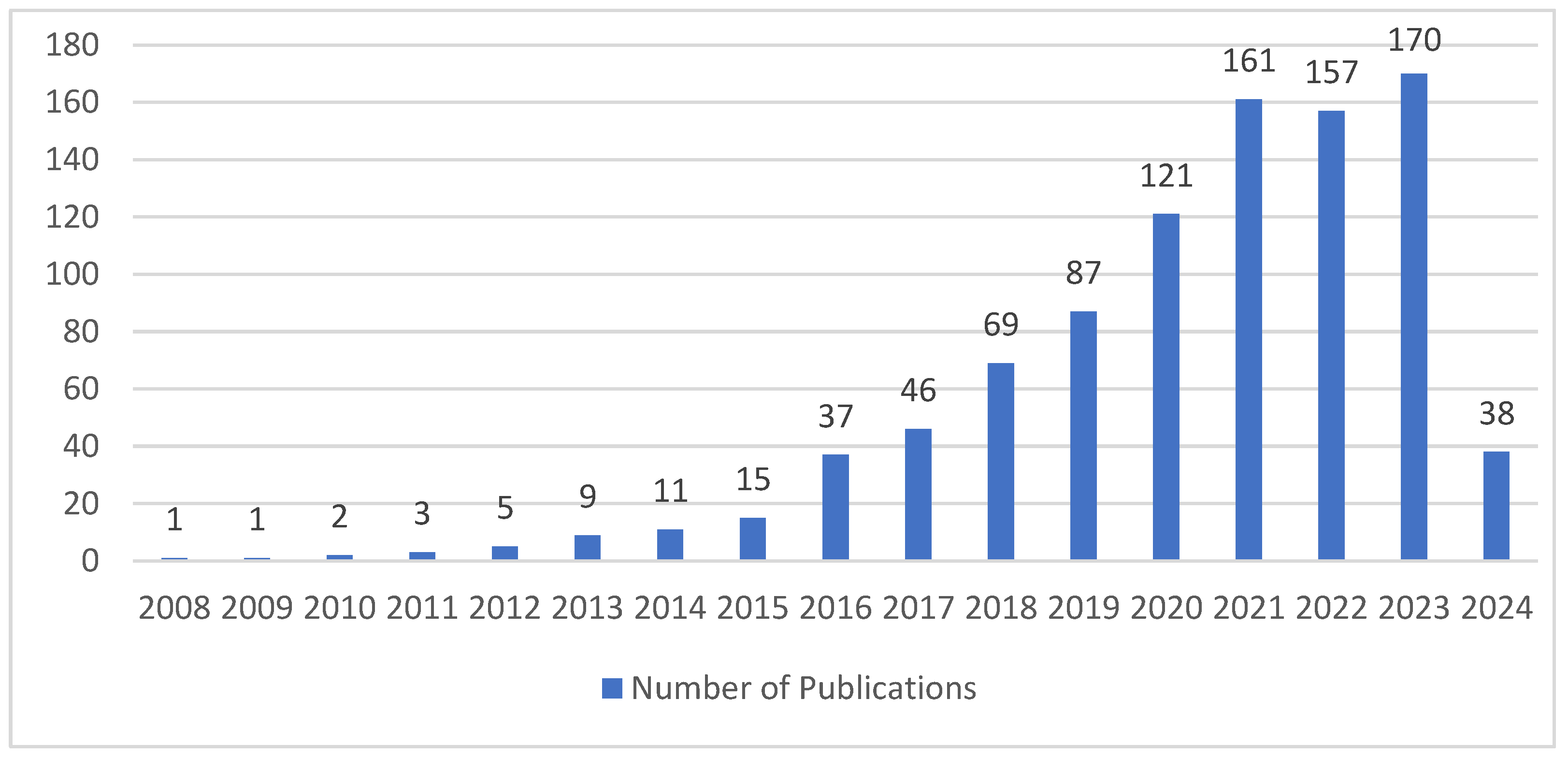
Figure 2.
Bibliographic Coupling Analysis of Publications on CSA and Food Loss from 2009 to 2022.
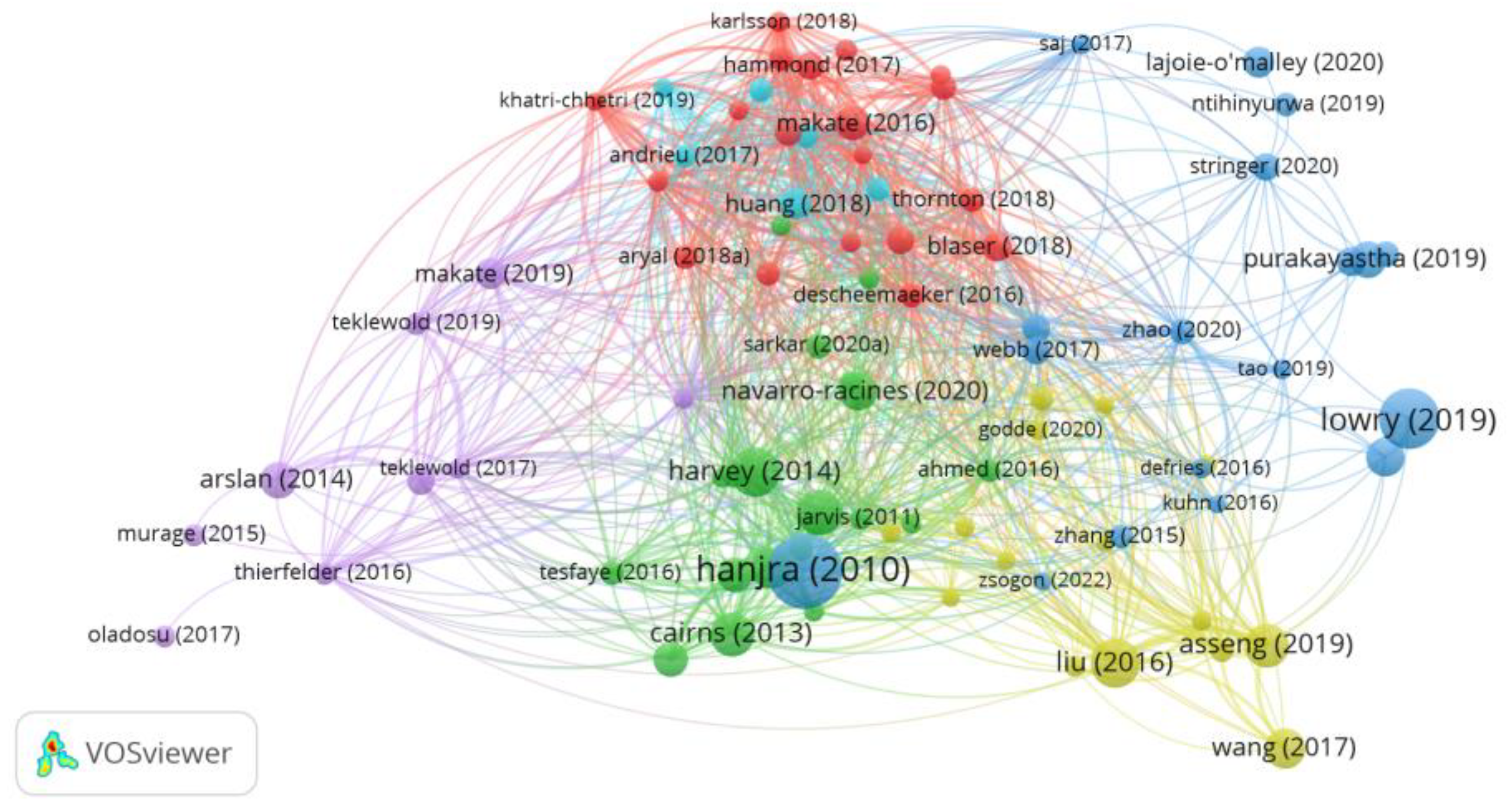
Figure 3.
Bibliographic coupling analysis of the leading institutions in the CSA and food loss domain.
Figure 3.
Bibliographic coupling analysis of the leading institutions in the CSA and food loss domain.
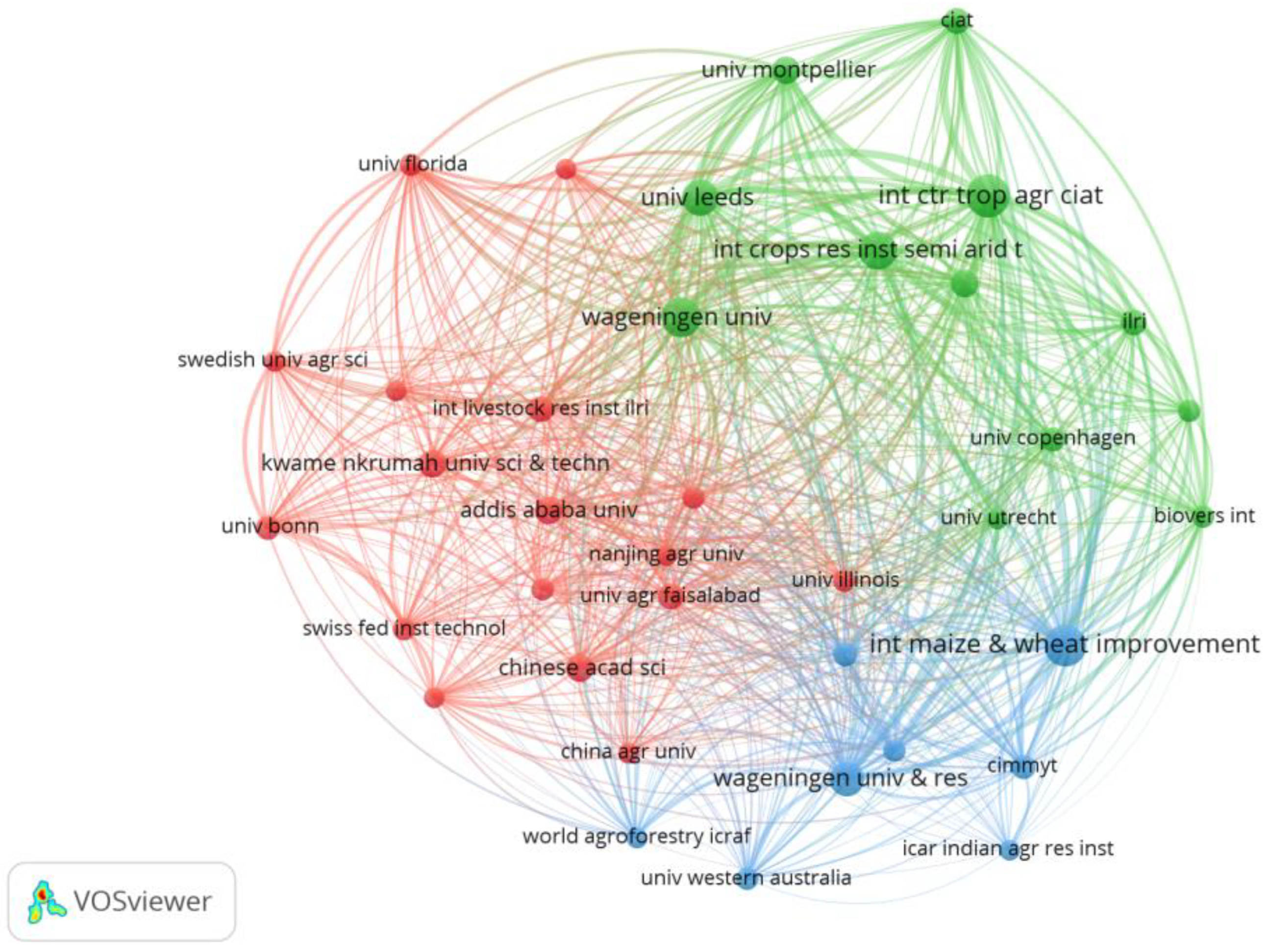
Figure 4.
Co-citation analysis of journals in the domain of CSA and food loss.
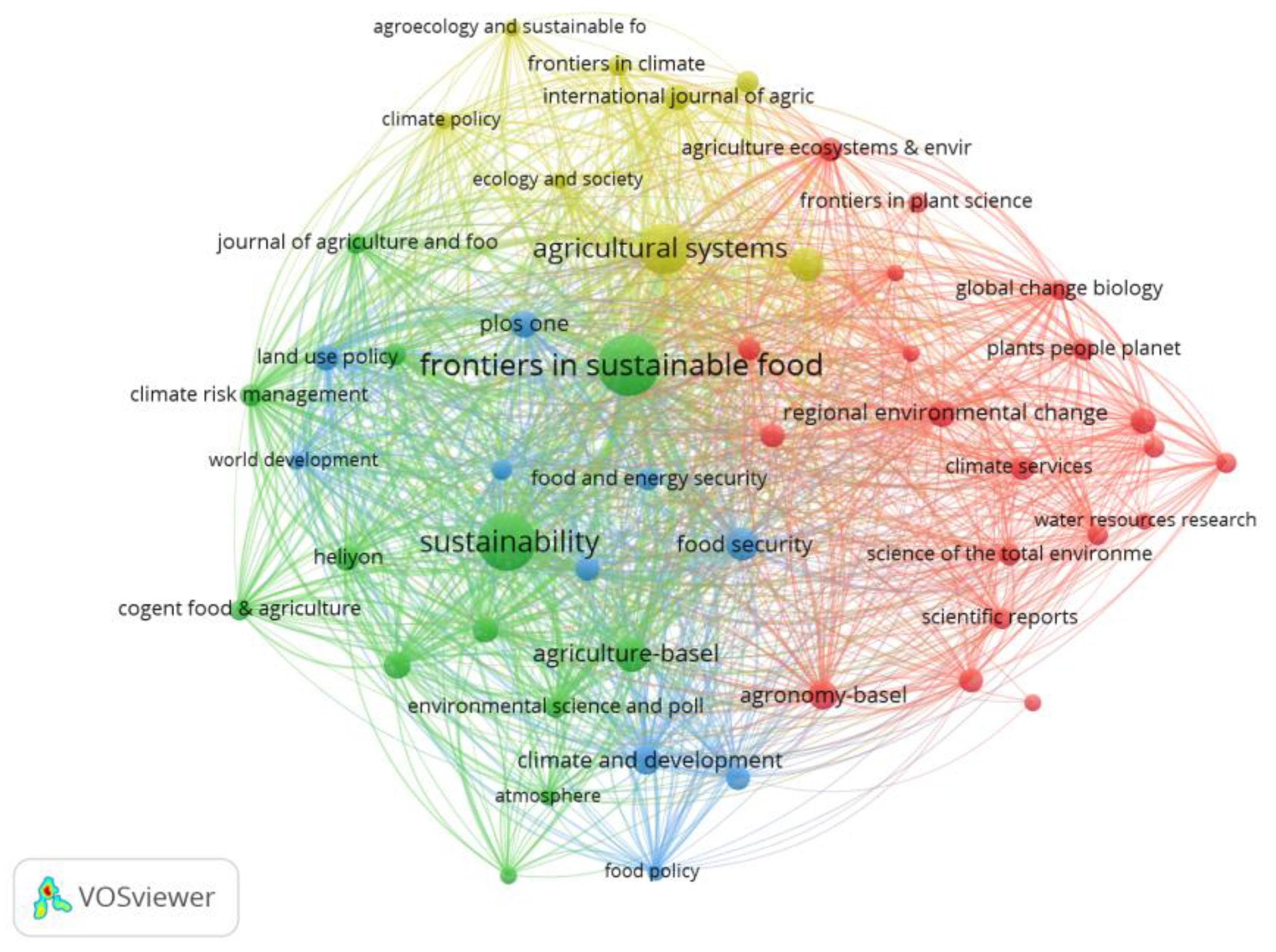
Figure 5.
Top countries in CSA and food loss productivity.
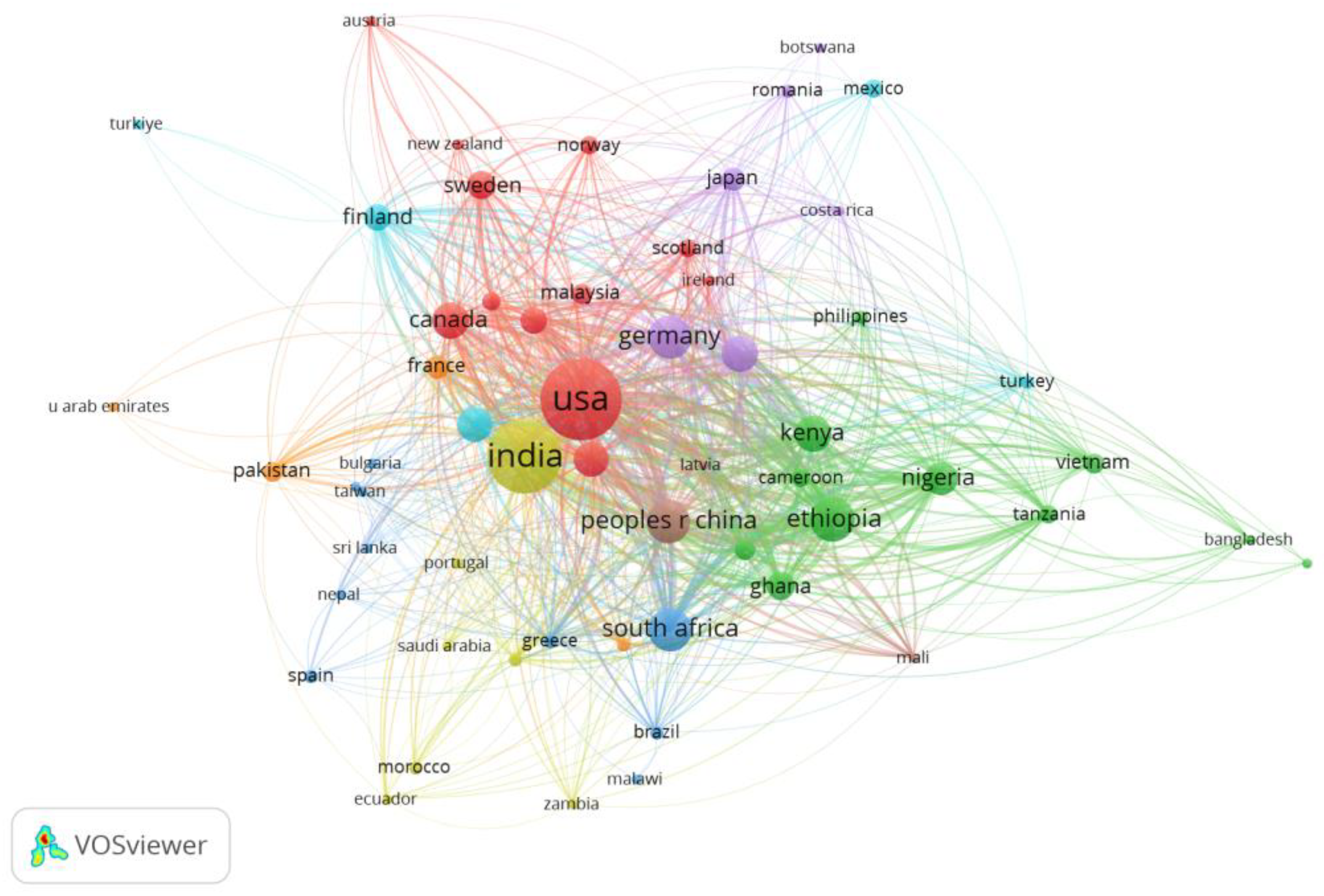
Figure 6.
Keyword co-occurrence in CSA and food loss.
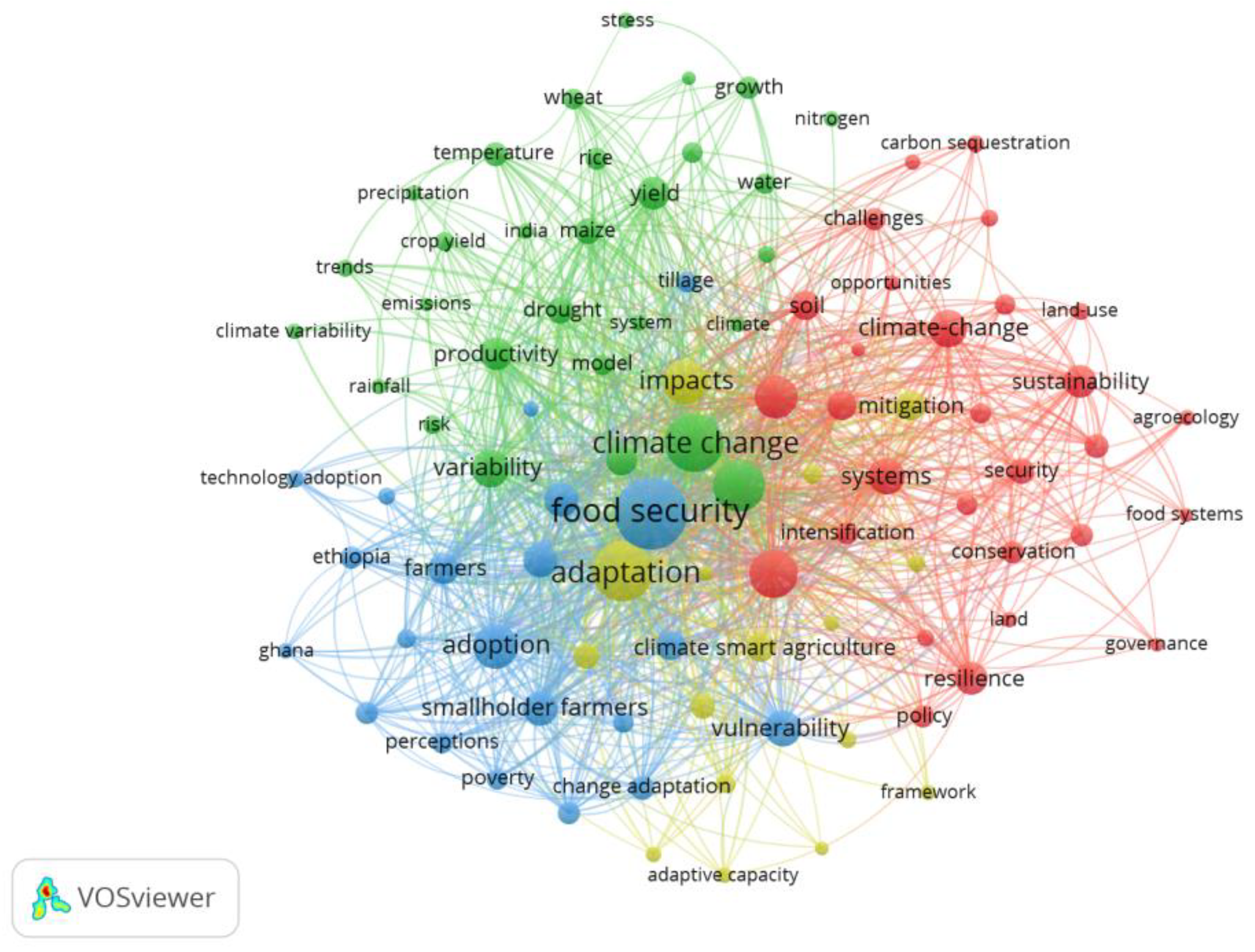

Table 1.
Top 20 Most Cited Papers.
| Authors | Source Title | Times Cited | Average per Year |
|---|---|---|---|
| Hanjra and Qureshi (2010) | Food Policy | 854 | 61 |
| Lowry et al. (2019) | Nature Nanotechnology | 503 | 101 |
| Liu et al. (2016) | Nature Climate Change | 354 | 44 |
| Harvey et al. (2014) | Philosophical Transactions of The Royal Society B-Biological Sciences | 349 | 35 |
| Frison et al. (2011) | Sustainability | 325 | 25 |
| Cairns et al. (2013) | Food Security | 287 | 26 |
| Asseng et al. (2018) | Global Change Biology | 271 | 54 |
| Jarvis et al. (2012) | Tropical Plant Biology | 239 | 20 |
| Wang et al. (2017) | Nature Plants | 227 | 32 |
| Navarro-Racines et al. (2020) | Scientific Data | 212 | 53 |
| Arslan et al. (2014) | Agriculture Ecosystems & Environment | 201 | 20 |
| Purakayastha et al. (2019) | Chemosphere | 197 | 39 |
| Wang et al. (2022) | Nature Nanotechnology | 197 | 99 |
| Simelton et al. (2009) | Environmental Science & Policy | 194 | 13 |
| Makate et al. (2016) | Springerplus | 190 | 24 |
| Sultan et al. (2013) | Environmental Research Letters | 189 | 17 |
| Gurung et al. (2014) | PLoS One | 142 | 14 |
| Makate et al. (2019) | Journal Of Environmental Management | 141 | 28 |
| Huang et al. (2018) | Agriculture Ecosystems & Environment | 134 | 22 |
| Lajoie-O’Malley et al. (2020) | Ecosystem Services | 132 | 33 |
Table 2.
Institutional Contributions to CSA and Food Loss Research.
| Institution | Documents | Citations | % of Total Publications |
|---|---|---|---|
| INT CTR TROP AGR CIAT | 40 | 1552 | 4.3% |
| INT MAIZE & WHEAT IMPROVEMENT CTR CIMMYT | 39 | 1208 | 4.2% |
| WAGENINGEN UNIV | 34 | 939 | 3.6% |
| INT CROPS RES INST SEMI ARID TROP | 33 | 1008 | 3.5% |
| UNIV LEEDS | 29 | 1217 | 3.1% |
| WAGENINGEN UNIV & RES | 26 | 411 | 2.8% |
| ADDIS ABABA UNIV | 18 | 151 | 1.9% |
| KWAME NKRUMAH UNIV SCI & TECHNOL | 18 | 179 | 1.9% |
| CGIAR RES PROGRAM CLIMATE CHANGE AGR & FOOD SECUR | 17 | 543 | 1.8% |
| CHINESE ACAD SCI | 17 | 222 | 1.8% |
| UNIV MONTPELLIER | 17 | 308 | 1.8% |
| CIAT | 16 | 802 | 1.7% |
| UNIV AGR FAISALABAD | 16 | 123 | 1.7% |
| ILRI | 15 | 898 | 1.6% |
| INT LIVESTOCK RES INST ILRI | 15 | 137 | 1.6% |
| Total | 350 | 9698 | 37.5% |
Table 3.
Journal Metrics in the CSA and Food Loss Domain.
| Source | Documents | % of Total Publications | IF 2022 | H5-index |
|---|---|---|---|---|
| Frontiersin Sustainable Food Systems | 56 | 6.00% | 4.7 | 62 |
| Sustainability | 48 | 5.14% | 3.9 | 185 |
| Agricultural Systems | 39 | 4.18% | 6.6 | 77 |
| Agriculture-Basel | 18 | 1.93% | 3.6 | 52 |
| Global Food Security-Agriculture Policy Economics and Environment | 17 | 1.82% | 8.9 | 73 |
| Food Security | 16 | 1.71% | 6.7 | 53 |
| Agronomy-Basel | 13 | 1.39% | 3.7 | 67 |
| Climate and Development | 13 | 1.39% | 4.3 | 48 |
| Environment Development and Sustainability | 11 | 1.18% | 4.9 | 73 |
| PLoS ONE | 11 | 1.18% | 3.7 | 212 |
| Regional Environmental Change | 11 | 1.18% | 4.2 | 56 |
| Field Crops Research | 10 | 1.07% | 5.8 | 69 |
| Heliyon | 10 | 1.07% | 4.0 | 105 |
| International Journal of Agricultural Sustainability | 10 | 1.07% | 3.4 | 31 |
| Land Use Policy | 10 | 1.07% | 7.1 | 1.3 |
| Total | 293 | 31.40% |
Table 4.
Top 10 Countries/Regions in CSA and Food Loss Publications.
| Country/Region | Documents | % of Total Publications |
|---|---|---|
| USA | 61 | 6.54% |
| India | 52 | 5.57% |
| Ethiopia | 19 | 2.04% |
| Germany | 18 | 1.93% |
| People’s Republic of China | 18 | 1.93% |
| South Africa | 17 | 1.82% |
| England | 13 | 1.39% |
| Canada | 12 | 1.29% |
| Kenya | 12 | 1.29% |
| Australia | 11 | 1.18% |
| Total | 233 | 24.97% |
Disclaimer/Publisher’s Note: The statements, opinions and data contained in all publications are solely those of the individual author(s) and contributor(s) and not of MDPI and/or the editor(s). MDPI and/or the editor(s) disclaim responsibility for any injury to people or property resulting from any ideas, methods, instructions or products referred to in the content. |
© 2024 by the authors. Licensee MDPI, Basel, Switzerland. This article is an open access article distributed under the terms and conditions of the Creative Commons Attribution (CC BY) license (http://creativecommons.org/licenses/by/4.0/).
Copyright: This open access article is published under a Creative Commons CC BY 4.0 license, which permit the free download, distribution, and reuse, provided that the author and preprint are cited in any reuse.