

Submitted:
04 April 2024
Posted:
09 April 2024
You are already at the latest version
Abstract
This review delves into the growing field of flexible and stretchable strain sensors utilized in human gait analysis, focusing on determining knee bending angle and muscle activities when a human subject walks. Recent advancements have enabled these sensors to accurately capture biomechanical parameters while accommodating the body's natural movements. We examine the principles underlying these sensors' design and fabrication techniques, emphasizing their flexibility, stretchability, and biocompatibility for seamless integration into wearable systems. Through critical evaluation of existing methodologies, we assess the reliability and validity of these sensors in quantifying gait parameters. Furthermore, we discuss this technology's clinical and research implications, highlighting its potential in personalized rehabilitation and sports performance optimization. We provide an overview of flexible strain sensors and their application for analyzing human walking gait, especially for observing walking gait in rehabilitation programs. First, we present the basic working principles of various flexible strain sensors. Second, by the application of flexible strain sensors as walking gait monitoring. Finally, current challenges and future opportunities in this research area are discussed. By synthesizing current knowledge and outlining future directions, this review aims to provide insights for researchers and practitioners seeking to leverage flexible and stretchable strain sensors for comprehensive human gait analysis.
Keywords:
flexible strain sensors
; knee angle
; muscle activity
; walking gait
1. Introduction
Human walking is an intricate, repetitive motion that demands precise coordination among muscles, central commands, and various joints within the lower limbs. This complex process spans a diverse array of disciplines, incorporating biomechanics, kinesiology, dynamics, and rehabilitation medicine. Gait is a unique behavioral characteristic of the human walking process, characterized by body balance, appropriate step length, minimum energy consumption, and fundamental symmetry of both feet [1]. Gait measurement is the study of human movement characteristics, including temporal, spatial, and kinematic characteristics. The parameters obtained from gait measurement can be used to assess the health status of the human body further [2].
The assessment of knee kinematics during gait is helpful in several areas, including clinical, rehabilitation, and health promotion. Recent studies of over 100 community-dwelling older adults have shown that older adults with movement syndromes have smaller knee flexion angles during the swing phase of gait, which may be related to dyskinesia [3,4]. In another study of community-dwelling older adults, more significant variability in knee kinematics during gait was found in older women with frailty compared to older women without flaws [5]. Therefore, it is essential to assess knee kinematics during gait to detect functional deficits in gait analysis [3,4,5].
Flexible sensors, characterized by stretchability, self-healing ability, high mechanical toughness, and tactile solid sensing ability, are widely used in healthcare, sports, robotics, defense, and maintenance [6,7]. In contrast to cumbersome traditional approaches to medical health monitoring, flexible sensors offer a lightweight, compact, cost-effective, and user-friendly alternative. These features enable people to continuously monitor their physiological health in real time, providing prompt and early detection and long-term continuous observation of physical health status. Therefore, developing flexible flex sensors may provide a portable method to compensate for some of the shortcomings of centralized healthcare services [8,9].
In this paper, we provide an overview of flexible strain sensors and their application for analyzing human walking gait, especially for observing walking gait in rehabilitation programs. First, we present the basic working principles of various flexible strain sensors. Second, by the application of flexible strain sensors as walking gait monitoring. Finally, current challenges and future opportunities in this research area are discussed.
2. Working Mechanism of Flexible Strain Sensors
Flexible sensors can enable real-time Measurement of human health indicators such as blood pressure, body temperature, and muscle/skin stretch by continuously monitoring various health-related physiological signals (e.g., body pressure, strain, and body temperature) in real-time [10,11]. Flexible sensors are categorized into the following four main groups based on their detection targets: pressure sensors (e.g., pressure caused by pulse beat, heartbeat, breathing, etc.), strain sensors (tension caused by joint bending, body movement, etc.), humidity sensors (body humidity), and temperature sensors (body temperature) [12]. Among them, highly stretchable and highly sensitive strain sensors can be bent and twisted to detect the full range of body movements, adapt to more complex body surfaces, and enable the detection of more physiological information on body surfaces [13,14].
Flexible strain sensors are mainly classified into piezoelectric, triboelectric, piezoresistive, and capacitive sensors by recording changes in resistance, capacitance, piezoelectricity, and triboelectricity to realize the monitoring of external mechanical signals [13]. Table 1, Table 2, Table 3 and Table 4 summarize the sensor performance for these four operating mechanisms. In each table, the sensors are compared and tabulated in terms of material, sensitivity, stretchability, response time, stability, and structural layout. Discussions and some typical examples are provided within each working mechanism type.
2.1. Piezoresistive Strain Sensors
Piezoresistive sensors are a type of strain sensor commonly used for health monitoring. When the conductive material of the sensor undergoes mechanical deformation due to the applied strain, the resistance of the sensor changes [15]. Many researchers have recently developed various piezoresistive sensing mechanisms to prepare strain sensors with tunable sensitivity and strain factor (GF).
For example, Jamatia T. et al.[16] prepared conductive nanocomposite chains with styrene-b-(ethylene-co-butylene)-b-styrene triblock copolymer (SEBS) and carbon black (CB) by solvent treatment method (Figure 1a). They used them to prepare a measurement factor more significant than 23 stretchable piezoresistive strain sensors. The sensor has good flexibility and conductivity and has a sizeable piezoresistive effect linearly correlated with the applied strain. When measuring joint motion, the sensor could detect the motion cycle during walking. Paul S.J. et al. [17] reported a piezoresistive sensor created by infiltrating PDMS's active fillers (CNTs/rGO) on a 3D porous support (Figure 1b). Carbon nanotubes (CNTs) and reduced graphene oxide (rGO) hybridization synergistically improved electrical and sensing properties by providing better interfacial contact, high electron/phonon transfer, low intertube slip, and reduced phonon scattering. The sensor has excellent permeability properties such as wide linear range, large-scale force sensing, ultra-compressibility, good durability, fast response recovery time, and sound sensitivity. The sensor monitors human flexion and can also be placed on the sole of a shoe for reliable real-time gait monitoring. Sharma, P. et al. [18] proposed graphene nanoparticles- polydimethylsiloxane (GNP-PDMS) piezoresistive stretchable strain sensor with high stretch, high flexibility, and high sensitivity, with a measurement factor of 69, i.e., it is capable of detecting small movements of the wrist impulses as well as recognizing the body's joint bending motion. Madhavan R. [19] proposed a network crack-assisted wearable strain sensor on highly elastic nitrile elastomers sprayed with graphite nanolakes (Figure 1c). The sensor has an ultra-sensitive measurement factor (GF) of 868.12 ± 56.90, a wide sensing range of up to 30% strain, remarkable reversibility, ultra-fast response, and fast recovery (7.5 ms, 5 ms, respectively), and excellent durability (more than 2000 tensile release cycles). The sensors detect human activity monitoring, healthcare and biomedical-related vital signs, soft robotics, and entertainment technologies.Wang X.J. et al. [20] developed a simple and efficient method to fabricate three-dimensional (3D) light piezoresistive sensing materials by coating multi-walled carbon nanotubes (MWCNTs) on the surface of polyurethane (PU) foam. The PU foam prepared with SEBS-g-MAH and polyether polyol showed high elasticity and stability in MWCNTs/DMF solution. Piezoresistive sensors were assembled with MWCNTs/PU composite foam and copper foil electrodes. The assembled pressure sensor has high sensitivity (62.37 kPa-1), wide operating range (0-172.6 kPa, 80% strain), fast response time (less than 0.6 s), and reliable repeatability (greater than or equal to 2000 cycles). It shows potential application in real-time human motion detection (e.g., arm bending, knee bending).
However, since the resistivity of materials generally changes with temperature, piezoresistive sensors are susceptible to the effects of temperature and humidity changes in the external environment [21]. Because piezoresistive sensors are used in wearable systems, environmental factors or contact with the human body (e.g., sweat, body fluids, etc.) may cause the output signal to drift. The resistance relaxation phenomenon occurs during the process of use. This phenomenon leads to repetitive errors and hysteresis in piezoresistive sensors, leading to a significant mistake in measuring joint angles [22].
Other researchers have focused their studies on fabrics to make piezoresistive sensors more applicable to the human body. Ahmed, S. et al. [23] utilized a mixture of thermoplastic polyurethane (TPU) and Carbon Nanoparticles (CNPs) to fabricate vertically-structured Electrostatically Spun Nanofiber Yarn (ENFY), which were attached to human joints to detect the flexion and tensile responses of the joints effectively. Doshi, S. M. et al. [24] functionalized multi-walled carbon nanotubes by electrophoretic deposition (EPD) with polyethyleneimine (CNT-PEI) attached to an everyday fabric to wrap the fiber surface of the fabric (Figure 1d). The fabric can be used to measure the motion of human joints under walking gait.
2.2. Capacitive Strain Sensors
Capacitive strain sensors analyze/calculate externally applied strains by recording changes in the sensor output capacitance. Levestam et al [25] proposed a stretchable interdigitated capacitive sensor in the form of interdigitated transducer (IDT). The sensor was used to monitor the knee joint status and efficiently obtained knee angle data (Figure 2a). Arshad A. et al. [26] proposed a dual temperature motion (ARDTM) wearable sensor patch fabricated from graphite and paper. Graphite extracted from discarded dry cell batteries was mixed with gel to make a conductive graphite paste. The conductive graphite paste was brushed and coated on the pasted paper to prepare a resistive temperature sensor and a capacitive motion sensor (Figure 2b). The motion sensors successfully recognized various body joint motions (finger, elbow, wrist) by monitoring the change in capacitance during body joint movements. Zhong Y. et al. [27] used negative pressure to prepare porous structures with gradient dielectrics assembled from porous structures doped with different carbon nanotube ratios (Figure 2c). The gradient dielectric can achieve series-parallel conversion during pressure-induced deformation and realize linear behavior of capacitive performance under full-scale pressure. Therefore, capacitive sensors based on optimized gradient dielectric layers can achieve a high sensitivity of 0.247 kPa-1 and a wide linear range of 0-175 kPa, which can be widely used in monitoring physiological signals and human motion such as arterial pulse, respiration, knee flexion, elbow flexion degree, and walking and running status.
Parallel plate structures have become the most popular architecture for capacitive sensor design due to the advantages of ease of construction and ease of modeling [28]. Nakamoto H. et al. [29] constructed a flexible tensile sensor with three elastomer layers and two electrode layers using polyurethane elastomer and single-walled CNTs conductive electrodes. The sensor is fragile (thickness: 150 µm) and has high elasticity (up to 100%), low stress (0.8 MPa at 100%), durability (1000 cycles at 50%), lightweight (~1.1 g/cm3) and sensitivity (1 pF/mm2). The strain sensor was tested on cloth fabric and confirmed to measure the tensile area of flexible materials.
Various composite materials are often used to develop stretchable capacitive sensors due to the advantages of low cost, high aspect ratio, excellent electrical conductivity, and high transparency [30]. Prakash K.S. et al. [31] used 0.5 mm thick carbon black polydimethylsiloxane (C-PDMS) as the sensing portion and pure PDMS as the substrate to fabricate capacitive sensors having 279 fingers of staggered capacitance and two contact areas. The relative capacitance change per 5° angle from 10° to 45° was ≈0.01. The data indicate that the sensor can effectively measure internal tibial rotation of the knee joint.
In order to achieve higher sensitivity and stretchability of the sensors, materials with low mechanical modulus, such as PDMS, polyurethane (PU) and degradable plastics (Ecoflex) are required as the substrate of the sensors. When an applied strain causes deformation of the elastic substrate, which changes the dielectric layer's thickness and the overlap area between the two electrodes, then the capacitance changes in response to the strain [32]. Singh, N. K. et al. [33] fabricated a highly stretchable capacitive tensile strain sensor using silicone elastomer Ecoflex 0030 as a dielectric film sandwiched between a conductive and stretchable textile base (silver-coated textile-YSilver83) as electrodes (Figure 2d). For capacitive sensors, if the effect of the edge electric field is ignored, the effect of temperature and humidity on the dielectric constant is less than their effect on the conductivity, so this drift of the output value with temperature is almost non-existent in capacitive sensors [34].
Based on the characteristics of the two sensing mechanisms (piezoresistive and capacitive) in the above discussion, some researchers have conducted comparative tests on them under the same experiment. Zhang S.M. et al. [35] proposed a simple and scalable porous piezoresistive/capacitive dual-mode sensor with a porous structure of polydimethylsiloxane (PDMS) with a porosity of 53.9% and multi-walled carbon nanotubes (MWCNTs) embedded on the inner surface to form a conductive network with a three-dimensional spherical shell structure. Due to the unique spherical shell conductive network and uniform elastic deformation compression of the cross-linked PDMS porous structure, the sensor provides piezoresistive/capacitive strain sensing capability, a vast pressure response range (1-520 kPa), and linear response region (95%), good response stability and durability (98% of initial performance after 1000 compression cycles). The sensor can monitor joint motion, sign language recognition, and speech recognition by monitoring facial muscles. Dong T.Y. et al. [36] prepared two high-performance stretchable strain sensors (resistive and capacitive) based on customized, flexible electrodes. Using the solvent casting method, multi-walled carbon nanotubes (MCNTs) were embedded in plasticized polyvinyl chloride (PVC) as flexible electrodes. Resistive strain sensors were fabricated from flexible electrodes and 3 M 4905 tape. Based on the preparation of resistive sensors, capacitive sensors were obtained by a simple stacking step (Figure 3). The test results yielded both resistive and capacitive sensors with high tensile strain (>100 %), low Young's modulus (< 200 kPa), fast response time (< 140 ms), and sound static and dynamic properties. However, capacitive sensors have better linearity and long-term repeatability than resistive sensors. Hermann, A. et al. [37] compared the ability of silicon-based piezoresistive sensors and capacitive silicon-based sensors to measure knee flexion angles. It was verified that pants with capacitive sensors (mean error of 3.4°±5.1°) were more accurate than pants with piezoresistive sensors (mean error of 10.6°±7.5°) and had less hysteresis effects and high correlation with the reference system. To summarize, capacitive flexible sensors have high linearity, low time delay, low response time, low overshoot, and good dynamic durability, which make them more suitable than piezoresistive sensors for continuous real-time monitoring of human movement.
2.3. Piezoelectric Strain Sensors
Piezoelectric strain sensors rely on the piezoelectric effect of specific types of solid materials, i.e., the parameters such as the length and distance of the dipoles in the piezoelectric material change in response to the applied force, increasing charge and voltage [38]. Since piezoelectric sensors do not require additional power support, they are simple in structure, have high sensitivity, and have a swift response to dynamic pressure. Therefore, piezoelectric sensors have been widely used to detect emotional stimuli such as bending activity, vibration, sound, and sliding of fingers [39].
Fan Y. et al. [40] proposed to grow conductive nickel MOF (free-standing metal-organic framework) nanowire arrays on carbon cloth (Ni-CAT@CC) and use Ni-CAT@CC as a functional electrode for flexible piezoelectricity sensors. The resulting sensors can monitor human activities, including elbow, knee, and wrist flexion. Deng L. et al. [41] successfully prepared high-performance lead-free flexible piezoelectric nanogenerators (PENGs) based on BSST using high-temperature solid-phase reaction and spin-coating methods (Figure 4a). They applied them to flexible self-powered piezoelectric sensors, successfully demonstrating how to monitor human joint motion. Zhang D.D. et al. [42] prepared a unique bismuth chloride (BiCl3)/zinc oxide (ZnO)/poly (vinylidene fluoride) (PVDF) nanofiber-based highly flexible piezoelectric nanogenerator (PENG) by electrostatic spinning technique (Figure 4b). The utility of its PENG was demonstrated by placing the PENG on the elbow and knee joints to monitor human movement, with maximum VOC peaks of 3 V (elbow) and 0.6 V (knee) by bending and stretching between specific angles. Wang Q. et al. [43] proposed a flexible piezoelectric sensor (FPS) based on a monolayer of tungsten disulfide (WS2), which generates electrical energy during human movement. The maximum voltage of the generator is 2.26 V. When 13 kg is applied periodically, the energy produced is 55.45 µJ on a capacitor (capacity: 220 µF). The generator can meet the energy requirements of human movement as it has 7.74 V (knee), 8.7 V (sole), and 4.58 V (elbow) on a runner (weight 75 kg). The output voltages reflect different patterns for different body parts. Zhu J. et al. [44] presented a novel high-performance stretchable PZT particle/Cu@Ag branching nanofibers (BNFs) nanocomposite piezoelectric generator (NCPG). The sensor has a high output performance (Vpeak-peak ≈ 61 V, Ipeak-peak ≈ 1.1 μA, 22.36 μw cm-3) and can be used as a self-powered body motion sensor to differentiate the knee flexion angle and frequency.
However, piezoelectric strain sensors cannot detect static loads, and the output value drifts with time in the sensing response, which is less reliable. In conclusion, piezoelectric strain sensors based on nanomaterials usually exhibit high sensitivity, fast response time, and ultra-low power consumption but are still limited in stretchability [45].
2.4. Triboelectric Strain Sensors
As an emerging sensor device, Triboelectric strain sensors have experienced rapid growth in the field of wearable electronics. Triboelectric strain sensors are typically made of two materials with opposing abilities to acquire an electrical charge. Contact and separation between the two materials trigger a charge transfer, resulting in a measurable alternating current or voltage in an external circuit. The magnitude of the electrical signal can correspond to the mechanical force applied to the sensor [46].
So S.Y. et al. [47] proposed a hybrid sequential additive fabrication process combining a squeeze injector and a fused deposition model to fabricate a high-performance triboelectric sensor based on porous PDMS. The structure manufactures a cylindrical triboelectric sensor that can be worn on the finger. The sensor is effective in quantitatively analyzing finger joint motion. Lou M.N. et al. [48]developed a friction electric sensing textile of core-shell yarns. In the braided structure, nylon filament and polytetrafluoroethylene (PTFE) filament were used as positive and negative layers, respectively, and a built-in spiral stainless steel wire was used as the inner electrode layer (Figure 5a). The sensitivity of the sensor is up to 1.33 V·kPa- 1 and 0.32 V·kPa- 1 in the pressure ranges of 1.95 ~ 3.13 kPa and 3.20 ~ 4.61 kPa, respectively, which can be efficiently used to measure and monitor various human body motions associated with different joints such as hands, elbows, knees, and armpits. Armpits. Huang J.Y. et al. [49] constructed self-powered active pressure sensors using bio-based bacterial cellulose/chitosan (BC/CS) composites and polydimethylsiloxane (PDMS/Cu) films doped with copper nanoparticles as the positive and negative friction electric layers, respectively (Figure 5b). The triboelectric nanogenerator (TENG) exhibits good mechanical stability in the 10.5 kPa - 96.25 kPa range and a pressure sensitivity of 0.24 V·kPa-1. Its ability to be mounted on various body parts detects joint movements during sports, such as hand, elbow, armpit, knee, and foot movements during hand clapping, badminton, running, shuttlecock, and jumping rope. Liu J.M. et al. [50] developed a flexible and stretchable TENG with a coaxial spring-like structure (Figure 5c). This unique structure allows it to generate electrical energy for different levels of tensile deformation. Its output responds well to the strain and frequency of mechanical deformation. At the same time, it has good stability and wearability. The TENG can be worn on human fingers, elbows, and knees to monitor physical activity. Li H.[51] proposed a novel flexible triboelectric nanogenerator (SE-TENG) with shape adaptation and scalability, which utilizes the biocompatibility, conductivity, and long-term stability of lithium chloride solution as a working electrode for mechanical energy harvesting and volleyball motion monitoring. The results show that the open-circuit voltage (Voc) of SE-TENG can reach 360 V, and the short-circuit current (Isc) of SE-TENG can get 21 mA m-2. In addition, the maximum output power of SE-TENG can be 2.4 W m-2. As a motion sensor, SE-TENG can obtain the motion information of various parts of the human body in volleyball, such as the elbow, knee, and wrist.
2.5. Summary
Table 5 summarizes the advantages and disadvantages of commonly used sensor technologies that can be applied to monitor walking gait. The advantages and disadvantages are based on publicly available literature.
3. Application of Flexible Strain Sensors as Walking Gait Monitoring
3.1. Rehabilitation Technology
In gait rehabilitation training, the early traditional rehabilitation training relies on the manual assistance of physical therapists, but the rehabilitation effect depends on the experience and level of the physical therapist; the work intensity is high; the manual training leads to uncertainty in the training parameters; the trajectory of the movement, the speed and the strength of the action are challenging to maintain good consistency, and other shortcomings constrain the effectiveness and efficiency of the rehabilitation training. In recent years, the extensive research and use of gait rehabilitation devices [52]to enhance the level of rehabilitation technology, such as Japan's HAL series of robots with wearable exoskeleton structure (Figure 6) integrated with an inertial unit (IMU) for detecting the posture of the lower limbs, plantar pressure sensors, and crutch control switches, to achieve the identification of the patient's gait phases and the output of the appropriate driving torque based on different gait phases.
The priority in the various rehabilitation training modes is to develop a gait exercise program suitable for the patient, i.e., gait planning. Walking in ordinary people is a mechanical movement of the human body that experiences a specific time in a particular space by interacting with the ground and does not require thinking. It is a complex random movement of the human body that includes central commands, body balance, and coordinated control. It involves synergistic activities of many muscles, such as the trunk and limbs, and various joints. The gait parameters of hemiplegic patients differ from normal gait parameters, reflecting gait abnormalities [53]. Therefore, determining a rehabilitation gait quickly, accurately, and naturally for patients with different body morphologies and disease conditions is essential to rehabilitation training.
Currently, video motion capture systems, force platforms, and instrumented trails are considered the gold standard for quantitative gait analysis but are expensive, resource-intensive, and limited to stationary use in laboratory settings [54]. Prolonged monitoring of kinematics is also not possible in everyday life. As a result, optical motion analysis systems need more applications in clinical and health promotion settings. Instead, a more affordable, easy-to-use, and less restrictive method of gait analysis is currently available in wearable sensors [55].
3.2. Measurement of Knee Angle
Knee joint angle measurements are essential in medicine, rehabilitation, sports science, and biomechanics. By measuring the angle changes of the knee joint under different activity and movement conditions, researchers can analyze biomechanical properties such as joint movement patterns, mechanical load distribution, and joint stability to understand further and improve human movement and gait [56].
Wearable sensors widely used for knee angle measurement include inertial and flexible sensors.
In knee angle measurement, inertial sensors are mounted on different limb segments to determine the human body's movement. By measuring the angular velocity and acceleration changes generated during the rotation of varying limb segments and after calibrating and aligning the sensor coordinate system with the human body coordinate system, the angles of different limb segments turned relative to each other are calculated using angular velocity integrals or rotation matrices, etc. Then, the angle of the joints in the human body that needs to be measured is obtained [57]. However, low-cost inertial sensors have low measurement accuracy and noisy raw data; high-precision inertial sensors are expensive and difficult to apply in daily human motion detection. In addition, inertial sensor measurements come from angular velocimeters, accelerometers, and magnetometers, which all have limitations in knee joint angle measurement; angular velocimeters and accelerometers can lead to the accumulation of drift errors over a long period, and magnetometers can interfere with the surrounding magnetic fields, such as metal products and electronic devices [58].
Flexible sensors are widely used in knee joint angle measurement due to their flexible material properties, high comfort, portability, and fast response time. Flexible strain sensors can be arranged on the surface of human skin or garments to fit the joint surface and measure the change in joint angle.
Some researchers have used simple fabricated flat plate capacitive strain sensors to measure the knee joint angle by modeling calculations. Hiroyuki Nakamoto et al. [59] proposed a capacitive stretchable strain sensor that stretches more than 200% at low elastic strains and accurately measures strain. The main advantages of this strain sensor are its thinness, lightweight, and low elastic modulus. If the strain sensor is attached to the human skin above a joint, it does not impede the joint movement; therefore, the skin's degree of stretching can be measured. The proposed method uses a simple mechanical model to estimate the joint angle by skin stretching. The strain sensors are applied to the knee and ankle joints in the experiments. The average error between the estimated angle measured by motion capture and the reference joint angle is within 5°.
Goto D. et al. [60] developed a bending angle sensor based on a double-layer capacitive type and performed three tensile, bending, and cyclic tests to evaluate its effectiveness. The sensor minimized the change in capacitance difference in the tensile test. The hysteresis rate and root mean square error (RMSE) were 8.0% RMSE and 3.1°in the bending test compared to the optical motion capture method. Cyclic experiments on human joint angle measurements yielded RMSEs ranging from 4.7°to 7.0°. Practical quantitative analysis of knee motion (Figure 7).
Some researchers have made innovative designs on flat plate structures to enhance the performance of capacitive strain sensors to monitor knee activity more effectively. Han X. et al. [61] used a novel multi-needle water bath electrostatic spinning method to coat polyamide 6 (PA6) nanofibers on the surface of silver-plated nylon (thiocyanate) core yarn. SCN/PA6 nanofiber core-spun yarns were prepared, and linear flexible capacitive sensors with double helix structures (Dual helix structure of linear flexible capacitive sensors, DHSCSs) were prepared by putting two different elastic rubber wires. The linearity and sensitivity of the DHSCSs gradually decreased with increasing strain. The DHSCSs were capacitively stable under long cyclic stretching conditions with good repeatability and stability. The sensing performance of DHSCSs did not change at different stretching speeds, and the change in capacitance was not affected by the stretching rate. DHSCSs can monitor intermittent and continuous knee flexion, walking, and human body movement in real time.
Geng W. et al. [62] produced a capacitive filament with high performance obtained through a simple material and manufacturing process using dip plating. The capacitor was designed to create a sensor with high baseline capacitance and low noise through the use of an interface between the dielectric layer and the electrodes, good mechanical response through the use of a primitive core filament to support the capacitive sensor assembly, and high stable and reliable signals without the need to use specific conductive devices. The sensor is highly linear over the sensing area required by the knee brace device (Figure 8), which can predict knee angles within 1.79° with a simple calibration protocol.
Some researchers have used conductive fabrics in capacitive strain sensors to make the sensors' linear output more stable in monitoring knee motion. Atalay O. [63] presents a new sensor design to create stretchable, capacitance-based strain sensors for human motion tracking. This involves using stretchable, conductive knitted fabrics in a silicone elastomer matrix that acts as interleaved electrodes. The conductive material created a secure conductive network for the electrodes, while the silicone matrix provided encapsulation and dimensional stability to the structure. During benchtop characterization, the sensor showed linear output, i.e., R2 = 0.997, with high response time, i.e., 50 ms, and high resolution, i.e., 1.36%. Finally, the motion of the knee joint was successfully recorded in different scenarios (Figure 9).
3.3. Measurement of the Lower Limb Muscles
Normal walking requires the alternating involvement of various lower limb muscle groups. Normal variation of muscle groups during walking constitutes the gait characteristics of an individual, and variation beyond a certain range due to pathological factors constitutes abnormal gait [53]. Each skeletal muscle has three parts: a muscle belly and two tendon ends. Muscle contraction is elicited by activation potentials transferred through nerve cycle connections. Electromyography (EMG) utilizes this property to derive voltages measured with electrodes. Most studies use electromyography (EMG) to measure superficial muscle activity; deep muscle activity cannot be sensed, the signal is susceptible to interference, and it is unsuitable for prolonged monitoring.
Nerves and muscles control lower limb movement, and the muscle belly contains multiple muscle patches. Each muscle patch consists of muscle fibers composed of fine muscle fibers. During muscle contraction, the filaments in each muscle fiber slide against each other. Contraction can be perceived visually as increased muscle abdominal circumference due to fiber sliding [64].
Measurement of muscle deformation is a new area of research, and several scholars have begun using flexible sensors to monitor it. Hughes and Lida [65] developed a strain sensor incorporating conductive particles into a non-conductive silicon matrix for measuring gait and muscle contraction (Figure 10a). Wang H.M et al. [66] fabricated a DS-TENG matrix as a strain sensor, and monitoring the output voltage could reflect the degree of deformation in different muscle regions (Figure 10b). Zahid et al. [67] designed a textile-based strain sensor to monitor human muscle activity effectively during rehabilitation therapy (Figure 10c). Alvarez J.T. [68] proposed a method capable of tracking soft strain sensors' changing muscle force output by non-invasively measuring muscle deformation (Figure 10d).
4. Conclusions
With the aging of society, the health of the elderly is of great concern. Both disease visits and rehabilitation put tremendous pressure on the healthcare system. At the same time, increasingly elderly people want access to home healthcare as the core of wearable devices for comfortable, portable, and effective access to the lower limb activities of the elderly, so flexible strain sensors have a prominent future. It is believed that in the future, with the research and development of materials, improvement of process, development of communication network, improvement of data processing capability, and solution of the sensor energy problem, flexible strain sensors will play a greater application value in lower limb movement monitoring under walking gait, which will, in turn, promote the development of intelligent portability in the whole medical rehabilitation field. Despite all these efforts, wearable sensors still need to be improved to be useful as a long-term, continuous tool for observing walking gait in rehabilitation programs. There are several aspects that require further consideration.
- Sensor design aspects: Firstly, it is important to understand the material-dependent structure-property relationships that control the conduction mechanisms of each sensor to further improve the form factor, flexibility, robustness, and efficiency style of the final device. Integrating piezoresistive materials into garments to provide high GF while maintaining stretchability is a key challenge that has yet to be satisfied. Achieving high linearity in the output signal and realizing low hysteresis behavior are two other important factors that need to be addressed through improved material design and selection. Therefore, improving the performance of the sensors remains the main research direction for applying flexible sensors to knee joint activity detection. Second, unimodal devices have been developed and introduced to detect a single sensory signal in most previously reported sensors. However, multimodality, i.e., the simultaneous detection of multifaceted sensory signals such as knee motion, muscle activity, and plantar pressure, is urgently needed during real-world walking gait monitoring. Therefore, approaches such as integrating multiple responsive materials into a single structure or minimally integrating multiple sensors are worth considering. Third, the development of sensor apparel integration that can be quickly and easily put on and taken off can provide users with comfort and long-term applications and should be seriously considered in the future.
- Sensor data processing: The data collected during walking, such as knee angle, muscle activities, foot pressure, etc., the ability to distinguish or classified different walking gaits requires intelligent processing algorithm. Those require the support of big data and the application of machine learning, which is one of the directions for future research.
- Energy aspects of sensors: Providing power is integral to designing any electronic device. Low-power devices can be considered to make sensors work efficiently in long-term applications without batteries. Some researchers have also thought differently and utilized self-powered sensors as power providers. For example, Yuan J. et al. [69] developed a fully automated force-leg motion sensing system integrating (F-TEG), low-power sensing, edge computing, wireless transmission, and smart power management for daily human health monitoring. F-TEG achieves highly efficient thermoelectric conversion (up to 1600 μW) and demonstrates good flexibility and excellent sustainability in wearable thermoelectric performance, allowing the full powering of the entire monitoring system.
Author Contributions
Conceptualization, LS, YZ and KA.; Methodology, JF, YZ and KA.; Software, LS, YZ; Validation, JF, YZ, FH and KA.; Formal analysis, LS, YZ; Investigation, LS, YZ and FH; Resources, YZ and KA.; Data curation, LS, YZ; Writing—original draft, LS, YZ; Writing—review & editing, JF, YZ, FH. and KA.; Visualization, LS, YZ; Supervision, JF, YZ and KA.; Project administration, YZ and KA. All authors have read and agreed to the published version of the manuscript.
Funding
This research received no external funding.
Data Availability Statement
Not applicable.
Conflicts of Interest
The authors declare no conflict of interest.
References
- Kharb A, Saini V, Jain YK, Dhiman S. A review of gait cycle and its parameters. IJCEM International Journal of Computational Engineering & Management. 2011 Jul;13(01).
- Lord S, Galna B, Rochester L. Moving forward on gait measurement: toward a more refined approach. Movement Disorders. 2013 Sep 15;28(11):1534-43. [CrossRef]
- Saito Y, Ishida T, Kataoka Y, Takeda R, Tadano S, Suzuki T, Nakamura K, Nakata A, Osuka S, Yamada S, Samukawa M. Evaluation of gait characteristics in subjects with locomotive syndrome using wearable gait sensors. BMC musculoskeletal disorders. 2022 May 14;23(1):457. [CrossRef]
- Kataoka Y, Saito Y, Takeda R, Ishida T, Tadano S, Suzuki T, Nakamura K, Nakata A, Osuka S, Yamada S, Samukawa M. Evaluation of lower-limb kinematics during Timed Up and Go (TUG) Test in subjects with locomotive syndrome (LS) using wearable gait sensors (H-Gait System). Sensors. 2023 Jan 6;23(2):687. [CrossRef]
- Tsuchida W, Kobayashi Y, Inoue K, Horie M, Yoshihara K, Ooie T. Kinematic characteristics during gait in frail older women identified by principal component analysis. Scientific reports. 2022 Jan 31;12(1):1676. [CrossRef]
- Zazoum B, Batoo KM, Khan MA. Recent advances in flexible sensors and their applications. Sensors. 2022 Jun 20;22(12):4653. [CrossRef]
- Khalid MA, Chang SH. Flexible strain sensors for wearable applications fabricated using novel functional nanocomposites: A review. Composite Structures. 2022 Mar 15;284:115214. [CrossRef]
- Yadav A, Yadav N, Wu Y, RamaKrishna S, Hongyu Z. Wearable strain sensors: state-of-the-art and future applications. Materials Advances. 2023;4(6):1444-59. [CrossRef]
- Sharma A, Ansari MZ, Cho C. Ultrasensitive flexible wearable pressure/strain sensors: Parameters, materials, mechanisms and applications. Sensors and Actuators A: Physical. 2022 Nov 1;347:113934. [CrossRef]
- Yang Y, Gao W. Wearable and flexible electronics for continuous molecular monitoring. Chemical Society Reviews. 2019;48(6):1465-91. [CrossRef]
- Han F, Li M, Ye H, Zhang G. Materials, electrical performance, mechanisms, applications, and manufacturing approaches for flexible strain sensors. Nanomaterials. 2021 May 5;11(5):1220. [CrossRef]
- Trung TQ, Lee NE. Flexible and stretchable physical sensor integrated platforms for wearable human-activity monitoringand personal healthcare. Advanced materials. 2016 Jun;28(22):4338-72. [CrossRef]
- Ma S, Tang J, Yan T, Pan Z. Performance of flexible strain sensors with different transition mechanisms: a review. IEEE Sensors Journal. 2022 Mar 2;22(8):7475-98. [CrossRef]
- Shen Z, Liu F, Huang S, Wang H, Yang C, Hang T, Tao J, Xia W, Xie X. Progress of flexible strain sensors for physiological signal monitoring. Biosensors and Bioelectronics. 2022 Sep 1;211:114298. [CrossRef]
- Zhang S, Liu H, Yang S, Shi X, Zhang D, Shan C, Mi L, Liu C, Shen C, Guo Z. Ultrasensitive and highly compressible piezoresistive sensor based on polyurethane sponge coated with a cracked cellulose nanofibril/silver nanowire layer. ACS applied materials & interfaces. 2019 Feb 22;11(11):10922-32. [CrossRef]
- Jamatia T, Matyas J, Olejnik R, Danova R, Maloch J, Skoda D, Slobodian P, Kuritka I. Wearable and stretchable SEBS/CB polymer conductive strand as a piezoresistive strain sensor. Polymers. 2023 Mar 24;15(7):1618. [CrossRef]
- Paul SJ, Srivastava S, Tawale JS, Gupta BK. Three-dimensional CNT-rGO/PDMS porous scaffold derived supercompressible lightweight body-mounted piezoresistive force sensor for human motion monitoring. Colloids and Surfaces A: Physicochemical and Engineering Aspects. 2023 Oct 20;675:131993.
- Sharma P, Sharma R, Janyani V, Verma D. Development of a multi-modal graphene nanoparticles (GNP)-Polydimethylsiloxane (PDMS) flexible sensor for human activity monitoring and health assessment. International Journal of Electrochemical Science. 2023 Sep 1;18(9):100236. [CrossRef]
- Madhavan R. Nanocrack-based ultrasensitive wearable and skin-mountable strain sensors for human motion detection. Materials Advances. 2022;3(23):8665-76. [CrossRef]
- Wang X, Li H, Wang T, Niu X, Wang Y, Xu S, Jiang Y, Chen L, Liu H. Flexible and high-performance piezoresistive strain sensors based on multi-walled carbon nanotubes@ polyurethane foam. RSC advances. 2022;12(22):14190-6. [CrossRef]
- Duan L, D'hooge DR, Cardon L. Recent progress on flexible and stretchable piezoresistive strain sensors: From design to application. Progress in Materials Science. 2020 Oct 1;114:100617. [CrossRef]
- Yong S, Aw K. Modeling electrical resistance behavior of soft and flexible piezoresistive sensors based on carbon-black/silicone elastomer composites. Sensing and Imaging. 2022 Dec;23(1):22. [CrossRef]
- Ahmed S, Nauman S, Khan ZM. Electrospun nanofibrous yarn based piezoresistive flexible strain sensor for human motion detection and speech recognition. Journal of Thermoplastic Composite Materials. 2023 Jun;36(6):2459-81. [CrossRef]
- Doshi SM, Murray C, Chaudhari A, Sung DH, Thostenson ET. Ultrahigh sensitivity wearable sensors enabled by electrophoretic deposition of carbon nanostructured composites onto everyday fabrics. Journal of Materials Chemistry C. 2022;10(5):1617-24. [CrossRef]
- Levestam S, Zhu, Y, Teo, MY, Kandasamy S, Aw, K. Development and Evaluation of a Stretchable Capacitive Sensor for Monitoring Knee Joint Movements. International Journal of Biomechatronics and Biomedical Robotics. [CrossRef]
- Arshad A, Bukhari MU, Maqbool KQ, Khan A, Riaz K, Bermak A. Painting sustainable wearables: facile and economical all-recycled dual temperature-motion wearable sensor for monitoring of human temperature and joint movements. Materials Today Sustainability. 2023 Jun 1;22:100395. [CrossRef]
- Zhong Y, Wu L, Gu F, Wang J, Dai S, Zhu H, Cheng G, Ding J. Negative pressure-assisted porous structure with gradient dielectrics design for linearity enhancement of flexible capacitance pressure sensor. Colloids and Surfaces A: Physicochemical and Engineering Aspects. 2023 Nov 5;676:132306. [CrossRef]
- Pruvost M, Smit WJ, Monteux C, Poulin P, Colin A. Polymeric foams for flexible and highly sensitive low-pressure capacitive sensors. NPJ Flexible Electronics. 2019 Apr 4;3(1):7. [CrossRef]
- Nakamoto H, Ootaka H, Tada M, Hirata I, Kobayashi F, Kojima F. Stretchable strain sensor based on areal change of carbon nanotube electrode. IEEE Sensors Journal. 2014 Dec 4;15(4):2212-8. [CrossRef]
- Xia J, He L, Lu Z, Song J, Wang Q, Liu L, Tian Y. High Performance Strain Sensor Based on Carbon Black/Graphene/Ecoflex for Human Health Monitoring and Vibration Signal Detection. ACS Applied Nano Materials. 2023 Oct 12;6(20):19279-89. [CrossRef]
- Sheeja Prakash K, Andersen E, von Einem VC, Muthalagu SK, Agarwal P, Mayr HO, Seidenstuecker M, Rosenstiel N, Roundy S, Woias P, Comella LM. Design and implementation of a wearable system based on a flexible capacitive sensor, monitoring knee laxity. Advanced Sensor Research. 2023 Oct;2(10):2300058. [CrossRef]
- Su M, Li P, Liu X, Wei D, Yang J. Textile-based flexible capacitive pressure sensors: A review. Nanomaterials. 2022 Apr 28;12(9):1495. [CrossRef]
- Singh NK, Takashima K, Pandey SS. Fabrication, characterization and modelling of the fabric electrode-based highly stretchable capacitive strain sensor. Materials Today Communications. 2022 Aug 1;32:104095. [CrossRef]
- Yong S, Aw K. Multi-layered carbon-black/elastomer-composite-based shielded stretchable capacitive sensors for the underactuated robotic hand. Robotics. 2022 May 7;11(3):58. [CrossRef]
- Zhang S, Sun X, Guo X, Zhang J, Li H, Chen L, Wu J, Shi Y, Pan L. A Wide-Range-Response Piezoresistive–Capacitive Dual-Sensing Breathable Sensor with Spherical-Shell Network of MWCNTs for Motion Detection and Language Assistance. Nanomaterials. 2023 Feb 24;13(5):843. [CrossRef]
- Dong T, Gu Y, Liu T, Pecht M. Resistive and capacitive strain sensors based on customized compliant electrode: Comparison and their wearable applications. Sensors and Actuators A: Physical. 2021 Aug 1;326:112720. [CrossRef]
- Hermann A, Ostarhild J, Mirabito Y, Bauer N, Senner V. Stretchable piezoresistive vs. capacitive silicon sensors integrated into ski base layer pants for measuring the knee flexion angle. Sports Engineering. 2020 Dec;23(1):22. [CrossRef]
- Kim YG, Song JH, Hong S, Ahn SH. Piezoelectric strain sensor with high sensitivity and high stretchability based on kirigami design cutting. npj Flexible Electronics. 2022 Jun 23;6(1):52. [CrossRef]
- Kim KB, Jang W, Cho JY, Woo SB, Jeon DH, Ahn JH, Do Hong S, Koo HY, Sung TH. Transparent and flexible piezoelectric sensor for detecting human movement with a boron nitride nanosheet (BNNS). Nano Energy. 2018 Dec 1;54:91-8. [CrossRef]
- Fan Y, Zhang Y, Wu J, Zhao S, Guo J, Wang Z, Chen M, Zhang Q, Li Q. Free-standing conductive nickel metal-organic framework nanowires as bifunctional electrodes for wearable pressure sensors and Ni-Zn batteries. Iscience. 2023 Aug 18;26(8):107397. [CrossRef]
- Deng L, Deng W, Yang T, Tian G, Jin L, Zhang H, Lan B, Wang S, Ao Y, Wu B, Yang W. Flexible lead-free piezoelectric Ba0. 94Sr0. 06Sn0. 09Ti0. 91O3/PDMS composite for self-powered human motion monitoring. Journal of Functional Biomaterials. 2023 Jan;14(1):37.
- Zhang D, Zhang X, Li X, Wang H, Sang X, Zhu G, Yeung Y. Enhanced piezoelectric performance of PVDF/BiCl3/ZnO nanofiber-based piezoelectric nanogenerator. European Polymer Journal. 2022 Mar 5;166:110956.
- Wang Q, Kim KB, Woo SB, Song YS, Sung TH. A flexible piezoelectric energy harvester-based single-layer WS2 nanometer 2D material for self-powered sensors. Energies. 2021 Apr 9;14(8):2097. [CrossRef]
- Zhu J, Qian J, Hou X, He J, Niu X, Geng W, Mu J, Zhang W, Chou X. High-performance stretchable PZT particles/Cu@ Ag branch nanofibers composite piezoelectric nanogenerator for self-powered body motion monitoring. Smart Materials and Structures. 2019 Aug 2;28(9):095014. [CrossRef]
- Liu X, Miao J, Fan Q, Zhang W, Zuo X, Tian M, Zhu S, Zhang X, Qu L. Recent progress on smart fiber and textile based wearable strain sensors: materials, fabrications and applications. Advanced Fiber Materials. 2022 Jun;4(3):361-89.
- Wang S, He M, Weng B, Gan L, Zhao Y, Li N, Xie Y. Stretchable and wearable triboelectric nanogenerator based on kinesio tape for self-powered human motion sensing. Nanomaterials. 2018 Aug 24;8(9):657. [CrossRef]
- So SY, Park SH, Park SH, Gwak GM, Lyu SK. Additive-manufactured flexible triboelectric sensor based on porous PDMS sponge for highly detecting joint movements. International Journal of Precision Engineering and Manufacturing-Green Technology. 2023 Jan;10(1):97-107. [CrossRef]
- Lou M, Abdalla I, Zhu M, Wei X, Yu J, Li Z, Ding B. Highly wearable, breathable, and washable sensing textile for human motion and pulse monitoring. ACS applied materials & interfaces. 2020 Apr 10;12(17):19965-73. [CrossRef]
- Huang J, Hao Y, Zhao M, Qiao H, Huang F, Li D, Wei Q. Biomass-based wearable and Self-powered pressure sensor for human motion detection. Composites Part A: Applied Science and Manufacturing. 2021 Jul 1;146:106412. [CrossRef]
- Liu J, Li S, Yang M, Wang Y, Cui N, Gu L. Coaxial spring-like stretchable triboelectric nanogenerator toward personal healthcare monitoring. Frontiers in Bioengineering and Biotechnology. 2022 Apr 13;10:889364. [CrossRef]
- Li H. A stretchable and human-compatible triboelectric nanogenerator integrated with licl liquid electrode for volleyball monitoring. Journal of Electronic Materials. 2022 Dec;51(12):7304-12. [CrossRef]
- AL-WAELI KH, RAMLI R, HARIS SM, ZULKOFFLI ZB. Development of gait rehabilitation devices: A review of the literature. Mechanical Engineering Journal. 2023;10(3):22-00450. [CrossRef]
- Semwal VB, Gaud N, Lalwani P, Bijalwan V, Alok AK. Pattern identification of different human joints for different human walking styles using inertial measurement unit (IMU) sensor. Artificial Intelligence Review. 2022 Feb;55(2):1149-69. [CrossRef]
- Werner C, Hezel N, Dongus F, Spielmann J, Mayer J, Becker C, Bauer JM. Validity and reliability of the Apple Health app on iPhone for measuring gait parameters in children, adults, and seniors. Scientific Reports. 2023 Apr 1;13(1):5350. [CrossRef]
- Liu X, Zhao C, Zheng B, Guo Q, Duan X, Wulamu A, Zhang D. Wearable devices for gait analysis in intelligent healthcare. Frontiers in Computer Science. 2021 May 13;3:661676. [CrossRef]
- Zhai M, Huang Y, Zhou S, Jin Y, Feng J, Pei C, Wen L, Wen's L. Effects of age-related changes in trunk and lower limb range of motion on gait. BMC musculoskeletal disorders. 2023 Mar 28;24(1):234. [CrossRef]
- Prill R, Walter M, Królikowska A, Becker R. A systematic review of diagnostic accuracy and clinical applications of wearable movement sensors for knee joint rehabilitation. Sensors. 2021 Dec 9;21(24):8221. [CrossRef]
- Arlotti JS, Carroll WO, Afifi Y, Talegaonkar P, Albuquerque L, Ball JE, Chander H, Petway A. Benefits of IMU-based wearables in sports medicine: Narrative review. International Journal of Kinesiology and Sports Science. 2022 Jan 30;10(1):36-43. [CrossRef]
- Nakamoto H, Yamaji T, Hirata I, Ootaka H, Kobayashi F. Joint angle measurement by stretchable strain sensor. Journal of Ambient Intelligence and Humanized Computing. 2018 Jun 18:1-6.
- Goto D, Sakaue Y, Kobayashi T, Kawamura K, Okada S, Shiozawa N. Bending Angle Sensor Based on Double-Layer Capacitance Suitable for Human Joint. IEEE Open Journal of Engineering in Medicine and Biology. 2023 Jun 29. [CrossRef]
- Han X, Fan M, Yue X, Zhao X, Liu Y, Hong J, Liu L. Linear flexible capacitive sensor with double helix structure based on multi-needle water-bath electrospinning technology. Smart Materials and Structures. 2023 Feb 1;32(3):035012. [CrossRef]
- Geng W, Cuthbert TJ, Menon C. Conductive thermoplastic elastomer composite capacitive strain sensors and their application in a wearable device for quantitative joint angle prediction. ACS Applied Polymer Materials. 2020 Dec 8;3(1):122-9. [CrossRef]
- Atalay O. Textile-based, interdigital, capacitive, soft-strain sensor for wearable applications. Materials. 2018 May 10;11(5):768. [CrossRef]
- Amft O, Junker H, Lukowicz P, Troster G, Schuster C. Sensing muscle activities with body-worn sensors. InInternational Workshop on Wearable and Implantable Body Sensor Networks (BSN'06) 2006 Apr 3 (pp. 4-pp). IEEE.
- Hughes J, Iida F. Multi-functional soft strain sensors for wearable physiological monitoring. Sensors. 2018 Nov 8;18(11):3822. [CrossRef]
- Wang H, Li D, Zhong W, Xu L, Jiang T, Wang ZL. Self-powered inhomogeneous strain sensor enabled joint motion and three-dimensional muscle sensing. ACS applied materials & interfaces. 2019 Aug 26;11(37):34251-7. [CrossRef]
- Zahid M, Zych A, Dussoni S, Spallanzani G, Donno R, Maggiali M, Athanassiou A. Wearable and self-healable textile-based strain sensors to monitor human muscular activities. Composites Part B: Engineering. 2021 Sep 1;220:108969. [CrossRef]
- Alvarez JT, Gerez LF, Araromi OA, Hunter JG, Choe DK, Payne CJ, Wood RJ, Walsh CJ. Towards soft wearable strain sensors for muscle activity monitoring. IEEE Transactions on Neural Systems and Rehabilitation Engineering. 2022 Aug 4;30:2198-206. [CrossRef]
- Yuan J, Zhang Y, Wei C, Zhu R. A Fully Self-Powered Wearable Leg Movement Sensing System for Human Health Monitoring. Advanced Science. 2023 Oct;10(29):2303114. [CrossRef]
Figure 1.
(a) Illustration of a stretchable and flexible SEBS/CB strand preparation [16];(b) A schematic representation of the synthesis of PDMS nanomaterial sponge. Reproduced with permission [17];(c) The construction process of the graphite nanoflake/nitrile elastomer strain sensors [19];(d) Processing of CNTs using continuous ultrasonication and functionalization with ozone followed by PEI, the chemical structure of PEI with amine groups, which protonate under mildly acidic conditions, and a schematic diagram of EPD in an aqueous bath where the fabric is in contact with the cathode. Reproduced with permission [24].
Figure 1.
(a) Illustration of a stretchable and flexible SEBS/CB strand preparation [16];(b) A schematic representation of the synthesis of PDMS nanomaterial sponge. Reproduced with permission [17];(c) The construction process of the graphite nanoflake/nitrile elastomer strain sensors [19];(d) Processing of CNTs using continuous ultrasonication and functionalization with ozone followed by PEI, the chemical structure of PEI with amine groups, which protonate under mildly acidic conditions, and a schematic diagram of EPD in an aqueous bath where the fabric is in contact with the cathode. Reproduced with permission [24].
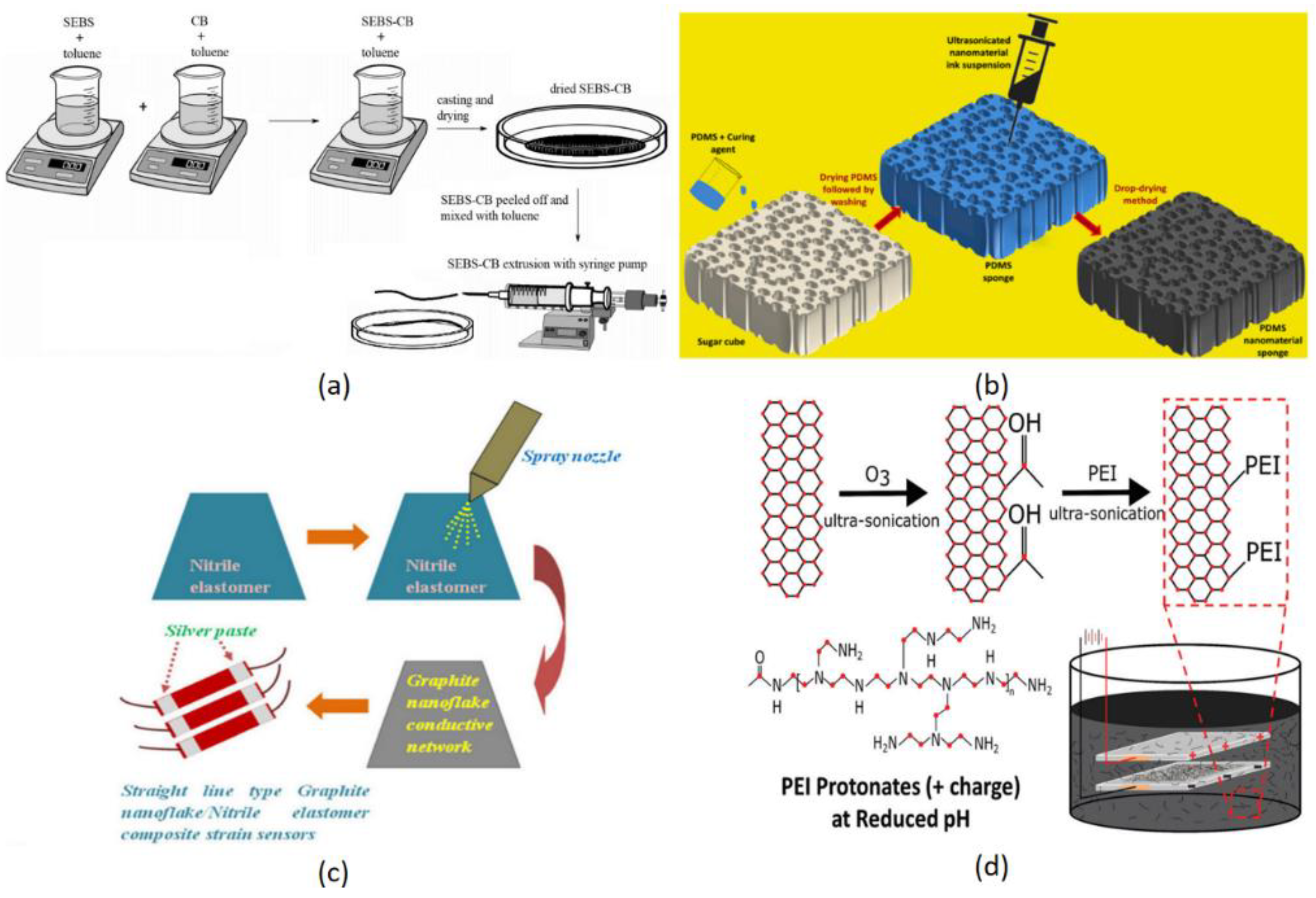
Figure 2.
(a) Capacitive sensors in the form of IDT on knee brace [25];(b)Schematic illustration of the ARDTM sensor fabrication process Reproduced with permission. Reproduced with permission [26];(c) Schematic illustration of the structure based on a hybrid dielectric layer. Reproduced with permission [27];(d) Stretchable fabric electrode-based strain sensor. Reproduced with permission [33].
Figure 2.
(a) Capacitive sensors in the form of IDT on knee brace [25];(b)Schematic illustration of the ARDTM sensor fabrication process Reproduced with permission. Reproduced with permission [26];(c) Schematic illustration of the structure based on a hybrid dielectric layer. Reproduced with permission [27];(d) Stretchable fabric electrode-based strain sensor. Reproduced with permission [33].
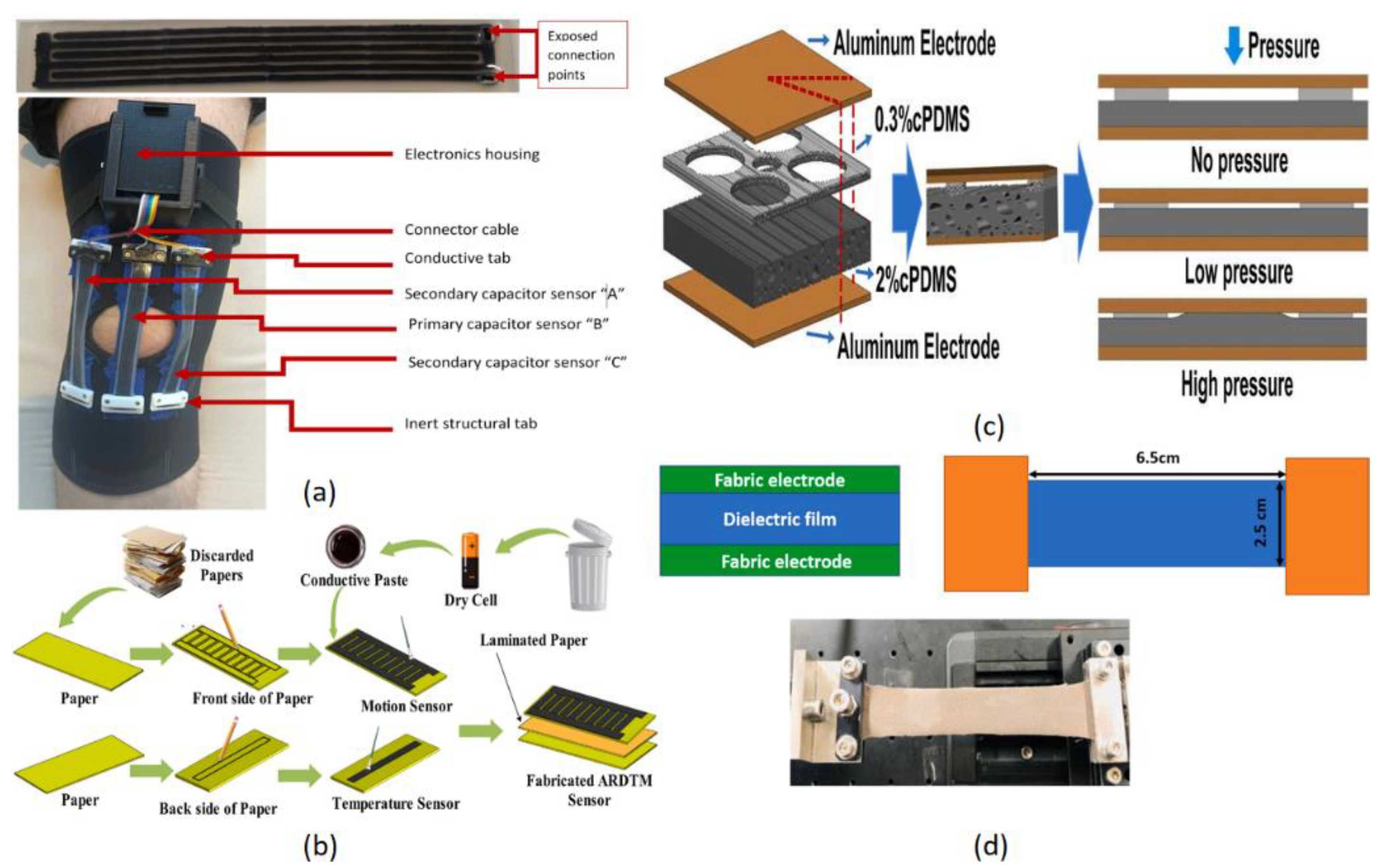
Figure 3.
Preparation of two stretchable sensors, piezoresistive/capacitive, based on customized flexible electrodes. Reproduced with permission [36].
Figure 3.
Preparation of two stretchable sensors, piezoresistive/capacitive, based on customized flexible electrodes. Reproduced with permission [36].
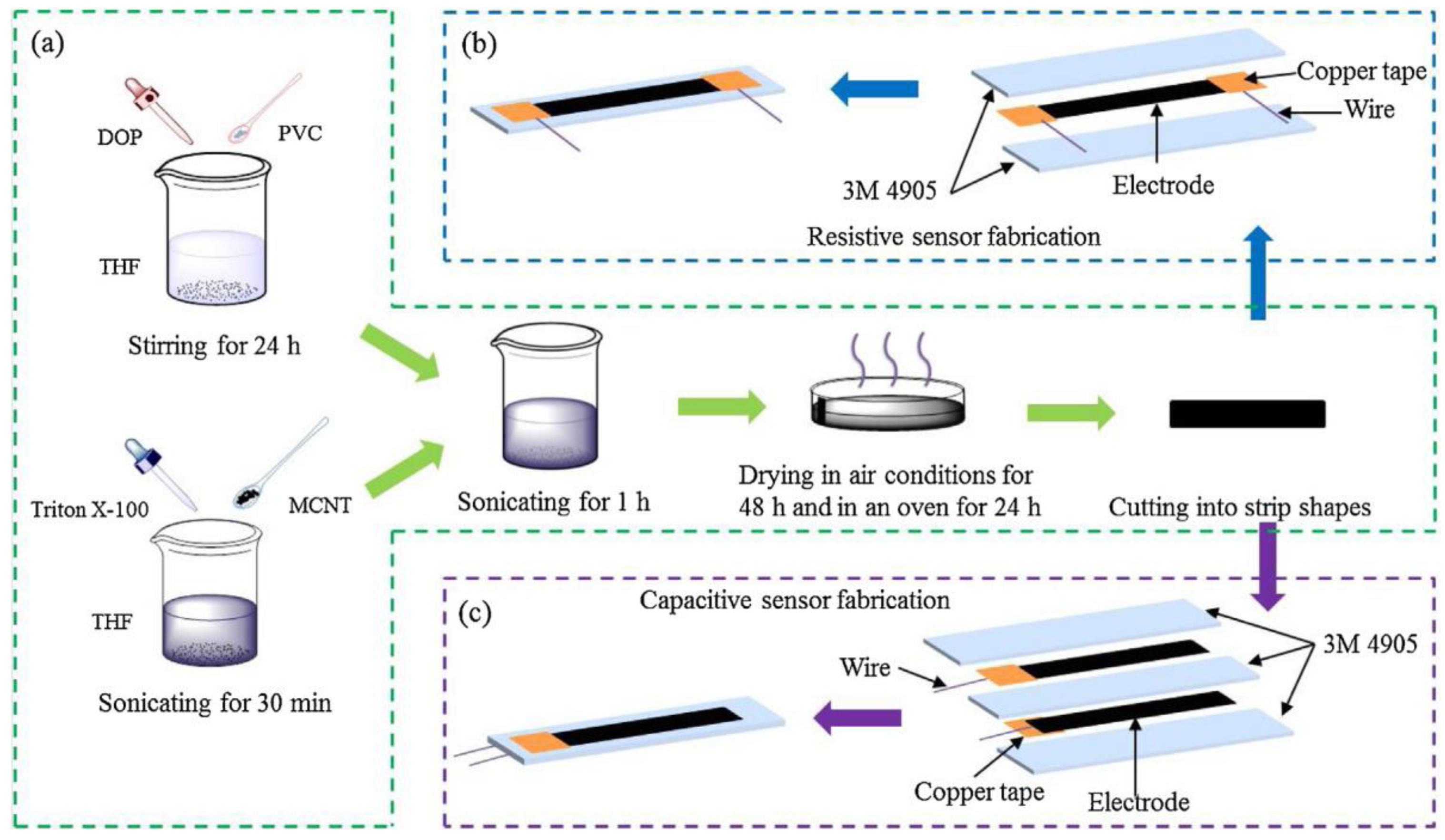
Figure 4.
(a) Schematic of a flexible sandwich-structured PENG based on BSST/PDMS composites [41]; (b) Schematic design of PVDF/BiCl3/ZnO nanofiber-based PENG. Reproduced with permission [42].
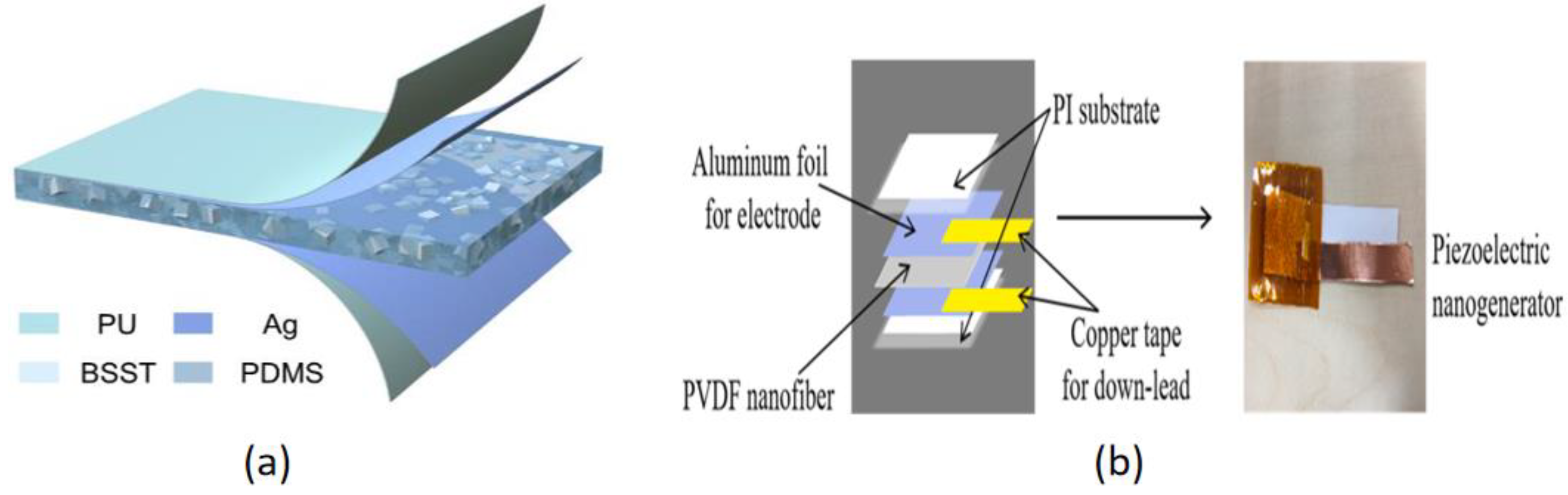
Figure 5.
(a) Working principle of the sensing textile [48]; (b) Schematic diagrams of the TENG structure. Reproduced with permission [49]; (c) Structure and working mechanism of the TENG [50].
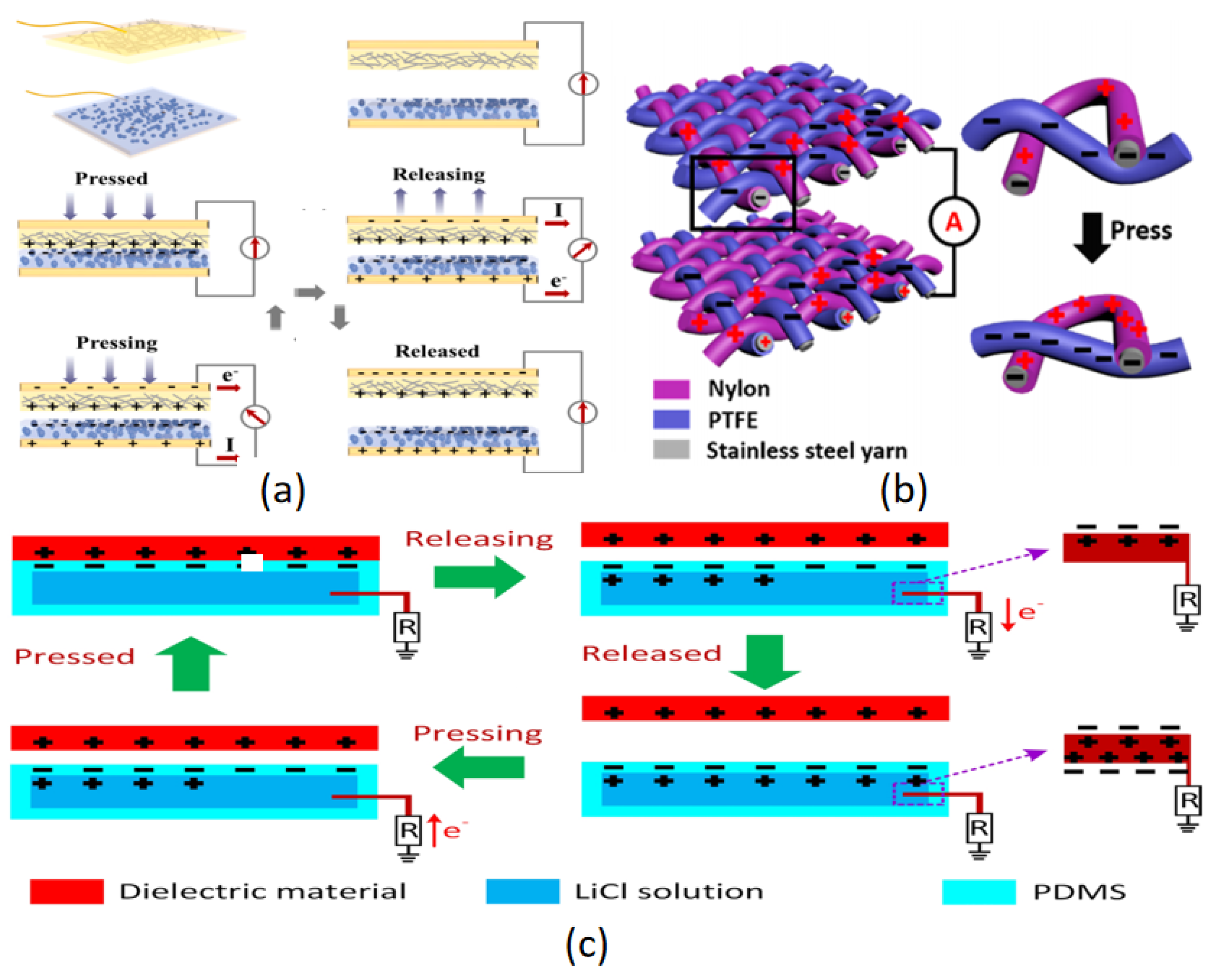
Figure 6.
A HAL exoskeleton. Reproduced with permission [52].
Figure 6.
A HAL exoskeleton. Reproduced with permission [52].
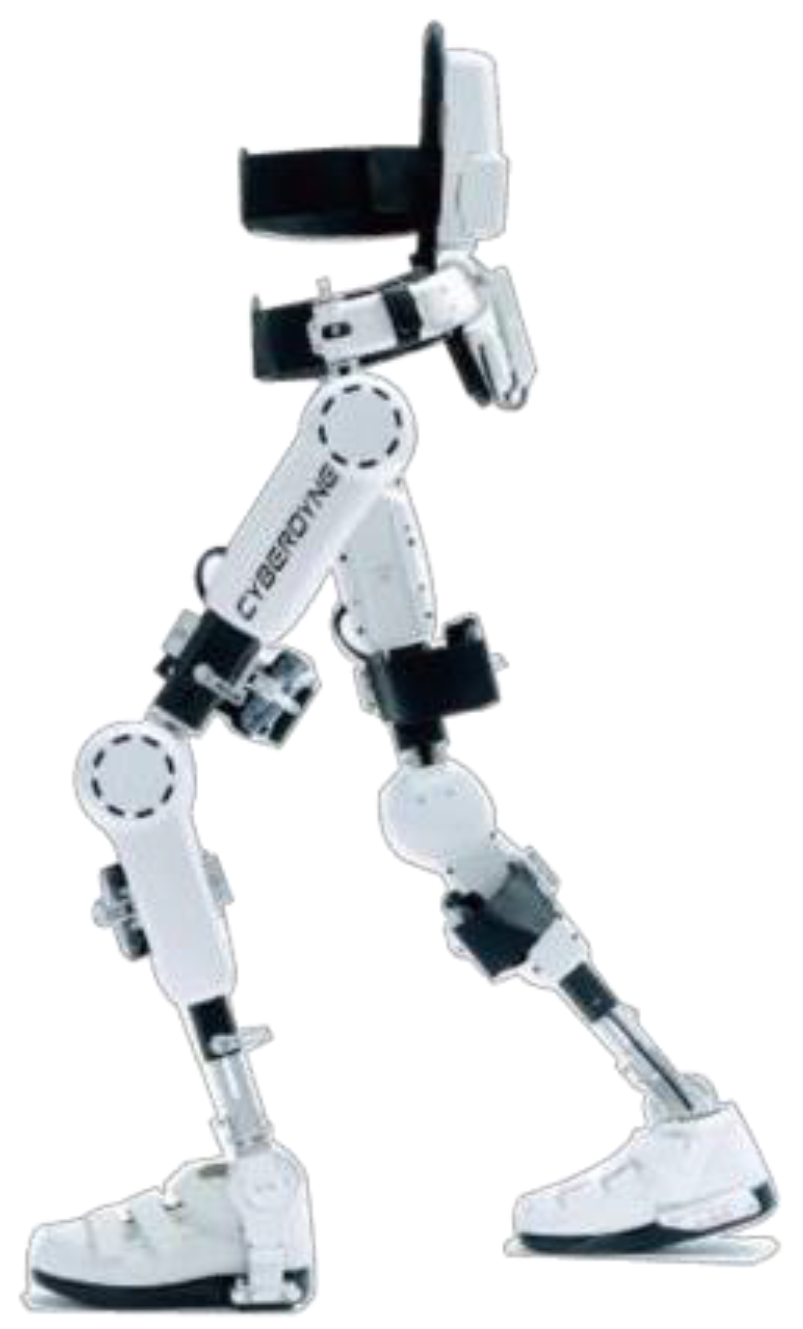
Figure 7.
Double-layer capacitive bending angle sensor in knee joint [60].
Figure 7.
Double-layer capacitive bending angle sensor in knee joint [60].

Figure 8.
Capacitive sensors with high-performance capacitive filaments for knee applications [62].
Figure 8.
Capacitive sensors with high-performance capacitive filaments for knee applications [62].
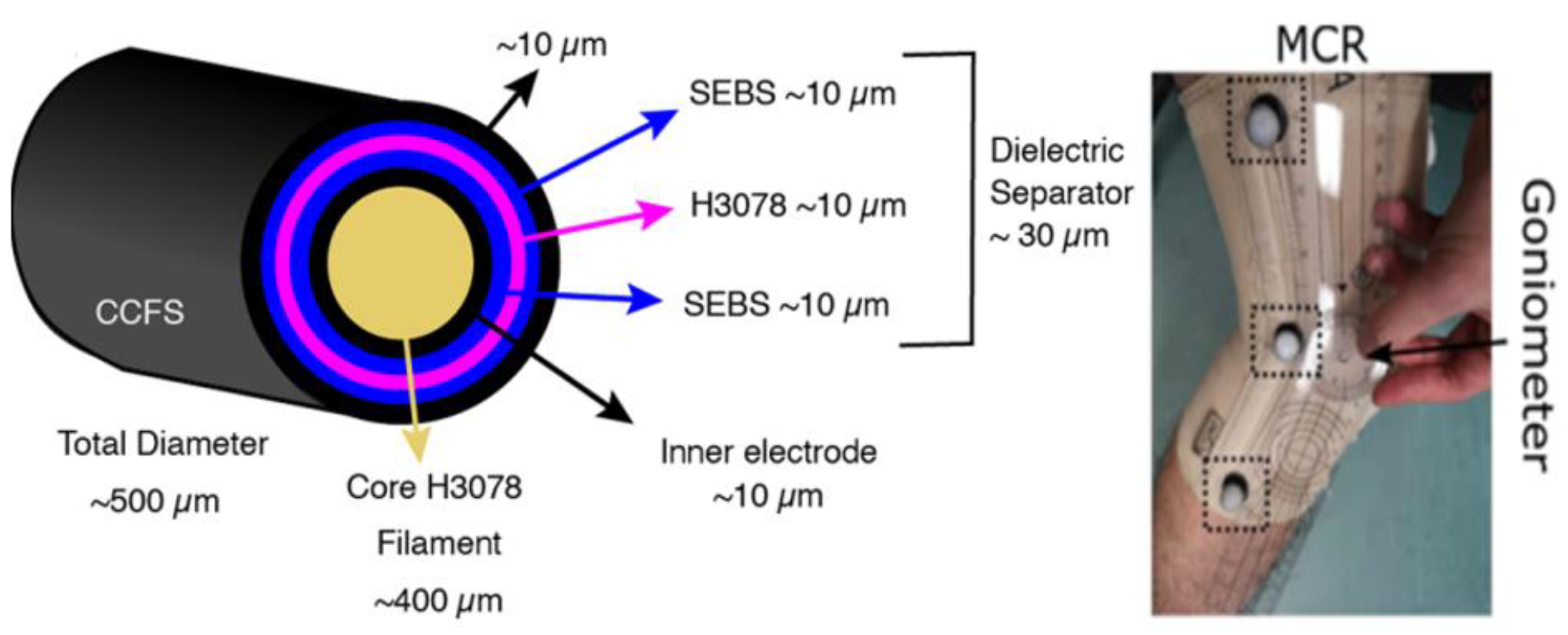
Figure 9.
Capacitive sensors based on stretchable conductive fabrics for knee joints [63].
Figure 9.
Capacitive sensors based on stretchable conductive fabrics for knee joints [63].
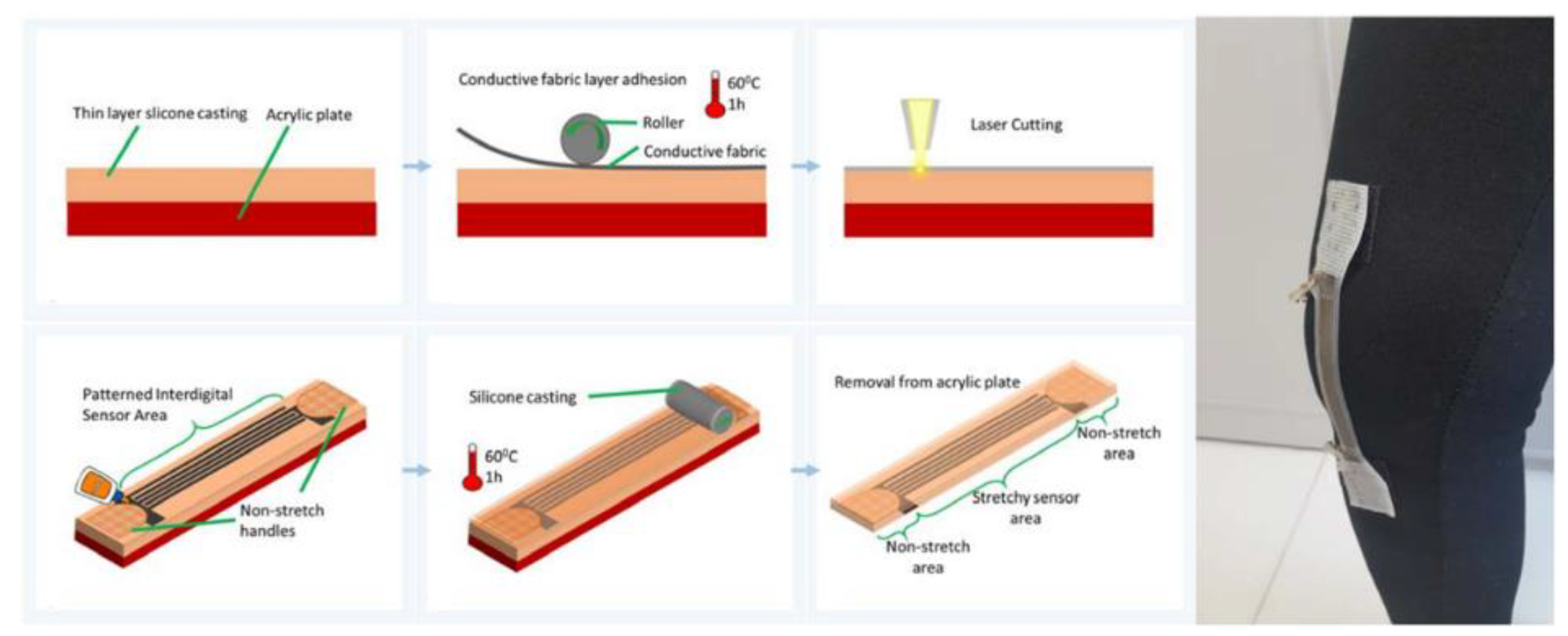
Figure 10.
(a) Piezoresistive strain sensors for muscle contraction measurements [65]; (b) DS-TENG strain sensors for localized muscle deformation degree measurements. [66]; (c) Fabric-based resistive strain sensors for human muscle activity measurements. Reproduced with permission [67]; (d) Piezoelectric strain sensors for muscle deformation measurements [68].
Figure 10.
(a) Piezoresistive strain sensors for muscle contraction measurements [65]; (b) DS-TENG strain sensors for localized muscle deformation degree measurements. [66]; (c) Fabric-based resistive strain sensors for human muscle activity measurements. Reproduced with permission [67]; (d) Piezoelectric strain sensors for muscle deformation measurements [68].
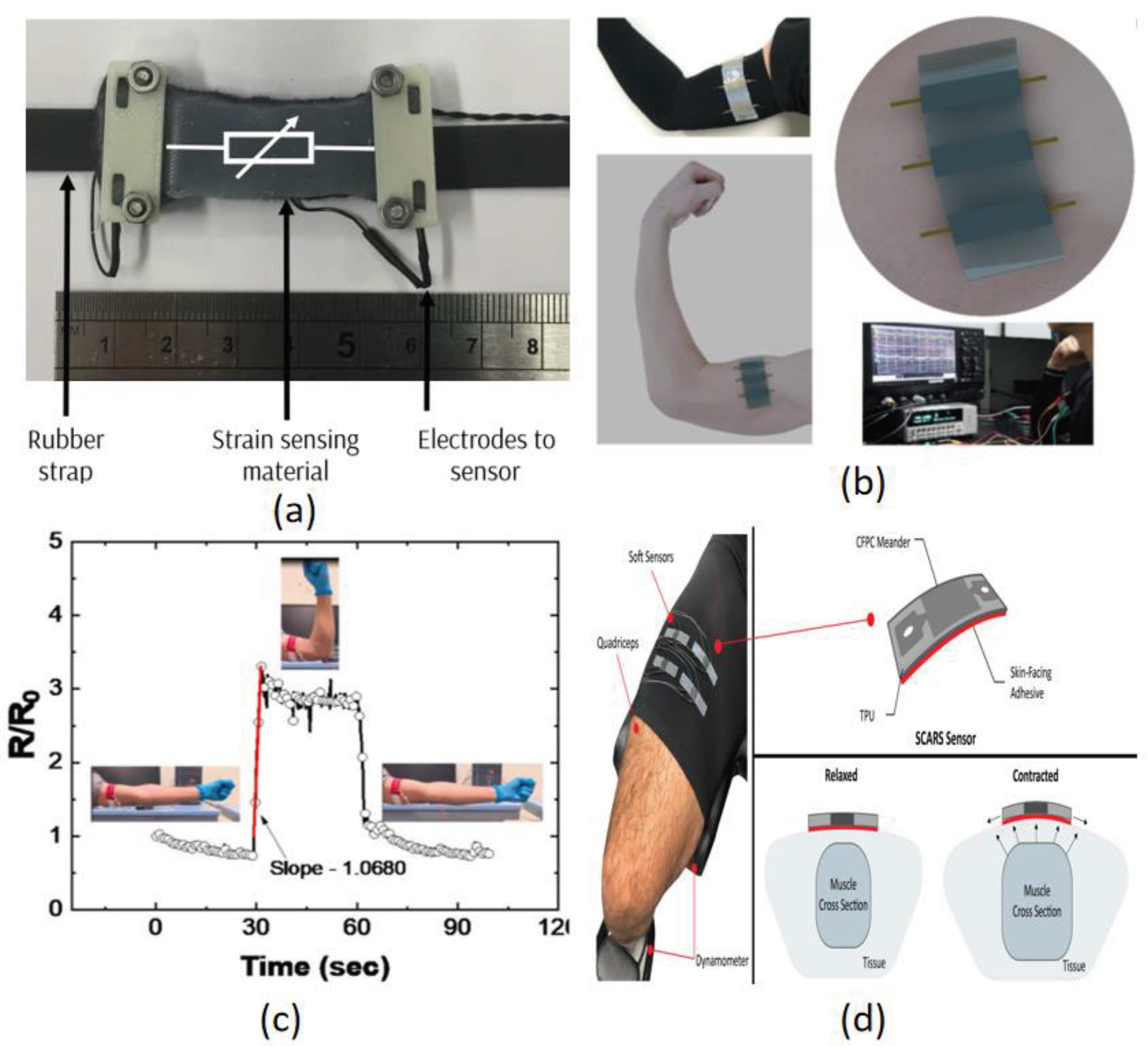

Table 1.
Summary of Strain Piezoresistive Sensors.
| Active Material | Sensitivity (GF) | Stretchability (%) | Response Time (ms) | Durability (cycles) | Structure |
|---|---|---|---|---|---|
| SEBS&CB [16] | >23 | 110% | - | 5000 | nanocomposite strands |
| CNT/PDMS [17] | - | 90% | 38 | 2000 | three-dimensional porous |
| GNP&PDMS [18] | 69 | 60% | 10 | 1500 | flatbed |
| nitrile elastomers and graphite nanoflakes [19] | 868.12±56.90 | 30% | 7.5 | >2000 (at 30% strain) | flatbed |
| MWCNTs&PU [20] | 62.37 | 80% | 0.6 | 2000 | three-dimensional porous |
| TPU&CNPs [23] | 70 | 102% | - | 1000 | textiles |
| CNT-PEI [24] | 350 | 50% | - | - | textiles |
Table 2.
Summary of Strain Capacitive Sensors.
| Active Material | Electrode | Sensitivity (GF) | Stretchability (%) | Response Time (ms) | Durability (cycles) | Structure |
|---|---|---|---|---|---|---|
| paper [26] | graphite |
0.335 | - | 5 | - | Mix of flat and finger inserts |
| PDMS&CNT [27] | Aluminum | 0.247 | 100% | 120 | 5000 | Mix of flax and Three-dimensional porous |
| PU [29] | SWCNT | 0.8 | 100% | - | 1000 | flatbed |
| PDMS [31] | C-PDMS | - | - | - | - | finger inserted |
| Ecoflex 0030 [33] |
YSil ver83 |
4 at 100% strain | 150% | - | 1000 | flatbed |
Table 3.
Summary of Strain Piezoelectric Sensors.
| Electrode | Voltage | Durability (cycles) | Current |
|---|---|---|---|
| Ni-CAT@CC [39] | 2.1V | 100 | 0.5μA |
| BSST [40] | 3.05V | 50000 | 44.5nA |
| BiCl3/ZnO/PVDF [41] | 4.9V | - | 45nA |
| WS2 [42] | 2.26V | - | - |
| PZT/Cu@Ag [43] | 61V | - | 1.1μA |
Table 4.
Summary of Strain Triboelectric Sensors.
| Active Material | Sensitivity (GF) | Stretchability (%) | Durability (cycles) | Power |
|---|---|---|---|---|
| PDMS & CB [47] | - | 35.2% | - | 29.62 V in 2.0 Kgf loads |
| nylon & PTFE [48] | 1.33 | - | 4200 | Current: 150nA, Voltage: 10V |
| PDMS/Cu & BC/CSM [49] | 0.24 | - | 1000 | Current: 500nA, Voltage: 23V |
| nylon & PTFE [50] | - | 1700% | - | Current: 40.1nA, Voltage: 2.4V |
| PDMS & LiCl [51] | - | 250% | - | Voltage: 360V, Current: 21mA |
Table 5.
The type of flexible strain sensors.
| Type | Sensing Mechanism | Advantages | Disadvantages |
|---|---|---|---|
| Piezoresistive [15,16,17,18,19,20,21,22,23,24] | 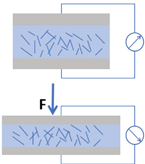 |
Low cost; Simple production process; Currently the most researched |
Hysteresis effect; Affected by temperature and humidity |
| Capacitive [26,27,28,29,30,31,32,33,34,35,36,37], [59,60,61,62,63] | 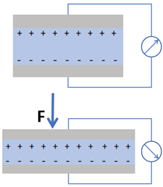 |
Simple structure; Low cost; Not affected by temperature; Low power consumption; Low detection threshold; Response time. |
Low sensitivity; Susceptible to external electrical interference |
| Piezoelectric [38,39,40,41,42,43,44,45] | 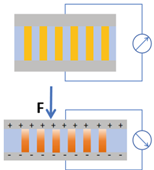 |
High sensitivity under dynamic pressure; Response time |
Special materials Cannot be used for static measurements; Limited in terms of tensile strength; Affected by temperature |
| Triboelectric [46,47,48,49,50,51] | 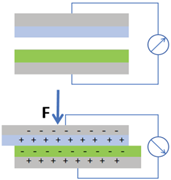 |
Low cost; High sensitivity; precision; Response time; |
Cannot be used for static measurements; Susceptible to environmental influences; Poor reliability; |
Disclaimer/Publisher’s Note: The statements, opinions and data contained in all publications are solely those of the individual author(s) and contributor(s) and not of MDPI and/or the editor(s). MDPI and/or the editor(s) disclaim responsibility for any injury to people or property resulting from any ideas, methods, instructions or products referred to in the content. |
© 2024 by the authors. Licensee MDPI, Basel, Switzerland. This article is an open access article distributed under the terms and conditions of the Creative Commons Attribution (CC BY) license (http://creativecommons.org/licenses/by/4.0/).
Copyright: This open access article is published under a Creative Commons CC BY 4.0 license, which permit the free download, distribution, and reuse, provided that the author and preprint are cited in any reuse.