

Submitted:
01 April 2024
Posted:
02 April 2024
You are already at the latest version
Abstract
Micropollutants belongs to various groups of chemicals. One of the most diverse and large group of them are pharmaceuticals. The presence of pharmaceutical residues in wastewater poses a significant challenge to water quality and environmental health. This paper provides an overview of recent advancements in the removal of pharmaceuticals from water, focusing on various treatment processes and their effectiveness in eliminating micropollutants. Through a review of literature, including studies on ozonation, UV irradiation, sulphate radical-based tech-nologies, and photocatalytic processes, insights into degradation mechanisms and optimal con-ditions for their removal are synthesized. Additionally, with new legislation mandating the monitoring of selected micropollutants and the implementation of quaternary treatment in wastewater treatment plants, the paper discusses prospects for future research and recommen-dations for effective pharmaceuticals removal. Key actions include conducting comprehensive laboratory and pilot trials, implementing quaternary treatment of wastewaters, continuously monitoring of water quality, investing in research and development, and promoting collabora-tion and knowledge sharing among stakeholders. By embracing these strategies, we can work towards safeguarding water resources and protecting public health from the adverse effects of pharmaceutical contamination.
Keywords:
micropollutants
; municipal wastewater
; pharmaceuticals
; quaternary treatment
; removal of pol-lutants
1. Introduction
The European Commission proposal [1,2] for the revision of the Council Directive of May 21, 1991, on the treatment of municipal wastewater "Urban Wastewater Treatment Directive - UWWTD" [3] accentuates not only the protection of the environment but also the protection of people's health.
Serious problems include the widespread occurrence and presence of micropollutants (MPs) and new emerging substances, the so-called "emerging pollutants" (EP) in the aquatic environment [4]. Micropollutants are characterized by the fact that, despite relatively low concentrations (µg/l to ng/l), they have significant negative effects on ecosystems and humans. These effects may include acute and chronic toxicity, bioaccumulation and bioconcentration in food chains, genotoxicity, or endocrine effects [5].
Micropollutants enter the water environment mainly from wastewater treatment plants (WWTP), as current treatment technologies are not efficient enough to remove them (Figure 1). Micropollutants enter municipal wastewater during bathing, cleaning, washing, from toilets and through unused or excreted pharmaceuticals and medicines and their transformation products. Due to the serious negative effects on the environment, low concentrations and in many cases complex chemical structure, the issue of MPs removal represents an urgent and current challenge to the research of treatment technologies for their removal, the investigation of the effects on the aquatic environment and the potential of their possible penetration into groundwater [6].
Emerging pollutants are defined as synthetic or naturally occurring chemicals that are not routinely monitored in the environment, but that have the potential to enter the environment and cause known or suspected adverse ecological and/or health effects [7]. In some cases, it is likely that the release of new pollutants into the environment has been going on for a long time but could not be detected until new detection methods were developed. New sources of emerging pollutants can be created by the synthesis of new chemicals or changes in the use and disposal of existing chemicals [8].
Decision [9] contains a list ("watch list") of selected substances for monitoring throughout the European Union. In addition to the substances previously recommended for inclusion in Directive 39/2013/EU (diclofenac and the synthetic hormone 17-alpha-ethinylestradiol (EE2) and the natural hormone 17-betaestradiol (E2)), the first list of 10 substances/groups of substances also refers to three macrolide antibiotics (azithromycin, clarithromycin and erythromycin) another natural hormone (estrone (E1)), some pesticides (methiocarb, oxadiazon, imidacloprid, thiacloprid, thiamethoxam, clothianidin, acetamiprid and trialate), UV filter (2-ethylhexyl-4-methoxycinnamate ) and an antioxidant (2,6-di-tert-butyl-4-methylphenol) commonly used as a food additive. The proposal [1] for the revision of the Council Directive of May 21, 1991, on the treatment of municipal wastewater "Urban Wastewater Treatment Directive - UWWTD" includes explicitly 12 micropollutants (10 pharmaceuticals and 2 anticorrosive) that will be discussed in this review paper.
The rapid growth of pharmaceutical consumption in recent years has led to an increase in the presence of these compounds in wastewater. However, their widespread use has inadvertently led to the introduction of pharmaceuticals into recipients through the discharge of treated or untreated wastewater. As a result, trace amounts of these compounds can be found anywhere in water bodies, and they can disrupt balance of aquatic ecosystems and pose potential risks to organisms. In addition, the persistence of certain pharmaceutical products amplifies concerns about long-term environmental consequences [10]. They could at even very small concentrations promote the development of resistance genes in the environment [11]. Among the more important sources of these genes are effluents of treated water and waste sludge from municipal sewage treatment plants or plants for the treatment of wastewater from animal farms. When antibiotics enter the environment, they also have a direct bactericidal and bacteriostatic effect, which can also mean the disappearance of a certain population of microorganisms and thus their role in the ecosystem.
The presence of pharmaceuticals in wastewater is primarily attributed to their incomplete metabolism and excretion by humans and animals. Traditional wastewater treatment plants, designed to deal with organics, nitrogen, and phosphorus pollutants in municipal WWTP, may not be equipped to effectively remove these complex compounds. Pharmaceutical compounds can be transformed during the wastewater treatment process, which creates new transformation products. These products may be more persistent and biologically active than the original compounds.
In the draft directive [1] in Appendix No. 1 on p. 8 under Category b) paragraph iv) a mixture of 4-methylbenzotriazole (CAS number 29878-31-7) and 6-methyl-benzotriazole (CAS number 136-85-6) is mentioned. Only 5-methyl-benzotriazole can be traced under the registration CAS number 136-85-6. No reliable literature is available for the compound 6-methyl-benzotriazole, while for the compound 5-methyl-benzotriazole, the a lot of literature is available. During more detailed search, it was found out that in the directives of the European Parliament and the Council, there are chemical substances listed according to the European Chemicals Agency (ECHA) [12], where 6-methyl-benzotriazole (CAS number 136-85-6) can be found. Based on the structural formula presented ([13], Figure 2), it can be seen that the formula belongs to 5-methyl-benzotriazole.
In the literature [14] other names according to IUPAC are also given. Likewise, on the ECHA website ([12], for example, in the "Particle size distribution" section, it is named as 5-methyl- benzotriazole. Similarly, in the section "Biodegradation in water: screening tests: in the section "Remarks" it is written about 5-methyl-benztriazole. From this one could conclude, it could be the same compound that has several synonymous/synonymous names but has one CAS registration number. Based on the above, we also included 5-methyl-benzotriazole, or a mixture of 4-methyl-benztriazole (CAS 29878-31-7) and 5-methyl-benztriazole (CAS No 136-85-6) in the evaluated micropollutants.
The proposed directive [1] requires individual member states to define areas in which the concentration or accumulation of micropollutants poses a risk to human life or the environment. The removal of micropollutants will be carried out in quaternary treatment in the following time horizons:
- By 2035, all WWTPs > 100,000 PE must be equipped with a quaternary level of treatment, and at least 50% of WWTPs > 10,000 PE must also have quaternary treatment.
- By 2040, all WWTPs > 10,000 PE in the areas where micropollutants pose a risk to human health or the environment should be equipped with a quaternary treatment stage.
For quaternary treatment, 80% removal efficiency of at least 6 of the 12 micropollutant compounds listed above is required.
In recent years, various methods have been investigated for the effective removal of these pharmaceutical compounds from wastewater. With the ongoing amendment of EU legislation on urban wastewater treatment [1], stricter requirements for pollutant removal are expected driving the need for innovative environmental technologies. Diverse pollutants in urban wastewater, including micropollutants, require advanced treatment technologies that integrate biological, physical, and chemical processes [15]. This review article is focused on the processess of the removal of the selected micropollutants, their sources, their impact on human health and the environment. Removal processes, reactors and technologies are described, and new challenges emphasized in the context of the proposed directive [1].
2. Selected Micropollutants
2.1. Characterization of Selected Pharmaceuticals
Amisulpride is categorized as an atypical antipsychotic and is used to treat psychosis associated with schizophrenia as well as manic episodes in individuals with bipolar disorder [16]. It is considered a persistent contaminant capable of entering the aquatic environment and potentially leaching into groundwater. Furthermore, the confirmation of the formation of its distinct non-biodegradable N-oxide product during treatment with current methods underscores the need for advanced treatment solutions [17].
Carbamazepine, a commonly prescribed antiepileptic drug, has been frequently found in the aquatic environment, raising concerns about its potential impact on aquatic organisms. Effective in the treatment of psychomotor and grand mal seizures associated with epilepsy and bipolar disorders, the drug exhibits a prolonged half-life in the environment (82 ± 11 days), making it one of the most persistent drugs in the natural environment. The persistence of carbamazepine in wastewater is attributed to the limited effectiveness of current wastewater treatment processes in removing it [18]. The presence of carbamazepine has been shown to induce behavioural changes in a variety of aquatic organisms. These changes include reduced stress responses, increased swimming speed, prolonged feeding, as well as modifications to physiological processes such as the reproductive system and hormone level [19].
Citalopram, an antidepressant, is classified as a selective serotonin reuptake inhibitor, which is commonly prescribed for mental disorders such as depression due to its minimal likelihood of interaction with other medications [20]. However, current WWTPs struggle to effectively remove more than 80% of this compound. As a result, citalopram is frequently detected in surface waters worldwide, generally at concentrations ranging from ng/l to low μg/l. The accumulation of citalopram was evaluated in the liver, kidney, brain and muscle tissues of various fish species. Citalopram exhibits neurotoxic effects on non-target aquatic animals, including fish [21].
Clarithromycin, an antibiotic, is used to treat chest infections, skin problems, and various infections. In addition, it is used to treat Helicobacter pylori infections, the bacterium responsible for causing ulcers [22]. The use of antibiotics leads to a decrease in the population of plankton and algae, thereby changing the composition of the aquatic community. In addition, antibiotics have the potential to accumulate in the food chain, posing a threat to human health. However, the primary problem associated with antibiotic pollution is the increased risk of resistance of microorganisms to antibiotics [23].
Diclofenac is used for pain relief as a non-steroidal anti-inflammatory drug. Approximately 75% of administered diclofenac reaches the water and soil environment, where its hydrophilic character and stability contribute to prolonged persistence. Increased exposure to diclofenac not only affects the health of aquatic organisms, higher plants and mammals, but also poses a significant threat, like clarithromycin. The presence of diclofenac and its metabolites in the environment raises concerns because of potential synergistic interactions with existing contaminants, increasing the risk of drug-resistant strains and the emergence of new contaminants [24].
Hydrochlorothiazide, a diuretic prescribed for hypertension and edema caused by fluid retention, undergoes minimal metabolism. At least 61% of the substance is excreted unchanged in the urine, with partial elimination in the feces, which eventually enters the water cycle [25]. Exposure to hydrochlorothiazide has the potential to disrupt the endocrine system of fish, affecting their reproductive processes and developmental patterns. In addition, the presence of hydrochlorothiazide in water sources may contribute to antimicrobial resistance, intensifying the challenges of treating infections in the future [26].
Categorized as a β-blocker within a class of drugs widely used to treat cardiovascular disorders such as abnormal heart rhythms, high blood pressure, and angina pectoris, metoprolol may have adverse effects on aquatic organisms. These effects may include disturbances in testosterone levels, reduced fertility and reproductive rate, and induction of abnormal behaviour [27].
Venlafaxine, a commonly prescribed antidepressant, is widely used to treat major depressive disorder, panic disorder, and anxiety. This antidepressant shows high persistence in surface waters, with concentrations already detected in the range of mg/l. The presence of venlafaxine in municipal wastewater is associated with profound behavioural and physiological effects on aquatic organisms [28]. It affects the survival rate, reproduction rate and behaviour of aquatic vertebrates and invertebrates [29]. Fish exposed to the substance showed a remarkable increase in mortality, developmental delays, morphological abnormalities and pathological changes in the brain, heart, skull and tail kidneys. In addition, changes in the activity of antioxidant enzymes and increased lipid peroxidation were evident, even at the lowest concentrations examined [30].
Candesartan and irbesartan are categorized within a class of medications known as angiotensin-II receptor antagonists, commonly prescribed for the treatment of high blood pressure (hypertension) [31]. Short-term exposure to candesartan can induce acute toxicity in aquatic organisms, resulting in behavioural changes, reduced growth rate and potential mortality. Long-term exposure to candesartan has the potential to interfere with the endocrine systems of aquatic species, affecting reproduction, development and overall ecosystem health [32].
2.2. Characterization of Selected Anti-Corrosives
H-benzotriazole (BZT) is a very dangerous and frequently used compound with carcinogenic and mutagenic effects to living organisms. It is used as an anticorrosive in industrial operations, in the production of detergents, biocides, pharmaceuticals, rubber, tires, in cooling systems and in the production of deicing agents. Its derivatives are also used as UV stabilizers in paints, plastics, sunscreen preparations and films. It is also used as an additive to petroleum products (hydraulic fluids, lubricants) [33]. BZT and its methylated analogues (tolyltriazole, TTri) are used as corrosion inhibitors. They are used in many industrial applications, in homes as part of dishwashing detergents, and as part of de-icing fluids used in airports and elsewhere. Its TTri-isomers (4-TTri) are typical polar trace pollutants and are poorly degradable [34].
Benzotriazoles exhibit significant solubility in water (28 g/l), and their stability, resistance to biodegradation, and limited sorption contribute to their presence in the environment in substantial quantities, including surface waters such as rivers and lakes, as well as soils where they may persist for extended periods of time. period [35,36,37]. Benzotriazole is categorized as harmful to aquatic organisms and can lead to adverse long-term effects in aquatic environments [35,36,38,39].
Methyl-substituted benzotriazoles are commonly referred to as methyl-benzotriazoles (MeBZT). Due to their high hydrophilicity and insufficient removal in wastewater treatment plants (WWTPs), these compounds have been widely detected in the aquatic environment, with concentrations typically ranging from tens ng/l to tens μg/l. Significant residual levels of these compounds have been found in plants, fish, air, tap water and human urine, indicating potential risks to various organisms. Although the reported acute toxicity of these compounds is generally low, some observed sublethal effects, including endocrine disruption, hepatotoxicity, neurotoxicity, and the potential to promote the development of endometrial carcinoma, continue to be of increasing concern [40]. Recent research indicates that both BT and MeBZT exhibit toxicity to the luminescent bacteria used in the Microtox® assay [41].
3. Treatment Processes
Various advanced treatment methods have been developed to solve the problems associated with the removal of micropollutants. These methods go beyond current wastewater treatment and include advanced oxidation processes (AOPs), photocatalysis and other innovative technologies (Figure 3). Understanding and implementing these advanced methods are essential steps towards achieving sustainable and comprehensive solutions for the removal of micropollutants from wastewater. Effective methods were developed for the removal of the above-mentioned pharmaceuticals and anti-corrosives.
Advanced oxidation processes (AOPs) have been proven to be effective techniques for the degradation and removal of contaminants from water systems. It is noteworthy that AOPs exceed the efficiency of individual oxidation processes. As a result, integrated systems, such as combining UV radiation with ozone and hydrogen peroxide, and iron-titanium oxide as catalysts, find application in the removal of micropollutants [42]. These systems show remarkable efficiency in treating drinking water containing organic micropollutants while actively promoting their degradation. AOPs act as strong oxidizing agents through the formation of a hydroxyl group by combining free radicals [43].
AOPs offer several advantages for the treatment of organic contaminants in wastewater. First, they boast fast reaction rates for most organic pollutants, ensuring efficient degradation in a relatively short time frame. In addition, AOPs facilitate the degradation of pollutants rather than their concentration as it is the case in membrane or adsorption systems, resulting in more thorough removal from wastewater. These processes also do not generate solid residues, reducing the need for additional waste management measures. AOPs have a small footprint, making them suitable for implementation in a variety of wastewater treatment facilities. They could even completely mineralize most contaminants and ensure their transformation into harmless by-products. However, AOPs have some disadvantages. They may produce unknown products during the oxidation process, which may require further analysis to ensure the safety of the treated water. The water matrix can reduce their efficiency causing different interferences as well as the presence of residual oxidants can be a problem that require careful monitoring and pretreatment measures to mitigate their effects on treatment efficiency [44].
Ozonation
Ozone (O3) serves as a strong oxidizing agent to rapidly degrade MPs, especially those with available amino groups, double bonds, or aromatic groups [45]. Ozonation is strongly recommended for the removal of organic MPs resistant to biological degradation. Dissolved ozone reacts with the most persistent MPs and its effectiveness depends on the content of organic substances in wastewater [43].
The ozone reaction produces a secondary oxidant, the hydroxyl radical (HO·), which enhances MPs removal. The efficiency of ozonation is affected by the pH of the wastewater [46]. Low pH favours the direct ozone reaction, while high pH leads to decomposition of ozone, producing HO· radicals. These radicals react non-selectively with trace organic compounds in wastewater. The transformation of MPs depends on their chemical structure, with ozone preferentially reacting with electron-rich groups such as phenols, amines, and carbon-carbon double bonds. MPs with low ozone reactivity are removed by the hydroxyl radical mechanism, increasing biodegradability by converting them into simpler molecules for subsequent biological treatment [43].
As stated above, ozone interacts with various MPs. However, due to the selective oxidation behaviour between ozone and pollutants, the degradation of certain organic pollutants tends to be slow, leading to incomplete pollutant removal or the formation of toxic intermediates. Moreover, during the decomposition of certain organic pollutants by ozone, intermediates such as carboxylic acids and aldehydes may accumulate, which do not further react with ozone, reducing the efficiency of mineralization [47]. In addition, the limited solubility of ozone in water leads to inefficient use, which increases operating costs. The formation of disinfection byproducts (DBPs) also represents a significant challenge that must be addressed when implementing ozone-based treatment processes [48]. Various AOPs have been modified to solve the problems of low ozone utilization efficiency and ineffective mineralization of organic pollutants. These include methods such as the O3/UV process, the O3/H2O2 process, and combinations of ozone with biological treatment or other AOPs [49].
The UV/O 3 System
Ozonation, when used alone, offers several advantages over current chemical oxidants such as chlorine or chlorine dioxide. However, it fails to create a sufficient concentration of hydroxyl radicals to achieve complete mineralization of organic compounds. This limitation is attributed to the low kinetic constant of the direct ozone-pollutant reaction [50]. The reaction mechanism of the O3/UV process to degrade organic pollutants in the environment can be primarily categorized into three phases: first, direct oxidation and degradation of pollutants by O3 molecules; second, UV-induced photodegradation of pollutants; and finally guiding O3 molecules by UV to generate ·OH for indirect pollutant oxidation. The generation of ·OH in the system can be described with following reactions (1-9) [51]:
The process shows high oxidation capacity, no waste residues, and environmental friendliness. However, incompletely degraded MPs can produce toxic pollutants such as bromateable to induce kidney cancer in animals in the lab tests [52]. If the concentration in the waters exceeds 50 μg/l, the question of bromate formation must be considered when applied to drinking water treatment [51].
The UV/H 2O2 System
The UV/H2O2 processes use ultraviolet radiation to cleave the O−O bond in hydrogen peroxide and generate the hydroxyl radical (HO·) [53].
Also, HO2, which is in an acid-base equilibrium with H2O2 absorbs the UV radiation and produce HO· radicals [53].
Major design and operational factors include H2O2 dosage, type and power of UV lamps, the reactor contact time, and control mechanisms such as pH and temperature. The elimination effectiveness of each pollutant relies on various factors, including the initial pollutant concentration, the pH of the system, and quantity of H2O2 applied [54]. Determining the optimum dose of H2O2 for individual water sources is usually based on bench and pilot scale assessments, which are commonly estimated to be twice the TOC and not less than 1 to 2 mg/l [55]. The addition of a catalyst has the potential to increase the removal rate. The incorporation of bicarbonate or carbonate into the UV/peroxide system as a catalyst represents a promising approach to increase the removal time, efficiency, and rate of oxidation of organic compounds [54].
This process can generate larger amounts of OH radicals in comparison to UV/O3 process for the same amount of energy. However, due to interfering effects in water, the theoretical yield may be reduced below the value achievable by the H2O2/O3 process. Additionally, the presence of residual H2O2 in the water may require removal downstream of the process. In summary, it is important to consider factors such as water composition, treatment goals, UV dosage, and cost [55].
The UV/Chlorine System
The UV/chlorine process serves as an alternative to the UV/H2O2 process, due to the higher UV absorbance and chlorine quantum yield compared to H2O2. In traditional AOPs, the primary radical is HO·, which play a key role in the degradation of pollutants in water treatment. The UV/chlorine process introduces additional radicals due to the combination of UV light and chlorine such as HO· and reactive chlorine species (RCS), thus expanding the range of reactive species available for micropollutant degradation. The UV photolysis of HOCl and OCl - creates the primary radicals HO· and Cl·. These primary radicals then transform into secondary radicals (ClO· and Cl2=·).
ClO· is generated through the interaction of HO·/Cl· and HOCl/OCl–, with second-order rate constants (k) ranging from (2.0–8.8) × 109 M–1s–1. Cl2·– is produced when Cl· reacts with chloride ions (Cl–), with a rate constant of 6.5 × 10⁹ M–1s–1, given that Cl– is consistently present in both free chlorine solutions and water environments. Notably, Cl· undergoes rapid conversion to HO· through its reaction with H2O/OH– to initially form ClOH·–. Subsequently, the equilibrium tends to favor the generation of HO· over Cl·.
In addition to RCS and HO·, atomic oxygen (O(3P)) is produced through the UV-induced breakdown of OCl–. Subsequently, it swiftly combines with O2 to generate ozone (O3). The formation of O3 is influenced by the wavelength of UV radiation, being minimal at 254 nm but gaining significance beyond 320 nm. Consequently, the involvement of O3 becomes more pronounced when employing UVA or polychromatic UV for the activation of free chlorine, contrasting with low-pressure UV systems. UV/chlorine offers several disinfection barriers in the treatment of drinking water and residual protection in water distribution systems. Importantly, it eliminates the need to cool residual oxidants as required in UV/H2O2 AOPs [56,57,58].
Photo(cata)lysis
Photocatalysis refers to the process that occurs when a semiconductor material such as TiO2, ZnO2, SnO2, WO3, or Al2O3 initiates a series of redox reactions in the presence of light. One of the main results of photocatalysis is the formation of highly toxic intermediates that further contribute to environmental contamination [59].
Titanium dioxide (TiO2) being a common and effective catalyst due to its stability, cost-effectiveness, and proven effectiveness [50]. The first reaction of the photocatalytic process is the absorption of UV light into the catalyst and the formation of electron-gap pairs. In environmental applications, photocatalytic proce sses are carried out in conditions where oxygen is present, and it is adsorbed onto the surface of the catalyst. Electrons reduce the oxygen adsorbed on the TiO2 surface, thereby forming the superoxide radical (·O2¯). This means that these sites become capable of oxidizing water into hydroxyl radicals, which ultimately oxidize organic matter. When organic matter is adsorbed on the catalyst surface, it can be directly oxidized due to electron transfer from the catalyst itself. The main advantage of this AOPs is that it can be operated under elevated pressure and at room temperature, with the option of using sunlight. Low price and the possibility of recycling the catalyst are also advantages. The special requirements and at the same time the shortcomings of this technique are that it is necessary to ensure uniform irradiation over the entire surface of the catalyst and to separate the catalyst from the suspension after the reaction is complete. TiO2 is particularly effective as a photocatalyst in the field of pesticide oxidation due to its low price, non-toxicity, high oxidation capacity and the possibility of immobilization on various surfaces. The latter avoids separation of the catalyst from the suspension [60].
Stannic oxide nanoparticles functionalized with gallic acid has been shown to be a promising photocatalyst due to its high oxidation potential, photo absorption ability, surface reactivity, chemical inertness, relative nontoxicity, and long-term photochemical stability [61]. Disadvantages, however, include the difficulty in achieving uniform radiation over the entire catalyst surface on a larger scale and the need for a subsequent separation treatment to regenerate the catalyst, which increases the total cost of the process [50].
Fenton and Fenton-like Processes
Fenton and Fenton-like processes Fenton's reagent is widely used to remove organic pollutants from industrial wastewater. The Fenton process is used to treat wastewater, municipal sludge, contaminated soil, with the aim of reducing toxicity, COD and BOD and removing unpleasant odors. Fenton's reagent is most effective as a pretreatment method for COD values larger than 500 mg/l. As the concentration of pollutants in the wastewater decreases, so does the selectivity of the reaction [62].
The reaction requires large amounts of dissolved iron salts, which makes the process more expensive. In addition, the EU water quality directive allows only small concentrations of dissolved iron in treated water, which means that the Fenton process must in some cases be followed by a process to remove iron from the water. This is usually a physico-chemical process of coagulation and flocculation, which again produces large amounts of iron-containing sludge. These disadvantages of the process are the driving force behind the development of improved methods which, with a reduced iron concentration in the solution, still ensure sufficient oxidation efficiency. Among the improvements, the first concerns techniques that accelerate the formation of Fe2+ ions, which are crucial in the breakdown of hydrogen peroxide and thus the formation of hydroxyl radicals. Next is the combination of the Fenton process with UV light, which is called the photo-Fenton process. The development of a heterogeneous process with a solid catalyst has made considerable progress in recent years. The use of a highly active, stable solid catalyst reduces the amount of Fe2+ ions in the solution and improves catalyst regeneration and reuse. This alternative process is labelled as the heterogeneous Fenton process. As the last option under development is the combination of Fenton's reagent and electric current, which is called the electro-Fenton process [63].
The iron salt-catalyzed production of hydroxyl radicals from hydrogen peroxide reaches its maximum in acidic conditions, at pH values between 3 and 5. Fenton's reagent has an oxidative effect on many organic substances, both aromatic (phenols, polyphenols, etc.) and aliphatic (alcohols, aldehydes, etc.). The mechanism of oxidation of organic substances by Fenton's reagent is very complex and has not yet been studied in detail [64].
Without the presence of iron ions, hydroxyl radicals are not formed. As the concentration of iron ions increases, the rate of oxidation of organic substances also increases, but only up to a certain limit. From then on, further increasing the iron ion concentration no longer increases the reaction rate. For most industrial applications, it does not matter whether Fe2+ or Fe3+ is used; the catalytic process continues as long as hydrogen peroxide and organic matter are present in the solution. High concentrations of peroxide can lead to the neutralization of hydroxyl radicals after reactions [50].
The rate of Fenton oxidation increases with temperature, and the treatment effect is most visible at temperatures around 20 °C. As the temperature increases between 40 and 50 °C, the effectiveness of the reagent decreases due to the accelerated decomposition of peroxide into oxygen and water. In the industrial applications, most processes take place between 20 and 40 °C [62].
2.1. Overview of Processes for Removal of Pharmaceuticals
Various studies have investigated the efficiency of different treatment processes in removing MPs from wastewater, elucidating their degradation mechanisms and optimal conditions.
Deng [65] applied the ozonation process to investigate the ozonation performance of reverse osmosis (RO) concentrate from municipal wastewater treatment using semi-batch stirred reactor. In his work, the target micropollutant carbamazepine, was added to municipal secondary waste as RO feed at a concentration of 10 mg/l. It is important to note a solvent as methanol or ethanol, weren’t used to prepare the carbamazepine stock solution due to their effect on ozone consumption. Specifically, the presence of ethanol (0.05%, v/v) resulted in a significant inhibition of the ozonation efficiency of carbamazepine. The experiments were carried out in a stirred and thermostatic semi-batch reactor at a lab scale with a desired concentration of ozone 10 mg/l and an ozone generator power around 1.5 at a constant flow rate of 30 l/h. During the initial 60 minutes of the ozonation process, no dissolved ozone was detected, suggesting that all the transferred ozone was utilized at the interface or within the film layer. Ultimately, over 90% of carbamazepine was removed at a low ozone dosage of 0.33 grams of consumed ozone per gram of initial dissolved organic carbon (DOC). The RO concentrate contained initial DOC ~50.8 mg/l [65]. The degradation of carbamazepine by ozonation is associated with the carbon double bond attacked by molecular ozone [66].
In the research conducted by Lee et al. [67], several micropollutants (including CAR, CLA, DIC, VEN, MET, BZT) were observed in ozonation batch reactors (180 ml) using wastewater effluent sample after a secondary clarifier of conventional activated sludge (CAS) treatment and filtered through 0.45 µm pore size membrane filter. The findings indicated almost complete elimination of CAR, CLA, DIC, VEN, MET and around 80% removal of BZT at a specific ozone dosage of 0.7 g O3/g DOC and an initial micropollutant concentration of 475, 412, 348, 1472, 372 and 403 μg/l, respectively. Ozone decay in the tested wastewater was completed within 5 minutes. In comparison, the addition of H2O2 (5 mg/l) lowered the eliminations level of VEN (±10%) and MET (±20%) [67].
However, in the work of Edefell et al. [68] the tertiary amines CLA and VEN underwent transformation into their respective N-oxides during ozonation [68].
Jabbari et al. [69] found that the removal of DIC can be performed using ammonium persulfate to generate a sulphate radical as using UV alone, is more likely to eliminate the chemical bond of micropollutants and lower efficiency in drug degradation. The findings showed 89% removal efficiency with a persulfate concentration of 200 mg/l, pH 6, an initial DIC concentration of 8 mg/l, and a reaction time of 30 minutes in the O3/UV/S2O8 process. Humic acid was introduced as a scavenging compound, resulting in a reduction in the DIC removal rate from 89% to 76%. Thus, sulfate radical-based technologies show promising potential for the effective removal of these specific pharmaceuticals from wastewater treatment plants [69].
Lu et al. [70] illustrated a 75% reduction in DIC concentration after 60 min of UV light irradiation at 254 nm and 75 W in combination with activated persulfate (UV/PS). Sulphate radical-based technologies have shown promising results in the removal of diclofenac from wastewater treatment plants. This is attributed to the higher selectivity of the sulphate radical anion compared to the hydroxyl radical, which minimizes radical scavenging by natural organic matter and allows increased rates of reduction and mineralization. The findings indicate that degradation of DIC decreases when exposed to UV radiation alone, resulting in a DIC removal of 13% within 60 minutes. This study was performed in a lab scale (2 l) semi-continuous reactor [70].
Micropollutants including carbamazepine and diclofenac were reported to be removed by UV/H2O2 process. To achieve a 90% removal of DIC and CAR, the UV dose varies between compounds. Specifically, the necessary UV doses were 0.97 J/cm² for diclofenac and 2.25 J/cm² for carbamazepine, with a 25 mg/l H2O2 dose. Experiments used solutions prepared with MilliQ water, with initial concentrations of DIC and CAR set at 0.14 mM and 0.006 mM, respectively [71].
Angosto et al. [72] observed that in the UV treatment, combined with hydrogen peroxide (5 mg/l), 99.2% of the initial diclofenac concentration (37.6 mg/) was eliminated for an exposure time of 2 min of UV radiation. The process was carried out in aqueous effluents through biosorption with agrifood residues [72].
Fernandéz-Perales et al. [25] compared the efficiency of UV/H2O2 and UV/K2S2O8 processes for degradation of HCH. They found that the presence of radical promoters had a significant effect on the overall process of HCH degradation. Both photodegradation and mineralization rates varied depending on the system used in descending order: Solar < UV < UV/K2S2O8 < UV/H2O2. Specifically, in the surface water the degradation rates were 0.0006 per s (solar), 0.0013 per s (UV), 0.0009 per s (UV/K2S2O8), 0.0025 per s (UV/H2O2) with initial concentration of HCH 0.00005 M. In addition, the degradation rates increased with decreasing pH value. Conversely, the UV/H2O2 system required more energy compared to UV/K2S2O8, which is a significant factor to consider when assessing its suitability for water treatment applications [25].
Jaén-Gil et al. [73] combined biological processes with UV/H2O2 to remove metoprolol with initial concentration of 2μg/l. The experiments used 500 ml of wastewater, 15 mg/l H2O2, and a reaction time of 10 minutes, resulting in a UV dose or intensity of 29.4 J/cm². The findings showed that UV/H2O2 treatment alone achieved 67.8% removal of metoprolol, while a combined approach with CAS increased it to 85.6% [73].
Findings from a study by Keen et al. [74] suggests that the AOPs products of carbamazepine can undergo mineralization through the activity of microorganisms present in AS processes. They performed the experiments using the synergy observed between advanced oxidation and biodegradation suggests that a sequence involving UV/H2O2 followed by some form of biological treatment has the potential to lead to carbamazepine mineralization [74].
In a study conducted by Zhu et al. [56] in the degradation of venlafaxine using the UV coupled with chlorine, it was observed that approximately 76 % of venlafaxine (initial concentration of 2mg/l) was degraded within 30 minutes of UV/chlorine treatment and the rate constant reached 0.0467 per minute. Increasing a dose of chlorine from 2 to 6 mg/l the rate constant enhanced to 0.0941 per minute [56].
Using C-TiO2 as a photocatalyst, Spyrou et al. [75] demonstrated efficient heterogeneous photocatalysis without the formation of a harmful transformation product. During 120 minutes of irradiation, the degradation percentages for Amisulpride were 86.6% under UV-A and 58.1% under visible light (Vis) in ultrapure water [75]. The system, which operates under pressure and at room temperature, uses sunlight to irradiate the catalyst and contains low-cost and reusable catalysts, can achieve complete mineralization of various compounds [50]. TiO2 significantly increased the rate of degradation of citalopram and other pharmaceuticals [71,72]. Another study by Spyrou et al. confirmed the efficiency of heterogeneous photocatalysis using C-TiO2 without the formation of a harmful transformation product [75].
In catalytic degradation using a solid catalyst, the process includes both an oxidation reaction and the adsorption of contaminants on the surface of the catalyst [78].
Antopolou et al. [17] investigated the degradation of amisulpride via heterogeneous photocatalysis using g-C3N4 as a catalyst with UV-A radiation. Remarkably high removal percentages were achieved in ultrapure water and wastewater, with a slower degradation rate observed in wastewater due to its complex composition [17]. The removal of venlafaxine exceeded 95% after 5 h of visible light irradiation using carbon nitride and polyvinylidene fluoride (PVDF) photocatalytic membranes designed for visible light applications [79].
Gros and Williams [16] investigated the photolytic degradation of amisulpride in a solar simulator system and revealed that even short exposure times to sunlight can lead to degradation in both clean water and wastewater from a lagoon treatment. It is important to note that these experiments were performed under simulated conditions and degradation is expected to be significantly slower under real environmental conditions, potentially at least fivefold. The findings showed that amisulpride exhibited a high susceptibility to direct photolysis, with t1/2 of 2.79 hours in ultrapure water, resulting in over 90% degradation within 9 hours. This rapid degradation was anticipated due to the absorbance spectrum of amisulpride, which shows a maximum above 290 nm. However, in wastewater treatments, the degradation of amisulpride was slightly reduced compared to ultrapure water (t1/2 = 4.2 hours), yet still significant [16]. Venlafaxine removal exceeded 95% after 5 h of visible light irradiation using carbon nitride–PVDF photocatalytic membranes designed for visible light applications [79].
With the simultaneous use of hydrogen peroxide in a photocatalytic reactor with flat cells, a significant increase in the rate of degradation was observed for all investigated substances. At the lowest tested dose of H2O2, amisulpride, candesartan and diclofenac were not detected in the reactor effluent [80].

Table 2.
Selected pharmaceuticals removal processes.
| Pharmaceuticals | Treatment process | Efficiency | Notes | Reference |
|---|---|---|---|---|
| Amisulpride (AMI) | Photocatalysis | 58.1% | C-TiO2/Vis | [75] |
| 86.6% | C-TiO2/UV-A | [75] | ||
| 80% | g-C3N4/UV-A | [17] | ||
| <90% | direct photolysis | [16] | ||
| Carbamazepine (CAR) | Ozonation | <90%, ACR1 |
potential toxicity of TPs | [65] [67] |
| Citalopram (CIT) | Ozonation | 80% | formation of TP | [81] |
| Chlorination | 40% | 21 μg/l of ClO2 | ||
| 95% | 131 μg/l of ClO2 | |||
| UV | 92-100% | 7min-30min, no TPs | ||
| Photo-Fenton | 90% | No TPs | ||
| Claritromycin (CLA) | Ozonation | ACR1 | N-oxides TP | [67,68] |
| 76% | Spiked STP at 0.1-0.3 mM O 3 | [82] | ||
| Diclofenac (DIC) | Ozonation | ACR1 | [67] | |
| O3/UV/S2O8 | 89% | [69] | ||
| UV/PS | 75% | [70] | ||
| UV/H2O2 | 99.2% | [72] | ||
| Hydrochlorothiazide (HCH) | Ozonation | 99% | Combined with Al2O3/GAC | [83] |
| Photo-Fenton | 71% | 7.5 mg/l of Fe2+, 50 mg/l of H2O2 | [82] | |
| Metoprolol (MET) | Ozonation | ACR1 | [67] | |
| UV/H2O2 | 85.6% | combined with CAS | [83] | |
| Venlafaxine (VEN) | Ozonation | ACR1 | N-oxides TP | [67,68] |
| UV/chlorine | 76% | [56] | ||
| Photocatalysis | 95% | C3N4/PVDF/Vis | [79] | |
| Candesartan (CAN) | Chlorination | 35% | NaClO 13% transformed into byproducts |
[85] |
| Irbesartan (IRB) | Moving bed biofilm reactor | 90% | after 70 h | [86] |
| Membrane biofilm reactor | 100% | Combined with forward osmosis, no TPs |
1 ACR- almost complete removal.
2.2. Anti-Corrosives Removal
Some of the studies investigated adsorption process on removing selected anti-corrosives. Authors [87] investigated the removal of these pollutants by two biochars. Studied adsorbents were synthesised from wild plum (WpOH) and apricot (AsPhA) kernels. The goal aim of this research was to optimise the adsorption of BZT and various BZTs (i.e., 4-hydroxy-1H-benzotriazole (4-OHBZT), 4-methyl-1H-benzotriazole (4MeBT), 5methyl-1H-benzotriazole (5MeBT), 5-chloro-1H-benzotriazole (ClCBZT), 5,6-dimethyl-1H-benzotriazole (DMBZT)). From results of batch adsorption assays resulted equilibrium adsorption time 240 min. The optimal process pH values varied between 4 and 6 for WpOH and AsPhA, respectively. The best description of kinetics of adsorption process was achieved by Elovich model. The best correlation of adsorption equilibrium data with the Freundlich isotherm indicates multilayer adsorption mechanisms. The values of maximum adsorption capacity obtained for the mixture of studied emerging micropollutants were 379 mg/g on WpOH and 526 mg/g on AsPhA. After conventional treatment, the concentration values of OHBZ and BTZ were reduced by >40%. The content of the other derivatives was lower they detection limits. The results of toxicity test carried out with Vibrio fischeri assays confirmed significant decrease of raw and treated wastewater by adsorption on AsPhA. The authors of [88] investigated the adsorption and biodegradation of benzotriazole (BZT) and 5-methylbenzotriazole (5MeBZT) under anaerobic conditions. Experiments were conducted over 220 days in large laboratory columns to simulate a controlled aquifer recharge strategy. They worked with concentrations of micropollutants on the order of nanograms per litre. The results of sorption measurements showed that BZT and 5MeBZT were relatively mobile with retardation coefficient values of 2.0 and 2.2. After a biological lag time of approximately 30–60 days, biodegradation of BZT and 5MeBZT was observed with first-order kinetics with half-lives of 29 ± 2 and 26 ± 1 days, respectively. No threshold effect on the biodegradation of BZT and 5MeBZT was observed at concentrations of 200 ng/l.
Other studies were focused on applying biological processes as a potential method of BZTs degradation. Struk-Sokołowska et al. [33] present the results of a study on quantitative changes of BZT in a sequential batch reactor (SBR). The work cycle of the SBR consisted of the following six phases: filling (40 min), mixing (dephosphatation - 20 min), nitrification and oxidation of organic compounds (300 min), denitrification (30 or 60 min), settling and decantation (40 min). During the research, 411 cycles of SBR were carried out, while the BZT concentration varied in the range of 50–1000 1000 μg/l. The results show that when the BZT content does not exceed 200 μg/l in wastewater, this compound is removed with more than 80% efficiency. The highest efficiency (88.2%) was achieved at an initial concentration of 1000 μg/l. The lowest efficiency value (56.6%) was observed at the initial concentration of BZT 1000 μg/l. In anaerobic conditions BZT decomposition was 5.3 and 4.9 times slower compared to oxic conditions. Extending the denitrification phase from 30 to 60 min contributed to the release of phosphorous from the activated sludge to the WW in the SBR. BZT removal with an efficiency of more than 80% is possible with long HRT and SRT, if the BZT content in the WW does not exceed 200 μg/l. The authors [89] investigated the removal of BZT and its derivatives 4MeBZT and 5MeBZT, using Lemna minor. The experiments were carried out in a batch and continuous system. In the batch system, no inhibition of the specific growth rate of Lemna minor was observed at concentrations up to 200 μg/l. Except for 4MeBZT, the observed complete elimination of other 4MeBZT derivatives was achieved in these experiments. Half-life values were 25 ± 3.6 d (4-MeBZT). For all BZTs, the values of plant uptake kinetic constants were much higher compared to the kinetic constants for hydrolysis and photodegradation mechanisms. The continuous flow Lemna minor system consisted of three mini ponds with a total hydraulic residence time of 8.3 d. Removal efficiency values of BZT and its derivatives were around 26% (4MeBZT). Using the model to describe the removal of micropollutants in this system was found that the main mechanism of BZT removal was uptake by plants [89].
Benzotriazole (BZT) and tolyltriazole (TTZ - a mixture of 4- and 5-methyl isomers of BZT) concentrations in primary and secondary effluents of municipal wastewater treatment plants (MWWTP) varied in the range from 10 to 100 μg/l. The ranges of the concentrations in the Glatt River in ng/l varied from 636 to 3,690 for BZT and from 122 to 628 for TTZ. The corresponding mass flows in g/d varied from 93 to 1,870 for BT and from 18 to 360 for TTZ. The anticorrosive agents BZT and TTZ occur in all municipal wastewater effluents and are only partly removed in mechanical-biological WWTP due to their high polarity, i.e. high solubility in water, and their bio resistance to biodegradation. Thus, residual amounts of BZT and TTZ are widely distributed in the receiving waters [35].
Kowalska et al. [90] investigated the possibilities of treating municipal WW, which contained environmentally relevant high concentrations of benzothiazole (BT) and benzotriazole (BZT). The experiments were carried out in aerated laboratory membrane bioreactors (MBR) with an internal microfiltration module and a model municipal WW. Both compounds are commonly used in industry and households and therefore occur in municipal WW and in the aquatic environment. Activated sludge was adapted to higher concentrations of BT and BZT, which was reflected in a multiple increase in the values of the kinetic parameters of their biological decomposition. After the adaptation period, BT and BZT removal efficiencies of 99.8% and 97.2% were measured. However, there were also recurring periods with unstable BZT removal. Overall removal efficiencies of 88% for BT and 84% for BZT were achieved. However, the share of activated sludge in the biotransformation of BZT represented only less than 1% of the removed load. The remaining share of biologically removed BT and BZT was attributed to increased retention in the bioreactor because of membrane fouling. very low affinity of these compounds to activated sludge. Due to the very low affinity of these compounds to the activated sludge, the process of adsorption to the activated sludge played a negligible role. The result shows that BT and BZT were biodegraded by a catabolic rather than a cometabolic mechanism. The results of this study show the feasibility of cleaning municipal WW with high BT and BOD content in MBR.
Mazioti et al. [91] studied the removal of 5 benzotriazoles and one benzothiazole in continuous laboratory aerobic bioreactors with activated sludge and attached growth biomass. The activated sludge bioreactor (ASBR) was operated with a low organic load. The moving bed biofilm reactor (MBBR) consisted of two reactors connected in series, which were filled with K3-biocarriers. This system was operated while maintaining a low or high organic load. In the MBBR, higher loadings were observed to cause significantly lower biological removal of four of the six compounds investigated. The comparison of the values of the specific removal rates revealed a higher degradation potential of the biofilm system for the target compounds. compared to suspended biomass. Significant differences in degradation ability were also observed for biomass cultivated in different MBBR systems. The results of batch experiments showed that co-metabolic biodegradation of micropollutants took place at both lower and higher loads. Both ASBR and MBBR systems showed the ability to biologically degrade the target compounds. Biodegradation efficiency varied for BZT from 43% to 76%. Greater MP removal capacity was observed for biomass cultivated in MBBR especially when this system was operated at low organic load. Biodegradation of the MP in batch tests was improved by the presence of easily degradable organic substances.
Several studies showed promising results of Photo-Fenton process to remove BZTs.
The study [92] presents the results of research into the removal of benzotriazole (BZT) by the Photo-Fenton process using nano zero-valent iron (NZVI). For design and analyse four operating parameters of the experiment with initial concentrations of BZT (15–5 mg/l), NZVI (0.05–0.15 g/l), H2O2 (0.5–1.5 mmo/l) and reaction time (30–90 min), a response surface optimization methodology (RSM) based on the Box-Behnken design was used. All experiments were carried out in the presence of UV radiation with a power source of 6 W. The results show a very good agreement (determination coefficient R2 = 0.9500) between the experimental and predicted values of BZT removal efficiency. The determined optimum values of UV/NZVI/H2O process parameters (60-minute reaction time, BOD of 15 mg/l, 0.10 g/l of NZVI and 1.5 mmol/l of H2O2) correspond to a total removal efficiency of 73.4% for BZT and 40% for COD.
To prevent the release of benzotriazoles into the environment, Weiss et al. [93] proposed the treatment of municipal wastewater using membrane bioreactors (MBR) to improve the wastewater removal capabilities. However, this method did not completely prevent the release of benzotriazole into the wastewater from the plants. Complete removal was achieved only by ozonation of water, which led to almost complete degradation of BZTs. Phytotransformation has also been proposed for the reduction of benzotriazole [21], but it is not feasible for the treatment of large volumes of municipal wastewater. Direct photochemical degradation of benzotriazoles was studied, with BZTs being significantly degraded by UV radiation but not mineralized, leading to the formation of aniline and phenazine as the major and more toxic intermediates [93].
Photogenerated species at the semiconductor/electrolyte interface facilitated the rapid conversion of the investigated benzotriazole substrates. Photocatalytic degradation resulted in complete mineralization of the substrates (BZTs and TTZs), while no accumulation of persistent photostable intermediates was observed. A photocatalytic process using irradiated TiO2 and other advanced oxidation processes (AOPs) using HO . as primary oxidants could be valuable in reducing these contaminants of emerging concern in both WWTP effluents and raw waters used for drinking water production. Further research is needed to assess the strengths and limitations and demonstrate the applicability of the photocatalytic technology for benzotriazole reduction in real-world scenarios [94].
Another study was focused on degradation of benzotriazole using the UV /chlorine system. It was performed in a bench-scale UV irradiation reactor where the degradation efficiency of benzotriazole reached 82.5% at 5 μM chlorine within 30 minutes and with the pseudo-first-order rate constant of 0.0605 min-1. The findings indicate that the higher dose of chlorine did not enhance the degradation efficiency, suggesting that the increased formation of Cl2·- radicals had no effect on the degradation. However, the toxicity of benzotriazoles was increased due to the formation of intermediates during the process [95].
The study by the authors [96] deals with the removal of wastewater contaminants related to the production, use and disposal of plastic materials. Related emerging contaminats were bisphenol A, phthalic acid esters and benzotriazoles. Due to their low biological degradability in municipal wastewater treatment plants, advanced electrochemical oxidation processes have been developed. The authors of this work provide an overview of the use of electrochemical methods for the removal of these plastic-originated contaminants from wastewater and their mineralization. The transformation products were also identified, and their toxicity evaluated as well as the energy requirements of the processes. The results of research of electrochemical methods of treating these contaminants over the last five years are presented and proven to be effective and useful in practice for removing selected contaminants from wastewater.
The work [88] presents the results of research on the biodegradation of benzotriazole and 5-methylbenzotriazole (MeBZT). Long-term research (220 days) was carried out in large aerobic laboratory columns. Initial values of concentrations of emerging pollutants were in the range of ng/l. The results showed that the biodegradation of BZT and 5MeBZT followed first-order kinetics. After an initial 30–60-day lag phase, the measured half-life values for BZT were 29 ± 2 and for 5MeBT 26 ± 1 days. At the initial concentration of 200 ng/l, no threshold effect on the biological degradation process was observed. The results indicated that for the biodegradation of BZT and 5MeBZT, sufficient residence times in the aquifer are necessary, or sufficient distance between injection of recycled water and extraction of groundwater.
The authors of [97] investigated the possibility of reusing the water discharged from the cooling tower (CTW). The intention was to reduce the need for fresh water to be transported to the CTW and thereby alleviate the problems with its shortage. However, the reuse of cooling water requires desalination. To increase the efficiency of desalination, it is necessary to remove the chemicals that are used for water treatment. Such pre-treatment can be implemented in constructed wetlands (CW). The authors studied the mechanisms underlying the removal of the conditioning benzotriazole (BZT) in CW. The results of the batch experiments of biodegradation, adsorption and photodegradation showed that BZT removal is the result of the processes of adsorption and aerobic biological decomposition. BZT was resistant to photodegradation. The research was carried out using various semi-operational CWs in combination with the use of batch experiments with substrate from these CWs. The results of the research made it possible to determine the most important removal processes of BZT removal in CW.
4. Micropollutants Removal from Municipal Wastewater
Micropollutants enter the aquatic environment mainly from wastewater treatment plants, as commonly operated treatment technologies are not effective enough to remove them. Most of them are not removed or (bio)transformed in traditional wastewater treatment plants, they can be persistent in aquatic ecosystems or form new chemicals reacting with natural humic substances in sunlight. They can be bioactive, pose endorine effects, they can bioaccumulate and biomagnify. Due to the serious negative effects on the environment, low concentrations and in many cases the complex chemical structure, the issue of MP removal represents an urgent and current challenge to research treatment technologies, study of effects on the aquatic environment and their penetration into groundwater [6].
They enter the environment from anthropogenic activities and belong mainly to the group of medicines (human or veterinary), pesticides and biocides, personal care products and synthetic fragrances, petroleum, as well as various industrial chemicals and additives. Degradation and combustion processes, which can produce polychlorinated dibenzodioxins (PCDDs) and some polyaromatic hydrocarbons (PAHs), are also important sources of micropollutants in the environment.
The published works show that the most important point sources of discharges of micropollutants into the environment are municipal wastewater treatment plants (WWTPs) due to low removal efficiencies [98,99]. In municipal WWTPs, only about half of the total amount of micropollutants contained in wastewater (WW) is removed, either by their degradation or by sorption into sludge. The fate of MPs in WWTPs related to their adsorption on suspended solids, primary and secondary sludge. Removal is a consequence of coagulation and flocculation processes and usually less of biodegradation. The log Kow (>2.5) and pKa are important properties of the MPs when potential for their removal from wastewaters is considered. The concentration, presence of organic fraction, size and surface charge of suspended solids define the extent of adsorption of MPs. Most of the conventional WWTPs do not remove MPs by biodegradation or biotransformation and the removal rates vary significantly for different compounds, as well as for the same substance, due to operational conditions such as oxygen regime, food to microorganisms ratio, sludge retention time, hydraulic retention time, pH, redox potential, and temperature. Ozone- and UV-based AOPs and membrane filtration can be used for tertiary/quaternary purification due to their easy implementation and high speed. Values of partition coefficients and rate constants for various MPs are available for design and application purposes.
Luo et al. [6] summarize the occurrence of MP in the aquatic environment. The removal efficiency of selected MPs from OV in 14 countries/regions ranges from 12.5 to 100%. Biological treatment can remove polar persistent micropollutants. The efficiency of these processes can be increased by changing technological and operational parameters (sludge age, hydraulic residence time, temperature and redox conditions, hybrid systems). Although advanced processes such as activated carbon adsorption, AOPs, nanofiltration, reverse osmosis, and membrane bioreactors can achieve greater and more consistent removal of MP, have high operating costs, and some generate by-products and concentrated wastes.
Deblonde et al. [100] monitored data on concentrations and removal efficiencies of 50 pharmaceutical compounds, six phthalates and bisphenol A at inflows and outflows in WWTPs. The phthalate removal efficiency is greater than 90% for most of the compounds studied. The rate of antibiotic removal is about 50% and for bisphenol A 71%. Analgesics, anti-inflammatory drugs and beta-blockers are the most resistant to removal (30-40% removal efficiency).
Singh et al. [101] published results from pilot plant ozonation after secondary municipal wastewater treatment in Canada for 41 target EPs at two doses of ozone (0.46 and 0.72 mg O3/mg DOC). At both doses of ozone, removal efficiencies of more than 80% were observed for seven EPs (bisphenol A, carbamazepine, diclofenac, indomethacin, lincomycin, sulfamethoxazole and trimethoprim). At ozone doses of about 0.7 mg O3/g DOC after secondary treatment of municipal wastewater, simultaneous disinfection and transformation of many EPs was achieved.
The first long-term ozonation in Switzerland was introduced at the Neugut WWTP with the capacity of 1,050,000 PE. In this operation, a specific ozone dose of 0.55 g O3/g DOC was determined to ensure an average reduction of the concentration of twelve selected indicator substances by 80%. The high achieved treatment efficiency was achieved by applying this dose. After ozonation, additional biological treatment is required to eliminate possible ecotoxic effects caused by biodegradable transformation products and oxidation by-products [102].
Accumulation and biosorption of hydrophobic organic substances by activated sludge eliminates them from wastewater. However, the disposal of contaminated sludge poses a new environmental problem, especially if the pollutants are reversibly bound. One of the current trends in sludge management is the research of integrated biological and chemical processes in order to minimize the production of excess sludge and to perform simultaneous transformation/degradation of micropollutants sorbed on activated sludge [103].
The conclusions of the Ninth Implementation Report and the programs for the implementation of Council Directive 91/271/EEC on the treatment of municipal wastewater [104] show that 58% of sewage sludge has been reused, mostly in agriculture.
Ak et al. [105] showed that anaerobic stabilization of excess sludge after ozonation practically doubled the volume of biogas produced compared to the conventional stabilization process, with no sludge to be produced for disposal. The removal rate of adsorbed endocrine disruptors on the sludge increased by ozonation of excess sludge.
The results of the authors Nie et al. [106] showed that ozonation led to significant reduction of excess sludge produced in the system. Although ozonation caused a relatively lower specific rate of oxygen consumption by the microorganism-activated sludge, it had little effect on the performance of the system in removing COD and nitrogenous substances. The sludge reduction system was more favourable to the removal of target endocrine disruptors than the control system.
Burzio et al. [107] studied the removal of organic micropollutants (MP) in a classic activated sludge system (CAS) and in an aerobic granular sludge (AGS) system at a WW treatment plant. A higher transformation efficiency for CAS was observed for most compounds. In oxic conditions, the transformation for several micropollutants took place faster and/or with comparable rates compared to anoxic conditions.
The fate of MPs in municipal wastewater treatment plants (WWTPs) is strongly dependent on adsorption to solid particles in primary and secondary sludge and dissolved organic carbon (DOC) [103]. Adsorption, coagulation-flocculation and biodegradation are the basic removal processes. MP adsorption is significantly influenced by concentration, organic fraction and surface charge of undissolved substances. Most conventional WWTPs do not remove complex MPs efficiently through biodegradation or biotransformation. Their removal varies greatly due to operating conditions such as biochemical environment (oxic, anoxic, anaerobic), solid retention time (SRT), redox potential, pH and temperature. The membrane bioreactor has a higher processing potential for moderately biodegradable compounds due to greater adaptability of microorganisms at SRT and their diversity. Ozone- and UV-based AOPs and membrane filtration can be used for tertiary/quaternary purification due to their easy implementation and high speed. Values of partition coefficients and rate constants for various MPs are available for design and application purposes.
Albergamo et al. [108] studied the effectiveness of reverse osmosis (RO) in pilot drinking water treatment for the removal of organic polar MPs. The experiments were carried out with the hypothetical intention of treating an anaerobic filtrate from the river bank, which was enriched with thirty model compounds. A significant inverse correlation was observed between the size and transitivity of neutral hydrophilic species. In the case of moderately hydrophobic MPs was observed a weaker correlation. Almost no permeability was observed for anionic MPs. However, it was possible to observe the penetration of small cationic MPs.
Boström [109] deals with the removal of seven active pharmaceutical ingredients (APIs) of different structure in two MWWTPs. All seven components were present in at least one influent sample. Only one component was significant in one MWWTP. All samples of WW at the exit from the secondary stage were subjected to tertiary treatment with activated carbon, biochar, or ozonation to further reduce concentrations in WW. The best performance was achieved with activated. Acceptable results were also obtained by ozonation.
The combination of a fixed bed reactor (FBR) and a nanofiltration device (NF) for the removal of organic MPs was verified by Büning, et al. [110]. Biological degradation of pollutants takes place in FBR and NF acts as a barrier for MP. It provides simultaneous cleaning of the retentate by recirculating it into the FBR. The results of the experiments show that NF can remove on average more than 95% of the contained MPs. NF retentate was ingested for biodegradation testing in FBR. The results of the tests show that significant biological degradation of various MPs was carried out in the FBR. The biological degradability of substances is confirmed by insignificant adsorption on sludge and solid layer. Negligible biodegradation was observed for sulfamethoxazole and carbamazepine. Excluding these two MPs, the average degradation rate was 78%.
Hollender et al. [111] studied the removal efficiency of 220 micropollutants (MP) in a municipal wastewater treatment plant (MWWTP) modernized with tertiary ozonation processes followed by sand filtration. Compounds with aromatic/amine functions or double bonds (e.g. sulfamethoxazole, diclofenac or carbamazepine) were eliminated below the detection limit with second-order rate constants at an ozone dose of 0.47 gO3/gDOC. The removal efficiency of compounds more resistant to ozone oxidation (eg atenolol and benzotriazole) increased with increasing ozone dose. At a moderate dose of ozone (~0.6 gO3 /gDOC), a removal with an efficiency higher than 85% was achieved. Several micropollutants (eg, x-ray contrast agents and triazine herbicides) with second-order rate constants <102 1/M 1/s (slow reacting) persisted largely in WW. The ozonation process was accompanied by the formation of carcinogenic by-products and bromates. However, their concentrations were below or within the range of drinking water standards. The results show that biological sand filtration is an effective additional barrier for the elimination of biodegradable ozonation products. Energy demand to provide additional post-ozonation, about 0.035 kWh/m3 is needed, which corresponds to 12% of the consumption in a medium-sized MWWTP with nutrient removal.
A promising technology for the expansion of municipal wastewater treatment plants (MWWTP) with nutrient removal for significant reduction of MP content and ecotoxicity in the aquatic environment is the addition of powdered activated carbon (PAC) [112]. Boehler et al. [113] present the main results of pilot and operational applications of PAC addition in different technological schemes for MP removal in MWWTPs. The sorption efficiency of PAC for MP removal decreases significantly with increasing dissolved organic compounds (DOC). Dosing PAC to wastewater (WW) with 5–10 gDOC/m3 requires 10–20 gPAC/m3. Countercurrent use of waste PAC by recycling it from a contact tank improved overall MP removal compared to PAC application alone in WW by 10 to 50%. Similar removal of MP was observed with a dose of 15 gPAC/m3to the flocculation sand filter and recycling of the washing water to the bioreactor. The application of PAC in WWTP appears to be a feasible technology for the elimination of MP (>80%) from WW comparable to post-ozonation.
Margot et al. [114] present the results of testing two large-scale pilot advanced methods at a municipal wastewater treatment plant (MWWTP) in Lausanne, Switzerland, over one year. A combined method of oxidation with O3 followed by sand filtration (SF) and a combined method of adsorption process on powdered activated carbon (PAC) followed by either ultrafiltration (UF) or sand filtration were tested. During testing, more than 70 potentially problematic MPs (pharmaceuticals, endocrine disruptors, drug metabolites, pesticides and other common chemicals) were analyzed and several ecotoxicological tests were performed. The results show that both methods significantly improved the quality of wastewater (WW). Compared to raw WW, MPs at an average dose of 5.7 mgO3/l or a PAC dose between 10 and 20 mg/l were removed with an average efficiency of more than 80%. Both methods resulted in a significant reduction in WW toxicity, with better results obtained with PAC-UF. Despite the currently higher price, the PAC-UF method was the most suitable method for sensitive areas (drinking water sources or recreational waters). It enabled the good removal of most MP and other pollutants without creating problematic by-products, with the greatest decrease in toxicity and overall WW disinfection.
Since micropollutants are detected in surface waters in lower and lower concentrations, processes and technologies for their purification must be constantly improved. Both development and application trends are advanced methods at municipal wastewater treatment plants (MWWTP) through the quaternary stage. In addition to assessing the required performance, the optimal fourth stage of cleaning should also be the result of a holistic assessment of sustainability, considering the adaptability of processes, social, economic and environmental parameters. Sturm et al. [116] investigated the potential of a tertiary stage MWWT to remove organic pollutants using an advanced oxidation process (AOP) (a combination of UV and H2O2) and with granular activated carbon (GAC). Average MP removal efficiency of 76.4 ± 6.2% and 90.0 ± 4.6% for GAC was achieved for AOP. After saturation of GAC, there was a drop in performance from 97.6% in the first week to 80.7% in the 13th week. In the case of AOP, a higher removal efficiency was achieved after adjusting the doses of UV and H2O2. At the set parameters of 40 ppm H2O2 and 10 kJ/m2 UV bolus, removal reached 97.1%. AOP technology is more promising due to greater flexibility and adaptability to water quality in real time, lower consumption of resources, as well as in terms of disposal of produced waste and sustainability of the compared methods.
In the overview article [116], Kumar et al deal with technologies for removing pharmaceutical and personnel care products (PPCPs) from wastewater. Modern and efficient AOPs require chemicals and energy, leading to high processing costs. The integration of chemical and biological processes has been proposed to reduce costs. The removal efficiency of PPCPs should be significantly increased by combining ozonation with activated carbon (AC). New technologies with lower operating costs include the photo-Fenton method, methods based on the use of solar radiation, as well as promising constructed wetlands. Other technologies include membrane processes, enhanced oxidation and adsorption. Adsorption is preferred for its simplicity and low cost. However, its effectiveness and efficiency depend solely on the correct selection of suitable adsorbents. Further progress in technologies led to the development of efficient hybrid treatment methods (biodegradation together with physical adsorption, coupling photocatalysis). Recent progress in research on these hybrid systems has led to major breakthroughs such as modified adsorbents and nanoadsorbents that could be combined with other treatment methods. A potential approach to cleaning PPCP-containing WW can be combined membrane bioreactors with RO or NF, as well as the use of biochar and zeolites as adsorbents. These recent advances have contributed to overcoming limitations in the use of the adsorption process, which is becoming a promising technique for PPCP removal.
5. Conclusion and Perspectives
The rapid growth in pharmaceutical use has led to a significant increase in the presence of these compounds in wastewater systems. However, the widespread use of pharmaceuticals has inadvertently led to their introduction into various environments through the discharge of treated or untreated wastewater. Even trace amounts of these compounds in aquatic ecosystems can disrupt their balance and pose potential risks to organisms. In addition, the persistence of some pharmaceutical products exacerbates concerns about long-term environmental consequences.
The presence of pharmaceuticals in wastewater is mainly due to incomplete metabolism and excretion by humans and animals. Traditional wastewater treatment plants, designed primarily for common pollutants, may not be able to effectively eliminate these complex compounds. Pharmaceutical substances can undergo transformation during wastewater treatment, creating new transformation products that can show increased persistence and biological activity compared to the original compounds.
The proposed directive [1] on WW treatment requires the identification of areas where concentrations or accumulation of micropollutants pose a risk to human health or the environment. It outlines the requirements for the removal of micropollutants, sets a minimum removal efficiency of 80% and lists specific pharmaceuticals categorized based on their ease of degradation.
In conclusion, various treatment processes have been studied extensively for their efficacy in removing MPs from wastewater, shedding light on degradation mechanisms and optimal conditions. Key findings include:
- Ozonation has shown significant potential for removing MPs like carbamazepine, with over 90% removal achieved at low ozone dosages.
- UV irradiation enhances the degradation of MPs, particularly when combined with ozone or hydrogen peroxide, leading to accelerated transformation. Solar irradiation and visible light applications also contribute to the degradation of MPs, although degradation rates may vary depending on the water matrix and the specific compound.
- Sulfate radical-based technologies, such as UV/persulfate, exhibit promising results for removing pharmaceuticals like diclofenac, with removal efficiencies reaching up to 89%.
- Combined approaches, such as UV/H2O2 followed by biological treatment, show promise in achieving mineralization of MPs like carbamazepine.
- Photocatalytic processes utilizing catalysts like TiO2 and g-C3N4 demonstrate high removal percentages for various MPs, especially when combined with hydrogen peroxide.
- The simultaneous use of hydrogen peroxide in photocatalytic reactors enhances degradation rates, leading to the effective removal of various types of MPs from wastewater.
Advanced oxidation processes take advantage of the high oxidation capacity of the hydroxyl radical for the oxidation of organic molecules under technically feasible conditions, i.e. at normal pressure and temperature. These techniques are thus useful for the removal of micropollutants, which are mostly non-biodegradable chemicals that (bio)accumulate in the environment due to their specific properties and have various, not yet well-known, even long-term harmful effects. These undesirable effects are a clear message to modern society that the spread of these substances into the environment must be better controlled and, above all, prevented, which also what the development of legislation tends to do.
Author Contributions
Conceptualization, J.D., A.Ž.G., and AK; methodology, J.D., A.Ž.G., and P.G.; software, P.G.; validation, J.D., A.Ž.G., and P.G.; formal analysis, J.D., A.Ž.G., P.G., and A.K.; investigation, A.K., P.G., N.Š.; resources, J.D.; data curation, J.D. ; writing—original draft preparation, J.D., A.Ž.G., P.G., and A.K.; writing— review and editing, J.D., A.Ž.G., and P.G.; visualization, P.G. and N.Š.; supervision, J.D.; project administration, J.D. and A.K.; funding acquisition, J.D. and A.Ž.G. All authors have read and agreed to the published version of the manuscript.
Funding
This work was supported by the Slovak Research and Development (SRDA) under contract no. APVV-0656-12 and Slovenian Research and Innovation Agency ARIS (Research Program Chemical Engineering P2-0191).
Conflicts of Interest
The authors declare no conflicts of interest.
Abbreviations
| 4MeBZT | 4-methylbenzotriazole |
| 5MeBZT | 5-methylbenzotriazole |
| 6MeBZT | 6-methylbenzotriazole |
| ACR | Almost complete removal |
| AMI | Amilsulpride |
| AOP(s) | Advanced oxidation process(es) |
| AS | Activated sludge |
| AsPhA | apricot kernel |
| ASBR | activated sludge bioreactor |
| API(s) | active pharmaceutical ingredient(s) |
| BOD | biological oxygen demand |
| BT | benzothiazole |
| BZT(s) | Benzotriazole(s) |
| CAN | Candesartan |
| CAR | Carbamazepine |
| CAS | conventional activated sludge |
| CIT | Citalopram |
| CLA | Claritromycin |
| ClCBZT | 5-chloro-1H-benzotriazole |
| CTW | cooling tower |
| CW | constructed wetlands |
| DBP(s) | disinfection byproduct(s) |
| DIC | Diclofenac |
| DMBZT | 5,6-dimethyl-1H-benzotriazole |
| DOC | dissolved organic carbon |
| EE2 | 17-alpha-ethinylestradiol |
| E1 | estrone |
| E2 | 17-betaestradiol |
| ECHA | European Chemicals Agency |
| EP | emerging pollutants |
| EU | European Union |
| GAC | granulated activated carbon |
| HCH | Hydrochlorothiazide |
| IRB | Irbesartan |
| IUPAC | International Union of Pure and Applied Chemistry |
| MBBR | moving bed biofilm reactor |
| MET | Metoprolol |
| MP(s) | micropollutant(s) |
| MWW | municipal wastewater |
| MWWTP(s) | municipal wastewater treatment plants |
| NZVI | nano zero-valent iron |
| PAC | powdered activated carbon |
| PE | Population Equivalent |
| PVDF | polyvinylidene fluoride |
| RCS | reactive chlorine species |
| RO | reverse osmosis |
| RSM | response surface methodology |
| TP(s) | transformation product(s) |
| TTZ | tolyltriazole |
| UF | ultrafiltration |
| UWWTD | Urban Wastewater Treatment Directive |
| VEN | Venlafaxine |
| WpOH | wild plum |
| WW | wastewater |
| WWTP(s) | wastewater treatment plant(s) |
References
- Proposal for a Revised Urban Wastewater Treatment Directive - European Commission. Available online: https://environment.ec.europa.eu/publications/proposal-revised-urban-wastewater-treatment-directive_en (accessed on 18 January 2024).
- European Commission Proposal for a Directive of the European Parliament and of the Council on Setting Standards of Quality and Safety for the Donation, Procurement, Testing, Processing, Storage, and Distribution of Human Tissues and Cells; 2002.
- EUR-Lex - 01991L0271-20140101 - EN - EUR-Lex Available online: http://data.europa.eu/eli/dir/1991/271/2014-01-01.
- Ribeiro, A.R.; Nunes, O.C.; Pereira, M.F.R.; Silva, A.M.T. An Overview on the Advanced Oxidation Processes Applied for the Treatment of Water Pollutants Defined in the Recently Launched Directive 2013/39/EU. Environment International 2015, 75, 33–51. [Google Scholar] [CrossRef] [PubMed]
- Baronti, C.; Curini, R.; D’Ascenzo, G.; Di Corcia, A.; Gentili, A.; Samperi, R. Monitoring Natural and Synthetic Estrogens at Activated Sludge Sewage Treatment Plants and in a Receiving River Water. Environmental Science & Technology 2000, 34, 5059–5066. [Google Scholar] [CrossRef]
- Luo, Y.; Guo, W.; Ngo, H.H.; Nghiem, L.D.; Hai, F.I.; Zhang, J.; Liang, S.; Wang, X.C. A Review on the Occurrence of Micropollutants in the Aquatic Environment and Their Fate and Removal during Wastewater Treatment. Science of The Total Environment 2014, 473-474, 619–641. [Google Scholar] [CrossRef] [PubMed]
- Mulkerrins, D.; Dobson, A.D.W.; Colleran, E. Parameters Affecting Biological Phosphate Removal from Wastewaters. Environment International 2004, 30, 249–259. [Google Scholar] [CrossRef]
- WELCOME to the NORMAN NETWORK | NORMAN. Available online: http://www.norman-network.net (accessed on 30 March 2024).
- Commission implementing decision (EU) 2015/495 of 20 March 2015 establishing a watch list of substances for Union-wide monitoring in the field of water policy pursuant to Directive 2008/105/EC of the European Parliament and of the Council. Off. J. Eur. Commun., L 78/40.
- Eregowda, T.; Mohapatra, S. Fate of Micropollutants in Engineered and Natural Environment. Resilience, Response, and Risk in Water Systems. Springer Transactions in Civil and Environmental Engineering. 2020, 283–301.
- Yu, D.; Yi, X.; Ma, Y.; Yin, B.; Zhuo, H.; Li, J.; Huang, Y. Effects of Administration Mode of Antibiotics on Antibiotic Resistance of Enterococcus Faecalis in Aquatic Ecosystems. Chemosphere 2009, 76, 915–920. [Google Scholar] [CrossRef] [PubMed]
- Registration Dossier - ECHA. Available online: https://echa.europa.eu/sk/registration-dossier/-/registered-dossier/23746/4/6 (accessed on 30 March 2024).
- 6-Methyl-1H-Benzotriazole 3D-FM11772 | CymitQuimica. Available online: https://cymitquimica.com/products/3D-FM11772/136-85-6/6-methyl-1h-benzotriazole/ (accessed on 30 March 2024).
- Substance Information - ECHA. Available online: https://echa.europa.eu/sk/substance-information/-/substanceinfo/100.004. (accessed on 30 March 2024).
- Grandclément, C.; Seyssiecq, I.; Piram, A.; Wong-Wah-Chung, P.; Vanot, G.; Tiliacos, N.; Roche, N.; Doumenq, P. From the Conventional Biological Wastewater Treatment to Hybrid Processes, the Evaluation of Organic Micropollutant Removal: A Review. Water Research 2017, 111, 297–317. [Google Scholar] [CrossRef] [PubMed]
- Gros, M.; Williams, M.; Llorca, M.; Rodriguez-Mozaz, S.; Damià Barceló; Kookana, R. S. Photolysis of the Antidepressants Amisulpride and Desipramine in Wastewaters: Identification of Transformation Products Formed and Their Fate. Science of The Total Environment 2015, 530-531, 434–444. [Google Scholar] [CrossRef] [PubMed]
- Antonopoulou, M.; Papadaki, M.; Rapti, I.; Konstantinou, I. Photocatalytic Degradation of Pharmaceutical Amisulpride Using G-C3N4 Catalyst and UV-A Irradiation. Catalysts 2023, 13, 226. [Google Scholar] [CrossRef]
- Qiang, L.; Cheng, J.; Yi, J.; Rotchell, J.M.; Zhu, X.; Zhou, J. Environmental Concentration of Carbamazepine Accelerates Fish Embryonic Development and Disturbs Larvae Behavior. Ecotoxicology 2016, 25, 1426–1437. [Google Scholar] [CrossRef]
- Milena Santariová; Kateřina Zadinová; Vostrá-Vydrová, H. ; Martina Frühauf Kolářová; Şebnem Kurhan; Chaloupková, H. Effect of Environmental Concentration of Carbamazepine on the Behaviour and Gene Expression of Laboratory Rats. Animals 2023, 13, 2097–2097. [Google Scholar] [CrossRef]
- Osawa, R.A.; Carvalho, A.P.; Monteiro, O.C.; Oliveira, M.C.; Florêncio, M.H. Transformation Products of Citalopram: Identification, Wastewater Analysis and in Silico Toxicological Assessment. Chemosphere 2019, 217, 858–868. [Google Scholar] [CrossRef] [PubMed]
- Hong, X.; Chen, R.; Zhang, L.; Yan, L.; Xin, J.; Li, J.; Zha, J. Long-Term Exposure to SSRI Citalopram Induces Neurotoxic Effects in Zebrafish. Environmental Science & Technology 2022, 56, 12380–12390. [Google Scholar] [CrossRef]
- About Clarithromycin. Available online: https://www.nhs.uk/medicines/clarithromycin/about-clarithromycin (accessed on 30 March 2024).
- Li, M.; Ji, D.; Malvin Subroto Pamudji; Ka Hei Lui; Zhao, Y. ; Zhao, G.; Zhou, S.-Q.; Mo, C.-H.; Han, W.; King Lun Yeung Occurrence, Risk, and Treatment of Ciprofloxacin and Clarithromycin in Drainage. Chemical Engineering Journal 2023, 466, 142968–142968. [Google Scholar] [CrossRef]
- Sathishkumar, P.; Meena, R.A.A.; Palanisami, T.; Ashokkumar, V.; Palvannan, T.; Gu, F.L. Occurrence, Interactive Effects and Ecological Risk of Diclofenac in Environmental Compartments and Biota - a Review. Science of The Total Environment 2020, 698, 134057. [Google Scholar] [CrossRef] [PubMed]
- María Fernández-Perales; M. Sánchez-Polo; Rozalen, M.; M.V. López-Ramón; Mota, A.J.; J. Rivera-Utrilla Degradation of the Diuretic Hydrochlorothiazide by UV/Solar Radiation Assisted Oxidation Processes. Journal of Environmental Management 2020, 257, 109973–109973. [Google Scholar] [CrossRef] [PubMed]
- Hydrochlorothiazide Removal from Water. Available online: https://arviatechnology.com/pollutants/hydrochlorothiazide-removal-from-water (accessed on 30 March 2024).
- Mansor, N.A.; Tay, K.S. Potential Toxic Effects of Chlorination and UV/Chlorination in the Treatment of Hydrochlorothiazide in the Water. Science of The Total Environment 2020, 714, 136745. [Google Scholar] [CrossRef] [PubMed]
- Tajik, S.; Beitollahi, H.; Dourandish, Z.; Zhang, K.; Le, Q.V.; Nguyen, T.P.; Kim, S.Y.; Shokouhimehr, M. Recent Advances in the Electrochemical Sensing of Venlafaxine: An Antidepressant Drug and Environmental Contaminant. Sensors 2020, 20, 3675. [Google Scholar] [CrossRef] [PubMed]
- Tang, Y.; Mi, P.; Li, M.; Zhang, S.; Li, J.; Feng, X. Environmental Level of the Antidepressant Venlafaxine Induces Behavioral Disorders through Cortisol in Zebrafish Larvae (Danio Rerio). Neurotoxicology and Teratology 2021, 83, 106942. [Google Scholar] [CrossRef] [PubMed]
- Sehonova, P.; Svobodova, Z.; Dolezelova, P.; Vosmerova, P.; Faggio, C. Effects of Waterborne Antidepressants on Non-Target Animals Living in the Aquatic Environment: A Review. Science of The Total Environment 2018, 631-632, 789–794. [Google Scholar] [CrossRef]
- Candesartan Sandoz 8 Mg Tablety Available online:. Available online: https://www.adc.sk/databazy/produkty/detail/candesartan-sandoz-8-mg-tablety-508722.html (accessed on 30 March 2024).
- Candesartan Removal from Water. Available online: https://arviatechnology.com/pollutants/candesartan-removal-from-water (accessed on 30 March 2024).
- Struk-Sokołowska, J.; Urszula Kotowska; Piekutin, J. ; Laskowski, P.; Mielcarek, A. Analysis of 1H-Benzotriazole Removal Efficiency from Wastewater in Individual Process Phases of a Sequencing Batch Reactor SBR. Water Resources and Industry 2022, 28, 100182–100182. [Google Scholar] [CrossRef]
- Reemtsma, T.; Miehe, U.; Duennbier, U.; Jekel, M. Polar Pollutants in Municipal Wastewater and the Water Cycle: Occurrence and Removal of Benzotriazoles. Water Research 2010, 44, 596–604. [Google Scholar] [CrossRef] [PubMed]
- Dimitra Voutsa; Hartmann, P. ; Schaffner, C.; Giger, W. Benzotriazoles, Alkylphenols and Bisphenol a in Municipal Wastewaters and in the Glatt River, Switzerland. Environmental Science and Pollution Research 2006, 13, 333–341. [Google Scholar] [CrossRef] [PubMed]
- Hem, L.J.; Hartnik, T.; Roseth, R.; Breedveld, G.D. Photochemical Degradation of Benzotriazole. Journal of Environmental Science and Health, Part A 2003, 38, 471–481. [Google Scholar] [CrossRef]
- Hart, D.S.; Davis, L.C.; Erickson, L.E.; Callender, T.M. Sorption and Partitioning Parameters of Benzotriazole Compounds. Microchemical Journal 2004, 77, 9–17. [Google Scholar] [CrossRef]
- Cancilla, D.A.; Martinez, J.; van Aggelen, G.C. Detection of Aircraft Deicing/Antiicing Fluid Additives in a Perched Water Monitoring Well at an International Airport. Environmental Science & Technology 1998, 32, 3834–3835. [Google Scholar] [CrossRef]
- Cancilla, D.A.; J. Christopher Baird; Geis, S.W.; Corsi, S.R. Studies of the Environmental Fate and Effect of Aircraft Deicing Fluids: Detection of 5-Methyl-1H-Benzotriazole in the Fathead Minnow (Pimephales Promelas). Environmental Toxicology and Chemistry 2003, 22, 134–140. [Google Scholar] [CrossRef] [PubMed]
- Shi, Z.-Q.; Liu, Y.-S.; Xiong, Q.; Cai, W.; Ying, G.-G. Occurrence, Toxicity and Transformation of Six Typical Benzotriazoles in the Environment: A Review. Science of The Total Environment 2019, 661, 407–421. [Google Scholar] [CrossRef] [PubMed]
- Cancilla, D.A.; Holtkamp, A.; Matassa, L.; Fang, X. Isolation and Characterization of Microtox®-Active Components from Aircraftm De-Icing/Anti-Icing Fluids. Environmental Toxicology and Chemistry 1997, 16, 430–434. [Google Scholar] [CrossRef]
- Romero, V.; González, O.; Bayarri, B.; Marco, P.; Giménez, J.; Esplugas, S. Performance of Different Advanced Oxidation Technologies for the Abatement of the Beta-Blocker Metoprolol. Catalysis Today 2015, 240, 86–92. [Google Scholar] [CrossRef]
- Kaur, R.; Talan, A.; Tiwari, B.; Pilli, S.; Sellamuthu, B. ; R.D. Tyagi, R.D. Chapter 5 - Constructed wetlands for the removal of organic micro-pollutants. Current Developments in Biotechnology and Bioengineering, 2020, 87-140.
- Issaka, E.; AMU-Darko, J.N.-O.; Yakubu, S.; Fapohunda, F.O.; Ali, N.; Bilal, M. Advanced Catalytic Ozonation for Degradation of Pharmaceutical Pollutants―a Review. Chemosphere 2022, 289, 133208. [Google Scholar] [CrossRef]
- von Gunten, U. Ozonation of Drinking Water: Part I. Oxidation Kinetics and Product Formation. Water Research 2003, 37, 1443–1467. [Google Scholar] [CrossRef]
- Jesus, F.; Domingues, E.; Bernardo, C.; Pereira, J.L.; Martins, R.C.; Gomes, J. Ozonation of Selected Pharmaceutical and Personal Care Products in Secondary Effluent—Degradation Kinetics and Environmental Assessment. Toxics 2022, 10, 765–765. [Google Scholar] [CrossRef]
- Nawrocki, J.; Kasprzyk-Hordern, B. The Efficiency and Mechanisms of Catalytic Ozonation. Applied Catalysis B: Environmental 2010, 99, 27–42. [Google Scholar] [CrossRef]
- Haag, W.R.; Hoigne, Juerg. Ozonation of Bromide-Containing Waters: Kinetics of Formation of Hypobromous Acid and Bromate. Environmental Science & Technology 1983, 17, 261–267. [Google Scholar] [CrossRef]
- Wang, J.; Chen, H. Catalytic Ozonation for Water and Wastewater Treatment: Recent Advances and Perspective. Science of The Total Environment 2020, 704, 135249. [Google Scholar] [CrossRef] [PubMed]
- Cuerda-Correa, E.M.; Alexandre-Franco, M.F.; Fernández-González, C. Advanced Oxidation Processes for the Removal of Antibiotics from Water. An Overview. Water 2019, 12, 102. [Google Scholar] [CrossRef]
- Lu, H.; Li, Q.; Feng, W. Application Progress of O3/UV Advanced Oxidation Technology in the Treatment of Organic Pollutants in Water. Sustainability 2022, 14, 1556. [Google Scholar] [CrossRef]
- Kurokawa, Y.; Maekawa, A.; Takahashi, M.; Hayashi, Y. Toxicity and Carcinogenicity of Potassium Bromate--a New Renal Carcinogen. Environmental Health Perspectives 1990, 87, 309–335. [Google Scholar] [CrossRef]
- None Shikha Agrawal; Anil, N.; None Poonam Sherry; None Gunwanti Malhotra; None Kanchan Verma A Review on Wastewater Treatment Containing Organic Pollutants Using Advance Oxidation Processes. International Journal of Scientific Research in Science and Technology, 2023, 50–75. [CrossRef]
- Urbina-Suarez, N.A.; López-Barrera, G.L.; García-Martínez, J.B.; Barajas-Solano, A.F.; Machuca-Martínez, F.; Zuorro, A. Enhanced UV/H2O2 System for the Oxidation of Organic Contaminants and Ammonia Transformation from Tannery Effluents. Processes 2023, 11, 3091. [Google Scholar] [CrossRef]
- Available online:. Available online: https://spartanwatertreatment.com/advanced-oxidation-uv-peroxide/ (accessed on 30 March 2024).
- Zhu, T.; Deng, J.; Zhu, S.; Cai, A.; Ye, C.; Ling, X.; Guo, H.; Wang, Q.; Li, X. Kinetic and Mechanism Insights into the Degradation of Venlafaxine by UV/Chlorine Process: A Modelling Study. Chemical Engineering Journal 2022, 431, 133473–133473. [Google Scholar] [CrossRef]
- Remucal, C.K.; Manley, D. Emerging Investigators Series: The Efficacy of Chlorine Photolysis as an Advanced Oxidation Process for Drinking Water Treatment. Environmental Science: Water Research & Technology 2016, 2, 565–579. [Google Scholar] [CrossRef]
- Buxton, G.V.; Subhani, M.S. Radiation Chemistry and Photochemistry of Oxychlorine Ions. Part 2.—Photodecomposition of Aqueous Solutions of Hypochlorite Ions. Journal of the Chemical Society, Faraday Transactions 1: Physical Chemistry in Condensed Phases 1972, 68, 958–969. [Google Scholar] [CrossRef]
- Singh, P.; Jain, R.; Srivastava, N.; Borthakur, A.; Pal, D.B.; Singh, R.; Madhav, S.; Srivastava, P.; Tiwary, D.; Mishra, P.K. Current and Emerging Trends in Bioremediation of Petrochemical Waste: A Review. Critical Reviews in Environmental Science and Technology 2017, 47, 155–201. [Google Scholar] [CrossRef]
- Pirkanniemi, K.; Sillanpää, M. Heterogeneous Water Phase Catalysis as an Environmental Application: A Review. Chemosphere 2002, 48, 1047–1060. [Google Scholar] [CrossRef]
- Jiao, J.; Li, Y.; Song, Q.; Wang, L.; Luo, T.; Gao, C.; Liu, L.; Yang, S. Removal of Pharmaceuticals and Personal Care Products (PPCPs) by Free Radicals in Advanced Oxidation Processes. Materials 2022, 15, 8152–8152. [Google Scholar] [CrossRef]
- General chemistry of Fenton Reagent Available online: https://h2o2.com/industrial/fentonsreagent.aspx?pid=143&name=General-Chemistry-of-Fenton-s-Reagent (accessed February 2020).
- Navalon, S.; Alvaro, M.; Garcia, H. Heterogeneous Fenton Catalysts Based on Clays, Silicas and Zeolites. Applied Catalysis B: Environmental 2010, 99, 1–26. [Google Scholar] [CrossRef]
- Walling, C. Fenton’s Reagent Revisited. Accounts of Chemical Research 1975, 8, 125–131. [Google Scholar] [CrossRef]
- Deng, H. Ozonation Mechanism of Carbamazepine and Ketoprofen in RO Concentrate from Municipal Wastewater Treatment: Kinetic Regimes, Removal Efficiency and Matrix Effect. Science of The Total Environment 2020, 717, 137150. [Google Scholar] [CrossRef] [PubMed]
- Deng, H. A Review on the Application of Ozonation to NF/RO Concentrate for Municipal Wastewater Reclamation. Journal of Hazardous Materials 2020, 391, 122071. [Google Scholar] [CrossRef]
- Lee, W.; Choi, S.; Kim, H.; Lee, W.; Lee, M.; Son, H.-J.; Chang Ha Lee; Cho, M. ; Lee, Y. Efficiency of Ozonation and O3/H2O2 as Enhanced Wastewater Treatment Processes for Micropollutant Abatement and Disinfection with Minimized Byproduct Formation. Journal of Hazardous Materials 2023, 454, 131436–131436. [Google Scholar] [CrossRef]
- Edefell, E.; Per Falås; Suman Kharel; Hagman, M. ; Magnus Christensson; Cimbritz, M.; Bester, K. MBBRs as Post-Treatment to Ozonation: Degradation of Transformation Products and Ozone-Resistant Micropollutants. Science of The Total Environment 2021, 754, 142103–142103. [Google Scholar] [CrossRef]
- Jabbari, F.; Eslami, A.; Mahmoudian, J. Degradation of Diclofenac in Water Using the O3/UV/S2O8 Advanced Oxidation Process. Health Scope 2020, 9. [Google Scholar] [CrossRef]
- Lu, X.; Shao, Y.; Gao, N.; Chen, J.; Zhang, Y.; Xiang, H.; Guo, Y. Degradation of Diclofenac by UV-Activated Persulfate Process: Kinetic Studies, Degradation Pathways and Toxicity Assessments. 2017, 141, 139–147. [CrossRef]
- Shu, Z.; Bolton, J.R.; Belosevic, M.; Gamal El Din, M. Photodegradation of Emerging Micropollutants Using the Medium-Pressure UV/H2O2 Advanced Oxidation Process. Water Research 2013, 47, 2881–2889. [Google Scholar] [CrossRef]
- Angosto, J.M.; Roca, M.J.; Fernández-López, J.A. Removal of Diclofenac in Wastewater Using Biosorption and Advanced Oxidation Techniques: Comparative Results. Water 2020, 12, 3567. [Google Scholar] [CrossRef]
- Adrián Jaén-Gil; Buttiglieri, G. ; Benito, A.; Josep Anton Mir-Tutusaus; Gonzalez-Olmos, R.; Glòria Caminal; Damià Barceló; Montserrat Sarrà; Rodriguez-Mozaz, S. Combining Biological Processes with UV/H2O2 for Metoprolol and Metoprolol Acid Removal in Hospital Wastewater. Chemical Engineering Journal 2021, 404, 126482–126482. [Google Scholar] [CrossRef]
- Keen, O.S.; Baik, S.; Linden, K.G.; Aga, D.S.; Love, N.G. Enhanced Biodegradation of Carbamazepine after UV/H2O2 Advanced Oxidation. Environmental Science & Technology 2012, 46, 6222–6227. [Google Scholar] [CrossRef]
- Spyrou, A.; Tzamaria, A.; Dormousoglou, M.; Skourti, A.; Dimitris Vlastos; Papadaki, M. ; Antonopoulou, M. The Overall Assessment of Simultaneous Photocatalytic Degradation of Cimetidine and Amisulpride by Using Chemical and Genotoxicological Approaches. Science of The Total Environment 2022, 838, 156140–156140. [Google Scholar] [CrossRef]
- Jiménez-Holgado, C.; Calza, P.; Fabbri, D.; Federica Dal Bello; Medana, C. ; Sakkas, V. Investigation of the Aquatic Photolytic and Photocatalytic Degradation of Citalopram. Molecules 2021, 26, 5331–5331. [Google Scholar] [CrossRef] [PubMed]
- Rapti; I. ; Kosma, C.; T. Albanis; I. Konstantinou Solar Photocatalytic Degradation of Inherent Pharmaceutical Residues in Real Hospital WWTP Effluents Using Titanium Dioxide on a CPC Pilot Scale Reactor. Catalysis Today 2023, 423, 113884–113884. [Google Scholar] [CrossRef]
- Vakros, J. Catalytic Processes for Water and Wastewater Treatment. Catalysts 2023, 13, 677. [Google Scholar] [CrossRef]
- Valenzuela, L.; Pedrosa, M.; Bahamonde, A.; Rosal, R.; André Torres-Pinto; Silva, C. G.; Faria, J.L.; Adrián M.T. Silva Carbon Nitride – PVDF Photocatalytic Membranes for Visible-Light Degradation of Venlafaxine as Emerging Water Micropollutant. Catalysis Today 2023, 418, 114042–114042. [Google Scholar] [CrossRef]
- Schnabel, T.; Mehling, S.; Londong, J.; Springer, C. Hydrogen Peroxide-Assisted Photocatalytic Water Treatment for the Removal of Anthropogenic Trace Substances from the Effluent of Wastewater Treatment Plants. Water Science and Technology 2020, 82, 2019–2028. [Google Scholar] [CrossRef]
- Hörsing, M.; Kosjek, T.; Andersen, H.R.; Heath, E.; Ledin, A. Fate of Citalopram during Water Treatment with O3, ClO2, UV and Fenton Oxidation. Chemosphere 2012, 89, 129–135. [Google Scholar] [CrossRef] [PubMed]
- Ternes, T.A.; Stüber, J.; Herrmann, N.; McDowell, D.; Ried, A.; Kampmann, M.; Teiser, B. Ozonation: A Tool for Removal of Pharmaceuticals, Contrast Media and Musk Fragrances from Wastewater? Water Research 2003, 37, 1976–1982. [Google Scholar] [CrossRef] [PubMed]
- Naghizadeh, M.; Ali Ahmad Aghapour; khorsandi, H. The Degradation and Mineralization of Hydrochlorothiazide (HCTZ) Using Catalytic Ozonation Process (COP) with Al2O3/Granular Activated Carbon Composite. Reaction Kinetics, Mechanisms and Catalysis 2022, 135, 1875–1889. [Google Scholar] [CrossRef]
- Kosman, J.; Monteiro, L.; Vinícius Mariani Lenart; Patrícia Los Weinert; Regina, E. UV–Vis LED-Assisted Photo-Fenton Process for Mineralization of Losartan and Hydrochlorothiazide: Optimization Using Desirability Function. Environmental Science and Pollution Research 2021, 28, 24046–24056. [Google Scholar] [CrossRef] [PubMed]
- Luongo, G.; Saviano, L.; Libralato, G.; Guida, M.; Siciliano, A.; Previtera, L.; Giovanni Di Fabio; Zarrelli, A. Secondary Effects of Hypochlorite Treatment on the Emerging Pollutant Candesartan: The Formation of Degradation Byproducts and Their Toxicological Profiles. Molecules 2021, 26, 3422–3422. [Google Scholar] [CrossRef]
- Li, R.; Liang, C.; Svendsen, S.B.; Vaidotas Kisielius; Bester, K. Sartan Blood Pressure Regulators in Classical and Biofilm Wastewater Treatment – Concentrations and Metabolism. Water Research 2023, 229, 119352–119352. [Google Scholar] [CrossRef]
- Pap, S.; Olivera Paunovic; Prosen, H. ; Kraševec, I.; Polonca Trebše; Niemi, L.; Taggart, M.A.; Maja Turk Sekulic Removal of Benzotriazole Derivatives by Biochar: Potential Environmental Applications. Environmental Pollution 2023, 334, 122205–122205. [Google Scholar] [CrossRef] [PubMed]
- Alotaibi, M.D.; Patterson, B.M.; McKinley, A.J.; Reeder, A.Y.; Furness, A.J.; Donn, M.J. Fate of Benzotriazole and 5-Methylbenzotriazole in Recycled Water Recharged into an Anaerobic Aquifer: Column Studies. Water Research 2015, 70, 184–195. [Google Scholar] [CrossRef]
- Gatidou, G.; Oursouzidou, M.; Stefanatou, A.; Stasinakis, A.S. Removal Mechanisms of Benzotriazoles in Duckweed Lemna Minor Wastewater Treatment Systems. Science of The Total Environment 2017, 596-597, 12–17. [Google Scholar] [CrossRef] [PubMed]
- Kowalska, K.; Felis, E.; Sochacki, A.; Bajkacz, S. Removal and Transformation Pathways of Benzothiazole and Benzotriazole in Membrane Bioreactors Treating Synthetic Municipal Wastewater. Chemosphere 2019, 227, 162–171. [Google Scholar] [CrossRef] [PubMed]
- Mazioti, A.A.; Stasinakis, A.S.; Pantazi, Y.; Andersen, H.R. Biodegradation of Benzotriazoles and Hydroxy-Benzothiazole in Wastewater by Activated Sludge and Moving Bed Biofilm Reactor Systems. Bioresource Technology 2015, 192, 627–635. [Google Scholar] [CrossRef] [PubMed]
- Ahmadi, M.; Rahmani, K.; Rahmani, A.; Rahmani, H. Removal of Benzotriazole by Photo-Fenton like Process Using Nano Zero-Valent Iron: Response Surface Methodology with a Box-Behnken Design. Polish Journal of Chemical Technology 2017, 19, 104–112. [Google Scholar] [CrossRef]
- Weiss, S.; Jakobs, J.; Reemtsma, T. Discharge of Three Benzotriazole Corrosion Inhibitors with Municipal Wastewater and Improvements by Membrane Bioreactor Treatment and Ozonation. Environmental Science & Technology 2006, 40, 7193–7199. [Google Scholar] [CrossRef]
- Minella, M.; De Laurentiis, E.; Pellegrino, F.; Prozzi, M.; Dal Bello, F.; Maurino, V.; Minero, C. Photocatalytic Transformations of 1H-Benzotriazole and Benzotriazole Derivates. Nanomaterials 2020, 10, 1835. [Google Scholar] [CrossRef] [PubMed]
- Yang, T.; Mai, J.; Wu, S.; Liu, C.; Tang, L.; Mo, Z.; Zhang, M.; Guo, L.; Liu, M.; Ma, J. UV/Chlorine Process for Degradation of Benzothiazole and Benzotriazole in Water: Efficiency, Mechanism and Toxicity Evaluation. Science of The Total Environment 2021, 760, 144304–144304. [Google Scholar] [CrossRef] [PubMed]
- Malinović, B.N.; Markelj, J.; Žgajnar Gotvajn, A.; Kralj Cigić, I.; Prosen, H. Electrochemical Treatment of Wastewater to Remove Contaminants from the Production and Disposal of Plastics: A Review. Environmental Chemistry Letters 2022, 20, 3765–3787. [Google Scholar] [CrossRef]
- Wagner, T.V.; Parsons, J.R.; Huub, H.M. Rijnaarts; Pim de Voogt; Alette A.M. Langenhoff Benzotriazole Removal Mechanisms in Pilot-Scale Constructed Wetlands Treating Cooling Tower Water. Journal of Hazardous Materials 2020, 384, 121314–121314. [Google Scholar] [CrossRef]
- Nie, Y.; Qiang, Z.; Zhang, H.; Ben, W. Fate and Seasonal Variation of Endocrine-Disrupting Chemicals in a Sewage Treatment Plant with A/A/O Process. Separation and Purification Technology 2012, 84, 9–15. [Google Scholar] [CrossRef]
- Qiang, Z.; Nie, Y.; Ben, W.; Qu, J.; Zhang, H. Degradation of Endocrine-Disrupting Chemicals during Activated Sludge Reduction by Ozone. Chemosphere 2013, 91, 366–373. [Google Scholar] [CrossRef] [PubMed]
- Deblonde, T.; Cossu-Leguille, C.; Hartemann, P. Emerging Pollutants in Wastewater: A Review of the Literature. International Journal of Hygiene and Environmental Health 2011, 214, 442–448. [Google Scholar] [CrossRef] [PubMed]
- Singh, S.; Seth, R.; Tabe, S.; Yang, P. Oxidation of Emerging Contaminants during Pilot-Scale Ozonation of Secondary Treated Municipal Effluent. Ozone: Science & Engineering 2015, 37, 323–329. [Google Scholar] [CrossRef]
- Bourgin, M.; Beck, B.; Boehler, M.; Borowska, E.; Fleiner, J.; Salhi, E.; Teichler, R.; von Gunten, U.; Siegrist, H.; McArdell, C.S. Evaluation of a Full-Scale Wastewater Treatment Plant Upgraded with Ozonation and Biological Post-Treatments: Abatement of Micropollutants, Formation of Transformation Products and Oxidation By-Products. Water Research 2018, 129, 486–498. [Google Scholar] [CrossRef] [PubMed]
- Marce, M.; Palacios, O.; Bartolomé, A.; Caixach, J.; Baig, S.; Esplugas, S. Application of Ozone on Activated Sludge: Micropollutant Removal and Sludge Quality. Ozone: Science & Engineering 2017, 39, 319–332. [Google Scholar] [CrossRef]
- Council Directive 91/271/EEC concerning urban waste water treatment.
- M. S. Ak; M. Muz; O.T. Komesli; C.F. Gökçay Enhancement of Bio-Gas Production and Xenobiotics Degradation during Anaerobic Sludge Digestion by Ozone Treated Feed Sludge. Chemical Engineering Journal 2013, 230, 499–505. [Google Scholar] [CrossRef]
- Nie, Y.; Qiang, Z.; Ben, W.; Liu, J. Removal of Endocrine-Disrupting Chemicals and Conventional Pollutants in a Continuous-Operating Activated Sludge Process Integrated with Ozonation for Excess Sludge Reduction. Chemosphere 2014, 105, 133–138. [Google Scholar] [CrossRef]
- Burzio, C.; Ekholm, J.; Modin, O.; Falås, P.; Svahn, O.; Persson, F.; van Erp, T.; Gustavsson, D.J.I.; Wilén, B.-M. Removal of Organic Micropollutants from Municipal Wastewater by Aerobic Granular Sludge and Conventional Activated Sludge. Journal of Hazardous Materials 2022, 438, 129528. [Google Scholar] [CrossRef] [PubMed]
- Albergamo, V.; Blankert, B.; Cornelissen, E.R.; Hofs, B.; Knibbe, W.-J.; van der Meer, W.; de Voogt, P. Removal of Polar Organic Micropollutants by Pilot-Scale Reverse Osmosis Drinking Water Treatment. Water Research 2019, 148, 535–545. [Google Scholar] [CrossRef]
- Sara Boström. 2020. Occurrence and fate of 7 APIs in two sewage treatment plants - and their re-actions to tertiary treatment. Bachelor Thesis, 15 ECTS.
- Büning, B. , Rechtenbach, D., Behrendt, J., Otterpohl, R., 2021. Removal of emerging micropollutants from wastewater by nanofiltration and biofilm reactor (MicroStop). En viron. Prog. Sustain. Energy 40, e13587. [CrossRef]
- Hollender, J.; Zimmermann, S.G.; Koepke, S.; Krauss, M.; McArdell, C.S.; Ort, C.; Singer, H.; von Gunten, U.; Siegrist, H. Elimination of Organic Micropollutants in a Municipal Wastewater Treatment Plant Upgraded with a Full-Scale Post-Ozonation Followed by Sand Filtration. Environmental Science & Technology 2009, 43, 7862–7869. [Google Scholar] [CrossRef]
- Wang, J.; Tian, Z.; Huo, Y.; Yang, M.; Zheng, X.; Zhang, Y. Monitoring of 943 Organic Micropollutants in Wastewater from Municipal Wastewater Treatment Plants with Secondary and Advanced Treatment Processes. Journal of Environmental Sciences 2018, 67, 309–317. [Google Scholar] [CrossRef] [PubMed]
- Boehler, M.; Zwickenpflug, B.; Hollender, J.; Ternes, T.; Joss, A.; Siegrist, H. Removal of Micropollutants in Municipal Wastewater Treatment Plants by Powder-Activated Carbon. Water Science and Technology 2012, 66, 2115–2121. [Google Scholar] [CrossRef] [PubMed]
- Margot, J.; Kienle, C.; Magnet, A.; Weil, M.; Rossi, L.; de Alencastro, L.F.; Abegglen, C.; Thonney, D.; Chèvre, N.; Schärer, M.; et al. Treatment of Micropollutants in Municipal Wastewater: Ozone or Powdered Activated Carbon? Science of The Total Environment 2013, 461-462, 480–498. [Google Scholar] [CrossRef] [PubMed]
- Sturm, M.T.; Myers, E.; Schober, D.; Thege, C.; Korzin, A.; Schuhen, K. Adaptable Process Design as a Key for Sustainability Upgrades in Wastewater Treatment: Comparative Study on the Removal of Micropollutants by Advanced Oxidation and Granular Activated Carbon Processing at a German Municipal Wastewater Treatment Plant. Sustainability 2022, 14, 11605. [Google Scholar] [CrossRef]
- Kumar, M.; Sridharan, S.; Sawarkar, A.D.; Shakeel, A.; Anerao, P.; Mannina, G.; Sharma, P.; Pandey, A. Current Research Trends on Emerging Contaminants Pharmaceutical and Personal Care Products (PPCPs): A Comprehensive Review. Science of The Total Environment 2023, 859, 160031. [Google Scholar] [CrossRef]
Figure 1.
Pathways of distribution of micropollutants (MPs) in the environment.
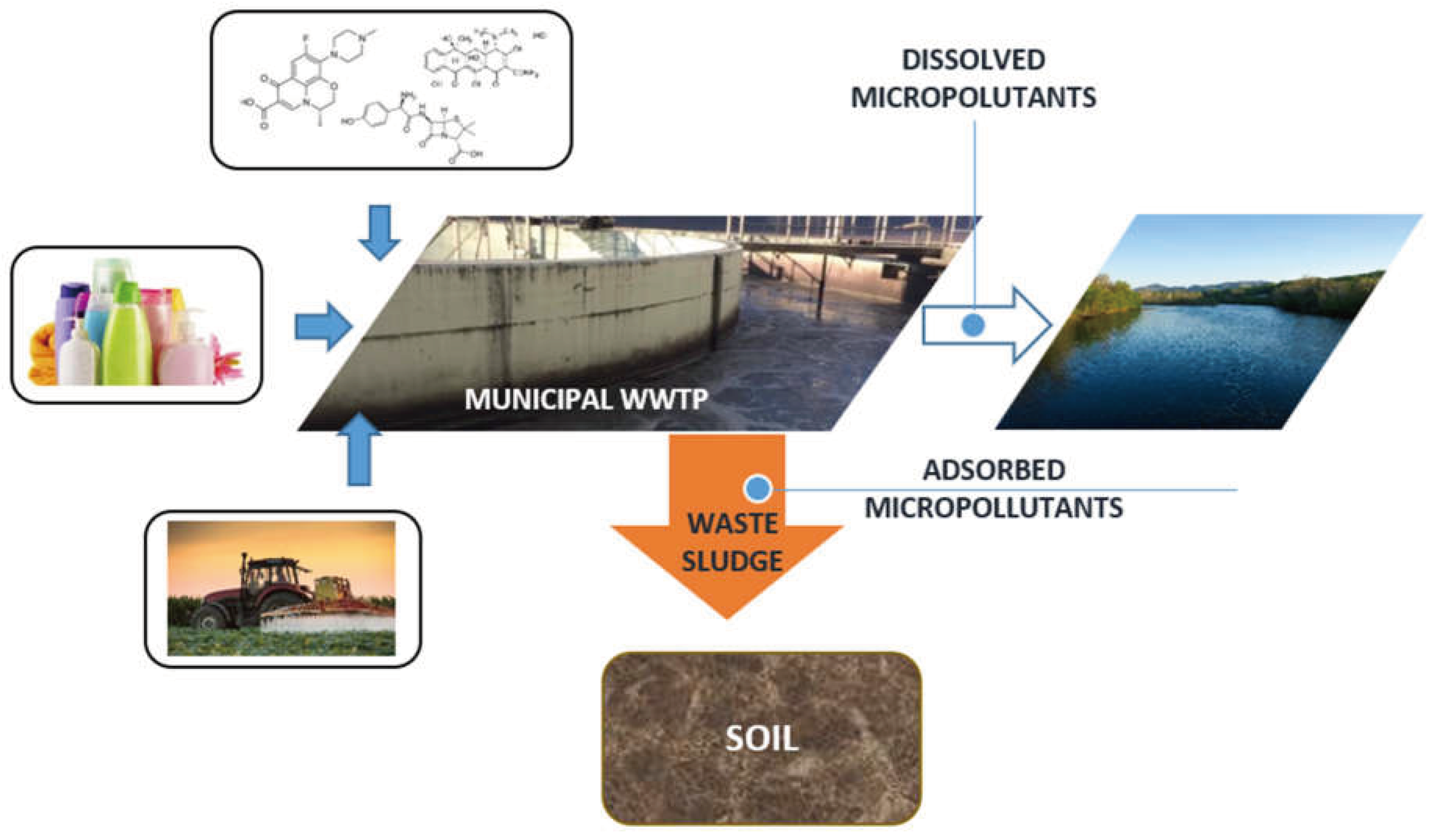
Figure 2.
5-methyl-benzotriazole - 5MeBZT [13].
Figure 2.
5-methyl-benzotriazole - 5MeBZT [13].
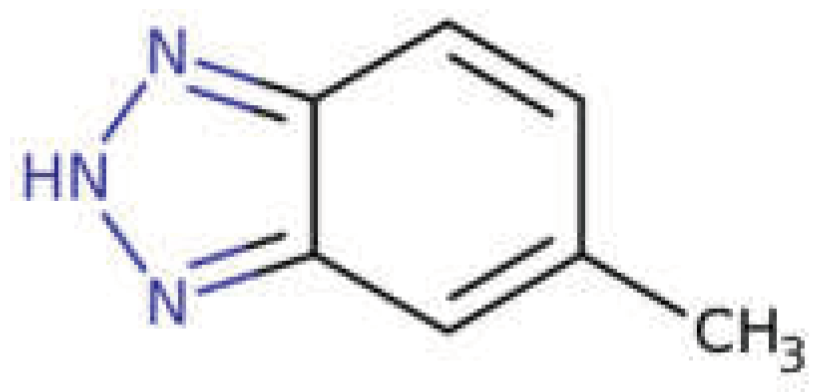
Figure 3.
Advanced oxidation processes for the removal of MPs.
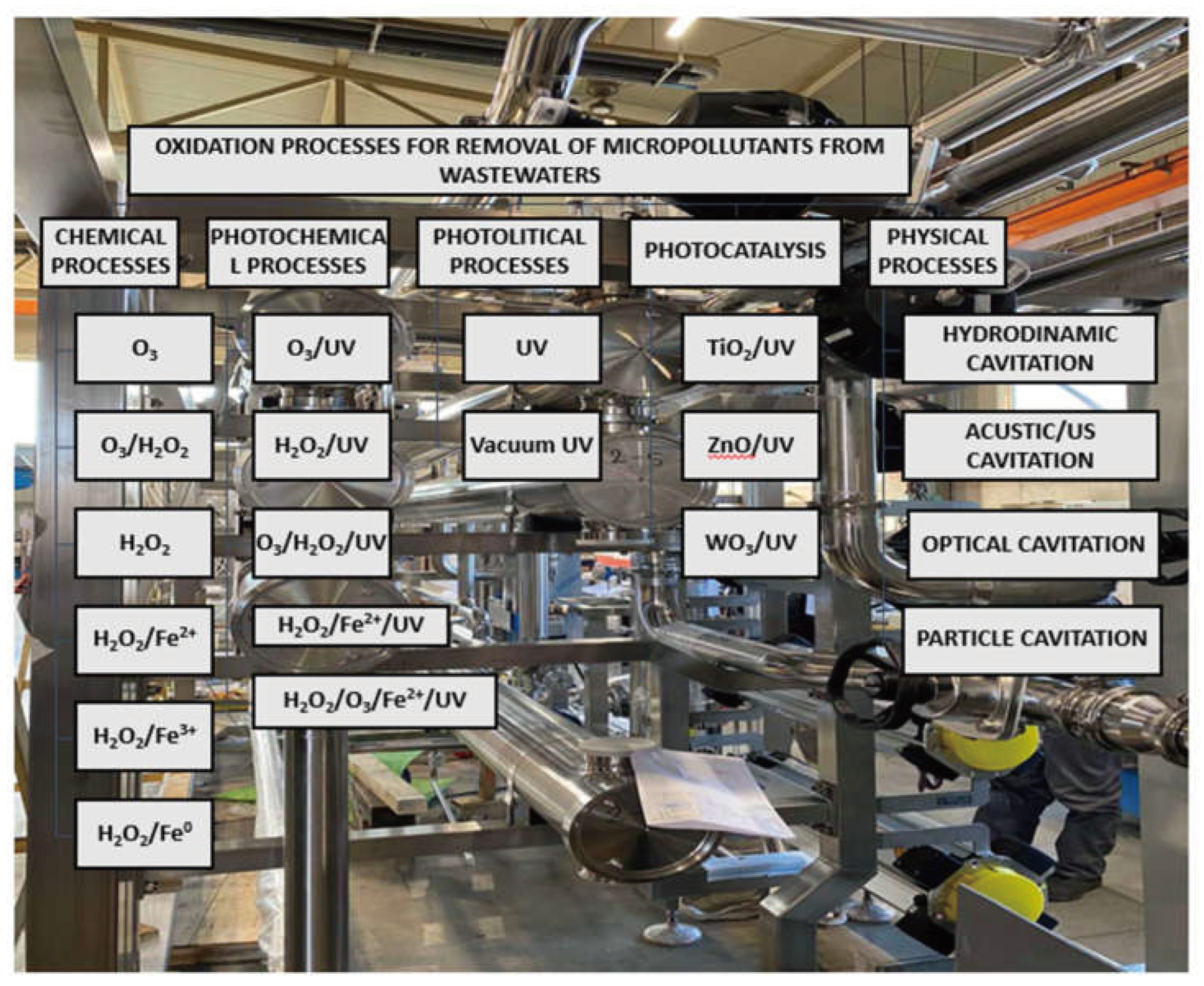
Table 1.
Two groups of pollutants according to directive proposal [1].
Table 1.
Two groups of pollutants according to directive proposal [1].
| Group | Compound | Label | Function | CAS No |
|---|---|---|---|---|
| I – very easily decomposed |
Amisulpride | AMI | Anti-psychotic | 71675-85-9 |
| Carbamazepine | CAR | Anti-epileptic drug | 298-46-4 | |
| Citalopram | CIT | Anti-depressant | 59729-33-8 | |
| Clarithromycin | CLA | Antibiotic | 81103-11-9 | |
| Diclofenac | DIC | Anti-rheumatic, analgesic | 15307-86-5 | |
| Hydrochlorothiazide | HCH | Diuretic | 58-93-5 | |
| Metoprolol | MET | Beta blocker (heart) | 37350-58-6 | |
| Venlafaxine | VEN | Anti-depressant | 93413-69-5 | |
| II-Easier removable | Benzotriazole | BZT | Anti-corrosive | 95-14-7 |
| Candesartan | CAN | Anti-hypertension | 139481-59-7 | |
| Irbesartan | IRB | Anti-hypertension | 138402-11-6 | |
| 4-methylbenzotriazole, 6-methylbenzotriazole 5-methylbenzotriazole |
4MeBZT 6MeBZT 5MeBZT |
Anti-corrosive | 29878-31-7 136-85-6 136-85-6 |
Disclaimer/Publisher’s Note: The statements, opinions and data contained in all publications are solely those of the individual author(s) and contributor(s) and not of MDPI and/or the editor(s). MDPI and/or the editor(s) disclaim responsibility for any injury to people or property resulting from any ideas, methods, instructions or products referred to in the content. |
© 2024 by the authors. Licensee MDPI, Basel, Switzerland. This article is an open access article distributed under the terms and conditions of the Creative Commons Attribution (CC BY) license (http://creativecommons.org/licenses/by/4.0/).
Copyright: This open access article is published under a Creative Commons CC BY 4.0 license, which permit the free download, distribution, and reuse, provided that the author and preprint are cited in any reuse.


