

Submitted:
30 March 2024
Posted:
01 April 2024
You are already at the latest version
Abstract
The review addresses a critical research gap in ethnobotanical knowledge within Kerala's tribal communities. A scarcity of studies hampers our understanding of their traditional practices, risking cultural erosion and knowledge loss. Synthesizing existing documentation, it aims to provide a comprehensive overview, emphasizing the urgent need for further research to impact sustainable resource management, biodiversity conservation, and tribal empowerment.
Keywords:
tribes
; medicinal
; cultural
; ethnobotany
; indigenous knowledge
Introduction
Human fascination with plants originated from the fundamental need for sustenance and shelter. As our ancestors led nomadic lives, the quest for remedies within the plant kingdom became imperative to address injuries and ailments (Remesh et al., 2016). The Rig Veda attests those ancient humans discerned edible plants from toxic ones by keenly observing the behaviours of animals (Manilal, 1989). The indigenous communities possess a profound understanding of medicinal plants that has evolved over generations through courageous experimentation using trial and error methods (Sahai, 2003). This reservoir of knowledge has been transmitted orally without relying on written documentation and continues to be preserved within these communities (Perumalsamy and Ignacimuthu, 2000). Indigenous groups harbour distinctive cultural and religious practices, dietary habits and an extensive repository of traditional medicinal knowledge (Anuradha et al., 1986). The World Health Organization (WHO) recognizes 21,000 plant species globally for their medicinal properties. In India alone, around 2,500 plant species are utilized for medicinal purposes by traditional healers (Ayyanar and Ignacimuthu, 2009). The invaluable traditional knowledge encompassing plant usage within indigenous cultures not only contributes to the conservation of cultural traditions but also proves instrumental in community healthcare and future drug development (Gazzaw et al., 2005).
Materials and Methods
A systematic literature search was conducted using Google Scholar with the keywords ‘ethnobotany,’ ‘knowledge,’ ‘tribes,’ and ‘Kerala.’ A total of 15 scientific papers were identified, focusing exclusively on the ethnobotanical knowledge of tribal communities in Kerala. To ensure relevance, only studies specific to Kerala and tribal populations were included. 21 distinct tribal groups were identified from the selected studies, including Kattunaikkar, Paniyar, Kurumar, Eravallans, Irulas, Kadar, Kurumbar, Malamalasaras, Malasars, Mudugars, Muthuvans, Malamuthans, Kani, Kurichyar, Mullu Kuruma, Koraga, Arnatans, Manan, Malaiaraian and Ooralys. Rigorous cross-referencing and verification processes, prioritizing information from established sources, bolstered the reliability of our findings. This synthesis aimed to provide a concise overview of ethnobotanical practices deeply embedded in the cultural fabric of Kerala's tribal communities. Despite acknowledging limitations due to scarce scientific studies, the imperative need for additional research was emphasized, unveiling the traditional healing practices among Kerala's diverse tribal groups.
Results
Systematic data extraction yielded a comprehensive inventory, encompassing botanical and vernacular names, useful parts, preparation methods, documented therapeutic uses, and the tribes utilizing them. This information, now presented in Table 1, includes 54 medicinal plants.
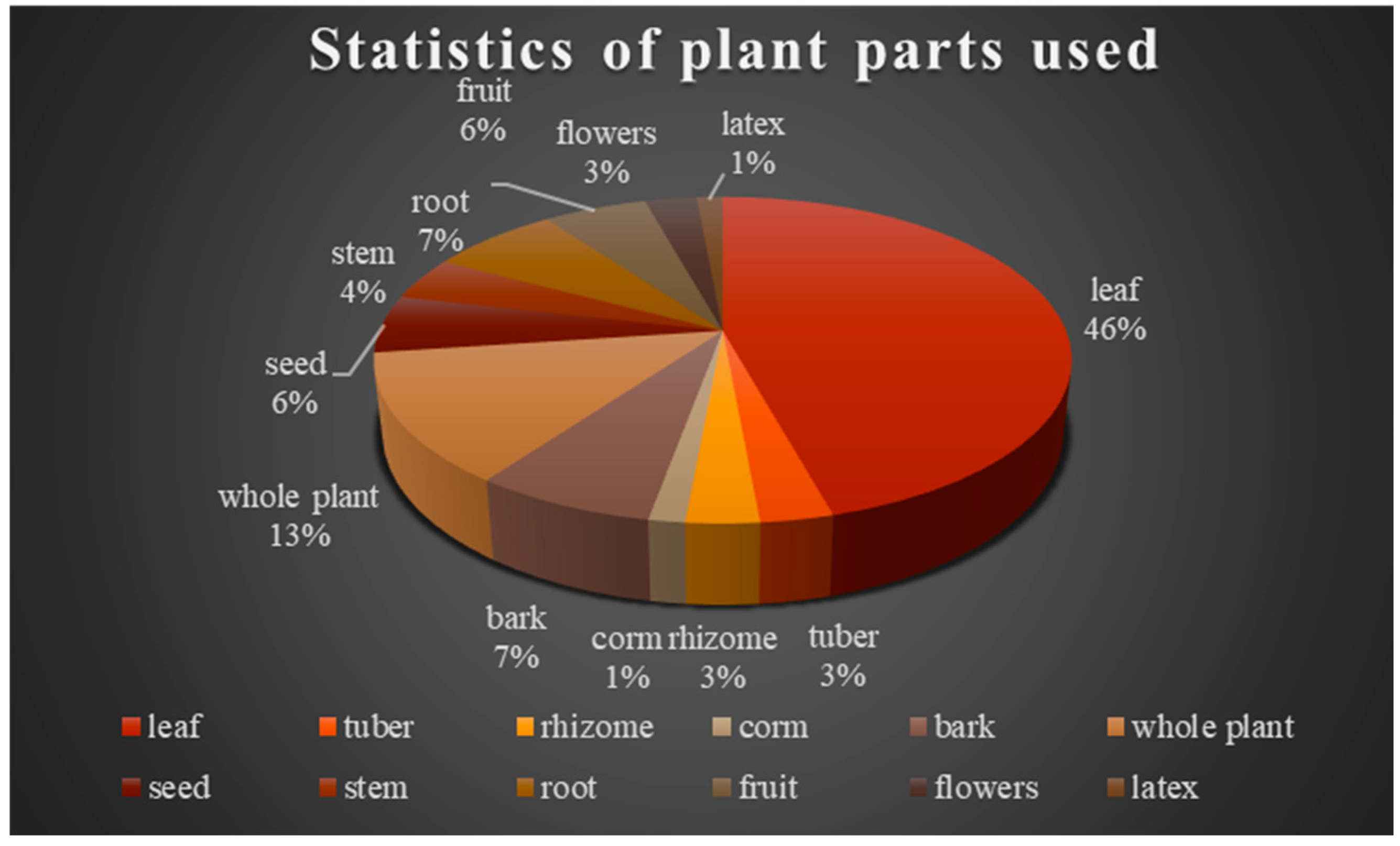
In the ethnobotanical context of Kerala's tribal communities, a pie chart illustrates the distribution of plant parts usage. Notably, leaves dominate at 32%, emphasizing their substantial role in traditional knowledge. Whole plants (9%), bark (5%), roots (5%), and seeds (4%) contribute significantly, showcasing ethnobotanical diversity. Stems (3%), tubers (2%), rhizomes (2%), flowers (2%), and fruits (4%) represent varied botanical resources. The utilization of latex (1%) and corms (1%) underscores the holistic reliance on diverse plant parts in the cultural and medicinal practices of these tribes.
Figure 1.
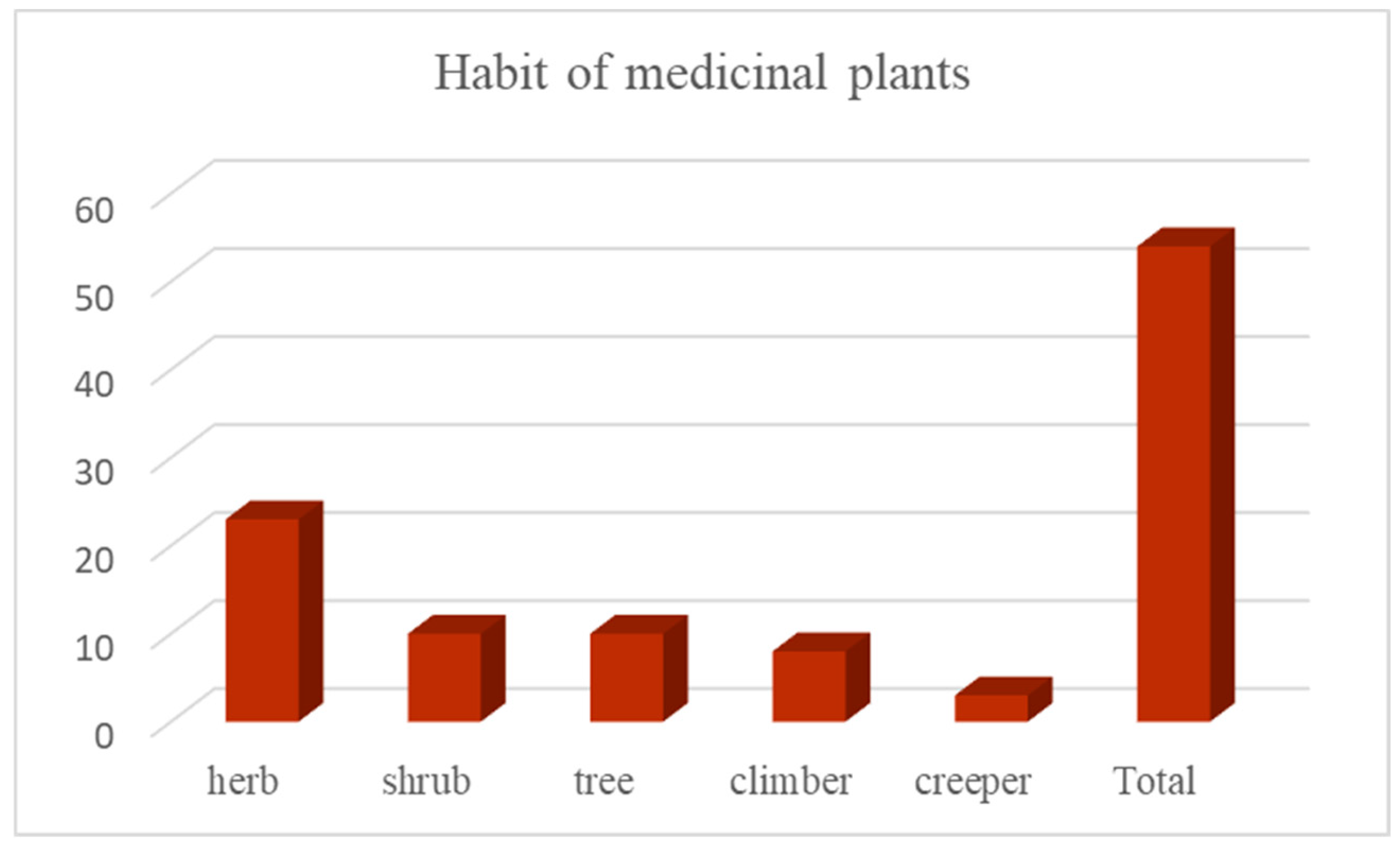
In the ethnobotanical review, an analysis of plant habits across 54 instances revealed distinct patterns. Herbs emerged prominently, constituting 23 occurrences and indicating their prevalence in local ethnobotanical knowledge. Shrubbery and trees exhibited equal representation, each observed 10 times, reflecting a balanced presence. Climbing plants were documented 8 times, while creepers, the least frequent habit, contributed to diversity with 3 instances. This examination provides insights into the varied plant habits, emphasizing the dominance of herbs and contributing to a nuanced understanding of ecological and functional roles in the studied ethnobotanical context.
Figure 2.
Discussion
The review underscores a significant research gap in understanding the ethnobotanical knowledge of Kerala's tribal communities, emphasizing the dearth of studies on traditional practices vital for cultural preservation and community healthcare. The therapeutic purposes highlight the relevance of indigenous knowledge in addressing contemporary health challenges. The oral tradition's continuity suggests a deep-rooted connection between tribes and their environment, emphasizing the need for both cultural conservation and scientific research (Anuradha et al., 1986). The ethnobotanical knowledge of tribal communities in Kerala necessitates exploring legal aspects. The intricate relationship between indigenous communities and their natural surroundings raises concerns about intellectual property rights (IPR), access and benefit-sharing (ABS), protection against biopiracy and safeguarding traditional knowledge. Indigenous communities' medicinal plant knowledge represents a collective heritage developed over generations, but existing legal frameworks may inadequately protect against exploitation. Unauthorized commercial use, especially by external entities, poses a significant concern, underscoring the need for legal mechanisms acknowledging and safeguarding the intellectual property rights of indigenous communities.
References
- Ajesh, T. P., Naseef, S. A., and Kumuthakalavalli, R, Ethnobotanical documentation of wild edible fruits used by Muthuvan tribes of Idukki, Kerala-India (2012), 479-487.
- Anjana, P. R., and Paulsamy, S, Evaluation Of Ethnobotanical Plants Used By The Malamuthans Tribal Community In The Medappara Forest, Western Ghats Of Kerala (2016),17-44.
- Anuradha U, Kumbhojkar M.S., Vartak,V.D, Observations in wild plants used in folk medicine in the rural areas of the Kolhapur district (1986),119-121.
- Ayyanar, M., & Ignacimuthu, S, Herbal medicines for wound healing among tribal people in Southern India: Ethnobotanical and Scientific evidences (2009), 29-42.
- Gazzaw, L.R., Pavia, R.F. and Albuquerque, P, Knowledge and use of medicinal plants by local specialists in a region of Atlantic forest in state of Perumambuco (North Eastern Brazil) (2005), 9 – 12.
- Manilal, K. S, Linkages of ethnobotany with other sciences and disciplines (1989), 15-24.
- Narayanan, M. R., Anilkumar, N., Balakrishnan, V., Sivadasan, M., Alfarhan, H. A., and Alatar, A. A, Wild edible plants used by the Kattunaikka, Paniya and Kuruma tribes of Wayanad District, Kerala, India) (2011), 3520-3529.
- Pramod, C., Sivadasan, M., and Anil Kumar, N, Ethnobotany of religious and supernatural beliefs of Kurichya of Wayanad District, Kerala, India (2003), 11-19.
- Purushothaman, T., & Mol, K. I, Ethnobotanical medicines used by the Kani and Kurichiyar tribal communities of Kerala (2020), 191-199.
- Rajith, N. P., and Mohanan, N, Ethnobotanical studies of Koraga tribal community of Kasaragod district (2013), 1(1).
- Remesh, M., Manilal, K. S., and Muktesh Kumar, M. S, Ethnobotanical aspects of trees of Palakkad District, Kerala, India (2016), 32-51.
- Sahai, S., Importance of Indigenous Knowledge (2003), 2(1): 11.
- Samy, R. P., and Ignacimuthu, S, Antibacterial activity of some folklore medicinal plants used by tribals in Western Ghats of India (2000), 63-71.
- Sheeba, C. V., Cheruvathur, M. K., and Cheruvathur, S. M, Ethno medicinal practices of tribes of Muthanga, Wayanad district of Kerala, India (2020), 196-206.
- Silja, V. P., Varma, K. S., and Mohanan, K. V, Ethnomedicinal plant knowledge of the Mullu kuruma tribe of Wayanad district, Kerala (2008).
- Sudhadevi, P. K. Ethnobotany of medicinal plants used by tribes of Kerala. Diss. Department of Pomology and Floriculture, College of Horticulture, Vellanikkara, 1992.
- Thomas, B., Mathews, R. P., Rajendran, A., and Kumar, K. P, Ethnobotanical observations on tribe arnatans of nilambur forest, western ghats region of Kerala, India. (2013), 3(2).
- Venkatesan, K., Murugeswaran, R., Alam, M., Meena, R. P., Kumar, P., & Aslam, M, Quantitative Ethnobotany of Medicinal Plants Used by Indigenous Community in the Munnar Forest Division, Kerala, India (2021), 21-41.
- Xavier, T. F., Kannan, M., Lija, L., Auxillia, A., & Rose, A. K. F, Ethnobotanical study of Kani tribes in thoduhills of Kerala, South India. Journal of Ethnopharmacology (2014), 78-90.
- Yesodharan, K., & Sujana, K. A. Ethnomedicinal knowledge among Malamalasar tribe of Parambikulam wildlife sanctuary, Kerala, (2007).

| S.no. | Botanical name | Local name | Parts | Therapeutic uses | Tribes | |||
| 1. | Abrus precatorius | Kunnikkuru | Leaf | Leaves are boiled with coconut oil and massaged in the scalp to reduce hair loss | Kuruma | |||
| 2. | Adenia hondala | Karimuthuk | Tuber | Eating boiled tuber reduces hernia | Kuruma | |||
| 3. | Justicia adhatoda | Adalodakam | Leaf | Dried leaves powder for cough | Kattunaikkar | |||
| 4. | Zingiber officinale | Inji | Rhizome | Rhizome mixed with water and taken internally to cure ashtma | Kattunaikkar, Paniya | |||
| 5. | Ageratum conyzoides | Appa | Leaf | The leaf paste is applied to heal external wounds | Kuruma, Kattunaikar, Paniya | |||
| 6. |
Amorphophallus paeoniifolius |
Kattuchena | Corm | Dried corm is mixed with curd and taken internally to cure jaundice | Kattunaikar | |||
| 7. |
Briedelia scandens |
Nendravalli | Bark, Leaf | The juice from the bark is taken internally to heal the abdominal ache. The juice of the tender leaves is used to prepare medicine for eczema, scabies, and wound | Kattunaikkar | |||
| 8. | Cymbopogon flexuosus | Chayappullu | Whole Plant | Decoction is prepared and taken 10ml trice to cure fever | Koraga | |||
| 9. | Adhatoda vasica | Adalodakam | Leaves | Fresh leaves roasted with pepper and cumin to relieve cough | Koraga | |||
| 10. | Aegle marmelos | Bilwapathram | Leaves | Fresh leaves for diabetics and vomiting | Koraga | |||
| 11. | Aloe vera | Kumari | Leaves | Leaf juice is mixed with cow milk taken twice to cure diarrhea | Koraga | |||
| 12. | Anacardium occidentale | Kasumavu | Seed, Stem bark | Oral ulcers, prevent bleeding through pus, relief from crack foot | Koraga | |||
| 13. | Cocculus hirsutus | Pathalagaruda | Root | Snake poison | Koraga | |||
| 14. | Maranta arundinacea | Koovai | Rhizome | Dried powder taken with sugar for osteoporosis | Koraga | |||
| 15. | Naravelia zeylanica | Soodravalli | Tender leaves | Drops in nose to treat migraine | Koraga | |||
| 16. | Scoparia dulcis | Kallurukki | Whole plant | Decoction mixed with cow milk and taken in empty stomach to cure urinary calculi | Koraga | |||
| 17. | Tamarindus indica | Puli | Seeds | To treat urinary calculi | Koraga | |||
| 18. | Azadirachta indica | Arya veppu | Leaf, seeds | Chicken pox | Mullu Kuruma | |||
| 19. | Boerhavia diffusa | Thazhuthama | Leaf | Jaundice, anemia | Mullu kuruma | |||
| 20. | Annona squamosa | Aatha | Leaf, fruit | Inflammation, tuberculosis | Mullu kuruma | |||
| 21. | Bacopa monnieri | Brahmi | Whole plant | Ashtma and epilepsy | Mullu kuruma | |||
| 22. | Bombax ceiba | Ilavu | Leaf | Snake poison | Mullu kuruma | |||
| 23. | Nelumbo nucifera | Thamara | Flower | Dried flower powder is mixed with ghee for piles | Mullu kuruma | |||
| 24. | Vitex altissimia | Mayila | Bark | Rheumatic swellings, chest pain | Malamalasar | |||
| 25. | Nicotiana tabacum | Pokala | Leaves | Toothache | Malamalsar | |||
| 26. | Ocimum americanum | Kattuthulasi | Leaves | Insect bite | Malamalsar | |||
| 27. | Butea monosperma | Chamatha | Bark, leaves | Diarrhea, cold and cough, ulcers | Malamalsar | |||
| 28. | Cassia tora | Thakara | Leaves | Skin disease, ring worms, cuts and wounds | Malamalsar | |||
| 29. | Clitoria ternatea | - | Roots | Antidote for poisonous bites | Arnatans | |||
| 30. | Cymbopogon travancorensis | - | Leaves | Against pains | Arnatans | |||
| 31. | Plantago erosa | - | Leaves | Treatment of varicose veins | Arnatans | |||
| 32. | Toddalia asiatica | - | Leaves | Cough and cold in children | Arnatans | |||
| 33. | Viscum articulatum | - | Whole plant | Cuts and wounds | Arnatans | |||
| 34. | Bauhinia purpurea | - | Seeds, leaf | Flower juice good for health | Arnatans | |||
| 35. | Biophytum sensitivum | Nilapushpam | Leaf | Equal part of leaf and coconut oil together and externally applied on inflammation |
Mudhuvan, Mannan, Malaiaraian and Ooralys | |||
| 36. | Calotropis gigantean | Erukan | Leaf, Latex | Leaf smoke inhaled for Asthma and Latex externally applied on wounds | Mudhuvan, Mannan, Malaiaraian and Ooralys | |||
| 37. |
Catharanthus roseus |
Nithiyakalyani | Leaf | Intestinal ulcers, wounds | Mudhuvan, Mannan, Malaiaraian and Ooralys | |||
| 38. |
Coccinia grandis |
Kovalam | Fruit | Diabetics | Mudhuvan, Mannan, Malaiaraian and Ooralys | |||
| 39. |
Costus speciosus |
Kostum | Leaf | Treated for menstrual disorders | Mudhuvan, Mannan, Malaiaraian and Ooralys | |||
| 40. |
Cuscuta reflexa |
Ottuchedi | Whole plant | Jaundice | Mudhuvan, Mannan, Malaiaraian and Ooralys | |||
| 41. | Curculigo orchioides | Nilappana | Tuber | Asthma, diabetics | Kani and Kurichiyar | |||
| 42. | Musa paradisiaca | Vazha | Juice extracted of leaf sheath | First aid for snake bite | Kani and Kurichiyar | |||
| 43. | Emilia sonchifolia | Mutal cheviyan | Whole plant | Wound healing and chest pain | Kani and Kurichiyar | |||
| 44. | Acacia nilotica | Karivelam | Flowers | Cuts and wounds | Kani and Kurichiyar | |||
| 45. | Alstonia venenata | - | Bark, fruit | Snake antivenom, fruit used as skin diseases, leprosy, cobra and other venomous bites, epilepsy, fatigue, fever, syphilis, insanity, helminthiasis as remedy for impure blood. | Malamuthans | |||
| 46. | Alternanthera brasiliana | - | Leaves | Cough, diarrhea, inflammation, wounds | Malamuthans | |||
| 47. | Antidesma montanum | - | Leaves, fruits | antidote to the sting of cobra. | Malamuthans | |||
| 48. | Aristolochia acuminata | - | Root, leaves | To treat malaria, typhus fever, small pox and pneumonia. | Malamuthans | |||
| 49. |
Begonia malabarica |
- | Leaves | Treatment of respiratory infections, diarrhoea, blood cancer and skin diseases | Malamuthans | |||
| 50. | Mussaenda frondosa | Vellilam | Leaves, stem | Hair wash | Paniya | |||
| 51. |
Watakaka volubilis |
kaimavalli | Whole plant | Urinary trouble | Kattunaikar, Paniya |
|||
| 52. |
Leucas aspera |
Thumba | Whole plant | Gas trouble | Kattunaikar, Paniya | |||
| 53. |
Achyranthes aspera |
Kadalady | Leaves, stem, root | Toothache | Kuruma | |||
| 54. |
Vernonia cinerea |
Poovamkurunnel | Whole plant | Headache and joint pain | Kuruma | |||
Disclaimer/Publisher’s Note: The statements, opinions and data contained in all publications are solely those of the individual author(s) and contributor(s) and not of MDPI and/or the editor(s). MDPI and/or the editor(s) disclaim responsibility for any injury to people or property resulting from any ideas, methods, instructions or products referred to in the content. |
© 2024 by the authors. Licensee MDPI, Basel, Switzerland. This article is an open access article distributed under the terms and conditions of the Creative Commons Attribution (CC BY) license (http://creativecommons.org/licenses/by/4.0/).
Copyright: This open access article is published under a Creative Commons CC BY 4.0 license, which permit the free download, distribution, and reuse, provided that the author and preprint are cited in any reuse.