

Submitted:
15 March 2024
Posted:
15 March 2024
You are already at the latest version
Abstract
Background: The commonly known assumption that combinations of several herbs in one formulation can have better efficacy due to additive or synergistic effects has not been systematically studied despite some evidence supporting the synergy concept. Study aim: The study aimed to reveal the molecular interactions in situ of host cells in response to the intervention of BHP and justify the benefits of implementing BHP in clinical practice. Results: This overview provides the results of recent clinical and network pharmacology studies of botanical herbal preparations (BHP) of Rhodiola with other plants, including Ashwagandha, Green Tea, Eleutherococcus, Schisandra, Eleutherococcus, Leuzea, Caffeine, Cordyceps, Gingko, Black Cohosh, saffron, and L-carnosine. Conclusions: The most important finding from network pharmacology studies of BHP was the evidence supporting the synergistic interaction of BHP ingredients, revealing unexpected new pharmacological activities unique and specific to the new BHP. Some studies show the superior efficacy of BHP compared with mono-drugs. At the same time, some a priori-designed combinations can fail, presumably due to antagonistic interactions and crosstalk between molecular targets within molecular networks involved in the cellular and overall response of organisms on the intervention. Network pharmacology studies help predict the results of studies to discover new indications and unpredicted adverse events.
Keywords:
network pharmacology
; gene expression
; botanical hybrid preparations
; Rhodiola
; clinical trials
; synergy.
1. Introduction
Rhodiola rosea L. (Crassulaceae, syn. Sedum rhodiola - DC., Sedum rosea - (L.), Scop cop, known as Roseroot, Rosenroot, Golden Root, Arctic Root, Orpin Rose, Rhodiole, and Rougeâtre) has an extensive history as a treasured medicinal plant and has appeared in the Materia Medica of several European countries [1,2]. In Europe, Rosenrot was formally adopted in Sweden as a natural remedy (national legislation) from 1987 to 2008, and since 2008, as a traditional herbal medicinal product (THMP) and registered as an adaptogen in decreased performance, such as fatigue and weakness.
During the last two decades, more than 1200 studies were conducted in Europe, America, and China, providing results of preclinical and clinical efficacy, safety, and quality of Rhodiola preparations in various stress-induced disorders, including fatigue syndrome, cognitive deficiencies, mild/moderate depression, anxiety, and burnout symptoms, as well as in healthy subjects under stress [3,4,5,6,7,8,9,10,11,12,13,14,15,16,17,18,19,20,21,22,23,24,25,26,27,28,29,30,31,32,33,34,35,36,37,38].
Seventeen clinical studies were conducted on the fixed combinations of Rhodiola rosea with Green Tea [39,40,41,42,43], Eleutherococcus, and Schisandra [44,45,46,47,48,49], Eleutherococcus, Schisandra, and Leuzea [47,48], caffeine [50], Cordyceps [51,52,53,54], Gingko [55], Black Cohosh [56], saffron [57], L-carnosine [58], Eleutherococcus and Glycyrrhiza glabra [59].
The use of complex herbal formulations comprising fixed combinations of several plant extracts has a long history in TCM, Kampo, Ayurveda, and other traditional medical systems. Combining two or more plants assumes a hybrid botanical preparation (BHP) is more active due to their additive or potentiating effects. Figure 1 illustrates an allegoric analogy with two or more kinds of hybrids from ancient mythology.
Based on the assumption of synergistic interaction of several components, researchers propose that combinations of several active ingredients in one formulation can have superior effectiveness and better efficacy due to multiple effects on various targets. The term "hybrid" botanical preparation is coined for biological/pharmacological activity (conditional pharmacological "signature") of a fixed herbal combination with specific chemical composition (e.g., TLC of HPLC conditional chemical "fingerprint") (Figure 2).
This distinction emphasizes that any new fixed combination exhibits unique biological characteristics and effects different from the ingredients' natural characteristics. That is due to their multitarget effects on various mediators, which interact between various regulatory systems of the host cells and organism.
Modern technologies in biomedical research and bioinformatics provide potent tools in phytotherapy research and implement a concept of systems biology and network pharmacology, uncovering numerous molecular targets and new mechanisms of action of botanicals.
This overview provides the results of recent clinical and network pharmacology studies of BHP of Rhodiola rosea with other plants. The studies aim to reveal the molecular interactions in situ of host cells in response to the intervention of BHP and justify the benefits of implementing BHP in clinical practice.
2. Synergy and Antagonism of Active Ingredients of Rhodiola and Other Plant Extracts
Based on the assumption of synergistic interaction of several components, researchers propose that combinations of several active ingredients in one formulation can have superior effectiveness and better efficacy due to multiple effects on various targets. Hypothetically, combining two pharmacologically active extracts aims to achieve more benefits or higher effectiveness of their combination due to additive (1 + 1 = 2), potentiating (0 + 1 > 1), amplifying (1 + 1 > 2) or synergistic (0 + 0>0) interactions. However, antagonistic (1 + 1 < 2) and attenuating (1 + 1 < 2) interactions of the components of complex herbal preparations may also have a negative impact both on efficacy and overall toxicity (Panossian et al., 2018b). Recent studies show that the beneficial outcome is not evident until it is observed in experimental studies or clinical trials due to possible antagonistic (1 + 1 < 2) interactions of the components of complex herbal preparations, which may also have an impact on the overall toxicity [60,61].
These assumptions were supported in the series of in vitro studies where the effects of several plant extracts and their hybrid combinations on the number and composition of deregulated genes in brain cell cultures were analyzed [61,62,63,64]. The composition of genes deregulated by hybrid combinations of plant extract was quantitatively and qualitatively different from the composition of genes deregulated by each plant separately, suggesting that the impact of the hybrid combination on the target cells was qualitatively different from the effects of ingredients [63] (Figure 3). In other words, the phytochemicals of two of three plant extracts exhibit quite different pharmacological activities if combined. These findings are essential for understanding unpredictable results obtained in clinical studies of multi-component drugs and dietary supplements [39,40,41,42,43,44,45,46,47,48,49,50,51,52,53,54,55,56,57,58,59].
Figure 3 illustrates the essence hybridization of ingredients of BHP, their synergy, and the antagonism in these experiments and interpretations. The point is the biological activity of a single compound, e.g., salidroside, an active compound of Rhodiola rosea extract, interacts with many proteins in brain cells, deregulating 640 (!) genes in neuroglia cells, associated with various physiological processes and effects in stress and aging-induced disorders (e.g., neurodegeneration).
Meanwhile, the total extract of Rhodiola-containing 120 phytochemicals (including salidroside) or BHP of Rhodiola, Schisandra, and Eleutherococcus extracts (ADAPT-232) containing 207 phytochemicals deregulate almost the same number of genes (Schizandra - 625 genes, Rhodiola - 631 genes, Eleutherococcus - 669 genes, ADAPT232 - 678 genes) [63] (Figure 3). Among those deregulated by ADAPT-232 were 206 genes that were not deregulated by any ingredient of BHP ADAPT-232 due to the synergy effect (Figure 3). The synergy-derived biological effect is characteristic of the BHP (ADAPT-232), which has a distinct pharmacological profile (signature) and typical chemical composition (fingerprint), which are different from Rhodiola rosea extracts [63].
Figure 4 shows the synergy, potentiation, and antagonistic effects of hybridization of a combination of Rhodiola with Withania, Withania with melatonin, and Curcuma longa with Boswellia on eicosanoids signaling pathways, which play an important in inflammation and neurodegeneration in neuroglia cells.
In a recent study [62], BHP of Rhodiola with Ashwagandha (Adaptra) positively regulated 22 of 57 genes, which are known to activate the development of neurons (Figure 5), suggesting that Adaptra is potentially helpful in learning and memory, stress, and depression, insomnia, and aging-related neurodegenerative diseases preventing of Alzheimer's and Parkinson's diseases, and recovery from brain injury and stroke. Notably, 25 genes were deregulated due to RR and WS synergistic interactions in the fixed combination Adaptra (Figure 5 and Table 1). This means that in combination, these two ingredients of Adaptra act synergistically. In other words, Adapta is superior to Rhodiola or Withania in activation of neurogenesis and, consequently, has potential effects mentioned above [62].
In this study, isolated brain cells were incubated independently with Adaptra, Rhodiola, and Withania. Gene expression degree was measured, expressed in fold changes compared to control, and analyzed using Ingenuity Pathway Analysis software (QIAGEN Bioinformatics). IPA performs different calculations based on the Ingenuity Knowledge Base, a large gathering of observations with approximately 5 Mio findings manually curated from the biomedical literature or integrated from third-party databases [62].
Figure 6 shows Venn diagrams of deregulated genes induced by the treatment of neuroglial cells with Withania somnifera (WS), Rhaponticum cartamoides L. (RC), and Eleutherococcus senticosus (RS) root extracts and their hybrid combination (RC-ES-WS) [61]. Values indicate the number of unique genes up- or downregulated by each extract alone and the number of deregulated genes overlapping multiple extracts. Heatmaps of canonical pathways, cellular functions, physiological processes, and diseases activated (brown) and inhibited (blue) by treatment of neuroglial cells with WS, RC, ES, and the hybrid combination RC-ES-WS. Synergistic or antagonistic effects on canonical pathways, cellular functions, physiological processes, diseases, and gene expression associated with the pathway (e.g., dendritic cell maturation) can be observed by comparison of the effects of the hybrid substance RC-ES-WS with a lack of (or opposite) effects of individual extracts at a significance level of p < 0.05 (-log = 1.3) and a z-score > 2. Up-regulated genes are shown in red, while down-regulated genes are in green.
3. Clinical Studies in Human Subjects
3.1. HHP of Rhodiola with Green Tea (Mg-Teadiola®) in Psychological and Social Stress
Rhodiola rosea and Green tea (Camelia sinensis) supplementation were known to improve subjective stress perception and mood responses to acute stress. Their combinations with magnesium, vitamins B6, B9, B12, and L-theanine in a BHS Mg-Teadiola® was developed by Sanofi-Aventis Group France and studied in two clinical trials conducted in France and the UK to assess stress-protective effects compared to the efficacy Rhodiola rosea and Green tea [39,40,41,42,43], Table 2. The authors hypothesized the efficacy of BHS Mg-Teadiola® is superior to ingredients and/or placebo. In a DB-R-PC-PG clinical trial (NCT03262376), the single dose effect of Mg-Teadiola® tablets, Rhodiola, and green tea extracts was studied in four parallel groups of 100 moderately stressed otherwise healthy volunteers (DASS score: 13–25) after acute psychological, social stress experimentally induced by The Trier Social Stress Test (TSST, speech, and mental mathematics tasks). Outcome measures were: (i) - spectral theta brain activity associated with cognitive task performance, (ii) - Subjective stress (stress and arousal), (iii) - Mood (profile of mood states), (iv) - salivary cortisol, and (v) - cardiovascular parameters (BP, HRV) [39,40,41,42,43].
BHS Mg-Teadiola® significantly alleviated subjective stress and mood responses to acute stress; analyses supported the superiority of the BHS Mg-Teadiola vs. placebo and the ingredients - Rhodiola and Green tea. The BHS Mg-Teadiola® significantly attenuated subjective stress, tension, and total mood disturbance ratings after acute stress exposure. Effects were found both during the peak stress response and recovery. The salivary cortisol response was unaffected by treatment [39].
The BHS Mg-Teadiola® treatment significantly increased EEG resting state theta – considered indicative of a relaxed, alert state, attenuated subjective stress, anxiety, and mood disturbance, and heightened emotional and autonomic arousal; Mg-Teadiola may enhance coping capacity and offer protection from the harmful effects of stress exposure [40].
The BHS Mg-Teadiola® increased spectral theta brain activity during the execution of two attentional tasks, suggesting a potential to increase attentional capacity under stress conditions [41].
In a placebo-controlled randomized clinical trial, the repeated dose effect of Mg-Teadiola® tablets for four weeks was studied in two parallel groups of 100 moderately chronically stressed otherwise healthy volunteers (the Depression Anxiety Stress Scale-42 score: > 14) and two groups of 40 individuals after acute thermal stimulation. Outcome measures were: (i) - blood-oxygen-level-dependent signal, (ii) - stress, (iii) - depression, (iv) – anxiety, (v) - salivary cortisol, and (vi) – sleep [42].
Mg-Teadiola was effective in relieving stress on days 14 and 28 in chronic stress and may diminish pain perception, underlining its potential benefits for patients suffering from pain in whom comorbidities such as stress and sleep disorders are frequent [42]. Supplementation with Mg-Teadiola reduced stress on D28 in chronically stressed but otherwise healthy individuals and modulated the stress and pain cerebral matrices during stressful thermal stimulus [43].
Green tea contains catechins, tannins, phenolic acids, flavanol glycosides, the alkaloid caffeine, and amino acid L-theanine [66,67], which are known capable of a significant effect on the general state of mental alertness or arousal [68], activating adaptive cellular stress responses inducing the production of cytoprotective proteins and protecting neurons in an animal model of Parkinson’s disease, Huntington’s disease, Alzheimer disease, and ischemia–reperfusion injury [69,70]. Green tea components such as epigallocatechin gallate (EGCG), flavonoids kaempferol, and genistein activate protective mechanisms, including antioxidant and detoxifying enzymes via activation of Nrf2 signaling pathway, and upstream PKC, PI3K, and MAPKs modulation [67,69,70].
The shortcoming of studies: The authors declare the labeled amount of active ingredients but do not adhere to CONSORT regarding the quality of the product, which is not adequately characterized in respect to extraction solvents, dry herb: dry native extract ratio (DER), the content of active markers (caffeine, theanine, Mg2+, salidroside, rosavin, etc.), the analytical methods validated for selectivity, accuracy, and procession and providing TLC and HPLC fingerprints to ensure reproducible quality and reproducible pharmacological activity. The placebo and Mg-Teadiola were distinguishable by appearance. Reporting the masking procedure is not convincing enough to provide an adequate double-blind study design. The magnesium and caffeine content contained in Green tea was uncontrolled and not specified; there is no guarantee that the effect of Mg-Teadiola will provide consistently reproducible efficacy.
Green tea products are known as herbs that have significant variability depending on numerous factors [71].
There are concerns regarding the rationale for including green tea containing caffeine in the formulation of the safe adaptogenic hybrid supplement Mg-Teadiole; addiction to caffeine and other undesired effects of regular caffeine supplementation are well known. In this context, the formulation's rationale does not stand up to scrutiny.
3.2. HHP of Rhodiola SHR-5 with Schisandra and Eleutherococcus (ADAPT-232/Chisan®) for Relief of Mental and Physical Fatigue both in Healthy Subjects and in Patients with Pneumonia and COVID-19
ADAP232/Chisan is the combination of extracts of Rhodiola rosea L., roots (SHR-5) Eleutherococcus senticosus (Rupr. et Maxim) Harms, roots (SHE-3) and Schisandra chinensis (Turcz) Baill., fruits, containing 0.5% schizandrin, 0.47% salidroside, 0.59% rosavin, 0.11% eleutherosides B and 0.19% E. ADAPT 232® capsules and Chisan® oral solution have been used to enhance mental and physical capacities in case of tiredness or during convalescence as a natural remedy in Sweden since 1979 and as an herbal medicinal product in Denmark since 2002. In 2008, it was approved as a traditional herbal medicinal product in 2008 in Sweden as an adaptogen in case of decreased performance, such as fatigue and sensation of weakness.
Early studies of ADAPT-232 showed improved cognitive functions and endurance under the stress of cosmonauts. It has been used in space and by cosmonauts during the longest flight in space in the 1990s. It is noteworthy that typically, only carefully verified and validated for their efficacy and safety aids were allowed for use in space. ADAPT-232 showed a good anti-fatigue effect, significantly increasing accuracy and precision in psychometric tests, particularly in complicated tests, decreasing the number of errors, and improving short memory in fatigue under space-like conditions. Significant improvements in concentration, oculomotor coordination, and short-term memory of cosmonauts have been demonstrated in the computerized Monotonic 3 test for attention and two complicated short-term memory tests [72].
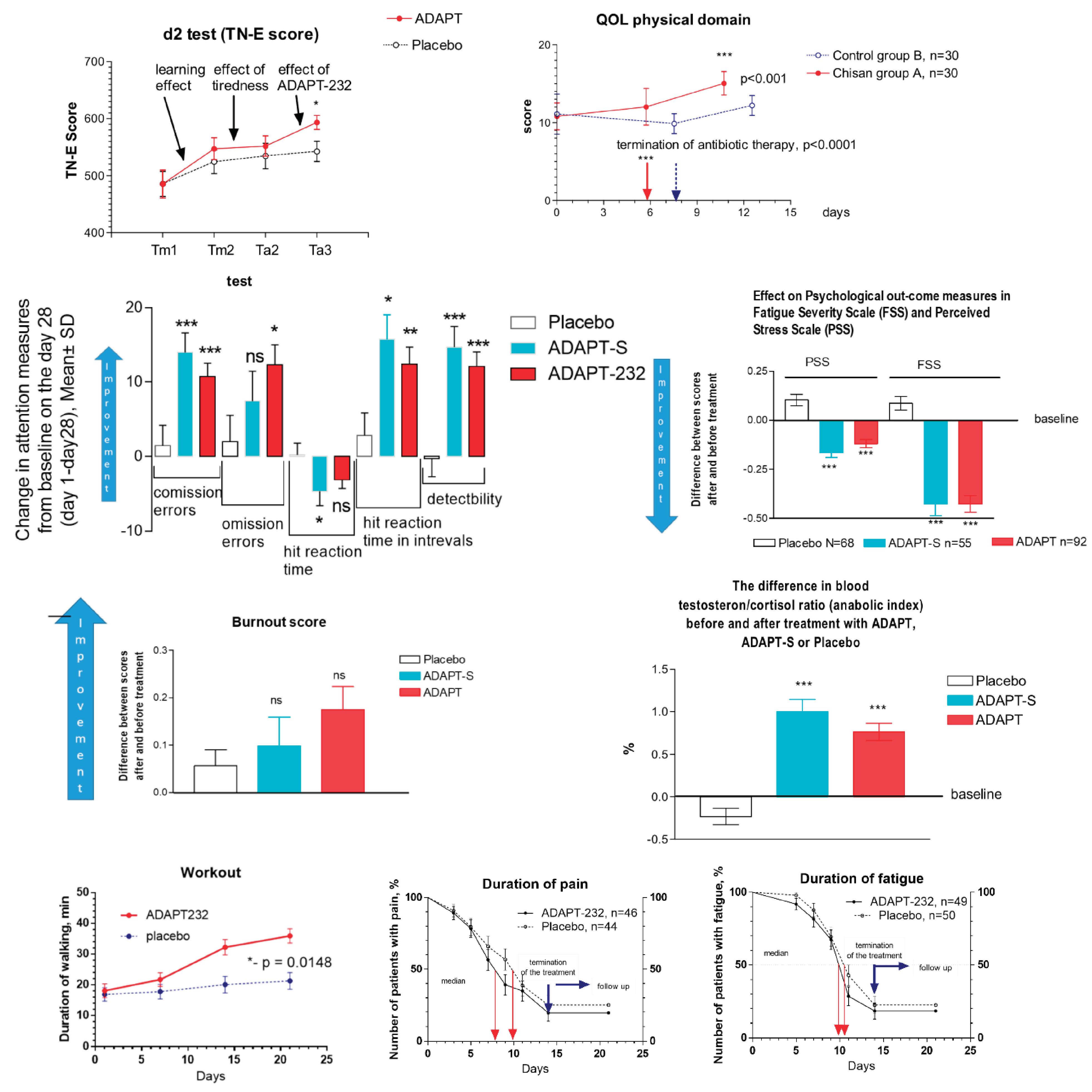
Three randomized, placebo-controlled, double-blind clinical trials (RCT) were conducted on healthy subjects, and two RCT studies were conducted to assess the anti-fatigue effect of ADAPT232/Chisan during recovery of patients with infectious respiratory diseases [44,45,46,47,48,49]. The efficacy of a single dose of ADAPT-232 on cognitive functions in humans has been demonstrated in the participants who experienced stressful cognitive tasks, namely, the Stroop Colour-Word test followed by the d2 test of attention (d2), before and two hours after treatment. The results of the d2 test (attention deficit) are shown on the graph below [45], Figure 5a. ADAP232/Chisan increases tolerance to mental fatigue in healthy subjects [45]. ADAP232 significantly improved attention and increased speed and accuracy during stressful cognitive tasks compared to placebo [45]. ADAP232 significantly decreased the number of mistakes in complicated psychometric tests [44,45,47,48] and improved patients' quality of life and recovery from acute nonspecific pneumonia [44], Figure 5b. ADAPT232/Chisan has beneficial effects on stress-induced fatigue [45] in patients during their recovery from pneumonia [44] Figure 5b.
ADAP232 and the BHP containing Rhodiola, Eleutherococcus, Schisandra, and Leuzea (Rhaponticum cartamoides L.) roots extracts, significantly decreased inattention, impulsivity, and the perception of stress, reducing fatigue and increasing the anabolic index (testosterone/cortisol ratio) (Figure 5 c-f) in 200 elite athletes and improving their physical performance and the recovery rate of athletes after heavy physical and emotional load and increased adaptation to physical and emotional stress [47,48].
Recently, the effects of ADAPT-232 on the recovery of patients with Long-COVID symptoms (fatigue, headache, respiratory insufficiency, cognitive performance, mood disorders, loss of smell, taste, and hair, sweatiness, cough, pain in joints, muscles, and chest) was studied [49]. One hundred patients with confirmed positive SARS-CoV-2 test who were discharged from the intensive care unit and experienced at least three of nine Long-COVID symptoms in the 30 days before randomization were included in the study. Chisan®/ADAPT-232 decreased the duration of fatigue and pain for one and two days, respectively, in 50% of patients (Figure 5 h,i). The number of patients with lack of fatigue and pain symptoms was significantly less in the Chisan® treatment group than in the placebo group on days 9 (39% vs. 57%, pain relief, p = 0.0019) and 11 (28% vs. 43%, relief of fatigue, * p = 0.0157). Significant relief of severity of all Long-COVID symptoms over the time of treatment and the follow-up period was observed in both groups of patients, notably decreasing the level of anxiety and depression from mild and moderate to normal, as well as increasing cognitive performance in patients in the d2 test for attention and increasing their physical activity and workout (daily walk time). However, the significant difference between placebo and Chisan® treatment was observed only with a workout (daily walk time) (Figure 5 g). A clinical assessment of blood markers of the inflammatory response (C-reactive protein) and blood coagulation (D-dimer) did not reveal any significant difference over time between treatment groups except significantly lower IL-6 in the Chisan® treatment group. Furthermore, a substantial difference between the placebo and Chisan® treatment was observed for creatinine: Chisan® significantly decreased blood creatinine compared to the placebo, suggesting preventing renal failure progression in Long-COVID [49].
Figure 7.
(a)-Single dose effects of ADAPT-232 on cognitive functions. All participants were submitted to stressful cognitive tasks (Stroop CW and d2 tests) four times over three consecutive days (Day 1: in the morning when subjects were not tired; Day 2: in the morning when subjects were not tired and in the afternoon when subjects were tired; Day 3: in the afternoon, two hours after treatment with ADAPT or placebo, when subjects were tired). Repeated testing in the mornings of days 1 and 2 allowed to exclude the effect of learning. The degree of tiredness in the afternoon of day 2 was assessed by comparing these results with those obtained in the morning of the same day. A significant difference (p < 0.05) between the two groups was observed with respect to TN-E score (the main parameter in the d2 test), where ADAPT-232 increases speed and accuracy of mental performance, improving attention, in comparison to placebo. Thus, the cognitive performance (attention measured as TN-E score) increased for 43 units in the ADAPT-232 group, while the increase was for eight units in the placebo group.
Figure 7.
(a)-Single dose effects of ADAPT-232 on cognitive functions. All participants were submitted to stressful cognitive tasks (Stroop CW and d2 tests) four times over three consecutive days (Day 1: in the morning when subjects were not tired; Day 2: in the morning when subjects were not tired and in the afternoon when subjects were tired; Day 3: in the afternoon, two hours after treatment with ADAPT or placebo, when subjects were tired). Repeated testing in the mornings of days 1 and 2 allowed to exclude the effect of learning. The degree of tiredness in the afternoon of day 2 was assessed by comparing these results with those obtained in the morning of the same day. A significant difference (p < 0.05) between the two groups was observed with respect to TN-E score (the main parameter in the d2 test), where ADAPT-232 increases speed and accuracy of mental performance, improving attention, in comparison to placebo. Thus, the cognitive performance (attention measured as TN-E score) increased for 43 units in the ADAPT-232 group, while the increase was for eight units in the placebo group.
3.3. HHP of Rhodiola With Caffeine for Improvement of Muscle Strength and Muscular Endurance
Alkaloid caffeine is a central nervous system (CNS) stimulant widely consumed in coffee and tea, promoting athletic capacities, including anaerobic exercise capacity, strength, and muscular and aerobic endurance. From 1984 to 2004, the World Anti-Doping Agency (WADA) banned caffeine because it enhances athletic performance in sports such as running, swimming, and cycling, but in 2004, lifted the ban, removing caffeine from the list of the Prohibited List, despite growing evidence that it is a sports booster. The athletes usually receive 3–6 mg/kg doses of caffeine to enhance resistance exercise performance acutely. However, a dose above 9 mg/kg often fails to cause a positive impact on various performance improvements and may also lead to side effects, such as tachycardia, headache, and anxiety. Long-term caffeine intake leads to an upregulation of adenosine receptor expression, resulting in a progressive reduction of the stimulatory effect on adenosine receptors and caffeine resistance in the human body that has gradually occurred after 28 days of long-term caffeine intake [73]. Furthermore, regular use of caffeine-contained beverages may develop a physical, emotional, and psychological dependence, and one may experience a caffeine withdrawal syndrome characterized by headache, anxiety, irritability, low energy levels, dizziness or light-headedness, mental fogginess, negative mood after abrupt cessation of caffeine intake. Unlike other psychoactive drugs, it is legal, cheap, and not regulated in almost all parts of the world [74].
In a recent study, the stimulating effects of caffeine, Rhodiola, and their fixed combination were compared in human subjects and rats, suggesting the superimposed effects of the two supplements due to their different application mechanisms. The impact of supplementation of caffeine (3 mg/kg/daily), Rhodiola, (2.4 g/daily), and their fixed combination for 28 days on muscle strength and muscular endurance physical performance of resistance exercise-untrained volunteers and resistance exercise-trained subjects were assessed in randomized, double-blind, crossover clinical trial including four groups of resistance exercise of trained subjects and two groups of resistance exercise-trained volunteers.
BHP Rhodiola-caffeine improved the rat model's forelimb grip strength, erythropoietin, dopamine, and oxygen consumption rate. BHP Rhodiola-caffeine significantly increased the bench press one-repetition maximum, deep squat 1RM, maximum voluntary isometric contraction, and maximum repetitions of 60% 1RM bench press in resistance exercise-untrained volunteers. BHP Rhodiola-caffeine improved resistance exercise performance significantly by increasing the bench press one-repetition maximum, deep squat 1RM, maximum voluntary isometric contraction, and maximum repetitions of 60% 1RM bench press for both resistance exercise-untrained and -trained volunteers. The authors concluded that the stimulating effect of BHP Rhodiola-caffeine was superior to Rhodiola and caffeine separately, presumably due to their different mechanisms of action [73].
3.4. HHP of Rhodiola with Cordyceps for Boost Exercise Performance
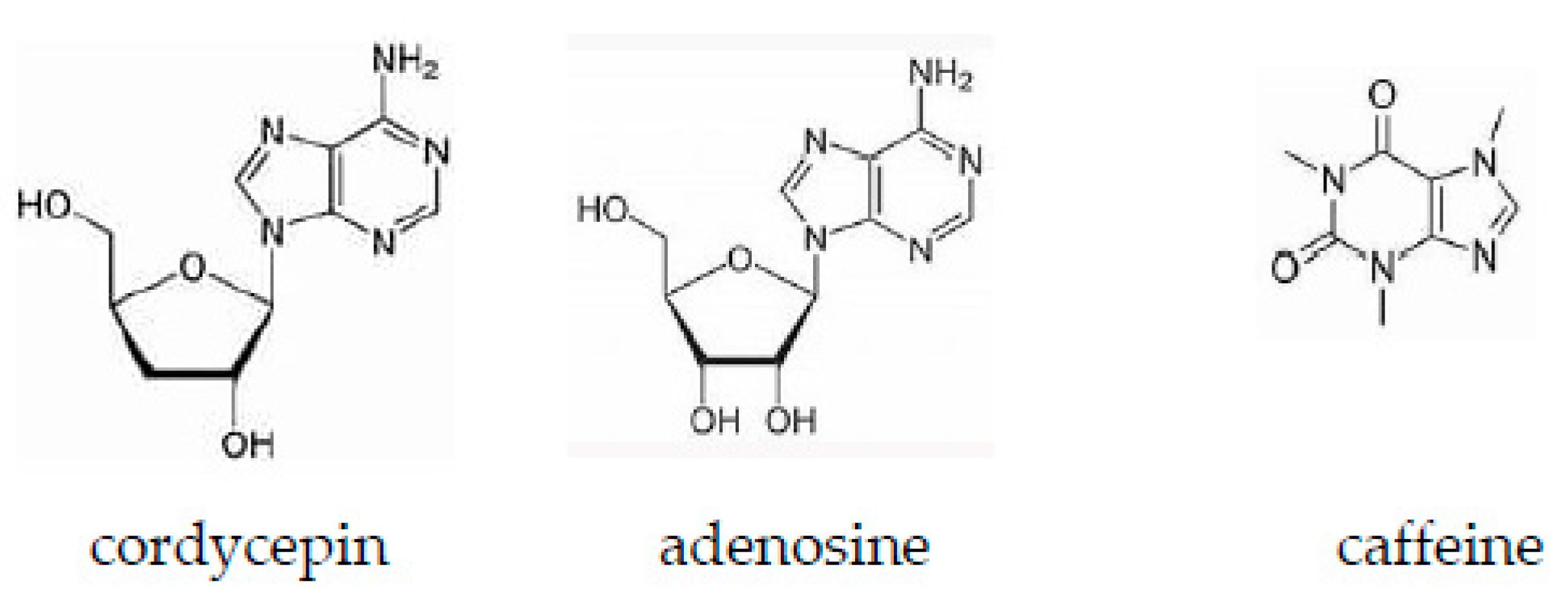
The aim to improve the physical performance of Rhodiola by combining with Cordyceps has not been achieved in all three studies; the efficacy of HHP of Rhodiola rosea with Cordyceps was inactive compared to placebo [51,52,54]. The fixed combination of Rhodiola rosea with Cordyceps has shown no ergogenic effect on oxygen consumption, cycling time, muscle strength, oxygen uptake, and muscle performance during maximal graded tests following 14 days of supplementation. Meanwhile, both Rhodiola rosea and Cordyceps alone have demonstrated increased muscle fatigue resistance and strength benefits in active men; Cordyceps increased aerobic capacity, and Rhodiola increased performance and time to exhaustion. The combination of Rhodiola with Cordyceps negatively affects the efficacy of intervention due to an unknown antagonistic interaction, probably due to the impact of purine alkaloid Cordycepin [75]. Its chemical structure resembles the nucleoside adenosine, which is involved in adenosine triphosphate (ATP) metabolism, providing energy in many processes, including muscle contraction.
3.5. HHP of Rhodiola with Ginkgo for Improvement of Cognitive Function
Ginkgo biloba flavones and polyphenols have a potential neuroprotective effect in Alzheimer's dementia by inhibiting amyloid fibril accumulation [76,77]. G. biloba delays age-induced cognitive decline and may have more delicate and subtle therapeutic effects on the speed of cognitive alterations [78]. G. biloba is known to improve cognitive impairment and memory, increase cerebral blood circulation in the elderly with dementia syndrome and Alzheimer’s disease, and relieve headaches and migraine [77,78]. Several human clinical trials provide preliminary positive evidence of the antidepressant effects and anxiolytic activity of G. biloba [79,80].
The effects of BHP of Rhodiola with Ginkgo on the cognitive functions of 112 healthy subjects were recruited in a double-blind, randomized, placebo-controlled four parallel groups trial. The efficacy of G. biloba, R. rosea extracts, and their fixed combination was assessed in psychomotor vigilance task (PVT) and short-term working memory accuracy tests as compared to placebo effects; critical flicker-fusion frequency, PVT, and computerized N-back test assessed the central cognitive effect. The short-term working memory accuracy and sustained attention were measured in the psychomotor vigilance task, which provided a numerical measure of sleepiness by counting the number of lapses in the attention of the tested subject. G. biloba or R. rosea improve PVT and exhibit low to moderate working memory accuracy, whereas BHP exhibits superior effects on PVT, short-term working memory accuracy, and critical fusion versus flicker compared to G. biloba or R. rosea if used alone. The author concluded that combining R. rosea with G. biloba led to a more significant effect on cognitive performance than either G. biloba or R. rosea if used alone [55].
3.6. BHP of Rhodiola with Black Cohosh for Relief of Aging-Related Menopausal Symptoms
Ageing-related decline in the production of sex hormones is associated with many menopause symptoms, including hot flashes, sweating, sleeplessness, nervousness, irritability, depressive state, palpitation, joint pain, libido changes, vaginal dryness, etc. Long-term hormonal replacement therapy has been shown to increase the risk of developing breast cancer. In this context, there is a high demand for relatively safe aids that can relieve or prevent menopausal symptoms, as more than 1.2 billion women globally will experience menopause syndrome by the year 2030. The recent study aimed to assess the efficacy and safety of a new herbal preparation (Menopause Relief EP®), the hybrid combination of Actaea racemosa L. (Black Cohosh, BC) and Rhodiola rosea L. (RR) root extracts, compared with the most effective dose of BC extract in women with menopausal complaints [56]. A total of 220 women (mean age 52 years) were randomly assigned to receive two capsules of either BC (6.5 mg), BC500 (500 mg), Menopause Relief EP ® (206,5), or placebo once per day for 12 weeks. The efficacy endpoints were relief of menopausal symptoms, including hot flushes, sweating, heart discomfort, sleep problems, joint and muscular discomfort, depressive mood, irritability, anxiety, physical and mental exhaustion, sexual problems, bladder problems, vaginal dryness and measured using the Kupperman Menopausal Index (KMI), Menopause Relief Score (MRS), and menopause Utian Quality of Life (UQOL) index. The symptom relief effects of Menopause Relief EP® were significantly superior in all tests to the effects of BC and placebo after their repeated administration for 6 and 12 weeks. Menopause Relief EP® significantly improved the UQOL index in patients, compared to BC, BC500, and placebo, mainly due to the beneficial effects on the emotional and physical health domains (Figure 8). It was concluded that the effect of BBHP is more effective of the mono-drug in relief of menopausal symptoms, particularly psychological symptoms.
3.7. HHP of Rhodiola with Saffron in Mild and Moderate Depression
Findings from clinical trials conducted to date indicate that saffron supplementation can improve symptoms of depression in patients with MDD. Saffron was found to be as effective as treatment with conventional antidepressants, such as imipramine and fluoxetine, in randomized, double-blind clinical trials [81]. Supplementation of a BHP of Rhodiola with saffron extracts in a daily dose of 308 mg Rhodiola and 30 mg Crocus for six weeks significantly decreased anxiety and depression scores compared to the baseline in 45 patients with mild-moderate depression. The results of this observational study are encouraging, and serious adverse effects were not recorded. However, a double-blind, randomized study with a positive comparator and placebo control design is needed to confirm these results [57].
3.8. BHP of Rhodiola with L-carnosine in Aging Skin
Carnosine (β-alanine-L-histidine) is an endogenous water-soluble dipeptide distributed mainly in skeletal muscles depending on age (decreases with age), gender (lower in females), and food (lower in a vegetarian diet) and playing an essential role in aging-related neurodegeneration, Diabetes mellitus, cardiovascular diseases, cancer, and other disorders. The meta-analysis of clinical trial findings indisputably demonstrated a significant beneficial effect of L-carnosine only for diabetes mellitus and cognitive impairment [82]. The pathophysiology of sensitive skin consists of an inflammatory reaction resulting from the abnormal penetration of potentially irritating substances in the skin, which occurs due to skin barrier dysfunction and changes in the production of local neuromodulators. A double-blind comparative study was conducted on 124 volunteers with sensitive skin who received either a formulation containing 1% of Rhodiola-L-carnosine BHP or a placebo applied twice a day for 28 consecutive days [58]. The reduction of transepidermal water loss, positive perceptions of improvements in skin dryness and skin comfort sensation, and reduction of discomfort sensation after the stinging test were measured. Rhodiola-L-carnosine BHP treatment produced in vivo protective effects in skin barrier function and positive subjective response of sensitive skin volunteers. The authors suggested that the protective effect of Rhodiola-L-carnosine BHP in skin barrier function and the positive reaction produced in human subjects with sensitive skin is due to an increase in opioid peptides release, an inhibitory effect on neuropeptides production, and modulation of cytokines production by keratinocytes under ultraviolet stress observed in vitro testing [58].
4. Conclusions
The most important finding from BHP's network pharmacology studies was the evidence supporting the synergistic interaction of its ingredients, revealing unexpected new pharmacological activities unique to and specific to the new BHP.
The results of some studies show the superior efficacy of BHP, such as the combinations of Rhodiola with Black Cohosh, Rhodiola with Ashwagandha, Rhodiola with Green tea, Rhodiola with Ginkgo, Rhodiola with Eleutherococcus and Schisandra, compared with the mono drugs. On the contrary, some a priori designed combinations, such as Rhodiola with cordyceps, were inactive in several clinical studies, presumably due to antagonistic interactions and crosstalk between molecular targets within molecular networks involved in the cellular and overall response of organisms on the intervention.
Network pharmacology studies help predict the results of studies to discover new indications and unpredicted adverse events. Predictions based exclusively on in silico analysis require experimental validation in animals and clinical studies.
Author Contributions
Conceptualization, A.P., and T.L.; writing—preparation of original drafts, A.P.; writing—review and editing, A.P. and T.E. All authors have read and agreed to the published version of the manuscript.
Funding
This research received no external funding.
Institutional Review Board Statement
Not applicable.
Informed Consent Statement
Not applicable.
Data Availability Statement
Data sharing is not applicable.
Conflicts of Interest
The authors A.P. and T.E. declare no conflict of interest; T.L. is the Founder of EuropharmaUSA Inc., Green Bay, Wisconsin, USA; A.P. is self-employed at the research and development company Phytomed AB, and has no shares or financial interest in any pharmaceutical company.
References
- Cuerrier, A., Ampong-Nyarko, K., eds. Rhodiola rosea, Series: Traditional Herbal Medicines for Modern Times. Boca-Raton London New-York: CRC Press, Taylor & Francis Group; 2014: pp. 1–304. Rhodiola rosea | Alain Cuerrier, Kwesi Ampong-Nyarko | Taylor & Franci (taylorfrancis.com).
- Panossian, A., Wikman, G., Sarris, J. (2010). Rosenroot (Rhodiola rosea): traditional use, chemical composition, pharmacology and clinical efficacy. Phytomedicine 2010, 17, 481–493. [CrossRef]
- Darbinyan, V.; Kteyan, A.; Panossian, A.; Gabrielian, E.; Wikman, G.; Wagner, H. Rhodiola rosea in stress induced fatigue--a double blind cross-over study of a standardized extract SHR-5 with a repeated low-dose regimen on the mental performance of healthy physicians during night duty. Phytomedicine 2000, 7, 365–371. [Google Scholar] [CrossRef]
- Spasov, A.A.; Wikman, G.K.; Mandrikov, V.B.; Mironova, I.A.; Neumoin, V.V. A double-blind, placebo-controlled pilot study of the stimulating and adaptogenic effect of Rhodiola rosea SHR-5 extract on the fatigue of students caused by stress during an examination period with a repeated low-dose regimen. Phytomedicine 2000, 7, 85–89. [Google Scholar] [CrossRef]
- Shevtsov, V.A.; Zholus, B.I.; Shervarly, V.I.; Vol'skij, V.B.; Korovin, Y.P.; Khristich, M.P.; Roslyakova, N.A.; Wikman, G. A randomized trial of two different doses of a SHR-5 Rhodiola rosea extract versus placebo and control of capacity for mental work. Phytomedicine 2003, 10, 95–105. [Google Scholar] [CrossRef]
- Schutgens, F.W.; Neogi, P.; van Wijk, E.P.; van Wijk, R.; Wikman, G.; Wiegant, F.A. The influence of adaptogens on ultraweak biophoton emission: a pilot experiment. Phytother Res. 2009, 23, 1103–1108. [Google Scholar] [CrossRef] [PubMed]
- Wing, S.L.; Askew, E.W.; Luetkemeier, M.J.; Ryujin, D.T.; Kamimori, G.H.; Grissom, C.K. Lack of effect of Rhodiola or oxygenated water supplementation on hypoxemia and oxidative stress. Wilderness Environ Med 2003, 14, 9–16. [Google Scholar] [CrossRef] [PubMed]
- De Bock, K.; Eijnde, B.O.; Ramaekers, M.; Hespel, P. Acute Rhodiola rosea intake can improve endurance exercise performance. Int J Sport Nutr Exerc Metab. 2004, 14, 298–307. [Google Scholar] [CrossRef] [PubMed]
- Abidov, M.; Grachev, S.; Seifulla, R.D.; Ziegenfuss, T.N. Extract of Rhodiola rosea radix reduces the level of C-reactive protein and creatinine kinase in the blood. Bull Exp Biol Med. 2004, 138, 63–64. [Google Scholar] [CrossRef] [PubMed]
- Walker, T.B.; Altobelli, S.A.; Caprihan, A.; Robergs, R.A. Failure of Rhodiola rosea to alter skeletal muscle phosphate kinetics in trained men. Metabolism 2007, 56, 1111–1117. [Google Scholar] [CrossRef] [PubMed]
- 11. Darbinyan, V.; Aslanyan, G.; Amroyan, E.; Gabrielyan, E.; Malmström, C.; Panossian, A. Clinical trial of Rhodiola rosea L. extract SHR-5 in the treatment of mild to moderate depression. Nord J Psychiatry 2007, 61, 343–348. [Google Scholar] [CrossRef] [PubMed]
- Fintelmann, V.; Gruenwald, J. Efficacy and tolerability of a Rhodiola rosea extract in adults with physical and cognitive deficiencies. Adv Ther. 2007, 24, 929–939. [Google Scholar] [CrossRef] [PubMed]
- Bystritsky, A.; Kerwin, L.; Feusner, J.D. A pilot study of Rhodiola rosea (Rhodax) for generalized anxiety disorder (GAD). J Altern Complement Med 2008, 14, 175–180. [Google Scholar] [CrossRef] [PubMed]
- Yu, H.L.; Zhang, P.P.; Zhang, C.; Zhang, X.; Li, Z.Z.; Li, W.Q.; Fu, A.S. Effects of Rhodiola rosea on oxidative stress and negative emotional states in patients with obstructive sleep apnea. Lin Chuang Er Bi Yan Hou Tou Jing Wai Ke Za Zhi. 2019, 33, 954–957, Chinese. [Google Scholar] [CrossRef] [PubMed]
- Skarpanska-Stejnborn, A.; Pilaczynska-Szczesniak, L.; Basta, P.; Deskur-Smielecka, E. The influence of supplementation with Rhodiola rosea L. extract on selected redox parameters in professional rowers. Int J Sport Nutr Exerc Metab. 2009, 19, 186–199. [Google Scholar] [CrossRef] [PubMed]
- Olsson, E.M.; von Schéele, B.; Panossian, A.G. A randomised, double-blind, placebo-controlled, parallel-group study of the standardised extract shr-5 of the roots of Rhodiola rosea in the treatment of subjects with stress-related fatigue. Planta 2009, 75, 105–112. [Google Scholar] [CrossRef]
- Parisi, A.; Tranchita, E.; Duranti, G.; Ciminelli, E.; Quaranta, F.; Ceci, R.; Cerulli, C.; Borrione, P.; Sabatini, S. Effects of chronic Rhodiola Rosea supplementation on sport performance and antioxidant capacity in trained male: preliminary results. J Sports Med Phys Fitness 2010, 50, 57–63. Available online: https://www.minervamedica.it/en/journals/sports-med-physical-fitness/article.php?cod=R40Y2010N01A0057. [PubMed]
- Goyvaerts, B.; Bruhn, S. Rhodiola rosea special extract SHR-5 in burnout and fatigue syndrome. Erfahrungsheilkunde 2012, 61, 79–83. https://api.semanticscholar.org/CorpusID:76263759. [CrossRef]
- Edwards, D.; Heufelder, A.; Zimmermann, A. Therapeutic effects and safety of Rhodiola rosea extract WS® 1375 in subjects with life-stress symptoms--results of an open-label study. Phytother Res. 2012, 26, 1220–1225. [Google Scholar] [CrossRef]
- Noreen, E.E.; Buckley, J.G.; Lewis, S.L.; Brandauer, J.; Stuempfle, K.J. The effects of an acute dose of Rhodiola rosea on endurance exercise performance. J Strength Cond Res. 2013, 27, 839–847. [Google Scholar] [CrossRef]
- Mao, J.J.; Li, Q.S.; Soeller, I.; Xie, S.X.; Amsterdam, J.D. Rhodiola rosea therapy for major depressive disorder: a study protocol for a randomized, double-blind, placebo- controlled trial. J Clin Trials 2014, 4, 170. [Google Scholar] [CrossRef]
- Duncan, M.J.; Clarke, N.D. The Effect of Acute Rhodiola rosea Ingestion on Exercise Heart Rate, Substrate Utilisation, Mood State, and Perceptions of Exertion, Arousal, and Pleasure/Displeasure in Active Men. J Sports Med (Hindawi Publ Corp). 2014, 563043, 1–8. [Google Scholar] [CrossRef]
- Punja, S.; Shamseer, L.; Olson, K.; Vohra, S. Rhodiola rosea for mental and physical fatigue in nursing students: a randomized controlled trial. PloS one 2014, 9, e108416. [Google Scholar] [CrossRef]
- Shanely, R.A.; Nieman, D.C.; Zwetsloot, K.A.; Knab, A.M.; Imagita, H.; Luo, B.; Davis, B.; Zubeldia, J.M. Evaluation of Rhodiola rosea supplementation on skeletal muscle damage and inflammation in runners following a competitive marathon. Brain Behav Immun. 2014, 39, 204–210. [Google Scholar] [CrossRef]
- Dimpfel, W. Neurophysiological effects of Rhodiola rosea extract containing capsules (A double-blind, randomized, placebo-controlled study). Int J. Nutr Food Sci. 2014, 3, 157–165. https://www.sciencepublishinggroup.com/article/10.11648/j.ijnfs.20140303.14. [CrossRef]
- Cropley, M.; Banks, A.P.; Boyle, J. The Effects of Rhodiola rosea L. Extract on Anxiety, Stress, Cognition and Other Mood Symptoms. Phytother Res. 2015, 29, 1934–1939. [Google Scholar] [CrossRef] [PubMed]
- Mao, J.J.; Xie, S.X.; Zee, J.; Soeller, I.; Li, Q.S.; Rockwell, K.; Amsterdam, J.D. Rhodiola rosea versus sertraline for major depressive disorder: A randomized placebo-controlled trial. Phytomedicine 2015, 22, 394–399. [Google Scholar] [CrossRef] [PubMed]
- Ahmed, M.; Henson, D.A.; Sanderson, M.C.; Nieman, D.C.; Zubeldia, J.M.; Shanely, R.A. Rhodiola rosea Exerts Antiviral Activity in Athletes Following a Competitive Marathon Race. Front Nutr. 2 2015, 2, 24. [Google Scholar] [CrossRef]
- Thu, O.K.; Spigset, O.; Nilsen, O.G.; Hellum, B. Effect of commercial Rhodiola rosea on CYP enzyme activity in humans. Eur J Clin Pharmacol. 2016, 72, 295–300. [Google Scholar] [CrossRef]
- Kasper, S.; Dienel, A. Multicenter, open-label, exploratory clinical trial with Rhodiola rosea extract in patients suffering from burnout symptoms. Neuropsychiatric disease and treatment 2017, 13, 889–898. [Google Scholar] [CrossRef]
- Lekomtseva, Y.; Zhukova, I.; Wacker, A. Rhodiola rosea in Subjects with Prolonged or Chronic Fatigue Symptoms: Results of an Open-Label Clinical Trial. Compl Med Res. 2017, 24, 46–52. [Google Scholar] [CrossRef]
- Concerto, C.; Infortuna, C.; Muscatello MR, A.; Bruno, A.; Zoccali, R.; Chusid, E.; Aguglia, E.; Battaglia, F. Exploring the effect of adaptogenic Rhodiola Rosea extract on neuroplasticity in humans. Complement Ther Med. 2018, 41, 141–146. [Google Scholar] [CrossRef]
- Jówko, E.; Sadowski, J.; Długołęcka, B.; Gierczuk, D.; Opaszowski, B.; Cieśliński, I. Effects of Rhodiola rosea supplementation on mental performance, physical capacity, and oxidative stress biomarkers in healthy men. J Sport Health Sci. 2018, 7, 473–480. [Google Scholar] [CrossRef]
- Timpmann, S.; Hackney, A.C.; Tamm, M.; Kreegipuu, K.; Unt, E.; Ööpik, V. Influence of Rhodiola rosea on the heat acclimation process in young healthy men. Appl Physiol Nutr Metab. 2018, 43, 63–70. [Google Scholar] [CrossRef]
- Ballmann, C.G.; Maze, S.B.; Wells, A.C.; Marshall, M.M.; Rogers, R.R. Effects of short-term Rhodiola Rosea (Golden Root Extract) supplementation on anaerobic exercise performance. J Sports Sci. 2019, 37, 998–1003. [Google Scholar] [CrossRef] [PubMed]
- Gao, L.; Wu, C.; Liao, Y.; Wang, J. Antidepressants effects of Rhodiola capsule combined with sertraline for major depressive disorder: A randomized double-blind placebo-controlled clinical trial. J Affect Disord. 2020, 265, 99–103. [Google Scholar] [CrossRef] [PubMed]
- Koop, T.; Dienel, A.; Heldmann, M.; Münte, T.F. Effects of a Rhodiola rosea extract on mental resource allocation and attention: An event-related potential dual task study. Phytother Res. 2020, 34, 3287–3297. [Google Scholar] [CrossRef] [PubMed]
- Williams, T.D.; Langley, H.N.; Roberson, C.C.; Rogers, R.R.; Ballmann, C.G. Effects of Short-Term Golden Root Extract (Rhodiola rosea) Supplementation on Resistance Exercise Performance. Int J Environ Res Public Health. 2021, 18, 6953. [Google Scholar] [CrossRef] [PubMed]
- Dye, L.; Billington, J.; Lawton, C.; Boyle, N. A combination of magnesium, B vitamins, green tea and rhodiola attenuates the negative effects of acute psychosocial stress on subjective state in adults. Curr Dev Nutr. 2020, 4. [Google Scholar] [CrossRef]
- Boyle, N.B.; Billington, J.; Lawton, C.; Quadt, F.; Dye, L. A combination of green tea, rhodiola, magnesium and B vitamins modulates brain activity and protects against the effects of induced social stress in healthy volunteers. Nutr Neurosci. 2022, 25, 1845–1859. [Google Scholar] [CrossRef]
- Boyle, N.B.; Dye, L.; Lawton, C.L.; Billington, J. A Combination of Green Tea, Rhodiola, Magnesium, and B Vitamins Increases Electroencephalogram Theta Activity During Attentional Task Performance Under Conditions of Induced Social Stress. Front Nutr. 2022, 9, 935001. [Google Scholar] [CrossRef]
- Noah, L., Morel. Effect of a Combination of Magnesium, B Vitamins, Rhodiola, and Green Tea (L-Theanine) on Chronically Stressed Healthy Individuals-A Randomized, Placebo-Controlled Study. Nutrients 1863, 14. [Google Scholar] [CrossRef]
- Pickering, G.; Noah, L.; Pereira, B.; Goubayon, J.; Leray, V.; Touron, A.; Macian, N.; Bernard, L.; Dualé, C.; Roux, V.; Chassain, C. Assessing brain function in stressed healthy individuals following the use of a combination of green tea, Rhodiola, magnesium, and B vitamins: an fMRI study. Front Nutr. 2023, 10, 1211321. [Google Scholar] [CrossRef]
- Narimanian, M.; Badalyan, M.; Panosyan, V.; Gabrielyan, E.; Panossian, A.; Wikman, G.; Wagner, H. Impact of Chisan (ADAPT-232) on the quality-of-life and its efficacy as an adjuvant in the treatment of acute non-specific pneumonia. Phytomedicine 2005, 12, 723–729. [Google Scholar] [CrossRef]
- Aslanyan, G.; Amroyan, E.; Gabrielyan, E.; Nylander, M.; Wikman, G.; Panossian, A. Double-blind, placebo-controlled, randomised study of single dose effects of ADAPT-232 on cognitive functions. Phytomedicine 2010, 17, 494–499. [Google Scholar] [CrossRef] [PubMed]
- Wikman, K.G.; Panossian, A. Compositions for the treatment of age related disorders - European Patent Office - EP 2995311 B1 (epo.org). 2016. Available online: https://data.epo.org/publication-server/pdf-document/EP14184632NWB1.pdf?PN=EP2995311%20EP%202995311&iDocId=6549596&iepatch=.pdf.
- Hovhannisyan, A.; Nylander, M.; Wikman, G.; Panossian, A.G. Efficacy of Adaptogenic Supplements on Adapting to Stress: A Randomized, Controlled Trial. Athl Enhancement 2015, 4, 4. [Google Scholar] [CrossRef]
- Wikman, K.G.; Panossian, A. Compositions for the treatment of overtraining syndrome - European Patent Office - EP 2995310 B1 (storage.googleapis.com). 2016. Available online: https://patentimages.storage.googleapis.com/1a/c0/47/2e2b80de961c36/EP2995310B1.pdf.
- Karosanidze, I.; Kiladze, U.; Kirtadze, N.; Giorgadze, M.; Amashukeli, N.; Parulava, N.; Iluridze, N.; Kikabidze, N.; Gudavadze, N.; Gelashvili, L.; Koberidze, V.; Gigashvili, E.; Jajanidze, N.; Latsabidze, N.; Mamageishvili, N.; Shengelia, R.; Hovhannisyan, A.; Panossian, A. Efficacy of Adaptogens in Patients with Long COVID-19: A Randomized, Quadruple-Blind, Placebo-Controlled Trial. Pharmaceuticals (Basel) 2022, 15, 345. [Google Scholar] [CrossRef] [PubMed]
- Liu, C.; Zhao, H.; Yan, Y.; Yang, W.; Chen, S.; Song, G.; Li, X.; Gu, Y.; Yun, H.; Li, Y. Synergistic Effect of Rhodiola rosea and Caffeine Supplementation on the Improvement of Muscle Strength and Muscular Endurance: A Pilot Study for Rats, Resistance Exercise-Untrained and -Trained Volunteers. Nutrients 2023, 15, 582. [Google Scholar] [CrossRef] [PubMed]
- Earnest, C.P.; Morss, G.M.; Wyatt, F.; Jordan, A.N.; Colson, S.; Church, T.S.; Fitzgerald, Y.; Autrey, L.; Jurca, R.; Lucia, A. Effects of a commercial herbal-based formula on exercise performance in cyclists. Medicine and science in sports and exercise 2004, 36, 504–509. [Google Scholar] [CrossRef]
- Colson, S.N.; Wyatt, F.B.; Johnston, D.L.; Autrey, L.D.; FitzGerald, Y.L.; Earnest, C.P. Cordyceps sinensis- and Rhodiola rosea-based supplementation in male cyclists and its effect on muscle tissue oxygen saturation. J Strength Cond Res. 2005, 19, 358–363. [Google Scholar] [CrossRef]
- Liao, Y.H.; Chao, Y.C.; Sim, B.Y.; Lin, H.M.; Chen, M.T.; Chen, C.Y. Rhodiola/Cordyceps-Based Herbal Supplement Promotes Endurance Training-Improved Body Composition But Not Oxidative Stress and Metabolic Biomarkers: A Preliminary Randomized Controlled Study. Nutrients 2019, 2019, 2357. [Google Scholar] [CrossRef]
- Kreipke, V.C.; Moffatt, R.J.; Tanner Ma, C.J.; Ormsbee, M.J. Effects of Concurrent Training and a Multi-Ingredient Performance Supplement Containing Rhodiola rosea and Cordyceps sinensis on Body Composition, Performance, and Health in Active Men. J Diet Suppl. 2021, 18(6), 597–613. [Google Scholar] [CrossRef]
- Al-Kuraishy, H.M. Central additive effect of Ginkgo biloba and Rhodiola rosea on psychomotor vigilance task and short-term working memory accuracy. J Intercult Ethnopharmacol. 2015, 5, 7–13. [Google Scholar] [CrossRef] [PubMed]
- Pkhaladze, L.; Davidova, N.; Khomasuridze, A.; Shengelia, R.; Panossian, A.G. Actaea racemosa L. Is More Effective in Combination with Rhodiola rosea L. for Relief of Menopausal Symptoms: A Randomized, Double-Blind, Placebo-Controlled Study. Pharmaceuticals (Basel) 2020, 13, 102. [Google Scholar] [CrossRef] [PubMed]
- Bangratz, M.; Ait Abdellah, S.; Berlin, A.; Blondeau, C.; Guilbot, A.; Dubourdeaux, M.; Lemoine, P. A preliminary assessment of a combination of rhodiola and saffron in the management of mild-moderate depression. Neuropsychiatr Dis Treat. 2018, 14, 1821–1829. [Google Scholar] [CrossRef] [PubMed]
- Dieamant, G.de.C.; Velazquez Pereda, M.del.C.; Eberlin, S.; Nogueira, C.; Werka, R.M.; Queiroz, M.L. Neuroimmunomodulatory compound for sensitive skin care: in vitro and clinical assessment. J Cosmet Dermatol. 2008, 7, 112–119. [Google Scholar] [CrossRef] [PubMed]
- Dzampaeva, Z.V.; Datieva, F.S.; Esenova, Z.S.; Takoeva, E.A. Efficacy of Complex Phytoadaptogens as an Adjunct to Non-surgical Treatment of Chronic Periodontitis: A Randomized Clinical Trial. J Int Soc Prev Community Dent. 2021, 11, 348–356. [Google Scholar] [CrossRef] [PubMed]
- Panossian, A.G.; Efferth, T.; Shikov, A.N.; Pozharitskaya, O.N.; Kuchta, K.; Mukherjee, P.K.; Banerjee, S.; Heinrich, M.; Wu, W.; Guo, D.A.; Wagner, H. Evolution of the adaptogenic concept from traditional use to medical systems: Pharmacology of stress- and aging-related diseases. Med Res Rev. 2021, 41, 630–703. [Google Scholar] [CrossRef]
- Panossian, A.; Seo, E.J.; Efferth, T. Synergy assessments of plant extracts used in the treatment of stress and aging related disorders. Synergy Res 2018, 7, 39–49. Available online: https://www.sciencedirect.com/science/article/pii/S2213713018300312?via%3Dihub; Synergy assessments of plant extracts used in the treatment of stress and aging-related disorders (sciencedirectassets.com). [CrossRef]
- Panossian, A.; Seo, E.J.; Efferth, T. Novel molecular mechanisms for the adaptogenic effects of herbal extracts on isolated brain cells using systems biology. Phytomedicine 2018, 50, 257–284. [Google Scholar] [CrossRef]
- Panossian, A.; Hamm, R.; Kadioglu, O.; Wikman, G.; Efferth, T. Synergy and Antagonism of Active Constituents of ADAPT-232 on Transcriptional Level of Metabolic Regulation of Isolated Neuroglial Cells. Front Neurosci. 2013, 7, 16. [Google Scholar] [CrossRef]
- Panossian, A.; Hamm, R.; Wikman, G.; Efferth, T. Mechanism of action of Rhodiola, salidroside, tyrosol and triandrin in isolated neuroglial cells: an interactive pathway analysis of the downstream effects using RNA microarray data. Phytomedicine. 2014, 21, 1325–1348. [Google Scholar] [CrossRef]
- Panossian, A.; Seo, E.J.; Efferth, T. Effects of anti-inflammatory and adaptogenic herbal extracts on gene expression of eicosanoids signaling pathways in isolated brain cells. Phytomedicine 2019, 60, 152881. [Google Scholar] [CrossRef]
- Tan, J.; Engelhardt, U.H.; Lin, Z.; Kaiser, N.; Maiwald, B. Flavonoids, phenolic acids, alkaloids and theanine in different types of authentic Chinese white tea samples. J. Food Comp. Anal. 2017, 57, 8–15. [Google Scholar] [CrossRef]
- Phuah, Y.Q.; Chang, S.K.; Ng, W.J.; Lam, M.Q.; Ee, K.Y. A review on matcha: Chemical composition, health benefits, with insights on its quality control by applying chemometrics and multi-omics. Food Res Int. 2023, 170, 113007. [Google Scholar] [CrossRef] [PubMed]
- Nobre, A.C.; Rao, A.; Owen, G.N. L-theanine, a natural constituent in tea, and its effect on mental state. Asia Pac J Clin Nutr. 2008, 17 Suppl 1, 167–168. [Google Scholar] [PubMed]
- Grosso, C.; Santos, M.; Barroso, M.F. From Plants to Psycho-Neurology: Unravelling the Therapeutic Benefits of Bioactive Compounds in Brain Disorders. Antioxidants (Basel). 2023, 12, 1603. [Google Scholar] [CrossRef] [PubMed]
- Son, T.G.; Camandola, S.; Mattson, M.P. Hormetic dietary phytochemicals. Neuromolecular Med. 2008, 10, 236–246. [Google Scholar] [CrossRef] [PubMed]
- Deka, H.; Barman, T.; Dutta, J.; Devi, A.; Tamuly, P.; Paul, R.K.; Karak, T. Catechin and caffeine content of tea (Camellia sinensis L.) leaf significantly differ with seasonal variation: A study on popular cultivars in North East India. J. Food Comp. Anal 2021, 96, 103684. [Google Scholar] [CrossRef]
- Panossian, A.; Wagner, H. Stimulating effect of adaptogens: an overview with particular reference to their efficacy following single dose administration. Phytother Res. 2005 19, 819–838. [CrossRef] [PubMed]
- Liu, C.; Zhao, H.; Yan, Y.; Yang, W.; Chen, S.; Song, G.; Li, X.; Gu, Y.; Yun, H.; Li, Y. Synergistic Effect of Rhodiola rosea and Caffeine Supplementation on the Improvement of Muscle Strength and Muscular Endurance: A Pilot Study for Rats, Resistance Exercise-Untrained and -Trained Volunteers. Nutrients 2023, 15, 582. [Google Scholar] [CrossRef]
- Sajadi-Ernazarova, K.R.; Anderson, J.; Dhakal, A.; Hamilton, R.J. Caffeine Withdrawal. 2023 Aug 8. In StatPearls [Internet]; StatPearls Publishing: Treasure Island (FL), 8 Aug 2024. Available online: https://www.ncbi.nlm.nih.gov/books/NBK430790/. [PubMed]
- Łysakowska, P.; Sobota, A.; Wirkijowska, A. Medicinal Mushrooms: Their Bioactive Components, Nutritional Value and Application in Functional Food Production-A Review. Molecules. 2023, 28, 5393. [Google Scholar] [CrossRef]
- Xie, L.; Zhu, Q.; Lu, J. Can We Use Ginkgo biloba Extract to Treat Alzheimer's Disease? Lessons from Preclinical and Clinical Studies. Cells. 2022, 11, 479. [Google Scholar] [CrossRef]
- Liao, Z.; Cheng, L.; Li, X.; Zhang, M.; Wang, S.; Huo, R. Meta-analysis of Ginkgo biloba Preparation for the Treatment of Alzheimer's Disease. Clin Neuropharmacol. 2020, 43, 93–99. [Google Scholar] [CrossRef] [PubMed]
- Barbalho, S.M.; Direito, R.; Laurindo, L.F.; Marton, L.T.; Guiguer, E.L.; Goulart, R.A.; Tofano, R.J.; Carvalho AC, A.; Flato UA, P.; Capelluppi Tofano, V.A.; Detregiachi CR, P.; Bueno PC, S.; Girio RS, J.; Araújo, A.C. Ginkgo biloba in the Aging Process: A Narrative Review. Antioxidants (Basel). 2022, 11, 525. [Google Scholar] [CrossRef]
- Cave, A.E.; Chang, D.H.; Münch, G.W.; Steiner-Lim, G.Z. A systematic review of the safety and efficacy on cognitive function of herbal and nutritional medicines in older adults with and without subjective cognitive impairment. Syst Rev. 2023, 12, 143. [Google Scholar] [CrossRef] [PubMed]
- Hort, J.; Duning, T.; Hoerr, R. Ginkgo biloba Extract EGb 761 in the Treatment of Patients with Mild Neurocognitive Impairment: A Systematic Review. Neuropsychiatr Dis Treat. 2023, 19, 647–660. [Google Scholar] [CrossRef] [PubMed]
- Hausenblas, H.A.; Saha, D.; Dubyak, P.J.; Anton, S.D. Saffron (Crocus sativus L.) and major depressive disorder: a meta-analysis of randomized clinical trials. J Integr Med. 2013, 11, 377–383. [Google Scholar] [CrossRef] [PubMed]
- Sureshkumar, K.; Durairaj, M.; Srinivasan, K.; Goh, K.W.; Undela, K.; Mahalingam, V.T.; Ardianto, C.; Ming, L.C.; Ganesan, R.M. Effect of L-Carnosine in Patients with Age-Related Diseases: A Systematic Review and Meta-Analysis. Front Biosci (Landmark Ed). 2023, 28, 18. [Google Scholar] [CrossRef] [PubMed]
Figure 1.
Images of two, three, and more kinds of hybrids from ancient mythology. * https://en.wikipedia.org/wiki/List_of_hybrid_creatures_in_folklore: 1. Lama an Assyrian protective hybrid deity with a human head, a bull's body or lion's body, and wings derived due to their synergistic interaction, 2. The centaur Chiron raised Achilles at the request of Achilles' mother from Greek mythology (reproduced from Peter-Paul Rubens in 1630-1635), 3. Navagunjara – A Hindu creature with the head of a rooster, the neck of a peacock, the back of a bull, a snake-headed tail, three legs of an elephant, tiger, and deer or horse, with the fourth limb being a human hand holding a lotus. 4. Nureonna – a creature with the head of a woman and the body of a snake (Japanese mythology), 5. Kotobuki - a Japanese Chimera with the head of a rat, the ears of a rabbit, the horns of an ox, the comb of a rooster, the beard of a sheep, the neck of a Japanese dragon, the mane of a horse, the back of a wild boar, the shoulders and belly of a South China tiger, the arms of a monkey, the hindquarters of a dog, and the tail of a snake.
Figure 1.
Images of two, three, and more kinds of hybrids from ancient mythology. * https://en.wikipedia.org/wiki/List_of_hybrid_creatures_in_folklore: 1. Lama an Assyrian protective hybrid deity with a human head, a bull's body or lion's body, and wings derived due to their synergistic interaction, 2. The centaur Chiron raised Achilles at the request of Achilles' mother from Greek mythology (reproduced from Peter-Paul Rubens in 1630-1635), 3. Navagunjara – A Hindu creature with the head of a rooster, the neck of a peacock, the back of a bull, a snake-headed tail, three legs of an elephant, tiger, and deer or horse, with the fourth limb being a human hand holding a lotus. 4. Nureonna – a creature with the head of a woman and the body of a snake (Japanese mythology), 5. Kotobuki - a Japanese Chimera with the head of a rat, the ears of a rabbit, the horns of an ox, the comb of a rooster, the beard of a sheep, the neck of a Japanese dragon, the mane of a horse, the back of a wild boar, the shoulders and belly of a South China tiger, the arms of a monkey, the hindquarters of a dog, and the tail of a snake.
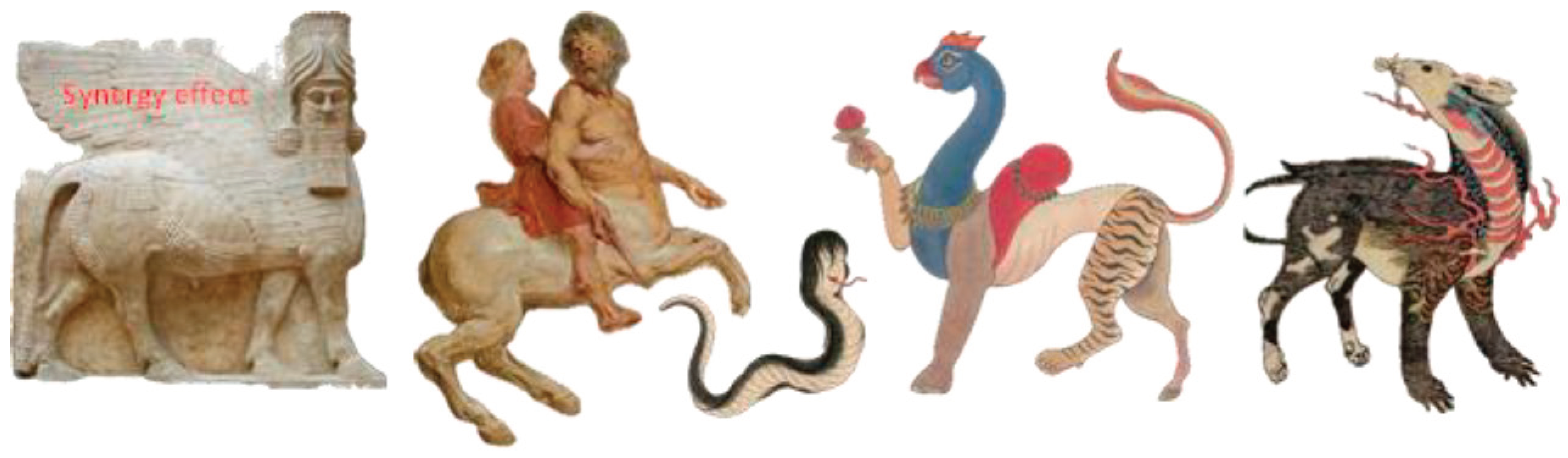
Figure 2.
Schematic representation of quality, efficacy, and safety characteristics of herbal medicinal products comprising the mixtures of fixed combinations of molecules from herbal extracts. Reproducible qualitative and quantitative chemical composition by HPLC and TLC fingerprint ensures the reproducible quality of a fixed combination. Reproducible efficacy and safety of a botanical/herbal hybrid preparation (BHP) is characterized by pharmacological profile – conditional signature, e.g., microarray dataset of deregulated genes in response to exposure of BHP in a bioassay providing further information on the effect on physiological functions and diseases in the form of heatmaps.
Figure 2.
Schematic representation of quality, efficacy, and safety characteristics of herbal medicinal products comprising the mixtures of fixed combinations of molecules from herbal extracts. Reproducible qualitative and quantitative chemical composition by HPLC and TLC fingerprint ensures the reproducible quality of a fixed combination. Reproducible efficacy and safety of a botanical/herbal hybrid preparation (BHP) is characterized by pharmacological profile – conditional signature, e.g., microarray dataset of deregulated genes in response to exposure of BHP in a bioassay providing further information on the effect on physiological functions and diseases in the form of heatmaps.
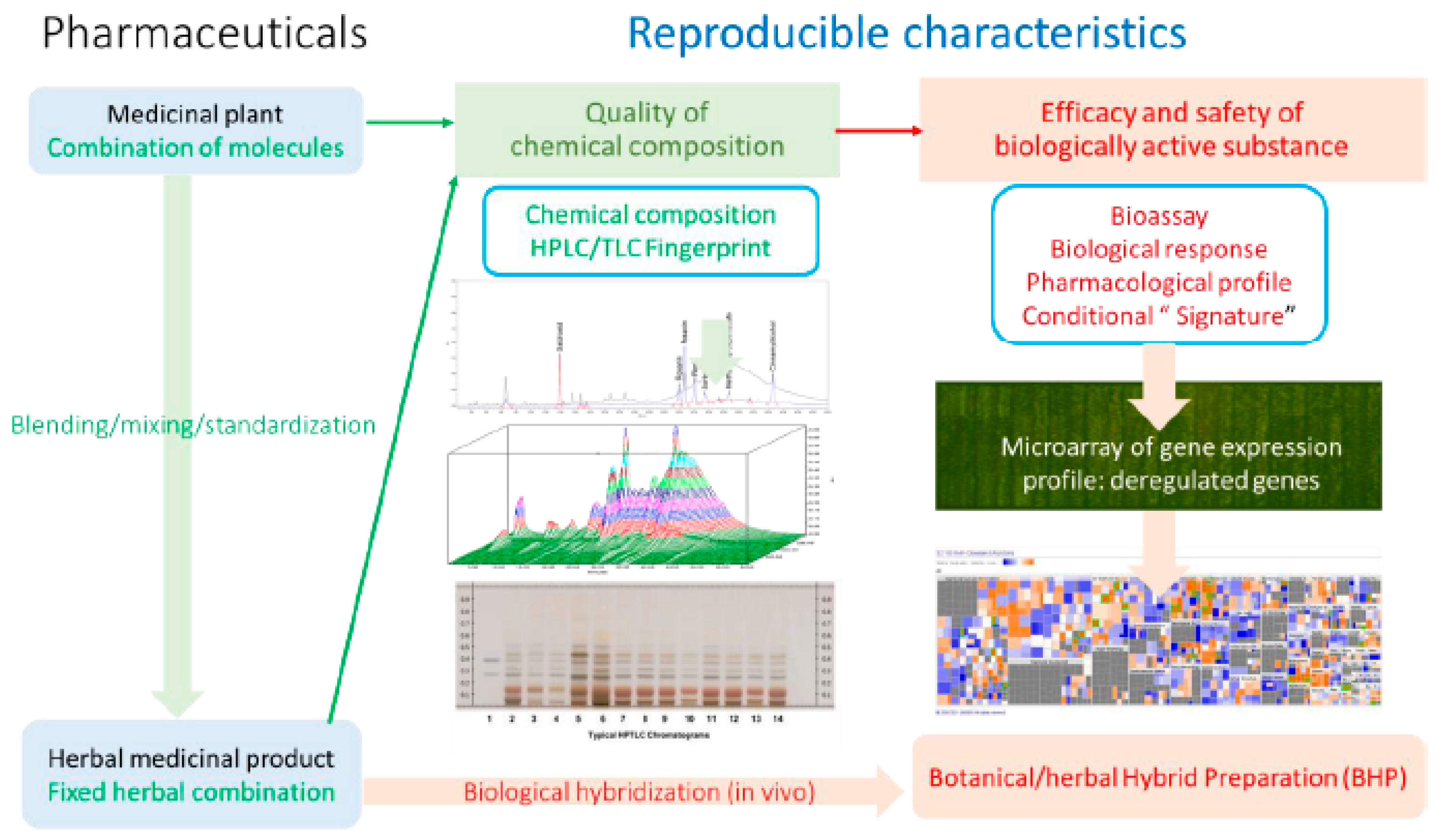
Figure 3.
The upper panel shows a Venn diagram with Greek, Latin, and Cyrillic letter symbols, where overlapped sections contain the same symbols. Eleven symbols are the same in all alphabets. Similarly, Rhodiola, Eleutherococcus, and Schisandra separately deregulated 140 of 1,340 genes in experiments with neuroglia cells; however, only 96 of 640 genes were deregulated by the hybrid combination (ADAPT) of these three plant extracts. External sections of the Venn diagram show the number of deregulated genes specific to distinct extracts (antagonistic interactions in blue, yellow, and green) and synergy-derived 206 deregulated genes characteristic to ADAPT-232 (in red). The lower panel shows the number of compounds in extracts and 3D-HPLC fingerprints of Rhodiola, Eleutherococcus Schisandra, and their combination ADAPT-232, and Venn diagrams showing intersections of deregulated genes in neuroglia cells after exposure to these herbal extracts. Authors' drawings adapted from free access publication [63].
Figure 3.
The upper panel shows a Venn diagram with Greek, Latin, and Cyrillic letter symbols, where overlapped sections contain the same symbols. Eleven symbols are the same in all alphabets. Similarly, Rhodiola, Eleutherococcus, and Schisandra separately deregulated 140 of 1,340 genes in experiments with neuroglia cells; however, only 96 of 640 genes were deregulated by the hybrid combination (ADAPT) of these three plant extracts. External sections of the Venn diagram show the number of deregulated genes specific to distinct extracts (antagonistic interactions in blue, yellow, and green) and synergy-derived 206 deregulated genes characteristic to ADAPT-232 (in red). The lower panel shows the number of compounds in extracts and 3D-HPLC fingerprints of Rhodiola, Eleutherococcus Schisandra, and their combination ADAPT-232, and Venn diagrams showing intersections of deregulated genes in neuroglia cells after exposure to these herbal extracts. Authors' drawings adapted from free access publication [63].
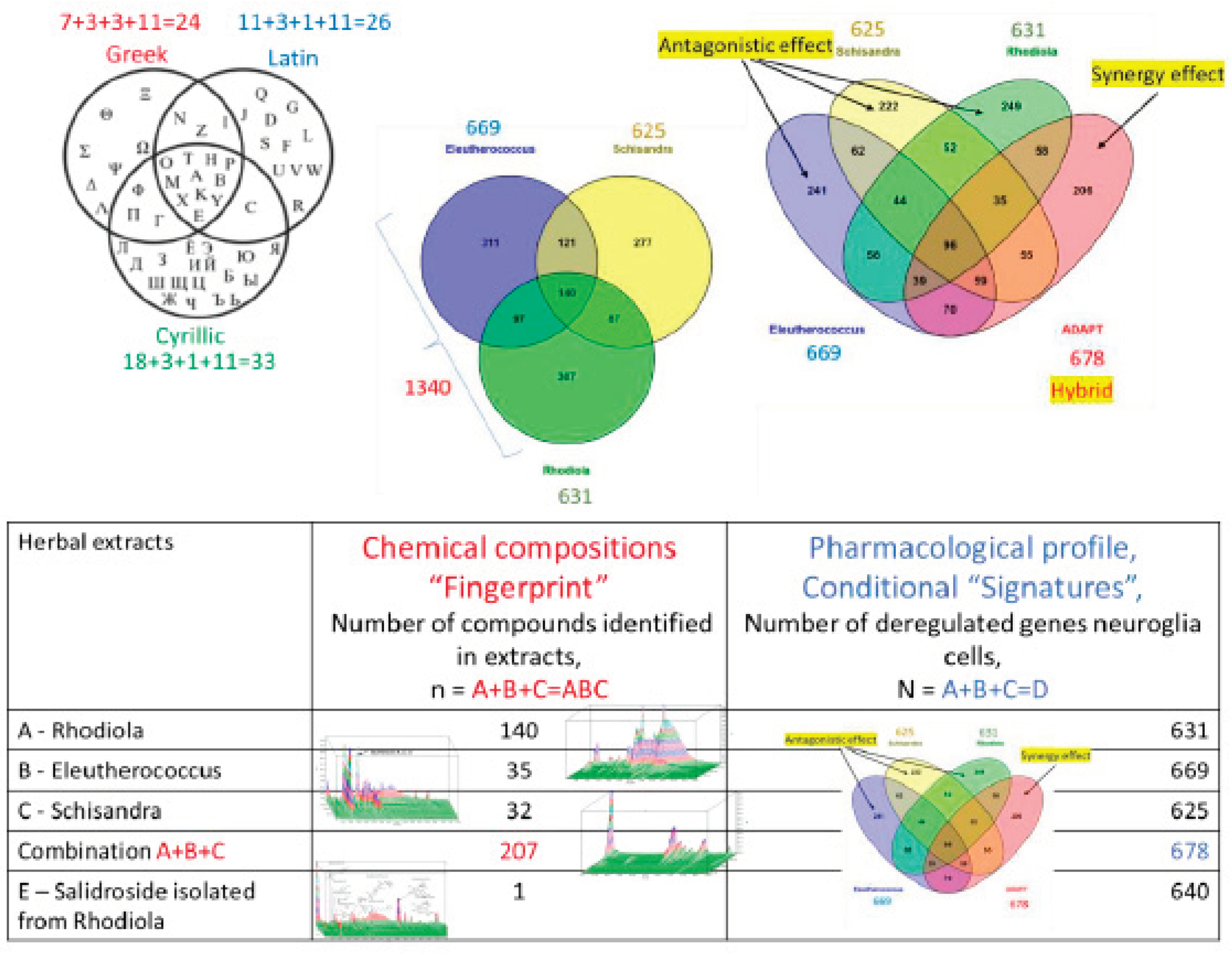
Figure 4.
The synergy, potentiation, and antagonistic effects of hybridization of a combination of Rhodiola with Withania, Withania with melatonin, and Curcuma longa with Boswellia on eicosanoids signaling pathways, which has an essential role in inflammation and neurodegeneration assessed in isolated neuroglia cells. The authors' drawings were adapted from free-access publications [65].
Figure 4.
The synergy, potentiation, and antagonistic effects of hybridization of a combination of Rhodiola with Withania, Withania with melatonin, and Curcuma longa with Boswellia on eicosanoids signaling pathways, which has an essential role in inflammation and neurodegeneration assessed in isolated neuroglia cells. The authors' drawings were adapted from free-access publications [65].
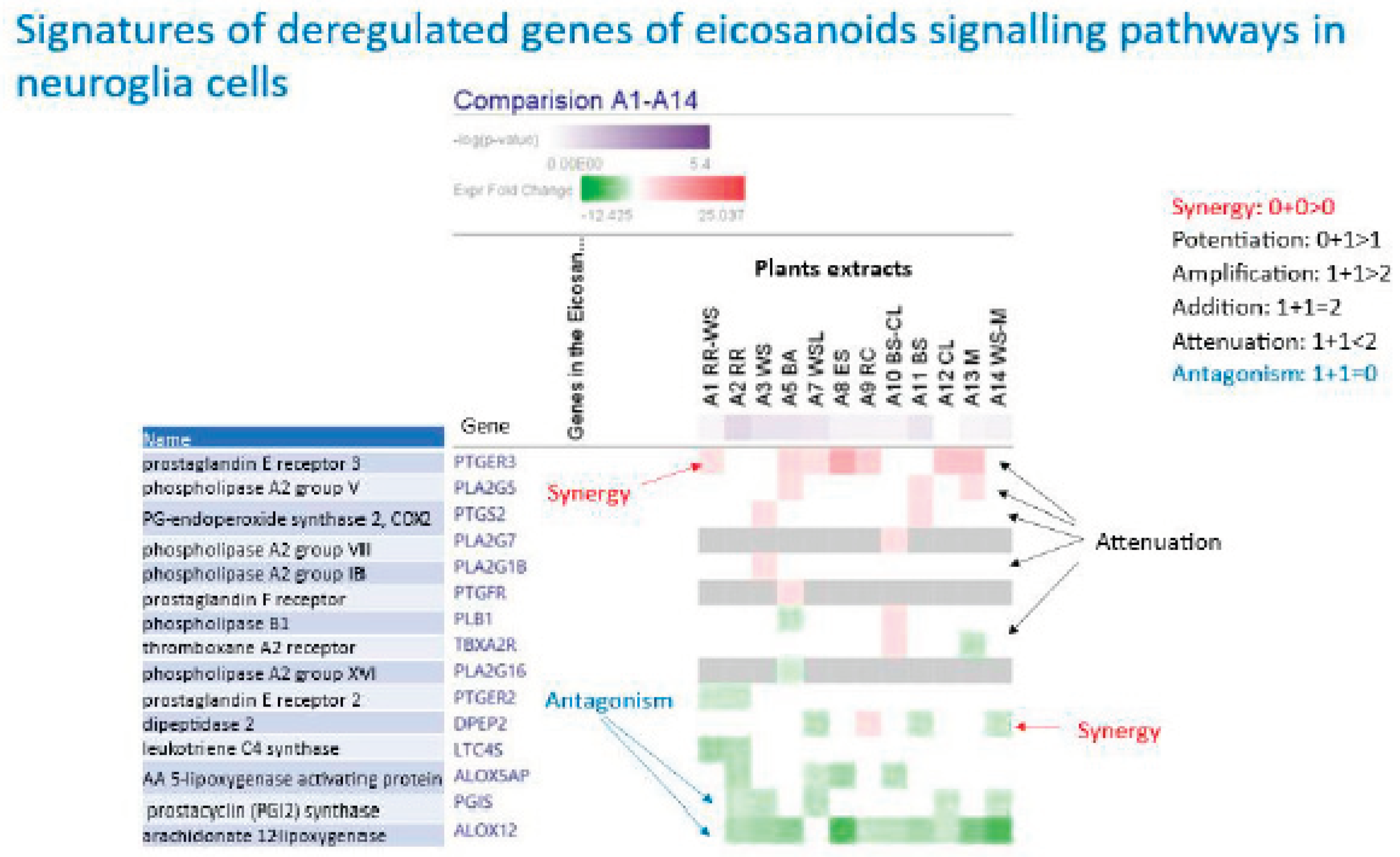
Figure 5.
The effects of RR-WS (Adaptra) on gene expression in human T98G neuroglia cells and the predicted activation of the development of neurons. The authors' drawings were adapted from free access publication [62]. The synergy effects (red arrows) of hybridization of Rhodiola with Withania on neurogenesis signaling pathways in isolated neuroglia cells. The intensity of green and red squares indicates fold-changes compared to control, where green means down- and red means up-regulation. Synergistic or antagonistic effects on gene expression were observed by comparison of the impact of the BHP Adaptra = combination of RR-WS (sample A1) with a lack of the impact of individual extracts RR (R. rosea), WS (Withania somnifera), and WSL Withania somnifera low dose, correspondingly samples A2, A3, and A7) at a significance level of p < 0.05 (_log = 1.3) and a z-score > 2. The symbolic interpretation of synergy and antagonism by the image of hybrid creature from Greek mythology: ichthyocentaurs with a human head, a horse's body-derived fish-tail due to their synergistic and antagonistic (e.g., lack of human legs) interactions.
Figure 5.
The effects of RR-WS (Adaptra) on gene expression in human T98G neuroglia cells and the predicted activation of the development of neurons. The authors' drawings were adapted from free access publication [62]. The synergy effects (red arrows) of hybridization of Rhodiola with Withania on neurogenesis signaling pathways in isolated neuroglia cells. The intensity of green and red squares indicates fold-changes compared to control, where green means down- and red means up-regulation. Synergistic or antagonistic effects on gene expression were observed by comparison of the impact of the BHP Adaptra = combination of RR-WS (sample A1) with a lack of the impact of individual extracts RR (R. rosea), WS (Withania somnifera), and WSL Withania somnifera low dose, correspondingly samples A2, A3, and A7) at a significance level of p < 0.05 (_log = 1.3) and a z-score > 2. The symbolic interpretation of synergy and antagonism by the image of hybrid creature from Greek mythology: ichthyocentaurs with a human head, a horse's body-derived fish-tail due to their synergistic and antagonistic (e.g., lack of human legs) interactions.
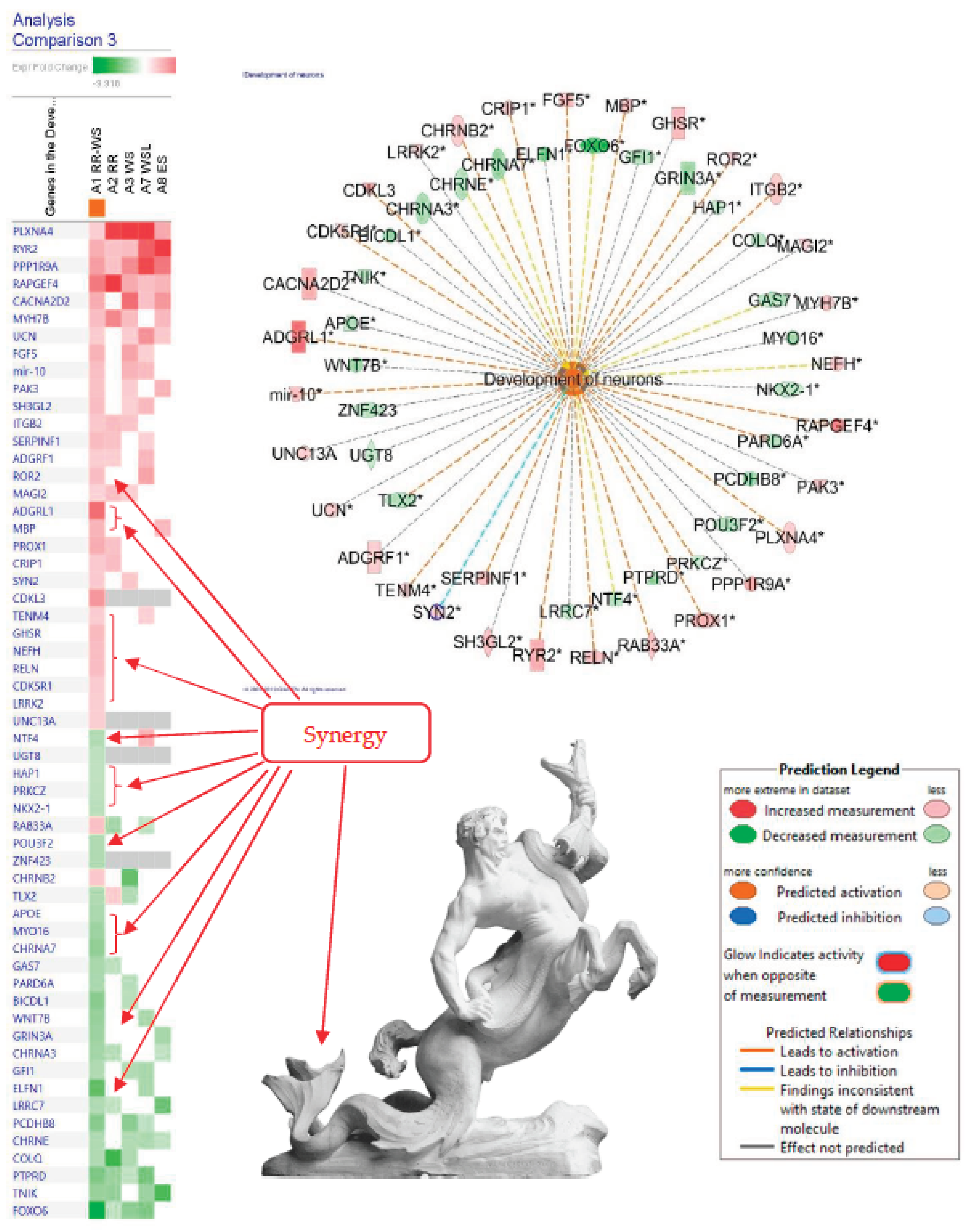
Figure 6.
Venn diagrams of deregulated genes induced by treatment of neuroglial cells with Rhaponticum cartamoides L. (RC), Eleutherococcus senticosus (RS), and Withania somnifera (WS) root extracts and their hybrid combination (RC-ES-WS). Values indicate the number of unique genes up- or downregulated by each extract alone and the number of deregulated genes that overlapped multiple extracts. Heatmaps of canonical pathways, cellular functions, physiological processes, and diseases activated (brown) and inhibited (blue) by treatment of neuroglial cells with WS, RC, ES, and the hybrid combination RC-ES-WS. Synergistic or antagonistic effects on canonical pathways, cellular functions, physiological processes, diseases, and gene expression associated with the pathway (e.g., dendritic cell maturation) can be observed by comparison of the effects of the hybrid substance RC-ES-WS with a lack of (or opposite) effects of individual extracts at a significance level of p < 0.05 (-log = 1.3) and a z-score > 2. Up-regulated genes are shown in red, while down-regulated genes are in green color. Authors' drawings adapted from free access publications [61].
Figure 6.
Venn diagrams of deregulated genes induced by treatment of neuroglial cells with Rhaponticum cartamoides L. (RC), Eleutherococcus senticosus (RS), and Withania somnifera (WS) root extracts and their hybrid combination (RC-ES-WS). Values indicate the number of unique genes up- or downregulated by each extract alone and the number of deregulated genes that overlapped multiple extracts. Heatmaps of canonical pathways, cellular functions, physiological processes, and diseases activated (brown) and inhibited (blue) by treatment of neuroglial cells with WS, RC, ES, and the hybrid combination RC-ES-WS. Synergistic or antagonistic effects on canonical pathways, cellular functions, physiological processes, diseases, and gene expression associated with the pathway (e.g., dendritic cell maturation) can be observed by comparison of the effects of the hybrid substance RC-ES-WS with a lack of (or opposite) effects of individual extracts at a significance level of p < 0.05 (-log = 1.3) and a z-score > 2. Up-regulated genes are shown in red, while down-regulated genes are in green color. Authors' drawings adapted from free access publications [61].
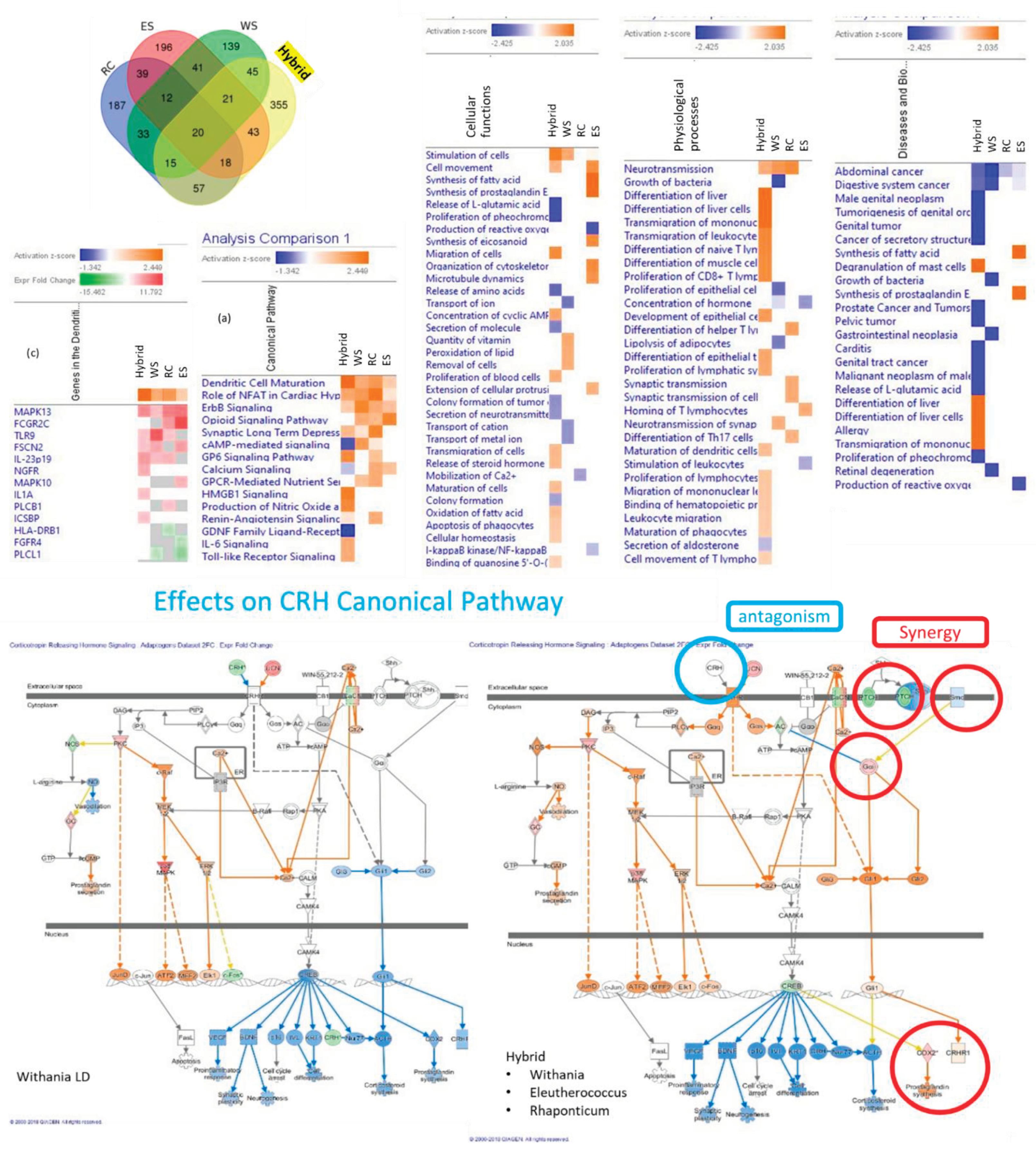
Figure 8.
Superior effect of the combination of Rhodiola with Black Cohosh on climacteric symptoms of woman and their quality of life. Open access to authors' publication [56] Copyright © 2020 Pkhaladze et al. This open-access article is distributed under the Creative Commons Attribution License, which permits unrestricted use, distribution, and reproduction in any medium, provided the original work is properly cited.
Figure 8.
Superior effect of the combination of Rhodiola with Black Cohosh on climacteric symptoms of woman and their quality of life. Open access to authors' publication [56] Copyright © 2020 Pkhaladze et al. This open-access article is distributed under the Creative Commons Attribution License, which permits unrestricted use, distribution, and reproduction in any medium, provided the original work is properly cited.
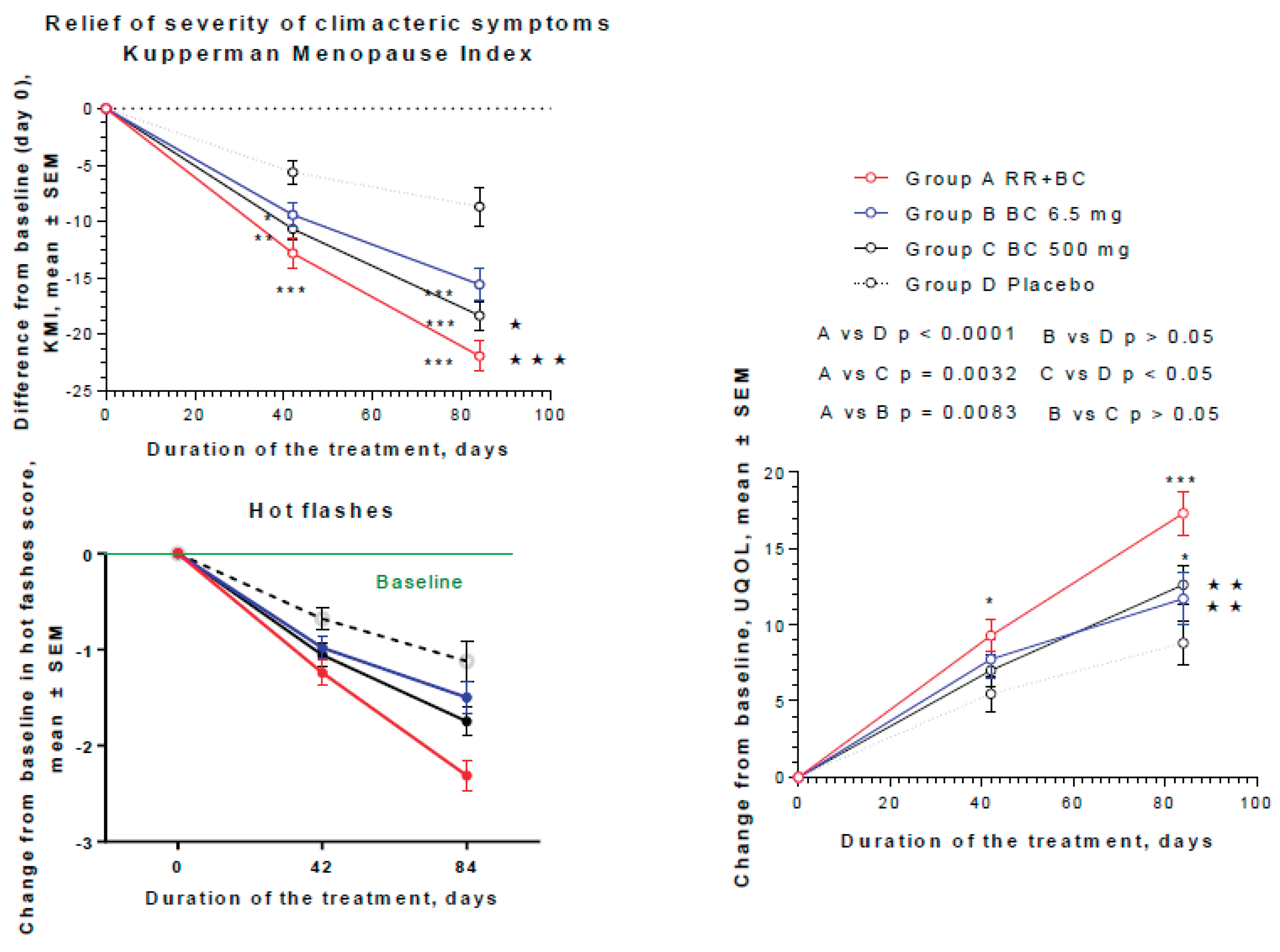

Table 1.
Effect of Rhodiola rosea (RR), Withania somnifera (WS), and their combination RR-WS (BHP Adaptra) on genes involved in the regulation of neuronal development.
Table 1.
Effect of Rhodiola rosea (RR), Withania somnifera (WS), and their combination RR-WS (BHP Adaptra) on genes involved in the regulation of neuronal development.
| Gene Symbol | Entrez Gene Name | Literature findings |
Prediction | Gene expression, fold change | ||
|---|---|---|---|---|---|---|
| RR-WS | RR | WS | ||||
| ADGRF1 | adhesion G protein-coupled receptor F1 | Affects (4) | Affected | 2.29 | 2.28 | |
| ADGRL1 | adhesion G protein-coupled receptor L1 | Increases (2) | Increased | 6.93 | ||
| APOE | apolipoprotein E | Affects (13) | Affected | -2.84 | ||
| BICDL1 | BICD family like cargo adaptor 1 | Affects (2) | Affected | -3.98 | -2.34 | |
| CACNA2D2 | calcium voltage-gated channel auxiliary subunit α2 δ2 | Affects (2) | Affected | 3.76 | 6.93 | |
| CDK5R1 | cyclin dependent kinase 5 regulatory subunit 1 | Increases (4) | Increased | 2.33 | ||
| CDKL3 | cyclin dependent kinase like 3 | Increases (3) | Increased | 4.82 | ||
| CHRNA3 | cholinergic receptor nicotinic α 3 subunit | Affects (2) | Affected | -3.09 | -2.45 | |
| CHRNA7 | cholinergic receptor nicotinic α 7 subunit | Increases (1) | Decreased | -3.74 | ||
| CHRNB2 | cholinergic receptor nicotinic β 2 subunit | Increases (8) | Increased | 2.45 | -5.20 | |
| CHRNE | cholinergic receptor nicotinic epsilon subunit | Increases (1) | Decreased | -2.65 | -2.59 | |
| COLQ | collagen like tail subunit of acetylcholinesterase | Affects (2) | Affected | -2.65 | -6.30 | -2.69 |
| CRIP1 | cysteine rich protein 1 | Increases (1) | Increased | 2.41 | 3.01 | |
| ELFN1 | extracellular leucine rich repeat and fibronectin type III domain containing 1 | Affects (1) | Affected | -5.31 | ||
| FGF5 | fibroblast growth factor 5 | Increases (1) | Increased | 3.52 | 4.23 | |
| FOXO6 | forkhead box O6 | Increases (3) | Decreased | -7.93 | -2.10 | -3.89 |
| GAS7 | growth arrest specific 7 | Increases (3) | Decreased | -2.85 | -2.26 | |
| GFI1 | growth factor independent 1 transcriptional repressor | Affects (1) | Affected | -2.65 | -2.59 | |
| GHSR | growth hormone secretagogue receptor | Affects (3) | Affected | 3.15 | ||
| GRIN3A | glutamate ionotropic receptor NMDA type subunit 3A | Decreases (4) | Increased | -3.33 | ||
| HAP1 | huntingtin associated protein 1 | Affects (1) | Affected | -2.21 | ||
| ITGB2 | integrin subunit β 2 | Increases (1) | Increased | 2.45 | 3.05 | 2.66 |
| LRRC7 | leucine rich repeat containing 7 | Affects (1) | Affected | -2.66 | -2.11 | |
| LRRK2 | leucine rich repeat kinase 2 | Affects (4) | Affected | 2.26 | ||
| MAGI2 | membrane associated guanylate kinase, | Affects (10) | Affected | 2.01 | 3.01 | 2.18 |
| MBP | myelin basic protein | Increases (1) | Increased | 3.48 | ||
| mir-10 | microRNA 100 | Increases (1) | Increased | 2.89 | 3.53 | |
| MYH7B | myosin heavy chain 7B | Affects (1) | Affected | 3.01 | 5.70 | 3.08 |
| MYO16 | myosin XVI | Affects (1) | Affected | -3.32 | ||
| NEFH | neurofilament heavy | Decreases (18) | Decreased | 3.02 | ||
| NKX2-1 | NK2 homeobox 1 | Affects (4) | Affected | -2.38 | ||
| NTF4 | neurotrophin 4 | Increases (5) | Decreased | -2.61 | ||
| PAK3 | p21 (RAC1) activated kinase 3 | Affects (4) | Affected | 2.86 | 2.36 | |
| PARD6A | par-6 family cell polarity regulator α | Decreases (2) | Increased | -2.84 | -2.39 | |
| PCDHB8 | protocadherin β 8 | Affects (1) | Affected | -3.97 | -3.89 | |
| PLXNA4 | plexin A4 | Increases (5) | Increased | 2.25 | 9.49 | 10.97 |
| POU3F2 | POU class 3 homeobox 2 | Affects (4) | Affected | -2.65 | ||
| PPP1R9A | protein phosphatase 1 regulatory subunit 9A | Affects (6) | Affected | 4.51 | 2.85 | 5.38 |
| PRKCZ | protein kinase C ζ | Decreases (2) | Increased | -2.23 | ||
| PROX1 | prospero homeobox 1 | Increases (1) | Increased | 3.76 | 2.85 | |
| PTPRD | protein tyrosine phosphatase, receptor type D | Increases (3) | Decreased | -4.32 | -3.42 | -2.11 |
| RAB33A | RAB33A, member RAS oncogene family | Increases (1) | Increased | 2.81 | -3.11 | |
| RAPGEF4 | Rap guanine nucleotide exchange factor 4 | Increases (2) | Increased | 6.31 | 11.27 | 3.92 |
| RELN | reelin | Increases (9) | Increased | 3.01 | ||
| ROR2 | receptor tyrosine kinase like orphan receptor 2 | Increases (5) | Increased | 3.01 | ||
| RYR2 | ryanodine receptor 2 | Increases (2) | Increased | 3.75 | 2.85 | 3.07 |
| SERPINF1 | serpin family F member 1 | Increases (1) | Increased | 3.04 | 2.88 | |
| SH3GL2 | SH3 domain containing GRB2 like 2, endophilin A1 | Affects (2) | Affected | 3.02 | 2.16 | |
| SYN2 | synapsin II | Affects (3) | Affected | 2.41 | 2.56 | |
| TENM4 | teneurin transmembrane protein 4 | Increases (3) | Increased | 2.25 | ||
| TLX2 | T cell leukemia homeobox 2 | Decreases (2) | Increased | -2.64 | 2.39 | -2.59 |
| TNIK | TRAF2 and NCK interacting kinase | Affects (1) | Affected | -3.53 | -3.60 | |
| UCN | urocortin | Affects (1) | Affected | 2.35 | 2.38 | |
| UGT8 | UDP glycosyltransferase 8 | Affects (2) | Affected | -2.21 | ||
| UNC13A | unc-13 homolog A | Affects (2) | Affected | 2.25 | ||
| WNT7B | Wnt family member 7B | Affects (2) | Affected | -3.54 | ||
| ZNF423 | zinc finger protein 423 | Affects (4) | Affected | -2.66 | ||
* Development of neurons predicted to be increased (z-score -2,87). Overlap p-value 7.29 × 10⁻³. ** Prediction is based on measurement direction and literature data: 22 of 57 genes deregulated by RR-WS have measurement direction consistent with an increase in the development of neurons *** 25 Genes (in red color) deregulated due to synergistic interactions of RR and WS in the fixed combination Adaptra are in red text.
Table 2.
Clinical studies of BHP of Rhodiola with other plants.
| Reference/year | BHP name, ingredients |
Condition | Population (n)/ country |
Dosage and active markers |
Daily dose and duration of treatment (days) |
Study design** and comparator |
Result and outcomes |
|---|---|---|---|---|---|---|---|
| Dye et al., 2020 |
Mg-Teadiola: Rhodiola rosea L. + Camelia chinensis [L.] Kuntze + Mg + vitamins B6, B9, B12+L-theanine |
Acute social stress | 100 (25+25+25+25) Healthy, moderately stressed (DASS score: 13–25) |
125 mg of IC dry extracts of Camellia sinensis L. leaf containing 50 mg L-theanine, and 222 mg of IC Rhodiola rosea L. root extract (corresponding to 1,887 mg plant), And Mg (150 mg elemental) + vitamins B6 (0.7 mg), B9 (0.1 mg), B12 (0.00125 mg)]. One tablet of Mg- Teadiola® contains 150 mg of Mg, 0.7 mg of vitamin B6, 0.1 mgof vitamin B9, and 1.25 g of vitamin B12, and 222 mg of Rhodiola rosea rhodiola dry extract and 125 mg of green tea extract including 50 mg of L-theanine |
Single dose One tablet |
DB-R-PC-PG, Placebo Capsules Tablets |
Subjective stress (stress and arousal), Mood (profile of mood states) TSST |
| Boyle et al., 2021 | Mg-Teadiola | Acute social stress | 25+25+25+25 Healthy, moderately stressed (DASS score: 13–25) |
DB-R-PC-PG, Placebo Capsules tablets |
TSST Spectral theta brain activity associated with cognitive task performance. Salivary cortisol, cardiovascular parameters (BP, HRV) |
||
| Boyle et al., 2022 | Mg-Teadiola | Acute social stress | 25+25+25+25 Healthy, moderately stressed (DASS score: 13–25) |
DB-R-PC-PG, Placebo Capsules tablets |
TSST Spectral theta brain activity, attentional capacity |
||
| Noah et al., 2022 | Mg-Teadiola: | Chronic negative emotional states | 49+51 Healthy, moderately stressed (DASS score: >14) |
One tablet daily for 28 days |
R-PC-PG, Placebo Tablets |
Stress, anxiety, depression, sleep, cortisol | |
| Noah et al., 2022 | Mg-Teadiola | Thermal stimulation | 20+20 Healthy, moderately stressed (DASS score: >14) |
R-PC-PG, Placebo tablets |
blood-oxygen-level-dependent (BOLD) signal, stress, anxiety, depression, and sleep, cortisol |
||
| Bangratz et al.2018 |
Rhodiola + Crocus sativus L |
Depression | 45 | 308 mg Rhodiola and 30 mg Crocus |
42 days | OL | |
| Al-Kuraishy, 2015 |
Rhodiola + Ginkgo |
cognitive function | 112 (27+25+30+30) |
R. rosea capsule 500 mg/day, G. biloba capsule 60 mg/day (standardized to contain 24% Ginkgo flavone glycosides) |
10 days | R-PC-PG, Placebo capsules |
Short-term working memory accuracy test (Computerized N-back test) psychomotor vigilance task |
| Liu et al., 2023 |
Rhodiola + caffeine |
physical performance in resistance exercise | 48 (12+12+12+12) Resistance exercise-trained and untrained healthy subjects |
RHO (2.4 g) and CAF (200 mg; 3 mg/kg)/caps 12 mg rhodioloside |
30 days | R-GB-PC-CO Placebo |
Muscle strength and muscular endurance |
| Earnst et al., 2004 | Rhodiola rosea + Cordyceps sinensis | exercise performance | 17 healthy subjects |
1000 mg Cordyceps sinensis + 300 mg RR 3.0% rosavins and 2.5% salidroside |
6 capsules/day 4 days, then a maintenance dose of 3 capsules/ day for 11 day |
R-DB-PC placebo |
No significant difference between or within groups |
| Coulson et al., 2005 | Rhodiola rosea + Cordyceps sinensis | Exercise performance | 8 | 1000 mg Cordyceps sinensis + 300 mg RR 3.0% rosavins and 2.5% salidroside |
6 capsules/day 4 days, then a maintenance dose of 3 capsules/ day for 7 day |
R-DB-PC placebo |
After the pre-post endurance test no significant difference between intervention and placebo in muscle tissue oxygen saturation; no significant (p </= 0.05) differences in ventilatory threshold (V(T)), or time to exhaustion (T(E)) between or within the treatment or control group. I |
| Kriepke et al., 2020 |
Rhodiola rosea + Cordyceps sinensis + blend of other 11 adaptogens |
Exercise performance | 10+11 | NS | 14-week | R-DB-PC placebo |
No significant difference between or within groups |
| Dieamant et al., 2008 |
Rhodiola rosea + L-carnosine |
Aging skin | 62+62 | 1% of RCAC topical | 28 days | DB-PC placebo |
protective effect of RCAC on skin barrier function and the positive response produced in human subjects with sensitive skin |
| Pkhaladze et al.,2020 |
Menopause Relief EP®: Rhodiola rosea EPR-7® (RR) + Actaea racemose EP40®, (Black Cohosh, BC) |
Menopausal complaints | 220 elderly woman (55+55+55+55) |
Menopause Relief EP® capsules, 206.5 mg, containing 200 mg R rosea rhizome extract EPR-7® and 6.5 mg of A. racemose rhizoma dry extract, EP40®, |
2 capsules /day for 84 days |
R-DB-PC-PG Placebo BC 6.5 mg BC 300 mg |
BC is more effective in combination with RR in the relief of menopausal symptoms, particularly psychological symptoms. Kupperman Menopausal Index (KMI), Menopause Relief Score (MRS), and menopause Utian Quality of Life (UQOL) index |
| Narimanian et al., 2005 |
ADAPT-232 (Chisan®): Rhodiola rosea + Schisandra+ Eleutherococcus |
Acute nonspecific pneumonia |
60 (30+30) | BHP of extracts from roots of R. rosea L. (27.6%), from berries of S. chinensis (51.0%), and from roots of E. senticosus (24.4%), standardized to contain: 0.068 mg/ml salidroside, 0.141 mg/ml rosavin, 0.177 mg/ml shisandrin, 0.105 mg/ml gamma-shisandrin, eleutherosides B and E (0.0 11 and 0.027 mg/ml). |
40 ml (20+20), 10-15 days |
R-DB-PC-PG placebo |
Adjuvant therapy with ADAPT-232 decreased the duration of patients’ recovery time and the acute phase of the illness. It also increased the mental performance of patients in the rehabilitation period and improved their quality of life (QOL). Duration of antibiotic therapy, psychometric tests, and the QOL. |
| Schutgens et.al., 2009 |
ADAPT-232: Rhodiola rosea + Schisandra+ Eleutherococcus |
Ultraweak Biophoton Emission |
30 (10+10+10) Healthy subject experienced levels of stress and of fatigue (tiredness) |
One tablet (456 mg) including 140 mg of the proprietary blend ADAPT-232) contains 0.5% schisandrin, 0.47% salidroside, 0.59% rosavin, 0.11%. One Rhodiola tablet (456 mg) including 144 mg SHR-5 extract contains 2.3% salidroside, 0.4% p-tyrosol and 2.7% rosavin |
Two tablets 7 days |
R-DB-PC-PG Placebo Rhodiola rosea |
ADAPT-232 and Rhodiola rosea (SHR-5)) were able to reduce photon emission; however, only Rhodiola rosea (SHR-5) significantly reduced photon emission compared with the placebo group. Rhodiola, but not ADAPT-232, reduced fatigue. |
| Aslanyan et al., 2010 |
ADAPT-232 (Chisan®): Rhodiola rosea + Schisandra+ Eleutherococcus |
Stressful cognitive tasks (Stroop Colour-Word test and the d2Test of attention, fatigue | 40 (20+20_ Healthy women felt stressed over a long period of time by virtue of living under psychologically stressful conditions |
One capsule of ADAPT-232S contained 0.5 mg of salidroside, 1.0 mg pf Schizandrin and 0.35 mg of Eleutherosides B and E, |
Single dose One tablet |
R-DB-PC-PG placebo |
Significant improvement in attention and increase in speed and accuracy during stressful cognitive tasks in comparison to placebo Mental performance (attention, speed, and accuracy), arterial blood pressure, and heart rate |
| Karosanidze et al., 2022 |
ADAPT-232 (Chisan®): Rhodiola rosea + Schisandra+ Eleutherococcus |
Long COVID-19 | 100 (50+50) patients with Long COVID symptoms | One daily dose (2x30 mL oral solution) contains 180 mg extract of R. rosea rhizome, 600 mg of S.chinensis berry, and 156 mg of E. senticosus radix extracts | 60 ml 30 days |
R-QB-PC-PG Placebo |
There was a significant increase in physical performance and recovery in Long-Term COVID patients; the duration of fatigue and chronic pain decreased; and the severity of all Long-Term COVID symptoms was relieved. Duration of symptoms of Long COVID. |
| Hovhannisyan et al., 2015 |
ADAPT-232S:Rhodiola rosea + Schisandra+ Eleutherococcus |
exercise performance |
215 (92+55+68) healthy athletes aged 18-35 |
One capsule of ADAPT-232S contained 0.5 mg of salidroside, 1.0 mg pf Schizandrin and 0.35 mg of Eleutherosides B and E, , |
2 capsules x 2 times a day, 30 days |
R-DB-PC-PG Placebo |
ADAPT-S and ADAPT-232S, increase physical performance and the recovery of athletes after heavy physical and emotional loads. They significantly decrease inattention, impulsivity, and the perception of stress, reduce fatigue, increase the anabolic index, and have excellent tolerability profiles. |
|
ADAPT-S: Rhodiola rosea + Schisandra+ Eleutherococcus+ Rhaponticum |
One capsule of ADAPT-S contains 1.5 mg of salidroside, 1.0 mg pf Schizandrin and 0.35 mg of Eleutherosides B and E, and 1.5 mg of 20-hydroxyecdisterone |
The effects of ADAPT-S were superior in respect of anabolic index, blood testosterone, and physical performance index. The results of this study suggest that ADAPT-232S and ADAPT-S might be useful for athletes' recovery after exercising and for preventing the symptoms of overtraining. ADAPT-S was most effective in sports disciplines where high coordination during physical fatigue (wrestling and long jump) is essentially required. |
* R - randomized, OL - open-label, PC- placebo-controlled, DB -double-blind, SA - single-arm, PG - parallel groups, CO – crossover, SC – sufficiently characterized herbal preparations, IC – insufficiently or purely characterized herbal preparations, NS-not specified. ** - ↑augment, ↓reduce, Ø no changes compared to control.
Disclaimer/Publisher’s Note: The statements, opinions and data contained in all publications are solely those of the individual author(s) and contributor(s) and not of MDPI and/or the editor(s). MDPI and/or the editor(s) disclaim responsibility for any injury to people or property resulting from any ideas, methods, instructions or products referred to in the content. |
© 2024 by the authors. Licensee MDPI, Basel, Switzerland. This article is an open access article distributed under the terms and conditions of the Creative Commons Attribution (CC BY) license (http://creativecommons.org/licenses/by/4.0/).
Copyright: This open access article is published under a Creative Commons CC BY 4.0 license, which permit the free download, distribution, and reuse, provided that the author and preprint are cited in any reuse.


