

Submitted:
08 March 2024
Posted:
13 March 2024
Read the latest preprint version here
Abstract
Abstract: Due to sever land degradation throughout Ethiopia, the government has been implementing massive soil and water conservation works at the watershed scale since 2010 to conserve soil and water resources. However, most of the rivers in Ethiopia carry huge amount of sediment in the rainy season and streams dried up in the dry period. Planned research was conducted on two paired micro-catchments of Mt.Yewel with the main objective of evaluating the impact of soil and water conservation measures on base flow modification. Stream flow and rainfall data were collected from 22/11/2020 to 8/11/2022 on both micro-catchments at their outlets and center respectively. Base flow separation was done using Sp. Hydro base flow separation tool and SPSS Ver.21 statistical software was employed for data analysis. Flow duration curve (FDC) for both watersheds were developed. The FDC indicated that the base flow from treated micro-catchment is higher and sustained in the dry season while it is low and un-sustained in untreated micro-catchment. From statistical analysis, there is a significant difference in base flow enhancement between the treated and untreated micro-catchment (P<0.001). Hence, catchment treatment contributed to improve groundwater recharge and sustain base flow in the dry season by reducing surface runoff during rainy season.
Keywords:
Soil and water conservation
; micro-catchments
; base flow
1. Background
Land degradation is the principal environmental problem in Ethiopia in the form of sever soil erosion, gully formation, soil fertility loss ( [1,2,3,4]which is caused by human intervention for food, shelter and energy demands [5,6,7]. Soil erosion contributes to the loss of the precious soil resources [6,8,9] which are the basis of agricultural production and provides numerous other ecosystem services. The Ethiopian highlands are one of the most degraded regions in the world [1,3,4,10,11,12] . Land, water, forest and biodiversity are being degraded and destroyed at an alarming rate [13,14,15,16]resulted in degradation is becoming a major constraint to future growth and development in the highlands of Ethiopia [17,18] . Anthropogenic activities such as intensive and uncontrolled grazing, deforestation and burning of biomass and intensive cultivation are main factors which trigger soil erosion [1,19]. Today almost all rainfed farmlands are cultivated using an old, traditional, and primitive soil, water, and crop management practices [20] that leads to sever land degradation. Sever land degradation is common in the north and northeastern highlands of Ethiopia. Soil erosion by water is the most common type of soil erosion in Ethiopian highlands [6,19] which is more aggravated by slope steepness, climate, mineral mining types of cultivation practice and overgrazing [3,21,22] that make the soil less productive, [19,21,23]. Erosion hazard affects not only crop productivity but also causes the change in physical properties of the soil such as texture, infiltration rate, bulk density, water holding capacity in the root depth [6]. This is due to reduced soil depth. Reduced soil depth associated with steep slopes will result in high flood hazard in the rainy season and drying up of most of the streams and springs in the dry periods that has contributed to low water availability for the community for different purposes. As a result, local communities have to travel a long distance to access water for domestic consumption, livestock, and irrigated agriculture. Recurrent drought occurring at about three years return interval [24] leads to total yield losses of crops. Such conditions are more worsened in the highland areas of Eastern Amhara and Tigray regions.
Hence, rainfed agriculture in the highlands of Ethiopia faced multidimensional problems. The most important problem of the rainfed agriculture is moisture deficits that extend up to the highlands where annual rainfall is assumed to be sufficient for annual crop production in terms of quantity [25], but the distribution is so erratic that the rainfall couldn’t support crop production. Water deficit being the biggest limiting [26] and the greatest challenging [27] factor for sustainable agricultural development in Ethiopia, it is a crucial issue in areas prone to recurrent droughts, like Tigray and eastern Amhara highlands.
Irrigation is considered as a means to reduce moisture deficit problems in Ethiopia, including the highlands. But due to high direct runoff and low recharges, stream flows in the dry season (base flows) are in a decreasing trend. Different interventions, including soil and water conservation interventions, were implemented in different parts of the country to solve the water deficit problems on the highlands. Soil conservation measures are the most common techniques recommended for converting excess rainwater(runoff) into soil moisture and groundwater reserve in order to achieve sustained base flow in dry season. Converting runoff into groundwater reserve using different interventions is, therefore, an advisable approach in catchment-based water management [4,19].
Using a watershed-based approach to enhance soil and water conservation and increase the groundwater level in the valley bottoms for easily accessing the groundwater reserve for different purposes. Groundwater in Ethiopia can also be used for irrigation in multiple ways, such as deep and shallow wells from underground aquifers [28]. Ground water can be utilized from dry period stream flows and springs. Currently farmers are using rainwater harvesting to irrigate their lands. Compared with other sources of irrigation, groundwater from dry period stream and spring flows for agricultural development offers a number of advantages. The problem is water storage systems. Harvesting rainwater insitu and in the farm ponds need technical know-how. Different studies indicated that land use practices at watershed level could influence groundwater response of the given stream flow. It is generally found that SWC measures can reduce surface runoff [29] and improve groundwater recharges. Reference [30] explained that soil and water conservation measures in general retard the surface run off and lowers flood peak during the rainy season and improve base flow in the dry period.
Noted moisture deficit problems at Mt.Yewel, Wollo University support by UNEP, started small studies and development activities on some of the micro-catchments of the mountain since 2011. Physical and biological Soil and water conservation measures were implemented to reduce surface runoff and improve base flow and groundwater recharge in the study area. Degnu, one of the micro-catchments at Yewel mountain, is being treated with soil and water conservation (physical and biological) measures since 2011 (starting before ten years). Amanuel is almost untreated micro-catchment, though small touch on the right periphery, the treated part is not significant. Nonetheless, the hydrological response to land management practice is not yet quantified [1] and are not well-documented [31]. Thus, the amount of runoff reductions and base flow modifications, due to catchment treatment, are not well known in the study area. Thus, there is a necessity to determine and calculate the baseflow component of the streamflow data [32] and compare the hydrological responses to the catchment treatment between the paired micro catchments of Mt.Yewel.
The need, therefore, arises to conduct planned research to evaluate and compare the hydrological responses to soil and water conservation between two paired micro-catchments with the specific objective to evaluate the impact of soil and water conservation measures on base flow enhancement.
2. Methods
2.1. Description of the Study Areas
The study was conducted on two pared micro-catchments, Amanuel and Degnu that are part of Mt.Yewel in the Northeastern highlands of Ethiopia. Geographically Degnu lies from 10050′ 00” to 10052,10” N, and 39026,20” to 39027,23” E with an altitude range of 2860 to 3160 m. a.m. l., and Amanuel micro-catchment extends from 10050′ 23” to 10052′07” N and 39025′37” to 39026′30” E with an altitude range of 2880 to 3260 m.a.s.l.
2.2. Catchment Characterization
When comparing hydrologic responses, we assumed that watersheds located in the same or similar agrological zone, have closely related landscape descriptors and, may therefore, have comparable hydrologic responses. The major descriptors are listed here to look at how much difference between the two micro- watersheds in the study area is. A list of the selected watershed parameters like drainage area and pattern, topography, morphology, and other important parameters pertinent to hydrologic response are shown in Table 3.
Drainage pattern and Topography: The drainage pattern of Mt. Yewel is radial and dendritic pattern with 3rd stream order while both of the study micro-catchments have similar dendritic drainage pattern with 2nd level of stream order. Drainage pattern and streamlines were generated from DEM_30 using GIS 10.5 with ground truthing.
Topography: The landforms and slope classes were generated from DEM_30 using GIS 10.5 computer program for both micro-catchments. The landform in both cases includes a rolling plain at the bottom, and hilly slope near to the upper part. In the case of Degnu micro-catchment, the upper part is V-shaped valley being steeper on the right side.
Catchment Morphology: The rate and volume of stream flows as well as associated sediment yield from the watersheds do have strong relations with shape, size, slope, and other parameter indices of the landscape [33]. These suggest that there are some important relations between basin morphology and hydrologic responses. If the watershed and hydrologic characteristics are to be related, the watershed form must also be represented by quantitative indices. These indices for the study sites are generated from measured parameters. Some of the parameters were calculated from measured data extracted from the maps in both micro-catchments using GIS10.5 computer software. However, some parameters were found by simple measuring or counting on the topographic maps of scale 1:50,000. Brief descriptions of most important watershed forms and relief parameters are presented the Table 3.
Land use/ land cover and slope classes: The land uses of both research sites are entirely agriculture land with dominantly cultivated areas. The two micro-catchments do have similar patterns in their land use/cover. Cultivated areas are on the upper steeper parts in both cases while grazing lands in the lower flatter parts. Scattered trees exist around the farmlands in both the micro-catchments. Gullies also exist in both treated (Degnu) and untreated (Amanuel) micro-catchments. Scattered villages also do exist in both micro-catchments.
The dominant land use/cover is about 66 % cropping lands at Amanuel and 70% at Degnu having slightly higher cropping land proportion at Degnu but there is no significant difference (p=0.475) between them. The dominant slope class falls in the range of 15 to 30 % in both micro-catchments (43.61% at Amanuel and 44.70% at Degnu micro-catchments). However, the difference is not significant (p=0.213) at 95% confidence interval.
Soil: The dominant textures identified by hand feel method in both catchments are clay loam on the upper and clay on the lower parts. Soil depth in both the micro-catchments range from deep to very deep(>150cm) in lower part and medium to shallow(<25cm) soil at the upper part of the micro-catchments. Climate: According to Hailu et al. (2015) 30-year climate data (1981-2012) obtained from Ethiopian National Meteorology Authority recorded at Kabe metrological station (just few kilometers from the research sites) indicated that the mean annual rainfall of the area is about 866.5 mm. The maximum amount of rainfall is observed in the month of July followed by August. In this research period, daily rainfall data were recorded on both the study sites for the whole research period using simple raingauge. The total rainfall recorded at the micro catchments for this research period were 812.70 and 833.7 mm at Amanuel and Degnu respectively. Based on long-term average data (1992-2012), the mean minimum and maximum annual air temperatures of the area (Kabe) are 8.6 and 19.1⁰ C respectively [34].
Area Coverage of SWC measures: Different physical soil and water interventions were implemented at Degnu micro-catchment since 2011. These include soil bunds, stone-faced soil bunds and loose stone check dams. They are the most dominant conservation practices implemented at Degnu. Stone-faced soil bunds were constructed where there were more stones, and soil bunds were constructed where there were no stones for bund construction. Bund constructions in general were done top-down approach (down the slope). when evaluated from Ethiopian standards points of view, like vertical interval which was fixed to be 1m in the most of Amhara region, bund width, height, spacing, and size of the trench, it was by far below the recommended values or regional standards. Of course, in some parts of the micro-catchment, the vertical interval is 1m while in most part of the watershed is more less1m. The width of the bunds and trench sizes should have to be fixed based on the calculated surface runoff amount generated from the area between the bunds, but it was not done as per the calculated surface runoff amount.
Generally, all the sizes were not as per the recommended standards. Trench sizes are affected by sediments deposited due to surface runoff between the bunds. Because of the lack of maintenance, trenches are silted up with eroded sediments from upstream of the bunds resulting in reduced trench size.
Grass strips were also established as biological measures at Degnu micro-catchment for bund stabilization, and they are considered to be the most effective measure in arresting the sediment outflow from the catchment, reducing runoff and improving infiltration. For this micro-catchment, exotic and local grasses were planted on and below the bunds to assist the performance of the bund to trap the sediment and improve infiltration and reduce surface runoff. However, currently most of the grasses are grazed by cattle in the dry periods that have affected their primary functions.
Forage trees were another biological intervention implemented at Degnu that was designed to assist physical measures to control erosion hazard and to be used as a fodder for animals. It is assumed to be the second-best measure, next to grass strips, to reduce surface runoff, to trap the sediment, and to improve infiltration. At present, forage trees are becoming bush with less impact on ground cover to reduce surface runoff and sediment yield.
Terrace density: Terrace density over both the micro-catchments were determined from Google Earth Image of 2021 “on screen digitizing” method. Digitized lines were converted into layer to make it shape file and be compatible in GIS interface. From digitized data, more terraces were observed at Degnu micro-catchment than Amanuel. However, Amanuel received some treatment at the upper left periphery of the catchment, but it is not significant (Figure 2).
Areal coverage of physical measures: Physical soil and water conservation measures at Degnu covers about 47.21% of the total area and 53% of the total cultivated lands with few biological interventions on the bunds. Biological measures are so scant that they are not considered as conservation measures that bring impact on base flow modification. Physical measures area coverage at Amanuel is about 6.91% which is about 9.23% of the total cultivated lands. To make the comparison compatible, normalization (Conservation measure area coverage in percent) was made. After normalizing the data, a comparison was made to see the significant difference between the two micro-catchments. The result showed that there is high significant difference(P<0.01) in terraced area coverage between the two micro-catchments. Physical measure area coverages are indicated in Figure 2.
2.3. Data Collection (Sampling) Methods
2.3.1. Flow Measurement
Stream gauging stations were established at the outlet of both micro-catchments to measure stream discharges (surface runoff and base flow). Stream flow data were collected from 22/11/2020 to 8 /11/2022 with some interruption from 25/9/2021 to 4/01/2022 due to the prevailing civil war in the area. Broad crest weir made from masonry wall, as wide as the stream outlet, was constructed across the outlet of both streams in such a way that all the stream flow was guided to pass through it. The impermeable bedrock, close to the land surface at the catchment outlet, is assumed to prevent groundwater outflow below the weir. Thus, all the surface flow from the micro-catchments leaves the area as stream flows over the weir. Wooden staffs, on which steel meter was fixed, was used to measure the depth of water over the weir vertically. The water depth over the weir was measured every morning at 8:00 A.M for the whole research period when there is no rainfall. In the rainfall events, measurement was delayed until the rain stopped.
The depth of water in the driest periods was very small that made measurement over the weir difficult. To measure such small flow, smaller weirs (0.4m width and 0.2m height) were constructed on both catchment outlets across the rivers just below main weir sites. Moreover, in some few months, the flow at Degnu was so small that the depth of water even over the smaller weir was very small to measure the depth of flow. In such cases, volumetric method was used. The known volume of plastic bucket was inserted below the weir and the time elapsed to fill this bucket was recorded. The volume was finally converted into discharges by dividing the volume bucket to the time taken to fill that bucket.
The depth of water over the weir was also converted to discharge based on the known weir formula [35] given by: , Where: Q = discharge (m3/s), B= Width of the weir crest, length equal to the bottom width(m), d = upstream head (water depth) measured from the bottom(m), C=discharge coefficient(unitless). Some literature assumed C to be 1.705 for broad crested weirs and use broad crested weir calculator developed by Rahul Dhar and modified by Steven wooding in 2023. But most researcher recommend using the calculated coefficient of discharge developed by Hager and Schwalt in1994, C =1.0929* [1-, where C = Coefficient of discharge, H1 = water height at the approach channel, ΔZ= Weir height, Lcrest = Length of weir along the flow direction.
2.3.2. Abstractions
The major abstractions that made significant volumes to affect the stream base flow were measured on daily basis to calculate the volume of water withdrawn from the catchment by pumping, or any form of abstraction for domestic water supply or irrigation purposes. The major abstractions were the major spring for domestic water supply at Degnu (Beshintie got) and Night storages along the Degnu mainstream for irrigation purposes.
Spring flows: Beshintie spring was one of the major springs currently serving domestic water supply for more than 60 HH at Degnu micro- catchment that has significant volume to affect the base flow patterns of the mainstream. Spring flow in this catchment was measured using volumetric method every 8:00 A.M. Known volume of bucket was inserted at the bottom of the spring and the time taken to fill this volume was recorded. The volume in liters per elapsed time in seconds gave us the discharge of the spring in liter per second.
Night storages: Night storages are other abstractions /water withdrawal from the catchments. Night storages are used to collect water at night, because the stream flows in the daytime is not sufficient to irrigate the crop lands by diverting only the daytime flows. Thus, collecting the night flow was common practice in the study areas. There are five-night storages at Degnu and one at Amanuel. Area of the night storages and average water depth were measured. The water depth multiplied by the average area gave us volume of water in the night storages. Because the night storages are used for 24 hours, the discharges were calculated by dividing the volume of night storage to the elapsed time in seconds (24 hours converted to seconds). Finally, the total base flow was calculated by summing up the mainstream flow, spring flow and night storage volume converted to discharges.
2.3.3. Base Flow Separation Method
Hydrograph is composed of two components, namely surface runoff (quick flow) and baseflow. Baseflow is the long-term discharge into a stream from natural storage, such as groundwater [36]. As discussed in [37,38] it is practically difficult to separate the two components of the stream flow. Different researchers develop several methods in order to interpret the portion and contribution of baseflow to stream flow of the river. Base flow separation is very complex process (in large catchments due to different multitude of factors such as some catchments are dominated by topography, others by subsurface (soils and geology) characteristics and some others by spatial variations in rainfall inputs [38].
Chemical tracers and stable isotopes are cited in many literatures as a best method for base flow separations, but they all require extensive time and manpower resources for field measurements [32,38,39]. However, numerous non-tracer-based methods have been developed to estimate baseflow from streamflow without field measurements, such as graphical analysis methods, numerical simulation methods, and digital filter methods [32].
Reference [32]suggested that the baseflow separation method based on a digital filter is a simple method with appropriate filter parameters. However, there is no one best method universally accepted method for all stream flows to precisely separate the base flow [40] because of the differences in input and filter parameters. But each has its own advantages and disadvantages.
Moreover, stream flow is governed by watershed parameters including size, slope land use /cover etc []. Reference compared LH, Chapman, Eckhardt, CM, and EWMA methods for base flow separation and selected EWMA and LH because they need less number of parameters to separate the baseflow from the streamflow time series data with reasonable accuracy while fixed interval, sliding interval, local minimum, Baseflow Index and Frequency Analysis were compared by and fixed interval was selected as best method for base flow separator of stream hydrograph.
In this study, base flow separation methods were identified in step wise approach i.e in two steps. In the first step of base flow separation-method selection, twelve (Fixed Interval, Sliding Interval, Local Minimum, Lyne & Hollick, Chapman, Eckhardt, TR-55, Szilagyi, Boughton (AWBM 1993), Furey & Gupta, Chapman & Maxwell (1996) and Chapman & Maxwell) methods were compared in Sep Hydro- software. Stream flow at the driest time was taken as a base flow of the stream hydrograph and was used as control or standard [38] for base flow separation method comparison. Having had the control base flow, the 12 base flow separation methods were evaluated with the criteria of base flow index (BFI) given by BFI = . Based on base flow index (BFI), the first three methods (Fixed interval, sliding interval and Local minimum) showed BFI greater than 92%.
In the second step of base flow separation method selection, the aforementioned methods were compared. Among the methods compared in the second step, Fixed interval was better in the base flow separation in both micro-catchments in wet as well as dry seasons. When mean from both micro-catchments are taken, Fixed Interval (94.3%) showed a better BFI ratio than the other two followed by Sliding interval (93.6%) and Local minimum (92.7%). Moreover, all of these methods use single filtering parameter and internally processing the input data using the known empirical formula for base flow separation given by D=where D= the number of days between the storm crest and the end of quick flow and, A= drainage area(km2). Fixed Interval is one of the best methods selected by [37] in baseflow Separation of 8 Watersheds in East Java Regions. The Fixed interval method provides a good estimation of the rising limb of the hydrograph while sliding interval and Local Minimum methods underestimate the baseflow [39].
In this study, Fixed Interval, which is in agreement with [37], and was selected as the best method and adopted for base flow separation in both the micro watershed (Degnu and Amanuel).
Fixed Interval method is one of the three methods developed by Pettyjohn and Henning in 1979. The method systematically draws connecting lines between the low points of the streamflow hydrograph to determine the baseflow hydrograph. The low points of the streamflow hydrograph are determined using a fixed window of specified width (i.e., equal to a set number of streamflow readings in the source dataset). All baseflow values in a given interval or window are set to the minimum streamflow value in that respective interval [39]. The window width is the nearest integer between 3 and 11 that is equal to 2D, where D is empirically determined as: D=, D - number of days after which runoff ceases; A - drainage area [km2]
2.3.4. Normalization
In comparing hydrological response of pared micro-watersheds, variables should be in similar context. Hydrological variables are separated base flows of the pared micro-catchments (Amanuel and Degnu). In many applications of data-driven models, the hydrological variable to be supplied for the model should be set in proper inputs structures [42]. In this study, micro-catchments (Amanuel and Degnu) vary in size that affect the volume of base flow discharges generated. However, comparing small catchments is better than comparing large catchments for they create more variability because of the differences in catchment parameters. Thus, unlike large watersheds, small watersheds show a high degree of homogeneity in landscape descriptors [41]. Because large watersheds experience uneven rainfall distribution that often leads to an uneven runoff distribution [43]. This can be explained by the fact that small watersheds tend to receive a more evenly distributed rainfall, and thus their hydrologic response reflects that uniformity in rainfall distribution [41].
Hence, the hydrological variables (base flow discharge) of the two micro-watersheds need to be normalized to compare the hydrologic responses. After normalization, all the base flows from both micro-catchments were calculated (specific base flows in l/s) and compared to see the difference of the base flows in response to soil and water conservation measures.
2.4. Data Analysis
Measured Base flow on both micro-catchments were analyzed using SPSS. version 21 computer program. Student T-test was done for paired mean comparisons to see the significant difference between the means of measured base flows whether the catchment treatments could enhance the base flow or not. Data analyses on base flows were made after partitioning the specific base flows into wet and dry season base flows.
3. Result and Discussion
In the first year of data collection, the specific base flow of Degnu micro-catchment was larger and continued to be higher until it was intercepted by Belg (Monsoon) rainfall in May 2021. However, the base flow of both streams become decreasing and approached to minimum in the driest period. For these intercepted rainfall events in the dry season, untreated micro-catchment, Amanuel, showed quick response with abrupt rise and fall of the stage at the gauging station, though such changes are expected from Degnu in wet(rainy) season due to the morphological parameters. After normalization, the analysis result of the specific base flow at Degnu is higher than Amanuel in the driest season of both first and second years (Table3). But this phenomenon was reversed in the for all wet seasons. However, Degnu sustained the base flow, and the rise of stages were slower despite the morphological indices, with gentle slope hydrograph showing the base flow for longer dry season after the Belg rainfall and main rainy seasons.
Table 3 shows the base flow of untreated micro-catchment (Amanuel) was higher in the wet season and for few days after flood runoff (Monson and Ethiopian Summer rainfall) throughout the research period while the treated (Degnu) shows lower base flow in the wet season, and higher and sustained base flow in the dry period. The responses of the study micro-catchments show high variation in the dry and wet seasons and the difference is highly significant(p<0.001)
3.2. Seasonal Variation of Base Flows
Partitioning the base flow into dry and wet base flows could vividly show the difference between the treated and untreated micro-catchment base flow responses. Thus, analyses were made based on the normalized (specific base flow or base flow per unit catchment area) of base flows after partitioning the flow in to dry and wet base flow basis to look at the seasonal variation of the specific base flow.
Daily mean streamflow data at the gauge stations were separated into surface runoff and base flow discharges during the wet rainy season and dry seasons using the selected method (fixed interval). Normalized (specific) discharges in the dry and wet periods were compared after separation of the base flow from stream flow hydrograph. However clear variations were observed between dry and wet seasons.
3.2.1. Dry Season Base Flow
In the first-year records, the specific base flow at Degnu was higher (Figure 5.) than Amanuel in the dry period with mean specific discharge of 1.08 l/s and 0.64 l/s at Degnu and Amanuel respectively.
The same pattern was observed for the second-year records with the mean values of 0.89 l/s and 0.52 l/s at Degnu and Amanuel respectively (Figure 5b). However, the specific base flow is higher at Amanuel for few days after Belg rainfall in the first year, and at the end of main summer rainfall in both first- and second-year records. There was no Belg rainfall in the second-year records. The analysis result of the dry period specific base flow shows that specific discharge at Degnu was significantly(p<0.001) higher. The specific base flow, however, is not only significantly larger (p<0.001) at Degnu than Amanuel but also the base flow fluctuation was minimal at Degnu. Thus, Degnu has more specific base flow discharge (flow per unit area) in the dry season resulting in sustained base flow. The difference of base flow periods is vividly seen at the flow duration curve (Figure7). The dry period base flow is different from the wet season base flow.
The total (cumulative) specific base flow (Figure 6) is generally higher at Degnu than Amanuel in both the first and second year records. Figure 6 shows that the base flow at Amanuel was recorded as high in the second year immediately after the rainy season. However, the flow declined when the dry season continued.
3.2.2. Wet Season Base Flow
Wet season base flow was recorded when the estimated recession limp of flood hydrograph is assumed to reached (when stage height at recession limb reaches at initial rising limb height). Base flow in the wet season was generally higher in untreated micro-catchment, Amanuel, than treated micro-catchment, Degnu, in both first and second year records. Higher base flow was observed at Amanuel regardless of the morphological parameters. Though elongation ratio, circularity index, shape and other parameter that would have resulted in delayed flow at Amanuel and quick response at Degnu in the wet season, the recorded data showed the revers impact that might be due catchment treatment. However, higher base flow in untreated micro-catchment in the wet season was lasted for few days after the flood events but the longest period was the dry periods in both first and second years, in which treated micro-catchment (Degnu) showed sustained and higher total specific base flow. The difference in wet season base flow discharge is clearly seen in the flow duration curve of the wet season (Figure 8).
3.2.3. Flow Duration Curve of First Year.
Flow duration curve is useful in appraising the catchment characteristics of drainage basins [44,45,46] and used to describe the flow variability at two paired micro-watersheds of the study area. Figure 9 represents FDCs results of the two micro-watersheds.
The comparison results revealed that the treated micro-watershed (Degnu) has the highest Q1, Q50 and Q95 indices with values of 1.64, 1.04 and 0.60 l/s specific base flows respectively in the dry season indicating sustained flow. However, Amanuel watershed has steep slope curve in both dry and wet season. The dry season records at Amanuel showed lower values of high, medium and low flow indices (Q1, Q50 and Q95) with the mean values of 1.19, 0.65 and 0.18 l/s respectively.
In the treated micro- catchment (Degnu), 61.2 % of the flow exceeded the mean daily specific base flow in the dry season but in the untreated micro-catchment (Amanuel), about 56.4% of the flow is greater than the mean specific base flow. In other words, the percentage of exceedance that daily mean flow exceeded the mean flow at Degnu is 61.2% while it is only 56.4% at Amanuel in the same year/season. When the specific base flows are evaluated at 75% exceedance, the treated micro-catchment showed still higher value in the dry season records with the specific discharge of 0.60 l/s at Degnu and 0.18 l/s at Amanuel. Figure (9 a) shows that specific base flow in the dry season at Degnu is 24.21 times greater than Amanuel’s flow in the lowest(Q95) base flow period while it is 1.38 times greater in the highest(Q1) base flow periods in the first year. In contrast to the dry season, the wet season records in the first year are generally higher at Amanuel than Degnu. With the same analysis, the wet season specific discharges at highest, medium and lowest flows are greater at Amanuel with the indices value (Q1, Q50 &Q95) of 195.25, 52.32 and 4.21 l/s respectively. The specific base flow in the wet season at Amanuel is about 4.12 times higher than Degnu at Q95 and 4.59 times at Q50.
3.2.4. Flow Duration Curve of Second Year.
Flow duration curve in the second-year dry season (Figure 10 a) shows that Q95, and Q50 (95 and 50 % exceedance) in the dry period of the second year at Degnu are higher with indices value of specific base flow 0.91 and 0.40 /s but the values at Amanuel are lower with specific values of 0.17 and 0.16 l/s. In the second-year records of the dry season, about 40.83 % of the flow is greater than mean specific base flow in treated (Degnu) micro-catchment, however, the percentage of exceedance in untreated micro-catchment (Amanuel) shows that only17.4 % of the flow is greater than the mean specific base flow.
In general, the second-year record shows that the highest flow(Q1) of the dry season, and highest, medium and low flow periods of the wet season (Q1, Q50 and Q95) at Amanuel was observed with mean specific base flow values of 72.86, 25.01 and 3.19 l/s respectively. However, in the contrary to Amanuel, the record at Degnu for the same period shows lower flows in the highest flow period of the dry season, and in all highest, medium and lowest flows (Q1, Q50 and Q95) indices in the wet season with the mean values of specific discharges 69.34, 11.46 and 1.50 l/s respectively.
The specific base flow is, thus, higher at Degnu throughout the whole dry period first year, and median(Q50) and lowest (Q95) flow periods of the wet season in the second year (Figure 6). However, second year records of Amanuel shows higher specific discharge in the highest flow period(Q1) of dry season and all flows of the wet season. This shows that the flow at Amanuel is always higher than the flow at Degnu micro-catchment, immediately after flood runoff and the whole wet season. As time went on, the flow at Amanuel rapidly decreased but the treated micro-catchment (Degnu) sustained the flow. Untreated micro-catchment is, thus, showed quick response in the wet and immediately after flood runoff. The comparison results revealed that the treated micro-watershed (Degnu) has gentle slope with smooth curve in both dry and wet season indicating sustained flow.
For the FDC of the second year in the wet season, polynomial function is the best model for Amanuel with R2 = 0.984, and Power function for Degnu with R2 = 0.95 to explain the shape of FDCs [46,47,48]. In the dry season, the trend line for Amanuel and Degnu is polynomial function with R2 = 0.67 and 0.78 respectively. Hence, dry season flows are more erratic in nature and the behavior of flows frequently changes [49,50,51,52].
4. Conclusions
Total and specific base flows were higher and sustained at Treated micro catchment (Degnu) in the dry season but low flow in the wet season. The mean specific discharge at treated (Degnu) is about 71 and 70 percent higher than untreated (Amanuel) in the dry period of the first and second year respectively. However, the specific discharge in the wet season is higher at the untreated than treated micro-catchment showing high flood flow and quick response. In contrast to untreated, the flood response at the treated micro catchment is lower and delayed. The mean specific base flow discharge at the treated micro-catchment is 4.36 times (436%) higher in the wet season of first year and about 2 times (200%) in the second-year records. The analysis result showed that catchment treatment could influence base flow significantly(p<0.001). The comparison between the two micro-catchments revealed that the treated micro-watershed has a gentle slope with smooth curve of flow duration in both dry and wet season throughout the research periods indicating sustained flow in treated micro-catchment. Therefore, catchment treatment could help to enhance base flow and is used to attain sustainability of stream flows in the dry period. Finally, this study concluded that catchment treatment is a good strategy to convert rainfall to groundwater reserves and sustain dry season flow for further uses at the time water shortage.
Author Contributions
Mohammed Seid – Investigator (corresponding Author), Mekonen Ayana; Major advisor, Zelalem Birru: Co-Advisor, Tena Alamerew: Co advisor, Gizaw Desta: Resource
Funding
“This research received no external funding” but salary granted was made by Ministry of education, Ethiopia.
Data Availability Statement
We assure the published to provide all the data used in this analysis.
Acknowledgments
This study was supported by the ministry of education, Ethiopia
Conflicts of Interest
I the corresponding author declared that there is no conflict of interest in this study.
References
- T. A. Adugnaw, C. D. Dessalegn, A. B. Mulugeta, A. T. Seifu, M. Wolde and S. S. Tammo, “Impact of Soil Depth and Topography on the Effectiveness of Conservation Practices on Discharge and Soil Loss in the Ethiopian Highlands,” Land 2017, 6, 78; [CrossRef]
- M. L. Berihun, A. M. L. Berihun, A. Tsunekawa, N. Haregeweyn, Y. T. Dile, M. Tsubo, A. A. Fenta, D. T. Meshesha, K. Ebabu, D. Sultan and R. Srinivasan, “valuating runoff and sediment responses to soil and water conservation practices by employing alternative modeling approaches,” cience of the Total Environment, pp. 1-19, 2020. [CrossRef]
- M. Ali and K. Surur, “Soil and Water Conservation Management Through Indigenous and Traditional Practices In Ethiopia: A Case Study,” Ethiopian Journal of Environmental Studies and Management EJESM V, pp. 345 -355, 2012. [CrossRef]
- Pla, “HYDROLOGICAL APPROACH TO SOIL AND WATER CONSERVATION,” The Abdu Selam International Center for Theortical physics, 2010.
- C. Boyd, C. C. Boyd, C. Turton, N. Hatibu, H. Mahoo, E. Lazaro, F. Rwehumbiza, P. Okubal and M. Makumbi, “THE CONTRIBUTION OF SOIL AND WATER CONSERVATION TO SUSTAINABLE LIVELIHOODS IN SEMI-ARID AREAS OF SUB-SAHARAN AFRICA,” Agricultural Research & Extension Network, London SW1E 5DP, UK, 2000.
- N. Dabi, K. N. Dabi, K. Fikirie and T. Mulualem., “Soil and Water Conservation Practices on Crop Productivity and,” Asian Journal of Agricultural Research, vol. 4, no. 11, pp. 128-136, 2017.
- P. Igwe, A. P. Igwe, A. Onuigbo, O. Chinedu, I. Ezeaku and M. Muoneke, “Soil Erosion: A Review of Models and Applications,” International Journal of Advanced Engineering Research and Science (IJAERS), vol. 4, no. 12, pp. 138-150, 2017.
- MOA, Guidelines for Development Agents on Soil and Water Conservation in Ethiopia, 2nd ed., Bern, Switzerland: Centre for Development and Environment (CDE), University of Bern, with Bern Open, 2016.
- S. A. Abebe, “The impact of soil and water conservation for improved agricultural production in Ethiopia,” Journal of Agriculture, vol. 1, pp. 1-11, 2018.
- Dubale, P. Soil and Water Resources and Degradation Factors Affecting Productivity in Ethiopian Highland Agro-Ecosystems. Northeast. Afr. Stud. 2001, 8, 27–51. [Google Scholar] [CrossRef]
- Shiferaw, B.; Holden, S.T. Resource degradation and adoption of land conservation technologies in the Ethiopian Highlands: A case study in Andit Tid, North Shewa. Agric. Econ. 1998, 18, 233–247. [Google Scholar] [CrossRef]
- T. D. Wakjira, A. D. Tamene, M. Konrad and l, “Watershed Hydrological Response to Combined Land Use/Land Cover and Climate Change in Highland Ethiopia: Finchaa Catchment,”. Water 2020, 12, 1801; [CrossRef]
- Haileslassie, A.; Priess, J.; Veldkamp, E.; Teketay, D.; Lesschen, J.P. Assessment of soil nutrient depletion and its spatial variability on smallholders’ mixed farming systems in Ethiopia using partial versus full nutrient balances. Agric. Ecosyst. Environ. 2005, 108, 1–16. [Google Scholar] [CrossRef]
- Z. Abraha, “Assessment Of Spatial And Temporal Variability Of River Discharge, Sediment Yield And Sediment-Fixed Nutrient Export In Geba River Catchment, Northern Ethiopia,” KATHOLIEKE UNIVERSITEIT LEUVEN, FACULTY OF SCIENCES,DEPARTMENT OF EARTH AND ENVIRONMENTAL SCIENCES, 2009.
- Guzman, C.D.; Tilahun, S.A.; Zegeye, A.D.; Steenhuis, T.S. Suspended sediment concentration–discharge relationships in the (sub-) humid Ethiopian highlands. Hydrol. Earth Syst. Sci. 2013, 17, 1067–1077. [Google Scholar] [CrossRef]
- J. Marie-Agnes, T. J. Marie-Agnes, T. Josephine and W. V. Dirk, “Understanding the effects of resource degradation on socio-economic outcomes in developing countries.,” 2014.
- H. Mitiku, K. H. Mitiku, K. Herweg and B. Stillhardt, “Sustainable land management: a new approach to soil and water conservation in Ethiopia. [CrossRef]
- Amsalu and, J. De Graaff, “Determinants of adoption and continued use of stone terraces for soil and water conservation in an Ethiopian highland watershed.,” Ecological economics, vol. 61, pp. 294-302., 2007.
- S. Bashir, A. S. Bashir, A. Javed, I. Bibi and N. Ahmad., “Soil and Water Conservation,” Research Gate, 2018.
- Halefom, A. Teshome, E. Sisay and M. Dananto, “Erosion Sensitivity Mapping Using GIS and Multi-Criteria Decision Approach in Ribb Watershed Upper Blue Nile, Ethiopia,” International Journal of Energy and Environmental Science, vol. 3, no. 6, pp. 99-111, 2018.
- G. Ashiagbor, E. G. Ashiagbor, E. Forkuo, P. Laari and R. Aabeyir, “ MODELING SOIL EROSION USING RUSLE AND GIS TOOLS,” International Journal of Remote Sensing & Geoscience (IJRSG), vol. 2, no. 4, pp. 7-17, 2014.
- S. Mirza, A. S. Mirza, A. Shabbir and S. S. Gary, “Making rainfed agriculture sustainable through environmental friendly technologies in Pakistan: A review,” International Sil and water onservation research, vol. 1, no. 2, p. 36 52, 2013. [CrossRef]
- M. Kouli, D. M. Kouli, D. Kalisperi, P. Soupios and F. Vallianatos, “Modeling Soil Erosion Processes in Watersheds and the Relation etween Soil Loss with Geomorphic and Chemical Parameters,” https://www.researchgate.net/publication/267824786, pp. 1-52, 2011.
- M. Abduselam, “Food Security Situation in Ethiopia: A Review Study,” International Journal of Health Economics and Policy., vol. 2, no. 3, pp. 86-96, 2017.
- S. B. Awulachew, M. S. B. Awulachew, M. McCartney, T. S. Steenhuis and A. A. Ahmed, “ A review of hydrology, sediment, and water resource use in the Blue Nile Basin. Colombo, Sri Lanka: International Water Management Institute. 87p. (IWMI Working Paper 131).,” IWMI, 2008.
- T. D. Yihun, R. T. D. Yihun, R. Johan and K. Louise, “Suitability of Water Harvesting in the Upper Blue,” Advances in Meteorology, pp. 1-12, 2016.
- H. Tilahun, E. H. Tilahun, E. Teklu, M. Michael, H. Fitsum and S. Awulachew, “ Comparative Performance of Irrigated and Rainfed Agriculture in Ethiopia.,” World Applied Sciences Journal, vol. 2, no. 14, pp. 235-244., 2011.
- S. Awulachew, “Irrigation potential in Ethiopia, Constraints and opportunities for enhancing the system,” Research Gate, 2010.
- T. Lemann, Z. T. Lemann, Z. Gete, A. Caroline, G. Luciano, S. Hannes and R. Vincent, “Modelling the effect of soil and water conservation on discharge and sediment yield in the upper Blue Nile basin, Ethiopia,” Applied geography, vol. 73, pp. 89-101, 2016.
- R. Puno, G. R. Puno, G. Puno and B. Talisay, “Hydrologic responses of watershed assessment to land cover and climate change using soil and water assessment tool model,” Global Journal of Environmental science management, vol. 5, no. 1, pp. 71-82, 2019.
- Nyssen, J.; Clymans, W.; Descheemaeker, K.; Poesen, J.; Vandecasteele, I.; Vanmaercke, M.; Zenebe, A.; Van Camp, M.; Haile, M.; Haregeweyn, N.; et al. Impact of soil and water conservation measures on catchment hydrological response—a case in north Ethiopia. Hydrol. Process. 2010, 24, 1880–1895. [Google Scholar] [CrossRef]
- K. Taeuk, L. K. Taeuk, L. Sangho, L. Namjoo and J. Youngkyu, “Baseflow Separation Using the Digital Filter Method: Review and Sensitivity Analysis,” Water 2022, MDPI publisher of open access journal, pp. 2-14, 2022.
- H. Yuguo, F. H. Yuguo, F. Gary and O. Ying, “22. Yuguo, H., Gary, F., and Effects of Soil and Water Conservation Practices on Runoff, Sediment and Nutrient Losses. www.mdpi.com/journal/water,” www.mdpi.com/journal/water, 2018.
- H. Alem, K. H. Alem, K. Kibebew and G. Heluf, “Characterization and classification of soils of Kab,” 2015.
- H. C. Richard, “ Analysis and Design of Surface Irrigation Systems. UNESCO-IHE Land and Water Development Course.,” UNESCO_IHE, Delft, 2005.
- Timothy,.. Erickson and G. S. Heinz, “Baseflow Analysis of the Upper Vermillion River,Dakota County, Minnesota,” ST. ANTHONY FALLS LABORATORY, University of Minnesota, Minnesota, 2008.
- Indarto, N. Elida and W. Sri, “Preliminary Study on Baseflow Separation at Watersheds in East Java Regions,” 2016.
- N. I. Nwakpuda, “Comparative Analysis Of Methods Of Baseflow Separation Of Otamiri Catchment,” NTERNATIONAL JOURNAL OF SCIENTIFIC & TECHNOLOGY RESEARCH, vol. 6, no. 7, pp. 314-318, 2017.
- R. H. .. D. Seyed, M. S. R. H... D. Seyed, M. S. Seyed, R. Hamed and F. Masoumeh, “Evaluation of Base Flow Separation Methods for Determining Water Extraction,” Water Harvesting Research, vol. 2, no. 2, pp. 54-70, 2017.
- K. Antti, R. F. K. Antti, R. F. Thomas, M. U. Ryan and E. J. Thomas, “A new precipitation-based method of baseflow separation and event identification for small watersheds (.
- Y. Mohamoud, “Comparison of Hydrologic Responses at Different Watershed Scales,” U.S. Environmental Protection Agency, Athens, Georgia, 2004.
- Gerald and, S. Dimitri, “Baseflow separation techniques for modular artificial neural network modelling in flow forecasting,” Hydrological Sciences Journal, vol. 52, no. Hydroinformatics, pp. 490-507, 2007.
- Machado, R.E.; Cardoso, T.O.; Mortene, M.H. Determination of runoff coefficient (C) in catchments based on analysis of precipitation and flow events. Int. Soil Water Conserv. Res. 2021, 10, 208–216. [Google Scholar] [CrossRef]
- Ridolfi, H. Kumar and A. Bárdossy, “A methodology to estimate flow duration curves at partially ungauged basins,” Hydrology and Earth sysetem scince, vol. 4, pp. 1-30, 2018.
- T. Engda, “Modeling Rainfall, Runoff and Soil Loss Relationships in the Northeastern Highlands of Ethiopia, Andit Tid Watershed. Thesis Presented to Cornell University in Partial Fulfillment of the Requirements for the Degree of Master.,” 2009.
- Luan, J.; Liu, D.; Lin, M.; Huang, Q. The construction of the flow duration curve and the regionalization parameters analysis in the northwest of China. J. Water Clim. Chang. 2021, 12, 2639–2653. [Google Scholar] [CrossRef]
- S. Jozsef, “Heuristic Continuous Base Flow Separation,” JOURNAL OF HYDROLOGIC ENGINEERING, vol. 4, no. 311, pp. 1-8, 2004.
- Shiferaw, B.; Holden, S.T. Resource degradation and adoption of land conservation technologies in the Ethiopian Highlands: A case study in Andit Tid, North Shewa. Agric. Econ. 1998, 18, 233–247. [Google Scholar] [CrossRef]
- U.S.Evir.Report, “Total Maximum Daily Loads of Sediment/Total Suspended Solids for the Anacostia River Basin Montgomery and Prince George’s Counties, Maryland and The District of Columbia,” washington, 2007.
- Burgan, H.I.; Aksoy, H. Annual flow duration curve model for ungauged basins. Hydrol. Res. 2018, 49, 1684–1695. [Google Scholar] [CrossRef]
- Y. Shuang, G. Y. Shuang, G. Mengzhu, L. Jintao, W. Pengfei and Y. Yaqian, “Regionalizing Streamflow Regime Function through Integrations of Geographical Controls in Mountainous Basins,” water, MDPI open access jornal, vol. 15, no. 280, pp. 1-23, 2023. [CrossRef]
- R. C. K. Sitterson.J, P. R. C. K. Sitterson.J, P. Kurt, W. Muluken and M. Brian, “ An Overview of Rainfall-Runoff Model Types.,” An Overview of Rainfall-Runoff Model Types. U.S. Environmental Protection Agency, Office of Research and Development, Oak Ridge Institute for Science and Education. Natural Reseacrh laboratory, 2017.
Figure 1.
Location map of the study areas.
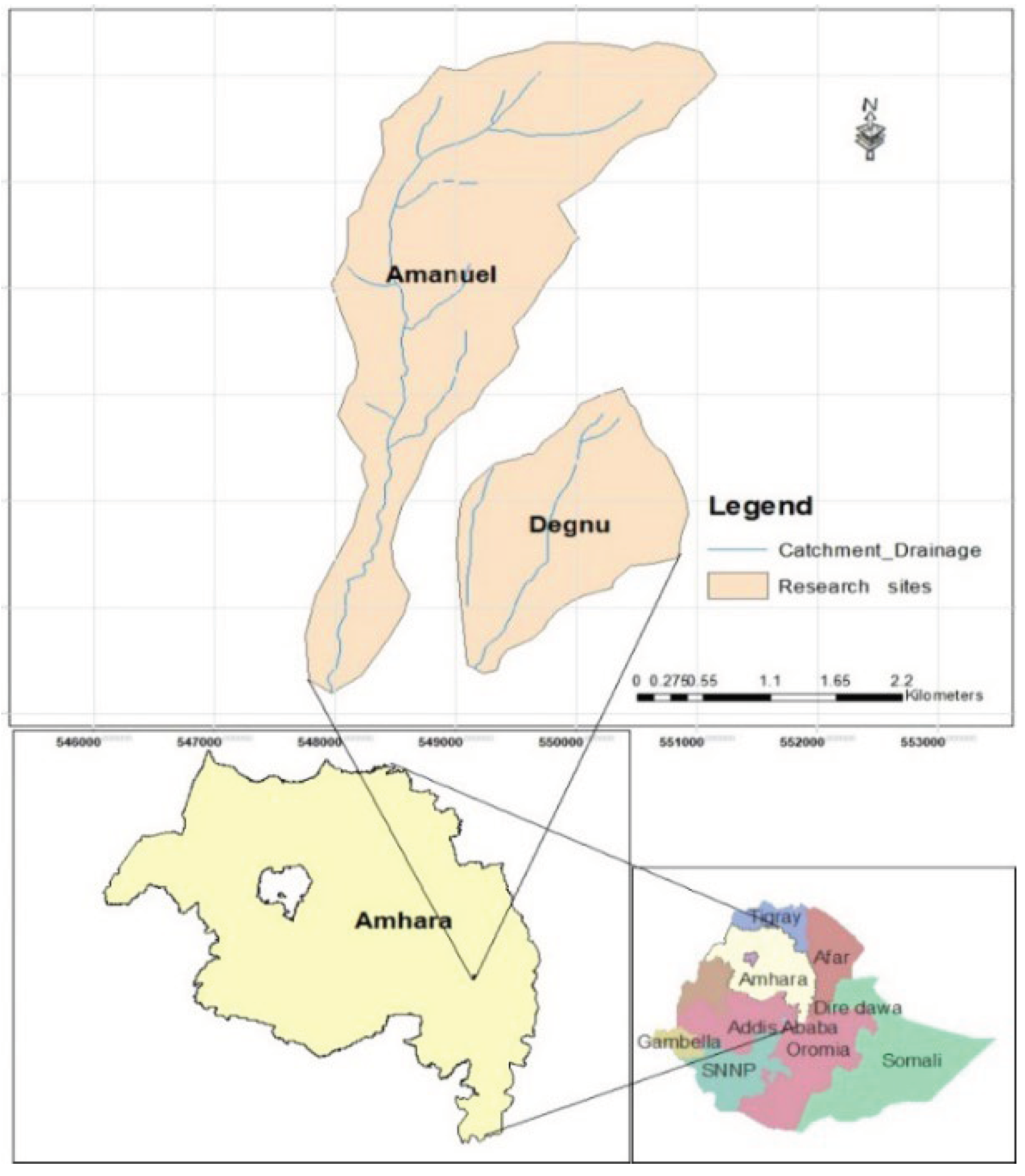
Figure 2.
Terrace density of the study area.
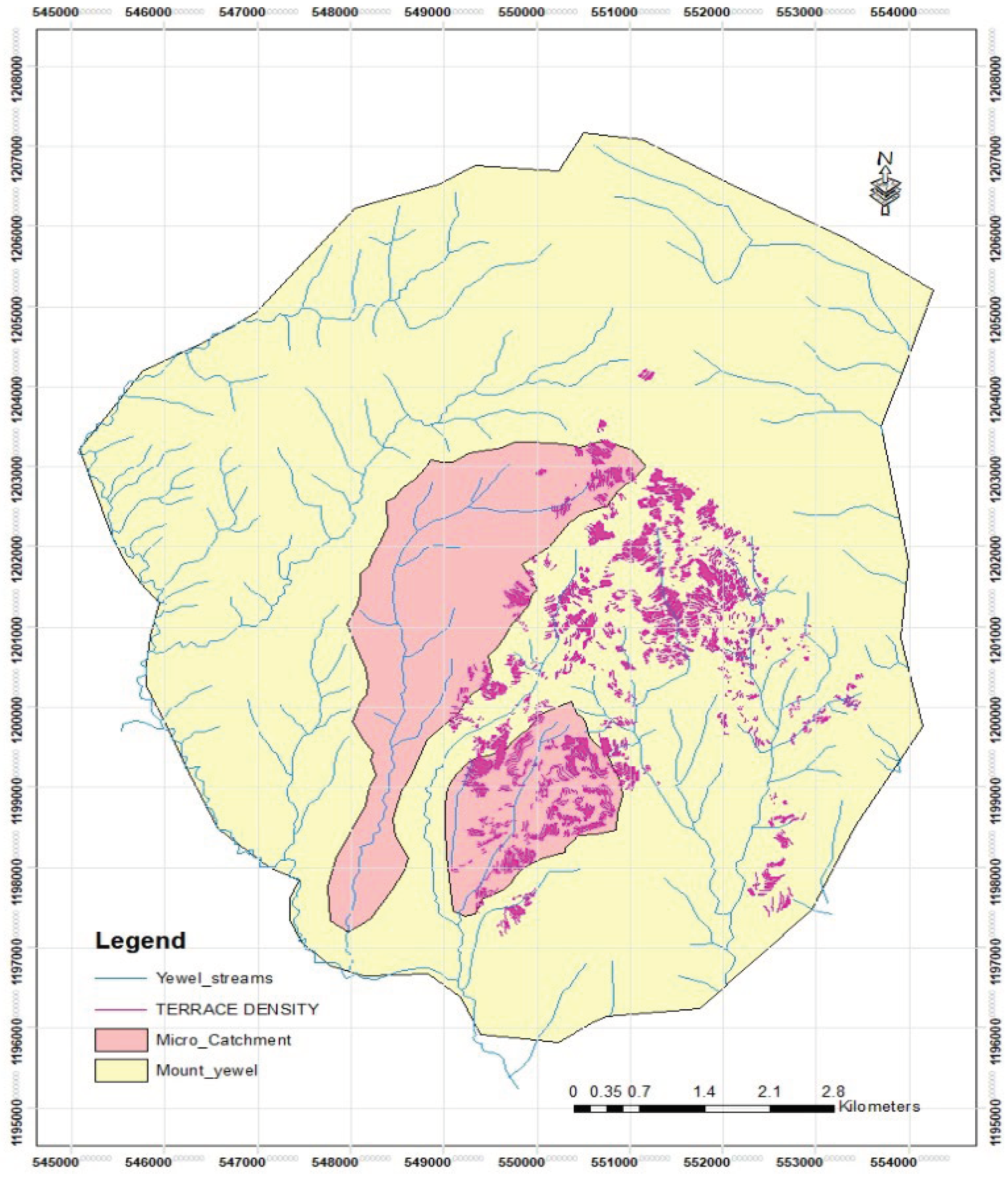
Figure 3.
Stream flow measuring weir at the outlet of the research sites.
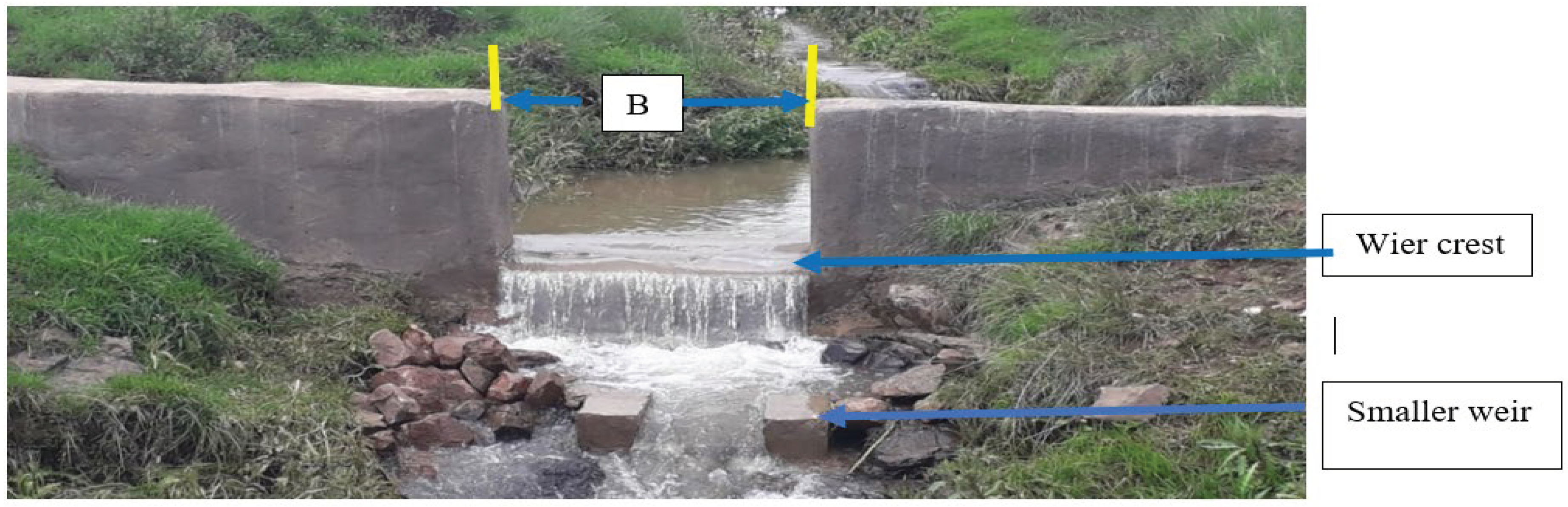
Figure 4.
Base flow separation method comparison.
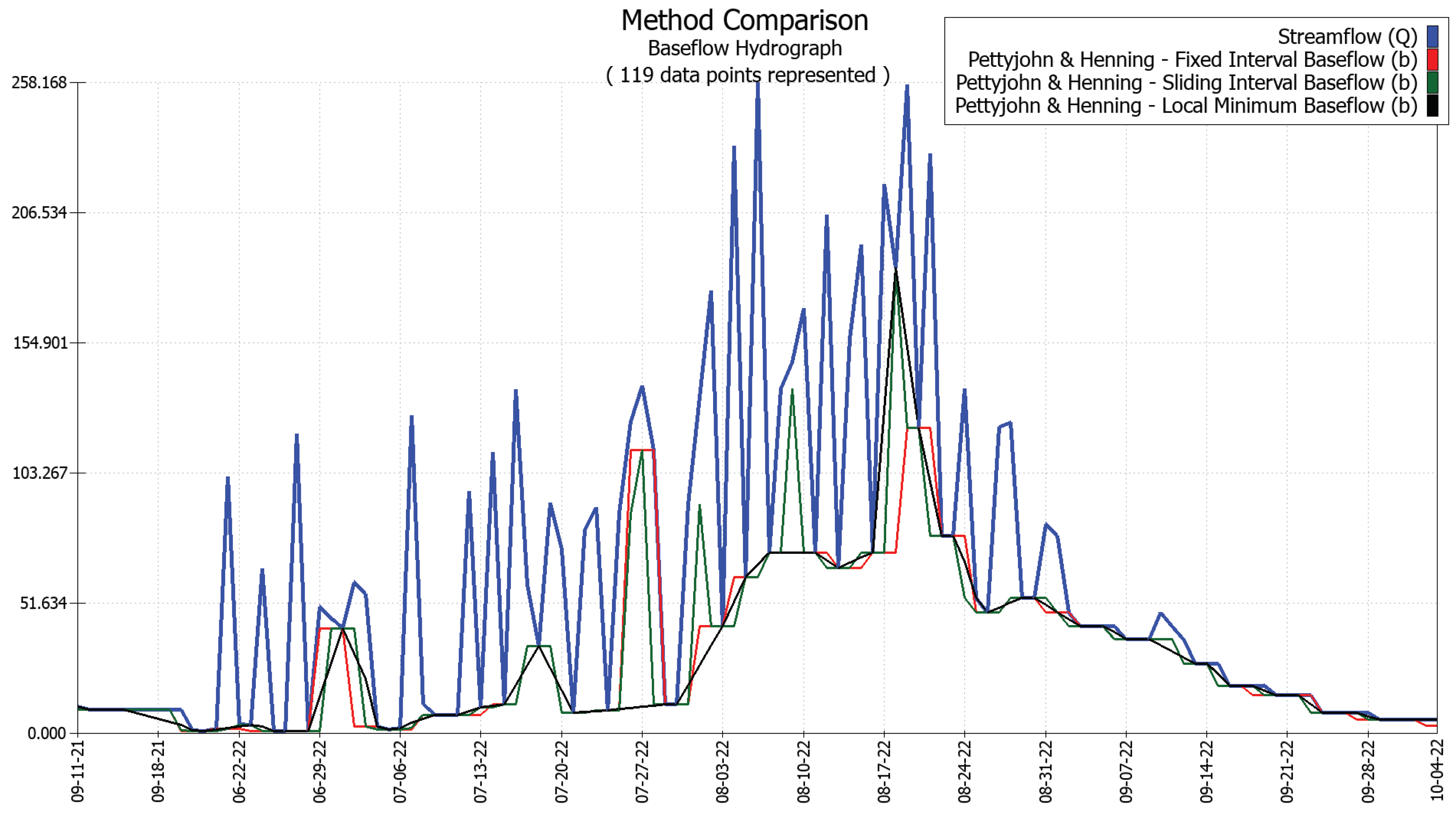
Figure 5.
Specific Base flow patterns in the dry season (a) first year and (b) second year. .
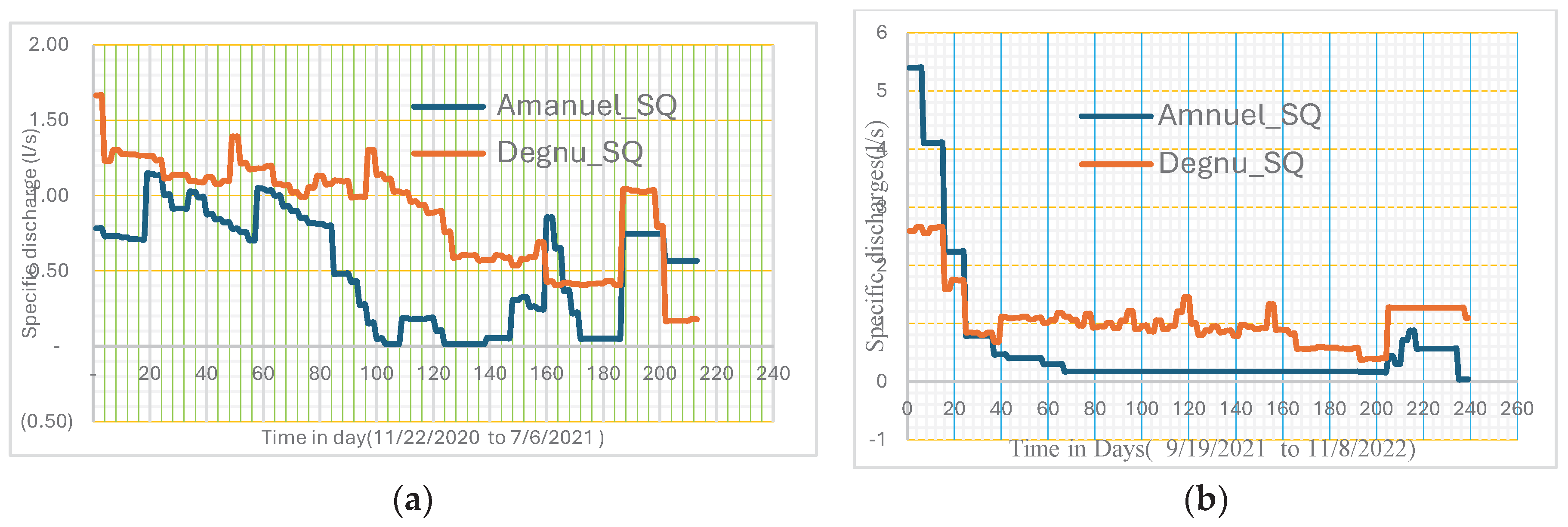
Figure 6.
Cumulative Specific discharge of the dry season(a) first year and(b) second year.
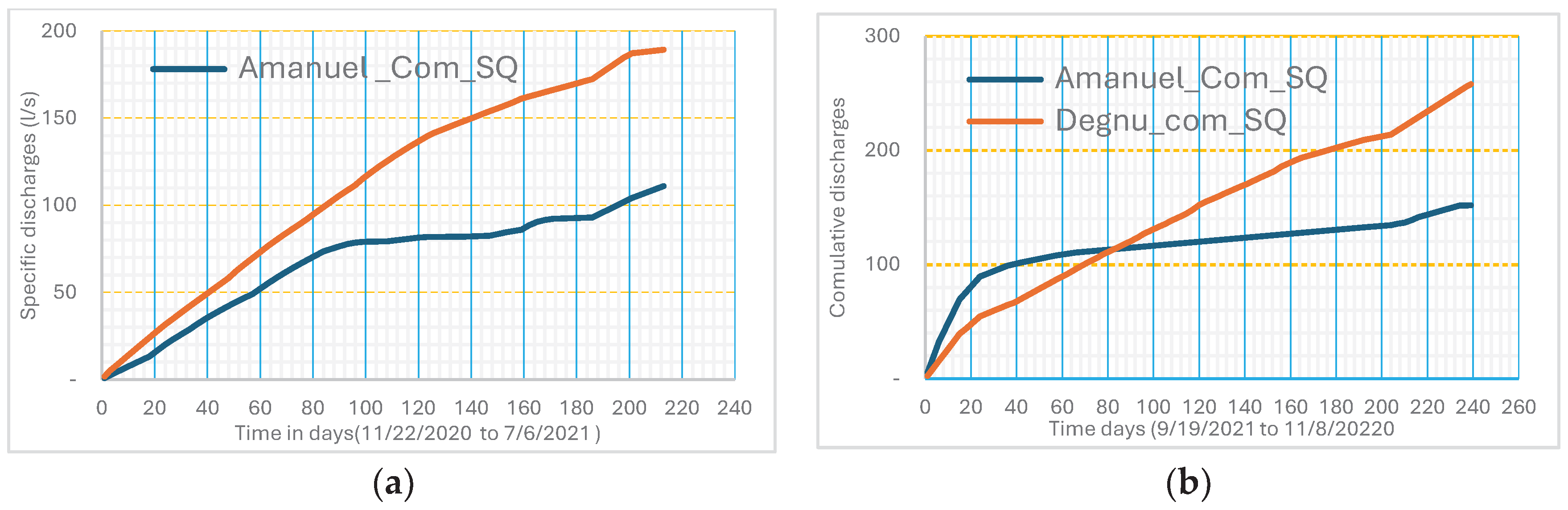
Figure 7.
Specific Base flow pattern of the Wet season (a)first year (b)second year.
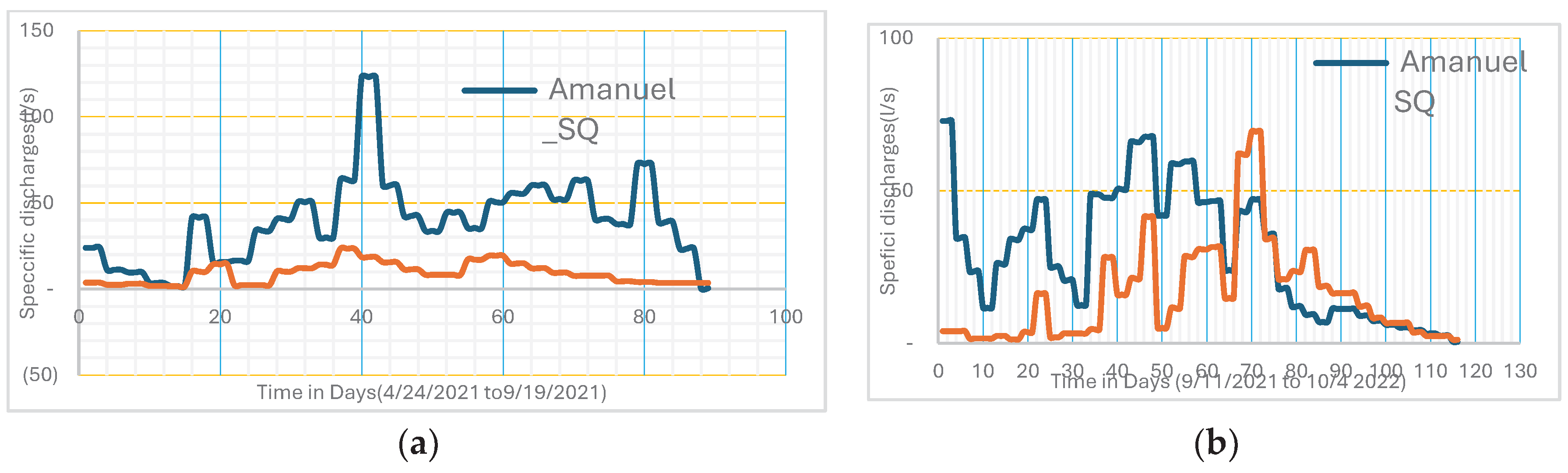
Figure 8.
Specific Base flow pattern of the Wet season (a)first year (b)second year.
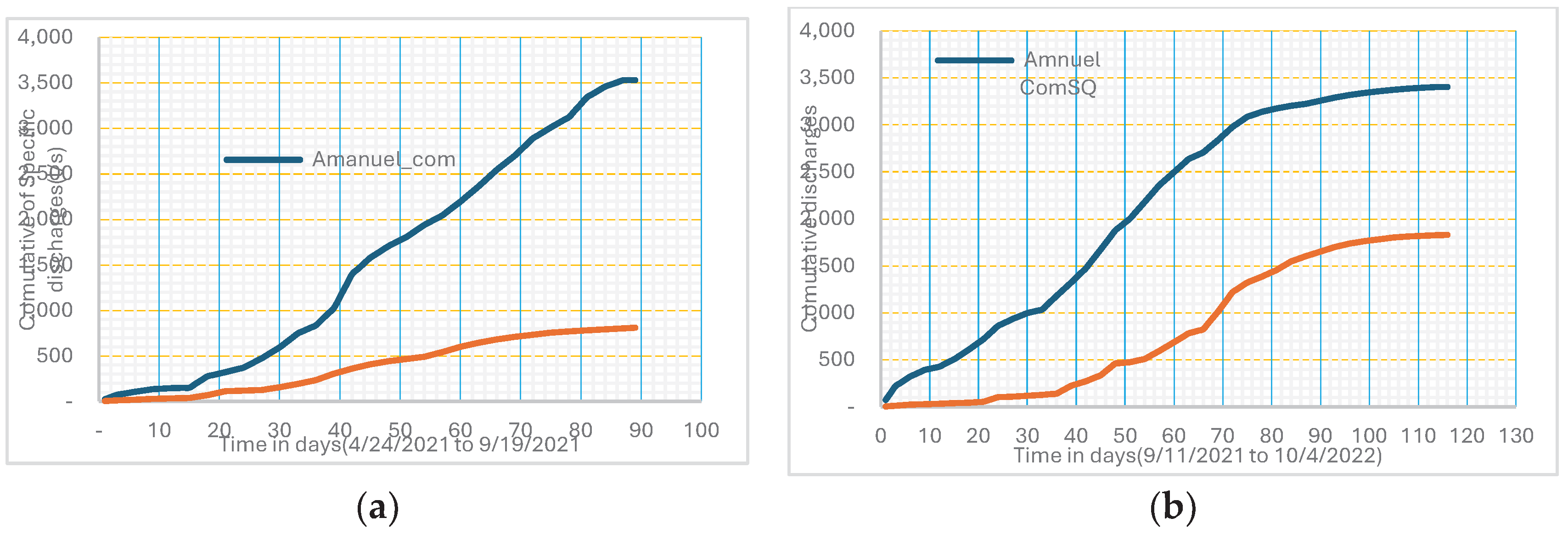
Figure 9.
Flow duration curve of dry season (a) and wet season (b) of first year.
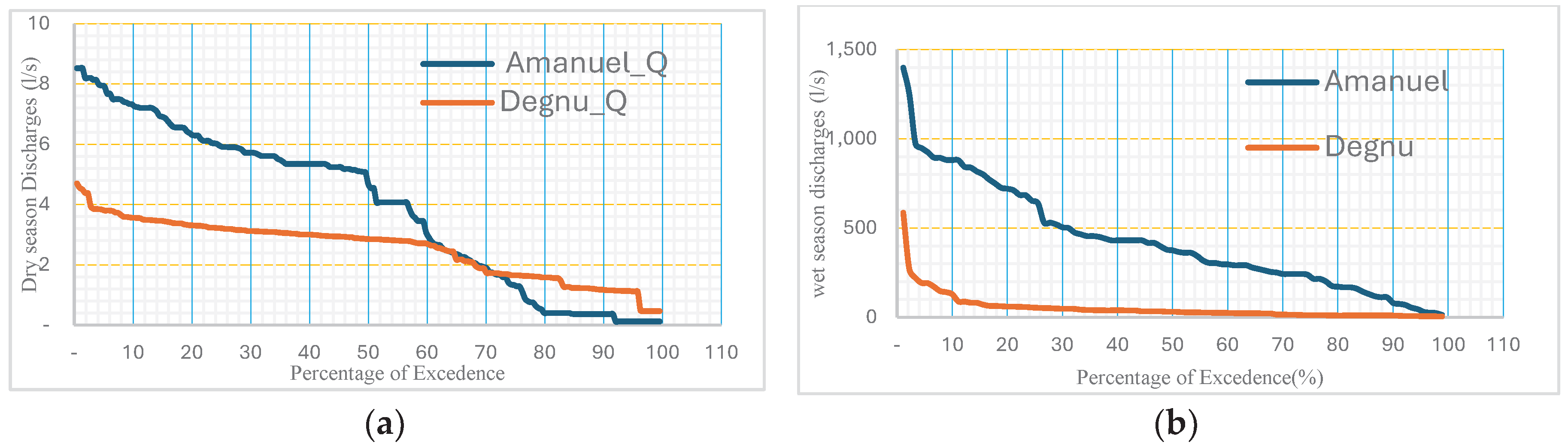
Figure 10.
Flow duration curve of dry season (a) and wet season (b) of the second year.
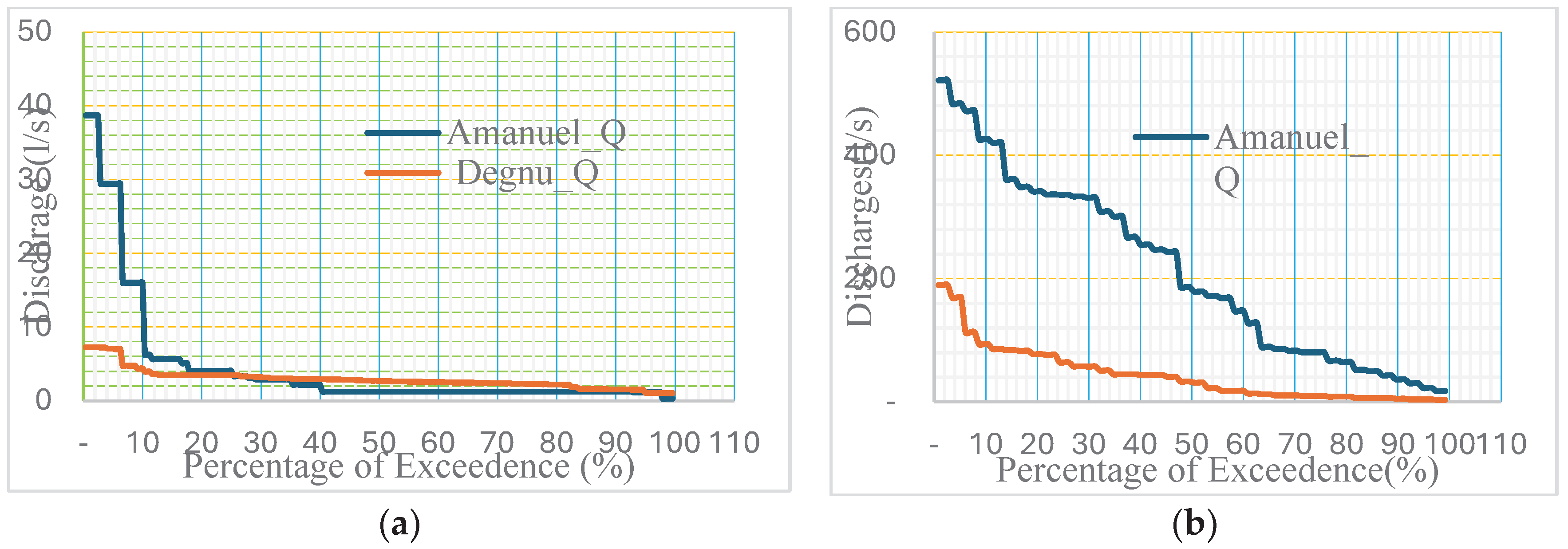

Table 1.
Morphologic characteristics of the micro-catchments .
| S/N | parameters | symbol | Unit | Formula | Result | |
| Amanuel | Degnu | |||||
| 1 | Area | A | km2 | measured | 7.42 | 2.73 |
| 2 | Perimeter | Pb | km | measured | 16.34 | 7.33 |
| 3 | Axial length | Lb | km | measured | 6.73 | 2.92 |
| 4 | Basin width | W | km | measured | 2.26 | 1.85 |
| 5 | Total no. streams | N | no | counted | 9.00 | 3 |
| 6 | Total stream length | L | km | measured | 12.96 | 4.47 |
| 7 | Mainstream length | Lm | km | measured | 6.77 | 2.73 |
| 8 | Mainstream slope | S | % | measured | 14.49 | 18.92 |
| 9 | Stream order | Os | no | counted | 2.00 | 2 |
| 10 | Stream density | Sf | no/km2 | N/A | 0.27 | 0.73 |
| 11 | Drainage density | D | km/km2 | D=L/A | 1.75 | 1.63 |
| 12 | Over land flow length | Lo | m | Lo=1/2D | 286.03 | 332.91 |
| 13 | Shape factor | B | unit less | B=Lb2/A | 6.10 | 3.11 |
| 14 | Form factor | Rf | unit less | Rf=A/Lb2 | 0.16 | 0.35 |
| 15 | Elongation ratio | E | unit less | E= Dc/ Lb | 0.457 | 0.67 |
| 16 | Circularity ratio | Rc | unit less | Rc=4A/Pc2 | 0.35 | 0.70 |
Table 2.
Land use/cover and Slope classes distribution of the micro-catchments.
| Land use (ha) | Amanuel | Degnu | ||
| ha | % | ha | % | |
| Cropland | 473.59 | 66% | 190.8 | 70% |
| Forest | 63.85 | 9% | 36.46 | 13% |
| Grassland | 15.98 | 2% | 12.65 | 5% |
| Shrub land | 87.86 | 12% | 0 | 0 |
| Degraded land | 45.03 | 6% | 13.79 | 5% |
| Road | 0 | 0 | 5.55 | 2% |
| Settlement | 29.82 | 4% | 14.18 | 5% |
| Total | 716.13 | 100% | 273.43 | 100% |
| Slope class (%) | ||||
| 0 | 3.72 | 0.52 | 1.42 | 0.57 |
| 0-3 | 18.19 | 2.54 | 6.95 | 3.93 |
| 3-8 | 63.66 | 8.89 | 24.31 | 11.11 |
| 8-15 | 140.79 | 19.66 | 53.76 | 21.5 |
| 15-30 | 312.30 | 43.61 | 119.24 | 44.7 |
| 30-50 | 156.47 | 21.85 | 59.74 | 16.37 |
| >50 | 21.05 | 2.94 | 8.04 | 1.81 |
| Total | 716.13 | 100 | 273.43 | 100 |
Table 3.
Independent t-test Results of base flows.
| Item | watershed | N | Mean | Std. Deviation | Std. Error Mean | df. | P (two tail) | Confidence interval |
| Baseflow_y1刘(Dry season) | Amanuel | 213 | 0.52 | 0.36 | 0.025 | 242 | 0.000 | 95% |
| Degnu | 213 | 0.89 | 0.35 | 0.024 | ||||
| Baseflow_y1刘(wet season) | Amanuel | 89 | 39.66 | 24.74 | 2.62 | 176 | 0.000 | |
| Degnu | 89 | 24.86 | 16.44 | 1.74 | ||||
| Baseflow_y2刘(Dry season) | Amanuel | 239 | 0.64 | 1.13 | 0.073 | 476 | 0.000 | |
| Degnu | 239 | 1.08 | 0.49 | 0.032 | ||||
| Baseflow_y2刘(wet season) | Amanuel | 116 | 29.34 | 20.89 | 1.94 | 230 | 0.000 | |
| Degnu | 116 | 15.78 | 16.15 | 1.50 |
Y1=year one, y2=year two, N= number of records, df =degree of freedom, p= significant level.
Disclaimer/Publisher’s Note: The statements, opinions and data contained in all publications are solely those of the individual author(s) and contributor(s) and not of MDPI and/or the editor(s). MDPI and/or the editor(s) disclaim responsibility for any injury to people or property resulting from any ideas, methods, instructions or products referred to in the content. |
© 2024 by the authors. Licensee MDPI, Basel, Switzerland. This article is an open access article distributed under the terms and conditions of the Creative Commons Attribution (CC BY) license (https://creativecommons.org/licenses/by/4.0/).
Copyright: This open access article is published under a Creative Commons CC BY 4.0 license, which permit the free download, distribution, and reuse, provided that the author and preprint are cited in any reuse.