

Submitted:
10 March 2024
Posted:
11 March 2024
You are already at the latest version
Abstract
This study examines the effectiveness of a comprehensive psychomotor development program combined with adapted football training for adolescents diagnosed with intellectual disabilities in Romania. Twelve participants, with a mean age of 17.42 years underwent a carefully designed intervention program spanning 36 weeks. The program aimed to enhance fundamental movement skills, integrate these skills into specialized football training, and culminate in a Unified 7-a-side Football Match. Results indicate significant improvements in psychomotor skills, including static and dynamic balance, pulse processing speed, and identified stimuli. Moreover, the intervention positively impacted social interaction among participants. Statistical analysis, employing Pearson Correlation Analysis and Paired Samples t-Test (One-Sample), compared assessments. Results revealed significant differences between pre- and post-intervention measurements, providing robust evidence of the program's efficacy. The positive correlations between physical parameters and social interaction highlight the interconnectedness between physical fitness and social engagement. Our findings suggest that improvements in physical abilities may contribute to increased social interaction among children with intellectual disabilities, underscoring the holistic nature of our intervention, which addresses multiple dimensions of development simultaneously. The findings underscore the holistic benefits of integrating psychomotor development and adapted football programs for adolescents with intellectual disabilities, emphasizing the importance of promoting inclusive physical activities for their overall well-being.
Keywords:
inclusive
; well-being
; intervention
; social interaction
; psychomotor skills
1. Introduction
Mitigating the rigidity of programs in the development and education of children with Intellectual Disabilities (ID) involves enhancing emotional balance, fostering quality relationships, and facilitating task performance, aiming to address the decline in cognitive functions associated with intellectual disability [1,2]. This intellectual impairment significantly limits social competence, leading to restrictions in adaptive behavior within the individual’s community [3].
Children with ID constitute a heterogeneous group characterized by a wide range of cognitive abilities and challenges that significantly impact their daily functioning and social interactions [4,5]. The severity of ID spans from mild to profound, encompassing varying levels of impairment that affect learning, adaptive behaviors, and overall quality of life [6,7]. Understanding the nuances of these challenges is essential for developing targeted interventions that foster the holistic development and social inclusion of children with ID within society and the educational system [8]. Among children with ID, those with mild intellectual disability represent the majority, accounting for nearly 85% of cases. Despite having IQ scores ranging from 50-55 to 70, these individuals often encounter difficulties in social competence and adaptive behavior, posing barriers to their integration into communities. Conversely, individuals with profound intellectual disability, characterized by IQ scores below 25-30, require extensive support and specialized care to address their complex needs [5].
A crucial aspect of supporting children with ID lies in the development of their psychomotor skills, which play a fundamental role in their physical, cognitive, and social development [9]. Tailored psychomotor education programs designed for children with ID can enhance various physical attributes, including strength, coordination, balance, and flexibility, thereby promoting their overall well-being and independence [10,11,12,13]. Furthermore, integrating playful activities such as adapted football into these programs can amplify participant motivation and engagement, leading to improved outcomes in motor-cognitive tasks [14,15].
Adapted football, serving as an inclusive sports activity, offers unique opportunities for social interaction and skill development among children with ID [16,17,18,19,20,21]. By engaging in activities alongside peers with typical development, children with ID can cultivate friendships, bolster their self-esteem, and enhance their social integration skills [22,23,24]. Moreover, adapted football contributes to the enhancement of both general and specific motor skills, making it a valuable component of physical education curricula in schools [15].
Despite the challenges inherent in comprehending the strategic aspects of sports like football, tailored activities and modified exercises can provide avenues for inclusive engagement and development among children with ID, yielding diverse physical, psychological, and social benefits [25].
This article embarks on an exploration of an innovative approach that integrates psychomotor activities with adapted football to enhance the holistic development and social inclusion of children with ID. Through action research, the aim is to generate outcomes that facilitate social transformation, ultimately improving the lives of individuals with intellectual disabilities.
The comprehensive investigation delves into the intricate dynamics of psychomotor development and adapted football interventions, aiming to elucidate their synergistic effects on the well-being and social integration of children with ID [26]. By adopting a multidimensional perspective, encompassing physical, cognitive, and social dimensions [27], the study seeks to uncover the transformative potential of integrated programs in addressing the diverse needs of this population.
Furthermore, the research methodology employs action research principles, emphasizing active engagement with stakeholders and the community to enact meaningful change. By fostering collaboration and co-creation, the study endeavors to generate insights that resonate with the lived experiences of individuals with ID and their caregivers, thereby ensuring the relevance and efficacy of the interventions implemented.
This research endeavors to contribute to the growing body of knowledge surrounding the holistic development and social inclusion of children with ID. By examining the integration of psychomotor activities and adapted football through the lens of action research [28], the study aims to pave the way for innovative approaches that empower individuals with ID to lead fulfilling and inclusive lives.
The primary objective is to generate outcomes that facilitate social transformation, resulting in a beneficial influence on individuals’ lives. The research objectives, derived from the purpose of the study, are as follows:
- Undertaking a comprehensive initial assessment to elucidate the psychomotor behavior exhibited by children with ID, aiming to understand their baseline abilities and needs accurately.
- Conducting an initial psychological analysis through assessments administered by specialized professionals overseeing the study subjects, to gain insights into the cognitive and emotional dimensions of the participants.
- Formulating a comprehensive framework for a holistic approach to psychomotor development and adapted football programs, grounded in primary data derived from the initial assessment. This framework aims to integrate psychomotor interventions with football training in a manner that addresses the specific needs and abilities of participants, fostering their overall development and inclusivity.
- Evaluating the advancements in psychomotor behavior and the level of inclusivity achieved by implementing the training programs over a 36-week period. This assessment seeks to determine whether the integrated approach has resulted in outcomes conducive to social transformation, positively impacting the lives of individuals with ID. Key metrics for evaluation include improvements in psychomotor skills, social interaction.
- Contributing to the promotion of inclusivity for children with mild ID within society and the educational system through the utilization of adapted football and psychomotor training. This involves not only assessing individual progress but also advocating for systemic changes that support the integration and empowerment of individuals with intellectual disabilities.
These objectives aim to delve into the multifaceted dimensions of psychomotor development in adolescents with intellectual disabilities, providing a comprehensive understanding of the efficacy and impact of the proposed integrative program.
2. Materials and Methods
2.1. Participants
The study participants comprise 12 adolescents diagnosed with ID (mean age 17.42 ± 0.8 years, height 170.6 ± 8.5 cm, weight 55.69 ± 9.8 kg, and BMI 21.4 kg/m2), distributed between genders 7 females and 5 males. These individuals are affiliated with a family-oriented center situated in Pitești, Romania, which is specifically designed to offer assistance and support to families or individuals facing various challenges.The investigation was conducted at the educational unit where the participants are enrolled. We employed a conventional sampling method, taking into account the age, IQ, and normal physical development of the children, to ensure the representativeness and relevance of the results obtained in the study. The preliminary investigation involved a comprehensive evaluation conducted by a specialized professional at the study’s onset is summarized in Table 1, Table 2, Table 3 and Table 4. This evaluation utilized standardized tools, including the Acceptance of Others Scale, Rosenberg’s Self-Esteem Scale, Concentrated Attention Test, and the Raven II Test [29,30]. The integration of these instruments, complemented by insights gleaned from clinical interviews and the life histories of the subjects, facilitated the creation of personalized psychological records for each participant. The selection methodology specifically targeted adolescents confronting mild intellectual disability (or borderline intellectual deficiency), corresponding to an IQ range between 50-55 and 70. These adolescents often exhibit behavioral challenges and lack a functional, safe, and secure family environment. Their needs encompass engagement in instructive-educational activities to address educational gaps, as well as the development of intra-group relational skills and enhanced communication abilities [31].
Within the preliminary research, a comprehensive evaluation focusing on psychomotor skills was also conducted (Table 4). To assess the psychomotor behavior of children with intellectual disabilities, specialized observation techniques were employed [32,33]. Each child received individual guidance from a specialist to perform specific tasks outlined in the evaluation. An evaluation form, comprising 29 items categorized into six analytical dimensions—body schema, basic positions and movements, fundamental motor behaviors, fine motor skills, spatial orientation, and temporal orientation—was utilized for a structured and systematic analysis. This evaluation implemented a 3-level scale, with measurement options categorized as High, Moderate, and Low.
In the context of the psychomotor behavior assessment program, the examined subjects demonstrated a normative trajectory of physical development. There was an absence of both genetic and acquired anomalies such as deficiencies, malformations, and dislocations. Additionally, the subjects did not present any motor-related health conditions. Proficiency in the control and coordination of movements, along with a commendable sense of rhythm, characterized their physical capabilities.
We have represented (Table 3) the summer of the cases on which the analysis is based, of 16, 17 and 18 years, then the frequency of the cases distributed by age. Valid percent expresses these frequencies as a percentage of the total number excluding missing data, represents the cumulative percentage of age up to the respective value, and cumulative percent expresses frequencies as a percentage of the total number including missing data, which did not happen in the present sample.
2.2. Research Instruments
In our pursuit of understanding and enhancing human performance, our research embraced an array of cutting-edge instruments that played a pivotal role in meticulously assessing diverse facets of physical and psychological capacities. The integration of these sophisticated tools not only enabled precise measurements but also significantly contributed to our holistic comprehension of participants’ well-being. Below, we present the key instruments used in our study.
- Sensamove Balance Miniboard
For the evaluation of static coordination, we utilized the Sensamove balance miniboard. This instrument played a crucial role in assessing individuals’ stability and control in stationary situations. Equipped with highly sensitive sensors and a precisely calibrated surface, the miniboard facilitated the accurate measurement and monitoring of balance and coordination performance during static tasks. This allowed us to collect precise data on participants’ ability to coordinate movements and contributed significantly to the overall evaluation of our study [11,34,35].
- 2.
- Optojump Next Optical System
The Optojump Next optical system, an advanced tool for analyzing perceptual-motor synchronization, was instrumental in our research. This system, featuring state-of-the-art sensors and algorithms, accurately recorded and evaluated multiple facets of human motion. By assessing the coordination between sensory perception and physical response, this system provided essential insights into participants’ perceptual-motor coordination. The application of this instrument, as demonstrated by Magrum et al. [36] and Rosu et al. [11], enhanced our comprehension of dynamic balance in various settings.
- 3.
- The Witty SEM Intelligent semaphores.
In our project, we implemented intelligent semaphores to measure movement velocity. This specialized apparatus was developed to quantify and evaluate the speed and dexterity of different physical motions. By capturing and analyzing the duration of specific movements or action sequences, this tool offered accurate assessments of movement velocity. The insights gained through this instrument significantly contributed to our understanding of participants’ kinetic capabilities, aligning with the studies conducted by severeals specialists in the field [11,35].
- 4.
- Structured Observation of Interaction Evaluation Test.
This test involved systematic observations of the social behavior of children with ID within the context of the psychomotor and football program in which they participated. Specially trained observers evaluated the social interactions of children with ID by analyzing verbal and non-verbal behavior, as well as communication and cooperation skills [35,37]. The Likert Scale for Social Interaction Evaluation included 5 response items:
1: Minimal interaction or avoidance of social contact.
2: Limited interaction and difficulties in forming connections.
3: Moderate interaction, with opportunities for improvement.
4: Satisfactory interaction, with positive implications.
5: Excellent interaction, establishing positive relationships with all partners.
The integration of these advanced instruments in our study allowed for a comprehensive evaluation of participants’ static coordination, perceptual-motor synchronization, and movement velocity. Together with the this instruments, the Structured Observation of Interaction Evaluation Test enriched our understanding of the multifaceted dimensions of human performance and well-being within the scope of our study.
2.3. Procedure of Interevention
The initial phase (January – February 2023), the participants underwent a sequence of assessments designed to yield precise data. The examinations were centered on the expression of certain elements in the field of psychomotricity, motor abilities, and body composition. The experiments were conducted utilizing specialized equipment, instruments, and their corresponding software modules and the psychomotor behavior assessment of children with ID.
In the aftermath of the initial research phase, a meticulous processing and analysis of the amassed data ensued. The resultant insights emerged as pivotal determinants guiding the careful selection of psychomotor and adapted football tools, as well as informing the structure of segments within the integrative psychomotor and adapted football program. This program, conceived as a comprehensive session, unfolded over 50 minutes and was conducted twice weekly, spanning a duration of 36 weeks from March 2023 to November 2023.
The comprehensive program sessions were thoughtfully delineated into three distinctive segments, each strategically contributing to the holistic development of participants. The initial segment - Fundamental psychomotor foundations spanning weeks 1 to 16, was meticulously crafted to focus on psychomotor interventions with a primary emphasis on cultivating fundamental movement skills. This intentional focus on psychomotor interventions was underpinned by a nuanced data analysis approach, ensuring interventions were tailored to specifically address the identified needs elucidated during the research phase.
A pivotal transition occurred in the subsequent segment, encompassing weeks 17 to 20, representing a shift from psychomotor interventions to specialized football training [38,39]. This transitional phase was carefully designed to facilitate a seamless integration of skills acquired during psychomotor interventions into the specialized context of football training.
The final segment, spanning weeks 17 to 36, was exclusively dedicated to specialized football training sessions intricately designed to prepare participants for a Unified 7-a-side Football Match. This segment not only served as a culmination of the acquired psychomotor skills but also exemplified a practical application of these skills within the dynamic context of adapted football. By harmoniously integrating psychomotor interventions with adapted football training, the program aimed to establish a synergistic approach. This integrated approach addressed individual needs while also advancing broader goals, including promoting inclusivity, enhancing physical capabilities, and fostering sustainable health and well-being. The extensive 36-week duration of the program offered ample time for a thorough examination of the long-term effects and sustainability of these initiatives. This extended timeframe allowed for a detailed exploration of the intricate interactions between psychomotor development and adapted football training, thereby yielding valuable insights into the promotion of sustainable well-being among children with ID.
Table 5 outlines a comprehensive 36-week program designed to seamlessly integrate psychomotor and adapted football components.
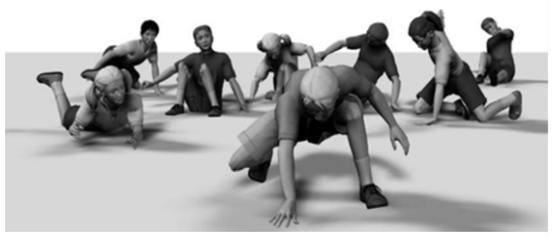
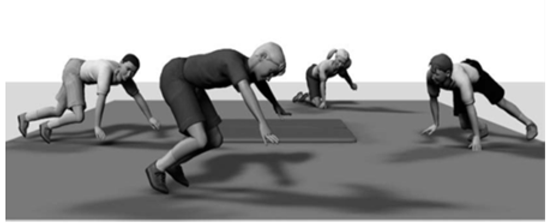
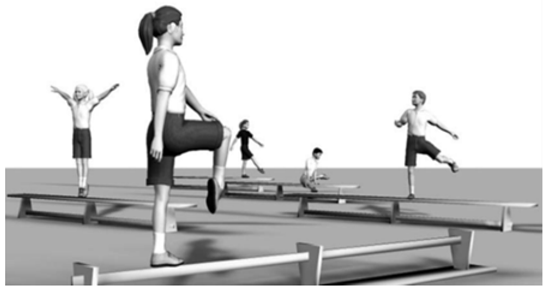
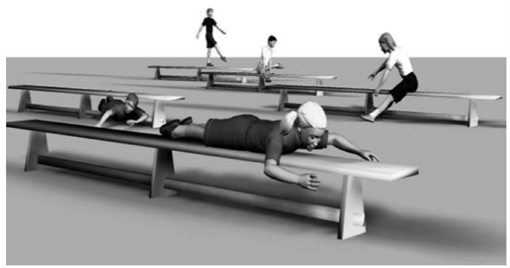
Moving to Table 6, it provides a detailed overview of illustrative activities within the integrative psychomotor and adapted football program. The table serves as a valuable resource for understanding the specific activities implemented during the program.
2.4. Statistical Analysis
During the final stage of analysis (December 2023 to January 2024), statistical-mathematical procedures were undertaken to assess the disparities between initial and concluding assessments. Each specific metric, encompassing static/dynamic balance, movement velocity and social interaction, underwent a rigorous series of statistical examinations to elucidate any alterations between the initial (I) and final (F) measurements. The statistical analyses employed for these comparisons included:
- 1.
- Pearson Correlation Analysis
The utilization of Pearson Correlation Analysis allowed for the examination of the strength and direction of linear associations between variables, offering insights into the interrelationships among different metrics [40]. This method provided a comprehensive understanding of how various developmental aspects interacted with each other. The Pearson correlation coefficient served as a significant measure in assessing the degree of correlation between the initial and final states within the context of the study. Essentially, this coefficient provided a quantitative metric indicating the extent to which participants’ assessments or preferences in the experiment were associated. A coefficient closer to 1 indicated that the proposed program had similar effects across all variables, in our case, positive effects. The correlation coefficient proved valuable in detecting changes in the monotony of the obtained results. When the relationships between the initial and final action values changed and the physical trainer observed this, recommendations could be made to reflect these changes. The Pearson Correlation Coefficient offered a robust means of assessing the relationships between participants’ initial and final actions in the context of inclusion and motor skill enhancement, significantly contributing to personalizing and improving the experience by providing tailored recommendations.
- 2.
- Paired Samples t-Test (One-Sample)
The application of the Paired Samples t-Test (One-Sample) facilitated the comparison of means within paired groups, enabling the assessment of statistical significance of observed alterations [41]. Our analysis involved conducting one-sample t-tests to determine the effectiveness of the program across various research parameters, including static/dynamic balance, stimulus identification, reaction time, and social interaction. Based on the SPSS results (Tables 13–15), it can be observed that if the probability Sig. (2-tailed) is 0.000, due to the probability value Sig. 0.000 < 0.05, then the hypothesis is rejected. This implies that the influence of implementing the proposed activities yielded significant results in the selected sample. The guided proposed activities had significant effects on motor skills, but more importantly, on communication and group integration.
3. Results
The statistical analysis conducted in our research encompasses correlations and t-tests performed on various variables measured within the study. Table 7, Table 8, Table 9, Table 10 and Table 11 present the correlation between initial and final measurements of specific parameters.
Table 7 displays the correlation analysis of static balance, indicating a very strong correlation (Pearson correlation coefficient = 0.999) between initial and final measurements of static balance (ESI_Static_balance and ESF_Static_balance). This high correlation coefficient suggests a close relationship between the static balance measured initially and at the end of the intervention period. The significance level for this correlation is p < 0.01.
Table 8 presents the correlation analysis of dynamic balance, revealing a similarly strong correlation (Pearson correlation coefficient = 0.998) between initial and final measurements of dynamic balance (E.I.DynamicBalance and E.FDynamicBalance). This high correlation coefficient indicates a tight association between the dynamic balance measured initially and after the intervention. The significance level for this correlation is also p < 0.01.
In Table 9, the correlation analysis of identified stimuli demonstrates a very strong correlation (Pearson correlation coefficient = 0.990) between the number of stimuli identified initially and those identified at the end of the study (SII_Identified_stimuli and SIF_Identified_stimuli). This significant correlation suggests a notable improvement in the identification of stimuli following the intervention. The significance level for this correlation is p < 0.01.
Table 10 exhibits the correlation analysis of pulse processing speed, showing a significant correlation (Pearson correlation coefficient = 0.836) between initial and final measurements of pulse processing speed (PPSI_Pulse_processing_speed and PPSF_Pulse_processing_speed). This correlation suggests an improvement in pulse processing speed following the intervention, albeit slightly less pronounced compared to other parameters. The significance level for this correlation is also p < 0.01.
Lastly, Table 11 presents the correlation analysis of social interaction, indicating a perfect correlation (Pearson correlation coefficient = 1) between the number of social interactions measured initially and those measured at the end of the study (SocII_Social_interaction and SocIF_Social_interaction). This perfect correlation suggests a consistent and linear increase in social interactions before and after the intervention. However, it’s important to note that the significance level for this correlation is not applicable (p = 1.000), given the nature of the perfect correlation.
These correlation analyses provide valuable insights into the relationships between different variables measured in our study and contribute to our understanding of the effects of the intervention on psychomotor abilities and social interaction among participants.
Table 12, Table 13, Table 14 and Table 15 present the results of the t-test for paired measurements related to psychomotor items (static balance, dynamic balance, pulse processing speed, identified stimuli) versus social interaction. The negative values in the first column represent the difference between initial and final measurements. Significant values for “Sig. (2-tailed)” indicate that the differences are statistically significant between initial and final measurements, both for psychomotor items and social interaction.
4. Disscussion
The findings of our study underscore the importance of implementing tailored psychomotor programs for children with ID, corroborating findings from Santos (2017) and Ion-Ene et al. (2014) [42,43]. Integrating physical education and sports not only enhances physical health but also fosters inclusive activities and social engagement. This aligns with the research by Orr et al. (2021) [44], emphasizing the positive impact of physical activity on the well-being of individuals with ID. This study demonstrates the effectiveness of integrating psychomotor development with adapted football programs for children with ID, with significant improvements observed across various parameters. By combining these two approaches, we aimed to address not only physical but also psychomotor and social aspects of development, thereby promoting inclusivity and enhancing the quality of life for participants. Literature highlights the significance of literacy instruction methods tailored for individuals with cognitive disabilities, emphasizing the need for innovative approaches in this domain [45,46,47].
Static balance measurements demonstrated sustained improvements over time, indicating a strong correlation (Pearson correlation coefficient = 0.999, p < 0.01) between initial and final assessments. Similarly, dynamic balance also exhibited considerable improvement, with a robust correlation (Pearson correlation = 0.998, p < 0.01) observed between initial and final assessments. These results suggest that participants were able to maintain heightened levels of both static and dynamic balance throughout the intervention period.
Similarly, identified stimuli assessments revealed positive outcomes, with a significant correlation (Pearson correlation coefficient = 0.990, p < 0.01) between the number of stimuli identified initially and those identified after the intervention. This indicates a marked improvement in participants’ ability to identify stimuli, reflecting enhanced cognitive processing and responsiveness.
Moreover, pulse processing speed showed significant enhancement, with a notable correlation (Pearson correlation coefficient = 0.836, p < 0.01) between initial and final measurements. This suggests that participants experienced improved cognitive processing speed, which is crucial for various daily activities and tasks.
In addition to these psychomotor improvements, our study also highlights the positive impact of the intervention on social interaction. We observed a perfect correlation (Pearson correlation coefficient = 1.000, p = 1.000) between the number of social interactions before and after the intervention, indicating a consistent and linear increase in social engagement among participants.
The findings from the paired samples tests underscore the effectiveness of the intervention. Statistically significant differences were evident between initial and final measurements for static balance (t(11) = -8.042, p < 0.001), dynamic balance (t(11) = -2.021, p = 0.068), pulse processing speed (t(11) = -2.299, p = 0.042), the number of identified stimuli (t(11) = -7.000, p < 0.001), and social interaction (t(11) = -8.990, p < 0.001). These results provide robust evidence of the positive impacts derived from the integrated training programs.
Our study contributes to the expanding research literature, providing further evidence for the effectiveness of holistic approaches to psychomotor development in children with ID [35,48]. By integrating physical, psychomotor, and social elements, our approach offers a comprehensive framework aimed at fostering inclusivity and enhancing the overall well-being of individuals with mild ID. These findings carry important implications for the design and implementation of future intervention programs geared towards promoting holistic development and social inclusion among children with ID.
The correlation analyses conducted shed light on the outcomes of our intervention, enriching our understanding of the multifaceted dimensions of human performance and well-being. In addition to improvements in psychomotor parameters, the enhancement in social interaction significantly contributes to an overall enhancement in the quality of life for adolescents with ID.
Our intervention primarily focuses on enhancing motor skills and gaining control over one’s body, with football skill development serving as a means to enrich social interactions. As emphasized by Biddle and Asare (2019) [49], there exists a significant correlation and interdependence between the physical development of students with ID and their mental capacity, assimilation, and application of knowledge.
Strong correlations between initial and final measurements across all research items signify the effectiveness of our intervention in enhancing both physical and social aspects of participants’ well-being. Notably, the positive correlations observed between physical parameters and social interaction highlight the interconnectedness between integrated psychomotor activities in adapted football and social engagement. Our findings suggest that improvements in motor skills may contribute to increased social interaction among children with ID, underscoring the holistic nature of our intervention, which addresses multiple dimensions of development simultaneously. This emphasizes the importance of holistic approaches in supporting the development and well-being of children with ID by integrating psychomotor activities and adapted sports programs, thus promoting inclusivity and enhancing their overall quality of life within society and the educational system.
Moving forward, it is essential to continue exploring and implementing tailored intervention programs that address the diverse needs of children with ID. By fostering acceptance, understanding, and support within society and the educational system, we can create more inclusive environments that empower individuals with ID to reach their full potential and lead fulfilling lives. Attitudes and perceptions toward individuals with special educational needs also play a pivotal role in promoting inclusivity. Some studies underscore the importance of improving attitudes among students and teachers, particularly concerning conditions like Tourette Syndrome. It is imperative to foster acceptance and understanding to create an inclusive environment for adolescents with special educational needs, as emphasized by Freeman et al. (2000) [50].
Building on this, Bluth and Blanton (2014) [51] explored the impact of tailored exercise routines on the physical well-being of children facing ID. Further research, as indicated by Duchowny et al. (2018) [52], underscored the benefits of incorporating exercise to enhance skill-related fitness components (SRF) among young individuals with ID. As noted by White (2011) and De Giorgio (2017) [53,54], physical activity plays a crucial role in promoting overall well-being and motor development among individuals with ID.
5. Limitations and Strengths
While our study offers valuable insights, it is important to acknowledge several limitations. Firstly, the research focused on specific aspects of psychomotor abilities, potentially overlooking other relevant elements crucial for a comprehensive understanding of participants’ development. Additionally, the small sample size of 12 subjects may limit the generalizability of our findings. However, despite these limitations, the study demonstrates notable strengths. One significant strength is the personalized approach taken in designing the psychomotor program for children with intellectual disabilities and seamlessly transitioning to adapted football programs. This tailored approach allowed for addressing the individualized needs of participants, maximizing the intervention’s effectiveness. The extended 36-week duration provided a robust foundation for exploring the long-term impact and sustainability of these integrated initiatives, contributing valuable insights to the discourse on sustainable well-being. Furthermore, the study revealed significant improvements in specific aspects of psychomotor abilities and social interaction among participants, highlighting the intervention’s effectiveness in promoting holistic development and social inclusion among children with intellectual disabilities. Additionally, the study’s rationale is supported by a diverse range of credible references from specialized literature, enhancing its methodological rigor and validity of findings.
Future research endeavors should aim to address these limitations and build upon the strengths of this study to further advance our understanding of psychomotor development and social inclusion among children with intellectual disabilities.
6. Conclusions
The results of our study demonstrate notable enhancements across various psychomotor parameters, including static and dynamic balance, pulse processing speed, and stimuli identification. These improvements underscore the positive impact of the integrated training programs on participants’ motor abilities. Moreover, the consistent increase in social engagement and interaction among participants, as evidenced by the perfect correlation in social interaction measurements, highlights the significance of promoting social inclusion and fostering positive peer relationships among children with intellectual disabilities.
The observed significant correlations between psychomotor parameters and social interaction further affirm the effectiveness of the intervention in yielding positive outcomes across multiple dimensions of human performance and well-being. These findings underscore the intricate and multifaceted nature of psychomotor development, emphasizing the interconnectedness among physical, psychomotor, and social dimensions of functioning.
Through psychological analyses, we gained insights into their cognitive and emotional dimensions. Subsequently, we formulated a holistic framework for integrating psychomotor interventions with adapted football programs. Evaluating the advancements achieved through the implemented training programs, we aimed to contribute to the promotion of inclusivity for children with mild ID within society and the educational system.
Author Contributions
Conceptualization, V.S., I.T.M., V.E.U., C.F.G., G.C.D., C.M., and G.G.G.; methodology, V.S., I.T.M., V.E.U., C.F.G., G.C.D., C.M., and G.G.G.; software, V.S., I.T.M., V.E.U., C.F.G., G.C.D., C.M., and G.G.G.; validation, V V.S., I.T.M., V.E.U., C.F.G., G.C.D., C.M., and G.G.G.; formal analysis, V.S., I.T.M., V.E.U., C.F.G., G.C.D., C.M., and G.G.G.; investigation, V.S., I.T.M., V.E.U., C.F.G., G.C.D., C.M., and G.G.G.; resources, V.S., I.T.M., V.E.U., C.F.G., G.C.D., C.M., and G.G.G.; data curation, V.S., I.T.M., V.E.U., C.F.G., G.C.D., C.M., and G.G.G.; writing—original draft preparation, V.S., I.T.M., V.E.U., C.F.G., G.C.D., C.M., and G.G.G.; writing—review and editing, V.S., I.T.M., V.E.U., C.F.G., G.C.D., C.M., and G.G.G.; visualization, V.S., I.T.M., V.E.U., C.F.G., G.C.D., C.M., and G.G.G.; supervision, V.S., I.T.M., V.E.U., C.F.G., G.C.D., C.M., and G.G.G.; project administration, V.S., I.T.M., V.E.U., C.F.G., G.C.D., C.M., and G.G.G.; funding acquisition, V.S., I.T.M., V.E.U., C.F.G., G.C.D., C.M., and G.G.G. All authors have read and agreed to the published version of the manuscript. All аuthors contributed equаlly to the conception of this аrticle.
Funding
This research received no external funding.
Institutional Review Board Statement
In accordance with the specific guidelines and criteria set forth for this study, it was determined that Institutional Review Board (IRB) oversight was not required. This determination was based on a careful assessment of the study’s design, objectives, and methodologies, which indicated that the research did not involve vulnerable populations, potential for significant risk to participants, or other criteria that typically necessitate IRB review. All study activities were conducted with strict adherence to ethical principles and with respect to participants’ rights and well-being, ensuring that the research complied with the relevant ethical standards and guidelines.
Informed Consent Statement
Parental consent, in accordance with the principles outlined in the Declaration of Helsinki, was a mandatory prerequisite and obtained before initiating the study. The Ethics Committee of the Doctoral School of Physical Education and Sport Science (ID: 06/1.04.2023), National University of Science and Technology Politehnica Bucharest, Pitesti University Center, Romania, provided approval for this research.
Data Availability Statement
Data available on request due to restrictions eg privacy or ethical. The data presented in this study are available on request from the corresponding author. The data are not publicly available due to confidentiality.
Acknowledgments
We wish to express our profound gratitude towards the affiliated Universities for their constant support and the resources provided, which were essential in the accomplishment of this project. We appreciate the dedication and academic expertise of the faculty and staff, who have guided and supported us throughout our entire research.
Conflicts of Interest
The authors declare no conflict of interest.
References
- Bethune-Dix, L.; Carter, E.W.; Hall, C.; McMillan, E.; Cayton, J.; Day, T.; Vranicar, M.; Bouchard, C.; Krech, L.; Gustafson, J.; et al. Inclusive higher education for college students with intellectual disability. In Strategies for Supporting Inclusion and Diversity in the Academy: Higher Education, Aspiration and Inequality; Crimmins, G., Ed.; Springer International Publishing: Berlin, Germany, 2020. [Google Scholar]
- Ciolan, L; Nedelcu, A. Shaping the research puzzle in an intervention project. Doing Educational Research: Overcoming Challenges In Practice, 2019, 249.
- Ioan, M.R.; Oravițan, M. Systematic review of the impact of physical activity on depression and anxiety symptoms. J. Phys. Educ. Hum. Mov. 2022, 4, 61–68. [Google Scholar] [CrossRef]
- Reichenberg, A.; Cederlöf, M.; McMillan, A.; Trzaskowski, M.; Kapra, O.; Fruchter, E. ; .. ; Lichtenstein, P. Discontinuity in the genetic and environmental causes of the intellectual disability spectrum. Proceedings of the National Academy of Sciences, 2016, 113, 1098–1103. [Google Scholar]
- Mocanu, L.; Pradais, D.; Crina, C. Psycho-Pedagogical Characteristics of Children with Intellectual Disabilities. EIRP Proceedings, 2020, 15.
- Valentina, S. , & Daniel, R. 2018. Evaluation of the working groups in the group cohesion perspective, in the project Boboc Camp, 2018. Journal of Physical Education and Sport, 18, 2134–2138. Available at. [CrossRef]
- Biggs, E.E.; Carter, E.W. Quality of Life for Transition-Age Youth with Autism or Intellectual Disability. J. Autism Dev. Disord. 2015, 46, 190–204. [Google Scholar] [CrossRef] [PubMed]
- Hafidh, R.; Sharif, M.S.; Alsallal, M. Smart Holistic Model for Children and Youth with Special Educational Needs and Disabilities. 2019 International Conference on Computing, Electronics & Communications Engineering (iCCECE). LOCATION OF CONFERENCE, United KingdomDATE OF CONFERENCE; pp. 130–135.
- Roşu, D. , Cojanu, F., Ştefănică, V., & Enache, S. (2022). Experimental management of work collectives through social and socialization activities. Journal of Physical Education and Sport, 22, 1742-1747. Available at. [CrossRef]
- Fotiadou, E.G.; Neofotistou, K.H.; Giagazoglou, P.F.; Tsimaras, V.K. The Effect of a Psychomotor Education Program on the Static Balance of Children With Intellectual Disability. J. Strength Cond. Res. 2017, 31, 1702–1708. [Google Scholar] [CrossRef]
- Ferreira Vorkapic, C.; Alves, H.; Araujo, L.; Joaquim Borba-Pinheiro, C.; Coelho, R.; Fonseca, E. ; ..; Dantas, E.H. Does physical activity improve cognition and academic performance in children? A systematic review of randomized controlled trials. Neuropsychobiology, 2021, 80, 454–482. [Google Scholar]
- Roșu, D.; Cojanu, F.; Vișan, P.-F.; Samarescu, N.; Ene, M.A.; Muntean, R.-I.; Ursu, V.E. Structured Program for Developing the Psychomotor Skills of Institutionalized Children with Special Educational Needs. Children 2024, 11, 102. [Google Scholar] [CrossRef]
- Pătrășcan, G.; Stefanica, V. Football-specific motor training program adapted to children with SEN aged 16–18. Discobolul—Phys. Educ. Sport Kinetotherapy 2019, XV, 61–66. Discobolul – Physical Education, Sport and Kinetotherapy Journal, XV, no. 1, 23-28. https://discobolulunefs.ro/wp-content/uploads/2019/06/Discobolul-No.-55-March-2019.
- Badau, D.; Badau, A.; Joksimović, M.; Oancea, B.M.; Manescu, C.O.; Graur, C.; Cornea, G.G.; Ene-Voiculescu, V.; Cojanu, F.; Stefanica, V.; et al. The effects of 6-weeks program of physical therapeutic exergames on cognitive flexibility focused by reaction times in relation to manual and podal motor abilities. Balneo PRM Res. J. 2023. [Google Scholar] [CrossRef]
- Sousa, C.; Neves, J.C.; Damásio, M.J. Empowerment and Well-Being Through Participatory Action Research and Accessible Gaming: A Case Study With Adults With Intellectual Disability. Front. Educ. 2022, 7. [Google Scholar] [CrossRef]
- Luminiţa, A. E. , & Valentina, Ş. (2017). Comparative study between marketing conducted in two volleyball clubs. Journal of Physical Education and Sport, 17, 2274-2278. Available at. [CrossRef]
- Winnick, J.P.; Porretta, D.L. Adapted physical education and sport. Human Kinetics, 2016.
- Flint, E.S.; Pearson, A. Examining anxiety and self-confidence for the Special Olympics athlete. North American Journal of Psychology, 2016, 18, 17–17. [Google Scholar]
- History of Special Olympics. (n.d.). Retrieved from http://www.specialolympics.org/history.
- McConkey, R.; Peng, C.; Merritt, M.; Shellard, A. The Meaning of Social Inclusion to Players With and Without Intellectual Disability in Unified Sports Teams. Inclusion 2019, 7, 234–243. [Google Scholar] [CrossRef]
- Pătrășcan, G. & Stefanica, V. (2019)Developing strength and speed in children with special educational needs aged 16–18 in order to optimise adapted football game. Discobolul—Phys. Educ. Sport Kinetotherapy 2019, XV, 23–28. Discobolul – Physical Education, Sport and Kinetotherapy Journal, XV, no. 1(55), 23-28. https://discobolulunefs.ro/wp-content/uploads/2019/06/Discobolul-No.-55-March-2019.
- Carter, E.W.; Sisco, L.G.; Brown, L.; Brickham, D.; Al-Khabbaz, Z.A. Peer Interactions and Academic Engagement of Youth With Developmental Disabilities in Inclusive Middle and High School Classrooms. Am. J. Ment. Retard. 2008, 113, 479–94. [Google Scholar] [CrossRef] [PubMed]
- Diamond, K.E. Relationships Among Young Children's Ideas, Emotional Understanding, and Social Contact with Classmates with Disabilities. Top. Early Child. Spéc. Educ. 2001, 21, 104–113. [Google Scholar] [CrossRef]
- Farmer, T.W.; Hamm, J.V.; Dawes, M.; Barko-Alva, K.; Cross, J.R. Promoting Inclusive Communities in Diverse Classrooms: Teacher Attunement and Social Dynamics Management. Educ. Psychol. 2019, 54, 286–305. [Google Scholar] [CrossRef]
- Crnic, K.A.; Neece, C.L.; McIntyre, L.L.; Blacher, J.; Baker, B.L. Intellectual Disability and Developmental Risk: Promoting Intervention to Improve Child and Family Well-Being. Child Dev. 2017, 88, 436–445. [Google Scholar] [CrossRef] [PubMed]
- Muntean, R.I.; Ștefănică, V.; Ursu, V.E.; Rusu, R.G.; Man, C.M.; Tomuș, A.M.; Fleancu, J.L.; Radu, P.O.; Popescu, A.N. .; Roșu, D. The Impact of HVLA Manipulations and Therapeutic Massage in Increasing the Mobility of the Lateral Flexion of the Neck. BRAIN. BROAD Res. Artif. Intell. Neurosci. 2023, 14, 266–291. [Google Scholar] [CrossRef]
- Sanches, I. Compreender, Agir, Mudar, Incluir. Da investigação-acção è educação inclusiva. Revista lusófona de educação, 2005, (5), 127-142.
- Jordan, C.H. Rosenberg self-esteem scale. Encyclopedia of personality and individual differences, 2020, 4518-4520.
- Huepe, D.; Roca, M.; Salas, N.; Canales-Johnson, A.; Rivera-Rei, A.A.; Zamorano, L. ; .. ; Ibañez, A. Fluid intelligence and psychosocial outcome: from logical problem solving to social adaptation. PLoS One, 2011, 6, e24858. [Google Scholar]
- Valentina, Ş. (2022). Study on the dynamics of the use of food supplements in amateur sports. 1900; 22. [Google Scholar] [CrossRef]
- Gunzburg, H.C. The reliability of a test of psycholinguistic abilities (ITPA) in a population of young male subnormals. J. Ment. Subnorm. 1964, 10, 101–112. [Google Scholar] [CrossRef]
- Doll, E.A. Vineland social maturity scale: Condensed manual of directions. (No Title), 1965.
- Canlı, U.; Samar, E. Exploring the effect of physical activity level on balance, aerobic performance and cognitive function in young sedentary individuals, 2022.
- Ștefănica, V.; Mihai, I.; Cojanu, F.; Vișan, P.-F.; Roșu, D.; Potop, V. Determining the Changes in Psychomotor Behavior of Adolescents with Special Needs. Rev. Romaneasca pentru Educ. Multidimens. 2024, 16, 46–70. [Google Scholar] [CrossRef]
- Magrum, E.D.; Wagle, J.P.; DeWeese, B.H.; Sato, K.; Stone, M.H. The Use of an Optical Measurement System to Monitor Sports Performance. Sports 2018, 6, 15. [Google Scholar] [CrossRef]
- Roșu, D.; Enache, S.; Ștefănică, V.; Muntean, R.I. Initiation in Kin Ball – Pre and Post Pandemic Effects on Hand Strength, Resistance and Coordination. Preprints 2023, 2023122233. [Google Scholar] [CrossRef]
- Merrell, K.W.; Gimpel, G. Social skills of children and adolescents: Conceptualization, assessment, treatment. Psychology Press, 2014.
- Ursu, V. E.; Rusu, R. G.; Rusu, O. H. Primary Selection in Football and the Role of Small-Sided Games in the Training of 12-14-Year-Old Children. Risoprint Publishing House, Cluj Napoca, 2022. 9: ISBN, 2966. [Google Scholar]
- Rusu, R.G. Criteria and Comparative Strategies in Children’s Football Aged 6-8. Risoprint Publishing House, Cluj Napoca, 2017. ISBN: 978-973-53-2136-9.
- Cleophas, T.J.; Zwinderman, A.H. Modern Bayesian Statistics in Clinical Research; Springer Science and Business Media LLC: Dordrecht, GX, Netherlands, 2018; pp. 111–118. ISBN 9783319927466. [Google Scholar]
- Al-Kassab, M.M.; Majeed, A.H. The use of one sample t-test in the real data. Adv. Appl. Stat. 2022, 81, 13–22. [Google Scholar] [CrossRef]
- Santos, S. Psychomotor Therapy and Intellectual Disability in Portugal: from 0 to 100…. International Journal of Psychology and Neuroscience, 2017, 3, 22–37. [Google Scholar]
- Marin, A.; Stefanica, V.; Rosculet, I. Enhancing Physical Fitness and Promoting Healthy Lifestyles in Junior Tennis Players: Evaluating the Influence of “Plyospecific” Training on Youth Agility. Sustainability 2023, 15, 9925. [Google Scholar] [CrossRef]
- Orr, K.; Wright, F.V.; Grassmann, V.; McPherson, A.C.; Faulkner, G.E.; Arbour-Nicitopoulos, K.P. Children and youth with impairments in social skills and cognition in out-of-school time inclusive physical activity programs: a scoping review. Int. J. Dev. Disabil. 2019, 67, 79–93. [Google Scholar] [CrossRef] [PubMed]
- Scifo, L.; Borrego, C.C.; Monteiro, D.; Matosic, D.; Feka, K.; Bianco, A.; Alesi, M. Sport Intervention Programs (SIPs) to Improve Health and Social Inclusion in People with Intellectual Disabilities: A Systematic Review. J. Funct. Morphol. Kinesiol. 2019, 4, 57. [Google Scholar] [CrossRef] [PubMed]
- Kapsal, N.J.; Dicke, T.; Morin, A.J.; Vasconcellos, D.; Maïano, C.; Lee, J.; Lonsdale, C. Effects of Physical Activity on the Physical and Psychosocial Health of Youth With Intellectual Disabilities: A Systematic Review and Meta-Analysis. J. Phys. Act. Heal. 2019, 16, 1187–1195. [Google Scholar] [CrossRef] [PubMed]
- M, F.; Santos, S. Adaptive Behavior and Quality of Life of adults with intellectual disabilities: Psychomotor Therapy as support. J. Nov. Physiother. Phys. Rehabilitation 2018, 5, 031–038. [Google Scholar] [CrossRef]
- Bellemans, T.; Didden, R.; Visser, R.; Schaafsma, D.; Totsika, V.; van Busschbach, J.T. Psychomotor therapy for anger and aggression in mild intellectual disability or borderline intellectual functioning: an Intervention Mapping approach. Body, Mov. Dance Psychother. 2018, 13, 1–17. [Google Scholar] [CrossRef]
- Biddle, S.J.H.; Asare, M. Physical activity and mental health in children and adolescents: a review of reviews. Br. J. Sports Med. 2011, 45, 886–895. [Google Scholar] [CrossRef]
- Freeman, R. D.; Fast, D. K.; Burd, L.; Kerbeshian, J.; Robertson, M. M.; Sandor, P. An international perspective on Tourette syndrome: selected findings from 3500 individuals in 22 countries. Developmental medicine and child neurology. 2000, 42, 436–447. [Google Scholar] [CrossRef]
- Bluth, K.; Blanton, P.W. Mindfulness and Self-Compassion: Exploring Pathways to Adolescent Emotional Well-Being. J. Child Fam. Stud. 2013, 23, 1298–1309. [Google Scholar] [CrossRef]
- Duchowny, K.A.; Clarke, P.J.; Peterson, M.D. Muscle Weakness and Physical Disability in Older Americans: Longitudinal Findings from the U.S. Health and Retirement Study. J. Nutr. Heal. Aging 2017, 22, 501–507. [Google Scholar] [CrossRef]
- De Giorgio, A. The roles of motor activity and environmental enrichment in intellectual disability. Somatosensory & Motor Research, 2017, 34, 34–43. [Google Scholar]
- White, J. P. Exploring well-being in schools: A guide to making children’s lives more fulfilling. Taylor & Francis, 2011.

Table 1.
Demographic Characteristics.
| N | Minimum | Maximum | Mean | Std. Deviation | |
|---|---|---|---|---|---|
| Gender Male 1/ Female 2 |
12 | 1.00 | 2.00 | 1.5833 | .51493 |
| Age | 12 | 16 | 18 | 17.42 | .793 |
| Hight | 12 | 145 | 180 | 162.25 | 11.355 |
| Valid N (listwise) | 12 |
Table 2.
Gender Distribution.
| Frequency | Percent | Valid Percent | Cumulative Percent | ||
|---|---|---|---|---|---|
| Valid | B | 5 | 41.7 | 41.7 | 41.7 |
| F | 7 | 58.3 | 58.3 | 100.0 | |
| Total | 12 | 100.0 | 100.0 | ||
Table 3.
Age Distribution.
| Frequency | Percent | Valid Percent | Cumulative Percent | ||
|---|---|---|---|---|---|
| Valid | 16 | 2 | 16.7 | 16.7 | 16.7 |
| 17 | 3 | 25.0 | 25.0 | 41.7 | |
| 18 | 7 | 58.3 | 58.3 | 100.0 | |
| Total | 12 | 100.0 | 100.0 | ||
Table 4.
Comprehensive Psychomotor and Psychological Assessment Profile for Adolescents with Intellectual Disabilitie.
Table 4.
Comprehensive Psychomotor and Psychological Assessment Profile for Adolescents with Intellectual Disabilitie.
| Psychomotor variables |
High | Moderate | Low | |
|---|---|---|---|---|
| Body schema | 12 (100%) | - | - | |
| Basic positions and movements | 8 (66,66%) | 4 (33,33%) | - | |
| Fundamental motor behaviors | 7 (58,33%) | 2(16,66%) | 3 (25%) | |
| Fine motor skills | 8 (66,66%) | 3 (25%) | 1 (8,33%) | |
| Spatial orientation | 9 (75%) | 3 (25%) | - | |
| Temporal orientation | 12 (100%) | - | - | |
| Cognitive Dimensions | Simple | Complex | No | |
| Comprehension of Concepts | 10 (83,33%) | 2 (16,66%) | - | |
| Definition of Concepts | 11 (91,66%) | 1 (8,33%) | ||
| Application of Concepts | 10 (83,33%) | 1 (8,33%) | 1(8,33%) | |
| Language and communication | Low | Moderate | High | |
| Lexical Proficiency | 2 (16,66%) | 9 (75%) | 1 (8,33%) | |
| Verbal expression | 9 (75%) | 1 (8,33%) | 2 (16,66%) | |
| Attentional Focus | Low | Moderate | High | |
| 5 (41,66%) | 7 (58,33%) | |||
| Social Indicators | Consistently communicative and emotionally stable | Displaying tendencies of withdrawal and isolation | Exhibiting turbulence and a propensity for violent behavior | |
| 1 (8,33%) | 8 (66,66%) | 3 (25%) | ||
| Academic Knowledge Level | Not developed at all | Low | Moderate | High |
| Reading Proficiency | 2 (16,66%) | 8 (66,66%) | 2 (16,66%) | |
| Writing Proficiency | 1 (8,33%) | 9 (75%) | 2 (16,66%) | 1 (8,33%) |
| Numerical Competence | 2 (16,66%) | 10 (83,33%) |
Table 5.
Holistic Program Design for Integrated Psychomotor and Adapted Football Initiatives.
| No. | Segment one - Fundamental psychomotor foundations | |
|---|---|---|
| Establishing Fundamental Psychomotor Foundations | Mechanisms | |
| 1 | Implementation Period: 4 weeks x 2 (Weeks 1-4) Practice Duration: 50 minutes |
-Training approaches for enhancing balance maintenance abilities. Training techniques for spatial orientation education. Methods for dynamic balance education: an applied utility course implemented through specialized inclusive means for children with ID. Mechanisms for the development of ideomotor skills and spatial orientation/reorientation. |
| 2 | Coordination Development and Climbing Skills | Mechanisms |
|
Implementation Period: 4 weeks x 2 (Weeks 5-8) Practice Duration: 50 minutes |
Mechanisms for facilitating climbing skills and coordination development. Mechanisms for developing coordination of body segments. Mechanisms for fostering crawling and climbing over various obstacles of different sizes and heights. |
|
| 3 | Specific Coordination and Ideomotor Skill Refinement | Mechanisms |
| Implementation Period: 4 weeks x 2 (Weeks 9-12) Practice Duration: 50 minutes |
Mechanisms for coordinating lower limb movements in various group interactions. Mechanisms for specific coordination and ideomotor skill development. Mechanisms for enhancing dynamic strength of the upper limbs and coordination. |
|
| 4 | Balance Education and Sport-Specific Coordination | Mechanisms |
| Implementation Period: 4 weeks x 2 (Weeks 13-16) Practice Duration: 50 minutes |
Mechanisms for balance education. Mechanisms for developing specific coordination in various sports disciplines and branches. Mechanisms for educating utilitarian applicative behavior. |
|
| Segment two- Transition phase | ||
| 5 | Transition to Adapted Football Training | Training Objectives (Adapted Football) |
| Implementation Period: 4 weeks x 2 (Weeks 17-20) Practice Duration: 50 minutes |
Enhanced movement proficiency in confined spaces. Refined ball handling skills in active play against opponents. Cultivated supportive teammate dynamics, tailored to adapted football’s intensity for children with intellectual disabilities. Advanced technical proficiency in navigating congested areas at the field center. |
|
| Segment three - Specialized football training and unified 7-a-side football match preparation | ||
| 6. | Offensive and Defensive Strategies | Training Objectives (Adapted Football) |
| Implementation Period: 4 weeks x 2 (Weeks 21-24) Practice Duration: 50 minutes |
Improved technique for centrally positioned crosses during sideline penetrations. Fostered collaborative support dynamics among teammates, irrespective of zones and player positions. Enhanced precision passing within the 9-meter box and ball retrieval from the touchline during quick attack and counter-attack phases. Improved first-time passing ability in challenging conditions of adversity, marking, and de-marking. |
|
| 7 | Strategic Positioning and Group Pressing | Training Objectives (Adapted Football) |
| Implementation Period: 4 weeks x 2 (Weeks 25-28) Practice Duration: 50 minutes |
Cultivation of the doubling sense in specific zones with teammate support. Improved ability for strategic position changes in congested areas of the field. Advancement in gameplay tactics through group pressing reactions across various zones. |
|
| 8 | Technical Mastery and Endurance Conditioning | Training Objectives (Adapted Football) |
| Implementation Period: 4 weeks x 2 (Weeks 29-32) Practice Duration: 50 minutes |
Heightened quality of passes and combinations in the preparation zone for finishing. Enhanced capacity for ball control in running situations with self-control in the pre-finishing zone. Cultivation of the sense of infiltration with the ball at foot during running into the opponent’s defensive zone. Improvement in specific endurance for game conditions. |
|
| 9 | Match Preparation and Unified 7-a-side Football Match | Training Objectives (Adapted Football) |
| Implementation Period: 4 weeks x 2 (Weeks 33-36) Practice Duration: 50 minutes |
Enhanced striking ability of the ball in running situations, cross-country running from the sidelines of the field. Development of the support sense with own teammates with intensity specific to official game dynamics. Improved ability to receive the ball in running and pass it in the opposite direction of reception. Unified 7-a-side football match*. |
|
* In our study, we have two distinct groups, namely The Unified 7-a-side Football teams (6 children with ID and 5 parteners, each team) comprising 12 adolescents with ID and 10 partners (individuals without disabilities). These two groups engage in joint training and gameplay as part of the integrative program. It is noteworthy that participants within these teams enjoy the flexibility to assume any position on the field as per their individual preferences. The role of partners extends beyond mere participation, encompassing a supportive and facilitative function for their teammates with disabilities. This supportive dynamic is tailored to enhance the integration of individuals with disabilities, fostering an environment where each member can actively contribute to and benefit from the collective efforts of the team. Such an inclusive approach not only underscores the ethos of our study but also aligns with the broader objectives of promoting integration, equal participation, and mutual support within the context of Unified 7-a-side Football [19,20,21].
Table 6.
Illustrative activities in the integrative psychomotor and adapted football program for children with ID: a specialized inclusive approach.
Table 6.
Illustrative activities in the integrative psychomotor and adapted football program for children with ID: a specialized inclusive approach.
| Examples of activities from the first segment - Practical Applied Course Implemented Through Specialized Inclusive Means for Children with ID | ||
|---|---|---|
| ||
| Visual depiction of the initial stage in the circuit | ||
|
Number of stations and technical description |
Dosage, and execution variations. | |
| 1.Moving within a space delimited by various walking forms, following the teacher’s instructions using both palms and feet. Upon the whistle signal, participants can transition into different modes of movement, such as crawling on palms and knees, palms and soles face down, palms and knees face up, etc | 4-6 commands will be executed with transitions into the various specified variants given by the instructor; Students who do not respond will be assigned additional tasks. Game Variation / Possession Game from a seated position on palms and soles, face up. Various balls can be used, such as mini-handball, mini-football, mini-basketball, sponge balls, etc. Ball passing variation: the ball will be controlled and passed only with the feet, without allowing it to be lifted from the palms and soles with the face up or placed on the ground. |
|
 | ||
| Visual depiction of the second stage in the circuit | ||
|
Number of stations and technical description |
Dosage, and execution variations. | |
| 2.Walking in balance on the gymnastic bench, within a space delimited by randomly arranged gymnastic benches, various short games will unfold, such as touching, running, and climbing on the bench, etc. On the surface with gymnastic benches arranged randomly, following the teacher’s command, numerous passages will be made under the benches, crawling climb over the bench, or various crossings. Students who are allowed can also eliminate others from the game by touching them with the ball in the area between the benches. Balancing movements on gymnastic benches positioned normally or inverted, on the bench surface. Following the teacher’s command, transversal movements on the bench will be executed on one leg, backward, blindfolded, with auditory assistance from a peer, in pirouettes on one leg, and on both legs. |
Students will aim to avoid a classmate nominated by the teacher for tagging/touching with a ball. Students who do not respond to the change in the mode of movement over the bench will receive additional tasks. Students will strive to accurately execute the commands. From a balanced position on the gymnastic bench, students will be arranged in the bench area, executing various dance steps, turns, exercises for harmonious physical development, aiming to maintain balance. Momentary competitions will be held, focusing on who makes the fewest mistakes and who executes the movements most accurately in the mirror. |
|
 | ||
| Visual depiction of the second stage in the circuit | ||
| Number of stations and technical description | Dosage, and execution variations. | |
| 3.Competition of crawling while lying face down on the gymnastic bench - “seal crawl,” in parallel with the ground. Following the teacher’s command, students will turn onto their back and crawl on the bench by pulling themselves with their arms. | The arms will provide traction for the body, facilitating its movement through crawling; 3-4 repetitions. Crawling and pulling movement from a seated position on the gymnastic bench. The movement involves transitioning from a seated position on the bench to crawling with slightly raised legs to the side. |
|
| Examples of activities from the third segment – Adapted football training | ||
 | ||
| 3D Graphic Representation | ||
| Technical Description and Methodical Execution | Guidelines - Specific Dosage | |
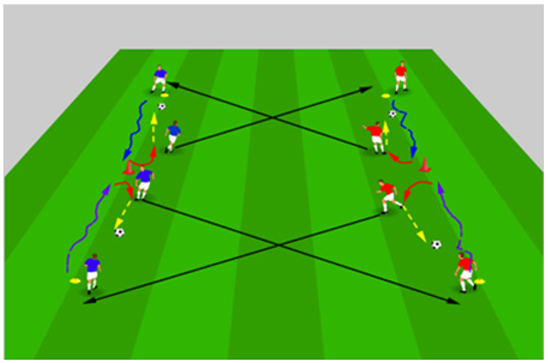
| Four players positioned in a square with sides ranging between 15 and 25 meters, engaging in diagonal passing in pairs, systematically followed by an accelerated run along the square’s side. Immediately after, the ball is passed diagonally, and after two such executions, the passing and running directions are alternated. Passing is executed along the square’s side, followed by sprinting diagonally within the boundaries marked by cones | The execution will be repeated for 10-12 passes, followed by accelerated sprints, with a semi-active break of 2-3 minutes. During this break, a brief seated stretching program will be practiced on the grass or a mat. As a variant, an additional task can be introduced during the sprint distance, involving a change in direction by maneuvering through three tall cones arranged in a zigzag pattern. |
|
| 3D Graphic Representation | ||
| Technical Description and Methodical Execution | Guidelines - Specific Dosage | |
| Field Dimensions: The game takes place on a field measuring 60 by 30 meters, featuring an integrated neutral zone at the center. Players from both teams are prohibited from entering this neutral zone. The field is equipped with two official goals, each guarded by active goalkeepers. Game Dynamics: The match unfolds as a partially indirect confrontation with the opponent, emphasizing teamwork, strategy, and inclusive play. The neutral zone adds an extra layer of complexity to the game, featuring a neutral player who can only enter the game with the team in possession. This neutral player has the unique ability to penetrate the playing areas of both teams, providing an element of surprise and adaptability to the game. Scoring Rules: Players positioned in the halves of the field 2 by 2 will only score in the goal of the half they belong to. This scoring rule encourages players to work cohesively with their teammates and strategize effectively to secure goals in their designated halves. |
The execution will be repeated 4-6 times with a semi-active break, during which continuous ball control from ankle play will be practiced, followed by light running and stretching while seated on the grass or mat. Instructions: Players must adhere to the rule of scoring only in the goal of the half they belong to, fostering a strategic approach to the game. The neutral player can significantly impact the flow of the game by strategically entering the playing areas, requiring teams to adapt their strategies dynamically. Emphasize the principles of teamwork, communication, and inclusion throughout the game. Work Variation: The number of players for each team can be adjusted individually to accommodate different skill levels and promote inclusivity. Introduce numerical disadvantages or advantages for either team, providing an additional challenge or support as needed. This adapted 4 vs. 4 inclusive football game is designed to promote teamwork, strategic thinking, and inclusive play, catering specifically to the unique dynamics of Unified Football with Partners and Children with Intellectual Disabilities. |
|
Table 7.
Correlation analysis of static balance.
| ESI_Static_balance | ESF_Static_balance | ||
|---|---|---|---|
| ESI_Static_balance | Pearson Correlation | 1 | .999** |
| Sig. (2-tailed) | .000 | ||
| N | 12 | 12 | |
| ESF_Static_balance | Pearson Correlation | .999** | 1 |
| Sig. (2-tailed) | .000 | ||
| N | 12 | 12 | |
| **. Correlation is significant at the 0.01 level (2-tailed). | |||
Table 8.
Correlationa analysis of dynamic balance.
| E.I.DynamicBalance | E.FDynamicBalanc | ||
|---|---|---|---|
| E.I.DynamicBalance | Pearson Correlation | 1 | .998** |
| Sig. (2-tailed) | .000 | ||
| N | 12 | 12 | |
| E.FDynamicBalance | Pearson Correlation | .998** | 1 |
| Sig. (2-tailed) | .000 | ||
| N | 12 | 12 | |
| **. Correlation is significant at the 0.01 level (2-tailed). | |||
Table 9.
Correlation Analysis of Identified Stimuli.
| SII_Identified_stimuli | SIF_Identified_stimuli | ||
|---|---|---|---|
| SII_Identified_stimuli | Pearson Correlation | 1 | .990** |
| Sig. (2-tailed) | .000 | ||
| N | 12 | 12 | |
| SIF_Identified_stimuli | Pearson Correlation | .990** | 1 |
| Sig. (2-tailed) | .000 | ||
| N | 12 | 12 | |
| **. Correlation is significant at the 0.01 level (2-tailed). | |||
Table 10.
Correlation Analysis of Pulse Processing Speed.
| PPSI_Pulse_processing_speed | PPSF_Pulse_processing_speed | ||
|---|---|---|---|
| PPSI_Pulse_processing_speed | Pearson Correlation | 1 | .836** |
| Sig. (2-tailed) | .001 | ||
| N | 12 | 12 | |
| PPSF_Pulse_processing_speed | Pearson Correlation | .836** | 1 |
| Sig. (2-tailed) | .001 | ||
| N | 12 | 12 | |
| **. Correlation is significant at the 0.01 level (2-tailed). | |||
Table 11.
Correlation Analysis of Social Interaction.
| SocII_Social_interaction | SocIF_Social_interaction | ||
|---|---|---|---|
| SocII_Social_interaction | Pearson Correlation | 1 | .000 |
| Sig. (2-tailed) | 1.000 | ||
| N | 12 | 12 | |
| SocIF_Social_interaction | Pearson Correlation | .000 | 1 |
| Sig. (2-tailed) | 1.000 | ||
| N | 12 | 12 | |
Table 12.
Paired Samples Test for Static Balance and Social Interaction.
| Paired Differences | t | df | Sig. (2-tailed) | ||||||
|---|---|---|---|---|---|---|---|---|---|
| Mean | Std. Deviation | Std. Error Mean | 95% Confidence Interval of the Difference | ||||||
| Lower | Upper | ||||||||
| Pair 1 | ESI_Static_balance - ESF_Static_balance | -1.750 | .754 | .218 | -2.229 | -1.271 | -8.042 | 11 | .000 |
| Pair 2 | SocII_Social_interaction - SocIF_Social_interaction | -2.167 | .835 | .241 | -2.697 | -1.636 | -8.990 | 11 | .000 |
Table 13.
Paired Samples Test for Pulse Processing Speed and Social Interaction.
| Paired Differences | t | df | Sig. (2-tailed) | ||||||
|---|---|---|---|---|---|---|---|---|---|
| Mean | Std. Deviation | Std. Error Mean | 95% Confidence Interval of the Difference | ||||||
| Lower | Upper | ||||||||
| Pair 1 | PPSI_Pulse_processing_speed - PPSF_Pulse_processing_speed | -.10525 | .15861 | .04579 | -.20603 | -.00447 | -2.299 | 11 | .042 |
| Pair 2 | SocII_Social_interaction - SocIF_Social_interaction | -2.167 | .835 | .241 | -2.697 | -1.636 | -8.990 | 11 | .000 |
Table 14.
Paired Samples Test for Identified Stimuli and Social Interaction.
| Paired Differences | t | df | Sig. (2-tailed) | ||||||
|---|---|---|---|---|---|---|---|---|---|
| Mean | Std. Deviation | Std. Error Mean | 95% Confidence Interval of the Difference | ||||||
| Lower | Upper | ||||||||
| Pair 1 | SII_Identified_stimuli - SIF_Identified_stimuli | -1.167 | .577 | .167 | -1.533 | -.800 | -7.000 | 11 | .000 |
| Pair 2 | SocII_Social_interaction - SocIF_Social_interaction | -2.167 | .835 | .241 | -2.697 | -1.636 | -8.990 | 11 | .000 |
Table 15.
Paired Samples Test for Dynamic Balance and Social Intercation.
| Paired Differences | t | df | Sig. (2-tailed) | ||||||
|---|---|---|---|---|---|---|---|---|---|
| Mean | Std. Deviation | Std. Error Mean | 95% Confidence Interval of the Difference | ||||||
| Lower | Upper | ||||||||
| Pair 1 | E.I.DynamicBalance E.FDynamicBalance | -.007083 | .012139 | .003504 | -.014796 | .000629 | -2.021 | 11 | .068 |
| Pair 2 | SocII_Social_interaction -SocIF_Social_interaction | -2.167 | .835 | .241 | -2.697 | -1.636 | -8.990 | 11 | .000 |
Disclaimer/Publisher’s Note: The statements, opinions and data contained in all publications are solely those of the individual author(s) and contributor(s) and not of MDPI and/or the editor(s). MDPI and/or the editor(s) disclaim responsibility for any injury to people or property resulting from any ideas, methods, instructions or products referred to in the content. |
© 2024 by the authors. Licensee MDPI, Basel, Switzerland. This article is an open access article distributed under the terms and conditions of the Creative Commons Attribution (CC BY) license (https://creativecommons.org/licenses/by/4.0/).
Copyright: This open access article is published under a Creative Commons CC BY 4.0 license, which permit the free download, distribution, and reuse, provided that the author and preprint are cited in any reuse.


