

Submitted:
07 March 2024
Posted:
08 March 2024
You are already at the latest version
Abstract
This systematic review provides a comprehensive neuropsychological analysis of psychotic spectrum disorders, including schizophrenia, bipolar disorder, and depression. It explores cognitive impairments in memory, attention, and executive function, and the relation between brain abnormalities and these deficits. The paper emphasizes the use of neuropsychological tests in diagnosis and early psychosis management, while also discussing interventions, the impact of dementia on psychosis, and the neurobiological patterns associated with these conditions. Additionally, it underlines the importance of childhood trauma in the development of psychosis and examines the effects of substance abuse and brain injury. Neuropsychological evaluations and targeted therapies are highlighted as crucial for the understanding, diagnosis, and treatment of psychotic disorders. The research further includes evidence of neurocognitive dysfunction in individuals with a high risk of psychosis and emphasizes the advanced brain aging in schizophrenia and bipolar disorder. The necessity of comprehensive clinical evaluations and targeted therapies for cognitive impairments is underscored throughout the research. The potential effects of dementia on individuals with psychosis, neurobiological patterns, the role of childhood trauma, the impact of psychosis in dementia patients, and proposed treatments are also explored in depth. Overall, the paper underscores the integral role neuropsychological knowledge plays in understanding, diagnosing, managing, and treating psychotic spectrum disorders.
Keywords:
Neuropsychology
; Psychotic Spectrum
; Neurobiological Pattern
; Childhood Trauma
; Dementia
1. Introduction
Clinical neuropsychology plays a vital role in comprehending the cognitive deficits linked to psychotic spectrum disorders, including Schizophrenia and other related psychotic disorders. The illnesses under consideration exhibit a wide array of cognitive impairments that affect multiple aspects of cognitive performance, such as memory, attention, executive function, language, and spatial abilities [1]. The extent and characteristics of cognitive dysfunction might differ among various psychotic disorders, with Schizophrenia often displaying the most pronounced impairment [2]. Neuropsychological research has yielded significant findings regarding the neurocognitive impairments observed in patients diagnosed with psychosis. Previous studies have demonstrated that people diagnosed with Schizophrenia display a comprehensive cognitive impairment characterized by deficits reported in various cognitive domains [1,3,4]. The deficiencies mentioned above are not restricted to cognitive capacities but encompass a wide-ranging impairment [1].
Moreover, scholarly research has underscored the significance of evaluating distinct cognitive domains, namely working memory and executive function, in forecasting the occurrence of psychosis among persons diagnosed with Alzheimer's disease. The impact of antipsychotic drugs on cognitive functioning has also been explored in the context of treating psychosis. According to empirical evidence, the administration of antipsychotic medication has been associated with enhancements in neurocognitive functioning. However, it is essential to note that the extent of these gains may change among various types of drugs. Nevertheless, it is imperative to exercise prudence while examining these discoveries, considering the methodological constraints that could impact the comprehensibility of the outcomes [5].
Moreover, the evaluation of cognitive impairment in individuals with psychotic disorders extends beyond nations with high economic status. The demand for concise neuropsychological assessments is increasing in low and middle-income countries, where resource constraints are prevalent [6]. The same researchers conducted studies to investigate the efficacy of brief neuropsychological tests in evaluating cognitive impairment in individuals with psychotic illnesses within specific contexts. The above evaluations have underscored the significance of creating validated assessments that may be effectively utilized in settings with limited resources.
In summary, clinical neuropsychology is vital in comprehending the cognitive deficits linked to psychotic spectrum disorders. Numerous studies have demonstrated that patients diagnosed with Schizophrenia and other psychotic disorders manifest diverse cognitive impairments spanning various areas [4,5,6,7]. Neuropsychological tests have a crucial role in the identification of distinct cognitive deficits and the prediction of psychosis [2]. Additional investigation is required to establish validated, concise neuropsychological assessments suitable for use in poor and middle-income nations to evaluate cognitive impairment in individuals with psychotic illnesses.
The human mind can be characterized as a multifaceted network of cognitive processes, affective experiences, sensory interpretations, and behavioral responses, carefully regulated by the underlying neurological mechanisms of the brain. Clinical neuropsychology is situated at the intersection of this framework to elucidate the connection between cognitive processes and the underlying neural architecture, particularly in cases of aberrations. One of the most captivating and diverse fields of inquiry in this domain is the psychotic spectrum, which encompasses a variety of disorders marked by modified cognitive processes, affective states, sensory experiences, and, frequently, a sense of disconnection from objective reality.
The psychotic spectrum comprises a range of illnesses, with schizophrenia being the most notable among them. Additional disorders contributing to the continuum include schizoaffective disorder, short psychotic disorder, and delusional disorder. Historically, the predominant emphasis was placed on the observable manifestations of mental disorders, such as auditory or visual hallucinations and paranoid or grandiose delusions. However, recent advancements in neuropsychology have redirected attention toward the cognitive impairments that coexist with these conditions. The deficiencies mentioned above frequently play a pivotal role in determining an individual's functional capacity and overall quality of life, occasionally overshadowing the effects of the more obvious psychotic symptoms [8,9,10].
This study aims to analyze the neuropsychological components of the psychotic spectrum. By exploring the cognitive disruptions linked to these disorders, analyzing their neurological foundations, and examining their wider ramifications, we aim to elucidate a holistic knowledge of psychosis. An in-depth comprehension of these factors enhances the accuracy of diagnosis and facilitates the development of novel therapy approaches designed to improve cognitive function while alleviating symptoms. In the following sections, we will examine the main cognitive domains impacted by the psychotic spectrum, investigate the brain structures associated with these impairments, and analyze the consequences for everyday functioning and overall prognosis. This investigation aims to highlight the significant role of clinical neuropsychology in redefining our comprehension of the psychotic range.
2. Literature Review
2.1. Neurobiological Pattern in Psychotic Spectrum
Extensive study has investigated neurobiological processes within psychotic spectrum illnesses, including Schizophrenia and other related psychotic disorders. The theory of the dopamine hypothesis has played a significant role in elucidating the neurological underpinnings of these illnesses [11]. According to the same researchers, there is an indication that the dysregulation of dopamine neurotransmission, specifically in the striatum and prefrontal cortex, is significant in the development of psychosis. The abovementioned idea has garnered support from many neurochemical imaging studies, genetic data, and investigations into environmental risk factors. Moreover, scholarly investigations have shed light on the involvement of additional neurotransmitter systems, namely glutamate, and GABA, in the neurobiological mechanisms underlying psychotic spectrum disorders. The pathophysiology of these disorders may be influenced by the dysregulation of these systems and changes in synaptic plasticity and neurodevelopmental processes [11].
Moreover, previous studies have identified structural and functional irregularities in specific brain regions, such as the hippocampus, amygdala, insula, and cortical networks, as potential neurobiological factors contributing to the development of psychosis [12,13,14,15]. Examining neurobiological patterns in psychotic spectrum disorders necessitates a comprehensive understanding of the interplay between hereditary susceptibility and environmental influences. The impact of early life hardship, urban upbringing, minority group position, and substance use, including cannabis, on the developing brain and the heightened risk of psychosis has been established in previous research. The manifestation and severity of psychopathology can be influenced by the interaction of these factors with genetic predispositions [16]. The neurobiological patterns identified in psychotic spectrum illnesses are not confined to diagnostic categories but can be detected over the entire range of psychosis. Researchers [12] have revealed transdiagnostic connections between the integrity of functional brain networks and cognitive impairments. These findings offer valuable insights into the shared neurobiological pathways contributing to cognitive deficits in psychotic disorders. The results mentioned above indicate that knowledge about neurological patterns that extend beyond traditional diagnostic limits can contribute to advancing targeted therapies and tailored treatment strategies.
In summary, the neurobiological manifestations observed in psychotic spectrum illnesses are characterized by the dysregulation of neurotransmitter systems, modifications in brain structure and function, and the interplay between genetic susceptibility and environmental influences. In conjunction with the participation of additional neurotransmitter systems and brain areas, the dopamine hypothesis offers a theoretical framework for comprehending the underlying mechanisms of psychosis. The transdiagnostic connections and the influence of environmental factors underscore the intricate nature of the neurobiological processes in various illnesses. Ongoing investigation in this domain is crucial to further our comprehension of the fundamental mechanisms and to facilitate the development of efficacious therapies for persons diagnosed with psychotic spectrum illnesses.
2.2. Neurocognitive Pattern in Psychotic Spectrum
According to the existing body of research, schizophrenia is distinguished by a comprehensive cognitive decline across multiple areas, encompassing verbal and nonverbal memory, motor skills, attention, intellectual capacity, spatial aptitude, executive functioning, language proficiency, and performance on tactile-transfer tests [17]. The abovementioned study by researchers [18] indicates that cognitive impairments are observed in individuals with first-episode schizophrenia and chronic schizophrenia. Various psychiatric conditions, such as schizoaffective disorder and bipolar disorder with psychotic features, are associated with cognitive impairments [12,19]. Researchers [19,20] in the field of neuropsychology provide empirical support for the notion that cognitive impairment is an inherent characteristic of schizophrenia and other psychotic disorders. There are variations in the severity of cognitive deficits among psychotic disorders, with schizophrenia typically exhibiting the most severe impairment [12]. However, previous research has shown that cognitive deficits are present prior to the onset of psychosis' prodromal phases [20]. Neuroimaging studies have provided empirical support for the existence of discernible macroscopic alterations in the brains of individuals with psychotic disorders. These modifications include structural, functional, perfusion, and metabolic changes in brain activity [23]. The same researchers [23] report that magnetic resonance imaging (MRI) and positron emission tomography (PET) can be used to detect alterations. In previous studies [12,22], the correlation between the integrity of functional brain networks and the cognitive ability of individuals experiencing psychotic-like episodes was established. These findings provide empirical support for the neurodevelopmental model of schizophrenia and other psychotic disorders, indicating that cognitive impairments are the result of atypical neurodevelopment [20,21]. However, a comprehensive understanding of the neurobiological mechanisms underlying these cognitive impairments and brain structure alterations is still lacking [23].
In addition, it is crucial to recognize that cognitive impairments are a prominent symptom of schizophrenia and other psychotic disorders. Multiple cognitive domains are affected, and cognitive impairments can be observed in both the acute and chronic phases of the illness. Cognitive abnormalities vary in severity across psychotic disorders, with schizophrenia typically exhibiting the most severe impairment [4]. The existence of macroscopic brain changes associated with psychotic disorders has been empirically supported by neuroimaging studies. These modifications may contribute to the cognitive impairments observed in patients with these disorders. Additional research is required to enhance our understanding of the underlying neurobiological mechanisms and to develop targeted therapeutic interventions for cognitive impairments in psychotic disorders [5,6,7,10].
Psychotic spectrum disorders, such as schizophrenia and other related psychotic disorders, are characterized by a wide range of cognitive impairments that impact numerous facets of cognitive functioning. Memory, attention, executive functions, and language skills are frequently impaired in patients with these disorders [1]. Psychotic spectrum disorders are frequently associated with memory impairments. According to researchers [17] empirical findings, individuals with schizophrenia have deficits in both verbal and nonverbal memory. Memory impairments can have a significant impact on a person's ability to encode, retain, and retrieve information, resulting in difficulties with learning and daily functioning [3]. People with psychotic spectrum disorders frequently struggle to maintain concentration. According to researchers [3], visual and auditory attention deficits can impair the ability to concentrate, maintain attention, and filter out irrelevant stimuli. These attentional deficits may result in cognitive excess and impede the effective processing of information.
Executive functions consist of higher-order cognitive processes such as planning, problem-solving, and cognitive flexibility, and they are frequently impaired in people with psychotic spectrum disorders. According to researchers [24], impairments in executive functions have a substantial impact on an individual's ability to set goals, organize and prioritize duties, and adapt to changing circumstances. These restrictions can have a significant impact on an individual's ability to engage in daily activities and maintain autonomy. Additionally, patients with psychotic spectrum disorders exhibit language impairments. The presence of difficulties in expressive and receptive language skills can have a significant impact on communication, social interactions, and the ability to effectively articulate thoughts and ideas [24]. A person's perception of social isolation and ability to establish and maintain interpersonal relationships may be affected by language limitations. Evaluation and comprehension of cognitive impairments associated with psychotic spectrum disorders requires neuropsychological evaluations. These assessments provide invaluable insight into the impacts of various cognitive impairments on daily functioning. Moreover, these interventions play an important role in the development of targeted therapies and treatment strategies that seek to improve cognitive functioning and overall quality of life in individuals with psychotic spectrum disorders [25].
Several neuropsychological domains, including but not limited to memory, attention, executive functioning, and language abilities, are impaired in psychotic spectrum disorders. The presence of these cognitive impairments has a significant impact on the daily functioning and overall quality of life of individuals [4]. To facilitate the development of effective treatments and improve the overall prognosis of those afflicted with psychotic spectrum disorders, it is essential to gain a thorough comprehension of the specific cognitive impairments observed in these conditions [8,9,13].
2.3. Neuropsychological Functioning of Dementia Patients with Psychosis
Dementia is an advancing neurological disorder distinguished by a gradual deterioration in cognitive functions, resulting in impaired memory, cognition, behavior, and the ability to perform daily tasks. As the progression of dementia occurs, a notable subgroup of patients exhibits neuropsychiatric symptoms, among which psychosis arises as a particularly complex clinical manifestation. The simultaneous presence of dementia and psychosis introduces intricacy to diagnosing and treating both conditions. The interaction between cognitive decline and psychotic symptoms poses distinct difficulties for healthcare professionals, caregivers, and the broader healthcare system. A thorough neuropsychological assessment is necessary to address the complex intersection of cognitive impairment associated with dementia and psychosis [2,5]. The unique neuropsychological profiles of dementia and psychosis have been the subject of independent investigation. Still, the extent of overlap and interaction between these two disorders has received less attention in the existing literature. The co-occurrence of cognitive impairments, particularly those related to dementia, hallucinations, delusions, and other manifestations of psychosis, can substantially influence the neuropsychological terrain. Combining these factors can lead to worsened cognitive impairments, modified patterns of disease advancement, and diverse reactions to therapy approaches [7,8,9].
Additionally, psychosis may be associated with dementia, and recent studies suggest a hypothesis that links psychotic symptoms in individuals with dementia to comparatively higher levels of executive control impairments and visuoperceptual deficiencies. According to a survey conducted by researcher [26], the negative symptoms of schizophrenia contribute significantly to the morbidity associated with the condition. Still, their prominence is comparatively lower in other psychotic disorders. Within schizophrenia, two negative symptoms stand out: the loss of emotional expression and abulia. Understanding the etiology of psychosis in specific subsets of dementia patients is paramount, as researchers have endeavored to elucidate this phenomenon. A comparison was conducted between the neuropsychological functioning patterns of dementia patients who developed psychosis and those who did not. The researchers posited in their central hypothesis that individuals with dementia who exhibit psychosis would demonstrate distinct patterns of neuropsychological functioning compared to those without psychosis. The researchers had a specific expectation that the former group would exhibit a higher level of impairment in visuoperceptual and executive functions. Upon comparing the two groups, it becomes evident that patients displaying psychoticism exhibit diminished punctuation scores on assessments evaluating executive control.
Dementia is a neurological condition characterized by a progressive deterioration of cognitive functions and impairment in daily activities. Psychosis, characterized by hallucinations and delusions, is a commonly reported phenomenon in individuals with various forms of dementia, such as Alzheimer's disease, dementia with Lewy bodies, and Parkinson's disease dementia [27,28,29]. Understanding the cognitive processes of individuals with dementia and psychosis is crucial for the development and implementation of efficacious treatments aimed at managing and treating their condition. The primary objective of this literature review is to critically assess the existing body of research pertaining to the neuropsychological dimensions of individuals with dementia who also experience psychosis. Researchers [30] conducted a study to investigate the impact of extended treatment of neuroleptic drugs on the cognitive decline and neuropsychiatric symptoms of individuals diagnosed with Alzheimer's disease (AD). The findings of the study revealed that the cessation of neuroleptic drugs did not yield any adverse impact on the cognitive and functional capacities of the vast majority of individuals diagnosed with Alzheimer's disease. Nevertheless, it is imperative to acknowledge that neuroleptics may provide distinct advantages in the extended management of heightened neuropsychiatric symptoms [30]. Based on the aforementioned evidence, it is imperative to conduct a thorough assessment when contemplating the utilization of neuroleptic medications, wherein a careful analysis of the prospective advantages and drawbacks is undertaken. In a study undertaken by researcher [31], an independent examination was carried out to examine the relationship between neuropsychiatric symptoms (NPS) and the prevalence of dementia in a sample of older adults who had unimpaired cognitive abilities. Based on the results of this study, it can be concluded that persons diagnosed with dementia, excluding Alzheimer's disease, demonstrate a higher propensity for manifesting psychotic symptoms as opposed to affective or agitation symptoms. This implies that neuropsychiatric symptoms (NPS), such as psychosis, may act as an antecedent to dementia and its diverse manifestations. Further investigation is required to have a comprehensive understanding of the neurobiological associations between novel psychoactive substances (NPS) and the diverse subtypes of dementia. The primary objective of the study conducted by researchers [32] was to ascertain if cognitive impairments in specific domains can serve as predictive indicators for the initiation of psychosis in individuals diagnosed with Alzheimer's disease (AD). Individuals who have received a diagnosis of Alzheimer's disease (AD) demonstrate notable deficits in cognitive abilities, namely in the areas of working memory and executive functioning. These impairments have been associated with the appearance of psychosis. The aforementioned research outcomes emphasize the need of evaluating and tracking cognitive performance, particularly in the stated areas, among persons diagnosed with dementia and concurrent psychosis. In the assessment of decision-making capacity among individuals with dementia, neuropsychological tests have been employed as a valuable tool. Researchers [33] conducted a study to investigate the influence of neuropsychological test performance on the ability to make treatment decisions in individuals diagnosed with mild to moderate dementia. The research conducted revealed a noteworthy association between individuals' performance on neuropsychological evaluations and their ability to make well-informed decisions regarding their treatment. This implies that the utilization of neuropsychological exams for the purpose of evaluating cognitive capacities might have a substantial impact on ascertaining an individual's capability to make well-informed selections pertaining to their therapeutic interventions. Furthermore, extensive scholarly inquiry has been conducted to investigate the correlation between psychotic symptoms and several classifications of dementia. The study conducted by researchers [16] aimed to examine the occurrence of psychotic symptoms in a cohort of adults aged 85 years with dementia. The researchers utilized a representative sample from the general community for their investigation. The findings of this study reveal a noteworthy occurrence of psychotic symptoms among older adults who have been diagnosed with dementia. This occurrence leads to a considerable decline in their ability to do everyday tasks and places a great strain on those who provide care for them. The presentation of psychotic symptoms exhibited variability among different subtypes of dementia, with a particular emphasis on the thorough investigation of Alzheimer's disease (AD).
In summary, the current corpus of research pertaining to the neuropsychological functioning of patients diagnosed with dementia and psychosis reveals the complex interaction among cognitive deterioration, neuropsychiatric symptoms, and specific subclasses of dementia. There is a correlation between deficits in working memory and executive functioning and psychosis in individuals diagnosed with Alzheimer's. The utilization of neuropsychological examinations to evaluate cognitive capacities can provide valuable insights into the decision-making capacity of individuals affected by dementia. Additional investigation is required to enhance comprehension of the neurobiological mechanisms that underlie psychotic episodes in individuals with dementia and formulate specific therapies to treat these symptoms effectively [31,32,33].
2.4. Relationship between Childhood Trauma and Psychosis
Childhood trauma can be described as the negative consequences, potential risks, or possible harm that may arise from the actions or inactions of the child's caregiver [34]. However, the description mentioned above encompasses a broad spectrum of events, encompassing physical, emotional, and sexual abuse, neglect, bullying, or other adversities encountered within the educational setting and the loss of a family member. It is worth noting that these experiences potentially impact a significant proportion of the global population, estimated at 66% [35]. The prevalent traumas experienced by individuals, regardless of gender, encompass physical abuse, physical neglect, and mental abuse [36]. The available body of evidence indicates a correlation between adverse childhood experiences and an increased likelihood of negative social outcomes, including mental illnesses, lower educational attainment, and higher rates of criminal behavior [37].
The lack of understanding and limited knowledge of the illness is frequently observed in cases of psychosis, particularly in individuals diagnosed with schizophrenia [38]. The therapeutic significance of perceptual impairment lies in its association with suboptimal adherence to therapy [39], lower levels of overall functioning, increased severity of psychopathological symptoms, higher likelihood of recurrence, and diminished treatment outcomes [40]. Empirical examinations of the hypotheses in neuropsychology have been developed mostly within the past twenty years. The hypothesis put out posits that the modification of prefrontal cortex functioning, which is responsible for cognitive flexibility and introspection, could potentially result in impaired insight [40]. While certain studies indicate a lack of awareness of the disease concerning impaired performance on various neuropsychological assessments [39], the results are inconclusive. Psychotic events throughout early childhood has been linked with cognitive abnormalities, functional impairment, and an increased likelihood of developing mental illnesses in the future. Furthermore, it should be noted that while these conditions are prevalent among adults, there is a scarcity of comprehensive neuropsychological research conducted across the adult lifespan, and the potential influence of confounding circumstances has not been well investigated. According to researcher [41], the collective occurrence of psychotic disorders is estimated to be around 3% throughout an individual's lifetime, whereas the incidence of schizophrenia specifically is estimated to be 1%. Surveys conducted by the World Health Organization (WHO) have revealed that a considerable segment of the general population exhibits subclinical psychotic experiences [42]. The aforementioned surveys provide data on the lifetime prevalence rates of mental health disorders across different income categories. Globally, the prevalence rate is reported to be 5.8%. In high-income countries, the rate is slightly higher at 6.8%, while middle-income countries have a prevalence rate of 7.2%. In contrast, low-income countries exhibit a lower prevalence rate of 3.2%. The existing body of evidence indicates a potential association between subclinical psychotic experiences and the manifestation of more pronounced clinical psychotic symptoms. Hence, the examination of subclinical experiences has the potential to yield significant insights regarding the fundamental characteristics of psychotic disorders. Previous research has documented the existence of common risk factors that are associated with both psychotic episodes and psychotic disorders. Childhood abuse, low IQ, and exposure to stressful life events have been identified as significant factors in this context. It is of utmost importance to recognize that several studies have provided evidence regarding the presence of pathophysiologic similarities between clinical psychosis and subclinical psychosis. These similarities encompass hypofrontality, front-temporal disconnection, and impairments in grey and white matter. Notably, individuals who have undergone psychotic experiences during their childhood exhibit a heightened susceptibility to developing psychotic disorders in the later stages of life, particularly during adulthood [43]. This correlation is linked to the likelihood of hospitalization for a psychotic disorder, as indicated by the research conducted by researchers [44]. Psychotic experiences are associated with nonpsychotic psychiatric disorders such as anxiety, depression [45,46], suicidal ideation, and behavior. The Psychosis Screening Questionnaire (PSQ) was utilized to assess the presence of psychotic events. The screening test is an interviewer-administered assessment tool designed to evaluate psychotic episodes during the past year. It comprises five distinct portions, each addressing specific domains of hypomania, thinking disorder, paranoia, weird experiences, and hallucinations. Historically, certain elements pertaining to hypomania were initially considered for inclusion but were subsequently excluded due to the primary emphasis on psychosis, as they lack a direct association. Each portion of the study includes a specific beginning inquiry, which is subsequently followed by one or more sub-questions aimed at assessing the nature and characteristics of the psychotic experiences. The validity of this screening test has been established through its administration in two separate surveys conducted within the United Kingdom. In the study conducted by researchers [47] entitled "Psychotic Experiences and Neuropsychological Functioning in a Population-based Sample," ten participants had incomplete data in the questionnaire. Among these participants, eight individuals reported a current or past diagnosis of psychosis, while three participants who were currently using antipsychotic medication were excluded from the data analysis. The study included a total of 1677 participants, who represented various nationalities. Among these participants, 633 individuals (37.7%) identified as non-white British. The average age of the participants was 40 years, with a standard deviation of 17 years. The age range of the participants spanned from 16 to 90 years. Seven hundred thirty-three individuals, constituting 43.7% of the sample, identified as male. A total of 11 subjects, exhibiting a prevalence rate of 0.7%, manifested symptoms of a psychotic illness when their self-reports and medication usage were analyzed. These findings align with previous research outcomes. Individuals who exhibited a higher likelihood of experiencing psychotic episodes were found to possess certain characteristics, including belonging to a minority ethnic group, having a lower employment status, engaging in cannabis consumption during the last year, and being diagnosed with a common mental condition. The age difference variable did not demonstrate statistical significance. The researcher's findings indicate a potential link between subclinical psychotic experiences and mild cognitive impairment during maturity. Only older persons with psychotic experiences had medium or substantial impairments in working memory, memory, and memory after controlling for socio-demographic variables, mental illness, and cannabis use. The study's findings were consistent with the National Survey of Psychiatric Morbidity in Great Britain, which documented a decline in verbal IQ among people who reported experiencing psychotic symptoms. The researchers contended that the cognitive impairment profile observed in adults with psychotic episodes differed from that of individuals diagnosed with psychotic conditions.
When discussing psychosis, it is important to note that this term encompasses several disorders or illnesses, each characterized by distinct mental structures. Nevertheless, these narratives have two fundamental structural elements: a blurring line between fact and illusion and a merging of actuality with imaginative elements. A growing body of research suggests that the utilization of neuropsychology has promise as an effective means of evaluating and addressing psychotic illnesses. Neuropsychology is an academic discipline that investigates the relationship between brain function and behavior, focusing on understanding disorders' impact on cognitive processes [48,49]. Gaining comprehension of the impact of a condition on cognitive performance can offer valuable insights into the development of therapeutic approaches. The investigation of the correlation between cognition and the concept of "self" holds significant relevance within the realm of psychotic disorders. The self-concept encompasses various dimensions: consciousness, personal identity, and memory. However, scholars are also intrigued by an additional facet of the individual known as self-awareness, which undergoes development over time, particularly within intimate relationships. For example, perceiving and labeling external objects and individuals is generally less challenging than recognizing and comprehending one's own internal experiences, such as emotions, thoughts, or behaviors. Nevertheless, existing evidence indicates that the development of self-awareness is a progressive phenomenon that occurs throughout childhood and adolescence. The process mentioned above can potentially be influenced by a range of factors, including but not limited to heredity, brain morphology, individual disposition, and stress levels. Research has indicated that individuals diagnosed with psychotic disorders frequently encounter difficulties in perceiving their selves at instances that necessitate contemplation and self-examination, such as when prompted to adopt a third-person viewpoint of oneself. Several studies have indicated that individuals diagnosed with schizophrenia exhibit challenges in recognizing themselves as participants in the scenarios presented in the widely employed "Self-Awareness Inventory" test. This observation implies that these individuals possess diminished self-awareness regarding their cognitive and affective states [50]. On the contrary, alternative research has indicated that patients with psychosis exhibit elevated levels of self-awareness in specific circumstances, such as while engaging in introspection regarding emotional memories or contemplating the feelings of others. The results of this study indicate that an individual's self-awareness can fluctuate across different situations. Individuals with challenges in perceiving their identity across various contexts may face a heightened vulnerability to the development of diminished self-esteem and impaired social aptitude. These individuals may exhibit a decreased likelihood of achieving success in their interpersonal connections. Therefore, it is crucial to evaluate the existence of various facets of self-awareness in patients diagnosed with psychotic disorders [51].
Moreover, psychosis can manifest in individuals exposed to substance abuse, such as drugs, or during the withdrawal phase. Additionally, it can arise from inherent mental health issues, including primary and secondary disorders, which may have physiological origins. Significant progress has been made in understanding the underlying mechanisms of psychotic symptoms, such as delusions and hallucinations. Recent research has identified a novel association between psychoses and neuronal autoantibodies [52]. This observation sheds new insight into the discourse surrounding the presence of common biomarkers, as it reveals that a minority of persons with psychotic disorders exhibit these autoantibodies. One emerging area of research in the field of psychosis studies involves recognizing that some neurobiological markers and manifestations can be more effectively identified by using advanced instruments and experimental methodologies in group analyses. The circuits responsible for changes of mind are situated in specific locations within the brain, and these locations exhibit little susceptibility to alteration while also being susceptible to individual differences. Resting-state alterations have been delineated in schizophrenia, potentially aiding in the integration of small structural cerebral abnormalities observed in individuals with schizophrenia. Nevertheless, it is important to note that this population's predominant impairments in cerebral functioning include perception and cognition. There is ongoing development of ideas aimed at establishing conceptual connections between regions of observable neurobiological alterations and psychotic phenomenology [53].
2.4. Neuropsychological Interventions and Rehabilitation in Psychotic Spectrum
Implementing neuropsychological therapies and rehabilitation is paramount in managing cognitive deficits among patients diagnosed with psychotic spectrum illnesses, including schizophrenia and psychotic bipolar disorder. The primary objective of these interventions is to promote cognitive functioning, optimize everyday functioning, and ultimately enhance the overall quality of life for those affected by these disorders. Cognitive deficits in psychotic spectrum disorders can impact multiple areas, encompassing memory, attention, executive processes, and language abilities. According to researchers [54], these deficits can substantially affect an individual's capacity to carry out routine tasks, sustain work, and participate in social interactions. Various neuropsychological therapy and rehabilitation procedures have been developed with the aim of targeting specific cognitive problems and promoting cognitive restoration. Cognitive remediation is a widely acknowledged method employed in the realm of neuropsychological intervention, involving the application of structured training programs aimed at enhancing cognitive capacities [55]. Cognitive remediation programs often encompass a variety of exercises and assignments that are designed to specifically address distinct cognitive domains, such as working memory, attention, and executive functioning [56]. These programs have the flexibility to be presented either individually or in groups, and they have the capability to incorporate computer-based training, cognitive exercises, and compensating strategies. The utilization of noninvasive methodologies for brain stimulation, such as transcranial magnetic stimulation (TMS) and direct current stimulation (tDCS), is an alternate approach. The aforementioned tactics encompass the utilization of low-intensity electrical currents or magnetic fields targeted at specific cerebral areas with the aim of regulating neuronal activity and augmenting cognitive functioning [56]. The application of noninvasive brain stimulation techniques for enhancing cognitive functions in individuals diagnosed with psychotic spectrum disorders has demonstrated encouraging results. The same researchers [56] have reported that several investigations have yielded favorable results in various cognitive domains, including memory, attention, and executive skills.
Furthermore, it is imperative to acknowledge that neuropsychological rehabilitation programs have the capacity to include psychosocial interventions, including cognitive-behavioral therapy (CBT). Cognitive Behavioral Therapy (CBT) is a therapy modality that aims to identify and alter maladaptive cognitive and behavioral patterns believed to be associated with cognitive impairments and functional challenges [57]. Cognitive Behavioral Therapy (CBT) possesses the capacity to enhance cognitive performance and psychological well-being among patients diagnosed with psychotic spectrum illnesses through the identification and alteration of cognitive distortions, as well as the cultivation of adaptive coping mechanisms. It is crucial to acknowledge that the efficacy of neuropsychological interventions and rehabilitation may differ across individuals and is contingent upon variables such as the extent of cognitive deficits, personal motivation, and treatment compliance. To optimize the management of symptoms and enhance the efficacy of cognitive therapies, it may be imperative to integrate pharmaceutical interventions, such as the administration of antipsychotic drugs [57].
To sum up, it is imperative to recognize the significance of neuropsychological therapies and rehabilitation programs in the comprehensive management of cognitive deficits among patients diagnosed with psychotic spectrum illnesses. The main goal of these interventions is to enhance cognitive function, maximize everyday functioning, and eventually enhance the quality of life for individuals impacted by these disorders [58]. Cognitive remediation, noninvasively brain stimulation, and psychosocial therapies are employed to address cognitive impairments and specifically facilitate cognitive restoration. Additional study is required to enhance the efficacy of these interventions and ascertain tailored treatment strategies for persons diagnosed with psychotic spectrum illnesses. The research questions based on the systematic analysis revolve around understanding the neuropsychological aspects of psychotic spectrum disorders, including schizophrenia, bipolar disorder, and depression. The research aims to explore:
- [RQ1] How do cognitive impairments, particularly in memory, attention, and executive function, manifest in psychotic spectrum disorders, and what is their relation to abnormalities in brain regions such as the prefrontal cortex, hippocampus, and thalamus?
- [RQ2] What is the diagnostic importance of neuropsychological tests in identifying these cognitive deficiencies, and how can these deficiencies predict the onset and progression of psychotic disorders?
- [RQ3] How effective are current intervention strategies and therapy methods in cognitive rehabilitation for patients with psychotic spectrum disorders, and what is the potential for future research in this area?
- [RQ4] What role do genetic and environmental factors play in the risk factors for schizophrenia and other psychotic spectrum disorders?
These questions aim to deepen the understanding of cognitive impairments in psychotic disorders, improve diagnostic methods, and develop more effective treatment strategies.
2. Materials and Methods
This study presents a comprehensive examination of the existing literature conducted in the English language. The task involved conducting a literature search on the topic of Clinical Neuropsychology related to the Psychotic Spectrum, following the PRISMA guidelines, which outline the preferred reporting items for systematic reviews [59]. The inclusion criteria for articles in the study were as follows: 1) Articles had to be written in the English language, 2) Articles had to be produced between the years 2018 and 2023, 3) Articles had to be relevant to the subject of clinical neuropsychology and its application in psychotic spectrum disorders, 4) Articles had to be at the final stage of publishing and 5) Verification that the content is highly pertinent to the subject. The study encompassed articles pertaining to clinical neuropsychology in relation to cognitive deficits in psychotic disorders spectrum. Following an extensive search of databases and the application of relevant filters, a total of 153 articles were identified. Subsequently, 89 articles underwent screening based on their titles, resulting in the distinction of 52 articles. Finally, after careful consideration, 44 papers were included for further analysis (Figure 1). Based on the above procedure (PRISMA methodology) applied in the present study, all articles extracted are listed in Table 1.
To fulfill this objective, a comprehensive search was conducted in Scopus, PsycINFO, PubMed, and WoS databases. The search used the following keywords: psychotic spectrum, clinical neuropsychology, cognitive neuropsychology, memory, attention, executive function, brain regions. The present study incorporated various types of studies, which were classified into three primary categories: (a) Randomized Controlled Trial (RCT) and (b) Longitudinal studies.
3. Results
The results of the studies analyzed in this systematic review illustrate the importance of understanding neurocognitive deficits and neurobiological markers across the spectrum of psychotic disorders. The final outcome of the study conducted by researchers [60], as detailed in the document, emphasizes the importance of understanding cognitive impairments and neurobiological markers within psychotic disorders. The study highlights the diagnostic and prognostic significance of mismatch negativity (MMN) as a neurophysiological marker, which correlates with cognitive impairments and functional outcomes in psychosis. Furthermore, it introduces the concept of biological heterogeneity within psychotic disorders through the identification of distinct biotypes, characterized by unique cognitive and electrophysiological profiles. These findings suggest a move beyond traditional diagnostic categories towards a more nuanced understanding of psychosis that considers cognitive functioning and neurobiological markers. This approach aims to improve diagnostic accuracy, personalize treatment strategies, and offer new directions for research into the underlying mechanisms of psychotic disorders.
Another study by researchers [61], contributes significantly to the understanding of anomalous self-experience in individuals at risk for psychosis and those experiencing a first episode of psychosis. The findings underscore the role of source monitoring deficits in the emergence of self-disturbances, a core feature of schizophrenia spectrum disorders. The relationship between aberrant salience and general psychopathology, rather than directly with self-disturbance, suggests differing pathways in the psychopathology of psychosis. Moreover, the study calls for an expanded neurophenomenological model that includes broader cognitive and perceptual processes, such as temporal processing and multisensory integration. This comprehensive approach highlights the complexity of self-disturbance in psychosis and the need for further research to unravel the intricate relationships between cognitive functions, self-experience, and psychosis onset and progression.
Furthermore, another research conducted by researchers [62], investigated neuroprogressive trajectories of neurocognition, structural brain measures, and network connectivity over the first eight years of illness, focusing on their predictive utility for clinical and functional outcomes in psychotic disorders. The study's main findings emphasize the significance of characterizing neuroprogression in the early course of psychosis. This understanding is crucial for the potential development of individualized treatments targeting specific neuroprogressive patterns. By highlighting these trajectories, Lewandowski et al. aim to inform future research and clinical practice, suggesting that early interventions tailored to the neuroprogressive nature of psychosis could improve long-term outcomes for individuals affected by these disorders.
Moreover, the study [63], focused on the association between late positive potential (LPP) amplitude and symptom severity in individuals diagnosed with affective psychosis and individuals with schizophrenia, including both concurrent and prospective associations with symptoms. The main outcomes revealed that the late positive potential (LPP) did not show mean-level differences between individuals with schizophrenia spectrum disorders and those with primary affective psychosis. However, within the primary affective psychosis group, reduced LPP amplitude was associated with greater depressive, negative, and psychotic symptom severity, both concurrently and at follow-up. These findings suggest that the neural correlates of emotion dysfunction may differ across psychotic disorders, potentially indicating that schizophrenia is characterized by a decoupling of symptom severity and emotional processing. This study highlights the complexity of emotional processing in psychotic disorders and suggests a nuanced approach to understanding and treating these conditions.
Also, another study [64], focused on longitudinal changes in brain structure, specifically cortical thickness, surface area, and grey matter volume, in children and adolescents at familial high risk (FHR) for bipolar disorder or schizophrenia who experienced psychotic spectrum symptoms over time. The key findings of this research include:
- The emergence of psychotic spectrum symptoms in individuals with a familial high risk was associated with a smaller cross-sectional surface area and progressive cortical thinning. This suggests that the brain structure changes associated with the illness could begin progressively during childhood and adolescence.
- There were early areas of overlap between schizophrenia offspring (SzO) and bipolar offspring (BpO) in the occipital cortex, indicating possible common neurodevelopmental pathways in these high-risk groups.
- Both FHR individuals who developed psychotic spectrum symptoms and those who did not show less time-related decrease in total surface area, indicating different trajectories of change in surface area over time between familial risk for schizophrenia versus bipolar disorder.
These findings underscore the importance of early detection and monitoring of at-risk youth for psychotic spectrum disorders, highlighting the progressive nature of cortical changes associated with the development of these conditions.
Additionally, another study [65] aimed to examine cognitive impairment across different subgroups of bipolar disorder (BD), including BD-I (Bipolar I Disorder), BD-II (Bipolar II Disorder), and subgroups based on the history of psychosis (psychotic BD [PBD] and non-psychotic BD [NPBD]). The main outcomes indicated that:
- Both a history of psychosis and a diagnosis of BD-I were associated with more pronounced global cognitive impairment compared to BD-II and NPBD.
- Individuals with BD-I underperformed in specific cognitive domains, such as verbal memory, processing speed, executive function (EF) speed, and EF accuracy, compared to those with BD-II.
- Psychotic BD was associated with significantly impaired cognition compared to NPBD across various cognitive domains.
The study concluded that while there are neurocognitive differences between clinical subtypes of BD, these differences are subtle and not distinct. Most of the cognitive heterogeneity within BD cannot be fully explained by the proposed subtypes.
This comprehensive analysis highlights the complexity of cognitive impairment in bipolar disorder, suggesting that factors beyond simply the presence of psychotic symptoms or the type of BD may contribute to cognitive deficits. The findings also underscore the need for tailored approaches in the treatment and management of cognitive impairment within the bipolar spectrum.
In terms of neuroanatomy in psychotic spectrum, another study [66], revealed that patients with psychotic bipolar disorder (P-BD) exhibited smaller gray matter volumes (GMVs) in specific cortical regions, including the prefronto-temporal and cingulate cortices, precentral gyrus, and insula, compared to healthy controls. The findings suggest that psychosis in bipolar disorder is associated with specific cortical deficits. Additionally, the study found that factors such as gender and the use of psychotropic medication might influence the regional GMVs in P-BD patients. These results underscore the importance of considering psychotic features and medication status when examining brain structure differences in bipolar disorder, highlighting the potential impact of psychosis on the brain's cortical structure within this population.
It is worthwhile to note that the cognitive impairments in psychotic spectrum have a longitudinal stability. A study [67] which primarily focused on understanding the prevalence, profile, and magnitude of cognitive impairments in psychotic disorders, highlights this fact. The findings underscore cognitive impairment as a significant determinant of community functioning among individuals with psychotic disorders, with a majority of individuals with psychotic illness experiencing such impairments. Additionally, cognitive performance was identified as a robust predictor of community functioning in people with psychotic disorders. These outcomes highlight the critical role of cognitive impairments in the overall management and treatment considerations for psychotic disorders, suggesting a need for targeted interventions to address these deficits to improve patient outcomes and quality of life.
Another study focused on the association between childhood trauma and overall neurocognitive function. More specifically, the study [68], explored the association between childhood trauma and overall neurocognitive function in individuals with psychotic disorders and its relationship with working memory. The study found a significant association between overall cognition and childhood trauma in individuals with psychotic disorders. There was a modest negative relationship between childhood trauma and working memory in these individuals. Interestingly, the association between childhood trauma and neurocognition was stronger in healthy controls compared to patients with a psychotic disorder. These findings highlight the impact of childhood trauma on cognitive functioning within psychotic disorders and suggest that the effects of such trauma on cognition might differ between individuals with psychotic disorders and the general population, underscoring the complexity of factors contributing to cognitive outcomes in psychosis.
The functional neuroimaging and its correlation of aggression in psychosis is underlined in another study [69]. The main outcomes indicated a lack of systematic studies on the functional correlates of aggression in schizophrenia, with few studies conducted using varied paradigms and overlapping samples. Additionally, there was a noted absence of research on individuals with affective psychoses. The findings highlight the need for more targeted and systematic research to understand the neurobiological underpinnings of aggression in psychosis and to differentiate the correlates across various psychotic disorders, including affective psychoses. This gap in the literature suggests an important area for future investigation to inform both theoretical understanding and clinical management of aggression in psychotic disorders.
Additionally, another study [70], provided evidence that deficits in cognitive control are present and stable over the early course of psychotic illness in both schizophrenia and bipolar disorder. The research aimed to determine if previously identified deficits in cognitive control remained stable over a one-year period. The results supported the hypothesis of stable cognitive control deficits in these conditions. Moreover, the findings support the use of the AX-CPT paradigm to examine endophenotypic biomarkers of cognitive control in psychosis. This study contributes to the understanding of cognitive control deficits as a stable characteristic of early psychosis, offering insights into potential targets for intervention and treatment in these disorders.
Also, the study [71] highlights the anticipatory pleasure in individuals with schizophrenia spectrum disorders and major depression, comparing these groups to control groups. The findings revealed that anticipatory pleasure is significantly impaired in both schizophrenia spectrum disorders and major depression, with these deficits being even more pronounced in the latter. The impairment of anticipatory pleasure in these disorders indicates a potential therapeutic target, suggesting that interventions aiming to improve cognitive, affective, and behavioral factors could potentially ameliorate symptoms and contribute to the maintenance of these disorders. These results underscore the importance of considering anticipatory pleasure in the assessment and treatment of schizophrenia and major depressive disorders, highlighting a critical area for future research and clinical intervention.
Furthermore, a study [72], embarked on identifying subgroups within psychosis that exhibit distinct illness courses, including variations in symptoms of psychosis, depression, global functioning, and quality of life, alongside exploring the polygenic scores for schizophrenia, bipolar disorder, major depressive disorder, and educational achievement. The investigation revealed the presence of five unique subgroups of psychosis, each characterized by distinct illness trajectories and differences in educational attainment polygenic scores. This discovery underscores the heterogeneity within psychotic disorders and suggests the potential for more personalized approaches to treatment and prognosis based on specific subgroup characteristics. The study's outcomes highlight the importance of genetic and educational factors in understanding the complexity of psychotic disorders, offering new avenues for research and clinical practice.
Another study [73], provides substantial evidence of widespread resting-state functional connectivity abnormalities in early psychosis, particularly implicating dysconnectivity of the default mode network (DMN) and salience network (SN) as core deficits underlying the psychopathology of psychosis. The research underscores the significance of altered connectivity within and between these networks in patients with first-episode psychosis compared to healthy controls. These findings suggest that dysconnectivity in these networks may play a crucial role in the emergence and severity of psychotic symptoms, offering potential targets for early intervention and treatment strategies aimed at modulating network connectivity to improve clinical outcomes in psychosis.
In another study [74], in the neurodegenerative disorders, the impact of psychosis is highlighted on clinical outcomes in Alzheimer's disease, with a specific focus on neuropsychiatric symptoms, dementia severity, cognitive function, caregiver burden, medication use, and mortality. The study found that the presence of delusions and hallucinations, both independently and in combination, is associated with poorer clinical outcomes in Alzheimer's disease. Specifically, the concurrent presence of both symptoms was linked to worse outcomes than the presence of either symptom alone. Furthermore, the use of antipsychotic medication was identified as a predictor of mortality among this patient population. These findings highlight the significant impact of psychosis symptoms on the progression and management of Alzheimer's disease, underscoring the need for careful consideration in the use of antipsychotic medication and the development of targeted interventions to address these symptoms.
Also, a study [75], aimed to synthesize findings on neurofunctional abnormalities in individuals with conduct problems (CP) and its adult form, adult antisocial behaviors, across distinct neurocognitive domains including acute threat response, social cognition, cognitive control, and punishment and reward processing. The results indicated:
- Acute Threat Response: There were decreased activations in several brain regions, suggesting deficits in the neural processing of threat-related stimuli.
- Social Cognition: Altered activations were found in multiple brain regions, pointing to abnormalities in understanding social cues and processing social information.
- Cognitive Control: Reduced activation in specific brain regions was observed, highlighting difficulties in exerting control over thoughts and actions.
- Punishment and Reward Processing: The study also explored, but did not explicitly detail in this section, the neural correlates associated with processing punishment and rewards, which are critical in guiding antisocial and pro-social behaviors.
These findings underscore the complex interplay of various neurocognitive domains in contributing to the behavior seen in individuals with conduct problems and adult antisocial behavior. The study's comprehensive analysis across multiple domains provides valuable insights into the neurofunctional underpinnings of antisocial spectrum disorders, offering potential targets for intervention and rehabilitation strategies.
Additionally, another study [76] aimed to explore the presence of Autism Spectrum Disorder (ASD) in individuals at Clinical High Risk for Psychosis (CHR-P). The findings of the study indicated that 11.6% of CHR-P individuals were diagnosed with ASD. This significant proportion underscores the overlap between psychotic spectrum conditions and ASD, highlighting the need for clinicians to consider the potential co-occurrence of ASD in individuals at high risk for psychosis. The identification of ASD in CHR-P individuals could have important implications for treatment and support strategies, suggesting a tailored approach that addresses the unique challenges faced by individuals with both conditions. This outcome suggests the importance of comprehensive assessments that include screening for ASD in early psychosis intervention services to ensure that all aspects of an individual's mental health are adequately addressed.
In another study [77], the course of general cognitive ability is assessed in individuals with psychotic disorders through a longitudinal analysis, extracting preadmission cognitive scores from school and medical records, alongside post onset cognitive scores from neuropsychological testing at 6-month, 24-month, 20-year, and 25-year follow-ups. The study identified three distinct phases of cognitive change: normative, declining, and deteriorating. It was observed that individuals with schizophrenia began to experience a decline in cognitive abilities 14 years before the onset of psychosis, at a rate significantly faster than those with other psychotic disorders. The cognitive trajectories in schizophrenia were consistent with both neurodevelopmental and neurodegenerative patterns, leading to a loss of 16 IQ points over the observation period. This significant finding underscores the critical windows for primary and secondary prevention, suggesting the importance of early detection and intervention to potentially mitigate cognitive decline in individuals at risk for or living with schizophrenia.
Moreover, another research [32], delved into the neuropsychological and neuroanatomical correlates of psychosis in Alzheimer's disease (AD), focusing on cognitive deficits and gray matter alterations in specific brain regions. The study found that psychosis in AD is associated with specific cognitive impairments and alterations in the brain's gray matter in particular regions. These findings provide new insights into the complex interplay between Alzheimer's disease and psychosis, suggesting that psychosis in AD patients is linked to distinct neuropsychological and neuroanatomical changes. This research enhances our understanding of the mechanisms underlying psychosis in AD, offering potential directions for more targeted diagnostic and therapeutic strategies to address these complex conditions.
The study [78], utilized the Brain-Age Regression Analysis and Computation Utility Software (BARACUS) to measure advanced brain-age in individuals with primary psychotic disorders and bipolar I disorder with psychotic features, as well as their first-degree biological relatives. The findings revealed that individuals with psychotic disorders exhibited a larger brain-age gap compared to their biological relatives and healthy controls, indicating advanced brain aging in schizophrenia and bipolar disorder. However, the study found no evidence of accelerated brain aging in psychotic psychopathology, suggesting that early neurodevelopmental neural abnormalities might be present. These results support the concept of abnormal neurodevelopmental processes in psychotic disorders, providing insights into the underlying mechanisms of these conditions and potentially guiding future research and clinical approaches.
The study [79], examined the effects of antipsychotic medication, specifically olanzapine, on brain structure in patients with major depressive disorder who exhibit psychotic features. The primary outcome focused on changes in cortical thickness in gray matter, while the secondary outcome examined the microstructural integrity of white matter. The findings demonstrated that exposure to olanzapine, compared to placebo, was associated with significant decreases in cortical thickness in both the left and right hemispheres. Additionally, there was a significant interaction between the treatment group and time regarding cortical thickness changes. Post hoc analyses revealed that individuals who relapsed while receiving placebo experienced decreases in cortical thickness compared to those who sustained remission. These results suggest that olanzapine treatment may have specific effects on brain structure, particularly in cortical thickness, which could be related to its clinical efficacy in treating psychotic features in major depressive disorder.
Also, another neurobiological study [80], investigated subtle abnormalities in white matter tracts, particularly those connecting the frontal and temporal lobes, such as the superior longitudinal fasciculus (SLF), inferior longitudinal fasciculus (ILF), and inferior fronto-occipital fasciculus (IFOF). The findings indicate the presence of these subtle abnormalities, especially in the frontal and temporal lobes and their connections, in individuals with schizophrenia and those at ultra-high risk (UHR) for psychosis. This suggests that white matter abnormalities may exist prior to the onset of full-blown psychosis. However, the severity and location of these abnormalities appear to vary, and methodological factors such as differences in age, sex, clinical presentation, or the use of drugs and psychoactive substances by respondents may contribute to these differences. This study underscores the importance of considering subtle neuroanatomical differences in understanding the pathophysiology of psychosis and highlights the potential for early identification and intervention strategies based on neuroimaging findings.
Aρχή φόρμας
The outcome of the research is highlighted the role of developmental trauma and positive symptoms. As it is identified [81] the mediating roles of dissociation, emotional dysregulation, and PTSD symptoms between developmental trauma and hallucinations is described. Furthermore, the study finds evidence of a mediating role of negative schemata between developmental trauma and delusions, as well as paranoia, indicating distinct psychological pathways from developmental trauma to psychotic phenomena in adulthood.
The outcome of the study [82], focuses on the association between Neurological Soft Signs (NSS) and white matter alterations in adults with schizophrenia. The main findings reveal a positive association between NSS and diffusion measures in crucial motor pathways, highlighting the role of NSS at the interface of basic and higher-order motor control. This suggests that both structural and functional brain alterations may explain the varied trajectory of NSS in psychosis. Specifically, the study found an association between NSS in schizophrenia patients and increased diffusivity in the corticospinal tract, corpus callosum, and superior longitudinal fascicle, underlining the potential contribution of white matter alterations in motor pathways to NSS in schizophrenia.Aρχή φόρμας
Also, the outcome of the study [83], is focused on the effectiveness of emotion regulation strategies in patients with psychotic disorders, specifically examining the association between maladaptive strategies and positive symptoms. The study concludes that emotion regulation is significantly impaired in patients with psychotic disorders, with rumination and self-blaming being identified as potential targets for treatment.
The outcome of the research [84], is centered on detecting brain abnormalities in diverse psychiatric illnesses using neuroimaging versus conventional methods. The study included 12 randomized controlled clinical trials involving a substantial number of psychiatric patients. It strongly recommends the use of neuroimaging techniques for the detection of psychiatric disorders.
The final outcome of the study [85], investigates the striatal dopamine synthesis capacity and its correlation with the severity of positive psychotic symptoms. The study found that elevated dopamine synthesis capacity is associated with psychosis across diagnostic boundaries and is linked to the severity of psychotic symptoms. Furthermore, it observed heterogeneity in striatal dopamine receptor density and structural gray matter volumes across various brain regions in psychotic disorders, with frontal cortical regions demonstrating reduced heterogeneity.
In addition, the final outcome of the research [86], is focused on the clinical profile in schizophrenia and schizoaffective spectrum disorders, particularly in relation to unconjugated bilirubin. This prospective and controlled study examined the association with psychopathological and psychosocial variables. The findings were published in CNS Spectrums, indicating the relevance of unconjugated bilirubin as a potential biomarker or factor in the clinical profiles of these conditions.
The final outcome of the study [87], is focused on resting-state functional connectivity (RsFc) differences in the dentate nuclei (DN) that may precede the onset of psychosis in individuals at risk of developing schizophrenia. The study highlights abnormalities in functional connectivity between the DN and cerebral cortical areas, marking the first report of such abnormalities within the cerebellum in individuals at risk for schizophrenia. These results support the involvement of a wide range of functional networks in the pathophysiology of schizophrenia, including mechanisms of disease that precede conversion to psychosis in at-risk individuals.
Moreover, the final outcome of the study [88], focuses on the relationship between neurocognitive deficits and improvements in individuals at Ultra-High Risk (UHR) for psychosis. The study examines their association with symptom severity outcomes and the paths from brain structural and functional characteristics to neurocognitive function and symptom severity outcomes. Key findings include associations between neurocognitive deficits and both brain activity and cortical structure in UHR individuals. Specifically, the study highlights negative associations between verbal fluency deficits and negative symptoms, as well as processing speed deficits and excitement symptoms. Additionally, it identifies significant paths from specific cortical surface areas to verbal fluency deficits and short-term negative symptoms.
The final outcome of the study [89], indicates that psychotic disorders are associated with a generalized neurocognitive deficit. The study highlights that the effort test failure rate is associated with global neuropsychological impairment. Additionally, it raises concerns about the validity of effort tests in populations with psychotic disorders, suggesting that these tests may not be entirely reliable in assessing neuropsychological impairments in such individuals.
The results of the study [90], focus on the correlation between Theory of Mind (ToM) strange story scores and the fractional anisotropy (FA) values of the left cingulum and left superior longitudinal fasciculus (SLF) in patients with First Episode Psychosis (FEP). The study demonstrated the white matter connectivity underlying the mentalizing network and its relation to ToM ability in patients with FEP. It was found that patients with FEP exhibited impaired ToM abilities, as indicated by the results of the false belief task and strange story task. Additionally, positive associations were found between the integrity of specific white matter regions (left regions of interest or ROIs) and ToM deficits in FEP patients.
In addition, the outcome of the study [91], focuses on the predictors of functional outcome in patients with first psychotic episodes. The study found that reduced performances in executive functions at baseline, combined with symptom severity, were predictors of poor functional outcomes. Furthermore, it observed that clinical and neurocognitive differences seen at baseline decreased over the two-year follow-up period.
The final outcome of the study [92], is presented through the establishment of a three-factor model of formal thought disorder (FTD) across disorders, which includes disorganization, incoherence, and emptiness. Disorganization was associated with parts of the temporo-occipital language junction, while emptiness showed a negative correlation with specific brain regions, including the hippocampus and thalamus. Additionally, disorganization and incoherence were differentially associated with white matter structures, indicating common neurobiological structures involved in FTD across affective and psychotic disorders.
The results of the study [93], examine the association between psychiatric symptoms (externalizing and internalizing) at baseline and changes in subcortical gray matter volume and global fractional anisotropy over time. The study found that higher ratings for externalizing and internalizing symptoms at baseline predicted smaller increases in both subcortical gray matter volume and global fractional anisotropy over time. Additionally, it was observed that children presenting with behavioral problems at an early age exhibit differential subcortical and white matter development. This study demonstrates a link between psychiatric problems along a continuum and a differential pattern of brain changes over time.
The results of the study [94], reveal that changes in cortical thickness and volume of the hippocampus are significantly associated with the duration of unremitted positive symptoms in psychosis. The study found cortical thinning in specific brain regions to be significantly associated with the duration of unremitted psychotic symptoms during the first interscan interval, but not during the second interscan interval or with hippocampal volumes. This suggests that psychotic symptoms may lead to cortical reorganization early in the disease course of psychosis.
Furthermore, the final outcome of the study [95], focuses on brain activation during a monetary incentive delay reward task in healthy adolescents at ages 14 and 19 years old. The study found alterations in prefrontal and striatal function during reward processing, which may be involved in the development of psychosis. Furthermore, the nonclinical sample in the study may reflect a combination of aberrant salience leading to abnormal experiences and a compensatory cognitive control mechanism necessary to contextualize them.
In addition, the final outcome of the study [96], involves the identification of state and trait markers in the peripheral immune system and two immune-associated neuroendocrine pathways (IDO and GTP-CH1 pathway) in a longitudinal sample of psychosis patients. Key findings include:
- Patients with acute psychosis had significantly higher plasma concentrations of pro-inflammatory markers such as CRP, CCL2, IL1RA, IL6, IL8, and TNFα, and lower concentrations of neuroendocrine pathway markers such as KA and KA/Kyn. These markers normalized after treatment.
- The levels of nitrite, another immune marker, increased sharply after the initiation of antipsychotic medication.
- Positive symptoms during the acute episode correlated with pro-inflammatory markers, while negative symptoms correlated inversely with IDO pathway markers.
Moreover, the final outcome of the study [97], emphasizes the central role of worry in the links between various symptoms such as persecutory ideation, hallucinations, affective symptoms, and the effects of cannabis and problematic alcohol use. Worry directly impacts insomnia, depressed mood, generalized anxiety, and recent cannabis use. The study also highlights the reciprocal influence between worry and paranoia, suggesting that treating one may ameliorate the other. Moreover, the use of novel statistical analysis, specifically dynamic Bayesian networks, enabled the re-examination of relationships between interacting affective and psychotic variables over time.
The final outcome of the study [98], focuses on the change in the neurocognitive composite index (NCI) over a 5-year follow-up period in relation to the number of manic and hypomanic episodes experienced by bipolar (BD) patients. The study finds that the progression of cognitive decline is not a general rule in BD. However, BD patients who experience a greater number of manic or hypomanic episodes may constitute a subgroup characterized by the progression of neurocognitive impairment. The study suggests that preventing manic and hypomanic episodes could have a positive impact on the trajectory of cognitive function.
In the diagnostic area of neurodegenerative disorders, the main findings of the study [99], highlight the frequency of psychosis and any form of hallucination in Parkinson's Disease (PD) patients. The study found that around 20% of PD patients experience psychosis or hallucinations. Furthermore, it suggests that the risk of developing hallucinations in PD patients is likely influenced by the duration of the disease, Hoehn & Yahr stage, and cognitive status.
It is worthwhile to note another study that it is presented the functional outcome in neurocognitive tasks in combination with psychotic symptoms. The final outcome of the study [100], focuses on the differences in the trajectories of psychosis symptoms and neurocognitive performance between groups with more prominent psychosis features (PS+) and those without (PS-) among individuals with 22q11.2 deletion syndrome (22q11DS), and its impact on functional outcome. The study found that individuals with 22q11DS and more prominent psychosis features exhibit a worsening of symptoms and functional decline, which is driven by neurocognitive decline, particularly related to executive functions and specifically working memory. Furthermore, differences in the trajectories of psychosis symptoms and neurocognitive performance were identified between individuals with more prominent psychosis features and those without such features, emphasizing the significance of evaluating and treating neurocognitive deficits in this population.
Furthermore, the final outcome of the research [101], is presented focusing on neuroimaging of hippocampal subfields in schizophrenia and bipolar disorder. This study aimed to synthesize existing neuroimaging findings to better understand the structural changes in the hippocampal subfields associated with these disorders. The details of their findings, including the specific impacts on hippocampal structure and the implications for understanding the neurobiology of schizophrenia and bipolar disorder, are elaborated in the Journal of Psychiatric Research.
The final outcome of the study [102], focuses on the significant functional decoupling from the right ventral caudate to both occipital fusiform gyri. This study found that dopaminergic modulation induced significant functional decoupling in these brain regions, particularly in participants with low schizotypal personality scores. This suggests a potential link between dopamine-induced striato-occipital decoupling and schizotypal traits.
4. Discussion
The paper emphasizes significant neuropsychological impairments across psychotic spectrum disorders, particularly focusing on memory, attention, and executive function. These cognitive deficits are highlighted as central to the pathology of disorders such as schizophrenia, bipolar disorder, and depression. Memory impairments are discussed in terms of both working memory and long-term memory deficits. Attentional deficits are noted to impact sustained and selective attention. Executive function impairments are discussed, including problems with planning, decision-making, and cognitive flexibility. These deficits are crucial for understanding the challenges faced by individuals with psychotic spectrum disorders and underscore the importance of targeted interventions.
The present study discusses the link between cognitive deficits and brain abnormalities in areas such as the prefrontal cortex, hippocampus, and thalamus. It emphasizes that structural and functional changes in these regions are closely related to the cognitive impairments observed in psychotic spectrum disorders. The prefrontal cortex is associated with executive functions and decision-making, the hippocampus with memory formation and retrieval, and the thalamus with sensory perception and attention regulation. The paper suggests that disruptions in these areas contribute significantly to the neuropsychological profile of these disorders, affecting memory, attention, and executive functioning.
Also, the present study emphasizes the diagnostic significance of neuropsychological tests for identifying cognitive deficiencies in individuals with psychotic disorders. It outlines how these tests are crucial in detecting early cognitive signs that may predict the onset and progression of conditions such as schizophrenia and bipolar disorder. Neuropsychological assessments are highlighted for their ability to provide detailed profiles of cognitive strengths and weaknesses, aiding clinicians in developing targeted treatment plans and interventions. More specifically, based on the systematic analysis of papers included in the study, the main findings could be summarized as follows:
- [RQ1] Cognitive impairments in memory, attention, and executive function are significantly more pronounced in individuals with psychotic spectrum disorders compared to the general population, and these impairments are correlated with structural and functional abnormalities in specific brain regions such as the prefrontal cortex, hippocampus, and thalamus.
- [RQ2] Neuropsychological tests are reliable diagnostic tools that can identify cognitive deficiencies early in the disease process of psychotic disorders and can predict the onset and progression of these conditions.
- [RQ3] Intervention strategies focused on cognitive rehabilitation can significantly improve cognitive functions in patients with psychotic spectrum disorders, highlighting the potential for new therapeutic approaches based on neuroplasticity and cognitive training.
- [RQ4] Genetic predispositions, combined with environmental stressors, significantly increase the risk of developing psychotic spectrum disorders, suggesting that early intervention and prevention strategies should target high-risk individuals with a familial history of these disorders.
The current findings aim to guide future research efforts towards understanding the neuropsychological underpinnings of psychotic spectrum disorders, improving diagnostic accuracy, and developing effective treatments. Additionally, the study strongly advocates for incorporating neuropsychological evaluations into the diagnostic process for psychotic spectrum disorders. It argues that such assessments can significantly enhance the precision of diagnoses and the customization of intervention strategies for cognitive impairments. Through detailed cognitive profiling, these evaluations enable a more nuanced understanding of each patient's unique cognitive challenges, facilitating targeted therapeutic approaches and potentially improving treatment outcomes.
The limitations of the current research include potential biases in selecting studies for review and generalization of results beyond the populations studied. Additionally, the heterogeneity in protocols for neuropsychological assessment, variability in intervention strategies, and differences in the operationalization of cognitive impairments across studies may constrain the applicability of findings. Future investigations must address these methodological challenges to bolster the rigour and translatability of research outcomes. Lastly, the paper should acknowledge the cultural and socioeconomic factors that influence both the presentation of psychotic symptoms and their assessment, as this variation might significantly affect the interpretation of data and the development of universally applicable treatments.
Future work arising from this systematic review should prioritize expanding the understanding of the neurobiological mechanisms involved in psychotic spectrum disorders. Particular focus is warranted on longitudinal studies that track the progression of cognitive deficits and the effectiveness of cognitive rehabilitation strategies over time. Research should also aim to develop and standardize neuropsychological assessments suited for use in low-resource settings. Future interventions could benefit from a precision medicine approach, tailoring therapies to the cognitive and neurobiological profiles of individual patients. Concomitantly, elucidating the complexities associated with the intersection of psychosis and dementia, childhood trauma, and the development of psychosis will be critical. Such research would considerably benefit from an integrative methodology that considers genetic, neuroimaging, and clinical data to unveil intricate interdependencies.
5. Conclusions
In conclusion, this research study underscores the significance of investigating the neuropsychological components of psychotic spectrum disorders. Identified cognitive impairments in attention, memory, and executive function realms signal crucial connections with structural and functional abnormalities present within key brain regions. Moreover, the correlation of dementia and psychosis amplifies the complex interplay between cognitive deterioration and psychotic symptoms and outlines the essentiality of targeted therapies. The multifactorial aetiology of such disorders, encompassing genetic, environmental, and psychosocial factors, further necessitates precise diagnoses and personalized treatment modalities. Also emphasised is the need for a deeper understanding of the neuropsychological processes in afflicted individuals which in turn enhances our grasp of the resultant impact on daily functionality. Greater insight into the interlinks between factors like childhood trauma, self-awareness, and cognitive functioning can bring to light the multi-dimensional intricacies of psychotic spectrum disorders and dementia, thus facilitating more effective therapeutic measures. The impact of antipsychotic medication on cognitive abilities in psychotic patients, especially those with Alzheimer's, warrants further exploration, to redefine pharmaceutical therapeutic approaches. In essence, a more comprehensive understanding of the neuropsychological aspects of psychotic spectrum disorders is central to formulating effective diagnostic and intervention strategies, to enhance prognosis, diagnosis accuracy, and therapeutic outcomes.
To sum up, the synthesis of this comprehensive body of research underscores the complex neuropsychological landscape of psychotic spectrum disorders. The evidence demonstrates significant cognitive impairments, particularly in memory, attention, and executive functions, and reveals how these deficits are intertwined with neurobiological abnormalities and diagnostic challenges. The complex interplay between genetic risk factors, environmental triggers, and neurodevelopmental processes contributes to the onset and progression of these illnesses. The studies cited provide greater understanding of the neurocognitive and structural changes occurring in conditions such as schizophrenia, bipolar disorder, and related illnesses, particularly in the presence of additional factors like childhood trauma and dementia. This review draws attention to the potential of tailored neuropsychological assessments and interventions, and it highlights the importance of early identification and management of cognitive disruptions. The need for personalized treatment strategies that consider each individual's unique neurobiological and psychological profile is evident. Future research should continue to advance the understanding of these disorders, refine diagnostic tools, and develop effective interventions that address not only the symptoms but also the cognitive and emotional challenges faced by individuals with psychotic spectrum disorders.
Author Contributions
Conceptualization, E.G. and P.G.; methodology, E.G., software, E.G.; validation, E.G., M.S. and P.G.; formal analysis, E.G.; investigation, E.G.; resources, E.G.; data curation, E.G.; writing—original draft preparation, E.G.; writing—review and editing, E.G., M.S., and P.G.; visualization, E.G.; supervision, P.G.; project administration, P.G.; funding acquisition, P.G. All authors have read and agreed to the published version of the manuscript.”
Funding
The publication fees of this manuscript have been financed by the Research Council of the University of Patras, Greece.
Conflicts of Interest
The authors declare no conflicts of interest.
References
- Heinrichs, R. W. and Zakzanis, K. K. (1998). Neurocognitive Deficit In Schizophrenia: a Quantitative Review Of The Evidence.. Neuropsychology, 3(12), 426-445. [CrossRef]
- Hill, S. , Reilly, J. P., Harris, M. S., Rosen, C., Marvin, R. S., DeLeon, O., … & Sweeney, J. A. (2009). A Comparison Of Neuropsychological Dysfunction In First-episode Psychosis Patients With Unipolar Depression, Bipolar Disorder, and Schizophrenia. Schizophrenia Research, 2-3(113), 167-175. [CrossRef]
- Bilder, R. M. , Goldman, R., Robinson, D., Reiter, G., Bell, L. M., Bates, J. A., … & Lieberman, J. A. (2000). Neuropsychology Of First-episode Schizophrenia: Initial Characterization and Clinical Correlates. American Journal of Psychiatry, 4(157), 549-559. [CrossRef]
- Gkintoni, E., Pallis, E. G., Bitsios, P., & Giakoumaki, S. G. (2017). Neurocognitive performance, psychopathology and social functioning in individuals at high risk for schizophrenia or psychotic bipolar disorder. Journal of Affective Disorders, 208, 512–520. [CrossRef]
- Harvey, P. D. and Keefe, R. S. (2001). Studies Of Cognitive Change In Patients With Schizophrenia Following Novel Antipsychotic Treatment. American Journal of Psychiatry, 2(158), 176-184. [CrossRef]
- Mwesiga, E. K. , Akena, D., Koen, N., R, S., Ea, O., Gumikiriza, J. L., … & Stein, D. J. (2020). A Systematic Review Of Brief Neuropsychological Tests In Use Among Patients With Psychotic Disorders In Low and Middle Income Countries. [CrossRef]
- Gaebel, W. , & Zielasek, J. (2022). Focus on psychosis. Dialogues in clinical neuroscience. [CrossRef]
- González, L. E. , López-Carrilero, R., Barrigón, M. L., Grasa, E., Barajas, A., Pousa, E., González-Higueras, F., Ruiz-Delgado, I., Cid, J., Lorente-Rovira, E., Pélaez, T., & Ochoa, S. (2018). Neuropsychological functioning and jumping to conclusions in recent onset psychosis patients. Schizophrenia Research, 195, 366–371. [CrossRef]
- Hart M, Lewine RR. Rethinking thought disorder. Schizophr Bull. 2017;43(3):514-522. [CrossRef]
- Gkintoni, E. (2023). Clinical neuropsychological characteristics of bipolar disorder, with a focus on cognitive and linguistic pattern: a conceptual analysis. F1000Research, 12, 1235. [CrossRef]
- Howes, O. D. and Kapur, S. (2009). The Dopamine Hypothesis Of Schizophrenia: Version Iii--the Final Common Pathway. Schizophrenia Bulletin, 3(35), 549-562. [CrossRef]
- Sheffield, J. M., Kandala, S., Tamminga, C. A., Pearlson, G. D., Keshavan, M. S., Sweeney, J. A., … & Deanna, M. (2017). Transdiagnostic Associations Between Functional Brain Network Integrity and Cognition. JAMA Psychiatry, 6(74), 605. [CrossRef]
- Sheffield, J. M. , Karcher, N. R., Deanna, M. (2018). Cognitive Deficits In Psychotic Disorders: a Lifespan Perspective. Neuropsychology Review, 4(28), 509-533. [CrossRef]
- Velakoulis, D., Wood, S. J., Wong, M. H., McGorry, P. D., Yung, A. R., Phillips, L. J., … & Pantelis, C. (2006). Hippocampal and Amygdala Volumes According To Psychosis Stage And Diagnosis. Archives of General Psychiatry, 2(63), 139. [CrossRef]
- Devenney, E. , Tu, K., Caga, J., Ahmed, R. M., Ramsey, E., Zoing, M. C., … & Kiernan, M. C. (2021). Neural Mechanisms Of Psychosis Vulnerability and Perceptual Abnormalities In The Als-ftd Spectrum. Annals of Clinical and Translational Neurology, 8(8), 1576-1591. [CrossRef]
- Östling, S. , Gustafson, D., Blennow, K., Börjesson-Hanson, A., Waern, M. (2010). Psychotic Symptoms In a Population-based Sample Of 85-year-old Individuals With Dementia. Journal of Geriatric Psychiatry and Neurology, 1(24), 3-8. [CrossRef]
- Heinrichs, R. W. and Zakzanis, K. K. (1998). Neurocognitive Deficit In Schizophrenia: a Quantitative Review Of The Evidence.. Neuropsychology, 3(12), 426-445. [CrossRef]
- Mesholam-Gately, R. I. , Giuliano, A. J., Goff, K. P., Faraone, S. V., Seidman, L. J. (2009). Neurocognition In First-episode Schizophrenia: a Meta-analytic Review.. Neuropsychology, 3(23), 315-336. [CrossRef]
- Reilly, J. P. and Sweeney, J. A. (2014). Generalized and Specific Neurocognitive Deficits In Psychotic Disorders: Utility For Evaluating Pharmacological Treatment Effects And As Intermediate Phenotypes For Gene Discovery. Schizophrenia Bulletin, 3(40), 516-522. [CrossRef]
- Bora, E. and Murray, R. M. (2013). Meta-analysis Of Cognitive Deficits In Ultra-high Risk To Psychosis and First-episode Psychosis: Do The Cognitive Deficits Progress Over, Or After, The Onset Of Psychosis?. Schizophrenia Bulletin, 4(40), 744-755. [CrossRef]
- Brandl, F. , Knolle, F., Meng, C., Borgwardt, S. (2023). Editorial: Specific Macroscopic Brain Changes In Psychotic Disorders. Frontiers in Human Neuroscience, (17). [CrossRef]
- Sheffield, J. M. , Kandala, S., Burgess, G. C., Harms, M. P., Deanna, M. (2016). Cingulo-opercular Network Efficiency Mediates the Association Between Psychotic-like Experiences And Cognitive Ability In The General Population. Biological Psychiatry: Cognitive Neuroscience and Neuroimaging, 6(1), 498-506. [CrossRef]
- Engen, M. J. , Lyngstad, S. H., Ueland, T., Simonsen, C., Vaskinn, A., Smeland, O. B., … & Melle, I. (2020). Polygenic Scores For Schizophrenia and General Cognitive Ability: Associations With Six Cognitive Domains, Premorbid Intelligence, And Cognitive Composite Score In Individuals With A Psychotic Disorder And In Healthy Controls. Translational Psychiatry, 1(10). [CrossRef]
- Deanna, M. and Ceaser, A. (2012). Cognition In Schizophrenia: Core Psychological and Neural Mechanisms. Trends in Cognitive Sciences, 1(16), 27-34. [CrossRef]
- Green, M. F. (1996). What Are the Functional Consequences Of Neurocognitive Deficits In Schizophrenia? American Journal of Psychiatry, 3(153), 321-330. [CrossRef]
- Hopkins, M. W., & Libon, D. J. (2005). Neuropsychological functioning of dementia patients with psychosis. Archives of clinical neuropsychology, 20(6), 771-783. [CrossRef]
- Pessoa, R. M. d. P. , Maximiano-Barreto, M. A., Leite, É. D. M., Chagas, M. H. N. (2023). The Frequency Of Psychotic Symptoms In Types Of Dementia: a Systematic Review. Dementia & Neuropsychologia, (17). [CrossRef]
- Creese, B., Arathimos, R., Aarsland, D., Ballard, C., Brooker, H., Hampshire, A., … & Ismail, Z. (2023). Late‐life Onset Psychotic Symptoms and Incident Cognitive Impairment In People Without Dementia: Modification By Genetic Risk For Alzheimer's Disease. Alzheimer's & Dementia: Translational Research & Clinical Interventions, 2 (9) . [CrossRef]
- Naimark, D. M. , Jackson, E., Rockwell, E., Jeste, D. V. (1996). Psychotic Symptoms In Parkinson's Disease Patients With Dementia. Journal of the American Geriatrics Society, 3(44), 296-299. [CrossRef]
- Ballard, C. , Lana, M., Theodoulou, M., Douglas, S., McShane, R., Jacoby, R., … & Juszczak, E. (2008). A Randomised, Blinded, Placebo-controlled Trial In Dementia Patients Continuing or Stopping Neuroleptics (The Dart-ad Trial). PLoS Medicine, 4(5), e76. [CrossRef]
- Liew, T. M. (2020). Neuropsychiatric Symptoms In Cognitively Normal Older Persons, and The Association With Alzheimer’s And Non-alzheimer’s Dementia. Alzheimer's Research &Amp; Therapy, 1(12). [CrossRef]
- D’Antonio, F. , Di Vita, A., Zazzaro, G., Brusà, E., Trebbastoni, A., Campanelli, A., Ferracuti, S., de Lena, C., Guariglia, C., & Boccia, M. (2019). Psychosis of Alzheimer’s disease: Neuropsychological and neuroimaging longitudinal study. International Journal of Geriatric Psychiatry, 34(11), 1689–1697. Portico. [CrossRef]
- Gurrera, R. J., Moye, J., Karel, M. J., Azar, A., Armesto, J. C. (2006). Cognitive Performance Predicts Treatment Decisional Abilities In Mild To Moderate Dementia. Neurology, 9(66), 1367-1372. [CrossRef]
- Sideli, L. (2012). EFFECT OF CHILDHOOD ABUSE ON COGNITIVE FUNCTION IN FIRST-EPISODE PSYCHOSIS PATIENTS AND COMMUNITY CONTROLS. Schizophrenia Research, 136, S24. [CrossRef]
- Sahin, S. , Ucok, A., Gode, E., & Yuksel, C. (2010). CHILDHOOD TRAUMA MAY BE RELATED TO TRANSITION TO PSYCHOSIS IN ULTRA HIGH-RISK INDIVIDUALS. Schizophrenia Research, 117(2–3), 204. [CrossRef]
- Lardinois, M., Lataster, T., Mengelers, R., Van Os, J., & Myin-Germeys, I. (2010). Childhood trauma and increased stress sensitivity in psychosis. Acta Psychiatrica Scandinavica, 123(1), 28–35. [CrossRef] [PubMed]
- Sarchiapone, M. , Carli, V., Cuomo, C., Marchetti, M., & Roy, A. (2009). Association between childhood trauma and aggression in male prisoners. Psychiatry Research, 165(1–2), 187–192. [CrossRef]
- Amador, X. F. , & David, A. S. (Eds.). (2004). Inside knowledge: cultural constructions of insight in psychosis. Insight and Psychosis, 197–230. [CrossRef]
- David, A., & Kemp, R. (1997). Five Perspectives on the Phenomenon of Insight in Psychosis. Psychiatric Annals, 27(12), 791–797. [CrossRef]
- Bendall, S. , Alvarez-Jimenez, M., Nelson, B., & McGorry, P. (2013). Childhood trauma and psychosis: new perspectives on aetiology and treatment. Early Intervention in Psychiatry, 7(1), 1–4. [CrossRef]
- Krabbendam, L. (2008). Childhood psychological trauma and psychosis. Psychological Medicine, 38(10), 1405–1408. [CrossRef]
- McGRATH, C. M. (2015). Chronic Childhood Trauma: Mean Differences In Diagnostic Certainty For Posttraumatic Stress Disorder. [CrossRef]
- Misiak, B. , Krefft, M., Bielawski, T., Moustafa, A. A., Sąsiadek, M. M., & Frydecka, D. (2017). Toward a unified theory of childhood trauma and psychosis: a comprehensive review of epidemiological, clinical, neuropsychological and biological findings. Neuroscience & Biobehavioral Reviews, 75, 393-406. [CrossRef]
- Walder, D. , Statucka, M., Daly, M., Yaffe, B. (2014). psychotic disorders. [CrossRef]
- Farah, W. , Alsawas, M., Mainou, M., Alahdab, F., Farah, M. H., Ahmed, A. T., … & LeBlanc, A. (2016). Non-pharmacological Treatment Of Depression: a Systematic Review And Evidence Map. Evidence Based Medicine, 6(21), 214-221. [CrossRef]
- Gkintoni, E. , & Ortiz, P. S. (2023). Neuropsychology of Generalized Anxiety Disorder in Clinical Setting: A Systematic Evaluation. Healthcare, 11(17), 2446. [CrossRef]
- Mollon, J. , David, A. S., Morgan, C., Frissa, S., Glahn, D., Pilecka, I.,... & Reichenberg, A. (2016). Psychotic experiences and neuropsychological functioning in a population-based sample. JAMA psychiatry, 73(2), 129-138. [CrossRef]
- Gkintoni, E. , Dimakos, I. (2022). An Overview of Cognitive Neuroscience in Education. 14th Annual International Conference on Education and New Learning Technologies, 4th – 6th July, Mallorca, Spain. [CrossRef]
- Koutsopoulou, I. , Grace, E., Gkintoni, E., & Olff, M. (2024). Validation of the Global Psychotrauma Screen for adolescents in Greece. European Journal of Trauma & Dissociation, 8(1), 100384. [CrossRef]
- Gaebel, W. , & Zielasek, J. (2022). Focus on psychosis. Dialogues in clinical neuroscience. [CrossRef]
- Cowman, M. , Holleran, L., Lonergan, E., O'Connor, K., Birchwood, M., Donohoe, G. (2021). Cognitive Predictors Of Social and Occupational Functioning In Early Psychosis: A Systematic Review And Meta-analysis Of Cross-sectional And Longitudinal Data. Schizophrenia Bulletin, 5(47), 1243-1253. [CrossRef]
- Coutinho, E. , Harrison, P., Vincent, A. (2014). Do Neuronal Autoantibodies Cause Psychosis? a Neuroimmunological Perspective. Biological Psychiatry, 4(75), 269-275. [CrossRef]
- Northoff, G. (2018). Is Our Brain An Open or Closed System? Prediction Model Of Brain And World–brain Relation., 55-76. [CrossRef]
- Menkes, M. W., Armstrong, K., Heckers, S., Woodward, N. D. (2019). Neuropsychological Functioning In Early and Chronic Stages Of Schizophrenia And Psychotic Bipolar Disorder. Schizophrenia Research, (206), 413-419. [CrossRef]
- Gkintoni, E. , Vantaraki, F., Skoulidi, C., Anastassopoulos, P., & Vantarakis, A. (2024). Promoting Physical and Mental Health among Children and Adolescents via Gamification—A Conceptual Systematic Review. Behavioral Sciences, 14(2), 102. [CrossRef]
- Liu, Q. , Liu, C., Chen, Y., Zhang, Y. (2022). Cognitive Dysfunction Following Cerebellar Stroke: Insights Gained From Neuropsychological and Neuroimaging Research. Neural Plasticity, (2022), 1-11. [CrossRef]
- Carey, M. P. , Carey, K. B., Maisto, S. A., Gordon, C. J., Schroder, K. E. E., Vanable, P. A. (2004). Reducing Hiv-risk Behavior Among Adults Receiving Outpatient Psychiatric Treatment: Results From a Randomized Controlled Trial.. Journal of Consulting and Clinical Psychology, 2(72), 252-268. [CrossRef]
- Oikonomou, V. , Gkintoni, E., Halkiopoulos, C., & Karademas, E. C. (2024). Quality of Life and Incidence of Clinical Signs and Symptoms among Caregivers of Persons with Mental Disorders: A Cross-Sectional Study. Healthcare, 12(2), 269. [CrossRef]
- Page, M. J. , McKenzie, J. E., Bossuyt, P. M., Boutron, I., Hoffmann, T. C., Mulrow, C. D., Shamseer, L., Tetzlaff, J. M., & Moher, D. (2021). Updating guidance for reporting systematic reviews: development of the PRISMA 2020 statement. Journal of Clinical Epidemiology, 134, 103–112. [CrossRef]
- Keshavan, M. S. , Kelly, S., & Hall, M.-H. (2020). The Core Deficit of “Classical” Schizophrenia Cuts Across the Psychosis Spectrum. The Canadian Journal of Psychiatry, 65(4), 231–234. [CrossRef]
- Nelson, B. , Lavoie, S., Gawęda, Ł., Li, E., Sass, L. A., Koren, D., McGorry, P. D., Jack, B. N., Parnas, J., Polari, A., Allott, K., Hartmann, J. A., & Whitford, T. J. (2020). The neurophenomenology of early psychosis: An integrative empirical study. Consciousness and Cognition, 77, 102845. [CrossRef]
- Lewandowski, K. , Bouix, S., Ongur, D., Shenton, M. (2020). Neuroprogression across the Early Course of Psychosis.Journal of Psychiatry and Brain Science. [CrossRef]
- Culbreth, A. J. , Foti, D., Barch, D. M., Hajcak, G., & Kotov, R. (2018). Electrocortical Responses to Emotional Stimuli in Psychotic Disorders: Comparing Schizophrenia Spectrum Disorders and Affective Psychosis. Frontiers in Psychiatry, 9. [CrossRef]
- Sugranyes, G. , de la Serna, E., Ilzarbe, D., Pariente, J. C., Borras, R., Romero, S., Rosa, M., Baeza, I., Moreno, M. D., Bernardo, M., Vieta, E., & Castro-Fornieles, J. (2020). Brain structural trajectories in youth at familial risk for schizophrenia or bipolar disorder according to development of psychosis spectrum symptoms. Journal of Child Psychology and Psychiatry, 62(6), 780–789. Portico. [CrossRef]
- Bora, E. (2018). Neurocognitive features in clinical subgroups of bipolar disorder: A meta-analysis. Journal of Affective Disorders, 229, 125–134. [CrossRef]
- Wang, X. , Tian, F., Wang, S., Cheng, B., Qiu, L., He, M., Wang, H., Duan, M., Dai, J., & Jia, Z. (2018). Gray matter bases of psychotic features in adult bipolar disorder: A systematic review and voxel-based meta-analysis of neuroimaging studies. Human Brain Mapping, 39(12), 4707–4723. Portico. [CrossRef]
- McCleery, A. , & Nuechterlein, K. H. (2019). Cognitive impairment in psychotic illness: prevalence, profile of impairment, developmental course, and treatment considerations. Dialogues in Clinical Neuroscience, 21(3), 239–248. [CrossRef]
- Vargas, T. , Lam, P. H., Azis, M., Osborne, K. J., Lieberman, A., & Mittal, V. A. (2018). Childhood Trauma and Neurocognition in Adults With Psychotic Disorders: A Systematic Review and Meta-analysis. Schizophrenia Bulletin, 45(6), 1195–1208. [CrossRef]
- Widmayer, S. , Borgwardt, S., Lang, U. E., Stieglitz, R.-D., & Huber, C. G. (2019). Functional Neuroimaging Correlates of Aggression in Psychosis: A Systematic Review With Recommendations for Future Research. Frontiers in Psychiatry, 9. [CrossRef]
- Smucny, J. , Lesh, T. A., Iosif, A.-M., Niendam, T. A., Tully, L. M., & Carter, C. S. (2018). Longitudinal stability of cognitive control in early psychosis: Nondegenerative deficits across diagnoses. Journal of Abnormal Psychology, 127(8), 781–788. [CrossRef]
- Hallford, D. J. , & Sharma, M. K. (2019). Anticipatory pleasure for future experiences in schizophrenia spectrum disorders and major depression: A systematic review and meta-analysis. British Journal of Clinical Psychology, 58(4), 357–383. Portico. [CrossRef]
- Dwyer, D. B. , Kalman, J. L., Budde, M., Kambeitz, J., Ruef, A., Antonucci, L. A., Kambeitz-Ilankovic, L., Hasan, A., Kondofersky, I., Anderson-Schmidt, H., Gade, K., Reich-Erkelenz, D., Adorjan, K., Senner, F., Schaupp, S., Andlauer, T. F. M., Comes, A. L., Schulte, E. C., Klöhn-Saghatolislam, F., … Koutsouleris, N. (2020). An Investigation of Psychosis Subgroups With Prognostic Validation and Exploration of Genetic Underpinnings. JAMA Psychiatry, 77(5), 523. [CrossRef]
- O’Neill, A. , Mechelli, A., & Bhattacharyya, S. (2018). Dysconnectivity of Large-Scale Functional Networks in Early Psychosis: A Meta-analysis. Schizophrenia Bulletin, 45(3), 579–590. [CrossRef]
- Connors, M. H. , Ames, D., Woodward, M., & Brodaty, H. (2018). Psychosis and Clinical Outcomes in Alzheimer Disease: A Longitudinal Study. The American Journal of Geriatric Psychiatry, 26(3), 304–313. [CrossRef]
- Dugré, J. R. , Radua, J., Carignan-Allard, M., Dumais, A., Rubia, K., & Potvin, S. (2020). Neurofunctional abnormalities in antisocial spectrum: A meta-analysis of fMRI studies on Five distinct neurocognitive research domains. Neuroscience & Biobehavioral Reviews, 119, 168–183. [CrossRef]
- Vaquerizo-Serrano, J. , Salazar de Pablo, G., Singh, J., & Santosh, P. (2021). Autism Spectrum Disorder and Clinical High Risk for Psychosis: A Systematic Review and Meta-analysis. Journal of Autism and Developmental Disorders, 52(4), 1568–1586. [CrossRef]
- Jonas, K., Lian, W., Callahan, J., Ruggero, C. J., Clouston, S., Reichenberg, A., Carlson, G. A., Bromet, E. J., & Kotov, R. (2022). The Course of General Cognitive Ability in Individuals With Psychotic Disorders. JAMA Psychiatry, 79(7), 659. [CrossRef] [PubMed]
- Demro, C. , Shen, C., Hendrickson, T. J., Arend, J. L., Disner, S. G., & Sponheim, S. R. (2022). Advanced Brain-Age in Psychotic Psychopathology: Evidence for Transdiagnostic Neurodevelopmental Origins. Frontiers in Aging Neuroscience, 14. [CrossRef]
- Voineskos, A. N. , Mulsant, B. H., Dickie, E. W., Neufeld, N. H., Rothschild, A. J., Whyte, E. M., Meyers, B. S., Alexopoulos, G. S., Hoptman, M. J., Lerch, J. P., & Flint, A. J. (2020). Effects of Antipsychotic Medication on Brain Structure in Patients With Major Depressive Disorder and Psychotic Features. JAMA Psychiatry, 77(7), 674. [CrossRef]
- Waszczuk, K. , Rek-Owodziń, K., Tyburski, E., Mak, M., Misiak, B., & Samochowiec, J. (2021). Disturbances in White Matter Integrity in the Ultra-High-Risk Psychosis State—A Systematic Review. Journal of Clinical Medicine, 10(11), 2515. [CrossRef]
- Bloomfield, M. A. P. , Chang, T., Woodl, M. J., Lyons, L. M., Cheng, Z., Bauer-Staeb, C., Hobbs, C., Bracke, S., Kennerley, H., Isham, L., Brewin, C., Billings, J., Greene, T., & Lewis, G. (2021). Psychological processes mediating the association between developmental trauma and specific psychotic symptoms in adults: a systematic review and meta-analysis. World Psychiatry, 20(1), 107–123. Portico. [CrossRef]
- Viher, P. V., Stegmayer, K., Bracht, T., Federspiel, A., Bohlhalter, S., Strik, W., Wiest, R., & Walther, S. (2021). Neurological Soft Signs Are Associated With Altered White Matter in Patients With Schizophrenia. Schizophrenia Bulletin, 48(1), 220–230. [CrossRef] [PubMed]
- Ludwig, L. , Werner, D., & Lincoln, T. M. (2019). The relevance of cognitive emotion regulation to psychotic symptoms – A systematic review and meta-analysis. Clinical Psychology Review, 72, 101746. [CrossRef]
- Wu, J., & Xiao, J. (2023). Effectiveness of the Neuroimaging Techniques in the Recognition of Psychiatric.
- Howes, O. , Jauhar, S., Brugger, S., & Pepper, F. (2018). 9.2 BRAIN STRUCTURAL AND NEUROCHEMICAL HETEROGENEITY AND HOMOGENEITY IN PSYCHOTIC DISORDERS: TRANSDIAGNOSTIC PET AND MRI IMAGING FINDINGS IN SCHIZOPHRENIA AND BIPOLAR AFFECTIVE DISORDER. Schizophrenia Bulletin, 44(suppl_1), S13–S13. [CrossRef]
- Gama Marques, J. , & Ouakinin, S. (2019). Clinical profile in schizophrenia and schizoaffective spectrum: relation with unconjugated bilirubin in a prospective and controlled study with psychopathological and psychosocial variables. CNS Spectrums, 25(6), 782–789. [CrossRef]
- Anteraper, S. A. , Guell, X., Collin, G., Qi, Z., Ren, J., Nair, A., Seidman, L. J., Keshavan, M. S., Zhang, T., Tang, Y., Li, H., McCarley, R. W., Niznikiewicz, M. A., Shenton, M. E., Stone, W. S., Wang, J., & Whitfield-Gabrieli, S. (2021). Abnormal Function in Dentate Nuclei Precedes the Onset of Psychosis: A Resting-State fMRI Study in High-Risk Individuals. Schizophrenia Bulletin, 47(5), 1421–1430. [CrossRef]
- Koike, S. , Fujioka, M., Takano, Y., Iwashiro, N., Satomura, Y., Nagai, T., Koshiyama, D., Tada, M., Natsubori, T., Okada, N., Abe, O., Kirihara, K., Yamasue, H., Suga, M., & Kasai, K. (2021). Neurocognitive Deficits Mediate the Relationship Between Structural Abnormalities and Clinical Outcomes in Individuals With Ultrahigh Risk for Psychosis: A Multimodal Neuroimaging and Longitudinal Neurocognitive Study. Schizophrenia Bulletin Open, 2(1). [CrossRef]
- Ruiz, I. , Raugh, I. M., Bartolomeo, L. A., & Strauss, G. P. (2020). A Meta-Analysis of Neuropsychological Effort Test Performance in Psychotic Disorders. Neuropsychology Review, 30(3), 407–424. [CrossRef]
- Kim, N. S. , Lee, T. Y., Hwang, W. J., Kwak, Y. B., Kim, S., Moon, S.-Y., Lho, S. K., Oh, S., & Kwon, J. S. (2021). White Matter Correlates of Theory of Mind in Patients With First-Episode Psychosis. Frontiers in Psychiatry, 12. [CrossRef]
- Torrent, C. , Reinares, M., Martinez-Arán, A., Cabrera, B., Amoretti, S., Corripio, I., Contreras, F., Sarró, S., González-Pinto, A., Lobo, A., Cuesta, MJ., Sánchez-Torres, A., Bergé, D., Castro-Fornieles, J., Moreno, C., Bernardo, M., & Vieta, E. (2018). Affective versus non-affective first episode psychoses: A longitudinal study. Journal of Affective Disorders, 238, 297–304. [CrossRef]
- Stein, F. , Buckenmayer, E., Brosch, K., Meller, T., Schmitt, S., Ringwald, K. G., Pfarr, J. K., Steinsträter, O., Enneking, V., Grotegerd, D., Heindel, W., Meinert, S., Leehr, E. J., Lemke, H., Thiel, K., Waltemate, L., Winter, A., Hahn, T., Dannlowski, U., … Kircher, T. (2022). Dimensions of Formal Thought Disorder and Their Relation to Gray- and White Matter Brain Structure in Affective and Psychotic Disorders. Schizophrenia Bulletin, 48(4), 902–911. [CrossRef]
- Muetzel, R. L. , Blanken, L. M. E., van der Ende, J., El Marroun, H., Shaw, P., Sudre, G., van der Lugt, A., Jaddoe, V. W. V., Verhulst, F. C., Tiemeier, H., & White, T. (2018). Tracking Brain Development and Dimensional Psychiatric Symptoms in Children: A Longitudinal Population-Based Neuroimaging Study. American Journal of Psychiatry, 175(1), 54–62. [CrossRef]
- Lepage, M. , Makowski, C., Bodnar, M., Chakravarty, M. M., Joober, R., & Malla, A. K. (2020). Do Unremitted Psychotic Symptoms Have an Effect on the Brain? A 2-Year Follow-up Imaging Study in First-Episode Psychosis. Schizophrenia Bulletin Open, 1(1). [CrossRef]
- Papanastasiou, E. , Mouchlianitis, E., Joyce, D. W., McGuire, P., Banaschewski, T., Bokde, A. L. W., Bromberg, U., Büchel, C., Quinlan, E. B., Desrivières, S., Flor, H., Frouin, V., Garavan, H., Spechler, P., Gowland, P., Heinz, A., Ittermann, B., Martinot, J.-L., … Paillère Martinot, M.-L. (2018). Examination of the Neural Basis of Psychoticlike Experiences in Adolescence During Reward Processing. JAMA Psychiatry, 75(10), 1043. [CrossRef]
- De Picker, L. , Fransen, E., Coppens, V., Timmers, M., de Boer, P., Oberacher, H., Fuchs, D., Verkerk, R., Sabbe, B., & Morrens, M. (2020). Immune and Neuroendocrine Trait and State Markers in Psychotic Illness: Decreased Kynurenines Marking Psychotic Exacerbations. Frontiers in Immunology, 10. [CrossRef]
- Kuipers, J. , Moffa, G., Kuipers, E., Freeman, D., & Bebbington, P. (2018). Links between psychotic and neurotic symptoms in the general population: an analysis of longitudinal British National Survey data using Directed Acyclic Graphs. Psychological Medicine, 49(3), 388–395. [CrossRef]
- Sánchez-Morla, E. M. , López-Villarreal, A., Jiménez-López, E., Aparicio, A. I., Martínez-Vizcaíno, V., Roberto, R.-J., Vieta, E., & Santos, J.-L. (2018). Impact of number of episodes on neurocognitive trajectory in bipolar disorder patients: a 5-year follow-up study. Psychological Medicine, 49(8), 1299–1307. [CrossRef]
- Chendo, I. , Silva, C., Duarte, G. S., Prada, L., Voon, V., & Ferreira, J. J. (2022). Frequency and Characteristics of Psychosis in Parkinson’s Disease: A Systematic Review and Meta-Analysis. Journal of Parkinson’s Disease, 12(1), 85–94. [CrossRef]
- Gur, R. E. , McDonald-McGinn, D. M., Moore, T. M., Gallagher, R. S., McClellan, E., White, L., Ruparel, K., Hillman, N., Crowley, T. B., McGinn, D. E., Zackai, E., Emanuel, B. S., Calkins, M. E., Roalf, D. R., & Gur, R. C. (2023). Psychosis spectrum features, neurocognition and functioning in a longitudinal study of youth with 22q11.2 deletion syndrome. Psychological Medicine, 53(14), 6763–6772. [CrossRef]
- Haukvik, U. K. , Tamnes, C. K., Söderman, E., & Agartz, I. (2018). Neuroimaging hippocampal subfields in schizophrenia and bipolar disorder: A systematic review and meta-analysis. Journal of Psychiatric Research, 104, 217–226. [CrossRef]
- Rössler, J. , Unterassner, L., Wyss, T., Haker, H., Brugger, P., Rössler, W., & Wotruba, D. (2018). Schizotypal Traits are Linked to Dopamine-Induced Striato-Cortical Decoupling: A Randomized Double-Blind Placebo-Controlled Study. Schizophrenia Bulletin, 45(3), 680–688. [CrossRef]
Figure 1.
Flowchart of PRISMA Methodology.
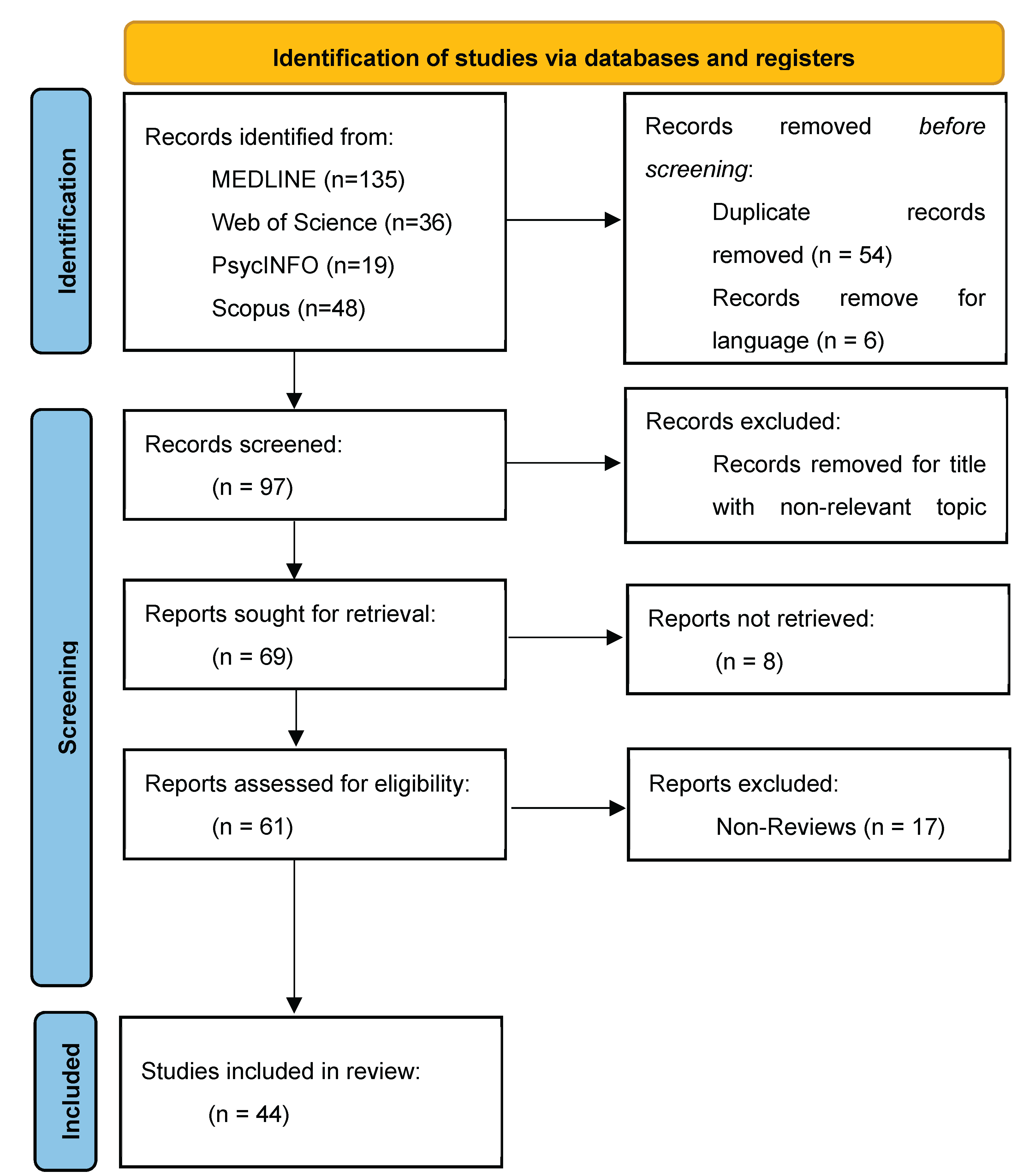

Table 1.
Studies of Systematic Analysis.
| Authors | Sample | Outcomes Measured | Main Findings |
|---|---|---|---|
| Keshavan et al., 2020 [60] | Total: 446 | The main or primary outcome measured in the study is the functional outcome in psychotic disorders, particularly related to cognitive impairments and mismatch negativity (MMN) as a biomarker of psychosis. |
|
| Nelson et al., 2020 [61] | Total: 123 [Ultra-high risk for psychosis: 50 - First episode psychosis: 39 - Healthy controls: 34] | Examination of Anomalous Self-Experience (EASE) scores |
|
| Lewandowski et al., 2020 [62] | Total: 228 | Neuroprogressive trajectories of neurocognition, structural brain measures, and network connectivity over the first eight years of illness, and their predictive utility on clinical and functional outcomes |
|
| Culbreth et al., 2018 [63] | Total: 74 | The main or primary outcome measured in the study is the association between late positive potential (LPP) amplitude and symptom severity in individuals diagnosed with affective psychosis and individuals with schizophrenia, including concurrent and prospective associations with symptoms. |
|
| Sugranyes et al., 2020 [64] | Total: 128 [SzO: 33- BpO: 46- Controls: 49] | Longitudinal changes in measures of brain structure, including cortical thickness, surface area, and grey matter volume, in children and adolescents at familial high risk (FHR) for bipolar disorder or schizophrenia who experienced psychotic spectrum symptoms over time |
|
| Bora, 2018 [65] | Total: 2047 [BD-I: 1211- BD-II: 836] Total: 1761 [PBD: 1017- NPBD: 744] | Cognitive impairment in different subgroups of bipolar disorder, including BD-I and BD-II, as well as subgroups based on history of psychosis (PBD and NPBD) |
|
| Wang et al., 2018 [66] | Total: 616 [P-BD patients and 902 healthy subjects] | GMV differences between P-BD patients and HC, specifically involving the prefronto-temporal and cingulate cortices, precentral gyrus, and insula |
|
| McCleery & Nuechterlein, 2019 [67] | Total: 105 | The main or primary outcome measured in the study is not explicitly stated. However, based on the content of the paper, the main or primary outcome measured seems to be the prevalence, profile, and magnitude of cognitive impairment in psychotic disorders, as well as the longitudinal stability of cognitive impairment. |
|
| Vargas et al., 2018 [68] | Total: 3315 | Association between childhood trauma and overall neurocognitive function in individuals with psychotic disorders, Relationship between childhood trauma and working memory in individuals with psychotic disorders |
|
| Widmayer et al., 2019 [69] | Total: 334 patients and 113 controls [236 patients and 92 HC subjects] | - |
|
| Smucny et al., 2018 [70] | Total: 193 [SZ: 65- Schizophreniform: 2- Schizoaffective: 13- BD Type I with psychotic features: 27- Healthy control: 86] | d-prime context |
|
| Hallford & Sharma, 2019 [71] | Total: 4221 [Schizophrenia-spectrum: 3300- Major depression: 921] | Self-reported anticipatory pleasure in individuals with psychiatric disorders compared to control groups |
|
| Dwyer et al., 2020 [72] | Total: 1223 [Discovery sample: 765- Validation sample: 458] | Subtype-specific illness courses including psychosis symptoms, depression symptoms, global functioning, and quality of life; polygenic scores for schizophrenia, bipolar disorder, major depression disorder, and educational achievement |
|
| O’Neill et al., 2018 [73] | Total: 526 [combined HC groups), 420 (combined patient groups)] | Functional connectivity (FC) of the default mode (DMN), salience (SN), and central executive networks (CEN) in patients with first-episode psychosis (FEP) compared to healthy controls |
|
| Connors et al., 2018 [74] | Total: 445 | The main or primary outcome measured in the study includes neuropsychiatric symptoms, dementia severity, cognition, function, caregiver burden, medication use, and mortality. |
|
| Dugré et al., 2020 [75] | Total: 2555 | Functional brain deficits in individuals with conduct problems (CP) and its adult form, adult antisocial behaviors, across distinct neurocognitive domains, including acute threat response, social cognition, cognitive control, and punishment and reward processing |
|
| Vaquerizo-Serrano et al., 2021 [76] | Total: 16,474 [CHR-P: 875] | The primary outcome measured in the study is the presence of ASD in CHR-P individuals. |
|
| Jonas et al., 2022 [77] | Total: 428 | Preadmission cognitive scores extracted from school and medical records and postonset cognitive scores based on neuropsychological testing at 6-month, 24-month, 20-year, and 25-year follow-ups |
|
| D’Antonio et al., 2019 [32] | Total: 40 [AD+P: 20- AD-P: 20- HC: 20] | Impairment in specific cognitive domains predicting the onset of psychosis in AD patients, Grey matter alterations, their location, and the rate of atrophy associated with psychosis of AD |
|
| Demro et al., 2022 [78] | Total: 332 [Schizophrenia: 105- Schizoaffective: 17- Bipolar I disorder with psychotic features: 41- First-degree biological relatives: 103- Controls: 66- Completed both studies: 42- Bipolar I disorderwithout psychosis: 15- Relatives of individuals with bipolar I disorder without psychosis: 7] | Advanced brain-age measured using the Brain-Age Regression Analysis and Computation Utility Software (BARACUS) prediction model, compared between individuals with a primary psychotic disorder and people with bipolar I disorder with a history of psychotic symptoms, as well as their biological first-degree relatives. The study also examined the association between advanced brain-age and cognitive functioning, general functioning, and clinical diagnostic boundaries. |
|
| Voineskos et al., 2020 [79] | Total: 88 | Primary outcome: cortical thickness in gray matterSecondary outcome: microstructural integrity of white matter |
|
| Waszczuk et al., 2021 [80] | Total: 881 | The presence of subtle abnormalities in white matter tracts connecting the frontal and temporal lobes, especially the SLF, ILF, and IFOF |
|
| Bloomfield et al., 2021 [81] | Total: 24,793 [Clinical: 1,639- Non-clinical: 23,154] | The potential roles of psychological processes in the associations between developmental trauma and specific psychotic experiences (i.e., hallucinations, delusions, and paranoia) in adulthood |
|
| Viher et al., 2021 [82] | Total: 83 | Association between Neurological Soft Signs (NSS) and white matter alterations in adults with schizophrenia |
|
| Ludwig et al., 2019 [83] | Total: 2498 | Effectiveness of emotion regulation strategies in patients with psychotic disorders, specifically the association between maladaptive strategies and positive symptoms |
|
| Wu & Xiao, 2023 [84] | Total: 655 | The primary outcome measured in the study is detecting brain abnormalities in diverse psychiatric illnesses with neuroimaging versus conventional methods. |
|
| Howes et al., 2018 [85] | Total: 38 [-Schizophrenia: 16- Bipolar affective disorder: 22] | Striatal dopamine synthesis capacity (Kicer), Correlation of Kicer with positive psychotic symptom severity |
|
| Gama Marques & Ouakinin, 2019 [86] | Total: 192 [- SCZ: 44- SAF: 44- Bipolar controls: 44- Follow-up patients: 60 - SCZ: 30 - SAF: 30] | Assessment of unconjugated bilirubin (UCB) as a biomarker for schizophrenia (SCZ) and schizoaffective (SAF) spectrums disorder during relapse and partial remission |
|
| Anteraper et al., 2021 [87] | Total: 237 [- CHR: 144- CHR+: 23- HC: 93] | Resting-state functional connectivity (RsFc) differences in the dentate nuclei (DN) that may precede the onset of psychosis in individuals at risk of developing schizophrenia |
|
| Koike et al., 2021 [88] | Total: 50 [- Female: 23] | The relationship between neurocognitive deficits and improvements in UHR individuals and their association with symptom severity outcomes, as well as the paths from brain structural and functional characteristics to neurocognitive function and symptom severity outcomes |
|
| Ruiz et al., 2020 [89] | Total: 2205 | Effort failure rate and moderators of effort test |
|
| Kim et al., 2021 [90] | Total: 64 [- FEP: 35- Healthy Controls: 29] | The correlation between ToM strange story scores and the FA values of the left cingulum and left SLF in patients with FEP |
|
| Torrent et al., 2018 [91] | Total: 192 [Non-affective psychoses: 142- Affective psychoses: 50] | Functioning at follow-up, assessed by a regression model composed of PANSS total score and verbal fluency assessed by the FAS (COWAT) |
|
| Stein et al., 2022 [92] | Total: 1071 | Association of FTD dimensions with GMV and FA, establishment of a transdiagnostic factor model of FTD, and linking psychopathological factors to brain structural measures across disorders |
|
| Muetzel et al., 2018 [93] | Total: 845 | Association between psychiatric symptoms (externalizing and internalizing) at baseline and the changes in subcortical gray matter volume and global fractional anisotropy over time |
|
| Lepage et al., 2020 [94] | Total: 80 | Change in cortical thickness and volume of the hippocampus as a function of the duration of unremitted positive symptoms |
|
| Papanastasiou et al., 2018 [95] | Total: 1434 [- High PLEs: 149- Low PLEs: 149] | Brain activation during a monetary incentive delay reward task in healthy adolescents at ages 14 and 19 years old |
|
| De Picker et al., 2020 [96] | Total: 101 [- Patients: 49- Healthy control subjects: 52] | Identification of state and trait markers in the peripheral immune system and two immune-associated neuroendocrine pathways (IDO and GTP-CH1 pathway) in a longitudinal sample of psychosis patients |
|
| Kuipers et al., 2018 [97] | Total: 8580 [Follow-up subsample: 2406] | Persecutory ideation, hallucinations, affective symptoms, effects of cannabis and problematic alcohol use |
|
| Sánchez-Morla et al., 2018 [98] | Total: 139 [- Euthymic bipolar patients: 99 - Healthy controls: 40] | Change in neurocognitive composite index (NCI) over a 5-year follow-up period, specifically in relation to the number of manic and hypomanic episodes experienced by bipolar patients, as well as its association with working memory and visual memory |
|
| Chendo et al., 2022 [99] | Total: 2919 for psychosis and 3161 for any form of hallucination. | Frequency of psychosis and any form of hallucination in PD patients |
|
| Gur et al., 2023 [100] | Total: 157 [- PS+: 98- PS-: 59] | Differences in the trajectories of psychosis symptoms and neurocognitive performance between the PS+ and PS- groups, and the impact on functional outcome |
|
| Haukvik et al., 2018 [101] | Total: 2393 [- Schizophrenia patients: 909- Bipolar disorder patients: 625- Healthy controls: 1089] | Hippocampal subfield volumes or shape in schizophrenia and bipolar disorder |
|
| Rössler et al., 2018 [102] | Total: 54 [- L-DOPA: 33- Placebo: 32] | The main or primary outcome measured in the study is the significant functional decoupling from the right ventral caudate to both occipital fusiform gyri. |
|
Disclaimer/Publisher’s Note: The statements, opinions and data contained in all publications are solely those of the individual author(s) and contributor(s) and not of MDPI and/or the editor(s). MDPI and/or the editor(s) disclaim responsibility for any injury to people or property resulting from any ideas, methods, instructions, or products referred to in the content. |
© 2024 by the authors. Licensee MDPI, Basel, Switzerland. This article is an open access article distributed under the terms and conditions of the Creative Commons Attribution (CC BY) license (http://creativecommons.org/licenses/by/4.0/).
Copyright: This open access article is published under a Creative Commons CC BY 4.0 license, which permit the free download, distribution, and reuse, provided that the author and preprint are cited in any reuse.