
Submitted:
05 March 2024
Posted:
06 March 2024
You are already at the latest version
Abstract
During the last decade, the demand for lithium has been growing exponentially with its widespread uses in manufacturing, especially with the worldwide deployment of electric vehicles. Thus, lithium is considered integral to the U.S. economy, technological advancement, and the pursuit of sustainable and clean energy solutions. The produced water is known to be rich in several minerals and valuable elements, such as potassium and magnesium, and a trace amount of precious elements including lithium. However, the existence of metals in the produced water is one of the challenges to extract lithium, especially magnesium which is located in diagonal positions within the periodic table that exhibit similarities. The produced water was first purified, resulting in the complete removal of magnesium, and then lithium was precipitated by phosphate. The effects of operating conditions on the Li3PO4 precipitation behaviors were evaluated. The effect of different precipitating reagents was evaluated on the percentage of lithium extracted, Na3PO4 (TSP) was found to be a promising Li precipitating reagent. The highest percentage of lithium extracted was reached when the Li concentration of produced water was enriched and increased up to 350 mg/l, then Li removal was 53% at 7 grams of TSP and 200 rpm for 2 hours. The results indicated that temperature is a more important factor than stirring speed. The novelty of the current work is not only by the results obtained that may create additional financial benefits to oil-producing areas but on that the sustainable disposal of produced water may encourage the recycling and reuse practice, ultimately reducing the use of freshwater for hydraulic fracturing.
Keywords:
Critical metals
; Produced water
; lithium
; Precipitation
1. Introduction
Lithium, driven by the exponential growth in demand in recent years, has emerged as a pivotal element in enabling the transition towards cleaner and more sustainable energy alternatives, primarily through the advancement of lithium-ion batteries (LIBs) (Aaldering,2019). Lithium is obtained by extracting it from lithium minerals through mining, crushing, and chemical processing, as well as from lithium-rich brine through evaporation and subsequent chemical processes (Flexer et al., 2018). lithium can be sustainably sourced from produced water in oil and gas operations through the application of recovery methods like adsorption, membrane processes, and electrolysis-based systems (Kumar et al.,2018). Lithium is a vital component in various sectors, including glass, ceramics, chemicals, pharmaceuticals, lubricants, and batteries for hybrid and electric vehicles (Talens et al.,2013). The USA currently relies entirely on imported rare earth elements, essential for numerous commercial and industrial uses (Massari et al., 2013). Hence, considering the importance of resource security, there's a growing focus on extracting lithium from produced water in oil fields, both in the United States and worldwide. Produced water generated by hydraulic fracturing is considered a large stream, causing brine spills (North Dakota Department of Health, 2015). Approximately 77 million cubic meters of produced water were generated in the year 2018, and this volume is projected to grow by 143% by the year 2035 (Almousa et al ,2023 & Waisi et al., 2015). The main method for disposing of produced water is through deep-well injection, involving transportation to injection wells and pumping into underground formations (Shrestha et al., 2017). This approach is costly and poses risks like saltwater spills with lasting environmental effects, concerning well owners (Torres et al., 2016). The oil industry and environmental agencies are constantly challenged to minimize the amount of freshwater required for hydraulic fracturing operations (Gregory et al., 2011). Thus, another way to handle produced water is by extracting valuable elements like critical minerals, essential for the economic prosperity of major global economies. Critical metals such as lithium can be recovered from the produced water, providing an environmentally and economically beneficial solution.
While the United States currently relies on lithium imports for Li batteries from South American countries, including Argentina, Bolivia, and Chile, there has been a growing emphasis on the recovery of lithium from produced water in oilfields, both in the United States and worldwide (Mauk et al., 2021). Although high concentrations of Li in oilfield brines, lack of research about exploiting the oilfield brines as a Li resource. For example, North Dakota Devonian formations contain (100-288) mg/l of Li concentration and Smackover brines in the United States exhibit lithium concentrations exceeding 500 mg/L (Disu et al.,2023 & Daitch 2018). This has led to the start of various projects to evaluate the brines as a viable lithium resource.
Beyond the presence of lithium in produced water, other essential elements (K, Sr, Mg, Mn) contribute significantly to the economic and national security of the United States. Li is the most expensive metal compared with other significant metals found in the produced water (K, $12.1– $13.6/kg), and the only production of Li in the U.S. is in the state of Nevada (USGS,2020). This indicates that the produced water from the Bakken oilfield could serve as a crucial domestic source of lithium. Figure 1 shows the seawater comparison and produced water of the Bakken oilfield (Frank et al, 2022).
There have been applied different technologies on Li recovery from brine using different technologies such as ion exchange, adsorption, solvent extraction, and chemical precipitation (Aljarrah et al. 2023, Zhong et al., Shi et al.,2017, 2021, wang et al., 2018, and Ji et al.,2017). Adsorption and ion exchange are widely recognized as conventional approaches for the recovery of metals and they are considered efficient for lithium extraction. However, Adsorbents and ion exchange resins can deteriorate over time due to exposure to harsh chemical environments, leading to a decrease in their effectiveness (Zhong et al., 2021). Additionally, it's notably more challenging to selectively capture lithium compared to other metals like copper as the brine contains high concentrations of metals such as sodium, potassium, magnesium, and calcium which have higher molar concentrations than Li, making the process insufficient (Kumar et al., 2019).
The lithium precipitation process is among the viable techniques used in industrial facilities due to its ease of use and affordability (Zhang et al., 2018). Zhang also emphasizes that the effectiveness of the process is influenced by factors such as precipitant dosage, pH level, temperature, and the size of precipitate particles. Li is usually removed by the precipitation technique as carbonate compounds, however, the 13.3 g/l solubility of lithium carbonate makes insufficient precipitation, which has recently been replaced by phosphate precipitation which is called the POSCO technique (POSCO,2018 & Jamasmie and POSCO, 2018). It's worth noting that in the lithium extraction process from brines, the precipitation method efficiently separates lithium from magnesium when the mass ratio of Mg to Li (Mg/Li) is less than 6 (Zhao et al. 2013). When the ratio is below 6, there's no need for prior treatment to eliminate magnesium. In this scenario, impurity metal ions in the solution can be precipitated by hydroxide ions (OH-) over a range of pH levels from 4 to 12. Still, lithium remains in the solution due to its greater solubility compared to other metals (Song & Zhao, 2018). Alsabbagh et al., 2021 worked on lithium removal from the end brine of the Dead Sea water [30-40 mg/l] using phosphorous compounds, and the removal efficiency yielded up to 55%.
In this study, three types of sodium phosphate salts were employed as lithium-precipitating reagents from the produced water. Among them, the most promising candidate underwent testing at various operating conditions, including stirring temperature and concentration of the precipitating reagent, to determine the optimal conditions for the pre-concentration stage. Based on these findings, the most effective reagent was selected for lithium removal after the evaporation process. However, extracting lithium directly from the produced water without crystallization proved to be inefficient not as proved previously on seawater end brine [Alsabbagh et al., 2021 and Tandy and Caniy, 1993].
2. Materials and Methods
2.1. Characterization of Bakken Oilfield Produced Water
The produced water samples were obtained from the Bakken oilfield (North Dakota, USA), then transported to the laboratory and stored for analysis. The samples contained significant amounts of suspended solids of oil debris, so a 1.2-micron filter was necessary to separate and purify the samples through centrifugation and filtration. Afterward, a 0.45-micron filter was employed to remove all small particles. ICP-OES was utilized for the analysis of all cationic elements in this study. In contrast, anionic elements (Cl- and SO4 2-) were analyzed by Ion chromatography. Alkalinity and total hardness were measured using standardized Hack methods by adding sulfuric acid (H2SO4) with digital titrators like EDTA and Phenolphthalein as a reagent. Different phosphate compounds were used as precipitation reagents for the produced water including Tri-sodium phosphate Na3PO4 (TPS), Di-sodium phosphate Na2HPO4 (DSP), sodium tri-polyphosphate (Na5P3O10 abbreviated STP). Calcium hydroxide Ca(OH)2, and sodium hydroxide (NaOH) were used as precipitation reagents for impure metal ions in the first step The chemical composition of the produced water is shown in Table 1.
2.2. Experiments
2.2.1. Precipitative Softening of Produced Water
Produced water softening was carried out as a purification of impure mineral ions. A square jar tester with 1-L jars was used to mimic the standard precipitative softening process. Caustic soda (NaOH) and lime (Ca(OH)2) were added at room temperature (~25 °C) to facilitate rapid mixing followed by a slower mixing phase (flocculation). Different pH values were investigated at a 1-hour reaction, and the purification solution was obtained after filtration.
2.2.3. Precipitative Lithium of Produced Water
One liter of well-mixed produced water was kept in a beaker at a temperature higher than 50 ◦C. A known quantity of precipitating reagent was added to the solution to precipitate Li+ according to Eq. (1) after dissolving in 30 ml of distilled water at a temperature equal to the solution’s temperature.
The liquid bittern precipitate was collected using a vacuum filtration setup, comprising a Buckner funnel filtration kit and a filtration pump. Subsequently, the resulting filter cake was subjected to overnight drying at 110°C before proceeding to the grinding step, the precipitate obtained after the filtration was washed with deionized water for XRD analysis. The solution was controlled under various operating conditions, maintaining a consistent stirring speed (200 rpm), stirring temperature (50-80°C), and stirring duration (2 hours). After achieving removal results below expectations, the produced water samples underwent precipitation through evaporation in an oven. The resulting precipitates were collected to enhance the Li/Po₄ molar ratio by increasing lithium concentration.
3. Results
3.1. Metal Ion Extraction from Produced Water
This process is essential for the elimination of competing metal ions while ensuring that lithium ions remain unprecipitated. The ratio of metal ions to lithium ions is notably high due to the elevated concentration of divalent cations, where major metals (Na, Mg, Ca, Sr, and K) are excessively high in the produced water. In addition, the effectiveness of the lithium precipitation technique is inefficient when the Mg/Li ratio is higher than 6 (Zhao et al, 2013). So, the solution can be effectively purified by increasing the pH value and then minimizing the Mg/Li ratio to less than 6, achieving successful separation. Furthermore, it is possible to eliminate the yellow coloration in the produced water. NaOH and Ca(OH)2 were studied to determine their efficiency, as illustrated in Figure 2 and Figure 3.
Based on the results, the use of NaOH is more favorable, as it can reduce magnesium concentration to about 2 ppm. Furthermore, opting for NaOH instead of Ca(OH)2 prevents the increase in calcium concentration in the solution. This is crucial, as an elevated calcium concentration could potentially compete with lithium during precipitation, forming compounds with lithium (Virolainen et al, 2016). The precipitation ratio of metal impurities increased with pH, whereas that of lithium remained essentially unchanged due to the low solubility of LiOH compared to other minerals. When the pH increased, precipitation of certain minerals occurred, and complete removal or reduction of specific minerals was observed at a pH of 12. Magnesium poses a significant challenge for lithium extraction, as it occupies a diagonal position within the periodic table, sharing certain similarities. (Zhao et al. 2013 and Somrani et al, 2013). The effective removal of magnesium metal in produced water (approximately 99%) was achieved, with a minimal loss of lithium (12%), when maintaining the solution's pH around 12.
3.2. Lithium Enrichment
Lithium precipitation from produced water occurred through the formation of solid lithium phosphate by chemical precipitation. The recovery percentage of lithium was assessed by analyzing the supernatant of the produced water post-treatment. At first, attempts were made to employ three reagents (TSP, DSP, and STP) for the precipitation technique, but the results proved to be inefficient with all three reagents under these conditions. Subsequently, the effect of stirring temperature on the percentage of lithium extracted was studied on the temperature range (50–80 ◦C) under the conditions of 10 g of TSP, 200 rpm stirring speed, as well as two-hour stirring time; however, the efficiency did not improve to a satisfactory level. The efficiency reached only 25% removal, which is deemed inefficient as shown in Table 2.
Therefore, for using phosphate as a reagent in produced water, Li concentration is low compared to other competitors of other metals. Thus, Li concentration is supposed to be enriched by another technique such as reverse osmosis, or solar energy. Produced water requires evaporation to elevate Li concentration which will increase the molar ratio of Li/PO4. It is doubtful that phosphate precipitation can be applied to oil field wastewater because it still partially requires solar evaporation, which can concentrate Li only from highly concentrated brine within a reasonable time, as a pre-concentration step (Kumar et al., 2019). Li salt concentrations in the produced water were enriched through the process of evaporation. Lithium precipitates at 80% when the evaporation reaches 40% in volume, which is similar to a literature review (Valdez et al, 2016). The crystal was collected in one beaker, designated for the subsequent process of lithium extraction. The evaporation process using several samples enriched lithium concentrations from 45-55 mg/l in the produced water to 190-764 mg/l, which was then used for Li extraction using TSP.
After the purification and crystallization processes, A 764 mg/l of Li-produced water sample was taken for TSP dosage investigation. To accelerate the precipitation of the lithium, TSP was added to the produced water under the conditions of stirring temperature 50 ◦C, stirring speed 200 rpm, and stirring time 2 h with various TSP amounts (1–10 g). Those values were chosen as initial values according to previously reported studies, as the low temperature made the lithium hard to form crystal nucleus (Song & Zhao,2018). The solution was not turned to form solids at ambient temperature, so at 50 ◦C was precipitated as shown in Figure 4.
Figure 5 shows that the removal increased from 25% to 60% after increasing the PO43-/Li molar ratio of the produced water. For TSP dosage, it must be in the minimum limiting amount to ensure precipitation. With TSP, the more we used, the more lithium was removed. Lithium started to precipitate at 2 g of TSP, and the highest extraction percentage was achieved when we used 8 g of TSP. It is noteworthy that the solubility of lithium phosphate is approximately 0.39 g/L, which is considered relatively low.
X-ray diffraction patterns of phase structures of TSP salt and lithium phosphate precipitate were identified under the condition of a PO43−/Li+ molar ratio of 1.3:3 as shown in Figure 6. The diffraction peaks observed in TSP salt before its use in produced water differed from those in the precipitate formed after treatment. Additionally, the diffraction peaks of the precipitate obtained after treating brine with TSP closely align with findings from Lai and colleagues (Lai et al., 2020).
4. Conclusion
The precipitation of Li3PO4 achieved the process of Li extraction from Produced Water. By adjusting the solution pH to 11.5, the impurity metal ions were effectively precipitated without causing the precipitation of lithium from the produced water. TSP shows promise as the most effective precipitation reagent among the tested sodium phosphate salts. The results suggest that sodium phosphate salt may not be an ideal reagent for precipitating lithium unless the initial Li concentration exceeds 350 mg/l, with a preference for concentrations higher than 500 mg/l. Moreover, temperature proves to be a crucial factor, with precipitation initiating at 45 °C. The results indicate that produced water from the Bakken oilfield can serve as a significant domestic source of lithium ions. the sustainable disposal of produced water may encourage the recycling and reuse practice, ultimately reducing the use of freshwater for hydraulic fracturing.
References
- Aaldering, L.J.; Song, C.H. Tracing the technological development trajectory in post-lithium-ion battery technologies: A patent-based approach. Journal of Cleaner Production 2019, 241, 118343. [Google Scholar] [CrossRef]
- Ajao, A., & Lim, Y. H. (2023). Sustainable Management of Dams and Reservoirs in North Dakota: Sediment Transport Characterization.
- Aljarrah, S.; Alsabbagh, A.; Almahasneh, M. Selective recovery of lithium from Dead Sea end brines using UBK10 ion exchange resin. The Canadian Journal of Chemical Engineering 2023, 101, 1185–1194. [Google Scholar] [CrossRef]
- Almousa, Mousa, Tomomewo Olusegun, Yeo Lim, Kamel Al-Zboon, Islam Khraisat, Ali Alshami, and Bashaar Ammary. "Chemical recovery of magnesium from the Dead Sea and its use in wastewater treatment." Journal of Water, Sanitation and Hygiene for Development (2024): washdev2024267.
- U.S. EPA (U.S. Environmental Protection Agency).
- Almousa, Mousa, Tomomewo S. Olusegun, Yeo Howe Lim, Islam Khraisat, and Adewale Ajao. "Groundwater Management Strategies for Handling Produced Water Generated Prior Injection Operations in the Bakken Oilfield." In ARMA/DGS/SEG International Geomechanics Symposium, pp. ARMA-IGS. ARMA, 202.
- Almousa, Mousa; Tomomewo, Olusegun Stanley; and Lim, Yeo Howe, "Salts Removal as an Effective and Economical Method of Bakken Formation Treatment" (2023). Civil Engineering Posters and Presentations https://commons.und.edu/cie-pp/1.
- Daitch, P.J. Lithium Extraction from Oilfield Brine. Master’s Thesis, The University of Texas at Austin, 2018.
- Disu, B., Rafati, R., Haddad, A. S., & Fierus, N. (2023, September). Lithium Extraction From North Sea Oilfield Brines Using Ion Exchange Membranes. In SPE Offshore Europe Conference and Exhibition (p. D021S004R001). SPE.
- Flexer, V.; Baspineiro, C.F.; Galli, C.I. Lithium recovery from brines: A vital raw material for green energies with a potential environmental impact in its mining and processing. Science of the Total Environment 2018, 639, 1188–1204. [Google Scholar] [CrossRef]
- Gregory, K.B.; Vidic, R.D.; Dzombak, D.A. Water management challenges associated with the production of shale gas by hydraulic fracturing. Elements 2011, 7, 181–186. [Google Scholar] [CrossRef]
- Kumar, A.; Fukuda, H.; Hatton, T.A.; Lienhard, J.H. Lithium recovery from oil and gas produced water: a need for a growing energy industry. ACS Energy Letters 2019, 4, 1471–1474. [Google Scholar] [CrossRef]
- Lai, X.; Xiong, P.; Zhong, H. Extraction of lithium from brines with high Mg/Li ratio by the crystallization-precipitation method. Hydrometallurgy 2020, 192, 105252. [Google Scholar] [CrossRef]
- Massari, S.; Ruberti, M. Rare earth elements as critical raw materials: Focus on international markets and future strategies. Resources Policy 2013, 38, 36–43. [Google Scholar] [CrossRef]
- Mauk, J.L.; Karl, N.A.; San Juan, C.A.; Knudsen, L.; Schmeda, G.; Forbush, C.; Van Gosen, B.S.; Mullins, M.; Scott, P. The critical minerals initiative of the US geological survey’s mineral deposit database project: USMIN. Mining, Metallurgy & Exploration 2021, 38, 775–797. [Google Scholar] [CrossRef]
- Shi, C.; Jing, Y.; Xiao, J.; Wang, X.; Yao, Y.; Jia, Y. Solvent extraction of lithium from aqueous solution using non-fluorinated functionalized ionic liquids as extraction agents. Separation and Purification Technology 2017, 172, 473–479. [Google Scholar] [CrossRef]
- Shrestha, N.; Chilkoor, G.; Wilder, J.; Gadhamshetty, V.; Stone, J.J. Potential water resource impacts of hydraulic fracturing from unconventional oil production in the Bakken shale. Water Res. 2017, 108, 1–24. [Google Scholar] [CrossRef]
- Somrani, A.A.H.H.; Hamzaoui, A.H.; Pontie, M. Study on lithium separation from salt lake brines by nanofiltration (NF) and low pressure reverse osmosis (LPRO). Desalination 2013, 317, 184–192. [Google Scholar] [CrossRef]
- Song, Y.; Zhao, Z. Recovery of lithium from spent lithium-ion batteries using precipitation and electrodialysis techniques. Separation and Purification Technology 2018, 206, 335–342. [Google Scholar] [CrossRef]
- Al-Qudah, S.; Yang, M. Large Displacement Detection Using Improved Lucas–Kanade Optical Flow. Sensors 2023, 23, 3152. [Google Scholar] [CrossRef]
- Talens Peiró, L.; Villalba Méndez, G.; Ayres, R.U. Lithium: Sources, production, uses, and recovery outlook. Jom 2013, 65, 986–996. [Google Scholar] [CrossRef]
- Tandy, S. , Caniy, Z. LITHIUM PRODUCTION FROM HIGHLY SALINE DEAD SEA BRINES. Rev. Chem. Eng. 1993, 9, 293–318. [Google Scholar] [CrossRef]
- Torres, L.; Yadav, O.P.; Khan, E. A review on risk assessment techniques for hydraulic fracturing water and produced water management implemented in onshore unconventional oil and gas production. Sci. Total Environ. 2016, 539, 478–493. [Google Scholar] [CrossRef]
- USGS, 2020a. Data on the domestic production and use of Li. https://pubs.usgs.gov/periodicals/mcs2020/mcs2020-lithium.pdf.
- Valdez, S. K., Flores, H. R., & Orce, A. (2016). Influence of the evaporation rate over lithium recovery from brines.
- Virolainen, S.; Fini, M.F.; Miettinen, V.; Laitinen, A.; Haapalainen, M.; Sainio, T. Removal of calcium and magnesium from lithium brine concentrate via continuous counter-current solvent extraction. Hydrometallurgy 2016, 162, 9–15. [Google Scholar] [CrossRef]
- Waisi, B.I.H.; Karim, U.F.; Augustijn, D.C.; Al-Furaiji, M.H.O.; Hulscher, S.J. A study on the quantities and potential use of produced water in southern Iraq. Water science and technology: water supply 2015, 15, 370–376. [Google Scholar] [CrossRef]
- Wang, H.; Zhong, Y.; Du, B.; Zhao, Y.; Wang, M. Recovery of both magnesium and lithium from high Mg/Li ratio brines using a novel process. Hydrometallurgy 2018, 175, 102–108. [Google Scholar] [CrossRef]
- Zhang, Y.; Hu, Y.; Wang, L.; Sun, W. "Systematic review of lithium extraction from salt-lake brines via precipitation approaches". Minerals Engineering 2019, 139, 105868. [Google Scholar] [CrossRef]
- Zhao, Z.; Si, X.; Liu, X.; He, L.; Liang, X. Li extraction from high Mg/Li ratio brine with LiFePO4/FePO4 as electrode materials. Hydrometallurgy 2013, 133, 75–83. [Google Scholar] [CrossRef]
- Zhong, J.; Lin, S.; Yu, J. Li+ adsorption performance and mechanism using lithium/aluminum layered double hydroxides in low grade brines. Desalination 2021, 505, 114983. [Google Scholar] [CrossRef]
Figure 1.
Concentration of cations in produced water samples determined by (Frank et al., 2022), and comparison with concentration of seawater.
Figure 1.
Concentration of cations in produced water samples determined by (Frank et al., 2022), and comparison with concentration of seawater.
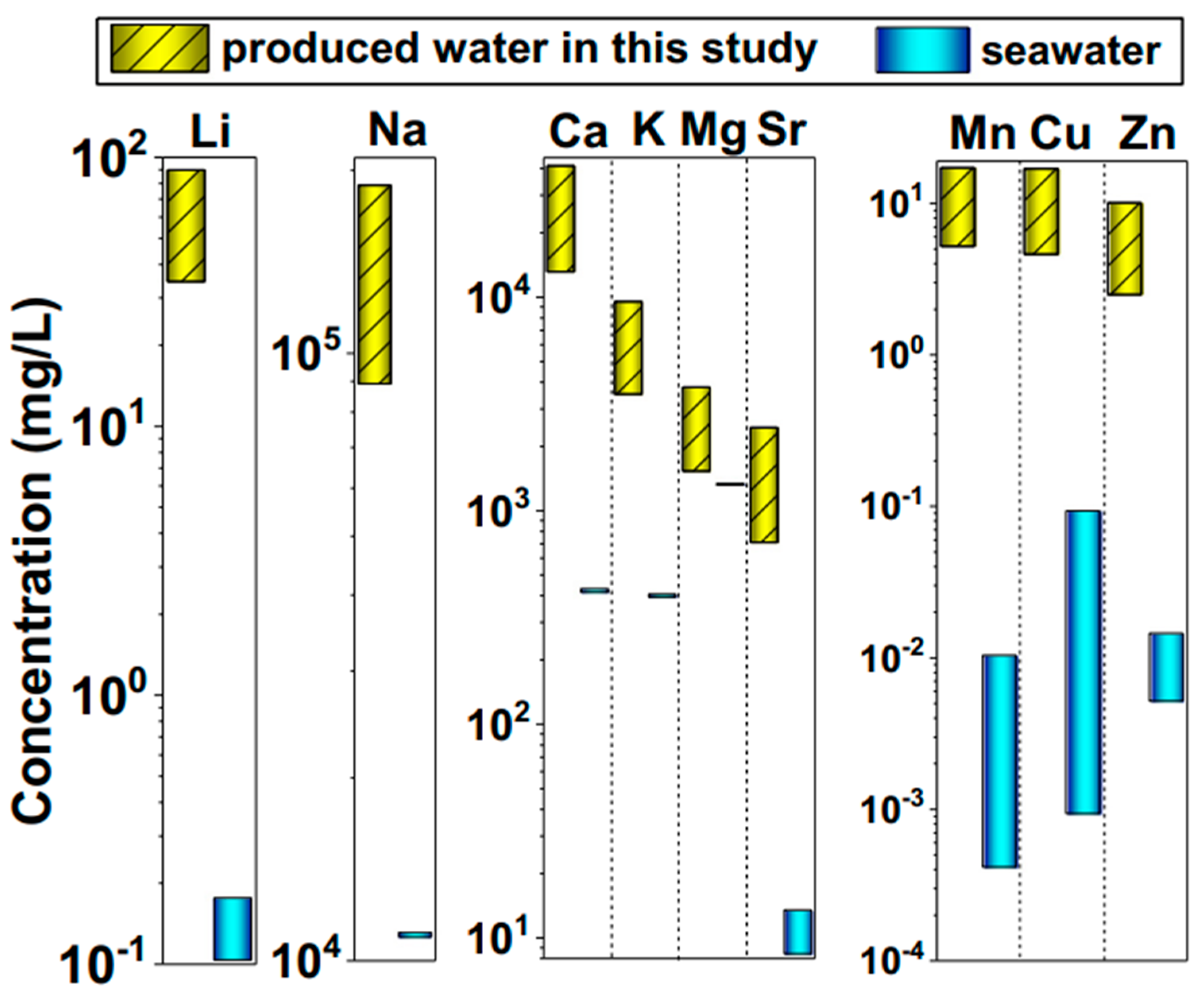
Figure 2.
Effect of NaOH on precipitation of produced water cations.
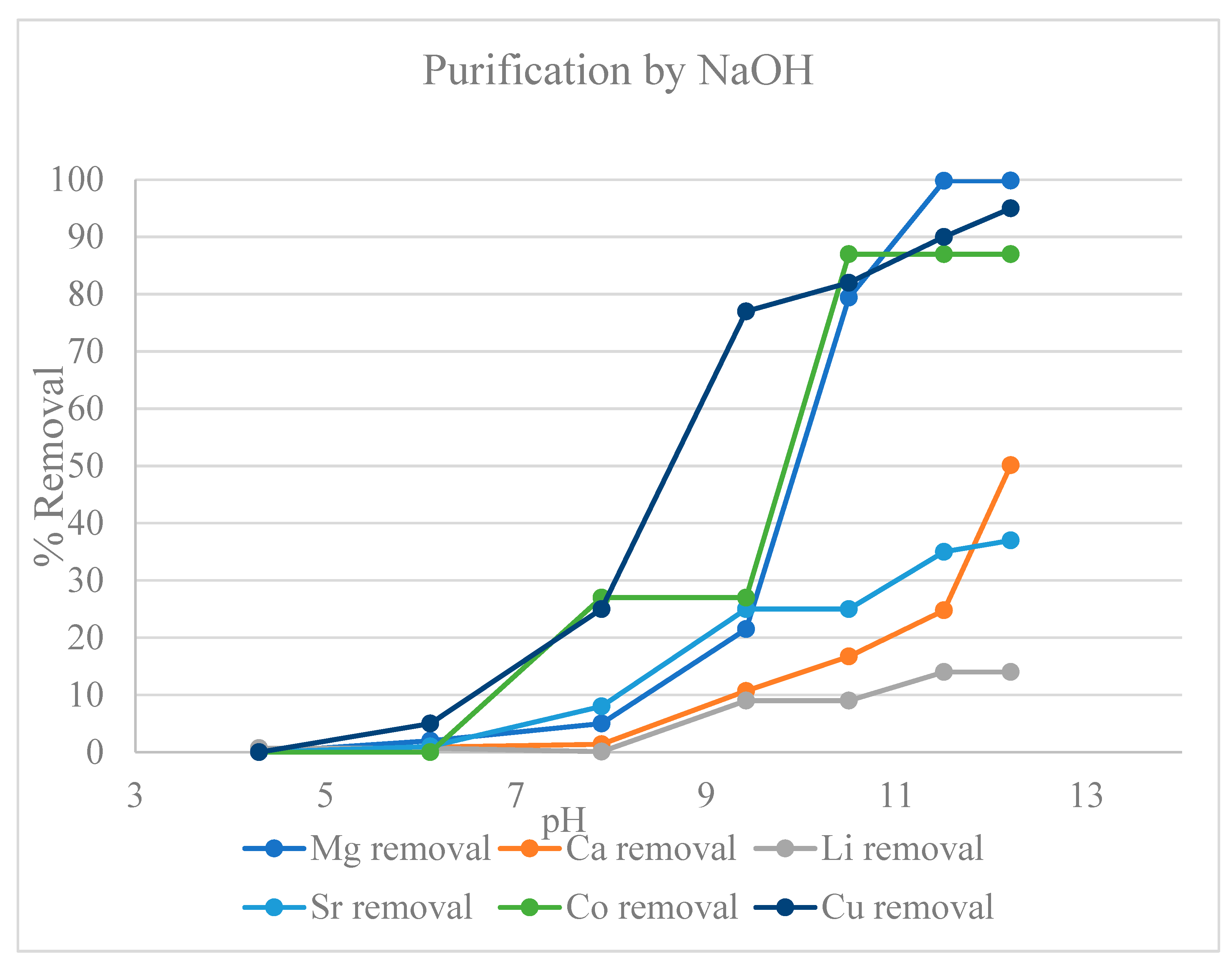
Figure 3.
Effect of Ca(OH)2 on precipitation of produced water cations.

Figure 4.
Precipitation of lithium with Na3PO4 at PO4 3−/Li+ molar ratio of 1.3:3. (a) 50 °C; (b). 23 °C.
Figure 4.
Precipitation of lithium with Na3PO4 at PO4 3−/Li+ molar ratio of 1.3:3. (a) 50 °C; (b). 23 °C.
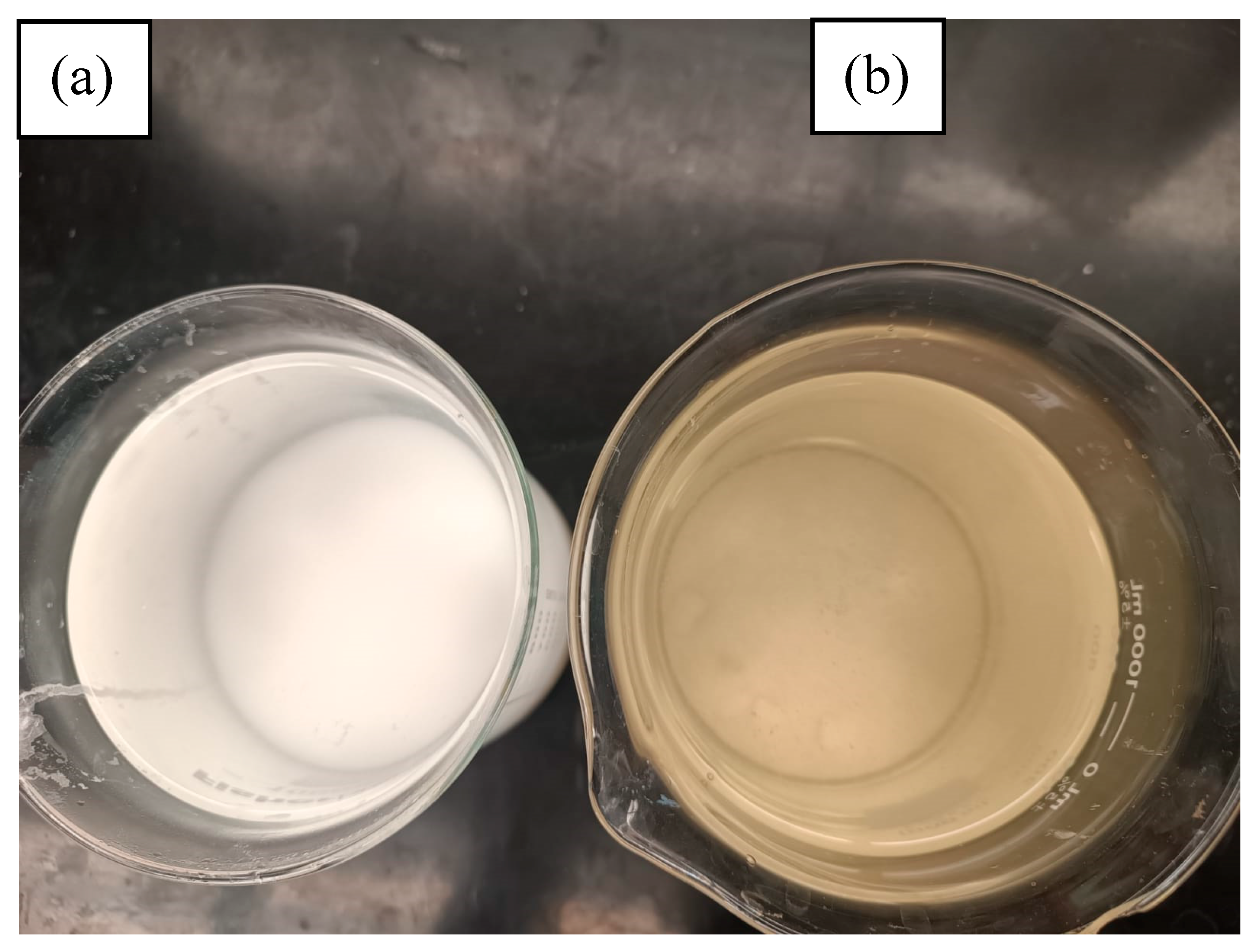
Figure 5.
Lithium extraction percentage from produced water at different Na3PO4 doses.
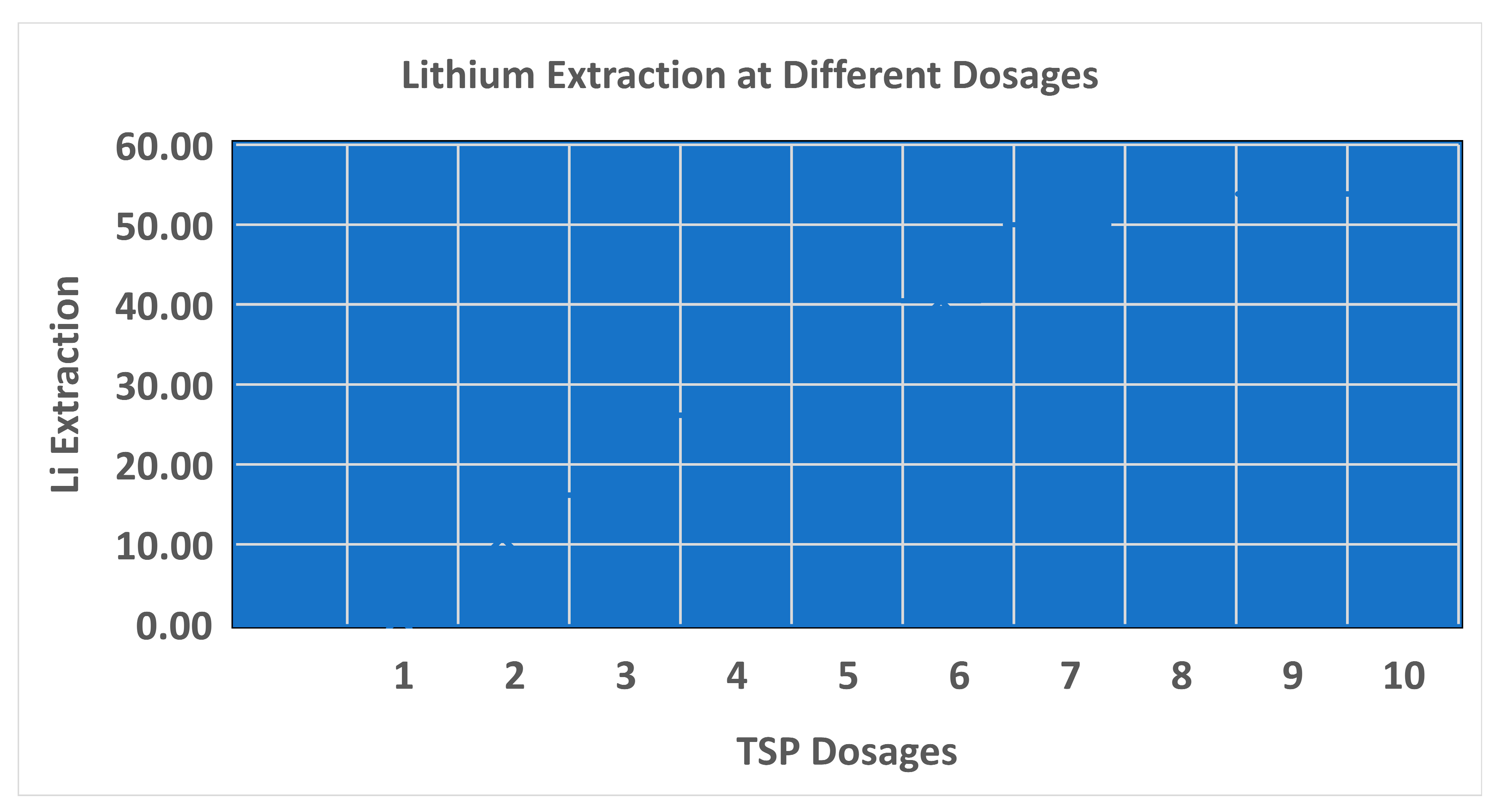
Figure 6.
XRD patterns of precipitation of lithium with Na3PO4 at 50 °C.
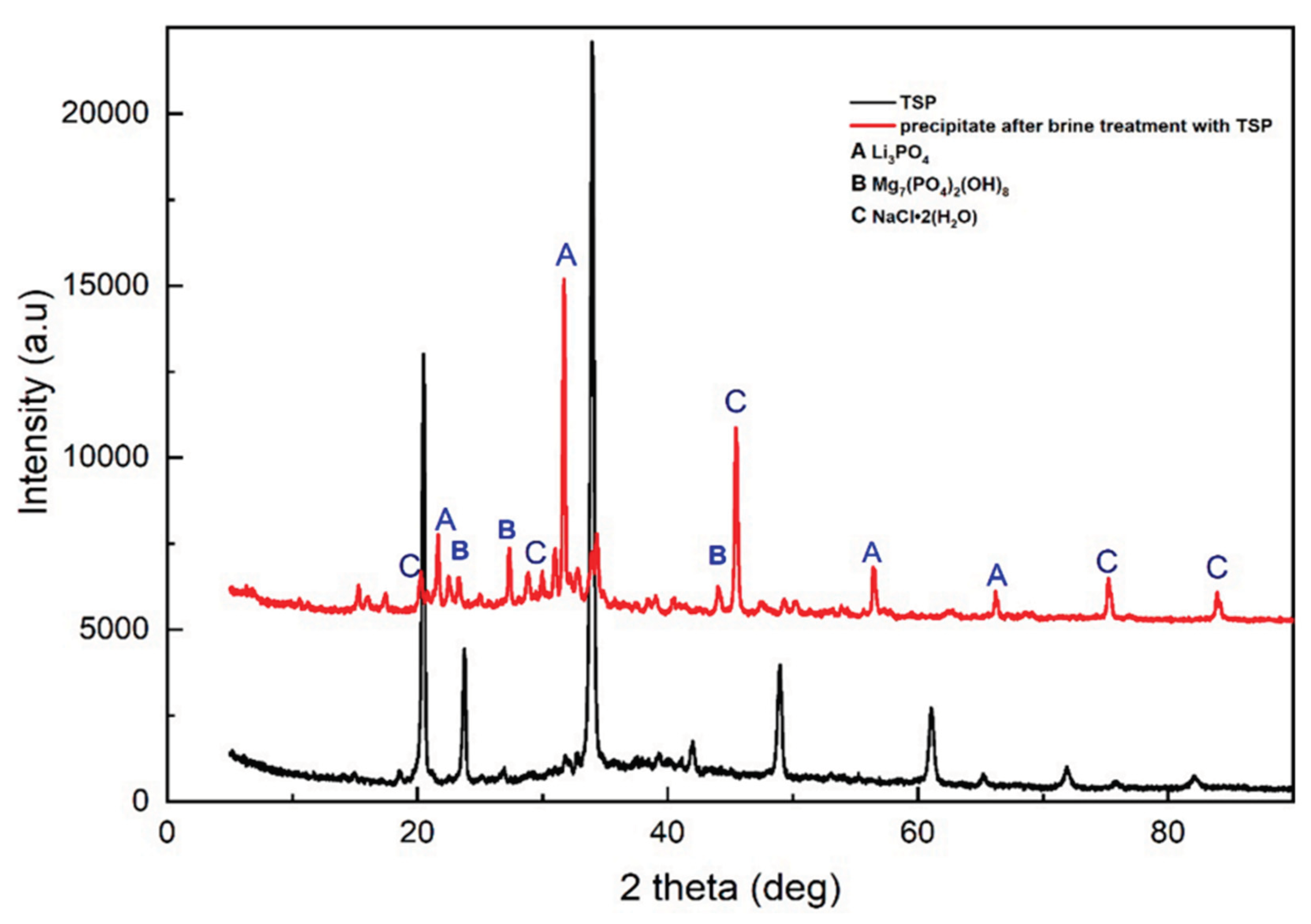

Table 1.
Produced water characteristics.
| Results | |||
|---|---|---|---|
| Parameters | Units | PW1 | PW2 |
| pH | - | 4.5 | 5.2 |
| Conductivity | mS/cm | 98 | 135 |
| Alkalinity | (mg/L as CaCO3) | 140 | 120 |
| Chemical Oxygen Demand (COD) | mg/L | 380 | 120 |
| Suspended Solids (TSS) | mg/L | 220 | 180 |
| Total Organic Carbon (TOC) | mg/L | 11 | 4 |
| Color | - | Clear yellow | Clear yellow |
| Odor | - | significant | Not significant |
| Chloride | mg/L | 76,300 | 39,561 |
| Sulfate | mg/L | 2.5 | 0.3 |
| Lithium (Li) | mg/L | 53.5 | 22 |
| Calcium (Ca) | mg/L | 11,580 | 3221 |
| Magnesium (Mg) | mg/L | 1070 | 305 |
| Sodium (Na) | mg/L | 43,250 | 11,750 |
| Iron( Fe) | mg/L | 1.1 | 0 |
| Strontium (Sr) | mg/L | 1317 | 249 |
| Manganese (Mn) | mg/L | 0.8 | 0 |
| Aluminium (Al) | mg/L | 0.23 | 0 |
Table 2.
Effects of operating condition on percentage of lithium extraction; amount of reagent, stirring temperature.
Table 2.
Effects of operating condition on percentage of lithium extraction; amount of reagent, stirring temperature.
| pH | Temperature °C | Li (mg/l) | Mg (mg/l) | Ca (mg/l) | |
|---|---|---|---|---|---|
| Actual sample | 4.5 | 23 | 53.6 | 1070 | 11580 |
| Purification process (NaOH addition) | 11.5 | 23 | 52.1 | 1.2 | 6240 |
| DSP (2g) | 45 | 0 | - | ||
| STP (2g) | 10.45 | 50 | 41.2 | 0 | - |
| TSP (2g) | 39.2 | 0 | - | ||
| Selected reagent (TSP) (TSP=5, 7, 10, 15 g) dosage |
11 | 50 | (37.5-39) | 0 | - |
| TSP (10g) | 10.5 | (50,60,80) | (40.5-42.7) | 0 | - |
| Removal% | 25% | - |
Disclaimer/Publisher’s Note: The statements, opinions and data contained in all publications are solely those of the individual author(s) and contributor(s) and not of MDPI and/or the editor(s). MDPI and/or the editor(s) disclaim responsibility for any injury to people or property resulting from any ideas, methods, instructions or products referred to in the content. |
© 2024 by the authors. Licensee MDPI, Basel, Switzerland. This article is an open access article distributed under the terms and conditions of the Creative Commons Attribution (CC BY) license (http://creativecommons.org/licenses/by/4.0/).
Copyright: This open access article is published under a Creative Commons CC BY 4.0 license, which permit the free download, distribution, and reuse, provided that the author and preprint are cited in any reuse.


