

Submitted:
20 February 2024
Posted:
20 February 2024
You are already at the latest version
Abstract
Photovoltaic (PV) technologies are developing rapidly as a result of their ability to reduce energy consumption from conventional sources as well as the growth of global energy expenditures. Nevertheless, several impact categories during the PV panel life cycle occur and some principal sectors are affected. These impact categories are assessed by applying life cycle analysis (LCA) techniques through various software programs, databases and methods. Such analyses of energy technologies are crucial, as they can reveal the occurrence of hazardous emissions at distinct life cycle stages. In the present paper, a PV panel impact assessment through life cycle analysis is carried out. More precisely, a combination of PV technologies—monocrystalline, multicrystalline, copper indium gallium selenide (CIGS), amorphous, and ribbon—is studied. The impact categories of ozone depletion, human toxicity, particulate matter, ionising radiation, photochemical ozone formation, acidification, eutrophication, and ecotoxicity, as well as the sectors of human health, ecosystem quality, and environment, are assessed using the openLCA software, the ecoinvent database, the eco-indicator 99, IMPACT 2002+, ReCiPe, and TRACI methods.
Keywords:
Photovoltaic (PV) technologies
; Photovoltaic (PV) panels
; Life cycle analysis (LCA)
; Life cycle impact assessment (LCIA)
1. Introduction
Photovoltaic (PV) systems hold a crucial role in the much-anticipated shift from the conventional model of electrical energy generation based on fossil fuels to a more sustainable one based on renewable sources. PV panels are the fundamental building block of PV systems, converting solar energy into electrical energy with a certain degree of efficiency. The utilization of as much of the available solar energy as possible has been a long-established goal of renewable energy researchers. It has also gained the interest of governments, electric utilities, as well as individual residential and commercial consumers seeking to achieve energy self-sufficiency and reduce harmful emissions associated with environmental degradation. However, it has also been established that, contrary to popular belief, PV panel technologies can, in fact, be associated with harmful emissions. A thorough evaluation of the true environmental effect of photovoltaic panels requires looking at every stage of their life cycle, from the procurement of raw materials to their eventual disposal. Research on potential mitigation strategies and more efficient use of solar energy can be aided by the assessment of the life cycle effects of PV panels. According to the International Electrotechnical Commission (IEC), PV panels or modules form the PV array of a PV system. As per the International Energy Agency (IEA) [1], photovoltaic panels are made up of photovoltaic cells, which are semiconductor devices that transform solar energy into direct current electricity.
PV cell technology may be broadly classified into two categories: thin-film and crystalline silicon (c-Si). More than 97.5 percent of PV cell production is made up of the former, which comprises monocrystalline silicon (mono-Si), singlecrystal-line-silicon (sc-Si), and multicrystalline silicon (multi-Si or mc-Si), as well as polycrystalline silicon (poly-Si). Wafers, which are created using the mono-crystalline growth process and have commercial yields of 20–25%, are used to create mono-Si PV cells. This technology has gained the largest market share, i.e. 97 % of the total c-Si production. However, its manufacturing process is more expensive and demanding, as the silicon (Si) is crystallized in the same lattice. Multi-Si PV cells are crafted using multi-crystalline wafers, which are produced through the consolidation molding procedure. This technology is associated with lower production prices, but also lower efficiencies, with a mean yield of 18-21 %. PV semiconductors are applied in very thin layers to a substrate material, such as plastic, glass, or stainless steel, to create thin-film PV cells. Though production costs are lower with this technology, efficiency is also lower. With a yield range of 17–19%, the materials utilised commercially include copper indium gallium selenide (CIGS) and cadmium telluride (CdTe). While possessing a significant market share, amorphous silicon (a-Si) and micro-morph silicon (micro-Si or μ-Si) photovoltaic cells were unable to contend with the cost of c-Si and the advancing capabilities of alternative thin-film technologies [2]. An alternative PV technology is ribbon-silicon (ribbon-Si), which eliminates the ingot casting and slicing process with the aim of dominating Si material market [3].
- A product or service’s environmental consequences may be measured over the course of its whole life cycle using the life cycle assessment (LCA) approach. It stands for instruments and methods intended to support long-term sustainable development and aid in environmental management [4]. The precise steps needed to complete it are outlined in the standards established by the International Organisation for Standardisation (ISO). More precisely, the following standards are related with [5, 6]. ISO 14040: Objective and Scope. The objectives of the study are defined, the main methodological choices are developed and all the assumptions made are reported.
- Life Cycle Inventory (LCI) (ISO 14041). During this phase, the system under study’s inputs and outputs are quantified through data collection and processing.
- Life Cycle Impact Assessment (LCIA), ISO 14042. The environmental categories and associated indicators have a correlation with the LCI outcomes. In addition, the emissions are divided into effect categories before being transformed into a single unit for comparison.
- ISO 14043: Outcomes. Lastly, the specified purpose and scope are taken into consideration when interpreting the LCI and LCIA results. Additionally, assessments of completeness, sensitivity, consistency, uncertainty, and accuracy are performed on the collected results.
- The following steps are included in the incredibly extensive life cycle assessment (LCA) of a whole product process [4].
- Raw materials, i.e., the acquisition of the necessary natural resources.
- Manufacturing, i.e., the conversion of raw materials into the final product, which may require various inputs of energy and resources.
- Distribution and Transportation, i.e., the product transport from the production facility to the consumer, including packaging, storage and supply.
- Use and Operation, and, more specifically, energy and resources consumed during the useful lifetime of the product, taking into account maintenance, repairs and any necessary consumables.
- End of Life (EOL), i.e., the disposal or recycling of the product, including waste management.
With respect to EOL management, five different strategies can be applied. In descending order in terms of favorability, these are the following [7].
- Reduce: This tactic refers to a decrease in the amount of primary material used in the product’s design.
- Reuse: This approach entails using the product in its whole or as separate components in a second life cycle without making any major changes.
- Recycle: Another alternative is to recycle the materials that can be extracted from a product, so that they can be used anew as raw materials.
- Recover: This strategy involves energy recovery from product waste, via incineration of non-hazardous materials.
- Landfill: The last option is landfilling of the products after their EOL, which is a high-cost option, without positive returns.
In the case of PV panels, the LCA focuses on the following stages [8].
- Mining of raw materials, such as ores and fossil fuels.
- Material processing, and in particular metal melting, alloy purification, Si and wafer production.
- Manufacturing, i.e., PV cells and panel production, as well as transportation and installation.
- Use, which involves PV panel operation and maintenance.
- Decommissioning, i.e., PV panel EOL and dismantling.
- Recycling. If the PV panel is not gravely damaged, then it can reenter the material processing stage for reuse.
- Treatment/Disposal, i.e., the collection, shredding, materials separation of the PV panel and treatment or disposal of any waste.
In terms of EOL management, from the abovementioned general strategies, the following three options are most applicable in the case of PV panels [7,9].
- Reduce: The reduction of hazardous materials included in the PV panel production process will improve the potential for recycling and resource recovery.
- Reuse: This strategy concerns the reuse of an aging or damaged PV panel or part of it, which is inextricably linked to its expected lifetime.
- Recycle: Hydrometallurgical processes are utilized for the materials recovery from waste. These processes depend on differences in the solubility and wettability of materials.
- Throughout a PV panel life cycle, significant impact categories emerge, such as [10]:
- Ozone depletion: Earth’s surface is exposed to more UV radiation as the ozone layer thins, posing a threat to both ecosystems and people. The creation of PV cells is the main life cycle event that leads to ozone depletion [13]. Human toxicity: PV cell production requires significant amounts of chemicals, gases and metals with multiple human toxicity effects, which may be carcinogenic or non-carcinogenic [14].
- Particulate matter: Air pollution from particulate matter has many different causes, making it a complicated problem. Furthermore, deposits of solid particles on PV surfaces may drastically lower the quantity of incoming solar energy that the panels use [15]. Ionizing radiation: PV panels produce low levels of non-ionizing radiation, so this is not a health risk [16].
- Production of photochemical ozone: The material that contributes to this process is ethylene (C2H4), which has an impact on human health, agriculture, and ecosystems [13]. Acidification: This is the result of air pollution, which is composed of nitrogen (N), sulphur (S) in the form of nitrogen oxide (NOx) or ammonia (NH3) [17]. With regard to PV, acidification is mainly caused during the process of PV panel production [13].
The Environmental Impact Assessment (EIA) approach is used to analyse the effects on the environment; however, it has to be modified because the consequences examined in the EIA are only given subjectively and not quantitatively. The LCA fulfills the criteria for the quantitative analysis required in an EIA. Part of the LCA is the LCIA, which consists of four successive steps, as follows [20].
- Classification: All substances are allocated into categories based on their environmental footprint.
- Characterization: Each impact category has a numerical value that indicates a unique component that adds to the total environmental effect and gives a particular outcome for the substance’s concentration.
- Normalisation: To enable comparisons between all impact categories, a measured impact category is tested against a predetermined reference value.
- Weighting: The normalized results of every impact category are scaled by a weighting factor, indicating their respective significance.
Several LCIA simulation software programs are available, such as openLCA, SimaPro, GaBi and Umberto. These are well-established, due to their flexibility, user-friendly interface, connection to many databases and presentation of visible results [20]. Furthermore, they provide a wide range of LCIA databases, such as ecoinvent and environmental footprint [21,22]. Finally, various LCIA method packages are available, such as eco-indicator 99, IMPACT 2002+, ReCiPe 2016, TRACI 2.1, etc. [23-25].
- One of the most well-known approaches is the eco-indicator 99 technique. Points, abbreviated Pt, are its standard measuring unit. By identifying three “archetypes,” as follows, this technique compares goods [24, 26].
- Hierarchist (H): It achieves a manageable degree of evidence by consensus-based assimilation, balances the short- and long-term perspectives, and is capable of preventing several issues through appropriate policy.
- Individualist (I): It relies on a short-term temporal viewpoint, is manageable through technology that can avert many problems, and can only provide the necessary degree of evidence through consequences that have been demonstrated.
- Egalitarian (E): It has a very long-term time horizon, is manageable in terms of problems that may degenerate, and obtains the necessary degree of proof by considering all potential outcomes.
- Human health: This can be considered as the count of years of life lost and years lived with disability.
- Ecosystems quality: This can be regarded as the extinction of species within a specific region over a particular period.
- Resources: These might be thought of as the extra energy needed to extract minerals and fossil fuels in the future.
- A useful use of the midpoint and endpoint combination, connecting outcomes from all LCI kinds, is suggested by the IMPACT 2002+ technique. Four categories of protection are used to categorise the impacts of this approach [27].
- Health of humans: This includes the effect categories of ozone depletion, ionising radiation, particulate matter, and human toxicity that can be harmful to human health. • Ecosystem quality: This covers the middle category of terrestrial acidification, which may be measured in terms of time and space per kilogramme of released material, as well as a potentially extinct portion. Additionally, it covers ecotoxicity, the midway assessment of which is contingent upon time and volume and may impact a subset of species.
- Climate change: Modelling has been done up to the point where it affects ecosystem quality and human health, but the accuracy is not high enough to produce reliable damage characterisation variables.
- Resources: This comprises the two midway categories—mineral extraction and non-renewable energy consumption—that go towards the end-point category of resources.
The primary objective of the ReCiPe 2016 method is to upgrade the eco-indicator 99 method, including midpoint and endpoint indicators. The endpoint indicators relate to impacts in the following three fields of protection [24]:
- Human health.
- Ecosystems.
- Resources availability.
Additionally, this approach helps streamline the process of identifying causal pathways for the midpoint and endpoint characterisation factors calculation [28].
Reduce and evaluate the effects on the environment and chemicals with the TRACI 2.1 approach. The goal of this approach design is to enhance process design, industrial ecology, pollution prevention, sustainability metrics, and impact evaluation for life cycle assessment [24]. The Environmental Protection Agency (EPA) selected a manageable impact categories list for numerous purposes, involving the coherence with current guidelines and the simplicity of modelling [29].
To date, several articles regarding PV panel impact assessment through LCA have been published. An assessment of the CIGS PV technology with the use of the GaBi 6 software program and the TRACI 2.1 method is presented in [30]. An environmental impact study of a Chinese multi-Si PV module throughout its life cycle stages of production, recycling and landfill using the GaBi 6 software program and the ReCiPe Midpoint method is presented in [31]. A life-cycle environmental impact study of a mc-Si PV panel using the Europe ReC-iPe H/A technique, the ecoinvent 3.3 database, and the SimaPro 8.3 software programme is provided in [32]. Using the openLCA 1.6.3 software, the ecoinvent 3.3 database, the eco-indicator 99, IPCC 2013, ILCD 2016, cumulative energy demand 2015, and ecosystem harm potential methodologies, an LCA of the mono-Si, multi-Si, a-Si, ribbon-Si, and CIS PV technologies is shown in [33]. ReCiPe Midpoint (H) World ReCiPe H and ReCiPe Endpoint (H) World ReCiPe H/A methodologies are used to evaluate the mono-Si, multi-Si, a-Si, and CdTe PV technologies using the SimaPro 8 software. This evaluation is reported in [34]. In [35], the environmental effect of mono- and multi-Si PV modules across their life cycle is examined utilising the ecoinvent 2 database, the GaBi 6 software, and the ReCiPe 2016 Endpoint approach. [36] presents a comparison of the environmental effect of c-Si PV modules throughout the course of their life cycle using the ecoinvent 3.1 database, the SimaPro 8.0 software, and the ReCiPe Midpoint (H) technique. [37] presents an environmental impact evaluation of the mono-Si, poly-Si, a-Si, and CdTe PV technologies utilising the ecoinvent 3.4 database, the ReCiPe Midpoint (H) 1.11 technique, and the openLCA 1.10.2 software programme. An environmental impact evaluation of the sc-Si PV modules during their life cycle with the use of the SimaPro 9.0 software program, the ecoinvent 3.7 database and the IPCC 2013 method is presented in [38]. A poly-Si PV panel’s life cycle environmental impact assessment in the Czech Republic is provided in [39], utilising the IMPACT 2002+ 2.15 technique, the ecoinvent 3 da-tabase, and the SimaPro 9.0.049 software programme. Using the openLCA 2.0.0 software, the ecoinvent 2.2 LCIA methods database, the eco-indicator 99 (H, A), IMPACT 2002+ (Endpoint), ReC-iPe Endpoint (E, A), and TRACI methods, the goal of this paper is to assess the life cycle assessment (LCA) of a PV technologies mix that includes mono-Si, multi-Si, CdTe, CIGS, a-Si, and ribbon-Si PV technologies mix with respect to various impact categories and the corresponding sectors affected.2. Materials and Methods
2.1. System under study
A combination of mono-Si, multi-Si, CdTe, CIGS, a-Si, and rib-bon-Si photovoltaic technologies is the system being studied. These PV technologies mix share is assumed to be 47.7 %, 38.3 %, 6.4 %, 1.0 %, 5.1 % and 1.5 % respectively. This PV technologies mix objective is to produce 1 kWh (3.6 MJ) of electricity at an alternating current (AC) plant in the range of 1-60 kV located in Greece, using years 2011 to 2016 as a reference. This system configuration has been retrieved from the Global LCA Data Access (GLAD) network.
2.2. LCI
LCI includes the manufacturing and use stages of PV panels. The PV panel lifespan is considered to be 20 years and their yields differ according to their technology. More specifically, mono-Si yield is assumed to be 14 %, multi-Si 13.2 %, CdTe 9 %, CIGS 11 %, a-Si 5.5 % and ribbon-Si 11.2 %. While the percentage of slanted roof installation is considered to be 90%, the system’s yields are expected to be 75% for slanted roof installation and 80% for ground mounted. It is also thought that Germany is the location of production for the PV panels. LCI depends on data from industry and literature. The electricity consumption mix modelling involves transmission, distribution losses and the power producers’ own use. In addition, consideration is given to the supply of energy actors as well as the processes involved in their extraction, production, processing, and transfer. Finally, all relevant transport processes are considered. Indicative input and output data are displayed in Table 1 and Table 2 correspondingly.
2.3. LCIA
The mono-Si, multi-Si, CdTe, CIGS, a-Si and ribbon-Si PV technologies mix impact categories correspond to these three sectors:
- Human health.
- Ecosystems quality.
- Environment.
3. Results
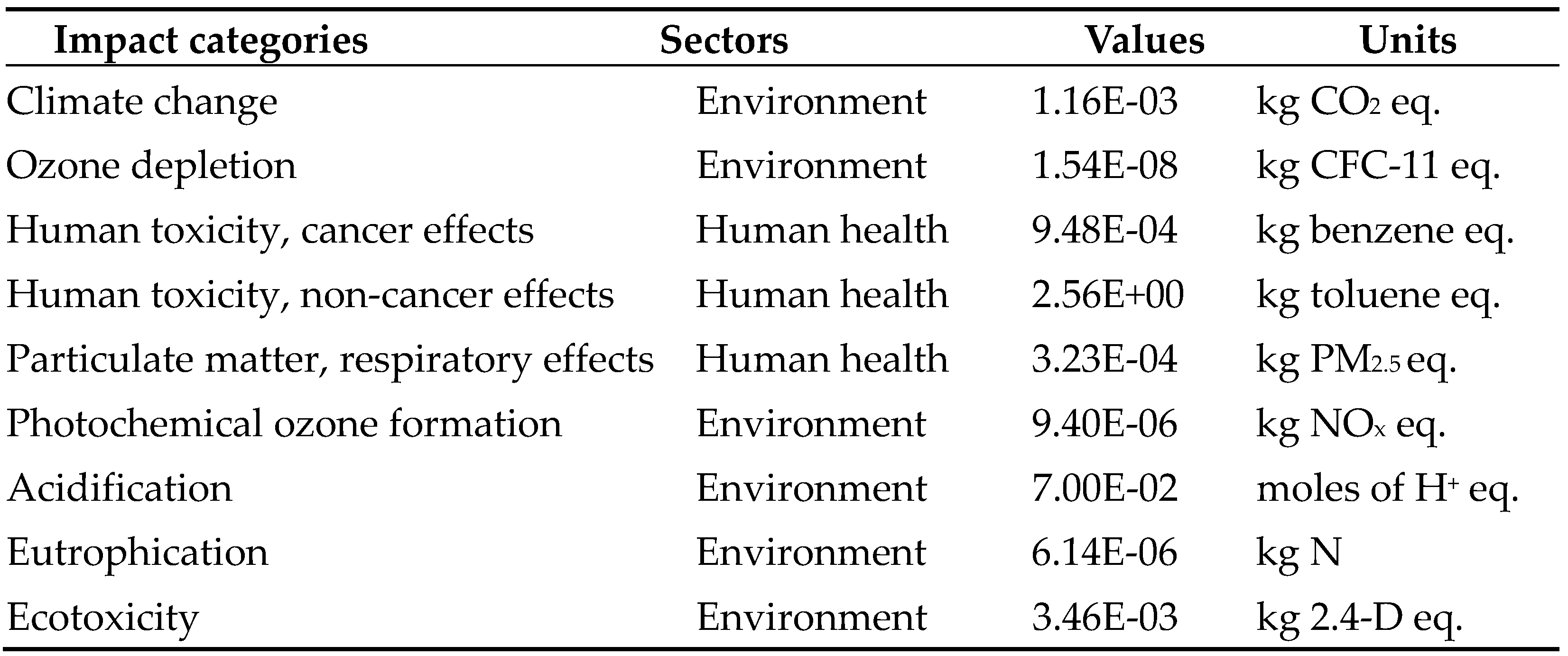
Results for the impact categories of PV technologies mix, including mono-Si, multi-Si, CdTe, CIGS, a-Si, and ribbon-Si, have been calculated using the openLCA 2.0.0 software, ecoinvent 2.2 LCIA techniques database, eco-indicator 99 (H, A), IMPACT 2002+ (Endpoint), ReCiPe Endpoint (E, A), and TRACI methods. In accordance with this, these are shown in Table 3, Table 4, Table 5 and Table 6.
4. Discussion
In Figure 1 the comparison between the seven impact categories of eco-indicator 99 (H, A) method is illustrated. It can be observed that the maximum value corresponds to the impact category of particulate matter, respiratory effects (2.20E-03 Pt), while the minimum to ozone depletion (6.73E-07 Pt).
In Figure 2 the comparison between the two sectors of eco-indicator 99 (H, A) method is illustrated. It can be observed that both the maximum and the minimum values are associated with the sector of human health.
In Figure 3 the comparison between the nine impact categories of IMPACT 2002+ (Endpoint) method is illustrated. It can be perceived that the maximum value corresponds to the impact category of particulate matter, respiratory effects (1.21E-05 Pt), while the minimum to aquatic ecotoxicity (2.39E-09 Pt).
In Figure 4 the comparison between the two sectors of IMPACT 2002+ (Endpoint) method is illustrated. It can be perceived that the maximum value is associated with the sector of human health, while the minimum with ecosystems quality.
In Figure 5 the comparison between the eleven impact categories of ReCiPe Endpoint (E, A) method is illustrated. It can be observed that the maximum value corresponds to the impact category of human toxicity (1.11E-02 Pt), while the minimum to freshwater ecotoxicity (1.08E-08 Pt).
In Figure 6 the comparison between the two sectors of ReCiPe Endpoint (E, A) method is illustrated. It can be observed that the maximum value is associated with the sector of human health, while the minimum with ecosystems quality.
In Figure 7 the comparison between the nine impact categories of TRACI method is illustrated. It can be perceived that the maximum value corresponds to the impact category of human toxicity, non-cancer effects (2.56E+00 kg toluene eq.), while the minimum to ozone depletion (1.54E-08 kg CFC-11 eq.).
The comparison of the two TRACI technique sectors is shown in Figure 8. It appears that the environmental sector has the lowest value and the human health sector has the highest value.
Furthermore, in Figure 9 the cumulative comparison between the seventeen impact categories of eco-indicator 99 (H, A), IMPACT 2002+ (Endpoint), ReCiPe Endpoint (E, A) and TRACI methods is illustrated. It is noted that each method quantifies distinct number of impact categories, so the aggregate of the four methods impact categories is seventeen. Ιt can be observed that the impact category of human toxicity, non-cancer effects (2.56E+00 kg toluene eq.) prevails through the TRACI method, pursued by acidification (7.00E-02 moles of H+ eq.) respectively.
Finally, in Figure 10 the cumulative comparison between the three sectors of eco-indicator 99 (H, A), IMPACT 2002+ (Endpoint), ReCiPe Endpoint (E, A) and TRACI methods is illustrated. It is noted that each method quantifies distinct number of sectors, so the aggregate of the four methods sectors is three. It can be observed that the sector of human health is susceptible to the most impact through the TRACI method, followed by environment respectively.
5. Conclusions
PV technologies can be distinguished into several categories depending on their production process, cost and efficiency. They consist of PV panels exploiting solar energy and contributing to the global pursuit of a more sustainable future. LCA methodology can contribute to this cause by assessing PV panel impacts during their life cycle. In this paper various impact categories of PV panels are assessed by means of LCA techniques. More precisely, this is achieved by using tools like the openLCA software programme, ecoinvent database, eco-indicator 99, IMPACT 2002+, ReCiPe, and TRACI methods to study a mix of PV technologies used in the production of electricity, including mono-Si, multi-Si, CdTe, CIGS, a-Si, and ribbon-Si. Climate change, ozone depletion, human toxicity, particulate matter, ionising radiation, photochemical ozone production, acidification, eutrophication, and ecotoxicity are the effect categories that are assessed and compared. These factors have an influence on ecosystem quality, ecosystem health, and human health. Furthermore, the four techniques’ three sectors and the seventeen impact category cumulative comparisons are shown. We may infer that the impact categories of non-cancer impacts, human toxicity, and the health sector are dominant, with acidification and the environment coming in second and third, respectively.
Author Contributions
Conceptualization, C.S.P. and I.C.; Methodology, C.S.P. and I.C.; Validation, I.C. and A.M.; Formal Analysis, N.S.; Investigation, N.S.; Writing—Original Draft Preparation, N.S.; Writing—Review & Editing, K.K. and A.M.; Visualization, N.S.; Supervision, C.S.P.; Project Administration, C.S.P.
Funding
This research received no external funding.
Conflicts of Interest
The authors declare no conflicts of interest.
References
- Dodd, N. , Espinosa N., Van Tichelen P., Peeters K., Soares A.M. “Preparatory study for solar photovoltaic modules, inverters and systems”. Joint Research Centre, European Commission. 2020. [CrossRef]
- Masson, G. , De l’Epine M., Kaizuka I. “Trends in Photovoltaic Applications 2023”. International Energy Agency Photovoltaic Power Systems Programme. 2023. tsk. 1. https://iea-pvps.org/trends_reports/trends-2023/.
- Lian, J.G. , Wu P., Yu P., Li S.A. “Ribbon Silicon Material for Solar Cells”. Advanced Materials Research. 2012. vol. 531. pp. 67-70. [CrossRef]
- Psomopoulos, C.S. “Energy and Environment”. Undergraduate Course Lectures, Department of Electrical & Electronics Engineering, University of West Attica. 2021.
- Gazbour, N. , Razongles G., Schaeffer C., Charbuillet C. “Photovoltaic power goes green”. Electronics Goes Green 2016+. 2016. pp. 1-8. [CrossRef]
- Sala, S. , Reale F., Cristobal Garcia J., Marelli L., Pant R. “Life cycle assessment for the impact assessment of policies”. Joint Research Centre, European Commission. 2016. [CrossRef]
- Masoumian, M. , Kopacek P. “End-of-Life Management of Photovoltaic Modules”. IFAC-PapersOnLine. 2015. vol. 48. iss. 24. pp. 162-167. [CrossRef]
- Fthenakis, V. , Raugei M. “Environmental life-cycle assessment of photovoltaic systems”. The Performance of Photovoltaic (PV) Systems. 2017. pp. 209-232. [CrossRef]
- Wade A., Heath G., Weckend S., Wambach K., Sinha P., Jia Z., Komoto K., Sander K. “End-of-Life Management: Solar Photovoltaic Panels”. International Renewable Energy Agency. International Energy Agency Photovoltaic Power Systems Programme. 2016. 2016. [CrossRef]
- Stolz, P. , Frischknecht R., Wyss F., De Wild-Scholten M. “PEF screening report of electricity from photovoltaic panels in the context of the EU Product Environmental Footprint Category Rules (PEFCR) Pilots”. 2016. ver. 2.0. https://pvthin.org/wp-content/uploads/2016-04-PEFCR-PV-LCA-screening-report.pdf.
- Frischknecht, R. , Heath G., Raugei M., Sinha P., De Wild-Scholten M., Fthenakis V., Kim H.C., Alsema E., Held M. “Methodology Guidelines on Life Cycle Assessment of Photovoltaic Electricity”. International Energy Agency Photovoltaic Power Systems Programme. 2016. 3rd ed. Methodology_Guidelines_on_Life_Cycle_Assessment_of_Photovoltaic_Electricity_3rd_Edition.pdf.
- Hu, A. , Levis S., Meehl G.A., Han W., Washington W.M., Oleson K.W., Van Ruijven B.J., He M., Strand W.G. “Impact of Solar Panels on Global Climate”. Nature Climate Change. 2015. vol. 6. pp. 290-294. [CrossRef]
- Abuzaid H., Samara F. “Environmental and Economic Impact Assessments of a Photovoltaic Rooftop System in the United Arab Emirates”. Energies. 2022. vol. 15. no. 22. p. 8765. 8765. [CrossRef]
- “Potential Health and Environmental Impacts Associated with the Manufacture and Use of Photovoltaic Cells”. Electric Power Research Institute, California Energy Commission. 2003. https://www.epri.com/research/products/1000095.
- Kaldellis, J.K. , Fragos P., Kapsali M. “Systematic Experimental Study of the Pollution Deposition Impact on the Energy Yield of Photovoltaic Installations.” Renewable Energy. 2011. vol. 36. iss. 10. pp. 2717–2724. [CrossRef]
- “Solar energy myths: EMF radiation and sound”. Alliant Energy. 2022. https://www.alliantenergy.com/alliantenergynews/illuminate/cef- 021622-emfradiationsound.
- Nematchoua, M.K. “Strategies for Studying Acidification and Eutrophication Potentials, a Case Study of 150 Countries”. J Multidisciplinary Scientific Journal. 2022. vol. 5. no. 1. pp. 150-165. [CrossRef]
- “Assessment of Ecotoxicity—A Framework to Guide Selection of Chemical Alternatives”. National Center for Biotechnology Information, National Library of Medicine, National Institutes of Health. 2014. https://www.ncbi.nlm.nih.gov/books/NBK253975/.
- “EU renewable electricity has reduced environmental pressures; targeted actions help further reduce impacts”. European Environment Agency. 2023. https://www.eea.europa.eu/publications/eu-renewable-electricity-has-reduced.
- Iswara, A.P. , Farahdiba A.U., Nadhifatin E.N., Pirade F., Andhikaputra G., Muflihah I., Boedisantoso R. “A Comparative Study of Life Cycle Impact Assessment using Different Software Programs”. Institute of Physics Conference Series: Earth and Environmental Science. 2020. vol. 506. [CrossRef]
- “Marketplace”. SimaPro, PRé Sustainability. 2023. https://simapro.com/marketplace/?_product_categories=databases.
- “openLCA Nexus: The Source for LCA Data Sets”. openLCA Nexus, GreenDelta. 2023. https://nexus.openlca.org/databases.
- Jungbluth, N. , Tuchschmid M., De Wild-Scholten M. “Life Cycle Assessment of Photovoltaics: Update of Ecoinvent Data”. 2008. https://www.researchgate.net/publication/237541622_Life_Cycle_Assessment_of_Photovoltaics_Update_of_ecoinvent_data.
- Acero, A.P. , Rodríguez C., Ciroth A. “LCIA methods—Impact assessment methods in Life Cycle Assessment and their impact categories”. GreenDelta. 2015. ver. 1.5.2. https://www.openlca.org/wp-content/uploads/2015/11/LCIA-METHODS-v.1.5.4.pdf.
- “SimaPro database manual—Methods library”. PRé Sustainability. 2023. https://simapro.com/wp-content/uploads/2023/04/DatabaseManualMethods.pdf.
- Goedkoop, M. “The Eco-indicator 99 Methodology”. Journal of Life Cycle Assessment. 2007. vol. 3. no. 1. https://www.jstage.jst.go.jp/article/lca/3/1/3_32/_pdf. [CrossRef]
- Jolliet, O. , Margini M., Charles R., Humbert S., Payet J., Rebitzer G., Rosenbaum R. “IMPACT 2002+: A New Life Cycle Impact Assessment Methodology”. The International Journal of Life Cycle Assessment. 2002. vol. 8. no. 6. pp. 324-330. [CrossRef]
- Huijbregts, M.A.J. , Steinmann Z.J.N., Elshout P.M.F., Stam G., Verones F., Vieira M., Zijp M., Hollander A., Van Zelm R. “ReCiPe2016: A Harmonised Life Cycle Impact Assessment Method at Midpoint and Endpoint Level”. The International Journal of Life Cycle Assessment. 2016. vol. 22. pp. 138–147. [CrossRef]
- Bare, J. “TRACI 2.0: The Tool for the Reduction and Assessment of Chemical and Other Environmental Impacts 2.0”. Clean Technologies and Environmental Policy. 2011. vol. 13. pp. 687–696. [CrossRef]
- Amarakoon, S. , Vallet C., Curran M.A., Haldar P., Metacarpa D., Fobare D., Bell J. “Life cycle assessment of photovoltaic manufacturing consortium (PVMC) copper indium gallium (di)selenide (CIGS) modules”. The International Journal of Life Cycle Assessment. 2017. vol.23. pp. 851–866. [CrossRef]
- Huang, B. , Zhao J., Chai J., Xue B., Zhao F., Wang X. “Environmental influence assessment of China’s multi-crystalline silicon (multi-Si) photovoltaic modules considering recycling process”. Solar Energy. 2017. vol. 143. pp. 132-141. [CrossRef]
- Bracquene, E. , Peeters J.R., Dewulf W., Duflou J.R. “Taking Evolution into Account in a Parametric LCA Model for PV Panels”. Procedia CIRP. 2018. vol. 69. pp. 389-394. [CrossRef]
- Soares, W.M. , Athayde D.D., Nunes E.H.M. “LCA Study of Photovoltaic Systems Based on Different Technologies”. International Journal of Green Energy. 2018. vol. 15. no. 10. pp. 577–583. [CrossRef]
- Rashedi A., Khanam T. “Life cycle assessment of most widely adopted solar photovoltaic energy technologies by mid-point and end-point indicators of ReCiPe method”. Environmental Science and Pollution Research. 2020. vol. 27. pp. 29075–29090. 9075–29090. [CrossRef]
- Lunardi, M.M. , Alvarez-Gaitan J.P., Bilbao J.I., Corkish R. “Comparative Life Cycle Assessment of End-of-Life Silicon Solar Photovoltaic Modules”. Applied Sciences. 2018. vol. 8. no. 8. p. 1396. [CrossRef]
- Lisperguer, R.C. , Cerón E.M., Higueras De La Casa J., Martín R.D. “Environmental Impact Assessment of crystalline solar photovoltaic panels’ End-of-Life phase: Open and Closed-Loop Material Flow scenarios”. Sustainable Production and Consumption. 2020. vol. 23. pp. 157-173. [CrossRef]
- Antonanzas, J. , Quinn J.C. “Net environmental impact of the PV industry from 2000-2025”. Journal of Cleaner Production. 2021. vol. 311. [CrossRef]
- Müller, A. , Friedrich L., Reichel C., Herceg S., Mittag M., Neuhaus D.H. “A comparative life cycle assessment of silicon PV modules: Impact of module design, manufacturing location and inventory”. Solar Energy Materials and Solar Cells. 2021. vol. 23. [CrossRef]
- Vácha, M. , Kodymová J., Lapčík V. “Life-cycle assessment of a photovoltaic panel: Assessment of energy intensity of production and environmental impacts”. IOP Conf. Series: Materials Science and Engineering. 2021. vol. 1209. [CrossRef]
Figure 1.
Eco-indicator 99 (H, A) method impact categories comparison.
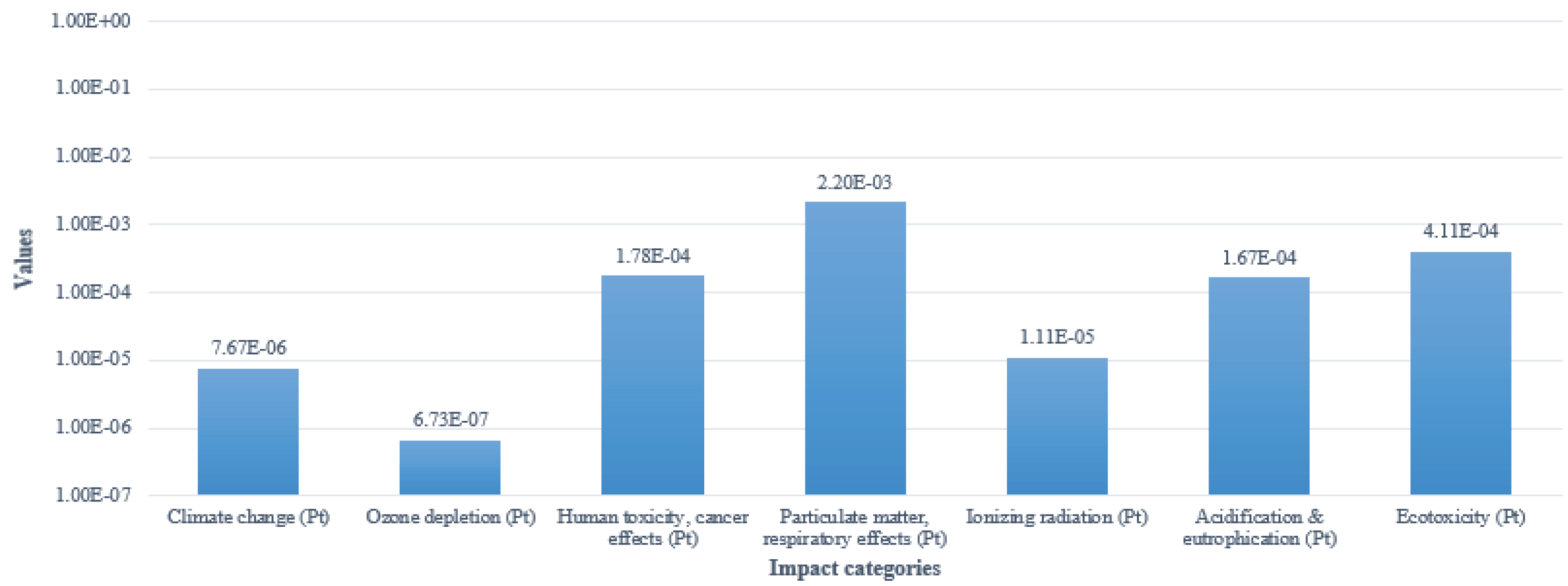
Figure 2.
Eco-indicator 99 (H, A) method sectors comparison.
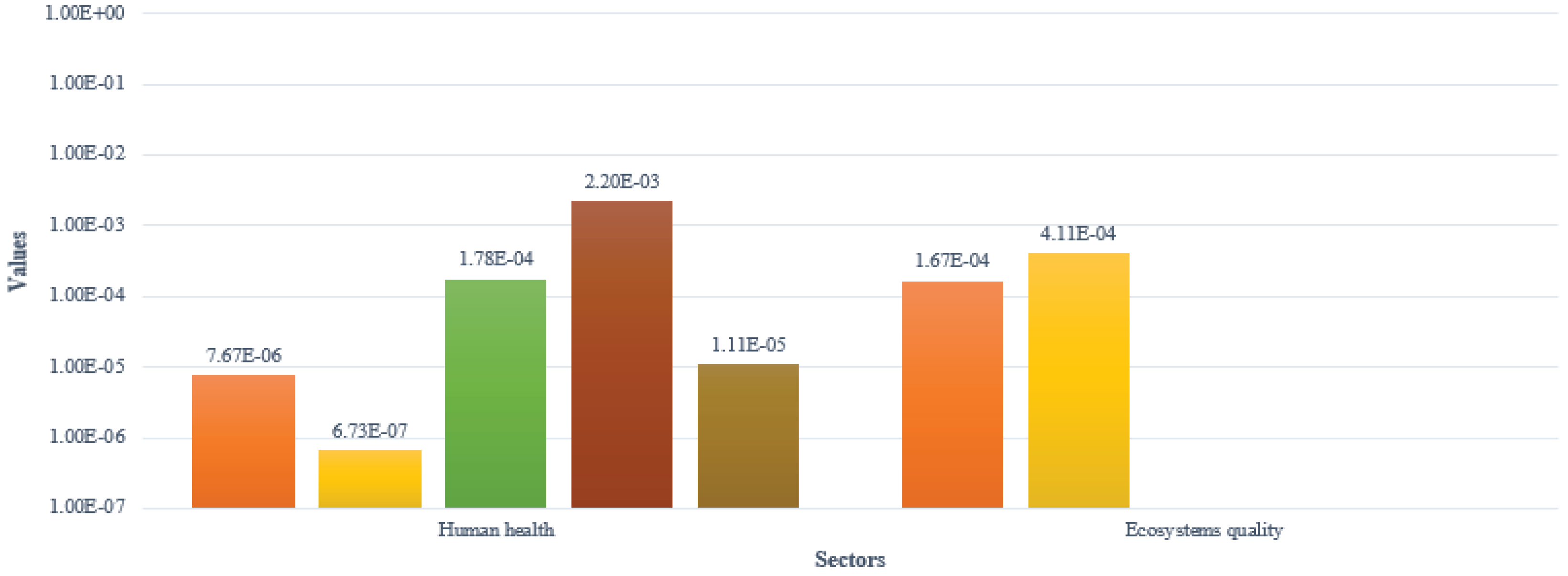
Figure 3.
IMPACT 2002+ (Endpoint) method impact categories comparison.
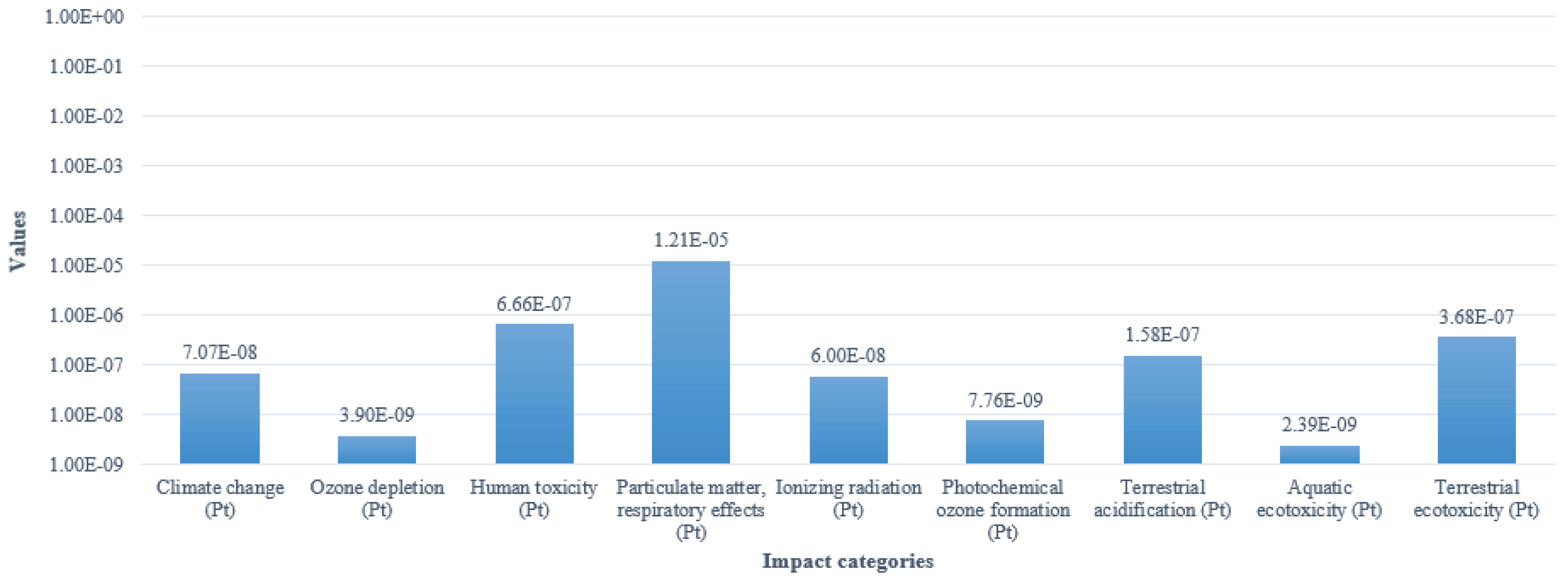
Figure 4.
IMPACT 2002+ (Endpoint) method sectors comparison.
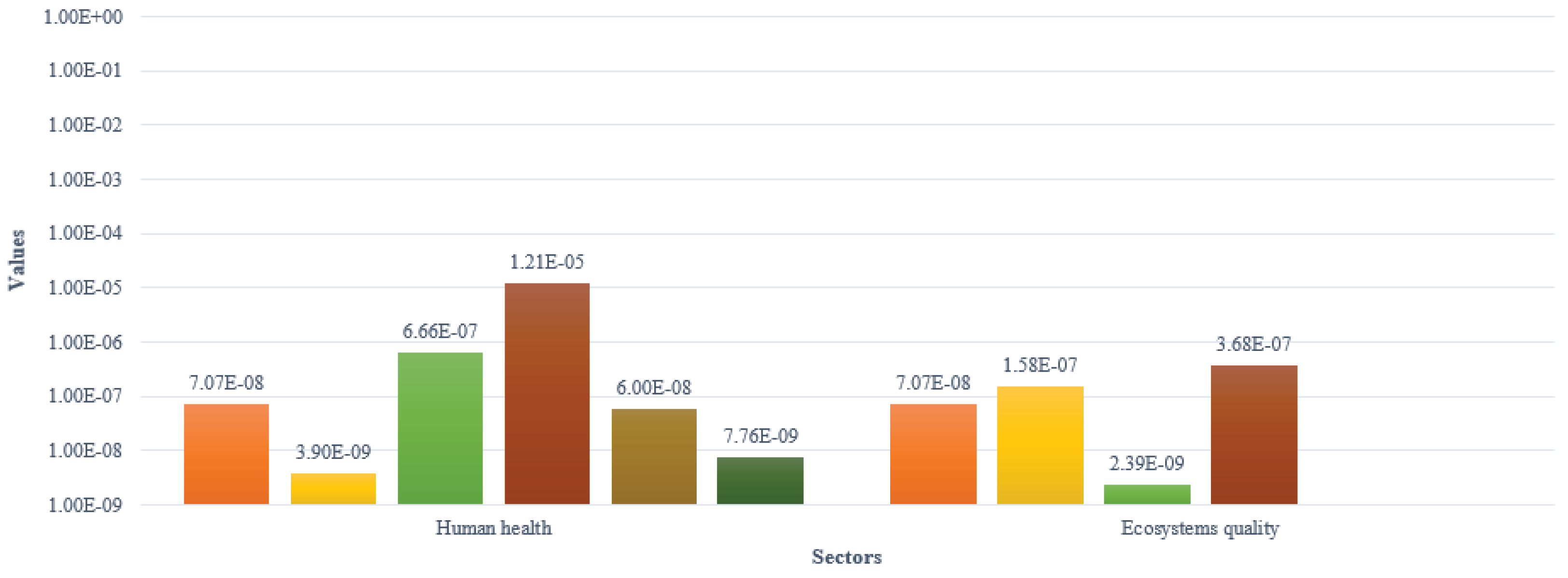
Figure 5.
ReCiPe Endpoint (E, A) method impact categories comparison.
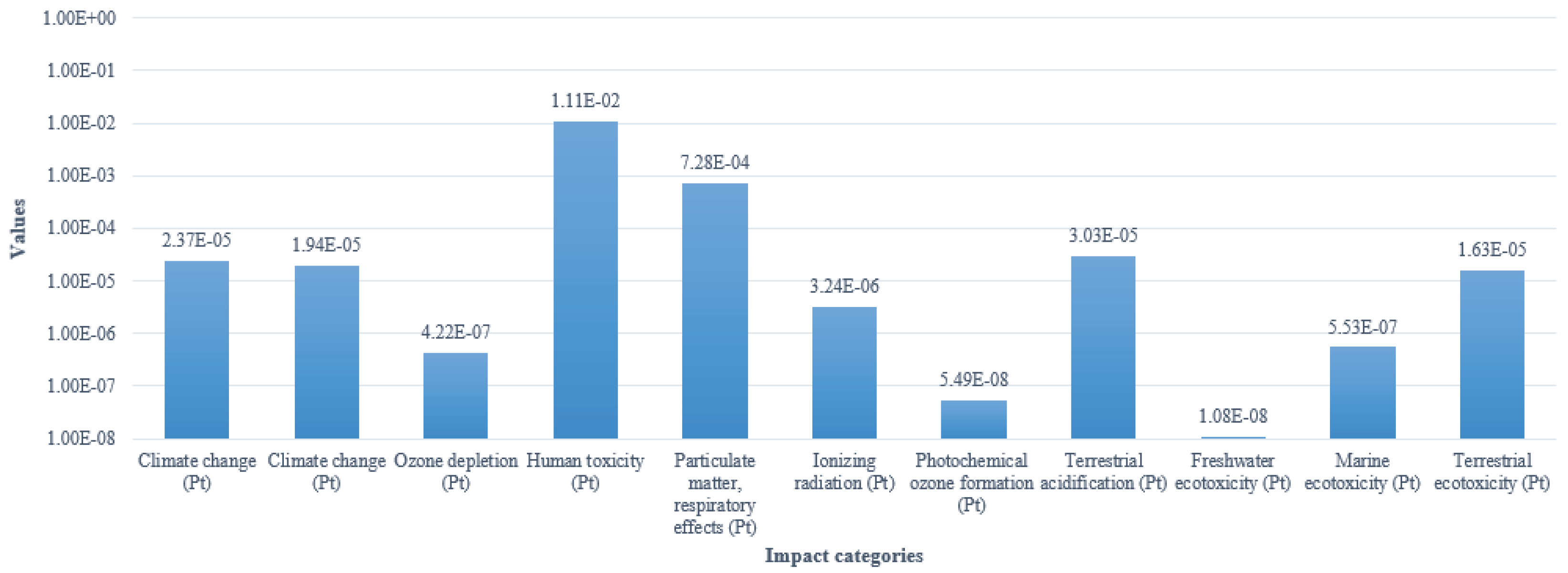
Figure 6.
ReCiPe Endpoint (E, A) method sectors comparison.
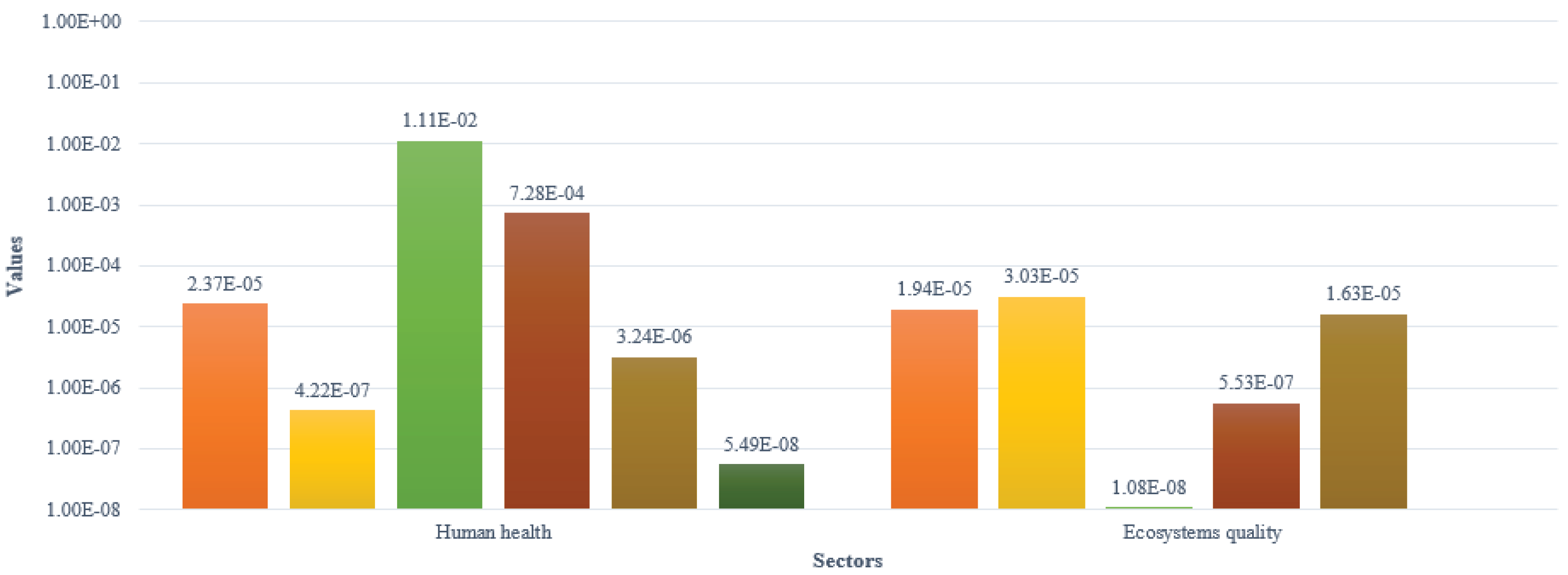
Figure 7.
TRACI method impact categories comparison.
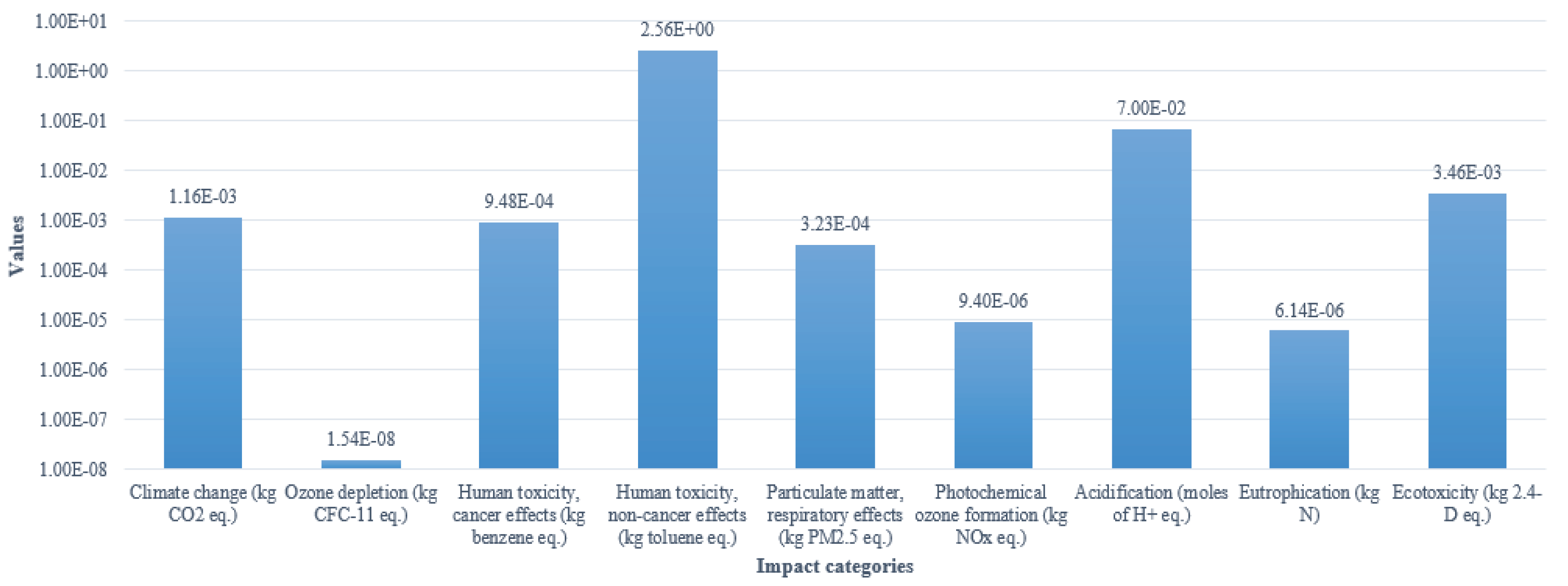
Figure 8.
TRACI method sectors comparison.
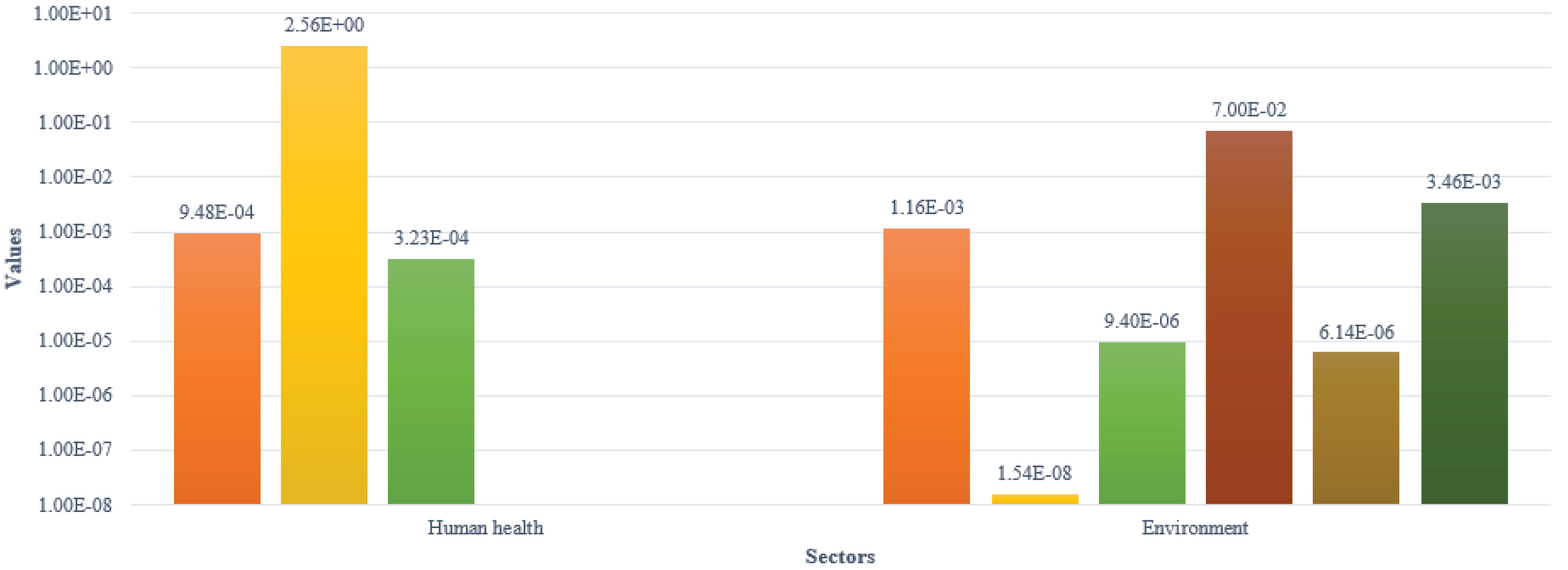
Figure 9.
Cumulative methods impact categories comparison.
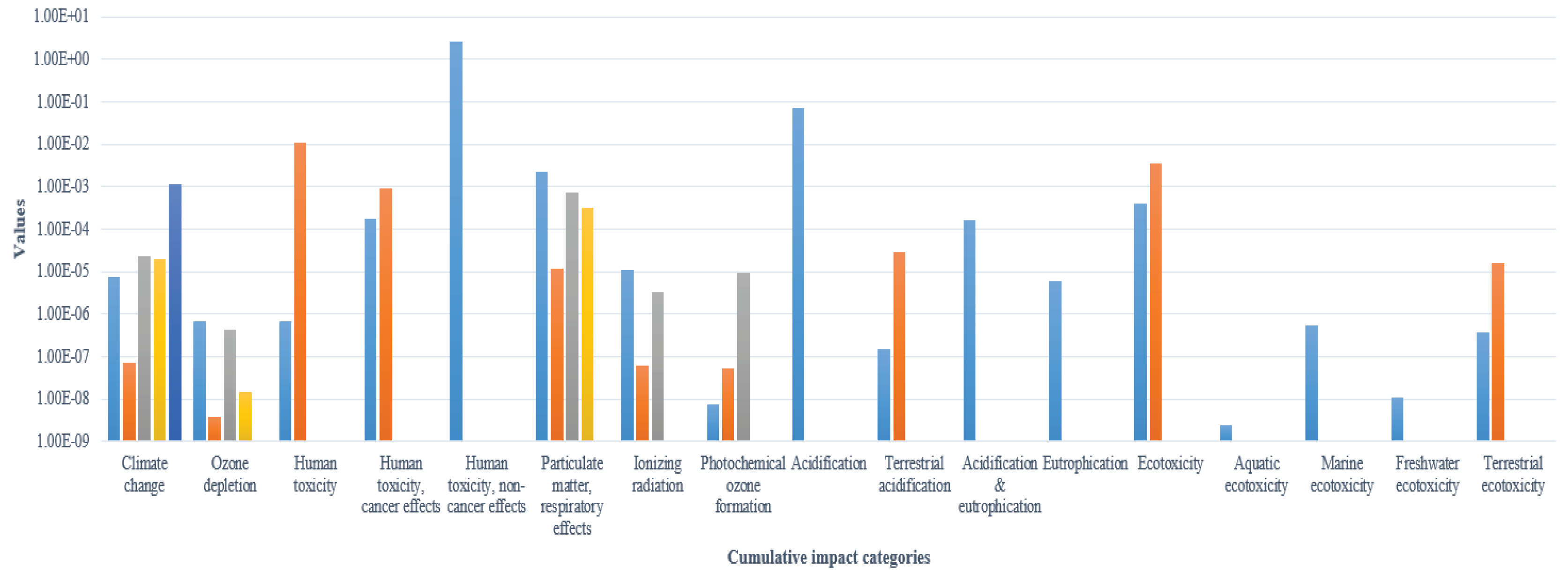
Figure 10.
Cumulative methods sectors comparison.
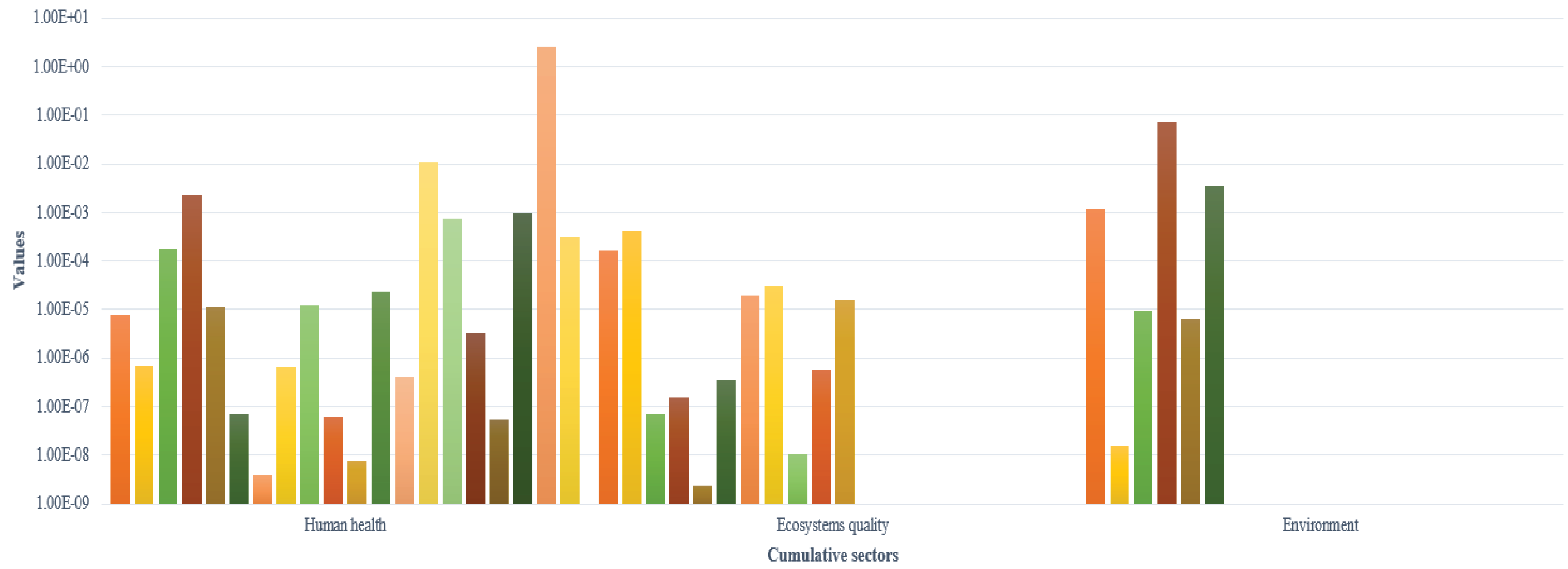

Table 1.
Indicative input data.
| Flows | Categories | Values | Units |
|---|---|---|---|
| Air | Resource/In air | 2.77E-01 | kg |
| Antimony | Resources from ground/Non-renewable element resources from ground | 8.92E-13 | kg |
| Barite | Resource/In ground | 1.85E-08 | kg |
| Carbon | Resources from ground/Non-renewable material resources from ground | 8.46E-12 | kg |
| Carbon dioxide | Resources from air/Renewable material resources from air | 4.02E-03 | kg |
| Copper | Resource/In ground | 4.00E-04 | kg |
| Lake water | Resources from water/Renewable material resources from water | 20.53E+00 | m3 |
| Land occupation | Land use/Occupation | 4.70E-04 | m2*a |
| Land transformation | Land use/Transformation | 2.47E-05 | m2 |
| Manganese | Resource/In ground | 2.51E-05 | kg |
| Phosphorus | Resource/In ground | 8.75E-07 | kg |
| Primary energy from solar energy | Resources from air/Renewable energy resources from air | 27.01E+00 | MJ |
| Quartz sand | Resources from ground/Non-renewable material resources from ground | 4.00E-03 | kg |
| River water | Resources from water/Renewable material resources from water | 163.02E+00 | m3 |
| Sea water | Resources from water/Renewable material resources from water | 2.34E-01 | kg |
| Silicon | Resource/In ground | 9.16E-08 | kg |
| Silver | Resource/In ground | 7.40E-07 | kg |
| Soil | Resource/In ground | 1.80E-03 | kg |
| Uranium | Resource/In ground | 8.40E-02 | MJ |
| Zinc | Resource/In ground | 3.30E-04 | kg |
Table 2.
Indicative output data.
| Flows | Categories | Values | Units |
|---|---|---|---|
| Air, used | Air/Unspecified | 1.96E-01 | kg |
| Antimony | Emissions to air/Emissions to air, unspecified | 3.21E-09 | kg |
| Antimony | Emissions to soil/Emissions to non-agricultural soil | 9.06E-16 | kg |
| Antimony | Emissions to water/Emissions to fresh water | 8.43E-12 | kg |
| Carbon dioxide | Emissions to air/Emissions to air, unspecified | 3.31E-02 | kg |
| Copper | Emissions to air/Emissions to air, unspecified | 7.53E-08 | kg |
| Copper | Emissions to soil/Emissions to agricultural soil | 4.80E-09 | kg |
| Copper | Emissions to soil/Emissions to non-agricultural soil | 2.34E-10 | kg |
| Copper | Emissions to water/Emissions to fresh water | 1.80E-08 | kg |
| Electricity | Energy carriers and technologies/Electricity | 3.60E+00 | MJ |
| Manganese | Emissions to air/Emissions to air, unspecified | 8.20E-08 | kg |
| Manganese | Emissions to soil/Emissions to non-agricultural soil | 1.20E-10 | kg |
| Manganese | Emissions to water/Emissions to fresh water | 1.93E-08 | kg |
| Manganese | Emissions to water/Emissions to sea water | 9.80E-13 | kg |
| Silver | Emissions to air/Emissions to air, unspecified | 1.27E-07 | kg |
| Silver | Emissions to water/Emissions to fresh water | 4.40E-11 | kg |
| Silver | Emissions to water/Emissions to sea water | 1.24E-15 | kg |
| Waste heat | Emissions to air/Emissions to air, unspecified | 23.55E+00 | MJ |
| Waste heat | Emissions to water/Emissions to fresh water | 7.46E-02 | MJ |
| Waste heat | Emissions to water/Emissions to sea water | 1.23E-05 | MJ |
Table 3.
Eco-indicator 99 (H, A) method impact categories results.
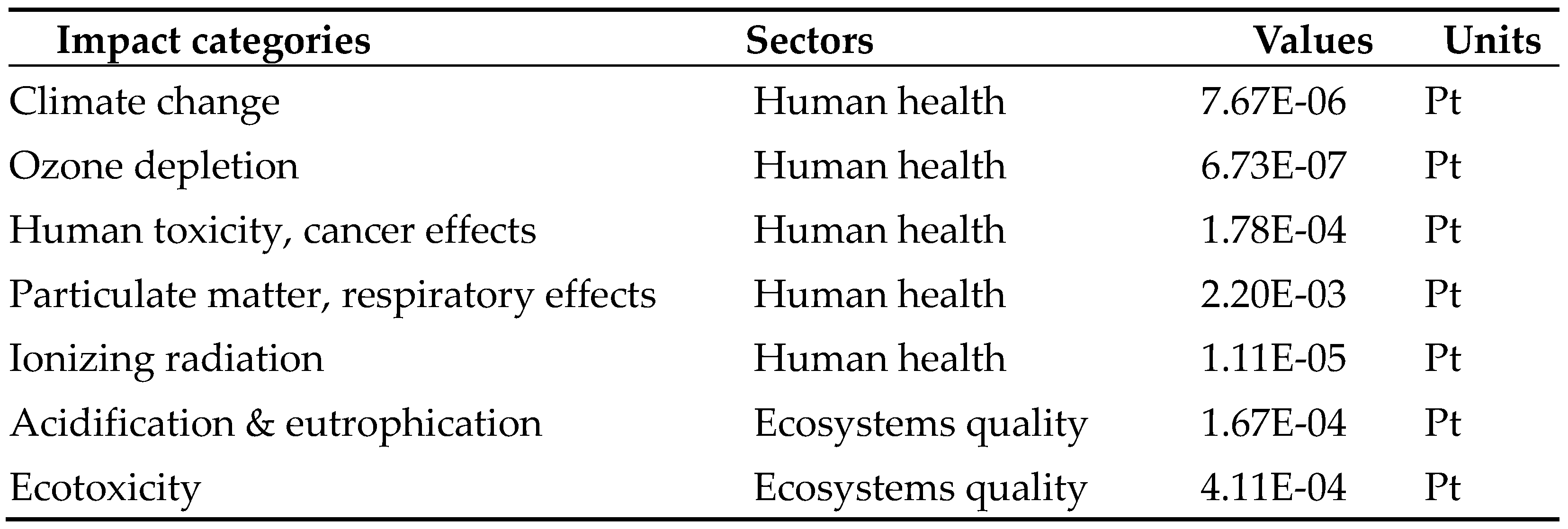
Table 4.
IMPACT 2002+ (Endpoint) method impact categories results.
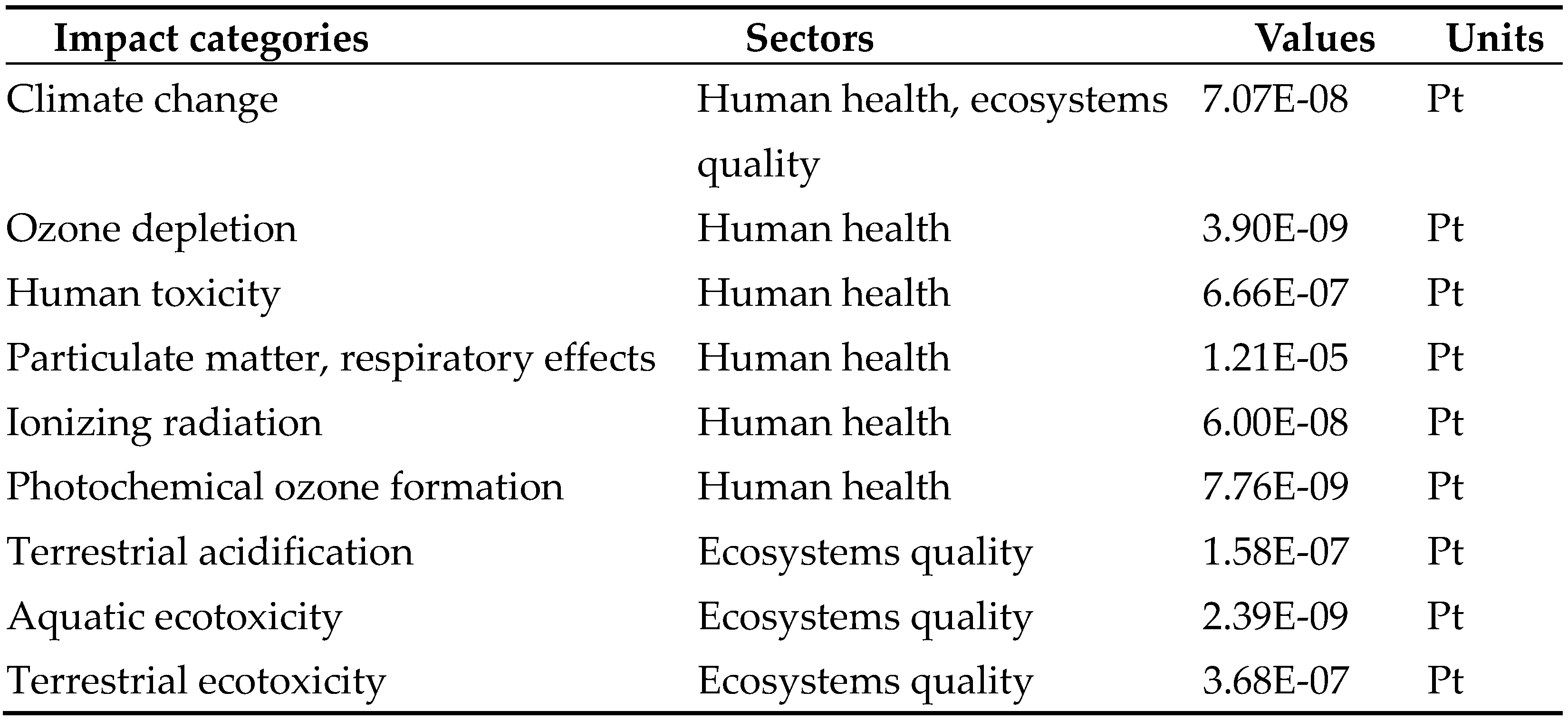
Table 5.
ReCiPe Endpoint (E, A) method impact categories results.
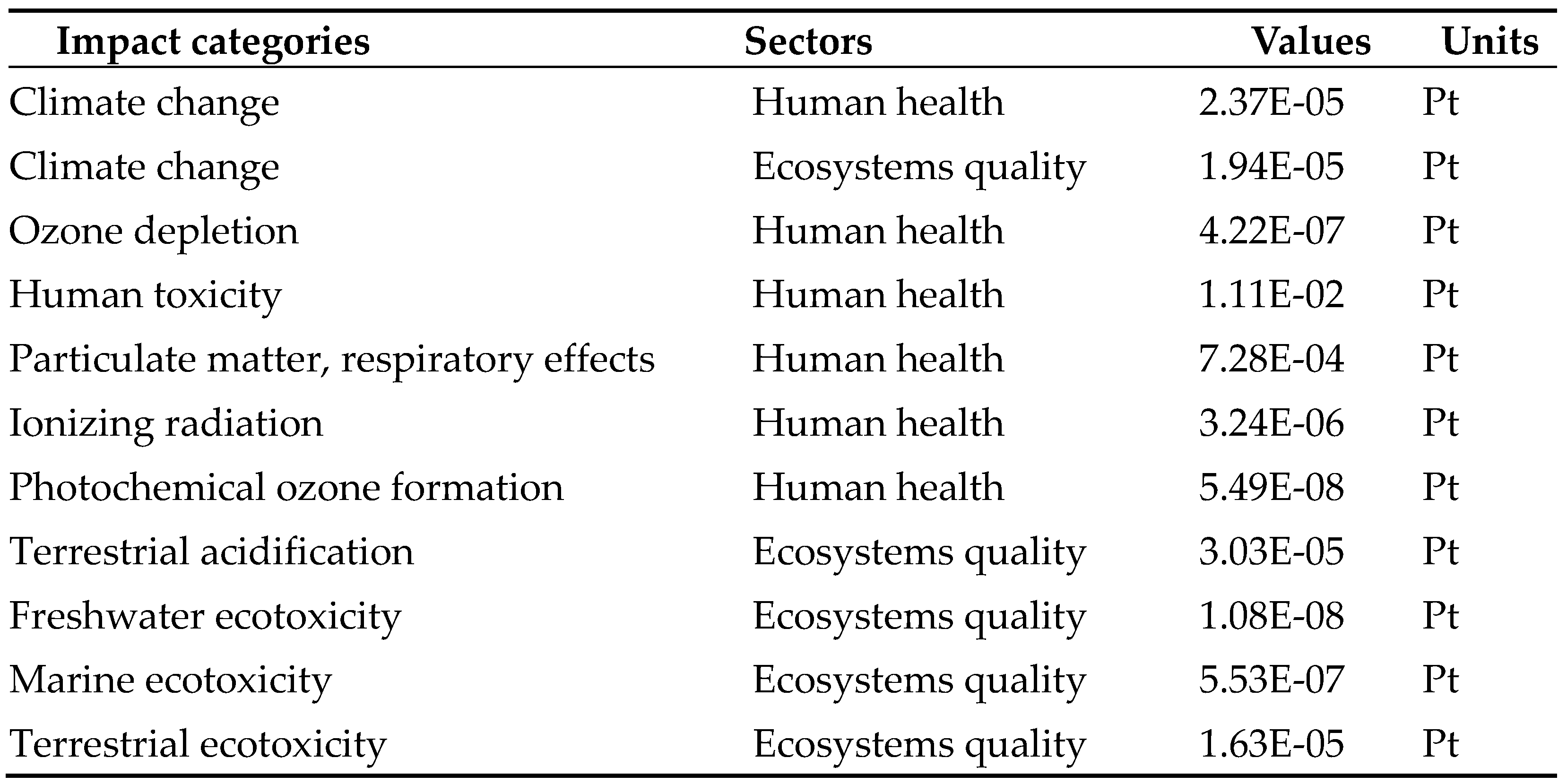
Table 6.
TRACI method impact categories results.
Disclaimer/Publisher’s Note: The statements, opinions and data contained in all publications are solely those of the individual author(s) and contributor(s) and not of MDPI and/or the editor(s). MDPI and/or the editor(s) disclaim responsibility for any injury to people or property resulting from any ideas, methods, instructions or products referred to in the content. |
© 2024 by the authors. Licensee MDPI, Basel, Switzerland. This article is an open access article distributed under the terms and conditions of the Creative Commons Attribution (CC BY) license (http://creativecommons.org/licenses/by/4.0/).
Copyright: This open access article is published under a Creative Commons CC BY 4.0 license, which permit the free download, distribution, and reuse, provided that the author and preprint are cited in any reuse.