

Submitted:
19 February 2024
Posted:
19 February 2024
You are already at the latest version
Abstract
In recent years, humanity has faced a growing challenge posed by the rise of antibiotic-resistant bacteria, resulting in an alarming surge in fatalities and the emergence of increasingly hard-to-manage diseases. Among these resilient pathogens is Acinetobacter baumannii, due to its escalating prevalence in hospitals, elevated mortality rates, and resistance to treatment. Despite its clinical significance, our understanding of this pathogen in non-hospital settings and its virulence factors remains limited. Therefore, this review aims to shed light on the latest research regarding its ecological niche, microbiological traits, and antibiotic resistance profiles. Recent investigations have expanded its detection to various environmental niches, including rivers, treatment plants, and soils. Moreover, this bacterium has been discovered in diverse food sources such as meat and vegetables, as well as in farm animals and household pets like dogs and cats. This broader presence of Acinetobacter baumannii outside of hospital environments underscores a significant risk of environmental contamination, necessitating heightened awareness and preventive measures to address potential public health implications.
Keywords:
Acinetobacter baumannii
; multi-resistance
; natural habitats
; reservoirs
1. Introduction
Antibiotic resistance presents a formidable global health challenge, as evidenced by World Health Organization (WHO) records indicating that approximately 700,000 individuals succumb annually to infections related to antibiotic resistance. Moreover, without significant intervention, projections suggest that by 2030, this issue could plunge 24 million people into extreme poverty and result in a staggering 10 million deaths annually by 2050 (1,2). Recognizing the urgency of the situation, in 2017, the WHO issued a list of 56 bacteria necessitating immediate attention for the development of novel therapeutic approaches due to their resistance to conventional antibiotics. These bacteria pose a grave global health threat, prolonging hospital stays, escalating treatment expenses, and elevating mortality rates among hospitalized patients (3,4). Among these pathogens, Acinetobacter baumannii stands out as a significant concern, contributing to 7,300 infections and 500 deaths annually. Classified as one of the most critical multidrug-resistant bacteria, it remains at the forefront of public health emergencies due to the dearth of effective chemical therapies and diagnostic tools to mitigate its potential risks (5).
Acinetobacter baumannii is a Gram-negative coccobacillus resistant to carbapenems, known for causing severe and invasive nosocomial infections. These include ventilator-associated pneumonia, bloodstream infections like bacteremia, urinary tract infections, meningitis, and skin and soft tissue infections (6,7). Numerous studies have identified hospital intensive care units, neonatal areas, and burn units (8,9) as the primary locations where critically ill patients acquire infections from this opportunistic pathogen. These environments and patient populations create an optimal breeding ground for its rapid transmission. Eradicating Acinetobacter baumannii necessitates targeted interventions and effective chemical therapies, underscoring its status as a potentially infectious emerging pathogen.
Furthermore, the bacterium has been detected in various environmental compartments and biological samples. Recent studies have underscored the environment's pivotal role in the transmission of resistant bacteria and the emergence of resistant pathogens. However, our understanding of the evolutionary and ecological processes driving the clinical emergence of resistance genes, as well as the barriers to environmental dispersal, remains incomplete.
The objective of this study is to analyze and emphasize the significance of research on pathogens across different environmental compartments. We have curated and prioritized a selection of papers published in recent years, focusing on the incidence and presence of Acinetobacter baumannii in out-of-hospital environments. By highlighting new niches that have facilitated its proliferation, we aim to shed light on the expanding scope of its environmental reservoirs.
2. Methodology
A search was conducted in the Scopus database for scientific articles published between 2017 and 2022, utilizing a search equation with keywords such as "Acinetobacter baumannii," "incidence," and "antibiotic resistance." Inclusion criteria comprised papers reporting on the incidence or presence of the pathogen in out-of-hospital settings, along with documentation of Acinetobacter baumannii's resistance profile and/or virulence genes. Exclusion criteria encompassed articles in languages other than Spanish or English, letters to the editor, abstracts, clinical cases, commentaries, or memoirs. Three reviewers independently screened titles, abstracts, and keywords to manually select eligible articles. For papers lacking sufficient information but deemed potentially suitable, the full text was consulted (see Figure 1).
All papers were extracted and organized in a Microsoft Excel database, including the title, authors, year of publication, and abstract for each document. Initially, this information facilitated a descriptive analysis. Subsequently, each reviewer ranked the articles in order of priority based on the document's goals. Finally, the documents were collated and selected for a descriptive analysis. A priority-based system with four categories was employed for classification: very high priority (meeting all inclusion criteria and fully addressing the review's objective), high priority (meeting inclusion criteria and containing relevant information, though not fully addressing the objective), medium priority (meeting inclusion criteria, but with insufficient information to fully address the objective), and low priority (meeting criteria, but containing irrelevant information). Discrepancies regarding inclusion were addressed through dialogue and resolved accordingly (10,11). Documents classified as very high and high priority were included in the in-depth analysis.
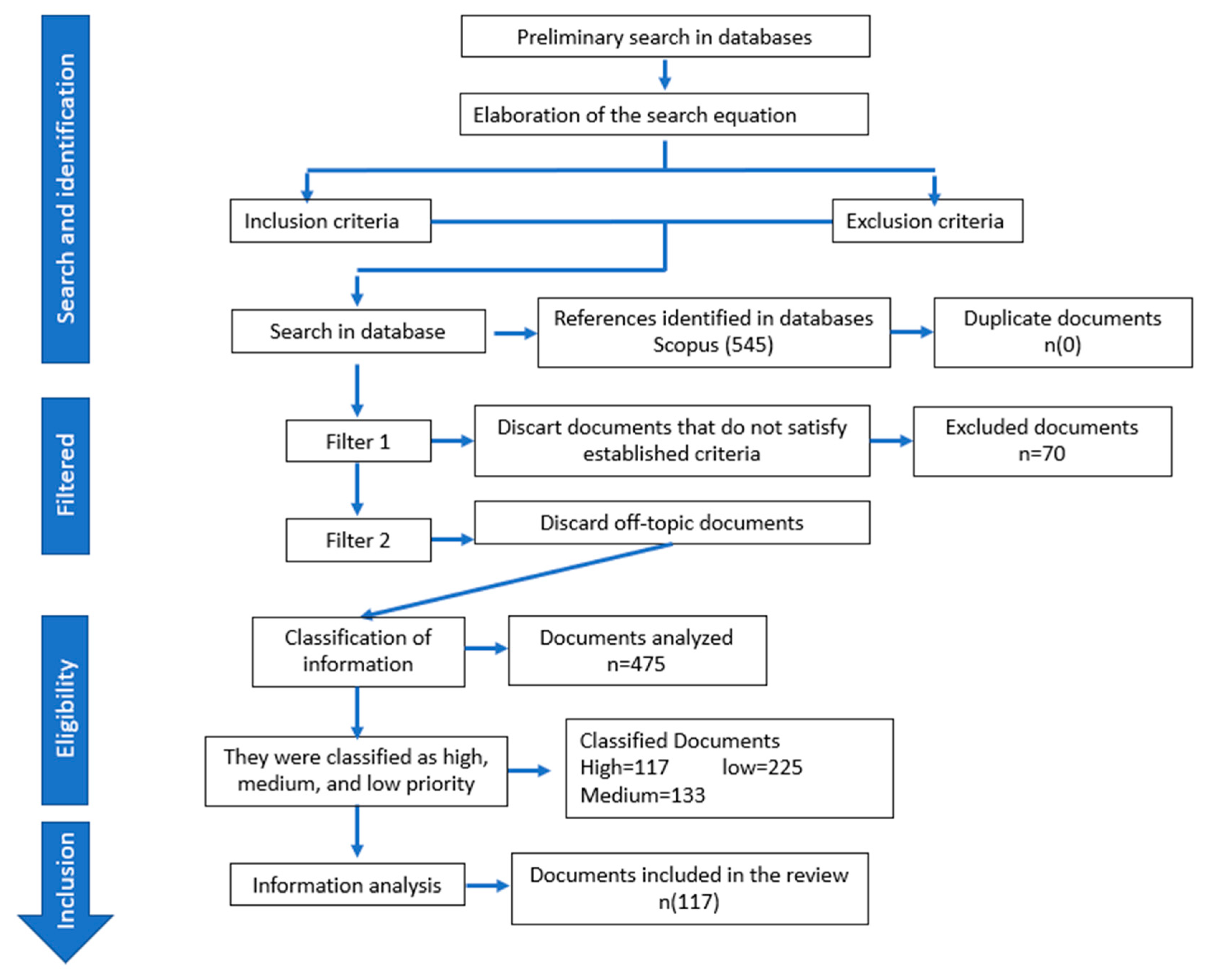
Figure 1.
Document collection and analysis process.
3. Results and Discussion
From the Scopus database search, a total of 545 documents were initially retrieved. After applying the first filter, 87.15% (475 out of 545) of the documents met the inclusion criteria (Figure 1). Applying the “priority criteria” of the selected documents, it was determined that 47.36% (225 out of 475) of the documents fell into the low priority category, while 28.0% (133 out of 475) were classified as medium priority. Only 24.63% (117 out of 475) of the documents were deemed of high or very high priority, consisting of 84 and 33 papers, respectively. Works categorized as low and medium priority (75.37%) were excluded due to their focus on aspects not directly relevant to the study of the opportunist, such as mechanisms of pathogenicity, epidemiology, incidence in hospitals, and resistance profiles in clinical samples, among others. Then, documents with very high and high priority (117) were included in the in-depth analysis and provided the information described below.
The Vos Viewer keyword analysis unveiled a notable network of interactions comprising 229 interconnected keywords, each appearing at least three times, linked by a total of 2359 interactions and a cumulative link strength of 68690 (Figure 1). These keywords were classified into 5 distinct clusters, with the largest three clusters centering on terms such as "Acinetobacter baumannii," "antimicrobial resistance," and "antibiotic agent," alongside other pertinent terms related to the biochemistry and genetics of the bacteria. Additionally, there are peripheral nodes with limited interactions within the network, including keywords such as "water," "environment," "wastewater," and "non-human." This observation might indicate that these aspects have received significant attention in the literature.

Figure 1.
Network analysis of keywords with at least three occurrences. VOSviewer version 1.6.20. Copyright 2009-2023 Nees and Jan van Eck and Ludo Waltman.
Figure 1.
Network analysis of keywords with at least three occurrences. VOSviewer version 1.6.20. Copyright 2009-2023 Nees and Jan van Eck and Ludo Waltman.
1.1. Microbiological characteristics and virulence factors of Acinetobacter baumannii
Acinetobacter baumannii, categorized as an emerging pathogen within the Moraxellaceae family and Acinetobacter genus, is characterized as a Gram-negative coccobacillus. It exhibits several distinctive microbiological features, including non-motility, positive catalase activity, negative oxidase activity, strict aerobic metabolism, absence of indole production, non-fermentative behavior, and lack of spore formation. When cultured at 37°C, it forms mucoid, smooth, grayish-white colonies on solid media (12,13).
Despite its relatively recent recognition, Acinetobacter baumannii has swiftly garnered global attention due to its transition from a low-grade pathogen to a leading cause of mortality and morbidity in hospital-acquired infections, particularly pneumonia. Notably, it exhibits a broad resistance profile against various antimicrobial agents. Moreover, its repertoire of virulence factors enables successful colonization of the host. Furthermore, its remarkable adaptability facilitates rapid mutation to suit its requirements within a given environment. Consequently, Acinetobacter baumannii poses a significant and escalating threat to public health on a global scale.
Table 1 lists the main virulence factors used by Acinetobacter baumannii to colonize a host, cause disease, evade the immune response to survive or transmit to a new host; each virulence factor has a specific function and is used at different stages of its life cycle. Different genomic and phenotypic analyses and infection models have contributed to identifying that Acinetobacter baumannii contains 16 gene islands involved in virulence (14), which means that this pathogen has a high number of virulence factors that are known and perhaps remain to be known.
Biofilm formation stands out as the most critical virulence factor expressed by Acinetobacter baumannii, as it facilitates host cell colonization and aids in evading antibiotic action, ultimately leading to multidrug resistance. This characteristic significantly heightens the likelihood of patient mortality, as effective chemical therapies to combat this nosocomial pathogen are lacking. The presence and persistence of biofilms in clinical environments provide favorable conditions for proximity to potential hosts, colonization, and infection. Moreover, biofilms confer resistance to disinfectants, increase survivability in hostile environments, and enable adherence to hospital surfaces, including medical devices such as ventilators and stethoscopes, where the pathogen is commonly found (15,16).

Table 1.
Main virulence factors of Acinetobacter baumannii.
| Virulence factor | Activity in pathogenesis | Reference |
|---|---|---|
| Outer membrane proteins: (OmpA, Omp 33-36, Omp 22) | Adherence and invasion, apoptosis induction, biofilm formation, persistence, and serum resistance. | (17,18) |
| Lipopolysaccharide (LPS) | Serum resistance, survival during tissue infection, evasion of immune system response. | (18,19) |
| Micronutrient Acquisition System (iron, manganese and zinc) | Competition, and survival, cause the death of host cells | (20) |
| Capsular polysaccharide | Serum resistance, survival during tissue infection, evasion of antimicrobial action | (18,19) |
| Phospholipases (PLC y PLD) | Serum resistance, cytolytic activity, invasion, in vivo survival. | (18) |
| Secretion system type II, V and VI | Adherence and colonization, in vivo survival, bacterial competition, biofilm formation. | (18,19,21) |
| Biofilm | Adherence, survival in environments and resistance to antibiotics | (18,21,22) |
| Quórum sensing | Biofilm formation. | (17) |
| Pili type IV | Motility, adherence, biofilm formation | (13,17) |
| Outer membrane vesicles | Release of virulence factors, horizontal transfer of antibiotic resistance genes. | (17,21) |
3.2. Natural reservoirs of Acinetobacter baumannii
The genus Acinetobacter encompasses several species characterized as free-living saprophytes, widely distributed in various environmental niches such as water, soil, food, wastewater, animals, and humans (23). Among these species, Acinetobacter baumannii, Acinetobacter haemolyticus, and Acinetobacter calcoaceticus hold clinical significance (24). Initially identified as a species in 1986, A. baumannii has regained prominence in recent decades as a key causative agent of healthcare-associated infections (HAIs), particularly affecting patients with prolonged hospital stays (17). Consequently, research on A. baumannii has predominantly focused on hospital epidemiology, specifically in intensive care units and burn areas. However, there has been a limited proportion of studies investigating its incidence in the environment and animal healthcare, hindering the demonstration of its out-of-hospital origins.
3.3. Hospital habitats of Acinetobacter baumannii
The incidence and resistance of Acinetobacter baumannii are frequently documented in hospital settings. It has been isolated from including intensive care units, as well as from reusable medical equipment such as ventilators, humidifiers, blood pressure monitoring devices, stethoscopes, laryngoscopes, curtains, mattresses, pillows, urinals, sinks, door handles, and even from the gowns and gloves of hospital staff. It has also been detected in bronchial and oropharyngeal secretions, as well as in the digestive tract (24,25).
Its spread and prevalence within healthcare institutions are facilitated by its ability to survive in both dry and humid environments, withstanding conditions for up to 25 to 100 days. Additionally, its resistance to disinfectants and antibiotics, coupled with its biofilm-forming capability, enables the colonization of inert surfaces and medical devices. This feature is attributed to the presence of capsular polysaccharides, which allow the bacterium to thrive in nutrient-limiting conditions (26–28).
3.4. Out-of-hospital habitats for Acinetobacter baumannii
There are reports of community-acquired community-acquired A. baumannii infections in subtropical and tropical areas, suggesting that there is a source outside the hospital for acquiring the pathogen, therefore, environmental isolates should be considered of concern in the epidemiology of all countries (29). However, the existence of out-of-hospital reservoirs of A. baumannii remains controversial, as clear evidence regarding the natural habitat of the pathogen outside hospitals, and its introduction to hospitals and subsequent spread to the natural environment is lacking. Several studies have documented isolations of A. baumannii from various out-of-hospital habitats, including water bodies (30,31), soil (32,33), food (34,35), meat from food animals (36,37), vegetables (38,39), farm animals (40), domestic animals: cats (41,42), dogs (43,44) and horses (45), wild animals (46,47), and even body lice (48).
It is noteworthy that the scientific community's documents indicate a nascent effort to elucidate the mysteries surrounding Acinetobacter baumannii in out-of-hospital environments. While the number of investigations remains relatively low, constituting only 24.63% (117 out of 475) compared to those conducted within hospitals (75.36% or 358 out of 475), the publication trend suggests a rapid increase in information shortly. This growing interest in exploring A. baumannii's presence and behavior outside of hospital settings reflects a recognition of the importance of understanding its broader ecological context and transmission dynamics. As research in this area expands, it is anticipated that our understanding of the epidemiology and risk factors associated with community-acquired A. baumannii infections will improve significantly. This trend underscores the importance of continued efforts to investigate and address the challenges posed by this resilient pathogen in both healthcare and community settings.
3.4.1. Water bodies
Water bodies serve various purposes, including recreational use and crop irrigation for food production. However, if not adequately treated to reduce contamination levels, they can pose serious threats to human and environmental health. Opportunistic biofilm-forming pathogens like Acinetobacter spp. have been identified in wastewater and natural aquatic environments, carrying multiple antibiotic-resistance genes (49,50).
For example, the study conducted at the Mthatha Dam in South Africa revealed the presence of different Acinetobacter species, with A. baumannii predominating, comprising 98 isolates, of which 53.1% (52 out of 98) exhibited resistance to six antibiotics (26). Similarly, in Croatia, 10 strains of A. baumannii resistant to carbapenems and other antimicrobials were recovered from hospital wastewater, highlighting the relevance of these findings due to the potential risk posed by untreated hospital wastewater as a focus for the proliferation of infections (51). Furthermore, in treated wastewater from a hospital in Mexico City, 19.2% (5 out of 26) of Acinetobacter spp. strains resistant to amikacin were isolated, indicating their ability to withstand various wastewater treatment steps (30). Considering that a significant portion of treated wastewater is commonly used for crop irrigation, the dissemination of the pathogen to new environmental compartments such as soil and vegetation is anticipated.
The presence of this opportunistic pathogen in aquatic environments poses a risk to public health, particularly through horizontal gene transfer and potential interactions with other organisms consumed by humans, such as fish, thus serving as a vehicle for spread into the community (26). These findings underscore the importance of effective wastewater treatment measures and surveillance strategies to mitigate the transmission and spread of antibiotic-resistant pathogens in environmental and community settings.
While there is evidence suggesting the presence and persistence of A. baumannii in water bodies, it remains unclear whether water serves as a natural habitat or merely a reservoir of this opportunistic pathogen. The question of whether its presence in water is primarily due to human contamination or from animal sources is yet to be definitively answered.
3.4.2. Soil, vegetables, and food
The prevalence of Acinetobacter baumannii in soil has been reported in various regions, indicating its widespread distribution and persistence in environmental habitats. In the Eastern Cape province of South Africa, A. baumannii was detected in soil samples with a prevalence of up to 41% (52). Similarly, Suresh et al., (2022) identified A. baumannii strains in soil samples from Mangaluru, India, exhibiting resistance to multiple drugs including fluoroquinolones, aminoglycosides, sulfonamides, tetracyclines, and carbapenems. Furthermore, A. baumannii has been found in food items, highlighting potential routes of transmission to humans. Kanafani & Kanj, (53) reported the presence of the pathogen in fruits, raw vegetables, milk, and dairy products. Additionally, on a farm in Japan, isolates of A. baumannii were identified in fresh vegetables (36).
The study conducted by Bitar et al., (34) sheds light on the potential role of international food trade in the dissemination of Acinetobacter baumannii-carrying resistance genes, such as colistin resistance genes (mcr-4.3), which are typically associated with hospital isolates. Their findings underscore the importance of considering international food trade as a possible route for the spread of antibiotic-resistant pathogens to the human community.
Indeed, numerous investigations have highlighted the presence of various resistant pathogens in soil, plants, and food, implicating international trade in their transmission. The detection of A. baumannii in imported raw food for commercial use in the Czech Republic exemplifies this phenomenon. However, there is still much to be understood about the environmental survival of these pathogens, their competitiveness against other environmental strains, the mechanisms driving resistance selection, and the alternative pathways through which they may reach human populations (54).
3.4.3. Products of animal origin for human consumption
Meat of animal origin, being rich in protein, provides an ideal environment for the growth of microorganisms during decomposition, including various species of Acinetobacter (46). These bacteria are saprophytic and exhibit a high capacity to survive in diverse environments, including raw meat. In a study conducted in Buraydah City, Saudi Arabia, Elbehiry et al., (36) identified 55 strains of A. baumannii from 220 samples of raw meat sourced from camels, cows, sheep, and chickens. The incidence was notably higher in sheep (46.5%) and chickens (32.5%).
Similarly, in China, Tavakol et al., (37) reported the isolation of A. baumannii from meat intended for human consumption, with 22 strains detected out of 126 samples. The incidence rates were 45.45% for chicken and 18.18% for cattle. Furthermore, (40) observed the presence of A. baumannii isolates resistant to tetracycline and cefoxitin in raw turkey and chicken meat samples. These resistant strains accounted for 20% of the total samples analyzed (200 out of 1000).
Table 2 shows studies where meat for human consumption from various animals is reported as a probable way of transmission of A. baumannii. Several carbapenem-resistant isolates from skin and feces samples of pigs and cattle slaughtered for human consumption have been reported recently (44,46). In isolates from raw sheep meat, most strains showed resistance to amoxicillin/clavulanic acid, gentamicin, tetracycline, ampicillin, and tobramycin (36).
The use of chemicals, including growth promoters and antibiotics, in animal husbandry practices may contribute to the emergence and spread of antibiotic-resistant bacteria. These chemicals are commonly used to enhance growth rates in livestock and to control infectious diseases within animal populations (54).
Table 2.
Isolation of Acinetobacter baumannii in Animals.
| Animals for consumption | Isolations | Reference |
|---|---|---|
| Sheep | Meat | (36,44,46) |
| Goat | Meat | (44,46) |
| Cow | Meat | (44,46,55) |
| Camels | Meat | (36,37,44,46) |
| Pork | Meat, manure | (29,44,56) |
| Chicken/ turkey |
Meat | (36,37,40) |
| Cats | Wounds, Pus, urine, skin | (44,57) |
| Dogs | Wounds, Pus, urine, skin | (44,57) |
| Turkey | Meat | (37,44) |
| Horse | Wounds, pus, catheter | (37,44) |
3.4.4. Domestic animals
Since 2011, Acinetobacter baumannii has emerged as a significant pathogen in veterinary clinics, with reported isolations from various sites including urinary tract infections, wound infections, abscesses, skin lesions, pus, manure, and catheters used in sick animals. Infections associated with A. baumannii in animals include otitis, canine pyoderma, pneumonia, mastitis, bronchopneumonia, feline necrotizing fasciitis, and sepsis, indicating a broad range of clinical manifestations (37,57). Domestic animals and pets have been identified as potential reservoirs of the pathogen, contributing to its persistence and transmission within veterinary settings. Dogs, cats, and horses are among the most frequently hospitalized animals due to diseases associated with A. baumannii (58).
On the other hand, there are reports of A. baumannii isolates from healthy canine skin (59). In Germany, this pathogen with different resistance patterns was identified in 23 of 80 surface isolates from skin, feces, urine, and ecdysis remains of domestic reptiles imported from different countries to Frankfurt airport, Germany. Although the genus Acinetobacter spp. are non-pathogenic bacteria for reptiles, the authors suggest that a deeper understanding of the molecular epidemiology of the pathogen is needed (60).
In turn, Wareth (45) in Germany, isolated an A. baumannii strain from a horse with conjunctivitis, although they performed the sequence of its genome and gene distribution, including resistance genes, they suggest further studies to assess the possible zoonotic risk of this agent for human and animal health.
3.4.5. Other sites
Both the epidemiology of healthcare-associated infections and surveillance of causative pathogens such as Acinetobacter baumannii emphasize the importance of investigating the potential airborne spread of the pathogen within hospital environments. Isolates of A. baumannii have been reported from various hospital surfaces, including pillows and sheets, indicating the potential for environmental contamination (44). In a Danish study, A. calcoaceticus and A. baumannii were recovered from an intensive care unit using an environmental sampler with sedimentation plates, highlighting the presence of these bacteria in the hospital air (61). While the airborne transmission of A. baumannii within hospital settings remains, an area requiring further investigation, it is plausible that the air in both closed and open spaces could serve as a vehicle for the dissemination of the pathogen. In Jordan, Ababneh (62) isolated 63 strains of A. baumannii from floors and high-contact surfaces in various urban settings, including university campuses, shopping malls, parks, playgrounds, markets, and ATMs. Sequencing studies revealed that 39.6% of the isolated bacteria were new strains, most of which could form biofilms. Furthermore, four strains were identified as multidrug-resistant (62).
The wide distribution of A. baumannii in various environmental compartments, including water bodies, soil, and food, suggests potential natural reservoirs beyond human activities. The environmental distribution of A. baumannii can be explained by its adaptability and ability to survive in diverse ecological niches (Figure 2); which also complicates the determination of its origin, although it seems that the hospital environment is the main source. However, the genetic diversity of A. baumannii strains may reflect multiple routes of transmission and sources of contamination. While human activities, such as wastewater discharge and agricultural runoff, likely contribute to the presence of A. baumannii in water bodies, the potential role of animal reservoirs cannot be overlooked. To elucidate the natural habitat or reservoirs of A. baumannii in water bodies, comprehensive studies integrating molecular epidemiology, ecological surveys, and comparative genomics are warranted. In addition, the presence of this opportunistic pathogen in agricultural settings and food products raises concerns about potential transmission to humans through consumption. Although the precise routes of dissemination of A. baumannii from animals or vegetables to humans are not yet fully understood, several pathways have been proposed. These include direct contact with contaminated animals/vegetables or their environments, consumption of contaminated food products, and exposure to contaminated water sources. This emphasizes the need for comprehensive surveillance, risk assessment, and control strategies along the food supply chain to mitigate the spread of opportunistic pathogens through international trade.
More investigations are needed to unravel the complex dynamics of A. baumannii transmission in environmental settings and inform targeted interventions to mitigate its spread and impact on public health. Efforts to implement stringent hygiene practices throughout the meat production and supply chain are essential to mitigate this risk and safeguard public health.
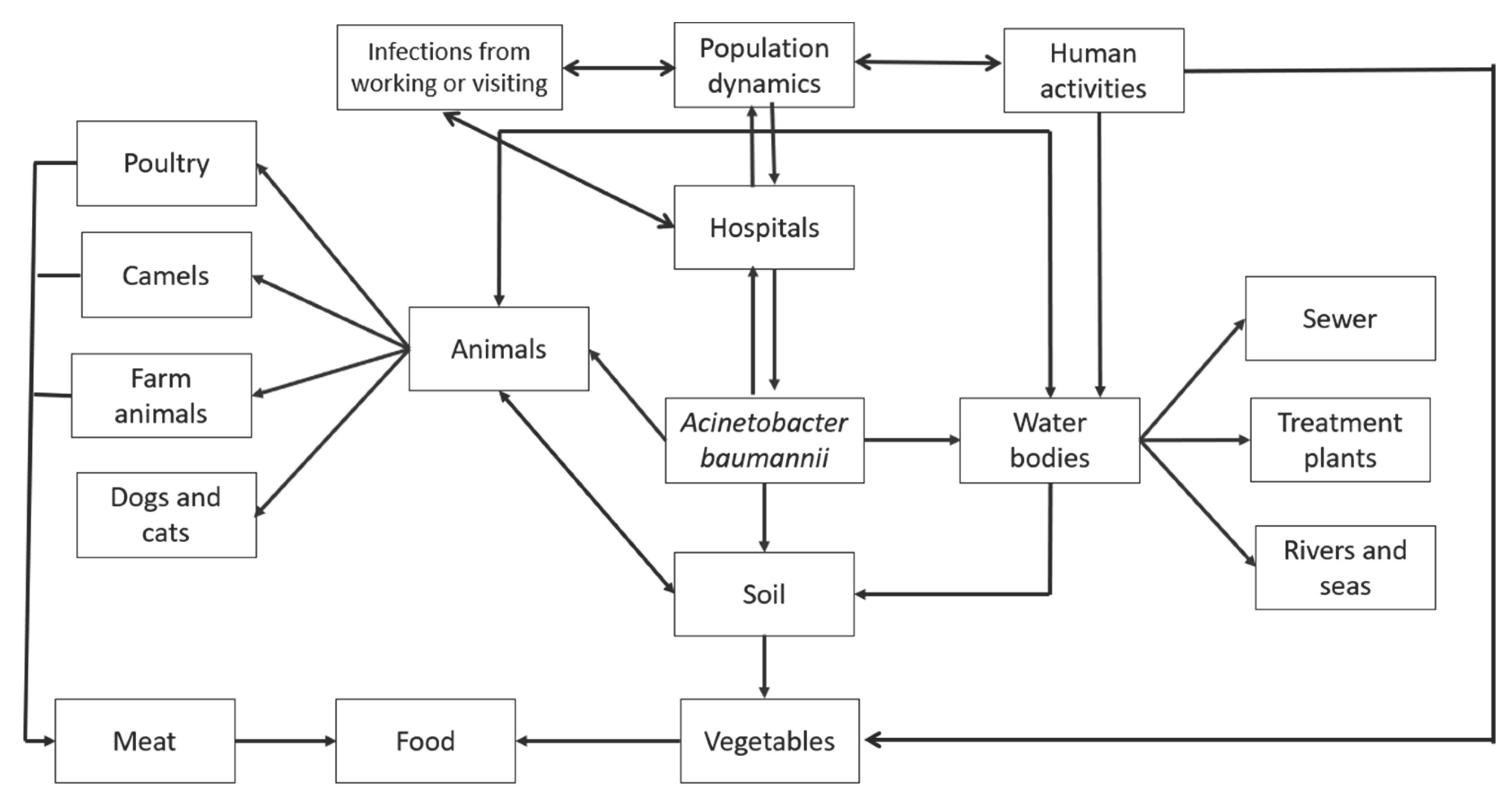
Figure 2.
Environmental distribution of A. baumannii in out-of-hospital habitats.
3.5. Antimicrobial resistance of A. baumannii from out-of-hospital isolates
The resistance genes presented by the strains of A. baumannii isolated from the different hospital and out-of-hospital habitats are shown in Table 4. In hospital settings, ß-lactam Class A and Class B genes are commonly observed, indicating high levels of resistance to carbapenems, aminoglycosides (imp, vim, sim, ampc, spm and ndm-1) and streptomycin (strA and srtB) (63). In contrast, the prevalence of resistance genes in A. baumannii isolates from out-of-hospital environments appears to be lower compared to hospital settings. However, resistance to certain antibiotics such as chloramphenicol and oxacillin, is universally high among isolates recovered from powdered milk in a study conducted in Germany (35). Resistance to other antibiotics such as streptomycin, cefotaxime, and cefepime is also observed, although at lower frequencies. Notably, isolates from out-of-hospital environments show susceptibility to antibiotics like tetracycline, tobramycin, erythromycin, and ciprofloxacin (35). Although A. baumannii strains can colonize various ecological niches, including soil, water, and animals, including humans, and survive in extremely difficult environmental conditions, the molecular basis behind such extreme adaptability of A. baumannii to shelter or utilize resistance genes is unknown.
Table 4.
Antibiotic resistance genes reported for A. baumannii.
| Antibiotic group | Gen | Isolates | Reference |
|---|---|---|---|
| ß -lactamases class A |
|
Adjej.- environmental and hospital Anane.- Slaughterhouses, water (from a dam) Shamsizadeh.- Air, water and nearby places hospitals |
(26,63–65) |
| ß -lactamases class B |
|
Adjej.- environmental and hospital Anane.- Slaughterhouses, water (from a dam) |
(26,35,63) |
| Quinolone | abaQ | Clinical samples | (66) |
| Sulfonamide |
sul1 sul2 |
Clinical samples | (67) |
| Tetracyclines |
Tet (A) Tet (B) |
Clinical samples |
(67,68) |
These findings suggest variations in the resistance profiles of A. baumannii isolates between hospital and out-of-hospital environments, highlighting the importance of understanding and monitoring antimicrobial resistance in diverse ecological niches to inform effective control measures and antimicrobial stewardship practices.
4. Conclusions
The presence of numerous virulence factors expressed by A. baumannii underscores its emergence as a potentially dangerous pathogen for public health. Its capacity to acquire new virulence factors signifies an evolutionary advancement in its pathogenicity, enabling it to develop novel strategies for adhesion, colonization, and invasion of host cells. Biofilm formation further enhances its adaptability by facilitating adherence to various surfaces, protecting adverse conditions, and extending its survival in diverse habitats.
The acquisition of new resistance genes further exacerbates the threat posed by A. baumannii, rendering it a latent risk to human health. Its ability to evade the action of multiple antibiotics is particularly concerning, given the lack of efficient therapeutic options to combat infectious outbreaks caused by this pathogen.
This paper serves to summarize various investigations that shed light on the success of A. baumannii in adapting to different habitats and potentially serving as important out-of-hospital reservoirs. These findings underscore the real risk posed by antibiotic-resistant pathogens such as A. baumannii in soil, plants, and food, which often go unnoticed in these environmental compartments.
In conclusion, understanding the ecological dynamics and transmission pathways of A. baumannii in diverse habitats is crucial for devising effective strategies to mitigate its spread and minimize its impact on public health. Continued research and surveillance efforts are essential to monitor and address the evolving threat posed by this opportunistic pathogen.
Author Contributions
Conceptualization, O.A.F. and E.C-B.; methodology, O.A-F, E.T.; formal analysis, O.A-F.; investigation, E.T., O. A-F.; writing—original draft preparation, O. A-FE.C-F.; writing—review and editing, E.T, E.C-F.; All authors have read and agreed to the published version of the manuscript.
Funding
This research was funded by CONACYT, scholarship for O. A-F number 220570550.
Conflicts of Interest
The authors declare no conflicts of interest.
References
- Medina MJ, Legido-Quigley H, Hsu LY. Antimicrobial Resistance in One Health. In: Advanced Sciences and Technologies for Security Applications. Springer; 2020. p. 209–29.
- WHO. Resistencia a los antibióticos [Internet]. 2020 [cited 2022 Aug 14]. Available from: https://www.who.int/es/news-room/fact-sheets/detail/resistencia-a-los-antibi%C3%B3ticos.
- Abdulhussein TM, Abed AS, Al-Mousawi HM, Abdallah JM, Sattar RJ. Molecular genotyping survey for Bla Tem virulence gene of Acinetobacter baumannii isolates, Iraq. Plant Arch [Internet]. 2020 [cited 2022 Sep 17];20(2):413–5. Available from: http://www.plantarchives.org/SPL%20ISSUE%2020-2/69__413-415_.pdf.
- Hayajneh WA, Al-Azzam S, Yusef D, Lattyak WJ, Lattyak EA, Gould I, et al. Identification of thresholds in relationships between specific antibiotic use and carbapenem-resistant Acinetobacter baumannii (CRAb) incidence rates in hospitalized patients in Jordan. Journal of Antimicrobial Chemotherapy. 2021 Feb 1;76(2):524–30. [CrossRef]
- Organización Mundial de la Salud. https://www.who.int/es/news/item/27-02-2017-who-publishes-list-of-bacteria-for-which-new-antibiotics-are-urgently-needed#:~:text=Entre%20tales%20bacterias%20se%20incluyen,la%20corriente%20sangu%C3%ADnea%20y%20neumon%C3%ADas. 2017. La OMS publica la lista de las bacterias para las que se necesitan urgentemente nuevos antibióticos.
- Al-Hassan LL, Al- Madboly LA. Molecular characterisation of an Acinetobacter baumannii outbreak. Infection Prevention in Practice. 2020 Jun 1;2(2). [CrossRef]
- Dijkshoorn L, Nemec A, Seifert H. An increasing threat in hospitals: multidrug-resistant Acinetobacter baumannii. Nat Rev Microbiol. 2007 Dec;5(12):939–51. [CrossRef]
- Abdollahi S, Raoufi Z, Fakoor MH. Physicochemical and structural characterization, epitope mapping and vaccine potential investigation of a new protein containing Tetratrico Peptide Repeats of Acinetobacter baumannii: An in-silico and in-vivo approach. Mol Immunol. 2021 Dec 1;140:22–34. [CrossRef]
- Baran Aİ, Çelik M, Arslan Y, Demirkıran H, Sünnetçioğlu M, Sünnetçioğlu A. Evaluation of risk factors in patients with ventilator-associated pneumonia caused by acinetobacter baumannii. Bali Medical Journal. 2020;9(1):253–8. [CrossRef]
- O’Brien N, Barboza-Palomino M, Ventura-León J, Caycho-Rodríguez T, Sandoval-Díaz JS, López-López W, et al. Coronavirus disease (COVID-19). A bibliometric analysis. Revista Chilena de Anestesia. 2020;49(3):408–15. [CrossRef]
- Sahu RR, Parabhoi L. Bibliometric Study of Library and Information Science Journal Articles during 2014 2018. DESIDOC Journal of Library & Information Technology. 2020 Dec 3;40(06):390–5. [CrossRef]
- Abd-Elnasser R, Hussein M, Rahim A, Mahmoud MA, Elkhawaga AA, Hassnein KM. Bulletin of Pharmaceutical Sciences ـــ Antibiotic resistance of Acinetobacter baumannii: An urgent need for new therapy and infection control [Internet]. Vol. 43, Bull. Pharm. Sci., Assiut University. 2020. Available from: http://bpsa.journals.ekb.eg/.
- Gedefie A, Demsis W, Ashagrie M, Kassa Y, Tesfaye M, Tilahun M, et al. Acinetobacter baumannii biofilm formation and its role in disease pathogenesis: A review. Infect Drug Resist. 2021;14:3711–9. [CrossRef]
- Smith MG, Gianoulis TA, Pukatzki S, Mekalanos JJ, Ornston LN, Gerstein M, et al. New insights into Acinetobacter baumannii pathogenesis revealed by high-density pyrosequencing and transposon mutagenesis. Genes Dev [Internet]. 2007 Mar 1 [cited 2023 Dec 21];21(5):601–14. Available from: https://genesdev.cshlp.org/content/21/5/601.abstract.
- Pongparit S, Bunchaleamchai A, Watthanakul N, Boonma N, Massarotti K, Khamuan S, et al. Prevalence of blaoxa genes in carbapenem-resistant acinetobacter baumannii isolates from clinical specimens from nopparatrajathanee hospital. J Curr Sci Technol. 2021 Sep 1;11(3):367–74.
- Vanegas-Múnera JM, Roncancio-Villamil G, Jiménez-Quiceno JN. Acinetobacter baumannii: importancia clínica, mecanismos de resistencia y diagnóstico. Revista CES MEDICINA [Internet]. 2014 [cited 2022 Sep 24];28(2):233–46. Available from: http://www.scielo.org.co/pdf/cesm/v28n2/v28n2a08.pdf.
- Moubareck CA, Halat DH. Insights into Acinetobacter baumannii: A review of microbiological, virulence, and resistance traits in a threatening nosocomial pathogen. Vol. 9, Antibiotics. MDPI AG; 2020.
- Ridha DJ, Ali MR, Jassim KA. Occurrence of Metallo-β-lactamase Genes among Acinetobacter baumannii Isolated from Different Clinical samples. J Pure Appl Microbiol. 2019;13(2):1111–9. [CrossRef]
- Harding CM, Hennon SW, Feldman MF. Uncovering the mechanisms of Acinetobacter baumannii virulence. Vol. 16, Nature Reviews Microbiology. Nature Publishing Group; 2018. p. 91–102. [CrossRef]
- Lee CR, Lee JH, Park M, Park KS, Bae IK, Kim YB, et al. Biology of Acinetobacter baumannii: Pathogenesis, antibiotic resistance mechanisms, and prospective treatment options. Front Cell Infect Microbiol. 2017 Mar 13;7(MAR). [CrossRef]
- Morris FC, Dexter C, Kostoulias X, Uddin MI, Peleg AY. The Mechanisms of Disease Caused by Acinetobacter baumannii. Front Microbiol. 2019;10(JULY). [CrossRef]
- Saipriya K, Swathi CH, Ratnakar KS, Sritharan V. Quorum-sensing system in Acinetobacter baumannii: a potential target for new drug development. J Appl Microbiol [Internet]. 2020 Jan 26 [cited 2023 Dec 21];128(1):15–27. Available from: https://academic.oup.com/jambio/article-abstract/128/1/15/6714869?login=false.
- Doughari HJ, Ndakidemi PA, Human IS, Benade S. The ecology, biology and pathogenesis of acinetobacter spp.: An overview. Microbes Environ. 2011;26(2):101–12. [CrossRef]
- Jung J, Park W. Acinetobacter species as model microorganisms in environmental microbiology: current state and perspectives. Appl Microbiol Biotechnol [Internet]. 2015 Mar 19 [cited 2023 Dec 20];99(6):2533–48. Available from: https://link.springer.com/article/10.1007/s00253-015-6439-y. 1007.
- Almasaudi SB. Acinetobacter spp. as nosocomial pathogens: Epidemiology and resistance features. Saudi J Biol Sci. 2018 Mar;25(3):586–96. [CrossRef]
- Anane A Y, Apalata T, Vasaikar S, Okuthe GE, Songca S. Prevalence and molecular analysis of multidrug-resistant Acinetobacter baumannii in the extra-hospital environment in Mthatha, South Africa. Brazilian Journal of Infectious Diseases. 2019 Nov 1;23(6):371–80. [CrossRef]
- Carvalheira A, Casquete R, Silva J, Teixeira P. Prevalence and antimicrobial susceptibility of Acinetobacter spp. isolated from meat. Int J Food Microbiol [Internet]. 2017 Feb [cited 2023 Dec 20];243:58–63. Available from: https://www.sciencedirect.com/science/article/abs/pii/S0168160516306493?casa_token=iyeoArAWEw0AAAAA:ZfsGwGNQe2At94J9iZPRYKdc_tkjlcA3RQRgwcXktcpC5fklSQ6Pxsw88EWZJj8rz4I_oU6ZhQ4.
- Ramirez MS, Bonomo RA, Tolmasky ME. Carbapenemases: Transforming Acinetobacter baumannii into a Yet More Dangerous Menace. Biomolecules [Internet]. 2020 May 6 [cited 2023 Dec 20];10(5):720. Available from: https://www.mdpi.com/2218-273X/10/5/720.
- Hrenovic J, Durn G, Goic-Barisic I, Kovacic A. Occurrence of an Environmental Acinetobacter baumannii Strain Similar to a Clinical Isolate in Paleosol from Croatia. Appl Environ Microbiol [Internet]. 2014 May [cited 2023 Dec 20];80(9):2860–6. Available from: https://journals.asm.org/doi/full/10.1128/aem.00312-14?casa_token=8b5-m53MQm8AAAAA%3AUcicBEM_DrfvXg6710xYlakIt1_Z3DrRrAeuCmgIkj7DF26TiVkjOSqcIhziFAJT22vVw1_nuUtL9Ws.
- Galarde-López M, Velazquez-Meza ME, Bobadilla-del-Valle M, Cornejo-Juárez P, Carrillo-Quiroz BA, Ponce-de-León A, et al. Antimicrobial Resistance Patterns and Clonal Distribution of E. coli, Enterobacter spp. and Acinetobacter spp. Strains Isolated from Two Hospital Wastewater Plants. Antibiotics [Internet]. 2022 Apr 29 [cited 2023 Dec 20];11(5):601. Available from: https://www.mdpi.com/2079-6382/11/5/601.
- Jovcic B, Novovic K, Dekic S, Hrenovic J. Colistin Resistance in Environmental Isolates of Acinetobacter baumannii. Microbial Drug Resistance [Internet]. 2021 Mar 1 [cited 2023 Dec 20];27(3):328–36. Available from: https://pubmed.ncbi.nlm.nih.gov/32762604/.
- Furlan JPR, Pitondo-Silva A, Stehling EG. New STs in multidrug-resistant Acinetobacter baumannii harbouring β-lactamases encoding genes isolated from Brazilian soils. J Appl Microbiol [Internet]. 2018 Aug 31 [cited 2023 Dec 20];125(2):506–12. Available from: https://academic.oup.com/jambio/article-abstract/125/2/506/6714378?redirectedFrom=fulltext&login=false.
- Suresh S, Aditya V, Deekshit VK, Manipura R, Premanath R. A rare occurrence of multidrug-resistant environmental Acinetobacter baumannii strains from the soil of Mangaluru, India. Arch Microbiol [Internet]. 2022 Jul 1 [cited 2023 Dec 20];204(7). Available from: https://link.springer.com/article/10.1007/s00203-022-03035-0.
- Bitar I, Medvecky M, Gelbicova T, Jakubu V, Hrabak J, Zemlickova H, et al. Complete Nucleotide Sequences of mcr-4.3 -Carrying Plasmids in Acinetobacter baumannii Sequence Type 345 of Human and Food Origin from the Czech Republic, the First Case in Europe. Antimicrob Agents Chemother [Internet]. 2019 Oct [cited 2023 Dec 20];63(10). Available from: chrome-https://www.ncbi.nlm.nih.gov/pmc/articles/PMC6761559/pdf/AAC.01166-19.pdf.
- Cho GS, Li B, Rostalsky A, Fiedler G, Rösch N, Igbinosa E, et al. Diversity and antibiotic susceptibility of Acinetobacter strains from milk powder produced in Germany. Front Microbiol. 2018 Mar 27;9(MAR). [CrossRef]
- Elbehiry A, Marzouk E, Moussa IM, Dawoud TM, Mubarak AS, Al-Sarar D, et al. Acinetobacter baumannii as a community foodborne pathogen: Peptide mass fingerprinting analysis, genotypic of biofilm formation and phenotypic pattern of antimicrobial resistance. Saudi J Biol Sci. 2021 Jan 1;28(1):1158–66. [CrossRef]
- Tavakol M, Momtaz H, Mohajeri P, Shokoohizadeh L, Tajbakhsh E. Genotyping and distribution of putative virulence factors and antibiotic resistance genes of Acinetobacter baumannii strains isolated from raw meat. Antimicrob Resist Infect Control. 2018 Oct 4;7(1). [CrossRef]
- Berlau J, Aucken HM, Houang E, Pitt TL. Isolation of Acinetobacter spp including A. baumannii from vegetables: implications for hospital-acquired infections. Journal of Hospital Infection [Internet]. 1999 Jul [cited 2023 Dec 20];42(3):201–4. Available from: https://pubmed.ncbi.nlm.nih.gov/10439992/.
- Malta RCR, Ramos GL de PA, Nascimento J dos S. From food to hospital: we need to talk about Acinetobacter spp. Germs [Internet]. 2020 Sep [cited 2023 Dec 20];10(3):210–7. Available from: https://www.ncbi.nlm.nih.gov/pmc/articles/PMC7572206/.
- Ghaffoori Kanaan MH, Al-Shadeedi SMJ, Al-Massody AJ, Ghasemian A. Drug resistance and virulence traits of Acinetobacter baumannii from Turkey and chicken raw meat. Comp Immunol Microbiol Infect Dis [Internet]. 2020 Jun [cited 2023 Dec 20];70:101451. Available from: https://www.sciencedirect.com/science/article/abs/pii/S0147957120300400?via%3Dihub.
- Francey T, Gaschen F, Nicolet J, Burnens AP. The Role of Acinetobacter baumannii as a Nosocomial Pathogen for Dogs and Cats in an Intensive Care Unit. J Vet Intern Med [Internet]. 2000 Mar 28 [cited 2023 Dec 20];14(2):177–83. Available from: https://onlinelibrary.wiley.com/doi/abs/10.1111/j.1939-1676.2000.tb02233.x.
- Kimura Y, Harada K, Shimizu T, Sato T, Kajino A, Usui M, et al. Species distribution, virulence factors and antimicrobial resistance of Acinetobacter spp. isolates from dogs and cats: a preliminary study. Microbiol Immunol [Internet]. 2018 Jul 16 [cited 2023 Dec 20];62(7):462–6. Available from: https://onlinelibrary.wiley.com/doi/epdf/10.1111/1348-0421.12601.
- Lysitsas M, Triantafillou E, Chatzipanagiotidou I, Antoniou K, Valiakos G. Antimicrobial Susceptibility Profiles of Acinetobacter baumannii Strains, Isolated from Clinical Cases of Companion Animals in Greece. Vet Sci [Internet]. 2023 Oct 29 [cited 2023 Dec 20];10(11):635. Available from: Antimicrobial Susceptibility Profiles of Acinetobacter baumannii Strains, Isolated from Clinical Cases of Companion Animals in Greece.
- Nocera FP, Attili AR, De Martino L. Acinetobacter baumannii: Its clinical significance in human and veterinary medicine. Vol. 10, Pathogens. MDPI AG; 2021. p. 1–13. [CrossRef]
- Wareth G, Abdel-Glil MY, Schmoock G, Steinacker U, Kaspar H, Neubauer H, et al. Draft Genome Sequence of an Acinetobacter baumannii Isolate Recovered from a Horse with Conjunctivitis in Germany. Microbiol Resour Announc. 2019 Nov 27;8(48). [CrossRef]
- Askari N, Momtaz H, Tajbakhsh E. Acinetobacter baumannii in sheep, goat, and camel raw meat: Virulence and antibiotic resistance pattern. AIMS Microbiol. 2019;5(3):272–84. [CrossRef]
- Deng Y, Du H, Tang M, Wang Q, Huang Q, He Y, et al. Biosafety assessment of Acinetobacter strains isolated from the Three Gorges Reservoir region in nematode Caenorhabditis elegans. Sci Rep [Internet]. 2021 Oct 5 [cited 2023 Dec 20];11(1):19721. Available from: https://www.nature.com/articles/s41598-021-99274-0#citeas.
- Ly TDA, Amanzougaghene N, Hoang VT, Dao TL, Louni M, Mediannikov O, et al. Molecular Evidence of Bacteria in Clothes Lice Collected from Homeless People Living in Shelters in Marseille. Vector-Borne and Zoonotic Diseases [Internet]. 2020 Nov 1 [cited 2023 Dec 20];20(11):872–4. Available from: https://www.liebertpub.com/doi/abs/10.1089/vbz.2019.2603.
- Martinez J, Liu C, Rodman N, Fernandez JS, Barberis C, Sieira R, et al. Human fluids alter DNA-acquisition in Acinetobacter baumannii. Diagn Microbiol Infect Dis [Internet]. 2019 Mar [cited 2023 Dec 21];93(3):183–7. Available from: https://pubmed.ncbi.nlm.nih.gov/30420211/.
- Milligan EG, Calarco J, Davis BC, Keenum IM, Liguori K, Pruden A, et al. A Systematic Review of Culture-Based Methods for Monitoring Antibiotic-Resistant Acinetobacter, Aeromonas, and Pseudomonas as Environmentally Relevant Pathogens in Wastewater and Surface Water. Curr Environ Health Rep [Internet]. 2023 Feb 23 [cited 2023 Dec 21];10(2):154–71. Available from: https://link.springer.com/article/10.1007/s40572-023-00393-9#citeas.
- Kovacic A, Music MS, Dekic S, Tonkic M, Novak A, Rubic Z, et al. Transmission and survival of carbapenem-resistant Acinetobacter baumannii outside hospital setting. International Microbiology. 2017;20(4):165–9. [CrossRef]
- Stenström TA, Okoh AI, University of Uyo AA. Antibiogram of environmental isolates of Acinetobacter calcoaceticus from Nkonkobe Municipality, South Africa. Fresenius Environ Bull [Internet]. 2016 [cited 2023 Dec 20];25(8):93–7. Available from: https://openscholar.dut.ac.za/handle/10321/2545.
- Kanafani Z, Kanj S. UpToDate. 2015 [cited 2023 Dec 20]. Acinetobacter infection: Treatment and prevention. Available from: https://www.uptodate.com/contents/acinetobacter-infection-treatment-and-prevention.
- Bengtsson-Palme J, Kristiansson E, Larsson DGJ. Environmental factors influencing the development and spread of antibiotic resistance. Vol. 42, FEMS Microbiology Reviews. Oxford University Press; 2018. p. 68–80.
- Klotz P, Higgins PG, Schaubmar AR, Failing K, Leidner U, Seifert H, et al. Seasonal occurrence and carbapenem susceptibility of bovine Acinetobacter baumannii in Germany. Front Microbiol. 2019;10(FEB). [CrossRef]
- Mateo-Estrada V, Vali L, Hamouda A, Evans BA, Castillo-Ramírez S. Acinetobacter baumannii Sampled from Cattle and Pigs Represent Novel Clones. Microbiol Spectr. 2022 Aug 31;10(4). [CrossRef]
- van der Kolk JH, Endimiani A, Graubner C, Gerber V, Perreten V. Acinetobacter in veterinary medicine, with an emphasis on Acinetobacter baumannii. Vol. 16, Journal of Global Antimicrobial Resistance. Elsevier Ltd; 2019. p. 59–71. [CrossRef]
- Gentilini F, Turba ME, Pasquali F, Mion D, Romagnoli N, Zambon E, et al. Hospitalized Pets as a Source of Carbapenem-Resistance. Front Microbiol [Internet]. 2018 Dec 6 [cited 2023 Dec 20];9. Available from: https://www.frontiersin.org/articles/10.3389/fmicb.2018.02872/full.
- Mitchell KE, Turton JF, Lloyd DH. Isolation and identification of Acinetobacter spp. from healthy canine skin. Vet Dermatol [Internet]. 2018 Jun 11 [cited 2023 Dec 21];29(3):240. Available from: https://onlinelibrary.wiley.com/doi/epdf/10.1111/vde.12528.
- Unger F, Eisenberg T, Prenger-Berninghoff E, Leidner U, Semmler T, Ewers C. Imported Pet Reptiles and Their “Blind Passengers”—In-Depth Characterization of 80 Acinetobacter Species Isolates. Microorganisms [Internet]. 2022 May 1 [cited 2024 Feb 10];10(5). Available from: https://www.mdpi.com/2076-2607/10/5/893.
- Townsend J, Park AN, Gander R, Orr K, Arocha D, Zhang S, et al. Acinetobacter Infections and Outcomes at an Academic Medical Center: A Disease of Long-Term Care. Open Forum Infect Dis [Internet]. 2015 Jan 1 [cited 2023 Dec 21];2(1). Available from: https://academic.oup.com/ofid/article/2/1/ofv023/2337943.
- Ababneh Q, Abu Laila S, Jaradat Z. Prevalence, genetic diversity, antibiotic resistance and biofilm formation of Acinetobacter baumannii isolated from urban environments. J Appl Microbiol [Internet]. 2022 Dec 1 [cited 2024 Feb 10];133(6):3617–33. Available from: https://ami-journals.onlinelibrary.wiley.com/doi/abs/10.1111/jam.15795.
- Adjei AY, Vasaikar SD, Apalata T, Okuthe EG, Songca SP. Phylogenetic analysis of carbapenem-resistant Acinetobacter baumannii isolated from different sources using Multilocus Sequence Typing Scheme. Infection, Genetics and Evolution. 2021 Dec;96:105132. [CrossRef]
- Genteluci GL, Gomes DBC, Pereira D, Neves M de C, de Souza MJ, Rangel K, et al. Multidrug-resistant Acinetobacter baumannii: differential adherence to HEp-2 and A-549 cells. Brazilian Journal of Microbiology. 2020 Jun 1;51(2):657–64. [CrossRef]
- Shamsizadeh Z, Nikaeen M, Esfahani BN, Mirhoseini SH, Hatamzadeh M, Hassanzadeh A. Detection of antibiotic resistant Acinetobacter baumannii in various hospital environments: Potential sources for transmission of acinetobacter infections. Environ Health Prev Med. 2017;22(1). [CrossRef]
- Attia NM, Elbaradei A. Fluoroquinolone resistance conferred by gyrA, parC mutations, and AbaQ efflux pump among Acinetobacter baumannii clinical isolates causing ventilator-associated pneumonia. Acta Microbiol Immunol Hung. 2020 Dec 1;67(4):234–8. [CrossRef]
- Chan AP, Choi Y, Clarke TH, Brinkac LM, White RC, Jacobs MR, et al. AbGRI4, a novel antibiotic resistance island in multiply antibiotic-resistant Acinetobacter baumannii clinical isolates. Journal of Antimicrobial Chemotherapy. 2020 Oct 1;75(10):2760–8. [CrossRef]
- Ghajavand H, Esfahani BN, Havaei A, Fazeli H, Jafari R, Moghim S. Isolation of bacteriophages against multidrug resistant Acinetobacter baumannii. Vol. 12, Research in Pharmaceutical Sciences. 2017. [CrossRef]
Disclaimer/Publisher’s Note: The statements, opinions and data contained in all publications are solely those of the individual author(s) and contributor(s) and not of MDPI and/or the editor(s). MDPI and/or the editor(s) disclaim responsibility for any injury to people or property resulting from any ideas, methods, instructions or products referred to in the content. |
© 2024 by the authors. Licensee MDPI, Basel, Switzerland. This article is an open access article distributed under the terms and conditions of the Creative Commons Attribution (CC BY) license (http://creativecommons.org/licenses/by/4.0/).
Copyright: This open access article is published under a Creative Commons CC BY 4.0 license, which permit the free download, distribution, and reuse, provided that the author and preprint are cited in any reuse.