

Submitted:
17 February 2024
Posted:
19 February 2024
You are already at the latest version
Abstract
Livestock management is challenging for resource-poor (R-P) farmers due to unavailability of quality feed, limited professional advice and rumor-spreading about animal health condition in a herd. This research seeks to improve animal health in southern Africa by promoting sericea lespedeza (Lespedeza cuneata), a nutraceutical fodder legume. An automated geospatial model for precision agriculture (PA) can identify suitable locations for its cultivation. Additionally, a novel approach of radio frequency identifier (RFID) supported telemetry technology can track animal movement, and the analyses of data using artificial intelligence can determine sickness of small ruminants. This RFID-based system is being connected to a smartphone app (under construction) to alert farmers of potential livestock health issues in real-time so they can take immediate corrective measures. An accompanying Decision Support System (DSS) site is being developed for R-P farmers to obtain all possible support on livestock production, including the designed PA and RFID-based DSS.
Keywords:
Geospatial Technology
; Site Specific Forage Management (SSFM)
; Decision Support System (DSS)
; Radio Frequency Identification (RFID)
; Animal Health Remote Management (AHRM)
; Smartphone App Development
1. Introduction
Unprecedented phenomena, encompassing anthropogenic climate change, the depletion of vital natural resources, and an escalating global population, have exerted immense pressure on agroecosystems across the globe [1,2,3]. These factors underscore the critical necessity for the development and implementation of novel agricultural methodologies designed to augment both crop and livestock production, thereby ensuring the attainment of global food security objectives. In the context of advancing under-resourced (Resource-Poor; R-P) agriculturalists within communal and small-scale farming systems, particularly in sub-Saharan African nations, considerable obstacles are encountered [4]. Among these impediments are (i) the scarcity and suboptimal quality of forage, (ii) subpar livestock productivity, (iii) the prevalence of parasitic and infectious diseases, (iv) a dearth of expertise and professional guidance pertaining to pasture management, animal health, and parasite mitigation strategies [5], and (v) most importantly, rumor-mongering about the entire animal herd’s sickness if one animal gets sick, even if quarantined and treated (personal observation). Therefore, a R-P farmer is in no position to be rewarded with a good animal harvest even though he/she toils hard.
Notwithstanding the challenges encountered, there is a considerable opportunity for promoting sustainable intensification of ruminant livestock production in small-scale and geographically isolated farming systems [6]. This can be realized through the adoption of mobile-based electronic technologies to monitor animal activity [7], and computational modeling approaches for precision forage production [8,9], which will enable customized animal health and nutrition management strategies. Geospatial technology, also known as Geo-information technology (GT), has emerged as a crucial instrument in the development and implementation of animal health and habitat management decision support systems [10], specifically designed to improve the management of animal parasites and diseases [11], optimize forage production [9], and enhance the carrying capacity of grazing lands, thereby contributing to the overall sustainability and productivity of ruminant livestock systems [12,13,14]. The present investigation specifically focuses on small ruminants, such as ovine and caprine species, given their heightened susceptibility to parasitic infection and their primary management by female and juvenile caretakers who frequently have limited access to veterinary healthcare professionals. The incorporation of GT-based decision support systems can enable small-scale agriculturalists to more effectively oversee and address concerns pertaining to livestock health, nutritional intake, and parasite regulation, in turn to facilitate enhanced productivity and elevate the overall welfare of their animals.
The amalgamation of electronic technology and GT-oriented decision support systems presents an encouraging solution to the obstacles confronted by R-P livestock farmers, particularly in isolated regions where expert assistance and resource availability are constrained. By capitalizing on these innovative instruments, agriculturalists can employ data-informed decision-making processes to augment forage production and animal health, an approach that fosters sustainable intensification of ruminant livestock production, thereby promoting long-term agricultural resilience and prosperity.
Infection with gastrointestinal nematodes (GIN), particularly Haemonchus contortus, a highly pathogenic blood feeder, has been identified as the most significant animal health constraint for R-P farmers globally, especially of sheep and goats [15] in Southeast Asia and Africa south of the Sahara [16]. Failure to farm profitably with small ruminants led in 1917 to what was apparently the first non-herbal anthelmintic [17], which was subsequently available commercially until the 1960’s in South Africa, despite having consisted initially of the highly toxic arsenic and copper sulphate, with subsequent addition of nicotine. Furthermore, the first comprehensive drenching programs were developed in the 1930’s in South Africa [18]. While the latter approach was very effective and user-friendly, it unknowingly led progressively to severe anthelmintic resistance to drug after drug that reached the market, to the extent that populations of H. contortus were discovered with resistance to all five of the unrelated anthelmintic groups in 1997 [19], and to all seven recently, 2021 (Van Wyk, unpublished).
As drug-based GIN control programs have been shown to be non-sustainable due to a global rise in anthelmintic-resistant GIN of sheep, goats, and cattle [20] (Kaplan, 2004), effective non-synthetic alternatives, such as the use of targeted selective treatment (TST) techniques, including FAMACHA (clinical evaluation of the color of the ocular mucous membranes) [21] and the Five Point Check [15], and feeding of anti-parasitic tannin-containing fodder legumes [22,23] (Shaik et al., 2006; Debela et al., 2012), in integrated parasite management (IPM) systems, were developed subsequently and have shown excellent results [24] (Terrill et al., 2012). In addition, the fodder legumes listed are not only effective for GIN management, but also for control of Eimeria spp. [25,26], a genus of protozoan parasites that commonly cause severe coccidiosis outbreaks under R-P farming conditions.
Economic impacts due to gastrointestinal (GIT) helminth infection in small ruminants are felt by both the rural poor in developing countries [16] and by commercial farmers in the industrialized countries of the world [27,28]. In the United Kingdom alone, for example, nematode infection is estimated to cost the sheep industry more than 84 million pounds per year [29], with similar levels of impact worldwide [30], to the extent that anthelmintic resistance (AR) in small ruminants has instigated a significant transformation in the strategies employed for controlling parasitic infections in such a way as to mitigate the emergence and spread of AR. This change involves moving away from the traditional method of administering anthelmintic treatments to the entire flock or herd, whether performed as a routine measure or in response to observable symptoms of GIN infection. Instead, the focus has shifted towards implementing sustainable IPM approaches [8,31,32], which aim, via individual animal-based vs whole-flock anthelmintic treatment, to provide more targeted and effective long-term control of parasitic infections while minimizing the development of AR.
The sustainable methodology mentioned employs targeted selective treatment (TST) and targeted treatment (TT) strategies to enhance animal health management in a flock or herd by either drenching those animals in need within a group, i.e. TST, or treating the entire group only when there are definite indicators suggesting a heightened risk of disease or potential production loss (TT) [33] (Charlier et al., 2014) Presently, the adoption of TST and TT approaches among farmers is limited, primarily due to the complexity of their implementation and the associated labor demands, to the extent that even TST, for instance, employing FAMACHA, tested and/or applied in 45 different countries globally, is not applied to a large extent in any of these, even in South Africa, where it was conceived and developed. However, the progressive utilization of these strategies is a crucial component in pursuing sustainable animal health management for R-P farmers [8].
In conjunction with TST and TT, the utilization of nutrient-dense, bioactive forages, such as the tannin-rich legume sericea lespedeza [SL; Lespedeza cuneata (Dum.Cours.) G. Don.], can enhance small ruminant gastrointestinal health and provide a viable source of income for R-P farmers [34] (Hoveland et al., 1990). Sericea lespedeza is a resilient, warm-season perennial forage legume with exceptional drought tolerance, making it well-suited for cultivation in the southeastern United States (U.S.), [34] (Hoveland et al., 1990), as well as in arid and semi-arid regions of South Africa and other southern African countries [35] (Mkhatshwa and Hoveland, 1991; Terrill and Mosjidis, 2015). In fact, in the case of Eswatini in Southern Africa, using an automated geospatial model for site-specific forage management (SSFM), Panda et al. [8] reported that nearly the entire country is well-suited to SL production.
As a forage species with resistance to diseases and insect or pest infestations, SL is ideally suited for sheep, goats, and cattle grazing, primarily due to its high concentration of crude protein (CP) and condensed tannins, which prevent bloating [34] (Hoveland et al., 1990). This versatile forage thrives in acidic and nutrient-deficient soils, effectively competing with grasses because of its capacity to fix atmospheric nitrogen. Consequently, southern African countries provide suitable conditions for its growth and cultivation [34,35,36]. Hence, the adoption of precision SL forage production through the creation and implementation of a Site-Specific Forage Management Decision Support System (SSFMDSS)[8,9] has the potential to facilitate sustainable animal health management strategies for R-P farmers worldwide, particularly within the African continent.
Objectives
The primary aim of this research is to advance and extensively implement a centralized, mobile phone-based automated decision support system (aDSS) for promoting sustainable animal health management and the production of anti-parasitic tannin-rich fodder, in this way ultimately to contribute to the economic growth of R-P farmers and their communities. While the initial focus is on Africa, the project aims to progressively expand its reach to similarly situated regions, such as Southeast Asia. To accomplish this overarching goal, the research will focus on several objectives:
- Enhanced modeling and evaluation of methodologies to optimize the growth potential of suitable tannin-rich, anti-parasitic fodder legumes tailored to distinct regions within southern Africa. This will include assessment of various environmental factors and agronomic practices for maximizing fodder production and efficacy.
- Employment of RFID Transponder supported telemetry technology to closely monitor animal activity (movement) patterns for detection and prediction not only of disease outbreaks, but also of individual animals unable to cope with common scourges, such as nematodosis disease outbreaks, in a timely manner. This information is then to be integrated with a smartphone application and a centralized software-based model to provide real-time preliminary treatment support and automated data evaluation.
- Fostering the education and training of recipient farmers through the aDSS, concentrating on subjects such as sustainable worm management practices. By leveraging the power of mobile technology, this research aims to empower farmers with the knowledge and tools necessary to improve their livestock's health and productivity, with ultimate economic benefit to their communities.
The current investigation, centered on a framework devised by our team for broadening utilization of SL for R-P farmers in Eswatini (previously Swaziland) [8], aims to establish an automated geospatial model for the proficient cultivation of SL, with its relatively high levels of tannins with bioactive (anti-parasitic) properties (Objective #1). Although initially formulated for Eswatini, this model is anticipated to be readily adaptable for the entire southern African region, offering decision support for cultivating SL efficiently in alignment with the precision agriculture methodology developed in the present research.
A software platform is designed through the integration of epidemiological modeling and surveillance of livestock behavior on remote farms across southern African nations. This will enable the effective implementation of TST and TT strategies to assist farmers in making informed treatment decisions via smartphone applications. The projected outcomes are poised to positively impact the global endeavor to enhance the practical adoption and maintenance of TST and TT approaches among livestock farmers (Objective #2). This is particularly relevant, given that TST is being evaluated or employed in 46 distinct countries across all continents (unpublished observations). Notably, the FAMACHA method of TST has generated significant interest, as evidenced by the 56,300 search results returned in a recent Google search.
While the technical concept of SSFM for SL production DSS (Objective # 1) and the small ruminant sickness determination through the RFID-Transponder based telemetry system through artificial intelligence (AI) application (Objective # 2) will be demonstrated through this study, we are reporting this research while Objective # 3 is under progress and presented piece-meal.
2. Materials and methods
2.1. SSFMDSS for Efficient Production – Eswatini, as Example
The SSFMDSS was designed as an automated model tailored for Eswatini and different states in the U.S., regions known for favorable conditions for SL growth [8,9]. Geospatial data were acquired to assess the spatial suitability of the study area for optimal SL production, and processed raster images were analyzed using the criteria outlined in Table 1. Due to the temperature and precipitation conditions being suitable for SL production in the entire country, these factors were not included in development of the comprehensive SSFMDSS model, but rather soil, land cover, and slope raster images were utilized. Each of the three raster datasets mentioned was individually reclassified to assess suitability for SL production according to the classification ranges specified in Table 1. Thereupon, the reclassified rasters were integrated using the "Weighted Sum" tool within ArcGIS Pro. Table 1 displays the assigned weights for each raster during the creation of the comprehensive SL production spatial suitability raster. Utilizing a Delphi modeling approach [37], it was found that the contributions of the different production parameters to SL production were not equal.
Under the research objectives, the long-term goal of this study is systematically to expand the development process of the SSFMDSS model to encompass the entire southern African region and beyond. This broadened scope will empower farmers with informed decision-making support for planting SL in locations with optimal geographic suitability, leading to maximum production outcomes.
2.2. Animal Remote Monitoring – Necessity and Process
Anthelmintic resistance (AR) in small ruminants poses a significant global challenge to profitable production [20]. Despite its importance, AR surveillance studies are scarce in Africa [38], with few documented investigations.
Wanyangu et al. [39] reported that 50% of 42 surveyed farms in Kenya demonstrated AR to at least one anthelmintic group. Similarly, albendazole resistance was identified on five out of six commercial sheep farms in Zambia [40]. South Africa, which boasts a relatively well-developed commercial small ruminant sector, particularly in sheep farming, recorded one of the earliest instances of AR on the continent [41], as well as possibly the first case of resistance of a nematode population to all five of the unrelated anthelmintic groups in 1997 [19]. Whether the farmers are R-P or commercial, parasitologists widely agree that the current approach to controlling parasites in small ruminants, which relies heavily on chemical-based treatments, must be replaced with a strategy that emphasizes optimal worm management and is compatible with sustainable practices [42] (Van Wyk et al., 2006).
Targeted selective treatment is a strategic approach based on the understanding that parasitic loads are highly aggregated and markedly over-dispersed in farm animals. Consequently, this strategy focuses on treating only those individual animals judged according to the FAMACHA system, to be incapable of managing the parasitic burden independently, as opposed to the traditional whole-flock treatment during parasitic infections, or an increased emphasis on prophylactic measures, such as more frequent treatments or strategic interventions during periods of low levels of the free-living stages of parasite, i.e., in refugia [42,43,44]. Implementing TST methodologies necessitates the identification of highly susceptible individuals within a flock or herd for targeted treatment [45].
The Five Point Check© system [15] has been shown to be instrumental for detection of animals with heightened vulnerability to endoparasites. This system entails the examination of five key areas:
- The nose for exudates
- The submandibular region for edema (bottle jaw)
- The conjunctivae of the eyelids for anemia
- The lumbar region for body condition score
- The perineum for dag (diarrhea) score
However, for R-P farmers, conducting frequent clinical evaluations (at intervals as brief as seven days) of each animal in any but very small flocks or herds is impractical as regards the time and effort required. As a result, remote monitoring of animals experiencing AR-related illness becomes essential [21]
Technological advancements have been effectively integrated to reduce labor inputs associated with visually identifying individual animals suffering from parasitic and other diseases, especially on large-scale farms. The implementation of remote electronic systems incorporating accelerometers to associate increased physical activity in animals with estrus behavior (bullying) in dairy cows has been investigated, yielding positive results [44,45,46]. Helwatkar et al. [47] detailed various sensor types available commercially for measurement of behavioral indicators or parameters correlated with fever, lameness, estrus, mastitis, ovarian cysts, displaced abomasum, ketosis, milk fever, retained placenta, heifer diarrhea, and heifer pneumonia on dairy farms.
Radio frequency identification (RFID) is the foundation for the most widely used sensor technology in automated animal health monitoring and has played a crucial role in the present study. It is a wireless, contactless system that employs radio-frequency waves in different bandwidths to transmit data from an electronic RFID tag or label through a reader (interrogator) to automatically identify and track both animate and inanimate objects [48]. It is used for various applications, such as logistics, retail, asset management, access control, animal husbandry, and healthcare [49,50].
Previously, RFID technology in South Africa has primarily been employed for monitoring high-value game animals on private properties. However, its use has gradually been extended to commercial herds of small ruminants and cattle as a warning system against predator attacks and livestock theft. Given that RFID-based remote monitoring of animal activity may indicate health status and abnormal activity, supporting TT and TST decisions, RFID signals have been analyzed as part of the present project using real-time data acquisition and evaluation.
The study, carried out on South African farms, including both commercial farms and R-P communities, involved the following steps:
i) Establishment of a prototype RFID system designed for remote monitoring and communication of individual animal activity levels, thereby assessing the grazing behavior of sheep in typical small ruminant commercial and R-P enterprises.
ii) Subsequently assessing the performance of this system against various animal behaviors and disease states, with a particular focus on debilitating helminth infections.
iii) Examining data collected over several years (2013-2014) for both healthy and known sick animals to determine transponder signal range values associated with:
- Normal sleeping patterns (low signal volatility during sleep hours);
- Disease-induced sleep (prolonged sleep duration);
- Normal grazing patterns (low signal volatility during grazing hours);
- Flight response during attacks or poaching attempts (high signal volatility and increased signal strength); and
- b.
- Developing real-time software capable of predicting an animal's health and other statuses based on their signal range. This software is to be integrated into a smartphone app to provide instant alerts to R-P farmers' cellphones when an animal is identified as sick or otherwise disturbed, through server-side analysis.
2.3. Prototype System Set-up
The experimental RFID system designed for these trials consisted of a single solar panel-powered reader operating at an ultra-high frequency band of 868 MHz. This reader was mounted above ground on a five-meter wooden pole, while several active tags, working at the same frequency, were placed on the animals. Each active tag had a radio transceiver, powered by an onboard battery to power the transceiver [51]. They also featured an integrated A1-type accelerometer sensor for measuring activity levels, based on various simulated hand movements. The accelerometer was configured with a set acceleration threshold of twice the gravitational acceleration (2 g). When, due to simulated movements, the displacement of the accelerometer needle against the transponder casing, , reached or exceeded the 2 g threshold, a value of one was recorded. Conversely, a value of zero was registered if the movements did not meet or surpass the 2 g threshold. The tag subsequently aggregated the recorded values (ones and zeros) over a predetermined reader's 'collection' command signaling interval of one minute. This resulted in an activity score representing the overall activity level per minute per day.
When the signal-to-noise ratio falls below 10 dB, the tag reader is unable to demodulate the signal, resulting in data loss. An active tag is activated upon receiving a "collection" command signal from a reader during an open window. Subsequently, it transmits its unique identifier and any additional data collected from integrated sensors to the reader, which sends a "sleep" command signal to the active tag after successful data transmission. This process enables the active tag to conserve energy (battery life) by only broadcasting its signal when prompted and within the range of a reader [51]. The activity score is measured on a scale ranging from zero, representing no activity or activity levels below 2 g, to a maximum average of 124, signifying activity levels above 2 g within a one-minute interval. Data obtained from the readers are transmitted using general packet radio services to a web-based server responsible for processing and logging the information. The server generates alarms and reports as outputs, and users can access the data through a website interface (Figure 1).
In order to calibrate the instrument, controlled experiments were systematically designed and executed to assess the impact of various factors on the data transfer rates (DTR) and the transmitted score magnitudes of the prototype activity level monitoring system. The following factors were investigated:
- (i)
- The combined influence of distance (between tags and reader) and tag movement (or lack thereof) on DTR and the magnitude of transmitted values.
- (ii)
- The impact of different physical barriers within the reader's interrogation zone on DTR
- (iii)
- The effect of background noise on DTR, ascertained indirectly through a comparison of daytime and nighttime DTR; and
- (iv)
- The combined effects of the quantity and arrangement (clustered or dispersed) of tags within the reader's interrogation zone on DTR.
The transmission rates of the activity level scores (DTR) and the actual values of the activity level scores derived from hand-simulated movement experiments were recorded and analyzed. Upon completion of the instrument calibration, tags were deployed on sheep based on the rationale that a comprehensive performance evaluation under controlled conditions would support interpretation in field settings and establish a gold standard against which additional variation and error could be measured. Figure 2 illustrates the instrument calibration process for experimental configuration.
2.4. RFID Transponder Data Analysis for Animal Movement-based Decision Support
Farmers typically implement a standard husbandry management protocol that animals follow near-daily in southern Africa's livestock farming systems, including small ruminant production. In regions where predation significantly impacts livestock farming, animals are typically housed in enclosures, such as kraals or yards overnight and allowed to graze during daylight hours under the supervision of herders. Employing full-day physical monitoring of animals by stockmen as a defense against predators significantly increases labor expenses. It is to be expected that a remote monitoring system capable of profiling the anticipated daily husbandry routines at the individual or flock level, while also remotely notifying stockmen of any substantial deviations from the standard, could not only reduce costs associated with constant direct daily supervision of animals at pasture, but also greatly increase its usefulness.
Such a system, as the above, could detect disturbances due to predator attacks and identify more subtle behavioral changes, such as those resulting from illness or parasitic infections. In the present study involving small ruminant herds, typical animal behavior in South Africa was characterized as follows:
(i) between 7 PM and 7 AM, animals rested in sheds, exhibiting minimal movement signal values.
(ii) at 7 AM, sheep rapidly transitioned to grazing pastures for several minutes, displaying peak movement signal values but during daytime grazing, the animals demonstrated a moderate range of movement-based signals.
In this research, a longitudinal study was conducted, monitoring the activity signal levels of over 20 sheep daily for a period exceeding two years. Notably, a pregnant sheep and a lame goat were observed to examine the variations in movement signals related to these specific conditions. A fundamental graphing technique was used for identifying the range of signals associated with different health statuses and other factors.
With the focus on sequential gathering of time-series data on the activity levels of sheep during typical on-farm behavior the RFID transponder signal data was collected, stored on a server, and processed into a database file to enable the analysis. Employment of change-point analysis enabled identification of distinct transitions between different states, such as:
- i)
- Resting and running, where it was hypothesized that there would be a significant increase in activity level scores when transitioning from a resting state to a running state.
- ii)
- The onset of lameness and recovery from lameness: The hypothesis suggested that the daily mean activity level score and the activity level score count would decrease upon the start of lameness and then return to previous levels upon recovery.
- iii)
- In relation to specific daily husbandry management routines for free-grazing sheep on a farm, the hypothesis was that as the distance between a tagged animal and the RFID reader increased, the hourly activity level scores would decrease, and vice versa. Moreover, the expectation was that hourly mean activity scores would either increase or decrease in relation to the energy requirements of the specific activity—whether grazing at pasture or yarding at night.
By analyzing the data in this manner, the aim was to provide a more precise and detailed understanding of the factors that impact the activity levels of sheep during their daily routines on the farm. This scientific approach made it possible to better observe the relationships between states and activities, ultimately contributing to more informed husbandry management practices.
2.5. Software Development Based on Data Analysis
Python programming was employed to create a real-time decision support system utilizing RFID signal data associated with animal movement, continuously streamed to a designated server. The development of this Python-based software was informed by the data analysis findings outlined below:
- Signals within a range of 0 to 40: The animal is resting or sleeping.
- Signals within a range of 41 to 90: The animal is engaged in normal grazing behavior.
- Signals with a range of 91 and above. The animal is running, as is to be expected during poaching incidents or predator attacks, or is being herded on the way home or to pasture. In this way, it becomes possible for farmers to keep an eye on animal management at home, for instance while away, for instance to check on speed of herding and the like.
Additionally, specific timeframes were established to categorize animal activities, :
- Sleeping hours: 7 PM to 7 AM
- Grazing hours: 7 AM to 7 PM
Signals that deviate from the expected range and time parameters are considered abnormal, potentially indicating that the animal is experiencing health issues. The Python-based software aims to enhance decision-making and improve overall animal health management practices by leveraging these data-driven insights.
3. Results and Discussion
3.1. Forage Efficient Production Decision Support
The geographic suitability model for sericea lespedeza (SL) cultivation (Figure 3) demonstrates a five-level classification (high, moderate, low, very low, and not suitable) for the potential growth of SL in Eswatini. A considerable portion of Eswatini's territory exhibits high or moderately favorable conditions for SL cultivation. These optimal circumstances would allow resource-poor (R-P) farmers with limited access to extension services and other resources to benefit economically by growing this tannin-rich, anti-parasitic forage, subsequently improving small ruminant health management.
Applying this study's methodology to other African regions could empower R-P farmers to grow SL in moderate to high suitability locations, thereby enhancing productivity and health for small ruminants. This would improve human living conditions and heighten resilience against climate change and other challenges. In addition to the nutritional benefits, the tannin-rich forage produced from SL could contribute to controlling diseases such as gastrointestinal nematodosis (GIN) and coccidiosis, which are prevalent in the region and are a leading cause of mortality and suboptimal growth in small ruminants [52].
3.2. Smartphone APP Development for Animal Health Management DSS
Figure 4 depicts the analysis of data from 40 goats and sheep from South Africa, accompanied by explanatory annotations, elucidates the methodology for assessing an animal's health status by examining its movement signals. Furthermore, the figure shows an example of a sick goat that was detected through the transponder signal data analysis, after which medicine was administered, and the animal recovered, with the recovery time frame followed via the data analysis. In addition, the movement of a pregnant sheep was studied along with the sick goat, further demonstrating artificial intelligence (AI)-based decision support. For each animal, even slight changes in the signal from the norm served as an aid in determining its health variation. In other words, when an animal, such as a goat or sheep, exhibits a prolonged low signal output that deviates from its typical routine, it is deemed unwell. As mentioned, the animals involved in this study generally sleep or rest from 7 PM to 7 AM, during which time low RFID signals are produced. Thus, if the low signal period of an animal persists throughout its grazing period, illness is suspected. Conversely, potential poaching or a predator attack is inferred if an animal's RFID transponder generates a signal higher than the average level generally observed during grazing. Signal analysis, conducted for multiple cases, including sick goats, a pregnant ewe, and a lame goat, indicated that signal alterations occurred following treatment. Subsequently, the signal ranges (detailed in Section 3.5), were determined for facilitating the development of a smartphone app, which is under construction now, for the remote health management of these animals.
Software and Modeling
4.1. Scripting for RFID Transponder Signal-based AI Decision Support
Figure 5a presents the Python script devised for real-time animal health management decision support, based on the RFID transponder signal analyses that telemetrically streamed to a server from the field.
Figure 5b is the tested object-oriented Executable form developed to test the AI decision support in case an abnormal signal is detected. A WebGIS site developed as part of the SSFMDSS to explain the spatial suitability of SL production (Discussed in Section 6, Figure 6) is presented as a dashboard and is available at UNG Institute for Environmental Spatial Analysis (IESA) program’s ESRI portal (https://iesa-ung.maps.arcgis.com/home/gallery.html?view=gridandsortOrder=descandsortField=relevanceandfocus=applications-dashboards). It is password protected and will be available to readers/users upon request. Python and Visual Basics scripts and the SSFM automated geospatial model as supported by ESRI ModelBuilder are being made available for public use in the GitHub site (https://github.com/drsudhanshupanda/Software). As explained above, data transmittance from field to server, as well as server-side data analyses through software, and the initiated process of the development of the smartphone app and the WebGIS sites are the envisioned Decision Support System (DSS) delivery to rural-pastoral farmers for remote animal health management.
The present research team is developing an automated decision support system (aDSS) for small ruminant health management. In recent years, due to technological development, smartphones have become a primary source for dissemination of information related to agriculture-related topics to R-P farmers in Sub-Saharan Africa [53,54]. This has the potential for disseminating critical health alerts, analogous to 'inclement weather warnings' or 'Amber alerts' in the U.S., to be readily accessible by most of the population.
The aDSS platform mentioned above, provides comprehensive information on small-ruminant remote health management, particularly beneficial in areas lacking access to animal healthcare providers. In cases where R-P farmers do not have a mobile phone, local farmer leaders or farm managers will serve as intermediaries. These individuals will receive warning messages and relay the information to the nearest farmers without mobile phones, ensuring widespread communication. By implementing this system, we aim to significantly enhance the health management of small ruminants within specific regions or villages in southern Africa.
4.2. Uncertainty and Limitations
In general, error propagation is the persistence of an error in new datasets calculated or created using datasets that originally contained errors during geospatial data analysis and model development [55,56,57,58]. Cumulative error propagation is certainly a big concern throughout a series of data processing operations, such as those conducted in this geospatial modeling study that used Landsat satellite imageries, SRTM-supported DEM (elevation), UN-FAO provided spatial soil data in addition to other climatic data, including precipitation data. Instrumentation, data processing, data transmittance (especially with RFID Transponder Telemetry system), and the final modeling approach includes human and natural intervention, and hence are error prone. All these spatial/non-spatial and temporal data with such potential errors were used in the modeling process and automated model building. Therefore, both error propagation and accumulation are inherent and should be acknowledged. However, these errors are minimal, and in environmental modeling, such small errors can easily be ignored [56]. Therefore, we believe results from this study with a more subjective approach should be acceptable, especially since the SSFM DSS development and the RFID Transponder based signal transmittance and its serverside data analyses are being studied intensely with more instruments in different parts of the world, including the U.S. (several farms), South Africa (in newer farms), India (in five Krushi Vikash Kendras), and other areas.
5.0. Industrial Significance and Eventual Benefits upon Completion of aDSS
The SSFM geospatial model, designed for determining optimal locations for spatial growth suitability to aid Eswatini farmers, can be adapted effectively for farmers throughout Africa and other regions with similar climatic conditions. The research group has already created a preliminary agricultural decision support system tool, which is an ArcGIS cloud-based Dashboard [58] hosted at the Institute for Environmental Spatial Analysis at the University of North Georgia (UNG) in the U.S. This tool offers online decision support for identifying the most appropriate locations for Sorghum × Sudangrass (SL) production in the southeastern U.S.
A similar WebGIS-based modeling DSS is currently under development for southern Africa. In conjunction with the smartphone app development on the UNG AZURE platform, this effective SSFM tool for forage production will become accessible to R-P farmers through the comprehensive aDSS. The Dashboard is presently password protected. Figures 6 (a) and (b) depict the WebGIS-based SSFM efficient production DSS and the comprehensive aDSS planning process. Developing this aDSS will enable successful livestock management in remote African locations and elsewhere, providing substantial benefits to R-P farmers.
6.0. Conclusions and Summary Recommendations
In this study and related research, the investigators have created an advanced geospatial model to predict optimal locations for cultivating sericea lespedeza, thereby enabling farmers to identify the most favorable sites for growing this forage crop and enhancing the nutrition and health of their livestock. Furthermore, by analyzing radio-frequency identification (RFID) transponder signals from two farms in South Africa, the team established signal ranges relevant to their system for monitoring animal health and detecting behaviors associated with predator attacks or poaching incidents. The transponder data is now being streamed to the University of North Georgia's Microsoft Azure platform for server-side analysis. The software designed for issuing animal health alerts is functioning effectively and is currently being integrated with a mobile APP under development to provide health warnings to farmers via their smartphones. An aDSS website is being developed to furnish stakeholders with real-time information on small ruminant health management. The aDSS site will be adapted for mobile APP use and will serve as a training tool for R-P and other farmers, with system adjustments made according to their feedback. As discussed in the Industrial Significance and Eventual Benefits upon Completion of an aDSS section, the completed aDSS will bolster the productivity of small ruminant farming systems in Africa and beyond, with particular benefit for R-P farmers lacking access to animal husbandry experts. This remote aDSS for animal health management can improve the economic situation of R-P farmers by providing immediate alerts when an animal becomes sick or experiences distress. Farmers can then isolate the affected animal and consult the aDSS site for proper treatment recommendations to restore the animal's health. This technology can also be utilized by government agencies in different countries as an ‘early warning system’ to issue alerts for outbreaks of diseases of national or international importance, such as Foot-and-Mouth disease, which is endemic in game parks in southern Africa [59,60].
Acknowledgements
S.S.P., as the first author of this original research, conceptualized the research methodology in consultations with the entire research team participating in this manuscript as coauthors. S.S.P. completed the data processing, analyses, and geospatial model development, along with WebGIS dashboard development of this research. J.A.v.W. set up the instrumentation in the study sites and completed the data collection. T.H.T. and A.K.M. provided technical help on geospatial data accuracy assessment and ground truthing, supported the Delphi-based study design and modeling, and reviewed the manuscript. J.A.v.W. and E.R.M. participated in the Delphi process of SL production input parameter weight development. They reviewed the manuscript and provided technical insights that were necessary for the completion of the research as they were involved in an earlier study of Eswatini. A.S. and A.A.P.-C. provided the review and correction of manuscript. All authors have read and agreed to the published version of the manuscript.
References
- Pretty J., Hine R. Measuring progress towards agricultural sustainability in developing regions. Report to the UK department for international development (DFID) project CNTR 02 4047: An analysis of findings from the university of Essex SAFE 2 Project; 2004.
- Pretty J.N., Agricultural sustainability: concepts, principles, and evidence. Philos Trans R Soc. 2008;363:447–465. [CrossRef]
- Godfray C, Beddington JR, Crute IR, Haddad L, Lawrence D, Muir JF, Pretty J, Robinson S, Thomas SM, Toulmin C. Food security: the challenge of feeding 9 billion people. J Sci. 2010;327:812–818. [CrossRef]
- Mazonde IN. Social transformation and food security in the household: the experience of rural Botswana. In: Alltagswelten im Umbruch. Facets of a Changing Society. Hamburg: Lit Verlag; 2000. p. 53-73.
- Myers JH, Savoie A, Randen EV. Eradication and pest management. Annual review of entomology. 1998 Jan;43(1):471-91. [CrossRef]
- Kuivanen KS, Alvarez S, Michalscheck M, Adjei-Nsiah S, Descheemaeker K, Mellon-Bedi S, Groot JC. Characterising the diversity of smallholder farming systems and their constraints and opportunities for innovation: A case study from the Northern Region, Ghana. NJAS: Wagenin J Life Sci. 2016;78:153-166. [CrossRef]
- Muriu P. Mobile based expert system model for animal health monitoring: cow’s disease monitoring in Kenya. Strathmore University; 2016. PhD Dissertation.
- Panda SS, Terrill TH, Mahapatra AK, Kelly B, Van Wyk JA, Morgan ER. Site-specific fodder management of sericea lespedeza: Geospatial technology-based fodder quality and yield enhancement model development. Agriculture. 2020; 10:419. [CrossRef]
- Panda SS, Terrill TH, Mahapatra AK, Morgan ER, Siddique A, Pech-Cervantes AA, Van Wyk JA. Optimizing sericea lespedeza fodder production in the southeastern US: A climate-informed geo-spatial engineering approach. Agriculture. 2023; 13:1661. [CrossRef]
- Ortigosa GR, De Leo GA, Gatto M. VVF: integrating modelling and GIS in a software tool for habitat suitability assessment. Environ Model Softw. 2000;15:1-12. [CrossRef]
- Hendrickx G, Biesemans J, Deken RD. The use of GIS in veterinary parasitology. In: GIS and Spatial Analysis in Veterinary Science. Wallingford UK: CABI Publishing; 2004. p. 145-176. [CrossRef]
- Ronchi B, Nardone A. Contribution of organic farming to increase sustainability of Mediterranean small ruminant livestock systems. Livest. Prod. Sci. 2003; 80:17-31. [CrossRef]
- Tabo R, Tarawali SA, Singh BB, Bationo A, Traore B, Traore MD, Don-Gomma A, Odion EC, Nokoe S, Harris F, Manyong VM. Enhancing the productivity and sustainability of integrated crop-livestock systems in the dry savannahs of West Africa. Sust Agric Syst Drylands. 2005.
- Rivington M, Matthews KB, Bellocchi G, Buchan K, Stöckle CO, Donatelli M. An integrated assessment approach to conduct analyses of climate change impacts on whole-farm systems. Environ. Model Softw. 2007;22:202-210. [CrossRef]
- Bath GF, Van Wyk JA. The Five Point Check© for targeted selective treatment of internal parasites in small ruminants. Small Rumin Res. 2009;86(1-3):6-13. [CrossRef]
- Perry BD, Randolph TF, McDermott JJ, Sones KR, Thornton PK. Investing in animal health research to alleviate poverty. International Livestock Research Institute; 2002. p. 140.
- Veglia F. Anatomy and Life-History of the Haemonchus contortus (Rud.). Anatomy and Life-History of the Haemonchus contortus (Rud.). 1915.
- Mönnig HO, Quin JI. Studies on the Alimentary Tract of the Merino Sheep in South Africa. Onderstepoort J. Vet Sci. An. Ind., I. 1933:117-33.
- Van Wyk JA, Malan FS, Randles JL. How long before resistance makes it impossible to control some field strains of Haemonchus contortus in South Africa with any of the modern anthelmintics? Vet Parasitol. 1997; 70:111-22. [CrossRef]
- Kaplan R. Drug resistance in nematodes of veterinary importance: a status report. Trends Parasitol. 2004; 20:477-481. [CrossRef]
- Van Wyk JA, Bath GF. The FAMACHA© system for managing haemonchosis in sheep and goats by clinically identifying individual animals for treatment. Vet Res. 2002; 33:509-529. [CrossRef]
- Shaik SA, Terrill TH, Miller JD, Kouakou B, Kannan G, Kaplan RM, Burke JM, Mosjidis JA. Sericea lespedeza hay as a natural deworming agent against gastrointestinal nematode infection in goats. Vet Parasitol. 2006;139:150-157. [CrossRef]
- Debela E, Tolera A, Eik LO, Salte R. Condensed tannins from Sesbania sesban and Desmodium intortum as a means of Haemonchus contortus control in goats. Trop Anim Health Prod. 2012;44:1939-1944. [CrossRef]
- Terrill TH, Miller JE, Burke JM, Mosjidis JA. Experiences with integrated concepts for the control of Haemonchus contortus in sheep and goats in the United States. Vet Parasitol. 2012; 186:28-37. [CrossRef]
- Burke JM, Miller JE, Terrill TH, Orlik ST, Acharya M, Garza JJ, Mosjidis JA. Sericea lespedeza as an aid in the control of Eimeria spp. in lambs. Vet Parasitol. 2013;193:39-46. [CrossRef]
- Kommuru DS, Barker T, Desai S, Burke JM, Ramsay A, Mueller-Harvey I, Kamisetti N, Terrill TH. Use of pelleted sericea lespedeza (Lespedeza cuneata) for natural control of coccidia and gastrointestinal nematodes in weaned goats. Vet Parasitol. 2014;204:191-198. [CrossRef]
- Nieuwhof GJ, Bishop SC. Costs of the major endemic diseases of sheep in Great Britain and the potential benefits of reduction in disease impact. Anim Sci. 2005;81:23-29. [CrossRef]
- Jackson F, Bartley D, Bartley Y, Kenyon F. Worm control in sheep in the future. Small Rumin Res. 2009;86:40-45. [CrossRef]
- Morgan ER, Charlier J, Hendrickx G, Biggeri A, Catalan D, Von Samson-Himmelstjerna G, et al. Global change and helminth infections in grazing ruminants in Europe: impact, trends and sustainable solutions. Agriculture. 2013;3:484-502. [CrossRef]
- Babayani ND. Novel approaches to an automated decision support system for on-farm management of internal parasites of small ruminants [PhD dissertation]. [Pretoria]: University of Pretoria; 2016.
- Panda SS, Terrill TH, Van Wyk JA. An automated cellphone-based feedback and training system for resource-poor farmers for sustainable animal health and production management. Presented at the 26th International Conference of the World Association for the Advancement of Veterinary Parasitology, September 4–8, 2017, Kuala Lumpur, Malaysia. doi: https://ieeexplore.ieee.org/abstract/document/9576833.
- Panda SS, Terrill T, Hundt L, Brady L, Novobiliski A, Van Wyk JA. Sustainable animal health management with real-time remote activity monitoring system development. Presented at the Annual International American Society of Agricultural and Biological Engineers (ASABE) Conference 2018, July 29 – August 1, 2018, Detroit, MI. Paper #: 1801233. doi: https://ieeexplore.ieee.org/abstract/document/9576833.
- Charlier J, Morgan ER, Rinaldi L, Van Dijk J,D, Höglund J, Hertzberg H, Ranst BV, Hendrickx G, Vercruysse J, Kenyon F. Practices to optimise gastrointestinal nematode control on sheep, goat and cattle farms in Europe using targeted (selective) treatments. Vet Rec. 2014; 175:250-255. [CrossRef]
- Hoveland CS, Windham WR, Boggs DL, Durham RG, Calvert GV, Newsome JF, et al. Sericea lespedeza production in Georgia. Research Bulletin of the Georgia Agricultural Experiment Station. 1990; 393:11. doi: https://www.cabdirect.org/cabdirect/abstract/19900738785.
- Mkhatshwa PD, Hoveland CS. Sericea lespedeza production on acid soils in Swaziland. Trop Grassl. 1991;25:337–341. https://www.tropicalgrasslands.info/public/journals/4/Historic/Tropical%20Grasslands%20Journal%20archive/Abstracts/Vol_25_1991/Abs_25_04_91_pp337_341.html [Accessed on 10/20/2023].
- Terrill TH, Mosjidis JA. Smart man’s lucerne and worm control. In: Proceedings of the WWWW 2015 International Congress Sustainable Parasitic Control, Pretoria, South Africa, 25–26 May 2015.
- Panda SS, Amatya DM, Grace JM, Caldwell P, Marion DA. Extreme precipitation-based vulnerability assessment of road-crossing drainage structures in forested watersheds using an integrated environmental modeling approach. Environ Model Softw. 2022; 155:105413. [CrossRef]
- Vatta AF, Lindberg ALE. Managing anthelmintic resistance in small ruminant livestock of resource-poor farmers in South Africa. JSAVA. 2006;77:2-8. [CrossRef]
- Wanyangu SW, Bain RK, Rugutt MK, Nginyi JM, Mugambi JM. Anthelmintic resistance amongst sheep and goats in Kenya. Prev Vet Med. 1994;25:285-90. [CrossRef]
- Gabriel S, Phiri IK, Dorny P, Vercruysse J. A survey on anthelmintic resistance in nematode parasites of sheep in Lusaka, Zambia. Onderstepoort J. Vet. Sci., 2001;68:271-274. doi: https://biblio.ugent.be/publication/8512654.
- Berger J. Resistance of a field strain of Haemonchus contortus to five benzimidazole anthelmintics in current use. JSAVA. 1975;46:369-72. doi: https://journals.co.za/doi/abs/10.10520/EJC-20601542fb.
- Van Wyk JA, Hoste H, Kaplan RM, Besier RB. Targeted selective treatment for worm management - How do we sell rational programs to farmers? Vet Parasitol. 2006; 139:336-46. [CrossRef]
- Van Wyk JA, Van Wijk EF, Stenson MO, Barnard SH. Anthelmintic resistance reversion by dilution with a susceptible strain of Haemonchus contortus in the field: preliminary report. In: Proceedings of the 5th International Sheep Veterinary Congress, Stellenbosch, South Africa, 21-25 January 2001. 2001. p. 194-195. 25 January.
- Kenyon F, McBean D, Greer AW, Burgess CG, Morrison A, Bartley DJ, et al. A comparative study of the effects of four treatment regimes on ivermectin efficacy, body weight and pasture contamination in lambs naturally infected with gastrointestinal nematodes in Scotland. Int J Parasitol-Drug. 2013;3:77-84. [CrossRef]
- Kenyon F, Greer AW, Coles GC, Cringoli G, Papadopoulos E, Cabaret J, et al. The role of targeted selective treatments in the development of refugia-based approaches to the control of gastrointestinal nematodes of small ruminants. Vet Parasitol. 2009;164:3-11. [CrossRef]
- López-Gatiusa F, Santolariab P, Mundeta I, Yánizb JL. Walking activity at estrus and subsequent fertility in dairy cows. Theriogenology. 2005; 63:1419-1429. [CrossRef]
- Helwatkar A, Riordan D, Walsh J. Sensor technology for animal health monitoring. In: Proceedings of the 8th International Conference on Sensing Technology, Liverpool, UK, 2-4 September 2014. 2014. p. 266-271. Available from: https://sciendo.com/article/10.21307/ijssis2019-057.
- Anon. Radio-frequency identification [Internet]. Wikipedia, The Free Encyclopedia; 2012. http://en.wikipedia.org/w/index.php?title=Radio_frequency_identificationandoldid=487109935 [Accessed on 10/20/2023].
- Palmer M. Seven principles of effective RFID data management. Enterprise Systems, Progress Real Time Division; 2004. www.progress.com [Accessed on 12/20/2023].
- Yang L, Qi Y, Wang C, Liu Y, Cheng Y, Zhong X. Revisiting tag collision problem in RFID systems. In: 39th International Conference on Parallel Processing (ICPP 2010), San Diego, USA, 13-16 September 2010. 2010. pp. 178-187.
- Bueno-Delgado VM, Vales-Alonso J. Analysis of the identification process in active RFID systems with capture effect. In: European Workshop on Smart Objects: Systems, Technologies and Applications (RFID SysTech), Ciudad Real, Spain, June 15-16, 2010; pp. 1-6.
- Besier R, Kahn LP, Sargison N, Van Wyk JA. The pathophysiology, ecology and epidemiology of Haemonchus contortus infection in small ruminants. In: Advances in Parasitology. San Diego, CA, USA: Academic Press; 2016. p. 95–143.
- Mapiye O, Makombe G, Molotsi A, Dzama K, Mapiye C. Information and communication technologies (ICTs): The potential for enhancing the dissemination of agricultural information and services to smallholder farmers in sub-Saharan Africa. Information Development. 2023 Sep;39(3):638-58. [CrossRef]
- Etzo S, Collender G. The mobile phone ‘revolution’in Africa: rhetoric or reality?. African affairs. 2010 Oct 1;109(437):659-68. [CrossRef]
- Goodchild MF. A GIScience perspective on the uncertainty of context. Ann Am Assoc Geogr. 2018;108:1476-1481. [CrossRef]
- Goodchild MF. How well do we really know the world? Uncertainty in GIScience. JOSIS. 2020;2020:97-102.
- Wechsler SP, Ban H, Li L. The pervasive challenge of error and uncertainty in geospatial data. In: Geospatial Challenges in the 21st Century. Springer, Cham. 2019. pp. 315-332.
- Panda SS. ArcGIS Online Dashboard – Site-Specific Forage Management of Sericea Lespedeza: Geospatial Technology-Based Forage Quality and Yield Enhancement WebGIS Decision Support System. Accessed on February 26, 2021. Available from: https://esriung.maps.arcgis.com/apps/opsdashboard/index.html#/7a15d64416ef47188c32c08317128f7.
- Fana EM, Mpoloka SW, Leteane M, Seoke L, Masoba K, Mokopasetso M, Rapharing A, Kabelo T, Made P, Hyera J. A five-year retrospective study of foot-and-mouth disease outbreaks in Southern Africa, 2014 to 2018. Veterinary Medicine International. 2021 Dec 31;2021. [CrossRef]
- Bruckner GK, Vosloo W, Plessis BJ, Kloeck PE, Connoway L, Ekron MD, Weaver DB, Dickason CJ, Schreuder FJ, Marais T. Foot and mouth disease: the experience of South Africa. Revue scientifique et technique-Office international des épizooties. 2002 Dec 1;21(3):751-61.
Figure 1.
Representation of a prototype RFID system designed for quantifying the intensity of simulated hand movements over time. Each tag is equipped with an accelerometer and an RFID transponder, which facilitate the transmission of motion-based signals from the animal to the server via the field antenna.
Figure 1.
Representation of a prototype RFID system designed for quantifying the intensity of simulated hand movements over time. Each tag is equipped with an accelerometer and an RFID transponder, which facilitate the transmission of motion-based signals from the animal to the server via the field antenna.
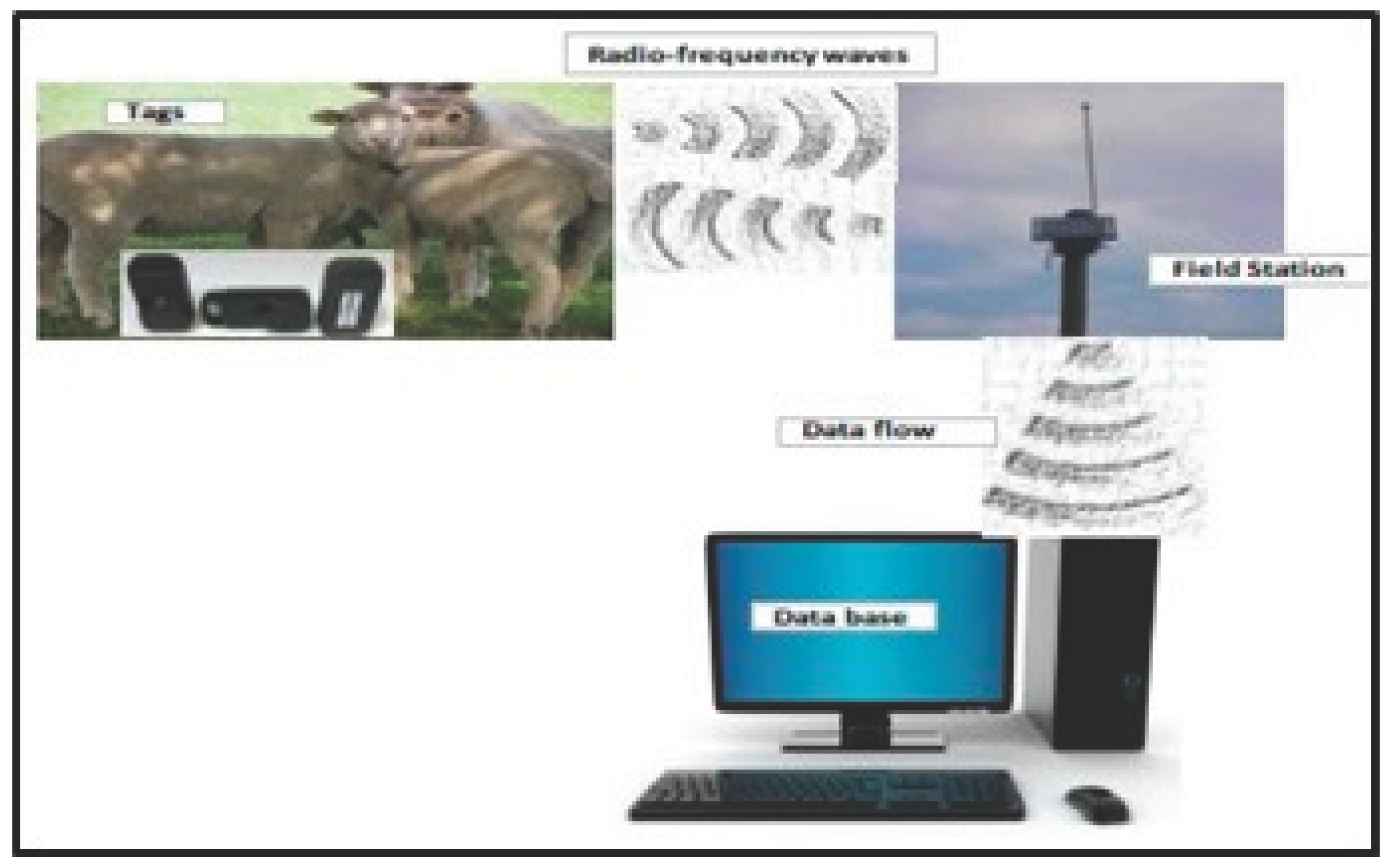
Figure 2.
Experimental configuration to examine the impact of tag quantity and arrangement on data transfer rates (DTR) and tag read rates, illustrating: (a) an aggregation of tags; and (b) a dispersed arrangement of tags, as well as the implemented rope tapping protocol [30].
Figure 2.
Experimental configuration to examine the impact of tag quantity and arrangement on data transfer rates (DTR) and tag read rates, illustrating: (a) an aggregation of tags; and (b) a dispersed arrangement of tags, as well as the implemented rope tapping protocol [30].
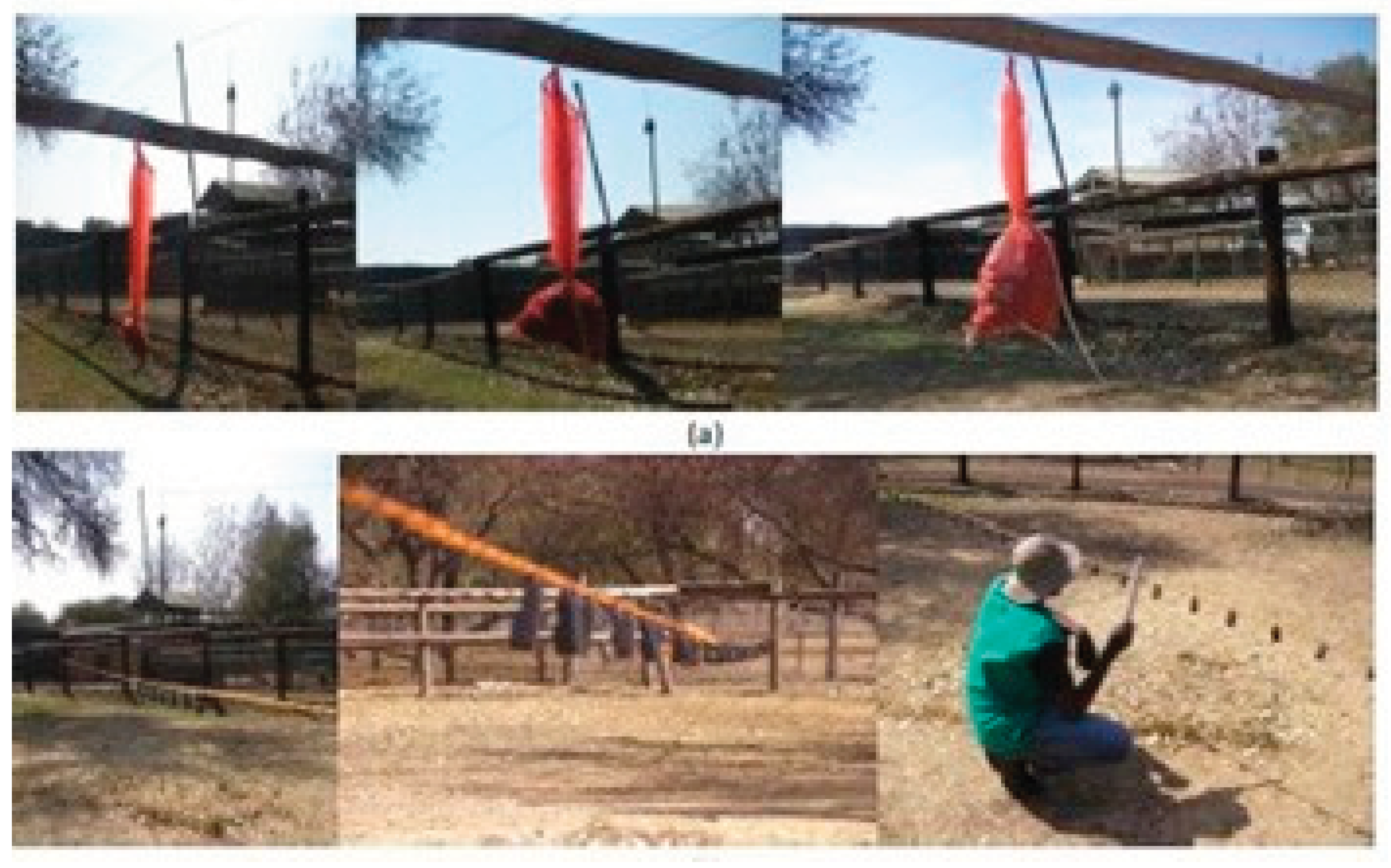
Figure 3.
Spatial suitability map for sericea lespedeza production in Eswatini: Integrating environmentally and geographically compatible rasters.
Figure 3.
Spatial suitability map for sericea lespedeza production in Eswatini: Integrating environmentally and geographically compatible rasters.
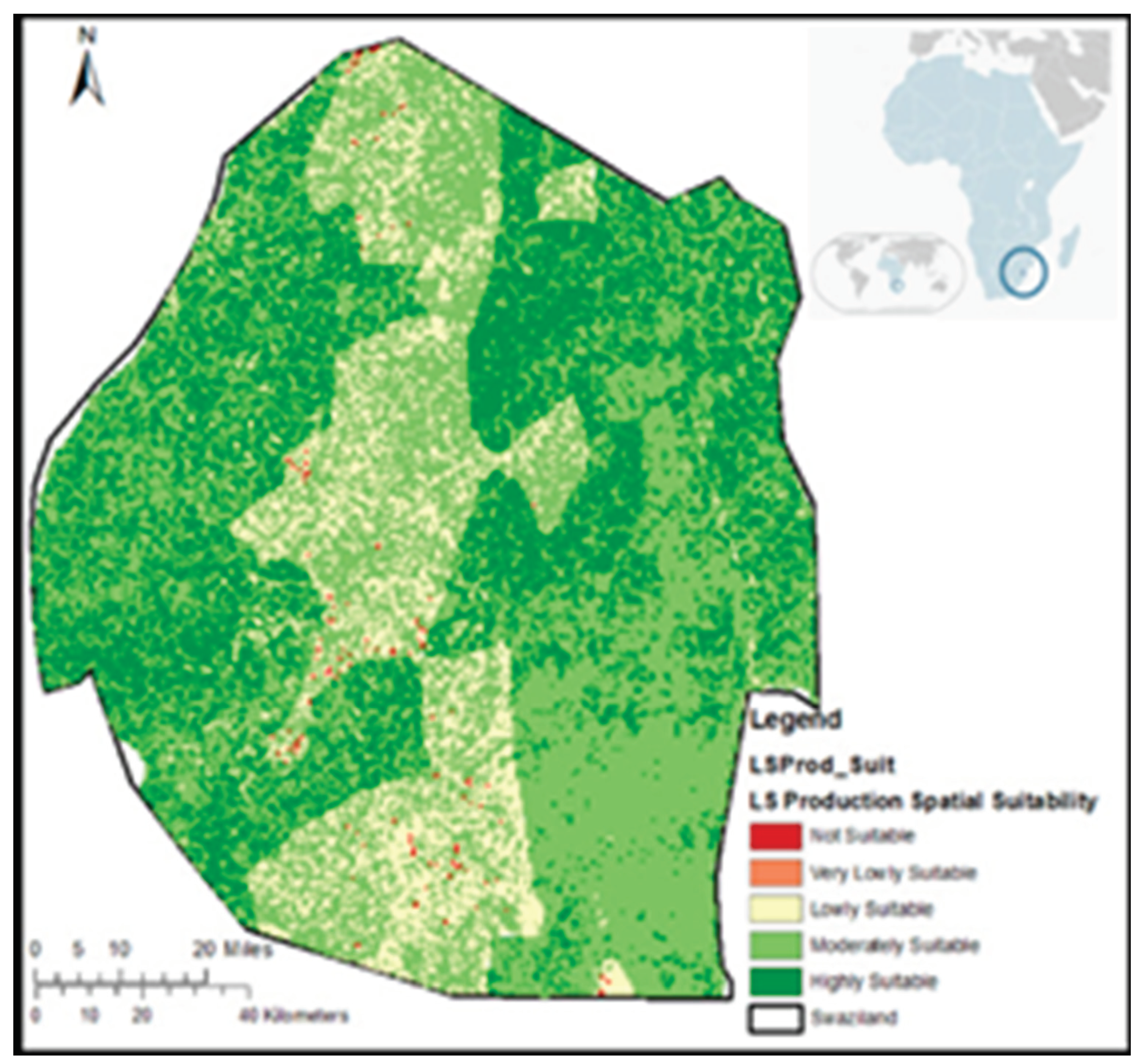
Figure 4.
Comparative analysis, in contrast to a healthy control goat, of signal range variations in a debilitated goat during sleep and grazing periods (Left), and its subsequent recovery following rest and medical intervention (Right).
Figure 4.
Comparative analysis, in contrast to a healthy control goat, of signal range variations in a debilitated goat during sleep and grazing periods (Left), and its subsequent recovery following rest and medical intervention (Right).
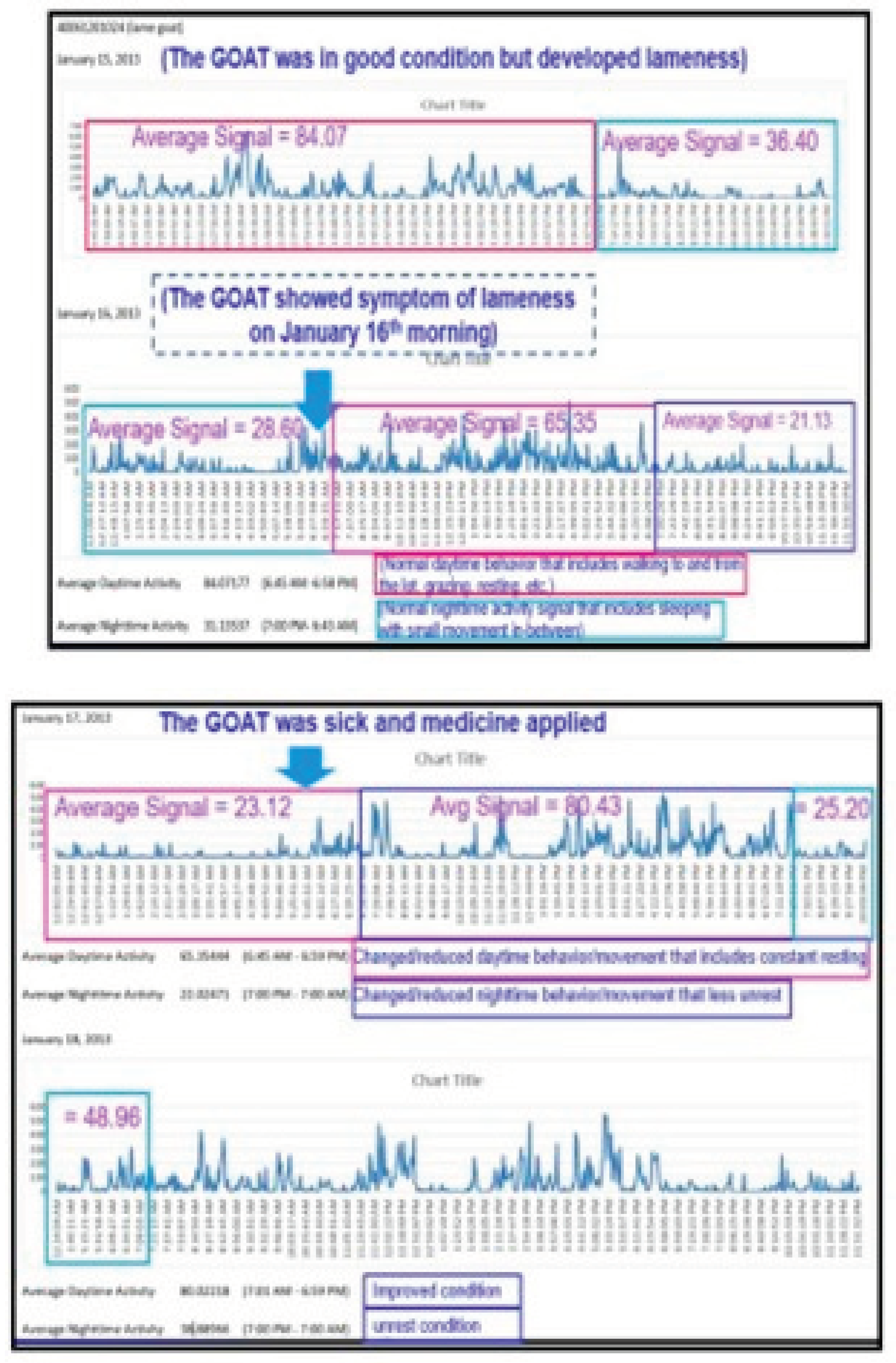
Figure 5.
A visual representation of (a) the Python code used to create a real-time animal health monitoring system utilizing Radio Frequency Identification System (RFID) transponder signals for early warning and detection of health issues and (b) the testing of the AI based DSS.
Figure 5.
A visual representation of (a) the Python code used to create a real-time animal health monitoring system utilizing Radio Frequency Identification System (RFID) transponder signals for early warning and detection of health issues and (b) the testing of the AI based DSS.
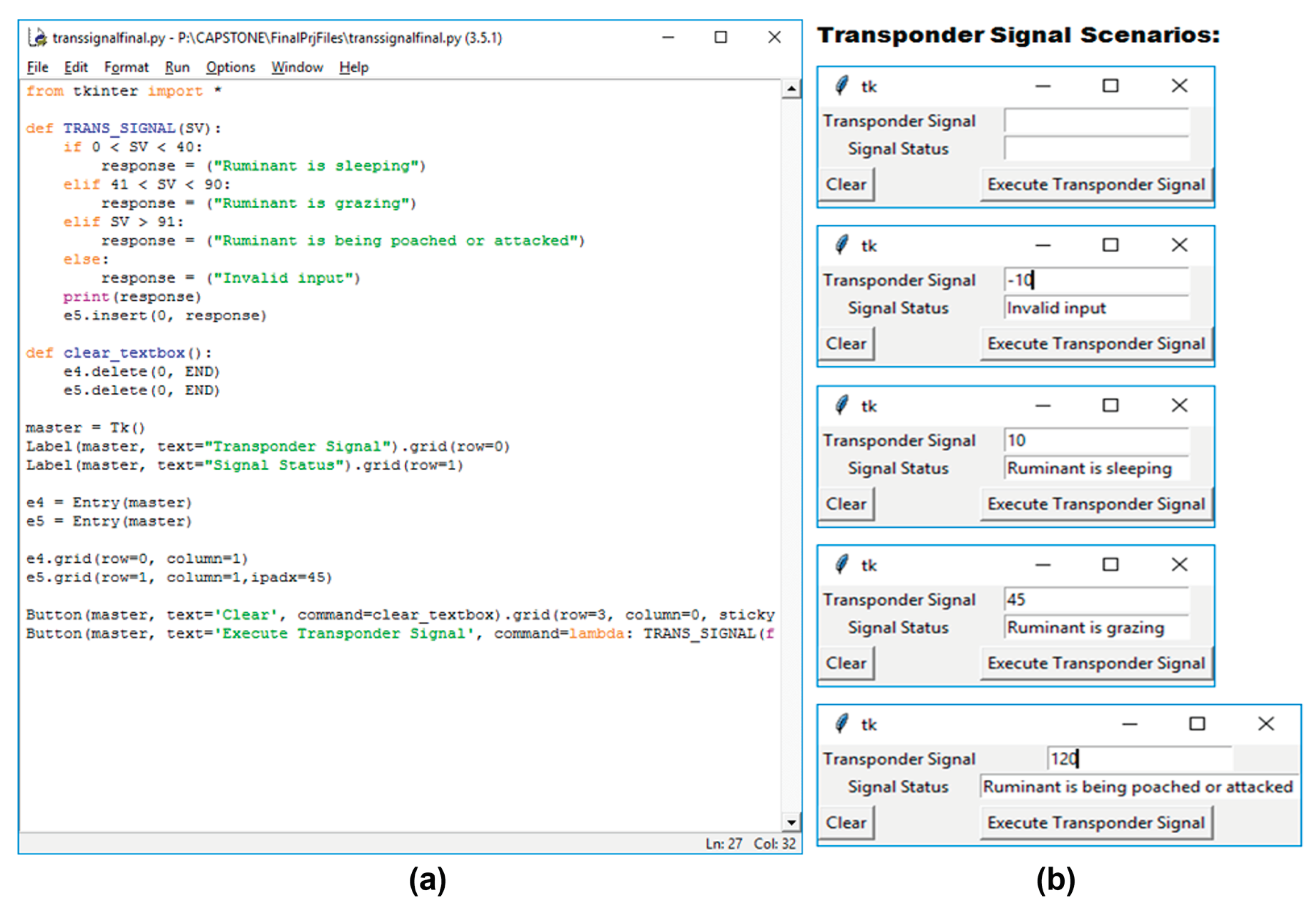
Figure 6.
(a) (Left) An ArcGIS cloud-based dashboard designed as an initial animal health management decision support system (aDSS) for sustainability, illustrating optimal locations (depicted in magenta) in the southeastern United States for low-stress (LS) forage production. (b) (Right) aDSS Model devised by J.A. van Wyk as a strategy for sustainable animal health management).
Figure 6.
(a) (Left) An ArcGIS cloud-based dashboard designed as an initial animal health management decision support system (aDSS) for sustainability, illustrating optimal locations (depicted in magenta) in the southeastern United States for low-stress (LS) forage production. (b) (Right) aDSS Model devised by J.A. van Wyk as a strategy for sustainable animal health management).
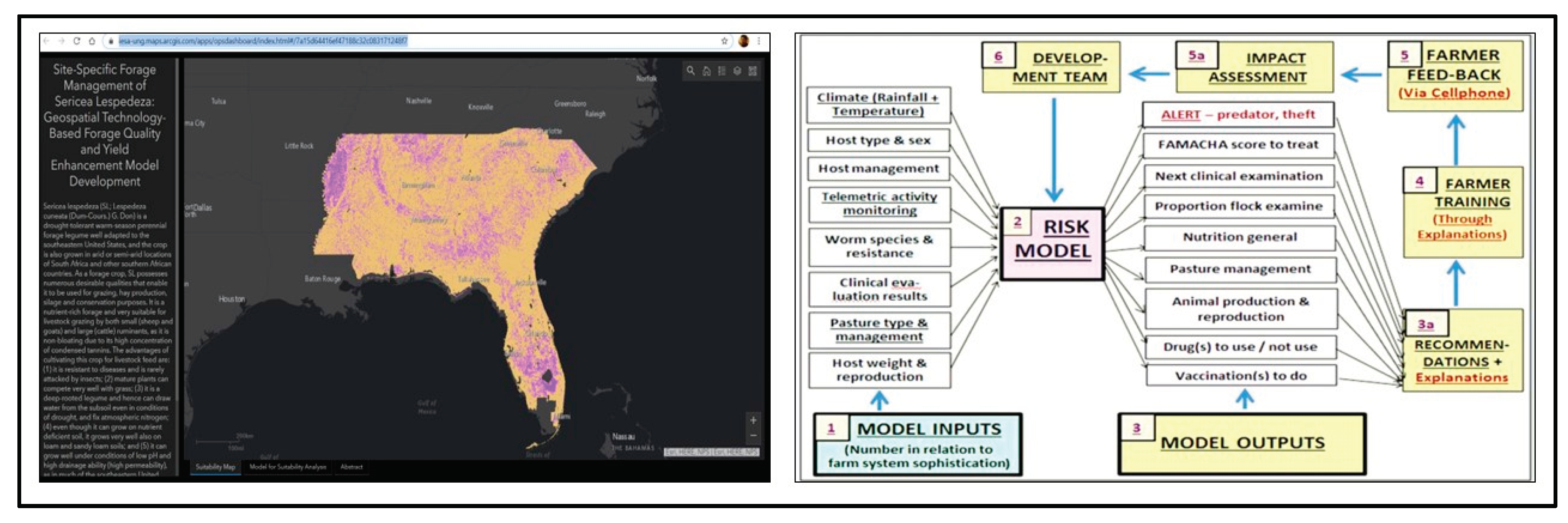

Table 1.
Summary table for the contributing environmental factors regarding suitability criteria for sericea lespedeza forage production.
Table 1.
Summary table for the contributing environmental factors regarding suitability criteria for sericea lespedeza forage production.
| Environmental Factors | Suitability Criteria | Assigned Weights |
|---|---|---|
| Land cover | Open land (any land cover) | 0.35 |
| Slope | Greater than 45% slope | 0.25 |
| Soil characteristics | non-clay soil | 0.45 |
| Temperature | 20 °C to 30 °C | Not used in analysis (entire study area has suitable conditions) |
| Precipitation | Low precipitation (Arid and semi-arid Condition) | Not used in analysis (entire study area has suitable conditions) |
Disclaimer/Publisher’s Note: The statements, opinions and data contained in all publications are solely those of the individual author(s) and contributor(s) and not of MDPI and/or the editor(s). MDPI and/or the editor(s) disclaim responsibility for any injury to people or property resulting from any ideas, methods, instructions or products referred to in the content. |
© 2024 by the authors. Licensee MDPI, Basel, Switzerland. This article is an open access article distributed under the terms and conditions of the Creative Commons Attribution (CC BY) license (http://creativecommons.org/licenses/by/4.0/).
Copyright: This open access article is published under a Creative Commons CC BY 4.0 license, which permit the free download, distribution, and reuse, provided that the author and preprint are cited in any reuse.


