

Submitted:
08 February 2024
Posted:
08 February 2024
You are already at the latest version
Abstract
Background: The workplace burnout syndrome is often associated with particular aspects of certain job positions, especially those which entail working with people with special needs. The burnout syndrome in healthcare jobs is a serious problem which has grown into an epidemic among healthcare workers and associates.
Objectives: The aim of this research is to assess the presence of stress and burnout syndrome at work with healthcare workers, expert workers, professional associates and associates in social service institutions in Belgrade.
Material and Methods: This research has been conducted in the form of a cross-sectional study of a representative sample in social institutions in Belgrade. It has been conducted from March to the end of June of 2023. The sample of the study had 491 participants. The questionnaires used were a structured instrument with social-demographic and social-economic characteristics, workplace characteristics, life style characteristics, and the following questionnaires: DASS-21, Copenhagen, Brief Resilience Scale, and Brief Resilient Coping Scale.
Results: The end results indicate the following to be significant risk factors for the occurrence of workplace burnout syndrome: overtime (OR=2.62; CI=1.50-4.56), BRS average score (OR=0.28; CI=0.17-0.44), DASS21 D heightened depression (OR=2.09; CI=1.1-4.04), DASS21 A heightened anxiety (OR=2.38; CI=1.34-4.21), DASS21 S heightened stress (OR=2.08; CI=1.11-3.89). The only protective risk factor which stood out was the self-assessment of health levels (OR=0.60; CI=0.42-0.85).
Conclusion: Overtime is a significant predictor of workplace burnout. Apart from it, other significant predictors of workplace burnout were heightened depression, anxiety, and stress levels.
Keywords:
burnout syndrome
; stress
; resilience
; social institutions
; job - professional person
1. Introduction
In today’s modern world, stress has become an inevitable part of the human life. Its causes and effects are numerous, and many individuals are continuously exposed to stress amid difficult professional circumstances. Stress, especially for those working in healthcare and social services, can have deep and significant impact on physical, mental, and emotional state of an individual.
Today, different behaviour patterns and illnesses are related to stress occurrence. The notion of stress can be found in literature as the notion of many scientific disciplines. Still, as it is inevitably tied to it, it is mostly connected to jobs where communication and working with people are predominant [1]. Workload significantly impacts exhaustion, work quality, motivation, and job satisfaction. All these are conditions which interfere with team communication, cause fatigue, and together, endanger the health of the employees as well as patients’ safety [2]. Extended exposure to situations which the organism recognizes as a threat may lead to a number of disorders which all have a negative impact on basic life functions and the working abilities of a person, as well as their health state [3]. Inadequate communication, and especially bad relationships are a factor which adds to the development of this syndrome [4]. The burnout syndrome occurs after long-term exposure to significant stress, especially in situations of others’ great expectations. According to data so far, this is classified as professional stress and has an impact on job positions in regards to working with people in job spheres predominantly oriented to providing certain help to other people. Research with people of different job profiles showed higher tendencies towards burnout with people of great potential and great expectations, i.e. ambition, and the riskiest groups are healthcare, social services, and education work fields [5].
Out of 40 participating job positions, the highest stress levels had healthcare workers, as published by the American National Association of Safety Professionals. In their study, they have concluded that medical care workers are significantly more exposed to stress, and, unlike many other jobs, they show organism exhaustion, absence from work, environment and family problems, as well as mental and physical disorders, according to Engen Maye et al. in 2013 [6].
Within their profession, social workers face numerous difficulties while working with different profiles, including persons with psychological problems, developmental problems, and dementia. Once the workload of the social worker becomes too heavy, and the personal well-being is constantly put aside, the burnout risk grows significantly. The burnout may be worsened by feeling tired and vice versa, which is the essential reason for social workers and associates recognize and understand signs and symptoms of both [1]. Workplace stress was studied as well, and it was pointed out that work management, career advancement, the role of the individual, work tasks, work environment, work conditions, and working in shifts are the most significant group of stressors. Long-term exposure to those stressors may lead to burnout syndrome characterized by mental, physical, or both mental and physical exhaustion [7].
Workplace burnout syndrome is often associated with particular aspects of certain jobs, especially those in relation to people with difficulties. According to research of workplace burnout syndrome, jobs such as medical and social workers, prison workers, and lawyers are particularly sensitive [7].
Demographic variables in positive correlation with burnout syndrome, according to the research, are gender, age, education, marital status, and work experience.
Burnout syndrome in healthcare is a serious problem, an epidemic among healthcare workers and associates. A damaging impact on psycho-physical health of the employees has been confirmed, as well as the quality of services they provide, patients’ safety and the maintenance of the health system [8]. The prevalence of burnout syndrome among healthcare workers is varied, yet the majority of studies show it to be around 50% [9].
The burnout syndrome may also have a long-term impact on the mental health of the healthcare workers, as well as the quality of their lives. Its prevention demands an active management of resources and changes in the work environment, as well as the development of personal characteristics which can help with stress.
The main aim of this research is to evaluate the presence of stress and burnout syndrome in healthcare workers, expert workers, professional associates and associates in social protection institutions and to examine the impact of certain social-demographic and work environment characteristics on the occurrence of burnout syndrome on the population in question.
2. Materials and Method
2.1. Study Design:
This research has been designed as a cross-sectional study and conducted from March to the end of June of 2023 on a representative sample in social institutions in Belgrade. The sample of the study had 491 participants, healthcare workers, expert workers, professional associates and associates in direct work with the users of social protection institutions on residence in the following institutions in Belgrade, Serbia:
- Babies, children, and the youth protection center in Belgrade
- Adults and the elderly residence institution in Belgrade
- Developmentally challenged children and the youth day care center in Belgrade
- Children’s and the youth’s institution in Sremčica
The common criteria for all participants were: adults, both genders, older than 21, certain education profile, work experience over three years, volunteering in the study. The excluding factors were: persons younger than 21, work experience shorter than three years, fixed-term contracts, diagnosed mental disorders, longer work absences (6 months) prior to the research. The participants have, after giving consent, fulfilled questionnaires with the explanations given by the main researcher and the adequate help by the researches, if needed.
2.2. Research Instruments
The structured research instrument had the questions regarding social-demographic and social-economic characteristics, work environment characteristics, and lifestyle characteristics. For the workplace burnout assessment, Copenhagen Burnout Inventory, CBI, was used. It has 19 questions dealing with exhaustion and tiredness relating to the burnout in following aspects: personal burnout (questions 1-6), work-related burnout (questions 7-13), and client-related burnout (questions 14-19) [10].
The participants had the task of choosing the option closest to how they feel, following the frequency on the 5-level Likert scale in the span 0-4. The scoring was done by transforming the answers to time percentages: 0 = 0%, 1 = 25%, 2 = 50%, 3 = 75% and 4 = 100%, according to the instructions by the questionnaire’s author. The score on each scale was calculated as the average score on the questions the scale entails, and the total score of workplace burnout was calculated as the average score of all three scales together, i.e. the average value of separate scales’ scores. All the participants with scores over 50% are considered to have the workplace burnout syndrome.
For the employees’ resilience examination, BRS, Brief Resilience Scale was used, created by Smith et al [11]. This scale assesses the resilience construct, seen as the individual’s ability to bear with the problems from their environment, and recover from stressful situations. The BRS is a one-dimensional scale which has 6 items. The total score on this scale is the arithmetic mean of all six.
Apart from BRS, the Brief Resilience Coping Scale, BRCS was used. It has 4 items.
Stress, depression, and anxiety were assessed through the DASS-21 questionnaire. The DASS-21 has 21 items and includes three sub-scales with 7 items. The participants had to assess their feelings from the past week on the Likert 4-span scale, and following the frequency on the Likert 5-span scale [12]. Depression, anxiety, and stress scores are the sum of the relevant scores in the 0-21 span for each sub-scale. The seriousness of the symptoms was calculated by cut-off scores for defining normal, mild, moderate, significant, and very significant scores for all sub-scales. For the D scale, the total
Score of 0 – 4 is normal; 5 – 6 mild depression; 7 - 10 moderate depression; 11 – 13 severe depression ; ≥ 14 very severe depression. For the scale „А“, the score of 0 – 3 is considered normal ; 4 – 5 mild anxiety; 6 – 7 moderate anxiety; 8 – 9 severe anxiety; ≥ 10 very severe anyiety. For the„С“ scale, the score 0 – 7 is normal; 8 – 9 mild stress; 10 – 12 moderate stress; 13 – 16 severe stress; ≥ 17 very severe stress.
2.3. Ethical Aspects of the Research
The research was conducted following the approval for it from the Ethical boards of the social service institutions and with consent of the participants.
2.4. Statistical Data Processing
For the primary data processing, descriptive statistical methods were used, methods for testing statistical hypotheses, methods for modeling relations of the outcomes and potential predictors. Depending on variable types and normality of distribution, the data description was showed as N(%), arithmetic mean±standard deviation (C) or median (min-max). Out of methods for testing statistical hypotheses Tests used were: T-test, Mann-Whitney test, chi-square test, Fisher test, ANOVA, Kruskal-Wallis. For the modelling of relations of dependent variable with potential predictors, logistic regression was used. The multivariate regression models included predictors from uni-variant analyses which were statistically significant at the level 0.05. For the internal consistency of the questionnaires assessment the Cronbach’s alpha was used. Statistical hypotheses were tested based on the levels of statistical significance (alpha level) of 0.05. The results were showed in tables and graphically. All data were processed in IBM SPSS Statistics 22 (SPSS Inc., Chicago, IL, USA) software package, R program environment, (R Core Team, 2022).
3. Results
This research had a total of 491 participants, 60 (12.2%) men and 431 (87.8%) women. The average age was 45.9 years (95% CI 45.0-46.8). The youngest person was 21, and the oldest 64. The arithmetic mean of the Copenhagen workplace burnout questionnaire research was 55.4 (95% CI 53.8-57.1). The lowest result was 3.9 and the highest 100.0. The highest average score was on the question SPD1 - Do you consider work in social service institution to be hard? (70.8%) and the lowest on LS6 - How often do you feel weak and prone to illness? (41.4%). The skewness and kurtosis values show that there was no deviation from the normal distribution in the questionnaire (Table 1).
The distribution of participants according to the presence of workplace burnout is shown in Graph 1.
There is a statistically significant difference between participants with and without workplace burnout syndrome in relation to: gender, age, education, presence of children in the family, and the self-assessment of monthly income (Table 2).
There is a statistically significant difference between the participants with and without workplace burnout syndrome in relation to the characteristics of the work environment: occupation, overtime, shift work, adequate resources, work in spacious and pleasant rooms (Table 3).
There is a statistically significant difference in participants with and without workplace burnout syndrome in relation to: smoking habits, amount of cigarettes, using sick leave, amount of sick leave, and self-assessed health (Table 4).
There is a statistically significant difference between participants with and without WBS in relation to the assessment of depression, anxiety, and stress according to the DASS-21 scale and resilience according to BRCS scale; the statistically significant differences are in relation to: the degree of DASS-21 D, degree of DASS-21 A, degree of DASS-21 S, degree of BRCS, and the average score on BRS (Table 5).
After applying univariate analysis, 15 variables were included in the multivariate regression model (Table 6). The entire model, with all predictors, was statistically significant (p<0.001). There is no significant multicollinearity among the predictors. The model describes 51% variation of the dependent variable. In the model of multivariate logistic regression, the statistically significant WBS factors were: overtime (OR=2.62; CI=1.50-4.56), BRS average score (OR=0.28; CI=0.17-0.44), DASS-21 D heightened depression (OR=2.09; CI=1.1-4.04), DASS-21 A heightened anxiety (OR=2.38; CI=1.34-4.21), DASS-21 S heightened stress (OR=2.08; CI=1.11-3.89). The only protective risk factor which stands out is self-assessed health (OR=0.60; CI=0.42-0.85), i.e., the higher self-assessed health levels the participants had, the lower their chance for WBS was.
4. Discussion
The aim of this research was to determine the presence of stress and burnout syndrome in healthcare workers, expert workers, professional associates, and associates working in social service institutions. The aim was also to study the impact of certain social-demographic characteristics, as well as workplace characteristics, on the presence of burnout syndrome in the participating population. Doctors, nurses, counselors, and social workers often face trauma and others’ suffering, which is fertile ground for indirect trauma, often referred to as “empathy fatigue”. Providing others with help and support may in time lead to exhaustion, lowered ability for efficient work, which can in turn evolve into burnout syndrome [13]. So far, there have been identified contributing factors for workplace burnout syndrome in people working in children’s protection and well being, and who have endured excessive burden and demands of work with little to no control of it; violence threats, but also working with trauma victims and victims of stressful life events [14]. The generalization of the studies conclusions which questioned the predictors of workplace burnout syndrome in the institutions for children’s protection and well being is limited by the differences in working conditions and work management in different countries [15].
In this study, out of all the participants, over half of them showed signs of workplace burnout syndrome, i.e., 59.1%, while the lower part, 40.9% showed no WBS development. The results of a North Carolina studies show 39% of workplace burnout syndrome symptoms with social workers, which is quite similar in percentages to this study [16].
Female participants in this study showed higher percentage of WBS than male participants. As one of the domains of this syndrome is emotional exhaustion, it can be seen that gender is a significant variable, and that women experience higher levels of burnout, which can be explained with the societal role of women, but also their constant tendencies to establish the balance between professional and private lives [17].
When it comes to the participants’ age, the results of this study have shown that those with workplace burnout syndrome were, on average, older than those without. Contrary to those results, it was earlier shown that burnout is more common in younger people, which can be explained by excessive enthusiasm and unrealistic workplace expectations, which are unsatisfactory in reality [18]. Age has been often mentioned in literature as one of individual workplace burnout syndrome factors, with the tendency to appear in younger employees [19].
In this study, the highest percentage of participants who have developed workplace burnout syndrome said they are not smokers. The results of another studies, however, have shown that tobacco use enhances the risk of this syndrome [20], which this study does not show. These results may be explained by the fact that tobacco use is a stress management mechanism, pleasure, and an escape from stressful work activities, which shows relaxing and anxiolytic effects [21].
Apart from working hours, professional status and professional titles were also closely tied to the burnout syndrome. Out of all the participants in this study, the largest number had high school level of education. When it comes to academic titles, a study conducted in Turkey implied that the amount of burnout decreases with higher levels of academic titles [22]. The results of this study were consistent with the results of the study of workplace burnout syndrome, and the joint factors in relation to healthcare workers, where it was shown that those with the lowest education were 1.57 times more prone to emotional exhaustion in relation to those with higher education [23].
One of the results of this research was that the persons with developed WBS had more years of experience in the field. When it comes to the levels of burnout with employees of children’s protection and well-being institutions, those who have more than a year of experience showed higher levels of burnout, which is in line to this research results [24].
All the previously listed factors which showed an impact in the univariate analysis did not remain significant in the multivariate model. A significant factor which did stand out in the latter was overtime, i.e., the participants who had overtime showed a 2.6 times higher risk of WBS compared to those with no overtime, with control of all other factors in the multivariate analysis model. So far, literature has been showing the connection between short-term and long-term working hours and burnout syndrome among healthcare workers. Healthcare workers with over 60 hours weekly were twice as prone to WBS compared to a standard 40-hour week. The authors of that study pointed out the linear rise of the chances for burnout with the larger amout of hours, to 74 per work week (three times more likely) and 84 hours per week (four times as likely) [25].
In general, mental health problems in healthcare workers show a high degree of coexistence which can be explained with their exposure to the patients’ illnesses and a stressful workplace environment. They are, thus, inevitably more vulnerable to showing stress, anxiety, and depression [25,26,27,28]. Even though the highest percentage of participants (over 50%) had normal depression, anxiety, and stress levels, this research shows that, when they are heightened, they are seen as workplace burnout syndrome predictors. Persons with heightened depression, anxiety, and stress are more likely to experience WBS, 2, 2.4, and 2.1 times respectively, other factors in the multivariate analysis controlled. It was previously shown that depression and stress are statistically significantly related to workplace burnout levels, which is in line with the results of this study [29] .
Early identification of lower resilience may be the key to efficient prevention of negative thoughts and feelings, which can, consequentially, lead to the development of depression and suicidal tendencies. Measuring workplace resilience may also help identify those healthcare workers who are risking leaving their job due to health issues which are a consequence of lower resilience [30]. In this study, a significantly higher BRS scale values were seen with participants who had no workplace burnout syndrome. Some of previous studies showed negative correlation between resilience and burnout syndrome in nurses [31]. Similarly, another study had such results and shown negative association between burnout syndrome and innate resilience [32].
5. Conclusion
Overtime is a significant predictor of workplace burnout, and its outcome is inevitably manifold. This research showed several predictors of workplace burnout: heightened depression, anxiety, and stress, which was somewhat expected considering that mental health issues in healthcare workers show high levels of coexistence. In addition to this, it is important to highlight the effect of early identification of lower resilience, as it can lead to efficient prevention of negative thoughts and feelings.
Institutional Review Board Statement
Ethical approval was taken from each Institution where studz was performed. It can be seen in attached files.
Acknowledgments
This study was supported by grant JP 15/22 from the Faculty of Medical Sciences of the University of Kragujevac, Republic of Serbia.
Conflicts of Interest
The authors declare that no conflicts of interest exist.
References
- Calhoun, M.; Lightfoot, E.; Okamoto, K.; Goodenough, K.; Zheng, M. Contemporary perceptions of social work: Macro practice in the profession. J. Community Pract. 2020, 28, 374–39. [Google Scholar] [CrossRef]
- Brown, M.E. Hazards of our helping profession: A practical self-care model for community practice. Soc. Work. 2020, 65, 38–44. [Google Scholar] [CrossRef] [PubMed]
- Lait, J.; Wallace, J.E. Stress at work: A study of organizational-professional conflict and unmet expectations. Relat. Ind. 2002, 57, 463–487. [Google Scholar] [CrossRef]
- Lee, R.T.; Ashforth, B.E. A meta-analytic examination of the correlates of the three dimensions of job burnout. J. Appl. Psychol. 1996, 81, 123–133. [Google Scholar] [CrossRef]
- Leiter, M.P.; Maslach, C. The impact of interpersonal environment on burnout and organizational commitment. J. Organ. Behav. 2006, 9, 297–308. [Google Scholar] [CrossRef]
- Azizpour, Y.; Shohani, M.; Sayehmiri, K.; Kikhavani, S. A Survey on the Associated Factors of Stress among Operating Room Personnel. Thrita 2013, 2, 19–23. [Google Scholar] [CrossRef]
- Maslach, C.; Schaufeli, W.B.; Leiter, M.P. Job burnout. Annu. Rev. Psychol. 2001, 52, 397–422. [Google Scholar] [CrossRef]
- Toppinen-Tanner, S.; Kalimo, R.; Mutanen, P. The process of burnout in white-collar and blue-collar jobs: Eight-year prospective study of exhaustion. J. Organ. Behav. 2002, 23, 555–570. [Google Scholar] [CrossRef]
- Bakker, A.B.; Demerouti, E.; Euwema, M.C. Job resources buffer the impact of job demands on burnout. J. Occup. Health Psychol. 2005, 10, 170–180. [Google Scholar] [CrossRef] [PubMed]
- Copenhagen Burnout Inventory. Journal of Taibah University Medical Sciences 2017, 1–9.
- Smith, B.; Dalen, J.; Wiggins, K.; Tooley, E.; Christopher, P.; Bernard, J. The Brief Resilience Scale: Assessing the Ability to Bounce Back. Int. J. Behav. Med. 2008, 15, 194–200. [Google Scholar] [CrossRef]
- Jovanović, V.; Gavrilov-Jerković, V.; Žuljević, D.; Brdarić, D. Psihometrijska evaluacija Skale depresivnosti, anksioznosti i stresa-21 (DASS-21) na uzorku studenata u Srbiji. Psihologija 2014, 47, 93–112. [Google Scholar] [CrossRef]
- Maslach, C.; Schaufeli, W.B.; Leiter, M.P. Annual Review of Psychology. 2001; 52, 397. [Google Scholar] [CrossRef]
- Letson, M.M.; Davis, C.; Sherfield, J.; Beer, O.W.J.; Phillips, R.; Wolf, K.G. Identifying compassion satisfaction, burnout, & traumatic stress in Children's Advocacy Centers. Child. Abuse Negl. 2020, 110 Pt 3, 104240. [Google Scholar] [CrossRef]
- Nilsen, K.H.; Lauritzen, C.; Vis, S.A.; Iversen, A. Factors affecting child welfare and protection workers and intention to quit: a cross-sectional study from Norway. Hum. Resour. Health 2023, 21, 43. [Google Scholar] [CrossRef] [PubMed]
- Siebert, D.C. Personal and Occupational Factors in Burnout Among Practicing Social Workers. J. Social. Serv. Res. 2006, 32, 25–44. [Google Scholar] [CrossRef]
- Soltanifar, A.; Pishbin, E.; Attaran Mashhadi, N.; Najaf Najafi, M.; Siahtir, M. Burnout among female emergency medicine physicians: A nationwide study. Emerg. Med. Australas. 2018, 30, 517–522. [Google Scholar] [CrossRef] [PubMed]
- Augsberger, A.; Schudrich, W.; McGowan, B.G.; Auerbach, C. Respect in the workplace: A mixed methods study of retention and turnover in the voluntary child welfare sector. Child. Youth Serv. Rev. 2012, 34, 1222–1229. [Google Scholar] [CrossRef]
- Dedic, G. Professional burnout. Mil. Med. Pharm. J. Serb. 2005, 62, 851–855. [Google Scholar] [CrossRef]
- Lwiza, A.F.; Lugazia, E.R. Burnout and associated factors among healthcare workers in acute care settings at a tertiary teaching hospital in Tanzania: An analytical cross- sectional study. Health Sci. Rep. 2023, 6, e1256. [Google Scholar] [CrossRef]
- Fernandes, L.S.; Nitsche, M.J.T.; Godoy, I. Associação entre síndrome de burnout, uso prejudicial de álcool e tabagismo na Enfermagem nas UTIs de um hospital universitário. Cien Saude Colet. 2018, 23, 203–14. [Google Scholar] [CrossRef]
- Dırvar, F.; Dırvar, S.U.; Kaygusuz, M.A.; Evren, B.; Öztürk, İ. Effect of Malpractice Claims on Orthopedic and Traumatology Physicians in Turkey: A Survey Study. Acta Orthop. Traumatol. Turc. 2021, 55, 171–176. [Google Scholar] [CrossRef] [PubMed]
- Bazmi, E.; Alipour, A.; Yasamy, M.T.; Kheradmand, A.; Salehpour, S.; Khodakarim, S.; et al. Job Burnout and Related Factors among Health Sector Employees. Iran. J. Psychiatry. 2019, 14, 309–316. [Google Scholar] [CrossRef] [PubMed]
- Salloum, A.; Kondrat, D.C.; Johnco, C.; Olson, K.R. The role of self-care on compassion satisfaction, burnout and secondary trauma among child welfare workers. Child. Youth Serv. Rev. 2005, 49, 54–61. [Google Scholar] [CrossRef]
- Lin, R.T.; Lin, Y.T.; Hsia, Y.F.; Kuo, C.C. Long working hours and burnout in health care workers: Non-linear dose-response relationship and the effect mediated by sleeping hours-A cross-sectional study. J. Occup. Health 2021, 63, e12228. [Google Scholar] [CrossRef] [PubMed]
- Weber, A.; Jaekel-Reinhard, A. Burnout syndrome: a disease of modern societies? Occup. Med. 2000, 50, 512–517. [Google Scholar] [CrossRef] [PubMed]
- Rotenstein, L.S.; Torre, M.; Ramos, M.A.; Rosales, R.C.; Guille, C.; Sen, S.; et al. Prevalence of Burnout Among Physicians: A Systematic Review. JAMA 2018, 320, 1131–1150. [Google Scholar] [CrossRef] [PubMed]
- Maresca, G.; Corallo, F.; Catanese, G.; Formica, C.; Lo Buono, V. Coping Strategies of Healthcare Professionals with Burnout Syndrome: A Systematic Review. Medicina 2022, 58, 327. [Google Scholar] [CrossRef] [PubMed]
- Ashraf, F.; Ahmad, H.; Shakeel, M.; Aftab, S.; Masood, A. Mental health problems and psychological burnout in Medical Health Practitioners: A study of associations and triadic comorbidity. Pak. J. Med. Sci. 2019, 35, 1558–1564. [Google Scholar] [CrossRef]
- Zautra, A.J.; Arewasikporn, A.; Davis, M.C. Resilience, promoting well-being through recovery, sustainability and growth. Res. Hum. Dev. 2010, 7, 221–238. [Google Scholar] [CrossRef]
- Zou, G.; Shen, X.; Tian, X.; Liu, C.; Li, G.; Kong, L.; et al. Correlates of psychological distress, burnout, and resilience among Chinese female nurses. Ind. Health 2016, 54, 389–395. [Google Scholar] [CrossRef]
- Nishimoto, D.; Imajo, M.; Kodama, S.; Shimoshikiryo, I.; Ibusuki, R.; Nerome, Y.; et al. The Effects of Resilience and Related Factors on Burnout in Clinical Nurses, Kagoshima, Japan. Yonago Acta Med. 2022, 65, 148–159. [Google Scholar] [CrossRef] [PubMed]
Graph 1.
The distribution of participants according to the presence of workplace burnout.
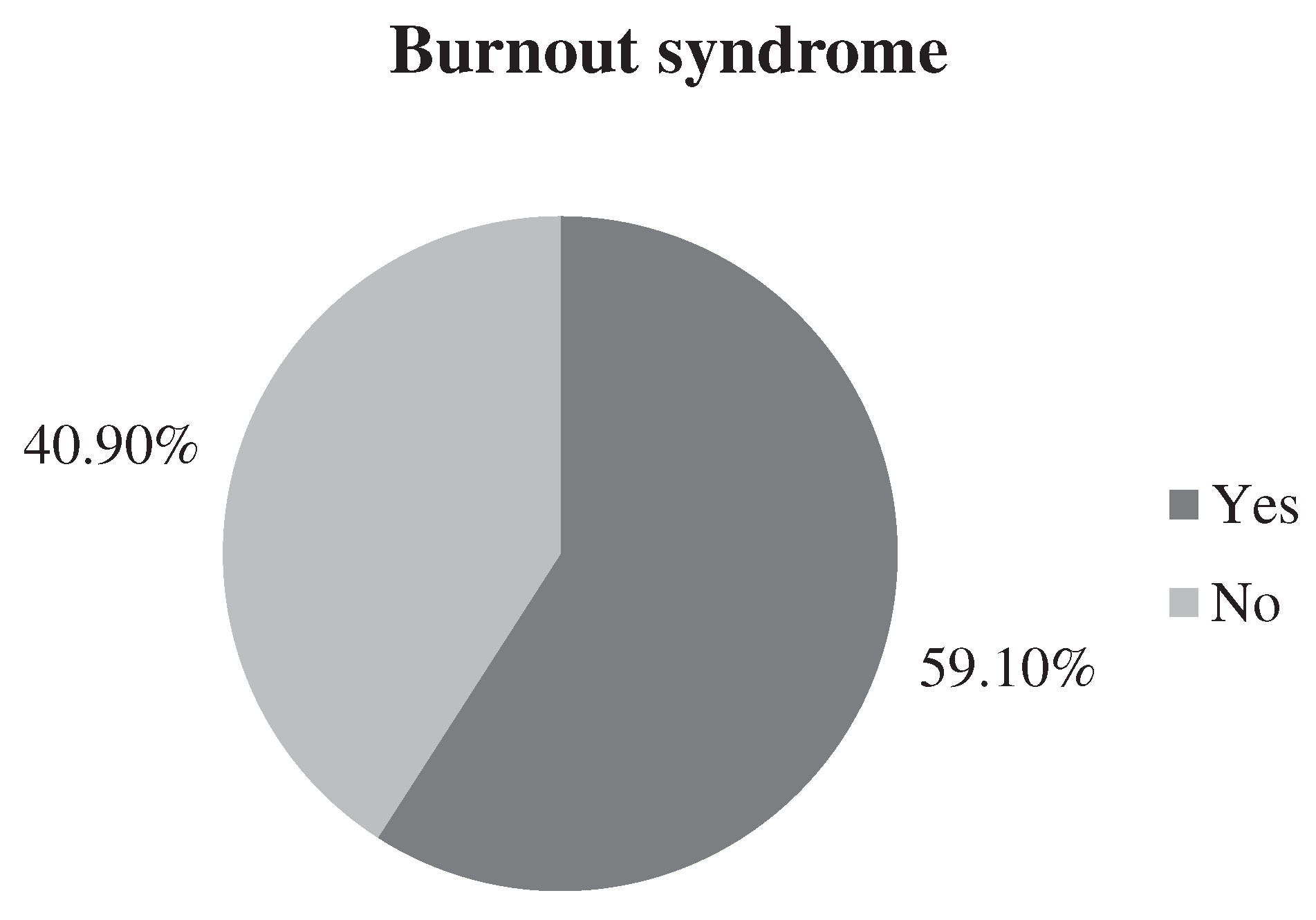

Table 1.
Average values, variability, and the distribution of the Copenhagen workplace burnout questionnaire scale, and its sub-scales.
Table 1.
Average values, variability, and the distribution of the Copenhagen workplace burnout questionnaire scale, and its sub-scales.
| Question | Mean | SD | Median | Мin | Max | Skewness | Kurtosis |
|---|---|---|---|---|---|---|---|
| PB1 | 60.6 | 20.4 | 50 | 0 | 100 | -0.29 | -0.07 |
| PB2 | 58.7 | 21.6 | 50 | 0 | 100 | -0.24 | -0.46 |
| PB3 | 50.0 | 24.6 | 50 | 0 | 100 | -0.21 | -0.38 |
| PB4 | 45.5 | 26.4 | 50 | 0 | 100 | -0.07 | -0.71 |
| PB5 | 51.9 | 24.4 | 50 | 0 | 100 | -0.10 | -0.53 |
| PB6 | 41.4 | 25.1 | 50 | 0 | 100 | 0.11 | -0.58 |
| WRB1 | 69.0 | 23.2 | 75 | 0 | 100 | -0.52 | 0.08 |
| WRB2 | 62.5 | 23.3 | 75 | 0 | 100 | -0.27 | -0.21 |
| WRB3 | 48.9 | 24.4 | 50 | 0 | 100 | -0.04 | -0.26 |
| WRB4 | 63.0 | 25.2 | 75 | 0 | 100 | -0.23 | -0.48 |
| WRB5 | 49.0 | 28.0 | 50 | 0 | 100 | 0.06 | -0.74 |
| WRB6 | 46.7 | 25.7 | 50 | 0 | 100 | 0.20 | -0.45 |
| WRB7 | 45.6 | 28.8 | 50 | 0 | 100 | -0.09 | -0.97 |
| CRB1 | 70.8 | 23.4 | 75 | 0 | 100 | -0.44 | -0.21 |
| CRB2 | 54.2 | 26.3 | 50 | 0 | 100 | -0.21 | -0.39 |
| CRB3 | 63.7 | 25.1 | 75 | 0 | 100 | -0.33 | -0.34 |
| CRB4 | 60.5 | 28.7 | 75 | 0 | 100 | -0.40 | -0.55 |
| CRB5 | 54.6 | 26.2 | 50 | 0 | 100 | -0.23 | -0.36 |
| CRB6 | 56.7 | 28.7 | 50 | 0 | 100 | -0.35 | -0.55 |
(PB - Personal burnout; WRB – Work-related burnout; CRB – Client-related burnout; Mean – arithmetic mean; SD – standard deviation; Median – Median; Min – Minimum value; Мax – Maximum value).
Table 2.
The distribution of social-demographic and social-economic characteristics of the participants in relation to the presence of workplace burnout syndrome .
Table 2.
The distribution of social-demographic and social-economic characteristics of the participants in relation to the presence of workplace burnout syndrome .
| Variables | Has workplace burnout syndrome (n=290) |
Does not have workplace burnout syndrome (n= 201) |
p-value |
|---|---|---|---|
| Gender, n (%) | |||
| Male | 28 (9.7%) | 32 (15.9%) | 0.037 |
| Female | 262 (90.3%) | 169 (84.1%) | |
| Age, am±sd | 46.8±9.7 | 44.6±11.0 | 0.021 |
| Age categories, n (%) | |||
| 20-30 | 24 (8.3%) | 24 (11.9%) | 0.029 |
| 31-40 | 45 (15.5%) | 55 (27.4%) | |
| 41-50 | 111 (38.3%) | 53 (26.4%) | |
| 51-60 | 93 (32.1%) | 54 (26.9%) | |
| over 60 | 17 (5.9%) | 15 (7.5%) | |
| Residence, n (%) | |||
| City | 251 (86.6%) | 179 (89.1%) | 0.408 |
| Country | 39 (13.4%) | 22 (10.9%) | |
| Marital status, n (%) | |||
| Married | 85 (29.3%) | 73 (36.3%) | 0.145 |
| Single | 134 (46.2%) | 96 (47.8%) | |
| Divorced | 43 (14.8%) | 19 (9.5%) | |
| Widowed | 15 (5.2%) | 9 (4.5%) | |
| Other | 13 (4.5%) | 4 (2.0%) | |
| Education, n (%) | |||
| high school | 156 (53.8%) | 77 (38.3%) | 0.002 |
| College | 41 (14.1%) | 43 (21.4%) | |
| specialist studies / vocational | 19 (6.6%) | 11 (5.5%) | |
| BSc/BA, MSc/MA, PhD | 74 (25.5%) | 70 (34.8%) | |
| Пoтoмствo, n (%) | 223 (76.9%) | 138 (68.7%) | 0.042 |
| Children in family, median (range) | 2 (0-5) | 1 (0-4) | 0.142 |
| Family members, median (range) | 4 (1-8) | 4 (1-12) | 0.549 |
| Homeowner, n (%) | 209 (72.1%) | 139 (69.2%) | 0.485 |
| Sole provider, n (%) | 123 (42.4%) | 71 (35.3%) | 0.114 |
| Self-assessment of monthly income, n (%) | |||
| Very bad | 23 (7.9%) | 4 (2%) | <0.001 |
| Bad | 60 (20.7%) | 29 (14.4%) | |
| Average | 165 (5.9%) | 122 (60.7%) | |
| Good | 39 (13.4%) | 41 (20.4%) | |
| Very good | 3 (1%) | 5 (2.5%) |
Table 3.
The distribution of work environment of the participants in relation to the presence of workplace burnout syndrome.
Table 3.
The distribution of work environment of the participants in relation to the presence of workplace burnout syndrome.
| Variables | Has WBS (n=290) | Does not have WBS (n= 201) | p-value |
|---|---|---|---|
| Institutions, n (%) | |||
| Šekspirova | 77 (26.6%) | 53 (26.4%) | 0.057 |
| Zvečanska | 92 (31.7%) | 76 (37.8%) | |
| Sremčica | 30 (10.3%) | 8 (4%) | |
| Beograd | 91 (31.4%) | 64 (31.8%) | |
| Occupation, n (%) | |||
| Healthcare worker | 119 (41%) | 85 (42.3%) | 0.114 |
| Expert worker | 83 (28.6%) | 71 (35.3%) | |
| Professional associate | 24 (8.3%) | 17 (8.5%) | |
| Associate | 64 (22.1%) | 28 (13.9%) | |
| Work experience in the field, median (range) | 17 (3-40) | 14 (3-41) | 0.032 |
| Time spent in current position, median (range) | 13.0 (2-40) | 11 (2-41) | 0.111 |
| Overtime, n (%) | 106 (36.6%) | 48 (23.9%) | 0.003 |
| Shifts work, n (%) | 209 (72.1%) | 144 (71.6%) | 0.918 |
| Management position, n (%) | 31 (10.7%) | 30 (14.9%) | 0.162 |
| Sufficient resources, n (%) | 151 (52.1%) | 148 (73.6%) | <0.001 |
| Spacious and pleasant rooms, n (%) | 164 (56.6%) | 161 (80.1%) | <0.001 |
| Commuting, n (%) | |||
| Up to 30 min | 83 (28.6%) | 66 (32.8%) | 0.282 |
| 30-60 min | 110 (37.9%) | 75 (37.3%) | |
| >60 min | 97 (33.4%) | 60 (29.9%) | |
| Means of transport, n (%) | |||
| Public | 216 (74.5%) | 152 (75.6%) | 0.958 |
| Car | 57 (19.7%) | 38 (18.9%) | |
| Cycling / on foot | 17 (5.9%) | 11 (5.5%) |
Table 4.
The distribution of participants’ habits in relation to workplace burnout syndrome presence.
Table 4.
The distribution of participants’ habits in relation to workplace burnout syndrome presence.
| Variables | Has WBS(n=290) | Does not have WBS (n= 201) | p-value |
|---|---|---|---|
| Nicotine use, n (%) | 144 (49.7%) | 80 (39.8%) | 0.031 |
| Amount of cigarettes, n (%) | |||
| 0 | 146 (50.3%) | 121 (60.2%) | 0.037 |
| Up to 10 | 44 (15.2%) | 25 (12.4%) | |
| 10-20 | 76 (26.2%) | 42 (20.9%) | |
| over 20 | 24 (8.3%) | 13 (6.5%) | |
| Alcohol use, n (%) | 166 (57.2%) | 112 (55.7%) | 0.738 |
| Over 5 drinks, n (%) | |||
| No | 257 (88.6%) | 172 (85.6%) | 0.340 |
| Once | 28 (9.7%) | 27 (13.4%) | |
| At least once per month | 5 (1.7%) | 2 (1%) | |
| Sick leave, n (%) | 119 (41%) | 52 (25.9%) | 0.001 |
| Sick leave days, median (range) | 0 (0-300) | 0 (0-120) | <0.001 |
| Self-assessed health, n (%) | |||
| Very bad | 10 (3.4%) | 0 (0%) | <0.001 |
| Bad | 48 (16.6%) | 5 (2.5%) | |
| Average | 145 (50%) | 77 (38.3%) | |
| Good | 74 (25.5%) | 98 (48.8%) | |
| Very good | 13 (4.5%) | 21 (10.4%) |
Table 5.
The distribution of mental health symptoms (depression, anxiety, stress, resilience) in relation to WBS presence.
Table 5.
The distribution of mental health symptoms (depression, anxiety, stress, resilience) in relation to WBS presence.
| Variables | Has WBS (n=290) | Does not have WBS (n= 201) | p-value |
|---|---|---|---|
| DASS-21 D, n (%) | |||
| Normal | 138 (47.6%) | 177 (88.1%) | <0.001 |
| Mild | 49 (16.9%) | 16 (8%) | |
| Average | 53 (18.3%) | 7 (3.5%) | |
| Serious | 25 (8.6%) | 1 (0.5%) | |
| Very serious | 25 (8.6%) | 0 (0%) | |
| DASS-21 A, n (%) | |||
| Normal | 99 (34.1%) | 161 (80.1%) | <0.001 |
| Mild | 20 (6.9%) | 14 (7%) | |
| Average | 70 (24.1%) | 18 (9%) | |
| Serious | 39 (13.4%) | 5 (2.5%) | |
| Very serious | 62 (21.4%) | 3 (1.5%) | |
| DASS-21 S, n (%) | |||
| Normal | 121 (41.7%) | 169 (84.1%) | <0.001 |
| Mild | 47 (16.2%) | 25 (12.4%) | |
| Average | 54 (18.6%) | 2 (1%) | |
| Serious | 48 (16.6%) | 5 (2.5%) | |
| Very serious | 20 (6.9%) | 0 (0%) | |
| BRCS, n (%) | |||
| Low resilience | 109 (37.6%) | 36 (17.9%) | <0.001 |
| Average resilience | 139 (47.9%) | 103 (51.2%) | |
| High resilience | 42 (14.5%) | 62 (30.8%) | |
| BRS average score, am±sd | 2.84±0.60 | 3.44±0.59 | <0.001 |
Table 6.
Multivariate logistic regression analysis with WBS as the outcome variable.
| Independent variable | B | P | OR | 95% trust interval | |
|---|---|---|---|---|---|
| Lower limit | Upper limit | ||||
| Gender (F per M) | -0.081 | 0.838 | 0.92 | 0.42 | 2.01 |
| Age (years) | 0.018 | 0.340 | 1.02 | 0.98 | 1.06 |
| Education level | 0.136 | 0.190 | 1.15 | 0.93 | 1.40 |
| Children | 0.206 | 0.501 | 1.23 | 0.68 | 2.23 |
| Self-assessed monthly income | -0.086 | 0.616 | 0.92 | 0.65 | 1.29 |
| Work experience (years) | -0.007 | 0.665 | 0.99 | 0.96 | 1.03 |
| Overtime | 0.962 | 0.001 | 2.62 | 1.50 | 4.56 |
| Sufficient resources | -0.457 | 0.128 | 0.63 | 0.35 | 1.14 |
| Spacious and pleasant rooms | -0.590 | 0.063 | 0.55 | 0.30 | 1.03 |
| Self-assessed health level | -0.513 | 0.004 | 0.60 | 0.42 | 0.85 |
| Degree of BRCS | -0.299 | 0.107 | 0.74 | 0.52 | 1.07 |
| BRS average | -1.291 | <0.001 | 0.28 | 0.17 | 0.44 |
| DASS21 D heightened depression | 0.735 | 0.029 | 2.09 | 1.08 | 4.04 |
| DASS21 A heightened anxiety | 0.867 | 0.003 | 2.38 | 1.34 | 4.21 |
| DASS21 S heightened stress | 0.732 | 0.022 | 2.08 | 1.11 | 3.89 |
Disclaimer/Publisher’s Note: The statements, opinions and data contained in all publications are solely those of the individual author(s) and contributor(s) and not of MDPI and/or the editor(s). MDPI and/or the editor(s) disclaim responsibility for any injury to people or property resulting from any ideas, methods, instructions or products referred to in the content. |
© 2024 by the authors. Licensee MDPI, Basel, Switzerland. This article is an open access article distributed under the terms and conditions of the Creative Commons Attribution (CC BY) license (http://creativecommons.org/licenses/by/4.0/).
Copyright: This open access article is published under a Creative Commons CC BY 4.0 license, which permit the free download, distribution, and reuse, provided that the author and preprint are cited in any reuse.


