
Submitted:
02 February 2024
Posted:
05 February 2024
You are already at the latest version
Abstract
This paper proposes a product design model for internalising users’ positive experiences through attachment. First, the research commences with a literature review to define the concepts and research status of positive experience design (PED) and product attachment. Subsequently, the design model is constructed, accompanied by relevant formulas for concept generation. Finally, the model’s validity is verified through a workshop, and its effectiveness is evaluated and discussed using the USE questionnaire. This study incorporates the seven factors of product attachment to activate positive states within the user–product relationship and facilitate the cultivation of positive thinking. Grounded in theories of PED and embracing a product attachment perspective, the attachment-driven PED model offers a systematic approach for generating design concepts that are relevant to user experience.
Keywords:
internalising positive experiences
; product attachment
; designing for well-being
; systematic design models
1. Introduction
In recent years, positive experiences in product interactions have gained increasing attention as a research field [1]. As a significant aspect of subjective well-being research, positive experience design (PED) aims to enhance individual and community well-being by creating pleasurable, meaningful and virtuous experiences [1,2]. Research indicates that positive emotions are regulated and evaluated by the brain, and they arise not only from the product itself but also from user activities and interactions [3], thus positively influencing consumer cognition and decision-making [4,5,6]. In this context, Rick Hanson has developed a systematic framework that combines neuroscience, positive psychology and evolutionary biology to cultivate positive thinking patterns through the four simple HEAL steps [7,8]. However, current research predominantly focuses on individuals autonomously activating positive emotions and internalising them using guided methods. There is comparatively limited research on how external tools such as products can assist and promote this process. Attachment theory offers a novel perspective by suggesting that fostering an emotional bond between users and products enhances users’ positive perception [9], leading to memorable experiences and lasting memories [10]. Studies indicate that emotional trust is more effective than cognitive trust in adoption intentions [11]. Therefore, adopting a product attachment perspective to cultivate emotional trust between users and products [9] can positively contribute to internalising users’ positive experiences.
This study aims to propose a systematic product design model for internalising positive experiences through product attachment. The model examines positive experiences from a product attachment perspective and incorporates psychological methods for internalising positive experiences into the design process. By providing an organised and systematic design approach, it addresses diverse design conditions [12] and transforms fragmented design thinking into a cohesive and systematic process, thereby facilitating design thinking.
The objectives of this study are as follows:
(1) Develop a systematic conceptual model for the attachment-driven PED.
(2) Validate and analyse the usability and satisfaction of the design model to ensure its effectiveness.
To achieve these objectives, this paper includes a literature review on positive experiences and product attachment in the second section. The third section presents the model and design algorithms used in this study. The fourth and fifth sections describe the process of empirical research and the evaluation of results. Finally, the paper discusses and summarises its contributions and outlines future directions.
2. Literature Review
2.1. Positive Experience Design
In recent years, the research direction of PED has gradually shifted from ‘how to attain positive emotions’ to ‘how to achieve lasting Wellbeing’ [13]. Table 1 presents four distinct sub-directions of PED.
In terms of promoting positive perceptions, Norman called for people to pay attention to memory experiences and emphasised the importance of ‘designing for memory’ to enhance users’ perceptions of positive experiences [14], while Zimmerman proposed the product attachment theory for interaction design, which created products to help people achieve positive experiences by meeting their expectations [15]. Desmet et al. guided PED through a rich set of user requirement libraries to enhance positive user perceptions [16]. In terms of enriching positive experiences, Wu proposed design strategies from multiple perspectives, such as ‘self-control dilemma’, ‘possibility-driven’ and ‘impact-centred’ methods, to enrich positive experiences for users [17,18]. In terms of improving user behaviour, Wiese et al. designed a multi-stage framework for the IT industry to create well-being by consciously promoting positive user activities [6]. Peng et al. improved students’ learning behaviours by investigating positive affective interface design [19]. In terms of cultivating positive thinking, Hanson introduced a set of steps for internalising positive experiences [7]. Subsequent research by Jacob confirmed the positive impact of these steps on participants’ psychological interventions [20]. Furthermore, a comprehensive validation assessment was conducted, which affirmed the effectiveness of these steps in helping individuals develop and cultivate positive thinking [8].
Previous studies on PED have demonstrated the pivotal role of product design in promoting positive perceptions, enriching positive experiences and improving behaviour. However, the influence of product design on cultivating users’ positive thinking remains inconclusive and requires further investigation.
2.2. Product Attachment
Attachment theory, introduced by Bowlby in 1969, holds a prominent position in the fields of social and behavioural sciences [21]. Product attachment refers to the emotional bond formed between consumers and specific products or experiences [22]. Effectively harnessing the factors of product attachment contributes to the formation of profound emotional experiences for consumers [23,24].
Mugge et al. proposed that pleasure, memories, group affiliation and self-expression played decisive roles in product attachment [22,27]. From the perspective of sustainable use, Agost et al. identified 11 factors relevant to product attachment, including nice-looking, expensive-looking, reliable, overall satisfaction, lifestyle fitting, quality, environmentally friendly, practical, versatile, hygienic and sustainability [28]. Ceballos et al. investigated the factors influencing clothing attachment and consumer experience, highlighting social standing, memories or the connection with the past, consumer involvement, aesthetic properties, association with utility and irreplaceability [29]. Kikuchi et al. provided evidence from the field of neuroscience, emphasising the significant role of self-concept, memory and reward systems in fostering product attachment [30]. Kowalski et al. conducted a comprehensive study involving 221 product categories, categorising influencing factors into four classes: ‘Product Properties’, ‘Emotions’, ‘Memory and Associations’ and ‘Psychological Concerns’. Through data analysis, they identified seven primary factors with the strongest impact, in descending order: irreplaceability, positive emotions, negative emotions, sentimental emotions, active associations to people & relatedness, design & material qualities and self-identity & self-expression [31].
While interrelationships and mutual influences exist among different factors [32], as shown in Figure 1, Kowalski et al.’s research classification [31] maintained sufficient differentiation, providing valuable data references for establishing product attachment and guiding the implementation of this study’s objective to cultivate product attachment and internalise positive experiences.
3. Construction of Design Model
3.1. Construction Process
The HEAL framework, derived from studies on neural plasticity, encompasses a collection of cognitive regulation methods designed to cultivate happiness. Its primary objective is to transform transient positive experiences into enduring patterns of positive thinking [7]. Hanson proposed a four-step process for cultivating happiness: Have, Enrich, Absorb and Link [7,8]. The initial step involves activating a positive mental state, while the subsequent three steps focus on extracting more stable and reliable positive attributes from this initial state [33].
Product design plays a crucial role as an external intervention in the process of cultivating happiness thinking. It is essential for designers to clearly outline how product design effectively promotes the internalisation of positive experiences and identify the necessary elements for each phase to be effective. This ensures the systematic development of product designs that facilitate the internalisation process. Accordingly, the attachment-driven PED model encompasses four phases for product design: Design-driven Happiness-inducing (DH), Design-driven Enrichment (DE), Design-driven Absorption (DA) and Design-driven Linkage (DL). This study specifically emphasises the role of product design in the internalisation of users’ positive experiences. Therefore, in the DH phase, the methods focus on facilitating positive product-related experiences by introducing product attachment influencing factors. This approach aims to concretise the ‘Have’ step of the HEAL framework and effectively activates users’ positive states. In the DE, DA and DL phases, the methods from steps two, three and four of the HEAL framework are respectively employed to guide users in internalising experiences from the product, as depicted in Figure 2.
Drawing on the research encompassing these four phases, the DH phase (incorporating product attachment) is reorganised alongside the DE, DA and DL phases that focus on the internalisation of experiences. Seven product attachment influencing factors condensed by [31] are transformed into seven key dimensions in the DH phase. The five dimensions of experience enrichment derived from the HEAL framework [7,8] are translated into five dimensions in the DE phase. The three elements of experience absorption are converted into three dimensions in the DA phase, while the three dimensions of linkage are transformed into three dimensions in the DL phase. By incorporating these transformed design dimensions into each phase, as illustrated in Figure 3, an attachment-driven PED model is formulated.
3.1.1. Design-Driven Happiness-Inducing Phase
As an initial phase in concept generation, this phase activates users’ beneficial mental states by establishing a positive vision [34] (see Figure 4). In this research, the Object Associations card [35] is employed to extract meaningful associations from existing experiences that contribute to the formation of attachment relationships. By amplifying attachment-promoting factors and eliminating attachment-disrupting factors, users can create emotionally durable positive experiences [36]. The dimensions used in the DH phase to cultivate product attachment encompass emphasising irreplaceability, augmenting positive emotions, mitigating negative emotions, stimulating sentimental emotions, optimising design qualities, strengthening associations and deepening self-identity and self-expression (see Table 2).
3.1.2. Design-Driven Enrichment Phase
In this phase, which builds upon the positive vision extracted in Section 3.1.1, the objective is to enhance user experiences through the integration of functionally rich designs (refer to Figure 5). Five aspects [7] contribute to the enrichment of positive experiences: ‘duration’, ‘intensity’, ‘diversity’, ‘novelty’ and ‘personal relevance’. Strengthening one or more of these aspects can amplify brain neural activity, thereby improving experience retention [37]. Thus, the DE phase proposes five dimensions for divergent design thinking: enhancing persistence, increasing intensity, improving diversity, creating novelty and reinforcing relevance. The aim is to incorporate the positive vision into product functionalities and interactions through design, enriching users’ perception of their experiences (see Table 3).
3.1.3. Design-Driven Absorption Phase
In this phase, content design is conducted for the selected concepts from the previous phases, using visual carriers to drive users’ absorption of positive experiences (refer to Figure 6). The process of absorbing positive experiences involves the deliberate internalisation of an experience, directing one’s attention inward to their emotional or somatic state, facilitated by rewards, enabling the transformation of positive mental states into positive neural traces [7]. Thus, in the DA phase, this paper translates methods of absorbing positive experiences into three dimensions for content design: ‘Intentional Experience’, ‘Emotional Retention’ and ‘Reflective Transformation’. The goal is to manifest the positive vision and product functionalities in tangible product carriers, promoting users’ absorption of experiences through perception, emotions and reflection (see Table 4).
3.1.4. Design-Driven Linkage Phase
This phase focuses on optimising the user experience of the generated concepts in the previous three phases. The aspect of ‘linkage’ emphasises enhancing positive experiences, reducing negative perceptions and fostering users’ sense of safety, satisfaction and connection [7] (refer to Figure 7). This phase transforms the three core dimensions of ‘linkage’ into detailed optimisation dimensions for DL, aiming to establish a link between positive experiences in product usage and the shaping of users’ mindsets by optimising experiential details that cause usage difficulties. The objective is to establish a connection between product usage and intrinsic well-being through improved user perception, emotions and reflection (see Table 5).
3.2. Design Algorithm
In the proposed design model, the conceptual scheme Ut (overall objective) is divided into four sequential design phases. Each phase’s objective function is nested within the overall objective function, enabling a progressive optimisation of the sub-problems towards finding the global optimum.
This iterative process yields the recursive Formula (1):
In Formula (1), X represents a solution vector comprising the granularity choices for each phase. , , , represent the objective functions for phases 1, 2, 3 and 4, respectively. These objective functions denote the specific metrics to be optimised within each phase. As the design progresses through the four phases, the relationship between the generated design solutions and users’ positive experiences strengthens.
To denote the granularity choices at each phase, the decision variables ωiX1i, ωjX2j, ωmX3m and ωnX4n are defined, where ω takes a value of 1 for selected granularity and 0 for unselected. Formulas (2)–(5) represent the objective functions for the respective design phases:
Table 6 presents the design phases, sub-objectives and dimensions of the attachment-driven PED model.
The summation formula consolidates the final granularity choices from the relevant phases. The relationship functions , , , transform the dimensions of each phase to achieve the design objectives. The specific nature of these relationships depends on the practical application. By substituting Formulas (2)–(5) into Formula (1), we derive the concept generation Formula (6).
where i, j, m and n are integers, and iϵ [1,7], jϵ [1,5], mϵ [1,3] and nϵ [1,3].
4. Design Workshop
4.1. Participants
The six-week workshop was conducted to validate the feasibility and effectiveness of the design model by generating design outputs and gathering feedback from designers. Thirty-four participants specialising in product design were recruited from a university in Shanghai, China. All participants voluntarily participated in the workshop and were divided into 11 groups, each comprising three to four members.
4.2. Materials
The study aimed to use the integrated framework of the attachment-driven PED model to guide the participants’ design practices. Initially, the researchers introduced the integration framework of the design model (refer to Figure 8). Subsequently, participants engaged in design practices aligned with the designated theme. Following the conclusion of the workshop, the researchers invited participants to evaluate the model’s feasibility using the USE questionnaire [38]. The evaluation questionnaire comprised 30 items, rated on a scale from 1 to 7, indicating degrees of agreement from ‘strongly disagree’ to ‘strongly agree’.
4.3. Procedure
The workshop centred around a theme that focused on ‘Shanghai Astronomy Museum Cultural and Creative Product Design’. The participants were required to document their processes and generate design proposals using the framework. The workshop followed a series of design-driven phases:
- DH phase: Each of the 11 groups conducted on-site research at the Shanghai Astronomy Museum to identify experiences that could evoke emotional attachment. They then summarised their findings and completed object association cards [35]. Following that, the participants engaged in group discussions, focusing on the selected design granularity and the object association cards. They were tasked with combining existing technologies to articulate positive stories that drive user experiences and refine their topic direction;
- DE phase: Participants developed concept proposals and explored functionality and interaction based on the selected topic direction and five levels of design granularity. The aim was to enrich positive user experiences and generate multiple concept proposals;
- DA phase: Group members enhanced the relevance of each concept proposal to the Astronomy Museum experience through three levels of design attention. Subsequently, they visually expressed the preferred concept proposals as a group, aiming to stimulate user absorption of positive experiences through product attachment;
- DL phase: Group members considered the practical application scenarios and consumer behaviour of the design proposals to optimise the product experience details. They evaluated whether the product contributed to the three levels of design attention from the user’s perspective (DL) and refined the design proposals and user interaction experience details in the usage context to strengthen attachment.
4.4. Design Outputs
The workshop concluded with the generation of 39 astronomical museum cultural and creative product proposals under 11 conceptual themes. The objective was to design products that internalise positive experiences of the museum through a design-driven approach. For example, the ‘PATHFINDER’ design proposal demonstrates how the attachment-driven PED model guides designers in completing and documenting the design process, as shown in Figure 9.
5. Results
Firstly, the researchers reviewed the design model with the 34 design professionals participating in the workshop. Subsequently, the participants used Lund’s USE questionnaire [38], employing a Likert 7-point scale, to localise the language. They provided ratings for the design model in terms of effectiveness, usability, learnability and satisfaction, as presented in Table 7.
The questionnaire demonstrated high data reliability, with a Cronbach’s alpha coefficient of 0.953, indicating excellent internal consistency and data quality. The KMO (Kaiser-Meyer-Olkin) measure values for all subscales exceeded 0.7, indicating good suitability and validity of the data. Furthermore, Table 7 shows the mean values for the four evaluation dimensions of the design model: usefulness (5.202), ease of use (4.727), ease of learning (4.691) and satisfaction (5.244). The overall mean values were relatively high, indicating the feasibility of the design model. Notably, both the usefulness and satisfaction mean values were around 5.2, indicating that participants were satisfied with the model and its utility. The item ‘It is useful’ (UU3) received a mean value close to 6, indicating participants’ high appraisal of the benefits brought by the design model. However, for the item ‘I can use it without written instructions’ (UE7), the mean value was below 4, suggesting participants’ reliance on written instructions when using the method. This indicates a potential lack of in-depth understanding or insufficient grasp of certain technical terms among the participants, which could be addressed through the provision of additional examples or explanations. Additionally, the item ‘It does everything I would expect it to do’ (UU8) exhibited a relatively large standard deviation of 1.637 in this evaluation stage, indicating individual differences in expectations for the method. Some participants encountered issues during the usage process, highlighting the need for supplementary explanatory examples to reduce misunderstandings related to the design model.
6. Discussion and Conclusions
This paper presents an attachment-driven PED model that focuses on the internalisation of positive experiences. Using the design process of cultural and creative products in an astronomical museum as a case study guides designer in practicing PED from the perspective of product attachment. The results demonstrate the practical feasibility of this model. Although certain challenges related to usability and learnability exist for designers, overall findings indicate that the model effectively stimulates designers’ creative inspiration. The theory of product attachment emphasises the significance of emotional bonds between users and products [21,27], while positive experience research centres on enhancing user well-being [2,16]. From a systemic perspective, this model integrates insights from social psychology and positive psychology, conducting interdisciplinary research on design issues to explore how product design can facilitate users’ internalisation of meaningful experiences, ultimately leading to long-term Wellbeing [13]. Therefore, this design model not only extends empirical design research but also provides a systematic tool for addressing systemic challenges associated with internalising positive experiences and enhancing user well-being.
In the field of PED, this study, similar to previous literature, delves into factors related to pleasure, personal significance and virtue [2,17]. However, what sets this study apart is its unique exploration of positive experiences from the perspective of product attachment. Firstly, it expands the scope of design thinking from creating positive experiences to the process of internalising such experiences. This involves strengthening the perception of positive emotions through product interaction and user cognitive regulation [7], thus enhancing the sustained impact of positive experiences. Secondly, the model considers the design and usage experience of products that facilitate users’ internalisation of positive experiences as a systemic process. It introduces four progressive design phases to infuse products with rich emotional associations, establishing an emotional connection between users and the products [39]. Thirdly, attachment theory suggests that users’ attachment emotions extend beyond attachment to the product itself [40]. Hence, the attachment-driven PED model can be applied not only to the development of cultural and creative products in this study but also has the potential to guide experiential design practices in other affective systems. Finally, in terms of practical guidance, this model provides designers with a systematic tool for conceptual design, guiding them to enhance user well-being through step-by-step design processes.
The main contributions of this study are as follows: (1) it expands the scope of product design from users’ perception of positive experiences to the process of cultivating users’ positive thinking patterns. Based on this, seven factors influencing product attachment are introduced to extract design visions and deepen experiential associations through the internalisation of positive experiences. (2) It constructs an attachment-driven PED model, assisting designers in identifying, diverging, visualising and optimising design concepts through four design phases: DH, DE, DA and DL. (3) It invites 34 design professionals to use this model in design practice and evaluate its effectiveness, providing evidence for the feasibility of guiding design outcomes in internalising experience. The results indicate that the application of the attachment-driven PED model represents a systematic tool that prioritises driving sustained happiness. Regarding attachment construction, the design model starts from users’ existing positive experiences and stimulates the formation of attachment relationships by associating positive experiences with the product. In terms of internalising positive experiences, the design model strengthens and solidifies users’ attachment experiences within the product, thereby inspiring users to achieve lasting Wellbeing.
Future research plans include: (1) in addition to addressing the limitations of this study, providing detailed explanations and descriptions of the model and its elements; (2) exploring PED from various experiential objects, such as product attachment, place attachment and cultural attachment, and extending the attachment-driven PED model to develop corresponding design strategies for different objects.
Author Contributions
Conceptualization, C.W.; methodology, L.C.; investigation, C.W.; writing—original draft preparation, L.C.; writing—review and editing, C.W.; visualization, L.C.; supervision, C.W. All authors have read and agreed to the published version of the manuscript.
Funding
This research was funded by the Humanities and Social Sciences Pre-Research Project [107-10-0108013] and Municipal-level key courses in Shanghai universities [107-10-0108072].
Data Availability Statement
All data generated or analyzed during this study are included in this article. The raw data are available from the corresponding author upon reasonable request.
Acknowledgments
The authors would like to thank all the participants in this study for their time and willingness to share their experiences.
Conflicts of Interest
The authors declare no conflict of interest concerning the research, authorship, and publication of this article.
References
- Cao, E.; Duan, Y.; Jiang, J.; Peng, H.; Hu, W. Exploring the positive user experience possibilities based on product emotion theory: A beverage unmanned retail terminal case. Front. Psychol. 2022, 13, 889664. [Google Scholar] [CrossRef]
- Desmet, P.M.A.; Pohlmeyer, A.E. Positive design: An introduction to design for subjective well-being. Int. J. Des. 2013, 7, 5–19. [Google Scholar]
- Desmet, P.M.A. Faces of product pleasure: 25 positive emotions in human-product interactions. Int. J. Des. 2012, 6, 1–29. [Google Scholar]
- Li, P.; Wu, C.; Spence, C. Multisensory perception and positive emotion: Exploratory study on mixed item set for apparel e-customisation. Text. Res. J. 2020, 90, 2046–2057. [Google Scholar] [CrossRef]
- Li, P.; Wu, C.; Spence, C. Comparing the influence of visual information and the perceived intelligence of voice assistants when shopping for sustainable clothing online. Hum. Soc. Sci. Commun. 2023, 10, 727. [Google Scholar] [CrossRef]
- Wiese, L.; Pohlmeyer, A.E.; Hekkert, P. Design for sustained wellbeing through positive activities—A multi-stage framework. Multimodal Technol. Interact. 2020, 4, 71. [Google Scholar] [CrossRef]
- Hanson, R. Hardwiring happiness: The new brain science of contentment, calm, and confidence; Harmony: New York, NY, USA, 2013. [Google Scholar]
- Hanson, R.; Shapiro, S.; Hutton-Thamm, E.; Hagerty, M.R.; Sullivan, K.P. Learning to learn from positive experiences. J. Posit. Psychol. 2023, 18, 142–153. [Google Scholar] [CrossRef]
- Mamun, M.R.A.; Prybutok, V.R.; Peak, D.A.; Torres, R.; Pavur, R.J. The role of emotional attachment in IPA continuance intention: An emotional attachment model. Inform. Technol. Peopl. 2023, 36, 867–894. [Google Scholar] [CrossRef]
- McClay, M.; Sachs, M.E.; Clewett, D. Dynamic emotional states shape the episodic structure of memory. Nat. Commun. 2023, 14, 6533. [Google Scholar] [CrossRef] [PubMed]
- Shi, S.; Gong, Y.; Gursoy, D. Antecedents of trust and adoption intention toward artificially intelligent recommendation systems in travel planning: A heuristic—Systematic model. J. Travel Res. 2021, 60, 1714–1734. [Google Scholar] [CrossRef]
- Jones, P.H. Systemic design principles for complex social systems. In Social systems and design; Metcalf, G.S., Ed.; Springer: Tokyo, JPN, 2014; Volume 1, pp. 91–128. [Google Scholar]
- Li, S.; Hao, Y.; Yoon, J. Purpal: An interactive box that up-regulates positive emotions in consumption behaviors. In Extended Abstracts of the 2020 CHI Conference on Human Factors in Computing Systems, Honolulu, HI, USA, 25 April 2020; pp. 1–6.
- Norman, D.A. The way I see it memory is more important than actuality. Interactions 2009, 16, 24–26. [Google Scholar] [CrossRef]
- Zimmerman, J. Designing for the self: Making products that help people become the person they desire to be. In Proceedings of the SIGCHI Conference on Human Factors in Computing Systems, Boston, MA, USA, 04 April 2009; pp. 395–404. [Google Scholar]
- Desmet, P.; Fokkinga, S. Beyond Maslow’s Pyramid: Introducing a typology of thirteen fundamental needs for human-centered design. Multimodal Technol. Interact. 2020, 4, 38. [Google Scholar] [CrossRef]
- Wu, C. Product Service and Positive Experience Design; China Textile Press: Beijing, PRC, 2022. [Google Scholar]
- Wu, C.; Wang, X.; Li, P. An impact-centered, sustainable, positive experience design model. Sustainability 2023, 15, 15829. [Google Scholar] [CrossRef]
- Peng, X.; Xu, Q.; Chen, Y.; Zhou, C.; Ge, Y.; Li, N. An eye tracking study: Positive emotional interface design facilitates learning outcomes in multimedia learning? Int. J. Educ. Technol. High Educ. 2021, 18, 40. [Google Scholar] [CrossRef] [PubMed]
- Jacob, J.; De Guzman, R.G. Effectiveness of taking in the good based-bibliotherapy intervention program among depressed Filipino female adolescents. Asian J. Psychiatr. 2016, 23, 99–107. [Google Scholar] [CrossRef]
- Thompson, R.A.; Simpson, J.A.; Berlin, L.J. Taking perspective on attachment theory and research: Nine fundamental questions. Attachment & Human Development 2022, 24, 543–560. [Google Scholar]
- Mugge, R.; Schoormans, J.P.L.; Schifferstein, H.N.J. Product attachment: Design strategies to stimulate the emotional bonding to products. In Product Experience; Schifferstein, H.N.J., Hekkert, P., Eds.; Elsevier: Amsterdam, NL, 2008; Volume 17, pp. 425–440. [Google Scholar]
- Andersen, M.H.; Hansen, H.W.; Laursen, L.N. Designing long-lasting interior products: Emotional attachment, product positioning and uniqueness. Proc. Des. Soc. 2022, 2, 961–970. [Google Scholar] [CrossRef]
- Graul, A.R.H.; Brough, A.R.; Isaac, M.S. How emotional attachment influences lender participation in consumer-to-consumer rental platforms. J. Bus. Res. 2022, 139, 1211–1217. [Google Scholar] [CrossRef]
- Wei, J.; Jiang, M.; Li, Y.N.; Li, W.; Mead, J.A. The impact of product defect severity and product attachment on consumer negative emotions. Psychol. Market. 2023, 40, 1026–1042. [Google Scholar] [CrossRef]
- Aguiar, M.F.; Costa, J.M.H.; Pigosso, D.C.A. How are emotional attachment strategies currently employed in product-service system cases? A systematic review underscoring drivers and hindrances. In Proceedings of the International Conference on Engineering Design (ICED23), Bordeaux, France, 24 28 July 2023; pp. 2095–2104. [Google Scholar]
- Mugge, R.; Schifferstein, H.N.J.; Schoormans, J.P.L. A longitudinal study of product attachment and its determinants. In European Advances in Consumer Research; Ekstrom, K.M., Brembeck, H., Eds.; Association for Consumer Research: Duluth, MN, USA, 2005; Volume 7, pp. 641–647. [Google Scholar]
- Agost, M.J.; Vergara, M. Principles of affective design in consumers’ response to sustainability design strategies. Sustainability 2020, 12, 10573. [Google Scholar] [CrossRef]
- Ceballos, L.M.; Min, S. Product experiences of clothing attachment in baby boomers in the United States. Fash. Text. 2020, 7, 12. [Google Scholar] [CrossRef]
- Kikuchi, Y.; Noriuchi, M.; Isobe, H.; Shirato, M.; Hirao, N. Neural correlates of product attachment to cosmetics. Sci. Rep. 2021, 11, 24267. [Google Scholar] [CrossRef] [PubMed]
- Kowalski, M.C.; Yoon, J. I love it, I’ll never use it: Exploring factors of product attachment and their effects on sustainable product usage behaviors. Int. J. Des. 2022, 16, 37–57. [Google Scholar]
- Page, T. Product attachment and replacement: Implications for sustainable design. Int. J. Sust. Design 2014, 2, 265–282. [Google Scholar] [CrossRef]
- Matthews, G.; Deary, I.J.; Whiteman, M.C. Personality traits; Cambridge University Press: Cambridge, UK, 2003. [Google Scholar]
- Boyatzis, R.E.; Rochford, K.; Taylor, S.N. The role of the positive emotional attractor in vision and shared vision: Toward effective leadership, relationships, and engagement. Front. Psychol. 2015, 6, 670. [Google Scholar] [CrossRef] [PubMed]
- Orth, D.; Thurgood, C.; van den Hoven, E. Designing objects with meaningful associations. Int. J. Des. 2018, 12, 91–104. [Google Scholar]
- Haines-Gadd, M.; Chapman, J.; Lloyd, P.; Mason, J.; Aliakseyeu, D. Emotional durability design nine—A tool for product longevity. Sustainability 2018, 10, 1948. [Google Scholar] [CrossRef]
- Dudai, Y.; Karni, A.; Born, J. The Consolidation and transformation of memory. Neuron 2015, 88, 20–32. [Google Scholar] [CrossRef]
- Lund, A.M. Measuring usability with the use questionnaire. Usability interface 2001, 8, 3–6. [Google Scholar]
- Loureiro, S.M.C.; Bilro, R.G.; Japutra, A. The effect of consumer-generated media stimuli on emotions and consumer brand engagement. J. Prod. Brand. 2020, 29, 387–408. [Google Scholar] [CrossRef]
- Hinson, R.; Boateng, H.; Renner, A.; Kosiba, J.P.B. Antecedents and consequences of customer engagement on Facebook: An attachment theory perspective. J. Res. Interact. Mark. 2019, 13, 204–226. [Google Scholar] [CrossRef]
Figure 1.
Research progress on product attachment factors.

Figure 2.
Facilitating product attachment dimensions and the HEAL framework.
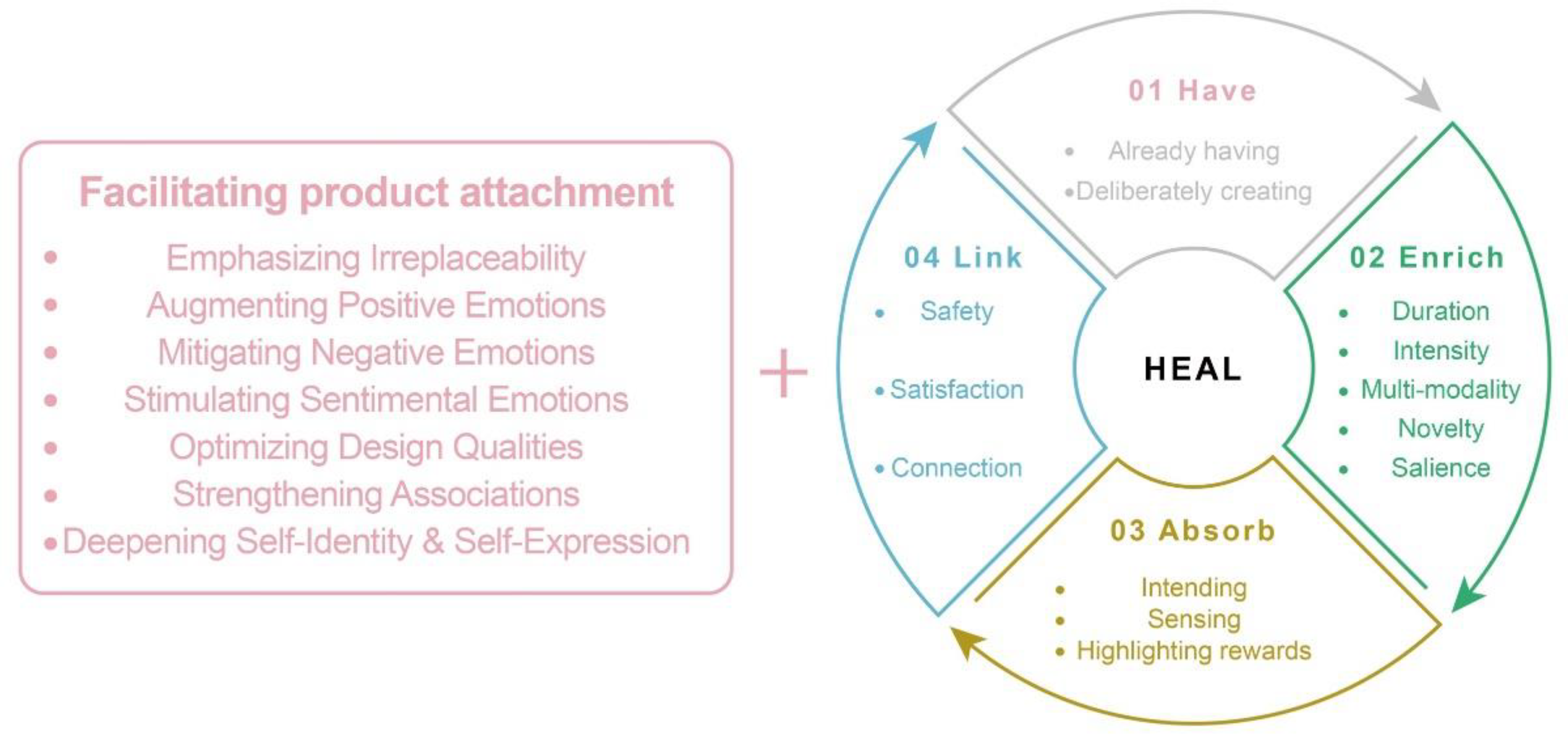
Figure 3.
Attachment-driven PED Model.
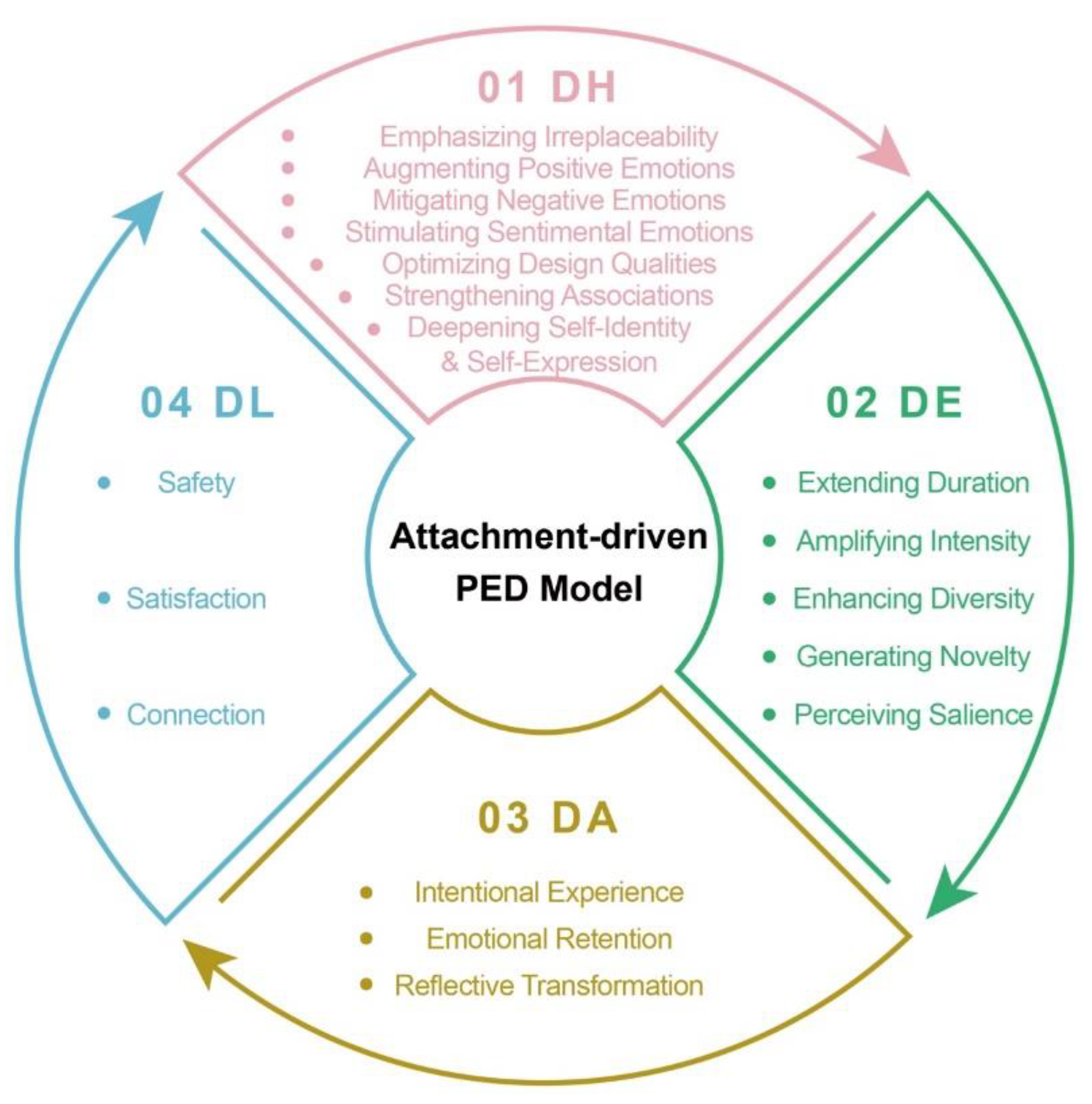
Figure 4.
The card of the DH phase.
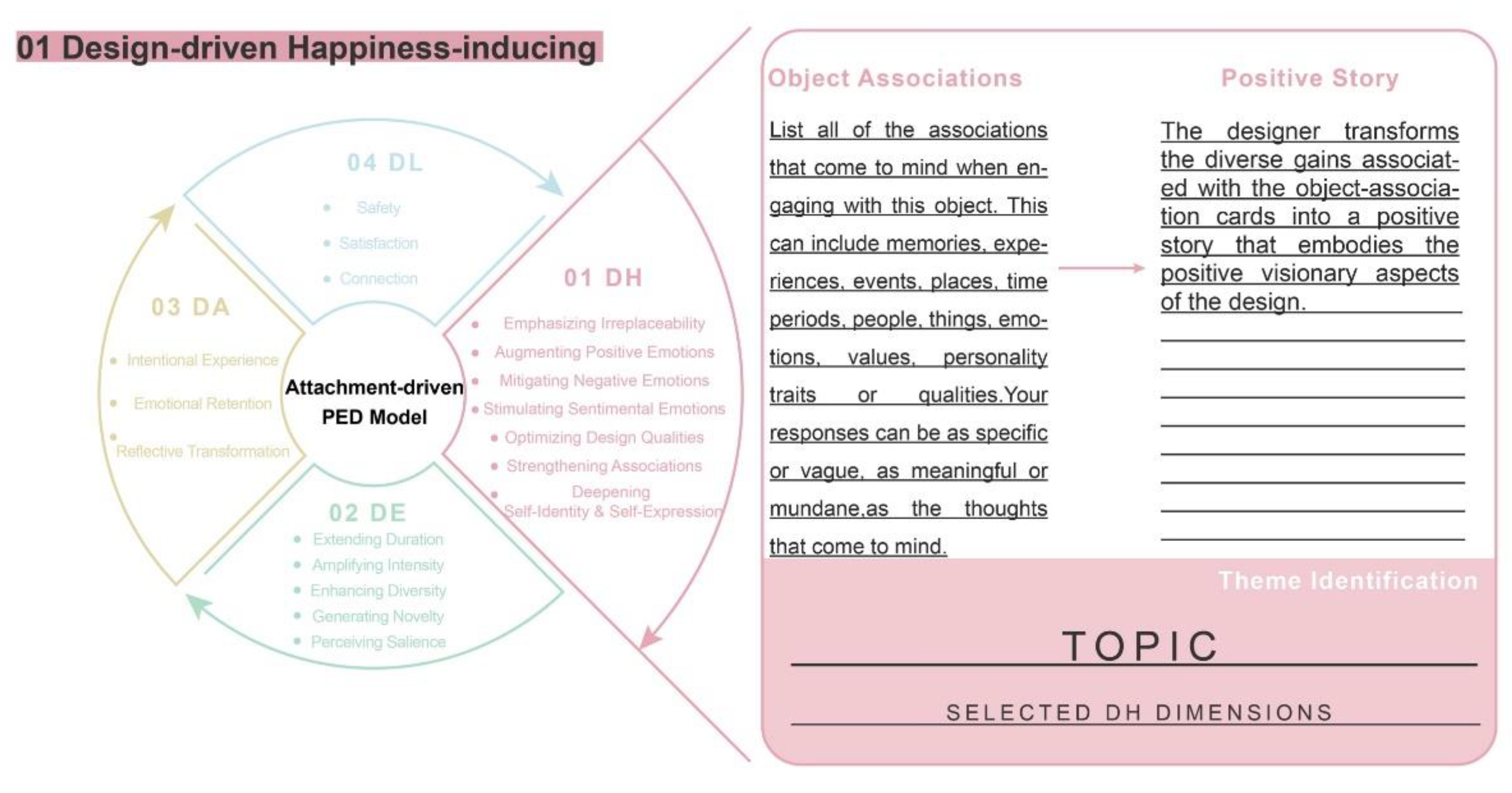
Figure 5.
The card of the DE phase.
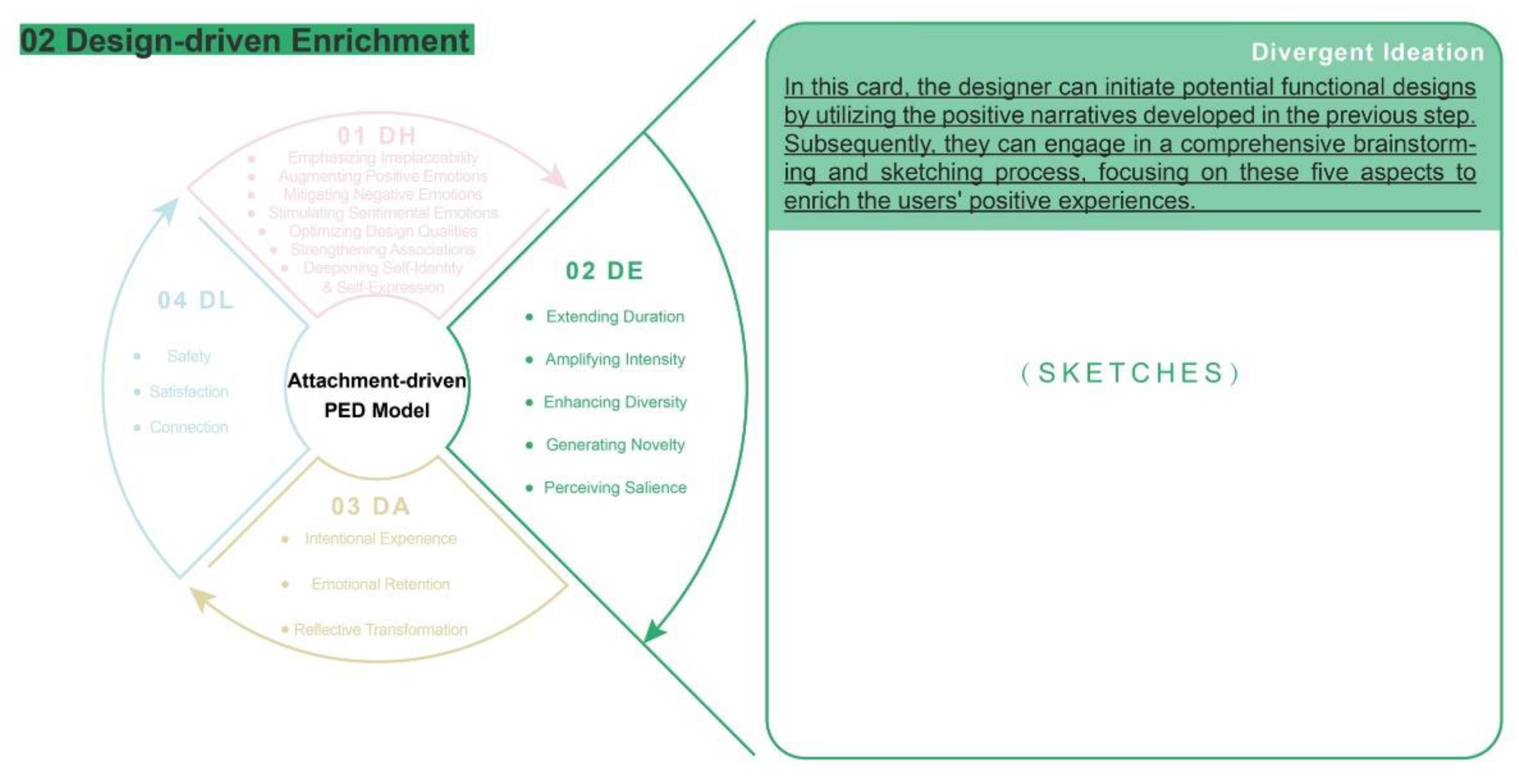
Figure 6.
The card of the DA phase.
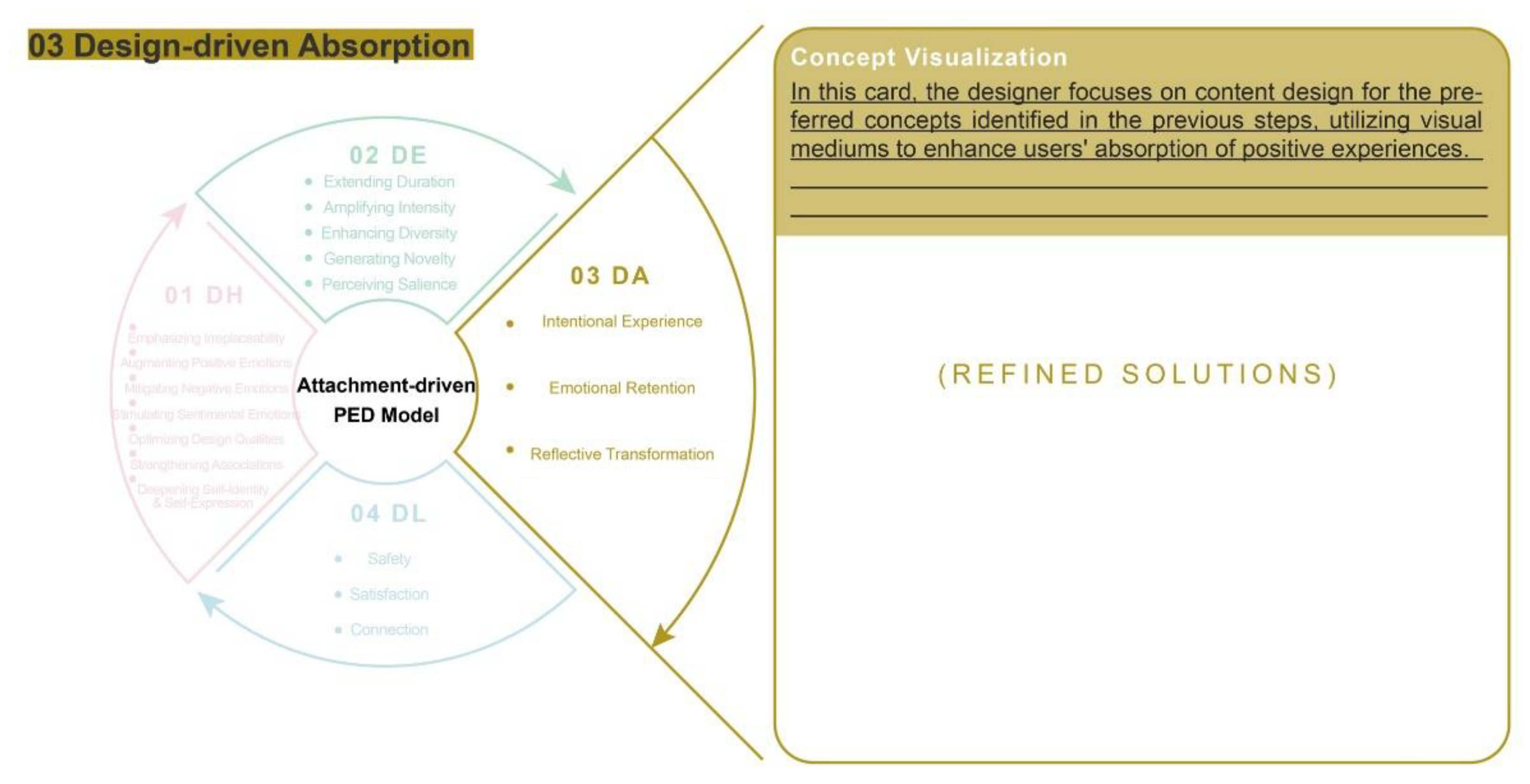
Figure 7.
The card of the DL phase.
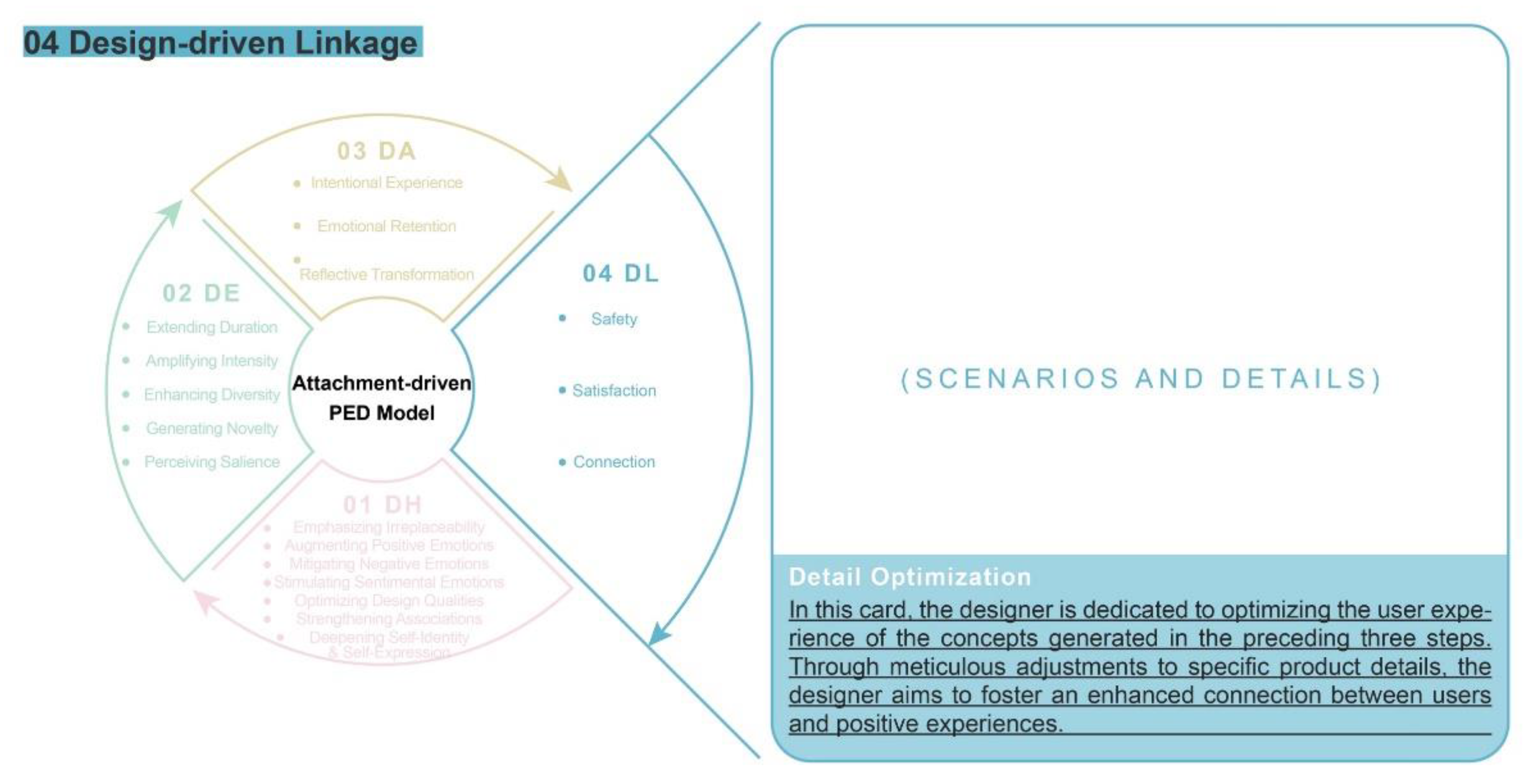
Figure 8.
Integration framework of the attachment-driven PED model.
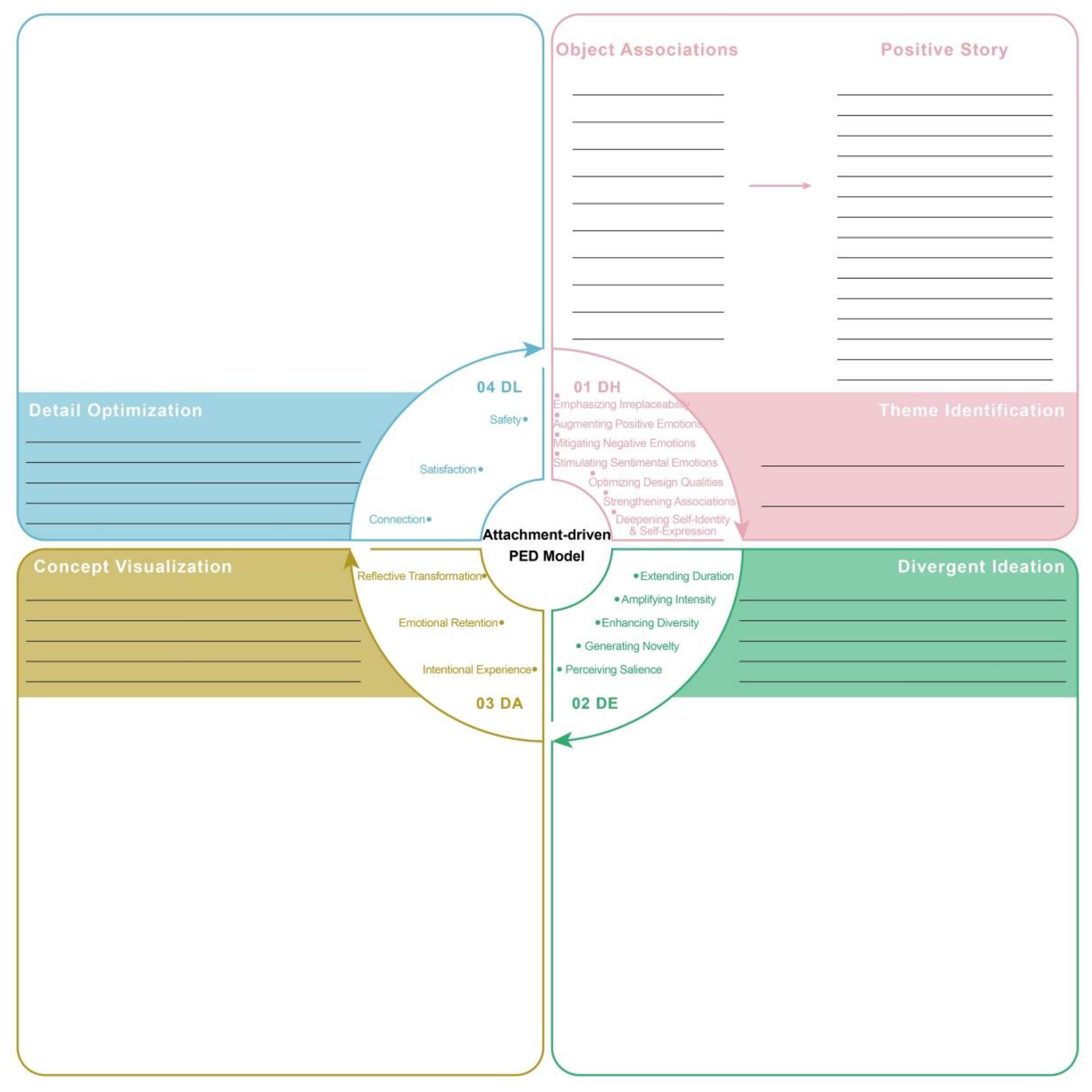
Figure 9.
The design framework of the ‘PATHFINDER’.
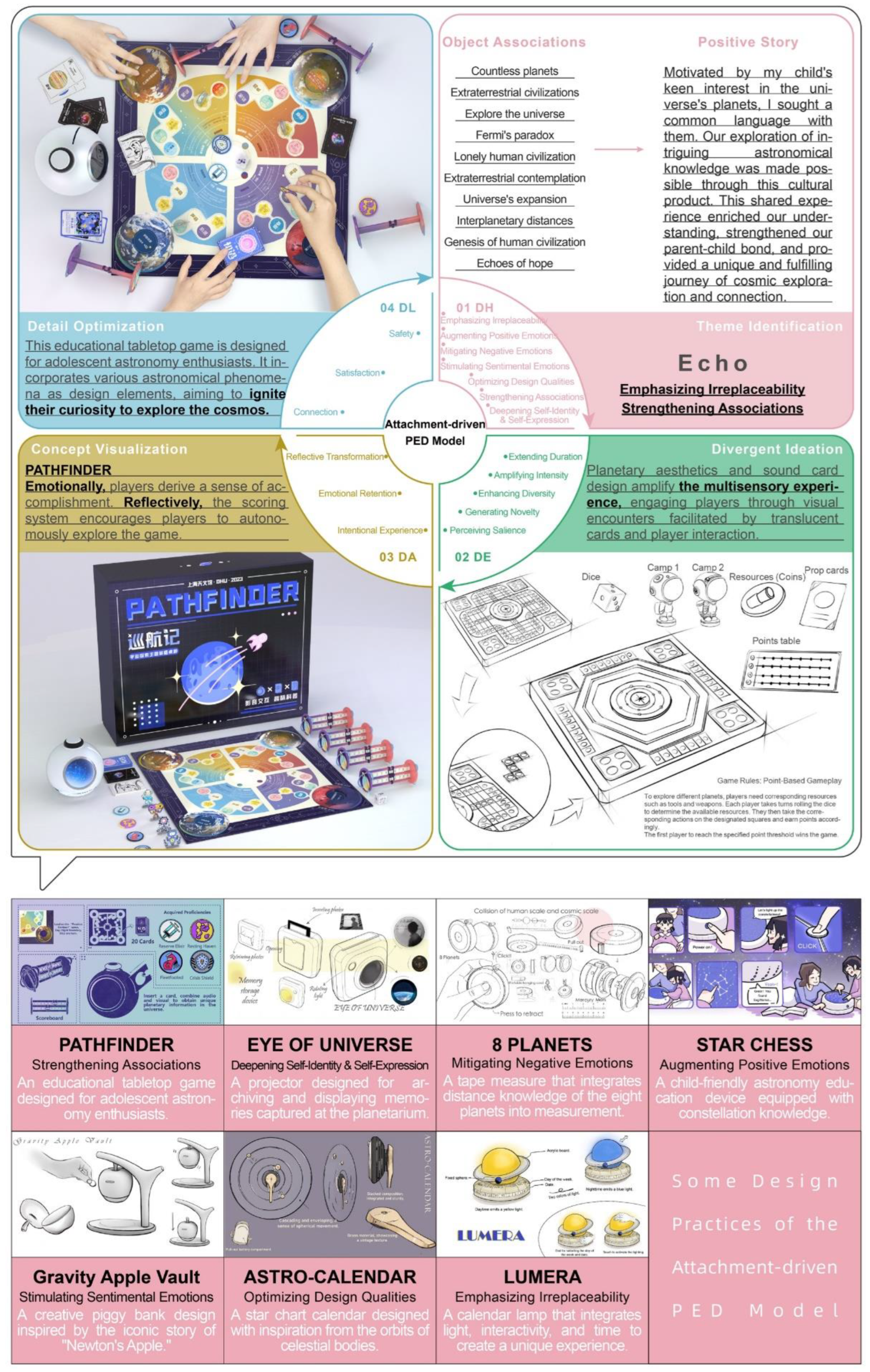

Table 1.
The related literature on PED.
| Sub-directions | Authors | Year | Contributions |
|---|---|---|---|
| Promoting positive perceptions | Norman [14] | 2009 | This study highlighted the importance of memory over actuality and urged to design for memory in enhancing positive experiences. |
| Zimmerman [15] | 2009 | The study proposed the application of attachment theory to the interaction design of products to effectively help people become the person they desire to be. | |
| Desmet et al. [16] | 2020 | A design-focused typology of psychological human needs was introduced, serving as a comprehensive repository of needs for user-centred design research. | |
| Enriching positive experiences | Wu [17] | 2022 | Several detailed models and pathways for PED were proposed based on extensive research in product service design. |
| Wu et al. [18] | 2023 | An impact-centred, sustainable, PED model was formulated to empower designers in generating design concepts with enduring impact. | |
| Improving user behaviour | Wiese et al. [6] | 2020 | A multi-stage design framework model was devised to leverage technology and guide the IT industry in designing activities that fostered sustained well-being. |
| Peng et al. [19] | 2021 | Eye-tracking experiments showed that local positive emotion interface design improved learning effectiveness over holistic and neutral layouts. | |
| Cultivating positive thinking | Hanson [7] | 2013 | The book integrated insights from modern neuroscience, positive psychology, evolutionary biology and clinical practice, resulting in the HEAL framework for internalising positive experiences. |
| Jacob [20] | 2016 | The application of the HEAL framework in the intervention of depression treatment for adolescent girls demonstrated its positive effect on therapy. | |
| Hanson [8] | 2023 | The study explored the utility of the HEAL framework in creating the TGC course and emphasised its contribution to improving intrinsic strength, as assessed through comprehensive self-report measures. |
Table 2.
Dimensions and Explanations of the DH Phase.
| Attachment Factors | Dimensions of DH | Explanations |
|---|---|---|
| Irreplaceability1 | Emphasising Irreplaceability | Design is intimately associated with special significance, leading users to perceive it as irreplaceable. |
| Positive Emotions1 | Augmenting Positive Emotions | User-design interactions have the potential to enhance positive emotional perceptions, including happiness, enjoyment and satisfaction. |
| Negative Emotions1 | Mitigating Negative Emotions | User-design interactions can also alleviate or eliminate negative emotional perceptions, such as disappointment, guilt and fear. |
| Sentimental Emotions1 | Stimulating Sentimental Emotions | Design stimulates users to experience a rich array of emotional perceptions, often intertwined with sentimentality, loss and sadness. |
| Design & Material Qualities1 | Optimising Design Qualities | The aesthetic value and material quality of the design engender a sense of value and even surpass users’ expectations. |
| Active Associations to People & Relatedness1 | Strengthening Associations | The design facilitates the establishment and consolidation of connections between users and others, encompassing sharing, collaboration and a sense of belonging. |
| Self-Identity & Self-Expression1 | Deepening Self-Identity & Self-Expression | Design serves as a means for users to express their individuality and can elicit a sense of identity. |
1 Source: Kowalski et al. [31].
Table 3.
Dimensions and Explanations of DE Phases.
| Memory Retention Factors | Dimensions of DE | Explanations |
|---|---|---|
| Duration* | Extending Duration | Product experience perception is prolonged in duration and frequency. |
| Intensity* | Amplifying Intensity | Product experience perception is intensified, deepening impressions. |
| Multi-modality* | Enhancing Diversity | Product experience perception is diversified, creating a sense of immersion. |
| Novelty* | Generating Novelty | Product experience perception incorporates unexpected or surprising elements. |
| Salience* | Perceiving Salience | Product experience perception enhances self-connection in expression. |
Table 4.
Dimensions and Explanations of DA Phases.
| Absorption Factors | Dimensions of DA | Explanations |
|---|---|---|
| Intending* | Intentional Experience | Creating distinctive imagery based on culture, history, audio-visual symbols, etc., to foster immersive or conscious experiences for users. |
| Sensing* | Emotional Retention | Enhancing emotional connection and retention through interactive user engagement. |
| Highlighting rewards * | Reflective Transformation | Encouraging user reflection and facilitating cognitive and behavioural changes through philosophical concepts. |
Table 5.
Dimensions and Explanations of DL Phases.
| Linkage Dimensions | Dimensions of DL | Explanations |
|---|---|---|
| Safety* | Safety | Integrating the product into the user experience to enhance safety by avoiding harm. |
| Satisfaction* | Satisfaction | Integrating the product into the user experience to increase satisfaction by approaching rewards. |
| Connection* | Connection | Integrating the product into the user experience enhances the sense of connection by attaching to others. |
Table 6.
Sub-objectives and Dimensions of the Attachment-driven PED Model.
| Phases | Sub-objectives | Design Dimensions |
|---|---|---|
| DH | Theme Identification | Emphasising Irreplaceability (X11), Augmenting Positive Emotions (X12), Mitigating Negative Emotions (X13), Stimulating Sentimental Emotions (X14), Optimising Design Qualities (X15), Strengthening Associations (X16), Deepening Self-Identity & Self-Expression (X17) |
| DE | Divergent Ideation | Extending Duration (X21), Generating Novelty (X22), Enhancing Diversity (X23), Perceiving Salience (X24), Amplifying Intensity (X25) |
| DA | Concept Visualisation | Reflective Transformation (X31), Emotional Retention (X32), Intentional Experience (X33) |
| DL | Detail Optimisation | Safety (X41), Satisfaction (X42), Connection (X43) |
Table 7.
Results for the USE questionnaire.
| Number | Items | Mean Value | Standard Deviation | Cronbach’s Alpha | KMO Measure |
|---|---|---|---|---|---|
| Usefulness | 5.202 | 1.242 | 0.853 | 0.744 | |
| UU1 | It helps me be more effective. | 5.353 | 1.098 | ||
| UU2 | It helps me be more productive. | 5.206 | 1.008 | ||
| UU3 | It is useful. | 5.971 | 0.937 | ||
| UU4 | It gives me more control over the activities in my life. | 5.088 | 1.240 | ||
| UU5 | It makes the things I want to accomplish easier to get done. | 5.147 | 1.234 | ||
| UU6 | It saves me time when I use it. | 5.000 | 1.155 | ||
| UU7 | It meets my needs. | 5.324 | 1.147 | ||
| UU8 | It does everything I would expect it to do. | 4.529 | 1.637 | ||
| Ease of use | 4.727 | 1.426 | 0.909 | 0.785 | |
| UE1 | It is easy to use. | 4.971 | 1.403 | ||
| UE2 | It is simple to use. | 4.794 | 1.366 | ||
| UE3 | It is user-friendly. | 5.265 | 1.377 | ||
| UE4 | It requires the fewest steps possible to accomplish what I want to do with it. | 5.147 | 1.234 | ||
| UE5 | It is flexible. | 4.853 | 1.329 | ||
| UE6 | Using it is effortless. | 4.353 | 1.574 | ||
| UE7 | I can use it without written instructions. | 3.647 | 1.390 | ||
| UE8 | I do not notice any inconsistencies as I use it. | 4.735 | 1.421 | ||
| UE9 | Both occasional and regular users would like it. | 4.706 | 1.426 | ||
| UE10 | I can recover from mistakes quickly and easily. | 4.912 | 1.264 | ||
| UE11 | I can use it successfully every time. | 4.606 | 1.391 | ||
| Ease of learning | 4.691 | 1.401 | 0.891 | 0.822 | |
| UL1 | I learned to use it quickly. | 4.676 | 1.532 | ||
| UL2 | I easily remember how to use it. | 4.412 | 1.373 | ||
| UL3 | It is easy to learn to use it. | 4.853 | 1.374 | ||
| UL4 | I quickly became skilful with it. | 4.824 | 1.336 | ||
| Satisfaction | 5.244 | 1.292 | 0.919 | 0.843 | |
| US1 | I am satisfied with it. | 5.382 | 1.206 | ||
| US2 | I would recommend it to a friend. | 5.382 | 1.280 | ||
| US3 | It is fun to use. | 5.206 | 1.095 | ||
| US4 | It works the way I want it to work. | 4.853 | 1.282 | ||
| US5 | It is wonderful. | 5.118 | 1.452 | ||
| US6 | I feel I need to have it. | 5.265 | 1.421 | ||
| US7 | It is pleasant to use. | 5.500 | 1.285 | ||
| Overall reliability of the questionnaire, as measured by Cronbach’s alpha coefficient, is 0.953 | |||||
UU = usefulness; UE = ease of use; UL = ease of learning; US = satisfaction.
Disclaimer/Publisher’s Note: The statements, opinions and data contained in all publications are solely those of the individual author(s) and contributor(s) and not of MDPI and/or the editor(s). MDPI and/or the editor(s) disclaim responsibility for any injury to people or property resulting from any ideas, methods, instructions or products referred to in the content. |
© 2024 by the authors. Licensee MDPI, Basel, Switzerland. This article is an open access article distributed under the terms and conditions of the Creative Commons Attribution (CC BY) license (http://creativecommons.org/licenses/by/4.0/).
Copyright: This open access article is published under a Creative Commons CC BY 4.0 license, which permit the free download, distribution, and reuse, provided that the author and preprint are cited in any reuse.