

Submitted:
01 February 2024
Posted:
02 February 2024
You are already at the latest version
Abstract
Angiotensin-converting enzyme (ACE) inhibitors are used primarily in the treatment of hypertension, heart failure, and in the acute phase of myocardial infarction. Lisinopril [N2-[(1S)-1-car-boxy-3-phenylpropyl]-L-lysyl-L-proline], enalapril [(S)-1-[N-[1-(ethoxycarbonyl)-3-phenylpropyl]-L-alanyl]-L-proline] and ramipril [2-aza-bicyclo-[3.3.0]-octane-3-carboxylic acid] are all five-membered heterocycles and three of the most prevalent ACE inhibitors in clinical use worldwide.
ACEi-induced angioedema (ACEi-AE) is clinically characterized by self-limited edema of the dermis and subcutaneous lipid tissue, localized on face skin, oral mucosa and tongue in most cases. However, severe episodes of intestinal AE misdiagnosed as acute appendicitis and laryngeal AE requiring incubation have been reported. The pathophysiology of ACEi induced-AE is attributed to the accumulation of bradykinin, which is a potent vasodilator with proinflammatory activity that is normally degraded by angiotensin-converting enzyme (ACE) and aminopeptidase P; however, a small proportion of treated patients is affected. Given that patients do not respond to anti-H1 antihistamines and steroids, the early clinical recognition and the ACEi discontinuation are the treatment of choice for the long term management of ACEi-AE.
Keywords:
angiotensin-converting enzyme(ACE)
; angiotensin-converting enzyme inhibitors (ACEi)
; angioedema
; bradykinin mediated angioedema
; tratement of ACEi induced AE
2 1st Department of Dermatology and Venereology, National and Kapodistrian University of Athens, ‘Andreas Syggros’ Hospital
3 2nd Dpt of Dermatology and Venereology, National and Kapodistrian University of Athens, University General Hospital ‘Attikon’
1. Introduction
Nitrogen heterocycles play a pivotal role in the design and development of pharmaceutical agents, particularly in the field of angiotensin converting enzyme (ACE) inhibitors.[1] The ACE inhibitors (ACEIs) are crucial components in the management of arterial hypertension and various cardiovascular conditions.[2] Among these inhibitors, a class of compounds with five-membered nitrogen heterocycles has garnered significant attention for their pharmacological properties, with enalapril [(S)-1-[N-[1-(ethoxycarbonyl)-3-phenylpropyl]-L-alanyl]-L-proline], ramipril [2-aza-bicyclo-[3.3.0]-octane-3-carboxylic acid] and lisinopril [N2-[(1S)-1-car-boxy-3-phenylpropyl]-L-lysyl-L-proline] representing the most prevalent ACE inhibitors in clinical use. These nitrogen-containing rings contribute to the structural diversity and bioactivity of ACE inhibitors, influencing their efficacy in modulating the renin-angiotensin-aldosterone system.[3]
However, these medications, are not without their complexities, and a lesser-known but potentially serious side effect has been emerging – angioedema induced by five-membered nitrogen heterocycles ACE inhibitors (ACEi-AE). [4] ACE inhibitors are the leading course of drug induced angioedema in the USA.[5] ACEIs induce angioedema in 0.1-0.7% of the recipients and although the rate is relatively low, the wide use of these drugs with more than 40 million patients receiving them in daily basis worldwide, makes them the most common cause of drug-induced angioedema.[6,7,8] People of African descent are more susceptible in ACE inhibitors induced angioedema, with angioedema being up to five times more prevalent in this population.[9]
Angioedema manifests as an asymmetrical, nonpitting swelling in subcutaneous or submucosal tissues, typically impacting areas not dependent on gravity. In cases of angioedema induced by ACE inhibitors, a distinctive feature is the absence of itching or urticaria; the presence of urticaria indicates different underlying causes. The most affected regions in ACE inhibitor-induced angioedema include the lips, tongue, face, and upper airway. While the involvement of the intestine can result in acute abdominal pain accompanied by diarrhea or other gastrointestinal symptoms, this manifestation may not be as readily recognized. The specific reason why these particular anatomical sites are more susceptible to involvement remains unknown.[10] The exact mechanisms behind ACE inhibitor-induced angioedema are complex and not fully understood. The pathophysiology of ACE induced-AE is attributed to the accumulation of bradykinin, which is a potent vasodilator with proinflammatory activity that is normally degraded by angiotensin-converting enzyme (ACE), aminopeptidase P(APP), neutral endopeptidase (NEP), dipeptidyl peptidase-4(DDP-4) and kininase I. The five-membered nitrogen heterocycles in certain ACE inhibitors may enhance bradykinin release, leading to increased vascular permeability and subsequent angioedema.[11]
The present review aims to shade light on this underdiagnosed, although potential life-threatening condition focusing on its clinical presentation, pathophysiology, risk factors, differential diagnosis, prognosis, and potential treatment.
2. Clinical Presentation
Angioedema is characterized by an asymmetrical, non-pitting swelling in subcutaneous or submucosal tissues, predominantly affecting areas not influenced by gravity. [12] When triggered by ACE inhibitors, a notable feature is the absence of itching or urticaria, with the presence of urticaria suggesting diverse underlying causes. [13] ACE inhibitor-induced angioedema typically impacts the lips, tongue, face, and upper airway. [14] Although the involvement of the intestine can lead to acute abdominal pain, diarrhea, or other gastrointestinal symptoms, this manifestation might not be immediately discernible. [15] Additionally, there have been rare cases of laryngeal angioedema requiring intubation.[14]
Although episodes of AE occur spontaneously and episodically, the pattern of AE follows a relatively predictable course with swelling of the affected areas occurring over minutes to hours and then resolving during the next 24-72 hours, with a complete resolution usually during 5 days or more. [5] If the episode of AE is not recognized or not attributed to ACEi despite its remission, both the recurrence’ rate and the severity of the subsequent episodes are unpredictable.[16]
3. Time of Onset of AE
While ACE inhibitors–induced angioedema can occur at any point during the treatment course, with an incidence of 1 in 1000 cases, more than 50% of cases tend to manifest within the first week. [6,17] A substantial retrospective study revealed that over two-thirds of angioedema episodes occurred within the first trimester of ACE inhibitor treatment initiation.[18] Notably, case reports highlight instances of angioedema occurring several years after treatment initiation, particularly with enalapril, where AE occurrence has been reported 9 and 23 years after treatment onset, even in patients without known risk factors.[19,20] Similarly, lisinopril-induced angioedema after 11 years of treatment has been stated.[21]
While ACE inhibitors–induced angioedema can occur at any point during the treatment course, with an incidence of 1 in 1000 cases, more than 50% of cases tend to manifest within the first week. [6,17] A substantial retrospective study revealed that over two-thirds of angioedema episodes occurred within the first trimester of ACE inhibitor treatment initiation.[18] Notably, case reports highlight instances of angioedema occurring several years after treatment initiation, particularly with enalapril, where AE occurrence has been reported 9 and 23 years after treatment onset, even in patients without known risk factors.[19, 20] Similarly, lisinopril-induced angioedema after 11 years of treatment has been stated.[21]
4. Suggested Mechanisms
a. The role of ACE in Renin Angiotensin Aldosterone pathway and degradation of bradykinin
ACE, also referred to as kininase II, typically functions by converting angiotensin I to angiotensin II in response to decreased blood pressure. Angiotensin II, in turn, affects various pathways, resulting in elevated blood pressure. ACE inhibitors (ACEIs) mitigate blood pressure by intervening in multiple pathways.
Specifically, ACE inhibitors hinder the enzyme ACE, lowering blood pressure by impeding ACE function and reducing angiotensin II levels. They impact both the renin-angiotensin-aldosterone (RAA) pathway and the degradation of bradykinin. The RAA cascade manages renal blood flow and blood pressure, involving the conversion of angiotensinogen to angiotensin I by renin in the kidney. Subsequently, the enzyme ACE in the lungs metabolizes angiotensin I into angiotensin II, a vasoconstrictor that activates angiotensin I and II receptors.[22]
Initially, inhibition of angiotensin II production leads to vasodilation. In addition, impaired metabolism of bradykinin, an inflammatory vasoactive peptide that induces vasodilation of blood vessels primarily by acting on bradykinin 2 receptors, leads to the elevation of its levels and its breakdown products named des-Arg-BK. This results in increasing release of nitric oxide and prostaglandins, resulting in vasodilation and thus, hypotension.[23,24]
b. The Role of ACEi in AE
The clinical manifestations of ACE inhibitor-induced angioedema are associated with elevated levels of bradykinin. ACE is the primary peptidase involved in bradykinin degradation. Bradykinin, a nine-amino-acid peptide, enhances capillary permeability and acts as a potent vasodilator. Bradykinin production occurs following the cleavage of the high molecular weight kininogen (HMWK) by kallikrein, resulting in the active form of bradykinin, (Figure 1) [11,25].
Bradykinin is primarily metabolized by ACE, neutral endopeptidase (NEP), and aminopeptidase P (APP), and secondarily by dipeptidyl peptidase-4 (DPP-4) and kininase I; thus it has a brief half-life of approximately 17 seconds. Des-Arg9-BK, an active bradykinin metabolite, is primarily formed due to the kininase I enzyme. The pharmacological activities of des-Arg9-BK are short-lived due to breakdown by ACE and APP (Figure 1) [10].
ACE inhibitor-induced angioedema is believed to result from defective degradation of at least three vasoactive peptides: bradykinin, des-Arg9-BK (a bradykinin metabolite), and substance P.[11] Normally, bradykinin is inactivated by ACE, APP, DPP-4, and NEP, as mentioned earlier. The APP-inactivated bradykinin metabolite, des-Arg9-BK, is also degraded by DPP-4. Substance P is primarily inactivated by the enzyme DPP-4, with ACE and NEP playing secondary roles. A decreased activity of DPP-4 correlated with a prolonged half-life of substance P, but only in the presence of ACE inhibition, suggesting a requirement for multiple enzyme defects to inhibit degradation. [26]
When drug therapy inhibits ACE, the secondary bradykinin metabolic enzymes (APP, kininase I, NEP, and DPP-4) assume a relatively larger role in degrading bradykinin, des-Arg9-BK, and substance P. Thus, defects or deficiencies of these enzymes theoretically predispose patients to developing angioedema when taking an ACE inhibitor. In line with these mechanisms are data from a study that demonstrates decreased APP activity in the sera of 39 patients with a history of ACE inhibitor-induced angioedema, compared with 39 ACE inhibitor-exposed controls.[27] Additionally, about half of patients experiencing ACE inhibitor-induced angioedema also have an enzyme defect involved in des-Arg9-BK metabolism, leading to its accumulation when ACE is inhibited. [28] In addition, during an episode of angioedema due to the use of the ACE inhibitor captopril, case reports showed a 10-fold increase in bradykinin levels returning to normal levels during remission.[29]
In essence, elevated bradykinin levels trigger vasodilation and heightened vascular permeability in the postcapillary venules, facilitating plasma extravasation into the submucosal tissue, ultimately resulting in angioedema.
5. Risk Factors
Not all individuals initiating ACE inhibitor treatment will develop angioedema, and various risk factors, both genetic and exposome-related, play a role in influencing its occurrence in predisposed individuals.
People of African descent face an increased risk of ACE inhibitor-induced angioedema, experiencing up to five times more frequent episodes. [30,31] Certain polymorphisms in genes encoding aminopeptidase P (APP) and neutral endopeptidase (NEP), more prevalent in this population, may lead to lower enzyme levels.[27] Studies investigating genetic factors associated with ACE inhibitor-induced angioedema have identified polymorphisms in the X-Prolyl Aminopeptidase 2 (XPNPEP2) gene, responsible for encoding the APP enzyme. This enzyme contributes to bradykinin degradation, and when ACE is inhibited, APP assumes a more central role. Polymorphisms can reduce enzyme activity, increasing susceptibility to ACE inhibitor-induced angioedema. [32] Given that XPNPEP2 is located on the X-chromosome, this association is more evident in men than in women, who might possess a normal copy of the gene. [33] Additionally, polymorphisms in exons and regulatory regions may decrease APP enzyme activity. [34] Other genetic and exposome factors contribute to angioedema presentation, as not all individuals with low APP levels and ACE inhibitor therapy will develop angioedema.[35] Maroteau et al. utilized whole exposome sequencing for the first time and identified an association between factor V (F5) variants, involved in blood coagulation, and ACE inhibitor-induced angioedema. Similar mutations on Factor 5(F5), akin to those associated with Hereditary Angioedema type III (HAE III), may increase prekallikrein enzyme activity, leading to elevated bradykinin production.[36]
Besides genetic factors, the OCTAVE study proposed female sex, seasonal allergies, age above 65 years, a history of previous angioedema episodes, and NSAID use as potential risk factors for ACE inhibitor-induced angioedema.[31] Smoking has also been suggested as a risk factor. [37]
Furthermore, the use of mTOR inhibitors such as sirolimus and everolimus has been linked to an increased incidence of angioedema in patients receiving ACE inhibitors. One possible explanation is that immunosuppressants interfere with bradykinin metabolism by reducing dipeptidyl peptidase-4 (DDP4) enzyme activity[38]. Similarly, DDP4 inhibitors (gliptins) have been shown to cause a ninefold increased risk of angioedema when co-administered with ACE inhibitors.[39]
Patients with underlying angioedema attributed to C1 inhibitor deficiency or dysfunction, whether hereditary or acquired, develop bradykinin-mediated angioedema independently of ACE inhibitors. However, these patients may remain asymptomatic until exposed to ACE inhibitors. Consequently, it is recommended to prohibit the use of this drug category in such individuals.[40] Furthermore, ACE inhibitor-induced cough, a rather common and well-recognized side effect of ACE inhibitors, has been suggested as a risk factor for ACE inhibitor-induced angioedema.[40]
It is worth noting that diabetes mellitus is associated with a reduced risk of ACE inhibitor-induced angioedema. [41]
6. Diagnosis
The diagnosis of ACE inhibitor-induced angioedema (ACEI AE) is primarily based on clinical suspicion. The classical clinical presentation involves the presence of angioedema in characteristic anatomical sites, without accompanying hives, and unresponsiveness to antihistamines or corticosteroids in a patient undergoing ACE treatment. Discontinuation of ACE should be promptly initiated, and the episodes are expected to fade. However, the impact of discontinuation may only become evident after months, as recurrent episodes may occur for months after discontinuation.
Bradykinin-mediated angioedema is often over-diagnosed in patients treated with ACEIs. According to a study by Douillard et al., 41% of patients initially suspected of suffering from ACEI-induced angioedema were eventually diagnosed with mast cell-mediated angioedema after six months of ACEI discontinuation.[42]
In terms of laboratory testing, there are no definitive tests for diagnosing ACEI-induced angioedema. However, if an alternative diagnosis is suspected, such as a family history of angioedema, a history of malignancy, or a lymphoproliferative disorder, measuring C4 levels is a reasonable, first-line, approach. Low levels may indicate the need for further evaluation, including C1 levels and function, as well as C1q (Table 1) [12].
Differentiating ACEI-AE from other forms of angioedema, especially those mediated by bradykinin, demands meticulous consideration. Moreover, healthcare professionals should possess the ability to distinguish between bradykinin-mediated AE and mast cell-mediated AE, recognizing their distinct subtypes that necessitate varied management approaches and present different prognoses.
Mast cell-mediated versus Bradykinin-mediated AE
The Differential diagnosis between bradykinin-mediated and mast cell-mediated angioedema can be challenging due to the common presentation of these conditions. Since both treatment and clinical course of mast cell mediated angioedema and bradykinin mediated angioedema are totally different, the definite diagnosis of these two entities is of great importance.[43] Mast cell mediated angioedema can be either IgE dependent (Type I hypersensitivity reaction based on Gell and Coombs classification) or non-IgE mediated (direct mast cell and basophil activation, disruption of arachidonic acid pathway). Chronic Urticaria, a common disease with reported prevalence 1-2 % in the general population, manifests with AE as sole manifestation in 10% of patients while angioedema co-exists with wheals and urticarial lesions in approximately 50%-60%.[44,45,46] AE is more common in Chronic Spontaneous Urticaria (CSU) than in inducible Urticaria(CIndU). [47] AE in CSU has been associated with longer disease duration and higher disease burden.[48]
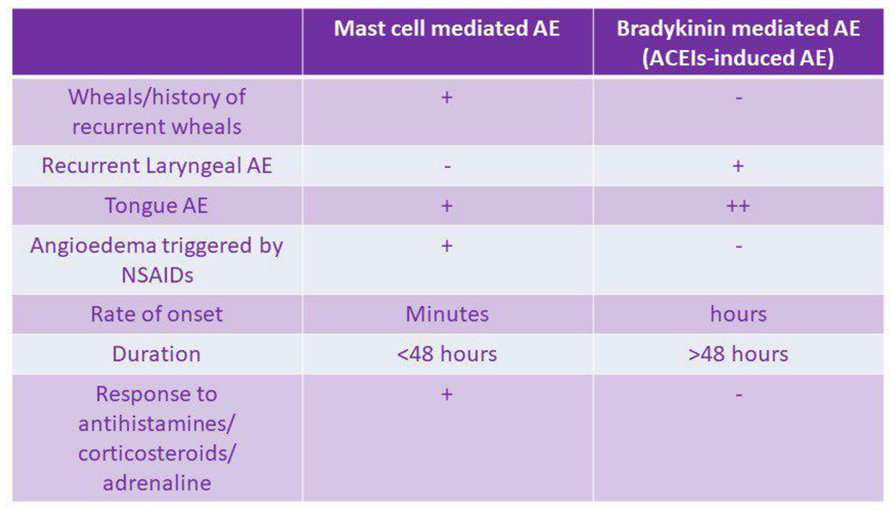
Mast cell induced angioedema is rapid in onset and it has a duration of usually less than 48 hours, accompanied by pruritus in most cases; the presence of wheals is quite often. Antihistamines, corticosteroids and adrenaline-in the presence of anaphylaxis- are the treatment of choice in this type of AE.[49] In contrary, bradykinin mediated AE has a slower onset, usually it develops gradually during hours, and lasts more than 48-72 hours. Pruritus may be absent and pain or burning sensation, tickling or pain are more often.[50]In addition, vomiting and diarrhea along with severe abdominal pain may be present in bradykinin mediated angioedema. Antihistamines, corticosteroids and adrenaline usually are ineffective in this type of angioedema (Table 2) [51]. Novel assays are emerging to distinguish between histamine-mediated and bradykinin-mediated AE, with threshold-stimulated kallikrein activity being suggested as a potential marker for this purpose.[52] In a small-scale study comparing HAE, ACEI AE, and CSU AE, Tie-2 a tyrosine kinase receptor known as endothelial growth factor receptor, was identified as a promising new biomarker candidate for HAE. FAP-α and tPA may function as markers for AE in general, while sE-selectin and Ang-2 were found to be increased only in BK-AE. [53].
7. Management
The initial approach in managing ACEI AE involves discontinuing the drug and, in cases of laryngeal AE, providing acute airway management. As mentioned above, AE typically resolves within 24-72 hours; however, if ACEIs are continued, attacks may escalate in severity, posing potential dangers and life-threatening risks. Therefore, despite the lack of proven efficacy, exploring potential treatments is valuable in the management of ACEi AE.
-Fresh frozen plasma (FFP)
Administration of FFP is thought to decrease bradykinin levels as it contains ACE and other enzymes contributing in degradation of bradykinin.[54] It is suggested that two units of plasma are adequate to resolve AE within 2 to 4 hours.[55] However, it's important to note that besides ACE, FFP also contains HMWK and kallikrein, which might lead to bradykinin formation. This could potentially explain the rare instances of AE worsening following FFP administration. [56]
-Icatibant
Icatibant, an antagonist of bradykinin B2 receptors approved for treating HAE, has shown promise in ACEi-AE based on case reports indicating significant symptom resolution upon its administration in ACEi-AE cases. [57,58] A randomized study by Bas et al. further supported the use of icatibant over antihistamines or corticosteroids in ACEI-induced AE, revealing a median time to resolution of 8 hours compared to 27.1 hours, respectively.[59] However, two other randomized studies failed to replicate these results, thus leading to a debate on the efficacy of icatibant in ACEi AE.[60,61]
-Ecallantide
Ecallantide, acting as a plasma kallikrein inhibitor, reduces the production of bradykinin. In a triple-blind, placebo-controlled trial comparing ecallantide to conventional therapy with a placebo, the primary endpoint focused on eligibility for discharge within 4 hours of treatment. Ecallantide and the placebo both met the primary endpoint in 31% and 21% of patients, respectively, suggesting some treatment benefit with ecallantide. [62] However, in another randomized, double-blind, controlled trial involving the administration of a single subcutaneous dose of ecallantide, there was no significant reduction in time to discharge compared to the placebo[63].
-C1 inhibitor concentrate
The fundamental abnormality in hereditary angioedema (HAE) types I and II lies in the deficiency of functional C1 inhibitor, a regulator of multiple proteases in the complement, contact system, coagulation, and fibrinolytic pathways. HAE can be effectively treated with administration of C1 esterase inhibitor.[10] It is assumed that, through its inhibitory action on contact system and kallikrein-mediated bradykinin generation, C1INH would downregulate the kinin generation and facilitate overall bradykinin removal. [64] Positive results from some case reports support the use of C1 esterase inhibitor in ACE inhibitor-induced AE, although its application remains controversial. [65,66] In a proof-of-concept case series by Greve et al., C1 inhibitor reduced the time to complete symptom resolution to 10.1 hours, compared to the standard of care with antihistamines and corticosteroids, which took 33.1 hours. None of the patients treated with C1 inhibitor required intubation, while in the control group, three needed tracheotomy, and two required intubation.[67] However, in a double-blind, parallel-group, multicenter randomized placebo-controlled trial of adult patients with ACE inhibitor-induced angioedema with airway obstruction, patients were randomized 1:1 to single doses of either C1INH or placebo (0.9% NaCl) intravenously, in addition to standard care. Surprisingly, the C1INH treatment was found to be inferior in the treatment of ACE inhibitor-induced angioedema compared to placebo, specifically concerning the time to complete resolution of symptoms (29.63 h ± 15.56 h in the C1INH arm and 17.29 h ± 10.40 h in the placebo arm).[68]
Further studies will be needed to demonstrate whether C1 inhibitor can be used effectively in ACEi-AE.
8. Prognosis
The primary approach in managing ACE inhibitor-induced angioedema (ACEi AE) is the prompt discontinuation of the drug, requiring early recognition and a high level of suspicion. Typically, angioedema resolves within 24-72 hours. Continuing the drug poses an increased risk of life-threatening attacks. It is crucial to note that angioedema may recur even after discontinuing ACE inhibitors, persisting for months.
In a comprehensive long-term follow-up involving 111 patients with ACE-related angioedema, 46% experienced further episodes post discontinuation of ACE inhibitors. Notably, a substantial 88% reported a recurrence of angioedema within the initial month after treatment cessation, with only 2% experiencing an episode after three months of discontinuation. This underscores the importance of vigilance and ongoing monitoring even after ACE inhibitor discontinuation.[69]
9. Future Perspectives: Related Drugs and AE
The exploration of alternative drug options for patients experiencing ACE inhibitor-induced angioedema (ACEi AE) presents an intriguing path for future research. Angiotensin II receptor blockers (ARBs), known for their cardioprotective effects like ACE inhibitors, have drawn attention in this context. While earlier systematic reviews indicated an increased frequency of angioedema in patients transitioning from ACE inhibitors to ARBs, [70,71] recent studies have shown a lower incidence of angioedema in those specifically receiving ARBs.[72] It is important to consider that patients with a history of ACEi AE may undergo recurrent episodes during the period following ACE inhibitor discontinuation, potentially influencing the observed outcomes when starting ARBs. Large-scale studies, however, consistently demonstrate a reduced incidence of angioedema in patients receiving ARBs compared to other antihypertensive medications.[73] Another intriguing aspect is the potential association between angioedema and dipeptidyl peptidase-4 (DPP-4) inhibitors, commonly referred to as gliptins. These medications are commonly used in the management of type 2 diabetes. While the prevalence of DPP-4 inhibitor-induced angioedema is not well-established, these drugs are frequently prescribed alongside ACE inhibitors. This raises the possibility that angioedema could be attributed to the use of gliptins alone or in combination with ACE inhibitors. The underlying mechanism involves DPP-4 being one of the enzymes responsible for bradykinin degradation, and inhibiting these enzymes in susceptible individuals may lead to the manifestation of angioedema. Further exploration of these scenarios is warranted to enhance our understanding of potential alternatives in the management of ACEi AE.[74]
10. Conclusions
In conclusion, nitrogen heterocycles play a crucial role in the design of pharmaceutical agents, particularly in the development of angiotensin converting enzyme (ACE) inhibitors, which are essential for managing hypertension and cardiovascular conditions. However, these medications pose a less-known yet serious risk of angioedema induced by five-membered nitrogen heterocycles.
The clinical presentation, pathophysiology, and treatment options for ACE inhibitor-induced angioedema are of great importance as this side effect can be underdiagnosed and potentially life threatening. Recognition of risk factors, including genetic considerations, is crucial, and despite diagnostic challenges, prompt discontinuation of ACE inhibitors remains the primary intervention. Management strategies, such as fresh frozen plasma, icatibant, ecallantide, and C1 ινηιβιτορ concentrate, are explored. Looking forward, alternative drug options like angiotensin II receptor blockers and the potential association of DPP-4 inhibitors with ACE inhibitor-induced angioedema are considered. There is an urgent need for clinicians to differentiate this condition from other forms of angioedema, particularly mast cell-mediated types as early recognition and long-term monitoring for a condition that may recur even after discontinuation of ACE inhibitors is crucial.
Overall, ACEI AE although underdiagnosed it is a potentially life-threatening aspect of cardiovascular medication widely used in a large proportion of patients worldwide.
References
- Arora, P.; Arora, V.; Lamba, H.; Wadhwa, D. Importance of heterocyclic chemistry: a review. International Journal of Pharmaceutical Sciences and Research. 2012, 3, 2947. [Google Scholar]
- Williams, B.; Mancia, G.; Spiering, W.; Agabiti Rosei, E.; Azizi, M.; Burnier, M.; et al. 2018 ESC/ESH Guidelines for the management of arterial hypertension. Eur Heart J. 2018, 39, 3021–3104. [Google Scholar] [CrossRef] [PubMed]
- Heravi, M.M.; Zadsirjan, V. Prescribed drugs containing nitrogen heterocycles: an overview. RSC Adv. 2020, 10, 44247–44311. [Google Scholar] [CrossRef] [PubMed]
- Faisant, C.; Armengol, G.; Bouillet, L.; Boccon-Gibod, I.; Villier, C.; Lévesque, H.; et al. Angioedema Triggered by Medication Blocking the Renin/Angiotensin System: Retrospective Study Using the French National Pharmacovigilance Database. J Clin Immunol. 2016, 36, 95–102. [Google Scholar] [CrossRef] [PubMed]
- Banerji, A.; Clark, S.; Blanda, M.; LoVecchio, F.; Snyder, B.; Camargo, C.A., Jr. Multicenter study of patients with angiotensin-converting enzyme inhibitor-induced angioedema who present to the emergency department. Ann Allergy Asthma Immunol. 2008, 100, 327–332. [Google Scholar] [CrossRef] [PubMed]
- Banerji, A.; Blumenthal, K.G.; Lai, K.H.; Zhou, L. Epidemiology of ACE Inhibitor Angioedema Utilizing a Large Electronic Health Record. J Allergy Clin Immunol Pract. 2017, 5, 744–749. [Google Scholar] [CrossRef] [PubMed]
- Garcia-Saucedo, J.C.; Trejo-Gutierrez, J.F.; Volcheck, G.W.; Park, M.A.; Gonzalez-Estrada, A. Incidence and risk factors of angiotensin-converting enzyme inhibitor-induced angioedema: A large case-control study. Ann Allergy Asthma Immunol. 2021, 127, 591–592. [Google Scholar] [CrossRef]
- Messerli, F.H.; Nussberger, J. Vasopeptidase inhibition and angio-oedema. Lancet. 2000, 356, 608–609. [Google Scholar] [CrossRef]
- Gibbs, C.R.; Lip, G.Y.; Beevers, D.G. Angioedema due to ACE inhibitors: increased risk in patients of African origin. Br J Clin Pharmacol. 1999, 48, 861–865. [Google Scholar] [CrossRef]
- Busse, P.J.; Christiansen, S.C. Hereditary Angioedema. N Engl J Med. 2020, 382, 1136–1148. [Google Scholar] [CrossRef]
- Kaplan, A.P.; Ghebrehiwet, B. The plasma bradykinin-forming pathways and its interrelationships with complement. Mol Immunol. 2010, 47, 2161–2169. [Google Scholar] [CrossRef]
- Maurer, M.; Magerl, M.; Betschel, S.; Aberer, W.; Ansotegui, I.J.; Aygören-Pürsün, E.; et al. The international WAO/EAACI guideline for the management of hereditary angioedema-The 2021 revision and update. Allergy. 2022, 77, 1961–1990. [Google Scholar] [CrossRef] [PubMed]
- Kanani, A.; Schellenberg, R.; Warrington, R. Urticaria and angioedema. Allergy Asthma Clin Immunol. 2011, 7 (Suppl. 1), S9. [Google Scholar] [CrossRef] [PubMed]
- Grant, N.N.; Deeb, Z.E.; Chia, S.H. Clinical experience with angiotensin-converting enzyme inhibitor-induced angioedema. Otolaryngol Head Neck Surg. 2007, 137, 931–935. [Google Scholar] [CrossRef] [PubMed]
- Bloom, A.S.; Schranz, C. Angiotensin-Converting Enzyme Inhibitor-Induced Angioedema of the Small Bowel-A Surgical Abdomen Mimic. J Emerg Med. 2015, 48, e127–e129. [Google Scholar] [CrossRef] [PubMed]
- Chiu, A.G.; Newkirk, K.A.; Davidson, B.J.; Burningham, A.R.; Krowiak, E.J.; Deeb, Z.E. Angiotensin-converting enzyme inhibitor-induced angioedema: a multicenter review and an algorithm for airway management. Ann Otol Rhinol Laryngol. 2001, 110, 834–840. [Google Scholar] [CrossRef] [PubMed]
- Slater, E.E.; Merrill, D.D.; Guess, H.A.; Roylance, P.J.; Cooper, W.D.; Inman, W.H.; et al. Clinical profile of angioedema associated with angiotensin converting-enzyme inhibition. Jama. 1988, 260, 967–970. [Google Scholar] [CrossRef] [PubMed]
- Toh, S.; Reichman, M.E.; Houstoun, M.; Ross Southworth, M.; Ding, X.; Hernandez, A.F.; et al. Comparative risk for angioedema associated with the use of drugs that target the renin-angiotensin-aldosterone system. Arch Intern Med. 2012, 172, 1582–1589. [Google Scholar] [CrossRef]
- Orr, K.K.; Myers, J.R. Intermittent visceral edema induced by long-term enalapril administration. Ann Pharmacother. 2004, 38, 825–827. [Google Scholar] [CrossRef]
- Howarth, D. ACE inhibitor angioedema - a very late presentation. Aust Fam Physician. 2013, 42, 860–862. [Google Scholar]
- Norman, J.L.; Holmes, W.L.; Bell, W.A.; Finks, S.W. Life-threatening ACE inhibitor-induced angioedema after eleven years on lisinopril. J Pharm Pract. 2013, 26, 382–388. [Google Scholar] [CrossRef] [PubMed]
- Goyal, A.; Cusick, A.S.; Thielemier, B.; ACE Inhibitors. StatPearls. Treasure Island (FL) ineligible companies. Disclosure: Austin Cusick declares no relevant financial relationships with ineligible companies. Disclosure: Blair Thielemier declares no relevant financial relationships with ineligible companies.: StatPearls Publishing Copyright © 2024, StatPearls Publishing LLC., 2024.
- Messerli, F.H.; Bangalore, S.; Bavishi, C.; Rimoldi, S.F. Angiotensin-Converting Enzyme Inhibitors in Hypertension: To Use or Not to Use? J Am Coll Cardiol. 2018, 71, 1474–1482. [Google Scholar] [CrossRef]
- Maurer, M.; Bader, M.; Bas, M.; Bossi, F.; Cicardi, M.; Cugno, M.; et al. New topics in bradykinin research. Allergy. 2011, 66, 1397–1406. [Google Scholar] [CrossRef] [PubMed]
- Magerl, M.; Bader, M.; Gompel, A.; Joseph, K.; Kaplan, A.P.; Kojda, G.; et al. Bradykinin in health and disease: proceedings of the Bradykinin Symposium 2012, Berlin 23-24 August 2012. Inflamm Res. 2014, 63, 173–178. [Google Scholar] [CrossRef]
- Byrd, J.B.; Adam, A.; Brown, N.J. Angiotensin-converting enzyme inhibitor-associated angioedema. Immunol Allergy Clin North Am. 2006, 26, 725–737. [Google Scholar] [CrossRef] [PubMed]
- Adam, A.; Cugno, M.; Molinaro, G.; Perez, M.; Lepage, Y.; Agostoni, A. Aminopeptidase P in individuals with a history of angio-oedema on ACE inhibitors. Lancet. 2002, 359, 2088–2089. [Google Scholar] [CrossRef] [PubMed]
- Molinaro, G.; Cugno, M.; Perez, M.; Lepage, Y.; Gervais, N.; Agostoni, A.; et al. Angiotensin-converting enzyme inhibitor-associated angioedema is characterized by a slower degradation of des-arginine(9)-bradykinin. J Pharmacol Exp Ther. 2002, 303, 232–237. [Google Scholar] [CrossRef] [PubMed]
- Nussberger, J.; Cugno, M.; Amstutz, C.; Cicardi, M.; Pellacani, A.; Agostoni, A. Plasma bradykinin in angio-oedema. Lancet. 1998, 351, 1693–1697. [Google Scholar] [CrossRef]
- Brown, N.J.; Ray, W.A.; Snowden, M.; Griffin, M.R. Black Americans have an increased rate of angiotensin converting enzyme inhibitor-associated angioedema. Clin Pharmacol Ther. 1996, 60, 8–13. [Google Scholar] [CrossRef]
- Kostis, J.B.; Kim, H.J.; Rusnak, J.; Casale, T.; Kaplan, A.; Corren, J.; et al. Incidence and characteristics of angioedema associated with enalapril. Arch Intern Med. 2005, 165, 1637–1642. [Google Scholar] [CrossRef]
- Woodard-Grice, A.V.; Lucisano, A.C.; Byrd, J.B.; Stone, E.R.; Simmons, W.H.; Brown, N.J. Sex-dependent and race-dependent association of XPNPEP2 C-2399A polymorphism with angiotensin-converting enzyme inhibitor-associated angioedema. Pharmacogenet Genomics. 2010, 20, 532–536. [Google Scholar] [CrossRef]
- Flaten, H.K.; Monte, A.A. The Pharmacogenomic and Metabolomic Predictors of ACE Inhibitor and Angiotensin II Receptor Blocker Effectiveness and Safety. Cardiovasc Drugs Ther. 2017, 31, 471–482. [Google Scholar] [CrossRef] [PubMed]
- Cilia La Corte, A.L.; Carter, A.M.; Rice, G.I.; Duan, Q.L.; Rouleau, G.A.; Adam, A.; et al. A functional XPNPEP2 promoter haplotype leads to reduced plasma aminopeptidase P and increased risk of ACE inhibitor-induced angioedema. Hum Mutat. 2011, 32, 1326–1331. [Google Scholar] [CrossRef]
- Duan, Q.L.; Nikpoor, B.; Dube, M.P.; Molinaro, G.; Meijer, I.A.; Dion, P.; et al. A variant in XPNPEP2 is associated with angioedema induced by angiotensin I-converting enzyme inhibitors. Am J Hum Genet. 2005, 77, 617–626. [Google Scholar] [CrossRef]
- Maroteau, C.; Siddiqui, M.K.; Veluchamy, A.; Carr, F.; White, M.; Cassidy, A.J.; et al. Exome Sequencing Reveals Common and Rare Variants in F5 Associated With ACE Inhibitor and Angiotensin Receptor Blocker-Induced Angioedema. Clin Pharmacol Ther. 2020, 108, 1195–1202. [Google Scholar] [CrossRef]
- 37. Byrd, J.B.; Touzin, K.; Sile, S.; Gainer, J.V.; Yu, C.; Nadeau, J.; et al. Dipeptidyl peptidase IV in angiotensin-converting enzyme inhibitor associated angioedema. Hypertension. 2008, 51, 141–147. [Google Scholar] [CrossRef]
- Duerr, M.; Glander, P.; Diekmann, F.; Dragun, D.; Neumayer, H.H.; Budde, K. Increased incidence of angioedema with ACE inhibitors in combination with mTOR inhibitors in kidney transplant recipients. Clin J Am Soc Nephrol. 2010, 5, 703–708. [Google Scholar] [CrossRef] [PubMed]
- Brown, N.J.; Byiers, S.; Carr, D.; Maldonado, M.; Warner, B.A. Dipeptidyl peptidase-IV inhibitor use associated with increased risk of ACE inhibitor-associated angioedema. Hypertension. 2009, 54, 516–523. [Google Scholar] [CrossRef] [PubMed]
- Morimoto, T.; Gandhi, T.K.; Fiskio, J.M.; Seger, A.C.; So, J.W.; Cook, E.F.; et al. An evaluation of risk factors for adverse drug events associated with angiotensin-converting enzyme inhibitors. J Eval Clin Pract. 2004, 10, 499–509. [Google Scholar] [CrossRef]
- Miller, D.R.; Oliveria, S.A.; Berlowitz, D.R.; Fincke, B.G.; Stang, P.; Lillienfeld, D.E. Angioedema incidence in US veterans initiating angiotensin-converting enzyme inhibitors. Hypertension. 2008, 51, 1624–1630. [Google Scholar] [CrossRef]
- Douillard, M.; Deheb, Z.; Bozon, A.; Raison-Peyron, N.; Dereure, O.; Moulis, L.; et al. Over diagnosis of bradykinin angioedema in patients treated with angiotensin-converting enzyme inhibitors or angiotensin II receptor blockers. World Allergy Organization Journal. 2023, 16, 100809. [Google Scholar] [CrossRef]
- Maurer, M.; Magerl, M. Differences and Similarities in the Mechanisms and Clinical Expression of Bradykinin-Mediated vs. Mast Cell-Mediated Angioedema. Clin Rev Allergy Immunol. 2021, 61, 40–49. [Google Scholar] [CrossRef] [PubMed]
- Church, M.K.; Kolkhir, P.; Metz, M.; Maurer, M. The role and relevance of mast cells in urticaria. Immunol Rev. 2018, 282, 232–247. [Google Scholar] [CrossRef] [PubMed]
- Maurer, M.; Weller, K.; Bindslev-Jensen, C.; Giménez-Arnau, A.; Bousquet, P.J.; Bousquet, J.; et al. Unmet clinical needs in chronic spontaneous urticaria. A GA²LEN task force report. Allergy. 2011, 66, 317–330. [Google Scholar] [CrossRef] [PubMed]
- Maurer, M.; Costa, C.; Gimenez Arnau, A.; Guillet, G.; Labrador-Horrillo, M.; Lapeere, H.; et al. Antihistamine-resistant chronic spontaneous urticaria remains undertreated: 2-year data from the AWARE study. Clin Exp Allergy. 2020, 50, 1166–1175. [Google Scholar] [CrossRef] [PubMed]
- Fricke, J.; Ávila, G.; Keller, T.; Weller, K.; Lau, S.; Maurer, M.; et al. Prevalence of chronic urticaria in children and adults across the globe: Systematic review with meta-analysis. Allergy. 2020, 75, 423–432. [Google Scholar] [CrossRef]
- Sánchez-Borges, M.; Caballero-Fonseca, F.; Capriles-Hulett, A.; González-Aveledo, L.; Maurer, M. Factors linked to disease severity and time to remission in patients with chronic spontaneous urticaria. J Eur Acad Dermatol Venereol. 2017, 31, 964–971. [Google Scholar] [CrossRef]
- Busse, P.J.; Smith, T. Histaminergic Angioedema. Immunol Allergy Clin North Am. 2017, 37, 467–481. [Google Scholar] [CrossRef]
- Zuberbier, T.; Abdul Latiff, A.H.; Abuzakouk, M.; Aquilina, S.; Asero, R.; Baker, D.; et al. The international EAACI/GA²LEN/EuroGuiDerm/APAAACI guideline for the definition, classification, diagnosis, and management of urticaria. Allergy. 2022, 77, 734–766. [Google Scholar] [CrossRef]
- Cicardi, M.; Aberer, W.; Banerji, A.; Bas, M.; Bernstein, J.A.; Bork, K.; et al. Classification, diagnosis, and approach to treatment for angioedema: consensus report from the Hereditary Angioedema International Working Group. Allergy. 2014, 69, 602–616. [Google Scholar] [CrossRef]
- Lara-Marquez, M.L.; Christiansen, S.C.; Riedl, M.A.; Herschbach, J.; Zuraw, B.L. Threshold-stimulated kallikrein activity distinguishes bradykinin- from histamine-mediated angioedema. Clin Exp Allergy. 2018, 48, 1429–1438. [Google Scholar] [CrossRef]
- Bindke, G.; Gehring, M.; Wieczorek, D.; Kapp, A.; Buhl, T.; Wedi, B. Identification of novel biomarkers to distinguish bradykinin-mediated angioedema from mast cell-/histamine-mediated angioedema. Allergy. 2022, 77, 946–955. [Google Scholar] [CrossRef] [PubMed]
- Karim, M.Y.; Masood, A. Fresh-frozen plasma as a treatment for life-threatening ACE-inhibitor angioedema. J Allergy Clin Immunol. 2002, 109, 370–371. [Google Scholar] [CrossRef] [PubMed]
- Warrier, M.R.; Copilevitz, C.A.; Dykewicz, M.S.; Slavin, R.G. Fresh frozen plasma in the treatment of resistant angiotensin-converting enzyme inhibitor angioedema. Ann Allergy Asthma Immunol. 2004, 92, 573–575. [Google Scholar] [CrossRef] [PubMed]
- Adebayo, O.; Wilkerson, R.G. Angiotensin-converting enzyme inhibitor-induced angioedema worsened with fresh frozen plasma. Am J Emerg Med. 2017, 35, 192.e1–192.e2. [Google Scholar] [CrossRef] [PubMed]
- Javaud N, Karami A, Stirnemann J, Pilot F, Branellec A, Boubaya M; et al. Bradykinin-mediated angioedema: factors prompting ED visits. Am J Emerg Med. 2013, 31, 124–129. [Google Scholar] [CrossRef]
- Schmidt, P.W.; Hirschl, M.M.; Trautinger, F. Treatment of angiotensin-converting enzyme inhibitor-related angioedema with the bradykinin B2 receptor antagonist icatibant. J Am Acad Dermatol. 2010, 63, 913–914. [Google Scholar] [CrossRef]
- Baş, M.; Greve, J.; Stelter, K.; Havel, M.; Strassen, U.; Rotter, N.; et al. A randomized trial of icatibant in ACE-inhibitor-induced angioedema. N Engl J Med. 2015, 372, 418–425. [Google Scholar] [CrossRef] [PubMed]
- Straka, B.T.; Ramirez, C.E.; Byrd, J.B.; Stone, E.; Woodard-Grice, A.; Nian, H.; et al. Effect of bradykinin receptor antagonism on ACE inhibitor-associated angioedema. J Allergy Clin Immunol. 2017, 140, 242–248.e2. [Google Scholar] [CrossRef]
- Sinert, R.; Levy, P.; Bernstein, J.A.; Body, R.; Sivilotti, M.L.A.; Moellman, J.; et al. Randomized Trial of Icatibant for Angiotensin-Converting Enzyme Inhibitor-Induced Upper Airway Angioedema. J Allergy Clin Immunol Pract. 2017, 5, 1402–1409.e3. [Google Scholar] [CrossRef]
- Bernstein, J.A.; Moellman, J.J.; Collins, S.P.; Hart, K.W.; Lindsell, C.J. Effectiveness of ecallantide in treating angiotensin-converting enzyme inhibitor-induced angioedema in the emergency department. Ann Allergy Asthma Immunol. 2015, 114, 245–249. [Google Scholar] [CrossRef]
- Lewis, L.M.; Graffeo, C.; Crosley, P.; Klausner, H.A.; Clark, C.L.; Frank, A.; et al. Ecallantide for the acute treatment of angiotensin-converting enzyme inhibitor-induced angioedema: a multicenter, randomized, controlled trial. Ann Emerg Med. 2015, 65, 204–213. [Google Scholar] [CrossRef] [PubMed]
- Craig, T.J.; Rojavin, M.A.; Machnig, T.; Keinecke, H.O.; Bernstein, J.A. Effect of time to treatment on response to C1 esterase inhibitor concentrate for hereditary angioedema attacks. Ann Allergy Asthma Immunol. 2013, 111, 211–215. [Google Scholar] [CrossRef]
- Rasmussen, E.R.; Bygum, A. ACE-inhibitor induced angio-oedema treated with complement C1-inhibitor concentrate. BMJ Case Rep. 2013, 2013. [Google Scholar] [CrossRef]
- Lipski, S.M.; Casimir, G.; Vanlommel, M.; Jeanmaire, M.; Dolhen, P. Angiotensin-converting enzyme inhibitors-induced angioedema treated by C1 esterase inhibitor concentrate (Berinert®): about one case and review of the therapeutic arsenal. Clin Case Rep. 2015, 3, 126–130. [Google Scholar] [CrossRef]
- Greve, J.; Bas, M.; Hoffmann, T.K.; Schuler, P.J.; Weller, P.; Kojda, G.; et al. Effect of C1-Esterase-inhibitor in angiotensin-converting enzyme inhibitor-induced angioedema. Laryngoscope. 2015, 125, E198–E202. [Google Scholar] [CrossRef]
- Strassen U, Bas M, Wirth M, Wirth M, Gröger M, Stelter K; et al. Efficacy of human C1 esterase inhibitor concentrate for treatment of ACE-inhibitor induced angioedema. Am J Emerg Med. 2023, 64, 121–128. [Google Scholar] [CrossRef] [PubMed]
- Beltrami, L.; Zanichelli, A.; Zingale, L.; Vacchini, R.; Carugo, S.; Cicardi, M. Long-term follow-up of 111 patients with angiotensin-converting enzyme inhibitor-related angioedema. J Hypertens. 2011, 29, 2273–2277. [Google Scholar] [CrossRef]
- Beavers, C.J.; Dunn, S.P.; Macaulay, T.E. The role of angiotensin receptor blockers in patients with angiotensin-converting enzyme inhibitor-induced angioedema. Ann Pharmacother. 2011, 45, 520–524. [Google Scholar] [CrossRef] [PubMed]
- Haymore, B.R.; Yoon, J.; Mikita, C.P.; Klote, M.M.; DeZee, K.J. Risk of angioedema with angiotensin receptor blockers in patients with prior angioedema associated with angiotensin-converting enzyme inhibitors: a meta-analysis. Ann Allergy Asthma Immunol. 2008, 101, 495–499. [Google Scholar] [CrossRef]
- Rasmussen, E.R.; Pottegård, A.; Bygum, A.; von Buchwald, C.; Homøe, P.; Hallas, J. Angiotensin II receptor blockers are safe in patients with prior angioedema related to angiotensin-converting enzyme inhibitors - a nationwide registry-based cohort study. J Intern Med. 2019, 285, 553–561. [Google Scholar] [CrossRef] [PubMed]
- Makani, H.; Messerli, F.H.; Romero, J.; Wever-Pinzon, O.; Korniyenko, A.; Berrios, R.S.; et al. Meta-analysis of randomized trials of angioedema as an adverse event of renin-angiotensin system inhibitors. Am J Cardiol. 2012, 110, 383–391. [Google Scholar] [CrossRef] [PubMed]
- Scott, S.I.; Andersen, M.F.; Aagaard, L.; Buchwald, C.V.; Rasmussen, E.R. Dipeptidyl Peptidase-4 Inhibitor Induced Angioedema - An Overlooked Adverse Drug Reaction? Curr Diabetes Rev. 2018, 14, 327–333. [Google Scholar] [CrossRef] [PubMed]
Figure 1.
Pathways involved in bradykinin mediated angioedema.
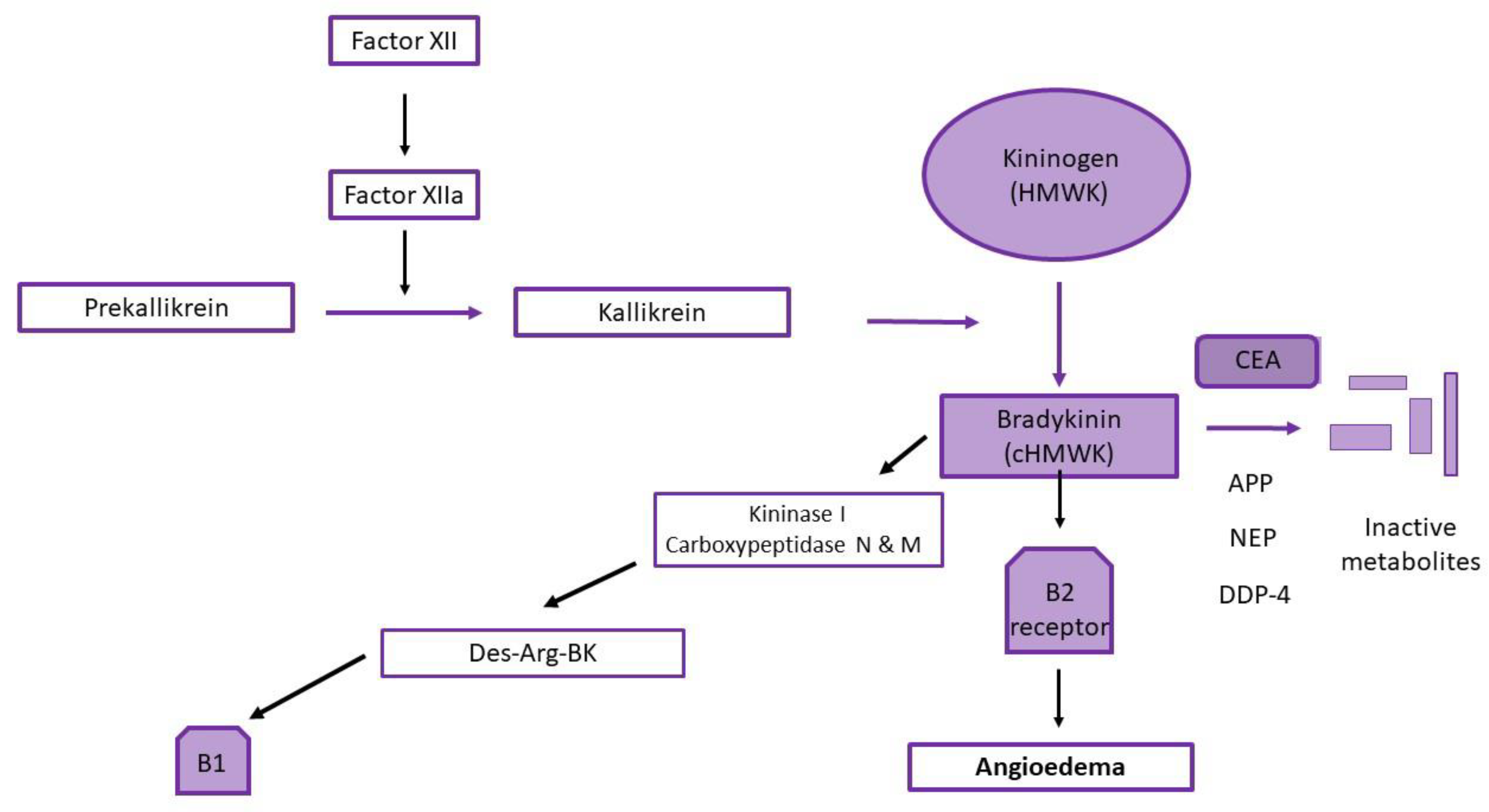

Table 1.
Comparison of laboratory features of bradykinin mediated angioedema and mast cell mediated angioedema.
Table 1.
Comparison of laboratory features of bradykinin mediated angioedema and mast cell mediated angioedema.
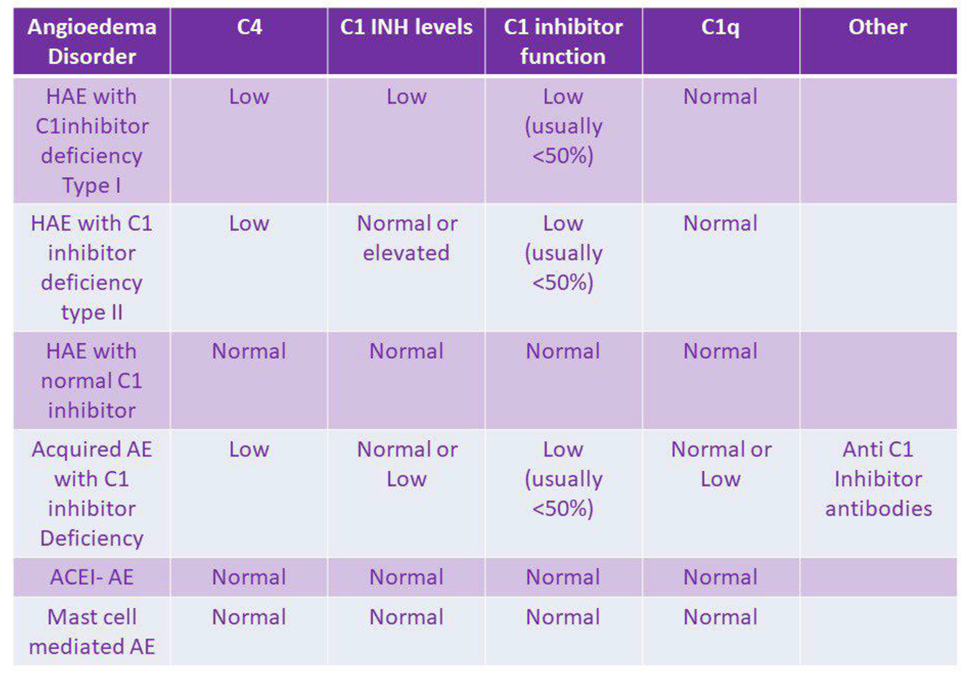 |
Table 2.
Comparison of clinical characteriscs of mast cell mediated Angioedema and bradykinin mediated angioedema.
Table 2.
Comparison of clinical characteriscs of mast cell mediated Angioedema and bradykinin mediated angioedema.
 |
Disclaimer/Publisher’s Note: The statements, opinions and data contained in all publications are solely those of the individual author(s) and contributor(s) and not of MDPI and/or the editor(s). MDPI and/or the editor(s) disclaim responsibility for any injury to people or property resulting from any ideas, methods, instructions or products referred to in the content. |
© 2024 by the authors. Licensee MDPI, Basel, Switzerland. This article is an open access article distributed under the terms and conditions of the Creative Commons Attribution (CC BY) license (http://creativecommons.org/licenses/by/4.0/).
Copyright: This open access article is published under a Creative Commons CC BY 4.0 license, which permit the free download, distribution, and reuse, provided that the author and preprint are cited in any reuse.


