

Submitted:
24 January 2024
Posted:
25 January 2024
You are already at the latest version
Abstract
Architectural Education (AE), as a multidisciplinary field of knowledge, has been through various learning forms, and several learning theories have been adapted to respond to progressive change in the learning environment context and increasing demand for a sustainable built environment. However, it is noticeable that there needs to be more research collaboration efforts among architecture schools and more focus on practice sessions in AE. Therefore, this systematic literature review intends to synthesize the most dominant challenges and examine trends in AE during the early decades of the twenty-first century. This study used the Preferred Reporting Items for Systematic Reviews and Meta-Analyses (PRISMA) as the review protocol. The keywords have been identified and searched in Scopus and Web of Science (WoS) databases. The authors analyzed ninety-six articles between 2000 and 2023 based on the inclusion and exclusion criteria. The analysis of the relevant articles provided valuable insights into research intention. The review reveals the four main themes in AE, namely (1) learning approaches, (2)technology innovation, (3) sustainability, and (4) history. Furthermore, the researchers discuss experiential learning, blended learning, e-learning, and online learning as the most used learning methods in architecture schools. More research on art, social context, and the physical built environment seems crucial for enhancing AE. This study comprehensively reviews the state of the art on AE by interpreting the most dominant architectural issues and learning challenges. The outcome is valuable for improving the learning environment in architecture schools.
Keywords:
AE
; learning approaches
; technology innovation
; sustainability
; history
1. Introduction
1.1. Background of AE
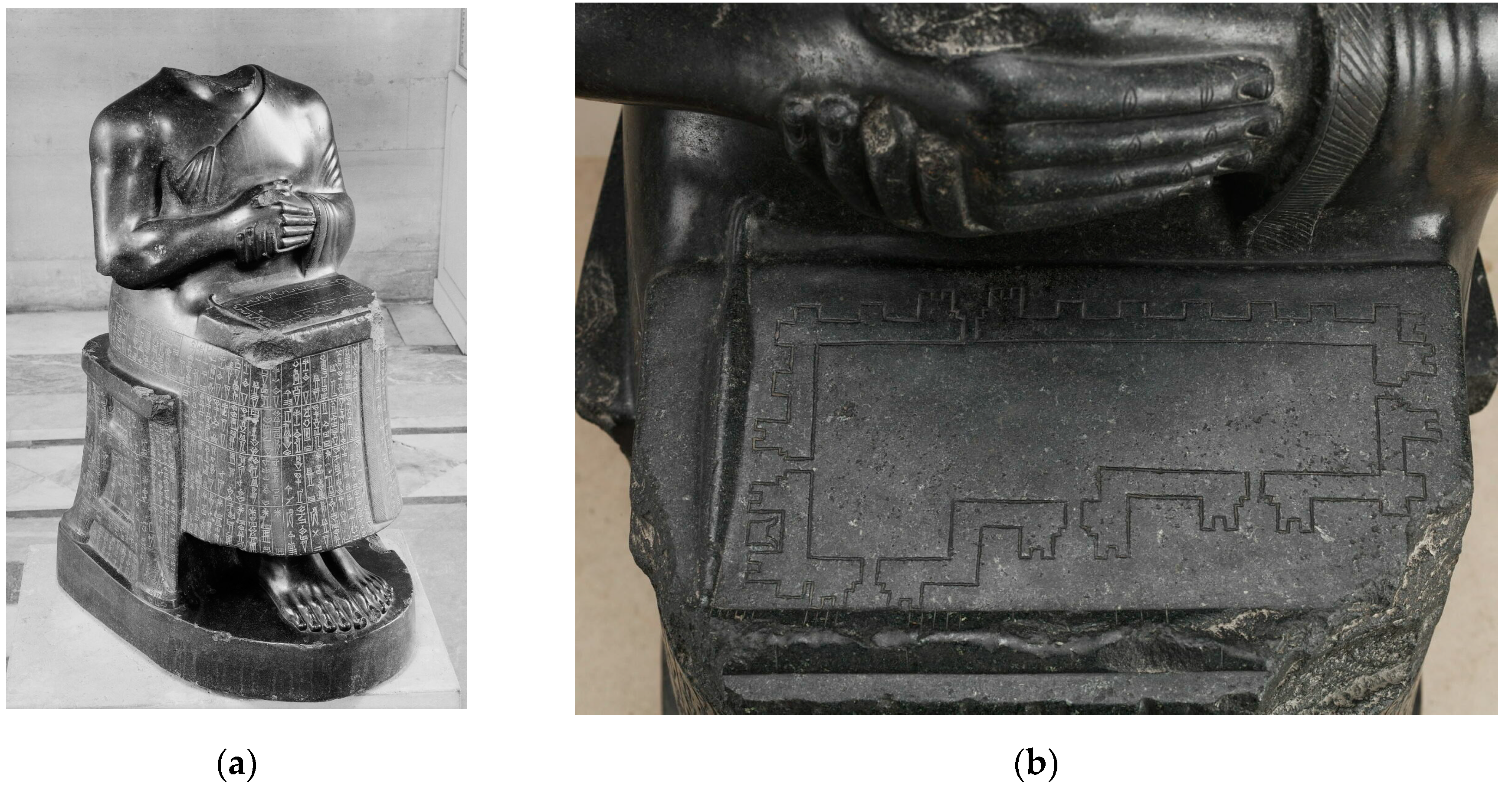
The AE begins with the history of human civilization and massive infrastructure construction for protection purpose and community service. Although there are few artefacts of the records about architecture education and practice, the remaining historical sites and monumental buildings are extraordinary evidence of human skill development in arts and architecture. For instance, the sculpture of the ancient Mesopotamian ruler of Lagash Gudea, who was one of the famous Neo-Sumerian kings (2144-2124 before the Common Era), is one of the great pieces of evidence of architecture practice and profession, as displayed in Figure 1 [1].The king was famous for his skills in artwork and the design skills of religious buildings. In Figure 1, the building plan of the new template can be observed beside the ruler and measurement tools.
The practice of architecture has been different among nations throughout history due to cultural, weather, and social context factors. Guidelines have been drawn up for architecture education and practice by professional architects. For instance, the Greek architect and writer Vitruvius demonstrated the principles of architecture education and practice in his book "Ten Books of Architecture" [2]. In his first book, Education in Architecture, he concluded that architects must be skilled and knowledgeable in drawing skills, geometry, history, art, medicine, philosophy, physics, music, mathematics, climate, and water [2].
Figure 1.
(a) The Sculpture of Gudea ruler of Lagash; (b) the plan for new religious building with architectural drawing tools (adopted from Collections. Louvre [3]).
Figure 1.
(a) The Sculpture of Gudea ruler of Lagash; (b) the plan for new religious building with architectural drawing tools (adopted from Collections. Louvre [3]).
1.2. AE as Higher Education
The AE, the educational institution that started in Paris for the first time, was the Academie d’Architecture in 1671 [4]. Due to the French Revolution, the school was closed, followed by the opening of the Ecole de Beaux Art and The Ecole Polytechnique, which significantly influenced the architectural profession and AE globally [5]. The architectural practice known as atelier practice is the dominant learning form in French architecture schools [4]. During the late nineteenth century and the twentieth century, architecture schools were opened globally. In the 1930s, the Bauhaus teaching methods were invented by German architecture groups [6]. The AE has been transformed from a professional practice to a community academy [6]. Studio-based learning is the dominant learning practice in Bauhaus architecture school. Since then, design studios have been the core subject for all architecture schools worldwide. However, several researcher highlighted that design studios are frequently isolated from everyday life and tends to focus on theory without experience [7]. Architects and researchers have raised several ideas and theories in AE since the twentieth century.
The AE and architectural professionals have been influenced significantly during the twenty-first century due to the rapid development of technology, global warming concerns, and social reforms. Several community organizations provide guidelines for supporting AE. For instance, the Union International Architecture (UIA) provides guidelines and fundamental principles for AE at the international level. It encourages collaboration among architecture schools and constructivism professionals on a broader scale [8].
The existing body of literature on AE has increased and diversified widely in recent years due to the nature of architecture as a multidisciplinary field, and it is hard to have a clear and comprehensive insights into AE. Hence, most current studies focus on the specific issues that directly affect and contribute to AE. For instance, Ummihusna and Zairul [9] focused on the contribution of immersive technology adaptation to the AE. In addition, Rice and Drane [10] investigated the most common indicators of healthy architecture in the built environment.
Scholars, architects, and educationalists in architecture schools need to have considerable insight into all matters and concerns that contribute to and have an influence on AE directly or indirectly. Based on this assumption, the authors conduct this systematic literature review to provide insight into current challenges in AE. The main aim of the review is to synthesize the existing literature on AE and highlight the essential learning issues and approaches in AE.
2. Methodology
2.1. The development and validation of the review protocol
This review explores the current state of learning and teaching challenges in AE. The first objective of the research was to conduct a systematic review of the existing literature to identify the sequence of the dominant learning issues in AE. To support this objective, a protocol was developed using the Preferred Reporting Items for Systematic Reviews and Meta-Analyses (PRISMA) statement [11]. The guideline was recently updated to the PRISMA 2020 statement, which has been designed primarily for systematic reviews of studies that evaluate the effects of health interventions, irrespective of the design of the included studies [11]. Notably, the PRISMA 2020 statement has a 27-item checklist.
2.2. The formulation of research questions
The authors formed the research question by adopting the Population, Intervention, Comparison, and Outcomes (PICO) concept to construct a clear and concise review process [12]. The current review aims to answer the following research question systematically: What were the most dominant learning challenges and issues in AE during the early decades of the twenty-first century? The results will be crucial for examining and enhancing the learning styles’ effectiveness in AE and identifying the strengths and limitations of each learning approach, especially for the design studio sessions. Thus, by adopting the PICO formulation theory, populations were AE, the intervention of interest-dominant issues. No restriction was placed on the control/comparator; the outcome was learning and teaching challenges (as highlighted in Appendix A).
2.3. Systematic Searching Strategies
The systematic literature review follows the PRISMA protocol, which includes three main processes: Identification, Screening, and Inclusion (Figure 2). That helps the authors to produce a systematic literature review that is reproducible and transparent.
2.3.1. Identification
Selection and enriching the selected keywords.
For the identification process of reliable sources of information that are helpful to answer the research question, the authors developed the keywords and related synonyms of keywords based on the research question. A search strategy was developed from inclusion criteria under the headings of the PICO concept.
Learning, teaching, and AE are the main keywords for initial research. To enrich those keywords, the authors sought their synonyms, related terms, and variations using an online thesaurus. This includes thesaurus.com, referring to the keywords used by past studies and those suggested by Scopus and Web of Science (WoS) databases. Based on this process, several keywords like learning, teaching, schooling, studying, training, coaching, tutoring, guidance, instruction, and reading were included. Furthermore, several synonyms of AE have been included, such as architecture education, architecture curriculum, architecture pedagogy, architecture syllabus, architecture modules, architecture studies, architecture schedule, architecture subjects, and architecture educational programs as demonstrated in Table 1. The combinations of these keywords were processed using search functions, including field code functions, phrase searching, wildcards, truncation, and Boolean operators in two databases: Scopus and WoS.
The reviewers have developed the search string for references, as summarized in Table 2. The authors identified and searched 707 initial sources in Scopus and the WoS database. However, after applying the inclusion and exclusion criteria, only ninety-six journal articles were included.
- Selection of databases
To find irrelevant journal articles, the reviewers searched two electronic biblio-graphic databases, WoS and Scopus. Due to the multidisciplinary architecture, many articles have been published by AE since the beginning of the twenty-first century. According to the Scopus database statistics, there was a gradual increase in the re-sources in the AE from 1,044 sources in 2000 to 1,560 sources in 2010 and 2,009 sources in 2020.
2.3.2. Screening process based on the inclusion and exclusion criteria.
The screening process was the second procedure in the systematic literature review according to the PRISMA protocol, where articles were either included or excluded (with the assistance of the database or manually screened by authors) from the study based on a specific set of criteria, as illustrated in Figure 2.
There were three main steps in the screening process: the first and second were performed using the computer, while the third was done manually by reviewers. First, according to the research question, only published articles were included between 2000 and 2023. Notably, to avoid confusion, only those written in English were considered. Initially, by applying the previous inclusion criteria, 258 articles from Scopus and 172 from the WoS were automatically excluded. Second, due to the diversity of topics related to AE, the study concentrated on specific subject and research areas, as indicated in Table 3. In this step, fifty-two articles from Scopus and an article from WoS databases are automatically excluded. Finally, the authors included only cited articles to understand the dominant challenges in AE within the available data. In this stage, the reviewers removed the repeated articles, non-cited articles, and non-related articles. Therefore, ninety-six articles have been included to examine the eligibility process.
2.3.3. Eligibility
Two reviewers assessed studies for inclusion against eligibility criteria. They classified the articles and constructed themes based on reading the titles and abstracts of selected articles. Themes are specified for each category of articles, followed by subthemes—the review aimed to identify the most common learning challenges in AE. Furthermore, this process was time-consuming for several reasons, such as close relationships among themes. Note that some articles are related to more than one theme concurrently. For instance, based on a real teamwork project among students from multiple backgrounds on historical site documentation, Ward and Woodcock [13] discovered that using innovative technology tools will decrease the architecture students’ learning from the historical context. The frequency of repeated themes has been notified and recorded for the synthesis and interpretation process. The reviewers have used Microsoft excel programme for reviewing the articles. Hence, the authors have removed the duplicate articles and non-related articles.
3. Results
Search results are summarized in the PRISMA flow diagram (Figure 1). Results from databases identified n = 95 potentially relevant studies. These records were screened by title and abstract by the first review and validated by the second reviewer.
Within the scope of this review, authors construct themes, and sub-themes of learning challenges have been developed. Although there is overlap among construct-ed themes, ten themes were identified to highlight the most raised issues and concerns in AE: learning approaches, technology innovations, sustainability, history, students’ experience and performance, architectural design and design studio, culture, community and society Concern, computer applications in AE, architecture curriculum, and Building Information Modelling (BIM) (Table 4). Moreover, most articles concentrated on learning approaches and methods adopting AE during the early twenty-first century.
4. Finding and discussion
The diversity of existing literature on the AE is a direct reflection of architecture as a multidisciplinary field of knowledge. The review findings have been categorized into ten themes from the literature review data. The sequence of themes is illustrated in Table 4. Most of the articles (27 articles) concentrate on learning approaches that have been used and testify to their effectiveness in AE. Meanwhile, the second raised issue is related to technology innovation (12 articles) integration into the AE. In contrast, some issues, such as materials, structure, and urban design, are least focused on by researchers and have been excluded. In this study, the authors synthesize four main themes in detail as follows.
4.1. learning Approaches
The reviewers identified eleven learning approaches that discussed, used, and testified their effectiveness and significance in the AE globally (Table 5). Although the learning forms have shared issues and features, the most common learning approaches are experiential learning, blended learning, e-learning, and online learning. The reviewers describe three learning approaches that have been adopted in AE.
4.1.1. Experiential learning
Researchers, educationalists, and scientists debate learning from experience or using experience as a learning method or medium. Some psychologist experts like John Dewey and Kurt Lewin [14] have discussed the role of experience in the personal learning process. John Dewey set the "theory of experience" to argue for human learning and development [14]. In addition, experiential learning theory, as defined by Kolb (1984), posits that learning is a significant determinant of human development and that how individuals learn shapes their personal development [15]. Experiential learning is the most common learning method adapted to AE in general. As revealed in the Table 6, the researcher adapted, used, and discussed several forms of experience learning, especially during the second decades of the current century, such as live projects and students’ experiences. The authors demonstrated the positive influence of experiential learning on students’ motivation [16] and learner experience [7,17]. This learning approach provides great opportunities for architecture students to learn from the surrounding urban context [18], shared activities with local communities [19], live projects [7] and individual experience of a community member [17]. Hence, the qualitative research methodology has been used in most of the studies (Table 6).
4.1.2. Blended Learning
Recently, some researchers discussed the effectiveness of blending learning in architecture schools by studying the learning context, as demonstrated in Table 7. For example, several researchers employed number of specific research techniques to outline a new framework for blending learning in AE during the COVID-19 [21]. Furthermore, Jasiołek et al. [22] proposed a new hybrid mode of education based on the survey study results among architecture students at Polish University. Other researchers identified blended learning as a strategy to overcome the limitations of architecture education and students’ perceptions [22]. Through studying two case studies in different contexts that combined face-to-face interaction and distance learning in real projects, Rodriguez et al. [23] concluded that student engagement could be reinforced, and students’ motivation would be increased significantly via a blended learning strategy. In addition, according to the analytic and literature-based research by Rauf et al., combining virtual reality with face-to-face real-world experiences will enhance students’ performance and engagement in the architecture education process [24].
4.1.3. E-Learning and Online Learning
The development of the digital environment, advancement in the communication medium, and the COVID-19 pandemic have accelerated the adaptation process of e-learning and online learning globally in schools and higher education institutions. This is especially true at the beginning of the third decade of the twenty-first century(Table 8). Therefore, the efficiency and challenges of those forms of learning as alternative or supported forms of AE are targeted by several researchers. According to experimental research outcomes by Xiberta et al. [25], adopting e-learning platforms such as SAPIENS has beneficial consequences on students’ performance. It contributes to creating equal opportunities for all students in AE. [25]. In addition, Milovanovic et al. [26] identified online workshops as an innovative learning methodology during emergency disruption. The authors also highlighted the learning potentials and limitations of using this methodology in architecture schools. Furthermore, Olweny et al. [27] studied online AE in two different institutions in East Africa to examine the accessibility, equality and adopted learning approaches. Based on students’ experience and attitudes toward online education, they proposed suggestions for improving the learning process in the same context in the future [27]. In contrast, most current studies concentrate on the potential of e-learning and online learning. It also demonstrates the difficulty of technical and administrative issues, academic evaluation, and academic staff engagement. Thus, it is noticeable that those forms of learning will be more integrated and valuable in architecture schools shortly.
4.2. Technology Innovation
The challenges and opportunities of technology innovation within the architecture learning process have been discussed recently from several perspectives, such as communication facilitators and learning tools. The articles that concentrate on technology innovation ideas and tools are the most cited sources that reflect the ongoing discussion within the architecture discipline (Table 9). According to Wang [28], the integration of information and communication technology into AE effectively supported the collaboration work among the architecture schools globally. Similarly, Schnabel and Ham [29] clarified that the social network cloud adaptation approaches to architecture curricula will enhance learners’ engagement and performance. In addition, Saghafi and Crowther [30] highlighted the role of technology subjects integrated into design studio sessions in improving students’ outcomes and practical skills. Furthermore, the shortage of innovative digital design courses has been recognized by Abdullah and Hassanpour [31] during the analysis process of the curriculum for a couple of architecture schools in Cyprus.
Technology innovation tools and concepts have been applied to building envelopes and built environment for investigation purpose and performance improvement. Martinez et al. [32] emphasized the significance of numerical modelling and analysis in determining the structural performance and vulnerability conditions in monumental historical buildings. Moreover, Sahai and Varshney [33] discovered a typical geometrical form and size of plasmonic nanoparticles for the performance optimization of organic-inorganic halide perovskite solar cells. In addition, Song et al. [34] highlighted the significance of 3D printing technology in design studios and identified the limitations of using this technology in AE through practice-based research [34].

Table 9.
illustrates the thematic analysis of technology innovation researches in AE.
| Author | Research method | Research design | Deductive code | Research outcomes |
|---|---|---|---|---|
| (Angulo, 2007) | Mixed method | Case studies |
Digital media role in AE | Identify the opportunities and challenges we foresee shortly based on the implementation of multidisciplinary integration and the development of multimodal and media-rich design environments [35]. |
| (Wang, 2009) | Qualitative | A brief literature review | Information and communication technology | Particular attention is given to the increased potential for collaborative work and exercises of the interests of students and teachers and how this maximized use will benefit AE [28]. |
| (Schnabel & Ham, 2014) | Qualitative | Case study |
The Social Network Learning Cloud (SNLC) | The paper proposed ways of applying SNLC in other curriculum learning and teaching areas and concluded with directions on how SNLC may be employed in professional settings [29]. |
| (Jiménez-Montano & Ortiz-Rivera, 2014) | Qualitative | Case study: Undergraduate course | Digital photography |
The results helped establish new educational strategies for developing visual skills [36]. |
| (Song et al., 2018) | Qualitative | The practice-based research | 3D Printing technology |
Limitations were identified before the making process based on the investigation into the current state of 3D printing technologies in education [34]. |
| (Fortenberry, 2019) | Qualitative | Structured collection of case studies | Digital media |
The paper stated conclusions and identified the opportunities and challenges we foresee soon based on implementing multidisciplinary integration and developing multimodal and media-rich design environments [37]. |
| (Higuera-Trujillo et al., 2020) | Mixed Method | A two-phase study: Qualitative and quantitative | Multisensory stress reduction | The beneficial effect of a combination of environmental satisfaction sources [38]. |
| (George & Park, 2020) | Qualitative study | a department-wide drone programme | Drone technology |
While the programme has been demonstrated to be both successful and sustainable, several hurdles have had to be addressed to achieve this success [39]. |
| (Sahai & Varshney, 2021) | Quantitative | Case study | Solar absorbance |
The maximum enhancement can be attained by including spherical nanoparticles of 70 nm radii placed at the film’s center [33]. |
| (Saghafi & Crowther, 2021) | Qualitative | A case study approach based on document analysis methods. | Integrating technology subjects | Overall, in both programs, the aim is for students to develop architectural knowledge and skills. However, the Iranian programme has a stronger focus on knowledge; the Australian programme has a stronger focus on applying knowledge and skills, particularly within design studio projects [30]. |
| (Abdullah & Hassanpour, 2021) | Qualitative | Two case studies | Digital Design courses | The current structures of architecture education curricula cannot match the innovative challenges and social demands of architecture in the digital age [31]. |
| (Martínez et al., 2022) | Quantitative | Case study |
Numerical Modelling and analysis | The development of this kind of model is the basis for simulating the structural behavior of heritage buildings under different load conditions and assessing their vulnerability [32]. |
4.3. Sustainability
Sustainability integration in architecture curricula is among the most discussed challenges, particularly at the beginning of the second decade of the twenty-first century, due to the development of strategies toward global sustainability. Hence, several researchers and academic staff in architecture schools discussed the appropriate approaches and methods for adopting sustainability in AE (Table 10). For example, Amer [40] highlighted the contribution of the Biomimetic Approach in raising student awareness of sustainability through biomimetic projects. In addition, Xie et al. [41] identified the value-belief-norm theory’s positive influence in enhancing the sustainability learning process in South China universities.
Several researchers have evaluated the student’s experience and expectations of sustainability issues [42], assessment system [43], and simulation tools [44]. Other researchers discussed the integration approaches and theories of adapting sustainability courses and issues into architecture pedagogy. Moreover, some researchers state that more effort is essential to integrate sustainability into the architecture curriculum [42,43].
Table 10.
reveals the thematic analysis of the sustainability researches in AE.
| Author | Research method | Research design | Deductive code | Research outcomes |
|---|---|---|---|---|
| (Michael & Phocas, 2012 | Qualitative | Case study |
Discussion of respective pedagogical approach in AE. | Highlighted the benefits of the comprehensive environmental approach [45]. |
| (Pektaş et al., 2015) | Qualitative | Survey | Geen Building Approach. |
Revealed a gap between students’ general learning about green building in a developing and a developed country and suggested that a collaborative project experience may facilitate bridging the gap and exchanging technical and cultural information related to sustainability [43]. |
| (Rieh et al., 2017) | Mixed method | An exploratory study | Sustainability-related course in AE | Sustainability education is organized in diverse ways according to contents, intensity, and sequence [46]. |
| (Amer, 2019) | Quantitative | Questionnaire | Biomimetic approach. |
A positive effect of biomimetic approach in professional practice [40]. |
| (de Gaulmyn & Dupre, 2019) | Qualitative | Case study | Essay Approach for Sustainable and Environmental Design as Simulation Tool. | Results suggested that individual work was unconvincing, whereas success was met during group work [44]. |
| (Al Khalifa, 2019) | Mixed method | Survey, interview, and focus group | Incorporation of active learning pedagogy. | The students’ involvement in the hands-on project increased their curiosity and enhanced their ability to understand complex philosophical ideas related to architecture and urbanism [47]. |
| (Parra-Martínez et al., 2021) | Qualitative | Case study | Gender equality | Gender equality is crucial for the co-education of future architects, who will play a central role in defining new practices and policies related to space and materials [48]. |
| (Brzezicki & Jasiolek, 2021) | Mixed method | Survey | Students’ Expectations vs. Experience of Sustainability Issues. | There is a significant disproportion between students’ expectations and experience regarding sustainable and ecological design [42]. |
| (Xie et al., 2021) | Quantitative | Survey | The value-belief-norm theory- Green building | The biospheric and altruistic values could directly affect students’ motivation to learn green building [41]. |
| (Guerenabarrena-Cortazar et al., 2021) | Qualitative | Documentary Analysis. | Integration of sustainability | The results did not invite optimism: curricular transformation is slow and insufficient, and its results are still incomplete [49]. |
4.4. History
The current historical articles in literature concentrate on investigating structural stages and details of religious buildings and historic structures(Table 11). Those studies can be classified into three categories based on research purpose: First, the investigation of previous structural elements and functional changes of the building. For instance, Gil Delgade [50] identified a synagogue and mosque’s structural architectural element during the restoration process of the Santa Maria la Blanca church in Sevilla city. Furthermore, Samol et al. [51], while examining the conservation works of the tower-lighthouse in Gdansk, have confirmed that the tower has been constructed over six time periods. Moreover, Blanke [52] has noted the changing structure of the central bathroom in Gerasa from large public bathing areas to small individual washing spaces. Those former investigations by researchers have been conducted parallel to, or during the archaeological and restoration of the historical construction.
Second, the dissemination of the uniqueness of architectural and design elements of the historical built environment. Drancolli [53] documented the past and present of the Koca Sinan Pasha Mosque to emphasize its structural values and interior details. Similarly, Hagras [54], in this study of Xi’an Daxuexi Alley Mosque in China, stated that Chinese Islamic architecture blends Islamic culture and context with local Chinese heritage. Third, discussing the appropriate framework to study vernacular architecture. Davidson [55] examined a formal study framework to study vernacular architecture by investigating the works of scholars in the architecture discipline. Furthermore, Smith [56] discovered the need for more effectiveness in adapting the storytelling approach as a research methodology in studying vernacular environments.
Table 11.
illustrates the thematic analysis of the research purpose and outcomes of historical challenges in AE.
Table 11.
illustrates the thematic analysis of the research purpose and outcomes of historical challenges in AE.
| Author | Purpose of method | Deductive code | Research outcomes |
|---|---|---|---|
| (Carletti & Giometti, 2003) | To present and discuss several wooden statues in the number of churches in Pisa city-Italy | Medieval wood Sculpture |
Unlike stone sculptures, wooden ones have always had a specific role within the liturgy, particularly in Sacred Representation [57]. |
| (Erciyas & Çinici, 2010) | To identify the functional and historical context of the hexagonal basin at Komana | Architectural and arachnological study of the hexagonal basin at Komana. | Only one of these interpretations seemed probable at the end of our research effort: a pool in a Christian Basilica, although this is not certain [58]. |
| (Smith, 2011) | To discuss the possibility of using the role and contribution of storytelling in vernacular architecture study | Narrative Prospect | Despite its prominent attractions, the storytelling approach can be complex and inefficient [56]. |
| (Davidson, 2013) | To illustrate, the answers to vernacular architecture study future pathways lie in understanding the intellectual history underpinning its origins. | Framework for Vernacular Architecture |
The article first situated this contradiction within the context of Euro-American architectural history and theoretical discourse; second, it brought together the work of academics who have, at some time in the past, advocated for the abolition of the word "vernacular" and the erasure of categorical differences that effect on the formal study of what is considered as non-architectural surroundings; and lastly, it established the framework within which curriculum for studies of global architects should be developed [55]. |
| Gil Delgado, 2013) | To reveal the evidence of previous usage of the building after the church’s restoration | Investigating the historical structures |
The present article graphically described and documented the vestiges of the two earlier structures [50]. |
| (Blanke, 2015) | To examine the architectural development of the Central Bathhouse. | Investigating the historical structures |
The development reflected a changing attitude from communal bathing in large basins to washing in individual basins [52]. |
| (Dan & Herles, 2017) | To examine the architectural structures discovered over the years in some archaeological sites of the kingdom of Urartu. | Identification of architectural ’module’ in Urartian culture | Identified the specific architectural module [59]. |
| (Hagras, 2019) | The objective of this paper is to explore the characteristics of the design and architecture of Chinese mosques. | Case study: XI’AN DAXUEXI ALLEY MOSQUE | Chinese mosques are characterised by architectural forms different from Islamic world architecture. Chinese Islamic architecture blends Islamic culture and content with traditional local Chinese heritage [54]. |
| (Samól & Hirsch, 2021) | To identify the constructional stages of the tower in Wisłoujście Fortress, in Gdańsk, during the conservation works. | Investigating the historical structures |
Discovered six main stages of the structural construction [51]. |
| (Drançolli, 2022) | To identify the challenges that the mosque faced during its existence, as well as changes in the structures of the building and its decorations. | Religion Building: Koca Sinan Pasha Mosque | The study is accompanied by architectural visualization and photographs of the mosque’s exterior and interior. The paper aimed to help study, promote, and display the mosque’s value to a broader audience [53]. |
5. Conclusions
There is an increasing diversity of learning challenges and a continuing debate about AE, reflecting architecture’s nature as a multidisciplinary field. Those learning challenges have an expected effect on AE as a multidirectional learning process and on architectural professionals and provide a lens to respond effectively to changes in the built environment context. Furthermore, the systematic literature review demonstrates the most dominant challenges and prominent AE themes reported by architects, researchers, and intuitional communities during the first quarter of the twenty-first century.
The findings highlighted four key themes that are the most discussed: learning approaches, technology innovation, sustainability, and history. Notably, experiential learning, blending learning, e-learning, and online learning are the most studied learning approaches researchers have examined in architecture schools. However, more studies are recommended regarding integration of art skills, live projects, and social context within AE.
As the number and frequency of discussed learning approaches in AE increased notably, there is a need to appraise a particular learning framework in various contexts to determine its effectiveness and applicability. In addition, it is also essential to highlight the significance of collaboration among architecture schools at the national and international levels. This is with the aim to uniformly and directly direct the efforts to develop and strengthen the architecture curriculum globally and prepare competent architects.
Funding
This research received no external funding.
Data Availability Statement
The data presented in this study are available on request from the corresponding author.
Conflicts of Interest
The authors declare no conflicts of interest.
Appendix A
Search strategy
Population: Architectural education
Intervention/exposure: dominant issues of learning and teaching
Comparison: Not restricted
Outcome: learning and teaching challenges
Generic* search syntax:
| Population | Intervention | Comparison | Outcome |
|---|---|---|---|
| Architectural education | Dominant learning and teaching challenges | And [Any] |
Learning and teaching issues |
References
- Fethi, I. History of Iraqi Architecture, 1st ed.; Al-Adib Press: Amman, Jordan, 2021. [Google Scholar]
- Rodkinson, M.L. Vitruvius the Ten Books on Architecture; Morgan, M., Warren, H., Robinson, N., Eds.; Harvard University Press: London, UK, 1914. [Google Scholar]
- Collections, L. Gudea Ruler in Lagash. Available online: https://collections.louvre.fr/ark:/53355/cl010119540 (accessed on 5 August 2023).
- Griffin, A. The Rise of Academic Architectural Education The Origins and Enduring Influence of the Academire d’ Architecture, 1st ed.; Routledge: London, UK, 2020; ISBN 9781138562271. [Google Scholar]
- Tzonis, A. A Framework for Architectural Education. Front. Archit. Res. 2014, 3, 477–479. [Google Scholar] [CrossRef]
- Simon, M.; Ware, W.R.; Van Brunt, H. The Beaux-Arts Atelier in America. In Proceedings of the 84th ACSA Annual Meeting, Boston, MA, USA, 12–14 March 1996; pp. 319–325. [Google Scholar]
- Rodriguez, C.M. A Method for Experiential Learning and Significant Learning in Architectural Education via Live Projects. Arts Humanit. High. Educ. 2018, 17, 279–304. [Google Scholar] [CrossRef]
- Union, I.; Architects, O.F.; Secretariat, U.I.A.G. Uia and Architectural Education. Table of Contents. 2011, 33, 0–32.
- Ummihusna, A.; Zairul, M. Investigating Immersive Learning Technology Intervention in Architecture Education: A Systematic Literature Review. J. Appl. Res. High. Educ. 2022, 14, 264–281. [Google Scholar] [CrossRef]
- Rice, L.; Drane, M. Indicators of Healthy Architecture—A Systematic Literature Review. J. Urban Health 2020, 97, 899–911. [Google Scholar] [CrossRef] [PubMed]
- Page, M.J.; McKenzie, J.E.; Bossuyt, P.M.; Boutron, I.; Hoffmann, T.C.; Mulrow, C.D.; Shamseer, L.; Tetzlaff, J.M.; Akl, E.A.; Brennan, S.E.; et al. The PRISMA 2020 Statement: An Updated Guideline for Reporting Systematic Reviews. BMJ 2021, 372, 71. [Google Scholar] [CrossRef] [PubMed]
- Mohamed Shaffril, H.A.; Samsuddin, S.F.; Abu Samah, A. The ABC of Systematic Literature Review: The Basic Methodological Guidance for Beginners. Qual. Quant. 2021, 55, 1319–1346. [Google Scholar] [CrossRef]
- Warden, R.; Woodcock, D. Historic Documentation: A Model of Project Based Learning for Architectural Education. Landsc. Urban Plan. 2005, 73, 110–119. [Google Scholar] [CrossRef]
- Contemporary Theories of Learning, 2nd ed.; Illeris, K., Ed.; Routledge: London, UK, 2018. [Google Scholar]
- Kolb, A.Y.; Kolb, D.A. Learning Styles and Learning Spaces: Enhancing Experiential Learning in Higher Education. Acad. Manag. Learn. Educ. 2005, 4, 193–212. [Google Scholar] [CrossRef]
- Mulligan, K.; Calder, A.; Mulligan, H. Inclusive Design in Architectural Practice: Experiential Learning of Disability in Architectural Education. Disabil. Health J. 2018, 11, 237–242. [Google Scholar] [CrossRef]
- Gregory, A. Service-Learning and Social Justice in Architectural Education. Int. J. Des. Educ. 2019, 14, 55–71. [Google Scholar]
- Yazici, Y.E.; Töre, E. Mimarlık Eğitiminde Yaparak Öğrenme: Kentsel Tasarımdan Mimari Tasarıma Yenikapı-İnebey Örneği. Eğitim Bilim 2014, 39, 296–308. [Google Scholar] [CrossRef]
- Ņitavska, N.; Zigmunde, D.; Markova, M.; Īle, U. Bridging the Gap between Planning Process in Municipalities and Landscape Architecture Studies and Research in Latvia. J. Archit. Urban. 2016, 40, 262–271. [Google Scholar] [CrossRef]
- Mackintosh, L. Just Doing It: The Role of Experiential Learning and Integrated Curricula in Architectural Education. Int. J. Pedagog. Curric. 2014, 20, 67–78. [Google Scholar] [CrossRef]
- Megahed, N.; Hassan, A. A Blended Learning Strategy: Reimagining the Post-Covid-19 Architectural Education. Archnet-IJAR 2022, 16, 184–202. [Google Scholar] [CrossRef]
- Jasiołek, A.; Nowak, P.; Brzezicki, M. On-Line, Face-to-Face or Hybrid Teaching in Architectural Education? World Trans. Eng. Technol. Educ. 2021, 19, 90–95. [Google Scholar]
- Rodriguez, C.; Hudson, R.; Niblock, C. Collaborative Learning in Architectural Education: Benefits of Combining Conventional Studio, Virtual Design Studio and Live Projects. Br. J. Educ. Technol. 2018, 49, 337–353. [Google Scholar] [CrossRef]
- Rauf, H.L.; Shareef, S.S.; Othman, N.N. Innovation in Architecture Education: Collaborative Learning Method Through Virtual Reality. J. High. Educ. Theory Pract. 2021, 21, 33–40. [Google Scholar] [CrossRef]
- Xiberta, P.; Thio-Henestrosa, S.; Fontas, J.; Boada, I. The Experience of Using a New E-Learning Tool in Architectural Studies. IEEE Access 2022, 10, 87008–87021. [Google Scholar] [CrossRef]
- Milovanović, A.; Kostić, M.; Zorić, A.; Dordević, A.; Pešić, M.; Bugarski, J.; Todorović, D.; Sokolović, N.; Josifovski, A. Transferring COVID-19 Challenges into Learning Potentials: Online Workshops in Architectural Education. Sustainability 2020, 12, 7024. [Google Scholar] [CrossRef]
- Olweny, M.R.O.; Ndibwami, A.; Ahimbisibwe, A. Online Architectural Education: Reflections on COVID-19 Emergency Remote Learning in East Africa. E-Learning Digit. Media 2023, 20, 579–597. [Google Scholar] [CrossRef]
- Wang, T. Rethinking Teaching with Information and Communication Technologies (ICTs) in Architectural Education. Teach. Teach. Educ. 2009, 25, 1132–1140. [Google Scholar] [CrossRef]
- Schnabel, M.; Ham, J. The Social Network Learning Cloud: Architectural Education for the 21 Century. Int. J. Archit. Comput. 2014, 12, 225–241. [Google Scholar] [CrossRef]
- Saghafi, M.R.; Crowther, P. Integrating Technology Subjects with Design Studio Teaching: Comparing Curriculum of Architecture Education in Australia and Iran. Archnet-IJAR 2021, 15, 652–667. [Google Scholar] [CrossRef]
- Abdullah, H.K.; Hassanpour, B. Digital Design Implications: A Comparative Study of Architecture Education Curriculum and Practices in Leading Architecture Firms. Int. J. Technol. Des. Educ. 2021, 31, 401–420. [Google Scholar] [CrossRef]
- Martínez, J.; Ávila, F.; Puertas, E.; Burgos, A.; Gallego, R. Historical and Architectural Study for the Numerical Modeling of Heritage Buildings: The Tower of Comares of the Alhambra (Granada, Spain). Inf. Constr. 2022, 74, e429. [Google Scholar] [CrossRef]
- Sahai, S.; Varshney, A. Solar Absorbance Enhancement in Perovskite Solar Cells with the Inclusion of Copper Nanoparticles: An Architectural Study. Opt. Quantum Electron. 2021, 53, 1–11. [Google Scholar] [CrossRef]
- Song, M.; Ha, E.; Goo, S.-K.; Cho, J. Design and Development of 3D Printed Teaching Aids for Architecture Education. Int. J. Mob. Blended Learn. 2018, 10, 58–61. [Google Scholar] [CrossRef]
- Angulo, A. Digital Media Instruction in Architecture Education. Open House Int. 2007, 32, 65–73. [Google Scholar] [CrossRef]
- Jiménez-Montano, M.; Ortiz-Rivera, L. Development of Visual Skills: Digital Photography as a Tool for Research and Teaching in Architectural Education. Commun. Comput. Inf. Sci. 2014, 492, 407–416. [Google Scholar] [CrossRef]
- Fortenberry, B. Research Notes: Digital Documentation in Vernacular Architecture Studies. Build. Landscapes 2019, 26, 98–114. [Google Scholar] [CrossRef]
- Higuera-Trujillo, J.L.; Llinares Millán, C.; Montañana i Aviñó, A.; Rojas, J.C. Multisensory Stress Reduction: A Neuro-Architecture Study of Paediatric Waiting Rooms. Build. Res. Inf. 2020, 48, 269–285. [Google Scholar] [CrossRef]
- George, B.H.; Park, K. Flying High: A Case Study of the Integration of Drones into a Landscape Architecture Curriculum. J. Digit. Landsc. Archit. 2020, 2020, 246–253. [Google Scholar] [CrossRef]
- Amer, N. Biomimetic Approach in Architectural Education: Case Study of ‘Biomimicry in Architecture’ Course. Ain Shams Eng. J. 2019, 10, 499–506. [Google Scholar] [CrossRef]
- Xie, X.; Qin, S.; Gou, Z.; Yi, M. Incorporating Green Building into Architectural Education: What Can We Learn from the Value-Belief-Norm Theory? Int. J. Sustain. High. Educ. 2021, 22, 457–476. [Google Scholar] [CrossRef]
- Brzezicki, M.; Jasiolek, A. A Survey-Based Study of Students’ Expectations vs. Experience of Sustainability Issues in Architectural Education at Wroclaw University of Science and Technology, Poland. Sustainability 2021, 13, 10960. [Google Scholar] [CrossRef]
- Pektaş, Ş.T.; Şule Aybar, N.; Yaprak Savut, N.; McKinnon, H. Integrating Green Building Approaches to Interior Architecture Education: A Crosscultural Study. Open House Int. 2015, 40, 24–31. [Google Scholar] [CrossRef]
- de Gaulmyn, C.; Dupre, K. Teaching Sustainable Design in Architecture Education: Critical Review of Easy Approach for Sustainable and Environmental Design (EASED). Front. Archit. Res. 2019, 8, 238–260. [Google Scholar] [CrossRef]
- Michael, A.; Phocas, M.C. Construction Design and Sustainability in Architecture: Integrating Environmental Education in the Architectural Studies. Renew. Energy Power Qual. J. 2012, 1, 190–195. [Google Scholar] [CrossRef]
- Rieh, S.Y.; Lee, B.Y.; Oh, J.G.; Schuetze, T.; Álvarez, S.P.; Lee, K.; Park, J. Integration of Sustainability into Architectural Education at Accredited Korean Universities. Sustainability 2017, 9, 1121. [Google Scholar] [CrossRef]
- Al Khalifa, F. Achieving Sustainable Urbanism through Architectural Education: A Move Back to a Learning-by-Doing Pedagogy. Int. J. Architecton. Spat. Environ. Des. 2019, 13, 1–16. [Google Scholar] [CrossRef]
- Parra-Martínez, J.; Gutiérrez-Mozo, M.E.; Gilsanz-Díaz, A. Inclusive Higher Education and the Built Environment. A Research and Teaching Agenda for Gender Mainstreaming in Architecture Studies. Sustainability 2021, 13, 2565. [Google Scholar] [CrossRef]
- Guerenabarrena-Cortazar, L.; Olaskoaga-Larrauri, J.; Cilleruelo-Carrasco, E. Integration of Sustainability in Engineering and Architectural Studies in Spanish Universities. Sustainability 2021, 13, 8044. [Google Scholar] [CrossRef]
- Gil Delgado, Ó. Una Sinagoga Desvelada En Sevilla: Estudio Arquitectónico. Sefarad 2013, 73, 69–96. [Google Scholar] [CrossRef]
- Samól, P.; Hirsch, R. History of the Lighthouse of the Wisłoujście Fortress in Light of a 2018 Architectural Study. Wiad. Konserw. 2021, 2021, 21–36. [Google Scholar] [CrossRef]
- Blanke, L. Washing the Masses, Washing the Self: An Architectural Study of the Central Bathhouse in Gerasa. Syria 2015, 92, 85–104. [Google Scholar] [CrossRef]
- Drançolli, O. Architectural Study of Koca Sinan Pasha Mosque At Kaçanik, Kosova. J. Islam. Archit. 2022, 7, 314–322. [Google Scholar] [CrossRef]
- Hagras, H. Xiían Daxuexi Alley Mosque: Historical and Architectural Study. Egypt. J. Archaeol. Restor. Stud. 2019, 9, 97–113. [Google Scholar]
- Davidson, J. A Proposal for the Future of Vernacular Architecture Studies. Open House Int. 2013, 38, 57–65. [Google Scholar] [CrossRef]
- Smith, R.K. Viewpoint: Building Stories: Narrative Prospects for Vernacular Architecture Studies. Build. Landsc. J. Vernac. Archit. Forum 2011, 18, 1–14. [Google Scholar] [CrossRef]
- Carletti, L.; Giometti, C. Medieval Wood Sculpture and Its Setting in Architecture: Studies in Some Churches in and around Pisa. Archit. Hist. 2003, 46, 37. [Google Scholar] [CrossRef]
- Erciyas, D.B.; Çinici, A. Komana’dakï Altigen Su Yapisï: Mïmarï Açisindan Bir Ön Arastirma. Metu J. Fac. Archit. 2010, 27, 281–296. [Google Scholar] [CrossRef]
- Dan, R.; Herles, M. From the Gate of Haldi to the “Module”: A Study of the Urartian Architectural “module” and the Oshakan Fortress. Akkadica 2017, 138, 107–152. [Google Scholar]
Figure 2.
PRISMA flow-for included studies in review.
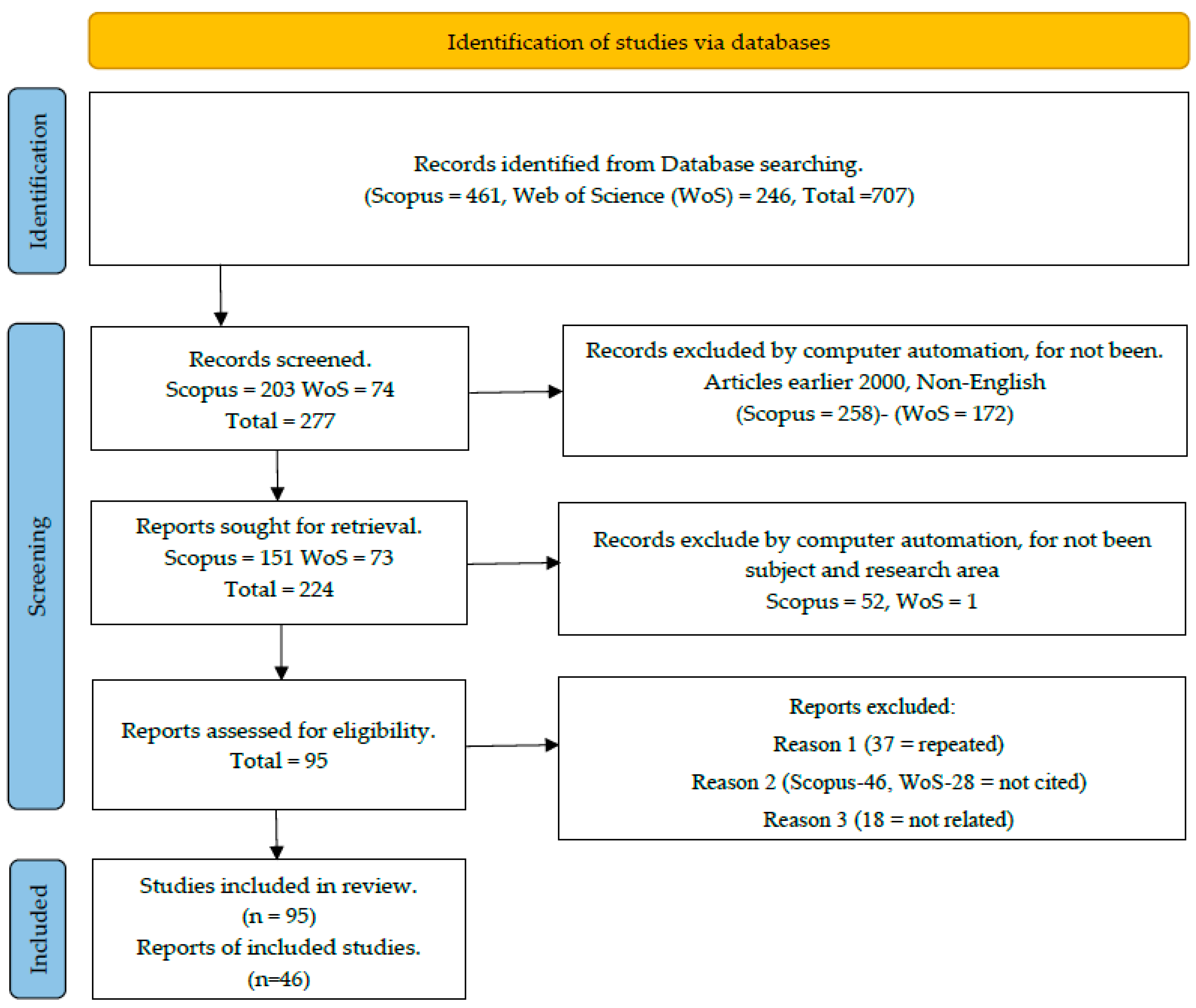
Table 1.
identify the keywords of the review.
| Keywords | Synonyms | Related terms | Variation |
|---|---|---|---|
| learning | Culture, information, literature, research, schooling, science, study, training | Teaching process, teaching styles, teaching philosophy | Learn, learner, learning |
| teaching | Coaching, cultivation, culture, discipline, guidance, instruction, learning, reading, schooling, training, tutoring | - | teach, teacher, teaching |
| Architectural education | Architecture Education, Architecture Curriculum, Architecture curricula, Architecture pedagogy | Architecture school, architecture curriculum, Architecture syllabus, architecture modules, Architecture studies, Architecture schedule, Architecture subjects, Architecture educational programme | Architectural education, |
Table 2.
reveal search string used in the selected databases.
| Database | Search string | Number of articles |
|---|---|---|
| Scopus | TITLE (("learn*" OR "teach*" OR "school*" OR "study*" OR "train*" OR "coach*" OR "tutor*" OR "guidance" OR "instruction" OR "read*") AND ("Architectur* Education" OR "architecture curriculum" OR "architectur* pedagogy" OR " architectur* syllabus" OR "architectur* modules" OR "architectur* studies" OR "architectur* schedule" OR "architecture* subjects" OR "architecture* educational program")) AND PUBYEAR > 1999 AND PUBYEAR < 2025 AND (LIMIT-TO (DOCTYPE, "ar")) AND (LIMIT-TO (LANGUAGE, "English")) AND (LIMIT-TO (SRCTYPE, "j")) AND (LIMIT-TO (SUBJAREA, "SOCI") OR LIMIT-TO (SUBJAREA, "ENGI") OR LIMIT-TO (SUBJAREA, "ARTS") OR LIMIT-TO (SUBJAREA, "ENVI") OR LIMIT-TO (SUBJAREA, "MULT") OR LIMIT-TO (SUBJAREA, "PSYC")) | 151 |
| Web of Sciences | Results for TI =(("learn*" OR "teach*" OR "school*" OR "study*" OR "train*" OR "coach*" OR "tutor*" OR "guidance" OR "instruction" OR "read*") AND ("Architectur* Education" OR "architecture curriculum" OR "architectur* pedagogy" OR " architectur* syllabus" OR "architectur* modules" OR "architectur* studies" OR "architectur* schedule" OR "architecture* subjects" OR "architecture* educational program")) and Architectural Education (Should – Search within topic) and Architecture Education (Should – Search within topic) and Article (Document Types) and English (Languages) and 2023 or 2022 or 2021 or 2020 or 2019 or 2018 or 2017 or 2016 or 2015 or 2014 or 2013 or 2012 or 2011 or 2010 or 2009 or 2008 or 2007 or 2006 or 2005 or 2004 or 2003 or 2002 or 2001 or 2000 or 1999 or 1998 or 1997 or 1996 or 1995 or 1994 (Publication Years) and Architecture or Education Educational Research or Engineering or Environmental Sciences Ecology or Urban Studies or Science Technology Other Topics or Art or Construction Building Technology or Computer Science or Social Sciences Other Topics (Research Areas) and Open Access | 73 |
Table 3.
demonstrates the inclusion and exclusion criteria.
| Criterion | Inclusion | Exclusion |
|---|---|---|
| Timeline | 2000-2023 | 1990 and earlier |
| Document Type | Cited Articles | Non-cited articles, chapters in a book, conference proceedings |
| Language | English | Non-English such as Turkish, Chinese |
| Subject Area | Scopus: Social Sciences, Engineering, Arts and Humanities, Environmental Science, Multidisciplinary, Psychology |
Computer Science, Energy, Medicine, Material Science, Mathematics, Psychology, Chemistry, Health Professions, Chemical Engineering, Decision Sciences |
| Research Area | Web of Science: Architecture, Education, Educational Research, Engineering, Environmental Science Ecology, Science Technology Other Topics, Art, Urban Studies, Construction Building Technology, Social Sciences Other Topics. Sociology |
Chemistry, History, Sociology, Archaeology, Linguistics, Computer Science. |
Table 4.
reveals the main themes of the AE during the early twenty-first century based on a literature review.
Table 4.
reveals the main themes of the AE during the early twenty-first century based on a literature review.
| Number | Main themes | Number of articles in review | Ratio |
|---|---|---|---|
| 1 | Learning Approaches | 27 | 28.4 % |
| 2 | Technology Innovation | 12 | 12.6 % |
| 3 | Sustainability | 10 | 10.5 % |
| 4 | History | 10 | 10.5 % |
| 5 | Students’ Experience and Performance | 9 | 9.5 % |
| 6 | Architectural Design and Design Studios | 9 | 9.5 % |
| 7 | Culture, Community and Society Concern | 7 | 7.4 % |
| 8 | Computer Application in AE | 3 | 3.2 % |
| 9 | Architecture Curriculum | 4 | 5.3 % |
| 10 | Building Information Modelling (BIM) | 3 | 3.2 % |
Table 5.
illustrates the most common learning approaches in AE.
| Number | Main learning themes | Number of included in the review |
|---|---|---|
| 1 | Experiential learning | 8 |
| 2 | Blended Learning | 3 |
| 3 | E-Learning and Online Learning | 3 |
| 4 | Project-based learning | 2 |
| 5 | Augmented Reality | 2 |
| 6 | Virtual Reality | 2 |
| 7 | Collaborative Learning | 1 |
| 8 | Aesthetic Cognition and visual skills | 2 |
| 9 | Expansive Learning | 1 |
| 10 | Integration of Technical course | 2 |
| 11 | Hybrid Learning | 1 |
Table 6.
reveals a thematic analysis of the experiential learning research approaches and outcomes.
| Authors | Research method | Research design | Deductive code | Research outcomes |
|---|---|---|---|---|
| Mulligan et al. (2018) | Qualitative | Focus group and Individual interview | Students’ perception of inclusive design. | Students are motivated to know disability needs. Change of attitude toward inclusive design [16]. |
| Rodriguez (2018) | Qualitative | Experiential learning |
Identification of live project value alongside studio-based project. | Valuable insights into the development of intellectual, physical, and emotional dimensions through these experiences [7]. |
| Mackintosh (2014) | Qualitative | Ethno-methodological approach Transformative learning | The transformative learning experience. | The development of a pedagogical framework for AE [20]. |
| Yazici and Töre (2014) | Mixed method | Case study project -Open-ended questions | Students’ use of urban design information. | The students can carry the knowledge and aspects of urban design to the lower design scales [18]. |
| Ņitavska et al. (2016) | Qualitative | Interviews | We are bridging the gap between the planning process in municipalities and landscape studies and research. | The university obtained a better insight into the topical problems. The local governments have scientific substantiation for making more appropriate decisions [19]. |
| Gregory (2019) | Qualitative | Service-learning courses. | Service-learning and social justice in architecture. | Students who took service-learning courses that included social justice are more able to reflect on the experiences and obstacles of the person with whom they are working [17]. |
Table 7.
illustrates a thematic analysis of the blended learning research approaches and outcomes.
| Authors | Research method | Research design | Deductive code | Research outcomes | |
|---|---|---|---|---|---|
| Megahed & Hassan, 2022) | Mixed method | Online surveys, semi-structured interviews, observation | New hybrid mode | A vision to reimagine post-COVID-19 education and the required Blended Learning strategy to provide a theoretical framework [21]. | |
| (Jasiołek et al., 2021) | Qualitative | Survey | A range of criteria for a new, effective mode of AE with student input. | A new hybrid mode of education [22]. | |
| Rodriguez et al., 2018)) | Qualitative | Two case studies | Distance learning in real projects. | Students could successfully work collaboratively and build confidence in their abilities during real project [23]. | |
| (Rauf et al., 2021) | Qualitative | Analytic and literature-based research | Combination of virtual reality and face-to-face world experience. | Enhanced students’ outcomes and engagement [24]. | |
Table 8.
reveals the thematic analysis of the e-learning and online learning research method, and outcomes.
Table 8.
reveals the thematic analysis of the e-learning and online learning research method, and outcomes.
| Authors | Research method | Research design | Deductive code | Research outcomes |
|---|---|---|---|---|
| (Xiberta et al., 2022) | Quantitative | Questionnaire | SAPIENS tool application in AE. |
There was a significant difference among test forms, and groups responded differently. There was no effect of individual experience on test scores [25]. |
| (Milovanović et al., 2020)) | Mixed method | Questionnaire | Online Workshops in AE. | Challenges as an application of research by designing methodology and problem-based learning. The second question was answered through the educators’ constant awareness and endeavor to be informed about essential global topics and to convey profound insights from research and practice to education in emergency architecture [26]. |
| (Olweny et al., 2023) | Quantitative | Questionnaire | Online architectural education. | Provided a set of recommendations for adopting online learning [27]. |
Disclaimer/Publisher’s Note: The statements, opinions and data contained in all publications are solely those of the individual author(s) and contributor(s) and not of MDPI and/or the editor(s). MDPI and/or the editor(s) disclaim responsibility for any injury to people or property resulting from any ideas, methods, instructions or products referred to in the content. |
© 2024 by the authors. Licensee MDPI, Basel, Switzerland. This article is an open access article distributed under the terms and conditions of the Creative Commons Attribution (CC BY) license (http://creativecommons.org/licenses/by/4.0/).
Copyright: This open access article is published under a Creative Commons CC BY 4.0 license, which permit the free download, distribution, and reuse, provided that the author and preprint are cited in any reuse.


