

Submitted:
24 January 2024
Posted:
25 January 2024
You are already at the latest version
Abstract
Over the past three decades, the region has undergone significant changes that have transformed the social, economic and political landscape. The traces of these changes are particularly visible in the post-socialist states of Central and Eastern Europe. These processes have sometimes fragmented, sometimes reshaped, and sometimes transcended borders, reshaping the region. The focus of this study is on the 'geography' of companies, i.e. the concentration of companies with more than 10 employees in the region in the 15 countries selected, according to various criteria. The countries covered by the study are Albania, Austria, Bosnia and Herzegovina, Bulgaria, Croatia, the Czech Republic, Hungary, Kosovo, Montenegro, Northern Macedonia, Poland, Romania, Serbia, Slovakia, Slovenia, Poland, Slovakia and Slovenia. The data of the active economic operators (over 300 thousand) of the countries included in the study were analyzed by turnover and size. The spatial distribution of enterprises at the NUTS3 level presents a far more diverse picture than what is typically observed in economic indicators such as GDP. Additionally, the disparities in this particular distribution are not as pronounced or distinct as those of general economic indicators.
Keywords:
firm geography
; Central and Eastern Europe
; Western Balkans
; Orbis Europe
1. Introduction
The evolution of firm geography research has been significant over the years, encompassing various dimensions and perspectives. Early research focused on the spatial dimension of multinational firms, examining the impact of economies of agglomeration and production [1]. This laid the foundation for understanding the geographic distribution of firms and the factors influencing their location decisions. Subsequent studies delved into the effects of diversification, vertical relatedness, and operational slack on stock market reactions to supply chain disruptions, shedding light on the geographical aspects of business diversification and its implications [2].
Moreover, the role of location strategy in enhancing the competitiveness of special economic zones was explored, emphasizing the significance of firm interactions within the same location [3]. Additionally, the presence of university research and its influence on business R&D location highlighted the relationship between academic institutions and firm geography, particularly in high-tech sectors [4]. However, it should be noted that in R&D, the international trend is that the number of researchers shows the highest growth in the corporate sector (ahead of research institutes and higher education), so that in general most R&D activity is also concentrated in large companies. Another trend is that most researchers are engaged in technical fields, mainly in automation, robotics, chemistry and biotechnology. Furthermore, the spatial dimension of multinational enterprises was examined, challenging the traditional country-centric approach and emphasizing the importance of discontinuities in geographic space [5].
The region is facing a major sustainability problem due to the steady population loss experienced by the majority of countries since the socialist period. This decline is the result of low fertility rates and natural decrease, with some countries partially offsetting this trend through international migration. The increase in the proportion of urban residents is largely attributable to the higher rate of rural in-migration and depopulation, which presents permanent sustainability challenges in small settlements and towns, particularly in rural areas. The UN predicts that rural depopulation will continue in all countries, leading to a rise in the number of urban dwellers, if not substantially, then at least in terms of proportion [6].
One of the key factors in territorial development is the shift in population distribution according to the settlement hierarchy, which is characterized not by intensive or extensive urbanization, but by the loss of population in the smallest rural settlements and the relative transformation of the position of small and medium-sized towns. Urban suburbanization plays a significant role in this process. While large cities, as prime locations for their economies, foreign working capital, and international companies, have the potential and scale to retain a significant population in the long term, they are characterized by different degrees of re-industrialization and tertiary/quaternary sector expansion, resulting in different population flows and impacts on sustainability [6].
The determinants of business cooperation for technological and non-technological innovations were examined, emphasizing the proximity approach of economic geography and its impact on firm collaboration [7]. Stressing the necessary overlap between geographical and non-spatial forms of proximity, the proximity literature has noted how proximity between agents within a network does not necessarily increase their innovative performance, and may even harm it, especially if high social proximity hinders extra regional collaboration [8]. Additionally, the concept of agglomeration elasticities and firm heterogeneity was explored, providing insights into the productivity effects of agglomeration and the challenges in estimating its true causal impact [9].
The economic benefits and geographic aspect of business behavior were studied, reflecting the common interest shared by researchers in the field of business and economic geography [10]. Moreover, the migration of economic geographers from geography departments to business and management schools signified a shift in the research agenda, emphasizing a firm-centric economic geography approach [11]. Additionally, the importance of small firm cooperation with other firms and research units for innovation was highlighted, emphasizing the significance of partnerships? in different types of innovations [12].
Research of Wojan & Slaper (2020) [13] was aimed at investigating geo-located web activity as a potential indicator of economic dynamism, providing new insights into the determinants of faster firm formation and higher firm innovation rates. The plausible “but for” percentages for economic development incentives were examined, shedding light on the positive local employment effects resulting from a positive location decision by a firm [14]. Additionally, the role of family firms in regional resilience and related variety was demonstrated, emphasizing the relevance of historical studies in exploring these notions [15]. Overall, firm geography research has evolved to encompass a wide array of topics, ranging from the spatial dimension of multinational enterprises to the impact of location strategy on competitiveness, reflecting the interdisciplinary nature of this field.
The economic history of Central and Eastern Europe has undergone noteworthy transformations, evolving from centrally planned command economies to more liberalized Western-style market economies in the late 1980s and early 1990s [16]. The economic transition in Central and Eastern Europe has been extensively researched, encompassing both the successes and disappointments of this transformation [17]. The legacy of central planners, the progress achieved, and the need for further reforms have been analyzed in the context of the key problems facing the transition countries in Central and Eastern Europe [18]. In summary, the economic history of Central and Eastern Europe reflects a complex and multifaceted process of transition, characterized by unique challenges and opportunities, and shaped by historical, political, and institutional factors. This transition led to a U-shaped response in output, characterized by a sharp decline followed by recovery [19]. The process of systemic transformation in the countries of Central and Eastern Europe, including Poland and Eastern Germany, is considered a unique event in the economic history of the world [20].
Economic development in Central and Eastern Europe is influenced by various factors, including regional economic systems, specialization, innovations, and clusters [21]. The determinants of economic growth in European regions have also been studied, with a focus on the convergence process and the catching up of regions in Central and Eastern Europe [22].
2. Regional inequalities in Central and Eastern Europe and the Western Balkans
Regional inequalities in Central and Eastern Europe have been extensively researched, with a focus on understanding the factors contributing to these disparities. The disparities between metropolized core regions and the remaining parts of Central and Eastern European countries have been well-documented [23]. The role of localized regional conditions has been highlighted as a significant determinant of income differences in Western Europe, while country-specific factors play a larger role in Eastern Europe [24]. Furthermore, recent empirical research indicates a significant increase in income and wealth inequalities in Eastern Europe since the fall of socialism [25,26]. This is further supported by the observation that inequalities in mortality in Eastern Europe were at least as large, if not larger, than in Western Europe during the late 1980s [27]. The literature also suggests that the higher burden of injuries in Eastern Europe may be attributed to poorly managed transition to market economies, leading to worsening wealth inequalities, higher unemployment rates, decreased social capital, increased alcohol availability, and poor regulatory and enforcement mechanisms [28].
The determinants of the inequalities between European Union member states are multifaceted and encompass economic, social, and political dimensions. The acceleration of economic growth in Central and Eastern European countries following their accession to the European Union has contributed to the reduction of disparities within the Union [29]. The EU has categorized its member states into four groups based on the impact of peripherality, with the first group consisting of countries such as Denmark, the Netherlands, and Luxembourg that were not significantly affected by peripherality. The second group includes countries with high rates in only 1-2 aspects, such as unemployment (Belgium, Germany, France), accessibility and population density (Sweden), employment in the primary sector (Austria), low household disposable income (Slovenia), low R&D expenditure (UK), and poor Internet use (Malta). The third group includes countries with relatively high values for 3-5 rates, such as the Czech Republic and most Western European countries. The fourth group encompasses Central and Eastern European countries and Portugal, where most of these rates apply, with geographical peripherality being particularly relevant to countries such as Lithuania, Romania, Bulgaria, Latvia, Poland, Hungary, Portugal, and Slovakia. Although not all national regional policies prioritize the issue of peripheral regions, special attention has been given to the development of peripheral regions in Poland and Finland. Additionally, Sweden, Austria, France, and Germany form a group of countries where peripheral regions are important but are not treated with special attention, while other countries such as Italy and the UK have significant problems related to peripheral regions in specific areas [29]. These include, inter alia, higher risks of social exclusion and a lower quality of life compared to more central areas, a scarce access to the market, the absence of new knowledge creation and related infrastructure, the lack of dynamic clusters, an increased risk of political lock-in due to institutional rigidities or the low intensity of networks [30].
It is noted that Cohesion Policy in Central and Eastern Europe did not necessarily improve territorial cohesion and, in some cases, has led to more persistent regional disparities, not least due the ceding of its social equality objectives to the dominance of growth-focused objectives, or the “Lisbonization” of Cohesion Policy [31,32]. Additionally, the social changes following the fall of socialism have been identified as direct contributors to the disadvantages in health and growing social inequalities in Central and Eastern Europe [33]. Regional inequalities in Central and Eastern Europe are influenced by a complex interplay of economic, social, and political factors, including the transition from socialism, economic growth, and the impact of EU policies. Addressing these inequalities requires a comprehensive understanding of the multifaceted determinants and a targeted approach to policy interventions.
Similarly, regional inequalities in the Western Balkans have been influenced by various factors, as evidenced by recent research. The Western Balkan countries have faced challenges in achieving food security and self-sufficiency, at lower levels compared to the EU countries [34]. Additionally, the agribusiness sector has been identified as a source of regional export opportunity, with efforts to improve regional cooperation through organizations such as CEFTA [35]. However, non-tariff barriers have been found to significantly reduce trade exchanges within the region, indicating the presence of trade barriers affecting regional inequalities [36].
It is of utmost importance to address the array of challenges faced by the Western Balkans, including inflation and rising food prices, which have the potential to impact food security and economic stability in the region [37]. The region’s economic relations with the EU remain predominant, despite other external influences [38]. The progress in economic preparedness and competitiveness of Western Balkan countries has been uneven, indicating disparities in economic development within the region [39].
Regional initiatives and free trade agreements have been identified as potential contributors to the socio-economic development of the Western Balkans [40]. However, the comparison of institutional systems and market economies within the region has not provided a clear answer regarding their fit into existing models, indicating complexities in economic structures [41]. The Western Balkans region, comprising Kosovo, Albania, Bosnia and Herzegovina, North Macedonia, Montenegro, and Serbia, has been highlighted as a region suffering from a development gap, further emphasizing the presence of regional inequalities [42,43].
The Western Balkans are plagued by significant regional inequalities, which are the result of a multitude of factors, including food security, trade barriers, economic development, and regional cooperation. To effectively address these inequalities, it is crucial to develop a comprehensive understanding of their underlying various factors and implement targeted policy interventions aimed at promoting economic and social development within the region.
3. Development of the post-socialist regions
The region has undergone socio-spatial differentiation and economic convergence, with areas in Central and Eastern Europe experiencing catch-up in the convergence process. Fiscal decentralization has been linked to economic growth rates across 16 Central and Eastern European countries, including Albania, Bulgaria, Croatia, the Czech Republic, Hungary, Poland, Romania, Slovakia, and Slovenia [44,45,46]. The study found that sub-national expenditure and transfers had a negative correlation with national growth rates in the region, while locally imposed taxation showed mildly positive economic benefits over time. These findings are consistent with previous empirical studies on fiscal decentralization and economic growth [47]. In fact, a significantly negative correlation was found among measures of fiscal centralization and levels of per capita real income [48]. Other studies have highlighted national institutional variation as the most important element explaining differential growth rates [49].
The planned economy system in socialist countries hindered the process of industrial location changes in the suburban zones of post-socialist cities in Central and Eastern Europe [50]. Moreover, infrastructure related to wellbeing, housing, internet broadband access, and air pollution has had a significant impact on economic growth in the regions of Central and Eastern Europe [51].
The increase in income disparity in Central and Eastern European (CEE) nations during the early 1990s, subsequent to the shift from centrally planned to market-based economies, was an anticipated outcome [52]. Prior to this transition, the socialist economies in the region were characterized by severe scarcities, minimal investment in human capital, non-competitive management, predominantly state-owned physical assets, inadequate services, and full yet highly inefficient employment. This was coupled with a wage structure that was tightly regulated administratively, undergoing rapid deregulation in the early 1990s. This liberalization, in conjunction with the expansion of the private sector, contributed to the upsurge in income inequality. By the late 1990s, income inequality had generally stabilized in post-socialist countries that subsequently accessed the European Union, with some exceptions and subsequent fluctuations. However, since then, income inequality has exhibited considerable divergence, with Bulgaria, Serbia, and Romania emerging as the most unequal by the end of the 2010s, followed by the Baltic states, Poland, Albania, and Croatia [25]. These countries currently demonstrate significantly higher levels of inequality compared to the average for non-Eastern European nations. Conversely, Slovakia, Slovenia, and the Czech Republic maintained relatively low levels of income inequality throughout the entire three-decade period, while Bosnia and Herzegovina, Hungary, and Moldova experienced moderate levels of inequality. These inter-country variations are attributable to both the initial pace and sequencing of economic reforms, which varied significantly across countries, as well as the subsequent policy measures that were implemented [25].
4. Characteristics of the urban network
Post-1990 urban development in the CEE region has been characterized by the emergence of shrinking cities [53]. The process of urbanization in this region has been considerably delayed compared to other parts of Europe, with significant changes occurring after the collapse of state socialism and the introduction of market relations [54].
From the perspective of post-regime change modifications of the settlement network, the most significant achievements include:
- The emergence of new states and their capital cities.
- Improved permeability of borders.
- The establishment of a “new neighborhood” [50].
The resulting process led to the establishment of advanced business services in the major cities of the region to support production. As a reference, the map also indicates some neighboring countries (East Germany, Austria, Moldova, the European part of Turkey, Greece), clearly demonstrating how service Foreign Direct Investment (FDI) emerged in Central and Southeastern Europe alongside industrial FDI [55,56], and to what extent this process was capital city-centric (Figure 1), excluding Poland [6].
This transition has led to profound changes in urban development, including the emergence of suburbanization in major metropolises such as Prague, Budapest, and Warsaw [57,58].
Socio-spatial differentiation and economic convergence have been key features of urban regions in Central and Eastern Europe, with regions in this area catching up in the convergence process. However, the region has also experienced urban shrinkage, with a large number of urban areas losing population and facing challenges related to governance and planning [59,60]. The dynamics of urban development in this region have been further influenced by the impact of the 2008 global economic crisis, which has affected large firms and contributed to the rising significance of cities in Central and Eastern Europe due to increasing international linkages [61].
In Central and Eastern Europe, evidence suggests that a strong housing market and growing material inequalities contribute to socio-economic polarization and residential segregation in city districts [62]. Shrinking cities are now the norm in the region, with three out of four cities reporting population decreases as a consequence of a drop in fertility and the selective outmigration of people of active ages [63]. Regional discrepancies in opportunity across Central and Eastern Europe are influenced by risk and growth potential, with certain countries such as Hungary, the Czech Republic, and Poland showing strong potential for property investment markets [64]. Urban tourism in the post-communist cities of Central and Eastern Europe has been a subject of examination, reflecting the changing dynamics of tourism in the region [65].
In the Balkans, post-socialist development has exhibited levels of informality resembling those of the Global South more than Western Europe, highlighting the unique nature of urban development in this region [66]. The territorial development of large cities in Central and Eastern Europe, exemplified by cities like Wrocław, has demonstrated a cyclical nature, with processes of urban sprawl and prosperity shaping the urban landscape [67]. Residential segregation has also been a significant issue, with the urban periphery being occupied by both the burgeoning middle classes and the urban poor displaced by transformation projects.
The process of suburbanization has been recognized as a defining factor in the development of urbanized areas in Central and Eastern Europe [68]. Territorial development occurring in the 20th century, including incorporation processes associated with planned urbanization, resulted in substantial non-urbanized areas within larger cities, which have been identified as potential areas for investment [69].
The socio-economic and political changes of the last decades of the 20th century had a significant impact on the transformation of urban spaces, particularly in industrial and mining towns [70]. Furthermore, the influence of corruption, economic freedom, and urbanization on economic development has been empirically examined in the framework of a comparative analysis for both Western Balkan countries and EU countries [71]. It has been observed that the Western Balkan countries are more prone to corruption and have lower levels of economic freedom in comparison to EU countries. The findings indicate a negative correlation between corruption and economic development, a positive relationship between economic freedom and economic development, and a positive relationship between urbanization and economic development for both the Western Balkan nations and the EU countries. Additionally, the impact of the independent variables is found to be greater for the Western Balkans, suggesting that corruption has a more detrimental effect in this region [71].
Urbanization processes in the region have been influenced by the post-socialist transformation of urban spatial structure, with questions arising as to whether this transformation can be interpreted as an adaptation process to Western-style urbanization [72]. The process of urban growth in the Western Balkans has been reflected in the physical expansion into the surrounding area, leading to the conversion of land into the urban fabric, a phenomenon known as urban sprawl [73]. Peri-urban development, as a general rural trend, has been observed in both Eastern and Western Europe, with similar processes and phenomena being presently observed in both regions [74].
The relationship between urbanization and the environment in Eastern Europe has been poorly investigated, indicating a need for further research in this area [75]. The influence of globalization, internationalization, and societal transformations on urban development and property management has been particularly strong in the countries of Central and Eastern Europe [76]. Urban shrinkage has become a common pathway in post-socialist cities, posing new challenges for traditionally growth-oriented spatial planning [77].
The process of economic suburbanization in Central and Eastern Europe and the Balkans has been shaped by various factors, including foreign direct investment (FDI), regional economic disparities, and the consequences of suburbanization on economic growth and infrastructure development [78]. Therefore, it is essential to investigate the determinants of FDI in the Balkan transition economies to comprehend the impact of foreign investment on economic suburbanization. Furthermore, Batrancea et al. (2023) [51] stress the significance of regional analyses on economic growth and infrastructure development, emphasizing the need to understand the influence of wellbeing-related infrastructure on economic progress across different regions of the European Union.
Moreover, the economic development and competitiveness levels of Western Balkan economies have been the subject of academic inquiry, with studies examining the challenges and opportunities associated with the welfare state, unemployment, and the grey economy in the region [79], research has explored the ecological consequences of suburbanization, focusing on the empirical analysis of suburbanization in Shanghai, China, and its potential environmental impact [80]. This underscores the need to consider the environmental implications of economic suburbanization processes.
The economic development of South-Eastern Europe, including the Western Balkans, has also attracted scholarly interest, with studies providing updates on the economic situation faced by these countries [81]. Further studies have investigated the hierarchical market economy of the Balkans, highlighting the unique economic characteristics of the region [82].
5. Materials and Methods
The Orbis Europe database is a comprehensive source of financial and ownership information for European firms, both publicly traded and privately held. This database provides high-quality accounting data and has been widely used in various studies [83,84]. The database covers a vast number of companies worldwide, with data on over 130 million firms. Researchers have utilized Orbis to extract information on productivity, profitability, and firm performance, and it has also been employed to analyze the impact of product market regulations on allocative efficiency and business dynamics [85,86]. The coverage of European firms in Orbis is considered unrivaled by other databases. However, there are concerns about the database’s coverage and representativeness, as it may not perfectly overlap with country-specific databases, which contain more complete firm-level information. Despite these concerns, Orbis remains a valuable resource for conducting firm-level analysis.
In this research, data from the Orbis Europe database were used, utilizing the following search steps and conditions:

Table 1.
Search steps and conditions (by Orbis Europe).
| Search steps | Conditions | |
|---|---|---|
| 1. | Status | Active |
| 2. | Standardized legal form | Public limited company, Private limited company, Partnership, Branch, Foreign company, Public authority |
| 3. | Operating revenue (Turnover), using estimates (th USD) 1 | min=100, Last available year, exclusion of companies with no recent financial data and Public authorities/States/Governments |
| 4. | Number of employees, using estimates | min=100, max=160, Last available year, exclusion of companies with no recent financial data and Public authorities/States/Governments |
| 5. | World region/Country/Region in country | Albania, Austria, Bosnia and Herzegovina, Bulgaria, Croatia, Czech Republic, Hungary, Kosovo, Montenegro, North Macedonia, Poland, Romania, Serbia, Slovakia, Slovenia |
6. Results
First, it was necessary to review the main information of the 15 countries included in the study.
The following table (Table 2) provides a comprehensive overview of various European countries, encompassing their establishment, international affiliations, territory, population, urbanization, GDP, and HDI. This information is crucial for understanding the geopolitical landscape and socioeconomic characteristics of these nations. For example, the data reveals that Poland, with its substantial territory and population, holds a prominent position in the region, as reflected in its high GDP and HDI rankings. On the other hand, Kosovo, a relatively new entity, exhibits lower figures across these parameters, indicating its current developmental status. Furthermore, the table shows the urbanization levels of these countries, with some, such as Croatia and Hungary, having relatively high urban population percentages, signifying significant urban development and associated socio-economic dynamics. Additionally, the affiliations of these countries with the EU and NATO are highlighted, shedding light on their geopolitical orientations and alliances, which play a crucial role in shaping international relations and policies. This comprehensive dataset provides valuable insights into the diverse characteristics and positions of these European countries and serves as a foundational resource for various comparative analyses and research endeavors.
The following table (Table 3) presents the size of firms in the 15 countries surveyed. The turnover categories are based on the classical division, which includes the following categories: micro (0–2000 Euro), small (2000–10000 Euro), medium (10000–50000 Euro), and large (over 50000 Euro).
This data is of utmost importance for comprehending the economic panorama and business dynamics of these countries. For example, it reveals that Poland has the highest number of firms across all categories, reflecting a thriving and diverse business environment, whereas Bulgaria and Hungary have the highest number of firms per thousand inhabitants. On the other hand, Kosovo and Albania exhibit lower figures across these parameters, indicating their current level of development in terms of business and economic activities. Albania has a relatively small population (2.8 million) and the lowest number of firms, particularly in the small and medium categories. Furthermore, Poland and Austria have a significant number of large firms, with 2 and 1.1 per 1000 inhabitants, respectively. Countries like Montenegro (ME) and North Macedonia (MK) have a higher proportion of micro and small firms.
The following maps show the distribution of companies by size category in the regions.
Figure 2 shows that Poland boasts the largest proportion of medium-sized enterprises among the three countries under consideration. It is noteworthy that small and medium-sized enterprises represent the majority of businesses in each of the three countries. The proportion of large firms is on the rise in the vicinity of major urban centers, such as Warsaw, Poznan, Katowice, and Krakow in Poland, and Bratislava in Slovakia. The trend in the Czech Republic appears to be similar, albeit less pronounced, likely due to the influence of Prague.
The map (Figure 3) that follows promptly illustrates the considerable presence of medium and large enterprises in Austria. The concentration of medium and large companies in Austria, particularly in the Central and Eastern European region, is likely due to the country’s long history of political and economic stability. This stability is important for businesses as it increases trust and confidence in the market. Austria has a strong legal framework and a tradition of emphasizing research and development and innovation, which enables companies to remain competitive. Additionally, Austria has a highly skilled workforce, which is essential for managing advanced technologies and processes. The country also has a well-developed infrastructure, which allows companies to operate efficiently and expand their services. Furthermore, Austria’s business-friendly policies and support schemes help companies to grow and develop. All of these factors contribute to the higher concentration of medium and large companies in Austria compared to other countries in the region.
Based on the provided figure (Figure 4), it is evident that small and medium-sized enterprises (SMEs) are significantly more dominant in Kosovo compared to large and micro companies. While the share of large companies is not negligible, typically concentrated in the Pristina area, the dominance of SMEs is undeniable.
Kosovo has grappled with economic challenges due to the Yugoslav wars and subsequent struggles for independence, during which it was challenging for new businesses, particularly SMEs, to establish and operate. Even today, SMEs often face limited financial resources and restricted access to bank loans or other financial resources, which can impede business growth and development. The size of businesses can be influenced by various factors, including the entrepreneur’s professional background and knowledge. If entrepreneurs tend to focus on smaller businesses, this may contribute to the prevalence of SMEs. Additionally, factors such as the economic environment, market needs, and consumer preferences can also impact the size of businesses. It is possible that in Kosovo, smaller enterprises are better suited to the local market conditions and thus dominate the entrepreneurial sector.
It is commonly observed (Figure 5) that the largest firms tend to achieve the highest levels of turnover, although their share of the total is typically the smallest. This phenomenon is particularly pronounced in the case of companies situated on the outskirts of large urban areas. For instance, in Poland, the regions surrounding Warsaw, Katowice, Krakow, and Poznan are particularly noteworthy, while the Plock area also merits mention. In Slovakia and the Czech Republic, the capital city predominates, with the exception of Košice in Slovakia, where the productivity of large companies is particularly notable.
The predominance of economic power among large companies (Figure 6) in Austria, as compared to smaller ones, is widely recognized. This trend is also evident in Hungary, where the economic disadvantage of large enterprises is particularly pronounced in regions that are already marginalized, fragmented, or lacking in transport infrastructure, such as Nógrád, Zala, and Békés. In contrast, Slovenia and Croatia exhibit a more diverse landscape, with large firms holding a share of economic productivity roughly equal to that of all other categories combined. However, there are exceptions where the cumulative ratio may be significantly higher.
The Balkan countries generally display a lack of distinction between turnover and size (Figure 7), with the overall turnover of micro, small and medium-sized enterprises being comparable to or even exceeding that of large firms. This can be attributed to both the size class ratios and the tendency of large firms to operate near major cities in order to capitalize on numerous advantages. The situation in Kosovo can be visualized through its ’colorful’ diagram, as there is a negligible share of large companies, which in turn contributes to a minimal share of turnover.
Among the Central and Eastern European countries, medium and large enterprises exhibit a notably high turnover in Poland and the Czech Republic, with Slovakia also falling within this category (Figure 8). These regions typically boast a strong sector of medium and large enterprises. In the Balkan countries, Bosnia and Herzegovina has caught up with this field.
Hungary and Austria present a more diversified landscape. In the capital cities, high turnover is observed in the medium and large enterprise sector, as well as in regions that play a role in transport, such as those along the road network to Germany and those situated close to the capital (Budapest). In Romania and Bulgaria, productivity in the medium and large enterprise sector displays a similar pattern, with a high concentration of these companies in the capital cities and stronger regions.
Albania and Kosovo exhibit a greater share of these companies compared to other countries, but their economic strength is not particularly noteworthy.
The measure of economic performance utilized in this study is Gross Domestic Product (GDP) (Figure 9), which serves as a control variable. While large business performance is observed to be stable, GDP exhibits imbalances. Among the countries examined, Austria displays the highest GDP values, followed by the Czech Republic, Poland, and Slovakia. In the latter case, only specific regions stand out (likely due to the capital cities of Bratislava and Warsaw, as well as other large cities such as Poznan, Wroclaw, and Krakow).
Romania and Hungary present a comparable picture, with the capital cities demonstrating strong economic performance, while the central and western parts of the countries are average and the eastern (and in the case of Romania, southern) regions lag behind. The remainder of the Balkans are clearly underperforming, with Sofia being the sole exception.
In addition to the size categories of companies, it is also worth briefly touching on sectoral specificities and efficiency issues. There are also significant differences in the distribution of enterprises by sector 6 across countries, but when different types of regions are compared, disparities are also apparent. Figure 10 shows the distribution of turnover by sector for the different types of regions 7. The capital regions are strikingly differentiated, with industry playing a much smaller role than in the other regions. Also specific are the metropolitan agglomerations, where the share of other private services is prominent, while financial and business services are less present. Overall, the sectoral distribution of revenues suggests that metropolitan areas and their agglomerations form a well complementary system in terms of their activity structure.
Looking at the different indicators of productivity, there is a clear west-east slope. In terms of the simple productivity indicator (turnover per employee), the last third of the ranking is dominated by the counties of the South-Eastern European region. Among these, it is mainly the peripheral, rural areas that show poor indicators, with only two urban areas (Iasi, Pristina) in the bottom quintile. The majority of the best performing counties are in Austria, while in other countries the capital cities and their agglomerations have favourable indicators. Figure 11 also shows the favourable situation of metropolitan and agglomeration areas.
If we look at productivity indicators by sector, the picture is somewhat more nuanced. Many Polish and Slovak regions have favourable industrial productivity scores, and a higher proportion of non-metropolitan and urban regions are among the best performers. For financial and business services, the advantage of Austrian counties is more pronounced, while for other private services, counties in metropolitan agglomerations almost without exception perform well above average.
7. Discussion
The evolution of firm geography research has been significant over the years, covering various dimensions and perspectives. Early research focused on the spatial dimension of multinational firms, examining the impact of economies of agglomeration and production. Subsequent studies explored the effects of diversification, vertical relatedness, and operational slack on stock market reactions to supply chain disruptions, shedding light on the geographical aspects of business diversification and its implications. Moreover, the role of location strategy in enhancing the competitiveness of special economic zones was investigated, emphasizing the significance of firm interactions within the same location. The presence of university research and its influence on business R&D location highlighted the relationship between academic institutions and firm geography, particularly in high-tech sectors. The spatial dimension of multinational enterprises was also examined, challenging the traditional country-centric approach and emphasizing the importance of discontinuities in geographic space. The determinants of business cooperation for technological and non-technological innovations were examined, emphasizing the proximity approach of economic geography and its impact on firm collaboration. The concept of agglomeration elasticities and firm heterogeneity was explored, providing insights into the productivity effects of agglomeration and the challenges in estimating its true causal impact. The economic benefits and geographic aspect of business behavior were studied, reflecting the common interest shared by researchers in the field of business and economic geography. Additionally, the migration of economic geographers from geography departments to business and management schools signified a shift in the research agenda, emphasizing a firm-centric economic geography approach. The importance of small firm cooperation with other firms and research units for innovation was highlighted, emphasizing the significance of partnerships in different types of innovations. Research on geo-located web activity as a potential indicator of economic dynamism provided new insights into the location of faster firm formation and higher firm innovation rates. The plausible “but for” percentages for economic development incentives were examined, shedding light on the positive local employment effects resulting from a positive location decision by a firm. The role of family firms in regional resilience and related variety was demonstrated, emphasizing the relevance of historical studies in exploring these notions. Overall, firm geography research has evolved to encompass a wide array of topics, ranging from the spatial dimension of multinational enterprises to the impact of location strategy on competitiveness, reflecting the interdisciplinary nature of this field. The economic history of Central and Eastern Europe has undergone noteworthy transformations, evolving from centrally planned command economies to more liberalized Western-style market economies in the late 1980s and early 1990s. The economic transition in Central and Eastern Europe has been extensively researched, encompassing both the successes and disappointments of this transformation.
The present article discusses the characteristics of 15 European countries, encompassing their founding, international affiliation, territorial expanse, populace, urbanization, Gross Domestic Product (GDP), and Human Development Index (HDI). The data unveil the socio-economic dynamics and geopolitical landscape of these nations. For instance, Poland boasts a high GDP and HDI ranking due to its extensive land area and sizeable population, whereas Kosovo displays lower values, indicative of its current stage of development. The article furthermore presents the dimensions of firms operating in these countries, classified into micro, small, medium, and large enterprises based on annual turnover. These data enable a comprehension of the economic landscape and business dynamics of these countries. Poland, for example, has the highest number of firms in all categories (though not exceptional in terms of population), while Kosovo and Albania have fewer numbers. The article also includes maps illustrating the distribution of firms by size category in various regions. The Czech Republic exhibits a more substantial presence of large companies, whereas Kosovo displays the opposite.
GDP, commonly employed to gauge economic performance, appears to exhibit spatial disparities and discontinuities in other areas. Capital cities and significant urban centers seem insular, whereas adjacent regions (e.g., the regions of Bosnia-Herzegovina) exhibit noteworthy productivity growth by medium and large enterprises.
It is essential to note that this diversified picture is significantly affected by the Modifiable Areal Unit Problem (MAUP); thus, the research has concentrated on NUTS3 territorial divisions. The novelty of the research lies in the data; the Orbis database allowed for a thematic analysis of the companies.
Future planned research will concentrate on temporality; how the actual turnover of a company has changed since 2016, and on modifications by activity.
8. Conclusion
Achieving sustainable regional economic growth is an arduous and time-consuming endeavor that necessitates a long-term strategy that is consciously based on local resources. In many cases, chance plays a significant role, and the competitiveness of numerous regions is attributable to the state’s past activities during periods of decentralization. State-owned or state-influenced industries often hold a pivotal position.
In most countries, a multi-tiered regional structure has emerged following regime changes, with the capital city pursuing a distinct path (metropolitan development model), and regions attracting foreign direct industrial investment (FDI) following diverse development trajectories. However, a substantial portion of Central and Eastern Europe comprises peripheral, rural, or so-called transitional regions characterized by numerous disadvantages. These disadvantages were present during the market economy transition, and while the presence of foreign capital brought about notable changes, it further exacerbated the disparities. Foreign-owned, incoming companies (sectors) exhibit substantial differences in productivity and knowledge utilization across various regions [87].
A significant characteristic of regional proximity is that peripheral regions are prevalent along most state borders, and addressing the situation from a bilateral perspective rarely arises as a demand. For instance, the timing and integration of infrastructure connections, such as highway connections in these regions, illustrate European (industrial relocation) and national (foreign economic, or cohesion) interests.
The need exists for the development of a unique, non-metropolitan and non-FDI-driven sustainable model for the identified regions, which presents a distinct approach to economic and competitive growth, rather than pursuing unattainable objectives. This new economic model can inform the process of regional reindustrialization and structural transformation, but it cannot provide a general or exclusive development path that generates sufficient growth potential. The limited availability of key resources, such as intellectual capital and new knowledge, spatially and quantitatively concentrated, restricts the potential for exclusive growth. In this context, the settlement structure of a given region or country is critical. The urban network, which serves as the starting point for future initiatives, is a stable system that only evolves gradually over time [88].
In regions without a European-scale, developed major city, the function of small and medium-sized towns differs significantly. The change in political regime has significantly reduced the economic and employment functions of these towns, situated outside the core regions, major European cities, and capitals. As economic and employment functions, especially those related to the new economy, concentrate in these urban centers, they have become increasingly reliant on state or European Union funding, especially for their higher education institutions and research centers. This brain drain phenomenon disproportionately affects cities located in sparser territorial structures on the periphery. This sustainability challenge is common in the examined region, as the second-tier function and size of the post-socialist urban network are relatively small compared to the capitals, except for Poland and Romania.
Author Contributions
Conceptualization, Judit Berkes and Szilárd Rácz; methodology, Ádám Páthy; formal analysis, Ádám Páthy and Judit Berkes.; investigation, Ádám Páthy and Judit Berkes; data curation, Ádám Páthy; writing—original draft preparation, Judit Berkes; writing—review and editing, Ildikó Egyed; visualization, Ádám Páthy and Judit Berkes; supervision, Szilárd Rácz and Ildikó Egyed. All authors have read and agreed to the published version of the manuscript.
Funding
Research of Szilárd Rácz has been supported by National Research, Development and Innovation Office–NKFIH grant #134900 (The development processes of Central and Southeast European cities). The research of Ildikó Egyed was funded by the Hungarian National Research, Development and Innovation Office–NKFIH grant #134903 (Geopolitical Processes and Imaginaries in Central Europe: States, Borders, Integration and Regional Development).
Data Availability Statement
Orbis Europe database supported data analysis.
References
- Braunerhjelm, P.; Ekholm, K. The Geography of Multinational Firms. 1998. [CrossRef]
- Hendricks, K.B.; Singhal, V.R.; Zhang, R. The Effect of Operational Slack, Diversification, and Vertical Relatedness on the Stock Market Reaction to Supply Chain Disruptions. Journal of Operations Management 2008. [Google Scholar] [CrossRef]
- Dhingra, T.; Singh, T.; Sinha, A. Location Strategy for Competitiveness of Special Economic Zones. Competitiveness Review an International Business Journal Incorporating Journal of Global Competitiveness 2009. [Google Scholar] [CrossRef]
- Abramovsky, L.; Harrison, R.; Simpson, H. University Research and the Location of Business R&D. The Economic Journal 2007. [Google Scholar] [CrossRef]
- Beugelsdijk, S.; Mudambi, R. MNEs as Border-Crossing Multi-Location Enterprises: The Role of Discontinuities in Geographic Space. 2014. [CrossRef]
- Rácz, S. Közép- És Délkelet-Európa Az Ezredforduló Óta. In A regionalizmus: az elmélettől a gyakorlatig: Illés Ivánra emlékezve 80. születésnapja alkalmából; Nemes Nagy, J., Pálné Kovács, I., Eds.; IDResearch Kft; Publikon: Pécs, 2022; pp. 59–71. [Google Scholar]
- Geldés, C.; Heredia, J.; Felzensztein, C.; Mora, M. Proximity as Determinant of Business Cooperation for Technological and Non-Technological Innovations: A Study of an Agribusiness Cluster. Journal of Business and Industrial Marketing 2017. [Google Scholar] [CrossRef]
- Boschma, R.; Frenken, K. Technological Relatedness and Regional Branching. In Beyond Territory: Dynamic Geographies of Knowledge Creation, Diffusion, and Innovation; 2012.
- Maré, D.C.; Graham, D.J. Agglomeration Elasticities and Firm Heterogeneity. Journal of Urban Economics 2013. [Google Scholar] [CrossRef]
- Rwehumbiza, D.; Sakijege, T. Economic Benefits and the Geographic Aspect of Business Behaviour. Management Decision 2021. [Google Scholar] [CrossRef]
- James, A.; Bradshaw, M.J.; Coe, N.M.; Faulconbridge, J. Sustaining Economic Geography? Business and Management Schools and the UK’s Great Economic Geography Diaspora. Environment and Planning a Economy and Space 2018. [Google Scholar] [CrossRef]
- Sachpazidu-Wójcicka, K. Small Firm’s Cooperation for Innovation With Other Firms and Research Units-Whether the Partner Matters for Product, Process, Marketing and Organizational Innovations? European Research Studies Journal 2021. [Google Scholar] [CrossRef] [PubMed]
- Wojan, T.R.; Slaper, T.F. Are the Problem Spaces of Economic Actors Increasingly Virtual? What Geo-Located Web Activity Might Tell Us About Economic Dynamism. Plos One 2020. [Google Scholar] [CrossRef]
- Bartik, T.J. “But For” Percentages for Economic Development Incentives: What Percentage Estimates Are Plausible Based on the Research Literature? 2018. [CrossRef]
- Amdam, R.P.; Bjarnar, O.; Berge, D.M. Resilience and Related Variety: The Role of Family Firms in an Ocean-Related Norwegian Region. Business History 2020. [Google Scholar] [CrossRef]
- Matlay, H. Entrepreneurial and Vocational Education and Training in Central and Eastern Europe. Education + Training 2001. [CrossRef]
- Kornai, J. The Great Transformation of Central Eastern Europe: Success and Disappointment. 2008. [CrossRef]
- Gros, D.; Steinherr, A. Economic Transition in Central and Eastern Europe. 2004. [CrossRef]
- Blanchard, O. The Economics of Post-Communist Transition. 1998. [CrossRef]
- Kamińska, K. Systemic Transformation in Poland and Eastern Germany: Two Versions of the Social Market Economy? Ekonomia I Prawo 2021. [Google Scholar] [CrossRef]
- Melnikas, B. TRANSFORMATIONS AND Regional EconomiC DEVELOPMENT I N Central and Eastern Europe: TYPICALITIES AND NEW PERSPECTIVES. Regional Formation and Development Studies 2014. [Google Scholar] [CrossRef]
- Cuaresma, J.C.; Doppelhofer, G.; Feldkircher, M. The Determinants of Economic Growth in European Regions. Regional Studies 2012. [Google Scholar] [CrossRef]
- Lang, T. Socio-Economic and Political Responses to Regional Polarisation and Socio-Spatial Peripheralisation in Central and Eastern Europe: A Research Agenda. Hungarian Geographical Bulletin 2015. [Google Scholar] [CrossRef]
- Bosker, M. The Spatial Evolution of Regional GDP Disparities in the ‘Old’ and the ‘New’ Europe. Papers of the Regional Science Association 2009. [Google Scholar] [CrossRef]
- Brzezinski, M. Determinants of Inequality in Transition Countries. Iza World of Labor 2022. [Google Scholar] [CrossRef]
- Holzmann, R.; Ritzberger-Grünwald, D.; Schuberth, H. 30 Years of Transition in Europe: Looking Back and Looking Beyond in CESEE Countries; 2020.
- Eikemo, T.A.; Kunst, A.E.; Judge, K.; Mackenbach, J.P. Class-Related Health Inequalities Are Not Larger in the East: A Comparison of Four European Regions Using the New European Socioeconomic Classification. Journal of Epidemiology & Community Health 2008. [CrossRef]
- Sethi, D.; Aldridge, E.; Rakovac, I.; Makhija, A. Worsening Inequalities in Child Injury Deaths in the WHO European Region. International Journal of Environmental Research and Public Health 2017. [Google Scholar] [CrossRef] [PubMed]
- Adamowicz, M. The Potential for Innovative and Smart Rural Development in the Peripheral Regions of Eastern Poland. Agriculture 2021. [Google Scholar] [CrossRef]
- Grillitsch, M.; Asheim, B. Place-Based Innovation Policy for Industrial Diversification in Regions. European Planning Studies 2018, 26. [Google Scholar] [CrossRef]
- Avdikos, V.; Chardas, A. European Union Cohesion Policy Post 2014: More (Place-Based and Conditional) Growth–Less Redistribution and Cohesion. Territory, Politics, Governance 2016, 4. [CrossRef]
- Szabo Paland Jozsa, V. and G.T. Cohesion Policy Challenges and Discovery in 2021–2027. The Case of Hungary. DETUROPE-The Central European Journal of Regional Development and Tourism 2021, 13, 66–100. [CrossRef]
- Marmot, M.; Bobak, M. Social and Economic Changes and Health in Europe East and West. European Review 2005. [Google Scholar] [CrossRef]
- Matkovski, B.; Đokić, D.; Zekić, S.; Jurjević, Ž. Determining Food Security in Crisis Conditions: A Comparative Analysis of the Western Balkans and the EU. Sustainability 2020. [Google Scholar] [CrossRef]
- Matkovski, B.; Zekić, S.; Jurjević, Ž.; Đokić, D. The Agribusiness Sector as a Regional Export Opportunity: Evidence for the Vojvodina Region. International Journal of Emerging Markets 2021. [Google Scholar] [CrossRef]
- Jusufi, G.; Bellaqa, B. Trade Barriers and Exports Between Western Balkan Countries. Naše Gospodarstvo/Our Economy 2019. [CrossRef]
- Brankov, T.; Matkovski, B. Is a Food Shortage Coming to the Western Balkans? Foods 2022. [Google Scholar] [CrossRef] [PubMed]
- Khaze, N.M.; Wang, X. Is China’s Rising Influence in the Western Balkans a Threat to European Integration? Journal of Contemporary European Studies 2020. [Google Scholar] [CrossRef]
- Kittová, Z.; Steinhauser, D. The International Economic Position of Western Balkan Countries in Light of Their European Integration Ambitions. Journal of Competitiveness 2018. [Google Scholar] [CrossRef]
- Rikalović, G.M.; Molnar, D.; Josipović, S. The Open Balkan as a Development Determinant of the Western Balkan Countries. Acta Economica 2022. [Google Scholar] [CrossRef]
- Farkas, B. Market Economies of the Western Balkans Compared to the Central and Eastern European Model of Capitalism. Croatian Economic Survey 2017. [Google Scholar] [CrossRef]
- Malaj, E. European Integration, Economy and Corruption in the Western Balkans. European Journal of Economics and Business Studies 2020. [Google Scholar] [CrossRef]
- Kmezic, M. Recalibrating the EU’s Approach to the Western Balkans. European View 2020. [Google Scholar] [CrossRef]
- Rodríguez-Pose, A.; Krøijer, A. Fiscal Decentralization and Economic Growth in Central and Eastern Europe. Growth and Change 2009. [Google Scholar] [CrossRef]
- Wesley Scott, J. Post-Millennial Visegrad Four Geopolitics: Illiberalism and Positionality within the EU. DETUROPE-The Central European Journal of Regional Development and Tourism 2021, 13, 13–33. [CrossRef]
- Sávai, M.; Bodnár, G.; Mozsár, F.; Lengyel, I.; Szakálné Kanó, I. Spatial Aspects of the Restructuring of the Hungarian Economy between 2000 and 2019. DETUROPE-The Central European Journal of Tourism and Regional Development 2022, 14, 15–33. [CrossRef]
- Davoodi, H.; Zou, H.-F. Fiscal Decentralization and Economic Growth: A Cross-Country Study. Journal of Urban Economics 1998. [Google Scholar] [CrossRef]
- Wallace, E. Oates Fiscal Federalism; Edward Elgar Pub: Cheltenham, 2011. [Google Scholar]
- Hassink, R. Advancing Place-Based Regional Innovation Policies. In Regions and Innovation Policies in Europe: Learning from the Margins; 2020. [CrossRef]
- Hajdú, Z.; Horeczki, R.; Rácz, S. Changing Settlement Networks in Central and Eastern Europe with Special Regard to Urban Networks. In The Routledge Handbook to Regional Development in Central and Eastern Europe; 2019.
- Batrancea, L.; Nichita, A.; Balcı, M.A.; Akgüller, Ö. Empirical Investigation on How Wellbeing-Related Infrastructure Shapes Economic Growth: Evidence From the European Union Regions. Plos One 2023. [Google Scholar] [CrossRef] [PubMed]
- Berkes, J. The Economic Structure and Performance of the Catchment Area of the Hungarian Regional Centers. DETUROPE-The Central European Journal of Tourism and Regional Development 2020, 12, 58–81. [CrossRef]
- Solarski, M.; Krzysztofik, R. Is the Naturalization of the Townscape a Condition of De-Industrialization? An Example of Bytom in Southern Poland. Land 2021. [Google Scholar] [CrossRef]
- Turok, I.; Mykhnenko, V. The Trajectories of European Cities, 1960–2005. Cities 2007. [Google Scholar] [CrossRef]
- Racz, S. Development Processes of Regional Centres in Central and Southeast Europe-From State Socialism to Dependent Market Economies. DETUROPE-The Central European Journal of Regional Development and Tourism 2019, 11, 92–100. [CrossRef]
- Gál, Z.; Lux, G. FDI-Based Regional Development in Central and Eastern Europe: A Review and an Agenda. Tér és Társadalom 2022, 36, 68–98. [CrossRef]
- Zdanowska, N. Metropolisation and the Evolution of Systems of Cities in the Czech Republic, Hungary and Poland Since 1950. Deturope–The Central European Journal of Regional Development and Tourism 2015, 7, 45–64. [CrossRef]
- Kowalczyk-Anioł, J.; Kacprzak, K.; Szafrańska, E. How the COVID-19 Pandemic Affected the Functioning of Tourist Short-Term Rental Platforms (Airbnb and Vrbo) in Polish Cities. International Journal of Environmental Research and Public Health 2022. [Google Scholar] [CrossRef]
- Haase, A.; Athanasopoulou, A.; Rink, D. Urban Shrinkage as an Emerging Concern for European Policymaking. European Urban and Regional Studies 2013. [Google Scholar] [CrossRef]
- Raźniak, P.; Winiarczyk-Raźniak, A. Did the 2008 Global Economic Crisis Affect Large Firms in Europe? Acta Geographica Slovenica 2015. [Google Scholar] [CrossRef]
- Jocić, N. Culture-Led Urban Development vs. Capital-Led Colonization of Urban Space: Savamala—End of Story? Urban Science 2020. [Google Scholar] [CrossRef]
- Kashnitsky, I.; Gunko, M. Spatial Variation of In-Migration to Moscow: Testing the Effect of Housing Market. Cities 2016. [Google Scholar] [CrossRef]
- Haase, A.; Bernt, M.; Großmann, K.; Mykhnenko, V.; Rink, D. Varieties of Shrinkage in European Cities. European Urban and Regional Studies 2013. [Google Scholar] [CrossRef]
- Adair, A.; Sm, A.; Berry, J.; McGreal, S. Central and Eastern European Property Investment Markets: Issues of Data and Transparency. Journal of Property Investment & Finance 2006. [CrossRef]
- Light, D.; Creţan, R.; Voiculescu, S.; Jucu, I.S. Introduction: Changing Tourism in the Cities of Post-Communist Central and Eastern Europe. Journal of Balkan and Near Eastern Studies 2020. [Google Scholar] [CrossRef]
- Szmytkie, R. The Cyclical Nature of the Territorial Development of Large Cities: A Case Study of Wrocław (Poland). Journal of Urban History 2019. [Google Scholar] [CrossRef]
- Işik, O. Residential Segregation in a Highly Unequal Society: Istanbul in the 2000s. 2021. [CrossRef]
- Gnatiuk, O. Demographic Dimension of Suburbanization in Ukraine in the Light of Urban Development Theories. Auc Geographica 2017. [Google Scholar] [CrossRef]
- Szmytkie, R. Suburbanisation Processes Within and Outside the City: The Development of Intra-Urban Suburbs in Wrocław, Poland. Moravian Geographical Reports 2021. [Google Scholar] [CrossRef]
- Kantor-Pietraga, I.; Zdyrko, A.; Bednarczyk, J. Semi-Natural Areas on Post-Mining Brownfields as an Opportunity to Strengthen the Attractiveness of a Small Town. An Example of Radzionków in Southern Poland. Land 2021. [CrossRef]
- Feruni, N.; Hysa, E.; Panait, M.; Radulescu, I.G.; Brezoi, A.G. The Impact of Corruption, Economic Freedom and Urbanization on Economic Development: Western Balkans Versus EU-27. Sustainability 2020. [Google Scholar] [CrossRef]
- Taubenböck, H.; Gerten, C.; Rusche, K.; Siedentop, S.; Wurm, M. Patterns of Eastern European Urbanisation in the Mirror of Western Trends–Convergent, Unique or Hybrid? Environment and Planning B Urban Analytics and City Science 2019. [Google Scholar] [CrossRef]
- Živanović, Z.; Tošić, B.; Mirić, N.; Vračević, N. The Nature of Urban Sprawl in Western Balkan Cities. International Journal of Urban Sciences 2022. [Google Scholar] [CrossRef]
- Biegańska, J.; Środa-Murawska, S.; Kruzmetra, Z.; Swiaczny, F. Peri-Urban Development as a Significant Rural Development Trend. Quaestiones Geographicae 2018. [Google Scholar] [CrossRef]
- Halbac-Cotoara-Zamfir, R.; Santos Ferreira, C.S.; Salvati, L. Long-Term Urbanization Dynamics and the Evolution of Green/Blue Areas in Eastern Europe: Insights From Romania. Sustainability 2021. [Google Scholar] [CrossRef]
- Melnikas, B. Urban Development and Property Management in the Context of Societal Transformations: Strategic Decision-making. International Journal of Strategic Property Management 2005. [Google Scholar] [CrossRef]
- Slach, O.; Bosák, V.; Krtička, L.; Nováček, A.; Rumpel, P. Urban Shrinkage and Sustainability: Assessing the Nexus Between Population Density, Urban Structures and Urban Sustainability. Sustainability 2019. [Google Scholar] [CrossRef]
- Estrin, S.; Uvalic, M. FDI into Transition Economies: Are the Balkans Different? Economics of Transition 2014, 22. [Google Scholar] [CrossRef]
- Matković, G. The Welfare State in Western Balkan Countries: Challenges and Options. Stanovnistvo 2019, 57, 27–52. [Google Scholar] [CrossRef]
- Wang, H.; Shi, Y.; Zhang, A.; Cao, Y.; Liu, H. Does Suburbanization Cause Ecological Deterioration? An Empirical Analysis of Shanghai, China. Sustainability 2017. [Google Scholar] [CrossRef]
- Paunović, S.; Kosanović, R. Further Milestones in the Economic Developmentof South-Eastern Europe. SEER: journal for labour and social affairs in Eastern Europe: journal of the European Trade Union Institute 2019, 22, 33–52. [Google Scholar] [CrossRef]
- Saucedo Acosta, E.J.; Salinas Aguilar, D.Y.; Pedroza, J.D. The Balkans as a Hierarchical Market Economy. European Journal of Interdisciplinary Studies 2019. [Google Scholar] [CrossRef]
- Cerpentier, M.; Vanacker, T.; Paeleman, I.; Bringmann, K. Equity Crowdfunding, Market Timing, and Firm Capital Structure. The Journal of Technology Transfer 2021. [Google Scholar] [CrossRef]
- Bajgar, M.; Berlingieri, G.; Calligaris, S.; Criscuolo, C.; Timmis, J. Coverage and Representativeness of Orbis Data. 2020. [CrossRef]
- Tenucci, A.; Supino, E. Exploring the Relationship Between Product-Service System and Profitability. Journal of Management & Governance 2019. [CrossRef]
- Egyed, I.; Zsibók, Z. Labour Productivity in a Central and Eastern European Secondary City–Evidence From Regional and Firm-Level Data. Acta Universitatis Sapientiae European and Regional Studies 2022. [Google Scholar] [CrossRef]
- Rácz, S. Regionális Központok Innovációs Potenciálja Közép- És Délkelet-Európában. In Új Nemzeti Kiválóság Program Tanulmánykötet; Széchenyi István Egyetem: Győr, 2021; pp. 279–286. [Google Scholar]
- Racz, S.; Egyed, I. Territorial Disparities and Economic Processes in Hungary: Editorial. DETUROPE-The Central European Journal of Regional Development and Tourism 2022, 14, 4–14. [CrossRef]
Figure 1.
GaWC world cities in Central and South-East Europe, 2000-2020. Source: Rácz (2022:69) [6].
Figure 1.
GaWC world cities in Central and South-East Europe, 2000-2020. Source: Rácz (2022:69) [6].
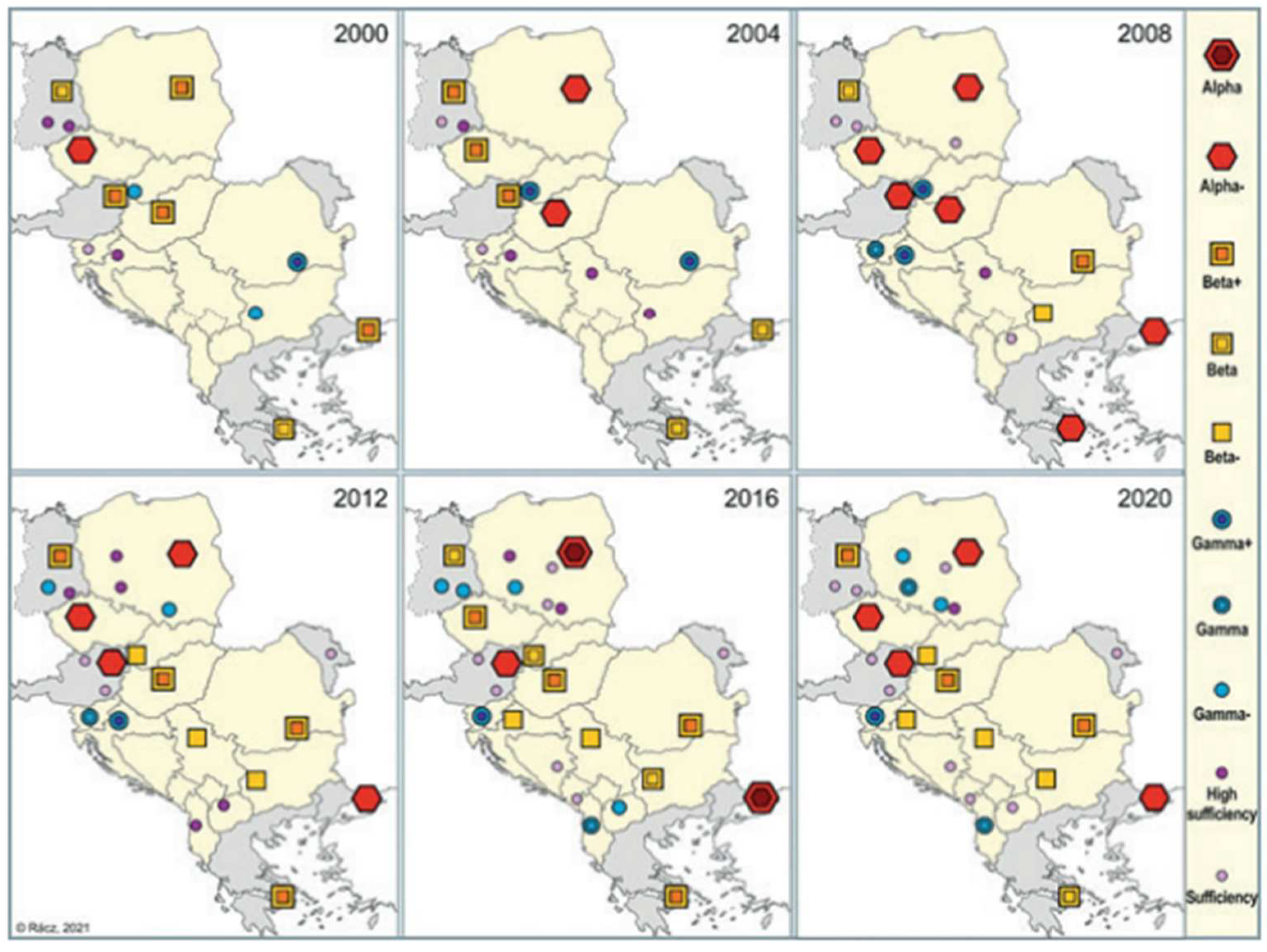
Figure 2.
Companies by size category in Poland, Czech Republic, Slovakia (NUTS3).
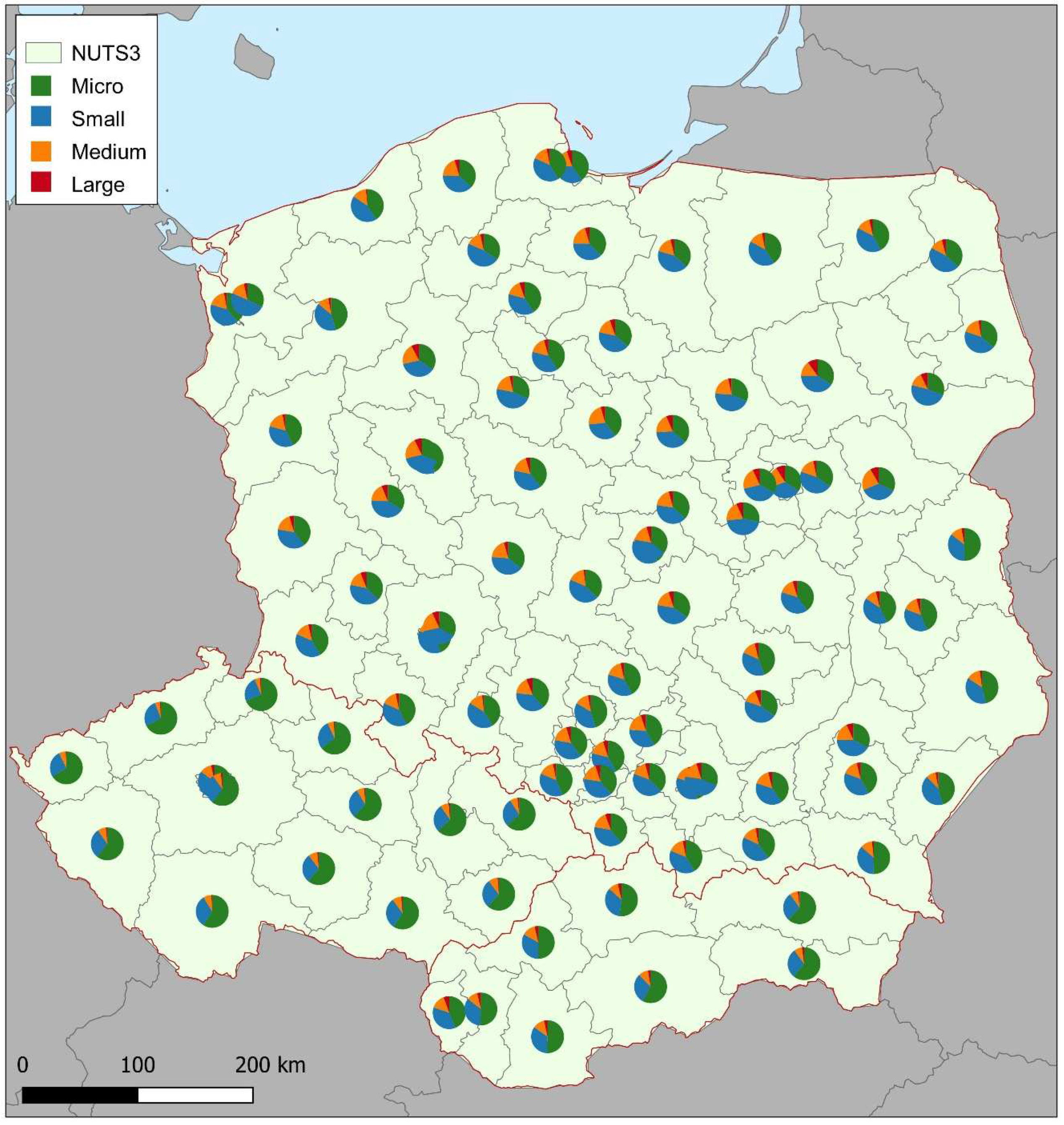
Figure 3.
Companies by size category in Austria, Slovenia, Hungary and Croatia (NUTS3).
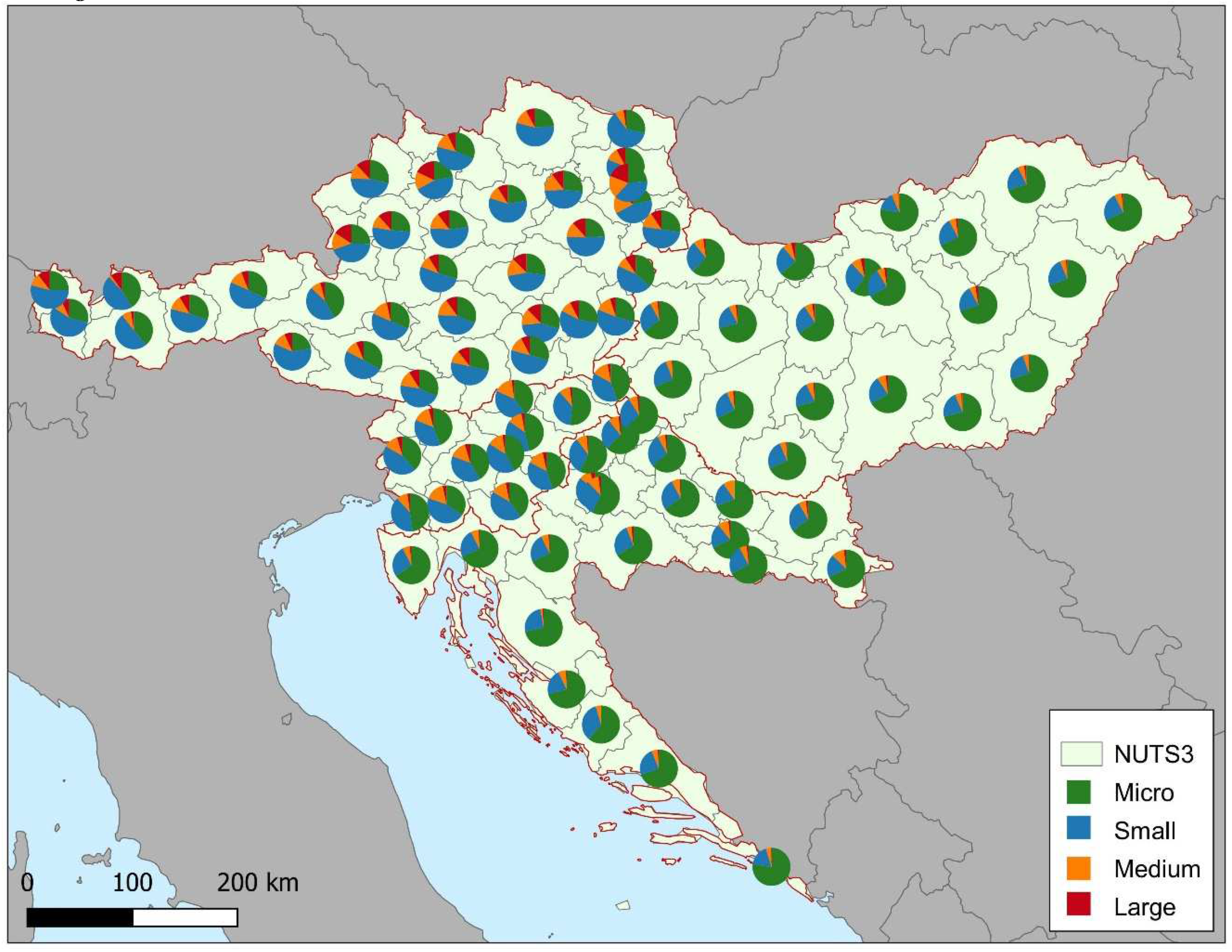
Figure 4.
The categorization of firms by size in the Balkan region 3.
Figure 4.
The categorization of firms by size in the Balkan region 3.
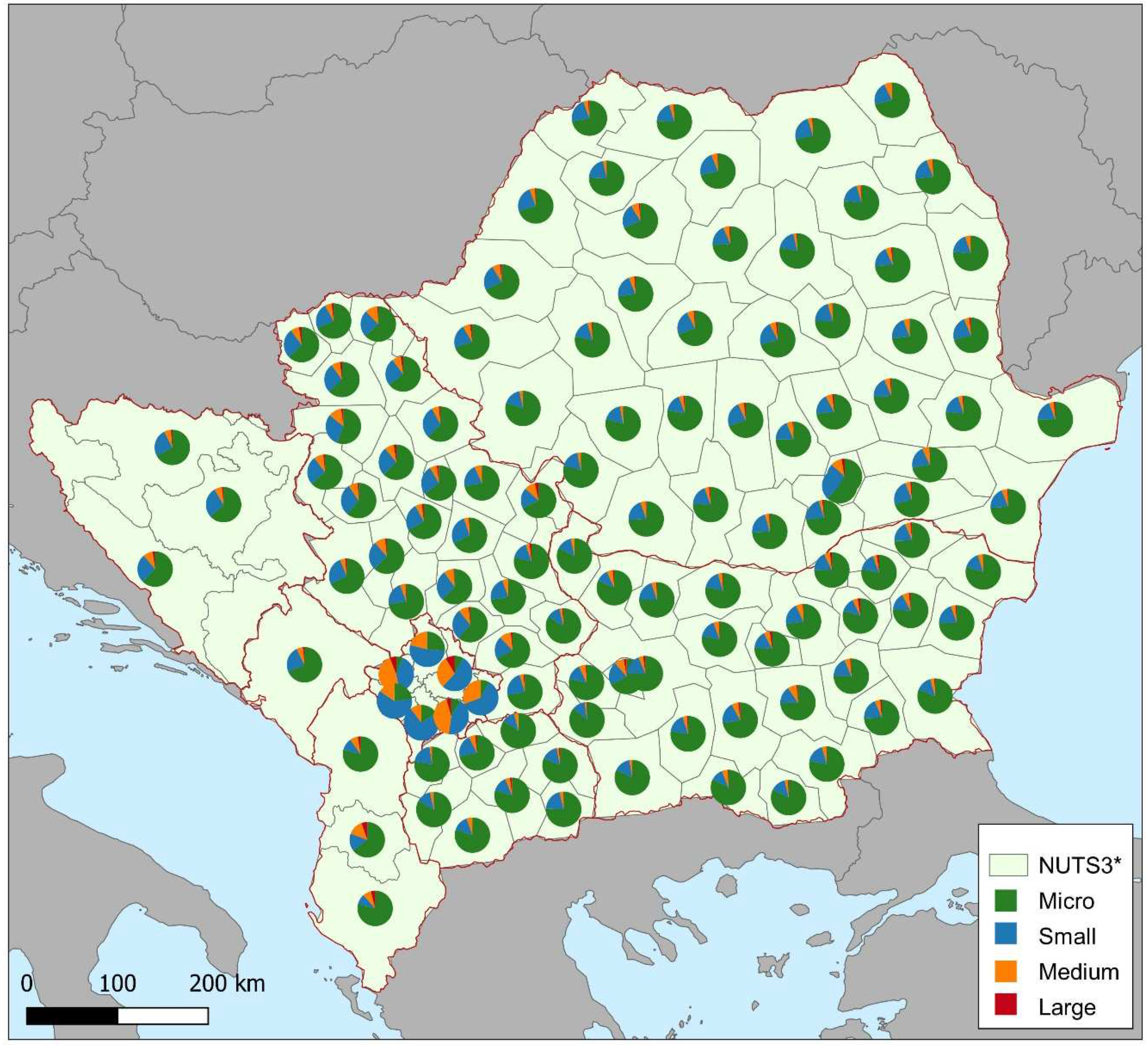
Figure 5.
Size of enterprises and distribution of turnover in Poland, Austria and Slovakia.
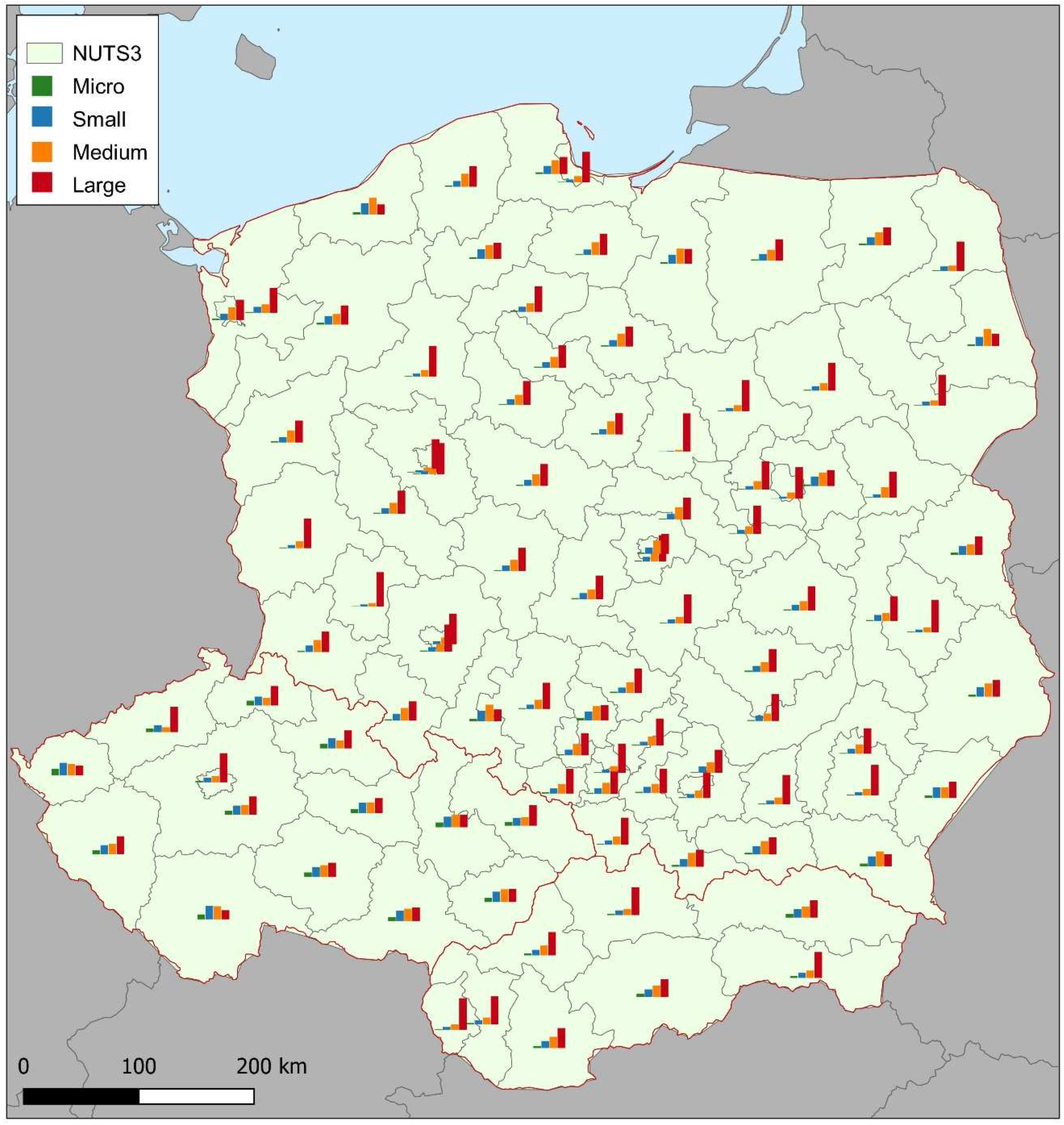
Figure 6.
Size of enterprises and distribution of turnover in Austria, Hungary, Slovenia and Croatia.
Figure 6.
Size of enterprises and distribution of turnover in Austria, Hungary, Slovenia and Croatia.
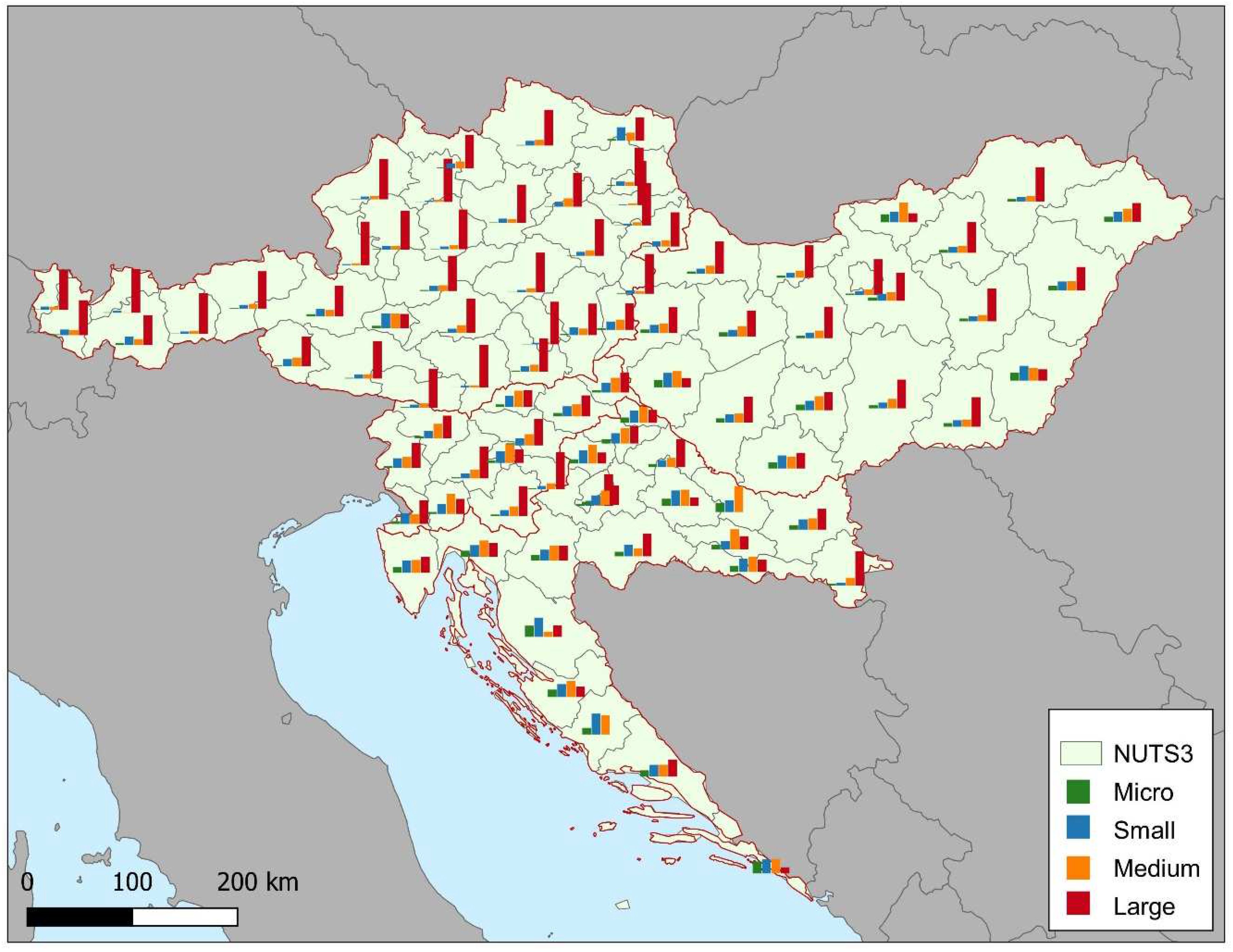
Figure 7.
Size of enterprises and distribution of turnover in Balkans 4.
Figure 7.
Size of enterprises and distribution of turnover in Balkans 4.
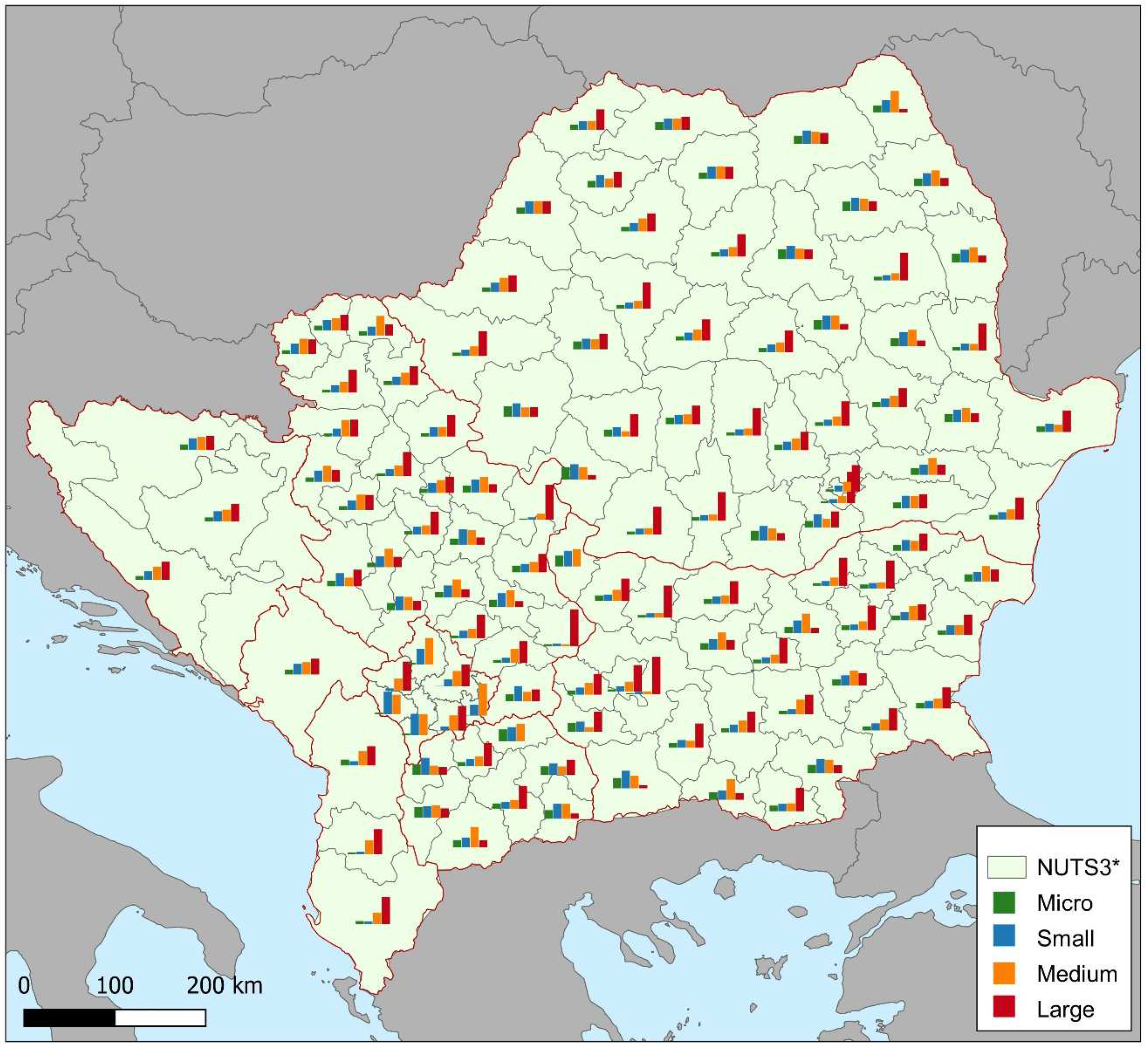
Figure 8.
Geographical distribution of turnover produced by medium and large companies, th USD, 2021 5.
Figure 8.
Geographical distribution of turnover produced by medium and large companies, th USD, 2021 5.

Figure 9.
Gross domestic product (GDP) at current market prices by NUTS 3 regions, PPS, 2020, per habitant.
Figure 9.
Gross domestic product (GDP) at current market prices by NUTS 3 regions, PPS, 2020, per habitant.
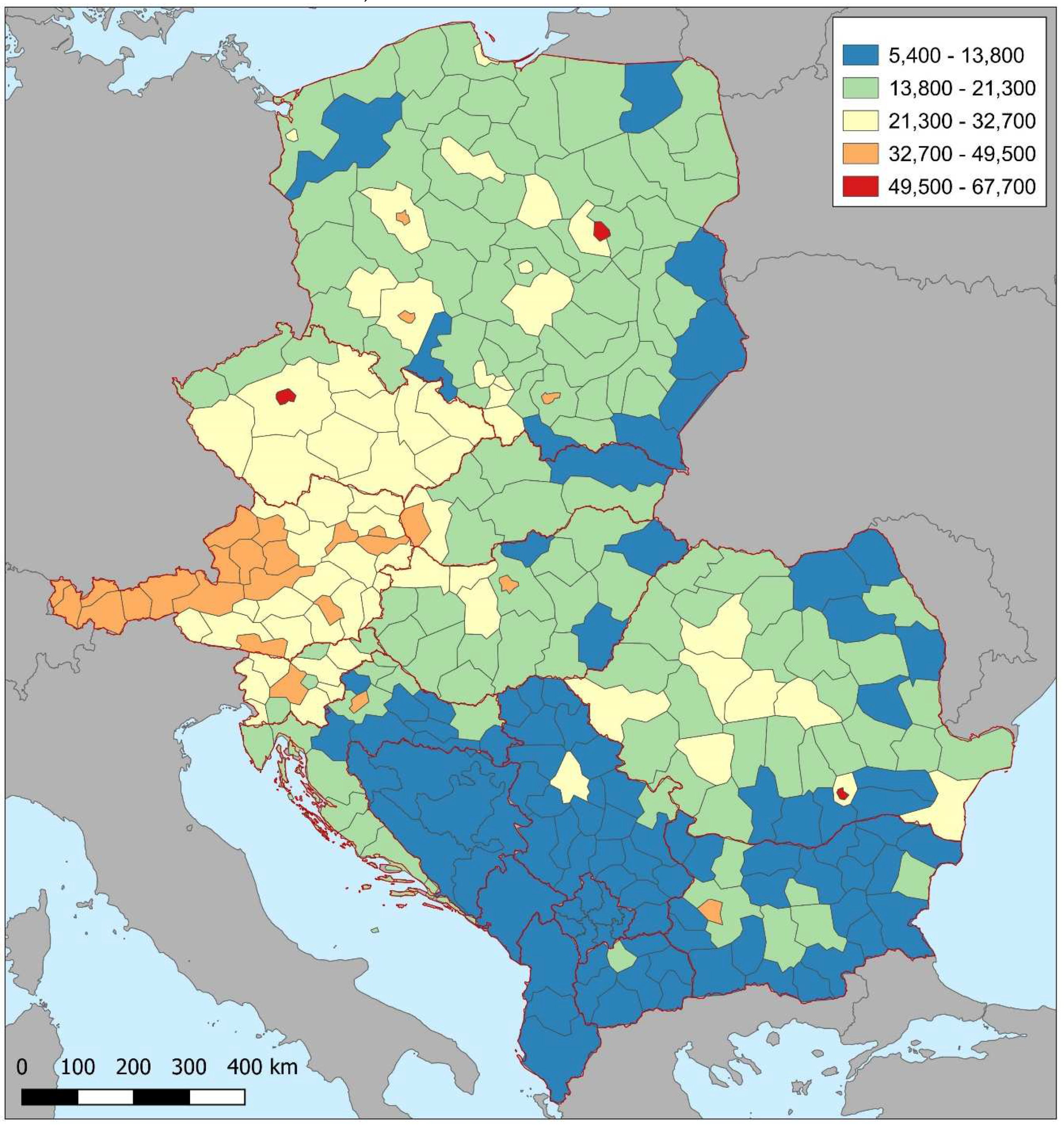
Figure 10.
Distribution of turnover of enterprises by sector in different types of regions, per cent.
Figure 10.
Distribution of turnover of enterprises by sector in different types of regions, per cent.
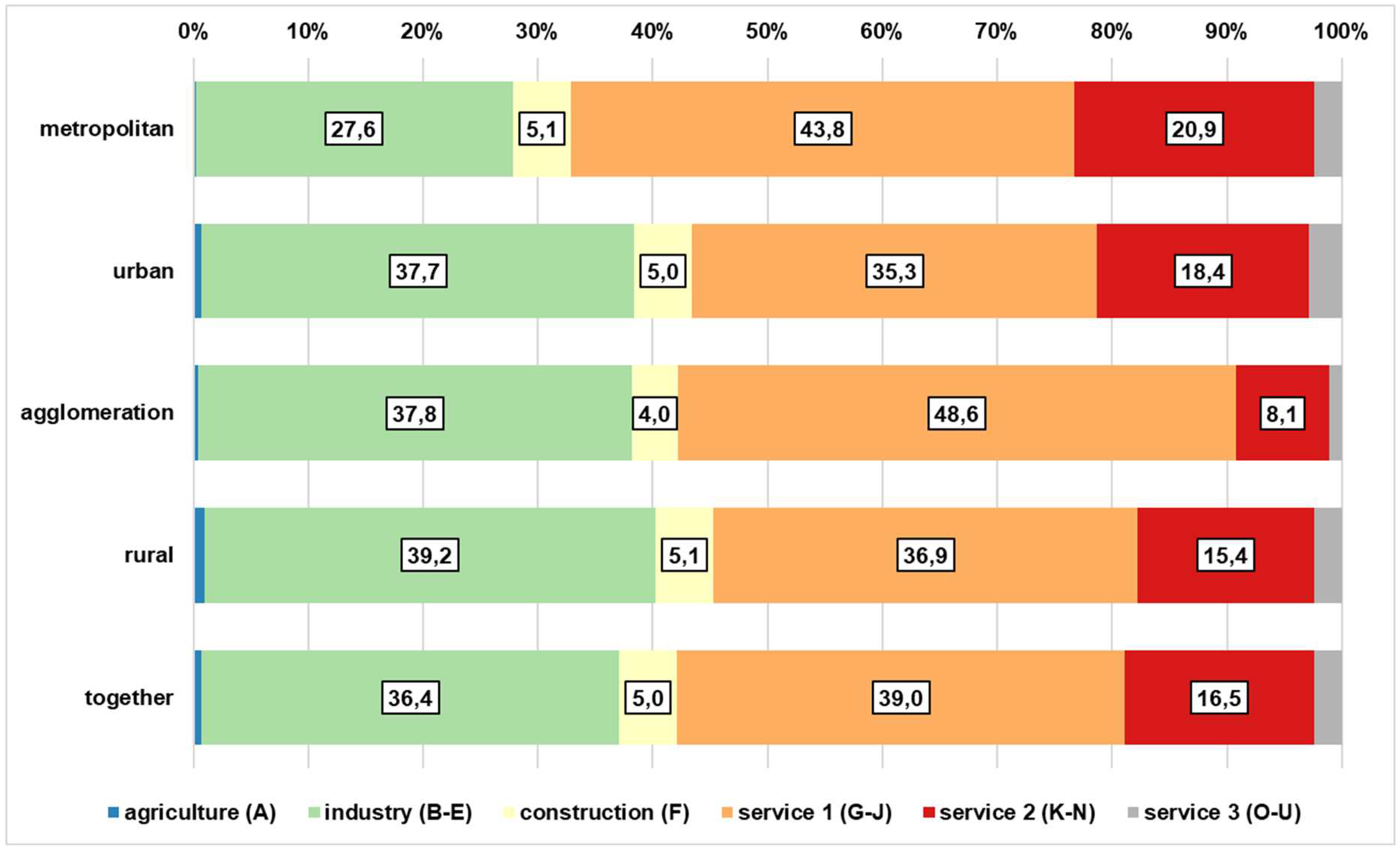
Figure 11.
Total productivity (revenue per employee) by types of regions.
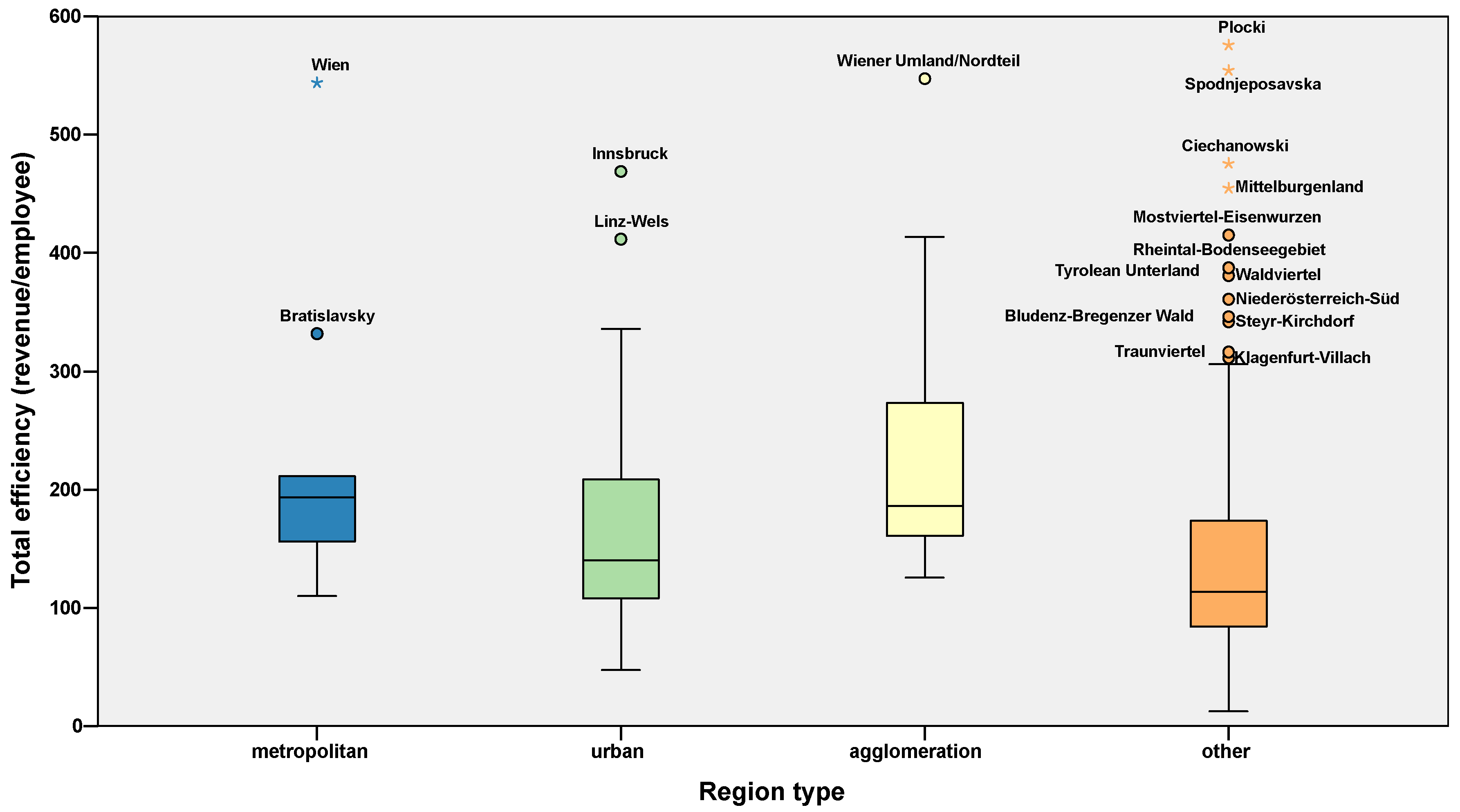
Table 2.
Main data of the countries.
| Relations | Territory | Population | Urbanization | GDP | HDI | ||||||||
| Country | Last establishment | EU | NATO | km2 | Rank | Million (2019) | Rank | Urban pop. % | Rank | (PPP c.Int$) Billion (2021) | Rank | Value 2019 | Rank |
| Albania | 1912 (Ottoman Emp.) | candidate | member (2009) | 28 748 | 141 | 2,8 | 140 | 62,1 | 95 | 44 | 119 | 0.795 | 69 |
| Austria | 1920 (Austria-Hungary) | candidate | non member | 83 871 | 114 | 8,9 | 97 | 58,5 | 105 | 537 | 44 | 0.922 | 18 |
| Bosnia and Herzegovina | 1992 (SFRY) | potential candidate | candidate | 51 197 | 126 | 3,3 | 137 | 49 | 130 | 52 | 114 | 0.780 | 73 |
| Bulgaria | 1908 (Ottoman Emp.) | member state (2007) | member (2004) | 110 879 | 104 | 6,9 | 108 | 75,6 | 58 | 175 | 73 | 0.816 | 56 |
| Croatia | 1991 (SFRY) | member state (2013) | member (2009) | 56 594 | 125 | 4 | 131 | 57,6 | 104 | 120 | 85 | 0.851 | 43 |
| Czech Republic | 1993 (ČSFR) | member state (2004) | member (1999) | 78 865 | 116 | 10,7 | 87 | 74,1 | 61 | 461 | 47 | 0.900 | 27 |
| Hungary | 1920 (Austria-Hungary) | member state (2004) | member (1999) | 93 030 | 109 | 9,7 | 93 | 71,9 | 66 | 343 | 54 | 0.854 | 40 |
| Kosovo | 2008 (Serbia) | potential candidate | potential candidate | 10 908 | 170 | 1,8 | 153 | 40 | est. | 22 | 147 | 0.787 | 87 |
| Montenegro | 2006 (FRY) | candidate | member (2017) | 13 812 | 157 | 0,6 | 171 | 67,5 | 80 | 13 | 155 | 0.829 | 48 |
| North Macedonia | 1991 (SFRY) | candidate | member (2020) | 25 713 | 146 | 2,1 | 150 | 58,5 | 101 | 37 | 129 | 0.774 | 82 |
| Poland | 1918 (1945) | member state (2004) | member (1999) | 312 658 | 70 | 38,2 | 38 | 60 | 97 | 1364 | 20 | 0.880 | 35 |
| Romania | 1878 (1920) | member state (2007) | member (2004) | 238 391 | 82 | 19,3 | 62 | 56,4 | 111 | 636 | 36 | 0.828 | 49 |
| Serbia | 2006 (FRY) | candidate | potential candidate | 77 474 | 117 | 6,9 | 107 | 56,4 | 111 | 142 | 79 | 0.806 | 64 |
| Slovak Republic | 1993 (ČSFR) | member state (2004) | member (2004) | 49 037 | 128 | 5,5 | 119 | 53,8 | 119 | 190 | 70 | 0.860 | 39 |
| Slovenia | 1991 (SFRY) | member state (2004) | member (2004) | 20 273 | 151 | 2,1 | 149 | 55,1 | 118 | 86 | 97 | 0.917 | 22 |
Source: Own compilation based on EU, NATO, UN, IMF, WB, CIA, Eurostat
Table 3.
Firms in the database by size category.
| Country code | Size 2 | sum | Territory km2 | Population (million) | Number of firms per 1000 inhabitants | |||
| micro | small | medium | large | |||||
| BG | 30937 | 7806 | 2594 | 704 | 42041 | 110879 | 6.9 | 6.1 |
| HU | 26223 | 10160 | 2824 | 908 | 40115 | 93030 | 9.7 | 4.1 |
| SI | 3408 | 3047 | 1018 | 273 | 7746 | 20273 | 2.1 | 3.7 |
| HR | 8511 | 3587 | 1077 | 269 | 13444 | 56594 | 4.0 | 3.4 |
| RO | 39964 | 12510 | 3554 | 905 | 56933 | 238391 | 19.3 | 2.9 |
| CZ | 18294 | 9095 | 2649 | 500 | 30538 | 78865 | 10.7 | 2.9 |
| ME | 1083 | 380 | 94 | 24 | 1581 | 13812 | 0.6 | 2.6 |
| MK | 4151 | 991 | 245 | 56 | 5443 | 25713 | 2.1 | 2.6 |
| AT | 5702 | 9849 | 2980 | 2585 | 21116 | 83871 | 8.9 | 2.4 |
| RS | 10286 | 4140 | 1271 | 299 | 15996 | 77474 | 6.9 | 2.3 |
| SK | 6486 | 4117 | 1379 | 449 | 12431 | 49037 | 5.5 | 2.3 |
| BA | 4262 | 1785 | 460 | 99 | 6606 | 51197 | 3.3 | 2.0 |
| PL | 20752 | 20920 | 9358 | 2839 | 53869 | 312658 | 38.2 | 1.4 |
| AL | 315 | 67 | 56 | 21 | 459 | 28748 | 2.8 | 0.2 |
| KV | 23 | 139 | 75 | 15 | 252 | 10908 | 1.8 | 0.1 |
| SUM | 180397 | 88593 | 29634 | 9946 | 308570 | |||
Source: Own editing based on Orbis Europe
| 1 | The following rephrased statement employs a formal tone while discussing the turnover figures for the period of 2016-2021. Although the inclusion of active enterprises was a primary screening criterion, it was observed that the turnover data for some enterprises was incomplete for the final year within this timeframe. To address this issue, an imputation method was implemented, whereby missing data for the final year was supplemented with the closest available data from the preceding years. |
| 2 | The revenue figures presented herein are expressed in thousands of dollars and have been converted using the average euro-dollar exchange rate for the period of 2016-2021. It is important to note that this period differs from the one used in the previous footnote. It should be emphasized that the use of this exchange rate is necessary to provide a consistent and accurate representation of the revenue figures across different currencies. |
| 3 | As a result of the limited number of firms in Albania, it has been deemed appropriate to utilize NUTS2 (3 divisions) instead of the NUTS3 (12 divisions) levels. |
| 4 | As a result of the limited number of firms in Albania, it has been deemed appropriate to utilize NUTS2 (3 divisions) instead of the NUTS3 (12 divisions) levels. |
| 5 | see the first footnote |
| 6 | Service activities are divided as follows: service 1-other private services; service 2-financial and business services; service 3-public services. |
| 7 | Types of regions were defined as follows: metropolitan–standalone NUTS 3 regions of capitals with more than one million inhabitants (Belgrade, Bucharest, Budapest, Prague, Sofia, Vienna, Warszawa) plus Bratislava and Zagreb; urban–NUTS 3 regions of citites with more than 250 000 inhabitants (city regions in Poland and Austria, ‘standard’ NUTS 3 regions in other countries plus smaller capitals (Ljubljana, Pristina, Skopje, Tirana); agglomeration–NUTS 3 regions containing FUAs of capitals, surrounding NUTS 3 regions of Polish city-regions, agglomerations of Linz and Graz, NUTS 3 regions of Upper Silesia conurbation, except Katowice; other–all other regions. |
Disclaimer/Publisher’s Note: The statements, opinions and data contained in all publications are solely those of the individual author(s) and contributor(s) and not of MDPI and/or the editor(s). MDPI and/or the editor(s) disclaim responsibility for any injury to people or property resulting from any ideas, methods, instructions or products referred to in the content. |
© 2024 by the authors. Licensee MDPI, Basel, Switzerland. This article is an open access article distributed under the terms and conditions of the Creative Commons Attribution (CC BY) license (http://creativecommons.org/licenses/by/4.0/).
Copyright: This open access article is published under a Creative Commons CC BY 4.0 license, which permit the free download, distribution, and reuse, provided that the author and preprint are cited in any reuse.


