
Submitted:
15 January 2024
Posted:
16 January 2024
You are already at the latest version
Abstract
The emergence of diverse infections worldwide, which is a serious global threat to human existence, necessitate the urgent development of novel therapeutic candidates that can combat these diseases with efficacy. Isatin, a secondary metabolite from tryptophan is considered a privileged scaffold and favorable pharmacophore with a unique structural moiety and varied chemical and biological properties resulting in its widespread applications by medicinal chemists. Molecular hybridization is one of the most common and important techniques use in the synthesis of their bioactive hybrids in drug discovery. This review containing published articles from 2005 to 2022 focuses on isatin hybrids which have been synthesized and reported in the literature alongside a discussion on their biological properties. The purpose of this review is to set up the direction for the design and development of isatin-hybrids with tailored biological properties as effective therapeutic candidates inspired by nature.
Keywords:
Isatin
; Hybrids
; Biological properties
; Pharmacophore
; Molecular hybridization
1. Introduction
Isatin 1 (indol-2,3-dione; Figure 1), a secondary metabolite of tryptophan has been found to be widely distributed in the central nervous system, mammalian tissues, and body fluids of humans [1,2,3]. This oxidized indole has been used as the core structure in the formulation of several compounds which have been tested and identified as potent inhibitors of apoptosis [4,5,6,7,8,9], anticonvulsants [10,11], antiviral [5,12,13,14,15,16], Antitubercular [17,18,19], Antifungal [20,21], Antimicrobial [22,23], Antioxidant [24,25], antimalarial [26,27], anti-inflammatory [28,29], Anticonvulsant [10]. Isatin, therefore, is considered a versatile and favorable precursor for pharmacophore development as a privileged scaffold [9] because the moiety can be modified at various positions (N-1, C-3, C-4, C-5, and C-7 positions) as illustrated in Figure 1, resulting in different derivatives with diverse biological properties [30,31].
Recently, some isatin-containing compounds have been approved for clinical trials (Sunitinib and Toceranib) [17] used in the treatment of tumors, while others (Nintedanib, Semaxinib, and Orantinib) are currently undergoing clinical trials for the evaluation of their therapeutic activities as anti-cancer agents [2]. The development of a single hybrid compound by combining two or more pharmacophores has been proven to be a promising approach in the development of new drugs which have the potential of overcoming drug resistance and possess improved activity when compared to parent drugs [32]. It is therefore plausible that the molecular hybridization of the isatin moiety with other pharmacophores has the potential to generate new and more effective therapeutic candidates [8]. There exist several isatin hybrid molecules generated by the combination of isatin moiety with other useful pharmacophores that have outstanding biological activities. Some of these hybrids include; Isatin-Azole hybrids [8,9,10,14,23,33,34,35,36,37,38], Isatin-furan hybrids [9,18,33,35,39], Isatin-thiophene hybrids [8,40], Isatin-indole hybrids [9,41], Isatin-fluoroquinolone hybrids [9,17,42], Isatin-Imine hybrids [9], Isatin-sulfonamide hybrids [2,9,21,43,44], Isatin-pyridine hybrids [45,46,47,48], Isatin-chalcone hybrids [49], Isatin-quinazoline hybrids [50,51], Isatin-pthalazine hybrids [50], Isatin-hydrazide hybrids [9,33,35,48], Isatin-naphthalene hybrids [14], isatin-thiosemicarbazone hybrid [9,20], Isatin-oxime hybrids [52], Isatin-nitrone hybrids [52], Isatin-ketone hybrids [53], Isatin-piperazine hybrids [54], Isatin-uracil hybrids [55], Isatin-coumarin hybrids [56], Isatin-thiolactone hybrids [57], and Isatin-pyrimidine hybrids [17]. The purpose of this review is to set up the direction for the design and development of isatin-hybrids with tailored biological properties as effective therapeutic candidates inspired by nature.
2. Isatin-Azole Hybrids
Azole, a privileged scaffold of choice when designing novel therapeutic agents are mainly found as core structures in several natural products and synthesized compounds which are used by pharmaceutical or agrochemical industries [58]. Most azole compounds are used as antifungal drugs [59,60] and some of its derivatives possess a variety of biological properties such as anticancer [7,59], antibacterial [60,61], and antitubercular properties [17,62]. Several isatin-azole hybrids have been synthesized [4,17,28,63,64,65,66,67,68] and reported to possess diverse pharmacological properties. The chemical structures of these isatin-azole hybrids are presented in Figure 2. Eldehna et al., in 2018 [69] reported the synthesis of the isatin-pyrazole hybrids 2a-c and evaluated their anti-proliferative properties. The hybrid 2b was identified as the most active analogue portraying broad spectrum activity against breast, colon, and lung human cancer cell lines with an IC50 value of 2.14 μM.
With the outbreak of SARS-CoV-2 and the urgent need for the development of bioactive molecules, Badavath et al., in 2020 [14] conducted in silico studies, by making use of computer-aided drug design approaches to screen over 118 compounds. The molecular docking studies against Mpro protein revealed that the isatin-oxidiazole hybrids 3 and 4 possessed excessive interactions to Mpro with best docking scores -11.22 kcal/ mol and -11.15 kcal/mol respectively. Thus, these compounds could serve as starting points for the development of potential SARS-CoV-2 Mpro inhibitors. Özil et al., in 2011 [70] synthesized a series of isatin-1,2,4-triazole hybrids 5a-h and evaluated their anti-microbial properties against four bacterial strains: Escherichia coli, Pseudomonas aeruginosa, Staphylococcus aureus, and Bacillus subtilis. The hybrid 5g emerged with quite interesting antibacterial activity against Staphylococcus aureus and Bacillus subtilis bearing an MIC value of 8 and 16 µg mL−1 respectively. Neglected tropical diseases remain a global threat to health and thus the need for the development of new approaches and therapies to fight against these infections. Freitas et al., in 2021 [36] reported the synthesis and evaluation of the anti-parasitic properties of some isatin-thiazolyl 6a-j hybrids. The hybrid 6e,h,i,j were found to be the most potent compounds with anti-Trypanosoma cruzi activity for trypomastigote form having IC50 values of 4.43 μM, 2.05 μM, 4.12 μM and 1.72 μM respectively. Nikalje et al., 2015 [10] reported a microwave-assisted synthesis of a series of novel isatin-thiazolidin-4-one hybrids 7a-e and analysed their anti-convulsant activities in mice using maximal electroshock seizure (MES) and subcutaneouspentylenetetrazole (sc-PTZ) induced seizure tests. Hybrids 7d,e exhibited potent protection against MES test cells thus indicating interesting anticonvulsant properties [28].
3. Isatin-Furan Hybrids
Furan is an important pharmacophore of natural origin with several biological properties (anticancer, antimalarial, antibacterial, and antifungal). It has been used as a starting material in the production of several industrial chemicals such as catalysts, resins, agrochemicals and pharmaceuticals [71,72]. The chemical structures of isatin-furan hybrids are presented in Figure 3. The synthesis and anti-bacterial evaluation of a series of isatin-benzofuran hybrids 8a-e were reported by Gao et al., in 2019 [18]. The synthesized compounds were tested on a panel of gram-negative and gram-positive bacteria and the minimal inhibition concentration (MIC) values obtained. The hybrid 8e was identified as the most promising compound with interesting antibacterial activity against majority of the tested pathogens (Staphylococcus epidermidis, Staphylococcus aureus, Enterococcus faecalis, Enterococcus faecium, Escherichia coli, Klebsiella pneumoniae, Pseudomonas aeruginosa, Enterobacter aerogenes, Proteus mirabilis) with MIC values of ≤1 μg/mL. In 2018, Gao et al., [73] reported the synthesis of some isatin-benzofuran hybrids 9a-d and evaluated their anti-mycobacterial activity against MTB H37Rv and MDB TR strains. Among the synthesized compounds, the hybrid 9d was found to be the most active with over 128 folds effectiveness when compared to Rifampicin, a well-known antibiotic used in the treatment of tuberculosis having MIC values of 0.25 and 0.5 µg/mL against MTB H37Rv and MDR-TB strains respectively [35].
4. Isatin-Thiophene Hybrids
Thiophene, one of the most abundantly found heterocyclic rings present in biological systems has emerged as a potent scaffold in drug discovery. This moiety and its derivatives have found widespread applications in different fields of life such as the pharmaceutical and dye industries. Several pharmacological properties have been reported to be associated with this scaffold some of which include; anticancer, antimicrobial and anti-inflammatory properties [74,75]. Figure 4 presents some of the chemical structures of isatin-thiophene hybrids. Chen et al., in 2005 [76] synthesized some isatin derivatives 10a-b and 11a-f. The synthesized compounds were evaluated in vitro for their inhibitory activity against SARS coronavirus 3CL protease. Notably, some of the synthesized compounds exhibited potent inhibitory activity against the virus with hybrids 11a and 11e being the most active hybrids amongst the compounds having IC50 values of 0.98 µM and 0.95 µM respectively [14,40].
5. Isatin-Indole Hybrids
Indoles constitute an important subunit for the discovery of new drug candidates. It is widely distributed in natural products and bioactive molecules and is responsible for the faecal smell in human faeces, scents of flowers and the flowery smell of perfumes [77,78,79]. The indole moiety is a versatile molecule with several biological properties such as: Anti-fungal, antimicrobial, antiviral, and antitubercular properties [80]. Figure 5 presents some of the chemical structures of isatin-indole hybrids.
Al-wabli et al., in 2020 [41] reported the synthesis of some isatin-indole molecular hybrids 12a-g and evaluated their potentials as anti-proliferative agents against human breast (ZR-75), colon (HT-29) and lung (A-549) tumor cell line. The hybrid 12c showed potent antiproliferative activity which was approximately seven-folds greater than sunitinib, a well-known anti-cancer medication. Some bis-isatin-indole hybrids 13a-c were synthesized and reported by Praveen in 2011 [81]. The anticonvulsant and antibacterial properties of the synthesized compounds were evaluated against Maxima Electroshock seizure (MES) model and two bacterial strains (Staphylococcus aureus and Escherichia coli) respectively. The hybrids 13a and 13c demonstrated excellent anticonvulsant activity and in addition, hybrid 13c revealed excellent antibacterial activity against Escherichia coli [9].
6. Isatin-Fluoroquinolone Hybrids
Quinolone is an essential class of nitrogen-containing heterocycles widely used as a building block for medicinal agents. Fluoroquinolones possess broad-spectrum activity and very good oral bioavailability, and as such often used as antibacterial agents. Some fluoroquinolones which are currently available include; ciprofloxacin, gemifloxacin, levofloxacin, moxifloxacin, norfloxacin, and ofloxacin [19,82,83,84]. Figure 6 presents some of the chemical structures of isatin-fluoroquinolone hybrids.
In 2013, with the aim of developing potential antimicrobials, Prakash et al., [85] reported the synthesis of a series of novel ciprofloxacin-isatin hybrids 14a-k. Most of the compounds showed interesting in vitro antibacterial and antifungal activity against the investigated microbes. The hybrid 14c was identified as the most potent hybrid with better antibacterial activity against Staphylococcus. aureus, Escherichia coli, and Pseudomonas aeruginosa when compared to the parent drug ciprofloxacin, and similar antifungal activity against Aspergillus fumigatus and Aspergillus niger when compared to ketoconazole [9].
Over one-third of the world’s population are potentially infected with tuberculosis (TB), a common infectious disease. In the quest for novel, effective, and fast acting anti-TB drugs with low toxicity, Sriram et al., in 2006 [86] synthesized a series of Gatifloxacin-isatin 15a-g hybrids and evaluated their antimycobacterial activity. Hybrid 15d was shown to be the most potent with improved activity when compared to the parent drug gatifloxacin [17].
7. Isatin-Sulfonamide Hybrids
Sulfonamides are naturally occurring structural motifs in medicinal chemistry with leading roles in novel drug design and development against complex infections [84]. They are highly versatile organo-sulphur compounds containing the -SO2NH2 and/or -SO2NH- groups and small chemical modifications often result in improved activity. Sulfonamides are generally used in the treatment of bacterial infections and also possess several biological activities such as antifungal, anti-inflammatory, antioxidant, diuretic, anticancer [87,88]. The chemical structures of these isatin-sulfonamide hybrids are presented in Figure 7.
In 2014, Farag [89] reported the synthesis and evaluation of antimicrobial activity of a series of 5-(morpholinosulfonyl)isatin hybrids 16 and 17a-h. The synthesized compounds were evaluated for their activity against gram +ve (Staphylococcus aureus, Staphylococcus epidermidis and Bacillus subtilis), gram –ve (Proteus vulgaris, Klebsiella pneumonia, Shigella flexneri) bacterial and fungi. The hybrid 16 revealed better antibacterial activity against all tested bacteria strains when compared to ampicillin B and fourfold antifungal potency against Aspergillus fumigatus when compared to amphotricin B.
Abo-Ashour et al., [90] with main goal to develop novel isatin-based anticancer candidates targeting the tumor-associated hCA isoforms IX and XII, synthesized two series of isatin-sulfonamide hybrids 18 and 19a-h followed by the evaluation of their in vitro biological activity. All the synthesized compounds revealed potent inhibitory activities against the tested hCA isoforms and thus were further investigated for their anti-proliferative activity against several cancer cell lines. Notably, the hybrids 19f and 19h were the most active against the various cell lines inhibiting the cancer cells in a concentration dependent manner [43].
Eldehna et al., 2018 [91] synthesized and evaluated the anticancer activity of a series of isatin-sulfonamide hybrids 20a-f against colorectal cancer HCT-116 and breast cancer MCF-7 cell lines. The most promising hybrid amongst the series 20e exhibited potent anticancer activity against HCT-116 cell lines with an IC50 value of 3.67 ± 0.33 µM.
Selvam and collaborators in 2010 [92] reported the synthesis of a series of isatin-sulfadimidine hybrids 21a-e and determination of their antiviral activity against swine influenza A/California/07/2009 (H1N1) virus. The synthesized compounds revealed quite potent activity against the virus by blocking its adsorption to cells with the hybrid 21e being the most active amongst the synthesized compounds.
8. Isatin-Pyridine Hybrids
Pyridines are a class of heterocyclic nitrogenous compounds with tremendous applications in diverse fields of life. This moiety and its derivatives are naturally present in different molecules such as vitamins, co-enzymes and alkaloids. Due to their wide range of pharmacological properties, pyridine-based compounds have found widespread applications in the field of drug design and discovery. It is widely used as a solvent for organic reactions, paints and pharmaceuticals as well as intermediates in the manufacture of agrochemicals and pharmaceuticals [93]. The chemical structures of these isatin-pyridine hybrids are presented in Figure 8.
Adopting a hybrid pharmacophore approach, Eldehna et al., in 2014 [45] designed, synthesised and evaluated the anti-proliferative activity of a series of isatin-pyridine hybrids 22-24 against HepG2, A549 and MCF-7 cancer cell lines. Notably, the hybrid 23 was identified as the most active compound with over 2.7 fold increase in activity against HepG2 cell line when compared to doxorubicin, a known anticancer medication. Quantitative structure activity relationship studies revealed that the introduction of a more lipophilic and bulky chlorine atom, resulted in a tremendous increase in activity thus making hybrid 24c the most active against A549 and MCF-7 cancer cell lines.
Kitagawa et al., in 2021 [46] in an attempt to combat organophosphorus poisoning caused by some pesticides and nerve agents, designed and synthesised a series of isatin-pyridine oxime hybrids 25a-e and analyzed their properties as acetylcholinesterase reactivators. All the synthesized compounds demonstrated reactivation properties with hybrids 25c and 25e showing the highest percentage of reactivation even at low concentrations thus making them potential lead compounds.
9. Isatin-Chalcone Hybrids
Chalcones are one of the most important classes of natural products derived from plants with widespread distribution in vegetables, teas, fruits, and many others [94,95]. They are a group of plant-derived polyphenolic compounds, known to be biogenetic precursors of flavonoids and isoflavonoids with several medicinal and pharmaceutical applications some of which include; antihypertensive, anti-bacterial, ant-obesity, anti-malarial, anti-retroviral, anticancer, fungicidal, germicidal, herbicidal and insecticidal [96,97]. Figure 9 presents some of the chemical structures of isatin-chalcone hybrids.
Fayed et al., in 2021 [49] reported the synthesis and screening of a series of isatin-chalcone hybrids 26-28 for their anticancer activities against MCF-7, HepG-2, and HCT-116 human cell lines. All the synthesized compounds demonstrated quite interesting anti-tumour properties with the hybrid 27 showing very high anti-cancer activity against HepG-2 cell line with an IC50 value of 5.33 µM/mL when compared to imatinib.
10. Isatin-Quinazoline Hybrids
Quinazoline scaffold is a vital class of biologically active nitrogen-containing heterocycles with unique properties such as ease of synthetic accessibility and flexible structural modification, which have motivated the exploitation of their biological activities [98]. This scaffold has attracted significant attention over the past years due to its diverse pharmacological activities such as anti-malarial, anti-cancer, anti-convulsant and anti-inflammatory properties [99]. The chemical structures of these isatin-quinazoline hybrids are presented in Figure 10.
Implementing a molecular hybridization approach, Fares et al., 2015 [51] designed and synthesised a series of isatin-quinazoline hybrids 29a-f. The synthesised compounds were tested for their in vitro anticancer activity against liver, breast and colon cancer cell lines. It is worth noting that, the hybrids 29a, 29c and 29f were the most active with the ability to induce apoptosis in liver HepG2 cells.
Eldehna et al., 2017 [50] with primary goal to develop potent anti-proliferative agents capable of targeting triple-negative breast cancer (TNBC) MDA-MB-231 cell lines, synthesized a series of isatin-pthalazine hybrids 30a-e. The hybrid 30e was found to be the most potent against MDA-MB-231 cell lines with over 2.37 fold increase in activity when compared to 5-fluorouracil, the reference drug.
11. Isatin-Pthalazine Hybrids
Pthalazines are essential nitrogen-containing heterocyclic compounds with interesting chemical, industrial and pharmacological properties such as; anticancer, anticonvulsant, anti-inflammatory, antifungal, and antibacterial properties. Different drug molecules are presently available in the market which contain the phthalazine pharmacophore some of which include; hydralazine, budralazine, vatalanib, olaparib and azelastine. Owing to its broad application in the treatment of diverse infections, the phthalazine scaffold has received much attention in the area of drug discovery. Pthalazines are used as starting materials for the development of new medications and as an intermediary in the synthesis of chemicals [100]. Figure 11 presents some of the chemical structures of isatin-pthalazine hybrids.
Exploring the potentials in hybrid-pharmacophore approach, Eldehna et al., 2017 [50] reported the synthesis of a series of isatin-pthalazine hybrids 31a-g and evaluated their activity as anti-proliferative agents against triple-negative breast cancer (TNBC) MDA-MB-231 cell lines. Notably, the hybrid 31g showed improved activity against MDA-MB-231 cell lines with over 2.44 fold increase in activity when compared to 5-fluorouracil, the reference drug.
12. Isatin-Hydrazide Hybrids
Hydrazides represent an important class of organic compounds that contain the azomethine functional group connected to a carbonyl group. These functionalities accord pharmacophore its unique pharmacological properties thus making it a key intermediate and vital starting material for the development of novel bioactive compounds. Several drugs are currently in use which contain the hydrazide moiety some of which include; isoniazide (anti-tuberculosis), nifuroxazide (antibiotic), isocarbazide (antidepressant), iproniazide (anti-tuberculosis), and galavit (anti-inflammatory) [101,102]. The chemical structures of these isatin-hydrazide hybrids are presented in Figure 12.
In 2020, Salem et al., [103] reported the synthesis of some isatin-carbohydrazide hybrids 32a-b and the evaluated their in vitro antimicrobial activity. The compounds were tested on some strains of both gram positive and gram negative bacterial and the hybrid 32b was found to possess the most potent antibacterial activity amongst the synthesised compounds with its activity comparable to that of Norfloxacin and Tetracycline.
Elsayed et al., 2021 [48] reported the synthesis of a series of isatin-nicotinohydrazide hybrids 33a-c and 34a-h followed by the evaluation of their activities as anti-tubercular and antibacterial agents. Amongst the synthesized compounds, the hybrids 34g and 34h were found to be the most potent anti-tubercular agents demonstrating broad spectrum antibacterial activity against the tested strains [35].
Rawat et al., 2016 [104] reported the synthesis of a series of isatin-carbohydrazide hybrids 35a-g and evaluation of their antimicrobial activity against different bacterial and fungal strains. Most of the synthesized compounds revealed interesting antimicrobial activities with the hybrids 35c and 35d being the most potent against the bacterial strain Escherichia coli while hybrids 35a and 35b revealed very potent antifungal activity against Candida albicans.
13. Isatin-Thiosemicarbazone Hybrids
Thiosemicarbazones are an important class of ligands generally obtained as condensation products from the reaction of thiosemicarbazide with aldehydes and ketones. Over the years, thiosemicarbazones have gained so much interest owing their metal-chelating properties, wide range of biological properties and structural flexibility [105]. Figure 13 presents some of the chemical structures of isatin-thiosemicarbazone hybrids.
In an attempt to discover novel anti-methicillin-resistant Staphylococcus aureus (MRSA) agents, Zhang et al., 2015 [106] synthesized a series of isatin-β-thiosemicarbazones hybrids 36a-i. The synthesized compounds were evaluated for their antibacterial activity against gram-positive bacterial strains: Staphylococcus aureus (ATCC 6538) and Bacillus subtilis (ATCC 6633). All tested compounds exhibited interesting antibacterial activity with 36b being the most active with a minimum inhibitory concentration (MIC) value of 0.78 mg/L.
Thanh et al., 2016 [20] reported the synthesis and evaluation of the in vivo antioxidant/ in vitro antimicrobial activity of a series of isatin-thiosemicarbazone hybrids 37a-f. The in vitro antimicrobial activity was conducted against different bacterial (Staphylococcus aureus, Escherichia coli, Klebsiella pneumonia, Pseudomonas aeruginosa, Staphylococcus epidermidis, Bacillus subtilis, Enterobacter aerogenes) and fungal strains (Aspergillus niger, Candida albicans, Fusarium oxysporum, Saccharomyces cerevisiae) while in vivo antioxidant activity was determined by evaluating the superoxide dismutase (SOD), glutathione peroxidase (GSH-Px) and catalase (CAT) activities of the compounds. The synthesized compounds revealed quite promising activities and the hybrid 37d was identified as the most potent antioxidant, antibacterial and antifungal agent.
Conducting pharmacophoric modelling studies on non-nucleoside reverse transcriptase inhibitors (NNRTIs), a series of isatin-β-thiosemicarbazone hybrids 38-40 were synthesized and evaluated for their anti-HIV activity. The synthesized hybrids were found to possess interesting anti-HIV activity with hybrid 39 being the most active amongst the synthesized compounds [15].
14. Isatin-Oxime Hybrids
Oximes are an essential class of nitrogen-containing compounds usually obtained as condensation products from the reaction of hydroxyl amines with aldehydes or ketones. This pharmacophore has found widespread use in different fields of life such as in industries, some oxime-containing compounds are used as artificial sweeteners. A good number of marketed drugs contain the oxime moiety some of which include; pyraloxime methiodine: a cholinesterase inhibitor and ceftobiprole [107,108]. Furthermore, oxime-containing chemicals have been reported to possess antiviral properties against influenza virus A and HIV-1 virus as well as anticancer properties against human breast and colon adenocarcinoma cell lines [109,110]. The chemical structures of these isatin-oxime hybrids are presented in Figure 14.
In an attempt to meet the demand for orally active inhibitors of respiratory syncytial virus (RSV) replication, Sin et al., 2009 [52] synthesized a series of isatin hybrids 41a-i. The tested compounds revealed potent antiviral activities with the hybrids 41b-g bearing methyl, ethyl and fluoroethyl substituents being the most active hybrids.
15. Isatin-Nitrone Hybrids
Nitrones are organic species that react with, "trap" and stabilize free radicals for identification and characterization purposes [111]. They are potent antioxidant molecules capable of reducing oxidative stress as well as suppressing signal transduction processes suggesting potential anti-inflammatory and anti-apoptotic activities [112,113,114]. The chemical structures of these isatin-nitrone hybrids are presented in Figure 15.
Sin et al., 2009 [52] reported the synthesis of a series of isatin-nitrone hybrids 42a-c and evaluation of their inhibitory activity against respiratory syncytial virus (RSV). The synthesized compounds revealed moderate antiviral activity with the hybrid 42c being the most potent.
16. Isatin-Piperazine Hybrids
Piperazine is a vital heterocyclic scaffold found in several biologically active compounds. This scaffold is present in some antiviral agents such as Delavirdine and Indinavir, which are used in HIV treatment. It is considered a privileged scaffold for drug design and widely used due to its unique properties some of which include; solubility, basicity, chemical reactivity and conformational properties [115,116]. This ring is present in several commercially available drugs and its derivatives are known to possess a broad spectrum of therapeutic properties such as; antidepressant, anticancer, antimalarial, anticonvulsant, antifungal, and antitubercular properties [117]. The chemical structure of an isatin-piperazine hybrid is presented in Figure 16.
In 2021, Omar et al., [54] in the quest for possible SARS-CoV-2 Protease Enzyme inhibitors, synthesized the isatin-piperazine hybrid 43 and evaluated its physicochemical, bioactivity scores and pharmacokinetic properties using in silico computational tools. Molecular docking studies were conducted to predict the inhibitory activity of the ligand against SARS-CoV-2 Protease Enzyme. Based on the study, the piperazine ligand made strong hydrogen bonding interactions with the SARS-CoV-2 Protease with a negative dock energy thus suggesting it could be a good lead for the design of new drug candidates.
17. Isatin-Uracil Hybrids
Uracil, a naturally occurring pyrimidine nucleobase, is a major component of nucleic acid. Oxidative degradation of uracil yields urea and maleic acid in the presence of hydrogen peroxide and ferrous ions. It has widespread applications in different fields of life such as; medicine, pesticide and chemical synthesis. Uracil is used as starting material for the synthesis of many pyrimidine-based herbicides and in the design and application of medicine [55]. The chemical structure of some isatin-uracil hybrids are presented in Figure 17.
Kumar et al., 2012 [55] reported the synthesis of a series of isatin-uracil hybrids 44a-l and evaluation of their cytotoxic activity against three human cancer cell lines; HeLa (cervix), MCF-7 (breast) and DU145 (prostate). Amongst the synthesized compounds, the hybrids 44g and 44k were found to be active against DU145 (prostate) cancer cell lines at low concentrations. Notably, most of the compounds were inactive against the HeLa (cervix) cell line except for hybrids 44d and h bearing electron withdrawing substituents.
18. Isatin-Coumarin Hybrids
Coumarin represents a privileged scaffold for medicinal chemists with unique physicochemical properties which undergo easy synthetic transformations [118,119]. It is found extensively in nature and its derivatives have been found to demonstrate interesting pharmacological activities (antibacterial, antifungal, antimalarial, and anticancer activities). Coumarins are widely used in perfumes, hand soap, detergents and lotions where they function as fragrance enhancers or stabilizers [120,121]. Figure 18 presents some of the chemical structures of isatin-coumarin hybrids.
Considering the availability of limited and unsatisfactory antileishmanial chemotherapeutics, Khatoon et al., in 2021 [56] synthesized a series of isatin-coumarin hybrids 45a-i. The synthesized compounds were evaluated for their in silico and in vitro activities against Leishmaniasis. Notably, hybrids 45f, 45h and 45i were found to be the most active at macro molar concentrations against Leishmania tropica promastigotes and amastigotes.
In 2019, Diao et al., [122] reported the design and synthesis of a series of isatin-coumarin hybrids 46a-l, and evaluation of their in vitro anticancer activities against; HepG2 (liver carcinoma), Hela (cervical cancer), A549 (lung adenocarcinoma), DU145 (prostatic cancer), SKOV3 (ovarian carcinoma), MCF-7 (breast cancer), and drug-resistant MCF-7/DOX (doxorubicin-resistant MCF-7) human cancer cell lines. The compounds revealed weak to moderate anticancer activities and such can be considered as starting points for further research.
Huang et al., 2019 [123] reported the design, synthesis and evaluation of the in vitro anti-tubercular activity of a series of isatin-coumarin hybrids 47a-d against Mycobacterium tuberculosis (MTB) H37Rv. The compounds, however, were inactive but could serve as good starting points for the development of anti-TB molecules.
19. Isatin-Thiolactone Hybrids
Thiolactone is an essential class of heterocyclic scaffold with the extensive use of their cores as synthetic intermediates for the generation of ligands required for applications in catalysis and medicinal chemistry. They are often referred to as latent thiols and have been reported to possess anticancer, antibacterial, and anti-Alzheimer activity [124]. Figure 19 presents some of the chemical structures of isatin-thiolactone hybrids.
Hans et al., 2011 [57] synthesized and evaluated the antiplasmodial activity of a series of isatin-thiolactone hybrids 48a-f against chloroquine-resistant (W2) strain of Plasmodium falciparum. Notably, none of the compounds revealed potent antimalarial activity. However, it was observed that activity of some of the compounds were enhanced as a result of hybridization and could be a starting point for further investigation.
20. Isatin-Pyrimidine Hybrids
Pyrimidines represent one of the most active classes of compounds with a wide spectrum of biological activities which can be exploited for drug discovery [125]. Substituted pyrimidines are widely distributed in nature and are of the first compounds which were studied by organic chemists. They can be found in both natural products (vitamin B1) and synthetic compounds (barbituric acid and veranal) used as hypnotics [126]. The chemical structure of some isatin-pyrimidine hybrids are presented in Figure 20.
In 2016, Devale et al., [47] reported the synthesis of a series of isatin-pyrimidine hybrids 49a-e. These compounds were screened for their in vitro Reverse Transcriptase (RT) inhibitory activity against HIV-1 virus, resulting in the identification of two hybrids 49c and 49d with higher RT inhibitory activity when compared to rilpivirine, a reference drug.
Akhaja et al., 2012 [127] reported the synthesis and in vitro evaluation of some isatin-pyrimidine hybrids 50-53 as anti-tubercular agents. Most of the synthesized compounds revealed moderate activity with hybrids 50 and 51 being the most active against MTB H37Rv. Notably, the hybrids 52 and 53 were found to completely inhibit MTB H37Rv by 99% at an MIC of 3.10– 3.12 mg/mL.
21. Isatin-Quinoline Hybrids
The quinoline moiety, a nitrogen-containing heterocyclic compound, can be found in several natural compounds. It is one of the most recognized fragments in bioactive compounds and is found in different pharmaceutically important alkaloids such as quinine and cinchonine. Pharmacological studies of quinoline have reported a broad spectrum of activities associated with this moiety [118,119]. Figure 21 presents some of the chemical structures of isatin-quinoline hybrids.
Raj et al., 2014 [128] reported the synthesis and evaluation of antimalarial activity of two isatin-chloroquinoline hybrids 54 and 55 against chloroquine-resistant W2 strain of Plasmodium falciparum. The synthesized compounds were not as potent as standard antimalarial drugs. However, the most potent compound revealed activity which is comparable to that of chloroquine thus suggesting these compounds could be a starting point for further research.
22. Isatin-Thioacetazone Hybrids
Thioacetazone is a bacteriostatic drug used in combination with other antimycobacterial agents to treat tuberculosis. However, the dermatological side effects associated with its use by AIDS patients have limited its exploitation. Thioacetazone has weak activity against mycobacterium tuberculosis and is never used on its own. It is useful in preventing resistance to more powerful drugs like isoniazid and rifampicin [129]. The chemical structure of some isatin-thioacetazone hybrids are presented in Figure 22.
In an attempt to develop new and more potent anti-tubercular agents, a series of thioacetone-isatin hybrids 56-59 were synthesized. The hybrid 57 revealed quite interesting inhibitory activity against MTB H37 Rv while hybrid 58 was found to be the least potent [17].
23. Other Isatin Hybrids
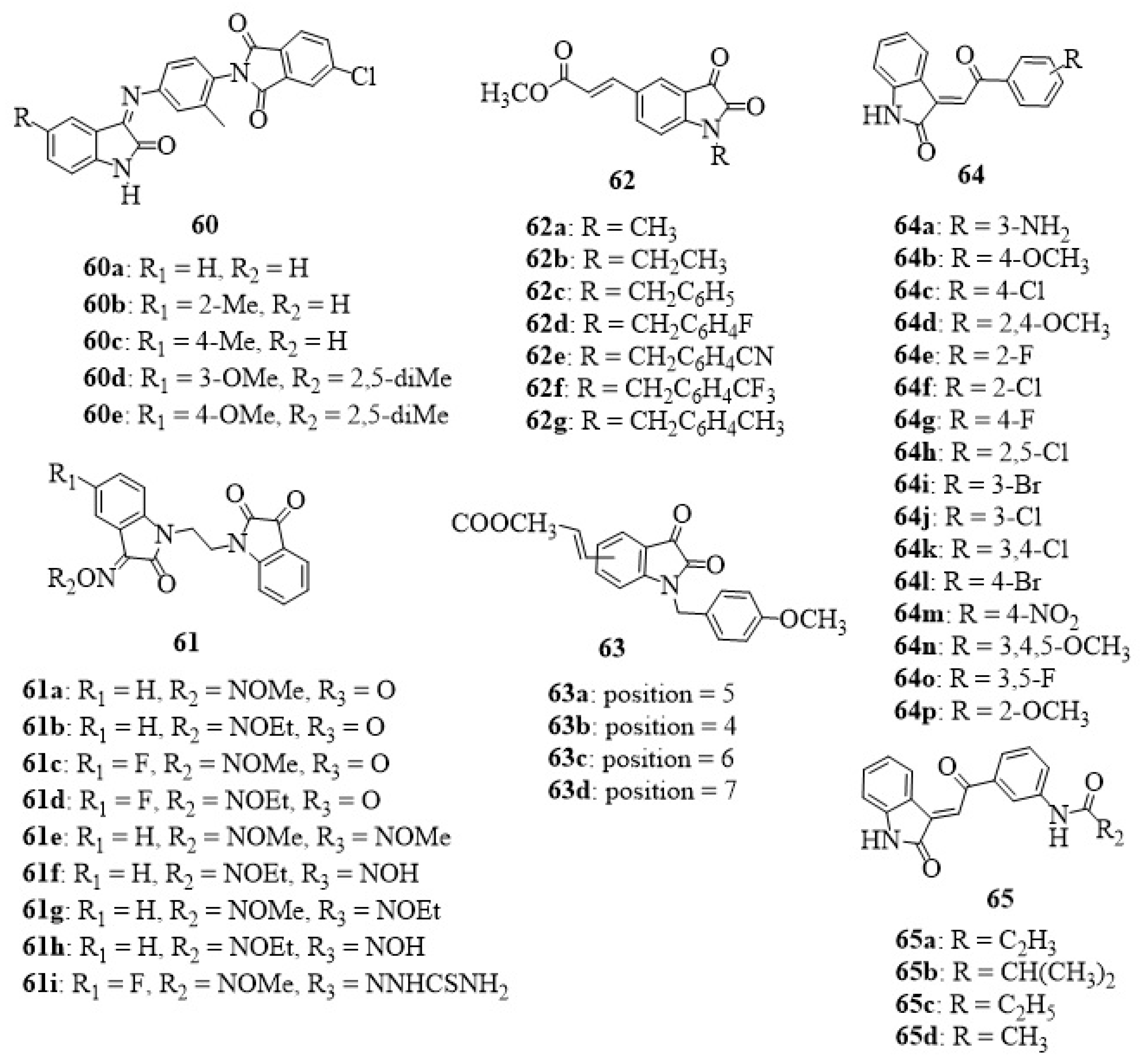
A series of isatin-imine 60a-e analogues were successfully synthesized and evaluated for their antibacterial and antifungal activities against certain microbes by Debnath et al., 2015. Some of the compounds portrayed quite interesting properties with 60d being the most potent against the investigated microbes having the highest docking score. Structure activity relationship studies revealed that the introduction of 2,5-dimethyl substituent at position R2 improved the activity of the compound [130]. Figure 23 presents some of the chemical structures of other isatin hybrids.
In 2018, Xu et al., [131] reported the synthesis of a series of ethylene tethered bis isatin-derivatives 61a-i. The synthesized compounds were evaluated for their in vitro anti-mycobacterial activities against MTB H37Rv and MDR-TB. All tested compounds revealed interesting anti-mycobacterial properties with 61i being the most potent.
Teng et al., 2015 [132] reported the design and synthesis of a series of di- and tri-subtituted isatin derivative 62a-g and 63a-d, as well as the evaluation of their in vitro anticancer properties against human T-lymphocyte Jurkat cells. The compound 63a was found to be the most potent compound capable of inhibiting the proliferation of Jurkat cells by inducing apoptosis.
Wang et al., 2018 [53] while attempting to exploit the potentials in molecular hybridization for the development of anticancer drugs, synthesized some novel isatin-α,β-unsaturated ketone hybrids 64a-k and 65a-d. Majority of the synthesized compounds revealed potent antiproliferative properties in the tested cell line. The hybrid 65a was identified as the most potent hybrid which can be a promising lead compound for the development of anticancer agents.
5. Conclusions
The concept of molecular hybridization has been established as a pivotal technique in drug discovery with tremendous contributions towards the designing and synthesizing of bioactive molecules [133,134,135,136,137]. The isatin moiety and its hybrids have proven to possess widespread pharmacological properties and as such generating hybrid molecules of isatin with other pharmacophores has the potential of yielding novel compounds with improved potency and new biological activities. Over the past years, several hybrid molecules of isatin and different privileged pharmacophores have been designed and synthesized. In this review, we have outlined some hybrids of isatin which have been successfully synthesized and their biological properties evaluated. Most of the compounds reported in the literature have demonstrated very interesting biological activities. For example, hybrid 36b exhibited potent antibacterial activity with a minimum inhibitory concentration (MIC) value of 0.78 mg/L and could serve the purpose of a lead compound for further research. The isatin-pyrimidine hybrids 49c and 49d exhibited excellent in vitro Reverse Transcriptase (RT) inhibitory activity against HIV-1 virus bearing IC50 values in the nanomolar level, which were more potent when compared to the reference drug. The compounds discussed in this review could serve as starting points for further research on promising therapeutic drug candidates.
Author Contributions
Conceptualization, S.V.A., D.B.E and F.N.-K.; methodology, S.V.A., D.B.E and F.N.-K.; investigation, S.V.A., and D.B.E.; resources, D.B.E and F.N.-K.; data curation, S.V.A., D.B.E and F.N.-K.; writing—original draft preparation, S.V.A., and D.B.E; writing—review and editing, S.V.A., D.B.E and F.N.-K.; supervision, D.B.E and F.N.-K.; project administration, D.B.E and F.N.-K.; funding acquisition, F.N.-K. All authors have read and agreed to the published version of the manuscript.
Funding
We acknowledge financial support from the Bill & Melinda Gates Foundation through the Calestous Juma Science Leadership Fellowship awarded to Fidele Ntie-Kang (grant award number: INV-036848 to University of Buea). FNK also acknowledges joint funding from the Bill Bill & Melinda Gates Foundation and LifeArc (award number: INV-055897) under the African Drug Discovery Accelerator program. FNK acknowledges further funding from the Alexander von Humboldt Foundation for a Research Group Linkage project.
Conflicts of Interest
The authors declare no conflicts of interest.
References
- Medvedev, A.; Buneeva, O.; Gnedenko, O.; Ershov, P.; Ivanov, A. Isatin, an endogenous nonpeptide biofactor: A review of its molecular targets, mechanisms of actions, and their biomedical implications. BioFactors 2018, 44, 95–108. [Google Scholar] [CrossRef]
- Shalini, S.C.; Arora, A.; Kumar, V. A mini review on isatin, an anticancer scaffold with potential activities against neglected tropical diseases (NTDs). Pharmaceuticals 2022, 15, 536. [Google Scholar] [CrossRef]
- Sagnou, M.; Mavroidi, B.; Kaminari, A.; Boukos, N.; Pelecanou, M. Novel isatin thiosemicarbazone derivatives as potent inhibitors of β-amyloid peptide aggregation and toxicity. ACS Chemical Neuroscience 2020, 11, 2266–2276. [Google Scholar] [CrossRef]
- Rezki, N.; Almehmadi, M.A.; Ihmaid, S.; Shehata, A.M.; Omar, A.M.; Ahmed, H.E.A.; Aouad, M.A. Novel scaffold hopping of potent benzothiazole and isatin analogues linked to 1,2,3-triazole fragment that mimic quinazoline epidermal growth factor receptor inhibitors: Synthesis, antitumor and mechanistic analyses. Bioorganic Chemistry 2020, 103, 104133. [Google Scholar] [CrossRef]
- Pakravan, P.; Kashanian, S.; Khodaei, M.M.; Harding, F.A. Biochemical and pharmacological characterization of isatin and its derivatives: From structure to activity. Pharmacological Reports 2013, 65, 313–335. [Google Scholar] [CrossRef]
- Chauhan, G.; Pathak, D. P.; Ali, F.; Bhutani, R.; Kapoor, G.; Khasimbi, S. Advances in synthesis, derivatization and bioactivity of isatin: A review. Current Organic Synthesis 2021, 18, 37–74. [Google Scholar] [CrossRef]
- Ding, Z.; Zhou, M.; Zeng, C. Recent advances in isatin hybrids as potential anticancer agents. Archiv der Pharmazie 2020, 353, e1900367. [Google Scholar] [CrossRef]
- Hou, Y.; Shang, C.; Wang, H.; Yun, J. Isatin–azole hybrids and their anticancer activities. Archiv der Pharmazie 2020, 353, e1900272. [Google Scholar] [CrossRef]
- Guo, H. Isatin derivatives and their anti-bacterial activities. European Journal of Medicinal Chemistry 2019, 164, 678–688. [Google Scholar] [CrossRef]
- Nikalje, A.P.; Ansari, A.; Bari, S.; Ugale, V. Synthesis, biological activity, and docking study of novel isatin coupled thiazolidin-4-one derivatives as anticonvulsants. Archiv der Pharmazie 2015, 348, 433–445. [Google Scholar] [CrossRef]
- Smitha, S.; Pandeya, S.N.; Stables, J.P.; Ganapathy, S. Anticonvulsant and sedative-hypnotic activities of n-acetyl / methyl isatin derivatives. Scientia Pharmaceutica 2008, 76, 621–636. [Google Scholar] [CrossRef]
- Chahal, V.; Nirwan, S.; kakkar, R. Isatin and its derivatives: A survey of recent syntheses, reactions, and applications. Medicinal Chemistry Communications 2019, 10, 351. [Google Scholar] [CrossRef]
- Motiwale, M.; Yadav, N.S.; Kumar, S.; Kushwaha, T.; Choudhir, G.; Sharma, S.; Singour, P.K. Finding potent inhibitors for COVID-19 main protease (Mpro): An in silico approach using SARSCoV-3CL protease inhibitors for combating CORONA. Journal of Biomolecular Structure and Dynamics 2022, 40, 1534–1545. [Google Scholar] [CrossRef]
- Badavath, V.N.; Kumar, A.; Samanta, P.K.; Maji, S.; Das, A.; Blum, G.; Jha, A.; Sen, A. Determination of potential inhibitors based on isatin derivatives against SARS-CoV-2 main protease (Mpro): A molecular docking, molecular dynamics and structure-activity relationship studies. Journal of Biomolecular Structure and Dynamics 2022, 40, 3110–3128. [Google Scholar] [CrossRef]
- Bal, T.R.; Anand, B.; Yogeeswari, P.; Sriram, D. Synthesis and evaluation of anti-HIV activity of isatin beta-thiosemicarbazone derivatives. Bioorganic & Medicinal Chemistry Letters 2005, 15, 4451–4455. [Google Scholar] [CrossRef]
- Sriram, D.; Yogeeswari, P.; Meena, K. Synthesis, anti-HIV and antitubercular activities of isatin derivatives. Pharmazie 2006, 61, 274–277. [Google Scholar] [CrossRef]
- Xu, Z.; Zhang, S.; Gao, C.; Fan, J.; Zhao, F.; Lv, Z.; Feng, L. Isatin hybrids and their anti-tuberculosis activity. Chinese Chemical Letters 2017, 28, 159–167. [Google Scholar] [CrossRef]
- Gao, F.; Ye, L.; Wang, Y.; Kong, F.; Zhao, S.; Xiao, J.; Huang, G. Benzofuran-isatin hybrids and their in vitro anti-mycobacterial activities against multi-drug resistant Mycobacterium tuberculosis. European Journal of Medicinal Chemistry 2019, 183, 111678. [Google Scholar] [CrossRef]
- Gao, F.; Chen, Z.; Ma, L.; Fan, Y.; Chen, L.; Lu, G. Synthesis and biological evaluation of moxifloxacin-acetyl-1,2,3-1Htriazole-methylene-isatin hybrids as potential anti-tubercular agents against both drug-susceptible and drug-resistant Mycobacterium tuberculosis strains. European Journal of Medicinal Chemistry 2019, 180, 648–655. [Google Scholar] [CrossRef]
- Thanh, N.D.; Giang, N.T.K.; Quyen, T.H.; Huong, D.T.; Toan, V.N. Synthesis and evaluation of in vivo antioxidant, in vitro antibacterial, MRSA and antifungal activity of novel substituted isatin N-(2,3,4,6-tetra-O-acetyl-beta-D-glucopyranosyl)thiosemicarbazones. European Journal of Medicinal Chemistry 2016, 123, 532–543. [Google Scholar] [CrossRef]
- Akdemir, A.; Güzel-Akdemir, Ö.; Karali, N.; Supuran, C.T. Isatin analogs as novel inhibitors of Candida spp. beta-carbonic anhydrase enzymes. Bioorganic & Medicinal Chemistry 2016, 24, 1648–1652. [Google Scholar] [CrossRef]
- Susithra, E.; Rajkumar, S.; Pansare, S.K.W.; Praveena, S.; Arun, P.V.P.S. Design, synthesis, antimicrobial and anticancer activity of some novel benzoxazole-isatin conjugates. Biointerface Research in Applied Chemistry 2022, 12, 2392–2403. [Google Scholar] [CrossRef]
- Tangadanchu, V.K.R.; Sui, Y.; Zhou, C. Isatin-derived azoles as new potential antimicrobial agents: Design, synthesis and biological evaluation. Bioorganic & Medicinal Chemistry Letters 2021, 41, 128030. [Google Scholar] [CrossRef]
- Muglu, H.; Cavus, M.S.; Bakir, T.; Yakan, H. Synthesis, characterization, quantum chemical calculations and antioxidant activity of new bis-isatin carbohydrazone and thiocarbohydrazone derivatives. Journal of Molecular Structure 2019, 1196, 819–827. [Google Scholar] [CrossRef]
- Wakchaure, N.D. Review on common methods to synthesize substituted 1H-indole-2,3-dione (isatin) derivatives and their medicinal significance. American Journal of Pharmtech Research 2012, v, 289–310. [Google Scholar]
- Nisha; Gut, J.; Rosenthal, P.J.; Kumar, V. β-amino-alcohol tethered 4-aminoquinoline-isatin conjugates: Synthesis and antimalarial evaluation. European Journal of Medicinal Chemistry 2014, 24, 566–573. [Google Scholar] [CrossRef]
- Raj, R.; Gut, J.; Rosenthal, P.J.; Kumar, V. 1H-1,2,3-Triazole-tethered isatin-7-chloroquinoline and 3-hydroxy-indole-7-chloroquinoline conjugates: Synthesis and antimalarial evaluation. Bioinorganic and Medicinal Chemistry Letters 2014, 24, 756–759. [Google Scholar] [CrossRef]
- Sharma, P.K.; Balwani, S.; Mathur, D.; Malhotra, S.; Singh, B.K.; Prasad, A.K.; Len, C.; Eycken, E.V.V.; Ghosh, B.; Richards, N.G.; Parmar, V.S. Synthesis and anti-inflammatory activity evaluation of novel triazolyl-isatin hybrids. Journal of Enzyme Inhibition and Medicinal Chemistry 2016, 31, 1520–1526. [Google Scholar] [CrossRef]
- Ibrahim, M.M.; Elsaman, T.; Al-Nour, M.Y. Synthesis, anti-inflammatory activity, and in silico study of novel diclofenac and isatin conjugates. International Journal of Medicinal Chemistry 2018, 2018, 9139786. [Google Scholar] [CrossRef]
- Abdulrahmana, S.H.; Al-healya, F.M.; Ali, W.K. A review on computational study of tribulin compound and its derivatives: QSAR studies. Annals of Romanian Society for Cell Biology 2021, 25, 8725–8735. [Google Scholar]
- Ma, T.; Chen, R.; Xue, H.; Miao, Z.; Chen, L.; Zhang, H.; Shi, X. Di-isatin heteronuclear compounds and their antibacterial activity. Journal of Heterocyclic Chemistry 2019, 57, 503–509. [Google Scholar] [CrossRef]
- Xu, J.-H.; Fan, Y.L.; Zhou, J. Quinolone–triazole hybrids and their biological activities. Journal of Heterocyclic Chemistry 2018, 55, 1854–1862. [Google Scholar] [CrossRef]
- Song, F.; Li, Z.; Bian, Y.; Huo, X.; Fang, J.; Shao, L.; Zhou, M. Indole/isatin-containing hybrids as potential antibacterial agents. Archiv der Pharmazie 2020, 353, e2000143. [Google Scholar] [CrossRef]
- M, R.K.; Gideon, D.A.; Mariadasse, R.; Nirusimhan, V.; A, S.R.; Edward, J.C.; Jeyaraman, J.; Dhayabaran, V. In silico evaluation of isatin-based derivatives with RNA-dependent RNA polymerase of the novel coronavirus SARS-CoV-2. Journal of Biomolecular Structure and Dynamics 2022, 40, 6710–6724. [Google Scholar] [CrossRef]
- Afroz, M.; Vasanthi, R.; Fathima, A. A review on medicinal importance of isatin scaffolds with anti-mycobacterial activity. Journal of Cardiovascular Disease Research 2021, 12, 1155–1170. [Google Scholar]
- Freitas, L.A.B.; Santos, A.C.S.; Silva, G.D.C.; Albuquerque, F.N.N.; Silva, E.D.; Simone, C.A.; Pereira, V.R.A.; Alves, L.C.; Gomes, P.A.T.M. Structural improvement of new thiazolyl-isatin derivatives produces potent and selective trypanocidal and leishmanicidal compounds. Chemico-Biological Interactions 2021, 345, 109561. [Google Scholar] [CrossRef]
- Babita, A.; Khan, N.S.; Khan, P.; Queen, A.; Hussain, A.; Rehman, M.T.; Alajmi, M.F.; El-seedi, H.; Ali, S.; Hassan, M.I.; Abid, M. Design and development of Isatin-triazole hydrazones as potential inhibitors of microtubule affinity-regulating kinase 4 for the therapeutic management of cell proliferation and metastasis. European Journal of Medicinal Chemistry 2019, 163, 840–852. [Google Scholar] [CrossRef]
- Jiang, Y.; Qian, A.; Li, Y. 1H-1,2,3-Triazole tethered isatin-moxifloxacin: Design, synthesis and in vitro anti-mycobacterial evaluation. Archiv der Pharmazie 2019, 352, 1900040. [Google Scholar] [CrossRef]
- Gao, F.; Wang, T.; Gao, M.; Zhang, X.; Liu, Z.; Zhao, S.; Lv, Z.; Xiao, J. Benzofuran-isatin-imine hybrids tethered via different length alkyl linkers: Design, synthesis and in vitro evaluation of anti-tubercular and anti-bacterial activities as well as cytotoxicity. European Journal of Medicinal Chemistry 2019, 165, 323–331. [Google Scholar] [CrossRef]
- Liang, P.-H. Characterization and inhibition of SARS-coronavirus main protease. Current Topics in Medicinal Chemistry 2006, 6, 361–376. [Google Scholar] [CrossRef]
- Al-Wabli, R.I.; Almomen, A.A.; Almutari, M.S.; Keeton, A.B.; Piazza, G.A.; Attia, MI. New isatin–indole conjugates: Synthesis, characterization, and a plausible mechanism of their in vitro antiproliferative activity. Drug Design, Development and Therapy 2020, 14, 483–495. [Google Scholar] [CrossRef]
- Xu, Z.; Zhao, S.; Lv, Z.; Gao, F.; Wang, Y.; Zhang, F.; Bai, L.; Deng, J. Fluoroquinolone-isatin hybrids and their biological activities. European Journal of Medicinal Chemistry 2019, 162, 396–406. [Google Scholar] [CrossRef]
- Limpachayaporn, P.; Wagner, S.; Kopka, K.; Schober, M.S.; Haufe, G. Synthesis of 7-halogenated isatin sulfonamides: Nonradioactive counterparts of caspase-3/-7 inhibitor-based potential radiopharmaceuticals for molecular imaging of apoptosis. Journal of Medicinal Chemistry 2014, 57, 9383–9395. [Google Scholar] [CrossRef]
- Selvam, P.; Chandramohan, M.; Hurst, B.; Smee, D.F. Activity of isatine-sulfadimidine derivatives against 2009 pandemic H1N1 influenza virus in cell culture. Antiviral Chemistry & Chemotherapy 2010, 20, 143–145. [Google Scholar] [CrossRef]
- Eldehna, W.M.; Altoukhy, A.; Mahrous, H.; Abdel-Aziz, H.A. Design, synthesis and QSAR study of certain isatin-pyridine hybrids as potential antiproliferative agents. European Journal of Medicinal Chemistry 2015, 90, 684–694. [Google Scholar] [CrossRef]
- Kitagawa, D.A.S.; Rodrigues, R.F.; Silva, T.N.; Santos, W.V.; Rocha, V.C.V.; Almeida, J.S.F.D.; Bernardo, L.B.; Carvalho-Silva, T.; Nepovimova, E.; Kuca, K.; Franca, T.C.C.; Cavalcante, S.F.A. Design, synthesis, in silico studies and in vitro evaluation of isatin-pyridine oximes hybrids as novel acetylcholinesterase reactivators. Journal of Enzyme Inhibition and Medicinal Chemistry 2021, 36, 1370–1377. [Google Scholar] [CrossRef]
- Devale, T.L.; Parikh, J.; Miniyar, P.; Sharma, P.; Shrivastava, B.; Murumkar, P. Dihydropyrimidinone-isatin hybrids as novel non-nucleoside HIV-1 reverse transcriptase inhibitors. Bioorganic Chemistry 2017, 70, 256–266. [Google Scholar] [CrossRef]
- Elsayed, Z.M.; Eldehna, W.M.; Abdel-Aziz, M.; Hassab, M.A.E.; Elkaeed, E.B.; Al-Warhi, T.; Abdel-Aziz, H.; Abou-seri, S.; Mohammed, E.R. Development of novel isatin–nicotinohydrazide hybrids with potent activity against susceptible/ resistant Mycobacterium tuberculosis and bronchitis causing–bacteria. Journal of Enzyme Inhibition and Medicinal Chemistry 2021, 36, 384–393. [Google Scholar] [CrossRef]
- Fayed, E.A.; Eldin, R.R.E.; Mehany, A.B.M.; Bayoumi, A.H.; Ammar, Y.A. Isatin-Schiff’s base and chalcone hybrids as chemically apoptotic inducers and EGFR inhibitors; design, synthesis, anti-proliferative activities and in silico evaluation. Journal of Molecular Structure 2021, 1234, 130159. [Google Scholar] [CrossRef]
- Eldehna, W.M.; Almahli, H.; Al-Ansary, G.H.; Ghabbour, H.A.; Aly, M.H.; Ismael, O.E.; Al-Dhfyan, A.; Abdel-Aziz, H.A. Synthesis and in vitro anti-proliferative activity of some novel isatins conjugated with quinazoline/phthalazine hydrazines against triple-negative breast cancer MDA-MB-231 cells as apoptosisinducing agents. Journal of Enzyme Inhibition and Medicinal Chemistry 2017, 32, 600–613. [Google Scholar] [CrossRef]
- Fares, M.; Eldehna, W.M.; Abou-Seri, S.M.; Abdel-Aziz, H.A.; Aly, M.H.; Tolba, M.F. Design, synthesis and in vitro antiproliferative activity of novel isatin-quinazoline hybrids. Archiv der Pharmazie 2015, 348, 144–154. [Google Scholar] [CrossRef]
- Sin, N.; Venables, B.L.; Combrink, K.D.; Gulgeze, H.B.; Yu, K.; Civiello, R.L.; Thuring, J.; Wang, X.A.; Yang, Z.; Zadjura, L.; Marino, A.; Kadow, K.F.; Cianci, C.W.; Clarke, J.; Genovesi, E.V.; Medina, I.; Lamb, L.; Krystal, M.; Meanwell, N.A. Respiratory syncytial virus fusion inhibitors. Part 7: Structure–activity relationships associated with a series of isatin oximes that demonstrate antiviral activity in vivo. Bioorganic & Medicinal Chemistry Letters 2009, 19, 4857–4862. [Google Scholar] [CrossRef]
- Wang, J.; Yun, D.; Yao, J.; Fu, W.; Huang, F.; Chen, L.; Wei, T.; Yu, C.; Xu, H.; Zhou, X.; Huang, Y.; Wu, J.; Qui, P.; Li, W. Design, synthesis and QSAR study of novel isatin analogues inspired Michael acceptor as potential anticancer compounds. European Journal of Medicinal Chemistry 2018, 144, 493–503. [Google Scholar] [CrossRef]
- Omar, A.Z.; Mosa, T.W.; El-Sadany, S.K.; Hamed, E.A.; El-Atawy, M. Novel piperazine based compounds as potential inhibitors for SARS-CoV-2 Protease Enzyme: Synthesis and molecular docking study. Journal of Molecular Structure 2021, 1245, 131020. [Google Scholar] [CrossRef]
- Kumar, K.; Sagar, S.; Esau, L.; Kaur, M.; Kumar, V. Synthesis of novel 1H-1,2,3-triazole tethered C-5 substituted uracile isatin conjugates and their cytotoxic evaluation. European Journal of Medicinal Chemistry 2012, 58, 153–159. [Google Scholar] [CrossRef]
- Khatoon, S.; Aroosh, A.; Islam, A.; Kalsoom, S.; Ahmad, F.; Hameed, S.; Abbasi, S.W.; Yasinzai, M.; Naseer, M.M. Novel coumarin-isatin hybrids as potent antileishmanial agents: Synthesis, in silico and in vitro evaluations. Bioorganic Chemistry 2021, 110, 104816. [Google Scholar] [CrossRef]
- Hans, R.H.; Wiid, I.J.F.; Helden, P.D.V.; Wan, B.; Franzblau, S.G.; Gut, J.; Rosenthal, P.J.; Chibale, K. Novel thiolactone–isatin hybrids as potential antimalarial and antitubercular agents. Bioorganic & Medicinal Chemistry Letters 2011, 21, 2055–2058. [Google Scholar] [CrossRef]
- Bozorova, K.; Zhaoa, J.; Aisa, H.A. 1,2,3-Triazole-containing hybrids as leads in medicinal chemistry: A recent overview. Bioorganic & Medicinal Chemistry 2019, 27, 3511–3531. [Google Scholar] [CrossRef]
- Bennani, F.E.; Doudach, L.; Cherrah, Y.; Ramli, Y.; Karrouchi, K.; Ansar, M.; Faouzi, M.E.A. Overview of recent developments of pyrazole derivatives as an anticancer agent in different cell line. Bioorganic Chemistry 2020, 97, 103470. [Google Scholar] [CrossRef]
- Rostom, S.A.F.; Ashour, H.M.A.; Razik, H.A.A.E.; Fattah, A.E.F.H.A.E.; El-Din, N.N. Azole antimicrobial pharmacophore-based tetrazoles: Synthesis and biological evaluation as potential antimicrobial and anticonvulsant agents. Bioorganic & Medicinal Chemistry 2009, 17, 2410–2422. [Google Scholar] [CrossRef]
- Gao, F.; Wang, T.; Xiao, J.; Huang, G. Antibacterial activity study of 1,2,4-triazole derivatives. European Journal of Medicinal Chemistry 2019, 173, 274–281. [Google Scholar] [CrossRef]
- Shu Zhang, Z.X.; Xu, Z.; Gao, C.; Ren, Q.; Lv, L.C.Z.; Feng, L. Triazole derivatives and their anti-tubercular activity. European Journal of Medicinal Chemistry 2017, 138, 501–513. [Google Scholar] [CrossRef]
- Ding, Z.; Hou, P.; Liu, B. Gatifloxacin-1,2,3-triazole-isatin hybrids and their antimycobacterial activities. Archiv der Pharmazie 2019, 352, e1900135. [Google Scholar] [CrossRef]
- Solomon, V.R.; Hu, C.; Lee, H. Hybrid pharmacophore design and synthesis of isatin–benzothiazole analogs for their anti-breast cancer activity. Bioorganic & Medicinal Chemistry 2009, 17, 7585–7592. [Google Scholar] [CrossRef]
- Javida, M.T.; Rahim, F.; Taha, M.; Nawaz, M.; Wadood, A.; Ali, M.; Mosaddik, A.; Shah, S.A.A.; Farooq, R.K. Synthesis, SAR elucidations and molecular docking study of newly designed isatin based oxadiazole analogs as potent inhibitors of thymidine phosphorylase. Bioorganic Chemistry 2018, 79, 323–333. [Google Scholar] [CrossRef]
- Ibrahim, H.S.; Abou-seri, S.M.; Tanc, M.; Elaasser, M.M.; Abdel-Aziz, H.A.; Supuran, C.T. Isatin-pyrazole benzenesulfonamide hybrids potently inhibit tumorassociated carbonic anhydrase isoforms IX and XII. European Journal of Medicinal Chemistry 2015, 103, 583–593. [Google Scholar] [CrossRef]
- El-Naggar, M.; Eldehna, W.M.; Almahli, H.; Elgez, A.; Fares, M.; Elaasser, M.M.; Abdel-Aziz, H.A. Novel thiazolidinone/thiazolo[3,2-a] benzimidazolone-isatin conjugates as apoptotic anti-proliferative agents towards breast cancer: One-pot synthesis and in vitro biological evaluation. Molecules 2018, 23, 1420. [Google Scholar] [CrossRef]
- Eldehna, W.M.; El Hassab, M.A.; Abo-Ashour, M.F.; Al-Warhi, T.; Elaasser, M.M.; Safwat, N.A.; Suliman, H.; Ahmed, M.; Al-Rashood, S.T.; Abdel-Aziz, H.A.; El-Haggar, R. Development of isatin-thiazolo[3,2-a]benzimidazole hybrids as novel CDK2 inhibitors with potent in vitro apoptotic anti-proliferative activity: Synthesis, biological and molecular dynamics investigations. Bioorganic Chemistry 2021, 110, 104748. [Google Scholar] [CrossRef]
- Eldehna, W.M.; Al-Wabli, R.I.; Almutairi, M.S.; Keeton, A.B.; Piazza, G.A.; Abdel-Aziz, H.A.; Attia, M.I. Synthesis and biological evaluation of certain hydrazonoindolin-2-one derivatives as new potent anti-proliferative agents. Journal of Enzyme Inhibition and Medicinal Chemistry 2018, 33, 867–878. [Google Scholar] [CrossRef]
- Özil, M.; Menteşe, E.; Yılmaz, F.; İslamoğlu, F.; Kahveci, B. Synthesis of novel triazol compounds containing isatin as potential antibacterial and antifungal agents by microwave and conventional methods. Journal of Chemical Research 2011, 35, 268–271. [Google Scholar] [CrossRef]
- Xiang, P.; Cao, Q.; Dong, Q.; Yang, X.; Tang, J.; Bai, H. Furan-site transformations of obacunone as potent insecticidal agents. Heliyon 2018, 4, e01064. [Google Scholar] [CrossRef]
- Ansari, M.F.; Siddiqui, S.M.; Ahmad, K.; Avecilla, F.; Dharavath, S.; Gourinath, S.; Azam, A. Synthesis, antiamoebic and molecular docking studies of furan-thiazolidinone hybrids. European Journal of Medicinal Chemistry 2016, 124, 393–406. [Google Scholar] [CrossRef]
- Gao, F.; Yang, H.; Lu, T.; Chen, Z.; Ma, L.; Xu, Z.; Schaffer, P.; Lu, G. Design, synthesis and anti-mycobacterial activity evaluation of benzofuran-isatin hybrids. European Journal of Medicinal Chemistry 2018, 159, 277–281. [Google Scholar] [CrossRef]
- Archna; Pathania, S.; Chawla, P.A. Thiophene-based derivatives as anticancer agents: An overview on decade’s work. Bioorganic Chemistry 2020, 101, 104026. [Google Scholar] [CrossRef]
- Schaper, K.; Müller, T.J.J. thiophene syntheses by ring forming multicomponent reactions. Topics in Current Chemistry 2018, 376, 38. [Google Scholar] [CrossRef]
- Chen, L.-R.; Wang, Y.-C.; Lin, Y.W.; Chou, S.-Y.; Chen, S.-F.; Liu, L.T.; Wu, Y.-T.; Kuo, C.-J.; Chen, T.S.-S.; Juang, S.-H. Synthesis and evaluation of isatin derivatives as effective SARS coronavirus 3CL protease inhibitors. Bioorganic & Medicinal Chemistry Letters 2005, 15, 3058–3062. [Google Scholar] [CrossRef]
- Kumari, A.; Singh, R.K. Medicinal chemistry of indole derivatives: Current to future therapeutic prospectives. Bioorganic Chemistry 2019, 89, 103021. [Google Scholar] [CrossRef]
- Han, Y.; Dong, W.; Guo, Q.; Li, X.; Huang, L. The importance of indole and azaindole scaffold in the development of antitumor agents. European Journal of Medicinal Chemistry 2020, 203, 112506. [Google Scholar] [CrossRef]
- Patil, R.; Patil, S.A.; Beaman, K.D.; Patil, S.A. Indole molecules as inhibitors of tubulin polymerization: Potential new anticancer agents, an update (2013-2015). Future Medicinal Chemistry 2016, 8, 1291–1316. [Google Scholar] [CrossRef]
- Sharma, V.; Kumar, P.; Pathak, D. Biological importance of the indole nucleus in recent years: A comprehensive review. Journal of Heterocyclic Chemistry 2010, 47, 491–502. [Google Scholar] [CrossRef]
- Praveen, C.; Ayyanar, A.; Perumal, P.T. Practical synthesis, anticonvulsant, and antimicrobial activity of N-allyl and N-propargyl di(indolyl)indolin-2-ones. Bioorganic & Medicinal Chemistry Letters 2011, 21, 4072–4077. [Google Scholar] [CrossRef]
- Mohammed, A.A.M.; Suaifan, G.A.R.Y.; Shehadeh, M.B.; Okechukwu, P.N. Design, synthesis and antimicrobial evaluation of novel glycosylated-fluoroquinolones derivatives. European Journal of Medicinal Chemistry 2020, 202, 112513. [Google Scholar] [CrossRef]
- Patel, M.M.; Patel, L.J. Design, synthesis, molecular docking, and antibacterial evaluation of some novel flouroquinolone derivatives as potent antibacterial agent. ScientificWorld Journal 2014, 2014, 897187. [Google Scholar] [CrossRef]
- Vu, T.H.; Ha-Duong, N.T.; Aubry, A.; Capton, E.; Fechter, P.; Plésiat, P.; Verbeke, P.; Serradji, N. In vitro activities of a new fluoroquinolone derivative highly active against Chlamydia trachomatis. Bioorganic Chemistry 2019, 83, 180–185. [Google Scholar] [CrossRef]
- Prakash, C. R.; Raja, S. Synthesis, characterization and in vitro antimicrobial activity of some novel 5-substituted Schiff and Mannich base of isatin derivatives. Journal of Saudi Chemical Society 2013, 17, 337–344. [Google Scholar] [CrossRef]
- Sriram, D.; Aubry, A.; Yogeeswari, P.; Fisher, L. M. Gatifloxacin derivatives: Synthesis, antimycobacterial activities, and inhibition of Mycobacterium tuberculosis DNA gyrase. Bioorganic & Medicinal Chemistry Letters 2006, 16, 2982–2985. [Google Scholar] [CrossRef]
- Kumar, V.S.; Verma, R.; Xue, F.; Kumar, T.P.; Girish, Y.R.; Rakesh, K.P. Antibacterial activities of sulfonyl or sulfonamide containing heterocyclic derivatives and its structure-activity relationships (SAR) studies: A critical review. Bioorganic Chemistry 2020, 105, 104400. [Google Scholar] [CrossRef]
- Wan, Y.; Fang, G.; Chen, H.; Deng, X.; Tang, Z. Sulfonamide derivatives as potential anti-cancer agents and their SARs elucidation. European Journal of Medicinal Chemistry 2021, 226, 113837. [Google Scholar] [CrossRef]
- Farag, A.A. Synthesis and antimicrobial activity of 5-(morpholinosulfonyl)isatin derivatives incorporating a thiazole moiety. Drug Research 2014, 65, 373–379. [Google Scholar] [CrossRef]
- Abo-Ashour, M.F.; Eldehna, W.M.; Nocentini, A.; Bonardi, A.; Bua, S.; Ibrahim, H.S.; Elaasser, M.M.; Kryštof, V.; Jorda, R.; Gratteri, P.; Abou-Seri, S.M.; Supuran, C.T. 3-Hydrazinoisatin-based benzenesulfonamides as novel carbonic anhydrase inhibitors endowed with anticancer activity: Synthesis, in vitro biological evaluation and in silico insights. European Journal of Medicinal Chemistry 2019, 184, 111768. [Google Scholar] [CrossRef]
- Eldehna, W.M.; Nocentini, A.; Al-Rashood, S.T.; Hassan, G.S.; Alkahtani, H.M.; Almehizia, A.A.; Reda, A.M.; Abdel-Aziz, H.A.; Supuran, C.T. Tumor-associated carbonic anhydrase isoform IX and XII inhibitory properties of certain isatin-bearing sulfonamides endowed with in vitro anticancer activity towards colon cancer. Bioorganic Chemistry 2018, 81, 425–432. [Google Scholar] [CrossRef]
- Selvam, P.; Chandramohan, M.; Hurst, B.L.; Smee, D.F. Activity of isatine-sulfadimidine derivatives against 2009 pandemic H1N1 influenza virus in cell culture. Antiviral Chemistry and Chemotherapy 2010, 20, 143–146. [Google Scholar] [CrossRef]
- Albratty, M.; Alhazmi, H. A. Novel pyridine and pyrimidine derivatives as promising anticancer agents: A review. Arabian Journal of Chemistry 2022, 15, 103846. [Google Scholar] [CrossRef]
- Zhuang, C.; Zhang, W.; Sheng, C.; Zhang, W.; Xing, C.; Miao, Z. Chalcone: A privileged structure in medicinal chemistry. Chemical Reviews 2017, 117, 7762–7810. [Google Scholar] [CrossRef]
- Ouyang, Y.; Li, J.; Chen, X.; Fu, X.; Sun, S.; Wu, Q. Chalcone derivatives: Role in anticancer therapy. Biomolecules 2021, 11, 894. [Google Scholar] [CrossRef]
- Mahapatra, D.K.; Bharti, D.S.K.; Asati, V. Chalcone Scaffolds as Anti-infective Agents: Structural and Molecular Target Perspectives. European Journal of Medicinal Chemistry 2015, 101, 496–524. [Google Scholar] [CrossRef]
- Sahu, N.K.; Balbhadra, S.S.; Choudhary, J.; Kohli, D.V. Exploring pharmacological significance of chalcone scaffold: A review. Current Medicinal Chemistry 2012, 19, 209–225. [Google Scholar] [CrossRef]
- Hameeda, A.; Al-Rashida, M.; Uroos, M.; Ali, S.A.; Arshia; Ishtiaq, M.; Khan, K.M. Quinazoline and quinazolinone as important medicinal scaffolds: A comparative patent review. Expert Opinion on Therapeutic Patents 2018, 28, 281–297. [Google Scholar] [CrossRef]
- Khan, I.; Ibrar, A.; Abbas, N.; Saeed, A. Recent advances in the structural library of functionalized quinazoline and quinazolinone scaffolds: Synthetic approaches and multifarious applications. European Journal of Medicinal Chemistry 2014, 76, 193–244. [Google Scholar] [CrossRef]
- Bayoumi, W.A.; Barghash, A.M.; Gineinah, M.M.; Massoud, M.A.; Abdelal, A.M. Design, synthesis and antioxidant evaluation of certain new phthalazine derivatives. Der Pharma Chemica 2014, 3, 89–102. [Google Scholar]
- Popiołek, Ł. Hydrazide–hydrazones as potential antimicrobial agents: Overview of the literature since 2010. Medicinal Chemistry Research 2017, 26, 287–301. [Google Scholar] [CrossRef]
- Angelova, V.T.; Valcheva, V.; Vassilev, N.G.; Buyukliev, R.; Momekov, G.; Dimitri, I.; Saso, L.; Djukic, M.; Shivachev, B. Antimycobacterial activity of novel hydrazide-hydrazone derivatives with 2H chromene and coumarin scaffold. Bioinorganic and Medicinal Chemistry Letters 2017, 27, 223–227. [Google Scholar] [CrossRef]
- Salem, M. A.; Ragab, A.; El-Khalafawy, A.; Makhlouf, A. H.; Askar, A. A.; Ammar, Y. A. Design, synthesis, in vitro antimicrobial evaluation and molecular docking studies of indol-2-one tagged with morpholinosulfonyl moiety as DNA gyrase inhibitors. Bioorganic Chemistry 2020, 96, 103619. [Google Scholar] [CrossRef]
- Rawat, P.; Verma, S.M. Synthesis and pharmacological evaluation of 6-hydroxy-2,5,7,8-tetramethylN′-(2-oxoindolin-3-ylidene)chroman-2-carbohydrazide derivatives as antimicrobial agents. Journal of Chemical and Pharmaceutical Research 2016, 8, 149–154. [Google Scholar]
- Kalinowski, D. S.; Quach, P.; Richardson, D. R. Thiosemicarbazones: The new wave in cancer treatment. Future Medicinal Chemistry 2009, 1, 1143–1151. [Google Scholar] [CrossRef]
- Zhang, X.-M.; Guo, H.; Li, Z.S.; Song, F.-H.; Wang, W.-M.; Dai, H.-Q.; Wang, J.-G. Synthesis and evaluation of isatin-β-thiosemicarbazones as novel agents against antibiotic-resistant Gram-positive bacterial species. European Journal of Medicinal Chemistry 2015, 101, 419–430. [Google Scholar] [CrossRef]
- Yang, Y.; Pannecouque, C.; Clercq, E.D.; Zhuang, C.; Chen, F. Privileged scaffold inspired design of novel oxime-biphenyl-DAPYs in treatment of HIV-1. Bioinorganic Chemistry 2020, 99, 103825. [Google Scholar] [CrossRef]
- Moodie, L.W.K.; Cervin, G.; Trepos, R.; Labriere, C.; Hellio, C.; Pavia, H.; Svenson, J. Design and biological evaluation of antifouling dihydrostilbene oxime hybrids. Marine Biotechnology 2018, 20, 257–267. [Google Scholar] [CrossRef]
- Gornostaev, L.M.; Tsvetkov, V.B.; Markova, A.A.; Lavrikova, T.I.; Khalyavina, Y.G.; Kuznetsova, A.; Kaluzhny, D.N.; Shunayev, A.V.; Tsvetkova, M.V.; Glazunova, V.A.; Chernyshev, V.; Shtil, A.A. The oxime derivatives of 1-R-1H-naphtho[2,3-d][1,2,3]triazole-4,9-dione 2-oxides: Synthesis and properties. Anti-cancer Agents in Medicinal Chemistry 2017, 17, 1814–1823. [Google Scholar] [CrossRef]
- Ma, C.-M.; Nakamura, N.; Hattori, M.; Kawahata, T.; Otake, T. Inhibitory effects of triterpene-azidothymidine conjugates on proliferation of human immunodeficiency virus type 1 and its protease. Chemical & Pharmaceutical Bulletin 2002, 50, 877–880. [Google Scholar] [CrossRef]
- Floyd, R.A.; Kopke, R.D.; Choi, C.-H.; Foster, S.B.; Doblas, S.; Towner, R.A. Nitrones as therapeutics. Free Radical Biology & Medicine 2008, 45, 1361–1374. [Google Scholar] [CrossRef]
- Rosselin, M.; Poeggeler, B.; Durand, G. Nitrone derivatives as therapeutics: From chemical modification to specific-targeting. Current Topics in Medicinal Chemistry 2017, 17, 2006–2022. [Google Scholar] [CrossRef]
- Firuzi, O.; Miri, R.; Tavakkoli, M.; Saso, L. Antioxidant therapy: Current status and future prospects. Current Medicinal Chemistry 2011, 18, 3871–3888. [Google Scholar] [CrossRef]
- Marco-Contelles, J. Recent advances on nitrones design for stroke treatment. Journal of Medicinal Chemistry 2020, 63, 13413–13427. [Google Scholar] [CrossRef]
- Kant, R.; Maji, S. Recent advances in synthesis of piperazine based ligands, metal complexes and their applications. Dalton Transactions 2021, 50, 785–800. [Google Scholar] [CrossRef]
- Jain, A.; Chaudhary, J.; Khaira, H.; Chopra, B.; Dhingra, A. Piperazine: A promising scaffold with analgesic and anti-inflammatory potential. Drug research 2021, 71, 62–72. [Google Scholar] [CrossRef]
- Shaquiquzzaman, M.; Verma, G.; Marella, A.; Akhter, M.; Akhtar, W.; Khan, M.F.; Tasneem, S.; Alam, M.M. Piperazine scaffold: A remarkable tool in generation of diverse pharmacological agents. European Journal of Medicinal Chemistry 2015, 102, 487–529. [Google Scholar] [CrossRef]
- Zhang, L.; Xu, Z. Coumarin-containing hybrids and their anticancer activities. European Journal of Medicinal Chemistry 2019, 181, 111587. [Google Scholar] [CrossRef]
- Feng, D.; Zhang, A.; Yang, Y.; Yang, P. Coumarin-containing hybrids and their antibacterial activities. Archiv der Pharmazie 2020, 353, e1900380. [Google Scholar] [CrossRef]
- Stefanachi, A.; Leonetti, F.; Pisani, L.; Catto, M.; Carotti, A. Coumarin: A natural, privileged and versatile scaffold for bioactive compounds. Molecules 2018, 23, 250. [Google Scholar] [CrossRef]
- Katerinopoulos, H.E. The coumarin moiety as chromophore of fluorescent ion indicators in biological systems. Current Pharmaceutical Design 2004, 10, 3835–3851. [Google Scholar] [CrossRef]
- Diao, Q.-P.; Guo, H.; Wang, G.-Q. Design, synthesis, and in vitro anticancer activities of diethylene glycol tethered isatin-1,2,3-triazole-coumarin Hybrids. Journal of Heterocyclic Chemistry 2019, 5, 1667–1671. [Google Scholar] [CrossRef]
- Huang, G.-C.; Xu, Y.; Xu, Z.; Lv, Z.S.; Zhang, J.; Guo, H.-Y.; Hu, Y.-Q.; Liu, M.-L.; Guan, J.; Lu, Y. Propylene-1H-1,2,3-triazole-4-methylene-tethered isatin-coumarin hybrids: Design, synthesis, and in vitro anti-tubercular evaluation. Journal of Heterocyclic Chemistry 2018, 55, 830–835. [Google Scholar] [CrossRef]
- Beck, B.; Khoury, K.K.; Herdtweck, E.; Domling, A. One-pot multicomponent synthesis of two novel thiolactone scaffolds. Molecular Diversity 2010, 14, 479–491. [Google Scholar] [CrossRef]
- Kumar, S.; Deep, A.; Narasimhan, B. Pyrimidine derivatives as potential agents acting on central nervous system. Central Nervous System Agents in Medicinal Chemistry 2015, 15, 5–10. [Google Scholar] [CrossRef]
- He, Z. X.; Zhao, T.Q.; Gong, Y.P.; Zhang, X.; Ma, L.Y.; Liu, H.M. Pyrimidine: A promising scaffold for optimization to develop the inhibitors of ABC transporters. European Journal of Medicinal Chemistry 2020, 200, 112458. [Google Scholar] [CrossRef]
- Akhaja, T.N.; Raval, J.P. Design, synthesis, in vitro evaluation of tetrahydropyrimidine-isatin hybrids as potential antibacterial, antifungal and anti-tubercular agents. Chinese Chemrical Letters 2012, 23, 446–449. [Google Scholar] [CrossRef]
- Raj, R.; Biot, C.; Carrere-Kremer, S.; Kremer, L.; Guerardel, Y.; Gut, J.; Rosenthal, P.J.; Forge, D.; Kumar, V. 7-Chloroquinoline–isatin conjugates: Antimalarial, antitubercular, and cytotoxic evaluation. Chemical Biology and Drug Design 2014, 83, 622–629. [Google Scholar] [CrossRef]
- Alahari, A.; Trivelli, X.; Guérardel, Y.; Dover, L.G.; Besra, G.S.; Sacchettini, J.C.; Reynolds, R.C.; Coxon, G.D.; Kremer. L. Thiacetazone, an antitubercular drug that inhibits cyclopropanation of cell wall mycolic acids in mycobacteria. PLoS ONE 2007, 2, e1343. [Google Scholar] [CrossRef]
- Debnath, B.; Ganguly, S. Synthesis, biological evaluation, in silico docking and virtual ADME studies of novel isatin analogs as promising antimicrobial agents. Anti-Infective Agents 2015, 13, 139–153. [Google Scholar] [CrossRef]
- Xu, Y.; Guan, J.; Xu, Z.; Zhao, S. Design, synthesis and in vitro anti-mycobacterial activities of homonuclear and heteronuclear bis-isatin derivatives. Fitoterapia 2018, 127, 383–386. [Google Scholar] [CrossRef]
- Teng, Y.O.; Zhao, H.-Y.; Wang, J.; Liu, H.; Gao, M.-L.; Zhou, Y.; Han, K.L.; Fan, Z.-C.; Zhang, Y.-M.; Sun, H.; Yu, P. Synthesis and anti-cancer activity evaluation of 5-(2-carboxyethenyl)-isatin derivatives. European Journal of Medicinal Chemistry 2016, 112, 145–156. [Google Scholar] [CrossRef]
- Raj, R.; Singh, P.; Haberkern, N.T.; Faucher, R.M.; Patel, N.; Land, K.M.; Kumar, V. Synthesis of 1H-1,2,3-triazole linked beta-lactameisatin bi-functional hybrids and preliminary analysis of in vitro activity against the protozoal parasite Trichomonas vaginalis. European Journal of Medicinal Chemistry 2013, 63, 897–906. [Google Scholar] [CrossRef]
- Nagarsenkar, A.; Guntuku, L.; Guggilapu, S. D.; Bai, K. D.; Srinivasulu, G.; Naidu, V.G.M.; Babu, B.N. Synthesis and apoptosis inducing studies of triazole linked 3-benzylidene isatin derivatives. European Journal of Medicinal Chemistry 2016, 124, 782–793. [Google Scholar] [CrossRef]
- Abo-Ashour, M.F.; Eldehna, W.M.; Nocentini, A.; Ibrahim, H.S.; Bua, S.; Abou-Seri, S.M.; Supuran, C.T. Novel hydrazido benzenesulfonamides-isatin conjugates: Synthesis, carbonic anhydrase inhibitory activity and molecular modeling studies. European Journal of Medicinal Chemistry 2018, 157, 28–36. [Google Scholar] [CrossRef]
- Guo, H. Design, Synthesis, and In Vitro Anti-mycobacterial Activities of propylene tethered benzofuran–isatin hybrids. Journal of Heterocyclic Chemistry 2018, 58, 338–342. [Google Scholar] [CrossRef]
- Kumar, S.; Saha, S.T.; Gu, L.; Palma, G.; Perumal, S.; Singh-Pillay, A.; Singh, P.; Anand, A.; Kaur, M.; Kumar, V. 1H-1,2,3-Triazole tethered nitroimidazole−isatin conjugates: Synthesis, docking, and anti-proliferative evaluation against breast cancer. ACS Omega 2018, 3, 12106–12113. [Google Scholar] [CrossRef]
Figure 1.
The various possible modification position on the isatin scaffold [12].
Figure 1.
The various possible modification position on the isatin scaffold [12].
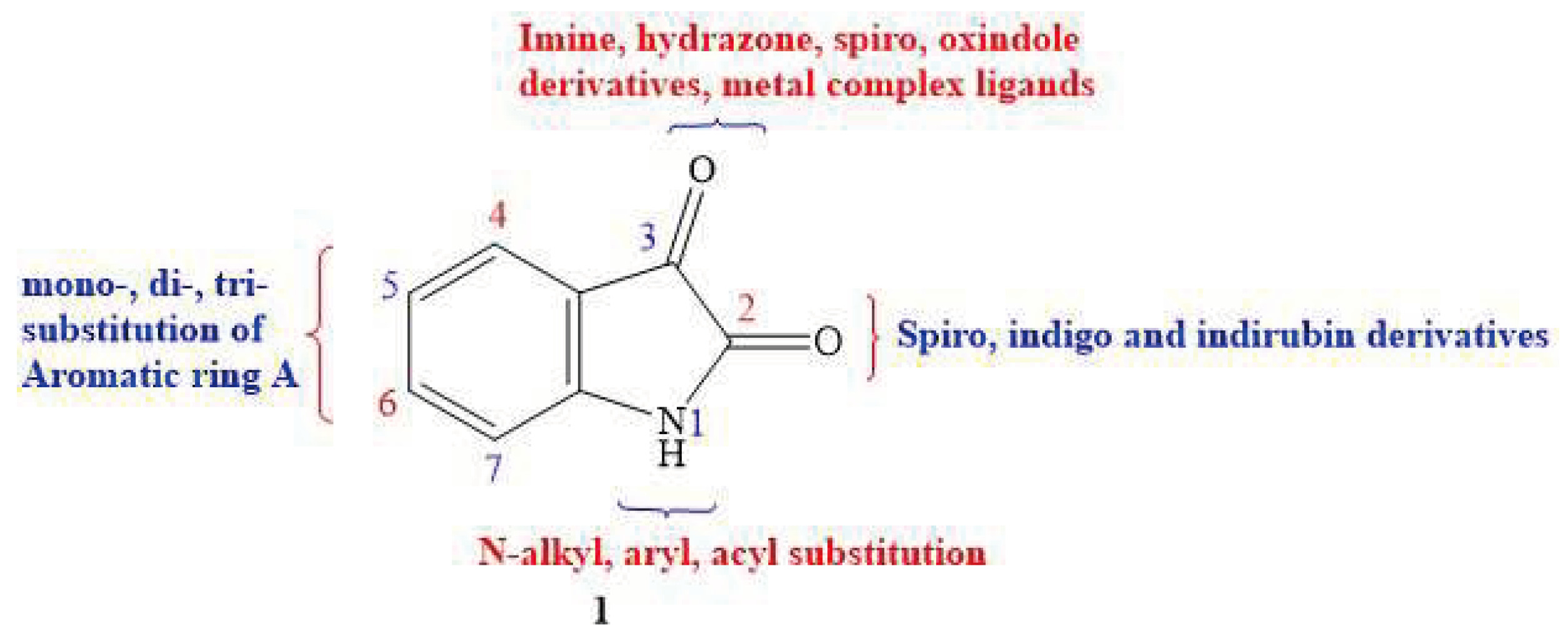
Figure 2.
Chemical structures of isatin-azole hybrids.
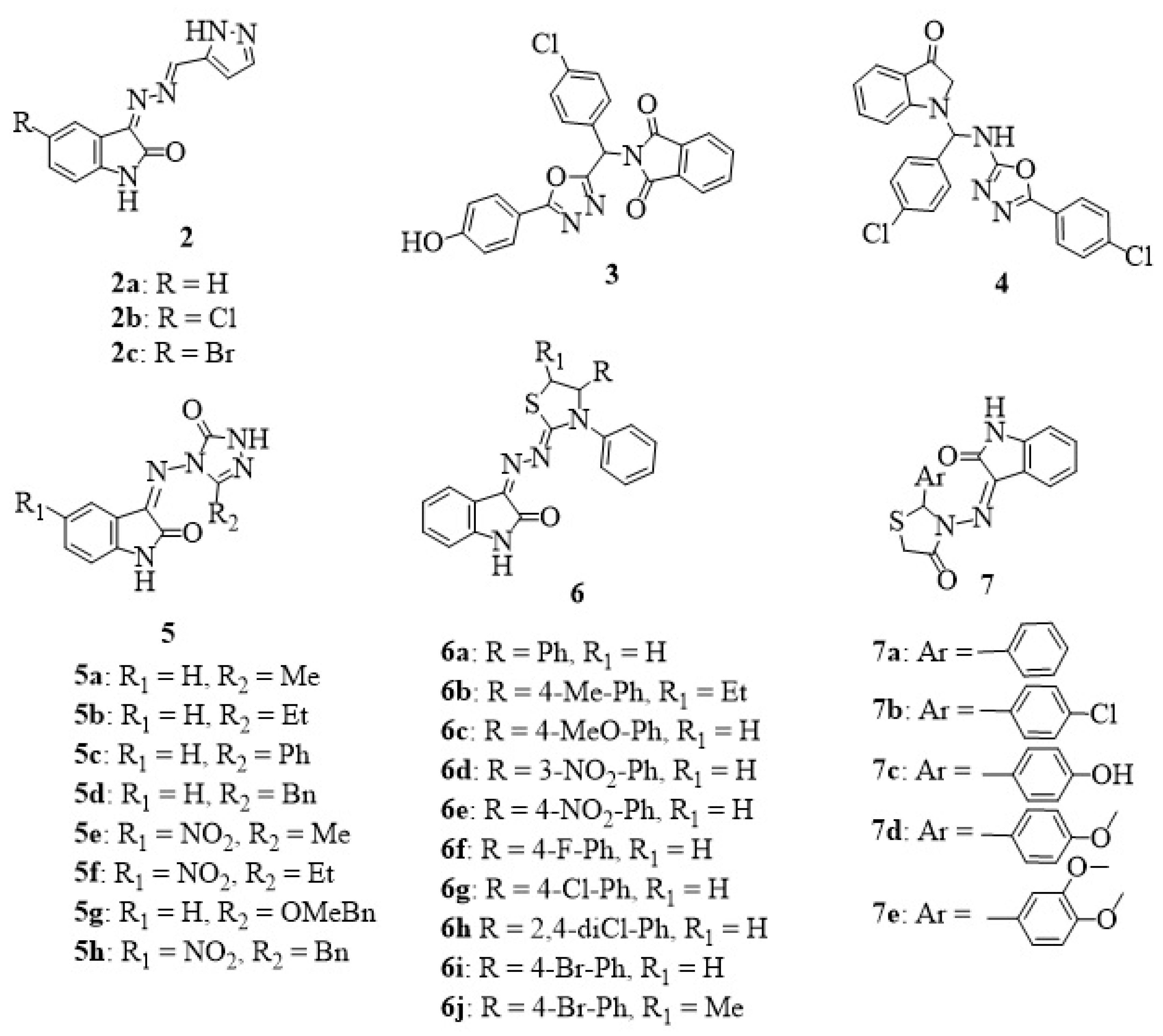
Figure 3.
Chemical structures of isatin-furan hybrids.
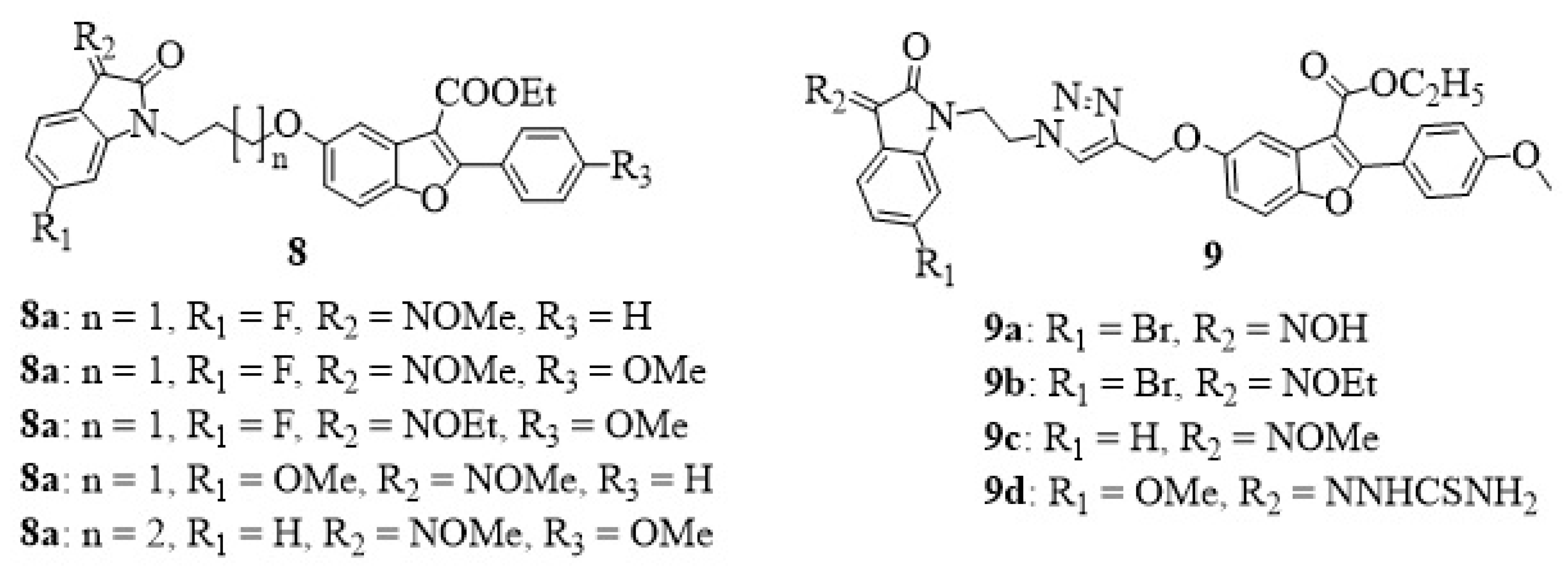
Figure 4.
Chemical structures of isatin-thiophene hybrids.
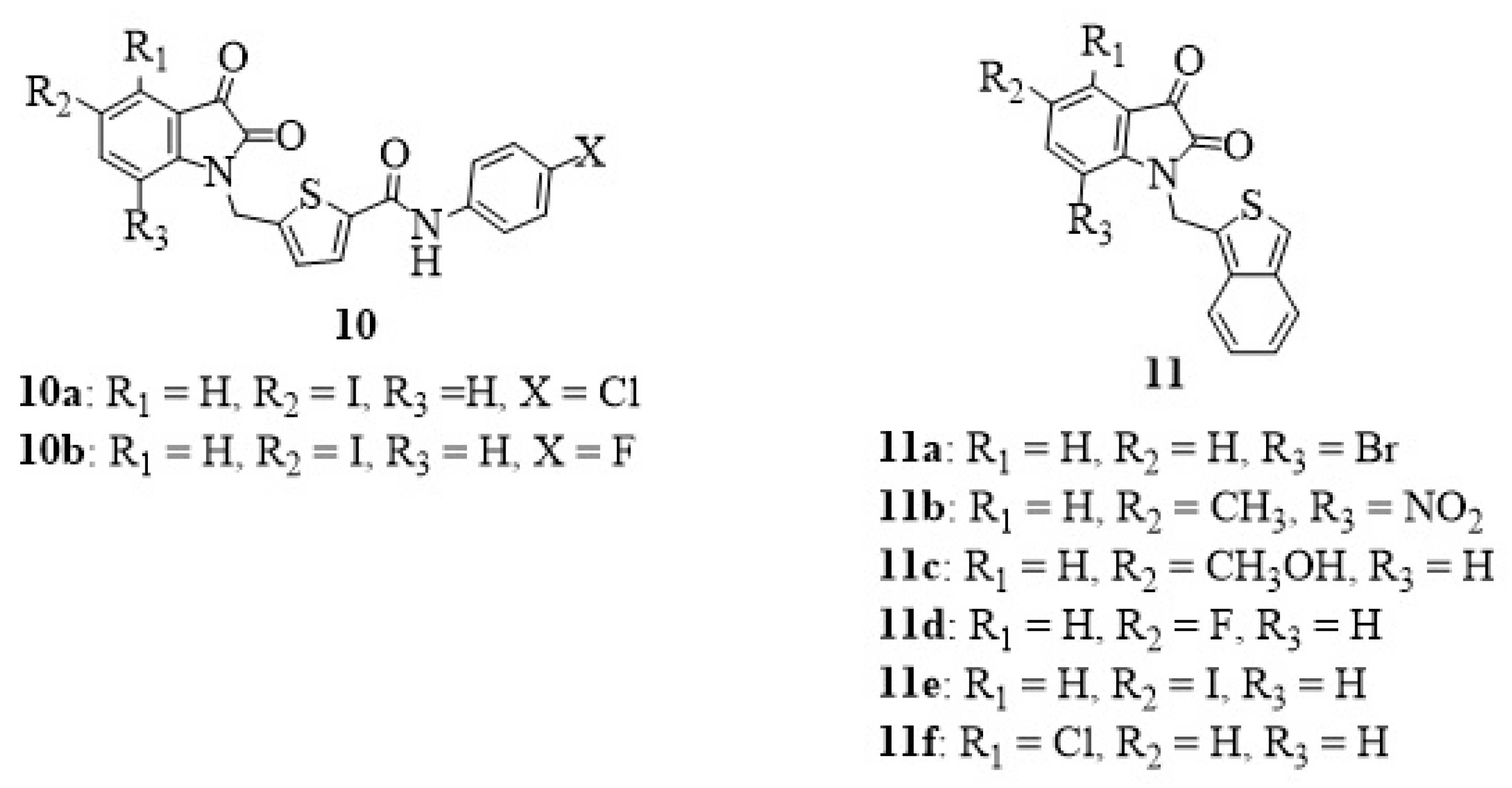
Figure 5.
Chemical structures of isatin-indole hybrids.
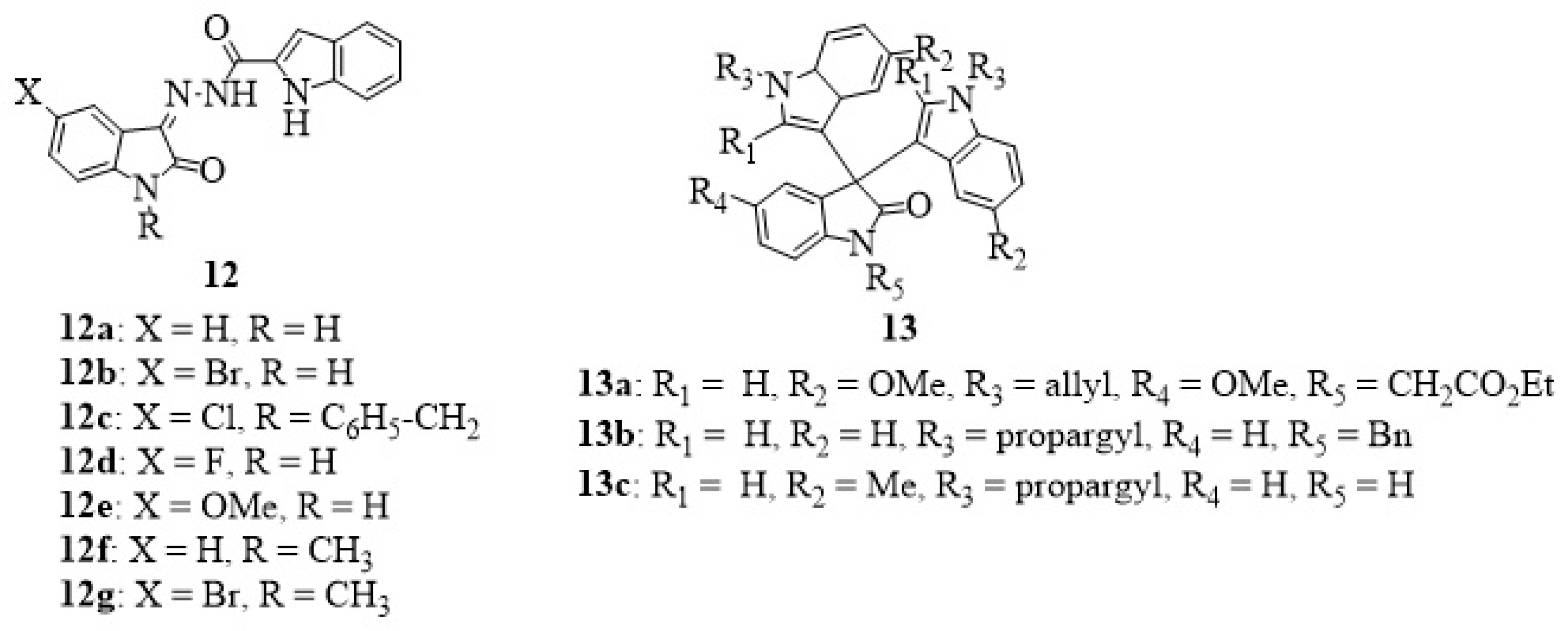
Figure 6.
Chemical structures of isatin-fluoroquinolone hybrids.
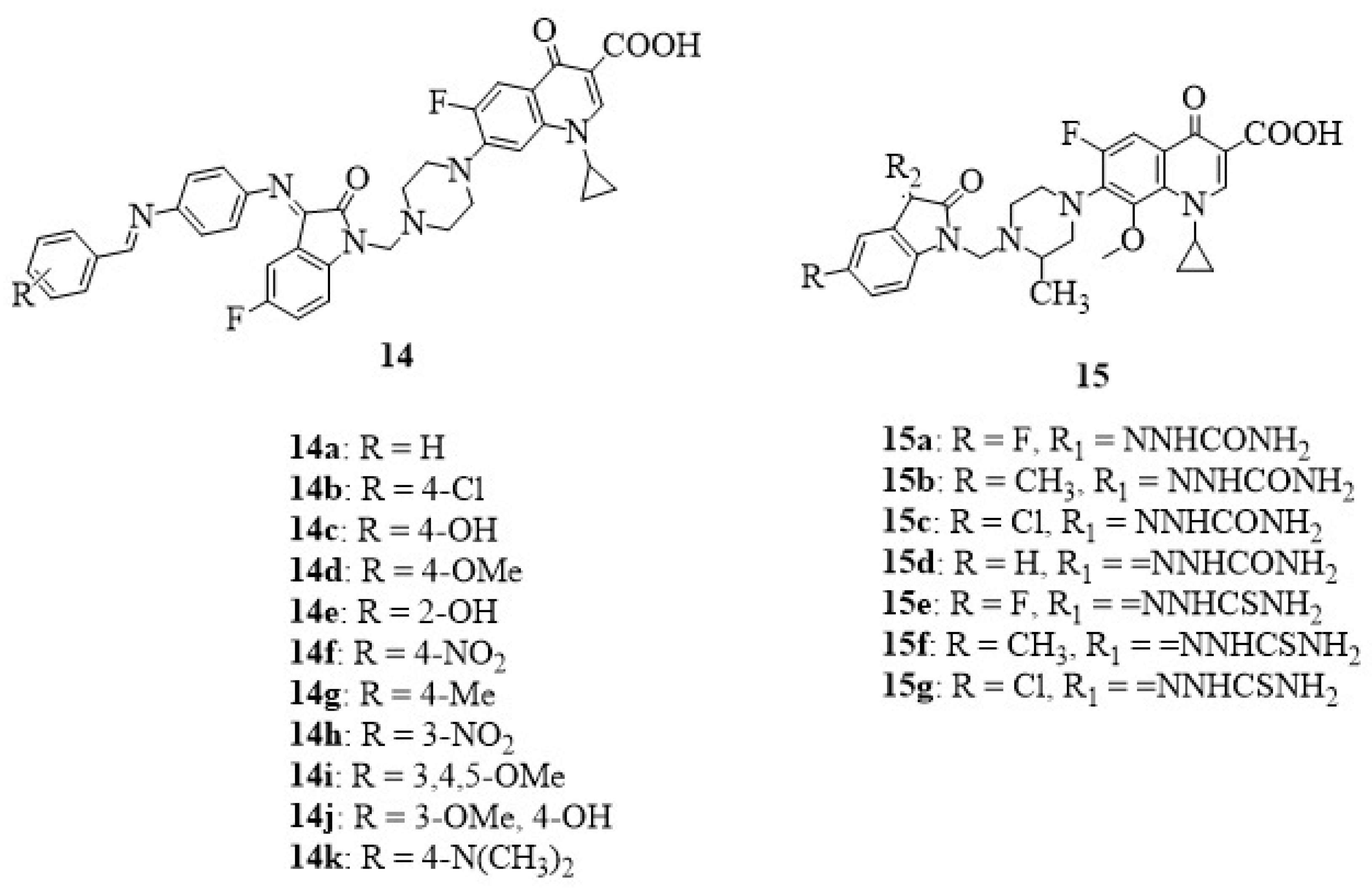
Figure 7.
Chemical structures of isatin-sulfonamide hybrids.
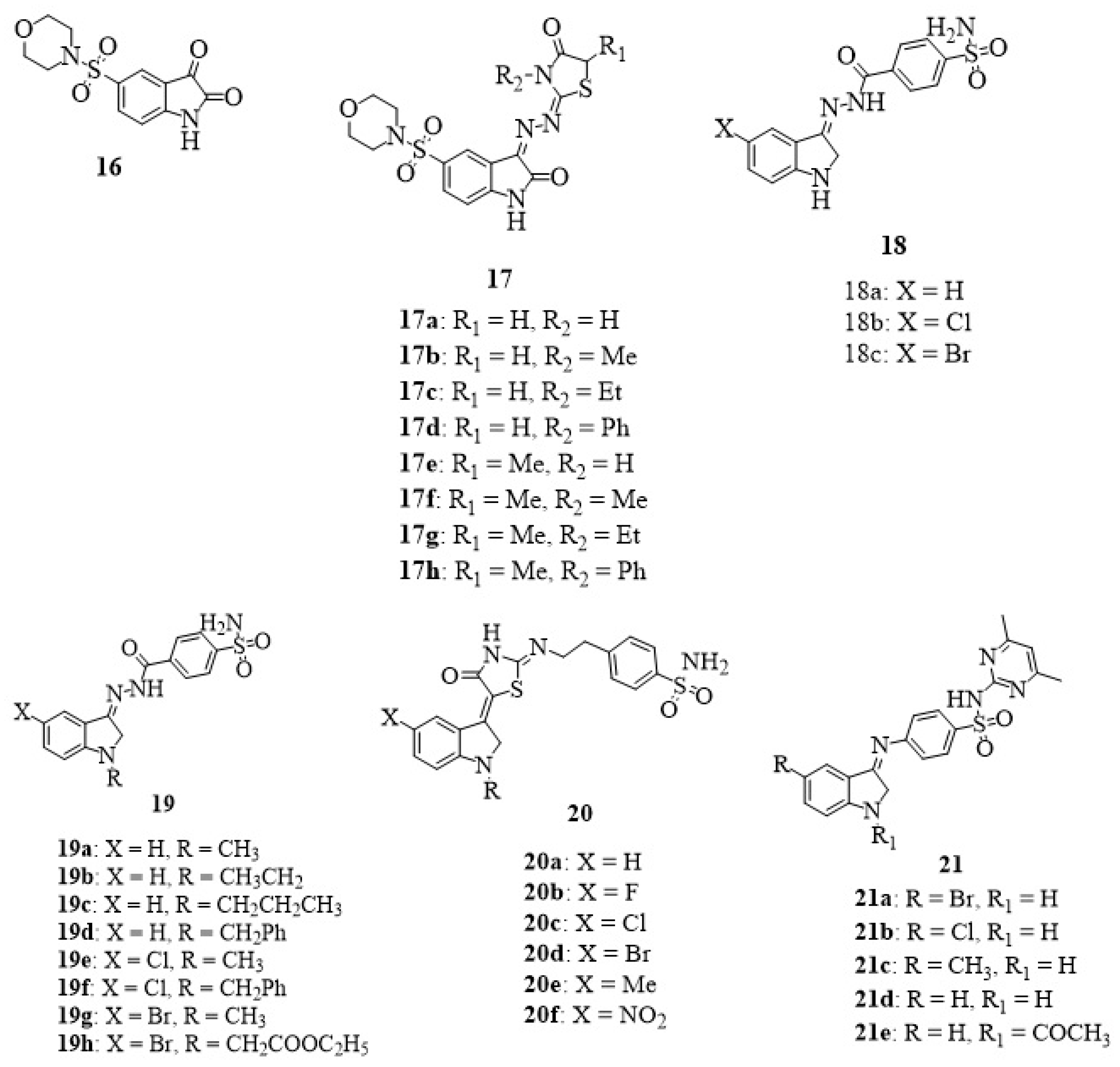
Figure 8.
Chemical structures of isatin-pyridine hybrids.
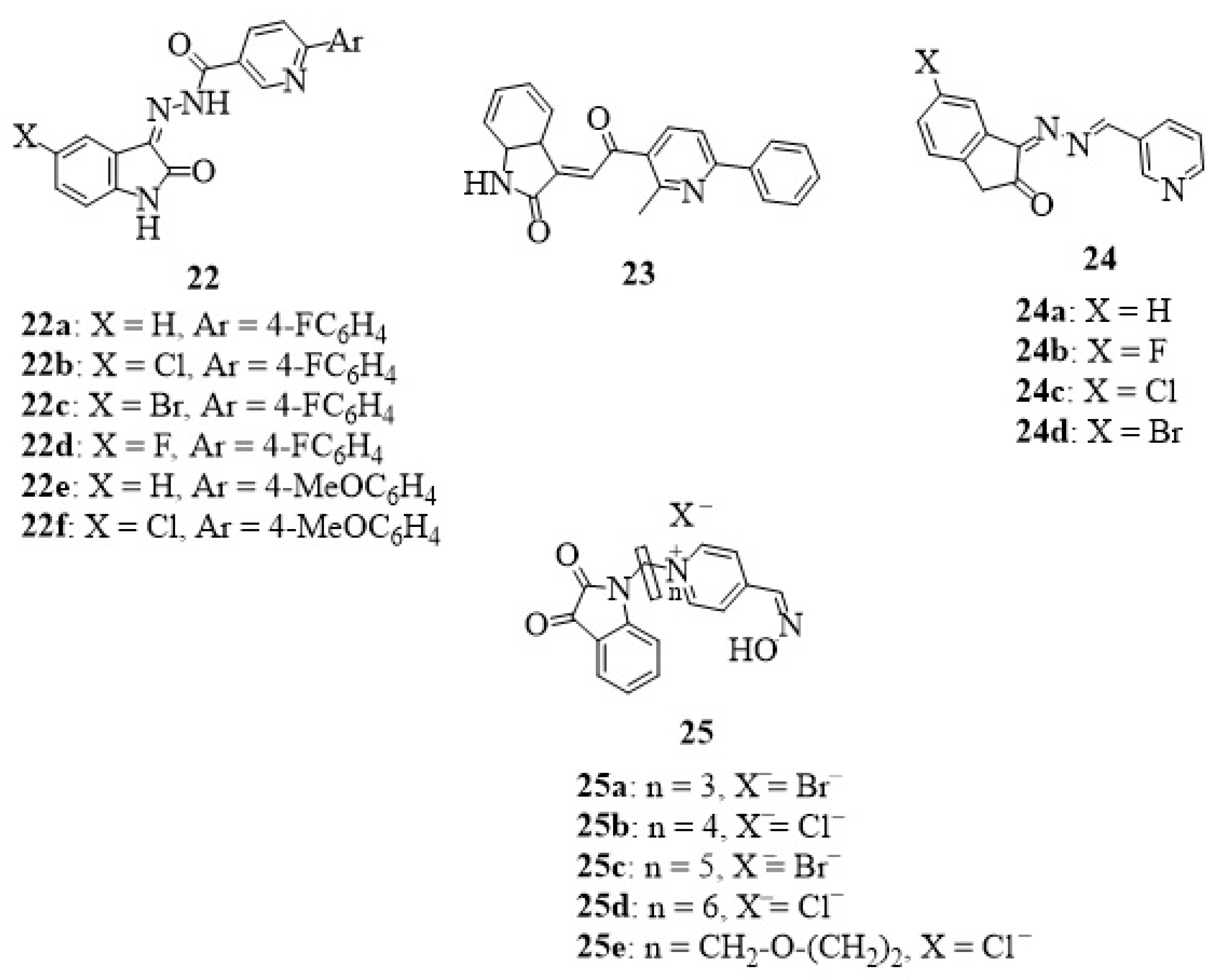
Figure 9.
Chemical structures of isatin-chalcone hybrids.
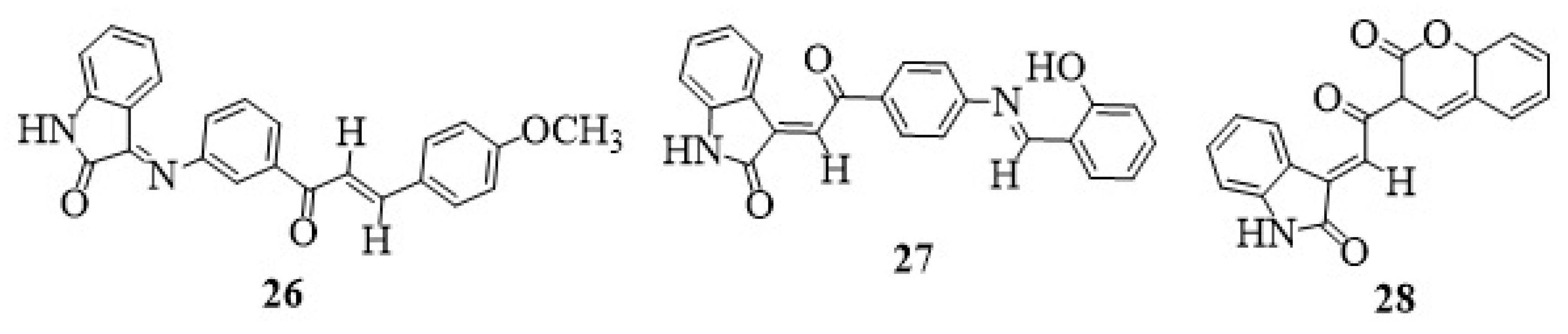
Figure 10.
Chemical structures of isatin-quinazoline hybrids.
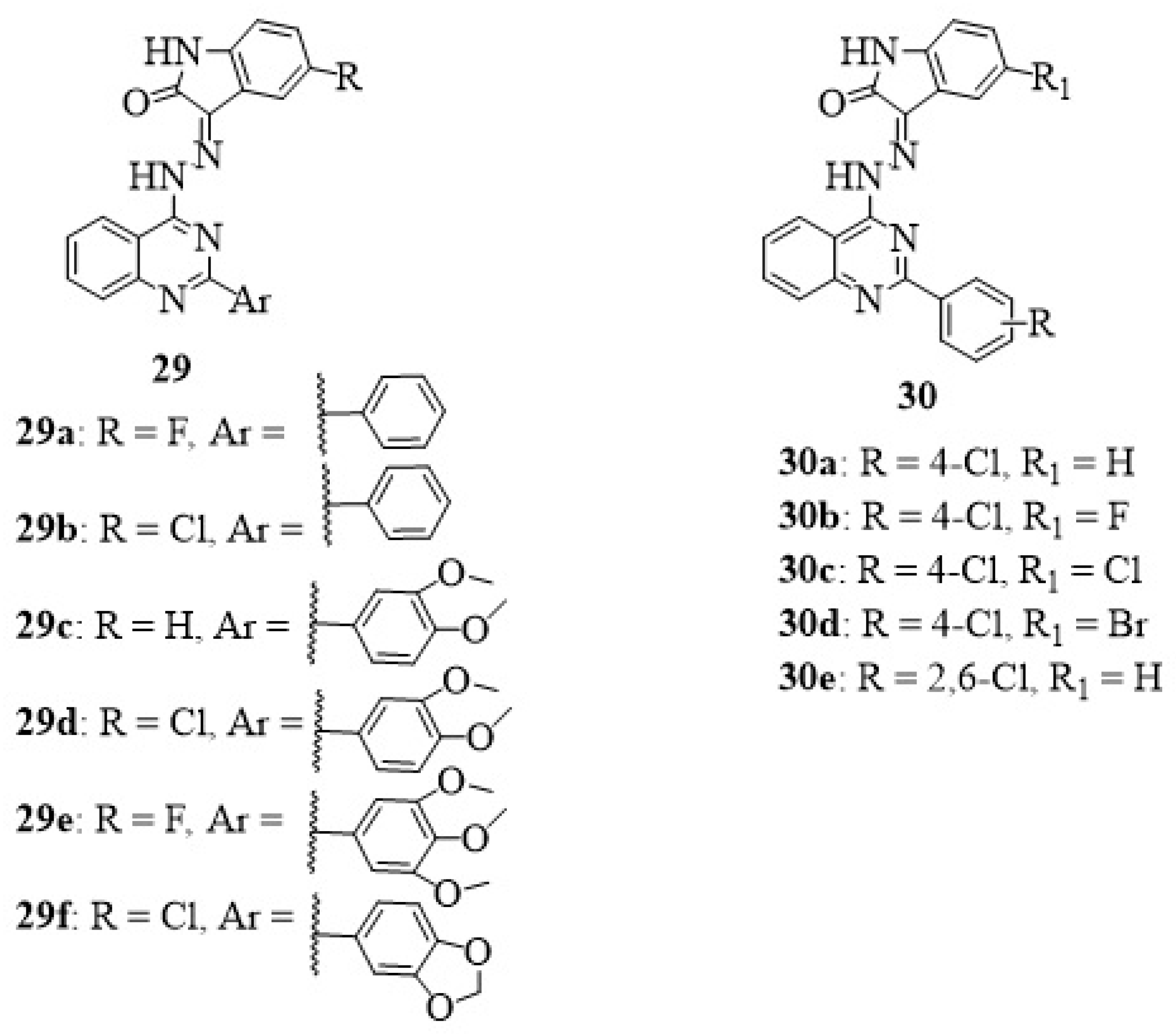
Figure 11.
Chemical structures of isatin-pthalazine hybrids.
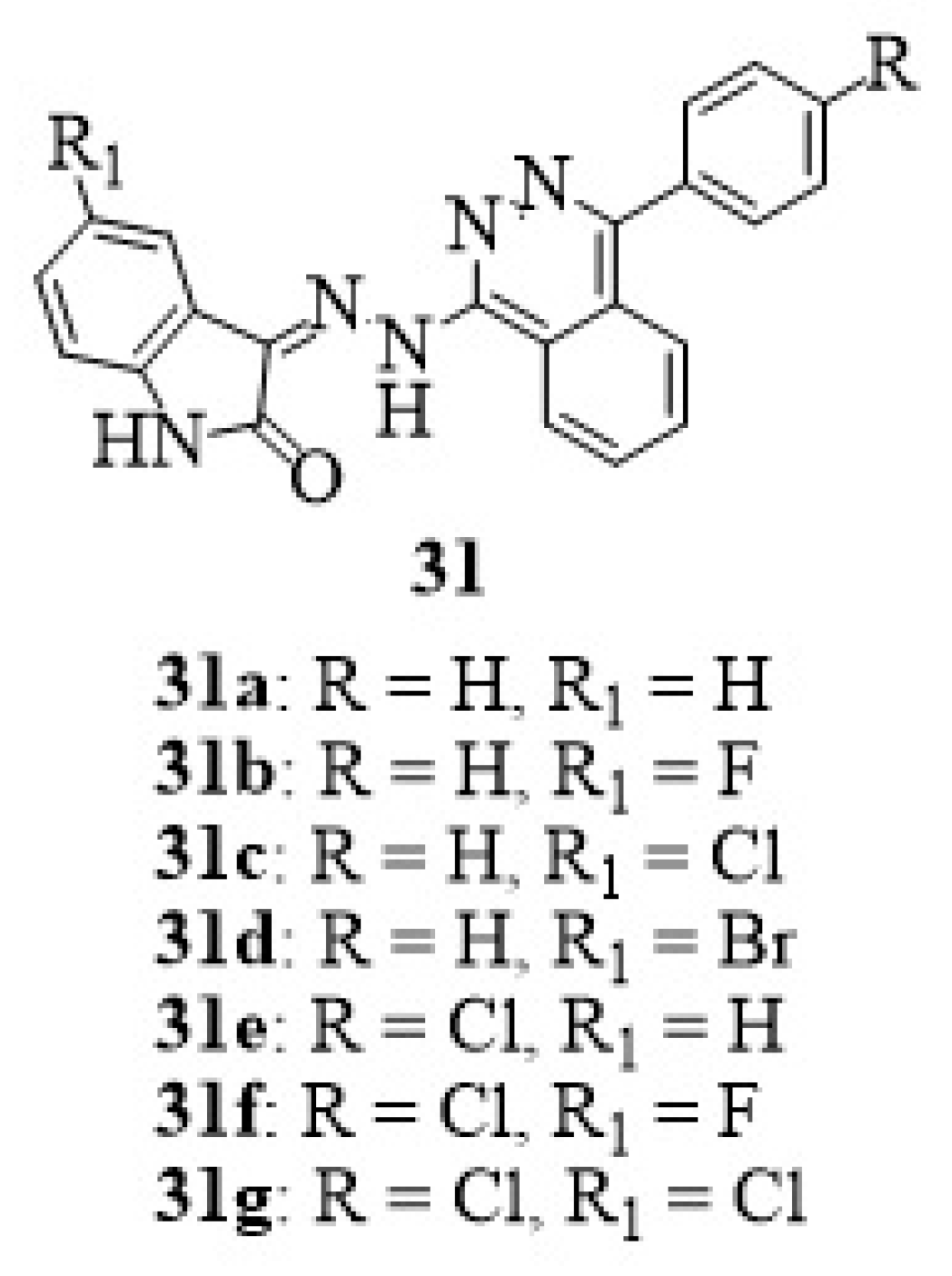
Figure 12.
Chemical structures of isatin-hydrazide hybrids.
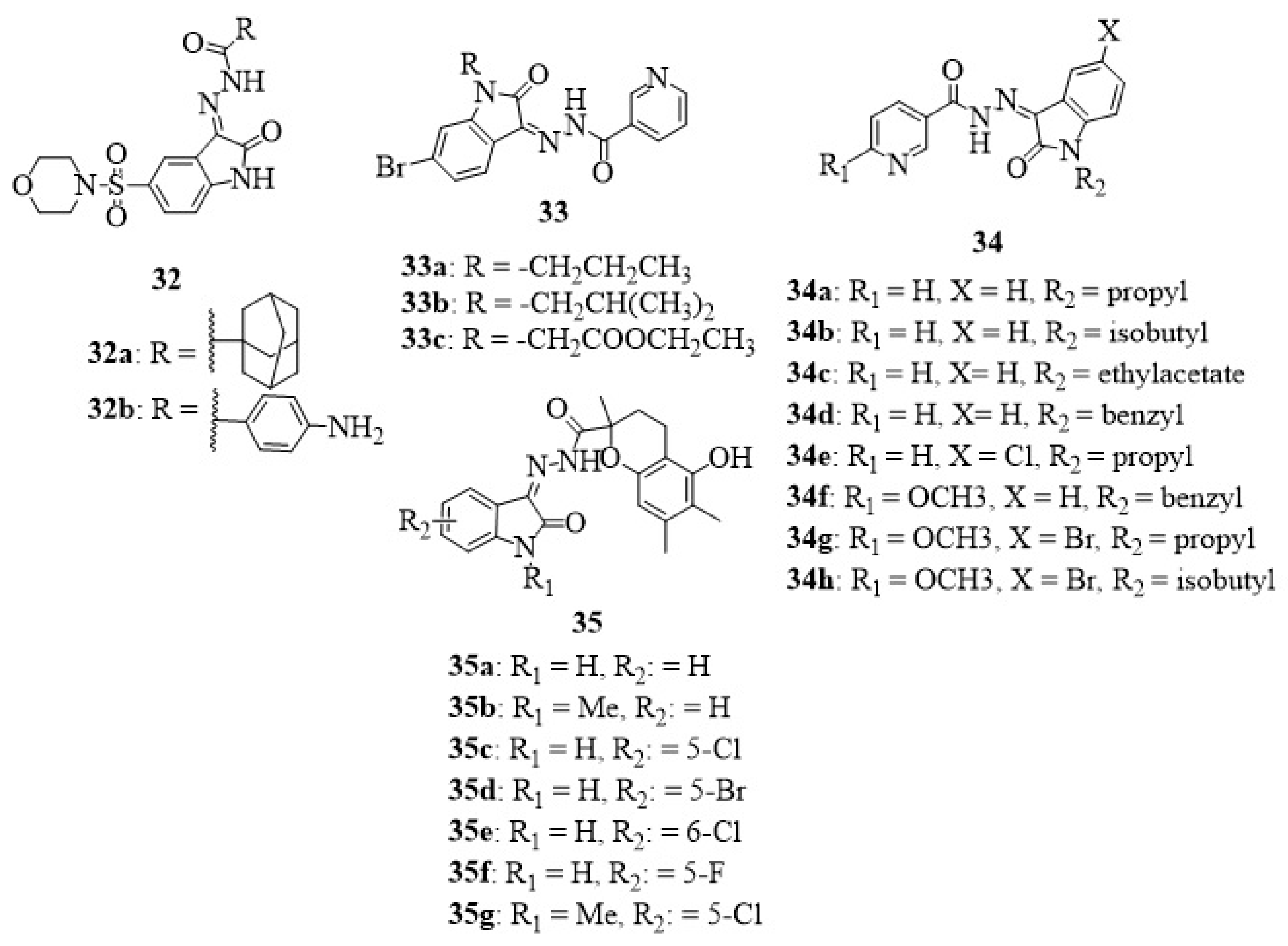
Figure 13.
Chemical structures of isatin-thiosemicarbazone hybrids.
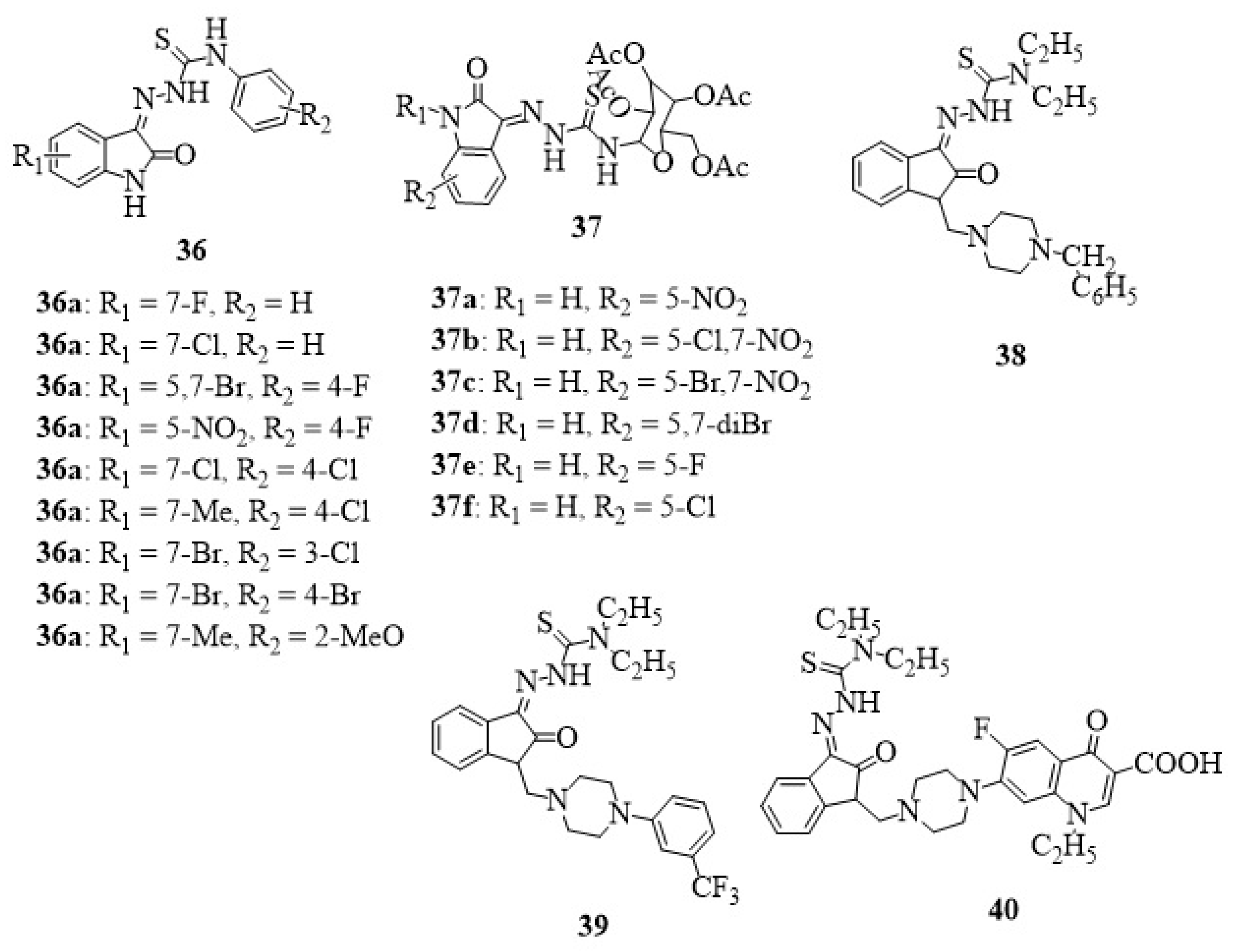
Figure 14.
Chemical structures of isatin-oxime hybrids.
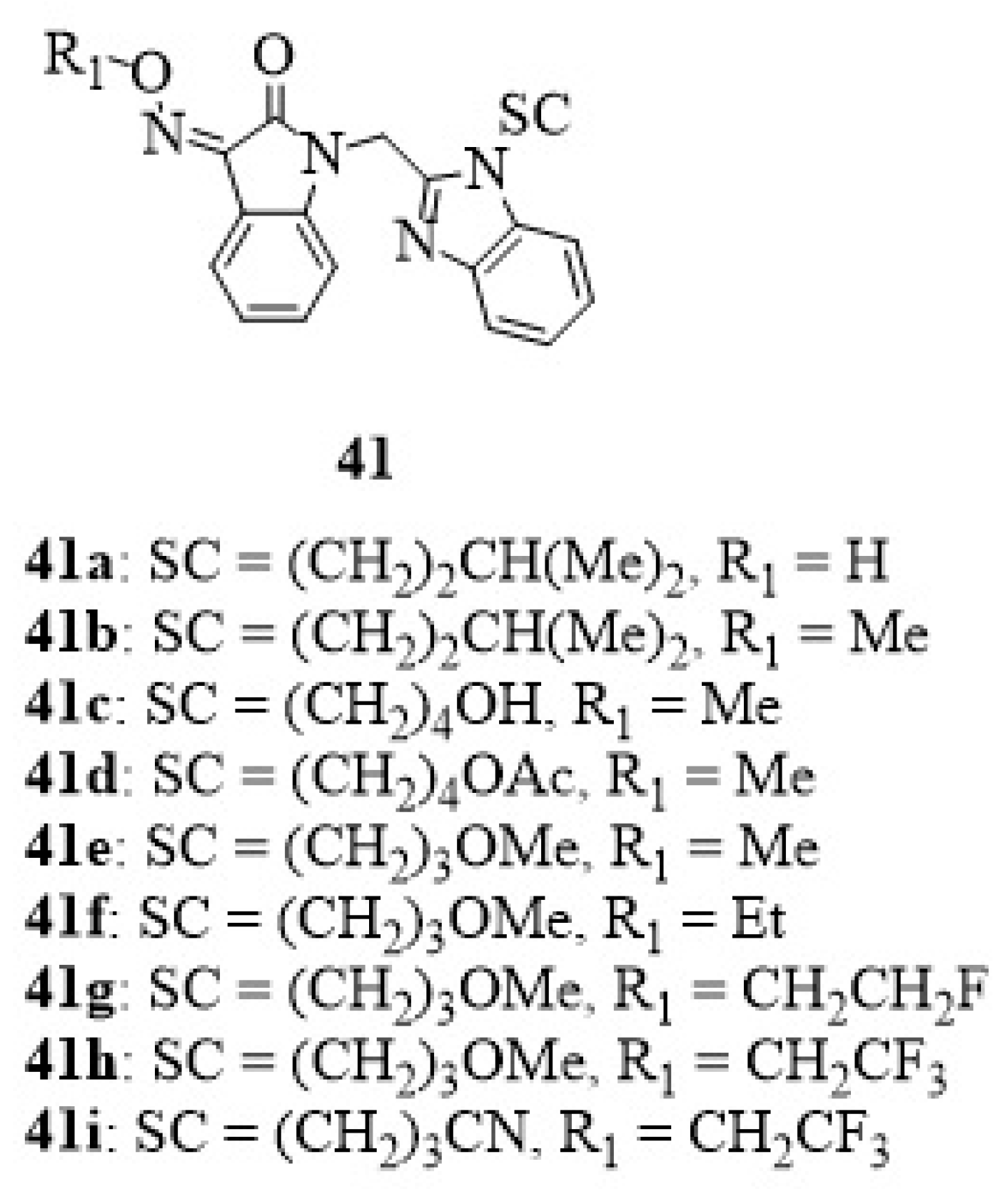
Figure 15.
Chemical structures of isatin-nitrone hybrids.
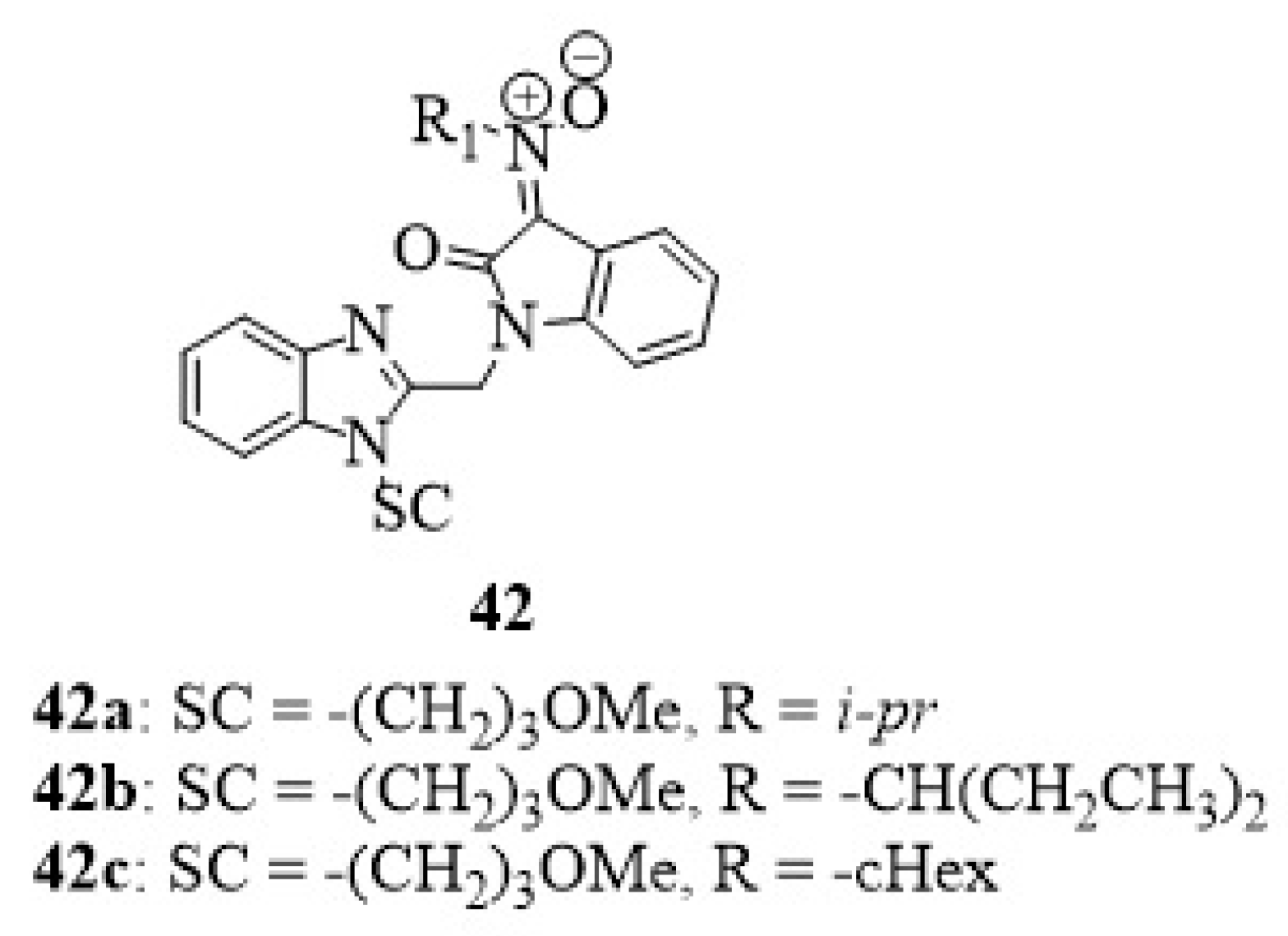
Figure 16.
Chemical structure of an isatin-piperazine hybrid.
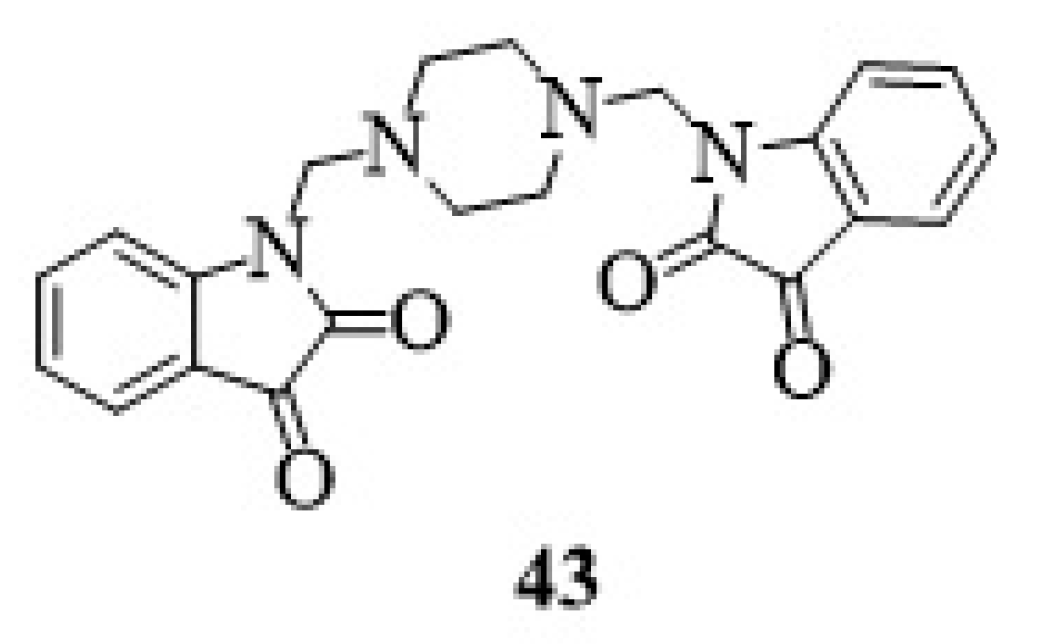
Figure 17.
Chemical structures of isatin-uracil hybrids.
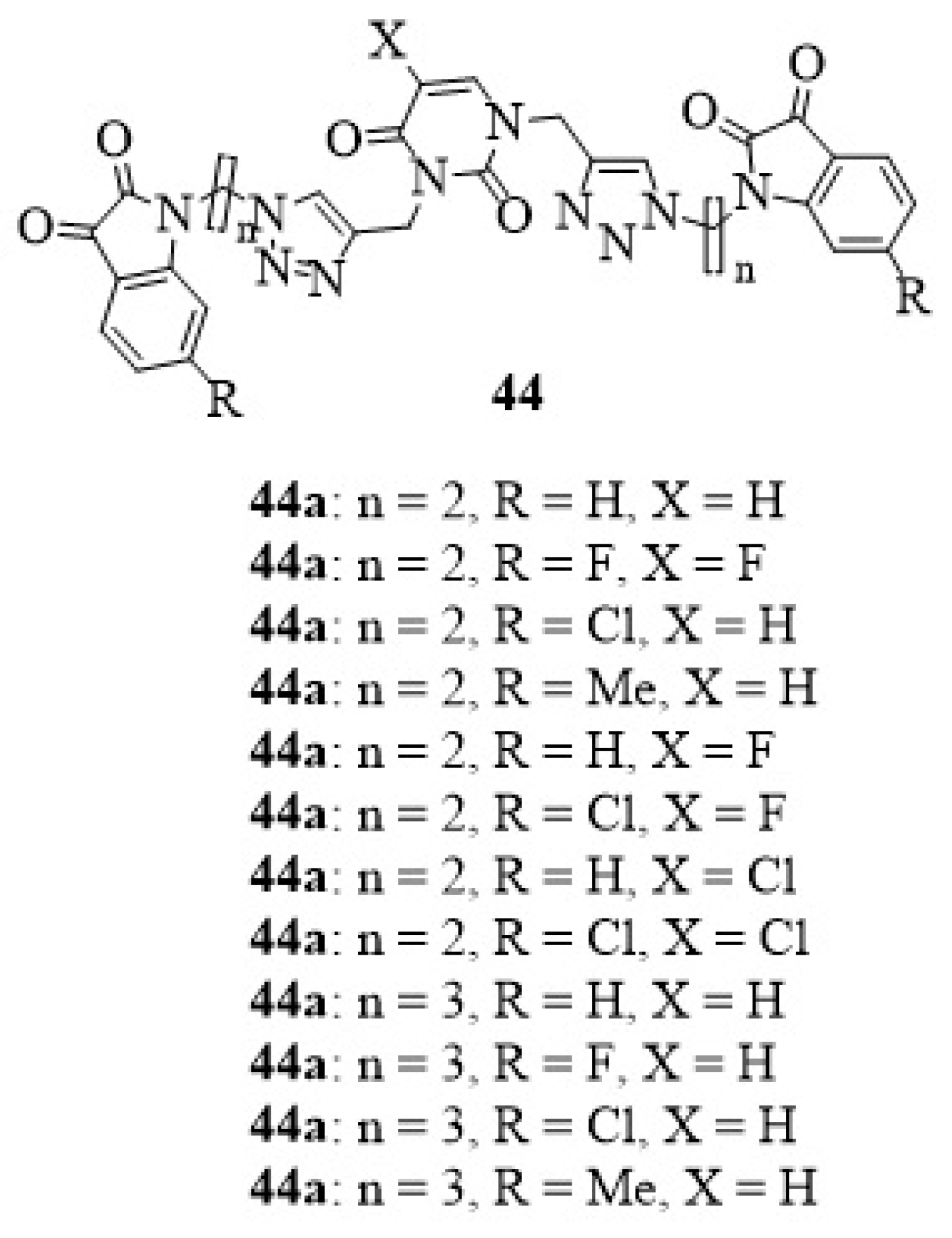
Figure 18.
Chemical structures of isatin-coumarin hybrids.
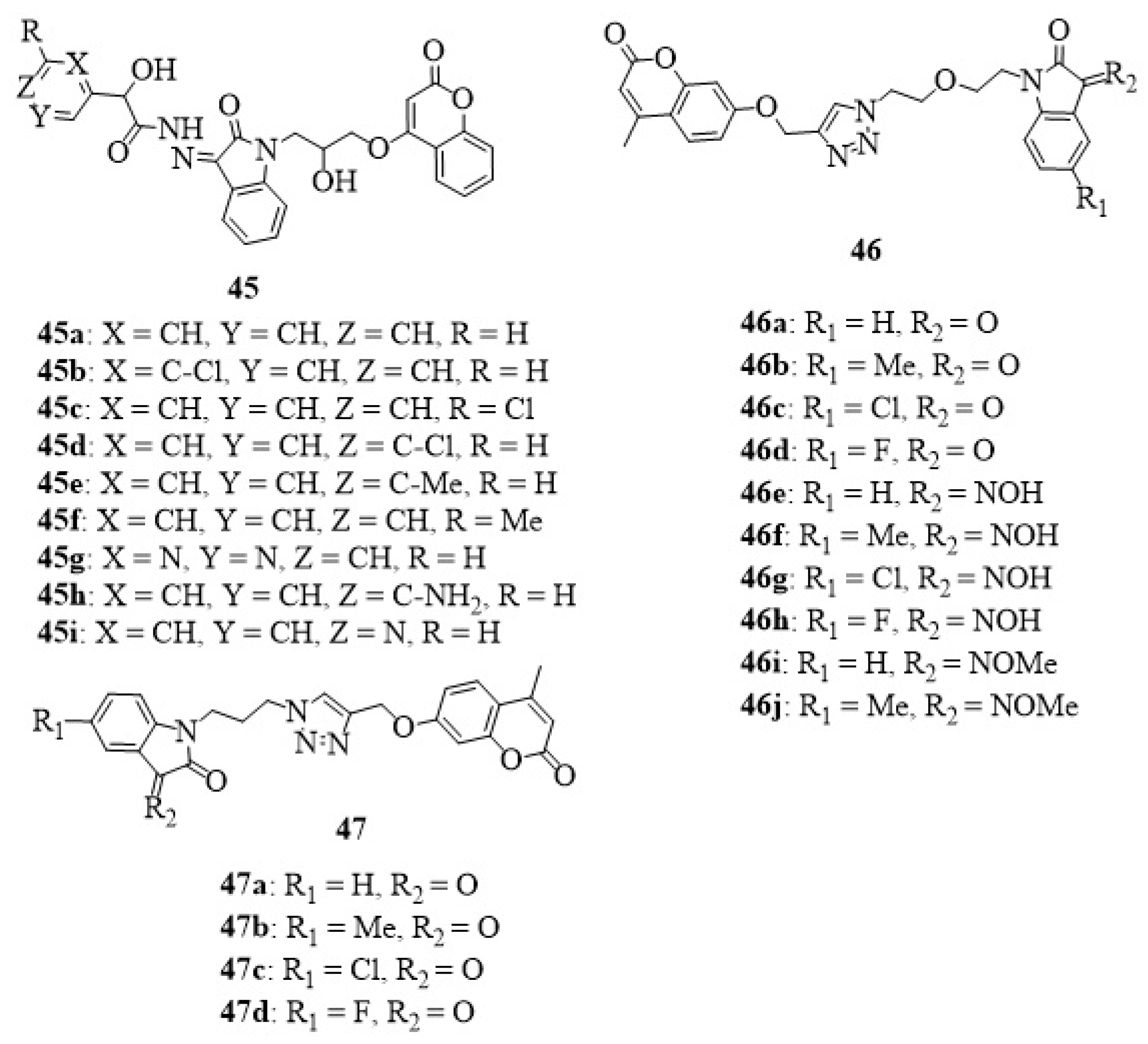
Figure 19.
Chemical structures of isatin-thiolactone hybrids.

Figure 20.
Chemical structures of isatin-pyrimidine hybrids.
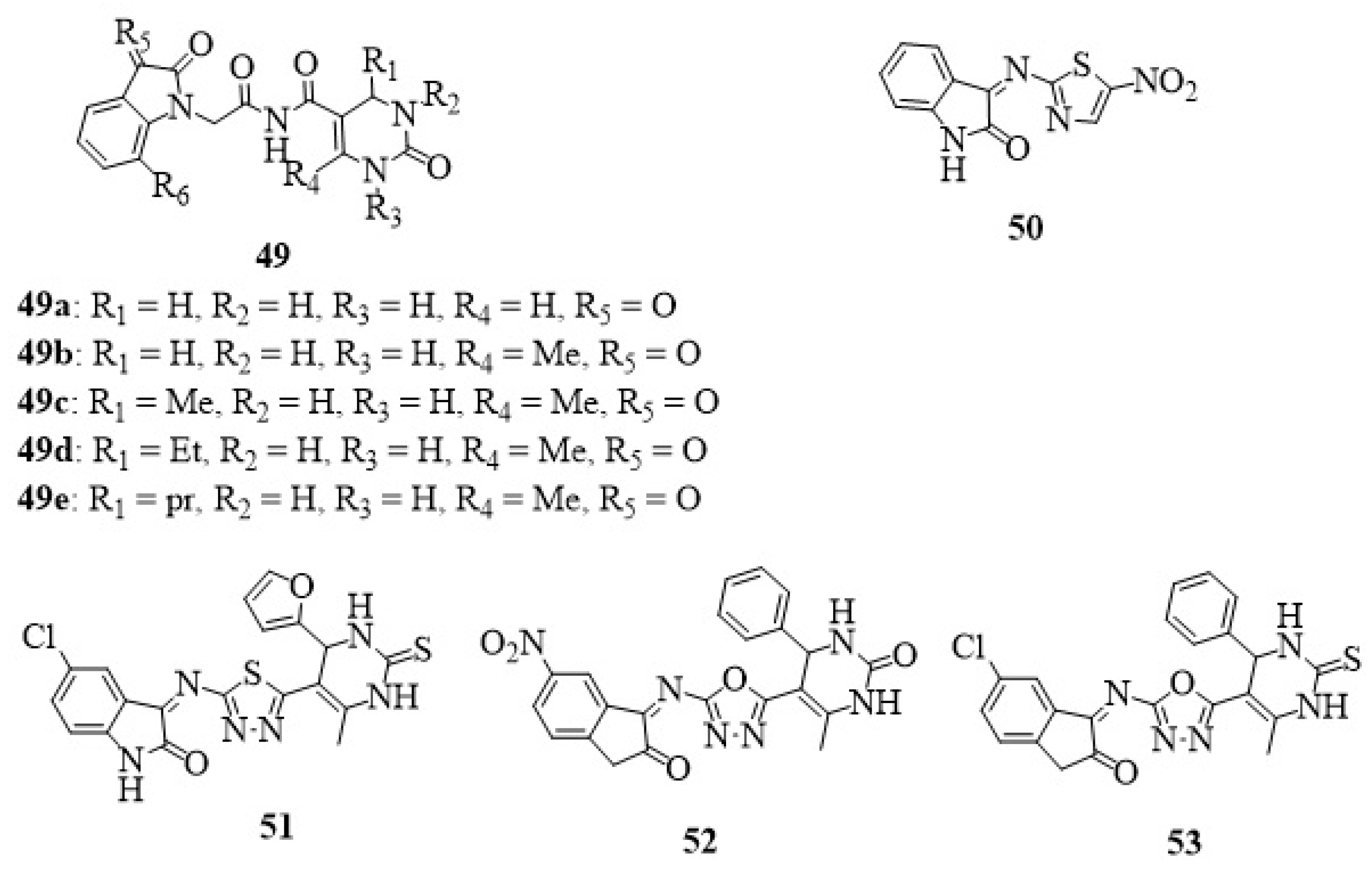
Figure 21.
Chemical structures of isatin-quinoline hybrids.

Figure 22.
Chemical structures of isatin-thioacetazone hybrids.
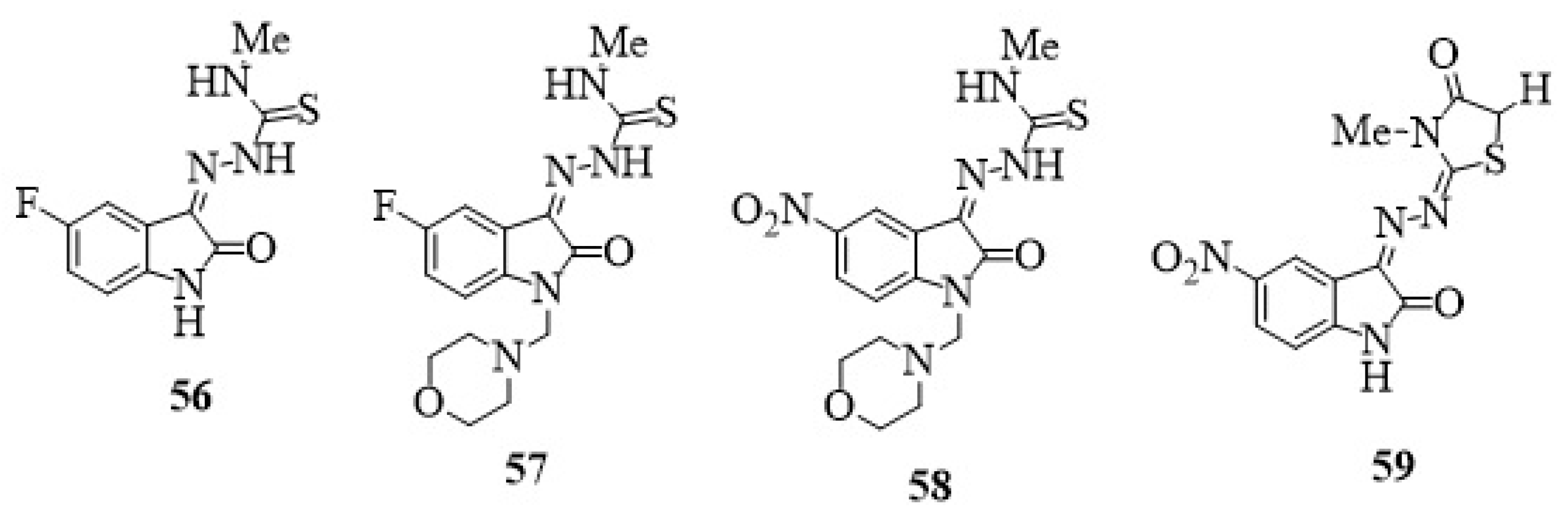
Figure 23.
Chemical structures of other isatin hybrids.
Disclaimer/Publisher’s Note: The statements, opinions and data contained in all publications are solely those of the individual author(s) and contributor(s) and not of MDPI and/or the editor(s). MDPI and/or the editor(s) disclaim responsibility for any injury to people or property resulting from any ideas, methods, instructions or products referred to in the content. |
© 2024 by the authors. Licensee MDPI, Basel, Switzerland. This article is an open access article distributed under the terms and conditions of the Creative Commons Attribution (CC BY) license (http://creativecommons.org/licenses/by/4.0/).
Copyright: This open access article is published under a Creative Commons CC BY 4.0 license, which permit the free download, distribution, and reuse, provided that the author and preprint are cited in any reuse.


