

Submitted:
12 January 2024
Posted:
12 January 2024
You are already at the latest version
Abstract
There have been many researches on the surface acoustic wave (SAW) sensors for detecting sulfur-containing toxic or harmful gases. This paper aims to give an overview of the current state of the polymer films used in SAW sensors for detecting deleterious gases. By covering most of the important polymer materials, the structures and types of polymers are summarized, and a variety of devices with different frequency, such as delay lines and array sensors for detecting mustard gas, hydrogen sulfide and sulfur dioxide are introduced. The preparation method of polymer films, the sensitivity of the SAW gas sensor, the limit of detection, the influence of temperature and humidity, and the anti-interference ability are discussed in detail. The advantages and disadvantages of the films are also analyzed, and the potential application of polymer films in the future is also forecasted.
Keywords:
polymer
; films
; surface acoustic wave(SAW)
; gas sensor
; mustard gas
; hydrogen sulfide
; sulfur dioxide
1. Introduction
1.1. The Fundamental Concepts of SAW Sensors
In 1885, for the first time, British physicist Rayleigh discovered surface accoustic wave (SAW) which was a type of elastic mechanical wave propagating along the surface of an elastic object while he studied seismic waves [1]. Due to technological limitations at that time, SAWs were not used in practical applications. In 1965, the invention of the interdigitated electrode transducers (IDT) by White R.M. and Voltmer F.W. provided a simpler method of generating SAWs and accelerated the development of SAW sensor [2]. Since the publication of the first paper on SAW gas sensors by Wohltjen H. and Dessy R. in 1978, SAW gas sensors had been extensively studied [3,4,5], over the past 40 years, it has been used to detect many kinds of hazardous gases such as SO2, H2S, NO2, NH3, methane, hydrogen, explosives and chemical warfare agents [6]. Because of advantages of small size, high sensitivity, ease of integration, intelligence and low-cost mass production, more and more researchers all over the world have paid much attention to the new field.
SAW sensor is mainly composed of IDTs and piezoelectric materials (e.g. quartz, LiNbO3, LiTaO3, ZnO, AlN, Bi12GeO20, AsGa and Piezoceramics, etc. [7,8,9,10]). The input IDT generates SAWs by inverse piezoelectric effect, when the SAWs propagate to the output IDT, then the output IDT converts the acoustic waves to electrical signals by the piezoelectric effect [11]. The energy of SAWs is primarily limited in the surface of elastic objects, tiny variations in the surface, such as changes in temperature, pressure, and weight, might alter the acoustic wave signals received by the output IDT [12], which result in the high sensitivity of SAW gas sensors.
According to their distinct structures and operating principles, SAW sensors can be categorized as delay line type and resonator type [13]. For dual-delay lines, one is coated to be used to detect harmful gases, and the other is used as reference channel to reduce the influence of environmental factors, such as temperature or pressure. Resonator type sensors have high Q value, low insertion loss, and small frequency drift, which can further enhance the sensor's sensitivity and distinguishability despite its more complicated mechanism and structure [14]. In terms of functionality, SAW sensors classified into three categories: physical sensors, chemical sensors, and biosensors. Physical sensors are primarily used to detect physical parameters such as temperature and pressure, chemical sensors are often used to detect gases qualitatively and quantitatively, while biosensors are employed to detect substances such as DNA, proteins, etc. [15].
Figure 1.
The scheme of SAW delay line [16].
Figure 1.
The scheme of SAW delay line [16].
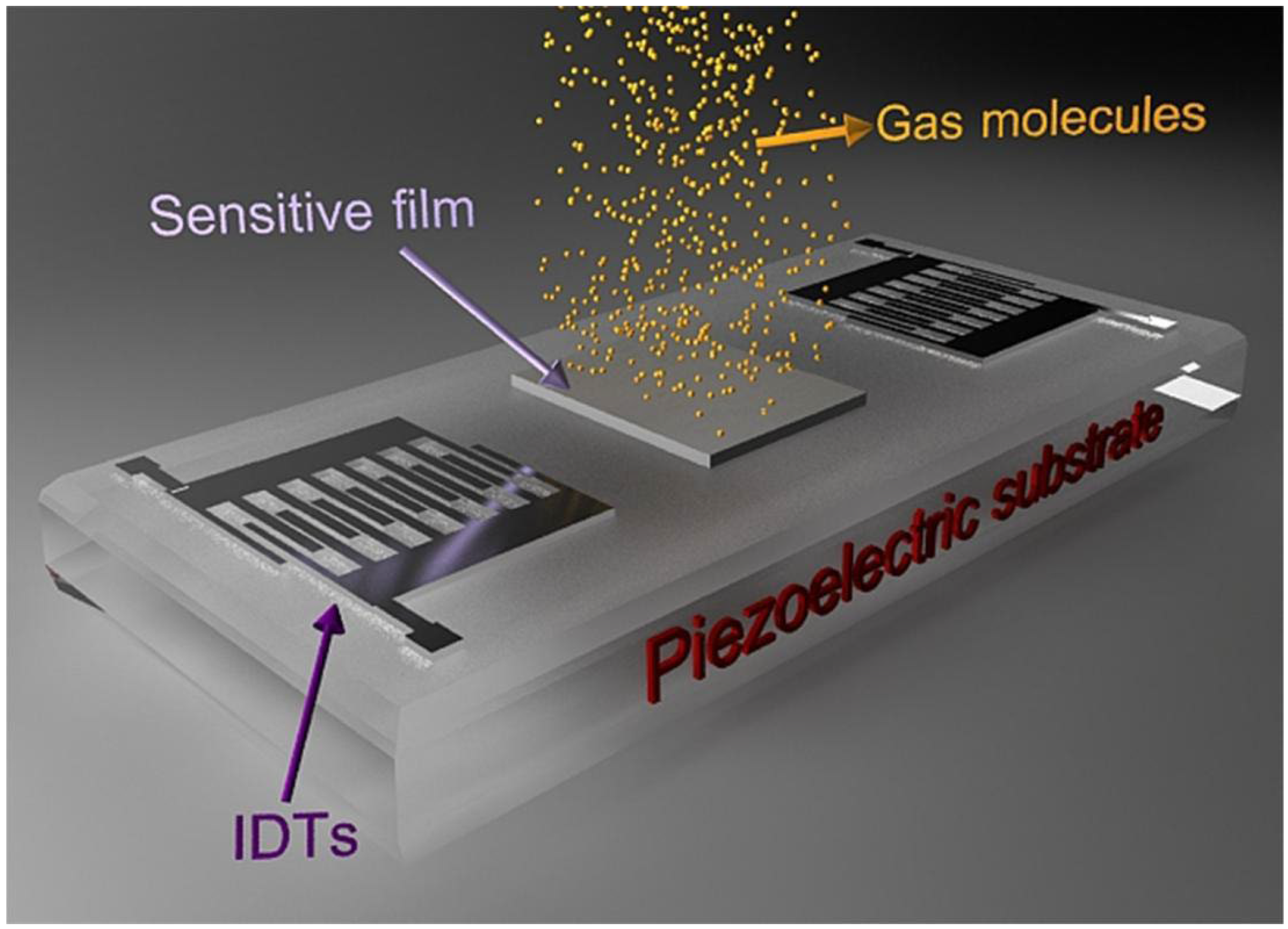
For SAW chemical gas sensor, as shown in Figure 1, the film serving as the main sensitive element is coated on the surface of the SAW delay line, the sensitive material can adsorb target gases selectively and reversible by van der Waals force or chemical bonds [11], which alter the film of physicochemical parameters, such as mass, density, modulus of elasticity, and conductivity, and affect the wave velocity and frequency of the passing SAW [17,18]. In the detection of toxic or harmful gases by SAW sensors, the physical and chemical properties of the sensitive materials and the selection of coating conditions (e.g., film thickness, surface roughness, etc.) will have great influence on the sensitivity, selectivity, repeatability, and stability of the sensors, therefore, the optimal sensitive materials is now an important work in the detection of toxic or harmful gases.
1.2. Sulphur-Containing Hazardous Gas Species
1.2.1. Sulfur-Containing Chemical Agents
Mustard gas (HD or SM), a vesicant chemical agent, is regarded as the king of toxic agents due to its ability to induce necrosis and tissue degeneration. As a lipophilic vesicant, it can enter the body via the skin, eyes, and breathing system. Its alkylation reaction with proteins, DNA, and glutathione (GSH) might cause cellular damage [19]. Although mustard gas has a lethality rate of only 2-5%, it has a high morbidity and psychological impact on people, it is because of its median lethal dose (LD50) of about 100 mg/kg, median lethal concentration (LCt50) of 15,000 mg min/m3 [20] and minimum dose of 0.2 mg to cause skin blistering [21], the most important thing is that there is no effective antidote or treatment. Mustard gas was first synthesized by Despretz in 1822 and used in war in 1917 [22], it caused about 1.3 million injuries and over 90,000 deaths in the First World War [23], and was also used in the Second World War and the Iran-Iraq War. According to the Chemical Weapons Convention (CWC) which came into force in 1997, chemical weapons are to be destroyed within ten years, however, because of the legacy of war and the fact that chemical weapons are cheap and easy to be produced, researches in detecting chemical agents are still ongoing. Table 1 lists common chemical agents along with their simulants.
1.2.2. Sulfur-Containing Harmful Gas
Hydrogen sulfide (H2S), an acidic, toxic, flammable gas, has an LD50 of 673 mg/kg. The odor threshold for H2S is 11 ppb, but olfactory paralysis happens at the concentration of H2S higher than 140 ppm [28]. People become paralyzed within 5 minutes, suffer serious eye impairment within 30 minutes, and die after 30 to 60 minutes when H2S concentrations reach 500–700 ppm [29].H2S naturally exists in volcanic eruption, paper making, coal mining, chemical production, automobile exhaust, etc. Since it is one of the main causes of environmental pollution, it is essential to monitor the concentration of hydrogen sulfide gas in real time. Sulfur dioxide (SO2), a colorless gas with an irritating odor, is one of the major pollutants in the atmosphere. It is mainly produced by natural or artificial processes such as burning fossil fuels containing sulfur (for example, coal, oil, and natural gas), volcanic eruptions, and smelting and forging sulfur-containing minerals [30]. Prolonged exposure to SO2 can cause harm to the eyes, lungs, and throat. Additionally, SO2 easily dissolves in water to form acid rain, which severely threatens buildings, plants, animals, and the overall environmental balance [31]. Therefore, monitoring SO2 is an essential aspect of environmental protection.
2. Sensitive Functional Materials of Sulfur-Containing Agents and Their Simulants
2.1. Polymer
In 1993, Grate et al. [32] employed a 158 MHz four-channel SAW delay line sensor array to detect sarin and mustard gas. The sensor array utilized poly(epichlorohydrin) (PECH), poly(ethylenimine) (PEI), ethyl cellulose (ECEL), and fluoropolyol (FPOL) as the sensitive films, signal processing and pattern recognition algorithms were also employed to discriminate the target gases. Without preconcentration, the sensors could detect sarin and mustard gas as low as 0.5 mg/m3 and 2 mg/m3, respectively, however, when the 2-minute preconcentration mode was used, the detection limits could be improved to 0.01 mg/m3 for sarin and to 0.5 mg/m3 for mustard gas, it proved that preconcentration mode enhanced the sensitivity of the sensors. Additionally, the study also discovered that the PECH's sensitivity to mustard gas in the sensor array heightened when humidity increased, however, the specific mechanism why humidity influenced the sensor was not explained clearly and still needed to be investigated.
In 2005, Liu et al. [33] used a 158 MHz SAW dual delay line with PECH as the sensitive film for the detection of mustard gas. They conducted research in order to enhance the performance of sensor by investigating the correlation between film thickness and sensitivity, the findings revealed that the sensitivity increased with the increase of film thickness. In the same year, Liu et al. [34] conducted a response test on the same sensor and found a good linear relationship between HD concentration and response intensity in the range 2-200 mg/m3 and the sensitivity of sensor was 25 Hz(m3/mg), they also found when the temperature increased from 0℃ to 50℃ at a concentration of 2 g/m3 of CEES, the response value decreased by 95%, the response time and recovery time become shorter with the increase of temperature, and the repeatability test showed excellent performance of the prepared sensor. In 2006, Liu et al. [35] investigated the adsorption kinetics between PECH film and mustard gas with multimolecular layer adsorption model, they concluded that gas/liquid balance theory and van der Waals forces was very important for the physical adsorption, and the related work [36] was summarized.
In 2007, Chen et al. [37] used a 200 MHz four-channel resonator sensor array with four polymers (PECH, Silicone (SE-30), Hexafluoro-2-propanol bisphenol-substituted siloxane polymer (BSP3), fluorinated polymethyldrosiloxane (PTFP)) to detect HD, DMMP, GB, and sarinic acid. Combined with the probabilistic neural network(PNN), the recognition rate could reach 90.87% successfully, so mustard gas was well recognized. In 2008, the same team evaluated the sensor's stability, sensitivity, repeatability, consistency, and selectivity, the repeatability and consistency were found to have relative standard deviations of 3.27% and 2.50%, respectively, which were within the margin of error, and the detection limit was 0.3 mg/m3.
In 2009, Matatagui et al. [38] employed a 157 MHz six-delay-line array sensor with electrode thickness of 200 nm and finger spacing of 5 μm to detect DMMP, DPGME, DMA and DCE. Six polymers, including PECH, polycyanopropylmethylsiloxane (PCPMS), carbowax (CW), polydimethylsiloxane (PDMS), PEI, and trifluoropropylmethylsiloxane-dimethylsiloxane (PMFTPMS), were prepared on the delay line, respectively, the sensor arrays exhibited a rapid and significant response. The data obtained from the array were analyzed using principal component analysis (PCA) and PNN, which resulted in an excellent distinguishability and a low detection limit. In their 2011 study, Matatagui et al. [25] successfully detected several substances with same devices, including DMMP, DPGME, toluene (TOL), DCM, DCP, DMA, and DCE. They concluded that all simulants were accurately identified except DCE and DCM, it was because they had very similar structures and could not be distinguished. In the same year, Matatagui et al. [39] developed a six-delay-line array based on Love wave, the sensor array was prepared with the aluminum electrode thickness of 200 nm and the finger spacing of 7 μm. By spin coating, a Novolac photoresist guide layer with a thickness of 0.8 μm was applied onto the surface of the piezoelectric material. Subsequently, sensitive materials mentioned above were prepared on the surface of delay line, respectively, the DMMP, DPGME, DMA, DCE, DCM, and DCP were tested with a detecting system as shown in Figure 2, the sensor array exhibited excellent stability, reversibility, repeatability, and sensitivity, the CWA simulants were also accurately detected and categorized with PCA and PNN. In 2012, the same team[40] utilized a 3-micron-thick SiO2 guide layer acquired through plasma-enhanced chemical vapor deposition to detect the same six target gases, and the results show the detection limits were 0.04 ppm, 0.25 ppm, 15 ppm, 75 ppm, 125 ppm, and 5 ppm, respectively, the film materials are shown in Figure 3.
In 2011, He et al [41] designed a novel 300 MHz SAW dual delay-line. The device was prepared with an Al/Au electrode structure and strategic phase modulation to minimize insertion loss. The sensitive film PECH was coated by solvent evaporation, the thickness of film was about 80 nm. Under the conditions of 24℃, RH 50%, the sensor had a sensitivity of 25 Hz/mg/m3 to mustard gas, linear range was 2-200 mg/m3 and repeatability error of ±10%. In 2017, Qi et al. [42] designed a 3D nanocluster resonator sensor whose surface was modified by ZnO nanoclusters to provide a larger specific surface area for the sensitive layer, thus increasing the detection sensitivity, however, it also led to an increase in the insertion loss of the sensor, PECH, SE-30, PTFP, and BSP3 were used as sensitive films to detect a mixture of mustard gas and sarin, it obtained an identification rate of over 90%.
In 2018, Pan et al. [43] developed a SAW sensor array with a wireless communication network module and a positioning system module, in this sensor array, triethanolamine, PECH, fluoroalcoholpolysiloxane, and L-glutamic acid hydrochloride were used as sensitive films to detect H2S, CEES, DMMP, and NH3. Combined with pattern recognition algorithms, target gases were successfully detected at safe concentrations outside within a range of 300 meters, this study demonstrated the feasibility of using wireless sensor networks (WSNs) for gas detection. In light of the absence of prior research on the influence of temperature and humidity, Pan et al. [6] conducted a study in 2020 to investigate the environmental adaptability of the SAW sensor in detecting CEES. The findings revealed that as the ambient temperature rose, the response value of the sensor decreased, and the response time shortened, on the other hand, the detection signal exhibited an apparent increase in a higher humidity environment, this phenomenon was attributed to the rise in environmental humidity, which amplifies the solvation impact of CEES on PECH and facilitates the creation of hydrogen bond active sites. The sensor showed excellent selectivity and resistance to interfering gases in smoke test, and the sensor sensitivity was 233.17 Hz/(mg m-3), the stability over 18 months was also investigated. In 2022, Pan et al. [44] studied on the physical characteristics of PECH film in detail, the viscosity of 1.969 was obtained and glass transition temperature was tested as low as -22.4℃, and wetting work, work of adhesion, and spreading coefficient was calculated, too. In general, the linear solution-energy relationship (LSER) equation(1)was often used to evaluate the ability between films and target gases, and the related LSER parameters of PECH were summarized in Table 2.

There had also been reports on using other polymer to detect mustard gas and its simulants. In 2000, McGill et al. [45] employed alarm system called SAWRHINO to detect GD, DMMP, and HD, the detection was carried out utilizing three unspecified polymer materials. In 2006, Shi et al. [11] developed liquid-phase macromolecular synthesis technology to implement molecular-level doping of poiyaniline (PANI) and phthalocyanine palladium (PdPc), which resulted in the creation of a novel organic semiconductor-sensitive material called PdPc0.3PANI0.7, it was observed that the material exhibited stability at a temperature of 300℃ by employing differential thermal analysis, the PdPc0.3PANI0.7 compound was applied onto the surface of a SAW dual delay line using vacuum coating technology, the sensor exhibited a high sensitivity of 105 kHz/(mg/m3) and the response time was less than 5 minutes in detecting mustard gas. In 2014, Matatagui et al. [46] fabricated a 163 MHz six-channel sensor array, the nanofibers used in this array were prepared by polyvinyl alcohol (PVA), polyvinylpyrrolidone (PVP), polystyrene (PS), PVA+SnCl4, PVA+SnCl4 annealing 4-hour 450℃, and combined polymers as PS+Poly(styrene-alt-maleic anhydride) (PS+PSMA) with electrospinning technology, in detecting DMMP, DPGME, DMA and DCE, the linear relationship existed between the concentration and response value, and it was also proved that it was possible to achieve a resolution probability of 100% by employing PCA. In 2015, Long et al. [47] applied a linear hydrogen-bond acidic (HBA) linear functionalized polymer (PLF) as the sensitive material to detect GB, DMMP, HD, 2-CEES, and DCP, as depicted in Figure 4. The sensor exhibited a significant response to sarin, DMMP and CEES, while a minimal response to mustard gas and DCP was also found, the difference existed in mustard gas, DCP, CEES might be the differing polarity and electron cloud distribution of mustard gas, DCP, CEES, and it was believed to be result from the chlorine atoms' strong electronegativity and the sulfur atoms' electron richness, all the factors discussed above affected the formation of hydrogen bonds and diminished the detection effectiveness, so, the sensor was unsuitable for detecting mustard gas.
2.2. Organic Small Molecule
Katritzky et al. prepared a SAW sensor coated with organic small molecule sensitive films to detect mustard gas and its simulants. As seen in Figure 5, they [48] synthesized pyridine 1-oxide, pyridinium salts, pyridinium betaine compounds, pyridyl ethers, and pyridinium compounds in 1989, and employed them to detect DMMP, CEES, and H2O, it was found that pyridinium betaine and pyridinium sulfonate produced significant resistance changes to DMMP and CEES, respectively, however, no significant SAW frequency shift was observed. From the view of the resistance response, pyridine derivatives were more easily influenced by humidity, so environmental conditions would limit the practical application. In response to this problem, the team extended the research to acridinium betaines in 1990 [49], as shown in Figure 6, to reduce the humidity interference through the additional hydrocarbon mass around the ionic site. In addition to acridinium betaines, they also synthesized quaternary ammonium salts Figure 6 (5) and Figure 6 (6) as sensitive materials to detect DMMP, CEES, and H2O, they found that compounds Figure 6 (5) and Figure 6 (6) had small frequency shifts and large resistance responses to CEES, but compound Figure 6 (6) reacted almost as much to water vapor as CEES, for compounds Figure 6 (4a) and Figure 6 (4b), they detected CEES at the frequency shifts 9.8 kHz and 6.8 kHz, respectively, but the frequency shift of Figure 6 (4a) was irreversible.
Based on the speculation of the relationship between the adsorption mass and solubility of the sensitive membrane to the measured gases, in 1990, Katritzky et al. [26] sprayed phosphonic acid, phosphonate ester, and ammonium cyclohexylphosphonate respectively on the SAW surface, as shown in Figure 7, for the detection of DMMP, CEES, and H2O, and they expected that the sensor would obtain a better effect for DMMP rather than CEES and H2O. However, the results revealed that only 4-methylbenzylphosphonic acid Figure 7 (9b) produced a maximum response frequency of 74.3 kHz for DMMP, while diethyl 4-dimethylaminophenylphosphonate Figure 7 (7f) and diethyl 2-thienylphosphonate Figure 7 (8a) gained frequency shifts of 77.5 kHz and 65.6 kHz for CEES, respectively, it meant the two compounds did not exhibit a good response for DMMP and H2O. In 1991, they [50] employed a 52 MHz dual delay line SAW sensor and utilized several synthetic trisubstituted 1, 3, 5-triazines as sensitive materials to detect DMMP, CEES, and H2O, Figure 8, 2, 4 -di(carboxymethylthio)- 6- octanethio- 1, 3, 5- triazine Figure 8 (10) and 2, 4- di(carboxymethylthio)- 6- dodecanethio- 1, 3, 5- triazine Figure 8 (11) showed significant frequency and resistance shifts due to the interaction of carboxylic acid and phosphate functional groups. The compounds 2, 4- dichloro- 6- dodecylthio- 1, 3, 5- triazine Figure 8 (12) and 2, 4- dichloro- 6- octylthio- 1, 3, 5- triazine Figure 8 (13) exhibited a 37.4 fold and 34.0 fold increase in resistance to CEES, respectively. Katritzky et al. had conducted many studies on the sensitivity mechanism of sensors and the design of functional materials, their work had significantly contributed to generating ideas for designing sensitive functional materials to detect sulfur-containing toxic gases in the future.
2.3. Other kinds of sensitive materials
In 2013, Raj et al. [27] designed an electronic nose (E-nose) with four SAW sensors coated with chemically sensitive materials, including ZnO, TeO2, SnO2, and TiO2, for the detection of DMMP, diethyl cyanophosphonate (DECP), mustard gas simulants DBS and CEPS, four simulants of CWA were effectively distinguished with the PCA. All four simulants were clearly distinguished despite including interfering substances such as petrol, diesel, kerosene, volatile organic compounds (VOCs), and water vapors in the PCA. In 2016, Sayago et al [51] attempted the development of Love wave sensor using graphene oxide as a sensitive film, the sensor presented good reproducibility in the detection of DMMP, DPGME, DMA and DCE, and the detection limit for DMMP was 9 ppb, the response of graphene oxide to DMMP was much greater than that of the other gases measured, which may be due to the formation of hydrogen bonds between DMMP and graphene oxide.
There were also some reports about the detection of sulfur-containing gases by SAW devices without sensitive film. In 2021, Fahim et al. [52] developed an uncoated resonator SAW sensor to measure the frequency changes during programmed temperature increases to detect CEES, methyl salicylate, and DMMP. The system, combined with PCA, could identify high and sub-ppm concentrations of gases, which providing a novel method for identifying compounds. In 2022, Kumar et al. [53] investigated the impact of carrier gas on the detection sensitivity by combining gas chromatography with a SAW sensor, they used H2, He, N2, and air as carrier gases for the detection of CEES, DMMP, DECP, and triethyl pohosphate (TEP) as well as methanol, toluene, and xylene, the experiments revealed that higher sensitivity could be obtained with H2 as carrier gas in detecting all target gases (H2>He>air>N2), therefore, it was judged that the sensitivity was affected by the density of the carrier gas.
3. Sensitive Functional Materials of Sulfur-Containing Harmful Gases
3.1. Sensitive Functional Materials for SO2 Detection
Following the development of SAW sensor technology, more researches have focused on the application for detecting SO2. The majority of highly responsive materials used for SO2 detection are due to the attracting between acidic gasses and alkaline sites. With a tertiary amino group as the alkaline adsorption center, N, N- dimethyl- 3- aminopropyltrimethoxysilane (NND) was a well known material for detecting SO2. In 1996, Leidl et al. [54] combined NND with hydrophobic propyltrimethoxysilane (PTMS) through co-condensation to decrease the hydrophilicity of material. A heteropolysiloxane composed of 70 mol% NND and 30 mol% PTMS was obtained, the heteropolysiloxane was then utilized as sensitive material in 330 MHz SAW sensor, this sensor could detect SO2 in RH 60% environment. In 2001, Penza et al. [55] developed resonator SAW sensors and surface transverse wave (STW) sensors with operating frequencies of 433.92 MHz and 380.0 MHz, respectively, these sensors utilized “rod- like” polymers , as shown in Figure 9, such as poly(bis(tributylphosphine)- platinum- diethynylbiphenyl) (Pt-DEBP), poly- 2, 5- dibutoxyethynylbenzene (DBEB), and poly- 2, 5- dioctyloxyethynylbenzene (DOEB) as sensitive materials, the SAW sensors generally outperformed the STW sensors, particularly the SAW sensors with Pt-DEBP, which achieved lower detection limits of 2 ppm for SO2 and 1 ppm for H2S.
In 2005, Jakubik et al. [56] designed a dual delay line sensor with polyaniline as the sensitive film to detect acidic gases. However, they did not obtain a satisfied response in detecting SO2 and H2S, the main reason was the thickness of the polyaniline film, which was 100 nm and was not adequate for adsorbing SO2 and H2S. In 2009, Wen et al. [13] utilized polyaniline as the sensitive material and opted for a film thickness of 120 μm to design a SAW dual delay line sensor consisting of three IDTs and two-multistrip couplers (MSCs), this design not only mitigated the impact of the environment but also suppressed the generation of bulk waves, which ensured the precise detection, the sensor also exhibited excellent linearity and sensitivity of 6.8 kHz/ppm over a measurement range from 312 ppb to 20 ppm, the reliable repeatability and long-term stability during testing SO2 were displayed . In the same year, Wen et al. [57] developed a dual delay line SAW sensor by utilizing carbon nanotube polyaniline as the sensitive material, based on their previous research, compared to the pure polyaniline sensor, the carbon nanotube polyaniline sensor exhibited superior linearity, better sensitivity, and a lower detection limit at low concentrations, at the concentration of 1×10⁻⁶, the frequency change was increased by 1.8 kHz, the study determined that applying polyaniline-coated carbon nanotubes solved the problem of pure carbon nanotubes which tend to aggregate, so the specific surface area of polyaniline was enhanced.
In 2013, Ben et al. [58] created new polyurethane imides (PUIs) with Lewis base properties by synthesizing them with N-methyldiethanolamine (MDEA), n-tert-butyldiethanolamine (tBu-DEA), n-phenyldiethanolamine (Ph-DEA), and 1, 4-diethanolpiperazine-diol (Piperazine-diol) as functional monomers, Figure 10 illustrated the reaction process, SO2 gas was detected accurately at a concentration of 28 ppm by a three-layer Love wave sensor, the sensitivity of sensors utilizing various functional monomers could be enhanced as following sequence: Piperazine-diol < tBu-DEA ≈ Ph-DEA << MDEA, it could be found that the impact of steric hindrance on the sensitivity of the sensor was much bigger than the influence of the alkalinity of the amino group in the functional monomer. Up to now, there were few reports on the detection of SO2 by SAW sensors, in addition to polymers discussed above, many other sensitive materials were studied to detect SO2, such as metal oxides [59], metal sulfides [60], and small organic molecules [61,62] .
3.2. Sensitive Functional Materials for H2S Detection
In 2001, Penza et al. [55] used the “rod-like” polymer Pt-DEBP as the sensitive material to detect H2S at the limit of 1 ppm. In 2005, Jakubik et al. [56] demonstrated that sensors utilizing polyaniline films had a suboptimal response to H2S gas during testing acidic gases. The sulfur atom in H2S molecule exhibits distinct reactivity towards metal ions, such as Pb2+ or Zn2+. Based on this particular property, in 2020, Rabus et al. [63] synthesized a network polymer that incorporated Pb2+, and used it as sensitive material in systems which could detect hydrogen sulfide underground, the recognition capability is enhanced by the specific amalgamation of lead ion with H2S, as shown in Figure 11, but it's an irreversible reaction which limited its application. In addition to polymers, the other sensitive films, such as metal oxides [64,65], small organic molecules [66,67], carbon nanotubes [16] and ionic liquids [68, 69] have also been reported.
4. Conclusions
This paper carry out a systematic discussion of polymer materials used in SAW sensor for detecting sulfur-containing toxic or harmful gases. The polymers discussed in this paper can be categorized into carbon chain polymers and hetero-chain polymers based on their main chain structure which could be modified by the insertion of functional monomers or functional groups. Great progress has been made in the research of polymers for detecting sulfur-containing gases, and there have been many reports on the structure design, selectivity, stability and anti-interference ability of polymers, but how to get polymer materials with more selectivity for target gases is still the focus of current research. In some cases, due to the similar chemical structure of the measured gas, it is really difficult to accurately identify the target gas with a single polymer material, to solve this problem, SAW sensor arrays and pattern recognition algorithms are always used to improve the accuracy of detection. In addition, environmental factors including temperature, humidity, interference gas might affect the sensor during detecting gases, therefore, how to improve the environmental adaptability of polymer materials is still the focus to obtain new polymer materials.
Author Contributions
Investigation, Y.W. and C.Y.; writing—original draft preparation, Y.W. and C.Y.; writing—review and editing, X.D., C.Z. and Y.P.; supervision, C.L., Y.L. and H.L.; project administration Y.W. and C.Y. All authors have read and agreed to the published version of the manuscript.
Funding
Research Project was supported by the National Natural Science Foundation of China (No. 22177065), and Shanxi Scholarship Council of China (No. 2023-026).
Institutional Review Board Statement
Not applicable.
Data Availability Statement
The data presented in this study are available on request from the corresponding author.
Conflicts of Interest
The authors declare no conflict of interest.
References
- Rayleigh, L. On waves propagated along the plane surface of an elastic solid. Proceedings of the London Mathematical Society, 1885; s1-17(1), 4-11. [Google Scholar]
- White, R.M.; Voltmer, F.W. Direct piezoelectric coupling to surface elastic waves. Applied Physics Letters 1965, 7(12), 314–316. [Google Scholar] [CrossRef]
- Wohltjen, H.; Dessy, R. Surface acoustic wave probe for chemical analysis. I. Introduction and instrument description Analytical Chemistry 1979, 51(9), 1458–1464. [Google Scholar]
- Wohltjen, H.; Dessy, R. Surface acoustic wave probes for chemical analysis. II. Gas chromatography detector. Analytical Chemistry 1979, 51(9), 1465–1470. [Google Scholar] [CrossRef]
- Wohltjen, H.; Dessy, R. Surface acoustic wave probes for chemical analysis. III. Thermomechanical polymer analyzer. Analytical Chemistry 1979, 51(9), 1470–1475. [Google Scholar] [CrossRef]
- Pan, Y.; Zhang, L.; Cao, B.; et al. Effects of temperature and humidity on the performance of a PECH polymer coated SAW sensor. RSC Adv. 2020, 10(31), 18099–18106. [Google Scholar] [CrossRef]
- Fox, C.G.; Alder, J.F. Surface acoustic wave sensors for atmospheric gas monitoring. A review. Analyst 1989, 114(9), 997–1004. [Google Scholar] [CrossRef]
- Xu, G.Q.; Zhu, W.Z. Surface acoustic wave sensor and its application. Sensor World. 1996, 2(8), 31–35. [Google Scholar]
- Li, H.Q.; Xia, G.Q. 158MHz Surface Acoustic Wave Fixed-Delay Line on GaAs. Chinese Journal of Semiconductors. 2000, 021(001), 93–96. [Google Scholar]
- Mandal, D.; Banerjee, S. Surface Acoustic Wave (SAW) Sensors: Physics, Materials, and Applications. Sensors. 2022, 22(3), 820. [Google Scholar] [CrossRef]
- Shi, Y.B.; Xiang, J.J.; Feng, Q.H.; et al. Binary Channel SAW Mustard Gas Sensor Based on PdPc0.3PANI0.7 Hybrid Sensitive Film. Journal of Physics: Conference Series, Harbin, China, 8–12 August 2006. [Google Scholar]
- Liu, B.; Chen, X.; Cai, H.; et al. Surface acoustic wave devices for sensor applications. Journal of Semiconductors. 2016, 37(2), 021001. [Google Scholar] [CrossRef]
- Wen, C.; Zhu, C.; Ju, Y.; et al. A novel dual track SAW gas sensor using three-IDT and two-MSC. IEEE Sensors Journal. 2009, 9(12), 2010–2015. [Google Scholar] [CrossRef]
- Chen, C.Z.; Zuo, B.L.; Ma, J.Y.; et al. Detecting Mustard Gas Using High Q-value SAW Resonator Gas Sensors; In Proceedings of the 3rd Symposium on Piezoelectricity, Acoustic Waves and Device Applications, Nanjing, China 05-08 December 2008.
- Chen, Z.; Zhou, J.; Tang, H.; et al. Ultrahigh-frequency surface acoustic wave sensors with giant mass-loading effects on electrodes. ACS Sensors. 2020, 5(6), 1657–1664. [Google Scholar] [CrossRef]
- Asad, M.; Sheikhi, M.H. Surface acoustic wave based H2S gas sensors incorporating sensitive layers of single wall carbon nanotubes decorated with Cu nanoparticles. Sensors and Actuators B: Chemical, 2014, 198, 134-141.
- Falconer, R.S. A versatile SAW-based sensor system for investigating gas-sensitive coatings. Sensors and Actuators B: Chemical, 1995; 24, 54–57. [Google Scholar]
- Li, D.; Zu, X.; Ao, D.; et al. High humidity enhanced surface acoustic wave (SAW) H2S sensors based on sol–gel CuO films. Sensors and Actuators B: Chemical. 2019, 294, 55–61. [Google Scholar] [CrossRef]
- Feng, W.; Xue, M.J.; Zhang, Q.L.; et al. Prefluorescent probe capable of generating active sensing species in situ for detections of sulfur mustard and its simulant. Sensors and Actuators B: Chemical 2022, 371, 132555. [Google Scholar] [CrossRef]
- Raber, E.; Jin, A.; Noonan, K.; et al. Decontamination issues for chemical and biological warfare agents: How clean is clean enough? International Journal of Environmental Health Research. 2010, 11(2), 128–48. [Google Scholar] [CrossRef] [PubMed]
- Kumar, V.; Rana, H. Selective and sensitive chromogenic and fluorogenic detection of sulfur mustard in organic, aqueous and gaseous medium. RSC Advances. 2015, 5(112), 91946–91950. [Google Scholar] [CrossRef]
- Balali-Mood, M.; Hefazi, M. The pharmacology, toxicology, and medical treatment of sulphur mustard poisoning Fundamental & Clinical Pharmacology. 2005, 19(3), 297-315.
- Wattana, M.; Bey, T. Mustard gas or sulfur mustard: an old chemical agent as a new terrorist threat. Prehosp Disaster Med 2009, 24, 19–29; discussion 30-31. [Google Scholar] [CrossRef] [PubMed]
- Chauhan, S.; Chauhan, S.; D’cruz, R.; et al. Chemical warfare agents. Environmental Toxicology and Pharmacology. 2008, 26(2), 113–122. [Google Scholar] [CrossRef] [PubMed]
- Matatagui, D.; Martí, J.; Fernández, M.J.; et al. Chemical warfare agents simulants detection with an optimized SAW sensor array. Sensors and Actuators B: Chemical 2011, 154, 199–205. [Google Scholar] [CrossRef]
- Katritzky, A.R.; Savage, G.P.; Offerman, R.J.; et al. Synthesis of new microsensor coatings and their response to vapors-III Arylphosphonic acids, salts and esters. Talanta. 1990, 37(9), 921–924. [Google Scholar] [CrossRef]
- Raj, V.B.; Singh, H.; Nimal, A.T.; et al. Oxide thin films (ZnO, TeO2, SnO2, and TiO2) based surface acoustic wave (SAW) E-nose for the detection of chemical warfare agents. Sensors and Actuators B: Chemical 2013, 178, 636–647. [Google Scholar] [CrossRef]
- Bhomick, P.C.; Rao, K.S. Sources And Effects of Hydrogen Sulfide. Journal of Applicable Chemistry. 2014, 3(3), 914–918. [Google Scholar]
- Maldonado, C.S.; Weir, A.; Rumbeiha, W.K. A comprehensive review of treatments for hydrogen sulfide poisoning: past, present, and future. Toxicology Mechanisms and Methods. 2022, 33(3), 183–196. [Google Scholar] [CrossRef] [PubMed]
- Zou, Y.M.; Yang, Y.W. Research progress on fluorescence detection technology of atmospheric pollutant sulfur dioxide Shanghai Chemical Industry. 2019, 44(04), 39-43.
- Khan, M.; Rao, M.; Li, Q. Recent Advances in Electrochemical Sensors for Detecting Toxic Gases: NO2, SO2 and H2S. Sensors 2019, 19(4), 905. [Google Scholar] [CrossRef] [PubMed]
- Grate, J.W.; Rose-pehrsson, S.L.; Venezky, D.L.; et al. Smart sensor system for trace organophosphorus and organosulfur vapor detection employing a temperature-controlled array of surface acoustic wave sensors, automated sample preconcentration, and pattern recognition. Analytical Chemistry. 1993, 65(14), 1868–1881. [Google Scholar] [CrossRef]
- Liu, W.W.; Yu, J.H.; Pan, Y.; et al. Surface acoustic wave sensor detection of mustard gas with Poly(epichlorohydrin) coatings Chemical Sensors 2005, (01); 57-60.
- Liu, W.W.; Yu, J.H.; Pan, Y.; et al. The study of response character in the detection of HD by SAW-PECH sensor. Chemical Sensors. 2005, (04), 52–54. [Google Scholar]
- Liu, W.W.; Pan, Y.; Zhao, J.J.; et al. The adsorption study of SAW-PECH sensor to organosulfur agents. Chemical Sensors. 2006, (03), 64–67. [Google Scholar]
- Liu, W.W.; Yu, J.H.; Pan, Y.; et al. Studying on the and Application of SAW Technology in Detection of Organosulfur Chemical Warfare Agents. Piezoelectrics & Acoustooptics 2006, 01, 14–16+20. [Google Scholar]
- Chen, C.Z.; Ma, J.Y.; Zuo, B.L.; et al. A Novel Toxic Gases Detection System Based on SAW Resonator Array and Probabilistic Neural Network. In Proceedings of the 8th International Conference on Electronic Measurement and Instruments, Xian, China, 16-18 August 2007. [Google Scholar]
- Matatagui, D.; Martí, J.; Fernánfez, M.J.; et al. Optimized design of a SAW sensor array for chemical warfare agents simulants detection. Procedia Chemistry. 2009, 1(1), 232–235. [Google Scholar] [CrossRef]
- Matatagui, D.; Fontecha, J.; Fernandez, M.J.; et al. Array of Love-wave sensors based on quartz/Novolac to detect CWA simulants. Talanta. 2011, 85(3), 1442–1447. [Google Scholar] [CrossRef]
- Matatagui, D.; Fernández, M.J.; Fontecha, J.; et al. Love-wave sensor array to detect, discriminate and classify chemical warfare agent simulants. Sensors and Actuators B: Chemical 2012, 175, 173–178. [Google Scholar] [CrossRef]
- He, S.; Wang, W.; Li, S.; et al. Advances in Polymer-Coated Surface Acoustic Wave Gas Sensor; In Proceedings of the 2011 16th International Solid-State Sensors, Actuators and Microsystems Conference, 5-9 June 2011.
- Qi, J.; Wen, Y.M.; Li, P. Study on the detection of blister agent mustard by surface acoustic wave technology. Journal of Chongqing University of Posts and Telecommunications(Natural Science Edition) 2017, 29, 494–499. [Google Scholar]
- Pan, Y.; Mu, N.; Liu, B.; et al. A novel surface acoustic wave sensor array based on wireless communication network. Sensors (Basel). 2018, 18(9), 2977. [Google Scholar] [CrossRef] [PubMed]
- Pan, Y.; Wang, P.; Zhang, G.; et al. Development of a SAW poly(epichlorohydrin) gas sensor for detection of harmful chemicals. Anal Methods. 2022, 14(16), 1611–1622. [Google Scholar] [CrossRef] [PubMed]
- Mcgill, R.A.; Nguyen, V.K.; Chung, R.; et al. The "NRL-SAWRHINO": a nose for toxic gases. Sens Actuator B-Chem 2000, 65, 10–13. [Google Scholar] [CrossRef]
- Matatagui, D.; Fernandez, M.J.; Fontecha, J.; et al. Characterization of an array of Love-wave gas sensors developed using electrospinning technique to deposit nanofibers as sensitive layers. Talanta. 2014, 120, 408–412. [Google Scholar] [CrossRef] [PubMed]
- Long, Y.; Wang, Y.; Du, X.; et al. The different sensitive behaviors of a hydrogen-bond acidic polymer-coated SAW sensor for chemical warfare agents and their simulants. Sensors (Basel). 2015, 15(8), 18302–18314. [Google Scholar] [CrossRef]
- Katritzky, A.R.; Offerman, R.J.; Wang, Z. Utilization of pyridinium salts as microsensor coatings. Langmuir. 1989, 5(4), 1087–1092. [Google Scholar] [CrossRef]
- Katritzky, A.R.; Offerman, R.J.; Aurrecoechea, J.M.; et al. Synthesis and response of new microsensor coatings-II Acridinium betaines and anionic surfactants. Talanta. 1990, 37(9), 911–919. [Google Scholar] [CrossRef]
- Katritzky, A.R.; Lam, J.N.; Faid-Allah, H.M. Synthesis of new microsensor coatings and their response to test vapors 2,4,6-trisubstituted-1,3,5-triazine derivatives. Talanta. 1991, 38(5), 535–540. [Google Scholar] [CrossRef]
- Sayago, I.; Matatagui, D.; Fernandez, M.J.; et al. Graphene oxide as sensitive layer in Love-wave surface acoustic wave sensors for the detection of chemical warfare agent simulants. Talanta. 2016, 148, 393–400. [Google Scholar] [CrossRef] [PubMed]
- Fahim, F.; Mainuddin, M.; Mittal, U.; et al. Novel SAW CWA detector using temperature programmed desorption. IEEE Sensors Journal. 2021, 21(5), 5914–5922. [Google Scholar] [CrossRef]
- Kumar, J.; Nimal, A.T.; Mittal, U.; et al. Effect of carrier gas on sensitivity of surface acoustic wave detector. Ieee Sensors Journal 2022, 22(9), 8394–8401. [Google Scholar] [CrossRef]
- Leidl, A; Hartinger, R.; Roth, M.; et al. A new SO2 sensor system with SAW and IDC elements. Sensors and Actuators B: Chemical 1996, 34, 339–342. [CrossRef]
- Penza, M.; Cassano, G.; Sergi, A.; et al. SAW chemical sensing using poly-ynes and organometallic polymer films. Sensors and Actuators B: Chemical 2001, 81, 88–98. [Google Scholar] [CrossRef]
- Jakubik, W.P.; Urbanczyk, M.; Maciak, E.; et al. Polyaniline thin films as a toxic gas sensors in SAW system*. Journal de Physique IV (Proceedings). 2005, 129, 121–124. [Google Scholar] [CrossRef]
- Wen, C.B.; Zhu, C.C.; Ju, Y.F.; et al. Experimental Study on SAW SO2 Sensor Based on Carbon Nanotube-polyanilin Films Piezoelectrics & Acoustooptics. 2009, 31(02), 157-160.
- Youssef, I.B.; Alem, H.; Sarry, F.; et al. Functional poly(urethane-imide)s containing Lewis bases for SO2 detection by Love surface acoustic wave gas micro-sensors. Sensors and Actuators B: Chemical 2013, 185, 309–320. [Google Scholar] [CrossRef]
- Yang, J.; Wang, T.; Zhu, C.; et al. AgNWs@SnO2/CuO nanocomposites for ultra-sensitive SO2 sensing based on surface acoustic wave with frequency-resistance dual-signal display. Sensors and Actuators B: Chemical 2023, 375. [Google Scholar] [CrossRef]
- Lee, Y.J.; Kim, H.B.; Roh, Y.R.; et al. Development of a saw gas sensor for monitoring so2 gas. Sensors and Actuators A: Physical 1998, 64, 173–178. [Google Scholar] [CrossRef]
- Bryant, A.; Poirier, M.; Riley, G.; et al. Gas detection using surface acoustic wave delay lines. Sensors and Actuators. 1983, 4, 105–111. [Google Scholar] [CrossRef]
- Liu, X.L.; Wang, W.; Pan, Y.; et al. Research on detection system of surface acoustic wave sensor array based on Internet of Things. Journal of Zhengzhou University (Engineering Science) 2016, 37, 58–61. [Google Scholar]
- Rabus, D.; Friedt, J.M.; Arapan, L.; et al. Subsurface H(2)S detection by a surface acoustic wave passive wireless sensor interrogated with a ground penetrating radar. ACS Sens. 2020, 5(4), 1075–1081. [Google Scholar] [CrossRef] [PubMed]
- Zhao, L.; Che, J.; Cao, Q.; et al. Highly sensitive surface acoustic wave H2S gas sensor using electron-beam-evaporated CuO as sensitive layer. Sensors and Materials. 2023, 35(7), 2293–2304. [Google Scholar] [CrossRef]
- Wang, J.; Che, J.; Qiao, C.; et al. Highly porous Fe2O3-SiO2 layer for acoustic wave based H2S sensing: mass loading or elastic loading effects? Sensors and Actuators B: Chemical 2022, 367, 132160. [Google Scholar] [CrossRef]
- Liu, X.; Wang, W.; Zhang, Y.; et al. Enhanced sensitivity of a hydrogen sulfide sensor based on surface acoustic waves at room temperature. Sensors. 2018, 18(11), 3796. [Google Scholar] [CrossRef] [PubMed]
- Liu, X.L.; Zhang, Y.F.; Liang, Y.; et al. Design of surface acoustic wave sensor for rapid detection of hydrogen sulfide. Journal of Zhengzhou University (Engineering Science) 2019, 40, 43–46. [Google Scholar]
- Murakawa, Y.; Hara, M.; Oguchi, H.; et al. 5.4.5 A Hydrogen Sulfide Sensor Based on a Surface Acoustic Wave Resonator Combined with Ionic Liquid. 14th International Meeting on Chemical Sensors, Sendai, Japan, 20-23 May 2012.
- Murakawa, Y.; Hara, M.; Oguchi, H.; et al. Surface acoustic wave based sensors employing ionic liquid for hydrogen sulfide gas detection. Microsystem Technologies. 2013, 19(8), 1255–1259. [Google Scholar] [CrossRef]
Figure 2.
Scheme of the instrumentation used for the data acquisition in real time [39].
Figure 2.
Scheme of the instrumentation used for the data acquisition in real time [39].
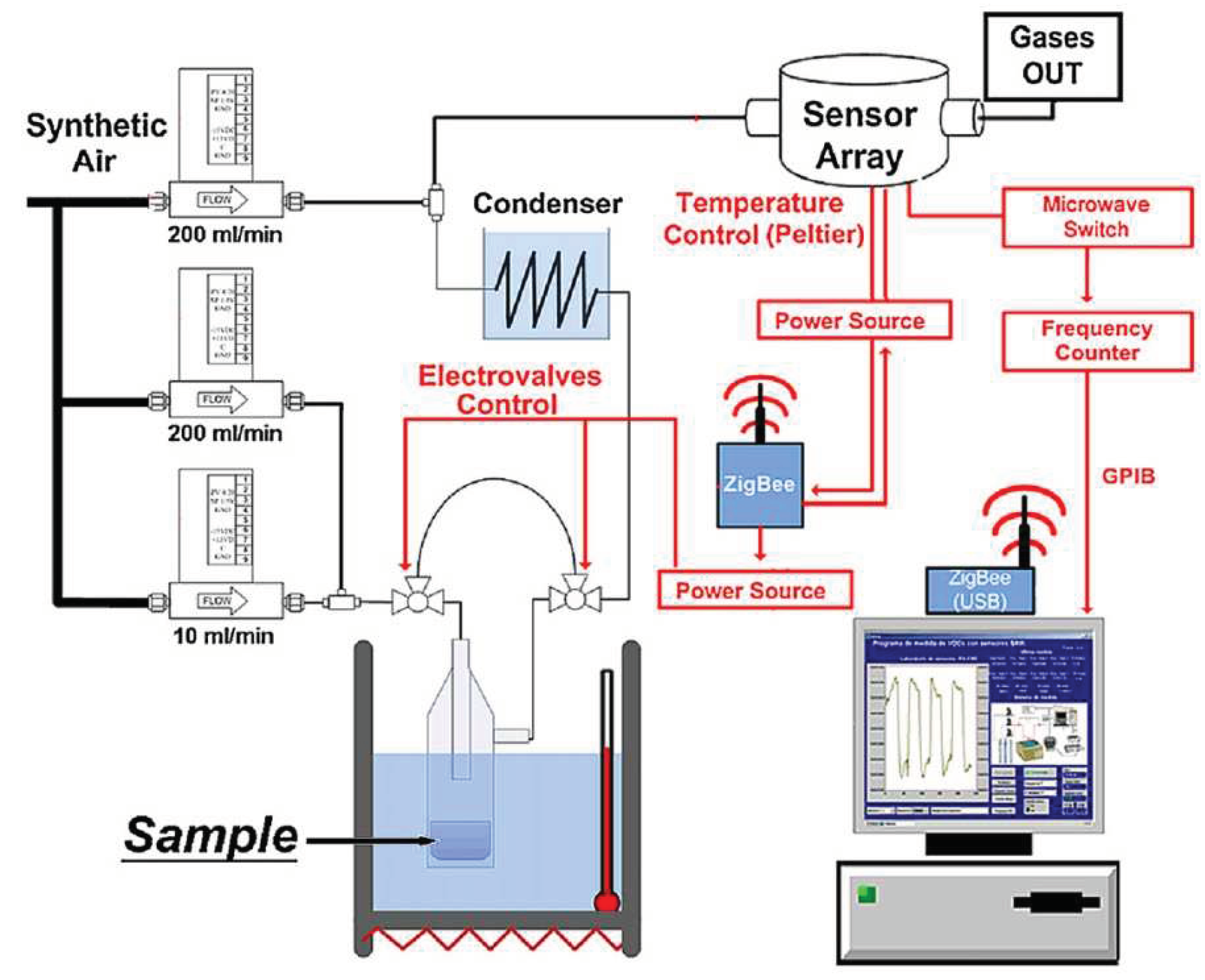
Figure 3.
The structures of sensitive material [40].
Figure 3.
The structures of sensitive material [40].
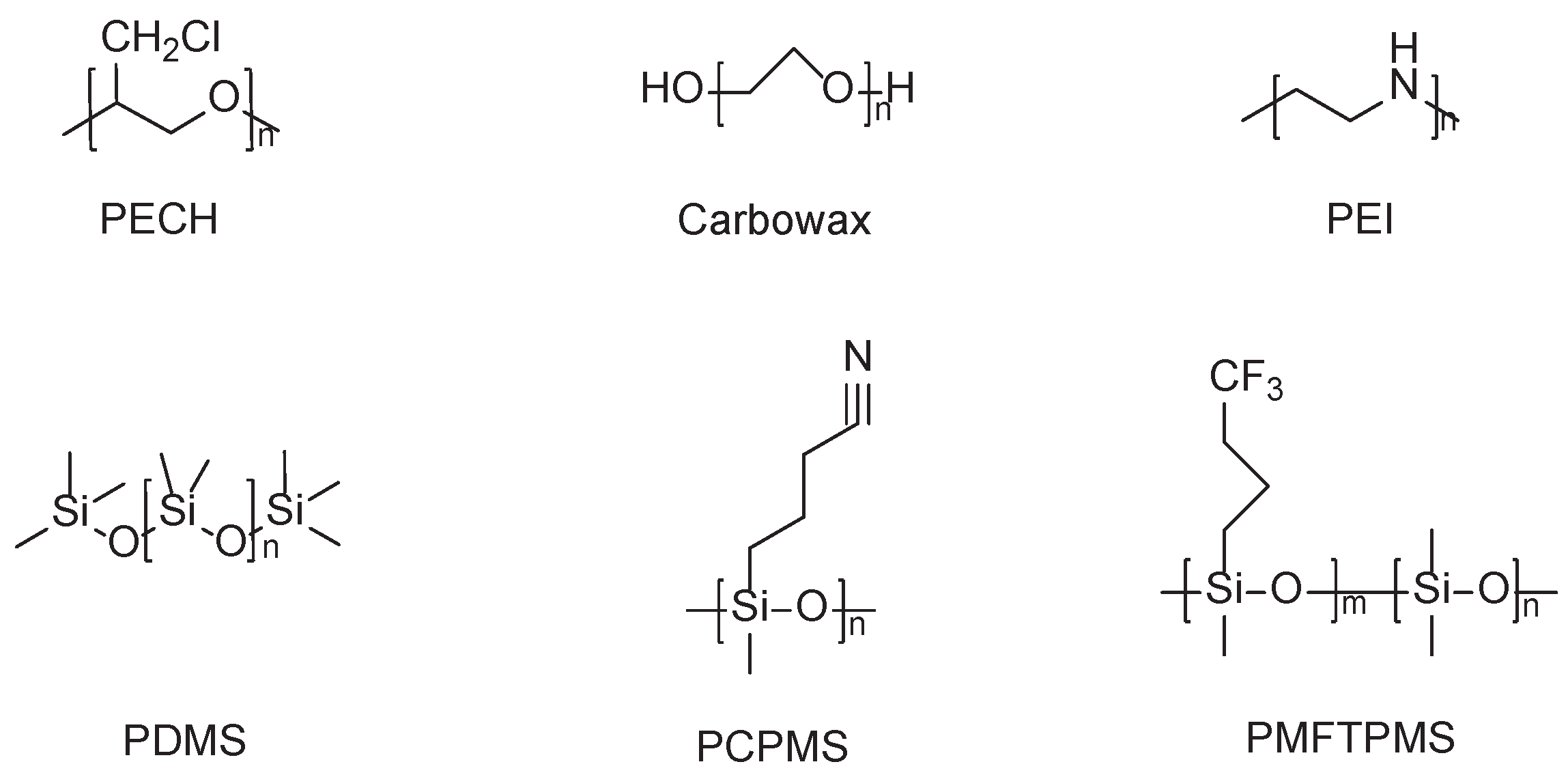
Figure 4.
Hydrogen-bonding interactions between DMMP, sarin, 2-CEES and HBA polymer PLF [47].
Figure 4.
Hydrogen-bonding interactions between DMMP, sarin, 2-CEES and HBA polymer PLF [47].
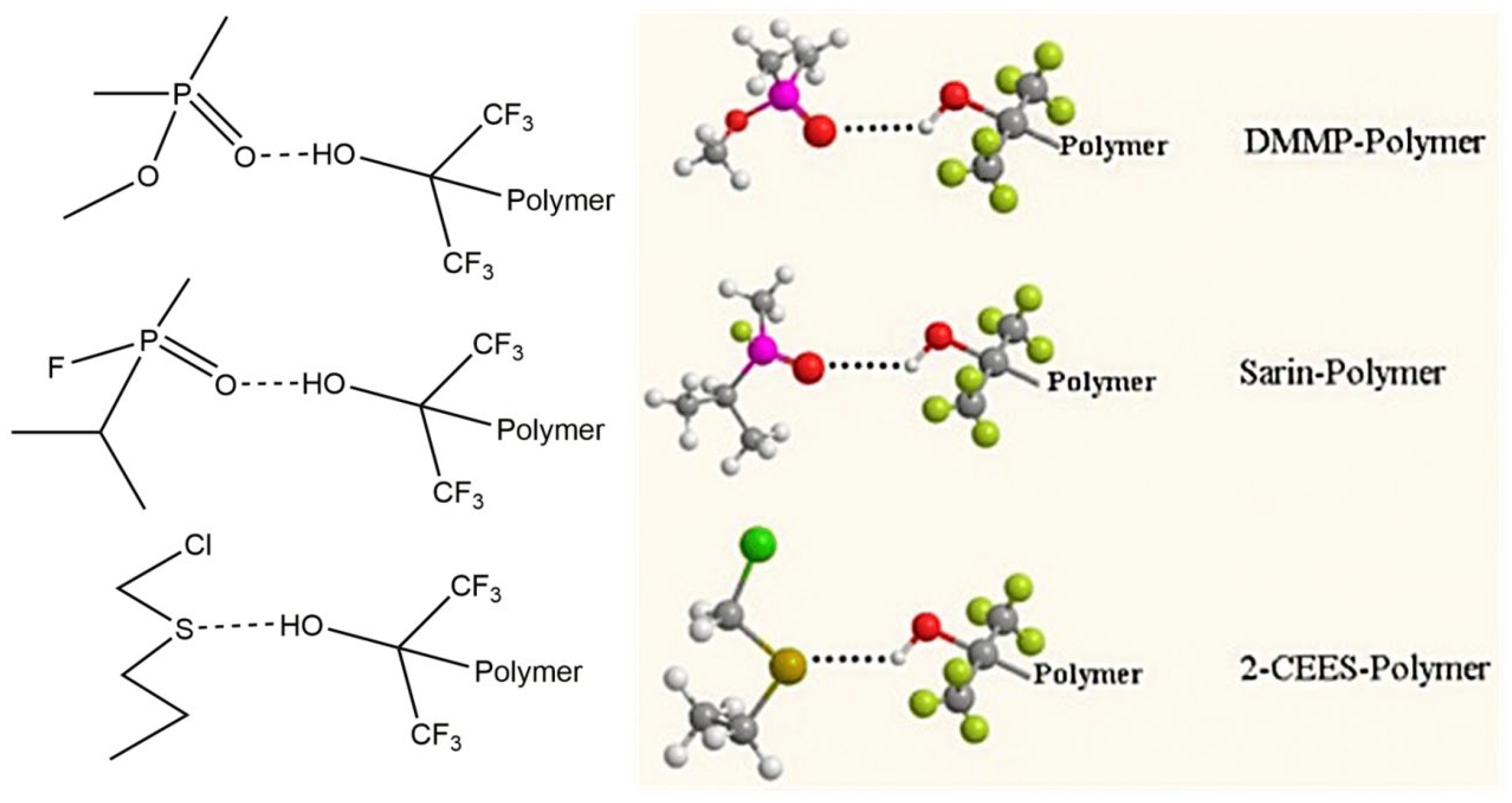
Figure 5.
The structures of pyridinium betaine (1), pyridinium salt (2), pyridine ether (3) [48].
Figure 5.
The structures of pyridinium betaine (1), pyridinium salt (2), pyridine ether (3) [48].
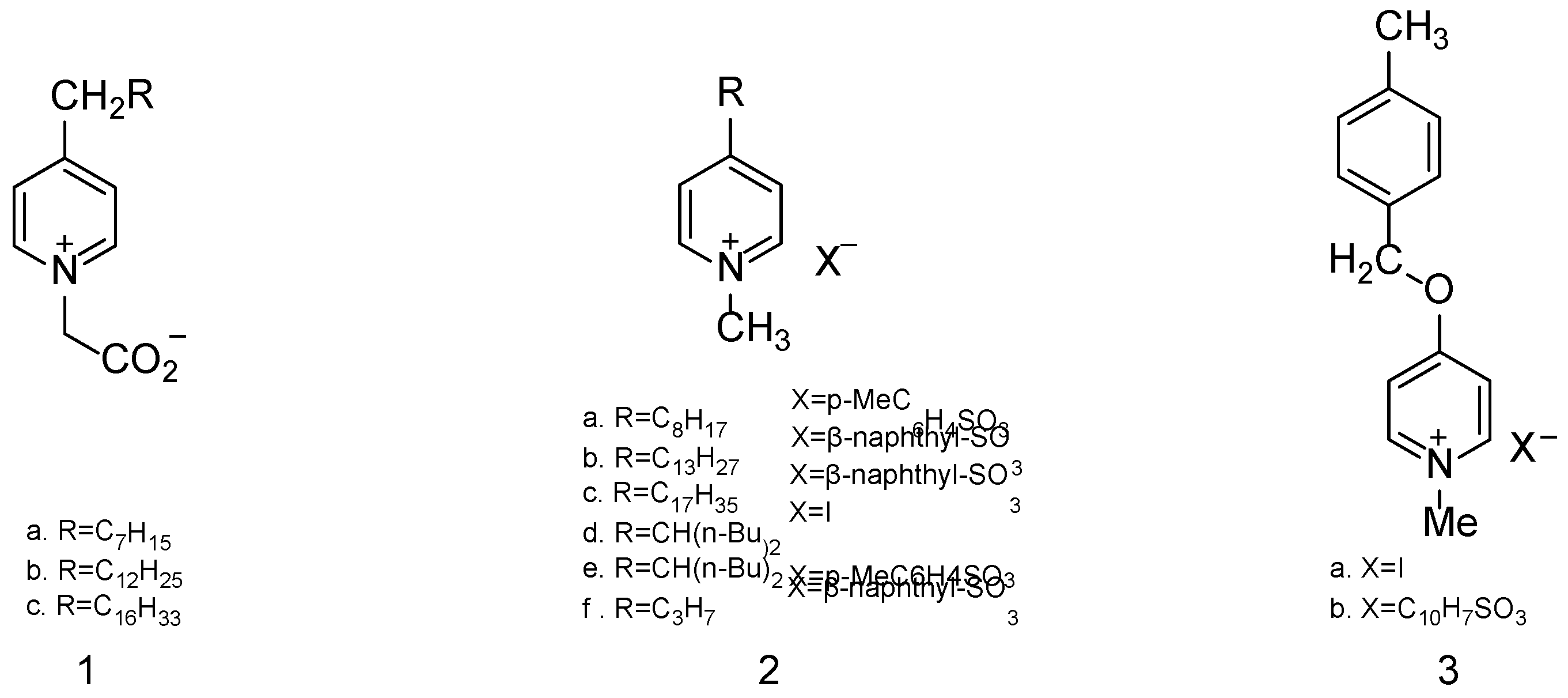
Figure 6.
The structures of acridinium betaine (4) and two quaternary ammonium salts (5, 6) [49].
Figure 6.
The structures of acridinium betaine (4) and two quaternary ammonium salts (5, 6) [49].
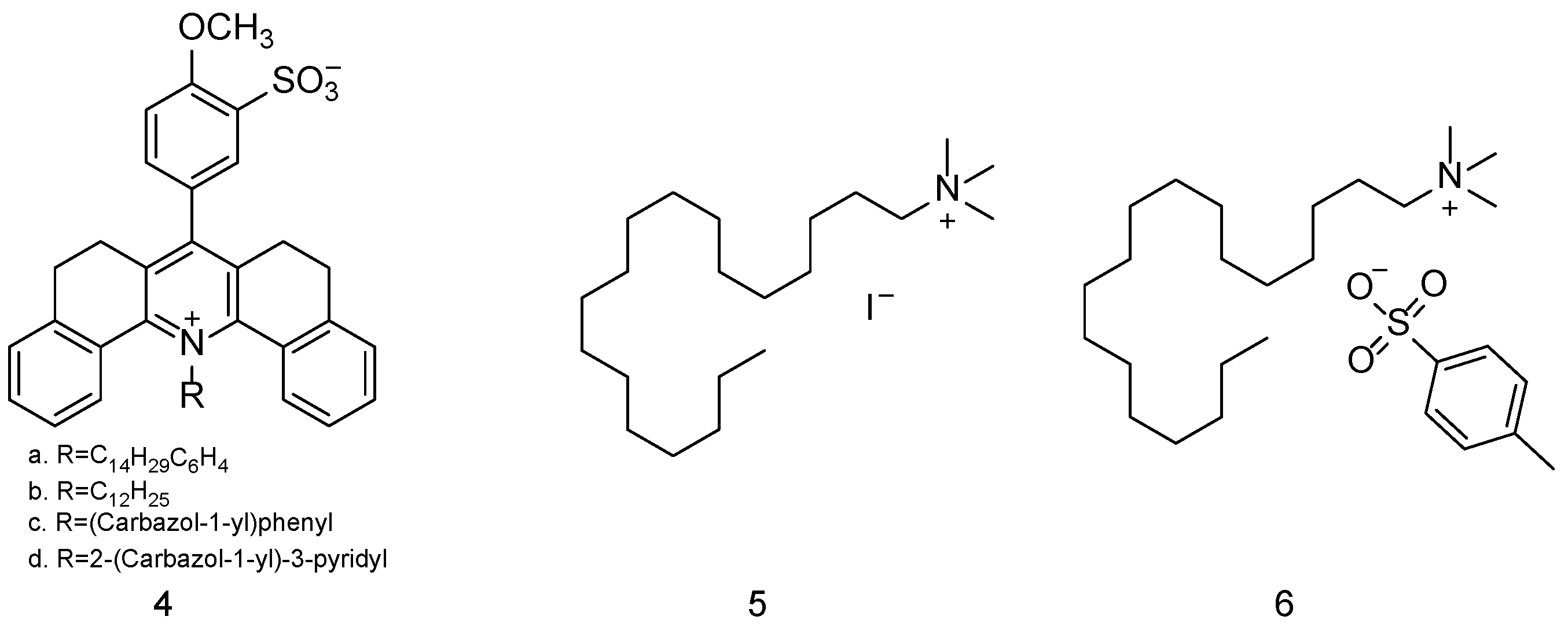
Figure 7.
The structures of phosphoric acid and phosphate ester compounds [26].
Figure 7.
The structures of phosphoric acid and phosphate ester compounds [26].
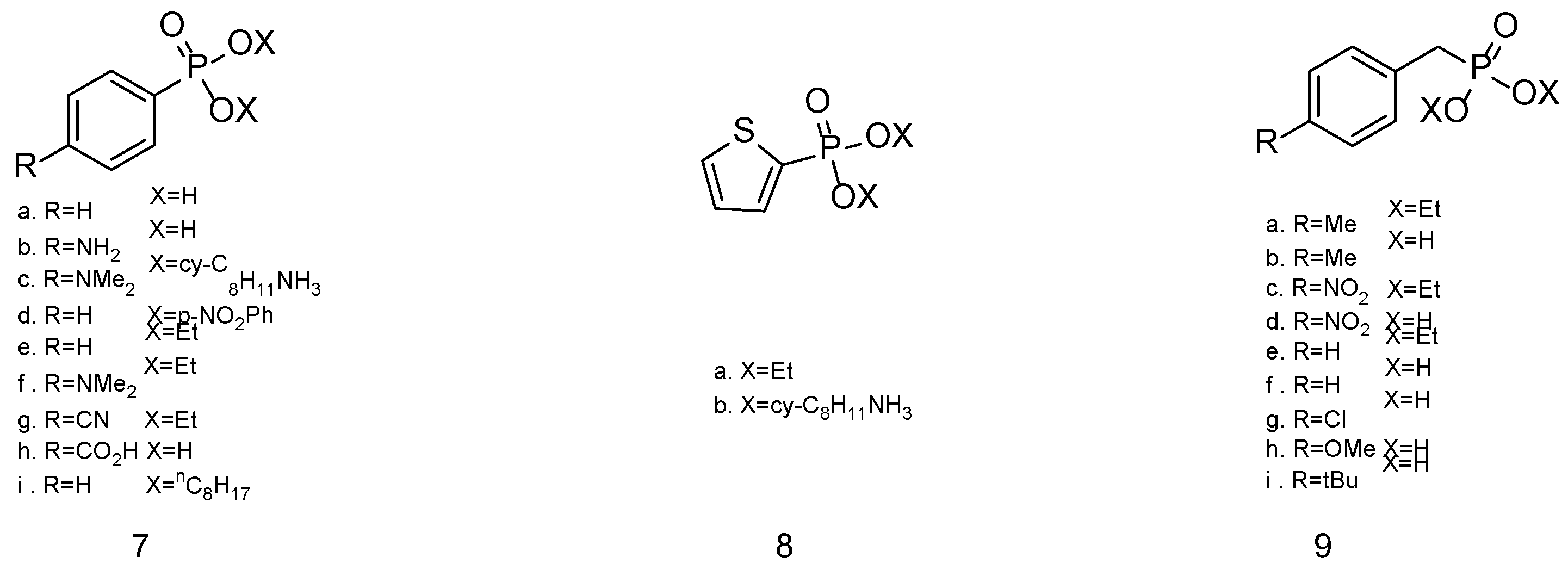
Figure 8.
The structures of 1, 3, 5- triazine compounds [50].
Figure 8.
The structures of 1, 3, 5- triazine compounds [50].

Figure 9.
Three types of “rod- like” polymers [55].
Figure 9.
Three types of “rod- like” polymers [55].
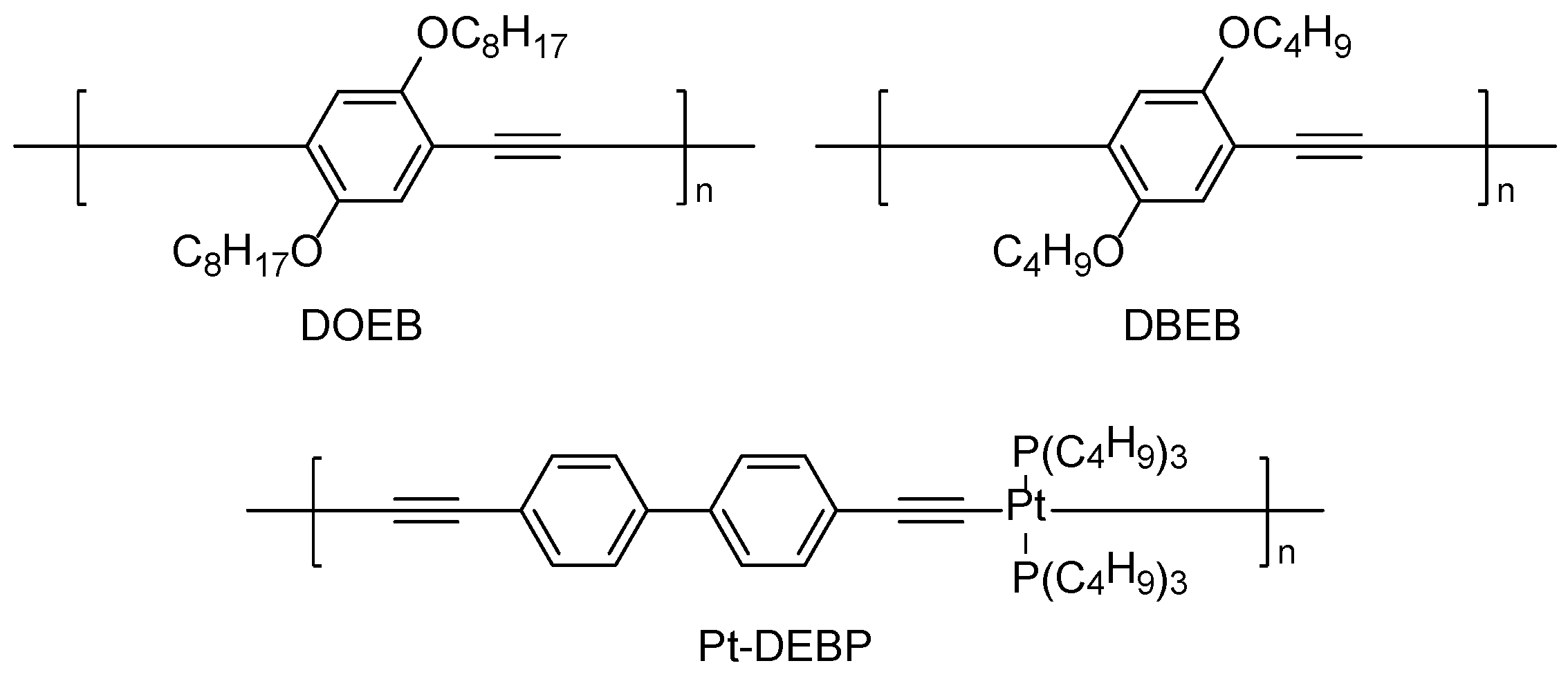
Figure 10.
Synthesis of PUIs [58].
Figure 10.
Synthesis of PUIs [58].
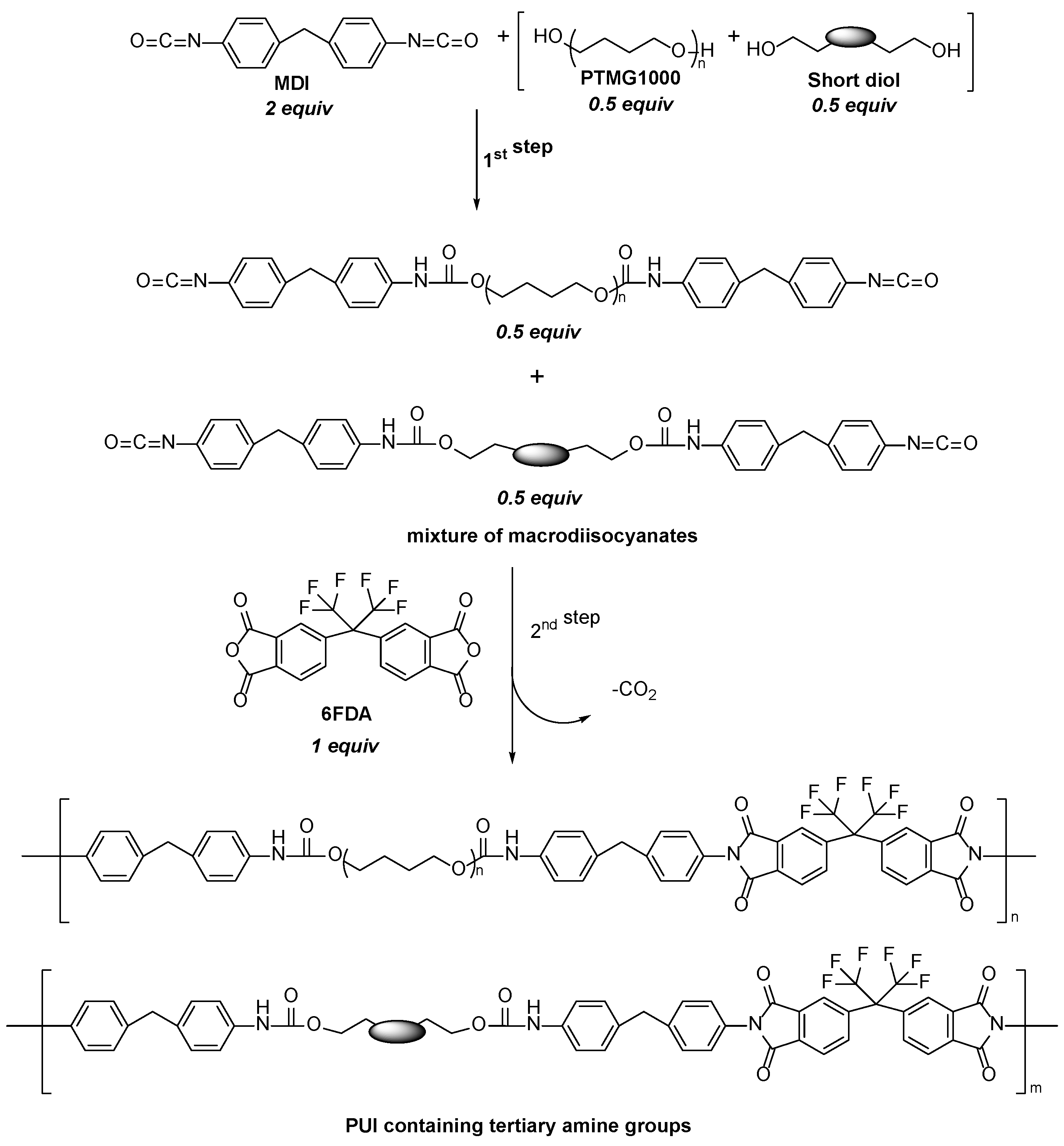
Figure 11.
Response mechanism of network polymer [63].
Figure 11.
Response mechanism of network polymer [63].
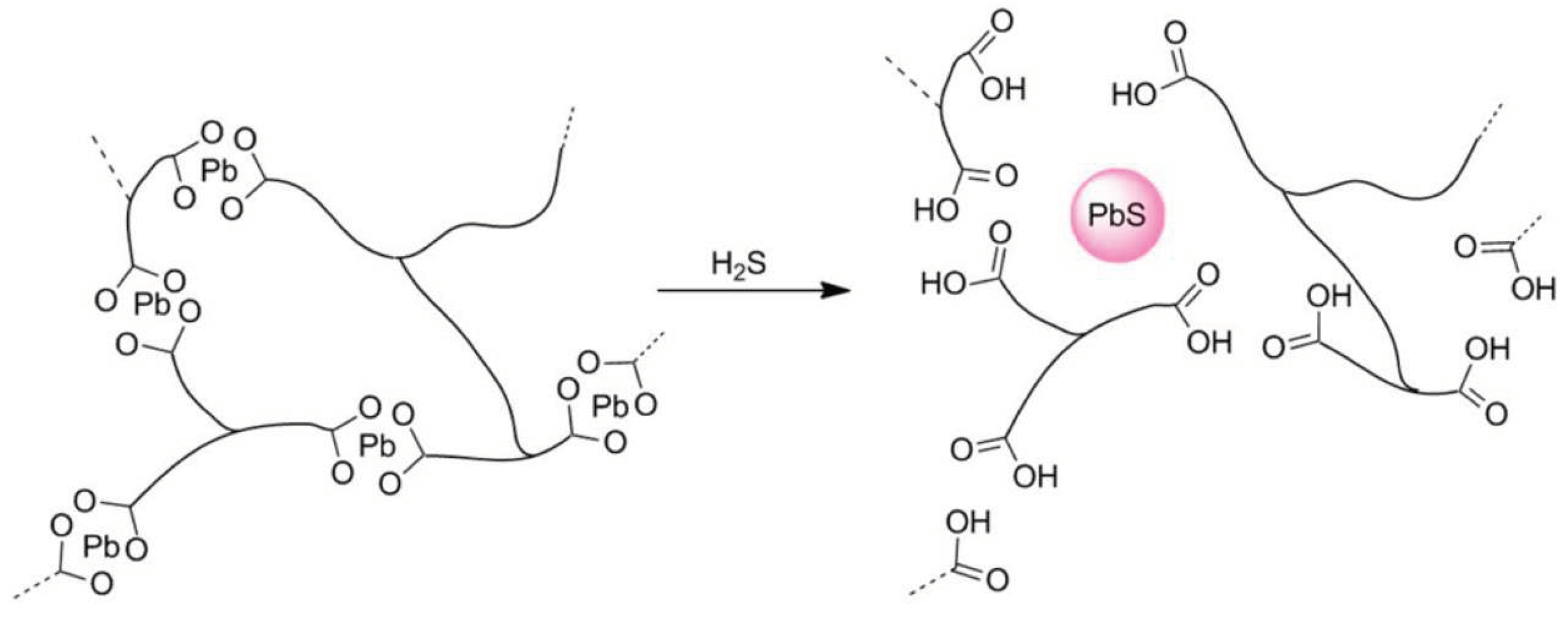

Table 1.
Chemical warfare simulants.
| Simulant | Simulated chemical warfare agent (CWA) | Median lethal dose (LD50) inhaled (ppm) | Ref. |
|---|---|---|---|
| Dimethyl methylphosphonate (DMMP) | Sarin (GB) | 18 | [25] |
| Dipropylene glycol monomethyl ether (DPGME) | Nitrogen mustard (HN) | 180 | [25] |
| Chloroethyl ethyl sulfide (CEES) | Distilled mustard (HD) | 140 | [26] |
| Dibutyl sulfide (DBS) | Distilled mustard (HD) | 140 | [27] |
| Chloroethyl phenyl sulfide (CEPS) | Distilled mustard (HD) | 140 | [27] |
| 1,5-Dichloropentane (DCP) | Distilled mustard (HD) | 140 | [25] |
| Dimethylacetamide (DMA) | Distilled mustard (HD) | 140 | [25] |
| 1,2-Dichloroethane (DCE) | Distilled mustard (HD) Soman (GD) |
140 6 |
[25] [25] |
| Dichloromethane (DCM) | Phosgene (CG) | 800 | [25] |
Table 2.
LESR regression coefficients for PECH.
| Polymer | Abbr. | Method | c | r | s | a | b | l | R | Std error |
|---|---|---|---|---|---|---|---|---|---|---|
| Poly(epichlorohydrin) | PECH | SAW | -0.75 | 0.44 | 1.44 | 1.49 | 1.3 | 0.55 | 0.993 | 0.11 |
Disclaimer/Publisher’s Note: The statements, opinions and data contained in all publications are solely those of the individual author(s) and contributor(s) and not of MDPI and/or the editor(s). MDPI and/or the editor(s) disclaim responsibility for any injury to people or property resulting from any ideas, methods, instructions or products referred to in the content. |
© 2024 by the authors. Licensee MDPI, Basel, Switzerland. This article is an open access article distributed under the terms and conditions of the Creative Commons Attribution (CC BY) license (https://creativecommons.org/licenses/by/4.0/).
Copyright: This open access article is published under a Creative Commons CC BY 4.0 license, which permit the free download, distribution, and reuse, provided that the author and preprint are cited in any reuse.


