
Submitted:
01 January 2024
Posted:
08 January 2024
You are already at the latest version
Abstract
In recent years, the integration of sensors in agriculture has emerged as a pivotal catalyst for transforming conventional farming practices into precision agriculture. Sensor application is impacting the everyday objects that enhance human life. In this special issue, the main objective was to address recent advantages of sensor application in agriculture covering a wide range of topics in this field. This provides overview of diverse application of sensors in agriculture, highlighting their role in enhancing productivity, sustainability, and resource management. sensors are instrumental in monitoring various agriculture parameter such as soil condition, weather, crop health and livestock wellbeing. By collecting real-time data and providing valuable insight, sensors enable precision farming, optimize resource allocation, and minimize environmental impacts. we have to explore the key sensor types used in agriculture, their applications, benefits, and future prospects, emphasizing their crucial roles in the modernization of agriculture and global quest for food security and crop production.
Keywords:
Sensors
; Agriculture
; IOT (Internet of Things)
; Precision Agriculture
; soil sensor
; weather sensor
; sustainability
; productivity
; smart farming
Introduction
Historically, agriculture and horticulture relied on time honoured and regional wisdom, often subject to the vagaries (an unexpected and inexplicable change in a situation) of nature. Today a paradigm shift is underway, driven by advancement in sensor technology, data analytics, and the internet of things (IOT). These technologies have ushered in an era of precision and efficiency, enabling farmers and horticulturist to harness data -driven insight to make informed decisions and optimize every facet of crop production.
In this chapter, we embark on an exploration of sensor -based agriculture and horticulture crop production, delving into the profound impact these technologies have on modern farming practice. Navigating the orchards and vineyards, sensors facilitate the cultivation of luscious fruits and vibrant vegetables. This chapter unearths the significance, applications, and future prospects of sensor-based agriculture and horticulture crop production. Sensor-based agriculture and horticulture crop production are of paramount importance in modern farming practices for several compelling reasons like, precision farming, crop health management, soil moisture, scientific advancement etc. these are indispensable tools of modern farming. They are not only enhancing crop yields and resource efficiency but also play a crucial role in sustainable and environmentally responsible farming practices. as the world faces the challenges of feeding a growing population while conserving natural resource, sensor -based agriculture stands out as a pivotal solution to address this pressing issue.
Technologies are playing an important role in the development of crop and livestock farming and have the potential to be the key drivers of sustainable intensification of agricultural systems. In particular, new sensors are now available with reduced dimensions, reduced costs and increased performance, which can be implemented and integrated in production systems, allowing an increase of data and eventually an increase of information. This is of great importance to support digital transformation, precision agriculture and smart farming, and to eventually allow a revolution in the way food is produced. In order to exploit these results, authoritative studies from the research world are still needed to support development and implementation of new solutions and best practices.
What is a sensor?
A sensor is a device or instrument that is designed to detect and measure physical properties, environmental conditions, or changes in its surroundings and convert this information into data or signals that can be interpreted, displayed, or used for various purposes. Sensors are a fundamental component of many technological systems and are used in a wide range of applications across various industries. They play a crucial role in gathering data for monitoring, control, automation, and analysis in fields such as electronics, robotics, automotive, healthcare, environmental monitoring, agriculture, and more. They make it possible to create an ecosystem for collecting and processing data about a specific environment so it can be monitored, managed and controlled more easily and efficiently. IoT sensors are used in homes, out in the field, in automobiles, on airplanes, in industrial settings and in other environments. Sensors bridge the gap between the physical world and logical world, acting as the eyes and ears for a computing infrastructure that analyses and acts upon the data collected from the sensors.
Sensors in agriculture are based on the requirements of farmers, according to the farming operations that need to be addressed.
Importance of Sensors
The importance of sensors in agriculture cannot be overstand, as they have revolutionized the way farming is practiced. Here are some key reasons why sensors are essential in agriculture
1. Data-Driven Decision Making: Sensors collect data on various environmental factors such as soil moisture, temperature, humidity, and light levels. This data allows farmers and horticulturists to make informed decisions about when and how to plant, irrigate, fertilize, and harvest crop.
2. Precision Agriculture: the basic aim of precision agriculture is to increase the quantity of accurate real-time data that can be deployed by farmers for decision making. Precision agriculture saves time and financial means, and improves crop yield and its quality.
The application of sensors in agricultural machinery, i.e., the use of machine vision, provides numerous information on soil condition, plants, pests, and weeds. The data collected in that manner enable an optimal use of resources.
3. Irrigation Management: Soil moisture sensors, combined with weather data, help farmers optimize irrigation schedules. This prevents overwatering or underwatering, which can lead to water wastage and crop stress.
4. Nutrient Management: Sensors can monitor soil nutrient levels, allowing for precise application of fertilizers. This reduces the risk of nutrient runoff into water bodies and minimizes the cost of excess fertilizer use.
5. Pest and disease management: Pests and diseases (P&D) are one of the primary causes of crop loss and damage globally. It threatens the farmer’s income by increasing the production cost and reducing the quality of the agricultural products but nowadays, the technology is not limited to remote sensing and disease detection but uses Artificial Intelligence (Ai) and Machine Learning. This allows us to identify plant diseases with little work and primarily by automated methods. Moreover, we can use our mobile phone images to determine several plant disease types, their extent, and their abundance.
6. Climate Control: In controlled environment agriculture (CEA) systems like greenhouses and vertical farms, sensors are vital for maintaining optimal conditions. They regulate temperature, humidity, and light to create an ideal growth environment for crops.
7. Resource Efficiency: By using sensors to monitor environmental conditions, farmers and horticulturists can optimize the use of resources like water, energy, and pesticides. This not only saves money but also reduces the environmental footprint of agriculture.
8. Yield Prediction: Data from sensors can be used to predict crop yields with greater accuracy. This information is valuable for planning harvests, storage, and marketing.
9. Risk Mitigation: In the face of climate change and extreme weather events, sensors can help farmers anticipate and respond to weather-related risks. They can adjust their farming practices based on real-time weather data to minimize crop damage.
10. Research and Innovation: Sensor data provides valuable insights for agricultural research. Researchers can use this data to develop new crop varieties, cultivation techniques, and pest management strategies.
11. Environmental Sustainability: By promoting efficient resource use and reducing the environmental impact of farming practices, sensors contribute to more sustainable agriculture. They help minimize soil erosion, reduce greenhouse gas emissions, and conserve natural resources. With the more recent advances in science and technology, especially artificial intelligence (AI) and machine learning, EM has become a smart environment monitoring (SEM) system, because the technology has enabled EM methods to monitor the factors impacting the environment more precisely, with an optimal control of pollution and other undesirable effects.
The design of smart cities is taking the place of old and traditional methods to create and plan urban environments. Smart cities are planned using wireless networks that assist monitoring of vehicular pollution level in the city.
Types of sensors
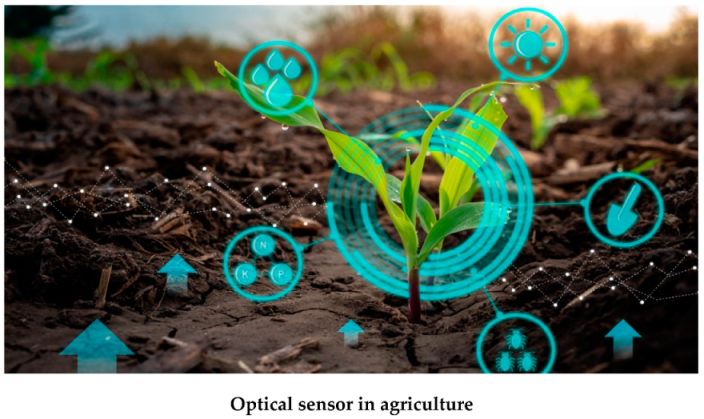
1. Optical sensors in agriculture
The optical sensors began to be studied in 1991 with the development of sensors focused in weed detection at the Oklahoma State University. based on the fact that the soil and plants (weeds) have a different interaction with the light emitted from the sensors, which allows them to identify what is soil and what is a plant.
It uses multiple light frequencies to measure the qualities of the soil. These sensors, which are mounted on cars or drones, enable the collection and processing of information about plant color and soil reflectance. Clay, organic matter, and soil moisture content can all be measured by optical sensors. Here are various types of optical sensors used in agriculture and other fields for a wide range of applications. These sensors rely on different principles and technologies to capture and measure optical information. Here are some common types of optical sensors:
Photodetectors: Photodetectors, such as photodiodes and phototransistors, are basic optical sensors that convert light intensity into an electrical signal. They are often used for simple light detection applications.
Photodiodes: Photodiodes are semiconductor devices that produce a current when exposed to light. They are commonly used in light meters, optical communication systems, and some types of imaging sensors.
Phototransistors: Phototransistors are light-sensitive transistors that amplify the current produced by incident light. They are used in applications like optical switches and encoders.
Photomultiplier Tubes (PMTs): PMTs are highly sensitive detectors that can amplify even low levels of light. They are used in applications such as fluorescence measurement, particle detection, and spectroscopy.
Charge-Coupled Devices (CCDs): CCDs are commonly used in digital cameras and imaging systems. They convert incoming photons into electrical charge that can be read out and processed as an image.
Complementary Metal-Oxide-Semiconductor (CMOS) Sensors: CMOS sensors are similar to CCDs and are used in digital cameras and imaging devices. They have lower power consumption and can be more cost-effective.
Light Emitting Diodes (LEDs): While LEDs are typically used as light sources, they can also serve as sensors when operated in reverse-biased mode. They can be used for proximity sensing and pulse oximetry, for example.
Fiber Optic Sensors: Fiber optic sensors use optical fibers to transmit and receive light signals. They are used for a variety of applications, including temperature sensing, strain measurement, and monitoring of chemical substances.
Spectrophotometers: Spectrophotometers are used to measure the intensity of light at various wavelengths. They are widely used in laboratories for applications such as chemical analysis and colour measurement.
Laser Range Finders: These sensors use lasers to measure the distance to an object by measuring the time it takes for the laser beam to reflect back to the sensor. They are used in surveying, construction, and robotics.
Hyperspectral Imaging Sensors: Hyperspectral sensors capture light across a wide range of wavelengths, allowing for detailed analysis of the spectral characteristics of objects. They are used in agriculture for crop health assessment and mineral exploration, among other applications.
Color Sensors: These sensors are designed to measure and differentiate colors. They find applications in color sorting, quality control, and colorimetry.
Light Detection and Ranging (LiDAR): LiDAR sensors use laser pulses to measure distances and create detailed 3D maps of environments. They are used in applications like autonomous vehicles, forestry, and archaeology.
2. Electrochemical Sensors for Soil Nutrient Detection
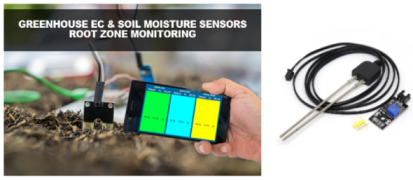
In agriculture, soil macro and micronutrients, soil organic matter, pH level, soil water potential, pesticides, pathogens and temperature, are the important parameters to analysis the quality of soils. Quantifying the nitrogen, phosphorus, and potassium macronutrients inputs in agriculture farming soils can realize a high-quality growth of plants and high crop yields.
Data about soil chemistry is helpfully gathered. Information sensors for nutrient detection in soil are electrochemical sensors. A soil testing lab receives soil samples. An ion-selective electrode is used to perform specific measurements, most notably the calculation of pH. These electrodes detect the presence of certain ions like hydrogen, potassium, or nitrate.
In addition to soil moisture sensing, other soil properties can be measured to populate the soil map such as the organic matter present in the soil, acidity (pH), percentage of sand, clay and silt particles and nutrients such as Ca, Mg, P, OM, base saturation Mg, base saturation K, base saturation Ca, CEC, K/Mg, and Ca/Mg ratios.
Other soil characteristics, such as the amount of organic matter, the pH, the percentage of sand, clay, and silt particles, and nutrients like Mg, P, OM, Ca, base saturation Mg, base saturation K, base saturation Ca, CEC, K/Mg, and Ca/Mg ratios can also be measured in addition to soil moisture sensing to fill out the soil map.
3 Mechanical Soil Sensors For Agriculture
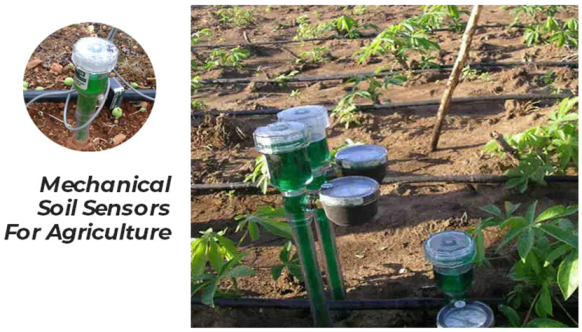
These sensors use a mechanism that cuts through the soil and documents the force measured by pressure scales or load cells. When a sensor cuts through the soil, it records the holding forces resulting from the cutting, breaking, and displacing of soil. Soil mechanical resistance measured in a unit of pressure and represents the ratio of the force required to enter the soil medium to the frontal area of the tool engaged with the soil.
Mechanical soil sensors come in various designs and types, such as TDR (Time Domain Reflectometry), capacitance-based sensors, and tensiometers, each with its own advantages and limitations. The choice of sensor depends on factors such as the crop type, soil type, and specific requirements of the application.
4. Dielectric Soil Moisture Sensors
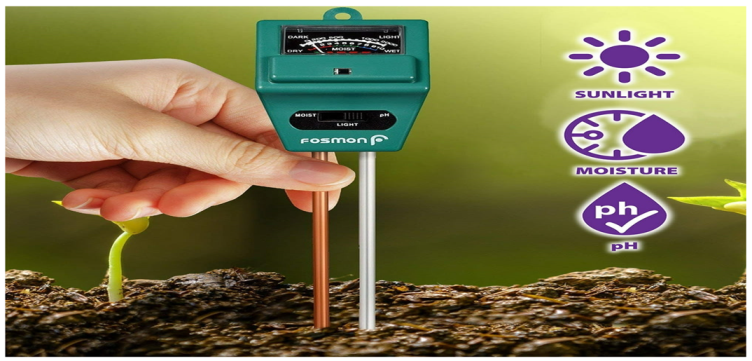
These sensors employ a device that pierces the ground to record the force determined by pressure scales or load cells. When a sensor penetrates the soil, it measures the holding forces brought on by the soil’s cutting, breaking, and displacement. The ratio of the force needed to enter the soil medium to the frontal area of the tool engaged with the soil is known as soil mechanical resistance, and it is expressed in units of pressure.
Mechanical soil sensors can be capacitance-based, TDR (Time Domain Reflectometry), tensiometers, or other varieties, each with specific benefits and drawbacks. The type of crop, the type of soil, and the particular requirements of the application all play a role in the sensor selection.
5. Location Sensors In Agriculture:
The range, distance, and height of any point within the required area are all determined by these sensors. They rely on GPS satellites to help them with this.
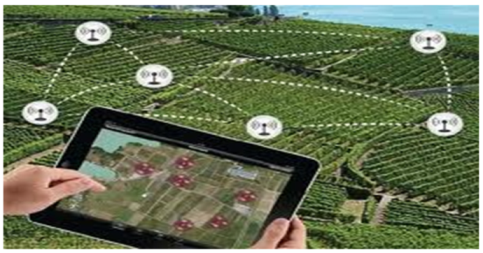
6. Electronic Sensors
It is mounted on tractors and other outdoor machinery to inspect equipment performance. The information was then instantaneously transmitted to computers or sent via email to others using cellular and satellite connection networks. The information can then be retrieved by the field executive using their office computer or mobile device.
Drone and UAV Sensors Drones equipped with various sensors, including cameras and multispectral sensors, provide a bird’s-eye view of fields. They are used for crop scouting, pest and disease detection, and generating field maps.
7. Sensors for Airflow
Its measurements can made at particular locations while on the go. The pressure required to force a predetermined amount of air into the ground at a predetermined depth is the desired output. diverse identification signatures are produced by diverse soil qualities, such as compaction, structure, soil type, and moisture content.
8. Agriculture Sensors IOT
At regular intervals, this sensor measures and records data on the air temperature, soil temperature at various depths, rainfall, leaf wetness, chlorophyll, wind speed, dew point temperature, wind direction, relative humidity, sun radiation, and atmospheric pressure.
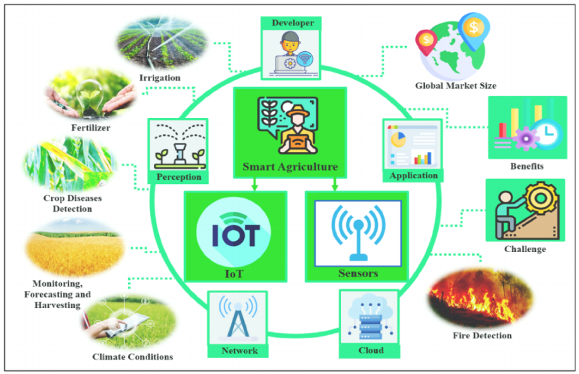
Smart agriculture, the most important field for innovation in modern agriculture, is now possible because to the Internet of Things. In order to improve resource efficiency and boost crop yields, real-time monitoring and management of farming activities is made possible by the integration of sensors, IoT, and data analytics technology. The most significant IoT applications in smart agriculture are examined in this section, with a focus on. Irrigation monitoring system smart irrigation based on IoT is a cutting-edge technology that automates and improves irrigation systems by harnessing the power of the IoT. This system reduces waste and conserves water resources while ensuring that gardens, lawns, and crops receive the proper quantity of water. Sensors, controls, and cloud-based software are used in smart irrigation systems to gather real-time data on plant water needs, weather, and soil moisture. Using this knowledge, irrigation plans, water flow rates, and other variables are modified to ensure that plants receive enough water when required.
Fertilizer administration Administrations of fertilizers based in the realm of smart agriculture, IoT is a crucial application that makes use of IoT technology to maximize the usage of fertilizers. With the help of this application, farmers will be able to get up-to-the-minute information on the state of their soil and its nutrient content, which they can use to modify how much and what kind of fertilizer they apply to their crops. Analysing data received from sensors and other sources, farmers may learn about the effectiveness of their pest management strategies and make adjustments to their operations. By evaluating the data produced by IoT and sensors using ML and other data analytics technologies, farmers may identify patterns and trends in crop health and choose efficient pest management strategies. Monitoring, forecasting and harvesting Yield monitoring, quality monitoring, processing monitoring, logistics monitoring, forecasting and harvesting are crucial aspects of smart farming that are increasingly using IoT technology to their advantage. In the field, IoT and sensors may be used to gather information on a variety of elements that influence agricultural yields, including temperature, humidity, soil moisture, and plant development patterns.
Case studie: 1
A Study on Smart Agriculture Using Various Sensors and Agrobot
Shraban Kumar Apat, Jyotirmaya Mishra, K. Srujan Raju, and Neelamadhab Padhy (April 2022)
Substantive innovations have been made throughout human history to increase agricultural yield with less effort and resources. During all time, the high population rates never match demand and supply. It looked at the differences in WSNs and their potential to promote different improvements in agricultural applications. It optionally examines the suitability of WSNs for increased efficiency and profitability for most applications in agriculture and agriculture. It covers system design, node design, and agricultural communication technology standards. Nodes can be found in real wireless devices and various sensors such as soil, air, pH, and plants. It provided a comprehensive overview of sophisticated farm WSN applications. It contains details regarding the WSN system, node architectures, related components, and a unique application classification. It lists all of the wireless equipment nodes that are present, as well as the various methods for communicating with the sensors.
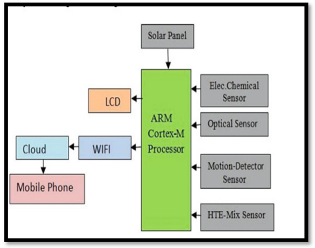
The AI sensors play an important part in data sensing and provide data to ARM controllers with overall agricultural performance. Wireless sensors with high accuracy are used for the early checking and detection of unwanted seeds. Our paper’s AI sensor in smart agriculture better understands agricultural improvements, increased productivity, and more precision and general efficiency. AI is the most serious difficulty as the model has to reproduce the parameters found in the data. To solve problems in agriculture, parametric calculations in AI can be very useful. In our work, different IoT sensors have been used to detect and respond to certain physical entertainment by using this type of optical, electrochemical, and moisture sensor this study confirmed the potential effectiveness of integrating AI algorithms into a decision-making system that implements precision farming while improving yields of crops, agriculture in tomorrow’s future. This must be developed into complete technologies with artificial intelligence, deep knowledge, and massive data systems, integrating the end system into one unit for seeding to be handled in the production forecast utilizing current technology like robotics to usher in a new era. Agrobot can be introduced by planting the soil seeds to increase average crop production considering the related criteria such as atmospheric conditions, humidity, and temperature. Based on the environment of this specific area, humidity may be regulated. This smart agricultural IoT deployment can increase crop quality. This can be humiliated by expanding the frame into the end definition via SMS, which explicitly encourages farmers to use their flexible GSM package instead of the transportable device. This process can be modified over time and manual power reduction.
Substantive innovations have been made throughout human history to increase agri-cultural yield with less effort and resources. Nonetheless, during all these times, thehigh population rates never match demand and supply. The forecast figures suggest hat the world’s population will reach around 9.8 billion people in 2050, roughly25 percent higher than the current figure.Substantive innovations have been made throughout human history to increase agri-cultural yield with less effort and resources. Nonetheless, during all these times, thehigh population rates never match demand and supply.
The Result concluded of these case study, Agrobot helps to demonstrate the temperature changes and track plant growth in sensor-based smart agriculture. Sensed data is stored in the cloud, their output analysis is performed, and mobile data is delivered to farmers, the change in temperature influences plant and manufacturing productivity. We have collected the dataset from the different sensors and applied classifier rules to the dataset. There are 295 instances used and having eight attributes.
Case Study: 2
Agriculture Soil Testing Using Wireless Sensor Network.
Shravan Kumar (November 2017)
Automated soil testing is a device which can be used to measure moisture, humidity, temperature and pH values to ensure the fertility of soil in the field of agriculture to select the suitable crop and also the type of fertilizer to be used.
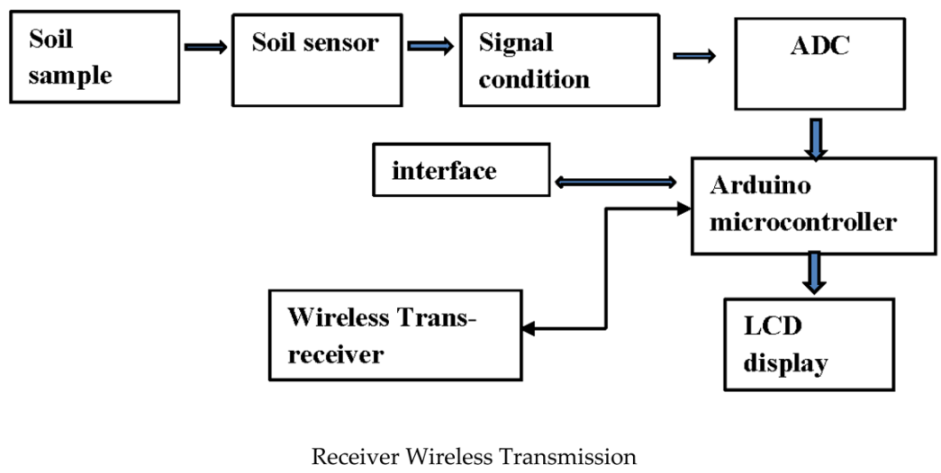
The main objective of their work is to develop a testing system which can be used for soil analysis, which intern helps the formers to cultivate and produce the proper crop. The wireless communication system has been in cooperated to interact with the experts. These are some sensors which is namely Index Terms- Arduino Uno, DHT11 sensor, Max232, soil moisture sensor, Zigbee LM35 are used in aspects of agriculture and horticulture. Agriculture soil sample are sensed by various sensor and the output of sensor is processed by signal conditioning circuit. The microcontroller is used to transmit the sensed data over a wireless channel and sensed values displayed on LCD and transmits the data to a remote location.
The device or setup used in Automated Agriculture soil testing is a small and portable, which can be used either in labs or on the identified spot on the field selected for yielding the crops
This automated testing of soil can be studied by the following setup as shown Transmitter.
Receiver Wireless Transmission
WORKING PRINCIPLE
Whenever farmer wants to analyze the soil fertility, he leads to take the soil sample of about150 gm and 60 ml of water should be added to the soil sample and allow the sample to settle down the sensor will be placed in the sample. Here copper electrodes are used as sensor which measure the ionic particles present in the soil and converts it into electrical signal. the electrical signal is amplified using signal conditioning and this amplified signal is send to microcontroller in the form of digital signal from ADC the microcontroller place a key role in processing data received from sensor, where it compare the data already pre-stored with the sensor output signal. The microcontroller after comparison gives the output and the values are displayed on the LCD display. The output not only provides the information on fertility present in the soil but also suggest crops to be grown on that soil.
“Case Study on Agriculture Soil Testing Using Wireless Sensor Networks” has been developed for soil testing of agricultural farm. The moisture content, humidity, temperature and pH values vary from one type of soil to others. the parameters of the soil are compared with pre-stored values received from agricultural department. the system also provides the information about the crops that can be grown in respective soils. Wireless communication system has been incorporated for interacting with the experts.
Benefits of the sensors
Sensors in agriculture bring a myriad of benefits to the advancement of cellular communication industries, battery technology, sensor diversity, and data-management software, a new brand of “smart farming” is revolutionizing the industry.
- Monitor mechanical and agricultural assets
- Leverage data to improve crop yields
- Improve sustainable resource management and environmental footprint
- Track and contain disease/blight outbreaks
- Reduce operating costs and per-unit costs
- Decrease human exposure to pesticides and agrichemicals
- Make more informed decisions during unforeseen events
- Strengthen the supply chain by allowing true producer-to-consumer marketplaces
- And much more.
Challenges

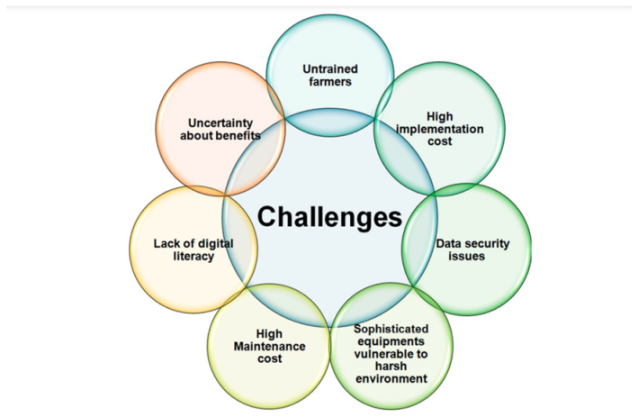
- Sensors based technology has been implemented in multiple small scale agricultural fields. However, deployment of the same on a large-scale level is still pending. One of the major challenges is the financial cost that will be imposed during the deployment and installation of the IoT-tagged sensors and accessories in a large area of agricultural land.
- Deployment of IoT-coupled smart sensors and accessories in rural farm areas, where the farmers are less familiar to advanced technologies could be more challenging
- Data privacy and security is addition problem that can negatively impact the implementation of IoT and smart systems on a large scale. issues related to data security of IoT are among the major factors that are responsible for slow adoption of technologies for smart farming.
- Lack of proper knowledge and literacy regarding the scopes, mode of action, and implementation of IoT-based technology in faming can result in underutilization of the smart system in agriculture
The Future of Agricultural Sensors
Although there is still a long way to go before sensors are commonplace in agriculture across the globe, the clear benefits of their use have led to the rising acceptance of this relatively new technology amongst farmers and suggest that they will play an important role in the future of sustainable agriculture. This is supported by predictions that the global agricultural sensor market will grow from a value of $1.55 billion in 2021 to $3.79 billion by 2028. However, although sensors have the potential to revolutionize agriculture, their reliance on a wireless connection may limit their potential to influence the industry in developing countries, as will the high cost of their purchase and the fact that many farmers in these areas are unaware of the benefits they can provide. Despite this, farmers in developing regions are increasingly commercializing and adopting sensors. This trend is expected to continue if public and private sector funding for precision agriculture is increased. As the technology behind sensors is improved, the scalability and practicality of using these devices will increase, as will their importance to the agricultural industry.
Conclusion
Looking forward, the future of sensor applications in agriculture is promising. The convergence of sensors with artificial intelligence, the Internet of Things (IoT), and data analytics is ushering in an era of precision agriculture. This holds the potential to further boost productivity, minimize resource wastage, and reduce the environmental footprint of farming. The synergy between technology and agriculture will continue to evolve, redefining the way we nourish the world’s growing population.
In conclusion, sensors have become the unsung heroes of modern agriculture. They are catalysts for change, facilitating smarter, more efficient, and more sustainable farming practices. The road ahead is exciting, marked by innovation, adaptability, and the ever-present commitment of the agricultural community to meet the challenges of today and tomorrow.
References
- Abbasi, A.Z.; Islam, N.; Shaikh, Z.A. A Review of Wireless Sensors and Networks’ Applications in Agriculture. Computer Standards & Interfaces 2014, 36, 263–270. [Google Scholar] [CrossRef]
- Alves, R.G.; Maia, R.F.; Lima, F. Development of a Digital Twin for Smart Farming: Irrigation Management System for Water Saving. Journal of Cleaner Production 2023, 388, 135920. [Google Scholar] [CrossRef]
- Ayaz, M.; Ammad-Uddin, M.; Sharif, Z.; Mansour, A.; Aggoune, E.-H.M. Internet-of-Things (IoT)-Based Smart Agriculture: Toward Making the Fields Talk. IEEE Access 2019, 7, 129551–129583. [Google Scholar] [CrossRef]
- Bhuiyan, M.A.B.; et al. BananaSqueezeNet: A Very Fast, Lightweight Convolutional Neural Network for the Diagnosis of Three Prominent Banana Leaf Diseases. Smart Agric. Technol. 2023. [Google Scholar] [CrossRef]
- Bogue, R. Sensors Key to Advances in Precision Agriculture. Sensor Review 2017, 1–6. [Google Scholar] [CrossRef]
- Chen, H.; Chen, L.J.; Albright, T.P. Predicting the Potential Distribution of Invasive Exotic Species Using GIS and Information-Theoretic Approaches: A Case of Ragweed (Ambrosia artemisiifolia L.) Distribution in China. Chinese Science Bulletin 2007, 52, 1223–1230. [Google Scholar] [CrossRef]
- Jain, R.K. Experimental Performance of Smart IoT-Enabled Drip Irrigation System Using and Controlled Through Web-Based Applications. Smart Agricultural Technology 2023, 4, 100215. [Google Scholar] [CrossRef]
- Jamil, M.S.; Jamil, M.A.; Mazhar, A.; Ikram, A.; Ahmed, A.; Munawar, U. Smart Environment Monitoring System by Employing Wireless Sensor Networks on Vehicles for Pollution-Free Smart Cities. Procedia Eng. 2015, 107, 480–484. [Google Scholar] [CrossRef]
- Lin, J.; Wang, M.; Zhang, M.; Zhang, Y.; Chen, L. Int. Conf. on Computer and Computing Technologies in Agriculture, 2007, p. 1349.
- Lin, N.; Wang, X.; Zhang, Y.; Hu, X.; Ruan, J. Fertigation Management for Sustainable Precision Agriculture Based on Internet of Things. Journal of CleanerProduction 2020, 277, 124119. [Google Scholar] [CrossRef]
- Ayaz, M.; Ammad-Uddin, Z.; Sharif, A.; Mansour, E.; Aggoune, H.M. Internet-ofThings (IoT)-based smart agriculture: toward making the fields talk. IEEE Access 2019, 7, 129551–129583. [Google Scholar] [CrossRef]
- Nayagam, M.G.; Vijayalakshmi, B.; Somasundaram, K.; Mukunthan, M.A.; Yogaraja, C.A.; Partheeban, P. Control of Pests and Diseases in Plants Using IoT Technology. Measurement: Sensors 2023, 26, 100713. [Google Scholar] [CrossRef]
- Neethirajan, S. The Role of Sensors, Big Data, and Machine Learning in Modern Animal Farming. Sensing and Bio-Sensing Research 2020, 29, 100367. [Google Scholar] [CrossRef]
- Neshenko, N.; Bou-Harb, E.; Crichigno, J.; Kaddoum, G.; Ghani, N. Demystifying IoT Security: An Exhaustive Survey on IoT Vulnerabilities and a First Empirical Look at Internet-Scale IoT Exploitations. IEEE Communications Surveys & Tutorials 2019, 21, 2702–2733. [Google Scholar] [CrossRef]
- Ouhami, M.; Hafiane, A.; Es-Saady, Y.; El Hajji, M.; Canals, R. Computer Vision, IoT, and Data Fusion for Crop Disease Detection Using Machine Learning: A Survey and Ongoing Research. Remote Sensing 2021, 13, 2486. [Google Scholar] [CrossRef]
- Rehman, A.; Saba, T.; Kashif, M.; Fati, S.M.; Bahaj, S.A.; Chaudhry, H. A Revisit of Internet of Things Technologies for Monitoring and Control Strategies in Smart Agriculture 2020.
- Weil, R.R.; Islam, K.R.; Stine, M.A.; Gruver, J.B.; Samson-Liebig, S.E. Am. J. Altern. Agric. 2003, 1.
Disclaimer/Publisher’s Note: The statements, opinions and data contained in all publications are solely those of the individual author(s) and contributor(s) and not of MDPI and/or the editor(s). MDPI and/or the editor(s) disclaim responsibility for any injury to people or property resulting from any ideas, methods, instructions or products referred to in the content. |
© 2024 by the authors. Licensee MDPI, Basel, Switzerland. This article is an open access article distributed under the terms and conditions of the Creative Commons Attribution (CC BY) license (http://creativecommons.org/licenses/by/4.0/).
Copyright: This open access article is published under a Creative Commons CC BY 4.0 license, which permit the free download, distribution, and reuse, provided that the author and preprint are cited in any reuse.