

Submitted:
29 December 2023
Posted:
02 January 2024
You are already at the latest version
Abstract
Climate change is one of the widely acknowledged challenges faced by international communities in the 21st century. It poses challenges to fundamental elements of our understanding of appropriate goals for socioeconomic policies, such as the connection of prosperity, growth, equity and sustainable development. Human activities-induced climatic changes have been widely perceived as threatening criteria for the long-term resilience of societies and communities throughout the world. The United Nations Intergovernmental Panel on Climate Change (UNIPCC) reported that greenhouse gas (GHG) emissions due to human activities, such as the burning of fossil fuels for energy generation, is changing the climate of Earth. Despite contributing less towards the causes, poor citizens of developing countries bear a lot of its impacts. In particular, women and girls face a major impact and finally, they migrate due to the social gender division and scarcity of food. Studies on gender and climate change-induced migration are scarce. This study provides an overview of the induced impact of climate change on the livelihood, health and migration of women and girls. The aim of this study would significantly advance our understanding of the current inter-linkages between migration, displacement patterns and climate change impacts.
Keywords:
Migration
; Women and girls
; Gender equality
; Human activities
; Climate change
; Greenhouse gases (GHGs)
1. Introduction
Stressed-out resource systems as well as uncertainties associated with socio-economic factors lead to migration and forcible displacements. It has been used as an adaptation strategy in numerous marginal and disadvantaged communities for a long time. This has frequently been connected to weather and water-related events. Currently, more than 60% of total forced displacements have been related to factors associated with climate and water. Studies have predicted that by 2050, a billion people will be compelled to migrate, either out of need or lack of other options. The ability to effectively manage migration at different levels such as local, national, regional and global, is severely constrained by a significant lack of quantitative knowledge and understanding of the direct as well as indirect determinants of migration connected to water and climate.
At the global level, data on migration due to water and climate factors is limited. The data relating to gender disaggregation is often missing from migration assessment, although migration adds to the burden and uncertainties in terms of conventional gender-based roles and duties. Therefore, one of the main research and development problems is expanding the outreach and participation of various stakeholders in the assessment of how water and climate influence migration, as well as gender-sensitive water management systems and adaptation planning associated with global climate change.
Such challenges like gender equality, proper water and sanitation requirements, inclusive policies and effective institutions for timely implementations are on the priority list of the United Nations on Sustainable Development Goals (SDGs). Researchers highlight the use of nanotechnology for a sustainable solution to obtain water, food and energy (Bhardwaj et al., 2023; Tokas et al., 2023). They also discussed the SDGs in their study. This study aimed to provide an overview of the induced impact of climate change on the livelihood, health and migration of women and girls.
2. Factors Affecting the Migration of Women and Girls
Several factors influence the migration of people directly or indirectly. Factors related to water and climate change have been observed to differ from region to region due to differences in the use of water and land and environmental conditions. Figure 1 shows some of the factors and consequences of climate change directly or indirectly impacting women and girls’ populations.
2.1. Climate Change
The origins and outcomes of climate change are intricately linked to pervasive global inequalities. Climate change functions as an amplifier of pre-existing vulnerabilities in a world that has already been undergoing warming and transformation. The impacts of climate change amplify pre-existing gender vulnerabilities that are associated with cultural, religious, geographic, traditional and socio-economic factors and practices. In rural areas, women are mostly dependent on natural resources, such as firewood, water, and farming. These resources become scarce due to environmental degradation and climate change. In many southern hemisphere countries, girls and women travel long distances to get the water. This daily practice reduces their output in terms of female income-generating activities or education while increasing the workload on them.
As per the study of CIDA (2002) & Hunter and David (2009) climate change adversely impacts the vulnerable and poor sections of the population, especially women. Rising sea levels and escalating global temperatures caused by climate change not only have a direct impact on girls and women but also amplify their vulnerability when combined with socio-cultural factors (Harper, 2011). According to Masika's (2002) assertion, disparities in gender relations and resource access can heighten women's susceptibility to the effects of climate change in comparison to men.
Demetriades and Esplen (2010) described that individuals depend on their sources of income, pursuing education, health factors and accessibility to natural resources. As compared to men, girls and women are less educated, have no income, and have lesser direct accessibility to natural resources and hence they would be disproportionately affected due to climatic changes. The population of the countries situated in the southern hemisphere is most affected by climate change, despite contributing least to the climate change problems. Climate change has been reported to affect agricultural production and natural resources like water.
Climate change could exacerbate conflict-driven migration, particularly in areas where climate-related changes contribute to disputes over natural resources, such as in Darfur. Climate shocks, like droughts in regions of Sahel or floods in the areas of Volta, Okavango, as well as Niger deltas, are likely to increase temporary and short-distance distress migration. However, the number of affected individuals might be lower provided anticipatory migration takes place in response to heightened climatic vulnerability.
Vulnerability associated with climate change is not solely determined by the climate stressors themselves, but also by underlying inequalities in resource access and poverty. Consequently, individuals in different social positions make divergent choices regarding mobility. For instance, the potential for natural disasters to trigger migration varies greatly. While migration of labours often intensifies as a response to climate-related hazards, patterns of migration driven by distress are influenced by factors such as asset ownership, social networks, as well as available assistance. It is also important to recognize that migration prompted by variability in climate is generally internal and of short duration, with limited connection to conflict risks.
The effects of climate change have manifested in various ways, influencing human settlements by adversely impacting the health of humans, compromising food security, as well as diminishing the sustainability of economic activities reliant on natural resources. (Bhardwaj, 2023). In 2010 and 2011, the United Nations Framework Convention on Climate Change (UNFCCC) incorporated displacement, migration, as well as planned relocation caused due to climate changes into its agenda (Chindarkar, 2012).
2.2. Gender Specificities
The population migration due to climate change is not gender-neutral. Due to the low levels of education, girls and women have no access to decision-making in their communities and households. They do not have access to information related to disasters. Moreover, in some instances, disaster management systems may not actively include women and girls. Several other systems like early warning systems (EWS) and emergency systems for disasters are usually designed by men and are used by them. These are the gender specificities that eventually lead to increased vulnerability and marginalization of women. For example, the messages for EWS are sent by the government to the senior most male person of the house who is also the only representative member of the entire family.
In such practices, it is presumed that the male head of the household would deliver the messages to other family members. This highlights an example of gender inequality that has been carried forward since ancient times. Lau et al., (2019) stated that gender-unaware approaches have a likelihood of perpetuating and compounding gender inequality. All these factors restrict females from knowing and preparing for disaster management.
Migration is also a more challenging task for females because they have usually household responsibilities including taking care of their children and dependent elderly relatives. It is more difficult for them to choose to leave and organize their departure. As a result, they face major gender-based pressure during migration. Due to gender inequalities, the injustice is exacerbated for girls and women because their participation is minimized in decision-making, education, etc. As a result, they uptake options of migration.
The condition of females in developing countries is worse due to the social gender division and scarcity of food. In many villages girls and women are considered responsible for collecting water for household purposes and this responsibility might also increase the domestic workload/burden on females.
The current discourse on climate change often overlooks the substantial impact it has on gender-specific adaptation strategies and actions. Women's vulnerability to changes in climatic conditions is commonly influenced by economic disadvantages, limited resource access, dependency on male members of the family and a lack of decision-making power. Gendered social exclusion further compounds the vulnerability of girls and women to climate change. A striking example of this disparity is the disproportionate number of women, outnumbering men by a 14 to 1 ratio, who lose their lives in natural disasters (Aguilar et al., 2007).
Cultural and behavioural restrictions, such as restrictive dress codes, may impede women's mobility during floods, leading to fatal consequences. Moreover, in many societies, essential survival skills like climbing trees and swimming are predominantly taught to males. This further exacerbates the gender gap in disaster resilience. Women's socially defined roles and duties, such as water and fuel collection, often result in a greater direct reliance on natural resources, thus rendering them disproportionately prone to the impacts of climate change.
2.3. Gender-Based Violence
Although girls and women have access to relief resources such as food, water and shelter, they don't get the specific requirements like sexual, sanitation and reproductive health needs. They are more likely to endure gender-based violence such as forced marriage, sexual violence, exposure to trafficking, etc. Due to these violent cases, their emotional, mental and physical health also deteriorates. Their social support networks may be lost and due to heavy caregiving burdens, anxiety levels, post-traumatic stress and other illnesses also occur.
2.4. Challenges of Livelihood Security
In developing countries, individuals living in poverty rely mainly on climate-sensitive sectors like agriculture, fishing and forestry for their sustenance. Consequently, they have been observed to be more exposed to the adverse effects of climate change compared to those residing in developed countries. Moreover, populations in developing countries generally operate close to the threshold of its tolerance when it comes to changing patterns. The impacts of heightened climate variability and extreme weather events are disproportionately observed among underdeveloped or developing nations, exacerbating the challenges to livelihood security faced by the most vulnerable communities worldwide.
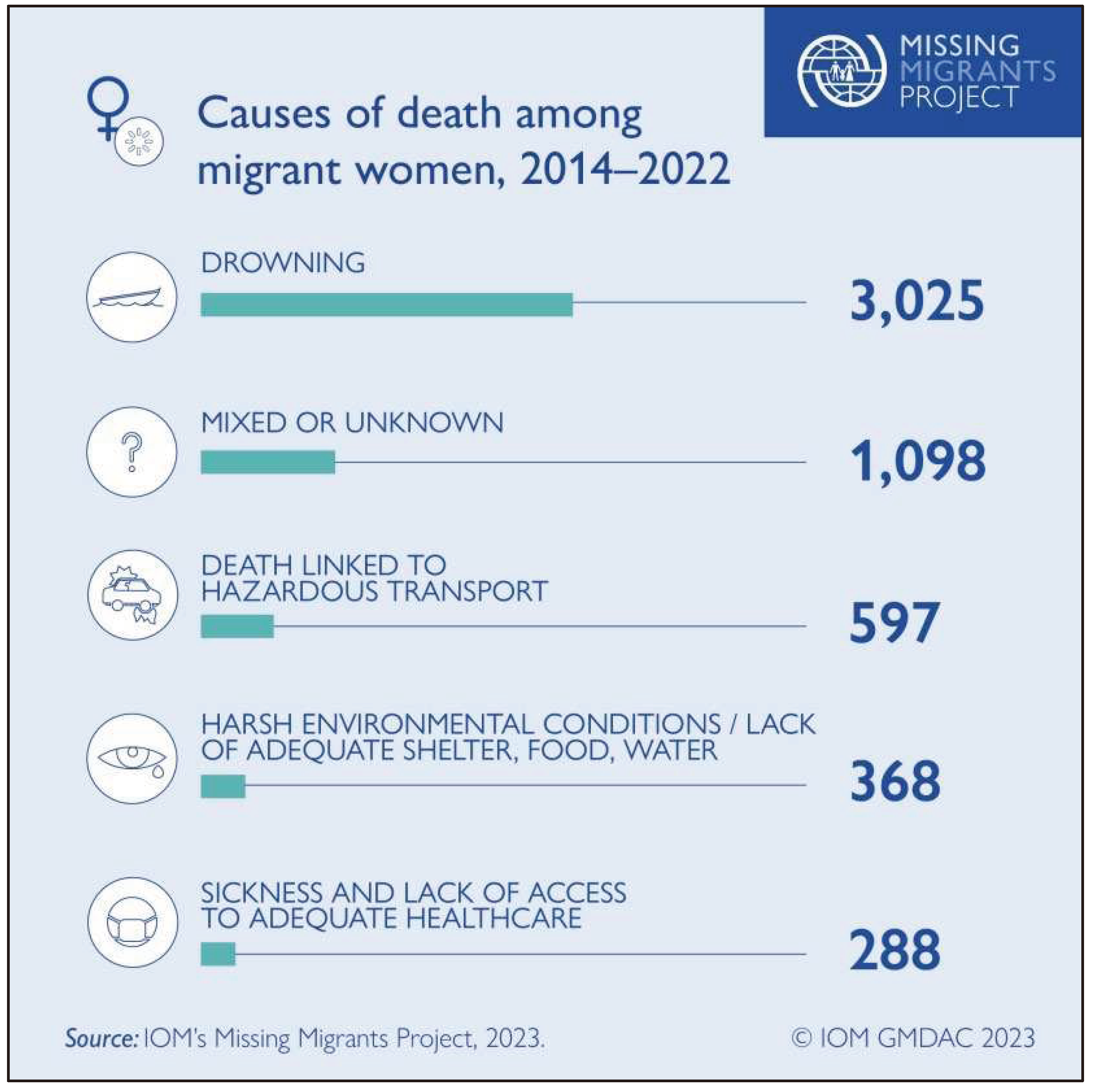
Women in rural parts, who prominently rely on agriculture and natural resources for their livelihoods, are increasingly vulnerable to gradual impacts caused because of climate change. Consequently, they might be compelled to migrate into urban areas, particularly settlements of an informal nature, where they face heightened exposure to conflicts, crimes, violence and inadequate social support structures. Figure 2 shows the previous data on causes of death amongst migrant females (IOM UN Migration, 2023).
2.5. Lack of Capabilities and Opportunities
According to a report by the United Nations Population Fund (Engelman, 2009), migration necessitates economic and physical resources that are not accessible to all individuals. In situations of environmental crises, such as climate change, women, children, as well as elderly individuals are often left behind, lacking the necessary capabilities, opportunities and security. Some migration flows are driven because of economic opportunities and might also be influenced by climatic changes, such as decreased availability of seasonal work in the regions of Eastern Sudan or Central Ghana, alongside expanding employment prospects in the agriculture sector outside of Africa. Coastal and lower-lying regions would face vulnerability due to rising sea levels and increased flood hazards. Coupled with urban overcrowding, this could lead to secondary migration risks.
2.6. Other Factors
Additionally, factors like inadequate nutrition patterns as well as weak healthcare infrastructure have been observed to contribute to more human losses in developing countries as a consequence of climate change. Women face heightened vulnerability and challenges as compared to men during natural disasters due to factors such as lack of assets, proper shelter, availability of resources, as well as accessibility to information. Concerns about losing their family, children, as well as household assets often discourage women from seeking refuge in safe shelters during disasters. Additionally, women might not receive information regarding warnings that are primarily transmitted to males in public spaces.
This disparity was evident in the aftermath of the 1991 cyclones and floods in Bangladesh, where the death rate among women aged between 20-24 years was 71 per 1000, compared to 15 per 1000 amongst men (Aguilar et al., 2007). Research indicates that these gender-based differences in death rates attributed to natural calamities are directly connected to the economic as well as social rights of women (Neumayer and Plumper, 2007).
In general terms, the primary climate change trends that impact migration are anticipated to involve rising temperatures and decreased rainfall. These changes give rise to water scarcity, droughts and shorter growing periods in drylands of tropical as well as subtropical regions, such as the Sahel. Additionally, the rise in sea level, more frequent storms and tropical cyclones and flooding pose challenges to low-lying coastal areas. Conversely, increasing temperatures extend the growing season in temperate regions like northern Europe and Siberia.
3. Girls and Women Can Play the Lead Role in the Change
Several NGOs are working with communities in nearly 100 countries. As per their studies, girls and women may play the lead role in the change. They can develop innovative ideas and successfully implement such ideas in their society. They can accelerate household and community-level resilience building. Similar to indigenous peoples, females are not only mere victims of climate change but also possess agency as a powerful scope of change and play active roles in managing the common pool as well as household resources. Their involvement is crucial because of their triple roles present in productive, reproductive, as well as community management activities. It is essential to prioritize the utilization of female leadership skills as well as their experiences in the revitalization of communities and natural resources management when designing and implementing adaptations related to climate change and risk-reduction strategies.
4. The Impact of Migration Due to Water and Climate Change
The impact of migration due to water and climate change on different groups of genders may vary. Moreover, within the framework of the water and climate crisis, social turmoil and political instability have a direct impact on gender disparities in migration environments. The analysis of the interconnectedness between water, climate, migration and conflict often fails to adequately address or acknowledge the significance of gender-related factors.
In response to climatic change impacts, internal as well as cross-border movements are more probable as compared to international migrations with long-distance; this has been observed to be associated with economic losses due to climatic change and might hinder people's ability to invest in overseas relocation, compelling them to seek opportunities locally. During the droughts periods of the 1970s as well as the 1980s in the Sahel, for instance, international labor migration occurred due to resource limitations (Mearns, 2008).
The magnitude of climate change effects is likely to be more significant in areas that have the drivers of migration coinciding with higher vulnerability due to climatic changes and limited adaptive capacity. For instance, regions like the Sahel as well as the highlands of Ethiopia are expected to face growing pressure for migration. Assessing the potential impact caused because of climate change on the mobility of humans poses significant challenges. The conventional approach to linking climatic changes with migration involves identifying climate-affected areas, estimating the population residing in those regions and using this information to predict future migration patterns.
However, this method is insufficient as migration is influenced by multiple factors and isolating the specific effects of variability in climate is complex. Moreover, secondary impacts play a role in shaping migration patterns. For instance, coping strategies adopted in response to climate challenges, such as withdrawing children from school or reducing food consumption, may undermine the long-term livelihoods of vulnerable individuals. This, in turn, may further incentivize labor migration.
5. Strategies for the Prevention of Migration
Social policies that promote gender inclusion and civic engagement, along with unrestricted access to information and justice, have demonstrated improvements in environmental outcomes. Preliminary evidence also indicates a similar correlation between mortality rates from extreme weather events and the implementation of such policies (Foa, 2009). Further advancement of approaches for the planned relocation of populations facing insecure livelihoods as well as settlements is imperative. Although the immediate need for population relocation may be limited, it is crucial to develop a best-practice strategy to address the most challenging scenarios in the future, such as those faced by small islands, developing states, as well as urban coastal regions.
To mitigate the need for extensive emigration, current strategies could involve safeguarding coastal infrastructure and implementing restrictions on construction in vulnerable coastal areas. Additionally, it is essential to establish regional agreements in preparation for post-disaster recovery, ensuring prompt and effective response mechanisms are in place when the need arises. The inherent injustice of a world where those least responsible for causing climate change to suffer the most from its consequences highlights the urgent need to prioritize equality and social justice in climate policies and initiatives.
Human mobility has been considered as a complex social phenomenon, making it challenging to identify as well as isolate specific causal factors. When examining the connections between climate change and migration, the task becomes even more intricate. While climate change might influence migration decisions, it is usually not the primary cause, except in cases where migration has long been employed as an adaptation strategy to cope with climate variability.
It is important to understand the various roles of women and men and how these roles influence vulnerability caused due to climate change as well as climate-related migration. There is also an urgent need to scale up gender-trans formative adaptations related to climate change. Such measures have to be beyond mere gender sensitivity and guide towards supporting more gender equality and building more resilient communities.
Unfortunately, females have not been provided with equal opportunities to participate in the process of decision-making concerning climate adaptations and mitigation policies, both at the national as well as international levels. Gender considerations have been notably absent from discussions within the United Nations Framework Convention on Climate Change (UNFCCC). The current policy discourse neglects to address the practical requirements as well as strategic needs of females.
6. Migration Patterns in Developing World
Another approach involves examining existing patterns of migration and analyzing how the demographic trends as well as climate changes together might influence the drivers of such particular migrations. By integrating projected demographic as well as climate trends with existing patterns of migration, it is possible to anticipate a range of impacts.
6.1. Due to Climate Change
Anticipated alterations in migration patterns across the developing world are expected due to climate change. The connection between environmental changes as well as migration is complex, with limited evidence supporting direct causation. Vulnerability serves as a concept for describing the relative risk individuals, households and communities face when confronted with adverse environmental changes. It encompasses the capacity to anticipate, mitigate, resist, as well as recover from disasters.
We argue that understanding the vulnerability of individuals and communities in developing countries regarding sustaining their livelihoods amid climate change and variability is best achieved through a scalar approach. This approach takes into account everyday concerns such as livelihoods as well as marginalized social statuses that can contribute to ineffective practices of land management, resource pressure and heightened dependence on resources driven by demand.
Being vulnerable to climate change does not automatically imply being a prospective climate migrant. The presence of recurring ecological hazards affects how individuals integrate such risks into their means of sustaining their livelihoods (McLeman and Smit, 2006). Those residing in marginalized regions have devised a wide range of strategies to enhance their capacity for dealing with gradual climate shifts and severe climatic incidents.
Communities facing persistent environmental hazards often employ risk mitigation measures through diversifying their livelihoods. Rural livelihoods typically involve a combinatorial form of three main strategies, i.e., agropastoral-associated activities, diversification of income sources, as well as migration (de Hann et al., 2002). Labor migration plays a crucial role in rural livelihoods as migrant wages serve as investment capitals that would be used for the production of rural commodities, while migration experiences facilitate the exchange of new social practices and ideas within rural areas.
When confronted with severe stressors like drought, the significance of diverse sources of income and adaptive coping strategies becomes evident (Eriksen et al., 2005). The level of vulnerability largely depends on individuals' capacity to specialize effectively. International migration serves as a significant household strategy for reducing risks since remittances have been proven to substantially decrease vulnerability during post-disaster recovery (Suleri and Savage, 2006). Migration is just one among several survival strategies that are pursued by such families, either concurrently or consecutively along with other coping mechanisms (McLeman and Smit, 2006).
6.2. Due to Water Management
At a global scale, there is a scarcity of quantitative data that examines the interconnections between water and migration, with existing data often being incomplete or lacking in disaggregation. Additionally, studies focusing on migration assessments frequently overlook the importance of gender-disaggregated data. As a result, there is a need to enhance collaboration and involvement among diverse stakeholders to address the assessment of water- as well as climate-related migration and promote gender-sensitive approaches to water management and adaptation planning associated with climate change.
These challenges are prominent in the United Nations' efforts to achieve the Sustainable Development Goals (SDGs), particularly SDG 5 associated with gender equality, SDG 6 associated with water and sanitation, and SDG 16 associated with inclusive policies and institutions. Advancing research as well as development in these areas remains crucial in addressing these challenges.
6.2.1. Accelerating the Implementation of Water-Related SDGs
Reaching the target of SDG 6 by 2030 is anticipated to mark a significant milestone in the effective management of water and sanitation, serving as a fundamental basis for achieving various water-related SDGs. However, numerous countries face challenges in meeting SDG 6, as there is a lack of comprehensive evidence and relevant data that can inform policy-making and decision-making processes related to SDG 6. Addressing this data gap remains crucial in advancing progress toward SDG 6 and its associated water-related goals.
Given this context, it is crucial to enhance and align the supportive framework for SDG 6, to effectively implement policies that contribute to its success. Reliable evidence plays a key role in enabling countries to adopt a systematic approach towards achieving SDG 6. Making informed policy decisions within the context of SDG 6 can be complex, requiring collaboration among organizations across different sectors to assess and integrate evidence related to targets and indicators. Therefore, countries must assess their strengths, weaknesses, data gaps, and opportunities to strive towards attaining SDG 6 by 2030.
6.2.2. Promoting Unconventional Water Resources and Technologies for Water Scare Areas
Water scarcity represents a crucial hurdle to achieving sustainable development and can potentially lead to social unrest and conflicts among nations. Moreover, it has a profound influence on well-established migration routes and causes a shift in migration patterns. The undeniable reality is that conventional methods of water provision, which heavily rely on snowfall, rainfall, river runoff, and easily accessible groundwater, are inadequate to meet the escalating demand for freshwater in arid and semi-arid regions.
Water-scarce nations must undergo a fundamental re-evaluation of their approaches to water resource planning and management. This entails exploring innovative ways to utilize unconventional water sources for agriculture, food production, livelihoods, ecosystems, climate change adaptation and sustainable development and conservation. Unconventional water resources refer to secondary water sources that require specific treatment and on-farm management before being utilized for irrigation or are obtained through specialized techniques for water collection and access. Certain global initiatives focused on unconventional water resources have contributed to raising awareness and expanding our understanding of these alternative water sources.
6.2.3. Increasing Resilience to Water-Related Risks and Operationalizing Water Security
Climate change has significant repercussions on the availability, quantity and quality of water resources, posing a threat to sustainable and secure livelihoods. The impacts of climate change, including storms, floods, and droughts, have severe consequences for ecosystems, human societies and economies. In 2019, the world witnessed nearly 325 water-related disasters, leading to approximately 8,500 fatalities and economic losses exceeding USD 100 billion. Floods accounted for a significant portion of these casualties and losses. Among the existing resources for risk reduction, the implementation of flood early warning systems and drought early warning systems is of utmost importance in mitigating adverse impacts. However, the successful operation of such systems requires substantial financial investments and extensive human effort. It is crucial to enhance their effectiveness significantly to ensure they serve as effective tools for disaster risk reduction.
6.2.4. Data and Technology for Strategic Water Planning and Management
The utilization of emerging technologies and applications such as big data, Artificial Intelligence (AI), Internet of Things (IoT), cloud computing, blockchain and others is steadily increasing across various sectors of development. In the fields of water management, engineering, policymaking and research, these technologies hold great potential for numerous water-related applications. They can contribute to optimizing water systems planning, identifying ecosystem changes using remote sensing as well as geographical information systems, predicting and detecting natural as well as human-induced disasters, managing irrigation schedules, mitigating environmental pollution and studying the impacts of climate change, among other areas.
These technologies are now gaining importance in water management systems for:
- (a) Historical Flood Mapping and Prediction of Future Flood Risk Tool
This tool comprises two modules aimed at addressing the data gap and improving flood risk management. The first module focuses on flood mapping, providing historical flood maps to fill the existing data void. The second module focuses on predicting future flood risks, enabling better-informed decision-making and supporting preparedness and contingency planning. Utilizing AI models, the tool predicts the likelihood of future flood risks in specific areas. These AI models are trained using historical flood maps and various open temporal datasets that include temperature, land usage/cover, infrastructure, population, precipitation, as well as socioeconomic data disaggregated by sex and age. By leveraging this module, it becomes possible to identify areas that are most susceptible to future flood risks.
- (b) Surface Water Change Detection Tool
The tools to detect surface water change utilize the vast collection of Landsat and Sentinel 2 data stored in archives of Google-Earth Engine, along with Google's powerful cloud processing capabilities, to rapidly analyze historical patterns of surface water extent. By analyzing different layers of Landsat and Sentinel 2 imagery, this tool calculates changes in surface water over time. In its initial implementation, the tool focuses on the Indus River in Pakistan and generates a high-definition map that identifies areas of erosion as well as deposition after each monsoon season from 1984 to 2020. Future iterations of the tool will be tailored to provide similar analytical capabilities for other river systems at both national as well as regional levels.
- (c) Water Quality Monitoring with IoT Sensors
The objective of this toolkit is to facilitate real-time or near-real-time water quality monitoring in refugee camps. The toolkit would be designed to replace existing water monitoring systems by employing a network of inter-connected sensors that could transmit data without interventions of humans, utilizing Internet of Things (IoT) technology. Communication between the sensors will be facilitated through a Wi-Fi-based medium. The collected data from the sensors would be made available to refugees as well as camp managers using hosted dashboards on micro-servers, ensuring easy access and dissemination of information.
The availability of near real-time water quality data as well as information would enable camp managers to make timely decisions. For instance, they could proactively schedule the emptying of septic tanks to prevent overflow and the potential spread of disease. Additionally, identifying contaminated water sources before the majority of refugees consume the water would be possible. Real-time monitoring of the water supply to the camp would allow for adjustments in water release on an hourly basis, ensuring efficient management. These capabilities would contribute to the overall safety and well-being of the camp population.
6.2.5. Capacity Development of Future Water Leaders, Communities, and Citizens
The United Nations University Institute for Water, Environment, and Health (UNU-INWEH) aims to enhance the capabilities of water sector stakeholders in developing and emerging economies. Their efforts focus on fostering collaboration between scientific research and policymaking to address knowledge gaps and promote water literacy. UNU-INWEH's capacity development initiatives are practical and solution-oriented, utilizing case-based learning approaches. These initiatives are designed to provide participants with a comprehensive understanding of water challenges, encompassing the interconnected environmental, social and political factors at play.
7. Conclusions and Future Recommendations
The assessment of the aforementioned impacts on migration patterns is conducted at both national and provincial levels. This study offers valuable insights for policymakers, providing them with practical solutions that address the complex relationships between climate change, migration, conflicts, water and gender dynamics. Additionally, there is a focus on fostering collaborations and partnerships with experts as well as agencies globally to develop and implement programs for knowledge dissemination. These programs aim to provide diverse stakeholders with a comprehensive understanding of water management, migration, conflicts and gender-sensitive approaches.
In general, there is a need for comprehensive and longitudinal data concerning internal migration and displacement. Such data would enable a deeper understanding of how disasters impact various development contexts differently. Additionally, they would facilitate the assessment process of local resilience as well as adaptation initiatives. It is worth noting that localized and context-specific information is often more reliable as compared to national-level data, as the vulnerability levels can vary significantly within communities affected by disasters. Therefore, it is crucial to conduct further research in areas with livelihoods that are particularly fragile as well as the margin for disaster is extremely narrow. Consequently, this analysis emphasizes that environmentally induced migration should be approached as a developmental concern rather than being an issue for future security.
However, further research is needed to examine the gender dimensions that contribute to women's vulnerability in migration induced due to climate change.
Further in-depth studies are required on:
- Examination of spatial as well as temporal patterns of global climate change, water-associated conflicts, and associated migrations.
- Assessing gaps as well as existing challenges associated with gender-focused solutions related to climate change adaptations.
- Analyzing how the upcoming patterns of conflicts and migration would further influence human development, in areas of vulnerable situations, especially for women and girls.
Author Contributions
All authors have given equal contributions to this study.
Funding
The authors declare that no funds, grants, or other support were received during the preparation of this manuscript.
Ethics Approval
Not applicable.
Data Availability
Not applicable.
Code Availability
Not applicable.
Conflicts/Competing Interest
The authors have no relevant financial or non-financial interests to disclose.
Acknowledgments
The authors thank Amity University, Noida for providing the platform to do this study.
References
- Aguilar, L., Araujo, A., & Quesada-Aguilar, A. (2007). Gender and climate change. IUCN (International Union for the Conservation of Nature) Fact Sheet. Available online: http://www. Gender and environment. org/admin/admin_biblioteca/documentos/Fact sheet% 20ClimateChange. pdf.
- Bhardwaj, L. K. (2023). A Comprehensive Review on the Climate Change and Its Impact on Health. [CrossRef]
- Bhardwaj, L.K., Rath, P., & Choudhury, M. (2023). A Comprehensive Review on the Classification, Uses, Sources of Nanoparticles (NPs) and Their Toxicity on Health. Aerosol Science and Engineering, 7(1), 69-86.
- Canadian International Development Association. (2002). Gender equality and climate change: why consider gender equality when taking action on climate change. CIDA, Canada. Available online: http://www.acdicida.gc.ca/NET/IMAGES.NSF/VLuimages/climate%20changes (accessed on 23 September 2012).
- Chindarkar, N. (2012). Gender and climate change-induced migration: proposing a framework for analysis. Environmental Research Letters, 7(2), 025601.
- De Haan, A., Brock, K., & Coulibaly, N. (2002). Migration, livelihoods and institutions: contrasting patterns of migration in Mali. Journal of Development Studies, 38(5), 37-58.
- Demetriades, J., & Esplen, E. (2010). The gender dimensions of poverty and climate change adaptation. Social dimensions of climate change: Equity and vulnerability in a warming world, 133-143.
- Engelman, R. (2009). The state of world population 2009. Facing a changing world: Women, population and climate. In The state of world population 2009. Facing a changing world: Women, population and climate. UNFPA.
- Eriksen, S. H., Brown, K., & Kelly, P. M. (2005). The dynamics of vulnerability: locating coping strategies in Kenya and Tanzania. Geographical Journal, 171(4), 287-305.
- Foa, R. (2009). Social and governance dimensions of climate change: implications for policy. World Bank Policy Research Working Paper, (4939).
- Harper, S. (2011). Migration and global environmental change. PD7: Environment, migration and the demographic deficit.
- Hunter, L. M., & David, E. (2009). Climate change and migration: Considering the gender dimensions. Boulder: University of Colorado, Institute of Behavioral Science.
- Lau, D., Brown, S., Budimir, M., Sneddon, A., Upadhyay, S., & Shakya, P. (2019). Gender transformative early warning systems: experiences from Nepal and Peru.
- Masika, R. (Ed.). (2002). Gender, development, and climate change. Oxfam.
- McLeman, R., & Smit, B. (2006). Migration as an adaptation to climate change. Climatic change, 76(1-2), 31-53.
- Mearns, R. (2008). Social dimensions of climate change: workshop report 2008.
- IOM UN Migration (2023). Global Migration Data Analysis Centre. Migration Data Portal. (2023). Available online: https://www.migrationdataportal.org/themes/gender-and-migration.
- Neumayer, E., & Plümper, T. (2007). The gendered nature of natural disasters: The impact of catastrophic events on the gender gap in life expectancy, 1981–2002. Annals of the association of American Geographers, 97(3), 551-566.
- Tokas, R., Bhardwaj, L.K., Kumar, N., Jindal, T. (2023). A Comprehensive Review on Nanotechnology (NT) for a Sustainable Development and Future. Preprints 2023, 2023070394. [CrossRef]
- Suleri, A. Q., & Savage, K. (2006). Remittances in crises: a case study from Pakistan. London: Sustainable Development Policy Institute.
Figure 1.
Impact of climate change on women and girl’s migrants.
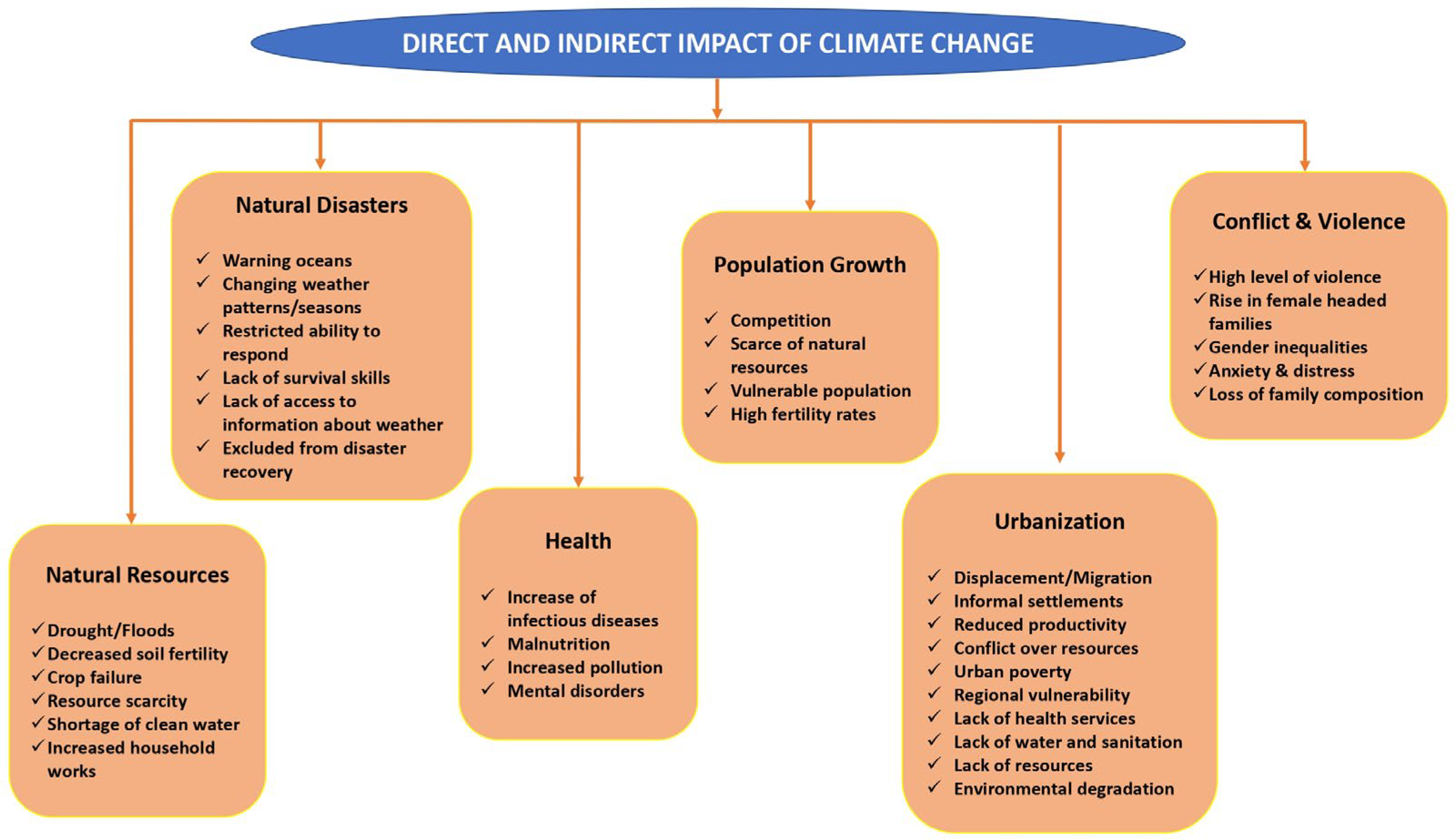
Figure 2.
Data representing the causes of death among migrant females.
Disclaimer/Publisher’s Note: The statements, opinions and data contained in all publications are solely those of the individual author(s) and contributor(s) and not of MDPI and/or the editor(s). MDPI and/or the editor(s) disclaim responsibility for any injury to people or property resulting from any ideas, methods, instructions or products referred to in the content. |
© 2024 by the authors. Licensee MDPI, Basel, Switzerland. This article is an open access article distributed under the terms and conditions of the Creative Commons Attribution (CC BY) license (http://creativecommons.org/licenses/by/4.0/).
Copyright: This open access article is published under a Creative Commons CC BY 4.0 license, which permit the free download, distribution, and reuse, provided that the author and preprint are cited in any reuse.


