
Submitted:
28 December 2023
Posted:
29 December 2023
You are already at the latest version
Abstract
The promotion of active travel is deemed a crucial component of the transition to sustainable urban mobility. Several barriers hinder its policy implementation and uptake. Some evidence suggests that capacity building could be a useful tool for deepening sustainability efforts. However, a clear framework for understanding the dimensions of capacity building for active travel is lacking. Most research and findings use cases within a Global North context, constricting implications and transferability to the Global South, especially to African cities. This study responds to the dearth of scholarly work exploring Global South cases and fills a knowledge gap regarding capacity building in the case of active travel.
Through a literature review, this study examines the dimensions of capacity building that are necessary to improve active travel in selected African countries. We focus on multilevel trans-portation governance, with highlights from five (5) African cities. Our findings suggest that the literature and policies on transport in Africa have key dimensions for capacity building for active travel but lack the introduction of key instruments and strategic pathways to meet these requirements for improved sustainable mobility. We propose a thematic guiding framework under three (3) levels of governance for integrating capacity building for active travel policies and implementation at institutional, individual, and environmental levels.
Keywords:
Capacity building
; active travel
; sustainability
; participatory GIS
; urban governance
; climate change
; urban planning
1. Introduction
Globally, biking and walking are increasingly viewed as sustainable transport modes that require more attention in cities [1,2]. These modes produce less noise and pollution, and are quieter. More environmentally friendly solutions for urban mobility are on the rise as a result of growing environmental awareness and the threat of climate change impacts such as pollution, fossil fuel emissions, and global warming [3,4]. This movement began in developed countries, where urban residents are putting pressure on city planners to add cycling and walking facilities.
Scholarly research has indicated significant environmental and health benefits associated with diverse public transportation options [5]. Cities that reduce car dependency experience better quality of life outcomes such as decreased obesity rates [6]. Recently, tremendous importance of walking and cycling for significant economic, social, environmental, and health benefits has been recorded [5,7]. More walking and cycling are seen as symbols of freedom and social integration owing to their reduced noise, pollution, and serenity. More so, the pressing need for eco-friendly urban mobility solutions has become evident, particularly given the threat of climate change.
Africa’s transportation landscape presents a distinct blend of challenges and opportunities. Urban areas face issues such as rapid urbanization and increased car dependency, resulting in traffic congestion and pollution [8], and inadequate safe and efficient infrastructure for walking and cycling [9]. Despite these difficulties, opportunities exist to create sustainable transportation solutions, including enhancing mobility and social inclusion. However, most research on sustainable transport, particularly active travel, such as walking and cycling, primarily focuses on cases from the Global North, resulting in a scarcity of knowledge about the unique context of African cities [10]. This study seeks to address this gap in scholarly work by examining cases in the Global South, particularly in African cities. This study aimed to provide a guiding framework for capacity building for sustainable transport solutions, with an emphasis on active travel, and to understand how these solutions can be tailored to meet the specific needs and circumstances of African urban environments.
This paper begins with an examination of the concept of capacity building, tracing its development through academic literature to contextualize its significance in current research. Subsequently, the primary research problem was scrutinized and positioned within the broader landscape of ongoing studies in this field. The study transitions to a discussion of the methodology employed, followed by a presentation and an evaluation of the findings. Finally, policy recommendations and a guiding framework are proposed.
1.1. Capacity Building
We summarize the evolution of capacity building in scientific and scholarly research. The improvement of an individual's or an organization's facility (or capability) "to produce, perform, or deploy" is known as capacity building [11]. This is also known as capacity development or capacity strengthening. Both capacity development and building have been used interchangeably. In recent years, the discussion has shifted from "capacity building" to the newer formulation "capacity development" [12,13]. Since “building suggests a process starting with a plain surface” [14] and 'capacity development' inherently entail capacities already there that may be built upon, some scholars maintain that the use of “capacity development” is more appropriate than those already defined [11].
This change can be attributed to the French phrase 'le renforcement des capacités,' which more closely aligns with the concept of 'capacity development' rather than 'capacity building.' However, the change remains minimal, as many scholars still refer to 'capacity building' as 'capacity development, ’ and even use them quite interchangeable [14,15,16,17,18,19,20,21]. The fact that practitioners in the public and non-profit sectors were at the forefront of knowledge production from the start and produced a wealth of gray literature is a remarkable aspect of the evolution of the concept. These practitioners have primarily relied on case studies and anecdotes when looking for normative frameworks or standards for "best practices" [22].
Our objective in this study was not to introduce a new definition, synthesize the concept's development, or investigate how it can be used in other disciplines and contexts. Additionally, we do not seek to criticize the effectiveness of capacity building or whether it has had an impact on sustainability, as has been done in the past [18,23,24]. Rather, our objective was to explore what capacity building in Africa could mean in the context of active travel. Accordingly, we provide an approach to integrate capacity building into transport policies and implementation in three (3) multilevel of governance under different themes. Thus, capacity needs, transport policy and implementation, transport infrastructure and culture, and the role of participatory GIS.
1.2. What is the Problem?
Unlike the developed world, where an increasing number of sustainable transport systems are being advocated, the situation is quite different in the global south, particularly in Africa. Studies that address the challenges faced by African countries in the context of cycling and walking are lacking. Although capacity building has been acknowledged as a critical component of sustainable development in the literature [18,25], this concept has seldom been adopted in transport research, government transport policies, and implementation mechanisms. In the African context, understanding capacity building for active travel and devising strategies and frameworks to integrate it are essential.
More succinctly, we focuses on (a) what capacity building means for Africa’s transport in the context of active travel, (b) when addressing capacity-building needs, what are the frameworks for active travel, (c) and what framework can guide the integration of capacity building for active travel, and (d) the implications for sustainable transport and urban development. By exploring the concept of capacity building for active travel in Africa, this study offers valuable insights into the key elements, strategies, and resources necessary to effectively build capacity to promote active travel in selected African countries. In addition, this study fills a knowledge gap on capacity-building framework needed to support the development and implementation of successful active travel initiatives in Africa.
1.3. Conceptualising Capacity Building for Africa’s Transport
As discussed above, capacity building is multifaceted. Therefore, it is essential to establish a clear theoretical foundation, particularly given its potential influence on developmental theories [26,27]. We positioned capacity building as a crucial component for sustainable transport, especially considering the unique challenges African nations face in promoting walking and cycling as sustainable modes of transport [10]. In the authors’ opinion, capacity-building practices in Africa are not limited to external actors that address transportation and mobility issues. Empowering local and regional stakeholders through capacity building is a common approach across various domains, including military operations [28] and disaster risk reduction.
Capacity building has traditionally focused on transforming mindsets in aid recipient countries with the ultimate goal of improving organizational capabilities. However, some experts [29,30] argue that capacity building should address multiple levels, including individual, organizational, and environmental/institutional. At the individual level, 'capacity' encompasses technical and analytical abilities, competencies, skills, and knowledge. At the organizational level, it refers to an organization's capacities or ability to execute proper policies through teams, units, or groups of agents. The institutional level pertains to the capacity of people, organizations, communities, states, and societies in an environment to address their combined issues and produce long-term benefits for their stakeholders. To translate individual skills into organizational capabilities for active travel, institutional competencies must be evaluated and existing capacities must be built or expanded [11].
When capacity building is viewed as a multilevel governance framework, it involves more than just individual knowledge and skill. Previously, capacity was narrowly defined as training or technical knowledge transfer [31]. Accordingly, structural factors, such as power dynamics, institutions, and stakeholder interests, are now recognized as important. Capacity is not just about technical skills and procedures but also about incentives and governance. It is crucial to understand the existing context, including power structures [32] and capabilities, and consider the impact of capacity-building efforts in this context. A successful approach to capacity building for active travel in African cities also requires a well-organized and inclusive framework of stakeholders, including local governments, community groups, and international partners. It is vital to consider socioeconomic and political contexts. This includes understanding unique needs and challenges, existing infrastructure, cultural attitudes towards walking and cycling, and the need for safe and accessible routes. Collaboration with stakeholders to develop and implement contextually relevant sustainable strategies is crucial.
2. Materials and Methods
2.1. Literature Review
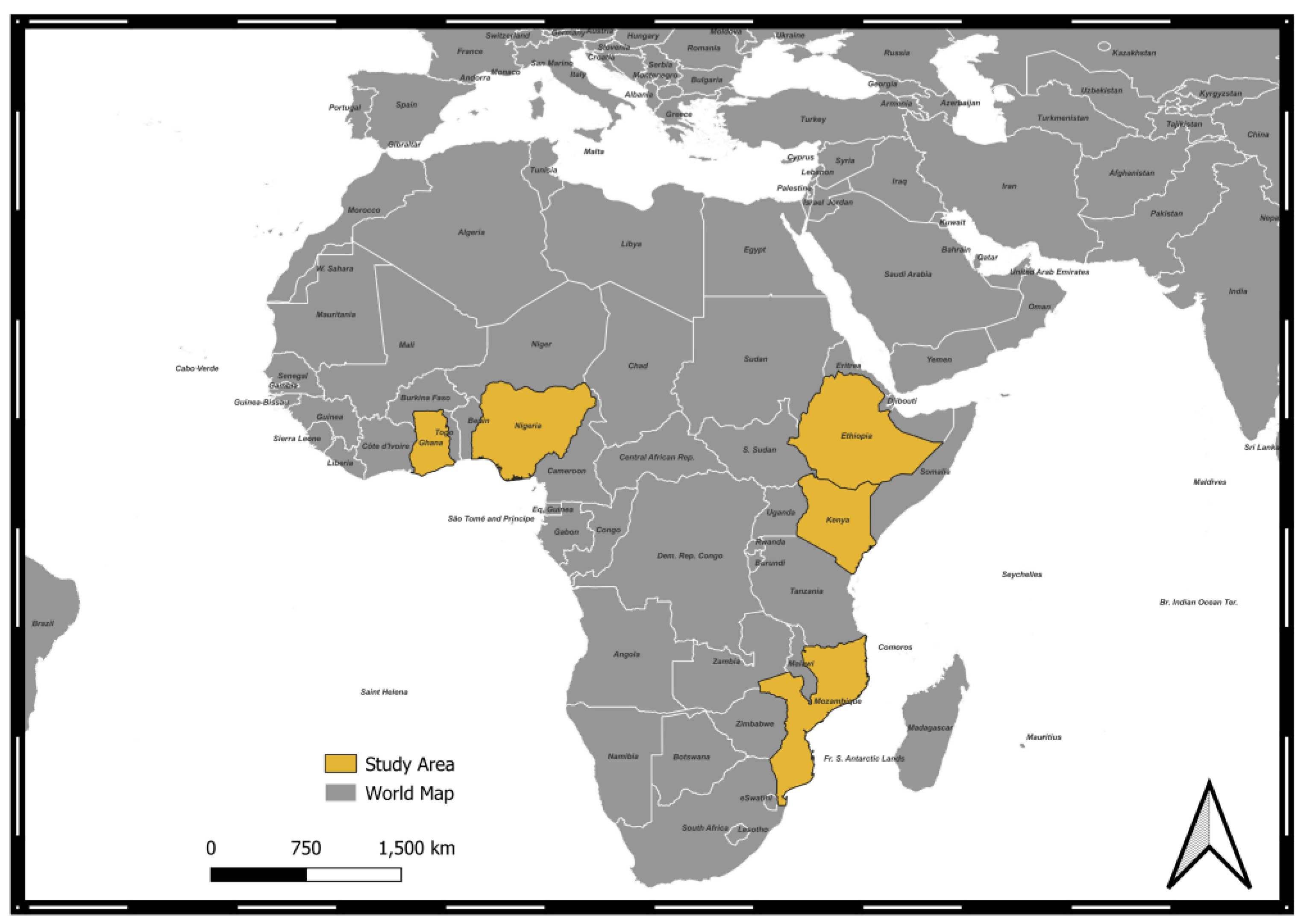
We focus on the broad literature on transport and transport policies in selected African countries, such as Ghana, Nigeria, Kenya, Ethiopia, and Mozambique, and assess how they meet the requirements of capacity building for active travel. These countries’ choices were linked to their recent developments in terms of increased population, economic activities, and pressure on transport infrastructure (World Bank GDPhttps://databank.worldbank.org/source/population-estimates-and-projections). Cities in emerging economies are expanding at an increasing pace. According to [33], sub-Saharan Africa is predicted to have between 1.5 and 2 billion people by 2050, making it a region that is urbanizing at the quickest rate. It is disappointing that these urbanization trends have not been without hurdles for Africa's developmental progress. The large-scale infrastructure deficit on the continent is one of the most widely recognized challenges inhibiting the realization of sustainable and prosperous African cities.
Figure 1.
Location of Study area; Ghana, Nigeria, Mozambique, Ethiopia, and Kenya.
The data gathered consisted of reviews of diverse literature and policy documents on transport in Africa, capacity building, and country-related transport policy. We also used the snowballing technique to extract relevant information from related literature using a litmap application.
2.2. Literature Review Approach
With a few modifications made to this work, our data search technique is fully described in an a priori systematic and snowballing review process [34]. A wide range of peer-reviewed and gray literature sources were used for the literature search. To develop a guiding framework for capacity-building issues in multilevel governance, a literature search was conducted on active travel, capacity building, transport policy, and Public Participation Geographic Information Systems (PPGIS). A search string of relevant keywords and terms was created. The data sources included UNEP, AfDB, UN Technical Reports, Google Scholar, Scopus, Web of Science, and university websites. The search criteria included publications from to 1980-2023 to capture a broad range of literature. All searches were conducted in English.
2.3. Literarure Screening and Appraisal
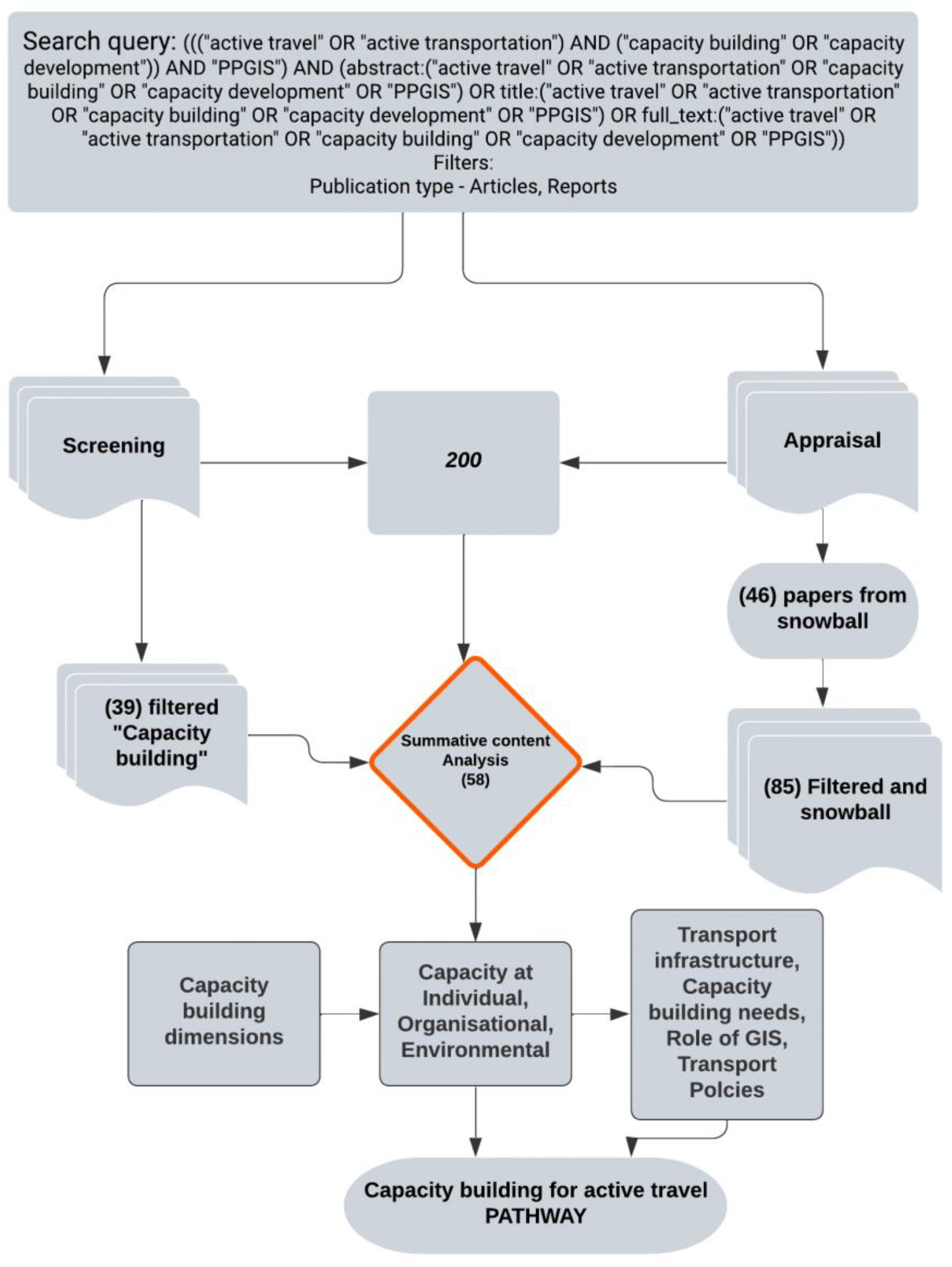
The review employed a three-stage process to evaluate the articles based on their titles, abstracts, and full text. For inclusion, a literature document needed to address capacity-building related subjects. We selected 200 papers that met these criteria and loaded them into a structured data frame using Python's pandas library. To identify entries related to "capacity building," a case-insensitive search was conducted across all columns of each row. The "str.contains" method was used to ensure consistent searching regardless of data type variations in the columns. A total of 39 filtered articles were obtained. An additional search was conducted using a combination of "active travel," "PPGIS," and "transport policies" in the selected countries. However, this search did not yield any results. Therefore, a snowballing technique was used to identify 46 more articles. These results were added to the 39 filtered articles for a total of 85.
Then, using "counting and comparisons" of significant terms, we carried out summative content analysis and extraction of each retrieved article [35]. We evaluated the content in an Excel sheet using (e.g., "capacity building", "Transport culture and infrastructure", "Capacity needs", "Active transport policies/failures and success", "What should be done/the direction of transport policies and what cities are doing", " and the role of GIS/RS in capacity for active travel") as extraction parameters. The remaining papers were critically reviewed and assessed for their relevance, rigor, and fit. We used theme analysis [36] to examine the filtered articles. The summative content analysis and snowballing technique resulted in 58 articles.
Figure 2.
Approach to systematic literature review.
3. Results
3.1. Transport Culture
[37] was among the literature studies that recognized transportation infrastructure as a critical element of economic development, as it promotes the production of new attractions and the expansion of existing ones. [38] and [39] also identified transport infrastructure as a factor in determining the desirability of a location. Africa's transport and culture have been shaped by its history and politics, with the exception of Ethiopia and Liberia, all were colonized by 1945. Many transportation facilities were built for natural resource extraction and export [40]. Additionally, China's recent investment in railways has been driven by the need to secure supplies of scarce minerals, which is critical for its growth.
During the colonial era, natural resources were heavily exploited [41]. The colonial government primarily focused on port cities and paid little attention to inland transportation and passenger travel. The infrastructure built during this period was primarily used to export agricultural and mineral resources. The connections between the port and the neighboring landlocked country's material supply are of utmost importance. As a consequence, the transportation industry suffered significant economic consequences, leaving behind structural and institutional distortions, from which it had yet to fully recover.
3.2 Infrastructure
Our review revealed significant developments in the transport infrastructure of the region, highlighting the importance of evaluating the infrastructure to promote sustainable urban mobility. Various strategies and initiatives have been implemented to address transportation issues, with [42] identifying common challenges in African cities, such as aging infrastructure, traffic jams, pollution, accidents, long commutes, and a lack of effective policies linking transport and land use. Cycling and walking are becoming increasingly popular modes of transport. Recent policy and literature have increasingly focused on walking, which is a positive step towards new mobility paradigms and ideals [43,44]. Walking as a social activity is an example of a topic of interest in the literature, and walking indicators contribute to goals aligned with public health, transportation policies, and environmental sustainability [45].
[10] also argued that urban transport networks in African cities, particularly small- or medium-sized ones, are not diversified, with most emphasis placed on constructing highways and promoting car-centric cities without integrating other modes of transportation such as buses and railways. This has led to unproductive urban environments, traffic congestion, urban sprawl, and other transportation problems. Limited access to motorized transportation and financial constraints in Africa have made walking and other physical modes of transportation popular. However, obstacles, such as inadequate infrastructure, safety concerns, and long walking distances to transportation hubs, hinder their use (see Figure 3). Building capacity is necessary to overcome these challenges and to encourage active transportation.
According to [10], there is a noticeable absence of planning and policy initiatives, despite the fact that numerous individuals are required to walk or cycle extended distances for work and other obligations. Motorcycle taxis are increasingly prevalent in urban areas, such as Lagos, Douala, Cotonou, and Mombasa. There is intense competition between traditional and motorcycle taxis [10]. Furthermore, many African countries are taking steps to formalize motorcycle transportation [46]. For instance, Kenya eliminated import duties on motorcycles used as taxis and established motorcycle lanes in Burkina-Faso, Ouagadougou.
It was identified that walking and cycling in Africa are challenging, unpleasant, and dangerous because of the persistent absence of the necessary infrastructure. People who walk and cycle in Africa are considered to have various needs (Figure 4). Experts estimate that 67% of pedestrians would prefer a continuous network of pathways and secure areas for walking [45]. Cycling safety and a continuous network of bike lanes are likely required for 85% of cyclers.
3.2 Transport Capacity Building Needs
There is a general consensus among most reviewed studies that transport infrastructure is often lacking in African countries [40,45,47,48,49]. This makes it more difficult for people to use walking and cycling as viable modes of transportation. We also noticed from the review that non-motorized transportation and active travel, such as walking and cycling, have not been widely recognized as significant strategies for tackling transportation issues in most country-transport-related policies. According to most reviewed literature, discussions on transportation often focus on reducing traffic jams, traffic congestion, and pollution [10,50]. Africa is the least accessible continent in the world [52,53,54], with only 31.7% of the population having access to public transportation within a walking distance of 500–1000 m, as measured by the UN Habitat for Sustainable Development Goal 11. We summarized the transport capacity needs for active travel to include infrastructure and services, safety, policy, and motivation. This aligns with the findings of previous studies [45,51].
We also found that walkable access to public transport is critical, especially for women, children, persons with disabilities, and older persons who can only have guaranteed access if their walking environment is safe [55]. 95% of the roads in Africa that were evaluated using the International Road Assessment Programme's (iRAP) 5-star rating system failed to provide walkers and cyclists with an acceptable level of service [45,56] (UN-Habitat, 2022; UNEP, 2022; IRAP, 2022). Most roads are substandard and lack safe crossings, cyclical lanes, and high vehicular speeds. People's choice of mode is significantly influenced by their level of comfort and perception [57].
3.3 Transport Policy and Implementation
Complex transportation policy solutions are required because of the complexity of the African transportation system and culture [58]. In Africa, we identified various key factors underlying these trends, particularly considering the continents’ unique developmental landscapes. This trend is linked to the evolution and development of transportation policy. A key factor is the growth of the large middle class, which is characterized by rising spending power and has eventually fuelled the demand for private transportation [59].
We also identified that the purchasing power of African city dwellers has improved over the past 20 years, and cars and bicycles are now more accessible (CCI – Centre du Commerce International, 2008). Currently, there is no workable transport policy to equalize or reduce the use of motorized transportation. This has resulted in an influx of used cars from industrialized nations, as well as new two-wheelers. Urban planning and policy initiatives for diverse transportation networks are rarely implemented in small or medium-sized communities.
In contrast, for transport policies to support other forms of transportation, such as (railways, trams, and bus networks), the trend in transportation policies is toward roads and freeways that promote car-dependent cities. On the ‘ground’ in African cities, there are very limited facilities for cycling and walking for example [57]. New road developments seldom provide adequate provisions for these transport modes. Further, when it comes to public transport facilities, African transport policies often privilege larger cities, partly due to economies of scale, but at the expense of smaller and fast-growing urban centers [45]. Nevertheless, we recorded some progress in some African government institutions in their commitment to sustainable transportation systems, but this was consequently characterized by weak performance (Figure 5).
There were some improvements and indications for sustainable transport in the reviewed country policy documents. Some countries have implemented non-motorized transportation (NMT) policies. Ethiopia, Kenya, and Uganda have regulations that support safe, secure, and high-quality environments for bicycles and pedestrians. For example, the 2017 Nairobi City County NMT Policy aimed to improve NMT amenities, mobility, accessibility, transportation safety, recognition, and image in Nairobi County. It also ensures that the NMT infrastructure receives adequate funding and investment, including devoting 20% of the building budget to the infrastructure in 2018 (Nairobi Metropolitan Services, 2020).
South Africa's National NMT Policy (2008) aims to support marginalized communities such as women, disabled people, children, rural populations, and the poor. The policy recognizes the importance of transportation in society and how it limits access to opportunities for employment, education, and healthcare for women and girls. In addition, to ensure pedestrian access for all, including those in wheelchairs and those with various disabilities, Uganda's National NMT Policy (2012) also integrates Universal Design principles.
Ghana’s National Transport Policy (2008) has made similar commitments to ensure accessibility for women, children, the elderly, and people with physical disabilities. By encouraging access to non-motorized and intermediate modes of transport, and ensuring that NMT facilities are properly integrated to satisfy their needs, Malawi, Zambia, and Ghana seek to meet the rural transportation needs of women and other vulnerable populations. Kenya's national and municipal authorities have also acknowledged that women are more likely to become impoverished because they have fewer transportation alternatives. According to the Integrated National Transport Policy (2009), women should spend less time on transportation-related tasks, such as carrying water and gathering firewood, and have easier access to non-motorized and intermediate modes of transport. Namibia's Sustainable Urban Transport Master Plan (SUTMP) 2013 emphasizes the need to create a forgiving NMT network for vulnerable user groups, including children, to ensure their safety while traveling to and from schools. Despite these attempts by these countries transport policies, there has been little success in implementing sustainable transportation policies.
3.4 The Role of GIS in Capacity Building
One of the growing sectors in transport and mobility is GIS and remote sensing [60,61,62,63]. Local initiatives encouraging walking and cycling have gained recognition in recent years as being among the key components of the transition to sustainable urban mobility [64]. Evidence from [80,81,82] revealed that traditional active travel data collection methods (e.g., manual, temporary, and automated counts) are labor- and time-intensive, with low spatial and temporal resolutions. Public Participatory GIS (PPGIS) plays a role in strengthening the capacity for active travel. ICT advancements, such as cloud storage, broadband communication, and GPS-enabled smart devices, offer data with higher spatial and temporal resolutions to monitor the movement of people, purpose of movement, and areas of concentration. This intern provides city planning authorities with access to areas that have walking and cycling needs.
In addition, social fitness networks (SFNs) such as Endomondo, Fitocracy, Runtastic, Map My Ride, My Fitness Pal, and Strava enable users to track and share their fitness activities (e.g., cycling, wheelchair use, running, skateboarding, and walking) using GPS-enabled devices [65,66,67]. Anonymized data from SFNs can be used to plan the transport infrastructure and address their related needs. According to our findings, SFNs have many applications such as infrastructure evaluation [68], ridership factors [69], and active travel user safety [70]. These Participatory GIS tools were also found to have several shortcomings. For instance, overrepresentation of active travel users may reduce the advantages of SFN data, leading to bias and bad decisions [71].
Moreover, Web 2.0, which involves non-expert mapping of topics with geospatial services, has enabled public participatory mapping (PM). Google Maps also provides the local mapping skills. PM can be either (i) platforms created by experts, such as planners and scholars, to acquire spatial data on movements from participants for research and decision-making or (ii) platforms created by citizens to share and assemble spatial data, called volunteer geographic information (VGI) or geographic information systems for public participation (PPGIS) [72].
We also noted that the effectiveness of PPGIS technologies relies on their integration into planning and decision-making, with public participation and local knowledge being key [73]. PPGIS use has certain disadvantages [65,74]. For instance, Strava's data, limited to fitness-tracking users, may not represent all population interests, leading to bias. This can affect the prioritization of infrastructure investments for active travel if not critically assessed. PPGIS allows citizens to comment on transport rules, identify problems, and suggest solutions. This will aid in the creation of transportation policies that meet local needs and promote sustainability and equity.
4. Discussion
4.1 Integrating Dimensions of Capacity Building to Transport Issues
Based on the issues identified and analyzed, it is important to establish a clear pathway for active travel in the region. By integrating definitional characteristics, administrative procedures, institutions, organizational requirements, and policies, capacity-building efforts can improve performance and help organizations achieve their goals.
4.2 Institutional, Organizational, and Resource Requirements
Capacity building goes beyond individual improvement and encompasses changes at both organizational and institutional levels. This viewpoint is based on the belief that capacity building seeks to redefine "the rules of the game" across various levels, that is, local to global [11,75]. Such redefinitions range from normative procedures and administrative structures to resource allocation, all of which can affect the effectiveness of active transportation initiatives in Africa. Ultimately, a comprehensive approach that includes institutional and organizational strengthening and resource allocation is crucial for promoting active travel in the region.
Referring to the literature on institutional capacity in maritime security, including [32], we have observed that numerous EU initiatives have aimed at enhancing the capabilities of key institutions. The significant focus of these initiatives, largely funded by the EU, has fostered intercountry cooperation, particularly among African nations. We argue that the core of capacity building for active travel lies in fortifying institutional strength and solidifying the collaborative relationships between countries and institutions. This perspective harmonizes with, yet also distinguishes itself from, the prevailing conversation on successful capacity building strategies.
At present, several African nations do not boast of a highly decentralized government, which gives rise to fresh obstacles in the area of transportation policy formulation, framing, and implementation. Although numerous African states have embarked on significant decentralization initiatives, issues related to effective local governance continue to persist because of a lack of willingness on the part of central authorities to release control and the inherent complexity of organizational structures [76]. While efforts towards decentralization are underway, they are not consistent throughout all African countries. Additionally, top-down governments, which are common in many African nations, may hinder the effective execution of policies that promote active or non-motorized transportation. Institutions represent institutional capability mechanisms [77] therefore, we propose that capacity building should focus on strengthening them. Neglecting institutional capacity building can limit the effectiveness of individual capacity building efforts.
We also argue that the established ways of doing things will inevitably change depending on the country’s governance landscape, needs of certain communities, applicable regulations, and availability of resources. We propose that there should be clear mechanisms at the institutional level for each country to monitor how the implementation of their transport policies has evolved over time to adapt to new situations. Organizations and institutions should also include the ability to forge effective links building co-management [78] with other transport organizations and international networks, processes for solving problems, coordination among disparate functions, and mechanisms for institutional learning and knowledge transfer [79]. These approaches can enhance sustainable transportation in Africa at an institutional level. The key to this is to establish appropriate standards and implementation strategies.
Furthermore, capacity building for active travel at the institutional level requires urgent and targeted actions to enhance the recruitment of professionals in urban planning and transport logistics, in terms of both quantity and quality. This involves coordinating efforts among various regional and sub-regional institutions and strengthening individual and collaborative programs [80] as well as training individuals at multiple levels within a supportive institutional infrastructure [81]. In addition, capacity building for active travel in African cities requires addressing inefficient organizational, administrative, and management structures as well as overcoming the lack of institutional incentive systems and technological capacities [82]. This is crucial for the successful implementation and sustainability of active travel initiatives, such as the development of pedestrian and cycling infrastructure.
We further argue that despite recent policy changes by some country institutions, execution has been poor owing to a lack of quantifiable results and benefits. For instance, numerous barriers to implementing non-motorized transport policies have been identified, including inadequate infrastructure, poorly designed safety measures, lack of policies promoting walkways and bicycle facilities, and lack of cycling skills [45]. Nairobi's Central Business District (CBD) road infrastructure primarily caters to motorized transport (MT), and little consideration is given to non-motorized transport (NMT), making public transportation the primary option for the low-income population. At the institutional level, weak implementation mechanisms also impede NMT system policy implementation and use in Nairobi [57].
We propose that anything that strengthens transport institutions and the organization's performance should be encouraged. For instance, change readiness, human and physical resources, intellectual resources, inter-institutional linkages, incentives, rewards, culture, leadership, political will, technical expertise, and an understanding of people's needs are all required. Participatory GIS can also help organizations understand people's needs and how to meet them.
4.3 Capacity at the Individual Level
Organizational capacities are built on the foundation of individual capacity, which includes personal competencies, values, and awareness [30]. These competencies are crucial in fostering a culture of active travel. In addition, community engagement provides valuable insights into individual needs and preferences to support the promotion of active travel [83,84,85]. A community-based network approach can also be a valuable tool to address individual capacity needs for active travel. Communities can provide valuable insights into the needs and preferences of individuals regarding physical activity patterns [86], mode preferences, and space movements.
The importance of partnerships and collaboration is particularly relevant for promoting active travel in Africa at the individual level. We aim to shed light on the diverse range of services offered by community-based tourism networks (CBT-Ns), such as training, funding, marketing, and empowerment. These elements are crucial in fostering active travel initiatives. By highlighting these factors, we seek to build upon the insights of [88] and place a specific emphasis on how collaborative and integrated service approaches at the community level can be effectively applied to active travel in Africa. This perspective acknowledges the vital role of community involvement and support and explores the potential for leveraging these dynamics to enhance active travel infrastructure, policies, and practices across the continent.
To effectively engage in capacity building at this level, we further propose that it is crucial to start by assessing the individual needs and targeted beneficiaries of a particular capacity-building effort [87]. Once the needs have been identified, a strategic approach should be designed to ensure that beneficiaries are able to benefit from capacity-building efforts. The recommended approach should involve developing skills and strengthening systems within a cultural context [88]. In Africa, the performing arts and culture industry plays a vital role in enhancing human capacity [89]. This implies that incorporating cultural elements into active travel initiatives can increase individual engagement and dedication.
Furthermore, at the individual level, capacity building should encompass knowledge, skills, values, attitudes, health and awareness. Capacity can be developed through various methods including formal, and informal education. We believe that promoting walking or biking for easily accessible activities and engaging in physical activity should commence at an individual level. This dimension is particularly relevant in the context of active travel in which individual mobility is a crucial element.
Public participatory GIS (PPGIS) can enhance capacity building in this governance level. PPGIS uses GPS-enabled devices, such as Strava, to study travel patterns and suggest transportation strategies, providing insights into spatial density, and encouraging public participation. Tools such as Ushahidi and OpenStreetMap enable communities to share their experience and knowledge through mapping. PPGIS can also collect data for transport infrastructure design, allowing the public to submit spatial data such as points of interest, routes, and accessibility. This process can inform institutional decisions and motivate individuals to share their views on cycling, walking opportunities, and challenges.
4.4 Capacity at the Environmental Level
Capacity at this level embodies the broader socio-political and cultural milieu that either facilitates or impedes active travel initiatives. It encompasses formal and informal institutions, sociocultural norms, and a larger ecosystem that can foster or hinder capacity-building efforts [30]. Building environmental capacity is of paramount importance for active travel in Africa. This should involve establishing the necessary structures, systems, and elements that are essential for creating and implementing transport policies and strategies across a range of organizations. Capacity-building activities at this governance level are significantly influenced by several environmental factors, such as administrative, legal, technological, political, economic, social, and cultural dimensions. Specifically, this environmental capacity also depends on both formal and informal institutions, social capital, and social infrastructure.
Insights from [90] offer a compelling examination of two prevalent narratives in capacity building for environmental climate regimes, which we adopted to promote active travel in Africa at this governance level. The first narrative focuses on developing technical and managerial capabilities, particularly by utilizing standardized data and project-based processes to address climate change in the short term. This approach is highly relevant for active travel. On the one hand, it involves data-driven planning and the management of travel infrastructure and policies. On the other hand, it expands the scope of capacity building to include diverse forms of knowledge and engages a wide range of actors, including Indigenous Peoples, gender-specific groups, and local communities. This approach favours transdisciplinary and holistic methodologies, which are essential for tackling the complex challenges of active travel in Africa. While the techno-managerial narrative is often well resourced, centralized, and institutionalized, the more inclusive and holistic narrative tends to face limitations in terms of financial, technical, and institutional support. Therefore, there is a need for a more integrated and adequately resourced approach to capacity building for active travel that balances technical expertise with local knowledge and community involvement.
We also proposed systems to assess the impact of transport policies on all environmental systems and structures. Evaluating past and present initiatives aimed at building active travel capacity is crucial for devising future strategies. Those responsible for capacity building should assess their efforts, even if the results are subjective. Common techniques for evaluating efforts can include conducting surveys, interviewing stakeholders, and conducting formal examinations [87]. The chosen evaluation method should be as objective as possible given the local context. Evaluations should consider the project's impact beyond its duration, which reflects the capacity-building processes. Impact assessments should be conducted during a project in order to make timely adjustments based on feedback. If this is not feasible or not done during the project, it can be done, at least after each capacity-building initiative. Moreso, sharing these findings is recommended to improve the chances of the success of future active travel initiatives. Active travel outcomes should be documented for knowledge management, learning and adaptation at all levels.
Some recent developments point toward the possibility of widening the scope of capacity building and strengthening both individual and institutional levels [87]. This is because, in order to move towards a sustainable transport system, both the individual and organizational levels must be given significant attention at the environmental level. Environmental management capacity-building programs can enhance the ability of local authorities to tackle pertinent issues, such as fostering environments that encourage active travel [91]. Understanding urban political procedures and the spaces developed by city-based organizations is also vital for improving the environmental level capacity in African cities [92]. This level is crucial for creating environments that promote active travel, where sociopolitical and cultural factors are harmonized with sustainable transport objectives. In our proposed guiding framework (Table 1), we show which level, requirements and actions needed to be considered.
Table 1 displays a guiding framework designed for the government and urban planning authorities to adopt and promote active travel. This framework recognizes that each country's implementation may differ depending on the nature of the problem. For instance, if the problem is a lack of motivation for cycling or walking, the focus should be on the individual level. However, if a country lacks institutional capacity, the model should address this issue at an institutional level. It is crucial to understand how these levels are interconnected and how they can be applied either individually or simultaneously. This multilevel approach enables the government and urban planning authorities to develop a tailored strategy that addresses the unique challenges of promoting active travel in a specific context.
5. Conclusions
In this study, we (a) explored the evolution of the concept of capacity building and its meaning by considering active travel in Africa, (b) summarized and positioned transport issues in Africa in the context of sustainable transport, and (c) discussed how to improve capacity building for active travel in a three-(3) multilevel governance framework. The process of building capacity involves not only imparting knowledge or experience to individuals in isolation. Capacity is systemic and requires effort in multilevel governance of a country's capacity system. Thus, its organizations and institutional arrangements, environmental/systemic structures, and capacity at all levels simultaneously in a way that is appropriate for each national context. Although Africa’s efforts to promote sustainable transportation are lagging, the authors believe that African countries are gradually realizing the importance of active travel in promoting walking, cycling, and non-motorized transport systems. This requires certain modifications and actions to enhance the capacity at different levels, as articulated in this study.
We expect that capacity-building activities in these countries will be diverse and not all will be suitable for a specific strategy. Those involved in capacity building must recognize their strengths and weaknesses, as well as those of the target, for better and more sustainable results. This requires cooperation, strategic alliances, and partnerships. Networking among capacity builders will prevent duplication of efforts and help understand the target's needs. Understanding socioeconomic factors is also crucial for successful capacity building, and it is essential to comprehend the characteristics, behaviors, and customs of the beneficiaries for the success of the intervention.
Furthermore, It is crucial for institutions to recognize that the outcomes of capacity-building interventions for active travel will vary depending on the type of intervention. Infrastructure improvements are typically measured by changes in the number of pedestrians or cyclists using an improved infrastructure or changes in accident rates. Education and awareness campaigns are typically measured by changes in attitudes towards active travel or changes in the number of trips taken by foot or bicycle. Education and awareness campaigns could be effective in increasing active travel rates in African cities.
Worldwide acknowledgement of climate change is shaping transport policies. Consequently, the focus of transportation policies in Africa will gradually shift from relying on cars to encouraging environmentally friendly and sustainable active modes of transportation. We argue that this requires a combination of infrastructure investments at the (environmental level), policy incentives/disincentives at the (institution/organization levels), and behavior change campaigns at the (individual level) to encourage people to adopt more sustainable modes of transport. The guiding framework for capacity building for active travel presented in this study can serve as a checklist for diagnosing active transport needs, which areas require capacity building, and what can be done. Future research can focus on the impact assessment of any capacity-building initiative on active travel in these countries to understand how local and regional governments build their capacity.
Author Contributions
Meredith Glaser: conceived original idea and supervised the project. Desmond Lartey: designed and implemented the research, analysis of the results and writing of the manuscript. All authors have read and agreed to the published version of the manuscript.
Funding
This study was funded by the Urban Cycling Institute.
Data Availability Statement
Data for the study can be accessed upon a request.
Conflicts of Interest
The authors have no conflict of interest to declare.
References
- Bachand-Marleau, Julie; Larsen, J.; El-geneidy, A. (2011). Much-Anticipated Marriage of Cycling and Transit." Transportation Research Record. [CrossRef]
- Wiertlewski, S. (2019). “Iść, Czyli Jechać. Językowy Obraz Świata w Cyklolekcie.” Investigationes Linguisticae. [CrossRef]
- Habitat, U.N. The State of African Cities; The United Nations Settlements Programme: Nairobi, 2010. [Google Scholar]
- Habitat, U.N. Cities and Climate Change; UN Habitat: Nairobi, 2011. [Google Scholar]
- Loukaitou-Sideris, A. Transportation, Land Use, and Physical Activity: Safety and Security Considerations 2004.
- Odero, W.; Khayesi, M.; Heda, P.M. Road Traffic Injuries in Kenya: Magnitude, Causes and Status of Intervention. Injury control and safety promotion 2003, 10, 53–61. [Google Scholar] [CrossRef] [PubMed]
- Howe, J. Enhancing Nonmotorized Transportation Use in Africa-Changing the Policy. Transportation research record 1995, 22–26. [Google Scholar]
- Candiracci, Sara. (2010) How Can Better Mobility Make African Cities More Inclusive. Public Transport International.
- Mitullah, W.V.; Vanderschuren, M.; Khayesi, M. (Eds.). Non-Motorized Transport Integration into Urban Transport Planning in Africa. Taylor & Francis. 2017.
- Sietchiping, R.; Permezel, M.J.; Ngomsi, C. Transport and Mobility in Sub-Saharan African Cities: An Overview of Practices, Lessons and Options for Improvements. Cities 2012, 29, 183–189. [Google Scholar] [CrossRef]
- Kacou, K.P.; Ika, L.A.; Munro, L.T. Fifty Years of Capacity Building: Taking Stock and Moving Research Forward 1. Public Administration and Development 2022, 42, 215–232. [Google Scholar] [CrossRef]
- Brinkerhoff, D.W.; Morgan, P.J. Capacity and Capacity Development: Coping with Complexity. Public Administration and Development: The International Journal of Management Research and Practice 2010, 30, 2–10. [Google Scholar] [CrossRef]
- Venner, M. The Concept of ‘Capacity’in Development Assistance: New Paradigm or More of the Same? Global Change, Peace & Security 2015, 27, 85–96. [Google Scholar]
- Grauwe, A. Without Capacity, There Is No Development; UNESCO, International Institute for Educational Planning: Paris, 2009. [Google Scholar]
- Barakat, S.; Chard, M. Theories, Rhetoric and Practice: Recovering the Capacities of War-Torn Societies. Third world quarterly 2002, 23, 817–835. [Google Scholar] [CrossRef]
- Barnett, S.A.; Engel, N. Effective Institution Building. A Guide for Project Designers and Project Managers, Based on Lessons Learned from the AID Portfolio 1982.
- Godfrey, M.; Sophal, C.; Kato, T.; Piseth, L.V.; Dorina, P.; Saravy, T.; Sovannarith, S. Technical Assistance and Capacity Development in an Aid-Dependent Economy: The Experience of Cambodia. World Development 2002, 30, 355–373. [Google Scholar] [CrossRef]
- Lempert, D. A Quick Indicator of Effectiveness of" Capacity Building" Initiatives of NGOs and International Organizations. European Journal of Government and Economics 2015, 4, 155–196. [Google Scholar] [CrossRef]
- Fisher, C. Between Pragmatism and Idealism: Implementing a Systemic Approach to Capacity Development. IDS Bulletin 2010, 41, 108–117. [Google Scholar] [CrossRef]
- Harfst, J.; Marot, N. Capacity-Building in Old Industrialised Regions: A Success Factor in Regional Development. Capacity Building and Development: Perspectives, Opportunities and Challenges 2013, 117–134.
- Yeatman, H.R.; Nove, T. Reorienting Health Services with Capacity Building: A Case Study of the Core Skills in Health Promotion Project. Health Promotion International 2002, 17, 341–350. [Google Scholar] [CrossRef] [PubMed]
- An, Y.; Garvin, M.J.; Hall, R.P. Pathways to Better Project Delivery: The Link between Capacity Factors and Urban Infrastructure Projects in India. World Development 2017, 94, 393–405. [Google Scholar] [CrossRef]
- Kühl, S. Capacity Development as the Model for Development Aid Organizations. Development and Change 2009, 40, 551–577. [Google Scholar] [CrossRef]
- Armstrong, J. Improving International Capacity Development. Bright Spots; Palgrave Macmillan, 2013;
- Straussman, J.D. An Essay on the Meaning (s) of “Capacity Building”—With an Application to Serbia. International Journal of Public Administration 2007, 30, 1103–1120. [Google Scholar] [CrossRef]
- North, D. Institutions, Institutional Change and Economic Performance; Cambrige University Press, 1990.
- Williams, M.J. Beyond State Capacity: Bureaucratic Performance, Policy Implementation and Reform. Journal of Institutional Economics 2021, 17, 339–357. [Google Scholar] [CrossRef]
- Brinkerhoff, D.W. The State and International Development Management: Shifting Tides, Changing Boundaries, and Future Directions. Public Administration Review 2008, 68, 985–1001. [Google Scholar] [CrossRef]
- Honadle, B.W. A Capacity-Building Framework: A Search for Concept and Purpose; Public Sector Performance, 2018.
- Matachi, A. Capacity Building Framework. United Nations Economic Commission for Africa; Online Submission, 2006;
- King, C.; Cruickshank, M. Building Capacity to Engage: Community Engagement or Government Engagement? Community Development Journal 2012, 47, 5–28. [Google Scholar] [CrossRef]
- Jacobsen, K.L. Maritime Security and Capacity Building in the Gulf of Guinea: On Comprehensiveness, Gaps, and Security Priorities. African Security Review 2017, 26, 237–256. [Google Scholar] [CrossRef]
- Forget, Y.; Shimoni, M.; Gilbert, M.; Linard, C. Mapping 20 Years of Urban Expansion in 45 Urban Areas of Sub-Saharan Africa. Remote Sensing 2021, 13, 525. [Google Scholar] [CrossRef]
- Sasmito, S.D.; Taillardat, P.; Clendenning, J.N.; Cameron, C.; Friess, D.A.; Murdiyarso, D.; Hutley, L.B. Effect of Land-use and Land-cover Change on Mangrove Blue Carbon: A Systematic Review. Global Change Biology 2019, 25, 4291–4302. [Google Scholar] [CrossRef]
- Hsieh, H.F.; Shannon, S.E. Three Approaches to Qualitative Content Analysis. Qualitative Health Research 2005, 15, 1277–1288. [Google Scholar] [CrossRef] [PubMed]
- Fereday, J. , & Muir-Cochrane, E. Demonstrating Rigor Using Thematic Analysis: A Hybrid Approach of Inductive and Deductive Coding and Theme Development. International Journal of Qualitative Methods, 2006, 5, 80–92. [Google Scholar]
- Kaul, R.N. Dynamics of Tourism: A Trilogy. Transportation and Marketing; Sterling Publishers, 1985;
- In Tourism Planning; Gunn, C., Ed.; Taylor and Francis: New York, 1988.
- Inskeep, E. Tourism Planning: An Integrated and Sustainable Development Approach; John Wiley & Sons, 1991;
- Bofinger, H. Africa’s Transport Infrastructure: Mainstreaming Maintenance and Management; World Bank Publications, 2011;
- Adeyemo, B.A. Colonial Transport System in Africa: Motives, Challenges and Impact. African Journal of History and Archaeology 2019, 4, 14–26. [Google Scholar]
- Chakwizira, J. , Bikam, P., & Adeboyejo, T.A. (). Different Strokes for Different Folks: Access and Transport Constraints for Public Transport Commuters in Gauteng Province, South Africa. Int. J. Traffic. Transp. Eng. 2018, 8, 58–81. [Google Scholar]
- Middleton, J. The Socialites of Everyday Urban Walking and the ‘Right to the City. ’ Urban studies 2018, 55, 296–315. [Google Scholar] [CrossRef]
- Middleton, J. The Walkable City: Dimensions of Walking and Overlapping Walks of Life; Taylor & Francis, 2021;
- UNEP, 2022. Walking and Cycling in Africa: Evidence and Good Practice to Inspire Action.
- Ouongo, C. (2010). Problematique Du Transport et de La Securite Routiere a Ouagadougou.
- Ndebele, R.; Aigbavboa, C.; Ogra, A. Urban Transport Infrastructure Development in African Cities: Challenges and Opportunities. In Proceedings of the Proceedings of the International Conference on Industrial Engineering and Operations Management, Johannesburg, South Africa; p. 2018833.
- Gwilliam, K. Urban Transport in Developing Countries. Transport Reviews 2003, 23, 197–216. [Google Scholar] [CrossRef]
- Teravaninthorn, S.; Raballand, G. Transport Prices and Costs in Africa: A Review of the Main International Corridors 2009.
- Rajé, F.; Tight, M.; Pope, F.D. Traffic Pollution: A Search for Solutions for a City like Nairobi. Cities 2018, 82, 100–107. [Google Scholar] [CrossRef]
- Nikitas, A.; Tsigdinos, S.; Karolemeas, C.; Kourmpa, E.; Bakogiannis, E. Cycling in the Era of COVID-19: Lessons Learnt and Best Practice Policy Recommendations for a More Bike-Centric Future. Sustainability 2021, 13, 4620. [Google Scholar] [CrossRef]
- Cooke, S.; Behrens, R.; Zuidgeest, M. The Relationship between Transit-Oriented Development, Accessibility and Public Transport Viability in South African Cities: A Literature Review and Problem Framing 2018.
- Falchetta, G.; Hammad, A.T.; Shayegh, S. Planning Universal Accessibility to Public Health Care in Sub-Saharan Africa. Proceedings of the National Academy of Sciences 2020, 117, 31760–31769. [Google Scholar] [CrossRef]
- Linard, C.; Gilbert, M.; Snow, R.W.; Noor, A.M.; Tatem, A.J. Population Distribution, Settlement Patterns and Accessibility across Africa in 2010. PLoS ONE 2012, 7, 31743. [Google Scholar] [CrossRef]
- Montgomery, B.; Roberts, P. Walk Urban: Demand, Constraints, and Measurement of the Urban Pedestrian Environment 2008.
- Loo, B.P.; Siiba, A. Active Transport in Africa and beyond: Towards a Strategic Framework. Transport Reviews 2019, 39, 181–203. [Google Scholar] [CrossRef]
- Basil, P.; Nyachieo, G. EXPLORING PERCEPTIONS AND BARRIERS TO WALKING AND CYCLING IN URBAN AREAS IN KENYA: A CASE OF NAIROBI METROPOLITAN AREA. Frontiers in Sustainable Cities 2023, 183. [Google Scholar]
- Porter, G. Transport Services and Their Impact on Poverty and Growth in Rural Sub-Saharan Africa 2013.
- Mbara, T.C. (2002) Activity Patterns, Transport and Policies for the Urban Poor in Harare, Zimbabwe. Final Country Report.[En Ligne].
- Silva, C.F.A.; Andrade, M.O.; Maia, M.L.A.; Santos, A.M.; Portis, G.T. Remote Sensing for Identification of Trip Generating Territories in Support of Urban Mobility Planning and Monitoring. GeoJournal 2023, 88, 107–119. [Google Scholar] [CrossRef]
- Williams, K.; Olsen, M.J.; Roe, G.V.; Glennie, C. Synthesis of Transportation Applications of Mobile LiDAR. Remote Sensing 2013, 5, 4652–4692. [Google Scholar] [CrossRef]
- Loli, M.; Kefalas, G.; Dafis, S.; Mitoulis, S.A.; Schmidt, F. Bridge-Specific Flood Risk Assessment of Transport Networks Using GIS and Remotely Sensed Data. Science of the Total Environment 2022, 850, 157976. [Google Scholar] [CrossRef] [PubMed]
- Somantri, L. The Role of GIS and Remote Sensing for Population Mobility Mapping. In Proceedings of the Seventh Geoinformation Science Symposium 2021; SPIE, December 2021; Vol. 12082; pp. 416–425. [Google Scholar]
- Banister, D. The Sustainable Mobility Paradigm. Transport policy 2008, 15, 73–80. [Google Scholar] [CrossRef]
- Alattar, M.A.; Cottrill, C.; Beecroft, M. Public participation geographic information system (PPGIS) as a method for active travel data acquisition. Journal of Transport Geography 2021, 96, 103180. [Google Scholar] [CrossRef]
- Lupton, D. Lively Data, Social Fitness and Biovalue: The Intersections of Health and Fitness Self-Tracking and Social Media. The Sage Handbook of Social Media; SAGE Publications: Thousand Oaks, CA, 2018. [Google Scholar]
- Muller, M. Developing a GIS-Based Decision-Support Tool for Bicycle Lane Network Expansion in Johannesburg. Journal of Transport Geography 2016, 57, 152–160. [Google Scholar]
- Hong, J.; McArthur, D.P.; Livingston, M. The Evaluation of Large Cycling Infrastructure Investments in Glasgow Using Crowdsourced Cycle Data. Transportation 2020, 47, 2859–2872. [Google Scholar] [CrossRef]
- Griswold, J.B.; Medury, A.; Schneider, R.J. Pilot Models for Estimating Bicycle Intersection Volumes. Transportation research record 2011, 2247, 1–7. [Google Scholar] [CrossRef]
- Sun, Y.; Mobasheri, A. Utilizing Crowdsourced Data for Studies of Cycling and Air Pollution Exposure: A Case Study Using Strava Data. International journal of environmental research and public health 2017, 14, 274. [Google Scholar] [CrossRef] [PubMed]
- Shearmur, R. Dazzled by Data: Big Data, the Census and Urban Geography. Urban Geography 2015, 36, 965–968. [Google Scholar] [CrossRef]
- Olteanu-Raimond, A.M.; Laakso, M.; Antoniou, V.; Fonte, C.C.; Fonseca, A.; Grus, M.; Skopeliti, A. VGI in National Mapping Agencies: Experiences and Recommendations. In Mapping and the Citizen Sensor; Ubiquity Press, 2017; pp. 299–326.
- Mbiru, S.S. Capacity Development to Support Planning and Decision Making for Climate Change Response in Kenya. In Addressing the Challenges in Communicating Climate Change Across Various Audiences; 2019; pp. 213–230.
- Livingston, M. , McArthur, D., Hong, J., & English, K. () Predicting Cycling Volumes Using Crowdsourced Activity Data. Environment and Planning B: Urban Analytics and City Science 2021, 48, 1228–1244. [Google Scholar]
- Chrysostome, E.; Munthali, T.; Ado, A. Capacity Building in Africa: Toward an Imperative Mindset Transformation. In Capacity Building in Developing and Emerging Countries: From Mindset Transformation to Promoting Entrepreneurship and Diaspora Involvement; 2019; pp. 7–41.
- Wunsch, J.S. Decentralization, Local Governance and ‘Recentralization’ in Africa. Public Admin & Development 2001, 21, 277–288. [Google Scholar] [CrossRef]
- Colarossi, L.G.; Dean, R.; Balakumar, K.; Stevens, A. Organizational Capacity Building for Sexual Health Promotion. American Journal of Sexuality Education 2017, 12, 1–19. [Google Scholar] [CrossRef]
- Zurba, M.; Ross, H.; Izurieta, A.; Rist, P.; Bock, E.; Berkes, F. Building Co-Management as a Process: Problem Solving through Partnerships in Aboriginal Country, Australia. Environmental management 2012, 49, 1130–1142. [Google Scholar] [CrossRef] [PubMed]
- Glaser, M.; Blake, O.; Bertolini, L.; Brömmelstroet, M.; Rubin, O. Learning from Abroad: An Interdisciplinary Exploration of Knowledge Transfer in the Transport Domain. Research in Transportation Business & Management 2021, 39, 100531. [Google Scholar]
- Tsafack Nanfosso, R. The State of Capacity Building in Africa. World Journal of Science, Technology and Sustainable Development 2011, 8, 195–225. [Google Scholar] [CrossRef]
- Manabe, Y.C. , Katabira, E., Brough, R.L., Coutinho, A.G., Sewankambo, N., & Merry, C. (). Developing Independent Investigators for Clinical Research Relevant for Africa. Health Research Policy and Systems 2011, 9, 1–5. [Google Scholar]
- Karani, P. Constraints for Activities Implemented Jointly (AIJ) Technology Transfer in Africa. Renewable Energy 2001, 22, 229–234. [Google Scholar] [CrossRef]
- Bickerstaff, K.; Tolley, R.; Walker, G. Transport Planning and Participation: The Rhetoric and Realities of Public Involvement. Journal of Transport Geography 2002, 10, 61–73. [Google Scholar] [CrossRef]
- Domenico, M.; Tracey, P.; Haugh, H. Social Economy Involvement in Public Service Delivery: Community Engagement and Accountability. Regional Studies 2009, 43, 981–992. [Google Scholar] [CrossRef]
- Boyer, E.J.; Slyke, D.M.; Rogers, J.D. An Empirical Examination of Public Involvement in Public-Private Partnerships: Qualifying the Benefits of Public Involvement in PPPs. Journal of Public Administration Research and Theory 2016, 26, 45–61. [Google Scholar] [CrossRef]
- Sallis, J.F.; Cerin, E.; Conway, T.L.; Adams, M.A.; Frank, L.D.; Pratt, M.; Owen, N. Physical Activity in Relation to Urban Environments in 14 Cities Worldwide: A Cross-Sectional Study. The Lancet 2016, 387, 2207–2217. [Google Scholar] [CrossRef] [PubMed]
- Araya-Quesada, M.; Degrassi, G.; Ripandelli, D.; Craig, W. Key Elements in a Strategic Approach to Capacity Building in the Biosafety of Genetically Modified Organisms. Environmental biosafety research 2010, 9, 59–65. [Google Scholar] [CrossRef]
- Kalbarczyk, A.; Davis, W.; Kalibala, S.; Geibel, S.; Yansaneh, A.; Martin, N.A.; Manabe, Y.C. Research Capacity Strengthening in Sub-Saharan Africa: Recognizing the Importance of Local Partnerships in Designing and Disseminating HIV Implementation Science to Reach the 90–90–90 Goals. AIDS and Behavior 2019, 23, 206–213. [Google Scholar] [CrossRef] [PubMed]
- Ohenhen, S. Performing Arts and Culture Industry and Human Capacity Building in Africa. Performing Arts 2017, 7. [Google Scholar]
- Nautiyal, S.; Klinsky, S. The Knowledge Politics of Capacity Building for Climate Change at the UNFCCC. Climate Policy 2022, 22, 576–592. [Google Scholar] [CrossRef]
- Meyer, T.C. , & le Roux, E. (). Capacity Building for Effective Municipal Environmental Management in South Africa. WIT Transactions on Ecology and the Environment 2006, 93. [Google Scholar]
- Gore, C. Cities and the Environment in Sub-Saharan Africa." The Oxford Handbook of Comparative Environmental Politics. 2021.
Figure 3.
Average time spent walking or cycling for transport, Data from UNEP, 2022.
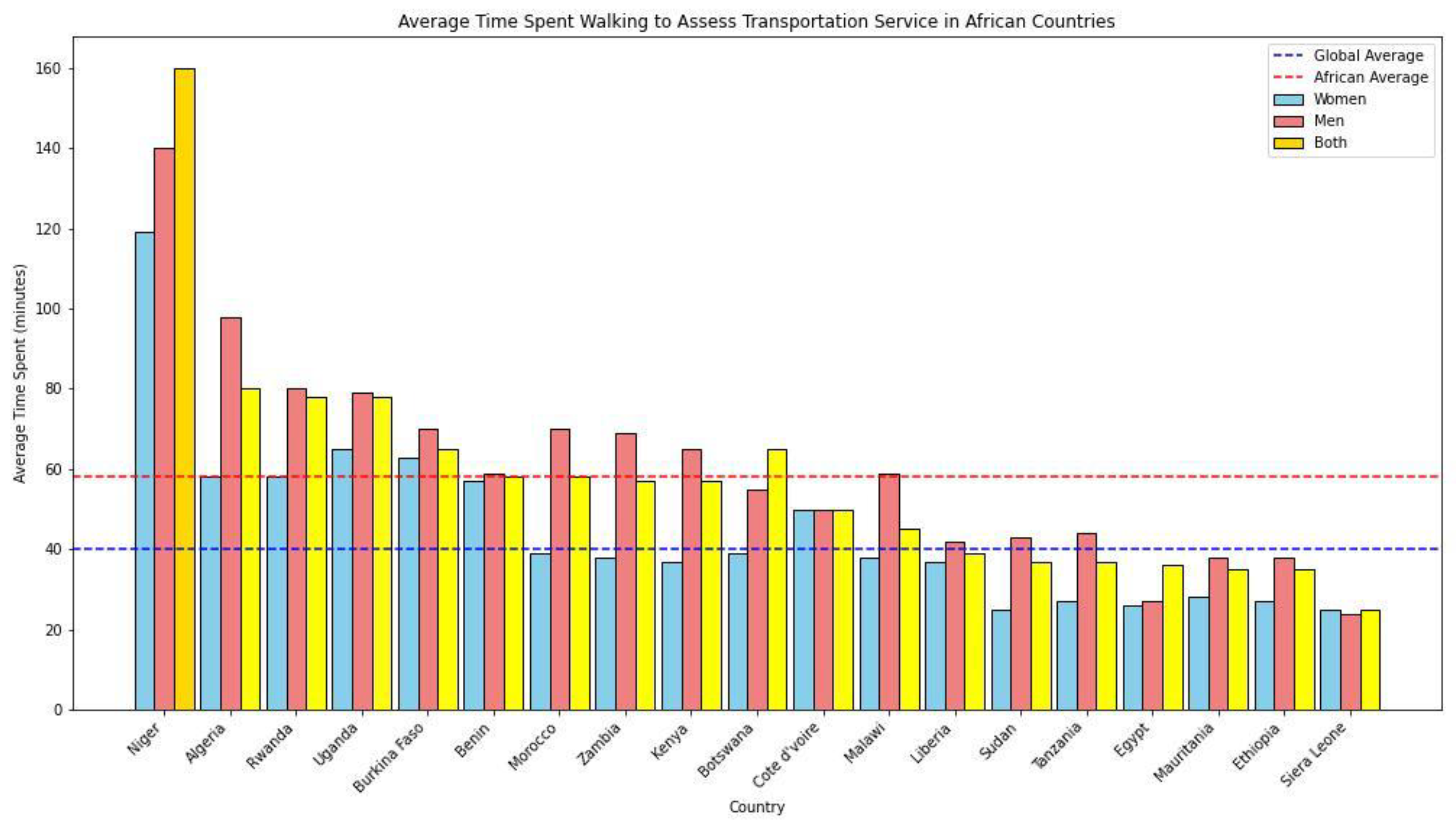
Figure 4.
(a) Perceived cycling needs and (b) Walking needs in Africa. Data Adapted and modified from UNEP, 2022.
Figure 4.
(a) Perceived cycling needs and (b) Walking needs in Africa. Data Adapted and modified from UNEP, 2022.
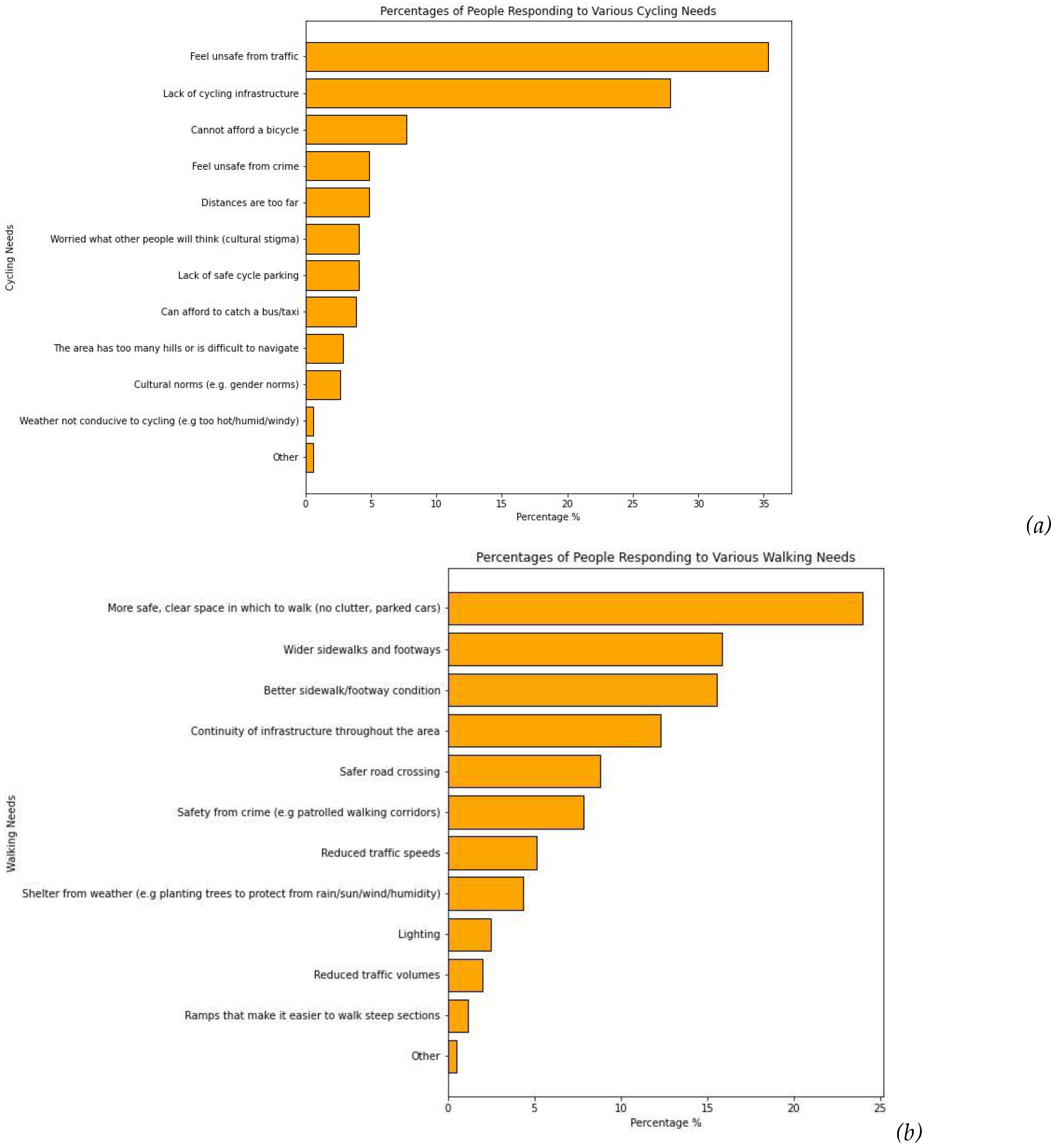
Figure 5.
Regional commitments towards active travel.
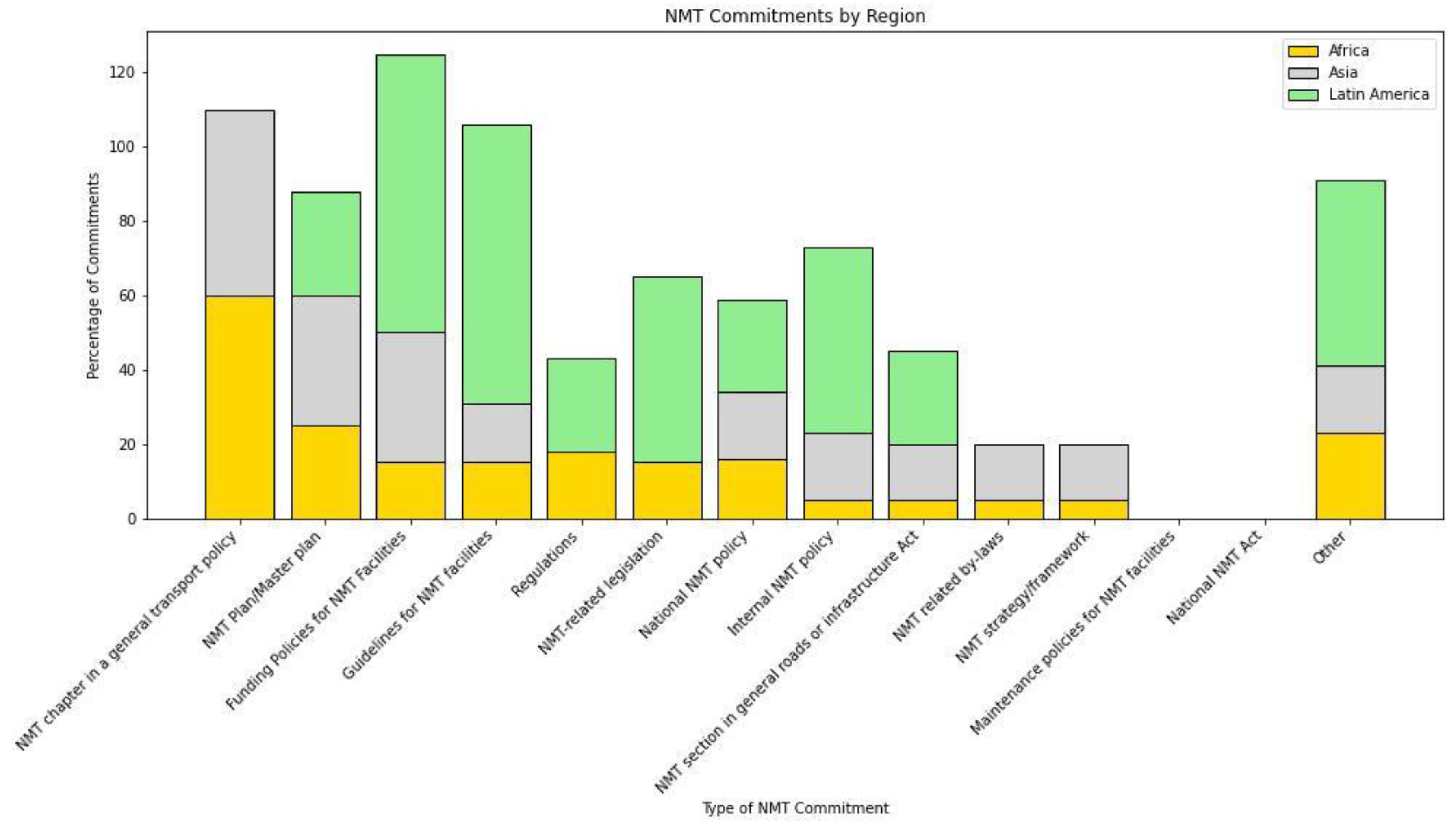

Table 1.
Guiding pathways or frameworks for capacity building for active travel in Africa.
| Level of Capacity | How to meet the Requirements | Elements (INDICATORS) |
|---|---|---|
| Individual | - Improving perceptions of- cycling and walking as activities that are not limited to those with lower socioeconomic status. - Encouraging the advantages of cycling for health, including enhanced cardiovascular wellness and weight control. Providing education and skill-building opportunities for safe cycling practices. - Encouraging a shift in attitudes towards considering cycling/walking as an eco-friendly means of transportation. |
-Knowledge: Understanding of cycling safety rules and the benefits of cycling. -Skills: Ability in cycling securely under various traffic circumstances. -Value: The recognition of cycling as a sustainable and eco-friendly means of transportation. -Attitude: Positive mindset towards cycling as a viable means of transport. -Health: Improved physical fitness and wellbeing through regular cycling. -Awareness: Recognition of cycling’s/walking role in reducing carbon emissions. |
| Organization | -Strategies that will influence an organization's performance. | -Physical resources: facilities, equipment, materials, etc -Capital Intellectual resources: organizational strategy, strategic planning, production technology, program management, process management, inter-institutional linkage -Organizational governance structure and management methods which affect the utilization of the resources (human, physical intellectual assets) |
| Environment | The environment and conditions necessary for operating capacity at the individual and organizational levels. | Formal institutions (laws, policies, decrees, ordinances, membership rules, etc) Informal institutions (customs, cultures, norms, etc) Social capital, social infrastructure, etc. Capacities of individuals and organizations under the environment |
Disclaimer/Publisher’s Note: The statements, opinions and data contained in all publications are solely those of the individual author(s) and contributor(s) and not of MDPI and/or the editor(s). MDPI and/or the editor(s) disclaim responsibility for any injury to people or property resulting from any ideas, methods, instructions or products referred to in the content. |
© 2023 by the authors. Licensee MDPI, Basel, Switzerland. This article is an open access article distributed under the terms and conditions of the Creative Commons Attribution (CC BY) license (http://creativecommons.org/licenses/by/4.0/).
Copyright: This open access article is published under a Creative Commons CC BY 4.0 license, which permit the free download, distribution, and reuse, provided that the author and preprint are cited in any reuse.


