

Submitted:
28 December 2023
Posted:
29 December 2023
You are already at the latest version
Abstract
This policy paper explores various strategies that would facilitate transitioning the traditional Jordanian electrical grid to a secure smart grid. It includes comprehensive recommendations from academia and industry for the regulatory and governmental sector in Jordan to achieve specific roadmap objectives. As Jordan is heavily dependent on fossil fuels, This policy paper also provides recommendations for incorporating more renewables into its energy mix, thereby facilitating a sustainable future. The proposed policies will emphasise the creation of an enabling environment where innovation, research, and development initiatives flourish, thereby promoting private sector engagement.
Keywords:
power system
; smart grid
; roadmap
; case study
1. Executive Summary
This policy paper explores various strategies that would facilitate transitioning the traditional Jordanian electrical grid to a secure smart grid. It includes comprehensive recommendations from academia and industry for the regulatory and governmental sector in Jordan to achieve specific roadmap objectives. As Jordan is heavily dependent on fossil fuels, This policy paper also provides recommendations for incorporating more renewables into its energy mix, thereby facilitating a sustainable future. The proposed policies will emphasise the creation of an enabling environment where innovation, research, and development initiatives flourish, thereby promoting private sector engagement.
2. Introduction
As a country, Jordan is heavily reliant on fossil fuels to meet its energy needs. As of 2021, 73% of the total generation was from natural gas, with only 26% from renewable sources [1]. Therefore, great benefit can be derived from converting the electrical grid into a smart grid, primarily owing to its potential to enhance the reliability and efficiency of the electric grid by incorporating renewables, further improving its energy security [2]. Consequently, the Government formulated a National Energy Strategy initially spanning 2015-2025 and subsequently for the period covering 2020–2030, whose primary focus was to ensure energy security by means such as investing in renewable energy sources, improving energy efficiency, and exploring alternative energy sources [3]. This commitment is evident in the wheeling PV projects GID and ASEZA, undertaken by the National Electric Power Company (NEPCO) in 2022 with capacities of 15 MW and 5 MW, respectively [4]. The increased deployment of renewable energy sources is evident in Table 1, which indicates the rise in renewables from 11% to 27% between 2018 and 2022. Figure 1 depicts the electrical energy generation for 2022.

| Year | Natural Gas | Renewable % | Heavy Fuel Oil % | Oil Shale % |
|---|---|---|---|---|
| 2018 | 86% | 11% | 3% | 0% |
| 2019 | 87% | 13% | <1% | 0% |
| 2020 | 80% | 20% | <1% | 0% |
| 2021 | 73% | 26% | <1% | <1% |
Several countries across the globe have successfully incorporated smart technologies into the electrical grid. For example, North America, specifically the USA, has been a global leader in deploying smart grid technologies in order to improve the efficiency and reliability of the electricity grid. The growth of advanced infrastructure through heavy investments has significantly facilitated the adoption and integration of renewable energy sources in the grid, with investment costs likely to increase by almost 13.8 billion dollars by 2024 [10]. Another major adopter of smart grid technologies is China, as growth in urbanisation has increased the need for demand and supply balancing, which may be achieved with demand-side response activities that are compatible with smart grid technologies [10]. Furthermore, the 5G smart grid project has helped minimise power consumption in 5G base stations with the help of peak-clipping and valley-filling methods [10].
Transitioning to the full use of smart meters has been suggested as the main process of converting Jordan’s traditional electrical grid into a smart grid [11]. While countries such as New Zealand have achieved 90% smart meter penetration, the Jordan Energy Sector Strategy (ESS) action plan failed to meet its 40% rollout target by 2022, primarily due to limited finances and the effects of the COVID-19 pandemic [11]. This policy paper, therefore, provides a comprehensive roadmap, including recommendations for the Hashemite Kingdom of Jordan to incorporate smart technologies into the electricity grid, thereby increasing its flexibility, efficiency, and robustness in satisfying the nation’s growing energy needs.
3. Overview of the Jordanian Electrical Grid
The current electrical grid infrastructure in Jordan is divided into several companies with three categories: generation, transmission, and distribution.
Generation: There are three main companies that produce electricity in Jordan:
- Central Electricity Generation Company (CEGCO)
- Samra Electric Power Company (SEPCO)
- Amman East Power Plant (AES)
As of 2021, the generation companies produce electricity primarily from natural gas (73% of the total generation) and renewable energy (26% of the total generation), with 1% from other sources [1]. Additionally, the generation companies sell all their generated electricity to the National Electric Power Company (NEPCO).
Transmission: NEPCO is the only company that owns the transmission infrastructure in Jordan. NEPCO purchases electricity from the generation stations and sells it to the distribution companies to provide power to the consumers. The electricity is transmitted using 400 KV and 132 KV as high-voltage transmission lines through 33KV/132KV and 132KV/400KV substations and provide power to the distribution companies as 33KV as medium-voltage through 400KV/132KV and 132KV/33KV substations.
Moreover, the Jordanian electrical network is connected internationally with the following countries:
- Egypt through 400 KV transmission lines with 550 MW capacity.
- Syria through 400 KV transmission lines with 800 MW capacity.
- Palestine through 132 KV transmission lines with 80 MW capacity.
- Saudi Arabia through 400 KV transmission lines with 1000 MW capacity.
- Iraq through 400 KV transmission lines with 200 MW capacity.
Distribution: Three distribution companies purchase power from NEPCO and provide electricity to the consumers and prosumers: Irbid District Electricity Distribution Company (IDECO) in the northern states, Jordan Electric Power Company (JEPCO) in the middle states, and Electricity Distribution Company (EDCO) in the southern states. The distribution network receives power from 33 KV substations and decreases the voltage to 11 KV and 400 V as low voltage levels.
There are some challenges associated with the current grid. For example, the energy demand is increasing rapidly, as depicted in Figure 2. This increase in demand invariably puts more pressure on the grid, underscoring the need to transition to a smart grid where optimal control of the grid is possible.
The energy efficiency of Jordan's transmission lines and electrical distribution networks are outlined in Table 2. The low level of efficiencies, particularly for the transmission lines, may be improved with real-time monitoring, control, and optimisation offered by smart grids. Automatic control systems would optimise the operation of the grid to reduce line losses, thereby enhancing the efficiency of the transmission and distribution of electric power.
In order to transition the system to a smart grid, some noteworthy upgrades must be made. Jordan has proposed some noteworthy initiatives, including the creation of the Executive Action Plan of Jordan Energy Strategy 2020–2030 [26]. The plan highlighted the nation’s plans for creating a smart grid infrastructure through the widespread use of technologies such as smart meters. It is therefore, envisioned that the nation is on its way to continue improving and upgrading its electricity grid.
Figure 3 below highlights the interactions between the different elements constituting a smart grid. It shows how the implementation of smart grids requires a significant upgrade from a traditional grid in terms of infrastructure, such as communication links and smart devices, in order to modernise and optimise the operation of the grid, which is necessary to to tackle challenges, including adopting renewables, electric vehicles, heat pumps, and smart buildings.
4. Roadmap Objectives to Transition to a Secure Smart Grid
The objectives of a smart grid roadmap are to guide the systematic development and implementation of smart grid infrastructure. These objectives focus on achieving specific outcomes that contribute to the overall success of the smart grid initiative in the Jordanian context. It is pertinent to note that a well-planned and phased approach, with a focus on collaboration, stakeholder engagement, and adaptability, is essential for the successful implementation of a smart grid.
Here are some key roadmap objectives:
- Enhance Grid Efficiency: This objective can be achieved by implementing technologies and strategies e.g., smart meters, to optimise the overall efficiency of the power grid, reducing losses and improving energy utilization.
- Improve Grid Reliability: This objective can be achieved by enhancing grid monitoring and control capabilities to minimize downtime, respond to faults promptly, and improve overall grid reliability.
- Facilitate Renewable Energy Integration: This objective can be achieved by developing the infrastructure to seamlessly integrate renewable energy sources into the grid, supporting a transition to a cleaner and more sustainable energy mix.
- Integrating Low-Carbon Technologies: As we chart the roadmap toward transforming the conventional electrical network into a smart grid, a pivotal step lies in the strategic integration of low-carbon technologies. Notably, the adoption of heat pumps and hydrogen technology emerges as a cornerstone in this evolutionary journey.
- Enable Demand Response: This objective can be achieved by implementing demand response programs and technologies to engage consumers in actively managing their energy consumption, contributing to grid stability.
- Ensure Cybersecurity: This can be achieved by establishing robust cybersecurity measures to safeguard smart grid components and data from cyber threats, maintaining the integrity and security of the grid.
- Promote Grid Resilience: This can be achieved through developing strategies and technologies to enhance the resilience of the grid against natural disasters, cyber-attacks, and other potential disruptions.
- Empower Consumer Participation: This can be achieved through educating and empowering consumers to actively participate in grid management, promoting energy efficiency and sustainability.
- Optimize Asset Utilization: This can be achieved by using advanced monitoring and control systems to optimise the utilisation of grid assets, prolonging their lifespan and reducing the need for frequent replacements.
- Enable Data-Driven Decision-Making: This can be achieved by establishing comprehensive data management and analytics capabilities to derive actionable insights, enabling informed decision-making for grid optimisation.
- Facilitate Interoperability: This can be achieved through implementing standards and protocols to ensure interoperability among different smart grid components, promoting seamless communication and integration.
- Promote Environmental Sustainability: This can be met through integrating environmentally sustainable practices and technologies into the grid infrastructure, contributing to overall environmental conservation efforts.
- Enhance Grid Flexibility: This can be achieved by providing flexibility services to the broader energy grid, allowing for dynamic adjustments to changing energy demand and supply conditions.
- Foster Innovation: This can be achieved by encouraging continuous innovation in smart grid technologies, and practices to stay abreast of emerging trends and opportunities.
- Build Public Awareness: This can be achieved by conducting public awareness campaigns to inform and educate the public about the benefits of the smart grid, fostering positive perception and support.
- Create Collaborative Partnerships: This objective can be achieved by fostering collaboration with industry partners, technology vendors, research institutions, and other stakeholders to leverage collective expertise and resources.
- Establish a Phased Implementation Approach: This can achieved through developing a phased approach to the implementation of smart grid technologies, allowing for systematic deployment, testing, and optimisation.
- Monitor and Evaluate Performance: This can be achieved through defining and regularly monitoring key performance indicators (KPIs) to assess the performance and success of the smart grid implementation, enabling continuous improvement.
These objectives collectively contribute to the overarching goal of developing a modern, efficient, and sustainable smart grid infrastructure that meets the needs of the present and future energy landscape.
5. Alignment with Sustainable Development Goals (SDGs)
Aligning a smart grid roadmap with Sustainable Development Goals (SDGs) involves incorporating environmental and socio-economic considerations into the planning and implementation of smart grid initiatives. Some of the means by which the objectives may be aligned with SDGs are outlined below:
Environmental Considerations:
-
Renewable Energy Integration (SDG 7 - Affordable and Clean Energy):
- Prioritise the integration of renewable energy sources into the smart grid.
- Develop strategies to increase the share of clean energy in the overall energy mix.
-
Energy Efficiency (SDG 7):
- Implement technologies like smart meters and demand response programs to optimise energy consumption.
- Utilize advanced monitoring and control systems to enhance grid efficiency.
-
Reduced Carbon Emissions (SDG 13 - Climate Action):
- Promote the use of smart grids to reduce greenhouse gas emissions by optimising energy distribution and consumption.
- Encourage the adoption of electric vehicles and other low-carbon technologies.
-
Environmental Sustainability (SDG 15 - Life on Land):
- Integrate environmental conservation practices into smart grid infrastructural development.
- Consider the impact of smart grid technologies on biodiversity and ecosystems.
Socio-Economic Considerations:
-
Access to Energy (SDG 7):
- Ensure that smart grid initiatives contribute to increased energy access to reliable and affordable electricity for all.
- Implement solutions that address energy poverty and provide electricity to underserved areas.
-
Job Creation and Economic Growth (SDG 8 - Decent Work and Economic Growth):
- Foster innovation and create job opportunities by investing in the development and deployment of smart grid technologies.
- Collaborate with local industries and businesses to stimulate economic growth.
-
Infrastructure Development (SDG 9 - Industry, Innovation, and Infrastructure):
- Align smart grid projects with broader infrastructure development goals, contributing to the growth of a robust and resilient energy infrastructure.
- Support the development of smart grid technologies and solutions as part of national innovation strategies.
-
Community Engagement (SDG 11 - Sustainable Cities and Communities):
- Involve local communities in the planning and implementation of smart grid projects.
- Conduct public awareness campaigns to educate communities about the benefits of smart grids and involve them in the decision-making processes.
-
Education and Training (SDG 4 - Quality Education):
- Invest in education and training programs to build the skills required for the operation and maintenance of smart grid technologies.
- Collaborate with educational institutions to develop curricula that align with the needs of the evolving energy sector.
-
Affordability and Inclusivity (SDG 10 - Reduced Inequalities):
- Ensure that the benefits of smart grid technologies are distributed equitably across different socio-economic groups.
- Develop pricing models and policies that consider the affordability of smart grid services for all customers.
-
Health and Safety (SDG 3 - Good Health and Well-being):
- Implement safety measures in the deployment of smart grid technologies to protect the health and well-being of workers and communities.
- Monitor and address any potential health impacts associated with the new technologies.
6. Regulatory Reforms and Recommendations
- Assessment and Planning: It is vital for the existing power grid infrastructure to be evaluated to determine the current level of development, identify strengths and weaknesses, and determine the level of infrastructural investment required to develop and upgrade to a smart grid. Smart grid assessment models such as the IBM Smart Grid Maturity Model, the DOE Smart Grid Development Evaluation System, the EPRI Smart Grid Construction Assessment Indicators, and the EU Smart Grid Assessment Benefits Systems have successfully been used in several countries in the planning stage [28] and should therefore be employed.
It also becomes important for the Government to engage with key stakeholders, including utilities, regulatory bodies, technology providers, and consumers, to specify the requirements of the smart grid. This is necessary to develop a regulatory framework that aligns with existing policies governing the electricity sector. Stakeholder opinions on the structure of the smart grid, such as the integration of renewables, communication protocols, and energy management systems, may be sought using structured techniques such as the Delphi method [29]. It is pertinent to note that qualified individuals are needed in key positions in the energy management sector of the nation to ensure that a solid plan is in place for a sustainable smart grid future [30].
- 2.
-
Technology Integration: Successful smart grid implementation requires the integration of advanced technologies, including smart meters, sensors, and communication networks. The current infrastructure in Jordan, particularly in the rural regions, may not be adequate to support transitioning to a smart grid [2]. Hence, the following recommendations are made for the main components of the smart grid [31]:
- Advanced Metering Infrastructure (AMI): Implement smart meters for real-time monitoring and control of energy consumption to maintain reliable bidirectional communication. It is important for AMI to be considered in the smart grid planning phase, as the magnitude of data it handles is directly related to the capacity of the smart grid.
- Communication Networks: Develop or upgrade communication networks to facilitate data exchange between grid components.
- Sensors and Automation: Deploy sensors and automation technologies for improved grid monitoring, fault detection, and response.
- 3.
- Renewable Energy Integration: Develop strategies to further integrate more renewable energy sources, as well as other distributed energy resources, into the electricity grid. Energy storage devices, which may be used to improve the grid (e.g., in the case of superconducting magnetic energy storage eliminating grid signal fluctuations in Malaga, Spain [32]), should also be considered. It is also vital to overcoming integration challenges such as grid synchronisation, voltage fluctuation, and power quality distortions by investing in advanced grid control equipment [31].
- 4.
- Energy Storage Facilities: Integrate energy storage facilities will help to address the challenges posed by renewable energy sources' intermittency by storing excess energy when the generation is higher than the energy demand and later use the stored energy when the energy demand is higher than the energy generation [33]. The energy storage facilities contribute to improving grid reliability [34,35]. They can also provide backup power during outages and stabilize the grid [36]. The storage facilities can provide ancillary services to the system, such as the frequency response [37], and peak shaving [38,39].
- 5.
- Low carbon technologies: the adoption of heat pumps and hydrogen technology emerges as a cornerstone in this evolutionary journey. Heat pumps are energy-efficient devices leveraging ambient heat from the surroundings, providing an eco-friendly alternative for heating and cooling needs. By incorporating heat pumps into the smart grid infrastructure, we enhance energy efficiency, reduce carbon emissions, and pave the way for sustainable and cost-effective temperature control solutions. This integration aligns with the overarching goal of creating a greener and more resilient energy ecosystem. Another key player in the low-carbon landscape is the Hydrogen Technology. Hydrogen technology offers versatile applications, from clean fuel for transportation to energy storage solutions. Integrating hydrogen technology into the smart grid facilitates the storage and efficient utilisation of renewable energy sources. This not only addresses the intermittency challenges associated with renewables but also positions the smart grid as a dynamic, adaptable system capable of harnessing the full potential of green energy. The significance of these low-carbon technologies extends beyond immediate environmental benefits. Their integration injects flexibility into the smart grid, fostering a responsive and intelligent energy network. By strategically incorporating heat pumps and hydrogen technology, we not only reduce our carbon footprint but also lay the groundwork for a resilient, future-proof energy infrastructure that aligns with global sustainability goals.
- 6.
- Data Management and Analytics: There is a need to establish accurate mechanisms for collecting, storing, and managing large volumes of data generated by smart grid technologies. These may further be analysed with methods such as predictive analytics, forecasting and optimisation to derive actionable insights from the collected data, thereby enabling better decision-making.
- 7.
- Grid Monitoring and Control: Implement advanced control systems such as SCADA to manage and optimize grid operations. This can include demand response methods, such as evolutionary computation and fuzzy logic, to drive down cost and energy consumption [31]. Additionally, real-time monitoring of power flows, voltages, and other critical parameters will greatly improve the operation of the smart grid.
- 8.
- Cybersecurity and Resilience: Implement cybersecurity measures (e.g., encryption and authentication) aimed at protecting the smart grid components from cyber threats and attacks, thereby maintaining confidentiality, integrity, and availability of data [40]. Tailored resilience planning should ensure that the grid is resilient in the face of natural disasters, cyber-attacks, and other potential disruptions that may likely affect the grid. Consequently, there is a need to develop a security policy to protect the integrity of the smart grid [31].
- 9.
- Standardization and Interoperability: Adopt and adhere to industry standards to ensure compatibility and interoperability of different smart grid devices. Conduct interoperability testing to verify the seamless interaction of different technologies. For example, the IEC 61850 and IEEE 1815 standard communication protocols [41] ensure effective communication and compatibility between the different intelligent devices connected to the smart grid.
- 10.
- Pilot Projects and Deployment: Initiate small-scale pilot projects to test and validate smart technologies before deployment on a large scale. A phrased approach for deploying smart grid technologies should be implemented to manage risks and ensure a smooth transition. Additionally, knowledge sharing from established smart grid pilot projects should be considered, as this is one of the crucial steps in transitioning to a smart grid [42,43,44,45,46,47].
- 11.
-
Monitoring and Evaluation: Define key performance indicators (KPIs) to measure the impact and operability of the designed smart grid [48]. These include, but are not limited to:
- Voltage Stability: Assesses the stability of voltage levels throughout the grid.
- Renewable Energy Penetration: Measures the percentage of renewable energy sources integrated into the grid.
- Peak Load Reduction: Indicates the reduction in peak energy demand achieved through demand response.
- Incident Response Time: Measures the time taken to respond to and mitigate cybersecurity incidents.
- CO2 Emission Reduction: Measures the reduction in carbon dioxide emissions associated with grid operations.
- Energy Efficiency Improvement: Evaluate the improvement in overall energy efficiency achieved by the smart grid.
- 12.
- Customer Engagement: Customers are expected to play a more active role in smart grids. Hence, consumer education strategies and public awareness programs should be conducted to ensure that consumers are made aware of the benefits and functionalities of the smart grid [49]. This will not only contribute towards encouraging energy-efficient practices but also stimulate customer involvement in demand response programs, which is crucial to the success of the smart grid.
- 13.
- Energy Management Solutions: Incentivise energy management solutions that optimise load balancing and energy consumption, ensure efficient use of resources, manage peak loads to prevent grid congestion, distribute intelligently loads, and facilitate strategies like time-of-use pricing and demand response [40,41,42,43,44,45,46,47,48,49,50,51,52,53].
- 14.
- Training and Capacity Building: Provide training programs to equip the workforce with the skills required to operate and maintain smart grid technologies. Investing in education and training programs focused on emerging technologies is also vital, as it further ensures that the workforce is equipped with relevant skills for the future job market. Curriculum and training modules that align with the needs of the market can be developed through collaborations with industry experts.
- 15.
- Collaboration and Partnerships: Foster collaboration with technology vendors, research institutions, and other stakeholders to leverage expertise and resources. Explore partnerships with private entities to facilitate smart grid investments and implementation.
Conclusion
The Jordanian electrical grid stands to benefit tremendously from transitioning to a smart grid. The road map objectives highlighted in this paper can serve as a guide to creating a comprehensive plan for the successful deployment of smart grid technologies. By addressing the regulatory reforms and recommendations, the Kingdom of Jordan can create a thriving innovation ecosystem, foster sustainable development, and achieve its roadmap objectives. Collaboration between academia, industry, and the Government will be critical to achieving the objectives and ensuring a prosperous future for the nation. As part of the recommendations, the paper further underscores the importance of assessing and planning for smart grid implementation by evaluating existing infrastructure, as well as engaging stakeholders. It recommends the integration of advanced smart technologies such as smart meters, upgraded communication networks, and sensors for real-time monitoring. It highlights the strategies for renewable energy integration, along with the need for accurate data management and analytics. Standardisation of devices, small-scale pilot projects, and gradual deployment are also recommended to mitigate risks. Key performance indicators are suggested for effective monitoring and evaluation, while consumer engagement through education programs is highly encouraged. Finally, the paper calls for workforce training, with education in emerging technologies, along with collaboration with technology vendors to leverage expertise and resources.
Acknowledgements
The authors would like to thank the Royal Academy of Engineering, UK-Jordan Transforming Systems Through Partnership Programme for providing the funding to “Digital Twin Software to Control Part of Jordanian Electrical Networks with Considering the Cyber-Security Aspect” project under grant ref. TSP2021/100162.
References
- M. o. E. a. M. Resources, "Annual Report 2021," 2021. Accessed: 28/11/2023. [Online]. Available: https://www.memr.gov.jo/ebv4.0/root_storage/en/eb_list_page/annual_report_2021_en.pdf.
- Shuqair, Y. Towards a Sustainable Energy Future: The Case for Smart Grids in Jordan. Ecological Engineering & Environmental Technology (EEET) 2023, 24. [Google Scholar]
- Schuetze, B.; Hussein, H. The geopolitical economy of an undermined energy transition: The case of Jordan. Energy Policy 2023, 180, 113655. [Google Scholar] [CrossRef]
- N. E. P. Company, "Annual Report 2022," 2022. [Online]. Available: https://www.nepco.com.jo/store/DOCS/web/2022_EN.pdf.
- N. E. P. COMPANY, "Statistics," 2023. [Online]. Available: https://www.nepco.com.jo/en/Stats.aspx.
- M. o. E. a. M. Resources, "Annual Report 2019," 2019. [Online]. Available: https://memr.gov.jo/ebv4.0/root_storage/en/eb_list_page/annual_report_2019.pdf.
- M. o. E. a. M. Resources, "Annual Report 2020," 2020. [Online]. Available: https://memr.gov.jo/ebv4.0/root_storage/en/eb_list_page/en_memr_annual_report_2020_-_23.2.2022.pdf.
- M. o. E. a. M. Resources, "Annual Report 2020," 2020. [Online]. Available: https://memr.gov.jo/ebv4.0/root_storage/en/eb_list_page/en_memr_annual_report_2020_-_23.2.2022.pdf.
- M. o. E. a. M. Resources, "Annual Report 2022," 2022. [Online]. Available: https://www.memr.gov.jo/ebv4.0/root_storage/ar/eb_list_page/fmannualre2022.pdf.
- Bhattacharya, S.; et al. Incentive mechanisms for smart grid: State of the art, challenges, open issues, future directions. Big Data and Cognitive Computing 2022, 6, 47. [Google Scholar] [CrossRef]
- Al-Salaymeh, A.; et al. Smart meters rollout in Jordan: opportunities, business models, challenges, and recommendations. International Journal of Energy Economics and Policy 2022, 12, 394–408. [Google Scholar] [CrossRef]
- N. E. P. Company, "Annual Report 2019," 2019. [Online]. Available: https://www.nepco.com.jo/store/DOCS/web/2019_en.pdf.
- N. E. P. Company, "Annual Report 2020," 2020. [Online]. Available: https://www.nepco.com.jo/store/DOCS/web/2020_EN.pdf.
- N. E. P. Company, "Annual Report 2021," 2021. [Online]. Available: https://www.nepco.com.jo/store/DOCS/web/2021_EN.pdf.
- J. E. P. Company, "Annual Report 2020," 2020. [Online]. Available: https://www.jepco.com.jo/Siteware/Siteware_File/image/JEPCO/Annual-Report/Jepco%20annual%20report%202020.pdf.
- J. E. P. Company, "Annual Report 2021," 2021. [Online]. Available: https://www.jepco.com.jo/Siteware/Siteware_File/image/JEPCO/Annual-Report/%D8%A7%D9%84%D8%AA%D9%82%D8%B1%D9%8A%D8%B1%20%D8%A7%D9%84%D8%B3%D9%86%D9%88%D9%8A%202021%20.pdf.
- J. E. P. Company, "Annual Report 2022," 2022. [Online]. Available: https://www.jepco.com.jo/Siteware/Siteware_File/image/JEPCO/Annual-Report/%d8%a7%d9%84%d8%aa%d9%82%d8%b1%d9%8a%d8%b1%20%d8%a7%d9%84%d8%b3%d9%86%d9%88%d9%8a%202022%20.pdf.
- E. D. Company, "Annual Report 2019," 2019. [Online]. Available: https://www.edco.jo/PortalFiles/AnnualReports/2019.pdf.
- E. D. Company, "Annual Report 2020," 2020. [Online]. Available: https://www.edco.jo/PortalFiles/AnnualReports/2020.pdf.
- E. D. Company, "Annual Report 2021," 2021. [Online]. Available: https://www.edco.jo/PortalFiles/AnnualReports/EN-2021.pdf.
- E. D. Company, "Annual Report 2022," 2022. [Online]. Available: https://www.edco.jo/PortalFiles/AnnualReports/EN-2022.pdf.
- E. D. Company, "Annual Report 2019," 2019. [Online]. Available: https://www.ideco.com.jo/portal/OtherFiles/AnnualReport2019.pdf.
- E. D. Company, "Annual Report 2020," 2020. [Online]. Available: https://www.ideco.com.jo/portal/OtherFiles/AnnualReport2020.pdf.
- E. D. Company, "Annual Report 2021," 2021. [Online]. Available: https://www.ideco.com.jo/portal/OtherFiles/AnnualReport2021.pdf.
- M. o. E. a. M. Resources, "The Executive Action Plan of Jordan Energy Strategy 2020-2030," 2020. [Online]. Available: https://memr.gov.jo/EBV4.0/Root_Storage/EN/EB_Info_Page/ActionPlanEN2020.pdf.
- M. o. E. a. M. Resources, "The Executive Action Plan of Jordan Energy Strategy 2020-2030," 2020. [Online]. Available: https://memr.gov.jo/EBV4.0/Root_Storage/EN/EB_Info_Page/ActionPlanEN2020.pdf.
- D. o. E. C. Change, "Smart Grid Vision and Routemap," February 2014 2014. [Online]. Available: https://assets.publishing.service.gov.uk/media/5a7c6abbe5274a5590059b8e/Smart_Grid_Vision_and_RoutemapFINAL.pdf.
- Sun, Q.; et al. Review of smart grid comprehensive assessment systems. Energy Procedia 2011, 12, 219–229. [Google Scholar] [CrossRef]
- Xenias, D.; Axon, C.J.; Whitmarsh, L.; Connor, P.M.; Balta-Ozkan, N.; Spence, A. UK smart grid development: An expert assessment of the benefits, pitfalls and functions. Renewable Energy 2015, 81, 89–102. [Google Scholar] [CrossRef]
- Abu-Dayyeh, A. From energy mess to energy management. 2015.
- Kataray, T.; et al. Integration of smart grid with renewable energy sources: Opportunities and challenges–A comprehensive review. Sustainable Energy Technologies and Assessments 2023, 58, 103363. [Google Scholar] [CrossRef]
- Kolokotsa, D.; et al. On the integration of the energy storage in smart grids: Technologies and applications. Energy Storage 2019, 1, e50. [Google Scholar] [CrossRef]
- Habibi, M.; Vahidinasab, V.; Allahham, A.; Giaouris, D.; Walker, S.; Taylor, P. Coordinated Storage and Flexible Loads as a Network Service Provider: a Resilience-Oriented Paradigm. In Proceedings of the 2019 IEEE 28th International Symposium on Industrial Electronics (ISIE), Vancouver, BC, Canada; 2019; pp. 58–63. [Google Scholar] [CrossRef]
- Nikkhah, S.; Rabiee, A.; Soroudi, A.; Allahham, A.; Taylor, P.C.; Giaouris, D. Distributed flexibility to maintain security margin through decentralised TSO–DSO coordination. International Journal of Electrical Power & Energy Systems 2023, 146, 108735. [Google Scholar]
- Nikkhah, S.; Alahyari, A.; Allahham, A.; Alawasa, K. Optimal Integration of Hybrid Energy Systems: A Security-Constrained Network Topology Reconfiguration. Energies 2023, 16, 2780. [Google Scholar] [CrossRef]
- Habibi, M.; et al. Stochastic Procurement of Fast Reserve Services in Renewable Integrated Power Systems. IEEE Access 2021, 9, 30946–30959. [Google Scholar] [CrossRef]
- Allahham, A.; Greenwood, D.; Patsios, C.; Walker, S.L.; Taylor, P. Primary frequency response from hydrogen-based bidirectional vector coupling storage: Modelling and demonstration using power-hardware-in-the-loop simulation. Frontiers in Energy Research 2023, 11, 1217070. [Google Scholar] [CrossRef]
- Lam, D.H.C.; Lim, Y.S.; Wong, J.; Allahham, A.; Patsios, C. A novel characteristic-based degradation model of Li-ion batteries for maximum financial benefits of energy storage system during peak demand reductions. Applied Energy 2023, 343, 121206. [Google Scholar] [CrossRef]
- Allahham, A.; Greenwood, D.; Patsios, C.; Taylor, P. Adaptive receding horizon control for battery energy storage management with age-and-operation-dependent efficiency and degradation. Electric Power Systems Research 2020, 209, 107936. [Google Scholar] [CrossRef]
- Gunduz, M.Z.; Das, R. Cyber-security on smart grid: Threats and potential solutions. Computer networks 2020, 169, 107094. [Google Scholar] [CrossRef]
- Daki, H.; El Hannani, A.; Aqqal, A.; Haidine, A.; Dahbi, A. Big Data management in smart grid: concepts, requirements and implementation. Journal of Big Data 2017, 4, 1–19. [Google Scholar] [CrossRef]
- Evers, G.; Chappin, M.M. Knowledge sharing in smart grid pilot projects. Energy Policy 2020, 143, 111577. [Google Scholar] [CrossRef]
- Yi, J.; Pages, C.; Allahham, A.; Giaouris, D.; Patsios, C. Modelling and simulation of a smartgrid architecture for a real distribution network in the UK. The Journal of Engineering 2019, 2019, 5415–5418. [Google Scholar] [CrossRef]
- Shadid, R.; Khawaja, Y.; Bani-Abdullah, A.; Akho-Zahieh, M.; Allahham, A. Investigation of weather conditions on the output power of various photovoltaic systems. Renewable Energy 2023, 217, 119202. [Google Scholar] [CrossRef]
- Seward, W.; Chi, L.; Qadrdan, M.; Allahham, A.; Alawasa, K. Sizing, economic, and reliability analysis of photovoltaics and energy storage for an off-grid power system in Jordan. IET Energy Systems Integration. 2023. [CrossRef]
- Khanna, S.; Becerra, V.; Allahham, A.; Giaouris, D.; Foster, J.M.; Roberts, K.; Hutchinson, D.; Fawcett, J. Demand response model development for smart households using time of use tariffs and optimal control—the isle of wight energy autonomous community case study. Energies 2020, 13, 541. [Google Scholar] [CrossRef]
- Muhsen, H.; Allahham, A.; Al-Halhouli, A.; Al-Mahmodi, M.; Alkhraibat, A.; Hamdan, M. Business Model of Peer-to-Peer Energy Trading: A Review of Literature. Sustainability 2022, 14, 1616. [Google Scholar] [CrossRef]
- Faria, P.; Lezama, F.; Vale, Z.; Khorram, M. A methodology for energy key performance indicators analysis. Energy Informatics 2021, 4, 1–15. [Google Scholar] [CrossRef]
- Ellabban, O.; Abu-Rub, H. Smart grid customers' acceptance and engagement: An overview. Renewable and Sustainable Energy Reviews 2016, 65, 1285–1298. [Google Scholar] [CrossRef]
- Khanna, S.; Becerra, V.; Allahham, A.; Giaouris, D.; Foster, J.M.; Roberts, K.; Hutchinson, D.; Fawcett, J. Demand response model development for smart households using time of use tariffs and optimal control—the isle of wight energy autonomous community case study. Energies 2020, 13, 541. [Google Scholar] [CrossRef]
- Nikkhah, S.; Allahham, A.; Royapoor, M.; Bialek, J.W.; Giaouris, D. Optimising Building-to-Building and Building-for-Grid Services Under Uncertainty: A Robust Rolling Horizon Approach. IEEE Transactions on Smart Grid 2022, 13, 1453–1467. [Google Scholar] [CrossRef]
- Nikkhah, S.; Sarantakos, I.; Zografou-Barredo, N.-M.; Rabiee, A.; Allahham, A.; Giaouris, D. A Joint Risk- and Security-Constrained Control Framework for Real-Time Energy Scheduling of Islanded Microgrids. IEEE Transactions on Smart Grid 2022, 13, 3354–3368. [Google Scholar] [CrossRef]
- Pamulapati, T.; Cavus, M.; Odigwe, I.; Allahham, A.; Walker, S.; Giaouris, D. A Review of Microgrid Energy Management Strategies from the Energy Trilemma Perspective. Energies 2022, 16, 289. [Google Scholar] [CrossRef]
Figure 1.
Electrical Generation Sources for 2022 in Jordan [9].
Figure 1.
Electrical Generation Sources for 2022 in Jordan [9].
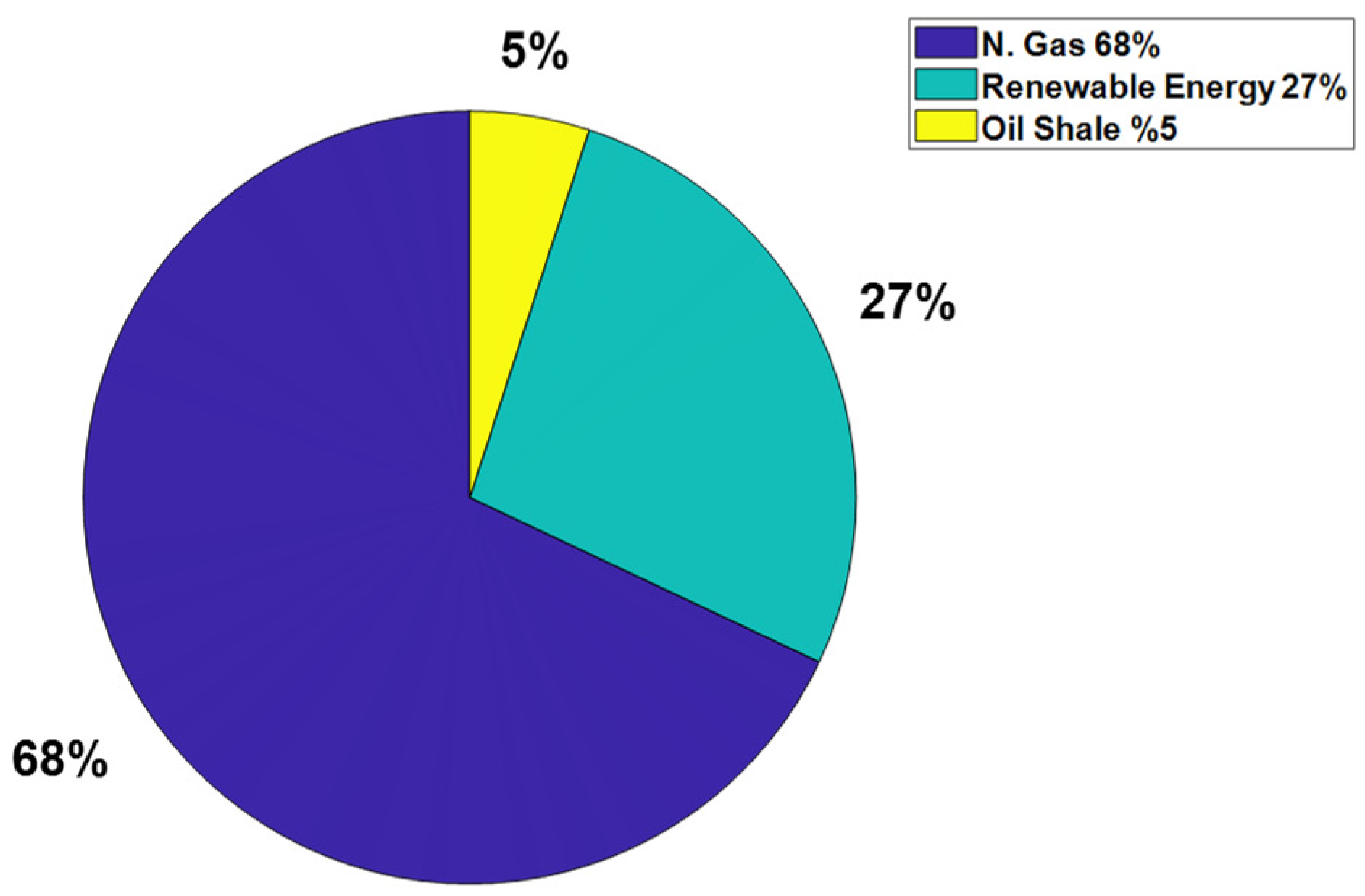
Figure 2.
Peak Load Demand in Jordan (1980-2022) [5].
Figure 2.
Peak Load Demand in Jordan (1980-2022) [5].
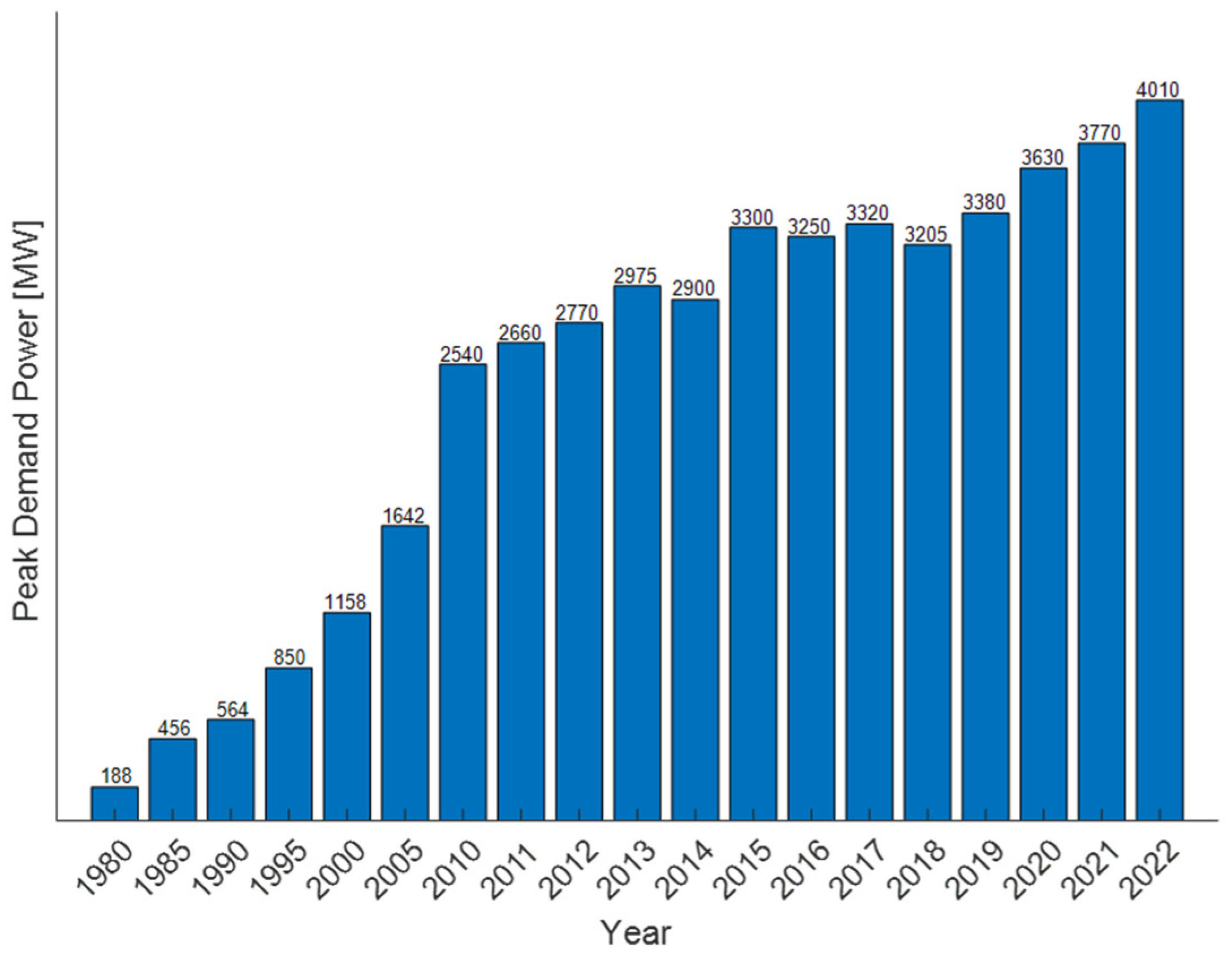
Figure 3.
Relationships between different Elements of the Smart Grid [27].
Figure 3.
Relationships between different Elements of the Smart Grid [27].
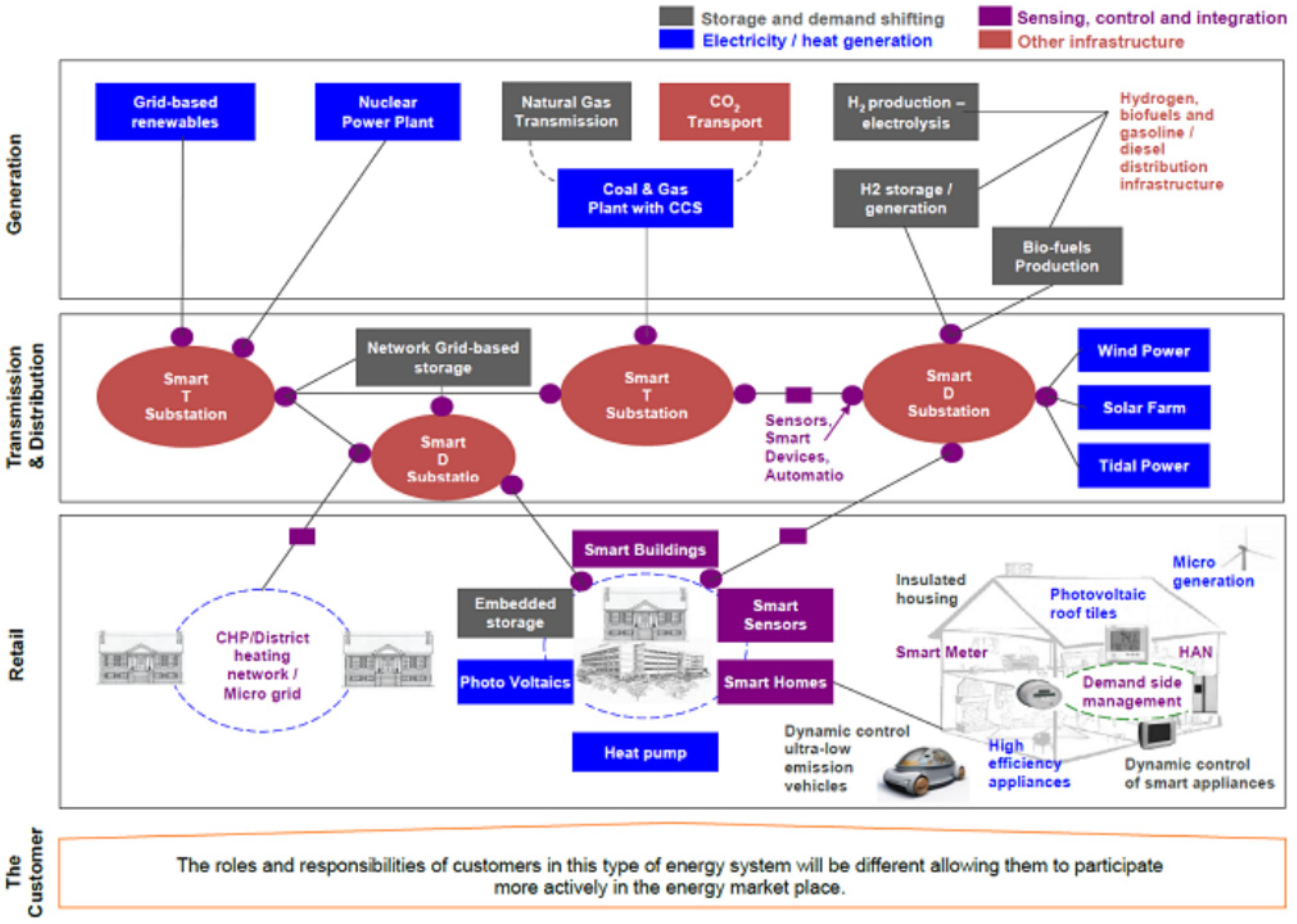
Table 2.
Efficiency of the Transmission and Distribution Networks in Jordan [4,12,13,14,15,16,17,18,19,20,21,22,23,24,25].
| Year | Transmission Lines | Distribution Networks | ||
|---|---|---|---|---|
| NEPCO’s Network | JEPCO’s Network | EDCO’s Network | IEDCO’s Network | |
| 2018 | 1.98% | N/A | 11.88% | 10.38% |
| 2019 | 2.18% | 13.06% | 11.88% | 11.72% |
| 2020 | 1.72% | 14.26% | 12.80% | 11.68% |
| 2021 | 1.72% | 14.28% | 12.55% | 10.99% |
| 2022 | 1.94% | 14.29% | 12.04% | 11.94% |
Disclaimer/Publisher’s Note: The statements, opinions and data contained in all publications are solely those of the individual author(s) and contributor(s) and not of MDPI and/or the editor(s). MDPI and/or the editor(s) disclaim responsibility for any injury to people or property resulting from any ideas, methods, instructions or products referred to in the content. |
© 2023 by the authors. Licensee MDPI, Basel, Switzerland. This article is an open access article distributed under the terms and conditions of the Creative Commons Attribution (CC BY) license (http://creativecommons.org/licenses/by/4.0/).
Copyright: This open access article is published under a Creative Commons CC BY 4.0 license, which permit the free download, distribution, and reuse, provided that the author and preprint are cited in any reuse.