

Submitted:
26 December 2023
Posted:
27 December 2023
You are already at the latest version
Preprints on COVID-19 and SARS-CoV-2
Abstract
COVID-19 has become a pandemic which resulted in measures being taken for health and safety of people. The spreading of the disease was particularly evident in indoor spaces, where people tend to get overcrowded. One such place is the airport where a plethora of passengers flow to common places, such as coffee shops, duty free shops as well as toilets and gates. Guiding the passengers to less overcrowded places within the airport may be a solution to less spreading. In this paper we suggest a passenger routing algorithm whereby the passengers are guided to less crowded places by using a weighting factor, which is minimised to accomplish the desired goal. We modeled a number of shops in an airport using the AnyLogic software and we tested the algorithm showing that the exposure time is less with routing and that the people get appropriately spread to the common spaces, thus, preventing overcrowding.
Keywords:
routing
; weight
; COVID-19
; overcrowding
; virus
; passenger
1. Introduction
The COVID-19 and other airborne-transmitted diseases have significant impacts on human health, even leading to death. COVID-19 is considered a highly transmissible disease [1]. Particularly in enclosed spaces, areas with crowding often increase the risk of epidemic spread of infections. Airports are crowded places where people move towards duty-free shops, restaurants, and gates. Therefore, there is a need to organize people’s movement within the airport to avoid crowding. Two recent studies demonstrated modeling the spread and human behavior for the transmission of COVID-19 in indoor spaces, respectively [2,3]. The virus transmission occurs either through droplets or via direct contact of an individual with another person [4].
To prevent the transmission of COVID-19 through the air, it is necessary to maintain a specific number of individuals per square meter. Consequently, it is feasible to organize the passenger flow heading towards or already present in various areas of the airport in order to minimize the risk of virus transmission. Passenger counting can be conducted from the moment they disembark the plane or perform check-in and can continue throughout their journey to different airport areas.
The investigation of passenger flow in airport terminals involves various methods. The conventional method primarily relies on on-site surveys, including passenger counting and questionnaires, which are used to validate model results or signals from sensors [5]. However, this approach demands extensive work, particularly in large airports. To address this, indoor sensors and technologies like Wi-Fi information [6], mobile phone data [7], RFID [8], motion sensors [9], PIR sensors [10] and surveillance videos [11] have been employed in airports and other buildings. Simulation models have also been developed to analyze and predict passenger flow in airport terminals.
The flow of passengers in an airport terminal comprises two main components: service counters where passengers stay and movements between these counters. Queuing theory is used to describe how passengers wait in line at service counters like check-in, security, and boarding [12]. The transfer conditional probability table is a common mathematical method to analyze interactions and transfer probabilities between each counter [13,14].
Routing of passenger can be of extreme importance in indoor spaces in order to avoid being overcrowded. As such, an efficient scheme is mandatory to guide passengers in airports to particular common spaces in a manner that promotes sparsity. Since passengers flow through the airport in large numbers, attempting to keep them safe and within distance in common spaces is of utmost importance.
This paper explores the domain of simulation using the sophisticated features offered by the AnyLogic software. Our simulation framework is designed to capture the intricacies inherent in both indoor complexes and the dynamic environments found in airports. Central to our methodology is the creation and application of a straightforward yet highly efficient weighting factor, which, when deployed, acts as a pivotal catalyst, yielding effective outcomes in the domain of passenger routing.
A foundational assumption guiding our research involves the acquisition of data through a dual-channel approach, specifically employing surveillance cameras and extracting nuanced preferences from mobile phones. Through the synergistic use of these data sources, our aim is to construct a comprehensive representation of passenger behaviors and interactions within the simulated spaces.
At the core of our strategic approach is the judicious guidance of individuals toward common areas within the airport. Leveraging the capabilities of the weighting factor, we endeavor to optimize the movement of passengers in a manner that mitigates congestion and, consequently, reduces the potential exposure time to viruses.
2. Related Work
Due to the complexity and size of airport terminals, agent-based simulation (ABS) models are employed to understand continuous changes in passenger flow and distribution. ABS treats each passenger as an individual research subject, using a social force model to control their movements [15].
In [13], simulation has proven instrumental in understanding and assessing passenger movement during airport departure procedures. The authors’ methodology not only facilitates the evaluation but also the prediction of airport operational efficiency. Its application supports airport management in identifying operational bottlenecks, specifically related to challenges in flight schedule planning. Furthermore, it provides precise insights into how changes in infrastructure and operations impact airport functionality. In this study, they used simulation to examine various load factors associated with diverse flight schedules. The outcomes of the simulation emphasize the significant influence of the flight schedule on passenger flows. The proposed simulation framework and model show promise in foreseeing the effects of different flight schedules, serving as a proactive tool to refine them before implementation. These findings suggest that integrating the creation of flight schedules with passenger simulation analysis could effectively address challenges in managing passenger flow within airport terminals.
In [16], the Anylogic software serves to simulate human behavior within specific building structures, generating valuable data on people flow. This data is pivotal in establishing a people flow model, subsequently applied to estimate human occupancy through the utilization of a Kalman filter. An initial simulation involving a single room and corridor demonstrates the superior performance of the Kalman filter estimation, based on the identified model, compared to estimations relying solely on sensors. Furthermore, this methodology is substantiated through a real-world experiment where authentic cameras and beam sensors are installed in a corridor and room. The results of this practical experiment reinforce the efficacy of the estimation technique that combines the Kalman filter and AnyLogic, surpassing the performance of relying exclusively on sensors. This proposed method offers a viable solution to the challenge of model identification for estimating building occupancy, particularly in scenarios where real data on people flow is limited.
In [17], the authors utilized Anylogic to analyze passenger flow at the entrance of Wulin Station. By comparing various quantities of ticket windows based on different pedestrian arrival rates, they reached a conclusion: During high-traffic hours (with a pedestrian arrival rate of 2500/hour), it is more efficient to open 4 ticket windows. Conversely, during low-traffic hours (with a pedestrian arrival rate of 1500/hour), it is preferable to operate 2 ticket windows. It’s important to note that due to time constraints and the closure of other subway lines in Hangzhou, the precise statistics regarding pedestrian arrival rates during peak and off-peak hours were not determined in this article. The simulation model employed in this study can be applied not only to other subway entrances but also easily adaptable for altering the pedestrian arrival rate.
In [18], the paper introduces a methodology aimed at modeling the movement of entities within a hub airport, demonstrated through the simulation of the New Barcelona International Airport, a comprehensive and intricate case study. The principles delineated in this approach are transferable to other airports with similar configurations. The simulation of entities movement within a hub airport heavily relies on accurately interpreting diverse data types. The article meticulously delineates the categorizations of these components, the primary model parameters, and their role in establishing a presentation format for incoming entities. To simulate the movement of these entities within the airport, the proposal involves employing a Simple Reflexive agent, providing a detailed analysis of the time and delays arising from their actions. The methodological approach leans on the Specification and Description Language (SDL), a widely acknowledged formal graphical and standard language. In the highlighted case study, SDL played a crucial role, acting as a primary facilitator for effective communication among all stakeholders.
In [19], this research introduced a simulation approach employing Anylogic software to simulate the movement patterns of passengers both entering and exiting a metro station, with a specific emphasis on a specific line. The simulation logic was divided into three core components: the inflow of passengers, outflow of passengers, and the arrival of trains. Train arrivals were synchronized with the generation of passengers using hourly flow distributions. Different scenarios of passenger flow distributions were tested to determine the optimal number of functioning ticket windows. Selection criteria focused on ensuring that ticket level waiting times aligned with train intervals and that ticket offices utilized their staff efficiently. The simulation employed both 2D and 3D perspectives to visualize pedestrian behavior and identify congested areas. Analyzing these flow patterns led to suggestions for optimizing exit and entrance gates. The model effectively demonstrated its ability to evaluate the overall operational status while also proposing practical improvements for the organization and layout of the facility.
In [20], the authors address the effective management the Emergency Department (ED) involves navigating a highly intricate landscape, given the admission of patients with a spectrum of ailments and varying degrees of urgency. This complexity demands the coordination of diverse activities, encompassing both human and medical resources. The nuanced nature of ED management poses challenges, notably overcrowding, which can adversely impact the quality and accessibility of healthcare services.
This study strategically employs Process Mining techniques within a tangible case study, focusing on the operations of the ED. Leveraging the ED database, advanced discovery techniques are applied to unravel potential patient pathways based on information acquired during the triage process. The overarching goal is to generate precise process models that not only facilitate the replication of ED workflows but also enable the prediction of patient trajectories within this dynamic healthcare setting.
3. Simulation Modelling
Modeling is the process of creating a model, which is a representation of a real system in a virtual environment. The model is usually a simplified version of the system. In general, the term model means a mathematical model that is executed with the help of process simulation programs. A mathematical model can be deterministic, where its inputs and outputs are fixed values; stochastic, where at least one of its inputs or outputs are stochastic; and dynamic, where there is time dependence between its variables. Typically, a simulation model is stochastic or dynamic [21]. According to Shannon [22], simulation is the process of designing a model of a real system and conducting experiments with that model in order to either understand the system’s behavior or evaluate various strategies for operating the system. There are three main modeling methods:
- System Dynamics Modeling (SD)
- Discrete Event Modeling (DE)
- Agent Based Modeling (AB)
The dynamic systems (SD) simulation method was created by MIT professor Jay Forester in the 1950s [23] and is a deterministic method that has a high level of abstraction, i.e., the model does not include much information from the actual system being simulated. Today, this method is mostly used in long-term strategic models, such as, for example, models that represent people, products, events, etc. [24]. In the present research, the process simulation software AnyLogic by The AnyLogic Company was used to model the systems, which is a computational package that can solve and simulate systems with the three methods (SD, DE, AB). AnyLogic software is used to model and simulate a variety of systems in different industry sectors such as the supply chain, transports (land and air), ports, hospitals, airports, production processes, etc. An important advantage of AnyLogic software is that it enables the modeling of a system in a two-dimensional or three-dimensional graphical environment.
4. COVID-19 Transmission Simulation Modeling
According to Chen et al [4], COVID-19 can spread in two primary ways (Figure 1). The first method of transmission involves droplets, and the second involves direct contact between a virus-carrier and a healthy individual. There are two subcategories of droplet transmission, depending on their sizes. The first subcategory includes close contact between a carrier and a healthy individual as well as contact with a contaminated surface when the droplets are larger than 5μm. When the droplets are smaller than 5μm, the COVID-19 is transmitted by the aerosol.
In the model presented in this research, the transmission of COVID-19 between passengers occurs only through close contact. Specifically, in the model it is assumed that a passenger who is a carrier of the virus can transmit the virus either if he comes too close to a healthy passenger or if he coughs or sneezes at a certain distance from the healthy passenger. According to the recommendations of the World Health Organization, anyone who comes into contact with a possible or confirmed carrier of COVID-19 at a distance of less than or equal to 1 meter for 15 minutes is also considered to be a possible case [25]. Therefore, in the model, we consider that an individual who has COVID-19 can transmit the virus over a distance of less than or equal to 1 meter. In the case of transmission of the virus through coughing or sneezing, we consider a healthy passenger to have become infected, when a passenger carrying the virus coughs or sneezes within a radius of less than or equal to 2.5 meters [26]. Also, we consider the contagiousness of a sneeze/cough to lasts 15 seconds, and a passenger carrying the virus is considered to cough or sneeze every 15-20 seconds. During the simulation, the cumulative exposure time is used to calculate the exposure of a healthy passenger to the virus according to the formula (1):
where, is the total exposure time of close contact (≤1 m) of a healthy passenger with a passenger carrying the virus,
is the total exposure time to a cough/sneeze of a healthy passenger with a carrier of the virus.
It should be highlighted that in the model there are no asymptomatic carriers of the virus and furthermore all carriers can transmit the virus with the same probability.
5. Simulation Modeling of Transmission Inside the Stores with Passenger Routing and Not
The Figure 2 shows the floor plan of an airport area with stores, in which the transmission of COVID-19 will be modelled among passengers. As can be seen in the Figure 2, there are 4 types of stores and 2 stores per type. The stores may represent restaurants, coffee shops, duty-free shops, bathrooms and any other store that we can find in a typical airport.
Each passenger, after entering the airport area with the stores, has the option to visit each of the 4 types of stores based on their preferences. It should be noted that each passenger can visit only one store of each specific type of stores and only one time. Once the passenger has visited all the stores wanted to visit, the passenger exits the airport area with the stores.
Each store has a maximum occupancy limit depending on the square meters of the store. If the store reaches its maximum capacity, then the passenger who wants to enter waits outside the store until a passenger inside the store leaves. The maximum occupancy limit of the stores is set by dividing the square meters of the store by 4 (4 square meters for every passenger). During COVID-19, the majority of countries were required to adhere to the 4 square meter rule in indoor spaces.
5.1. Simulation of COVID-19 Transmission between Passengers in an Airport Area with the Stores
For the simulation, user must provide some input data to the model. In particular, the user must specify how many passengers will enter the airport area with the stores, the time delay between each passenger’s arrival, and how much time they will spend in each type of store. The input data are displayed in Table 1.
It should be noted that the times spent by passengers in each of the stores is not based on real data. However, in the context of the comparison presented in this research, the result is not affected by these values because they are fixed at every simulation.
For the simulation, a list of passengers must be given as input from the user to the model, which will include the preferences (Store A, Store B, Store C, Store D) of each passenger and whether they are carriers of COVID-19. In the context of this study, a comparison of the transmission of COVID-19 amongst passengers is made, in the case of passengers visiting the stores in a random order versus visiting the stores in a preset order calculated by a routing algorithm. For that reason, a Python script was developed in order to generate a list of passengers with random preferences and a random order of store visits.
In the case of passenger routing at airport area with the stores, an algorithm was developed that directs passengers based on their preferences but also based on the number of passengers in each store at a specific time, the number of waiting passengers outside the stores and the number of passengers are on route to each store. The algorithm also takes into account the maximum allowed capacity of each store (or bathroom) as well as the time that one passenger spends at the store. When a passenger enters the airport area with the stores, the algorithm calculates a weighting factor for each store and then, based on the passenger’s preferences, ranks the stores in ascending order based on this factor. After calculating the weighting factors, the algorithm directs the passenger to the option with the lowest weighting factor.
When the passenger exits the store, the algorithm recalculates the weighting factors for each store that the passenger wants to visit next, and if a better sequence of store visits is found, then the routing is updated and the passenger goes next to the option with the lowest coefficient risk. After the passengers finish visiting all the stores they want, they exit the airport area with the stores. The formula for calculating the weighting factor for each store is given in (2) [27].
where,
is the number of passengers waiting to enter the store i,
is the number of passengers on route to the store i,
is the number of passengers inside the store i,
is the maximum allowed capacity of the store i,
is the time that one passenger spends in the store i,
is a negative constant (e.g., -10000)
The constant is participate in the formula in order to route the passenger to stores that are not full (maximum capacity limit).
6. Results
For the simulation, a sample of passengers was given as input to the model from which:
- 85% of passengers will want to go shop clothing
- 65% of passengers will want to eat
- 70% of passengers will want to drink coffee
- 75% of passengers will want to go to the bathroom
Regarding the percentage of passengers who have COVID-19, simulations were performed with percentages of passengers infection rate of 2%, 4%, 7%, 10%, 15% and 20%. Also, for each percentage of infected passengers, 40 simulations (20 simulations without passenger routing and 20 simulations with passenger routing) were performed and the results presented below are the averages of the results.
The results of the simulations are given below in Figure 3. In particular, Figure 3 shows the total exposure time of healthy passengers to COVID-19 inside the airport area with the stores for the case of the passengers randomly visiting the stores and for the case of the passengers routed to the shops for the different passengers infection rates. According to the results, it is observed that by using the algorithm to guide the passengers in every case, there is a reduction in the transmission of the virus.
The maximum number of passengers per shop and simulation with and without routing, is shown in Table 2. According to Figure 4, with the routing of passengers in the airport area with the stores, a decrease in the maximum number of passengers in each store can be seen. For instance, at the Store A (Store A (1) and Store A (2)), for an infected passenger rate of 2%, the average maximum number of passengers in the case without passenger guidance it is 12.85 and 11.35 while in the case with passenger routing is 7.35 and 8.30 respectively. The results show that passenger navigation inside a airport area with the stores considerably contributes to preventing congestion in the stores and, as a result, lessens the spread of COVID-19.
7. Simulation Modeling of Small Airport
In this section, the transmission of COVID-19 between passengers in a virtual airport is simulated. The logic followed is the same as that of the transmission of COVID-19 between passengers in an airport area with the stores but in this simulation model we model the whole airport. Figure 5 shows the floor plan of the airport. The airport stores consist of 2 restaurants, 2 coffee shops, 2 bathroom and 2 Other shops (e.g., duty-free shops, money exchange shops etc.)
The airport passengers enter the airport through the entrance. The logic diagram that each passenger follows is given in Figure 6. Each passenger in the model has the option to check-in online before arriving at the airport or to check-in at the check-in desks inside the airport. We assume that there is no passenger who has checked-in online and wishes to hand over his/her suitcase upon arrival at the airport.
Therefore, upon entry, the model checks if the passenger has checked-in online or not. If the passenger has checked-in online, the passenger proceeds to the security control area; otherwise, it is checked if the check-in desk has opened for the passenger’s flight number. If the check-in desk hasn’t opened, the passenger will have to wait in the waiting area until it opens. In the case where the check-in desk is open, the passenger can proceed to the check-in desks. The passenger then proceeds to the security control area. After the check-in, the passengers can visit one of the shops according to their preferences, use the bathroom or wait in the waiting area until boarding of his/her flight begins.
It is important to emphasize that in the event that the passenger has passed the control and his/her flight begins boarding, the passenger goes to the boarding area as soon as the activity he/she is doing at that time is finished. Also, in the model, passengers are separated into those travelling with economy class tickets and those travelling with business class tickets. The main difference is that during check-in and during boarding, they are served in different queues.
For the simulation the user must provide some input data to the model. In particular, the user states the boarding start time before the departure of each flight, the check-in start time of each flight, the number of passengers on each flight, the total number of simulated passengers and also the passenger visit times inside the stores. In Table 2 below, the input variables of the model are given as well as their corresponding values that were used in the context of this research.
In addition to the variables given in the Table 2, the flights departure schedule is also given as input to the model. Specifically, for each flight, the name, the departure time and the departure gate are given. As shown in Table 3, the user enters the number of passengers of each flight. When a passenger enters the model, the passenger takes a seat from the next available flight. When a flight reaches its maximum capacity (depending on the number of passengers allowed), it closes and no longer takes on more passengers.
The following passenger will board to next available flight. It is important to emphasize, that all passengers in the simulation must board to their flights. In the model, as shown in Table 4, the total number of passengers during the simulation is also given as input. Therefore, setting the maximum number of passengers per flight also results in the number of flights. In the simulation presented in this research, the number of flights is 13 and given in Table 3. The departure time and gate of each flight were randomly selected. The simulation starts two hours before the departure of the first flight.
For the simulation, a list of the passengers must be given by the user. Specifically, each passenger entering the model has the following characteristics:
- Carrier of COVID-19 (True or False)
- Online Check-in (True or False)
- Flight Number
- Ticket Status (Business or Economy)
- Preferences (Other, Restaurant, Coffee Shop, Bathroom)
As in the simulation model of the transmission of COVID-19 among passengers of an airport area with the stores, simulations were also carried out to compare the transmission of the virus for passengers visiting the shops inside the airport with and without routing. The simulations were carried out with percentages of infected passengers of 2%, 4%, 7%, 10%, 15%, and 20%.
Results
8. Conclusions
In this paper, our reliance on the AnyLogic software enabled us to intricately simulate diverse scenarios within both an indoor complex and the intricate environment of an airport. The crux of our methodology lied in the incorporation of a straightforward yet potent weighting factor through our application, a factor that proved instrumental in achieving favorable outcomes by efficiently guiding passengers through various spaces.
Our conjecture revolves around the notion that the data required for this simulation was sourced from a combination of surveillance cameras and the preferences discerned from mobile phones. By synergizing these data streams, we constructed a comprehensive understanding of passenger behavior and flow within the simulated spaces.
This innovative approach strategically directed individuals towards communal areas within the airport, employing the weighted factor to optimize passenger routing. The paramount objective was to curtail potential virus exposure by minimizing the time individuals spend in high-traffic zones. Through the seamless integration of technology, behavioral insights, and simulation prowess, our methodology offered a robust framework for enhancing the efficiency and safety of passenger movement in complex environments.
References
- Li, G.; Hu, R.; Gu, X. A close-up on COVID-19 and cardiovascular diseases. Nutr. Metab. Cardiovasc. Dis. 2020, 30, 1057–1060. [Google Scholar] [CrossRef] [PubMed]
- Cuevas, E. An agent-based model to evaluate the COVID-19 transmission risks in facilities. Comput. Biol. Med. 2020, 121, 103827. [Google Scholar] [CrossRef] [PubMed]
- Harweg, T.; Bachmann, D.; Weichert, F. Agent-based simulation of pedestrian dynamics for exposure time estimation in epidemic risk assessment. J. Public Health 2021, 1–8. [Google Scholar] [CrossRef]
- Chen, L.; Ban, G.; Long, E.; Kalonji, G.; Cheng, Z.; Zhang, L.; Guo, S. Estimation of the SARS-CoV-2 transmission probability in confined traffic space and evaluation of the mitigation strategies. Environ. Sci. Pollut. Res. 2021, 28, 42204–42216. [Google Scholar] [CrossRef] [PubMed]
- Liu, X.; Li, L.; Liu, X.; Zhang, T.; Rong, X.; Yang, L.; Xiong, D. Field investigation on characteristics of passenger flow in a Chinese hub airport terminal. Build. Environ. 2018, 133, 51–61. [Google Scholar] [CrossRef]
- Nikoue, H.; Marzuoli, A.; Clarke, J.P.; Feron, E.; Peters, J. Passenger flow predictions at sydney international airport: A data-driven queuing approach. arXiv 2015, arXiv:1508.04839. [Google Scholar]
- Zhong, G.; Wan, X.; Zhang, J.; Yin, T.; Ran, B. Characterizing passenger flow for a transportation hub based on mobile phone data. IEEE Trans. Intell. Transp. Syst. 2016, 18, 1507–1518. [Google Scholar] [CrossRef]
- Li, N.; Calis, G.; Becerik-Gerber, B. Measuring and monitoring occupancy with an RFID based system for demand-driven HVAC operations. Autom. Constr. 2012, 24, 89–99. [Google Scholar] [CrossRef]
- Soltanaghaei, E.; Whitehouse, K. Practical occupancy detection for programmable and smart thermostats. Appl. Energy 2018, 220, 842–855. [Google Scholar] [CrossRef]
- Benezeth, Y.; Laurent, H.; Emile, B.; Rosenberger, C. Towards a sensor for detecting human presence and characterizing activity. Energy Build. 2011, 43, 305–314. [Google Scholar] [CrossRef]
- Zou, J.; Zhao, Q.; Yang, W.; Wang, F. Occupancy detection in the office by analyzing surveillance videos and its application to building energy conservation. Energy Build. 2017, 152, 385–398. [Google Scholar] [CrossRef]
- McKelvey, F.X. Use of an analytical queuing model for airport terminal design. Transp. Res. Rec. 1988. [Google Scholar]
- Alodhaibi, S.; Burdett, R.L.; Yarlagadda, P.K. Framework for airport outbound passenger flow modelling. Procedia Eng. 2017, 174, 1100–1109. [Google Scholar] [CrossRef]
- Wu, P.P.Y.; Pitchforth, J.; Mengersen, K. A hybrid queue-based Bayesian network framework for passenger facilitation modelling. TRansportation Res. Part C Emerg. Technol. 2014, 46, 247–260. [Google Scholar] [CrossRef]
- Wu, P.P.Y.; Mengersen, K. A review of models and model usage scenarios for an airport complex system. Transp. Res. Part A Policy Pract. 2013, 47, 124–140. [Google Scholar] [CrossRef]
- Li, K.; Zhang, K.; Li, X.; Xi, J.; Fang, H.; Jia, Z. Building occupancy estimation with people flow modeling in AnyLogic. In Proceedings of the 2016 12th IEEE International Conference on Control and Automation (ICCA), Kathmandu, Nepal, 1–3 June 2016; pp. 669–672. [Google Scholar]
- Yang, Y.; Li, J.; Zhao, Q. Study on passenger flow simulation in urban subway station based on anylogic. J. Softw. 2014, 9, 140–146. [Google Scholar]
- i Casas, P.F.; Casanovas, J.; Ferran, X. Passenger flow simulation in a hub airport: an application to the Barcelona International Airport. Simul. Model. Pract. Theory 2014, 44, 78–94. [Google Scholar] [CrossRef]
- Ghali, H.S.; Essawy, Y.A.; Abdullah, A.; Nassar, K. Analyzing Passenger Flow Lines and Optimizing the Facility Layout Management for Cairo Metro Elevated Stations. In Proceedings of the Construction Research Congress 2022, Arlington, VA, USA, 9–12 March 2022; pp. 1327–1336. [Google Scholar]
- Duma, D.; Aringhieri, R. Mining the patient flow through an emergency department to deal with overcrowding. In Proceedings of the Health Care Systems Engineering: HCSE, Florence, Italy, 3 May 2017; pp. 49–59. [Google Scholar]
- Maria, A. Introduction to modeling and simulation. In Proceedings of the 29th Conference on Winter Simulation, Atlanta, GA, USA, 7–10 December 1997; pp. 7–13. [Google Scholar]
- Shannon, R.E. Systems simulation: the art and science. (No Title) 1975. [Google Scholar] [CrossRef]
- Forrester, J.W. Dynamic models of economic systems and industrial organizations. Syst. Dyn. Rev. J. Syst. Dyn. Soc. 2003, 19, 329–345. [Google Scholar] [CrossRef]
- Mahdavi, A. The art of Process-Centric Modeling with AnyLogic; AnyLogic Company: New York, NY, USA, 2020. [Google Scholar]
- WHO. Coronavirus disease 2019 (COVID-19): situation report 72,2020.
- Xiao, Y.; Yang, M.; Zhu, Z.; Yang, H.; Zhang, L.; Ghader, S. Modeling indoor-level non-pharmaceutical interventions during the COVID-19 pandemic: A pedestrian dynamics-based microscopic simulation approach. Transp. Policy 2021, 109, 12–23. [Google Scholar] [CrossRef]
- Anagnostopoulou, A.; Tolikas, D.; Spyrou, E.; Akac, A.; Kappatos, V. Analysis and AI simulation of passenger flows in an airport terminal. Sustainability 2024, 16, 1346. [Google Scholar] [CrossRef]
Figure 1.
COVID-19 transmission routes.
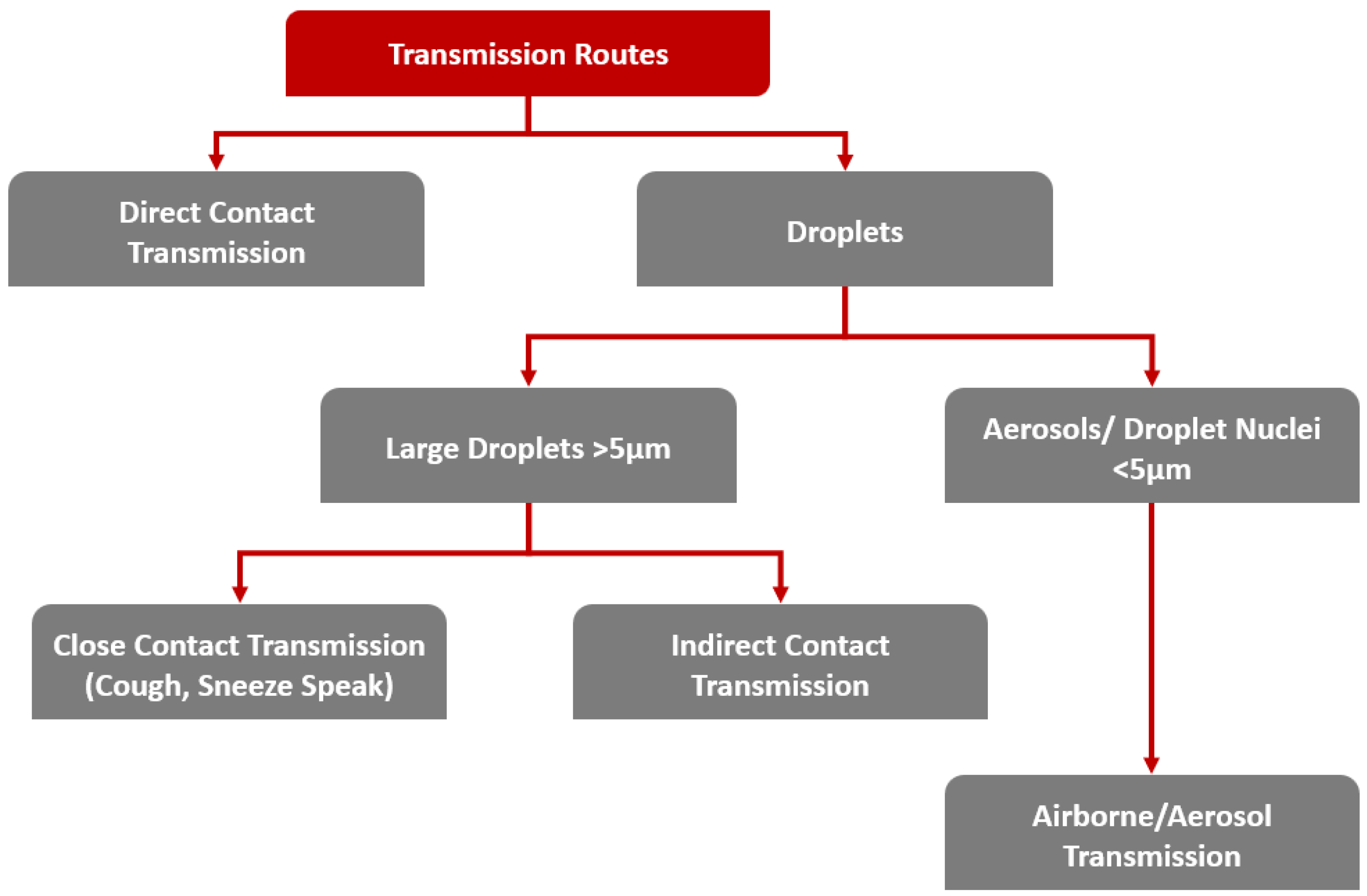
Figure 2.
Stores floor plan.
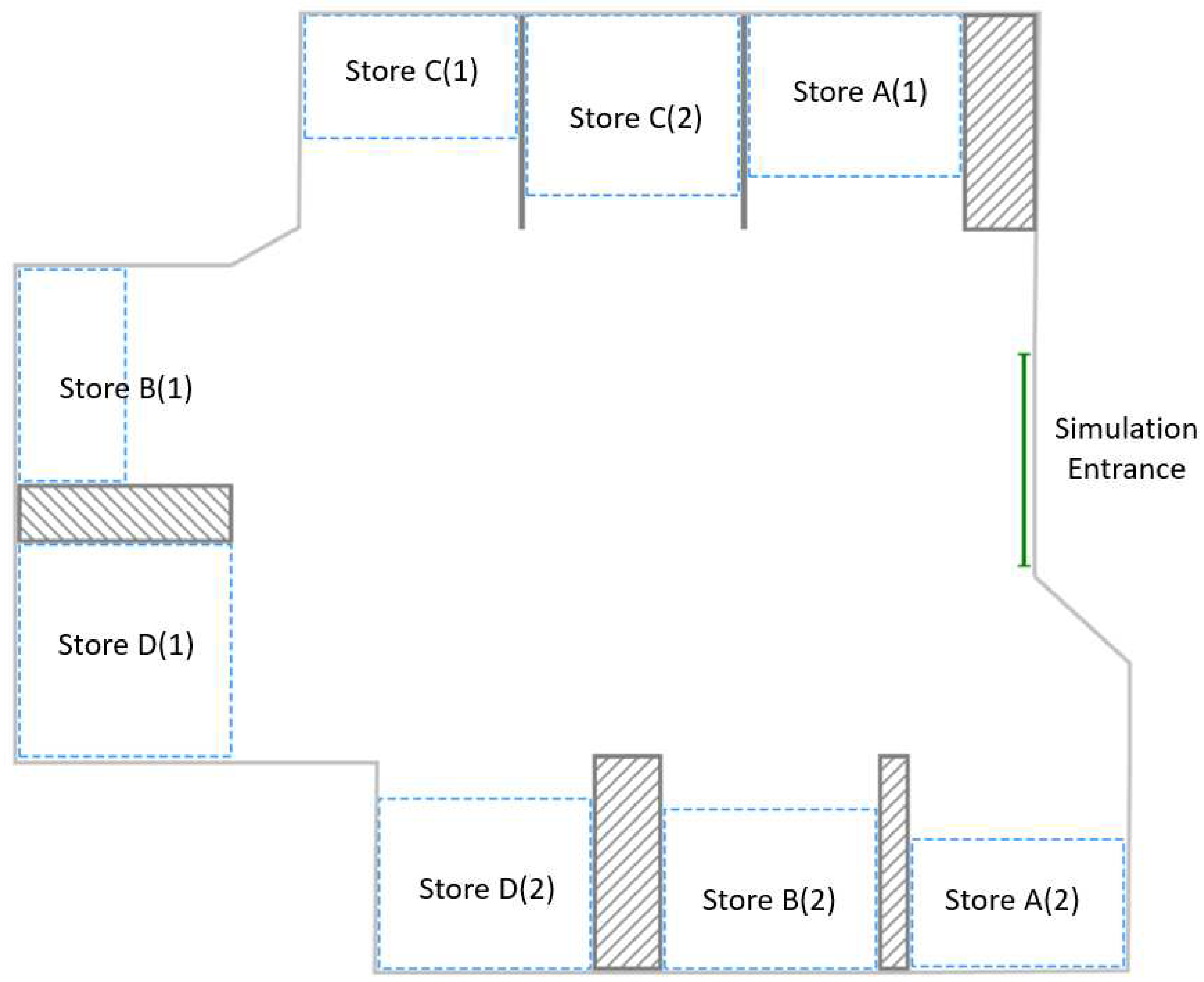
Figure 3.
Passenger exposure time at airport area with the stores.
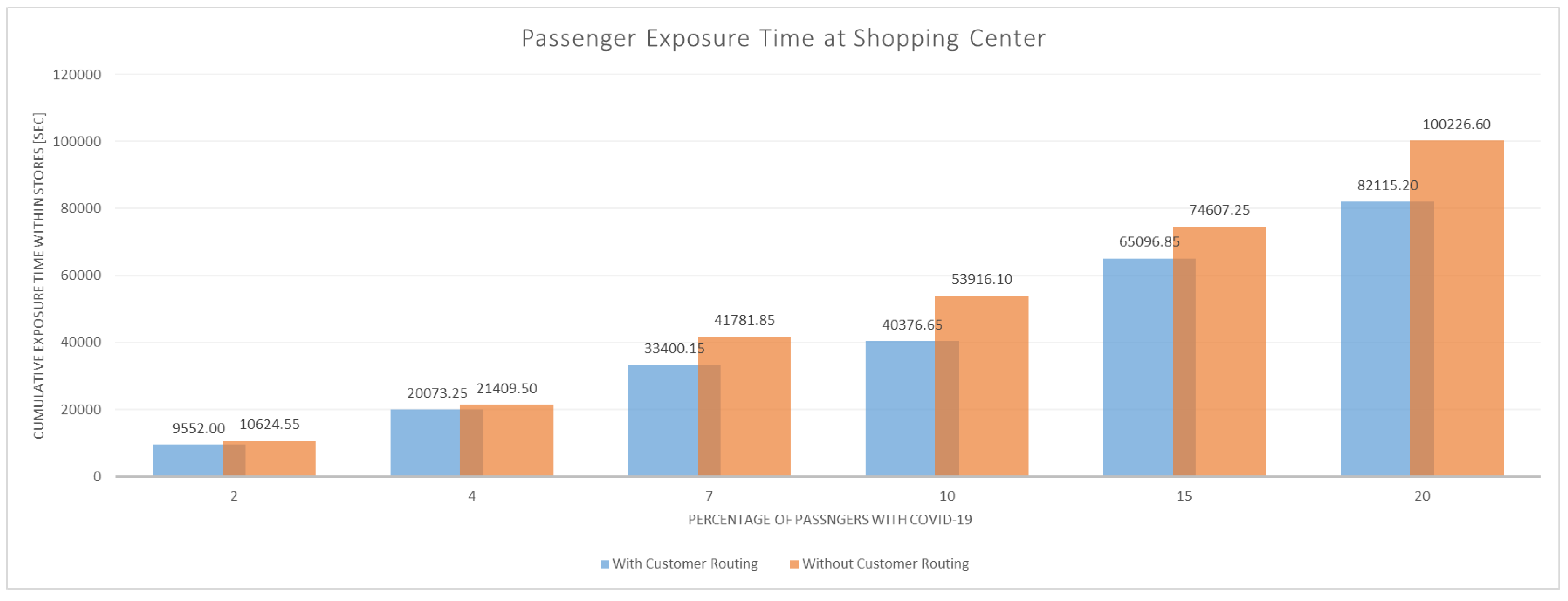
Figure 4.
Maximum number of passengers per store with and without routing.
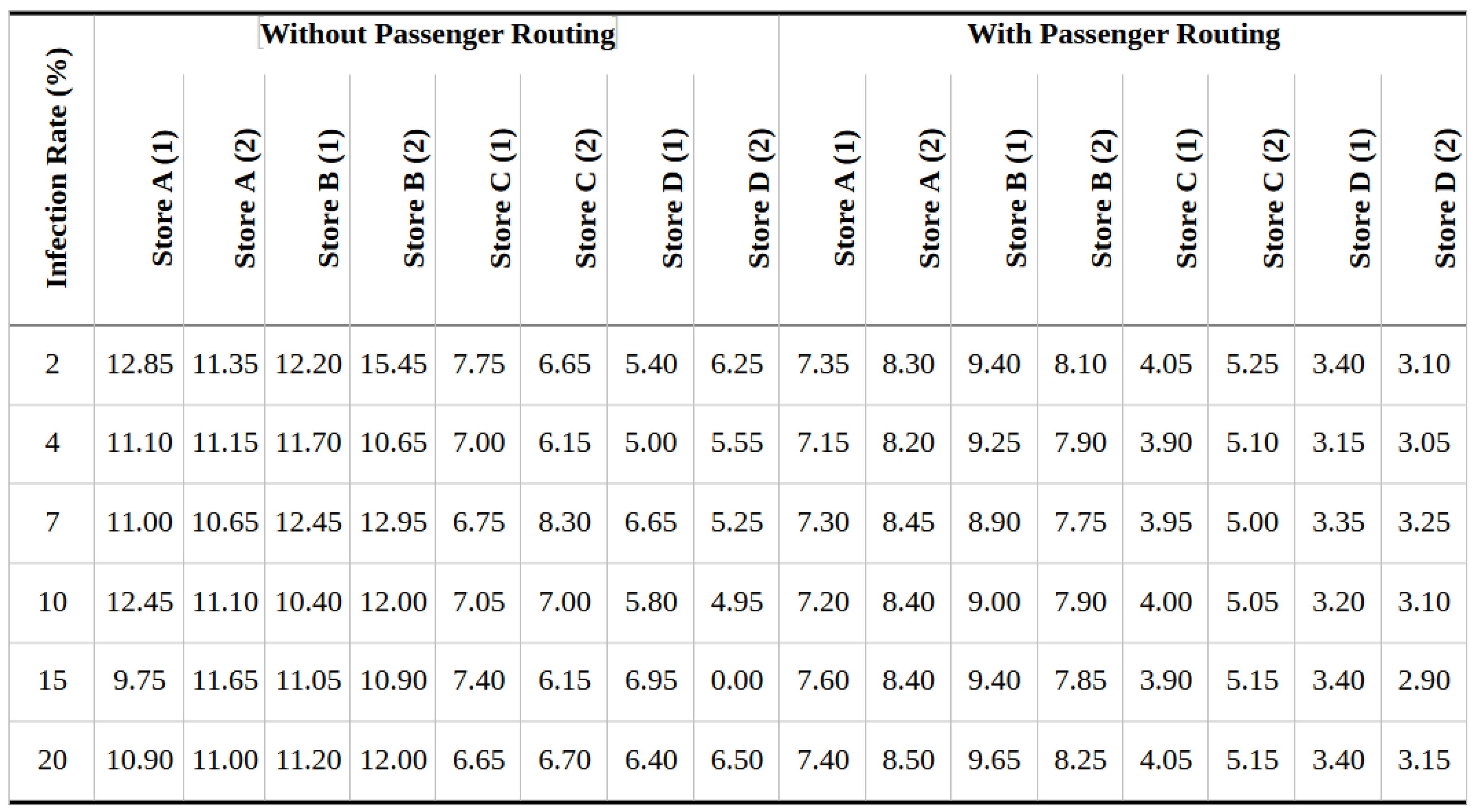
Figure 5.
Airport floor plan.
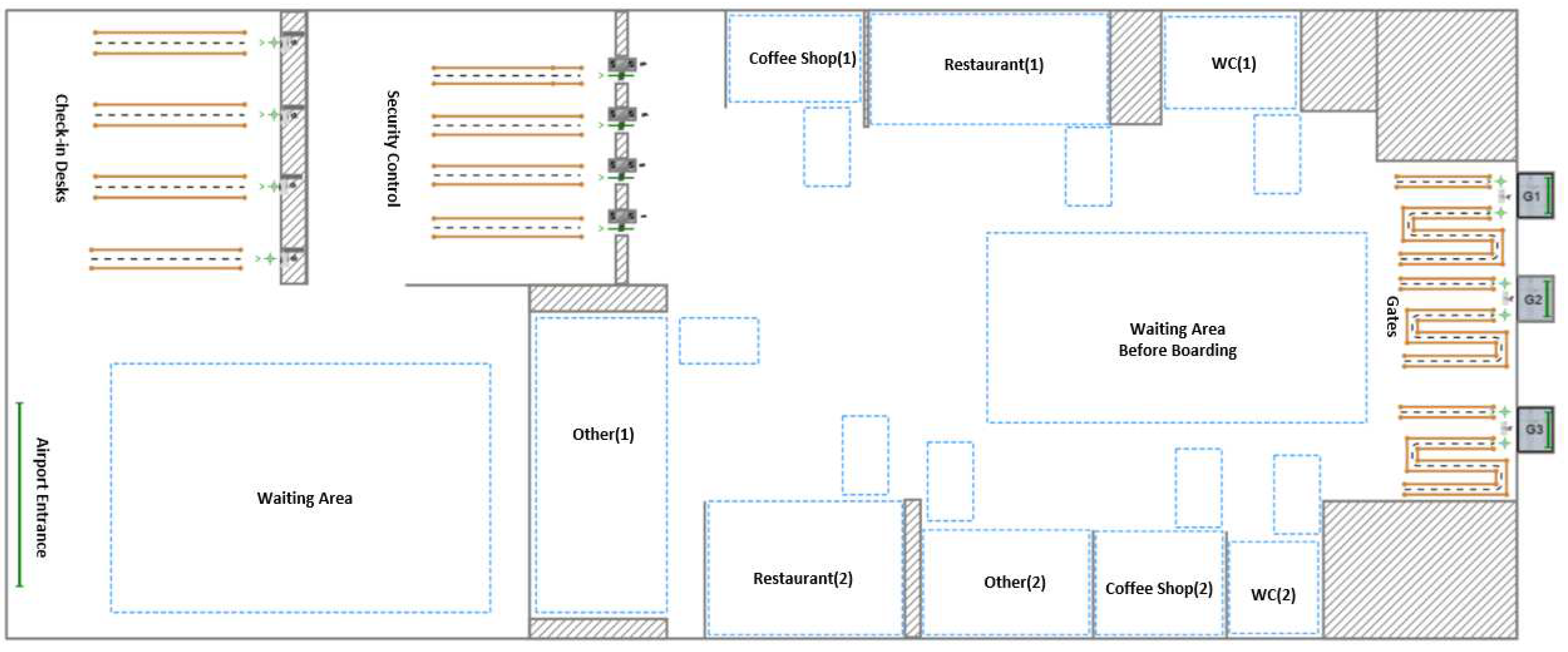
Figure 6.
Passengers logic diagram.
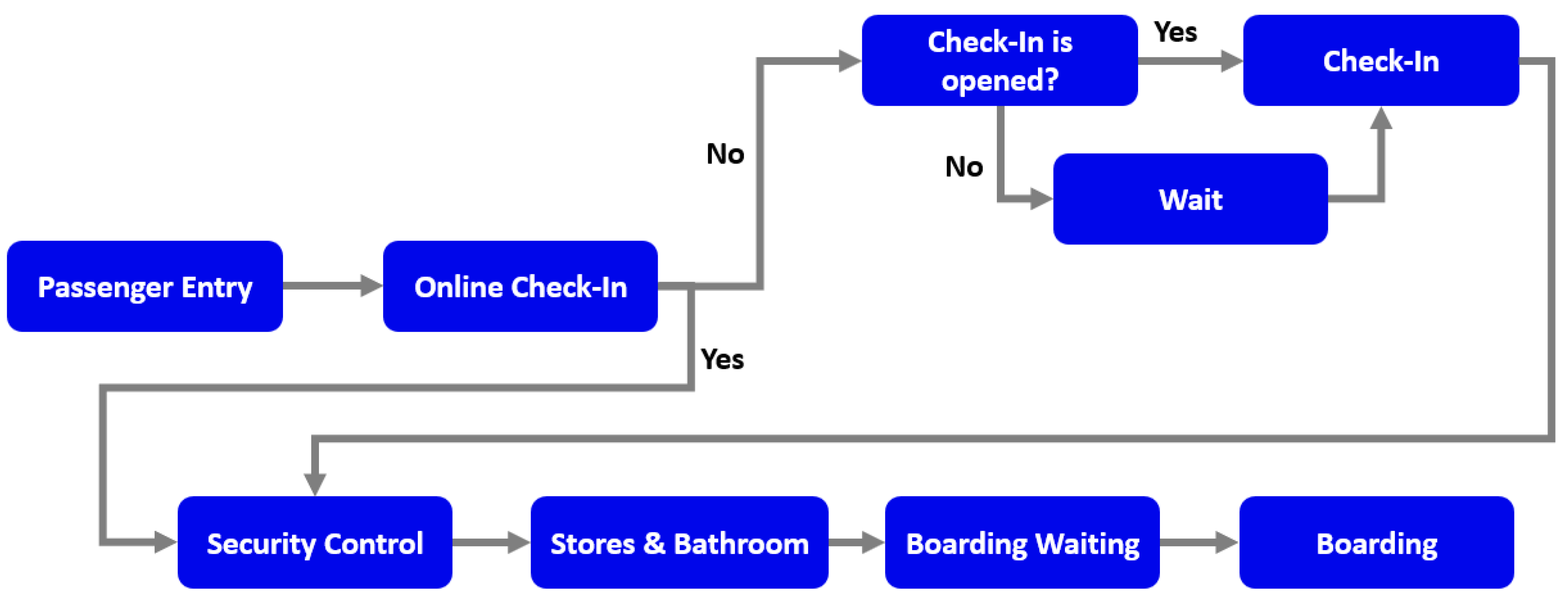
Figure 7.
Passenger exposure time at airport.
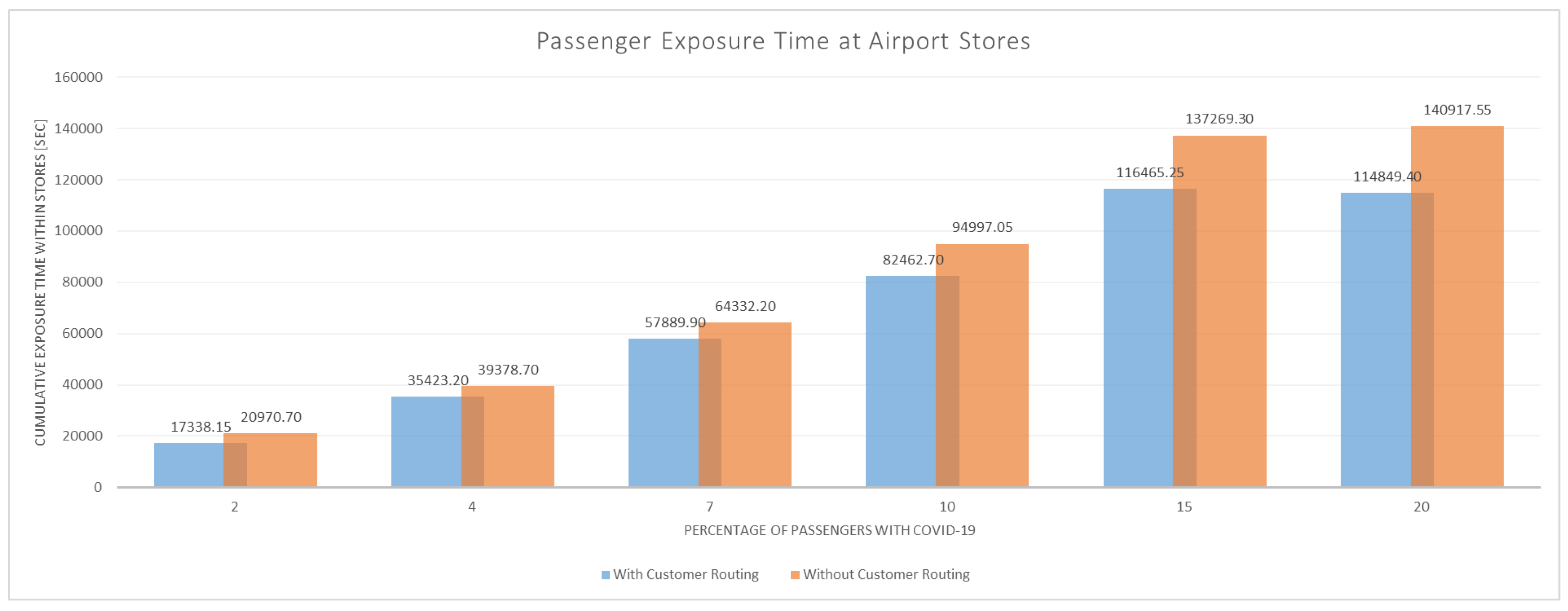
Figure 8.
Maximum number of passengers per store with and without routing.
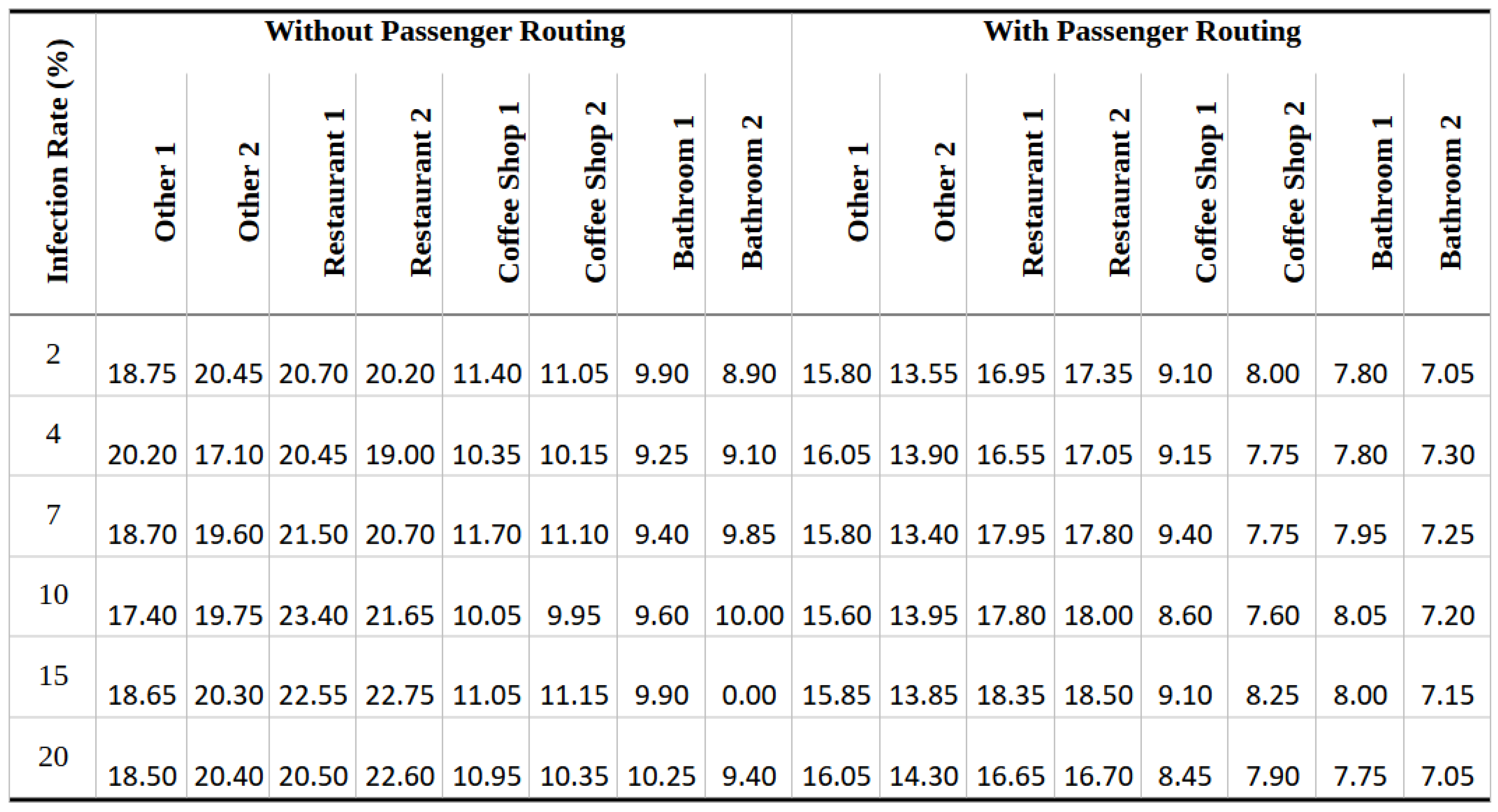

Table 1.
Stores simulation model input data.
| Input Data | Value |
|---|---|
| Number of passengers | 1000 |
| Inter-arrival time | 1 passenger per minute |
| Spending time at Clothes Stores | 10 minutes |
| Spending time at Coffee Shops | 5 minutes |
| Spending time at Restaurants | 15 minutes |
| Spending time at Bathroom | 3 minutes |
Table 2.
Airport simulation model input data.
| Simulation Variables | Value |
|---|---|
| Start Boarding Time | 40 Minutes Before Take-off |
| Flight Check-In Start Time | 150 Minutes Before Take-off |
| Number of Passengers per Flight | 120 |
| Total Number of Passengers | 1560 |
| Arrival Rate | 100 Passenger per Hour |
| Spending time at Other shops | 10 minutes |
| Spending time at Coffee Shops | 5 minutes |
| Spending time at Restaurants | 15 minutes |
| Spending time at Bathroom | 3 minutes |
Table 3.
Flights Departure Schedule.
| Flight No. | Flight | Departure Time | Gate |
|---|---|---|---|
| 1 | Flight A | 03:00 | 1 |
| 2 | Flight A | 05:00 | 2 |
| 3 | Flight C | 07:00 | 3 |
| 4 | Flight D | 08:00 | 2 |
| 5 | Flight E | 10:00 | 1 |
| 6 | Flight F | 11:00 | 3 |
| 7 | Flight G | 12:00 | 1 |
| 8 | Flight H | 13:00 | 3 |
| 9 | Flight I | 14:00 | 2 |
| 10 | Flight J | 16:00 | 1 |
| 11 | Flight K | 18:00 | 2 |
| 12 | Flight L | 20:00 | 3 |
| 13 | Flight M | 22:00 | 2 |
Disclaimer/Publisher’s Note: The statements, opinions and data contained in all publications are solely those of the individual author(s) and contributor(s) and not of MDPI and/or the editor(s). MDPI and/or the editor(s) disclaim responsibility for any injury to people or property resulting from any ideas, methods, instructions or products referred to in the content. |
© 2023 by the authors. Licensee MDPI, Basel, Switzerland. This article is an open access article distributed under the terms and conditions of the Creative Commons Attribution (CC BY) license (http://creativecommons.org/licenses/by/4.0/).
Copyright: This open access article is published under a Creative Commons CC BY 4.0 license, which permit the free download, distribution, and reuse, provided that the author and preprint are cited in any reuse.


